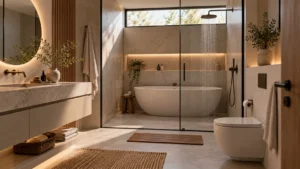

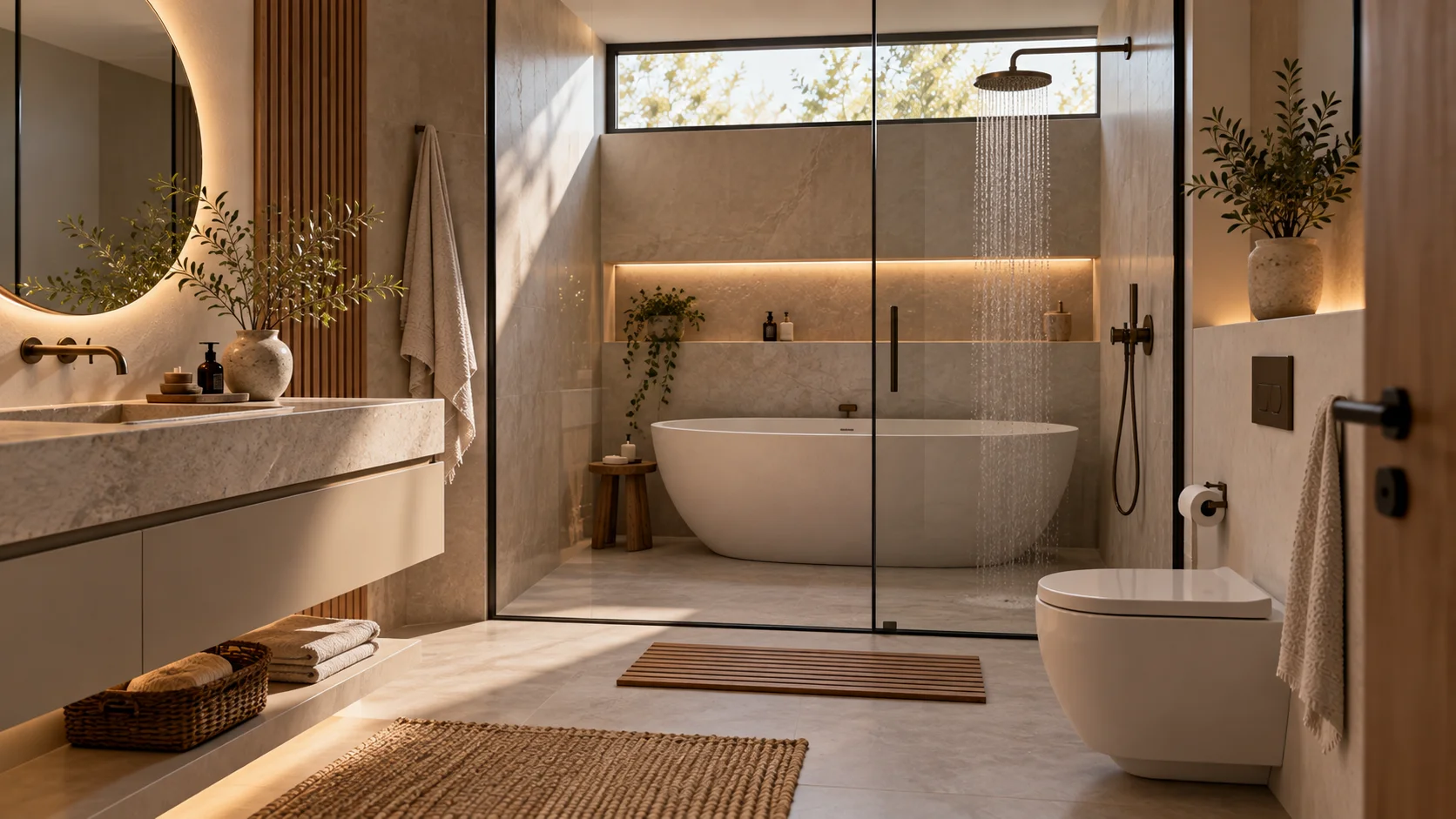
There is a reason that one bathroom photo keeps showing up on your feed. The cracked stone tile. The uneven plaster wall. The single dried branch in a clay vase. It looks unfinished, almost imperfect, yet you cannot stop staring at it.
That feeling has a name. It is wabi sabi, the Japanese art of finding beauty in imperfection. And the good news is, you do not need a renovation budget to bring it into your own bathroom. You just need to know which 17 small choices actually matter.
What Wabi Sabi Really Means?
Wabi sabi is not a style you buy off a shelf. It is a mindset that values natural texture, soft imperfection, and quiet simplicity over shine and perfection. It comes from old Japanese tea ceremony culture, where a slightly chipped cup was seen as more beautiful than a flawless one, because it showed honesty and history.
In a bathroom, this means rough plaster instead of glossy tile, raw stone instead of polished marble, and handmade pottery instead of matching sets. Nothing here is trying too hard, and that is exactly the point. Once you understand this mindset, every choice on this list will start to make sense on its own.
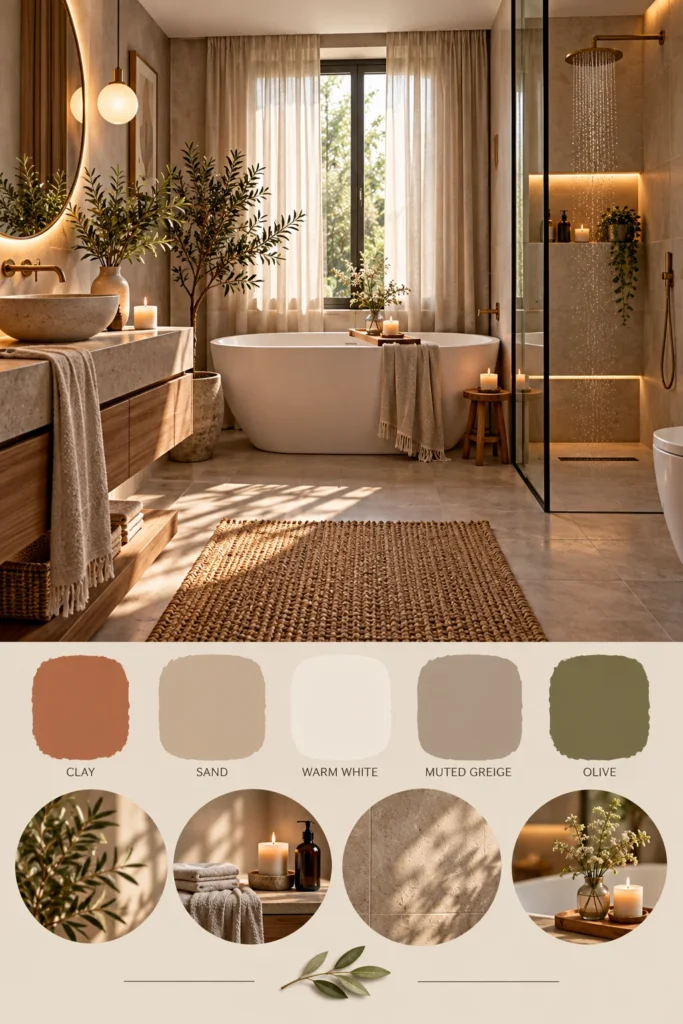
1. Choose a Soft Neutral Color Palette:
Start with your wall color, because it sets the tone for everything else in the room. Stick to soft, earthy neutrals like clay, sand, warm white, or muted greige. These colors do not just look nice in photos, they actually change how the light behaves in your bathroom throughout the day.
These colors feel calm and grounding instead of cold or clinical, especially under natural daylight. Avoid bright white or stark black, since both feel too sharp for the soft, weathered wabi sabi mood you are creating. If you are repainting, test a small patch first and look at it in the morning and evening, since warm neutrals can shift surprisingly with different light.
2. Use Limewash or Textured Plaster Walls:
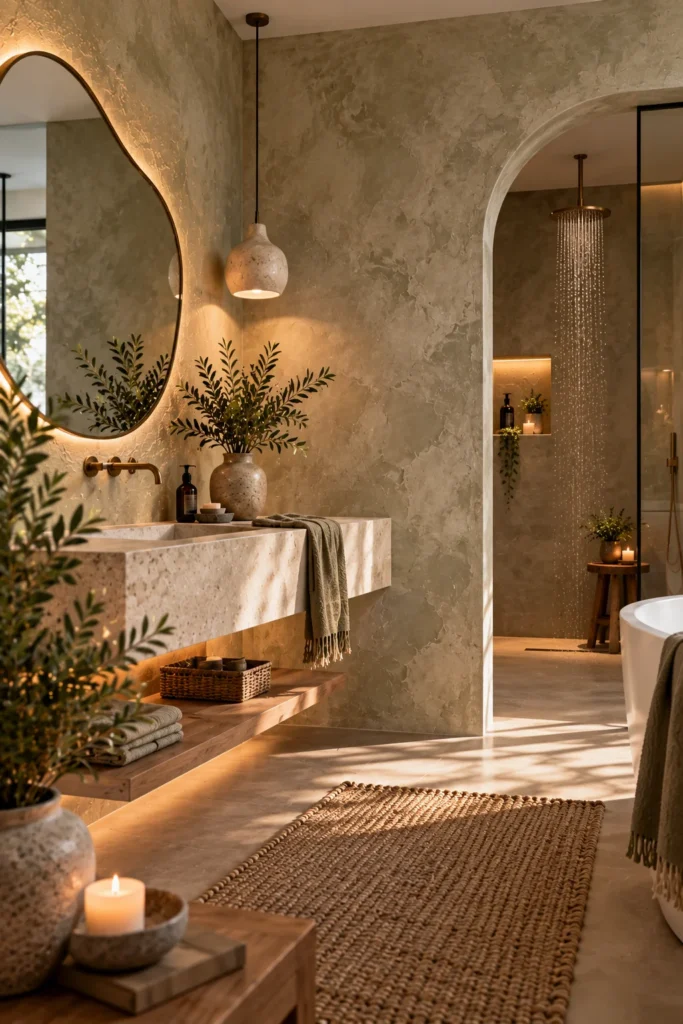
Here is the secret most calm bathrooms share. Limewash paint or microcement plaster creates a soft, cloudy texture on the wall that catches light differently throughout the day. Unlike flat paint, it has gentle variation built right into the finish, so no two patches of wall look exactly alike.
This subtle texture instantly makes a flat, builder grade bathroom feel handcrafted and lived in. It is one of the easiest upgrades that brings real wabi sabi character into the room, and many limewash kits are now made for confident beginners to apply themselves over a weekend. Even just one accent wall behind your sink can completely shift the feeling of the entire space.
3. Pick Natural Stone Over Polished Tile:
Smooth, shiny tile reflects light in a sharp, artificial way that can feel a bit cold and showroom like. Natural stone like travertine, slate, or honed marble absorbs light softly instead, giving your bathroom a warmer, quieter feel that changes gently as the sun moves through the day.
If a full stone floor is not in your budget, even a small stone tray under your sink or a stone soap dish can introduce that same grounded texture in a smaller way. You can also look for stone look porcelain tile, which mimics the soft variation of real stone at a much lower cost, while still keeping that natural, organic feeling intact.
4. Let Imperfect Materials Take Center Stage:
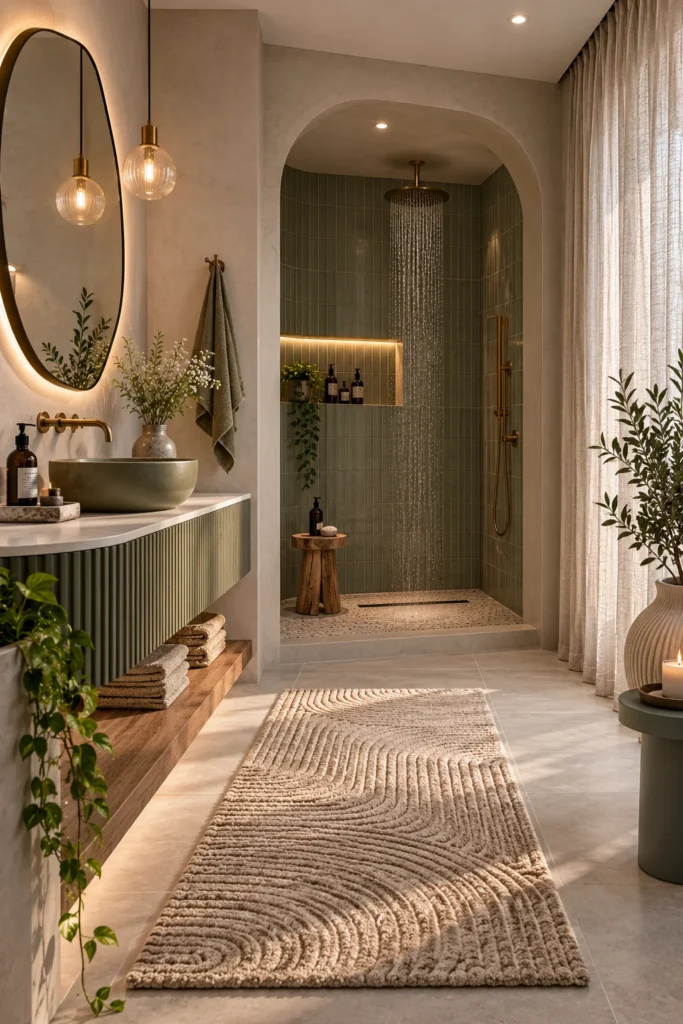
This is the rule that changes everything about wabi sabi design. Instead of hiding flaws, you let them shine. A slightly uneven ceramic sink or a hand thrown clay tumbler becomes the star of the room, rather than something you try to disguise or match perfectly.
Look for handmade pottery, raw wood shelves, and linen towels with visible texture. These small imperfect details tell a story that mass produced, perfectly matched decor simply cannot. Visit a local pottery shop or craft market if you can, since one handmade piece often carries more personality than an entire matching bathroom set from a big box store.
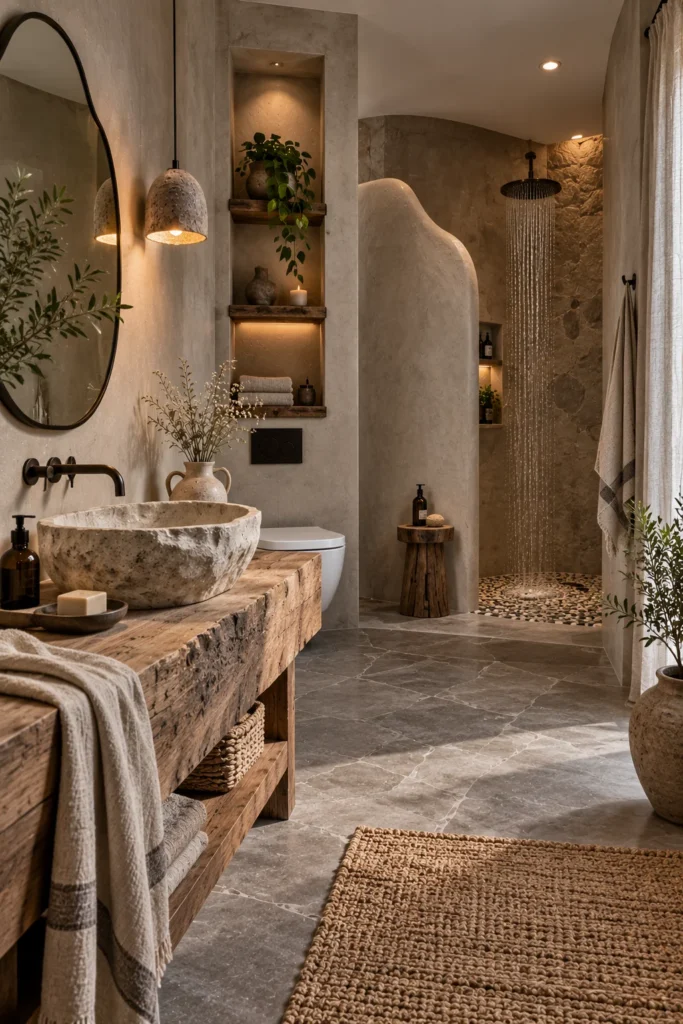
5. Bring In Natural Wood Elements:
Wood adds instant warmth to a wabi sabi bathroom, especially in a space that is otherwise full of cool tile and porcelain. A teak bath mat, a wooden stool, or a simple wood framed mirror softens all the hard surfaces and adds a gentle, grounding presence. If you love using natural materials throughout your home, these 20 sustainable home decor ideas can give you more inspiration for choosing pieces that feel warm, timeless, and authentic.
Choose wood with visible grain and natural color variation rather than painted or heavily lacquered pieces. The more natural the finish, the more authentic the wabi sabi feeling becomes. Teak is especially popular for bathrooms since it naturally resists moisture and develops a soft silvery patina over time, which fits perfectly into this style of embracing gentle aging.
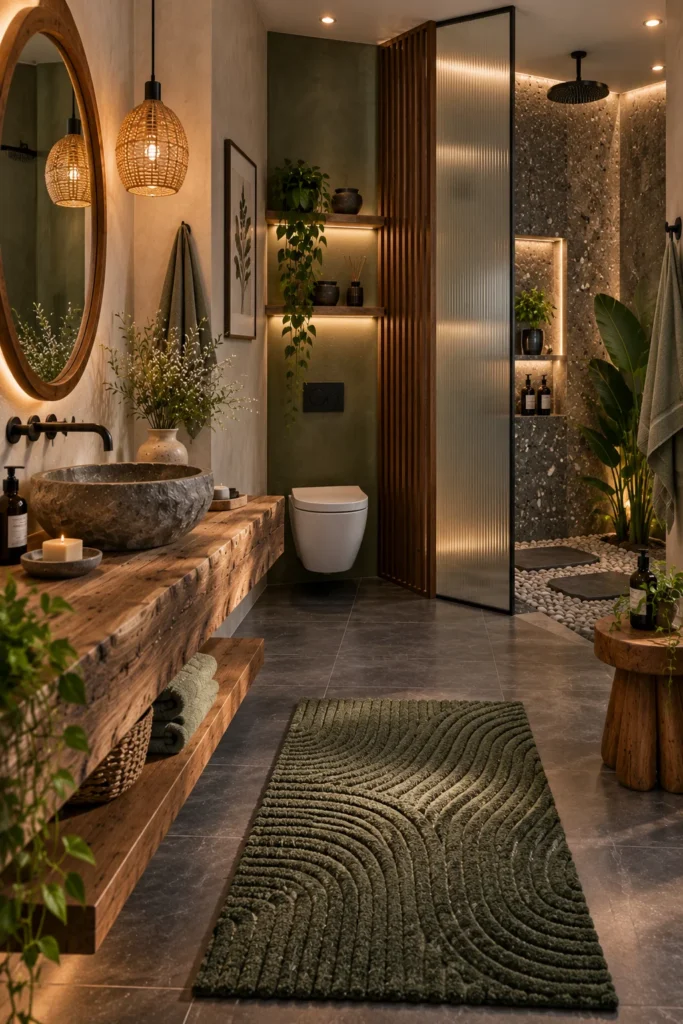
6. Add One Single Statement Plant:
You do not need a jungle of plants for this look, and in fact, too many plants can actually work against the calm simplicity you are going for. One simple plant, like an olive branch in a clay vase or a small fern, brings life into the space without crowding it visually.
Choose a container that feels handmade and slightly imperfect, like raw stoneware or a textured ceramic pot. This single green touch instantly softens the whole room and gives your eye one quiet focal point to land on, instead of competing with rows of bottles or accessories nearby.
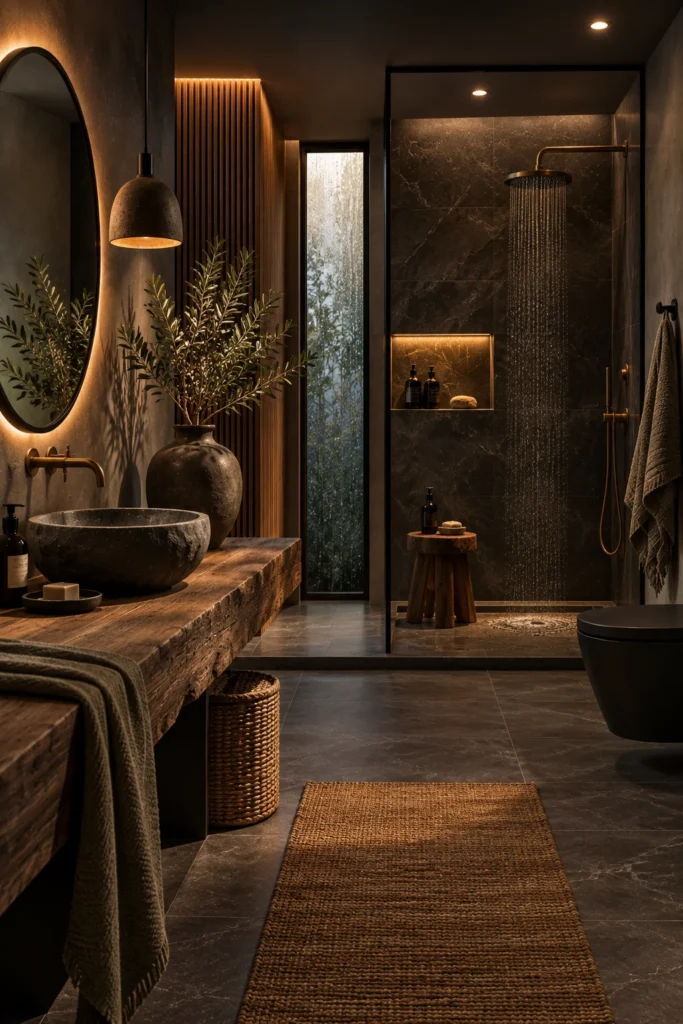
7. Swap Bright Lighting for Warm, Soft Light:
Harsh overhead lighting kills the calm, cozy mood you are going for, no matter how beautiful your tile or plaster looks underneath it. Switch to warm toned bulbs, somewhere around 2700 kelvin, and add a soft wall sconce or a small dimmable fixture near the mirror.
Soft lighting makes every texture in the room, from the plaster walls to the stone floor, feel richer and more inviting, especially in the evening. This one switch can transform the entire feel of your bathroom in minutes, and it is one of the cheapest changes on this entire list, often costing less than a single new light bulb and a dimmer switch.
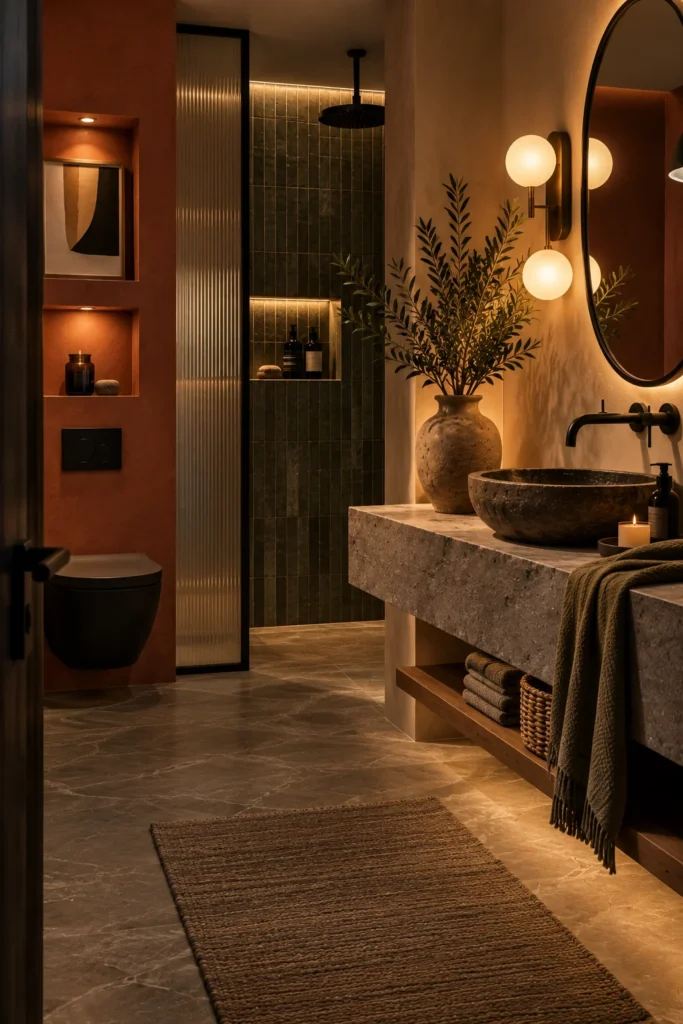
8. Use Linen Instead of Plush Cotton:
Fluffy white cotton towels are comfortable, but they do not fit the relaxed, textured wabi sabi mood you are building. Linen towels and bath mats have a slightly rumpled, natural look that feels effortless instead of overly polished, even straight out of the laundry.
Choose linen in soft neutral tones like oatmeal, sage, or stone gray. The slightly wrinkled texture is not a flaw here, it is exactly the look you want, and linen actually gets softer and more beautiful with every single wash, unlike cotton, which tends to wear out and flatten over time.
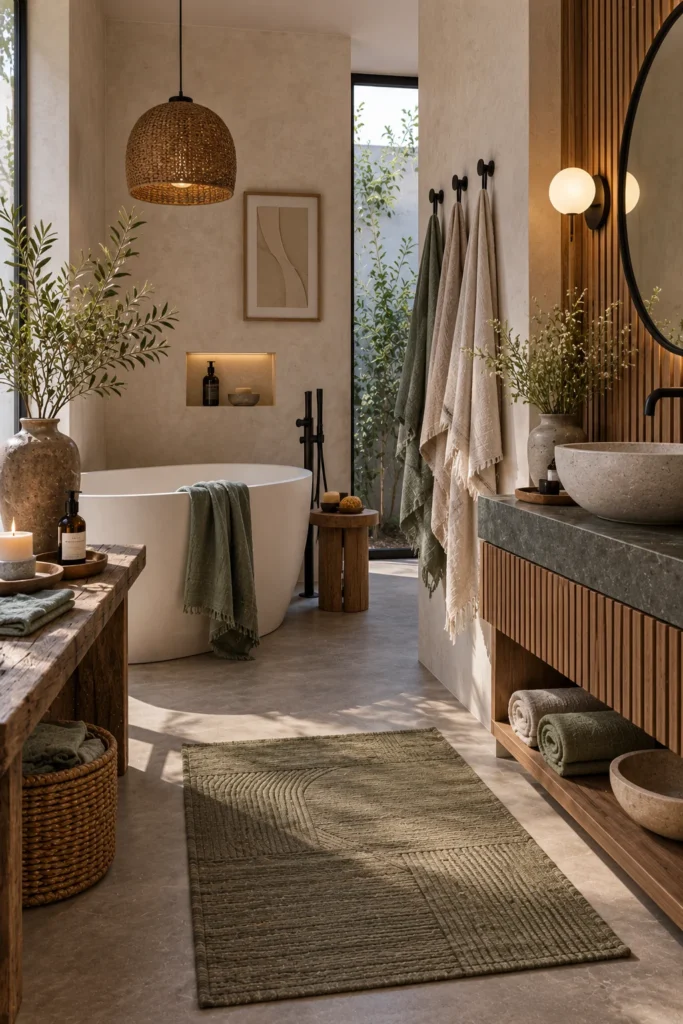
9. Keep Your Countertop Almost Empty:
Clutter is the enemy of calm, and your bathroom counter is usually the first place clutter quietly builds up. A wabi sabi bathroom counter holds only a few essential, beautiful objects, like a single soap dish or one small glass jar, instead of rows of bottles and tubes.
This open space gives your eye somewhere to rest as soon as you walk in. It also makes whatever objects you do display feel more special, since they are not competing with twenty other items for attention, so try storing everyday essentials out of sight and only keeping out the pieces you actually love to look at. If you like this less-is-more approach, these 23 quiet luxury decor ideas offer more ways to create an expensive-looking space without filling it with unnecessary pieces.
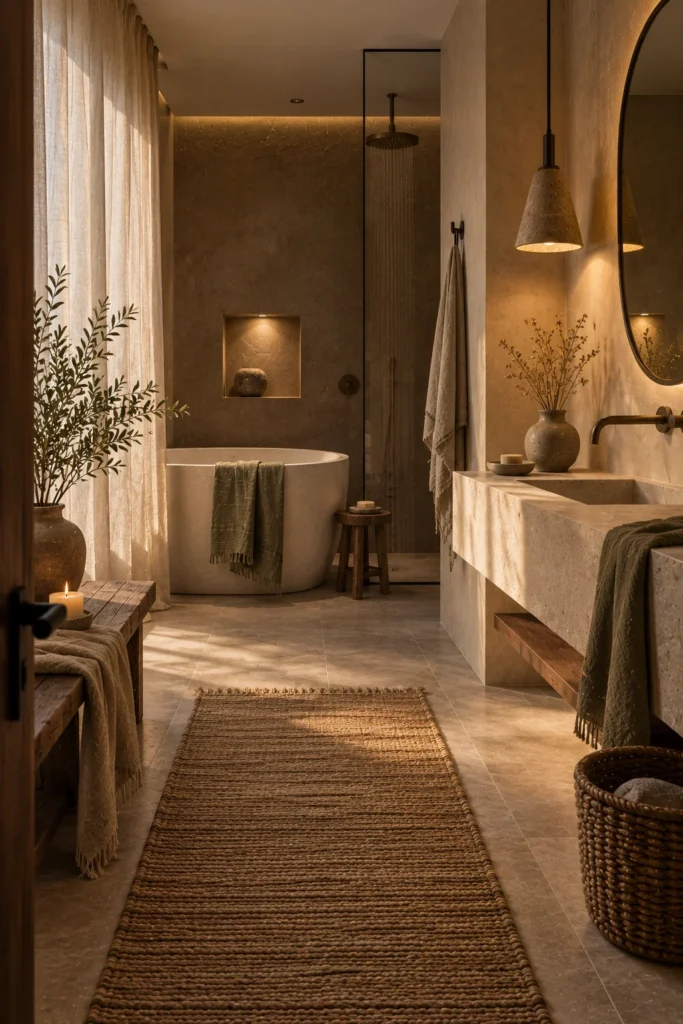
10. Choose a Freestanding Tub If Possible:
A freestanding tub has a sculptural, organic shape that instantly elevates the calm factor of any bathroom. It sits in the room like a piece of art rather than being boxed in against a wall, which gives the whole space a more open, gallery like feeling.
If a freestanding tub is not realistic for your space, you can still get a similar feeling by adding a wooden tub caddy or a stone side table next to your existing tub. Even a small bundle of dried flowers or a single candle placed nearby can borrow some of that same calm, sculptural energy without any construction at all.
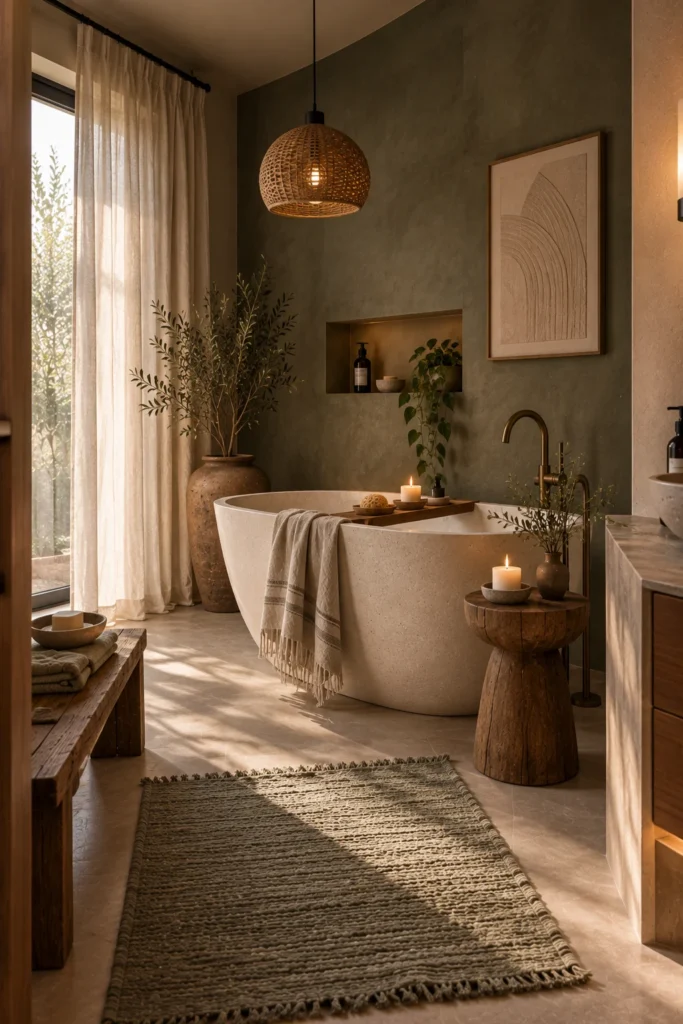
11. Display Pottery With Visible Imperfections:
Look for ceramic bowls, vases, or trays with a slightly uneven shape, a visible glaze drip, or a subtle crack repaired with gold seam work, known as kintsugi. These pieces carry real character that factory made decor simply cannot replicate, no matter how expensive it is.
Place one or two of these items on your counter or open shelf. They become small conversation pieces that capture the entire wabi sabi philosophy in a single object, and many people find that searching local thrift stores or estate sales turns up beautifully imperfect pottery for a fraction of the price of buying new.
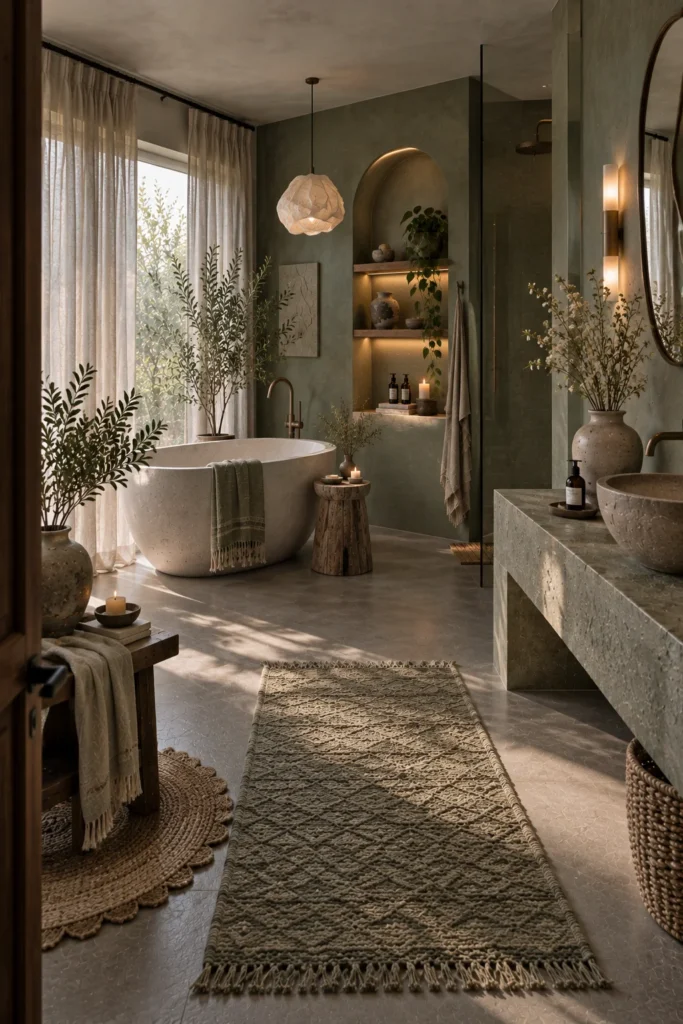
12. Use Woven and Rattan Storage Baskets:
Skip the plastic bins and reach for woven baskets instead. Rattan, seagrass, or jute baskets add natural texture while keeping your towels, toilet paper, or toiletries neatly tucked away, so the room still feels organized without feeling sterile or overly modern. For more creative ways to keep everyday items organized without making the space feel cluttered, these 20 vintage wardrobe storage ideas are worth exploring.
These baskets also age beautifully over time, developing a slightly worn look that only adds to their charm. That gentle aging is part of the wabi sabi beauty, not something to avoid, and unlike plastic storage, woven baskets actually look better the longer you own them, picking up small marks of everyday life.
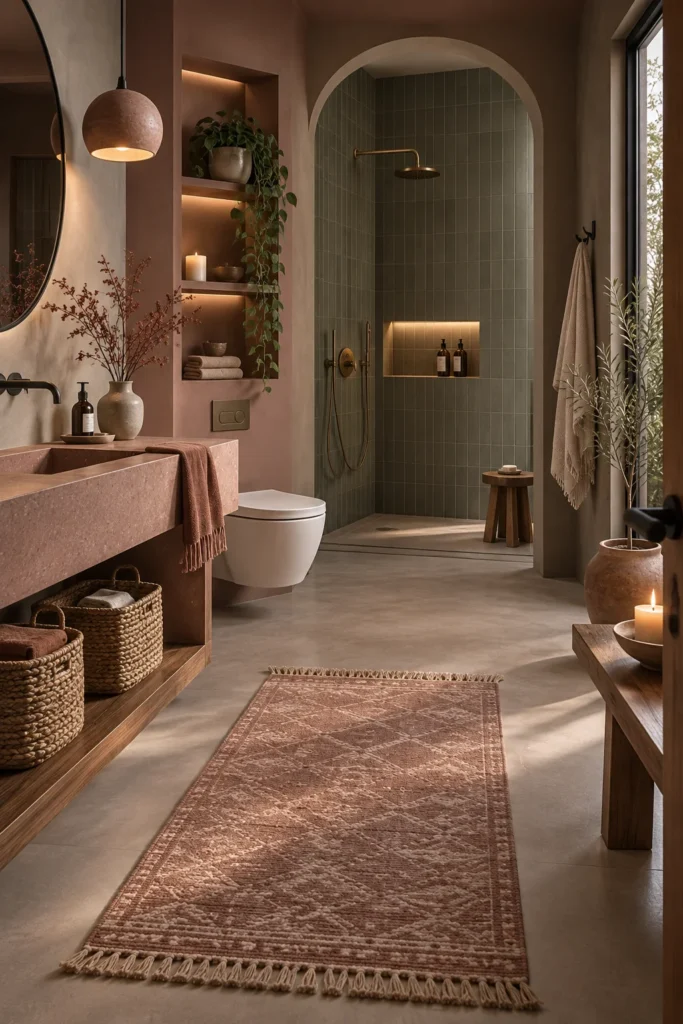
13. Add a Textured Bath Mat Instead of a Plush One:
A chunky woven bath mat or a flat woven rug brings in texture underfoot without feeling overly soft or synthetic. Natural fibers like jute or cotton rope work beautifully here, and they tend to dry faster than thick plush mats, which is an added practical bonus.
This small swap grounds the whole room and ties together the natural materials you have used elsewhere, from your wood stool to your stone floor. Even placing the mat slightly off center, rather than perfectly centered under the sink, adds to that relaxed, natural feeling the style is known for.
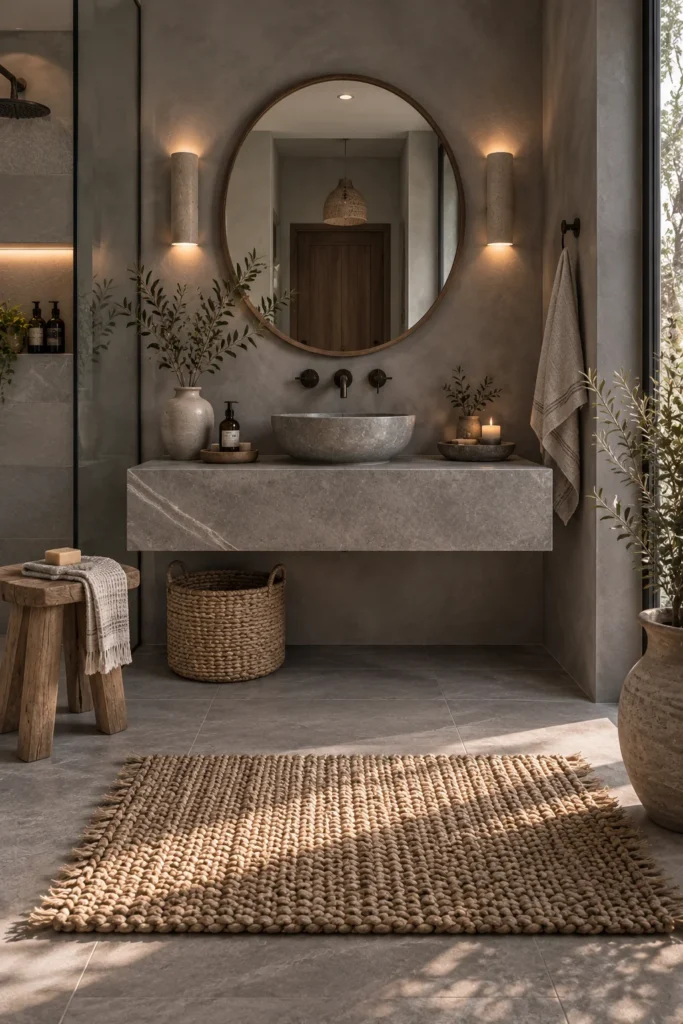
14. Let Natural Light Lead the Way:
If your bathroom has a window, keep it as open as possible and resist the urge to cover it completely. Skip heavy blinds and choose a simple linen curtain or frosted glass that lets soft daylight filter through gently, even when you need privacy.
Natural light shifts throughout the day, and that subtle change in shadow and glow is part of what makes a wabi sabi space feel alive instead of static. Watching how the light moves across a textured plaster wall in the late afternoon is honestly one of the simplest joys this design style has to offer.
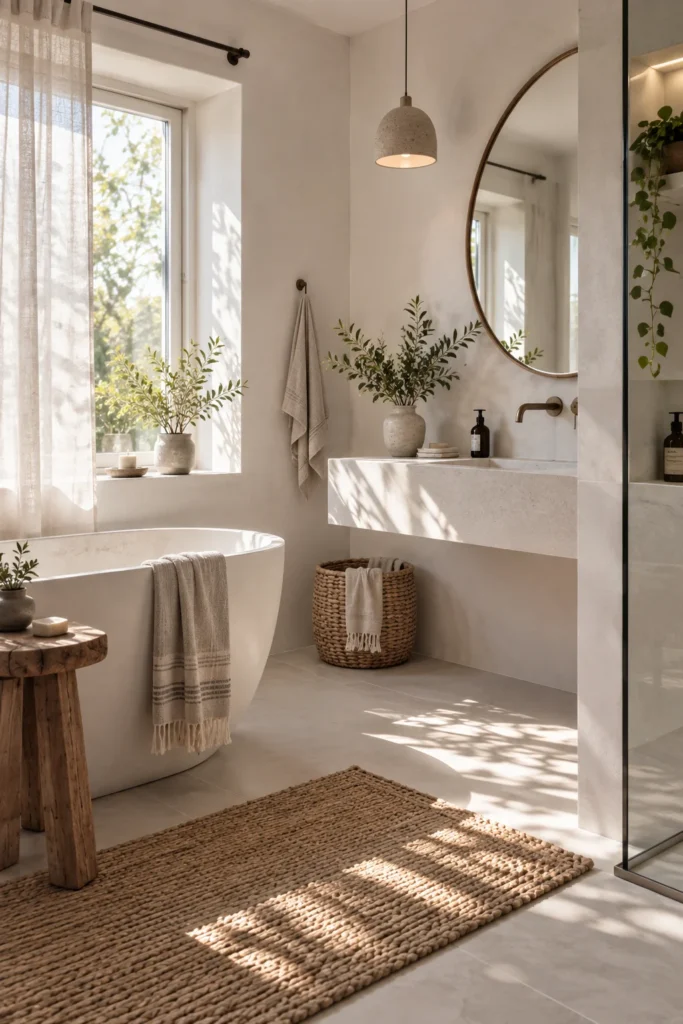
15. Choose Matte Finishes Over Glossy Ones:
Shiny chrome fixtures can feel cold and clinical next to soft plaster walls, almost like they belong in a different room entirely. Matte black, brushed brass, or unlacquered brass fixtures age naturally and develop a soft patina over time instead of staying stiff and shiny forever.
This patina is not something to polish away. In wabi sabi design, that gentle wear is considered beautiful, since it shows the passage of time honestly, and many homeowners now choose unlacquered brass specifically because it ages and darkens slightly with use, telling the story of a real, lived in home.
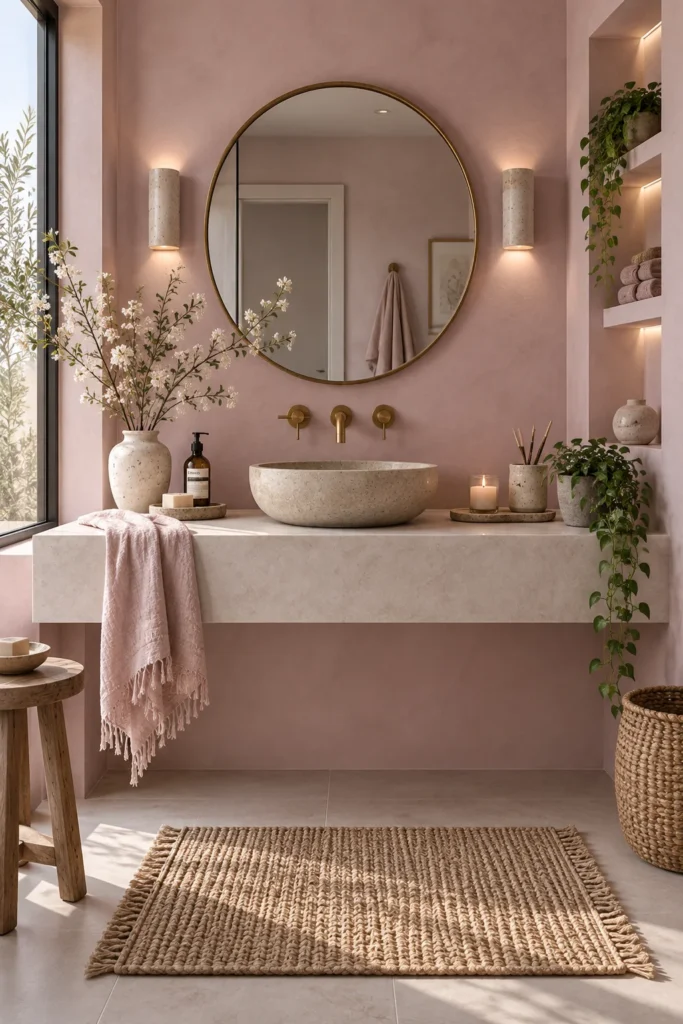
16. Keep Symmetry Loose, Not Perfect:
Resist the urge to perfectly center every object or match every item in pairs, even though it might feel instinctive at first. Let one towel hook sit slightly off from another, or place your plant a little off center on the shelf instead of dead in the middle.
This relaxed, slightly asymmetrical arrangement feels more natural and human, almost like the room evolved naturally over time instead of being staged all at once. Perfect symmetry can actually work against the calm, organic mood you are trying to create, since it tends to read as formal and a little too controlled.
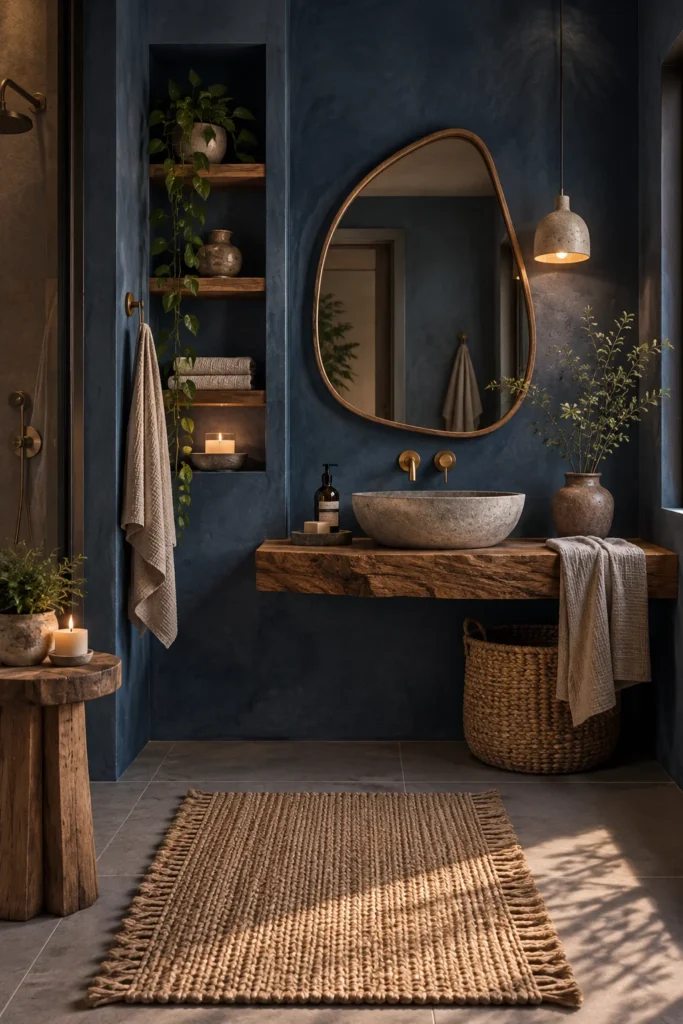
17. Edit Down to Only What You Love:
The final step is the simplest, yet the hardest. Walk through your bathroom and remove anything that feels purely functional with no beauty or meaning behind it, even if it is something you have had for years and never really questioned.
A wabi sabi bathroom is never about having more. It is about surrounding yourself with fewer things that you genuinely love, in their natural, imperfect, effortless form, and most people find that once they start editing, the room actually starts to feel bigger and calmer almost overnight.
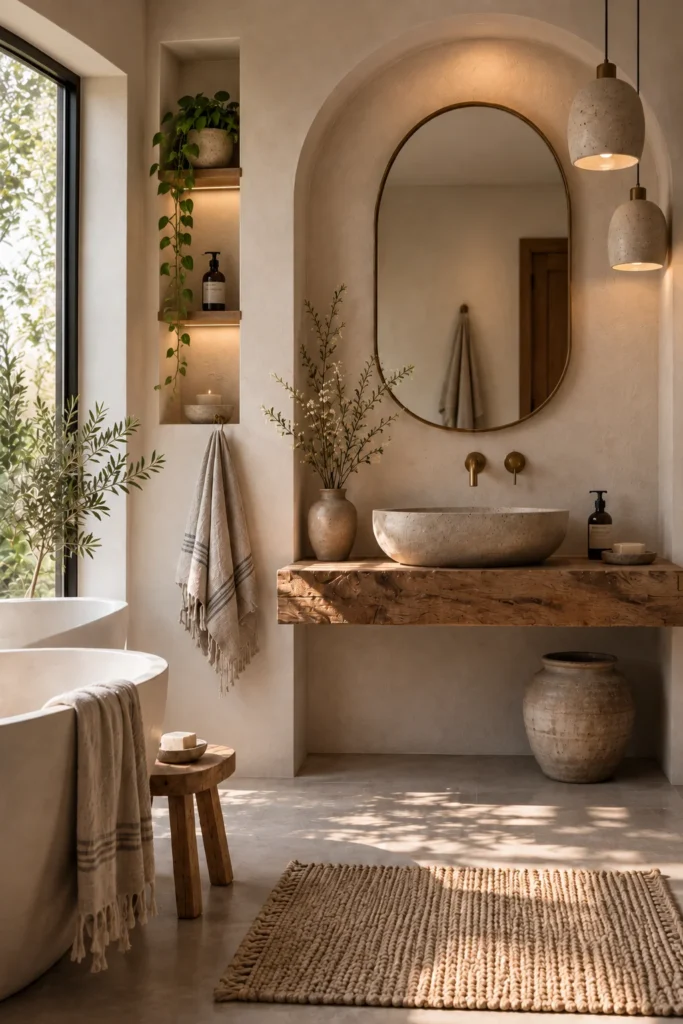
Bringing the Calm Home:
A wabi sabi bathroom is not about chasing a trend. It is about slowing down and choosing materials and objects that feel honest, natural, and quietly beautiful.
Start with just one or two changes from this list, like a linen towel or a soft sconce light. You will be surprised how quickly your bathroom begins to feel like a calm, effortless retreat you actually want to spend time in.
Frequently Asked Questions
What is a wabi sabi bathroom?
A wabi sabi bathroom embraces natural materials, soft imperfections, and quiet simplicity instead of polish and perfection. Think textured plaster, raw stone, handmade pottery, and warm lighting that together create a calm, grounded space.
Is wabi sabi the same as minimalism?
Not exactly. Minimalism focuses on having less for the sake of cleanliness, while wabi sabi values fewer, more meaningful objects that show natural imperfection, texture, and the passage of time.
Can I create a wabi sabi bathroom on a budget?
Yes, you can. Simple swaps like linen towels, woven baskets, soft lighting, and one piece of handmade pottery bring real wabi sabi character without needing a full renovation or big spending.
What colors work best in a wabi sabi bathroom?
Soft, earthy neutrals work best, including clay, sand, warm white, and muted green. Avoid stark white or glossy black, since both feel too sharp and clinical for this relaxed, natural style.
Do I need natural stone for a wabi sabi look?
Natural stone helps, but it is not required. Small touches like a stone soap dish or stone tray can bring the same grounded texture without replacing your entire floor or countertop.
Why does imperfect pottery fit this style?
Imperfect pottery reflects the core idea of wabi sabi, which values handmade character over machine made perfection. A slightly uneven bowl or a cracked piece repaired with gold seams tells a story that matching sets cannot.
What lighting works best for a calm bathroom?
Warm toned, soft lighting works best, especially from a dimmable wall sconce. Harsh white overhead light feels clinical, while warm, layered lighting brings out the texture in plaster, stone, and wood.
How do I keep a wabi sabi bathroom from feeling cluttered?
Keep your countertop nearly empty and only display a few meaningful objects, like one plant or one ceramic piece. Use woven baskets to tuck away daily essentials and edit out anything purely functional.

Hi, I’m Emily! I love turning messy corners into cozy, organized spots. This all started years ago with my own entryway: shoes everywhere, keys always missing, and bags dumped on the floor every single day. I got tired of the chaos, so I started fixing it little by little, and I fell in love with the whole process along the way.
Now I run DreamNestDecor, where I share simple, real ideas that actually work for busy homes: not fancy, expensive makeovers, just easy changes anyone can do on a weekend. From cozy mudrooms to cute storage hacks, everything I share, I’ve tried myself first. I believe a calm, organized home shouldn’t feel like a dream: it should be something every family can have.
So grab a coffee, look around, and let’s make your home feel a little more “you.”