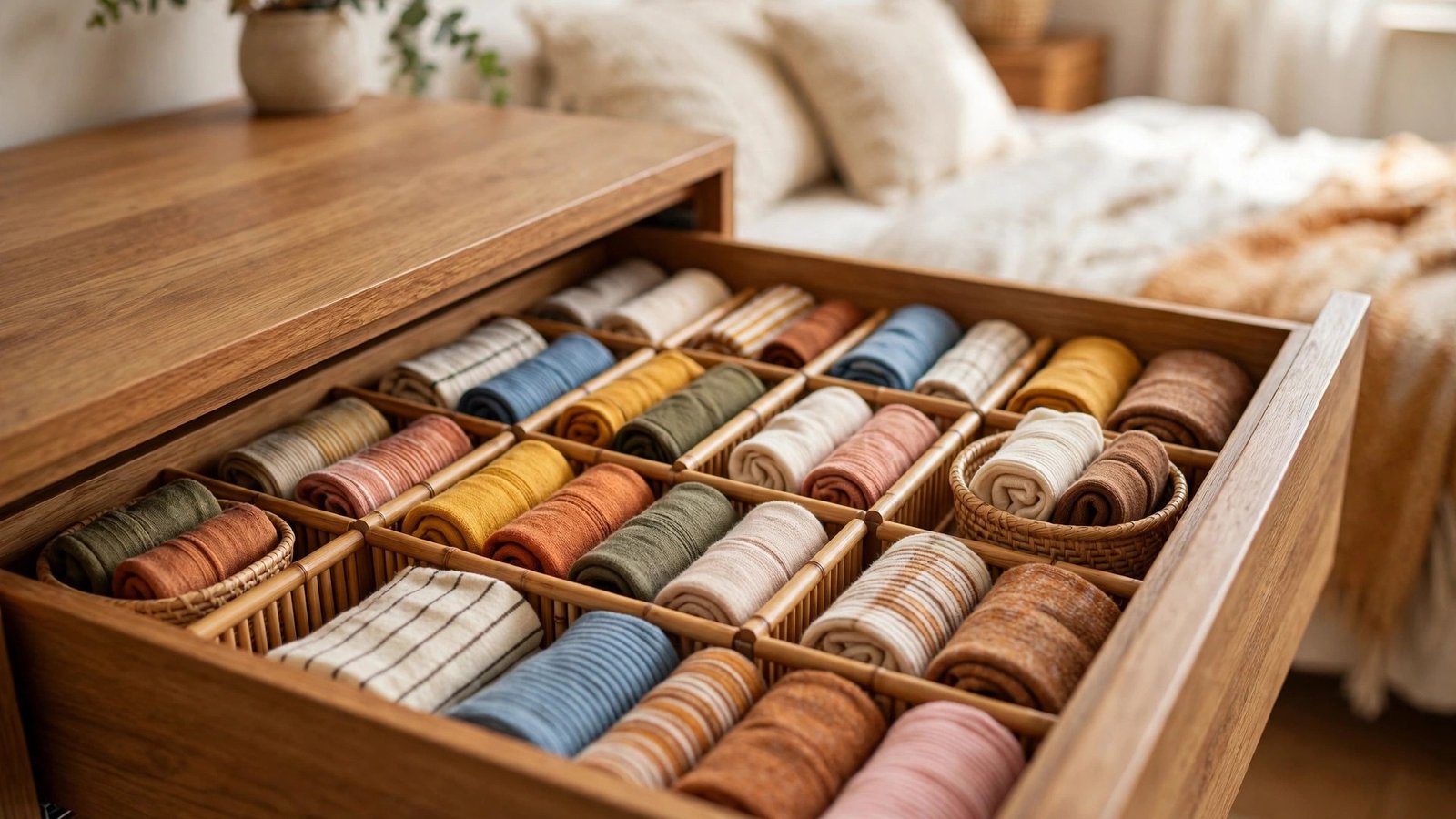
You know that morning moment. You open the sock drawer, dig through a soft tangle of singles, and come out holding two socks that almost match. Almost is not the same as matching, and now you are running late for the day.
The fix is simpler than you think. A sock drawer does not need to be big or expensive. It just needs a system that keeps pairs together and makes every pair visible at a glance. Once you set it up, grabbing the right pair takes only a few seconds.
These thirteen ideas will help you sort, fold, and store your socks so they stay organized for good. Start with one empty-and-sort session, then pick the methods that fit your drawer best.
1. Divide the Drawer With Eco-Friendly Dividers
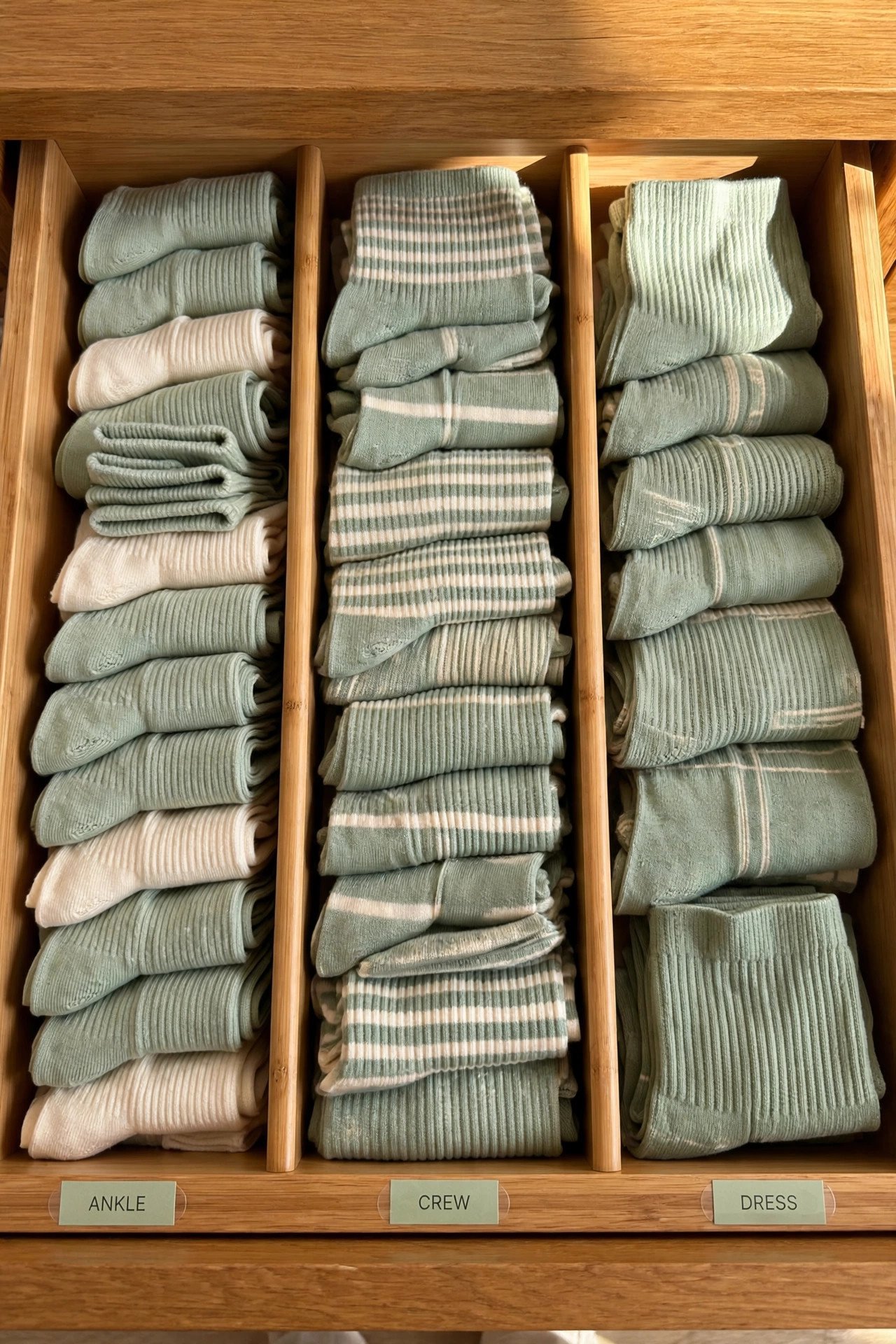
Drawer dividers turn one messy drawer into neat little zones. Bamboo dividers are a smart pick because they are sturdy, natural, and kind to the planet. They sit snugly in the drawer and stop socks from sliding into one big pile every time you open it.
Sort your socks by type before you place the dividers: ankle socks in one section, crew socks in another, dress socks in a third. This works the same way makeup drawer organizers keep small items in their own lanes. Measure your drawer first so the dividers fit without gaps.
2. File-Fold Every Pair for Perfect Visibility
File folding is the single best trick for a sock drawer. Lay each pair flat, fold it into a neat rectangle, and stand the pairs upright in rows like files in a cabinet. You can see every pair at once, so nothing hides at the bottom of the drawer.
Practice on a few pairs until the fold feels natural. Thicker athletic socks may need a looser fold so they do not bulge. Once the whole drawer is file-folded, choosing socks in the morning feels like browsing a tiny, tidy shop.
3. Color-Code Your Sock Collection
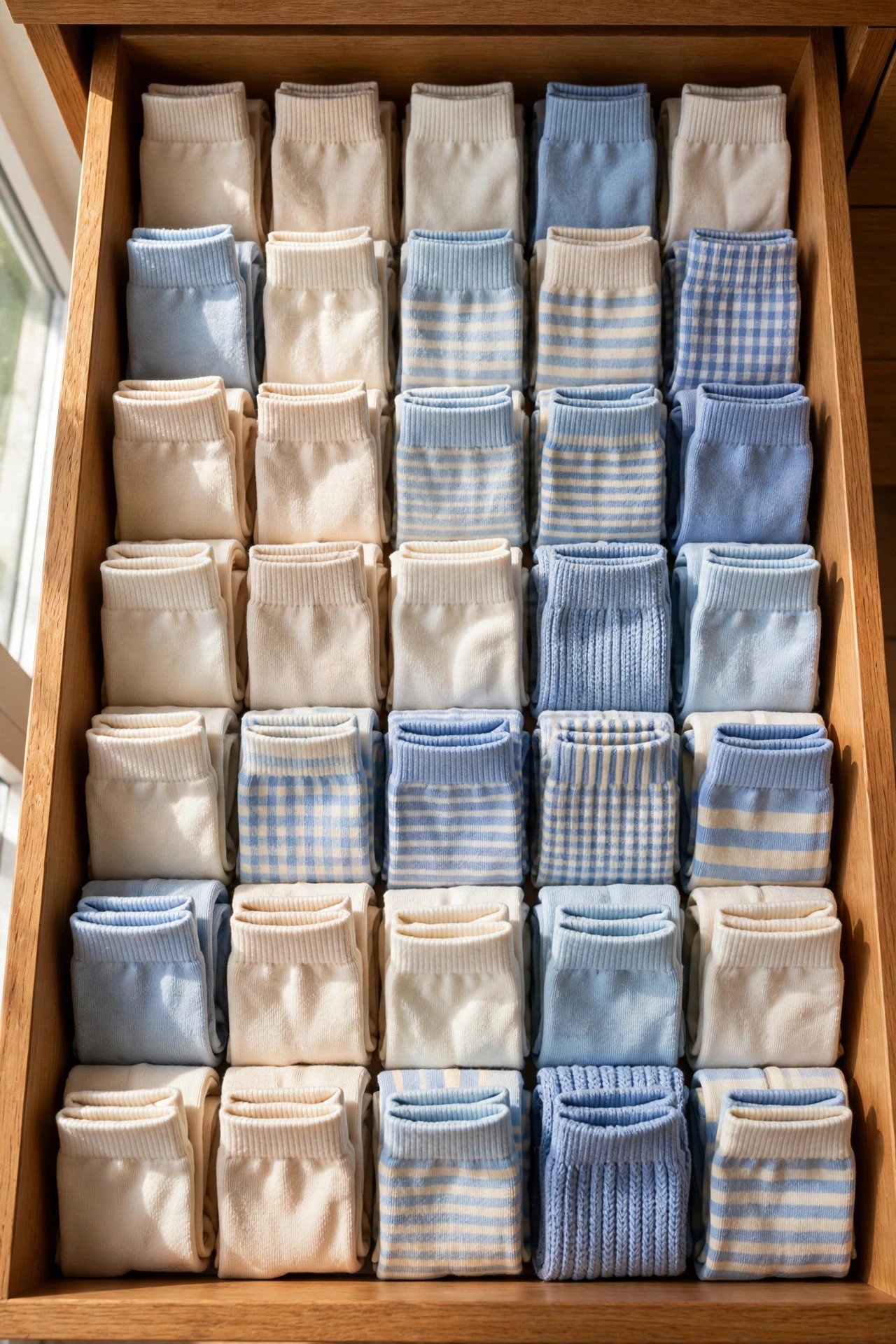
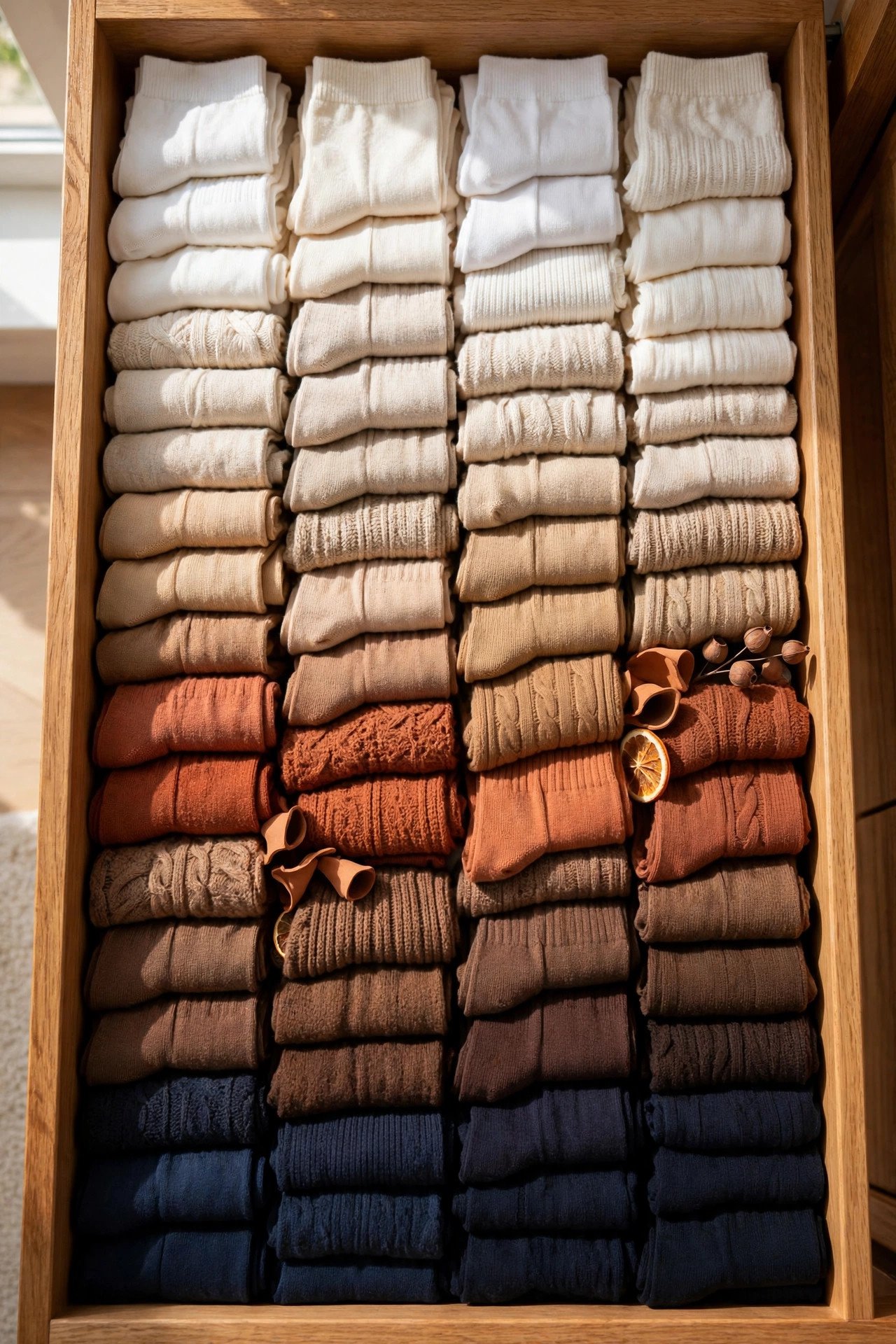
Grouping socks by color makes the drawer both pretty and practical. Put whites and pastels on one side, bright colors in the middle, and darks on the other. You will spot the pair you need without reading or unfolding anything.
A gradient from light to dark looks especially satisfying and helps you notice when one color family is getting thin. Wash dark socks with color catchers so the shades stay true. Color coding also makes it obvious when a lonely sock has lost its match.
4. Corral Pairs in Baskets and Bowls
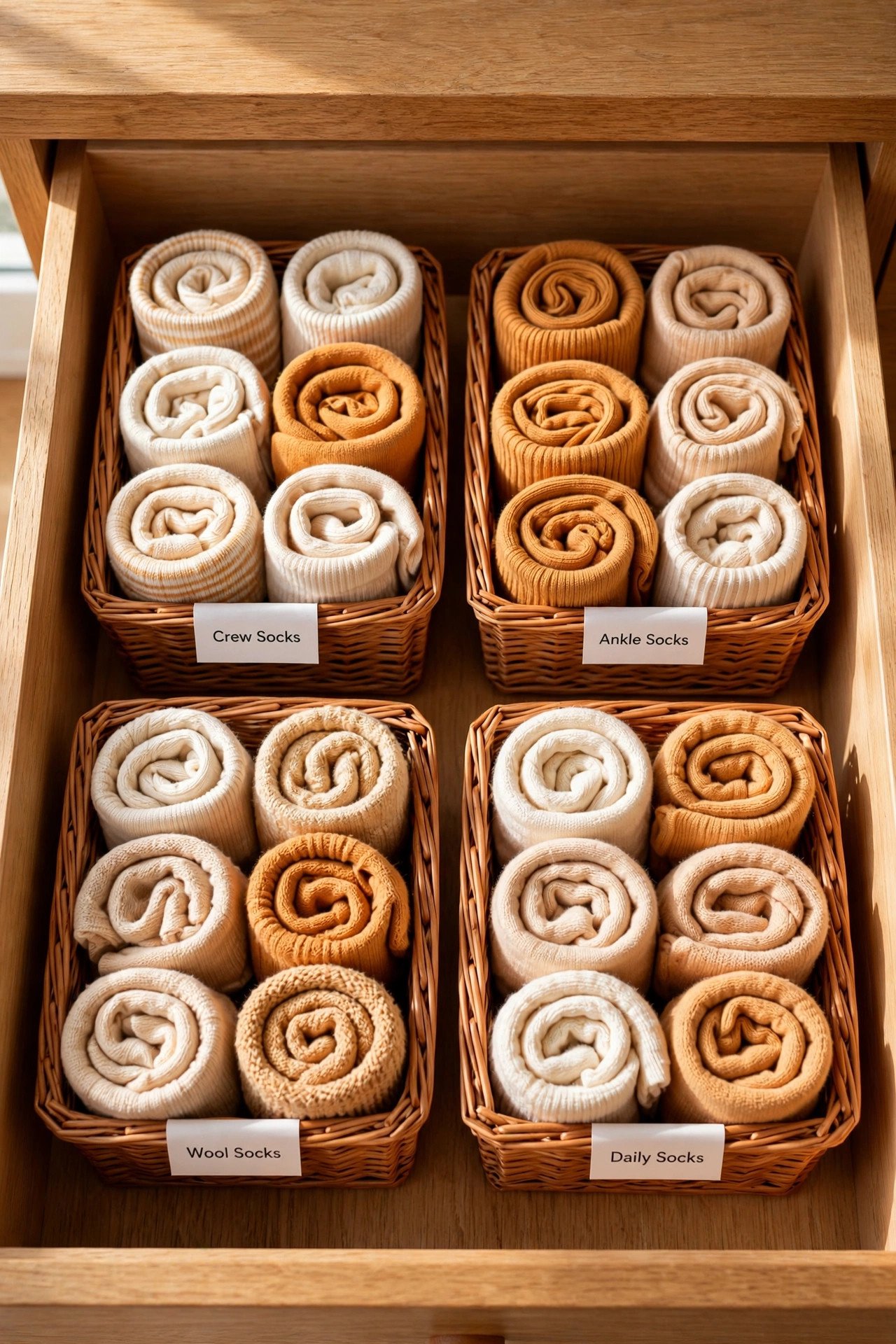
Small baskets and bowls give socks a cozy home inside a deep drawer. Use one basket per family member or one per sock type, and toss pairs in loosely. The containers keep everything from drifting together while staying easy to reach into.
Choose baskets that fit your drawer depth so they do not wobble. Woven or fabric bins add softness, while small wooden bowls look tidy and intentional. Fill each basket fully so socks stand up instead of slumping flat.
5. Run a Monthly Sock Declutter
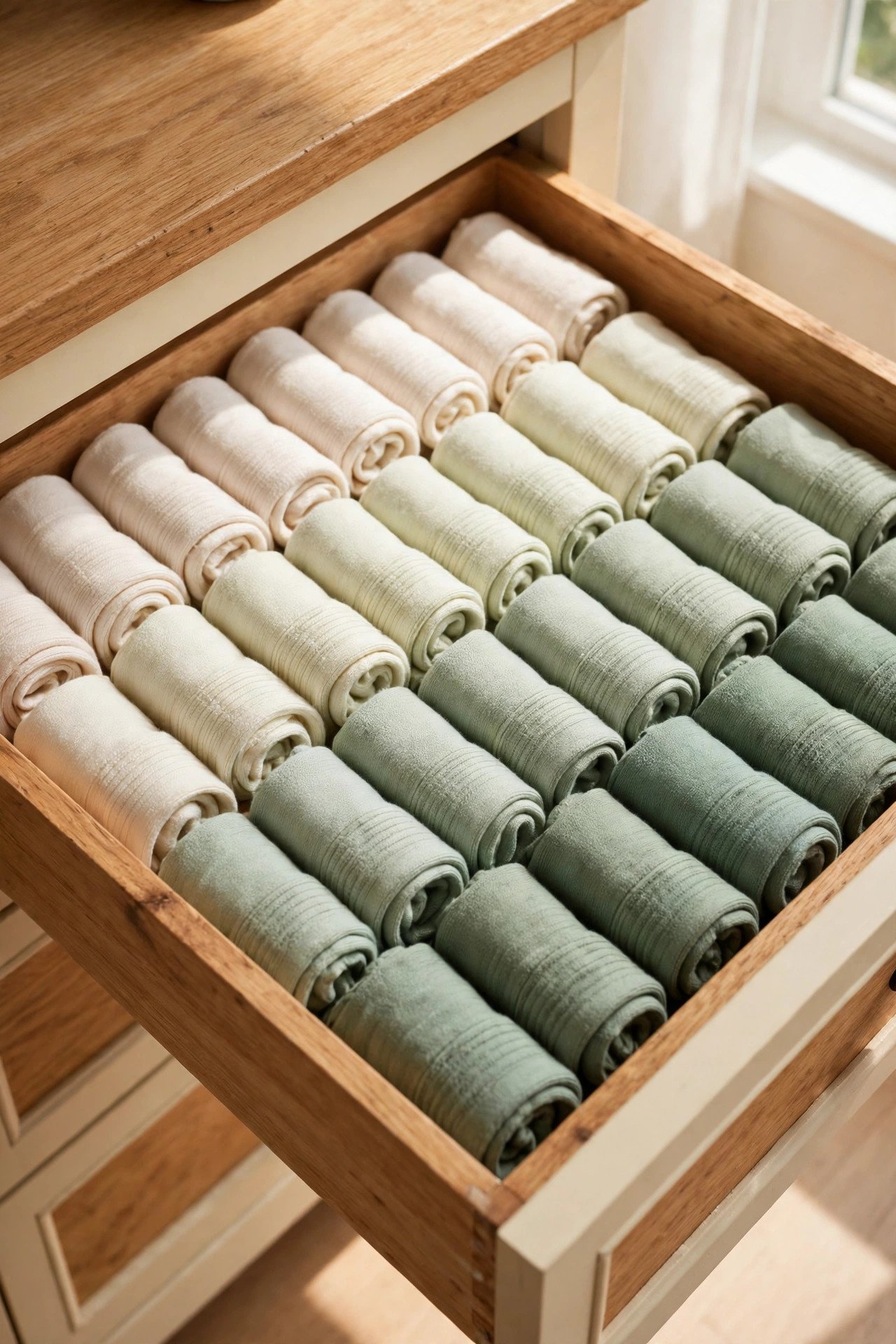
Socks wear out faster than almost anything else in your closet. Set a monthly reminder to pull out stretched, holey, or permanently single socks. A drawer with fewer, better socks is always easier to keep organized.
Keep a small bag in the drawer for rejects so the declutter takes only minutes. Singles that never find a match can move to a cleaning-rag bin. This quick habit pairs well with a seasonal closet reset so your whole wardrobe stays current.
6. Swap Socks With the Seasons
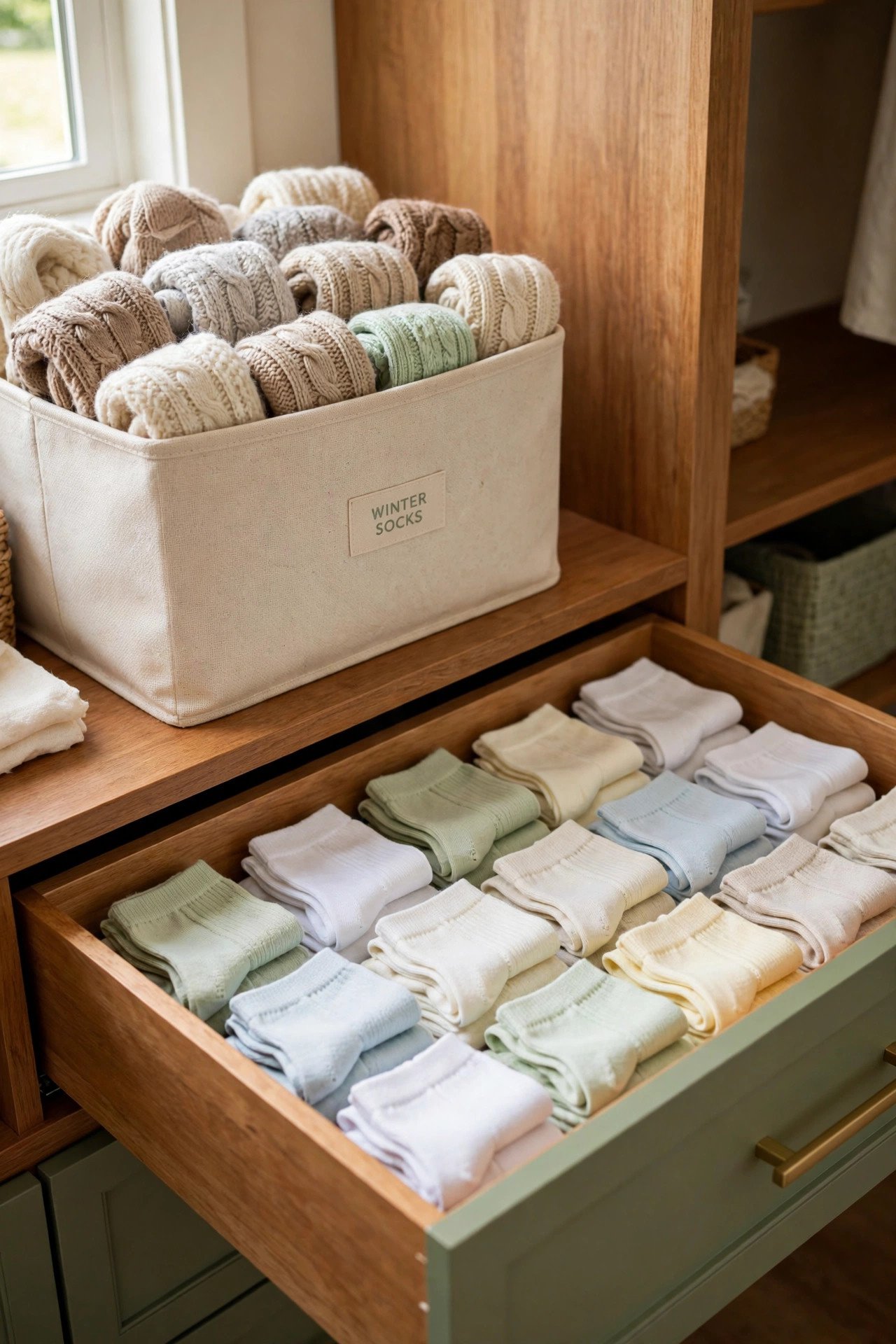
Heavy wool socks and thin summer ankle socks do not need to share the drawer all year. Store the off-season pairs in a labeled bin on a closet shelf, and keep only the current season in the drawer. The drawer instantly feels twice as roomy.
Swap the bins when the weather turns, and wash the outgoing pairs before you pack them away. A simple label reading “Winter Socks” saves you from opening every bin. Your laundry room shelf can hold the waiting bin between seasons.
7. Upcycle Lonely Socks Into New Uses
Every home collects single socks that will never find a partner. Instead of tossing them, give them a second job. A clean sock slips over your hand as a dusting mitt, and a rice-filled sock becomes a soothing heat pack.
Keep a small “upcycle” pouch in the drawer for singles. Old athletic socks make great phone or sunglass sleeves, and soft baby socks protect delicate items in luggage. You reduce waste and free drawer space at the same time.
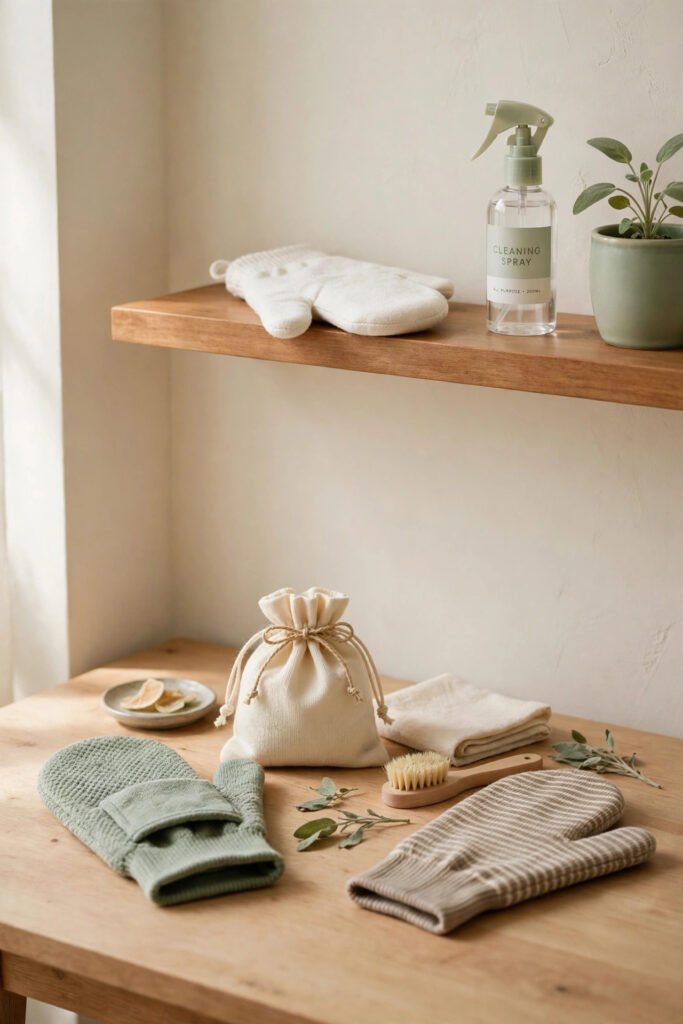
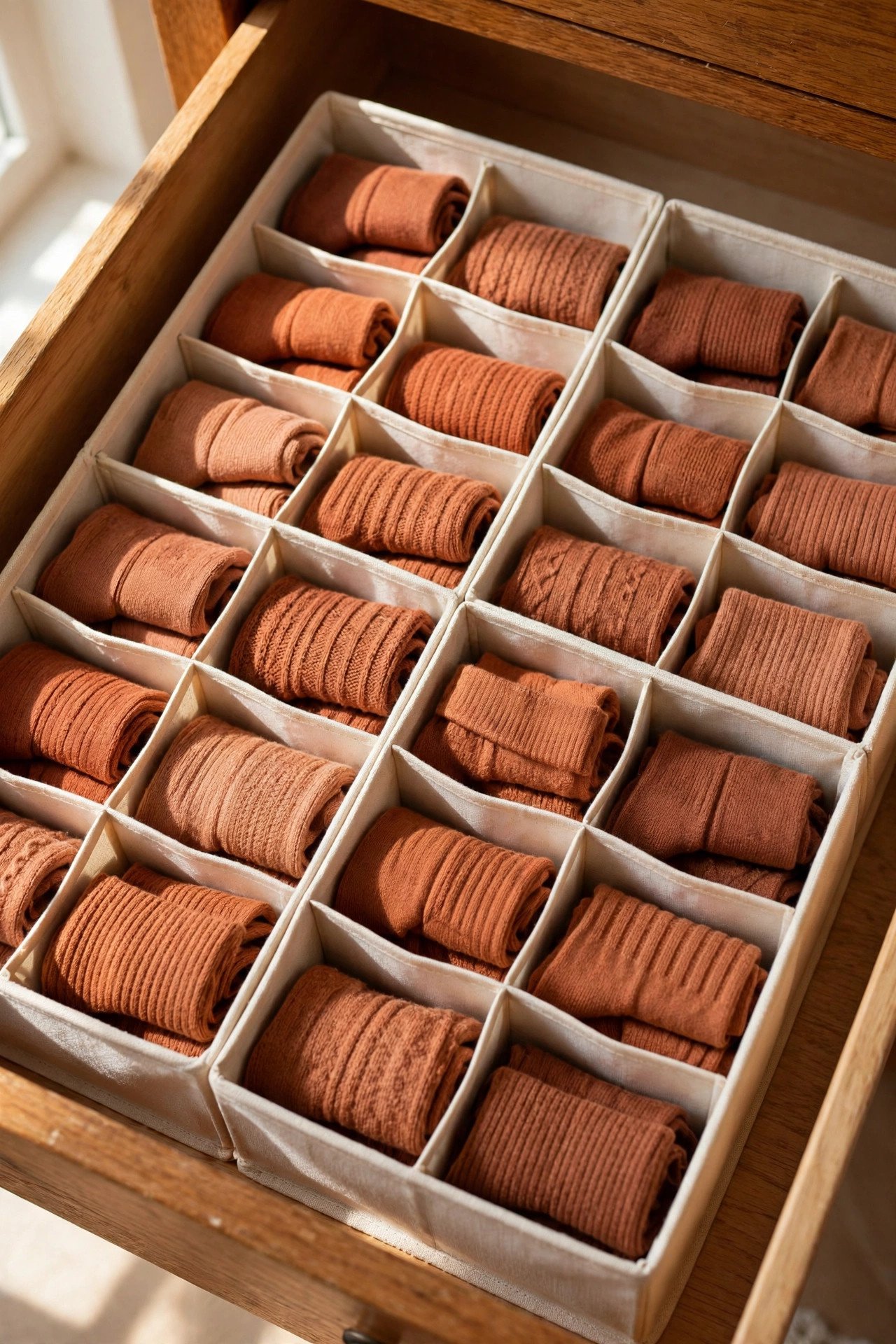
8. Sort Pairs Into Smart Storage Boxes
Fabric storage boxes with grid compartments are made for small items like socks. Each pair gets its own cell, so pairs never mix and the drawer looks like a boutique display. The boxes lift out for cleaning, which keeps the drawer fresh.
Pick a box with the right cell size for your socks: small grids for ankle socks, larger ones for thick crews. Foldable boxes are easy to store flat if you ever change systems. Fill every cell so the grid holds its shape.
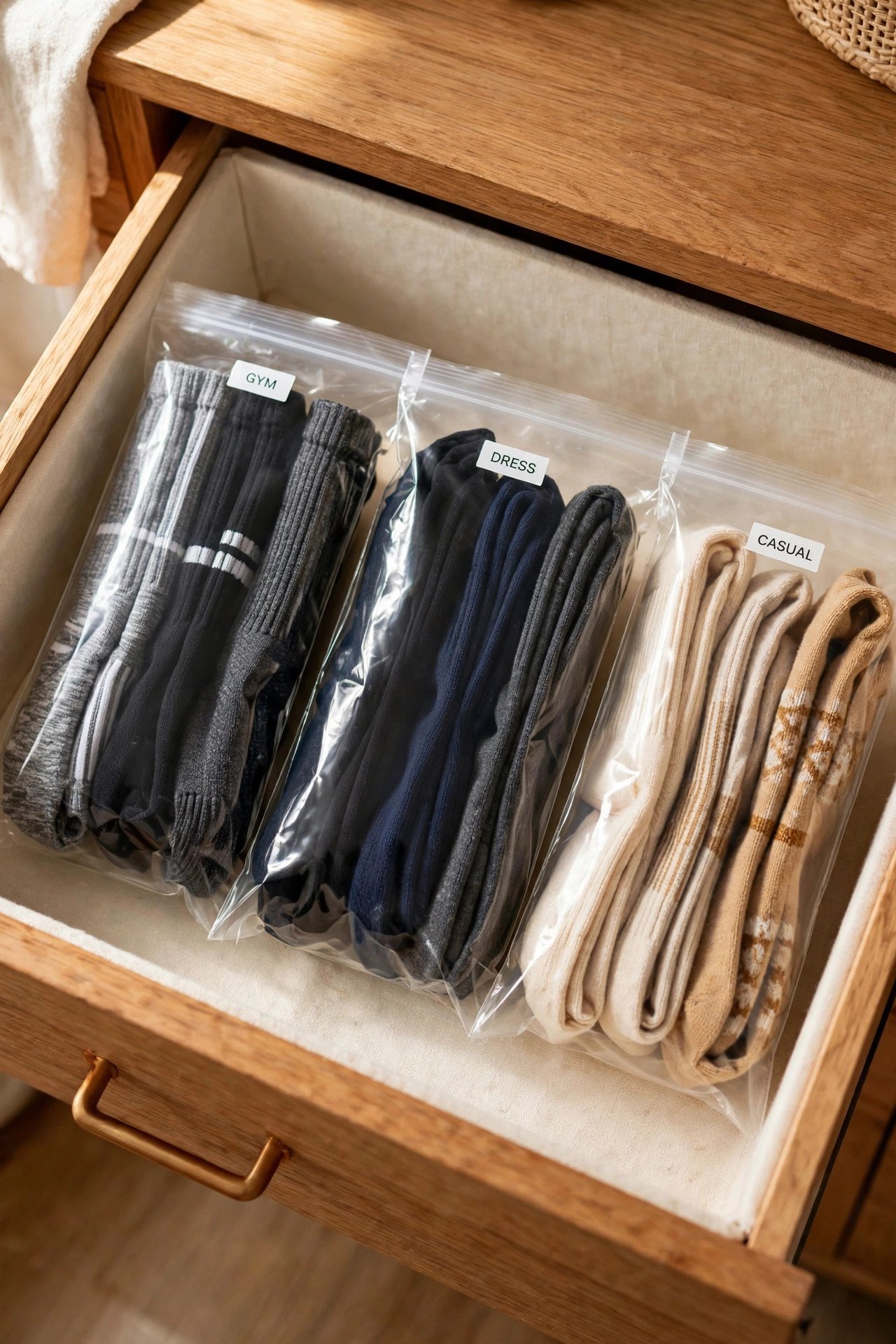
9. Use Clear Bags for Instant Visibility
Clear zip bags let you see exactly what is inside without opening anything. Group pairs by activity — gym socks in one bag, dress socks in another — and line the bags upright in the drawer. You will grab the right bag in seconds.
Choose sturdy bags that can handle daily handling, and press the air out before sealing so they stay slim. A small printed label on each bag keeps the system clear for the whole family. This method also works beautifully for travel packing.
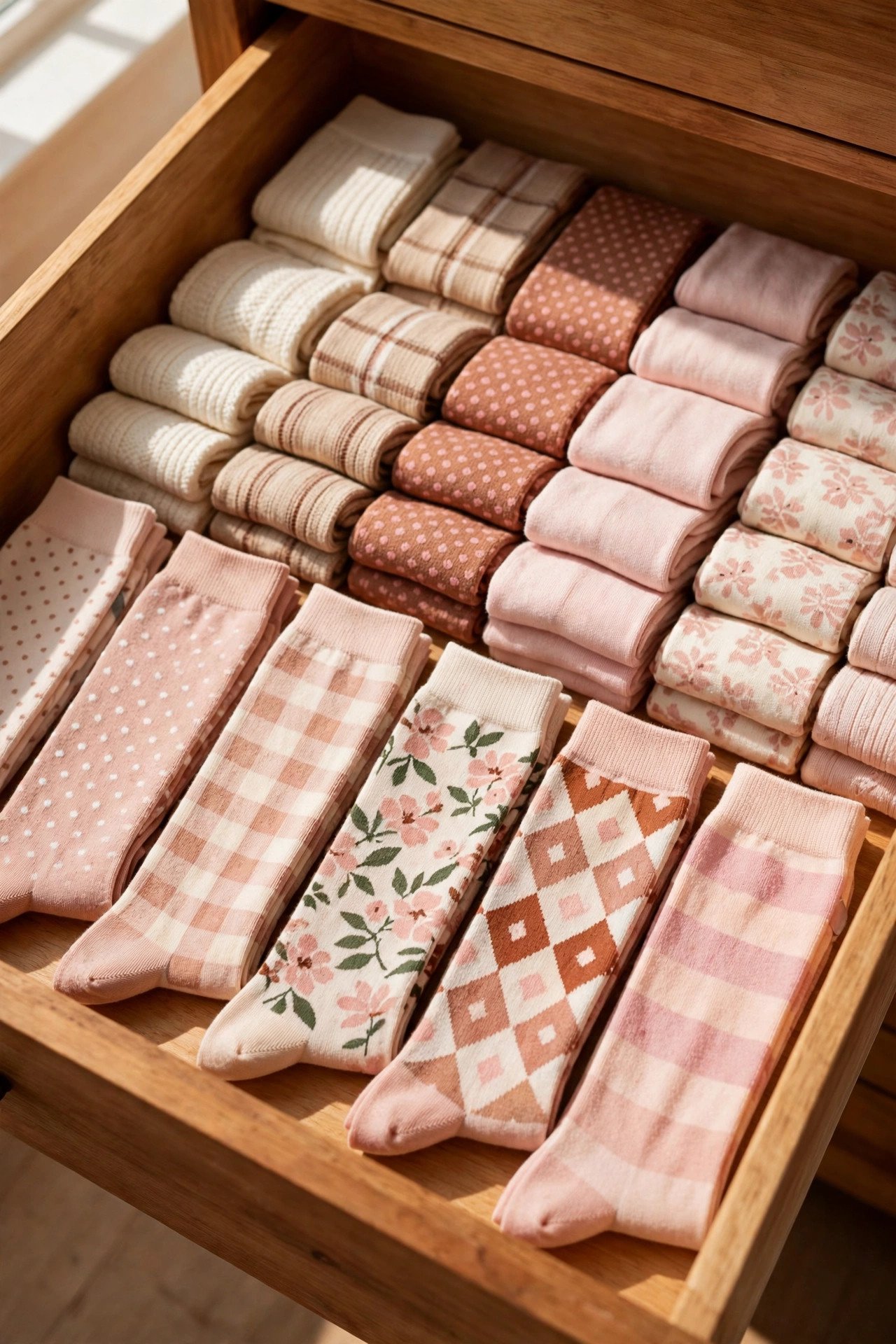
10. Make the Drawer a Mini Sock Display
There is no rule that says a drawer has to look boring. Arrange your prettiest patterned pairs face-up in the front rows, like a tiny shop window. Opening the drawer becomes a small daily pleasure instead of a chore.
Rotate which pairs get the front row each week so every sock gets its moment. Keep the display rows file-folded so patterns show clearly. A drawer you enjoy looking at is a drawer you will naturally keep tidy.
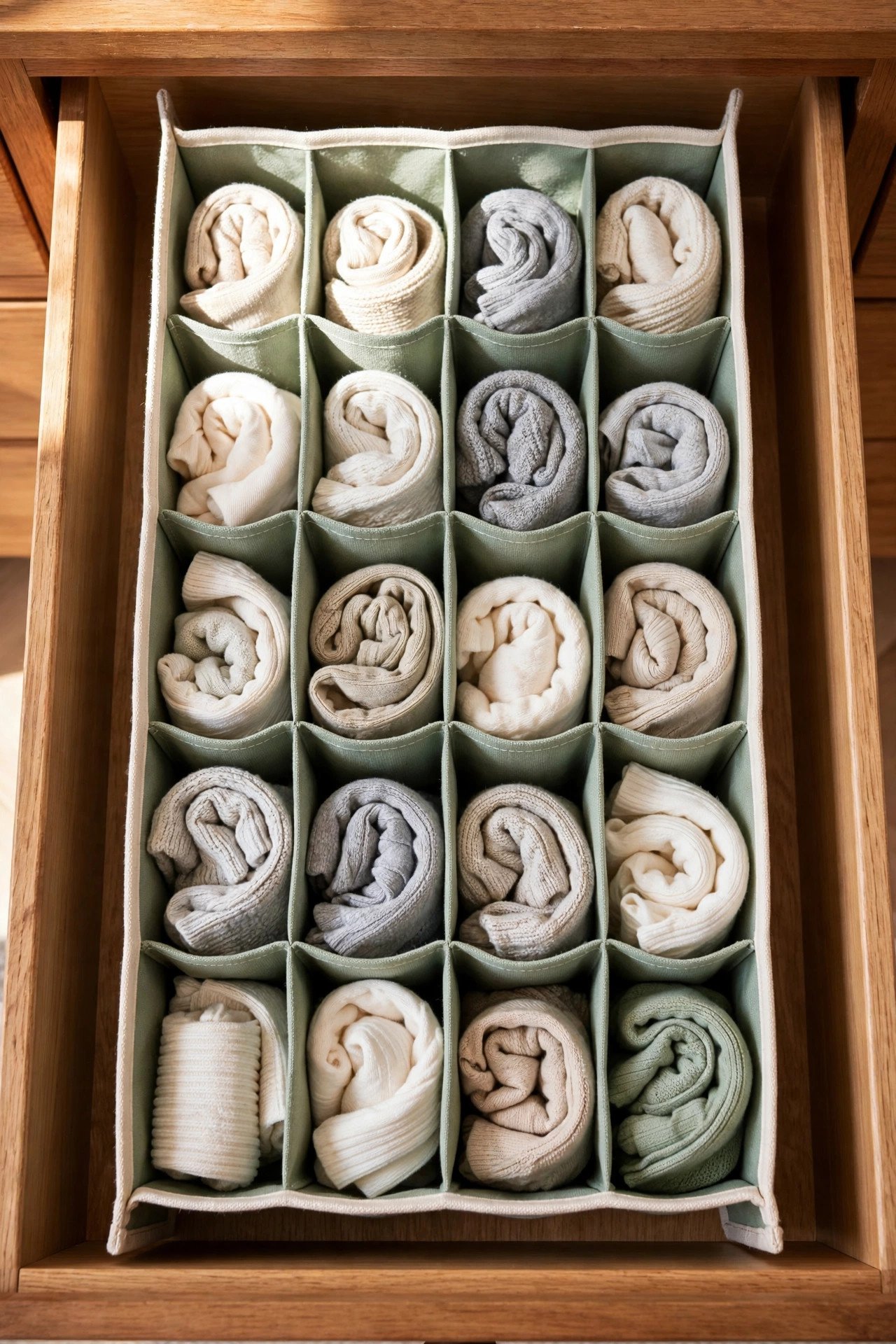
11. Store Socks Vertically to Save Space
When drawer space is tight, think vertical. Slim stackable trays or upright fabric organizers use the full height of a deep drawer. You fit more pairs in the same footprint because nothing stacks flat and hides.
Place the vertical organizer at the back of the drawer and keep daily pairs in front. Roll rather than fold for the vertical slots, since rolled pairs slide in and out smoothly. This trick can double the capacity of a shallow dresser drawer.
12. Try a Sock Subscription for Fresh Pairs
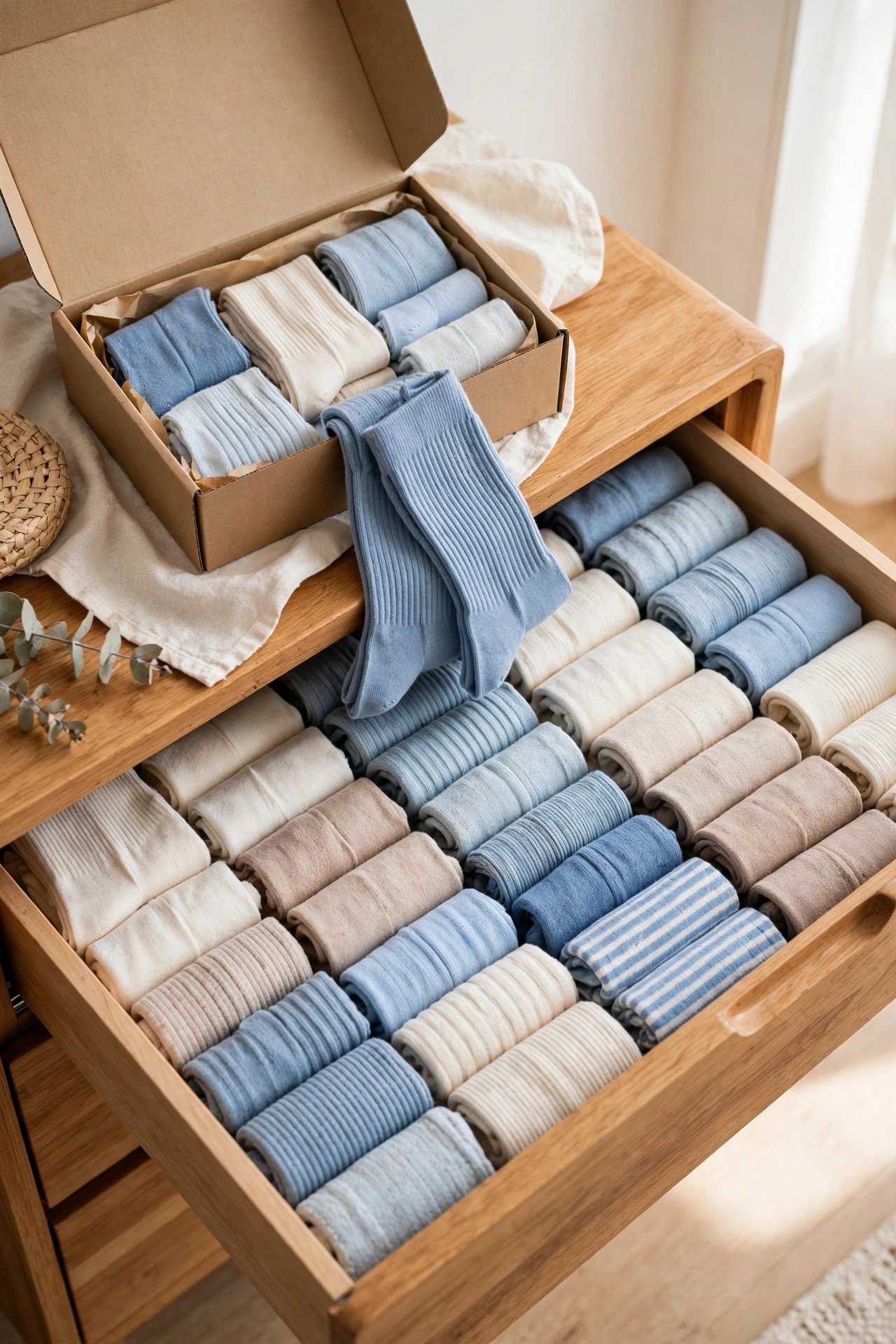
A sock subscription delivers fresh pairs on a schedule, which quietly solves the worn-out-sock problem. New pairs arrive before the old ones fall apart, so your drawer always holds socks in good shape. Many services let you pick colors and styles.
When a delivery arrives, retire the most worn pairs right away so the drawer does not overflow. Keep the subscription modest — a few pairs per quarter is plenty for most people. It is an easy way to refresh the drawer without a shopping trip.
13. Label Each Section for Quick Grabbing
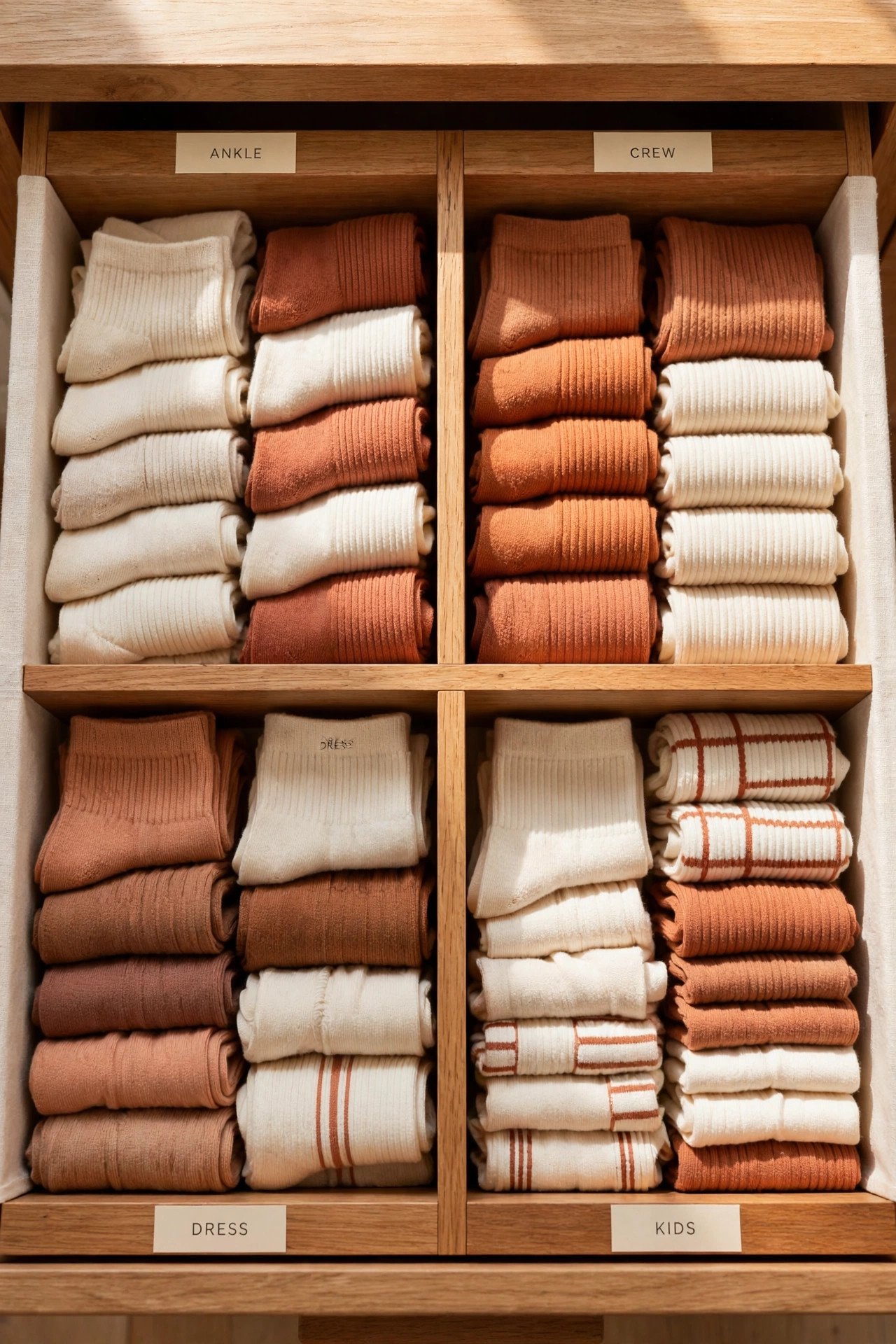
Labels are the finishing touch that makes any system stick. Small printed labels on each divider or basket — “Ankle,” “Crew,” “Dress,” “Kids” — tell everyone in the house where things belong. The system survives even when you are not the one putting laundry away.
Use a label maker or neat handwritten tags on card stock. Keep the wording short and place labels where they are visible when the drawer opens. When a section label stops matching its contents, it is a sign to re-sort.
Conclusion
A tidy sock drawer is one of the smallest upgrades you can make, and one of the most satisfying. With dividers, smart folding, and a quick monthly check, you will never dig for a matching pair again. The whole system takes an afternoon to set up and seconds a day to keep.
Start with the idea that excites you most, then add one or two more as the habit grows. Your future self, running on time with perfectly matched socks, will thank you every single morning.
Frequently Asked Questions
How do I keep sock pairs together in a drawer?
File-fold each pair into a neat rectangle and stand the pairs upright in rows, or give every pair its own cell in a grid storage box. Both methods keep pairs visible and stop singles from wandering. Dividers or small baskets add extra separation by sock type.
What is the best way to fold socks for a drawer?
The file-fold method works best for most drawers. Lay the pair flat, fold it into a compact rectangle, and stand it upright so you can see every pair at a glance. Roll thicker athletic socks instead, since rolling keeps bulky pairs slim enough for vertical slots.
How do I organize socks by color?
Group socks into color families, such as whites, brights, and darks, and give each family its own drawer section. Arranging them in a light-to-dark gradient looks tidy and helps you spot the pair you need instantly. Wash darks with color catchers so the shades stay true.
How often should I declutter my sock drawer?
Do a quick sock check once a month. Pull out stretched, holey, or permanently single socks and move them to a rag bin or upcycle pouch. The whole task takes only a few minutes and keeps the drawer from slowly filling with pairs you never wear.
Should I store seasonal socks separately?
Yes, storing off-season socks in a labeled bin frees a surprising amount of drawer space. Keep only the current season in the drawer and swap the bins when the weather changes. Wash the outgoing pairs before you pack them away so they are fresh next season.

Hi, I’m Emily! I turn messy corners into cozy, organized spots. DreamNestDecor is where I share simple, practical home ideas — decor, organization, and small-space solutions that work in real life, not just in photos. Every idea here is carefully researched before it’s shared.