1. Cover One Wall With a Living Plant Wall
A living plant wall turns a blank wall into the green heart of the room. Mounted planters, pocket panels, or a grid of small pots hold ferns, pothos, and philodendrons at eye level, so the wall itself becomes the garden. The vertical layout saves every inch of floor space for walkways and work areas.Choose plants with similar watering needs for each row so one watering routine suits the whole wall. A drip tray along the bottom protects the floor, and a small fan keeps air moving through the leaves. For more ways to grow upward instead of outward, these vertical garden ideas will help you plan a wall that stays lush all year.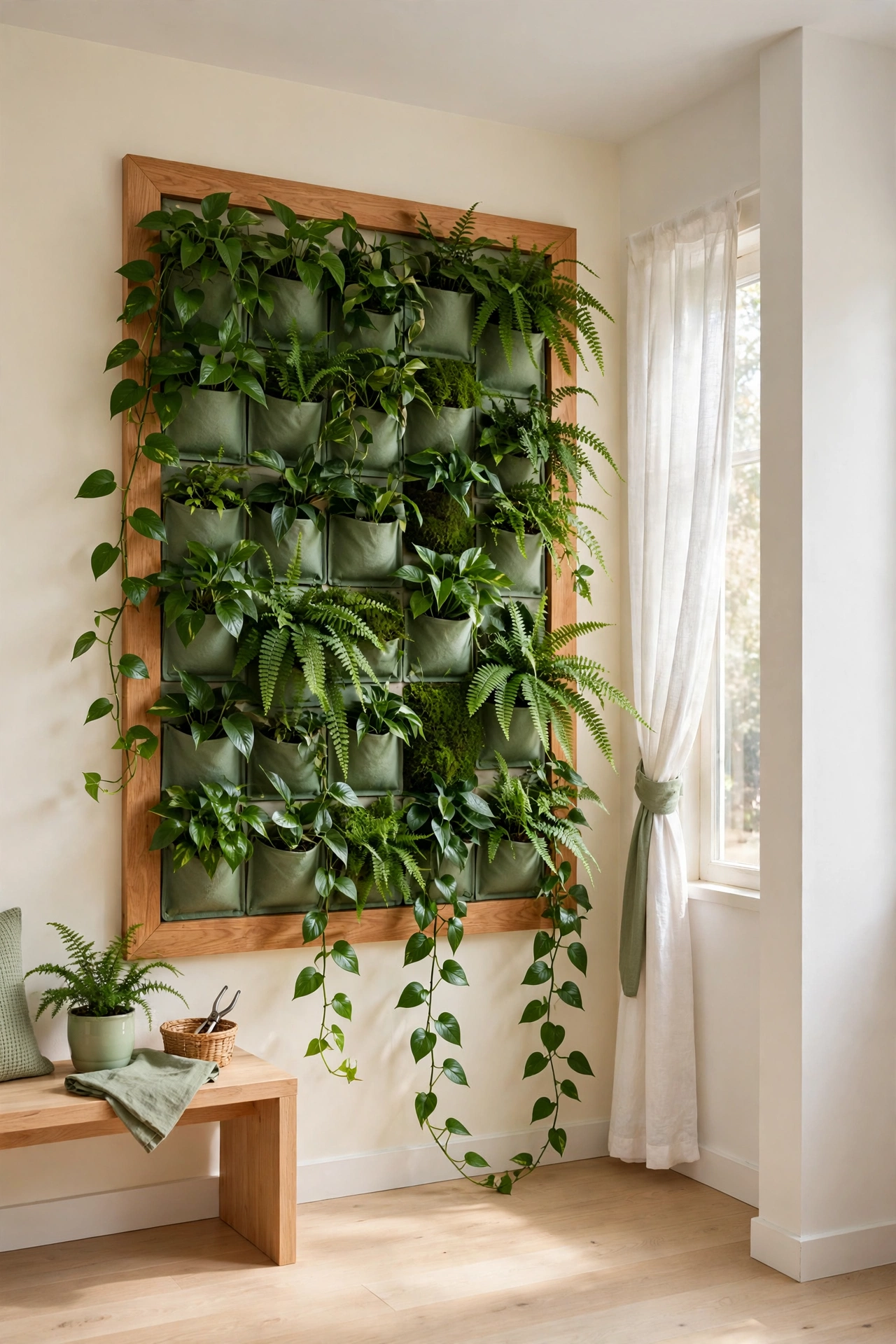
2. Arrange Tiered Shelves by Light Level
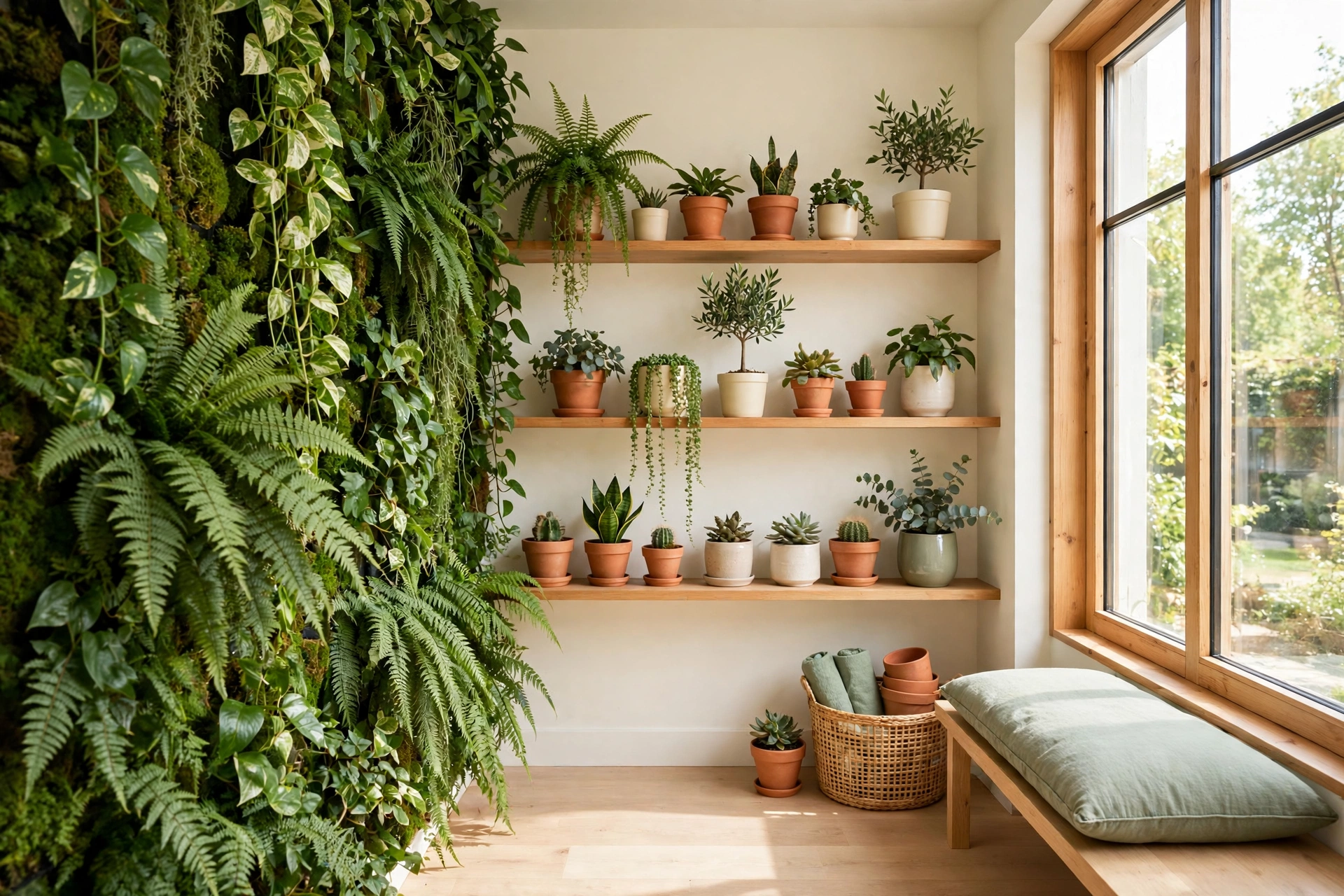
Tiered shelves let you stack dozens of plants into one sunny wall without crowding the floor. Place sun lovers on the top shelves where light is strongest, and shade tolerant plants like snake plants and peace lilies on the lower tiers. Each plant gets the light it needs, and the whole wall reads like a green staircase.Use open wooden shelving with slatted boards so light and air reach every level. Leave a little space between pots so leaves have room to grow and you can reach each plant for watering. Label each shelf by light level if you share the room with family, so everyone knows where each plant belongs.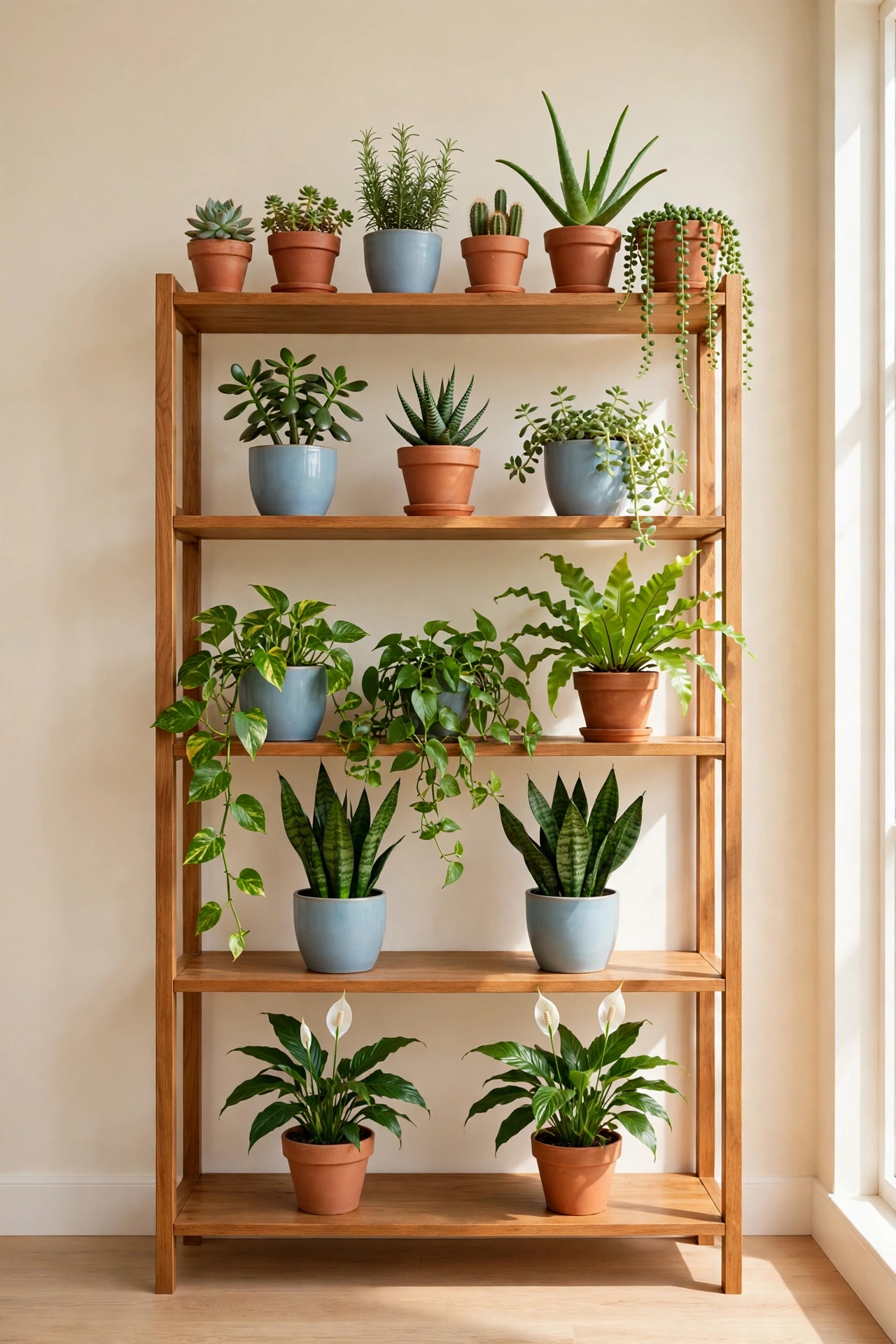
3. Set Up a Potting Corner With a Work Bench
Every indoor garden needs a place for messy work, and a potting corner keeps soil and repotting away from your clean plant displays. A sturdy work bench with a wipeable top gives you room to repot, mix soil, and trim roots, while a shelf below holds bags of potting mix, empty pots, and hand tools.Add a small bin for spent soil and a brush for quick cleanups, so the corner stays tidy after every session. Keep a watering can filled and ready on the bench, and hang pruning shears and twine on hooks above it. When potting has a fixed home, you will repot on time instead of putting it off.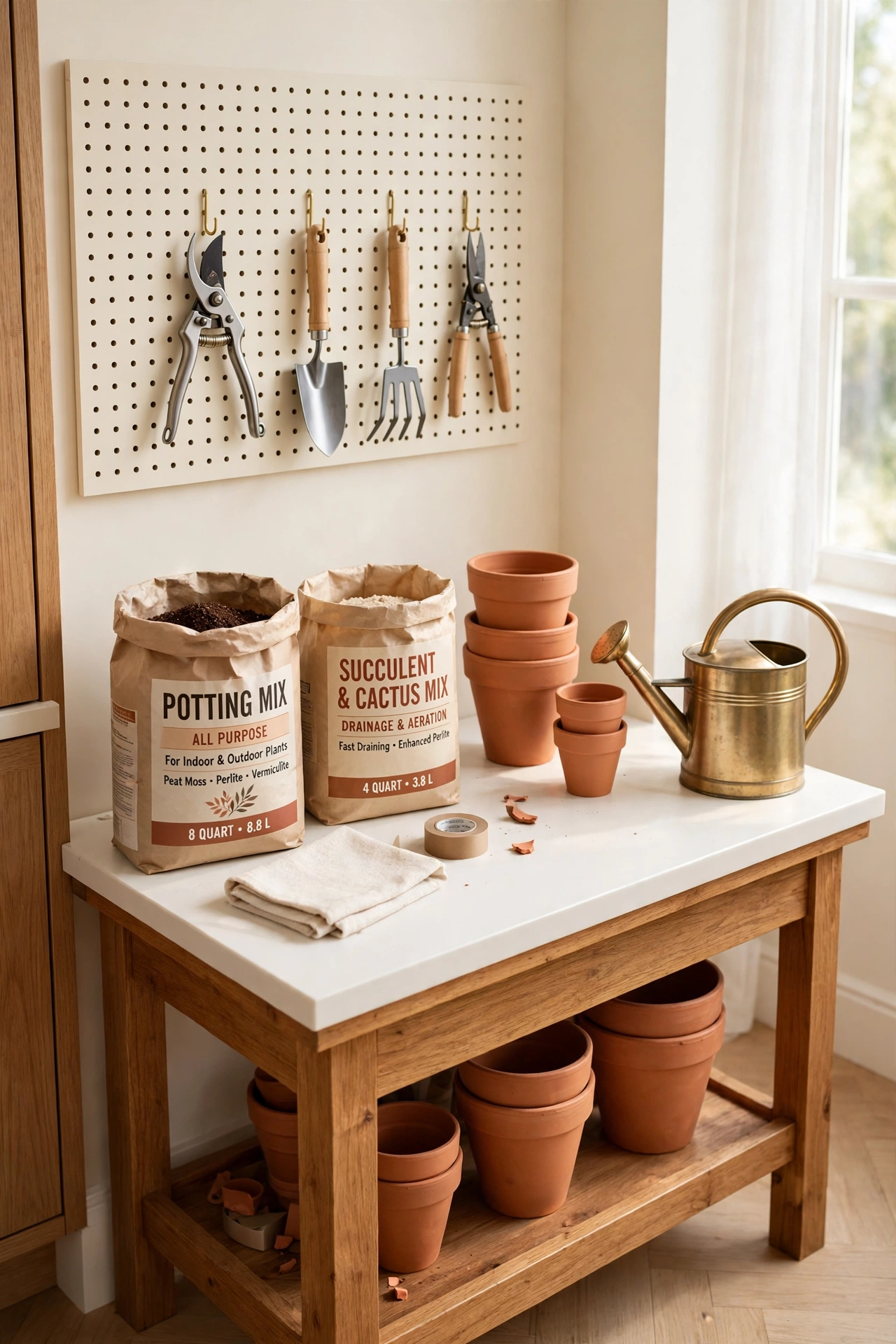
4. Create a Humidity Zone for Tropical Plants
Tropical plants like calatheas, ferns, and orchids love moist air, and a dedicated humidity zone gives them the steamy microclimate they crave. Group these plants close together on a pebble tray, add a small humidifier, and the moisture they release helps the whole group stay happy.Place the humidity zone away from heating vents and drafty doors, since dry moving air undoes all your work. A simple humidity gauge on the wall tells you when to run the humidifier, and grouping the plants tightly means you only humidify one corner instead of the whole room.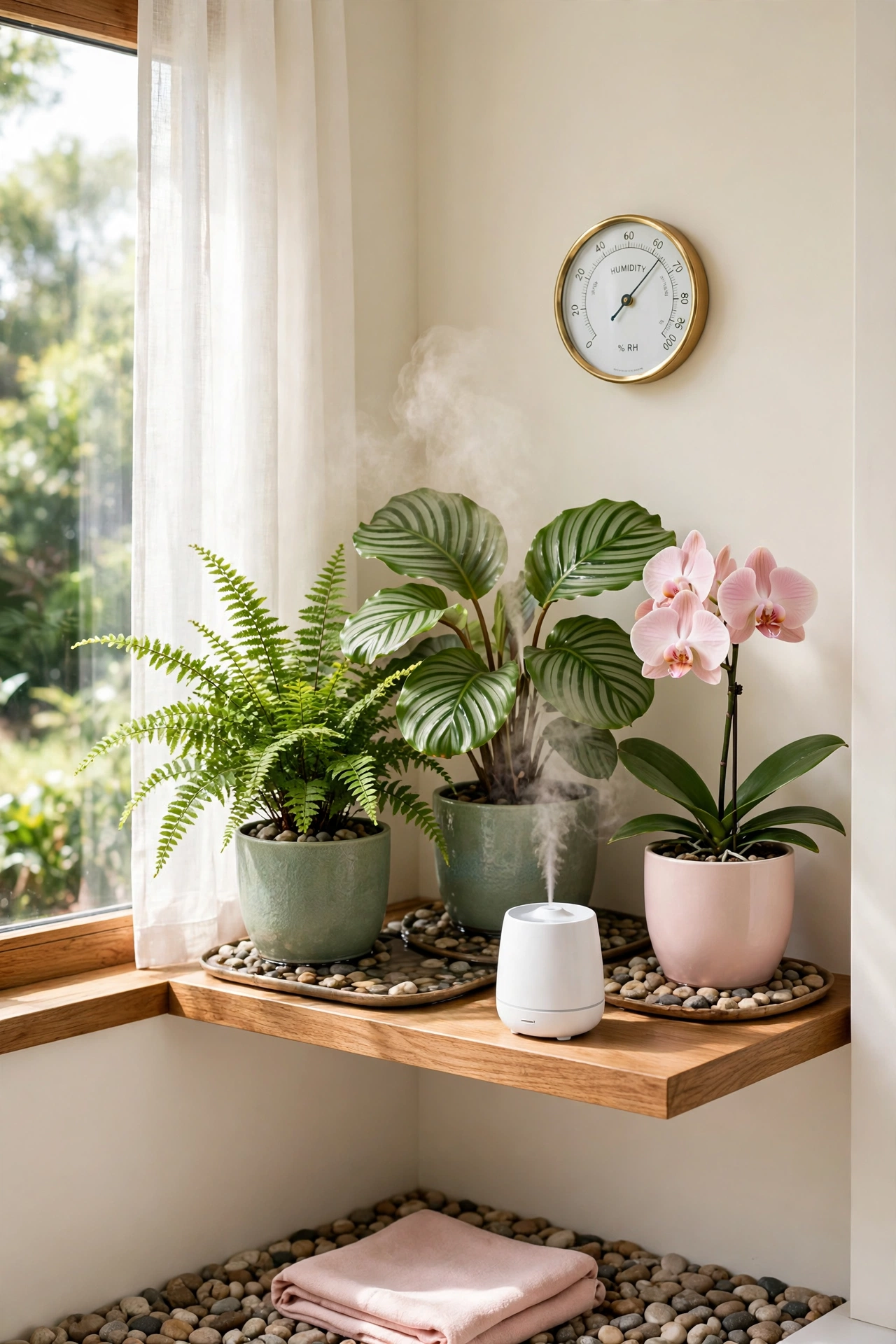
5. Anchor the Room With a Tall Indoor Tree
A tall indoor tree gives a small garden room the same structure a large tree gives a backyard. A fiddle leaf fig, olive tree, or majesty palm in a heavy floor pot draws the eye upward and makes the ceiling feel higher. The tree becomes the anchor that every smaller plant arranges itself around.Place the tree in the brightest corner that has room for its canopy to spread, and rotate the pot a quarter turn each week so it grows evenly. Underplant the base with low trailers like creeping fig to hide bare soil and finish the look. One strong tree can make a whole room feel like a garden instead of a collection of pots.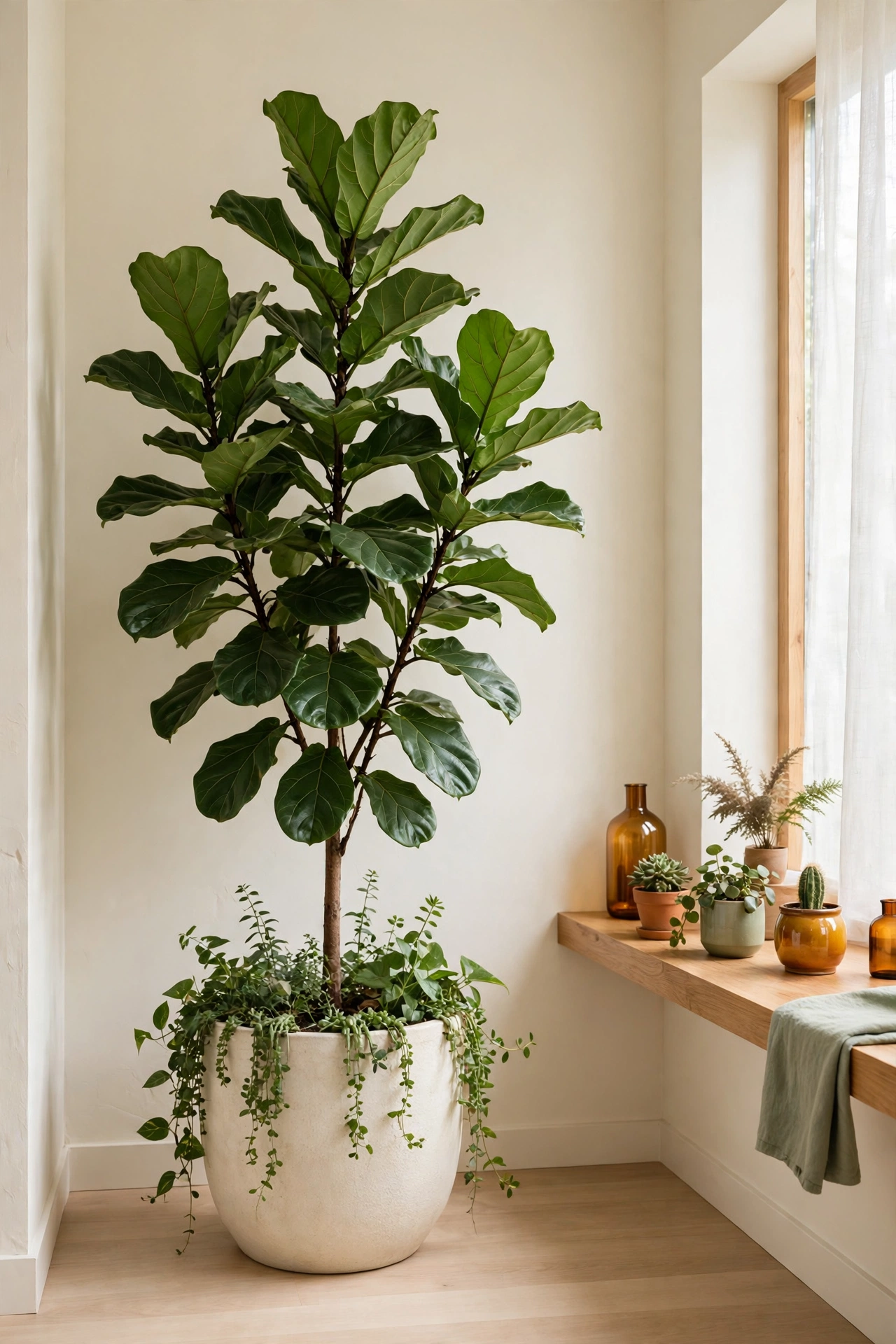
6. Grow a Culinary Herb Wall Near the Kitchen
A culinary herb wall puts fresh basil, mint, parsley, and thyme within arm’s reach of your cooking. Mounted rows of small labeled pots on the wall closest to the kitchen door turn a plain wall into a living pantry, and snipping herbs for dinner takes seconds instead of a trip outside.Give herbs the brightest spot you can spare, since most kitchen herbs love strong light. Label each pot clearly and harvest from the top down so plants stay bushy instead of leggy. If you enjoy growing food at home, these herb spiral garden ideas offer a beautiful outdoor companion project for the herbs that outgrow their indoor pots.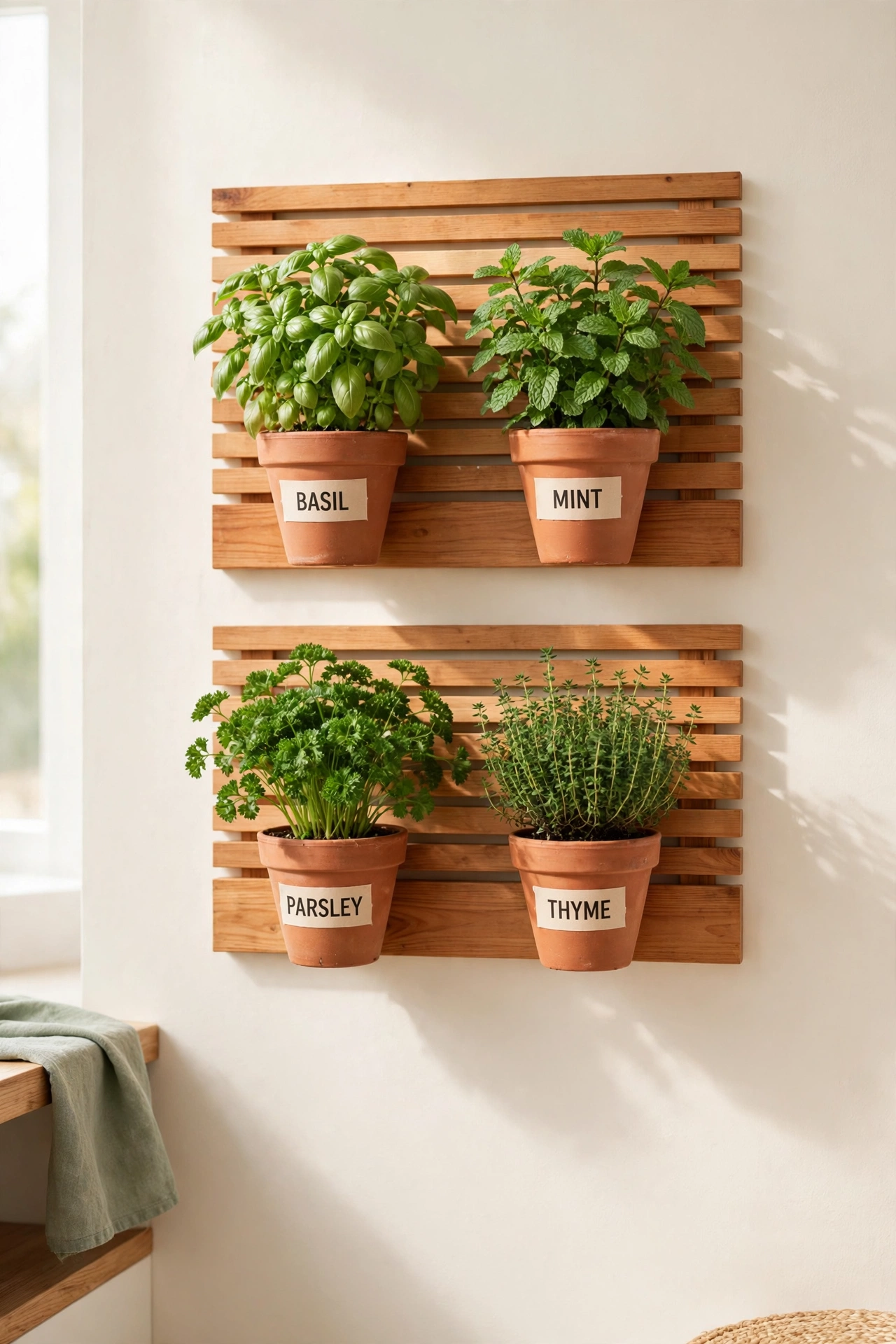
7. Hang a Canopy of Trailing Plants From the Ceiling
Trailing plants hung from the ceiling turn empty air into garden space. Pothos, string of pearls, and spider plants spill from hanging planters in soft green curtains, drawing the eye upward and leaving shelves and floors free for other plants. The canopy effect makes the room feel lush from the moment you walk in.Hang planters from sturdy ceiling hooks rated for the weight of a watered pot, and vary the hanging heights so the canopy looks layered instead of flat. Use a long-spout watering can or lower the planters on pulley hooks for watering day. Keep the walkway clear by hanging the longest trailers near the walls.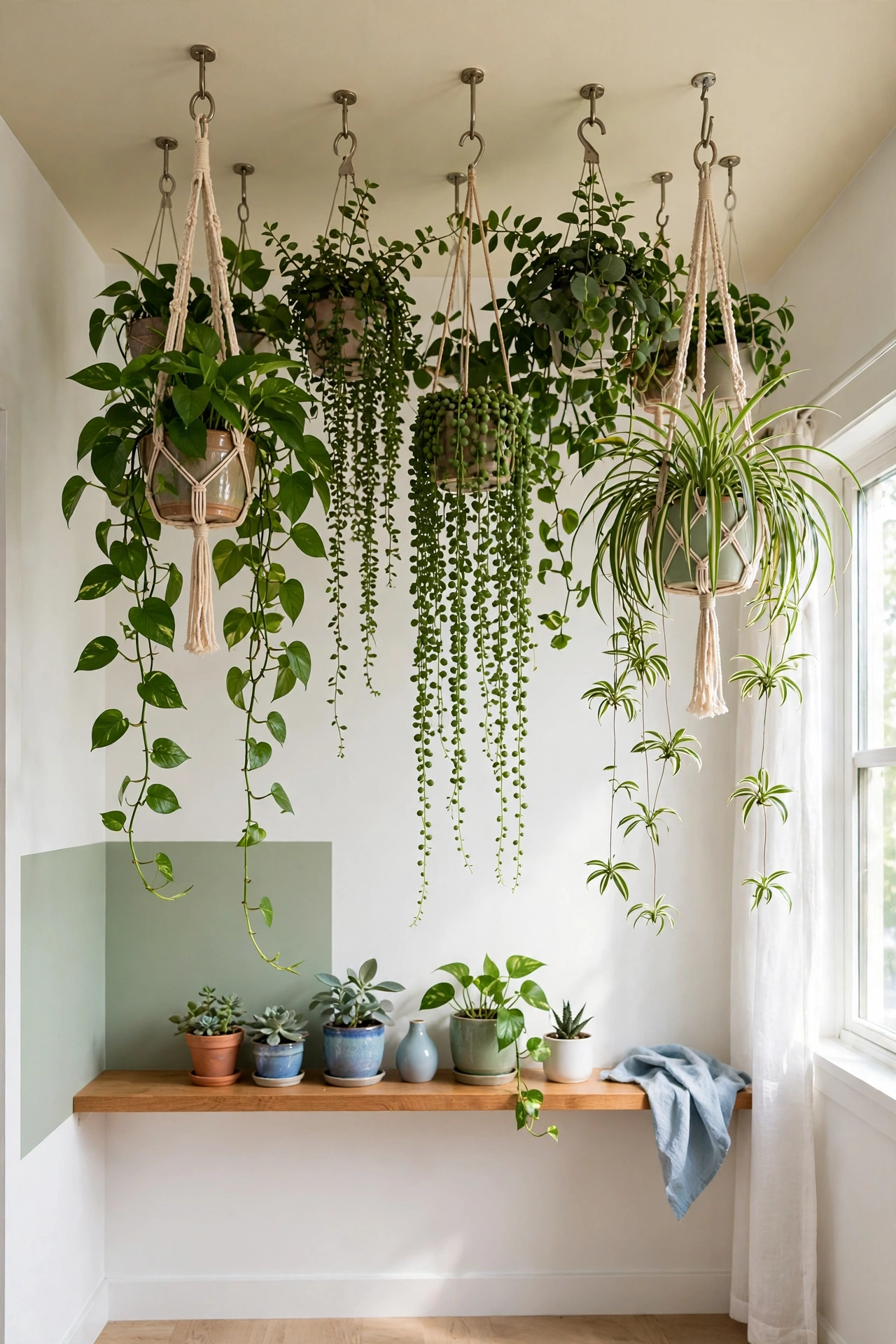
8. Divide the Room Into Bright, Medium, and Low Light Zones
The smartest garden rooms are planned around light, not around furniture. Map the room into three zones: a bright zone by the sunniest window, a medium zone a few feet back, and a low light zone in the far corners. Each plant then lives in the zone that matches its label, and guessing disappears.Use a light meter app on your phone to check each zone before you place a single pot, and mark the zones with small floor decals or a painted border until the layout feels natural. This zoning habit prevents sunburned leaves and stretching stems. If your brightest room has generous glass, these small sunroom layout ideas will help you use that light wisely.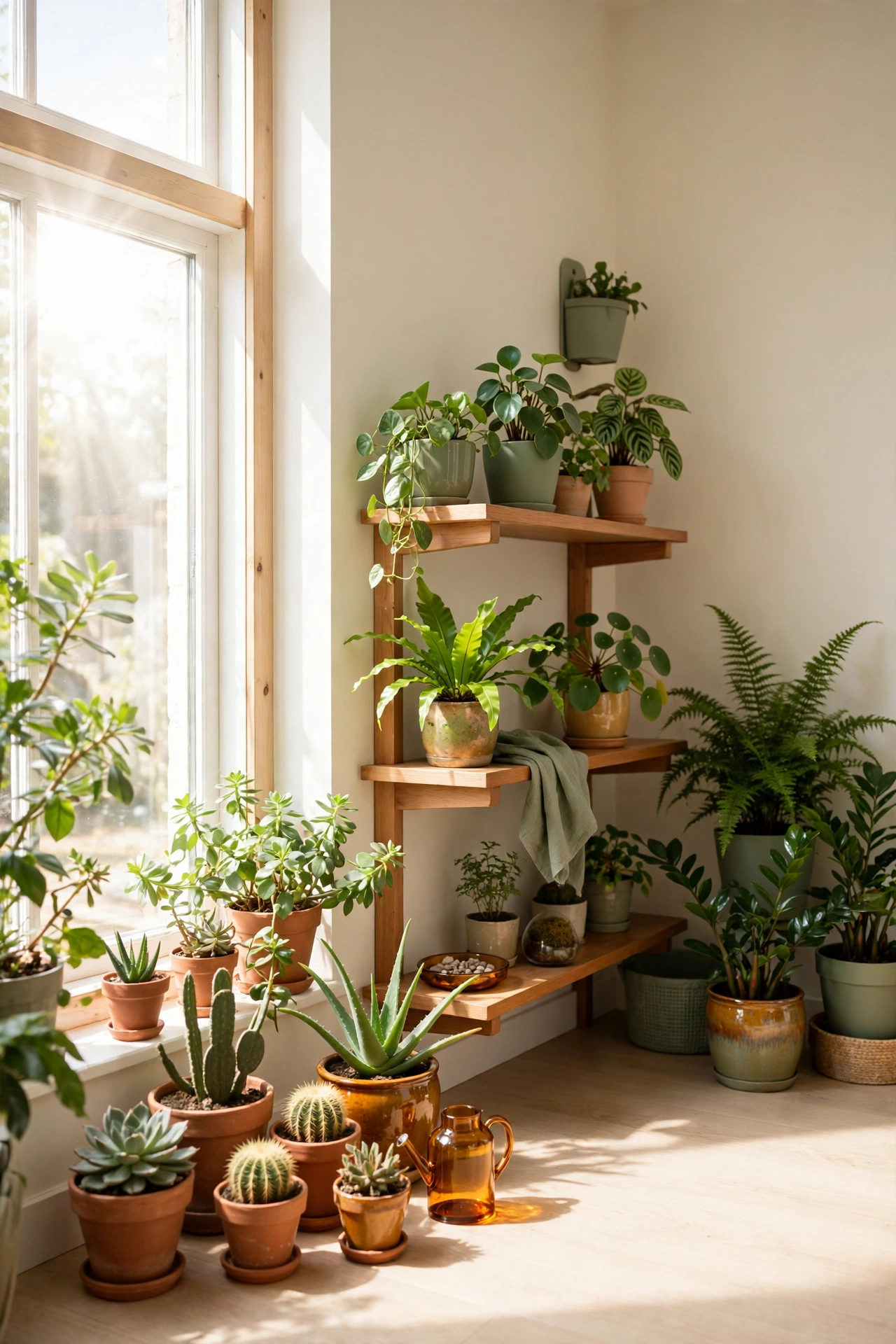
9. Keep a Propagation Station for Cuttings and Seedlings
A propagation station is the nursery of your indoor garden, where cuttings root in water and seedlings grow strong before they join the main displays. A narrow shelf with glass jars, a seed tray, and a small grow light keeps every baby plant visible and easy to check at a glance.Label each jar with the plant name and the date you took the cutting, so you can track which ones root fastest. Change the water weekly and move rooted cuttings into small pots of fresh mix as soon as roots reach a few inches. A tidy station turns propagation from a cluttered windowsill habit into a real system.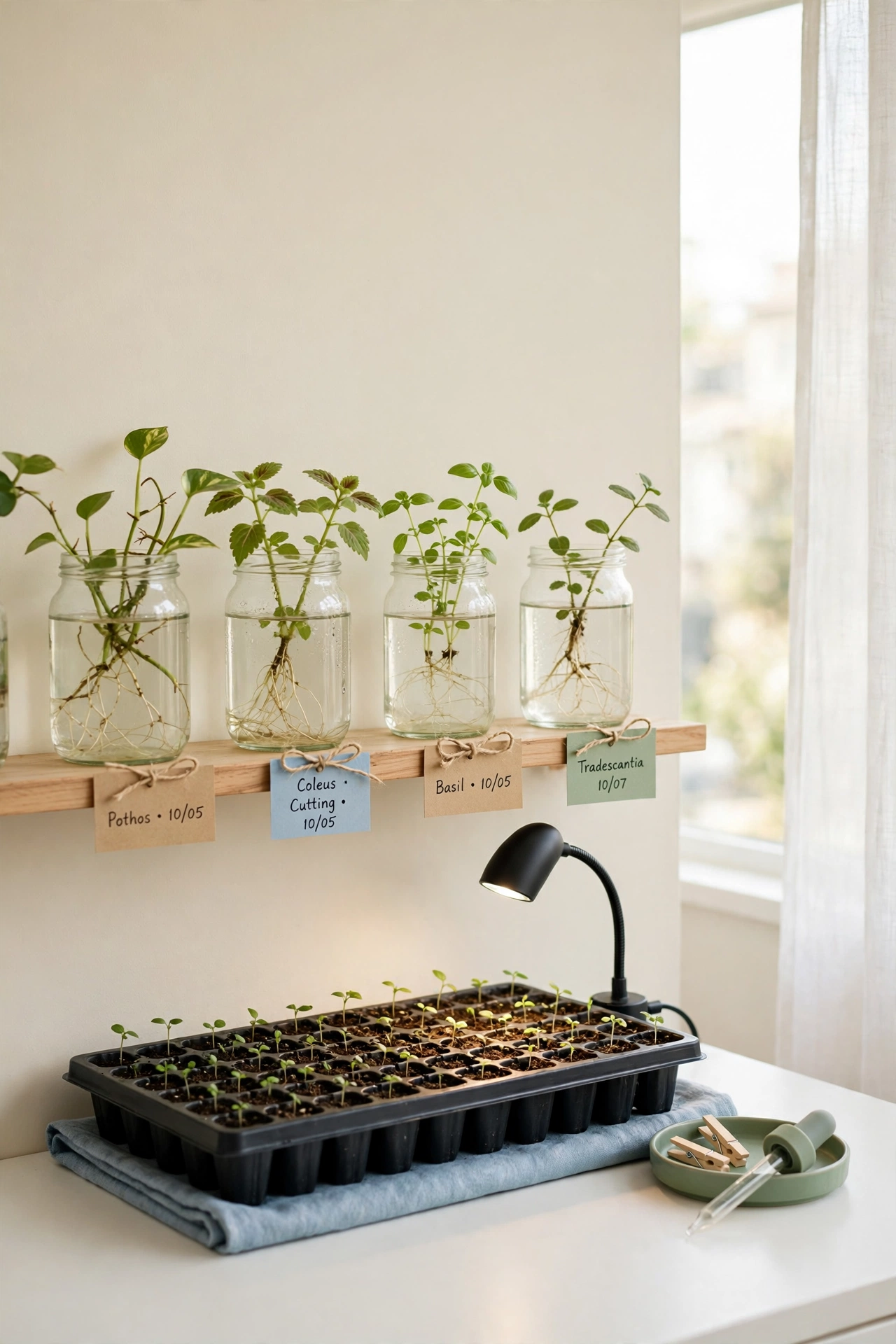
10. Display Tender Plants in a Glass-Front Cabinet
A glass-front cabinet works like a miniature greenhouse inside your garden room. Tender plants that need steady warmth and humidity, like orchids and young ferns, thrive behind glass doors that hold moisture in and keep drafts out. The cabinet also turns your most delicate plants into a beautiful display.Fit the cabinet with a small fan and a strip of grow lights, and add a humidity gauge so you can see conditions without opening the doors. Keep the shelves clean and wipe the glass often, since a spotless cabinet shows off the plants inside. For a larger version of this idea outdoors, these backyard greenhouse ideas show how the same principles scale up.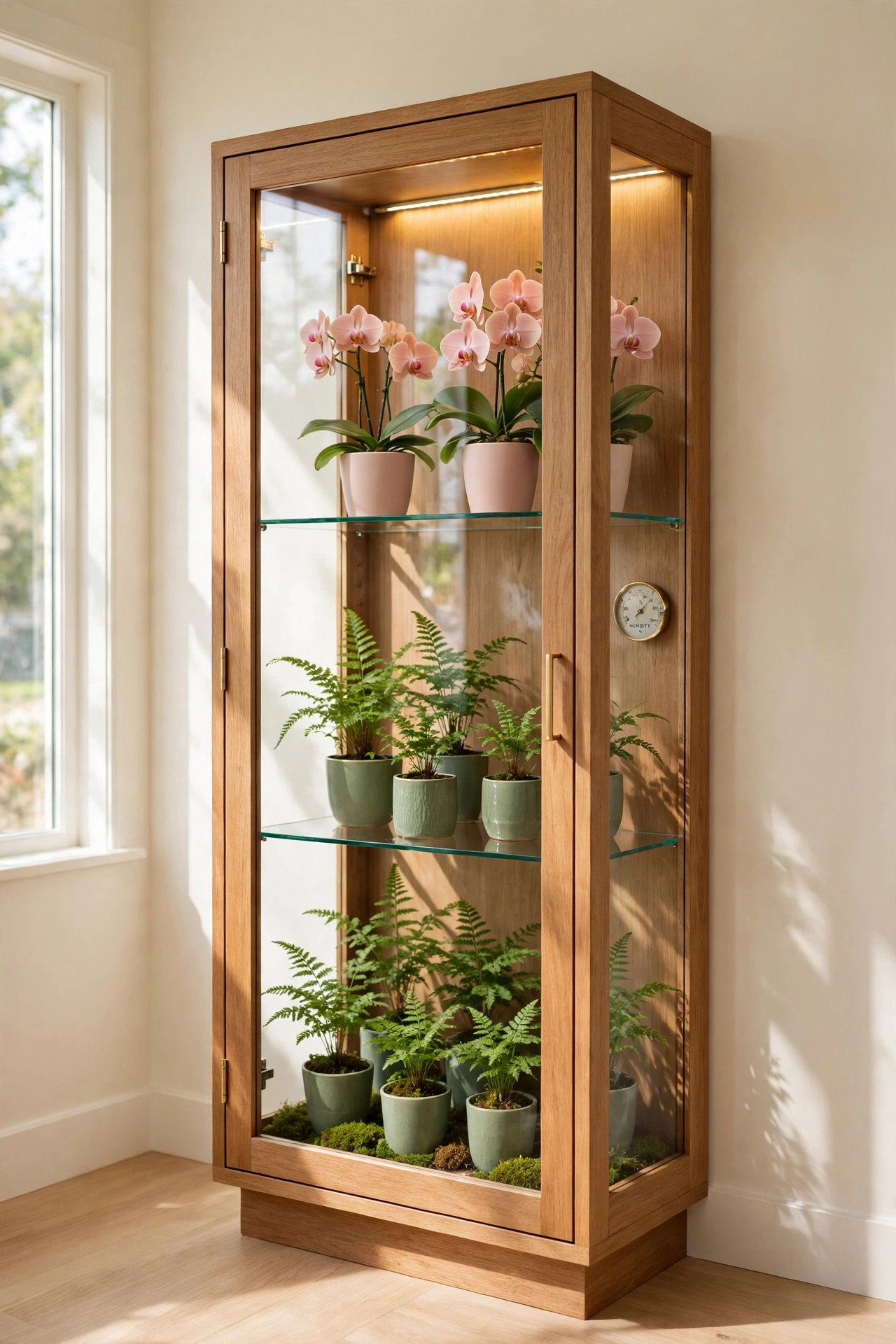
11. Use Rolling Carts to Chase the Light
Rolling carts let your plants follow the sun through the seasons without heavy lifting. A three-tier cart loaded with pots wheels to the brightest window in winter and rolls back to a cooler spot in summer, so each plant gets ideal light all year.Choose carts with locking wheels so they stay put once parked, and add a waterproof tray on each tier to catch drips. Dedicate one cart to plants that need frequent moving, like succulents that sunburn in summer, and keep the rest of the room layout fixed. The carts double as extra surface space on watering days.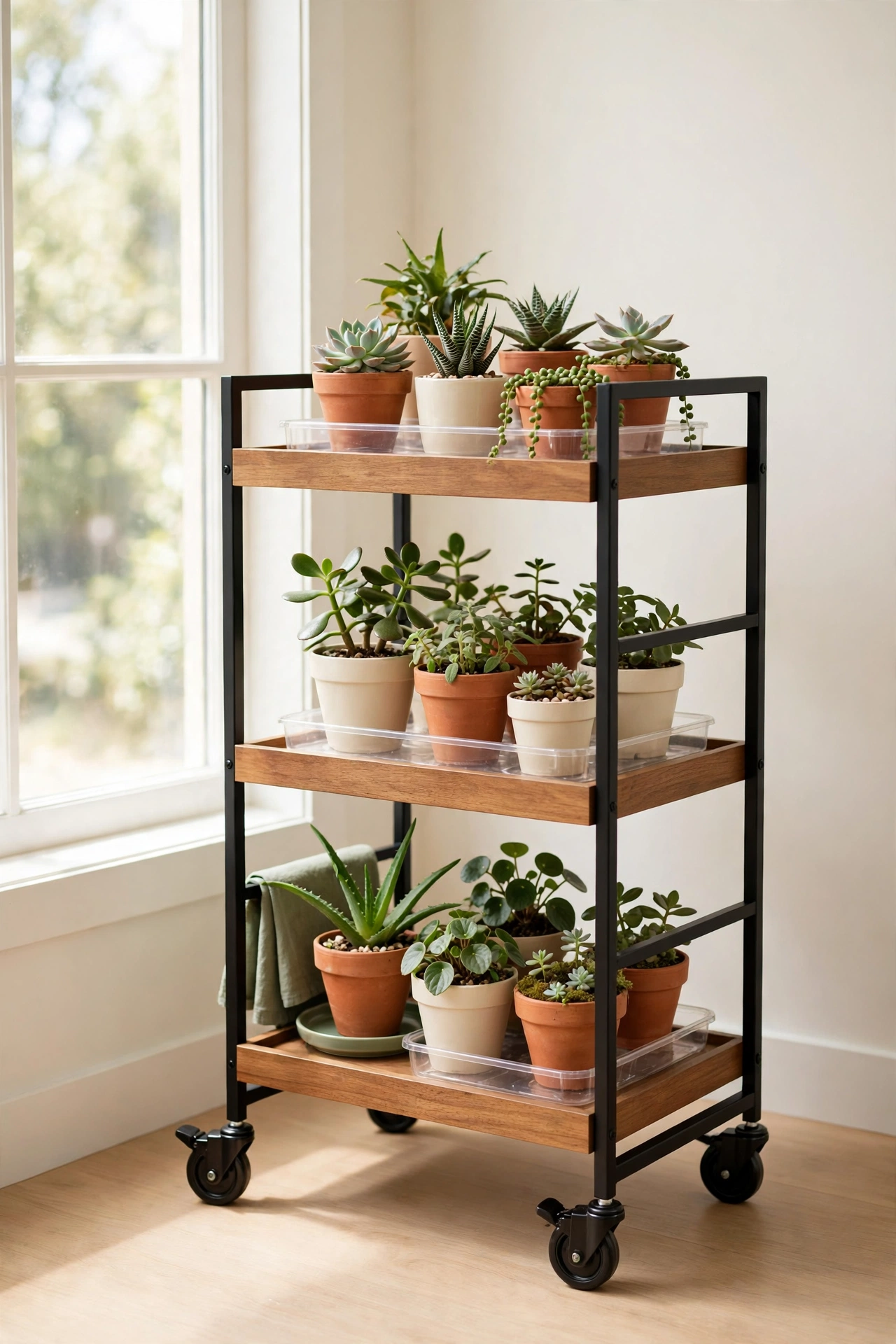
12. Build a Watering Station With Drainage
Watering dozens of plants is far easier when the room has a station built for it. A deep tray or a slatted bench over a drainage basin lets you water freely without worrying about puddles, and a shelf above holds watering cans, a spray bottle, and liquid fertilizer with printed labels.Place the station near the water source and line the floor beneath it with a waterproof mat for extra protection. Water plants in batches, let them drain fully on the slats, and return them to their spots only when the dripping stops. A fixed watering routine keeps floors dry and plants evenly watered.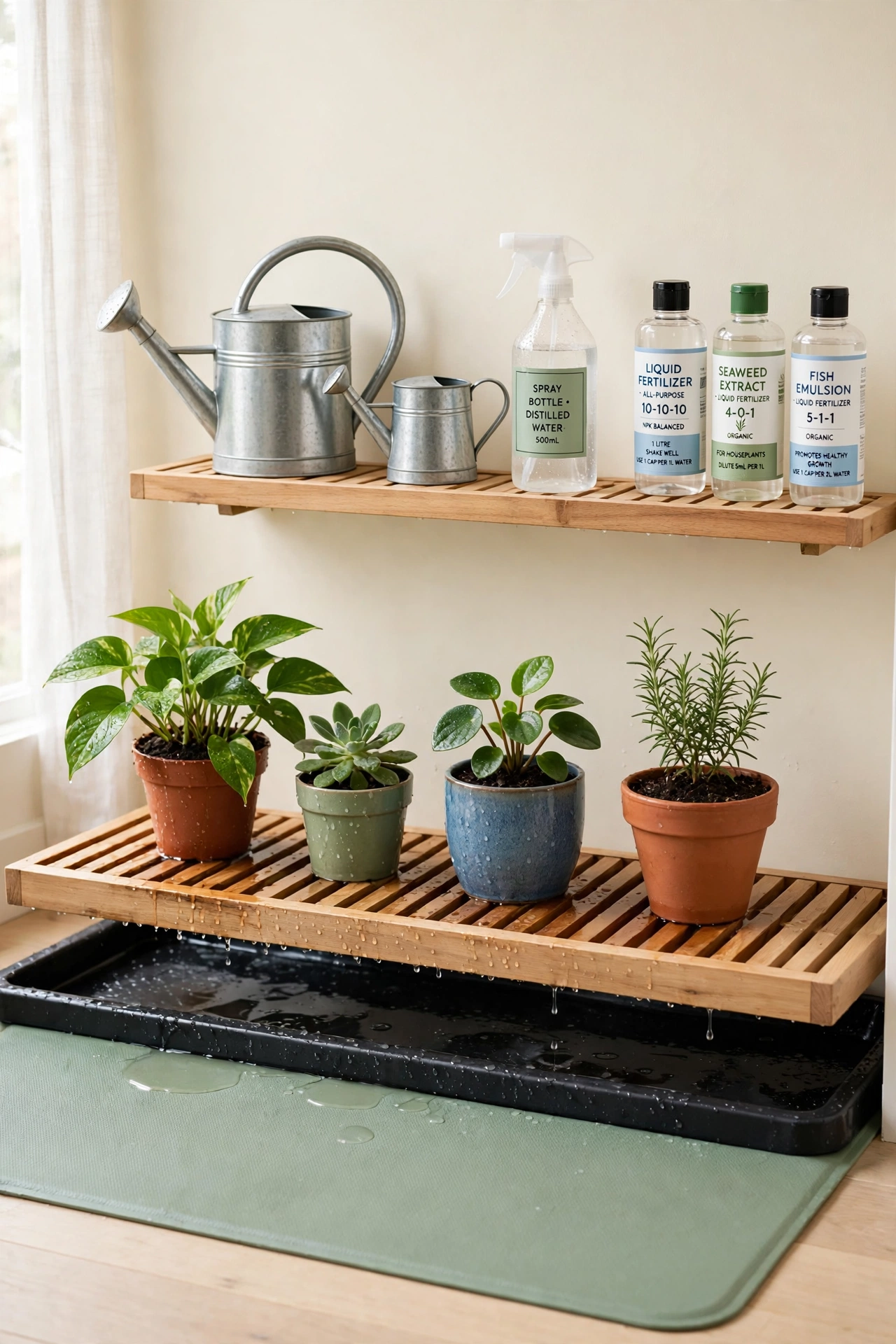
13. Fit Grow Lights Into Shelves for Dark Corners
Dark corners are wasted space in most rooms, but grow lights turn them into productive garden beds. Mount slim light bars under each shelf so every level gets even, full-spectrum light, and shade tolerant plants like pothos and ZZ plants will thrive where the sun never reaches.Set the lights on a timer for ten to twelve hours a day so plants get a steady rhythm without any daily effort from you. Keep the bars a few inches above the tallest leaves and raise them as plants grow. Dark corners fitted with lights can hold just as many healthy plants as your sunniest wall.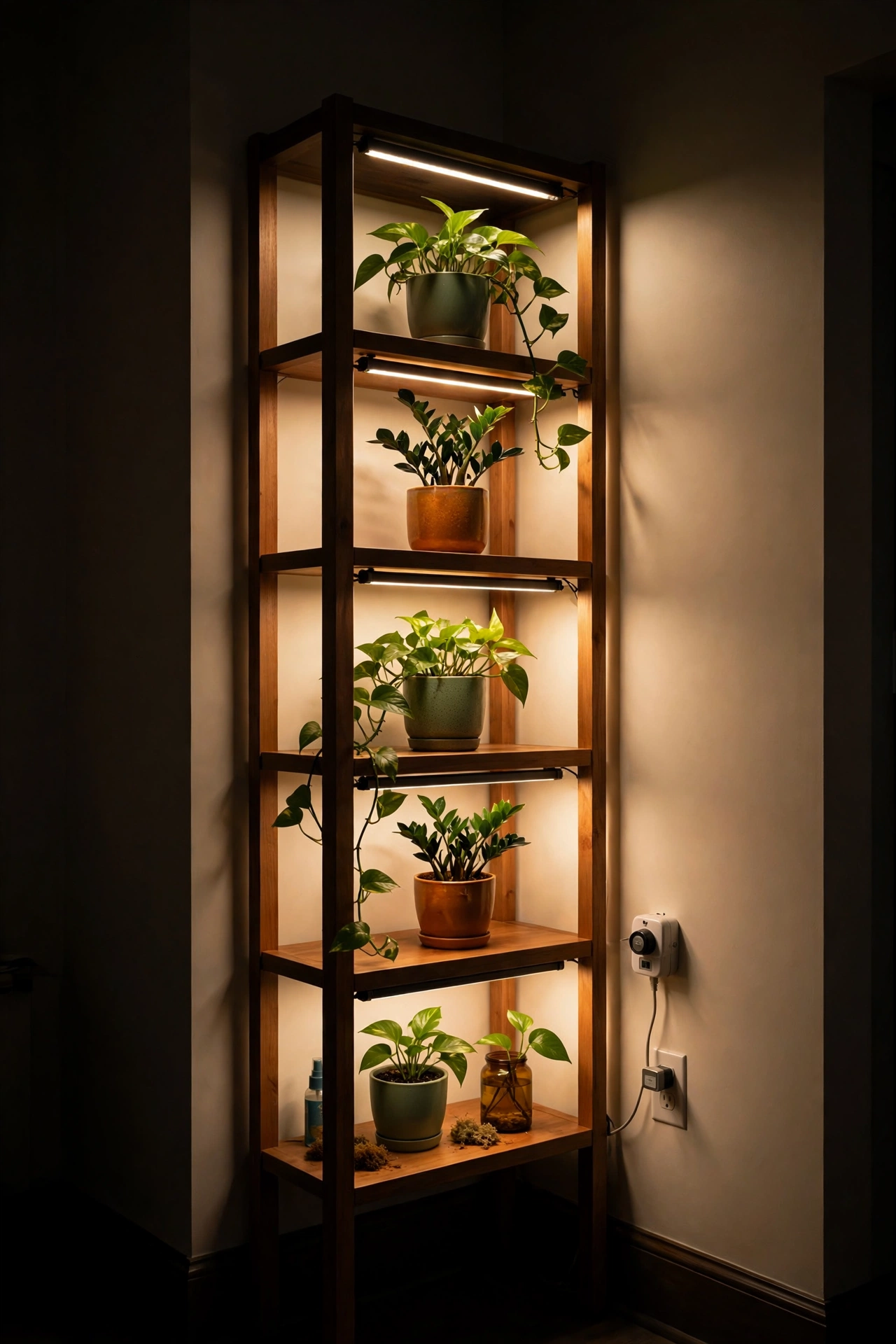
14. Lean a Ladder Shelf for Trailing Plants
A leaning ladder shelf gives trailing plants a frame to climb and spill from at the same time. The angled shelves hold pots at different depths, so vines cascade from the top rungs while bushy plants fill the wider lower shelves. The whole piece leans against one wall and takes up very little floor space.Anchor the top of the ladder to the wall for safety, especially if the shelves hold heavy ceramic pots. Train one or two climbers up the sides with soft twine, and let the rest trail freely. A ladder shelf adds height and movement to a flat wall of plants.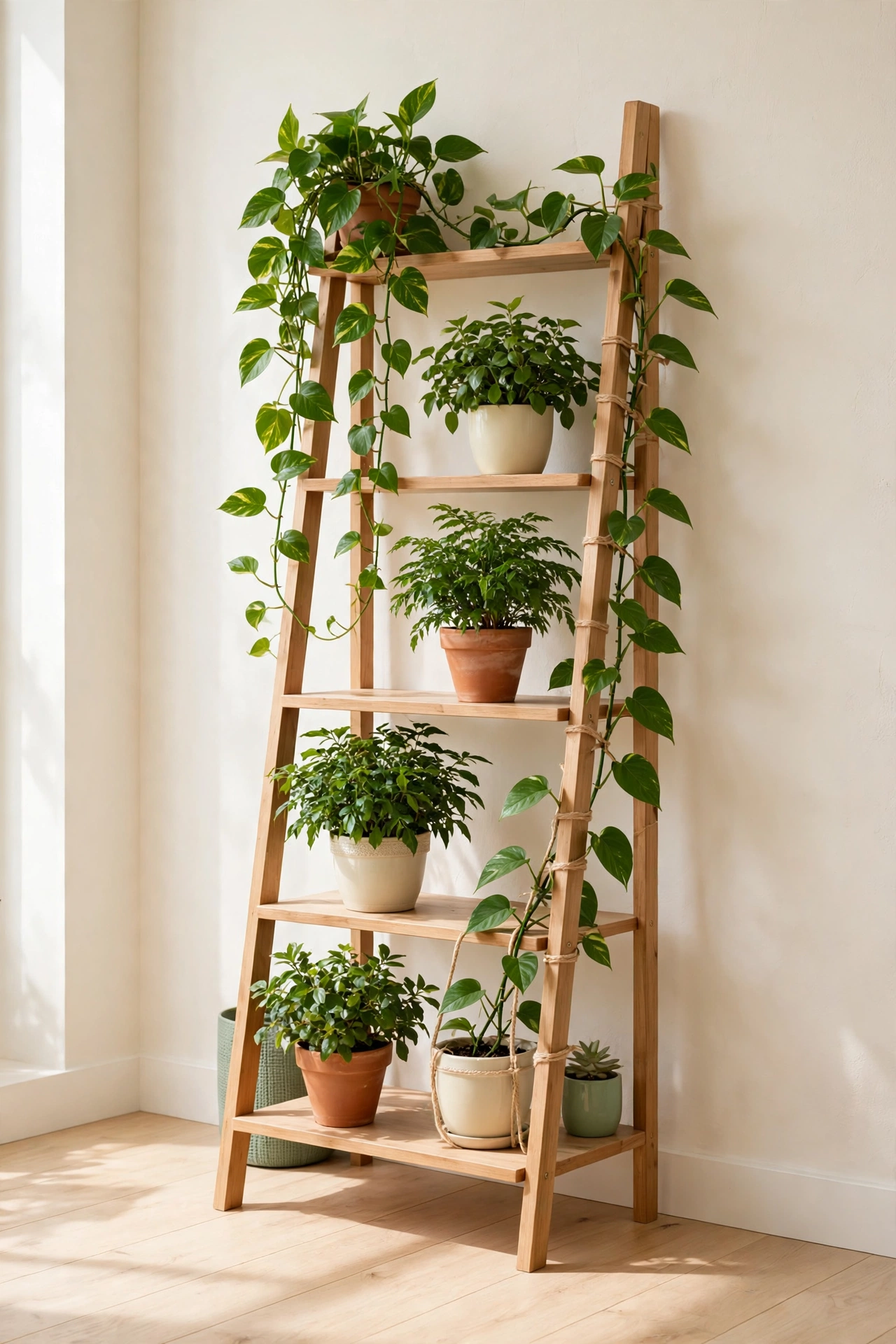
15. Layer a Corner Jungle With Climbing Plants
A corner jungle packs maximum greenery into the smallest footprint by layering plants at three heights. Tall climbers on a moss pole rise in the back corner, mid-height bushy plants fill the middle, and low trailers spill forward at the front. The layers overlap so the corner reads as one lush green mass.Give climbers a sturdy support from the start, since a tall monstera or philodendron will need it within a season. For support ideas that suit indoor climbers, these climbing plant trellis ideas will help you choose frames that look as good as they work. Rotate the front plants monthly so every side gets its turn in the light.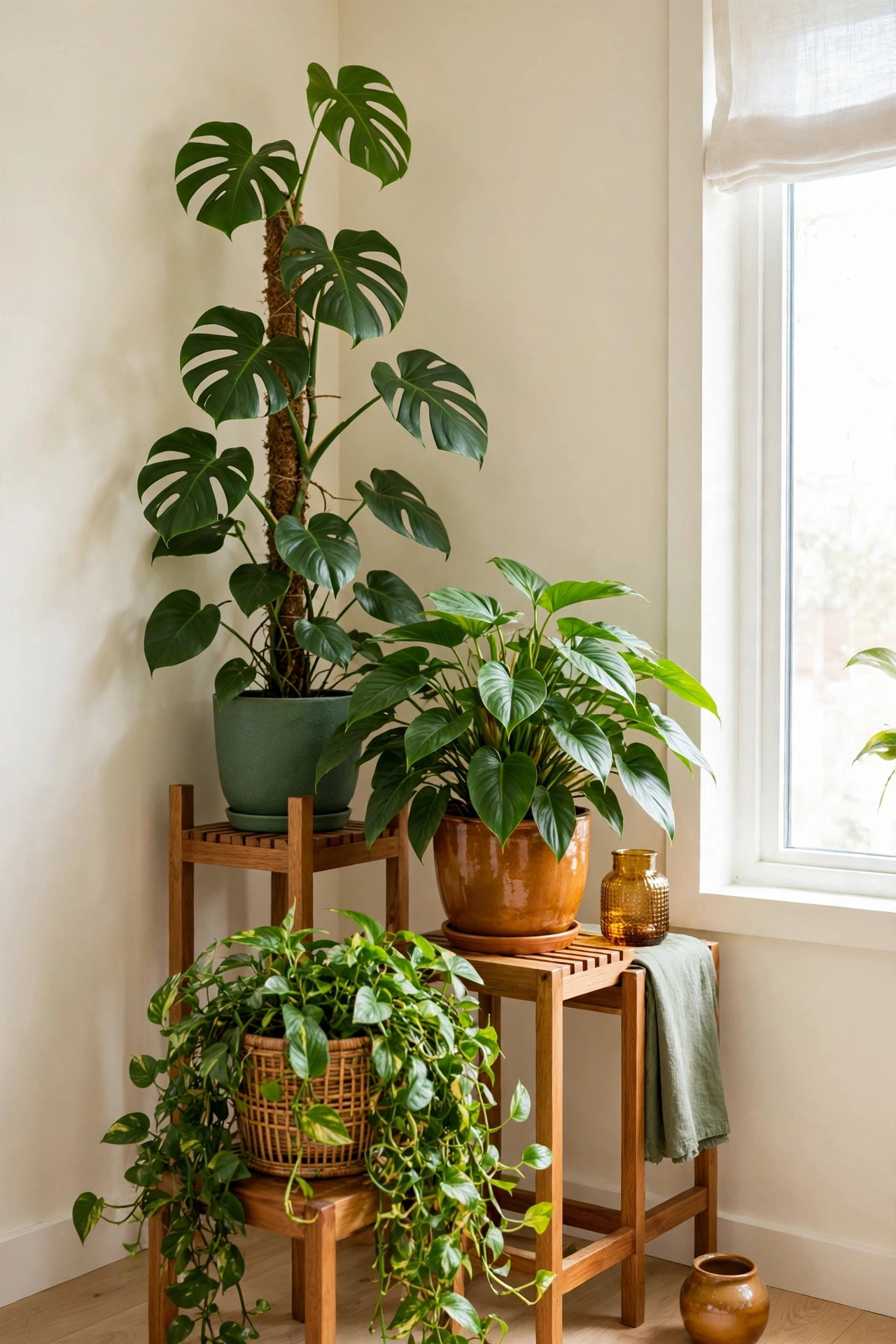
16. Extend the Windowsill With Plant Shelves
A windowsill holds only a few small pots, but a set of glass or wooden shelves mounted across the window frame multiplies that space several times over. Each shelf catches direct light, making the window the sunniest growing spot in the room, and the layered plants filter the daylight into soft green shade.Use clear or slim shelves so the window still lets light deep into the room, and keep the heaviest pots on the lowest shelf for safety. Reserve the top shelf for succulents and cacti that love the strongest sun, and the lower shelves for herbs and leafy plants. The window becomes a living curtain that changes with the seasons.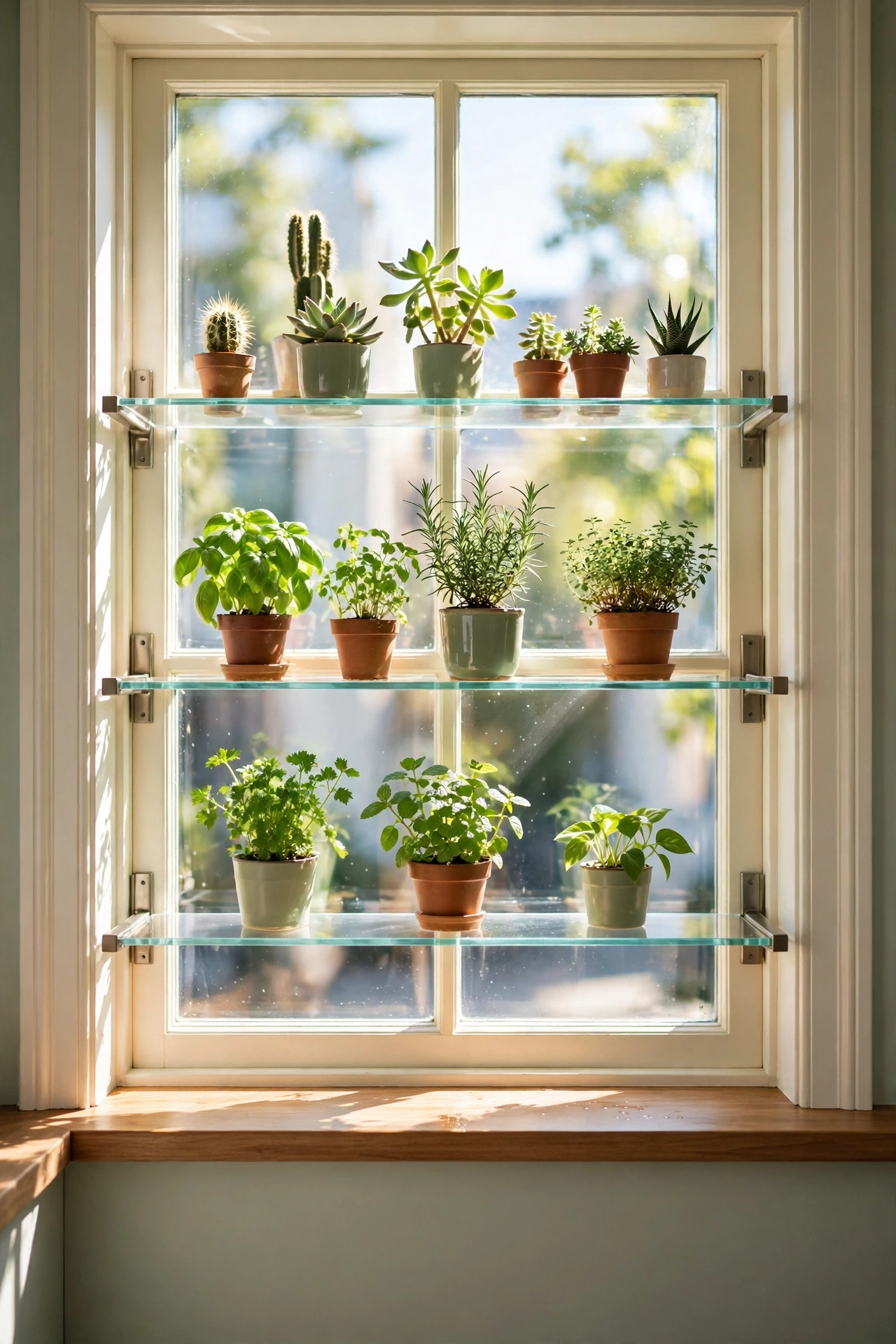
17. Reserve a Recovery Corner for New and Struggling Plants
Every plant lover needs a recovery corner, a quiet spot where new arrivals rest in quarantine and struggling plants get extra care away from the main collection. A small shelf with a grow light, a humidity dome, and basic supplies gives each patient its own space to recover without risking your healthy plants.Keep new plants in the recovery corner for two weeks before they join the main displays, and check them for pests every few days during that time. Label each plant with the date it arrived and the care it needs, so nothing gets forgotten. A recovery corner protects the whole room and gives every plant its best chance.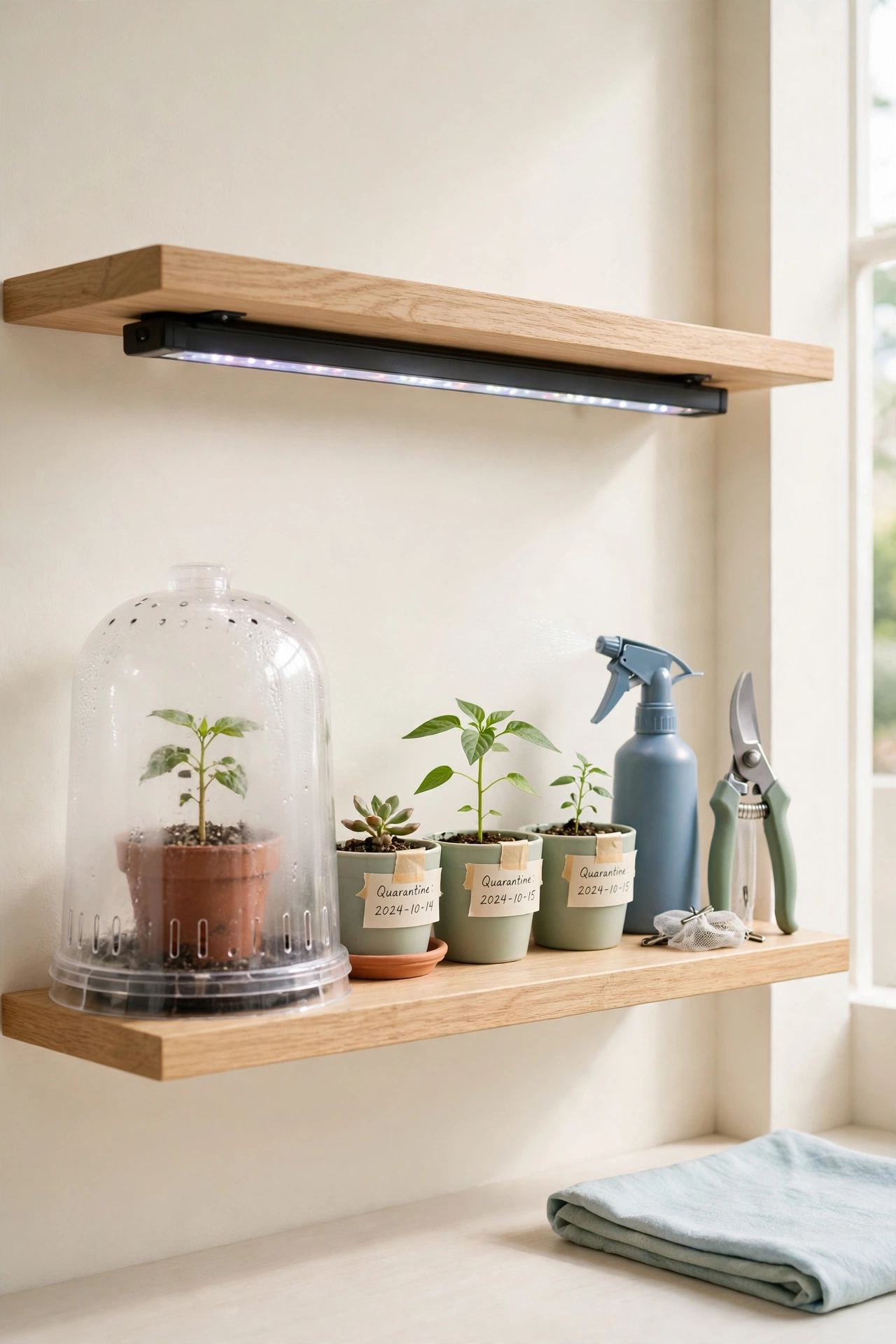
Conclusion
A small indoor garden room is not about owning the most plants. It is about giving each plant the right light, the right water, and the right place to grow. When the layout follows the needs of the plants, the room takes care of itself far more than you might expect.Start with one wall or one corner, and let the layout grow as your confidence grows. Add a shelf, then a zone, then a station, until the whole room hums with green life. Your plants will reward the plan with new leaves, new blooms, and a room you love to walk into every day.Frequently Asked Questions About Small Indoor Garden Room Layout Ideas for Plant Lovers
How much light does a small indoor garden room need?
Most indoor plants need bright indirect light for six to eight hours a day, with a few hours of gentle morning sun for sun lovers. Place the room near a south or east facing window when possible, and add grow lights for any corner that stays dark. Watch your plants closely, since stretching stems mean too little light and scorched leaves mean too much.
How do I keep a small garden room from feeling cluttered?
Give every plant a fixed home on a shelf, wall, or zone, and leave walkways clear. Group plants by care needs so watering stays simple, and prune regularly to keep growth in bounds. A room with a clear layout feels calm even when it holds dozens of plants.
What plants work best in a small indoor garden room?
Pothos, snake plants, ZZ plants, and peace lilies are forgiving choices for beginners, while ferns, calatheas, and orchids suit gardeners who enjoy extra care. Match each plant to the light zone where it will live, and start with five or six plants before you expand the collection.
How do I water many plants without making a mess?
Water plants in batches at a fixed watering station with a drainage tray, and let each pot drain fully before you return it to its shelf. Keep a watering can, a spray bottle, and a moisture meter in one spot so the routine stays quick. Water in the morning so leaves dry before nightfall.
Can I turn a room with no windows into a garden room?
Yes, grow lights make a windowless room perfectly workable for indoor plants. Fit full-spectrum light bars over each shelf, run them on a timer for ten to twelve hours a day, and choose shade tolerant plants for the lowest shelves. Add a fan for air movement and the room will support healthy growth all year.

Hi, I’m Emily! I turn messy corners into cozy, organized spots. DreamNestDecor is where I share simple, practical home ideas — decor, organization, and small-space solutions that work in real life, not just in photos. Every idea here is carefully researched before it’s shared.