A small basement hides more potential than almost any room in the house. Low ceilings, small windows, cool concrete, and the chance of damp air can feel like limits. They are really just design puzzles, and each one has a practical answer that a real homeowner can apply.
The secret is working with the basement instead of against it. Low furniture suits low ceilings. Layered lamps beat a single harsh bulb. Rugs with a moisture barrier tame cold floors. A dehumidifier set between thirty and fifty percent humidity protects furniture, books, and lungs. These eighteen ideas show you exactly how.
Walk through each layout and picture your own basement. Some ideas divide one room into zones, others fight dampness and darkness, and all of them keep traffic flowing and the space warm, dry, and livable.
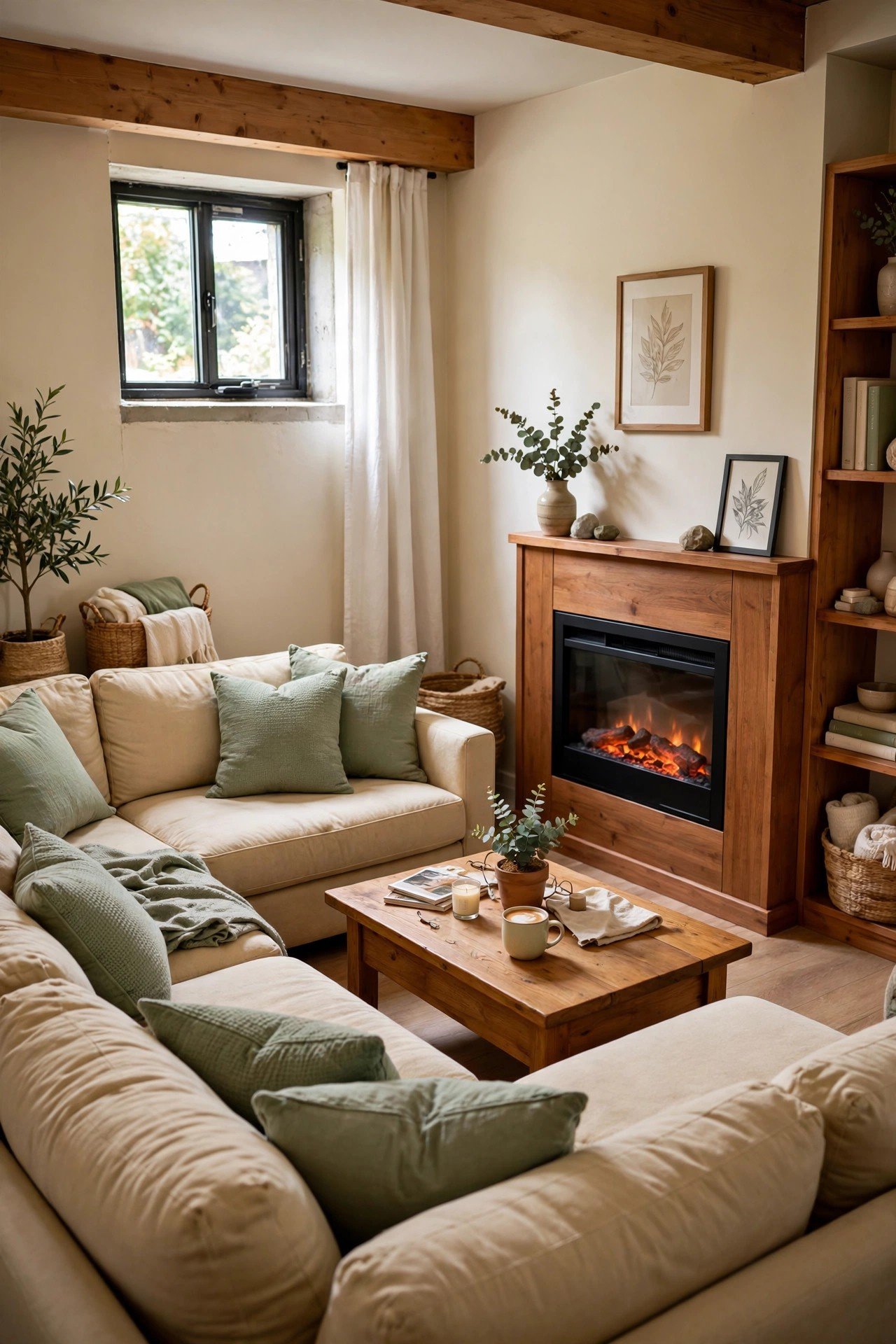
1. L-Shaped Sectional Around the Fireplace
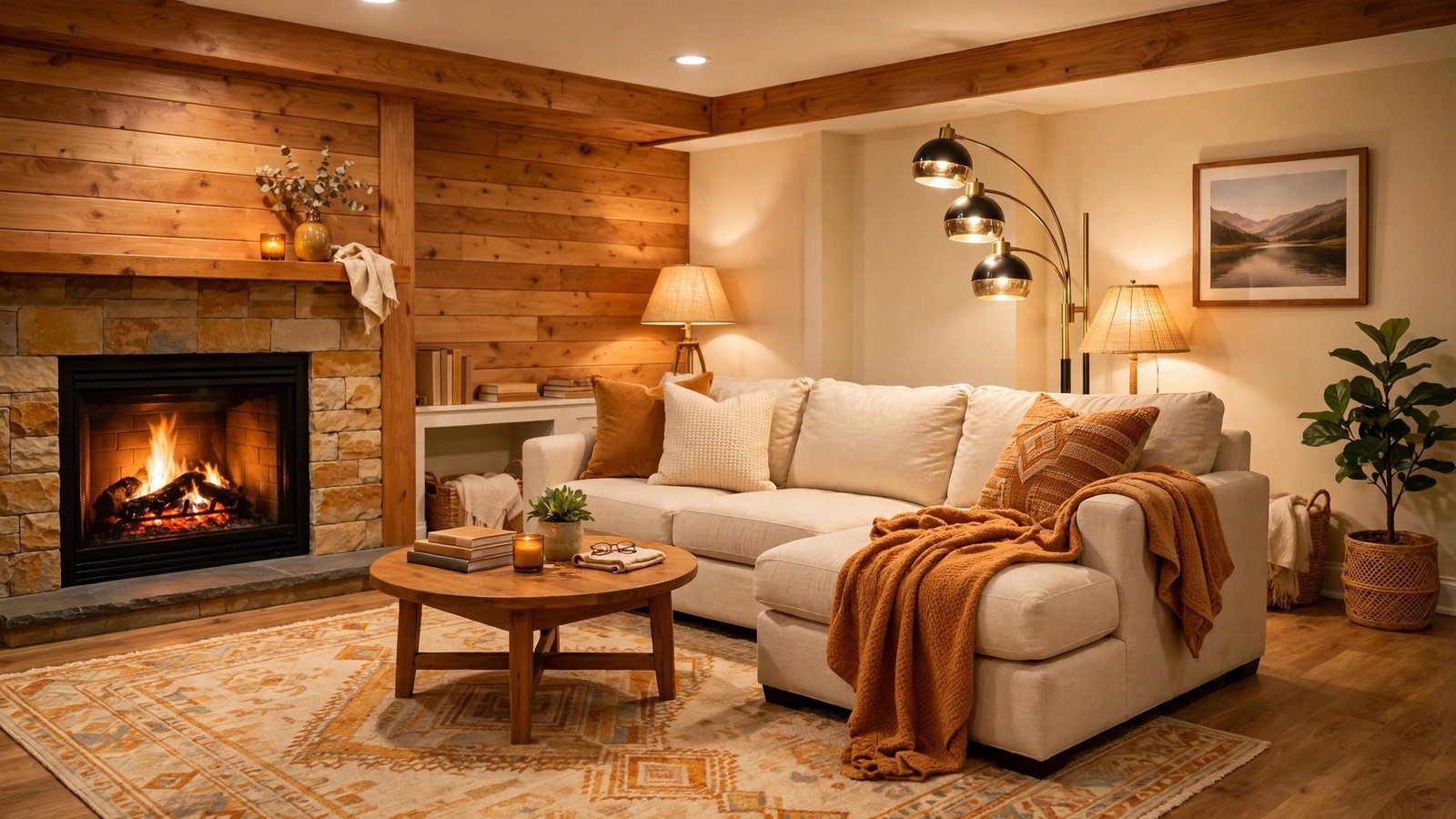
An L-shaped sectional fits a small basement better than a sofa plus separate chairs. The corner shape seats four or five people in one footprint and leaves the rest of the room open. An electric fireplace needs no vent or chimney, so it works anywhere, and the glow draws everyone to the center.
Place the sectional against an interior wall, not the concrete foundation wall, so moist air never sits behind the fabric. Leave at least thirty-six inches of walking space on the open side so people can pass without squeezing past knees.
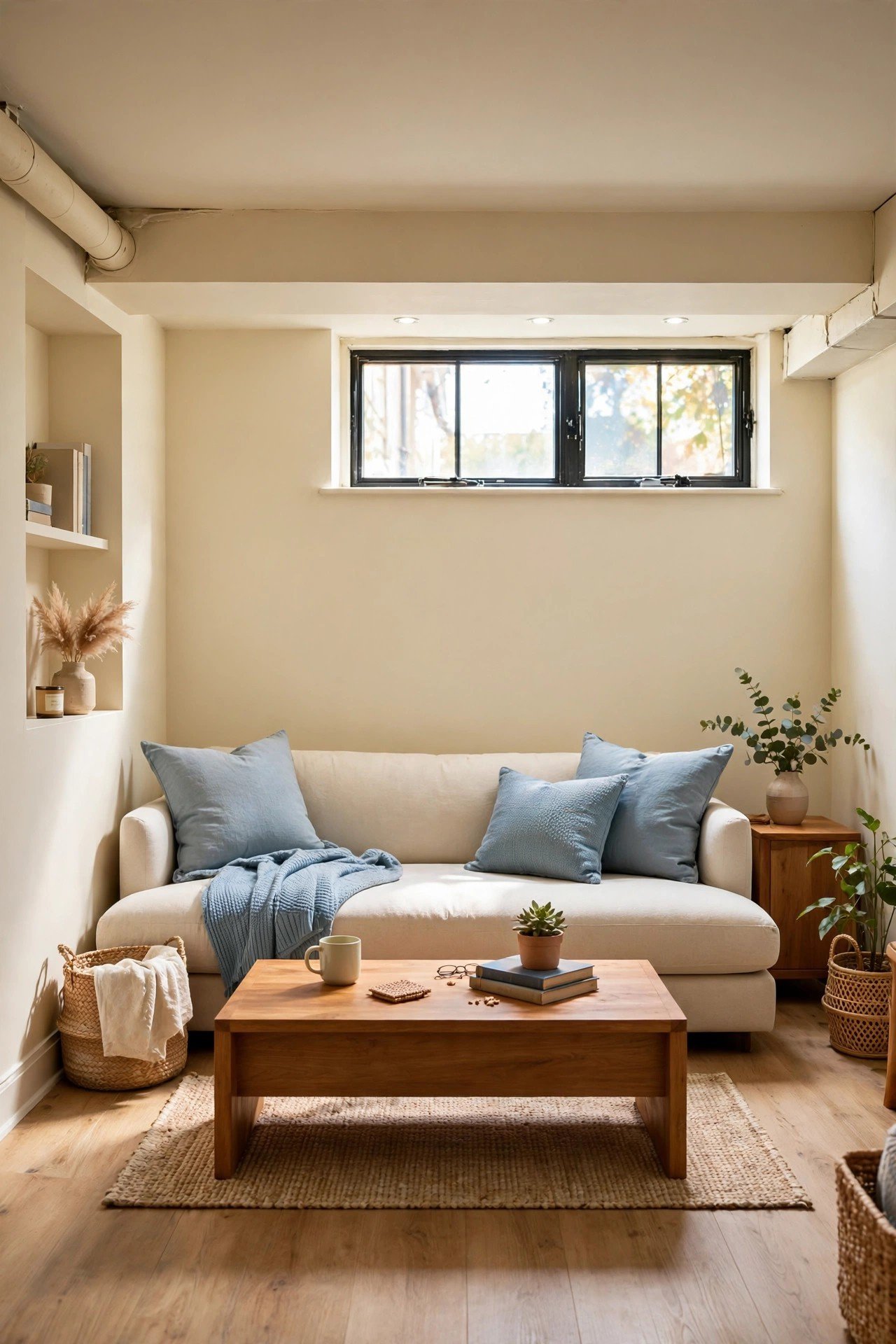
2. Low-Profile Sofa for Low Ceilings
Most basements have ceilings around seven feet high, and low furniture keeps the room feeling tall. A low-profile sofa with a back under thirty inches keeps sightlines open from one end of the room to the other. Nothing should fight the ceiling for attention.
Skip a hanging light over the seating and use an arc floor lamp instead, since many basement ceilings cannot take heavy fixtures. Light-colored upholstery bounces the limited light around and makes the whole space feel airier.
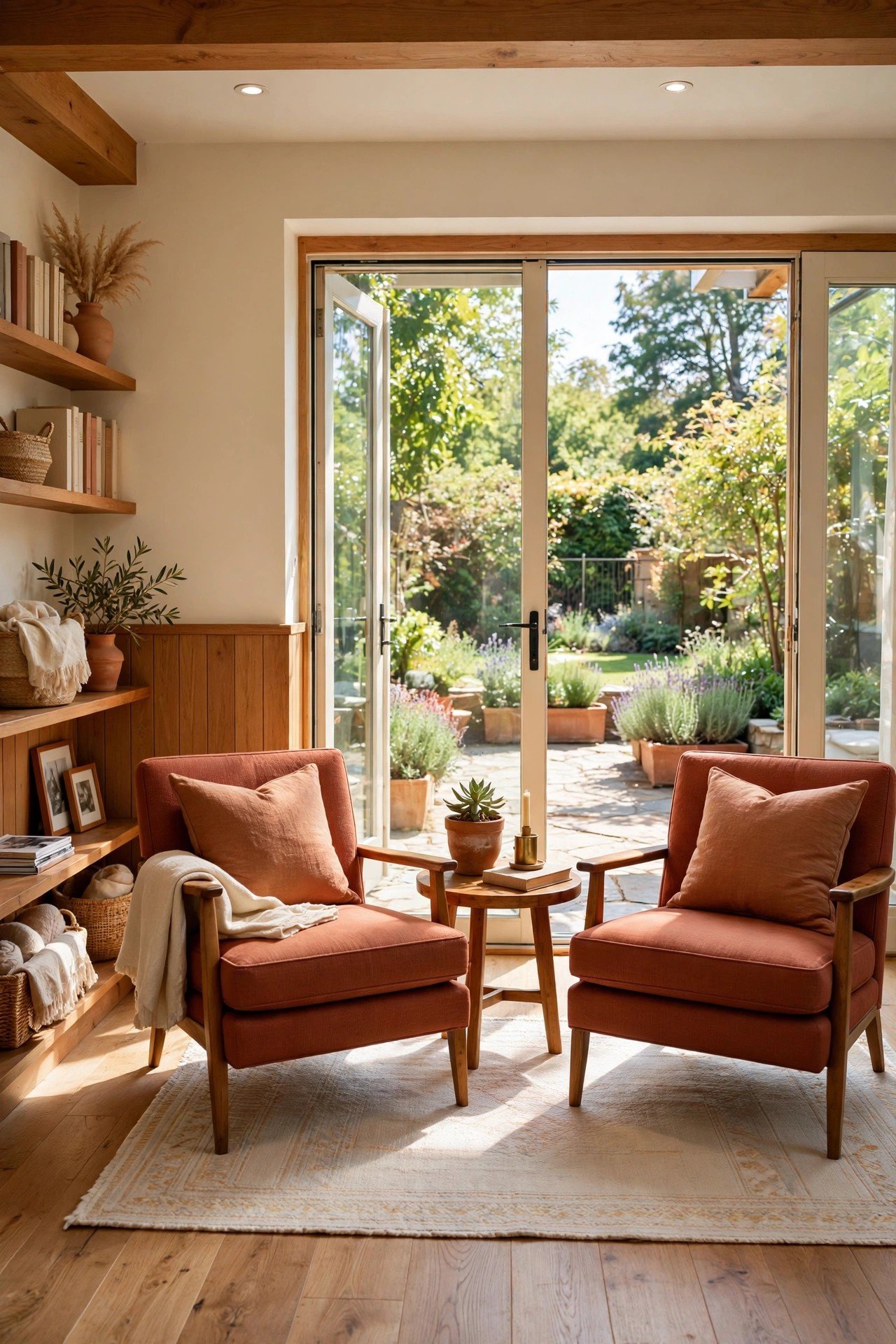
3. Walkout-Basement Sunlight Seating Zone
A walkout basement with glass doors gets the best natural light in the house. Place two armchairs facing the doors and the garden view becomes your wall art. Keep the chairs at least three feet from the door swing so the doors open fully without hitting furniture.
Add a light rug to mark the seating zone and a small side table between the chairs for drinks. A simple UV window film protects the fabric from fading while letting the daylight pour in.
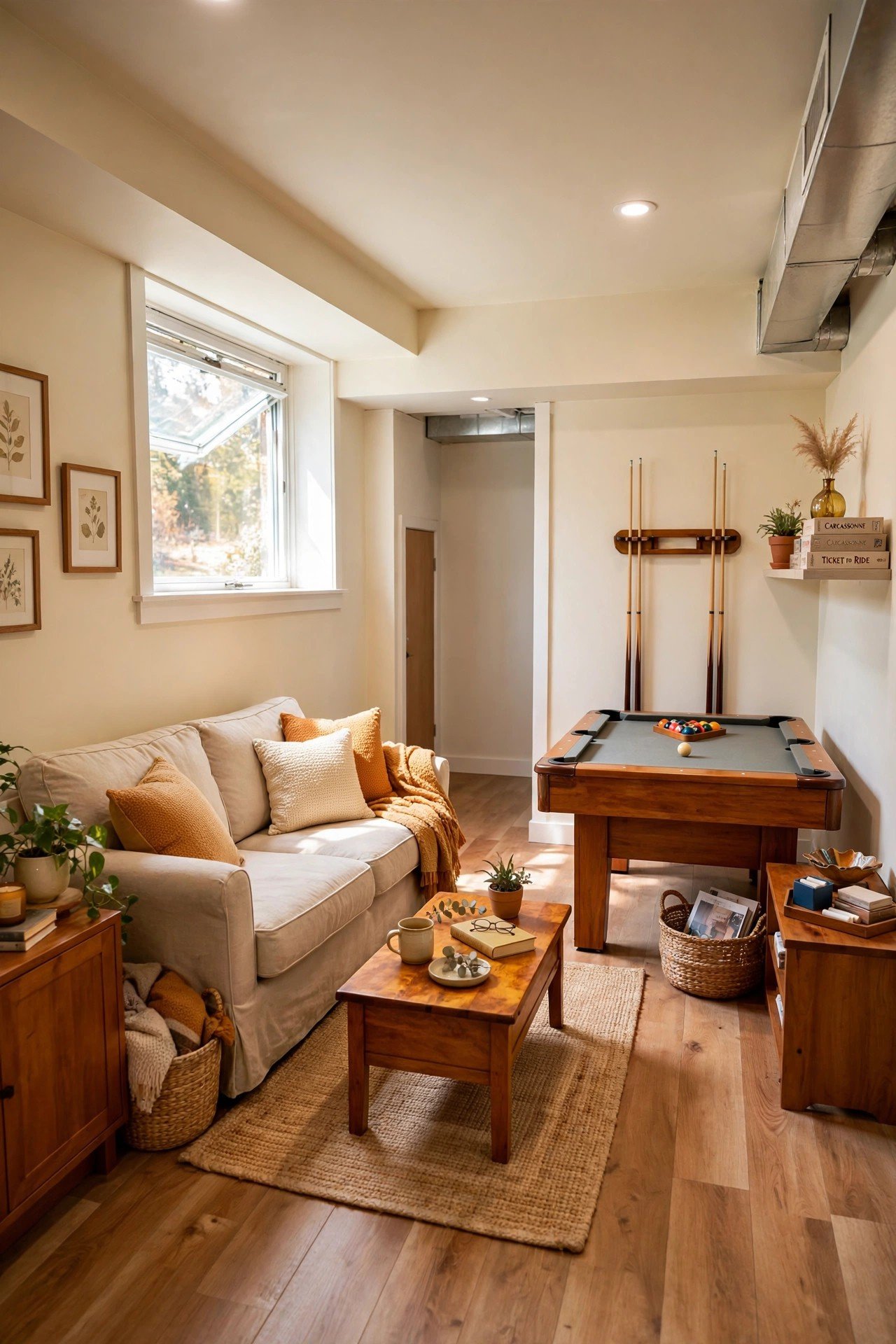
4. Open-Plan Lounge and Game Corner
One small basement can hold two zones if you give each a clear job. A lounge sofa on one side and a folding card table with four chairs on the other serve both quiet nights and game nights. Folding furniture means the game zone disappears when you need the floor.
Mark each zone with its own rug and keep a clear thirty-six-inch walking lane between them. If you dream of a real pool table, measure first: even a small seven-foot table needs about five feet of cue clearance on every side.
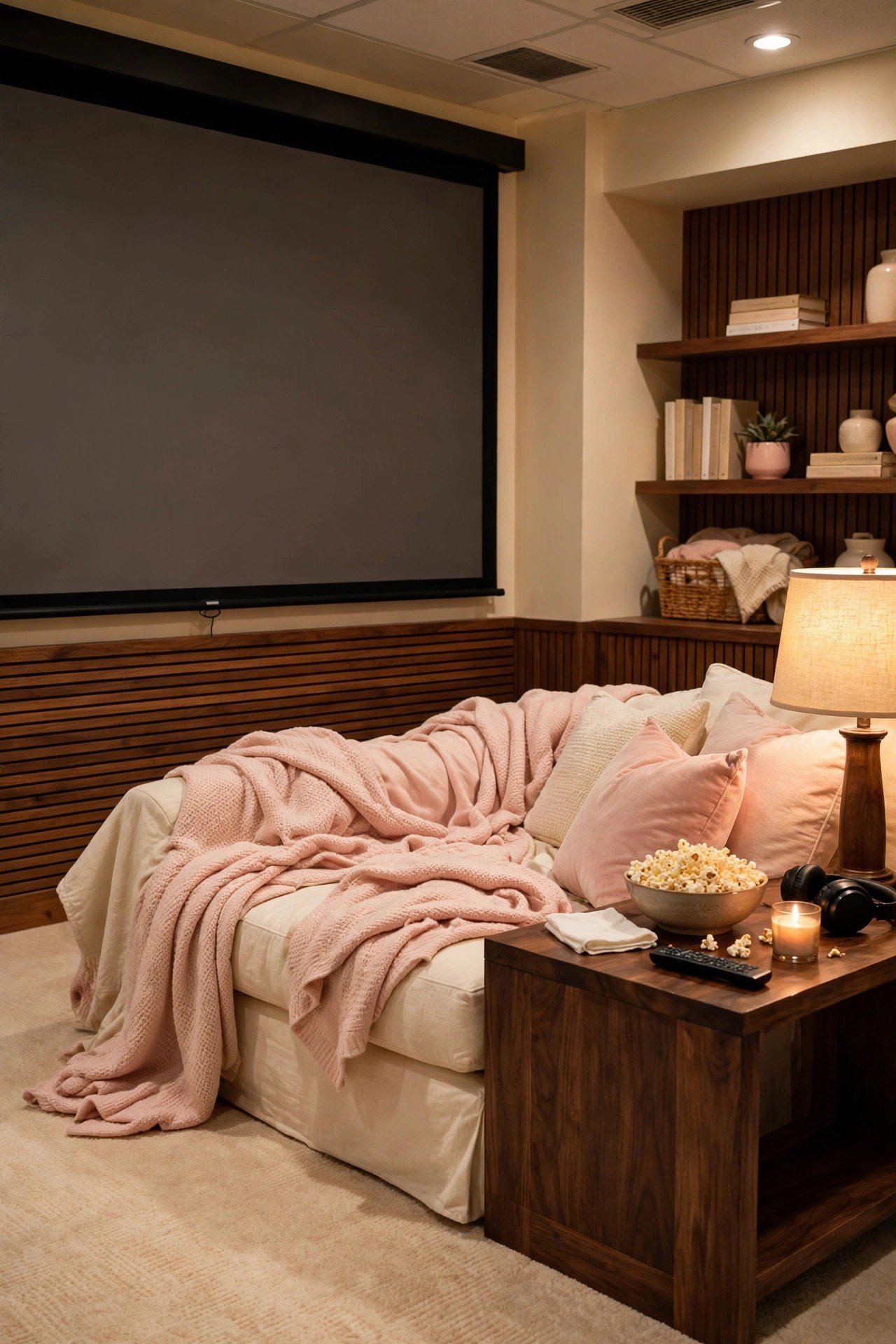
5. Cozy Windowless Movie Den
No windows can be a gift when movie nights are the goal. A dark basement gives you perfect picture quality at any hour. Mount a projector screen on the wall and place the projector on a rear shelf at the distance its manual requires, usually ten to twelve feet for a hundred-inch image.
Paint the walls a deep, flat color so light does not bounce and wash out the screen. Add soft acoustic panels or thick curtains on one wall to cut the echo that bare concrete creates, and your den will sound as good as it looks.
6. Daybed Reading Nook Under the Window
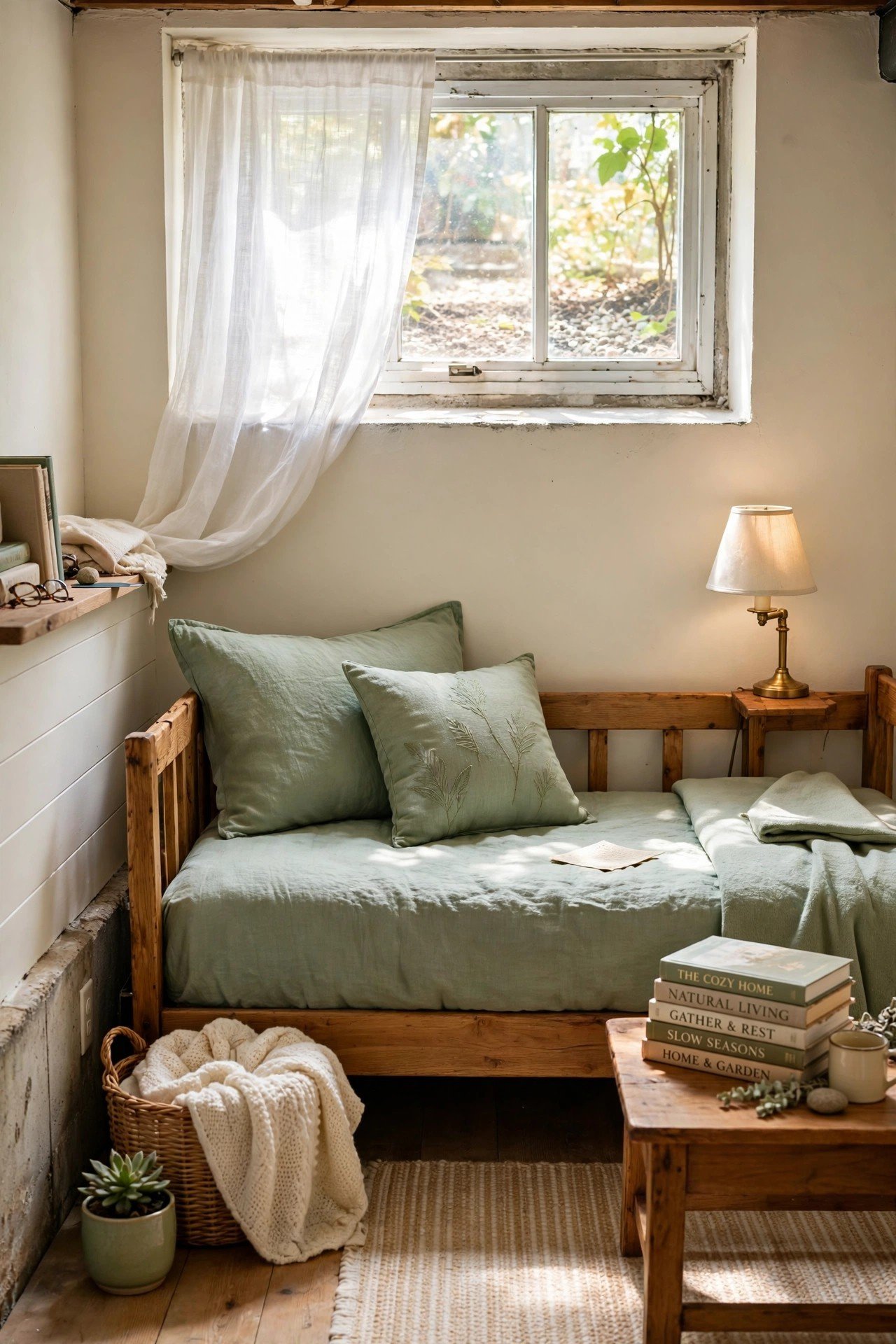
Small basement windows still give real daylight, and a daybed below one makes the most of every ray. The daybed works as a sofa by day and a guest bed by night. Never block an egress window with furniture: building code requires basement bedrooms to have an escape opening of at least 5.7 square feet with the sill no more than forty-four inches above the floor.
Keep the window hardware clear and the path to it open so it works in an emergency. A sheer curtain softens the light without blocking it, and a stack of books plus a clip-on reading lamp completes the nook.
7. Compact Home Office in the Corner
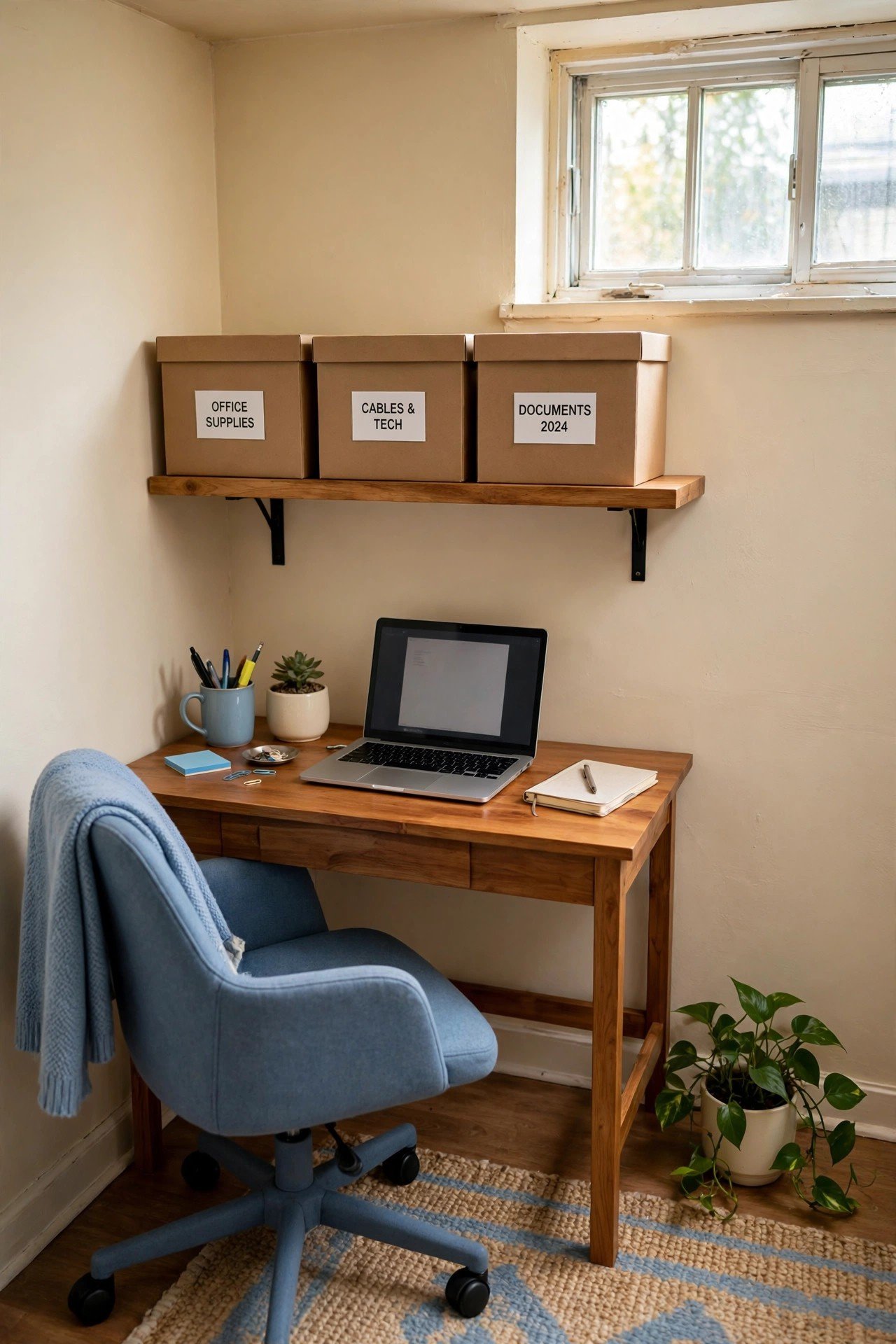
A basement corner makes a focused home office far from household noise. A forty-eight-inch desk against an interior wall holds a laptop, a lamp, and a notebook with room to spare. A floating shelf above keeps supplies off the work surface.
Concrete walls weaken Wi-Fi, so run an ethernet cable or place a mesh node in the room for stable video calls. Put the dehumidifier on the opposite side of the room, at least six inches from the wall, so it guards your electronics from damp air without humming next to your ears. A limewash wall paint finish behind the desk keeps the corner calm and bright.
8. Kids Play Zone With Soft Rugs
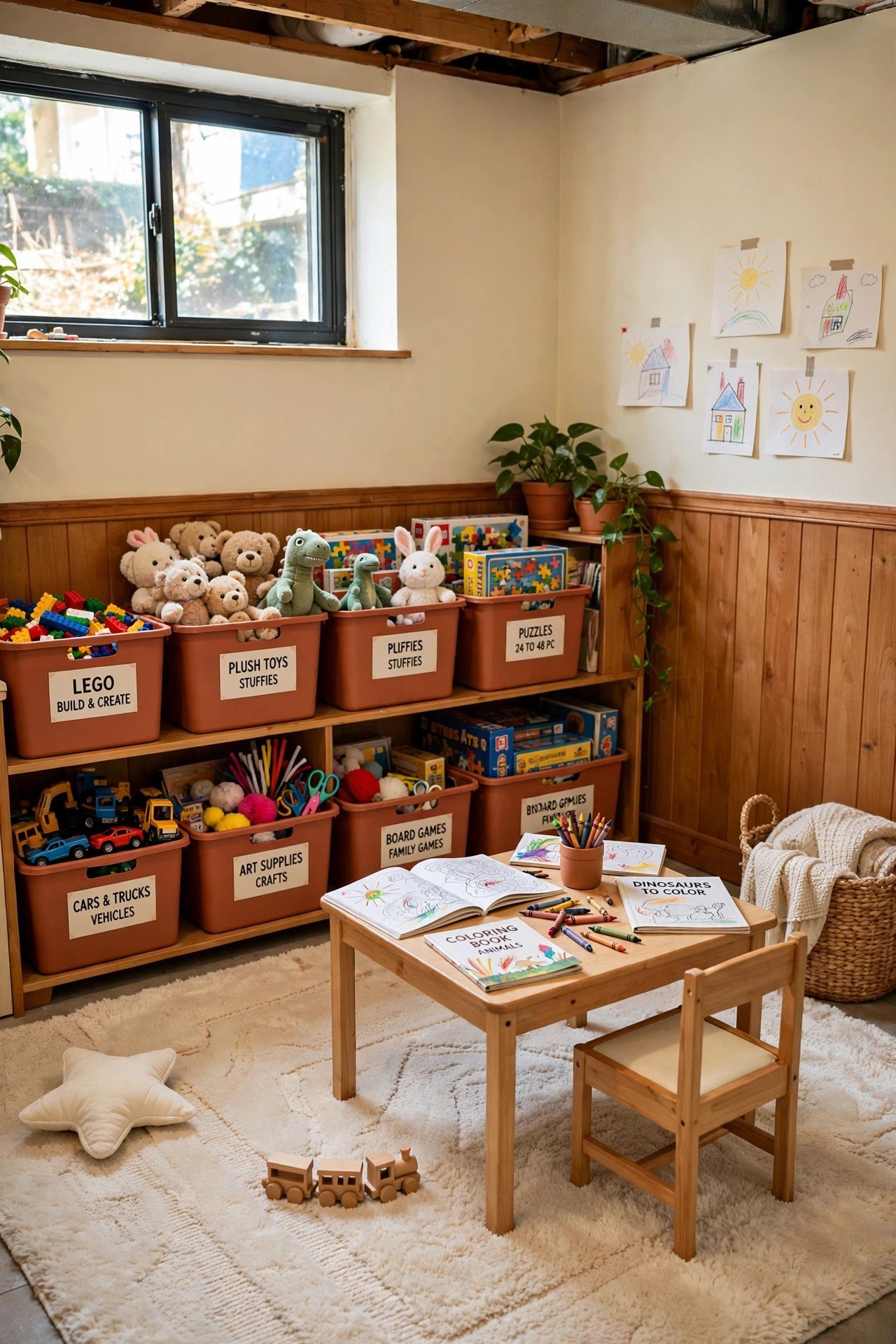
Basements make wonderful playrooms because noise and mess stay downstairs. A large washable rug over interlocking foam mats covers the cold concrete and cushions falls. Labeled bins on low open shelves let kids reach their own toys and learn to put them back.
Test your basement for radon with a twenty-dollar kit before the kids move in, since basements collect the most gas. Keep fabric bins off the bare floor on a low shelf so a surprise damp spot never ruins them.
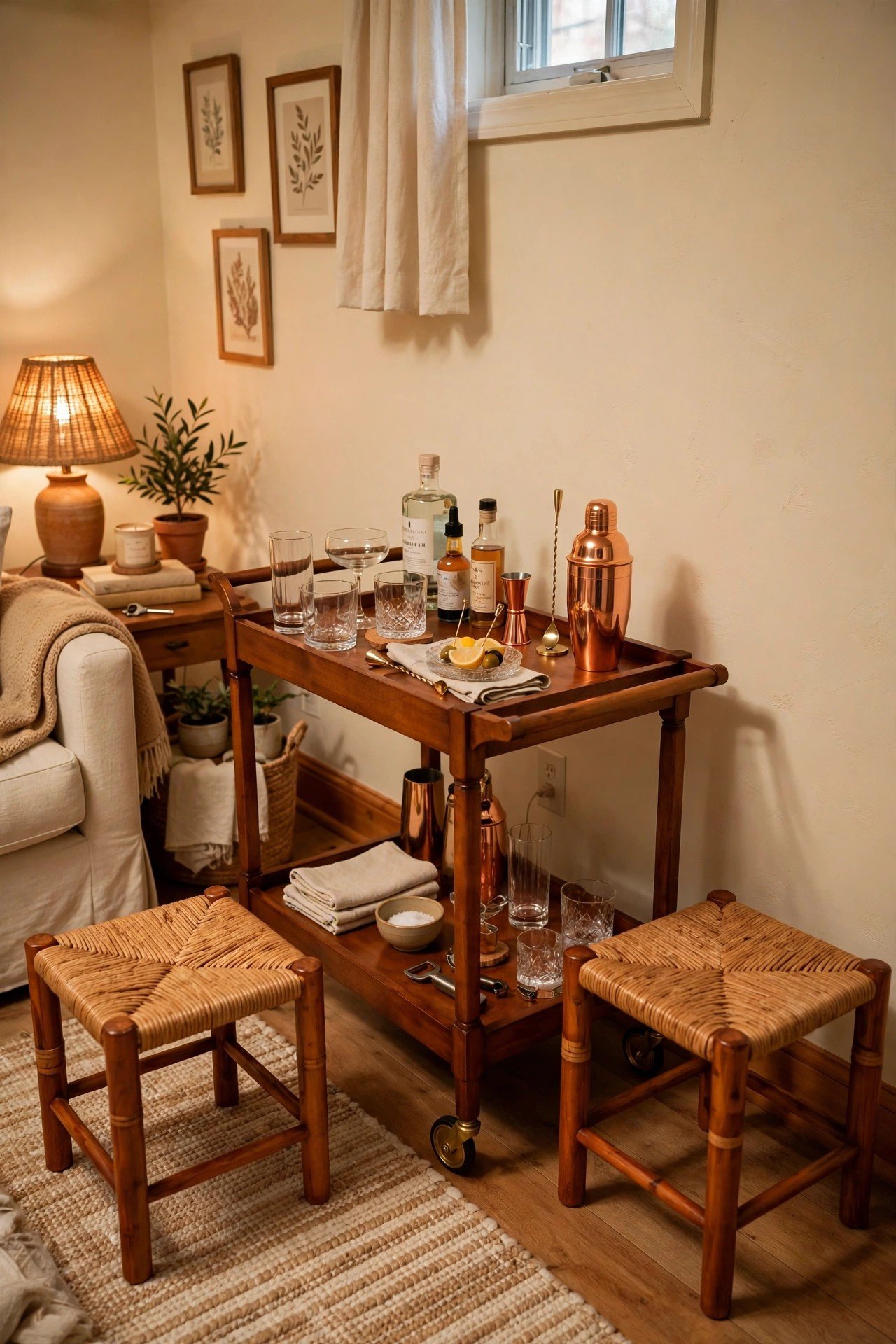
9. Bar Cart Entertaining Corner
A bar cart turns a basement corner into an entertaining station that rolls wherever the party goes. Glassware, a shaker, and a few bottles live on the cart, and two small stools nearby give guests a place to perch. When the night ends, the cart tucks against the wall.
If you add a mini fridge under the cart zone, give it two inches of breathing room on each side for ventilation. Basement outlets near water sources should be GFCI protected, so check the outlet before you plug in anything with a heating element.
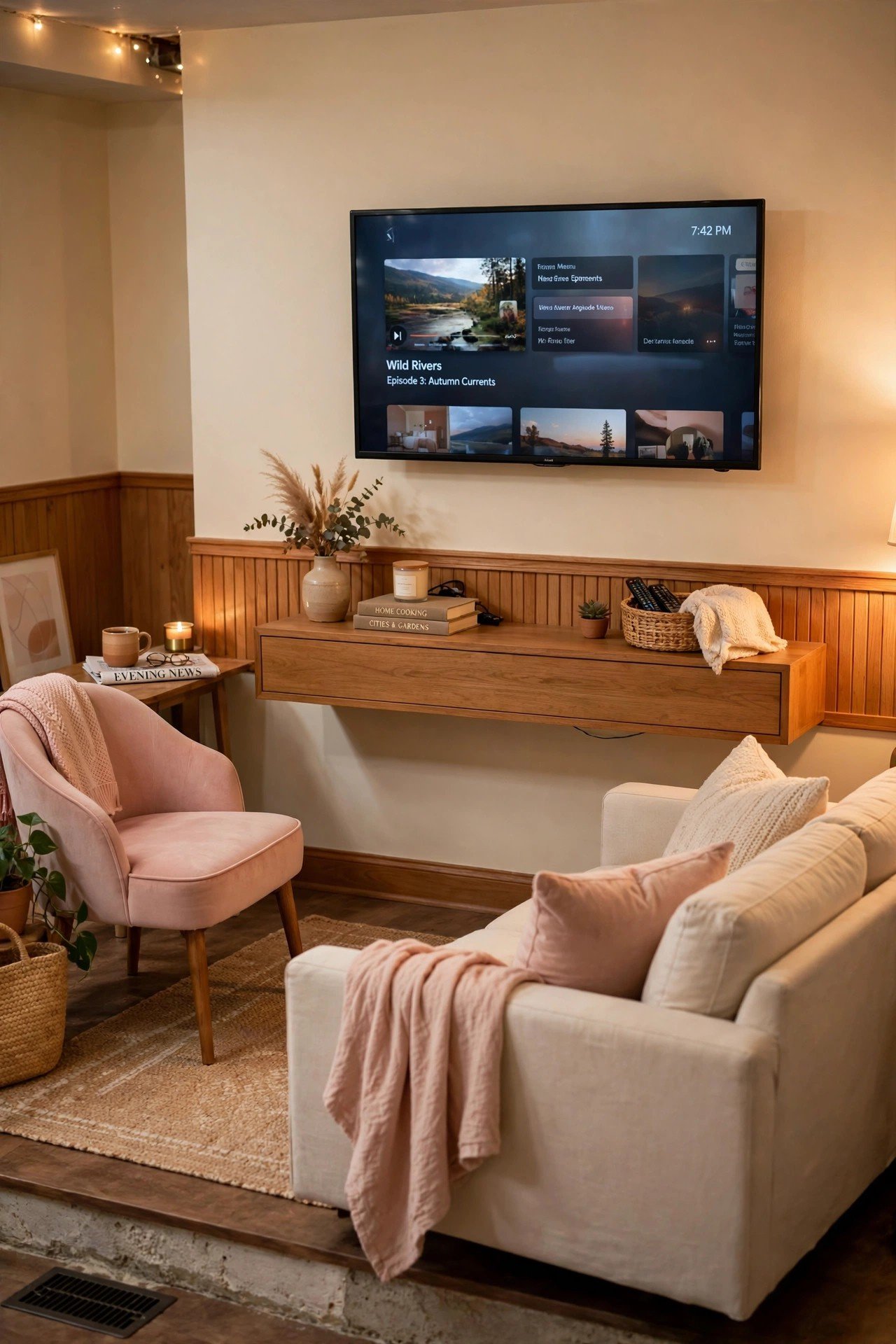
10. Wall-Mounted TV Lounge Wall
Mounting the TV on the wall frees precious floor in a small basement lounge. Hang the center of the screen at about forty-two inches from the floor for comfortable viewing from a low sofa. A slim floating console below holds the media boxes without any bulk.
Run the cables through a paintable cord channel for a clean look. Mount a small soundbar under the screen, since bare basement walls bounce sound and muddy dialogue without one.
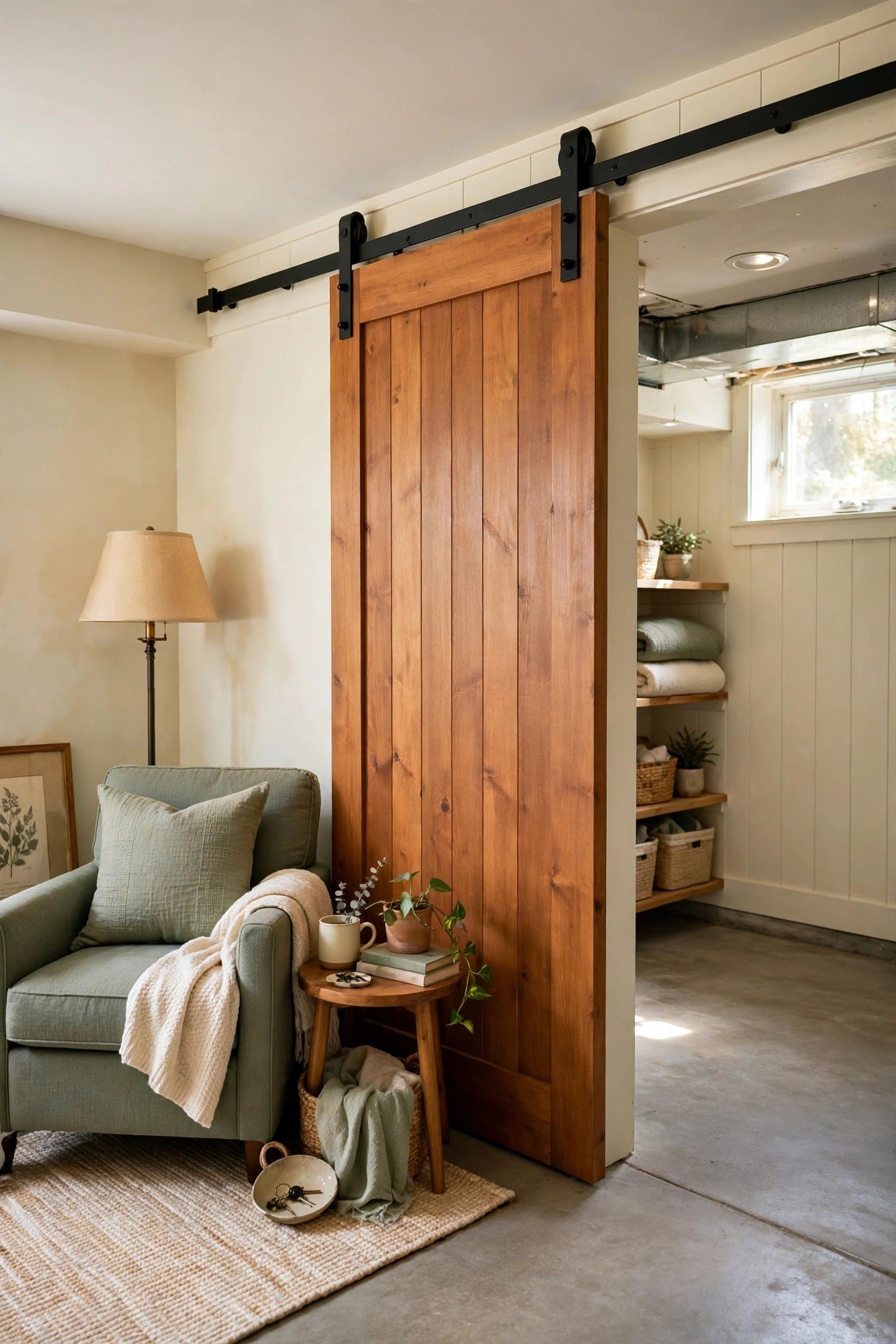
11. Sliding Barn Door Room Divider
A sliding barn door divides a basement into two rooms with zero construction. It closes for privacy during work calls and slides open when you want one big family space. The warm wood adds character that plain basement walls badly need.
Screw the rail into solid blocking or the ceiling joists, never just drywall, because a solid wood door is heavy. Leave a one-inch gap under the door so air keeps circulating across the concrete floor and damp spots cannot hide.
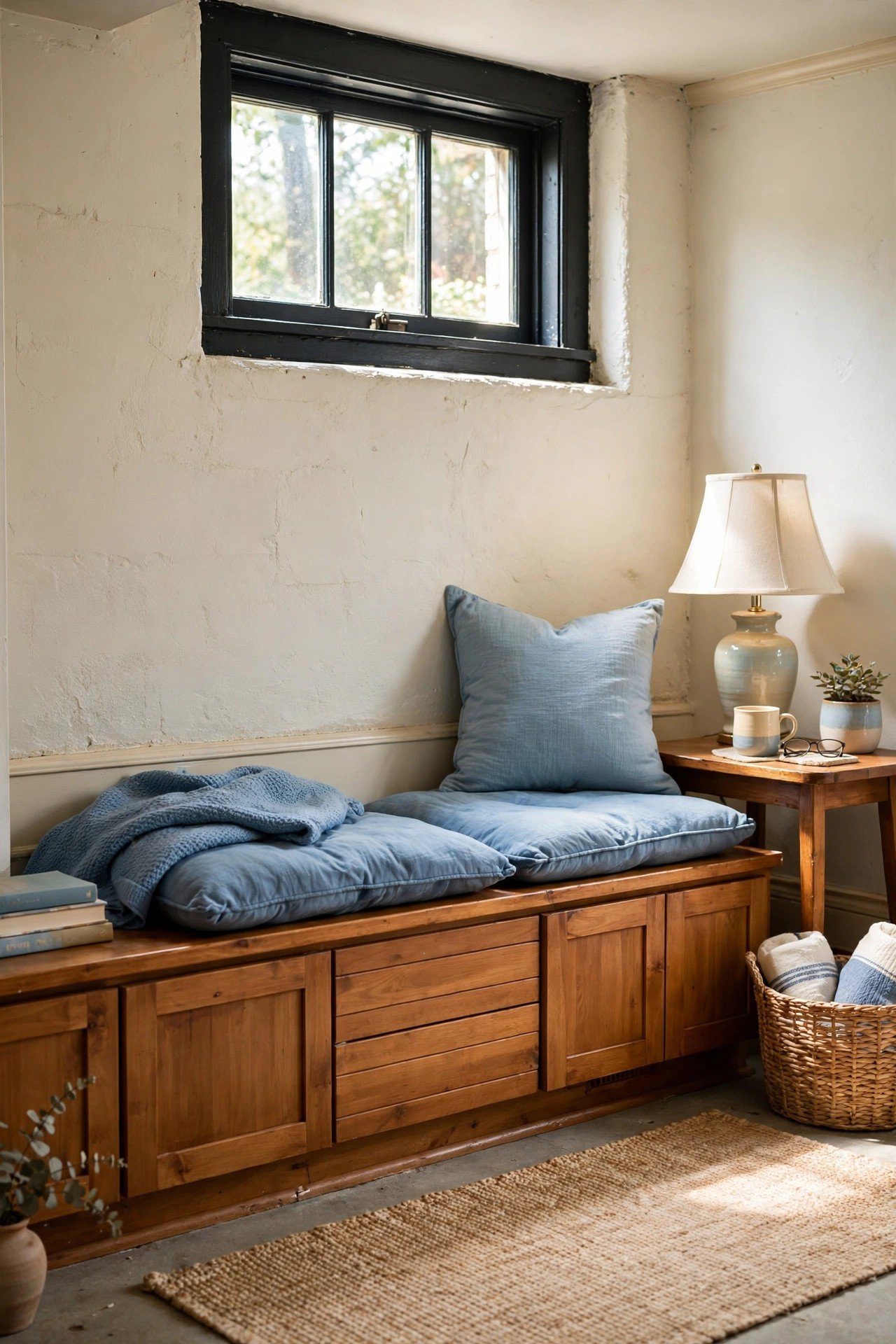
12. Built-In Bench Along the Foundation Wall
The long foundation wall in a basement is perfect for a built-in bench with storage inside. The bench adds seating for a crowd and swallows board games, blankets, and seasonal gear. Under a small window it becomes the sunniest seat in the room.
Build the base from pressure-treated lumber, which resists the moisture that concrete walls give off. Leave a one-to-two-inch air gap between the bench back and the foundation wall so air flows and mildew never takes hold. Board and batten paneling above the bench gives the wall a finished, homey feel.
13. Bright Paint to Lift the Space
Bright paint is the fastest way to lift a dark basement. Warm white on walls and ceiling bounces every bit of light around the room. Start with a mold-resistant primer, then use a satin or semi-gloss paint that wipes clean and stands up to basement humidity.
Add color through pillows, art, and rugs instead of the walls. A two-tone wall paint scheme can add interest while keeping the overall feeling light and open.
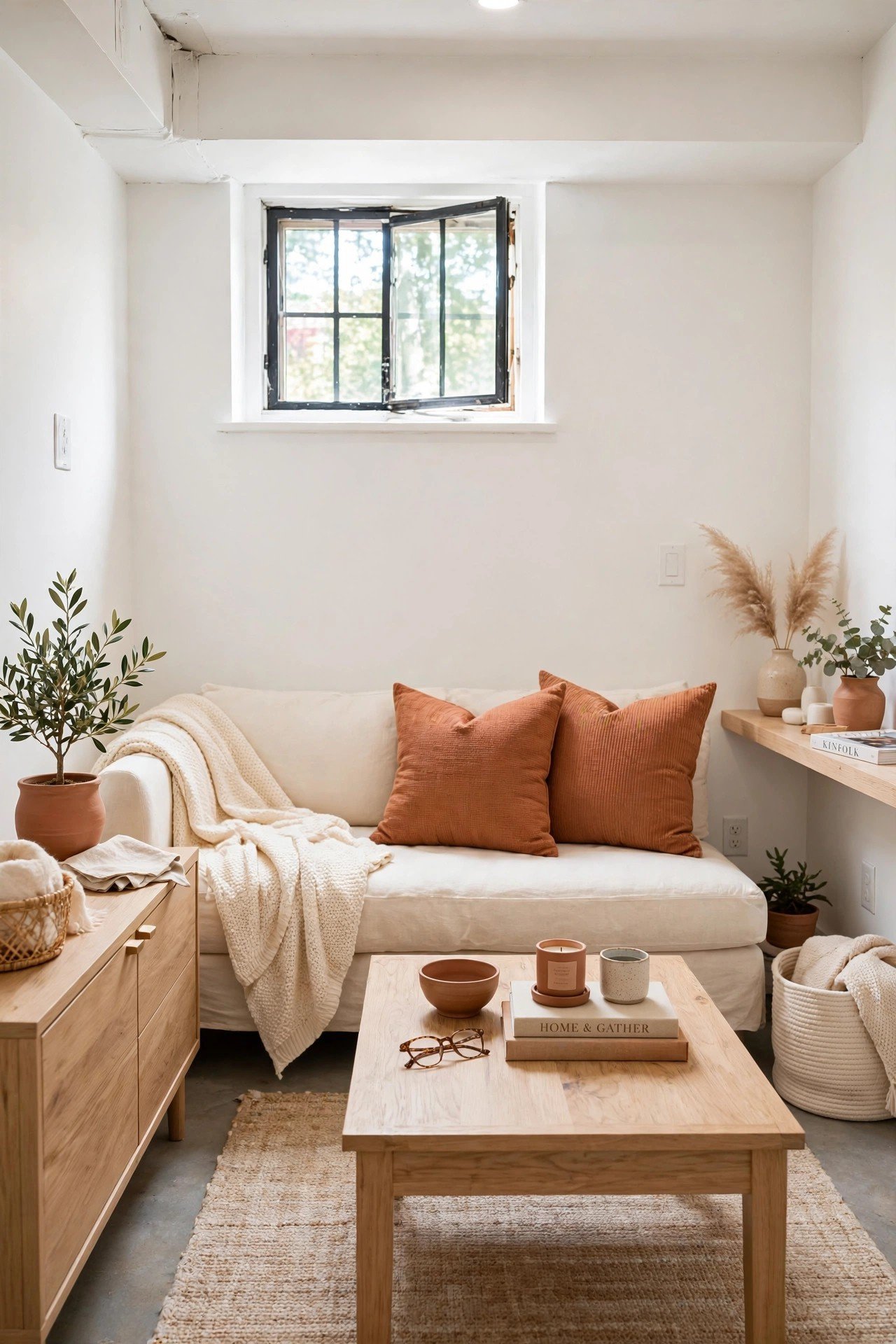
14. Area Rugs Over Cool Concrete
Concrete floors stay cold no matter the season, but a big area rug with the right pad fixes that. Lay a six-mil poly vapor barrier or a pad with a built-in moisture barrier first, then the rug on top. The barrier stops ground moisture from wicking into the rug fibers.
Choose a low-pile rug in a busy pattern to hide wear in a family space. Lift the rug edge every few months and check the concrete underneath, so a hidden damp spot never grows into a mold problem.
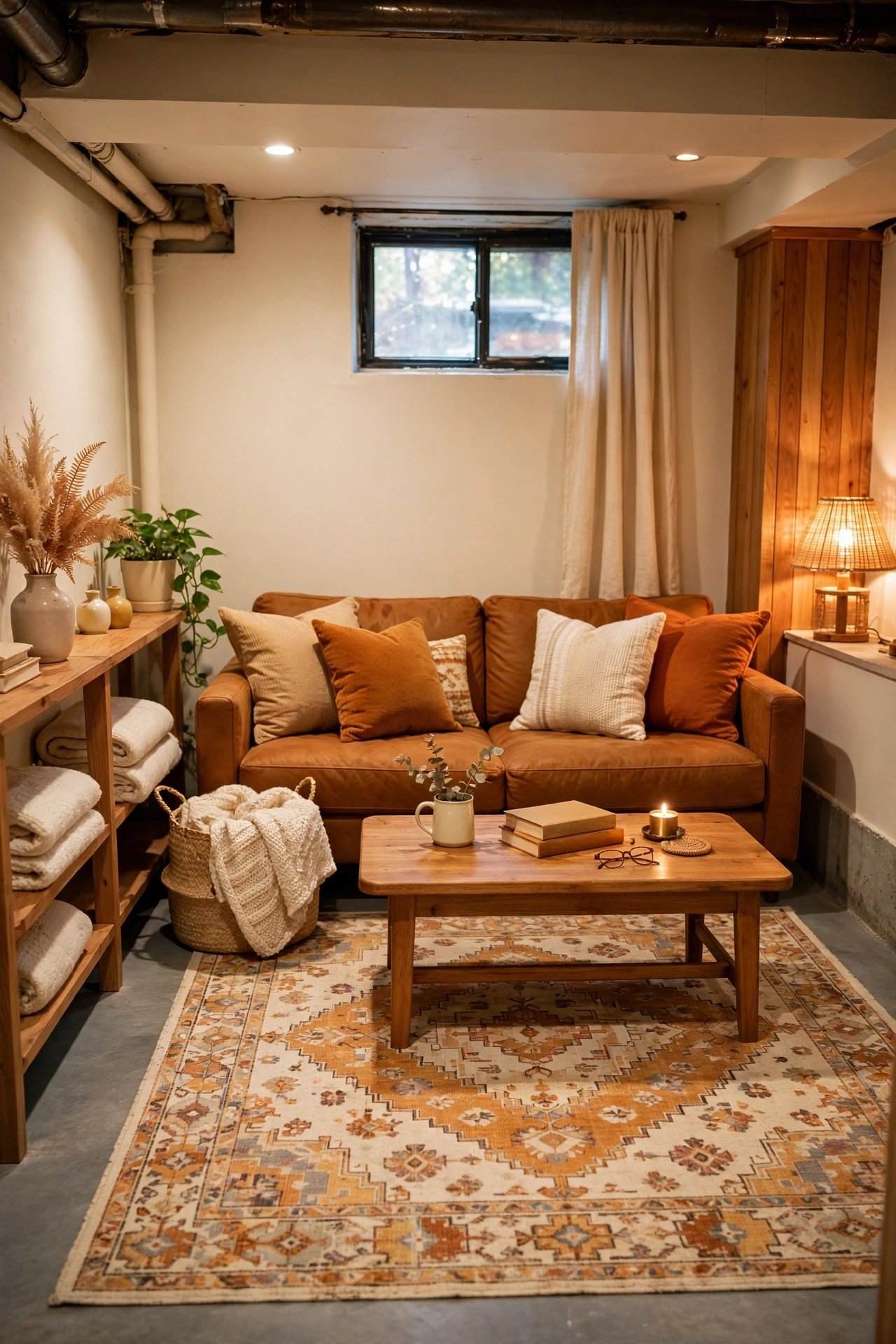
15. Layered Floor Lamps for Warmth
One overhead bulb makes a basement feel like an office. Three or four lamps at different heights create pools of warm light that make the room feel like a living room. Put the first lamp in the darkest corner, where shadows collect.
Use warm LED bulbs, which give cozy light without the heat of old bulbs. Plug lamps into smart plugs or a power strip with a switch, and avoid loading one old basement circuit with heaters and lamps at the same time.
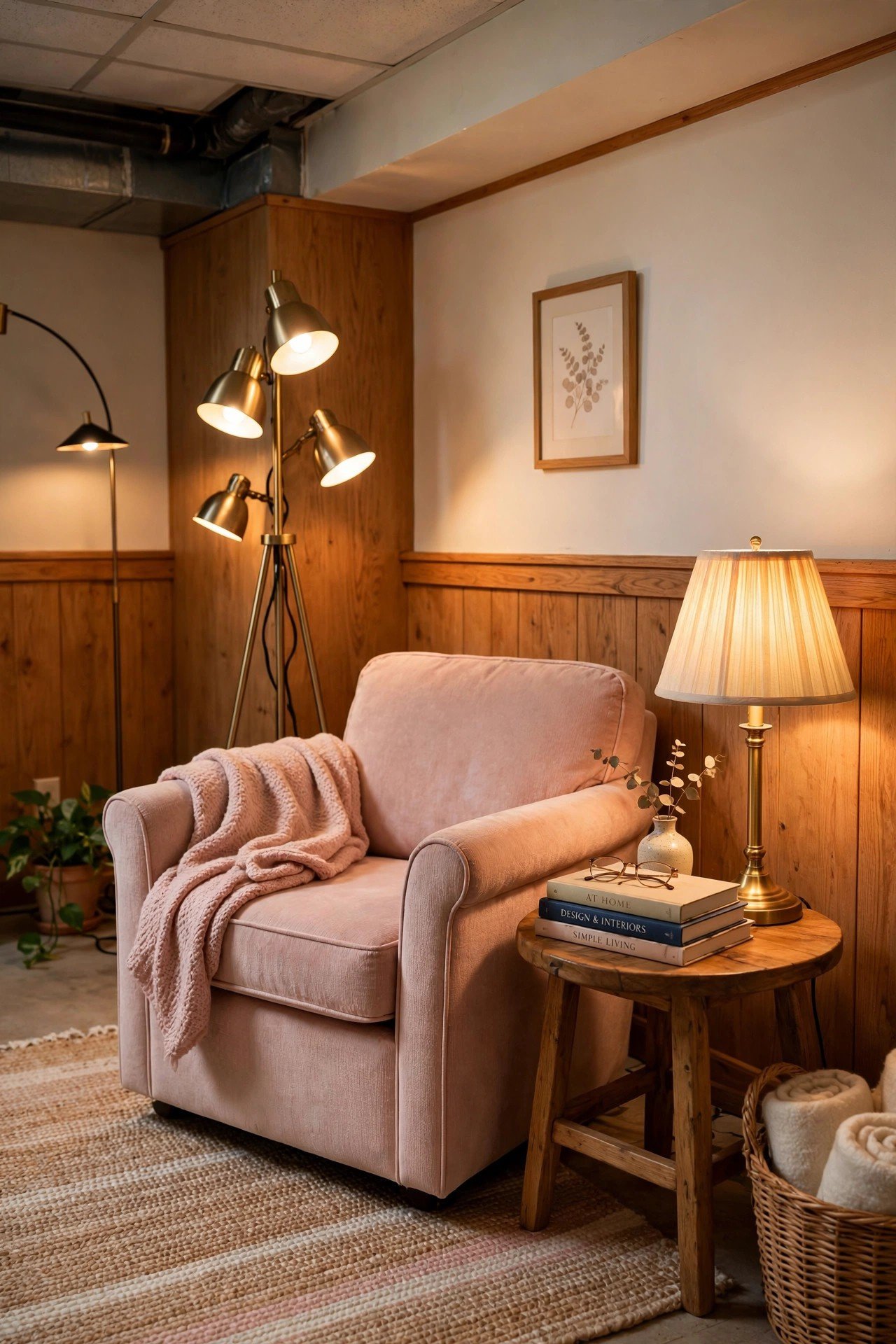
16. Fold-Down Wall Desk Studio
A fold-down wall desk gives you a full workspace that vanishes when the day ends. Folded up it looks like a slim cabinet, and folded down it holds a laptop, notebooks, and a lamp. Mount it with a french cleat screwed into wall studs so it holds real weight safely.
Set the desk surface at twenty-eight to thirty inches high for comfortable typing. A small stool that tucks under the cabinet keeps the floor clear, and the basement stays a living space first and a studio second.
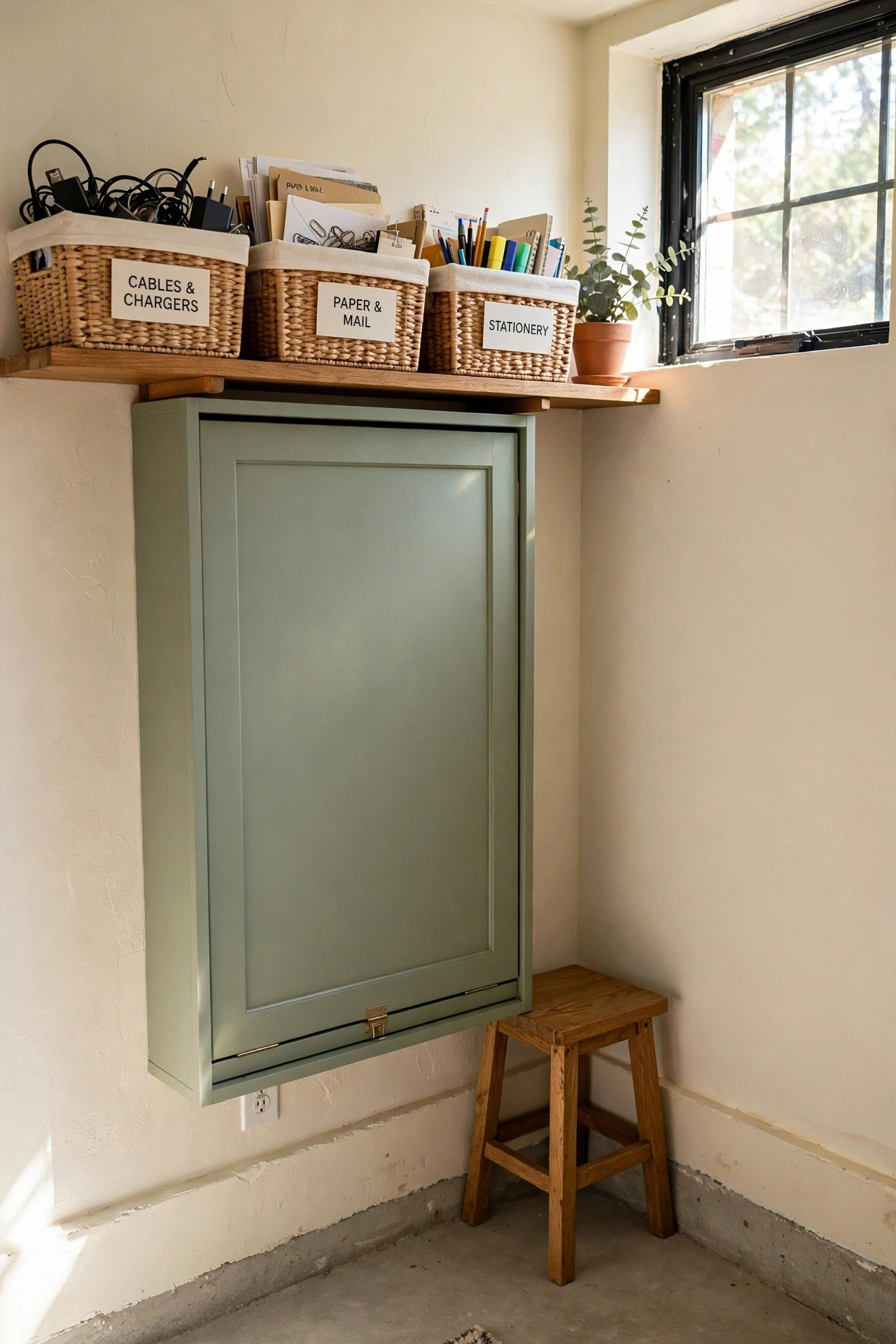
17. Mini Library Wall With Shelves
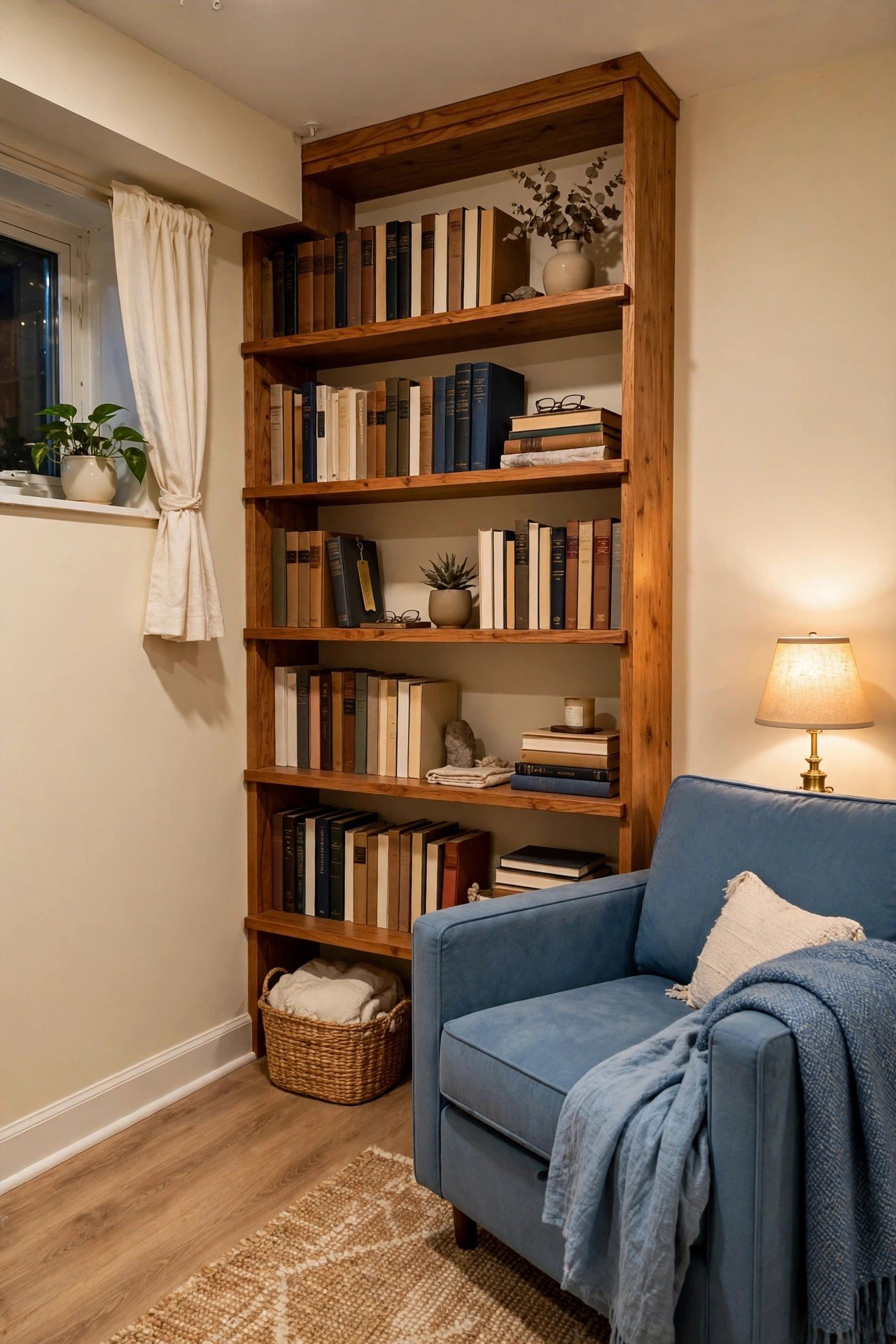
A wall of books brings instant warmth to a basement. Sturdy wood shelves on an interior wall hold the collection where the air is driest. Keep every shelf at least two inches off a concrete exterior wall so moisture never wicks into the pages.
Run your dehumidifier to hold humidity between thirty and fifty percent, which keeps pages from warping and glue from loosening. A decorative molding frame around the bookcase wall turns the shelves into a built-in feature.
18. Guest Sleepover Sofa Bed Setup
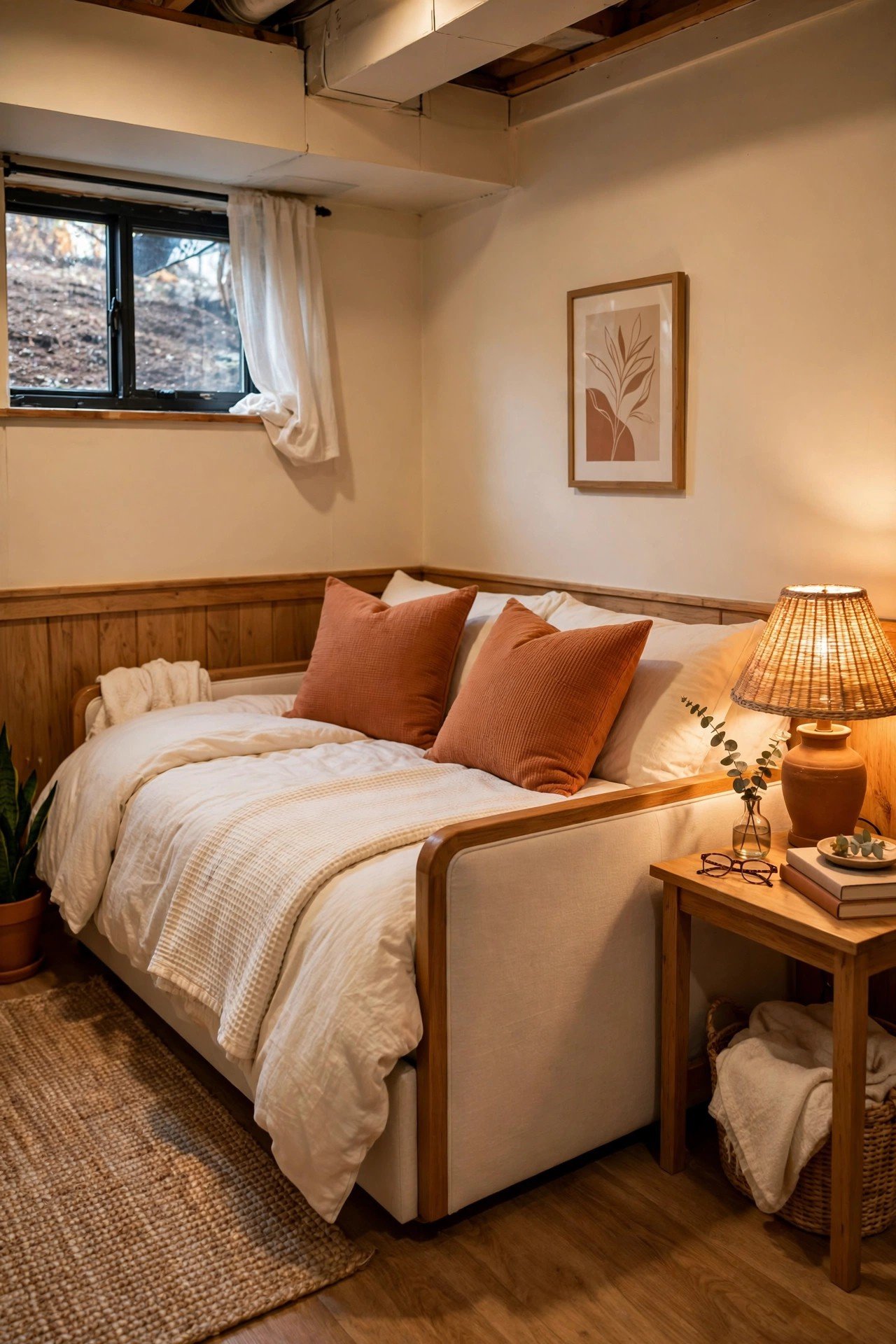
A sofa bed lets your basement double as a guest room without a second bedroom. By day it is a comfortable lounge, and by night it opens into a real bed. Choose one with a quality innerspring or memory foam mattress so guests actually sleep well.
If guests will sleep downstairs regularly, the room needs a working egress window and both a smoke and a carbon monoxide detector, just like any bedroom. Store the bedding in sealed bins on a shelf, never directly on the concrete, and the setup stays fresh and dry. A small basket of extra blankets adds a thoughtful hotel touch.
Conclusion
A small basement stops feeling small when the layout respects what makes basements different. Low furniture for low ceilings, bright mold-resistant paint, rugs over a moisture barrier, layered warm light, and steady humidity control turn a dark lower level into the most loved room in the house.
Start with the invisible work first: test for radon, set the dehumidifier, and check your egress window. Then layer in the layout ideas that fit your space, and enjoy the basement you always wished you had.
Frequently Asked Questions
How do I make a small basement feel bigger?
Use low-profile furniture that keeps sightlines open under a seven-foot ceiling, and paint walls and ceiling a bright warm white with mold-resistant primer. Layer several warm lamps instead of one overhead bulb, and keep a clear thirty-six-inch walking lane through the room so traffic never feels squeezed.
What is the best flooring approach for a basement living space?
Sealed concrete or luxury vinyl plank handles basement moisture best. If you want softness, lay a six-mil poly vapor barrier or a moisture-barrier rug pad under a low-pile area rug. Lift the rug edge every few months to check the concrete underneath for hidden damp spots.
How can I add light to a basement with few windows?
Place lamps in the darkest corners first and layer floor and table lamps at different heights for pools of warm light. Keep window walls free of tall furniture, use light upholstery that bounces light, and paint the ceiling bright white. Warm LED bulbs keep the mood cozy without adding heat.
Can you put a living room in a basement with low ceilings?
Yes, most basements with seven-foot ceilings work fine as living rooms. Choose sofas with backs under thirty inches, skip heavy hanging fixtures in favor of arc floor lamps, and mount the TV on the wall to free floor space. Low furniture makes the ceiling feel taller than it is.
How do I keep a basement living space from feeling damp?
Run a dehumidifier set between thirty and fifty percent humidity and keep it six inches from the wall for airflow. Leave a one-to-two-inch air gap behind furniture placed against foundation walls, build bench bases from pressure-treated lumber, and store bedding and fabrics in sealed bins off the concrete floor.

Hi, I’m Emily! I turn messy corners into cozy, organized spots. DreamNestDecor is where I share simple, practical home ideas — decor, organization, and small-space solutions that work in real life, not just in photos. Every idea here is carefully researched before it’s shared.