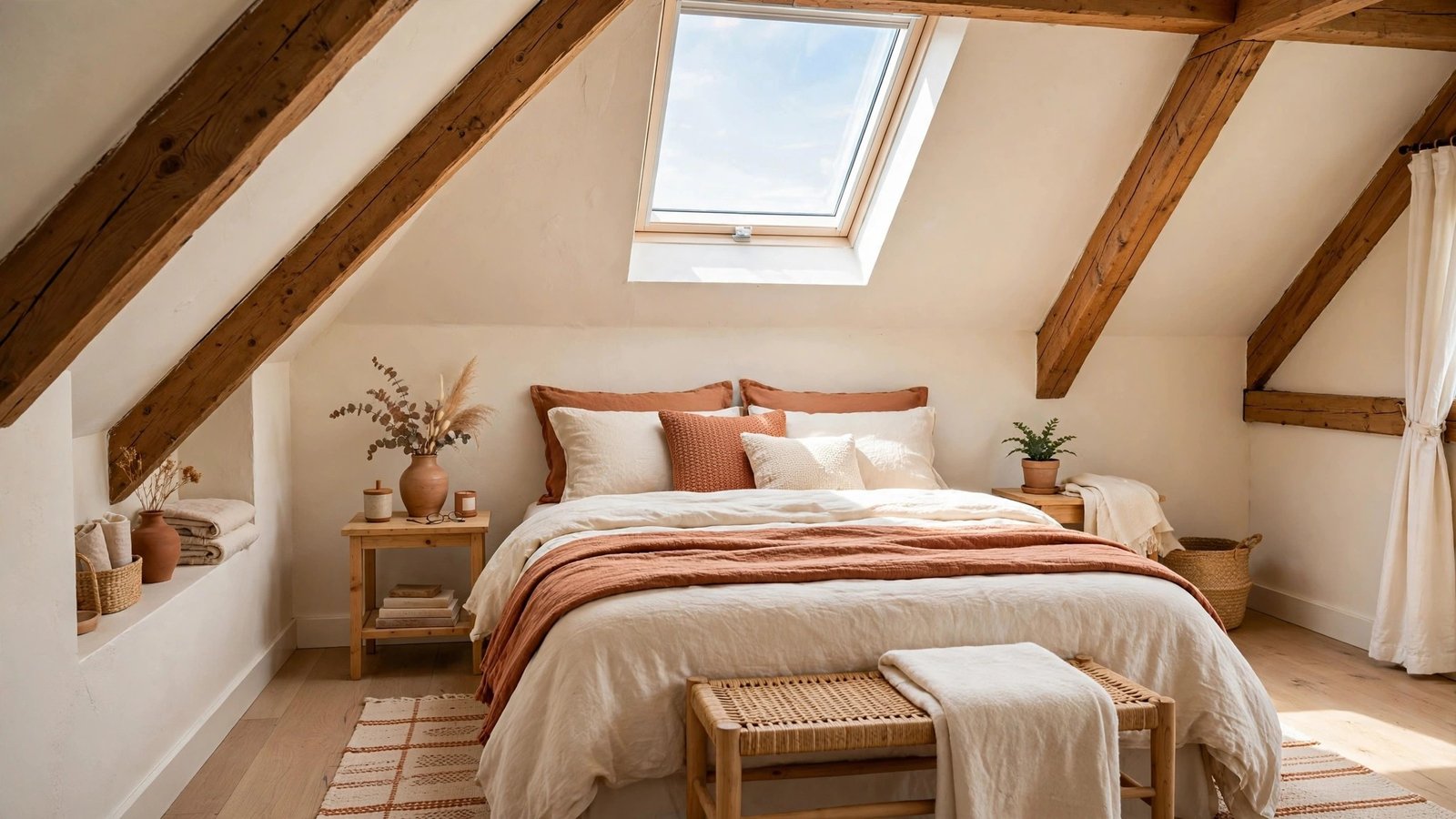
A sloped ceiling looks like a problem until you start designing around it. The angles that seem to steal space are the same angles that make an attic bedroom feel like a private hideaway. No flat-ceiling room can copy that charm.
The rules of attic layout are simple once you know them. Put tall furniture where the ceiling is tallest, tuck storage into the low eaves, and let the bed sit where you can sit up without hitting your head. These thirty-one ideas walk you through every decision.
Work through the list and match each idea to your own slope. Some ideas carve storage from dead space, others bring in light and air, and all of them keep the room open, comfortable, and easy to move through.
1. Sloped-Ceiling Reading Corner
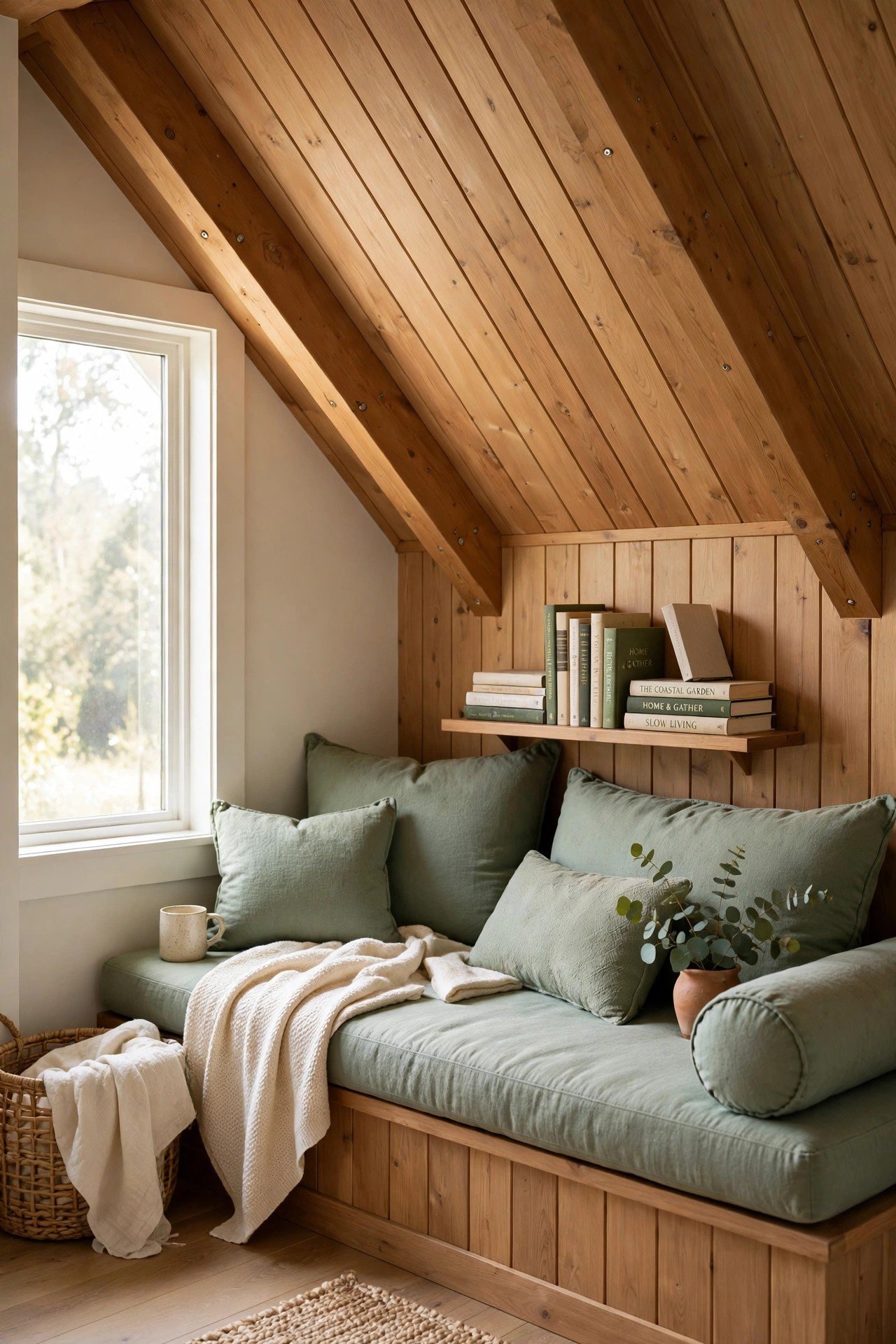
The low end of the slope, where the ceiling drops below four feet, is useless for standing but perfect for sitting. Push a deep floor cushion or a low armchair into that wedge and add a wall-mounted shelf at arm height for books. A small clip-on sconce gives you reading light without a table lamp eating floor space.
Keep the cushion within the zone where the ceiling is at least three feet high so you can lean back comfortably. A soft rug under the seat marks the corner as a destination, and the rest of the room stays clear for walking.
2. Skylight Over the Sleeping Area
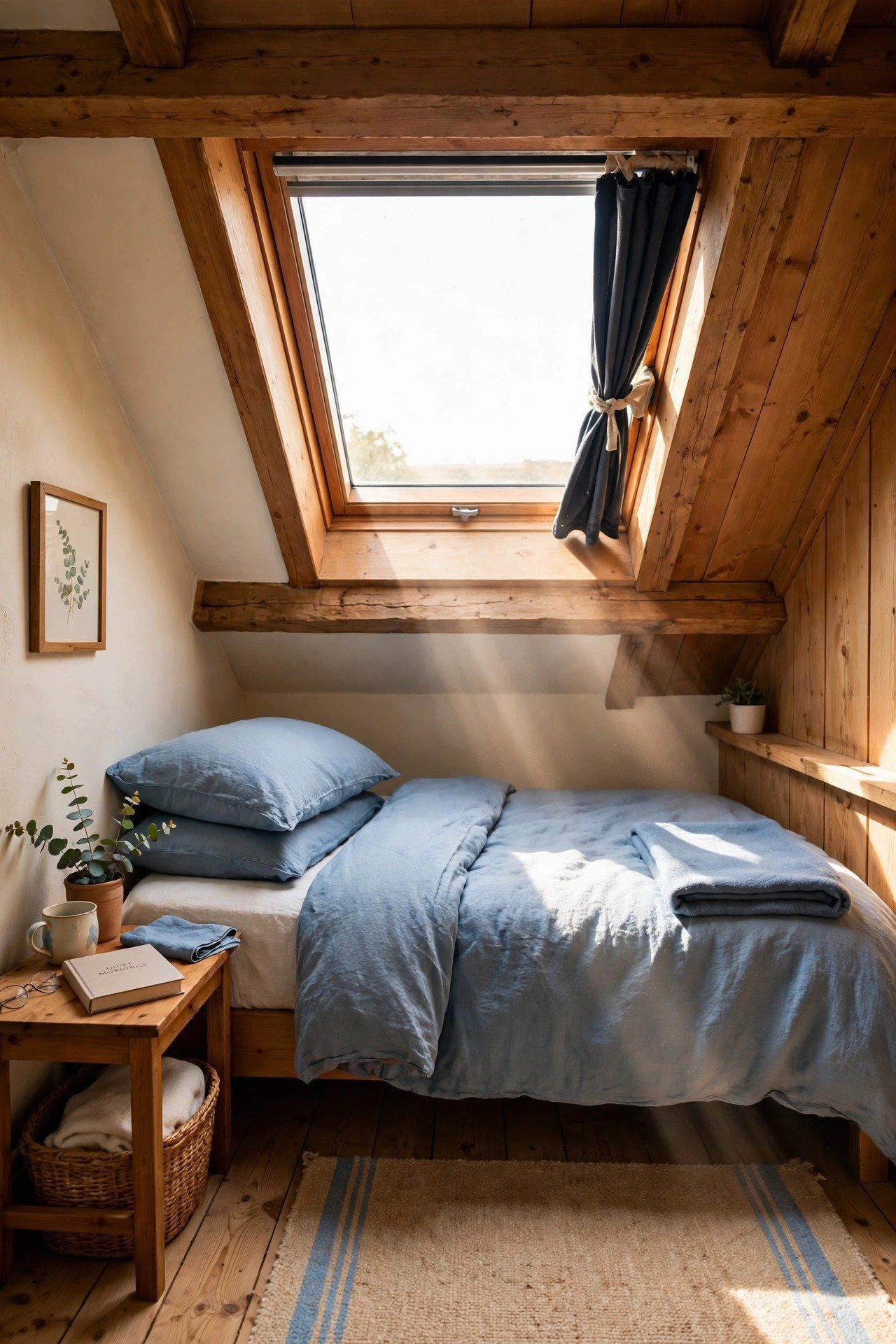
A skylight directly above the bed pours daylight into the center of the attic, where windows cannot reach. You wake with the sun and fall asleep under the stars, which no lamp can copy. Choose a vented skylight and you also get fresh air in summer.
Fit blackout blinds made for the skylight size so bright mornings do not wake you too early. A thoughtful ceiling design around the skylight, like painted trim or wood lining, turns the opening into a feature.
3. Low Platform Bed Frame
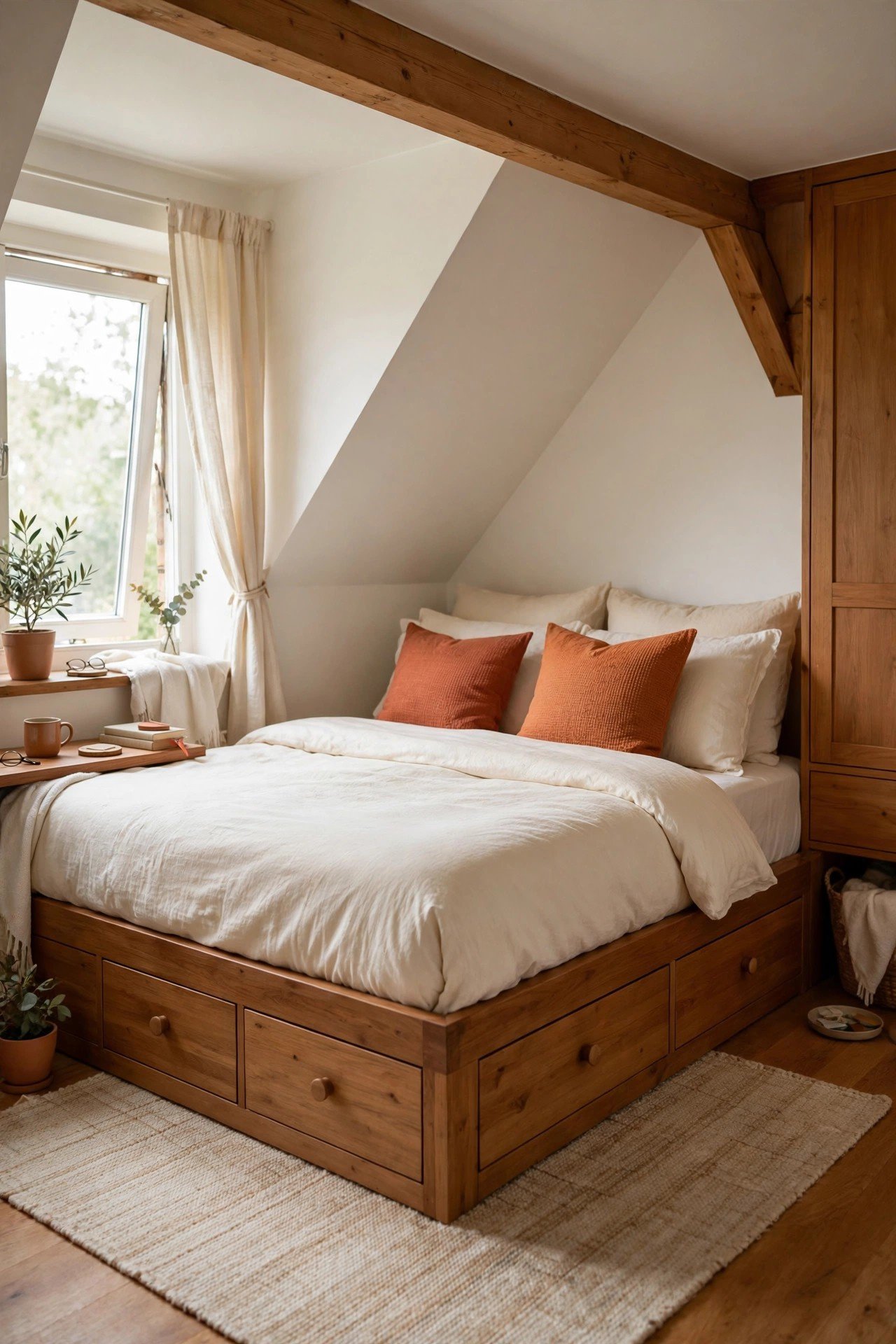
A low platform bed is the natural choice under a sloped ceiling. With a total height under eighteen inches, including the mattress, you gain precious headroom where the slope is lowest. The clean lines also keep a small room feeling calm instead of crowded.
Pick a frame with deep drawers built into the base and you win back the storage a small attic lacks. Measure your slope first and place the bed where you have at least four feet of ceiling height above the pillow, so sitting up in bed feels easy.
4. Deep-Toned Feature Wall
One deep-colored wall gives a small attic bedroom a focal point that flat white cannot. Navy, forest green, or burnt orange on the tallest wall draws the eye up and makes the slope feel intentional. The other walls stay light so the room never feels closed in.
Paint the sloped ceiling above the bed the same deep tone and the bed zone feels like a cozy alcove. A color-drenched wall in a rich shade pairs beautifully with warm wood floors and cream bedding.
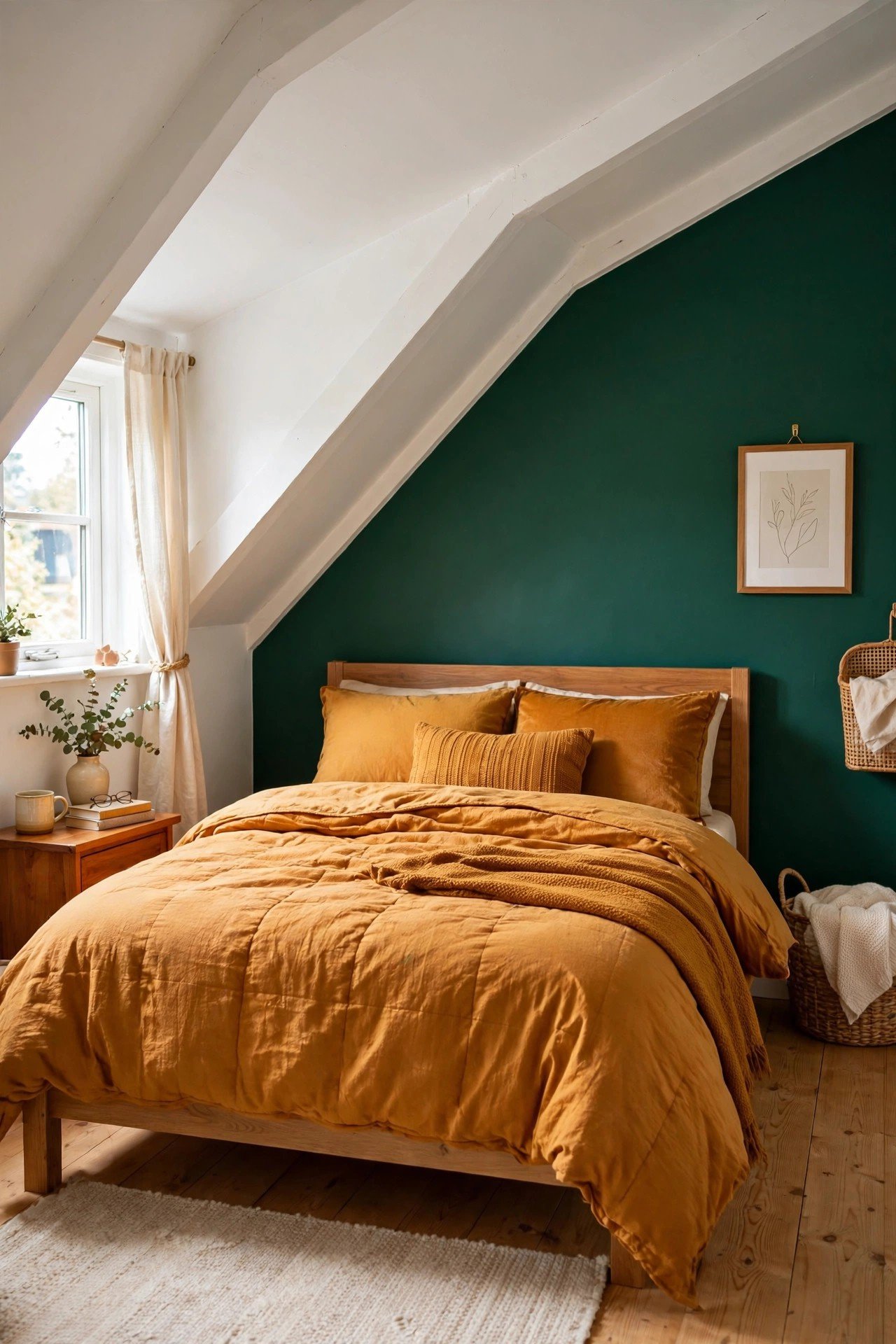
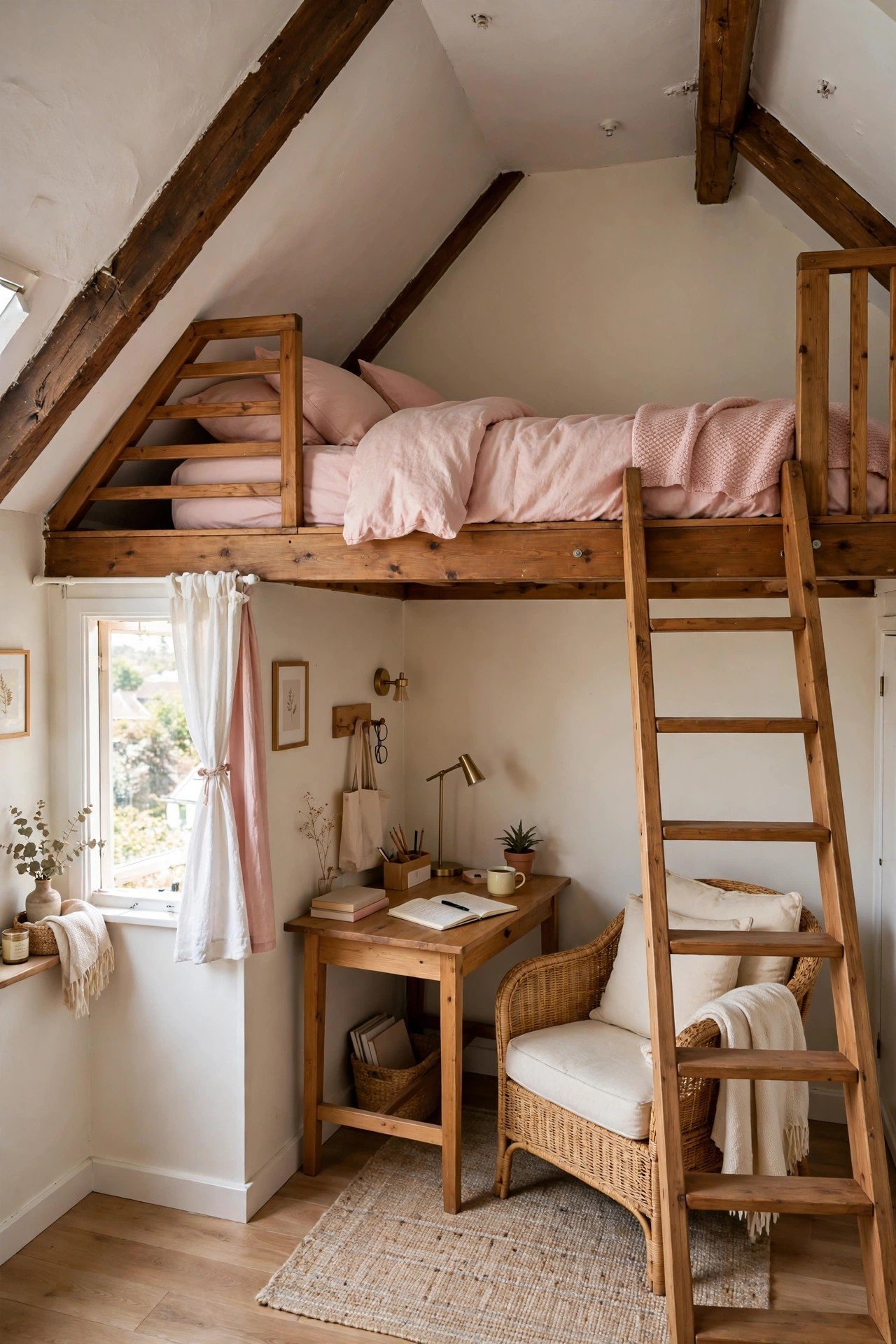
5. Elevated Loft Sleeping Platform
If your attic has a tall peak, a loft platform doubles your floor space. The bed sleeps up high while a desk, a reading chair, or dressers live underneath. A sturdy ship-style ladder with wide treads makes climbing up safe and easy.
Check that you have at least thirty-three inches of sitting height above the mattress before you commit. Guard rails on the open sides are not optional, and a small clip-on fan keeps the warm air near the peak moving on summer nights.
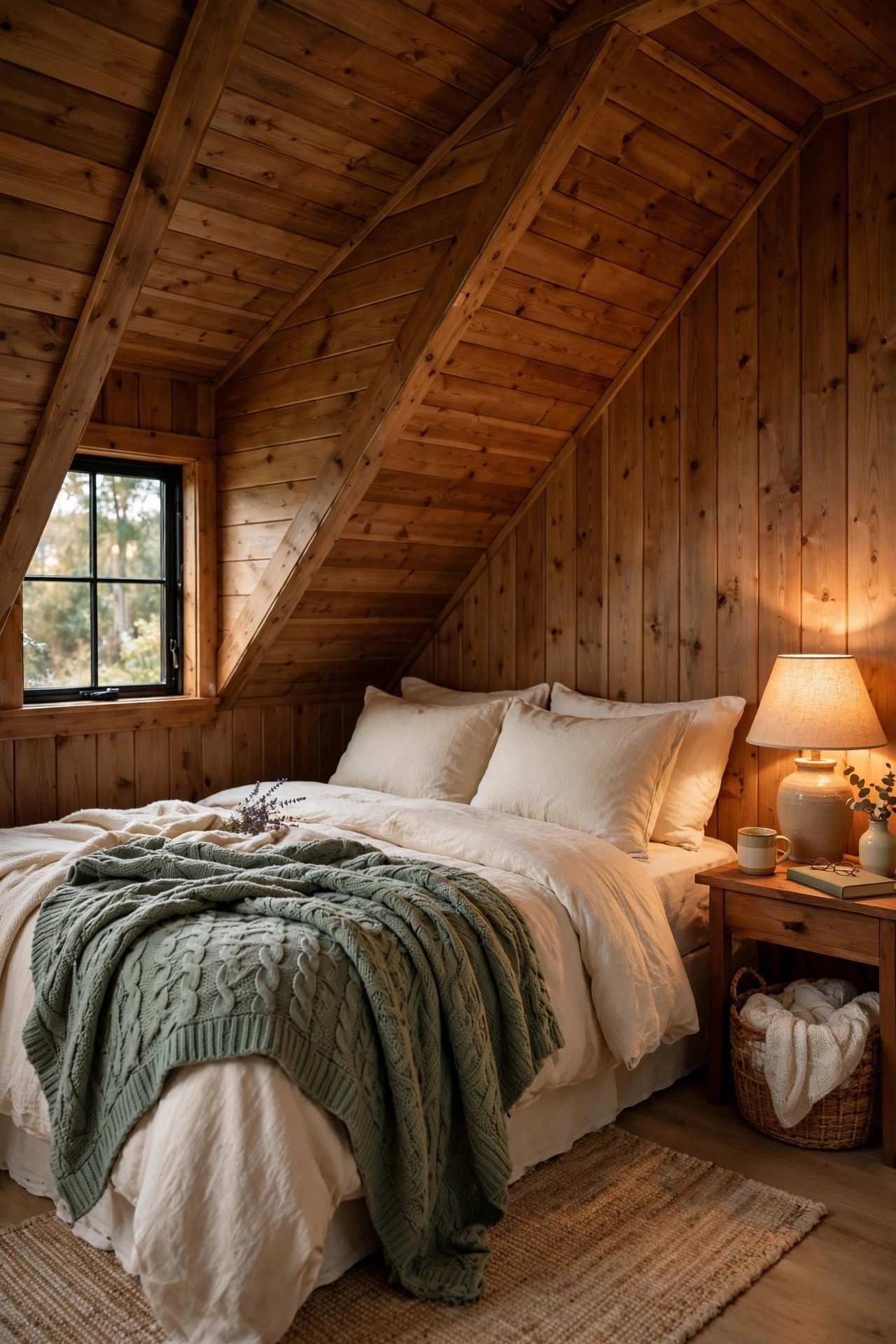
6. Cabin-Style Woodland Retreat
Wood paneling turns an attic into a cabin retreat that feels warm in every season. Run tongue-and-groove boards along the slope and the ceiling itself becomes the decoration. Earthy tones, soft lamplight, and a chunky knit throw complete the lodge feeling.
Seal the paneling with a clear matte finish so the wood glows without darkening the room too much. Keep bedding light and textured to balance the rich wood, and the small space will feel like a getaway instead of a spare room.
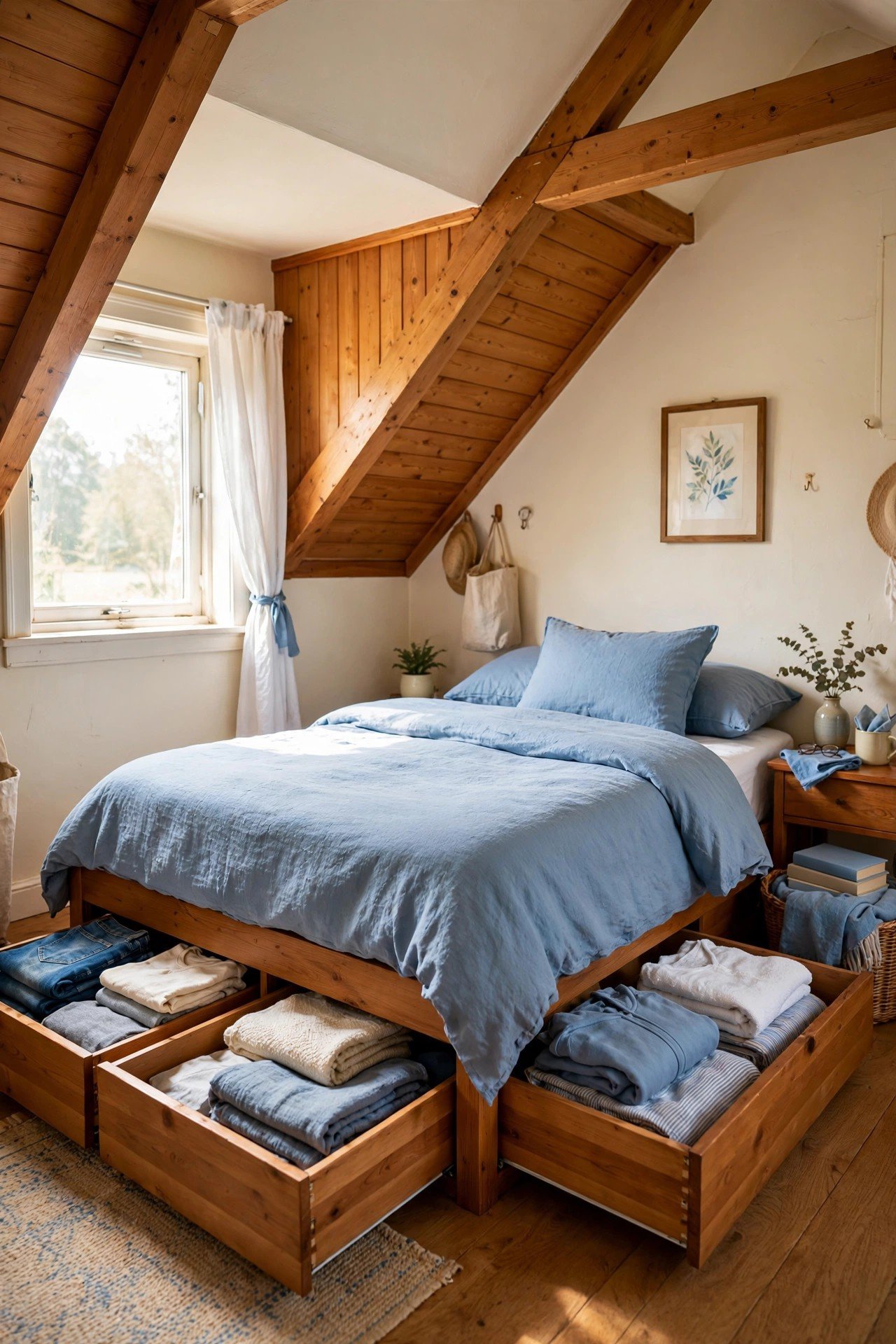
7. Under-Bed Drawers for Hidden Storage
The space under the bed is the biggest hidden storage zone in an attic bedroom. Pull-out drawers on smooth glides hold seasonal clothes, spare bedding, and shoes without adding one piece of visible furniture. Everything stays dust-free behind closed drawer fronts.
Choose drawers at least twenty-four inches deep so they swallow folded sweaters whole. Label the front of each drawer, and getting dressed in a small attic becomes as easy as in a big walk-in closet.
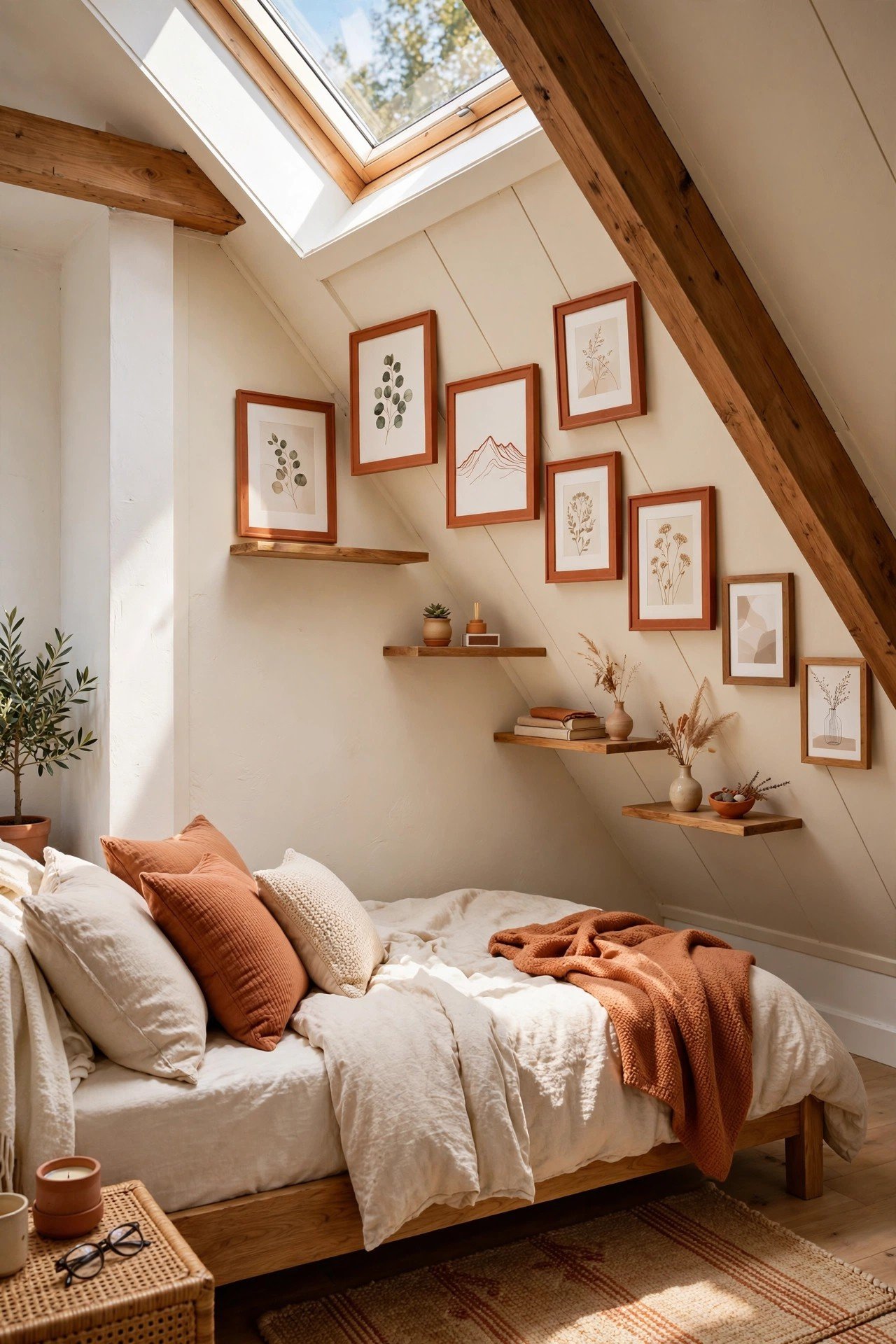
8. Slanted-Wall Art Gallery
Slanted walls make a wonderful art gallery because the angle catches the light beautifully. Hang framed prints in a loose grid following the slope, or mount short floating shelves for small art and plants. The wall that seemed awkward becomes the most interesting one in the room.
Keep frames light and use proper picture-hanging hooks rated for the weight. Hang the center of the arrangement at eye level when you are standing on the tall side of the room, so the gallery reads correctly.
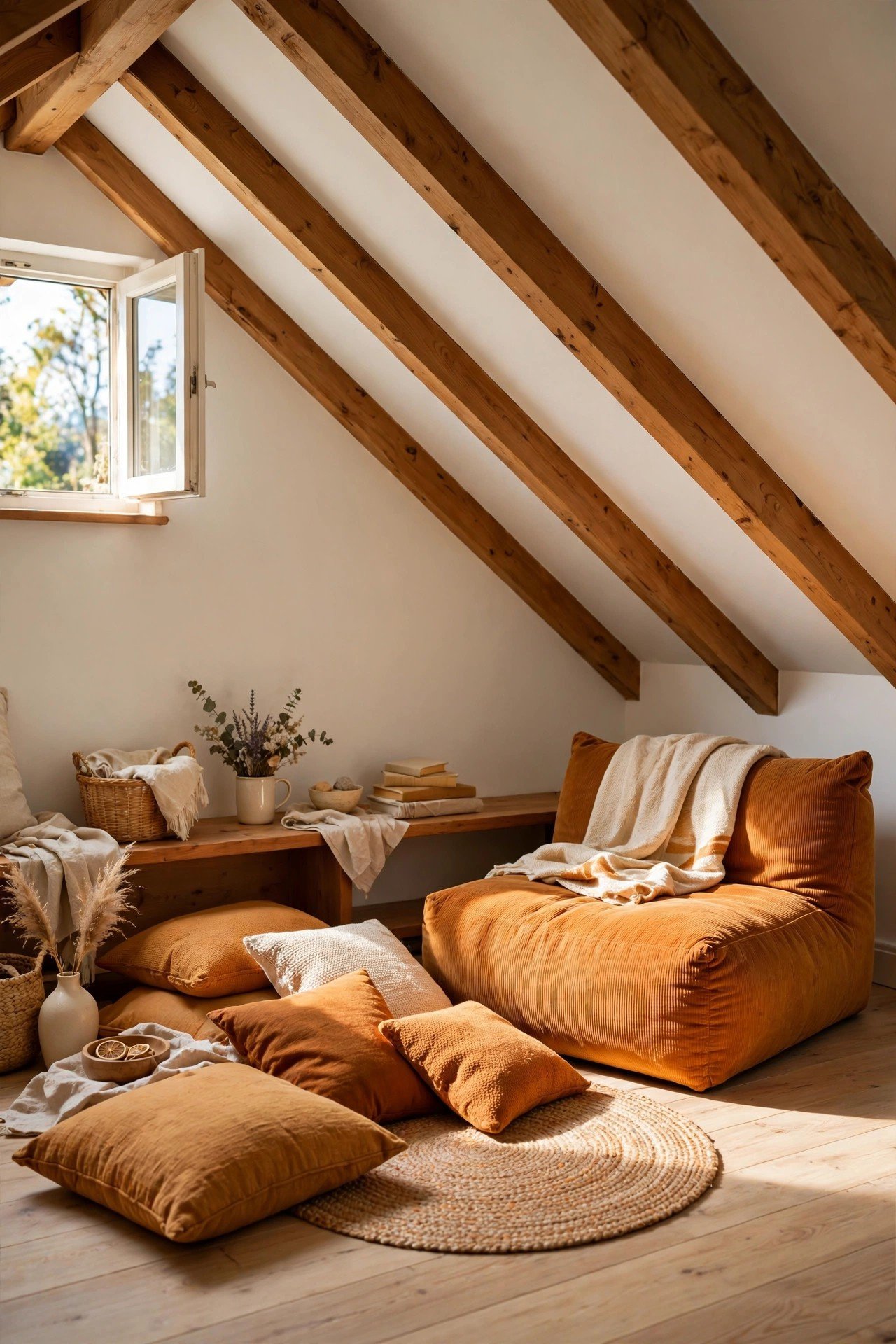
9. Low Lounge Seating Under the Eaves
The eaves, where the ceiling nearly meets the floor, are too low for walking but ideal for lounging. A low-slung chair or a pile of floor cushions turns that dead strip into a relaxing corner. You sit below the slope instead of fighting it.
Place the seating where the ceiling is between three and four feet high, low enough to feel tucked in but high enough to sit upright. A small side table or a wall-mounted cup holder keeps tea within reach.
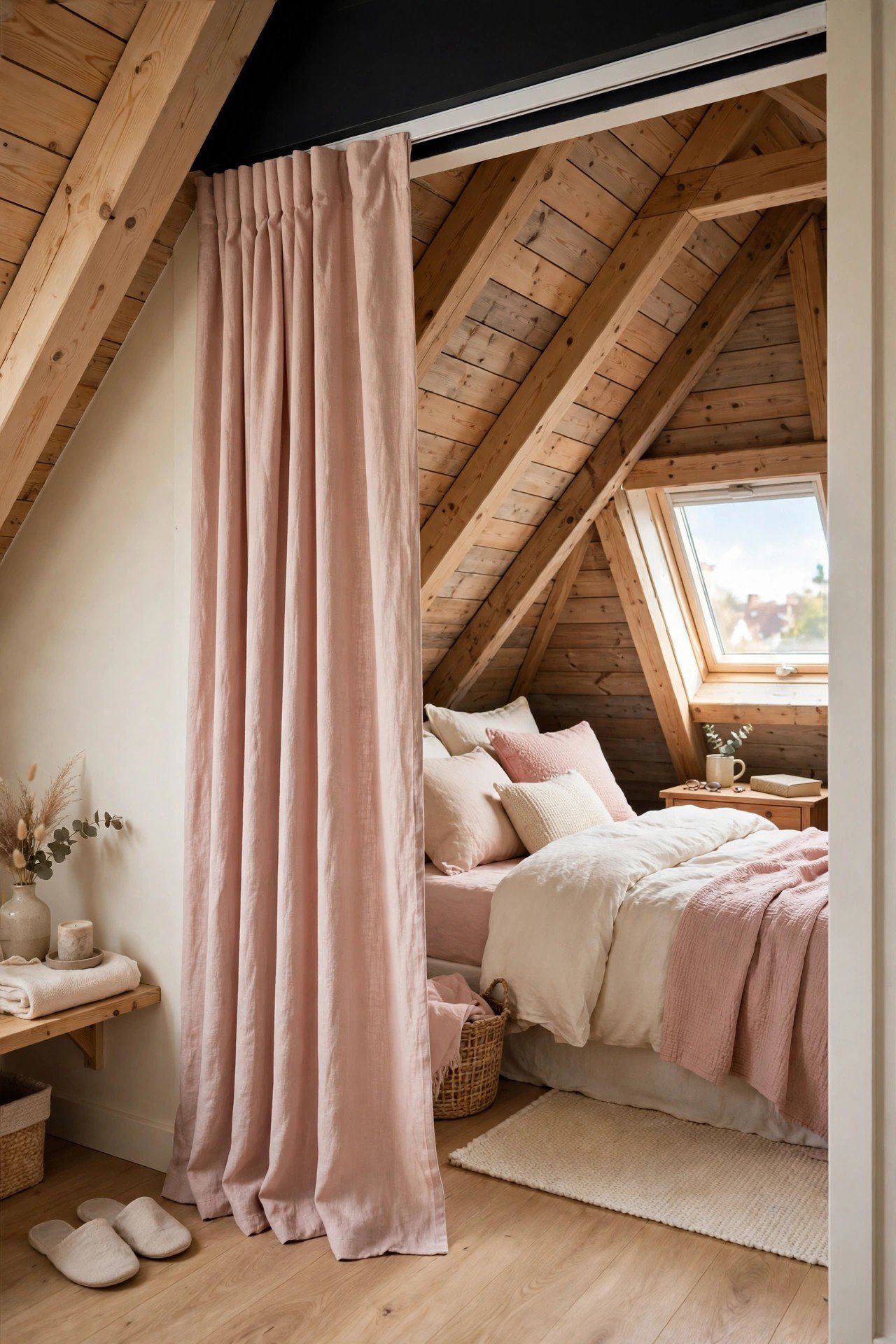
10. Fabric Curtain Room Divider
A ceiling-mounted curtain track divides an attic bedroom without walls or doors. Pull the curtain closed for privacy around the bed or a dressing corner, and open it to let light flow through. Linen or cotton fabric keeps the divider soft and breathable.
Mount the track into a ceiling joist so it holds the fabric weight safely. Choose a curtain that stops a few inches above the floor for easy cleaning, and the divider will feel like a design choice rather than a compromise.
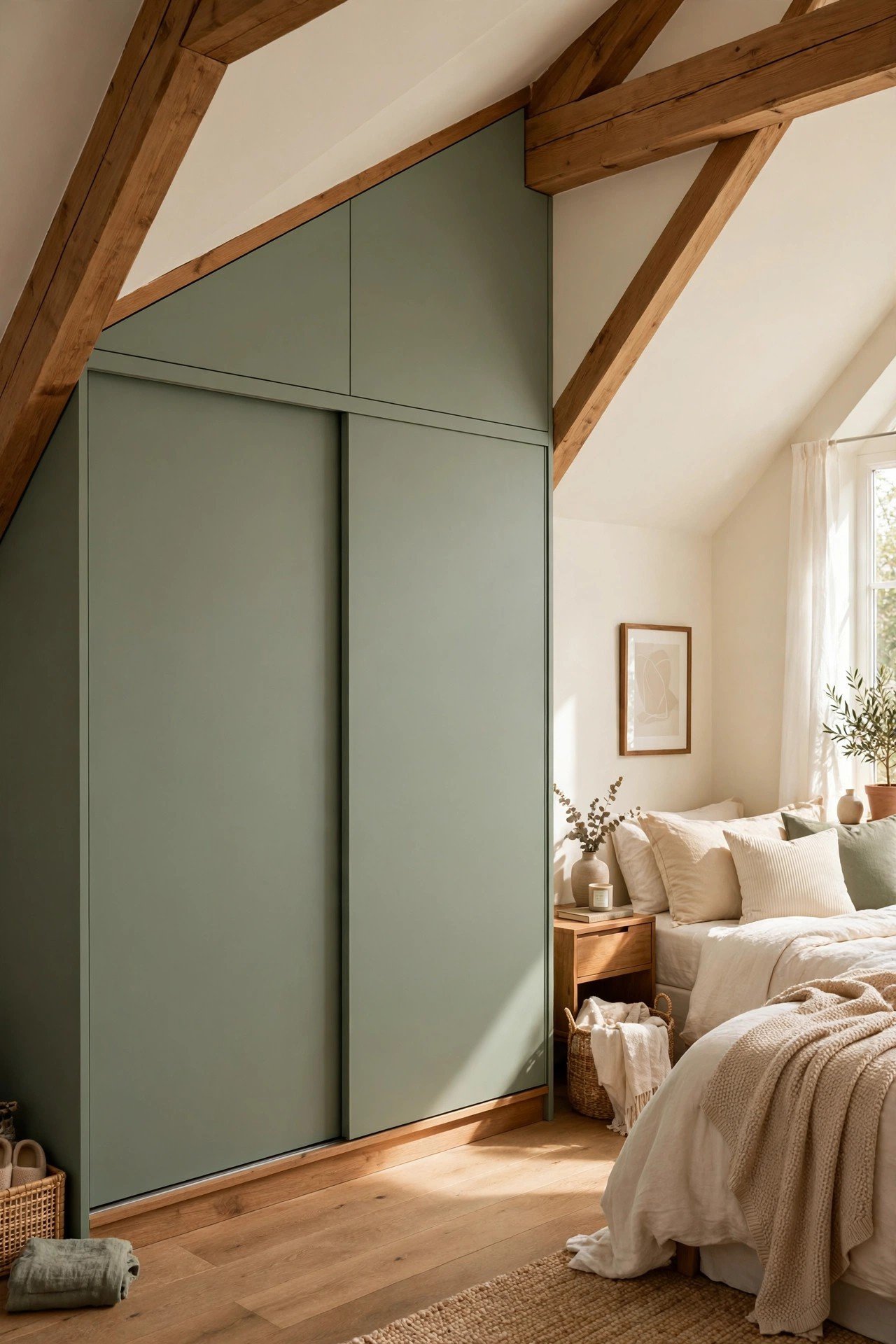
11. Fitted Wardrobe Under the Slope
A custom wardrobe built into the slope turns dead space into serious storage. Shallow at the low end and deep at the tall end, it follows the roofline exactly. Sliding doors need no swing space, which matters in a tight attic.
Plan hanging space where the ceiling is at least five feet high so clothes hang without brushing the slope. Use the lowest wedge for shoe shelves or flat drawers, and every inch of the awkward triangle earns its keep.
12. Calm Pastel Color Palette
Soft pastels make a small attic feel open and serene. Light pink, pale blue, and sage green bounce daylight around the slopes and soften the angles. The room feels larger because the eye glides over gentle color instead of stopping at sharp contrasts.
Keep the ceiling the palest tone and the walls a touch deeper for subtle depth. Repeat each pastel in bedding, art, and one piece of furniture so the palette feels planned rather than random.
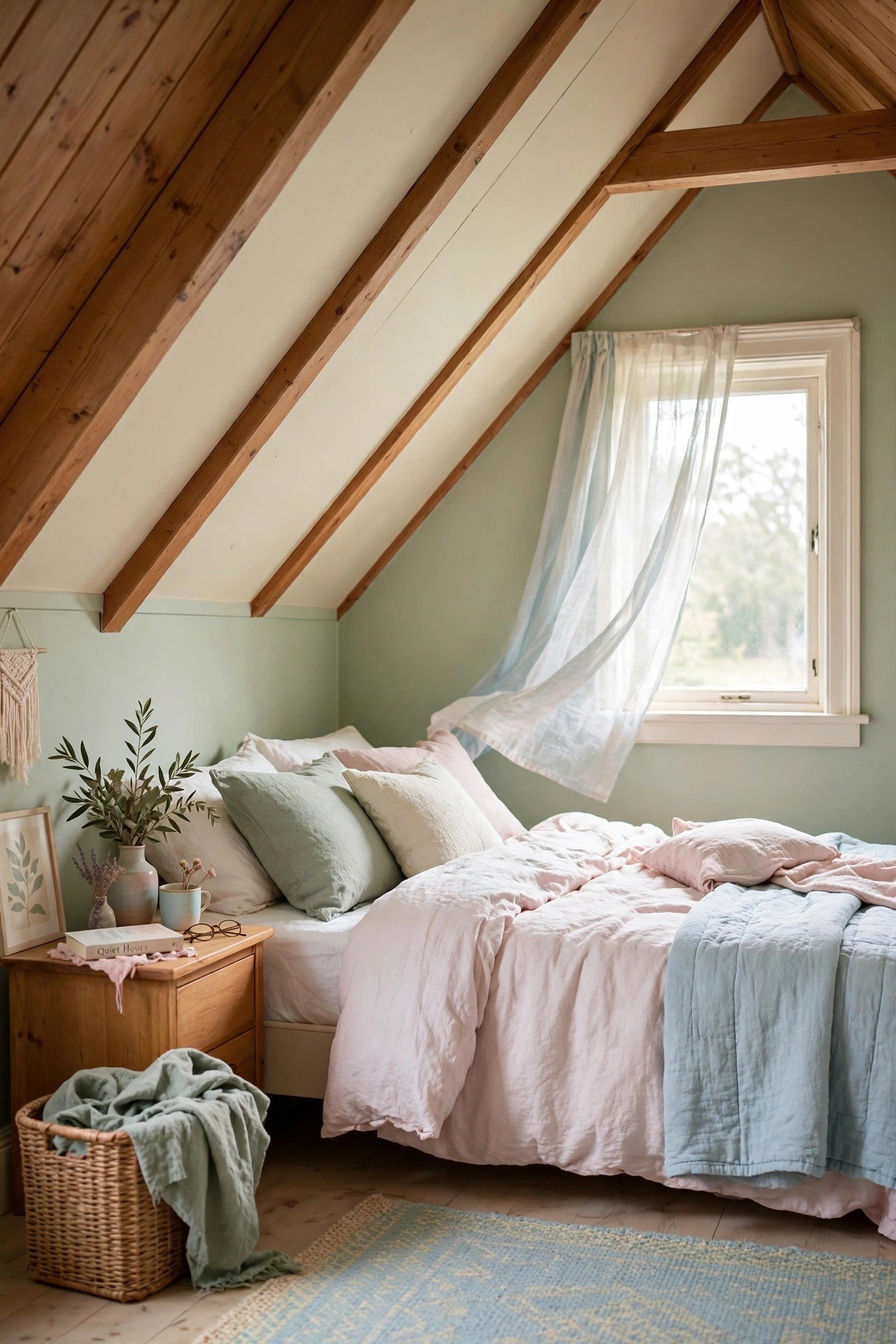
13. Twinkling String Lights
String lights draped along the beams or behind the headboard give an attic bedroom a magical evening glow. The warm points of light follow the slope and highlight the architecture instead of hiding it. They cost little and change the whole mood after dark.
Use warm-white LED strands, which stay cool and safe near fabric and wood. Clip them with removable hooks rather than nails, and put them on a timer so the room greets you with light every evening.
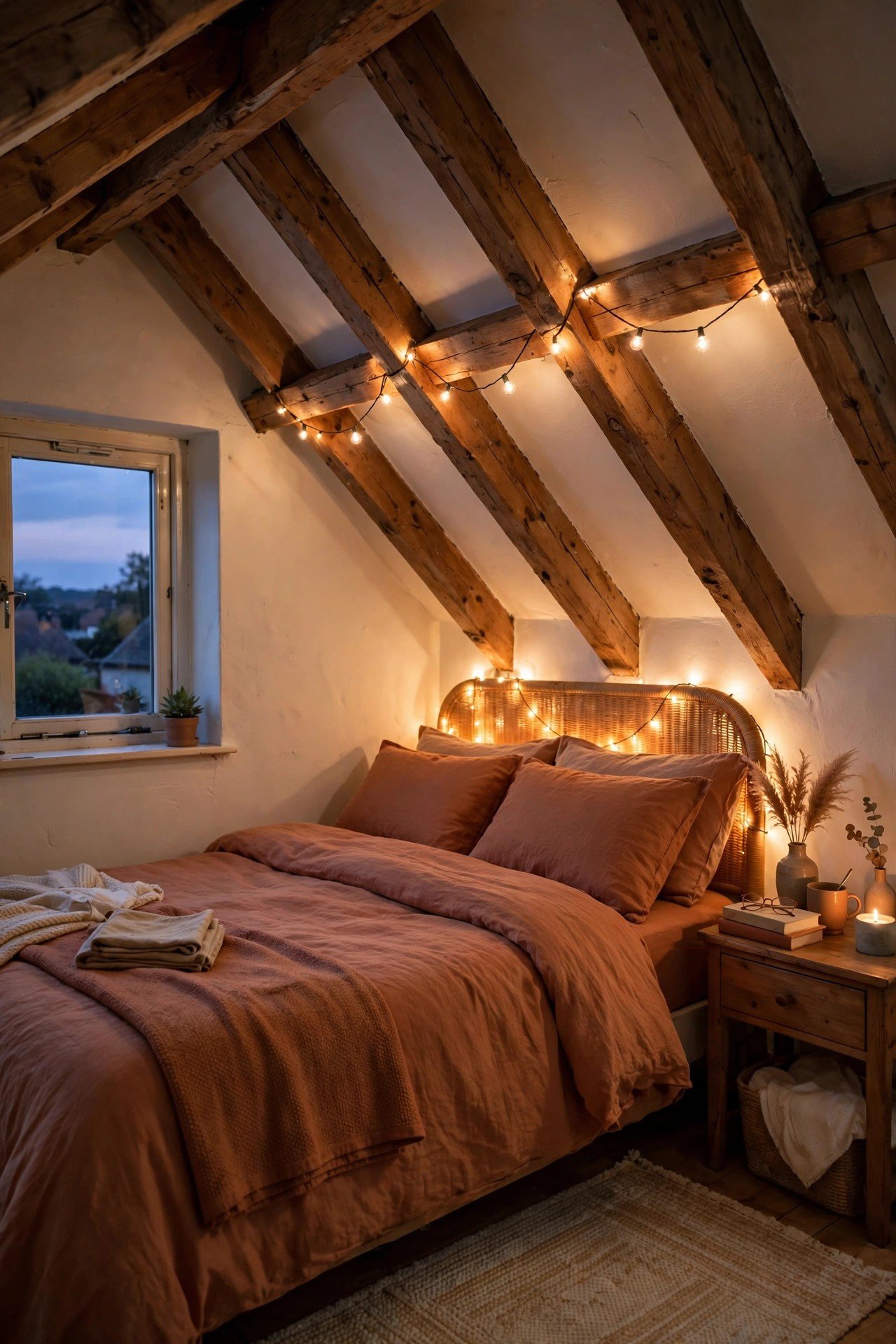
14. Dormer Window Seat
A dormer window creates the one spot in an attic with full standing height and a view. Build a window seat into the dormer base and you gain a reading spot plus hidden storage under the lid. Custom cushions cut to the dormer shape make it fit like it was always there.
Build the seat eighteen inches high, standard chair height, and hinge the top for easy access to the storage inside. Add decorative molding around the dormer frame to make the seat look like original architecture.
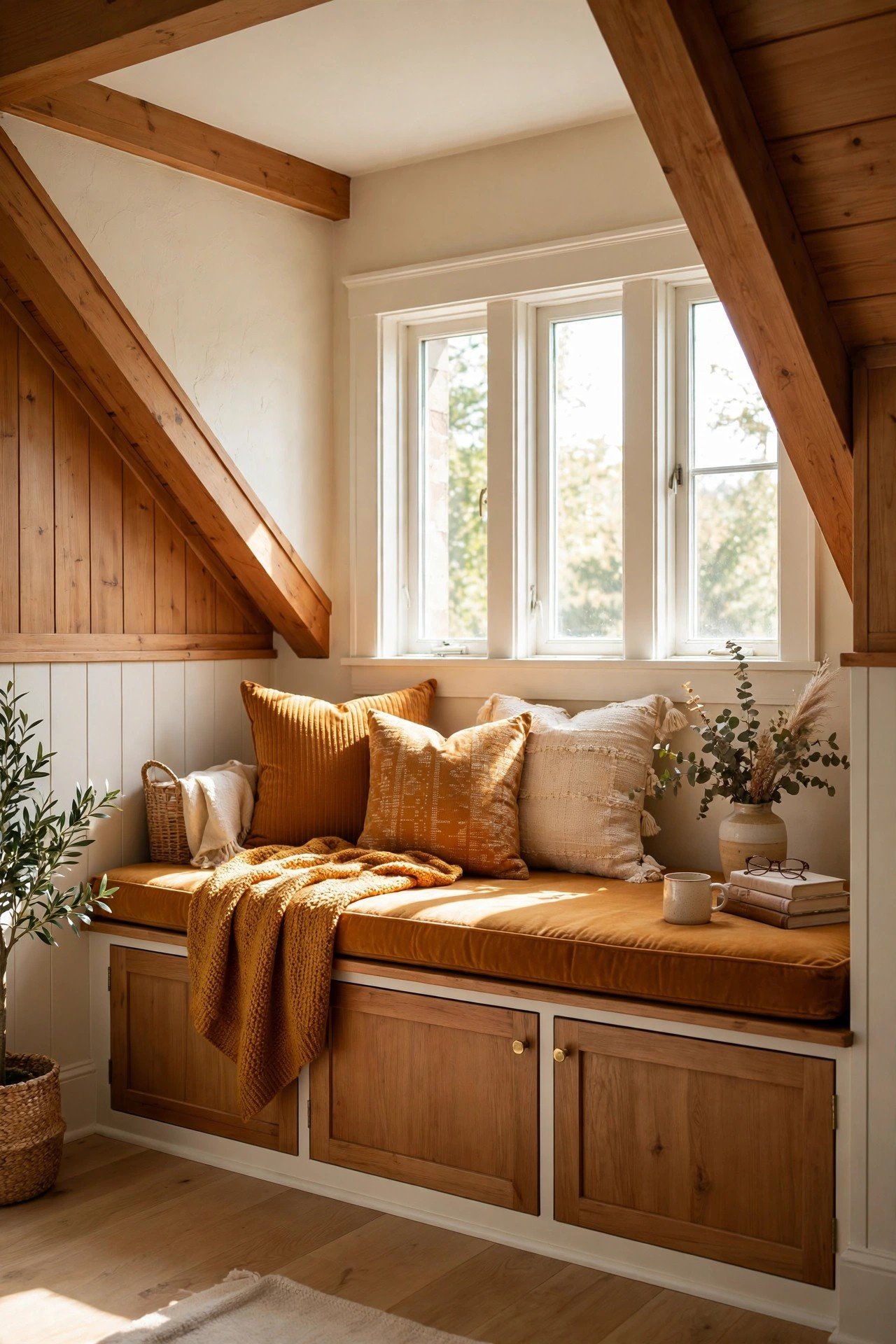
15. Raw Industrial Beams
Exposed beams give an attic bedroom instant character and a strong sense of structure. Leave the wood raw or stain it dark, then pair it with black metal accents and neutral bedding for an industrial look. The beams draw the eye along the slope and make the ceiling feel higher.
Wrap string lights or a slim LED strip along one beam for evening warmth. Keep the rest of the decor simple so the beams stay the star, and the small room will feel bold rather than busy.
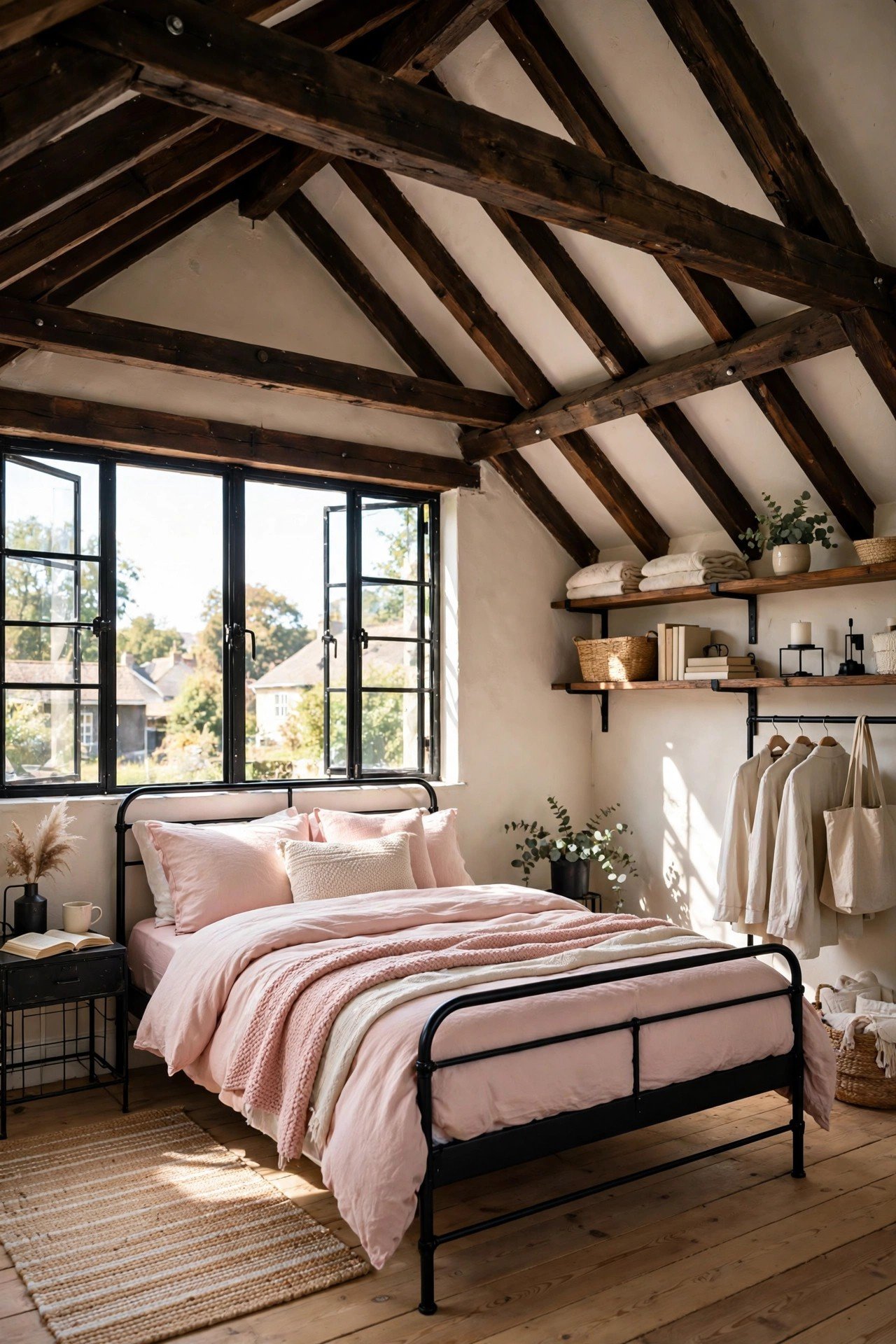
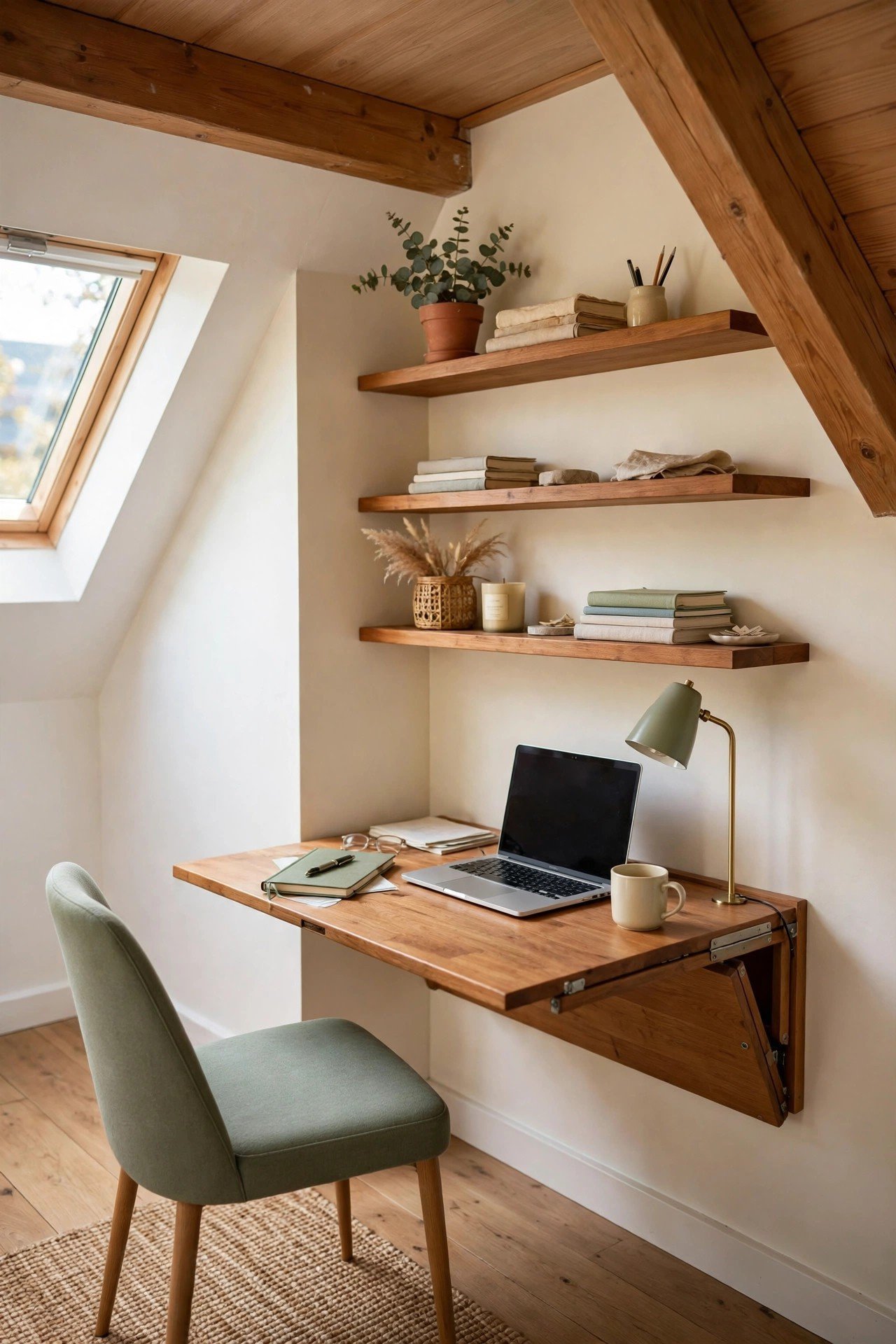
16. Fold-Down Home Office Corner
A fold-down desk gives an attic bedroom a real workspace without stealing floor space. Mounted under the slope where the ceiling is about four feet high, it holds a laptop comfortably while you sit on a low stool. Fold it up at night and the bedroom returns.
Fix the desk to wall studs with a french cleat so it holds real weight safely. Add a floating shelf above for supplies and a clip-on lamp, and the corner works as hard as any home office.
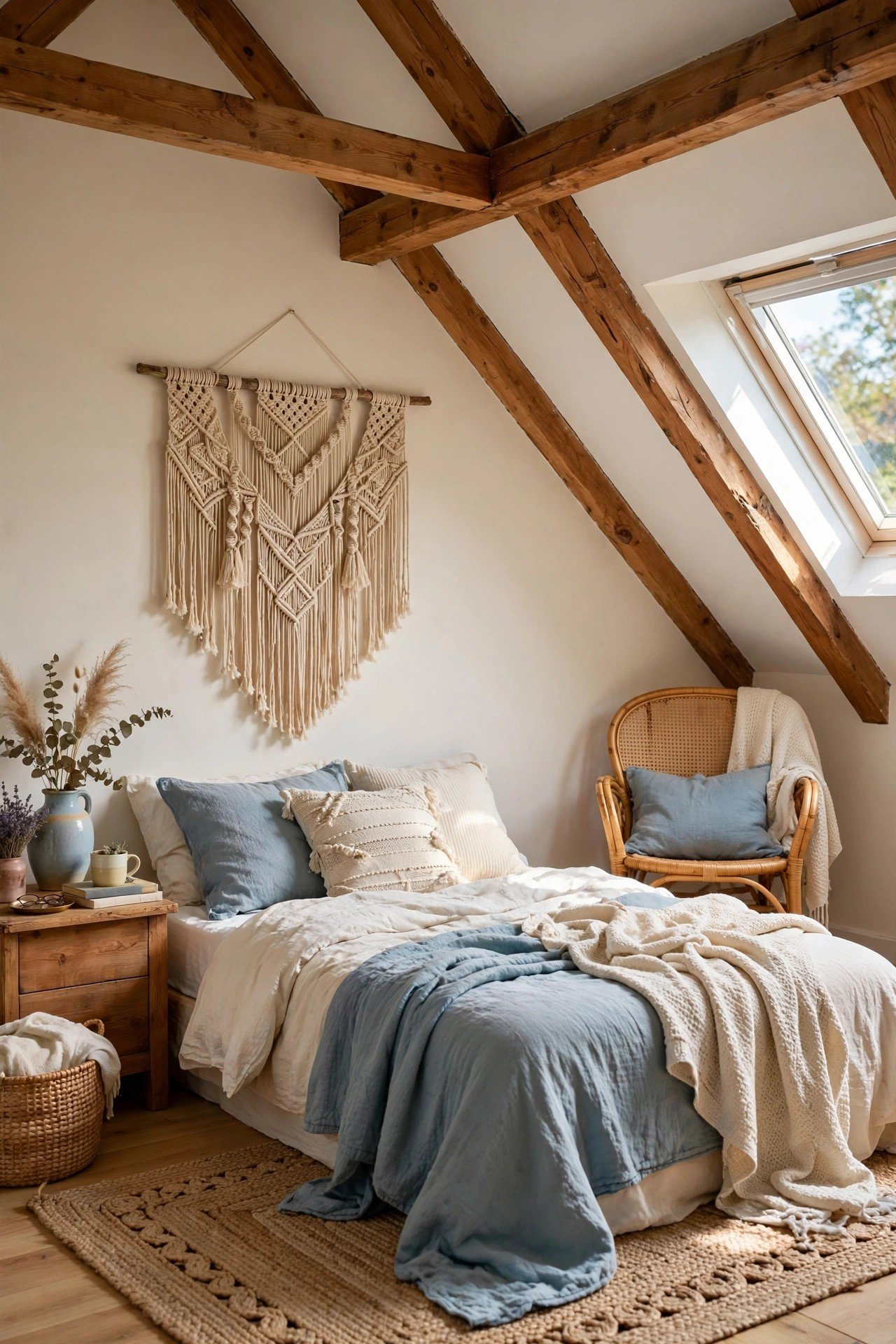
17. Earthy Boho Layers
Boho style loves an attic because the slopes beg for layered texture. Macrame hangings, a jute rug, rattan furniture, and piles of earthy cushions turn the angles into a relaxed nest. The look is forgiving, which suits a room with no straight walls.
Stick to a tight palette of warm neutrals with one or two earthy accents so the layers feel rich instead of messy. Every textile should earn its place, and the small space will feel collected rather than cluttered.
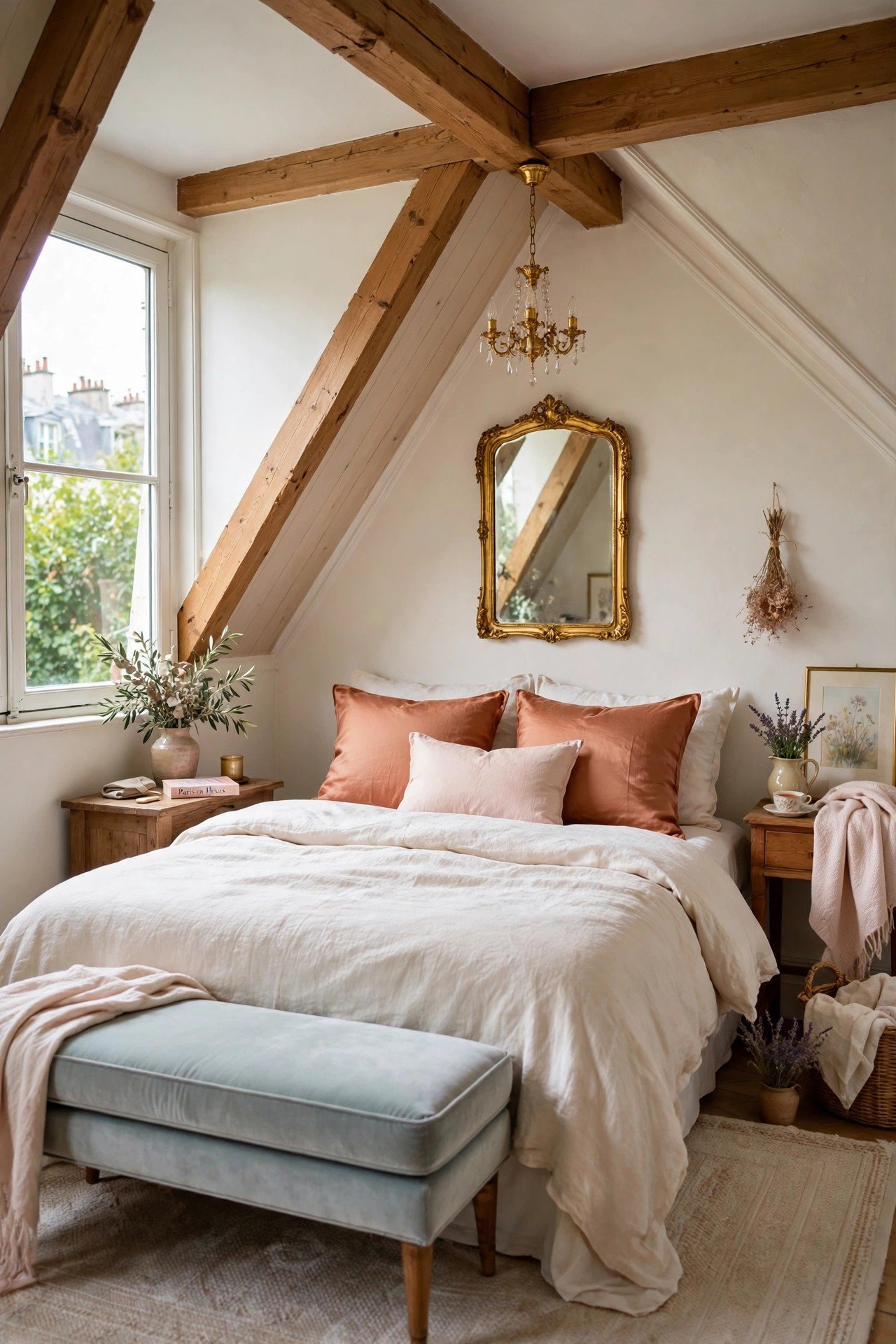
18. Chic Parisian-Style Decor
Parisian style brings elegance to the smallest attic. Soft pastels, a vintage gold mirror that bounces light, and a small chandelier sized for low ceilings create a chic retreat. A velvet bench at the foot of the bed adds luxury without bulk.
Choose a flush-mount or short-drop chandelier so it clears your head under the slope. Lean the mirror against the tallest wall to double the daylight, and the attic will feel like a boutique hotel room.
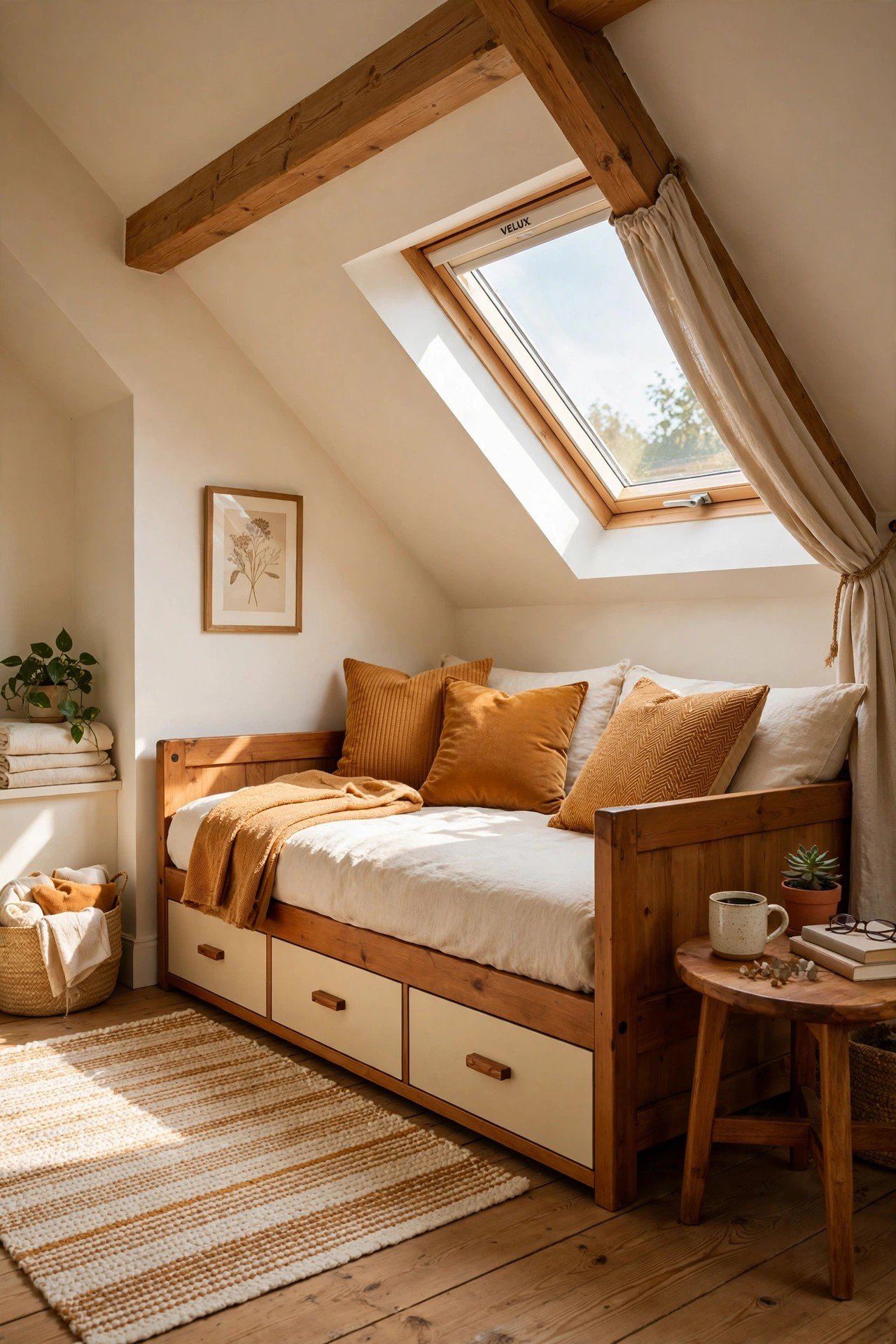
19. Daybed That Doubles as a Sofa
A daybed is the hardest-working piece in a small attic bedroom. By day it is a deep sofa for reading and lounging, and by night it becomes a full bed. Storage drawers in the base hold bedding and clothes, so no dresser is needed.
Push the daybed against the tallest wall so sleepers sit up without hitting the slope. Style it with a row of large pillows along the back during the day, and it reads as a sofa, not a bed.
20. Painted Mural on the Slant
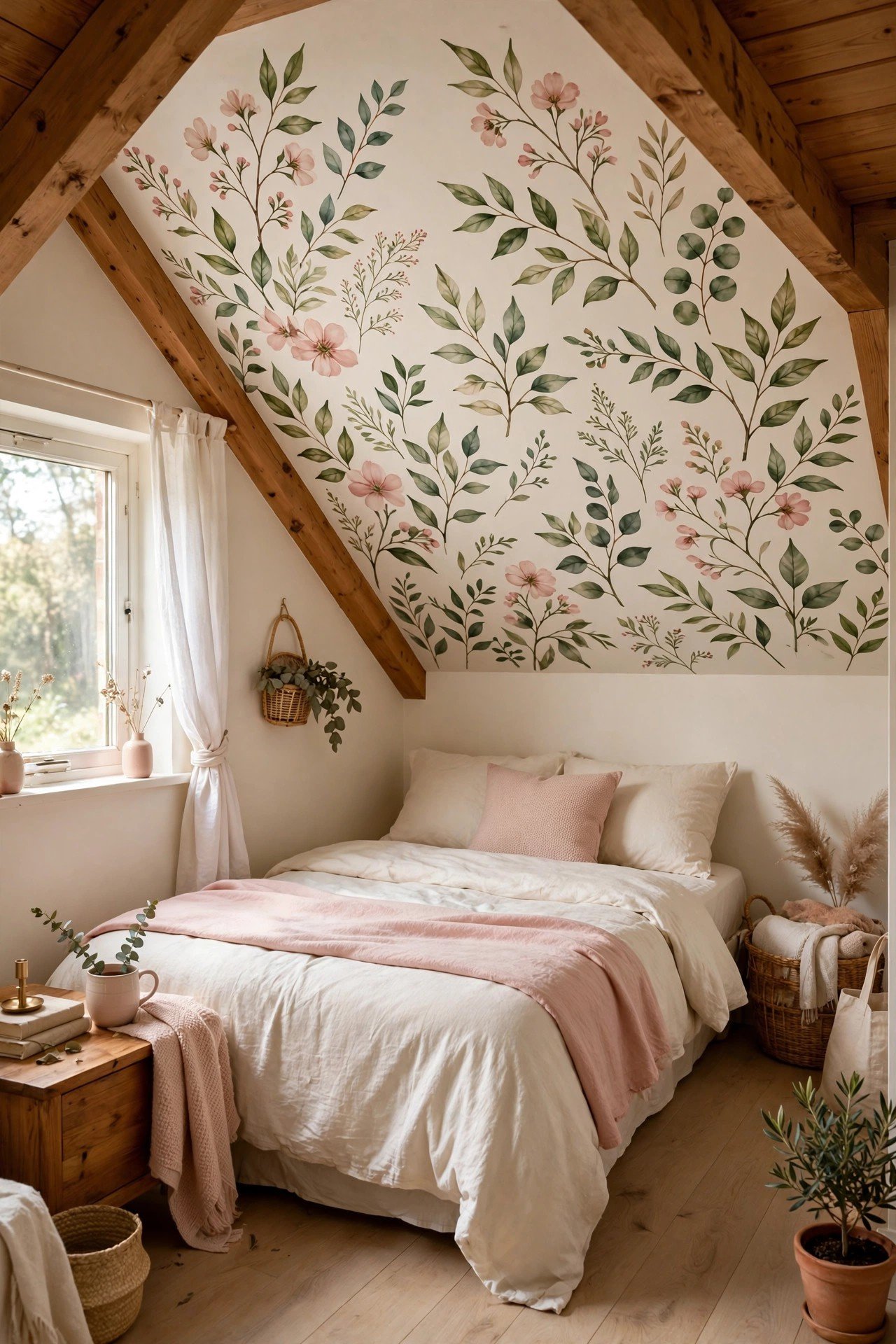
The sloped ceiling is a giant canvas waiting for a mural. Painted botanicals, soft clouds, or an abstract wash of color turn the angle into art. You get a statement wall without losing a single inch of floor space.
Sketch the design on paper first and project it onto the slope at night for accurate outlines. If painting feels like too much, a wallpaper accent wall on the slope gives the same drama with far less work.
21. Clean Monochrome Minimalism
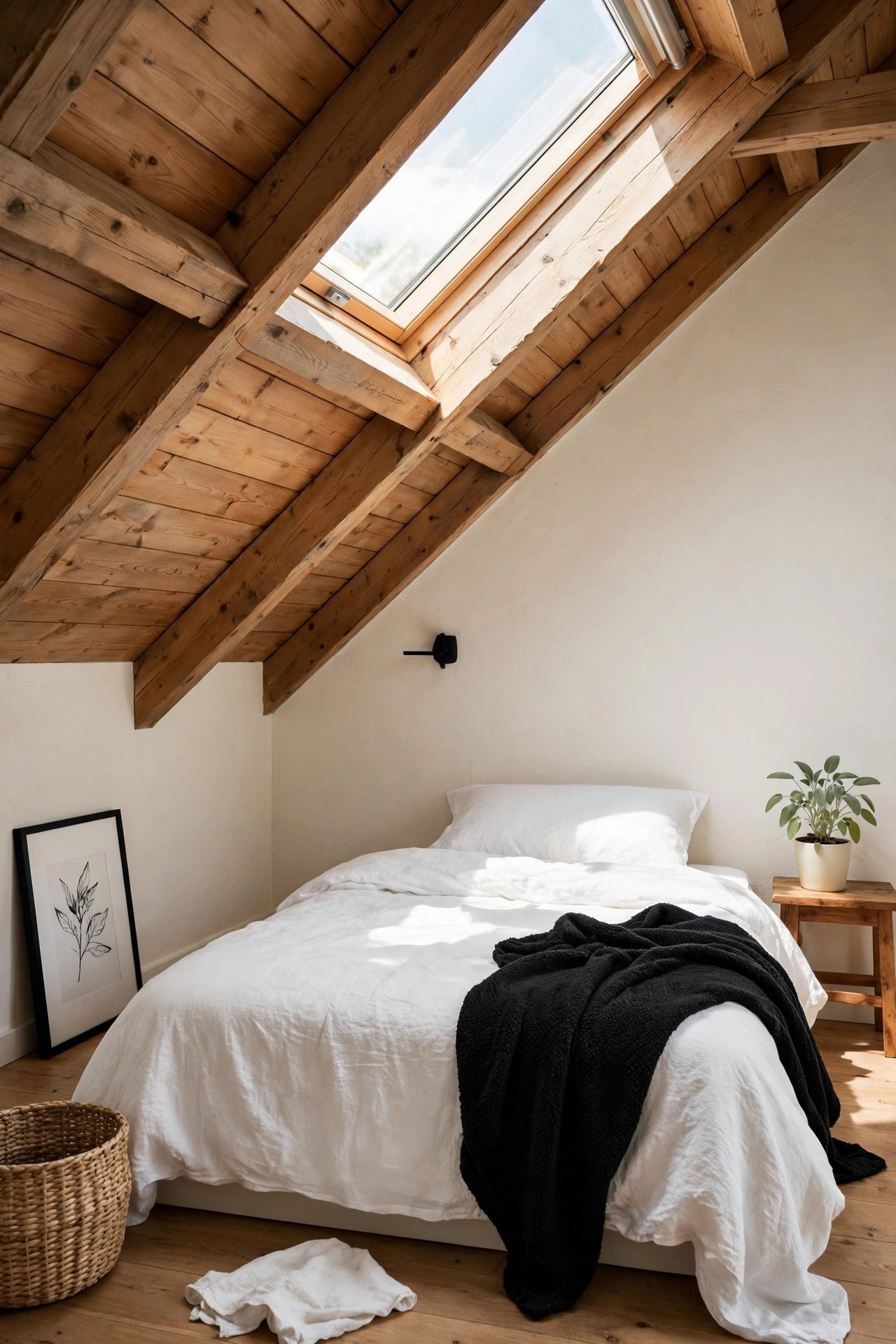
Black and white is a brave, brilliant choice for an attic bedroom. The high contrast makes the architecture look sharp and deliberate, and the limited palette keeps a small room feeling calm. Clean-lined furniture lets the slopes speak for themselves.
Soften the scheme with texture rather than color: linen, wool, and matte ceramics keep monochrome from feeling cold. One small plant adds the only green the room needs.
22. Recessed Shelving in the Slope
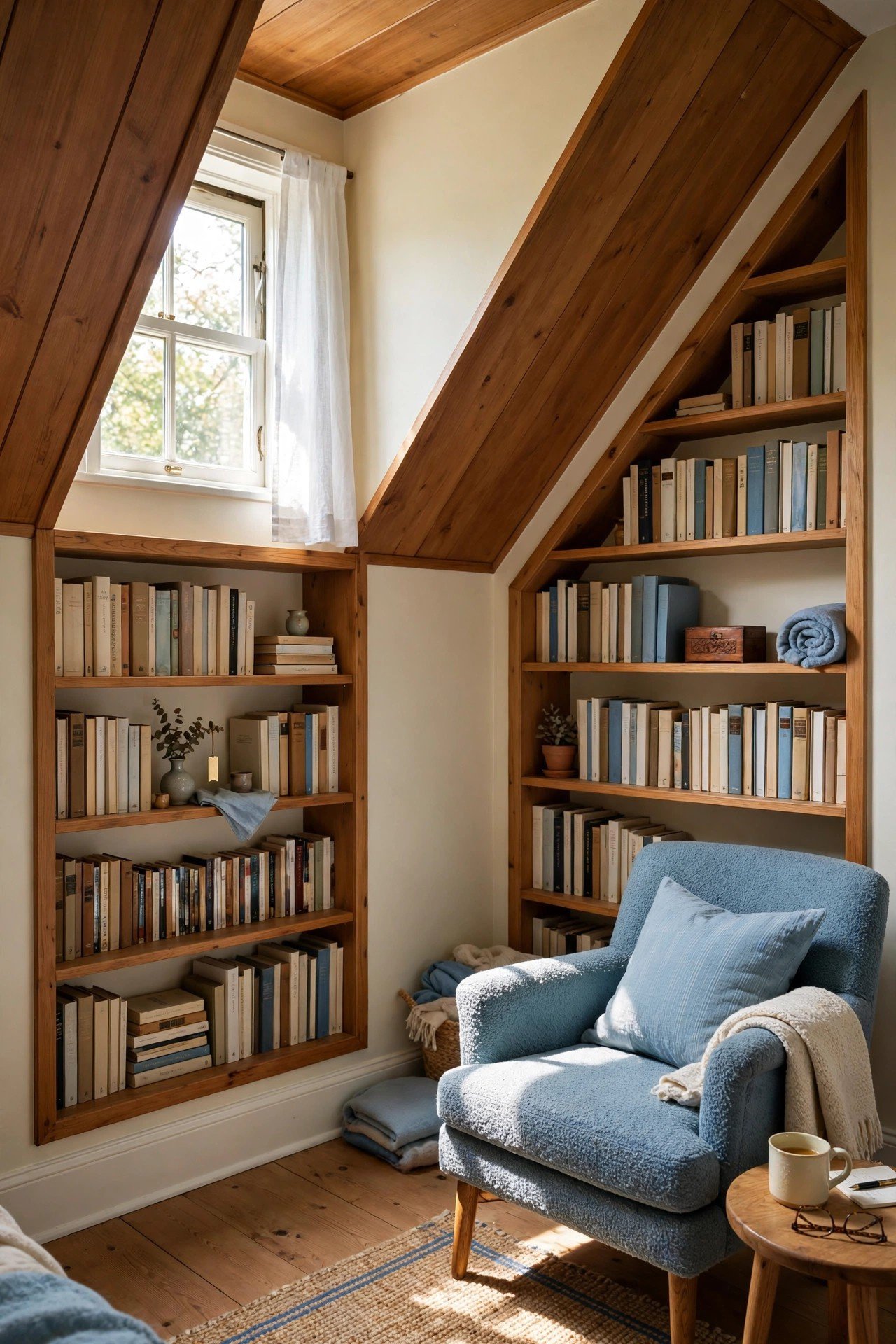
Recessed shelves built between the roof rafters turn dead wall space into display and storage. Books, small plants, and pretty boxes sit flush with the slope, so nothing sticks out into the room. The shelves look built-in because they are.
Check for wiring and insulation before you cut into the slope, and frame each opening properly. Paint the shelf backs the wall color so the display feels seamless and calm.
23. Airy Scandinavian Retreat
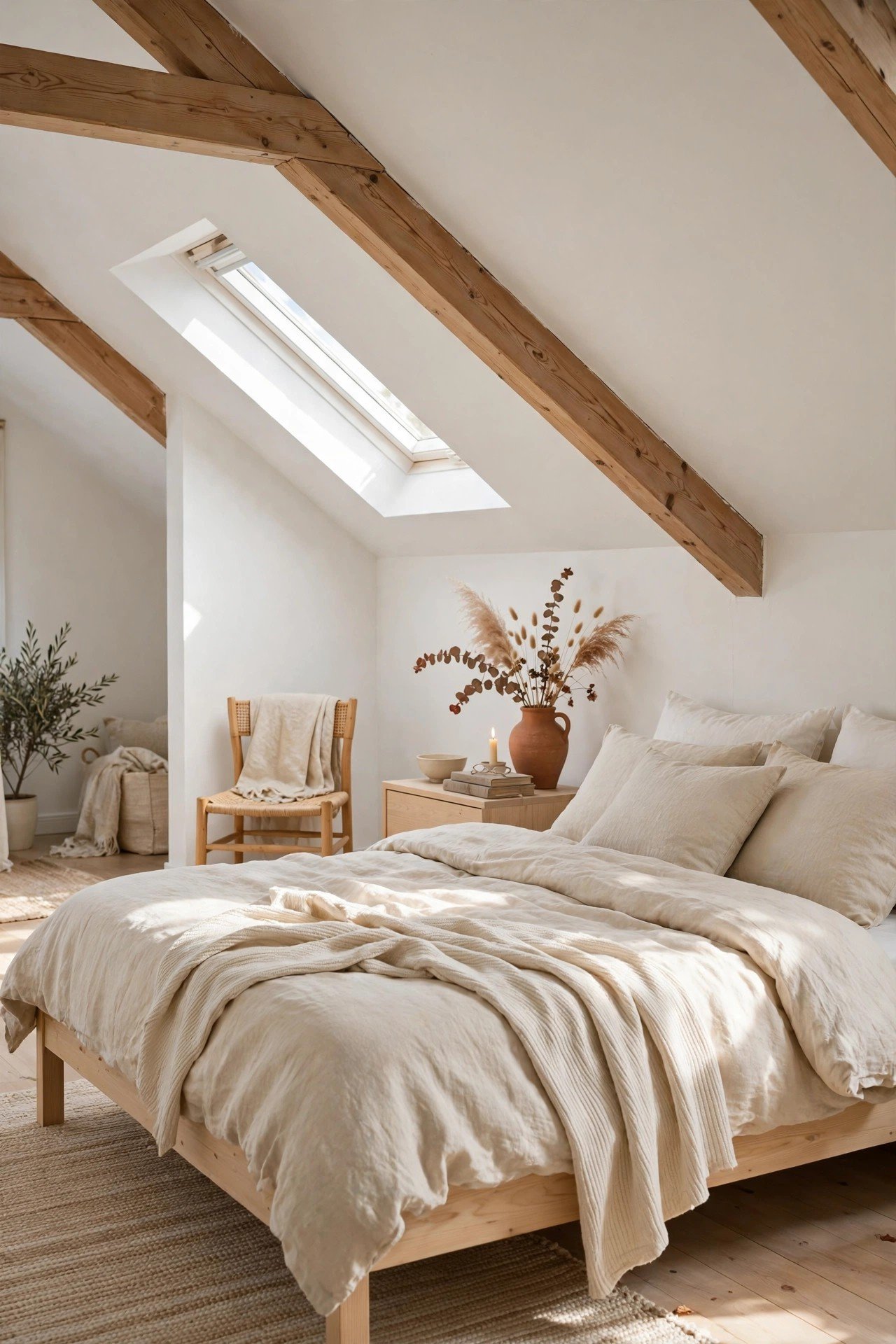
Scandinavian style was made for attics: light wood, white walls, and simple shapes keep a small slope feeling open. Pale floors bounce daylight deep into the room, and minimal furniture leaves clear walking lanes. The result is calm and uncluttered.
Add warmth with a soft limewash wall paint finish or a single terracotta vase so the room never feels cold. Keep surfaces mostly clear, and the attic will feel twice its size.
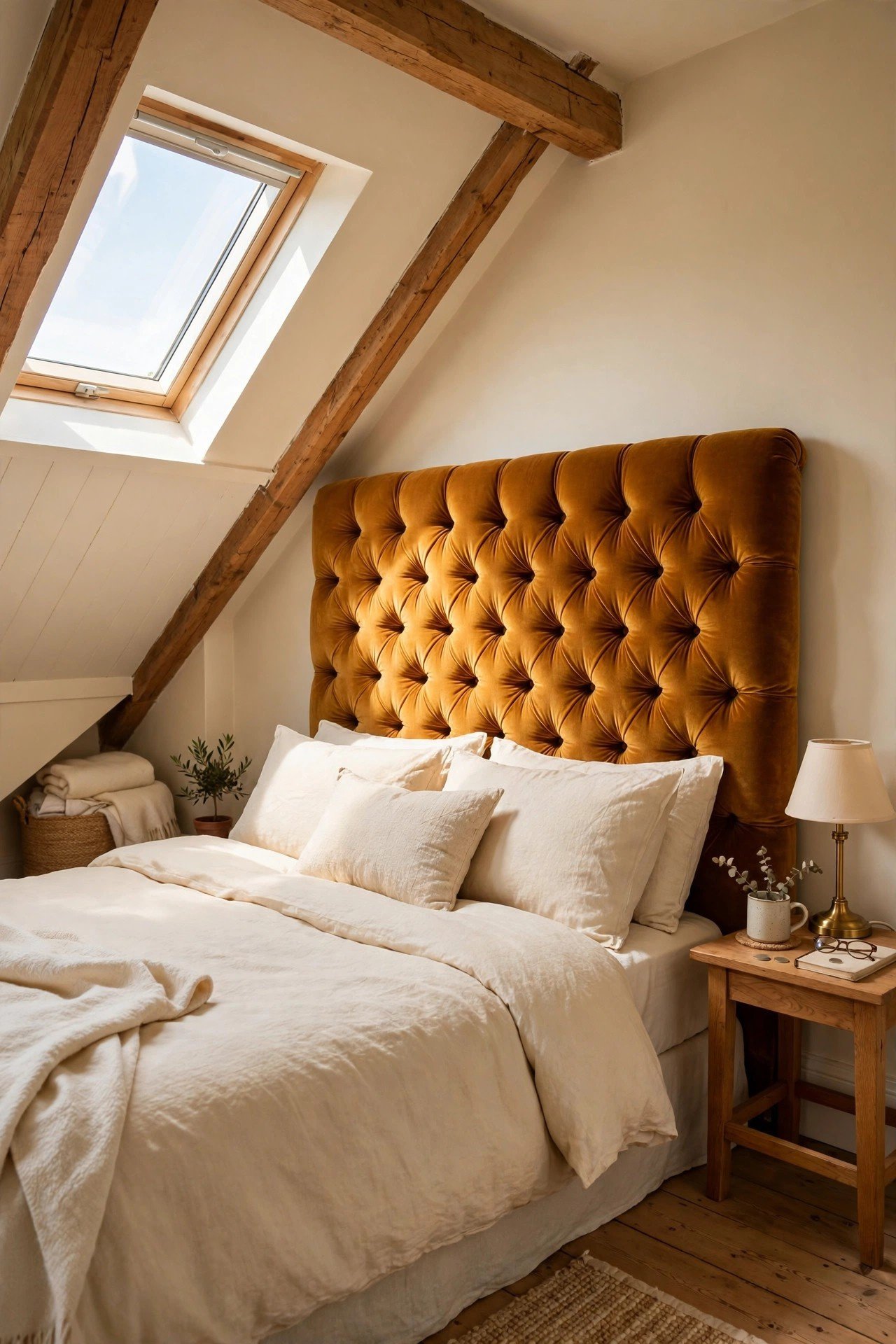
24. Oversized Upholstered Headboard
A tall, upholstered headboard gives an attic bedroom a strong focal point without taking floor space. It draws the eye to the tallest wall and adds softness where the slope meets the bed. Velvet or linen in a warm tone feels luxurious against simple bedding.
Size the headboard to the wall, not the bed: a wider board makes a small bed look grand. Mount it to the wall rather than the bed frame so it stays perfectly straight against the slope.
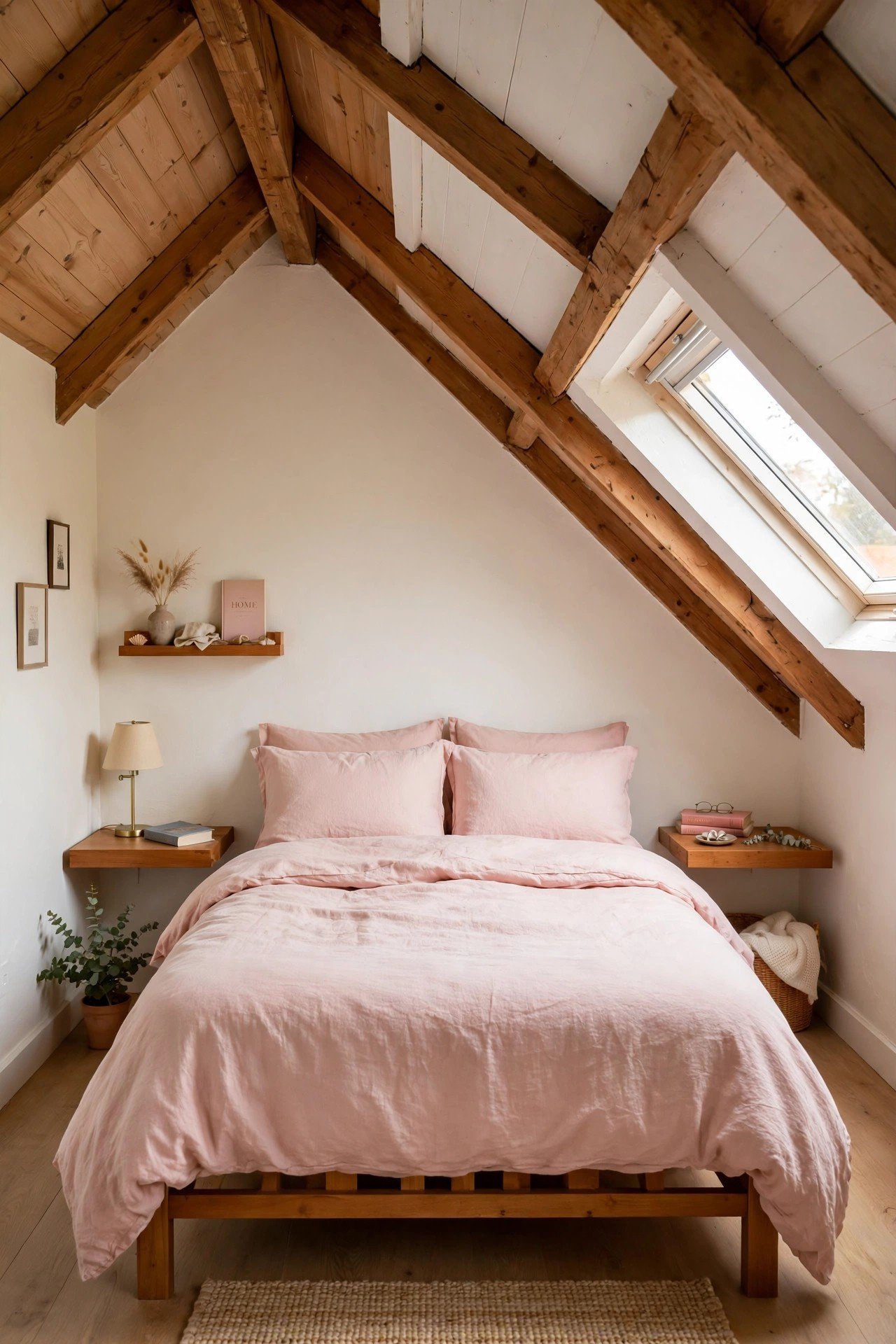
25. Wall-Mounted Floating Nightstands
Floating nightstands free the floor on both sides of the bed, which matters when every inch counts. A small wall-mounted shelf holds a lamp, a book, and a glass of water at exactly the right height. The open floor below makes cleaning easy.
Mount each shelf at mattress height plus six inches, the natural reach from a pillow. Fix them into studs so they hold a lamp safely, and choose a depth of ten to twelve inches so nothing gets knocked off in the night.
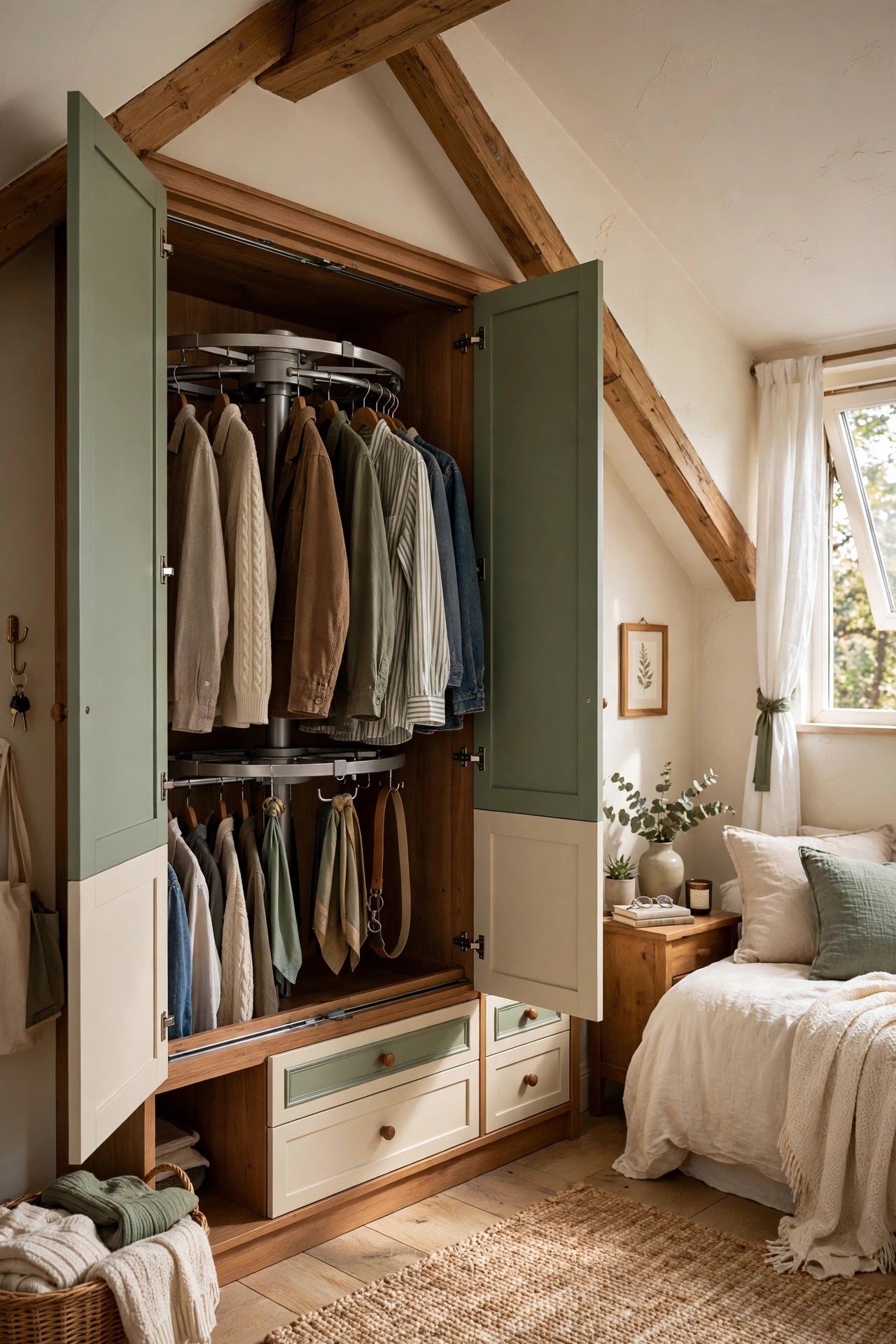
26. Pull-Out Closet Under the Eaves
A pull-out closet on smooth glides turns the lowest eave into reachable storage. The whole unit rolls out into the room, so you can see and reach every item, then slides back under the slope. A rotating rail inside keeps clothes from bunching.
Build the unit to fit the exact slope angle so it glides without scraping. Use it for off-season clothes or shoes, and the main wardrobe stays reserved for everyday wear.
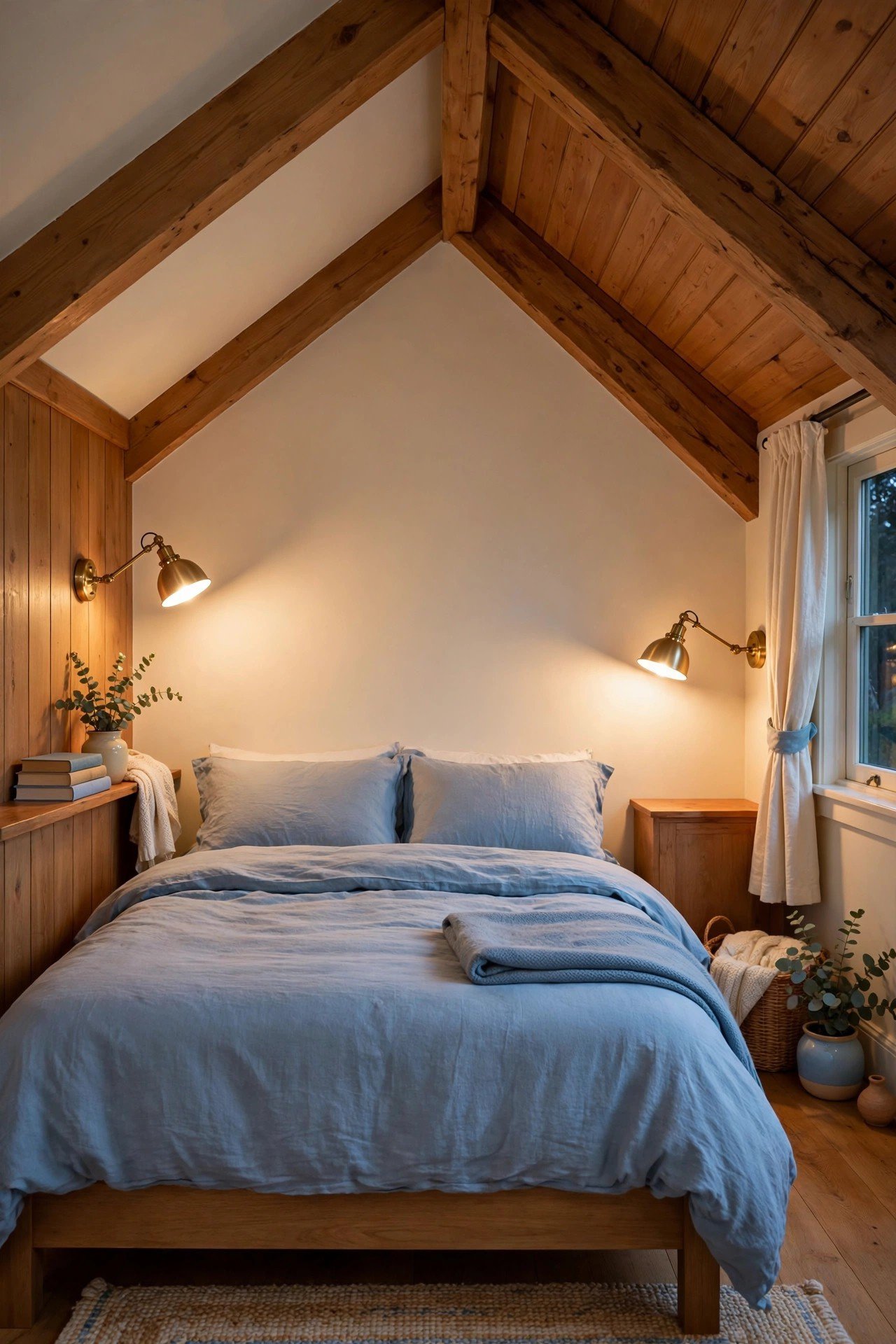
27. Space-Saving Wall Sconces
Wall sconces replace table lamps in an attic bedroom and give you back your nightstand surface. Adjustable arms aim light exactly where you read, and a dimmer sets the mood for sleep. The walls do the work that furniture used to do.
Mount each sconce about forty-eight inches above the floor, or roughly shoulder height when you sit up in bed. Hardwired sconces look cleanest, but plug-in versions with cord covers work just as well in a rental.
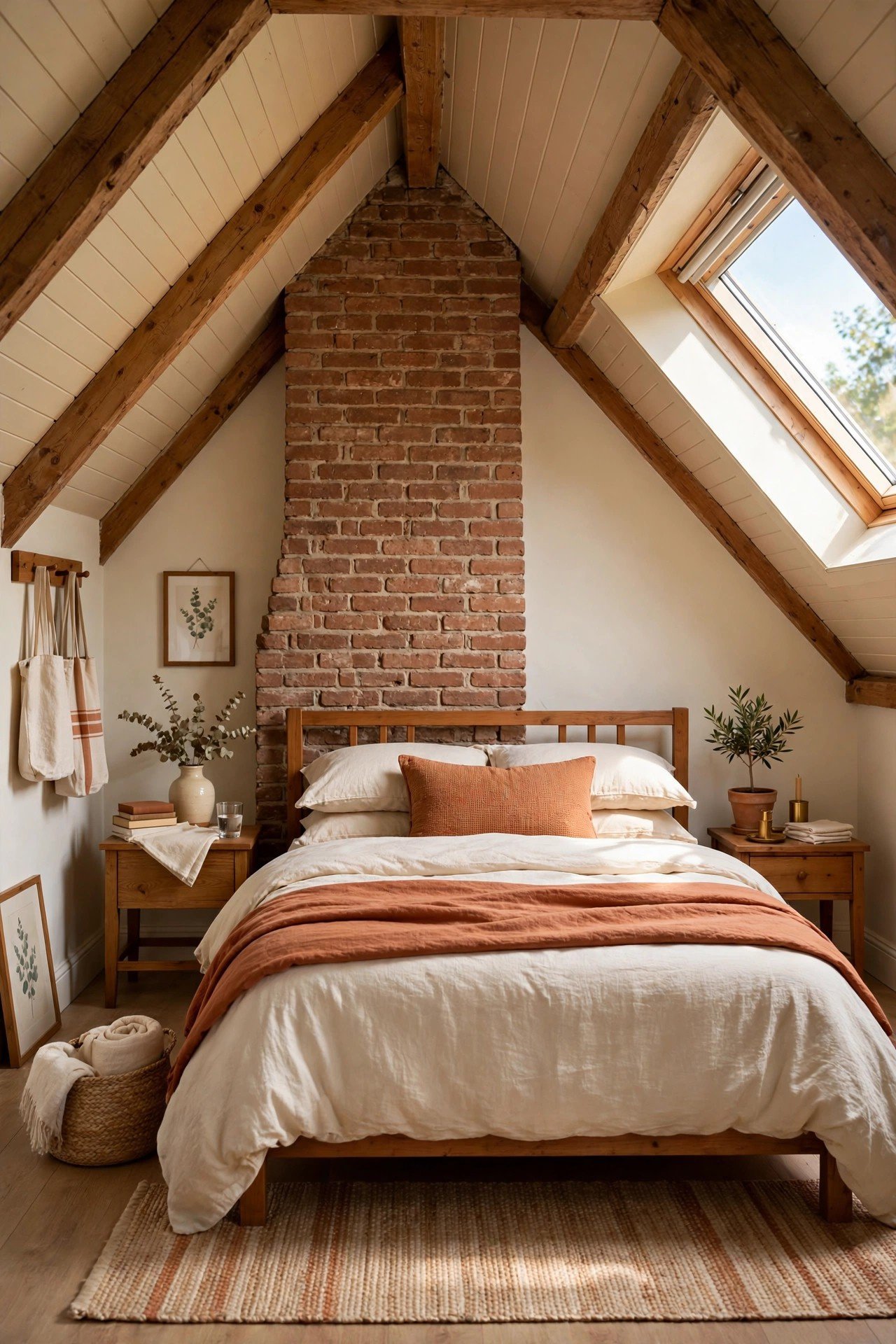
28. Original Exposed Brickwork
If your attic has a brick chimney breast, let it show. The texture and warm color add character that paint cannot copy, and the chimney gives the room a natural focal point. Neutral bedding and wood accents let the brick lead.
Seal the brick with a matte masonry sealer to stop dust while keeping the raw look. Point a small picture light or a sconce at the brick in the evening, and the texture glows beautifully.
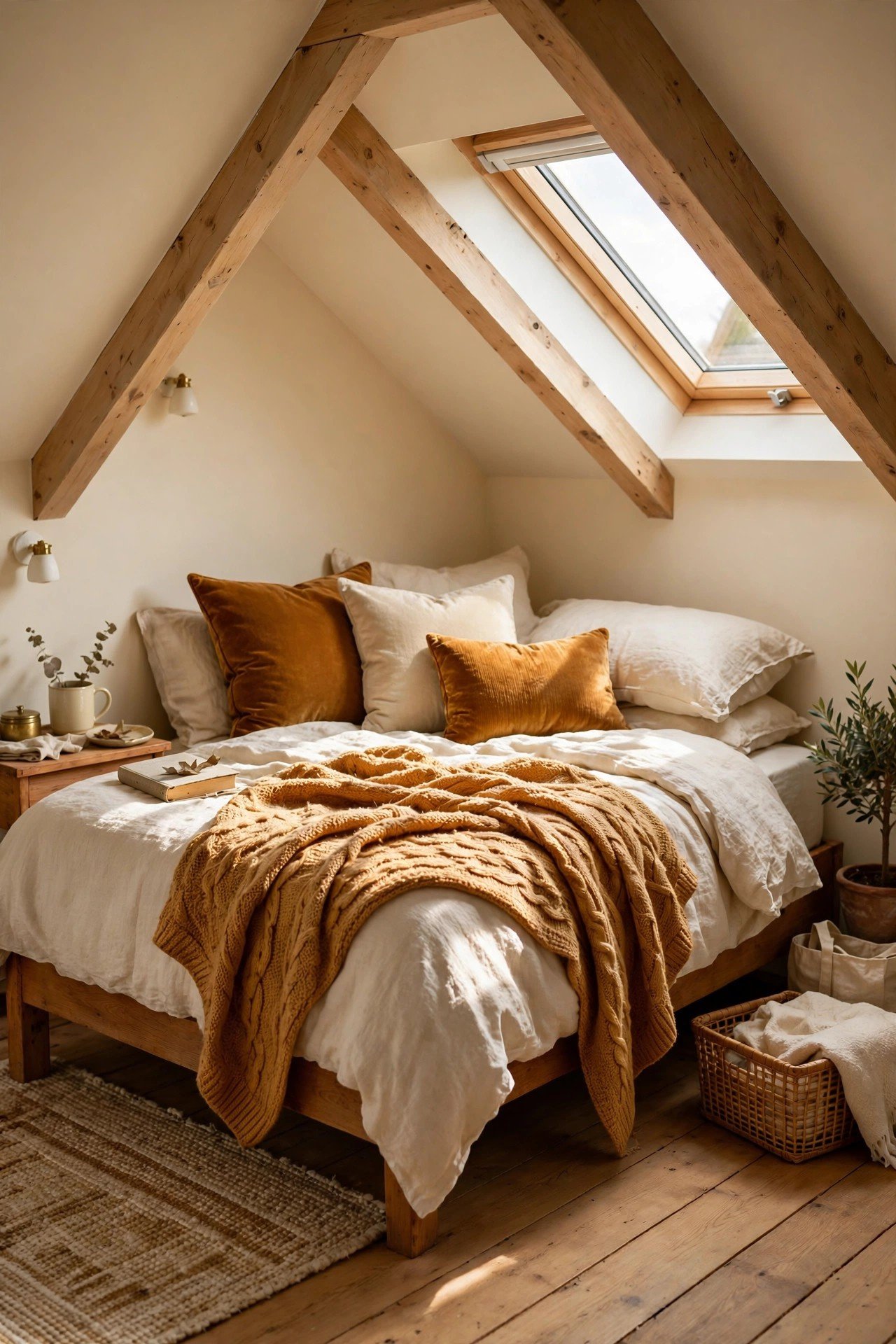
29. Rich Layered Bedding Textures
Layered bedding adds the depth and warmth a small attic bedroom needs. Start with crisp linen sheets, add a duvet in a soft solid, then pile on a knitted throw and velvet cushions. Each layer catches the light differently and makes the bed look irresistible.
Stick to one color family so the layers feel rich rather than busy. In a small room, the bed is the landscape, and thoughtful layers make it the best view in the house.
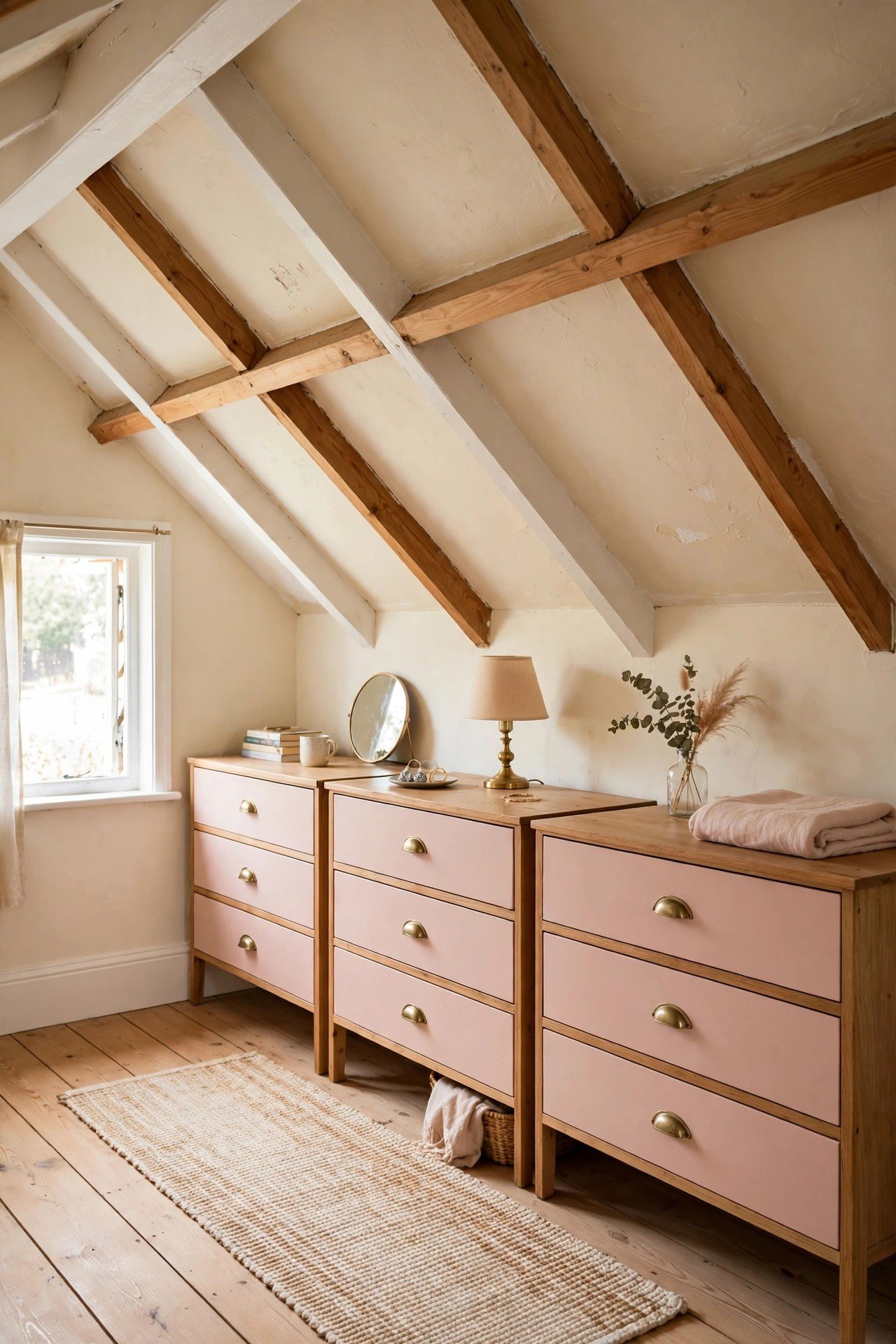
30. Low Dresser Row Along the Knee Wall
The knee wall, the short vertical wall under the eaves, is the perfect back for a row of low dressers. Standard dressers fit neatly against it, and their tops become a long display shelf under the slope. You gain serious clothing storage without touching the walking lane.
Choose dressers no taller than thirty inches so they clear the slope, and anchor them to the knee wall for safety. A runner rug along the row ties the dressers together into one intentional furniture line.
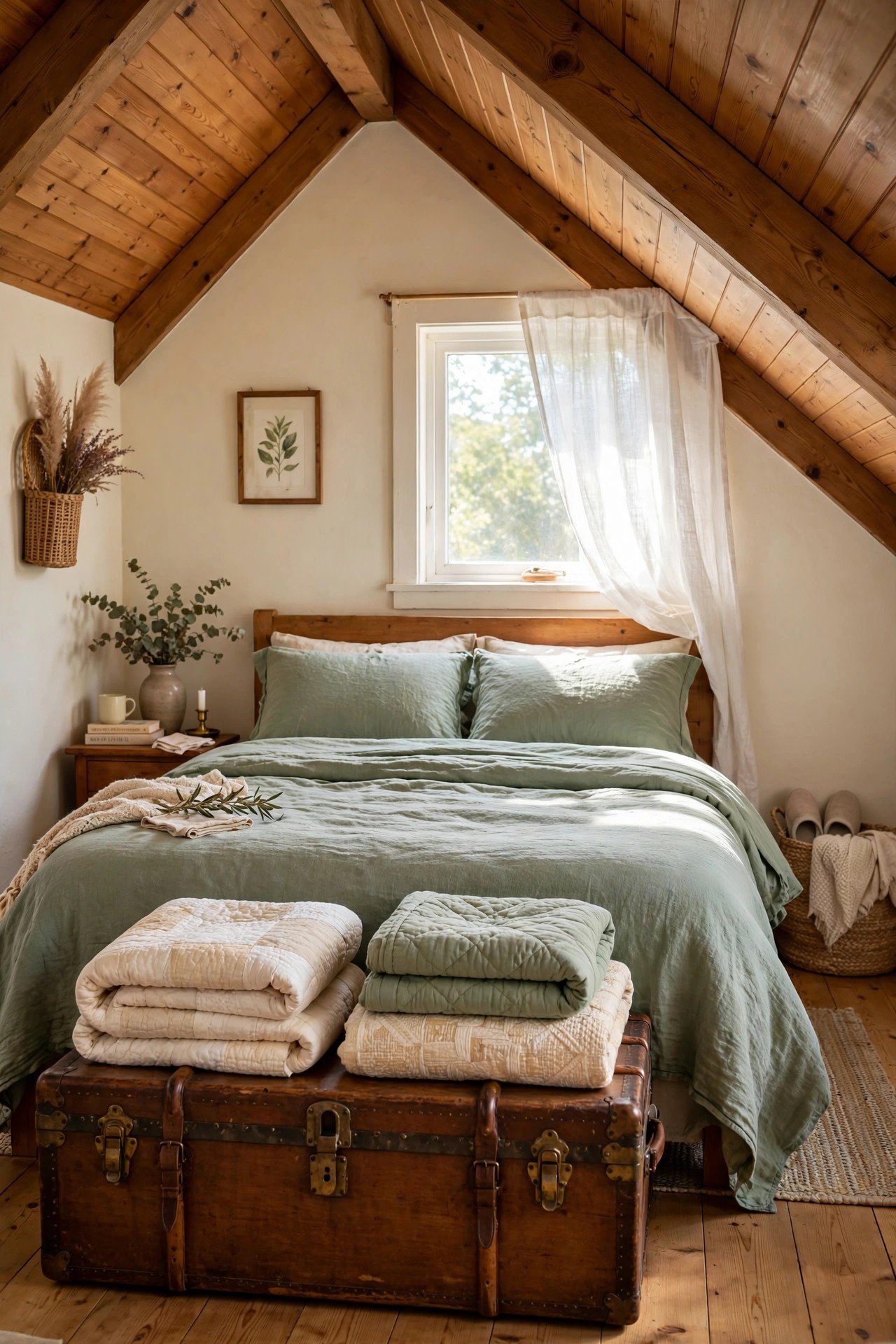
31. Vintage Trunk at the Foot of the Bed
A vintage trunk at the foot of the bed adds storage and soul in one piece. Blankets, quilts, and out-of-season clothes hide inside, and the trunk top works as a bench for getting dressed. The aged wood brings character that new furniture cannot fake.
Pick a trunk no wider than the bed so it never blocks the walking path. Add a soft cushion on top if you want a proper seat, and line the inside with cedar panels to keep stored textiles fresh.
Conclusion
A sloped ceiling is not a flaw to hide; it is the feature that makes an attic bedroom special. When tall furniture claims the peak, storage fills the eaves, and light washes the angles, the small room feels intentional, cozy, and completely yours.
Start with the bed position, since everything else follows it. Then work the slope idea by idea, and enjoy the hideaway you built from the most charming room in the house.
Frequently Asked Questions
Where should the bed go in an attic bedroom with sloped ceilings?
Place the bed where the ceiling is tallest, usually under the peak or against the tallest wall. You need at least four feet of ceiling height above the pillow so you can sit up comfortably. A low platform bed under eighteen inches tall gives you extra headroom where the slope is lowest.
How do you get enough storage in an attic bedroom?
Use the low eaves for storage: fitted wardrobes with sliding doors, pull-out closets on glides, under-bed drawers, and a row of low dressers along the knee wall. Keep hanging space where the ceiling is at least five feet high and use the lowest wedge for shoes or flat drawers.
How can I make a dark attic bedroom brighter?
Add a skylight above the bed if you can, and keep window walls free of tall furniture. Paint the ceiling the palest tone, use light upholstery that bounces light, and lean a mirror against the tallest wall to double the daylight. Warm LED string lights add glow after dark.
What is the minimum ceiling height for an attic bedroom?
Most building codes require at least seven feet of ceiling height over half the room for a legal bedroom. For comfort, place the bed where you have four feet above the pillow and keep walking lanes where the ceiling is full height. Always check your local code before calling an attic a bedroom.
How do you keep an attic bedroom comfortable in summer and winter?
Attics swing hot and cold, so insulate the roof well and choose a vented skylight for summer airflow. A small clip-on fan near the peak moves warm air in summer, and layered bedding plus a draft-proofed dormer window keeps the room cozy in winter. A portable heater with a thermostat handles the coldest nights.

Hi, I’m Emily! I turn messy corners into cozy, organized spots. DreamNestDecor is where I share simple, practical home ideas — decor, organization, and small-space solutions that work in real life, not just in photos. Every idea here is carefully researched before it’s shared.