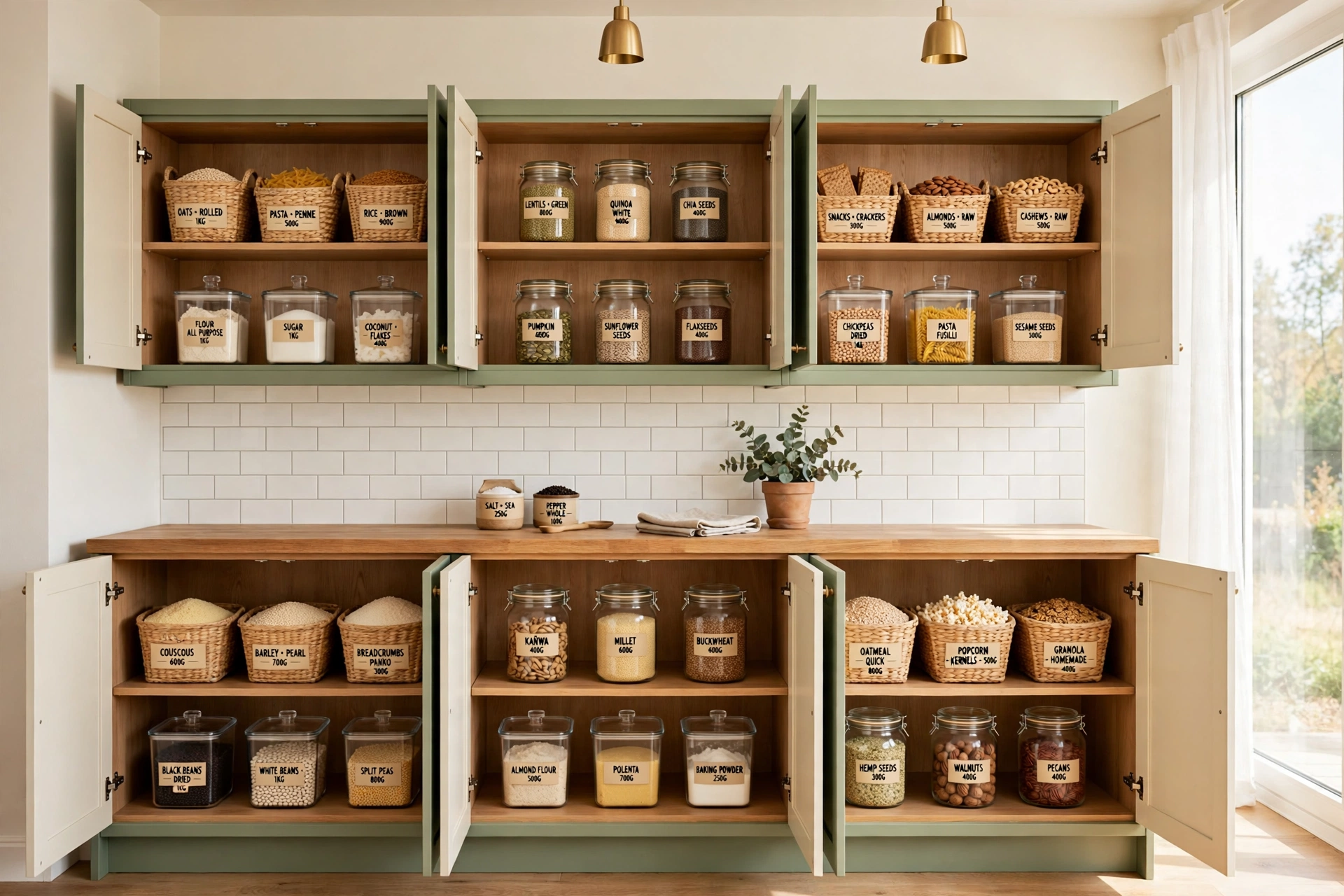
Picture this: it is dinner time, you open a kitchen cabinet, and everything you need is right in front of you. The spices sit in a neat row, the baking supplies have their own basket, and not a single lid tumbles out onto the counter. Cooking feels calm because every item has a place of its own.
You do not need a kitchen remodel to reach that calm. A few smart organizers and a clear plan for each cabinet can turn even the deepest, darkest shelves into space that works hard for you. These 20 kitchen cabinets organization ideas will help you sort, store, and find everything with ease, no matter how small your kitchen is.
1. Create Labeled Basket Zones in Deep Cabinets
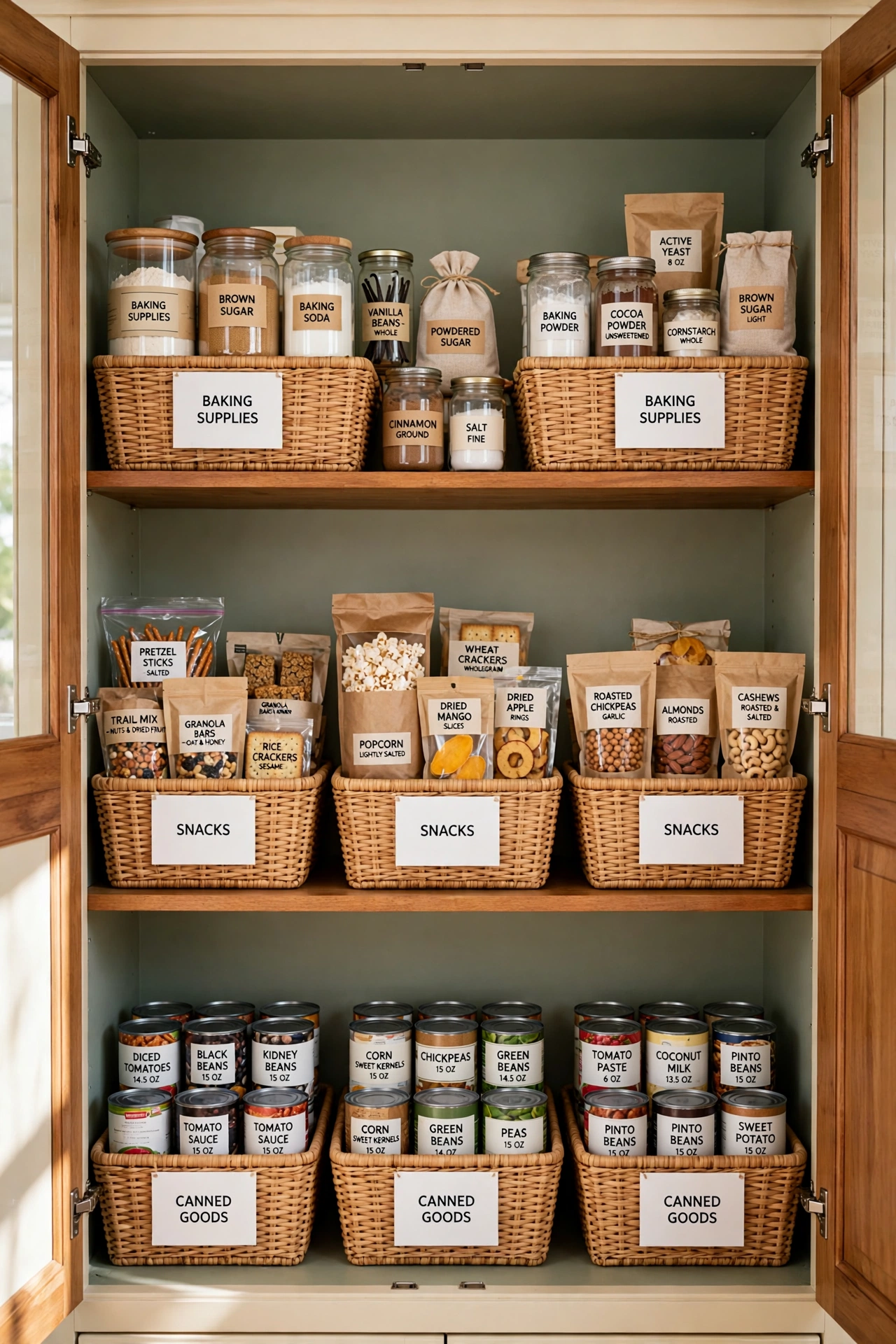
Deep cabinets swallow small items whole, but labeled baskets bring order to the darkness. Give each basket one job, such as snacks, canned goods, or baking supplies, and label the front so anyone in the house can find what they need. The baskets slide out like drawers, so nothing hides at the back anymore.
Choose baskets that fit your shelf depth with a little room to spare, and keep the tallest baskets on the lowest shelves. A basket zone system also makes shopping easier because you can see at a glance what is running low. This is one of the simplest upgrades that makes a deep cabinet feel twice as useful.
2. Add Shelves to the Inside of Cabinet Doors
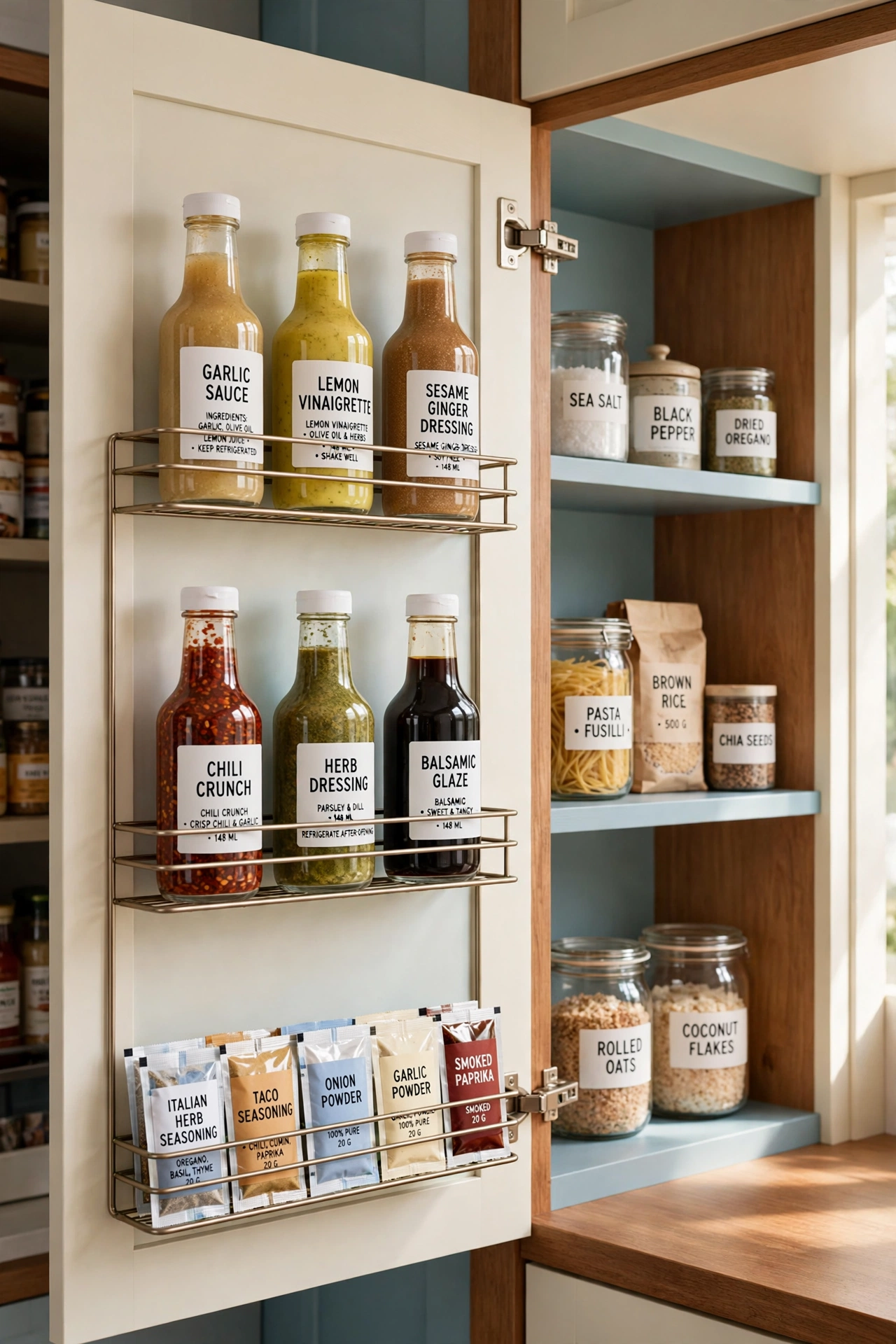
The inside of a cabinet door is wasted space in most kitchens, yet it can hold a surprising amount. Slim racks mounted on the door keep sauces, dressings, and seasoning packets visible and within reach. Because the items move with the door, you see them the moment you open the cabinet.
Pick racks that are shallow enough for the door to close without bumping the shelves inside. Store the items you reach for every day on the door, and let the inner shelves hold bulkier goods. This small addition frees up a full shelf in many cabinets.
3. Keep Oils and Vinegars in a Slim Bottle Drawer
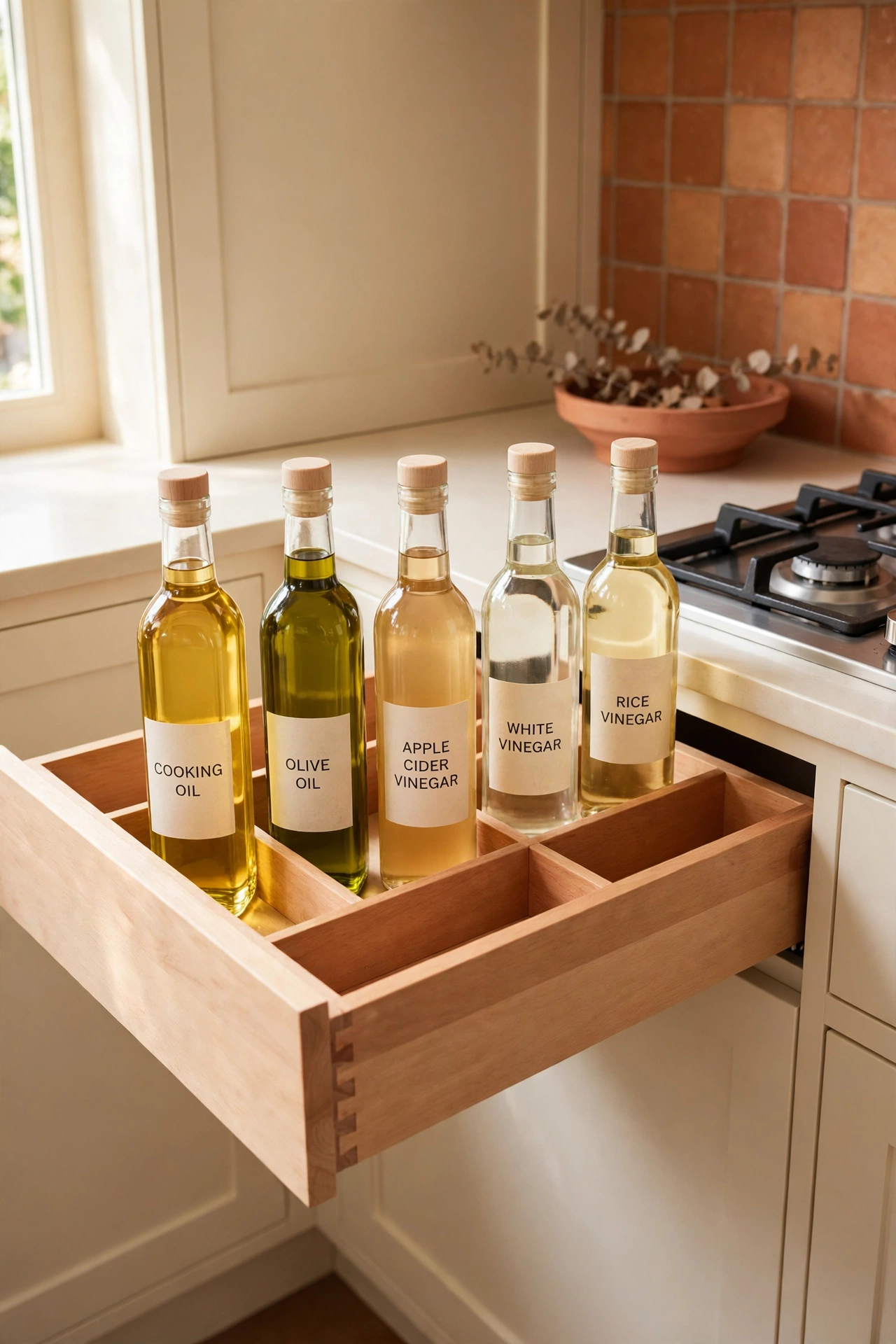
A slim pull-out drawer beside the stove keeps cooking oils, vinegars, and sprays standing upright where you use them most. Vertical dividers stop tall bottles from tipping or sliding when you pull the drawer open. Everything stays upright, so spills and sticky rings become a thing of the past.
Group bottles by how often you use them, with everyday cooking oil at the front and special vinegars at the back. Wipe the drawer base once a month to keep it clean. Moving bottles off the counter also gives you more room to chop, stir, and plate.
4. Turn the Deep Space Under the Sink Into a Cleaning Hub
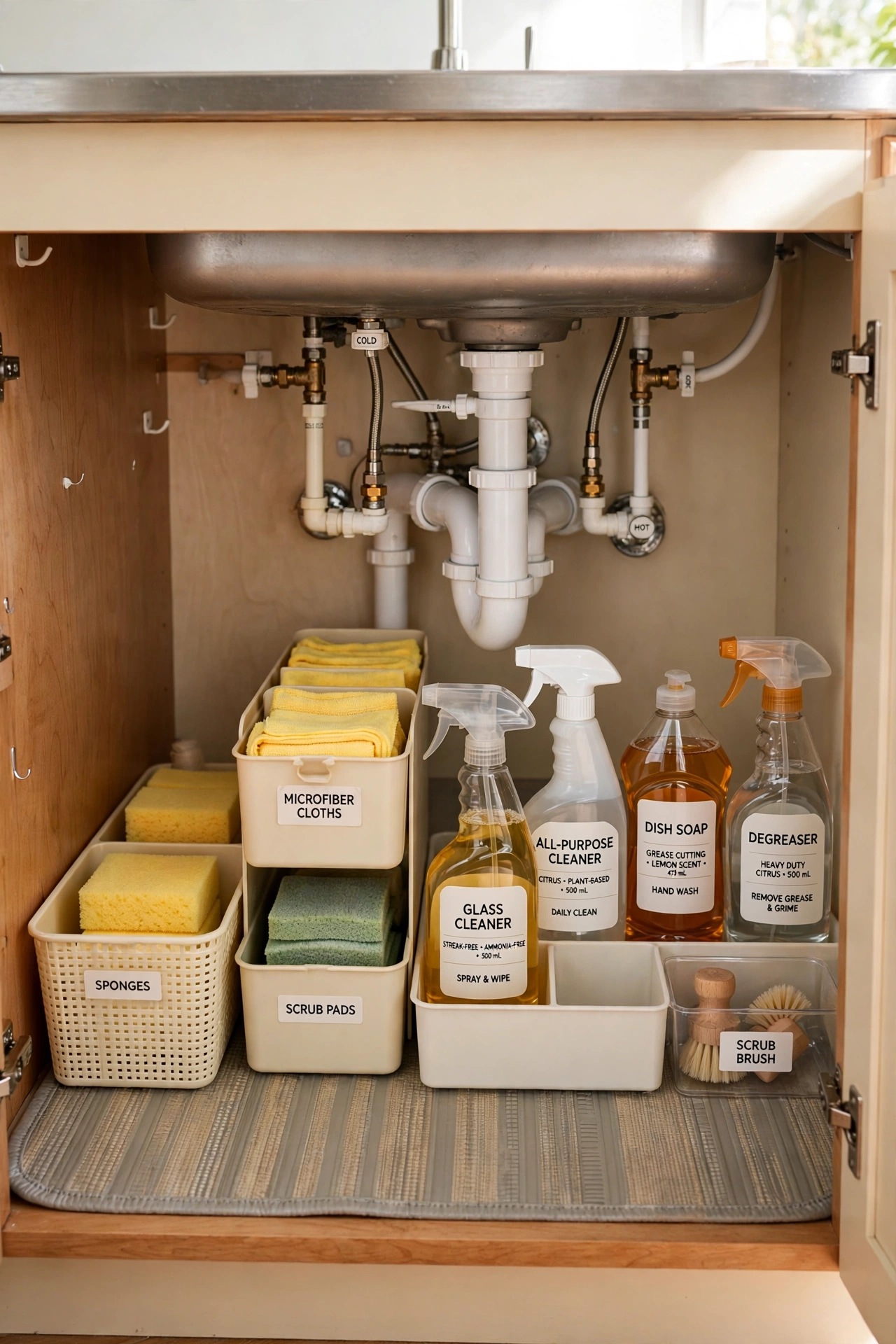
The cabinet under the sink is awkward because of the pipes, but divided bins and caddies turn it into a proper cleaning hub. Use stackable organizers around the plumbing and a small caddy for sprays, dish soap, and sponges. Each cleaning task gets its own bin, so you grab one caddy and go.
Line the cabinet floor with a waterproof mat to catch drips before they damage the wood. Keep dish supplies at the front and less used items, like extra trash bags, toward the back. For more ways to tame this tricky spot, see these under sink organization ideas that work around any pipe layout.
5. Upgrade Deep Cabinets With Pull-Out Wooden Bins
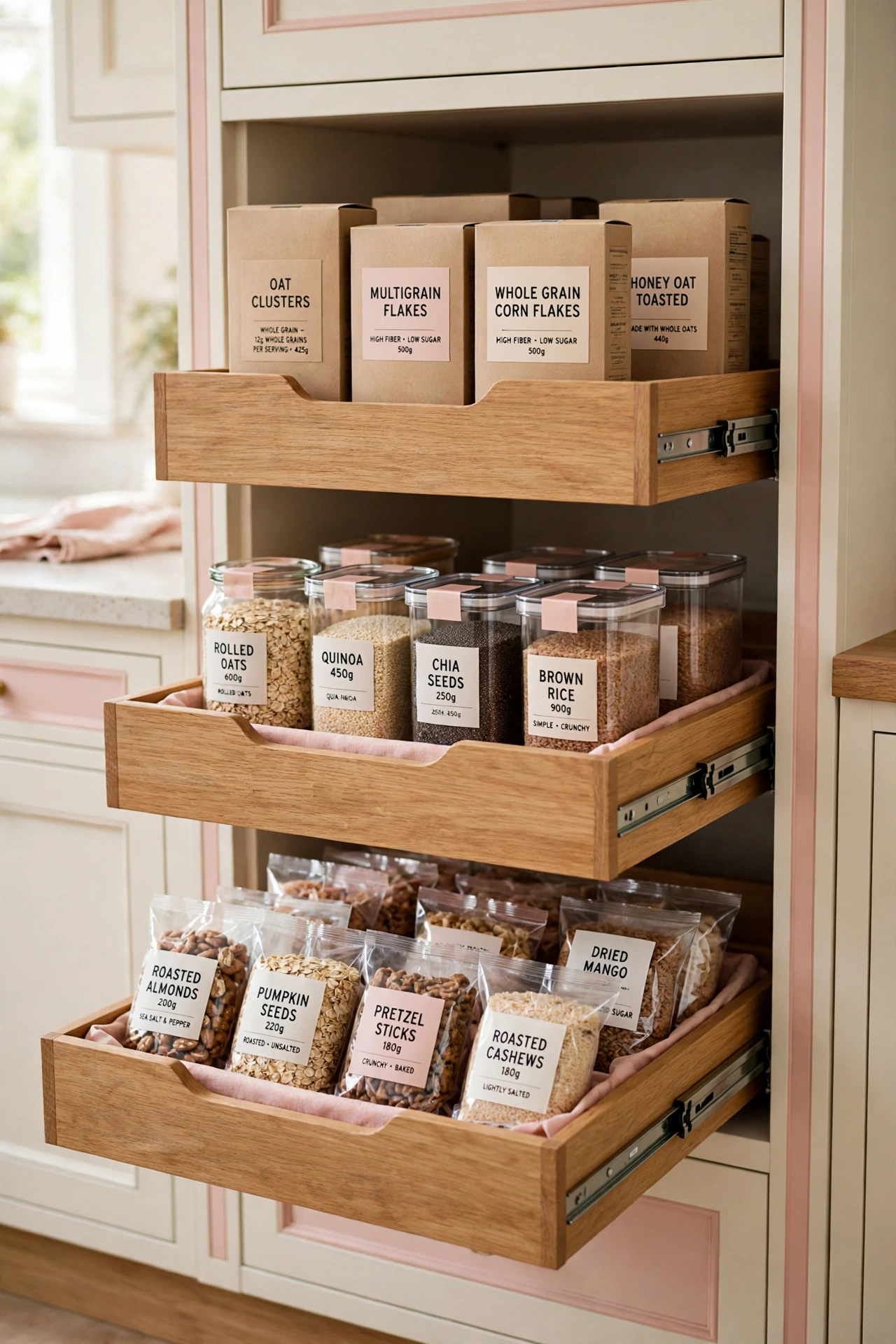
Pull-out wooden bins glide out of deep cabinets like drawers, so you never have to kneel and reach into the dark again. Fill them with snacks, cereals, and dry goods in clear view, and the whole cabinet becomes easy to shop from at home. The wood adds warmth while the smooth glide makes daily use feel effortless.
Measure your cabinet opening before you buy, and leave a small gap on each side so the bins slide freely. Sort each bin by category and keep the heaviest items, like flour and rice, in the lowest bin. Forgotten food at the back of the cabinet becomes a problem of the past.
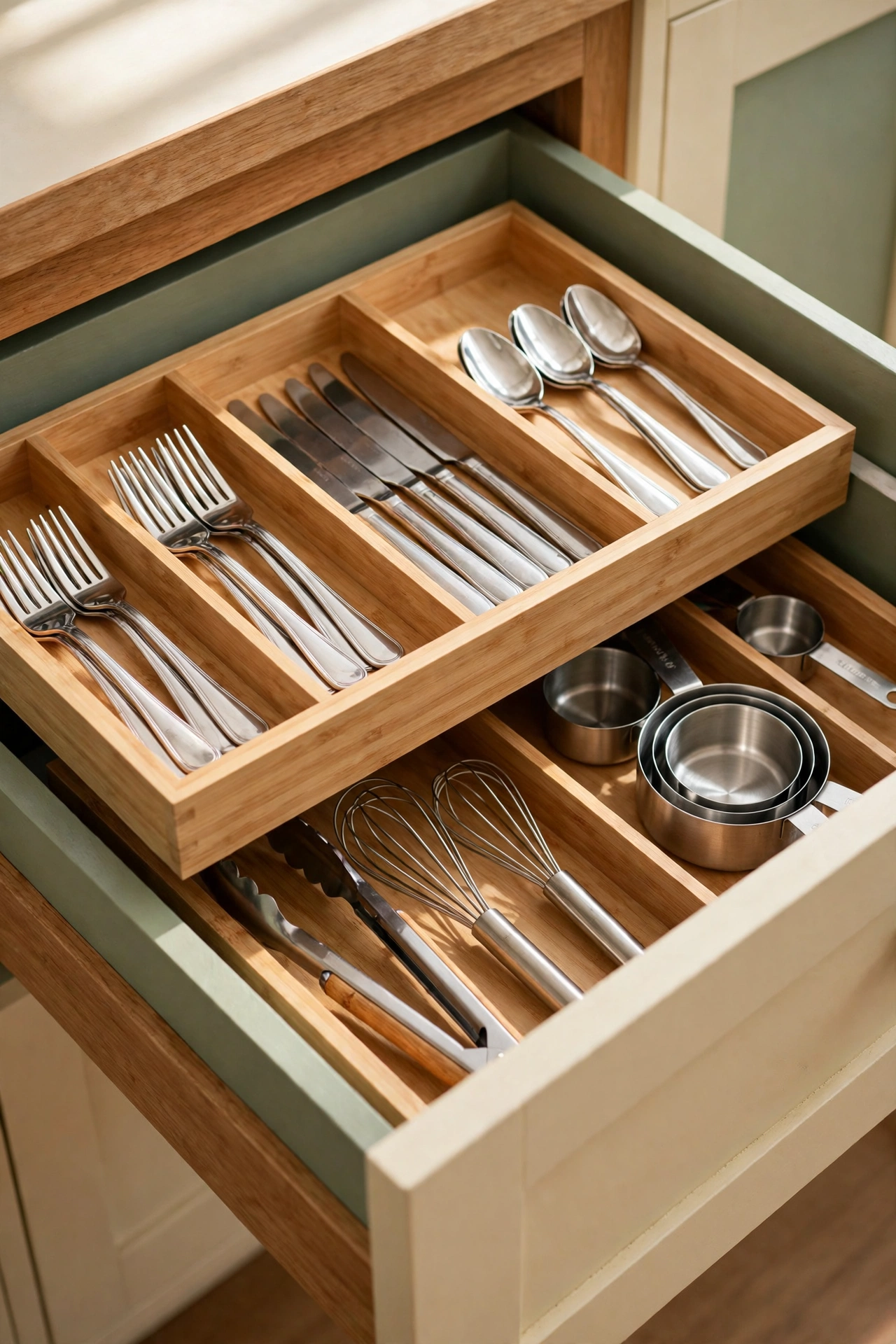
6. Double Drawer Space With a Layered Cutlery System
A tiered cutlery system doubles what one drawer can hold. The top tray keeps everyday forks, knives, and spoons in neat rows, while the lower tier stores larger utensils and cooking tools underneath. One drawer now does the work of two, and the countertop stays clear of utensil crocks.
Look for a layered insert that fits your drawer width without forcing, and sort the top tray by meal so setting the table takes seconds. The bottom layer is perfect for tongs, whisks, and measuring cups that used to rattle around loose. Meal prep and cleanup both get faster when every tool has a tier.
7. Build Clear Zones With Transparent Containers
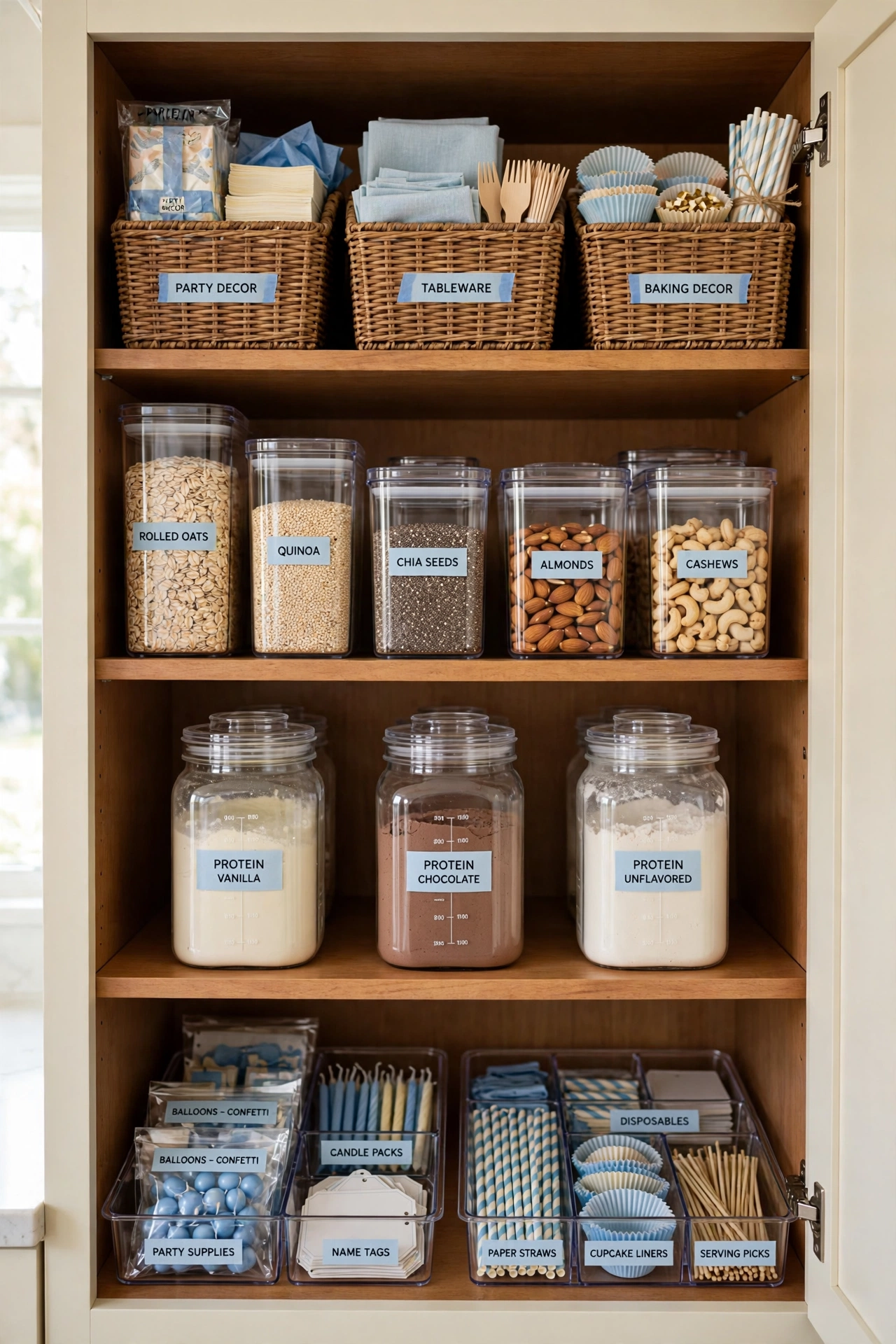
Transparent containers turn cabinet shelves into clear zones where you can see every item without opening a single lid. Group dry goods, party supplies, and daily essentials in divided trays and clear bins, and the shelves look calm instead of chaotic. You will know what you have before you start cooking or shopping.
Place clear bins for daily needs on the lower shelves and woven baskets for rarely used items up top. The mix of clear and woven textures keeps the cabinet looking styled rather than sterile. Label the bins anyway, because a label makes the system easy for the whole family to keep up.
8. Give Spices a Dedicated Labeled Shelf
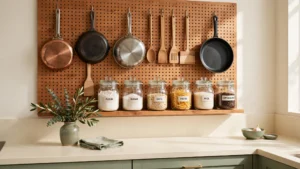
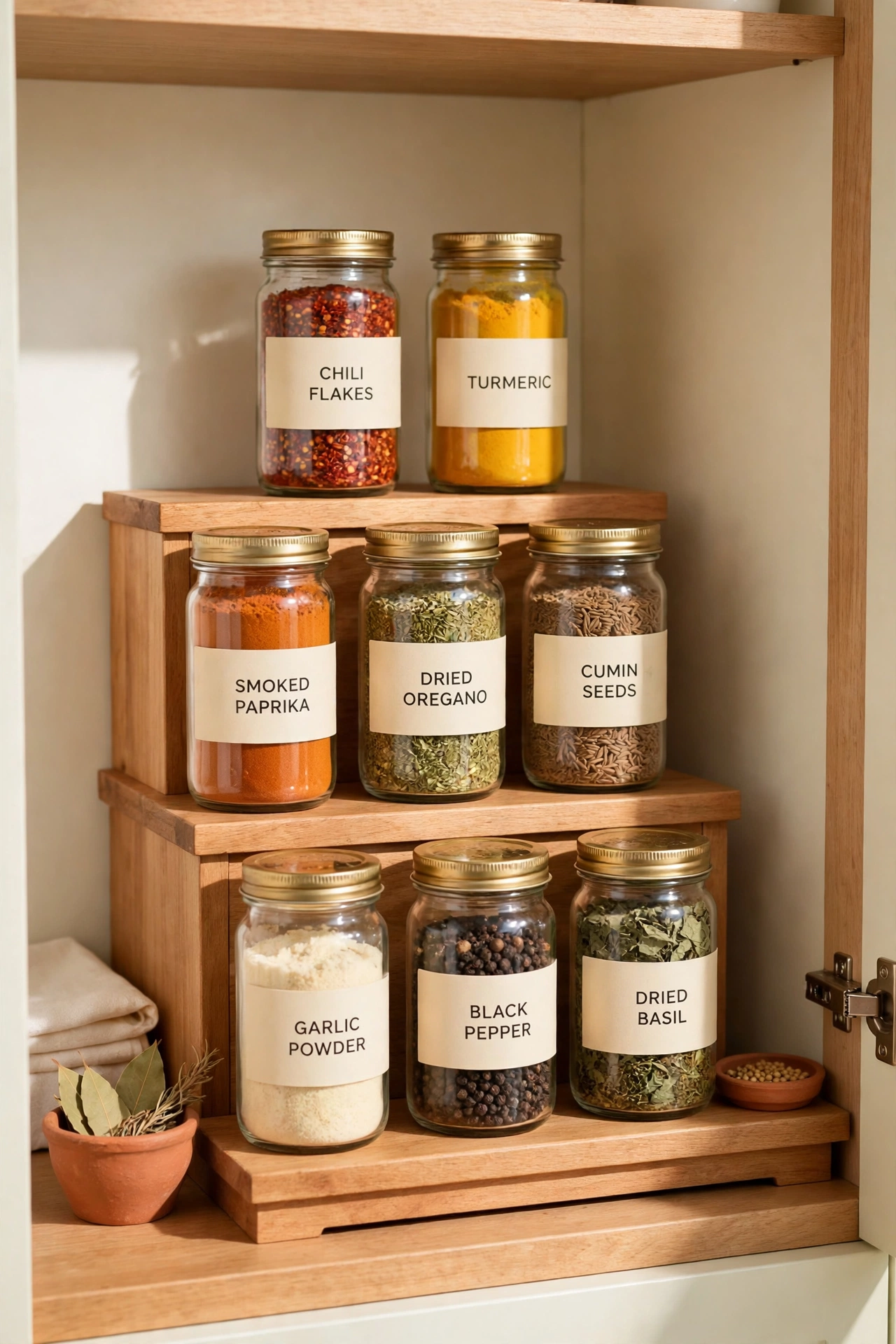
Spices deserve a shelf of their own, with matching airtight jars and labels you can read at a glance. A tiered shelf or a stepped riser lifts the back row so every jar stays in view, and uniform containers turn a jumble of packets and tins into a tidy display. Cooking gets faster when you can spot the cumin in two seconds.
Transfer spices into jars as soon as you buy them, and write the purchase date on the bottom of each jar so you know when a spice is past its best. Keep the most used spices at the front and the baking spices grouped together. For a full plan, these kitchen spice organization ideas cover every layout from tiny drawers to full pantry walls.
9. Spin to Anything With Turntable Access
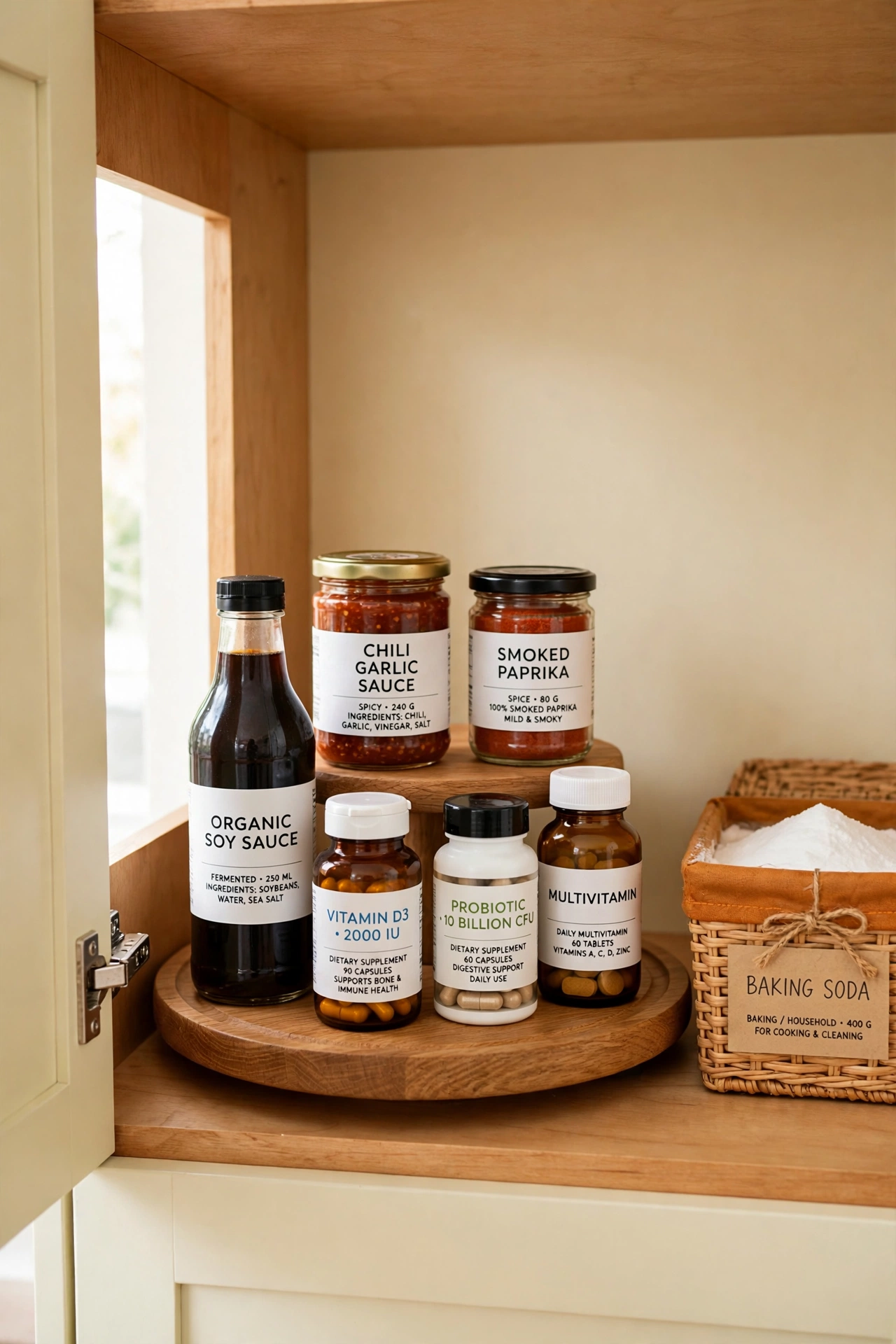
A rotating tray, or lazy Susan, gives you effortless access to bottles and jars that would otherwise hide in corners. One quick spin brings vitamins, sauces, and condiments to the front, so nothing expires in the dark. Turntables work in deep cabinets, corner cabinets, and even on tall pantry shelves.
Pair the turntable with a small labeled bin on the same shelf for packets and pouches that would slide off a spinning tray. Choose a turntable with a raised edge to keep bottles from tipping. Small, oddly shaped items stay visible and the whole shelf stays clutter free.
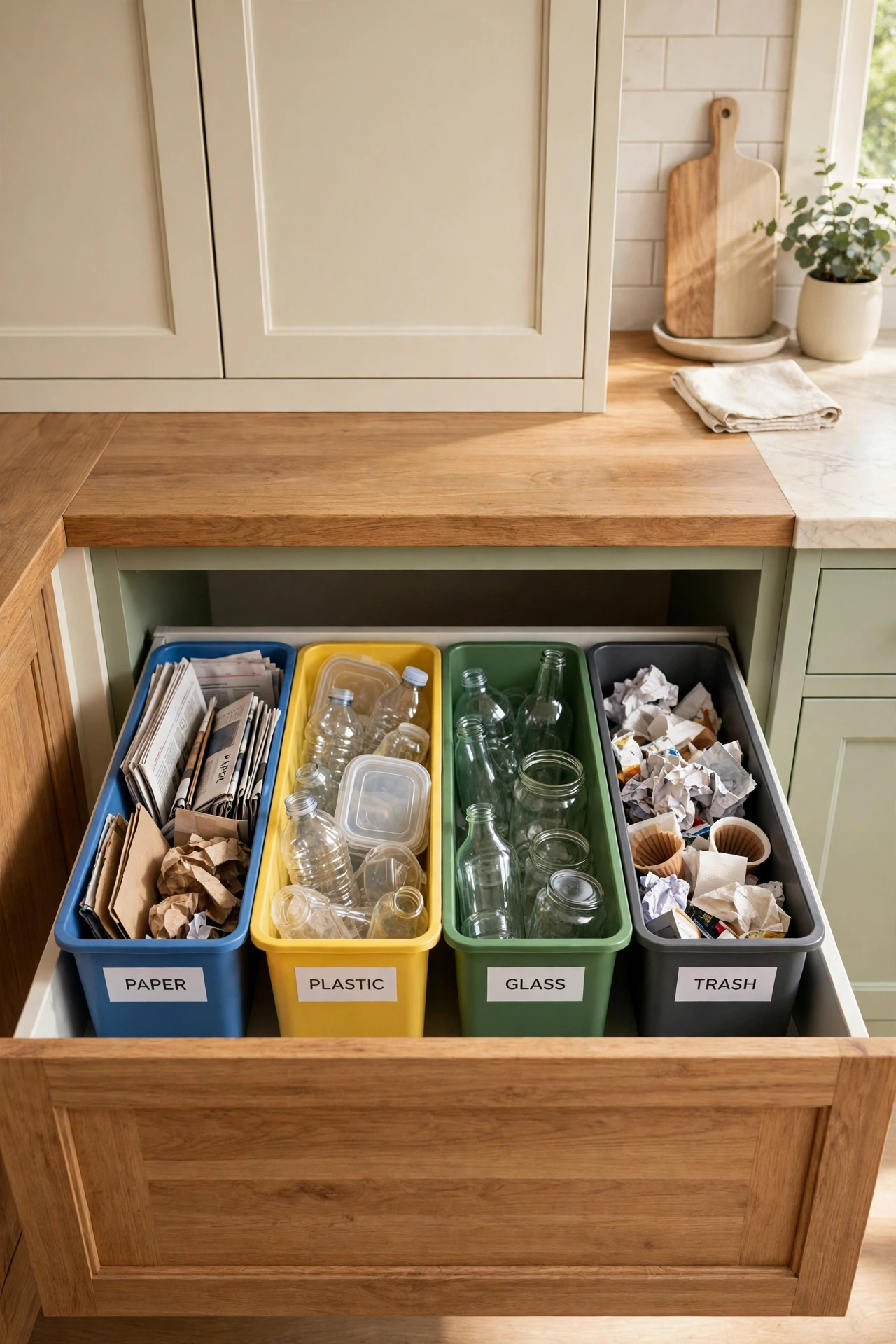
10. Hide Recycling in a Pull-Out Cabinet Drawer
A pull-out cabinet with color-coded bins hides recycling behind a clean cabinet front while keeping paper, plastic, glass, and trash perfectly sorted. The system blends into the kitchen design, so no bins sit out on the floor. Sorting becomes a habit because the bins are right where you unpack groceries and prep meals.
Label each bin with both a word and a color so kids and guests sort correctly without asking. Empty the bins on a set day each week and wipe them out monthly. For a complete sorting setup, these kitchen trash and recycling ideas show how to fit bins into any cabinet size.
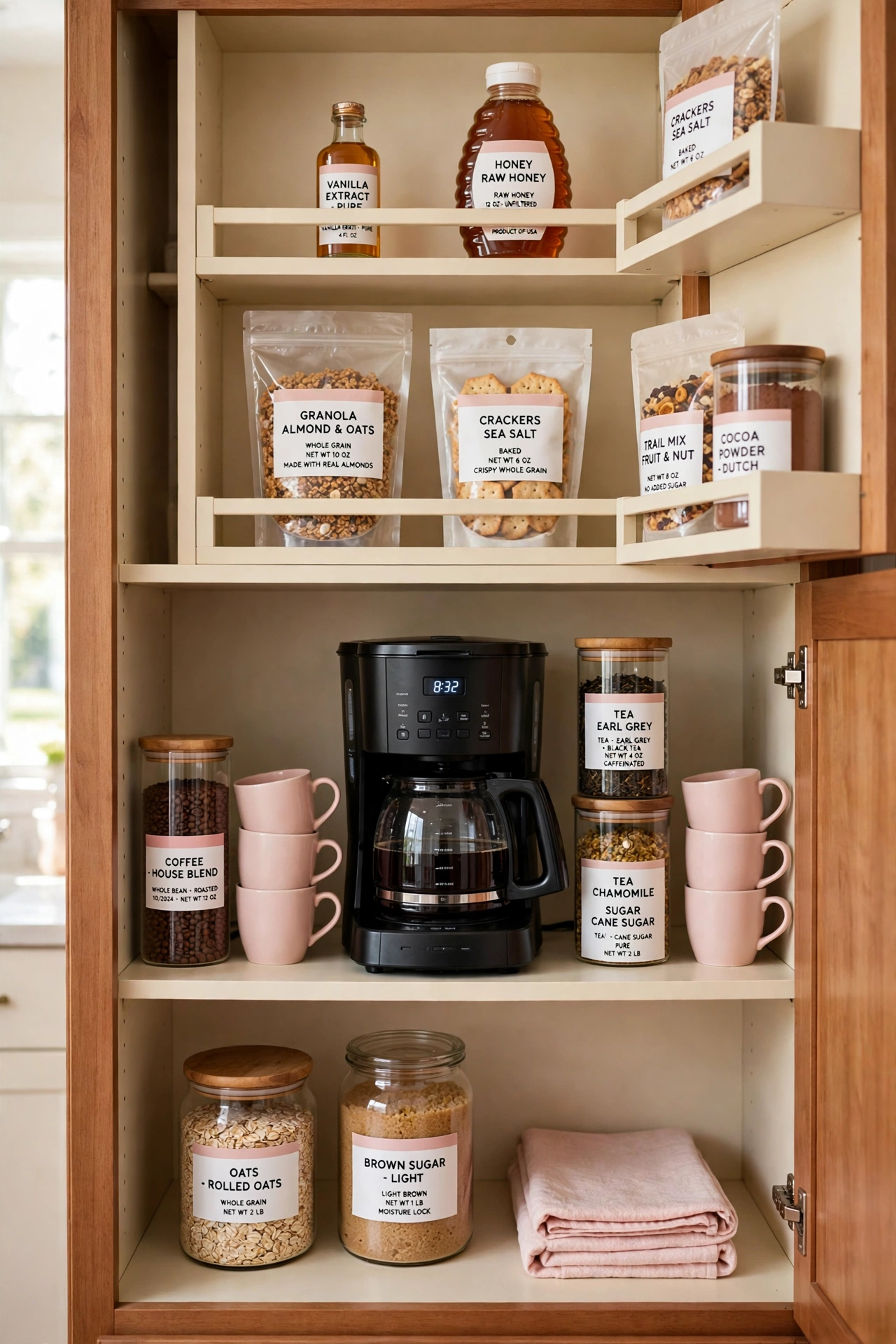
11. Build a Beverage Pantry With a Coffee Station
A beverage pantry gathers drinks and snacks into one compact station with the coffee maker at its center. Door-mounted shelves hold bottles and snack bags, while the middle section keeps mugs, coffee, and tea within arm’s reach. Mornings run smoother when the whole coffee routine lives in one spot.
Keep the station stocked with your daily favorites and move backup supplies to a higher shelf. A small tray under the coffee maker catches drips and keeps the shelf clean. Closing the pantry doors hides the whole station, so the kitchen looks tidy even on the busiest mornings.
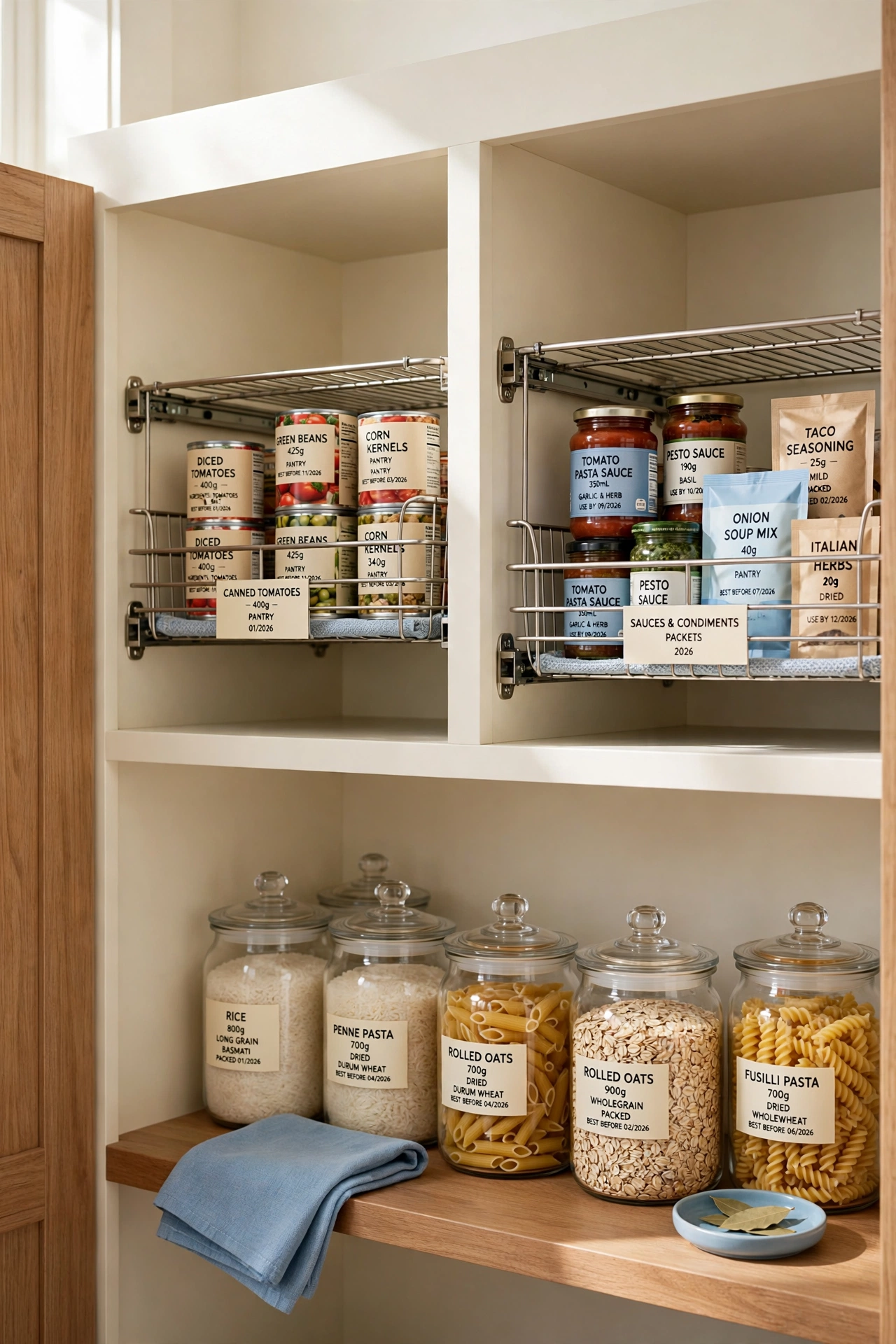
12. Group Pantry Goods in Sliding Metal Baskets
Metal baskets divide canned goods, sauces, and packets into neat sliding groups that pull out for full access. The deep but narrow shape suits pantry shelves perfectly, and the open wire sides let you see contents from every angle. Glass-lidded jars on the shelf below show off grains and pasta while keeping them fresh.
Sort one basket per category and keep the heaviest cans in the lowest basket to protect the shelves. The metal and glass mix looks clean and unified, so the pantry feels styled even when it is fully stocked. Restocking takes minutes because each basket shows you exactly what is missing.
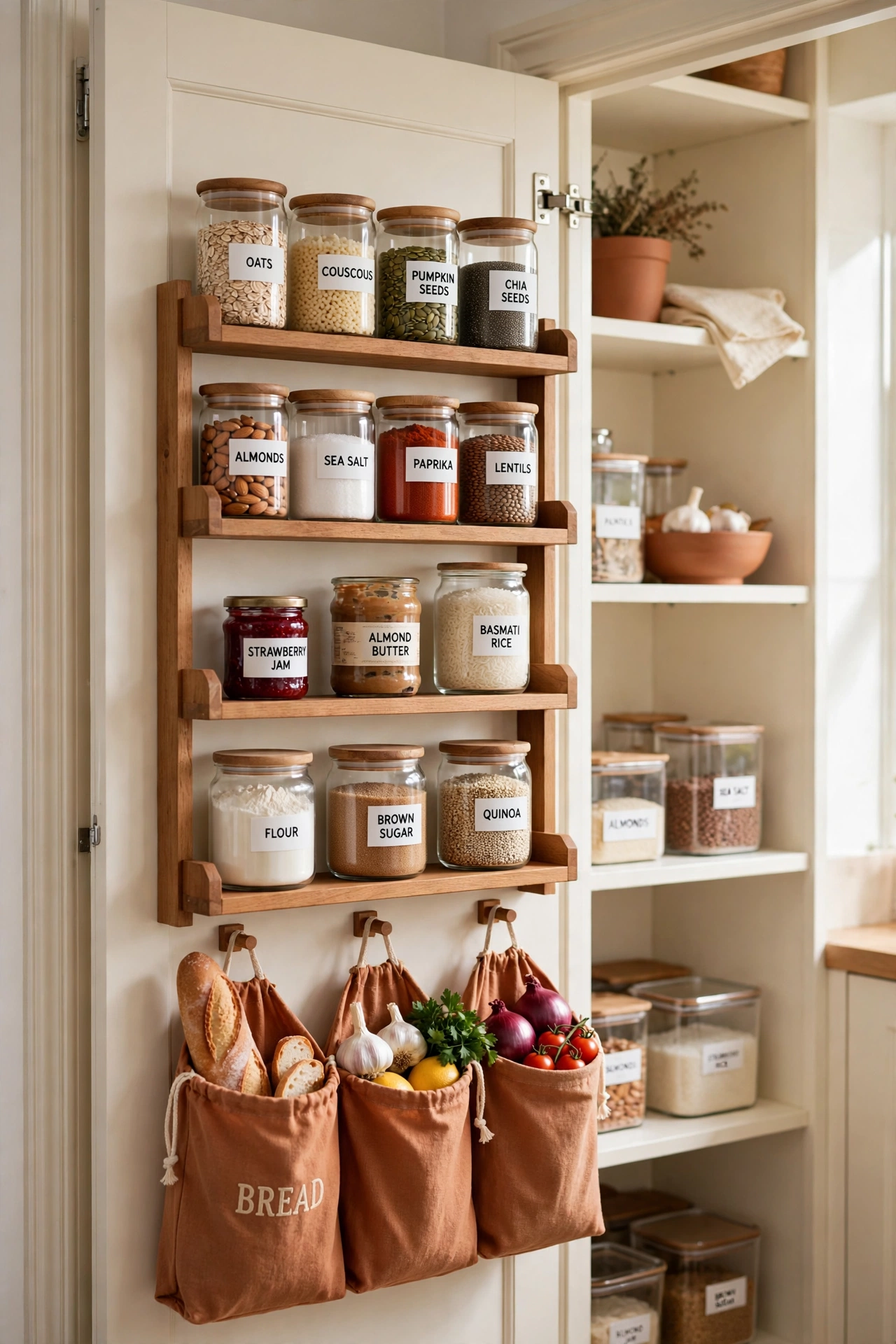
13. Mount a Wooden Rack on the Pantry Door
A custom wooden shelving unit on the pantry door turns unused door space into real storage. Shallow shelves hold jars, spreads, and dry goods, while fabric bags hanging below keep bread and produce close at hand. The rustic wood adds warmth and the extra storage frees up drawers and counters.
Check the door hinges can carry the added weight, and keep the heaviest jars on the lowest door shelf. Store items you use daily at eye level so the door rack becomes part of your cooking routine. This is a clever way to add a whole extra shelf without changing a single cabinet.
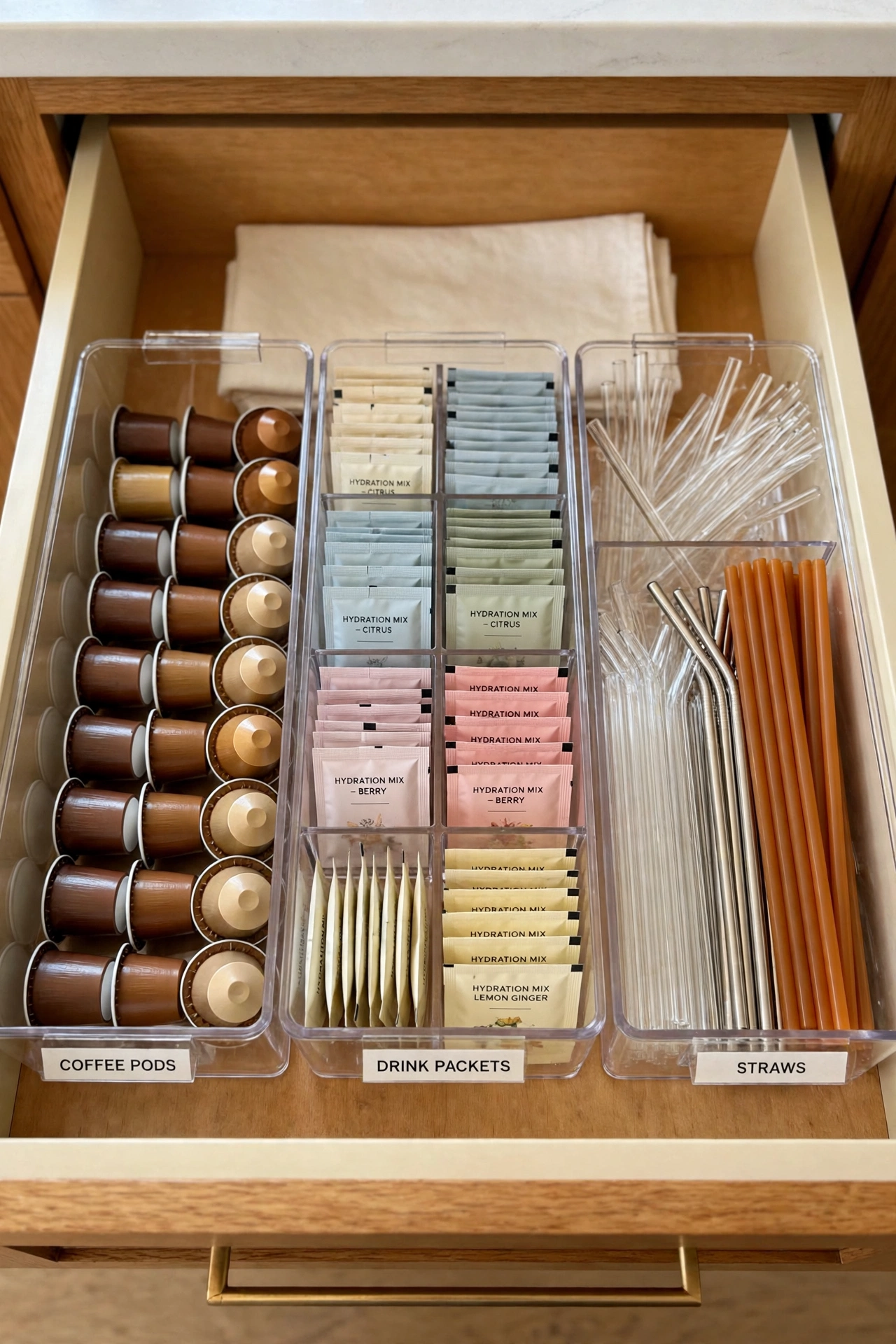
14. Sort Drinks and Coffee Supplies in a Beverage Drawer
A deep drawer with clear bins and compartmentalized trays creates a tidy beverage hub for coffee pods, drink packets, and straws. Each compartment holds one type of item, so the drawer stays mess free even when the whole family uses it. Busy mornings get easier when every drink supply has a labeled spot.
Sort the compartments by size, with tall items like straws along the back and small packets in the front trays. Refill the drawer when you unpack groceries so it never runs empty midweek. A well sorted beverage drawer also makes hosting easy, because guests can help themselves without asking where things are.
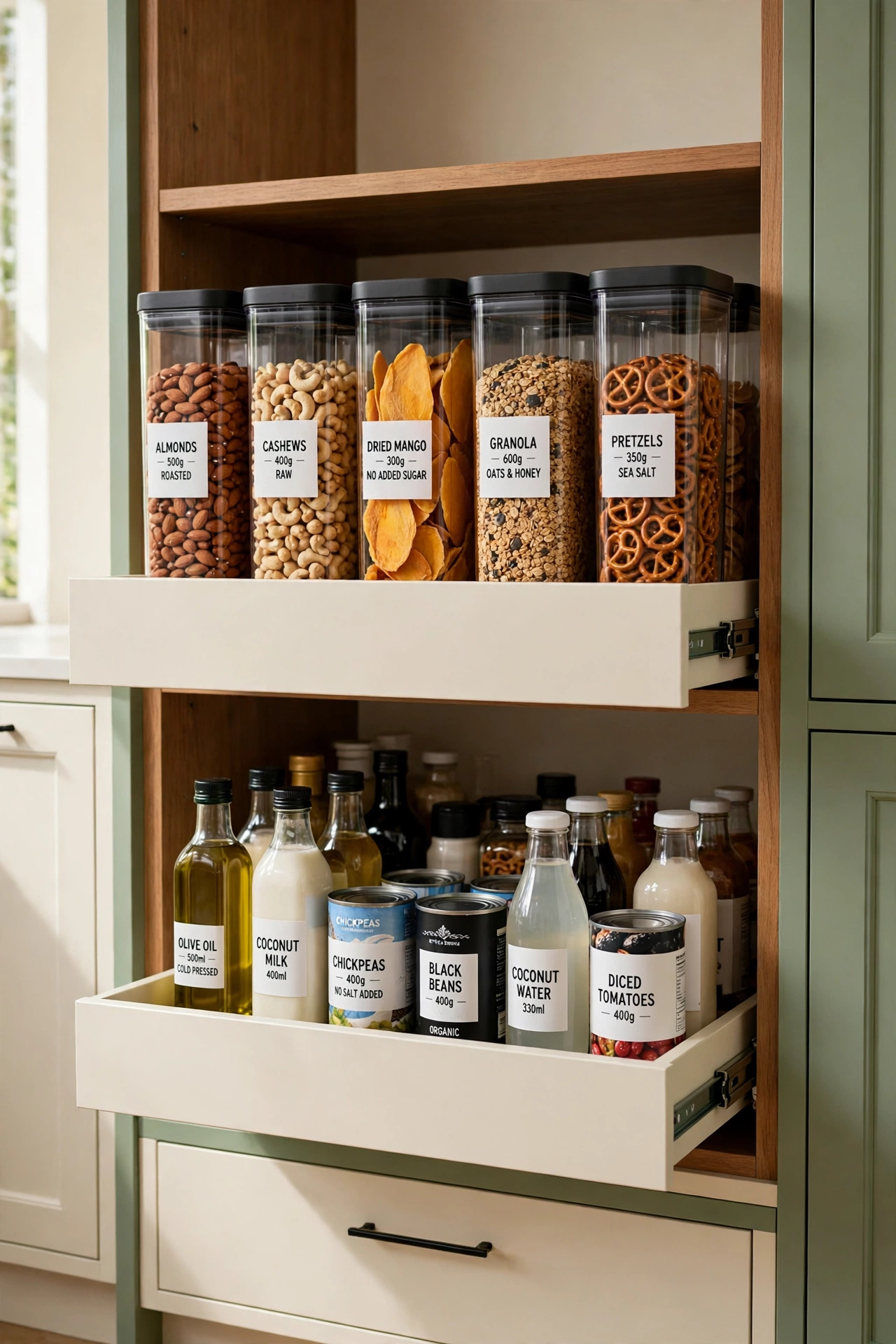
15. Keep Snacks Visible in Sliding Snack Drawers
Sliding snack drawers keep treats and drinks accessible with tall airtight containers on top and organized shelves for bottles and cans below. The pull-out design gives you quick visibility into every level, so kids can find their own snacks and you can see when supplies run low. Labels on every container keep the system honest.
Reserve one drawer for school snacks and one for drinks so the two never mix into a jumble. Place the healthiest options at the front, where small hands reach first. A pull-out snack system is perfect for busy families because it puts everything in reach without cluttering the counters.
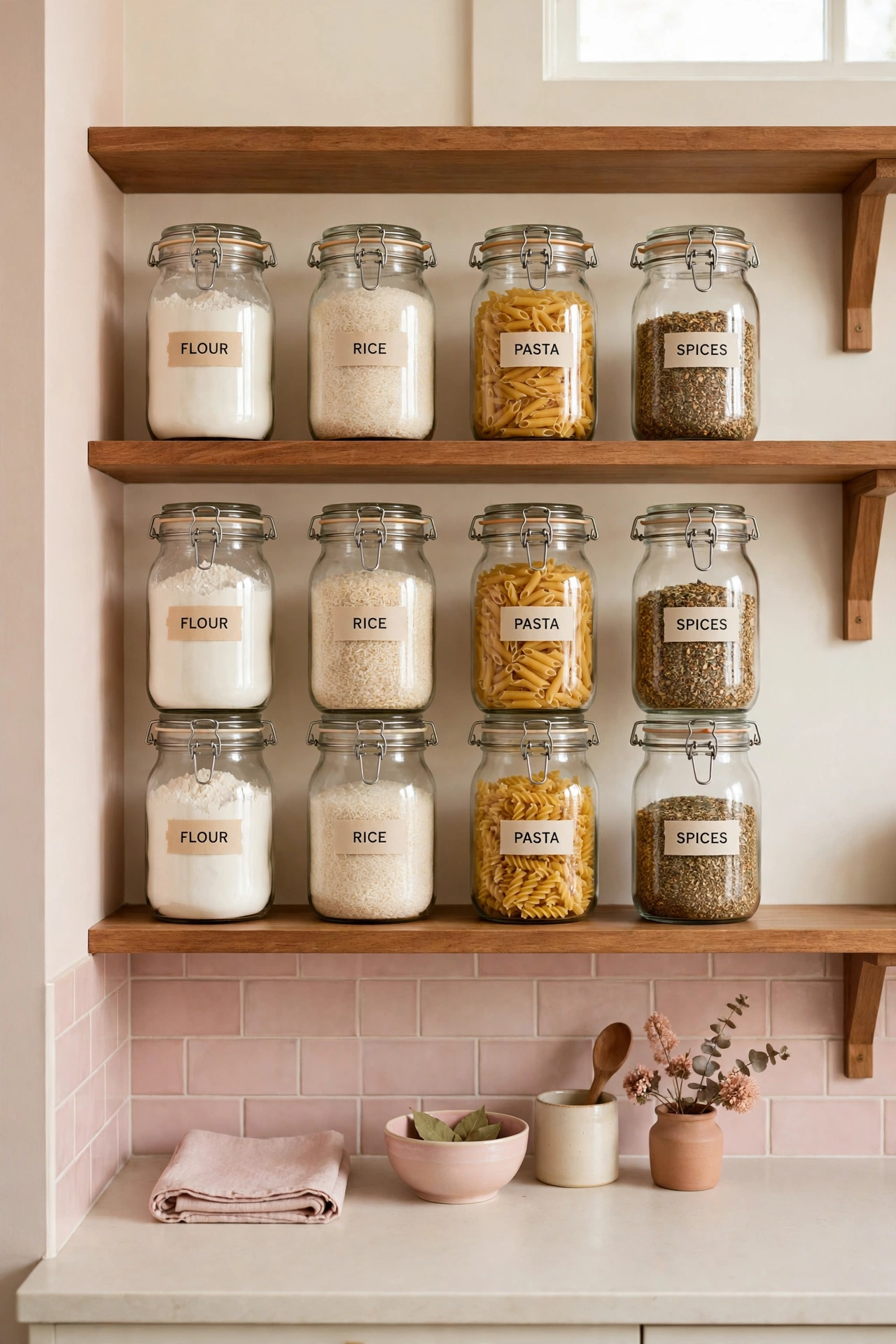
16. Display Dry Goods on a Glass Jar Shelf
Transparent glass jars arranged on open shelving or behind glass cabinet doors turn dry goods into a display worth showing off. Flour, rice, pasta, and spices stay visible, so you always know what needs refilling before you start a recipe. The uniform jars reduce packaging waste and make the whole kitchen look polished.
Choose jars with airtight lids and add simple labels with the contents and the date you filled them. Keep the jars you use daily on the lowest shelf and bulk backups higher up. A glass jar shelf proves that practical storage and beautiful storage can be the same thing.
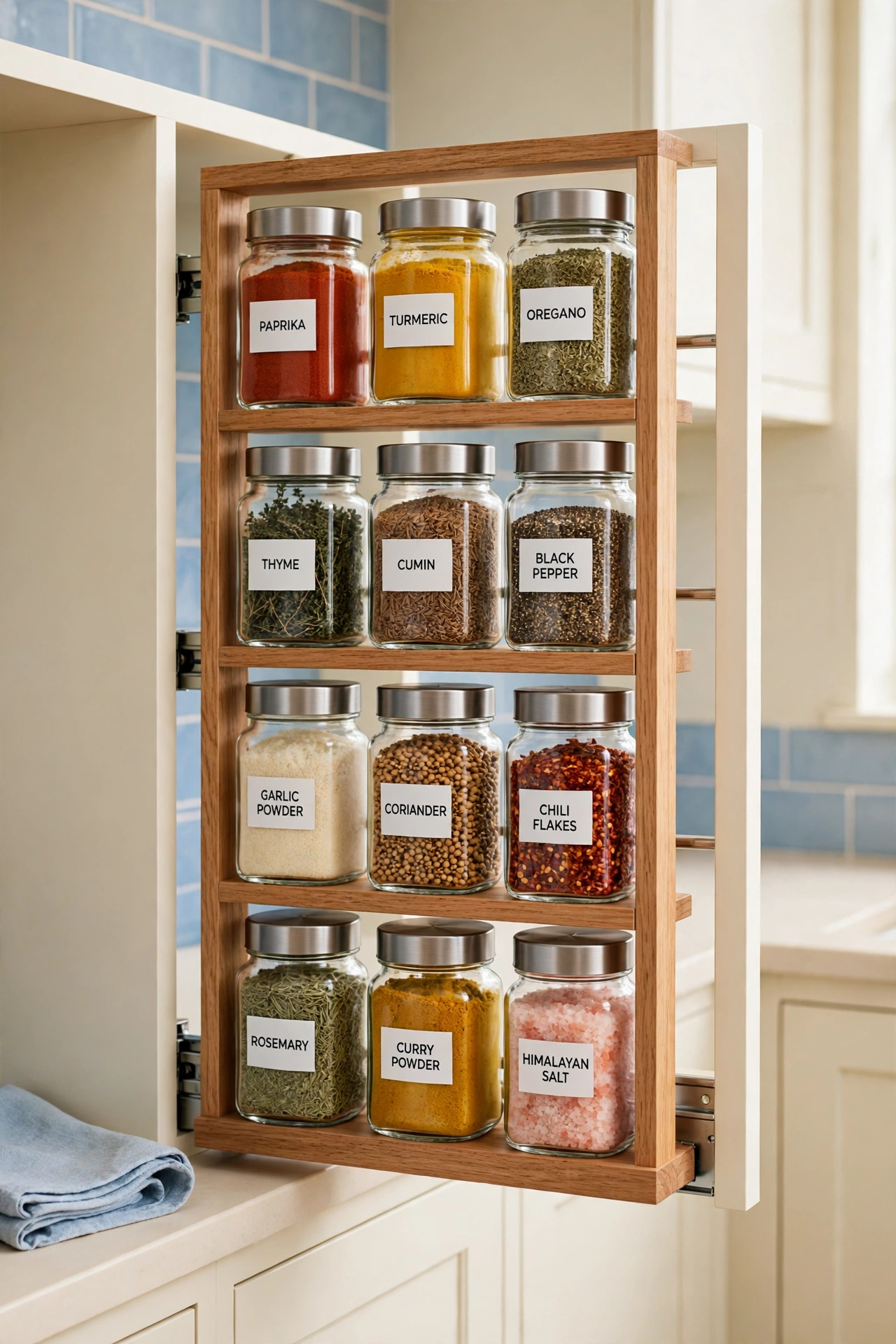
17. Reach Every Spice With Pull-Out Spice Racks
Pull-out spice racks bring every jar forward with one smooth motion, so no spice hides at the back of the cabinet again. Matching glass jars with front-facing labels make the rack look sleek, and you can grab the exact spice you need without moving five other jars first. Rummaging through a crowded shelf becomes a thing of the past.
Mount the racks on the inside of a cabinet door or fit slim racks into a narrow cabinet beside the stove. Sort the jars alphabetically or by cuisine, whichever matches how you cook. A pull-out rack also protects spice jars from the heat and steam that damage flavor over time.
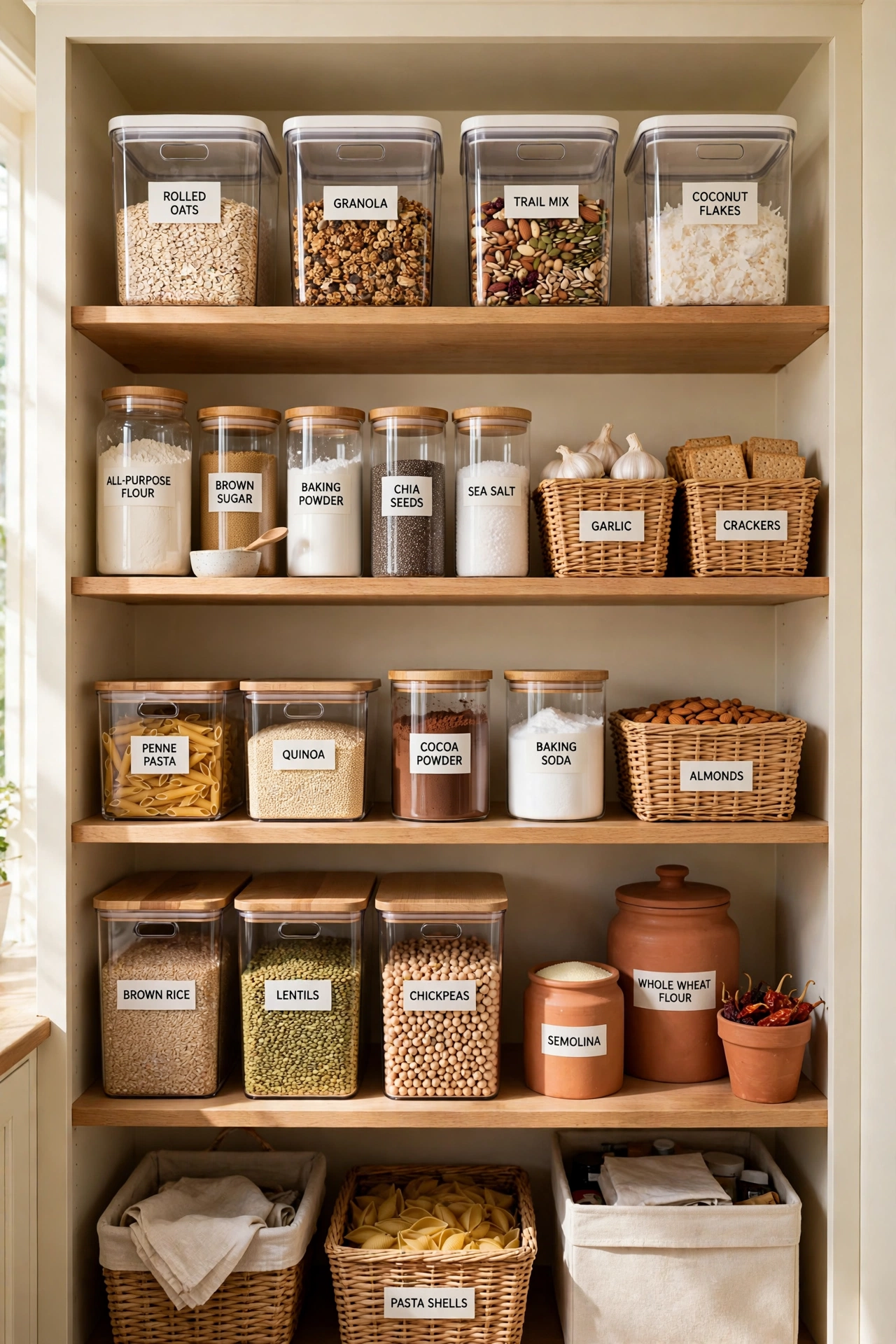
18. Mix Bins, Baskets, and Jars in an Open Pantry
An open pantry works best when acrylic bins, baskets, and glass jars share the shelves in a clear system. Label each container to separate snacks, dry goods, and baking essentials, and place bulk items on the lower shelves where their weight is safe. Items you use rarely go up top, and daily goods stay at eye level.
The open layout forces honesty, because every shelf is visible, and that visibility keeps the pantry tidy with very little effort. Wipe the shelves and check labels once a month to keep the system fresh. For deep shelves in particular, these pantry organization ideas for deep shelves show how to stop food from vanishing at the back.
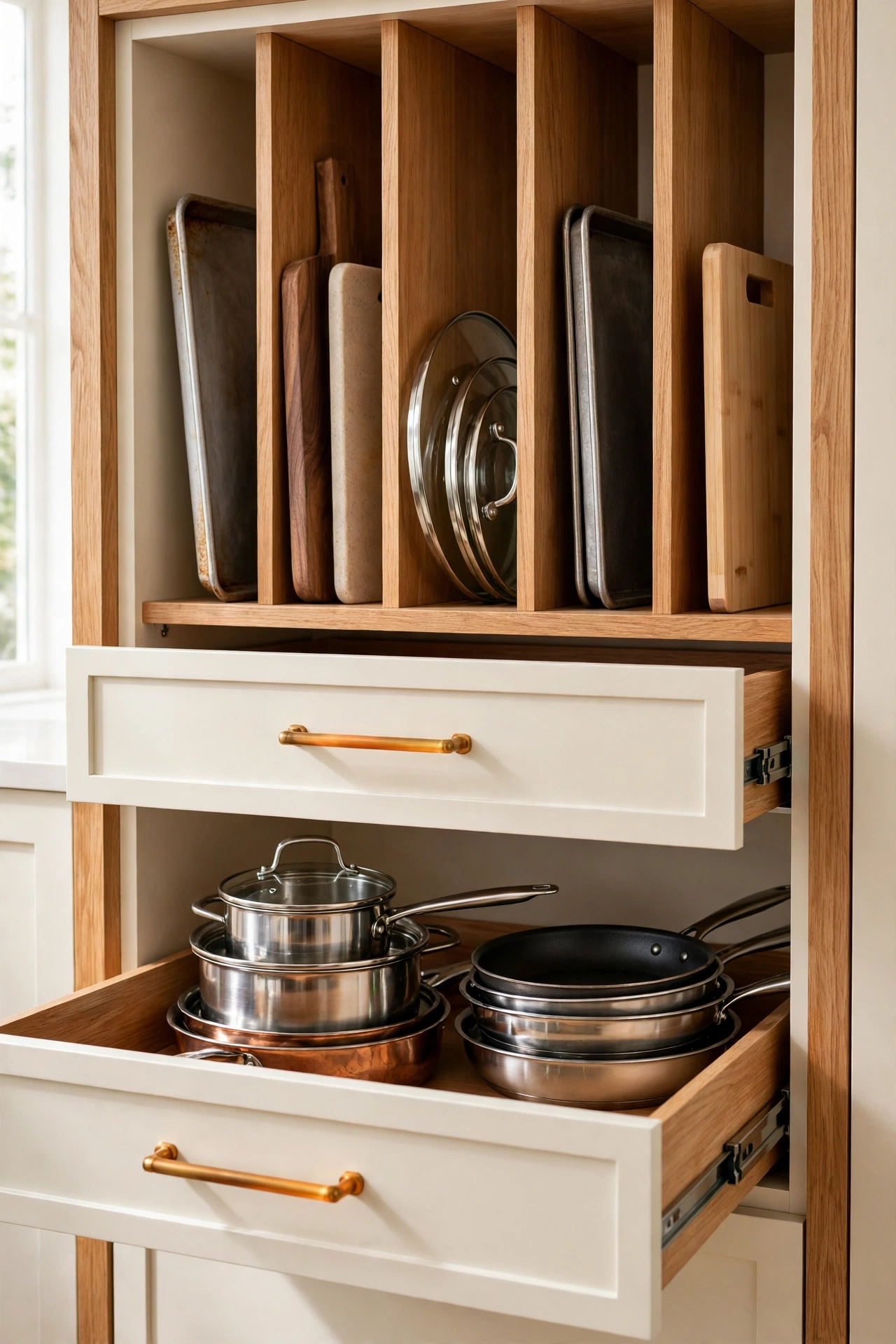
19. Tame Pots and Pans in a Cookware Closet
Bulky cookware needs a cabinet designed around it, with vertical dividers for baking sheets and roll-out drawers for pots and pans. Each item gets its own slot, so stacks never topple and lids never slide into a tangled pile. Meal prep starts faster when you can pull out the exact pan you need.
Stand baking sheets, cutting boards, and lids upright in the dividers, and nest pots with a soft liner between them to prevent scratches. Keep the most used pan on the top roll-out drawer. A dedicated cookware closet simplifies the whole kitchen because the biggest, heaviest items finally have a proper home.
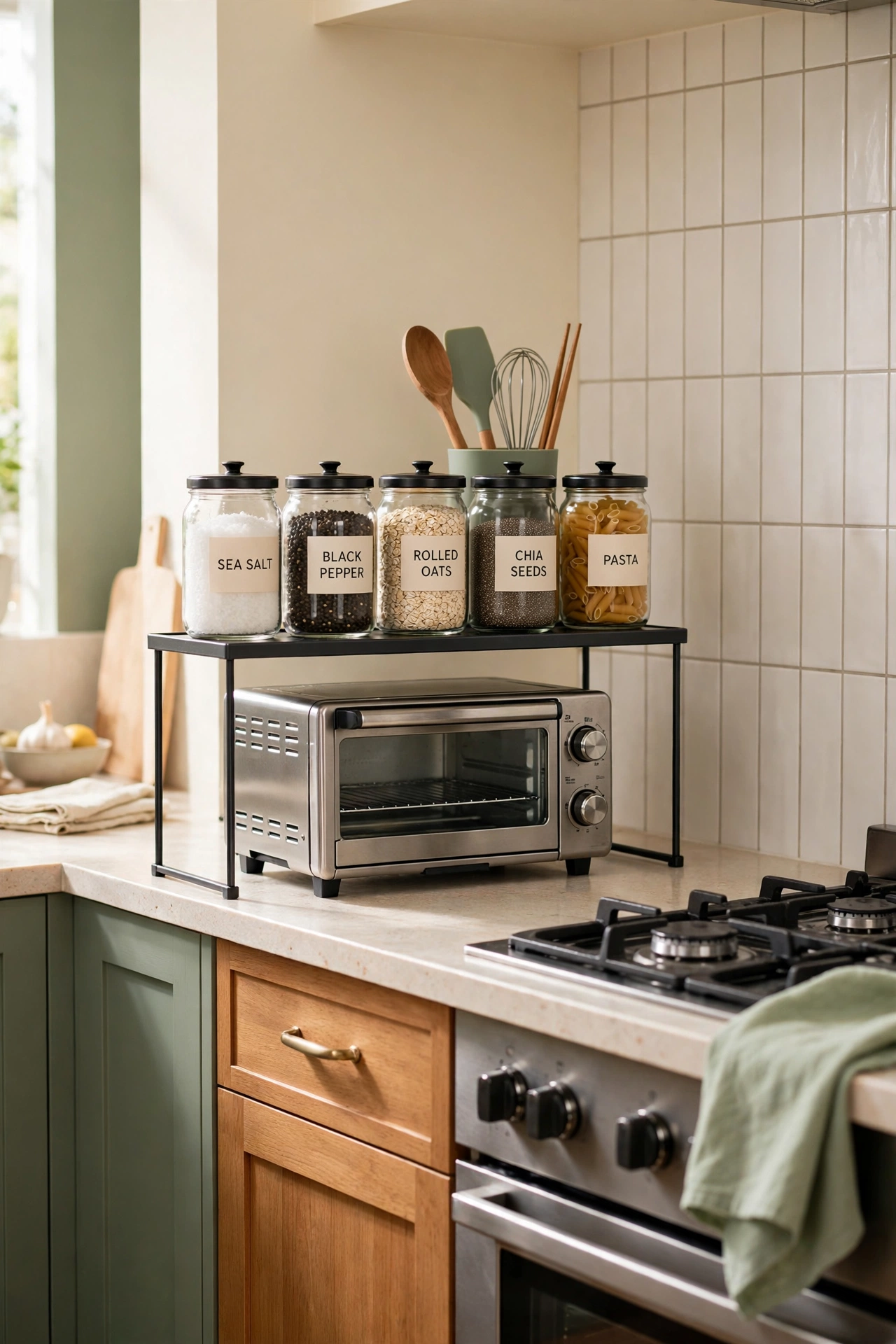
20. Add Layers With a Countertop Shelf Riser
A compact shelf riser raises countertop storage into layers, so utensils, jars, and small appliances share one small footprint. Sleek metal frames hold a second level above the counter, which is perfect for small kitchens where every inch matters. The riser keeps the counter looking clean and minimalist while holding twice as much.
Place daily tools like the salt jar and cooking spoons on the top tier and the coffee maker or toaster underneath. Keep the riser near the stove so everything you need while cooking sits within reach. A simple riser is a stylish solution for clutter-free cooking areas on any budget.
Conclusion
Organized kitchen cabinets change how the whole kitchen feels. When every basket, bin, and jar has a purpose, cooking becomes calmer, shopping becomes easier, and cleanup takes minutes instead of half an hour. The best system is the one your family can keep up without thinking about it.
Start with one cabinet this week, perhaps the spice shelf or the snack drawer, and build from there. Small steps add up to a kitchen that works for you every single day. For storage beyond the cabinets, these kitchen wall storage ideas will help you use every wall and corner with the same calm, tidy approach.
Frequently Asked Questions About Kitchen Cabinets Organization Ideas
How do I organize deep kitchen cabinets so nothing gets lost?
Use pull-out bins, sliding baskets, or turntables that bring the back of the cabinet to you. Label each container by category and keep daily items at the front. A pull-out system removes the dark back corner where food and tools used to disappear.
What containers work best inside kitchen cabinets?
Clear airtight containers work best for dry goods because you can see contents and freshness at a glance. Woven baskets suit snacks and bread, while metal baskets handle heavy cans. Choose containers that fit your shelf depth with a small gap for easy sliding.
How often should I clean out kitchen cabinets?
Check cabinets every three months for expired food, chipped dishes, and items you no longer use. Wipe shelves with a damp cloth during each check and refresh labels that have faded. A quick seasonal cleanout keeps the whole system working all year.
Can I organize kitchen cabinets without buying expensive inserts?
Yes, start with items you already own, such as shoe boxes lined with paper, small baskets, and spare jars. Shelf risers and tension rods are low cost and add real storage. Spend money only on the one or two organizers that solve your biggest frustration first.
How do I keep cabinet doors from getting overcrowded with racks?
Mount only one slim rack per door and store lightweight items like packets, spices, and small bottles on it. Check that the door still closes fully and the hinges feel firm. Heavy jars belong on shelves, not on doors, so the hinges last for years.

Hi, I’m Emily! I turn messy corners into cozy, organized spots. DreamNestDecor is where I share simple, practical home ideas — decor, organization, and small-space solutions that work in real life, not just in photos. Every idea here is carefully researched before it’s shared.