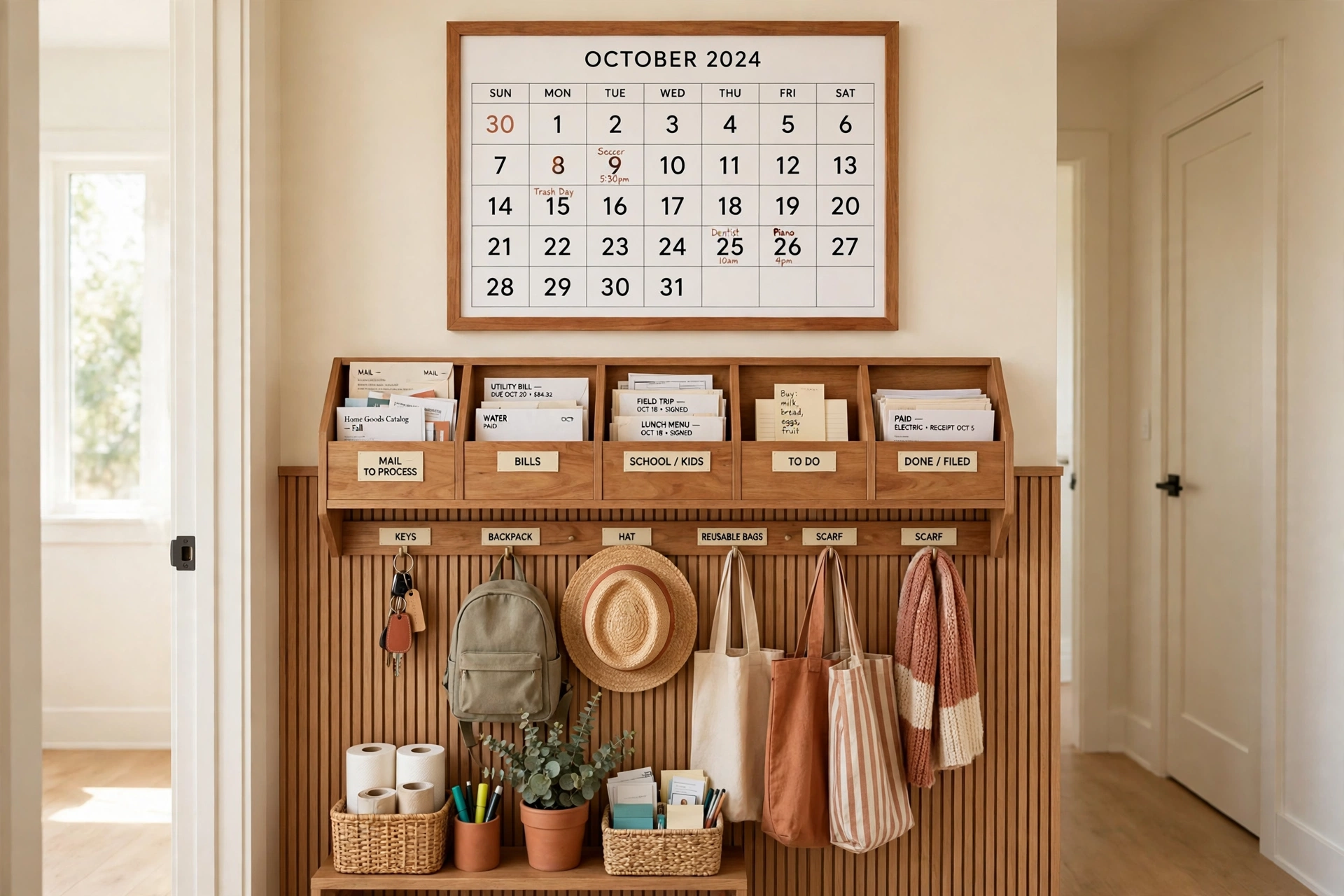
Picture this: you walk in the front door after a long day, and everything your family needs is right where it belongs. The keys hang on their hooks, tomorrow lunch boxes wait on their shelf, the school forms sit in their inbox, and the week plan is written on the board for everyone to see. No frantic searching, no lost permission slips, no morning chaos.
That calm feeling is exactly what a family command center gives to a busy household. You do not need a huge hallway or an expensive built-in unit to make it work. All you need is one small wall, a few smart organizers, and a system the whole family can follow. These 31 family command center organization ideas for busy households will help you turn one cluttered corner into the calm heart of your home.
1. Hang a Big Wall Calendar Everyone Can See
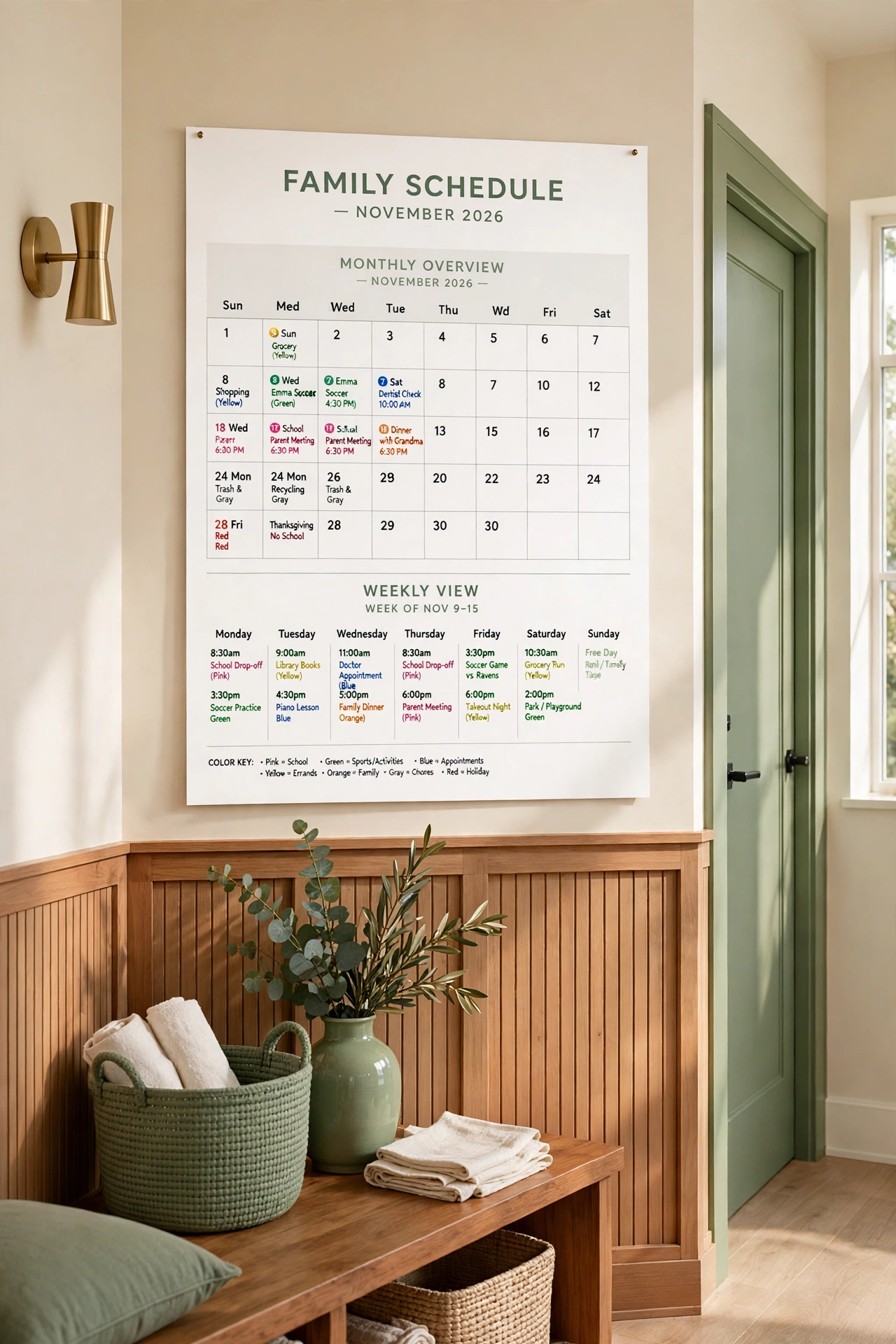
A big wall calendar is the heart of any command center. Hang it at eye level where the whole family passes every day, and write down school events, appointments, work deadlines, and family plans in different colors for each person. When the week is visible at a glance, nobody forgets a practice, a meeting, or a birthday.
Choose a calendar large enough to write in comfortably, with one clear box for each day. Update it every Sunday during a short family meeting, and let the kids add their own events with their own color. For more ideas on keeping family plans and paperwork tidy, see these family calendar and paperwork organization ideas. A wall calendar works well because it turns the family schedule from a mystery into a shared plan.
2. Set Up a Mail Sorting Station
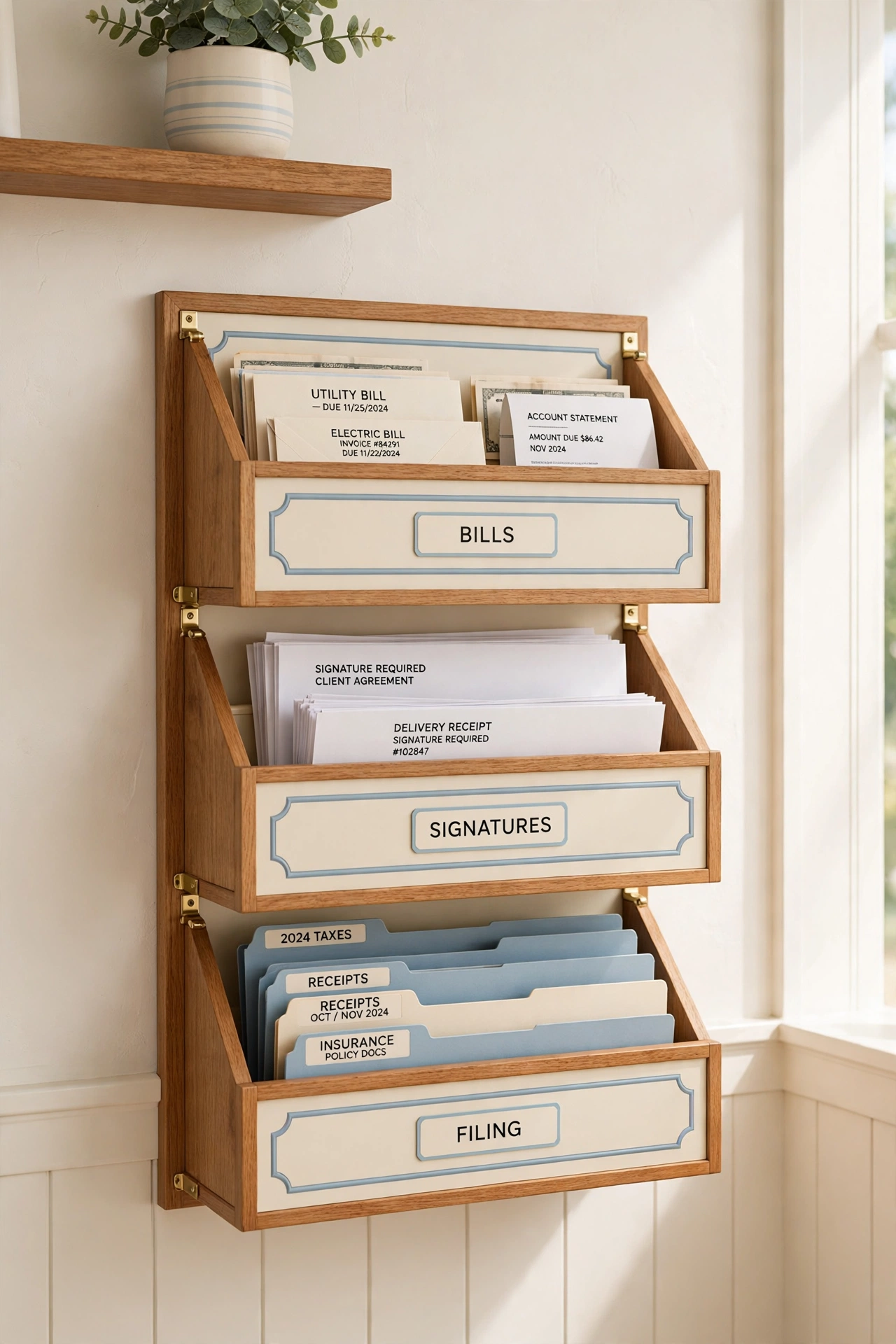
A mail sorting station stops paper from piling up on the kitchen counter. Use a wall mounted sorter or a small set of labeled slots, one for each family member, plus one for bills and one for things to file. When the mail arrives, it goes straight into its slot instead of landing in a heap.
Empty the sorter every evening and deal with each piece right away, even if dealing with it only means moving it to the right folder. Keep a small shredder or a recycling bin beside the station so junk mail never enters the house. A mail station works well because it gives every piece of paper a first home the moment it arrives.
3. Add Key Hooks by the Front Door
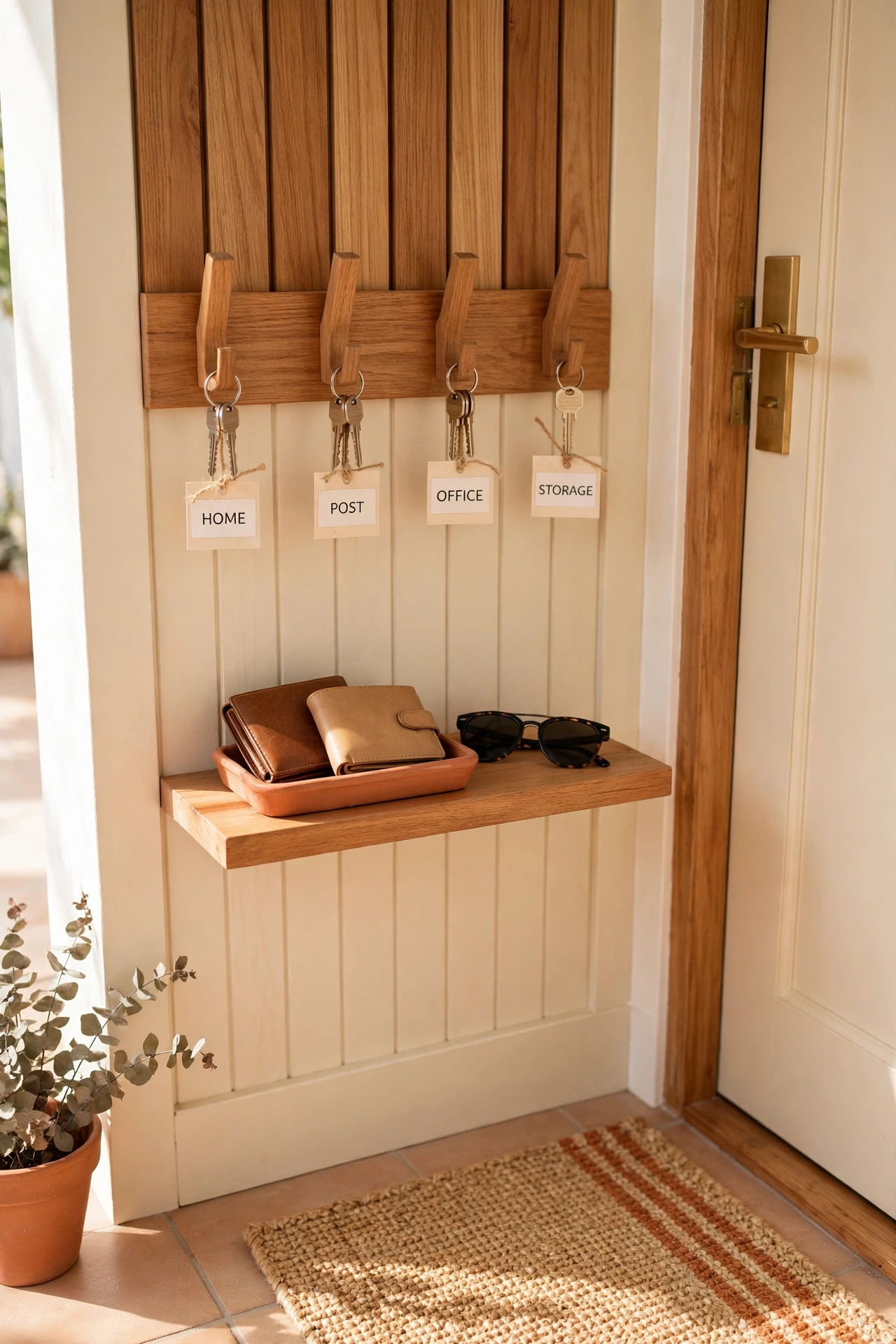
Key hooks by the front door end the daily search for missing keys. Mount a small row of hooks at a height everyone can reach, and give each family member one hook with their name above it. When the family comes home, the keys go straight on the hook without a second thought.
Keep the hooks near the door you use most, and add a small dish below for loose change and small items. A key hook system works well because it turns a frantic morning hunt into a one second habit. The whole family learns the rule quickly when the hooks are easy to see and easy to reach.
4. Create a Family File System
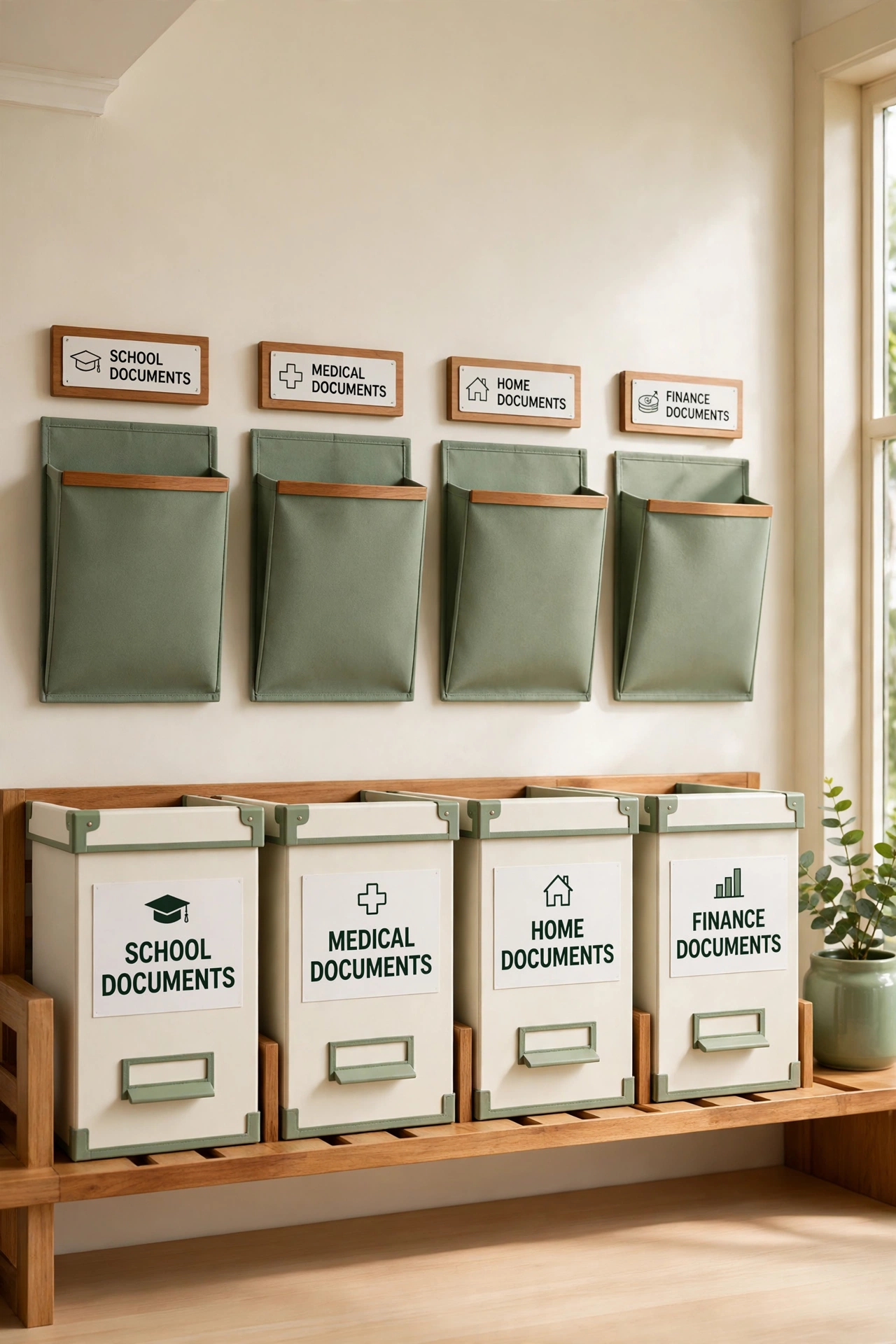
A family file system keeps important papers safe and easy to find. Use a small filing box or a set of hanging folders with clear labels, one for school, one for medical, one for the house, and one for each child. When a paper arrives, it goes into its folder right away instead of joining a pile.
Keep the file box inside the command center so the papers live where the family already gathers. Review the folders once a month and shred anything that is no longer needed. A file system works well because it turns a drawer full of mystery papers into a tidy archive anyone can use.
5. Put a Weekly Menu Board on the Wall
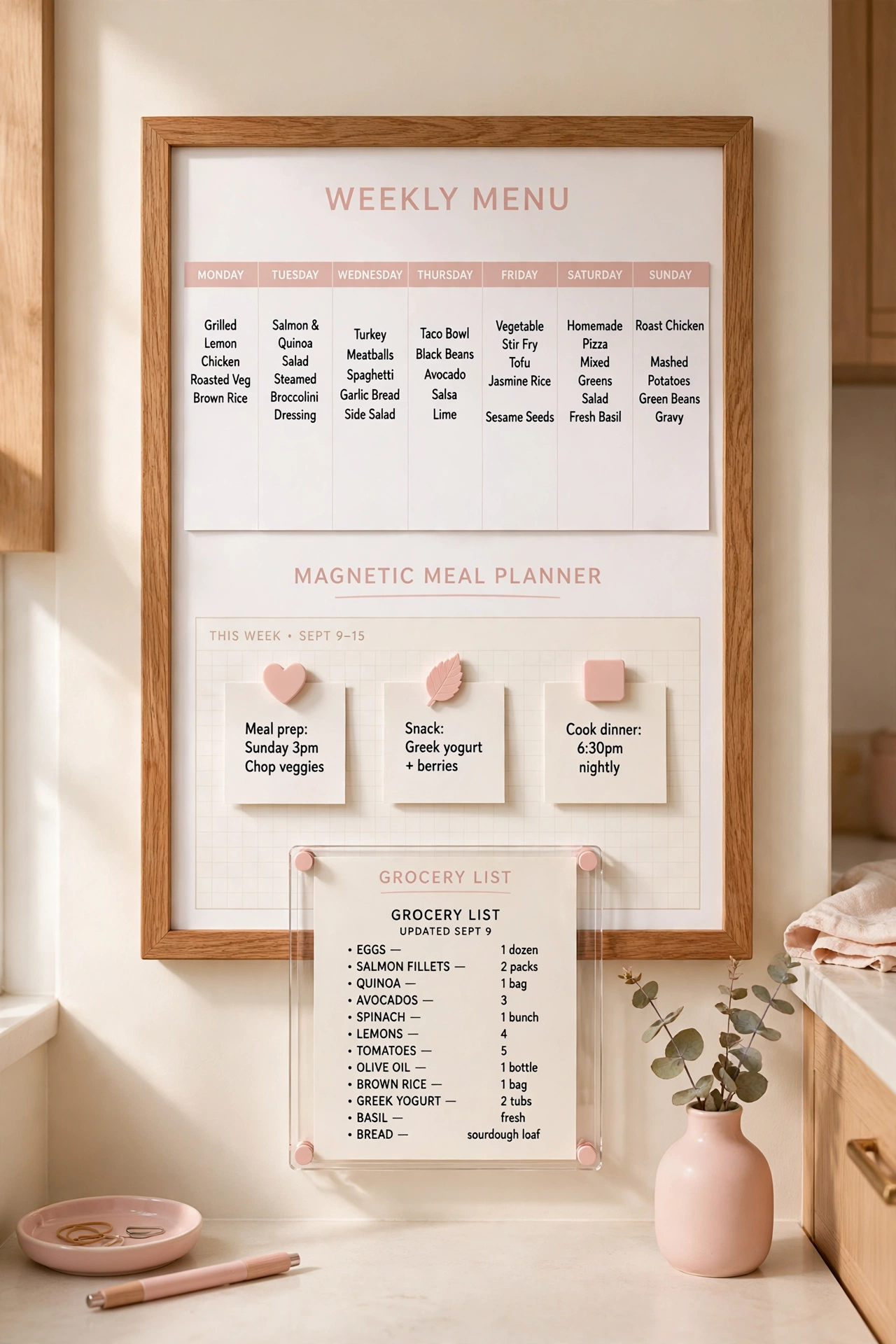
A weekly menu board on the wall tells the whole family what is for dinner before anyone asks. Write the seven dinners on a small board or a chalkboard, and hang it where everyone can see it during the day. When the plan is visible, the daily question of what to cook disappears completely.
Update the board every Sunday and let the family suggest one meal each week. Keep the board simple, with just the dinner name and the day beside it. A menu board works well because it turns dinner from a daily decision into a quiet habit that runs itself.
6. Make a School Paper Inbox for Each Child
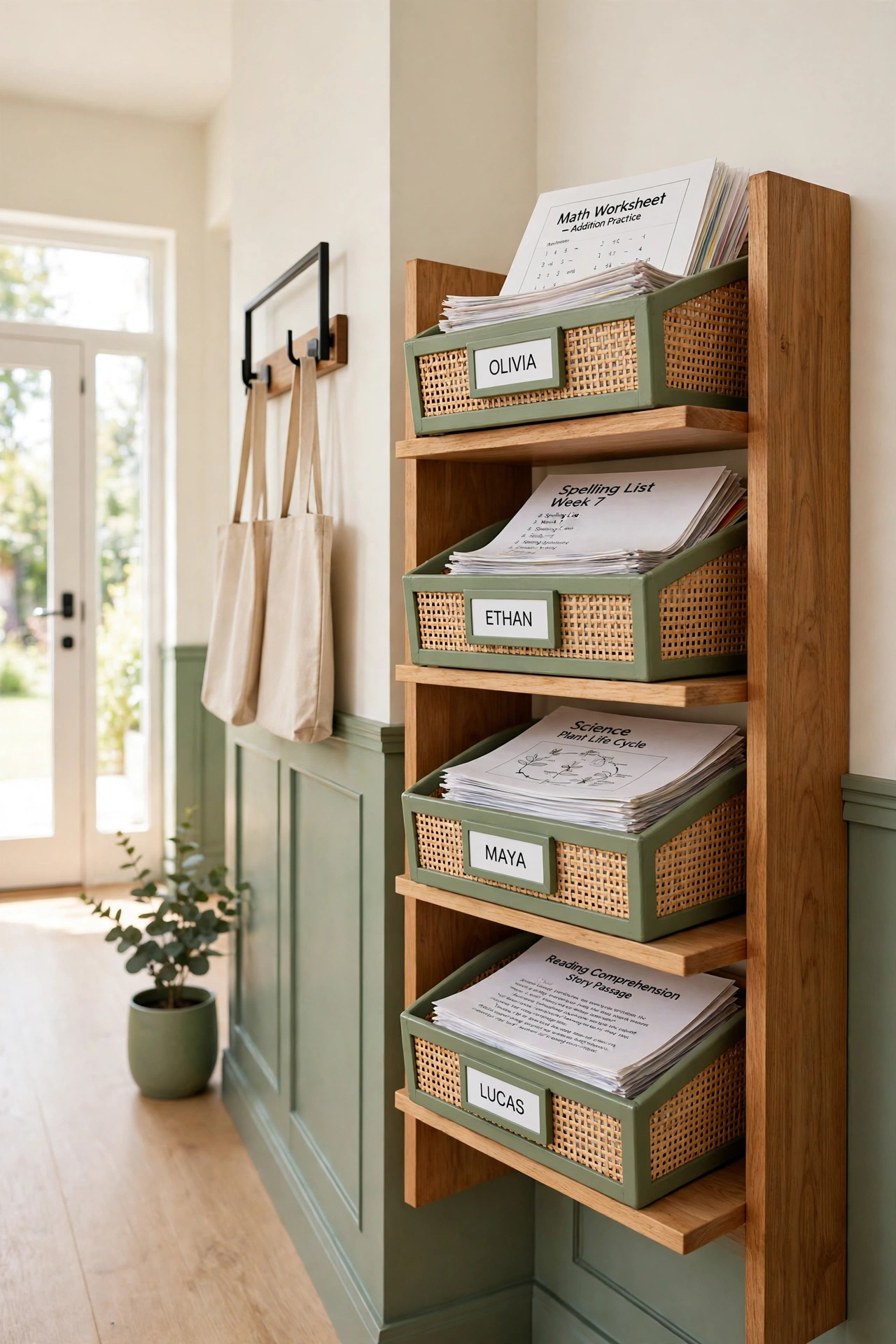
A school paper inbox gives every child one clear place for the papers that come home each day. Use a small tray or a wall pocket with the child name on it, and teach the kids to drop their papers in the inbox the moment they walk in the door. When the papers have one home, they stop spreading across the kitchen table.
Check each inbox every evening and sign what needs signing, file what needs filing, and recycle the rest. A school inbox works well because it gives parents one spot to check instead of searching backpacks and coat pockets. The kids learn responsibility quickly when their inbox is easy to see and easy to use.
7. Display a Chore Chart on the Command Center Wall
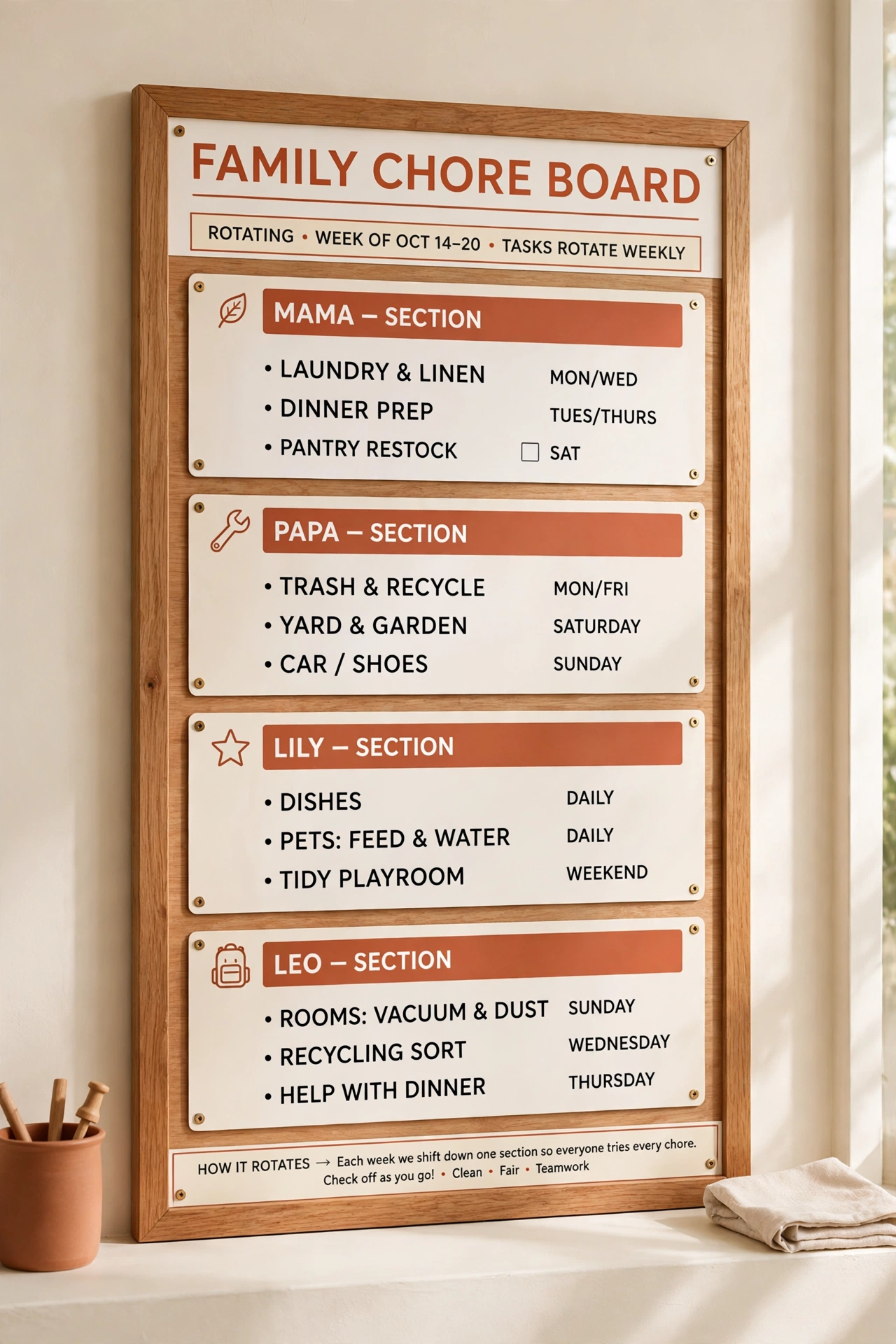
A chore chart on the command center wall keeps the whole family honest about who does what. Hang a simple chart with the days of the week and the chores for each person, and let everyone tick off their tasks as they finish them. When the chart is public, the work gets shared more fairly.
Keep the chart simple, with only two or three chores per person each day, and rotate the tasks every week so nobody gets stuck with the least favorite job. A wall chore chart works well because it turns housework from a private argument into a visible team effort that everyone can see.
8. Keep a Message Board for Family Notes
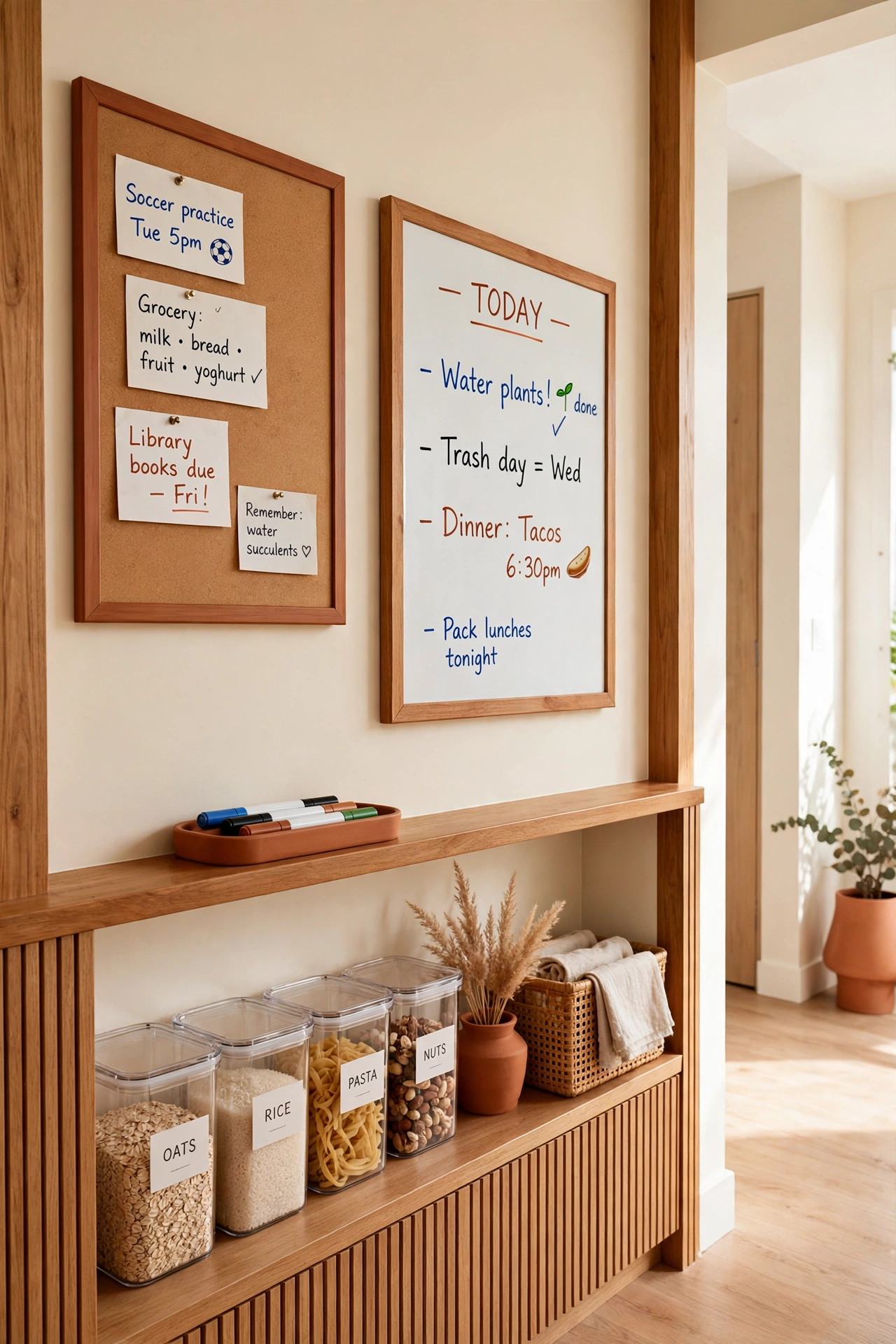
A message board gives the family one place to leave notes for each other. Use a small whiteboard or a chalkboard and keep markers beside it, so anyone can write a quick reminder, a thank you, or a shopping request. When the board is in the command center, the notes get seen instead of lost on a fridge door.
Erase the board every Sunday and start fresh for the new week. Keep the notes short and positive, and add a small section for the week ahead. A message board works well because it keeps family communication in one visible spot instead of scattered across phones and paper scraps.
9. Pin Reminders to a Corkboard
A corkboard holds the reminders that need to stay visible for more than a day. Pin up permission slips, appointment cards, party invitations, and school notices where the whole family can see them. When a reminder is pinned in the command center, it stays in sight until the event passes.
Keep the corkboard tidy by removing old pins every week and adding new ones as they arrive. Use colorful pins to mark the most urgent items so they stand out at a glance. A corkboard works well because it gives paper reminders a home that is visible, flexible, and easy to update.
10. Keep a Recipe Binder at the Station
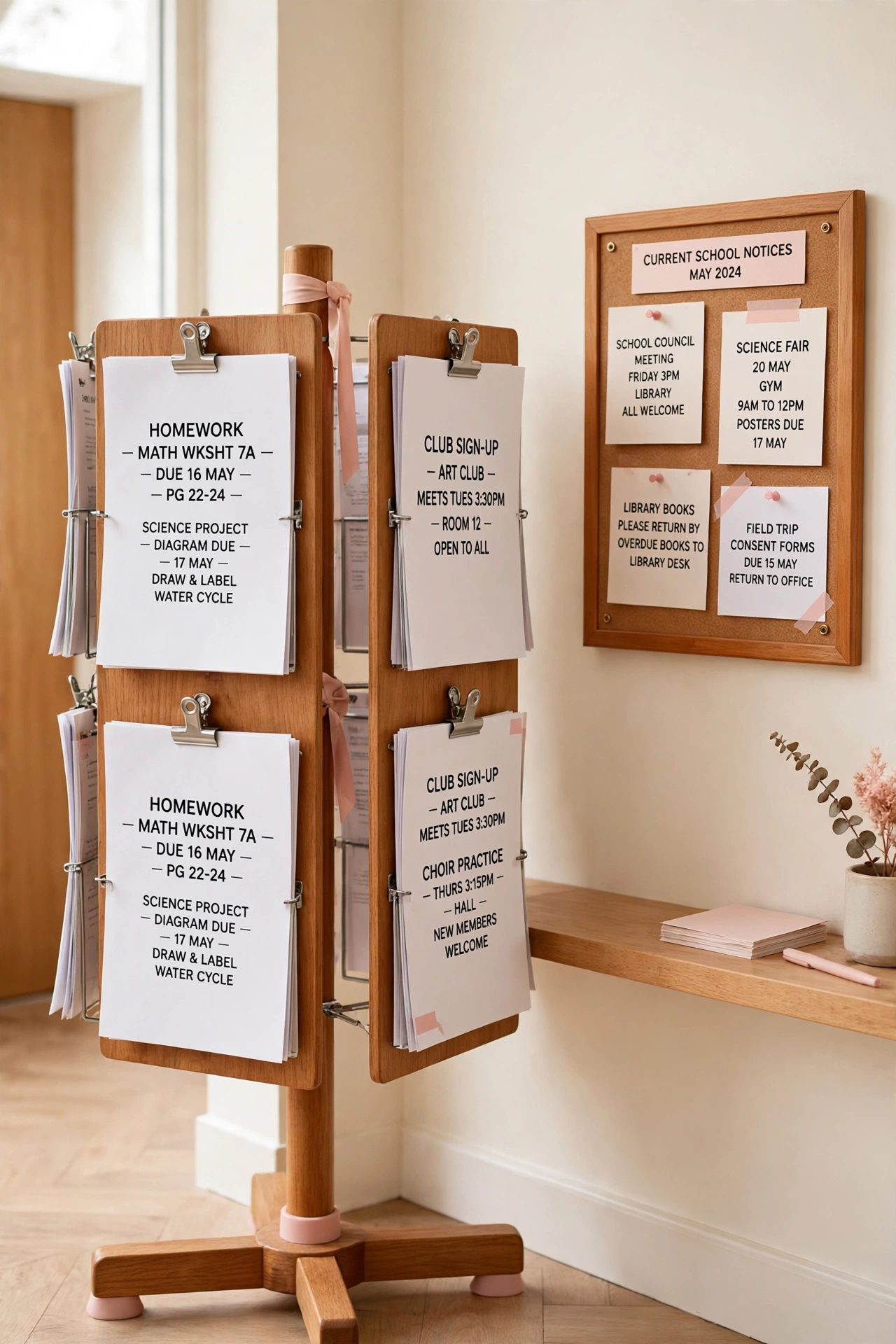
A recipe binder at the command center keeps the family favorite meals within reach when planning time comes. Use dividers for breakfasts, dinners, and favorites, and slip the current week plan into a clear sleeve at the front. When the binder lives at the station, meal planning happens in one spot.
Print the recipes the family uses most and keep them in clear sleeves so they stay clean in the kitchen. For more ideas on keeping recipes tidy, see these kitchen recipe organization ideas. A recipe binder works well because it turns a pile of loose recipes into a plan the whole family can follow.

11. Give Every Child a Backpack Hook and Cubby
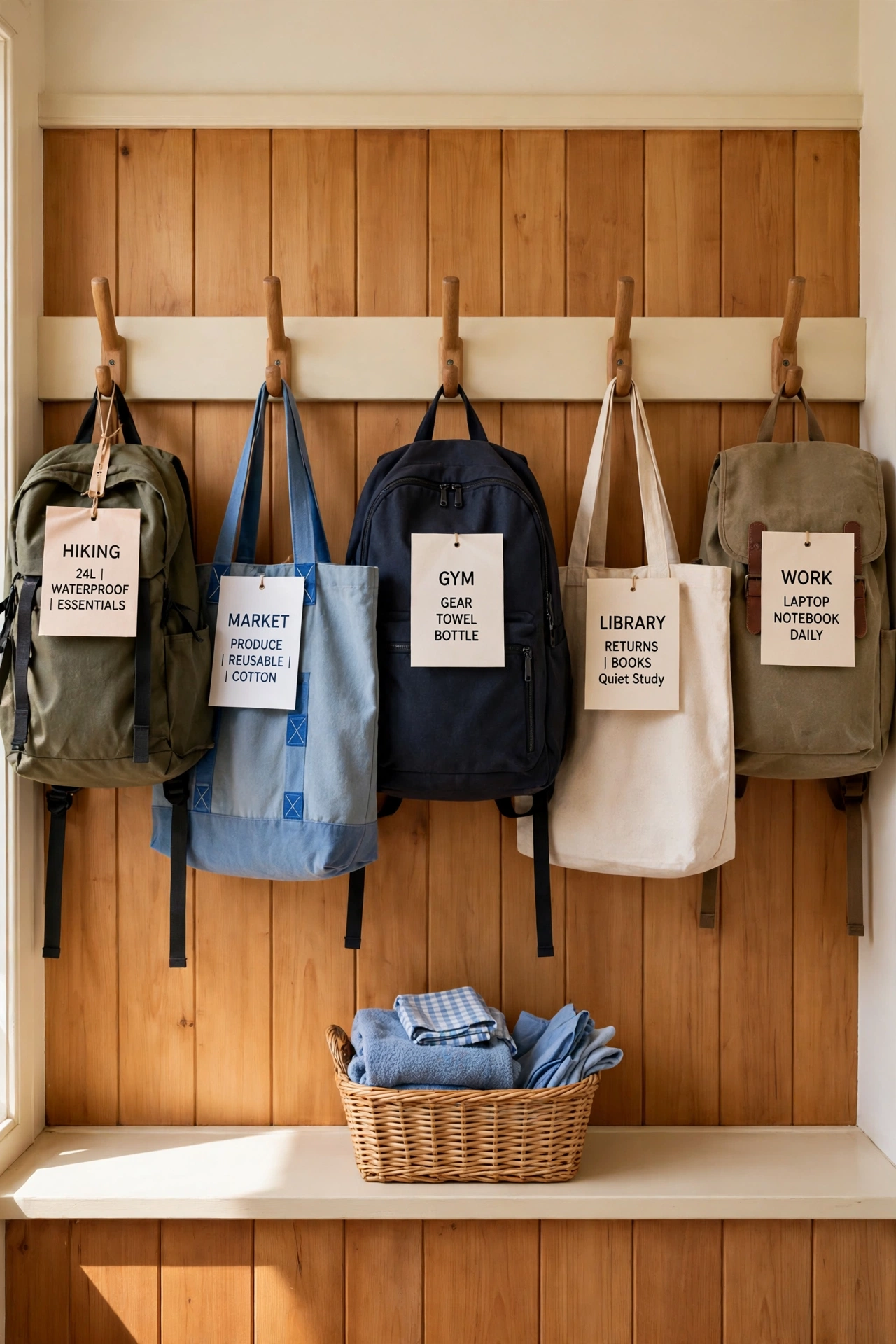
A backpack hook and cubby for each child ends the morning hunt for school bags. Mount sturdy hooks at child height and place a small cubby or basket below each one for shoes, lunch boxes, and sports gear. When the kids come home, the bag goes on the hook and the gear goes in the cubby without a second thought.
Label each hook and cubby with the child name so there is never an argument about whose space is whose. A backpack station works well because it turns the hallway from a dumping ground into a tidy launch pad for the next school day.
12. Add Shoe Storage by the Door
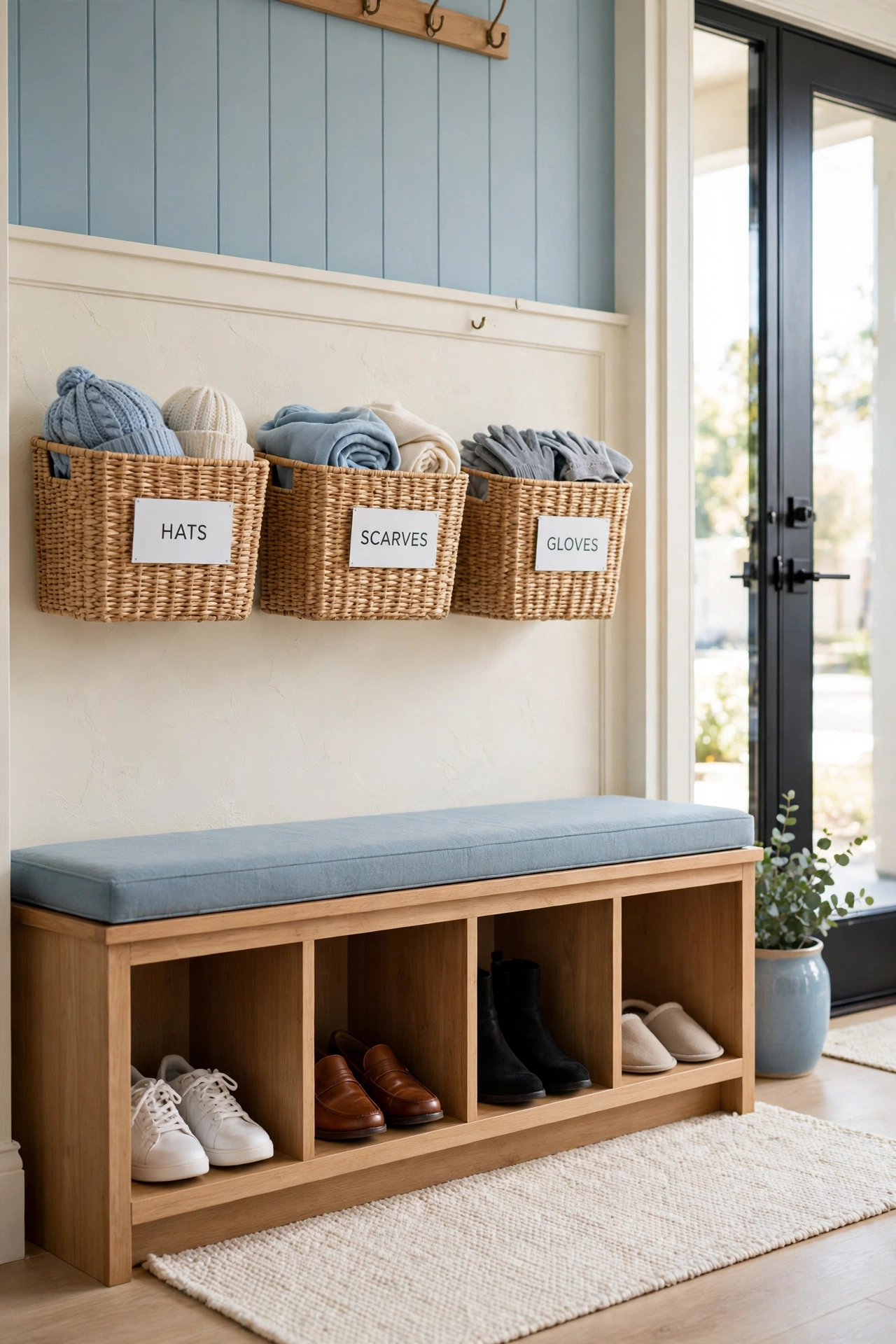
Shoe storage by the door keeps the entryway clear and the floors clean. Use a low bench with cubbies below, or a simple rack with one shelf per family member, and teach everyone to leave their shoes in their own spot. When the shoes have a home, the hallway stays walkable.
Keep the storage close to the door you use most, and add a small tray for wet or muddy shoes in bad weather. A shoe station works well because it turns a pile of shoes by the door into a tidy row that the whole family can maintain.
13. Create a Bill Paying Station
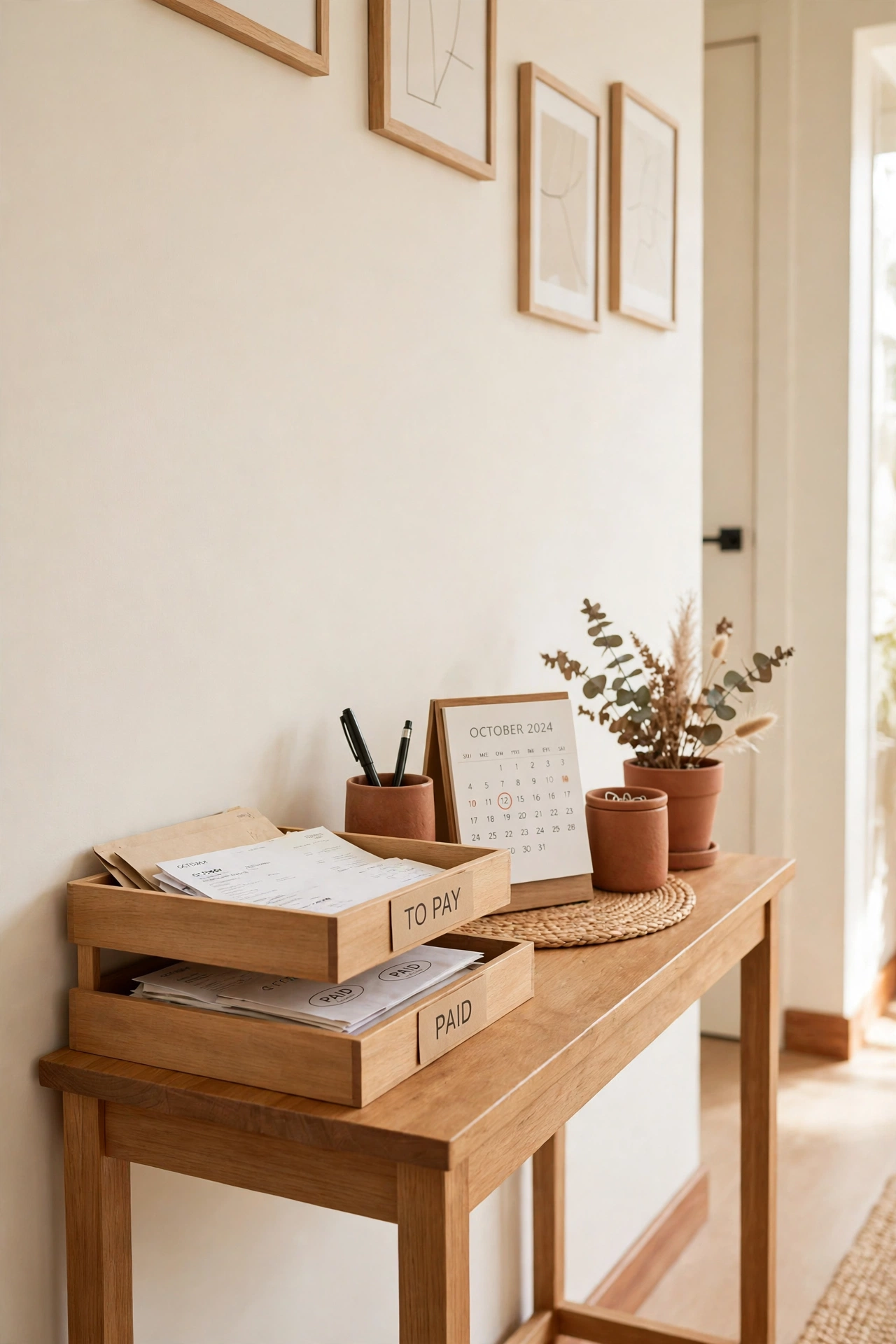
A bill paying station keeps money tasks in one tidy spot. Use a small tray for bills to pay, a folder for bills already paid, and a pen and a calendar beside them. When a bill arrives, it goes in the tray, and when it is paid, it moves to the folder with the date written on it.
Set one day each week to sit at the station and clear the tray completely. A bill station works well because it stops bills from hiding in piles of mail and keeps the family finances visible and under control.
14. Store Important Documents in a Binder
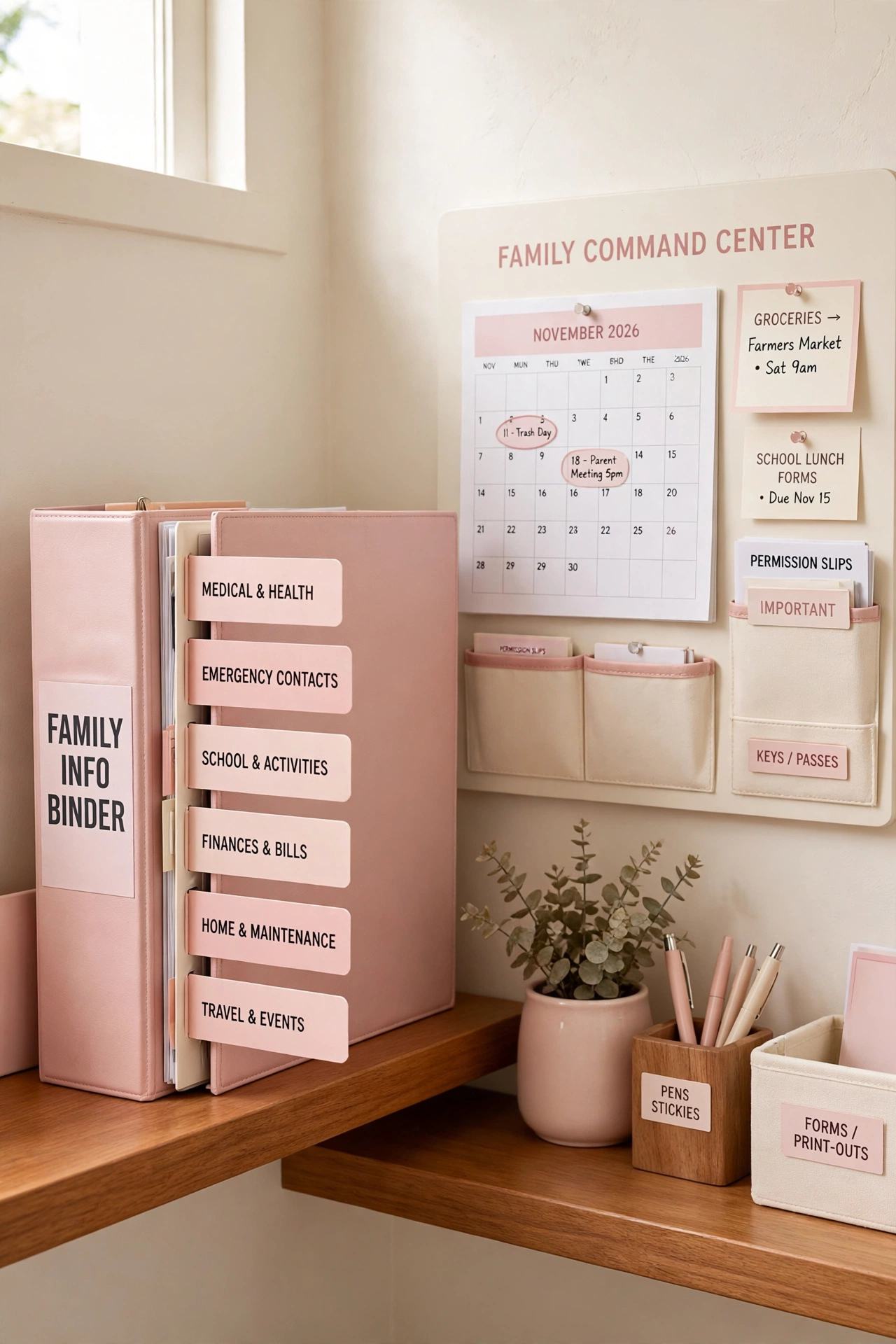
An important documents binder keeps passports, insurance papers, and birth certificates safe in one place. Use a sturdy binder with clear sleeves and labeled dividers, and store it on a high shelf in the command center where adults can reach it easily. When a document is needed, the binder tells you exactly where to look.
Keep a simple list at the front of the binder showing what is inside and when each document expires. Review the binder twice a year and update anything that has changed. A documents binder works well because it turns a drawer of loose papers into a secure archive the whole family can trust.
15. Build a Phone Charging Station
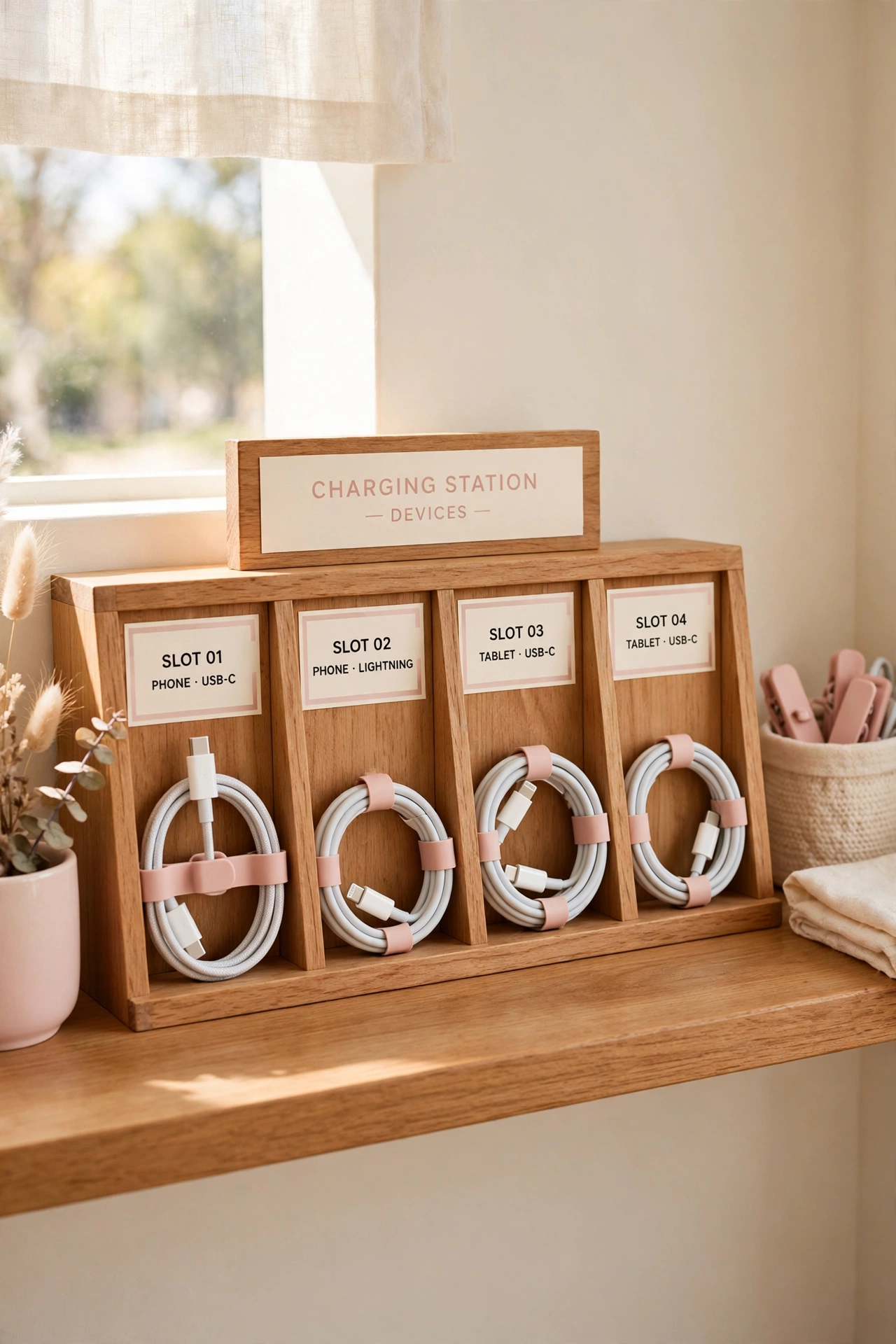
A phone charging station keeps devices and cables from spreading across the kitchen counter. Use a small shelf or a charging dock with one cable per family member, and label each spot so the phones always return to the same place. When the phones live at the station, the counters stay clear.
Keep the station away from the dining table so meals stay screen free. A charging station works well because it turns a tangle of cables into a tidy habit that the whole family follows without thinking.
16. Track Activities and Sports on the Calendar
Activities and sports fill the family calendar fast, so give them their own color and their own row. Write every practice, game, and lesson on the wall calendar in the activity color, and add the pickup time and the driver beside each one. When the activities are visible, the week runs without double bookings.
Update the activity row every Sunday and check it before planning meals or outings. A dedicated activity track works well because it keeps the busiest part of family life visible to everyone at once.
17. Turn the Entryway into a Mini Command Center
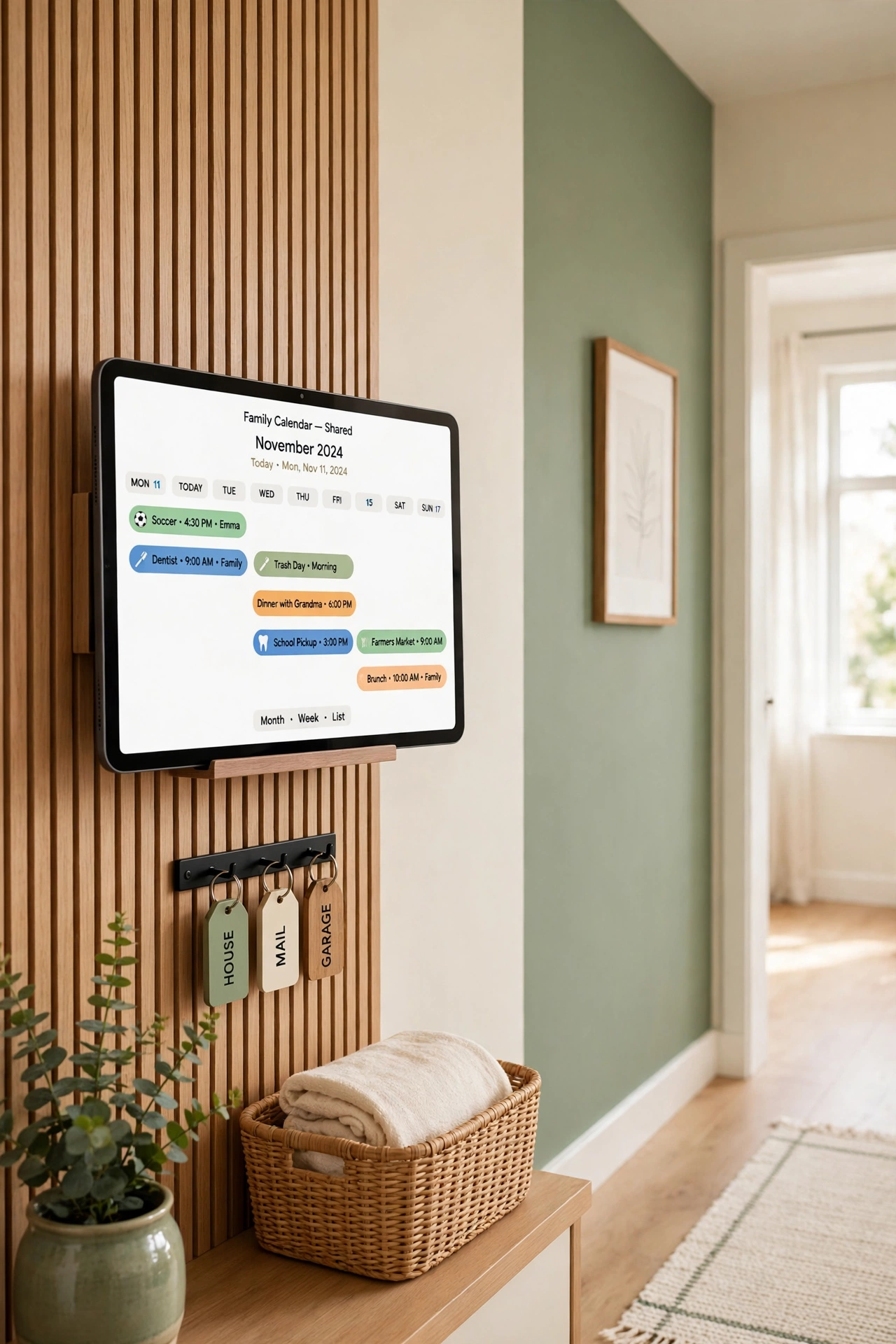
The entryway is the natural home for a mini command center, because it is the spot the whole family passes every day. Hang a small calendar, a few key hooks, and a mail sorter on the entryway wall, and add a bench below for bags and shoes. When the entryway works as a command center, the whole house feels more organized.
Keep the entryway station small and simple, with only the items the family uses every day. For more ideas on keeping the entryway tidy, see these entryway organization ideas. An entryway command center works well because it meets the family where they already are, right at the front door.
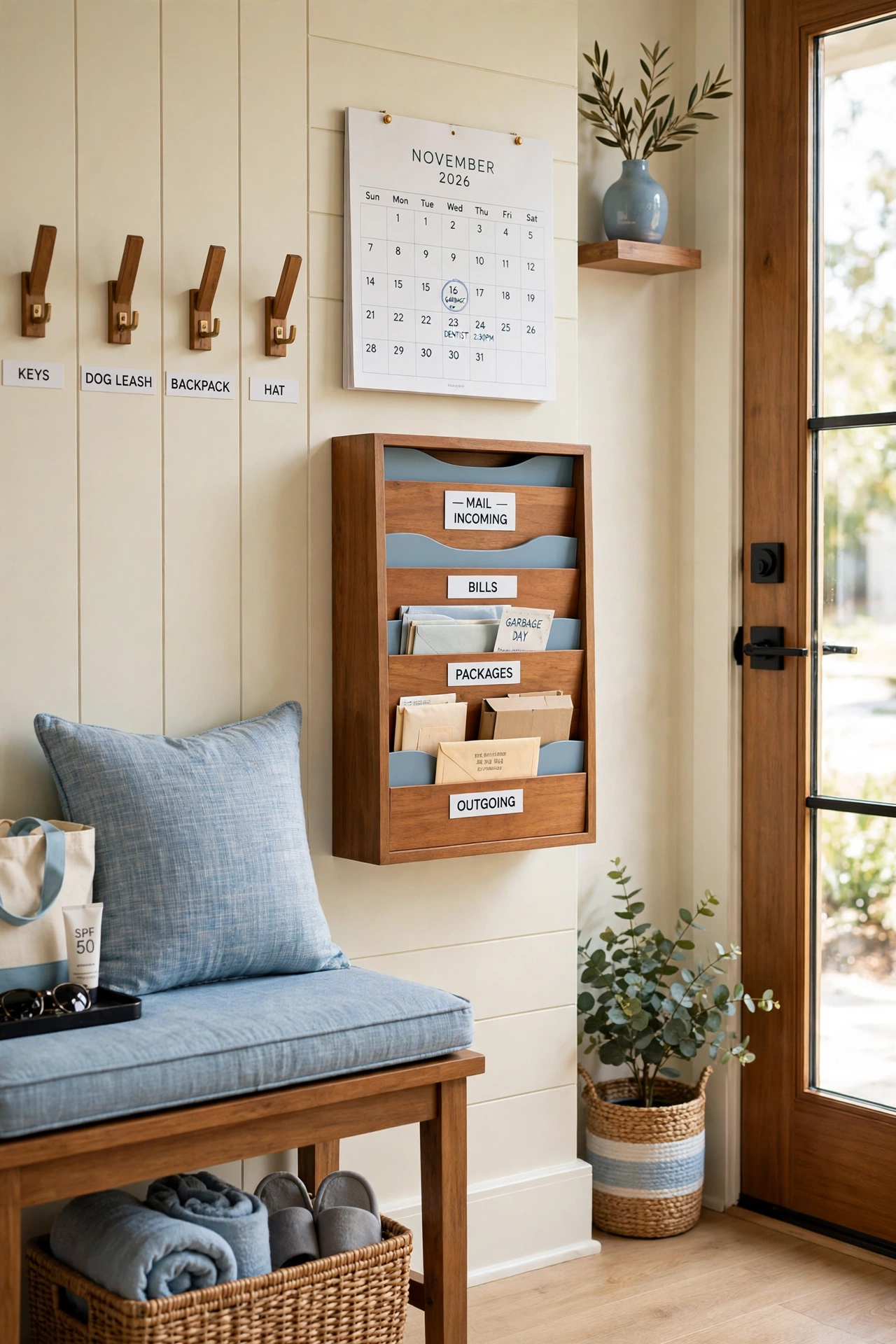
18. Hide Cables in a Charging Drawer
A charging drawer hides the cables and devices that usually clutter a countertop. Fit the drawer with a power strip and a few small dividers, and cut a small hole at the back for the cables to pass through. When the drawer closes, the mess disappears completely.
Label each charging spot inside the drawer so every device has its own place. A charging drawer works well because it keeps the technology the family needs without letting it take over the visible surfaces of the home.
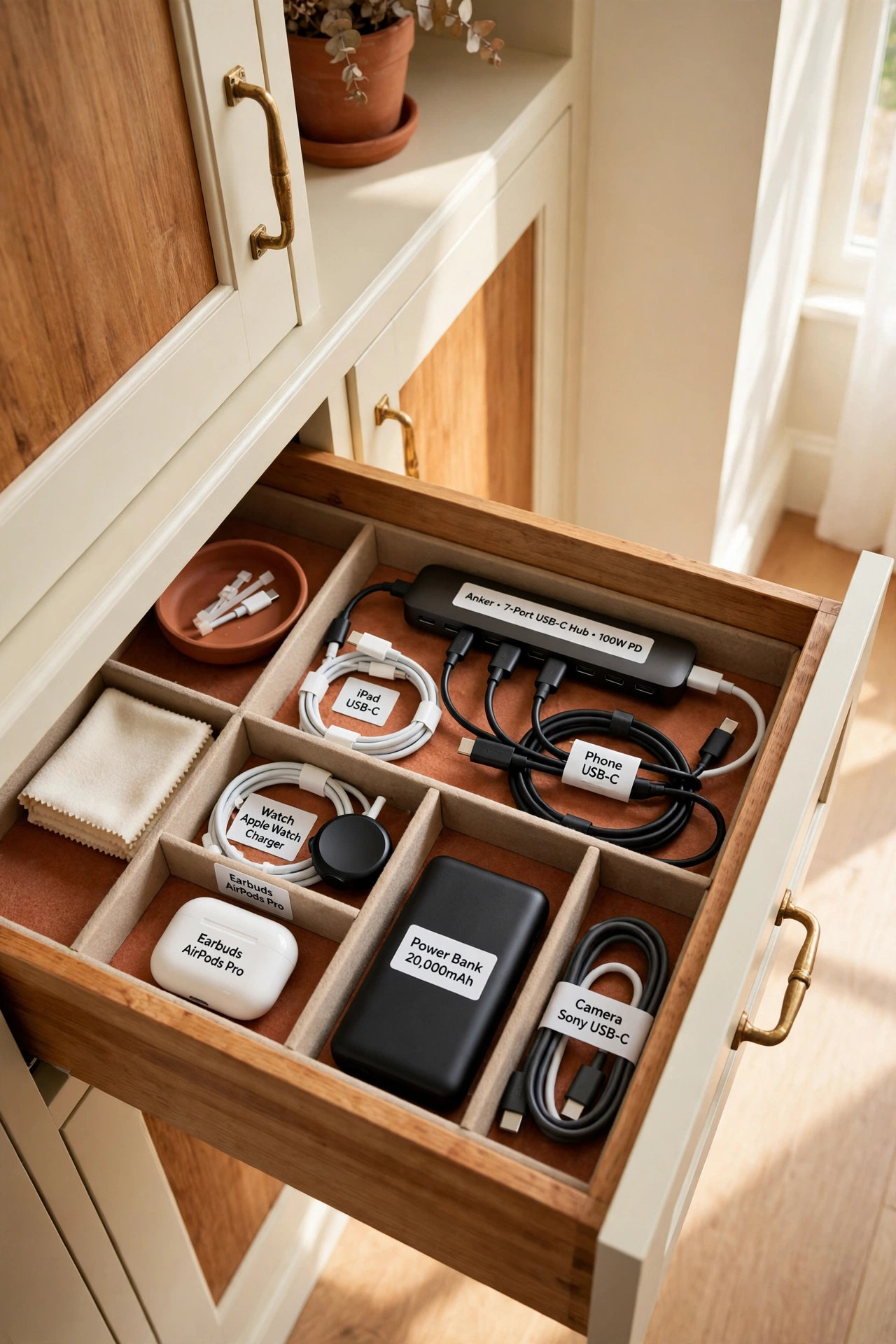
19. Set Up a Homework Station Nearby
A homework station near the command center gives kids a quiet spot to work where parents can see them. Use a small desk or a table with a lamp, a pencil cup, and a shelf for books and supplies. When homework happens in the same area as the family plan, the kids stay connected to the household rhythm.
Keep the station stocked with the basics, like paper, pencils, and a sharpener, so homework starts without a search for supplies. A homework station works well because it turns after-school chaos into a calm routine that the whole family can count on.
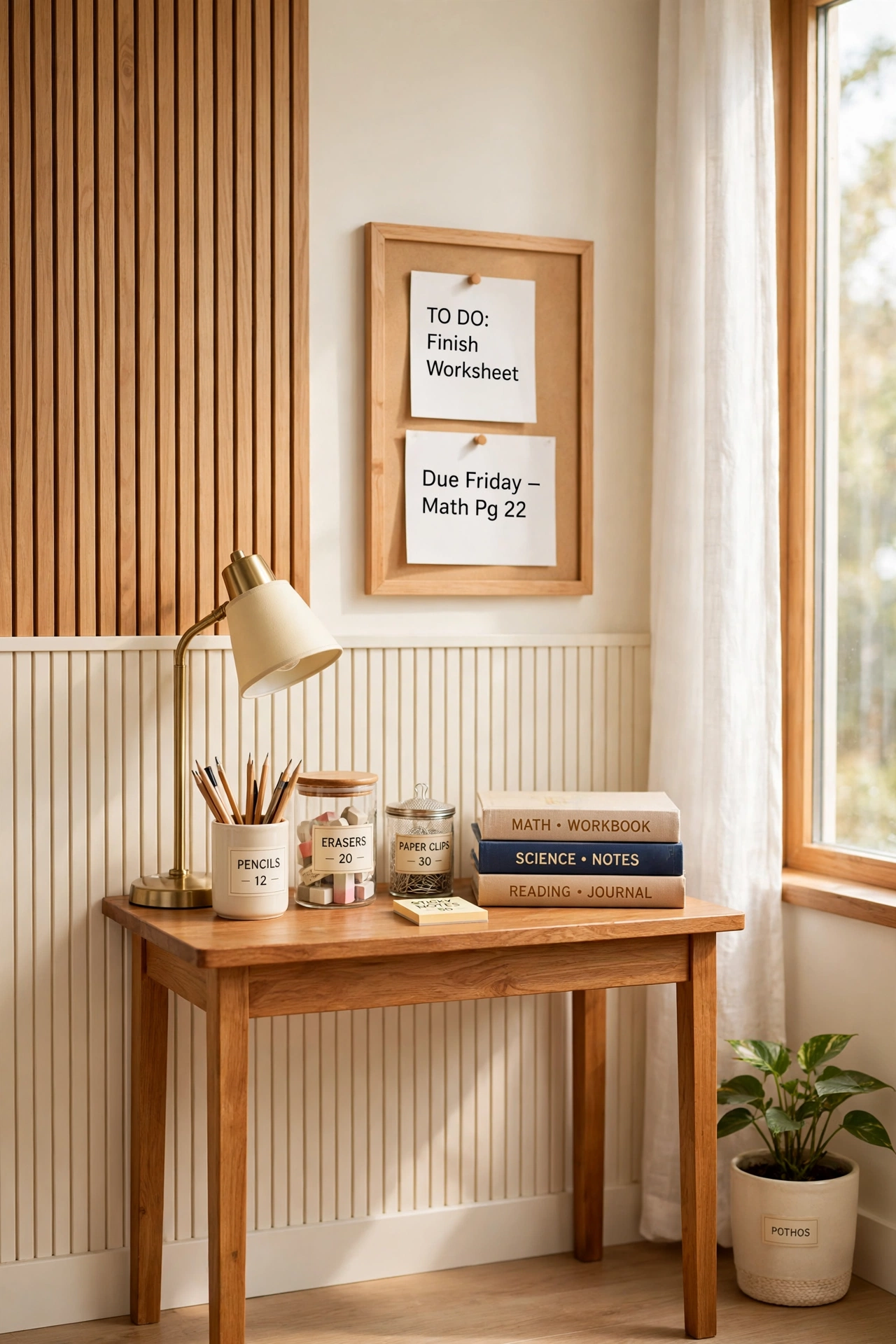
20. Display Family Photos on the Wall
Family photos on the command center wall turn a practical station into a warm, personal space. Hang a few favorite photos in simple frames beside the calendar and the boards, and rotate them every season. When the wall shows the family as well as the plan, everyone feels more connected to the system.
Keep the photo display small so it never crowds out the calendar or the boards. A few photos work well because they remind the family that the command center exists to serve the people in the pictures, not just the schedule on the wall.
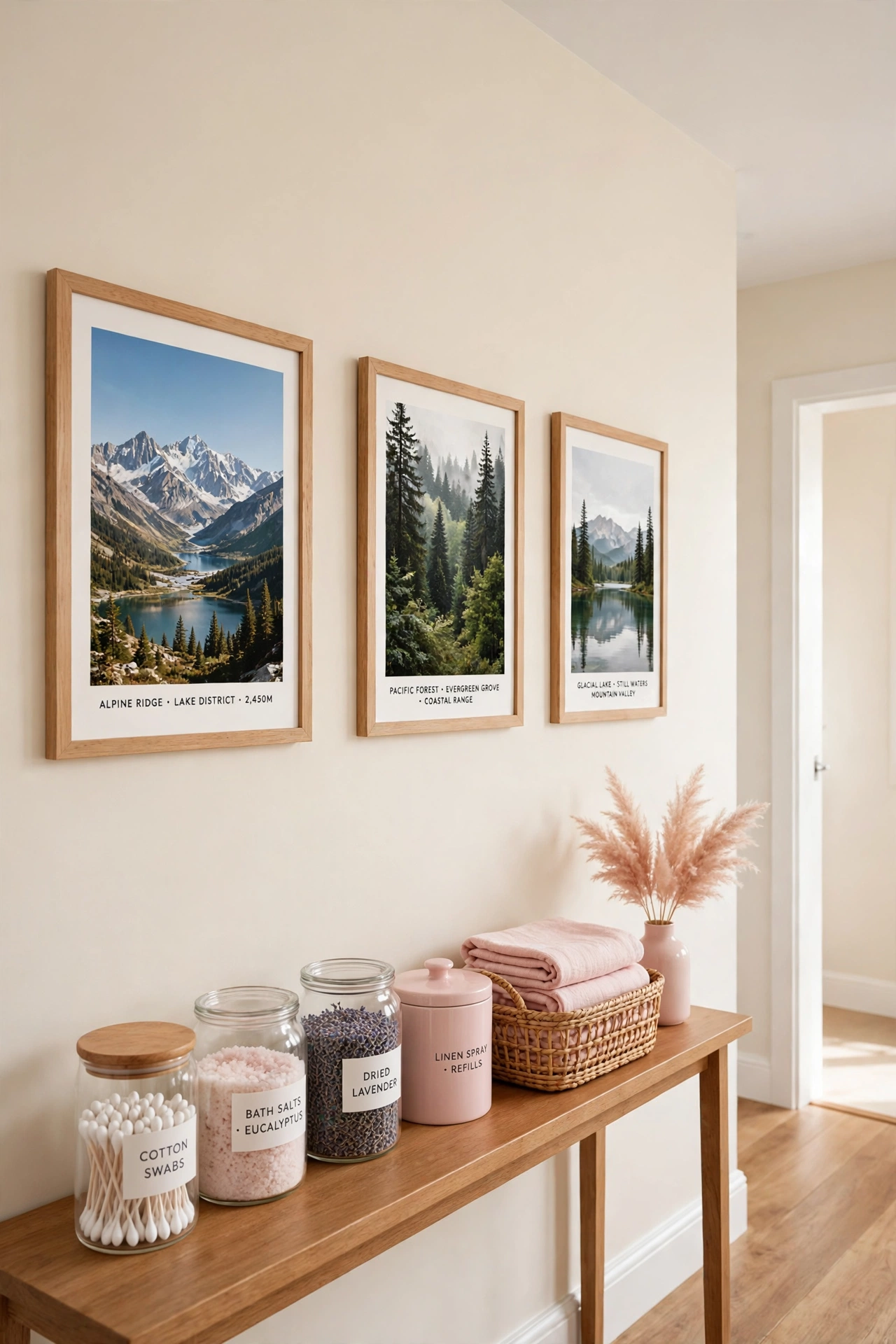
21. Keep a Seasonal Rotation Shelf
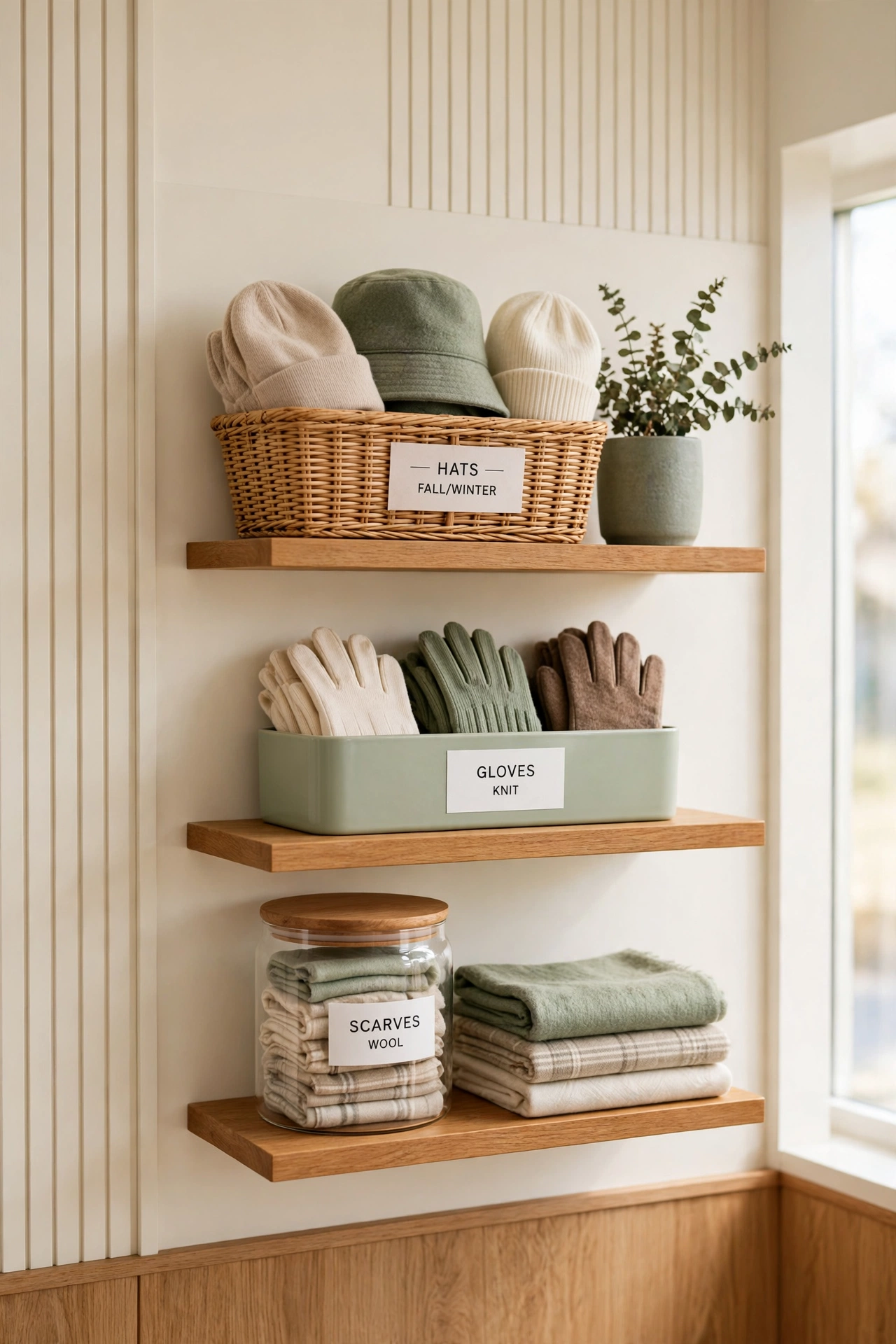
A seasonal rotation shelf holds the items the family needs right now and stores the rest out of the way. Use one shelf in the command center for the current season gear, like hats and gloves in winter or sunscreen and hats in summer, and rotate the contents when the seasons change. When the shelf matches the season, the family always finds what they need.
Label the shelf and keep a small box nearby for the out-of-season items. A rotation shelf works well because it keeps the command center focused on today instead of cluttered with things nobody needs this month.
22. Put the Cleaning Schedule on the Board
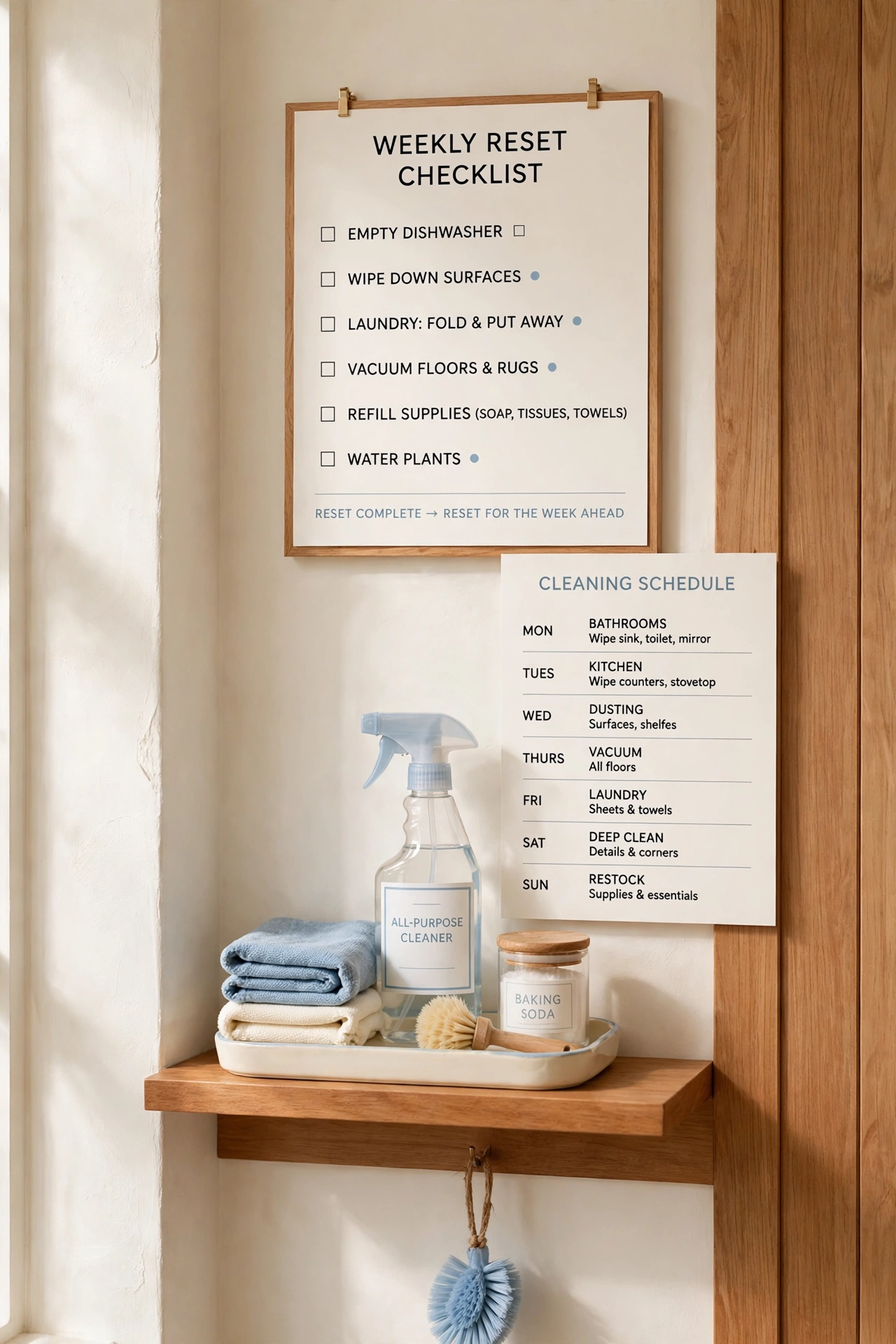
A cleaning schedule on the command center board shows the whole family which room gets cleaned on which day. Write one room per day beside the calendar, with the chores for that room listed underneath. When the schedule is public, the work gets shared and the house stays tidy with steady, small efforts.
Keep the daily room tasks short, with only two or three chores per day. For a ready-made weekly plan to pair with your board, see these household cleaning schedule ideas. A board schedule works well because it turns cleaning from a weekend marathon into a calm daily habit.
23. Hold a Weekly Family Meeting in the Corner
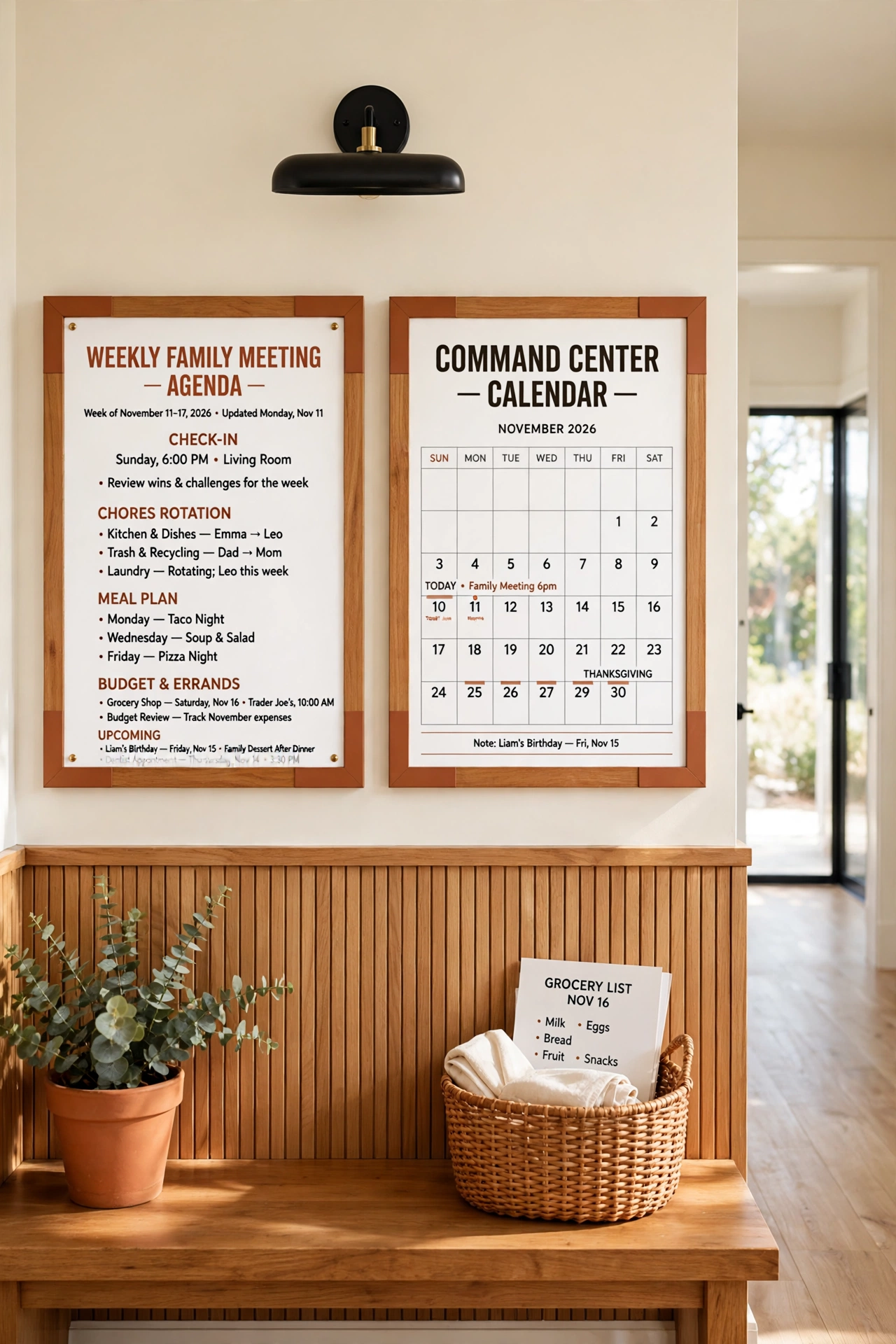
A weekly family meeting keeps the command center alive and fair. Choose one corner of the room, sit together for ten minutes every Sunday, and review the calendar, the chores, and the plans for the week ahead. When everyone has a voice, the command center becomes a shared plan instead of a list of orders.
Keep the meeting light and positive, and end by choosing one small improvement for the next week. Write the changes on the board right away so the new plan starts on Monday. A weekly meeting works well because it gives the family a regular moment to stay in sync.
24. Keep Emergency Contacts and a Medical Card Handy
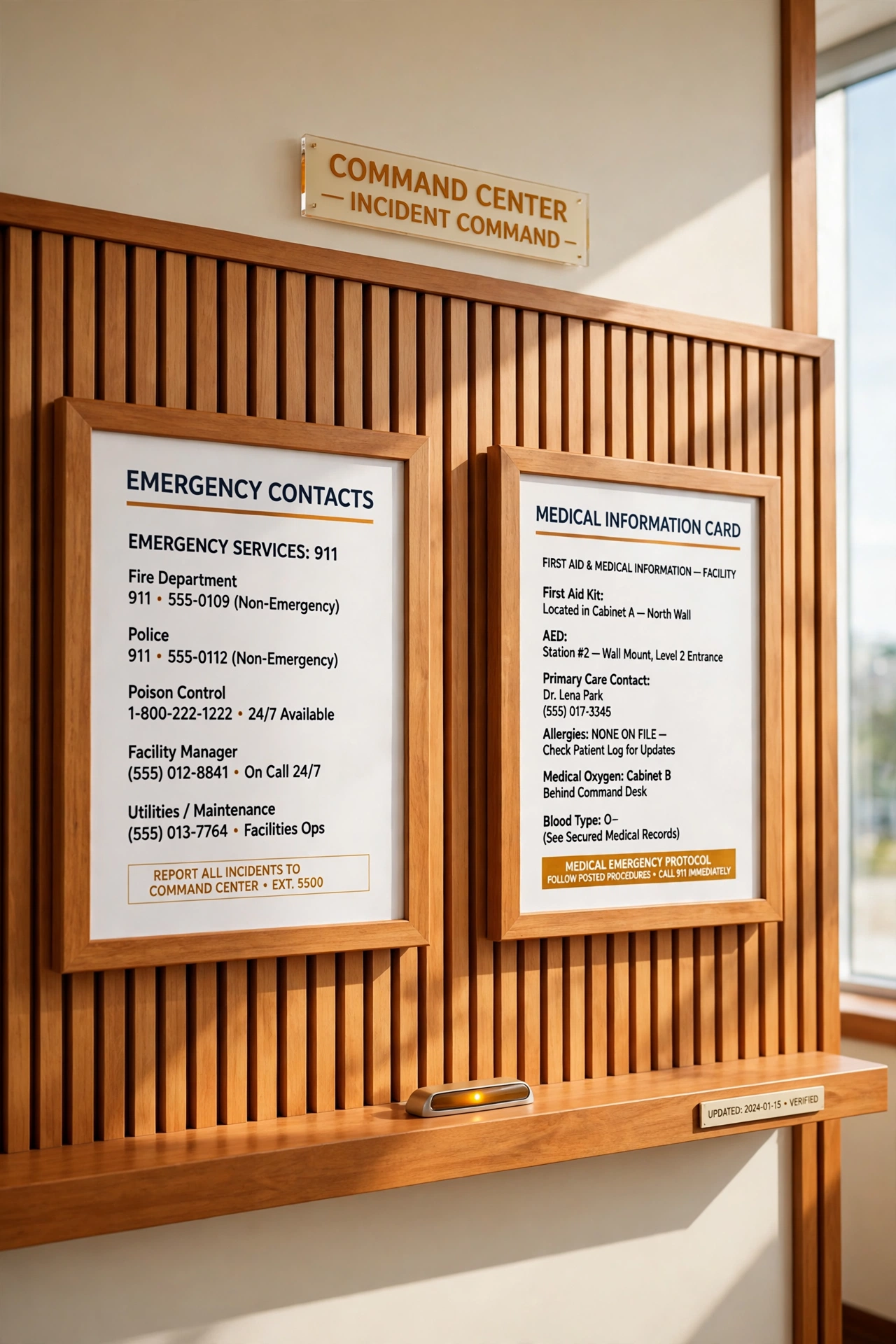
Emergency contacts and a medical card belong in the command center where any adult can find them fast. Write the key phone numbers on a card and pin it beside the calendar, and keep a small card with allergies and medicines in the file box. When an emergency happens, nobody wastes time searching for a number.
Update the card whenever a number changes, and teach older children where it lives. An emergency card works well because it turns a moment of panic into a calm, quick action that anyone in the family can take.
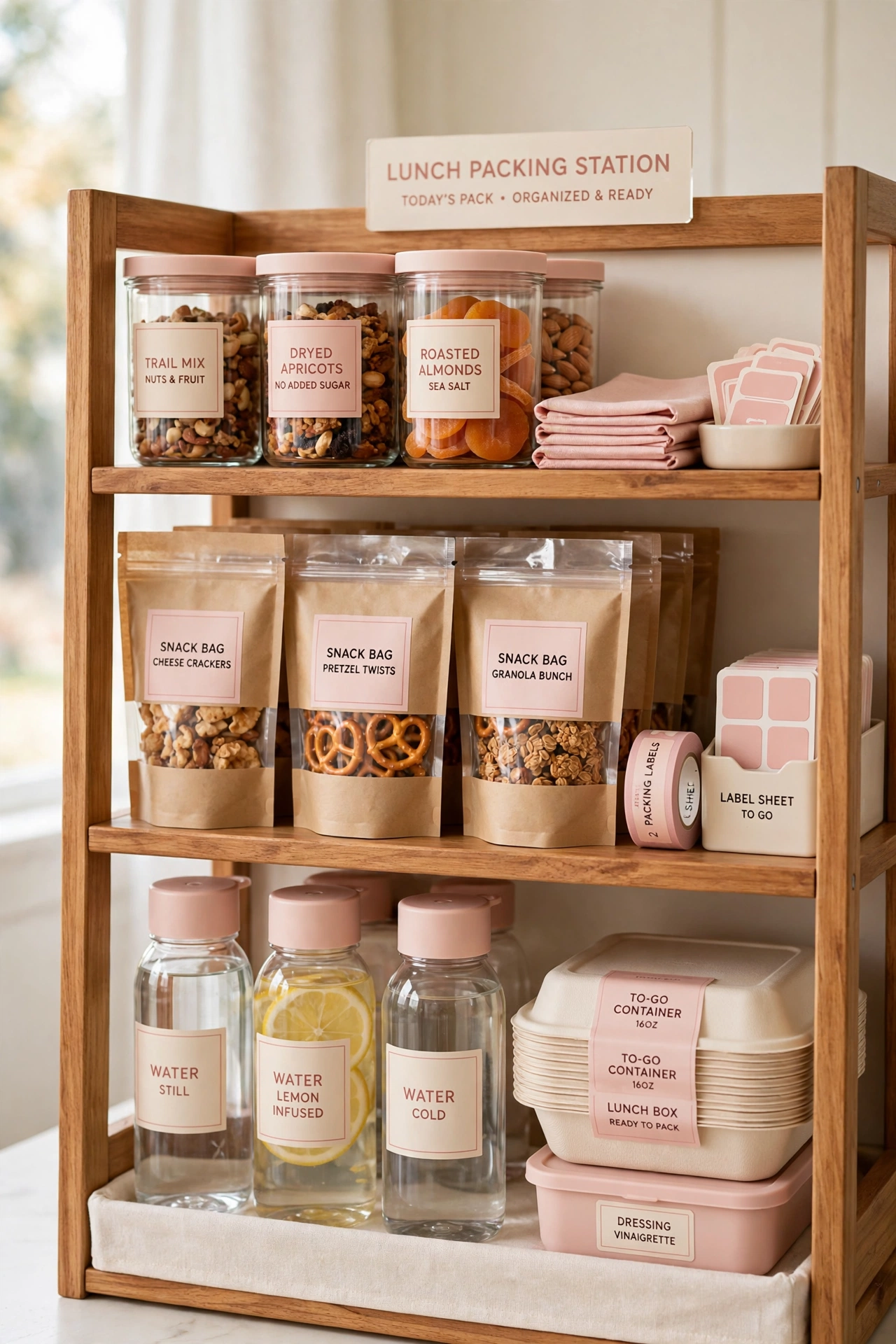
25. Build a Lunch Packing Station
A lunch packing station keeps everything for school lunches in one tidy spot. Use a shelf or a basket with containers, lunch bags, water bottles, and snacks grouped together, so packing lunch takes minutes each morning. When the station is stocked, the lunchboxes pack themselves almost without thinking.
Refill the station every Sunday from the pantry and the fridge, and keep a small list of lunch ideas pinned beside it. A lunch station works well because it turns the busiest part of the morning into a quick, calm routine.
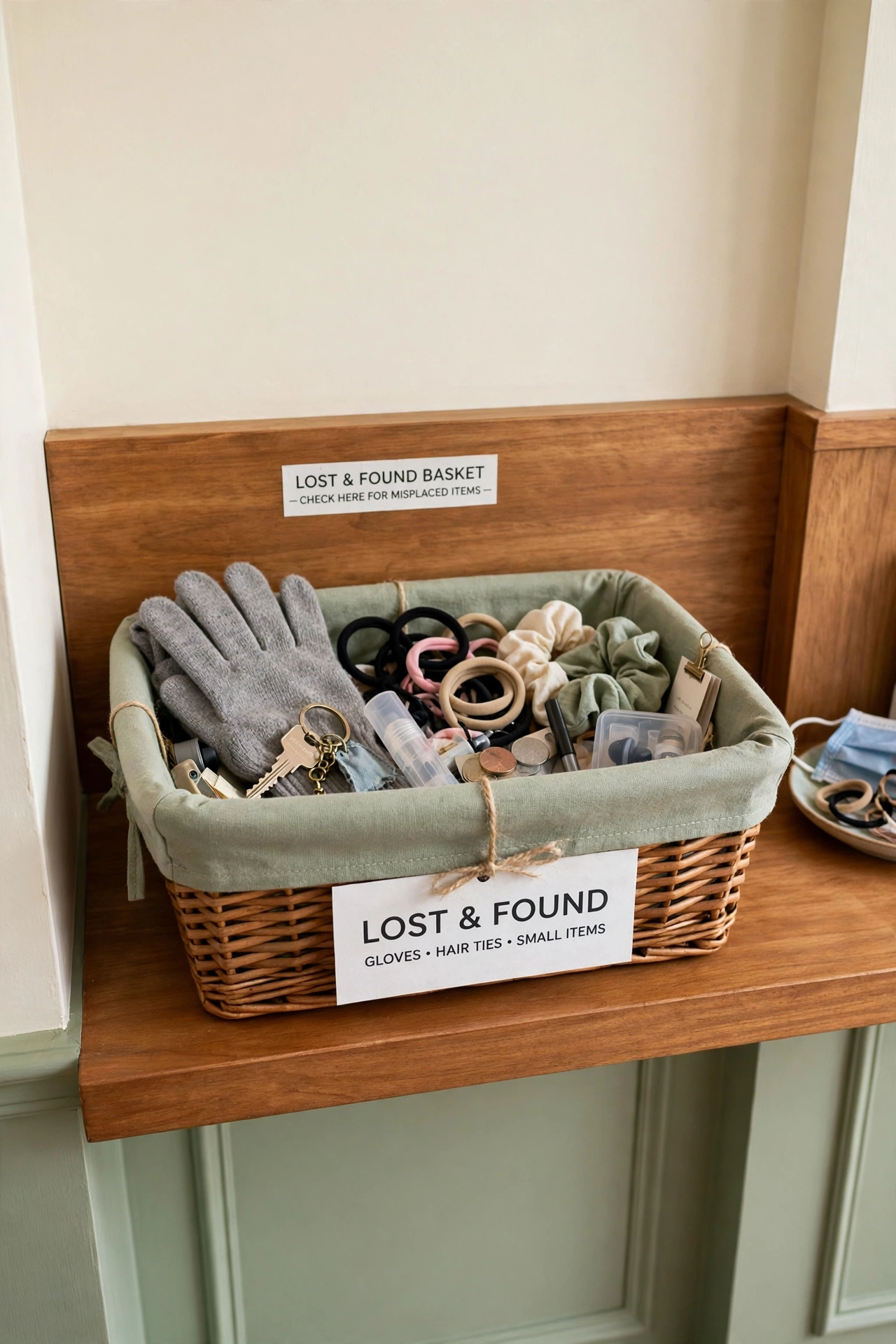
26. Keep a Lost and Found Basket
A lost and found basket catches the small items that wander around the house. Place a basket in the command center and drop in the single glove, the stray charger, the missing toy, and the forgotten library book. When something goes missing, the basket is the first place to look.
Empty the basket every Sunday and return each item to its proper home. A lost and found basket works well because it turns a house full of wandering objects into one tidy spot that the whole family knows to check.
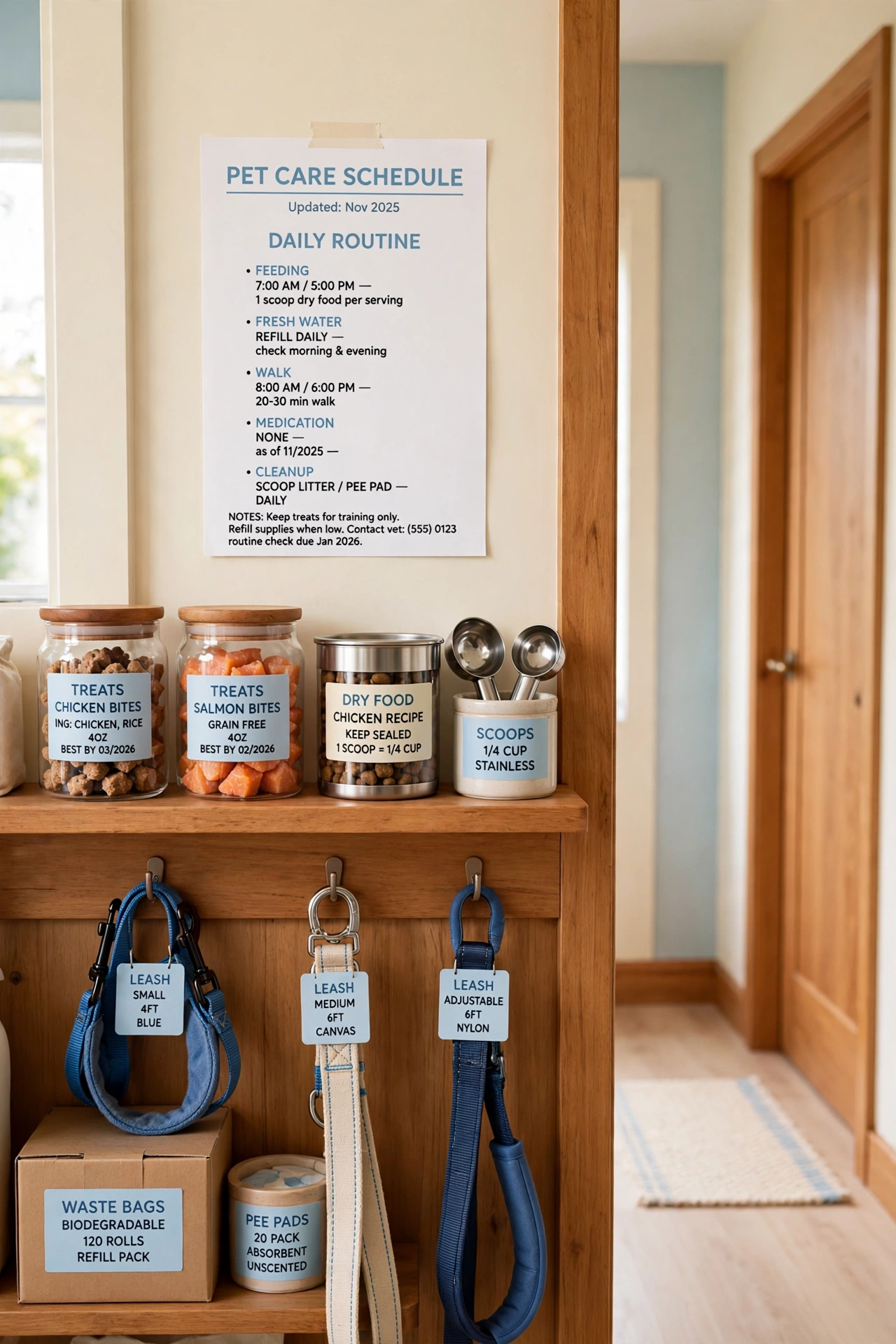
27. Track Pet Care on a Schedule Board
A pet care schedule board makes sure the family pet never misses a meal or a walk. Write the feeding times, the walk times, and the vet appointments on a small board, and let a different family member tick off each task every day. When the pet care is visible, the responsibility gets shared fairly.
Keep the board simple, with one row per day and one column per task. A pet care board works well because it turns a forgotten chore into a visible promise that the whole family keeps together.
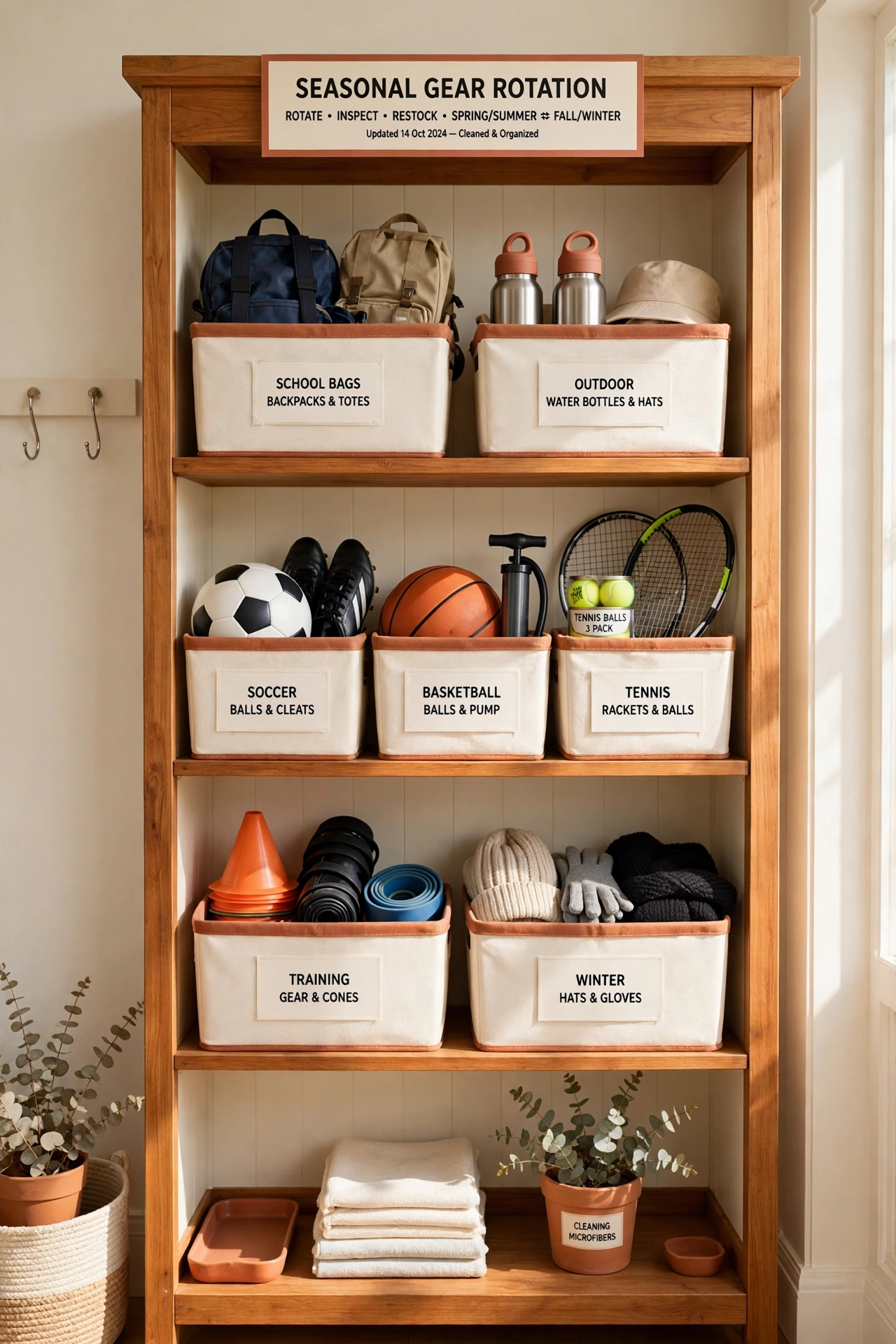
28. Rotate Seasonal Gear on Its Own Shelf
Seasonal gear needs its own shelf so the family can find it without digging through out-of-season clutter. Use one shelf in the command center for the current season items, and store the rest in labeled bins elsewhere. When the seasons change, swap the shelf contents in one quick session.
Label the shelf clearly and keep a checklist of what belongs there each season. A seasonal gear shelf works well because it keeps the command center focused on what the family needs right now.
29. Make a Kids Activity Countdown Board
A kids activity countdown board builds excitement for the events the family looks forward to. Use a small board with a countdown to the next holiday, birthday, or family trip, and let the kids move the marker one step closer each day. When the countdown is visible, the waiting becomes part of the fun.
Keep the countdown simple, with one event at a time, and celebrate when the marker reaches zero. A countdown board works well because it turns the command center into a place of excitement as well as organization.
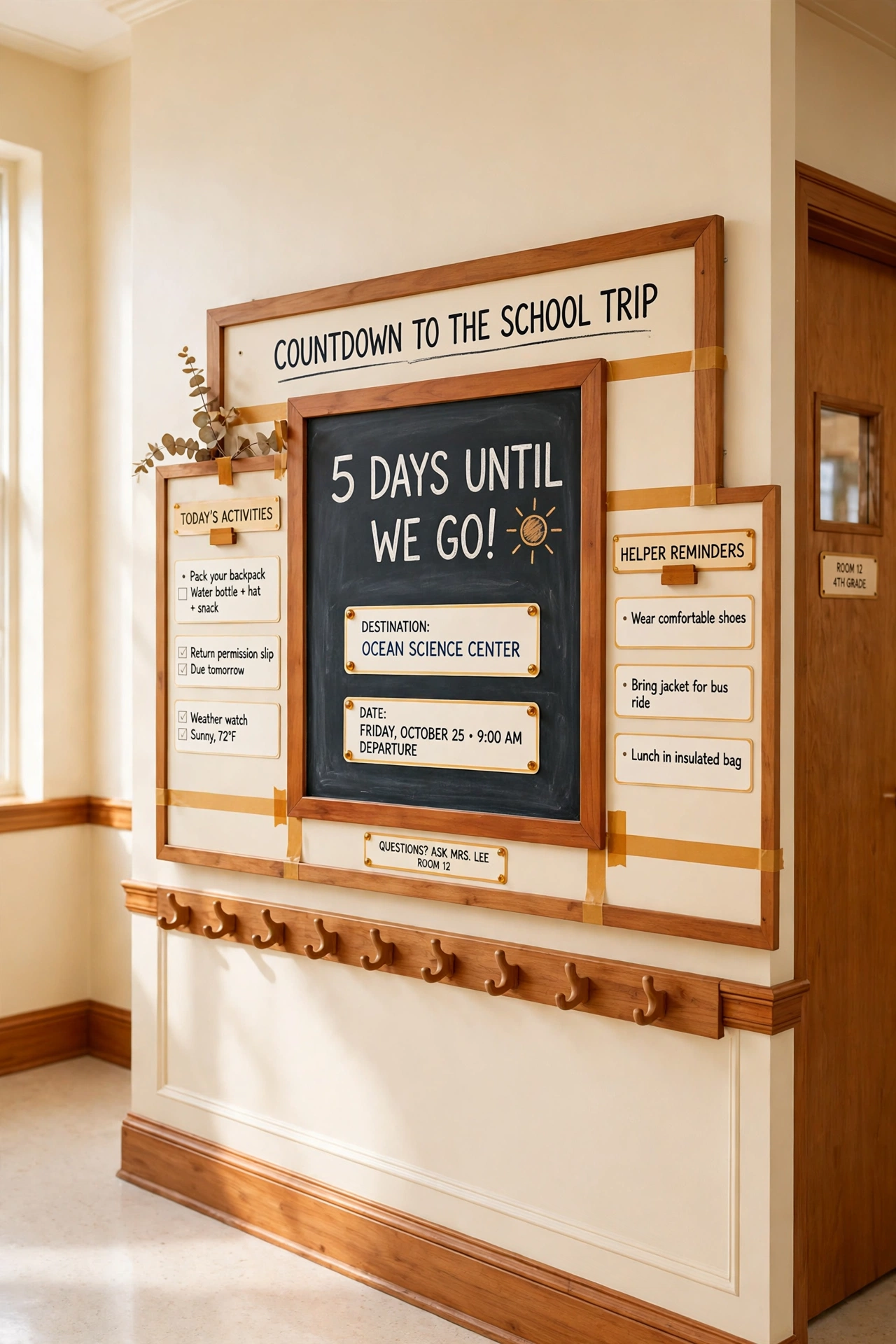
30. Keep a Supply Caddy Within Reach
A supply caddy holds the pens, markers, tape, scissors, and sticky notes the command center needs every day. Use a small caddy with divided sections and keep it on the shelf beside the boards, so supplies are always within reach when someone needs to update the calendar or leave a note. When the supplies have a home, the command center stays usable.
Refill the caddy once a month and remove anything that does not belong there. A supply caddy works well because it keeps the small tools of organization exactly where the family uses them.
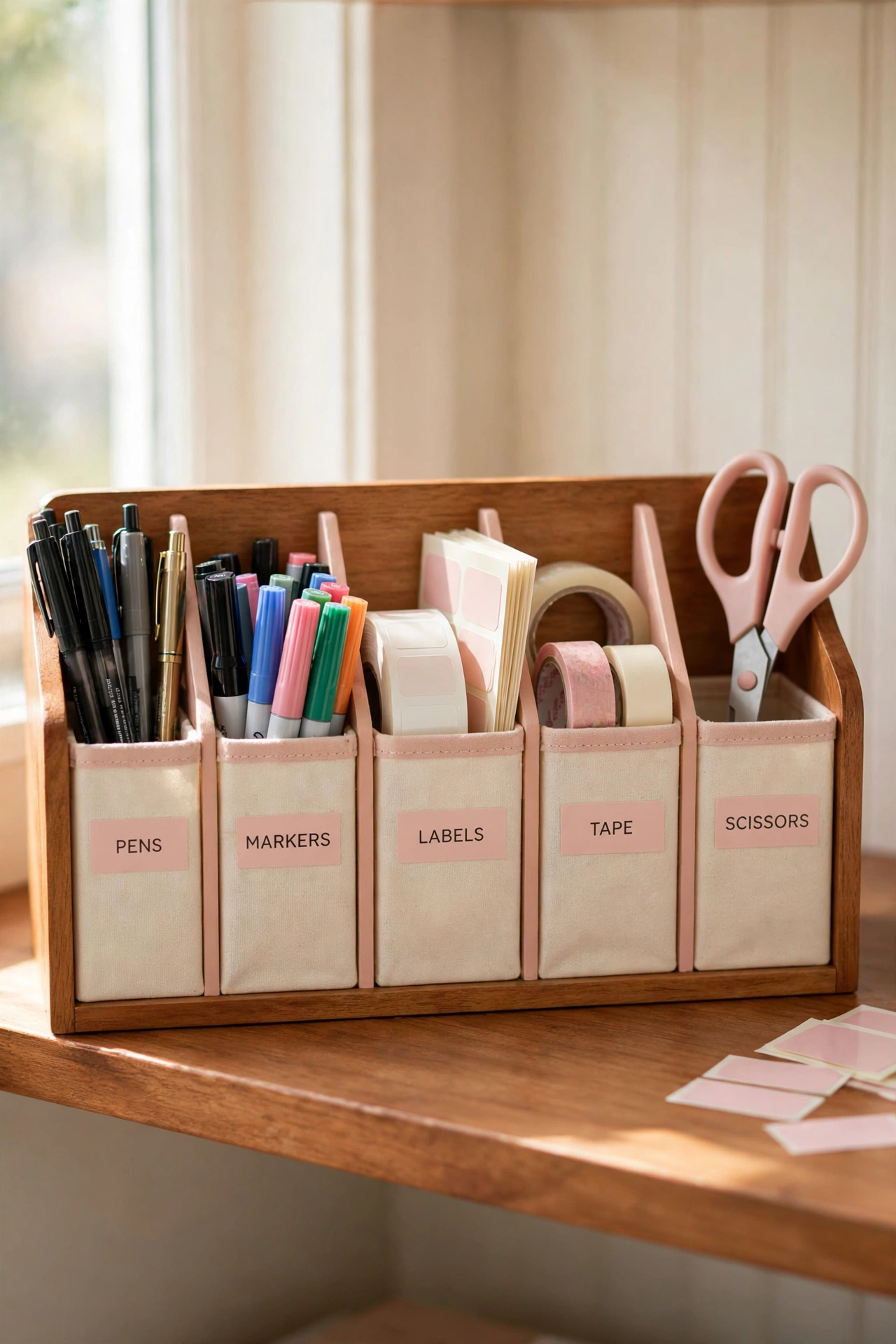
31. Put a Monthly Budget and Bills Board on the Wall
A monthly budget and bills board keeps the family money visible and under control. Write the monthly bills, their due dates, and the amounts on a small board, and tick each one off as it gets paid. When the bills are public, the family stays honest about spending and nothing gets paid late.
Keep the board simple, with one line per bill and a clear mark for paid or unpaid. Update it on the first day of every month and review it during the weekly family meeting. A budget board works well because it turns money from a private worry into a shared plan the whole family can follow.
Conclusion
A family command center works best when it is simple, visible, and shared. From a big wall calendar to a monthly budget board, there is an idea here for every family and every home. The best command center is the one your family will actually look at, use, and update together each week.
Pick one or two ideas that fit your home and start today. Hang the calendar, sort the mail, and enjoy a home that runs a little more calmly. For a calm weekly rhythm beyond the command center, these weekly home reset routine ideas will help you keep every room organized with just a few minutes each day.
Frequently Asked Questions About Family Command Center Organization Ideas for Busy Households
How much wall space does a family command center need?
One small wall or even one section of a hallway wall is enough for most families. A calendar, a few hooks, and a mail sorter fit in about one meter of wall space. Start small and add more pieces only when the family uses the first ones every day.
Where is the best place for a family command center?
The entryway or the kitchen is usually the best place, because the whole family passes through it every day. Choose the spot where bags land, keys get dropped, and mail arrives. A command center works best where the family already gathers naturally.
How do I get my family to actually use the command center?
Start with just two or three pieces, like a calendar and key hooks, and let the family get used to them before adding more. Hold a short weekly meeting to review the board together. A command center that the family helps to build is one they will actually use.
Can a command center work in a small home or apartment?
Yes, a small home only needs a smaller version of the same system. Use one wall calendar, one mail sorter, and a few hooks, and keep everything else in a single binder. For more ideas on keeping a small home organized, see these weekly home reset routine ideas. Small spaces benefit the most from a clear system, because every item needs a home.
How often should I update the command center?
Update the calendar and the boards once a week, during a short Sunday family meeting. Clear the mail sorter and the inboxes every evening, and refresh the whole system once a month. A few minutes of regular care keeps the command center working for years.

Hi, I’m Emily! I turn messy corners into cozy, organized spots. DreamNestDecor is where I share simple, practical home ideas — decor, organization, and small-space solutions that work in real life, not just in photos. Every idea here is carefully researched before it’s shared.