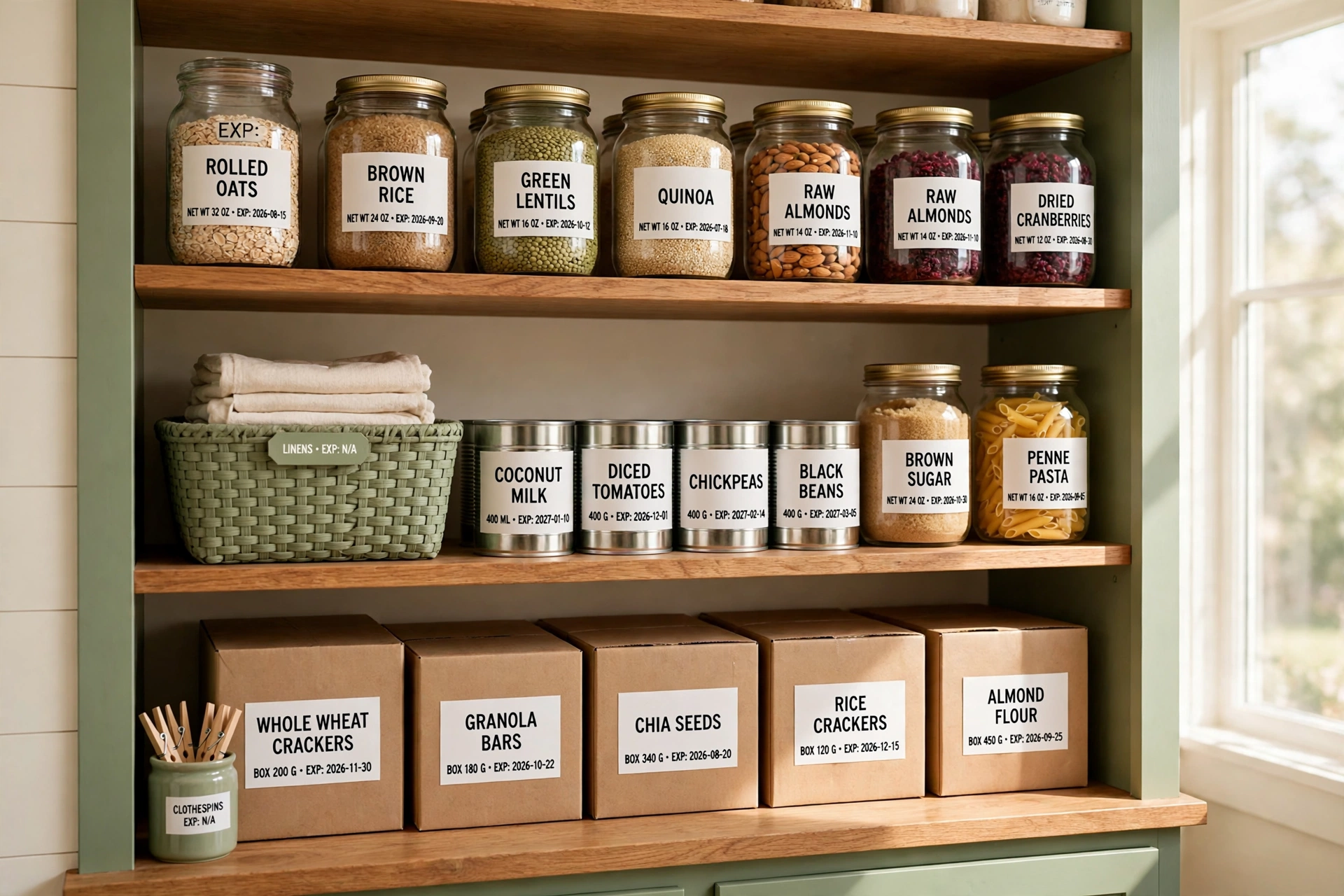
Picture this: you open the pantry to cook dinner, reach for a can of tomatoes, and spot a neat date label right on the front. You know in one glance that it is still good to use. That small moment of certainty is exactly what a good expiration date system gives you every single day. When every item in the home carries a clear date, you waste less food, save money, and cook with total peace of mind.
You do not need fancy tools or a complicated setup to get there. All you need is a simple labeling habit and a few smart storage ideas that fit your home. These 29 expiration date organization ideas for household products will help you keep every pantry shelf, fridge drawer, and medicine cabinet under control.
1. Label Every Item with a Large Expiration Date
A large, clear date label on the front of every item is the foundation of the whole system. Use a marker or a printed label to write the month and year in big letters where you can read it without picking the item up. When the date is easy to see, you never have to squint at tiny print on the back of a box.
Place the label on the front face of the container, near the top, so it shows even when items sit in a row. A simple white label with bold black text works on almost any package. This one habit alone will cut down on expired surprises in every room of the house.
2. Sort the Pantry by Expiration Date
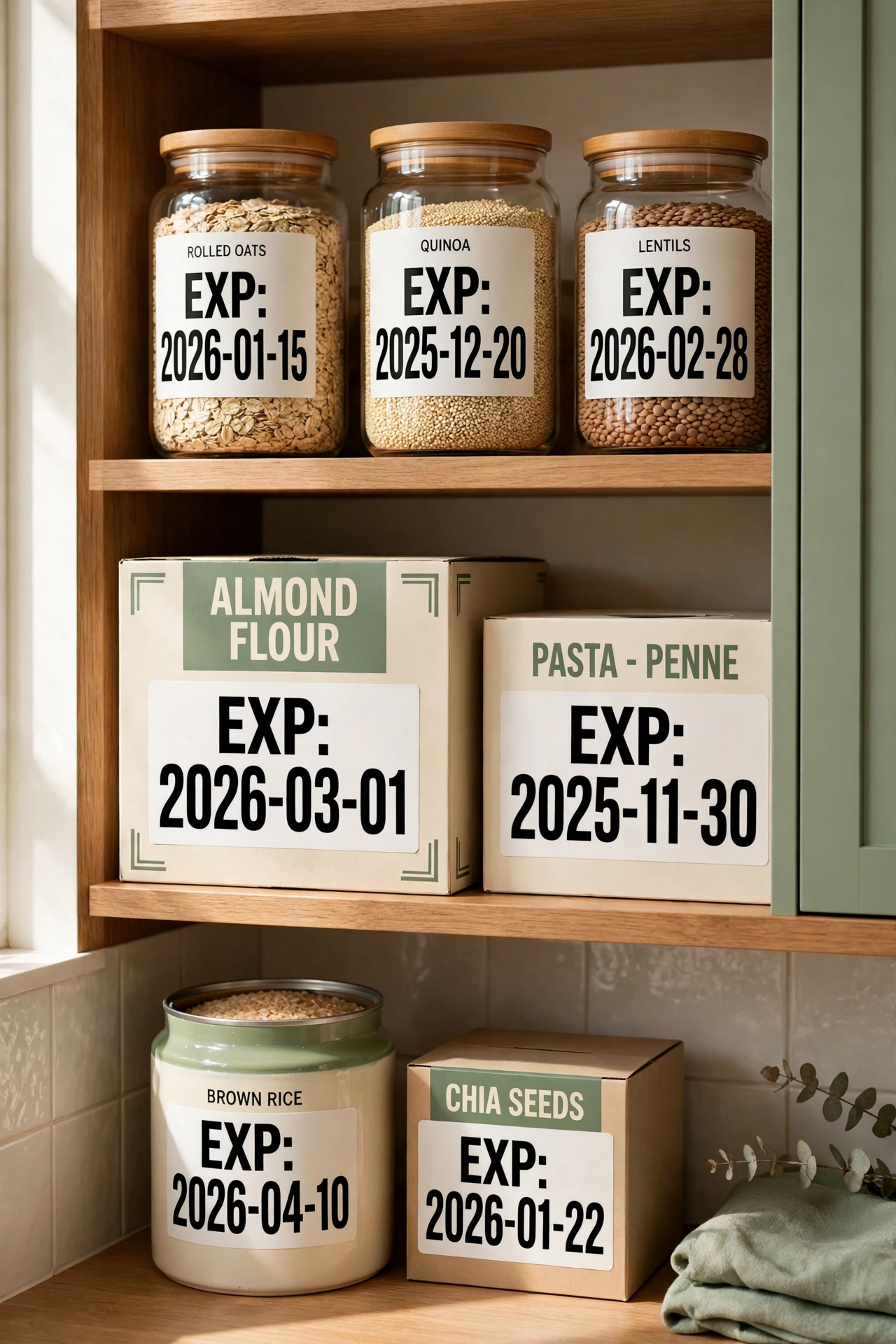
Sorting the pantry by expiration date puts the items that expire soonest right where you can see them. Place short-dated items at the front of each shelf and long-dated items at the back. This front-to-back order means you naturally reach for the oldest item first.
Work through one shelf at a time and move everything into date order. Group similar items together, like all the canned goods on one shelf and all the baking supplies on another. A pantry sorted by date turns everyday cooking into a smooth routine instead of a guessing game.
3. Keep a First In First Out System in the Fridge
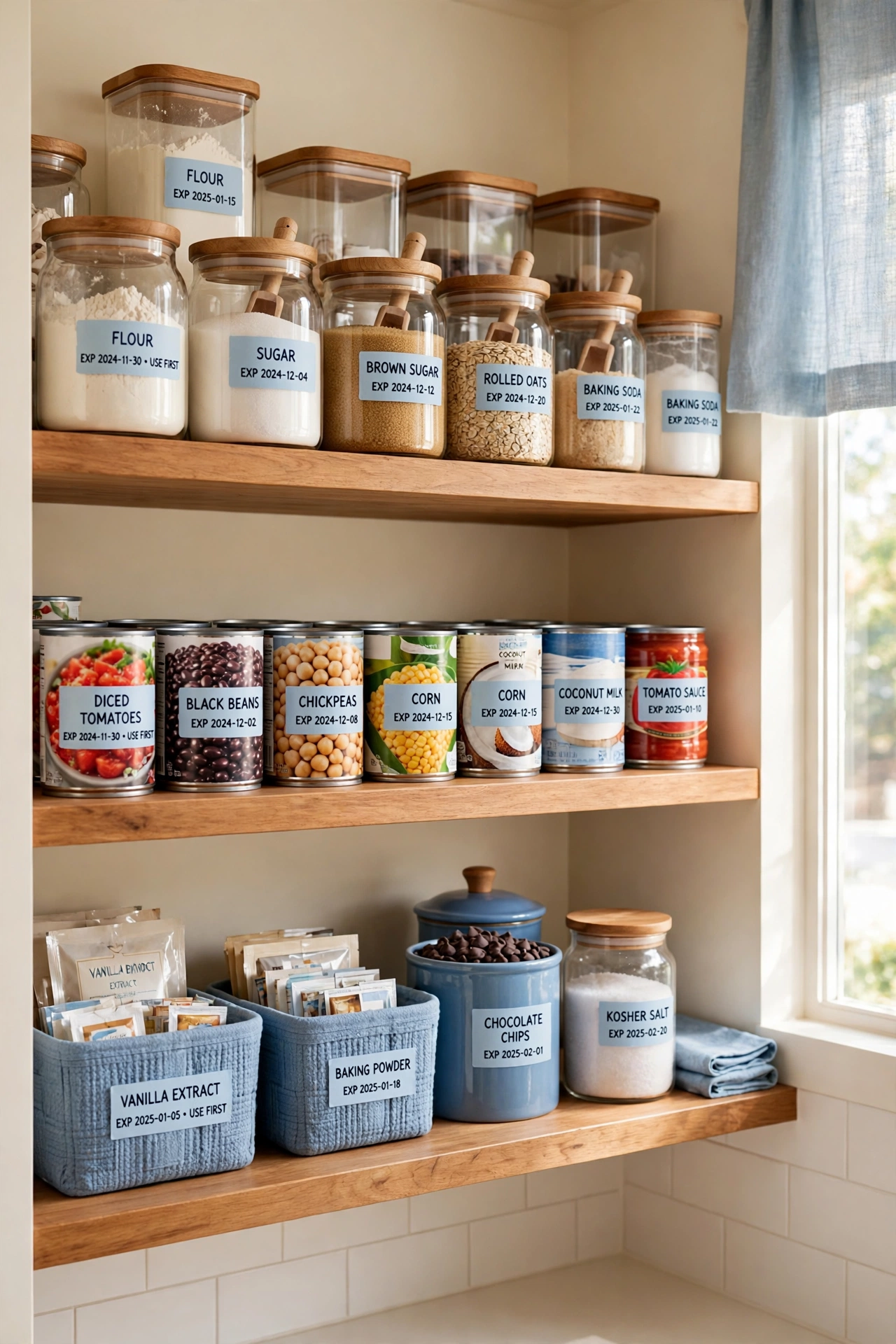
A first in first out system means the oldest food gets used before the newest food. When you bring home fresh groceries, place them behind the items that are already in the fridge. This simple rotation keeps older items from hiding at the back until they spoil.
Make the rule a habit for the whole family so everyone follows it. Put a small note on the fridge door to remind shoppers where new items belong. Over time, this system becomes automatic and food waste drops in a clear and steady way.
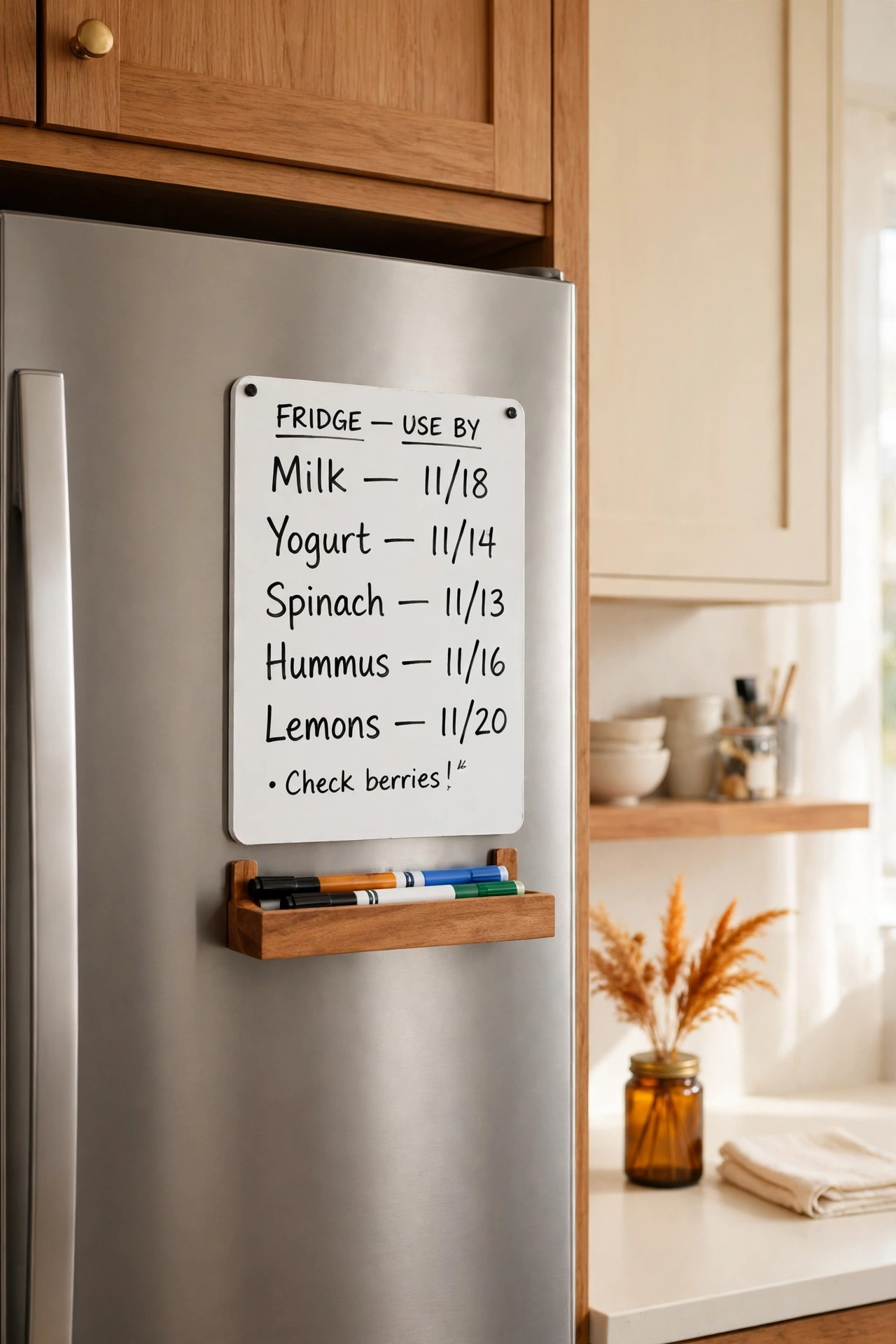
4. Use a Dry Erase Board for Fridge Expiration Dates
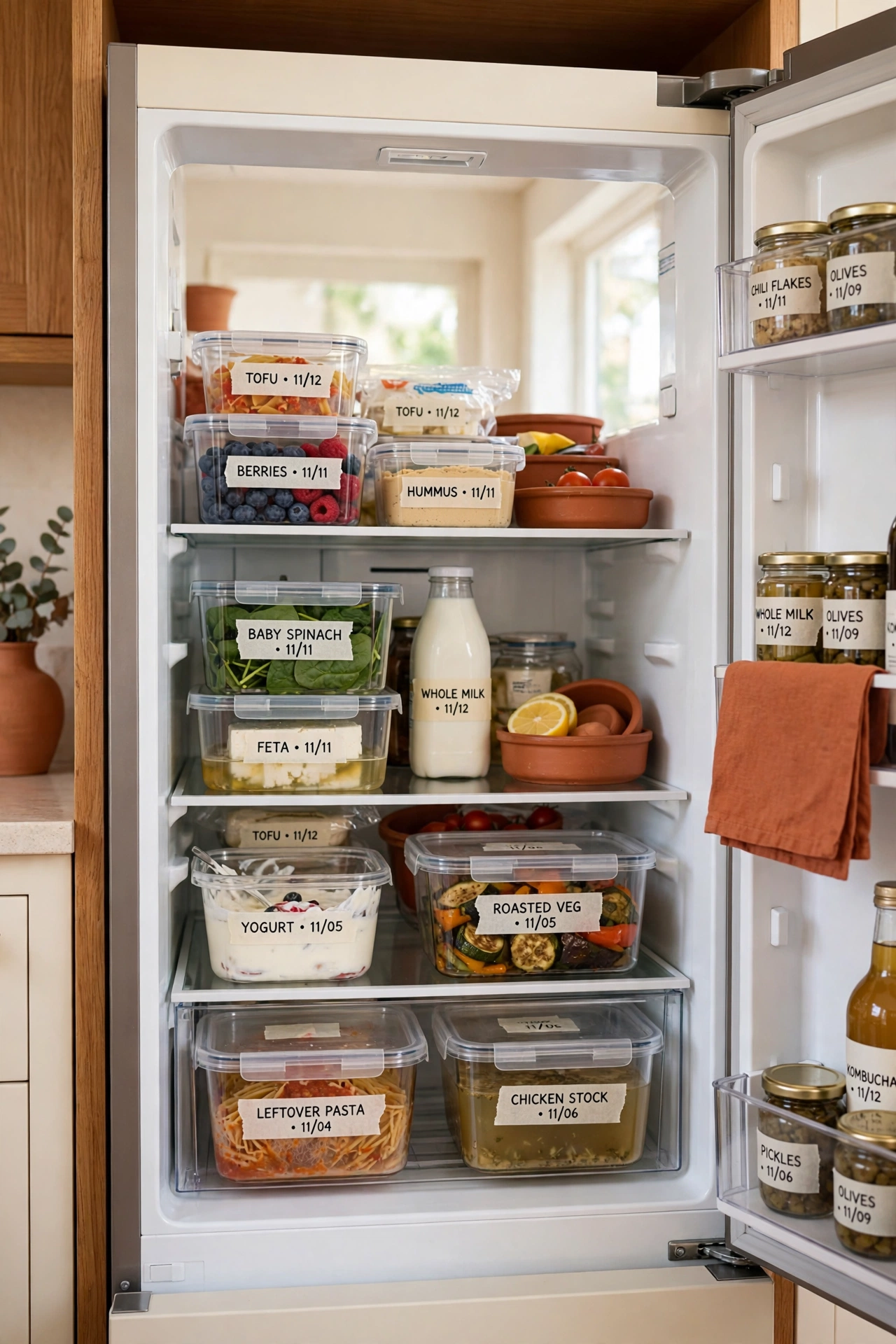
A small dry erase board on the fridge door gives you a visible list of everything that expires soon. Write the item name and its date in large letters, then erase each line when the item is used up. The board keeps the whole family aware of what needs to be eaten first.
Place the board at eye level so it catches your attention every time you open the fridge. Update it once a week during your regular fridge check. A board like this turns expiration dates from a hidden detail into a shared family plan.
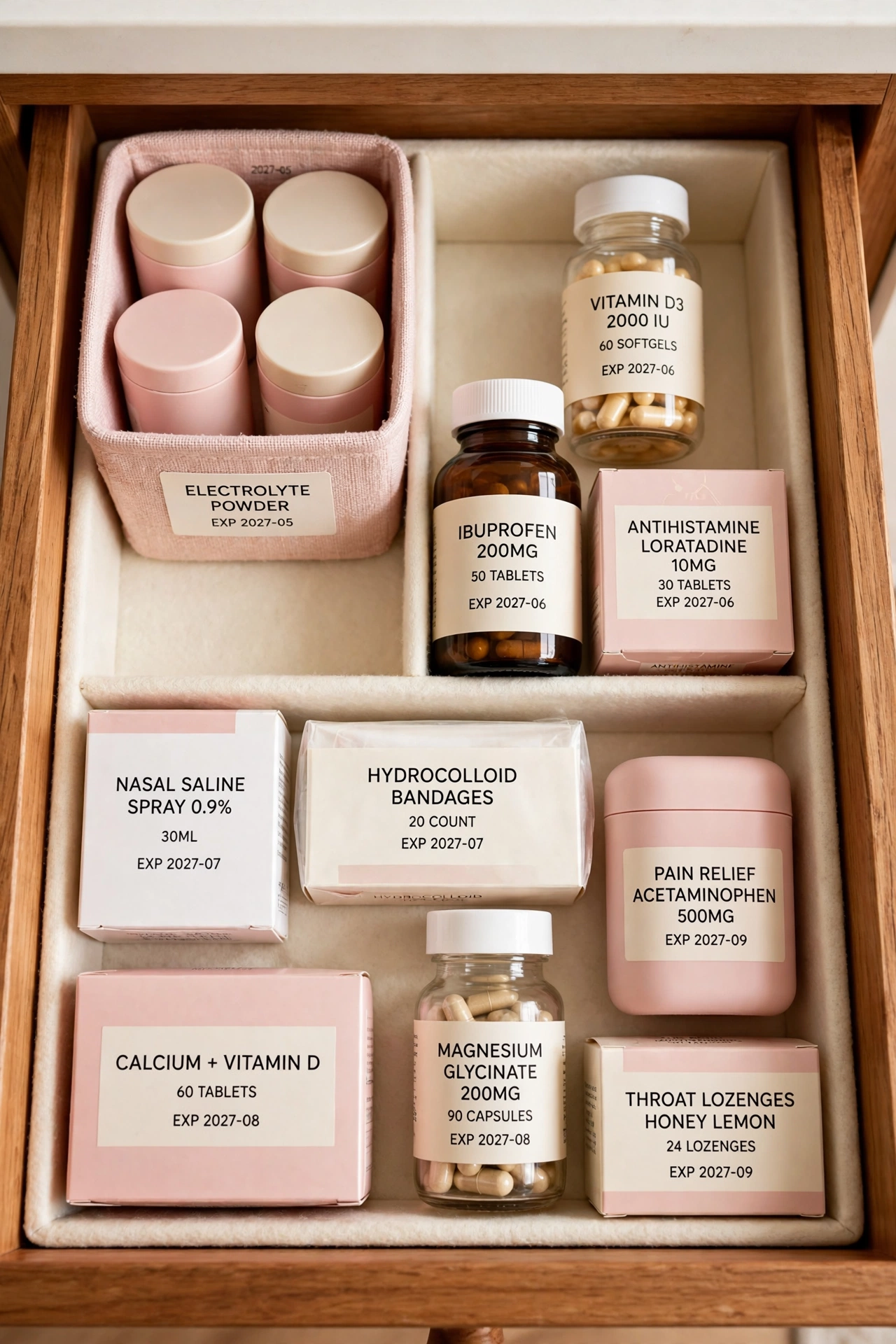
5. Store Medicines in a Labeled Expiration Drawer
Medicines need careful date tracking because expired medicine can lose its strength and fail to work. Give medicines their own drawer and place a clear date label on every bottle and box. Sort the drawer so the medicines that expire soonest sit at the front.
Check the drawer once a month and remove anything that has passed its date. For more ways to keep health supplies tidy, see these medicine drawer organization ideas. A dedicated drawer keeps the whole family safe and makes it easy to find the right medicine in a hurry.
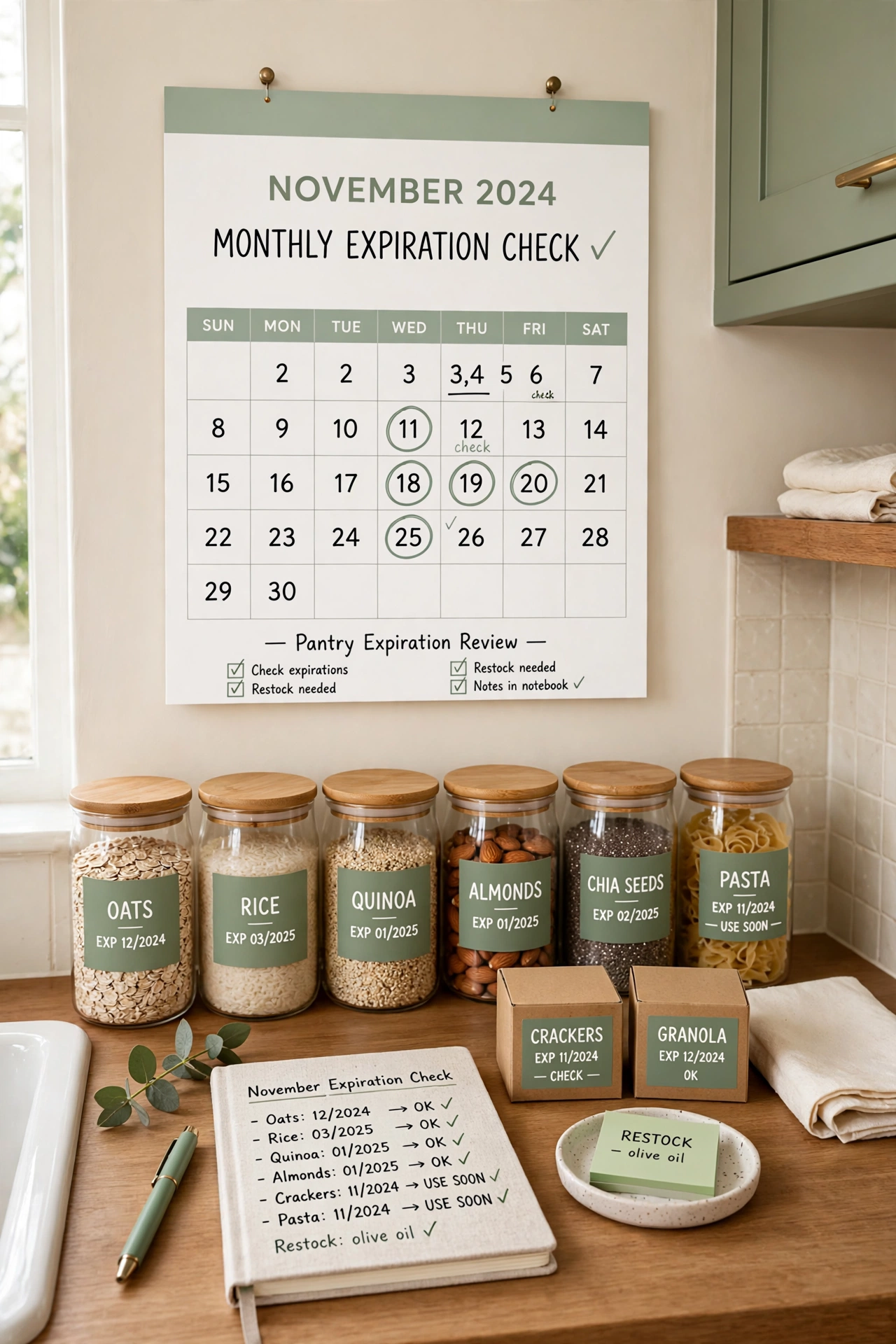
6. Create a Monthly Expiration Check Routine
A monthly expiration check is a short routine that catches old items before they cause trouble. Pick one day each month, such as the first Saturday, and walk through the pantry, fridge, freezer, and bathroom. Pull out anything past its date and make a note of items that expire in the next few weeks.
Keep the routine short by working in one area at a time and setting a timer for fifteen minutes per zone. The whole check takes less than an hour once it becomes a habit. A regular monthly sweep keeps the home safe and prevents waste from building up in silence.
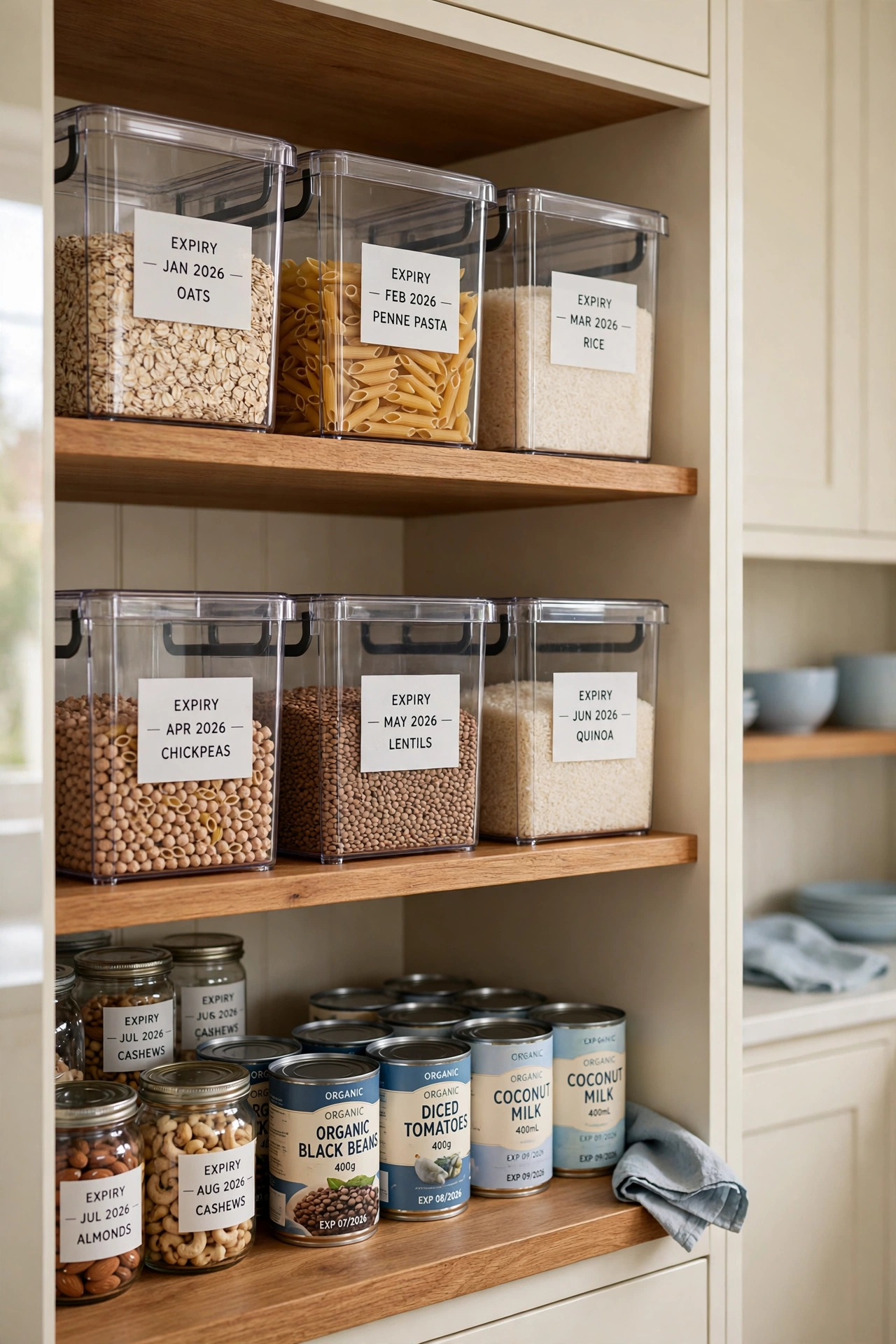
7. Use Clear Bins Grouped by Expiry Month
Clear bins grouped by expiry month make it easy to see which items need attention first. Label one bin for the current month, one for next month, and one for later in the year. Place items in the bin that matches their expiration month so the whole shelf reads like a calendar.
Clear bins work best because you can see the contents without opening them. Choose bins that fit your shelves with a little space to spare on each side. This month-by-month system is simple to maintain and easy for the whole family to understand.
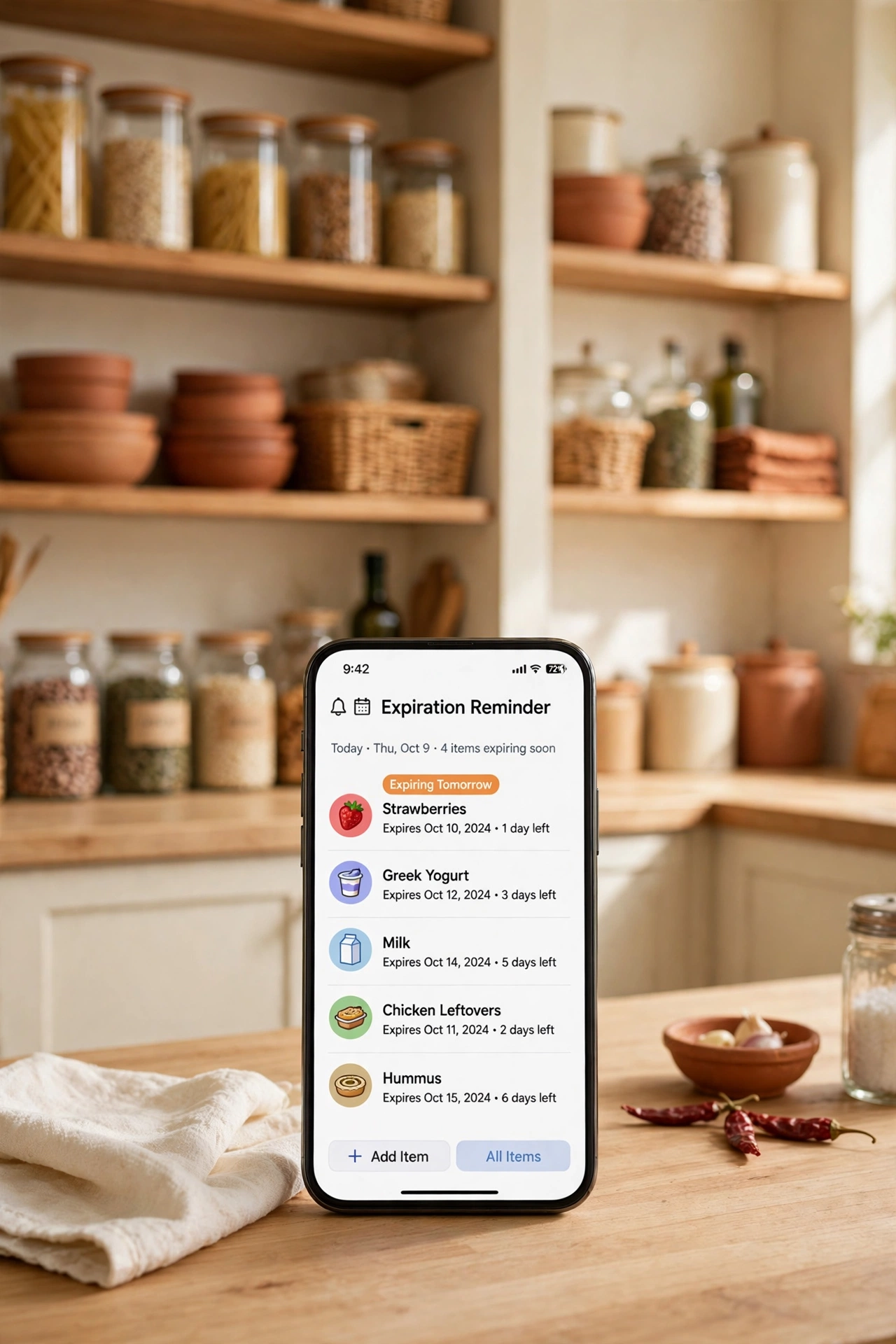
8. Add Expiration Dates to a Phone Reminder App
A phone reminder app turns expiration dates into alerts that reach you before food goes bad. Enter the item name and its date when you unpack groceries, then set a reminder for one week before the date arrives. The phone will nudge you to use the item while it is still fresh.
Choose an app that lets you sort reminders by date so the soonest items appear at the top. Add items in small batches during your weekly shop to keep the list current. A phone reminder is a quiet helper that works even when you forget to check the shelves.
9. Keep a Running List on the Fridge Door
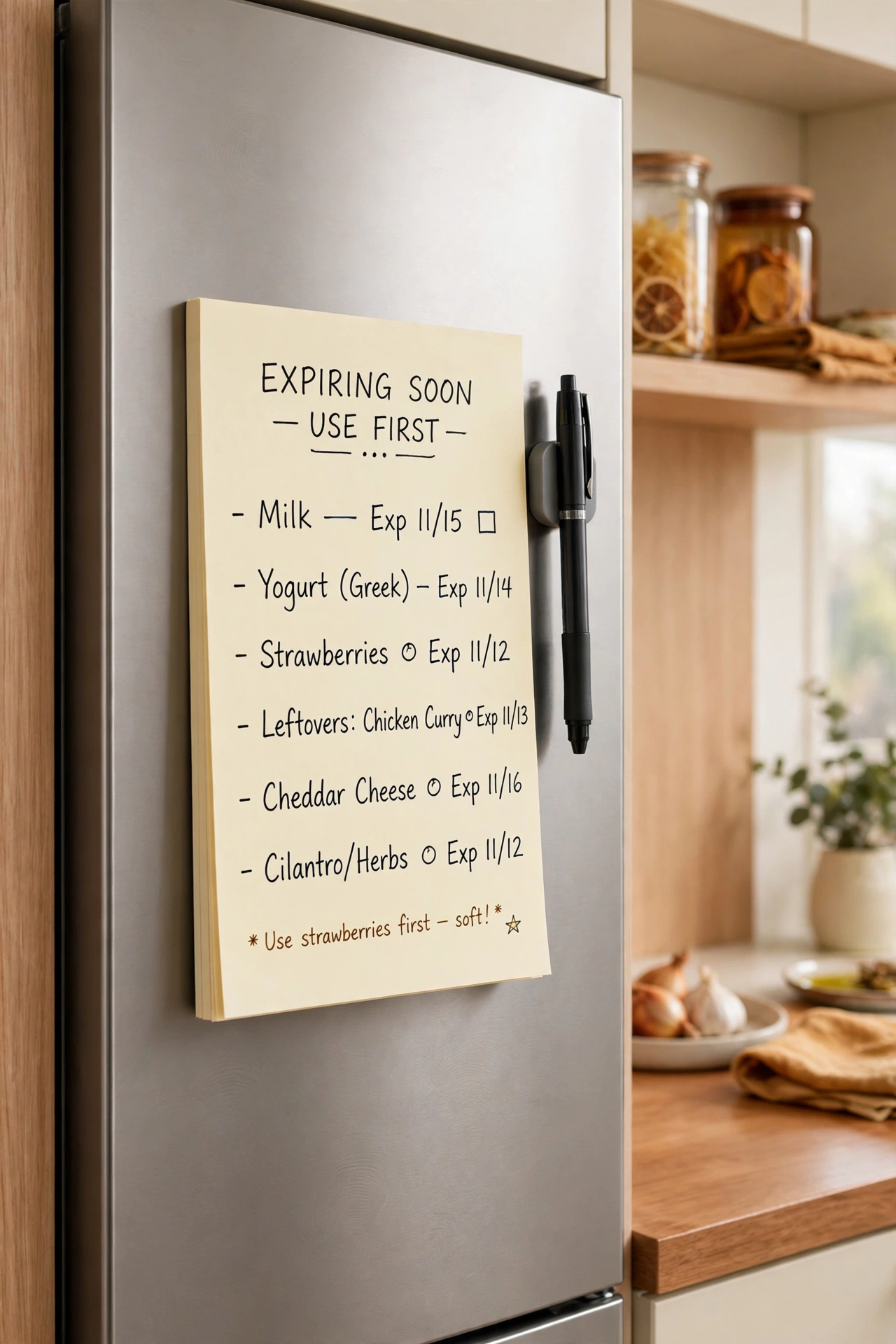
A running list on the fridge door tracks everything in the fridge that expires within two weeks. Write each item and its date on a notepad or a magnetic list pad, then cross items off as you use them. The list gives the cook a clear plan for the week ahead.
Keep a pen attached to the list so anyone can add an item the moment it goes into the fridge. Review the list before planning meals so soon-to-expire items shape the menu. A fridge door list turns leftovers and fresh food into planned meals instead of forgotten waste.
10. Use Color Coded Stickers for Expiry Months
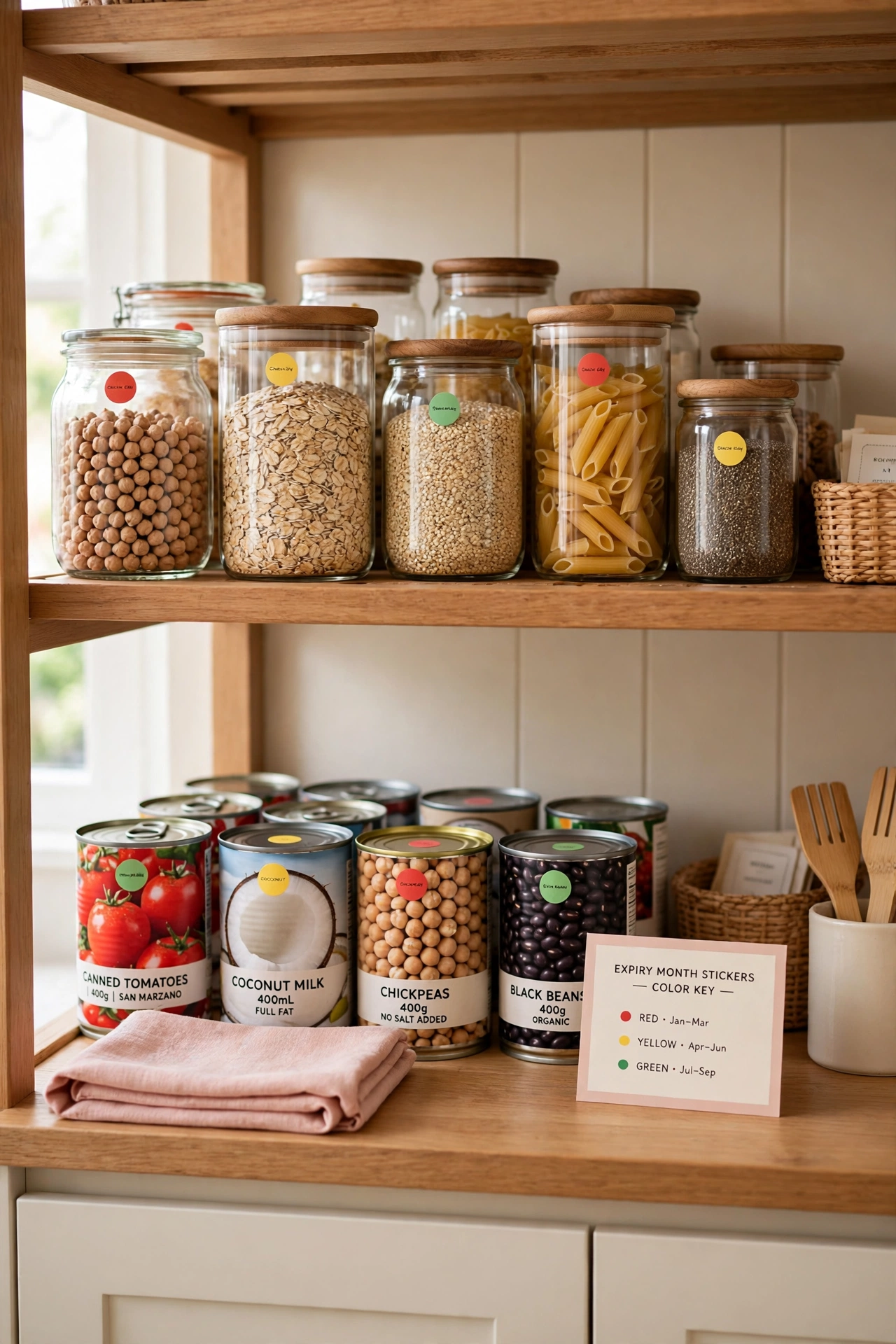
Color coded stickers turn expiration tracking into a quick visual system. Assign one color to each month, such as red for this month, yellow for next month, and green for later in the year. Stick the right color dot on every item so you can judge its date at a glance.
Keep a small chart on the inside of a cabinet door that shows which color means which month. Replace the dots when the month changes so the system stays accurate. Color coding works well for busy families because it needs no reading and takes only seconds to check.
11. Rotate Stock in the Freezer with Date Labels
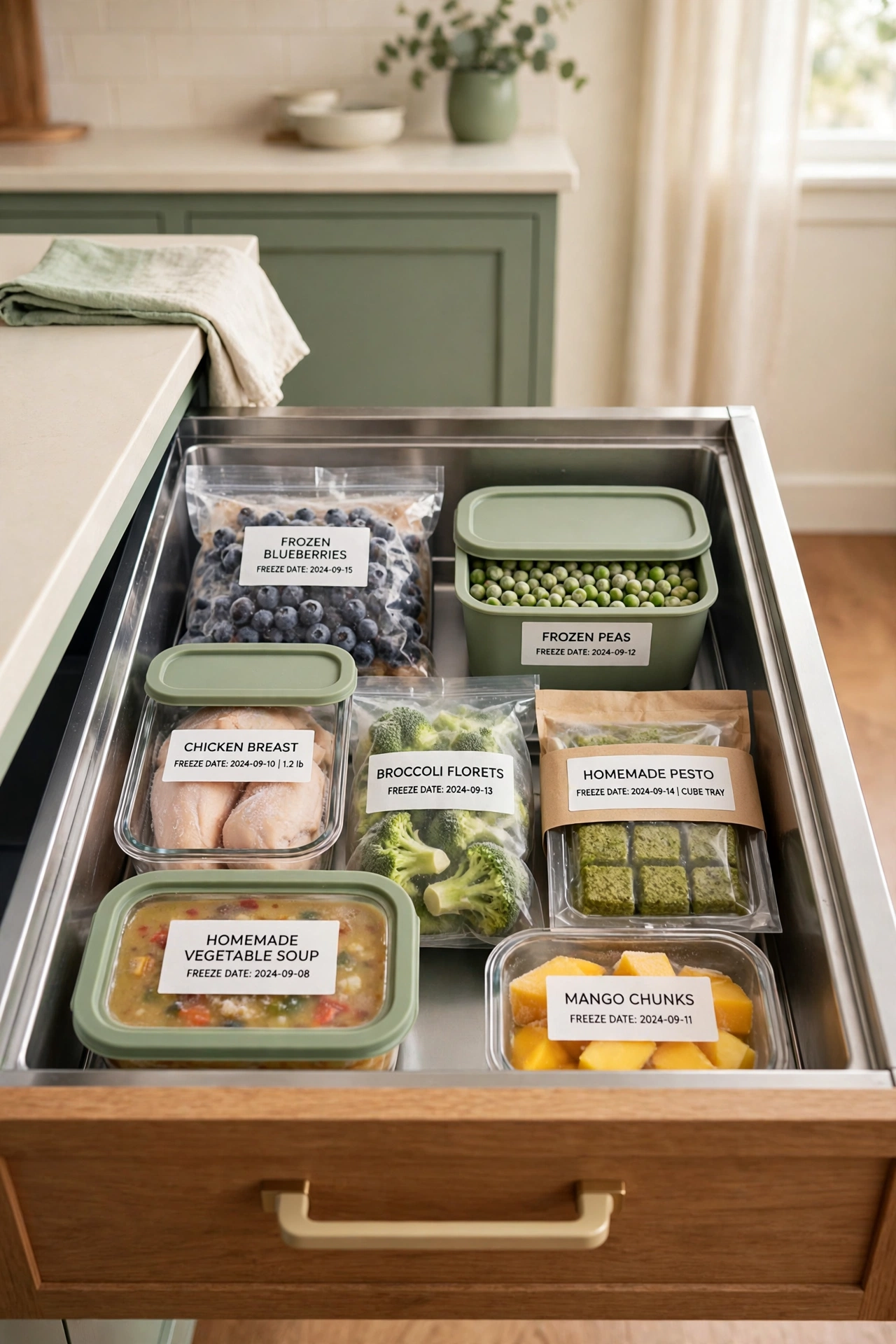
The freezer hides food for months, which makes date labels even more important there. Write the freezing date and the contents on every bag and container before it goes into the freezer. Place newer items at the bottom of the pile and older items on top so they get used first.
Check the freezer once a month and pull forward anything that is near its best-by date. For more ways to keep frozen food easy to find, see these freezer organization ideas. A labeled freezer saves money and stops the mystery of unmarked bags that nobody dares to open.
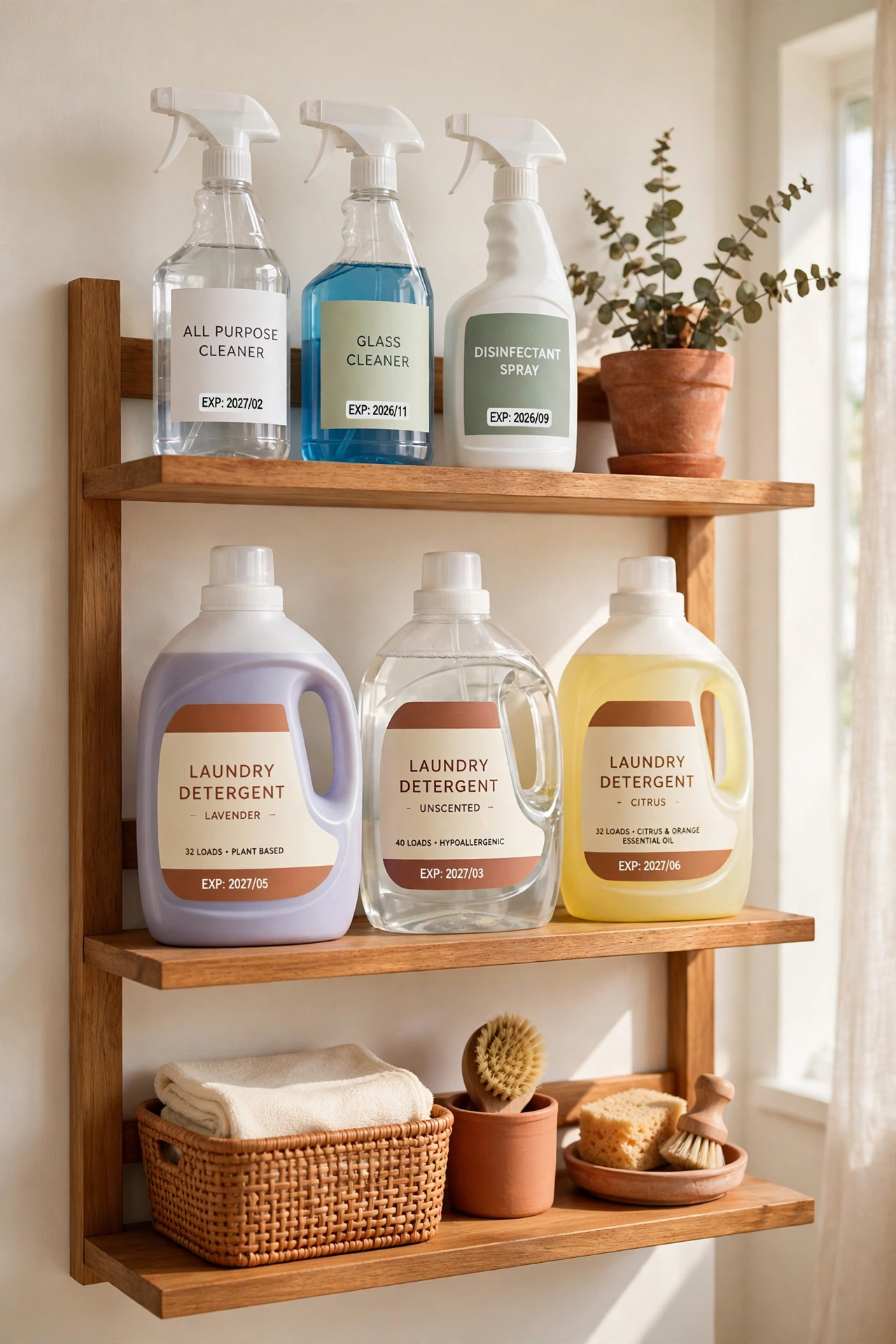
12. Store Cleaning Products with Dates Facing Forward
Cleaning products also expire, and old cleaners lose their power to sanitize. Store every bottle with its date label facing forward on the shelf so you can read it without moving anything. Group products by type, with sprays on one shelf and laundry supplies on another.
When you open a new bottle, write the opening date on the label as well. Many cleaners work best within a year of opening, so the opening date matters as much as the printed date. Forward-facing dates keep your cleaning routine effective and your home truly clean.
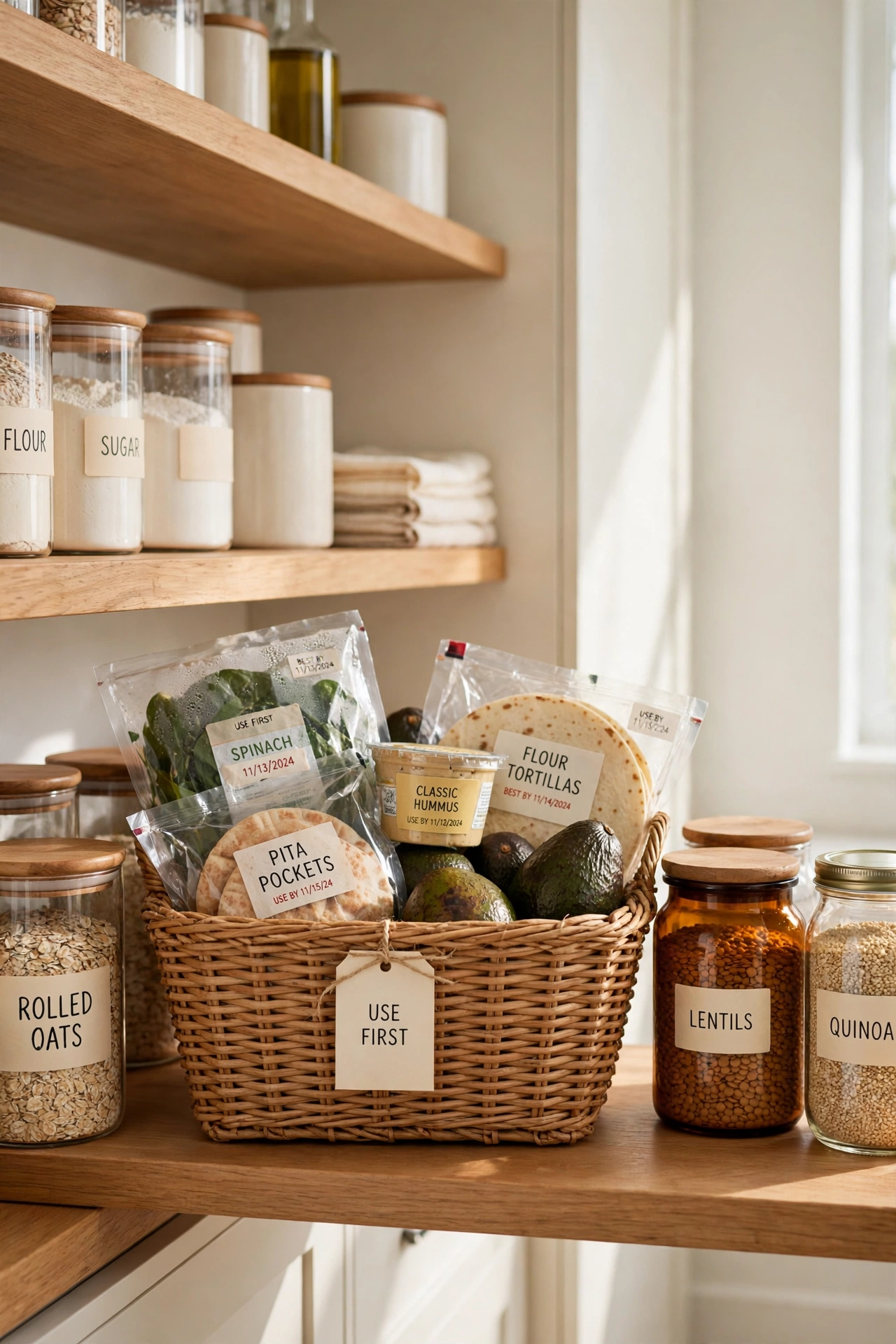
13. Set Up a Use First Basket in the Pantry
A use first basket is a single basket that holds every pantry item expiring within the next two weeks. Place the basket at eye level near the front of the pantry so it is the first thing you see. Everything inside the basket gets used before anything else on the shelves.
Refill the basket during your weekly pantry check and move items in as their dates approach. For more ideas on keeping canned goods in order, see these pantry can organization ideas. One basket turns the whole pantry into a simple rule: use what is in the basket first.
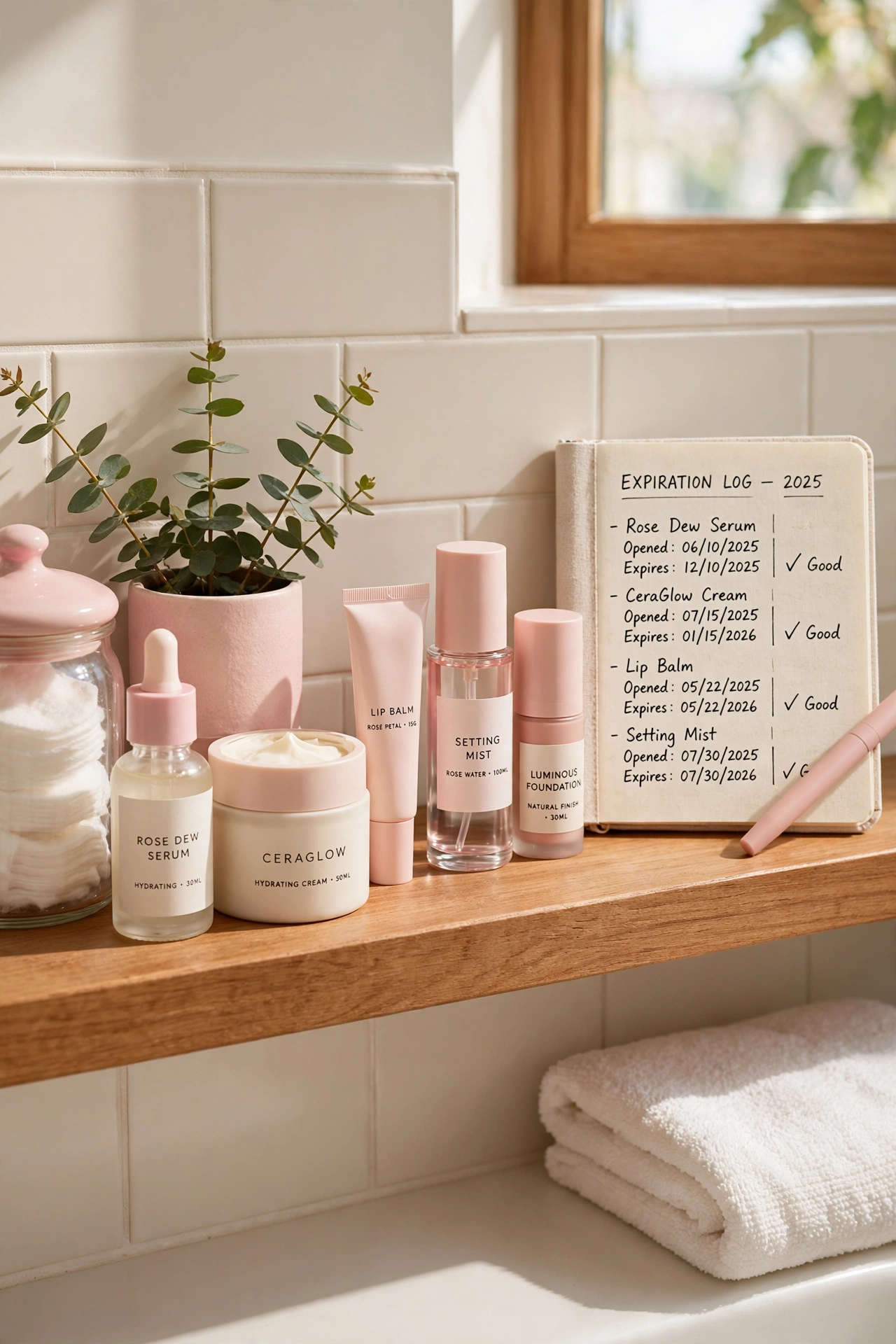
14. Track Beauty Products with a Written Log
Beauty products expire too, and old makeup and creams can irritate the skin. Keep a small written log in the bathroom that lists each product, the date it was opened, and the date it should be replaced. Update the log when you buy something new.
Store the log inside a cabinet door or in a small notebook on the bathroom shelf. Check it every few months and toss anything past its safe use date. A written log protects your skin and stops the bathroom from filling with half-used bottles.
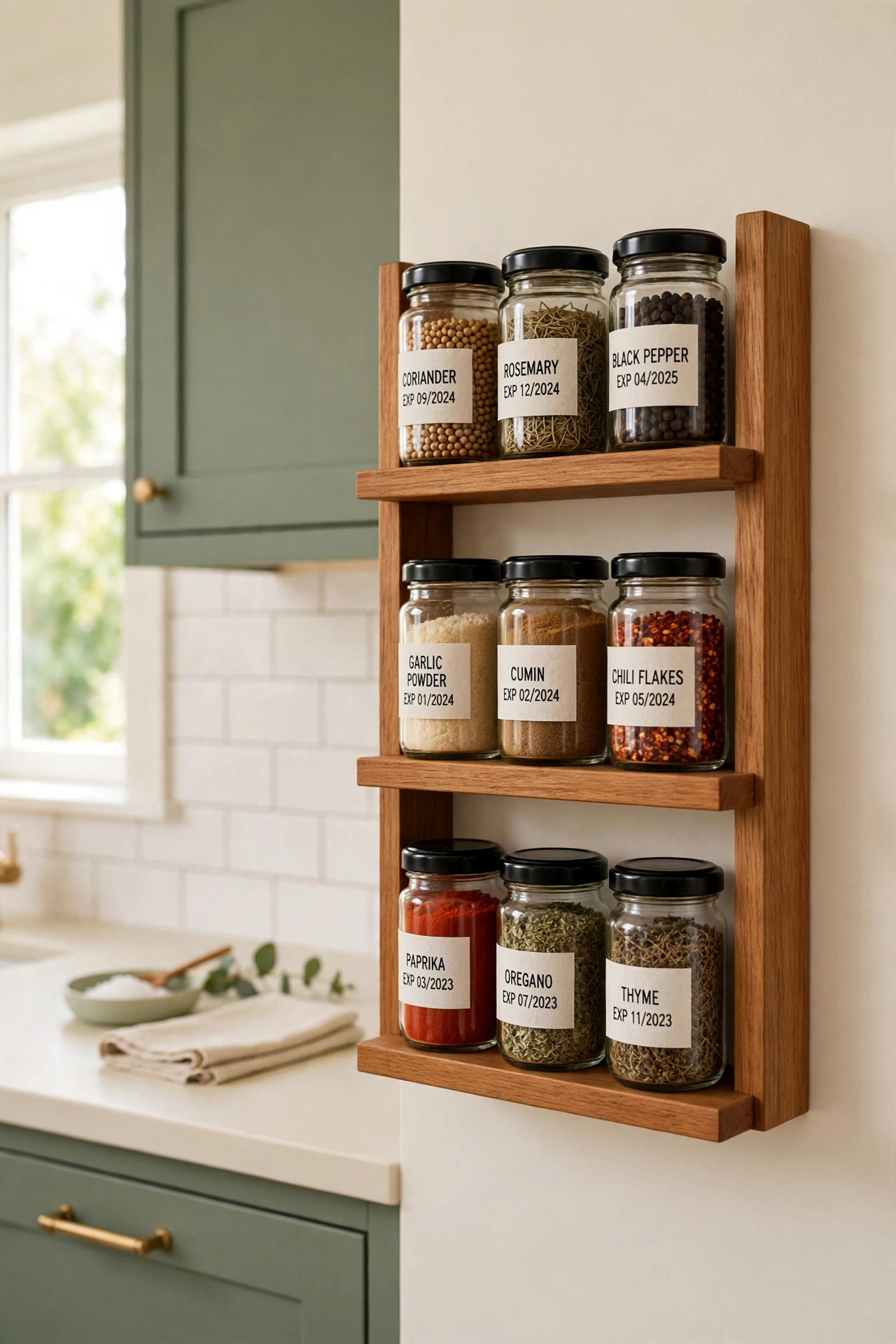
15. Organize the Spice Rack by Expiration Date
Spices lose their flavor long before they look old, so date tracking matters in the spice rack. Write the purchase date or the expiration date on the bottom of every jar. Place the oldest spices at the front of the rack so they get used in cooking first.
Smell each spice during your monthly check and replace any that smell faint or dusty. Whole spices last longer than ground spices, so note the type on the label too. A dated spice rack keeps every meal tasting bright and fresh.
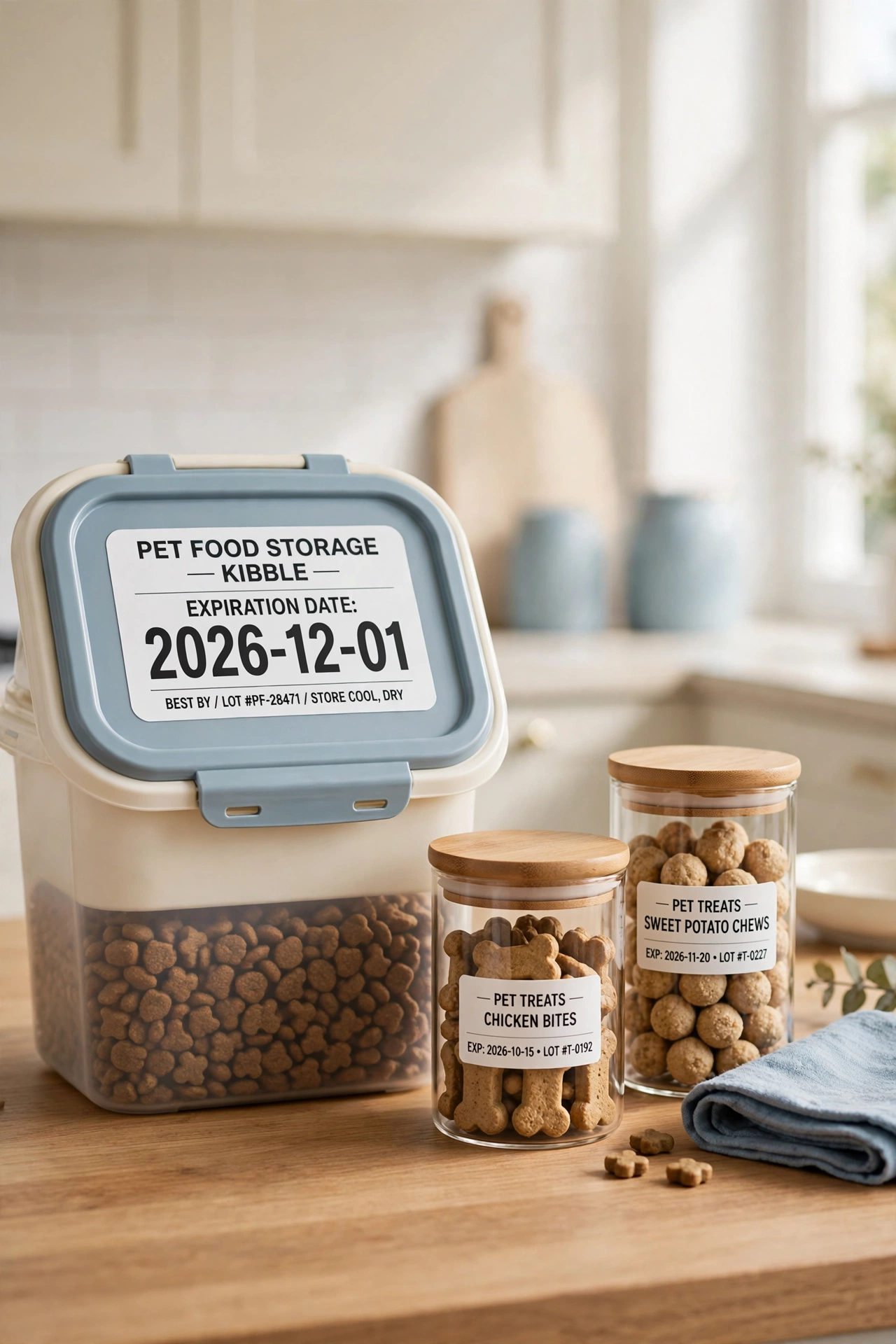
16. Keep Pet Food and Treats on a Date Rotation
Pet food and treats expire just like human food, and stale treats can upset a pet stomach. Store pet food in a sealed container with the expiration date written on the lid in large letters. Place new bags behind the open bag so the oldest food gets used first.
Check the date on treats every time you buy a new pack and toss anything that smells off. Keep the pet food station in one spot so the rotation is easy to follow. A dated pet food system keeps your pets healthy and your feeding routine simple.
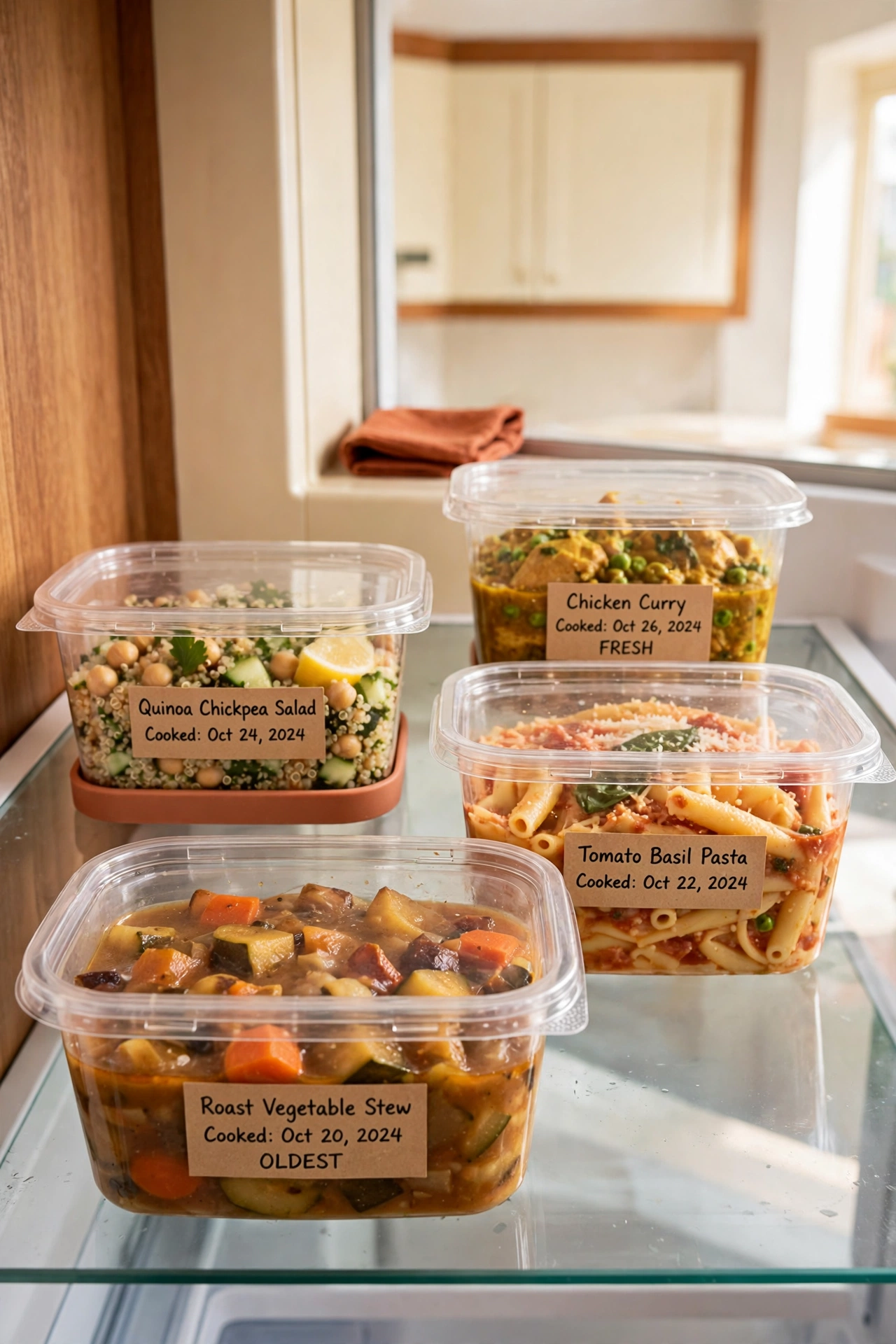
17. Label Leftovers with the Date They Were Cooked
Leftovers need a cooked date because the printed date on the package no longer applies once food is opened. Stick a small label on every leftover container with the dish name and the date it was cooked. Most cooked food stays safe for three to four days, so the date tells you exactly how long you have.
Place the newest leftovers at the back of the fridge and the oldest at the front. For more ways to keep cooked food fresh and safe, see these refrigerator leftover organization ideas. A cooked date label turns every container into a clear and safe choice.
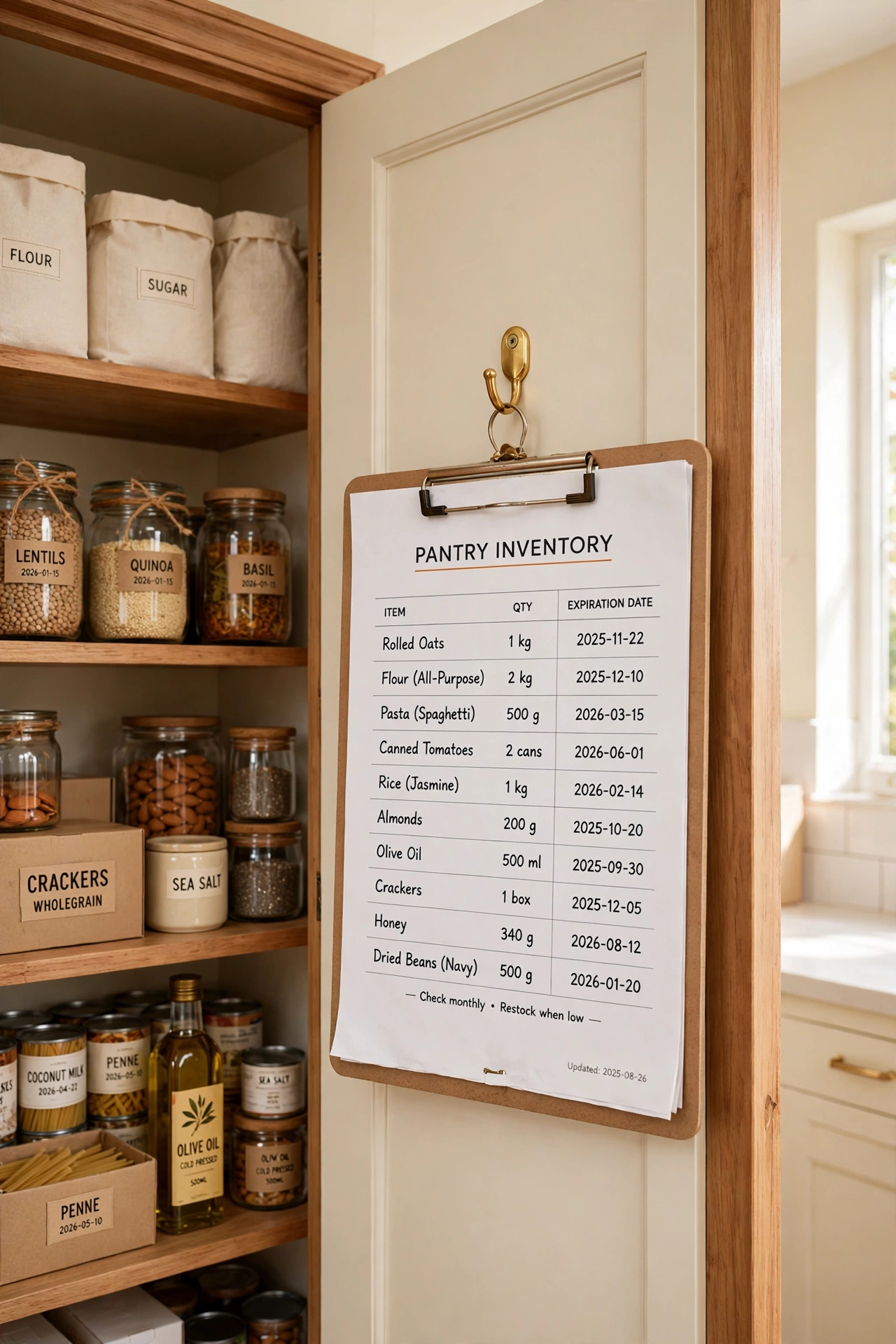
18. Create a Pantry Inventory Sheet with Expiry Dates
A pantry inventory sheet lists every item in the pantry next to its expiration date. Keep the sheet on a clipboard inside the pantry door and update it when you shop or use something up. The sheet shows at a glance what you own and what expires soon.
Sort the sheet by shelf or by category so it matches the real layout of your pantry. A quick look at the sheet before shopping stops you from buying duplicates of items you already own. An inventory sheet is one of the best tools for a tidy and waste-free pantry.
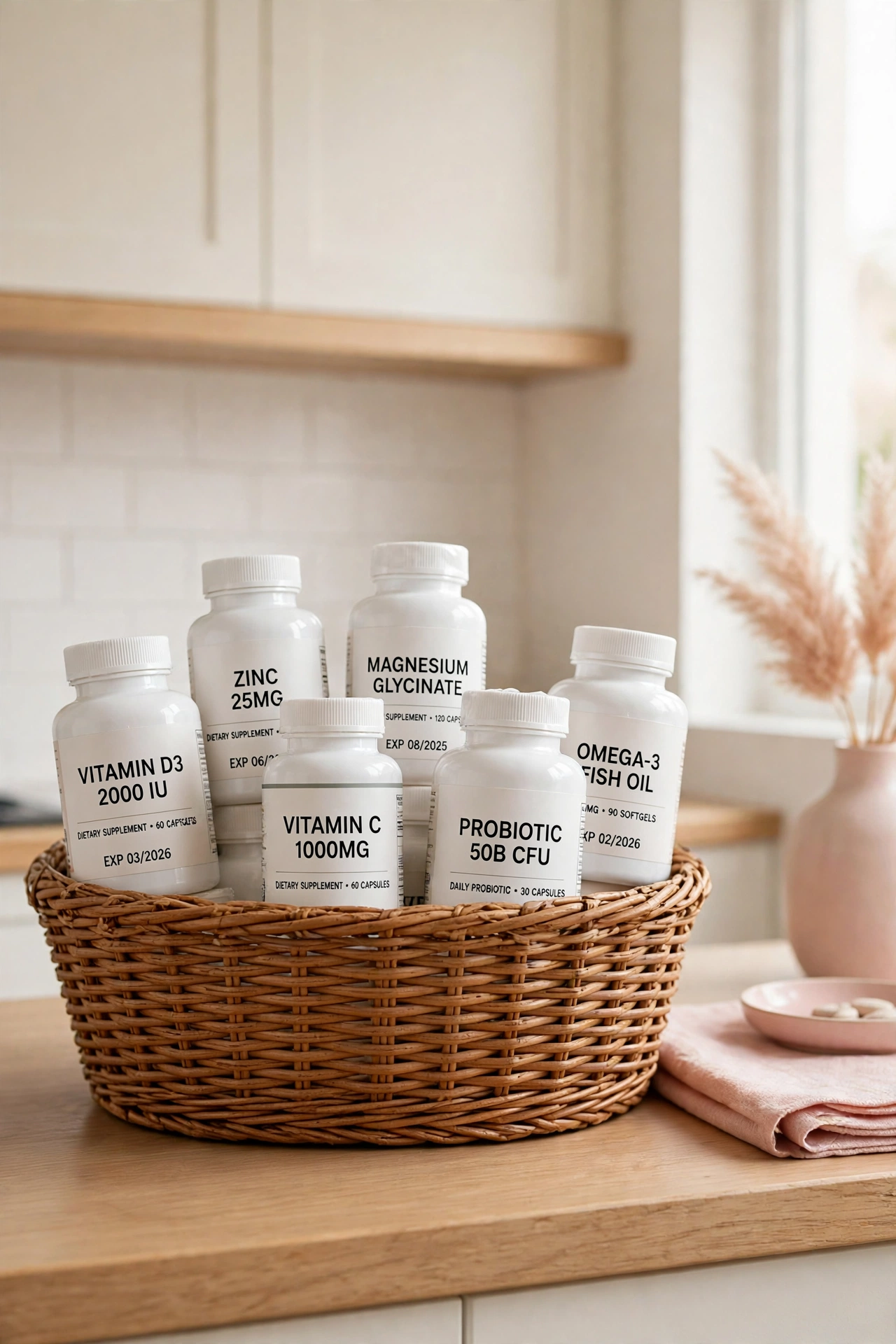
19. Store Vitamins and Supplements with Visible Dates
Vitamins and supplements lose strength after their expiration date, so they need visible tracking. Store all bottles in one basket or tray and turn every label so the date faces outward. Place the bottles that expire soonest at the front of the group.
Check the basket every month and move any bottle near its date to the front of the counter as a reminder. Keep the basket in a cool, dry spot away from the bathroom steam. Visible dates make sure every vitamin you take is fresh and effective.
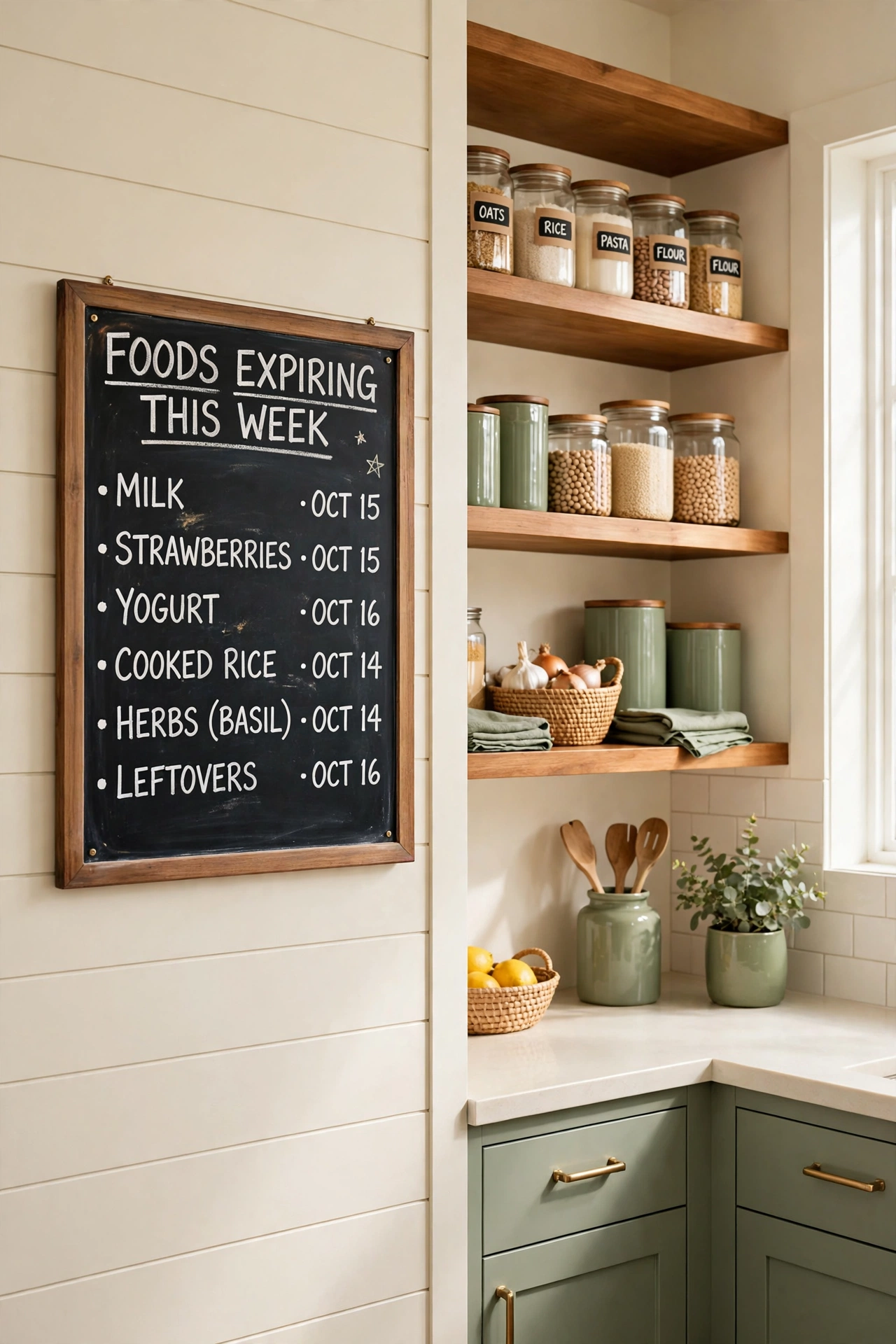
20. Use a Small Chalkboard for Weekly Expiry Alerts
A small chalkboard in the kitchen is a charming way to flag items that expire this week. Write the item names in large chalk letters and update the board every Sunday. The board sits where the whole family sees it during breakfast and dinner.
Keep the board small so it holds only the urgent items and never turns into a long list. Erase each item as soon as it is used. A weekly chalkboard makes expiration dates part of the family conversation instead of a private chore.
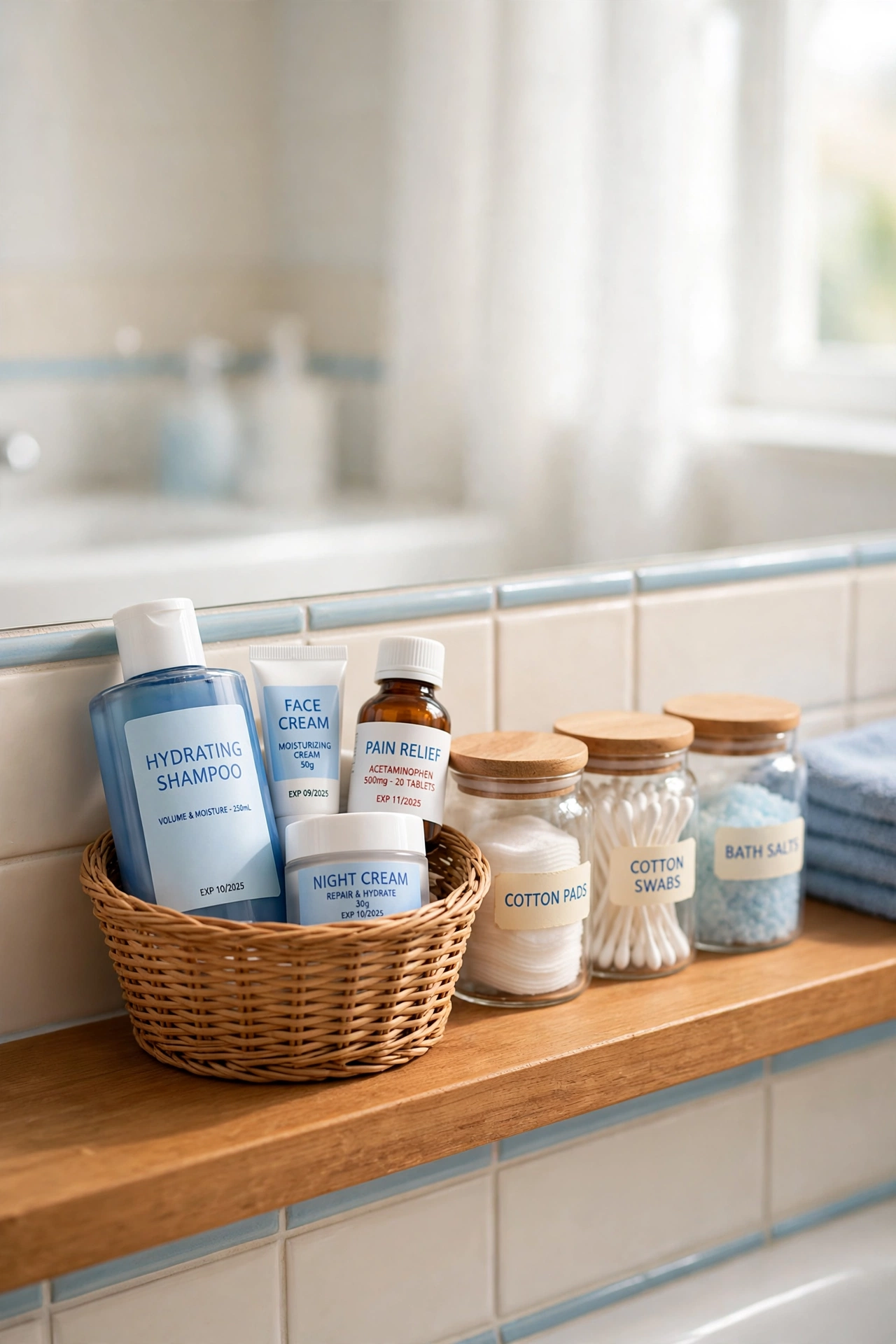
21. Keep a Dedicated Expiry Bin in the Bathroom
A dedicated expiry bin in the bathroom collects every product that is near its date. Place a small basket on a shelf and drop in shampoos, creams, and medicines that expire within the next month. The bin makes it easy to see what needs using up and what needs replacing.
Empty the bin once a month and toss anything that has passed its safe date. Refill it during your regular bathroom tidy so the system never falls behind. One small bin keeps the whole bathroom free of old and unsafe products.
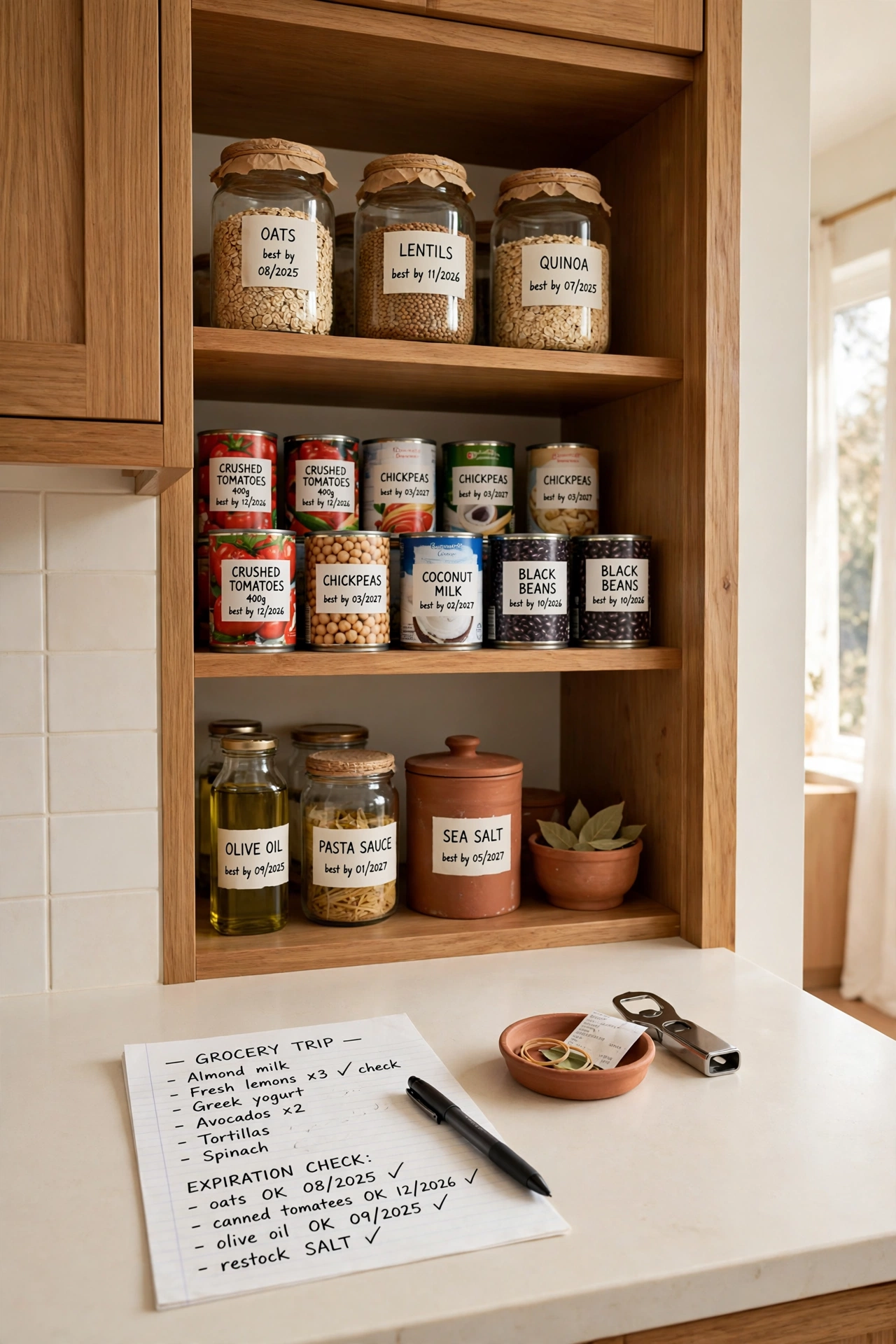
22. Check Expiration Dates Before Every Grocery Trip
A quick expiration check before every grocery trip stops you from buying food you already own. Spend five minutes scanning the fridge and pantry for items that expire soon and note them on your shopping list. The note reminds you to plan meals around those items first.
This habit also shows you which items you buy too often, so you can skip them on the next trip. Over a month, the five-minute check saves real money and cuts down on duplicate purchases. A pre-shopping check is the simplest way to shop smarter.
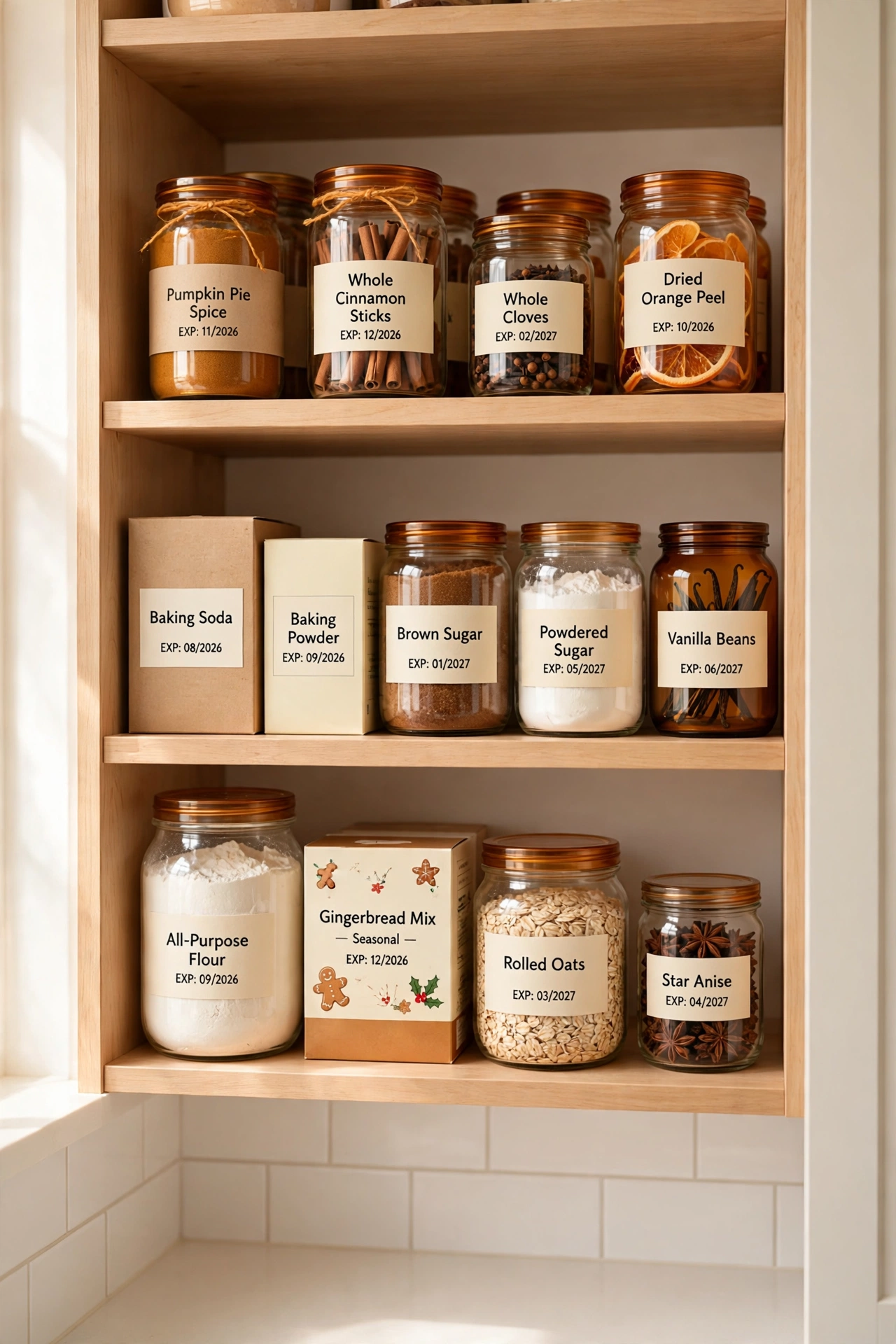
23. Group Items by Season to Catch Expiring Stock
Grouping pantry items by season helps you catch stock that expires before its season arrives. Keep summer baking supplies together and winter holiday ingredients together, with the dates facing out. When a season approaches, you can see in one look what is still good to use.
Move seasonal items to the front of the shelf a few weeks before their season starts. Anything that expires before the season gets used in everyday cooking or goes to the use first basket. Seasonal grouping turns holiday ingredients into planned meals instead of forgotten waste.
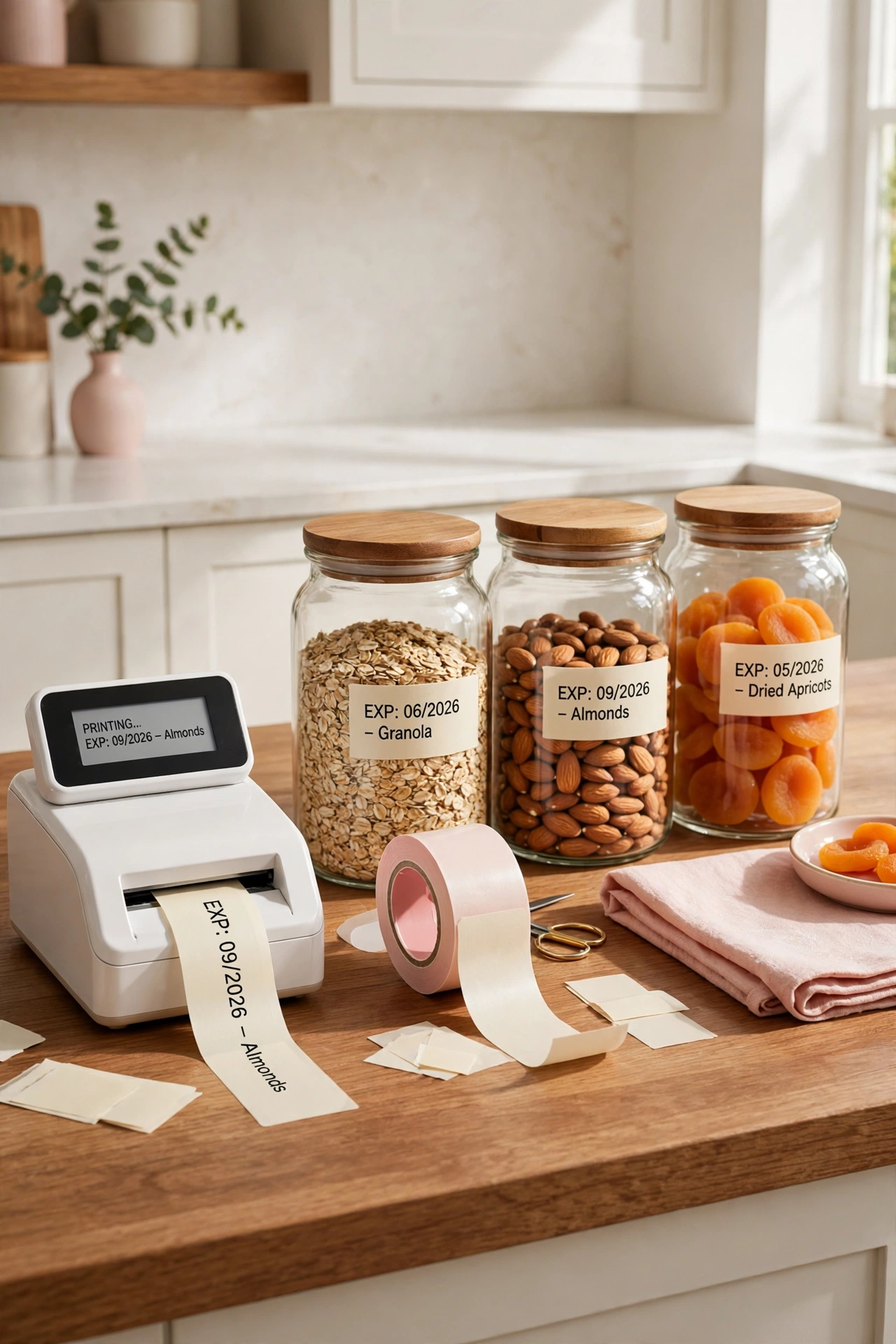
24. Use a Label Maker for Neat Date Tags
A label maker prints clean, even date tags that stay readable for months. Print the month and year in a large font and stick the tag on the front of every new item as soon as it enters the house. Neat labels look better than handwritten notes and they never smudge.
Keep the label maker in a kitchen drawer with a spare tape roll so labeling takes only seconds. Print a small batch of tags at once if several items share the same date. A label maker turns date tracking into a fast and tidy habit.
25. Store Baby Products with Dates on Top
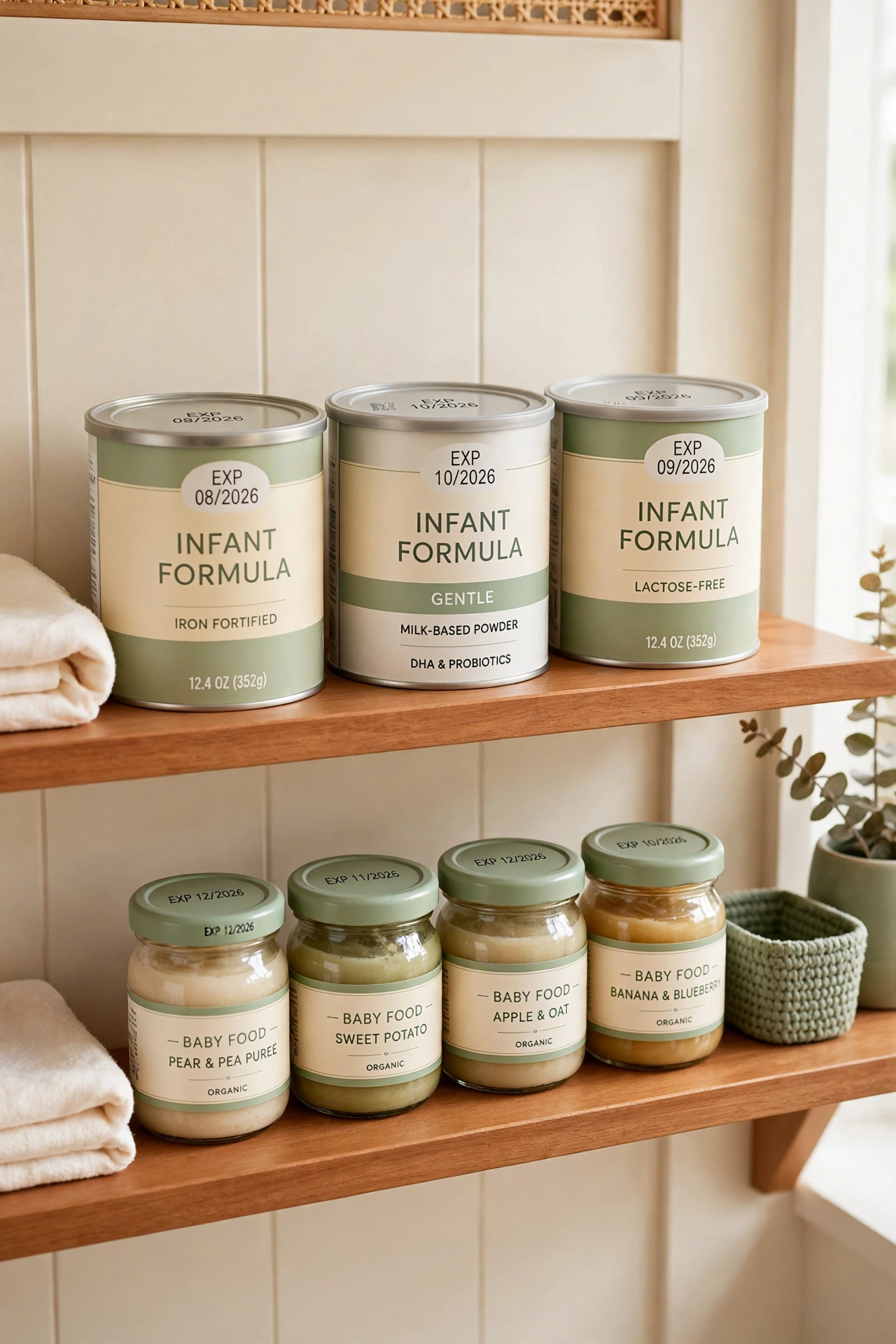
Baby products need the strictest date care because babies are sensitive to old or spoiled items. Store formula, baby food, and diaper creams with their dates on the top of each container so the date shows the moment you pick it up. Keep the newest items at the back of the shelf.
Check baby product dates every week since these items move fast and expire fast. Toss anything past its date right away and never guess with baby food. Dates on top make every feeding safe and every parent confident.
26. Keep a Master Expiration Calendar in the Kitchen
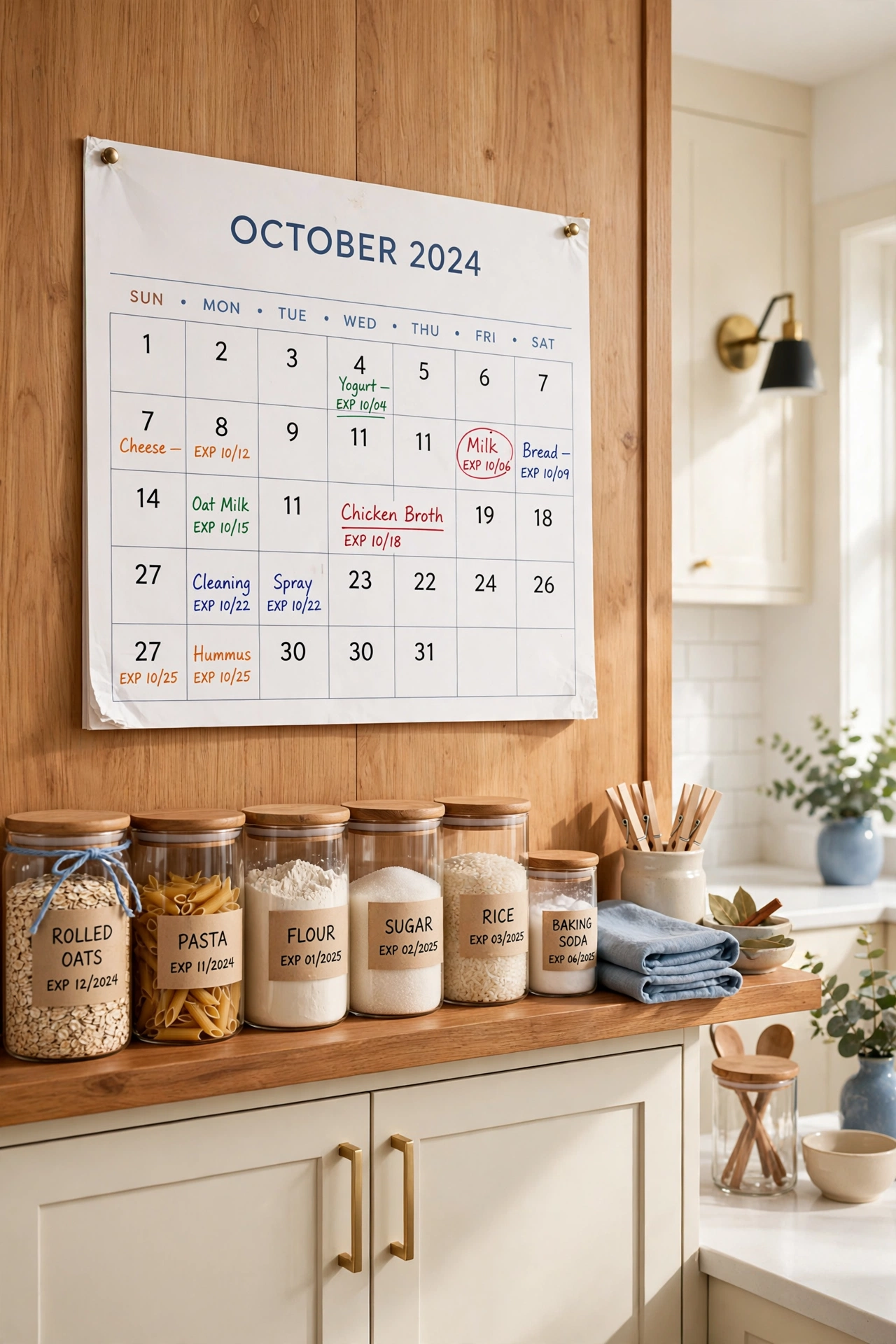
A master expiration calendar is a wall calendar that marks the expiry date of every long-life item in the house. Write the item name on its expiration date when you buy it, then check the calendar at the start of each week. The calendar gives you a month-long view of what needs attention.
Use a different colored pen for each room, such as blue for the kitchen and green for the bathroom. Hang the calendar where the cook sees it every morning. A master calendar turns scattered dates into one clear plan for the whole home.
27. Freeze Items Before They Expire to Extend Life
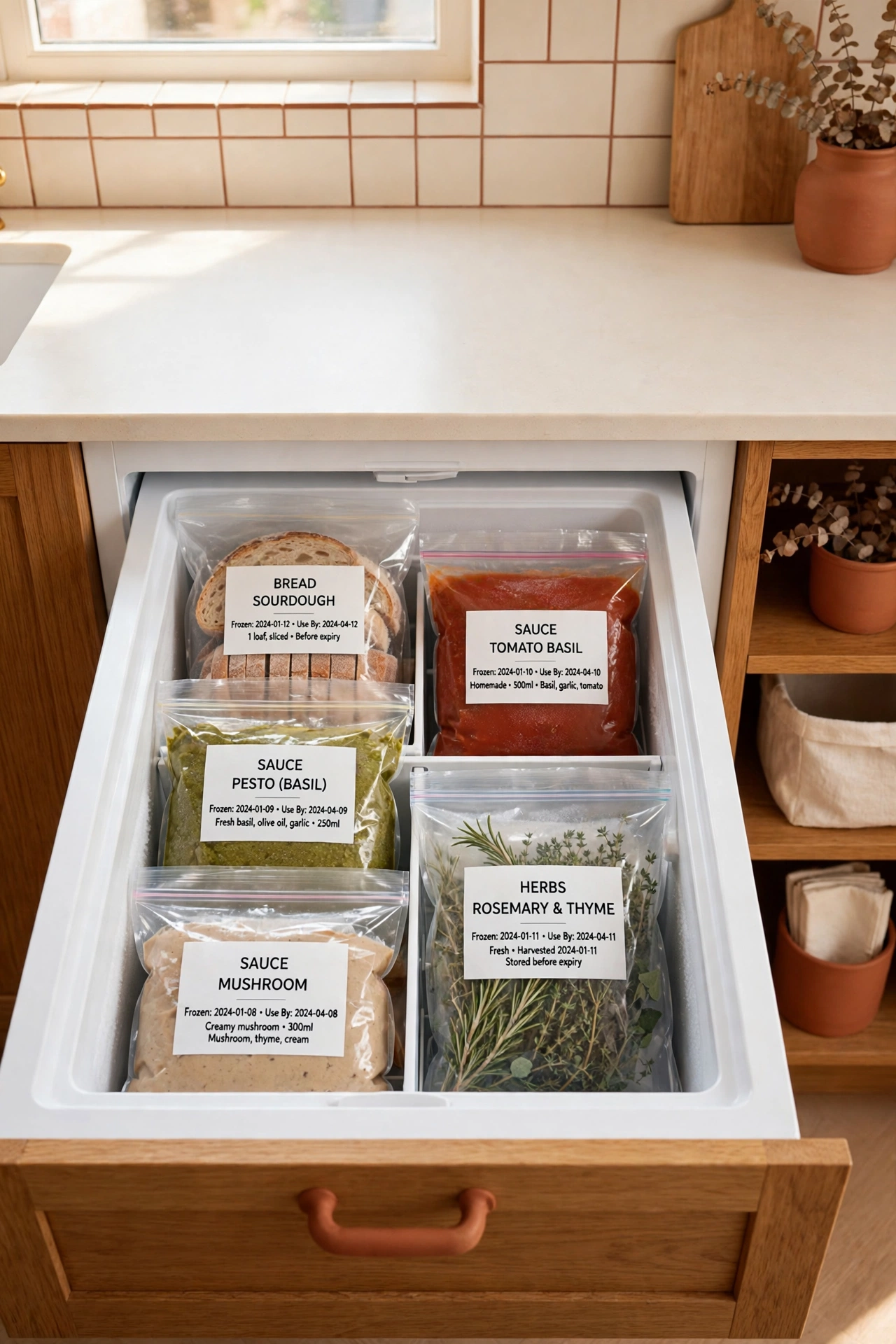
Freezing is a smart rescue for food that will expire before you can eat it. Bread, sauces, cooked meals, and fresh herbs all freeze well and keep for months. Label each frozen item with the contents and the freezing date so you know exactly what is inside.
Move items to the freezer a few days before their date, not on the last day. Thaw them in the fridge overnight when you are ready to use them. Freezing before expiry turns potential waste into future meals.
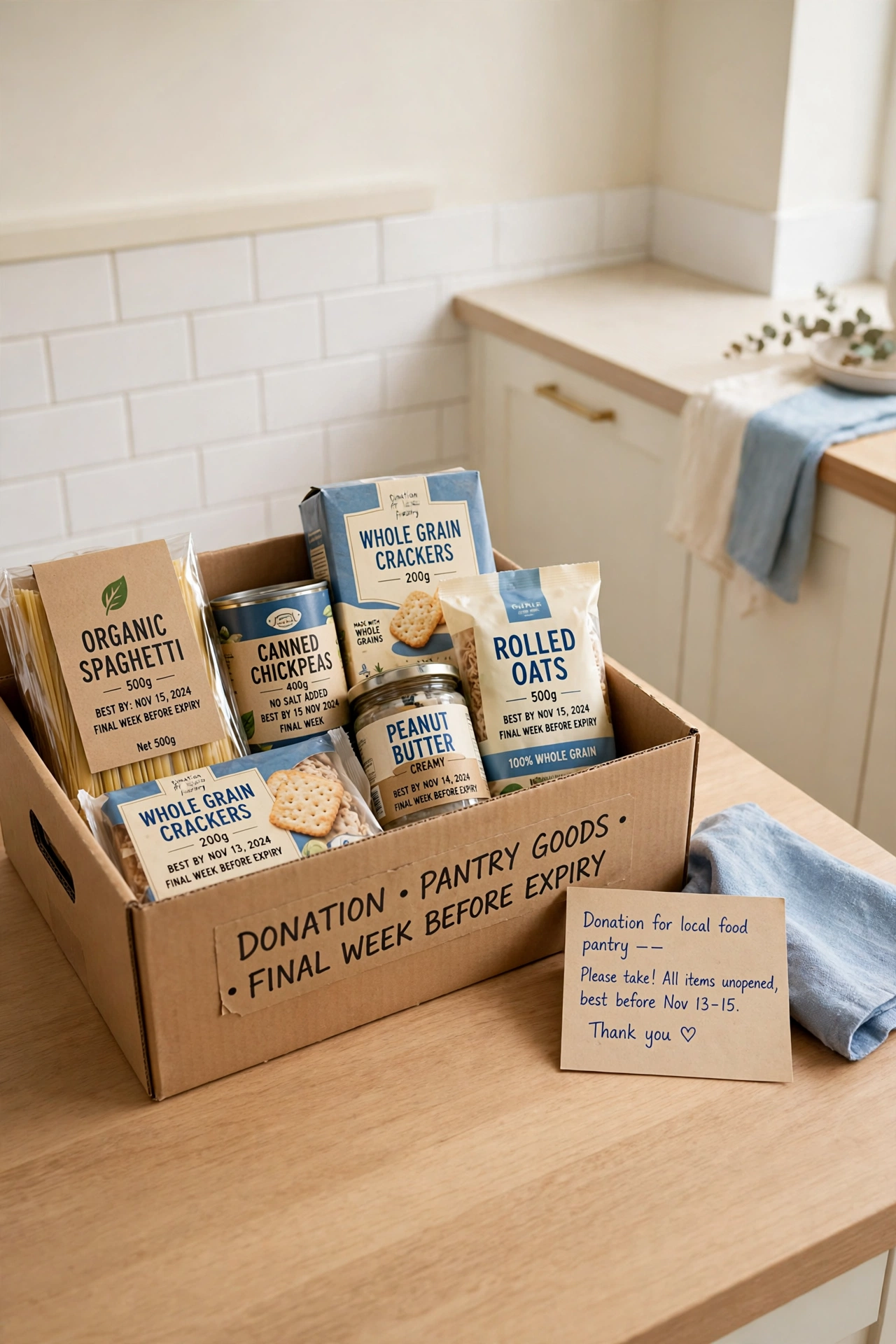
28. Donate or Use Items in the Final Week Before Expiry
The final week before expiry is the time to act, not to wait. Plan one meal around each item that expires that week, or donate unopened non-perishable food to a local food bank while it is still in date. Many food banks welcome items that have at least a few days left.
Check donation rules first so you only give items that are safe and welcome. A final-week plan turns soon-to-expire food into shared meals instead of trash. This habit saves money and helps others at the same time.
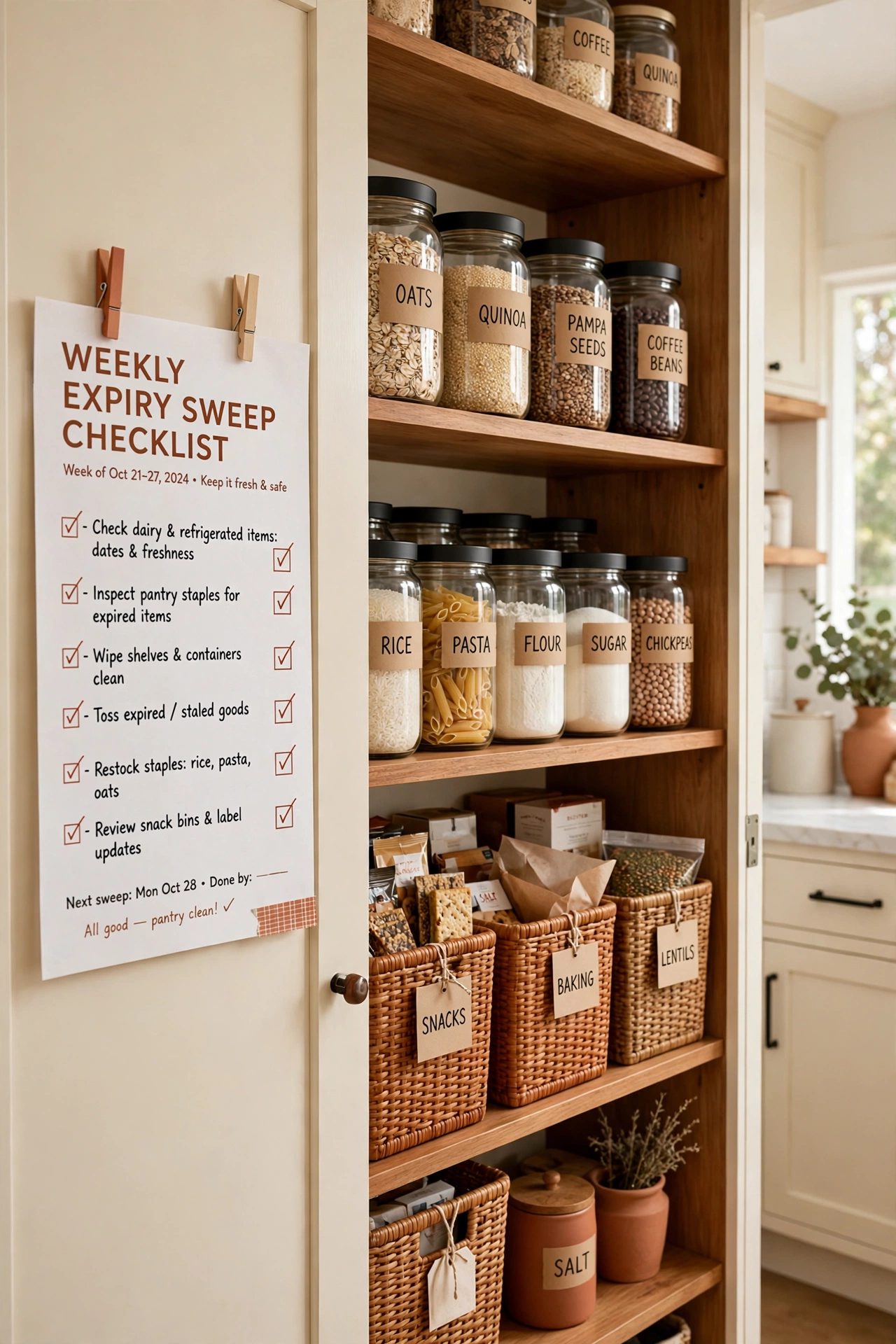
29. Teach the Whole Family a Weekly Expiry Sweep
A weekly expiry sweep is a five-minute family habit that keeps the whole system working. Once a week, everyone checks one area of the house for items that expire in the next seven days. Children can check the snack shelf while adults check the fridge and medicine drawer.
Make the sweep fun by turning it into a quick race or a small reward for the family member who finds the most soon-to-expire items. A shared habit means the system never depends on one person alone. When the whole family joins in, expiration dates stay under control all year long.
Conclusion
Expiration date organization does not need to be complicated or time consuming. From a simple date label on every item to a master calendar on the kitchen wall, each idea here adds one more layer of control to your home. The best system is the one your family will actually follow every week.
Pick one or two ideas that fit your home and start today. Label the front of every item, set up a use first basket, and watch food waste shrink week by week. For a calm home beyond the pantry, these nightly reset routine ideas will help you keep every room organized with just a few minutes each evening.
Frequently Asked Questions About Expiration Date Organization Ideas for Household Products
How often should I check expiration dates in my home?
Check the fridge and pantry once a week and the freezer, medicine drawer, and bathroom once a month. A weekly check catches food before it spoils, while a monthly check covers items that last longer. A short regular routine works better than a rare deep clean.
What is the difference between a best-by date and an expiration date?
A best-by date marks when a product tastes its best, while an expiration date marks when it may no longer be safe to use. Many pantry foods stay safe for a while after a best-by date, but medicines and baby products should never be used past their expiration date. When in doubt, trust the expiration date and check the item carefully.
How can I remember to use items before they expire?
Place soon-to-expire items in a use first basket at eye level and keep a list on the fridge door. Phone reminders set for one week before the date also help. A visible system works better than memory alone because it shows the dates every time you open the pantry.
Is it safe to eat food a few days past its best-by date?
Many dry foods like pasta, rice, and canned goods stay safe for a while past their best-by date if they look, smell, and taste normal. Fresh dairy, meat, and cooked food should be treated with more care and tossed if they smell off or look unusual. Never take a risk with baby food or medicine past its date.
What should I do with expired household products?
Toss expired food in the trash or compost where local rules allow it. Take expired medicines to a pharmacy take-back program instead of flushing them or throwing them in the trash. Recycle empty containers after you remove old labels and rinse them clean.

Hi, I’m Emily! I turn messy corners into cozy, organized spots. DreamNestDecor is where I share simple, practical home ideas — decor, organization, and small-space solutions that work in real life, not just in photos. Every idea here is carefully researched before it’s shared.