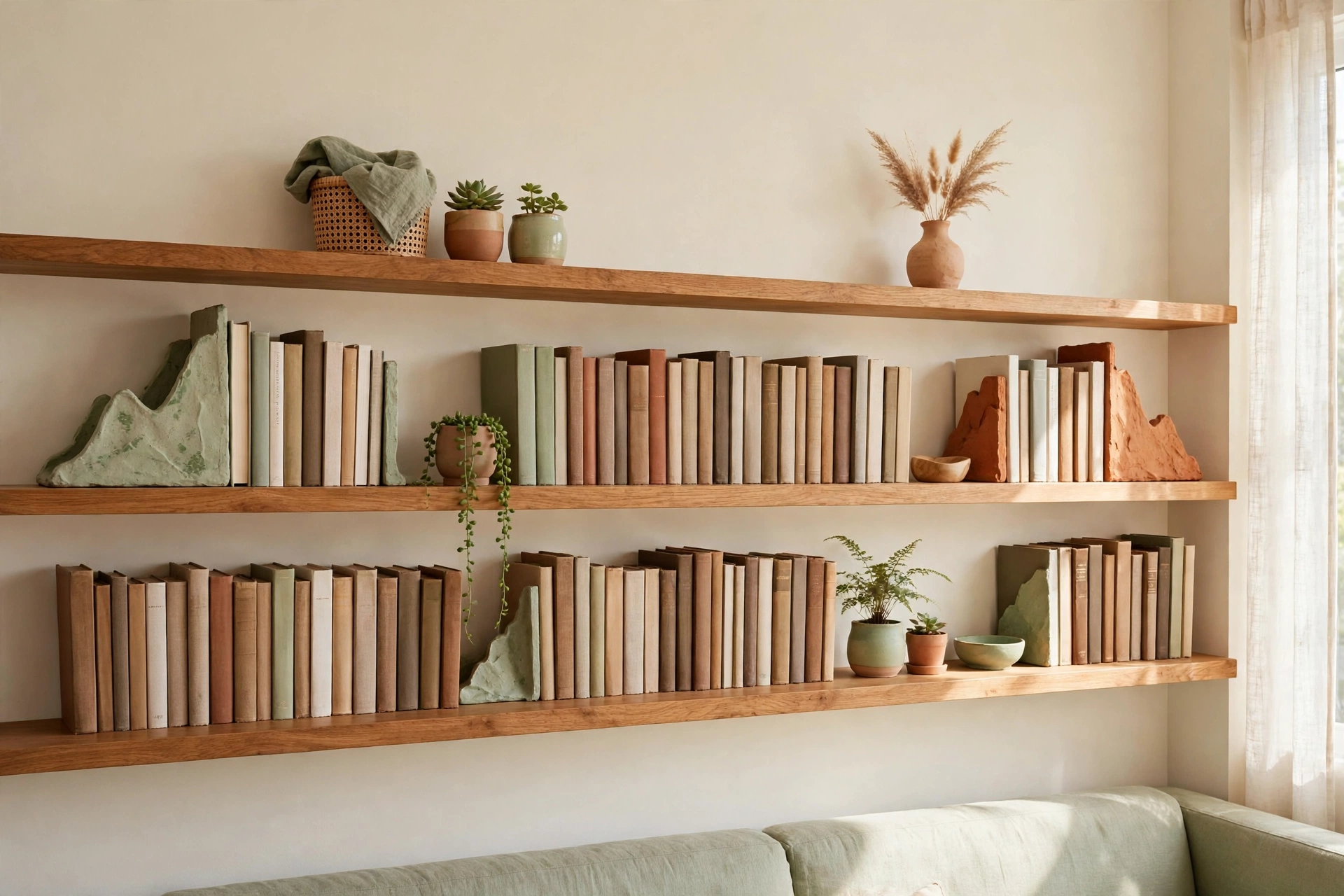
Picture this: you walk past your bookshelf and every row of books stands tall and tidy, held in place by bookends you made with your own hands. The shelf looks styled and personal, like a little display in a beautiful home store. That feeling of pride is exactly what a good DIY project gives you, and bookends are one of the easiest places to start.
You do not need fancy tools or a big budget to make bookends that look lovely. A block of wood, a spare brick, a length of rope, or a lump of clay can all become a stylish shelf companion. These 18 DIY decorative bookends will help you turn everyday materials into pieces that hold your books upright and make your shelves look finished.
1. Pour Concrete Block Bookends
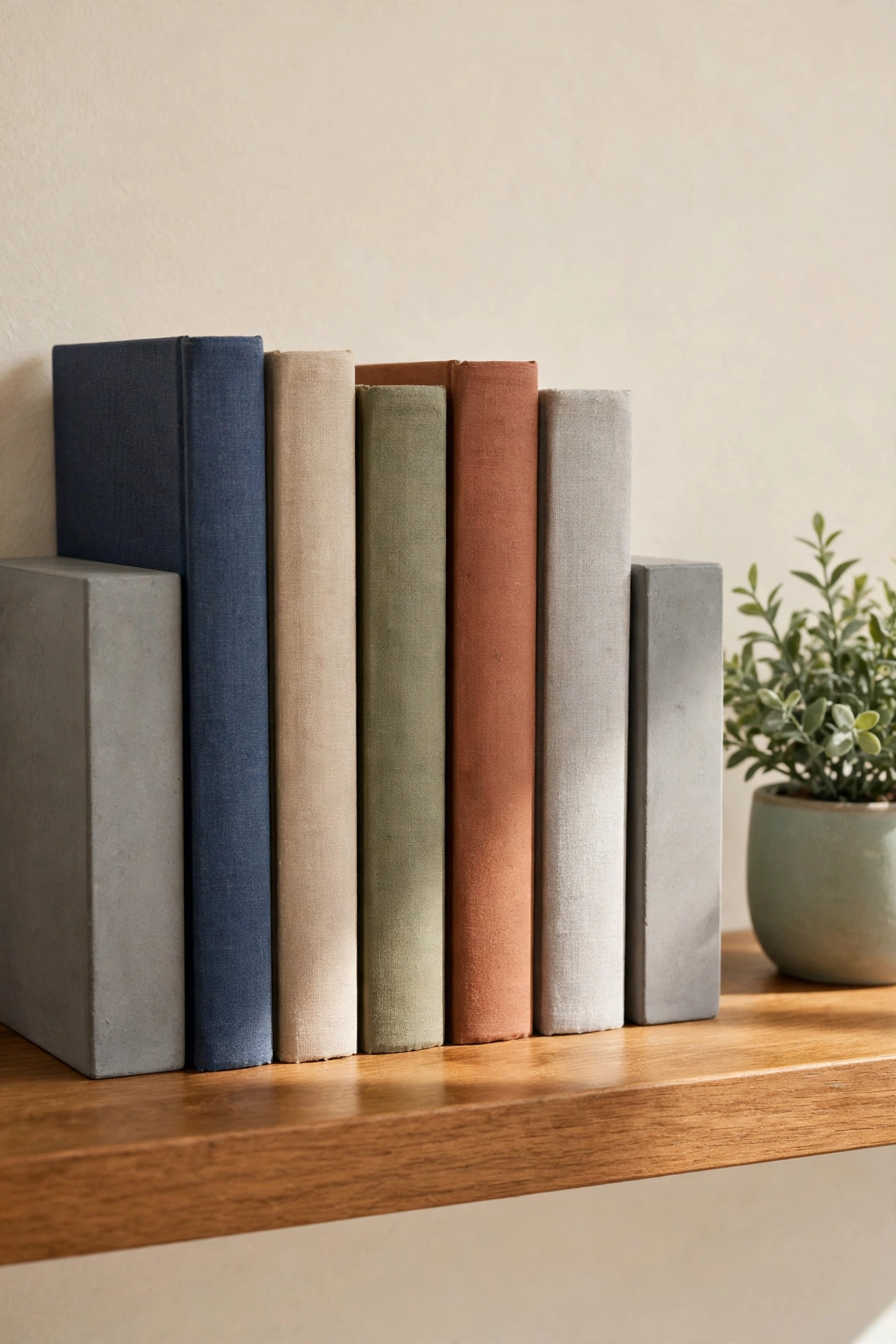
Concrete block bookends bring a clean modern weight to any bookshelf. You pour a simple mix into a small mold, let it cure, and you have a pair of heavy bookends that will hold even tall hardcovers upright. The smooth gray surface suits modern, industrial, and minimalist rooms alike.
Sand the edges lightly once the concrete is dry so the blocks feel smooth and will not scratch your shelf. You can leave them plain gray or paint one face in a soft accent color. For more projects with the same material, see these DIY concrete decor ideas that use simple molds and everyday supplies.
2. Stack Reclaimed Wood Bookends
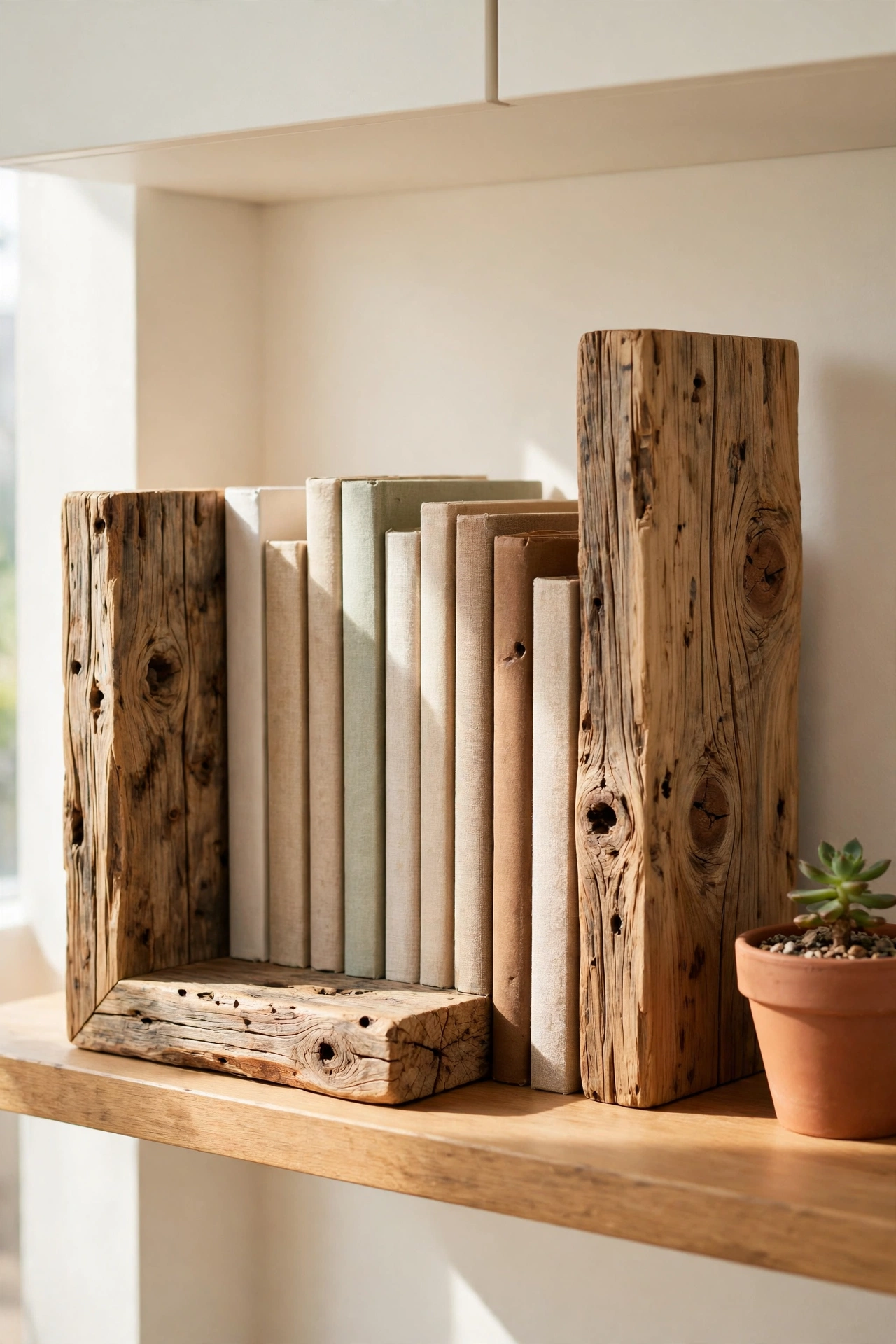
Reclaimed wood bookends add warmth and character to a shelf in minutes. Cut two L-shaped pieces from an old plank, glue and screw the joints, and sand everything smooth. The grain and knots in old wood give each pair a one of a kind look that new wood cannot match.
Leave the wood bare for a rustic feel or add a coat of clear wax to bring out the grain. These bookends look wonderful in farmhouse and cottage style rooms, especially beside a small potted plant. They are sturdy enough for a full row of cookbooks or novels.
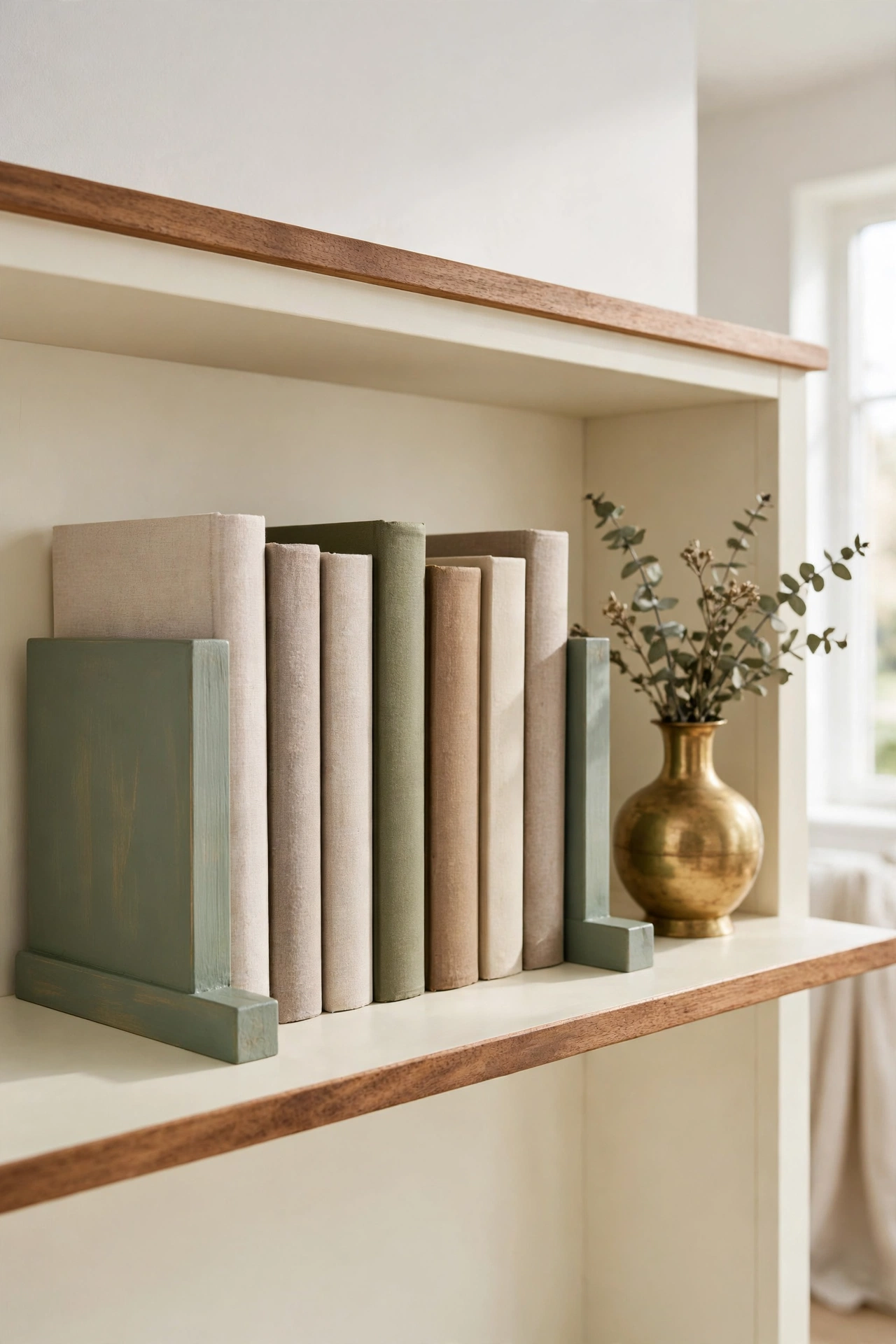
3. Paint Wooden Bookends in Sage Green
A coat of sage green paint turns plain wooden bookends into soft, stylish shelf decor. Sage is calm and versatile, so it pairs well with cream walls, warm wood shelves, and brass accents. The painted finish also hides small flaws in scrap wood.
Sand the wood first, apply a primer, then add two thin coats of furniture paint for a smooth finish. Let each coat dry fully before you add the next one. For more ways to refresh old wood with paint, see these painted furniture ideas that work on small projects and large pieces alike.
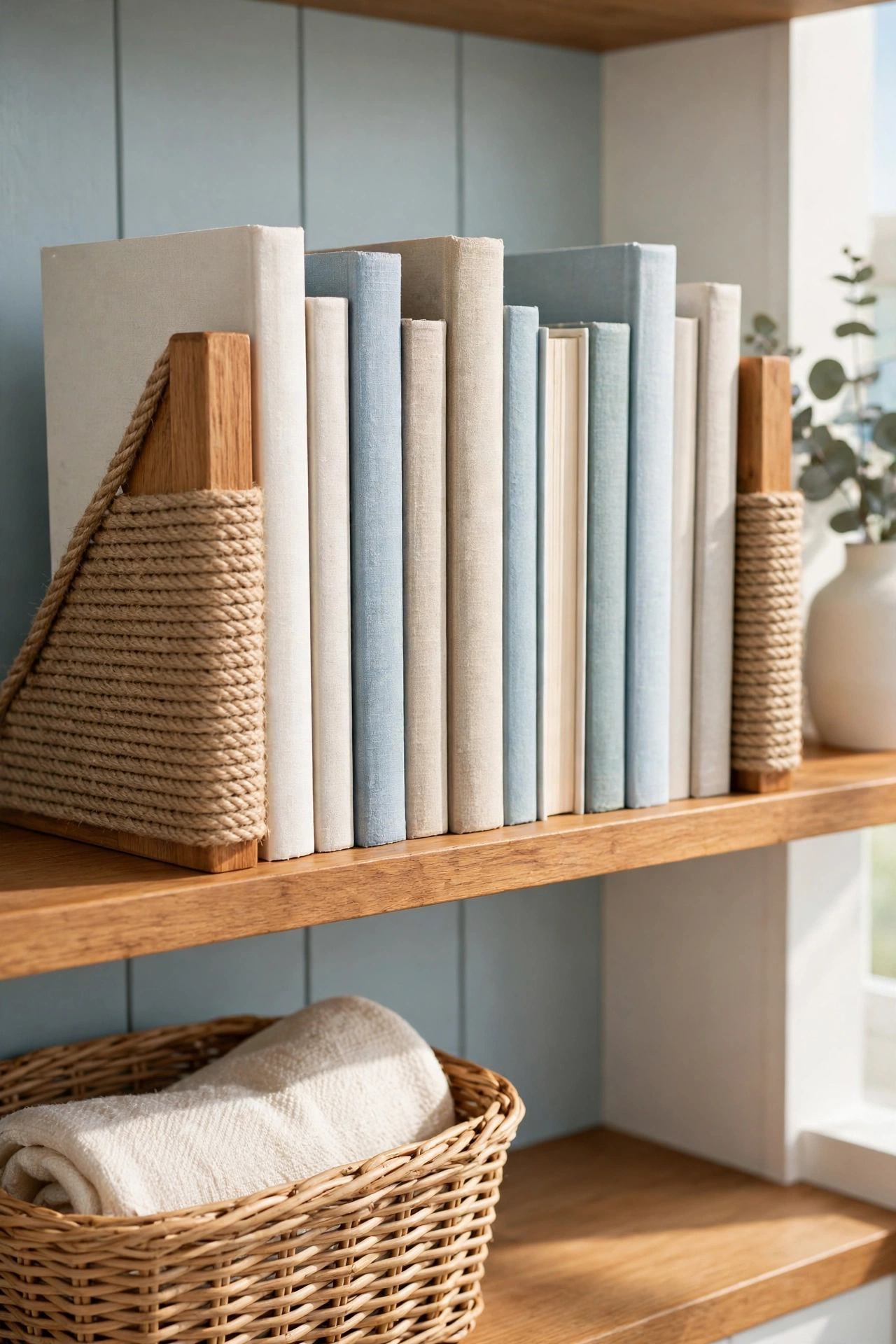
4. Wrap Bookends in Natural Rope
Rope wrapped bookends bring a relaxed coastal texture to your shelves. Start with a simple wooden or metal L-shaped base, then wind natural jute rope tightly around it and glue the ends in place. The wrapped texture looks handmade in the best possible way.
These bookends suit beach style rooms, nurseries, and calm neutral living rooms. Pair them with a woven basket and a few seashells for a full coastal shelf display. The rope also adds grip, so the bookends stay put when you pull a book from the row.
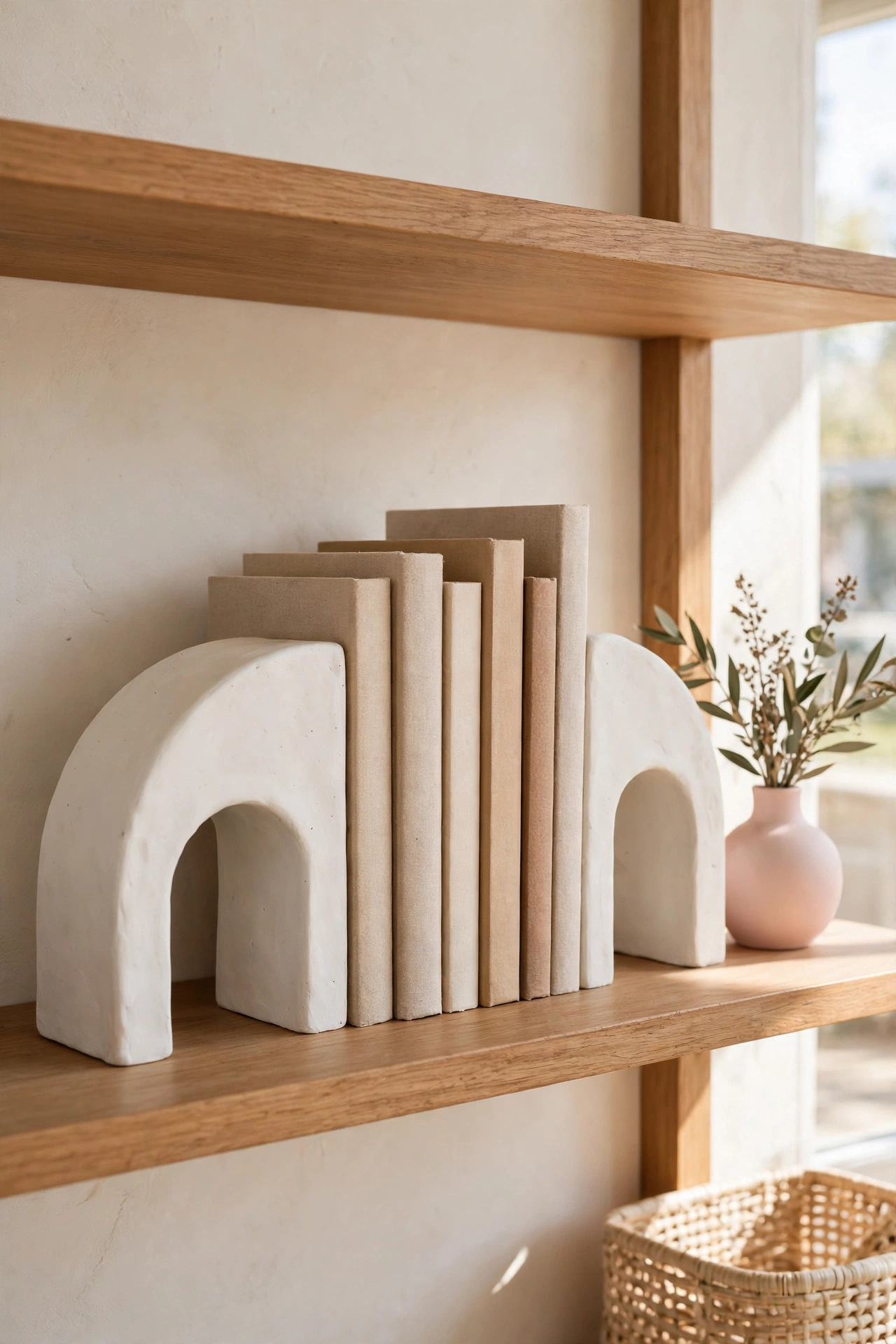
5. Shape Air Dry Clay Bookends
Air dry clay lets you sculpt bookends into arches, half moons, or smooth rounded shapes with no kiln at all. Roll out the clay, cut your shape, and let it dry for a day or two until it is hard. A coat of white or blush paint gives the finished pieces a soft ceramic look.
Keep the base wide and flat so the bookends stand steady under the weight of books. You can press a small pattern into the clay before it dries for extra detail. For more projects with this easy material, see these DIY air dry clay decor ideas that need no special tools.
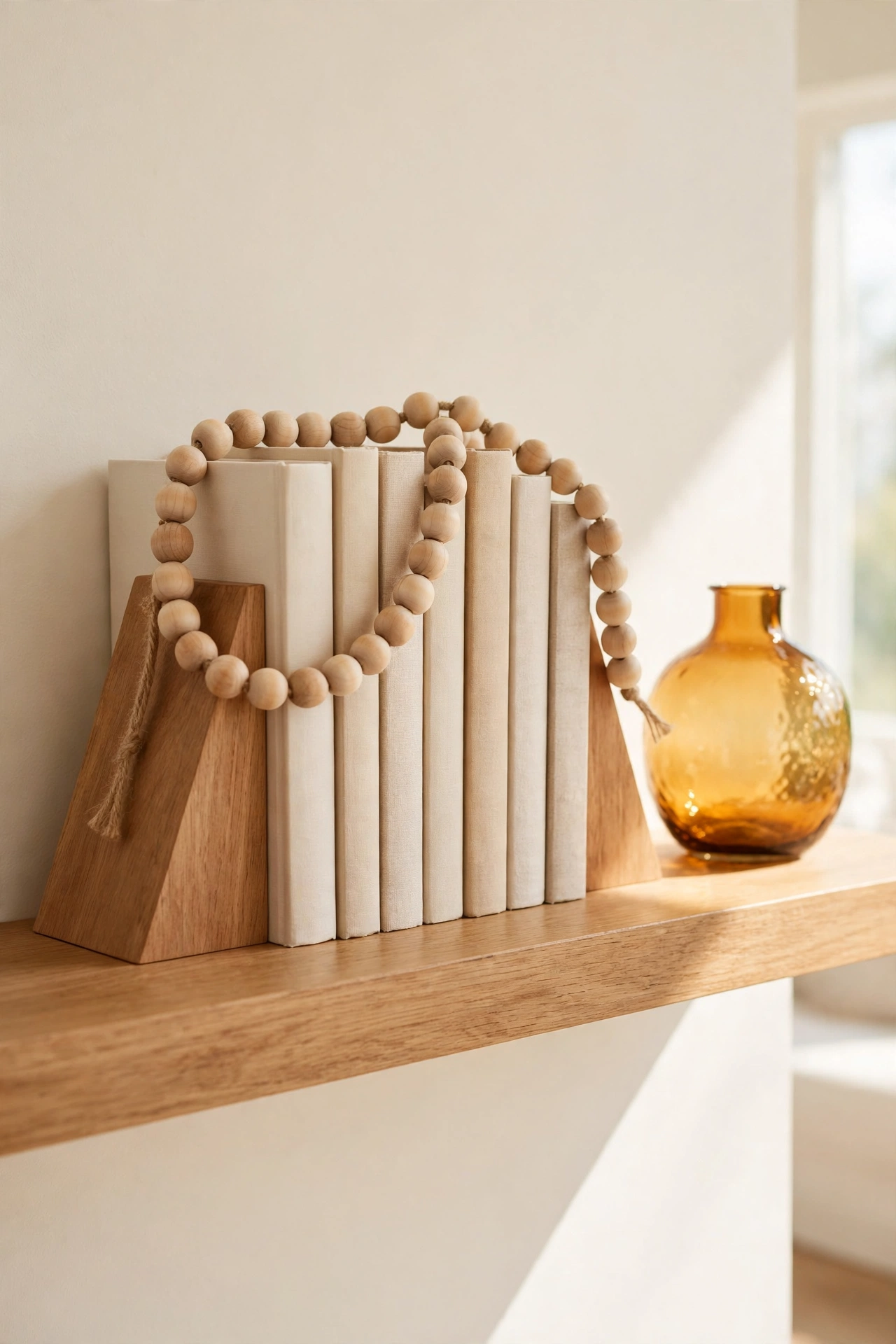
6. String Wooden Bead Bookends
Wooden bead bookends combine a solid base with a pretty beaded detail. Build a simple L-shaped wood base, then drape a strand of large wooden beads over the top edge or glue beads along the front face. The beads add a soft, crafted touch that suits Scandinavian and boho rooms.
Use beads in natural wood for a calm look, or paint a few beads in terracotta or sage for a gentle pop of color. A bead garland draped nearby ties the whole shelf together. For more beaded projects, see these DIY wooden bead decor ideas for shelves and tables.
7. Build Bookends from Old Bricks
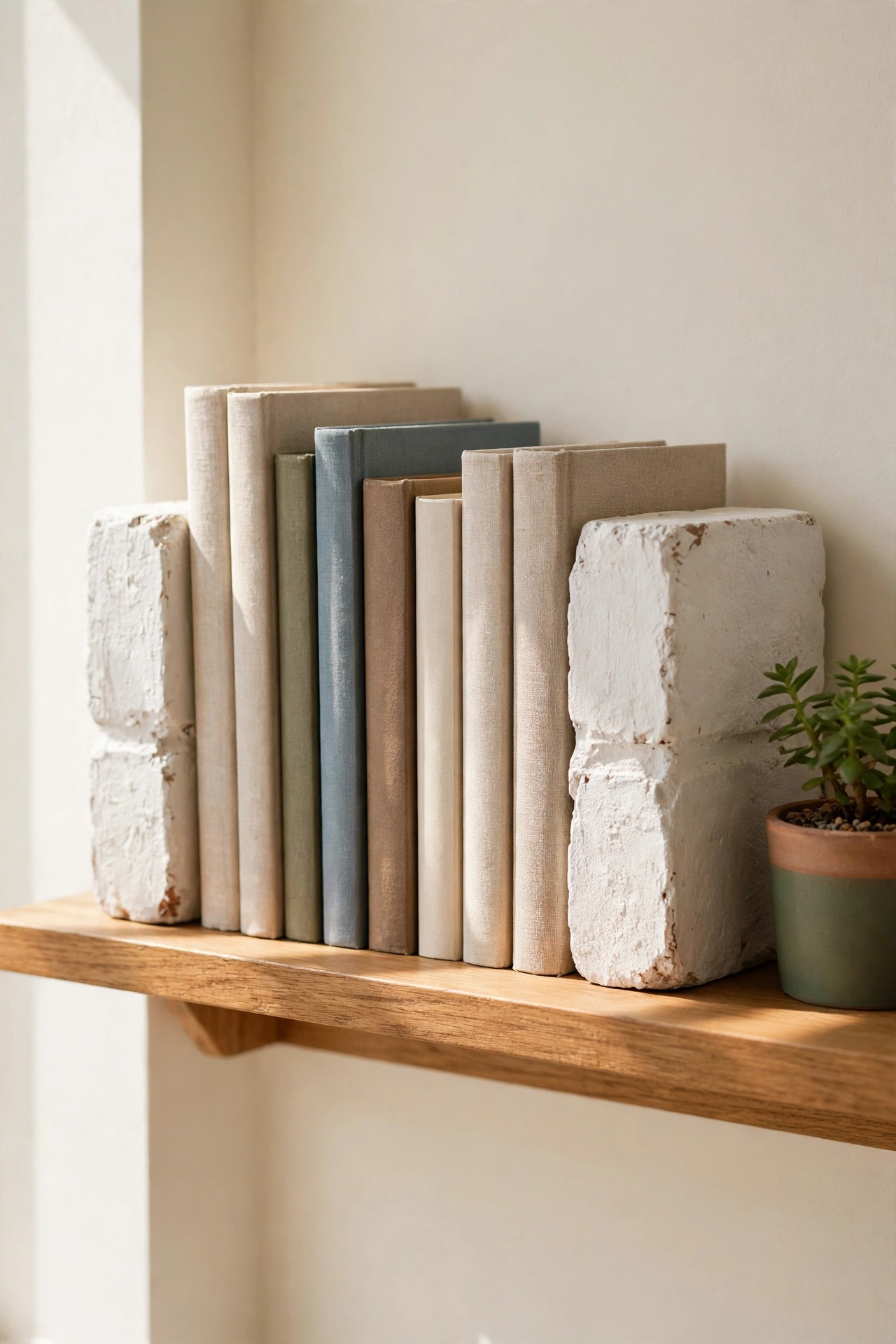
Old bricks make wonderfully heavy bookends with almost no work at all. Clean a pair of bricks, let them dry, and stand them on end at each side of a row of books. Their weight holds even the tallest books upright without sliding.
Paint the bricks white or cream for a clean look, or leave the red clay showing for a rustic feel. A coat of clear sealant keeps dust off the surface and makes the bricks easy to wipe clean. This is one of the cheapest bookend ideas on the list and one of the sturdiest.
8. Craft Bookends from Hardcover Books
A pair of old hardcover books can become bookends themselves. Fold the covers of a thick hardcover back against the spine, glue the pages into a solid block, and stand it upright. Two of these folded books frame a row of novels beautifully.
Choose books with pretty covers in colors that match your room, or wrap the covers in kraft paper for a uniform look. This project is perfect for damaged books that are too worn to read but too lovely to throw away. The result looks charming and a little bit clever.
9. Turn Terracotta Pots Into Bookends
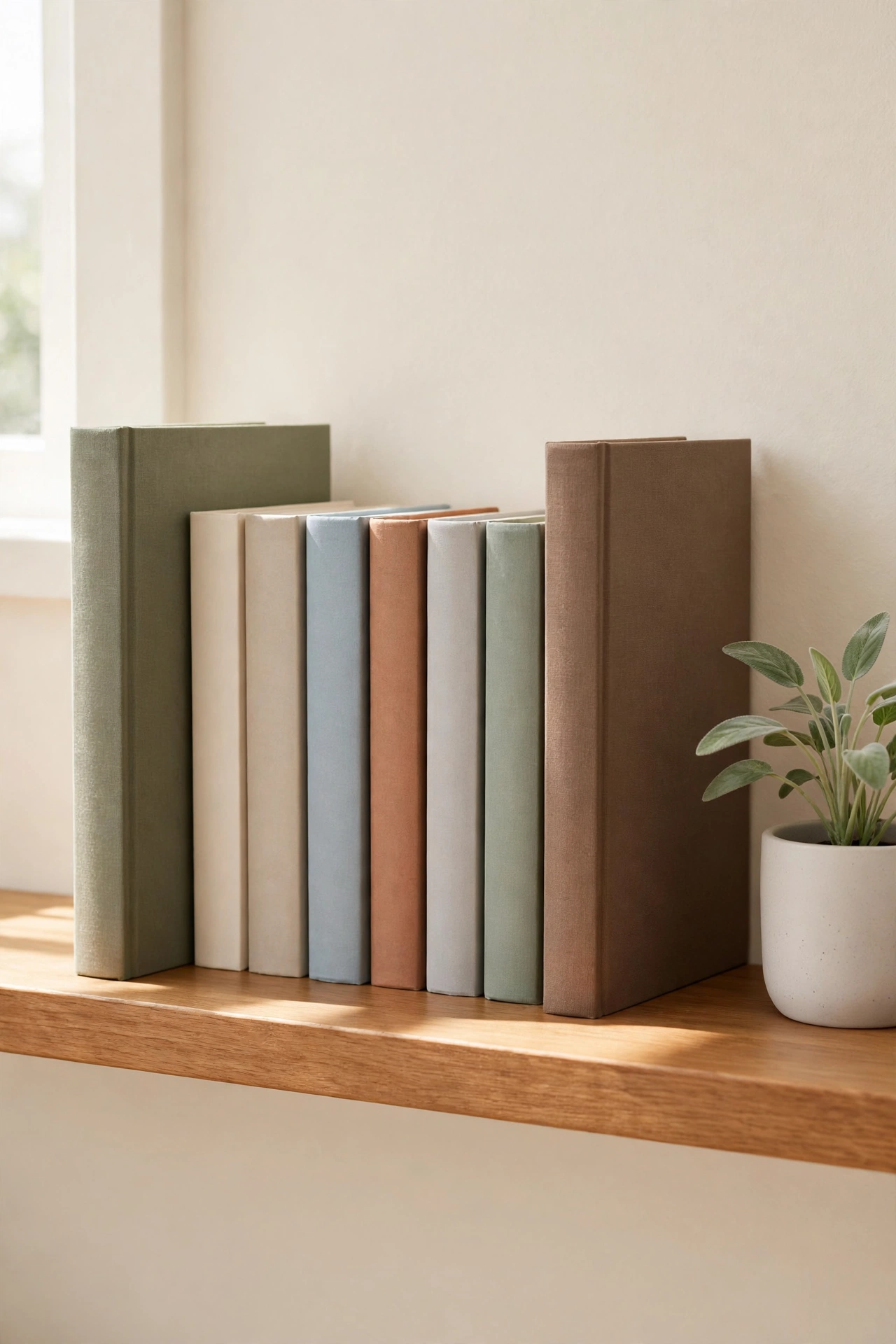
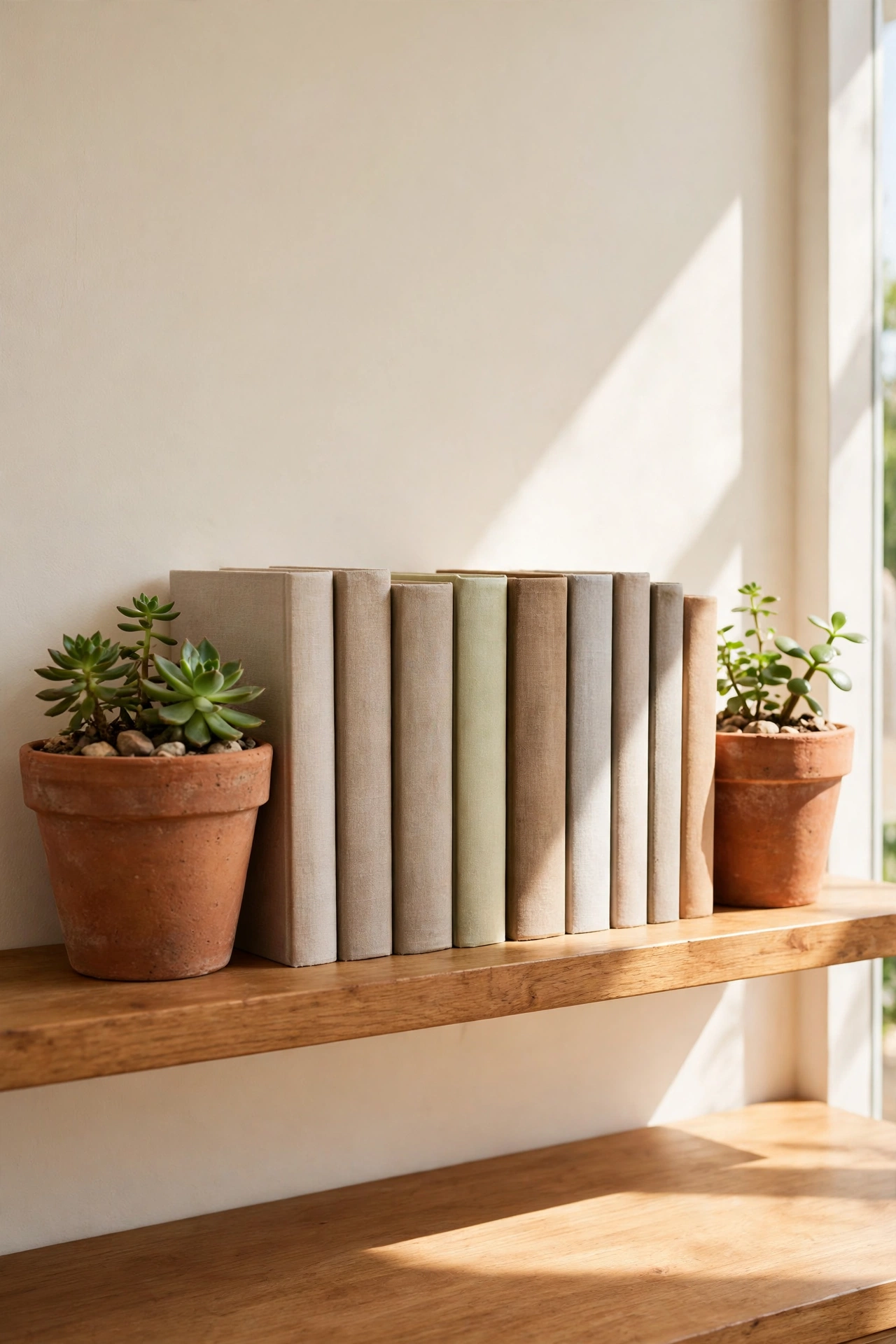
Terracotta pots filled with soil and small plants make living bookends that bring greenery to your shelves. Place one pot at each end of a row of books and the weight of the soil holds the books steady. The warm orange clay looks lovely against cream walls and wood shelves.
Choose small trailing plants or compact succulents that will not grow too large for the shelf. Water them carefully so no moisture reaches your books, and set each pot on a small saucer. Your bookshelf becomes a little garden that changes and grows over time.
10. Make Bookends from Marble Tile Offcuts
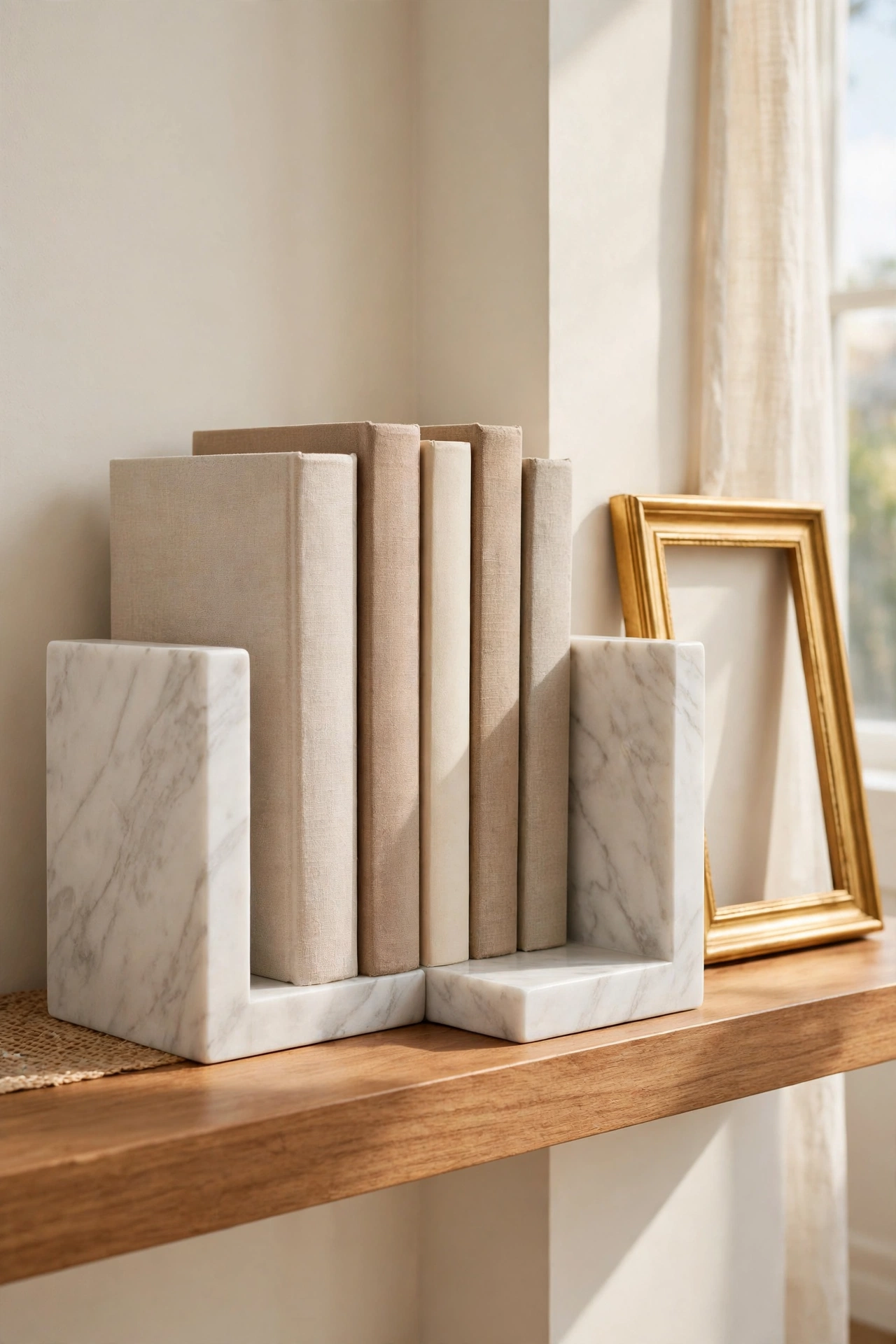
Marble tile offcuts give your shelves an elegant stone look for very little money. Ask a tile shop for leftover pieces, then glue two offcuts into an L-shape with strong adhesive. The polished marble surface catches the light and looks far more expensive than it is.
White marble with soft gray veining suits classic and modern rooms alike. Add small felt pads under each bookend so the stone will not scratch your shelf. These bookends pair beautifully with gold picture frames and cream ceramic vases.
11. Sew Fabric Covered Bookends
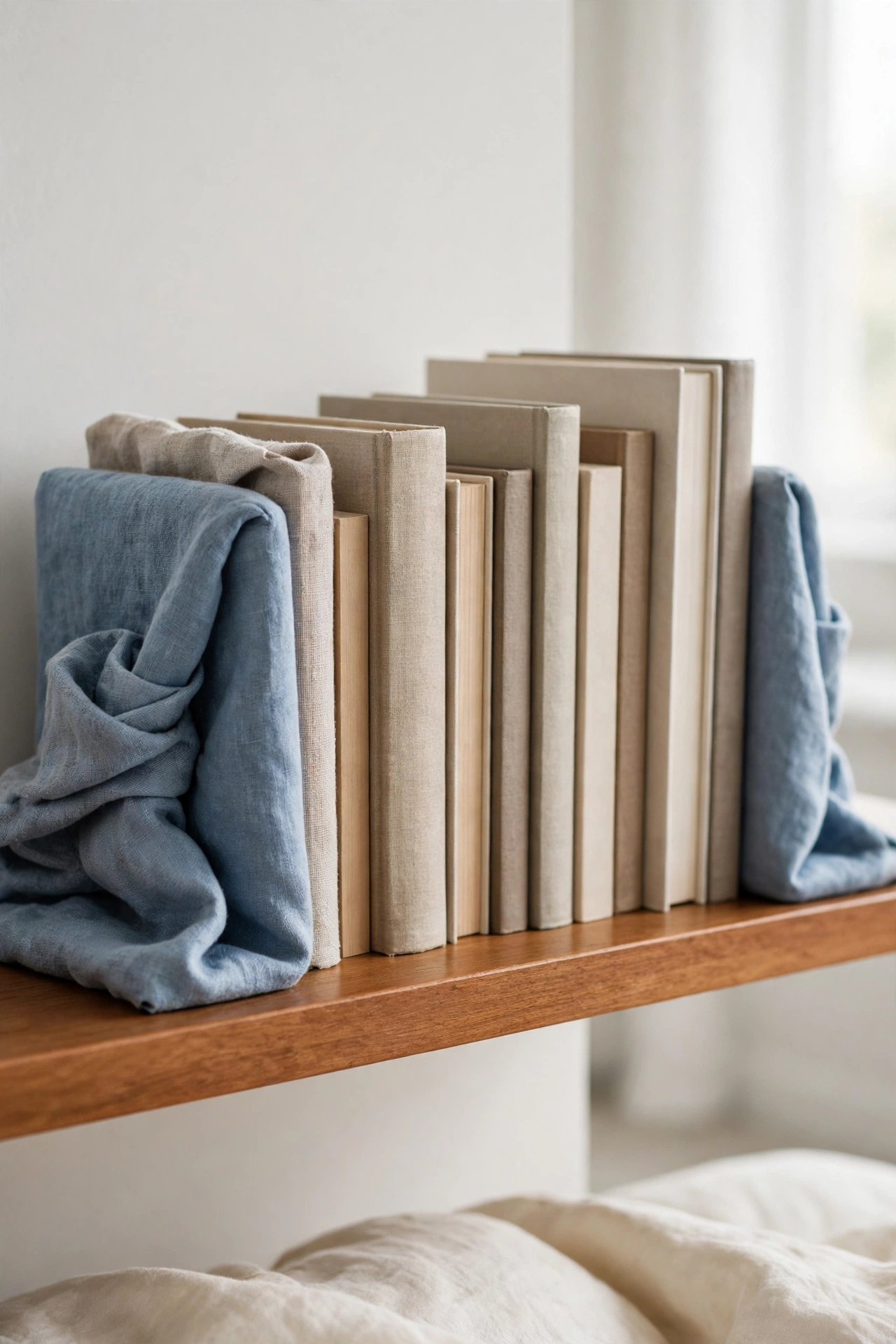
Fabric covered bookends add softness and pattern to a bookshelf. Wrap a wooden or heavy cardboard L-shaped base in linen or cotton fabric, pulling it tight and gluing the edges neatly on the back. Choose a fabric that matches your cushions or curtains for a coordinated look.
Soft blue linen suits calm bedrooms, while a bold floral print adds cheer to a living room shelf. The fabric surface is gentle on book covers and will not scratch wood shelves. You can recover the same bases with new fabric whenever you redecorate.
12. Forge Bookends from Copper Pipe
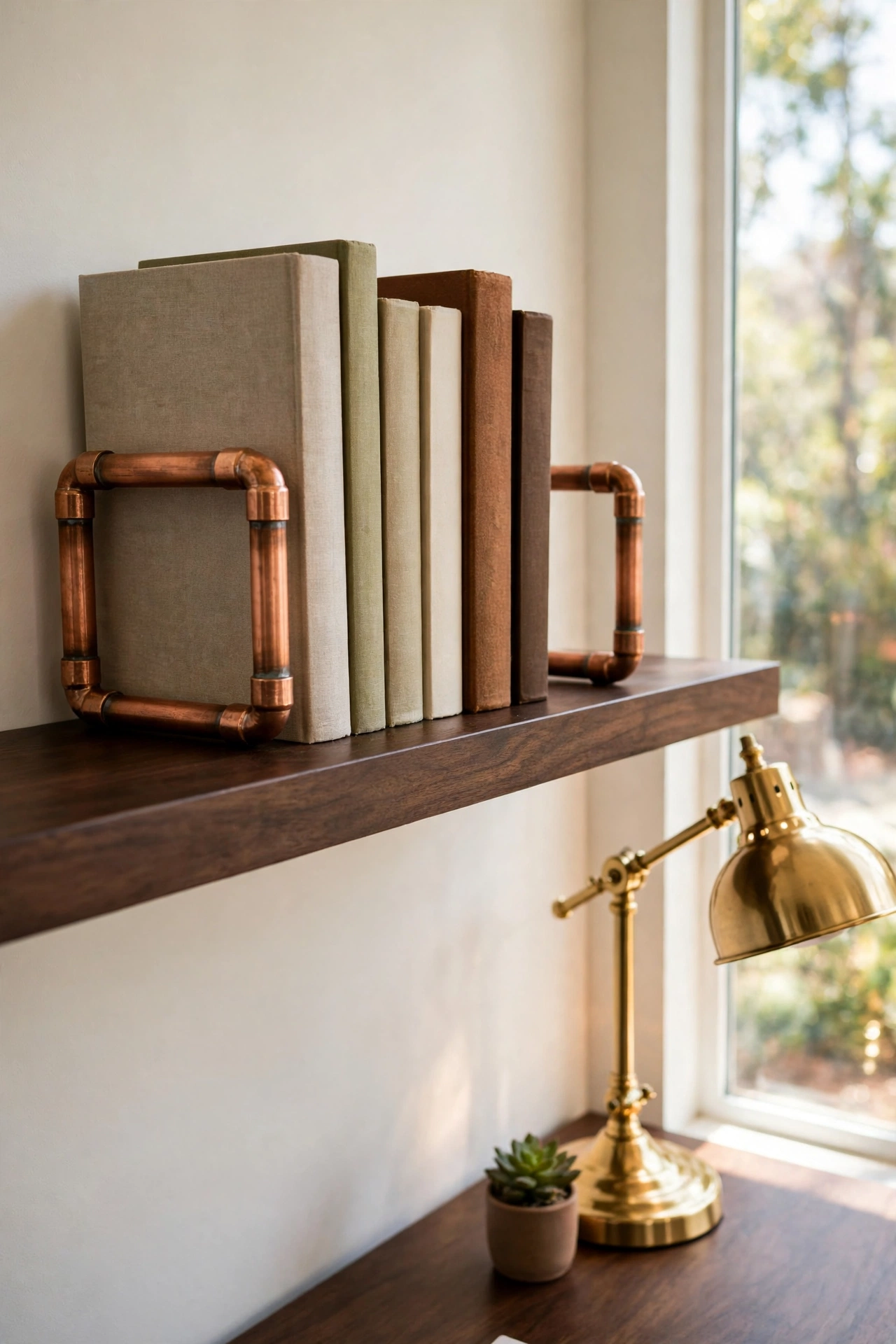
Copper pipe bookends bring an industrial edge to modern shelves. Cut short lengths of copper pipe, join them with elbow fittings into a sturdy L-shape, and cap the ends. The warm metal glows beautifully in daylight and against dark wood shelves.
Keep the copper polished for a bright shine, or let it develop a natural patina for a more relaxed look. These bookends suit loft style rooms and home offices, especially beside a metal desk lamp. They are surprisingly heavy, so they hold books with ease.
13. Carve Bookends from Tree Branches
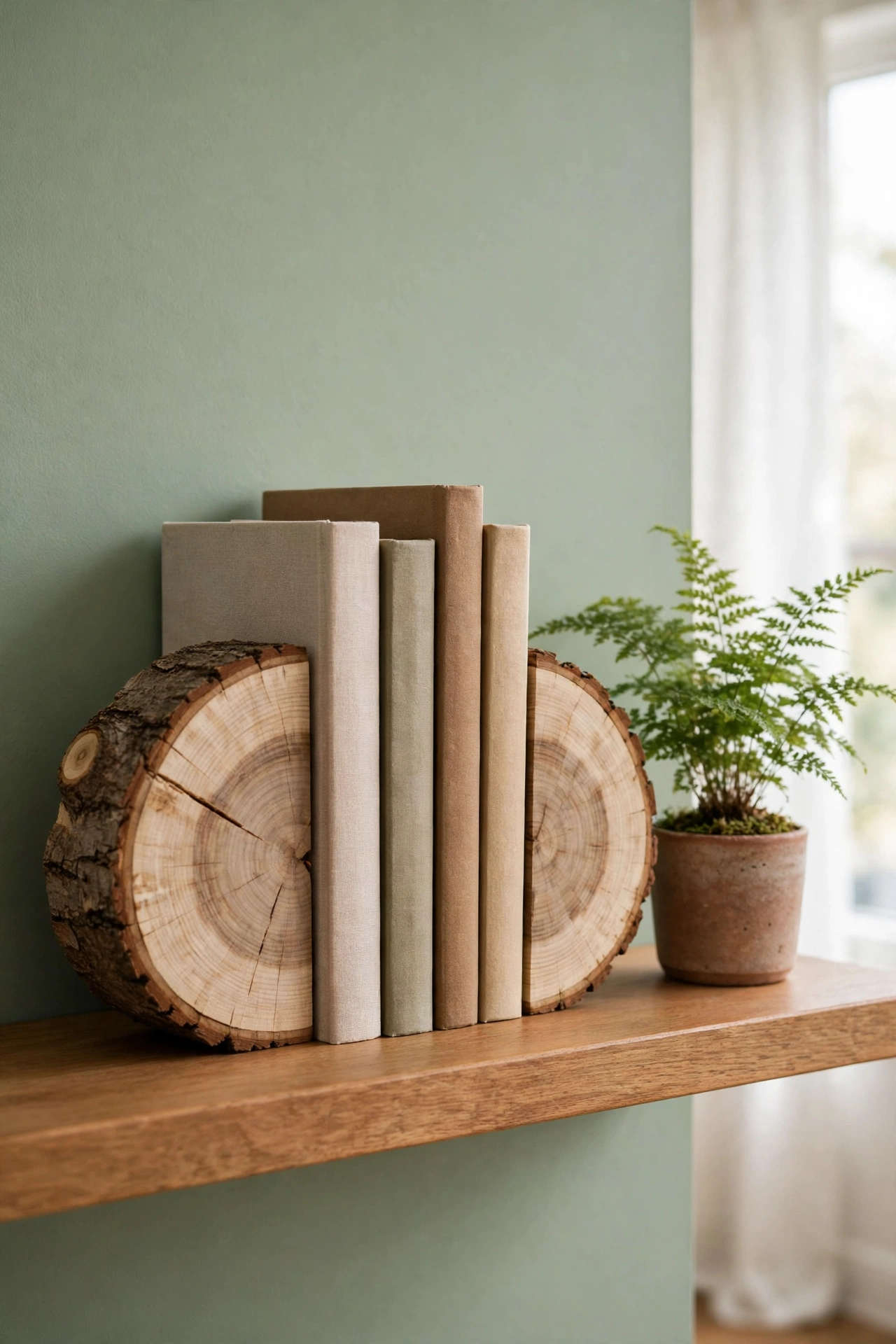
Thick tree branches cut into flat-based pieces make rustic bookends full of natural character. Choose a sturdy branch, cut two sections with a flat bottom and a flat side, then sand them smooth. The bark and grain give each piece a unique woodland look.
Seal the wood with clear oil to protect it and bring out the warm tones. These bookends look wonderful in cabins, farmhouse rooms, and nature inspired nurseries. Pair them with a small potted fern for a shelf that feels like a walk in the woods.
14. Create Bookends from Vintage Toy Cars
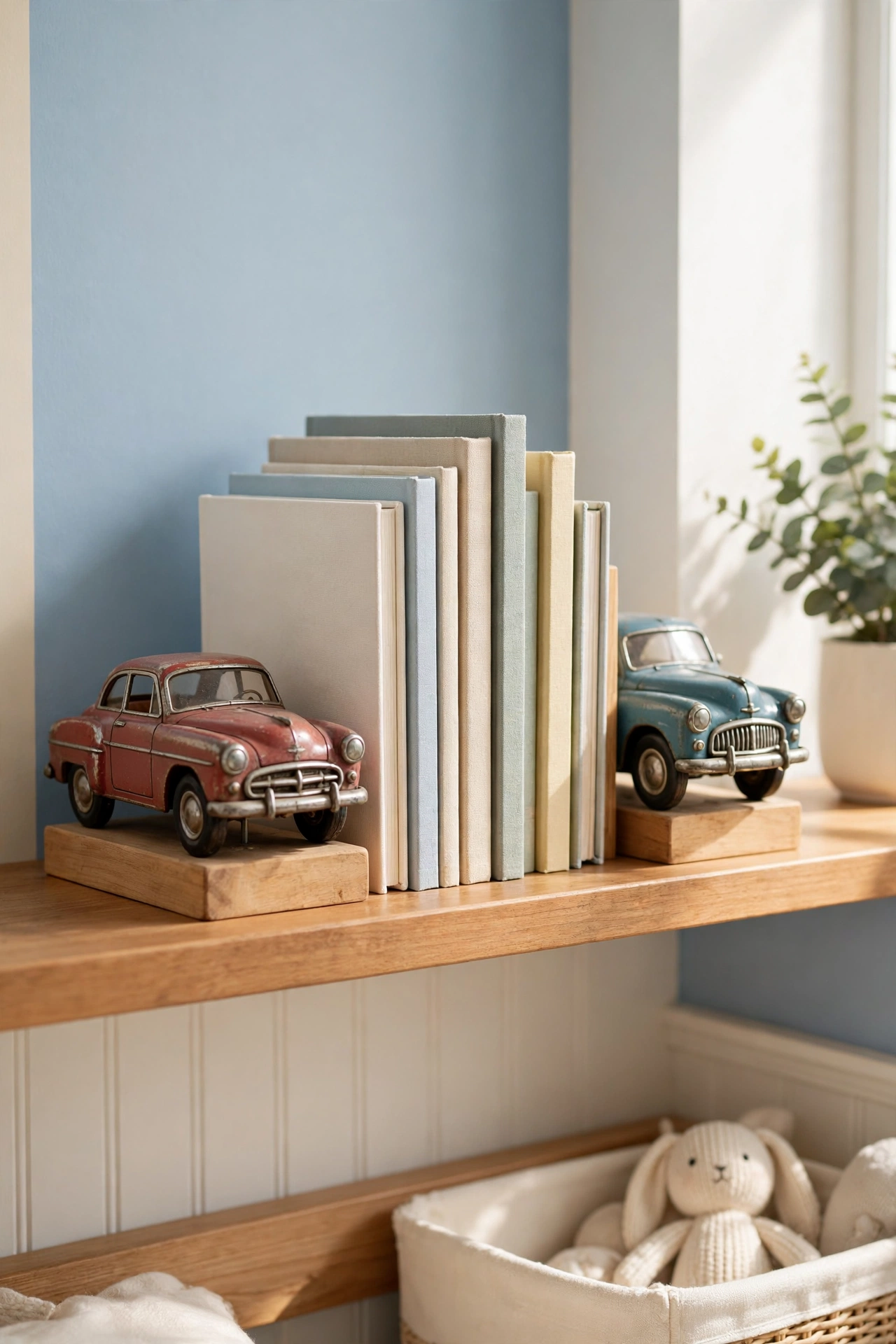
Vintage toy cars glued to a solid wood base make playful bookends for a kids room or a playful family shelf. Choose two matching cars in cheerful colors and fix each one firmly to its own base with strong glue. The cars look like they are holding the books in place all by themselves.
This project is a lovely way to reuse old toys that are too worn for play but still full of charm. Pick cars in red, mustard, or soft blue to match the room. The bookends will make children smile every time they reach for a storybook.
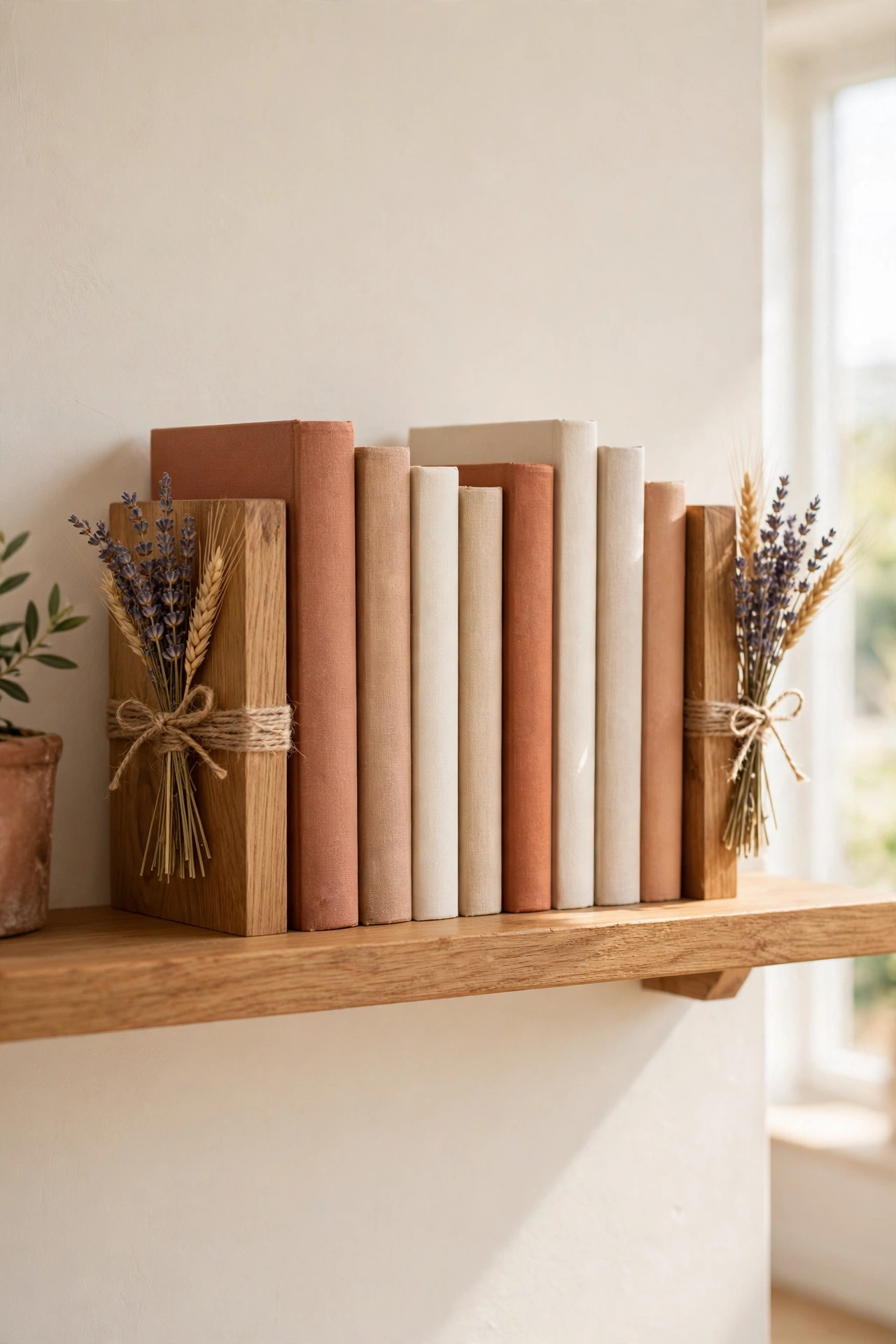
15. Style Bookends with Dried Flowers
Dried flowers turn simple bookends into a romantic shelf display. Attach a small bundle of dried lavender, wheat stems, or pampas grass to the front of a plain wooden bookend with twine. The dried stems add height, texture, and a soft natural fragrance.
Choose flowers in warm tones that match your room, and keep the bundles small so they do not topple the bookends. This idea works beautifully in bedrooms and living rooms with a cottage or French country feel. Replace the bundles each season for a fresh look.
16. Make Bookends from Leather Scraps
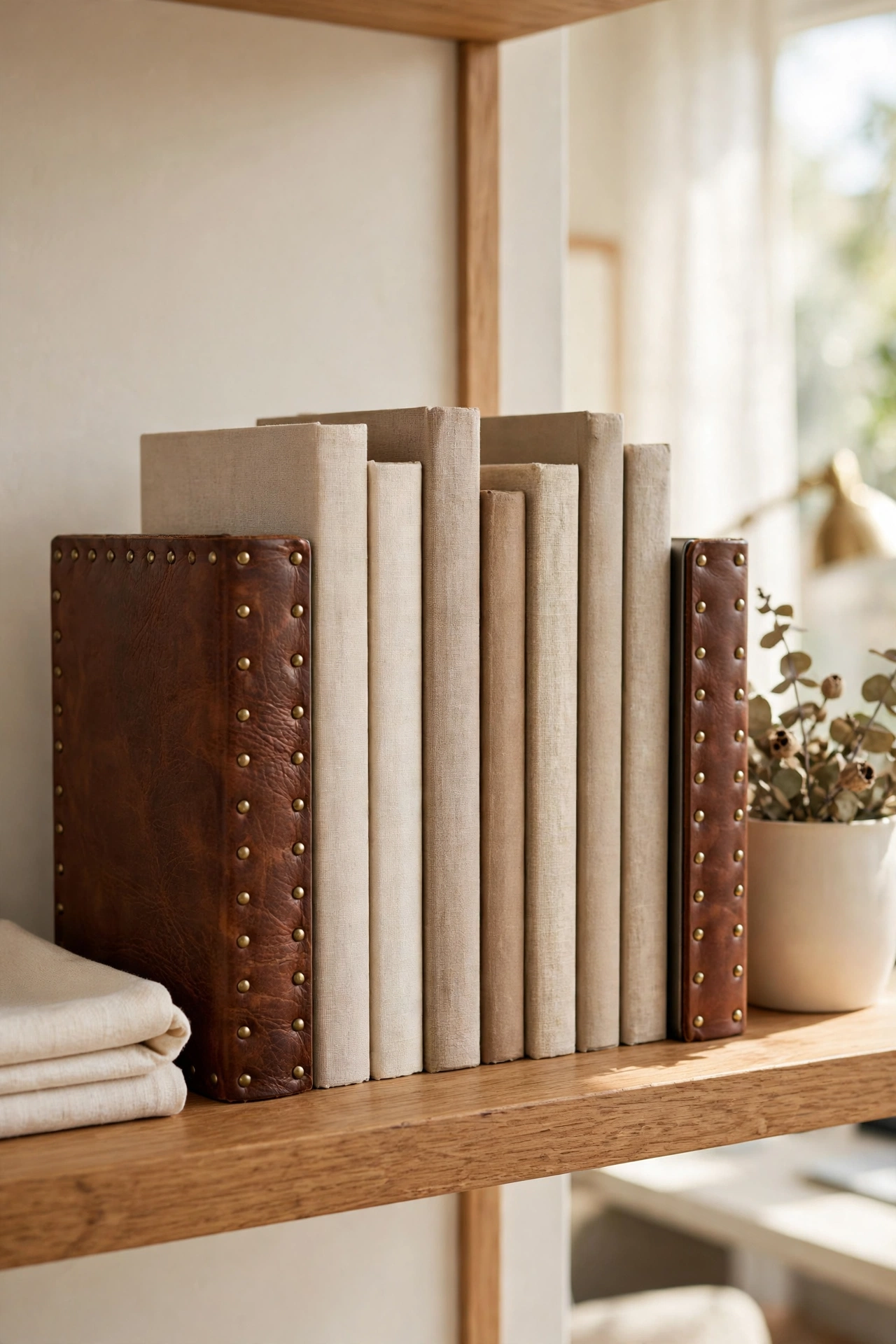
Leather wrapped bookends look rich and refined on a home office shelf. Wrap a heavy wood or metal base in a piece of leather, glue it smoothly around the edges, and add a row of small brass studs for detail. The leather surface feels lovely and ages beautifully.
Warm brown leather suits traditional studies, while black leather fits sleek modern offices. The weight of the base plus the grip of the leather keeps rows of heavy reference books standing tall. This is a project that looks like a shop bought luxury piece.
17. Decorate Bookends with Pressed Leaves
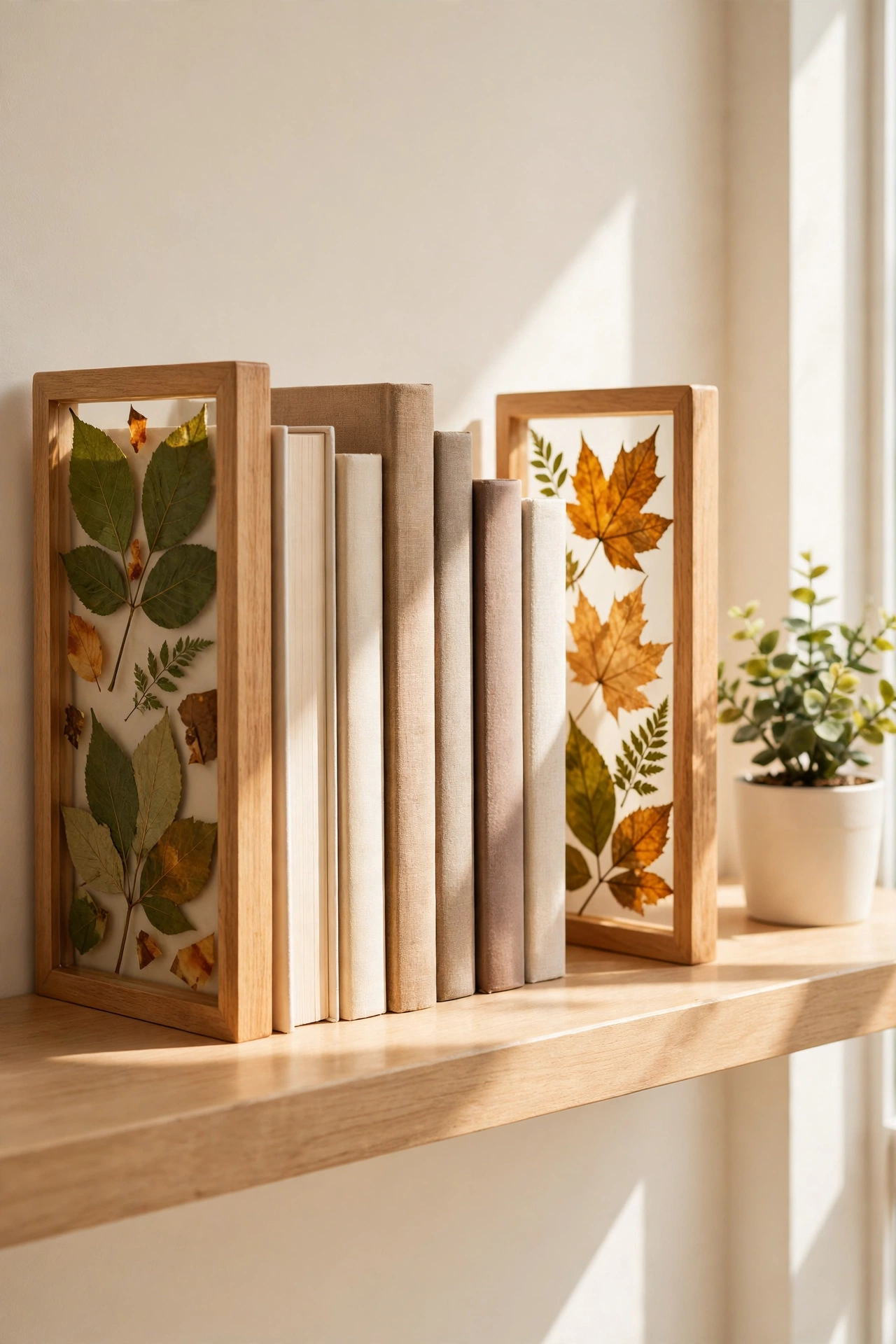
Pressed leaves decoupaged onto wooden bookends create a delicate botanical display. Glue pressed leaves onto a painted wood base, then seal them with several coats of clear decoupage medium. The leaves keep their soft green and amber tones under the clear finish.
Press the leaves flat for a week before you start so they sit smoothly on the wood. This project suits nature lovers and looks lovely in sunrooms and garden inspired living rooms. Each bookend becomes a small piece of art that celebrates the outdoors.
18. Style a Reading Nook Shelf With Bookends
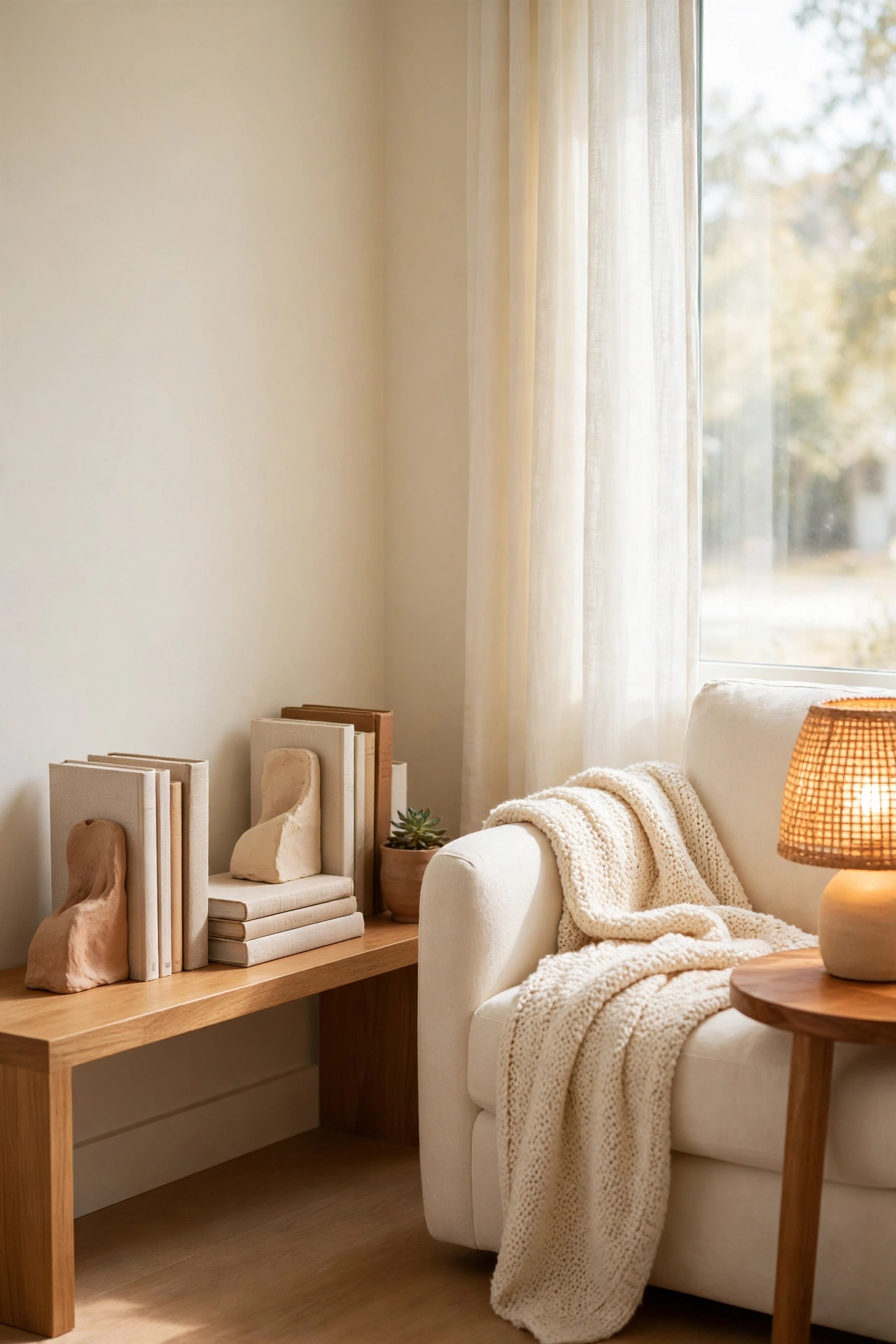
A reading nook shelf is the perfect home for your handmade bookends. Arrange a pair of bookends on a low shelf beside a comfortable armchair, a soft throw, and a warm lamp. The bookends hold your current reads upright and make the nook feel finished and inviting.
Mix two different bookend styles on the same shelf for a collected look, such as a wood pair on one side and a clay pair on the other. Keep the shelf tidy so the bookends and books stay the focus. For the full cozy setup, see these budget reading nook ideas that create a calm corner for very little money.
Conclusion
Beautiful bookends do not have to come from a store or cost a lot of money. From poured concrete and reclaimed wood to rope, clay, and old bricks, everyday materials can hold your books with style. The best bookends are the ones that match your room and make you smile when you see them.
Pick one idea from this list and make a pair this weekend. Start simple, enjoy the process, and let your shelves tell a story about the home you love. Once you see how lovely handmade bookends look, you may want to make a pair for every shelf in the house.
Frequently Asked Questions About DIY Decorative Bookends for Stylish Bookshelves
What makes a good DIY bookend?
A good DIY bookend is heavy, stable, and has a flat base that grips the shelf. Materials like concrete, brick, stone, and thick wood work best because their weight holds books upright. A tall back plate also helps, since it supports more of the book spine and keeps tall books from tipping.
How heavy should bookends be?
Each bookend should weigh at least one to two pounds for paperbacks and two to four pounds for large hardcovers. Heavier is better when the row of books is long or the books are tall. If a bookend slides easily when you push it, add weight to the base or add a non slip pad underneath.
Can I make bookends without power tools?
Yes, many bookend ideas need no power tools at all. Bricks, terracotta pots, rope wrapped bases, clay shapes, and fabric covered blocks can all be made with glue, paint, and simple hand tools. Ask a hardware store to cut wood or tile pieces to size if you want to skip sawing at home.
How do I keep bookends from scratching my shelves?
Stick small felt pads or cork sheets under each bookend to protect wood shelves. Sand the bottom edges of wood and concrete bookends until they feel smooth. For stone and metal bookends, a full felt base works best and also stops the bookends from sliding.
What is the cheapest way to make decorative bookends?
Old bricks, spare wood offcuts, and terracotta pots are the cheapest options, and many people already have them at home. A coat of paint or a wrap of rope turns these free materials into stylish bookends for almost no cost. Thrift stores are another good source of cheap wood, metal, and ceramic pieces to repurpose.

Hi, I’m Emily! I turn messy corners into cozy, organized spots. DreamNestDecor is where I share simple, practical home ideas — decor, organization, and small-space solutions that work in real life, not just in photos. Every idea here is carefully researched before it’s shared.