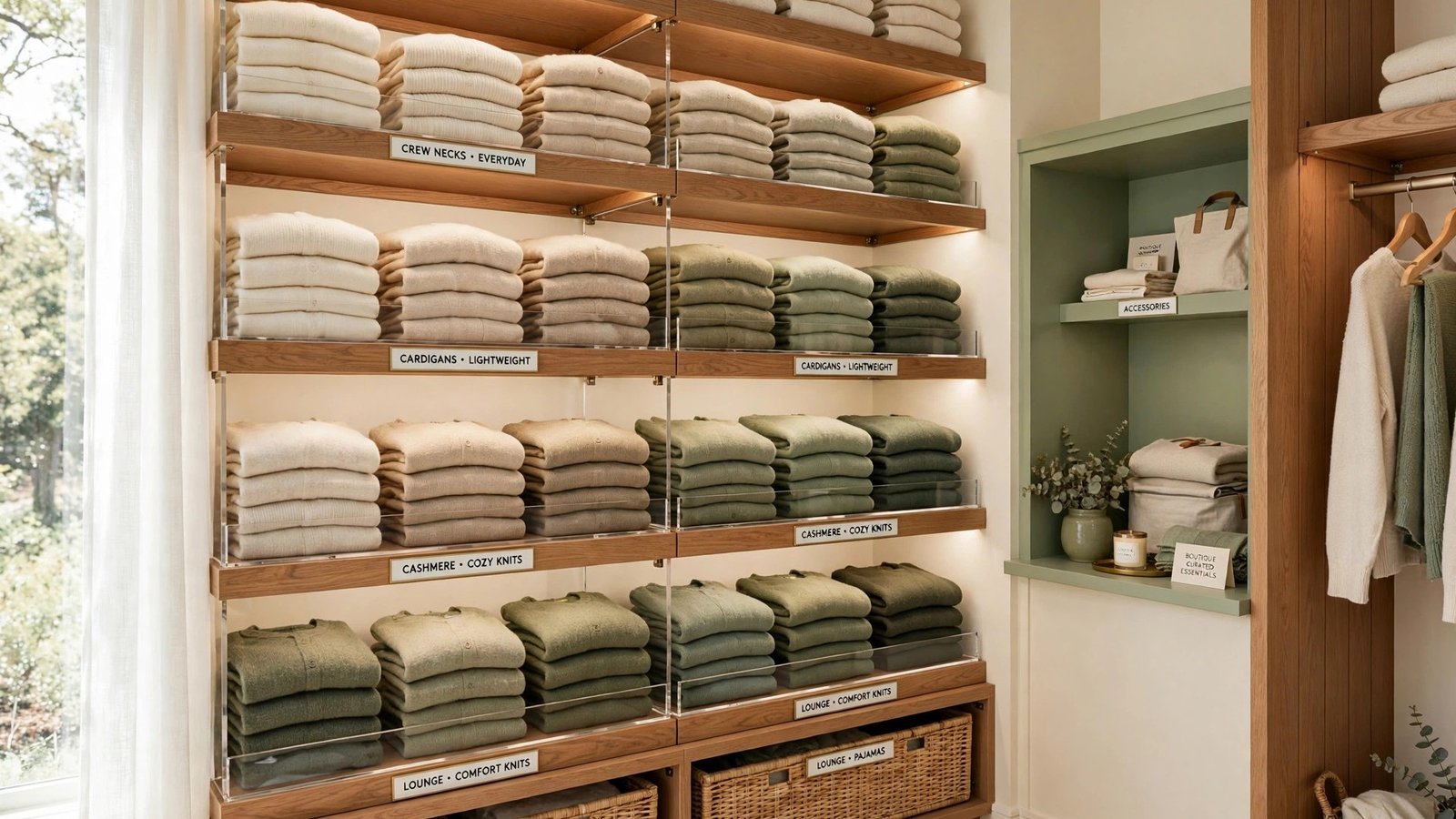
Folded sweaters have a way of turning into leaning towers. You pull one from the middle and the whole stack collapses onto the shelf below. By the end of the week your shelves look tired, and the sweater you actually wanted is wrinkled at the bottom of a pile.
Styling sweater shelves is different from organizing a closet. It blends storage with display, so your shelves look beautiful and every sweater stays easy to grab. The ideas below show you how to fold, stack, divide, light, and label your shelves so they work like a boutique display and hold up through real daily use.
1. File-Fold Sweaters Into Standing Rows
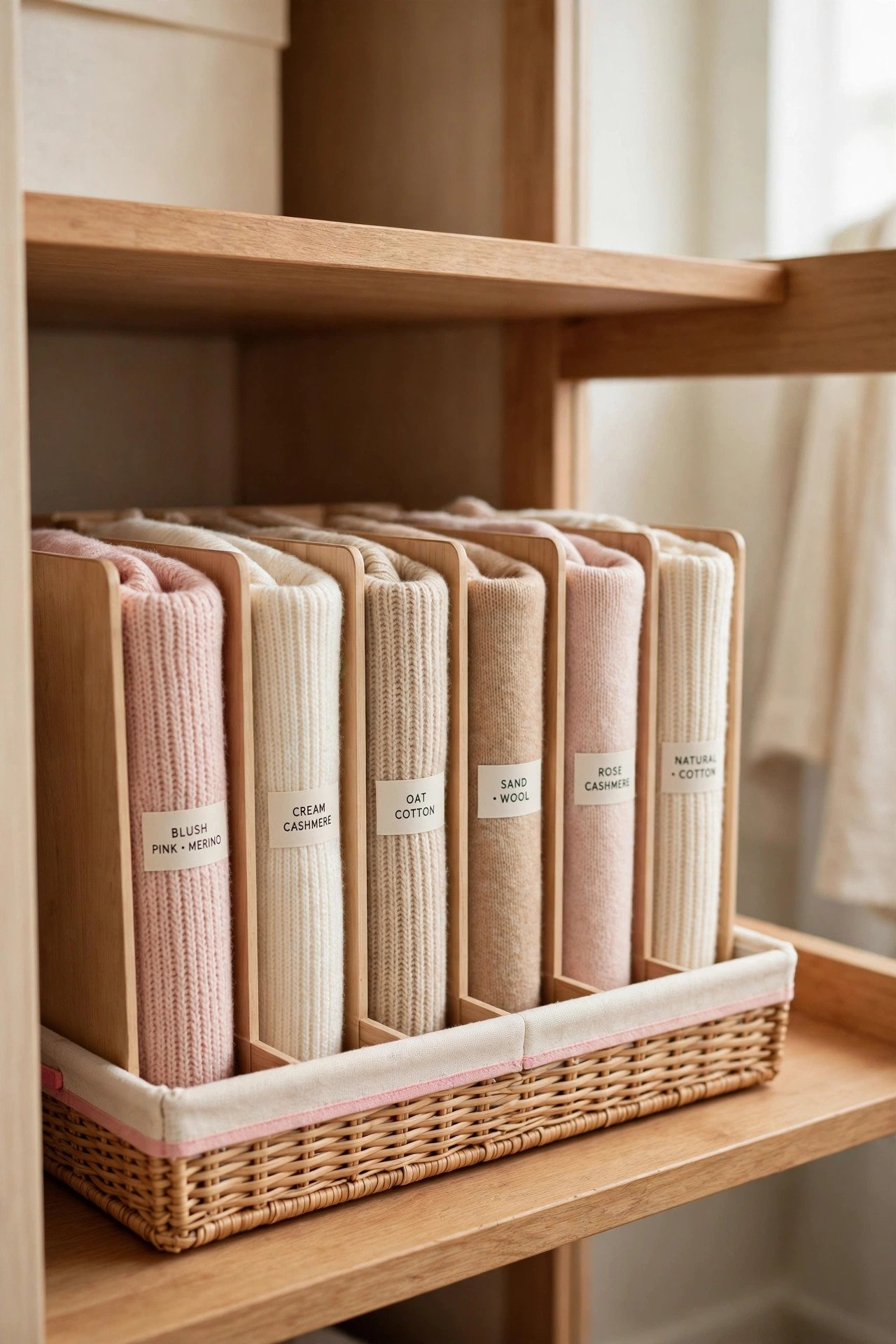
Traditional stacks hide the sweaters at the bottom. File-folding each sweater into a compact rectangle lets them stand upright in a row like files in a drawer. You see every sweater at once and pull one out without disturbing the rest.
Place the rows in a shallow basket or between two dividers so they stay upright. This method works beautifully for medium-weight knits. Your shelf transforms from a pile into a visible, browsable collection.
2. Add Shelf Dividers Between Stacks
Stacks of sweaters lean and merge without boundaries. Shelf dividers create firm walls between categories, so chunky knits never crush fine ones. Clear acrylic dividers keep the look light and open.
Space the dividers to match your stack widths, usually one category per section. The dividers also stop a tall stack from sliding sideways. When every stack has its own lane, the shelf keeps its shape all week.

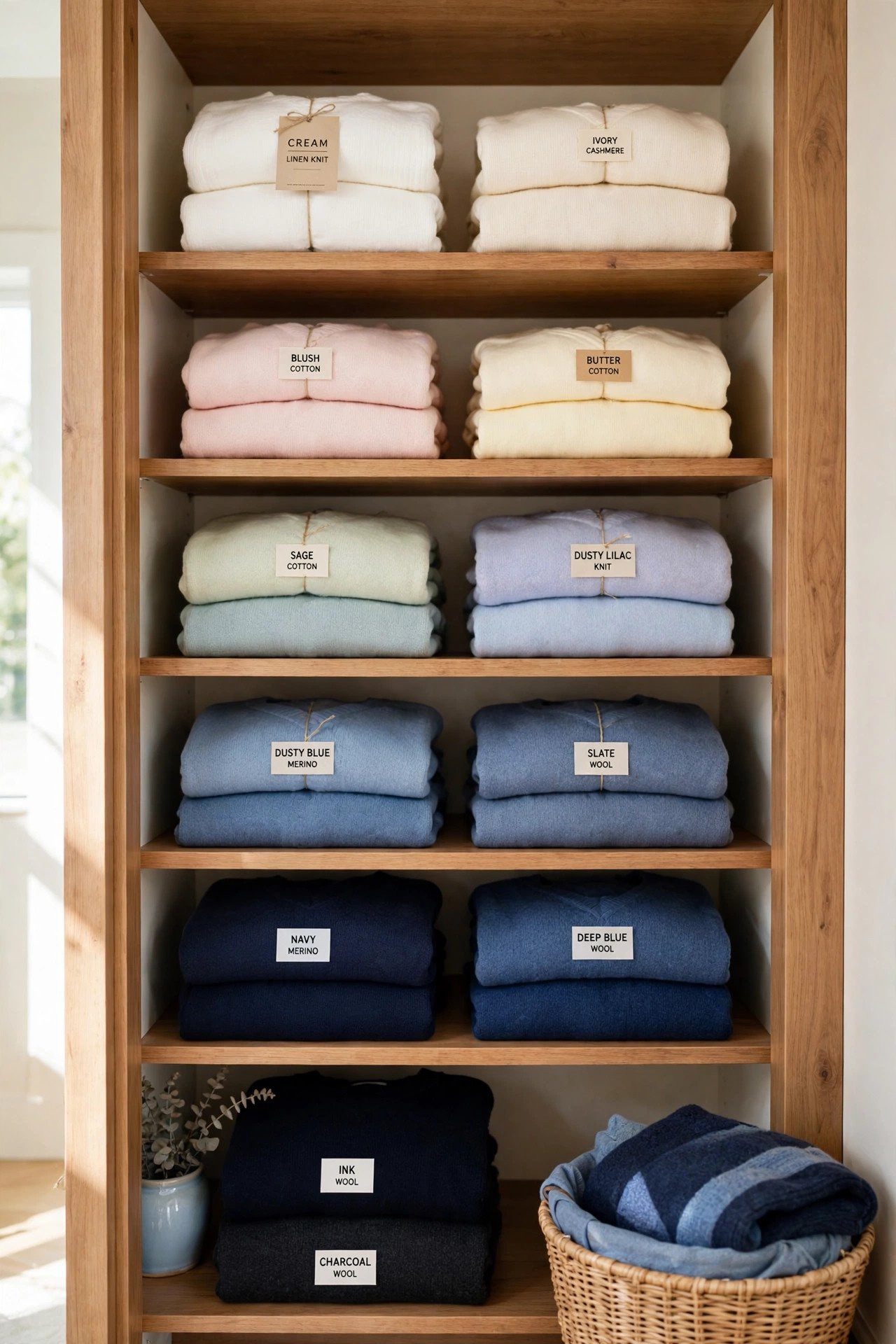
3. Sort Sweaters in a Color Gradient
Arranging sweaters from light to dark creates a display that looks styled on purpose. Whites and creams lead into pastels, then brights, then deep tones. You find the shade you want in seconds.
The gradient also makes a full shelf feel calm instead of chaotic. Within each color group, order by weight so heavy knits sit at the bottom. This styling habit turns storage into decor without any extra cost.
4. Keep One Sweater Per Cubby
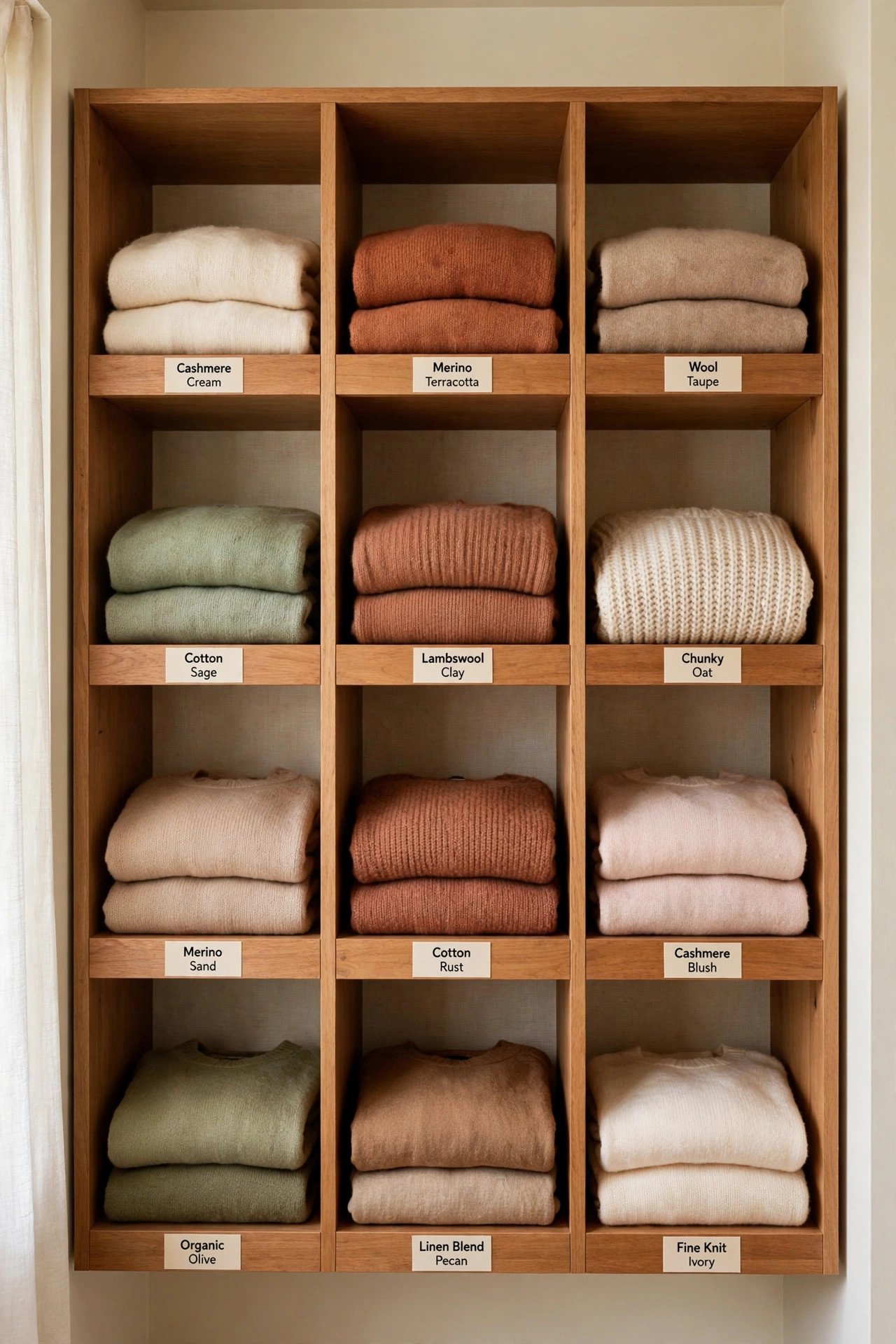
Cubby shelves give each sweater its own frame, like a gallery wall for knits. One sweater per cubby means nothing stacks, nothing leans, and nothing wrinkles under weight. Every piece stays visible and grab-ready.
This works best for your most-worn favorites at eye level. Reserve deeper cubbies for bulky cable knits. When each sweater has a defined home, putting laundry away takes seconds instead of minutes.
5. Roll Fine Knits in Shallow Baskets
Delicate fine-knit sweaters snag and stretch when stacked under heavier ones. Rolling each one and placing the rolls in a shallow basket protects the fabric. The basket keeps the rolls together and easy to carry.
Choose baskets that match your closet palette so the shelf looks cohesive. Label each basket by category, like cardigans or turtlenecks. Rolling also lets you fit more knits into a single shelf without crushing them.
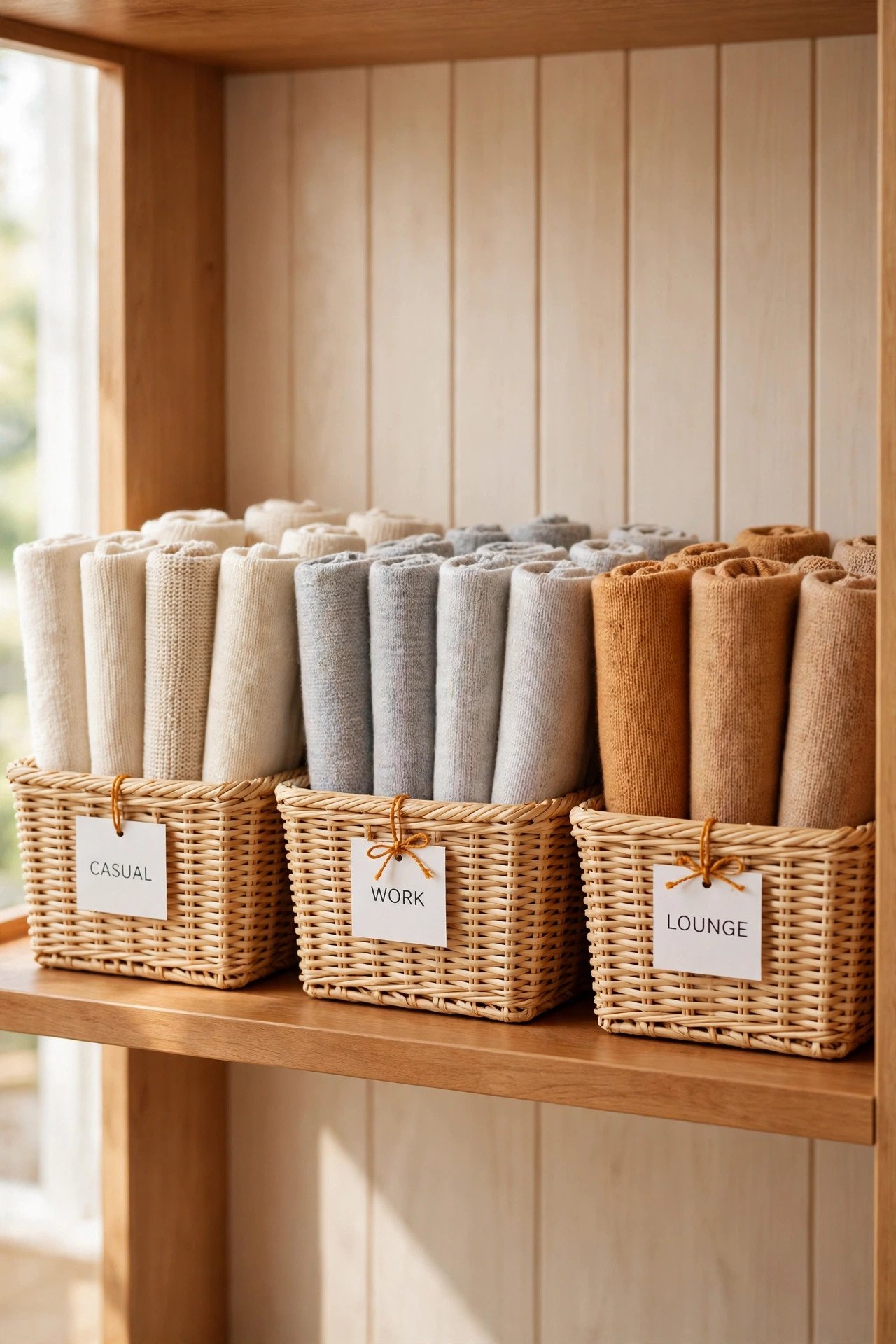
6. Label Each Shelf With a Tag
Small printed tags on each shelf edge tell everyone where each category lives. Cardigans, pullovers, and vests each get a labeled zone. The system survives busy weeks because putting things back is obvious.
Use clip-on tags or adhesive labels that match your shelf finish. Keep the wording short and clear. Labels turn a pretty shelf into a working system that the whole household can maintain.
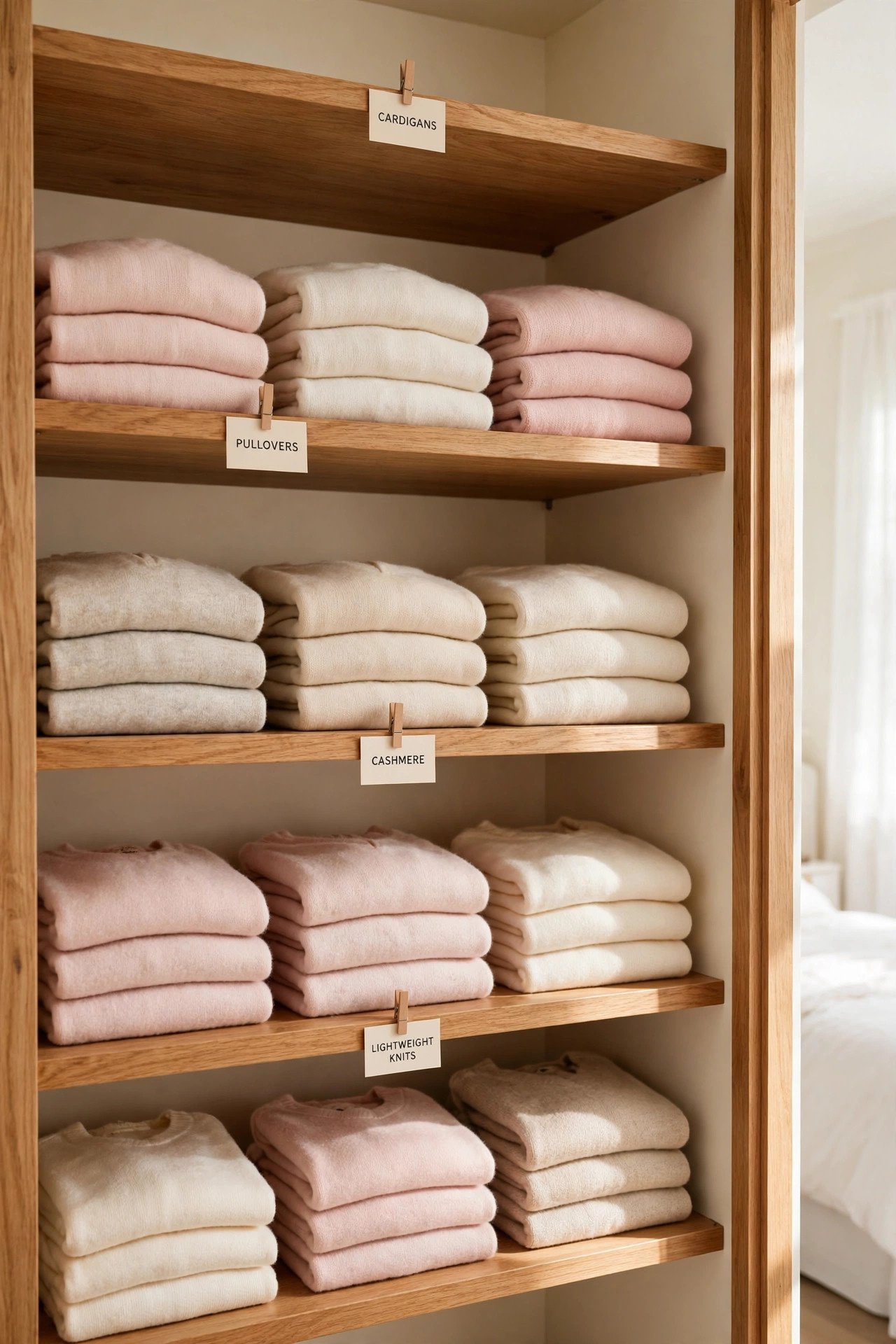
7. Reserve the Top Shelf for Heavy Wool
Heavy wool sweaters crush everything beneath them, so give them their own high shelf. The top shelf becomes the dedicated zone for the bulkiest knits. Lighter sweaters below never bear that weight.
Fold heavy knits loosely so they keep their loft. A labeled bin on the same shelf can hold wool care items like cedar blocks. Separating by weight protects your knits and keeps every shelf looking crisp.
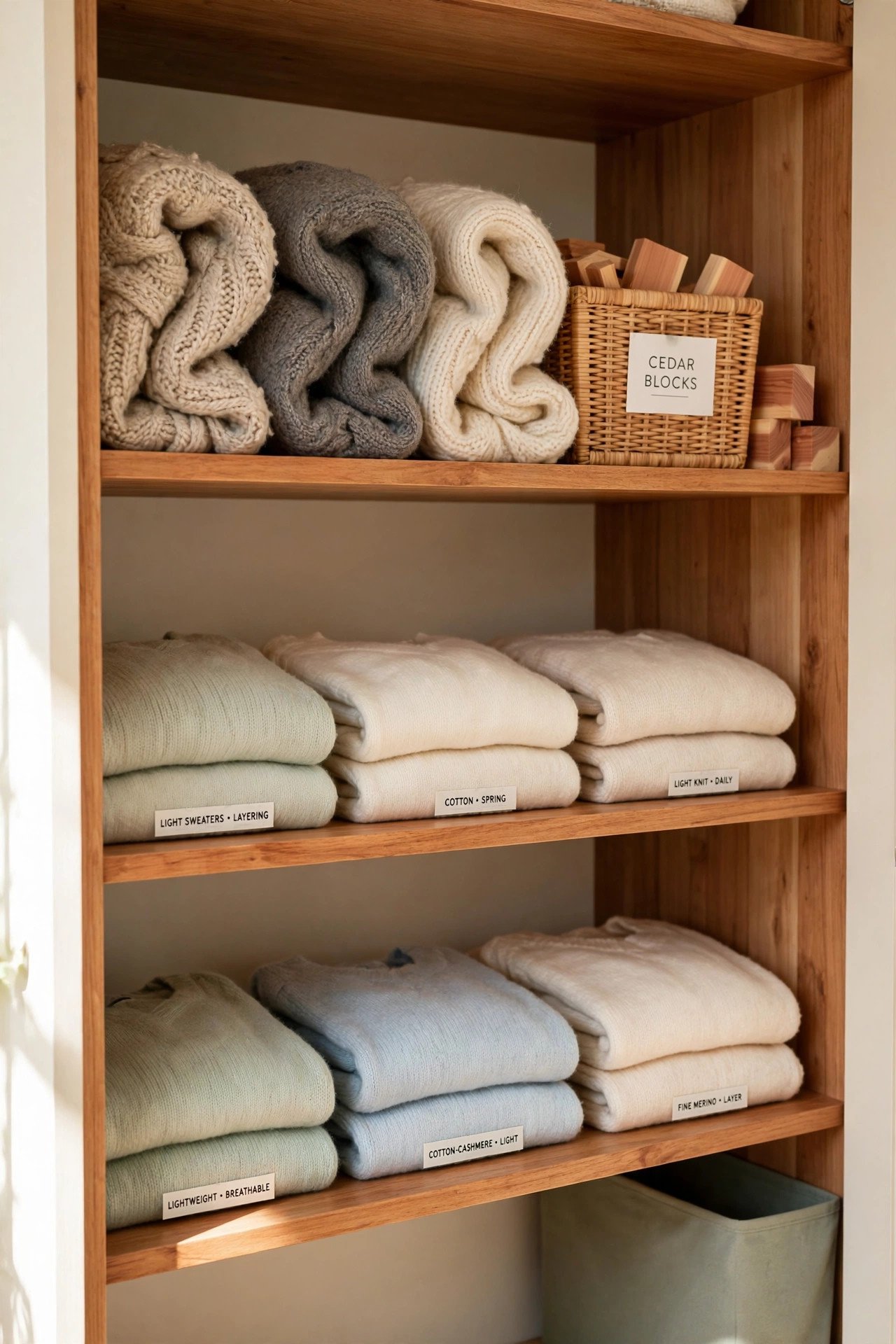
8. Keep Daily Knits at Eye Level
The sweaters you wear most should live where your hands reach naturally. Eye-level shelves hold your weekly rotation, while special-occasion knits move higher or lower. You stop digging through the whole shelf every morning.
Rotate this zone with the seasons so summer knits drop down in spring. Keep the rotation small, around five to seven favorites. When daily sweaters are effortless to reach, the rest of the shelf stays undisturbed.
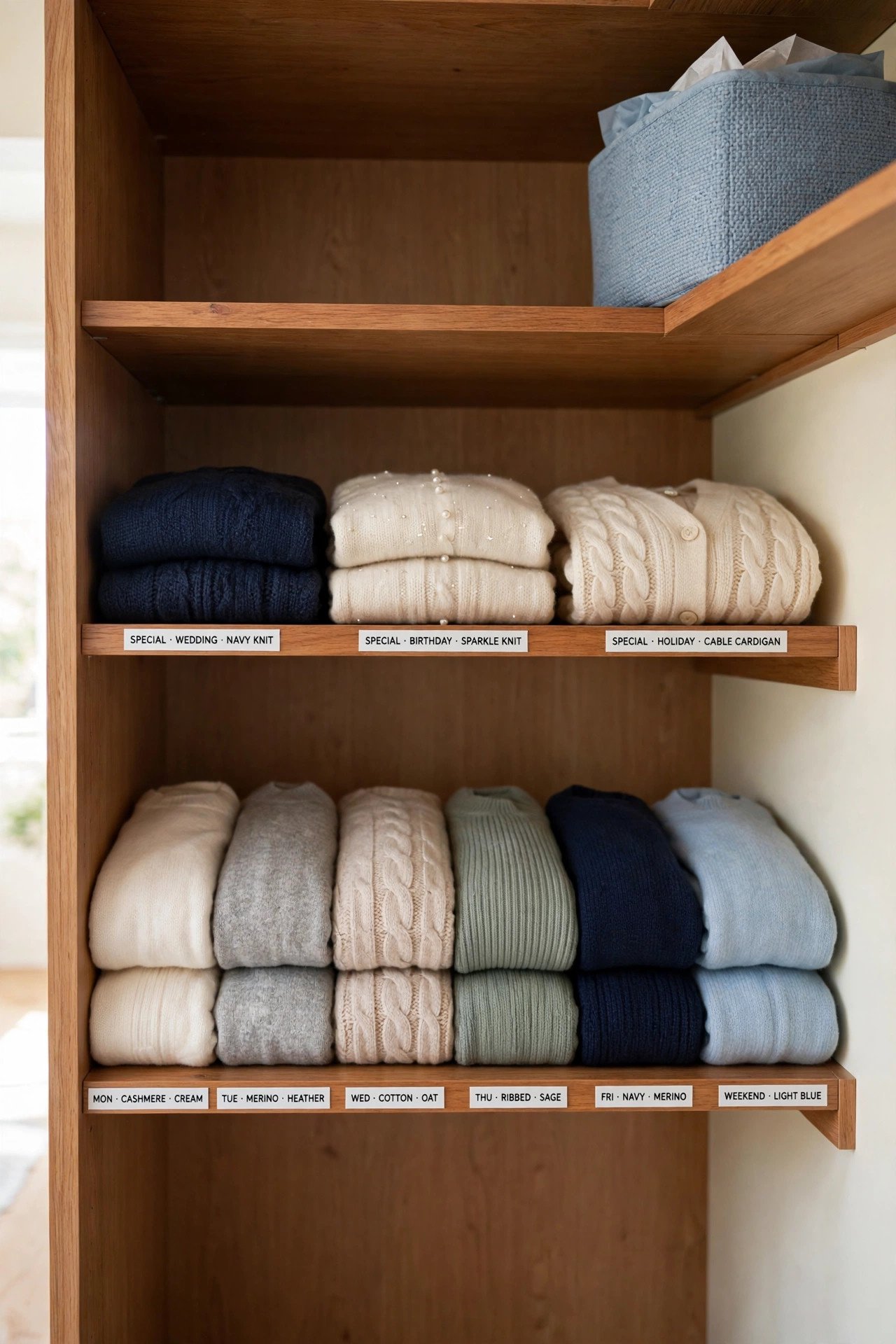
9. Style Shelves With Breathing Room
Overstuffed shelves look cluttered no matter how neatly you fold. Leaving a little empty space between stacks gives each sweater room to be seen. The shelf reads as styled rather than stuffed.
If a shelf is bursting, move a category elsewhere instead of squeezing. Breathing room also makes it easier to pull one sweater without toppling its neighbors. A calmer shelf is easier to maintain and more pleasant to look at.

10. Use Stackable Shelf Risers
Shelf risers create a second level inside a tall shelf. Short stacks sit on the riser while taller stacks use the full height beside it. You double the usable surface without adding a single shelf.
Choose risers in a finish that matches your closet for a seamless look. They work especially well for separating cardigans from pullovers. This simple tool unlocks space you already own but were not using.
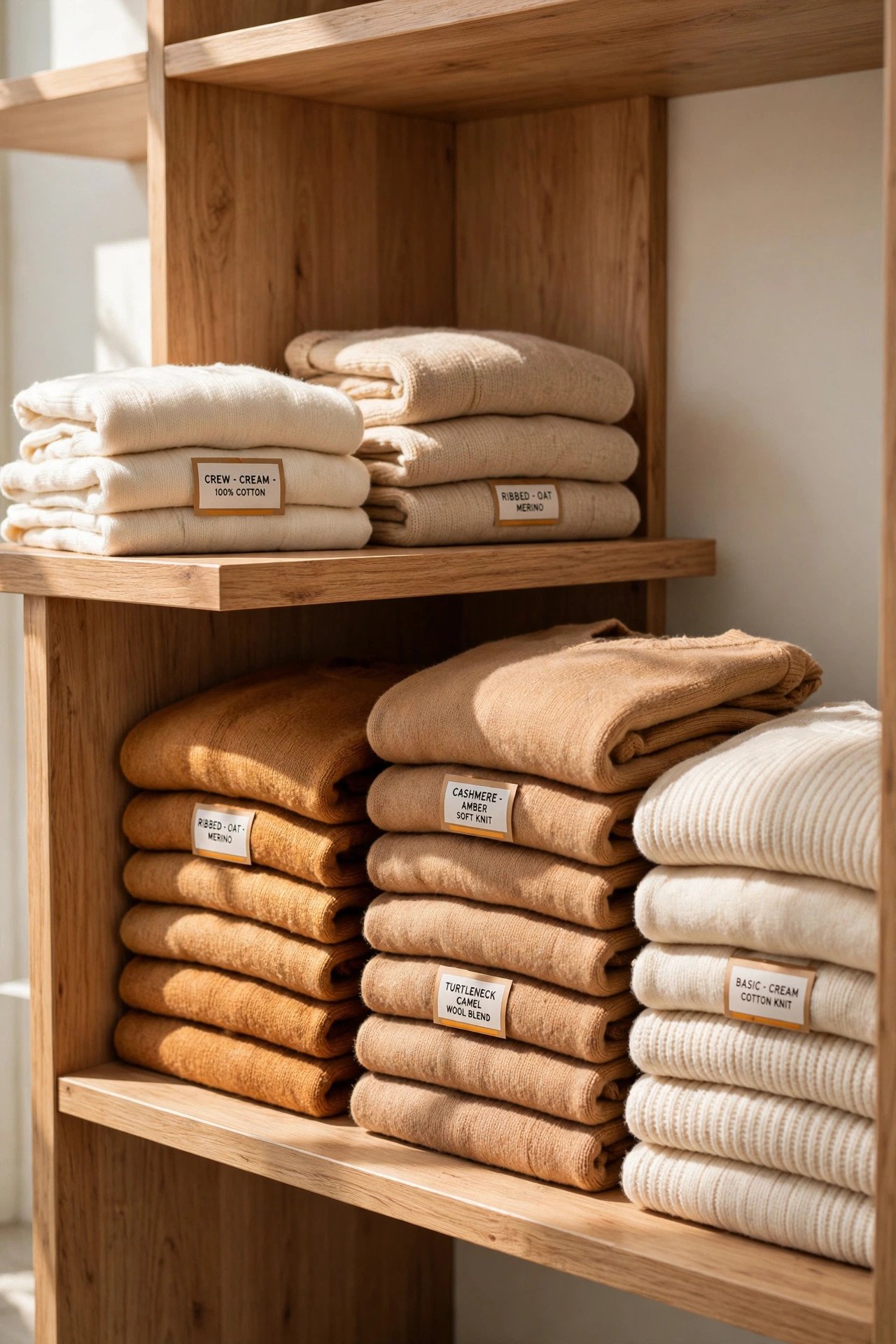
11. Add LED Strip Lighting Under Each Shelf
Under-shelf lighting makes every sweater color read true and every fold look crisp. A slim LED strip along the front edge of each shelf washes the knits in warm light. The display glows like a boutique shelf.
Motion sensors switch the lights on when you open the closet door. The light also helps you tell navy from black on dark mornings. This small upgrade makes your styled shelves look intentional from across the room.

12. Corral Scarves in a Matching Basket
Scarves draped over sweater stacks slide off and wrinkle the knits below. A matching basket on the same shelf gives scarves their own home. Rolled scarves stand upright and stay easy to browse.
Pick a basket that matches your shelf palette so the styling stays cohesive. Sort scarves by weight, with chunky ones at the back. When accessories have a basket, the sweater stacks stay clean and undisturbed.

13. Rotate Sweaters by Season
Keeping every sweater on the shelf all year crowds the prime spots. A seasonal rotation moves off-season knits to a high shelf or a labeled bin. Current-season sweaters take the best positions.
Do the swap when the weather shifts, which takes less than half an hour. Store the off-season group in breathable bins with cedar blocks. A smaller, seasonal shelf is easier to style and faster to browse. The same seasonal logic works for holiday pieces, and moody fall decor ideas show how warm textures carry through autumn styling.

14. Fold Delicates With Tissue Paper
Cashmere and fine merino crease when folded tightly against themselves. A sheet of tissue paper between folds cushions the fabric and prevents hard creases. Your most delicate knits stay smooth between wears.
Store tissue-folded sweaters in their own shelf section away from heavy knits. Replace the tissue once a season to keep it fresh. This gentle method protects the sweaters that cost the most to replace.

15. Give the Shelf a Boutique Corner
One small styled corner lifts the whole shelf from storage to display. A folded throw, a tiny framed print, or a small vase beside the sweater stacks adds personality. The key is restraint, so the corner accents the sweaters instead of crowding them.
Keep the decor minimal and dust-free so it never becomes clutter. A calm styled corner makes the closet feel like a dressing room. This touch works because the sweaters remain the clear stars of the shelf.

16. Use a Folding Board for Equal Stacks
Uneven folds make stacks lean and look messy within days. A simple folding board gives every sweater the same width and height. The stacks line up like books on a shelf.
Fold each sweater around the board, then slide the board out. Matching stack sizes also let you fit more sweaters per shelf. Uniform folds are the fastest way to make open shelves look professionally styled.
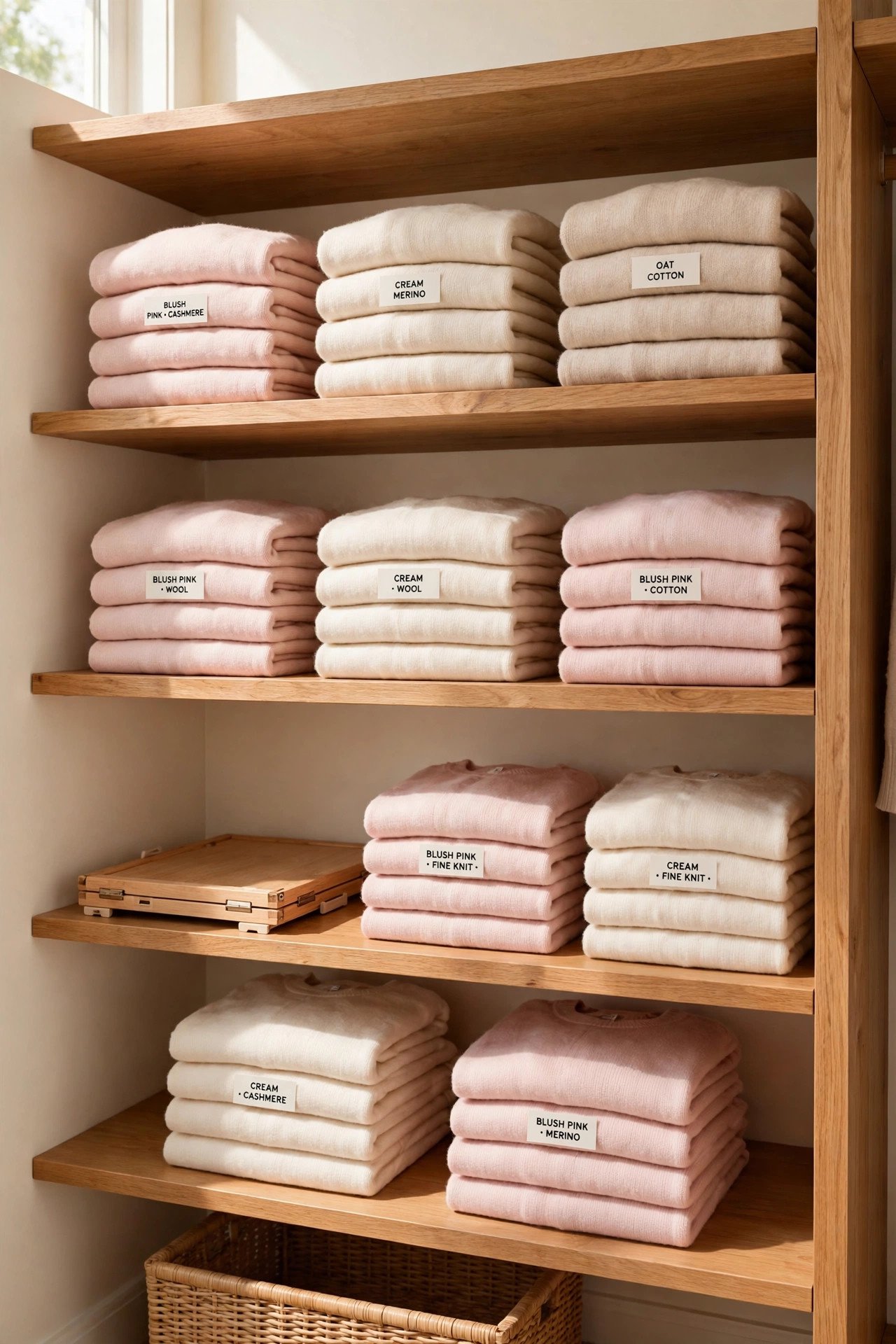
17. Sort by Weight, Not Just Color
Within each color group, place the heaviest knits at the bottom and the lightest on top. Heavy sweaters anchor the stack while fine knits rest safely above. This protects delicate fabrics from being crushed.
The weight order also matches how you dress, since bulky layers sit over lighter ones. You build outfits from the shelf in a natural sequence. Sorting by weight keeps both the look and the function of the shelf balanced.
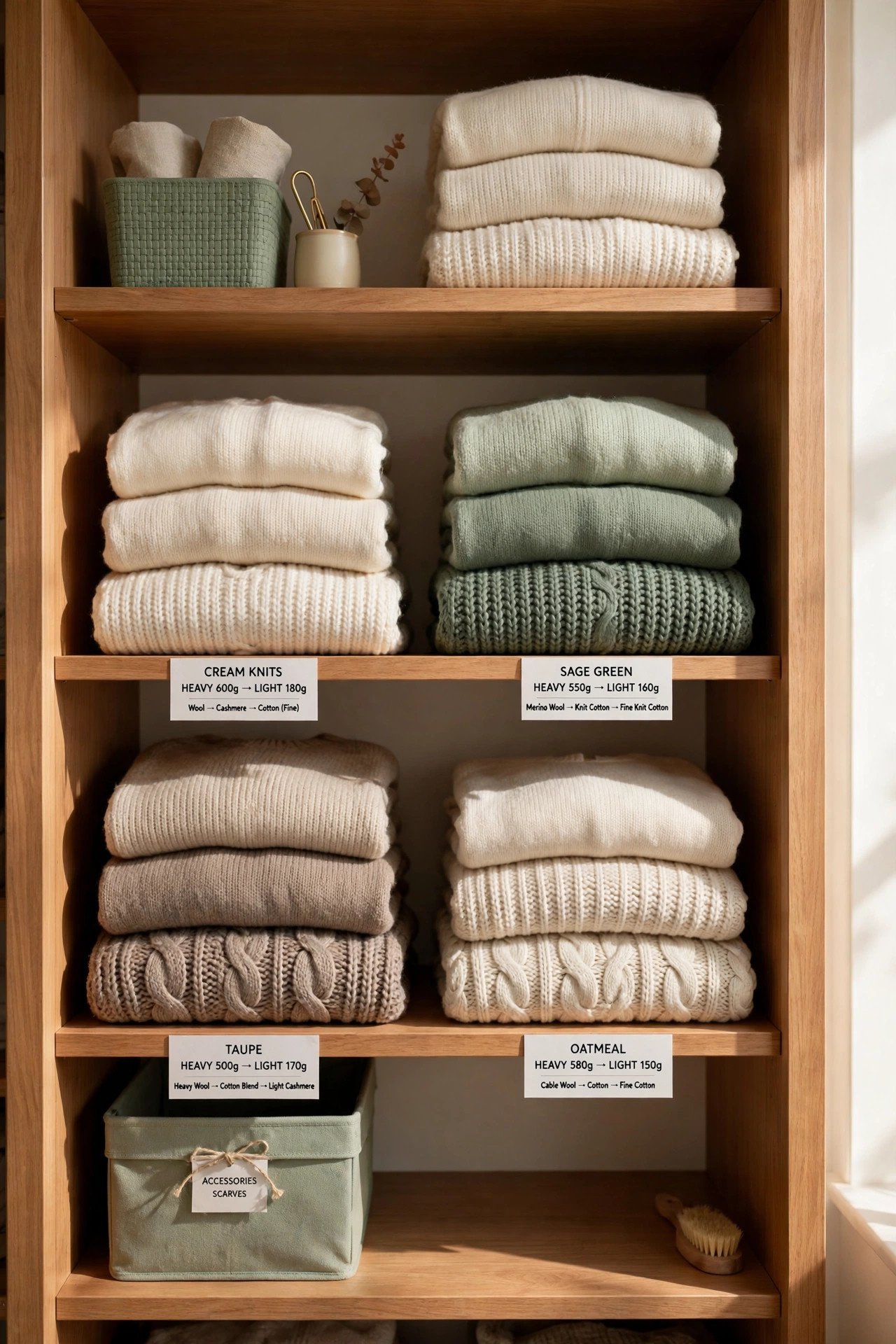
18. Keep Cedar Blocks on the Shelf
Cedar blocks protect wool sweaters from moths while adding a fresh scent. Tuck one block behind each stack or inside each basket. The natural wood also looks like part of the styling.
Refresh the blocks with a light sanding once a year to renew the scent. They work silently in the background while your shelves stay beautiful. This practical touch belongs on every sweater shelf, styled or not.
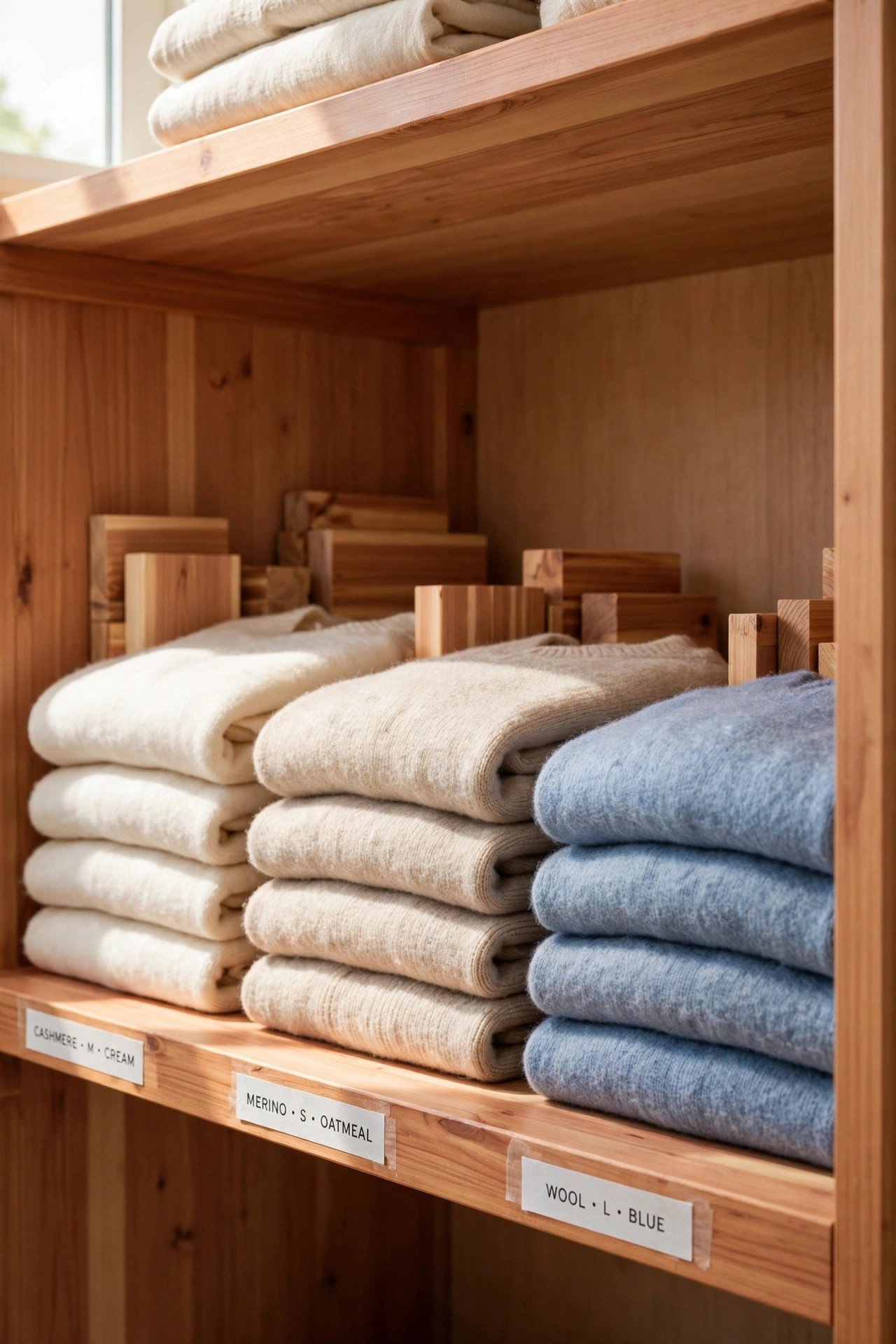
19. End the Week With a Two-Minute Shelf Reset
Even the best-styled shelf drifts by Friday. A two-minute reset each weekend refolds the leaning stacks and returns strays to their labeled zones. The shelf starts Monday looking as good as it did on day one.
Keep the reset tiny so it actually happens. Refold, realign, and walk away. This small habit protects all the styling work you put in, and it keeps your closet feeling calm through the busiest weeks. Pair it with a broader wardrobe reset once a season to keep the whole closet working.

Conclusion
Styled sweater shelves prove that storage and beauty can share the same space. File-folded rows, firm dividers, honest labels, and warm lighting turn ordinary shelves into a display you enjoy opening. Every sweater stays visible, reachable, and wrinkle-free.
Start with the folding method that suits your knits, then add dividers and labels one shelf at a time. Keep the weekly reset small and the system will hold. Your closet shelves will start feeling less like storage and more like your favorite corner of the room.
Closet Shelf Styling FAQs
How do I keep folded sweaters from toppling on a shelf?
File-fold sweaters into standing rows, or use shelf dividers to create firm walls between stacks. A folding board gives every sweater the same size so stacks stay straight.
What is the best way to fold sweaters for a closet shelf?
File-folding works best for visibility, letting you see every sweater in a row. For delicate cashmere, fold loosely with tissue paper between folds to prevent creases.
How should I arrange sweaters on a shelf by color?
Sort from light to dark in a smooth gradient, and within each color group place heavy knits at the bottom and light ones on top. This looks styled and protects delicate fabrics.
How do I style a sweater shelf without cluttering it?
Leave breathing room between stacks, keep decor to one small corner, and use matching baskets and labels. The sweaters should stay the stars of the shelf.
How often should I reorganize my sweater shelves?
Do a two-minute reset each weekend to refold leaning stacks, and a seasonal rotation when the weather changes. Store off-season knits in labeled bins with cedar blocks.

Hi, I’m Emily! I turn messy corners into cozy, organized spots. DreamNestDecor is where I share simple, practical home ideas — decor, organization, and small-space solutions that work in real life, not just in photos. Every idea here is carefully researched before it’s shared.