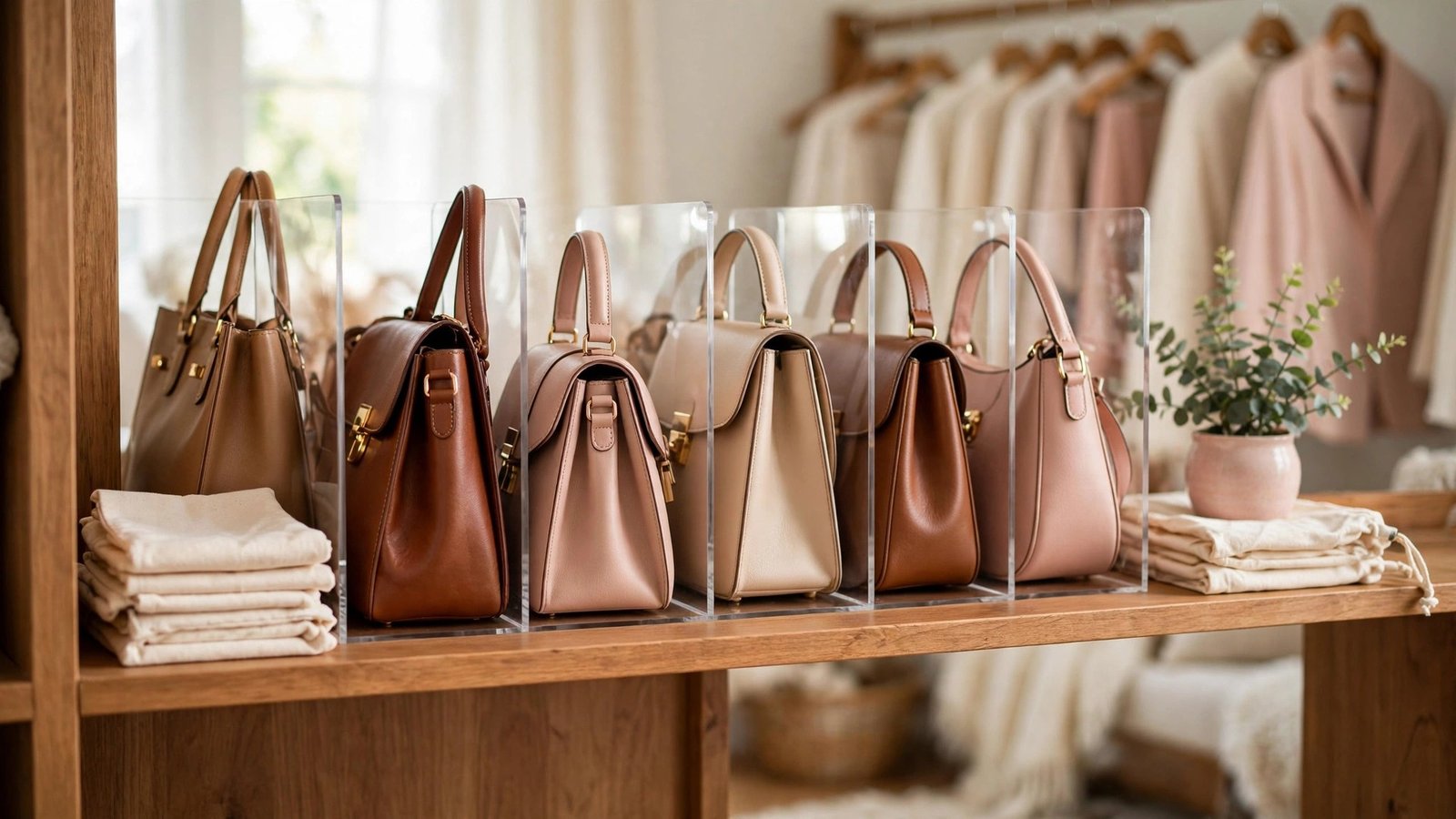
A beautiful handbag deserves better than a crushed pile at the bottom of the closet. Yet that is where most purses end up — slumped, scratched, and losing their shape a little more every week. Leather creases, straps tangle, and hardware picks up marks from its neighbors.
Keeping purses in shape is mostly about giving them structure and space. Upright storage, gentle stuffing, and a little protection go a long way. Your bags will look newer for years with only a small effort.
These fourteen ideas cover shelves, hooks, drawers, and smart rotation systems. Choose the ones that fit your collection and your closet, and your handbags will thank you.
1. Display Bags Upright on Shelves
Storing handbags upright is the single best habit for keeping their shape. Line them side by side on a closet shelf with a little breathing room between each one. Gravity works with you instead of against you, and straps stay untangled.
Reserve shelf space at eye level for the bags you carry most. Deeper shelves suit large totes, while narrow shelves fit crossbody bags perfectly. An upright row also lets you see the whole collection when you are choosing a bag for the day.

2. Divide Shelves With Shelf Dividers
Without dividers, upright bags slowly lean into each other and slump. Slim shelf dividers create a snug slot for each purse so it stands straight on its own. The dividers clamp onto the shelf with no tools needed.
Space the dividers to match your bags, giving structured satchels narrower slots and soft hobos wider ones. Clear acrylic dividers disappear visually, while wood ones add warmth. This small addition keeps the whole shelf looking boutique-tidy.
3. Stuff Bags With Tissue to Hold Shape
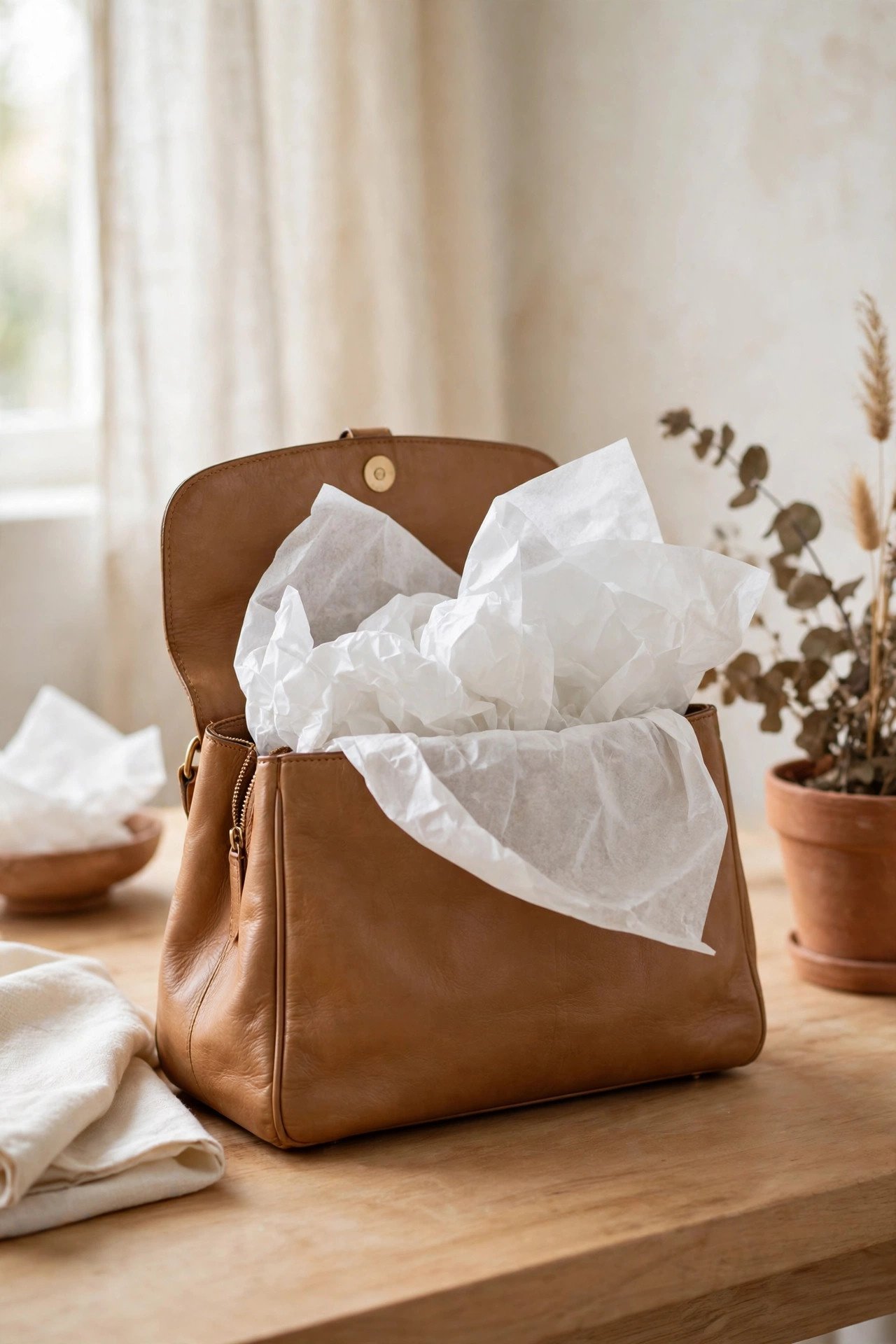
Empty bags collapse, and collapsed bags crease. Fill each purse with acid-free tissue paper, a soft pouch, or a purpose-made purse pillow to hold its shape from the inside. The bag keeps its structure even after months in storage.
Avoid newspaper, since the ink can transfer to light linings. For slouchy styles, stuff lightly so you support the shape without stretching it. This habit matters most for structured leather bags, which show creases permanently.
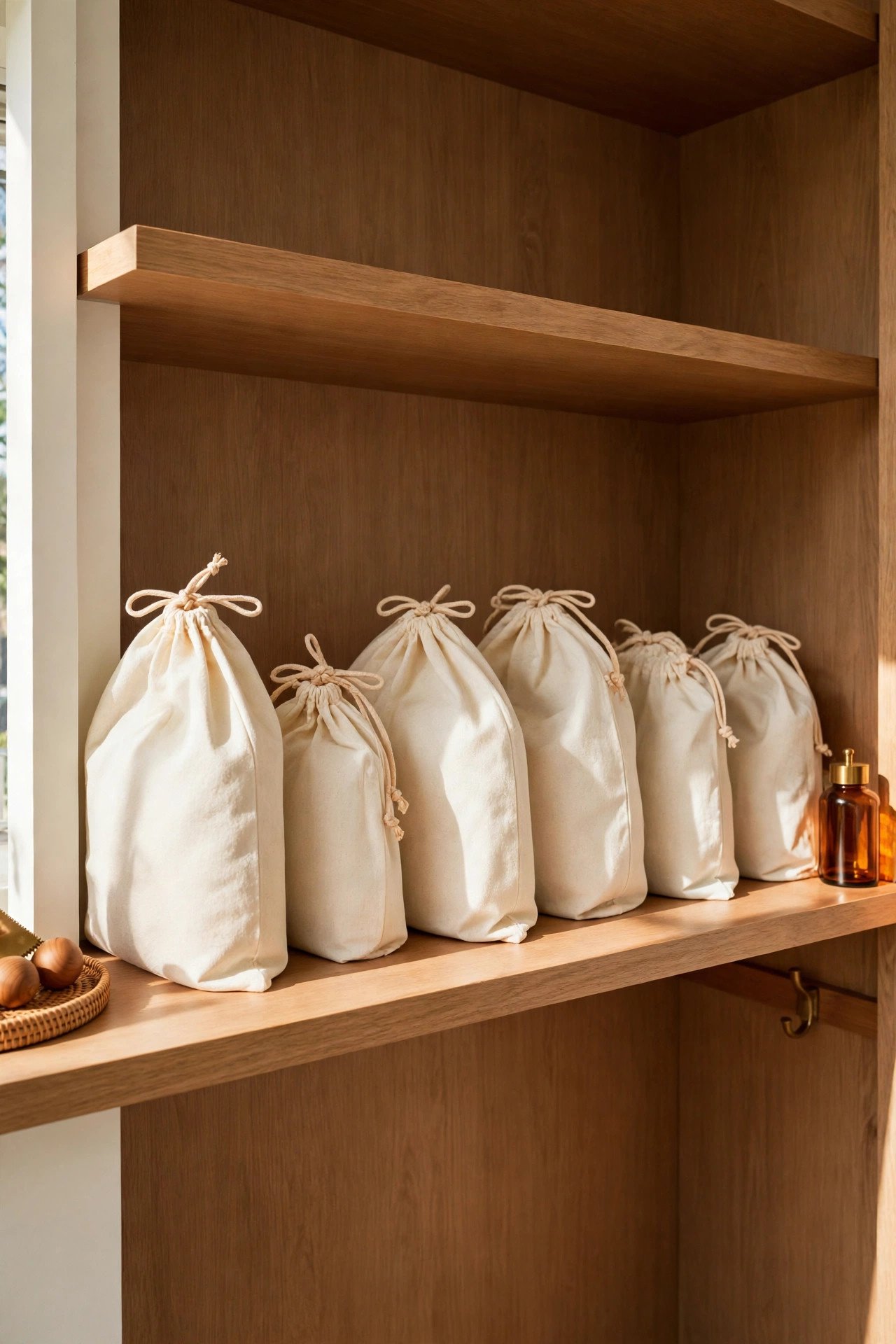
4. Store Bags in Dust Bags
Dust bags are the simplest protection your purses can get. Slip each bag into its own soft dust bag before shelving it, and the leather stays clean, scratch-free, and shielded from sunlight. Most designer bags come with one, so use it.
If a bag arrived without a dust bag, a clean cotton pillowcase works just as well. Never store leather in plastic, since trapped moisture can damage the finish. A breathable cover keeps colors rich and hardware gleaming.
5. Hang Bags on Sturdy Hooks
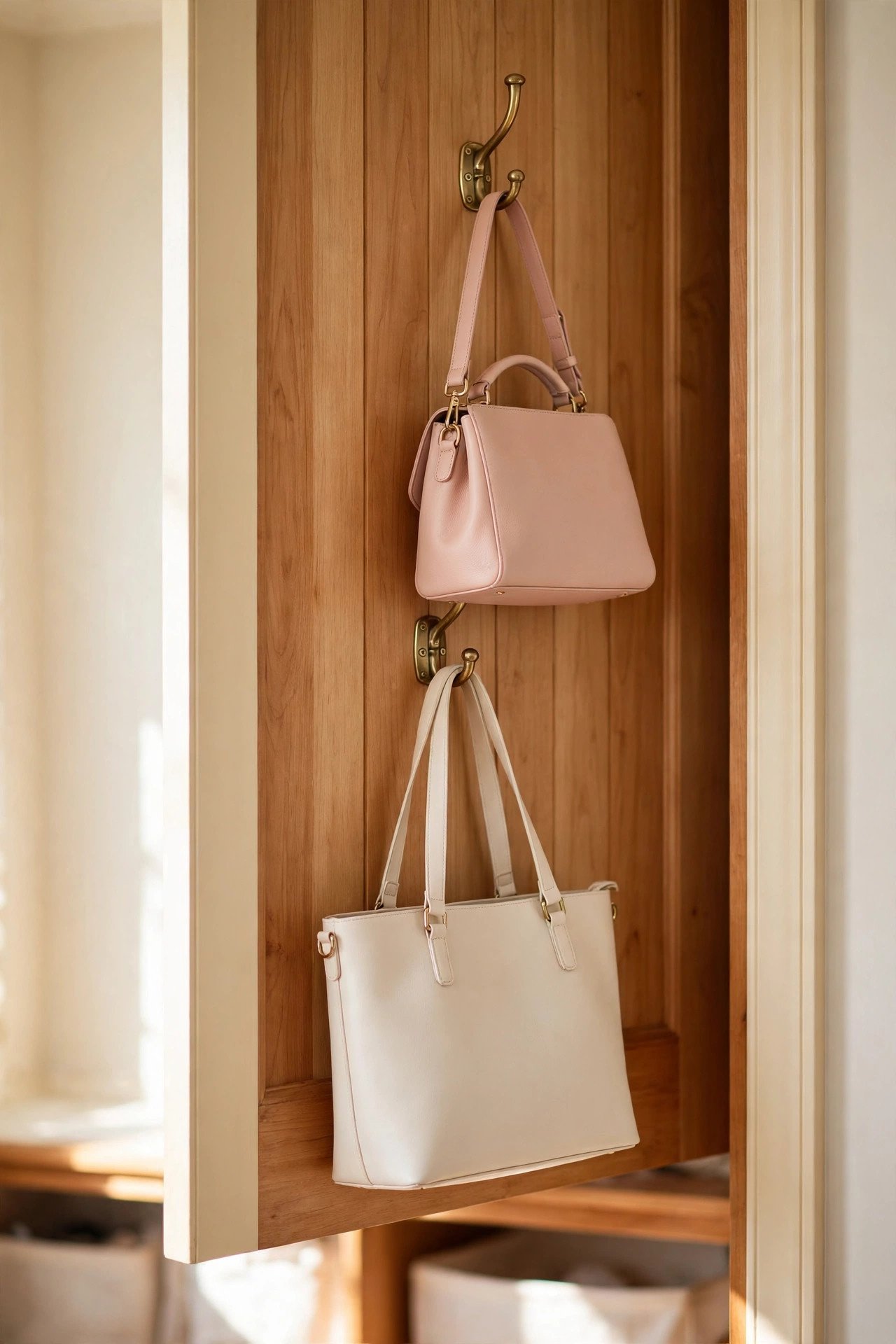
Hooks are ideal for the bags you grab daily. Mount a row of sturdy hooks inside your closet door or on a bedroom wall, and hang one bag per hook by its strap. Your everyday carry is always within reach.
Choose hooks with a smooth finish so straps do not snag. Hang heavier totes on lower, stronger hooks and lighter crossbodies up high. Rotate which bag hangs here so no single strap bears weight for months on end.
6. Use Purse Organizer Inserts
A purse organizer insert gives a soft, unstructured bag the skeleton it lacks. The insert slides inside with divided compartments for your wallet, phone, and keys. The bag holds its shape and your essentials stop sinking to the bottom.
Pick an insert close to your bag’s interior dimensions so it fills the space without bulging. When you switch bags, lift the whole insert out and drop it into the next one. Your essentials transfer in seconds and the old bag keeps its shape in storage.

7. Line Bags Heaviest in Back, Lightest in Front
Order matters on a handbag shelf. Place the heaviest, sturdiest bags at the back and the lightest, most delicate ones in front. Heavy bags cannot topple onto fragile ones, and you reach the delicate styles without moving weight around.
Keep the bags you use weekly at the front of the row regardless of weight, since easy access beats perfect order. Leave a finger-width gap between bags so hardware does not scratch its neighbor. This small system keeps the shelf safe and practical.

8. Try a Hanging Handbag Organizer
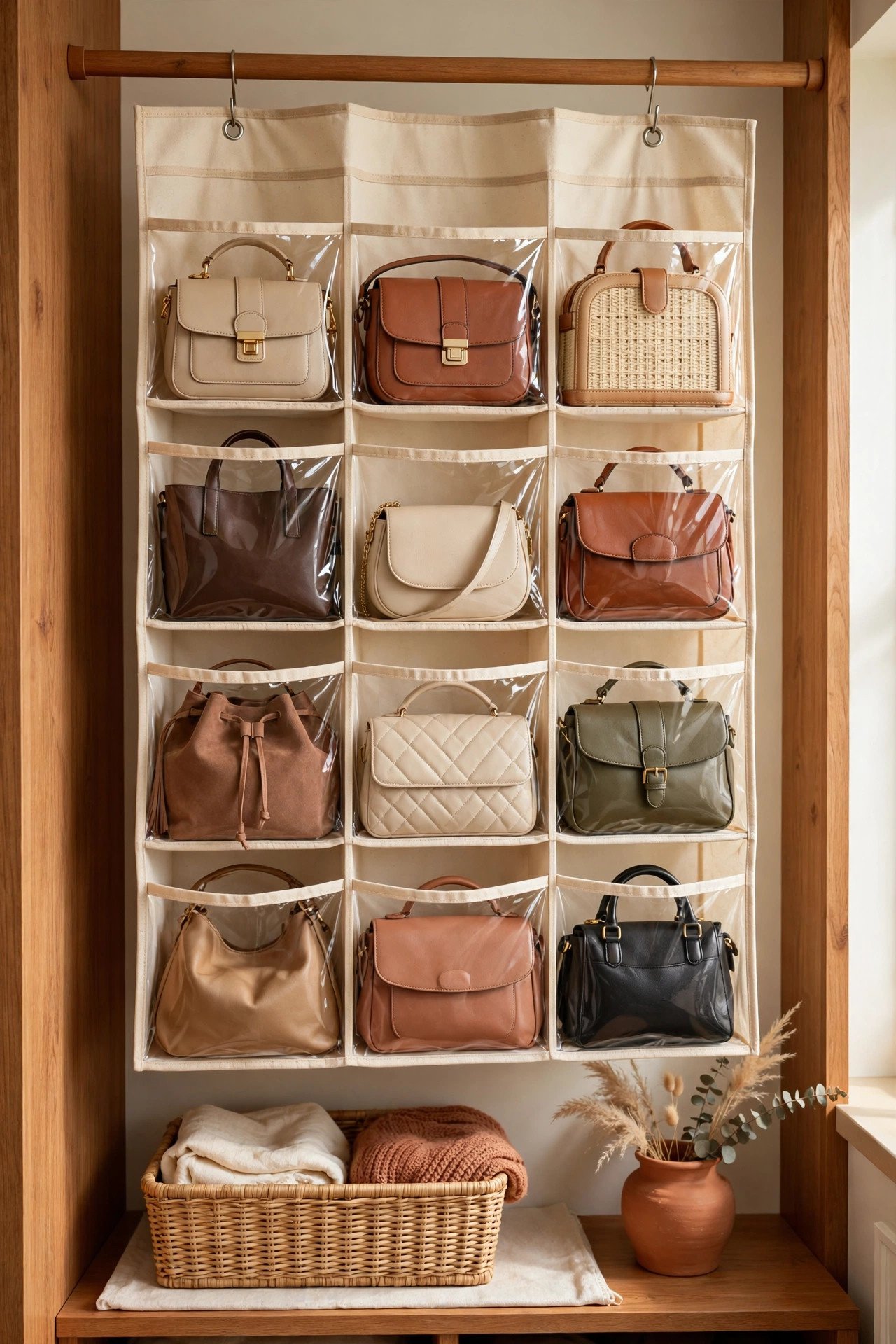
A hanging organizer with clear pockets turns one closet rod into storage for a dozen bags. Each purse gets its own pocket, visible through the clear front. It is a brilliant fix for closets with no free shelf space.
Choose an organizer with reinforced hooks so it hangs straight under weight. Reserve the top pockets for small clutches and the bottom ones for larger bags. The clear pockets also protect bags from dust while keeping them easy to browse.
9. Rotate Bags With the Seasons
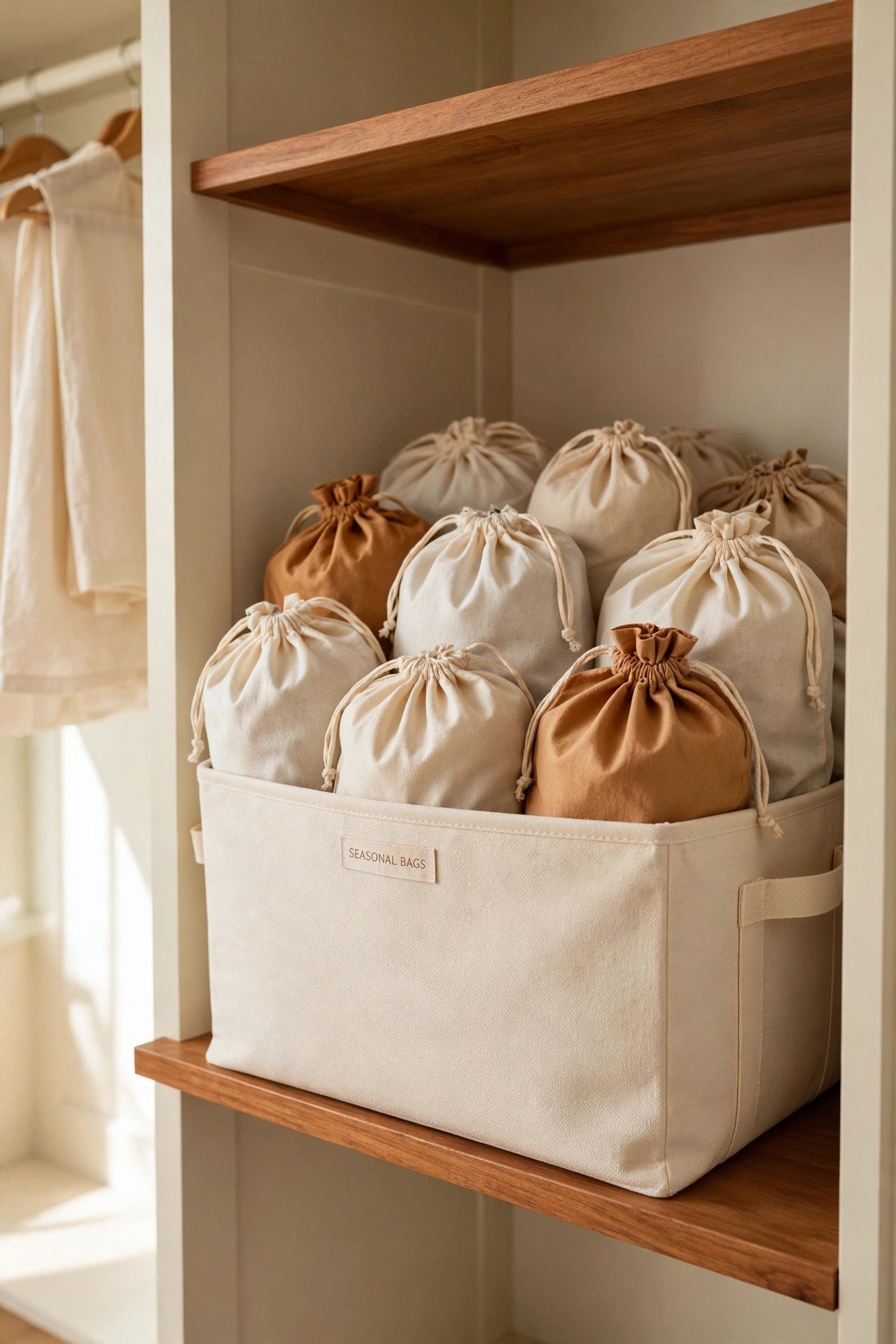
You do not need every bag accessible all year. Store off-season styles — straw totes in winter, heavy wools in summer — in labeled bins on a high shelf. The active collection gets more space and stays easier to browse.
Stuff and dust-bag each stored purse before it goes into the bin. A seasonal swap is also the perfect moment for a mini wardrobe reset, checking which bags you actually carried. Label the bin clearly so the swap takes minutes.
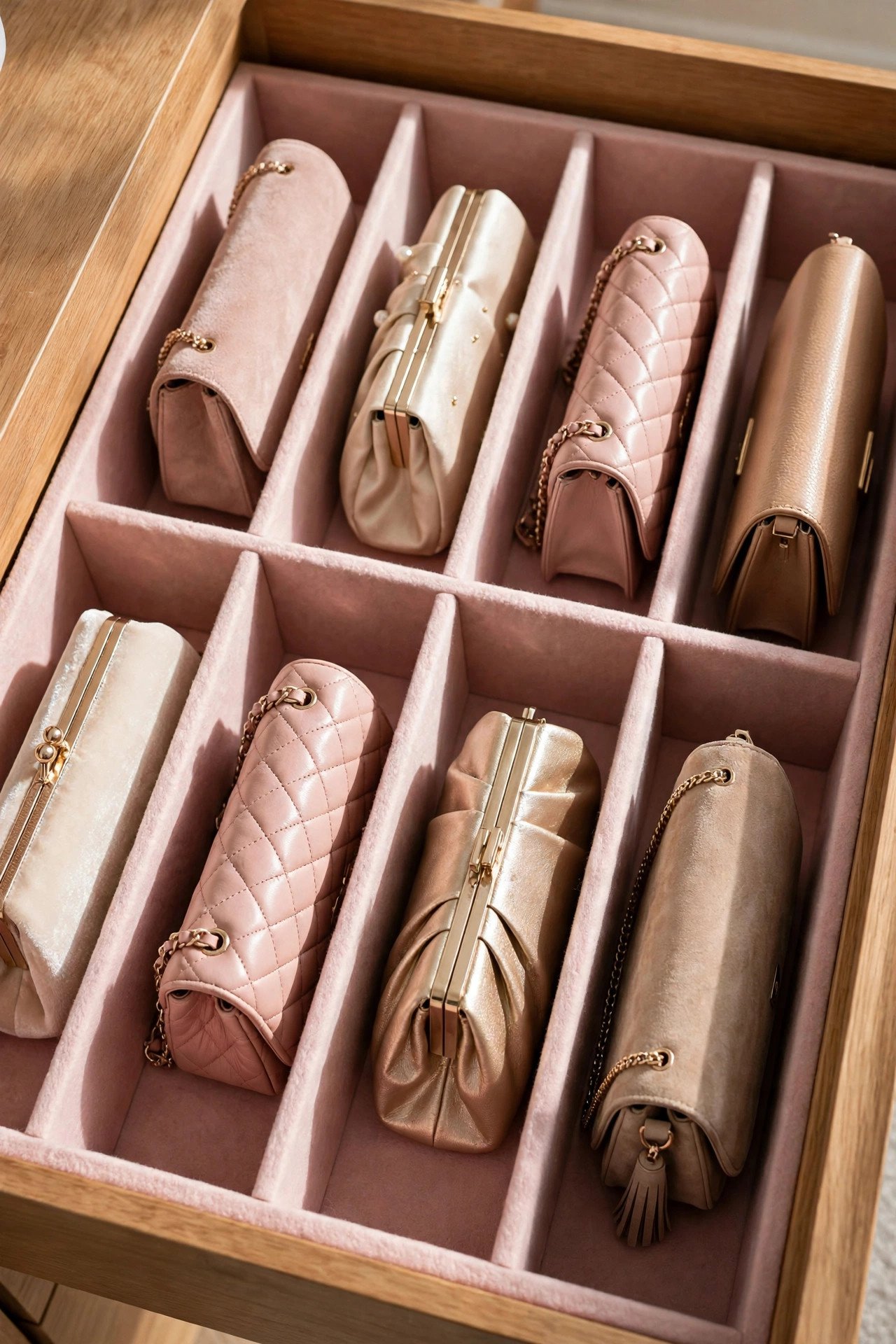
10. Store Clutches in a Divided Drawer
Small clutches and evening bags get lost on big shelves. A shallow drawer with dividers gives each clutch its own slot, standing upright like books on a shelf. You can see every option when you are dressing up.
Line the drawer with soft felt so metallic finishes do not scratch. Sort clutches by color or formality so the right one is easy to find. This drawer method also works beautifully for small crossbody bags.
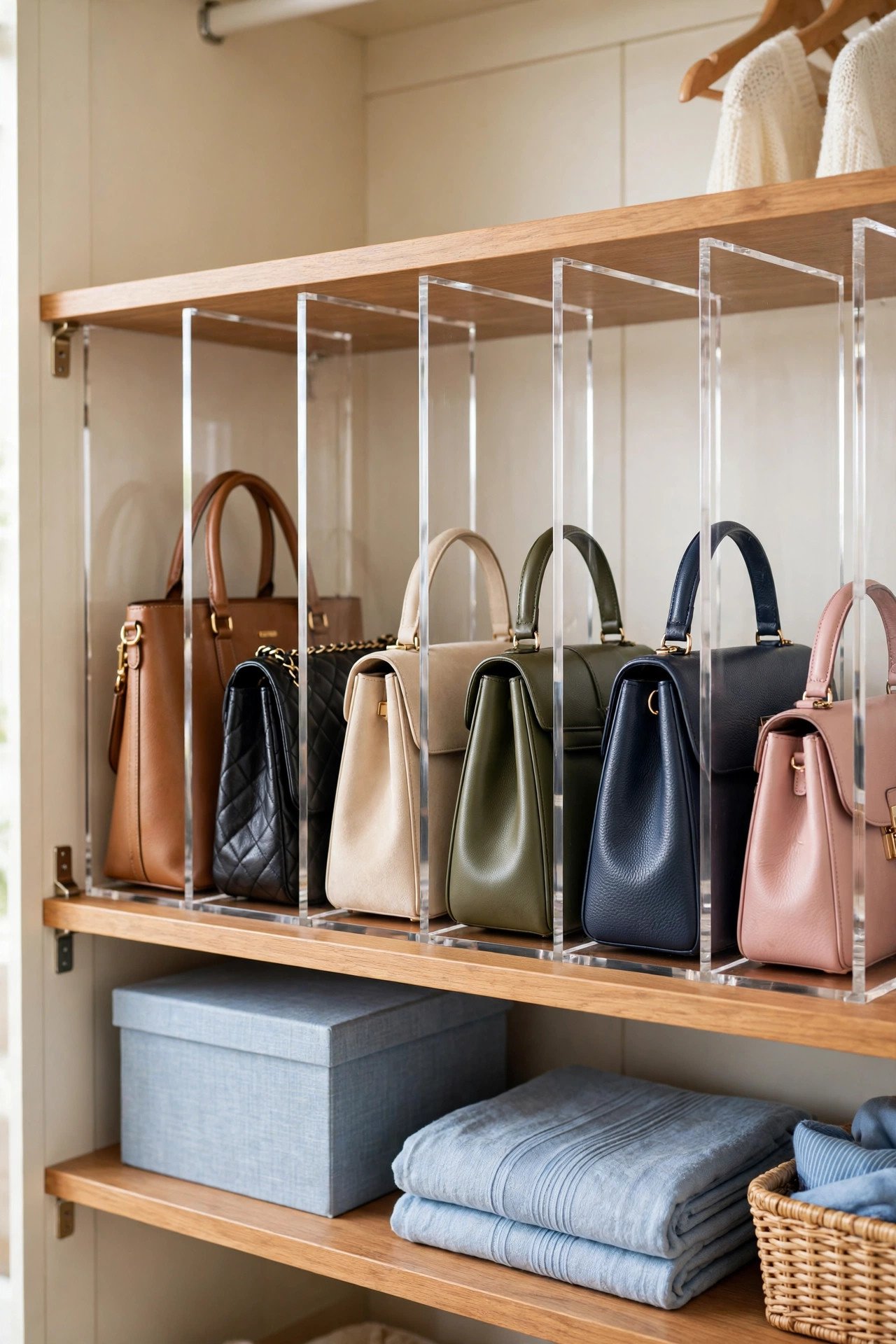
11. Use Acrylic Dividers for Structured Bags
Structured satchels and top-handle bags need firm support to keep their crisp lines. Clear acrylic file-style dividers hold each bag perfectly vertical without squeezing it. The transparency keeps the display light and modern.
Measure your tallest bag before choosing divider height so nothing peeks awkwardly over the top. Wipe the acrylic occasionally to keep it clear. For a coordinated look, use the same divider style that organizes your wardrobe storage shelves.

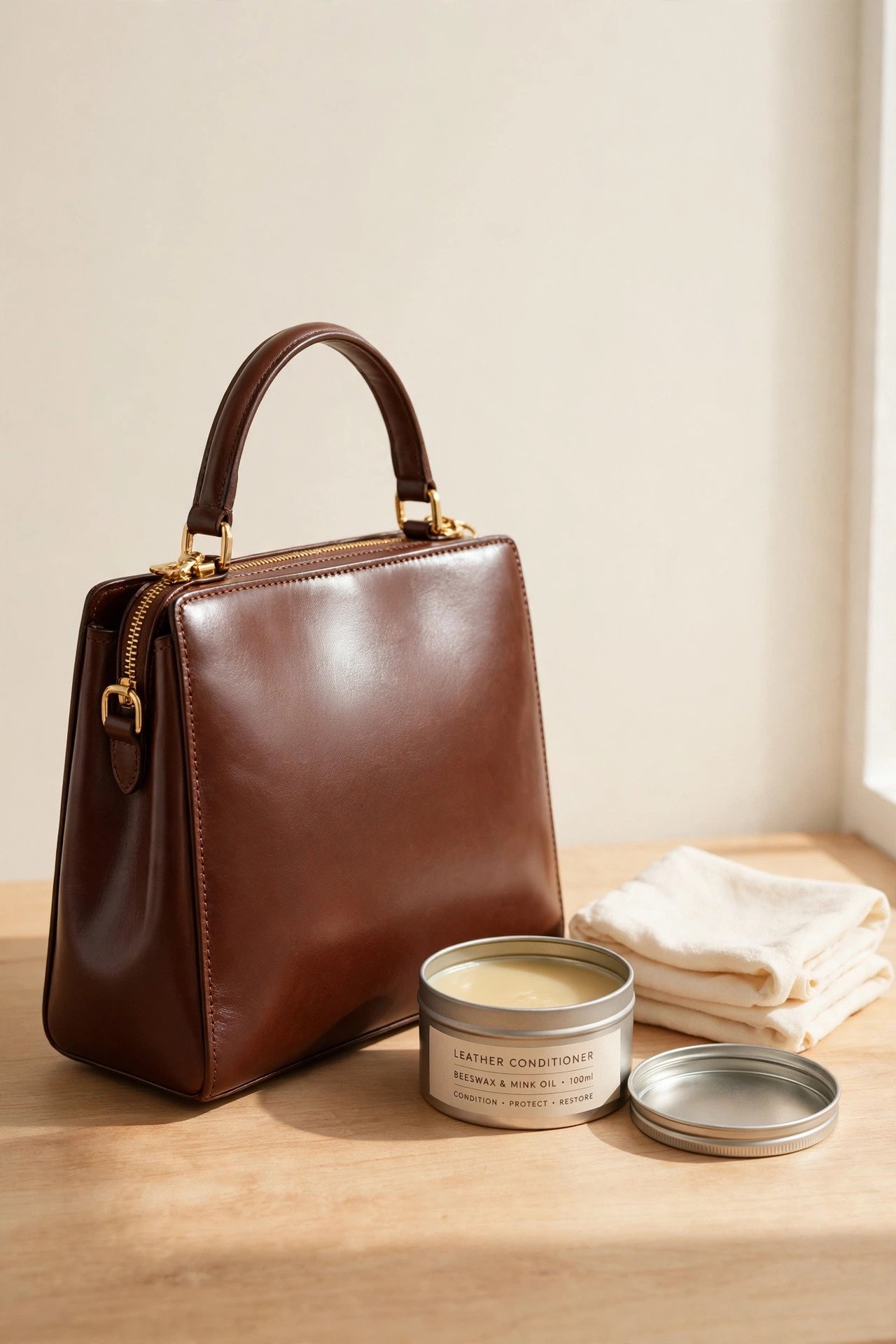
12. Condition Leather Before Long Storage
Leather dries out in storage, especially through dry winter months. Before you pack a bag away for the season, wipe it clean and apply a quality leather conditioner. The leather stays supple and resists cracking.
Test the conditioner on a hidden spot first to check the color stays true. Let the bag air out fully before it goes into a dust bag. This ten-minute step can add years to a good leather handbag.
13. Create a Grab-and-Go Entryway Station
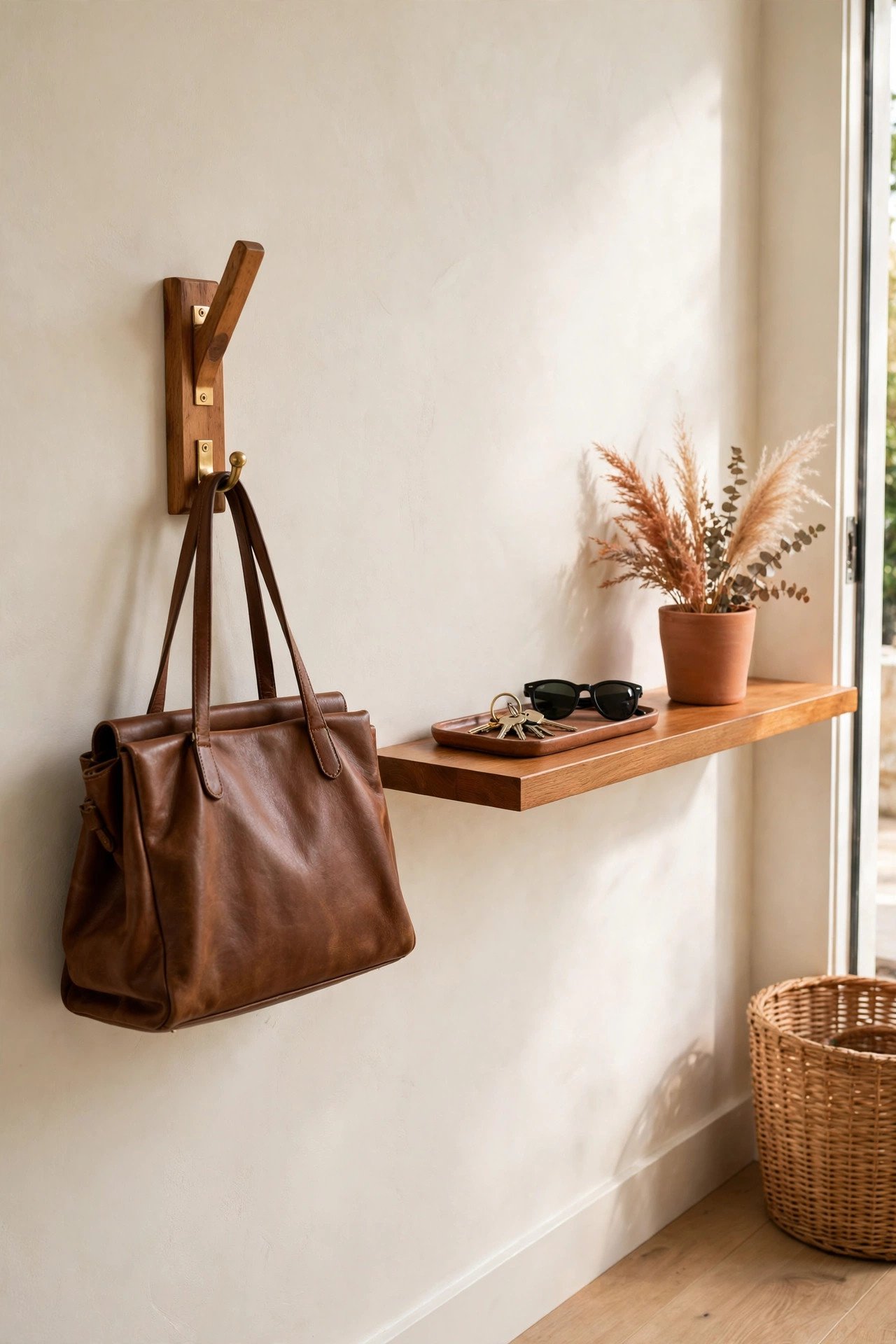
Your most-carried bag deserves a home by the door. A wall hook, a small shelf, or a pretty tray in the entryway holds today’s bag, keys, and sunglasses together. You grab everything in one motion on the way out.
This station works beautifully alongside a mudroom entryway setup, where shoes and coats already live. Keep only one bag here so the spot stays clear. When you switch bags, the station makes the swap effortless.
14. Declutter the Bags You No Longer Carry
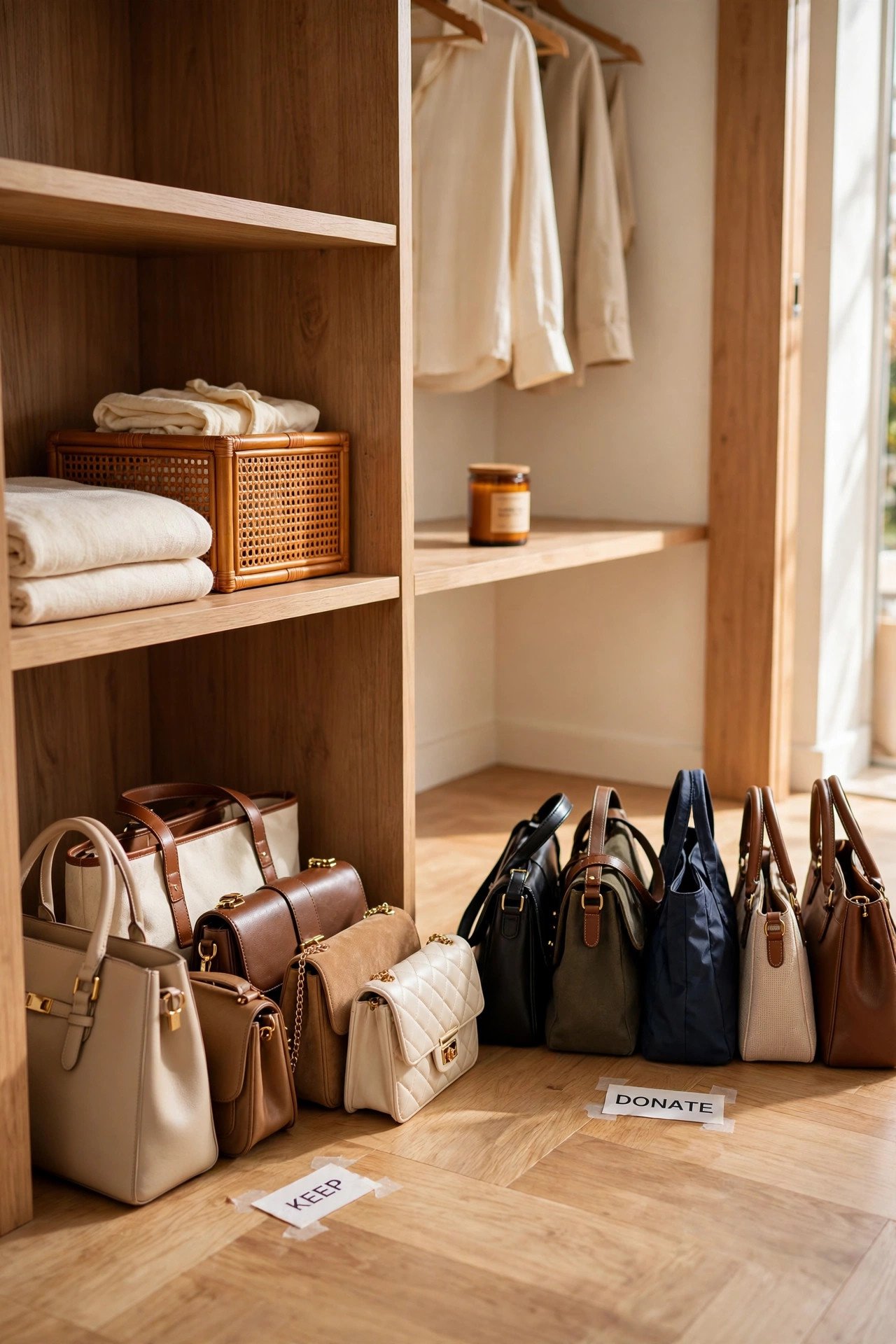
Even the best storage cannot fix a collection that has outgrown its space. Once a year, pull every bag out and ask which ones you actually carried. Bags that sat untouched for a full year are candidates for donation or resale.
Check for damage as you sort, and repair or retire worn bags honestly. A smaller collection of bags you love is easier to store and more fun to use. The freed shelf space makes the keepers look even better.
Conclusion
Keeping purses in shape comes down to three habits: store them upright, stuff them gently, and protect them from dust and weight. With the right dividers, hooks, and rotation system, every bag in your collection can look as good as the day you brought it home.
Start with the bags you love most and give them proper homes first. The rest of the collection will follow, and your closet will feel like a boutique you get to shop every morning.
Frequently Asked Questions
How should I store handbags to keep their shape?
Store handbags upright on shelves with dividers between them, and stuff each bag with tissue paper or a purse pillow to support its shape from the inside. Keep bags in breathable dust bags rather than plastic. This combination prevents slumping, creasing, and scratches.
Is it better to hang handbags or store them on shelves?
Shelves are better for long-term shape, since hanging puts all the weight on the strap. Hang only the bag you carry daily on a sturdy hook, and rotate which bag hangs there. Store the rest of the collection upright on shelves with dividers.
What should I stuff my handbags with for storage?
Acid-free tissue paper is the safest choice because it supports the shape without transferring ink or moisture. Soft pouches or purpose-made purse pillows also work well. Avoid newspaper, since the ink can stain light-colored linings.
How do I store off-season handbags?
Clean each bag, condition any leather, stuff it with tissue, and slip it into a dust bag. Then place the bags in a labeled bin on a high closet shelf. A seasonal swap keeps your active collection roomy and gives stored bags proper protection.
How do I stop handbags from scratching each other on a shelf?
Leave a finger-width gap between bags so hardware never touches its neighbor. Shelf dividers keep bags from leaning into each other. Store each bag in its own dust bag for an extra layer of protection against scratches and dust.

Hi, I’m Emily! I turn messy corners into cozy, organized spots. DreamNestDecor is where I share simple, practical home ideas — decor, organization, and small-space solutions that work in real life, not just in photos. Every idea here is carefully researched before it’s shared.