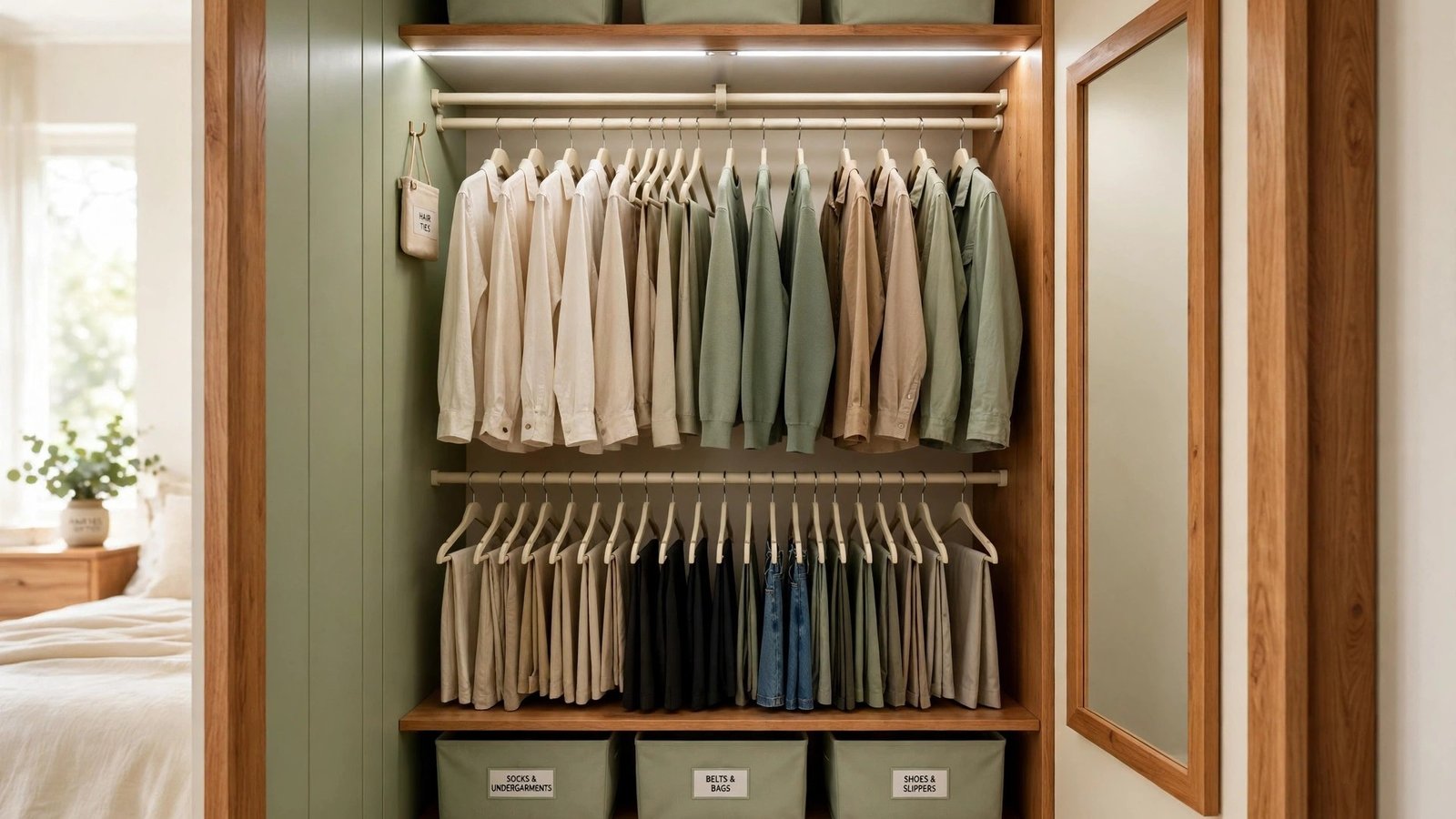
You open your bedroom closet in the morning and the clothes are packed so tight that you can barely slide one hanger aside. You know the shirt you want is in there somewhere, but reaching it means dragging half the closet with it. A closet should start your day with ease, not a wrestling match.
Most bedroom closets fail at one simple job: giving you enough room to hang clothes where you can see them. The ideas below focus on exactly that. You will learn how to stack hanging rods, swap bulky hangers, claim wasted corners, and build upward so every inch of your closet works for your wardrobe. Small changes here create a calm, breathable closet that makes getting dressed genuinely pleasant.
1. Add a Tension Shelf Above the Rod
One simple shelf above the hanging rod adds a whole layer of storage in minutes. A tension shelf rod turns dead air into a spot for folded tees, bags, or off-season items. Your hanging space below stays completely untouched.
Choose a chrome or matte rod that matches your closet finish. The shelf also doubles as a visual lid that keeps the hanging section feeling tidy. When the upper zone carries the overflow, your clothes finally breathe below.

2. Build a Custom Look With a Starter Tower
You do not need a contractor to get a built-in feel. A starter tower kit with a three-drawer storage unit creates a custom closet center. Pair it with a stackable vertical organizer and the whole wall looks designed.
This is perfect for a first apartment where the budget is tight. The tower anchors the middle of the closet while hanging rods run along both sides. You gain drawers for small items and the hanging sections feel intentional instead of improvised.
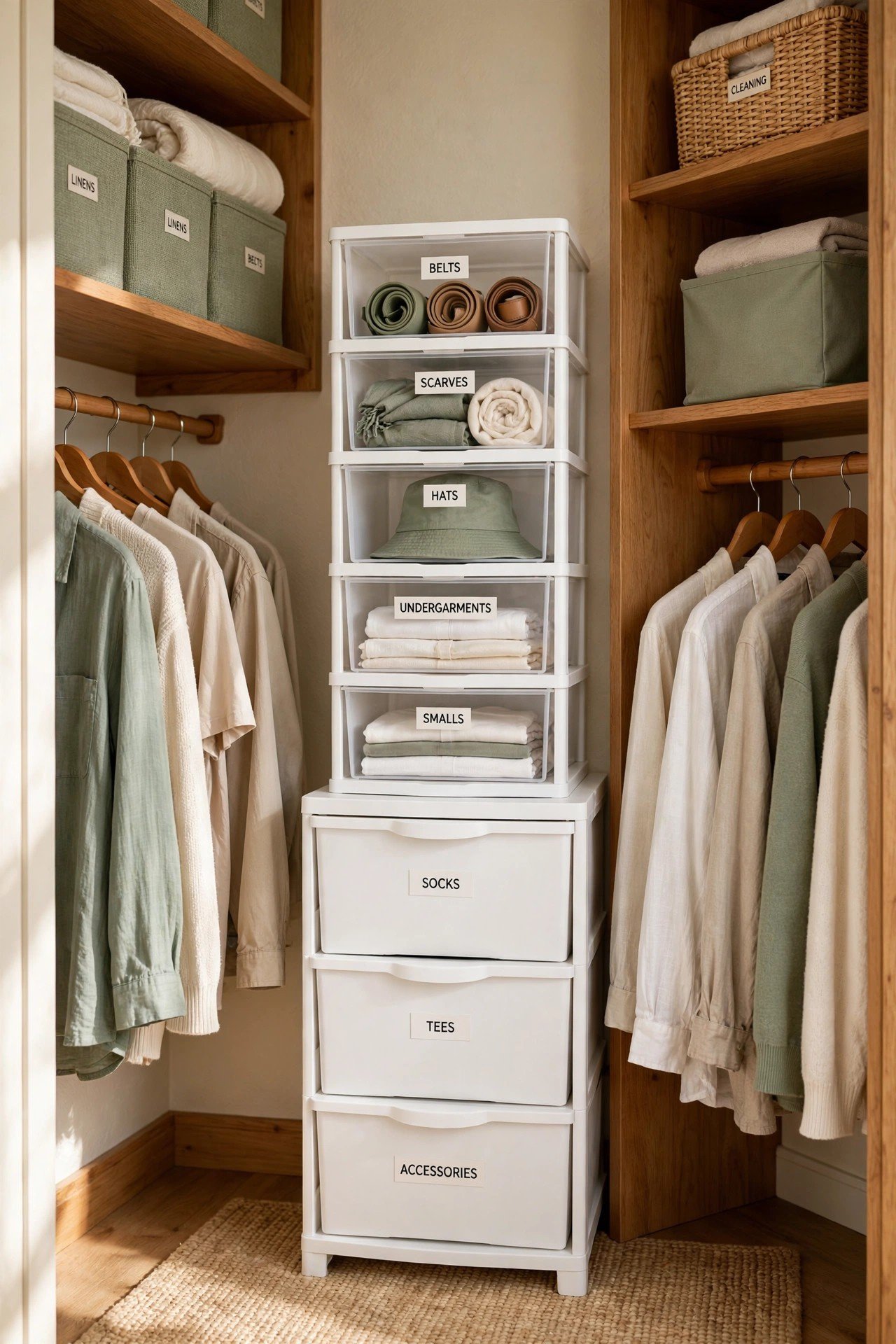
3. Put the Back of the Door to Work
The inside of your closet door is free storage space most people ignore. A slim shoe organizer or a soft fabric door organizer turns that blank panel into extra room. Shoes and accessories move to the door, which frees the rod for clothes.
Hang bags on the door hooks instead of stacking them on the shelf. Every item that leaves the main compartment opens more hanging room. Choose a fabric organizer that matches your closet so the door still looks clean when it opens.

4. Split Shelves With Acrylic Dividers
Piles of folded clothes slide into each other and eventually fall onto the hanging section. Acrylic shelf dividers create clean cubbies that keep each stack standing. Metal wire dividers work just as well for a sturdier feel.
Clear dividers disappear visually so the closet still looks open. Use them to separate sweaters, jeans, and tees above the rod. When every pile stays in its lane, the hanging clothes below never get buried.

5. Move Off-Season Clothes Out of the Way
Daily hanging space grows the moment winter coats leave the rod in summer. Store seasonal clothing, extra bedding, and out-of-season shoes in a dresser or under your bed. Your closet should hold only what you wear now.
A seasonal swap takes less than an hour twice a year. Label each storage bin by season so the swap stays quick. With fewer clothes on the rod, everything hangs straight and you can actually see your options each morning.

6. Stack Garments on Cascading Hangers
Cascading hangers let you hang several garments in the footprint of one hanger. Each hook drops below the last, so five shirts occupy the space of a single one. The effect on a crowded rod is dramatic and instant.
Group similar items on each cascading set, like all work blouses together. You will fit far more clothes in your wardrobe reset routine without adding a single inch of rod. Make sure to pick sturdy hooks that hold the combined weight.

7. Switch to Cascading Pants Hangers
Pants eat hanging space faster than anything else. Cascading pants hangers hold several pairs on one vertical hook. A full drawer of folded jeans becomes one slim column on the rod.
Your trousers stay visible and wrinkle-free because they hang instead of folding. The closet shifts from crowded to lean in one swap. Pick the kind with swivel arms so you can pull one pair without disturbing the rest.

8. Run a Narrow Tower Along One Wall
A narrow cabinet tower turns an empty side wall into working storage. Shelves, hooks, and a small rod fit into a slim footprint that never blocks the main hanging area. This works beautifully in small apartment closets.
Use the tower for folded knits, bags, and accessories. When those items leave the main rod area, your hanging clothes gain breathing room. Choose a light finish so the narrow wall never makes the closet feel cramped.

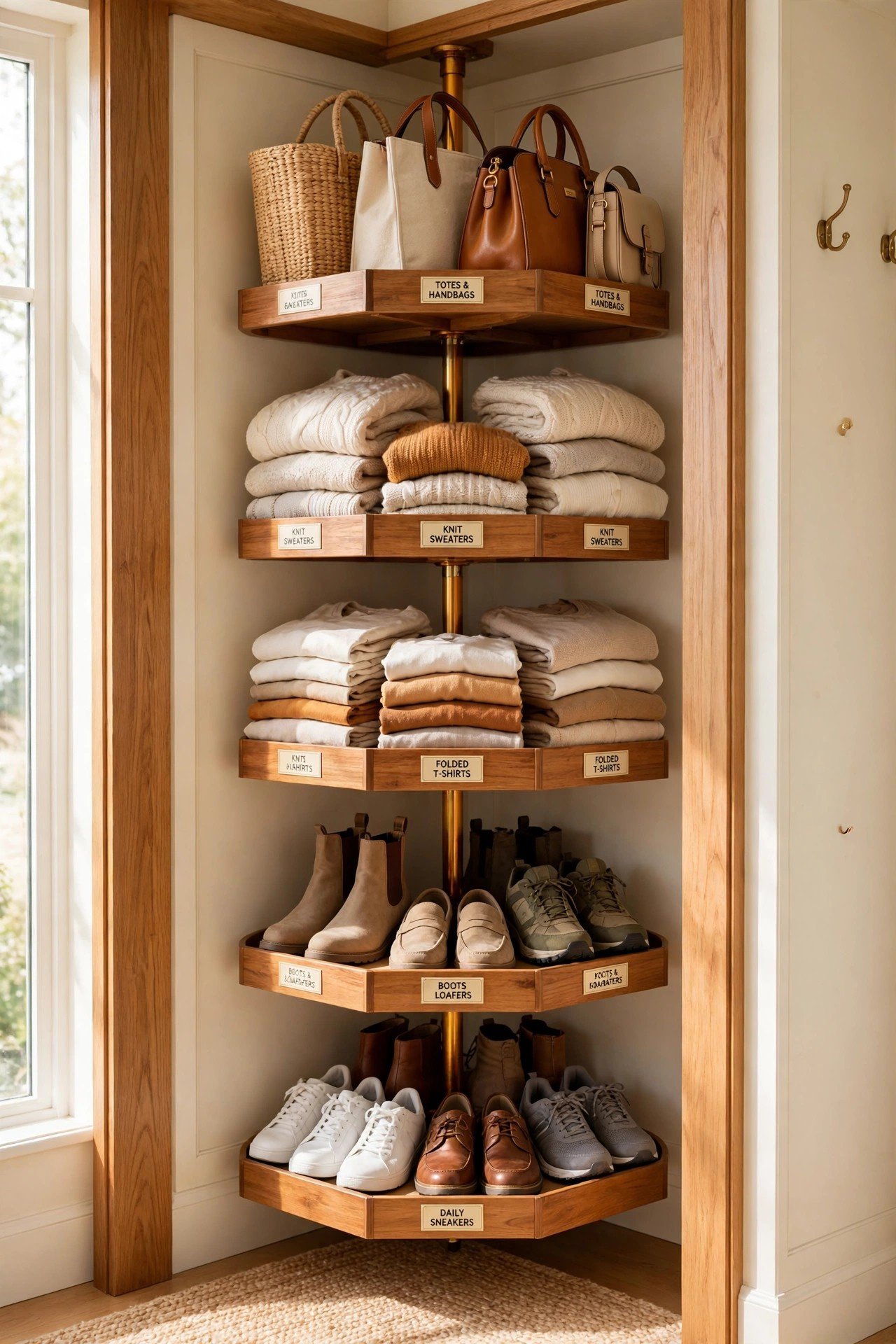
9. Claim the Corners With a Rotating Unit
Corners in a closet collect dust because clothes never reach them properly. A corner organizer with a rotating unit or a lazy susan shelf turns that dead zone into active storage. Shoes, bags, and folded items finally have a spot.
Every inch counts in a small closet, and corners are often the largest wasted area. Measure the corner depth before you buy so the unit spins freely. Once corners work for you, the main rod stops carrying everything.
10. Stack Narrow Bookcases as Shelves
You can build a shelving wall without a single bracket. Line up multiple narrow bookcases inside the closet and fill them with folded clothes, shoes, and baskets. The hanging rod keeps its full length because the bookcases stand beside it.
This is one of the easiest DIY closet upgrades you can finish in an afternoon. Paint the bookcases to match the closet for a built-in look. When shelves handle the folded items, the rod stays devoted to hanging.

11. Hang a Wall-Mounted Coat Rack
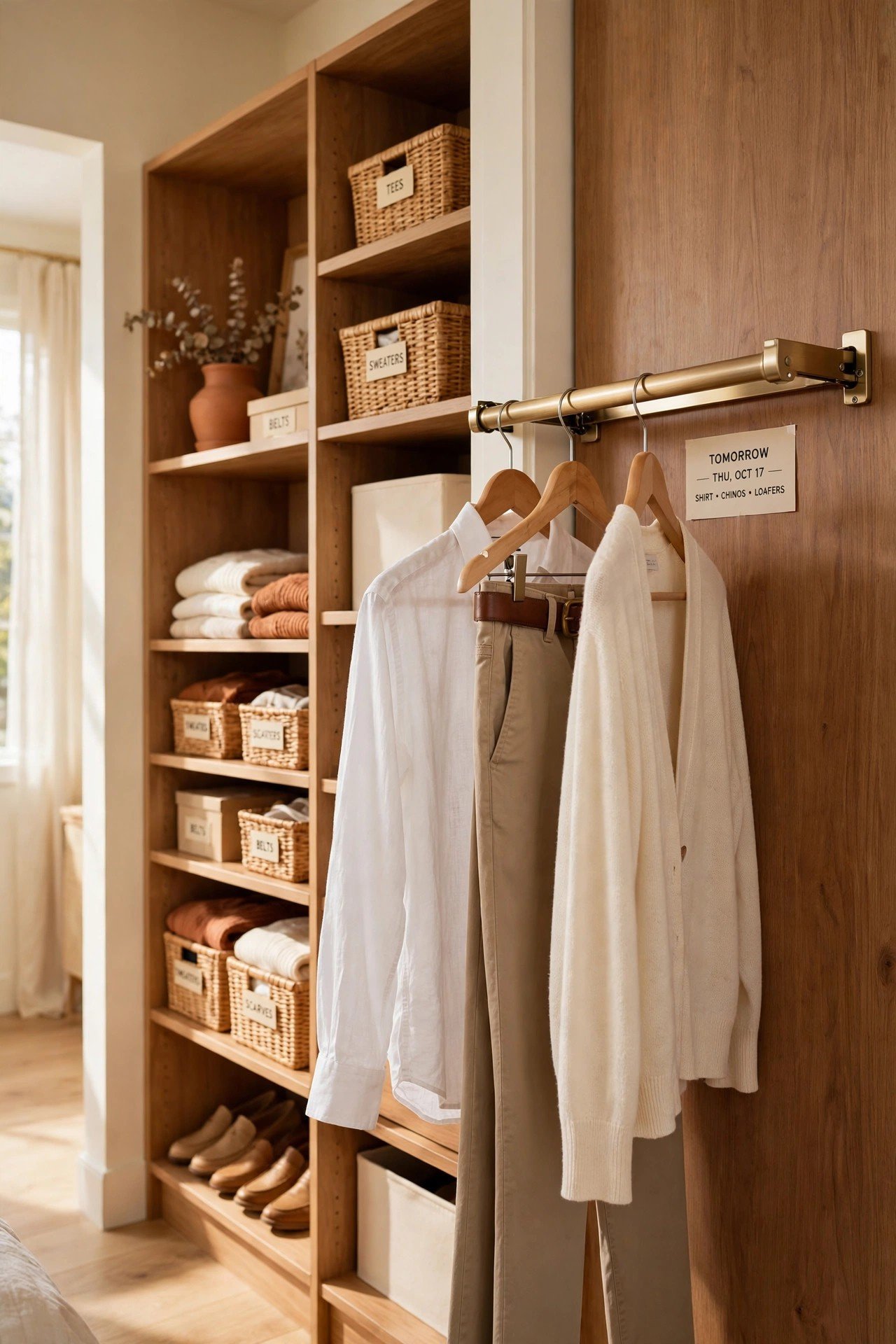
An empty side wall can hold tomorrow’s outfit or your most-worn jacket. A wall-mounted coat rack with two or three hooks keeps daily items off the main rod. Your everyday pieces stay reachable without crowding the hanging section.
Mount the rack at a height that works for your longest coat. You can also hang a small basket beside it for scarves. This small addition keeps the main rod reserved for the full wardrobe instead of daily repeats.

12. Tuck Drawers Under the Hanging Clothes
The space under your hanging clothes is prime real estate. A low drawer system fits right beneath the rod and holds socks, underwear, and accessories. You gain a dresser’s worth of storage without losing a single hanger.
Choose a unit that leaves enough clearance for your longest shirts. Divided drawers keep small items sorted by type. When the floor zone handles the little things, the rod stays clean and easy to browse.

13. Add a Mirror to Double the Light
A full-length mirror on the closet wall or door changes how the whole space feels. You can check your outfit the moment you pull it off the hanger. The mirror also bounces light around, which makes a packed closet feel larger.
Lean a tall mirror in a corner or mount a slim one on the door. Better visibility means you actually use the clothes hanging in the back. A brighter closet also makes it easier to tell navy from black on dark mornings.
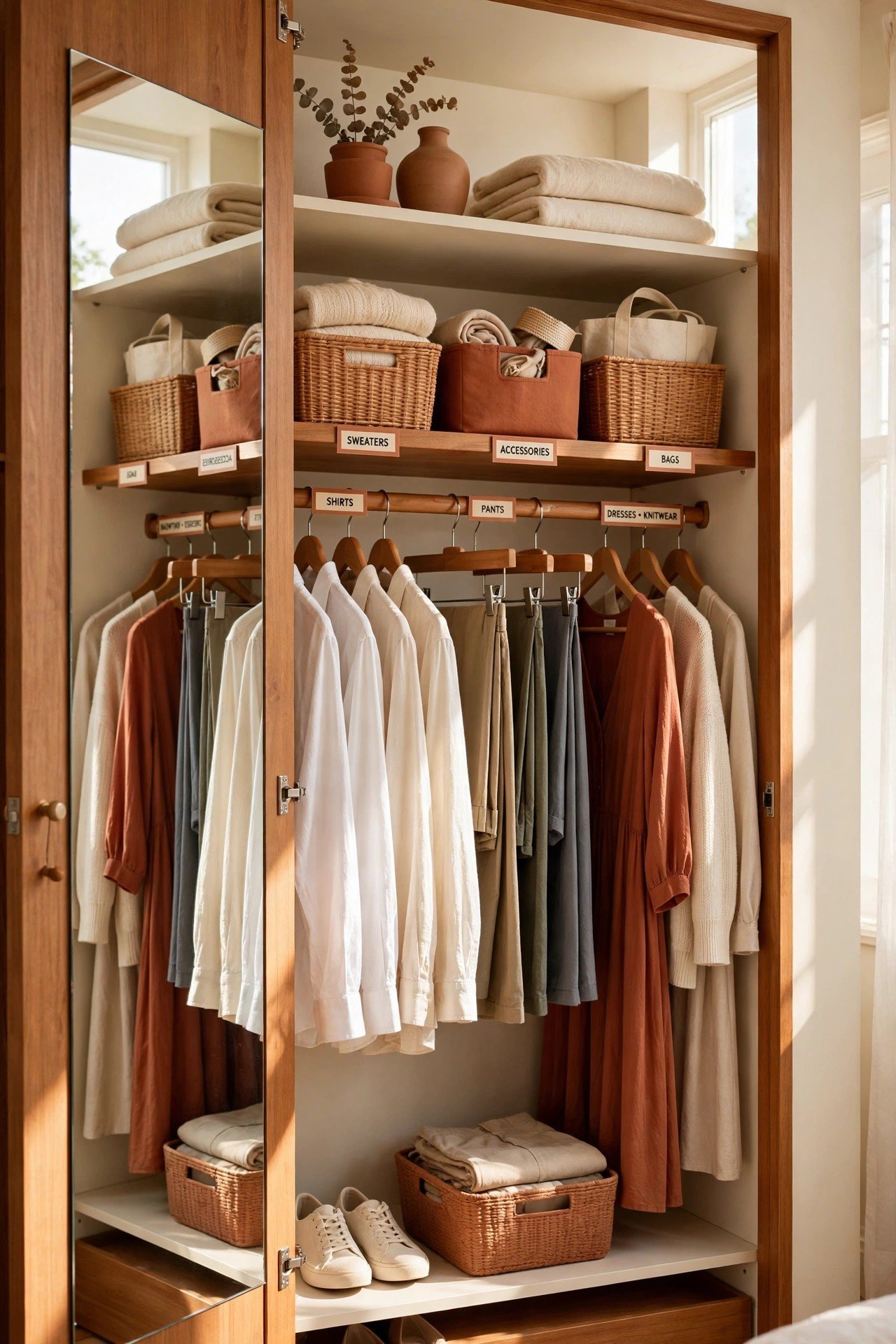
14. Mount a Jewelry Pegboard
Jewelry boxes eat dresser space that could hold folded clothes. A wall-mounted pegboard with hooks and small inserts moves your whole collection into the closet. Necklaces hang tangle-free and earrings stay paired.
Pick a pegboard that matches your closet style, from natural wood to clean white. Customized inserts let the display grow with your collection. Your accessories live beside your clothes now, which makes finishing an outfit effortless. A dedicated jewelry organization setup like this also protects delicate pieces from tangling.

15. Take Storage Up to the Ceiling
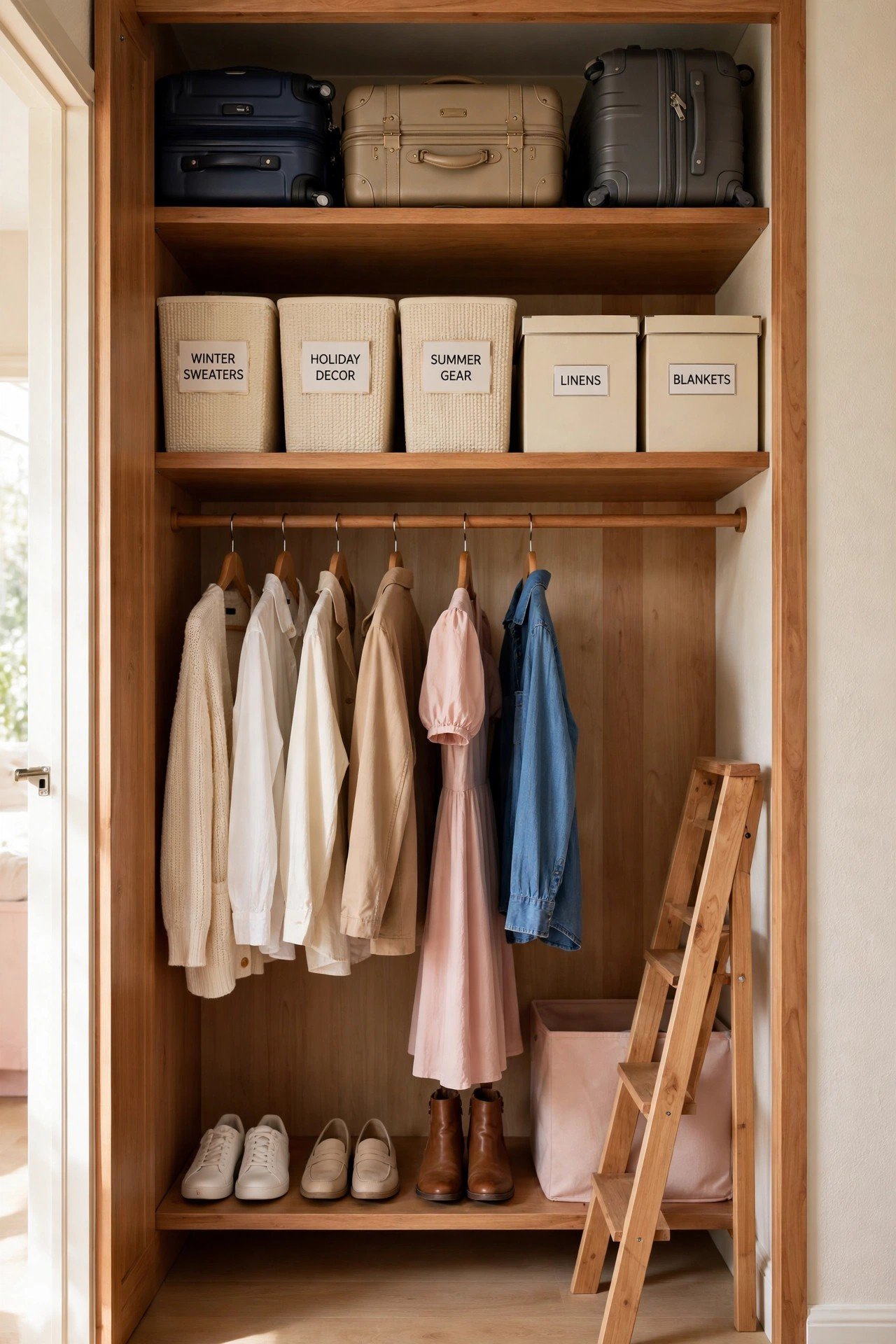
Most closets waste the top foot of space near the ceiling. High shelves for luggage, seasonal bins, and rarely worn items free the lower zones for daily clothes. Use the vertical space you already own before adding anything new.
Add a wire shelf extender or a second shelf near the top. Keep a small step stool nearby so the high zone stays usable. When bulky items move up, the hanging rod below opens up for the clothes you actually wear.
16. Light Every Row With LED Strips
Dark closets hide clothes, and hidden clothes never get worn. LED strip lights under each shelf or along the rod frame wash the whole closet in bright, even light. Colors read true and nothing hides in shadow.
Motion-activated strips turn on the moment you open the door. They run cool and use very little energy. A well-lit closet makes your full hanging collection visible, which is the whole point of giving each garment its own space.

17. Tag Each Rod Section
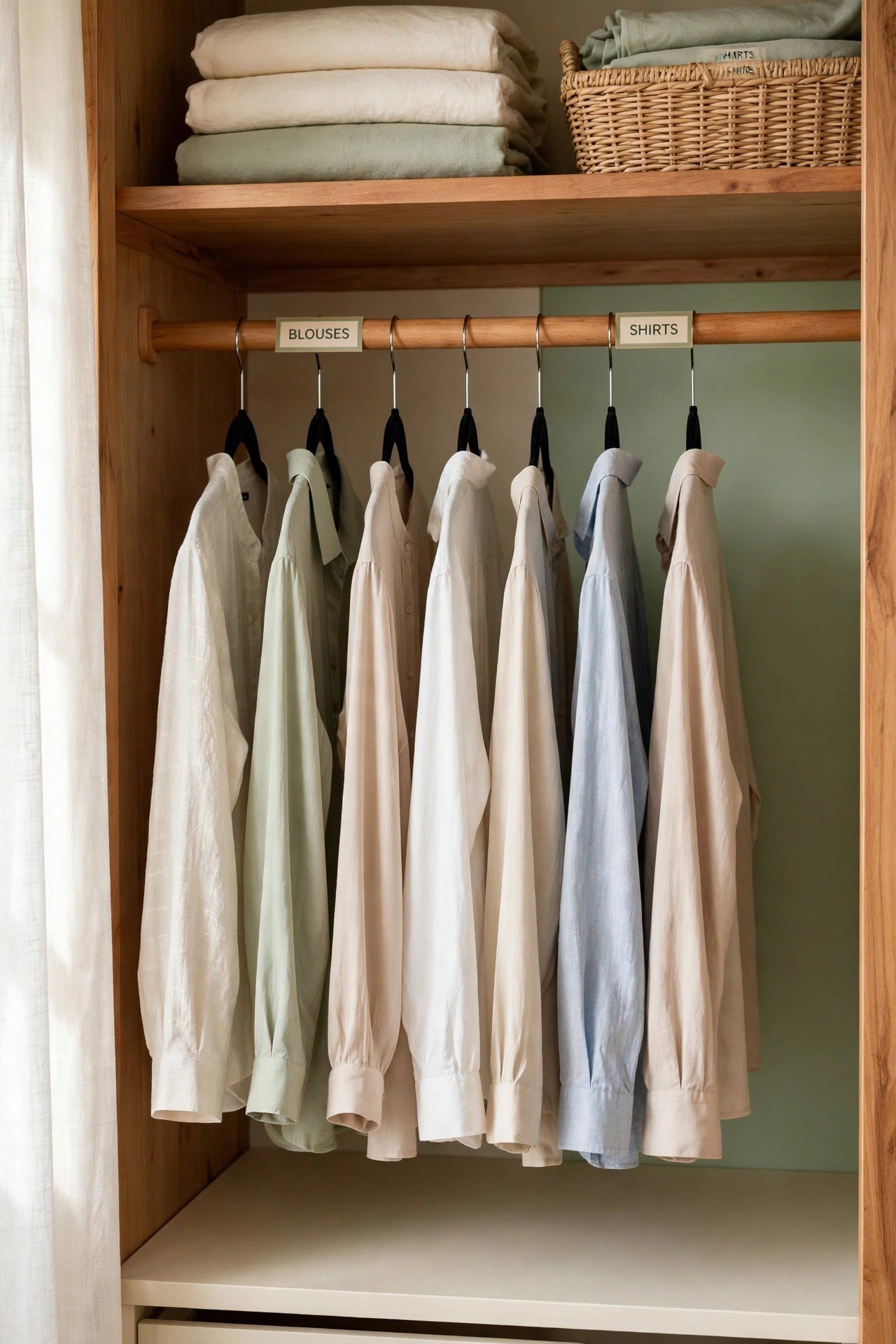
Garment organizer tags mark each section of the rod like signs in a store. Work clothes, casual wear, and formal pieces each get a label. You stop hunting through the whole rod because each zone is named.
Slide the tags onto the rod between sections. They also stop clean clothes from mixing with worn ones waiting for laundry day. This small system keeps your newly doubled hanging space organized from day one.

18. Stack Clear Bins for Small Items
Small items like belts, scarves, and swimwear scatter across shelves without a system. Stackable clear bins with lids group them by category and stack neatly on a shelf. You see the contents without opening a thing.
Label each bin so the system survives busy weeks. Clear bins also stack on the closet floor without looking messy. When small items have their own towers, they stop stealing space from your hanging clothes.

19. Hang Two Rods at Different Heights
One long rod for full-length dresses wastes the space underneath them. Two rods, one high and one low, turn that dead zone into a second hanging row. Shirts and blouses live up top while pants and skirts hang below.
Measure your longest top-rod items first so the lower rod clears them. This single change can double your hanging capacity overnight. It is the fastest way to fit a big wardrobe into a small bedroom closet.

20. Add a Pull-Down Rod for High Spaces
High ceilings create hanging space you cannot reach. A pull-down rod brings the upper tier down to a comfortable height with a gentle handle pull. Off-season garments and formal wear live up there without being lost forever.
The rod retracts smoothly when you finish, keeping the closet looking neat. This mechanism unlocks vertical space that most closets waste completely. Tall closets finally use every inch of their height.

21. Swap Bulky Hangers for Slim Velvet Ones
Thick plastic hangers can steal two inches of rod space each. Slim velvet hangers hold clothes in a fraction of the width. Swapping a full closet can free up a third of your rod overnight.
The velvet surface also stops slippery blouses from sliding to the floor. Choose one hanger style for the whole closet so the rod looks calm and uniform. This is the cheapest hanging-space upgrade you can make.
22. Sort by Length to Free Hanging Room
When long dresses hang between short shirts, the space under the shirts goes to waste. Group garments by length so all the short items share one zone. The freed space underneath becomes a new shelf or bin area.
This sorting also shows you exactly how many long pieces you own. You may find that only a small section truly needs full height. The rest of the rod can split into two levels and hold twice the clothes.

23. Stage Outfits on a Valet Rod
A retractable valet rod pulls out to hold tomorrow’s outfit or fresh dry cleaning. It mounts to a side wall or cabinet panel and disappears when not in use. Your bed and chairs stay free of staged clothes.
Use it to plan outfits the night before, which makes mornings faster. The rod also holds items that need airing before they join the main rod. One small rod keeps the whole closet system running smoothly.
24. File Shorts and Tees in Tiered Organizers
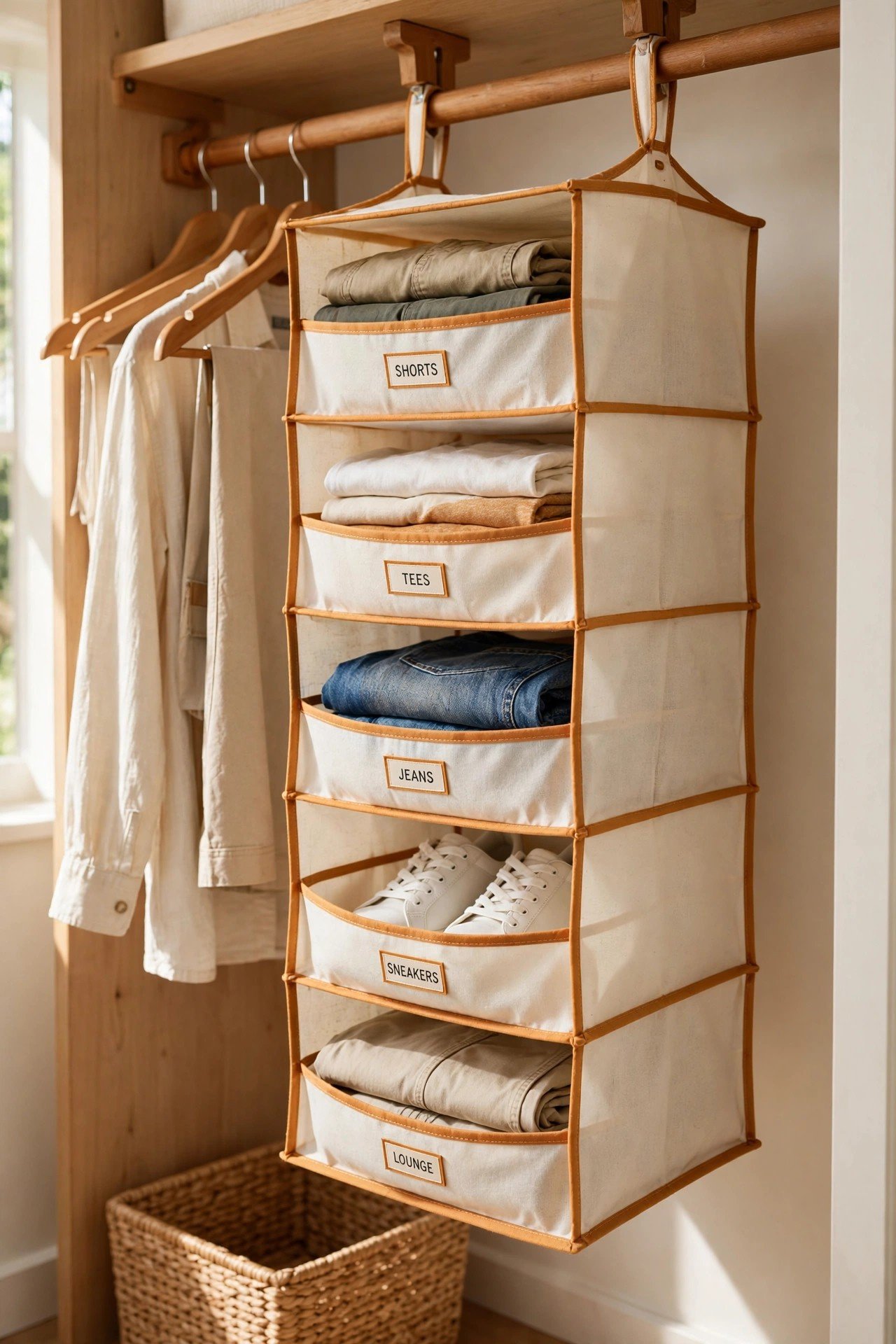
Fabric organizers that hang from the rod add instant shelves without tools. Their compartments hold folded shorts, tees, and jeans in neat rows. You get five new shelves in the time it takes to hang the organizer.
This is ideal for renters who cannot drill or build. Hang the organizer at the end of the rod so it never blocks your view. Folded items stay separated and the main rod keeps its full length for hanging.
25. Park Shoes on the Floor in a Low Row
Shoes scattered across the closet floor block your reach to the back. A low shoe rack or a single shelf near the floor lines them up in one tidy row. The floor stays clear and your feet can reach the back of the closet.
Choose a rack with one or two tiers so it never rises into the hanging zone. Sort shoes by type so you can grab a pair without bending twice. A clear floor makes the whole closet feel larger and easier to use.

26. Hook Handbags on the Side Walls
Handbags piled on shelves crush their shape and eat shelf space. Sturdy hooks on the side walls hang each bag by its strap. They stay visible, keep their form, and free the shelves for folded clothes.
Space the hooks at different heights for small clutches and large totes. This trick works especially well in narrow closets where every wall counts. Your bags become part of the display instead of a pile in the corner.

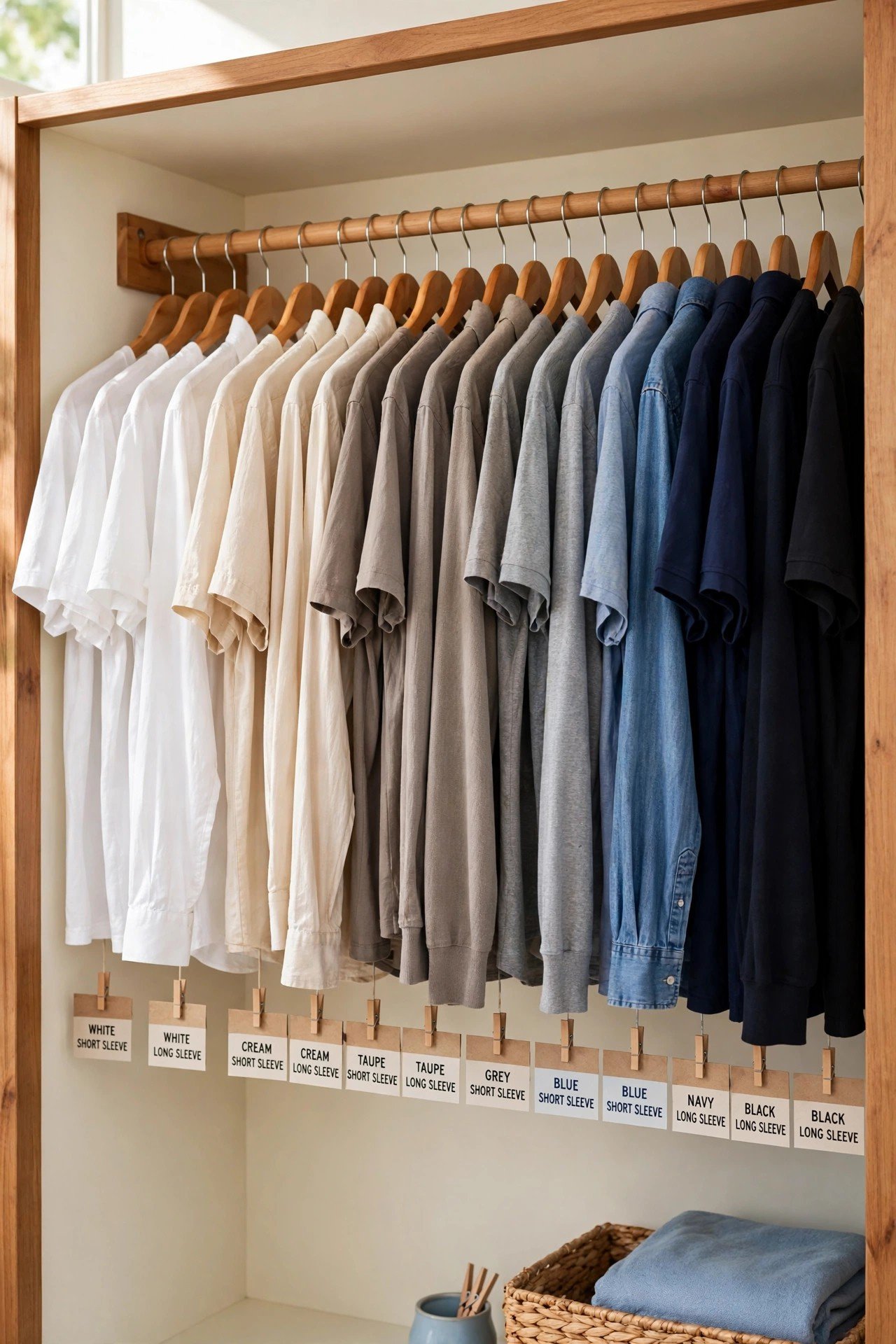
27. Color-Block the Hanging Section
Arranging hanging clothes by color turns a full rod into a visual map. You find the white blouse in seconds because all the whites live together. The closet also looks calmer, which makes a packed rod feel less overwhelming.
Start with lights on one end and move toward darks. Within each color, group by sleeve length for extra order. This styling habit costs nothing and makes your expanded hanging space genuinely enjoyable to browse.
28. Keep a Step Stool for the Top Zones
High shelves only help if you can reach them. A slim folding step stool lives in the closet corner and makes every zone usable. You will actually use the upper shelves instead of treating them as decoration.
Pick a stool that folds flat so it never blocks the door. Lightweight designs move easily between the closet and other rooms. When every level is reachable, the whole closet works as one connected system. Small touches like fresh paint can lift the mood too, and two-tone wall paint ideas show how color transforms compact spaces on a budget.

Conclusion
More hanging space does not require a bigger closet. Two rods instead of one, slim hangers instead of bulky ones, and walls that work as hard as the rod itself can transform even the smallest bedroom closet. Each idea here frees a little more room until the whole space breathes.
Start with the change that matches your biggest frustration. If the rod is jammed, swap the hangers first. If the floor is chaos, claim the door and corners. Layer the ideas one at a time and your morning routine will thank you every single day.
Bedroom Closet Organization FAQs
How can I double the hanging space in a small bedroom closet?
Install two rods at different heights, swap bulky hangers for slim velvet ones, and use cascading hangers for shirts and pants. Moving off-season clothes elsewhere also frees significant rod space.
What is the best way to organize a closet with only one rod?
Add a second lower rod for short items, hang a fabric organizer from the existing rod, and use the closet door for shoes and accessories. Sort clothes by length so no space goes to waste.
How do slim velvet hangers save closet space?
Slim velvet hangers are about half the width of thick plastic ones, so a full closet can gain up to a third more rod space. The velvet coating also keeps slippery garments from sliding off.
Where should I store shoes in a bedroom closet?
Keep shoes on a low rack or shelf near the floor, or move them to the back of the closet door with an over-the-door organizer. This keeps the floor clear and protects your hanging space.
How do I keep a bedroom closet organized long term?
Give every category a fixed zone, tag rod sections with labels, and do a quick seasonal swap twice a year. Return each item to its zone daily so the system never drifts back into chaos.

Hi, I’m Emily! I turn messy corners into cozy, organized spots. DreamNestDecor is where I share simple, practical home ideas — decor, organization, and small-space solutions that work in real life, not just in photos. Every idea here is carefully researched before it’s shared.