Picture this: the remote control stops working in the middle of your favorite show, and you open the junk drawer to find a tangled pile of loose batteries. None of them are labeled, and you have no idea which ones still hold a charge. That small moment of frustration is exactly what smart battery storage can fix for good.
You do not need a bigger drawer or expensive organizers to get there. All you need is a simple system that sorts batteries by size, keeps fresh ones separate from dead ones, and makes it easy to find the right battery in seconds. These 17 battery storage organization ideas will help you keep every battery tidy, safe, and ready to use.
1. Clear the Drawer and Sort First
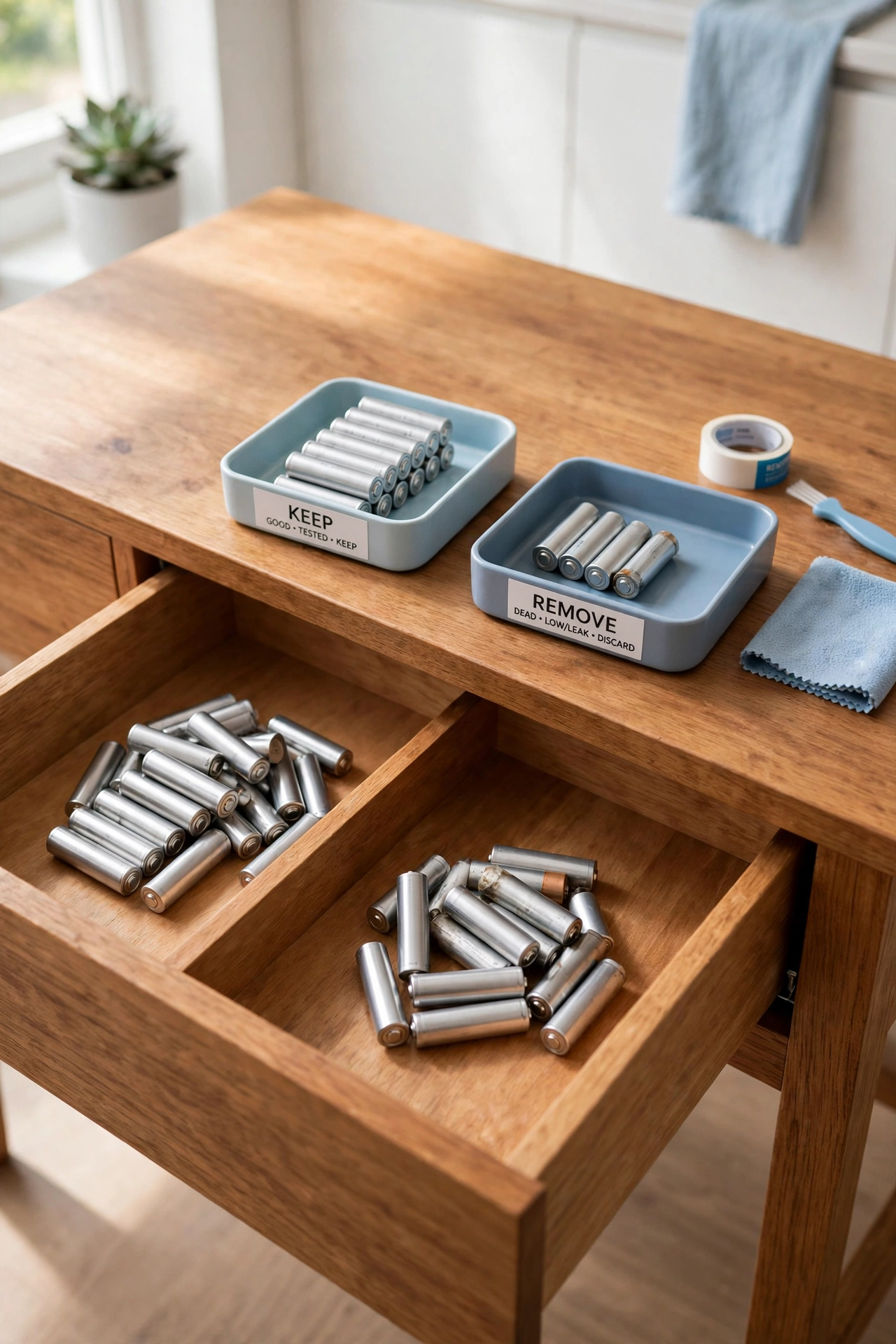
Before you buy a single organizer, empty the drawer completely and sort every battery you own. Test each one with a battery tester or by trying it in a device, and throw away anything that is dead or leaking. This fresh start shows you exactly how many batteries you really have and which sizes you actually use.
Once the drawer is empty, wipe it clean and line it with a fresh liner if you like. A clean drawer makes the new system feel like a real fresh start. This one step takes only fifteen minutes and makes every other idea work better.
2. Sort by Size — AA, AAA, C, D and 9V
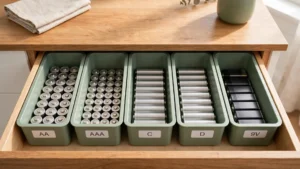
Batteries come in many sizes, and mixing them together is the fastest way to create a mess. Sort your batteries into groups by size: AA, AAA, C, D, and 9V each get their own section. When every size has a home, you can grab the right battery without digging through the whole drawer.
Use small bins or dividers to keep the size groups separate. Label each section clearly so everyone in the family can find the right size and put new batteries back in the right place. Sorting by size is the foundation of every other battery storage idea.
3. Use a Battery Organizer Case with Labeled Slots
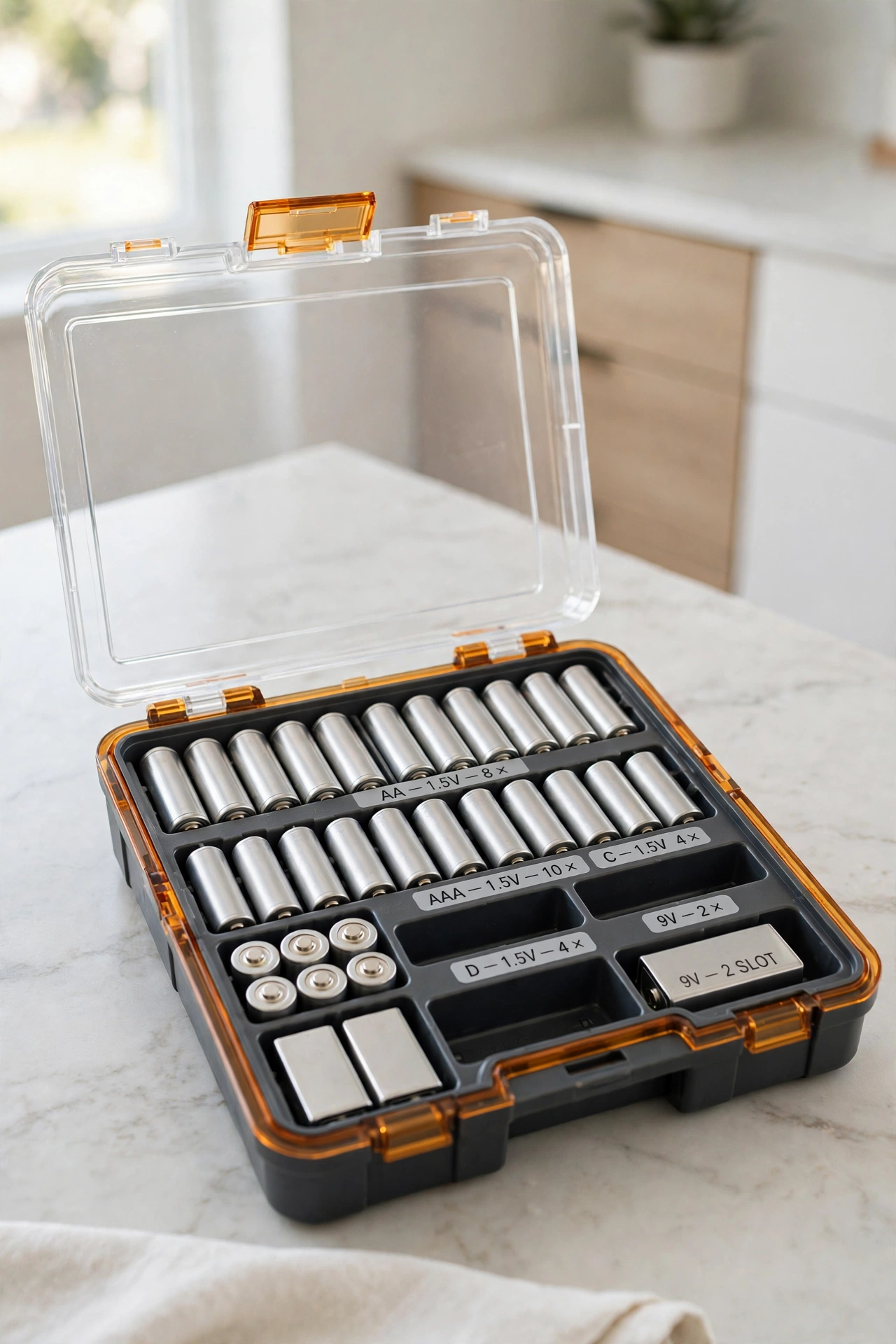
A battery organizer case is a hard plastic box with molded slots that hold each battery in place. Each slot is sized for one battery type, so AA batteries fit in AA slots and AAA batteries fit in AAA slots. The case keeps batteries from rolling around and stops the metal ends from touching each other.
Choose a case with a clear lid so you can see what is inside without opening it. Many cases also have a built-in tester on the lid, which lets you check a battery in seconds. A good organizer case turns a messy drawer into a tidy grid that anyone can use.
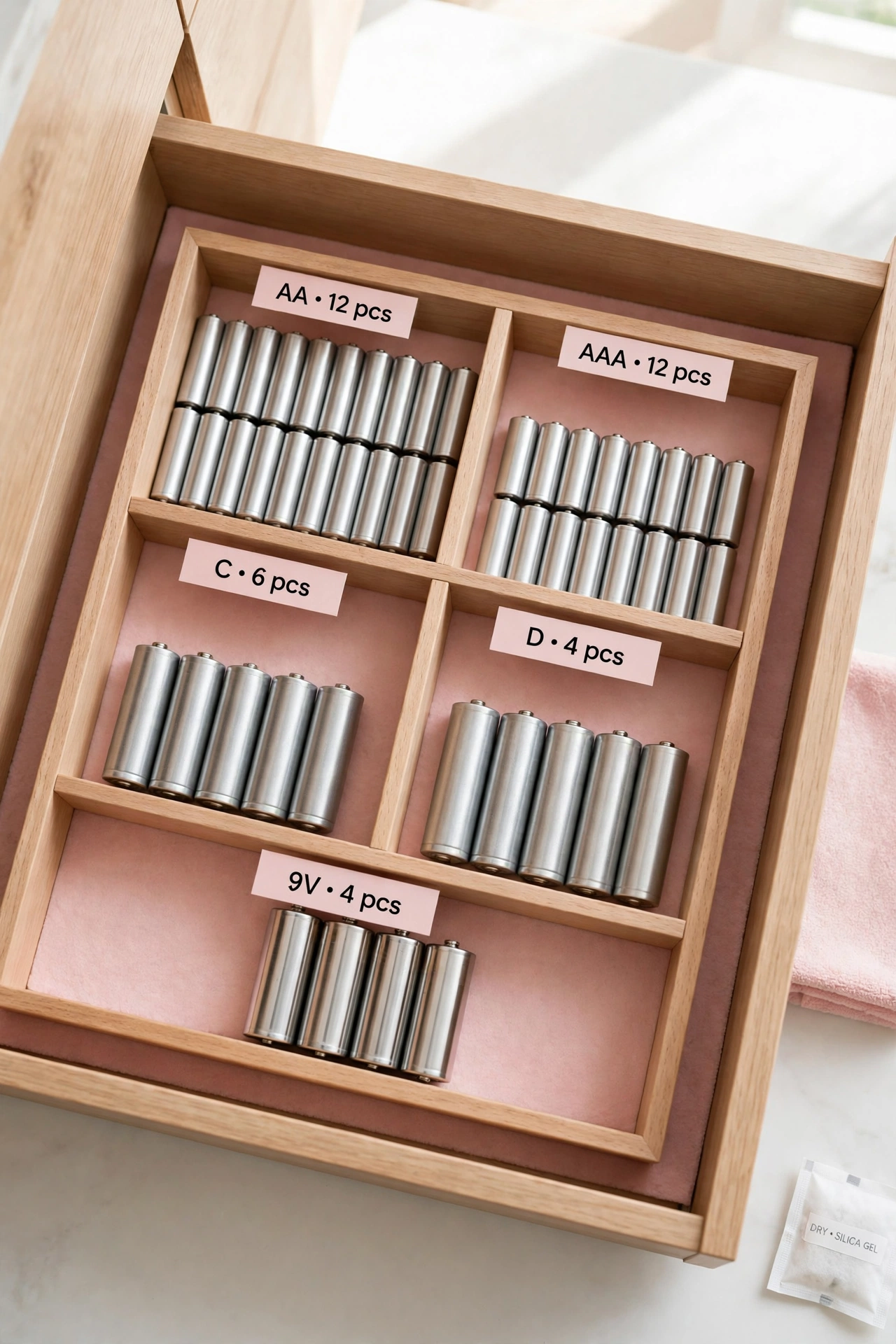
4. Add Drawer Dividers for Loose Batteries
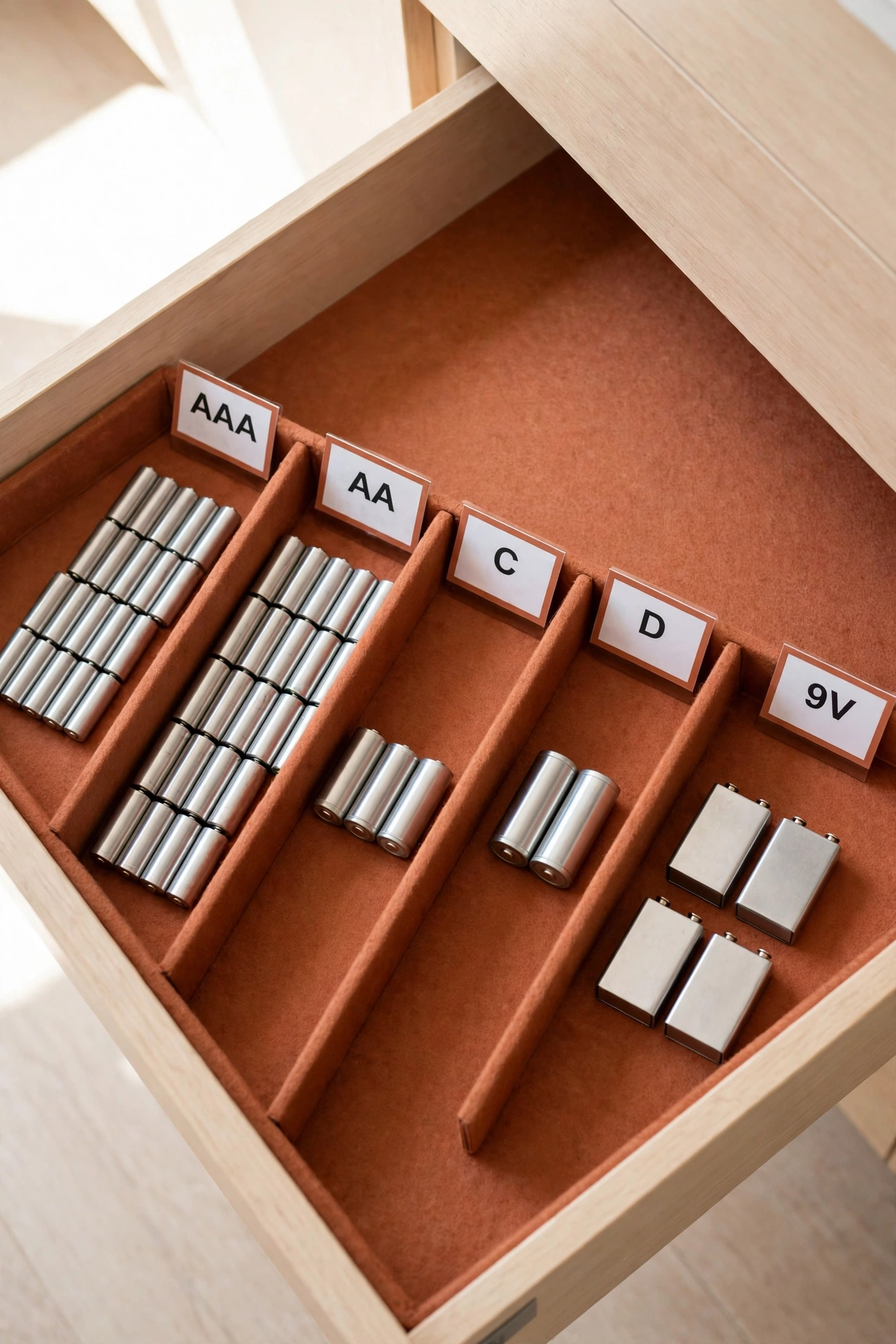
Drawer dividers are the simplest way to give a battery drawer real structure. Adjustable dividers let you create sections that fit your drawer exactly, so nothing slides around when you open and close it. Each section holds one battery size, which keeps the drawer tidy for weeks.
Choose dividers in wood, bamboo, or sturdy plastic to match your drawer. For more ways to keep dresser drawers tidy, see these dresser drawer organization ideas. You can move the dividers any time your needs change, which makes them a flexible long-term solution.
5. Mount a Wall Battery Dispenser
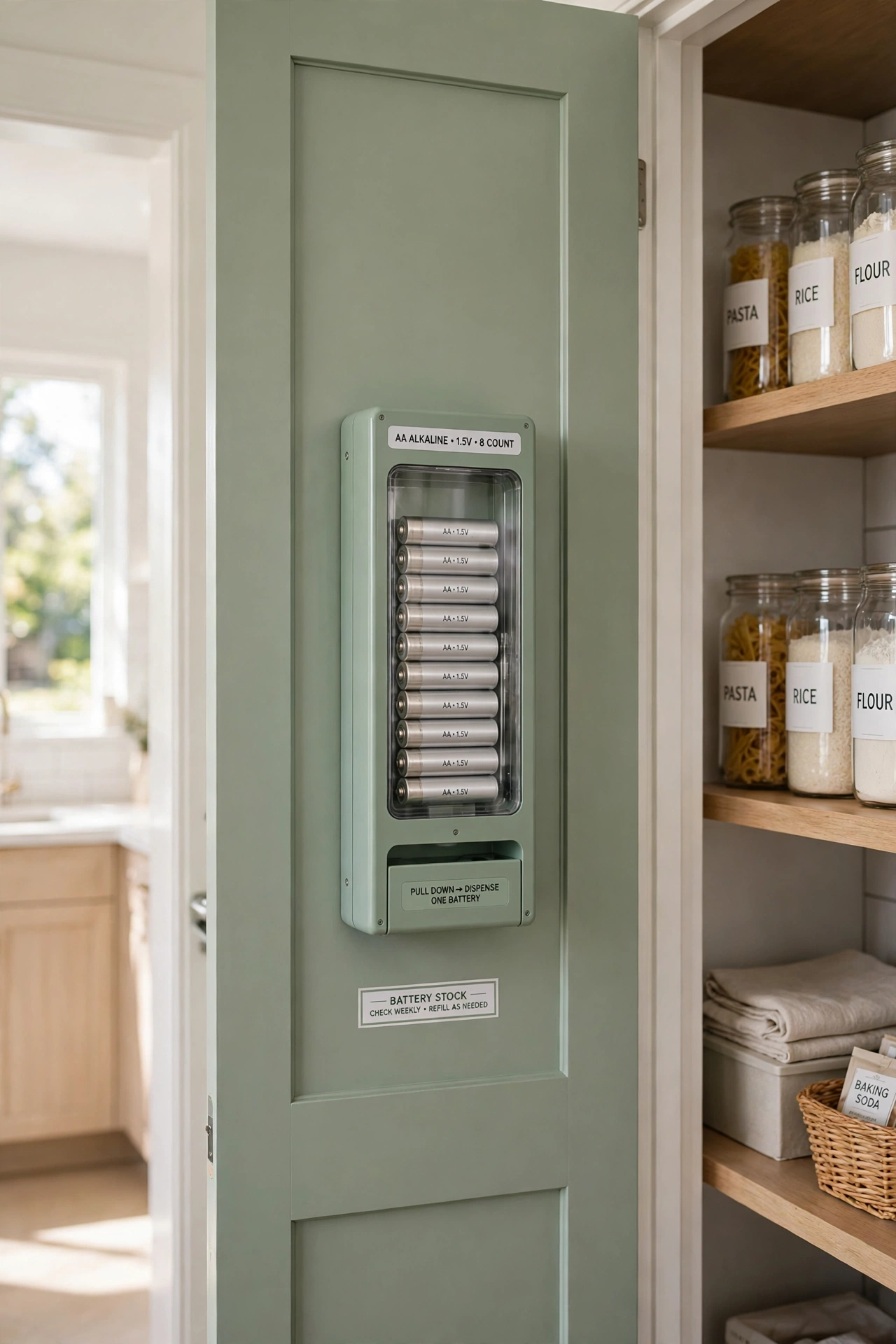
A wall-mounted battery dispenser holds batteries in a vertical column and lets one drop down each time you take the bottom one out. Mount it inside a pantry door, on a garage wall, or in a utility closet where the whole family can reach it. The dispenser keeps batteries visible and easy to grab.
This is a smart choice for homes that go through a lot of batteries, like homes with many remote controls and toys. Fill the dispenser with fresh batteries and keep the spares in the drawer. A wall dispenser turns dead wall space into useful storage in minutes.
6. Keep a Battery Tester in the Drawer
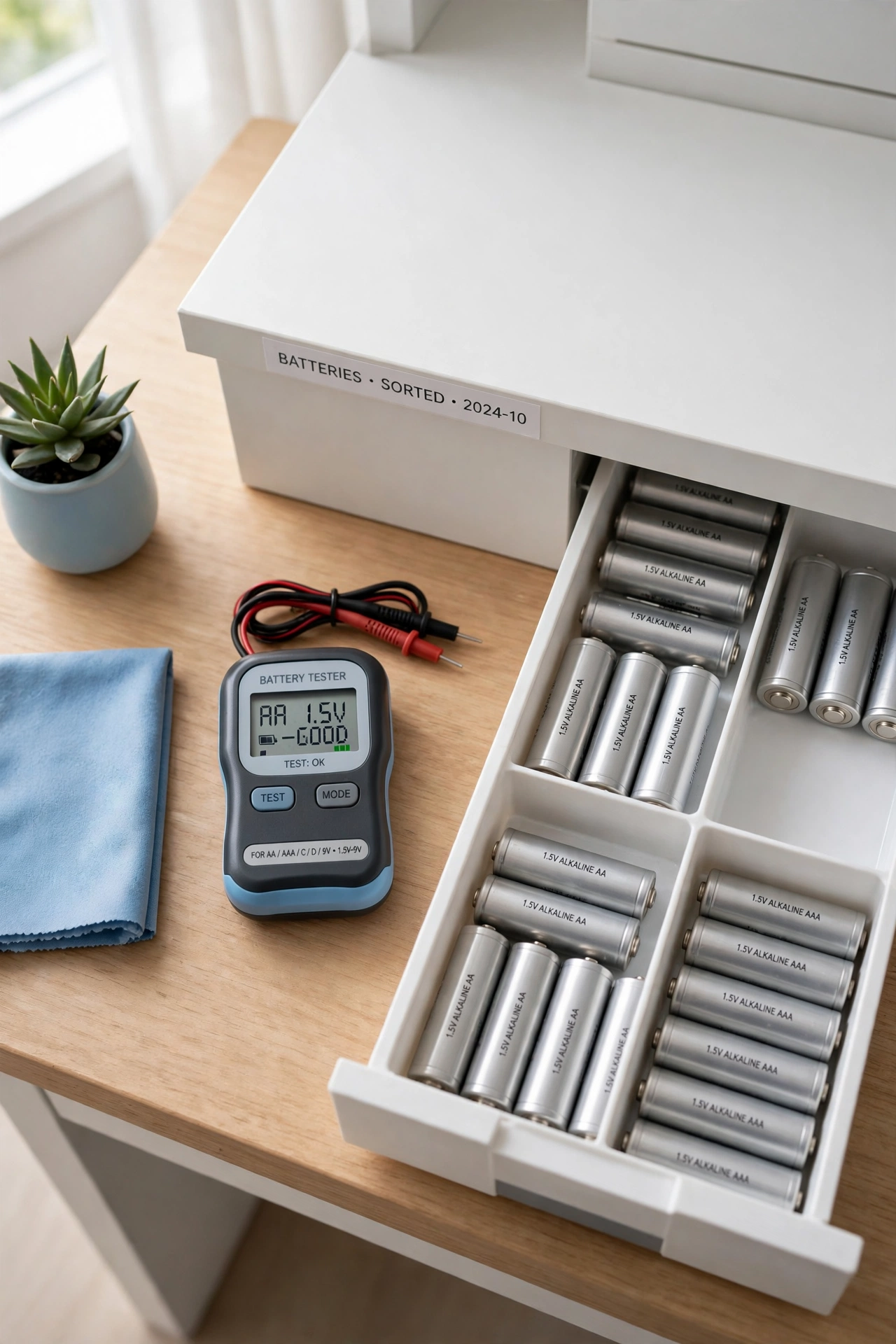
A small battery tester is the most useful tool in a battery drawer. Slide a battery into the tester and it shows you right away whether the battery is full, half empty, or dead. This stops you from throwing away good batteries and from keeping dead ones by mistake.
Keep the tester in the same drawer as the batteries so it is always within reach. Test every battery before you store it, and test old batteries before you use them in a device. A tester costs very little and saves you money on batteries you would otherwise throw away.
7. Store Rechargeable Batteries Separately
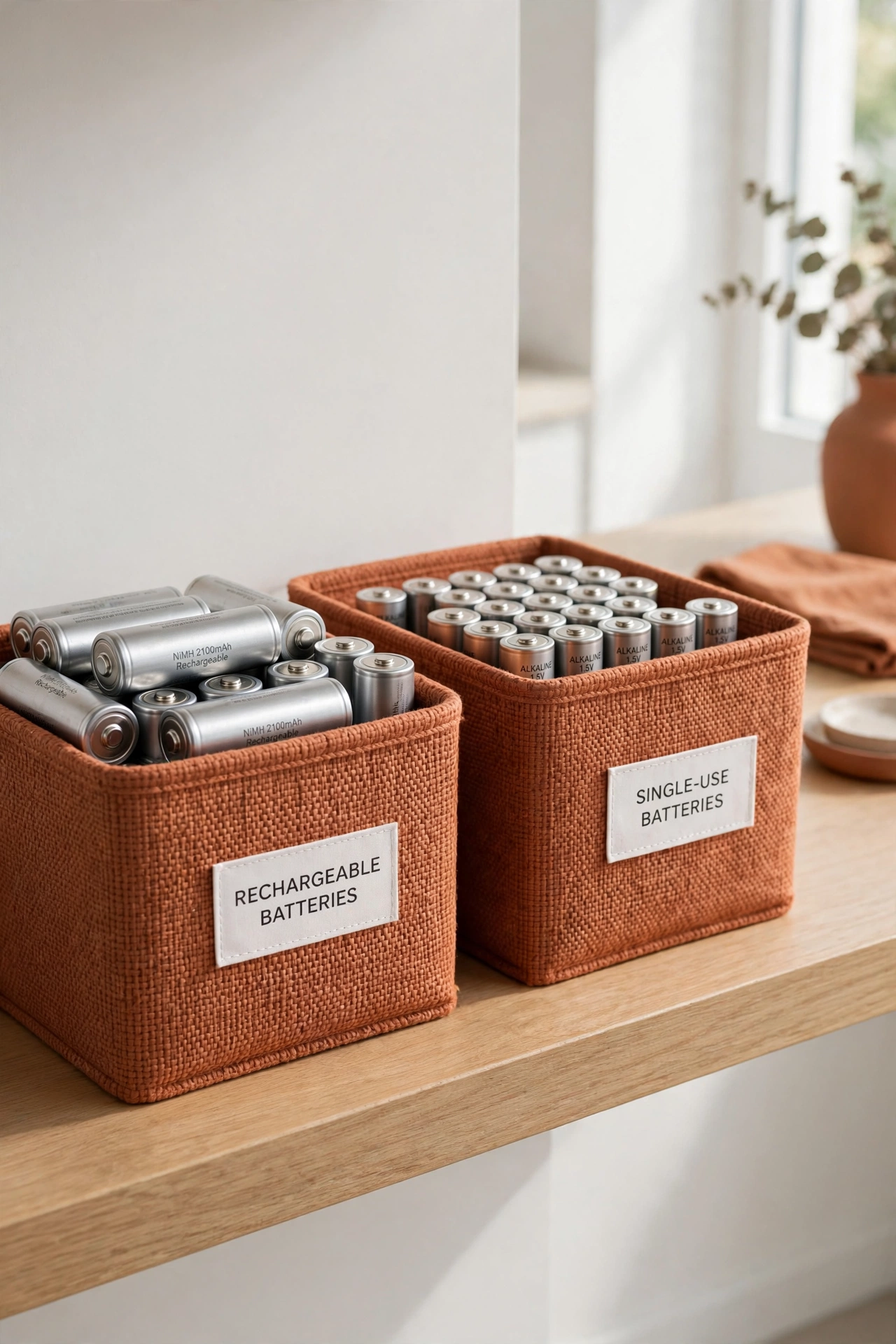
Rechargeable batteries need their own spot, separate from single-use batteries. Mixing the two types causes confusion, and you can end up throwing away a rechargeable battery by mistake. Give rechargeables their own bin or section with a clear label.
Keep the charger nearby so used rechargeables go straight to the charger instead of back into the drawer. This simple habit keeps your rechargeable collection ready to use and stops waste. A labeled bin for rechargeables is one of the easiest wins in battery storage.
8. Set Up a Charging Station for Rechargeables
A small charging station gives your rechargeable batteries a permanent home. Set up the charger on a shelf or a countertop near the battery drawer, and keep a labeled tray beside it for batteries that are ready to use. When a battery runs low, it goes straight to the charger.
Choose a charger that handles several sizes at once, so AA and AAA batteries charge side by side. Keep the station in a spot where you will see it every day, which makes it easy to remember to charge. A tidy charging station keeps your rechargeables working for years.
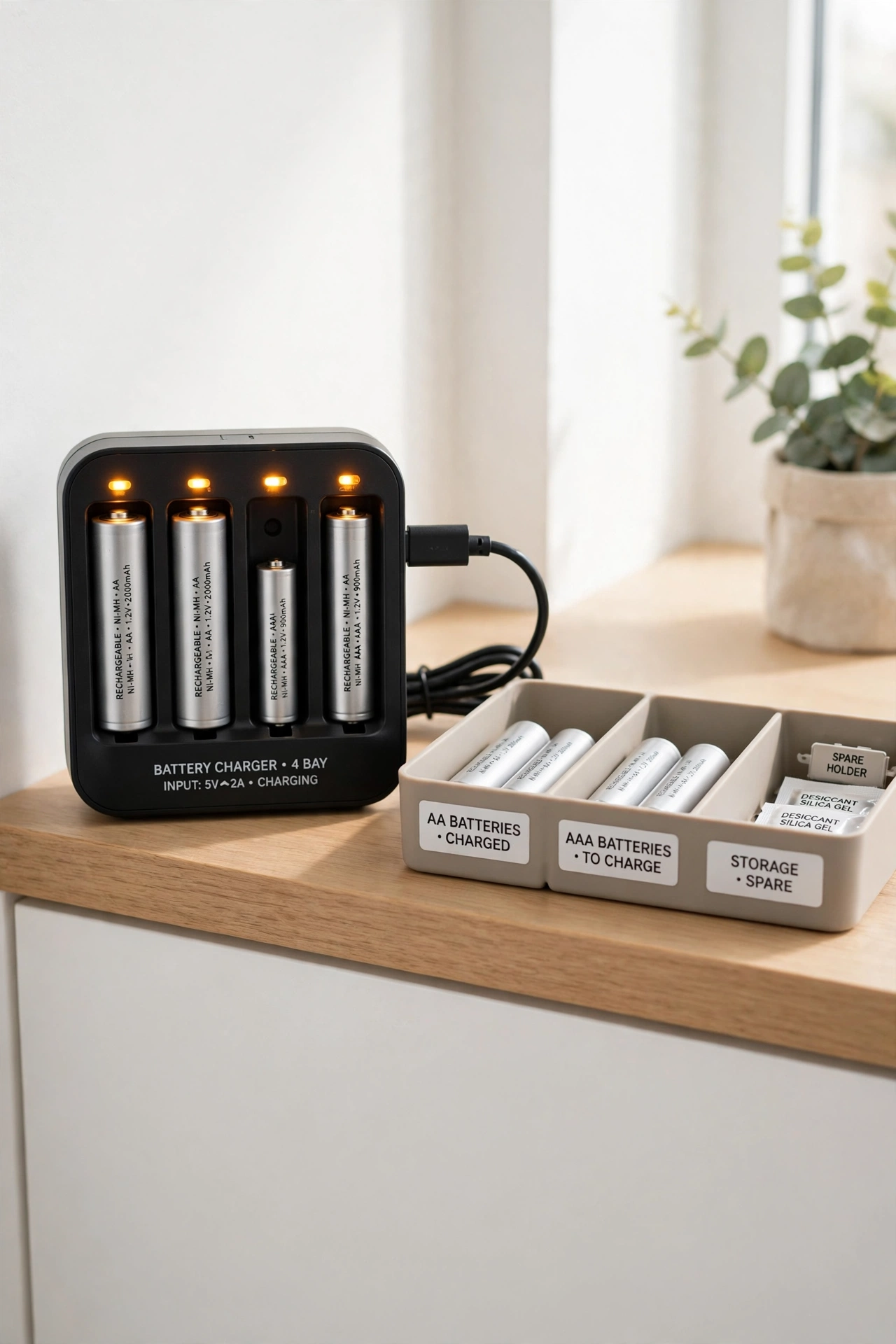
9. Label the Expiry Date on Each Pack
Batteries have an expiry date printed on the pack, and that date tells you how long they will hold a charge. Write the expiry date on the outside of each pack with a marker so you can see it at a glance. This helps you use the oldest batteries first and stops packs from sitting forgotten for years.
Store new packs behind older packs so you always reach for the oldest ones first. This is the same first-in, first-out idea that works so well in a pantry. A quick label with a date keeps your battery stock fresh and reliable.
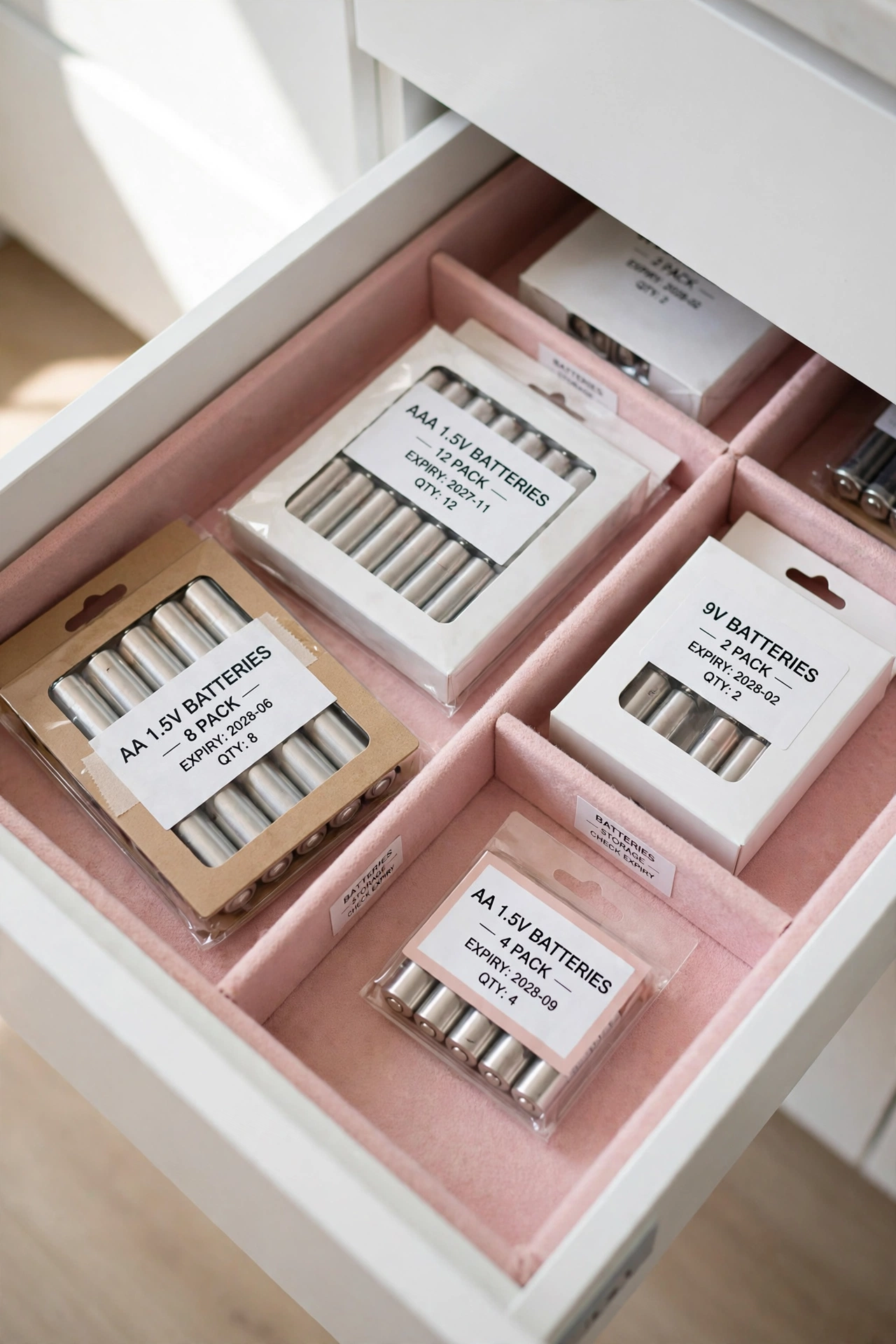
10. Keep a Small Box for Dead Batteries
Dead batteries need a home too, or they end up mixed in with the fresh ones. Keep a small labeled box in the drawer for dead batteries, and drop each dead battery in the box as soon as you find it. When the box is full, take it to a recycling point.
Never throw batteries in the regular trash if your area offers battery recycling. For a handy spot to collect them, a garage workbench makes a great home for the dead battery box. A small box for dead batteries keeps the fresh ones safe and easy to find.

11. Try a Magnetic Strip for Metal Batteries
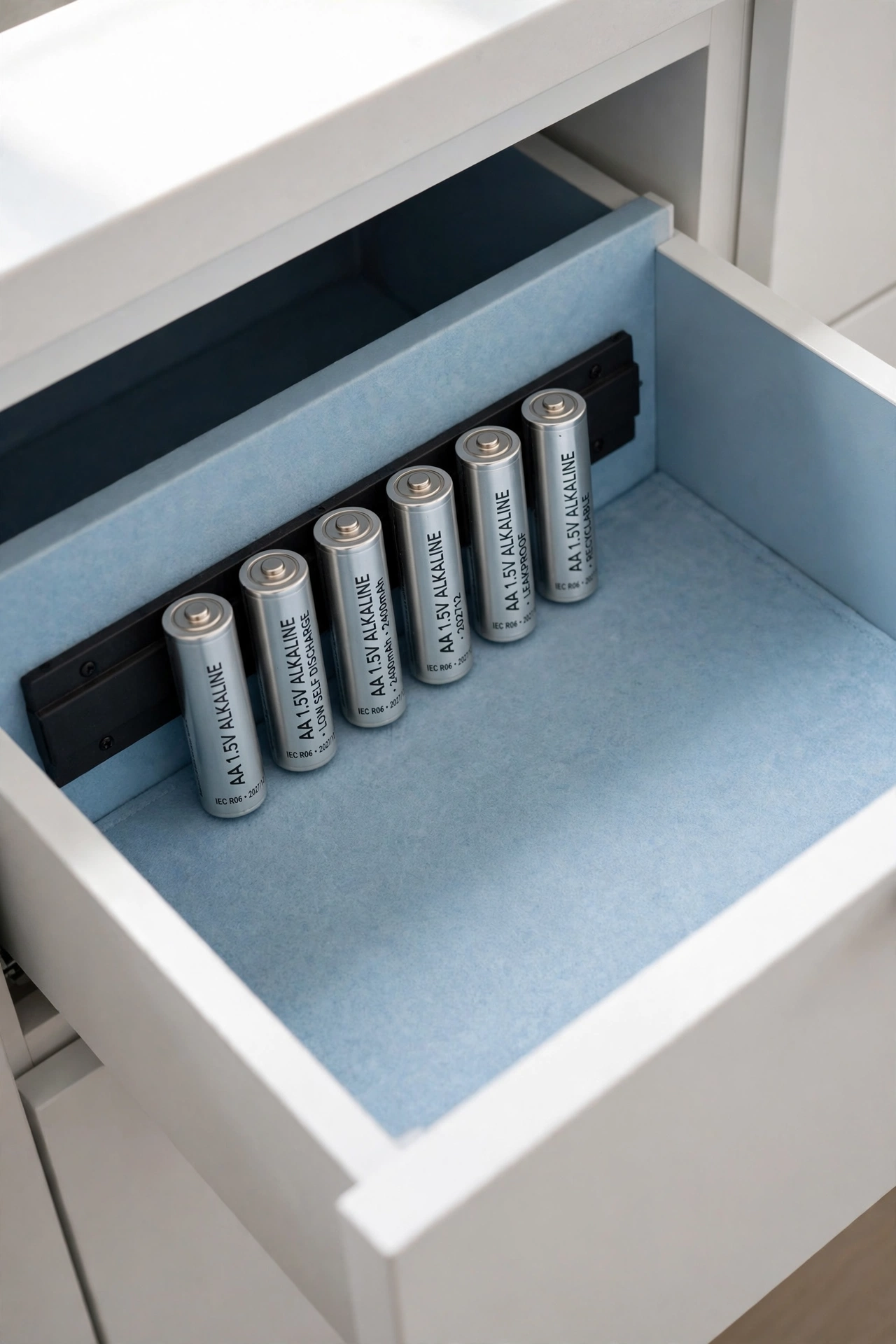
A magnetic strip mounted inside a drawer or on a cabinet door holds metal batteries in a neat row. The batteries stick to the strip and stay visible, so you can see every size at a glance. This works well for AA and AAA batteries, which have metal ends that grip the magnet.
Mount the strip at a height that is easy to reach, and keep it away from devices that magnets can harm. A magnetic strip uses no drawer space at all, which makes it perfect for a small kitchen or a crowded junk drawer. It is a clever trick that costs very little.
12. Sort by Use — Remotes, Toys and Flashlights
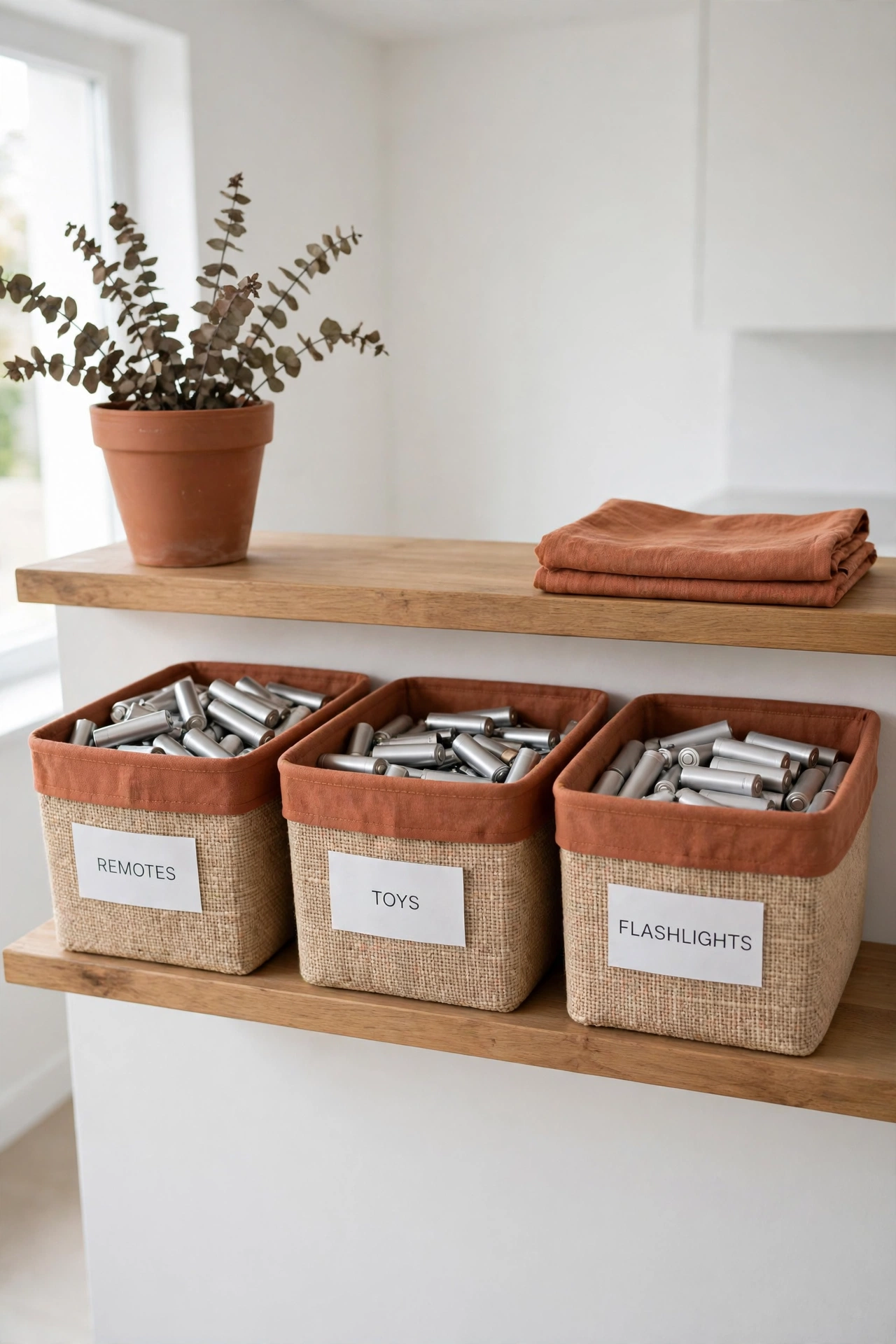
Sorting batteries by use means grouping them by the device they power. Keep remote control batteries together, toy batteries together, and flashlight batteries together. When a device stops working, you know exactly which group to reach for.
Use small labeled bins or zip pouches for each group. This method works well for families with many toys, and these playroom organization ideas will help you keep the rest of the toy area tidy too. Sorting by use saves time when you need a battery in a hurry.
13. Keep Batteries Away from Heat
Heat is the enemy of battery life. Batteries stored near a stove, a radiator, or a sunny window lose their charge faster and can even leak. Keep your battery drawer in a cool, dry spot away from any heat source.
A drawer in the kitchen is fine as long as it is far from the oven. A closet shelf or a drawer in a hallway works even better. Cool storage keeps batteries fresh for years, so this one habit protects your whole collection.
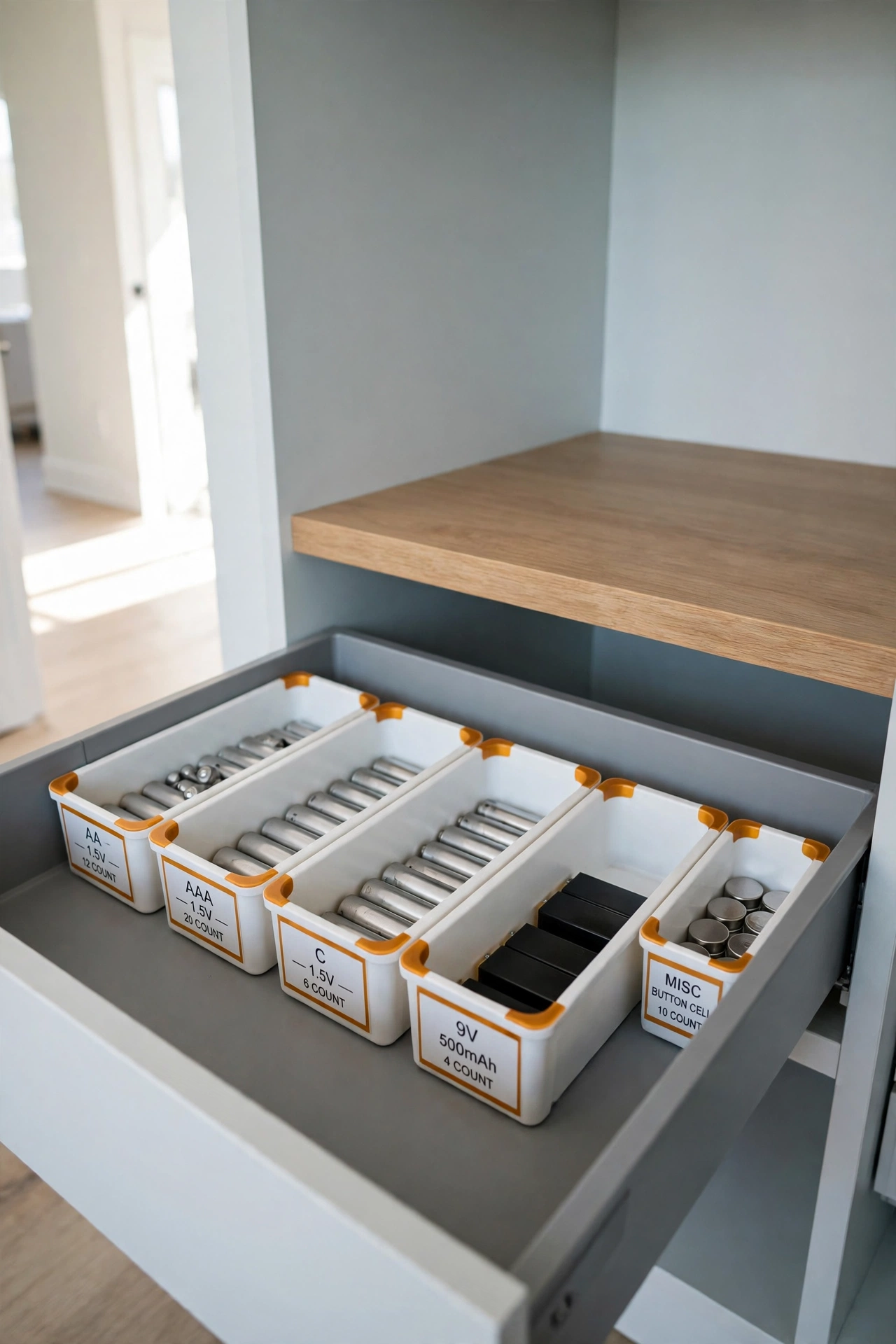
14. Use a Labeled Bin for Each Size
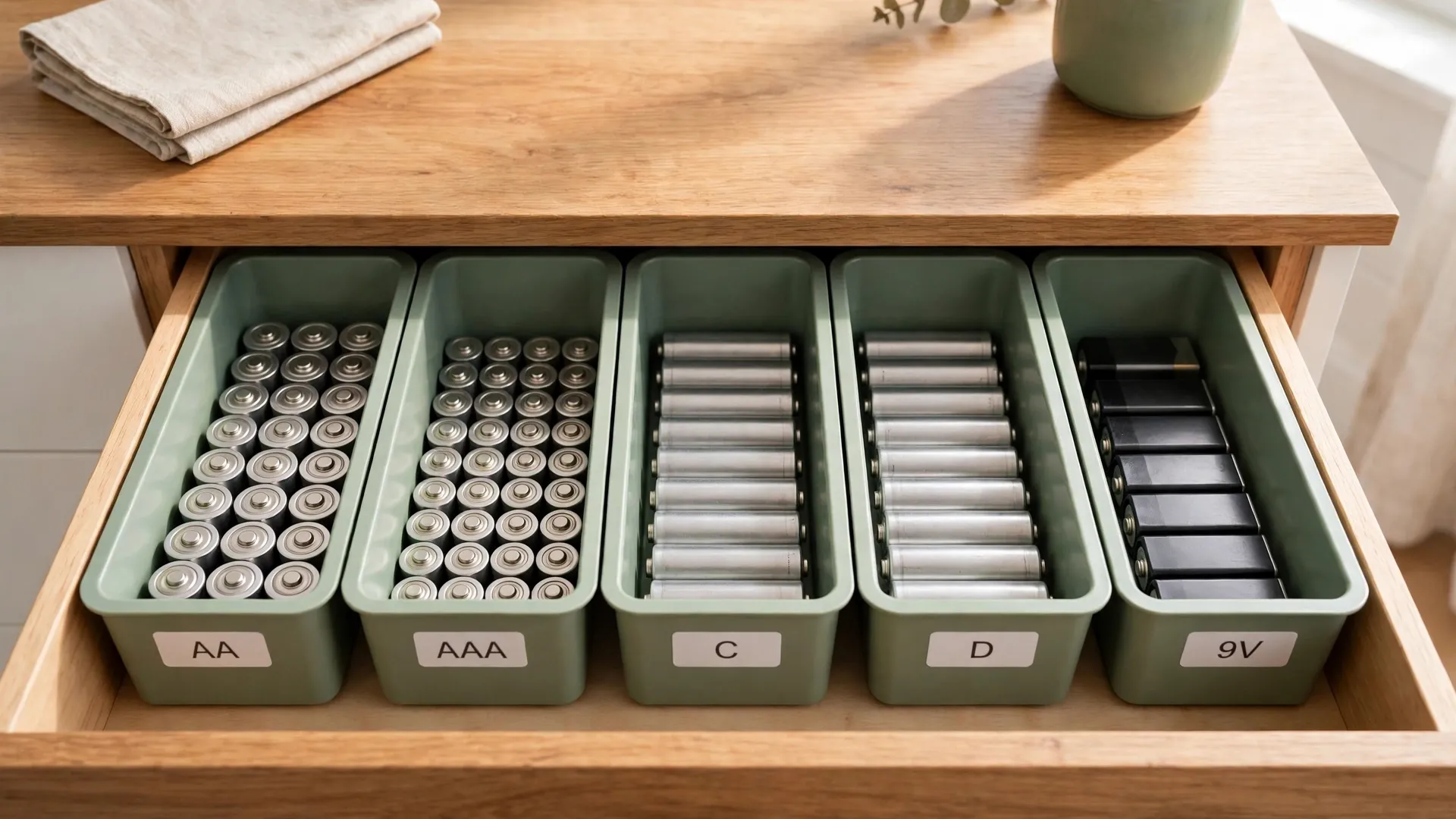
A labeled bin for each battery size is the simplest system that actually lasts. Use small bins or containers, one for AA, one for AAA, one for C, one for D, and one for 9V. Label each bin clearly so anyone in the family can find the right battery.
Clear bins work best because you can see how many batteries are left without opening them. For more drawer ideas, see these desk drawer organization ideas. Labeled bins make restocking easy, because an empty bin tells you exactly what to buy.
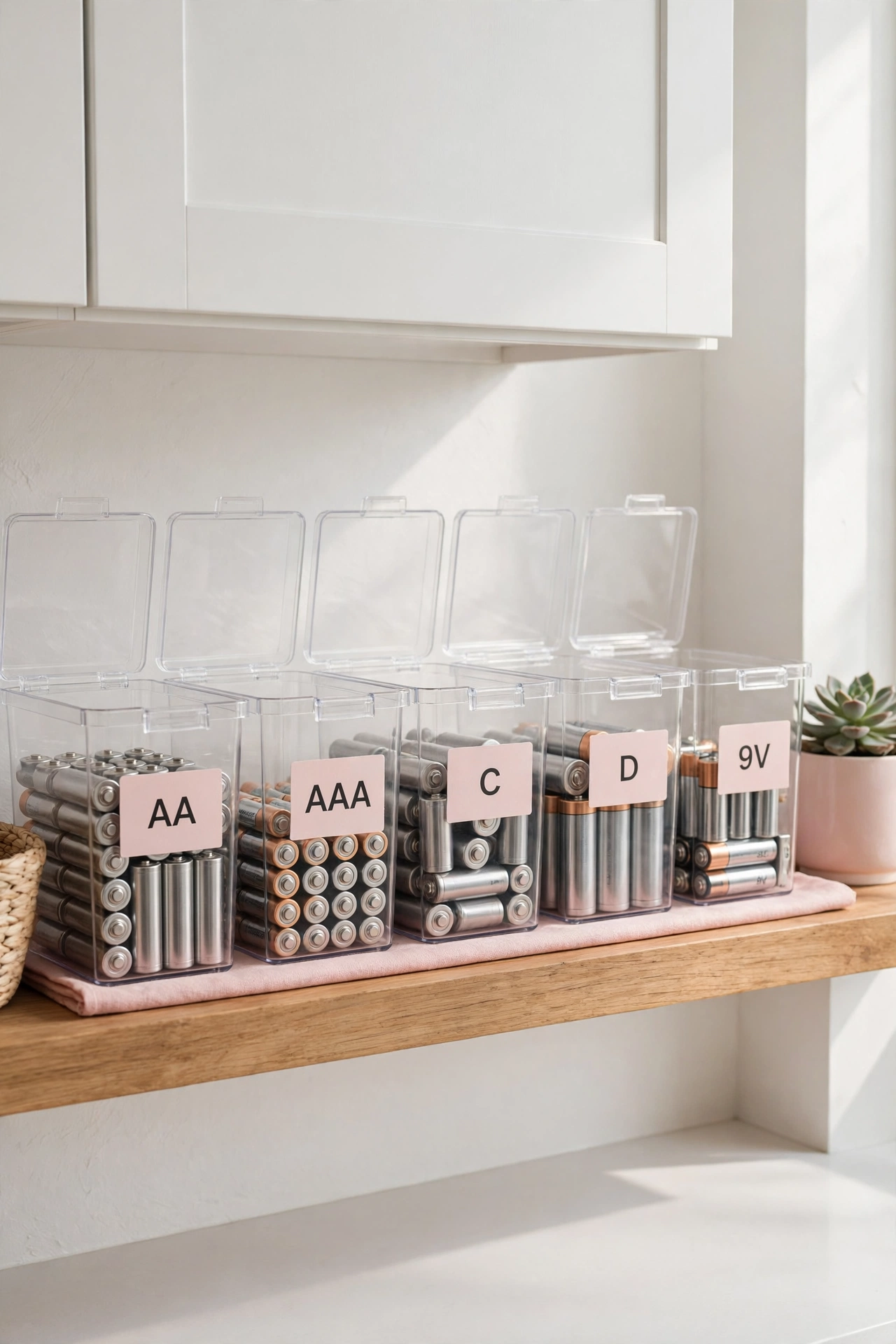
15. Store Spare Batteries Near the Devices They Power
Store spare batteries close to the devices they power, and you will never hunt for one again. Keep a few AA batteries in a small pouch near the television remote, and keep flashlight batteries in the same drawer as the flashlight. This puts the right battery within easy reach when you need it.
Use small labeled pouches or bins so the spares stay tidy and do not mix with other items. Keep the main battery stock in one central drawer and small backup stashes where they are used most. This two-level system is both tidy and practical.
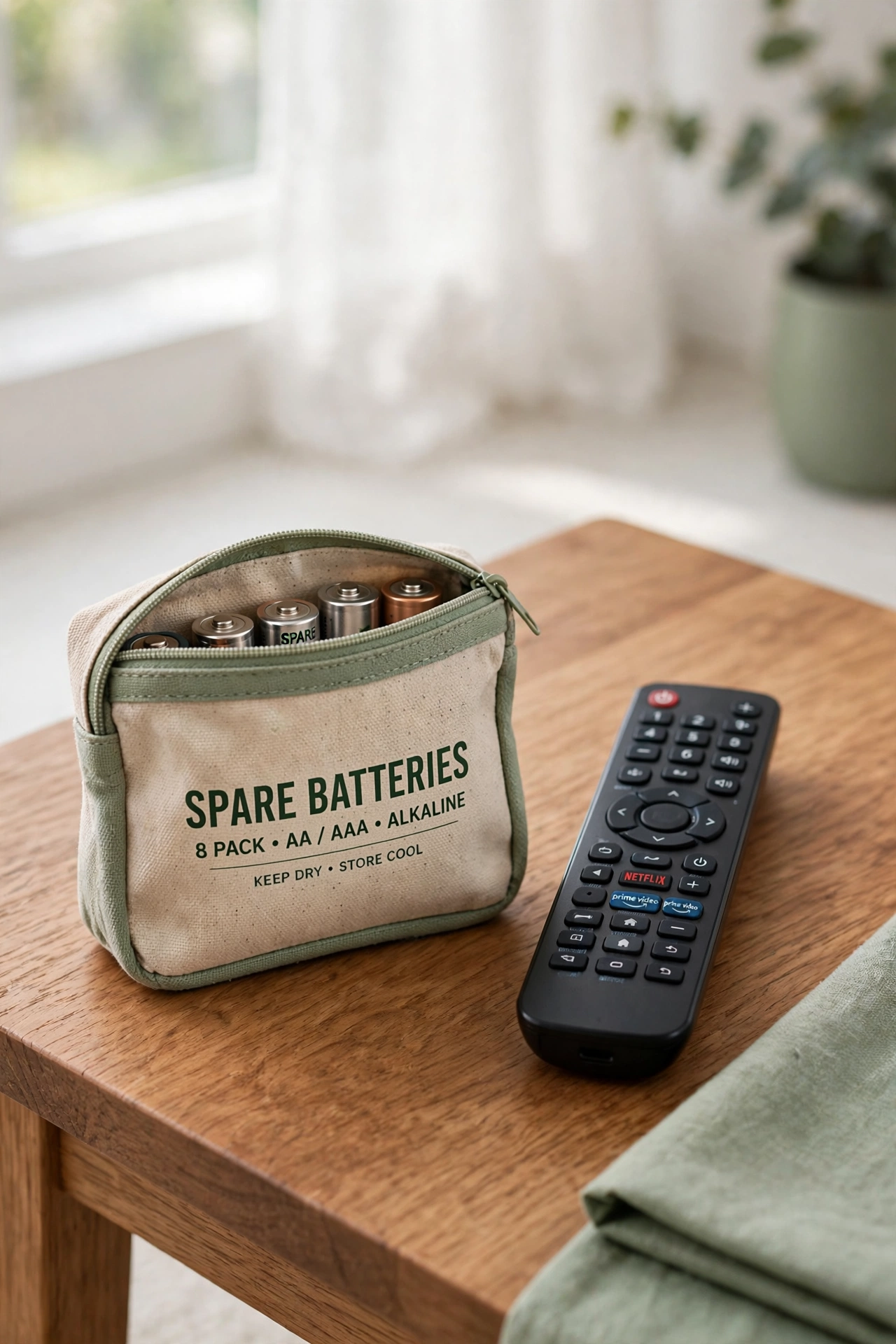
16. Follow a Monthly Battery Check Routine
A monthly battery check routine takes only five minutes and keeps your whole system working. Once a month, open the battery drawer and test any batteries you are unsure about. Throw away dead ones, move the oldest packs to the front, and note anything that needs restocking.
Pick the same day each month, like the first Sunday, so the check becomes a habit. A regular check stops dead batteries from piling up and keeps your stock fresh. Small routines like this one are the secret to a home that stays organized.
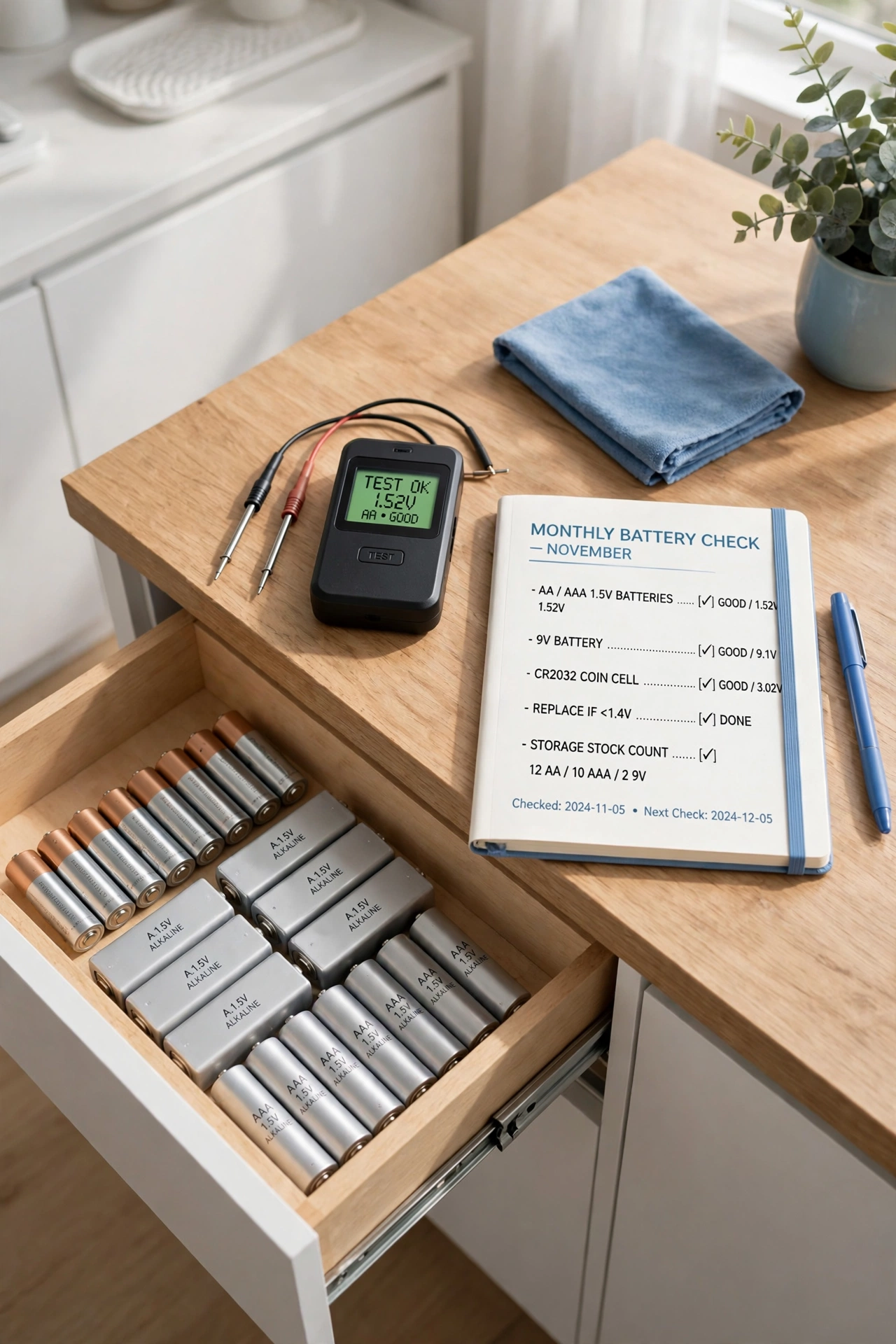
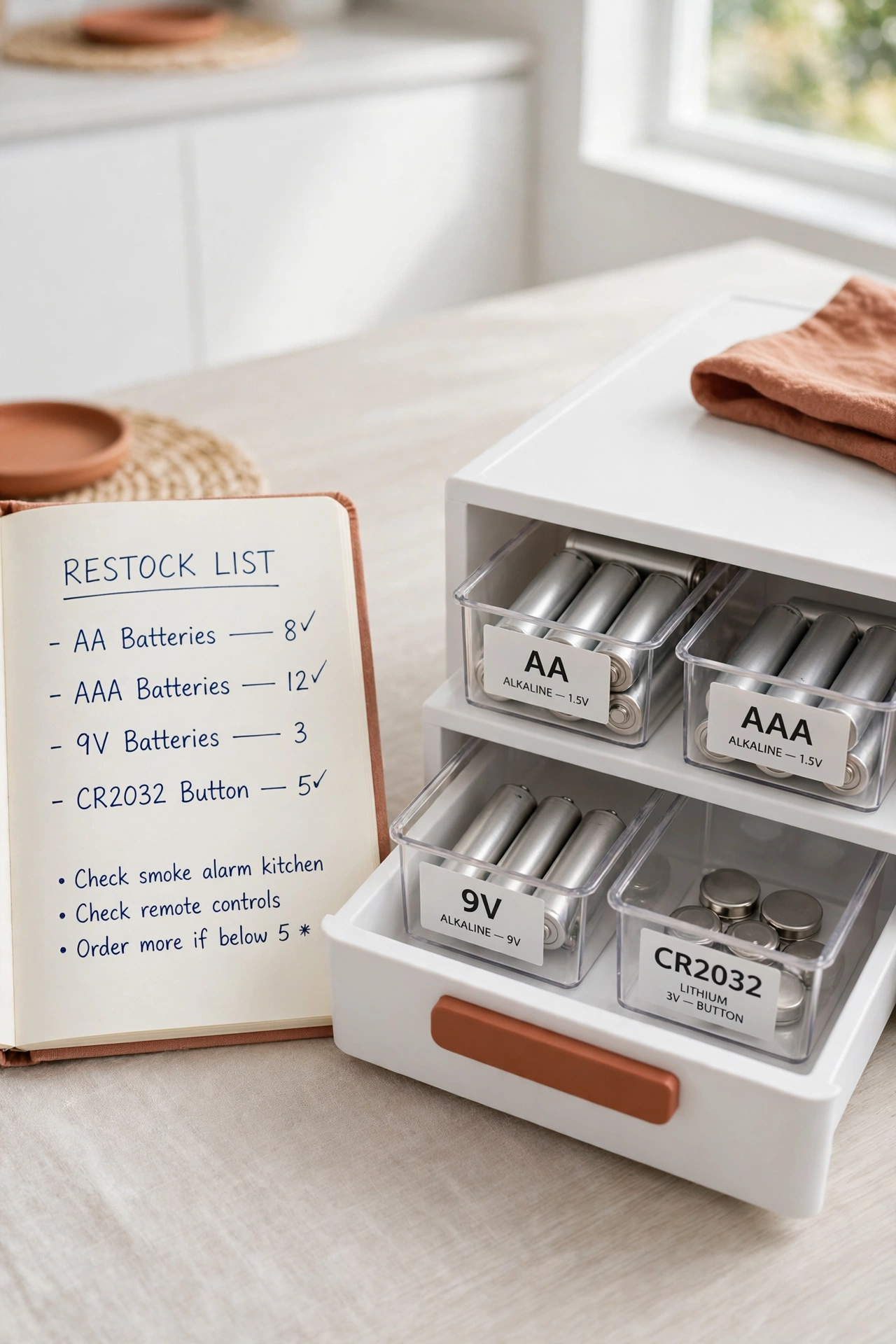
17. Keep a List of What to Restock
A simple restock list saves you from buying the wrong batteries or running out at the wrong time. Keep a small notebook or a card in the battery drawer, and write down each size as it runs low. When you go shopping, take the list with you.
Update the list every time you take the last battery of a size from the drawer. This habit also shows you which sizes your family uses most, so you can buy those in larger packs. A restock list turns battery shopping from a guessing game into a quick errand.
Conclusion
Battery storage does not have to be complicated or expensive. From simple dividers to labeled bins and a monthly check routine, there is an idea here for every drawer and every budget. The best system is the one you will actually keep up every day.
Pick one or two ideas that fit your drawer and start today. Empty the drawer, sort what is left, and give every battery a home. For a calm home beyond the junk drawer, these nightly reset routine ideas will help you keep every room tidy with just a few minutes each evening.
Frequently Asked Questions About Battery Storage Organization Ideas for Different Battery Sizes
How should I store batteries at home?
Store batteries in a cool, dry place in a drawer or a case with labeled sections. Keep different sizes separate, store rechargeables apart from single-use batteries, and keep dead batteries in their own box. Never store batteries near heat or in a damp spot.
Is it safe to store loose batteries in a drawer?
Yes, if you keep them organized. Loose batteries can touch each other and lose charge, so use dividers, bins, or a case to keep the metal ends apart. Tape the ends of 9V batteries or store them upright so they cannot short circuit.
How long do batteries last in storage?
Most single-use batteries last five to ten years in storage if you keep them cool and dry. Check the expiry date on the pack and use the oldest batteries first. Rechargeable batteries lose charge faster, so recharge them every few months if they sit unused.
Where is the best place to store batteries?
A cool, dry drawer away from heat is the best spot for most homes. A closet shelf or a hallway drawer works well. Avoid storing batteries in the garage if it gets very hot in summer, and never store them near the stove or a radiator.
How do I know if a battery is still good?
Use a small battery tester to check the charge in seconds. You can also try the battery in a device you know works. If a device does not work with a battery, test the battery before you throw it away, because the device itself can be the problem.

Hi, I’m Emily! I turn messy corners into cozy, organized spots. DreamNestDecor is where I share simple, practical home ideas — decor, organization, and small-space solutions that work in real life, not just in photos. Every idea here is carefully researched before it’s shared.