Picture this: you walk into the garage to fix a loose hinge, and you cannot find the right screwdriver. The workbench is buried under pliers, wrenches, and half-finished projects, and every small tool has vanished into the pile. You spend more time hunting than fixing, and the simple job takes all afternoon.
You do not need a bigger garage or a fancier bench to fix this. You only need a simple home for every small hand tool, from screwdrivers and pliers to wrenches and tape measures. These 21 ideas will help you organize your garage workbench so every tool is easy to see, easy to grab, and easy to put back.
1. Build a Classic Wood Bench for Everyday Hand Tools
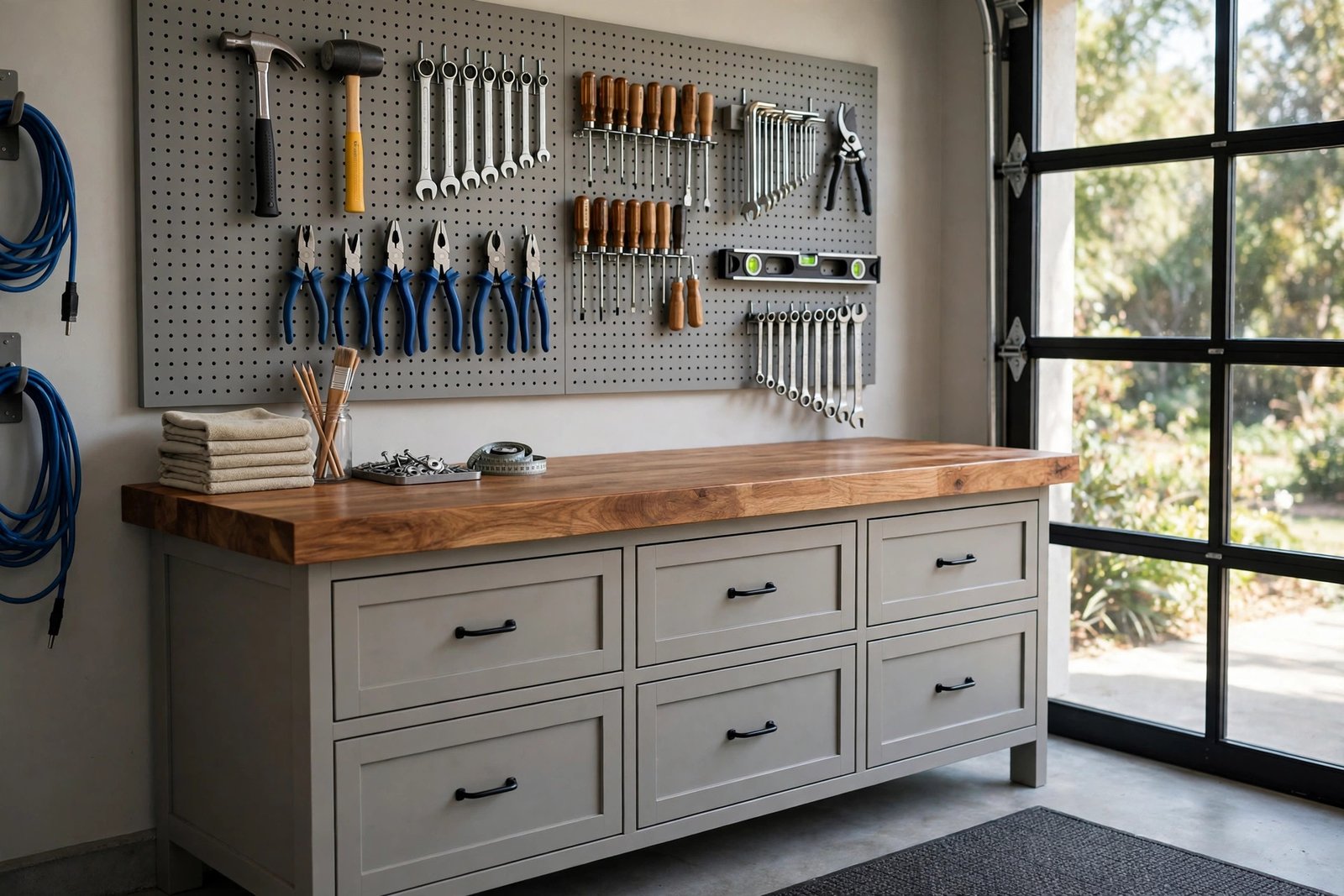
A classic wood bench gives your hand tools a sturdy home that lasts for decades. The thick maple top absorbs hammer blows without denting, and deep drawers below hold planes, chisels, and saws in neat rows. A bench vise grips workpieces steady while you saw or sand.
Mount a pegboard above the bench so screwdrivers and wrenches hang within arm’s reach. Outline each tool on the board so a missing shape tells you what is still out. Keep the benchtop clear for work, and the bench becomes the calm center of your garage.
2. Fold Down a Minimalist Bench to Save Floor Space
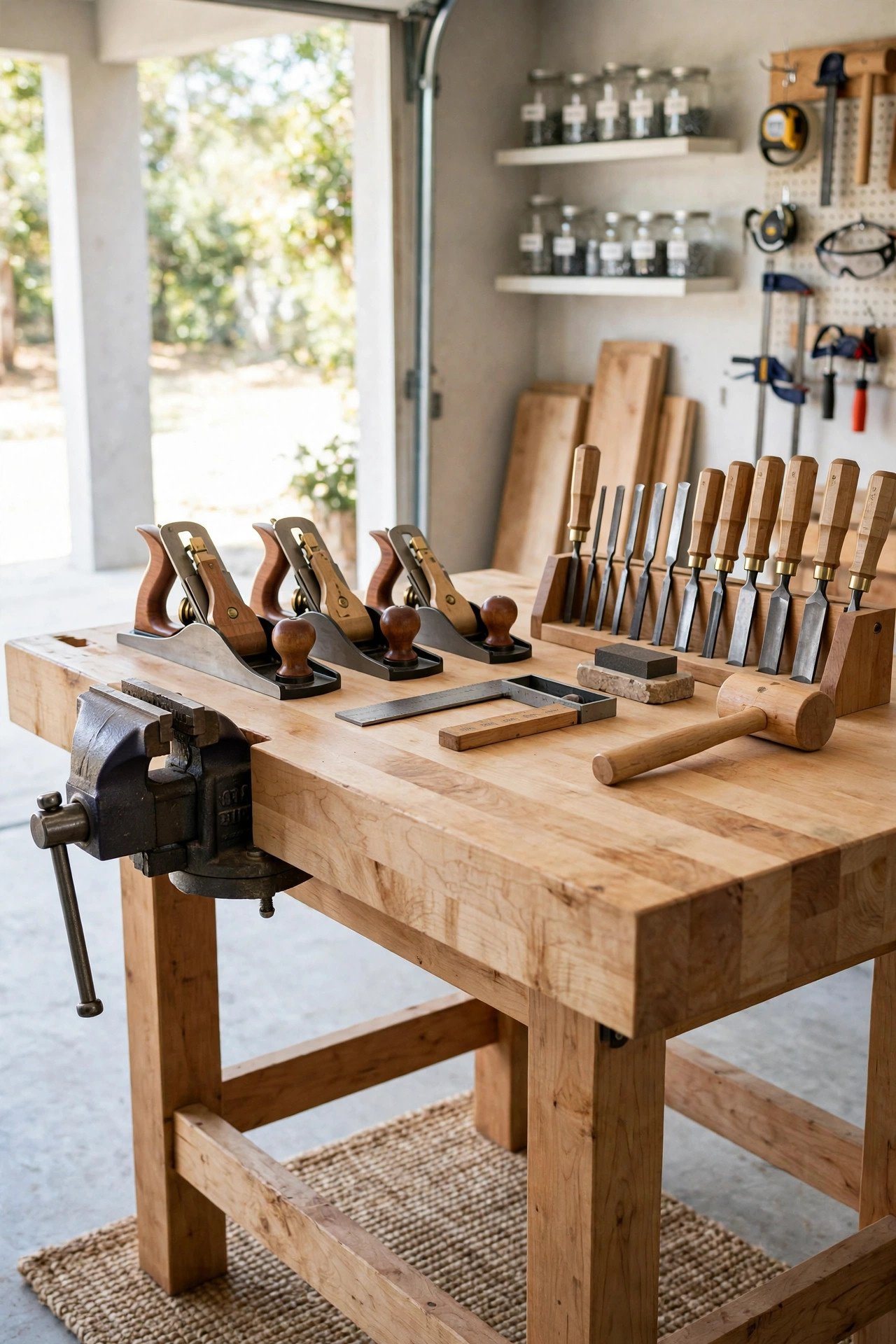
A folding bench is perfect when your garage still needs room for the car. The wall-mounted frame lets a solid plywood top fold down for projects and lock flat against the wall when you finish. Your small hand tools stay on high shelves nearby, always ready.
Keep a small caddy of your most-used tools on the shelf above the folded bench. Screwdrivers, a hammer, and a tape measure cover most quick repairs without a trip to the toolbox. When the bench folds away, the floor stays clear and the garage feels twice as big.
3. Roll a Mechanic’s Bench to Where the Work Is
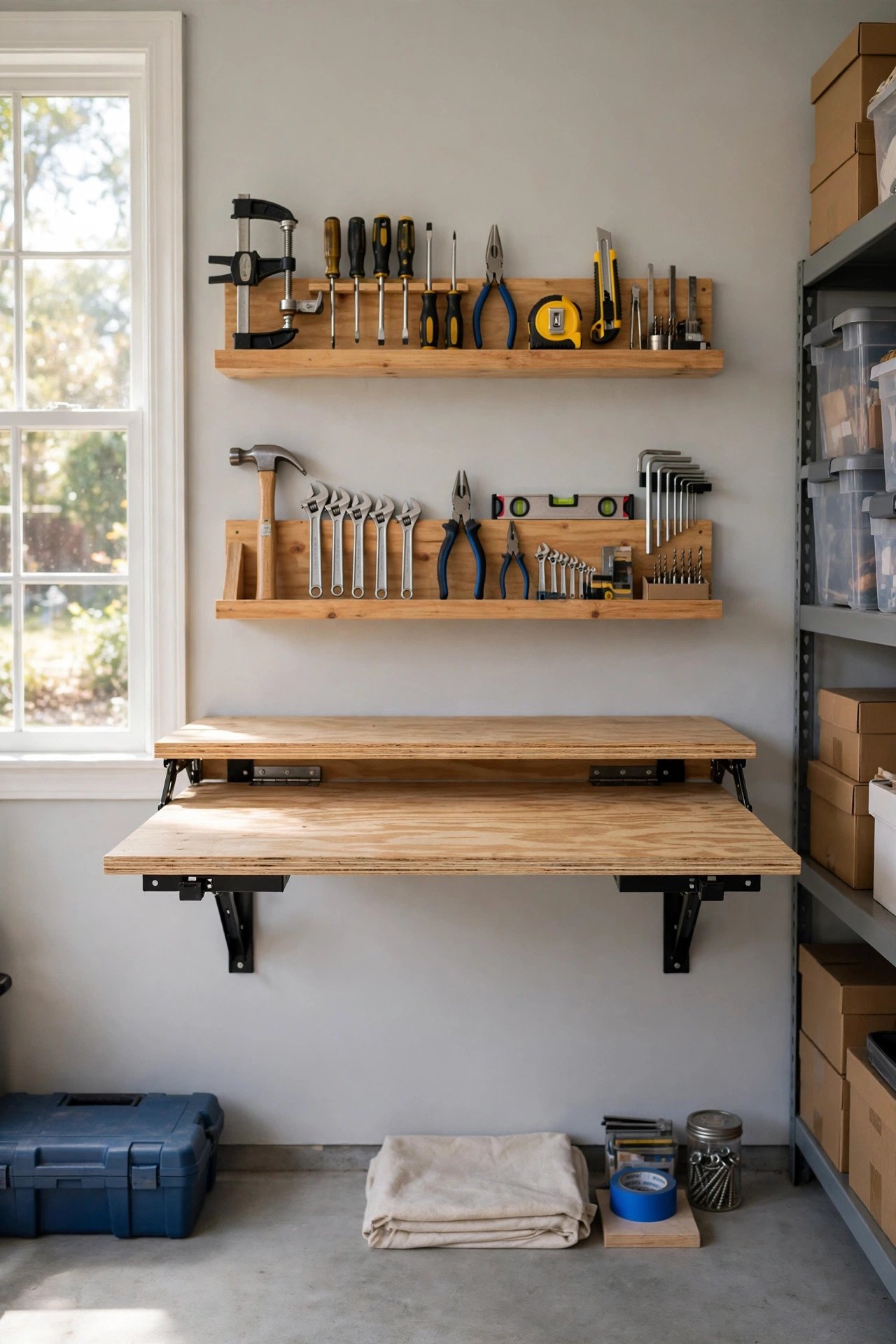
A rolling bench brings your tools to the car instead of the other way around. Locking casters let the heavy steel bench move across the garage and stay put while you work. Deep drawers lined with non-slip mats keep wrenches and sockets silent and sorted.
Give every drawer a job so sockets never mix with screwdrivers. Label the front of each drawer, and keep a power strip on the bench for test lights and chargers. When the job ends, roll the bench back to its corner and lock the wheels.
4. Build a Rustic Bench From Reclaimed Wood
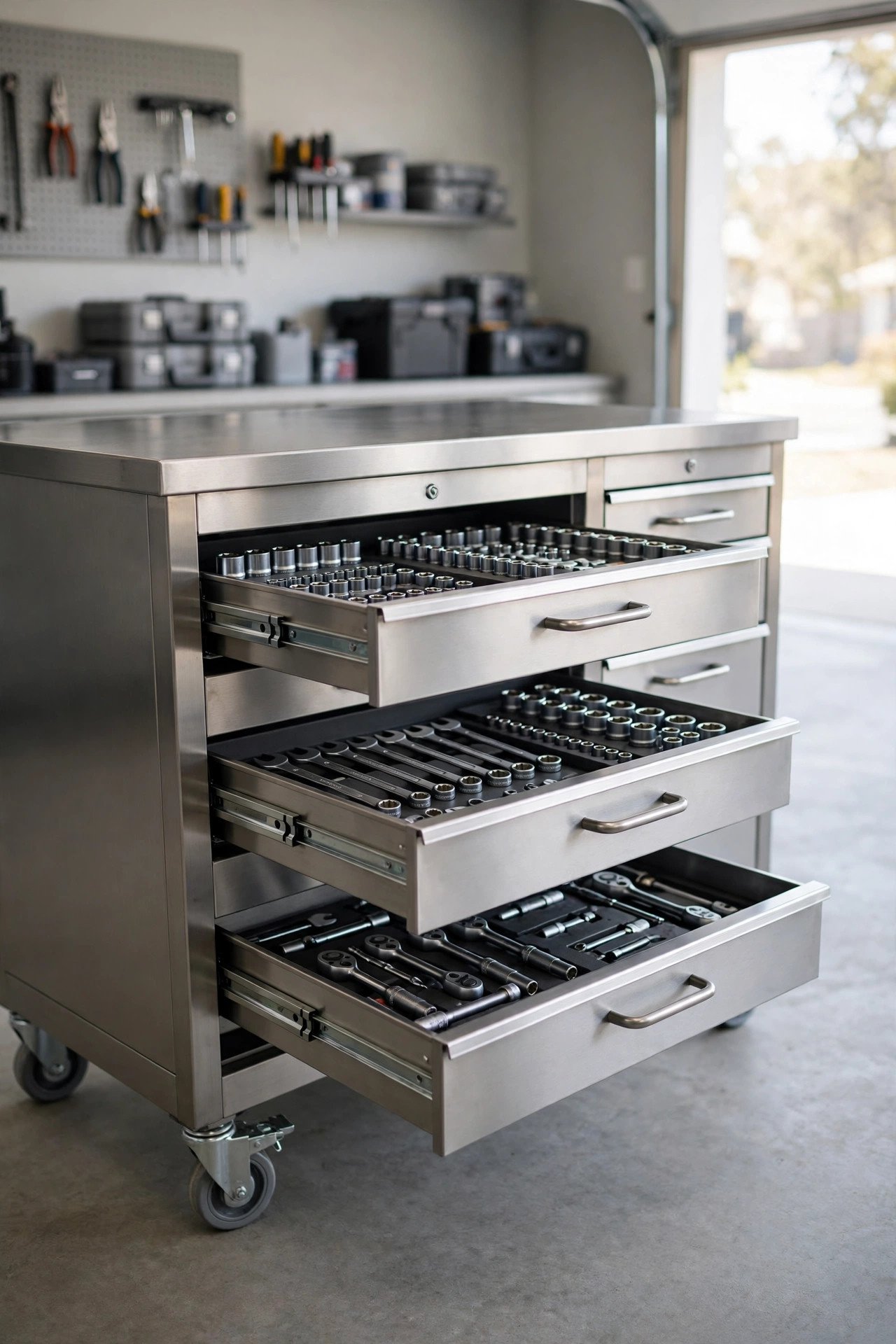
A bench built from reclaimed wood adds warmth and history to your garage. The thick top, cut from old barn beams, shows knots and saw marks that make the bench feel one of a kind. Open shelving below holds toolboxes, cans of stain, and spare lumber.
Keep the rustic look but add modern order with labeled bins on the lower shelves. One bin holds hand saws, another holds clamps, and a third holds sandpaper by grit. Warm filament bulbs above the bench make evening projects feel cozy and calm for years to come.
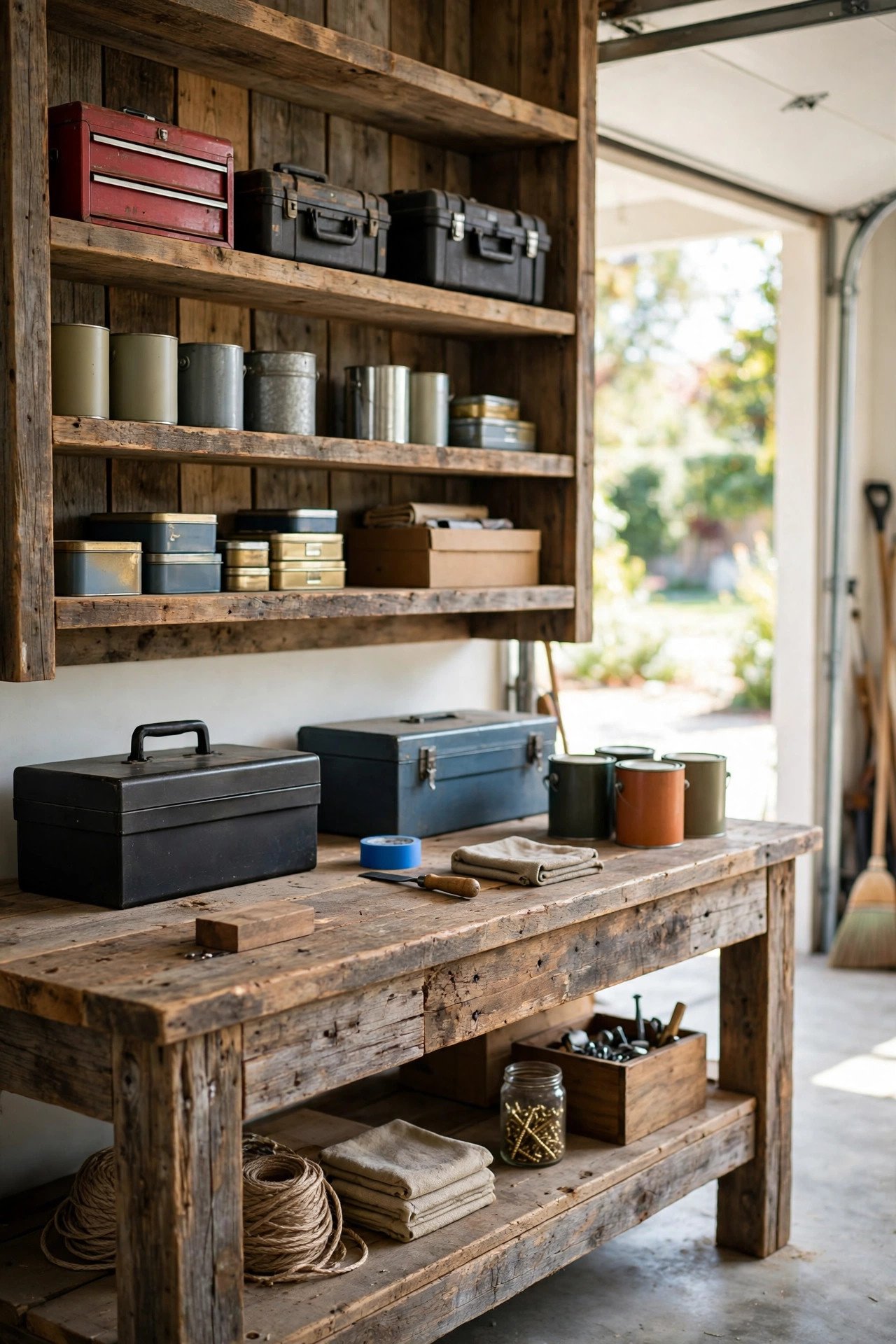
5. Add Tech-Friendly Storage to a Modern Bench
A modern bench suits small electronics and precision repairs perfectly. The smooth laminate top wipes clean in seconds, and a built-in power strip keeps testers and soldering irons plugged in. Small labeled drawers hold resistors, bits, and tiny screws in neat rows, so nothing tiny gets lost.
Run the charging cables along the back of the bench with small adhesive clips so they never tangle. These cable management ideas show how to route every cord neatly and keep the benchtop clear for delicate work. A wall-mounted monitor arm frees even more space for your project.
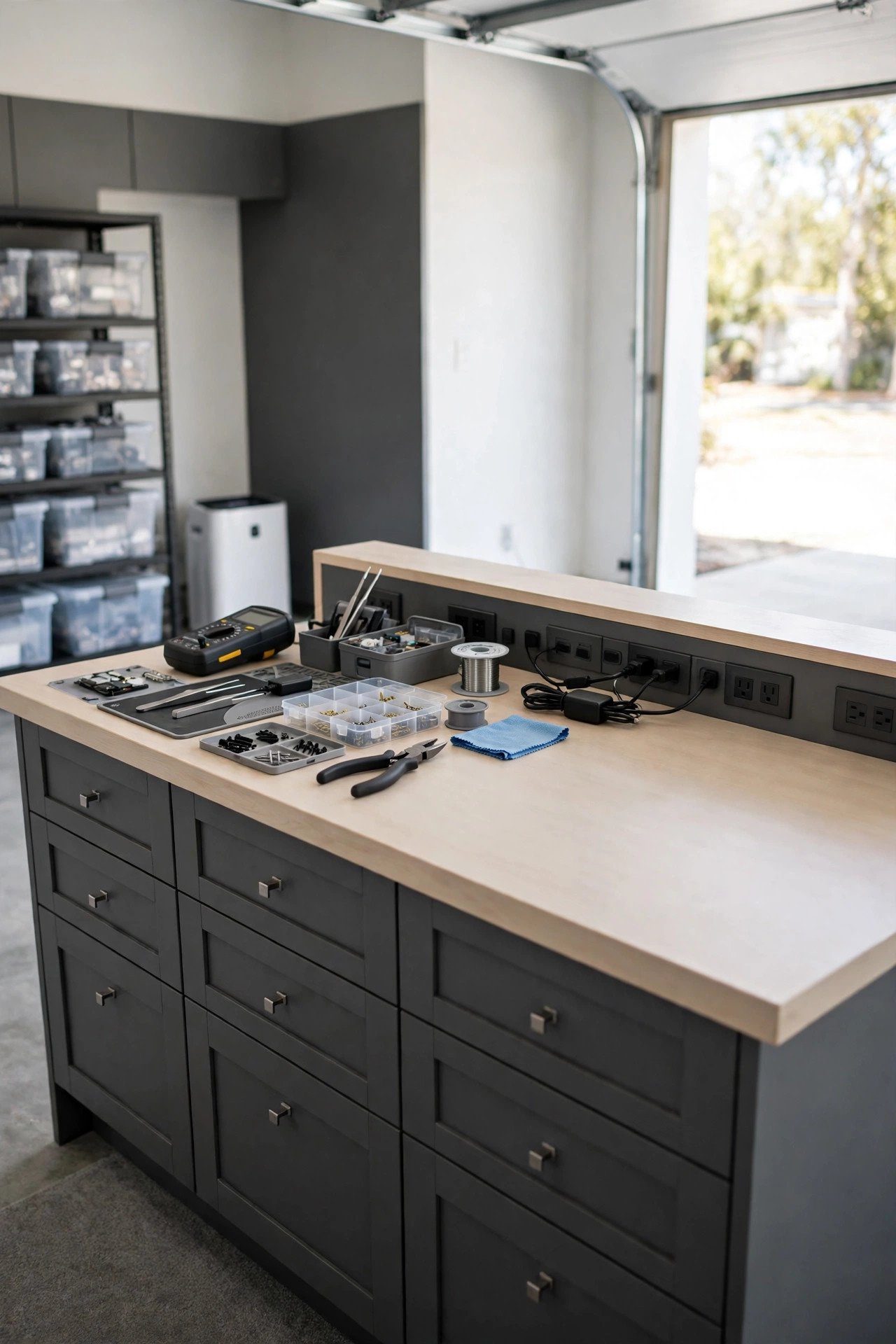
6. Fit an L-Shaped Bench Into a Corner
An L-shaped bench turns a wasted garage corner into your most useful workspace. One arm handles assembly and repairs on a wood top, while the other arm takes messier jobs on a metal surface. The corner itself holds a vise or a benchtop drill perfectly.
Give each arm its own set of tools so you never carry wrenches across the bench. Cabinets below follow the L shape and swallow boxes of fasteners and spare parts. This split layout keeps every project in its own zone from start to finish every time.
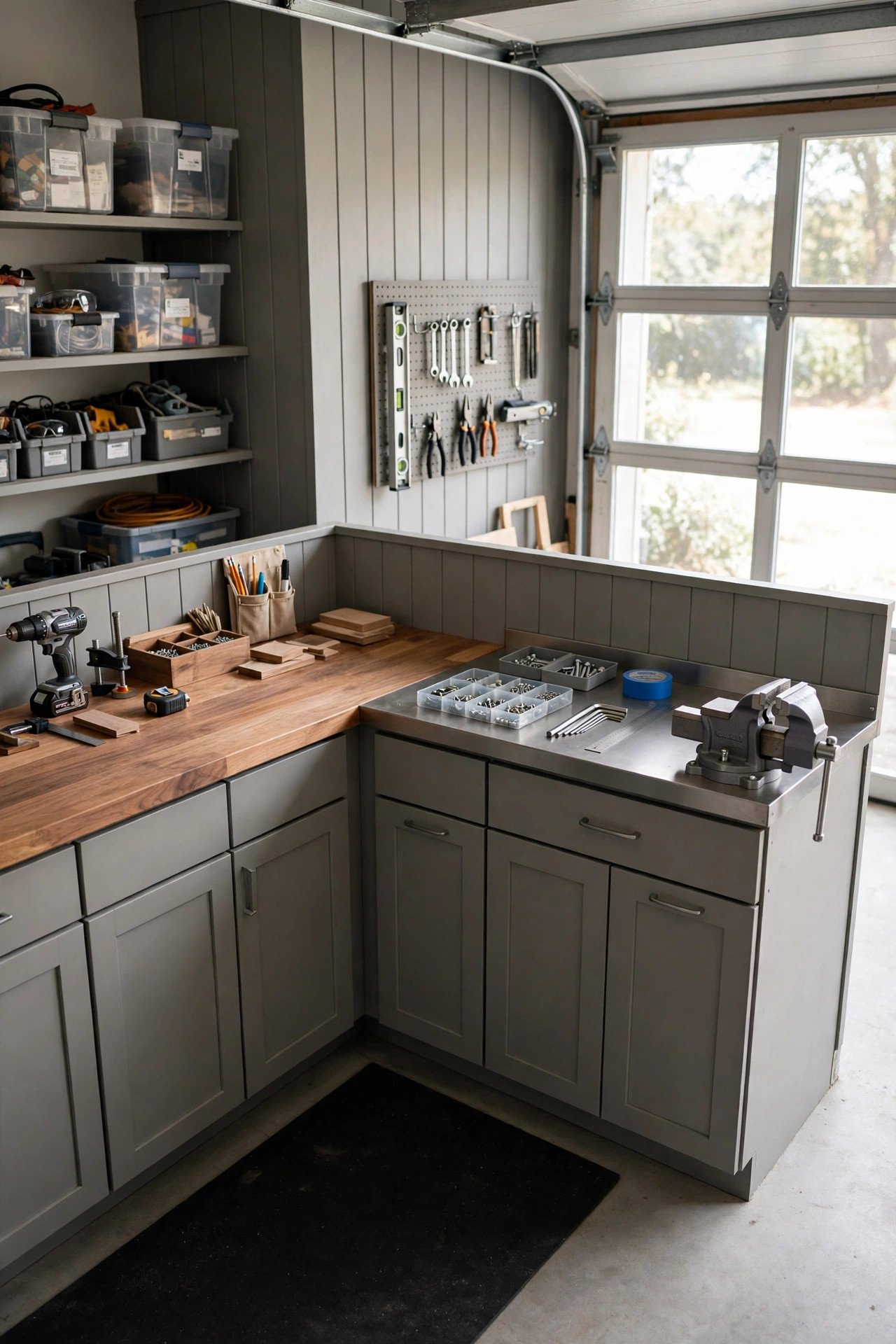
7. Turn a Potting Bench Into a Tool Station
A potting bench works just as well for small hand tools as it does for plants. The wide top gives you room to spread out a repair, and the high backsplash holds hooks for trowels, pruners, and twine. Open shelves below store pots, soil bags, and spare parts.
Keep the bench near a window so natural light falls on your work. Small cups on the backsplash hold seed packets, screws, and wire ties in separate homes. When the bench stays tidy, garden jobs and quick repairs both feel easy, and the bench stays ready for whatever comes next.
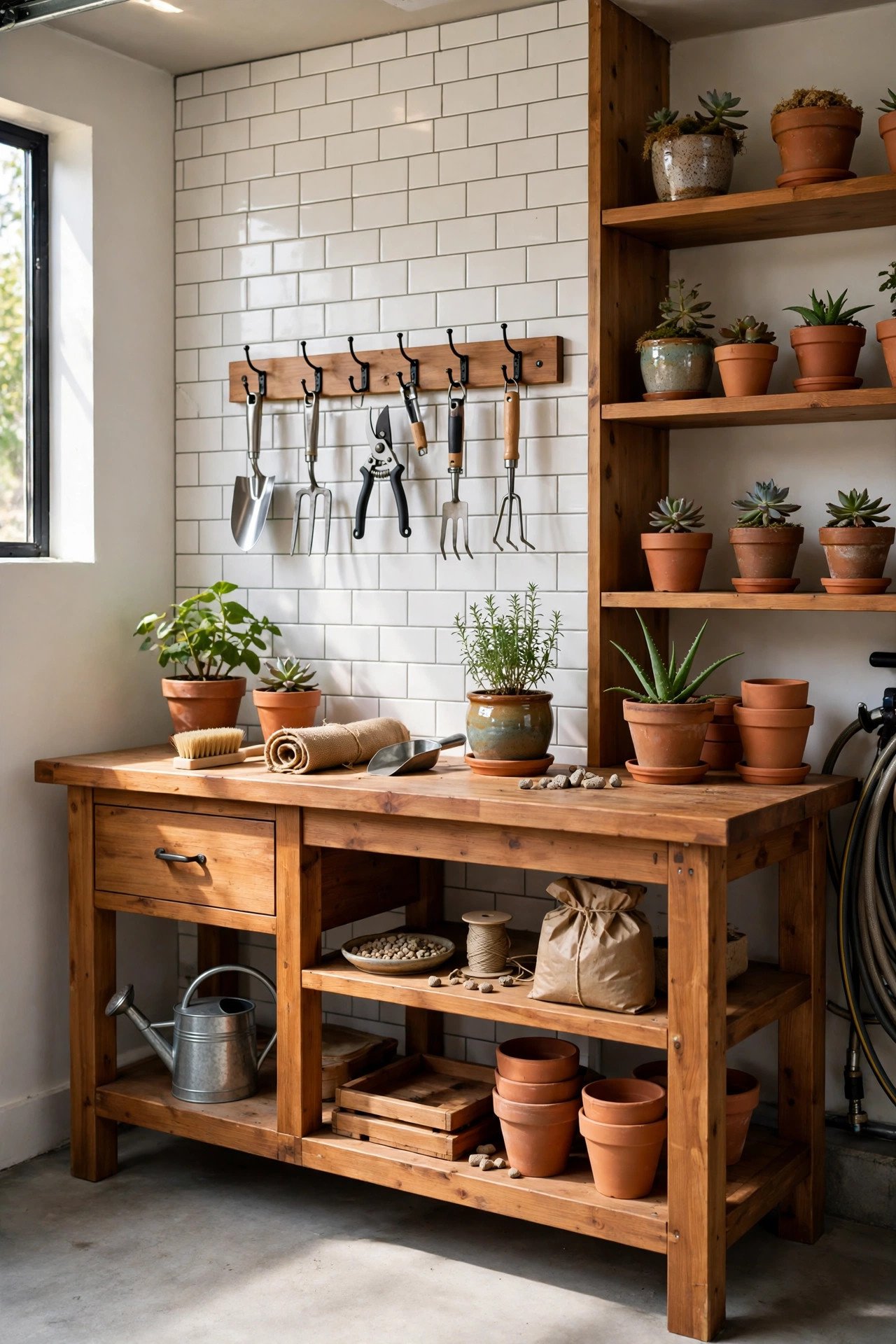
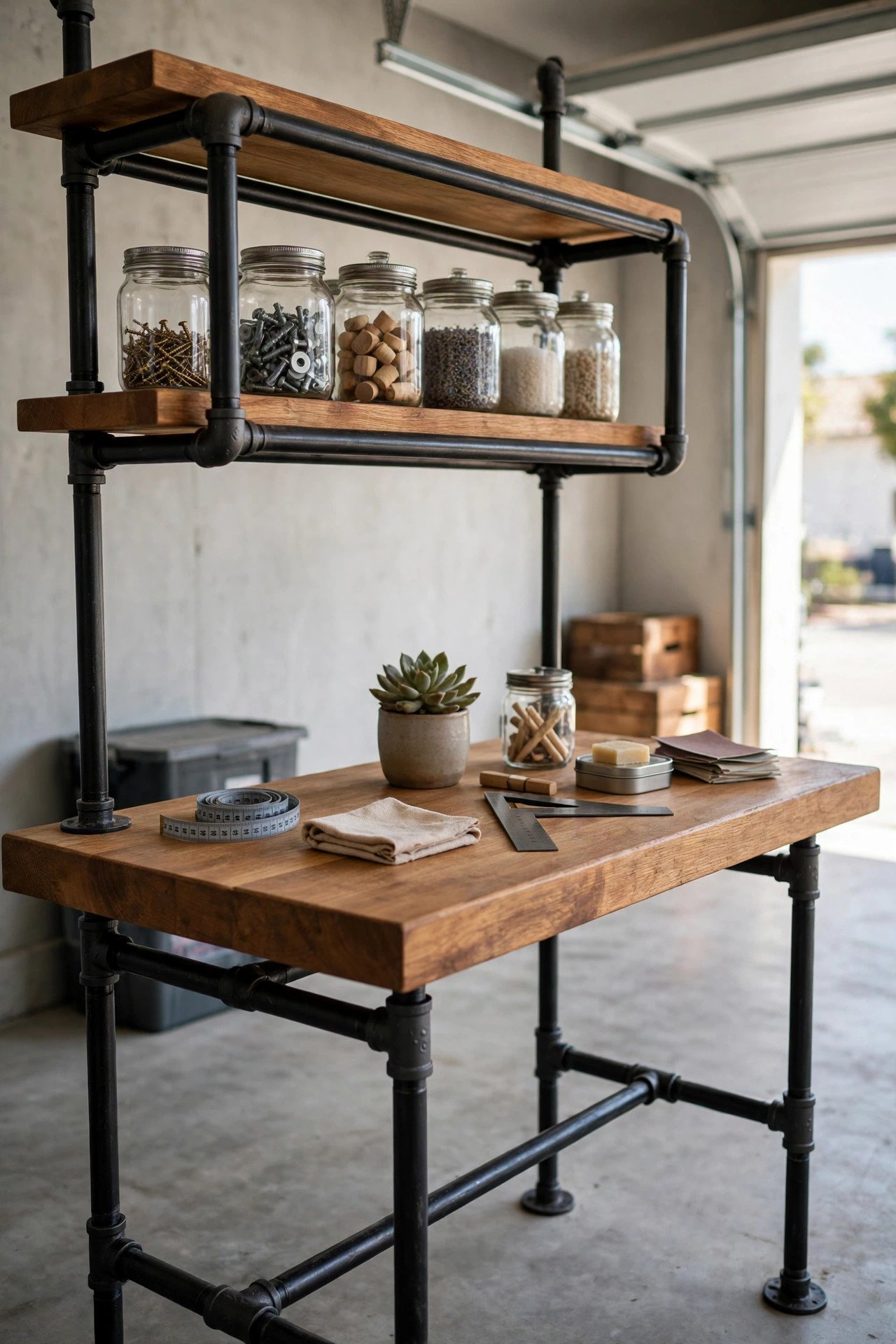
8. Build an Industrial Pipe and Wood Bench
Black iron pipes and thick wood slabs make a bench that is strong and full of character. The open pipe frame leaves room underneath for rolling carts and storage bins to slide in. A matching pipe shelf above the bench holds cans, jars, and spare hardware.
Use the open frame to your advantage by parking a tool caddy under the bench. Label every bin by tool type so wrenches, pliers, and drivers each have a clear spot. The industrial look suits any garage, and the bench will outlast most of your tools.
9. Cover the Wall With a Pegboard for Hand Tools
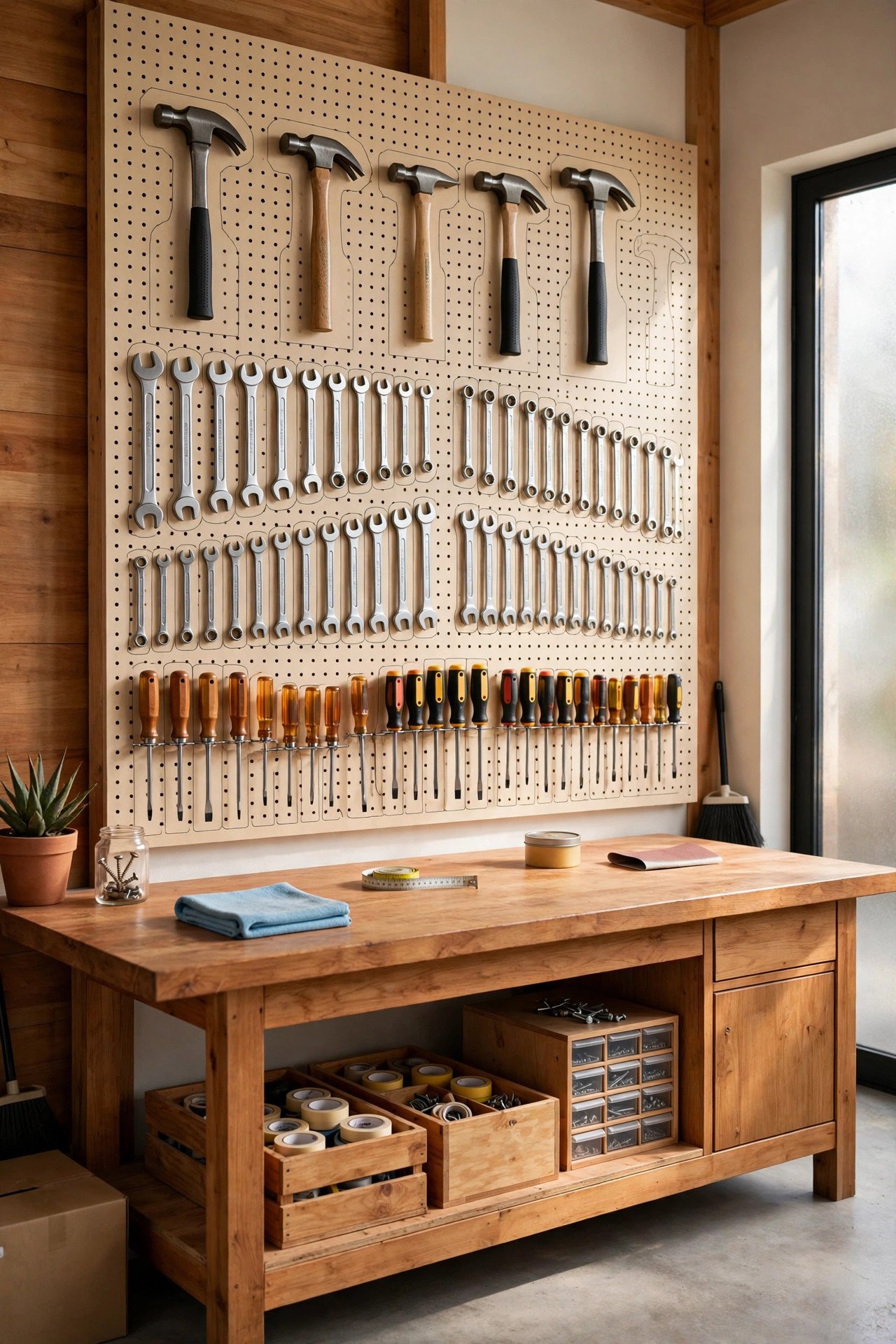
A full pegboard wall turns every hand tool into wall art you can grab in seconds. Paint the board a bright color so the tools stand out, then hang each hammer, wrench, and screwdriver on its own hook. The bench below stays clear because nothing lives on it.
Outline each tool on the pegboard so an empty shape shows what is missing. The same small-item logic that tidies a drawer works here too, and these kitchen junk drawer organization ideas show how to sort tiny bits into clear zones. A labeled pegboard makes cleanup almost automatic.
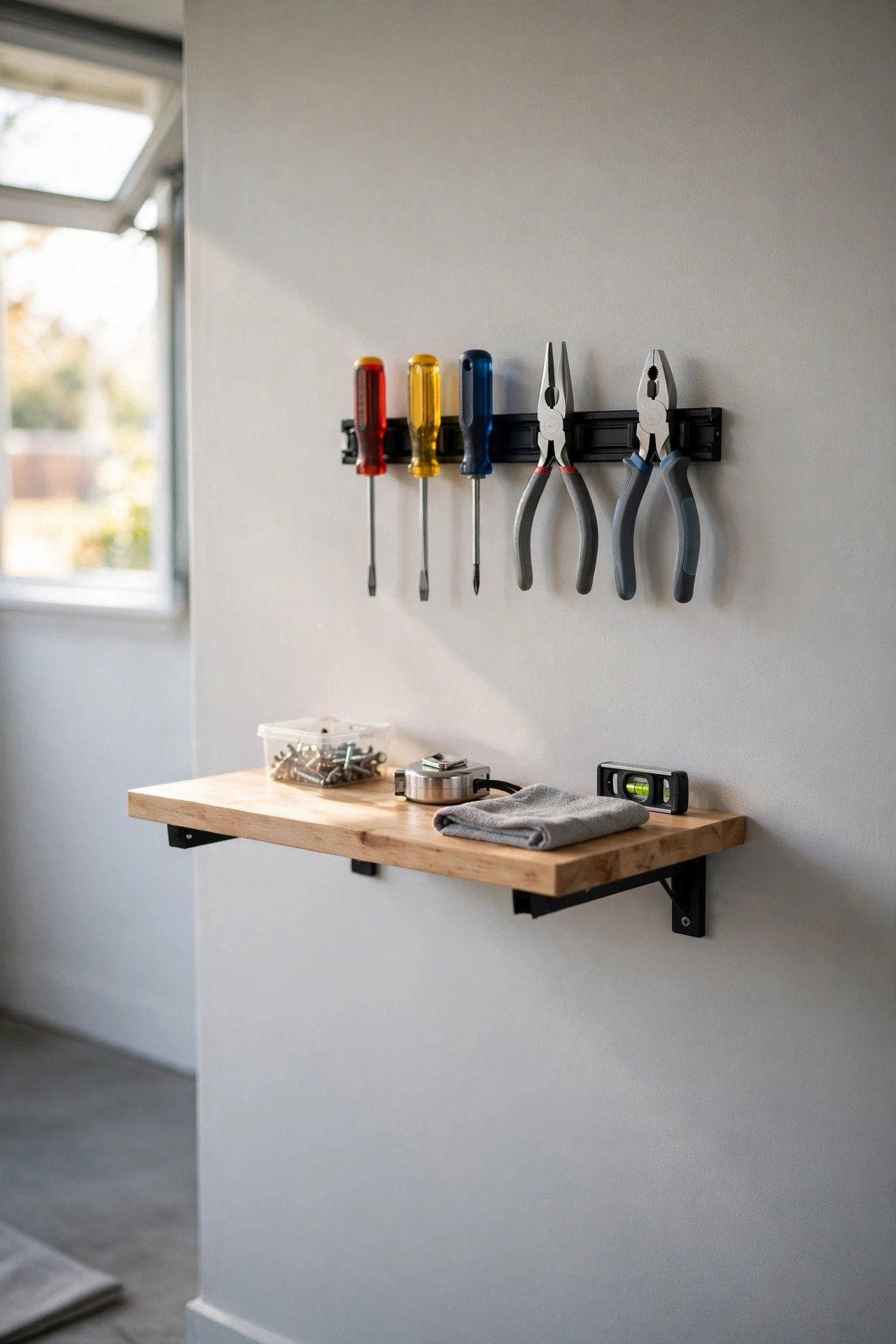
10. Mount a Compact Bench on the Wall
A wall-mounted bench gives you a work surface without taking any floor space. The floating top bolts straight into the wall studs and stays rock solid for light repairs. A single shelf below holds a small toolbox, and the garage still fits the car with room to spare.
Keep only the tools you use weekly within reach of this small bench. A magnetic strip on the wall holds screwdrivers and pliers in a neat row. Everything else can live in a larger cabinet, so this compact station never gets crowded and stays ready for quick fixes.
11. Set Up a Dual-Height Bench for Sitting and Standing
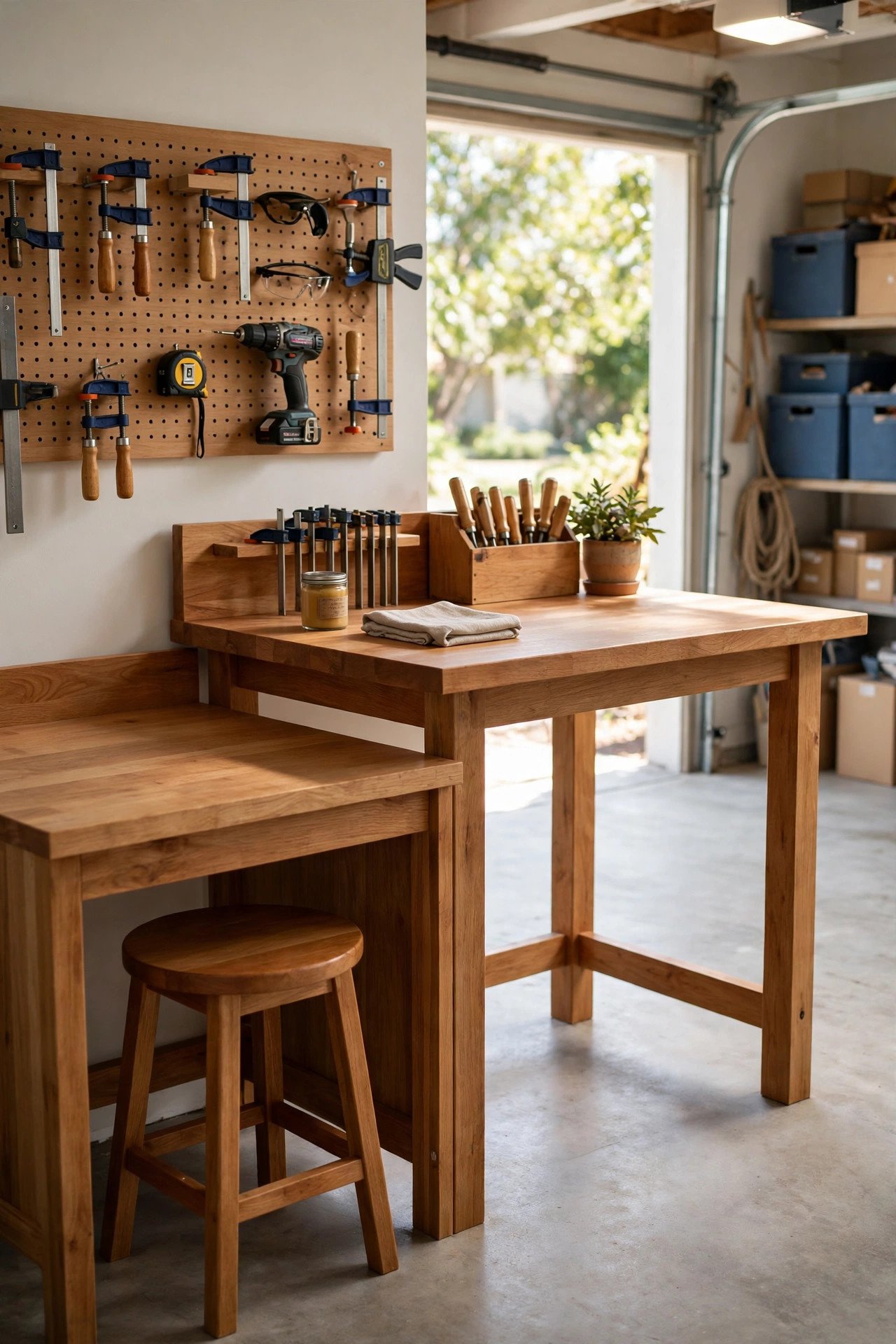
A dual-height bench gives you two work surfaces in one clever setup. The lower section sits at desk height for seated jobs like sharpening blades or sorting screws. The higher section stands ready for assembly, sanding, and anything that needs your full strength without straining your back.
Store sitting tools on the low side and standing tools on the high side. A stool tucks under the lower section when you stand, and the split levels stop you from hunching over low work. Your back will thank you after every long project in the garage.
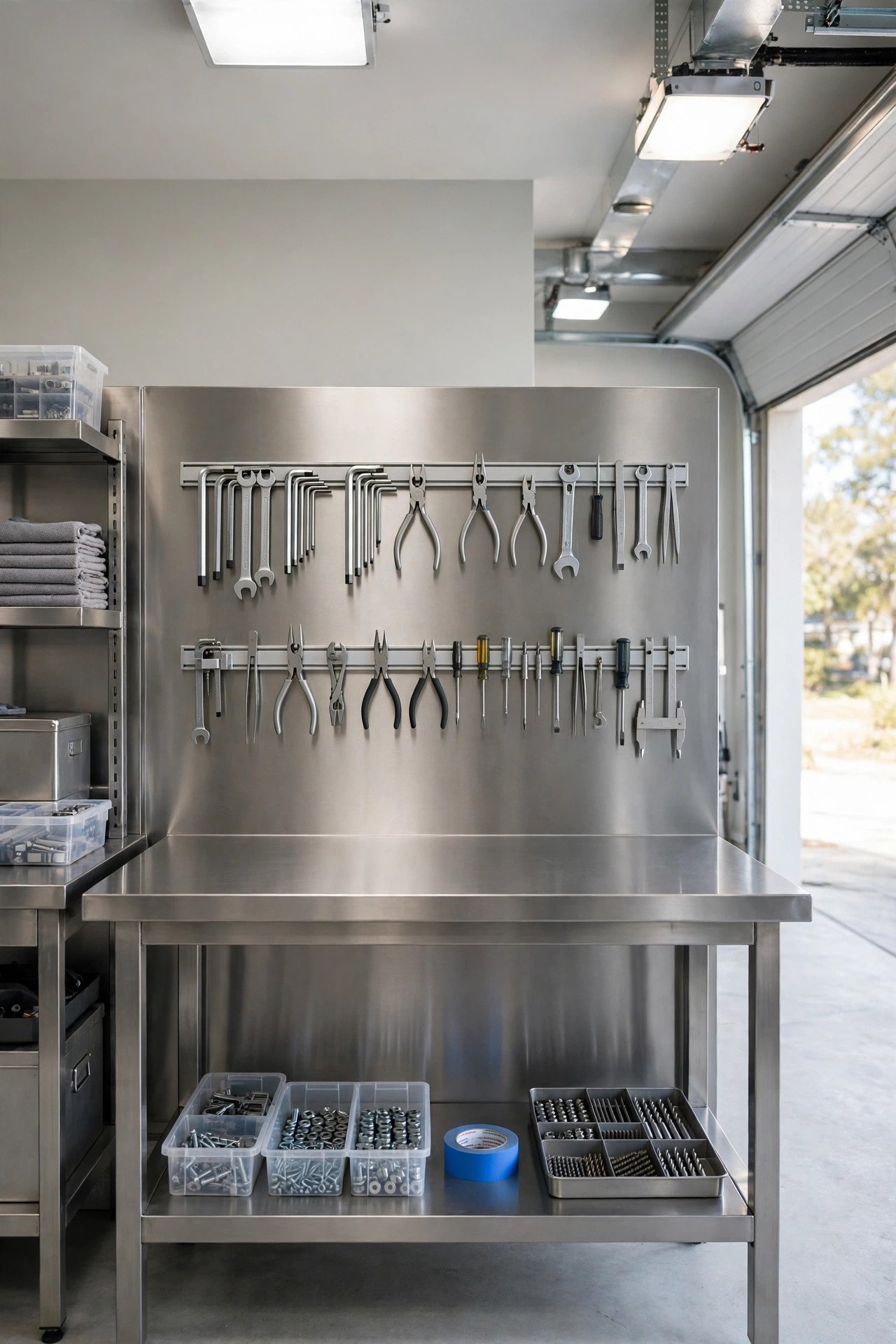
12. Keep a Stainless Steel Bench Spotless for Clean Work
A stainless steel bench is the right choice when your projects need a clean surface. The non-porous top wipes down in seconds and never stains from oil or glue. Wire shelving below lets air flow around tools and keeps everything easy to clean after every job.
Add a tall backsplash with magnetic strips to hold small metal tools in a neat row. Bright overhead lights make every screw and washer easy to see. This bench suits brewing, crafts, and any project where a spotless surface matters most for your family every single day.
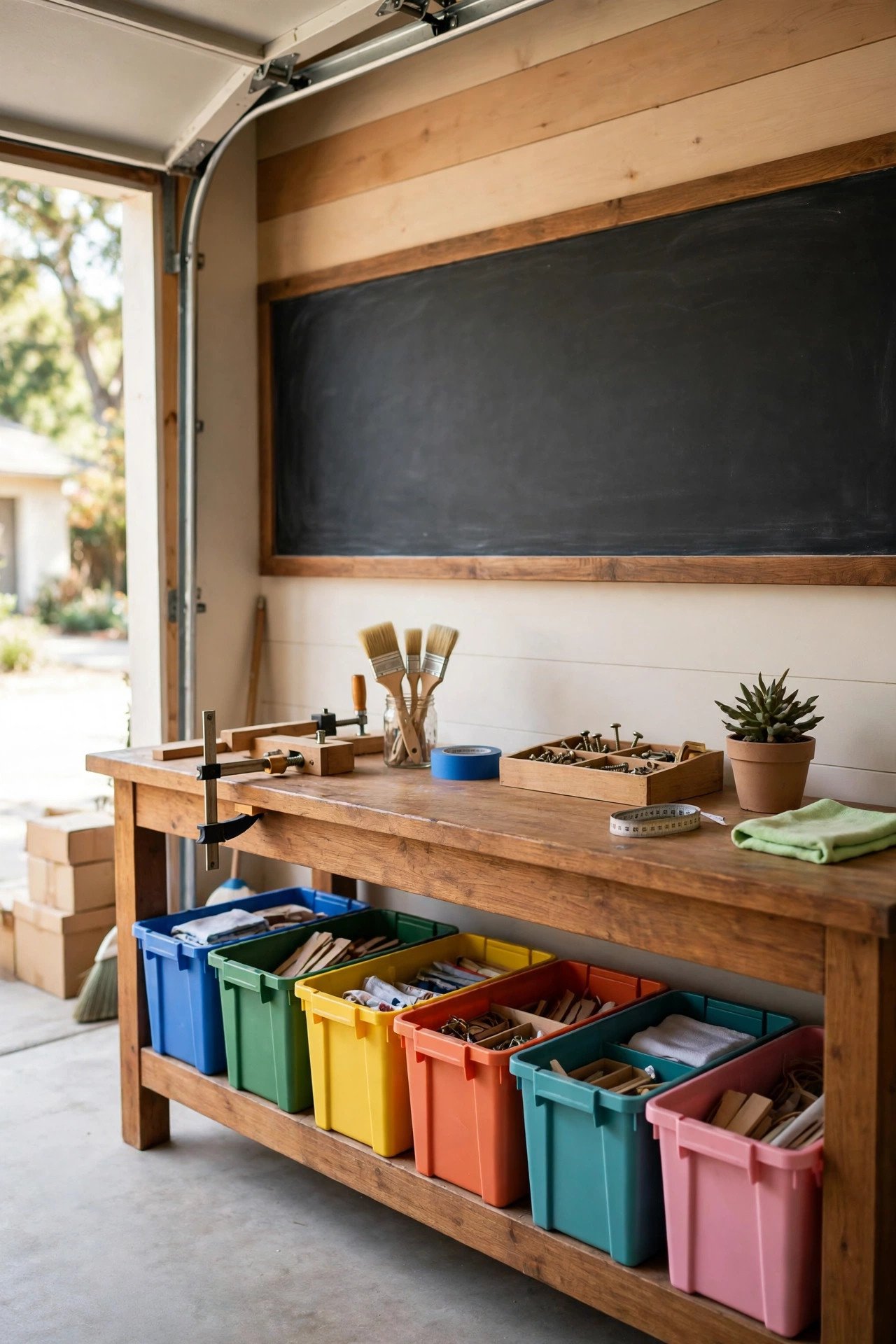
13. Make a Family Project Bench Everyone Can Use
A family project bench turns the garage into a creative hub for everyone. Set the height low enough for younger helpers, and keep the laminate top tough enough for paint, glue, and glitter. Colorful bins below hold art supplies, blocks, and building kits in clear zones.
Give every family member one bin and one hook so their gear never mixes. A chalkboard strip on the wall holds the week’s project plan where everyone can see it. The same drop-zone logic works by the front door too, and these entryway organization ideas show how to build a landing spot the whole family actually uses.
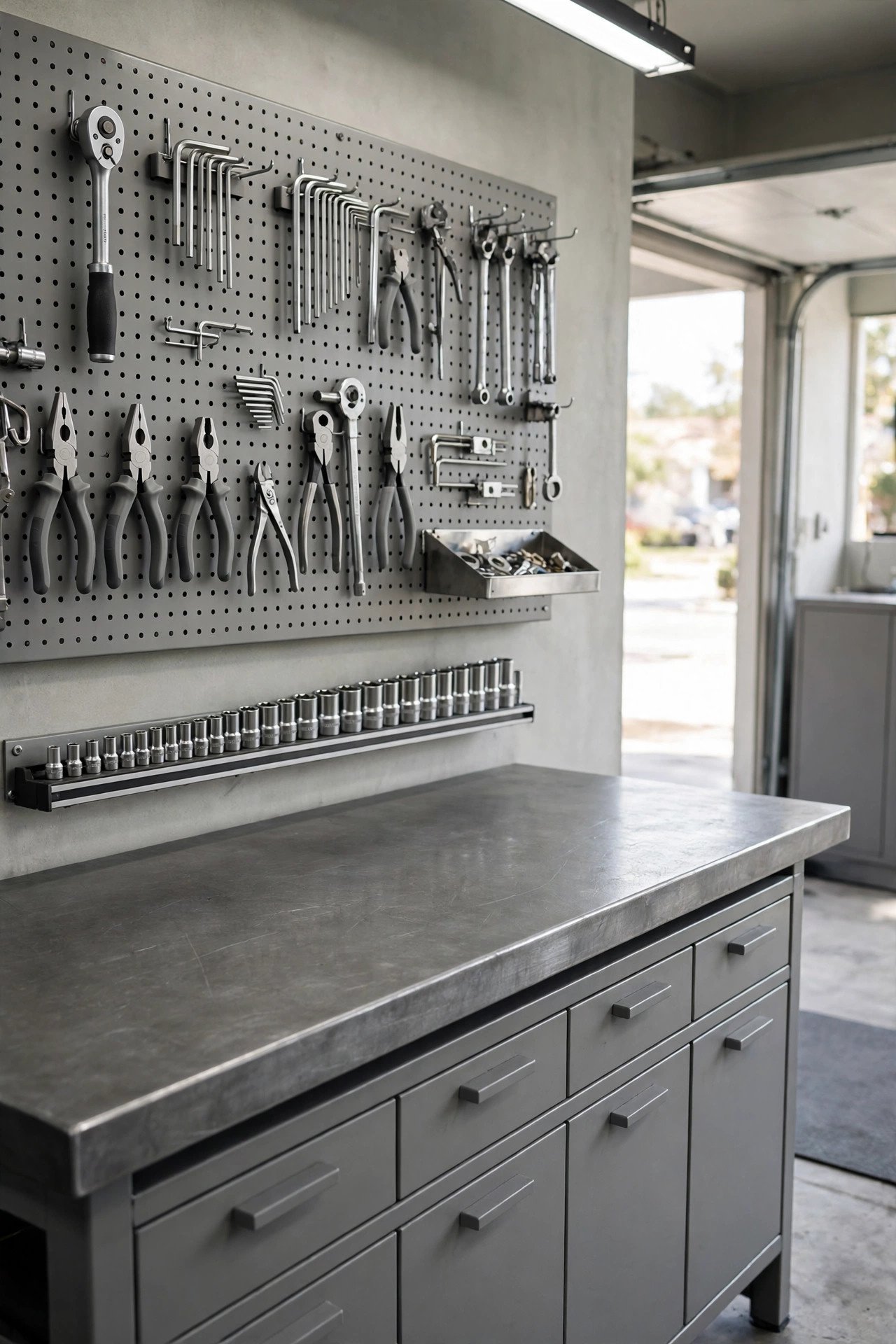
14. Set Up an Automotive Bench for Wrenches and Sockets
An automotive bench is built for serious work on engines and heavy parts. The thick steel top supports cylinder heads and transmissions without flexing, and a steel pegboard behind it holds specialty tools in plain sight. A retractable air hose reel keeps the floor clear.
Keep sockets in labeled rails by size so you grab the right one first time. Lockable drawers protect diagnostic tools and precision instruments from dust and curious hands. Bright under-cabinet lights make every bolt and fitting easy to find, even late at night in the garage.
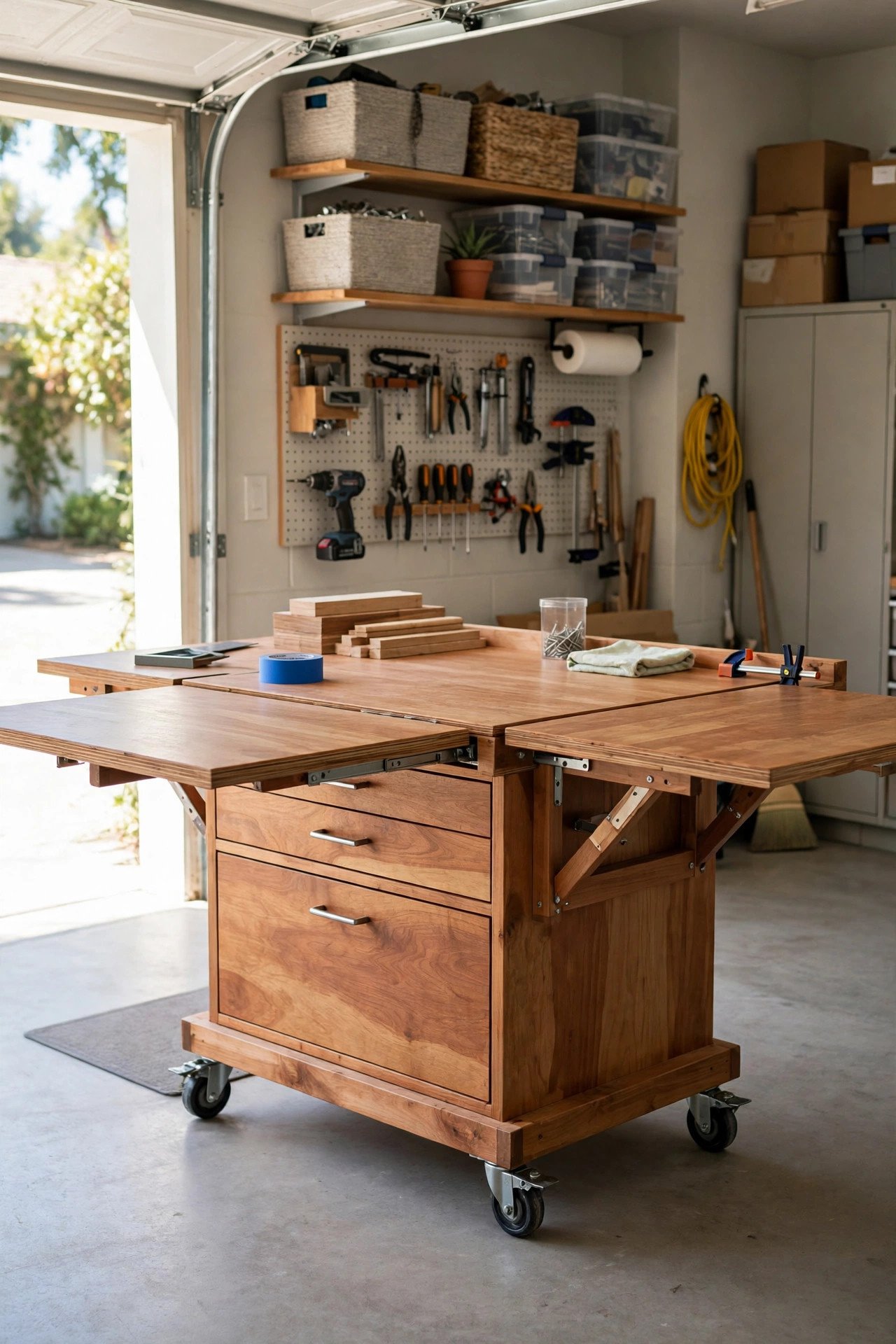
15. Fold Out a Mobile Bench for Extra Workspace
A fold-out mobile bench doubles your workspace only when you need it. In its compact form it rolls like a cart, then hinged leaves fold up on swing-out legs to make a large assembly table. When the project ends, it folds flat against the wall again.
Keep the bench’s drawers stocked with the tools you reach for most. Screwdrivers, a square, and a tape measure cover most assembly jobs without a second trip. This bench is perfect for big projects in a garage that still needs parking space every single day.
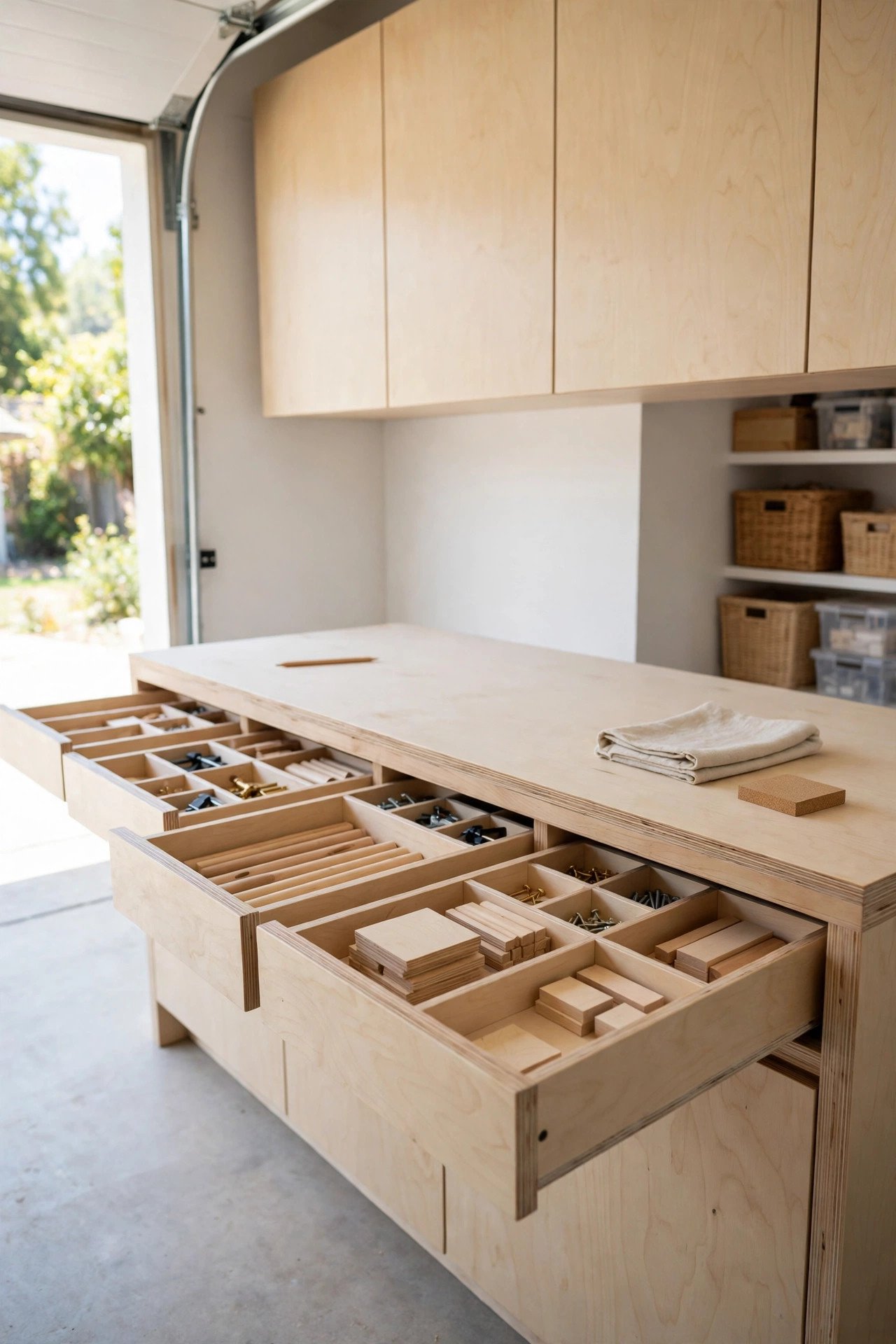
16. Build a Sleek Plywood Bench With Clean Lines
A plywood bench proves that simple materials can look truly high end. Birch plywood with finished edges gives the bench a clean, Scandinavian feel, and flat-panel cabinets hide every tool behind smooth doors. The natural wood grain stays the star of the garage for years to come.
Use handle cutouts instead of knobs so the cabinet fronts stay perfectly flat. Inside, shallow trays sort screwdrivers by size and small bins hold fasteners by type. A clear matte finish protects the wood from stains while keeping the bright, airy look you love in your garage.
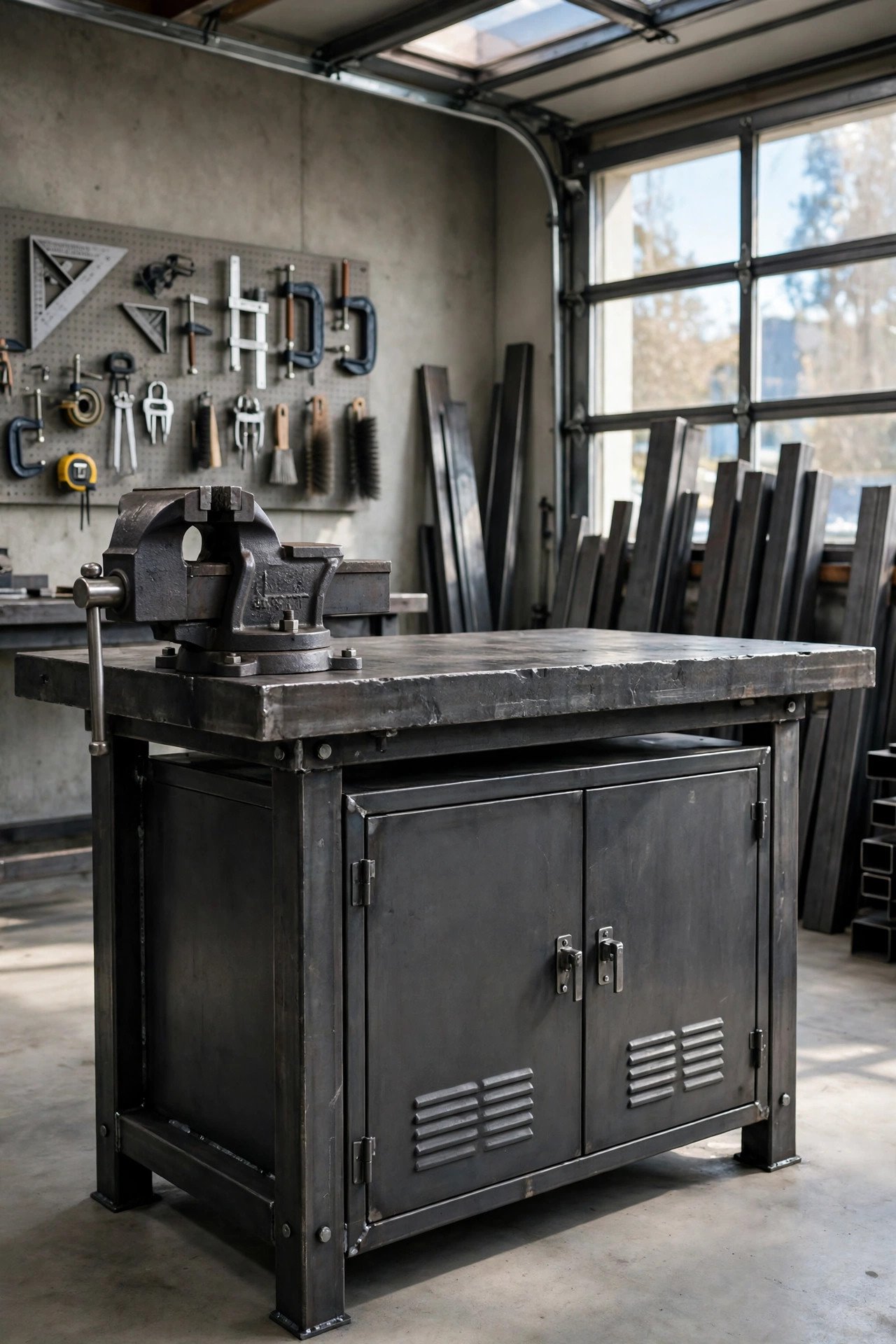
17. Anchor a Heavy-Duty Steel Bench for Tough Jobs
A heavy-duty steel bench handles welding, grinding, and hammering without flinching. The thick plate top resists heat and warping, and a built-in vise clamps metal parts rock steady. A fireproof cabinet below stores flammable materials safely out of the way in your garage workshop every day.
Keep clamps and heavy tools on a low shelf where they are easy to lift safely. A fume extractor above the bench pulls smoke away while you weld. Good ventilation and a clear floor matter as much as the bench itself for safe, comfortable work.
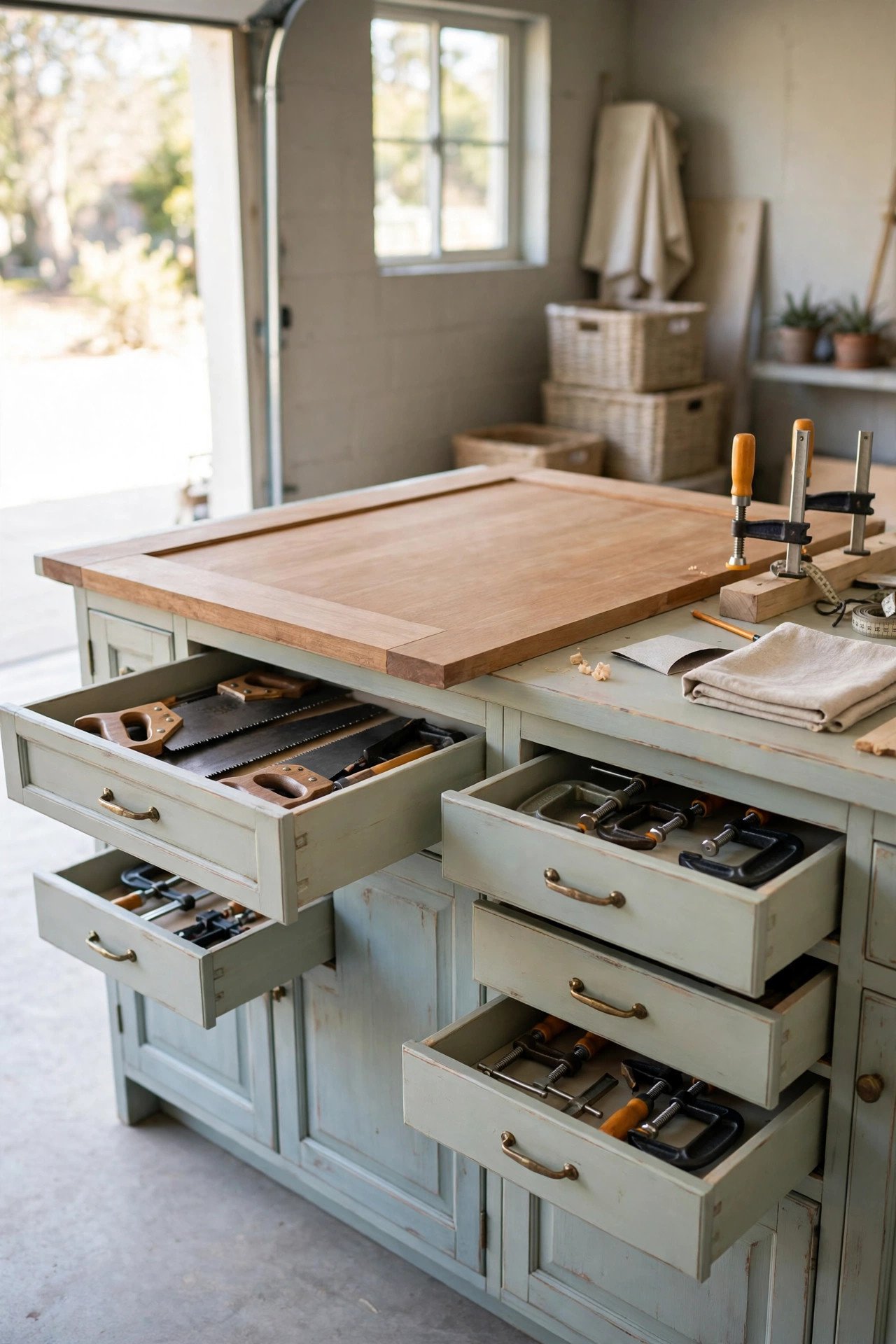
18. Upcycle Old Cabinets Into a Tool Bench
Old kitchen cabinets make a wonderful workbench base with almost no building. Line up a few base cabinets, top them with a solid-core door, and you have instant drawers and shelves. A fresh coat of durable paint unifies mismatched cabinets into one tidy bench in a weekend.
Give each cabinet a job so tools stay sorted without extra organizers. One cabinet holds hand saws, another holds clamps, and a shallow drawer holds drill bits by size. This upcycled bench costs little, stores a lot, and brings vintage charm to your garage for years.
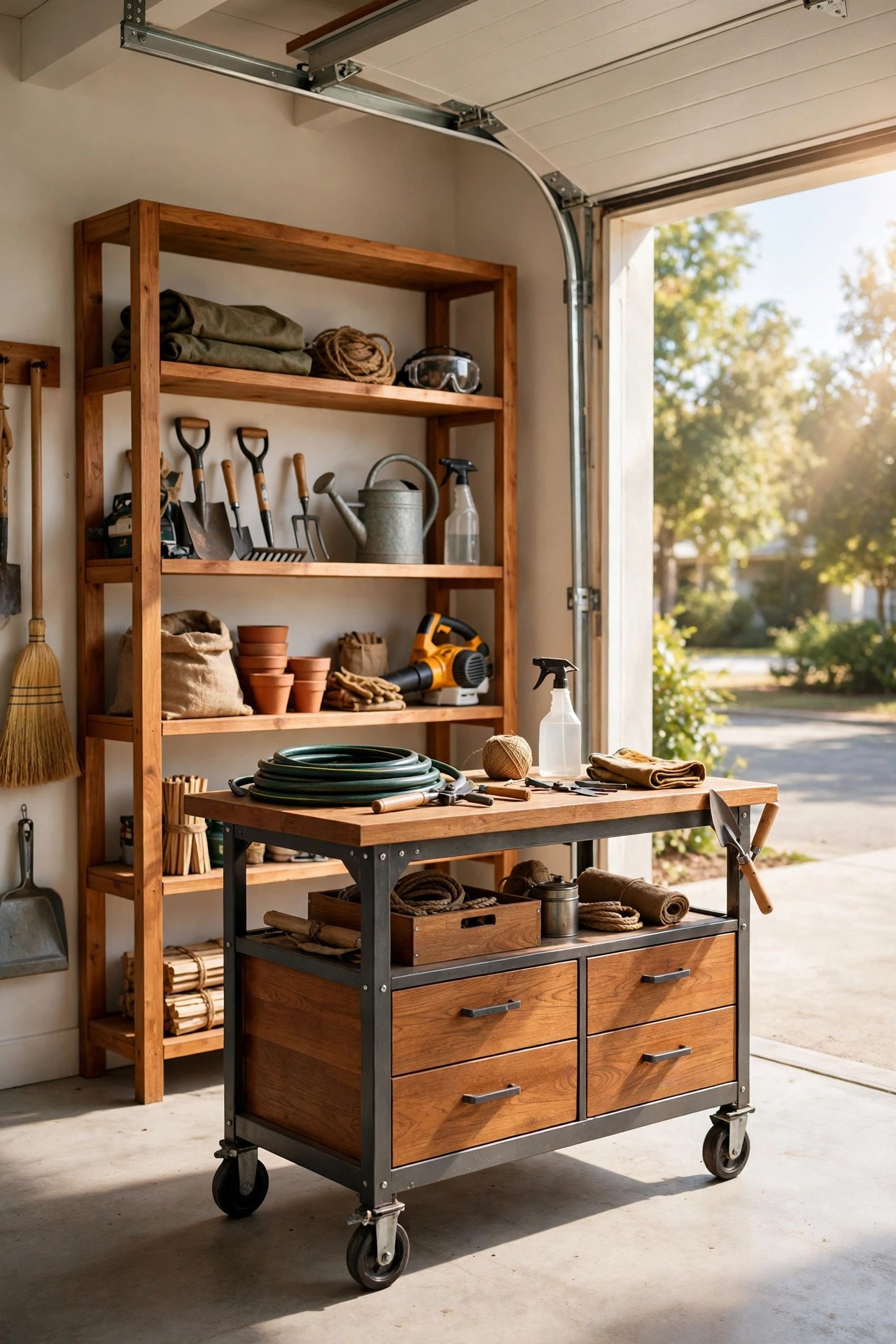
19. Park a Rolling Bench by the Garage Door
A rolling bench parked by the garage door is perfect for dusty or smelly jobs. Roll it partway onto the driveway for sanding or spray painting, then wheel it back inside when you finish. The open shelving below holds the tools you need for outdoor projects.
Keep this bench simple and rugged, with easy-to-clean surfaces and a few sturdy bins. Heavy-duty casters make the bench easy to move even when it is fully loaded. Fresh air and daylight make messy work faster, and the garage stays cleaner too after every project.
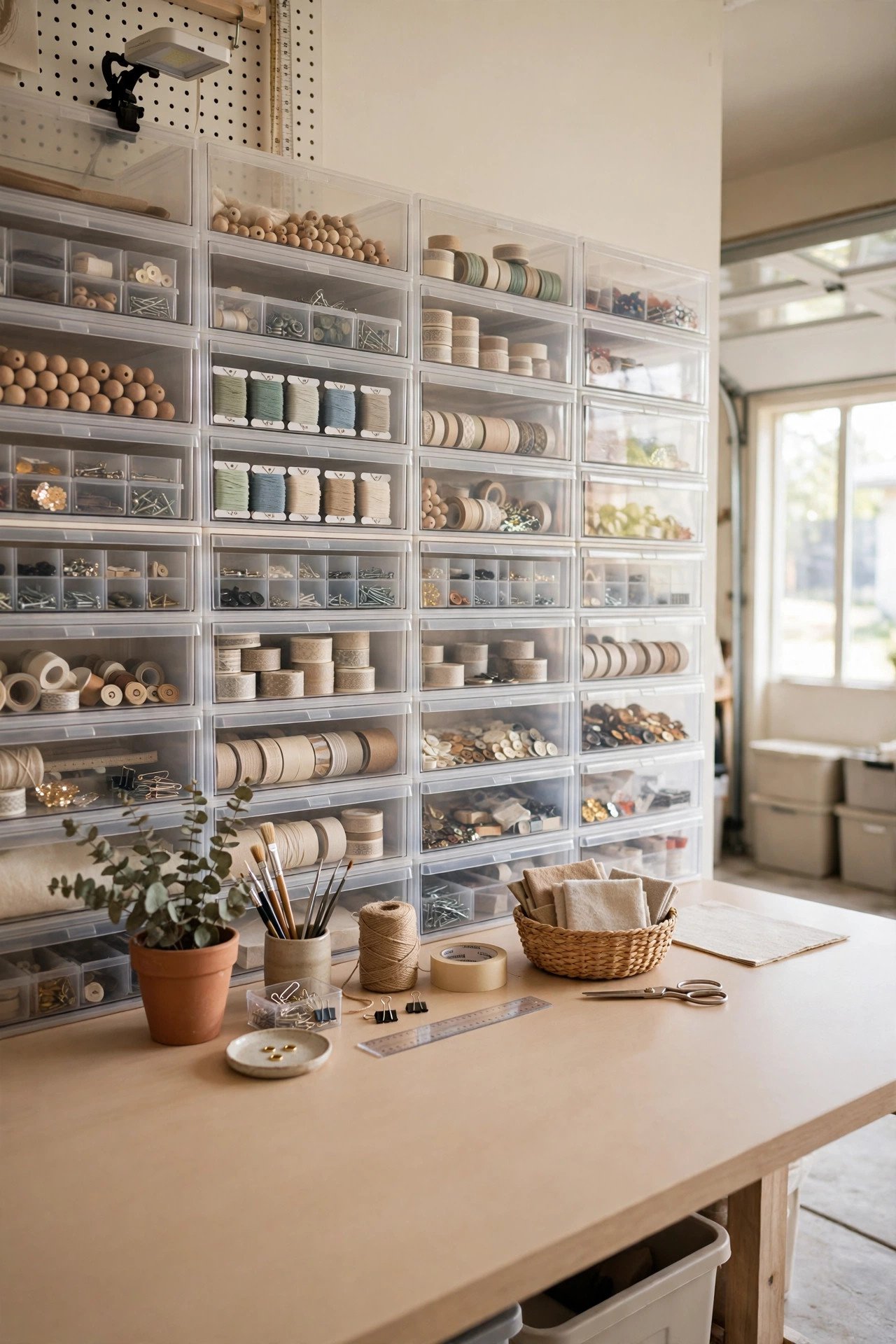
20. Store Small Supplies in a Crafter’s Bench
A crafter’s bench is built for small supplies, which makes it perfect for tiny hand tools too. A wall of clear drawers holds beads, buttons, screws, and bits where you can see them all. Dowel rods hold ribbon spools, and vertical slots keep paper and patterns upright.
Bright, color-accurate lights help you see true colors and tiny details clearly. The large laminate top gives you room to cut fabric or lay out a repair. When every small supply has a clear drawer, you stop buying duplicates and start finishing projects faster than ever.
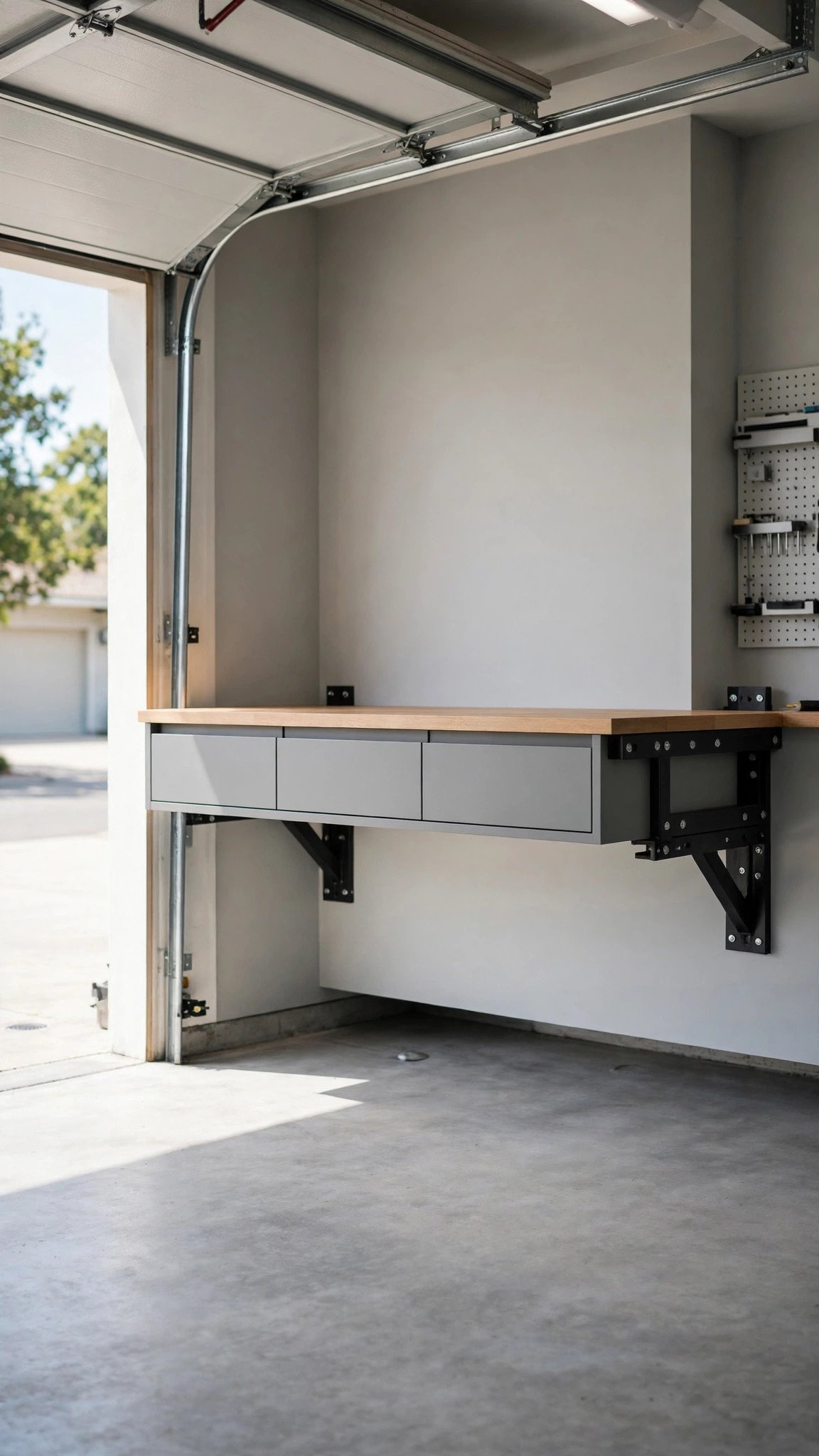
21. Float a Low-Profile Bench to Free the Floor
A floating bench bolts straight to the wall studs and leaves the floor completely clear. Without legs in the way, you can slide a shop vacuum or large toolbox underneath. The thick torsion-box top stays flat and strong, even under heavy clamping pressure day after day.
Build a few handleless drawers into the front apron for discreet tool storage. Screwdrivers, hex keys, and small wrenches fit neatly inside without spoiling the clean look. This ultramodern bench makes even a small garage feel spacious and calm every time you walk in to work.
Conclusion
A tidy workbench is not about the fanciest bench or the most tools. It is about giving every small hand tool a home you can see and reach without thinking. When each tool has its place, projects start faster and cleanup takes minutes instead of hours.
Pick the bench style that fits your garage, then hang the first tool tonight. A short evening tidy keeps the bench clear for tomorrow, and these nightly reset routines show how to build that habit into your day. Start with one idea that fits your biggest mess, such as a pegboard wall.
Frequently Asked Questions About 21 Garage Workbench Organization Ideas for Small Hand Tools
What is the best way to organize small hand tools on a workbench?
Give every tool a fixed home on a pegboard, in a drawer, or on a magnetic strip. Sort tools by type and label each spot so you can see what is missing at a glance. Keep only the tools you use weekly on the bench, and store the rest nearby.
How do I keep my workbench clear while I work?
Clear the bench before every project and return each tool to its home as soon as you finish with it. Use a small tray for the screws and parts of the current job only. A five-minute tidy at the end of each session keeps the bench ready for next time.
What should I store under my garage workbench?
Store heavy and bulky items under the bench, such as toolboxes, paint cans, and spare lumber. Keep small hand tools up high on a pegboard or in shallow drawers instead. Heavy items low down keep the bench stable and protect your back from lifting.
How do I organize wrenches and sockets so I can find the right size?
Hang wrenches on a pegboard in size order, smallest to largest, so the right one is easy to spot. Store sockets on labeled rails or in a socket tray by size. Keep metric and standard sets apart, and return each piece to its marked spot after every job.
How often should I clean and reset my garage workbench?
Do a quick five-minute reset after every project by returning tools, wiping the top, and sweeping the floor. Once a month, empty the drawers, toss broken tools, and check that every label still matches. A short reset keeps the bench tidy all year long.

Hi, I’m Emily! I turn messy corners into cozy, organized spots. DreamNestDecor is where I share simple, practical home ideas — decor, organization, and small-space solutions that work in real life, not just in photos. Every idea here is carefully researched before it’s shared.