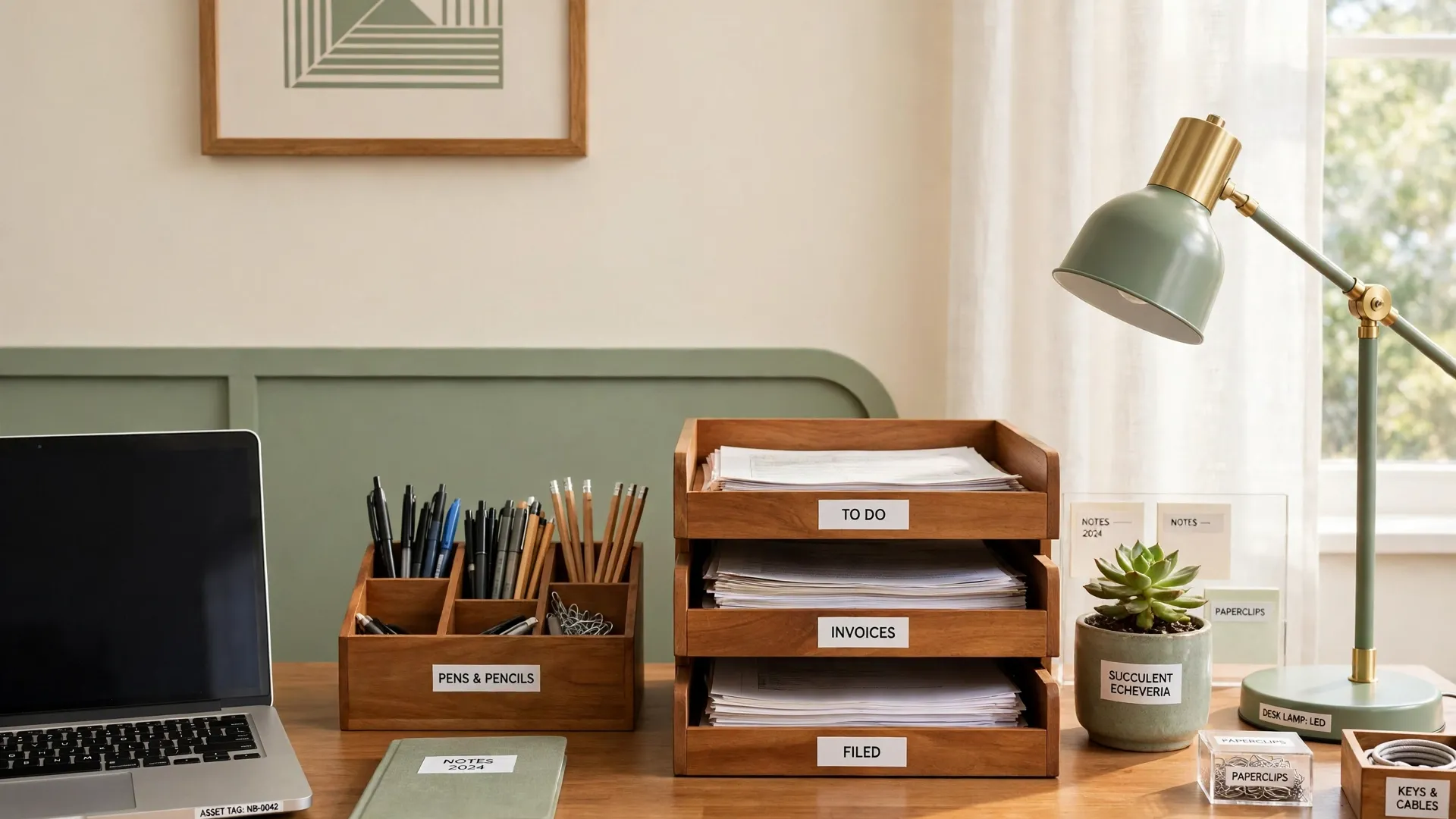
Picture this: you sit down for your first video call of the day, reach for a pen, and it is right there in its holder instead of buried under a pile of papers and tangled cables. That small moment of calm is exactly what smart work supply organization gives you every single day. When every supply has a proper home, your home office feels calmer and your workday runs more smoothly.
You do not need a bigger desk or expensive furniture to get there. All you need is the right storage idea for your space and your daily routine. These 14 remote work supply organization ideas will help you keep every pen, cable, file, and charger tidy, visible, and ready whenever you need it.
1. Clear the Desk and Sort First
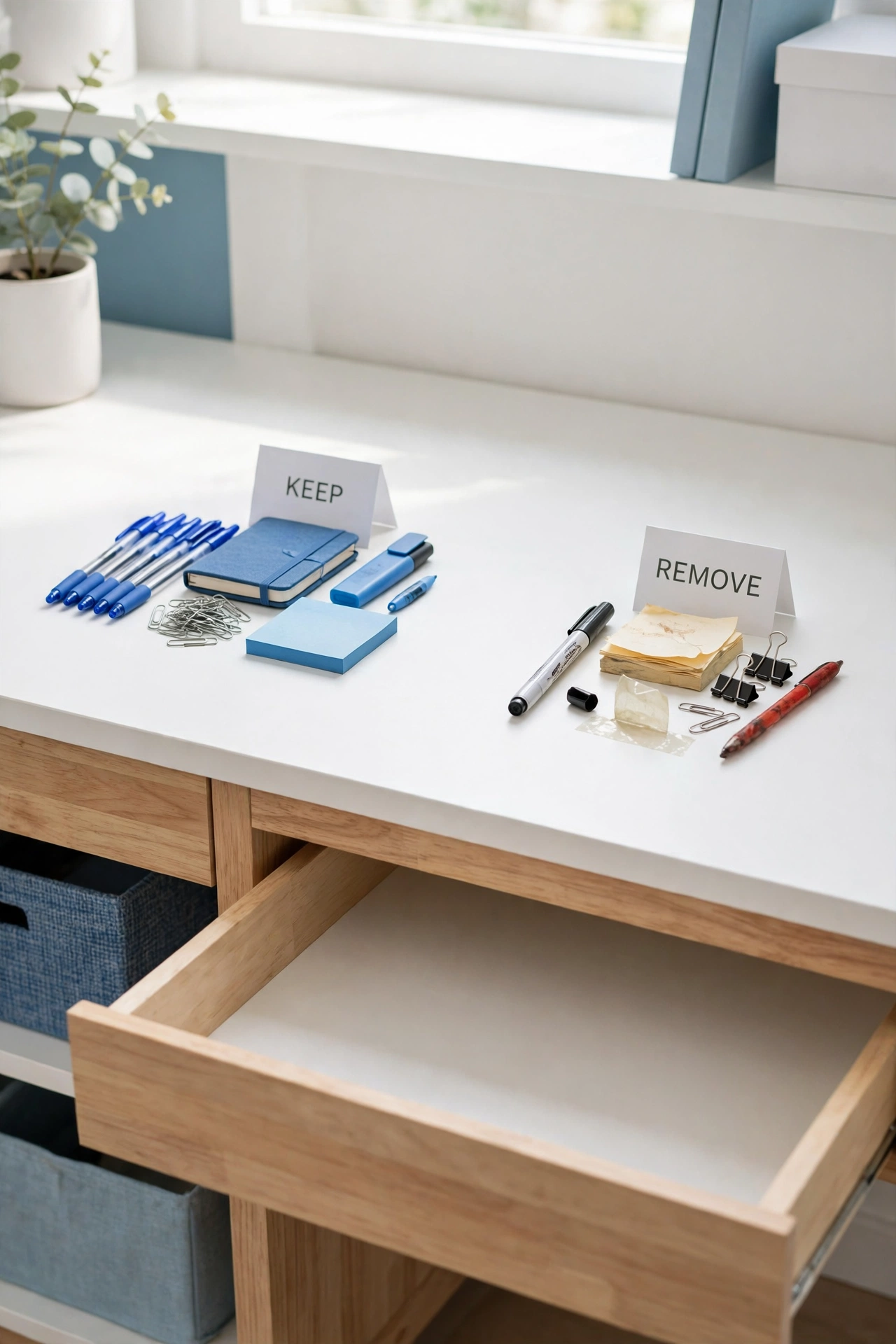
Before you buy a single organizer, empty the desk completely and sort everything on a clean surface. Group your supplies into keep, move, and remove piles. Broken pens, dried-out markers, and old papers that no longer matter should leave the desk right away.
This fresh start shows you exactly how much space you really have and what you actually use every day. Wipe the desk clean while it is empty so your new system starts on a spotless base. A clear desk is the first step toward a system that stays tidy for months.
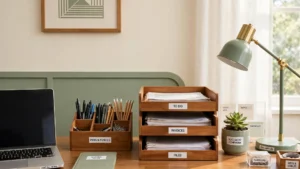
2. A Desktop Organizer for Pens
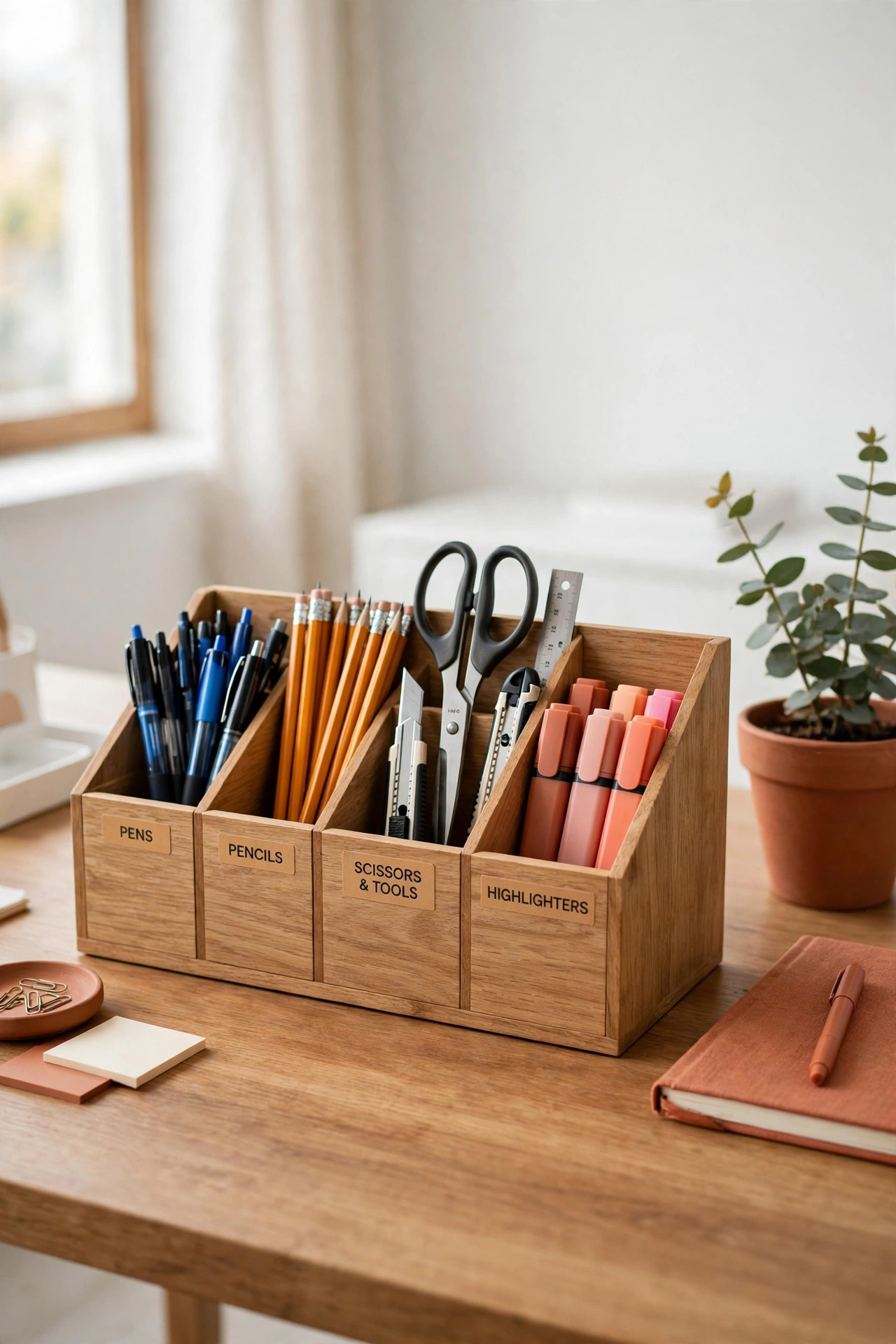
A desktop organizer gives every pen, pencil, and highlighter a fixed home on your desk. Choose one with several compartments so pens, scissors, and markers each get their own section. A tidy organizer stops pens from rolling across the desk and disappearing under papers.
Keep only the pens you use every day in the organizer and store the rest in a drawer or a box elsewhere. A wooden or metal organizer suits most home offices and adds a neat touch to the desk. When every pen has a home, you never waste time searching for one before a call.
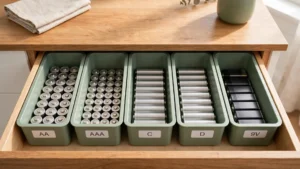
3. Drawer Dividers for Small Supplies
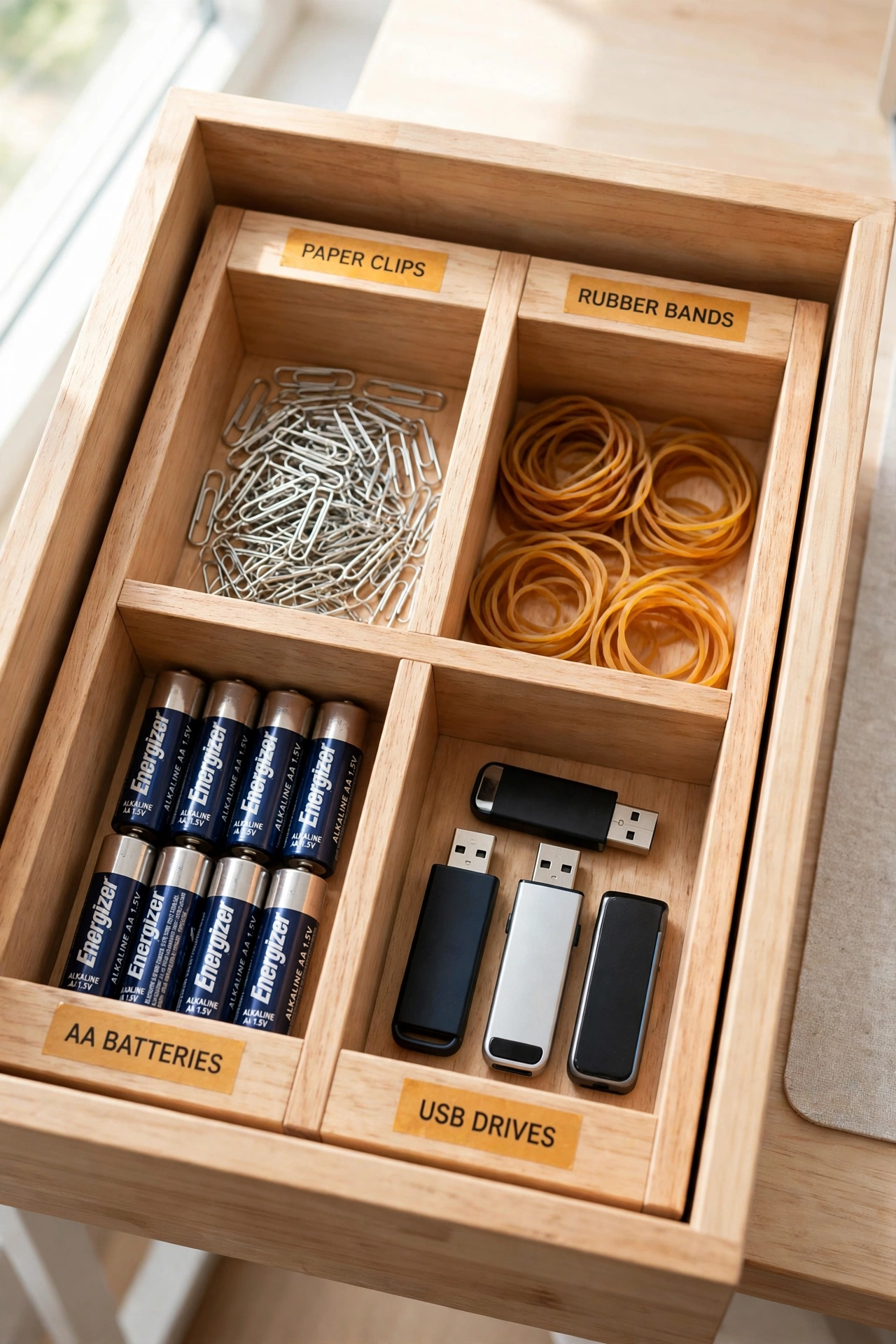
Drawer dividers turn one messy desk drawer into a tidy grid where every small supply has its own spot. Clips, rubber bands, batteries, and USB drives each get a section, so nothing mixes into a tangled pile. Adjustable dividers let you resize the sections as your supply collection changes over time.
Measure your drawer before you buy dividers so each section fits snugly without sliding. For a full drawer plan, see these desk drawer organization ideas that keep every small item in its place. A divided drawer stops supplies from sliding into a jumbled pile every time you open and close it.
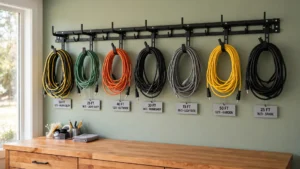
4. A Cable Tray Under the Desk
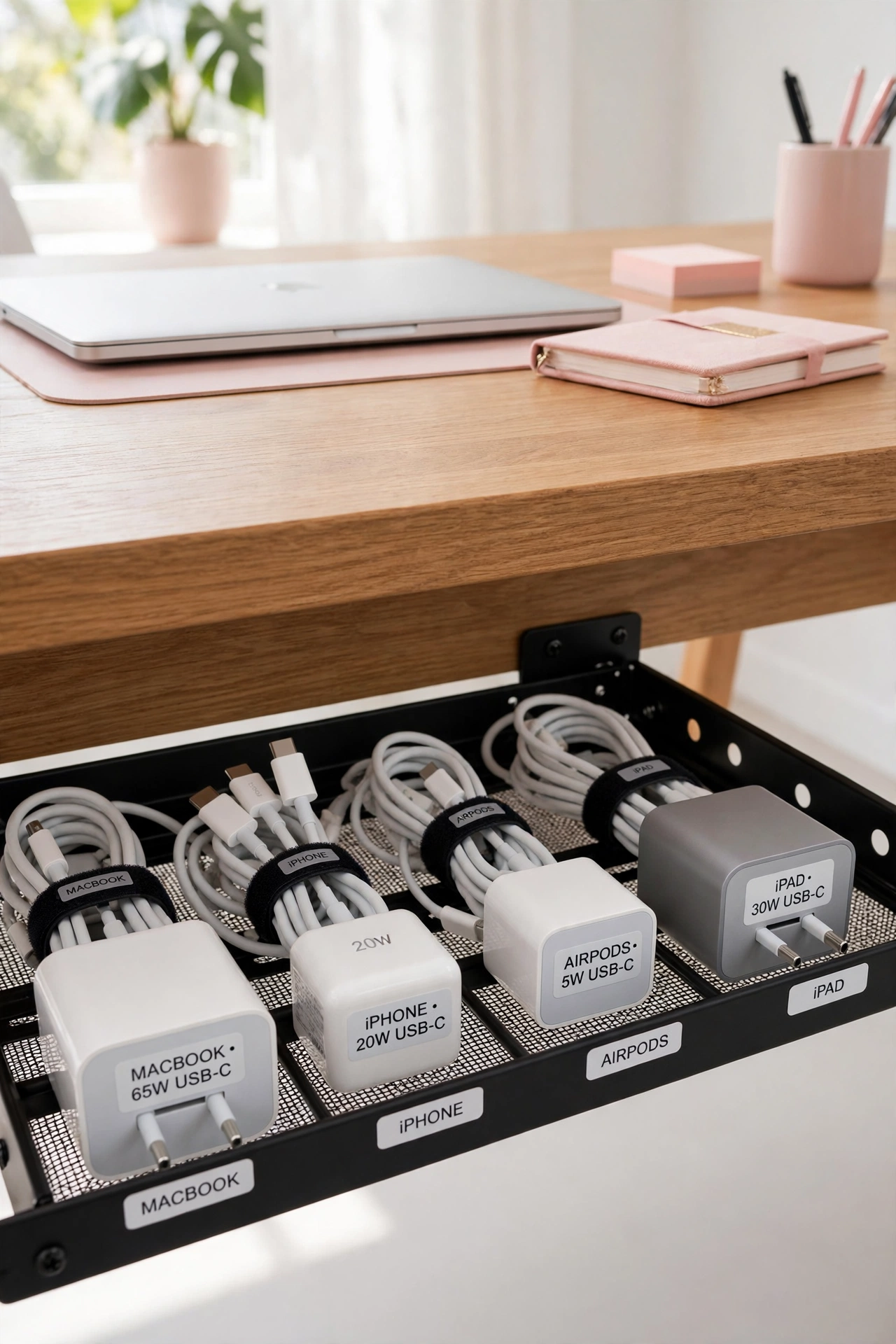
A cable tray mounted under the desk hides every charger and cord from view while it keeps them within easy reach. Run the cables from your laptop, monitor, and lamp into the tray so the desk surface stays clear. The floor stays free of tangled wires, which also makes cleaning much easier.
Label each cable with a small tag so you can trace it later without unplugging everything. A tray with an open top lets you add or remove a cable in seconds when a new device arrives. This one simple addition turns a messy desk into a calm workspace.
5. Labeled Bins for Paper
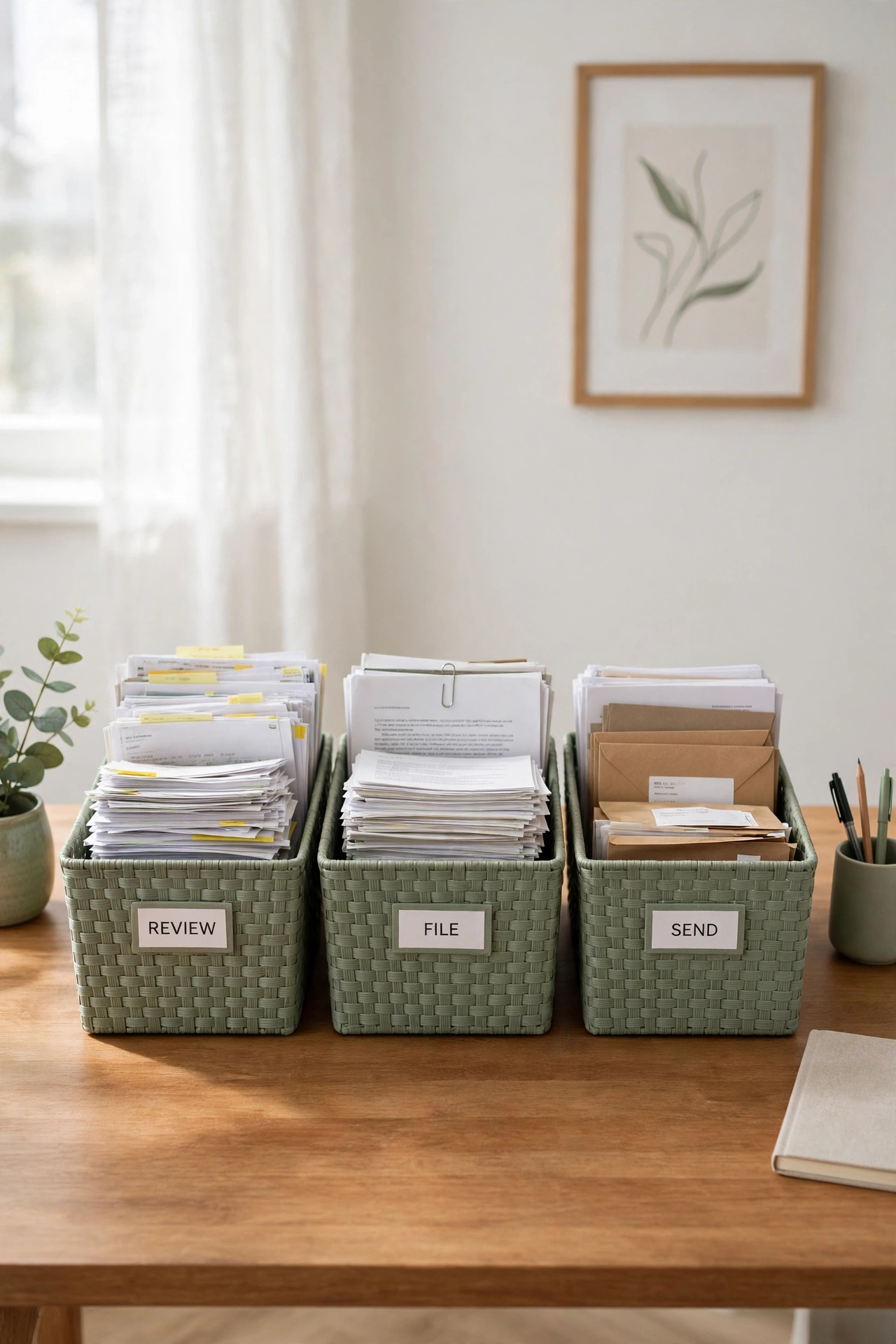
Labeled bins give every stack of paper a clear home on or beside your desk. Use one bin for papers to review, one for papers to file, and one for papers to send. The labels tell you at a glance where each paper belongs, so nothing sits in a random pile.
Choose bins that match your desk and stack them neatly on a shelf or in a corner. For help with the paper piles that already exist, these paper clutter organization ideas show how to clear them for good. Sort the bins once a week so old papers never pile up again.
6. A Charging Station for Devices
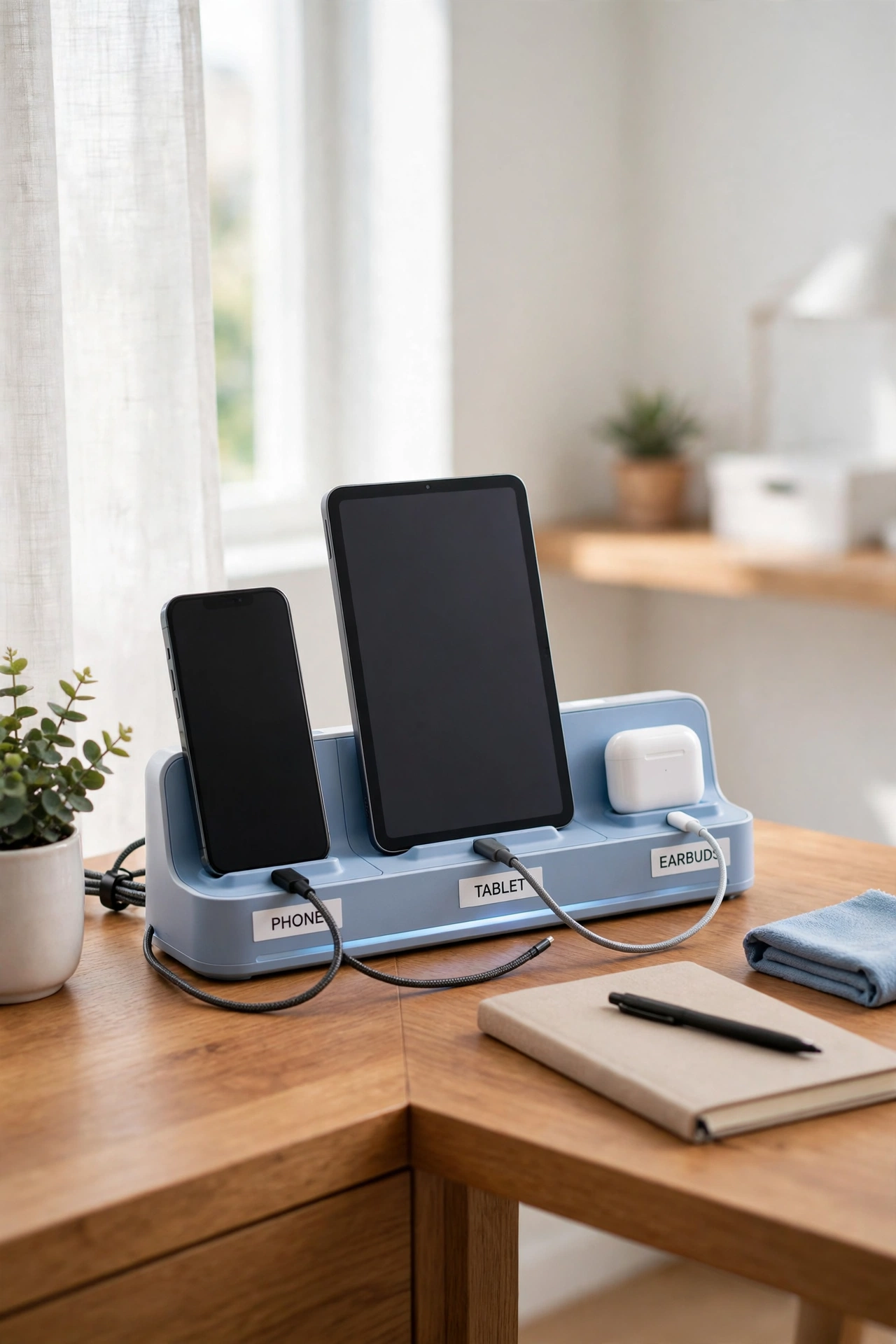
A charging station keeps your phone, tablet, earbuds, and laptop charged in one tidy spot. Set up a small dock or a power strip with labeled cables on the side of your desk. Every device has a fixed charging home, so you never hunt for a cable before a meeting.
Keep the charging station away from your main work area so cables never cross your keyboard or your papers. A station with a small tray also holds your phone upright during video calls. When every device charges in one place, your desk stays clear and your devices stay ready.
7. Keep a Notebook and Pen at Hand
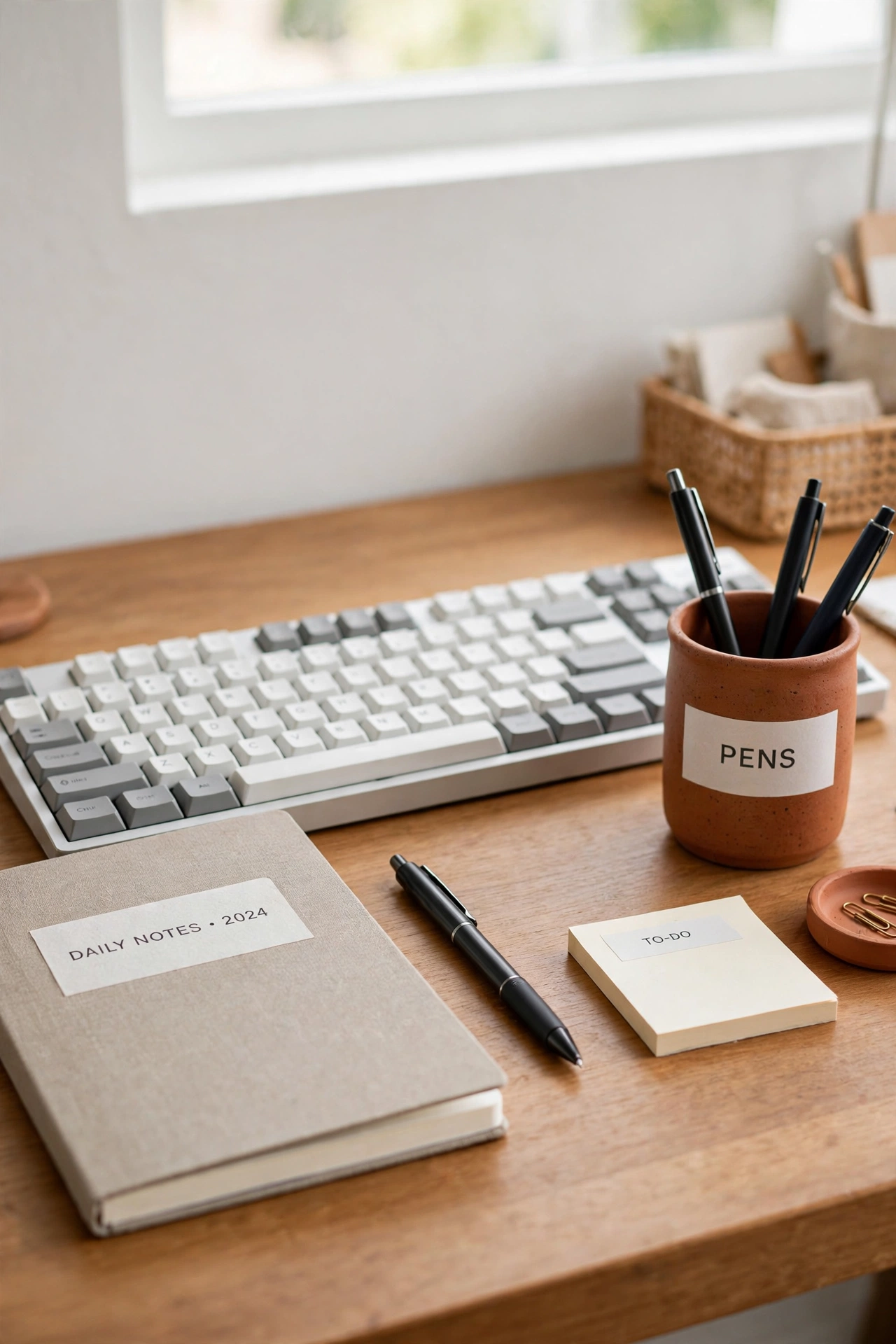
A notebook and a pen on the desk turn your workspace into a place where ideas get captured fast. Keep one slim notebook and a single pen in a fixed spot beside your keyboard. When a thought or a task comes up during a call, you can write it down in seconds.
Choose a notebook that lies flat and a pen that writes smoothly, so note-taking feels easy instead of awkward. For a full system for paper at home, see these school paper organization ideas that keep every sheet in its place. Replace the notebook when it fills up and file the old one with your records.
8. A Wall Shelf for Reference Books
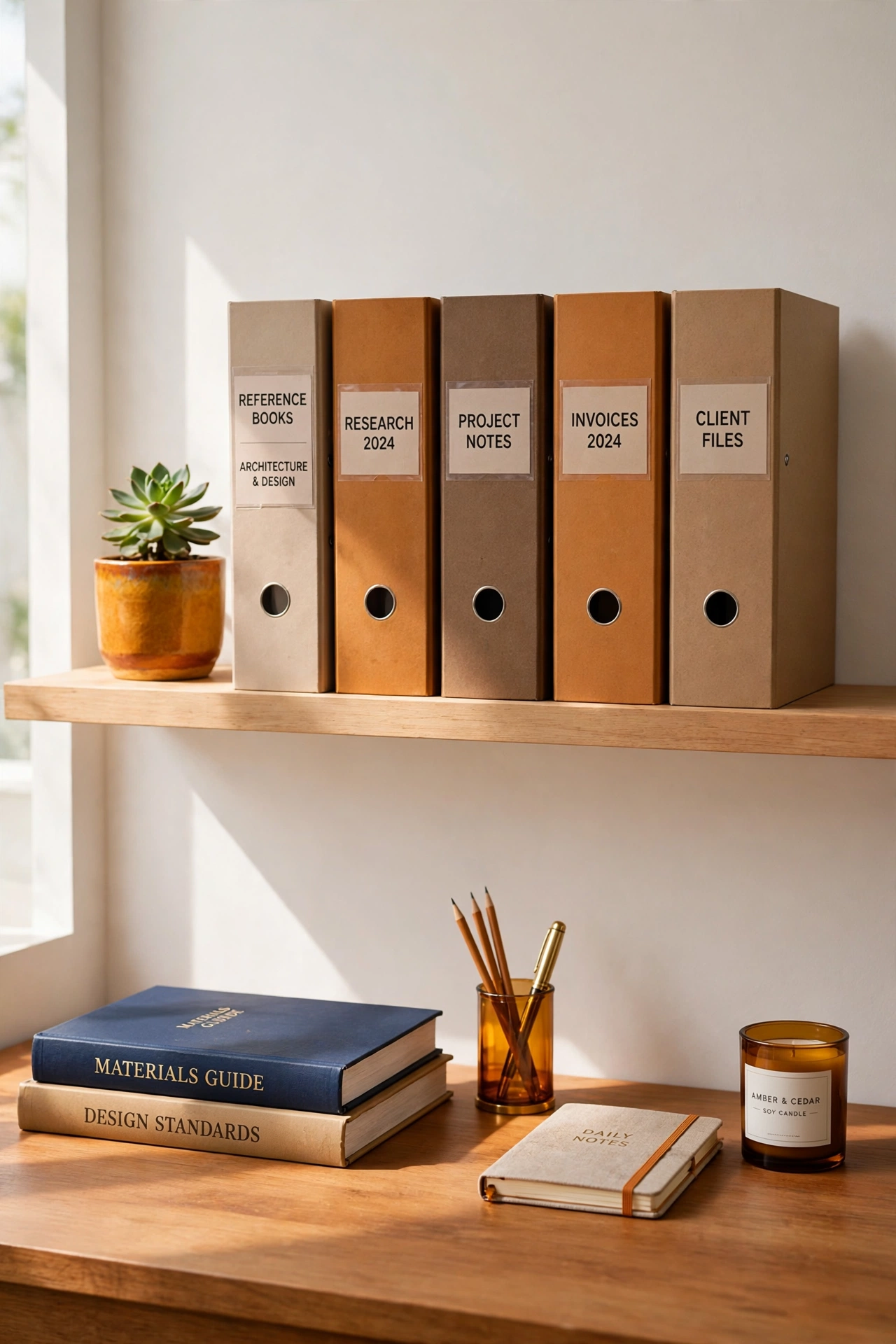
A wall shelf above the desk holds reference books, binders, and manuals within easy reach without using any desk space. Mount the shelf at a height where you can grab a book while you sit at the desk. The shelf keeps heavy books off the work surface and gives the wall a useful job.
Keep only the books you use every week on the shelf and move the rest to a bookcase elsewhere in the room. If you want to plan the whole room around this desk, these small home office layout ideas show how to fit storage, light, and movement into a tight space. A tidy shelf turns a blank wall into working storage.
9. Sort Supplies by Daily Use
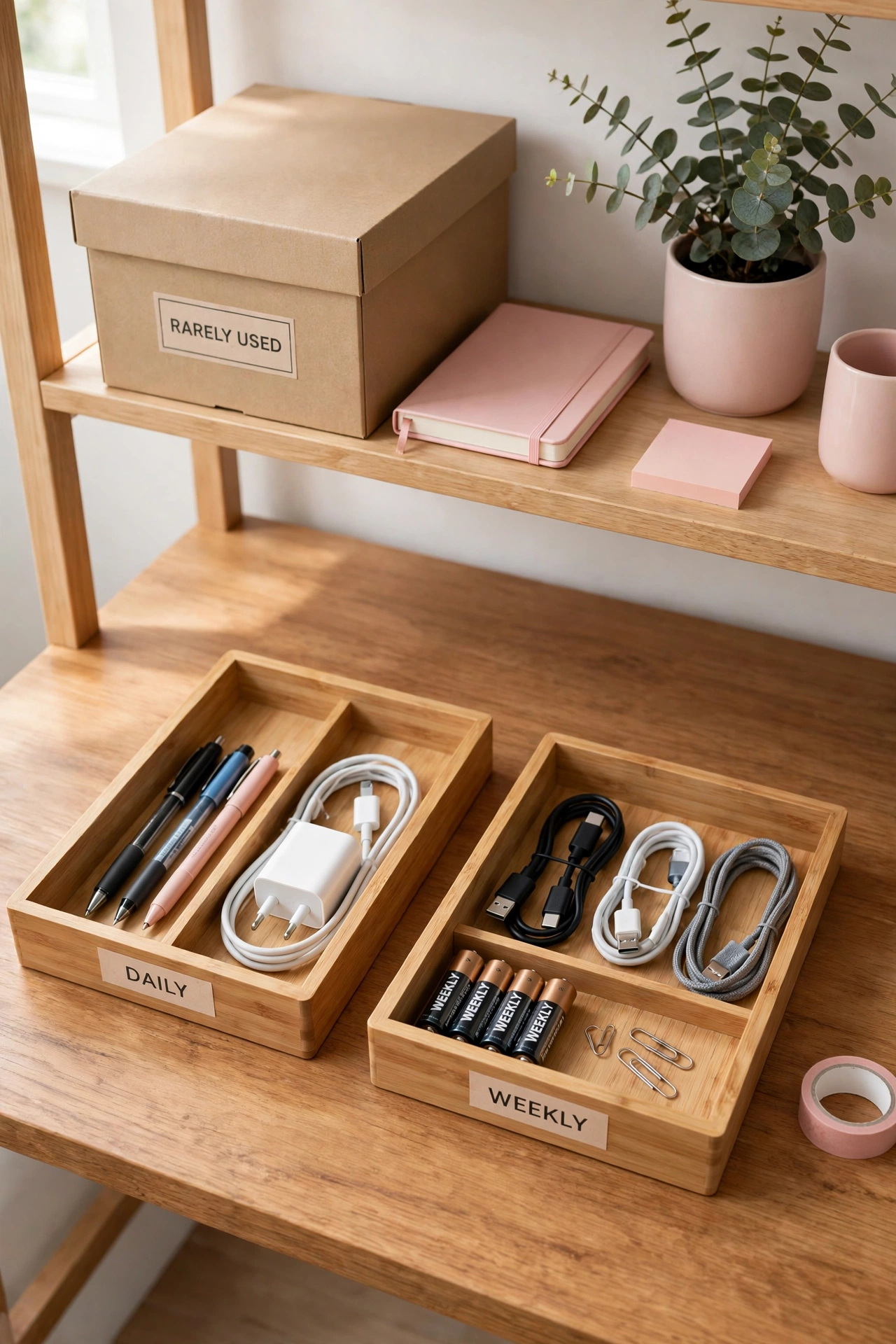
Sorting supplies by how often you use them saves time every single day. Daily items like pens, a notebook, and your phone charger stay on the desk surface. Weekly items like spare batteries and extra cables live in a drawer, and rarely used supplies stay in a box on a shelf.
This method works because it matches the way you actually reach for things while you work. You stop digging through a drawer and start grabbing the right item on the first try. Review the sorting once a month and move items around as your routine changes.
10. A Small Box for Sticky Notes and Clips
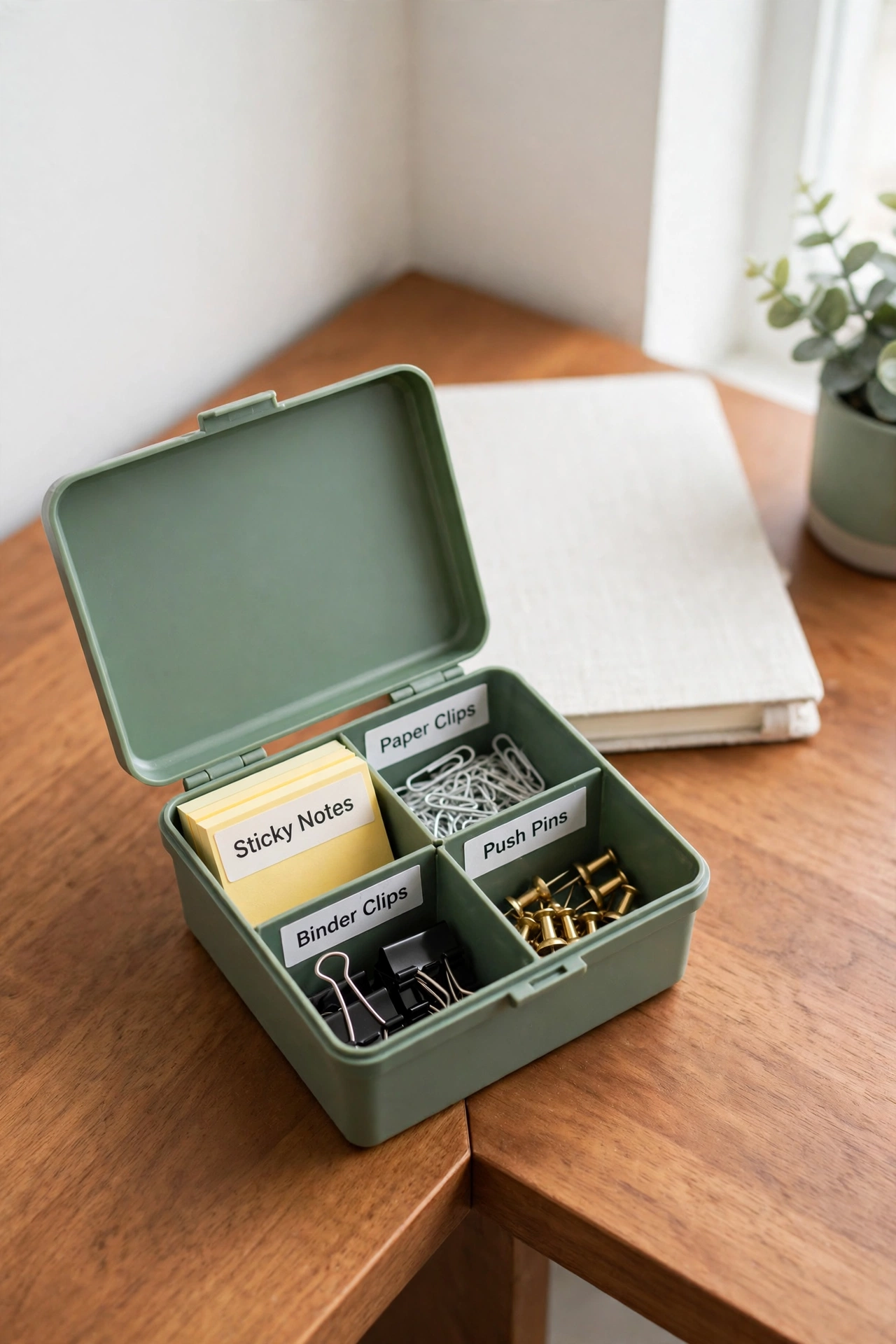
A small box with a lid holds sticky notes, paper clips, binder clips, and push pins in one tidy place. Keep the box on the desk corner so you can grab a sticky note or a clip without opening a drawer. The lid keeps the tiny items from spilling across the desk.
Choose a box with a few small compartments inside so clips and pins stay separate instead of mixing together. Refill the box once a month from your main supply stash. This tiny container stops the small items from scattering all over your workspace.
11. Keep a Water Bottle and Mug Station
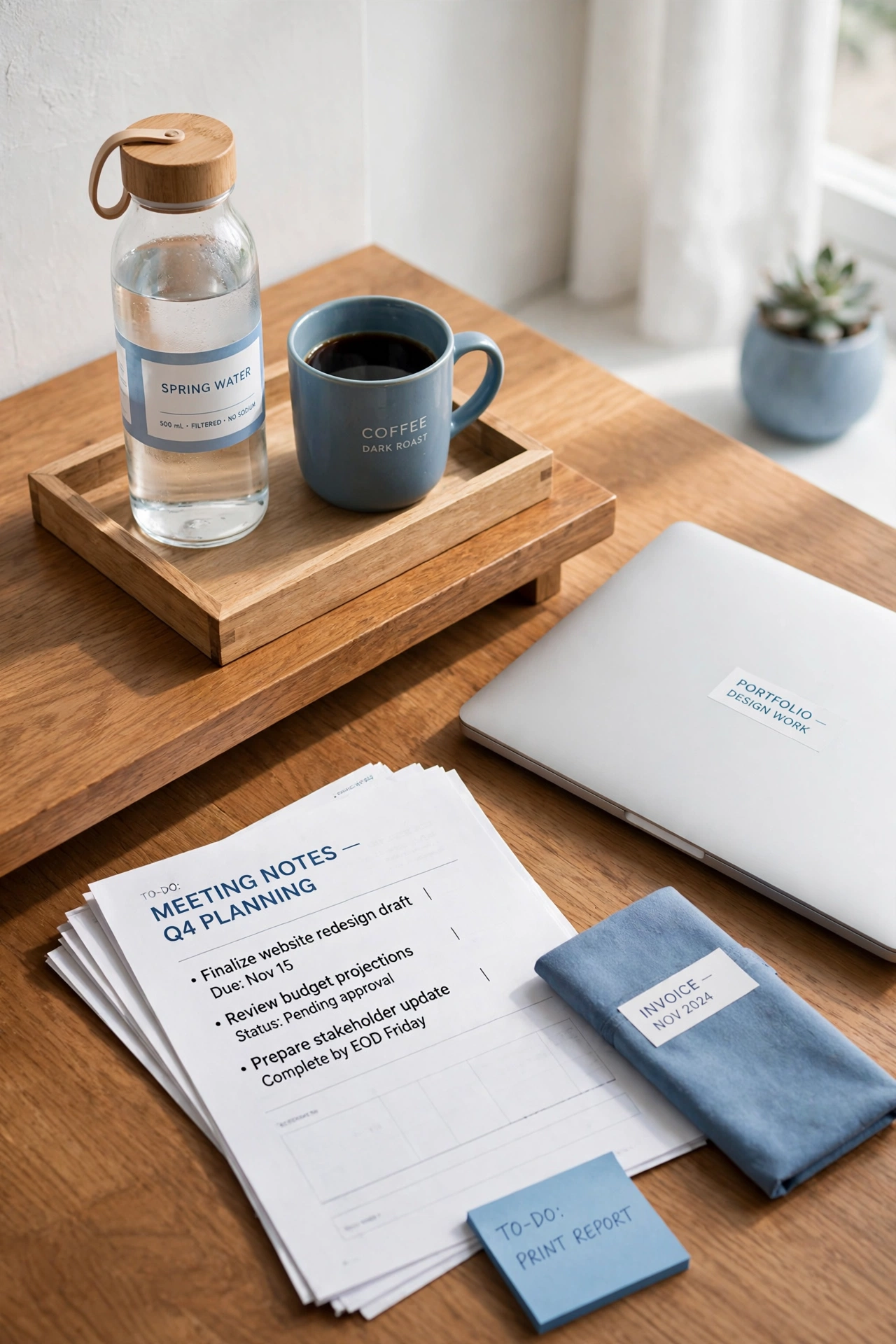
A small tray on the desk corner creates a home for your water bottle and your coffee mug. The tray catches drips and rings, so your papers and your laptop stay dry. A dedicated spot also stops you from setting a mug on top of important files.
Choose a tray with a raised edge and a washable surface so spills stay contained and easy to clean. Keep the tray away from your keyboard and your papers for extra safety. A little drink station makes long workdays more comfortable and your desk much tidier.
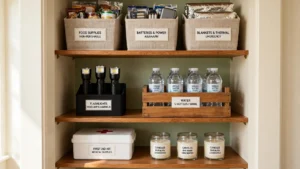
12. A Rolling Cart for Extra Supplies
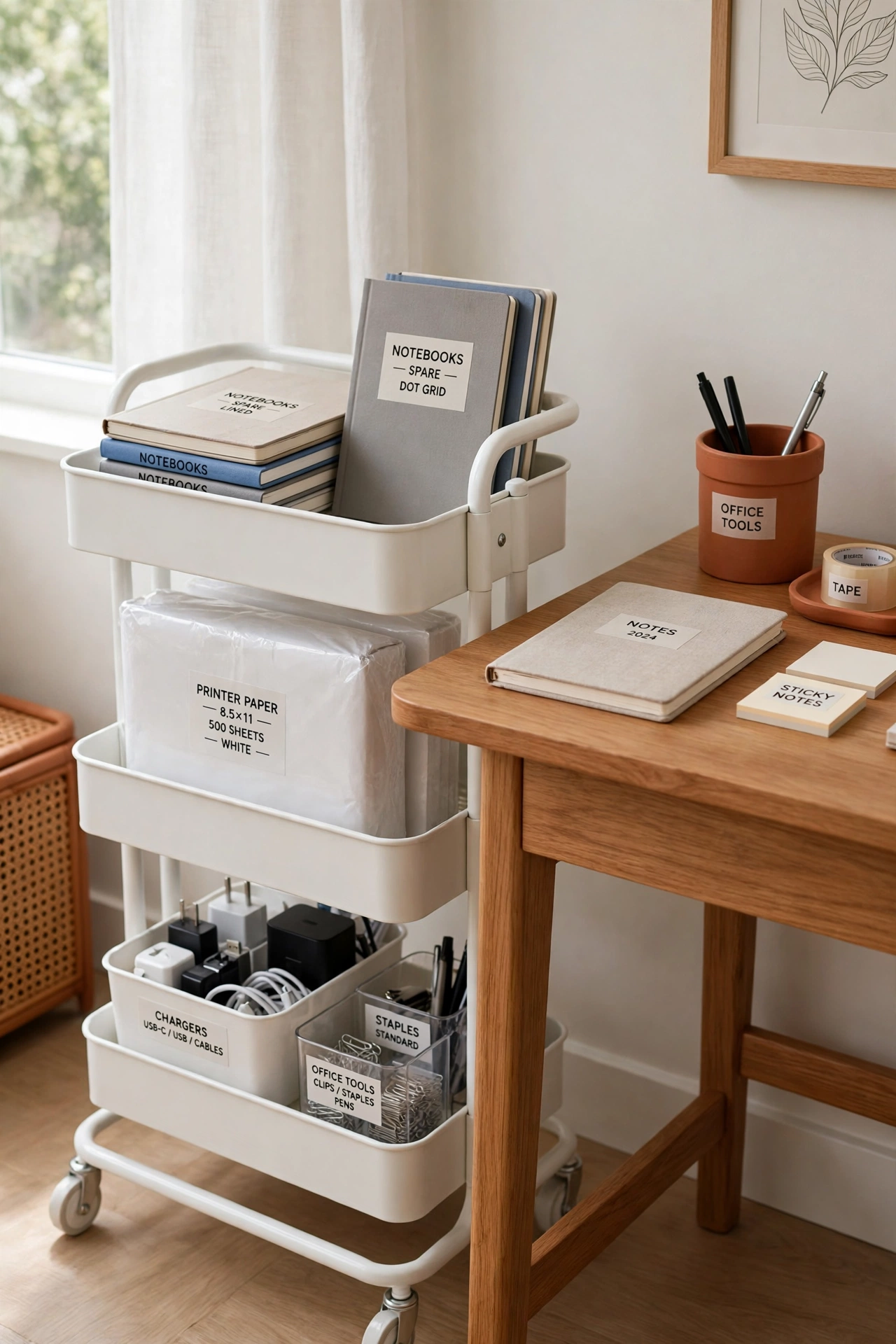
A rolling cart gives your extra work supplies a home that moves with you. Fill the tiers with spare notebooks, printer paper, chargers, and tools, then roll the cart beside your desk when you work and into a corner when you finish. The cart adds storage without taking up permanent desk space.
Pick a cart with at least three tiers so paper, tools, and cables each get their own level. A cart with small wheels and a handle is easy to move across carpet or hard floors. This is the best choice when your desk is small and your supplies keep growing.
13. A Weekly Desk Reset Routine
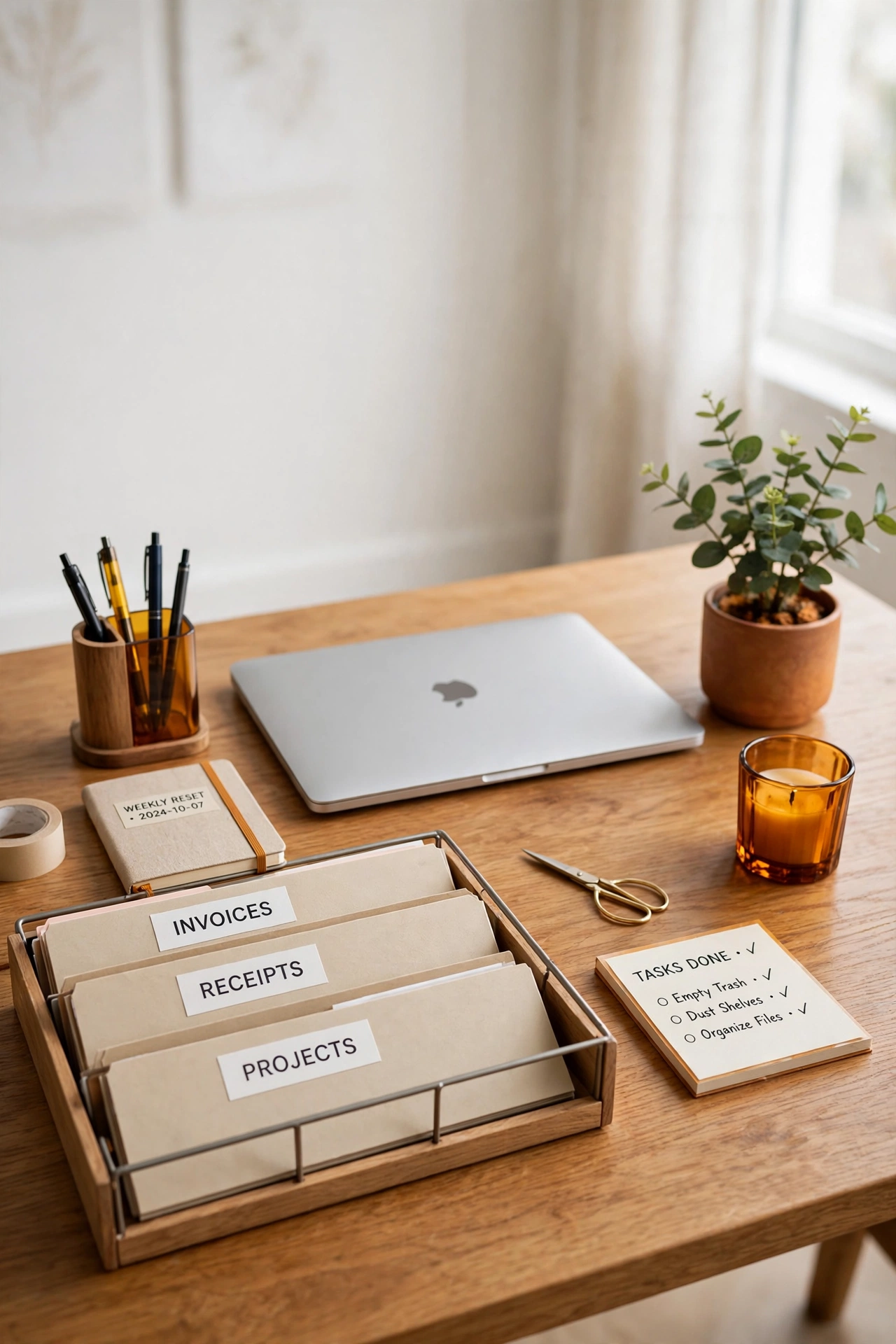
A weekly desk reset takes only ten minutes and keeps the whole system from falling apart. Pick Friday afternoon as your reset time, and clear the desk surface, file loose papers, return supplies to their homes, and wipe the desk clean. The reset turns a week of small messes into a fresh start.
This small weekly habit is the secret behind every tidy home office. Supplies never pile up because they never get more than a week out of place. Set a phone reminder so the reset becomes a habit instead of a chore you forget.
14. Keep Personal Items in One Drawer
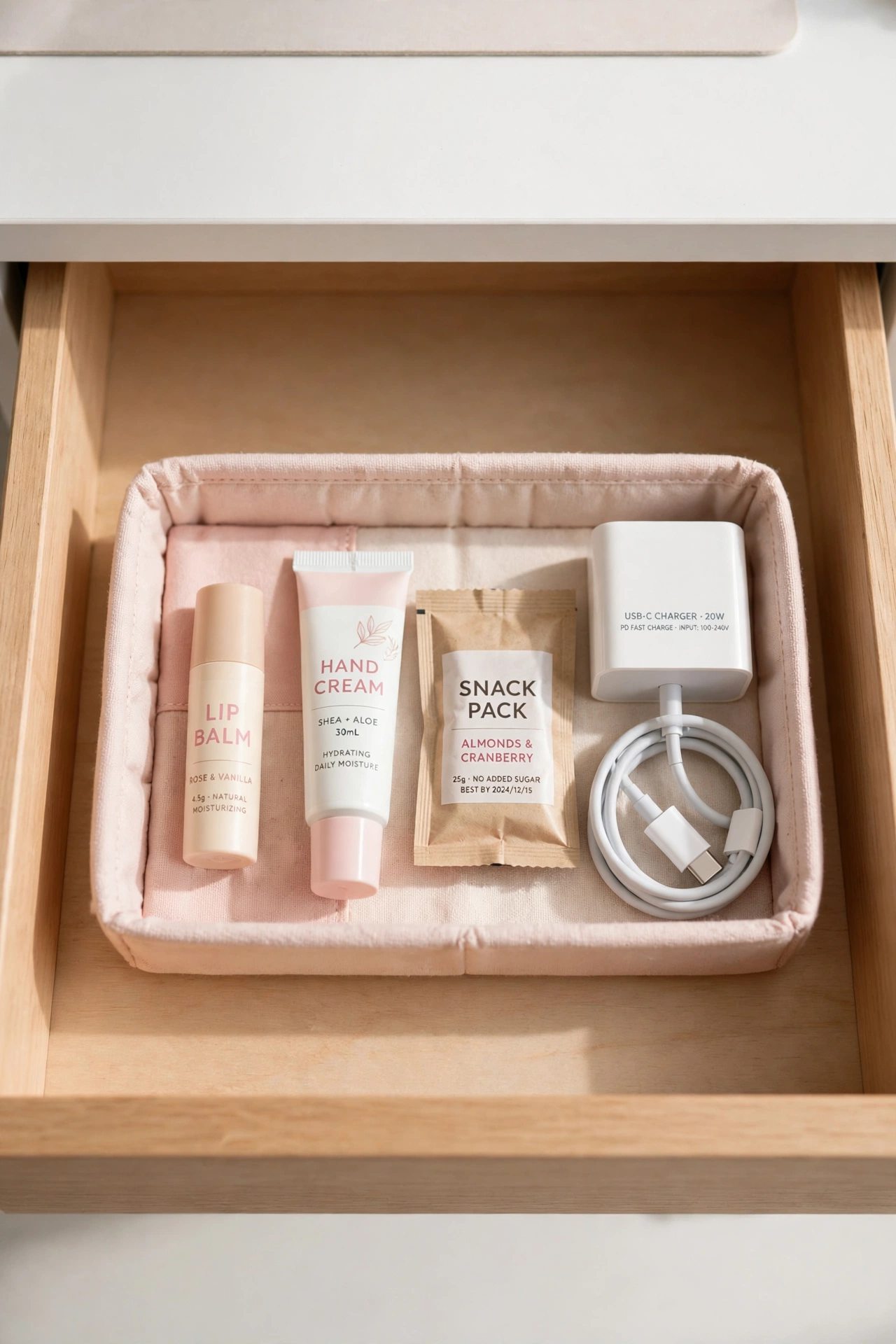
Personal items like lip balm, hand cream, snacks, and a phone charger belong in one drawer, not scattered across the desk. Give them a single drawer with a small tray inside so they stay together and out of sight while you work. Your desk surface stays professional, even during video calls.
Keep only the personal items you use during the workday in this drawer and store the rest elsewhere in the house. A small tray stops the items from sliding around when you open and close the drawer. One drawer for personal things keeps work supplies and personal supplies from mixing into a mess.
Conclusion
Remote work supply organization does not have to be complicated or expensive. From a simple desktop organizer to a rolling cart full of extras, there is an idea here for every desk and every routine. The best solution is the one you will actually use every day.
Pick one or two ideas that fit your desk and start today. Clear the surface, give each supply a home, and enjoy a workspace that feels calm and ready. For a smooth start to every workday, these entryway organization ideas will help you set up a tidy grab and go routine by the front door.
Frequently Asked Questions About Remote Work Supply Organization Ideas for Home Offices
How do I organize a small home office desk?
Start with a desktop organizer for pens and a cable tray under the desk. Add one drawer with dividers for small supplies and a small tray for papers. Keep only daily items on the surface and move everything else to a shelf or a rolling cart. A small desk stays tidy when every item has one fixed spot.
What supplies should I keep on my desk every day?
Keep your laptop, a notebook, one pen, your phone charger, and a water bottle on the desk. Everything else, like spare cables, extra paper, and tools, can live in a drawer or on a shelf nearby. Fewer items on the surface mean less clutter and faster work.
How do I hide cables on my home office desk?
A cable tray under the desk hides most cords from view. Bundle cables with Velcro ties and label each one so you can trace it later. Keep the power strip inside the tray or in a small cable box on the floor so only one cord reaches the wall.
How often should I clean and reset my work desk?
Wipe the desk once a week and do a full reset every Friday. During the reset, empty every drawer and tray, throw away old papers, and return supplies to their proper homes. A regular reset stops small messes from growing into a full desk overhaul.
How can I keep work supplies separate from personal items?
Give personal items their own drawer with a small tray inside, and keep work supplies on the desk and in a separate drawer. Clear labels on bins and drawers help everyone in the house know where things belong. When work and personal items stay apart, your desk stays professional and easy to use.

Hi, I’m Emily! I turn messy corners into cozy, organized spots. DreamNestDecor is where I share simple, practical home ideas — decor, organization, and small-space solutions that work in real life, not just in photos. Every idea here is carefully researched before it’s shared.