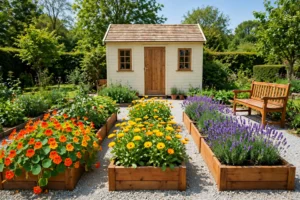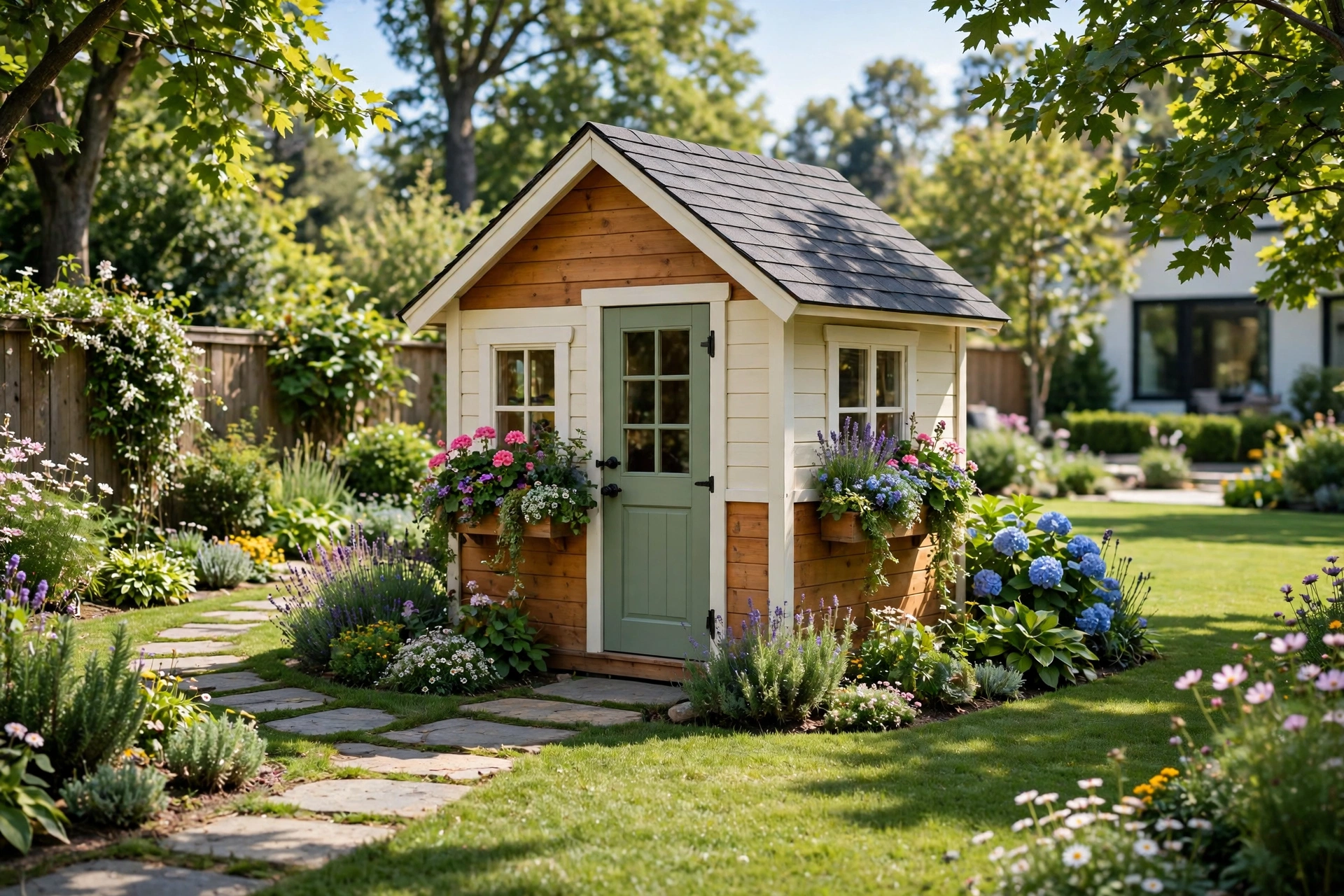
Picture this: you step into the backyard on a sunny morning and a small wooden cottage stands at the edge of the lawn, with a tiny front door, flower boxes under the windows, and a neat path of stepping stones leading to the entrance. Inside, miniature furniture waits in tidy rows, a small kitchen shelf holds tiny dishes, and a stack of picture books rests in a reading corner. The whole scene feels like a little world of its own, built just for imagination.
You do not need a large yard or a big budget to give children a place for creative play. A simple playhouse, shaped with care and filled with a few thoughtful details, can become a cottage, a shop, a stage, or a quiet reading nook. These 16 backyard playhouse design ideas for creative play will help you build a small outdoor retreat that sparks imagination every single day.
1. Build a Classic Cottage Playhouse
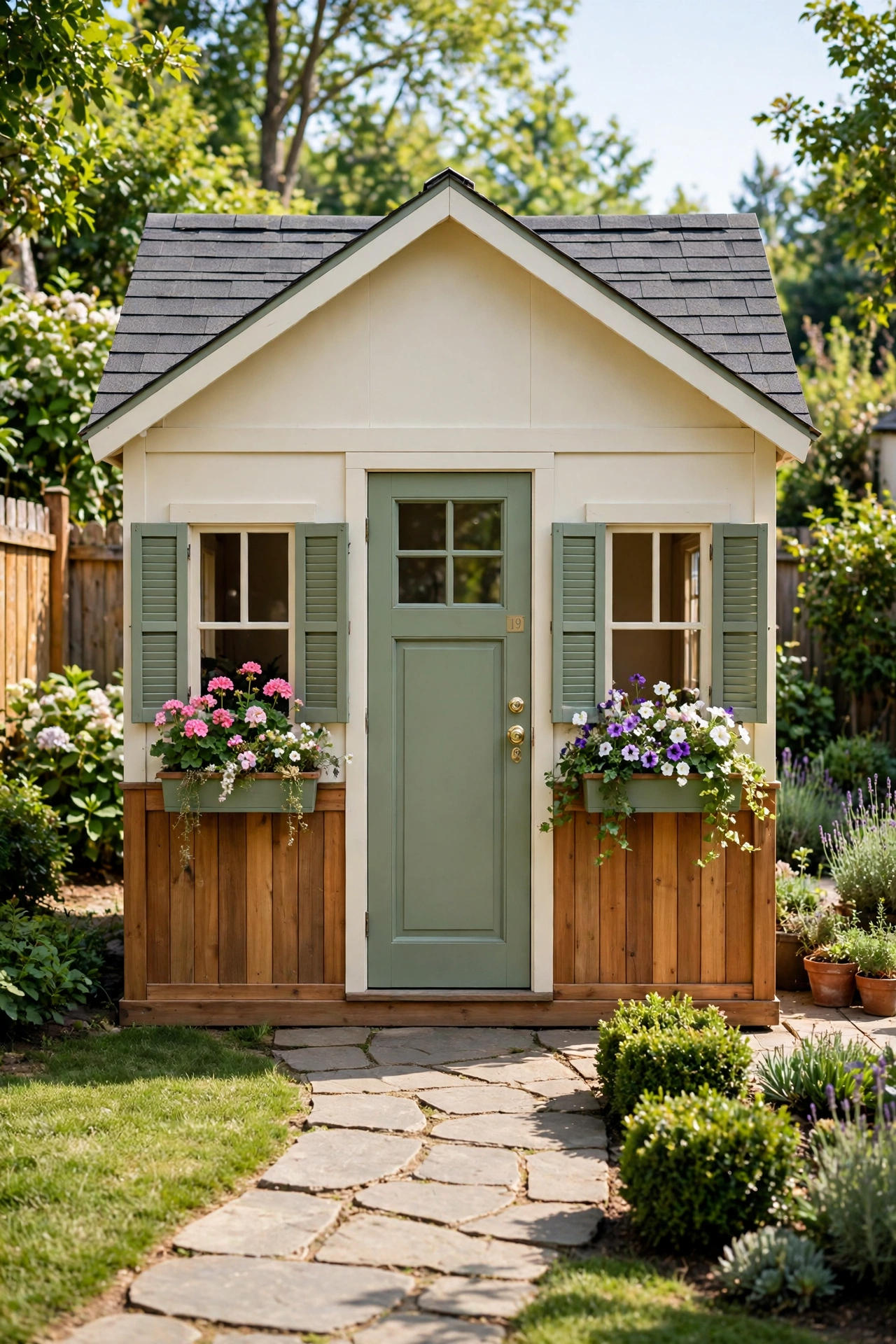
A classic cottage playhouse is the simplest and most loved design of all. Build a small wooden house with a pitched roof, a tiny front door, and two small windows with shutters. Paint it warm white with a sage green door and add flower boxes under the windows for a sweet, welcoming look.
Keep the inside open and bright with a small rug, a low table, and two tiny chairs. A cottage playhouse suits any backyard because it looks like a miniature home and blends with the garden. It also gives children a private little space that feels truly their own.
2. Add a Tiny Play Kitchen Inside
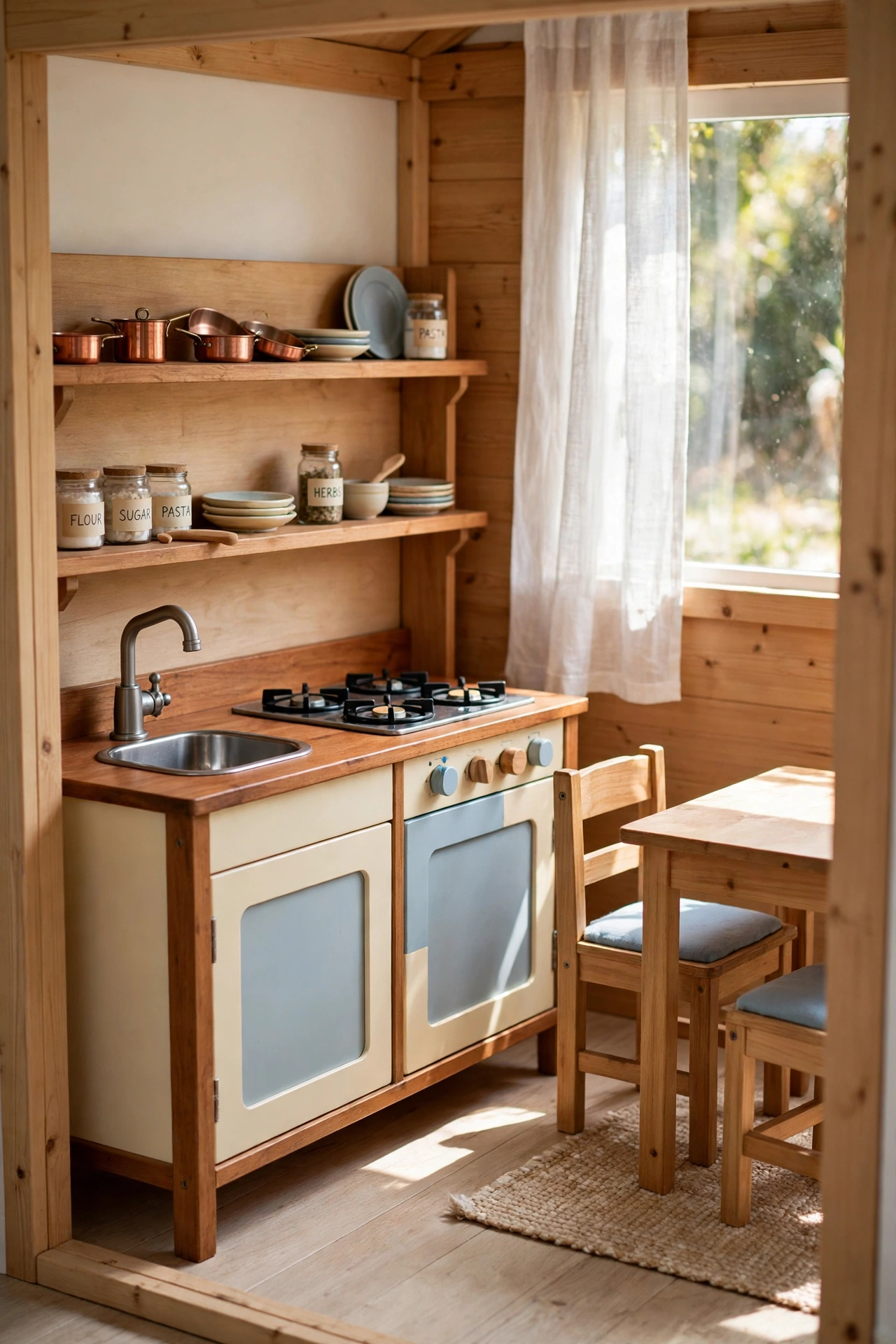
A tiny play kitchen turns a plain playhouse into a busy little home. Fit a low wooden counter along one wall with a small sink basin, a pretend stove top, and open shelves above for miniature pots and plates. A small table with two chairs completes the kitchen corner.
Stock the shelves with wooden fruit, small cups, and labeled jars so the kitchen feels real and ready for use. A play kitchen encourages children to cook pretend meals, serve guests, and practice daily routines in a fun way. It is one of the most used corners in any playhouse.
3. Create a Small Stage for Puppet Shows
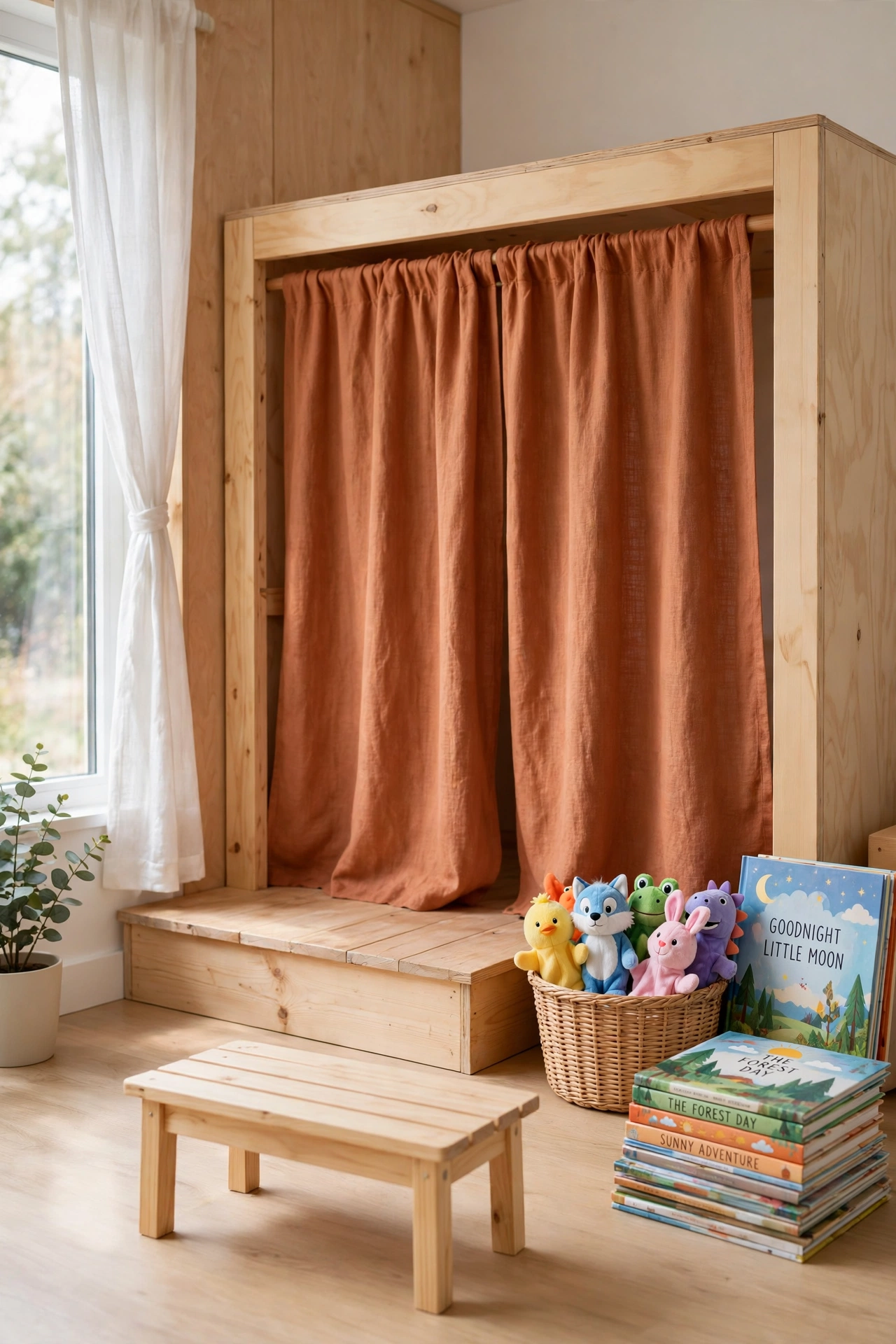
A small stage turns a playhouse into a theater for puppet shows and stories. Hang a terracotta curtain across one end of the playhouse and place a low wooden platform behind it. A basket of hand puppets and a few storybooks nearby invite children to put on a show.
Add a small bench in front of the curtain so an audience can sit and watch. A stage builds confidence and language skills while children invent stories and perform for family. It also makes the playhouse a gathering spot on warm afternoons.
4. Set Up a Cozy Reading Corner
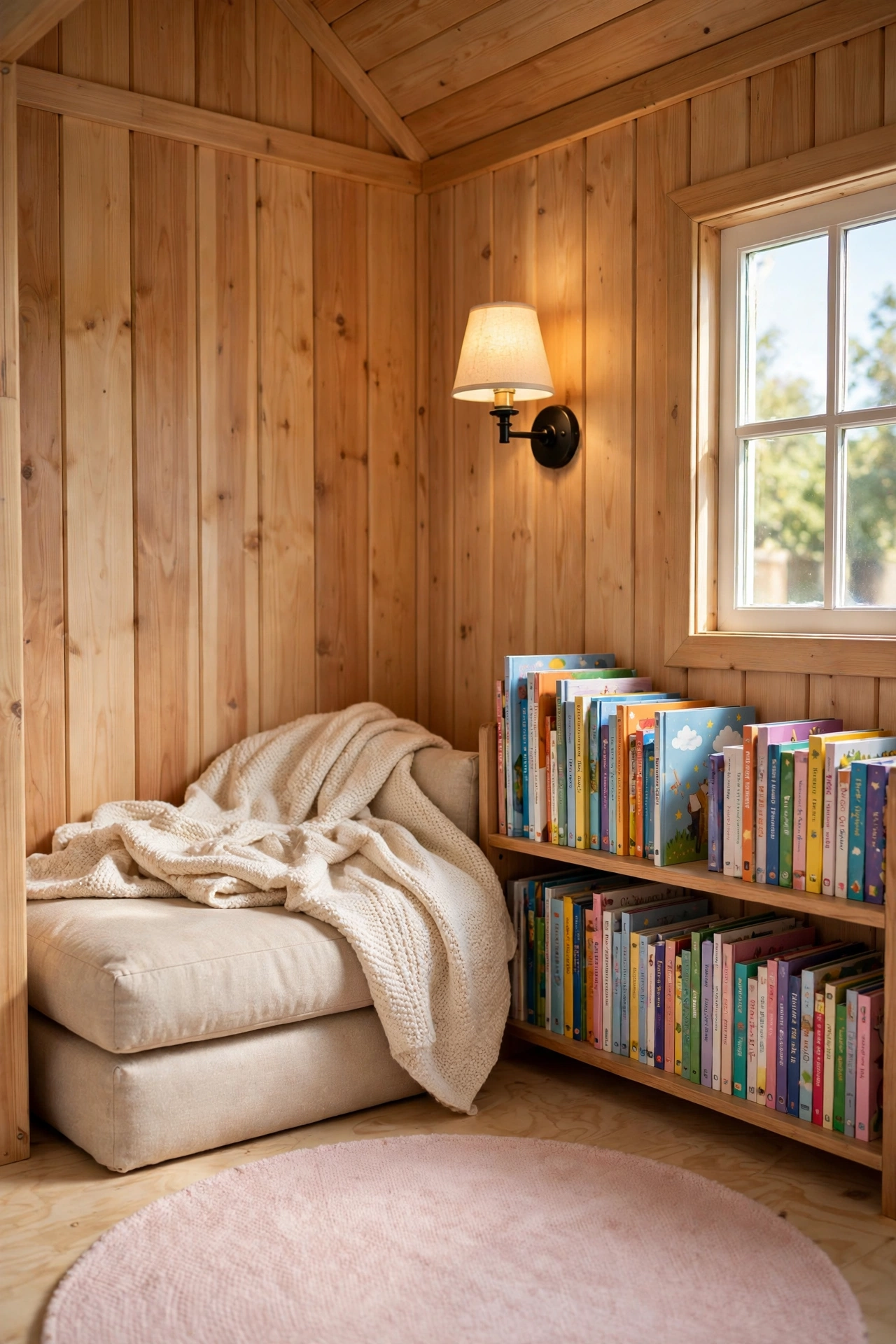
A cozy reading corner gives a playhouse a quiet purpose. Place a thick cushion and a soft blanket in one corner, add a low bookshelf filled with picture books, and hang a small wall lamp for warm light. A round rug in soft blush makes the corner feel calm and inviting.
Keep the books at child height so little hands can reach them without help. A reading corner turns the playhouse into a peaceful retreat where children can rest and enjoy stories alone. It also balances the busy energy of the rest of the yard.
5. Open a Little Play Shop with a Counter
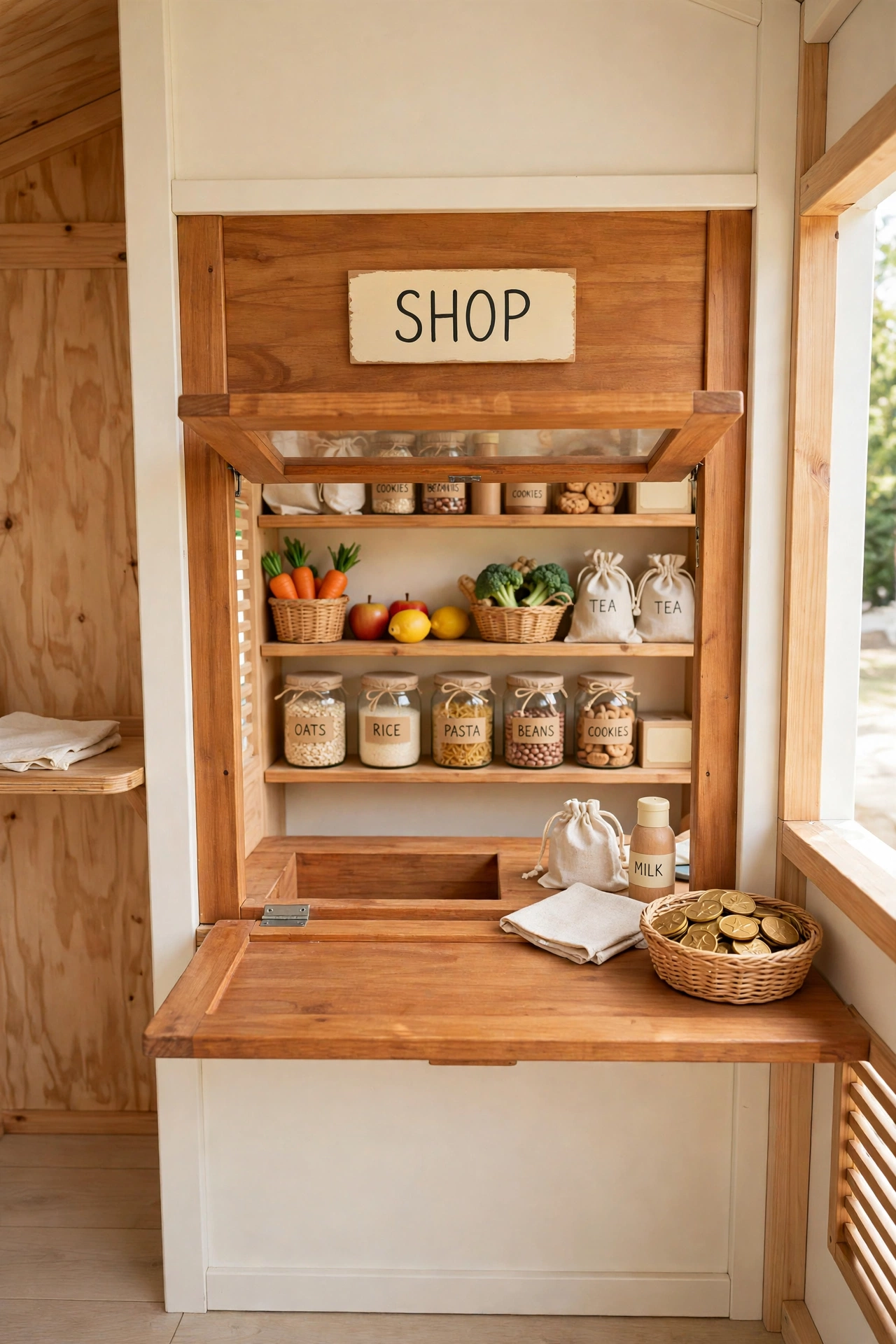
A little play shop brings pretend shopping games into the backyard. Build a small wooden counter with a hinged flap across the front window, add shelves stocked with toy groceries, and hang a small sign above the window that reads SHOP in clear letters. A basket of play coins on the counter completes the scene.
Children can take turns as shopkeeper and customer, counting coins and choosing goods from the shelves. A play shop teaches counting, sharing, and polite conversation through simple games. It also uses the playhouse window in a clever and fun way.
6. Add a Mini Art Studio Corner
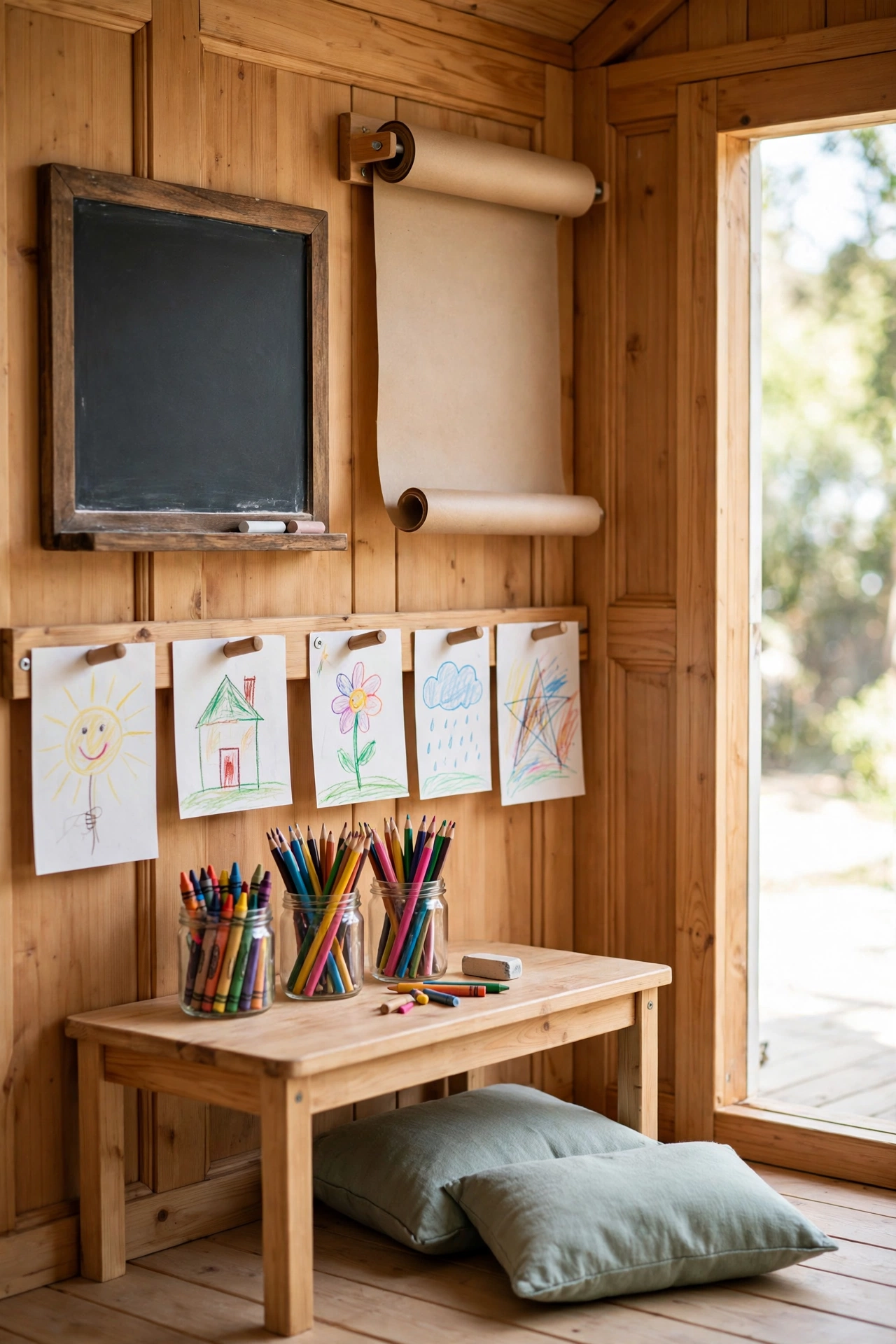
A mini art studio corner fills a playhouse with color and creativity. Mount a small chalkboard on one wall, place a low table with jars of crayons and colored pencils, and add a roll of paper that children can pull down and tear off. A peg rail holds finished drawings for display.
Choose washable supplies and a wipe-clean table so every art session stays easy to tidy. An art studio corner lets children draw, paint, and craft outdoors in their own space. It also keeps messy projects out of the main house.
7. Build a Two-Story Playhouse with a Loft
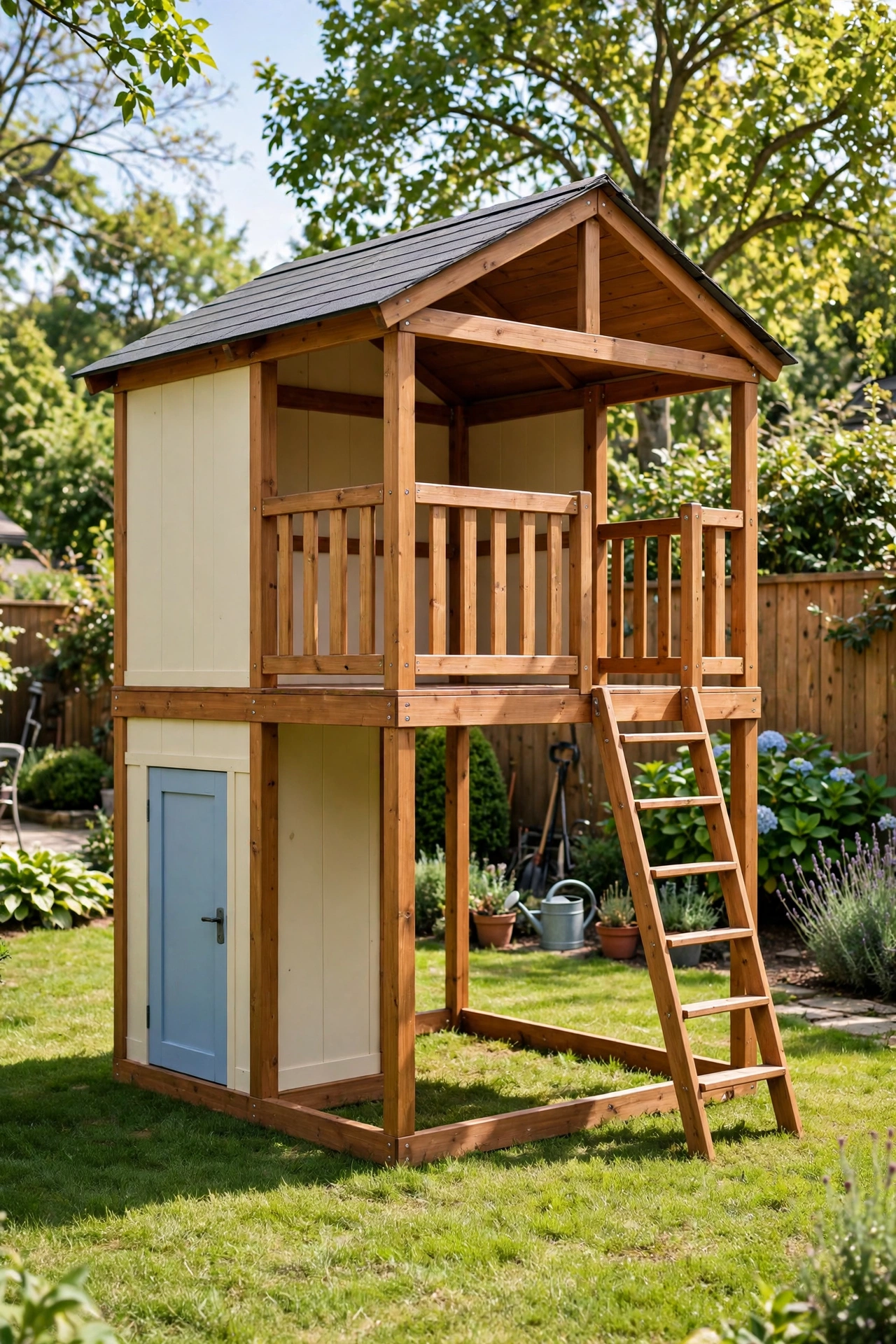
A two-story playhouse with a loft adds a whole second level of play space. Build a sturdy ladder or small staircase to a raised platform with a safety rail, and leave the ground floor open for a kitchen or shop below. The loft becomes a secret hideaway with a view over the yard.
Make sure the ladder is fixed firmly and the loft rail is high enough for safety. A loft gives children a sense of adventure and a special spot that feels high above the world. For more ideas on using raised space in a small home, see these small loft apartment layout ideas. A two-story playhouse makes even a small backyard feel full of possibility.
8. Add a Front Porch with Rocking Chairs
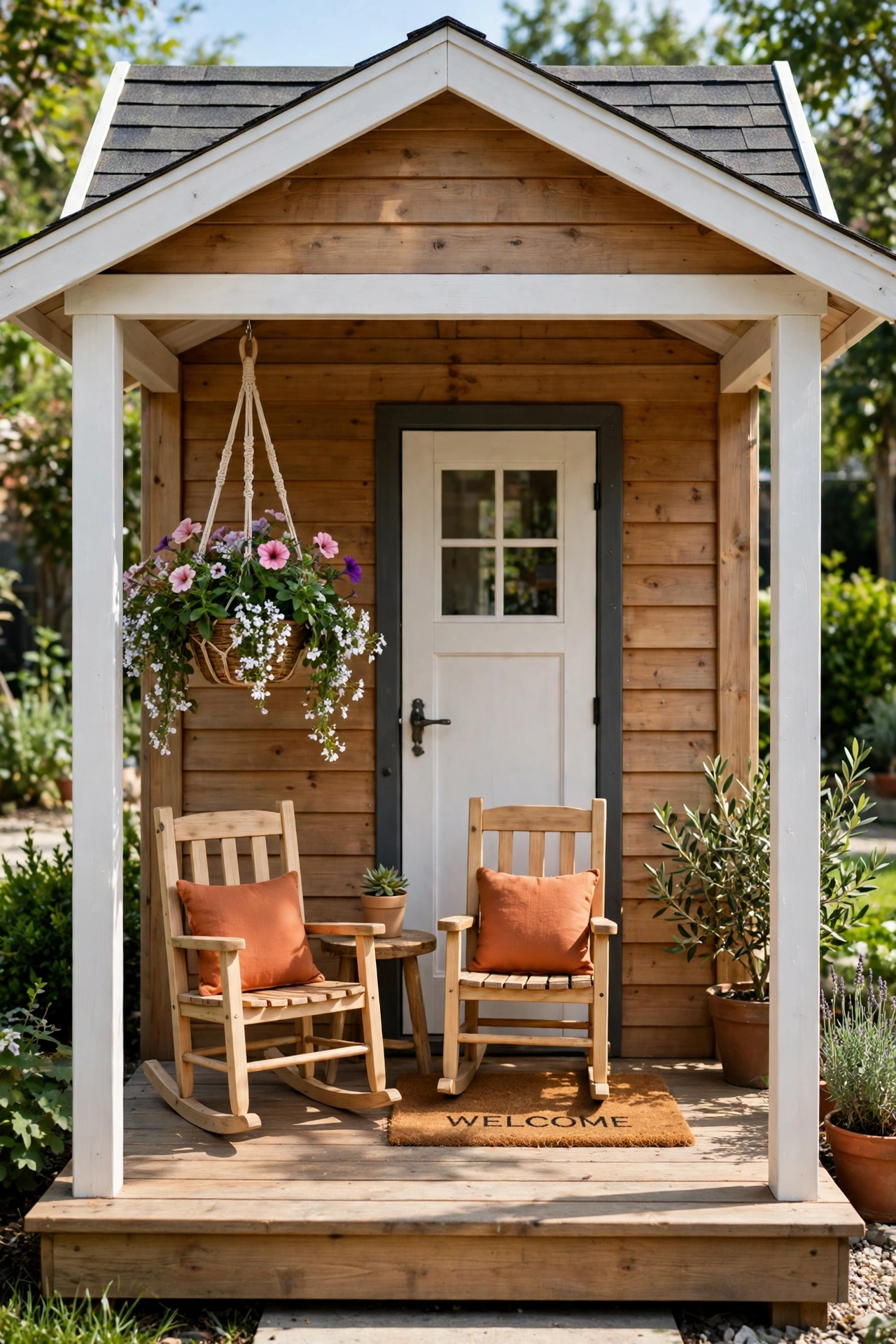
A front porch gives a playhouse the charm of a real cottage. Add a small covered porch with a wooden deck, two miniature rocking chairs, and a tiny side table between them. A welcome mat at the door and a hanging basket of flowers finish the look.
The porch becomes a favorite spot for quiet play, reading, and watching the garden. It also keeps children shaded on hot days while they stay outdoors. A porch makes the playhouse look finished from the street and gives it a warm, homely feel.
9. Turn the Playhouse into a Garden Potting Shed
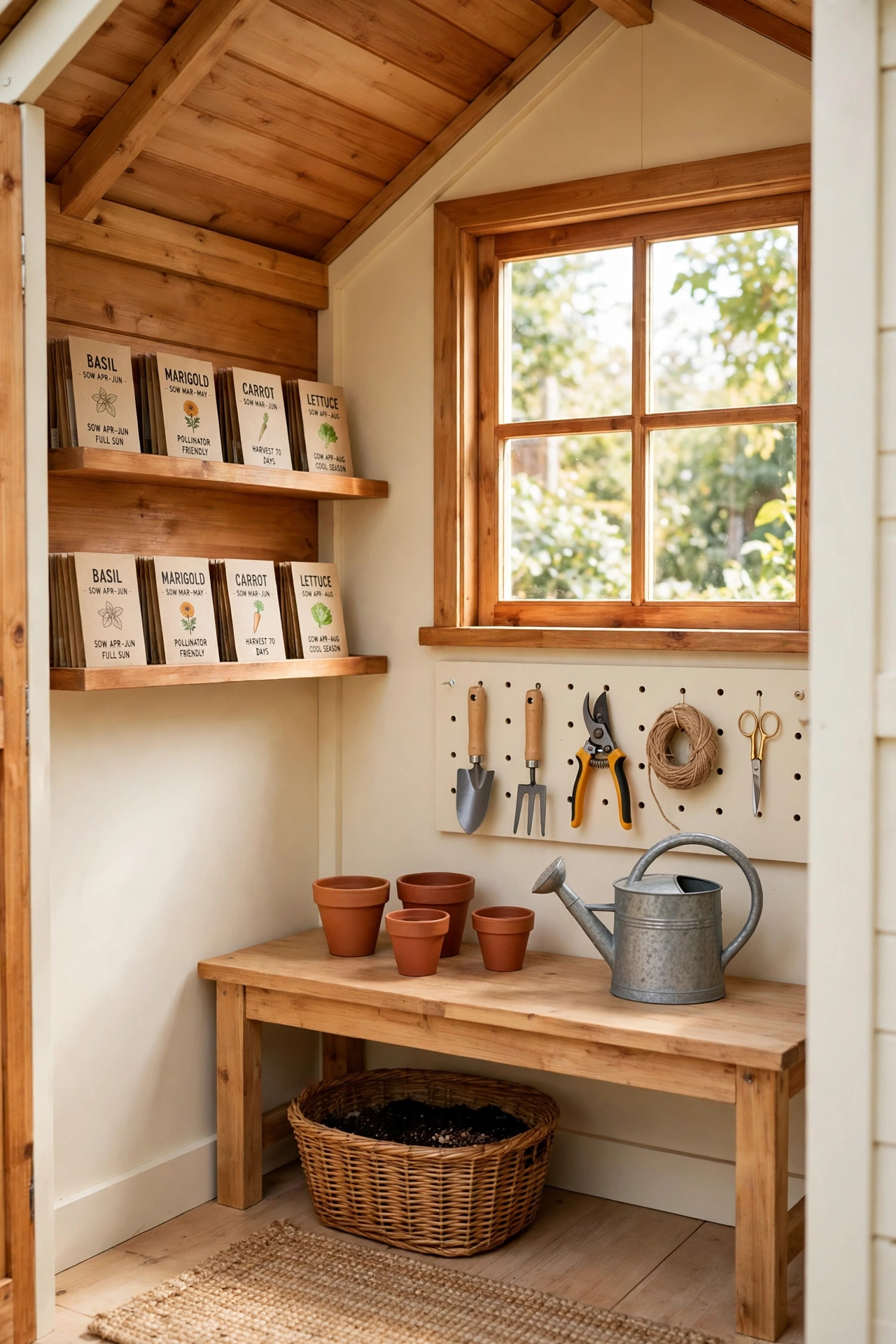
A garden potting shed playhouse blends play with real gardening. Fit a low workbench with small terracotta pots, a watering can, and labeled seed packets on the shelves. A pegboard holds tiny garden tools, and a basket of soil sits ready under the bench.
Children can plant seeds in small pots, water them daily, and watch seedlings grow right beside their playhouse. A potting shed teaches patience and care for living things in a hands-on way. It also connects playtime with the garden in a natural and joyful way.
10. Add a Climbing Wall to the Side
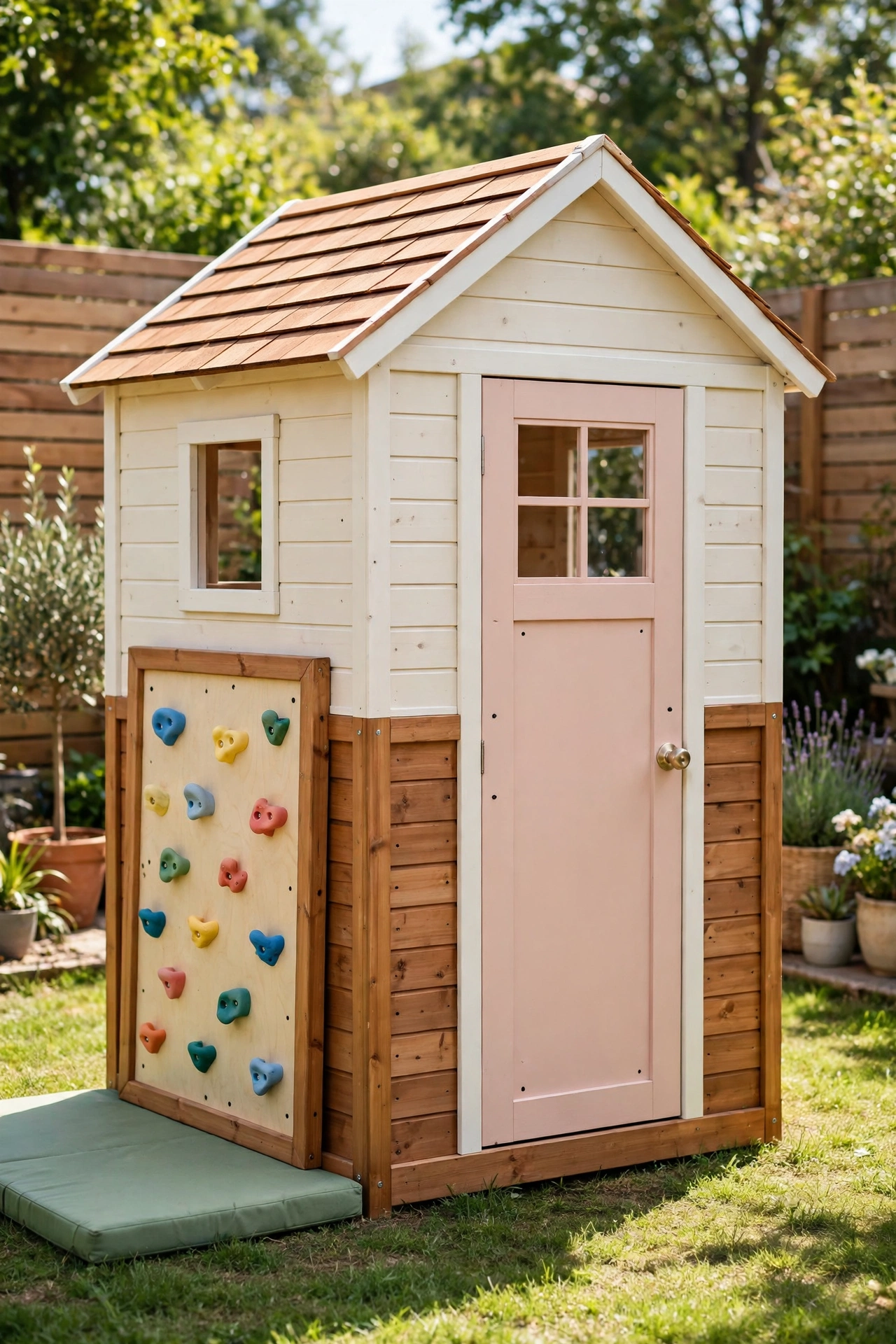
A climbing wall on the side of a playhouse adds active play to a quiet structure. Fix colorful climbing holds in a gentle pattern up one exterior wall, with a soft grass or rubber mat below for safe landings. Keep the wall low so small climbers stay close to the ground.
A climbing wall builds strength and confidence while children play outdoors. It also turns a plain side wall into a fun feature that draws children outside every day. For more climbing ideas that suit a backyard, see these outdoor climbing wall ideas. A playhouse with a climbing wall offers both calm and active play in one small building.
11. Design a Schoolhouse Style Playhouse
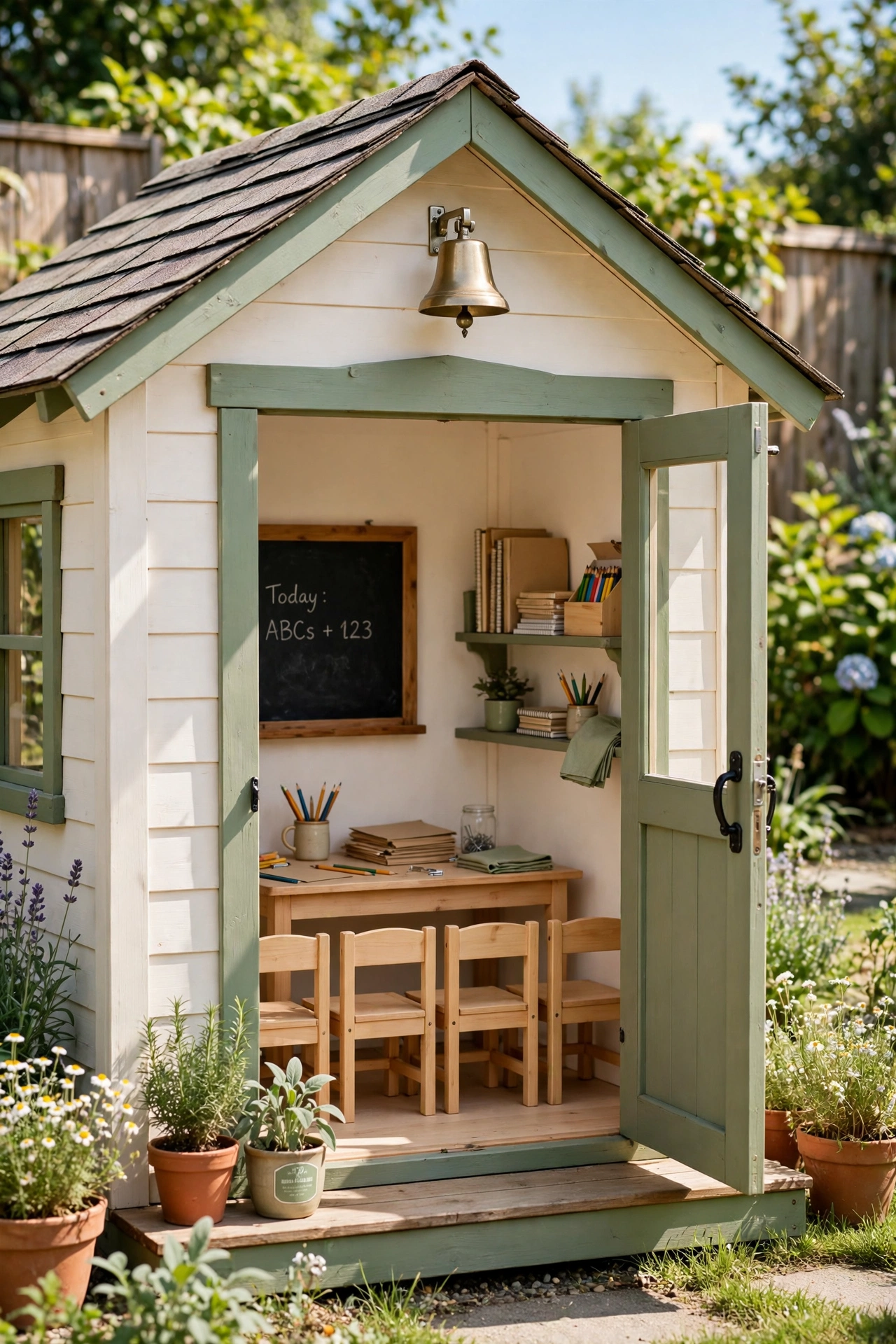
A schoolhouse style playhouse turns learning into a game. Paint the walls warm white, add a small bell above the door, and fit a chalkboard and a low teacher desk inside. A row of tiny chairs faces the board, and a shelf holds workbooks and pencils.
Children can take turns as teacher and students, writing letters and numbers on the board. A schoolhouse playhouse builds early learning habits through role play and fun. It also looks charming in the garden with its classic shape and simple colors.
12. Place the Playhouse Beside a Sand Pit
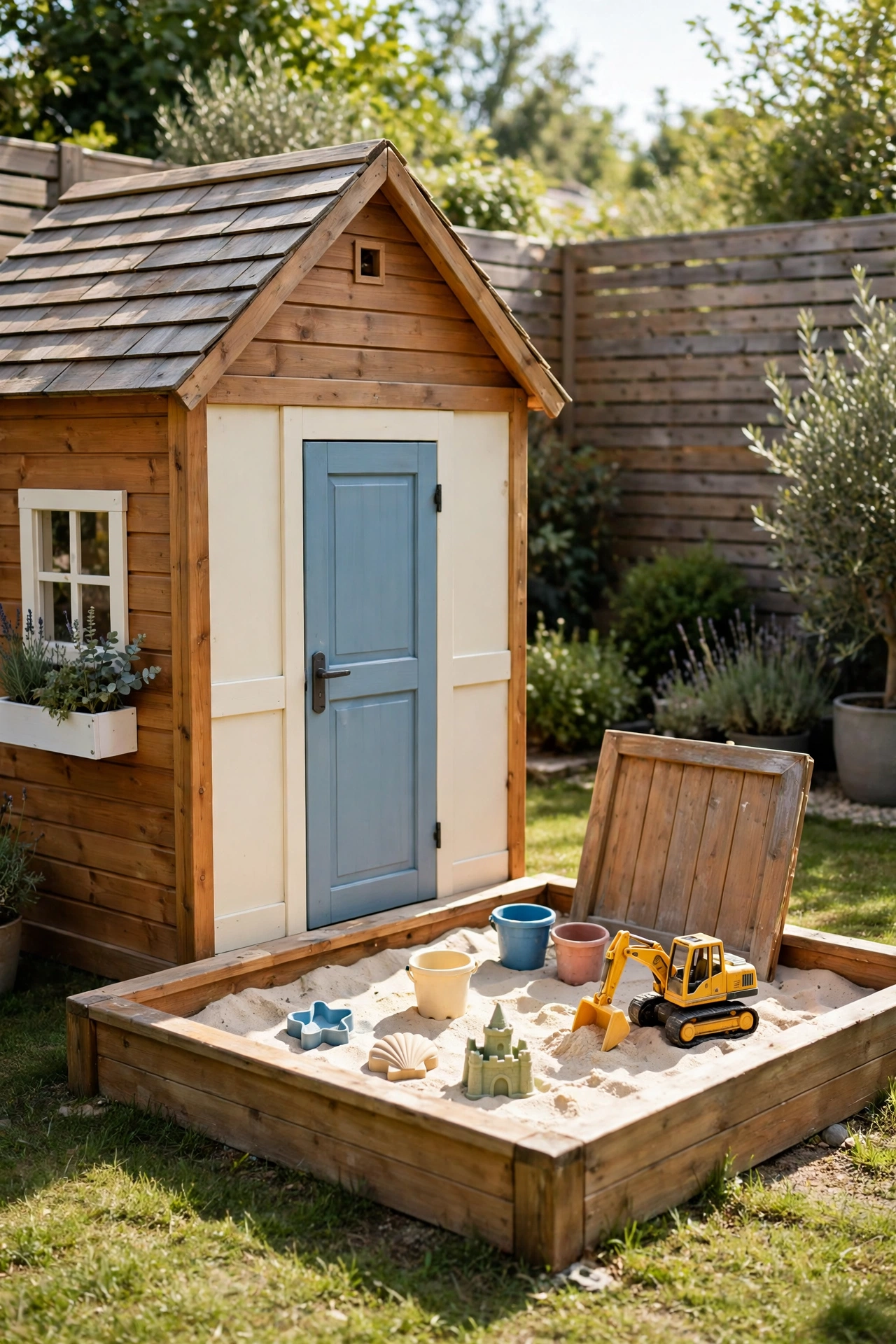
A sand pit beside the playhouse extends creative play into the open yard. Build a low wooden frame filled with clean sand, add small buckets, molds, and a toy digger, and place it a few steps from the playhouse door. A wooden lid keeps the sand clean when play ends.
Children can build sandcastles, dig tunnels, and move sand between the pit and the playhouse kitchen in endless games. A sand pit pairs well with a playhouse because both invite open-ended imagination. For more active backyard play ideas, see these backyard mini golf course ideas. A playhouse and a sand pit together make a complete outdoor play zone.
13. Create a Cozy Tea Party Playhouse
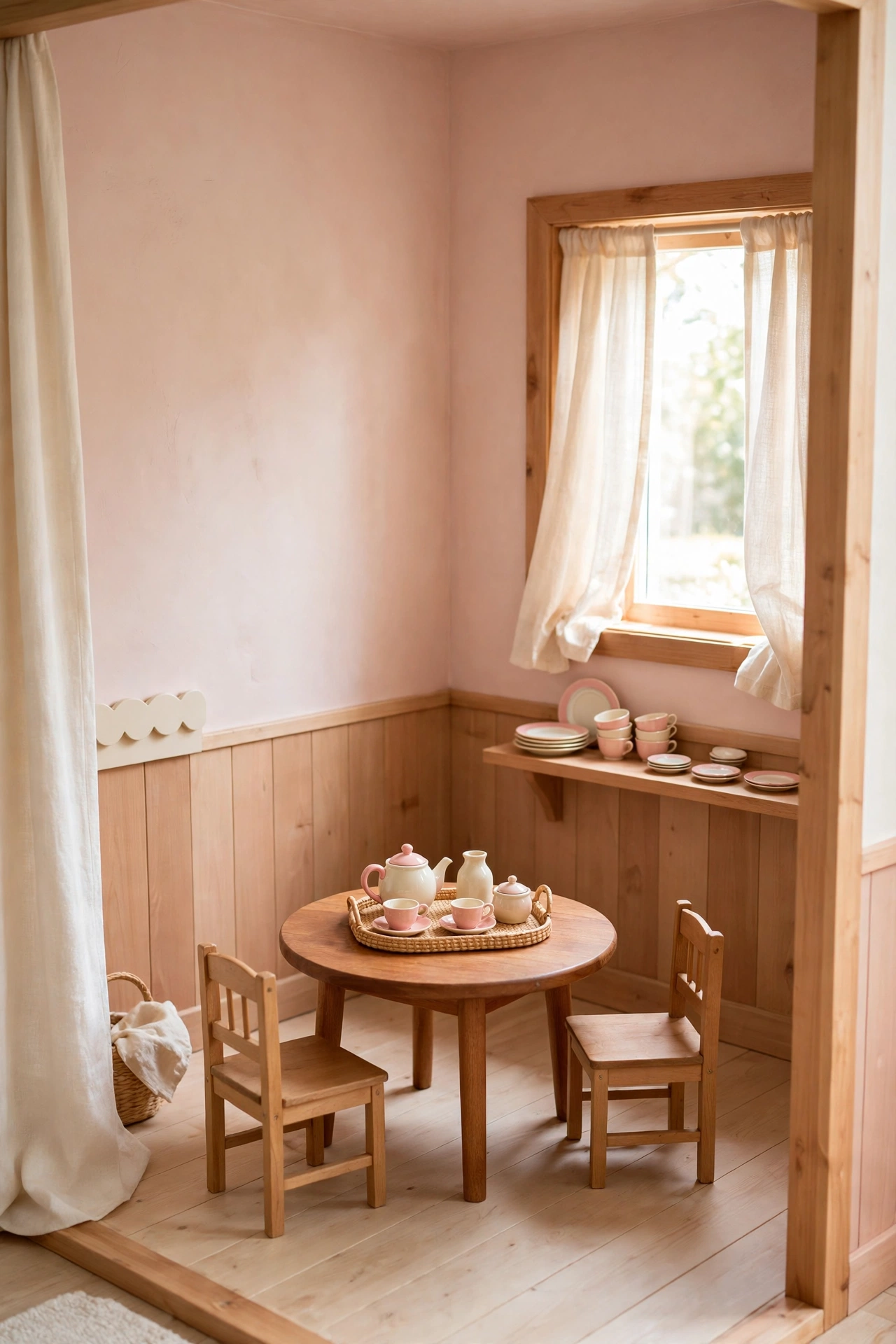
A tea party playhouse is made for gentle pretend play. Set a small round table with two tiny chairs inside, add a miniature tea set on a tray, and hang soft curtains at the windows. A small shelf holds tiny plates and cups ready for guests.
Children can host tea parties for dolls, soft toys, and friends, practicing manners and conversation in a sweet setting. A tea party playhouse feels calm and pretty, with soft colors and delicate details. It is a favorite for quiet afternoons in the garden.
14. Add a Chalkboard Wall for Outdoor Drawing
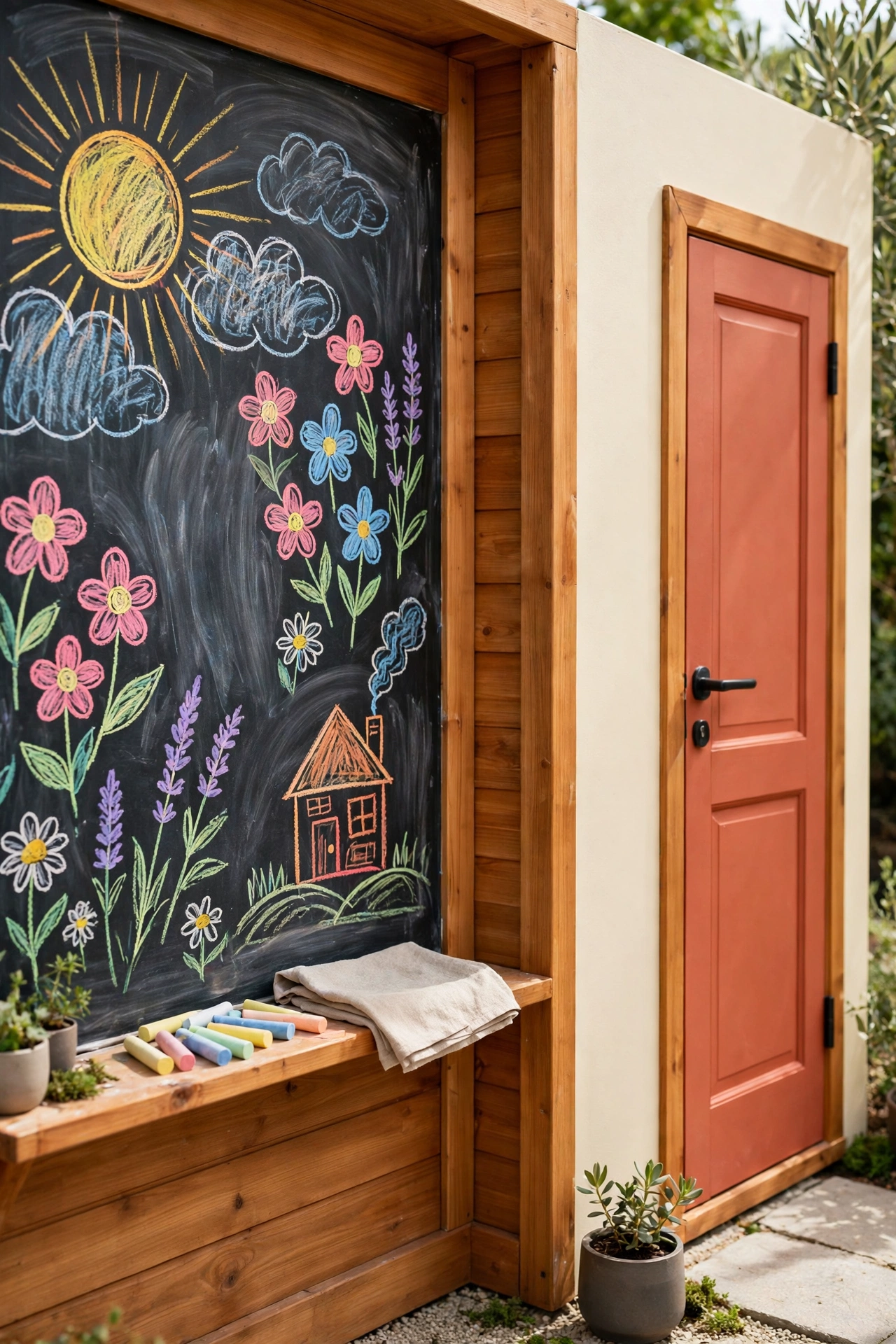
A chalkboard wall on the outside of a playhouse turns the whole building into a canvas. Paint one exterior wall with chalkboard paint, add a small ledge to hold chalk sticks, and keep a cloth nearby for wiping the wall clean. Children can draw, write, and erase again and again.
An outdoor chalkboard encourages big, bold drawings that would never fit on a sheet of paper. It also lets children decorate their playhouse with new art every day. A chalkboard wall is a simple addition that brings hours of creative fun.
15. Build a Castle Tower Playhouse
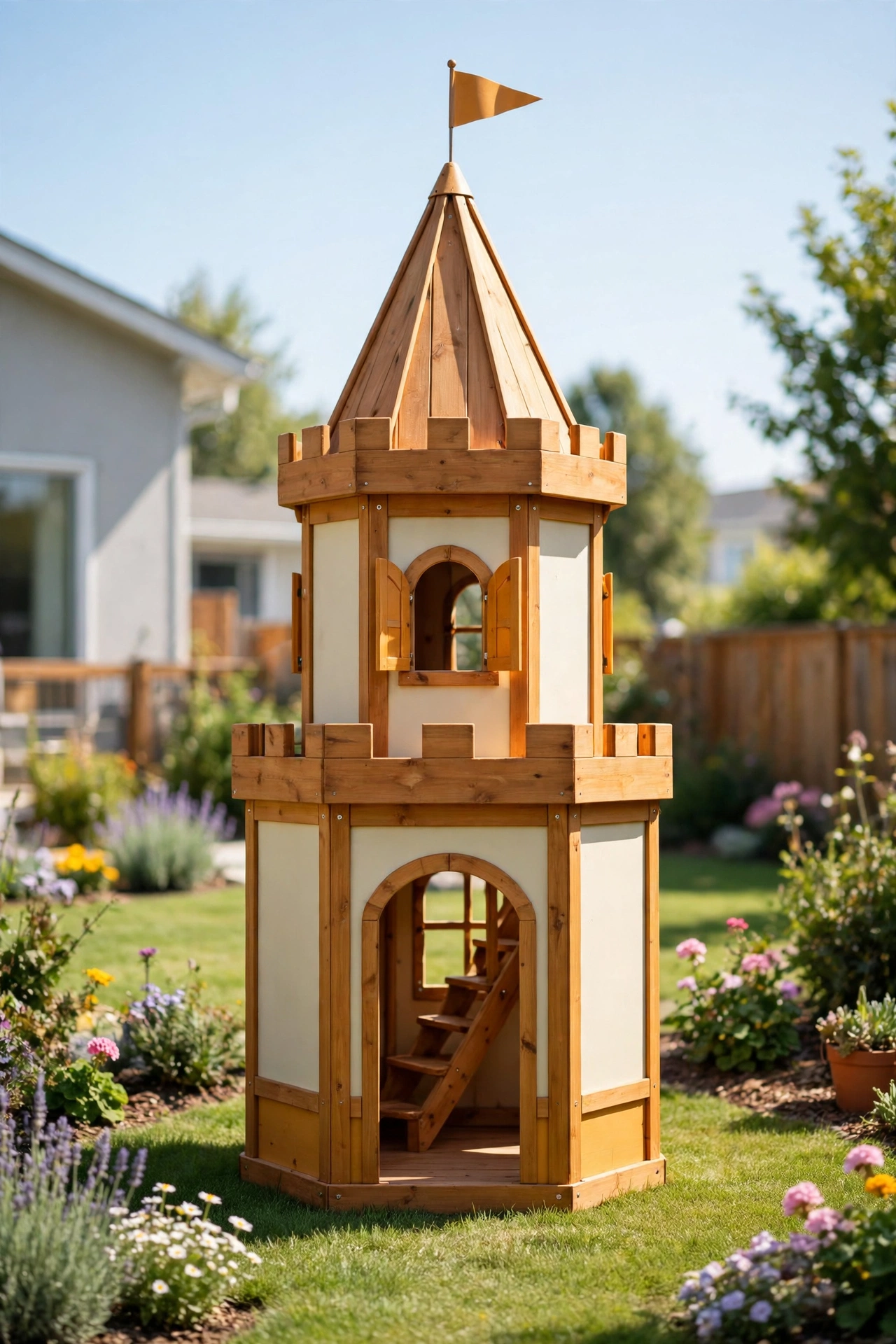
A castle tower playhouse brings fairy tales into the backyard. Build a tall wooden tower with a pointed roof, small arched windows, and a flag on top. A small staircase inside leads to a lookout platform where children can survey their kingdom.
A castle tower inspires stories of knights, dragons, and royal adventures. It also adds height and drama to the garden without taking up much ground space. For more active play structures that pair with a castle theme, see these backyard obstacle course ideas. A tower playhouse makes every backyard feel like a storybook setting.
16. Add a Quiet Nap Nook Inside
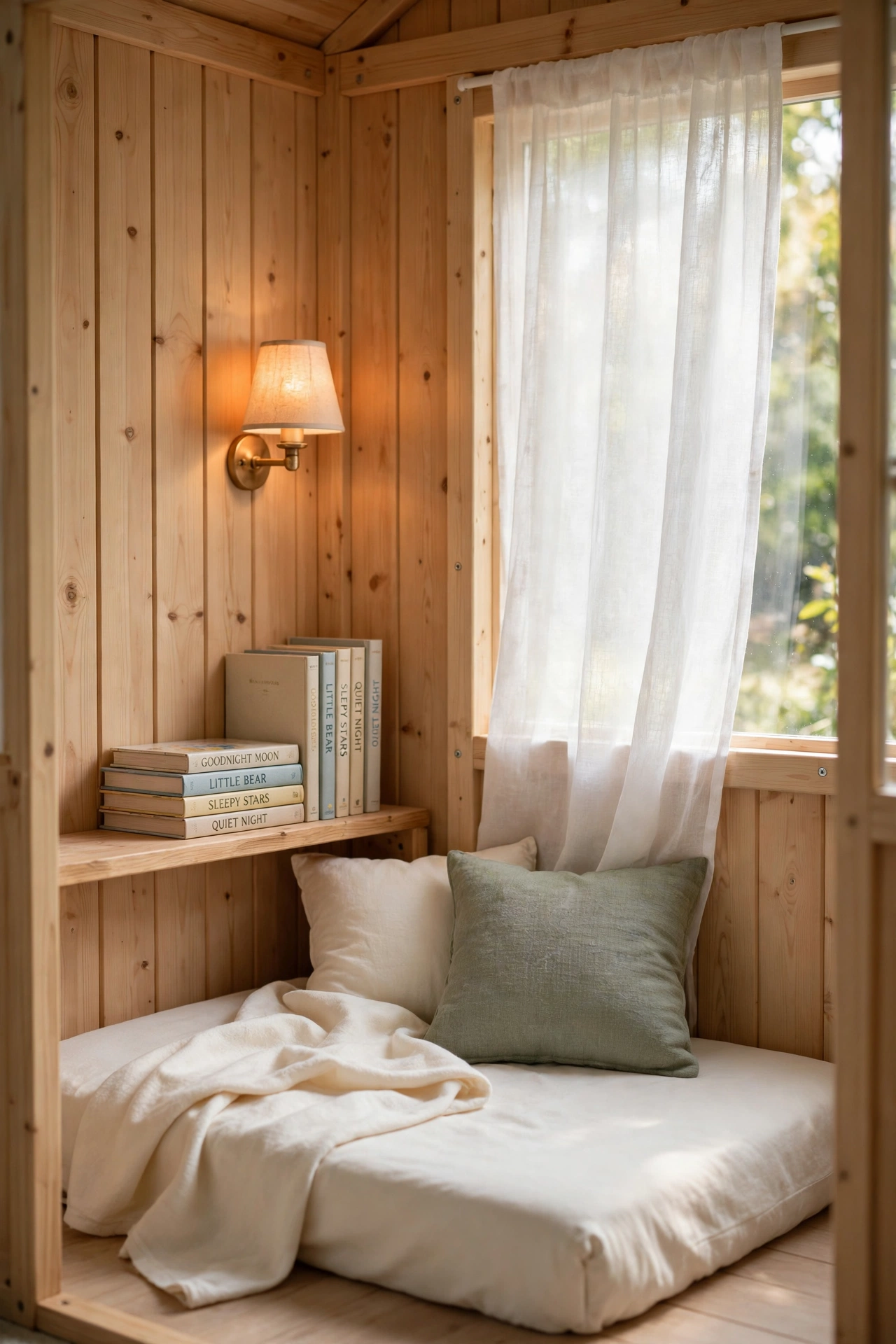
A quiet nap nook gives a playhouse a restful corner for tired little players. Place a soft floor mattress with a clean blanket and a small pillow in one corner, add a low shelf with a few bedtime storybooks, and hang a sheer curtain to soften the light. A small wall lamp adds a warm glow.
A nap nook helps children rest outdoors on warm days without going back inside. It also gives the playhouse a calm zone that balances all the active play. A quiet corner makes the playhouse useful from morning energy to afternoon rest.
Conclusion
A backyard playhouse is much more than a small wooden building. It is a cottage, a kitchen, a stage, a shop, and a quiet reading corner, all in one little space. Each design here gives children a different way to imagine, create, and play outdoors.
Pick one design that fits your yard and your budget, and start with a simple structure you can add to over time. A play kitchen today can become a stage tomorrow with just a curtain and a basket of puppets. For calm evenings after a busy day of play, these nightly reset routine ideas will help you tidy the house and the playhouse in just a few minutes. Your backyard playhouse will bring joy to your children for years to come.
Frequently Asked Questions About Backyard Playhouse Design Ideas for Creative Play
What size should a backyard playhouse be?
A playhouse around 1.2 meters wide and 1.5 meters deep suits most backyards and gives children enough room to play inside. Larger yards can fit a playhouse up to 2 meters wide with a porch or a loft. Keep the height low enough for an adult to reach inside for cleaning.
What is the best material for a playhouse?
Natural wood is the best material for a playhouse because it is sturdy, easy to repair, and looks beautiful in a garden. Choose treated timber that resists rain and insects, and paint it with outdoor paint for extra protection. Plastic playhouses are lighter and cheaper, but wood lasts longer and suits the garden better.
How do I keep a wooden playhouse safe for children?
Check the structure every season for loose screws, splinters, and wobbly steps. Sand any rough edges and tighten all fixings before spring play begins. Keep the playhouse on level ground, anchor it against strong wind, and make sure the roof has no leaks.
Can I build a playhouse without carpentry skills?
Yes, many playhouse kits come with pre-cut panels and clear instructions that need only basic tools. A simple kit can be built in a weekend with a drill and a helper. If you want a custom design, a local carpenter can build one from your drawings.
How do I keep a playhouse tidy?
Give every toy a home inside the playhouse, such as labeled baskets for dishes, books, and art supplies. A quick five minute tidy at the end of play keeps the space welcoming. A small broom hung by the door lets children help with sweeping the floor.

Hi, I’m Emily! I turn messy corners into cozy, organized spots. DreamNestDecor is where I share simple, practical home ideas — decor, organization, and small-space solutions that work in real life, not just in photos. Every idea here is carefully researched before it’s shared.