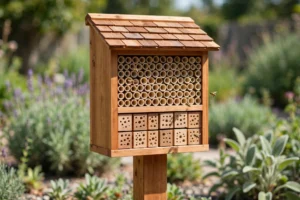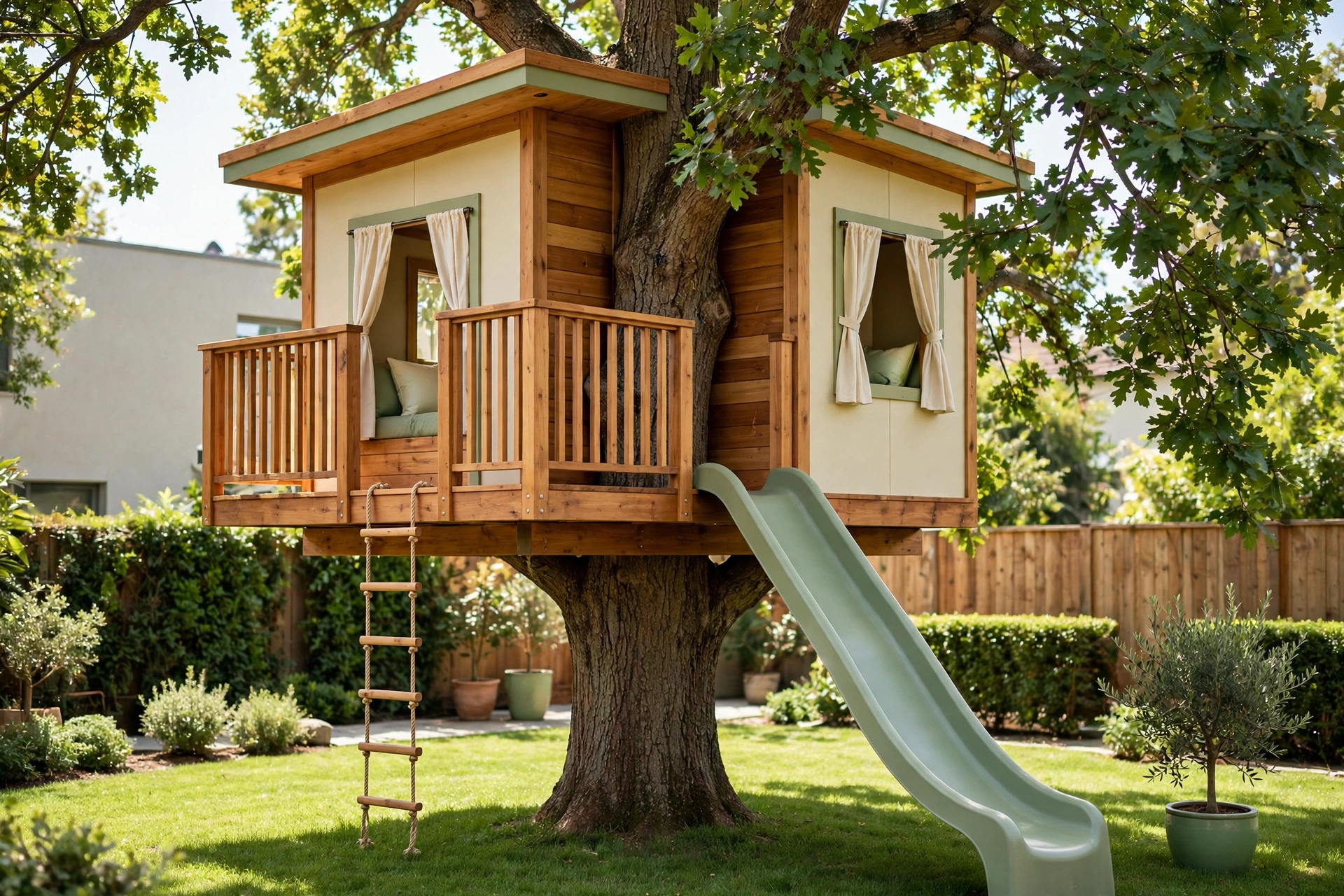
Picture this: a sturdy wooden treehouse sits high in the branches of a backyard tree, with a rope ladder hanging down, a small window glowing warm, and a slide curving down to the soft grass below. It is a place where imagination grows wild, where a simple platform becomes a castle, a pirate ship, or a quiet reading hideout. A treehouse turns an ordinary backyard into a world of adventure.
You do not need a huge tree or a big budget to build one. With safe materials, a solid plan, and a few creative touches, a backyard treehouse can become the favorite spot in the whole home. These 27 outdoor treehouse design ideas for kids will help you plan a safe platform, a fun entrance, and a cozy interior that children will love for years.
1. Build a Classic Wooden Platform Treehouse
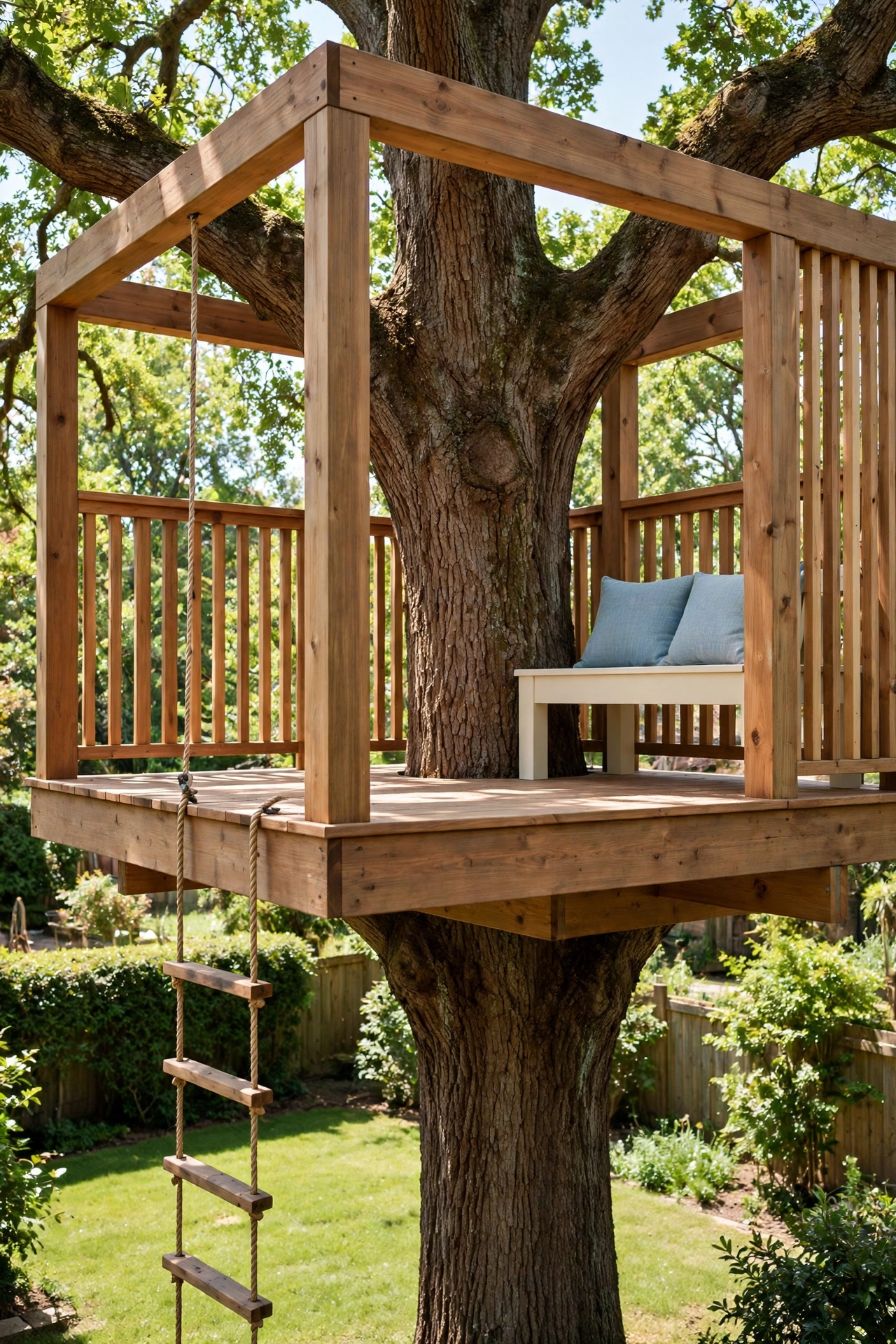
A classic wooden platform is the heart of every great treehouse. Start with a strong frame bolted to the trunk with special treehouse bolts that allow the tree to keep growing. Use thick treated lumber for the joists and deck boards so the platform stays level and safe for many years.
Keep the platform close to the ground for younger children, around five or six feet high, so a fall stays low and a ladder stays short. Add a solid railing around every open edge and a wide gate at the ladder opening. A simple platform gives you a safe base that you can expand with new features later.
2. Add a Rope Ladder for Easy Climbing
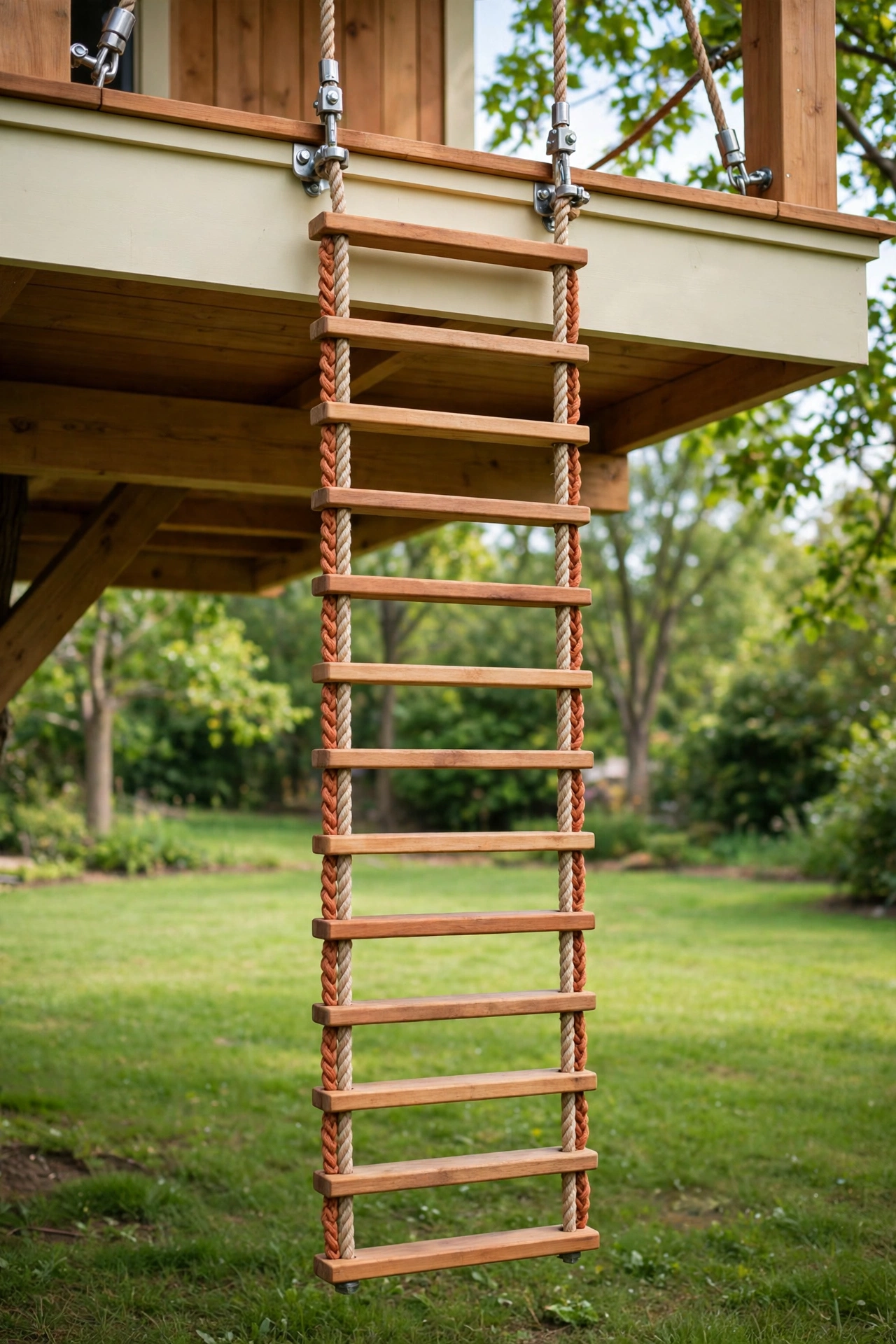
A rope ladder adds adventure to every climb into the treehouse. Tie thick rope rungs between two sturdy side ropes and anchor the top to the platform frame with strong bolts. Space the rungs about twelve inches apart so small feet can climb with confidence.
Choose rope that resists weather and stays firm in rain and sun. A rope ladder swings a little as you climb, which teaches balance and builds courage. For extra safety, add a second fixed ladder nearby for younger children or for carrying toys and books up to the platform.
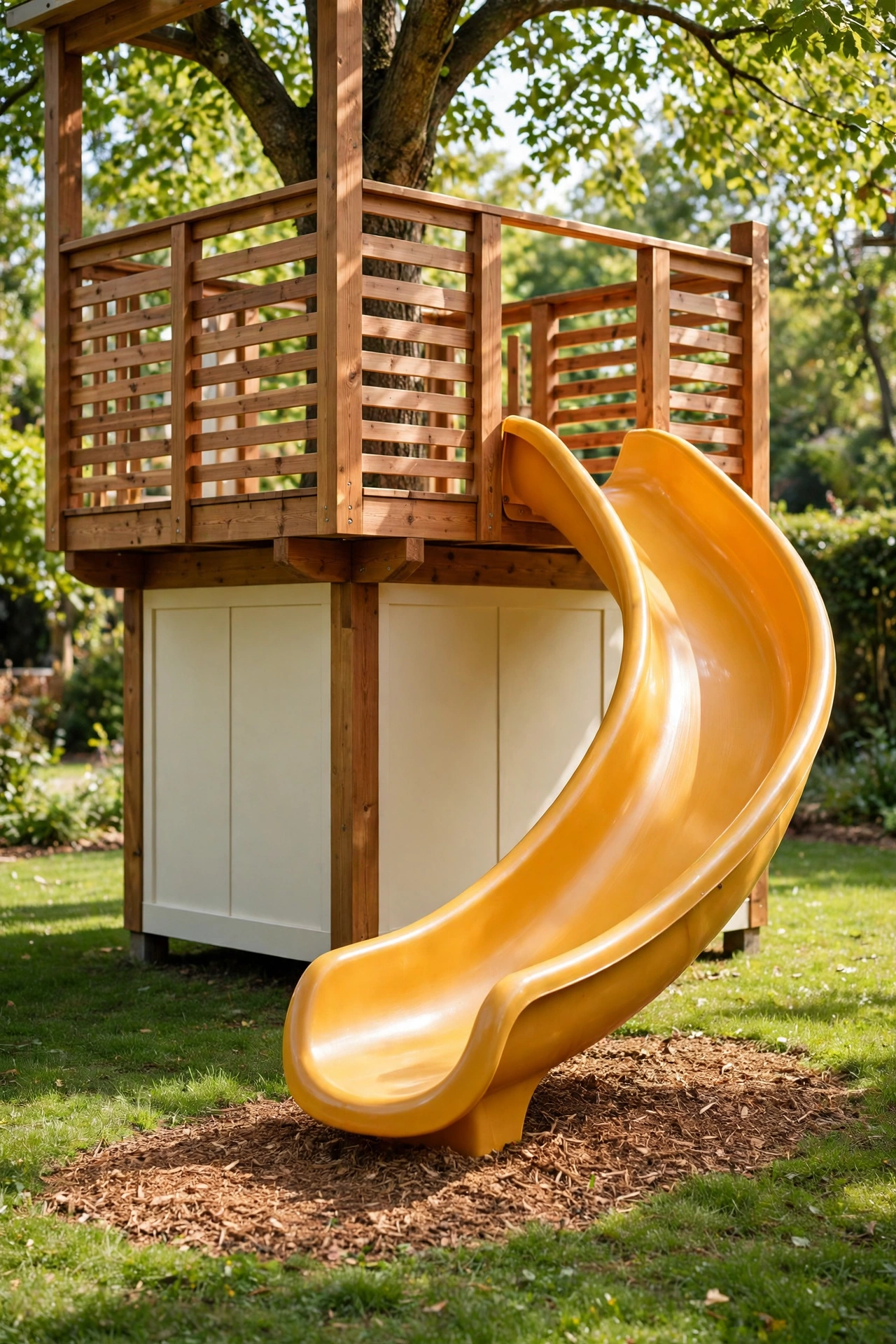
3. Install a Curved Slide for Quick Exits
A curved slide turns the exit from the treehouse into the best part of the visit. Mount a sturdy plastic or metal slide to the edge of the platform and anchor the bottom firmly into the ground. A gentle curve slows the ride and makes the slide safe for smaller children.
Place soft mulch or rubber mats under the slide landing zone to cushion every landing. Choose a slide in a bright color that matches the treehouse trim, such as sage green or soft blue. Children will climb up the ladder again and again just to ride the slide one more time.
4. Create a Cozy Reading Nook Inside
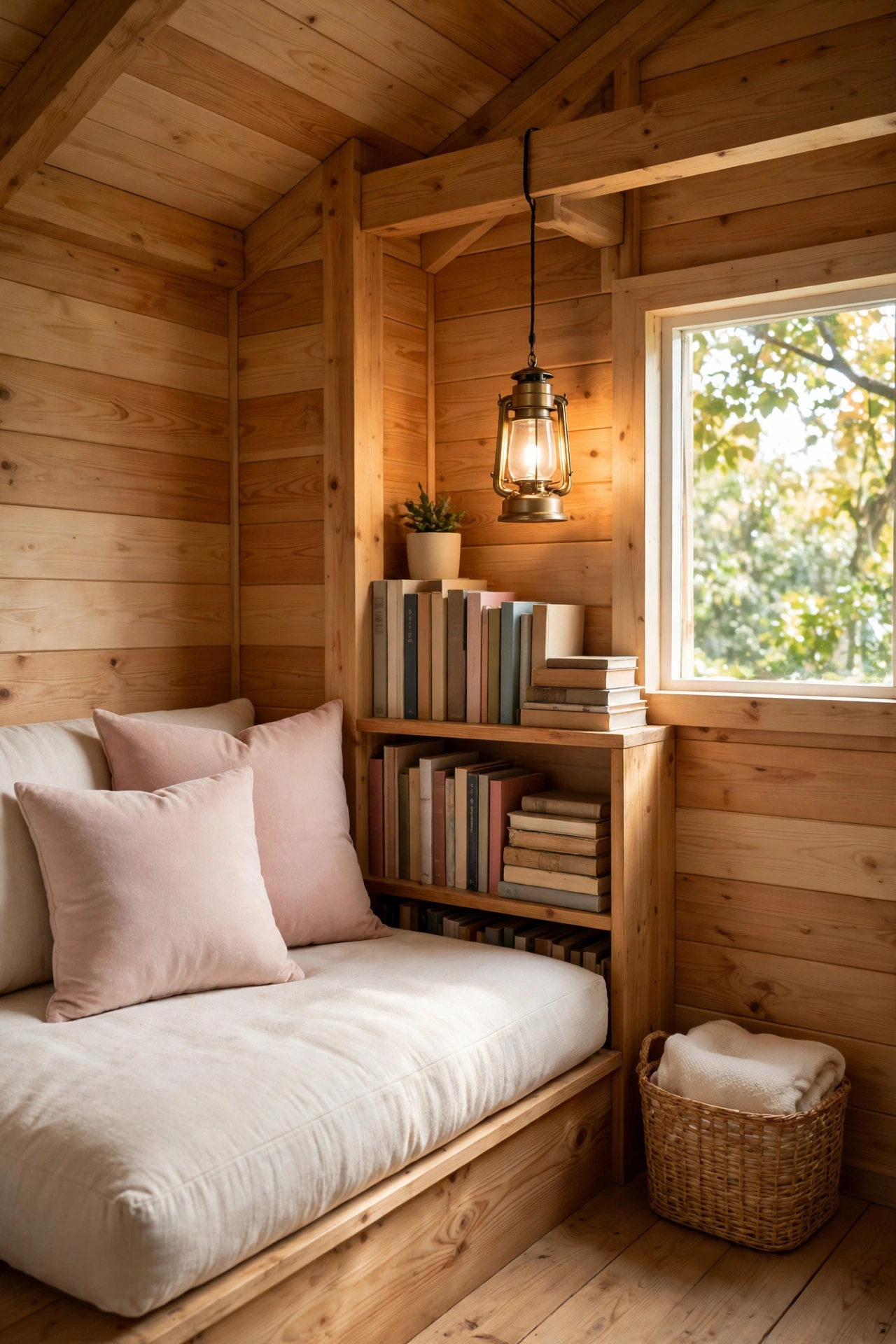
A reading nook turns the treehouse interior into a quiet escape. Place a thick cushion and a few soft pillows in one corner, add a small shelf for books, and hang a battery lantern for soft light. The nook becomes a place where stories feel more magical than they do indoors.
Keep the nook dry with a solid roof and a window that closes against rain. Choose washable cushion covers so muddy shoes and sticky hands cause no worry. A reading nook gives the treehouse a calm side that balances all the climbing and sliding outside.
5. Add a Rope Bridge to a Second Platform
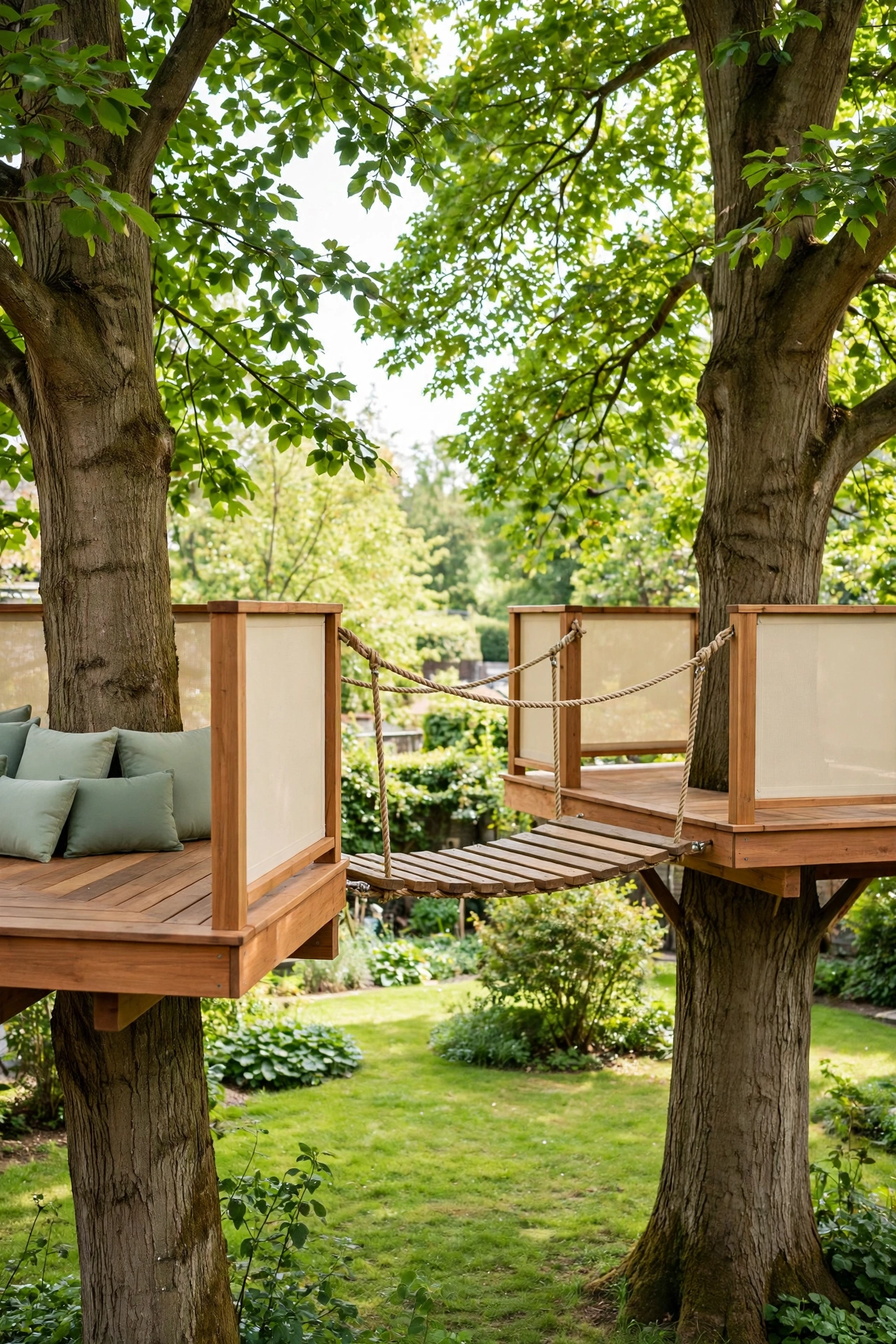
A rope bridge connects the main treehouse to a second platform in a nearby tree. Build two smaller platforms first, then string thick ropes between them with wooden planks as the walking surface. Hand ropes on both sides keep every crossing steady and safe.
Test the bridge with adult weight before children use it, and check the knots and bolts every spring. A rope bridge makes the treehouse feel like a whole village in the trees. Children love the gentle sway as they cross from one platform to the next.
6. Build a Small Porch with a Wooden Railing
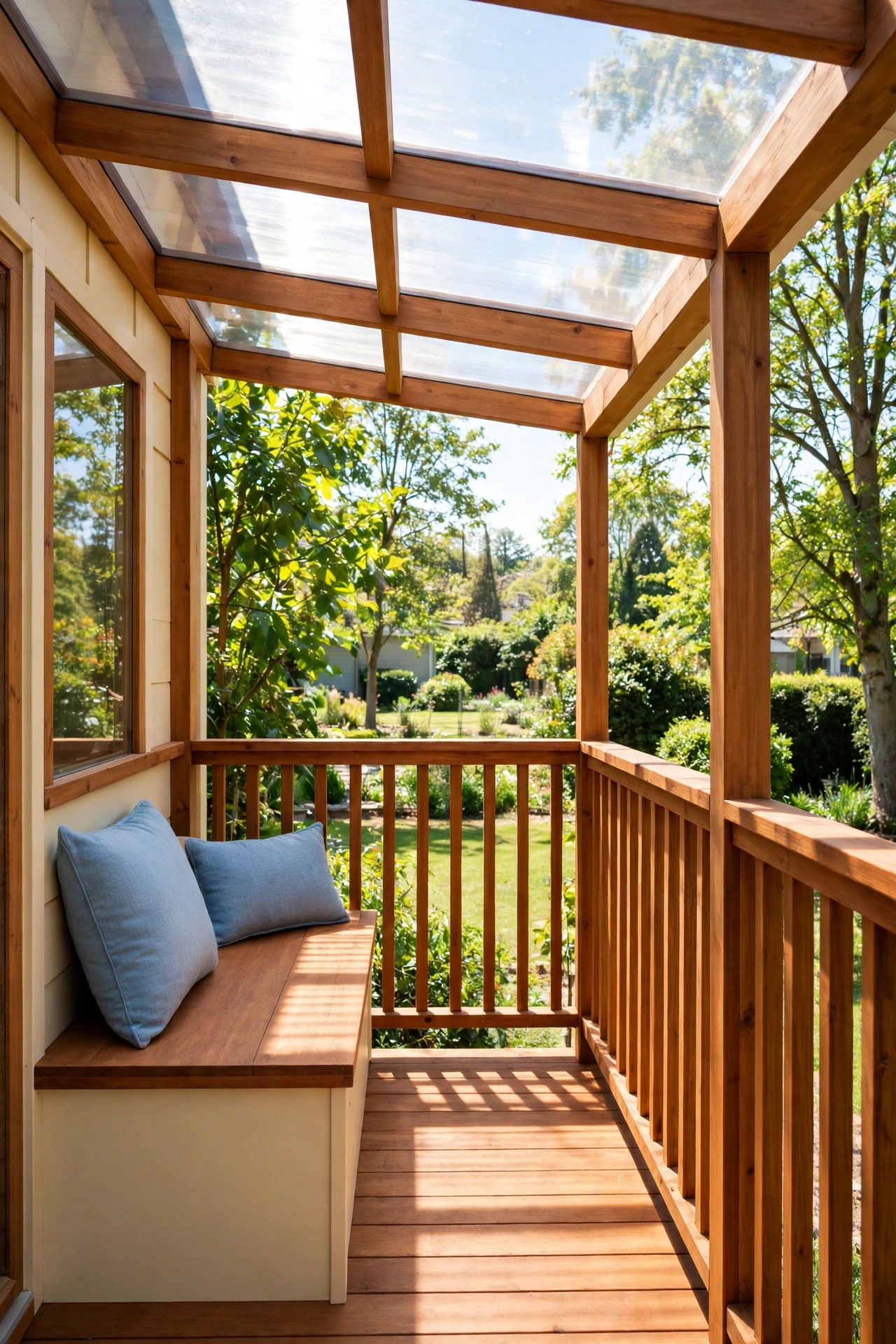
A small porch extends the treehouse platform and gives children a place to sit in the open air. Add a wooden railing around the porch edge and a bench along one side for snacks and games. The porch becomes the front yard of the treehouse.
A porch roof made from clear panels lets light through while keeping rain off the deck. For more ideas on shaded outdoor structures that pair well with a treehouse, see these backyard pavilion ideas. A porch also gives adults a comfortable spot to sit and watch playtime from below.
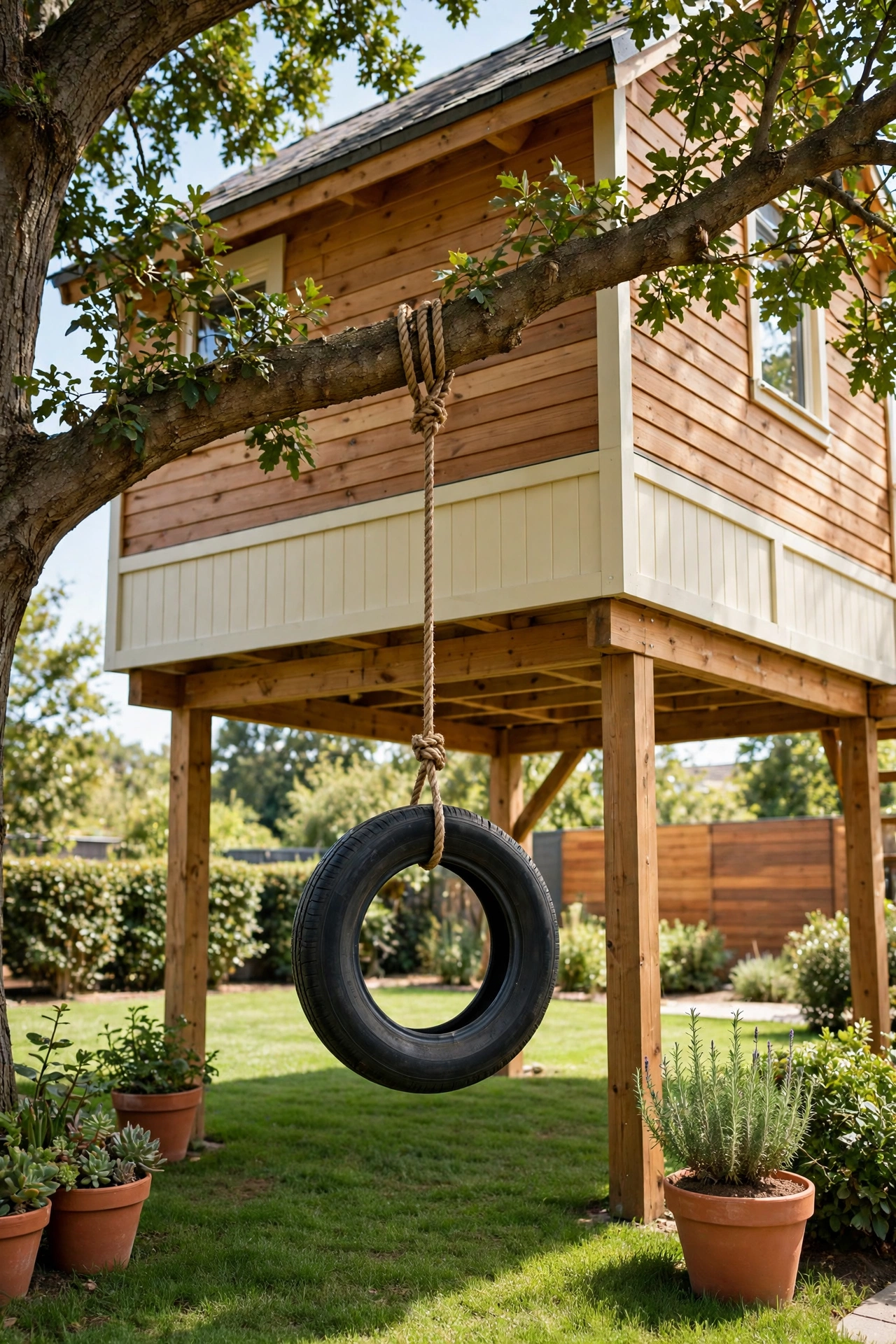
7. Hang a Tire Swing from a Strong Branch
A tire swing hung from a strong branch adds classic backyard fun below the treehouse. Choose a thick branch at least eight inches wide and hang the tire with heavy chain or thick rope. The swing becomes a favorite stop on the way up to the platform.
Drill small drainage holes in the bottom of the tire so rainwater never pools inside. Hang the swing high enough that feet clear the ground but low enough for children to climb on alone. A tire swing costs very little and brings hours of joy to any backyard.
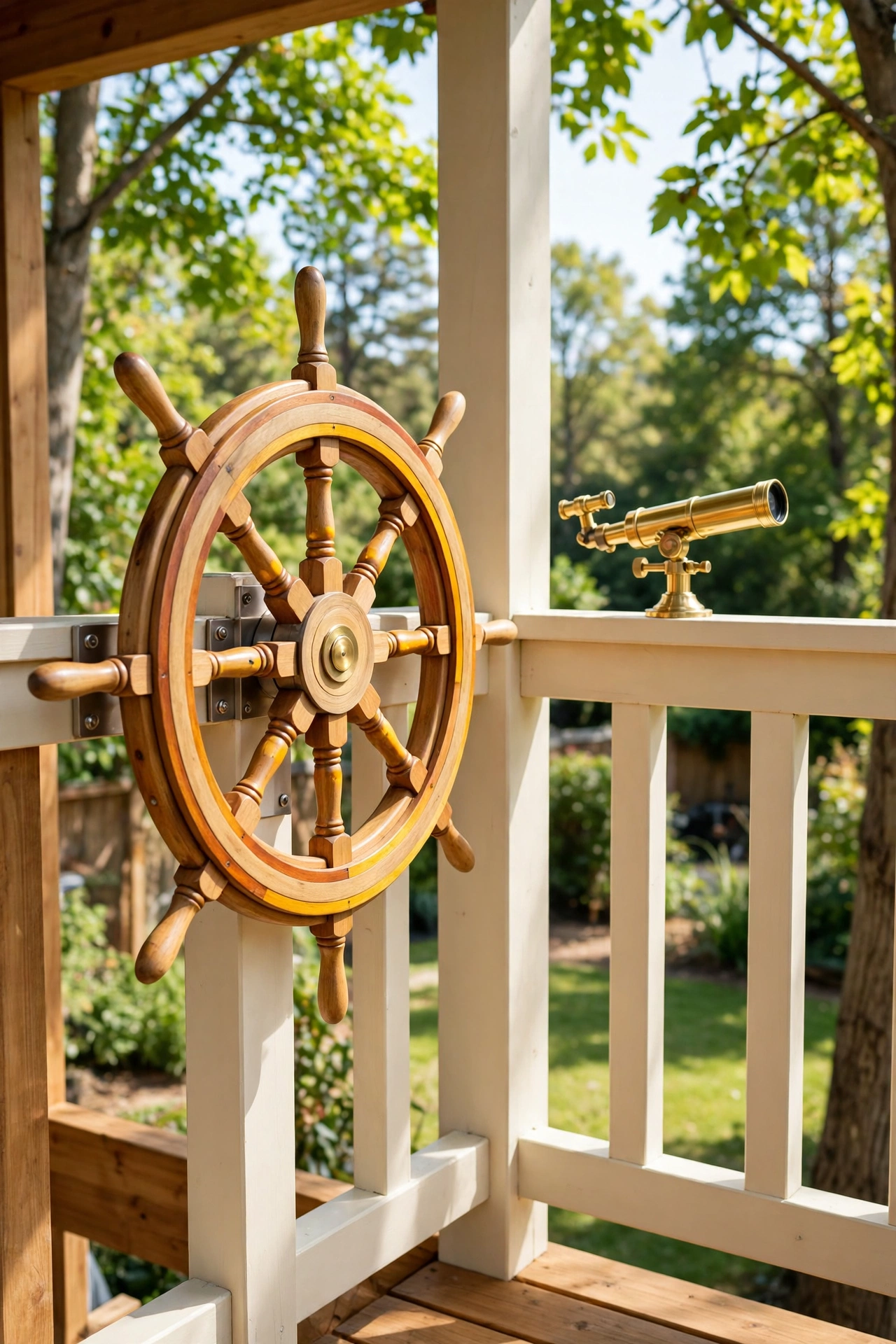
8. Add a Ship Wheel and a Telescope
A wooden ship wheel and a small telescope turn the treehouse into a pirate ship or a lookout post. Mount the wheel on the railing where children can spin it, and fix the telescope to a short post near the best view. These two simple props spark hours of pretend play.
Choose a telescope made for outdoor use so rain and sun cause no damage. Paint the ship wheel in a bright accent color, such as terracotta or amber, to make it stand out against the wood. A few props can transform a plain platform into a world of adventure.
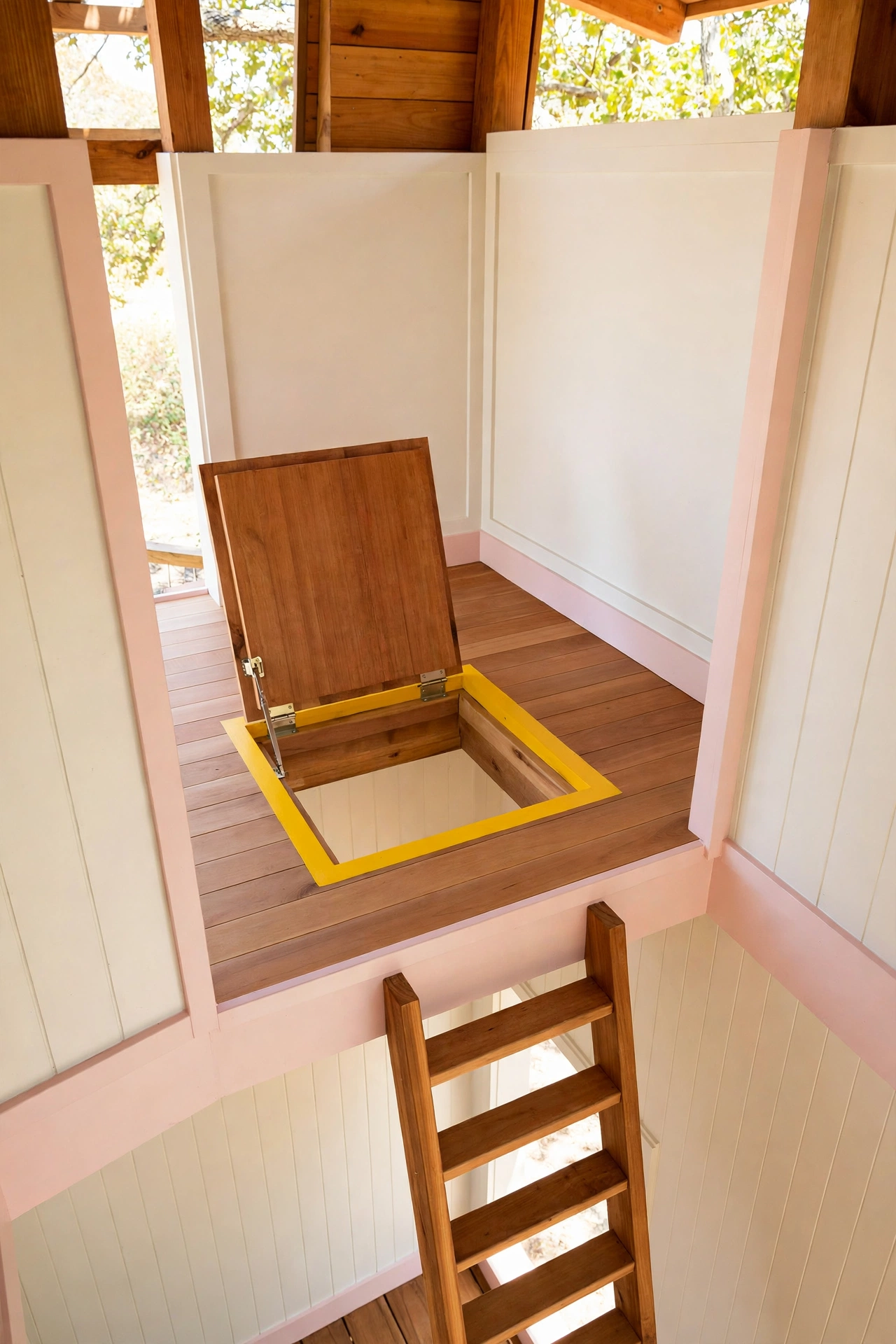
9. Create a Secret Trapdoor Entrance
A trapdoor in the platform floor creates a secret entrance that children love. Cut a square opening in the deck, hinge a wooden panel to one side, and add a handle that is easy to grip. A ladder from below leads straight up through the trapdoor into the treehouse.
Add a safety latch that holds the trapdoor open while children climb through, so it never closes on small fingers. Mark the edges of the opening with bright paint so the hole stays visible even in dim light. A trapdoor makes every entrance feel like a secret mission.
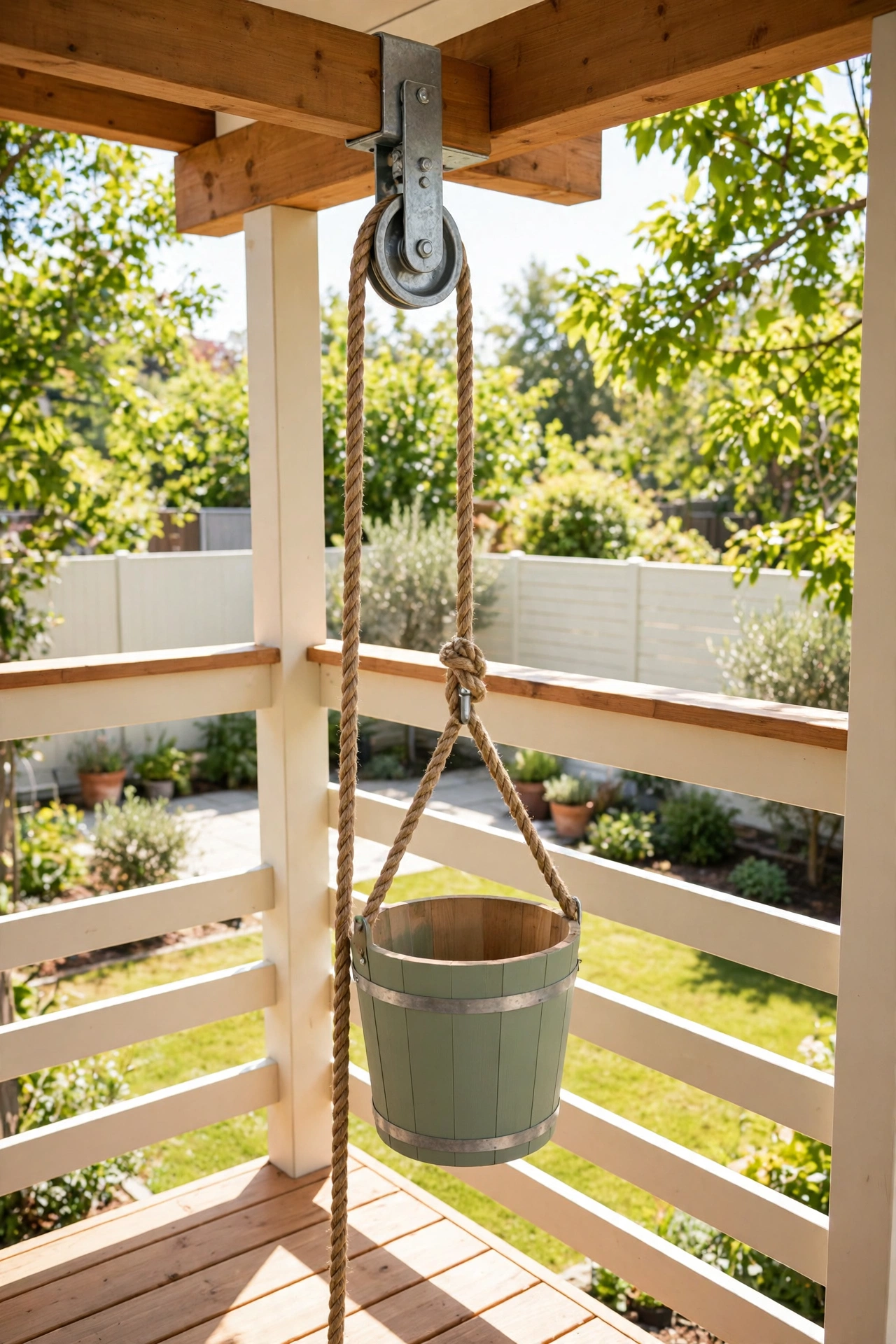
10. Install a Pulley Bucket for Snacks and Toys
A pulley bucket lets children haul snacks, toys, and books up to the treehouse without climbing with full hands. Mount a small pulley on a beam above the platform, thread a strong rope through it, and tie a sturdy bucket to one end. Pull the rope and the bucket rises smoothly to the deck.
Choose a bucket with a wide base so it stays stable when it lands on the platform. Label the bucket with a painted name, such as SUPPLY BUCKET, in large clear letters. A pulley system teaches simple machines while it solves a real problem.
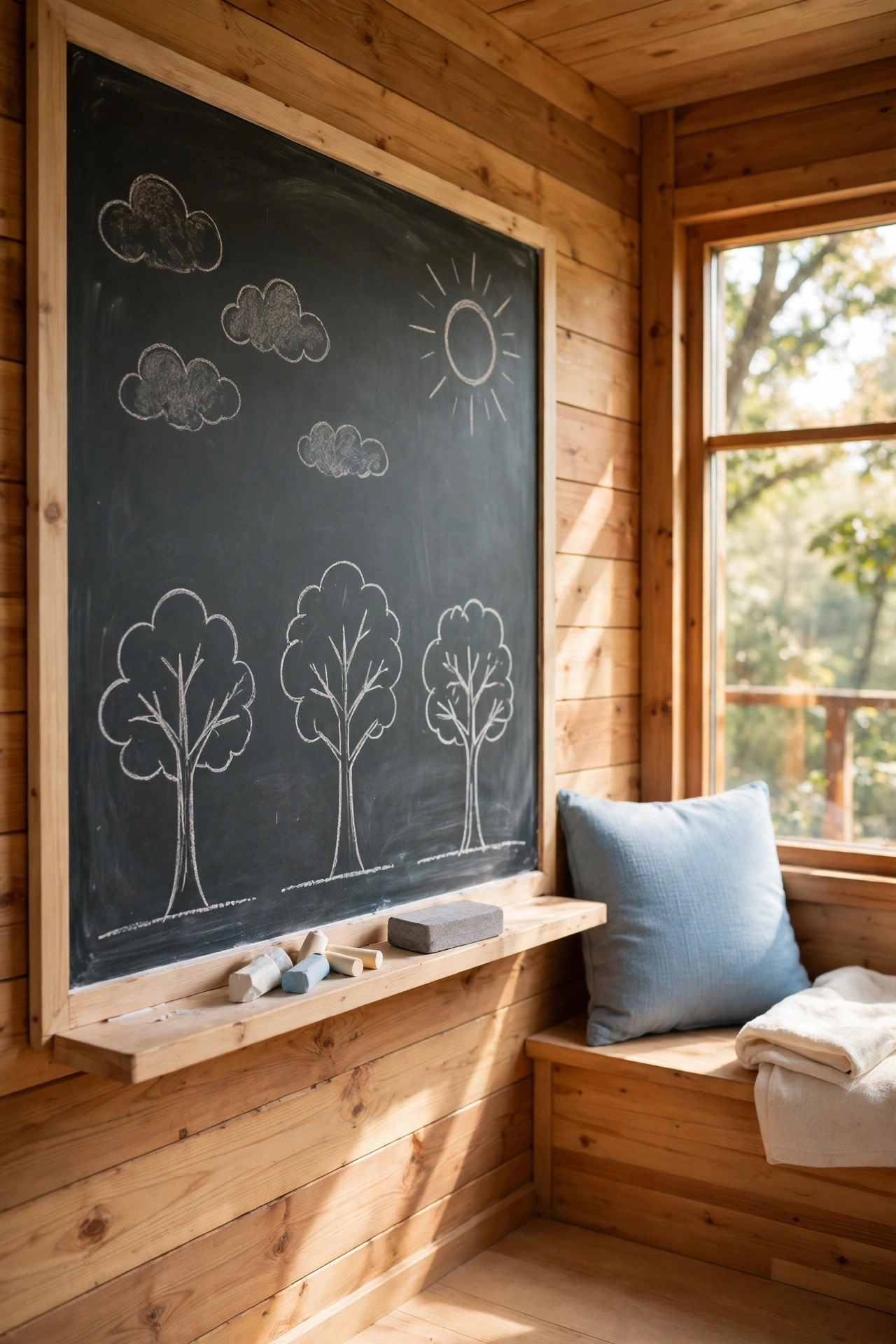
11. Add a Chalkboard Wall for Drawing
A chalkboard wall inside the treehouse gives children a place to draw, write, and plan adventures. Paint one interior wall with chalkboard paint and store chalk in a small wooden box nearby. The wall becomes a canvas that changes every single day.
Frame the chalkboard area with a thin wooden trim so the dark paint looks finished and neat. Add a small ledge at the bottom to hold chalk and an eraser. A chalkboard wall keeps the treehouse creative even on quiet rainy afternoons.
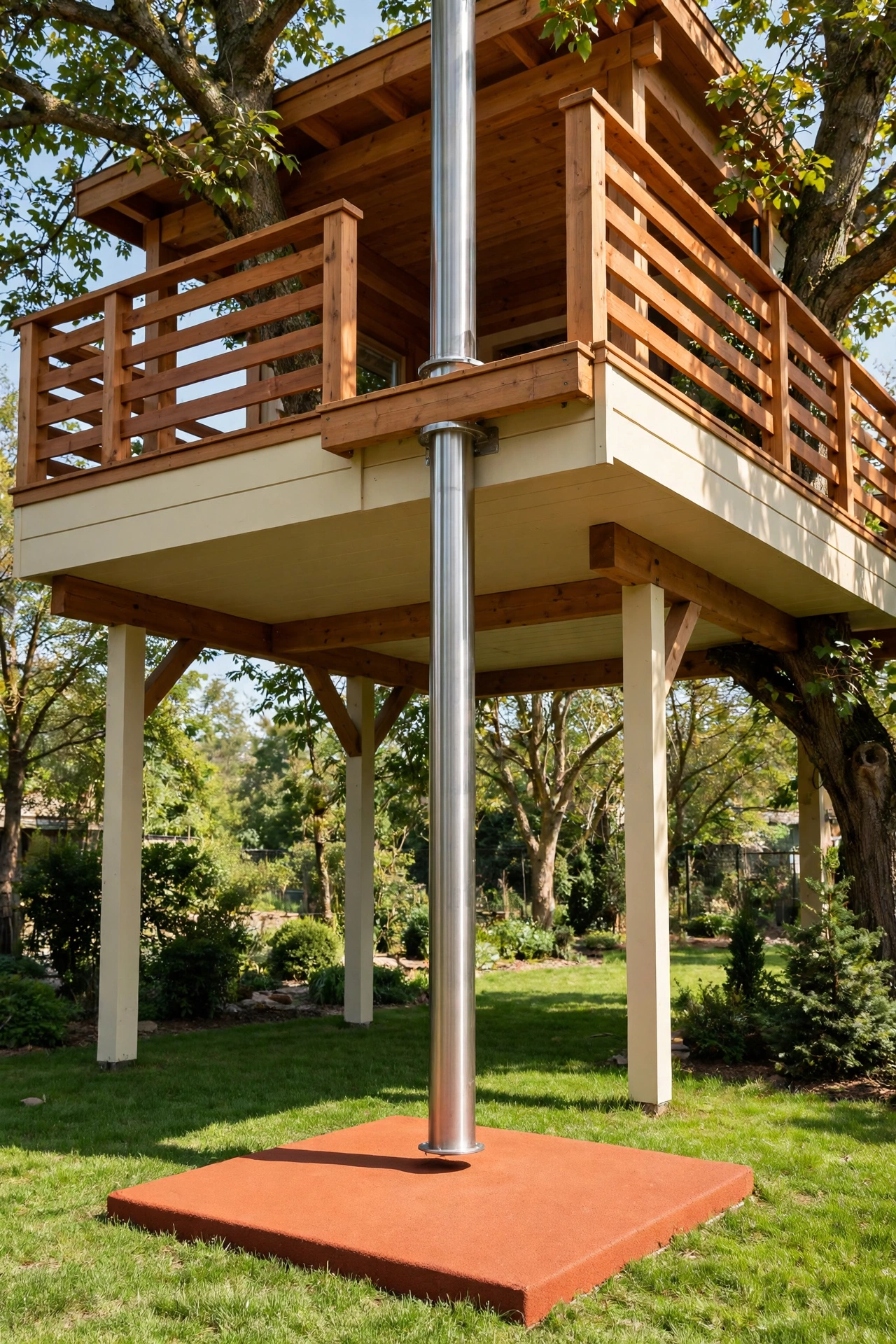
12. Build a Firefighter Pole for Fast Exits
A firefighter pole gives children a fast and thrilling way down from the platform. Mount a smooth metal pole from the deck to the ground and anchor the base in concrete. Children grip the pole with hands and legs and slide down in seconds.
Place a thick rubber mat at the base of the pole to cushion every landing. Teach children to wait until the landing zone is clear before they slide. A fire pole adds excitement to the treehouse while it keeps the exit quick and simple.
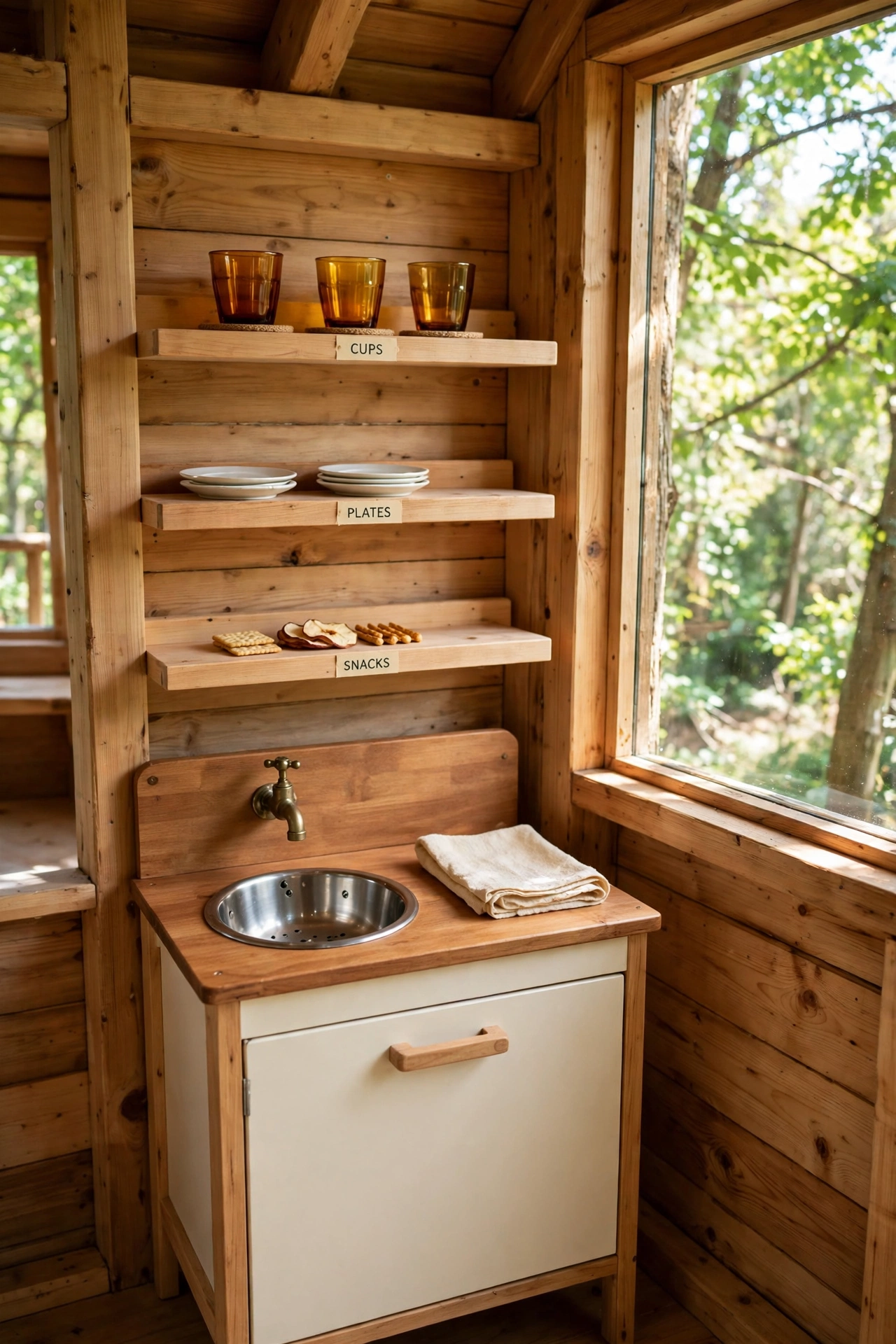
13. Create a Mini Kitchen Play Corner
A mini kitchen play corner turns part of the treehouse into a pretend cafe or a cooking school. Build a small counter from scrap wood, add a toy sink made from a metal bowl, and hang tiny shelves for cups and plates. Children will serve imaginary meals all afternoon.
Use weatherproof wood and outdoor paint so the little kitchen survives rain and sun. Label the shelves with printed words, such as CUPS, PLATES, and SNACKS, to help young readers learn while they play. A play kitchen makes the treehouse feel like a real home in the trees.
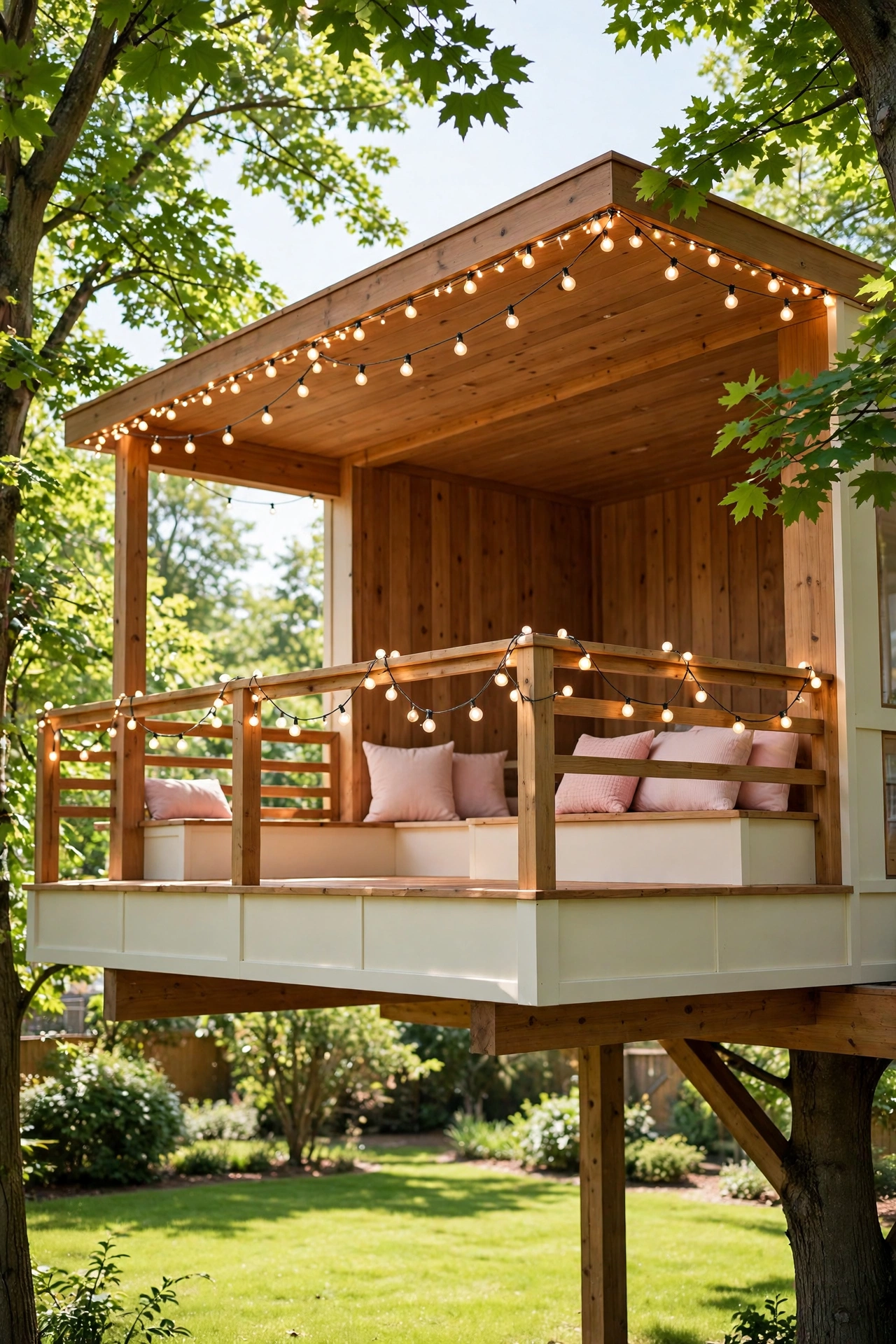
14. Add String Lights for Evening Glow
String lights make the treehouse glow in the evening and turn it into a magical hideout after sunset. Drape warm white lights along the roof edge and around the railing, using solar powered bulbs that charge during the day. The soft light makes the platform feel cozy and safe.
Choose shatterproof bulbs made for outdoor use so a stray ball causes no breakage. Keep the light strands high enough that small hands cannot pull them down. String lights extend playtime into the early evening and make the treehouse beautiful from the ground.
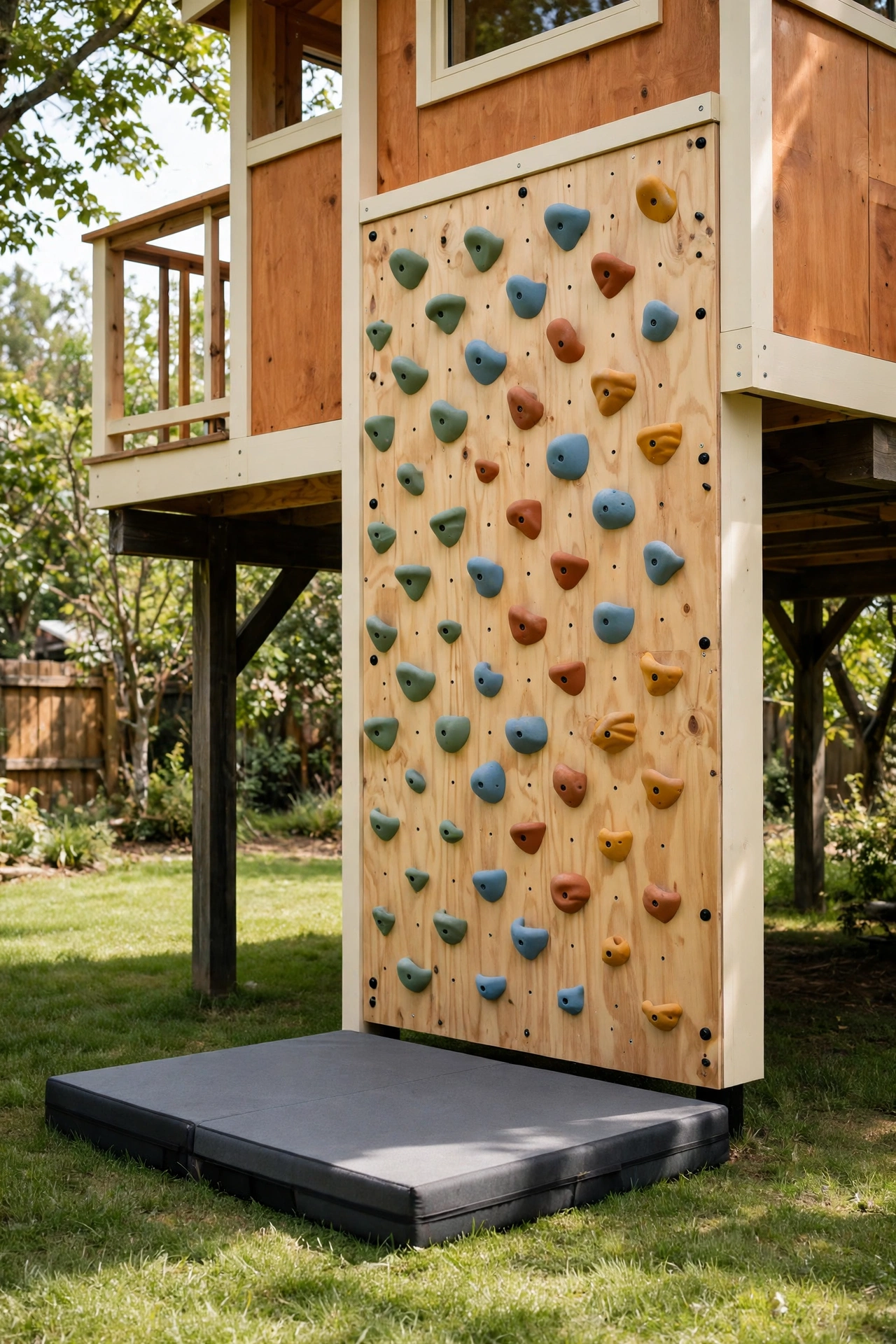
15. Build a Climbing Wall on One Side
A climbing wall on one side of the treehouse gives children a second way up to the platform. Bolt colorful handholds onto a plywood panel fixed to the treehouse frame and add a thick mat below. The wall builds strength and confidence with every climb.
Space the handholds close together near the bottom so young climbers can find easy grips. Check every bolt at the start of each season and replace any hold that feels loose. A climbing wall turns the treehouse into a full backyard adventure course.
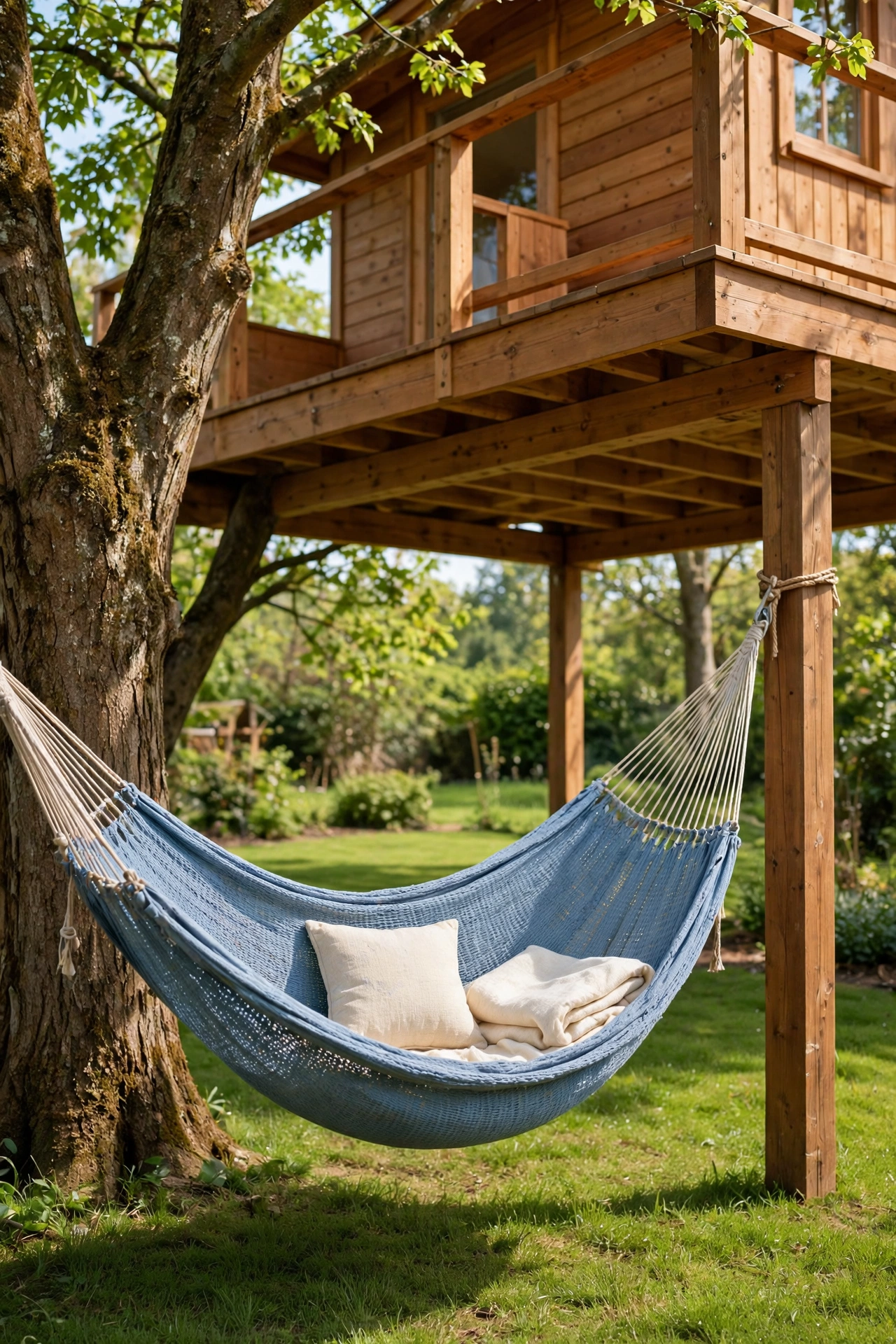
16. Add a Hammock for Lazy Afternoons
A hammock hung between two branches below the treehouse creates a lazy rest spot for warm afternoons. Tie a woven hammock between the tree trunk and a sturdy post, keeping it low to the ground. Children can read, nap, or watch leaves move in the breeze.
Choose a hammock made from weatherproof fabric that dries fast after rain. Add a small pillow and a light blanket for extra comfort. A hammock gives the treehouse area a calm corner where tired climbers can rest between adventures.
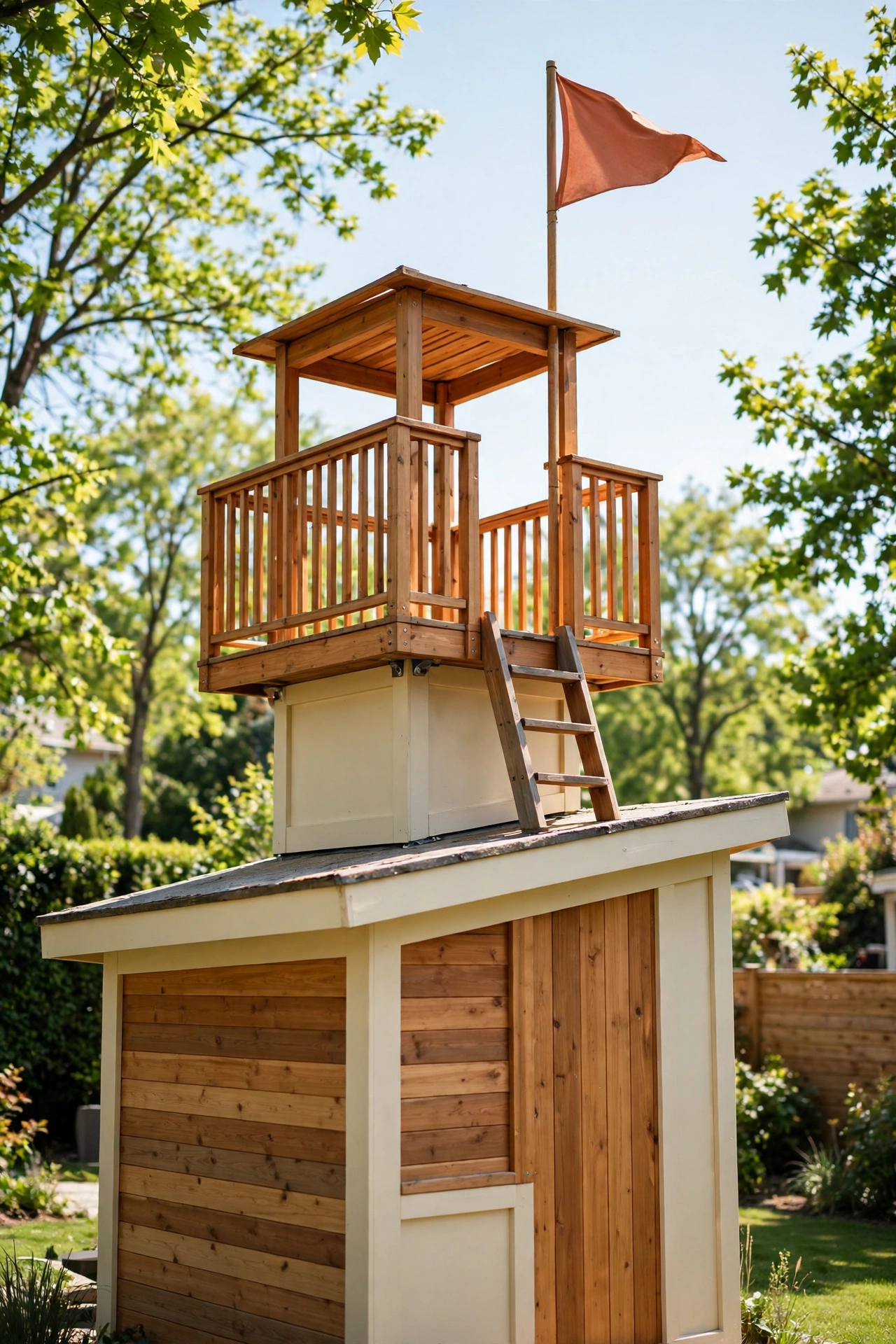
17. Create a Lookout Tower on Top
A lookout tower on top of the treehouse adds a second level and the best view in the yard. Build a small raised platform on the roof with its own railing and a short ladder from the main deck. From the tower, children can see over fences and into the whole neighborhood.
Keep the tower small, just large enough for two children to stand together. Add a flag on top that waves in the wind and marks the treehouse from far away. A lookout tower makes the treehouse feel taller and grander without a big build.
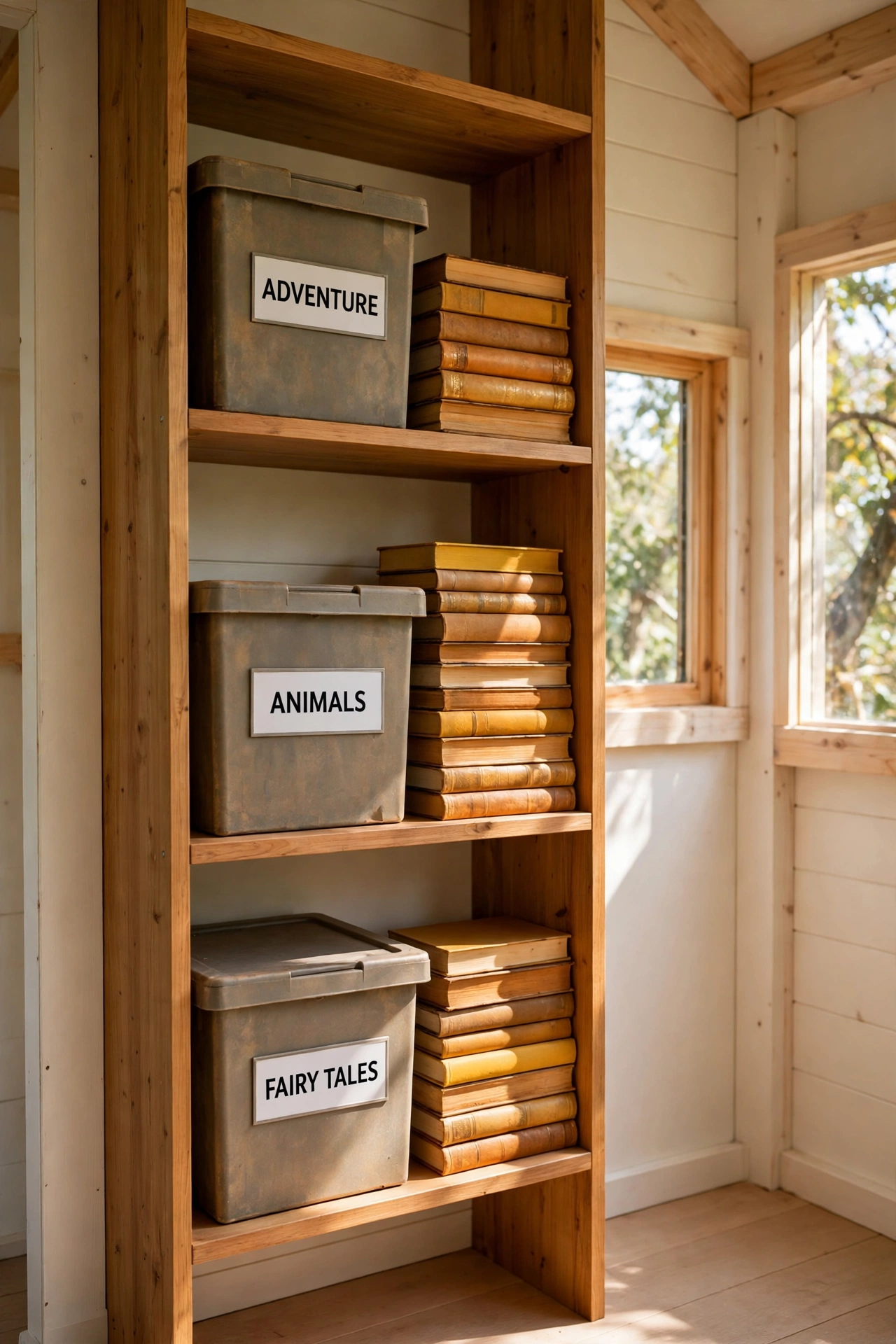
18. Add a Small Bookshelf with Storybooks
A small bookshelf with storybooks turns the treehouse into a library in the sky. Fix a narrow shelf to the interior wall and fill it with weatherproof boxes that hold books. A few favorite stories make the treehouse a place for quiet time as well as wild play.
Use plastic storage boxes with lids so rain never damages the books. Label each box with a printed tag, such as ADVENTURE, ANIMALS, or FAIRY TALES, to help children find a story fast. A bookshelf proves that a treehouse can be calm and cozy too.
19. Install a Zip Line from the Treehouse
A zip line from the treehouse platform to a post across the yard adds pure thrill to the backyard. Install a steel cable with a proper harness seat, and anchor both ends to strong supports set in concrete. Children glide down the line with the wind in their hair.
Always use a zip line kit rated for children and follow the weight limits on the box. Add a braking block at the far end so every ride stops gently. For more adventure play ideas that pair well with a zip line, see these backyard obstacle course ideas. Adult supervision stays essential for this feature.
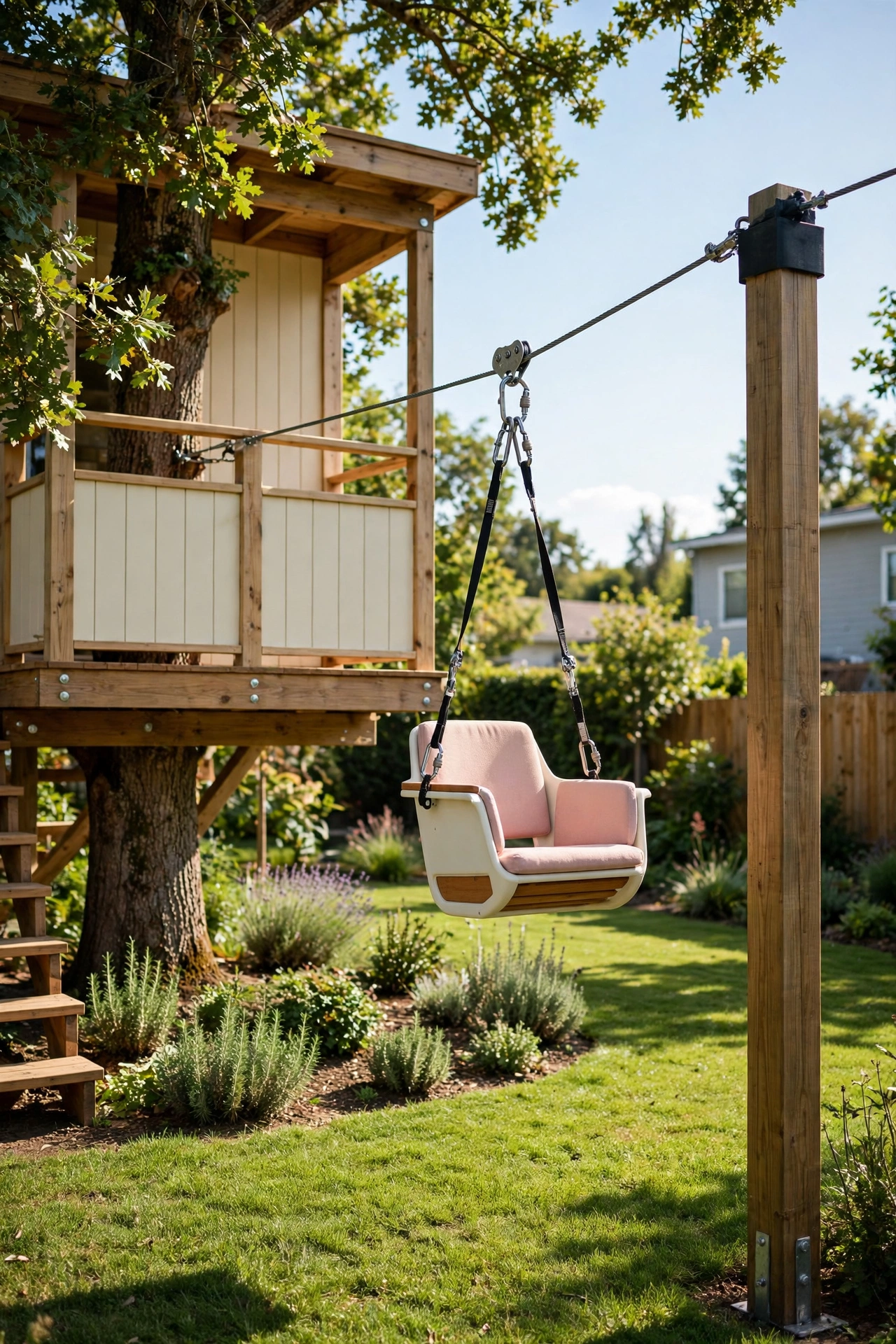
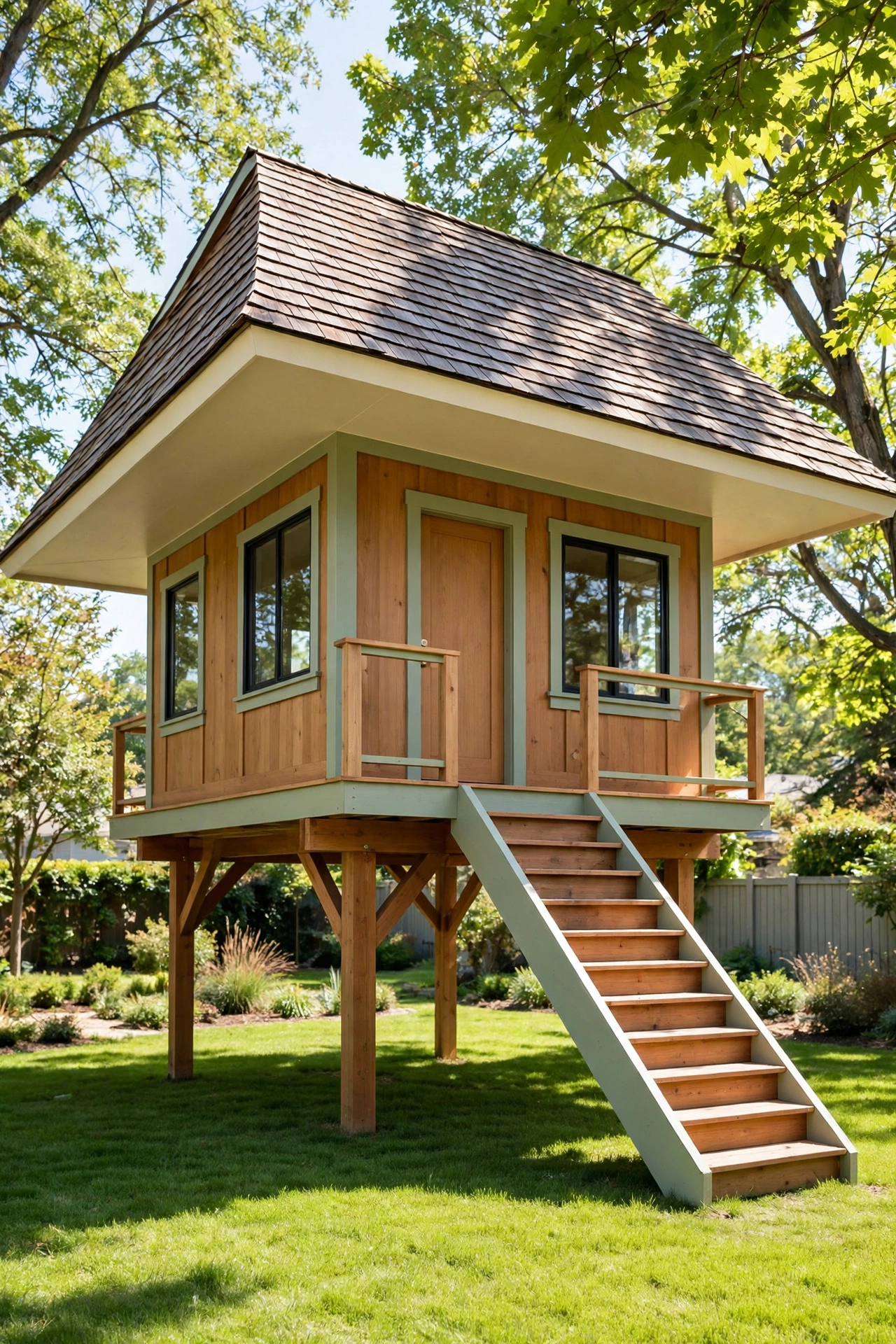
20. Build a Covered Roof for Rainy Days
A covered roof protects the treehouse from rain and strong sun, so children can play in almost any weather. Build a simple pitched roof from wood shingles or metal panels, with a small overhang on every side. Rain runs off the edges and the platform stays dry below.
Leave a gap between the roof and the walls for fresh air to flow through the treehouse. Paint the underside of the roof in a soft cream color to keep the interior bright. A good roof doubles the number of days the treehouse gets used each year.
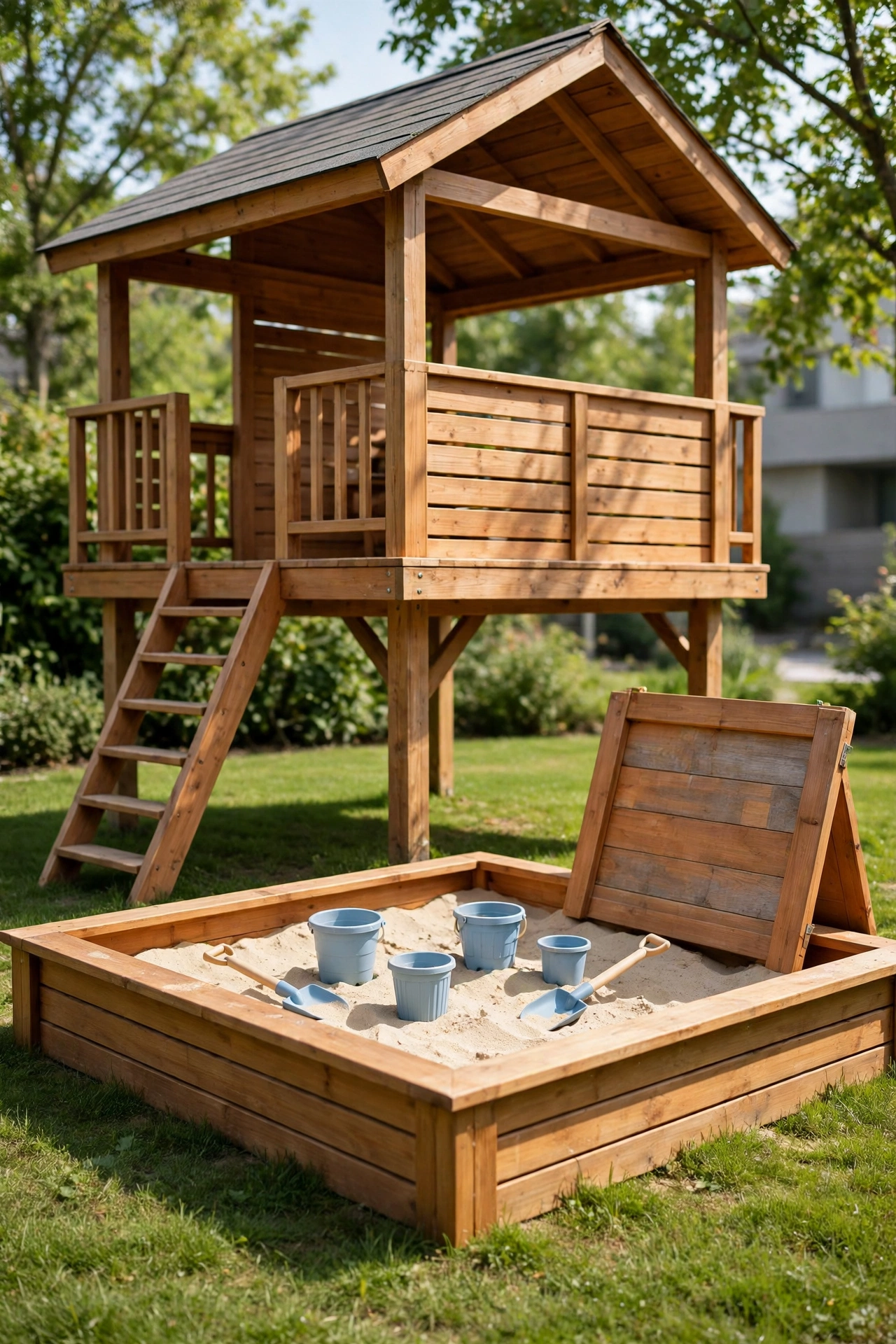
21. Add a Sandbox Beneath the Platform
A sandbox beneath the treehouse uses the shaded ground below the platform for more play. Build a square wooden frame, line it with landscape fabric, and fill it with clean play sand. Buckets, shovels, and molds turn the space into a construction site.
Cover the sandbox with a wooden lid or a tarp when it is not in use to keep leaves and rain out. For tidy edges that keep sand and mulch in place, see these backyard landscape border ideas. A sandbox makes the treehouse a two level playground.
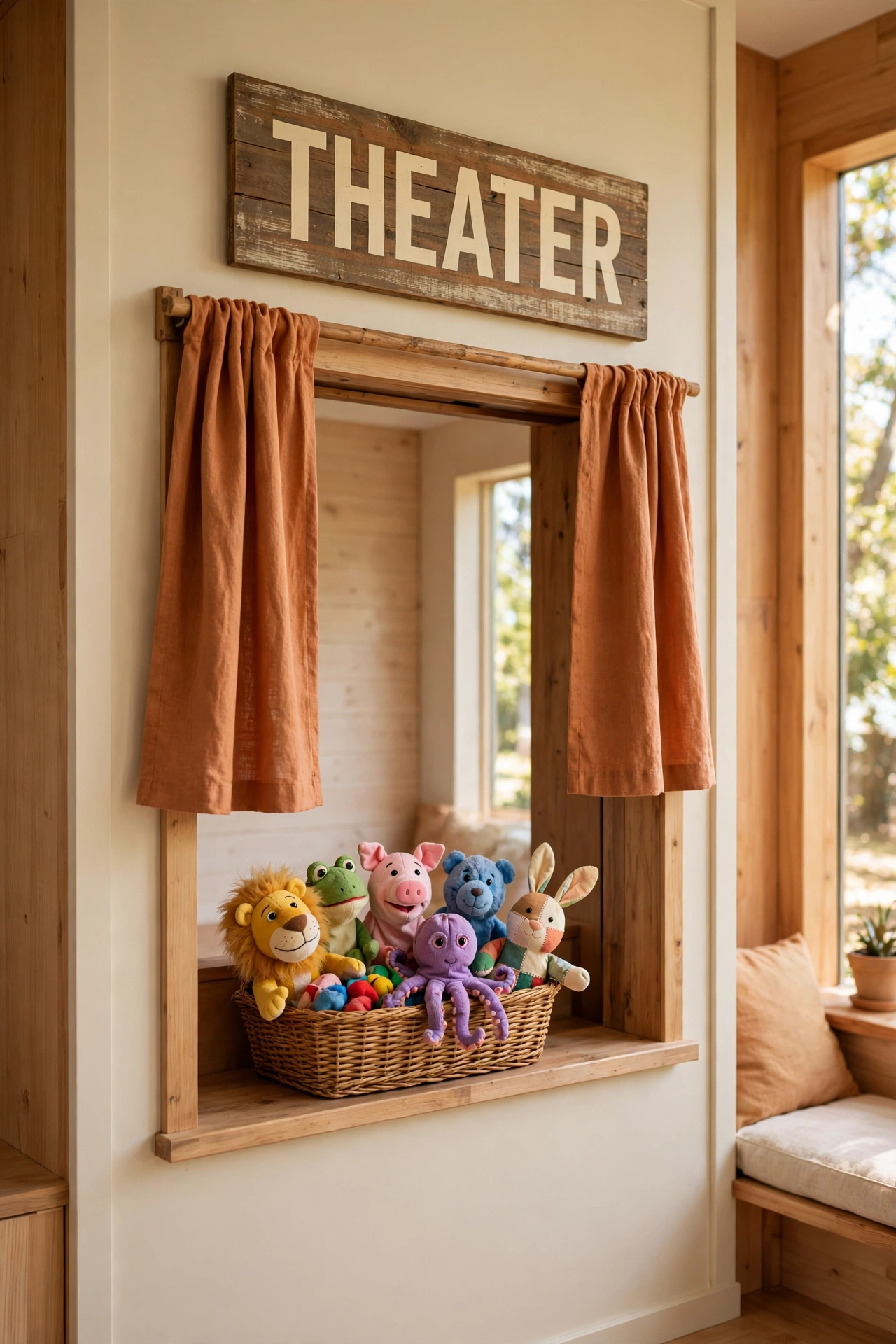
22. Create a Puppet Theater Window
A puppet theater window turns one wall of the treehouse into a tiny stage. Cut a wide opening in the wall, add a small curtain rod above it, and hang two short curtains that open and close. Children perform shows for an audience on the ground below.
Paint a simple sign above the window with the word THEATER in large clear letters. Store a basket of hand puppets inside the treehouse so shows can start at any moment. A puppet window adds storytelling and performance to the treehouse fun.
23. Add a Birdhouse and a Feeding Station
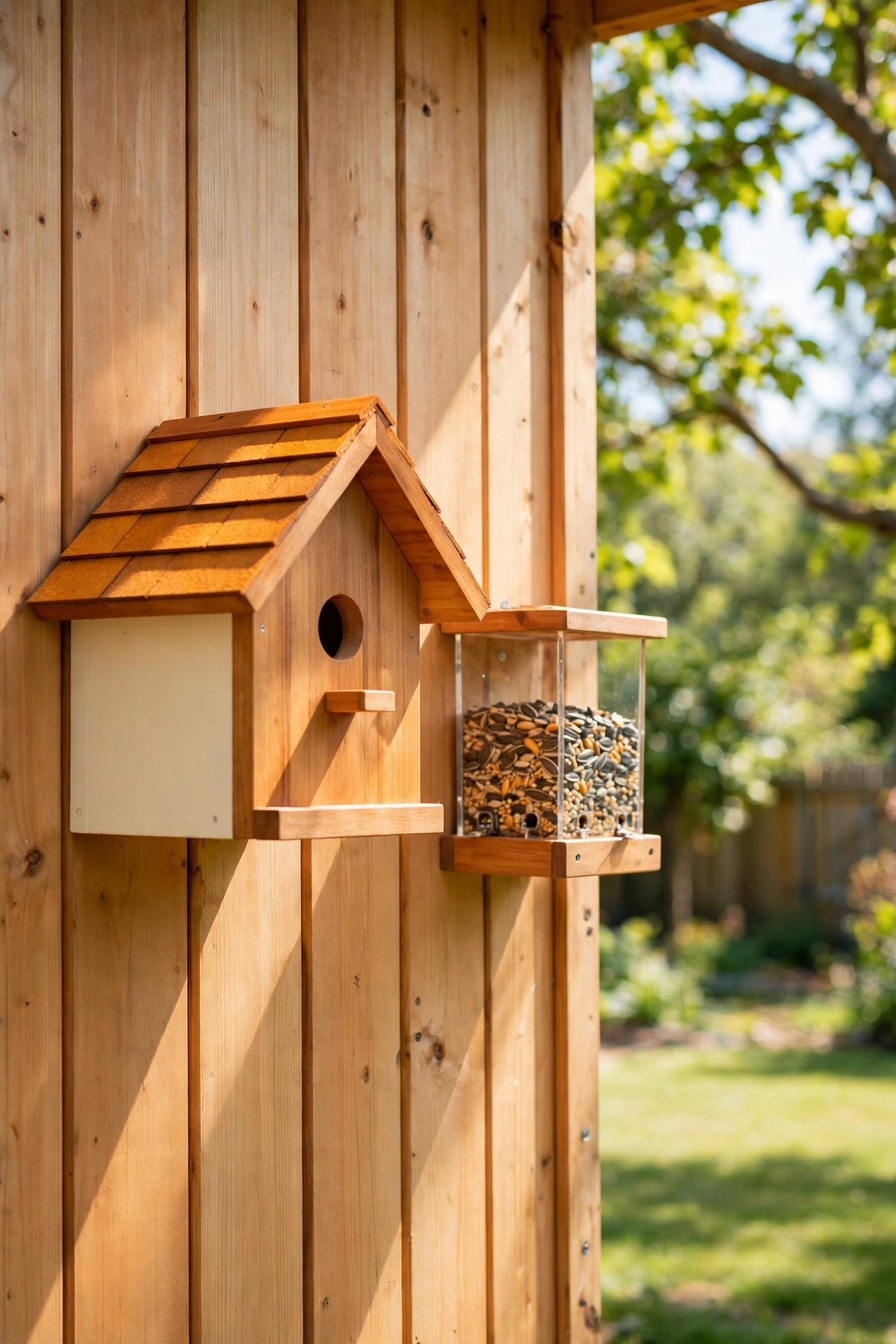
A birdhouse and a small feeding station bring nature right up to the treehouse walls. Mount a wooden birdhouse on the outside of the platform and hang a feeder filled with seeds nearby. Birds visit every morning and children learn to watch them quietly.
Choose a birdhouse with a hinged roof so you can clean it each season. Fill the feeder with seeds suited to local birds and refill it often. A feeding station turns the treehouse into a nature classroom as well as a playhouse.
24. Build a Rope Net Climbing Tunnel
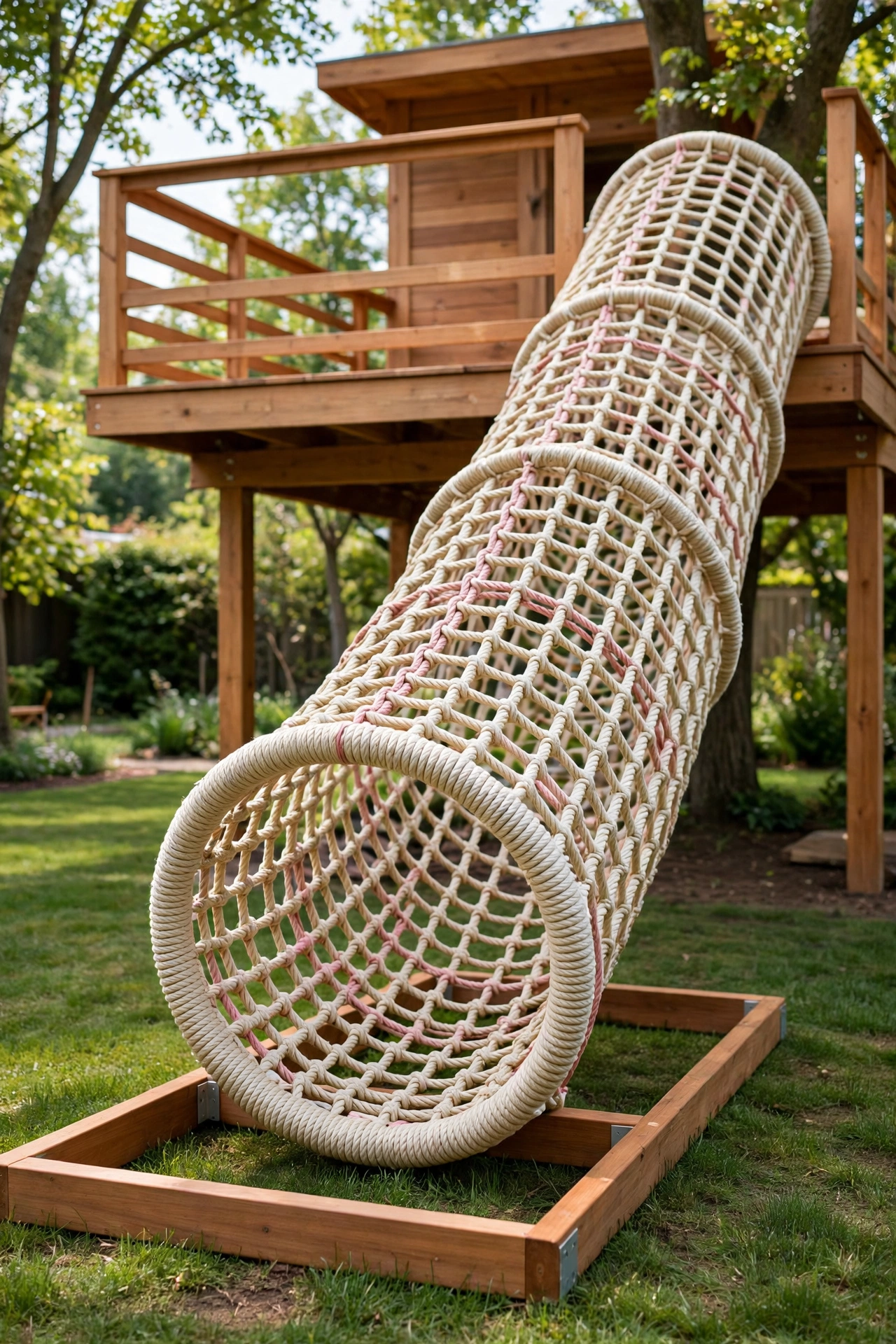
A rope net climbing tunnel connects the ground to the platform through a fun crawl space. Weave thick rope into a net tube and attach one end to the platform edge and the other to a low frame on the ground. Children climb through the net on hands and knees.
Keep the tunnel short and wide enough that a child can turn around inside. Check the rope knots every month and replace any frayed section at once. A rope tunnel adds a challenge that builds coordination and courage.
25. Add a Picnic Table on the Deck
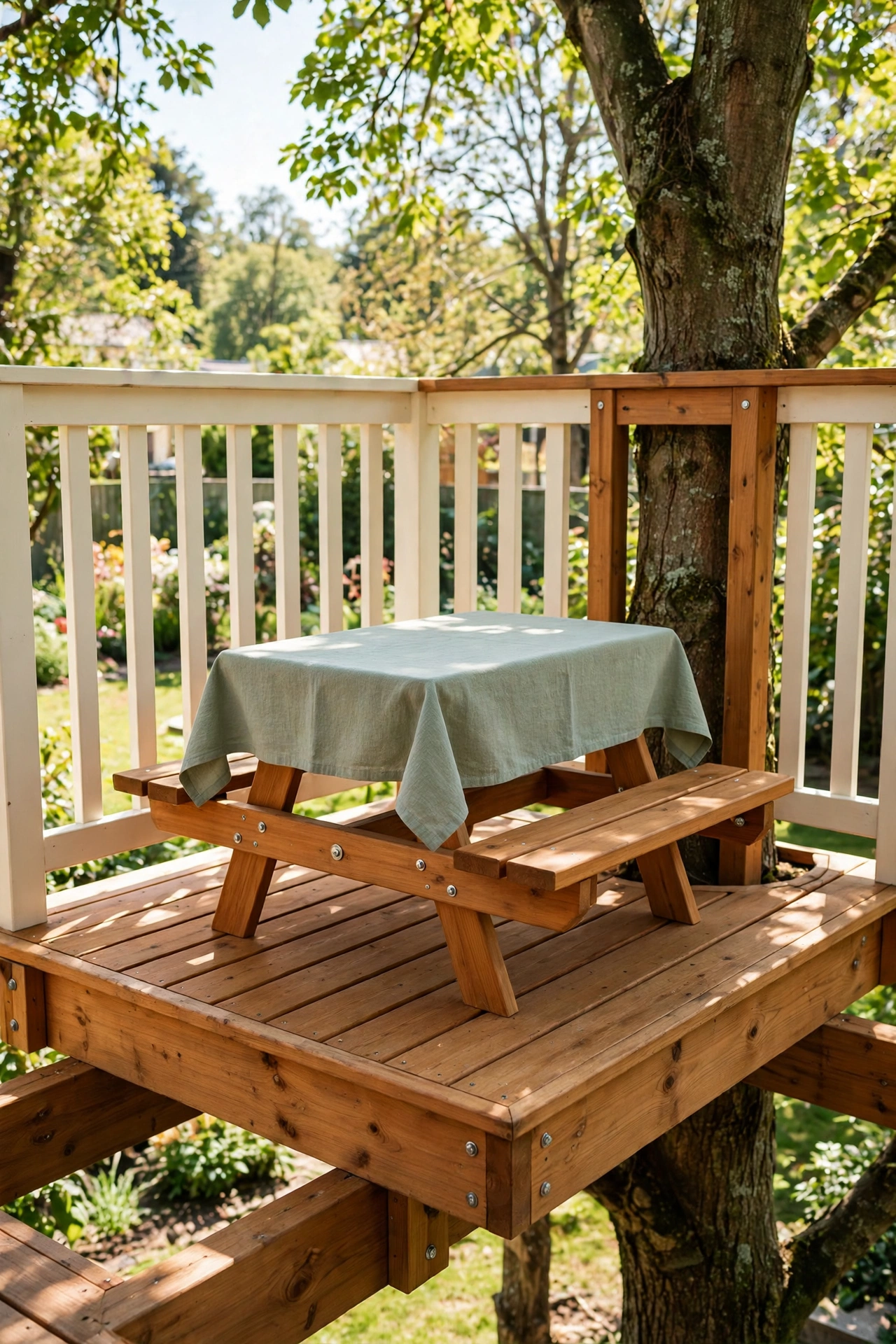
A picnic table on the treehouse deck turns the platform into an outdoor dining room. Build a small table with two benches from the same wood as the deck and bolt it down so it never tips. Lunch tastes better high up in the trees.
Choose a table size that leaves a clear path to the ladder and the slide. Add a washable tablecloth in a soft accent color, such as blush pink or sage green, for a cheerful touch. A picnic table makes the treehouse the best lunch spot in the whole yard.
26. Create a Stargazing Hatch in the Roof
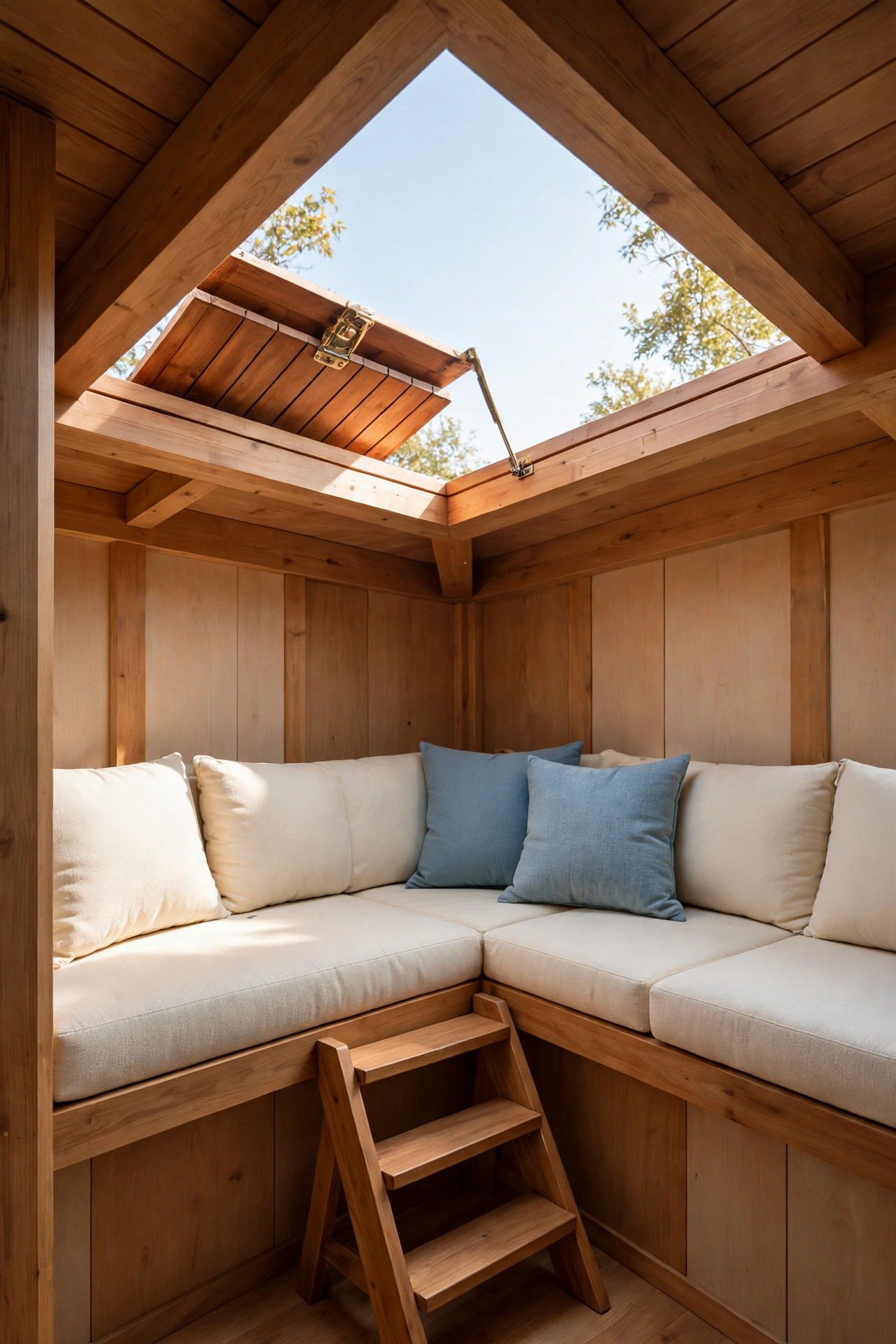
A stargazing hatch in the roof opens the treehouse to the night sky. Cut a square opening in the roof, hinge a panel that opens upward, and add a latch that holds it open. On clear nights, children can lie on cushions and watch the stars through the hatch.
Add a small step ladder inside so children can reach the hatch safely. Keep the hatch closed and latched during rain so the interior stays dry. A stargazing hatch turns the treehouse into a tiny observatory for young astronomers.
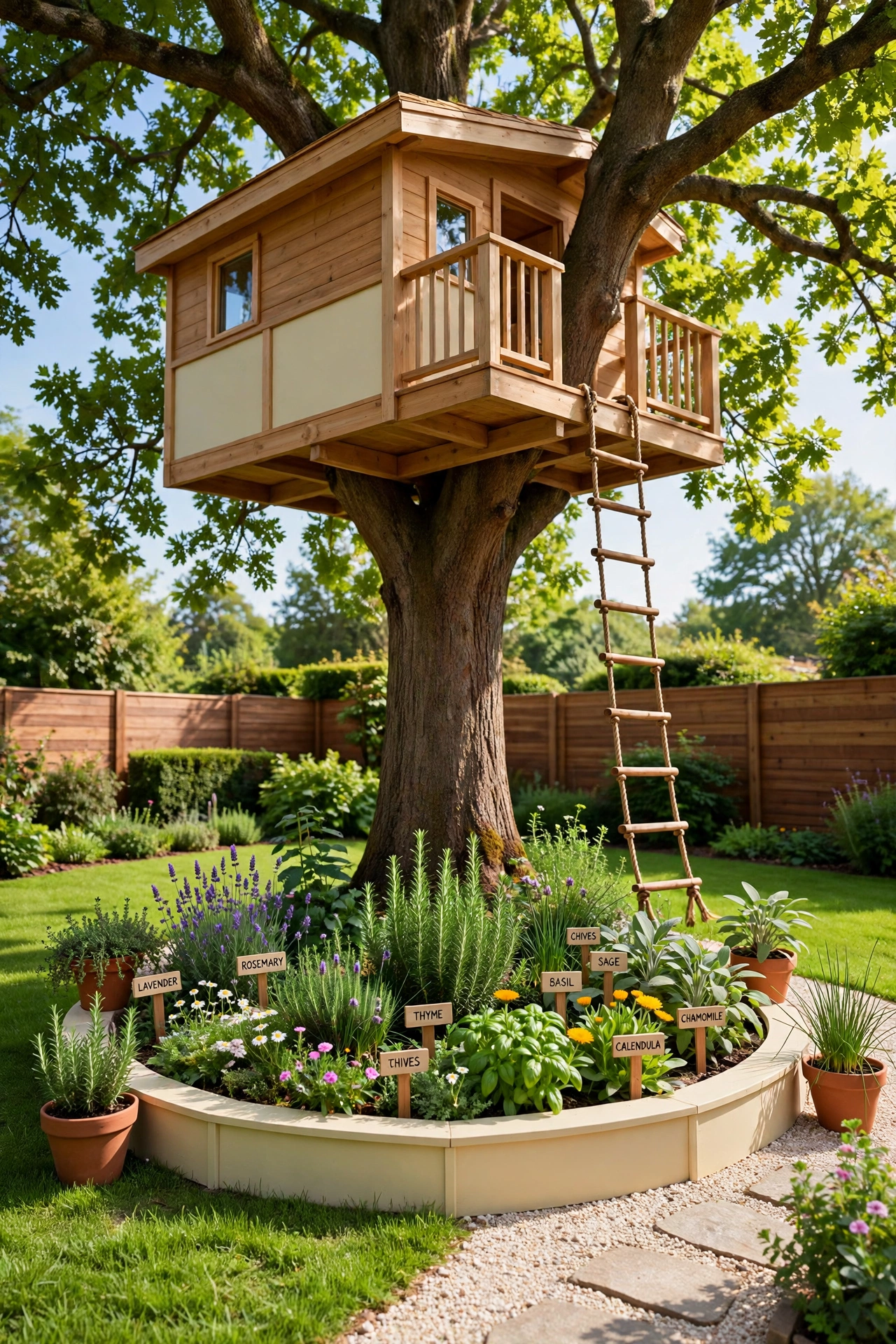
27. Add a Garden Bed Around the Base
A garden bed around the base of the tree softens the treehouse and ties it into the yard. Plant low flowers, herbs, or small shrubs in a ring around the trunk, leaving a clear path to the ladder. The garden makes the treehouse look like it grew there naturally.
Choose plants that thrive in partial shade under the tree canopy. Label each plant with a small wooden marker so children learn the names as they grow. A garden bed at the base finishes the treehouse project with color and life.
Conclusion
A treehouse gives children a place that belongs only to them, high in the branches and full of imagination. From a simple platform with a rope ladder to a lookout tower with a zip line, every idea here adds fun, safety, and magic to the backyard. The best treehouse grows with its builders, gaining new features as children grow taller and braver.
Pick one or two ideas that fit your tree, your budget, and your children, then start this weekend. Measure twice, bolt everything tight, and check the structure every spring. For a garden that frames the treehouse beautifully, see these japanese garden ideas. Your backyard treehouse will become the place where the best childhood memories are made.
Frequently Asked Questions About Outdoor Treehouse Design Ideas for Kids
How high should a treehouse for kids be?
For younger children, a platform five to six feet off the ground is safe and fun. Older children can enjoy platforms eight to ten feet high with strong railings. Always match the height to the age and confidence of the children who will use it.
What type of tree works best for a treehouse?
Strong hardwood trees with thick trunks work best, such as oak, maple, or beech. Avoid trees with shallow roots or brittle branches. Check the tree health each year and remove any dead branch that hangs over the platform.
How do I keep a treehouse safe?
Use strong bolts made for treehouses, add railings around every open edge, and check all fasteners each spring. Keep the ground below soft with mulch or rubber mats. Teach children the rules, such as one person on the ladder at a time and no pushing near the edges.
What should I put near the treehouse for family gatherings?
A picnic table and a few chairs near the base give families a place to gather while children play above. A small outdoor cooking area nearby makes the whole yard a party spot. For a budget friendly cooking area, see these small DIY outdoor kitchen ideas.
How much does a treehouse cost to build?
A simple platform treehouse can cost a few hundred dollars in lumber and hardware. Larger designs with slides, roofs, and second levels can cost several thousand dollars. Start small and add features over time to spread the cost across seasons.

Hi, I’m Emily! I turn messy corners into cozy, organized spots. DreamNestDecor is where I share simple, practical home ideas — decor, organization, and small-space solutions that work in real life, not just in photos. Every idea here is carefully researched before it’s shared.