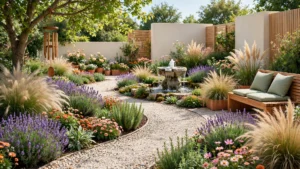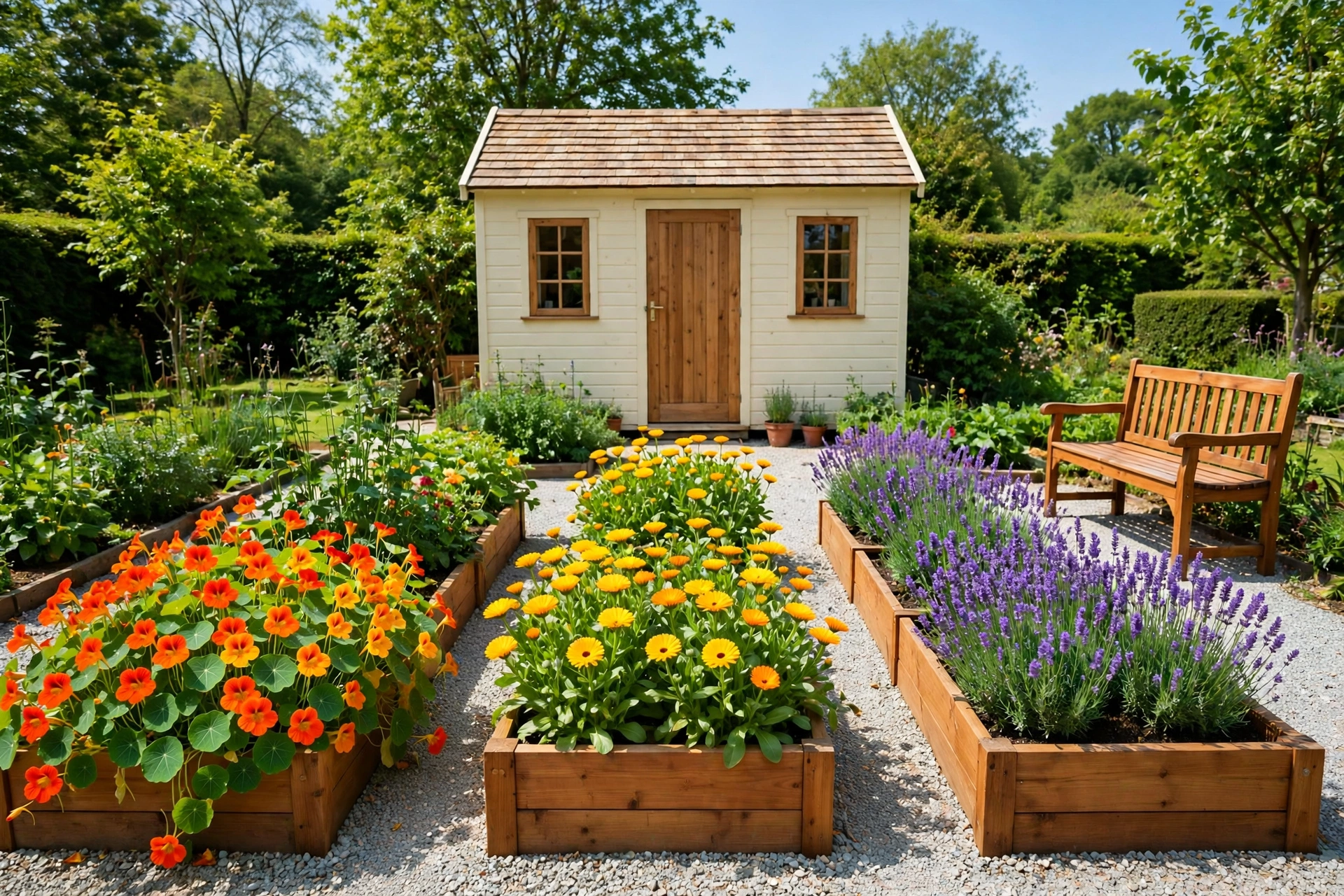
Picture this: you step into your garden on a sunny morning with a small basket, and you gather a handful of bright nasturtiums, soft calendula petals, and a sprig of lavender for the lunch table. The salad you serve at noon looks like it came from a restaurant, and every flower on the plate grew just a few steps from your kitchen door. That is the quiet joy of an edible flower garden.
You do not need a large plot or years of gardening skill to enjoy it. A sunny border, a raised bed, or even a row of pots can grow flowers that are safe to eat and beautiful to look at. These 34 edible flower garden ideas will show you which flowers to plant, where to place them, and how to keep your garden colorful from spring until the first frost.
1. Plant Nasturtiums Along a Sunny Garden Border
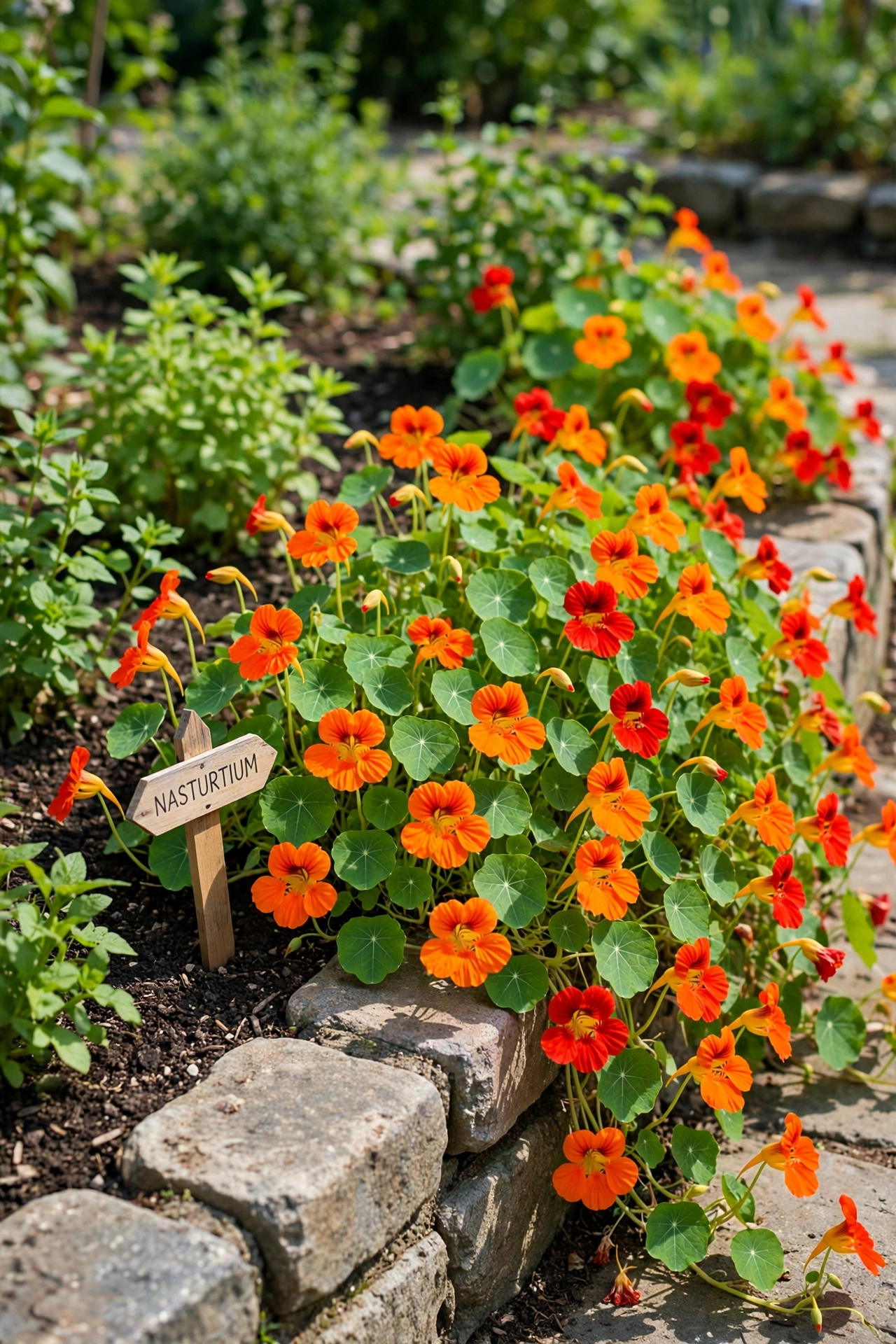
Nasturtiums are the easiest edible flowers to grow, and they reward you with bright orange, red, and yellow blooms all summer long. The flowers and the round leaves both taste mildly peppery, which makes them a lively addition to salads and sandwiches. They thrive in poor soil, so they are a forgiving choice for a first edible flower bed.
Plant them along the front of a sunny border where the trailing stems can spill over the edge. Give them a simple wooden plant marker with a readable label so visitors know the flowers are meant for the plate. Pick the blooms in the morning when they are fresh, and the plants will keep producing new flowers for months.
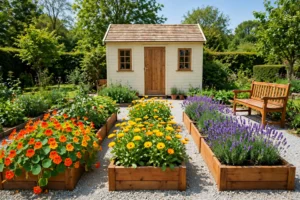
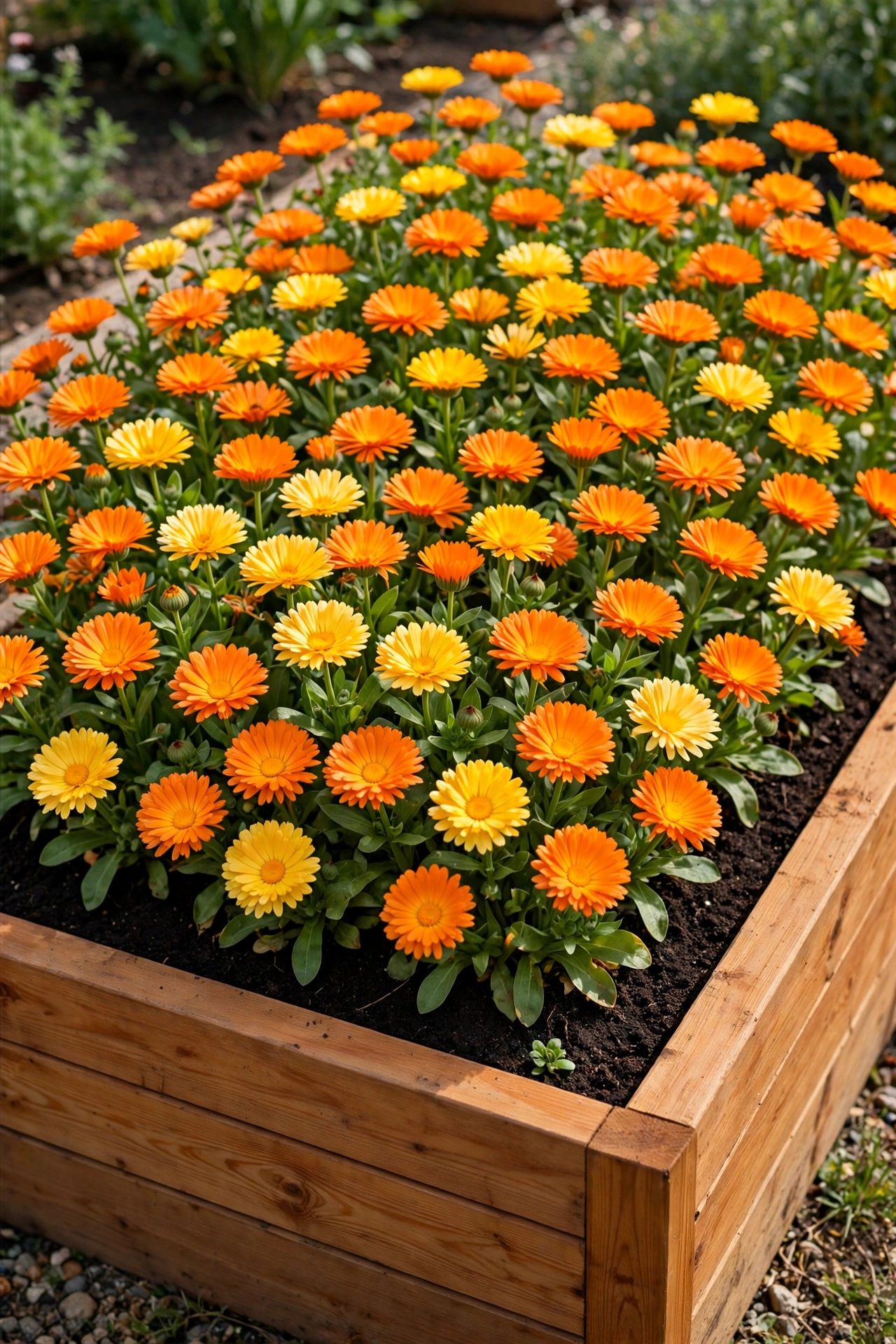
2. Grow Calendula in a Raised Bed for Daily Picking
Calendula, often called pot marigold, produces cheerful orange and yellow petals that you can sprinkle over rice, soups, and salads. The petals have a mild, slightly tangy flavor, and they keep their color well when dried. A raised bed keeps the plants at a comfortable height for picking every day.
Fill the bed with good soil and space the plants so air can move freely between them. For a bed that stays tidy and productive all season, see these raised garden bed layout ideas that help you plan the size and shape before you plant. Deadhead the faded blooms often, and each plant will send out fresh flowers until autumn.
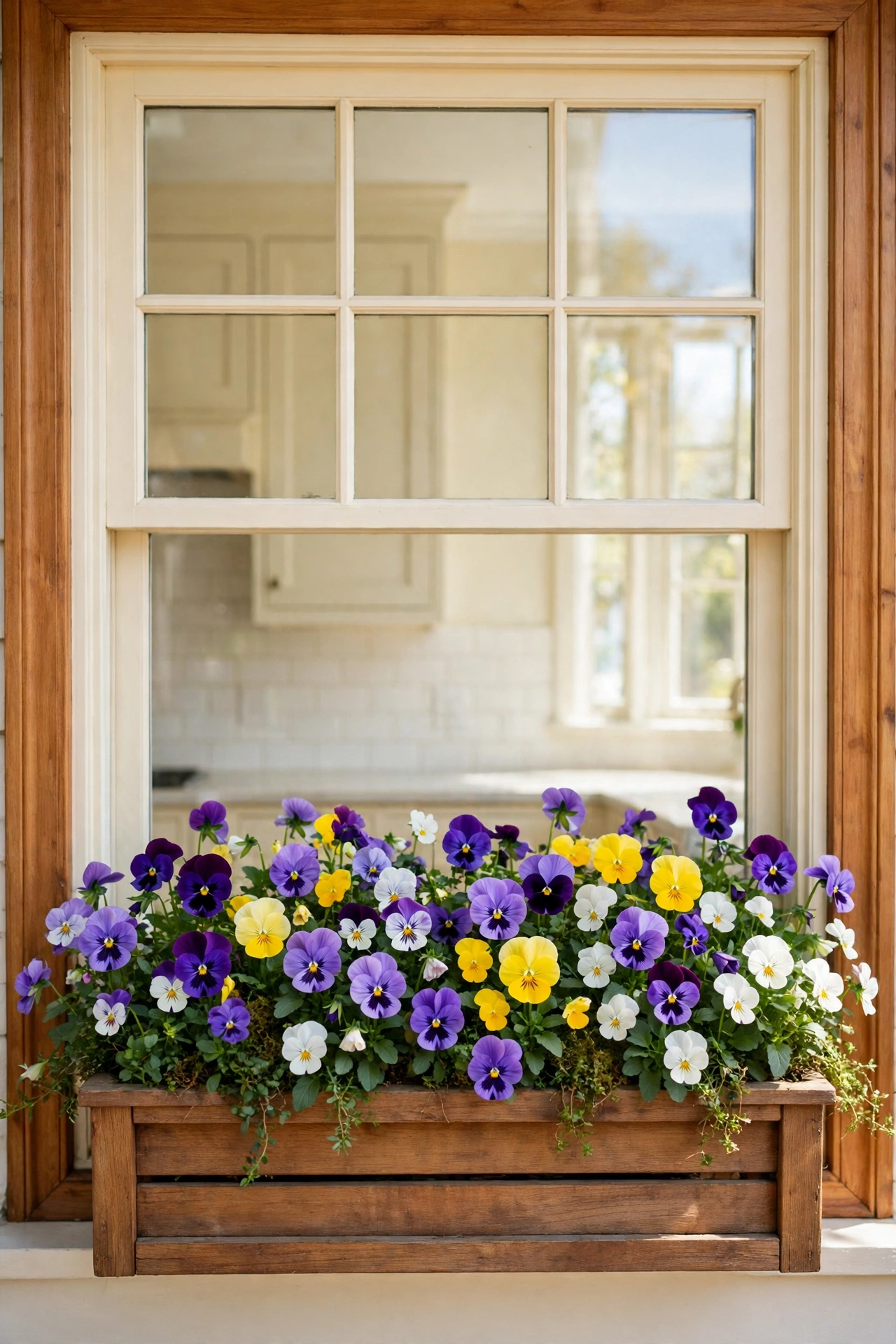
3. Fill a Window Box With Pansies and Violas
Pansies and violas are small, gentle flowers with a mild, slightly sweet taste that suits cakes, desserts, and summer drinks. Their faces come in purple, yellow, white, and soft blue, so a window box full of them looks like a painted border under your kitchen window. They prefer cool weather and bloom best in spring and autumn.
Fill the window box to the top with rich potting soil and pack the plants closely so the box looks full from the start. Water the box often, since shallow containers dry out faster than garden beds. Snip a few blooms each morning for breakfast plates, and keep the box in a spot that gets morning sun and afternoon shade.
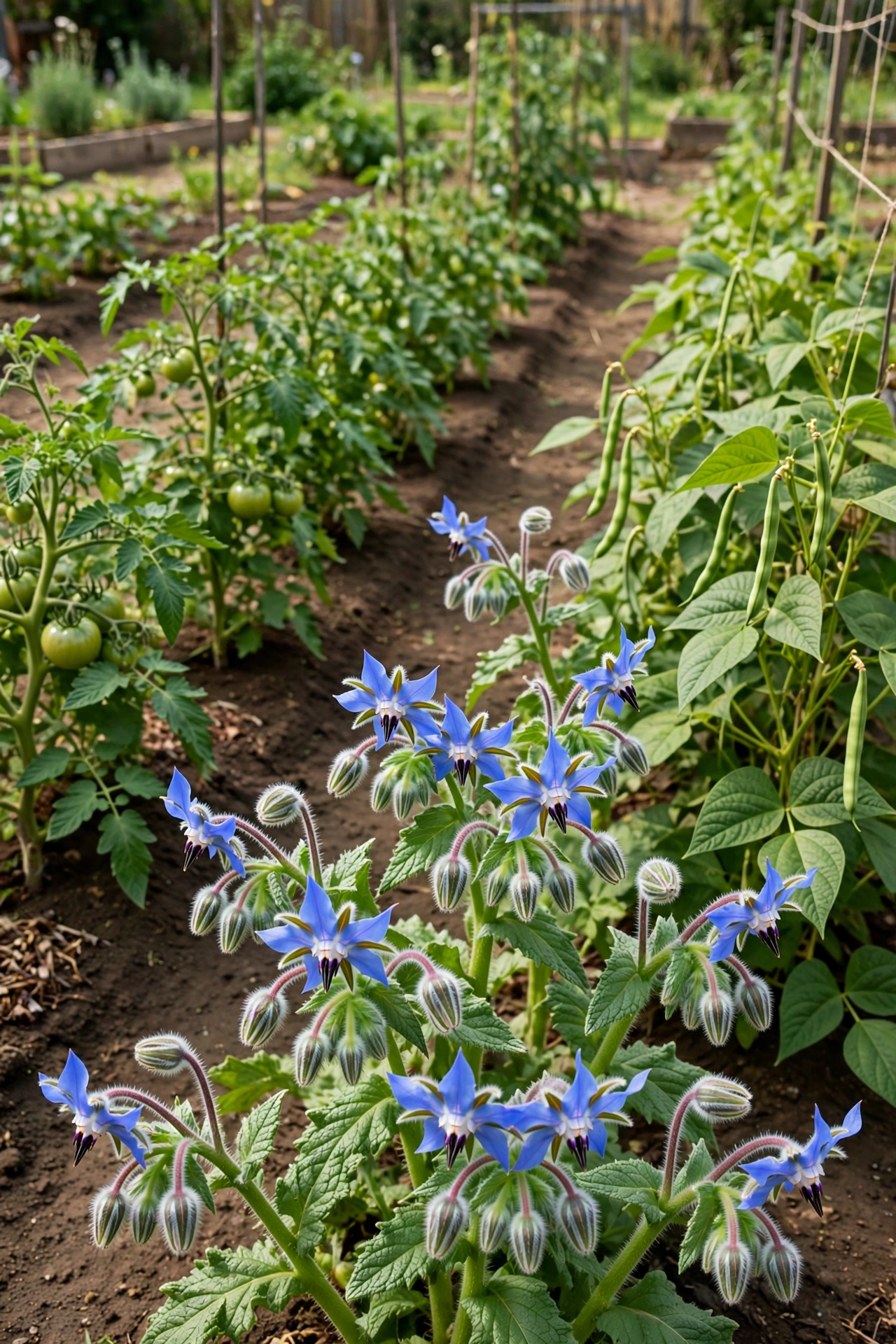
4. Tuck Borage Between Vegetable Rows
Borage grows tall star shaped blue flowers that taste faintly of cucumber, which makes them a natural partner for cool summer drinks and green salads. The flowers attract bees in large numbers, so your vegetable plants nearby will benefit from extra pollination. Borage also improves the soil as it grows, which helps the whole bed stay healthy.
Tuck a few borage plants between rows of tomatoes, squash, and beans where they have room to spread. The stems are a little hairy, so wear gloves when you handle the plants and pick only the open flowers. Leave a few blooms on each plant so it can set seed and return on its own next year.
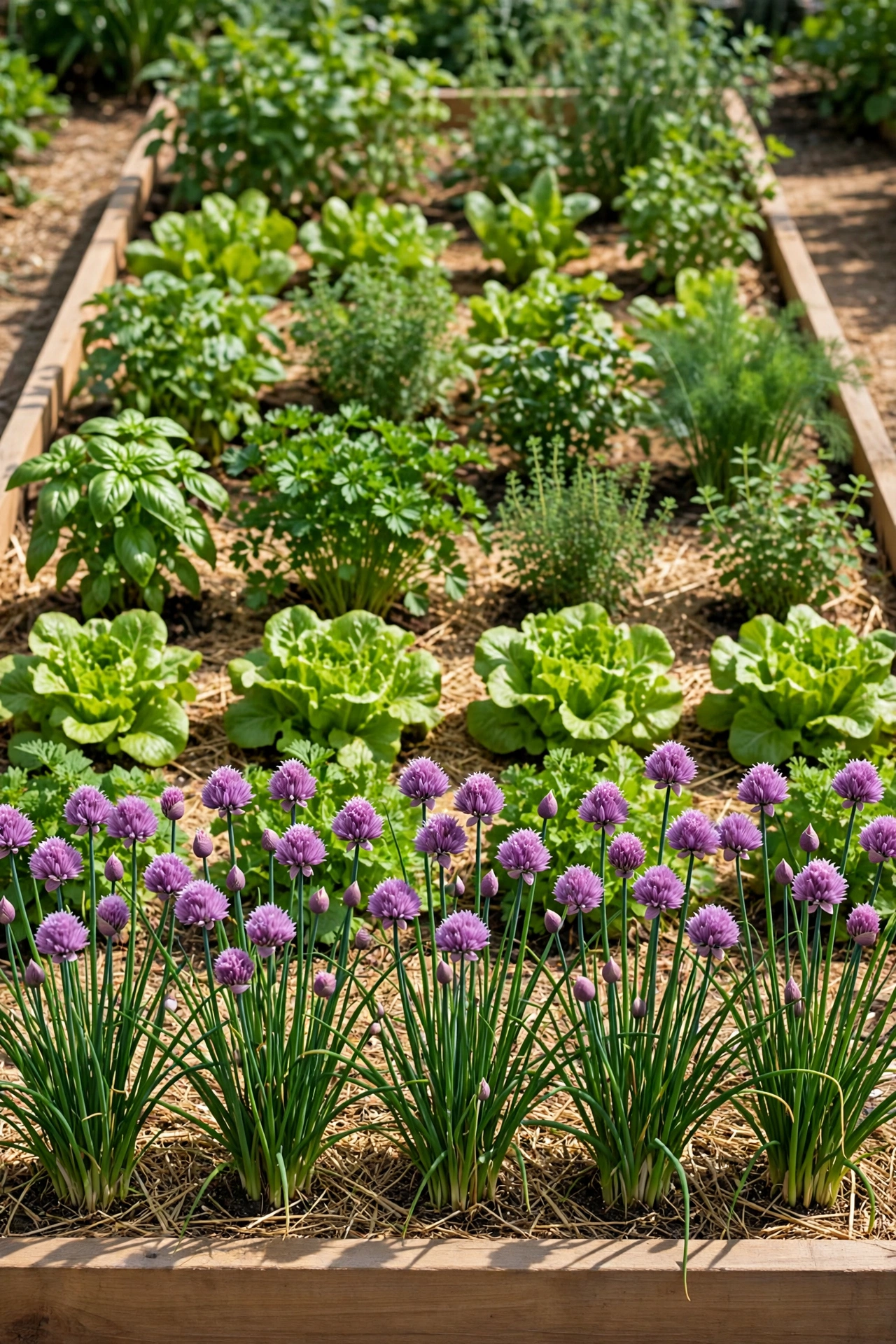
5. Edge a Vegetable Garden With Chive Blossoms
Chives are grown for their green stems, but the round purple blossoms are edible too, with a gentle onion flavor that suits savory dishes. When you let a row of chives flower, the vegetable garden gains a soft purple edge that looks intentional and tidy. The blossoms also draw bees and hoverflies that help the whole garden.
Plant chives along the outer edge of the vegetable bed in a straight row with even spacing. Snip the blossoms apart into small florets and sprinkle them over baked potatoes, eggs, and salads. Cut the plants back after flowering, and they will send up fresh green stems for the rest of the season.
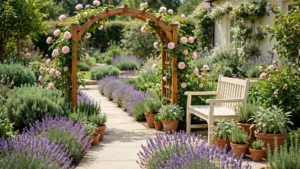
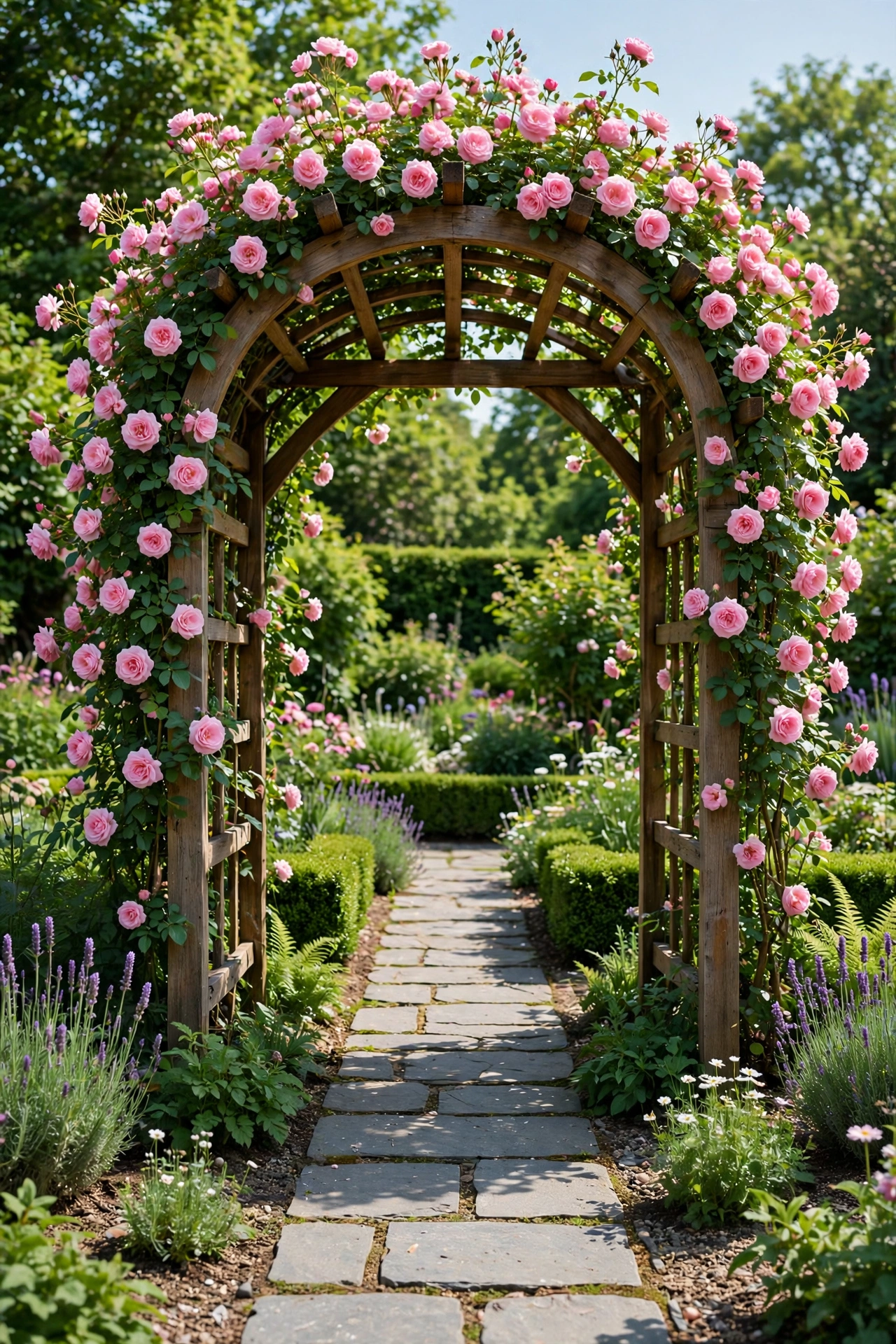
6. Train Climbing Roses Over a Garden Arch
Rose petals are one of the most fragrant edible flowers, with a sweet floral flavor that suits jams, teas, and desserts. A climbing rose trained over a garden arch turns a simple path into a flower filled doorway, and the petals fall gently onto the walkway below. Choose a fragrant variety that has not been sprayed with chemicals.
Fix the arch firmly at the entrance to the garden and tie the main canes to the frame as they grow. Pick the petals in the morning after the dew has dried, and use them the same day for the best flavor. Keep a small basket by the arch so you can gather petals whenever you pass through the garden.
7. Grow Chamomile in a Sunny Herb Corner
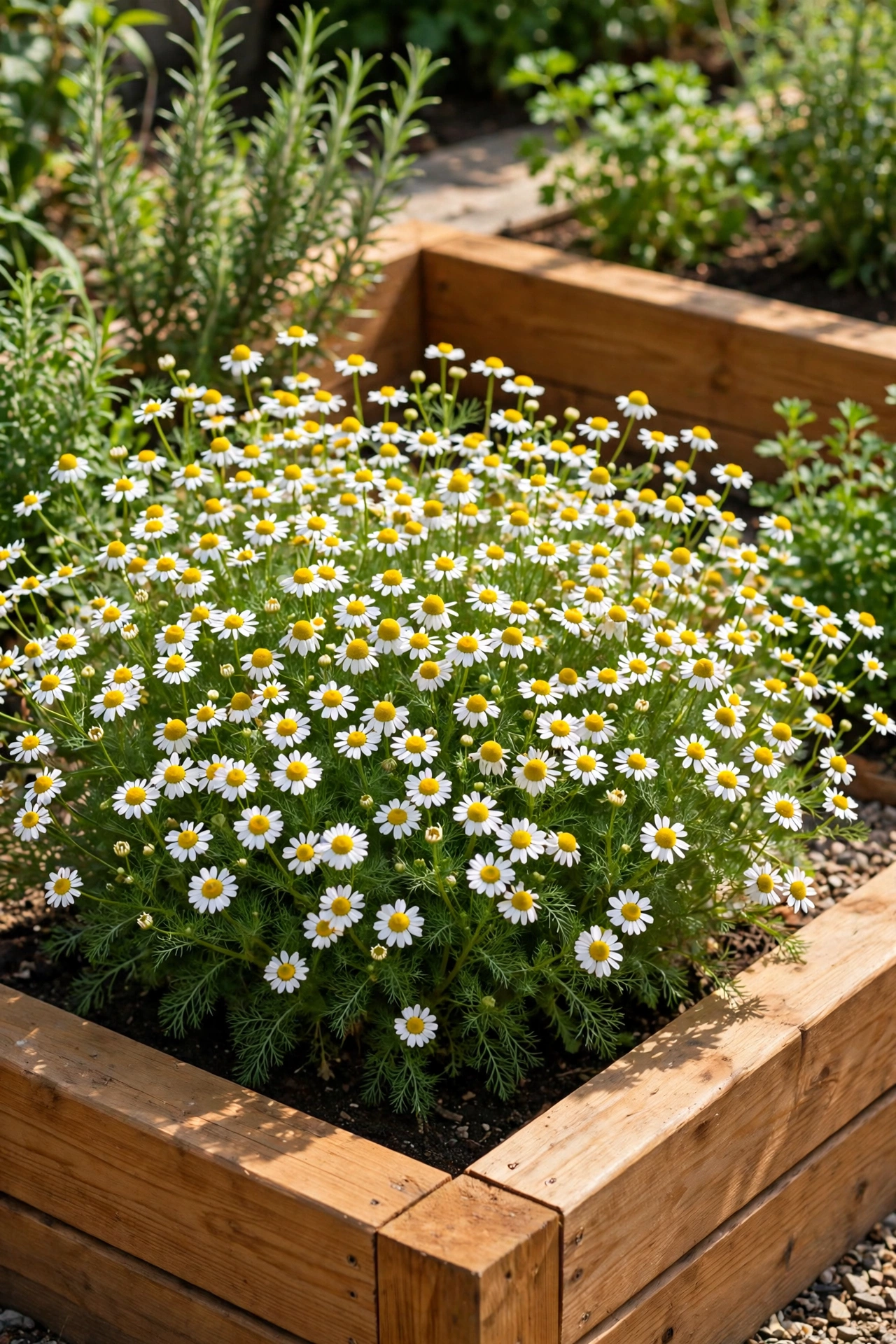
Chamomile grows small white and yellow daisy flowers that make a calming tea when dried and steeped in hot water. The plants stay low and bushy, with feathery leaves that release a sweet apple scent when brushed. A sunny herb corner is the perfect home for a generous patch of chamomile.
Sow the seeds on the surface of the soil, since they need light to sprout. Water the patch gently and pick the flowers when the white petals lie flat around the yellow center. Dry the blooms on a clean tray in a warm, airy room, and store them in a labeled glass jar for winter teas.
8. Plant Lavender Along a Garden Path
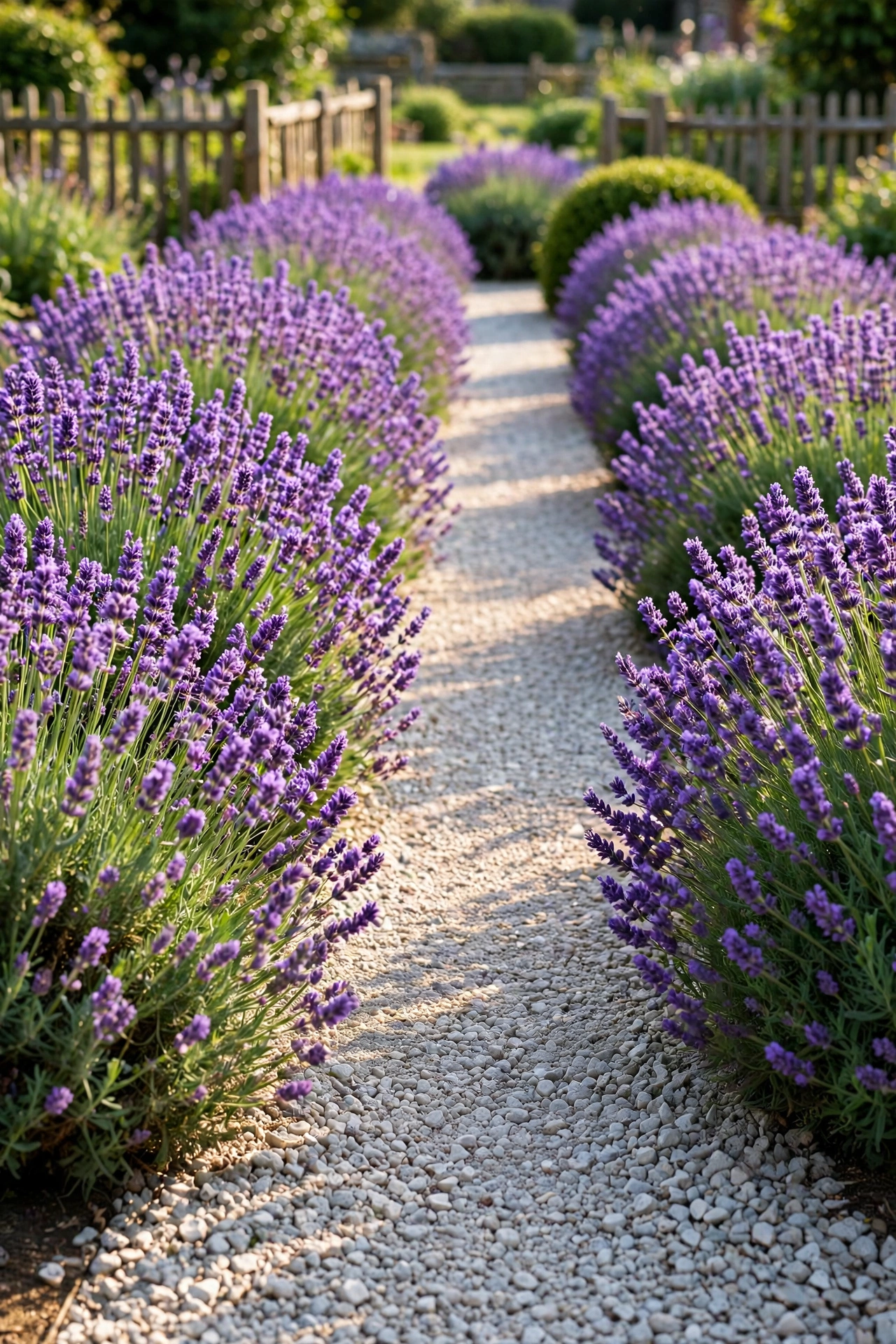
Lavender gives you purple flower spikes with a strong floral scent that flavors sugar, shortbread, and iced drinks in small amounts. Planted along a garden path, the bushes brush against your legs as you walk and release their fragrance into the warm air. Lavender also stays green through winter, so the path looks cared for all year.
Choose a sunny path with soil that drains freely, since lavender hates wet roots. Space the plants evenly and trim them lightly after flowering to keep the row neat and compact. For paths that stay beautiful in every season, these garden pathway ideas will help you pick the right surface and edging for your lavender row.
9. Sow Bachelor Buttons in a Cottage Bed
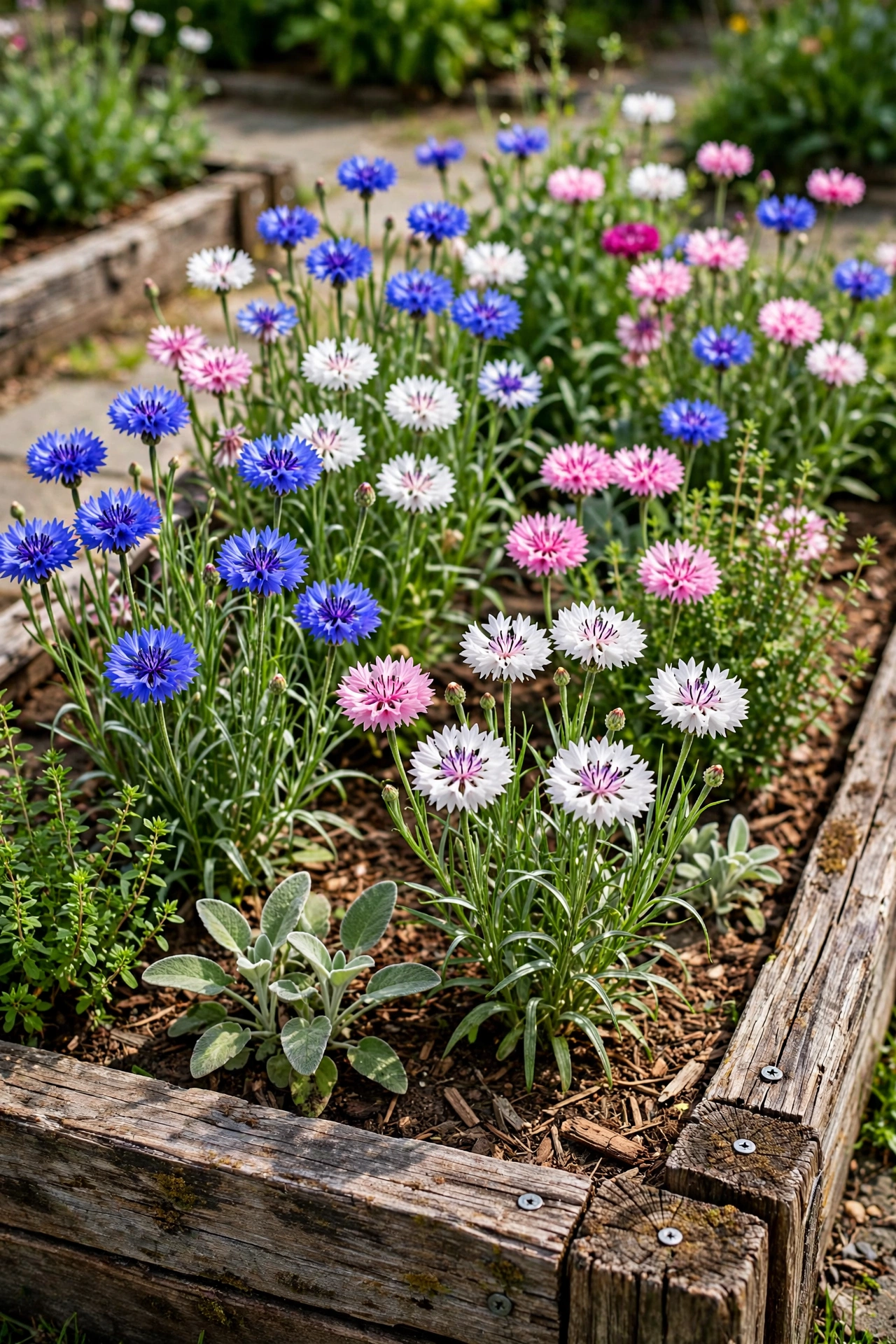
Bachelor buttons, also called cornflowers, produce fringed blue, pink, and white blooms with a mild, slightly sweet flavor. They are a classic cottage garden flower, and they self sow freely, so one sowing can fill the same bed year after year. The petals look lovely scattered over cakes and summer salads.
Scatter the seeds directly into a sunny cottage bed in spring and rake them lightly into the soil. Thin the seedlings so each plant has room to branch, and the bed will fill with color by early summer. Cut the stems often for small vases indoors, and the plants will answer with more blooms.
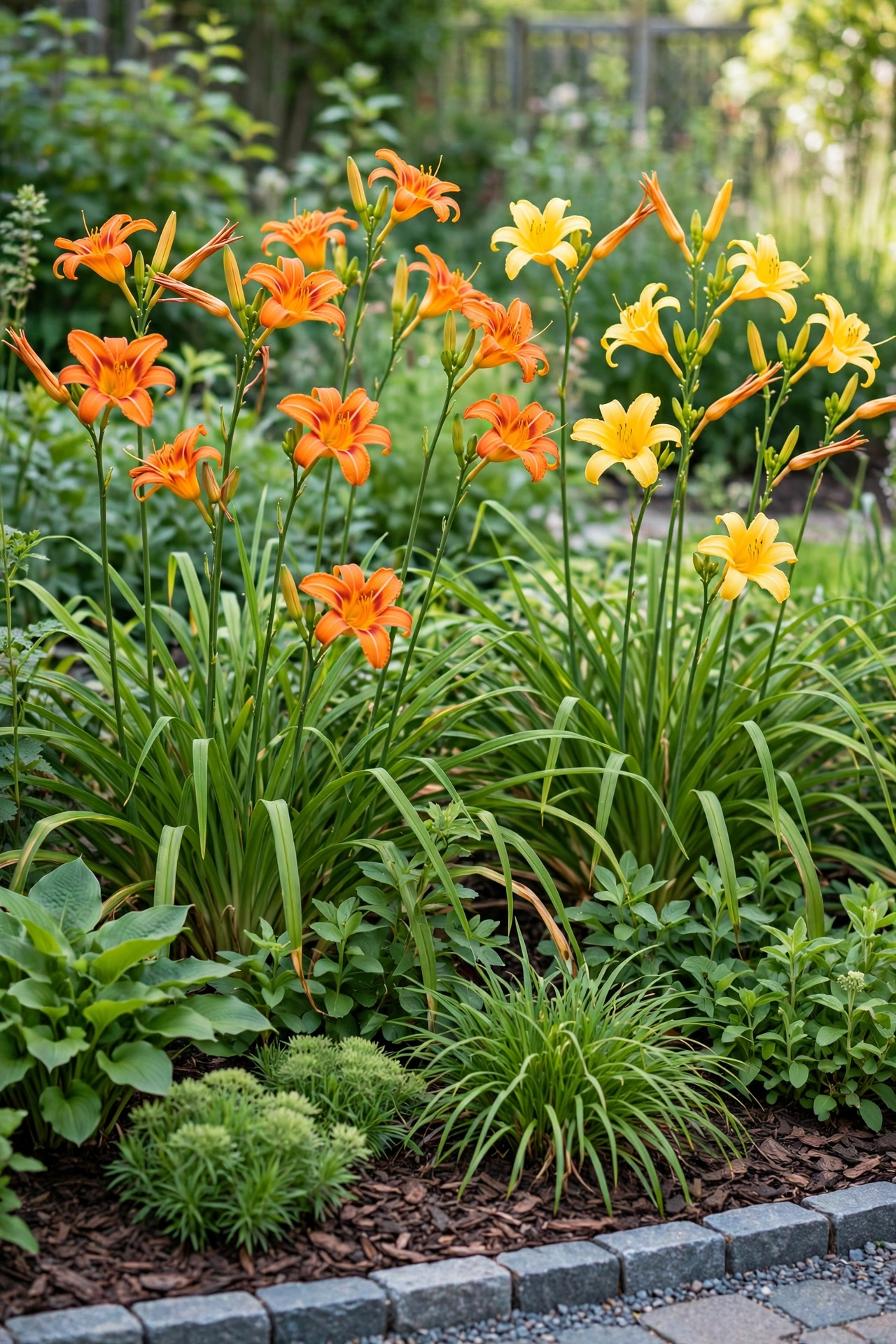
10. Add Daylilies to a Perennial Border
Daylily buds and petals are edible, with a mild flavor that works well in stir fries and fresh salads. The plants are tough and reliable, and they return every year with tall stems of orange, yellow, and red blooms. A perennial border with daylilies gives you color and harvests with very little work.
Plant daylilies at the back or middle of the border where their tall stems can rise above lower flowers. Pick the buds just before they open, when they are firm and full of flavor. Keep the border mulched and watered in dry spells, and the clumps will grow stronger with each passing year.
11. Grow Runner Beans With Scarlet Flowers on a Trellis
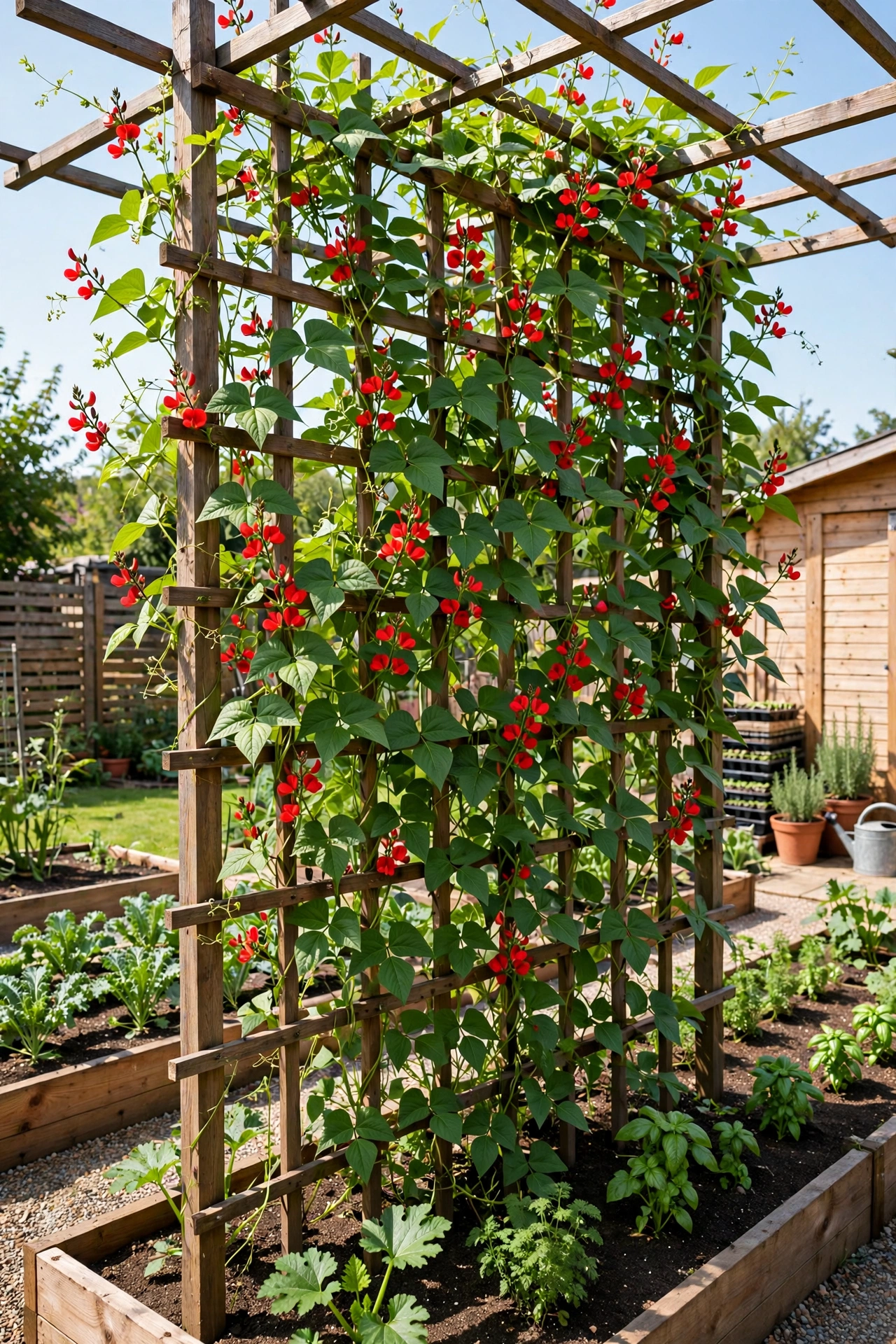
Runner bean flowers are bright scarlet blooms that taste lightly of green beans and look striking in a fresh salad. The vines climb quickly up a trellis or a row of poles, so they give you flowers, beans, and a green screen in one planting. They are a practical choice for a small garden where every plant must earn its place.
Set the trellis in a sunny spot with deep soil, and sow the seeds at the base of each pole. Water the plants well while they flower, since dry soil can cause the blooms to drop. Pick the young beans often, and leave some flowers to enjoy on the plate before they turn into pods.
12. Plant Bee Balm in a Pollinator Patch
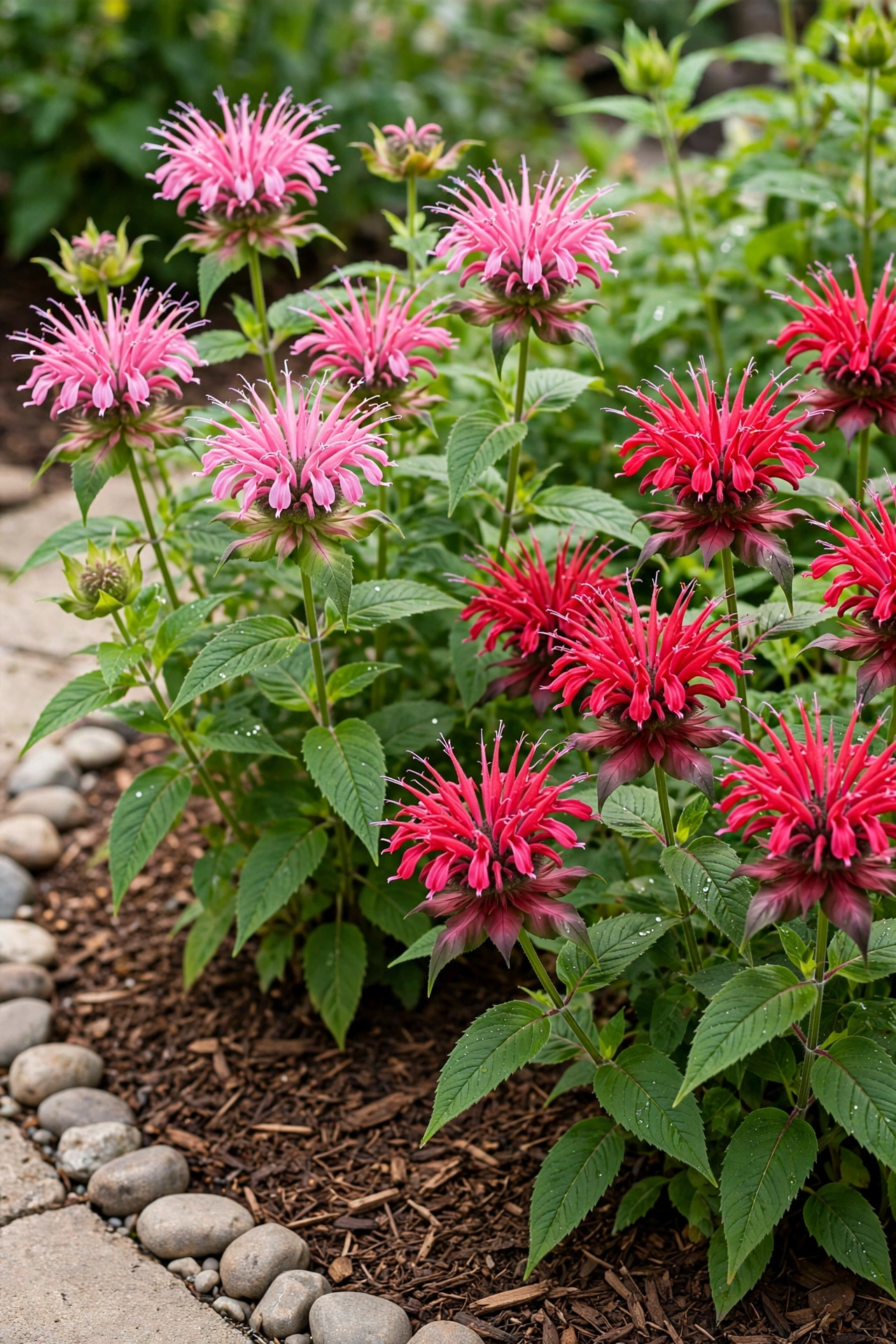
Bee balm grows shaggy pink, red, and purple flowers with a minty, citrus flavor that suits teas and fruit salads. The blooms draw bees, butterflies, and hummingbirds in large numbers, so a pollinator patch with bee balm stays full of life all summer. The leaves are fragrant too, and they make a pleasant herbal tea.
Give bee balm a sunny spot with good air flow, since crowded plants can develop mildew on the leaves. Space the plants widely and divide the clumps every few years to keep them vigorous. For a patch that welcomes even more winged visitors, these butterfly garden ideas show which flowers to plant beside your bee balm.
13. Fill Terracotta Pots With Edible Marigolds
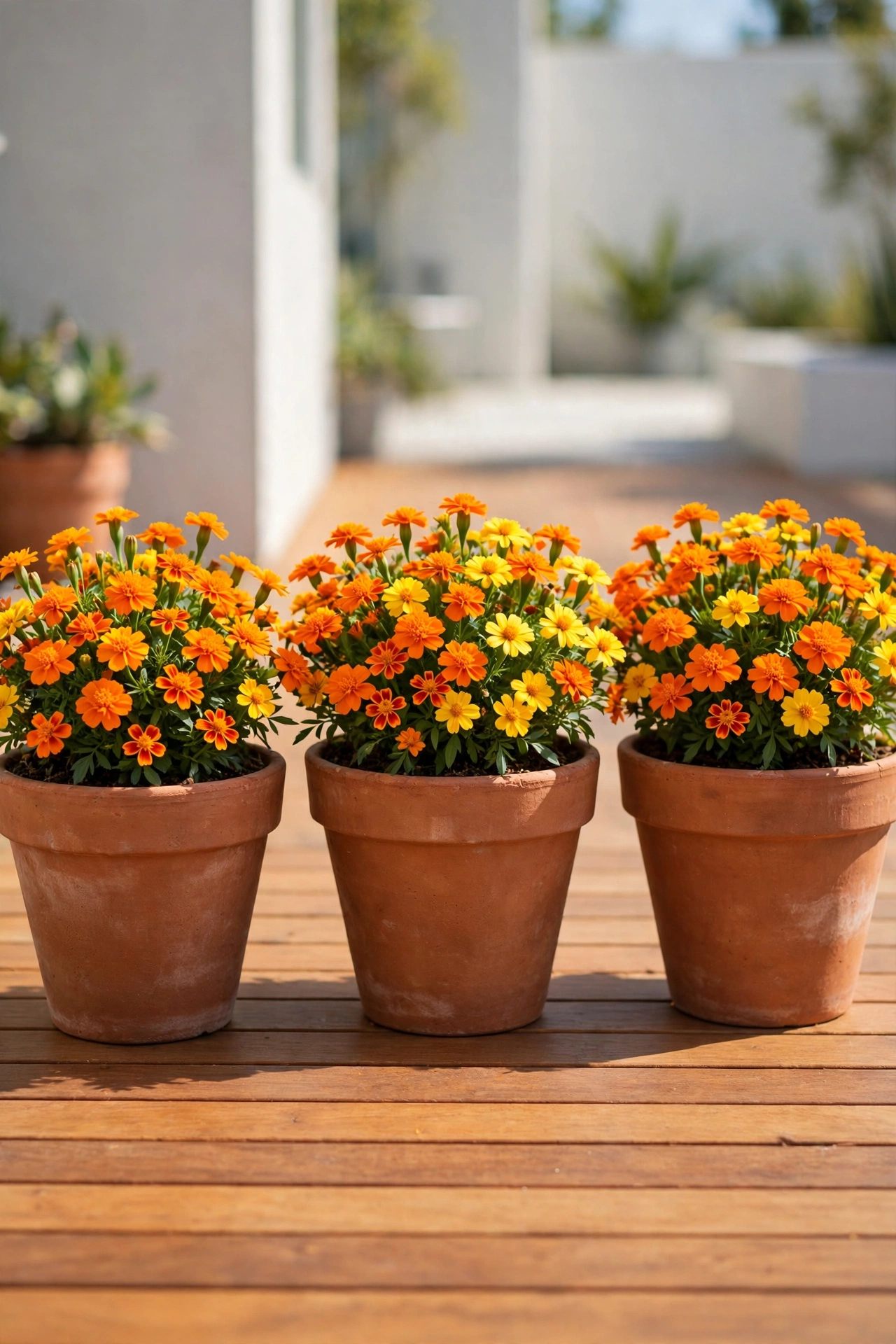
Signet marigolds and pot marigolds are the edible kinds, with small bright flowers that taste citrusy and slightly tangy. They are often confused with French marigolds, which are grown for display and are not meant for eating, so check the variety name before you plant. Terracotta pots keep the edible kinds clearly separate from the rest of the garden.
Fill each pot to the top with potting soil and place three or four plants in each one so the pots look full at once. Set the pots on a sunny patio or along the kitchen steps where you can snip flowers while you cook. Water the pots daily in hot weather, and the plants will bloom until the first frost.
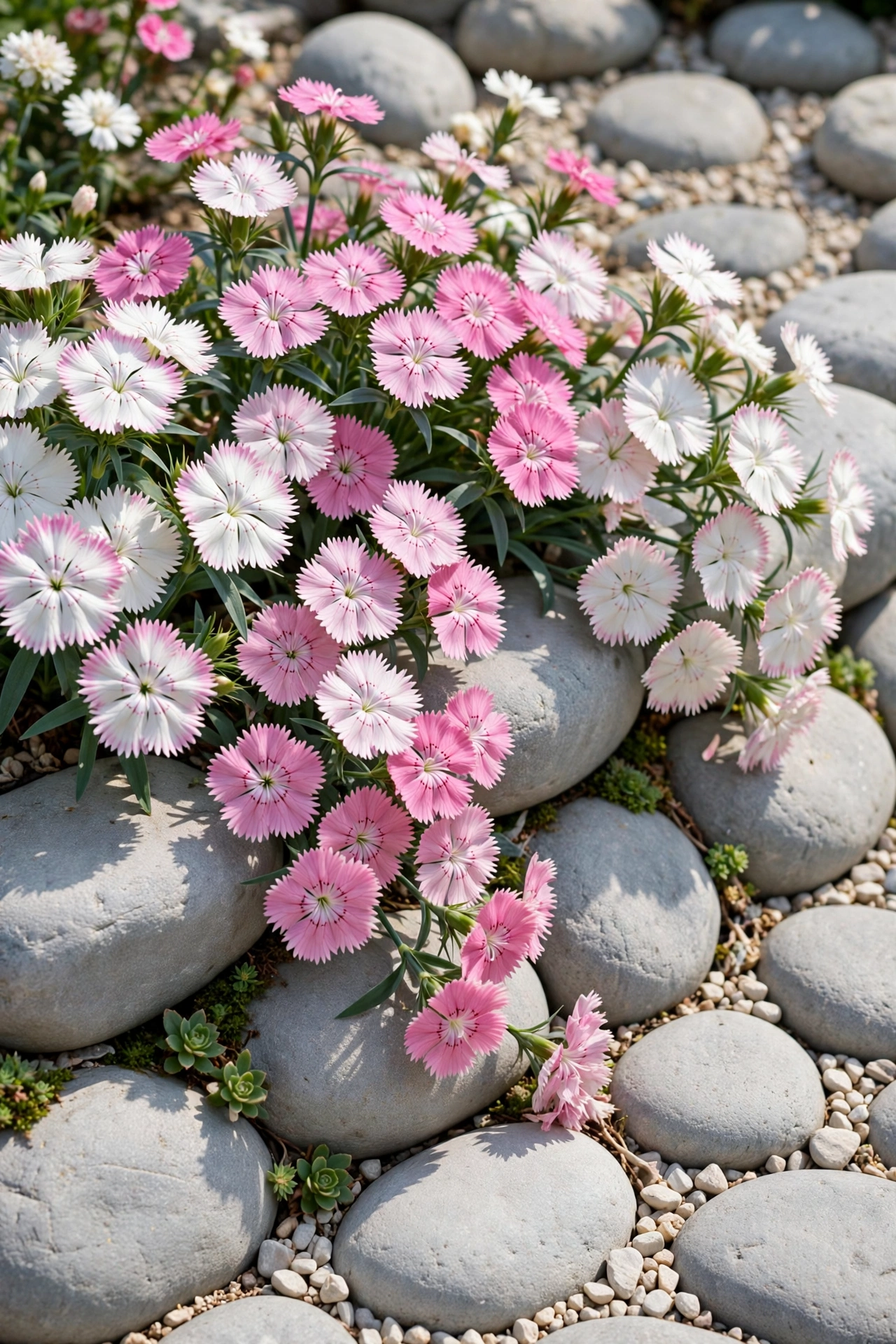
14. Grow Dianthus in a Rock Garden Edge
Dianthus, often called pinks, grows fringed flowers in pink, white, and red with a light clove scent and a mild floral taste. The petals work well as a cake decoration, and the plants thrive in the sunny, well drained soil of a rock garden. Their low, mat forming habit softens the hard edges of stone beautifully.
Tuck dianthus plants into the gaps between rocks at the front of the bed, where they can spill over the stones. Mix a little grit into the soil so water drains away quickly after rain. For more ways to shape a stone bed, these rock garden ideas will help you arrange rocks and plants into a tidy, natural looking design.
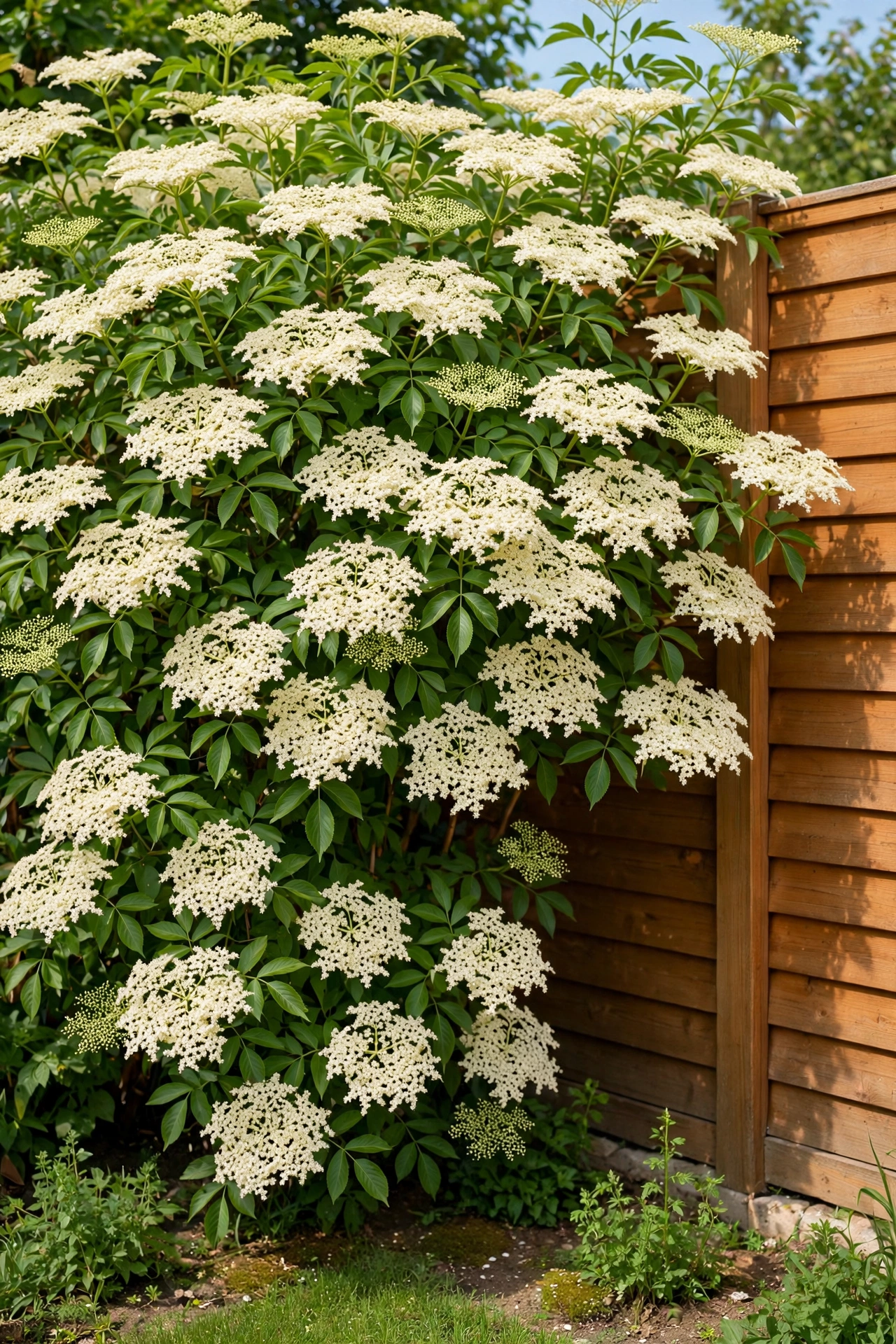
15. Plant Elderflowers Near a Garden Fence
Elderflowers grow in wide, flat clusters of tiny cream blooms with a sweet, musky scent that flavors cordials, fritters, and summer drinks. The shrub grows quickly into a large bush, so a spot near the garden fence gives it room to spread without shading smaller plants. In late summer the flowers turn into dark berries that birds love.
Plant the shrub in a sunny or lightly shaded spot with soil that stays moist. Prune it lightly each winter to keep the shape open and the flower clusters within easy reach. Pick the flower heads on a dry morning, shake them gently to remove insects, and use them the same day for the freshest flavor.
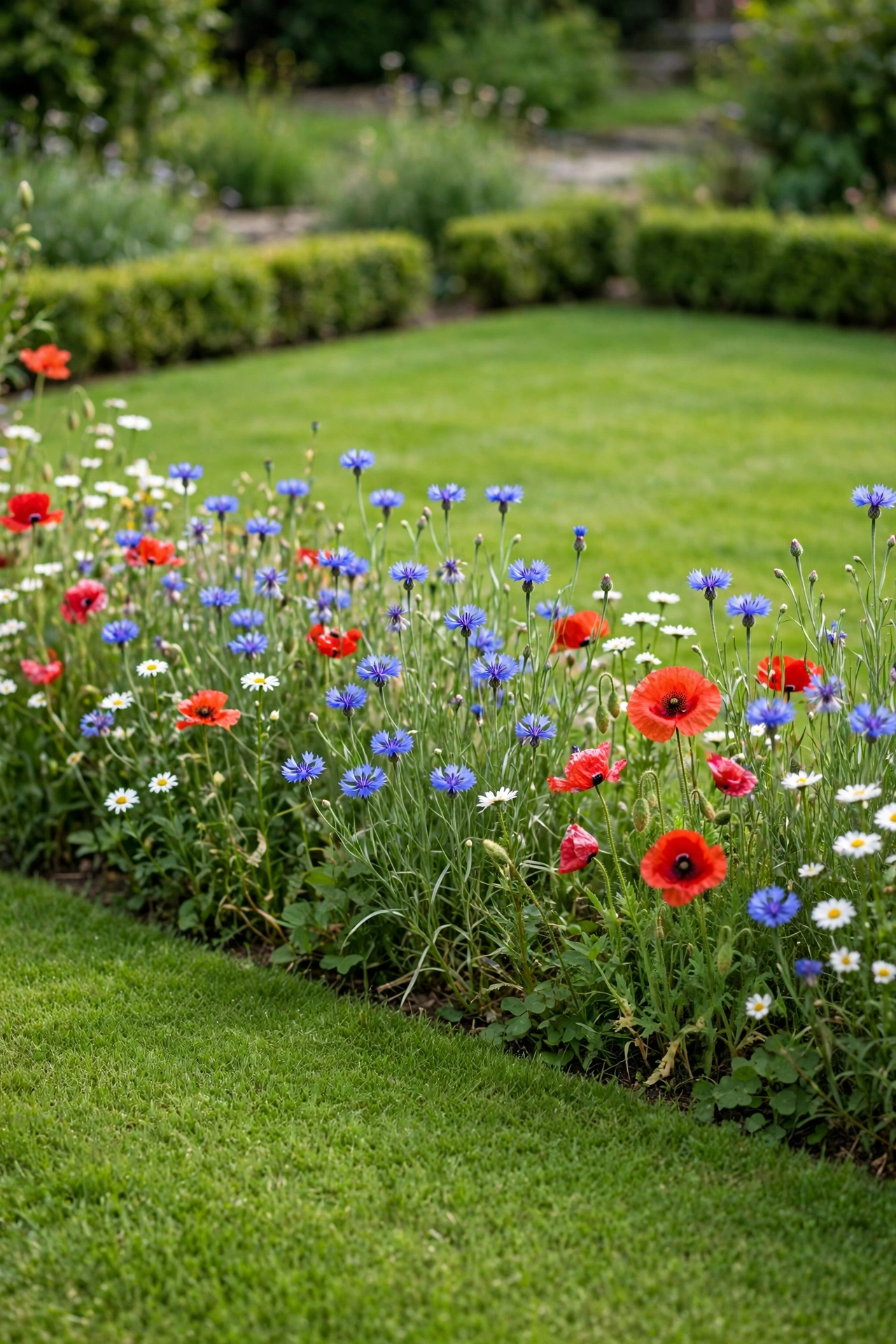
16. Sow Cornflowers in a Wildflower Meadow Strip
A wildflower meadow strip turns a narrow piece of lawn into a ribbon of color that feeds bees and fills your salad bowl. Cornflowers are the stars of the strip, with blue blooms that taste mildly sweet and look lovely on cakes. Mixed with poppies and daisies, they create a natural look that needs very little care.
Prepare the strip by removing the grass and raking the soil until it is fine and even. Scatter the seed mix thinly and press it into the soil with the back of a rake. Mow the strip once in late summer after the flowers have set seed, and the meadow will return richer each year.
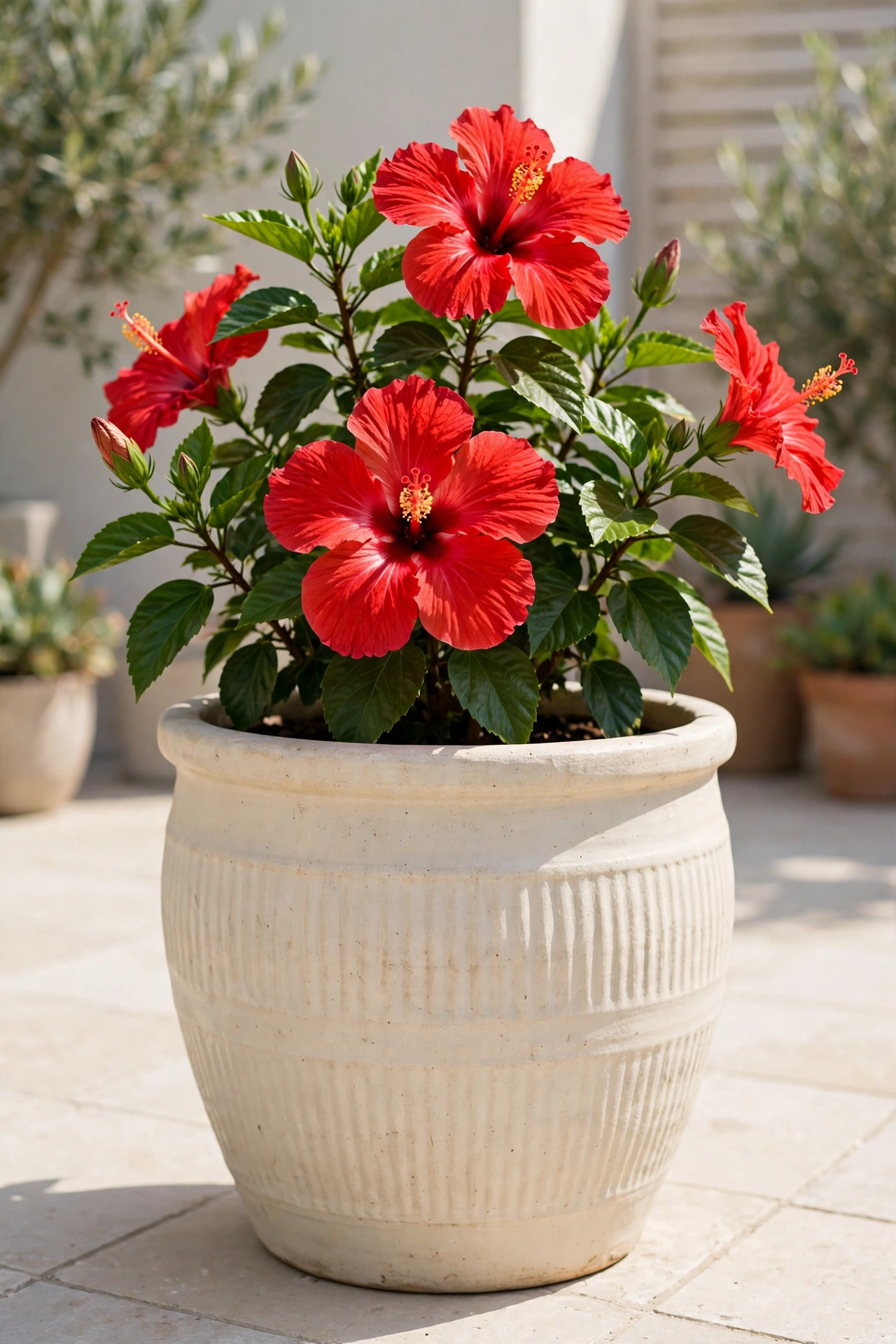
17. Grow Hibiscus in a Sunny Patio Container
Hibiscus grows large, trumpet shaped flowers in red, pink, and yellow with a tart, cranberry like flavor that suits teas and cold drinks. A large container on a sunny patio lets you grow hibiscus even in a cooler climate, since you can move the pot indoors before the first frost. The blooms open fresh each morning and last only a day.
Choose a wide, heavy pot with good drainage and fill it with rich potting soil. Place the pot where it gets at least six hours of sun, and water it often while it is in bloom. Pick the flowers in the morning, remove the center parts, and steep the petals for a ruby red tea.
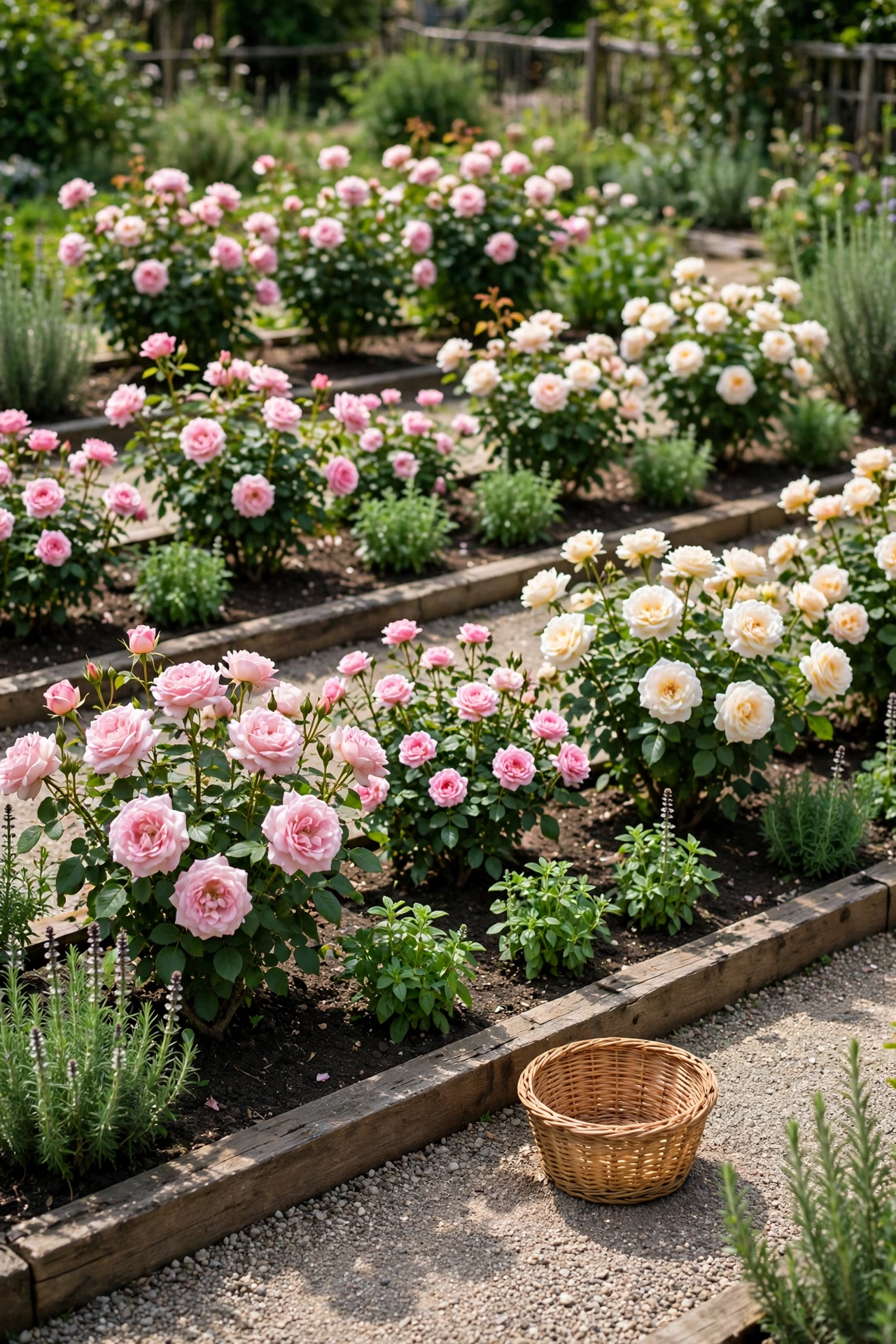
18. Plant Roses in a Cutting Garden for Petal Harvests
A cutting garden devoted to roses gives you armfuls of petals for jams, sugars, and summer desserts. Choose fragrant shrub roses and old garden roses, since modern bedding roses are often bred for looks and carry little scent. A dedicated bed makes it easy to grow roses without any sprays, so every petal is safe to eat.
Plant the roses in rows with wide paths between them so you can reach every bush with a basket. For help choosing varieties and planning the layout, these rose garden layout ideas show how to arrange roses for easy picking and a beautiful display. Prune the bushes in early spring, and feed them with compost to keep the blooms coming.
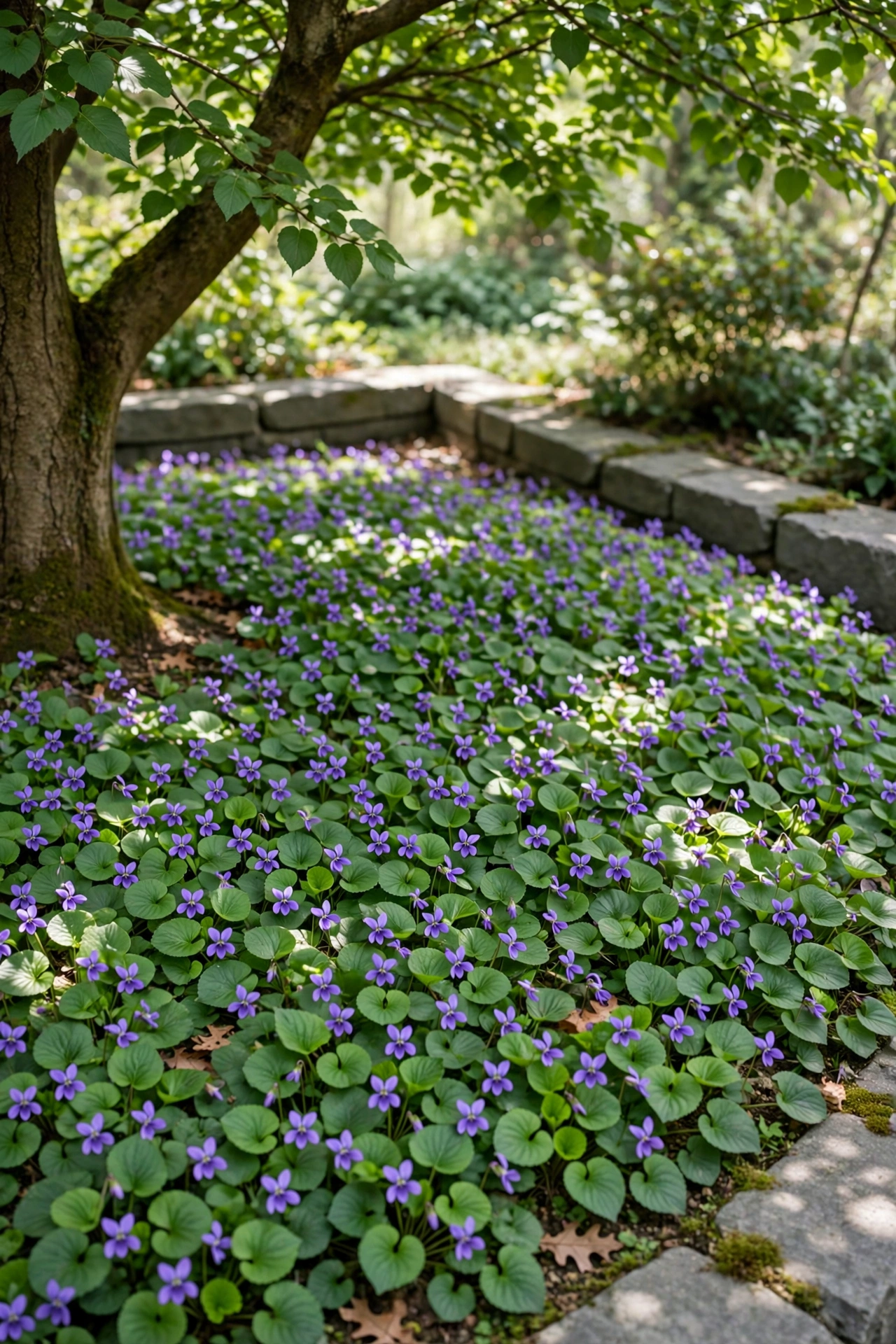
19. Add Violets to a Shady Garden Corner
Sweet violets grow tiny purple flowers with a delicate, perfumed flavor that suits crystallized decorations, syrups, and spring salads. They love shade and moist soil, so a dark corner under a tree or beside a north wall is the perfect place for them. The heart shaped leaves spread into a soft green carpet that stays tidy all year.
Plant violets in soil enriched with leaf compost, and keep the corner watered through dry spells. Pick the flowers in the morning when their scent is strongest, and use them fresh or press them between paper for later use. Leave some flowers to set seed, and the patch will spread gently into a larger carpet each spring.
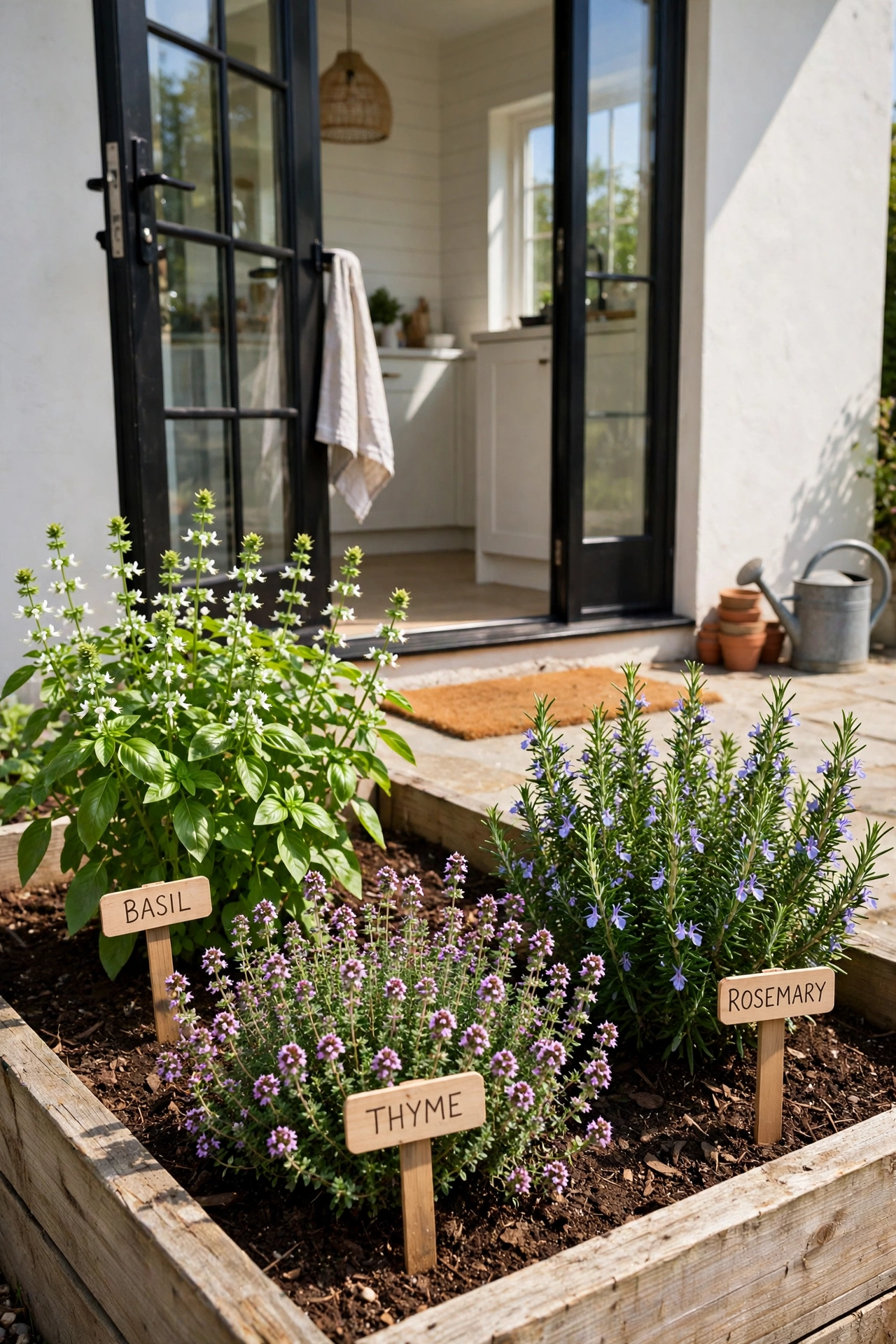
20. Let Basil, Thyme, and Rosemary Bloom in a Kitchen Garden
Herb flowers are often overlooked, but basil, thyme, and rosemary all produce small edible blooms that carry a gentle version of the leaf flavor. Basil flowers taste mildly of anise, thyme flowers taste warm and herbal, and rosemary flowers add a pine like note to roasted dishes. Letting a few plants flower also feeds the bees that visit your kitchen garden.
Plant the herbs in a sunny bed near the kitchen door, and let one plant of each kind flower while you keep harvesting leaves from the others. Snip the flower spikes and sprinkle the tiny blooms over salads, pasta, and grilled vegetables. Cut the plants back after flowering, and they will send out fresh leafy growth.
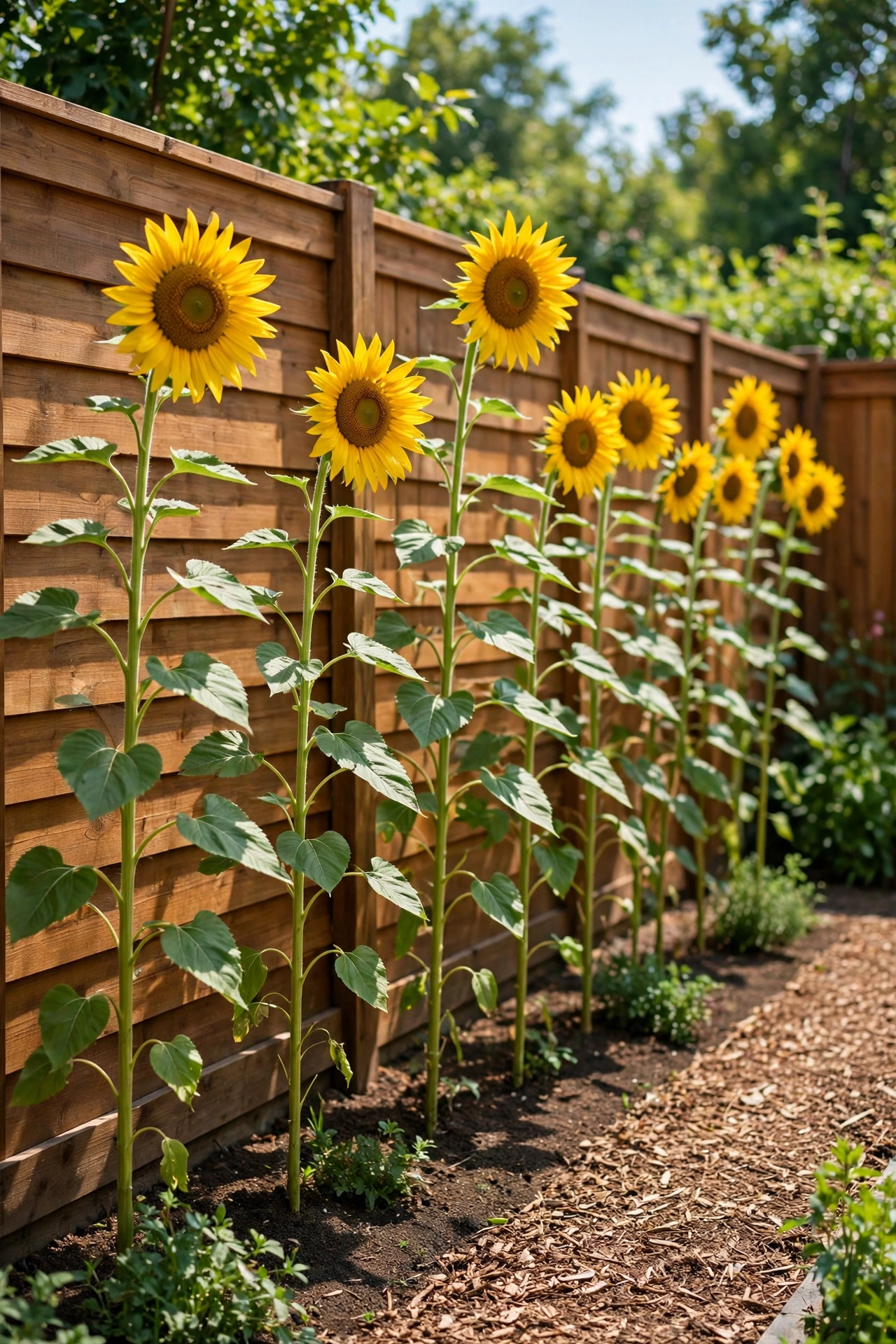
21. Plant Sunflowers With Edible Petals Along a Fence
Sunflower petals are mild and slightly nutty, and they make a cheerful garnish for salads and summer platters. Tall sunflowers planted along a fence create a golden wall that shelters smaller plants from wind and gives the garden a sunny backdrop. The heads later fill with seeds that you can roast or leave for the birds.
Sow the seeds directly beside the fence in late spring, once the soil has warmed. Water the young plants well and tie the stems to the fence if the site is windy. Pick a few outer petals from each head for the table, and leave the center of the flower to ripen into seeds.
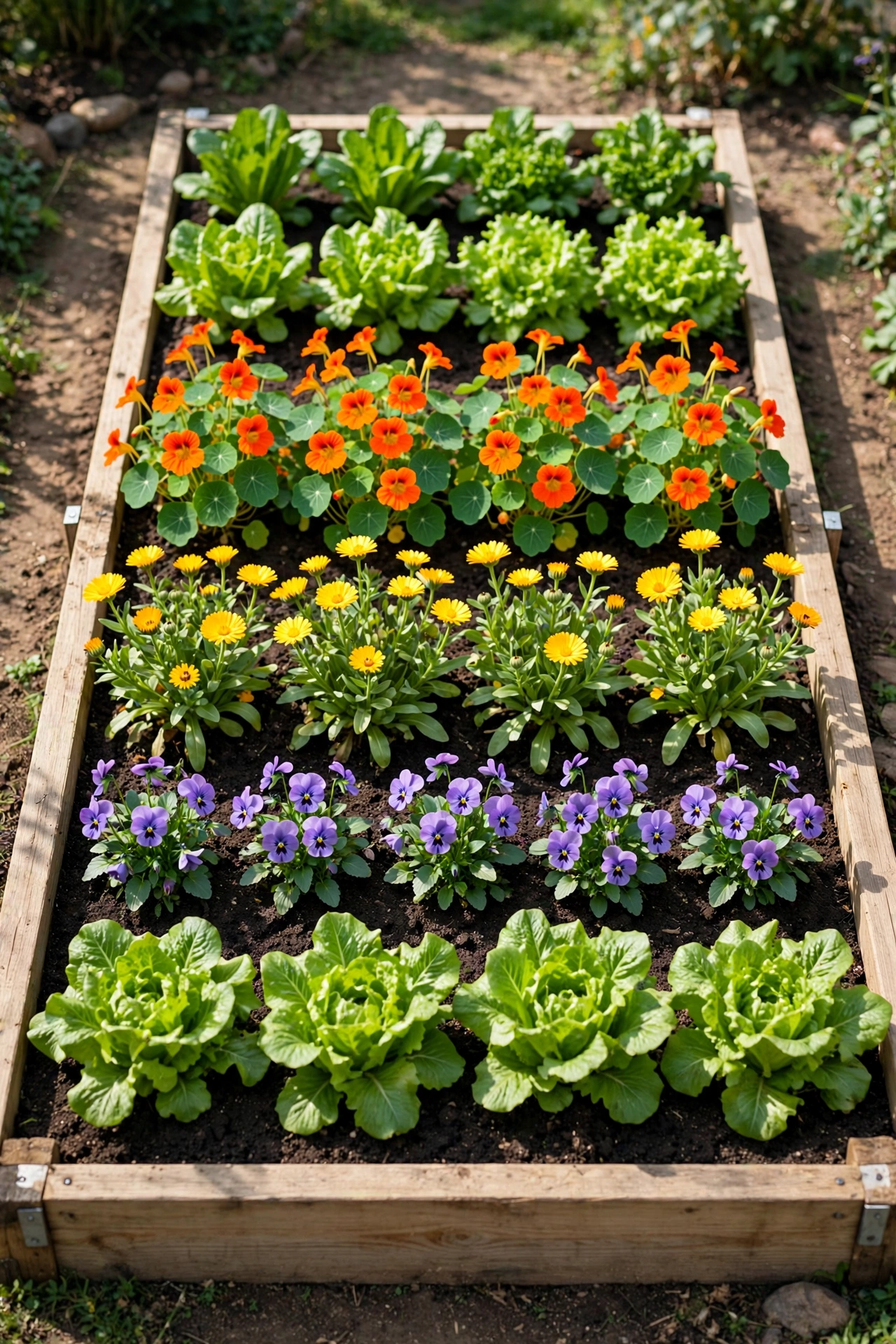
22. Create a Salad Garden With Mixed Edible Blooms
A salad garden that mixes edible flowers with lettuce, radishes, and herbs gives you a complete bowl from one small bed. Nasturtiums, calendula, violas, and borage all grow happily beside salad leaves, and their colors turn an ordinary green salad into a celebration. The flowers also attract pollinators that improve the whole bed.
Divide the bed into short rows and alternate flowers with salad crops so every row has a splash of color. Sow new seeds every few weeks so fresh leaves and blooms keep coming all season. Harvest in the morning with a basket and scissors, and wash the flowers gently just before serving.
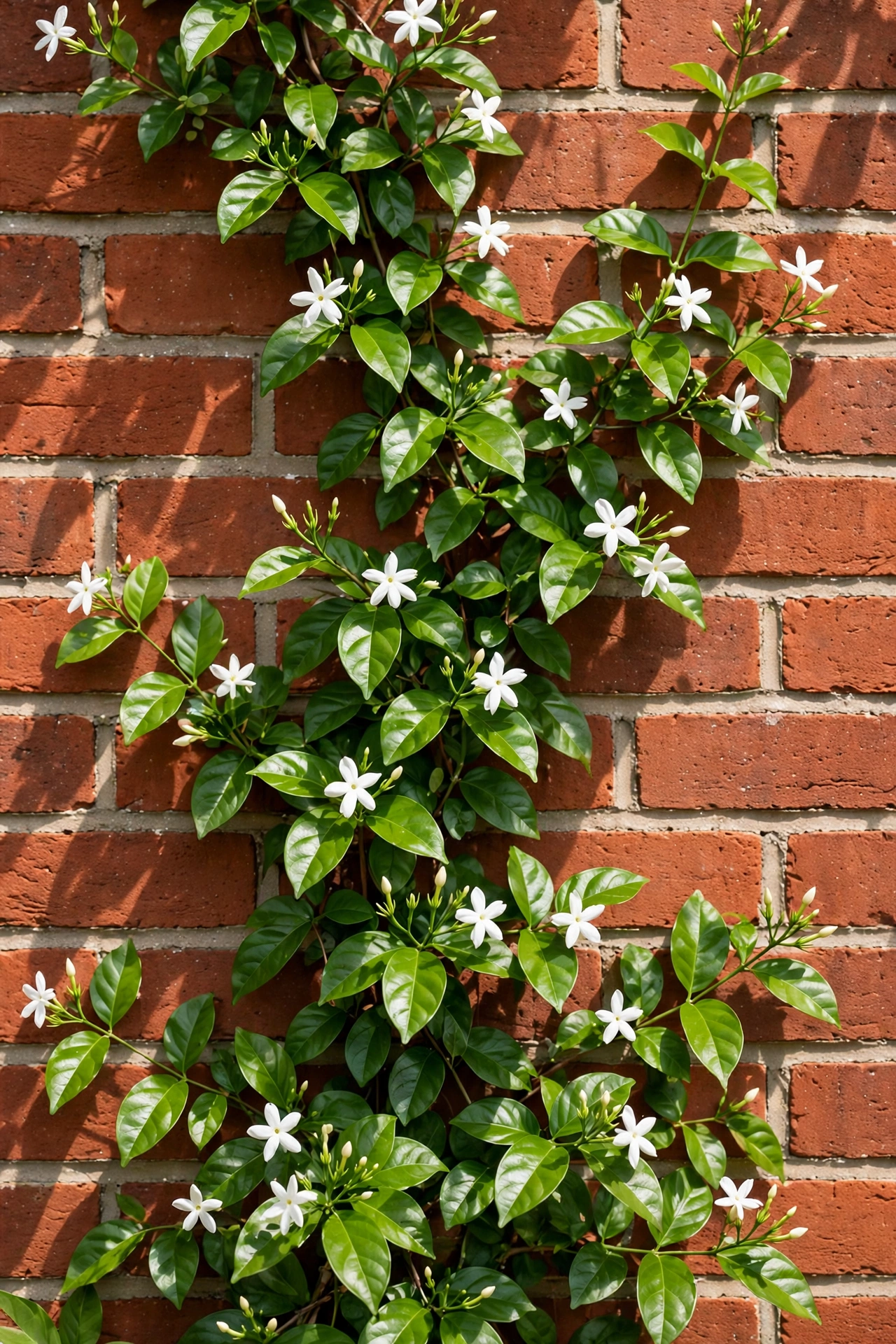
23. Grow Jasmine on a Warm South Wall
Jasmine flowers are small, starry, and intensely fragrant, with a sweet flavor that suits teas, rice dishes, and desserts. A jasmine vine on a warm south wall grows quickly and covers the bricks with glossy leaves and white blooms through the summer. The scent drifts through open windows on warm evenings.
Fix strong wires or a trellis to the wall and tie the young stems to the support as they grow. Water the plant well in dry weather and prune it lightly after flowering to keep it tidy. Pick the open flowers in the evening when the fragrance is strongest, and dry them for homemade jasmine tea.
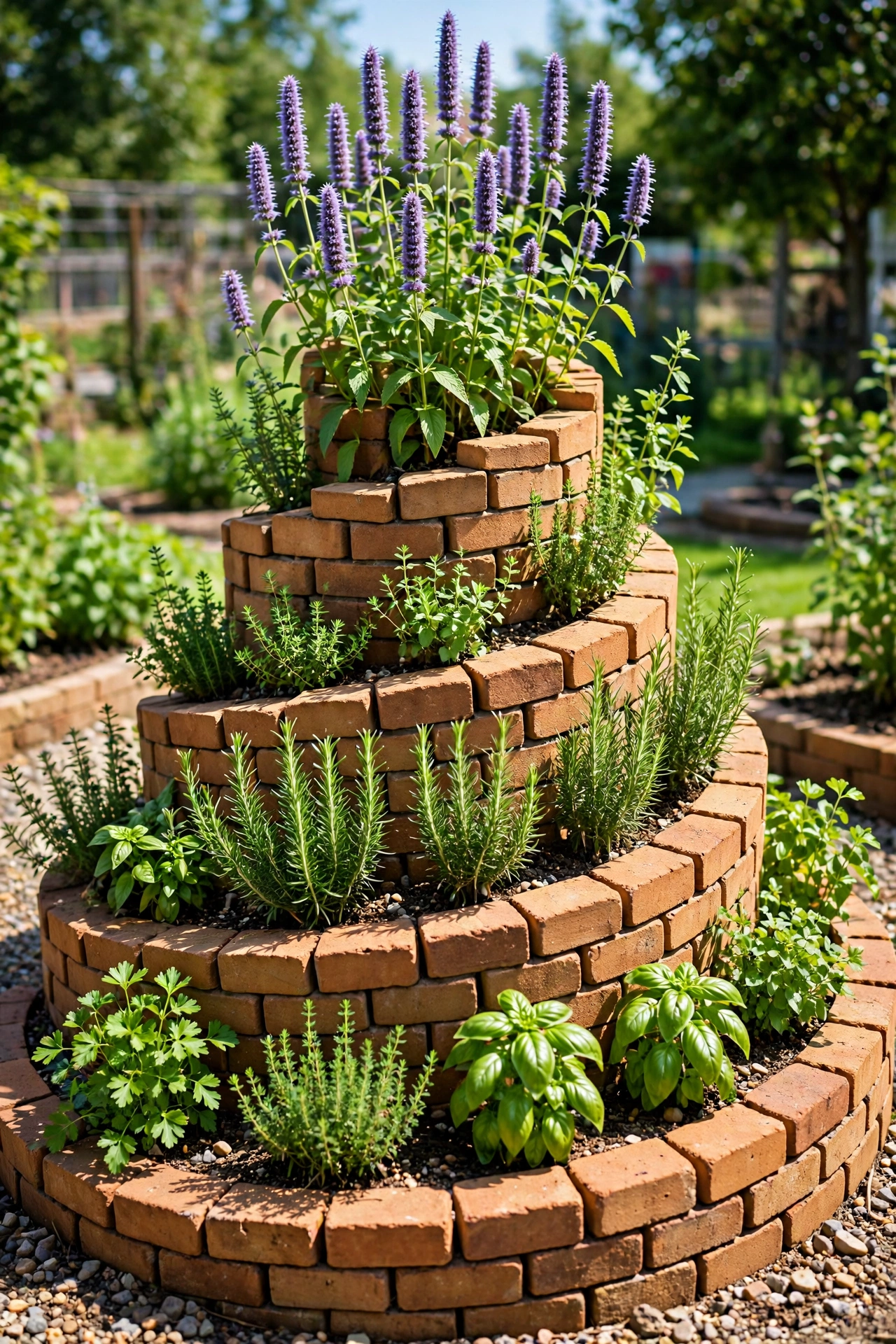
24. Plant Anise Hyssop in a Herb Spiral
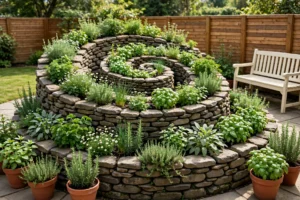
Anise hyssop grows tall spikes of purple flowers with a sweet licorice flavor that suits teas, fruit salads, and baked goods. A herb spiral is a raised, coiled bed that gives each plant its own microclimate, and anise hyssop loves the sunny, well drained top of the spiral. The flowers draw bees from across the whole garden.
Build the spiral with bricks or stones in a sunny spot, and fill the center with gritty soil. Plant anise hyssop near the top where the soil stays driest, and place thirstier herbs lower down. Cut the flower spikes for tea as they open, and leave a few to set seed for next year.
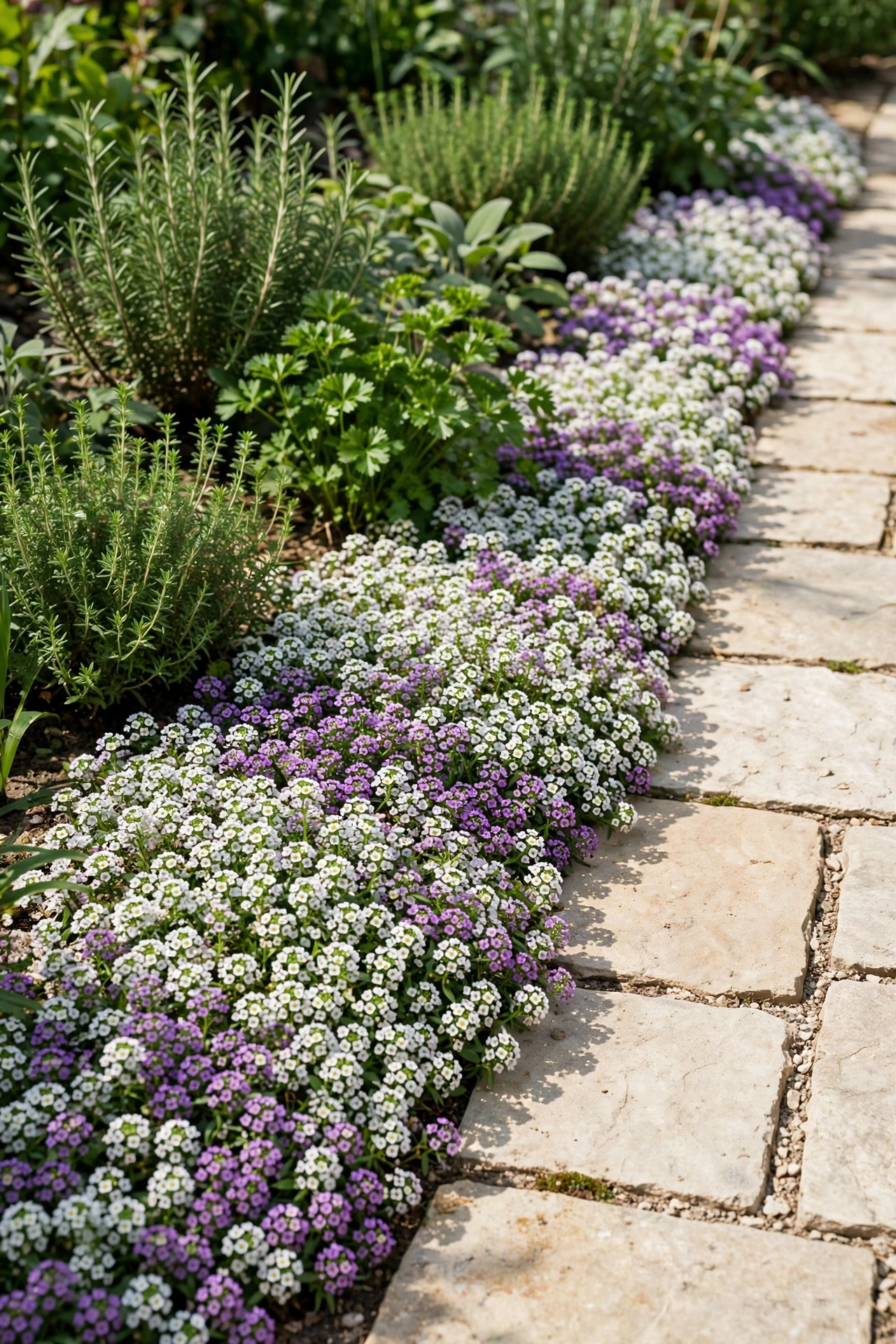
25. Sow Sweet Alyssum as a Living Garden Edge
Sweet alyssum forms a low carpet of tiny white, pink, and purple flowers with a mild honey flavor and a gentle scent. It works beautifully as a living edge along paths and beds, where it softens the border and fills every gap with blooms. The flowers also attract hoverflies that eat aphids, which helps keep the garden healthy.
Scatter the seeds along the edge of the bed in spring and press them lightly into the soil. Water the edge often until the plants are established, and shear the carpet back once in midsummer to encourage a fresh flush of flowers. The edge will bloom again in autumn and often survives a mild winter.
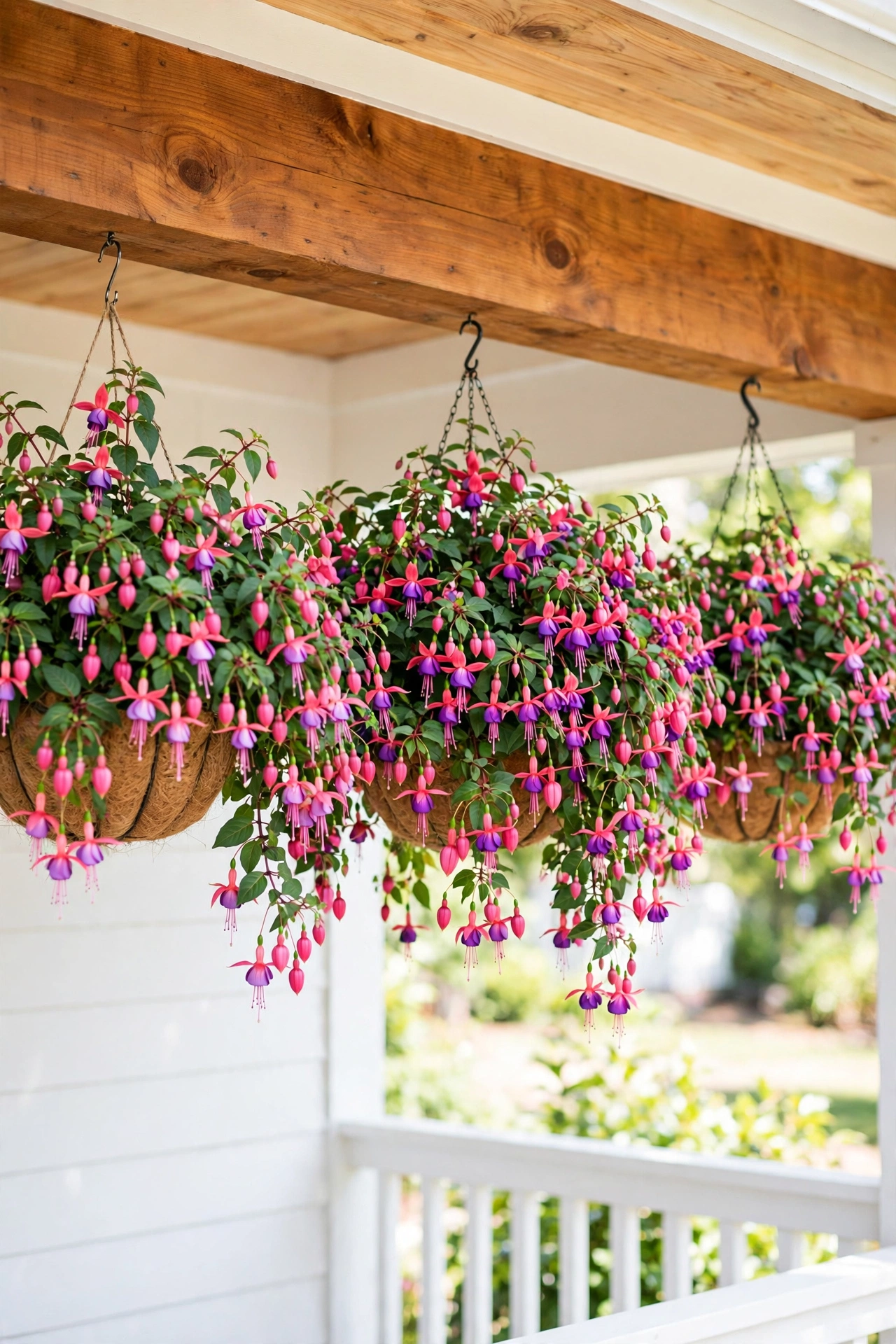
26. Grow Fuchsia in Hanging Baskets
Fuchsia flowers are elegant, dangling blooms in pink, purple, and red with a mild, slightly tart flavor. The berries that follow the flowers are edible too, with a sweet, grape like taste. Hanging baskets show off the drooping flowers best, since the blooms hang below the leaves where you can see them from underneath.
Fill each basket with rich potting soil and plant three fuchsias in each one so the basket looks full quickly. Hang the baskets in a spot with morning sun and afternoon shade, and water them daily in warm weather. Pick the flowers and berries often, and the plants will keep blooming until autumn.
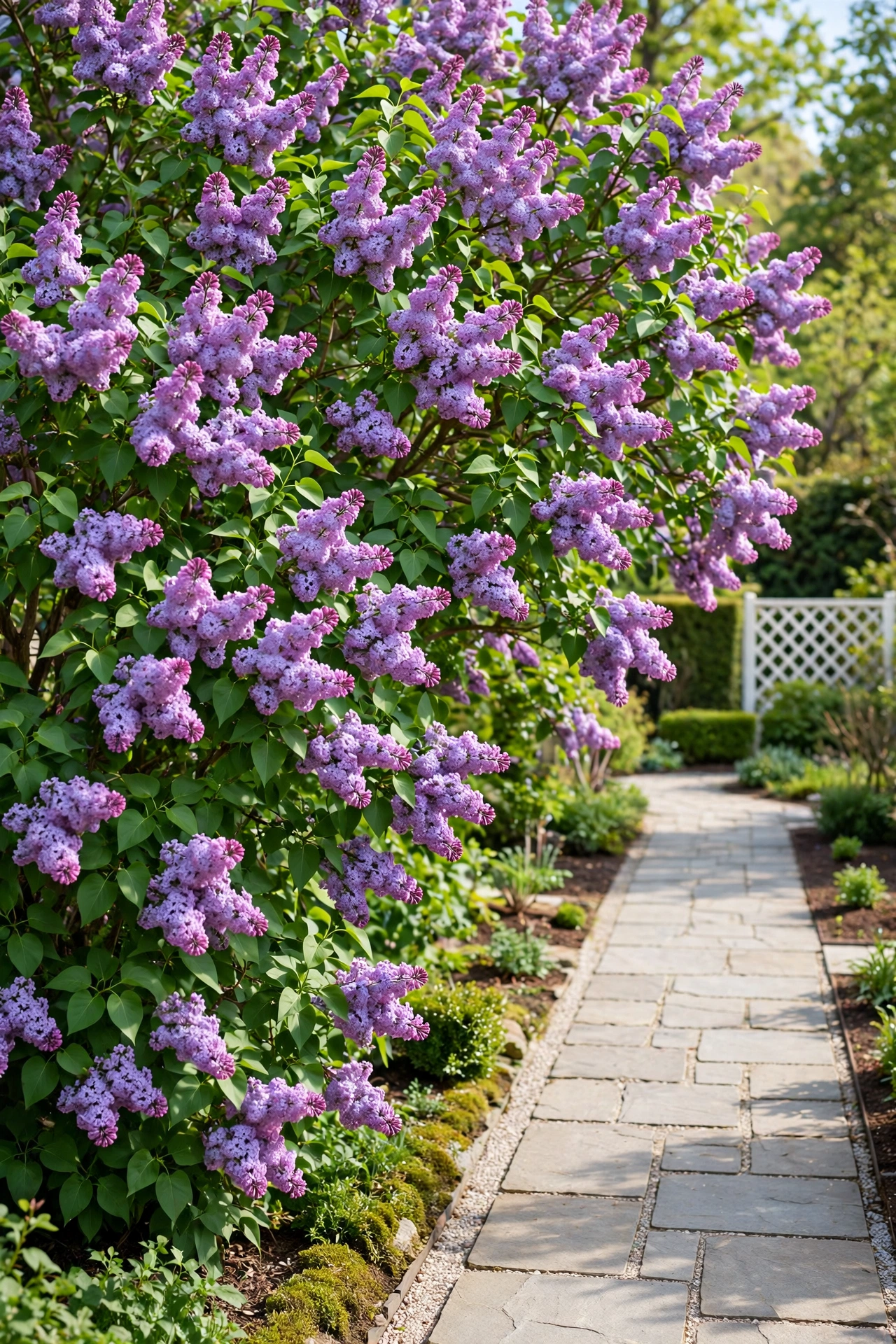
27. Plant Lilac Bushes for Spring Blossom Harvests
Lilac blooms are fragrant clusters of purple, pink, and white flowers with a floral, slightly lemony flavor that suits syrups, sugars, and spring desserts. A lilac bush is a long lived garden plant that needs little care once established, and it fills the whole garden with scent for two or three weeks each spring. The harvest window is short, so plan to gather the blooms at their peak.
Plant lilacs in a sunny spot with soil that drains well, and give each bush room to grow wide. Prune the bushes right after flowering, since the buds for next year form during the summer. Pick the flower clusters on a dry morning, remove the small green stems, and use the blooms the same day.
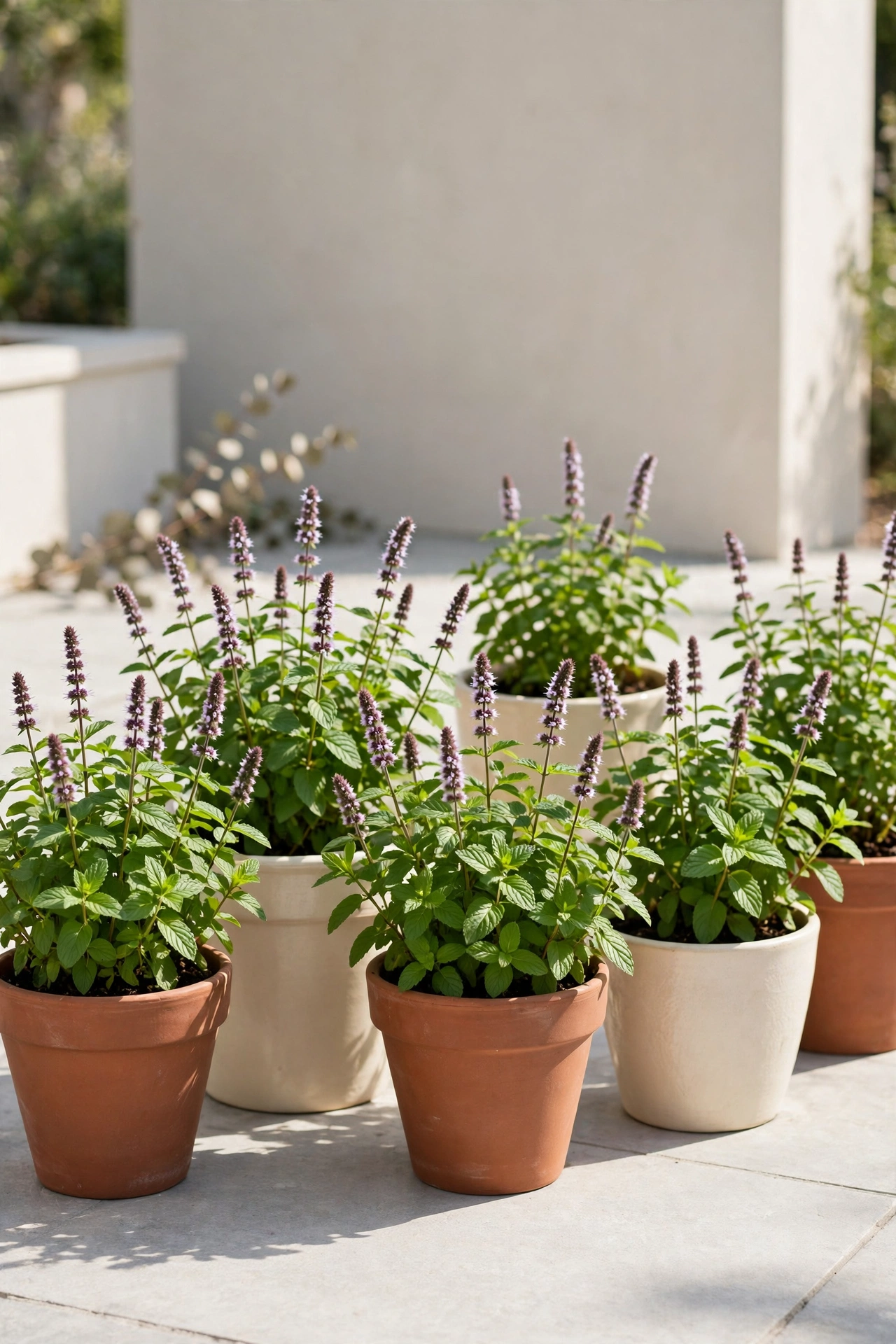
28. Add Mint Flowers to a Container Herb Garden
Mint flowers are tiny purple or white blooms that carry the cool flavor of the leaves in a gentler form. They suit teas, fruit salads, and summer drinks, and they appear in midsummer when the plants are at their most vigorous. Growing mint in containers keeps the roots from spreading through the whole garden.
Plant each mint variety in its own container filled with rich soil, and place the pots in a sunny or lightly shaded spot. Water the containers often, since mint likes moist soil. Snip the flower spikes as they open, and cut the plants back hard after flowering to encourage fresh, leafy growth.
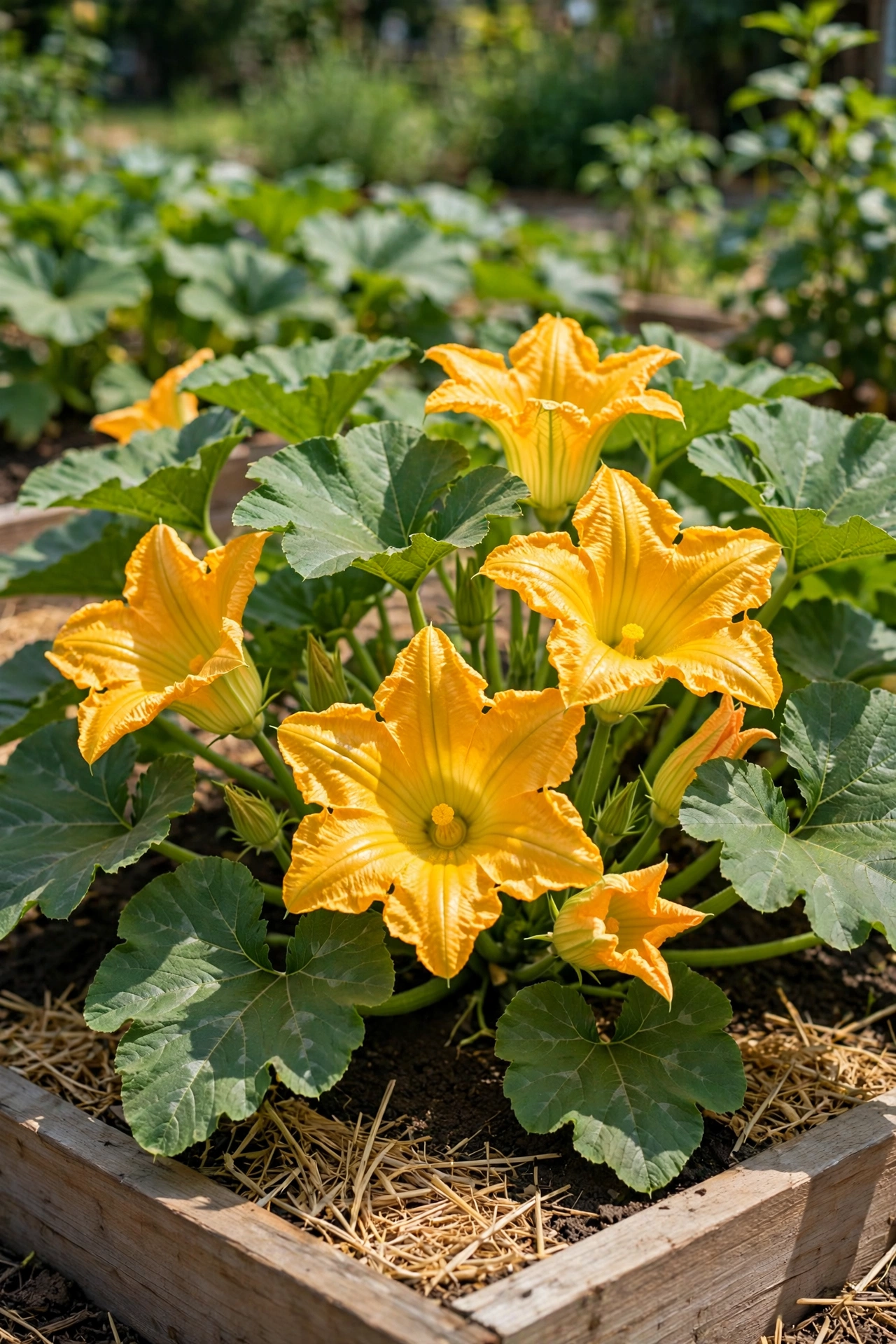
29. Grow Squash Blossoms in a Sunny Vegetable Patch
Squash blossoms are large, golden flowers with a delicate flavor that suits stuffing, frying, and fresh salads. The plants produce far more male flowers than the vine needs, so you can pick plenty of blooms without reducing the harvest of squash. A sunny vegetable patch with rich soil is all they need to thrive.
Sow the seeds in warm soil after the last frost, and give each plant generous space to spread. Pick the male flowers in the morning, when they stand open and fresh, and leave the female flowers with their small fruit behind them. Use the blossoms the same day, since they wilt quickly once picked.
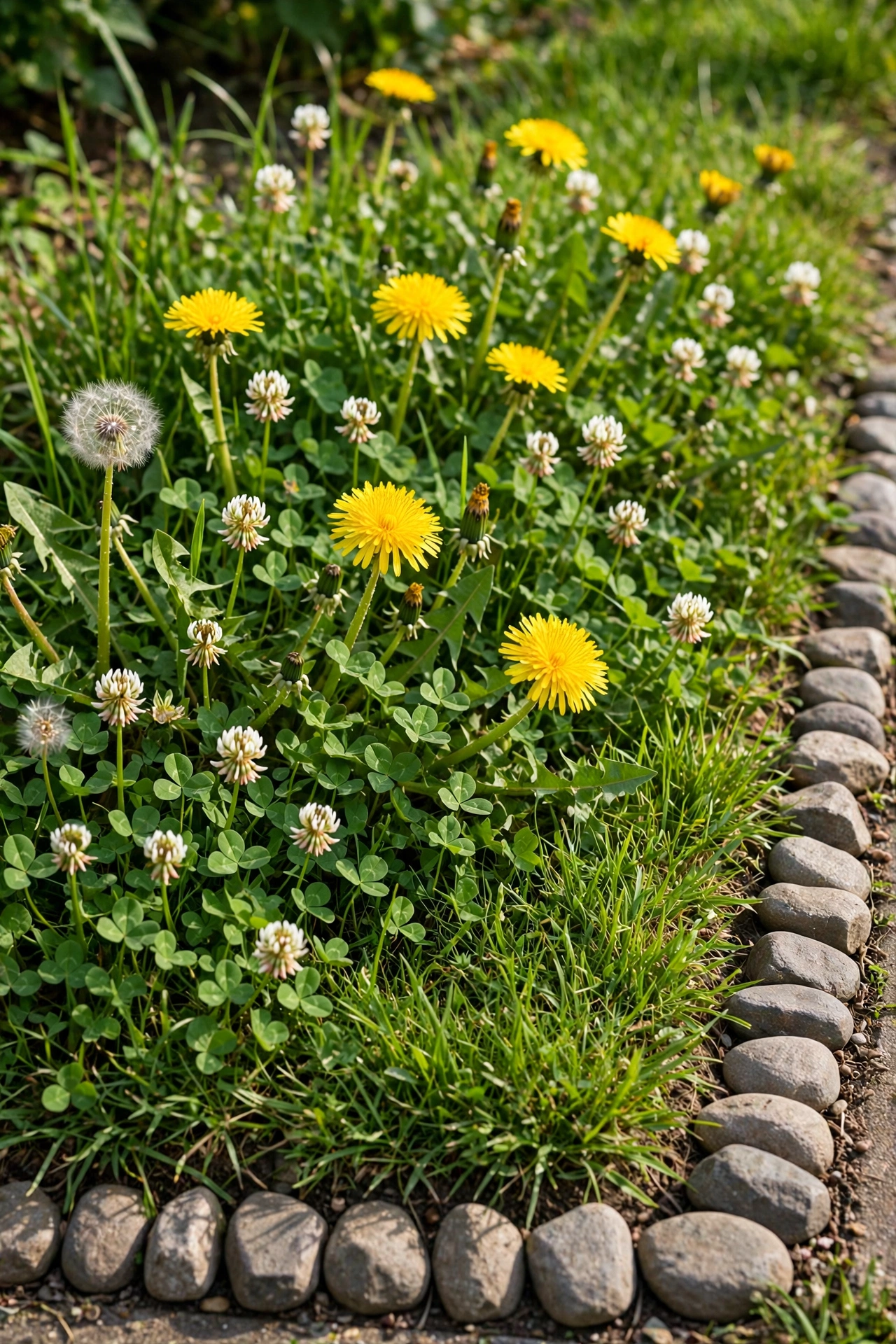
30. Let Dandelions Bloom in a Wild Lawn Corner
Dandelion flowers are bright yellow blooms with a mild, honey like flavor that suits fritters, syrups, and spring salads. A wild corner of the lawn left unmown gives dandelions a safe place to bloom, and the flowers feed early bees when little else is in flower. Choose a corner that has never been sprayed with weed killer.
Mark the wild corner with a low border of stones so the mower stays clear of it in spring. Pick the open flowers on a dry morning and use only the yellow petals, leaving the green base behind. Mow the corner once in early summer after the flowers have set seed, and the patch will bloom again next spring.
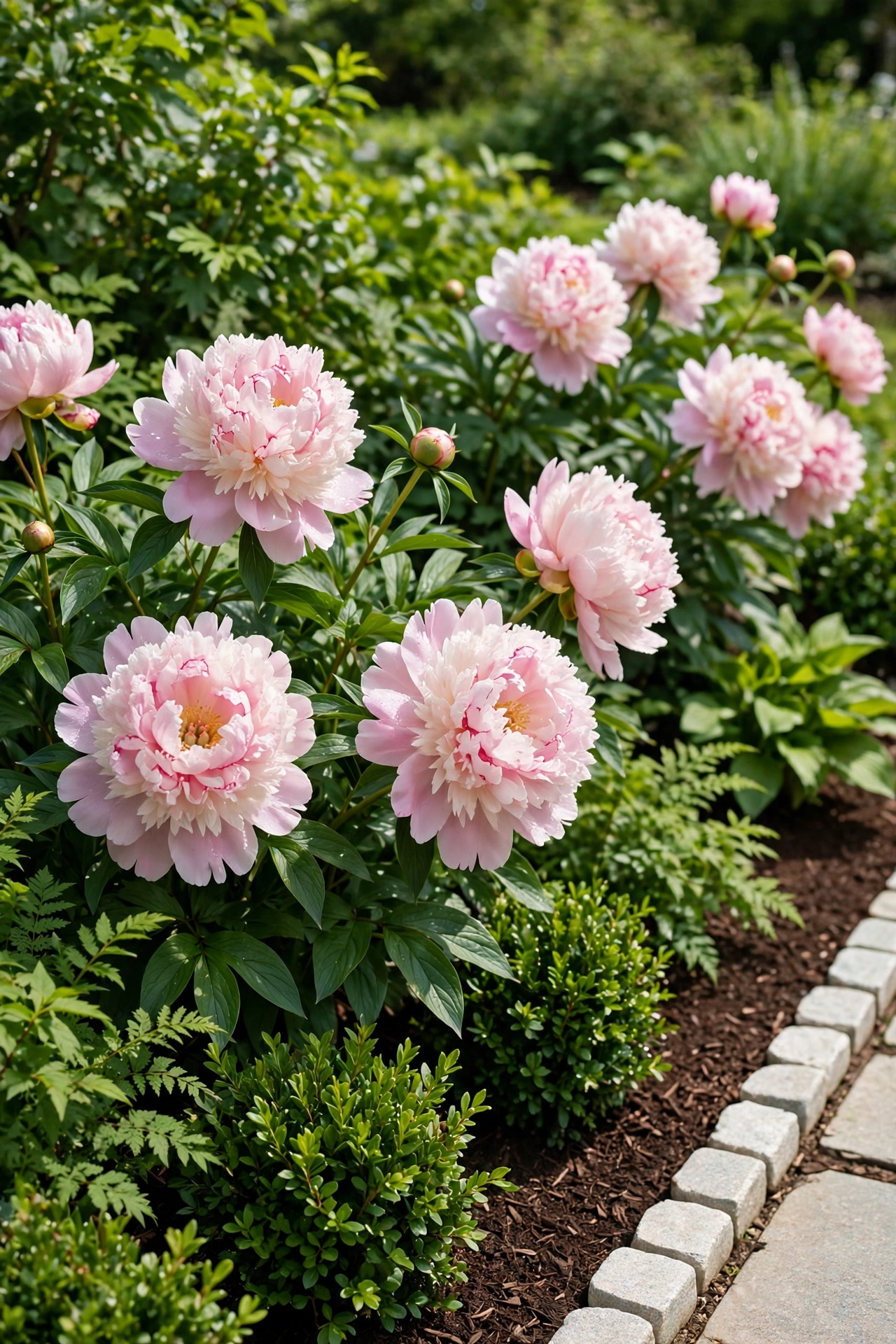
31. Plant Peonies for Blush Petal Harvests
Peony petals are large, soft, and blush pink, with a sweet floral flavor that suits syrups, salads, and cake decorations. The plants grow into generous bushes that return every year with bigger blooms, and they ask for very little care once established. A peony border is one of the most beautiful edible flower plantings you can grow.
Plant peonies in a sunny spot with deep, fertile soil, and set the buds just below the surface. Support the heavy flower heads with a low ring or a few stakes so they do not flop after rain. Pick the petals from fully open flowers, and leave the center of each bloom so the plant can finish its season gracefully.
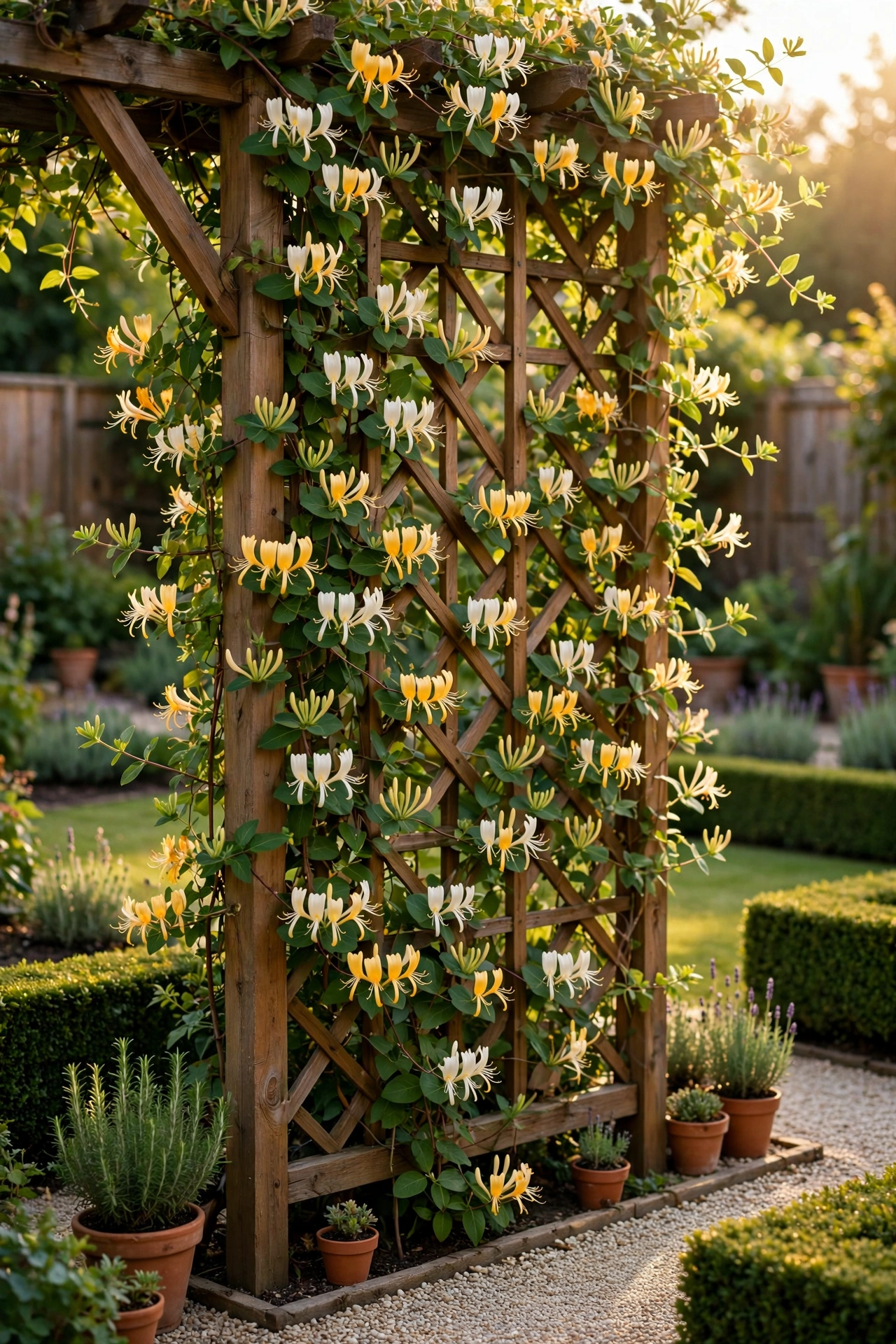
32. Train Honeysuckle Over a Garden Trellis
Honeysuckle flowers are tubular blooms in cream, pink, and gold with a sweet nectar that flavors teas, syrups, and desserts. The vine grows quickly over a trellis or fence and fills the evening air with fragrance. The flowers open in waves through the summer, so the harvest lasts for months.
Set the trellis in a sunny spot with the roots shaded by low plants or a mulch layer. Tie the young stems to the frame and prune the vine lightly after the main flush of flowers. Pick the open blooms in the evening, remove the green parts, and use the flowers fresh or dried for tea.
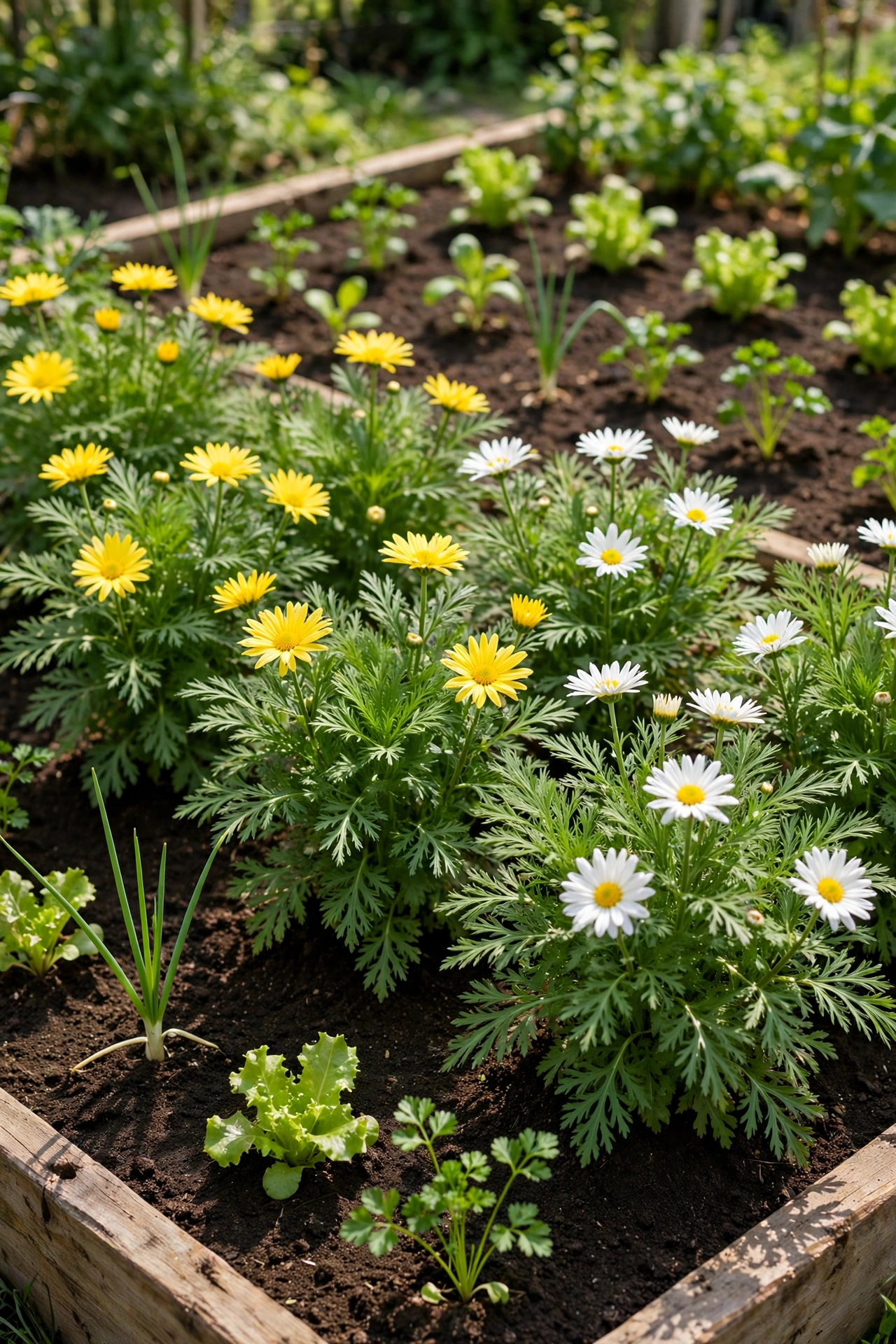
33. Grow Garland Chrysanthemums in a Vegetable Bed
Garland chrysanthemums, also called shungiku, grow cheerful yellow and white daisy flowers with a mild herbal flavor. The leaves are edible too, with a fresh taste that suits stir fries and soups. They grow quickly in a vegetable bed and bloom in late summer when many other flowers are fading.
Sow the seeds in a sunny vegetable bed in spring, and thin the seedlings so each plant has room to branch. Water the bed often in dry weather to keep the leaves tender. Pick the flowers as they open, and harvest the young leaves through the season for the kitchen.
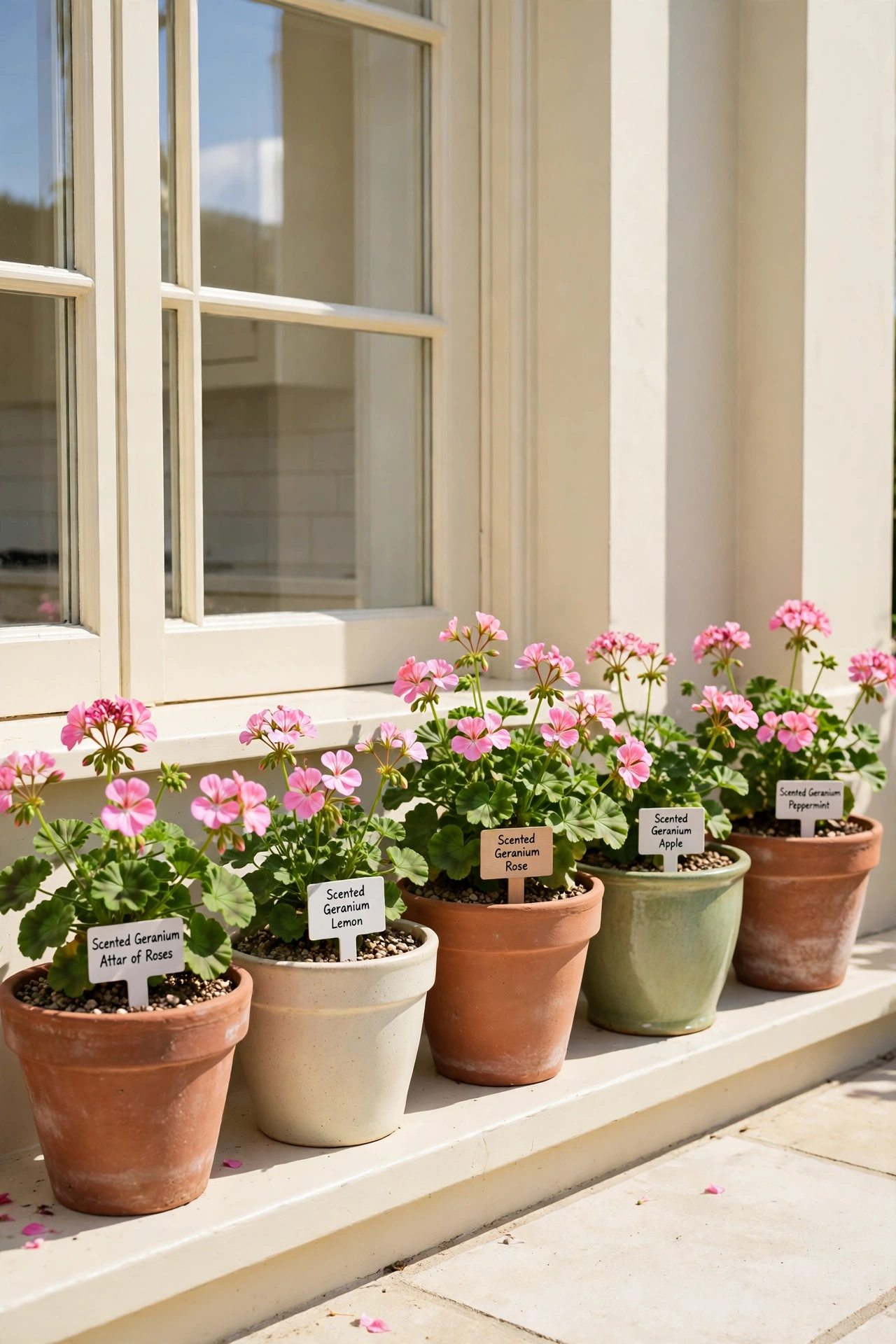
34. Pot Scented Geraniums for Kitchen Windows and Patios
Scented geraniums grow small flowers and fragrant leaves in rose, lemon, mint, and apple scents, and both the flowers and leaves are edible. They are tender plants, so pots let you keep them on a sunny patio in summer and move them to a kitchen window in winter. The leaves flavor sugars, cakes, and teas with very little effort.
Fill each pot with free draining potting soil and place one plant in each pot so the scent stays true to its variety. Add a readable plant label to every pot so you know which scent you are picking. Water the pots sparingly, since scented geraniums prefer soil that dries out between waterings.
Conclusion
An edible flower garden gives you beauty and flavor from the same small patch of soil. From a window box of violas to a fence of sunflowers, every idea in this list turns an ordinary garden into a place where the flowers on the plate grew a few steps from the kitchen. The best garden is the one you pick from often, so plant the flowers you love to eat and keep them close to the door.
Start with three or four easy flowers, such as nasturtiums, calendula, and violas, and add new varieties each season as your confidence grows. Keep the plants watered, pick the blooms in the morning, and always check that a flower is safe to eat before you serve it. Your garden will reward you with color, fragrance, and fresh flavors from the first warm days of spring until the last blooms of autumn.
Frequently Asked Questions About Edible Flower Garden Ideas for Beautiful Planting
Which edible flowers are easiest to grow for beginners?
Nasturtiums, calendula, violas, and borage are the easiest edible flowers for a new gardener. They sprout quickly, need little care, and bloom for months with regular picking. Start with these four, and add more varieties once you feel confident.
How do I know if a flower is safe to eat?
Grow flowers from seed or from a trusted nursery, and check the exact variety name before you eat any bloom. Never eat flowers from a florist or a garden center display, since they are often sprayed with chemicals. If you are unsure about a variety, look it up in a reliable edible flower guide before tasting it.
When is the best time to pick edible flowers?
Pick edible flowers in the morning after the dew has dried, when the blooms are fresh and fully open. Use them the same day for the best flavor and color, or store them briefly in the refrigerator between damp paper towels. Avoid picking flowers in the heat of the afternoon, when they wilt quickly.
Can I grow edible flowers in containers on a patio?
Yes, pansies, violas, marigolds, hibiscus, and scented geraniums all grow well in pots and window boxes. Fill each container to the top with good potting soil, water it often, and place it where it gets at least four hours of sun. Containers also let you move tender plants indoors before the first frost.
Do edible flowers need special soil or fertilizer?
Most edible flowers grow well in ordinary garden soil enriched with compost. Avoid strong chemical fertilizers, since they can leave residues on the petals and encourage soft, weak growth. A layer of compost each spring and regular watering are usually all your flowers need to bloom generously.

Hi, I’m Emily! I turn messy corners into cozy, organized spots. DreamNestDecor is where I share simple, practical home ideas — decor, organization, and small-space solutions that work in real life, not just in photos. Every idea here is carefully researched before it’s shared.