
Picture this: you walk into a room and your eyes travel upward, drawn to a ribbon of color running along the top of the walls. The ceiling itself is plain and white, but the trim glows in sage green, soft blue, or warm terracotta, and the whole room suddenly feels finished and full of character. That single painted line turns an overlooked edge into the prettiest detail in the room.
You do not need to repaint a whole ceiling or hire a professional to get that effect. A brush, a small tin of paint, and one free afternoon are enough to transform plain trim into a feature worth looking at. These 21 colorful ceiling trim ideas will show you how painted crown molding, trim borders, and cornice details can add unique interior details to every room in your home.
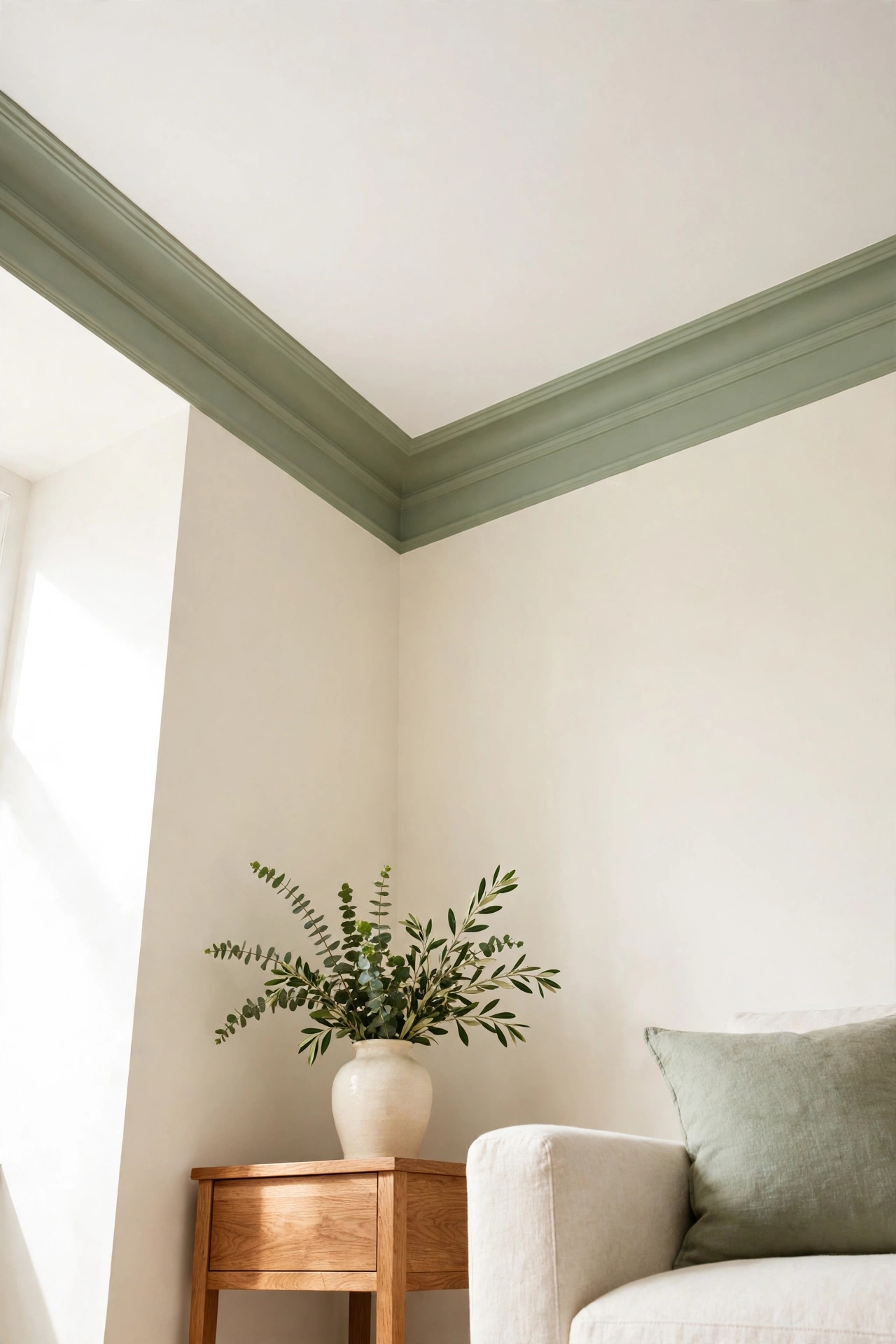
1. Paint Crown Molding Sage Green in the Living Room
Sage green crown molding softens the line where the wall meets the ceiling and gives a living room a calm, collected feeling. The muted green works beautifully with cream walls, warm wood floors, and natural linen upholstery, so the trim feels like part of the room rather than an added decoration. It is a gentle introduction to color for anyone who has always kept trim white.
Paint the molding with a satin finish so it catches the light and stands out from flat wall paint. Keep the ceiling itself white so the green line reads clearly from across the room. For more ways to plan the whole overhead look, these ceiling design ideas will help you pair your new trim color with the right lighting and room proportions.
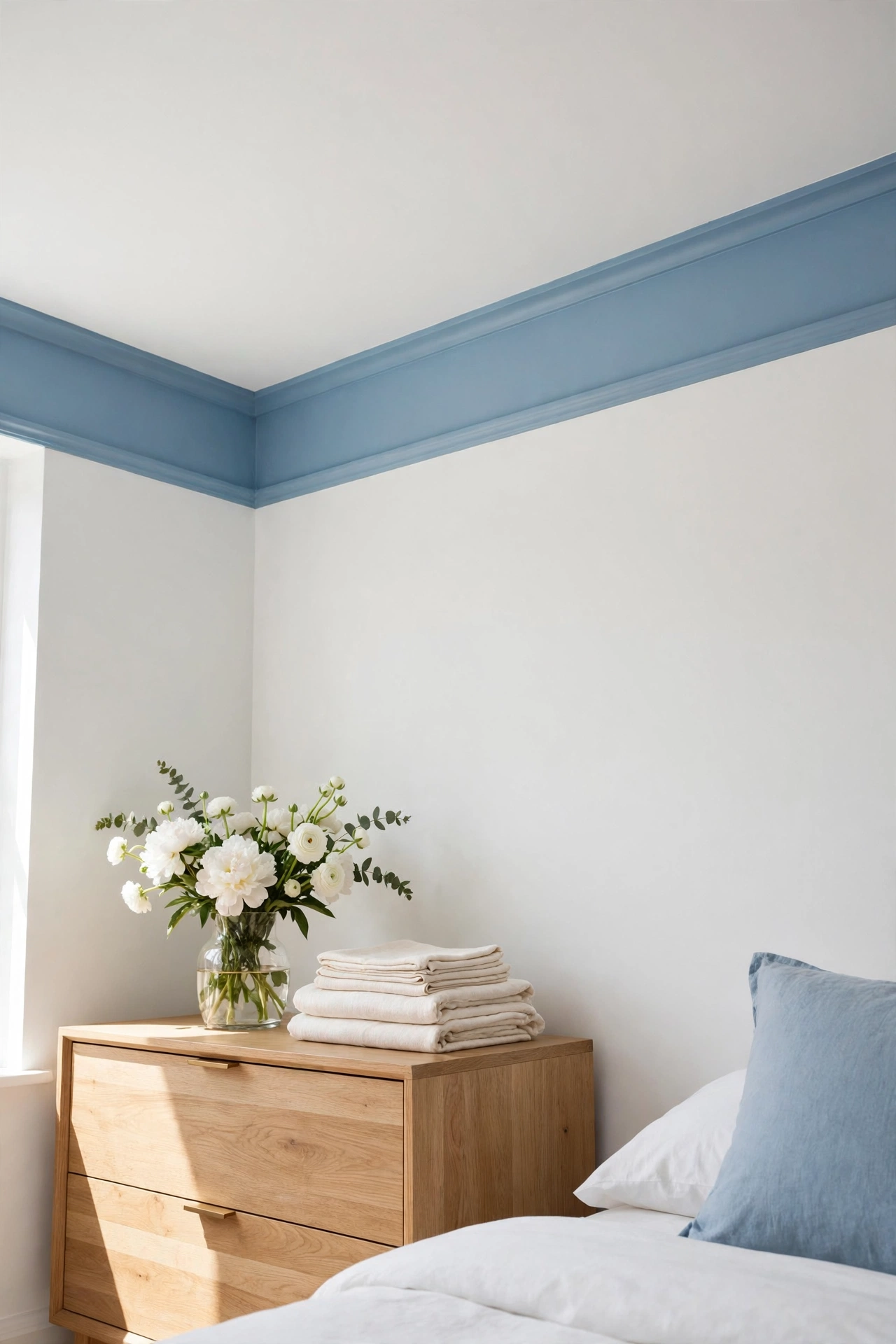
2. Add a Soft Blue Trim Border Around the Ceiling Edge
A soft blue trim border draws a clean, quiet line around the top of a room and makes the ceiling feel higher than it really is. The pale blue reads almost like sky at the edge of the room, which suits bedrooms, bathrooms, and reading corners where calm matters most. It pairs well with white walls and light wood furniture.
Use painter’s tape to keep the border edge crisp, and choose a flat or eggshell finish so the blue looks soft rather than shiny. If the room has tall windows, the blue trim will pick up the daylight and shift gently in tone through the day. This is one of the easiest trim projects to finish in a single weekend.
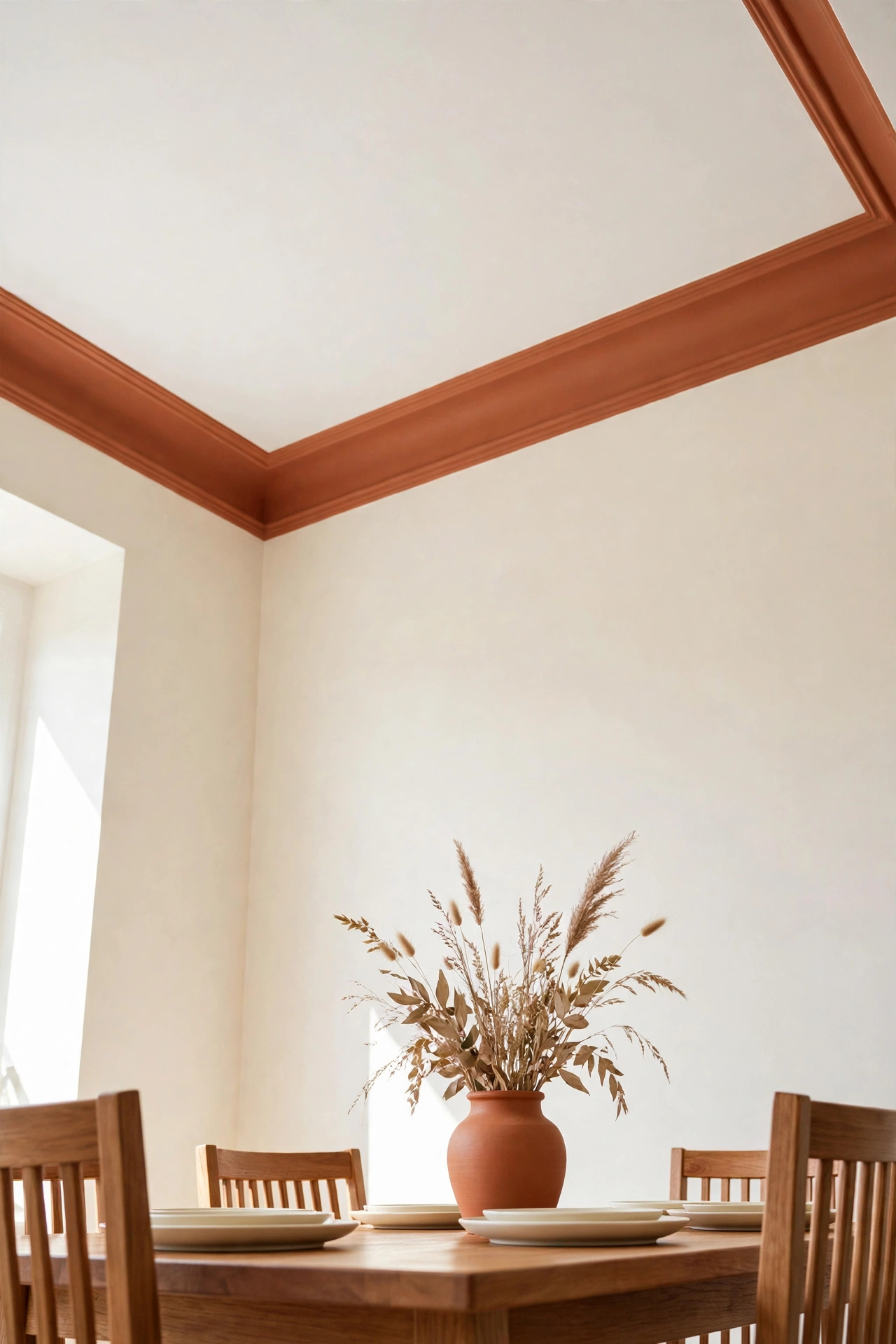
3. Frame the Ceiling With Terracotta Crown Molding
Terracotta crown molding brings warmth to the top of a room in a way that white trim never can. The earthy orange-brown tone suits dining rooms and kitchens, where it echoes clay pots, wooden bowls, and warm metals. Against cream or warm white walls, the terracotta line feels rich and grounded.
Keep the rest of the trim in the room simple so the terracotta crown molding stays the star. A matching terracotta vase or a set of clay planters on a shelf will tie the color together without repeating it too often. For more trim profiles and shapes to try, these decorative molding ideas show how different molding styles change the feel of a room.
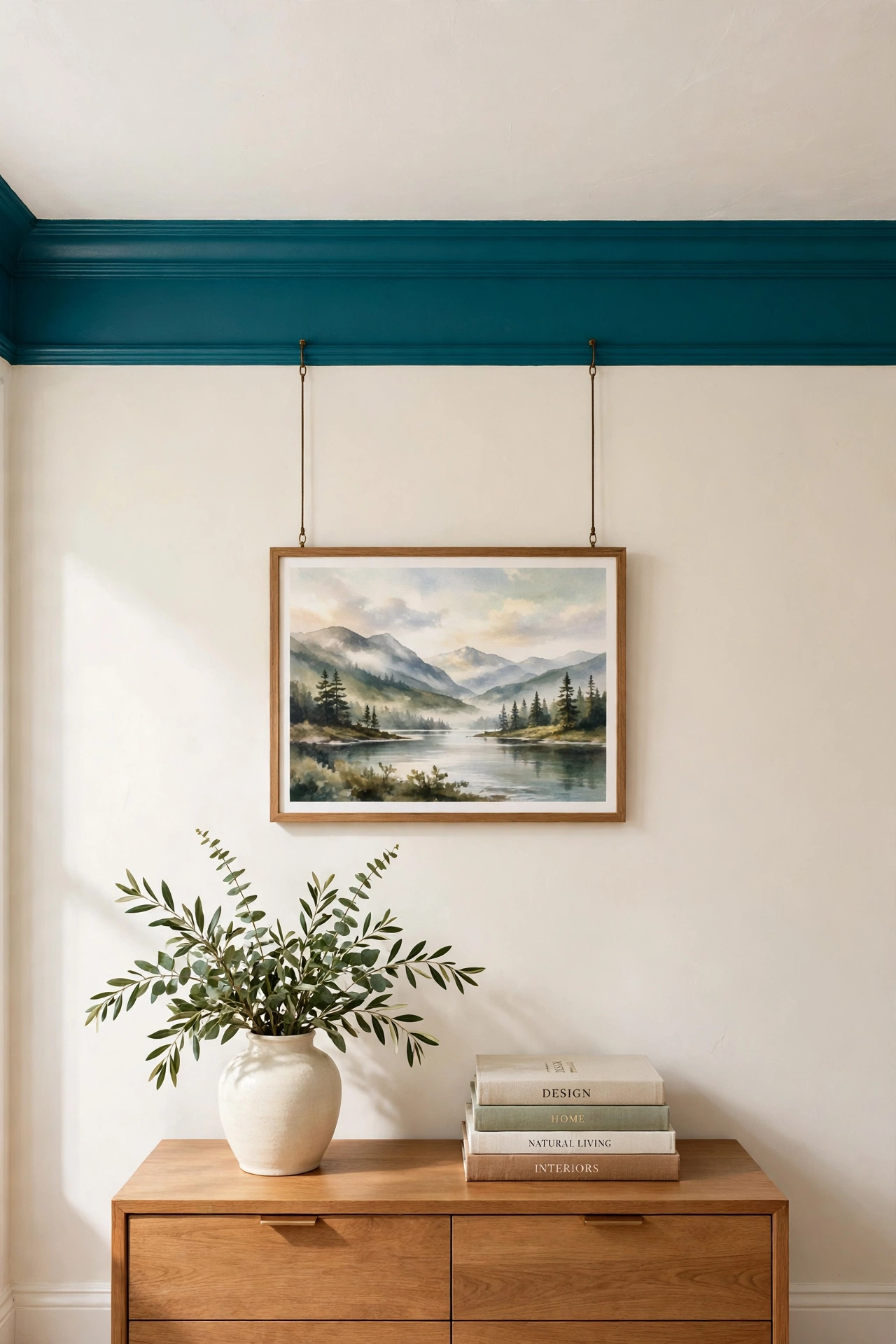
4. Paint the Picture Rail in a Bold Accent Color
A picture rail sits a short distance below the ceiling and gives you a perfect line to paint in a bold accent color. Because the rail is narrow, you can be brave with shades like deep teal, mustard, or burgundy without overwhelming the room. The colored rail frames the wall art below it and gives the whole wall a gallery feeling.
Hang artwork from the rail with thin cords so the color stays visible along its full length. Keep the wall above the rail the same color as the ceiling so the bold line floats cleanly between the two. This small strip of color adds polish to hallways, studies, and living rooms alike.
5. Use a Blush Pink Trim Line in the Bedroom
Blush pink trim along the ceiling edge gives a bedroom a soft, romantic glow without turning the whole room pink. The pale pink reads as a warm neutral in daylight and turns rosy and cozy in the evening lamplight. It works beautifully with cream bedding, light wood, and touches of brass.
Paint only the crown molding or the narrow trim board, and leave the ceiling and walls in soft white or warm cream. The contrast is gentle, so the room stays restful rather than busy. Add a blush cushion or a small vase in the same tone to make the trim color feel intentional.

6. Add a Two Tone Crown Molding Effect
A two tone crown molding uses one color on the upper curve of the molding and a second color on the lower edge, which adds depth and shadow to the trim. Try sage green above and cream below, or soft blue above and white below, so the molding looks layered and detailed. The effect is subtle from a distance and delightful up close.
Paint the upper section first and let it dry fully before taping off the lower edge for the second color. A steady hand and good tape make the dividing line crisp. If you love mixing two colors in one room, these two-tone wall paint ideas will help you choose a pair that feels balanced rather than busy.
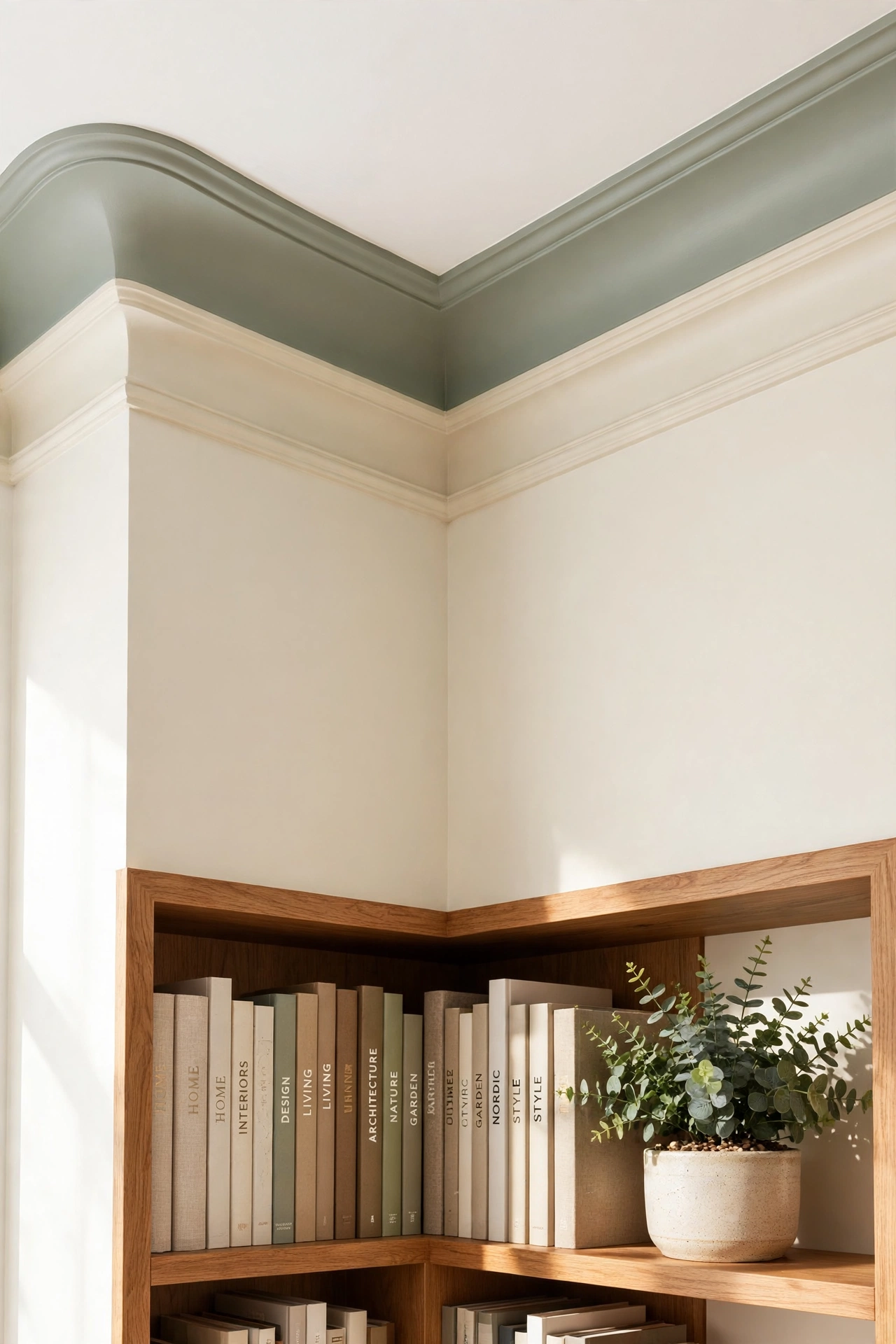
7. Paint Cove Trim in Deep Navy for Drama
Deep navy cove trim turns the shadowed curve where the wall meets the ceiling into a bold design feature. The dark blue adds drama and depth, which suits dining rooms, libraries, and moody bedrooms where a cozy atmosphere is the goal. Against warm white walls, the navy line looks crisp and confident.
Because navy is strong, keep the rest of the room light and let the trim carry the drama on its own. Brass light fixtures and warm wood tones glow beautifully against the dark blue edge. This is a wonderful choice for a room that feels plain and needs one brave detail.
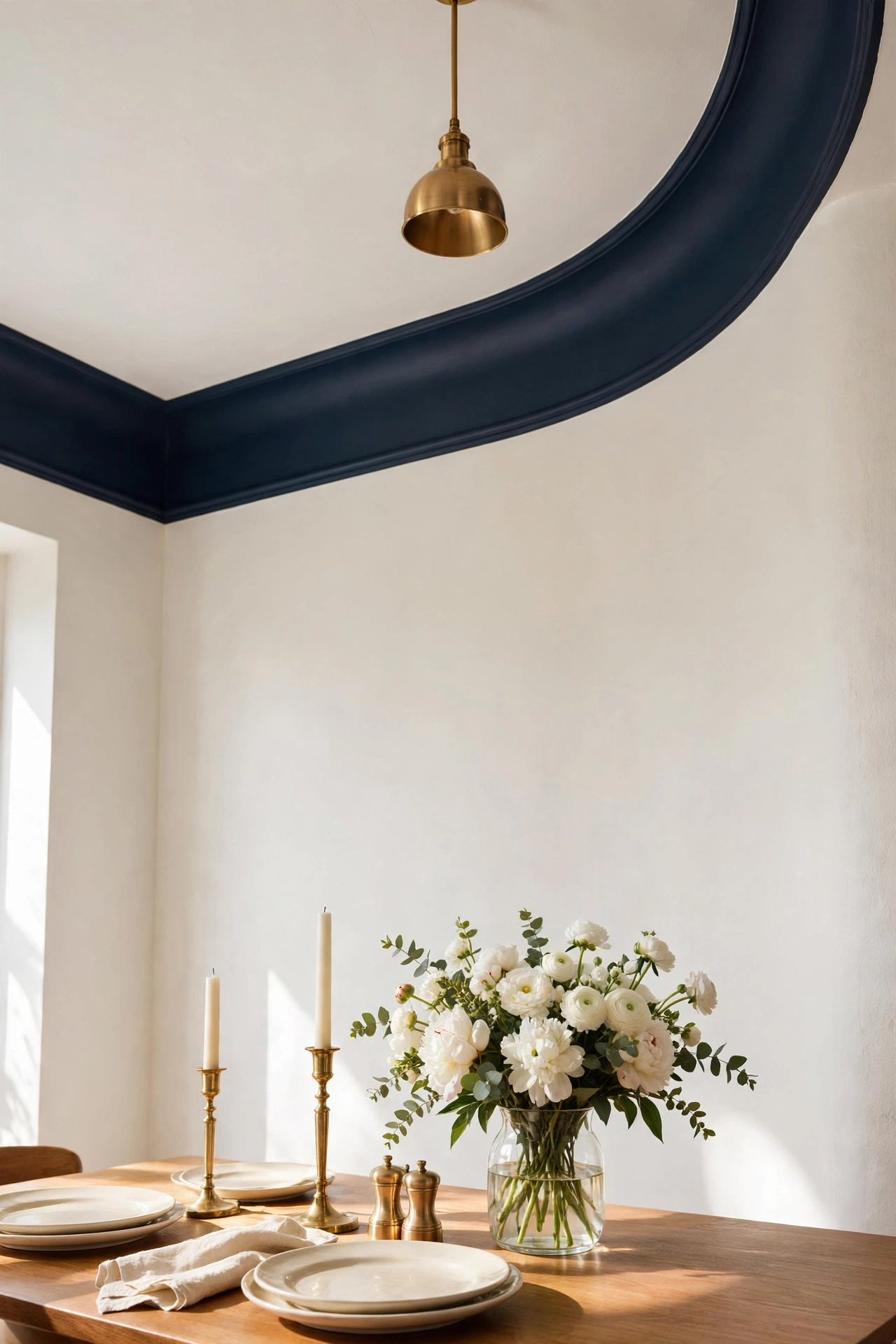
8. Highlight a Tray Ceiling With Amber Trim Boards
A tray ceiling has stepped edges that are made for painted trim boards. Amber trim along each step of the tray warms the whole ceiling structure and makes the layers easy to see and enjoy. The honeyed tone suits living rooms and bedrooms with warm wood floors and cream walls.
Paint the vertical faces of the tray steps in amber and keep the flat ceiling panels white, so the steps stand out as frames within frames. Add a soft glow from hidden lighting or a central pendant to make the amber tones shine in the evening. The result looks custom and expensive, even though it is only paint.
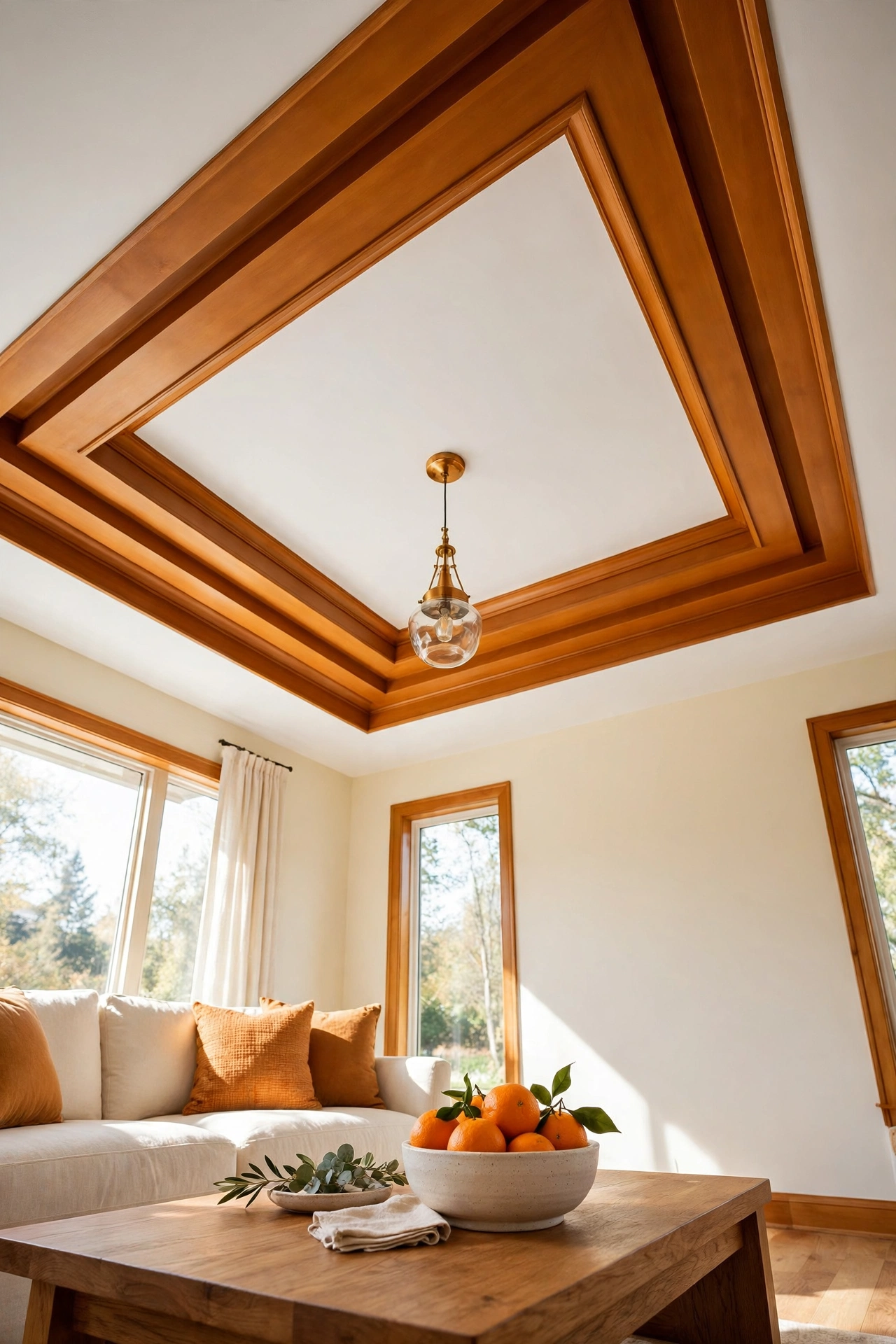
9. Run a Gold Trim Line Along the Ceiling Edge
A thin gold trim line along the ceiling edge adds a touch of glamour without any fuss. The metallic line catches the light as you move through the room, so it sparkles gently in the daytime and glows in the evening. It suits classic living rooms, elegant dining rooms, and bedrooms with traditional furniture.
Use metallic paint on a narrow trim board or a slim molding strip, and keep the walls in a calm neutral so the gold stays refined. Pair the gold line with brass or gold light fixtures to make the metallic theme feel complete. Less is more here, so one thin line is all you need.
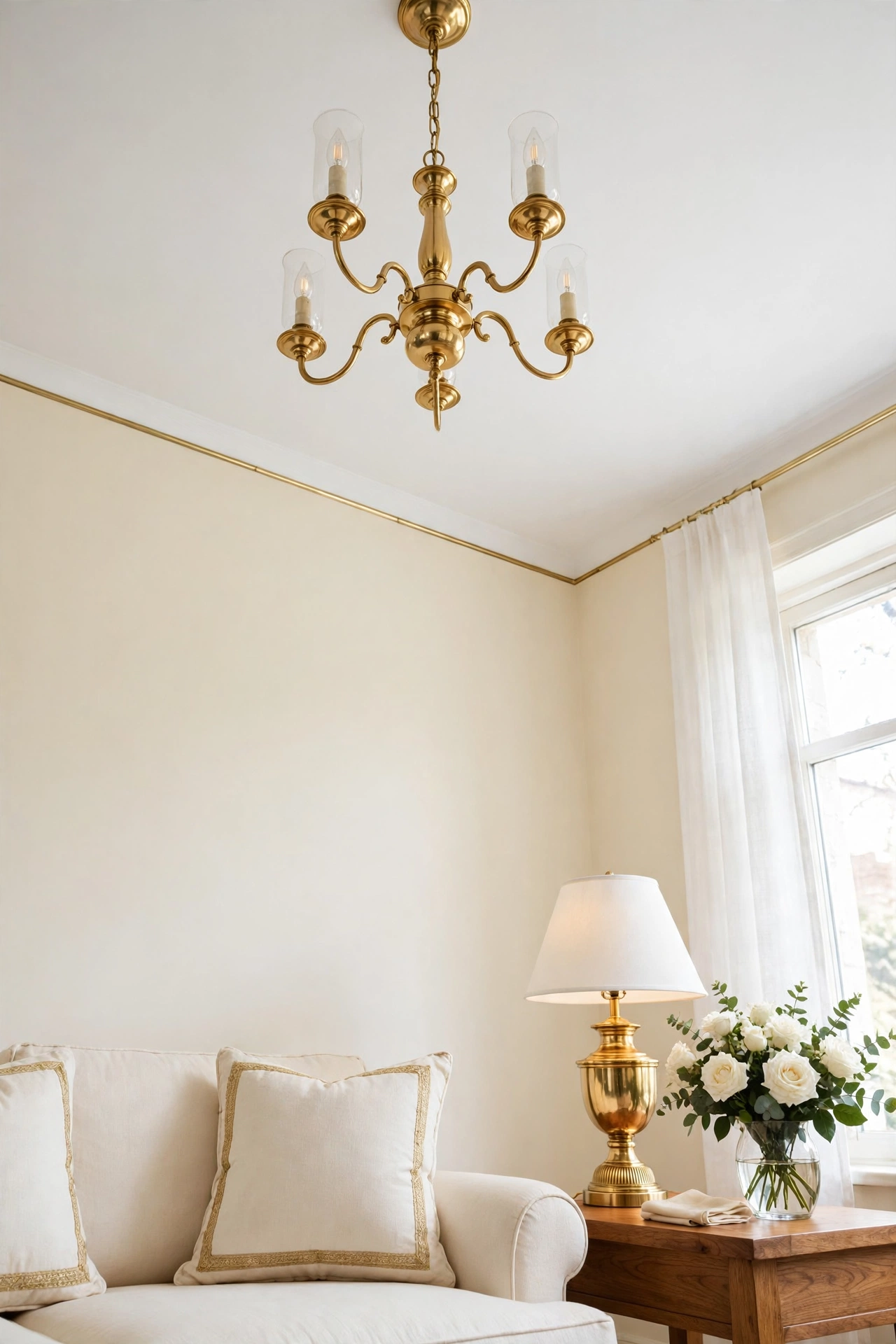
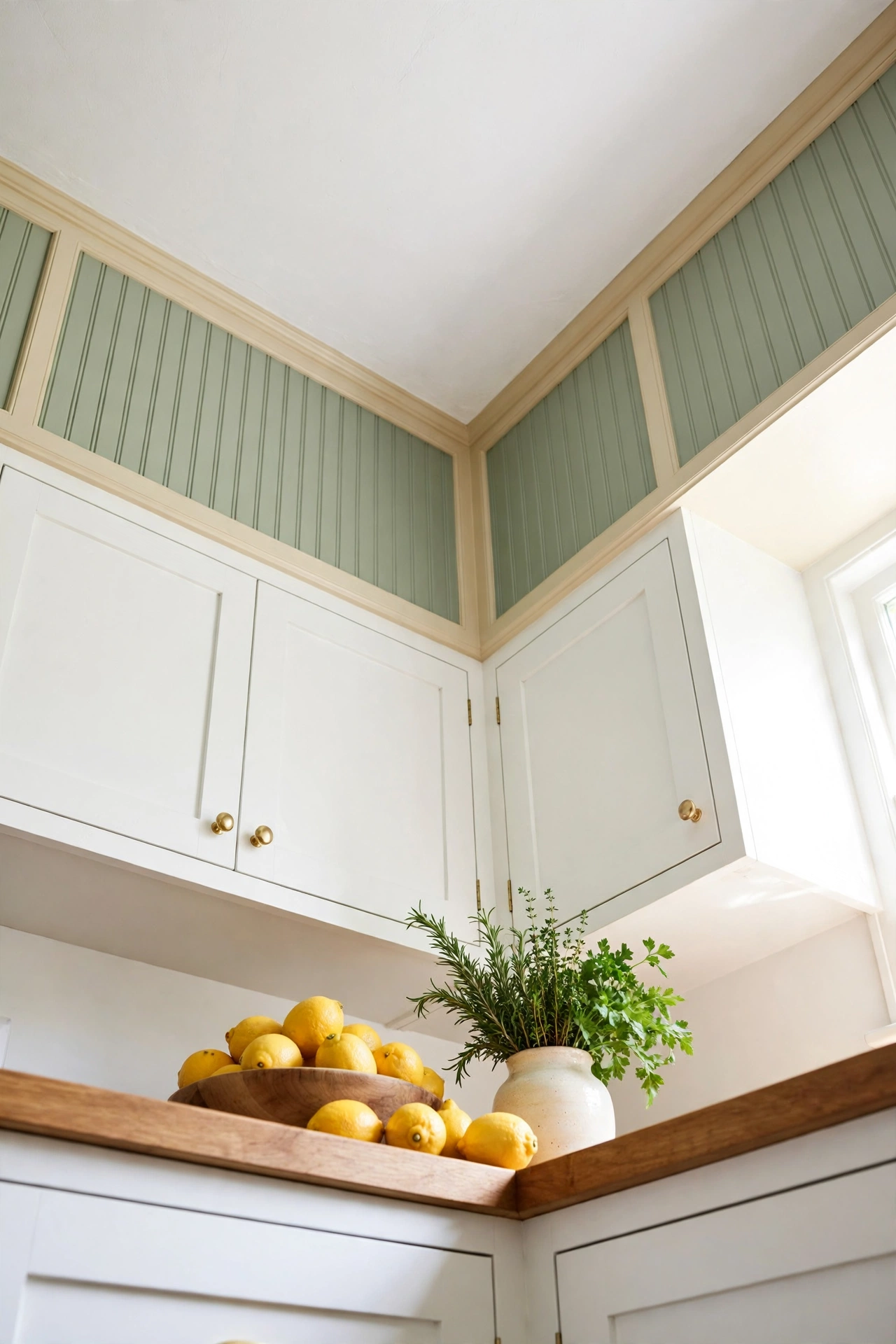
10. Paint Beadboard Ceiling Trim in Cream and Sage
Beadboard trim adds texture as well as color to the ceiling edge, and painting it in cream and sage makes the most of both. The narrow grooves of the beadboard catch shadows, so the two colors shift gently as the light changes. This combination suits kitchens, porches, and cottage style rooms beautifully.
Paint the beadboard panel in soft sage and the surrounding trim boards in warm cream for a clean, layered look. The contrast is soft enough for everyday rooms and detailed enough to feel special. If you want to try this as a weekend project, these DIY trim ideas include simple methods for fitting and painting trim boards yourself.
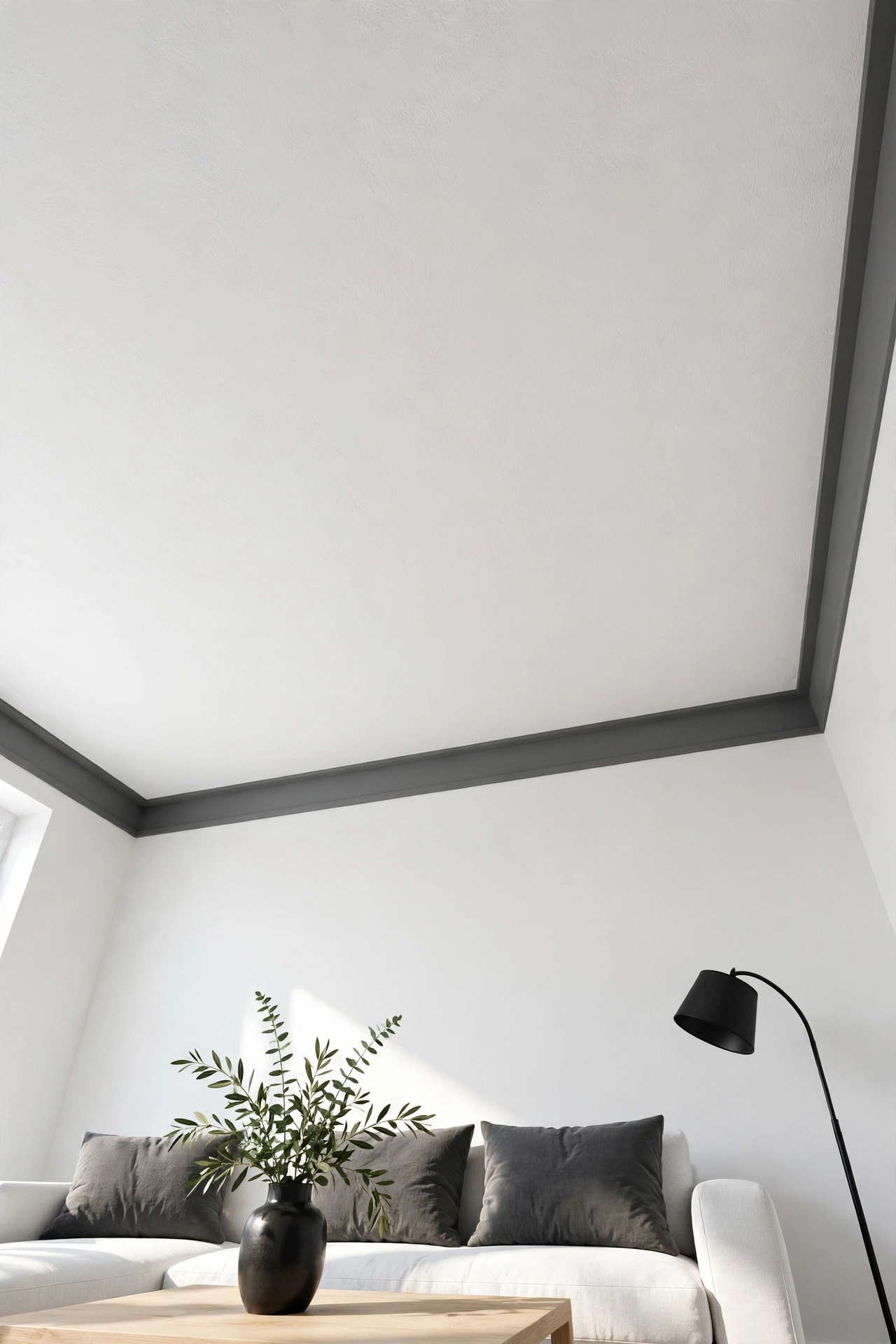
11. Use a Charcoal Trim Border in a Modern Room
Charcoal trim draws a sharp, graphic line around the ceiling edge that suits modern rooms with clean lines and minimal furniture. The dark gray reads as a deliberate frame for the room, much like the border of a photograph. It pairs well with white walls, black accents, and pale wood.
Keep the trim board slim and the edge perfectly straight, because a dark border shows every wobble. A satin finish gives the charcoal a soft sheen that stops it from looking flat. This bold frame makes a plain modern room feel designed and complete.
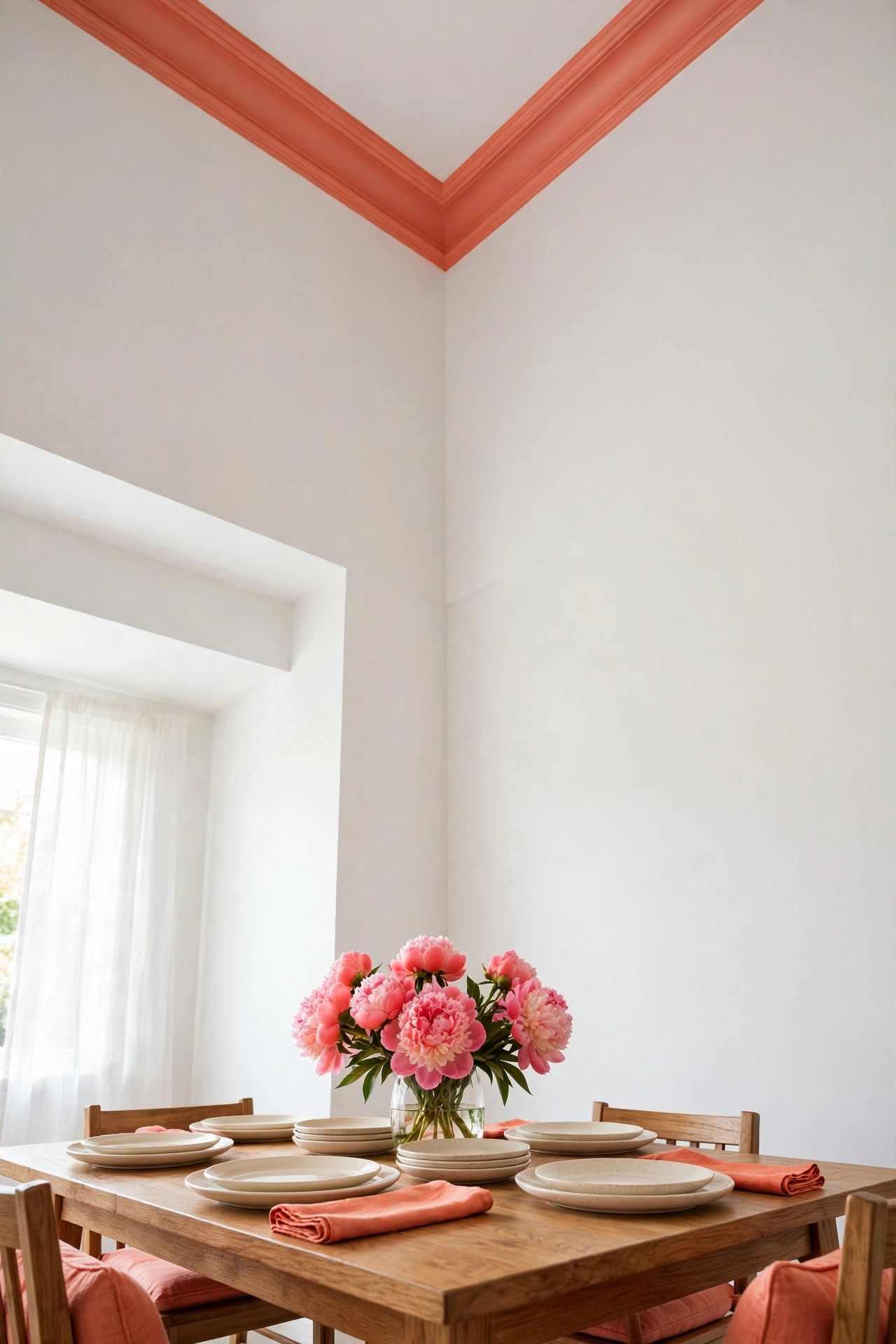
12. Add a Coral Trim Accent in a Small Dining Room
Coral trim brings a cheerful, sunny energy to a small dining room, where a little color goes a long way. The warm pink-orange tone makes mealtimes feel brighter and suits rooms with plenty of natural light. Against white or pale cream walls, the coral line feels fresh and friendly.
Paint only the crown molding or the ceiling trim board, and repeat the coral once more in the room with napkins, a vase, or chair cushions. The repetition makes the trim look planned rather than random. Small rooms are the best place to try joyful colors like this one.
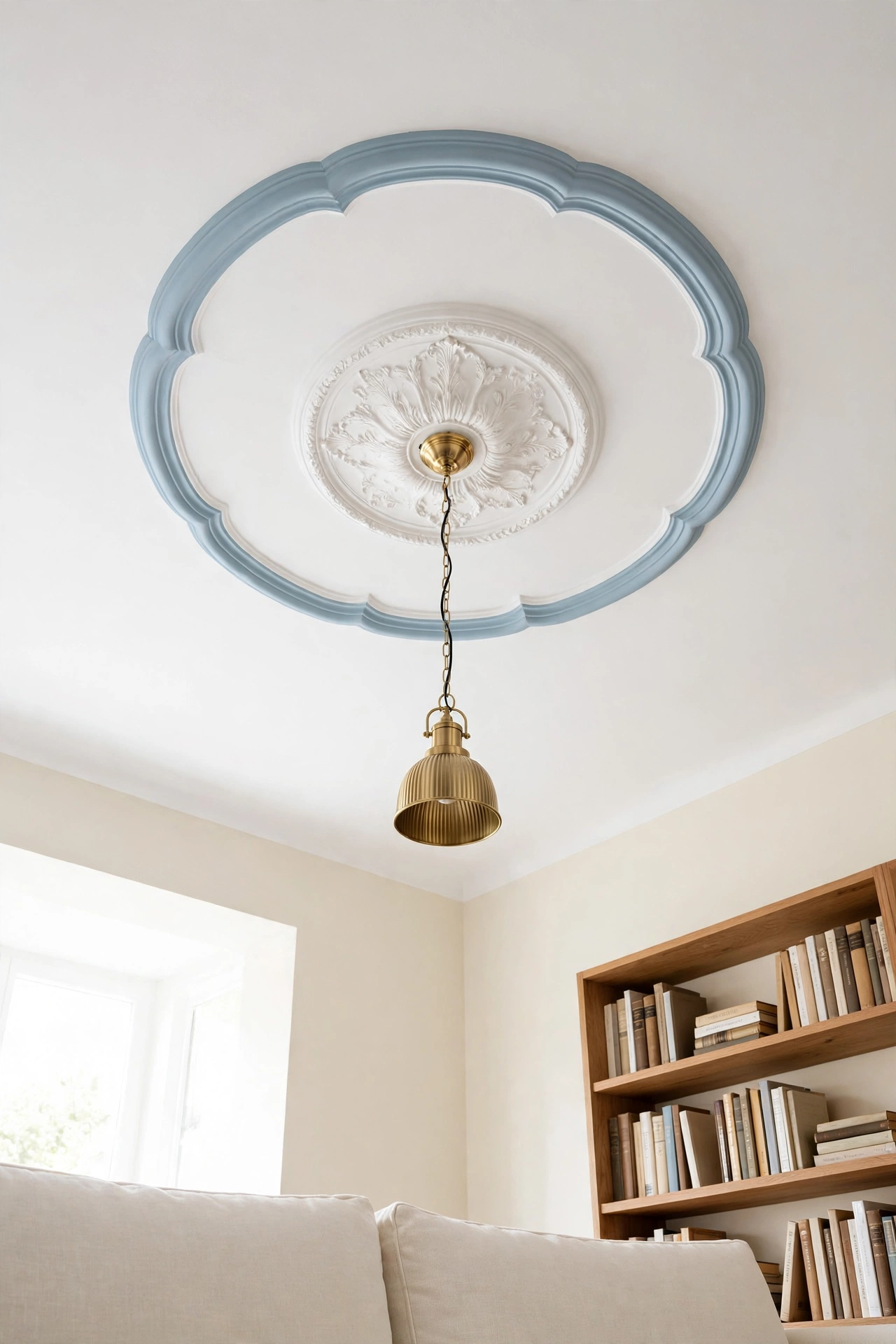
13. Paint the Ceiling Rose Trim in a Contrasting Color
A ceiling rose is the decorative medallion where a light fixture hangs, and painting its trim ring in a contrasting color turns it into a true centerpiece. Try a soft blue ring on a white ceiling, or a terracotta ring in a room with warm tones. The ring frames the chandelier or pendant and draws the eye upward.
Paint the outer ring of the rose only, and leave the inner detail white so the pattern stays readable. A small brush and steady strokes give the cleanest result. For more ways to dress the center of a ceiling, these decorative ceiling medallion ideas show roses and medallions in many styles and finishes.
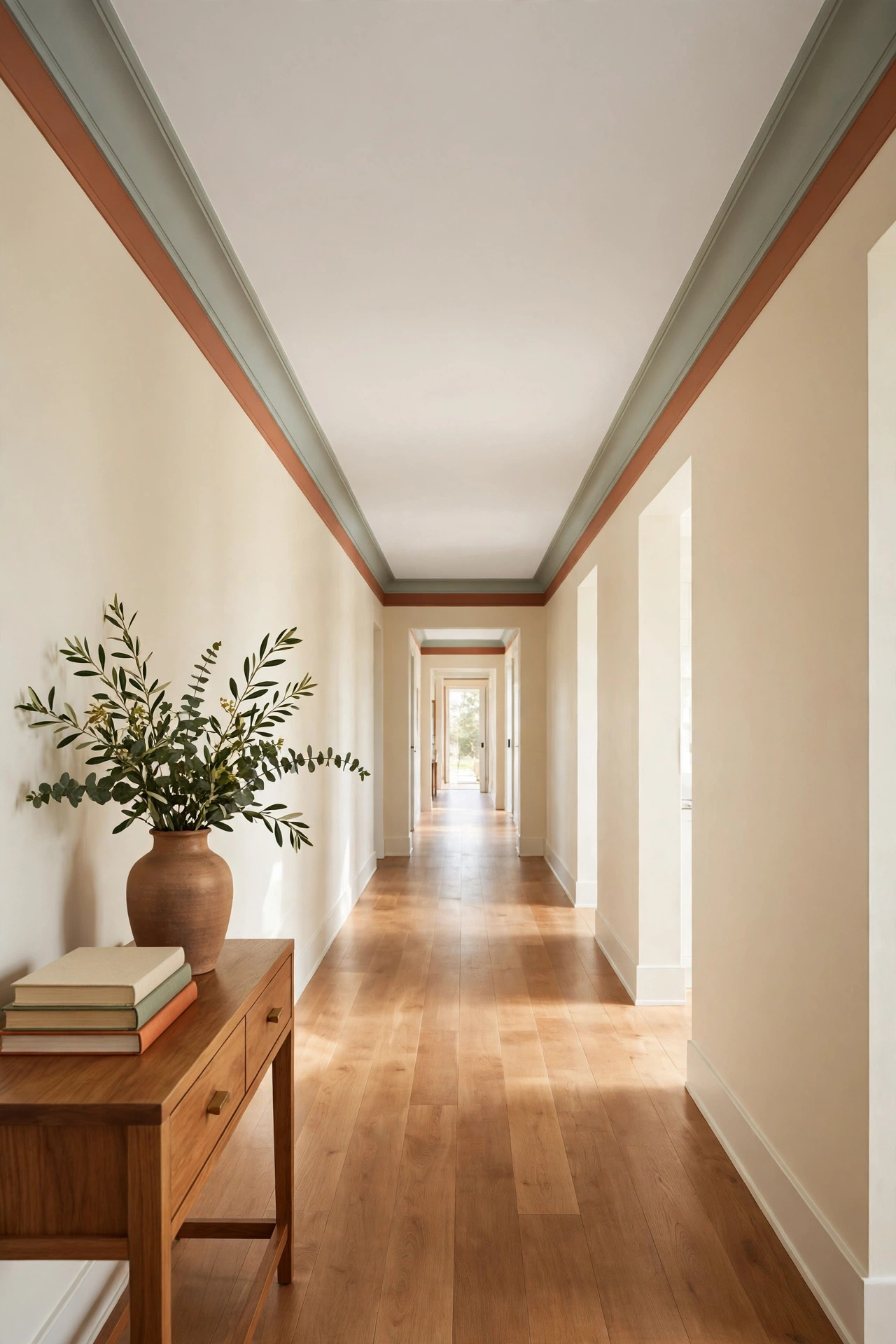
14. Layer Two Rows of Trim in Complementary Colors
Two rows of trim, one at the ceiling edge and one a few inches below it, create a layered border that looks rich and detailed. Paint the rows in complementary colors, such as sage green and terracotta, or soft blue and warm amber, so each row makes the other look better. The gap between the rows can stay wall colored or match the ceiling.
Measure carefully so the two rows run perfectly parallel, and use the same trim profile for both rows to keep the look calm. This layered border suits long hallways and large living rooms, where a single trim line might feel lost. It is a classic technique that works in both traditional and modern homes.
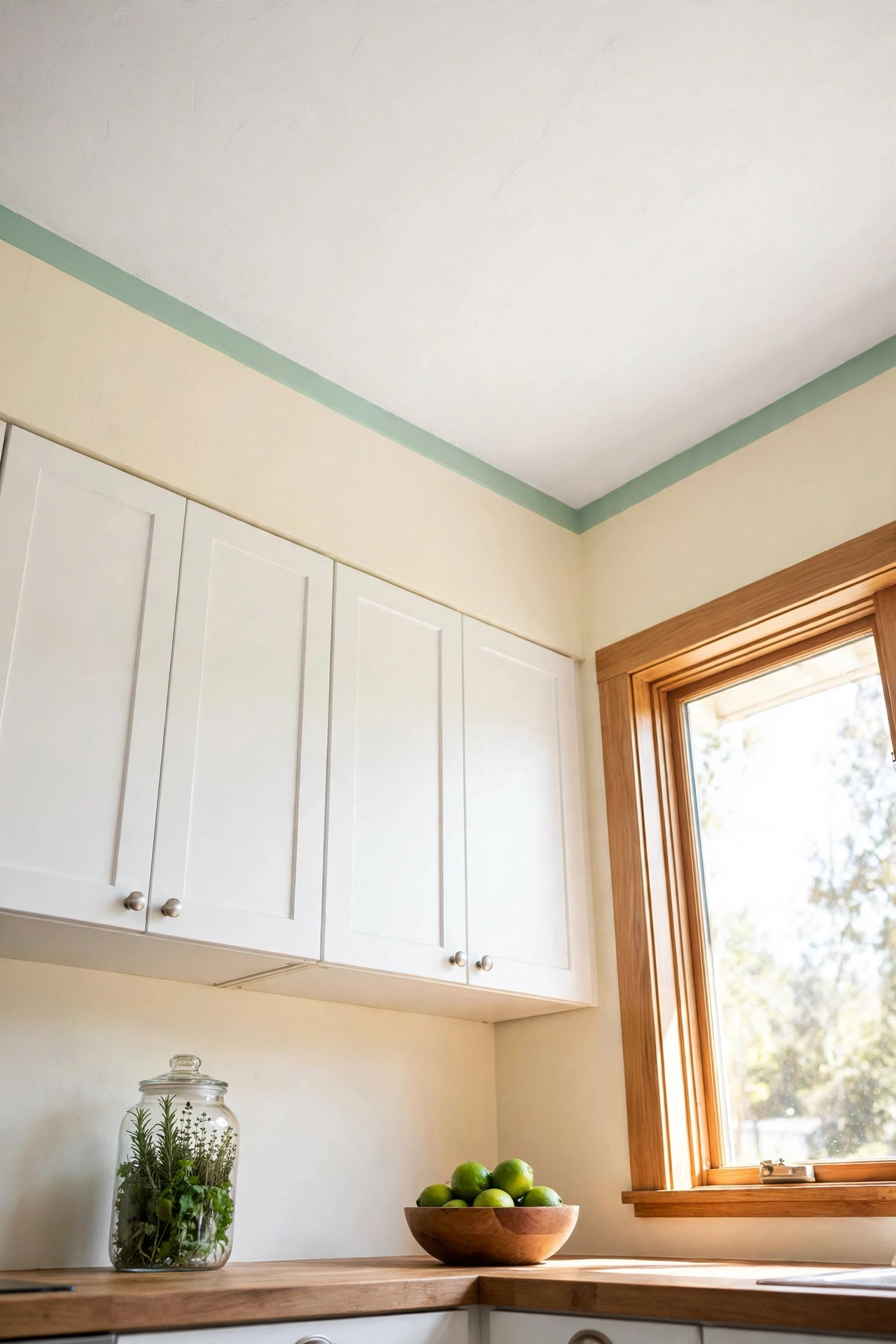
15. Use a Mint Green Trim Line in the Kitchen
Mint green trim along the kitchen ceiling edge adds a fresh, clean note that suits cooking spaces perfectly. The cool pastel works with white cabinets, warm wood counters, and cream walls, and it makes the whole kitchen feel brighter. It is a cheerful color that never feels heavy or dark.
Paint the trim board where the wall meets the ceiling, and consider carrying the same mint onto a small shelf edge or window trim for a coordinated look. Keep the rest of the kitchen palette simple so the mint line stays crisp. This is a lovely choice for kitchens that get strong morning light.
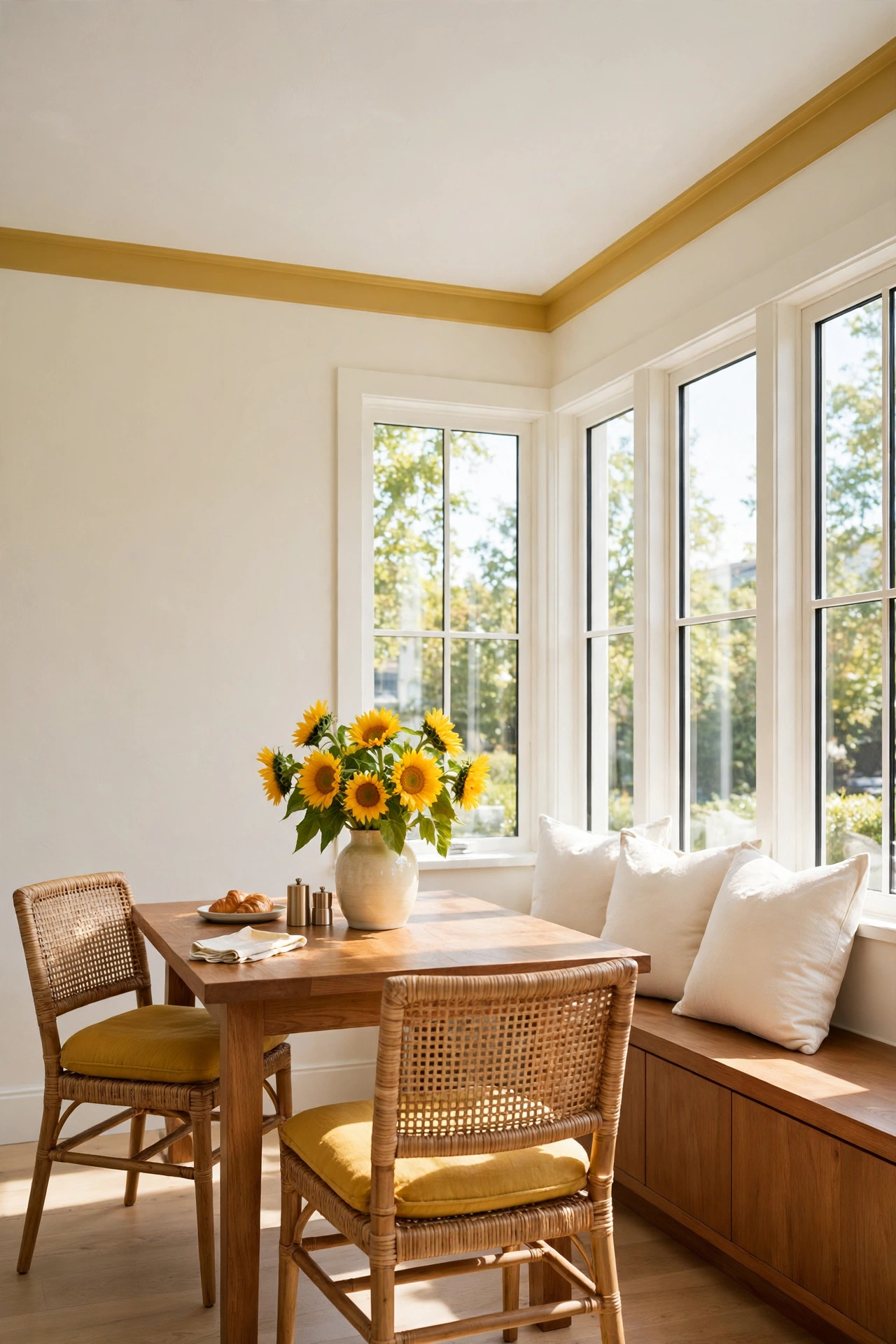
16. Add a Mustard Yellow Trim Border in a Breakfast Nook
Mustard yellow trim gives a breakfast nook the warmth of morning sunshine, even on gray days. The golden tone suits cozy corners with wooden tables, woven chairs, and cream walls. It makes the nook feel like a separate, special space within a larger kitchen.
Paint the trim border and the window trim in the same mustard shade to frame the whole nook. Add a mustard cushion or a small potted herb on the table to echo the color at eye level. This sunny border turns a plain corner into the happiest seat in the house.
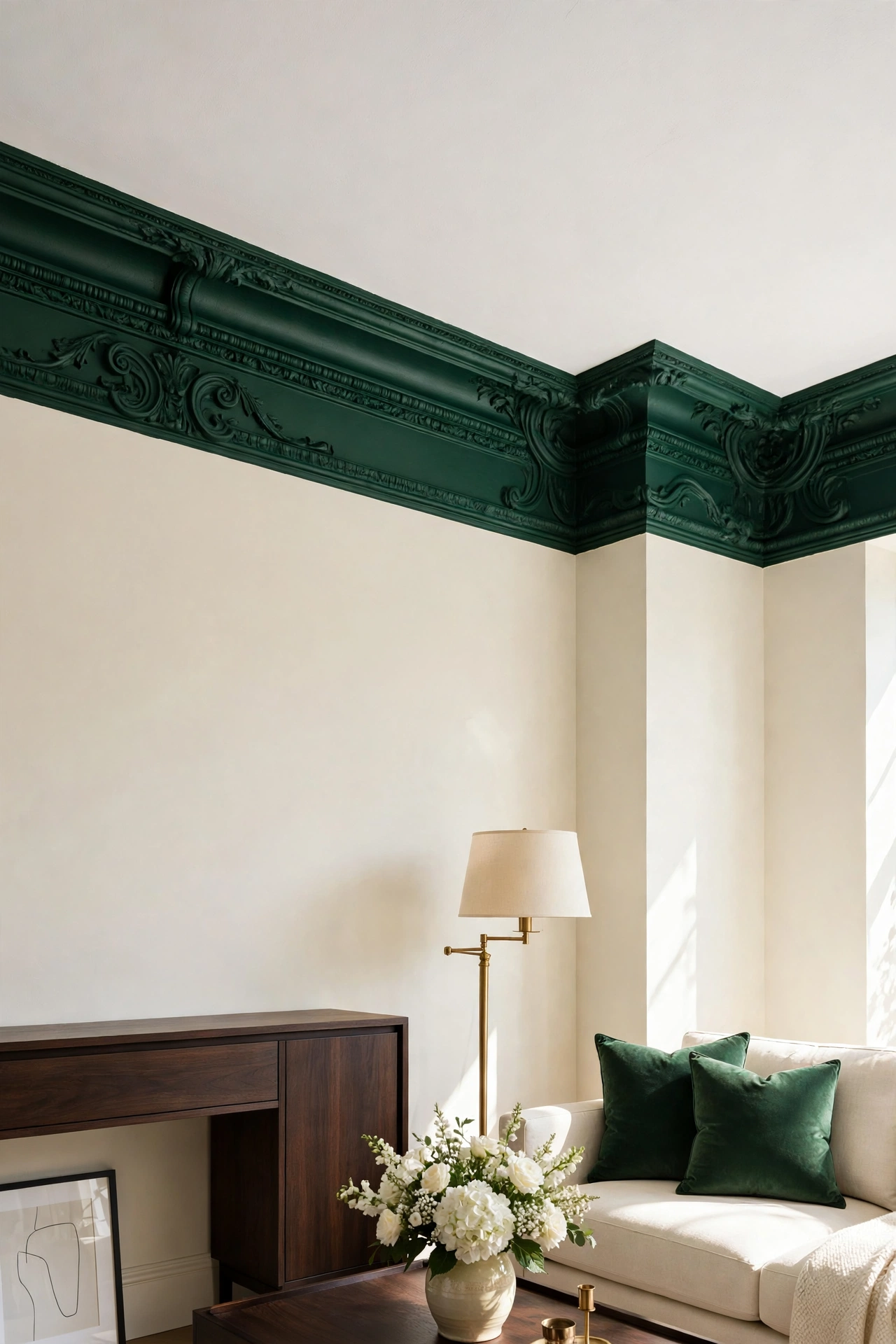
17. Paint the Cornice in a Deep Emerald Green
A deep emerald green cornice adds grandeur to a living room or study, especially in homes with tall ceilings and generous proportions. The rich green feels luxurious against cream walls and glows beside brass lamps and dark wood furniture. It is a confident color that turns the top of the room into a feature.
Paint the full cornice, including its curves and ridges, so the green reads as one bold band. Keep the ceiling white and the walls light to balance the depth of the color. This is a wonderful choice for a formal room that deserves a little drama.
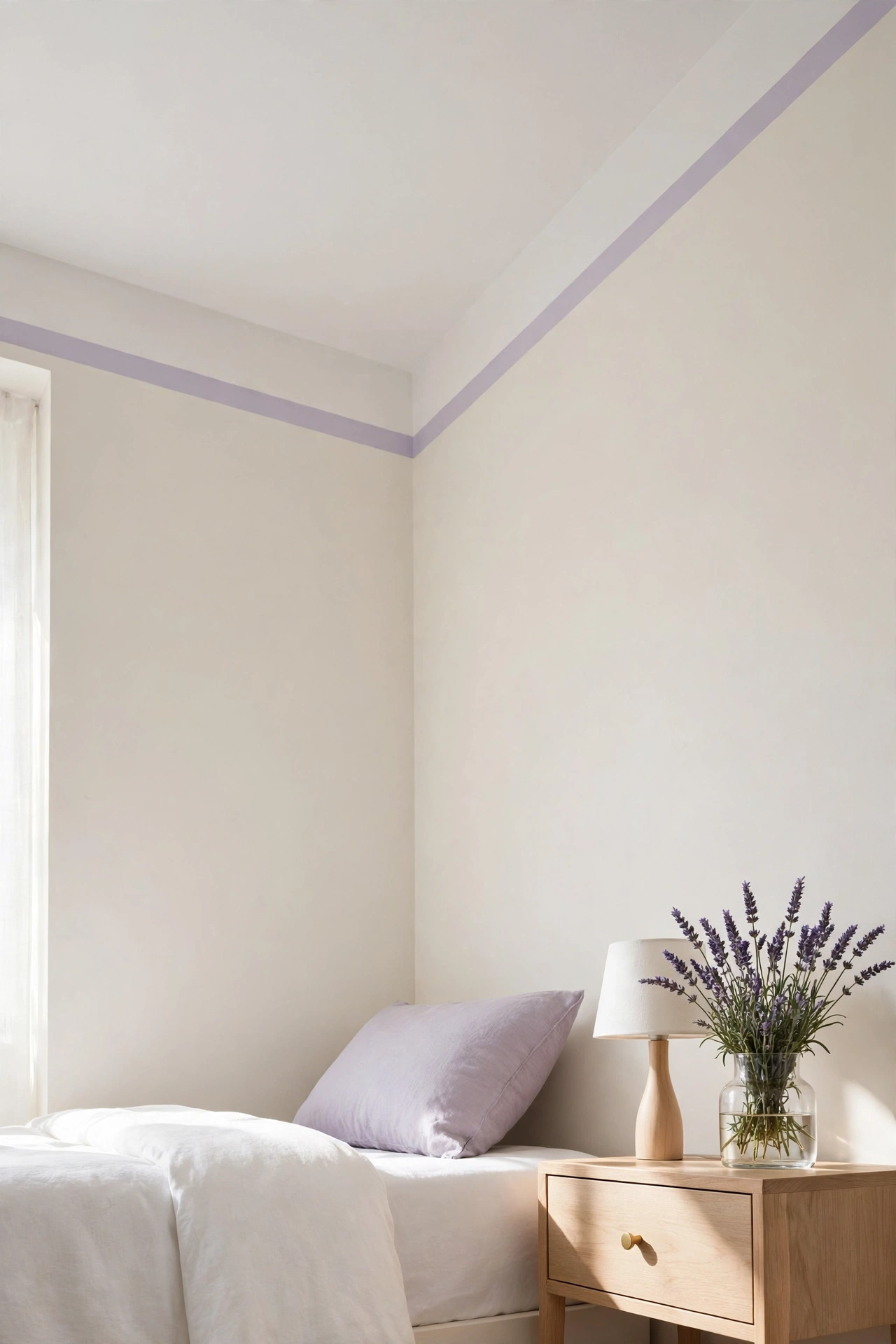
18. Use a Soft Lavender Trim Line in a Guest Bedroom
Soft lavender trim gives a guest bedroom a gentle, welcoming feeling that helps visitors relax and sleep well. The pale purple reads as a calm neutral in daylight and turns dreamy in soft lamplight. It pairs beautifully with white bedding, light wood, and silver or crystal accents.
Paint only the ceiling trim line, and leave the walls in warm white so the lavender stays subtle. A small lavender sachet or a vase of fresh flowers on the nightstand will echo the trim color sweetly. Guests will notice the thoughtful detail the moment they walk in.
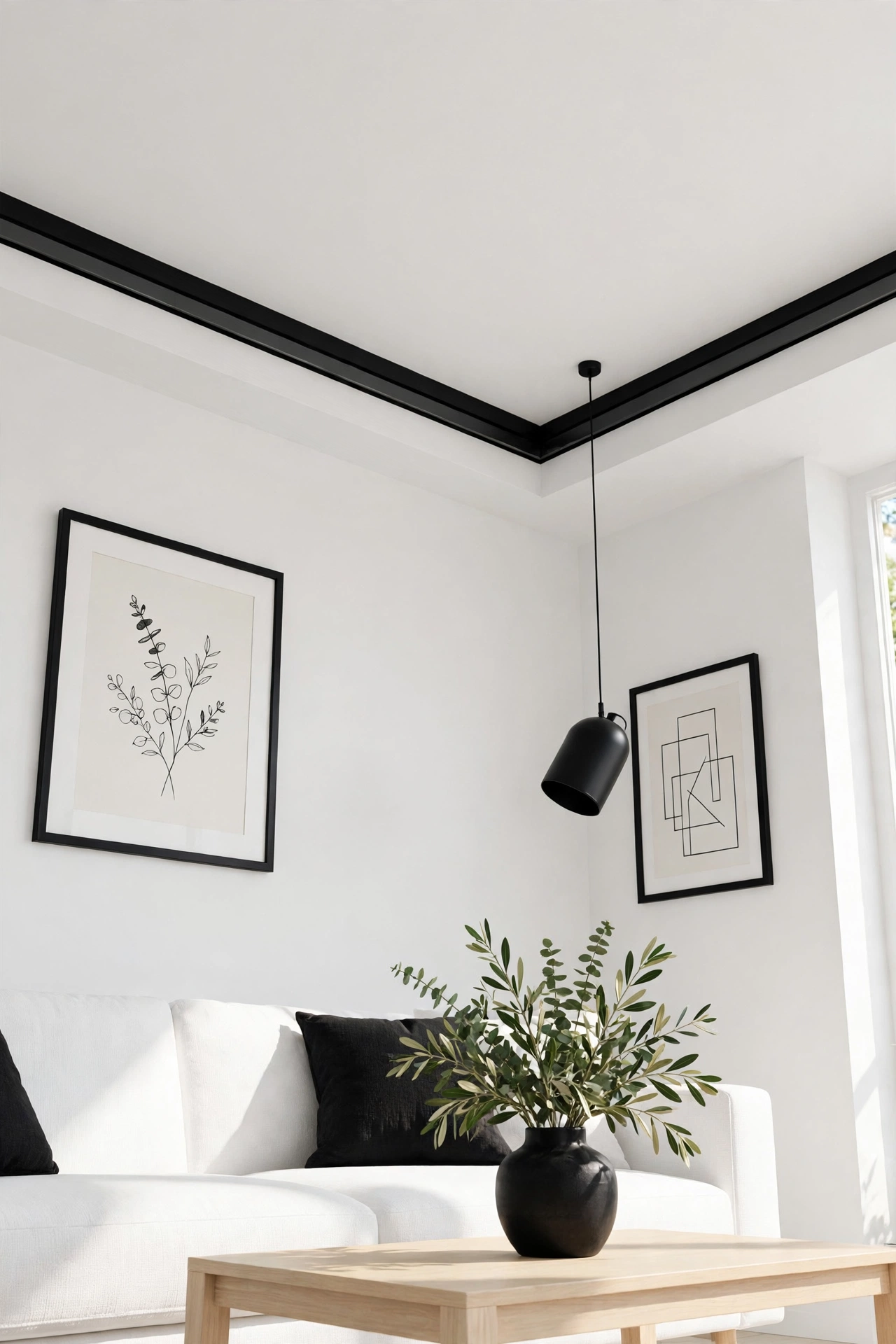
19. Add a Black Trim Border for Bold Contrast
A black trim border is the boldest choice in this list, and it works best in bright rooms with white walls and plenty of light. The black line frames the ceiling like a picture frame and gives the room a crisp, graphic edge. It suits modern farmhouse, industrial, and Scandinavian style rooms alike.
Keep the black border slim and perfectly straight, and repeat black once or twice elsewhere in the room with a light fixture, a frame, or chair legs. The repetition stops the border from feeling isolated. With enough daylight, the black trim feels dramatic rather than dark.
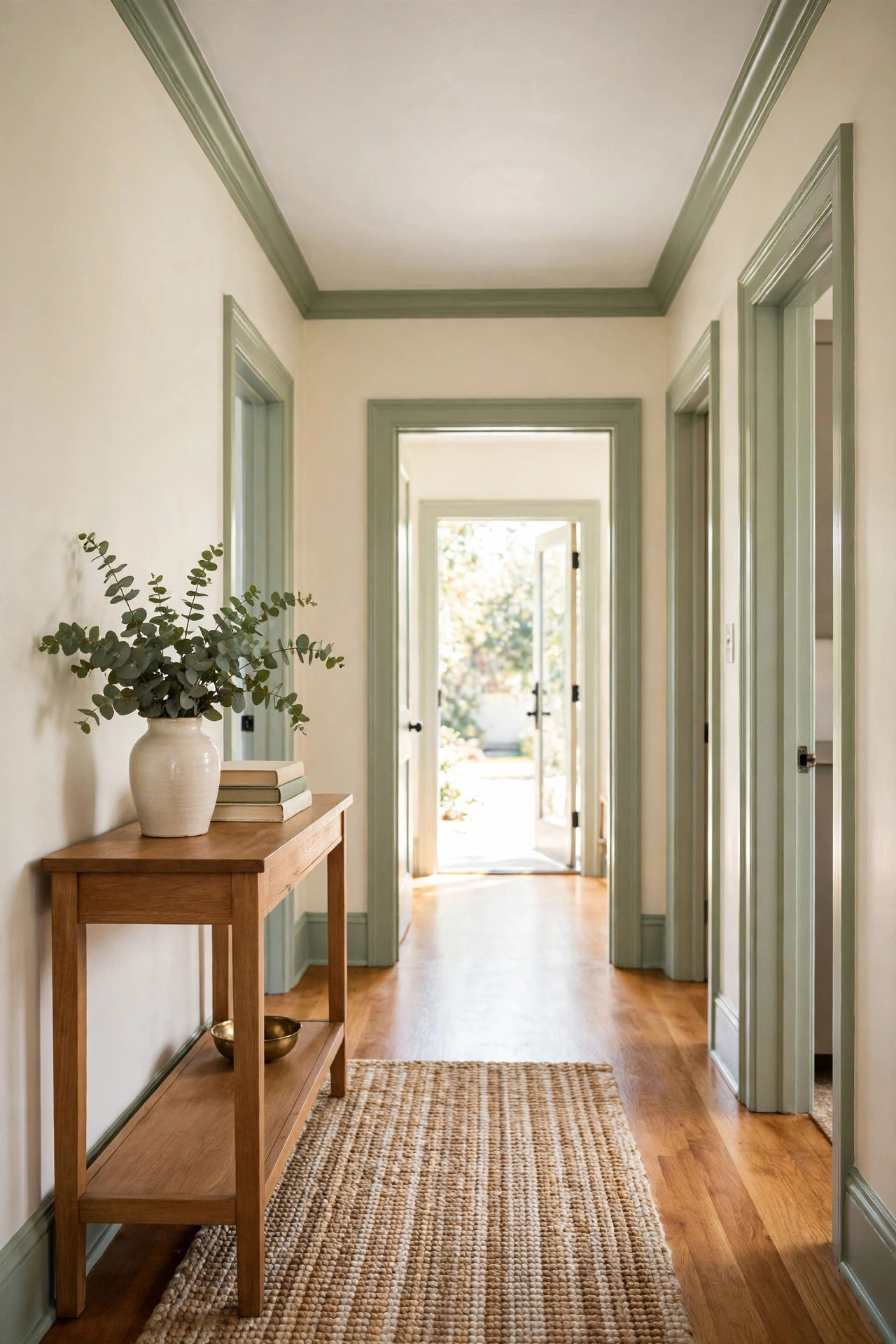
20. Paint the Ceiling Trim to Match the Door Frames
Matching the ceiling trim to the door frames ties a room together in a quiet, polished way. When the same color appears at the top of the walls and around every doorway, the room feels considered and complete. This works with any color, from sage green to deep navy to warm terracotta.
Choose a color that suits the whole room, since it will appear in several places at once. Paint the trim and the frames with the same finish so the match looks deliberate. This coordinated approach is especially effective in hallways, where doors and trim are close together and the color repeats naturally.
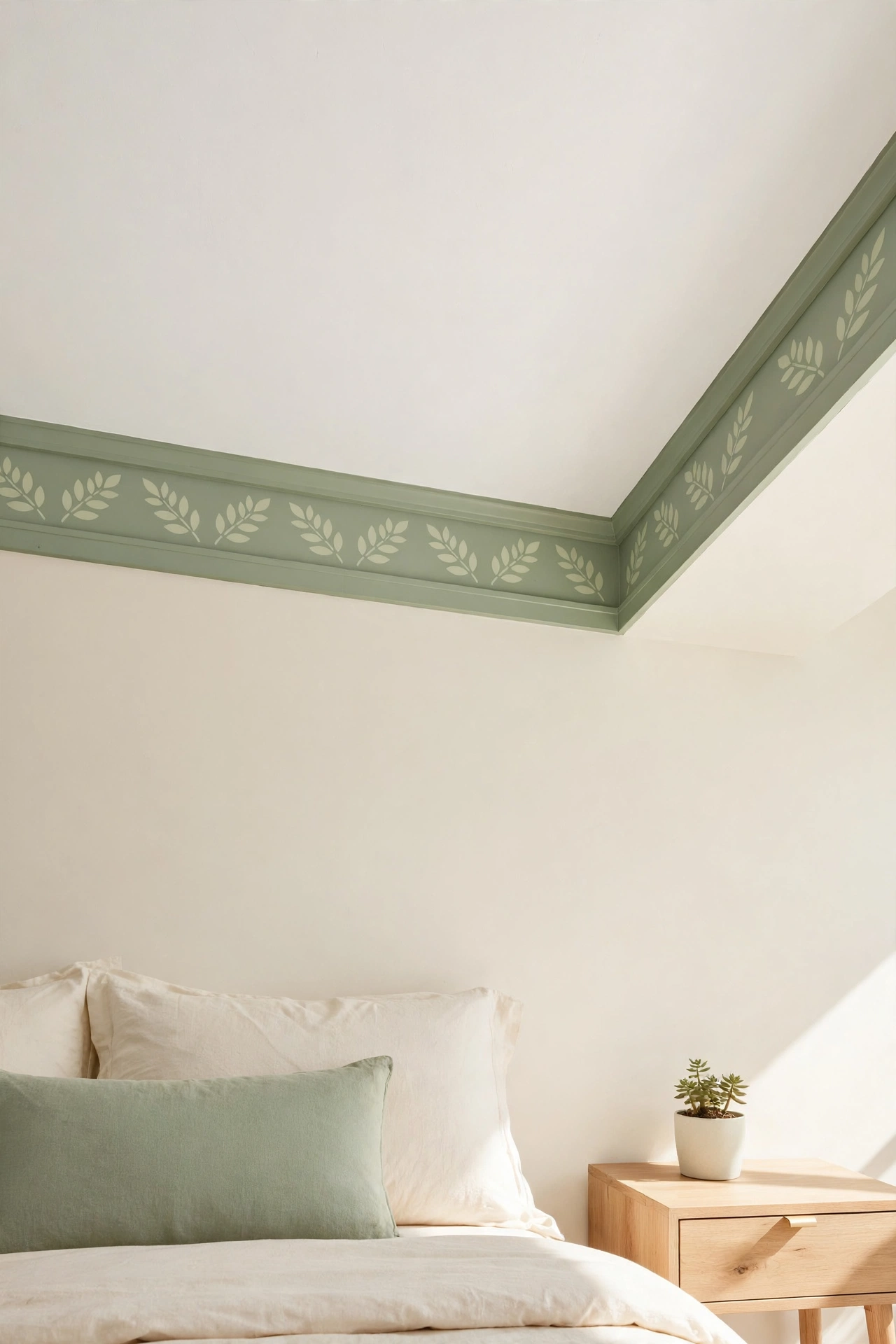
21. Add a Stenciled Detail to a Painted Trim Border
A stenciled detail on a painted trim border adds pattern and personality to the ceiling edge. Paint the trim board in a solid color first, then stencil a simple repeating motif along it in a lighter or darker shade of the same color. Leaves, dots, and geometric diamonds all work beautifully at this scale.
Keep the motif small and the spacing even, and practice on a spare board before you start on the wall. The stenciled trim becomes a handcrafted detail that guests will admire up close. It is a perfect finishing touch for a bedroom, a nursery, or a hallway that needs one more layer of charm.
Conclusion
Colorful ceiling trim proves that the smallest painted surface in a room can make the biggest difference. A sage green crown molding, a navy cove trim, or a thin gold line turns a plain ceiling edge into a detail that gives the whole room character. None of these ideas needs a large budget or a professional painter, only a little paint and a free afternoon.
Start with the room you spend the most time in, and choose the color that makes you happiest when you look up. Paint one trim line, live with it for a week, and you will soon find yourself planning the next room. For a full plan that ties trim, color, and ceiling shape together, these ceiling design ideas will help you design a ceiling worth looking at in every room.
Frequently Asked Questions About Colorful Ceiling Trim Ideas for Unique Interior Details
Should ceiling trim be the same color as the walls?
Ceiling trim does not have to match the walls, and painting it a different color is exactly what makes it stand out. A contrasting trim color frames the room and draws the eye upward. If you prefer a softer look, choose a trim color that is two shades darker or lighter than the wall color.
What paint finish works best for ceiling trim?
A satin or semi-gloss finish works best for ceiling trim because it catches the light and highlights the molding profile. Flat paint can make detailed trim look dull, while high gloss shows every flaw. Satin is the safest choice for most rooms and most trim styles.
Can I paint ceiling trim a dark color in a small room?
Yes, a dark trim color works in a small room as long as the walls and ceiling stay light. A slim dark border frames the room without closing it in, and it can even make the ceiling feel higher by defining the edge clearly. Keep the trim line narrow and the room well lit for the best effect.
How do I get a clean line when painting ceiling trim?
Use high quality painter’s tape along the edge where the trim meets the wall or ceiling, and press the tape firmly with a card or a putty knife. Paint away from the tape edge, let the paint dry fully, and remove the tape slowly at a low angle. Two thin coats give a smoother finish than one thick coat.
Do I need to prime trim before painting it a new color?
Yes, priming is important when you paint over stained wood, glossy paint, or a much darker color. A coat of primer helps the new color cover evenly and stick properly. Lightly sand glossy trim first, wipe away the dust, and then prime and paint for a finish that lasts.

Hi, I’m Emily! I turn messy corners into cozy, organized spots. DreamNestDecor is where I share simple, practical home ideas — decor, organization, and small-space solutions that work in real life, not just in photos. Every idea here is carefully researched before it’s shared.