Picture this: you walk into a living room and your eyes go straight to the fireplace. Not because of the fire, but because the surround itself is beautiful. The stone, the tile, or the plaster around the firebox turns a plain wall into the heart of the room. That single frame sets the mood for every sofa, rug, and lamp around it.
You do not need to rebuild the whole fireplace to get that effect. The surround is the part you see, and changing it changes the entire room. These 13 decorative fireplace surround ideas will help you choose a material and a design that makes your fireplace a true statement, whether your style is classic, modern, rustic, or somewhere in between.
1. Stack a Stone Veneer Surround for Natural Texture
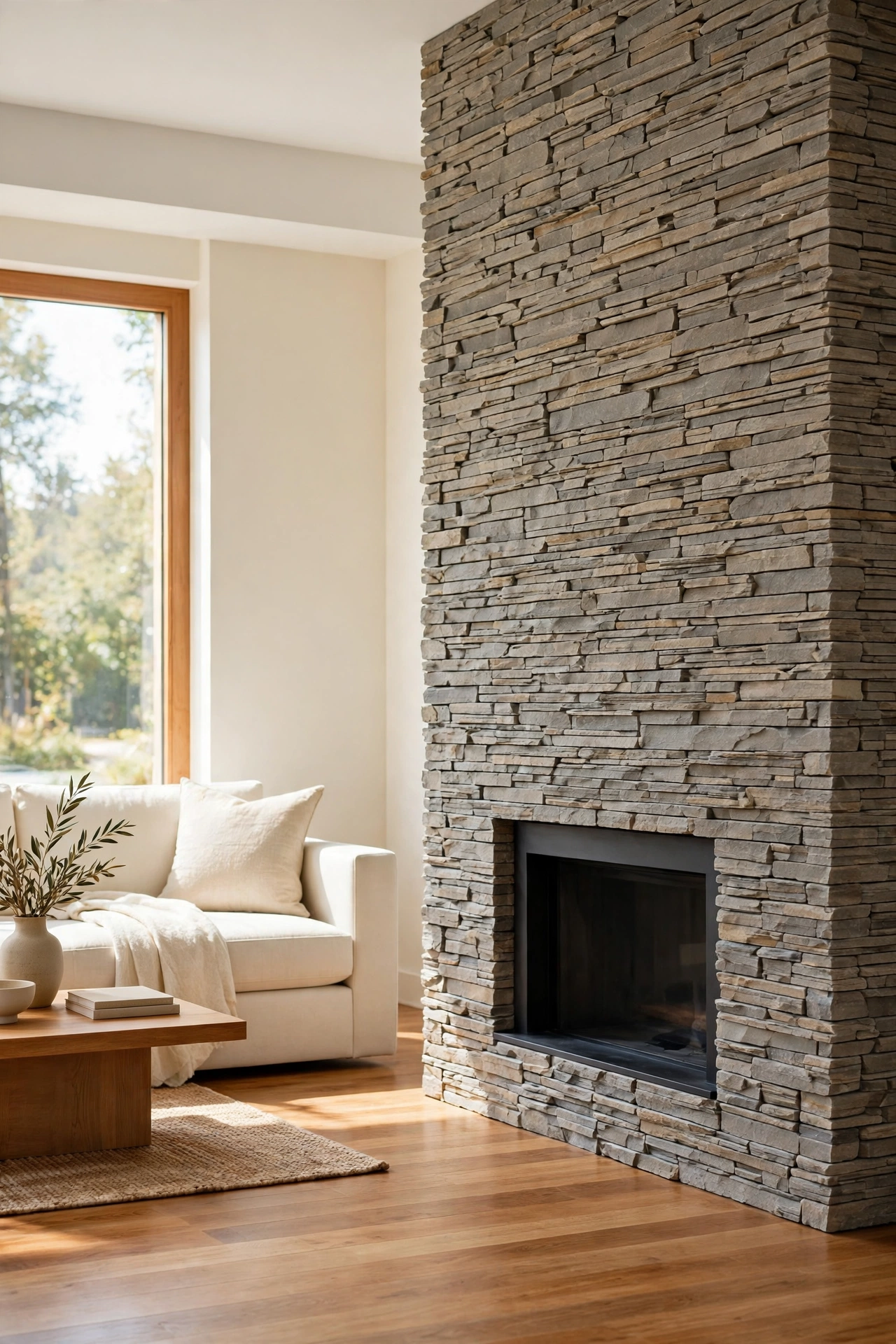
Stacked stone veneer brings the look of a hand built stone wall to a fireplace without the weight or cost of full stone blocks. Thin slices of natural stone are layered in tight rows, which creates deep shadows and rich texture that flat paint can never match. The uneven surface catches the light differently through the day, so the fireplace always looks alive.
Choose warm gray or sandy tones for a look that suits both modern and rustic rooms. Keep the furniture and decor simple so the stone stays the star of the wall. If a full stone wall feels like too much, these faux stone decor ideas show lighter ways to bring the same texture home. A stone veneer surround works best when it runs from floor to ceiling, so the fireplace feels tall and grand.
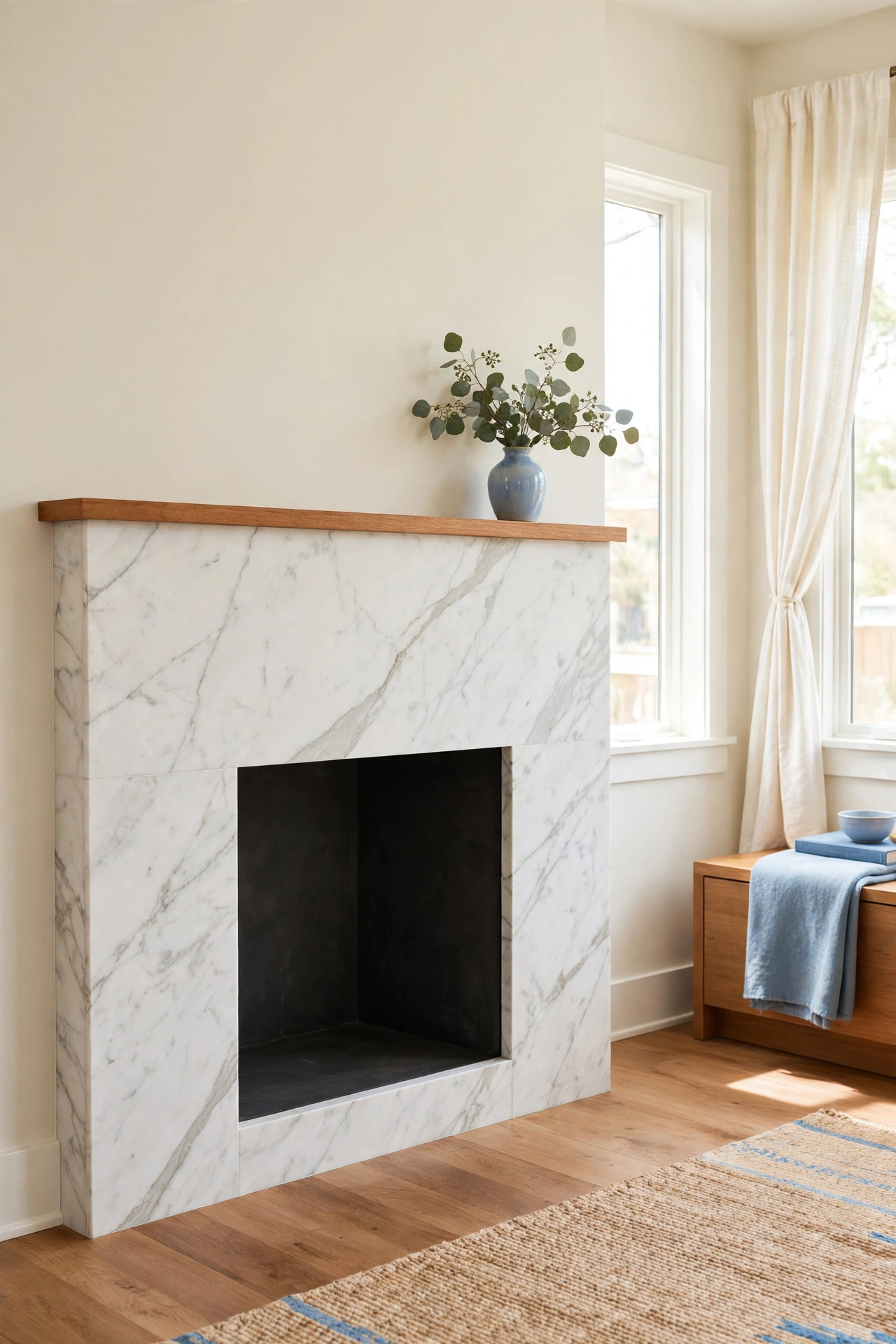
2. Frame the Firebox With a Marble Slab Surround
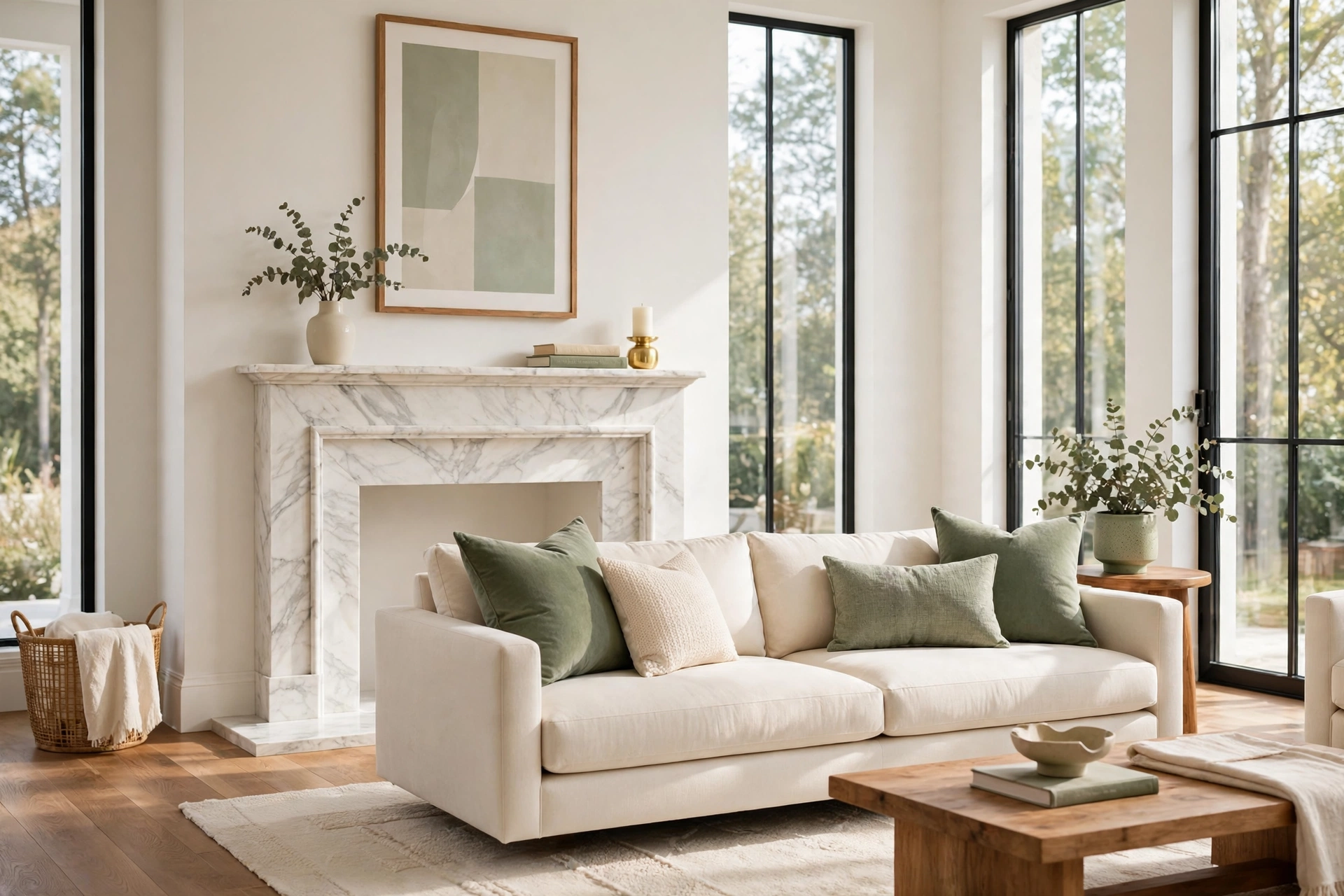
A marble slab surround is the most elegant way to frame a fireplace. One large slab on each side of the firebox, with veins that flow across the surface, creates a clean and luxurious look with almost no grout lines to break it up. White marble with soft gray veins suits classic rooms, while darker marble with bold veins suits modern spaces.
Keep the mantel shelf slim and simple so the marble stays the focus. A marble surround pairs beautifully with cream walls, warm wood floors, and brass accents. For more ways to use this stone through the home, these marble accent ideas will help you repeat the material in small doses around the room. Seal the marble well, since it can stain if soot or spills sit on it for long.
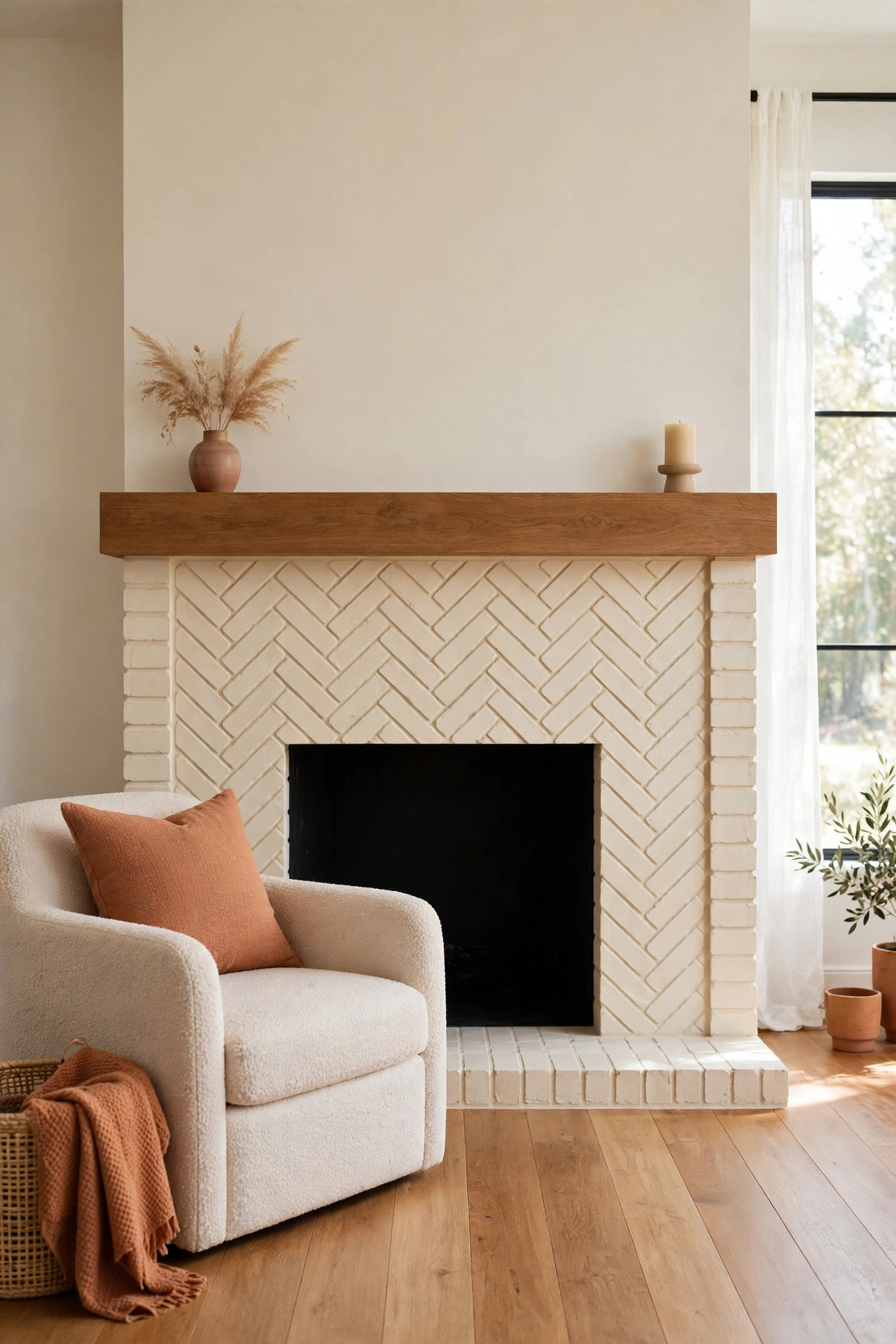
3. Lay a Herringbone Brick Surround for Classic Charm
Herringbone brick turns an ordinary brick surround into a pattern that draws the eye. The zigzag layout of the bricks adds movement and craft to the wall, and it works with red brick, whitewashed brick, or soft cream brick. The pattern feels classic, yet it reads as fresh and intentional in a modern room.
Use a thin brick veneer if your wall cannot hold the weight of full bricks. The herringbone pattern needs a skilled hand to lay, so take time to plan the layout before the first brick goes up. A herringbone surround suits cottages, farmhouses, and traditional living rooms, and it looks wonderful beside warm wood beams and cozy textiles.
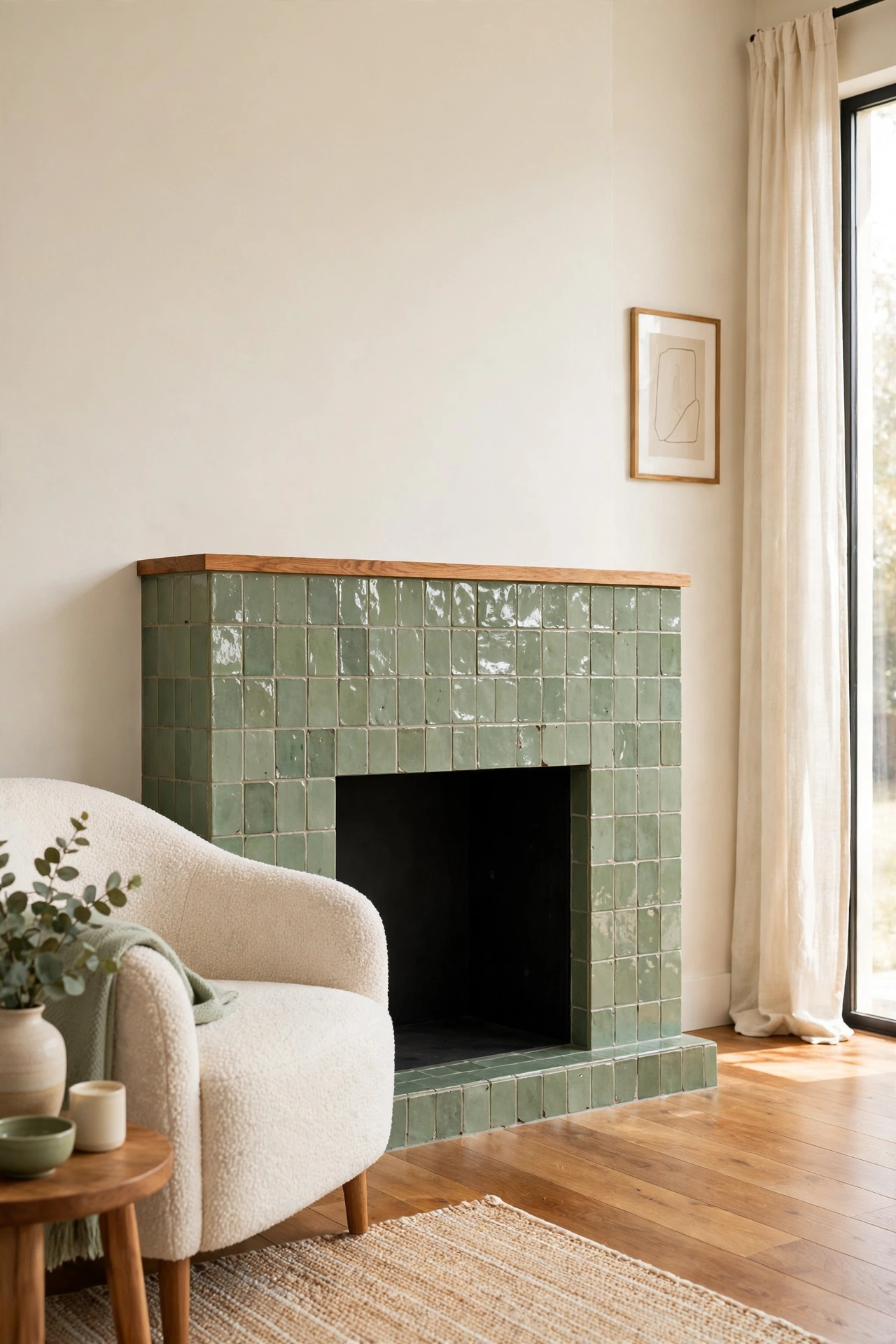
4. Cover the Surround in Handmade Zellige Tile
Zellige tile is handmade, so no two tiles are exactly alike. That slight variation in color and surface gives a fireplace surround a soft, glowing quality that machine made tile cannot copy. Sage green, deep blue, and warm clay are all beautiful choices for a zellige surround.
Run the tile from the firebox to the ceiling for a bold statement, or keep it to the surround frame for a quieter effect. The glossy surface reflects firelight beautifully in the evening. Pair a zellige surround with simple furniture and plain walls, so the handmade texture gets the attention it deserves.
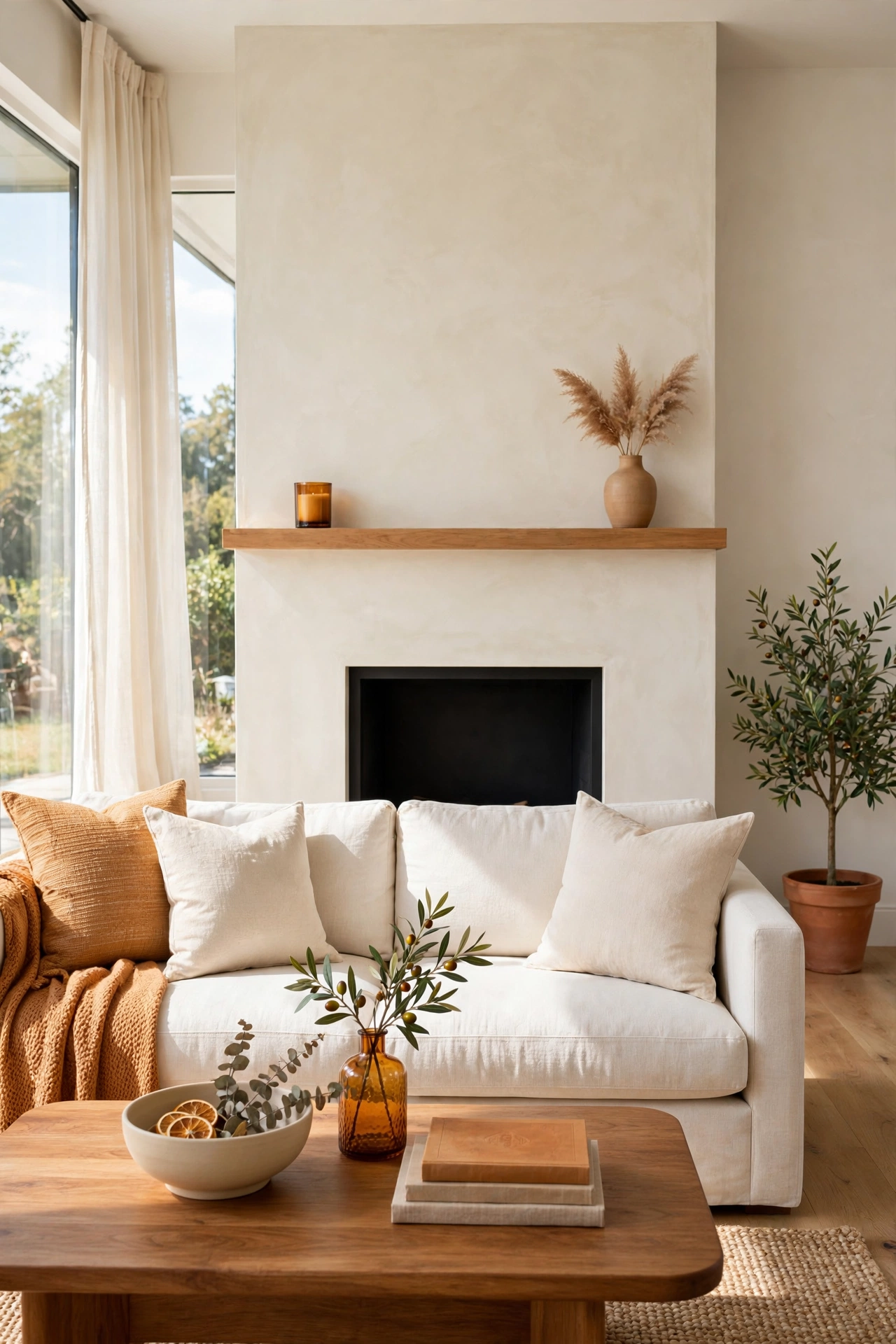
5. Smooth the Wall With a Limewash Plaster Surround
A limewash plaster surround gives the fireplace a soft, chalky finish that feels calm and timeless. The plaster is smoothed over the wall around the firebox, then washed with lime paint in thin layers that leave gentle variation in tone. The result looks like an old European farmhouse wall, full of character and warmth.
Warm white, pale clay, and soft sand are the most flattering limewash colors for a fireplace. The matte surface absorbs light instead of reflecting it, which makes the room feel serene. To learn how this finish works on other walls too, see these limewash wall paint ideas for the full technique. A plaster surround suits Mediterranean, modern rustic, and minimalist rooms alike.
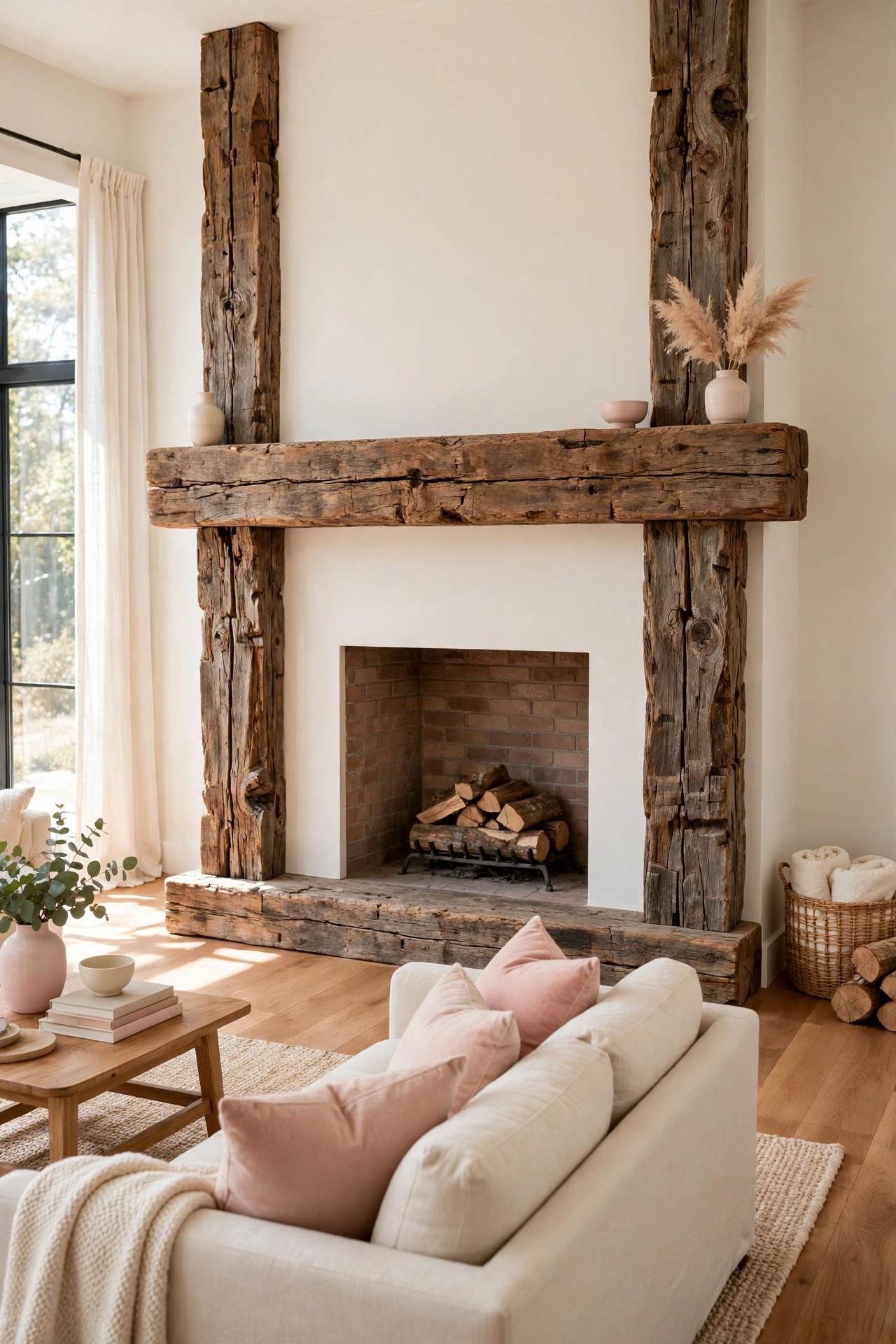
6. Build a Reclaimed Wood Beam Surround
A reclaimed wood surround wraps the firebox in warm, weathered timber that brings instant character to the room. Thick beams frame the opening, and the grain, knots, and nail marks in old wood tell a story that new lumber cannot match. The look is rustic without feeling rough, especially when the wood is sanded smooth and sealed.
Keep the wood at a safe distance from the firebox opening and follow local fire codes for clearances. A chunky wood mantel beam across the top completes the look and gives you a shelf for art and candles. This surround suits cabins, farmhouses, and any room that needs warmth and texture around the fire.
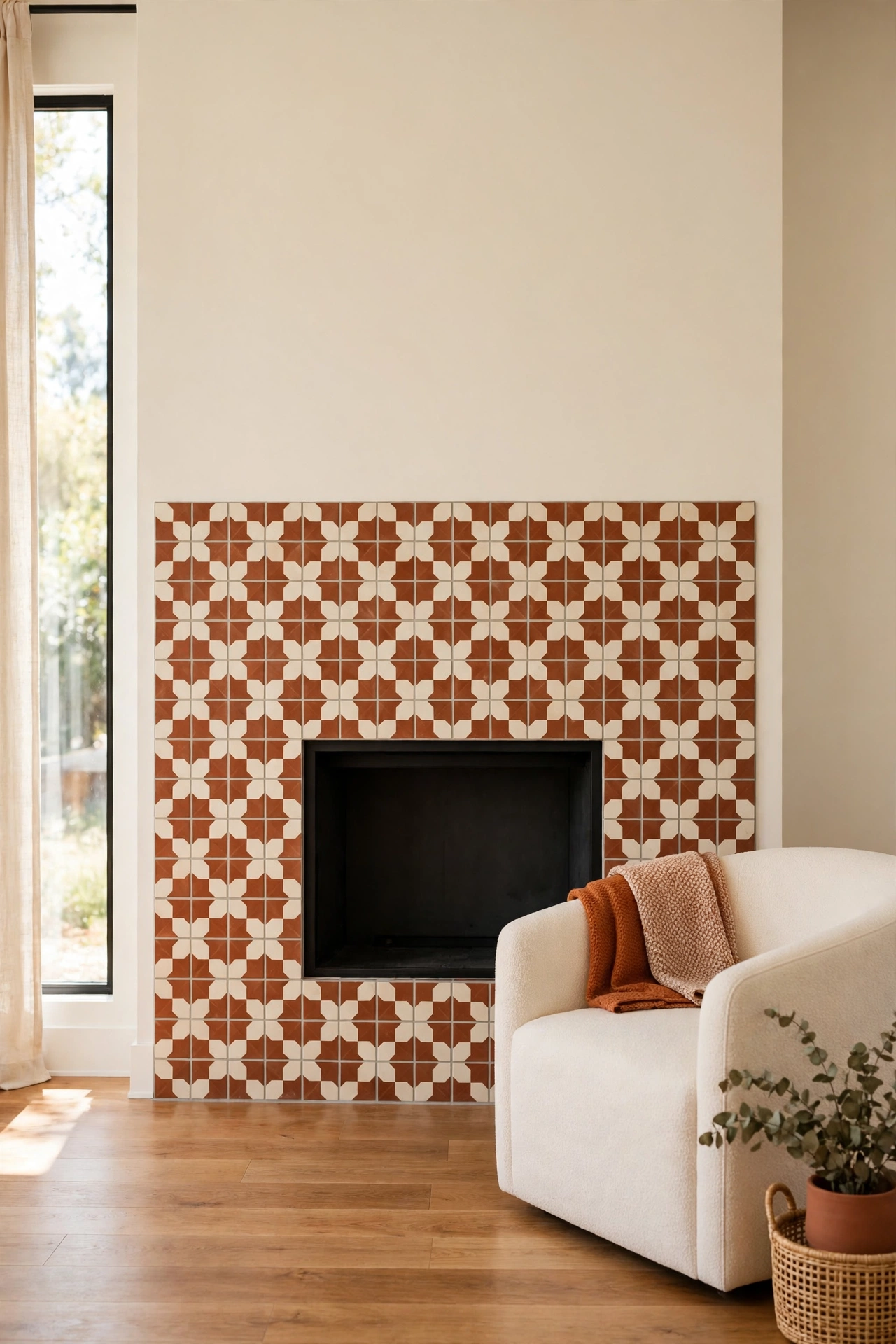
7. Pattern the Surround With Cement Tile
Patterned cement tile turns the fireplace surround into a piece of art. Bold geometric or floral patterns in rich colors create a focal point that needs no other decoration. Moroccan, Spanish, and Mediterranean patterns all work beautifully around a firebox.
Use the patterned tile on the surround frame only, and keep the wall above it plain so the pattern does not overwhelm the room. Cement tile is thick and durable, which suits the heat and wear around a fireplace. Choose a pattern with one color that repeats in your rug or cushions to tie the whole room together.
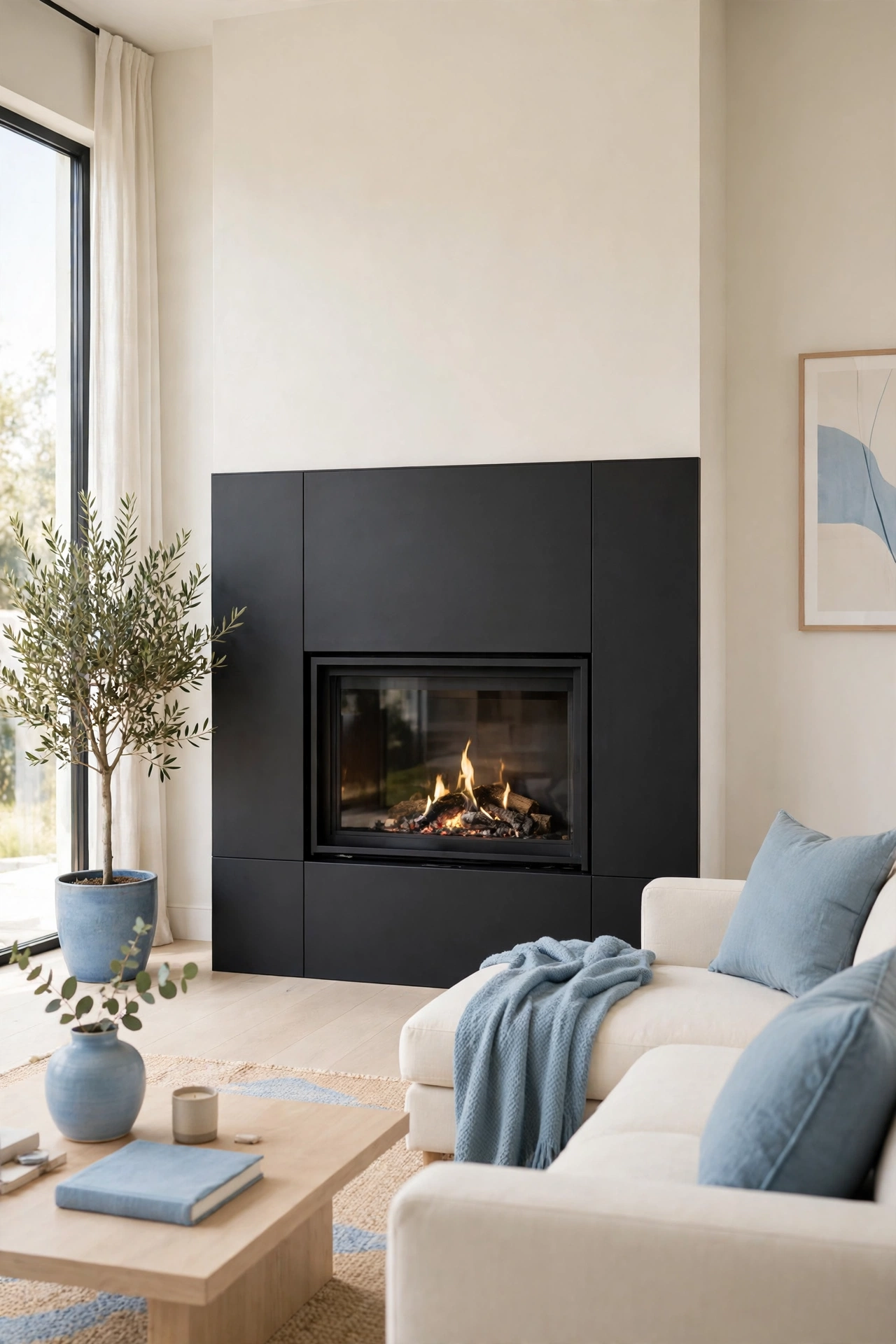
8. Frame the Firebox in Matte Black Steel
A matte black steel surround gives a fireplace a sharp, modern edge. Flat steel panels wrap the firebox in a clean frame with no visible joints, which suits minimalist and industrial rooms. The dark finish makes the flames stand out, so the fire itself becomes the decoration.
Pair black steel with light walls and pale wood floors for strong contrast, or with dark walls for a moody, dramatic room. The steel stays cool to the eye even though it handles heat well, and it wipes clean with a damp cloth. This is also a smart refresh when a full rebuild is out of reach, and these budget friendly fireplace makeover ideas include more low cost ways to update a tired surround. Keep the decor around it minimal so the clean lines stay crisp.
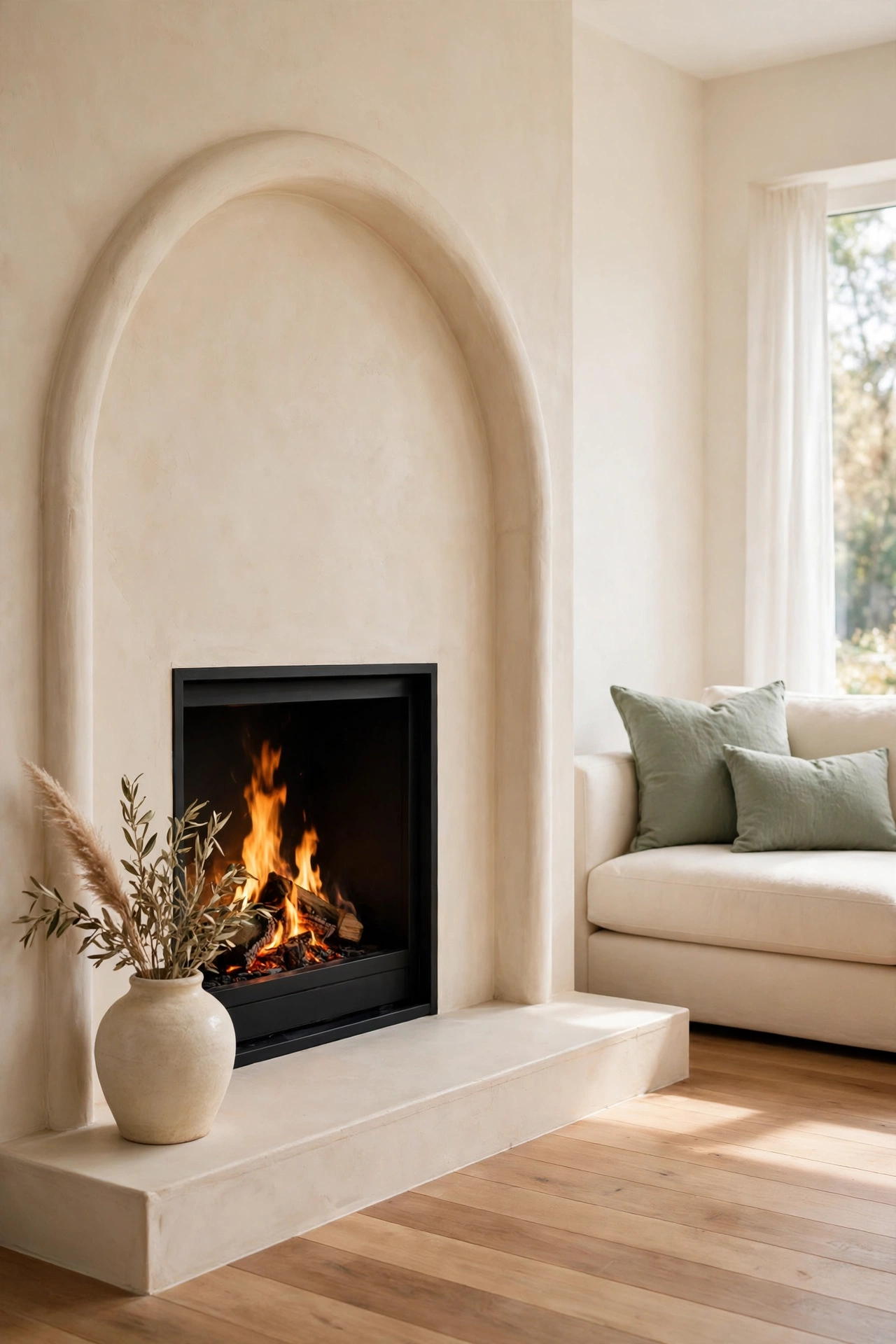
9. Shape an Arched Plaster Surround
An arched plaster surround softens the whole fireplace wall. The curved opening replaces hard corners with a gentle arch, and the smooth plaster finish keeps the look calm and sculptural. Arches suit Mediterranean, Spanish, and soft modern rooms, and they make a standard firebox feel custom built.
Build the arch with plaster over a curved frame, then paint it the same color as the wall for a seamless look. The curve draws the eye upward and makes the ceiling feel taller. Style the hearth simply, with a low stack of firewood or a single ceramic vase, so the graceful shape stays the focus.
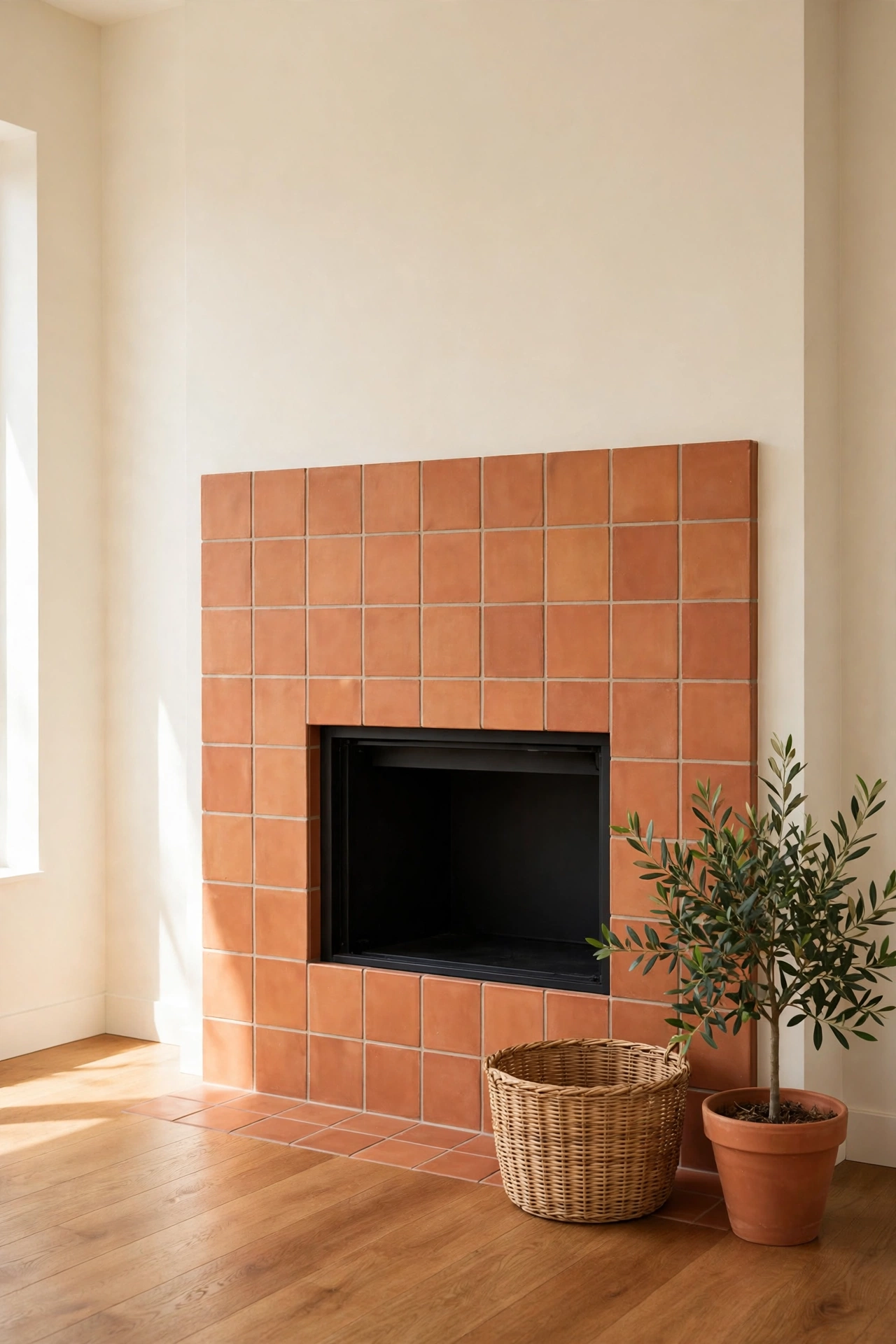
10. Warm the Room With a Terracotta Tile Surround
Terracotta tile brings sun baked warmth to a fireplace surround. The rich orange clay tones glow in firelight and pair naturally with cream walls, dark wood, and woven textures. Square tiles laid in a simple grid feel traditional, while long thin tiles laid in a stack feel modern.
Seal the terracotta well, since the porous clay can absorb soot and stains. A terracotta surround suits Southwestern, Mediterranean, and earthy modern rooms, and it looks wonderful with plants and natural fibers nearby. If your fireplace sits at an angle, these small living room layout ideas around a corner fireplace will help you arrange furniture so the warm surround stays the heart of the room.
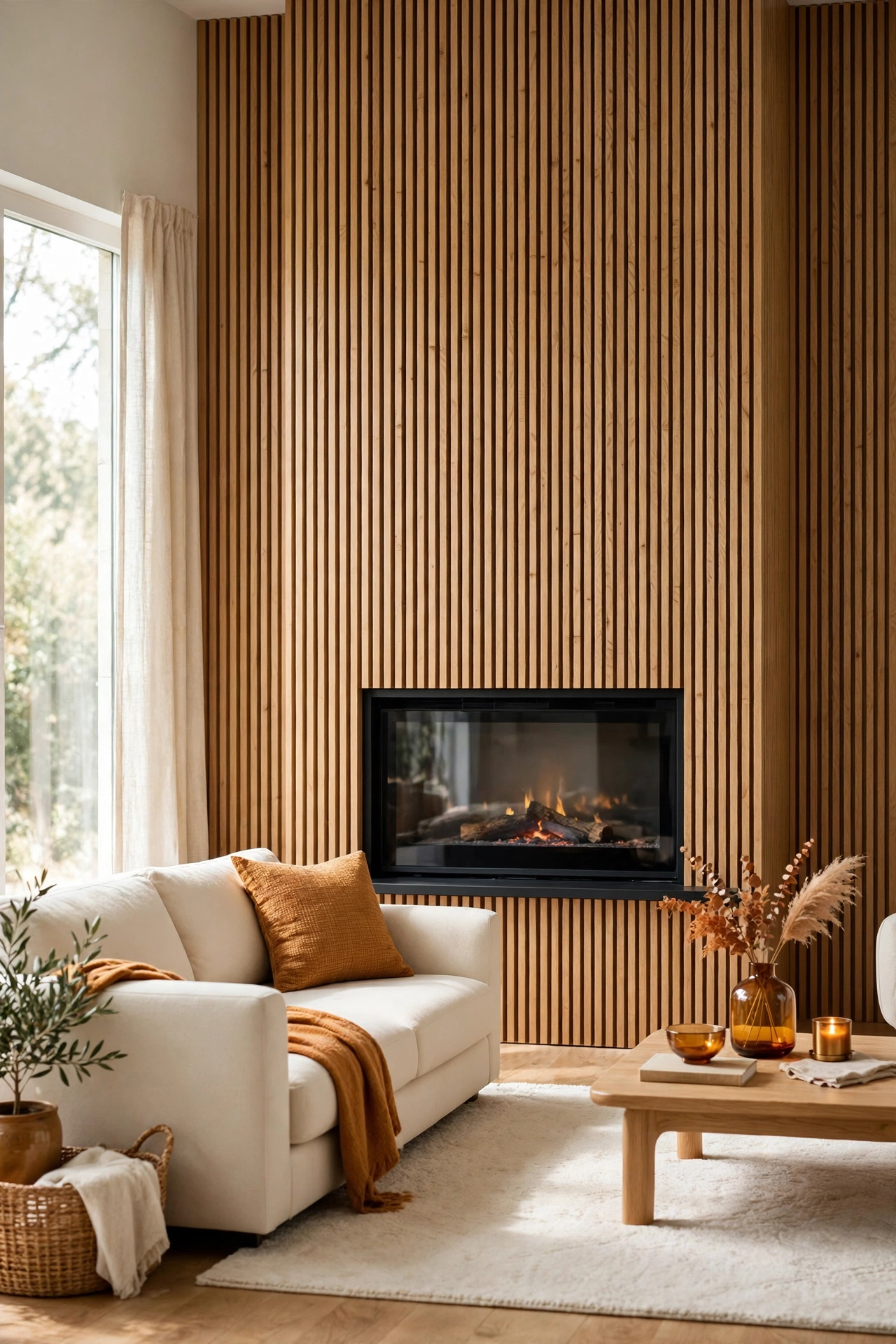
11. Line the Surround With Fluted Oak Slats
Fluted oak slats give a fireplace surround a tailored, modern texture. Narrow vertical grooves run from floor to ceiling, which makes the wall feel taller and adds rhythm without a busy pattern. The warm oak tone softens the modern lines and suits Scandinavian and contemporary rooms.
Use fire rated panels or keep the slats at a safe distance from the firebox opening, with a stone or steel inner frame closest to the heat. The vertical lines pair well with low, clean lined furniture and simple art. A fluted surround looks best when it runs the full height of the wall, so the grooves lead the eye all the way up.
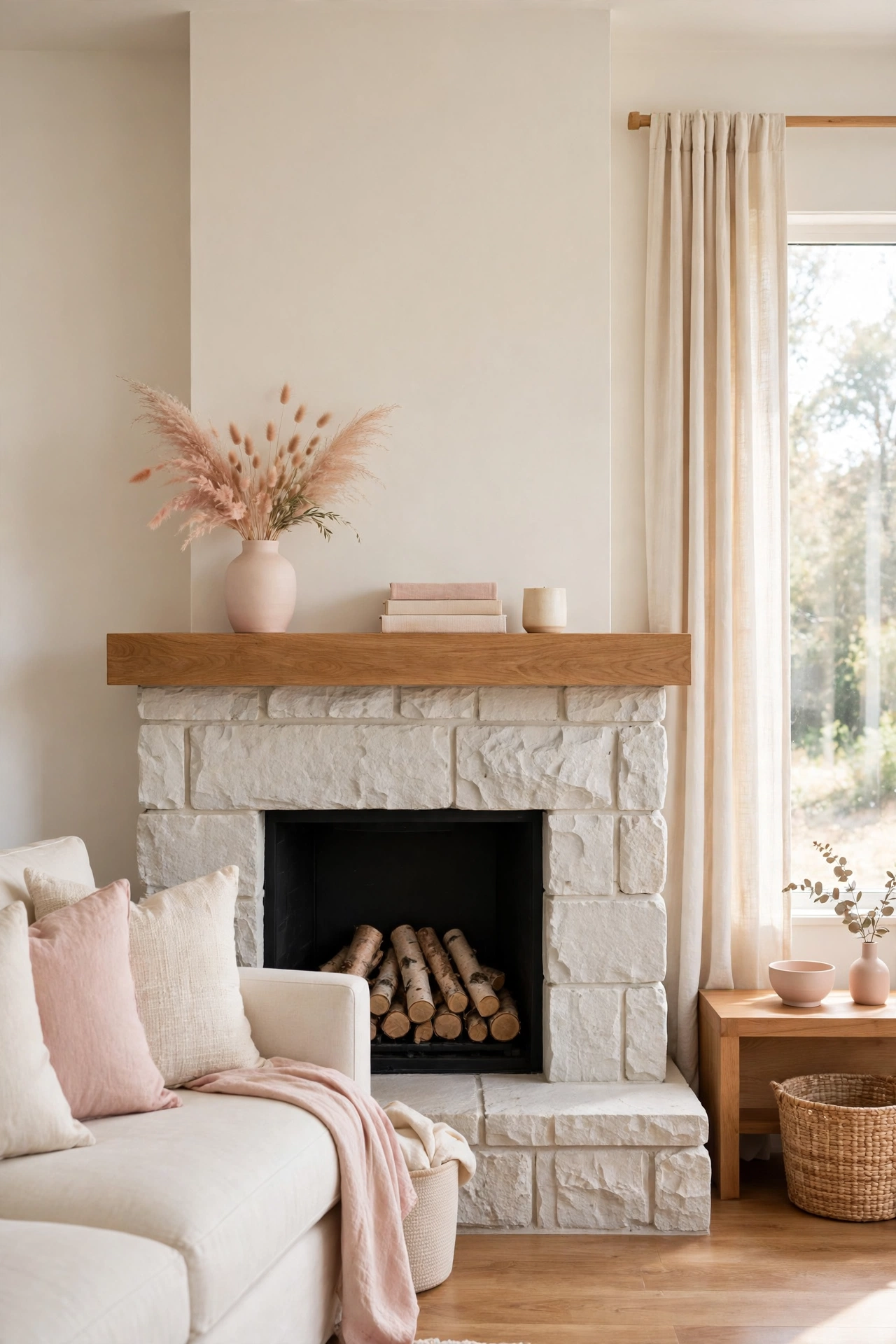
12. Cut a Rough Limestone Surround for Quiet Luxury
Rough cut limestone gives a fireplace surround a quiet, old world luxury. The stone is honed rather than polished, so the surface feels soft and chalky to the eye, with gentle fossils and veining that reward a closer look. Pale limestone suits French, classic, and transitional rooms.
Use large limestone blocks with thin joints for a clean, architectural look. The pale stone brightens a dark room and pairs well with cream upholstery, aged brass, and soft linen curtains. Limestone is softer than granite or marble, so seal it and wipe up spills quickly to keep the surface beautiful for years.
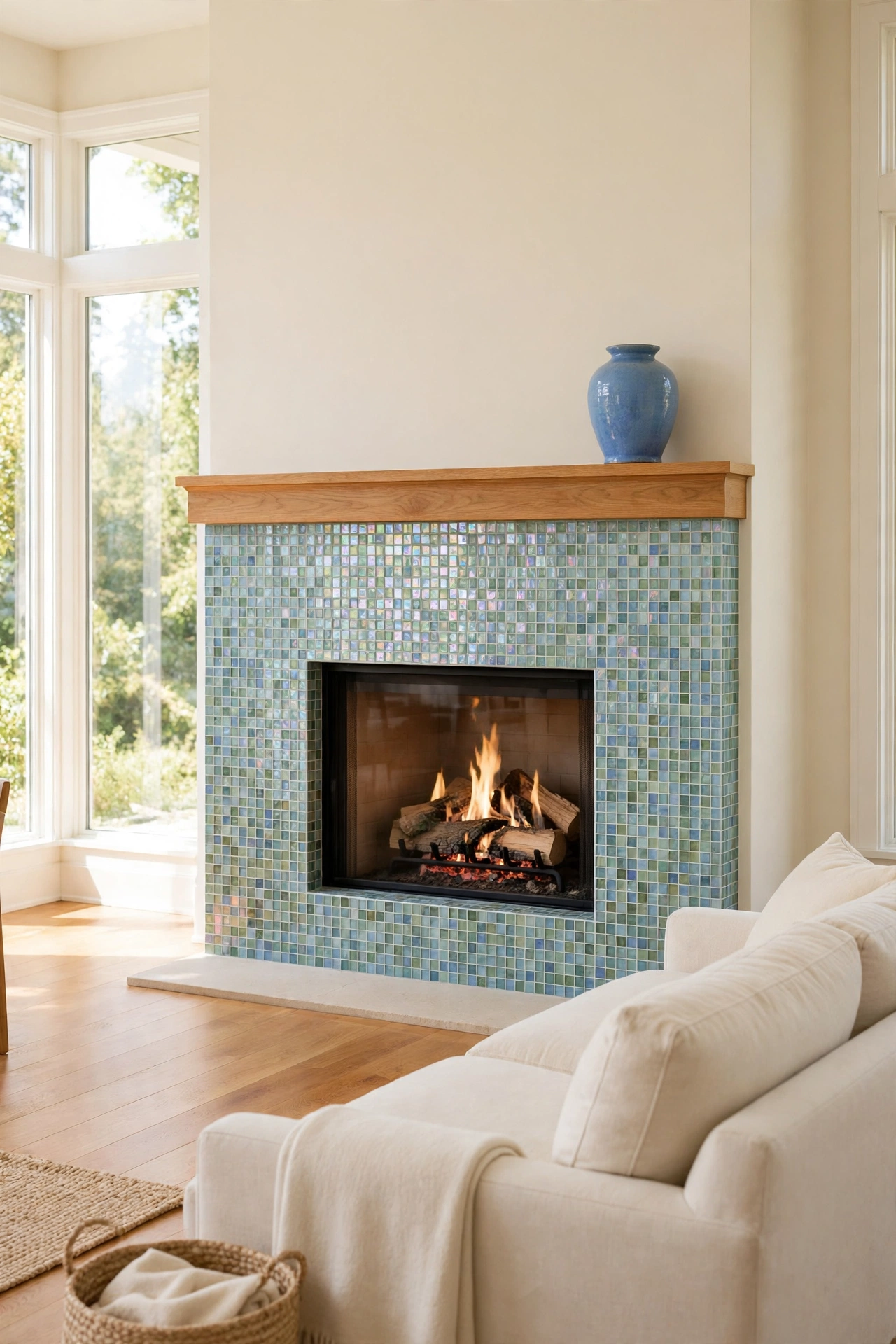
13. Glaze the Surround With Mosaic Glass Tile
Mosaic glass tile gives a fireplace surround a shimmer that changes with the light. Small glass tiles in soft blues, greens, or warm amber catch firelight and lamplight, so the surround glows in the evening. The small scale of the mosaic suits both modern and traditional rooms.
Keep the mosaic to the surround frame and use larger tiles or plain plaster above it, so the sparkle stays focused around the fire. Glass tile is easy to wipe clean, which helps around a working fireplace. Choose a color that echoes one accent in the room, such as a blue vase or a green cushion, to make the whole space feel connected.
Conclusion
A decorative fireplace surround is one of the highest impact changes you can make in a living room. Whether you choose stacked stone, marble, handmade tile, or warm wood, the surround frames every fire and every gathering around it. The right material will suit your style, your budget, and the way your family actually lives in the room.
Start by choosing the material that makes you happiest, then plan the details around it. Measure the wall, check fire clearances, and order samples to see the colors in your own light. With the right surround, your fireplace will stop being background and start being the statement your living room deserves.
Frequently Asked Questions About Decorative Fireplace Surround Ideas for Statement Interiors
What is the best material for a fireplace surround?
Stone, tile, brick, and plaster are all excellent choices because they handle heat well and age beautifully. Marble and limestone suit elegant rooms, while brick and wood suit rustic spaces. Choose a material that matches your style and your budget, and always check fire clearance rules for combustible materials like wood.
How far should a wood surround sit from the firebox?
Most building codes require wood and other combustible materials to sit at least 6 inches from the firebox opening, with more clearance for pieces that stick out from the wall. Check your local code and the fireplace manual before you build. When in doubt, add a noncombustible inner frame of stone or steel closest to the heat.
Can I change a fireplace surround without replacing the fireplace?
Yes, the surround is the decorative frame around the firebox, and it can be replaced or covered without touching the firebox itself in most cases. Tile, stone veneer, and plaster can all go over an existing surround if the surface is sound. Hire a professional if the work involves the chimney, gas lines, or structural changes.
Should the surround run to the ceiling or stop at the mantel?
A surround that runs to the ceiling makes the fireplace feel taller and more dramatic, which suits rooms with high ceilings and modern styles. A surround that stops at the mantel feels classic and leaves wall space for art above. Either choice works well, so pick the one that suits your room proportions and your style.
How do I clean a stone or tile fireplace surround?
Dust the surround weekly with a dry cloth and wipe it with a damp cloth as needed. Use a mild soap and water for soot marks, and avoid harsh acids on marble, limestone, and terracotta. Reseal porous stone every year or two to protect it from stains.

Hi, I’m Emily! I turn messy corners into cozy, organized spots. DreamNestDecor is where I share simple, practical home ideas — decor, organization, and small-space solutions that work in real life, not just in photos. Every idea here is carefully researched before it’s shared.