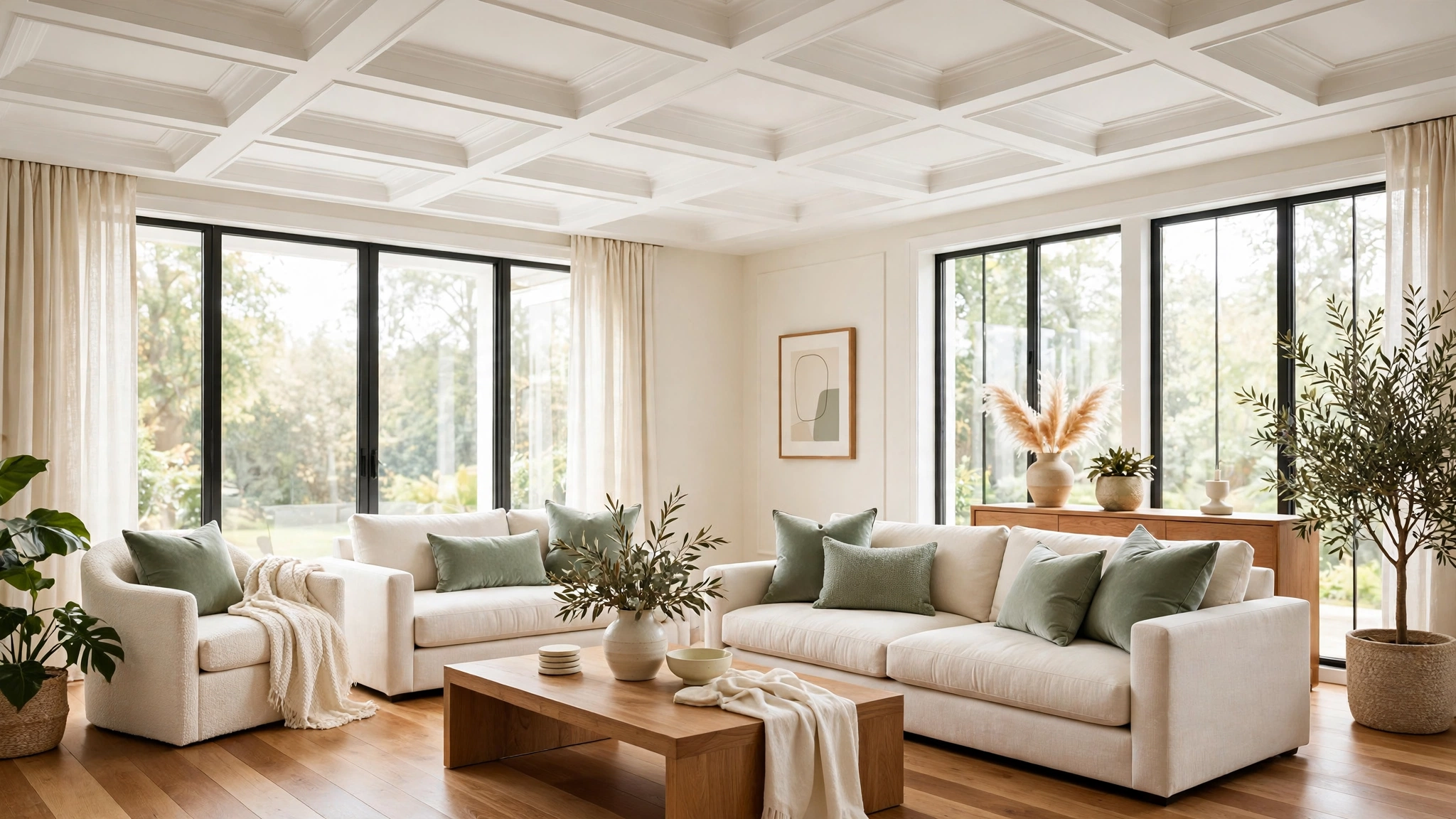
Picture this: you walk into a room and your eyes travel upward before they take in anything else. A grid of crisp recessed panels stretches across the ceiling, each one framed with clean trim and soft shadows. The room feels taller, grander, and more finished than any flat ceiling could ever make it feel. That quiet sense of architecture is exactly what a coffered ceiling brings to a home.
You do not need a mansion or a historic house to enjoy this look. Coffered ceilings work in living rooms, bedrooms, dining rooms, and home offices, in styles from classic to modern. These 27 coffered ceiling design ideas will help you choose the grid, the color, and the details that turn an overlooked ceiling into the most sophisticated feature in the room.
1. Choose a Classic White Grid Coffered Ceiling
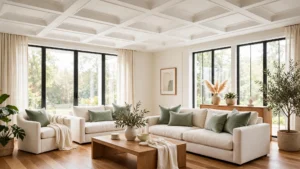
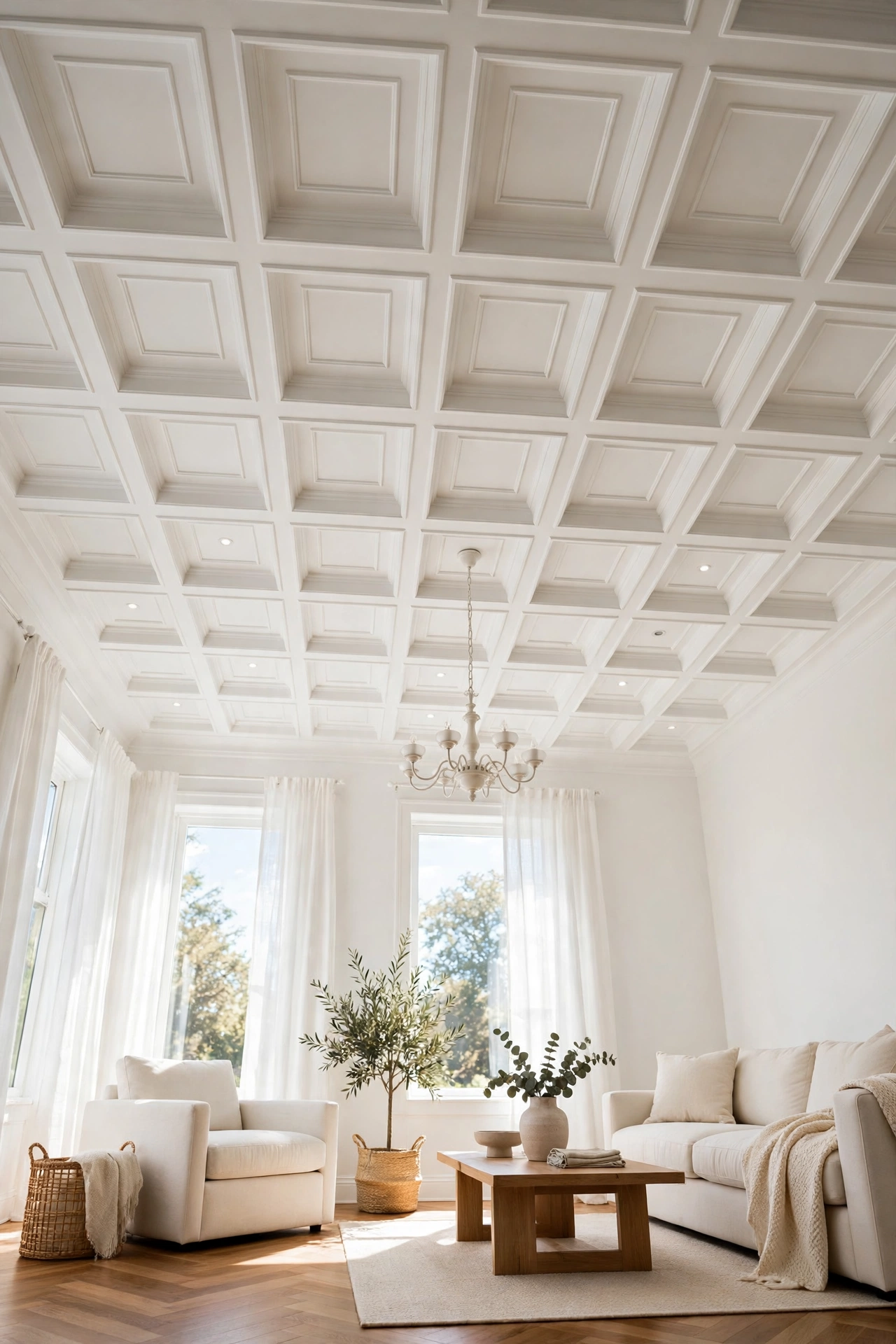
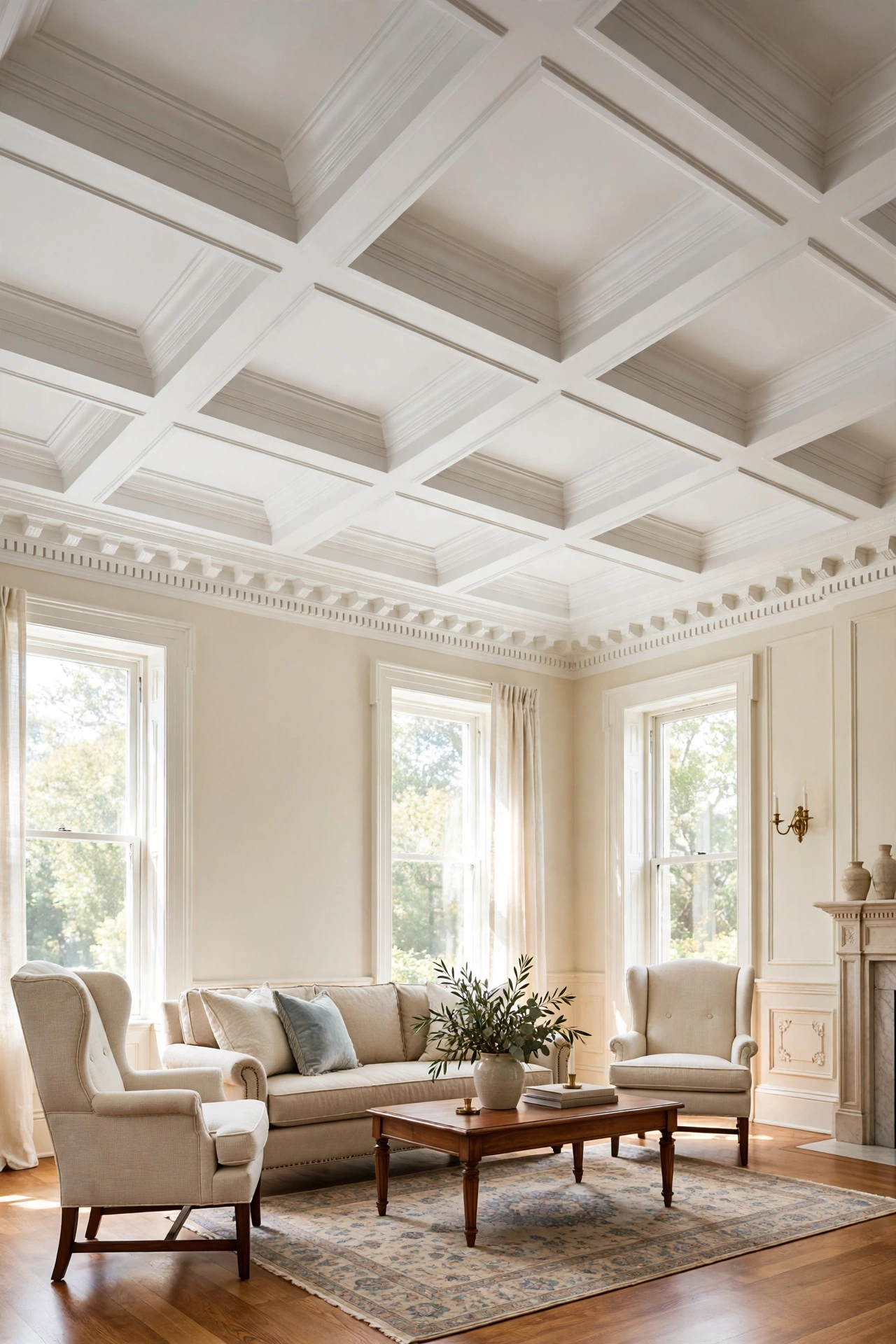
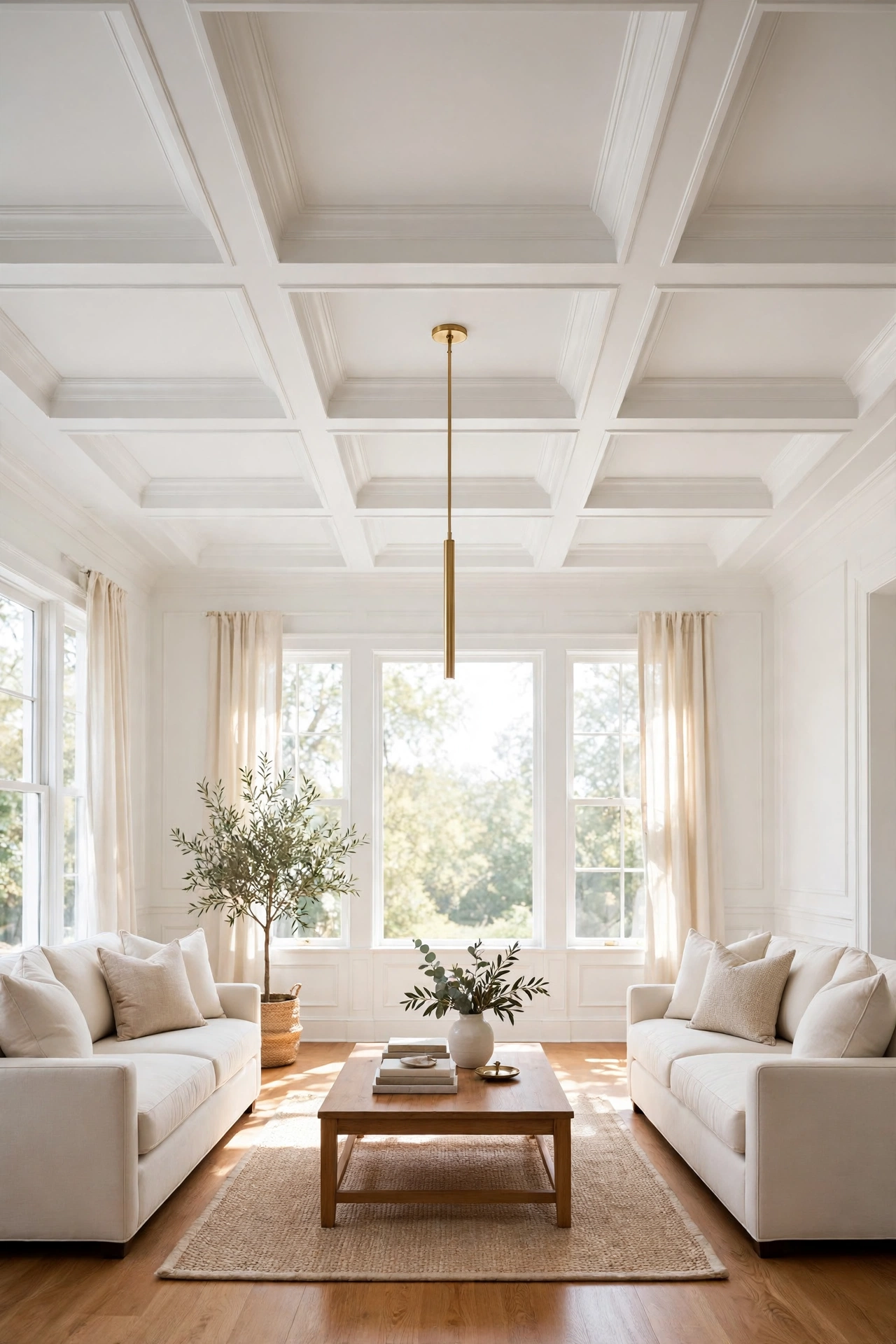
A classic white grid is the most timeless version of a coffered ceiling. Equal square panels run across the ceiling in neat rows, framed by painted beams and finished with simple crown molding at the edges. The white paint keeps the look bright and airy, so the ceiling adds architecture without making the room feel heavy.
This style suits almost any room and pairs well with both traditional and transitional furniture. Keep the walls a soft warm cream and let the ceiling grid provide the pattern in the room. For more ways to shape the overhead plane, see these ceiling design ideas that work beautifully alongside a classic coffered grid.
2. Warm the Room With a Wood Coffered Ceiling
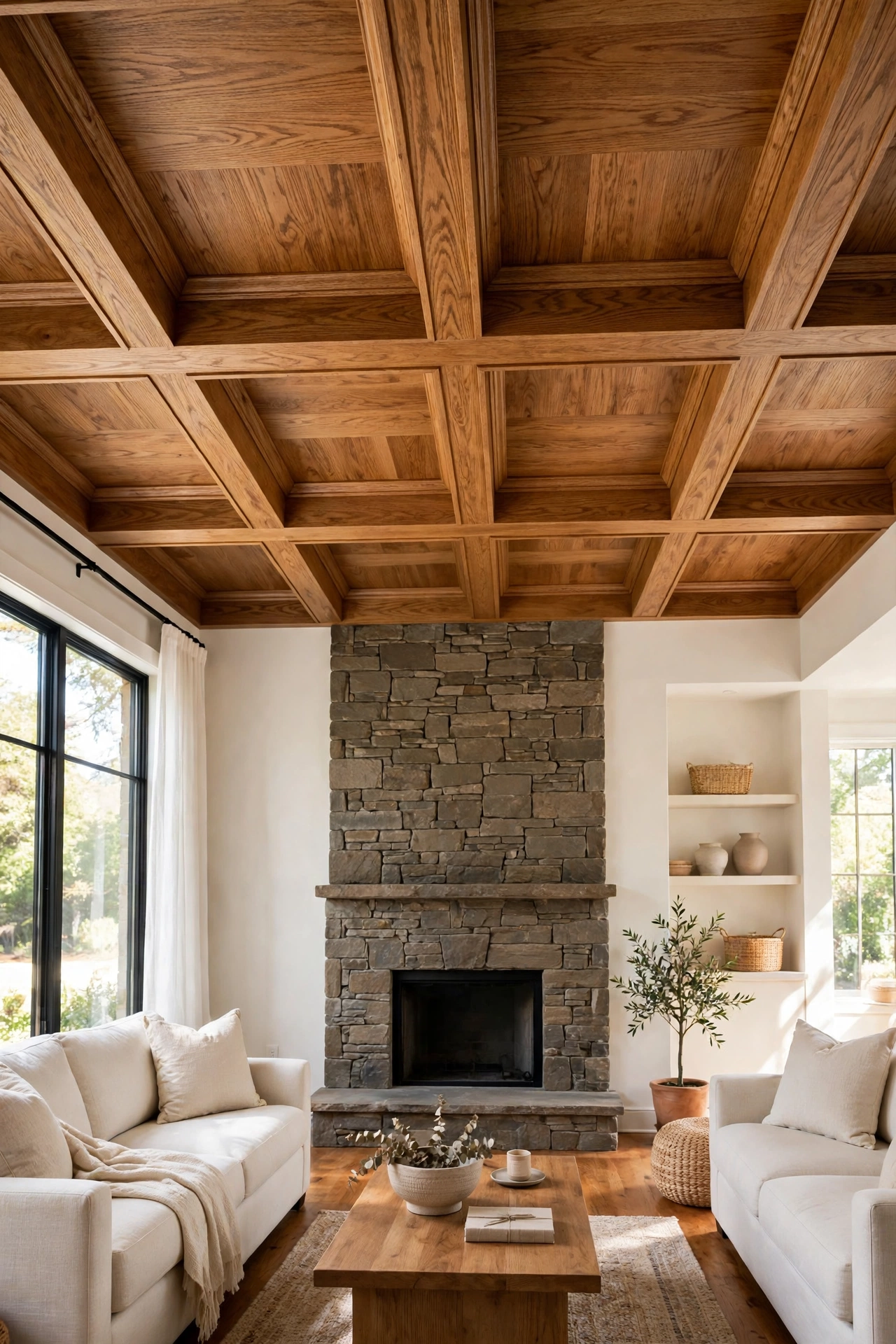
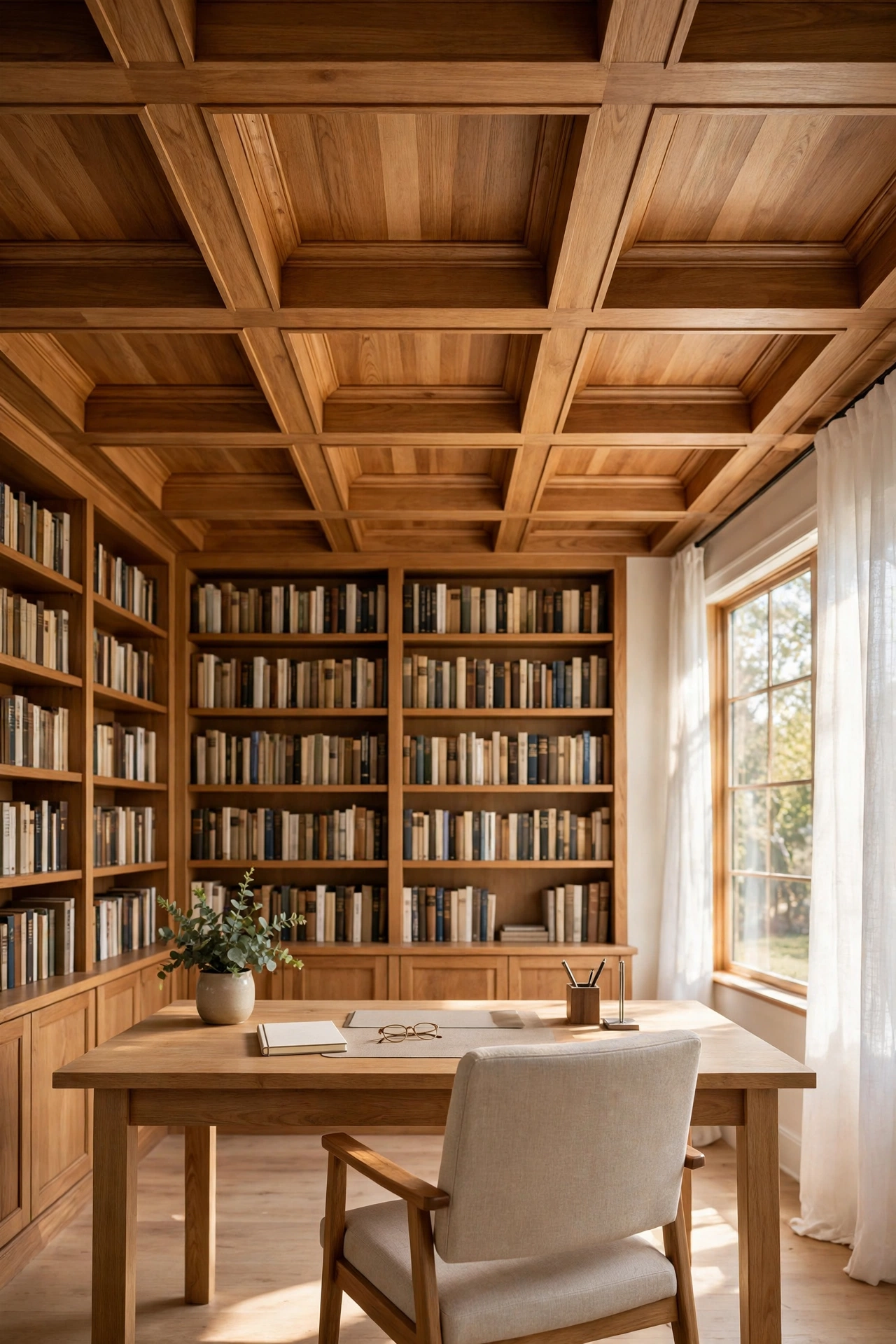
A wood coffered ceiling brings warmth and depth that paint alone cannot match. Natural oak or walnut beams form the grid, while the recessed panels show off the grain of the wood. The result feels rich and grounded, like the ceiling of a historic library or a mountain lodge.
Balance the wood overhead with lighter walls and upholstery so the room stays bright. Cream sofas, pale rugs, and linen curtains keep the space from feeling dark. A wood coffered ceiling works especially well in rooms with a fireplace, where the warm tones echo the hearth below.
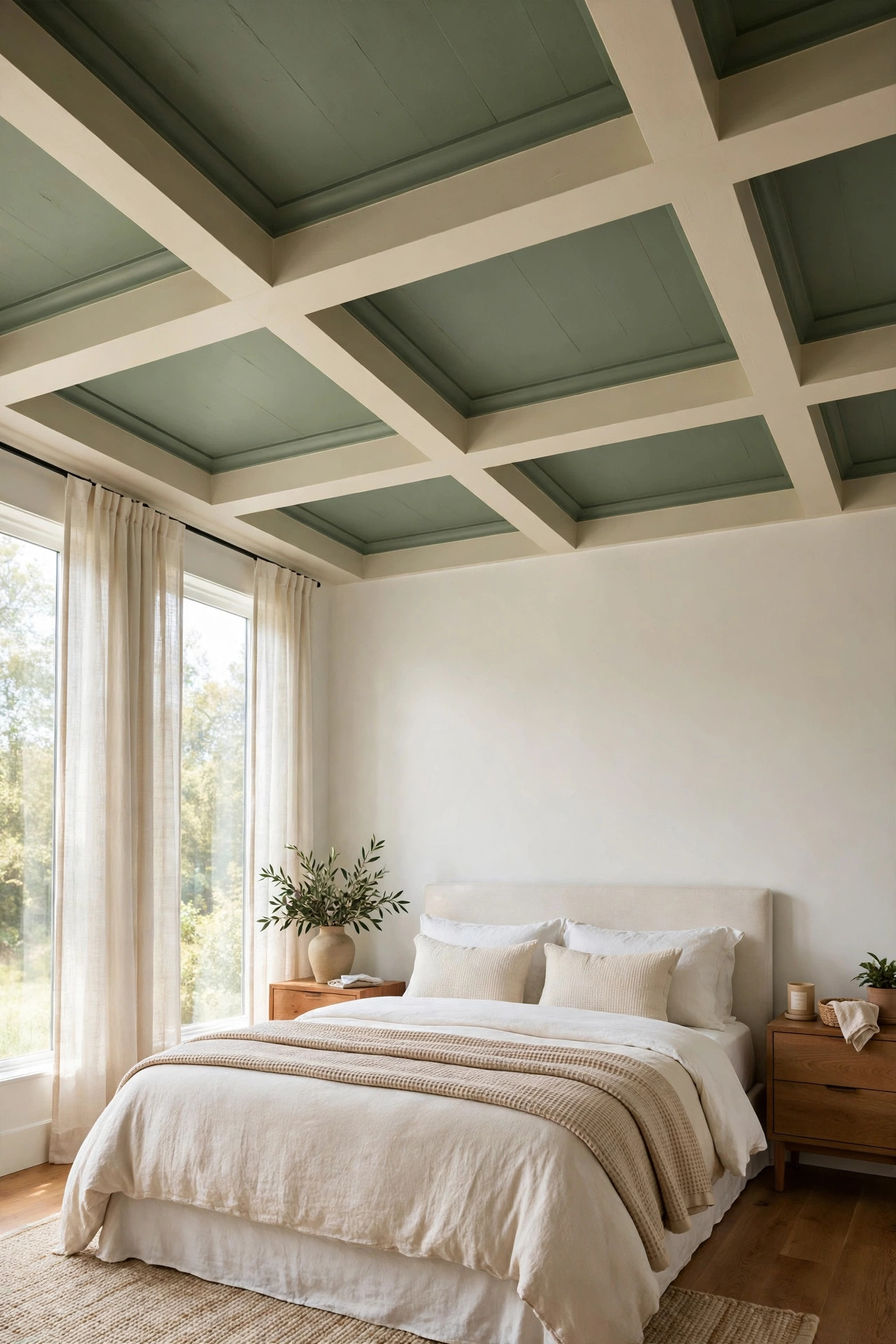
3. Paint the Coffers a Soft Sage Green
Sage green coffers add gentle color to a ceiling without overwhelming the room. Paint the recessed panels sage and keep the beams cream, or paint the whole grid sage for a more immersive effect. The muted green feels calm and fresh, and it pairs beautifully with warm wood floors and cream walls.
This color works well in bedrooms and sitting rooms where a restful mood matters most. Add sage cushions or a soft green throw to tie the ceiling color into the rest of the room. For more inspiration on bringing color overhead, these colorful ceiling ideas show how painted ceilings can transform a space.
4. Add Drama With a Deep Navy Coffered Ceiling
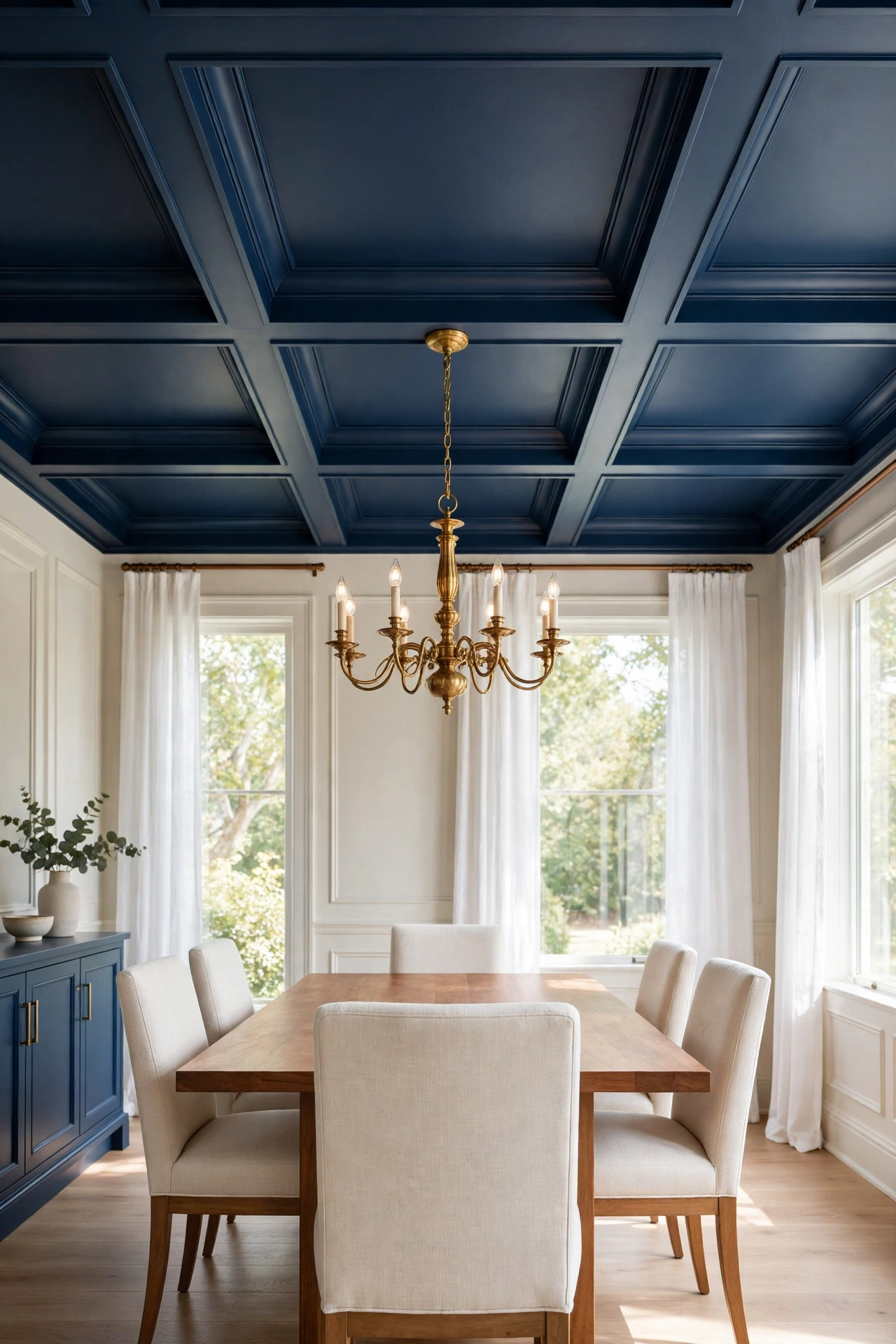
A deep navy coffered ceiling turns a room into a dramatic and sophisticated retreat. The dark color makes the grid pattern stand out, while the recessed panels catch light and shadow in a way that flat ceilings never can. Navy feels bold yet classic, especially in a dining room or a home library.
Keep the walls light and the furniture warm so the navy ceiling feels intentional rather than heavy. Brass light fixtures and warm wood tones glow beautifully against the dark blue. This is a strong choice for rooms where you want evening gatherings to feel special and moody.
5. Set Recessed Lights Inside Each Coffer
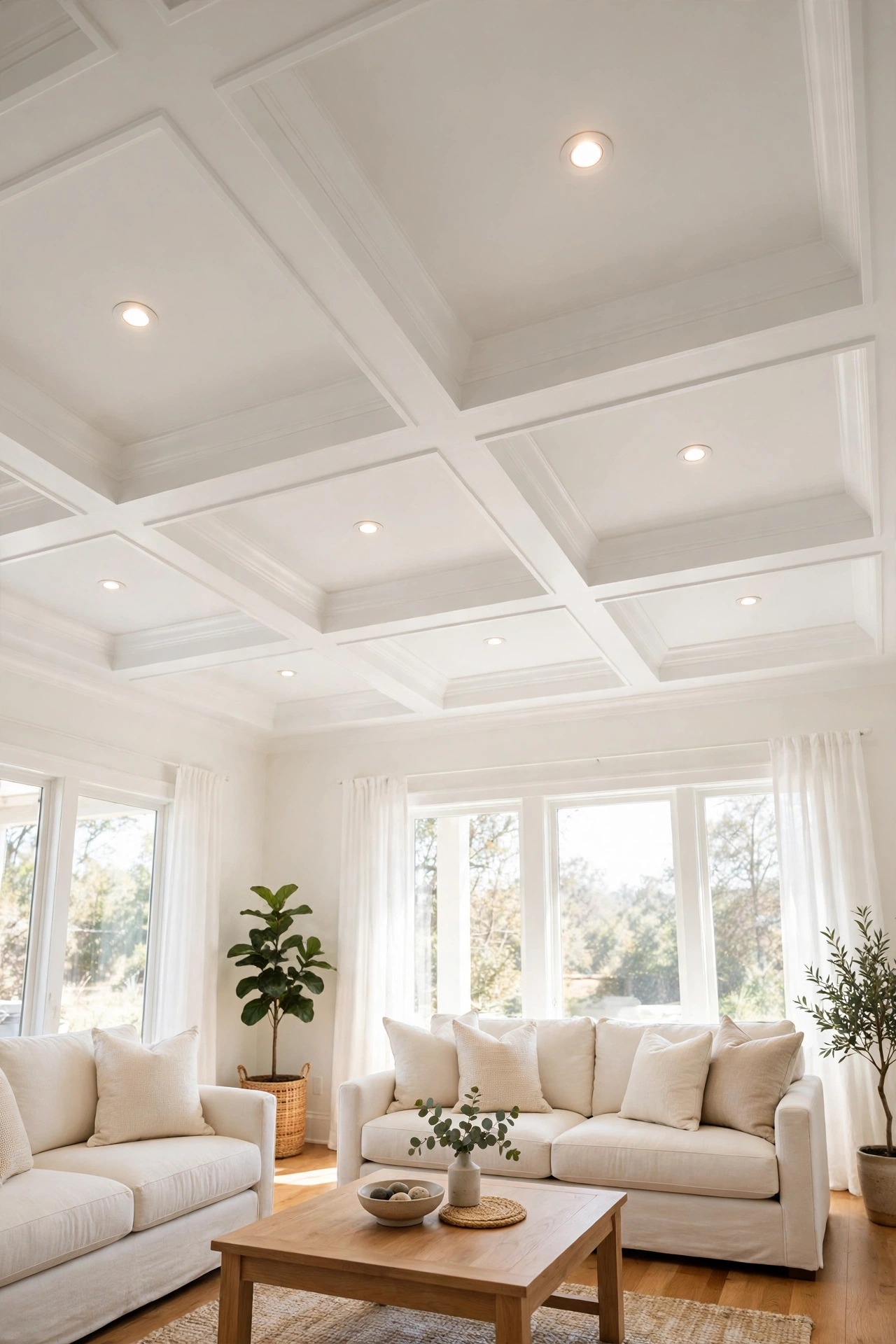
Recessed lights placed inside each coffer turn the ceiling grid into a lighting plan. A small downlight centered in every panel gives the room even, glare-free light, and the grid itself hides the fixtures so the ceiling still looks clean and architectural. Dimmers let you shift from bright task light to soft evening glow.
Plan the wiring before the grid goes up, and keep the lights aligned with the center of each panel for a symmetrical look. This approach suits kitchens and family rooms where you need strong light without hanging fixtures crowding the space. The ceiling becomes both structure and light source in one elegant system.
6. Keep It Shallow for Rooms With Low Ceilings
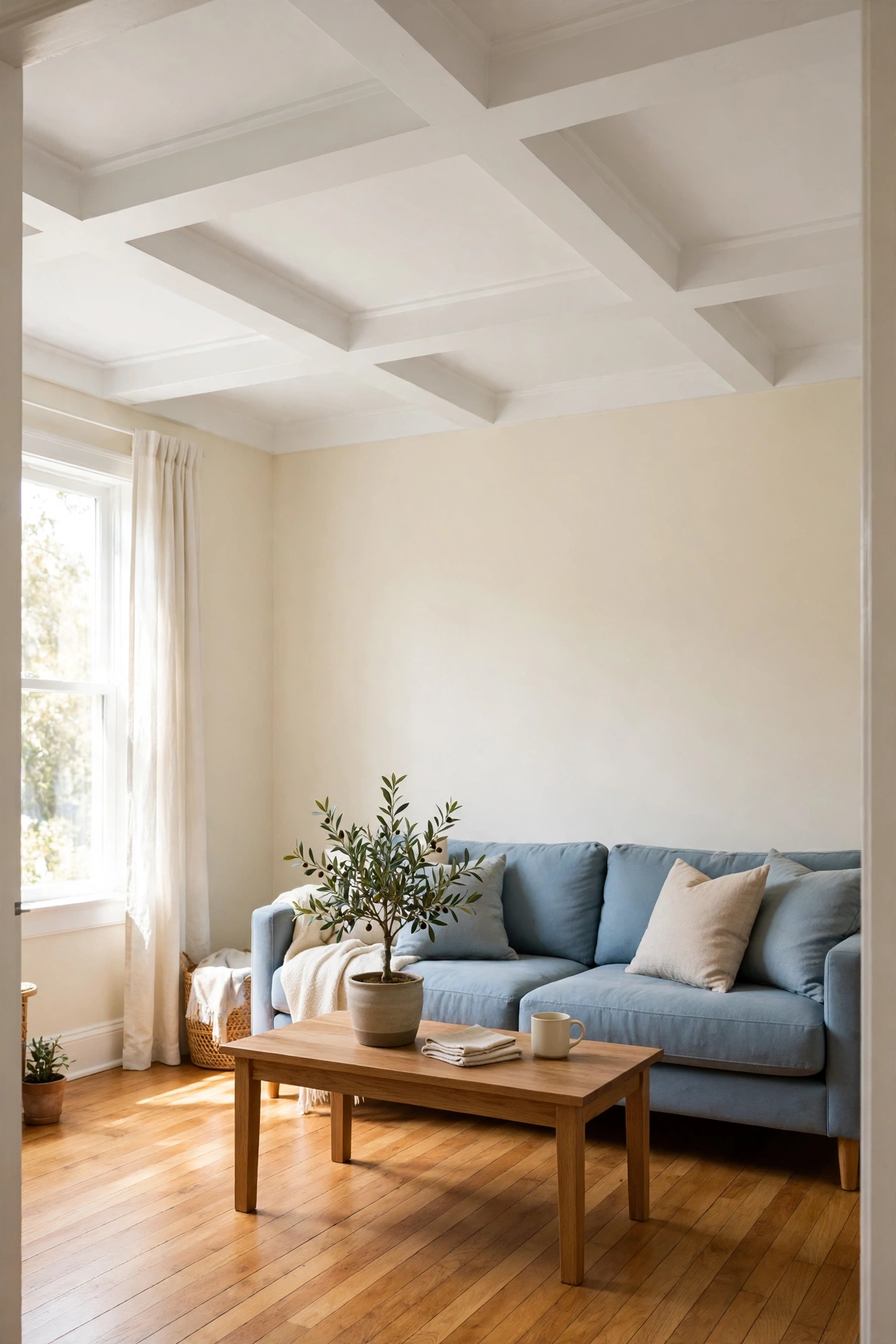
A shallow coffered ceiling gives low rooms the same architectural interest without stealing headroom. The beams sit only a few inches below the ceiling plane, and the panels are wide and flat. From below, the grid still reads clearly, but the room keeps every inch of its height.
Paint the shallow grid the same color as the walls to keep the look seamless and airy. This is a smart choice for basements, attic conversions, and older homes with eight-foot ceilings. Even a shallow grid adds shadow lines and structure that a plain flat ceiling cannot offer.
7. Frame the Grid With Ornate Crown Molding
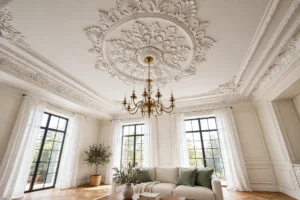
Ornate crown molding around the edge of a coffered ceiling gives the whole grid a finished, historic feel. Layered molding profiles with dentils or egg-and-dart details meet the outer beams and create a graceful transition from wall to ceiling. The result feels like the ceiling of a grand old home.
This detail works best in formal living rooms and dining rooms with traditional furniture. Keep the molding painted the same white as the beams so the layers read as one continuous piece of architecture. A well-crafted crown molding frame is the detail guests notice without knowing why the room feels so complete.
8. Try a Modern Flat-Panel Coffered Ceiling
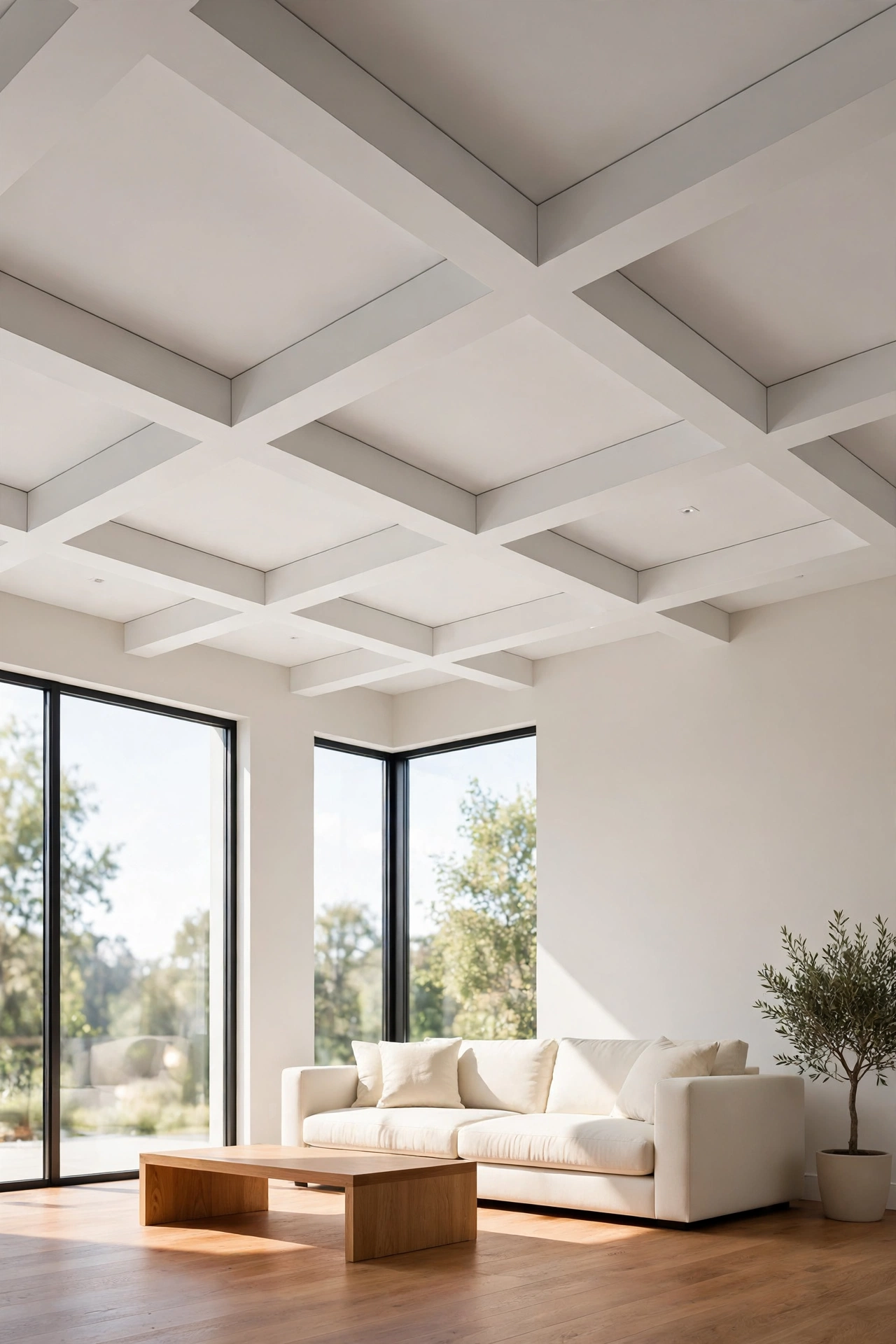
A modern coffered ceiling strips the grid down to its simplest form. Flat panels sit between slim, sharp-edged beams with no molding and no ornament. The look is clean, geometric, and calm, and it suits contemporary rooms with straight lines and minimal decor.
Paint the grid a soft warm white and pair it with simple furniture in cream, gray, and natural wood. The flat panels catch soft shadows during the day and glow evenly under recessed lights at night. This version proves that a coffered ceiling can feel fresh and current, not only traditional.
9. Pair Coffers With Exposed Wood Beams
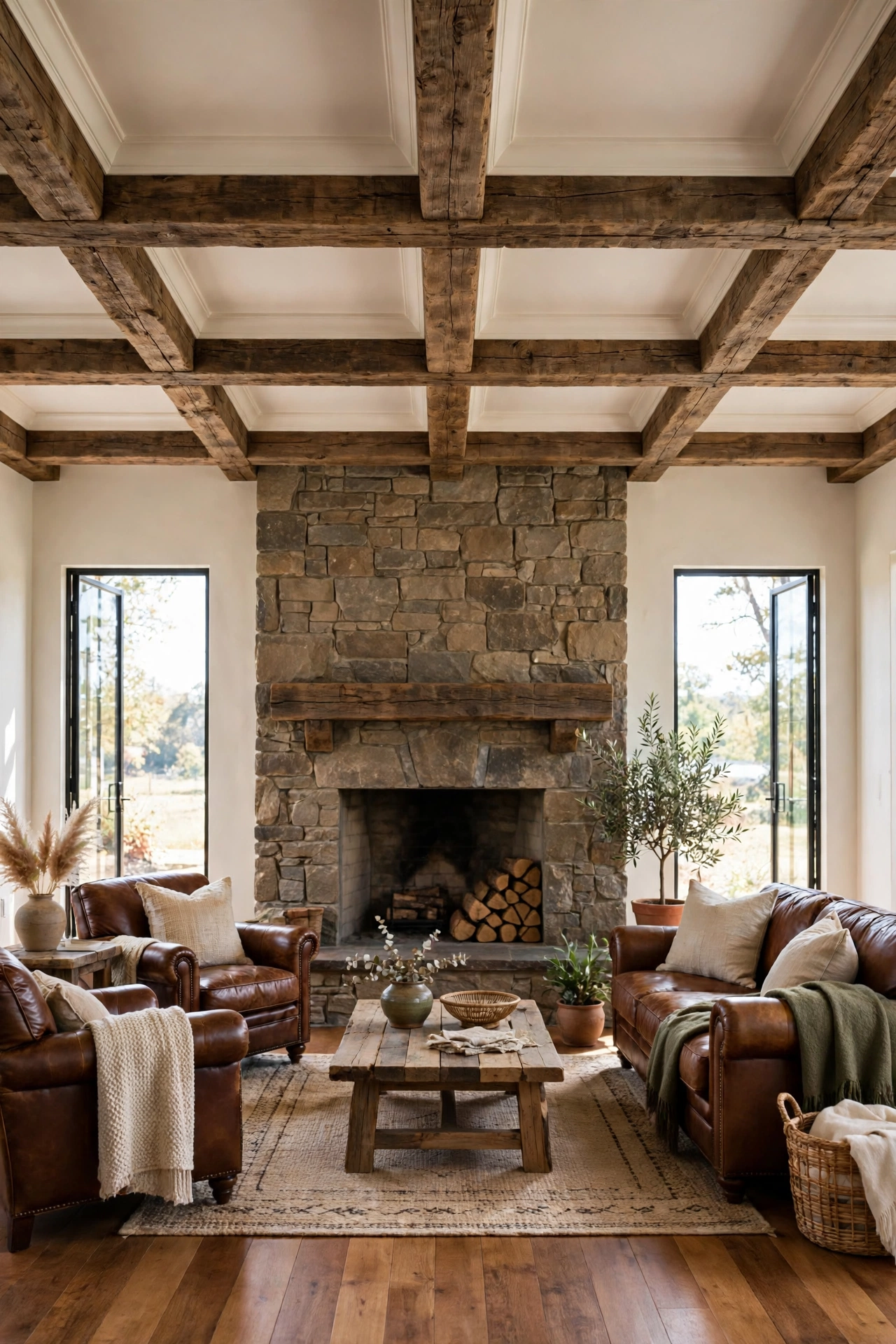
Combining a coffered grid with exposed wood beams creates a ceiling with two layers of character. Thick rustic beams run in one direction while the coffered panels fill the spaces between them. The mix feels warm, crafted, and full of texture, like a ceiling built by hand.
This pairing suits farmhouse, rustic, and lodge-style rooms with stone, leather, and woven textures. Keep the beams in a natural wood finish and paint the coffers cream so the two layers stay distinct. The ceiling becomes the focal point of the room, and everything below it can stay simple.
10. Combine a Coffered Ceiling With a Tray Ceiling
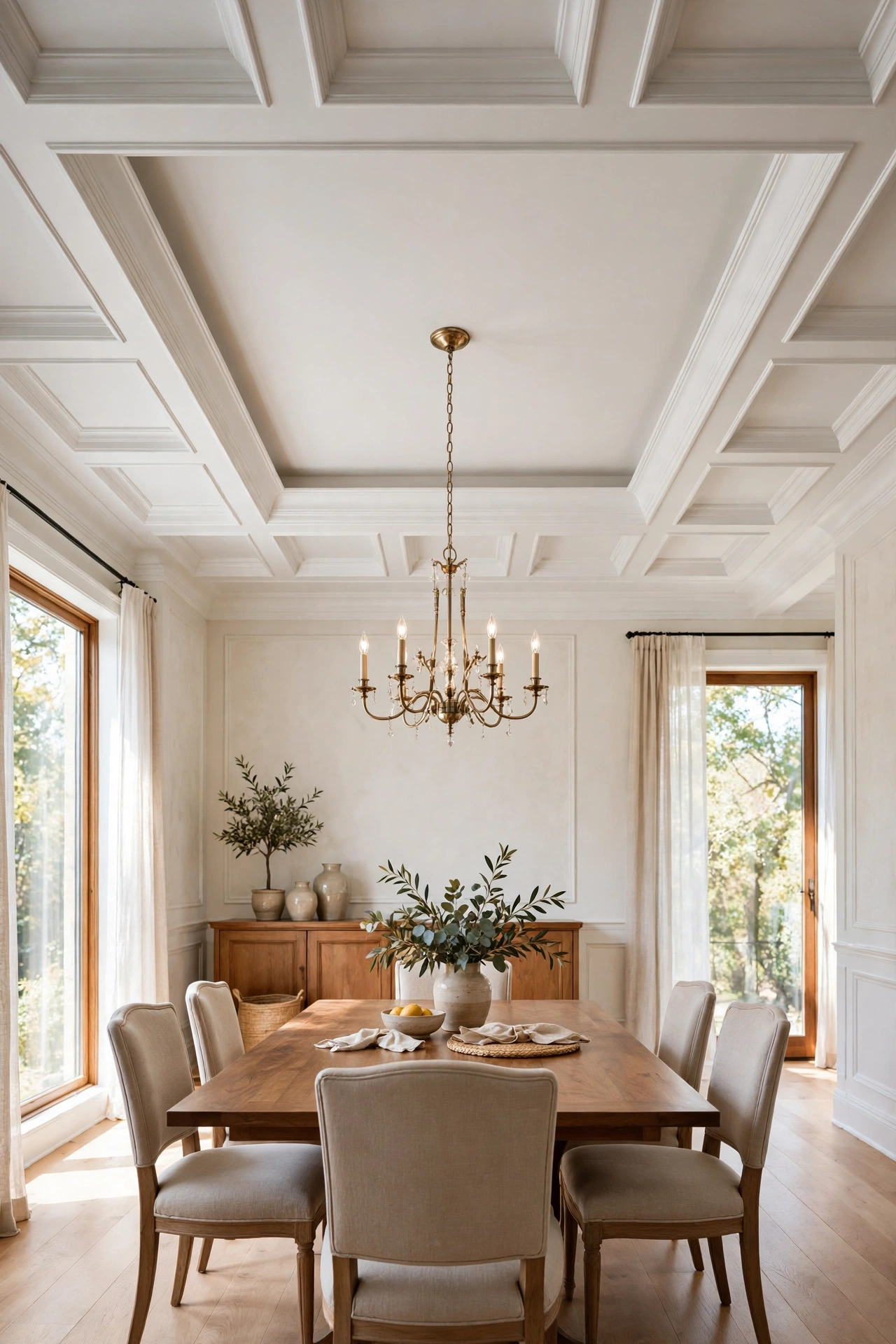
A tray ceiling combined with coffers gives a room a raised center panel framed by a coffered border. The center tray can hold a chandelier or a painted mural, while the coffered ring around it adds rhythm and depth. The layered effect makes the ceiling feel taller and more grand.
This combination works well in primary bedrooms and dining rooms where a central light fixture deserves a special setting. Paint the tray and the coffers the same color for a calm look, or paint the tray a soft accent color to draw the eye upward. The double layer of architecture rewards anyone who looks up.
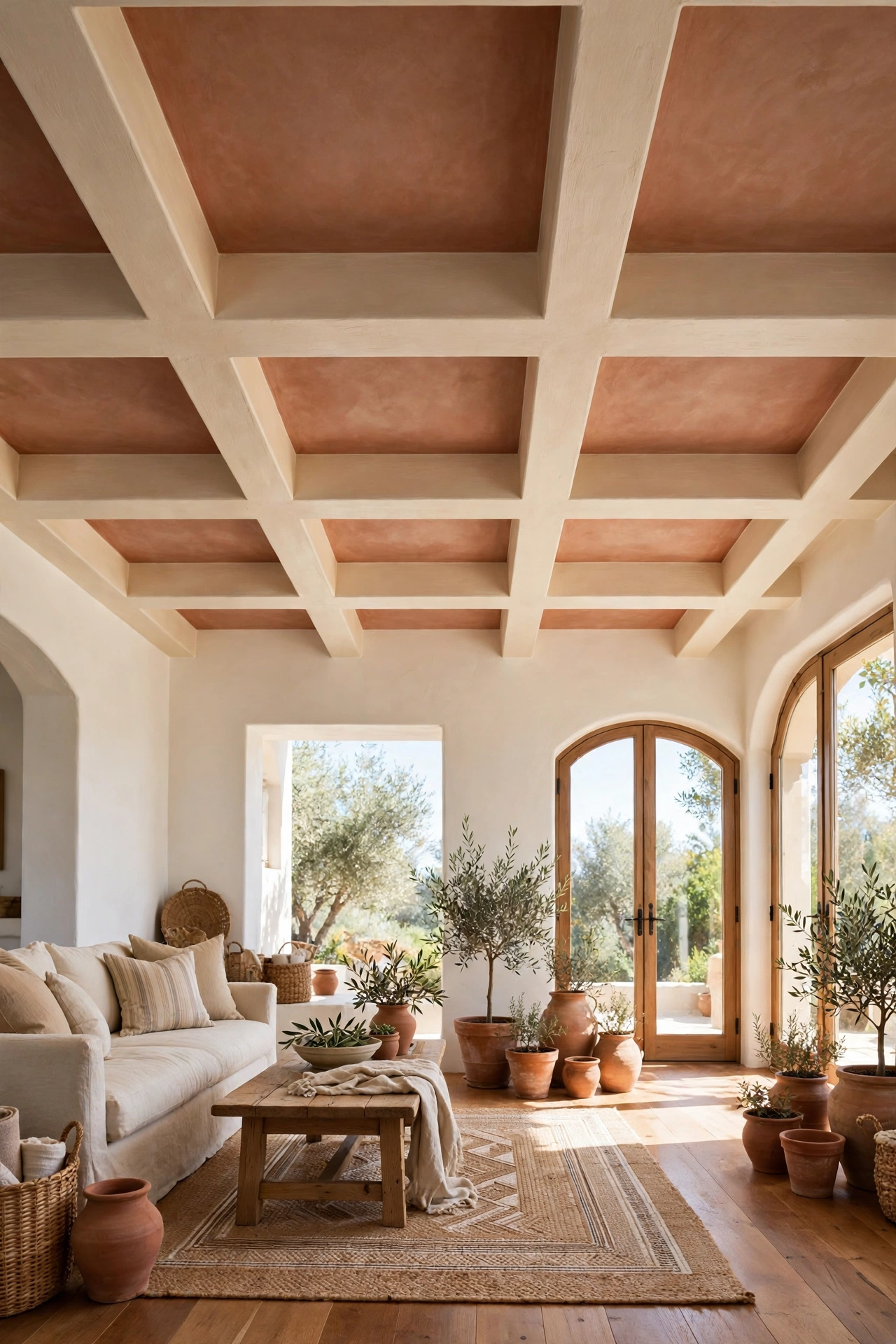
11. Warm the Grid With Terracotta Tones
Terracotta-toned coffers bring sun-baked warmth to a ceiling in a way no neutral can match. Paint the recessed panels a soft terracotta and keep the beams warm cream, so the grid glows with earthy color. The look suits Mediterranean, Spanish, and warm modern interiors.
Echo the terracotta in clay pots, woven rugs, and amber glass accessories so the ceiling color feels connected to the room. This palette shines in rooms with lots of natural light, where the sun warms the terracotta panels throughout the day. A terracotta coffered ceiling makes a room feel like a permanent golden hour.
12. Design a Coffered Ceiling for the Dining Room
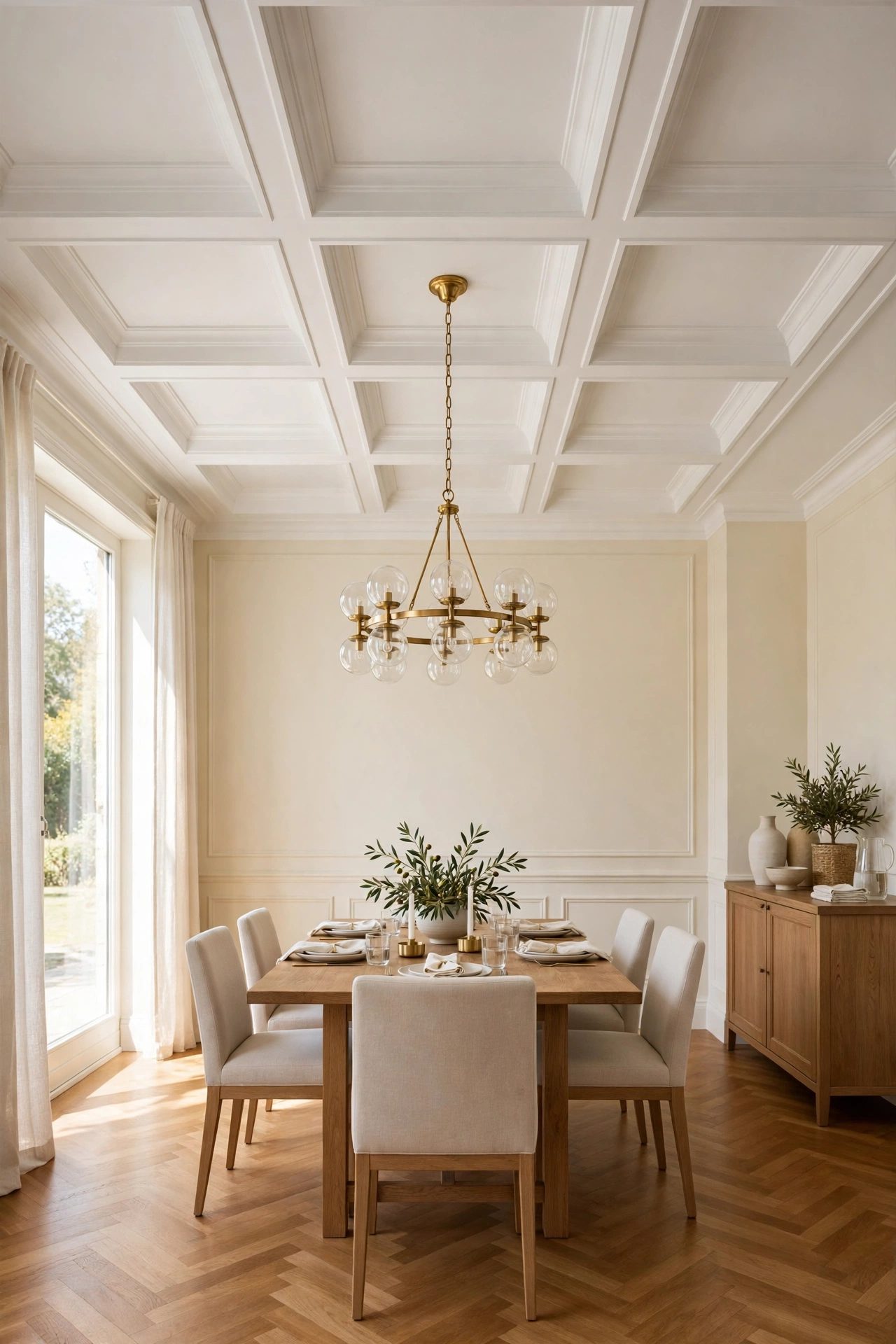
A dining room is one of the best places for a coffered ceiling because the grid frames the table below. Center the grid on the dining table so the chandelier hangs from the middle panel, and let the coffered pattern echo the shape of the table. The ceiling and the table become a matched pair.
Choose a grid with panels sized to the room, neither too small nor too large, so the pattern feels balanced from every seat. A coffered dining ceiling makes everyday meals feel more special and turns dinner parties into occasions. Add dimmable lights so the mood can shift from bright family dinners to soft evening gatherings.
13. Bring Coffers Into the Bedroom
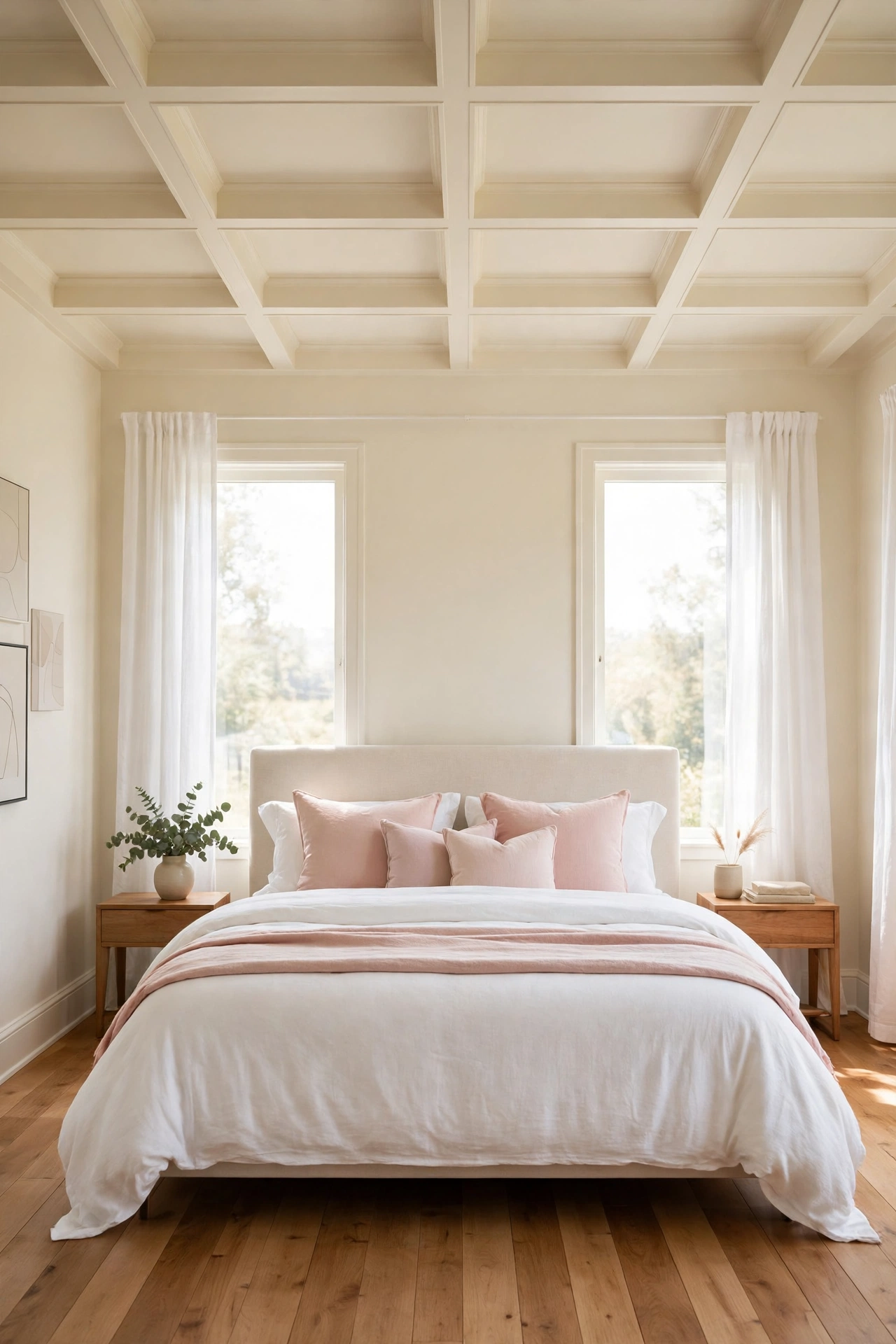
A coffered ceiling in the bedroom turns the surface you see when you wake up into something beautiful. The grid adds quiet structure above the bed without the visual noise of a busy pattern. Soft colors like cream, blush, or pale blue keep the ceiling calm and restful.
Center the grid on the bed and align the headboard wall with one edge of the pattern for a tailored look. Keep the beams slim so the ceiling feels light rather than heavy over the bed. Waking up to a coffered ceiling makes the whole bedroom feel like a boutique hotel suite.
14. Add a Coffered Ceiling to the Home Office
A home office with a coffered ceiling feels more serious and more inspiring than one with a flat ceiling. The grid adds the quiet authority of a traditional study, which helps the room feel like a real place of work rather than a spare corner. Wood coffers suit a classic office, while painted coffers suit a modern one.
Keep the office furniture simple so the ceiling can be the strongest feature in the room. A clean desk, a comfortable chair, and bookshelves along one wall are all the room needs. Video calls also benefit, because the coffered ceiling behind you reads as polished and intentional on camera.
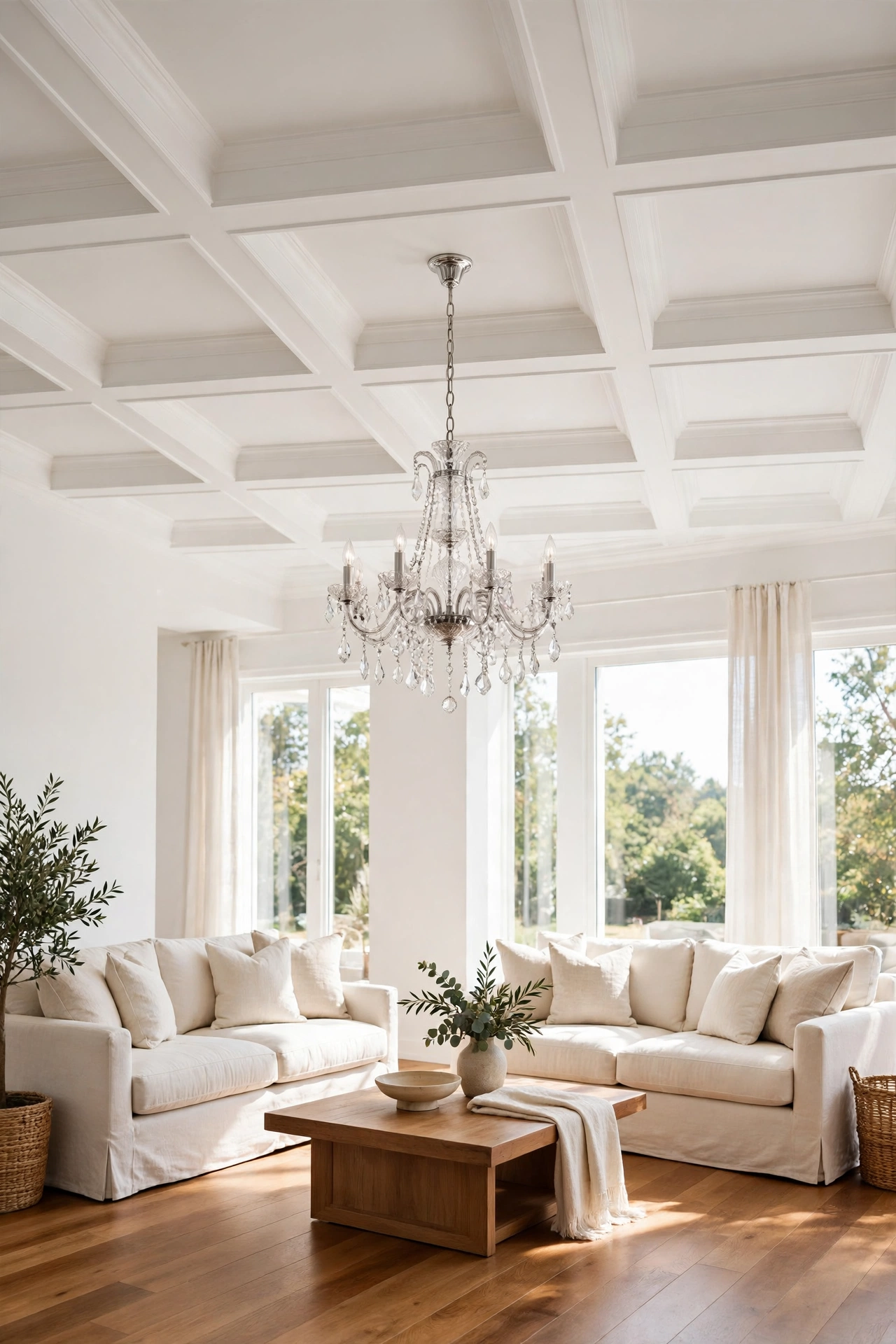
15. Hang a Statement Chandelier From the Center Coffer
A statement chandelier hung from the center coffer turns the ceiling grid into a frame for the light fixture. The coffered panel cradles the chandelier and gives it a sense of place, while the surrounding grid echoes its shape. Crystal, brass, or woven rattan all look striking against the framed panel.
Size the chandelier to the center panel so it fills the space without crowding the beams. The fixture should hang low enough to glow over the table or seating area, but high enough to clear heads comfortably. A chandelier and a coffered ceiling together are the classic pairing for a sophisticated room.
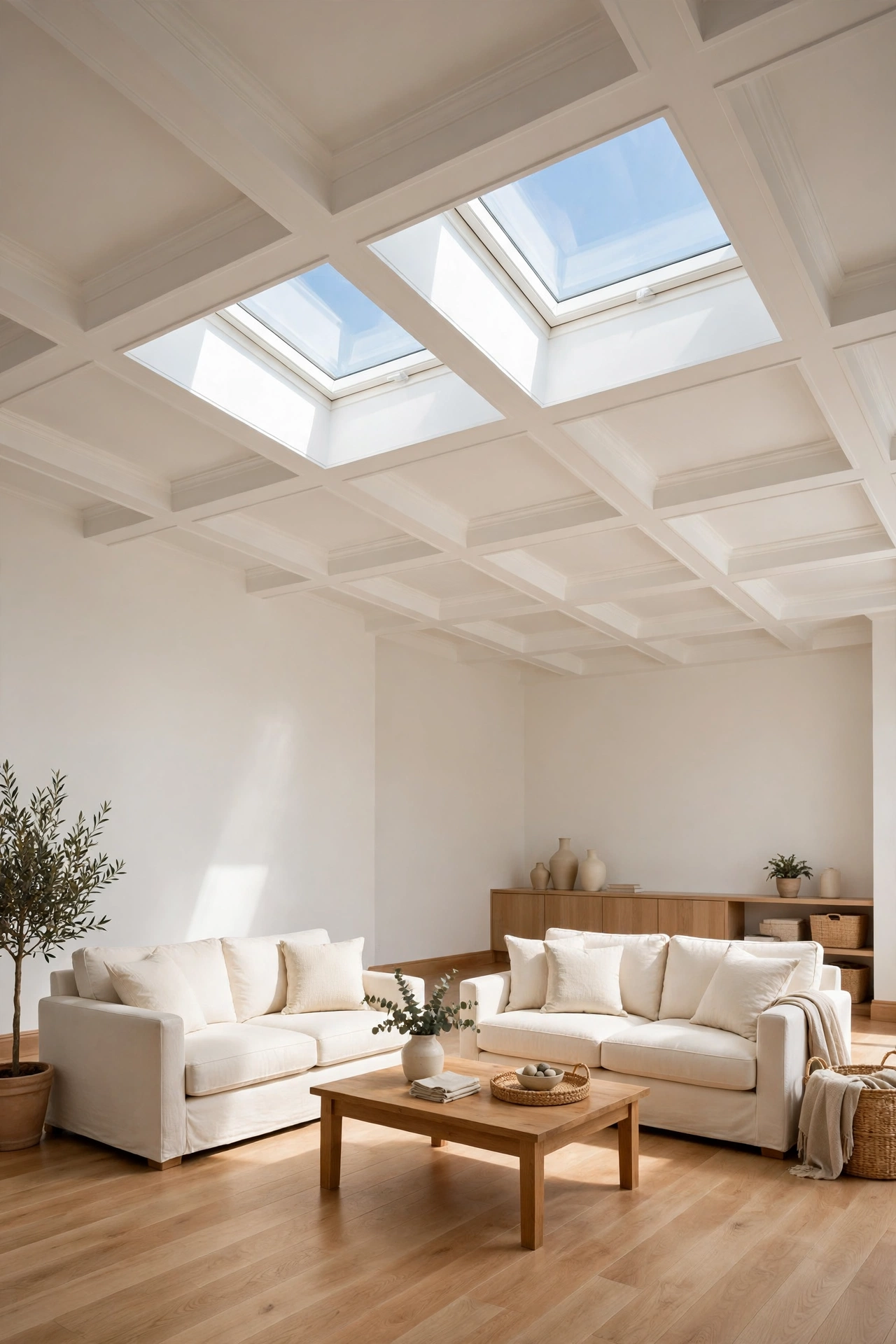
16. Cut Skylights Into the Coffered Grid
Skylights set into a coffered grid bring daylight down through the architecture itself. Replace one or two panels with skylights, and sunlight will pour through the grid in shifting patterns all day long. The ceiling becomes a source of light as well as a work of structure.
This idea suits top-floor rooms, attics, and single-story additions where roof access is simple. Use skylights with shades so you can control glare on bright afternoons. For another way to share light between spaces, see these interior transom window ideas that bring borrowed light into rooms without skylights.
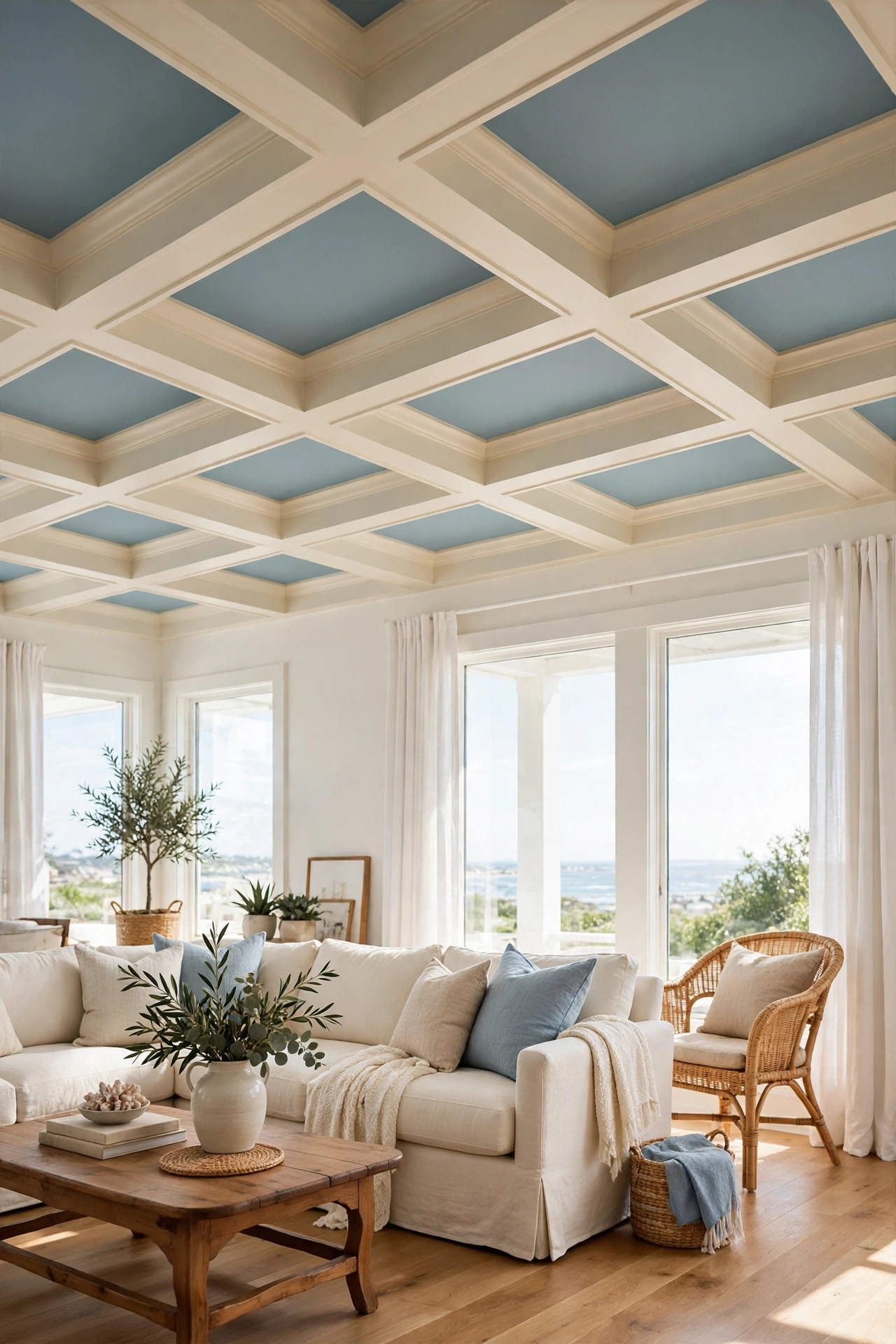
17. Paint a Two-Tone Coffered Ceiling
A two-tone coffered ceiling paints the beams one color and the recessed panels another, so the grid pattern stands out clearly. Cream beams with soft blue panels feel fresh and coastal, while white beams with warm gray panels feel calm and modern. The contrast makes the architecture impossible to miss.
Keep the two tones close in value so the ceiling feels layered rather than striped. Test the pair on a sample board in the room’s own light before committing, because ceiling colors shift with the angle of the sun. For more painted ceiling patterns, these striped ceiling paint ideas show how color and geometry work together overhead.
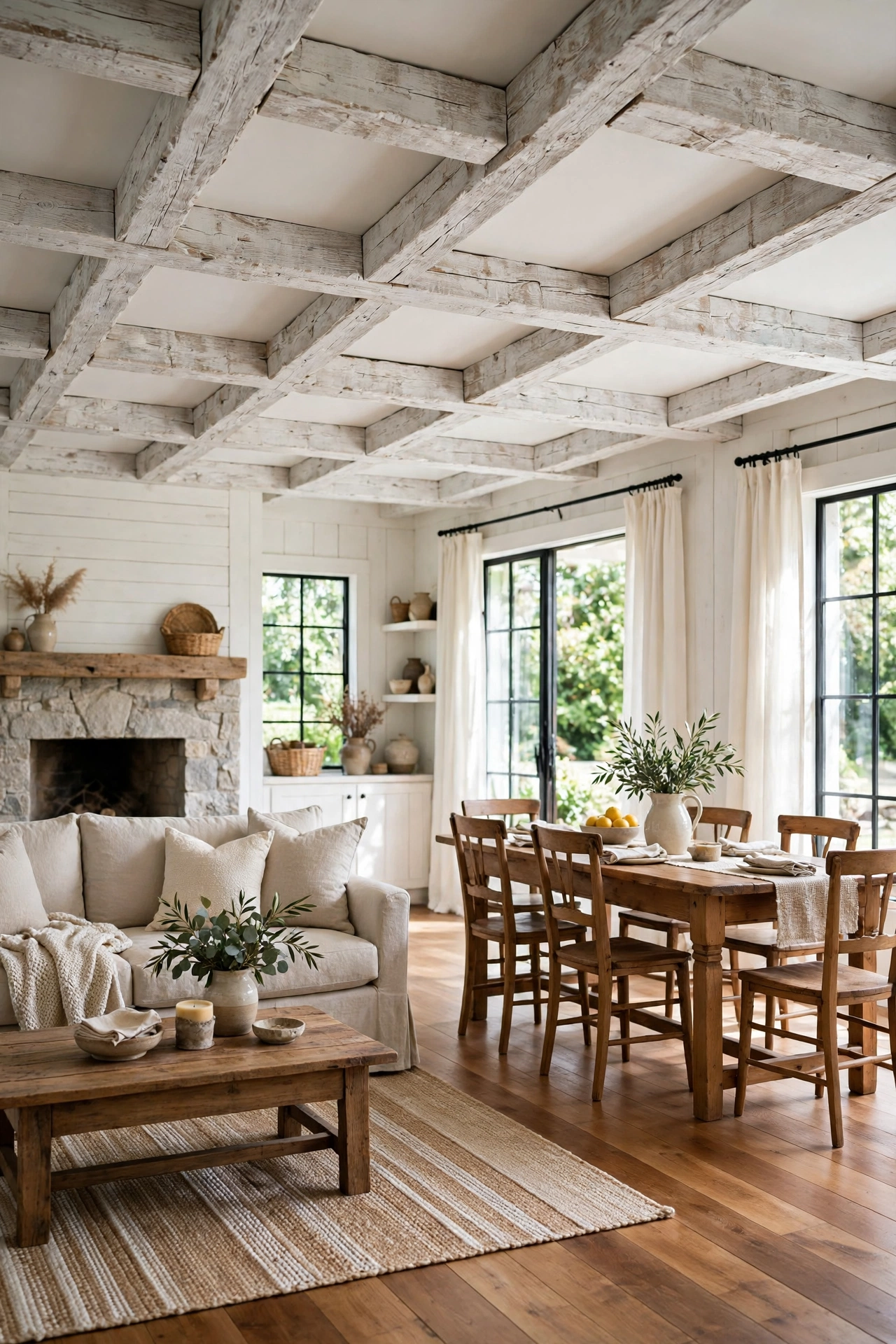
18. Go Rustic With a Farmhouse Coffered Ceiling
A farmhouse coffered ceiling uses rough-sawn wood, visible knots, and a relaxed grid to create a warm and welcoming feel. The beams look hand-hewn, the panels show natural grain, and the whole ceiling feels like it belongs in a country house. Whitewashed wood keeps the look light while preserving the rustic texture.
Pair the ceiling with shiplap walls, a farmhouse table, and linen slipcovers for a complete country look. Iron light fixtures and woven baskets add to the honest, hardworking character of the room. A farmhouse coffered ceiling proves that sophisticated does not always mean formal.
19. Dress Each Coffer With a Decorative Medallion
A decorative medallion centered in each coffer adds a jewel-like detail to the ceiling grid. Plaster rosettes, carved wood rounds, or simple painted circles all work, and each one catches the light differently as the day passes. The medallions turn a plain grid into something that rewards a closer look.
Keep the medallions small relative to the panel so they read as accents rather than clutter. This detail suits traditional and French-inspired rooms where layered ornament feels at home. For more ceiling ornament inspiration, see these decorative ceiling medallion ideas that pair beautifully with coffered grids.
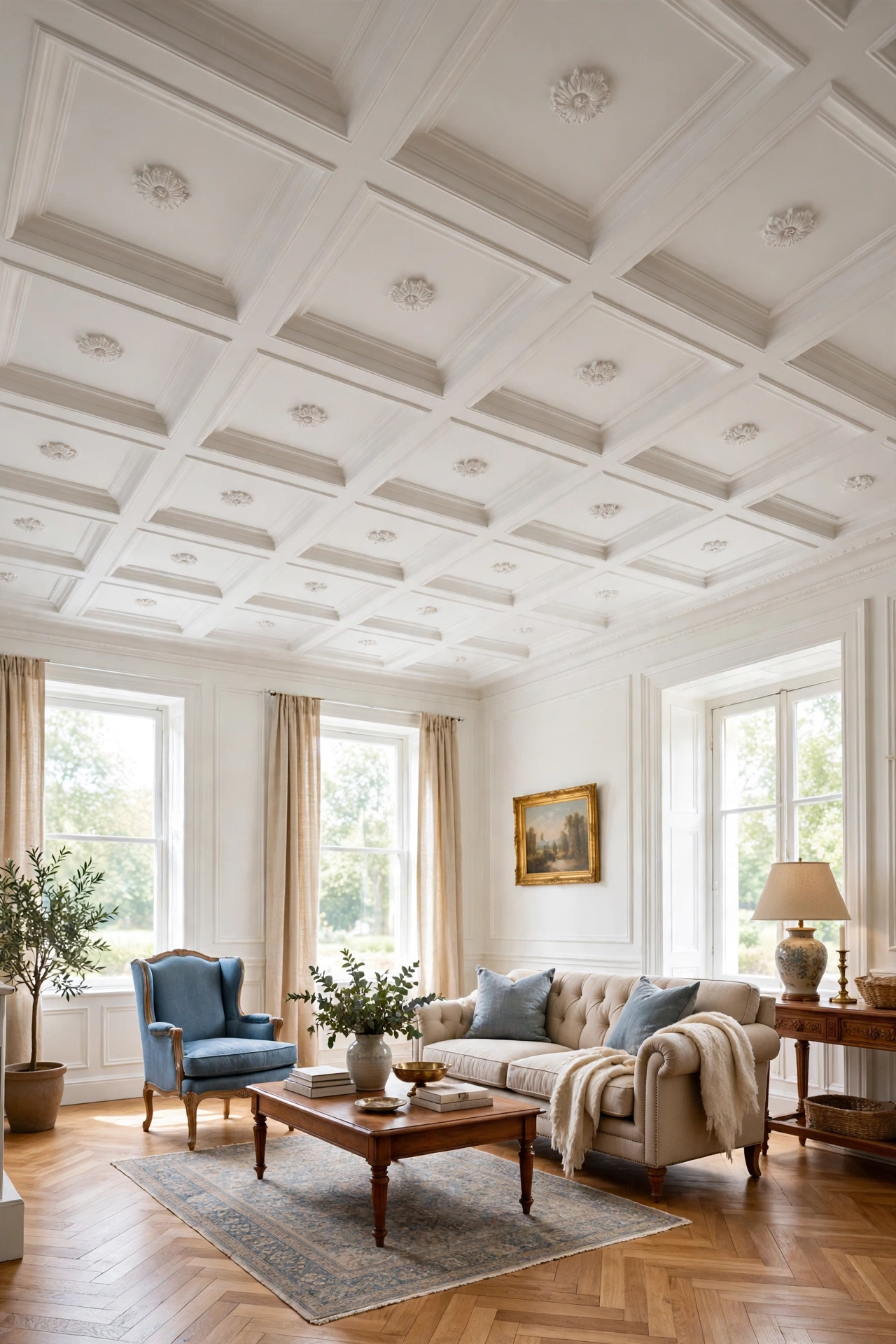
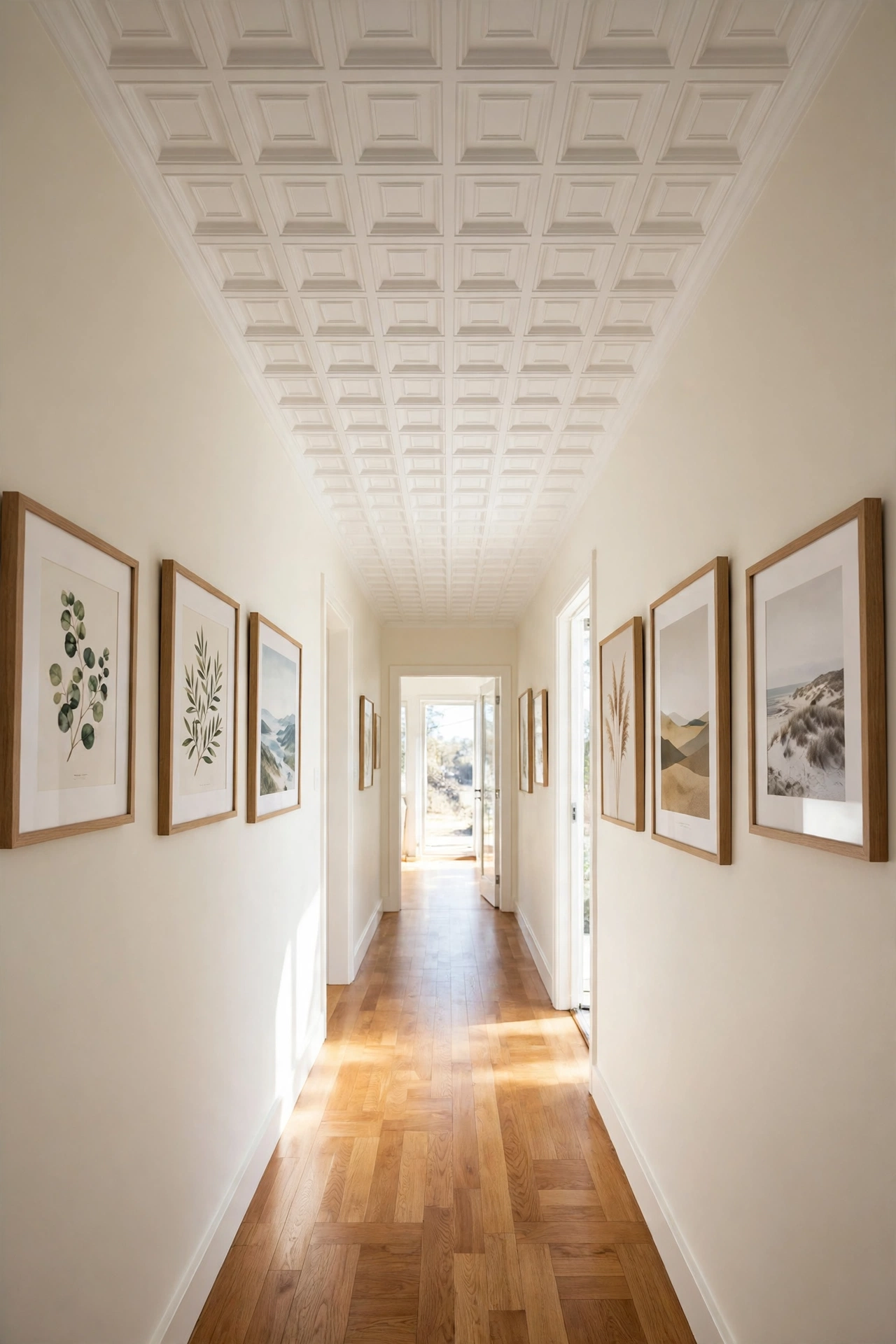
20. Run a Narrow Grid Down a Hallway
A narrow coffered grid turns a plain hallway into a gallery-like passage. Small square panels run in a single or double row down the length of the hall, giving the narrow space rhythm and direction. The grid makes the hallway feel designed rather than leftover.
Keep the hallway grid shallow and painted white so the passage stays bright and open. Line the walls with framed art or photographs that echo the rhythm of the panels overhead. A coffered hallway ceiling is a small detail with an outsized effect on how the whole home feels.
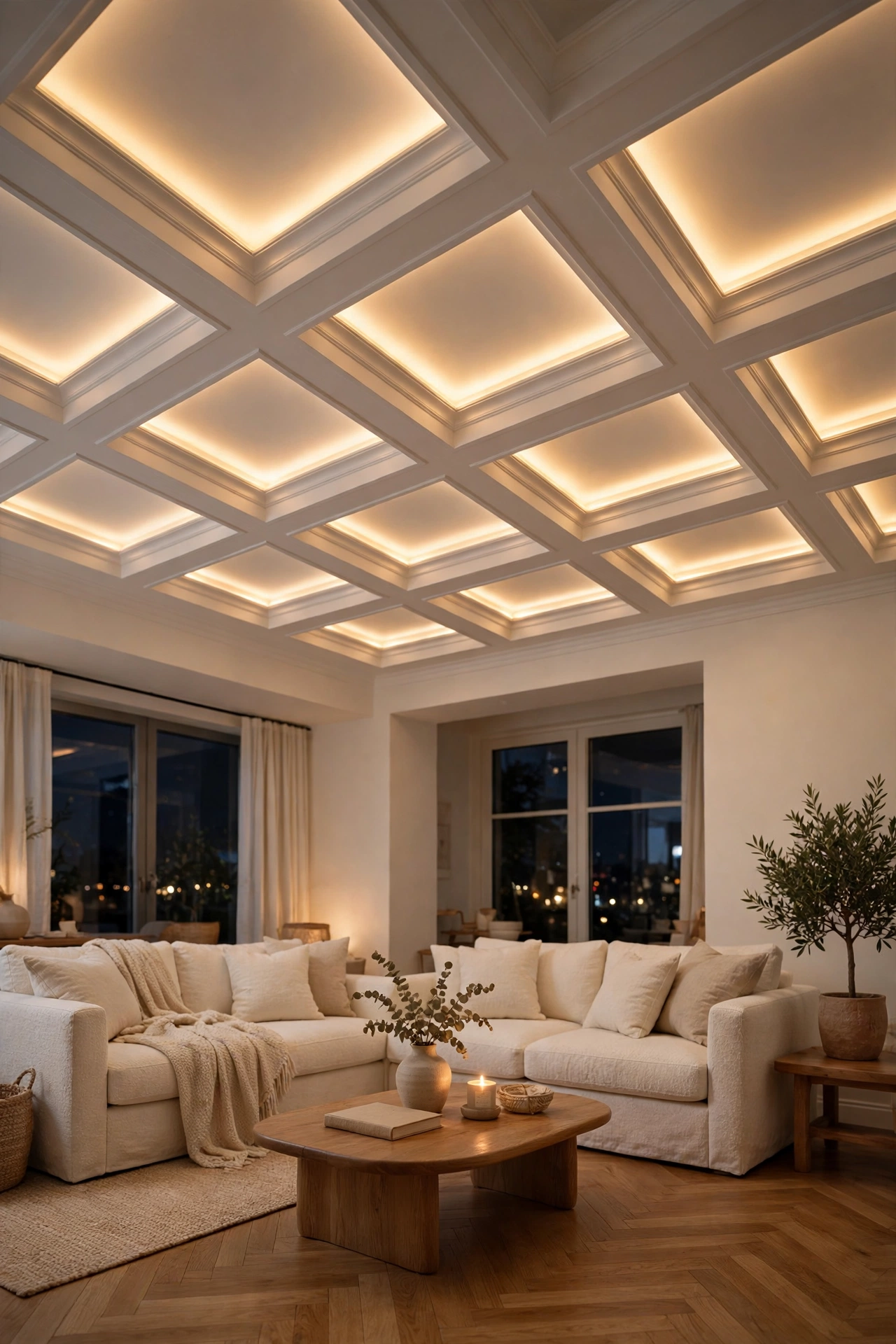
21. Hide LED Cove Lighting Behind the Beams
LED strip lights hidden behind the beams of a coffered ceiling wash each recessed panel with a soft glow. The light source stays invisible, so the panels seem to float with light from within. Warm white strips create a cozy evening ambience, while dimmers let you tune the glow to the occasion.
Install the strips along the inner edge of each beam, facing up into the panel, for the most even wash. This lighting works beautifully in media rooms and living rooms where you want atmosphere without visible fixtures. A coffered ceiling with hidden lighting feels modern, luxurious, and quietly high-tech.
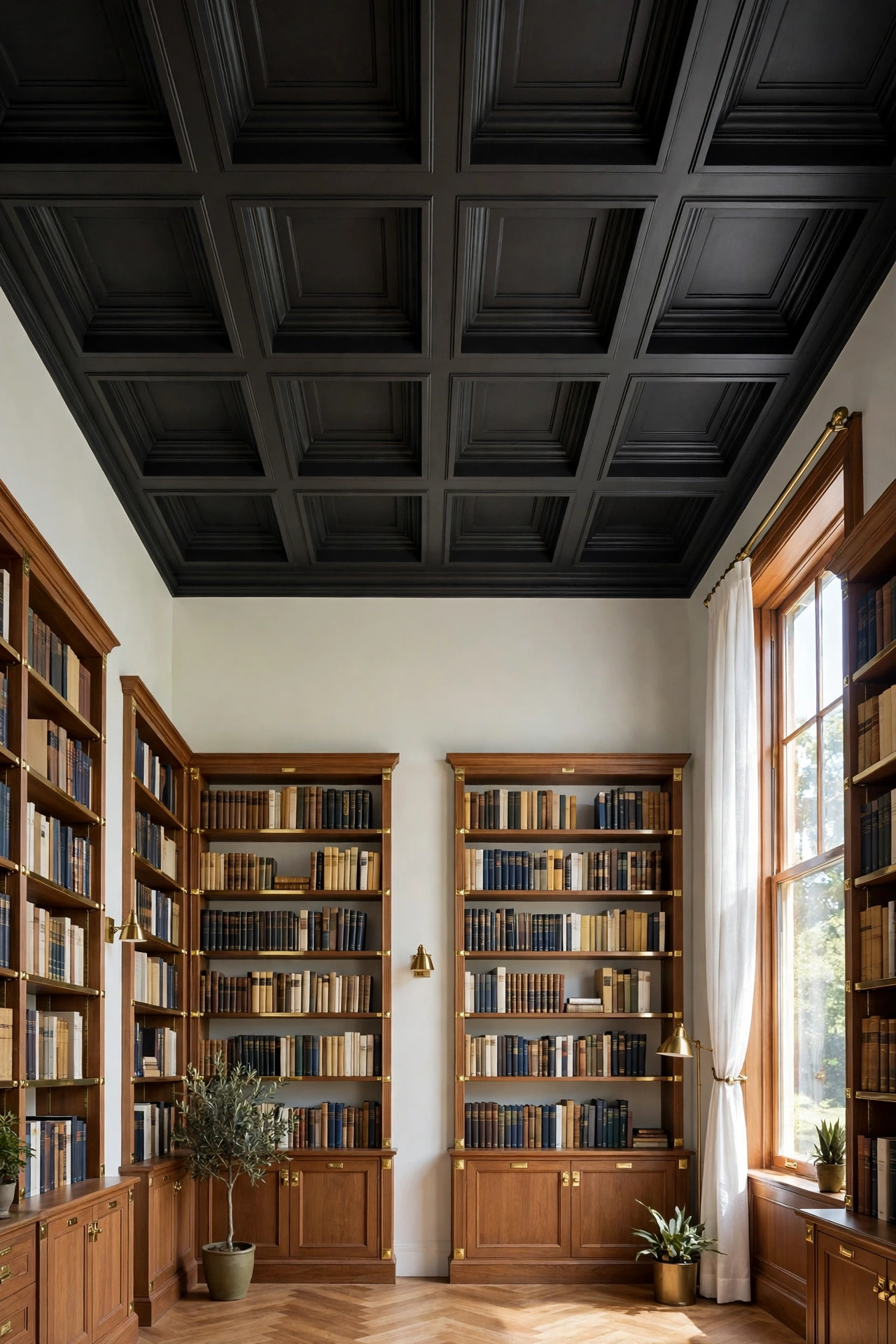
22. Choose a Dark Charcoal Grid for Drama
A charcoal coffered ceiling brings bold drama to rooms that can handle a dark overhead plane. The near-black grid makes white walls look crisper and makes wood furniture glow with warmth. In a media room, a library, or a moody dining room, charcoal feels deliberate and luxurious.
Balance the dark ceiling with pale floors and light upholstery so the room keeps its brightness. Add warm metallic accents in brass or copper to catch the light against the dark grid. A charcoal ceiling is a confident choice, and it rewards rooms with generous natural light.
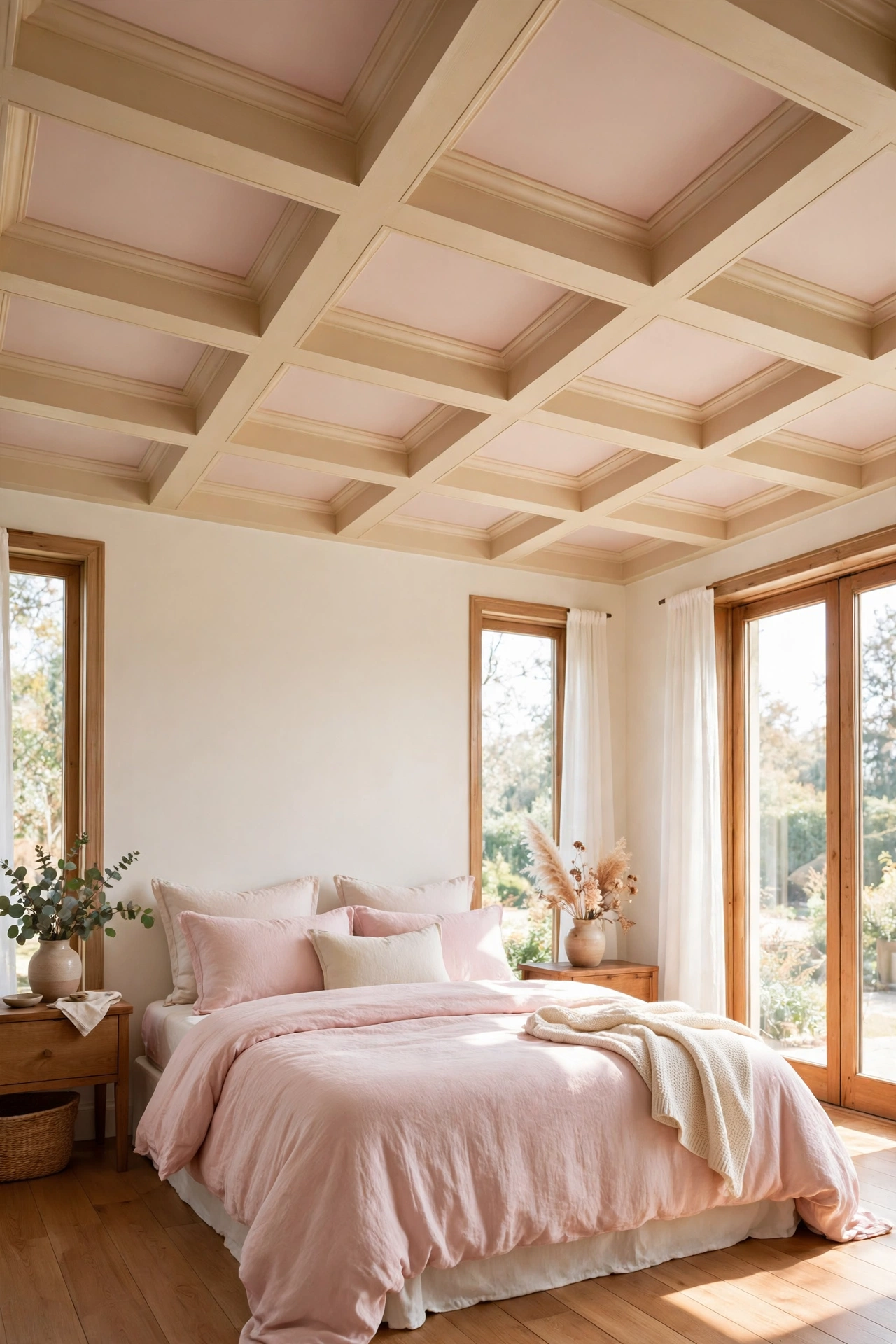
23. Soften the Grid With Blush and Cream
Blush and cream coffers give a ceiling a soft, romantic warmth that suits bedrooms and dressing rooms. Paint the recessed panels a pale blush and the beams warm cream, so the grid reads as gentle layers of color. The palette feels fresh in daylight and warm and flattering in the evening.
Echo the blush in bedding, curtains, or a soft rug so the ceiling color feels woven into the room. Keep the rest of the palette neutral with cream, warm wood, and pale gray. A blush coffered ceiling is a quiet luxury that makes a bedroom feel deeply personal.
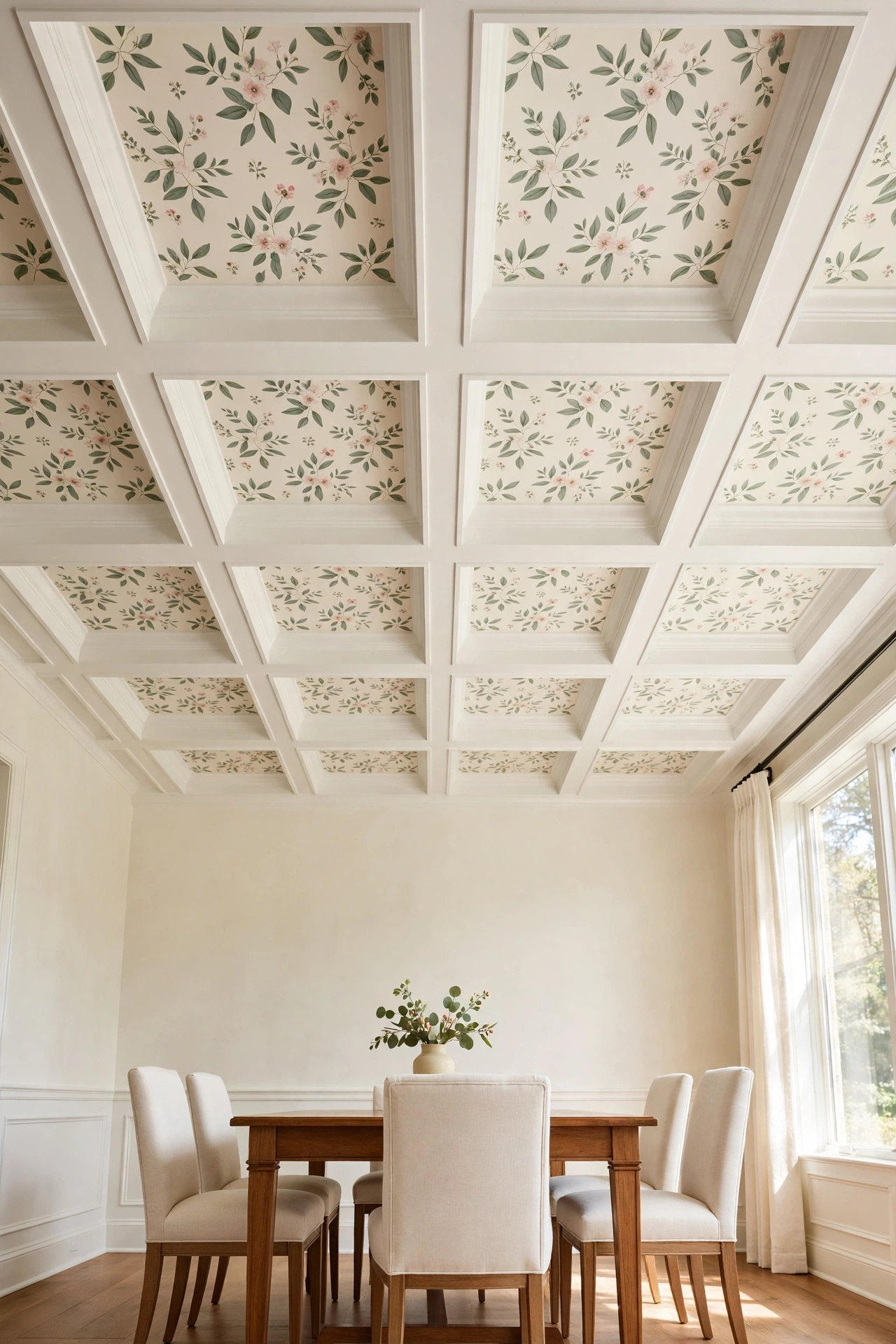
24. Line the Panels With Patterned Wallpaper
Patterned wallpaper inside each coffer adds a layer of artistry to the ceiling grid. A soft botanical print, a subtle geometric, or a classic damask turns every panel into a framed picture overhead. The beams act as frames, so the wallpaper never overwhelms the room.
Choose a wallpaper with a small-scale pattern and a calm palette so the ceiling feels detailed rather than busy. This idea suits powder rooms, dining rooms, and bedrooms where a touch of pattern overhead feels like a delightful surprise. Wallpapered coffers are an easy way to refresh a ceiling without repainting the whole grid.
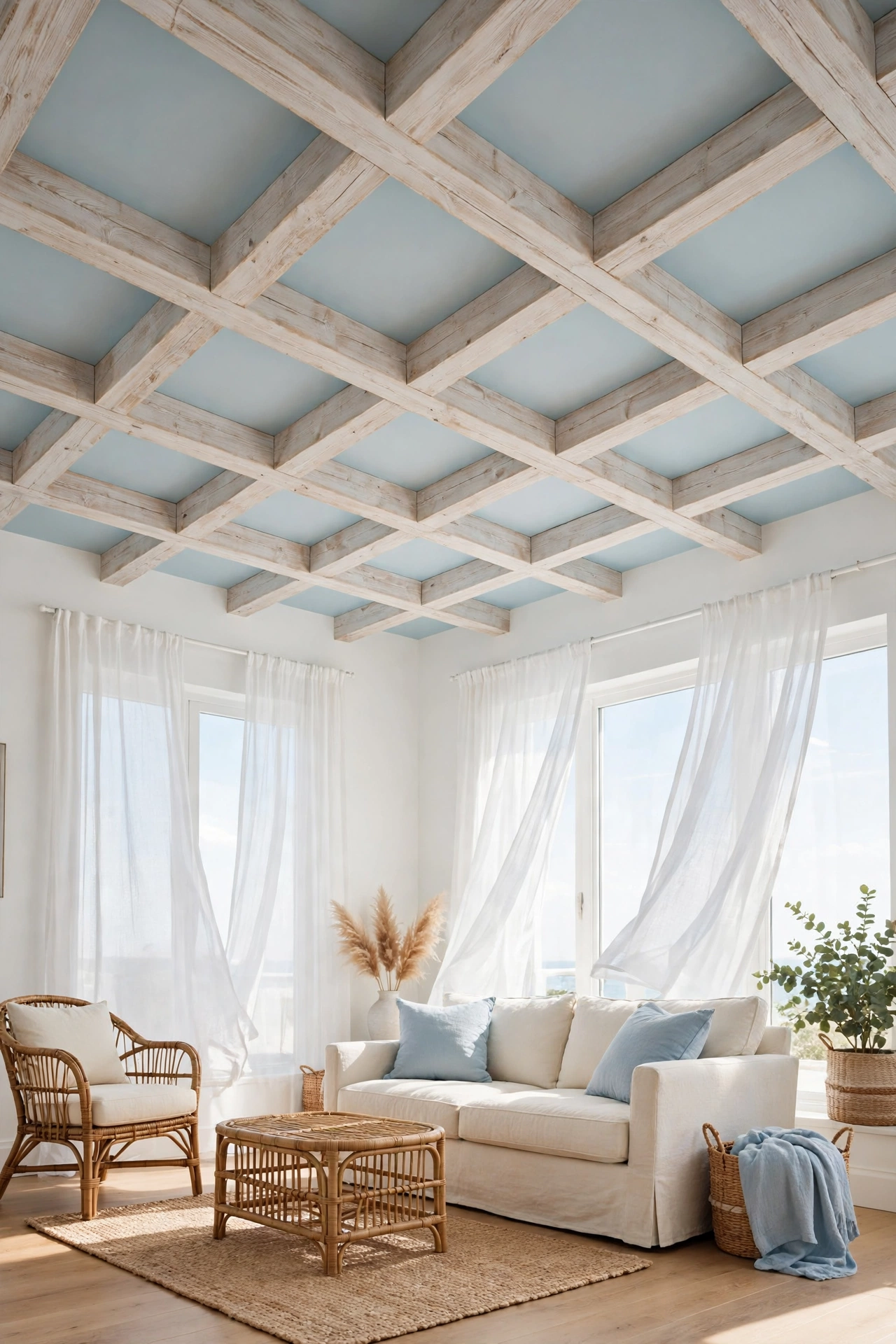
25. Keep It Light With a Coastal Coffered Ceiling
A coastal coffered ceiling uses whitewashed wood, pale blue accents, and an open grid to bring a breezy seaside feel indoors. The beams feel sun-bleached, the panels stay bright white, and the whole ceiling reads as fresh and relaxed. Natural textures like rattan and linen complete the look below.
This style suits beach houses, sunrooms, and any room where you want a light and airy mood. Keep the grid simple with wide panels and slim beams so the ceiling feels open rather than ornate. A coastal coffered ceiling makes every day feel a little more like a holiday.
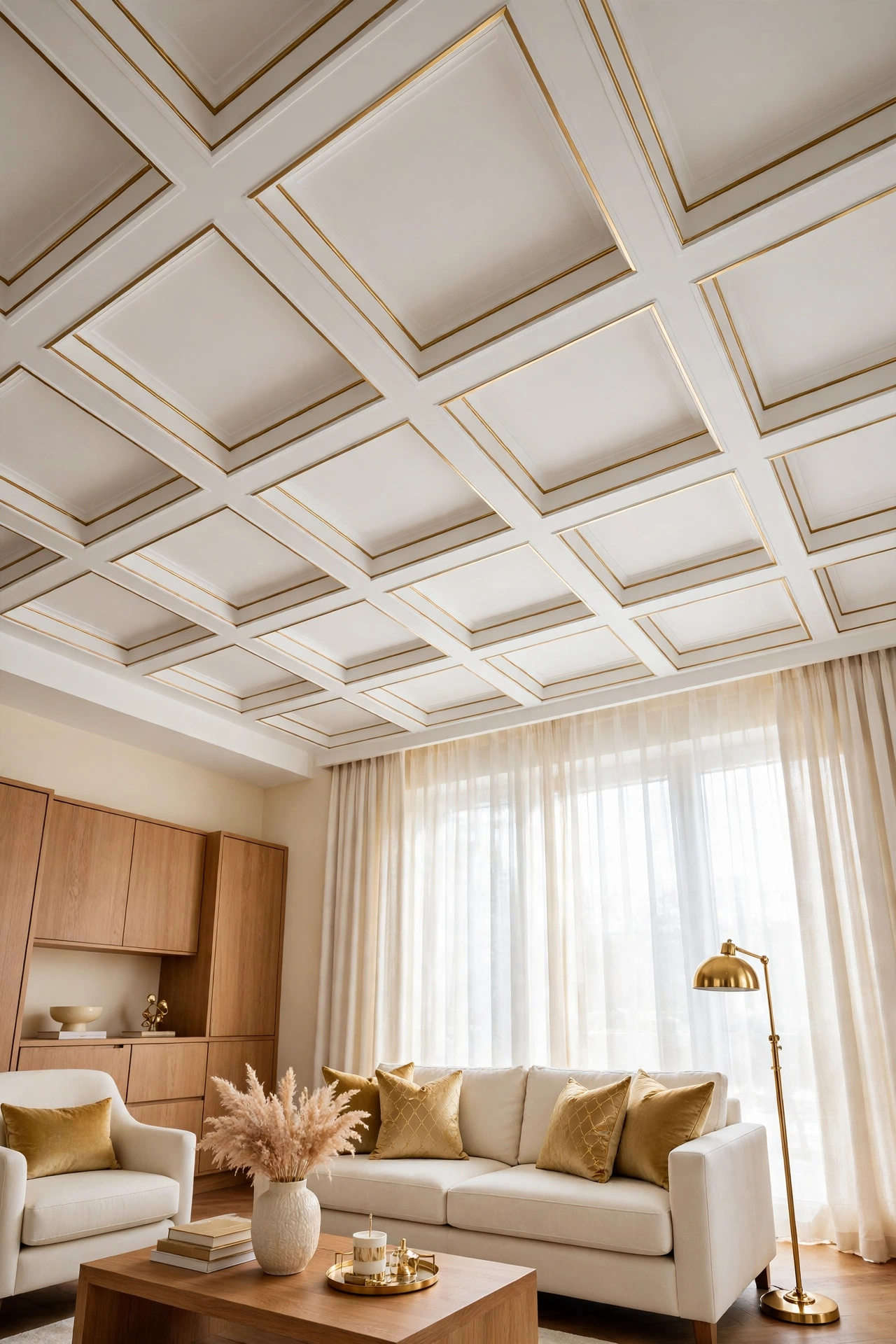
26. Add Gold Accents to the Grid
Gold accents on a coffered ceiling add a touch of glamour without turning the room into a palace. A thin gold line along the inner edge of each beam, gold rosettes in the panel centers, or a soft gold wash on the recessed panels all catch the light beautifully. The effect is subtle from across the room and luxurious up close.
Pair gold ceiling details with warm neutrals, cream walls, and classic furniture so the metallic accents feel refined. Keep the gold to one element of the grid rather than every surface, so the shine stays elegant. A coffered ceiling with gold accents is made for rooms where celebrations happen.
27. Center the Living Room Around a Coffered Ceiling
A coffered ceiling in the living room anchors the whole space and gives every other design choice a frame. The grid sets the rhythm for the seating arrangement, the rug, and the lighting, so the room feels composed from the moment you enter. A large, even grid suits open-plan living rooms best.
Let the ceiling be the strongest pattern in the room and keep the furniture calm and solid-colored. A coffered living room ceiling works with sectionals, armchairs, and media setups alike, because the grid brings order to whatever sits below it. This is the coffered ceiling idea that transforms the room your family uses most.
Conclusion
A coffered ceiling is one of the most rewarding upgrades a room can receive. Whether you choose a classic white grid, a warm wood design, or a bold painted color, the recessed panels add depth, shadow, and architecture that a flat ceiling can never match. The ceiling stops being an afterthought and becomes the feature that defines the room.
Start with the room where you spend the most time, and choose the grid and color that fit the way you live. A shallow grid suits low ceilings, a wood grid warms a family room, and a painted grid gives a bedroom personality. With the right design, your ceiling will be the detail every guest notices and every evening feels a little more special.
Frequently Asked Questions About Coffered Ceiling Design Ideas for Sophisticated Rooms
What is a coffered ceiling?
A coffered ceiling is a ceiling with a grid of recessed panels framed by beams or molding. The panels, called coffers, create depth and shadow that make a ceiling look architectural and finished. Coffers can be square or rectangular, shallow or deep, and painted or finished in natural wood.
Do coffered ceilings work in rooms with low ceilings?
Yes, shallow coffered ceilings work well in rooms with eight-foot ceilings. The beams sit only a few inches below the ceiling plane, so the room keeps its height while gaining the grid pattern. Painting the grid the same color as the walls keeps the look seamless and airy.
How much does a coffered ceiling cost?
The cost depends on the size of the room, the depth of the grid, and the materials used. Simple painted grids with molding are the most affordable option, while solid wood coffers with custom details cost more. Getting quotes from two or three local carpenters will give you a realistic range for your room.
Can I install a coffered ceiling myself?
A simple coffered grid made from molding and flat panels is a possible weekend project for a confident do-it-yourselfer with a miter saw and a level. Deeper grids, wood coffers, and any work involving electrical wiring for recessed lights are better left to a professional carpenter and electrician.
What colors work best for a coffered ceiling?
White and warm cream are the most timeless choices because they keep the grid bright and highlight the shadows inside each panel. Soft sage, pale blue, and warm gray add gentle color, while navy and charcoal create drama in rooms with plenty of light. Two-tone grids with cream beams and colored panels offer a balanced middle ground.

Hi, I’m Emily! I turn messy corners into cozy, organized spots. DreamNestDecor is where I share simple, practical home ideas — decor, organization, and small-space solutions that work in real life, not just in photos. Every idea here is carefully researched before it’s shared.