Picture this: a teen walks into a small bedroom and sees a clear study desk by the window, a comfortable bed on the opposite wall, and books stored neatly on a shelf within arm reach. The room feels calm and organized, not cramped, and homework has a real place instead of spreading across the bed. That balance between sleep and study is exactly what a smart layout gives to a small teen bedroom.
You do not need a large room or expensive furniture to create it. All you need is a desk in the right spot, storage that keeps school supplies in order, and a clear boundary between the study zone and the sleep zone. These 25 small teen bedroom layout ideas with a study area will help you fit both comfort and focus into one small room.
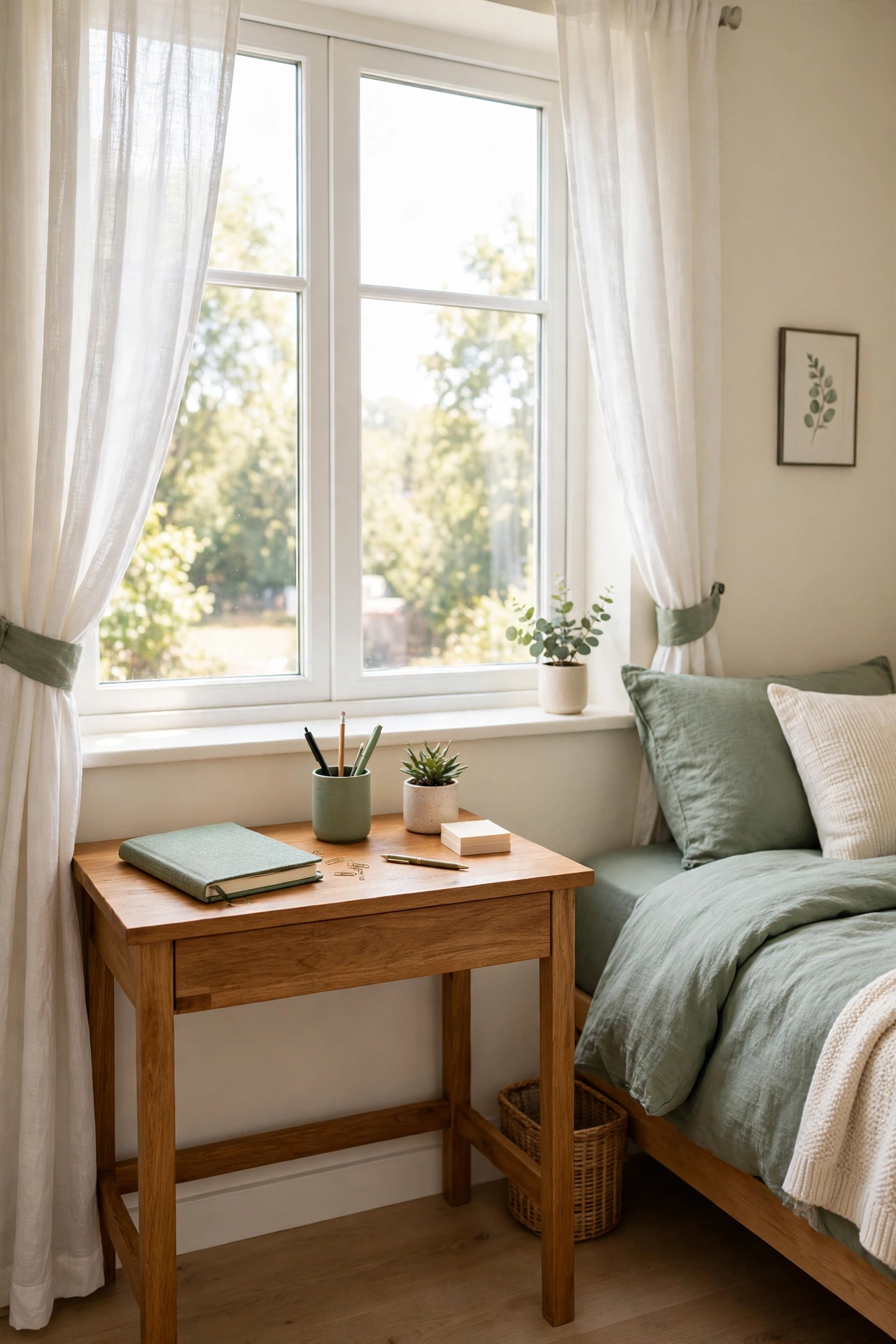
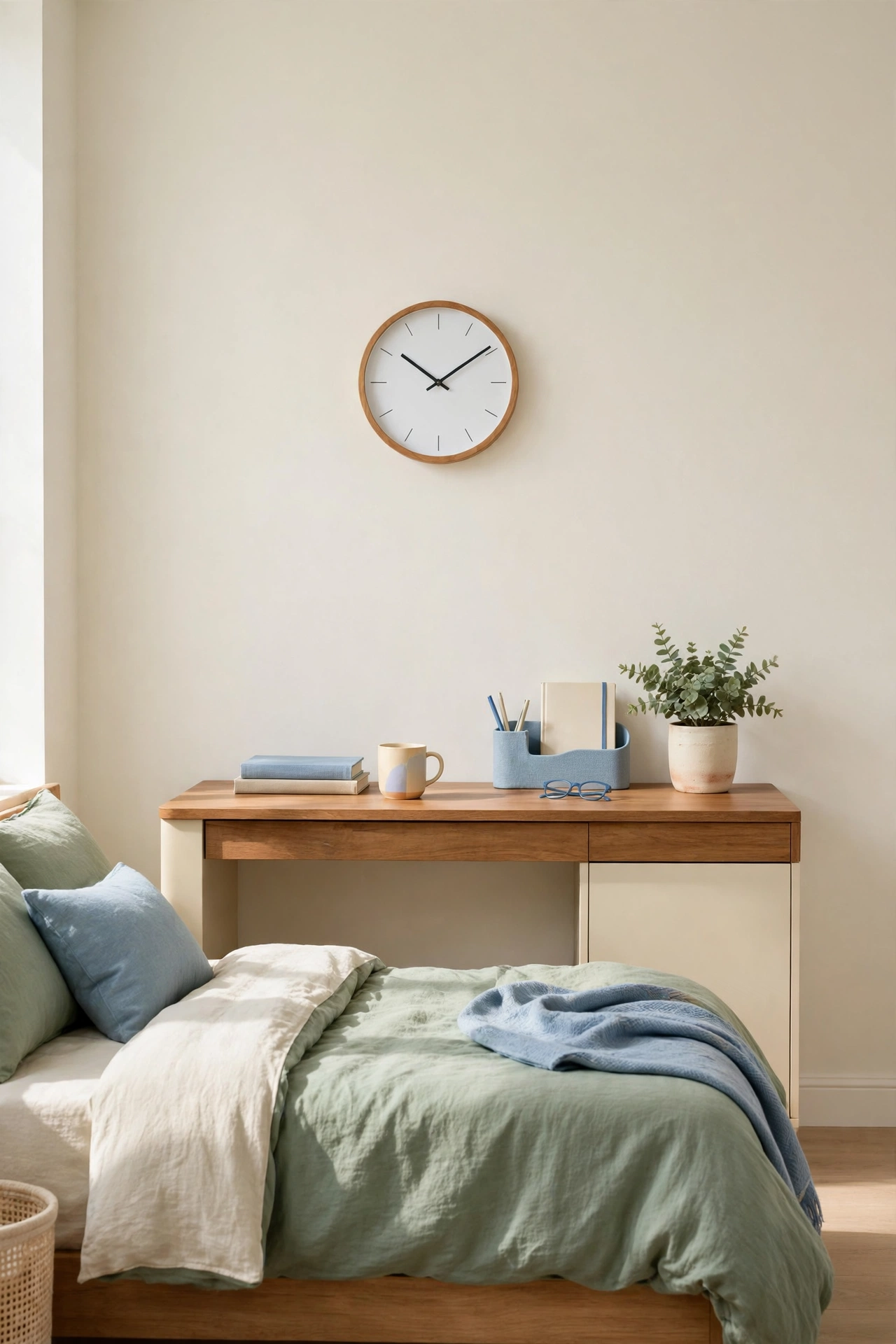
1. Place a Compact Desk Under the Window for Natural Study Light
A compact desk under the window turns the brightest spot in the room into the study zone. Natural daylight makes reading and writing easier on the eyes, and a view outside gives the mind a short rest between tasks. A narrow desk fits even under a small window without blocking the light.
Keep the desk surface clear except for a lamp, a pen cup, and the current book or notebook. A chair that slides fully under the desk keeps the walkway open when study time ends. This simple placement costs nothing and makes the whole room feel larger and brighter.
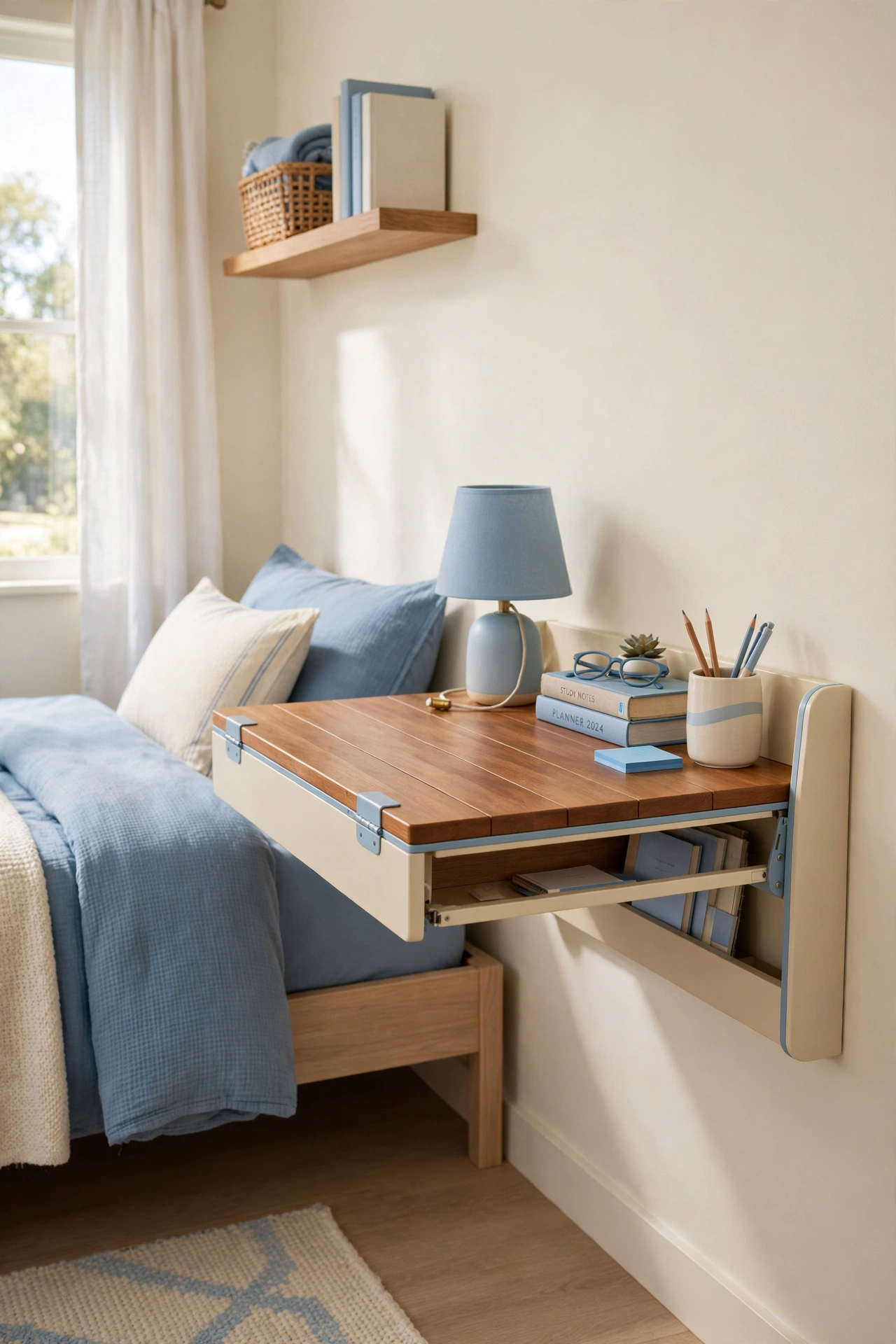
2. Build a Wall-Mounted Fold-Down Desk That Folds Away After Homework
A wall-mounted fold-down desk gives a teen a full study surface that disappears when homework ends. The desk folds flat against the wall, so the floor stays open for friends, exercise, or simply moving around. A small shelf above it holds books and supplies in the same spot.
Choose a sturdy wall bracket and a solid board so the desk holds a laptop and books without wobbling. For more ways to fit a workspace into a tight room, see these small home office layout ideas. A fold-down desk is perfect for a room that must change from study space to living space every evening.
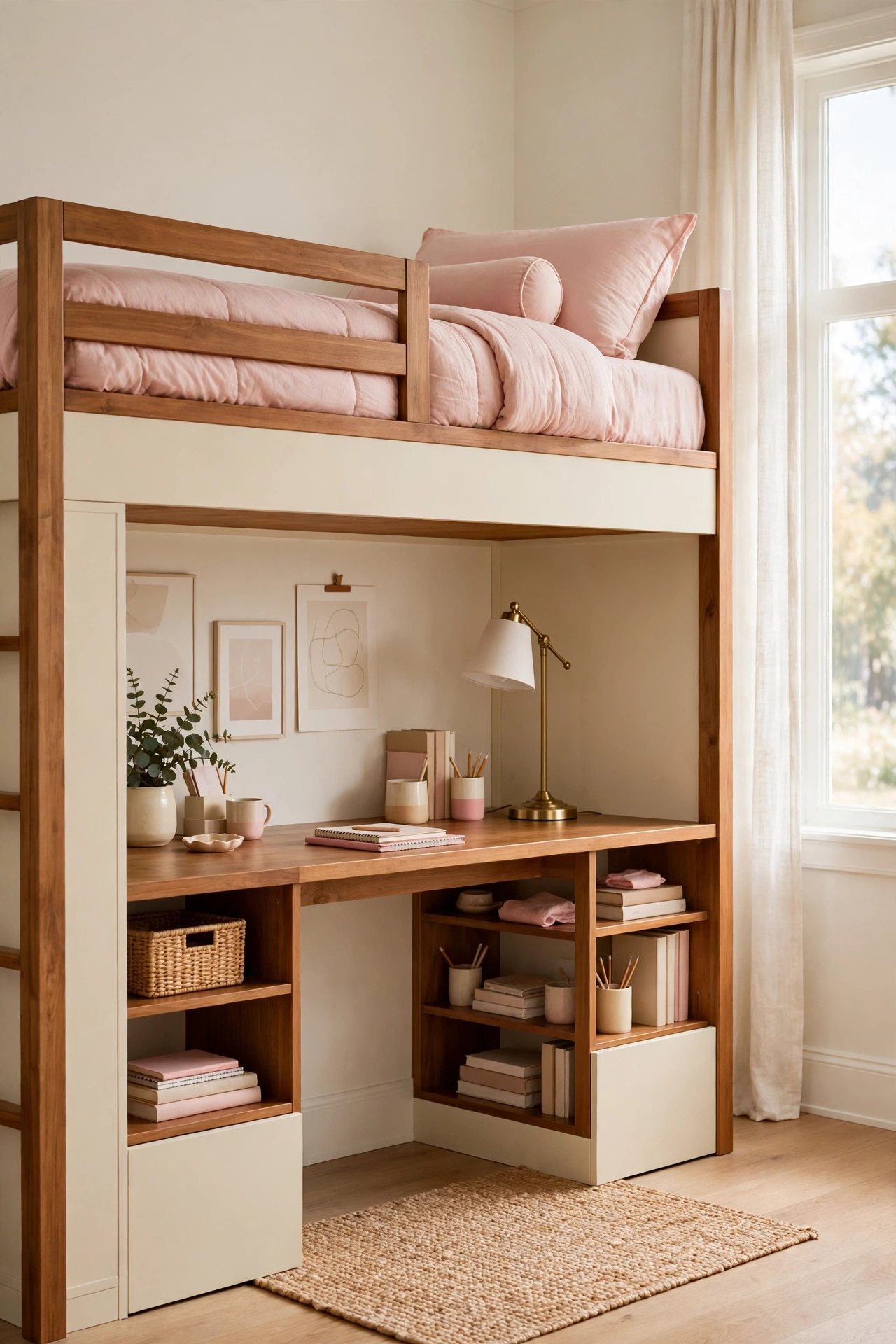
3. Use a Loft Bed with a Full Study Station Underneath
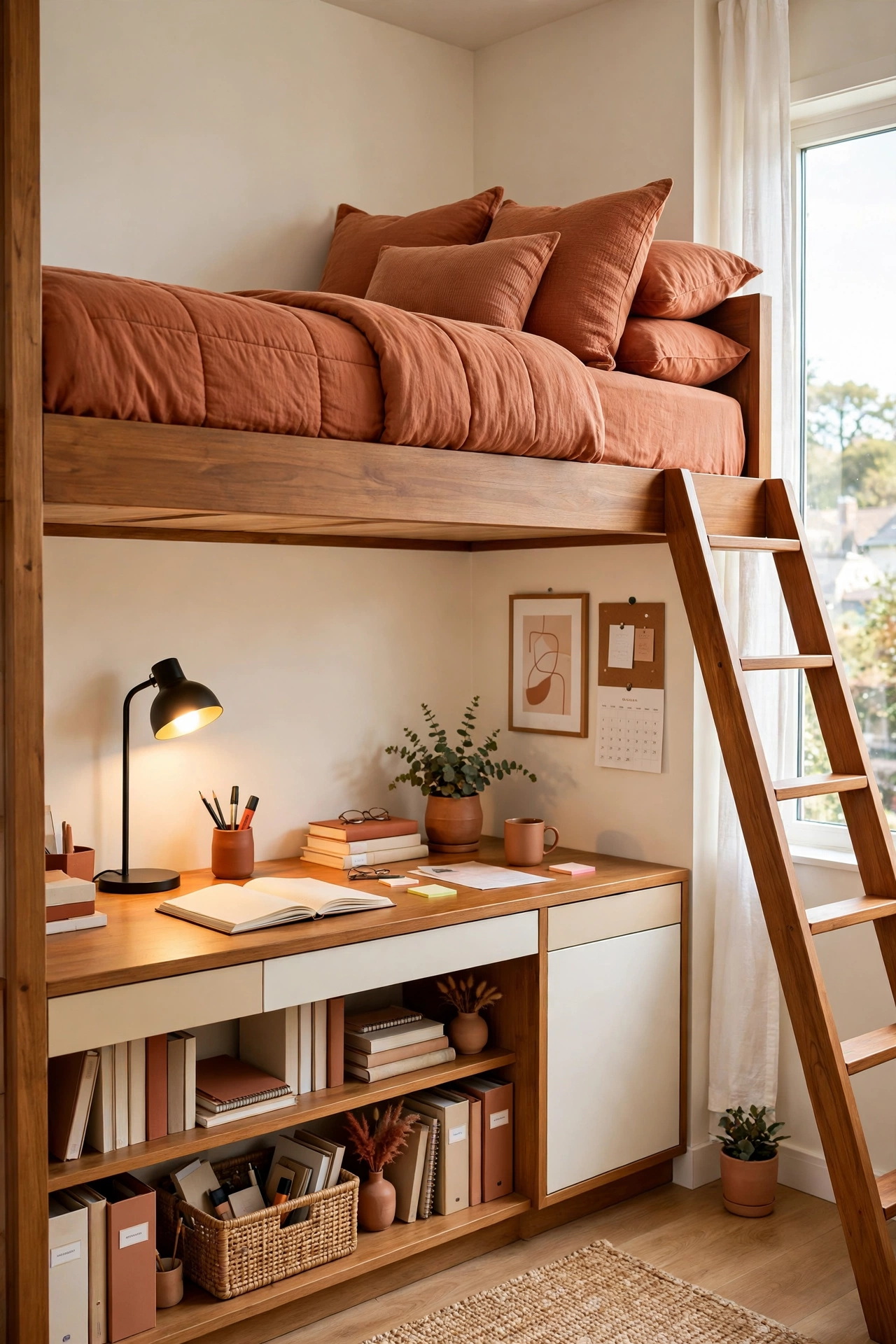
A loft bed lifts the sleeping area up and frees the entire floor below for study. A desk, a chair, and a bookshelf fit neatly under the bed, creating a private study room inside the bedroom. The space feels separate and focused, which helps a teen settle into homework.
Add a small desk lamp and a power strip under the bed so the study station is fully equipped. Make sure the bed has a strong guard rail and a safe ladder for climbing up at night. This layout doubles the usable space in a small room without adding a single piece of extra furniture.
4. Put the Desk in a Quiet Corner with a Room Divider
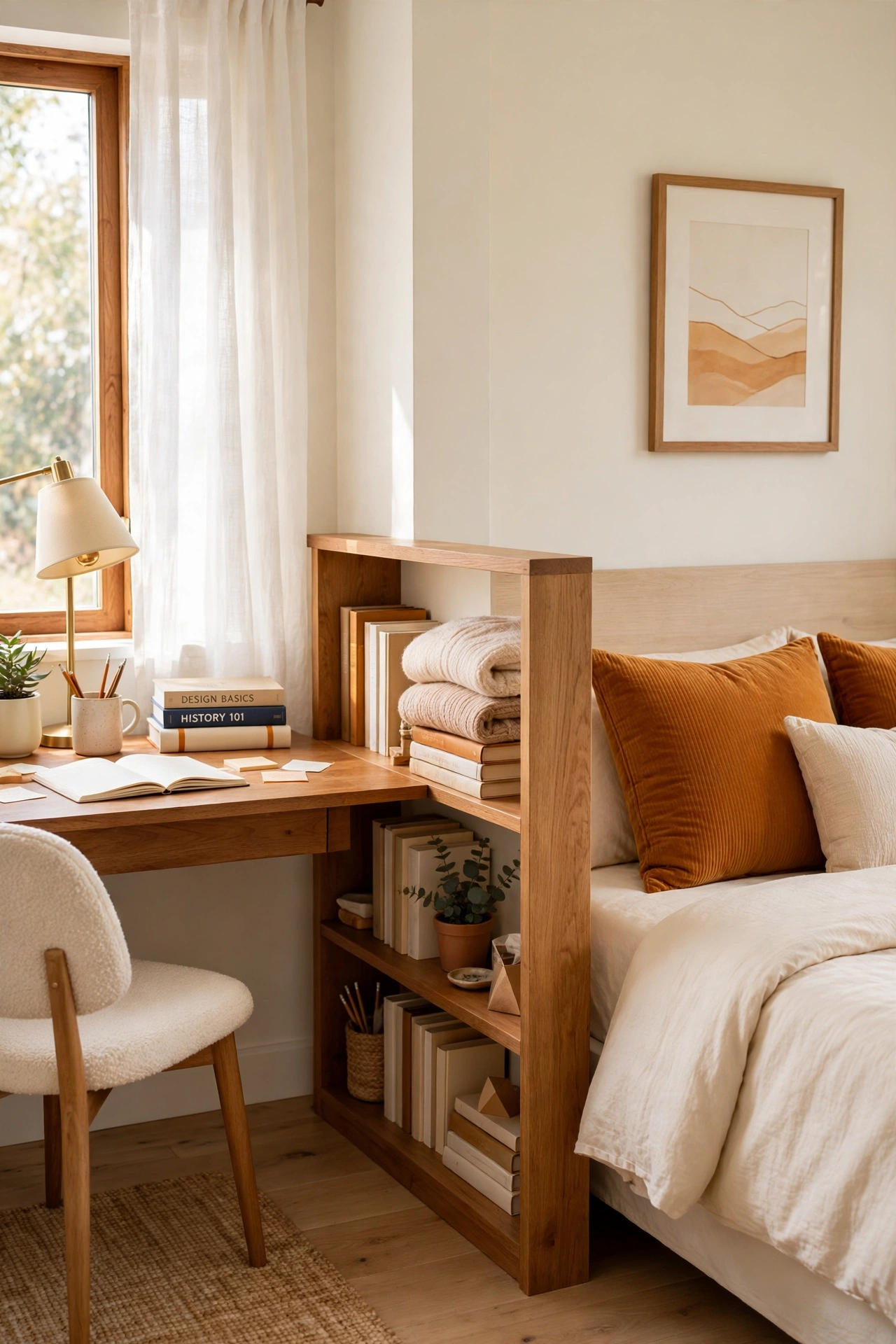
A desk in a quiet corner becomes a study nook when a simple divider marks the boundary. A low bookshelf, a folding screen, or a tall plant stand separates the study corner from the bed without closing off the room. The divider signals that this corner is for focus.
Face the desk toward the corner wall so the bed stays out of sight during study time. A small rug under the desk and chair defines the zone even more clearly. This layout works well when two activities must share one room and still feel separate.
5. Add a Floating Shelf Desk Along One Wall
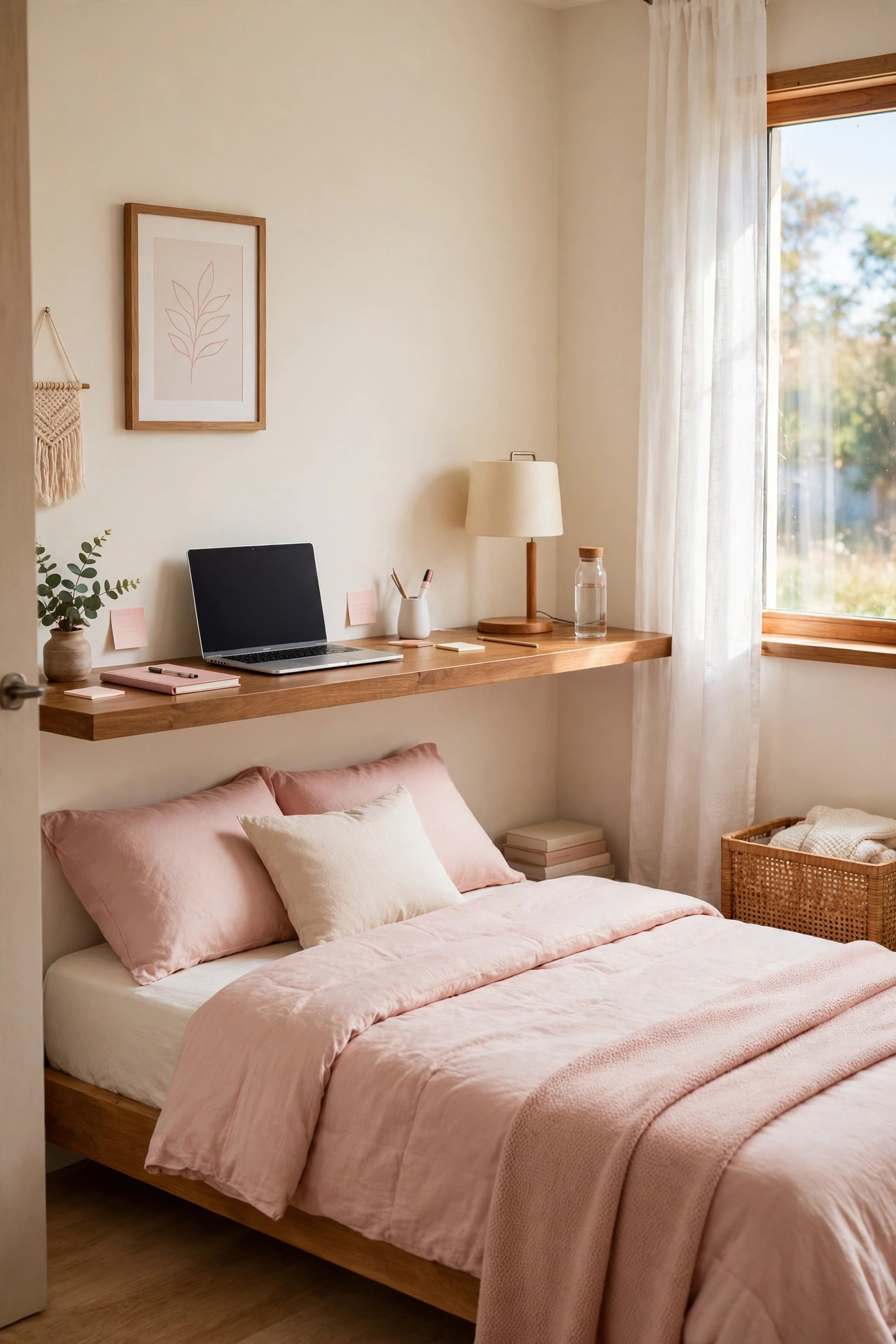
A floating shelf desk is a long, slim work surface mounted directly on the wall. It holds a laptop, a notebook, and a lamp without taking up any floor space at all. The wall below stays free for a chair, a waste bin, or a small footrest.
Mount the shelf at elbow height when seated, and add a second narrow shelf above it for textbooks and a clock. The clean line of the floating desk makes a small room look wider and tidier. It is one of the cheapest ways to add a study area to a bedroom that has almost no spare floor.
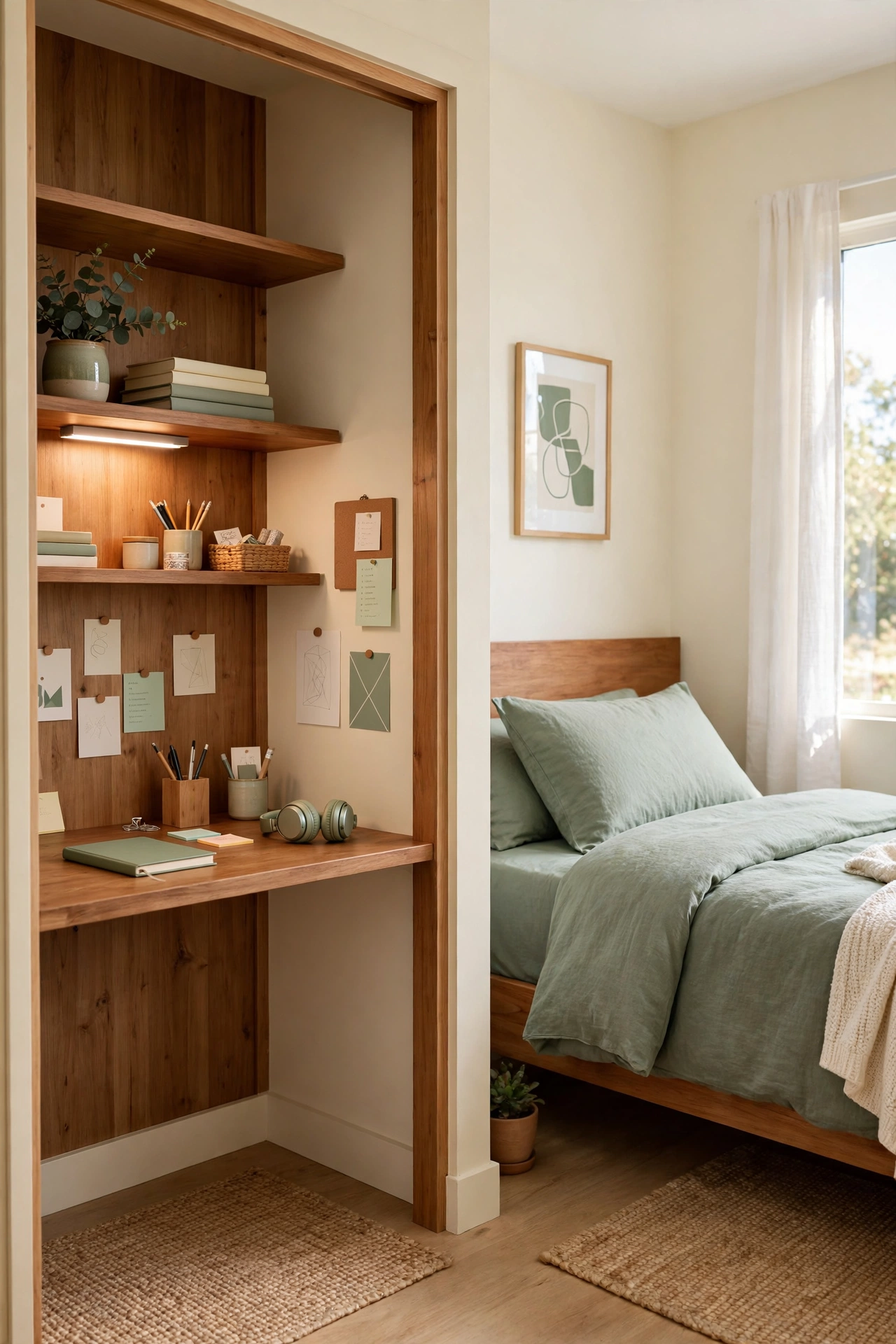
6. Create a Study Nook Inside a Closet
An underused closet can become a complete study nook with a desk board, a light, and a few shelves. Remove the closet doors or replace them with a curtain, and the space turns into a quiet study cave that closes away when homework ends. The rest of the room stays free for sleeping and relaxing.
Install a small LED light under the top shelf so the nook stays bright even without a window. For more ideas on making small spaces work harder, see these small loft apartment layout ideas. A closet study nook is ideal for a teen who focuses best in a small, enclosed space.
7. Use a Corner Desk to Claim Wasted Space
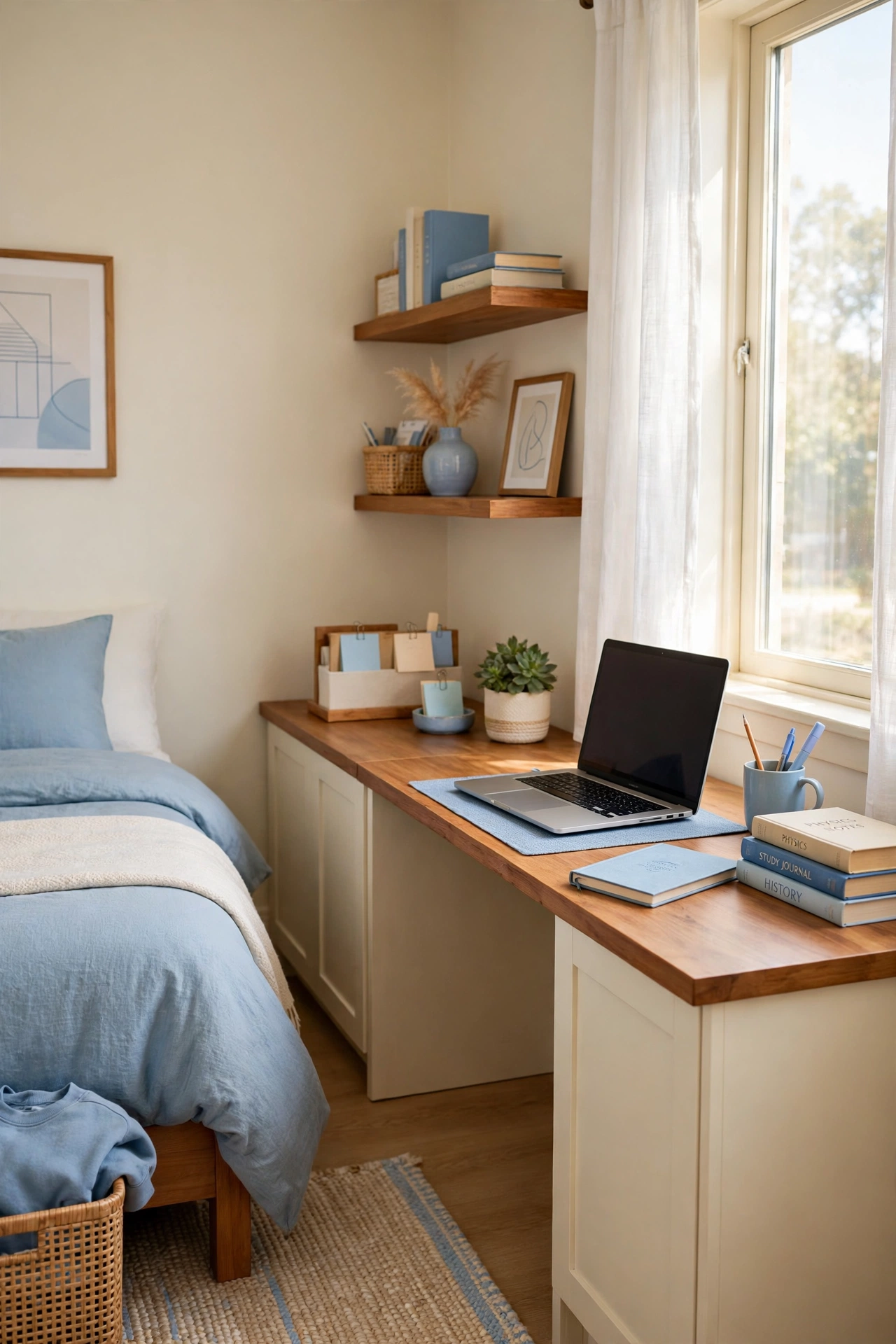
A corner desk turns an empty corner into the most useful spot in the room. The L shape gives room for a laptop on one side and books or a notebook on the other, while the corner itself holds a lamp or a small plant. Two walls of storage fit above it without crowding the room.
Place the desk so the chair faces into the room, not into the corner, so the teen feels open rather than boxed in. A corner desk also leaves the long walls free for the bed and the wardrobe. It is a smart choice when the room is square and every wall already has a job.
8. Separate Sleep and Study with a Bookshelf Divider
A bookshelf divider stands between the bed and the desk and creates two rooms in one. The shelf holds textbooks, notebooks, and school supplies on the study side, while the back faces the bed like a calm wall. Both zones keep their own storage in the same piece of furniture.
Choose an open-backed shelf so light still passes through and the room does not feel split in half. Keep the top of the shelf low enough to see over, so the room stays connected. This divider works best in a long, narrow bedroom where the bed and desk must share one wall line.
9. Add a Rolling Desk Cart That Moves Where It Is Needed
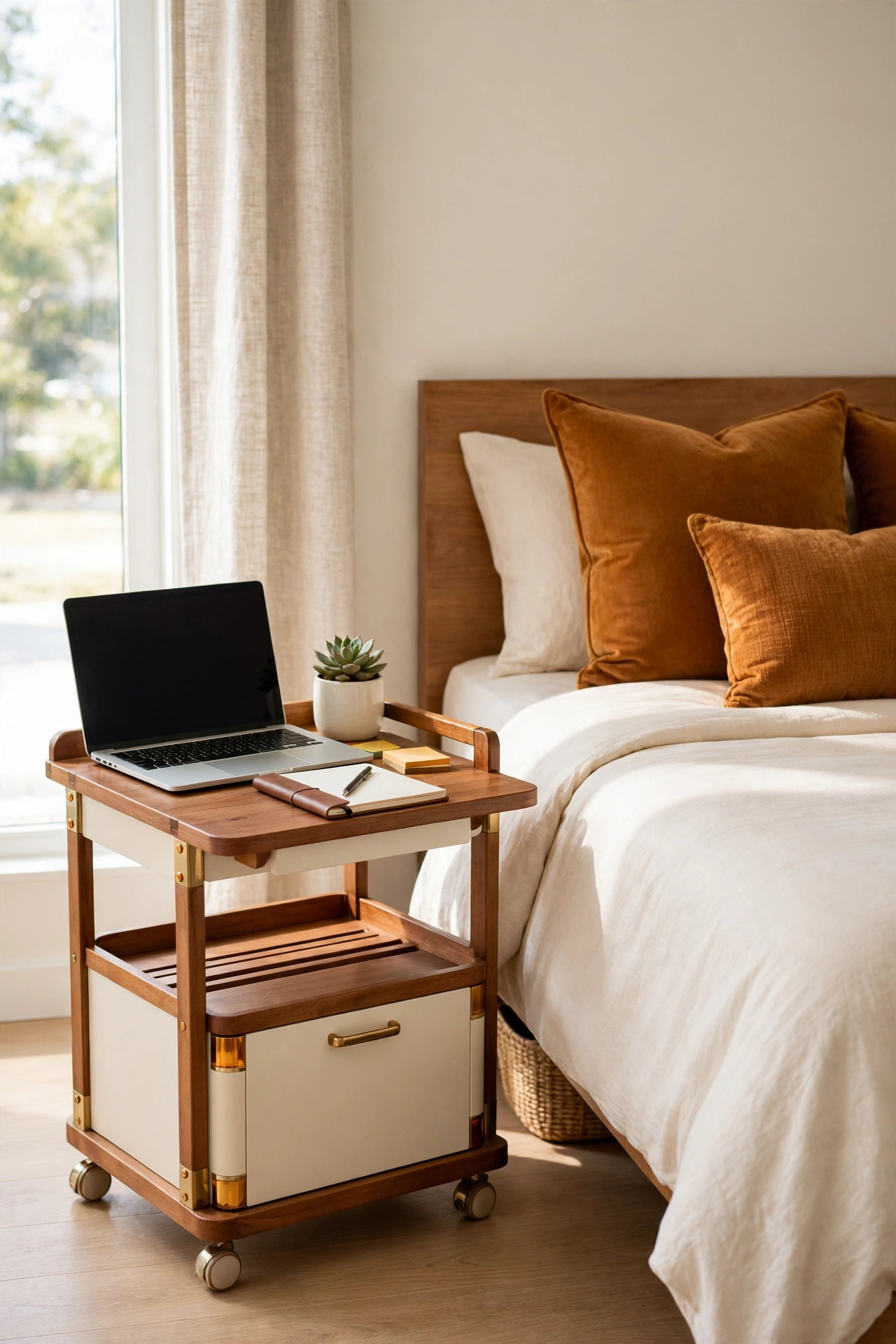
A rolling desk cart is a small study surface on wheels that moves to the window, the bed, or the center of the room as needed. It holds a laptop, a notebook, and a pen cup, and it rolls into a corner when study time ends. The flexibility suits a teen whose study habits change through the week.
Look for a cart with a locking wheel so it stays steady during writing and a lower shelf for books. A cart also works as a side table beside the bed at night. This is the simplest study solution for a room where a fixed desk simply will not fit.
10. Use a Bunk Bed with a Built-In Study Desk Below
A bunk bed with a built-in desk below combines sleep and study in one tall piece of furniture. The top bunk is for sleeping, the lower level holds a desk and shelves, and the whole unit uses only the footprint of a single bed. It is perfect for a teen who shares a room or needs every inch of floor.
Add a desk lamp and a small pin board on the side panel so the lower level feels like a real study space. Make sure the desk height leaves comfortable leg room under the bunk frame. This layout turns a small bedroom into a two-level room with a clear purpose for each level.
11. Mount a Pegboard Above the Desk for Study Supplies
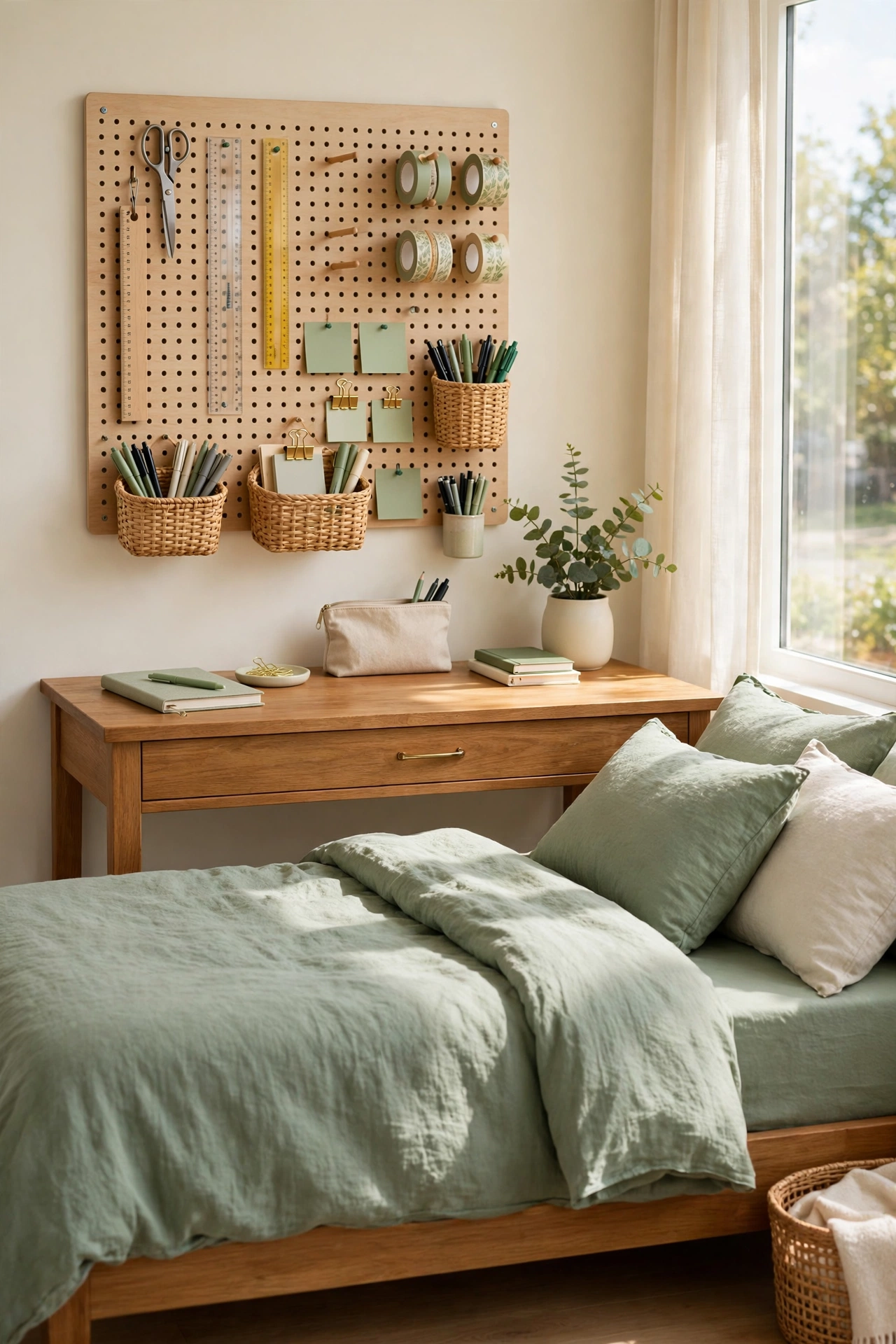
A pegboard above the desk keeps study supplies visible and within reach without using desk space. Hooks, small baskets, and shelves hold scissors, rulers, pens, and charging cables in neat rows. Everything has a visible home, so nothing gets lost in a drawer.
Paint the pegboard the same color as the wall so it blends in, or paint it in the room accent color for a cheerful touch. A pegboard also grows with the teen, since hooks and baskets move in seconds. It is a low cost upgrade that makes a small desk feel much larger.
12. Add a Desk Lamp and Task Lighting for Evening Study
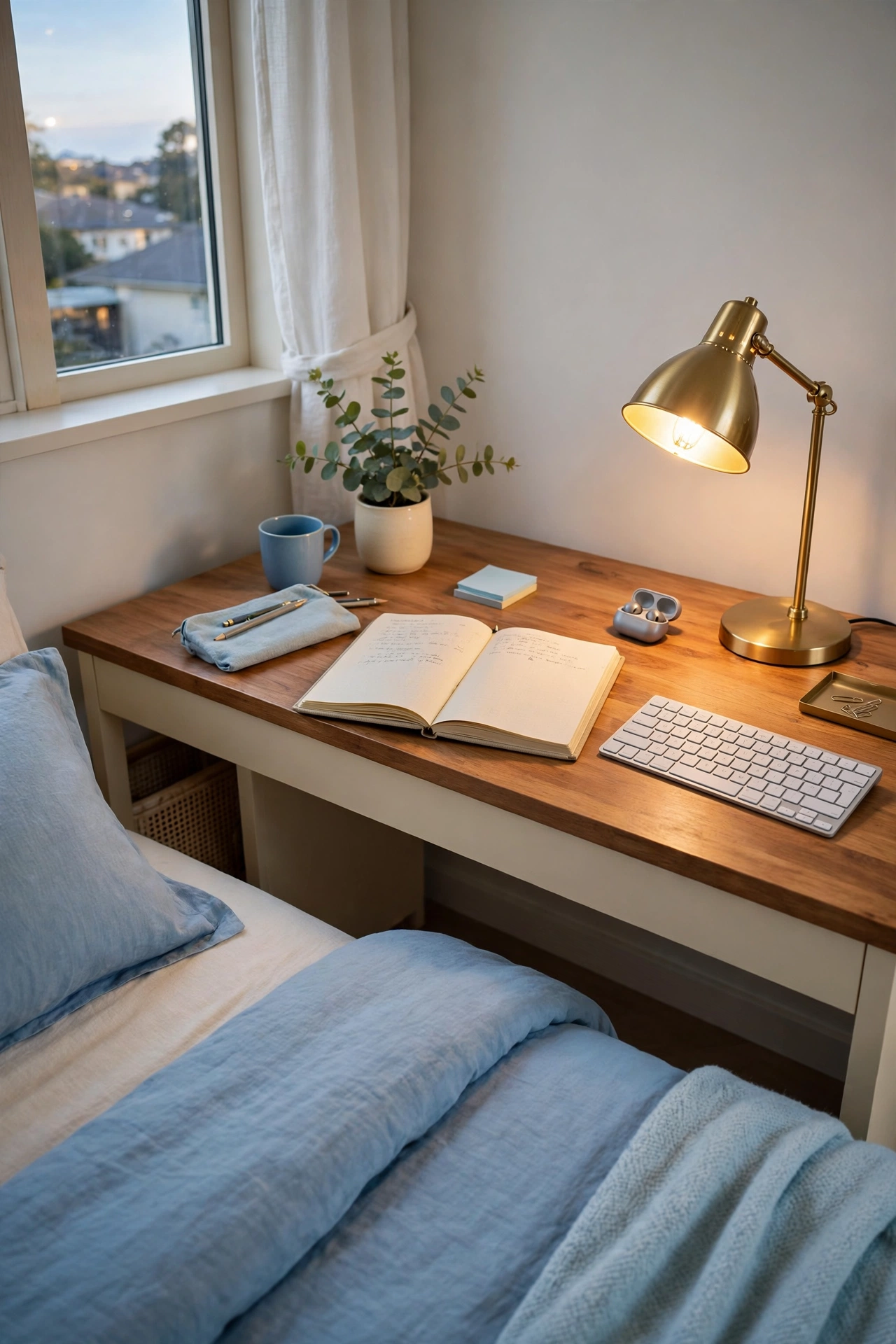
Good task lighting makes evening study possible without lighting the whole room. A focused desk lamp with a warm bulb lights the notebook and the keyboard while the rest of the room stays soft and calm. A lamp with an adjustable arm lets the teen aim the light exactly where it is needed.
Place the lamp on the opposite side of the writing hand so the hand never casts a shadow on the page. A small clip-on lamp works well on a narrow desk or a shelf. Proper lighting protects the eyes and helps the teen study longer without tiredness.
13. Create a Study Zone with a Rug and a Different Wall Color
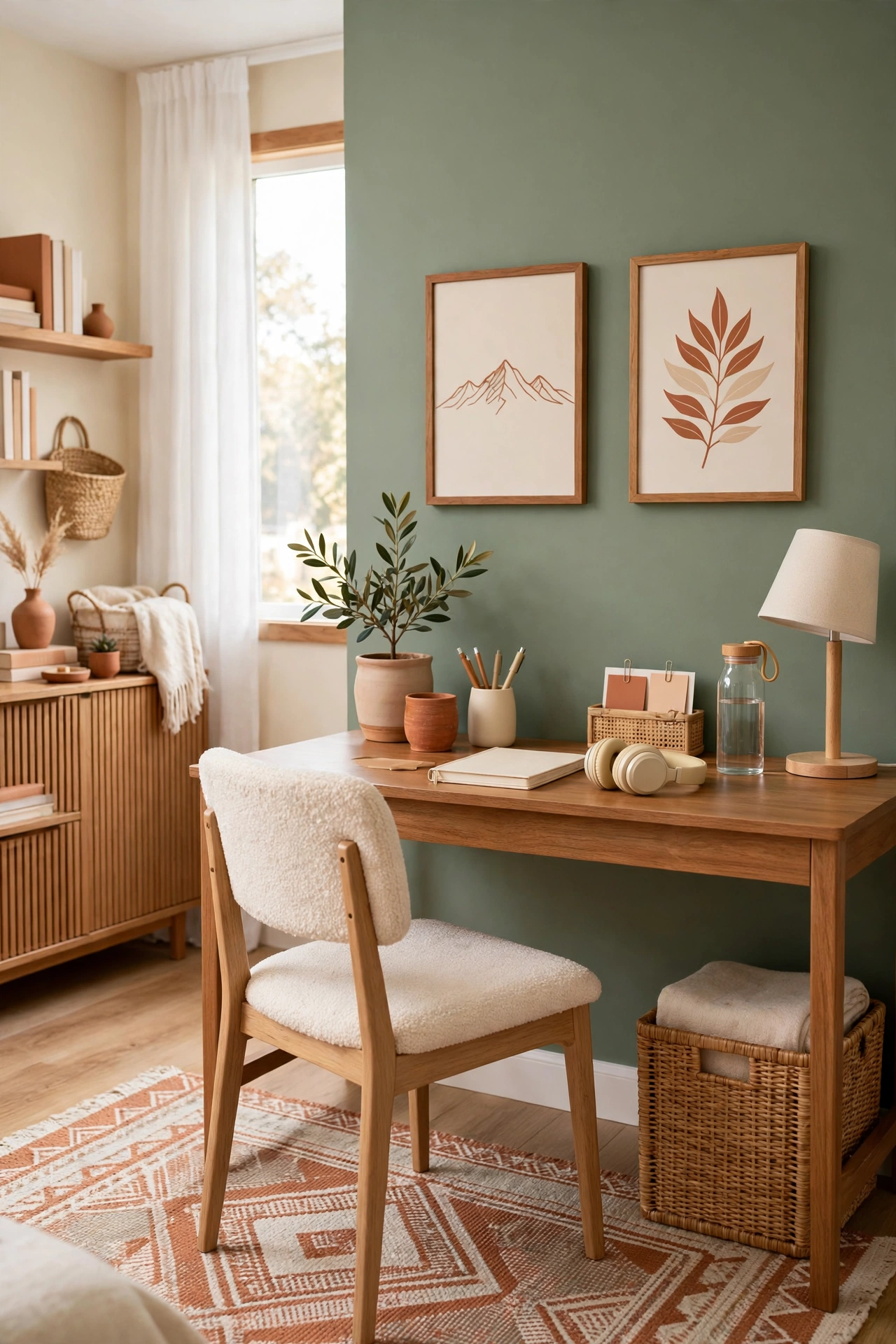
A rug under the desk and a different wall color behind it mark the study zone without any furniture. The eye reads the zone as a separate place, which helps the mind switch into study mode when the teen sits down. The bed area keeps its own color and rug, so the two zones stay visually apart.
Choose a calm color for the study wall, like soft sage or pale blue, so the zone feels focused rather than loud. For more ways to carve a quiet corner out of a small room, see these small reading nook layout ideas. A rug and a paint color cost very little and change the whole feeling of the room.
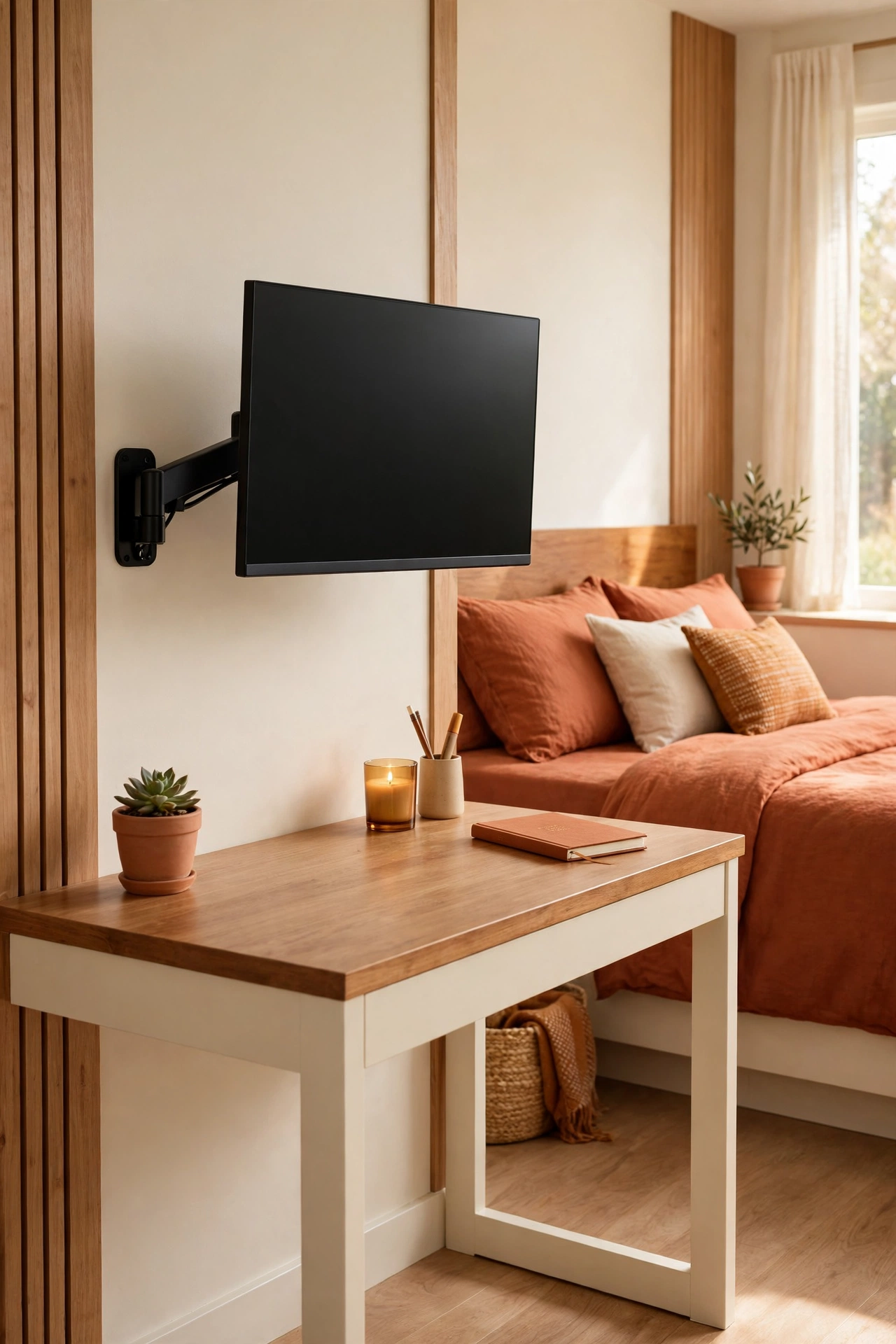
14. Use a Wall-Mounted Monitor Arm to Free Desk Space
A wall-mounted monitor arm lifts the screen off the desk and frees the whole work surface for books and writing. The screen hangs at eye level, which is better for posture, and the desk below stays clear for notebooks. A keyboard tray slides under the desk when it is not in use.
Mount the arm on a solid wall stud so it holds the screen steady. This setup suits a teen who studies with a computer and needs both screen space and paper space on a small desk. It is a small hardware change that makes a big difference in daily comfort.
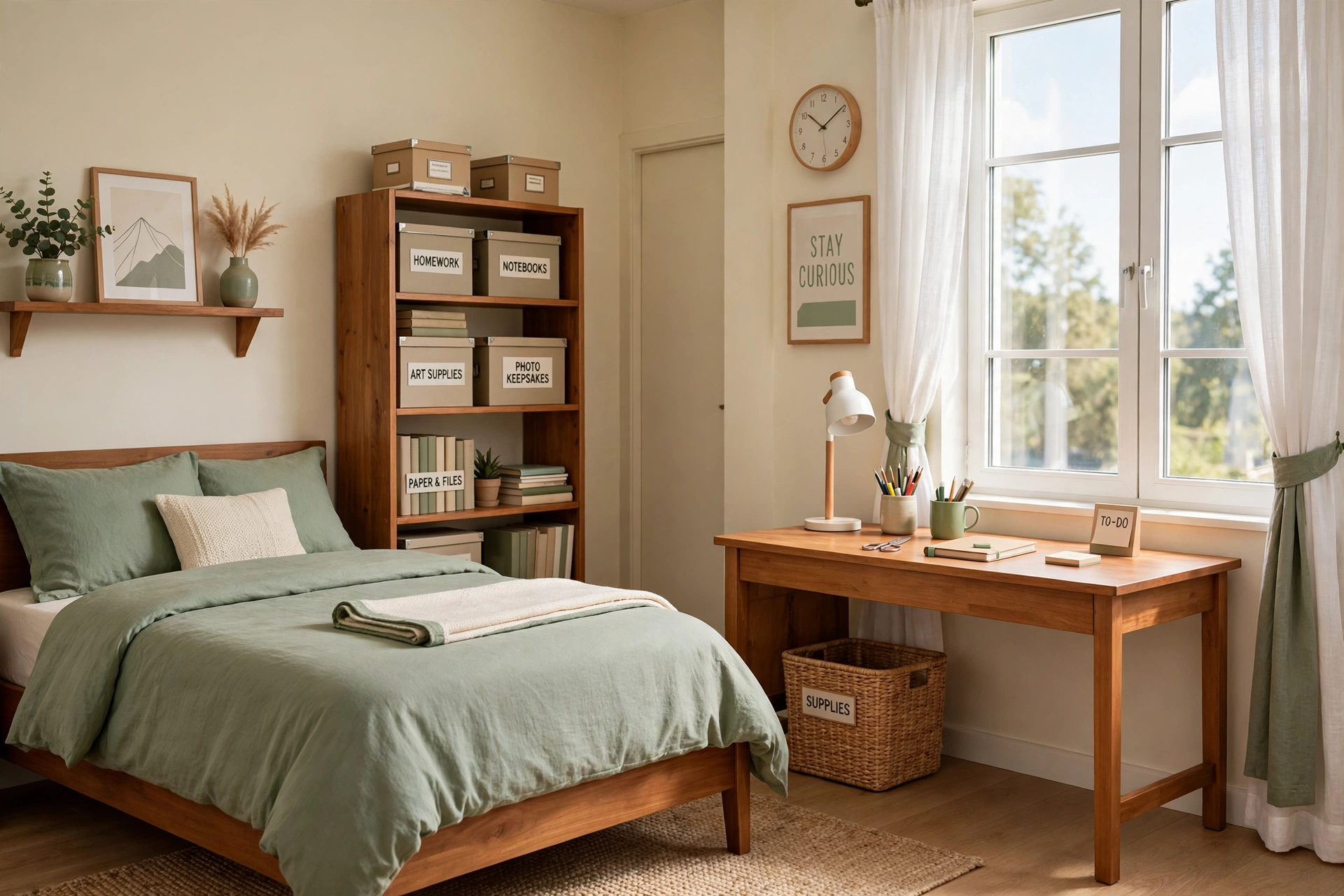
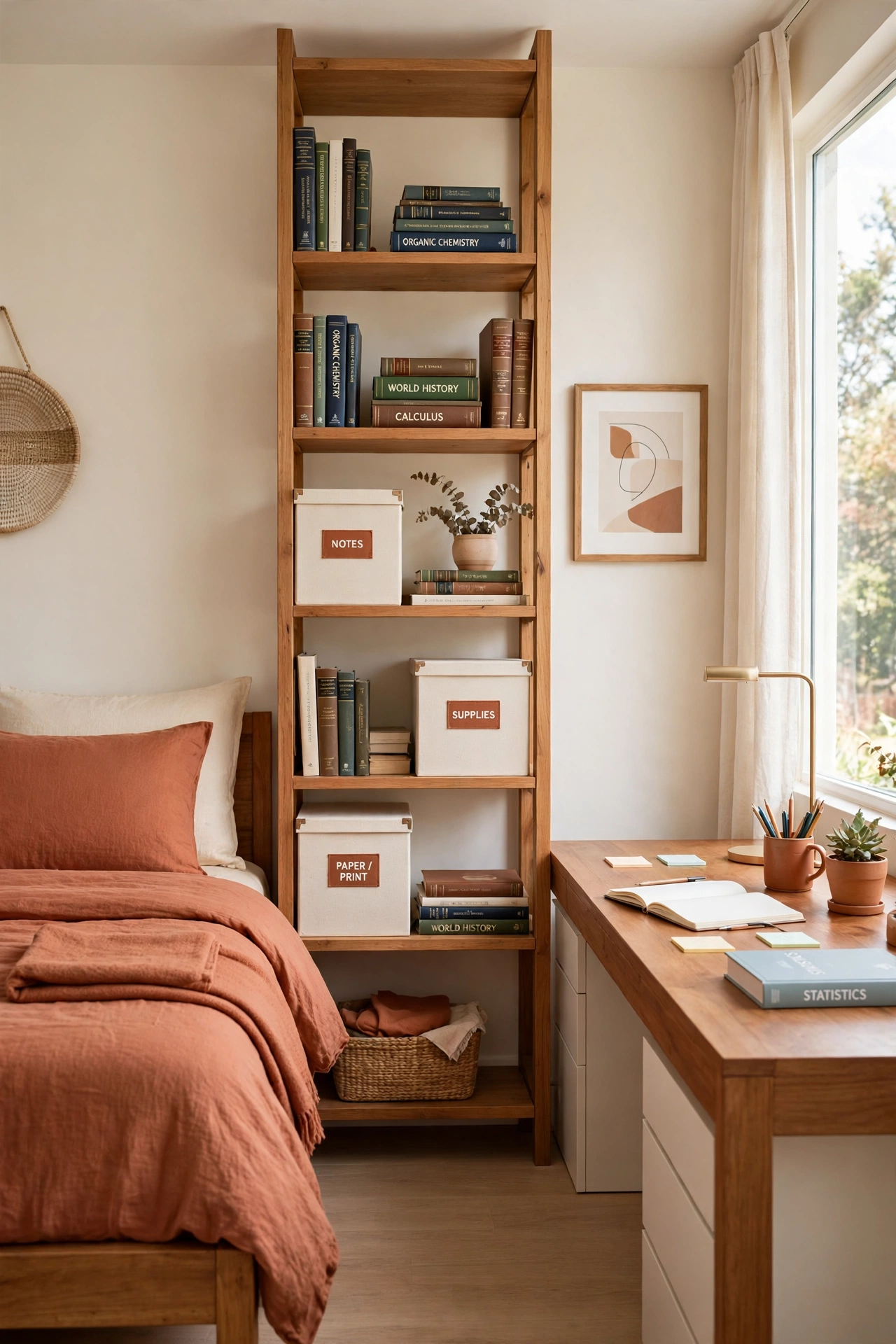
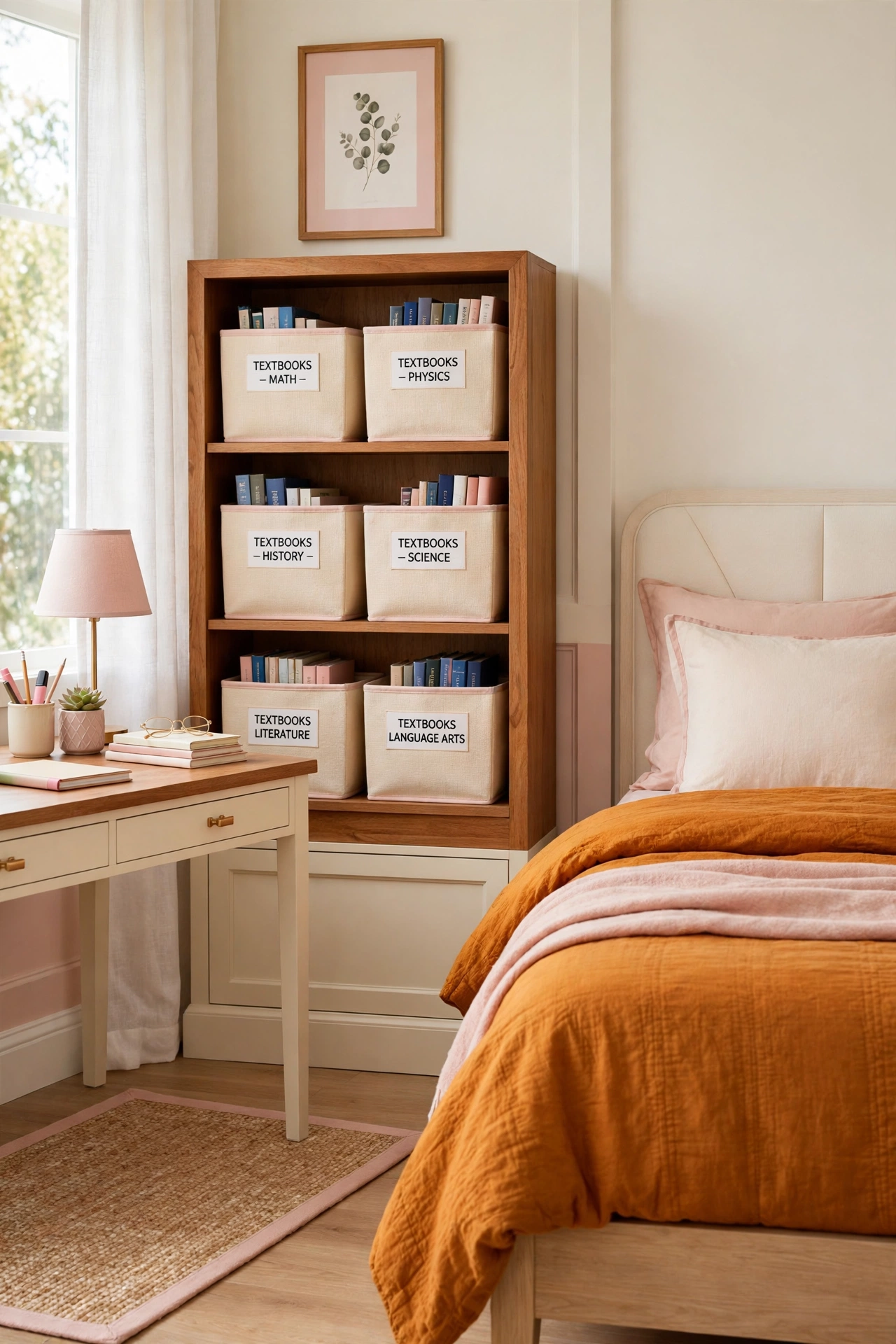
15. Add a Bookcase with Labeled Bins for Textbooks and Notes
A bookcase with labeled bins keeps textbooks, notebooks, and school papers in order beside the desk. Each subject gets its own bin with a clear printed label, so the teen finds the right book in seconds. The bins also hide loose papers that would otherwise pile up on the desk.
Place the bookcase within arm reach of the chair so books move from shelf to desk without a trip across the room. Keep the top shelf for reference books and the lower bins for daily subjects. This simple system teaches organization and keeps the study zone tidy all week.
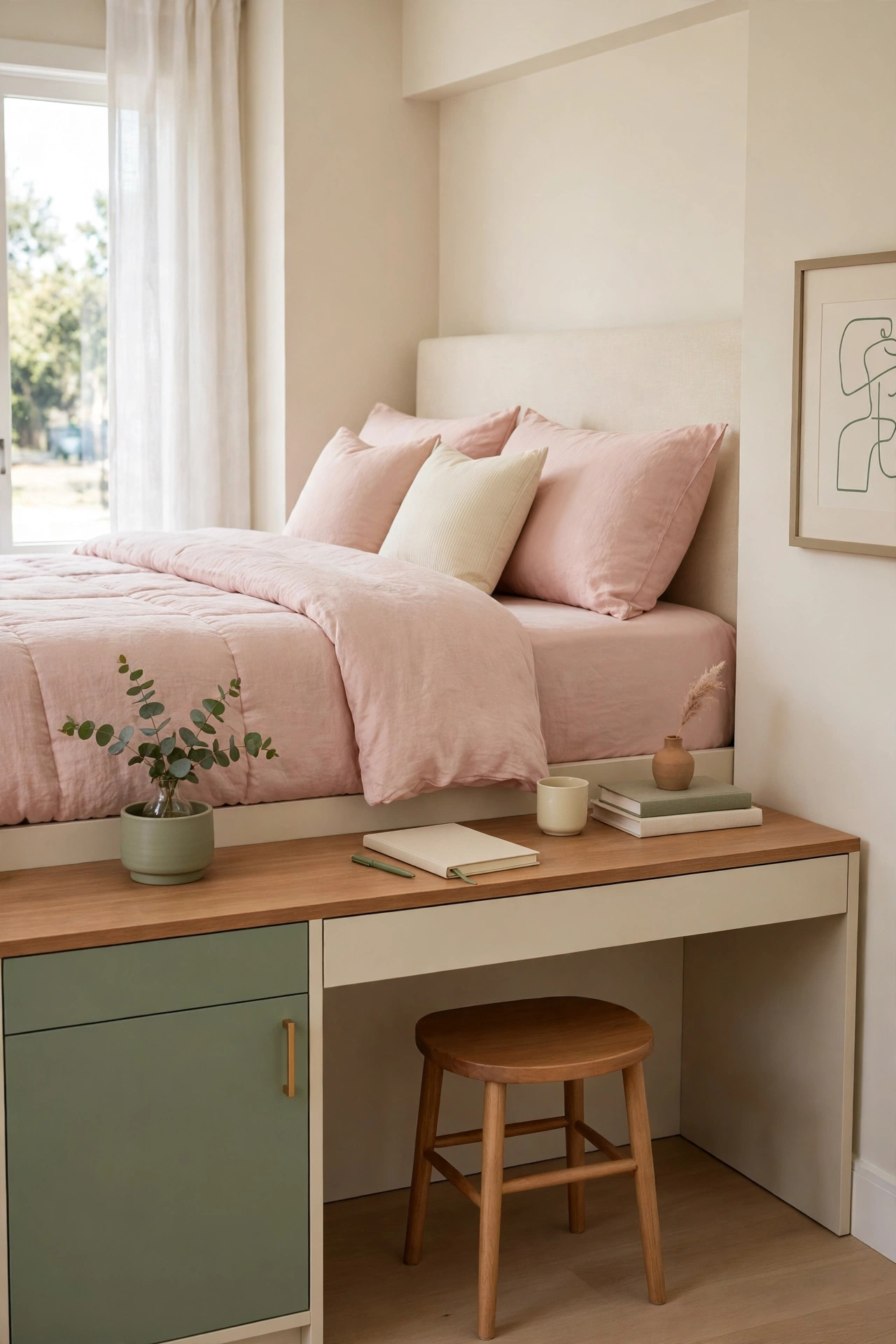
16. Build a Study Counter Along the Foot of the Bed
A study counter along the foot of the bed uses a strip of wall that often stays empty. A long, narrow counter holds a laptop and a few books, and a stool slides underneath when it is not in use. The bed stays on one side and the study counter on the other, with a clear line between them.
Keep the counter depth slim, around forty centimeters, so it never crowds the walkway. A power strip mounted under the counter keeps cables off the floor. This layout suits a long bedroom where the bed runs along one wall and the opposite wall waits for a purpose.
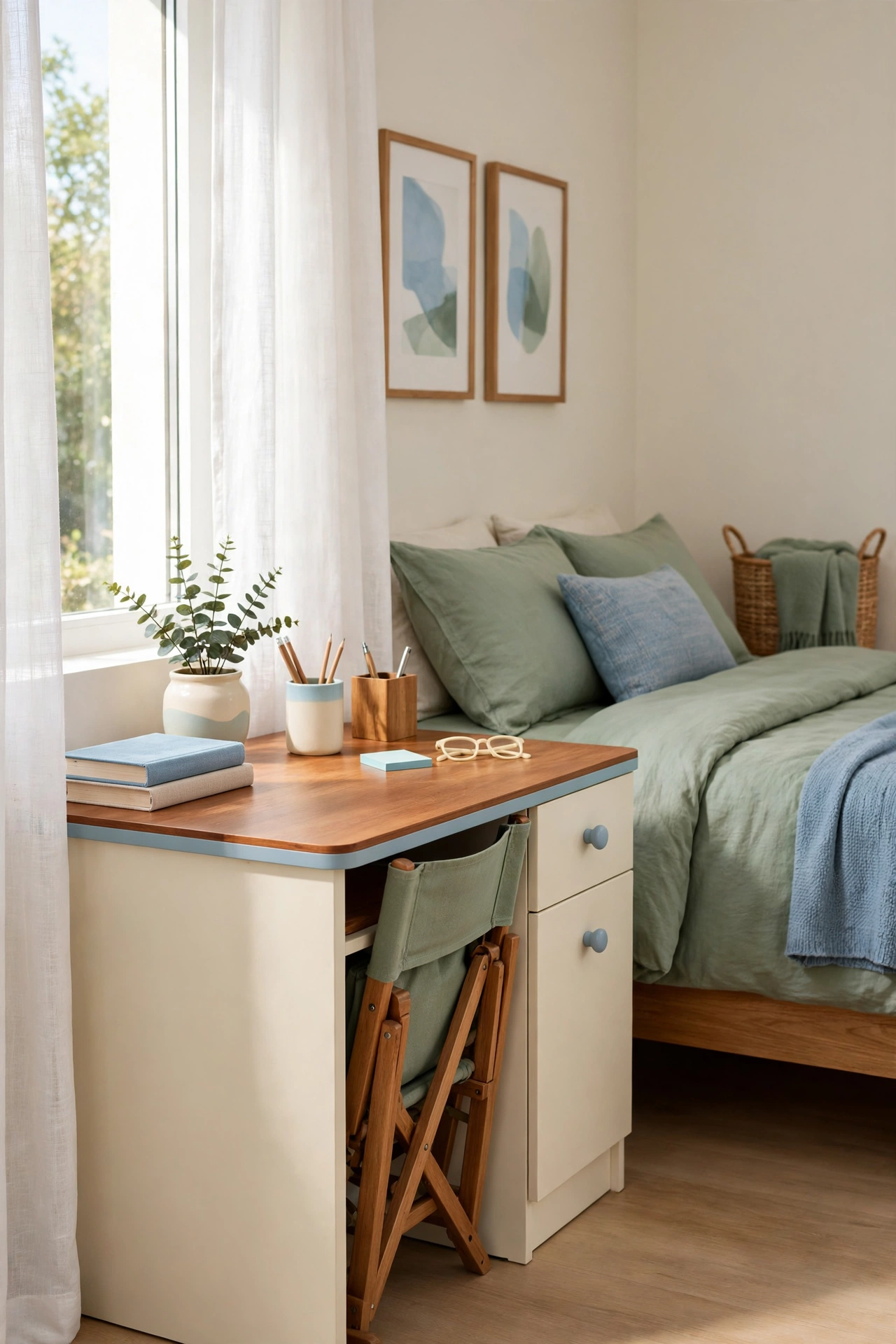
17. Use a Foldable Chair That Tucks Under the Desk
A foldable chair tucks fully under the desk when study time ends, so the room feels open again. The chair is light enough to carry to the desk each morning and fold away each evening. A chair with a padded seat keeps long study sessions comfortable without taking up permanent space.
Choose a chair that folds flat against the wall or hangs on a wall hook when it is not in use. This pairing works well with a fold-down desk or a floating shelf desk, where every centimeter of floor matters. A foldable chair is a small choice that keeps a small room flexible.
18. Add a Corkboard and Whiteboard for Study Planning
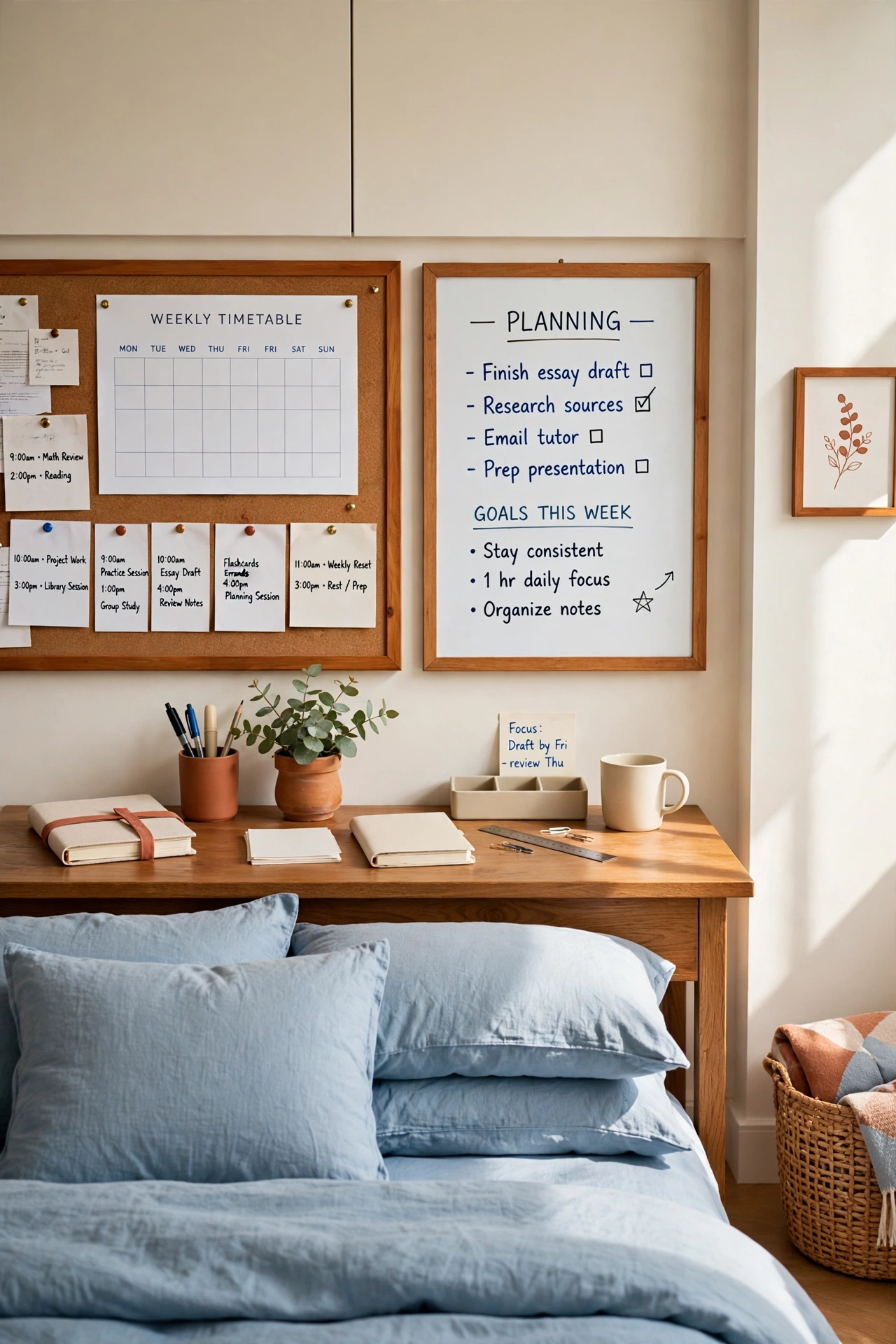
A corkboard and a whiteboard above the desk turn the wall into a study planning center. The corkboard holds timetables, reminders, and inspiring notes with pins, while the whiteboard carries the daily task list in erasable marker. The teen sees the plan every time they sit down to work.
Mount both boards at eye level and keep a marker tray and a small pin box on the desk below. A weekly planning habit starts with a visible plan, and a visible plan starts with boards on the wall. This setup costs little and helps a teen manage homework, revision, and deadlines in one glance.
19. Create a Shared Study Desk for Two Teens in One Room
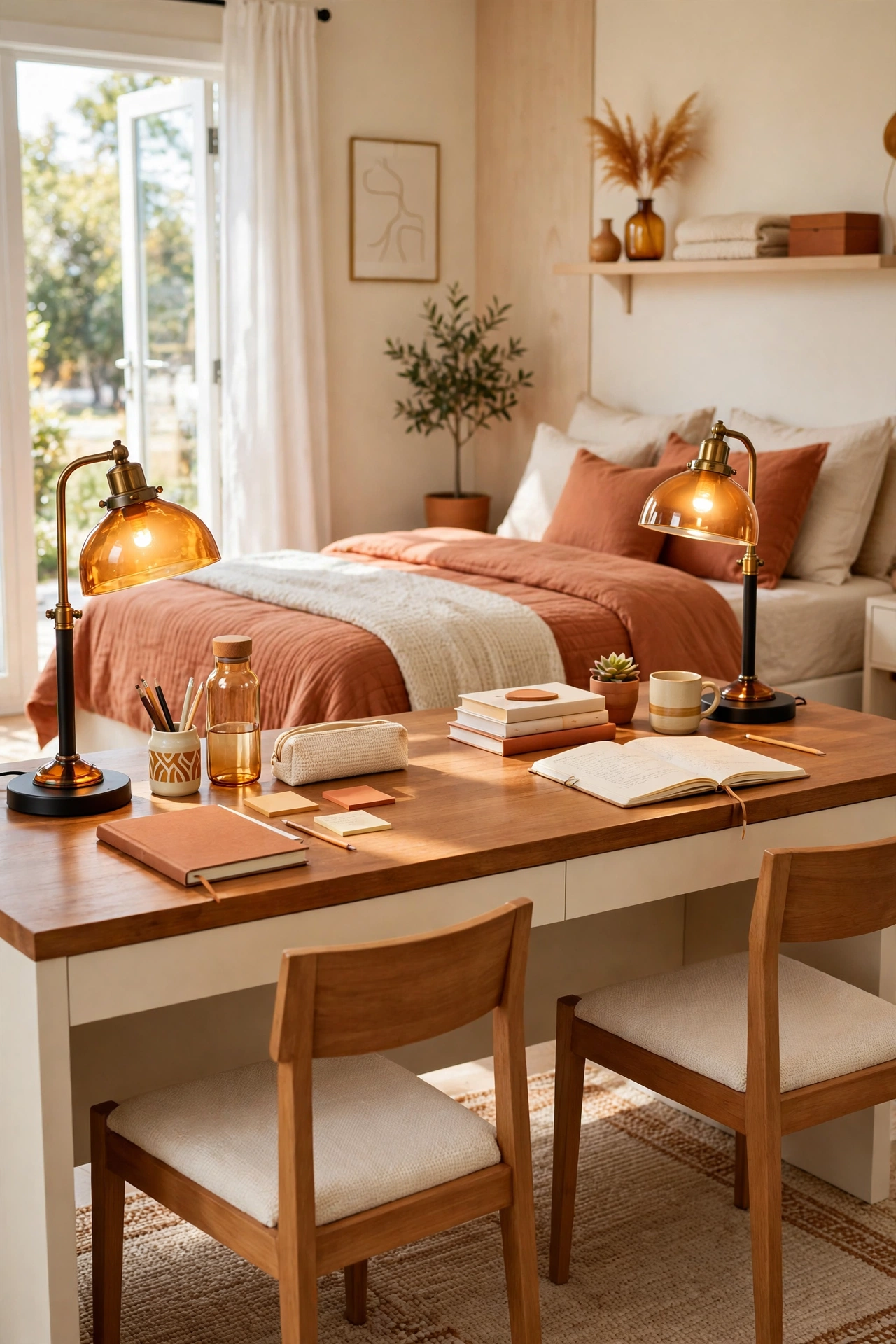
A shared study desk gives two teens their own work space in one room without doubling the furniture. A long desk along one wall holds two laptops side by side, with a small divider or a bookshelf in the middle to mark each side. Each teen gets a lamp, a pen cup, and a shelf for their own books.
Set a simple rule that each side stays tidy, so one teen’s clutter never spreads to the other. A shared desk teaches cooperation and saves a large amount of floor space. It is the best layout for a small bedroom shared by two siblings who both need to study.
20. Use a Murphy Desk That Disappears into the Wall
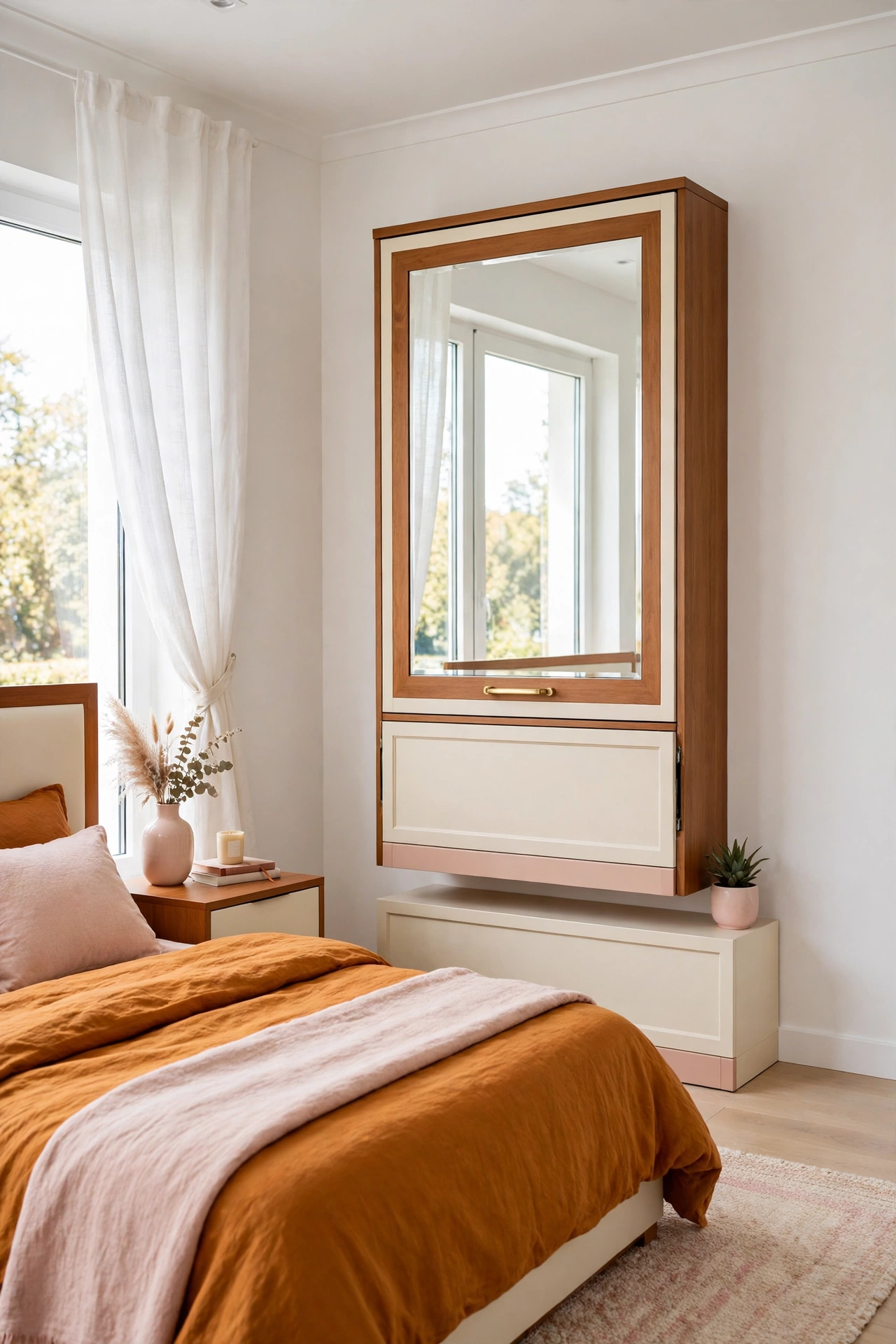
A Murphy desk folds up into a wall cabinet when it is not in use, leaving the room completely open. The cabinet front can hold a mirror, a picture, or a chalkboard, so it looks like decor when the desk is closed. Open it in the morning and the room gains a full study station in seconds.
Install the cabinet on a strong wall with solid anchors, since it carries the weight of the desk and books. A Murphy desk suits a very small bedroom where the floor must stay clear for exercise, music, or friends after school. It is the most complete disappearing act in small room design.
21. Add Under-Desk Cable Management and Charging Station
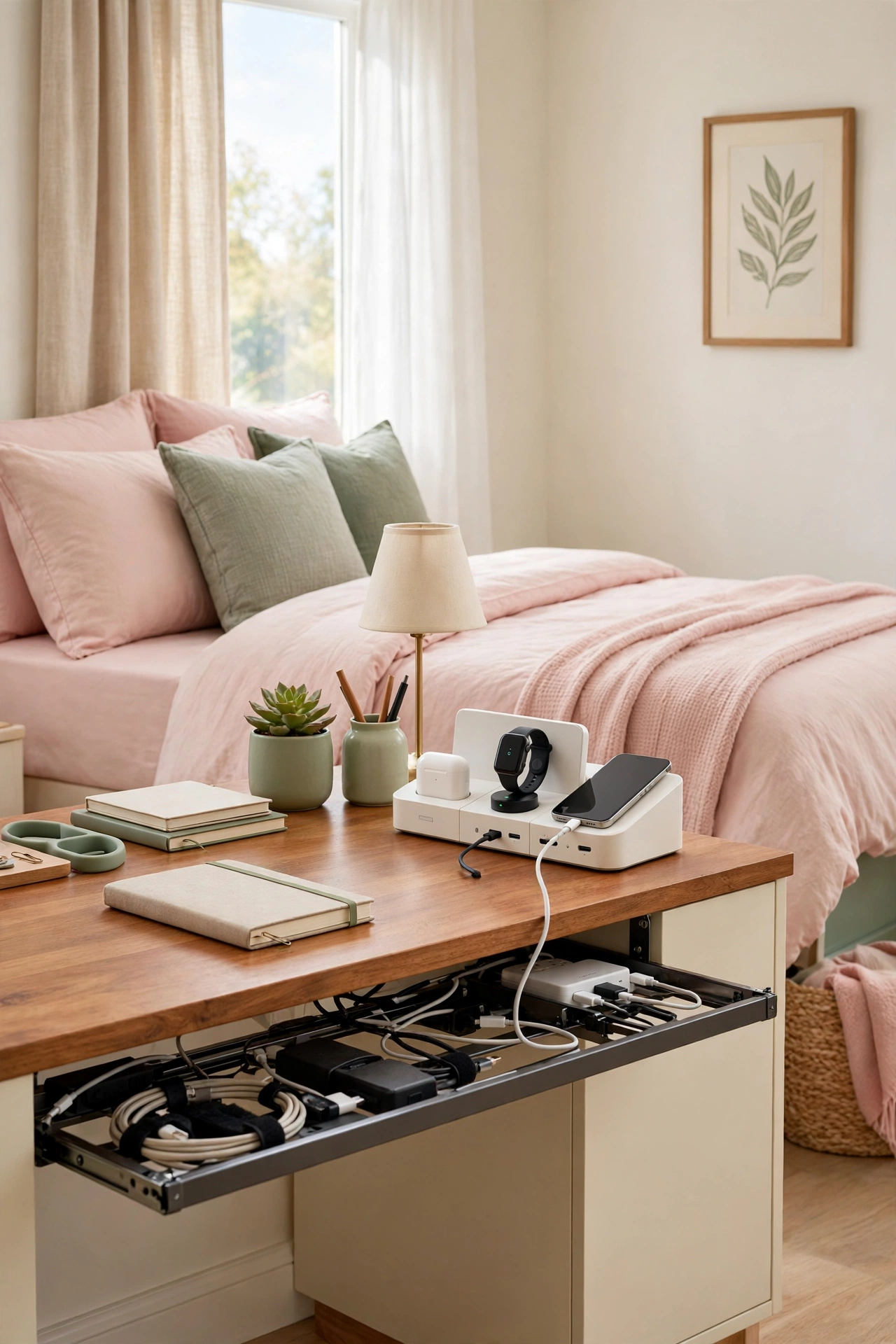
Under-desk cable management keeps chargers, cables, and power strips off the floor and out of sight. A small tray under the desk holds the power strip, while cable clips guide each cord to the laptop, the phone, and the lamp. The desk stays clean and the floor stays safe to walk across.
Add one charging station with labeled ports for each device, so the teen plugs in without hunting for the right cable. A tidy cable setup also makes cleaning easier, since there is nothing to move or untangle. This small detail makes a study desk feel professional and calm.
22. Place the Desk Facing the Wall to Reduce Distractions
A desk facing the wall removes the bed, the television, and the window from the line of sight during study. The wall becomes a blank canvas for a timetable, a quote, or a small shelf, and the mind has fewer things to wander toward. Focus improves when the view stays simple.
Keep the wall in front of the desk tidy, with only one or two useful items like a clock or a small plant. A wall-facing desk suits a teen who gets distracted easily and needs a calm visual field. It is a free layout change that can transform homework time.
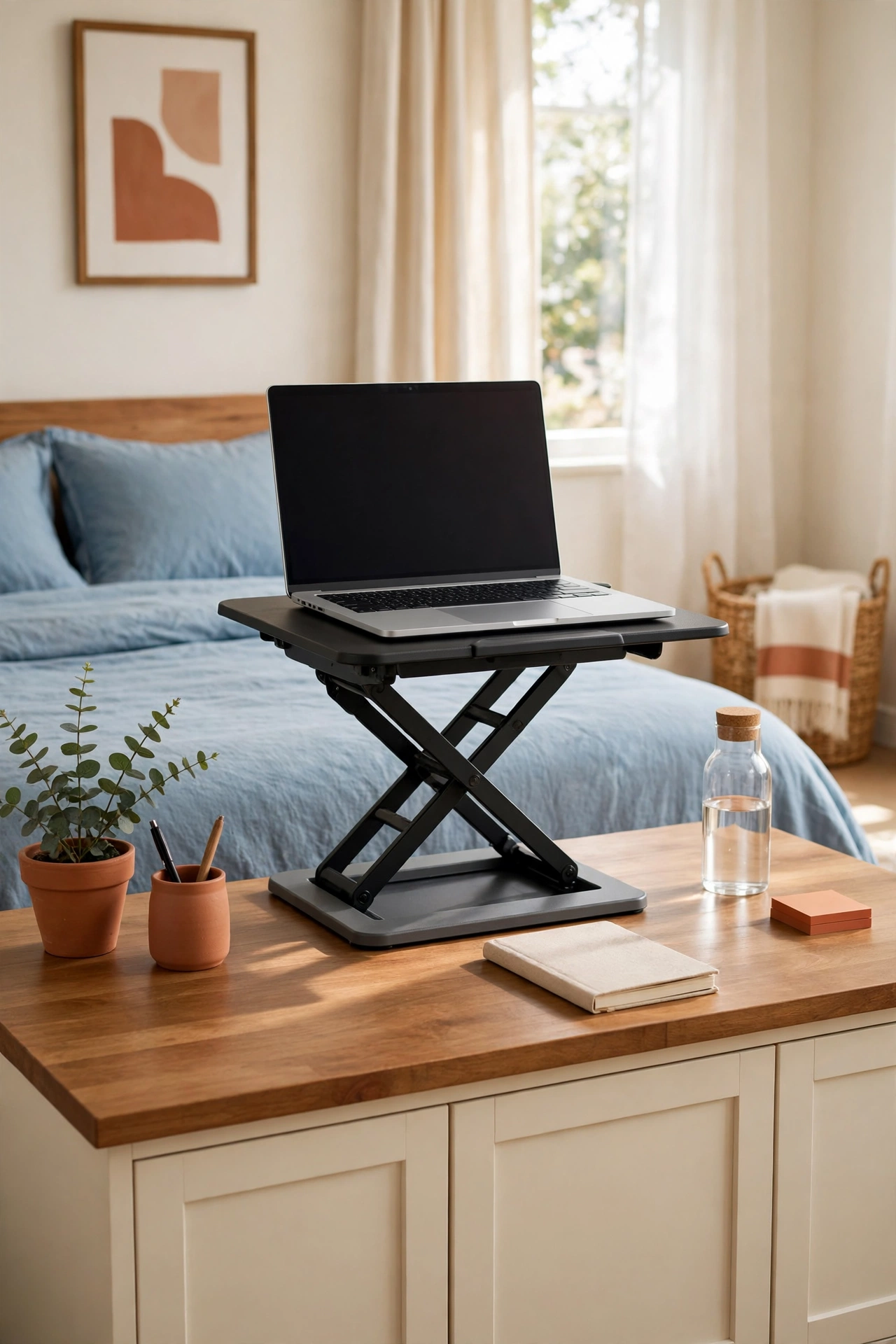
23. Use a Standing Desk Converter for Active Study Breaks
A standing desk converter sits on top of a regular desk and lifts the laptop to standing height in seconds. The teen can stand for a short revision session, then lower the converter and sit again. Alternating between sitting and standing keeps energy up during long study days.
Choose a converter that holds the laptop and a notebook at the same time, with a smooth lifting motion. A small anti-fatigue mat under the feet makes standing comfortable. This setup suits a teen who fidgets while studying and focuses better with movement.
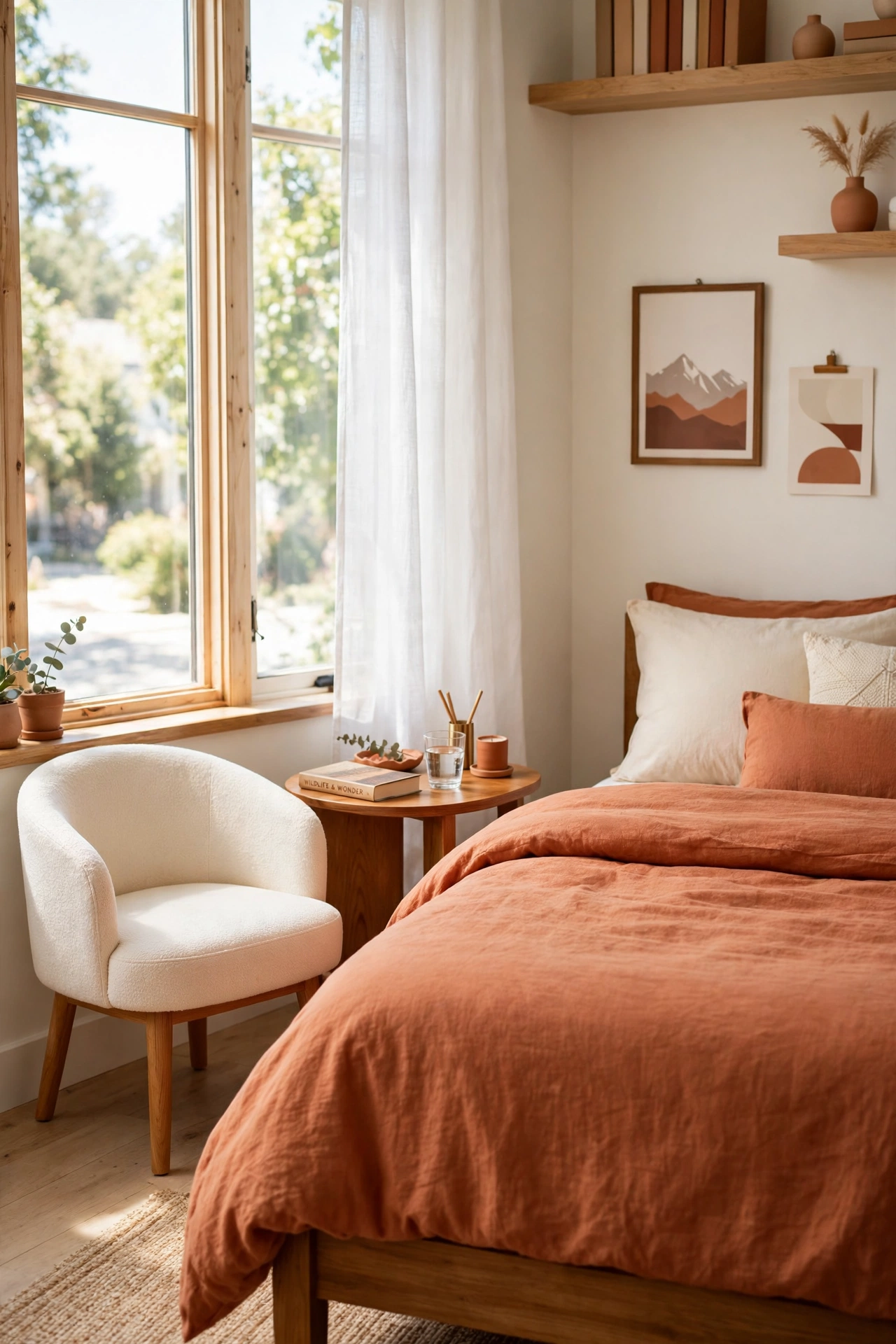
24. Add a Small Reading Chair with a Side Table for Study Breaks
A small reading chair with a side table gives the teen a place to take a study break without leaving the room. The chair holds a novel or a magazine, the side table holds a glass of water, and five quiet minutes refresh the mind before the next study block. A break corner stops the desk from feeling like a cage.
Place the chair near the window or in a corner opposite the desk, so the break feels like a change of scene. For the main bedroom layout, the general guide to small teen bedroom layout ideas pairs well with this study-focused setup. A reading chair is a small luxury that makes long study days sustainable.
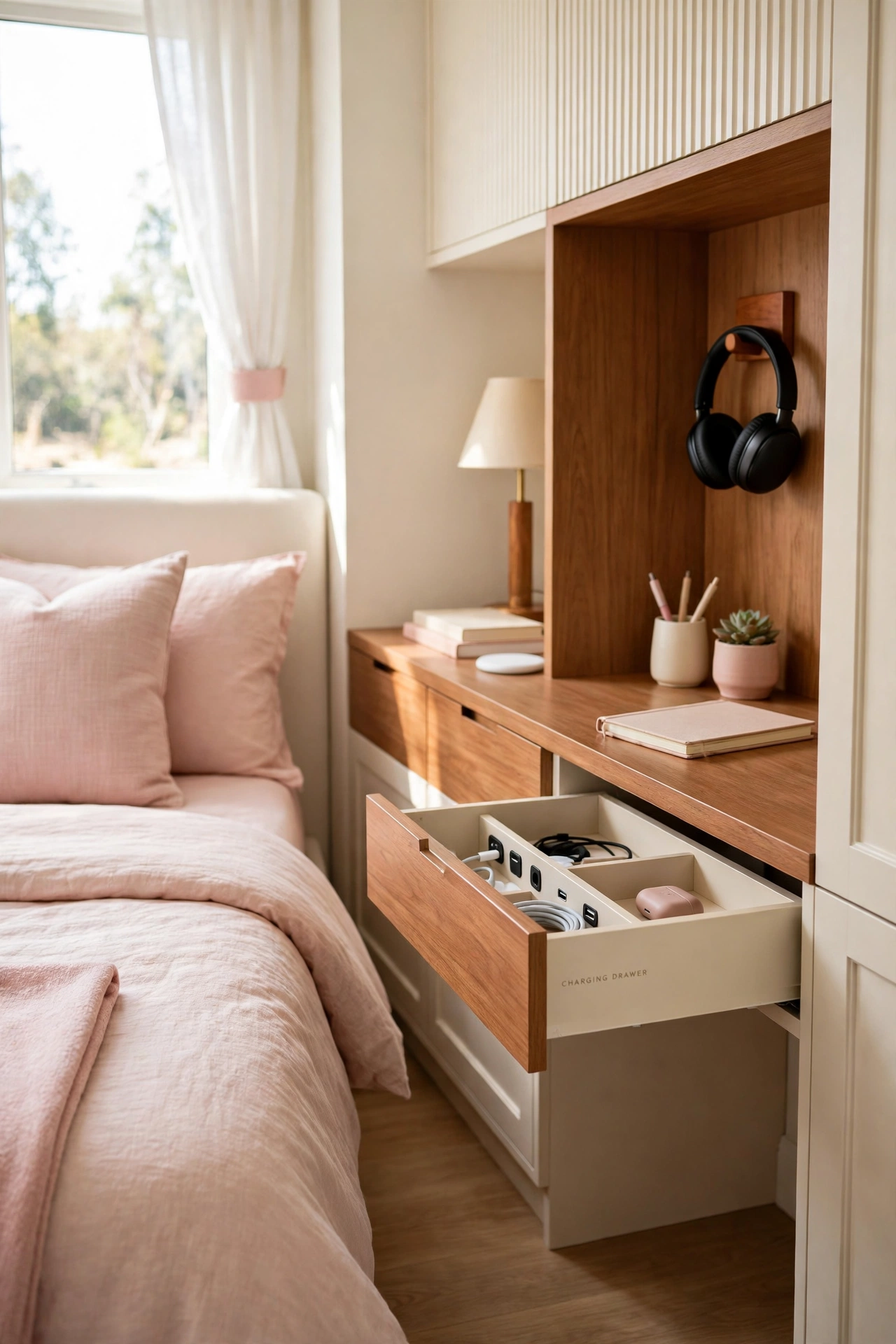
25. Create a Study Station with a Built-In Charging Drawer and Headphones Hook
A study station with a built-in charging drawer and a headphones hook keeps every study tool in one place. The drawer charges the phone and the tablet out of sight, the hook holds headphones within reach, and the desk surface stays clear for actual work. The teen sits down and everything is ready.
Drill a small cable hole in the back of the drawer and mount a power strip inside it for safe charging. Label the hook and the drawer so younger siblings know the station belongs to study time. This final idea turns a simple desk into a complete study station built for daily use.
Conclusion
A small teen bedroom can hold both a comfortable bed and a focused study area when the layout gives each zone its own place. From a desk under the window to a loft bed with a study station below, there is an idea here for every room shape and every budget. The best layout is the one your teen will actually use every day.
Pick one or two ideas that fit the room and start today. Move the desk, add a lamp, and label the bins, and the room will slowly become a place where study feels natural. For a calm home beyond the bedroom, these nightly reset routine ideas will help you keep every room organized with just a few minutes each evening.
Frequently Asked Questions About Small Teen Bedroom Layout Ideas with a Study Area
What size desk fits in a small teen bedroom?
A desk between 80 and 120 centimeters wide fits most small teen bedrooms. A narrow depth of 45 to 50 centimeters leaves room to walk past, while a wall-mounted or fold-down desk saves even more floor. Measure the wall before buying, and leave at least 60 centimeters behind the chair for comfortable movement.
Where is the best place for a study desk in a teen bedroom?
The best place is near a window for natural light, or in a quiet corner away from the bed. A desk under the window helps focus during the day, while a corner desk reduces distractions in the evening. Avoid placing the desk directly beside the bed, since the bed invites rest instead of study.
How can a teen study and sleep in the same small room?
Separate the two zones with a clear boundary, like a bookshelf divider, a rug, or a different wall color. Keep study supplies on the desk side and relaxing items on the bed side. A simple routine, like folding the desk away or closing a curtain, helps the mind switch between study mode and rest mode.
What lighting works best for a teen study area?
A mix of natural daylight and a focused desk lamp works best. Daylight suits daytime study, while a warm desk lamp with an adjustable arm suits evening homework. Avoid harsh overhead light alone, since it creates glare on screens and tires the eyes quickly.
How do I keep a small teen bedroom study area tidy?
Give every item a labeled home, like bins for textbooks and a tray for cables. Clear the desk at the end of each study session so the next day starts clean. A short five minute tidy routine each evening keeps the study zone organized without much effort.

Hi, I’m Emily! I turn messy corners into cozy, organized spots. DreamNestDecor is where I share simple, practical home ideas — decor, organization, and small-space solutions that work in real life, not just in photos. Every idea here is carefully researched before it’s shared.