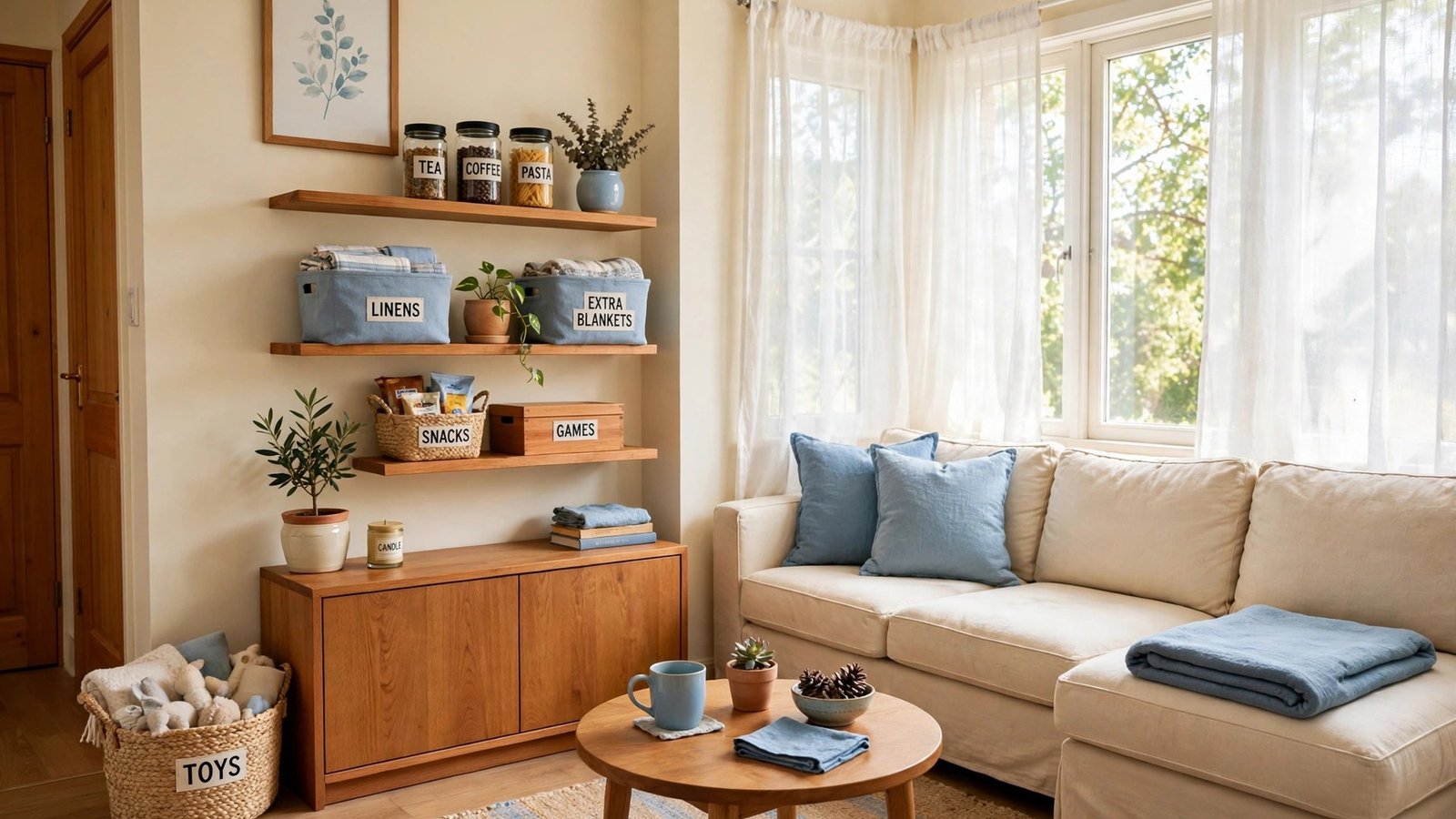
A sectional sofa in a small living room can feel like a bold choice, but it is often the smartest one. A well-placed sectional seats more people than a sofa plus chairs, and it uses the corners that usually go to waste.
These 26 small living room layout ideas with a sectional sofa show you how to position, style, and support your sectional so the room feels open instead of crowded. You will learn layout strategies, storage tricks, and decorating moves that make every inch count.
1. Build a Calm, Sunlit Corner Around the Sectional
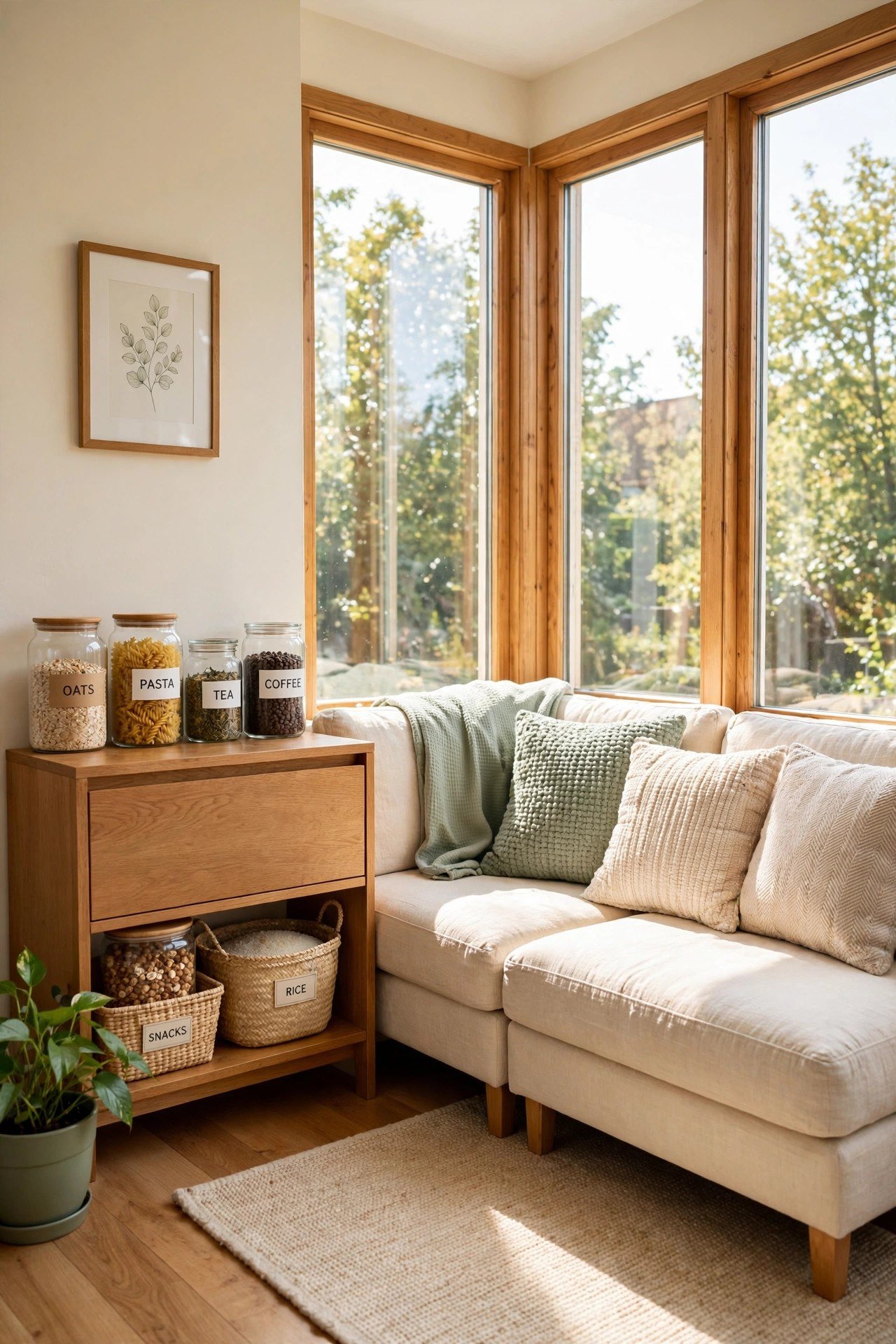
Start with light. A sectional placed near big windows gets bathed in daylight, and the light does most of the decorating work for you. Keep the palette soft and the styling simple, with one plant and a few textured cushions.
This calm base lets the sectional be the comfortable star of the room. A light rug under the front legs anchors the seating zone and makes the corner feel intentional.
2. Start with a Clear Layout Strategy for the Sectional
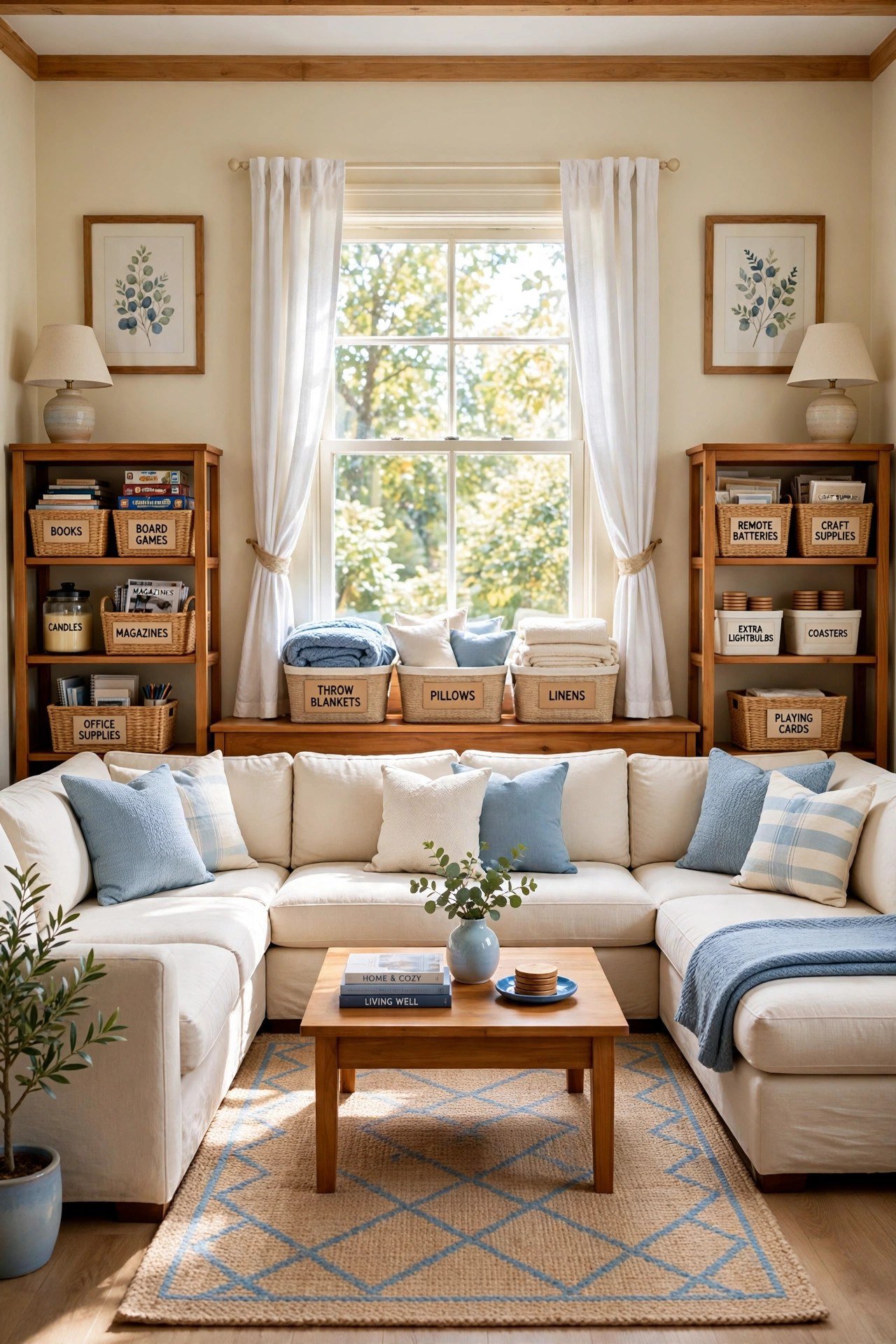
Always begin with the layout, because flow is everything in a small room. Choose a sectional size that fits comfortably without blocking walkways, and pick a focal point like a window or the TV to arrange it around.
Keep the arrangement balanced by placing pieces symmetrically where you can. Measure first and leave 30 to 36 inches of walkway on the open sides of the sectional, and choose a rug that extends at least 6 inches beyond the front edge so the seating zone reads as one clear area.
3. Hide Storage Inside Sectional-Friendly Furniture
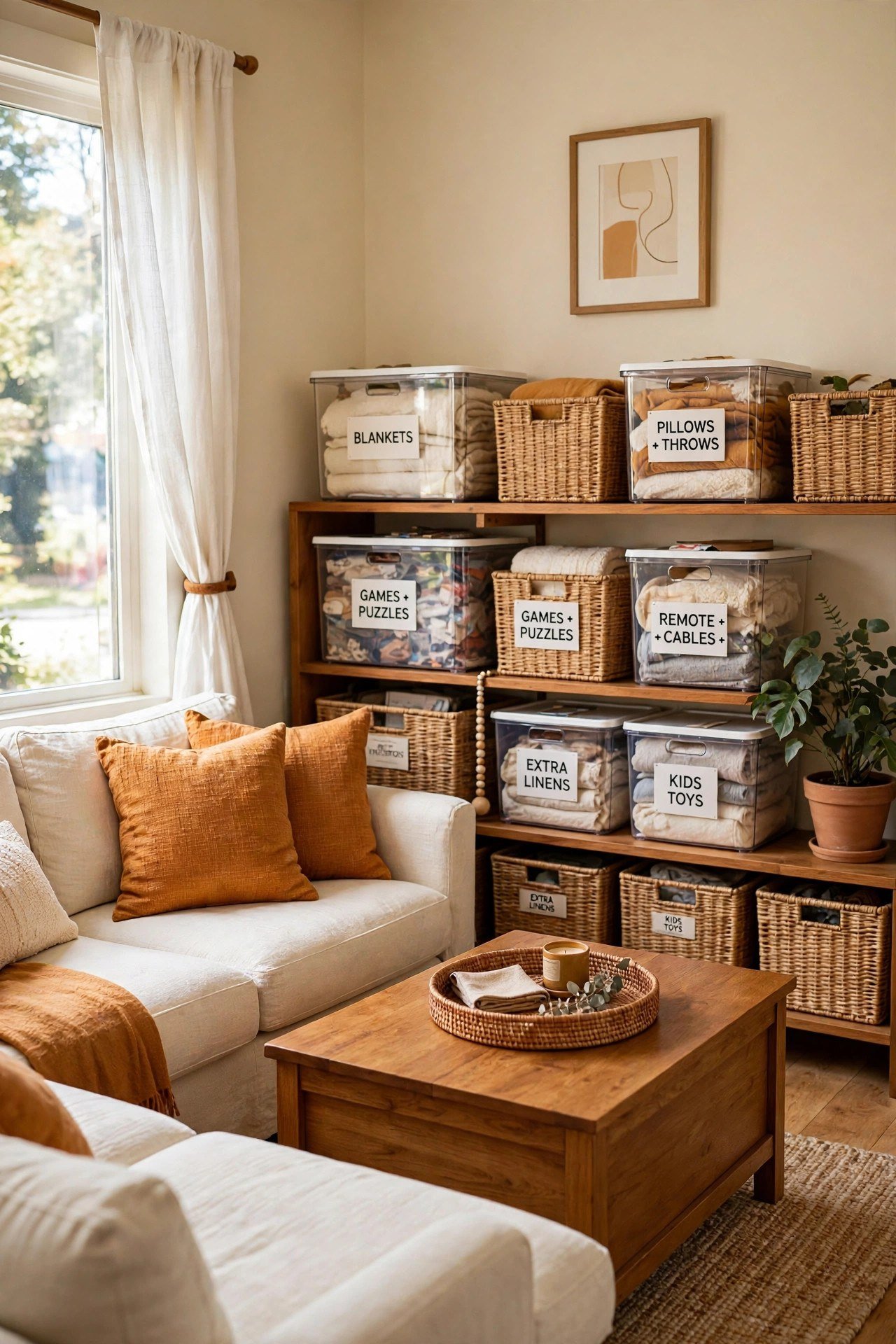
Storage is the secret weapon of a small living room. Choose furniture that serves two purposes, like an ottoman with hidden space inside or a coffee table with drawers, so the area around the sectional stays clear.
Floating shelves or wall-mounted units save floor space and draw the eye upward, which makes the room feel larger. Hidden storage keeps remotes, throws, and games out of sight but close at hand.

4. Keep the Layout Clean with Ruthless Decluttering
Decluttering is non-negotiable in a small living room. When the surfaces around the sectional stay clear, the whole space feels open and organized instead of tight.
Go through your things regularly and keep only what you use and love. Choose furniture with built-in storage near the sectional so everyday clutter has a place to disappear.
5. Pick One Calm Color Scheme for the Whole Corner
When choosing colors for a small living room, stick to a calm and consistent palette. Using shades and tints of one color creates depth and flow without chopping the room into visual pieces.
For example, if you pick a soft blue, use lighter blues on the walls and deeper blues on the sectional or cushions. A touch of color drenching on the wall behind the sectional can add richness while keeping the palette unified.
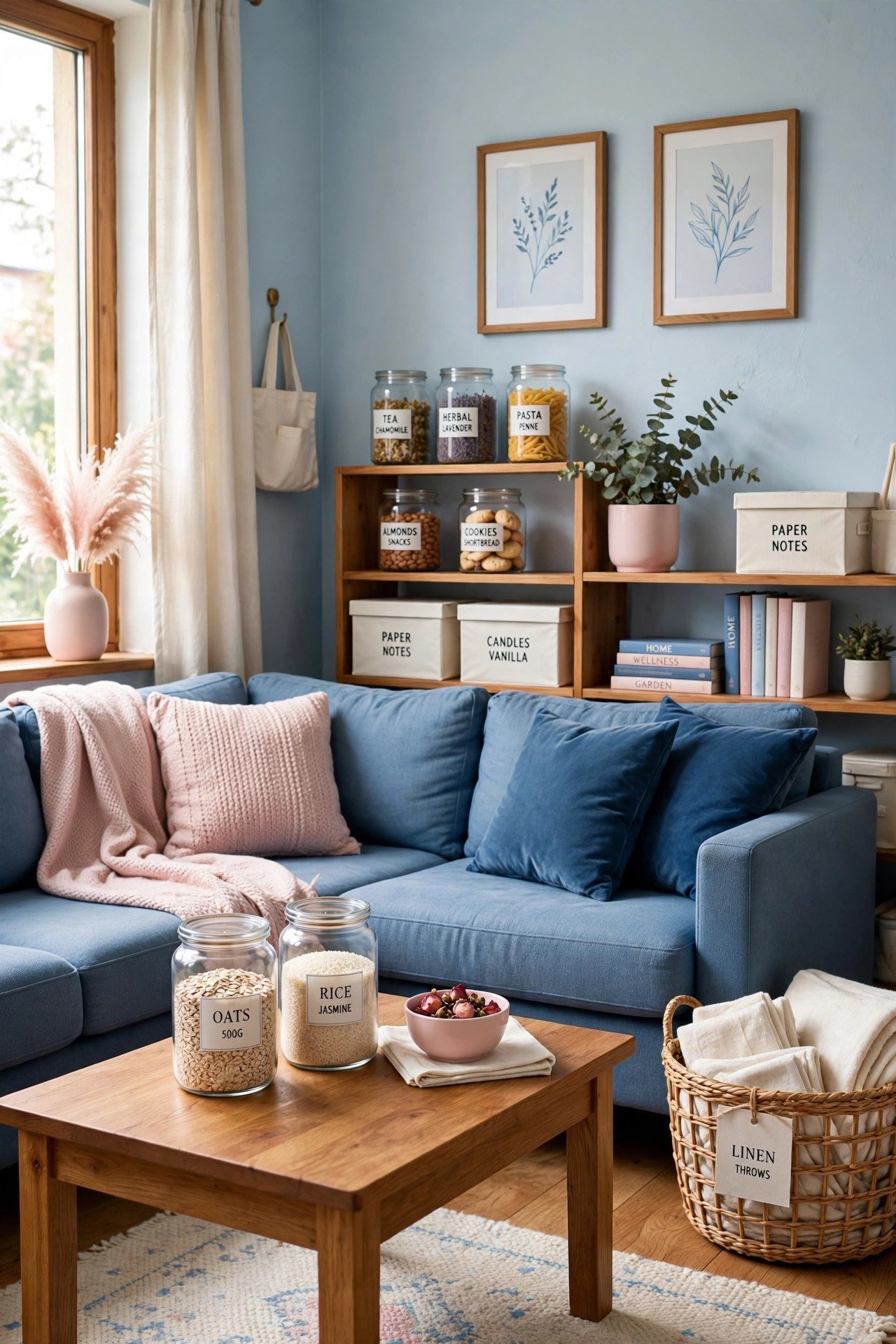
6. Mix Textures Without Crowding the Sectional
Textures add character to a small living room without taking up space. Mix smooth and tactile surfaces so the eye stays interested but relaxed around the sectional.
Choose soft fabrics like velvet or wool for the sectional and cushions, then add smooth metals or glossy ceramics in small accents. Natural fiber rugs in jute or linen bring an organic warmth that pairs well with calm tones.

7. Pick Pieces That Share the Load with the Sectional
Look for furniture that can serve more than one purpose beside the sectional. An ottoman can work as a coffee table or extra seating when friends visit, and a slim armchair adds a cozy spot without bulk.
Every piece should earn its place. If a side table also holds storage, or a pouf also works as a footrest, the room stays flexible and uncluttered.
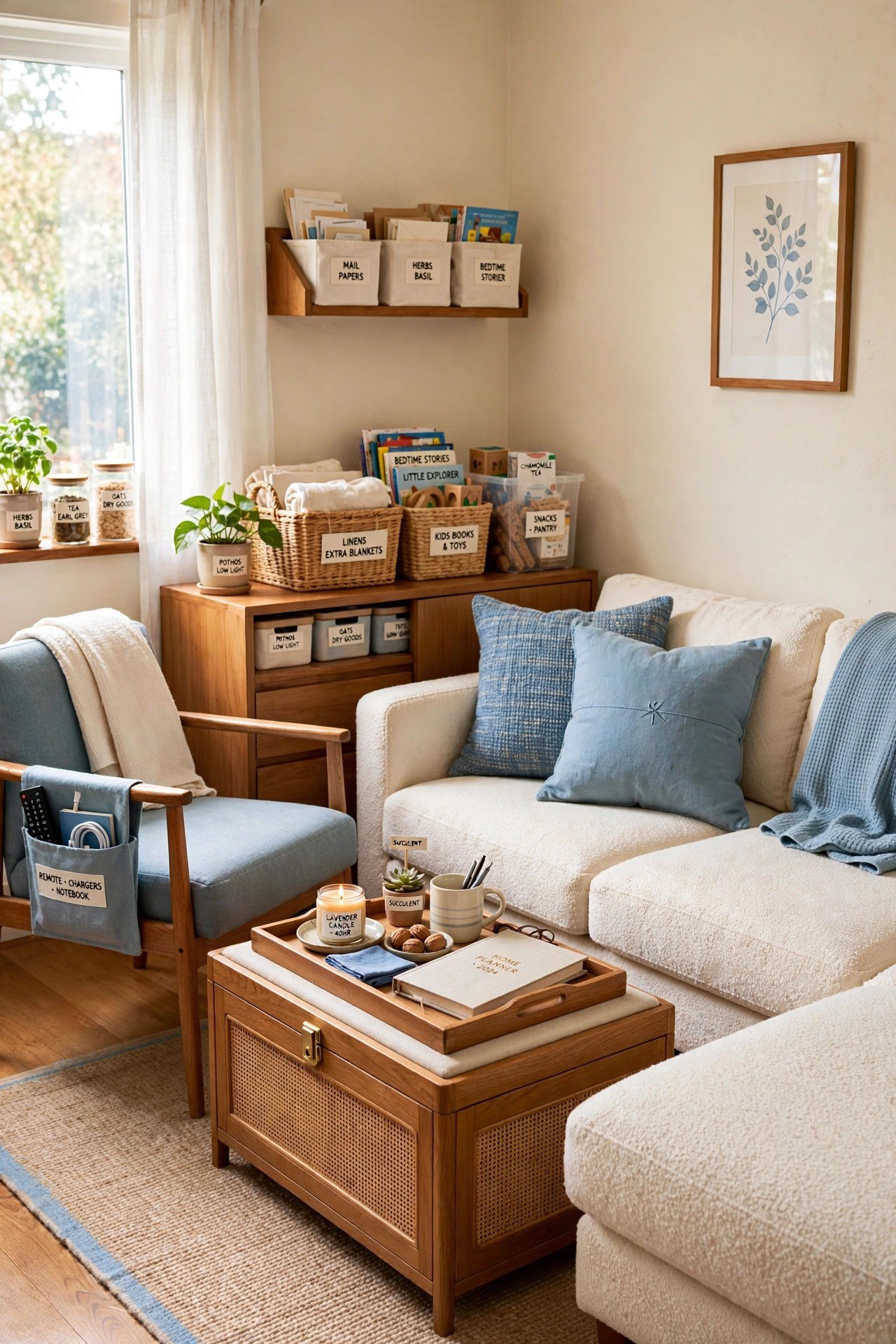
8. Swap Bulky Pieces for Space-Saving Partners
Stay on the hunt for furniture that uses every inch well around the sectional. A pouf can serve as a footrest, a seat, or a side table, and clear acrylic pieces almost disappear visually.
If you need to store blankets or games, a slim trunk can double as a side table and a focal point. Keep the scale of every partner piece smaller than the sectional so the room breathes.

9. Let Natural Light Open Up the Sectional Corner
Natural light is the ultimate space enhancer around a sectional. Maximize whatever daylight you have with sheer curtains that let the sun pass through softly.
If you are planning changes, larger windows or a skylight can transform the feel of the room. Place a mirror opposite the window to bounce light around and make the sectional corner glow. A well-planned ceiling design with recessed lights keeps the room bright after dark without bulky fixtures.

10. Aim the Sectional at One Strong Focal Point
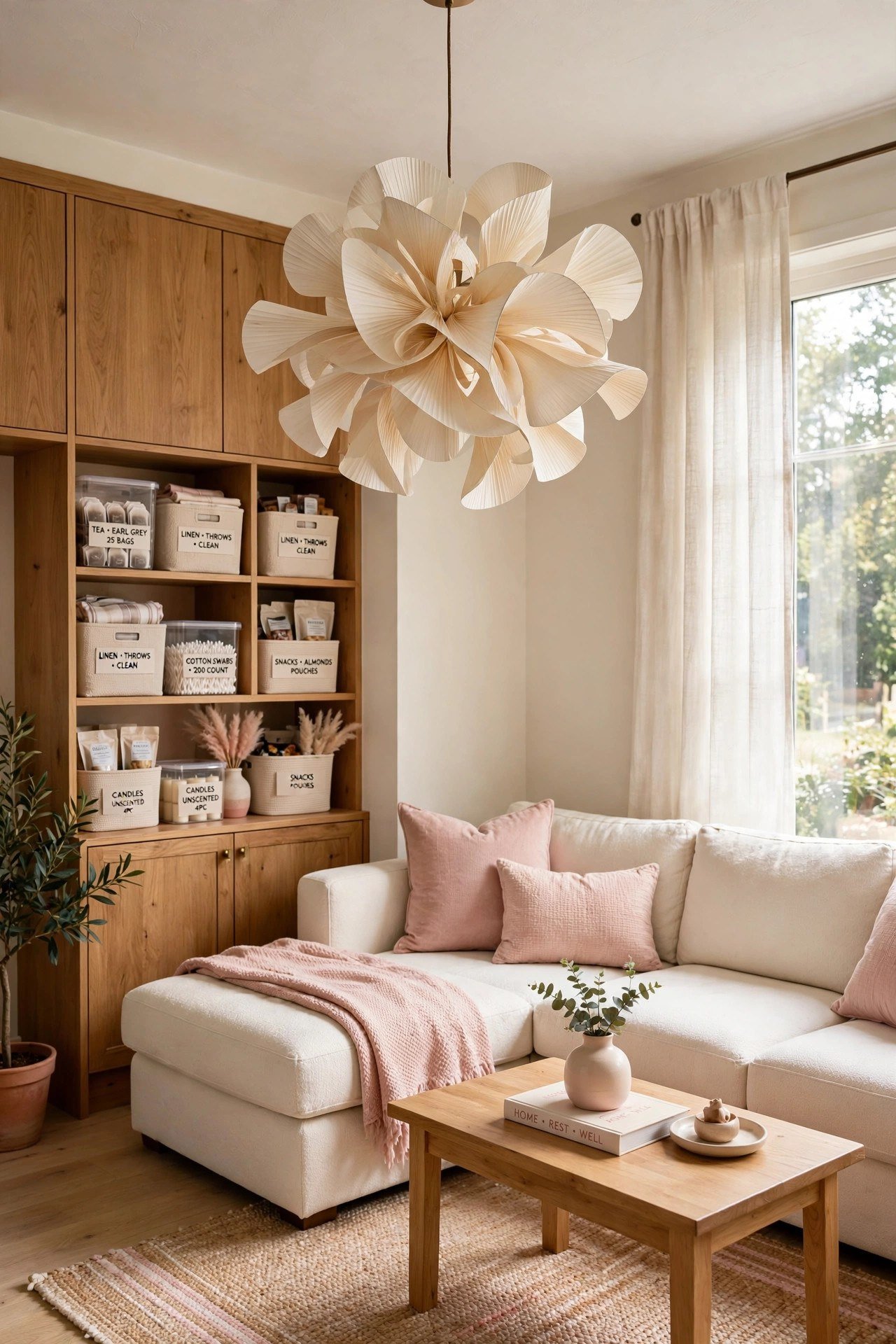
Lighting can do more than brighten a room. A well-chosen pendant light or small chandelier above the seating zone acts as a stunning centerpiece that anchors the sectional.
Choose a fixture that also works as art, so it earns its place in the small room. The focal point gives the sectional a clear direction and pulls the whole layout together.
11. Define the Zone with a Grounding Rug
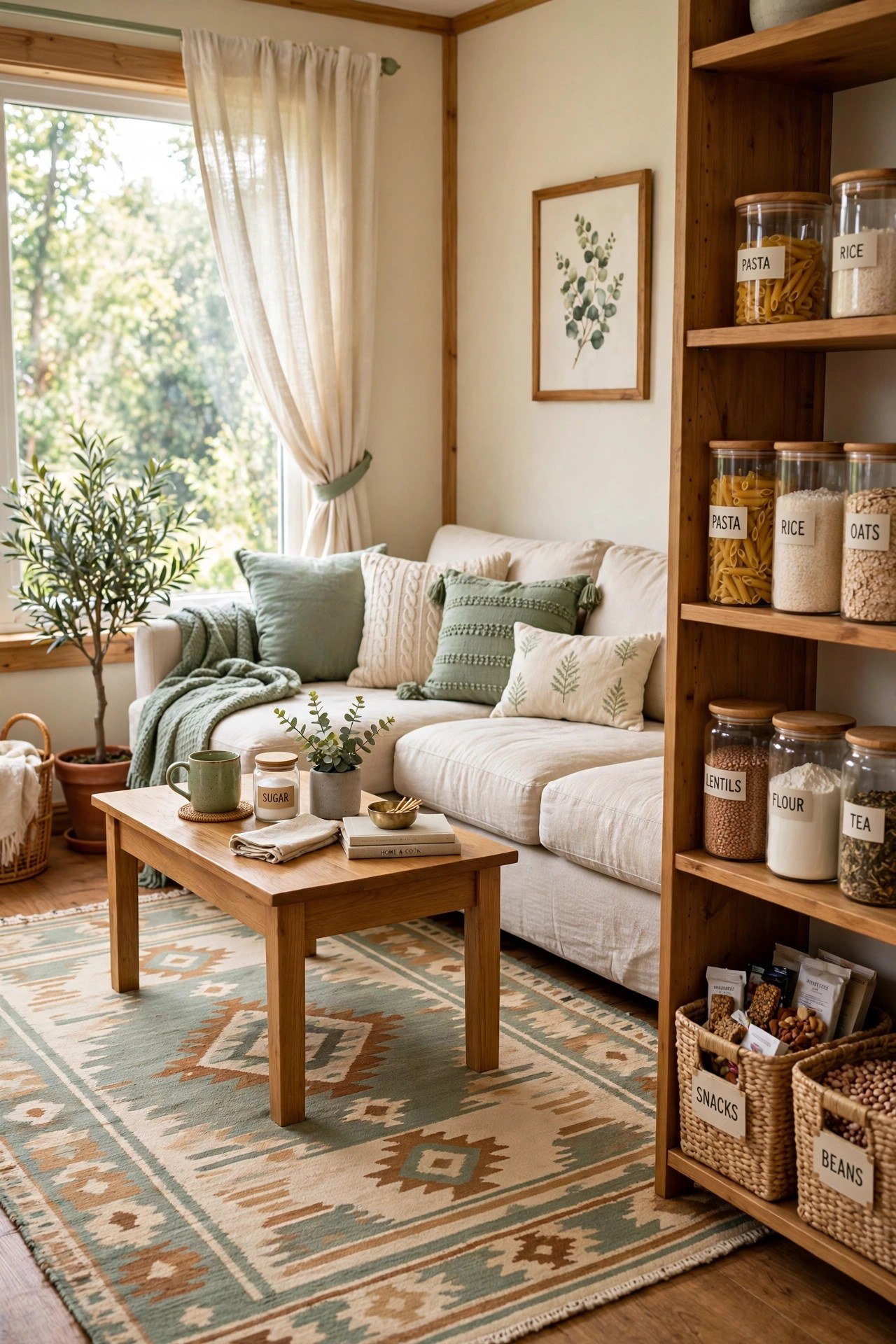
A good rug does more than add texture. It defines the seating area around the sectional and makes the corner feel intimate and grounded in an open room.
Choose a rug that sits under the front legs of the sectional and extends far enough to include the coffee table. A Venetian plaster wall in a soft tone behind the rug adds quiet depth without competing with the pattern.
12. Fill the Walls with Art, Not Furniture
Moving onto the walls, artwork and personal touches give life to a small living room without using floor space. A gallery wall above the sectional tells your story in a visual format.
Mix frame sizes in one consistent color family to keep the display united. Add one small plant on a floating shelf to bring in natural vibes beside the art.
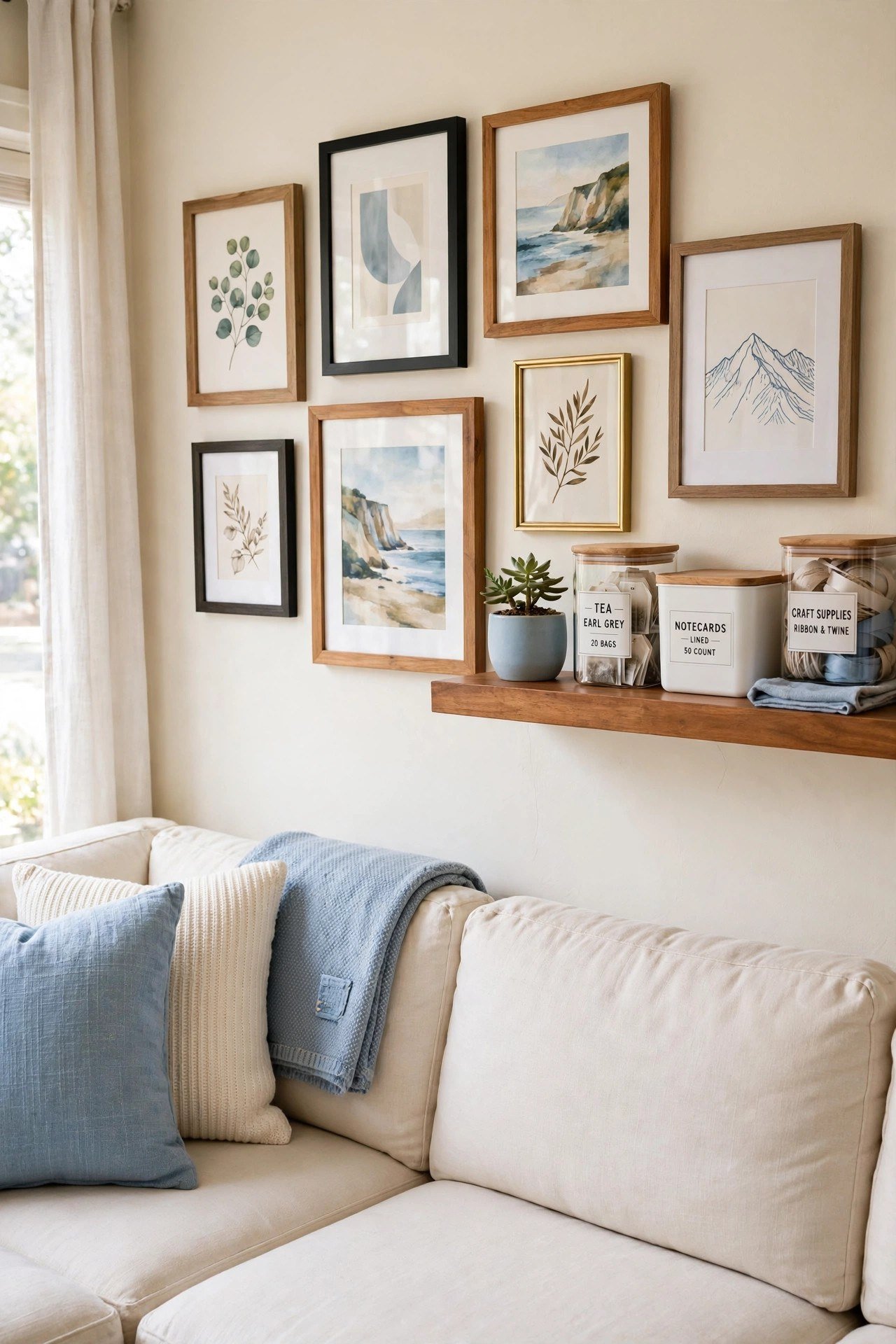
13. Tuck an L-Shaped Sectional Into the Corner
For the lounging area, comfort and scale matter most. An apartment-sized L-shaped sectional around 78 to 90 inches wide, with a chaise section 60 to 72 inches long, fits snugly into the corner and gives you generous seating without overwhelming the small room.
Angle a slim armchair toward the sectional to create an intimate setting, and place an ottoman in the center where everyone can reach it. This classic arrangement keeps every seat connected.
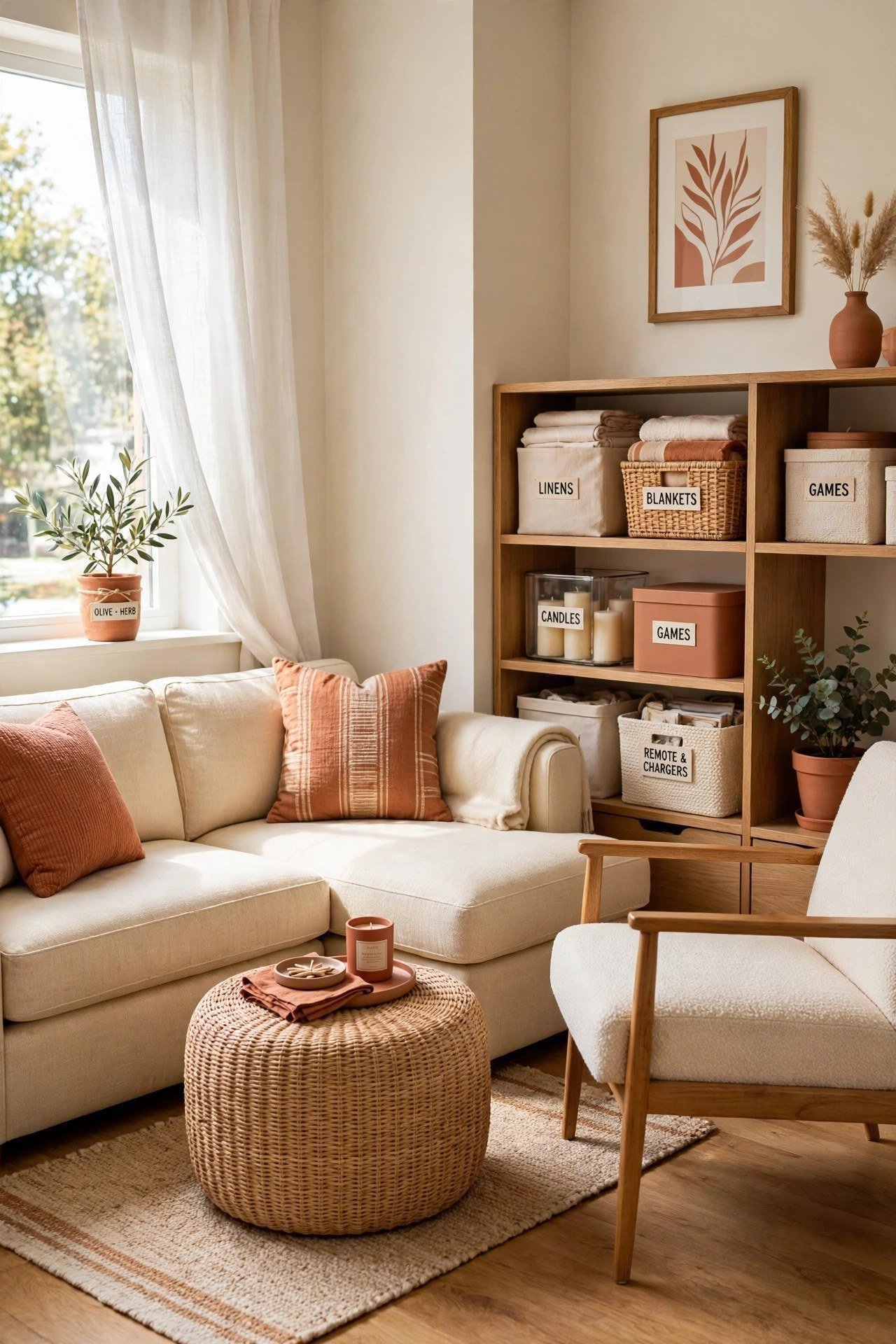
14. Tuck a Slim Dining Table Beside the Sectional
When the living room also hosts meals, a sleek space-saving table is key. A round table sits efficiently beside the sectional and encourages cozy gatherings without crowding the lounge zone.
An extendable table stays small for daily use and opens up for guests. Stackable chairs bring out extra seats when needed and stash away seamlessly after dinner.
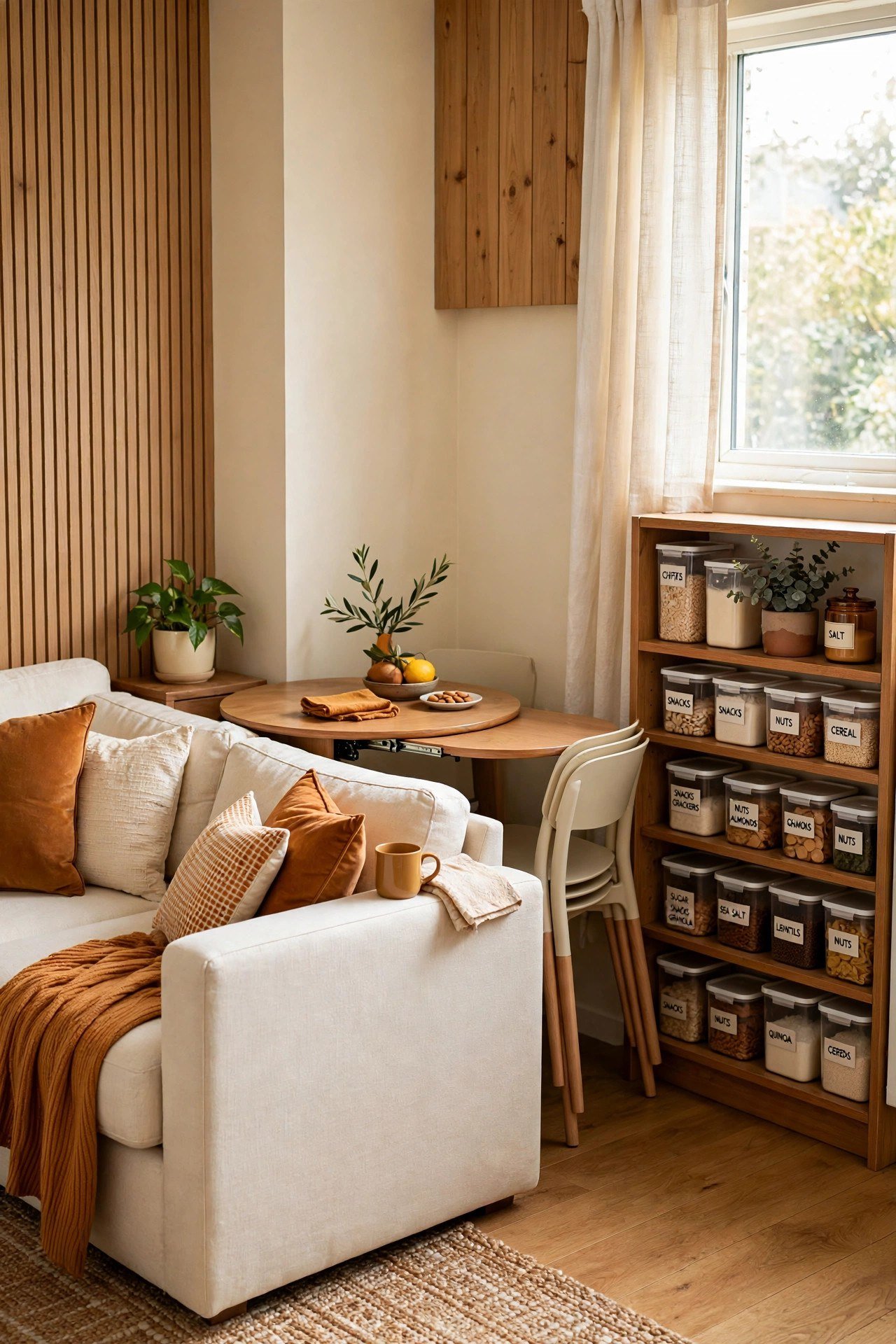
15. Put Dead Corners to Work Around the Sectional
Never let corners go to waste in a small living room. The corners around the sectional are prime spots for function that never touches the central floor.
Install floating shelves in a corner for books and plants, or build a tiny reading nook with a floor lamp in an unused spot. If the room has an alcove, fit in a mini office with a small desk and overhead shelves. Subtle decorative molding on the corner walls gives these workhorse spots a finished look.
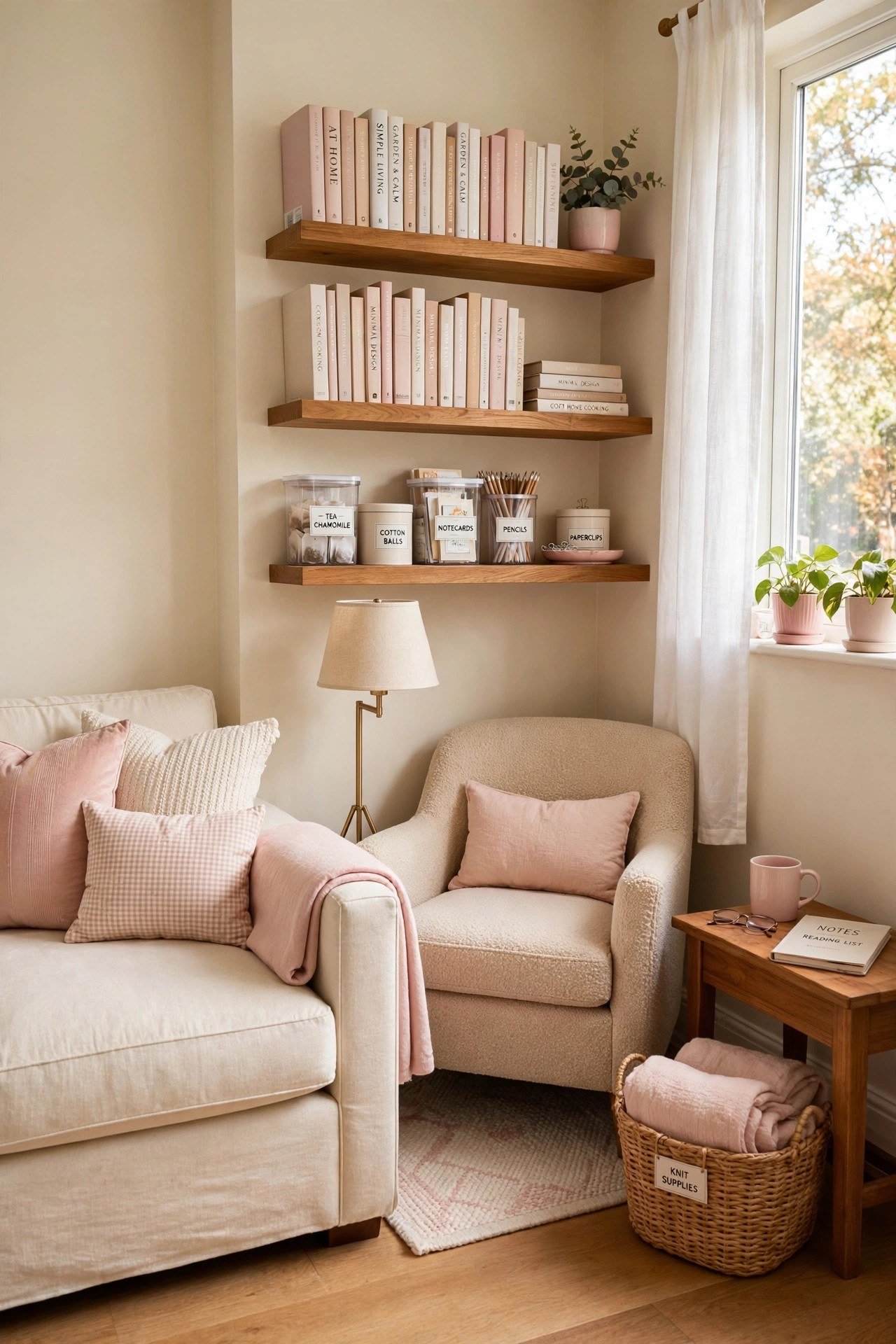
16. Draw the Eye Up to Stretch the Small Room
High ceilings are a hidden gift in a small living room. Hang the curtain rod just below the ceiling line and use long, flowing drapes so the walls look taller around the sectional.
Add vertical lines with tall, slim bookcases and hang art a little higher than usual to lead the gaze upward. Mount the curtain rod 4 to 6 inches below the ceiling line and let long drapes fall to 2 to 3 inches above the floor, so the walls look a full foot taller around the sectional.
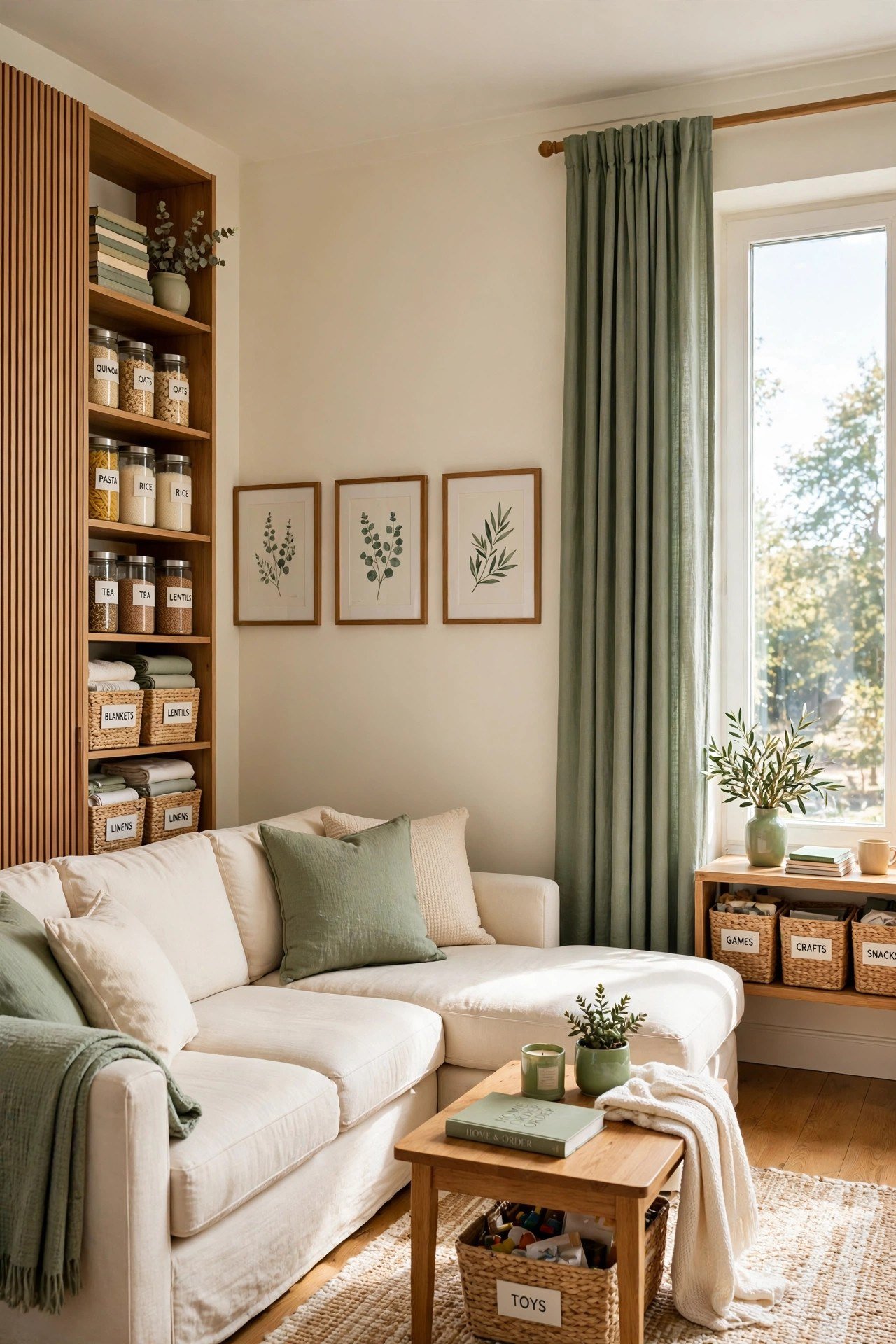
17. Stay with Calm, Unified Colors Around the Sectional
A calm color palette keeps a small living room serene. Soft off-white or pale green walls with deeper green accents on the sectional and cushions create a restful, layered feel.
Repeat two or three hues across the rug, throws, and art so everything feels connected. This unity makes the sectional blend into the room instead of looming over it.
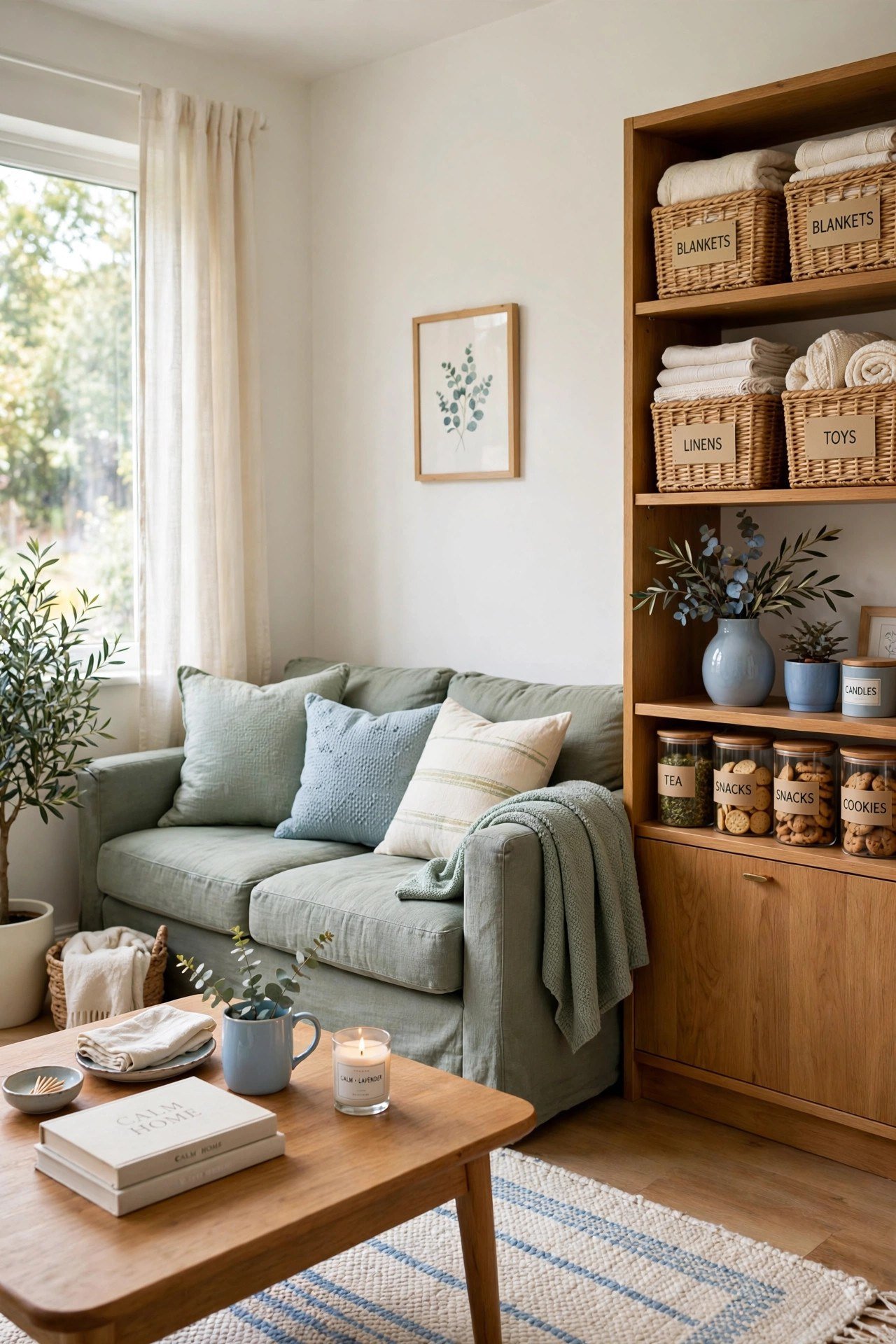
18. Layer Inviting Textures for a Cozy Sectional Corner
For coziness, layer textures generously around the sectional. Plush cushions, soft throws, and curved shapes add a tactile warmth that makes the corner feel welcoming.
Try knitted throws, velvet pillow covers, and a woven rug with a soft feel underfoot. A board and batten feature wall behind the sectional adds architectural texture without taking any floor space.
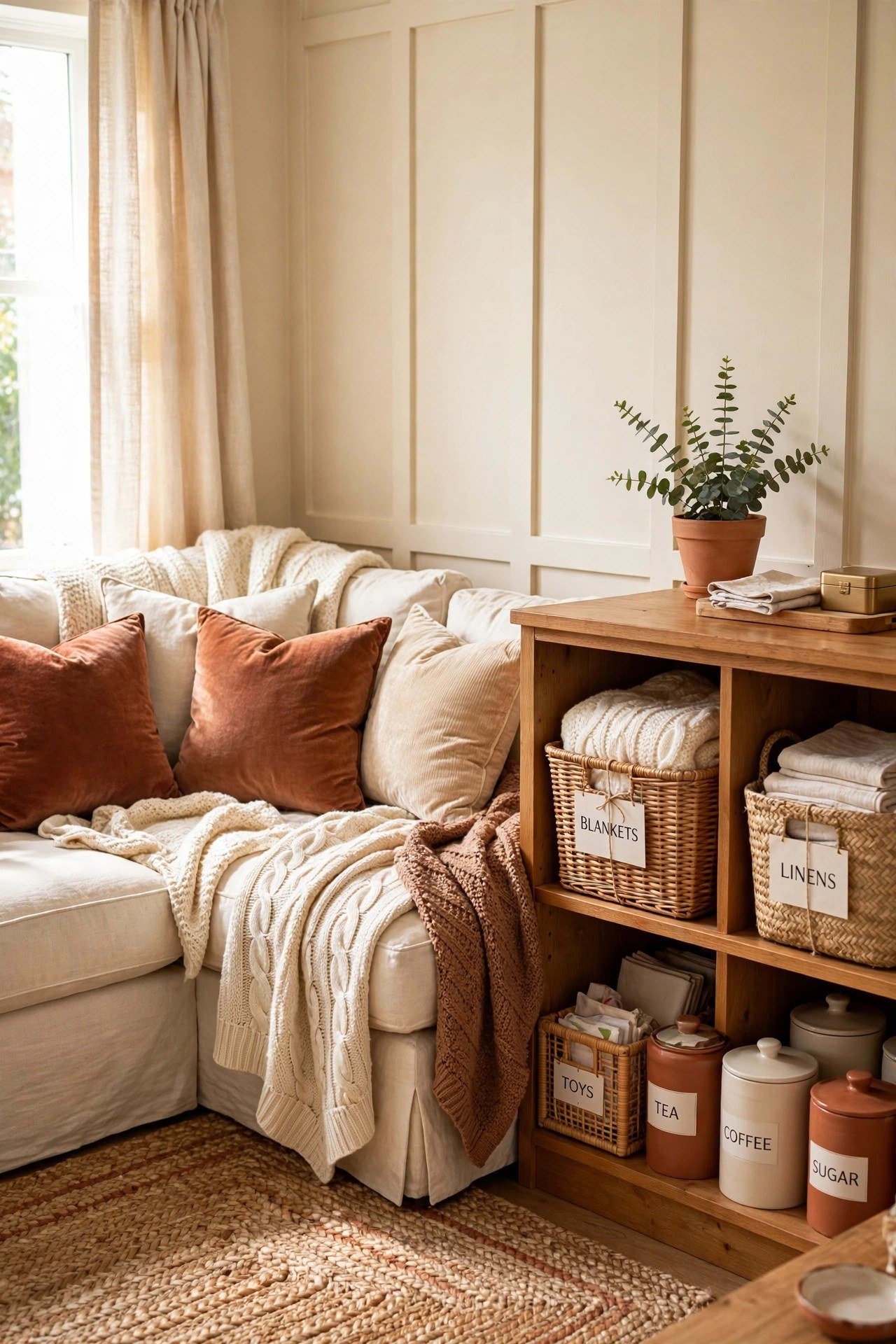
19. Trick the Eye with Slim-Legged Furniture
Choose furniture in proportion to your room so the sectional does not overwhelm the space. A sectional with slim, raised legs reveals more floor beneath it, which makes the room look bigger at a glance.
Keep partner pieces small to mid-sized and uncluttered. A large floor mirror leaning near the sectional doubles the sense of space by reflecting the room back at you.
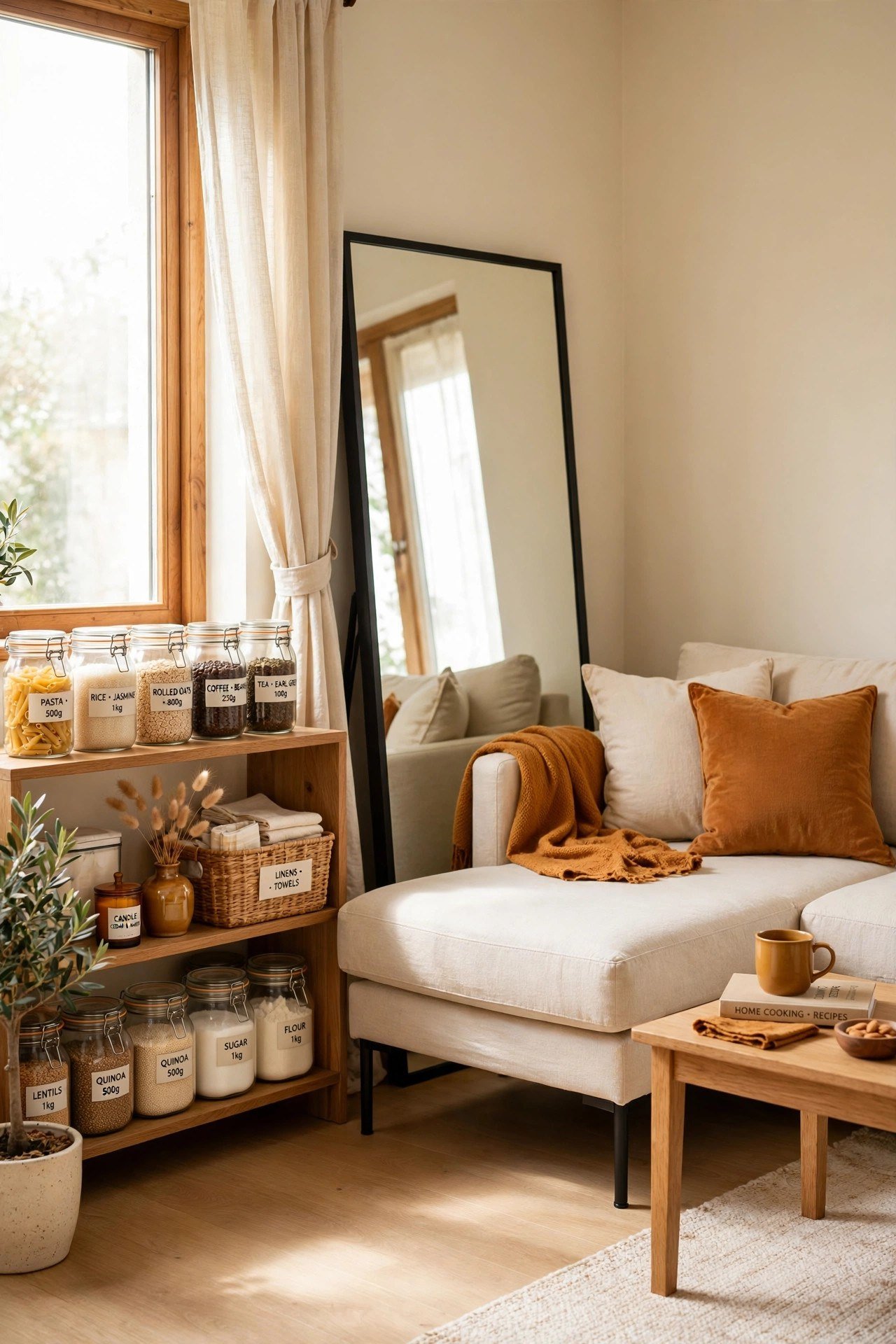
20. Place Decor Strategically Above the Sectional
Pay special attention to the wall above the sectional, since it carries the visual weight of the room. A gallery wall there adds interest without touching the floor, and varied frame sizes draw the eye upward.
Use bold accent pieces sparingly to create focal points without overwhelming the area. One striking vase on a shelf or a unique lamp beside the sectional works as a quiet conversation starter. A small wallpaper accent wall behind the art can frame the whole arrangement.
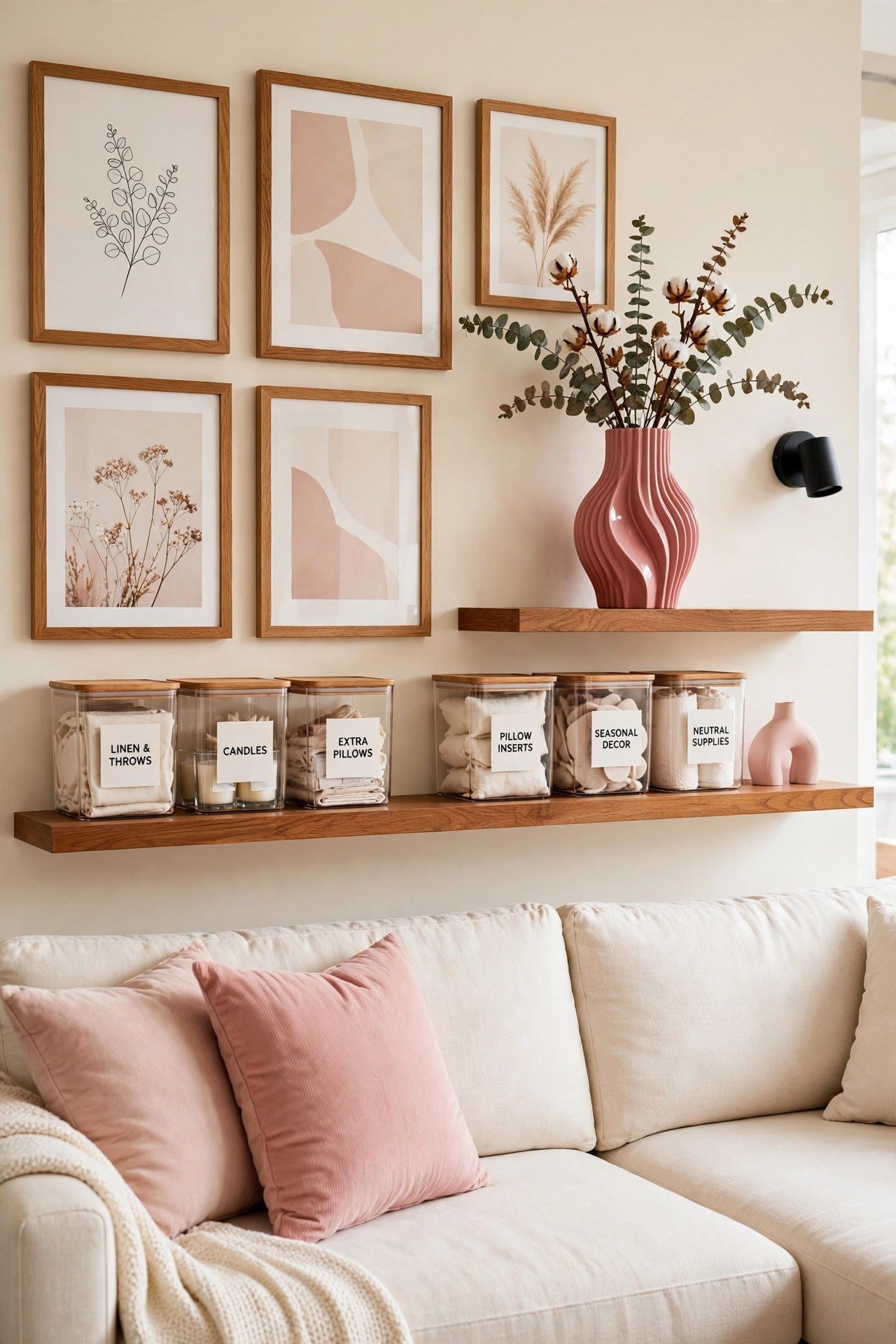
21. Lift Storage Off the Floor with Shelves
Shelves are game-changers in a small living room. Floating shelves and wall-mounted units keep the floor clear around the sectional and create an airy feel.
Try floating shelves above the sectional for books and plants, and a wall-mounted unit that can even hold a drop-down desk. Mount the lowest shelf at least 18 inches above the seat back so nobody bumps their head, and keep shelf depth to 8 to 10 inches for a slim profile.

22. Choose Textiles That Warm the Sectional Corner
Textiles add warmth and comfort, so choose them with care around the sectional. A statement rug anchors the room without overpowering it when the size is just right.
Mix cushions in varying patterns and textures for a collected feel, and add a couple of colorful poufs that double as extra seats. A tray on the ottoman ties the look together and gives you a stable surface for drinks.

23. Keep Furnishing Flexible Around the Sectional
Flexible furnishings let your small living room adapt without feeling cramped. Ottomans that move easily, nesting tables that tuck away, and poufs that stack all earn their keep.
Choose pieces you can rearrange for movie nights, guests, or quiet evenings. When every piece can shift roles, the sectional stays the steady anchor while the rest of the room adapts.
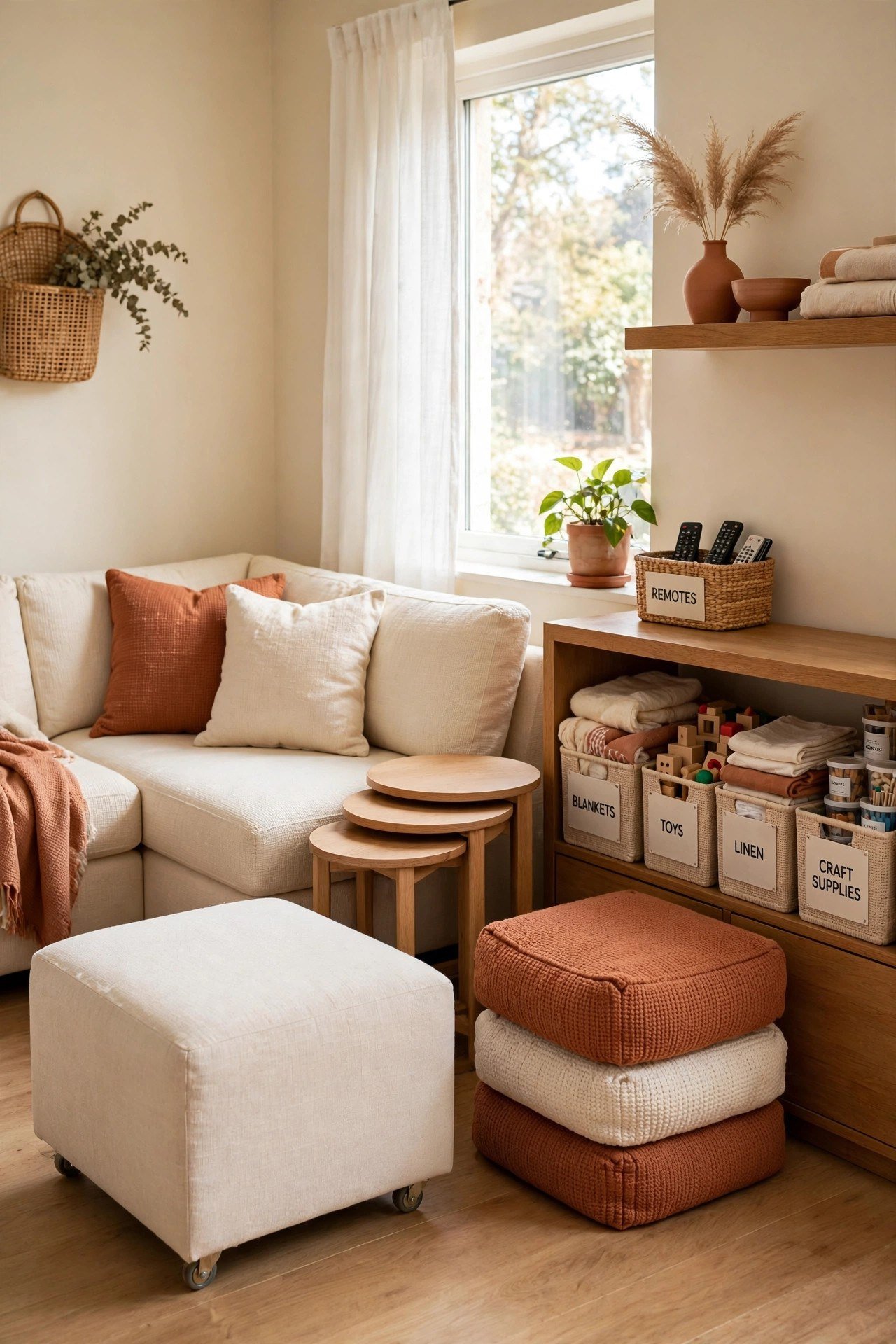
24. Angle the Sectional to Float Off the Walls
Pushing the sectional flat against the wall is not always the best move. Angling it slightly into the room creates a more dynamic layout and opens a useful sliver of space behind it.
This works well in square rooms where a floating arrangement defines the seating zone. Keep the angle gentle, under 15 degrees, so walkways stay clear on both ends, and anchor the float with a rug that the front legs fully rest on.

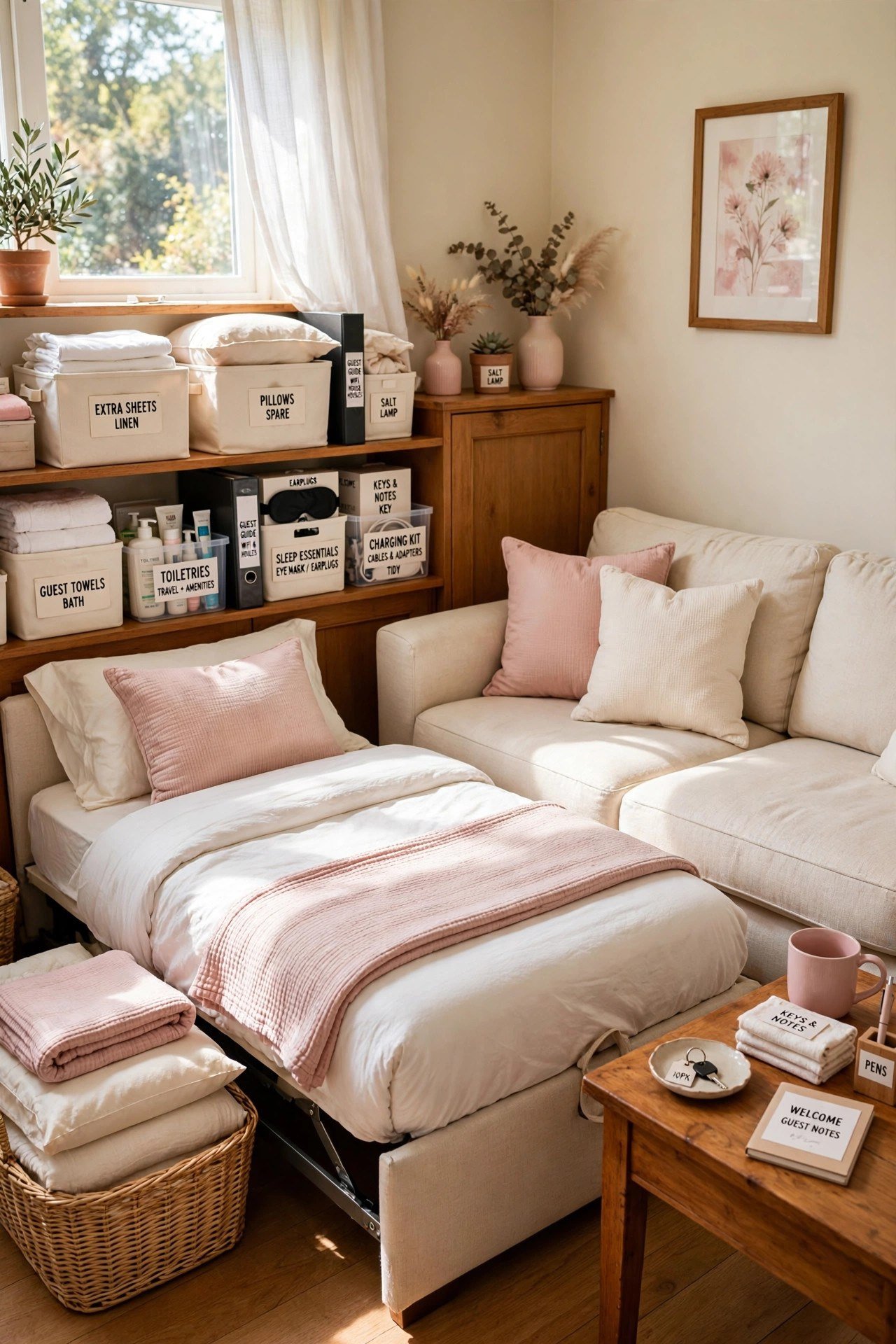
25. Choose a Sleeper Sectional for Guests
If your small living room doubles as a guest room, a sleeper sectional is the smartest pick. It looks like a regular sectional by day and opens into a comfortable bed at night.
Choose a model with a simple pull-out mechanism and store the bedding in the ottoman or a nearby basket. Your guests get a real bed and your room keeps its daytime layout.
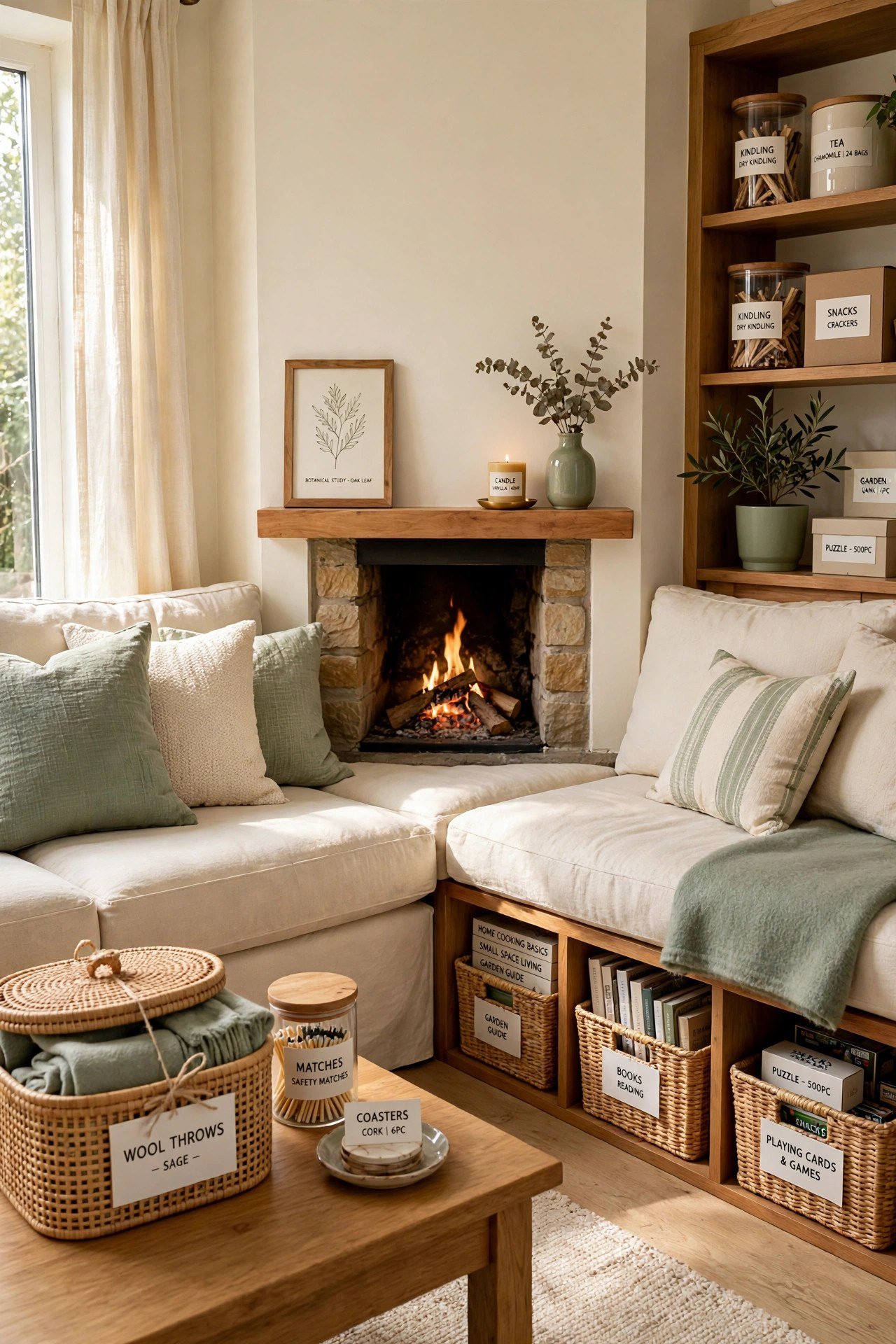
26. Wrap the Sectional Around a Small Fireplace
A small fireplace gives the sectional a natural gathering point. Arrange the L-shape to face the fire so the seating feels like a cozy retreat even in a compact room.
Keep the mantel styling simple and the hearth clear so the layout stays safe and open. This arrangement turns the sectional corner into the warmest spot in the home.
Conclusion
A sectional sofa can be the best thing that ever happened to a small living room when the layout is right. Start with the corner placement, keep the palette calm, and let storage and light do the heavy lifting around it.
Pick two or three ideas from this list and try them this weekend. Small changes like a rug, a mirror, or a floating shelf can shift the whole feel of the room. With the right layout, your small living room will seat everyone comfortably and still feel open.
Frequently Asked Questions
Can a sectional sofa work in a small living room?
Yes, an L-shaped sectional often seats more people than a sofa plus chairs while using corner space that usually goes to waste. Choose a compact or apartment-sized sectional and keep the surrounding furniture slim and flexible.
Where should I place a sectional in a small living room?
Tuck it into a corner facing your focal point, such as a window, TV, or fireplace. Leave clear walkways on at least two sides and anchor the arrangement with a rug under the front legs.
How do I keep a small living room with a sectional from feeling crowded?
Stick to a calm color palette, use furniture with slim or raised legs, keep surfaces decluttered, and lift storage onto floating shelves. Mirrors and sheer curtains also help the room feel larger.
What goes with a sectional in a small living room?
Pair it with a storage ottoman that can act as a coffee table, one slim armchair, nesting side tables, and floating shelves. Every extra piece should serve more than one purpose.
Should the sectional face the TV or the window?
Face it toward whichever you use most as your focal point. If the window has the better view and light, angle the sectional toward it and place the TV on an adjacent wall so both get attention.

Hi, I’m Emily! I turn messy corners into cozy, organized spots. DreamNestDecor is where I share simple, practical home ideas — decor, organization, and small-space solutions that work in real life, not just in photos. Every idea here is carefully researched before it’s shared.