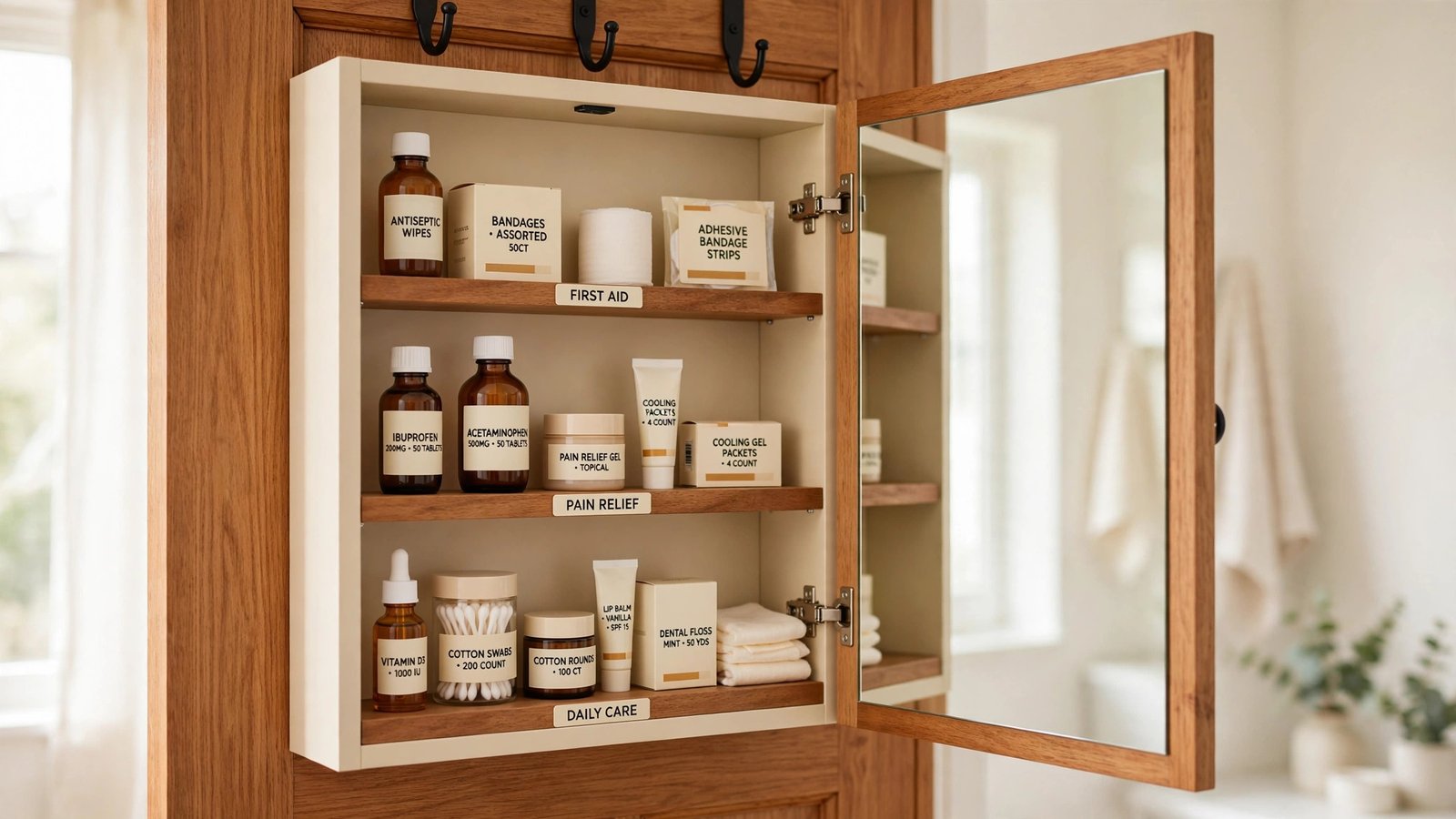
Your bathroom has no wall space for a medicine cabinet, and the counter keeps collecting bottles. Every morning you line things up, and every night they slide back into a crowd. The smallest bathroom still deserves real storage.
An over-the-door medicine cabinet solves this without a single drilled hole. It hangs on the back of the door with a mirror front, but it lives on a moving surface, so it needs smarter organization. These 12 ideas keep everything secure, visible, and easy to reach.
1. Choose a Slim Cabinet That Clears the Door Frame
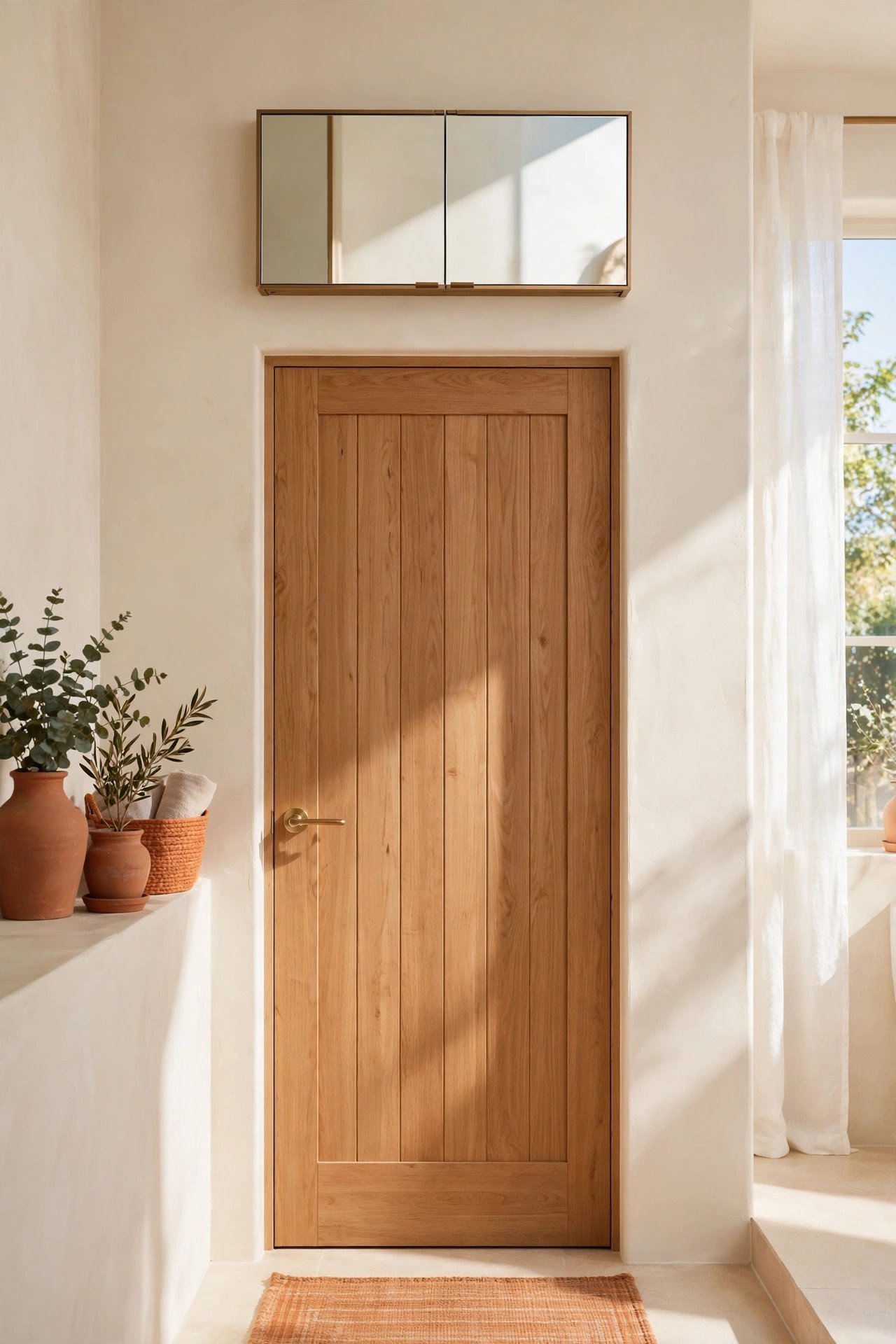
Depth is the first decision, because the cabinet must clear the frame every time the door swings. Measure from the door face to the nearest trim, then choose a cabinet at least an inch slimmer. A slim profile also keeps the door balanced.
Look for adjustable shelves inside so you can fit tall bottles and short vials in the same cabinet. This is a wonderfully rental-friendly upgrade since the over-door hooks leave no marks. The right depth makes the cabinet feel built in.
2. Anchor Shelves for Life on a Moving Door
A cabinet on a door swings, stops, and shudders, which sends loose items sliding. Add small shelf rails, museum putty under bins, or silicone grips beneath bottles. Everything should survive a firm door close.
Test the setup by swinging the door gently and watching for movement. Tighten anything that shifts, and move the most tip-prone items to the lowest shelf. Anchoring turns a moving cabinet into stable storage.
3. Line Every Shelf With Grip Liner
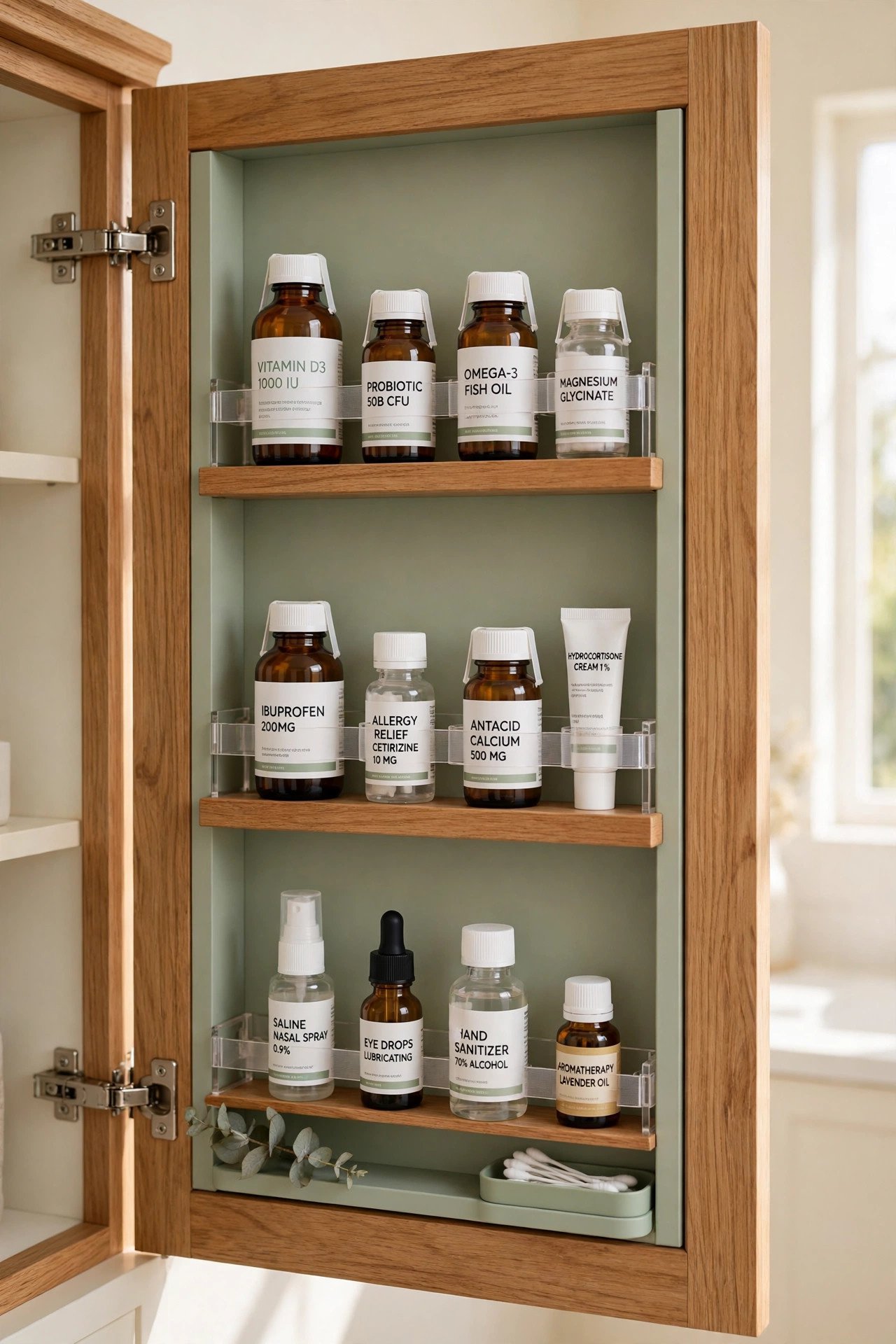
Grip liner is the cheapest insurance for a door-mounted cabinet. Cut it to fit each shelf exactly, and bottles will stay put through every swing. The liner also muffles the small clinks of glass on wood.
Choose a washable liner so you can rinse it when toothpaste or serums spill. Replace it once a year when the grip fades. One roll covers the whole cabinet and prevents most door-swing disasters.

4. Turn the Mirror Door Into Magnetic Storage
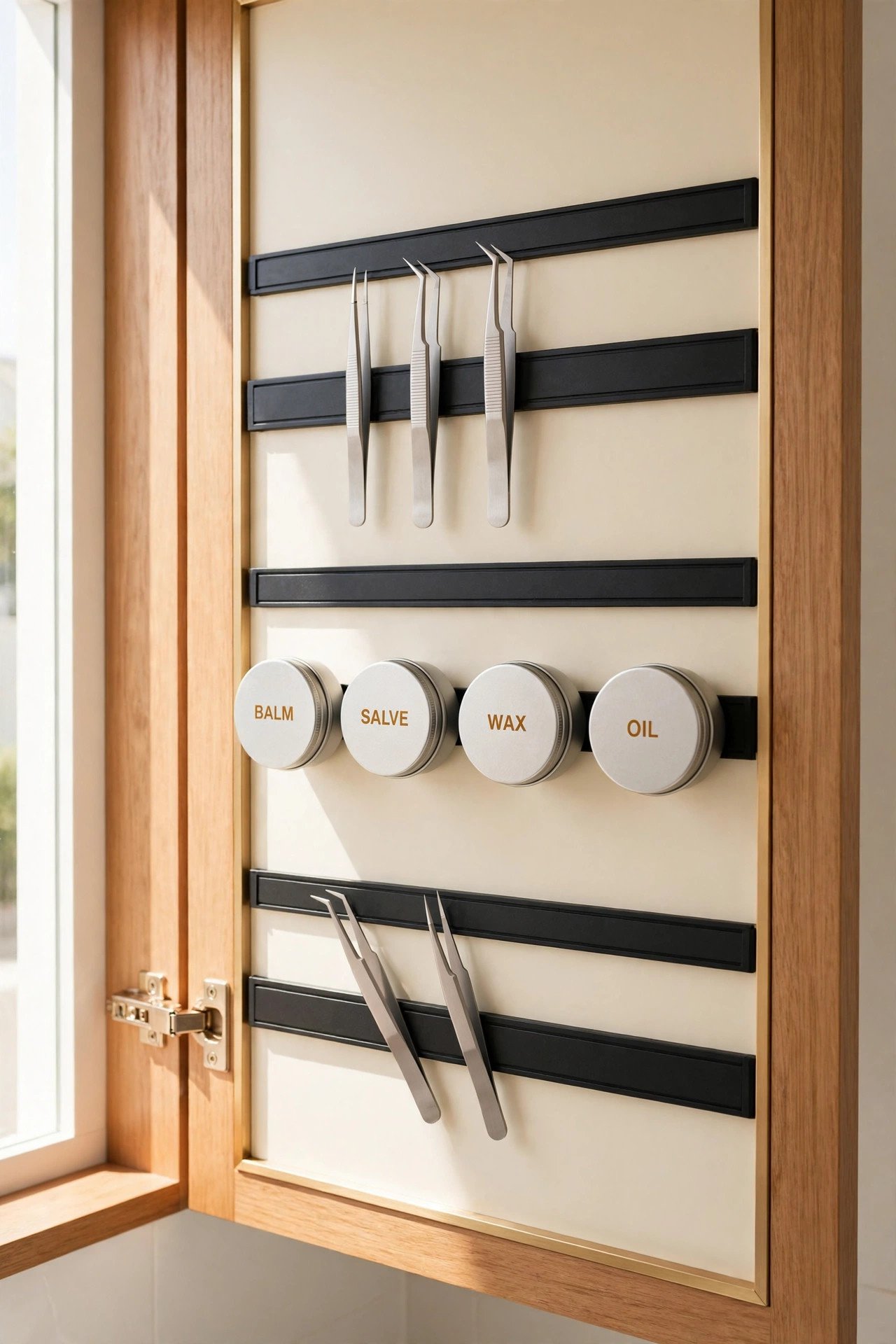
The inside of the mirror door is prime real estate. Stick a thin magnetic board or a few magnetic strips there to hold tweezers, nail clippers, and small metal tins. These tools stay visible without taking shelf space.
Keep magnets strong enough to hold through door movement, and avoid overloading the door. Light metal tools are ideal, while heavy items belong on the shelves. Magnetic door storage doubles your capacity for free.
5. Add Slim Pockets to the Door Interior
Clear adhesive pockets on the door interior hold flat items that waste shelf space. Thermometers, bandage packs, and single-dose packets slide in and stay visible. The pockets flex with the door without falling off.
Place pockets where they do not block the magnetic strips, and keep them shallow so the door still closes flat. Transparent fronts let you read labels without removing anything. Slim pockets rescue the fiddly items from shelf chaos.

6. Zone by Height: Daily Items at Eye Level
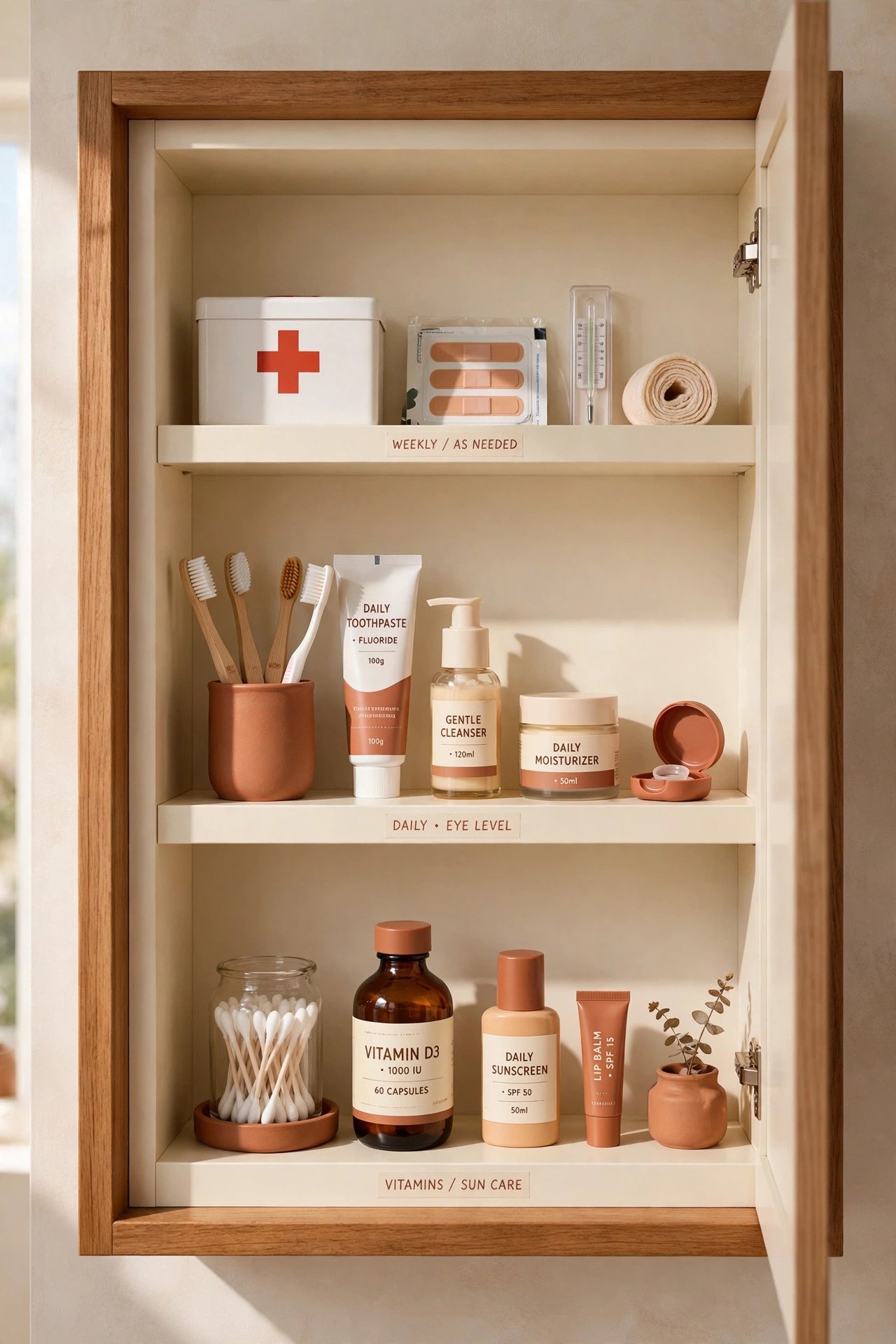
The middle shelf gets opened most, so it should hold your daily essentials. Place toothbrush accessories, deodorant, and daily vitamins at eye level. Weekly and occasional items move to the top and bottom shelves.
This zoning means you rarely disturb the whole cabinet for one item. Keep the daily shelf slightly less full for fast grabbing. Height zoning respects how you actually move through your routine.
7. Corral Small Bottles in Lidded Mini Bins
Small bottles tip over on a swinging door, but lidded mini bins keep them upright as a group. Sort bins by type, such as eye care in one and pain relief in another. The lids add a second layer of spill protection.
Label each bin on the front so you can grab the right one without opening it. Choose bins that fit the shelf depth exactly to prevent sliding. Grouped small bottles behave like one stable unit.

8. Decant Cotton Rounds Into a Sealed Jar
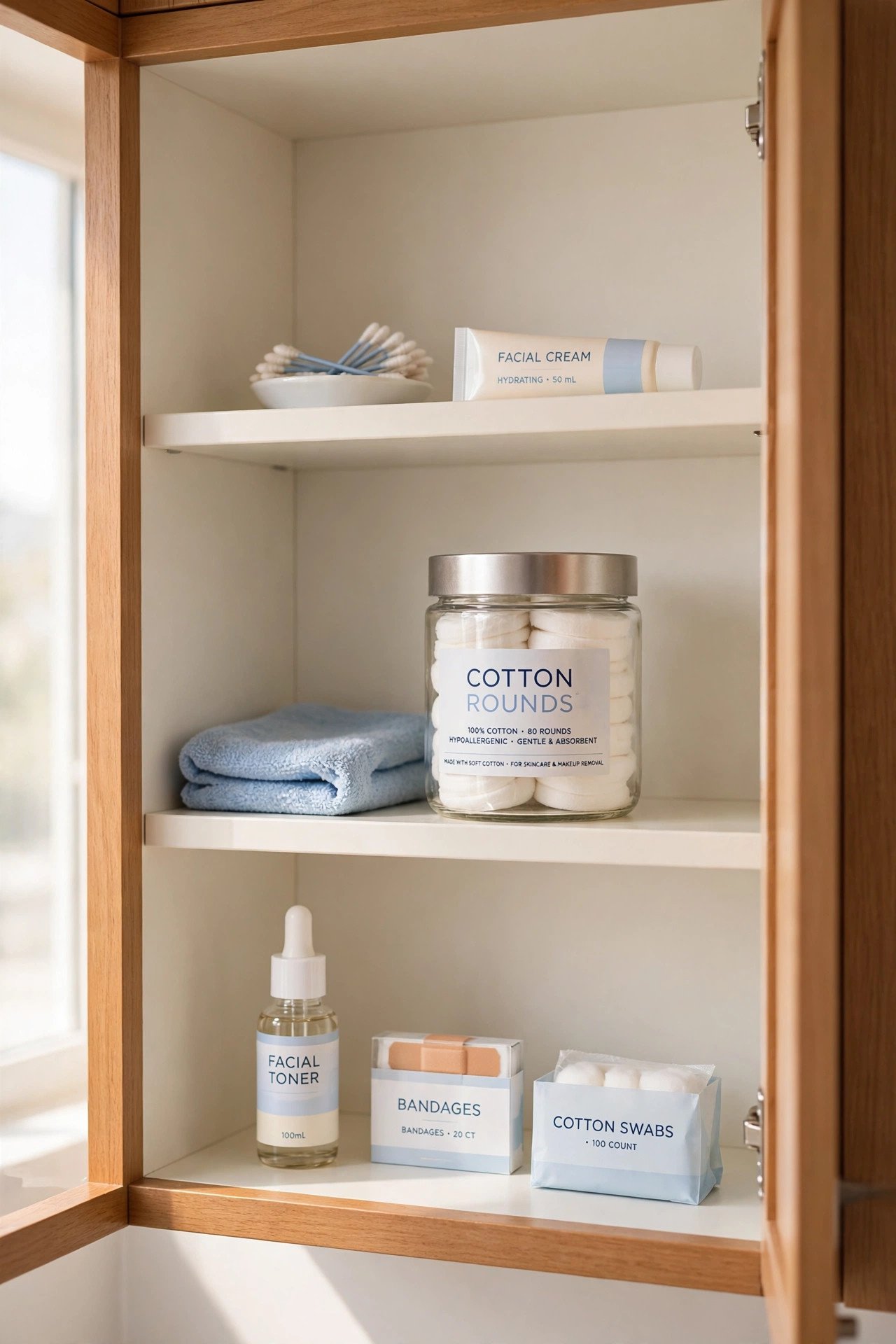
Cotton rounds and swabs in flimsy packaging puff up and spill. A sealed jar with a printed label keeps them compact, clean, and easy to grab. The jar also looks far nicer than a crushed plastic sleeve.
Choose a short, wide jar that fits the shelf height with room to spare. Refill it from bulk packs stored elsewhere. Decanting turns the messiest little items into a tidy display.
9. Group Medicines by Person in Labeled Trays
When two people share one cabinet, medicines mix fast. Give each person a labeled tray on their own shelf, holding prescriptions and daily pills. No one grabs the wrong bottle in a morning rush.
Keep the trays shallow so labels stay readable from the front. Review both trays during your quarterly purge. Personal trays bring clarity and safety to a shared cabinet.

10. Keep a First-Aid Mini Kit on the Bottom Shelf
The bottom shelf is perfect for a compact first-aid kit, since it is reachable in a hurry and out of the daily flow. Pack bandages, antiseptic, tweezers, and pain relievers in one labeled pouch. Emergencies get one grab-and-go spot.
Check the kit twice a year and replace anything expired or used up. Keep it clearly marked so guests can find it too. A dedicated first-aid zone means you never hunt for basics when it matters.

11. Add a Stick-On Light for Dark Corners
The back of a bathroom door often sits in shadow, which makes labels hard to read. A small motion-sensor puck light stuck to the cabinet top fixes this instantly. The light turns on only when you open the door.
Choose a warm-toned light so the cabinet feels inviting rather than clinical. Replace the batteries once a year during your purge. Good lighting turns a dark corner cabinet into the easiest storage in the bathroom.

12. Purge Expired Items Every Three Months
Medicines and creams expire quietly, and a small cabinet has no room for dead weight. Every three months, pull everything out and check dates on every bottle and tube. Toss what is past its prime.
Wipe the shelves and liner while the cabinet is empty, then reload by zone. Pair this habit with our under-sink organization ideas for a full bathroom reset. A quarterly purge keeps the cabinet safe, fresh, and perfectly sized for what you own.

Conclusion
An over-the-door medicine cabinet proves that small bathrooms can have serious storage. With anchored shelves, smart zones, and door-friendly tricks, it holds everything you need without drilling a single hole.
Start with the grip liner and the daily zone, then add the magnetic door storage. Your counter will clear, your mornings will speed up, and the back of your door will finally earn its keep.
Frequently Asked Questions
How do I keep items from falling in an over-the-door medicine cabinet?
Line every shelf with grip liner, add small shelf rails or museum putty under bins, and group small bottles in lidded containers. Test the setup by swinging the door gently. Anchoring everything keeps items stable on a moving door.
Will an over-the-door medicine cabinet damage my door?
Most use padded hooks that hang over the door top without screws or drilling, so they leave no marks. Choose a slim cabinet that clears the frame and distribute weight evenly. It is one of the most rental-friendly storage upgrades available.
How should I organize medicines in a shared cabinet?
Give each person a labeled tray on their own shelf for prescriptions and daily pills. Keep shared first-aid supplies in one marked kit on the bottom shelf. Personal trays prevent mix-ups and make morning routines faster.
What can I store on the inside of the cabinet door?
Use the door interior for light items: magnetic strips hold tweezers and clippers, while slim clear pockets fit thermometers and bandage packs. Keep heavy items on the shelves. Door storage nearly doubles the cabinet capacity.
How often should I clean out a medicine cabinet?
Purge expired medicines, creams, and first-aid supplies every three months. Pull everything out, check dates, wipe the shelves, and reload by zone. A quarterly reset keeps the small space safe and perfectly sized for what you own.

Hi, I’m Emily! I turn messy corners into cozy, organized spots. DreamNestDecor is where I share simple, practical home ideas — decor, organization, and small-space solutions that work in real life, not just in photos. Every idea here is carefully researched before it’s shared.