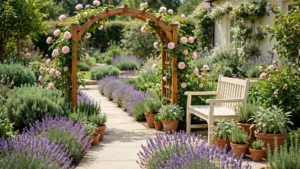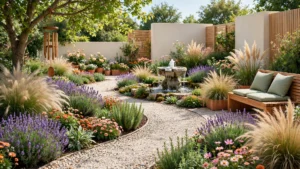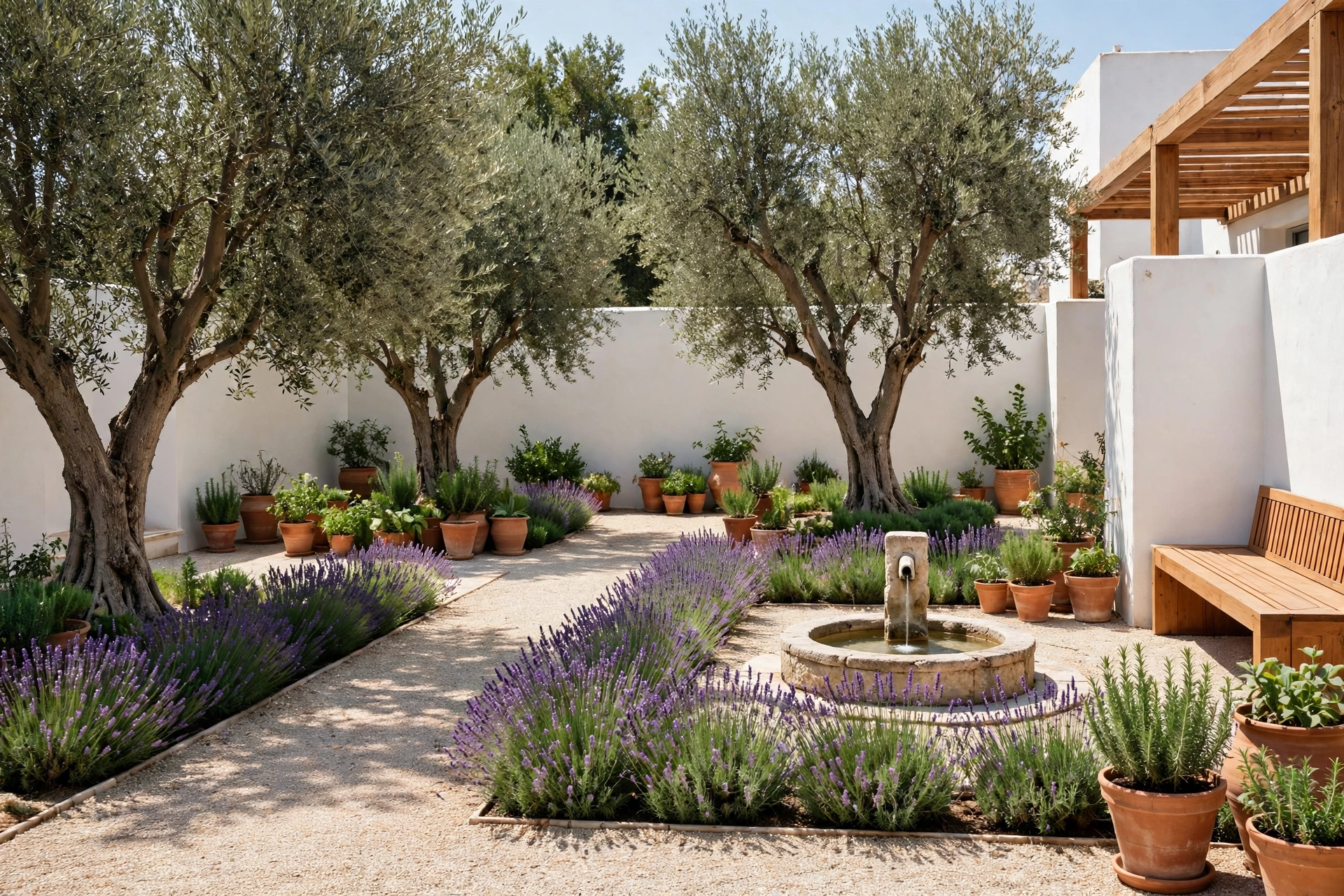
Picture this: you step into a sunny backyard and the air smells of lavender and warm earth. A silver green olive tree shades a terracotta pot full of bright geraniums, a stone fountain trickles in the middle of a gravel courtyard, and the whole garden glows in golden afternoon light. That relaxed coastal feeling is exactly what a Mediterranean garden brings to any sunny backyard.
You do not need a villa on the coast or a large budget to create it. With the right plants, warm materials, and a few classic features, any sunny backyard can feel like a Greek island or a Tuscan courtyard. These 33 Mediterranean garden design ideas for sunny backyards will help you build a garden that is beautiful, drought friendly, and made for slow summer evenings outside.
1. Plant a Classic Olive Tree as the Garden Anchor
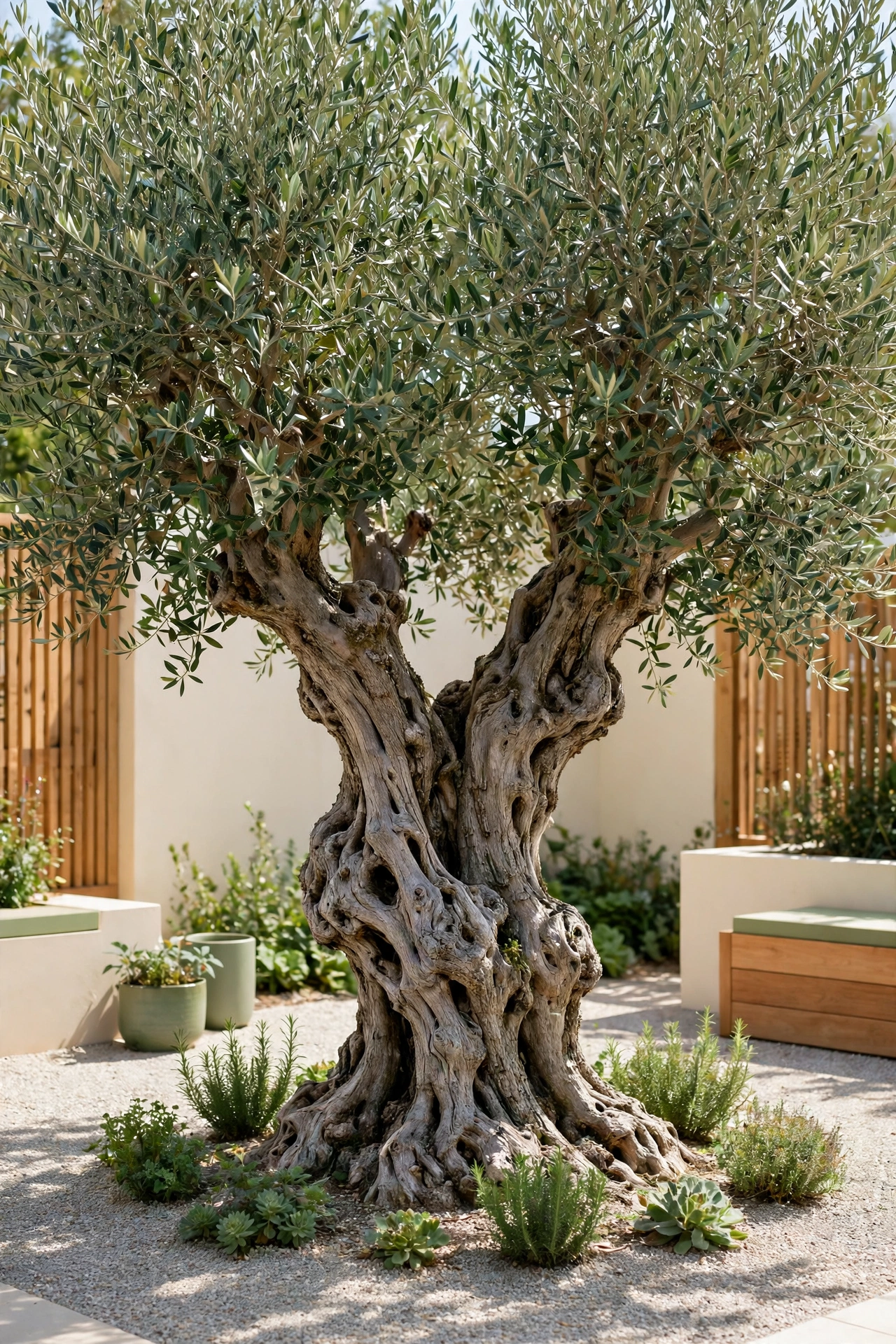
A single olive tree can set the tone for a whole Mediterranean garden. Its silver green leaves shimmer in the sun, its gnarled trunk adds character, and its shape stays elegant in every season. Plant it in the center of the garden or near a seating area where you can enjoy its shade.
Choose a spot with full sun and well drained soil, since olive trees hate wet feet. Water the tree deeply but rarely once it is established, and prune it lightly each spring to keep an open shape. Even a young olive tree in a large pot gives instant Mediterranean charm to a small backyard.
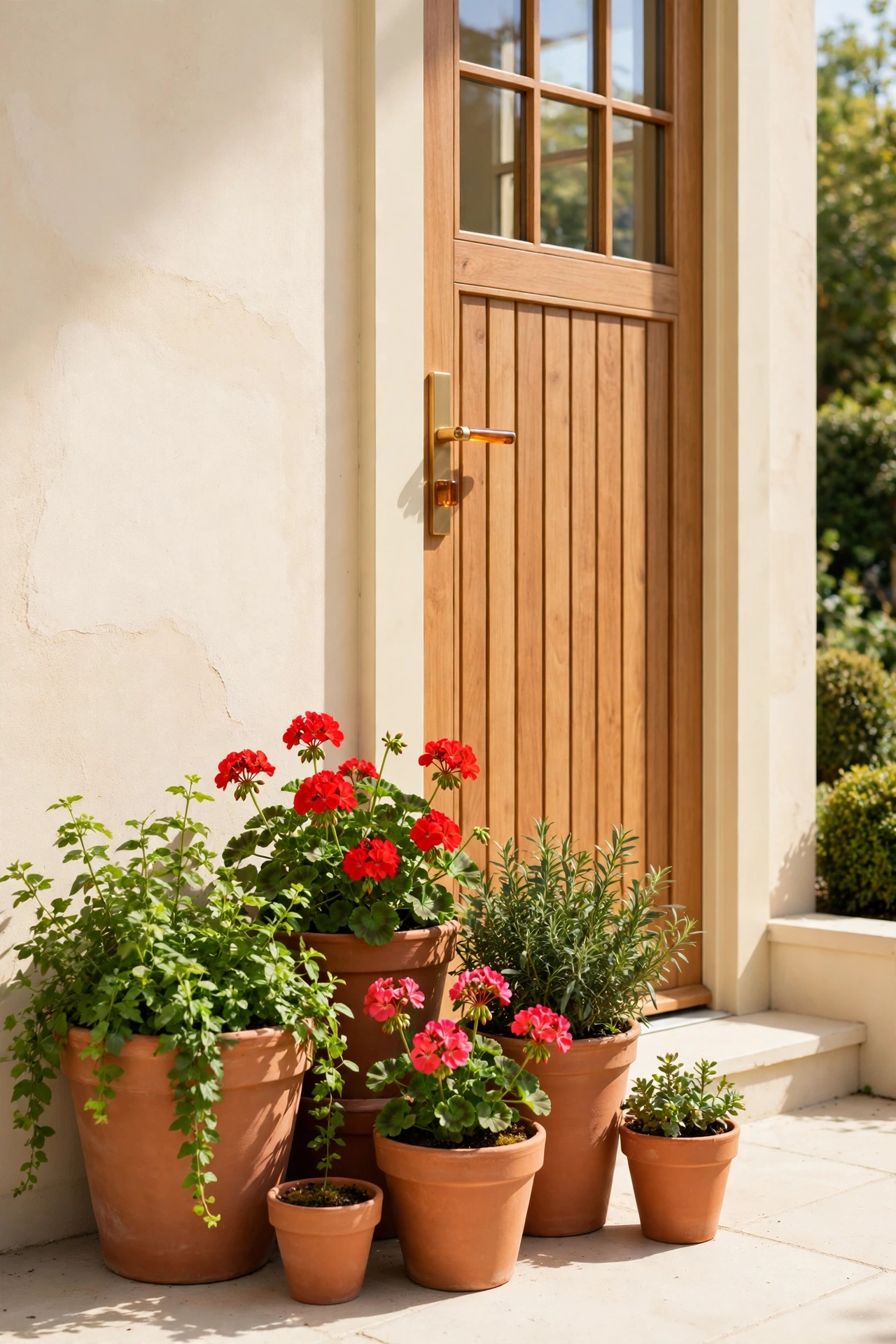
2. Build a Terracotta Pot Collection by the Door
Terracotta pots are the most recognizable feature of a Mediterranean garden. Group pots of different sizes by the back door or along a wall, and fill them with herbs, geraniums, or small citrus plants. The warm orange clay glows in sunlight and looks better as it ages.
Use unglazed clay pots so the roots stay cool and the soil dries out between waterings. Place the largest pots at the back and smaller ones in front to create a layered display. A mix of round pots, tall urns, and shallow bowls keeps the collection interesting without any extra effort.
3. Line a Path with Lavender
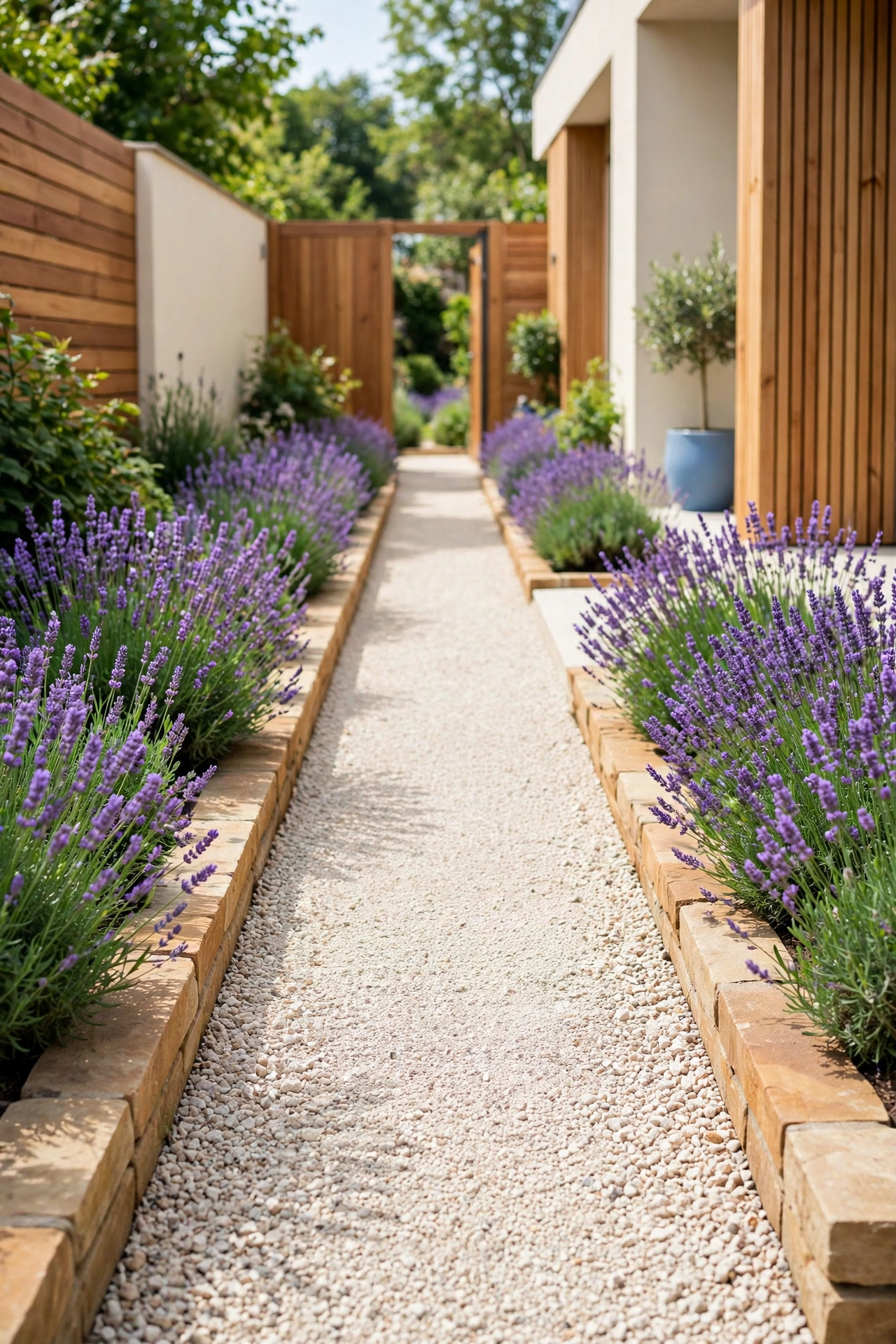
A lavender lined path fills the garden with color and scent from late spring through summer. The purple flower spikes look stunning against pale gravel or warm stone, and bees visit the blooms all day long. Walking the path becomes a small pleasure every single time.
Plant lavender in full sun with sandy, well drained soil and give each plant space to grow wide. Cut the flowers back after they bloom to keep the plants compact and full. A row of lavender along a path or a patio edge is one of the easiest ways to make a garden feel truly Mediterranean.
4. Add a Central Stone Fountain
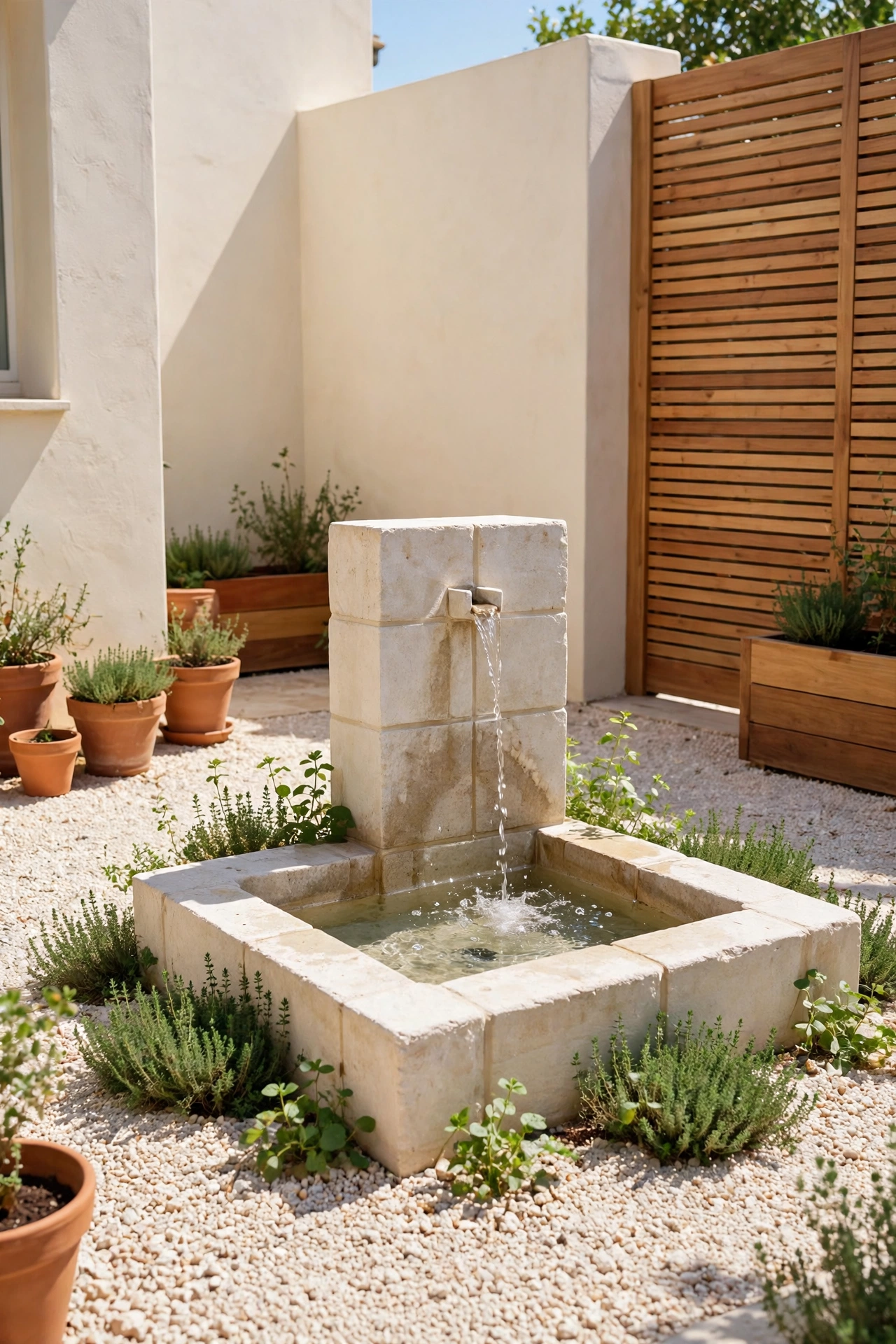
A stone fountain gives a Mediterranean garden its heart. The sound of trickling water cools the air on hot days, and the fountain becomes a natural focal point that draws the eye to the center of the garden. Even a small wall fountain adds that same calm effect.
Choose a simple stone or terracotta design with clean lines rather than an ornate one. Place the fountain where you can see it from the house and from the main seating area. Surround it with low plants like thyme or santolina so the water feature feels planted into the garden instead of placed on top of it.
5. Create a Shaded Pergola Dining Area
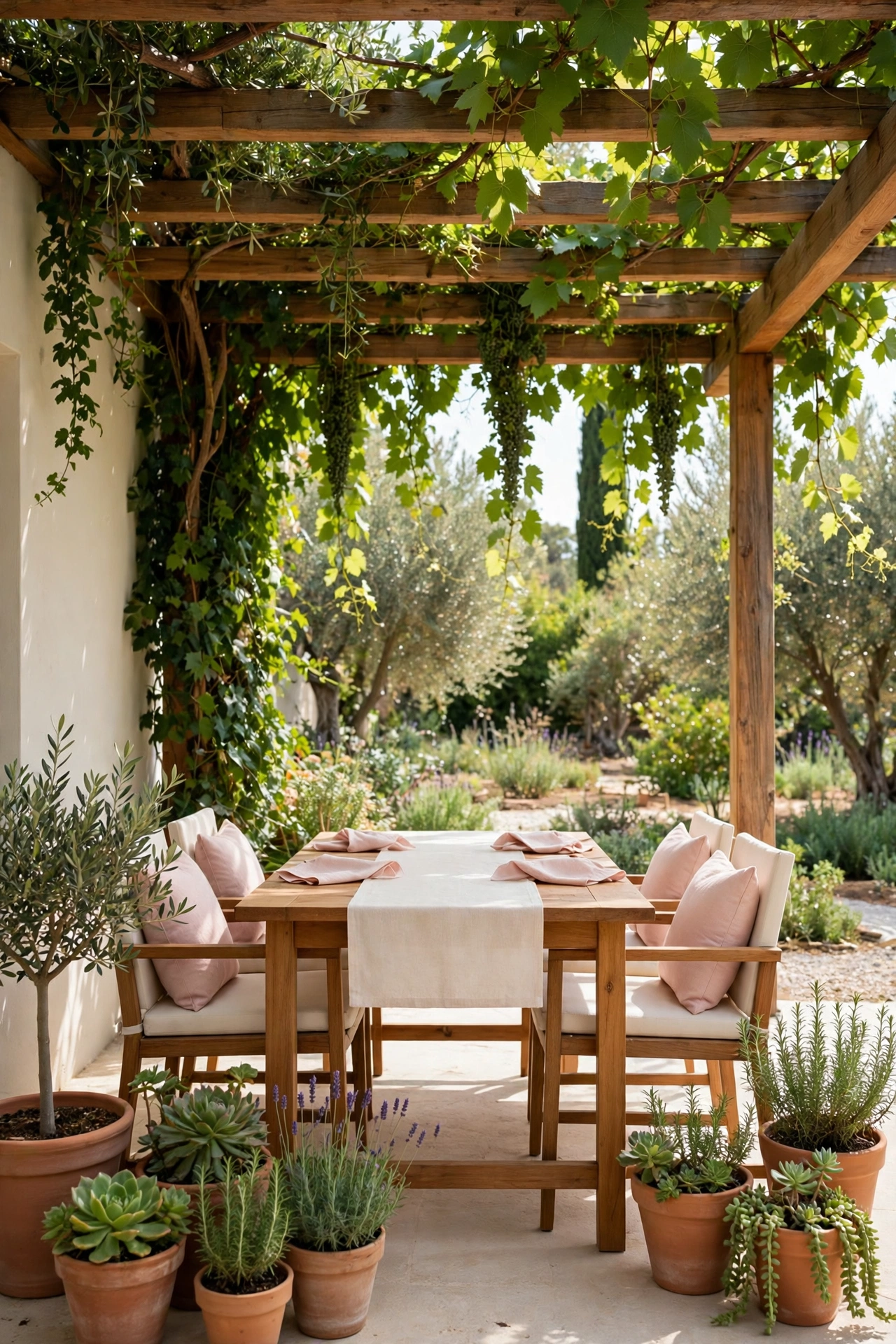
A pergola dining area turns a sunny backyard into an outdoor room for long lunches and evening meals. Wooden beams overhead filter the sun, and climbing vines like grape or jasmine add shade and scent as they grow across the top. A simple table and chairs below complete the scene.
Build the pergola from warm wood and leave it natural or stain it a soft honey color. Keep the structure simple with straight beams and clean posts. Add a few terracotta pots and a linen tablecloth, and the dining area will feel like a small restaurant terrace in the south of France.
6. Grow Citrus Trees in Large Pots
Lemon and orange trees in large pots are a classic Mediterranean sight. Their glossy green leaves, fragrant white blossoms, and bright fruit add color to the garden in every season. A pair of citrus trees flanking a door or a path makes a welcoming entrance.
Use large terracotta or wooden planters with good drainage and a sunny, sheltered spot. Feed the trees in spring and summer, and move the pots to a protected corner if frost is forecast. Even one lemon tree in a pot gives the garden fresh fruit and a wonderful scent.
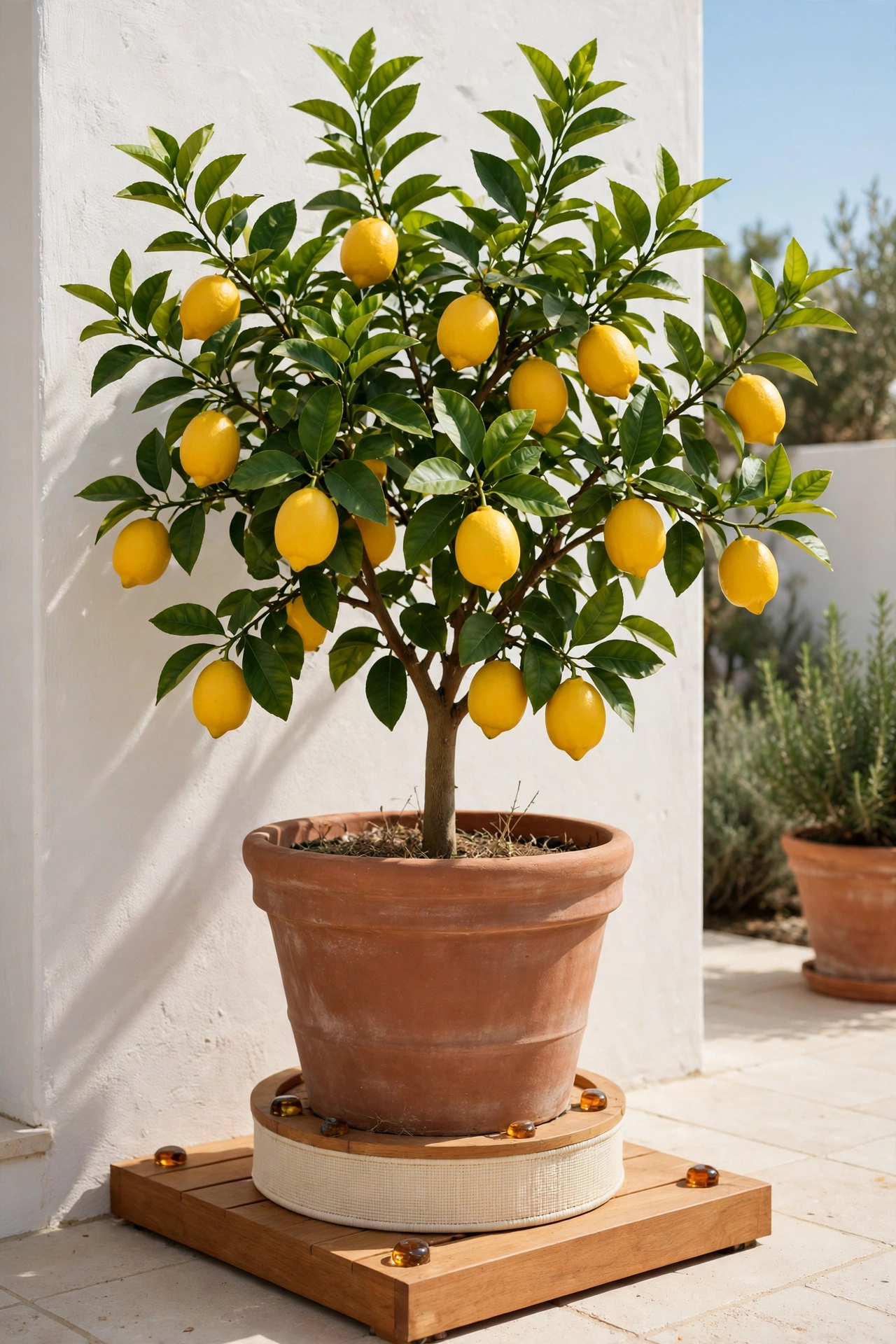
7. Lay Warm Terracotta Tile Flooring
Terracotta tiles underfoot give a patio or courtyard instant warmth. Their rich orange tones glow in the sun and pair beautifully with white walls, green plants, and blue accents. A tiled area also stays cool to walk on and is easy to sweep clean.
Choose frost resistant tiles if your winters get cold, and lay them with wide joints filled with sand or fine gravel. A simple square or rectangular pattern looks best and ages gracefully. Terracotta flooring works just as well for a small patio as it does for a large courtyard.
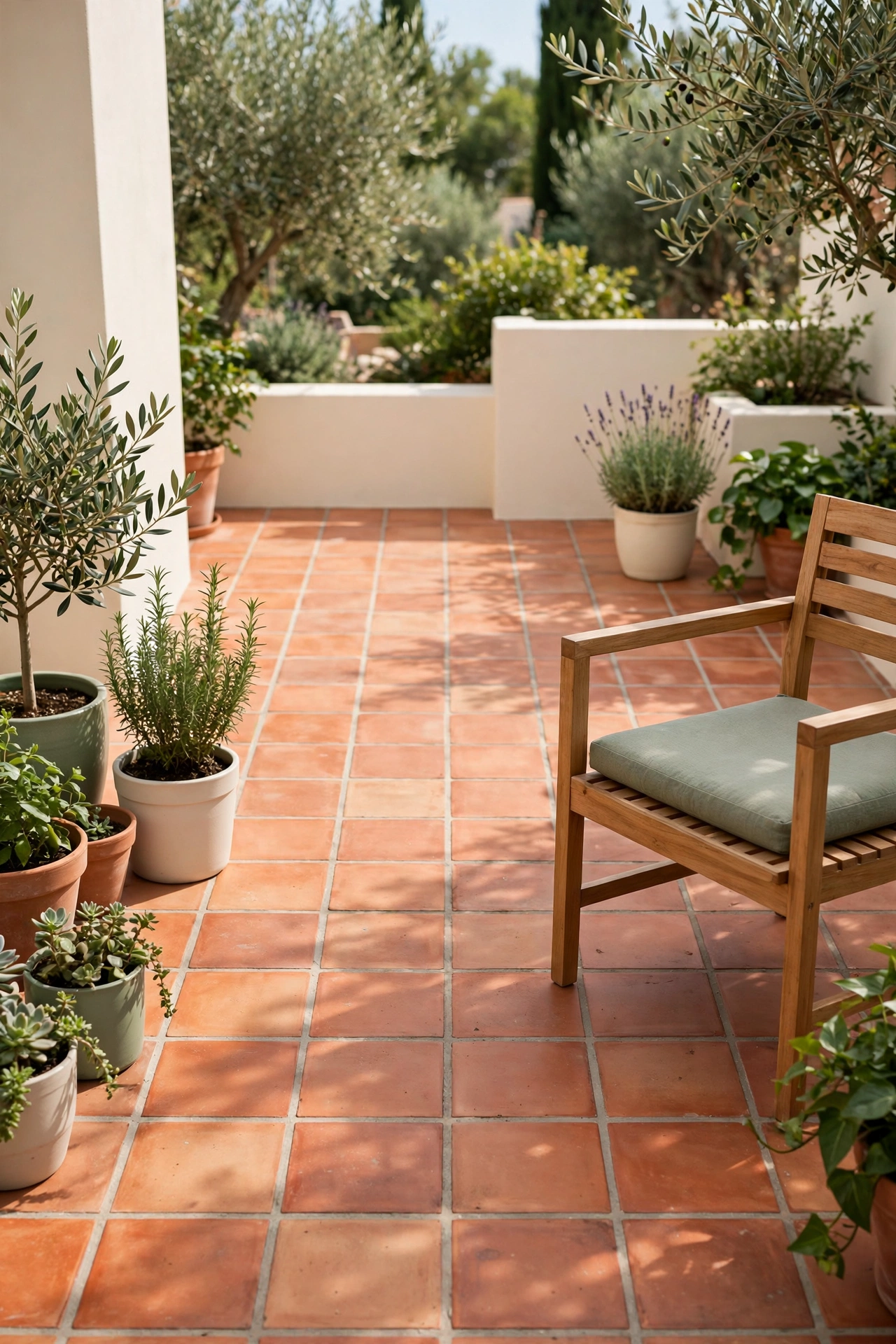
8. Build a Low Whitewashed Stone Wall
A low whitewashed stone wall defines the edges of a Mediterranean garden without blocking the view. The white surface reflects sunlight and makes the garden feel brighter, while the rough stone texture adds rustic charm. It also gives you a place to sit or to set down a pot.
Build the wall no higher than knee height so it stays a border rather than a barrier. Cap it with flat stones for a clean finish and a comfortable seat. A whitewashed wall around a gravel courtyard or a herb bed is a simple project with a big visual reward.
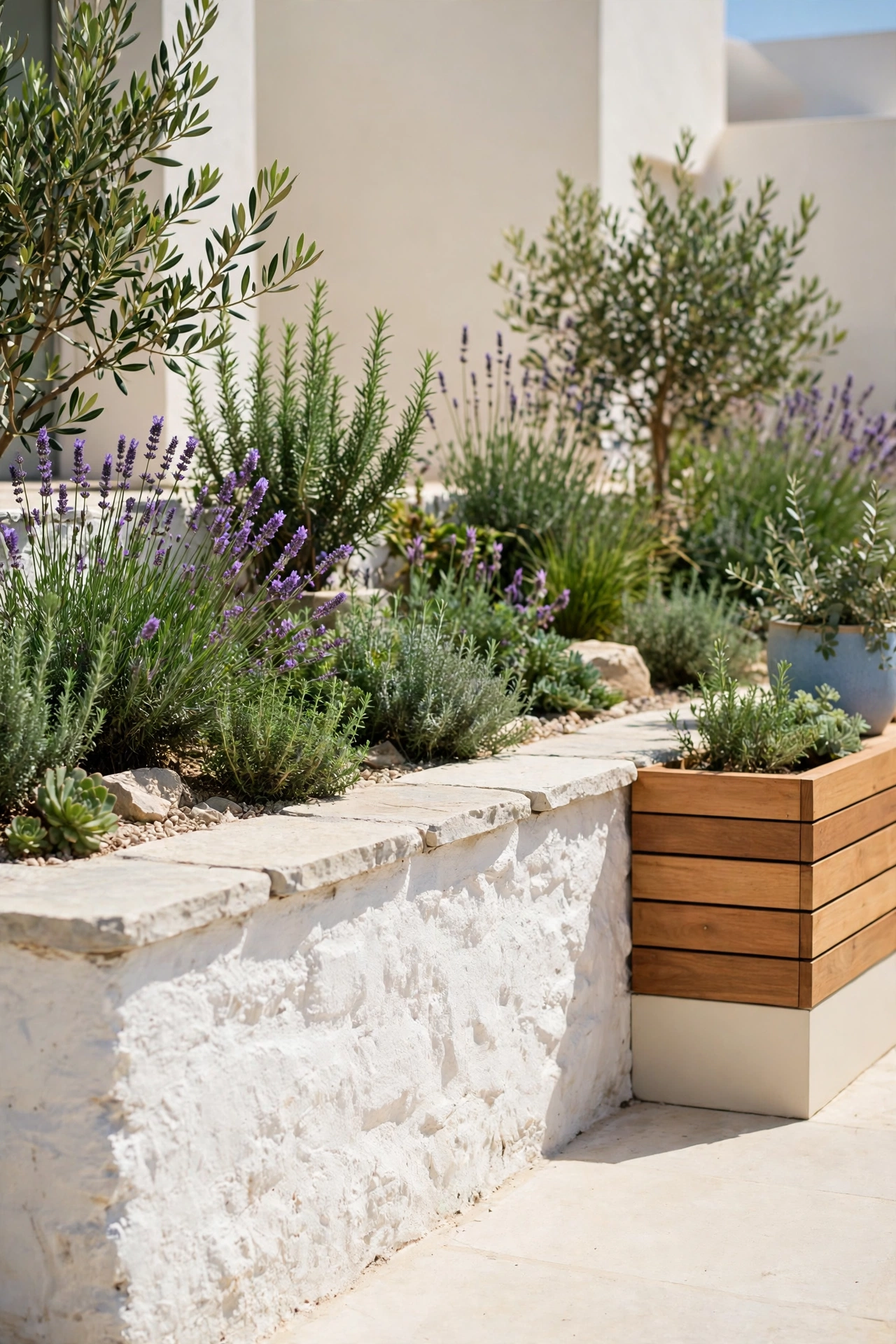
9. Plant a Rosemary Hedge Border
A rosemary hedge makes a fragrant living border that needs almost no care. The dark green needles stay green all year, the blue flowers appear in spring, and the scent releases every time you brush past it. It is a hedge that you can also cook with.
Plant rosemary in full sun with poor, well drained soil, and space the plants about half a meter apart. Trim the hedge lightly after flowering to keep it dense and tidy. A rosemary border along a path or around a vegetable bed adds structure and flavor to the garden at the same time.
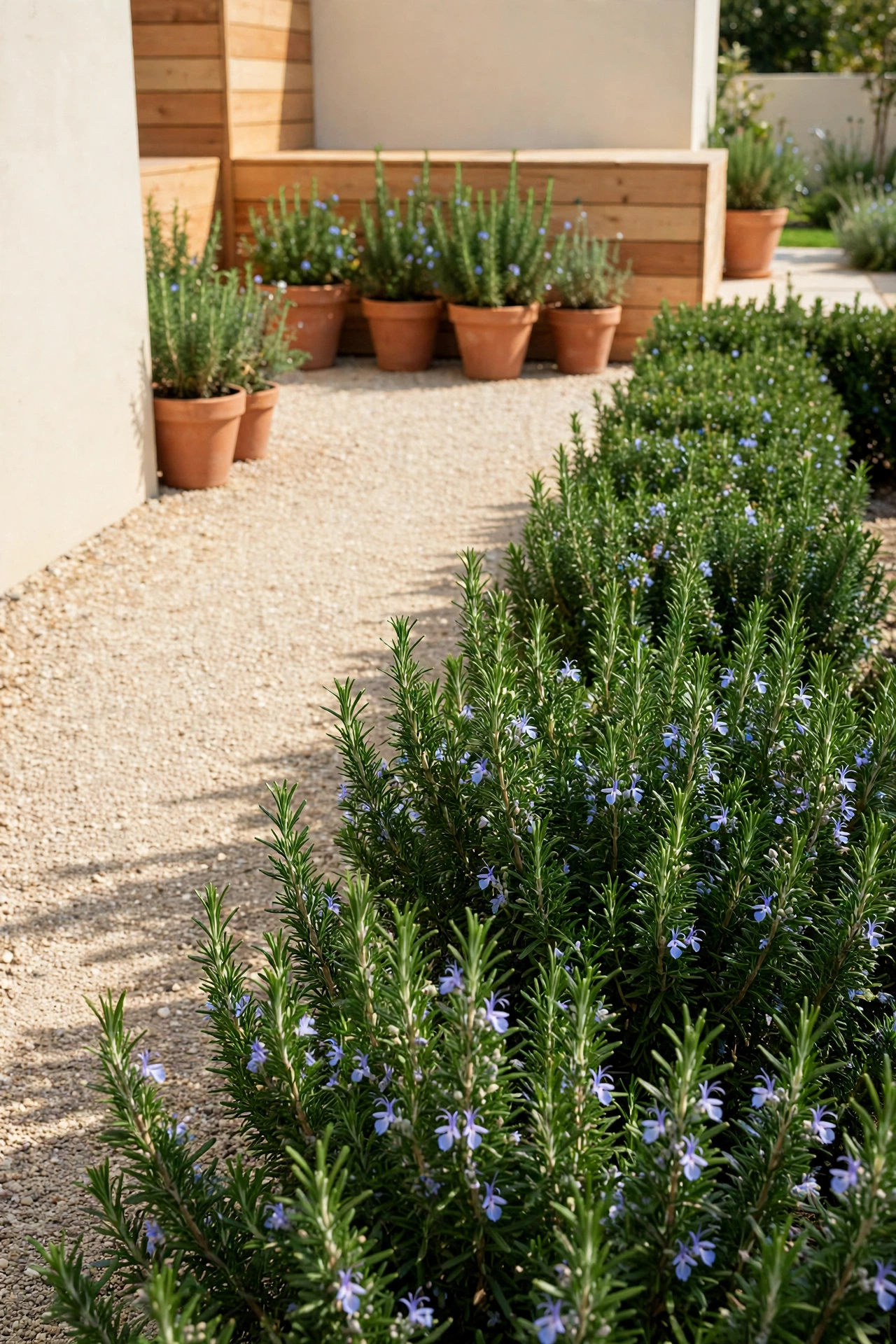
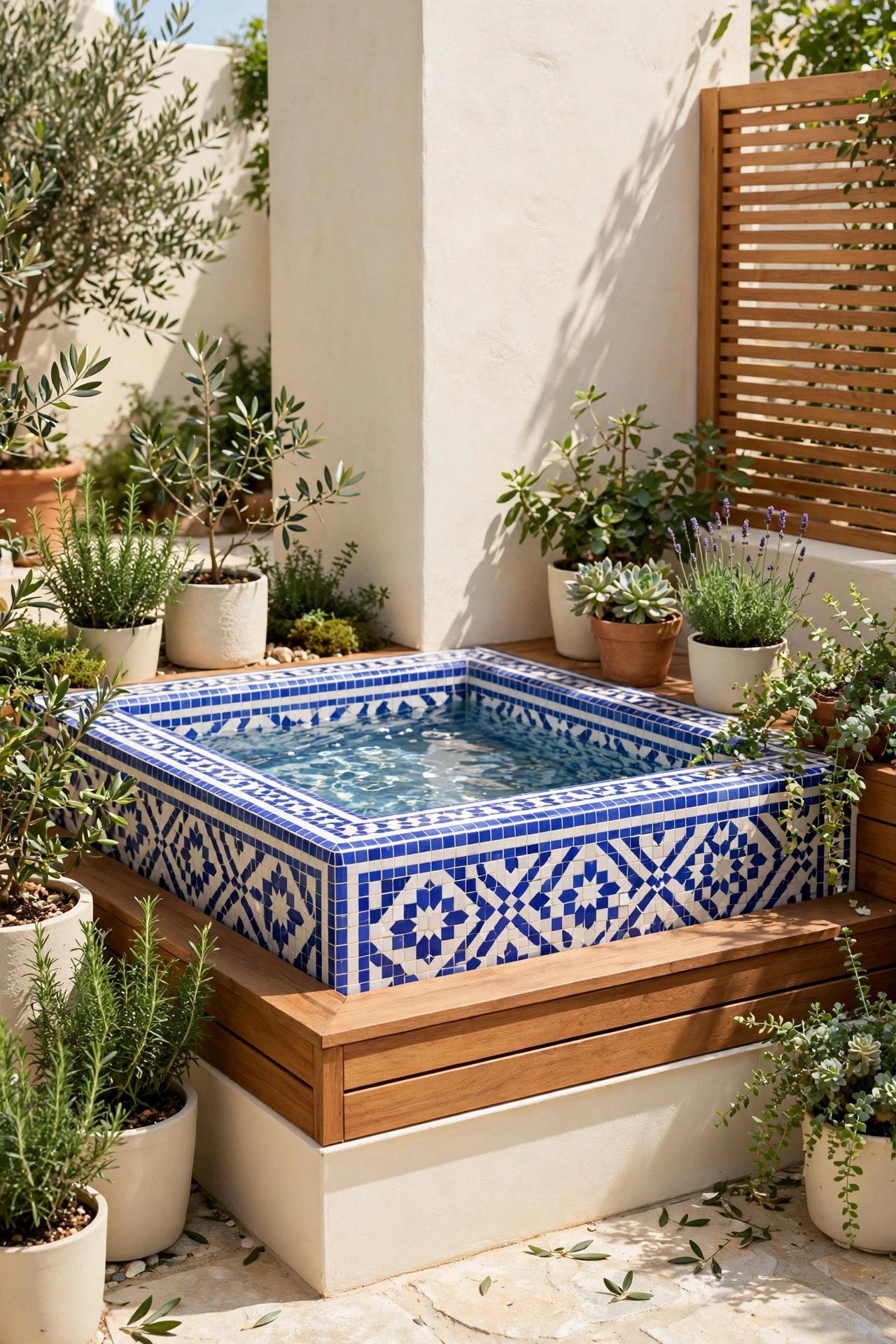
10. Add a Mosaic Tile Water Feature
Colorful mosaic tiles turn a simple water feature into a work of art. Blue, green, and white tiles catch the light and make the water sparkle, while the pattern adds a handcrafted feel to the garden. A small tiled wall fountain or a tiled basin works even in a tiny space.
Choose a simple geometric pattern in blues and whites for a classic look. Keep the rest of the area plain so the mosaic becomes the star. A mosaic water feature near a seating area gives you the sound of water and a splash of color in one beautiful piece.
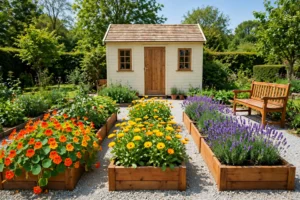
11. Create a Sunny Herb Garden Near the Kitchen
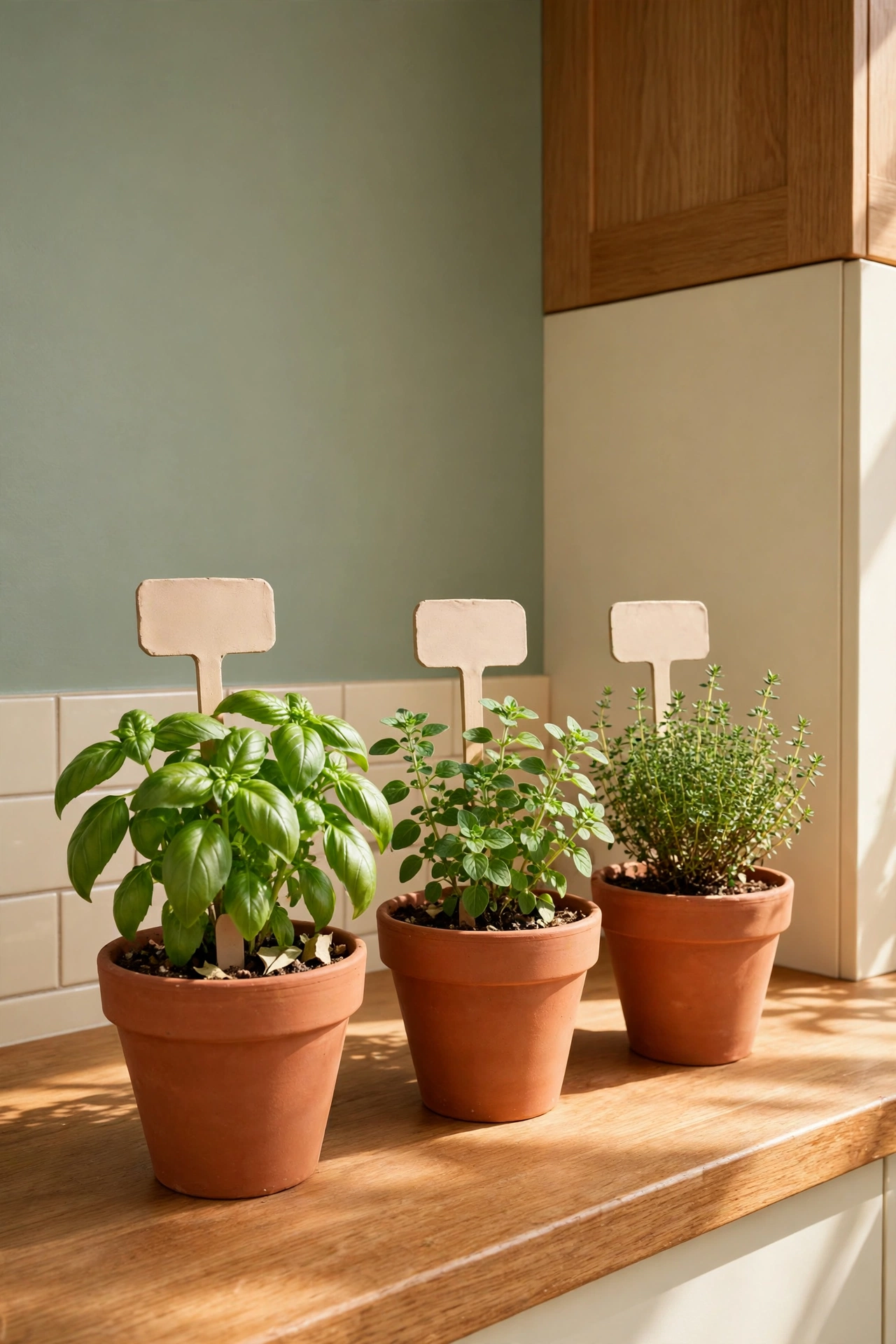
A herb garden near the kitchen door is one of the most useful features of a Mediterranean garden. Basil, oregano, thyme, and mint grow happily in the sun and are ready to pick whenever you cook. The herbs also fill the air with scent on warm evenings.
Plant the herbs in a raised bed or in a row of terracotta pots so they stay tidy and easy to reach. Give mint its own pot, since it spreads fast and can take over a bed. A small herb garden saves money, tastes better than store bought herbs, and looks beautiful beside a sunny wall.
12. Use Gravel Paths Instead of Lawns
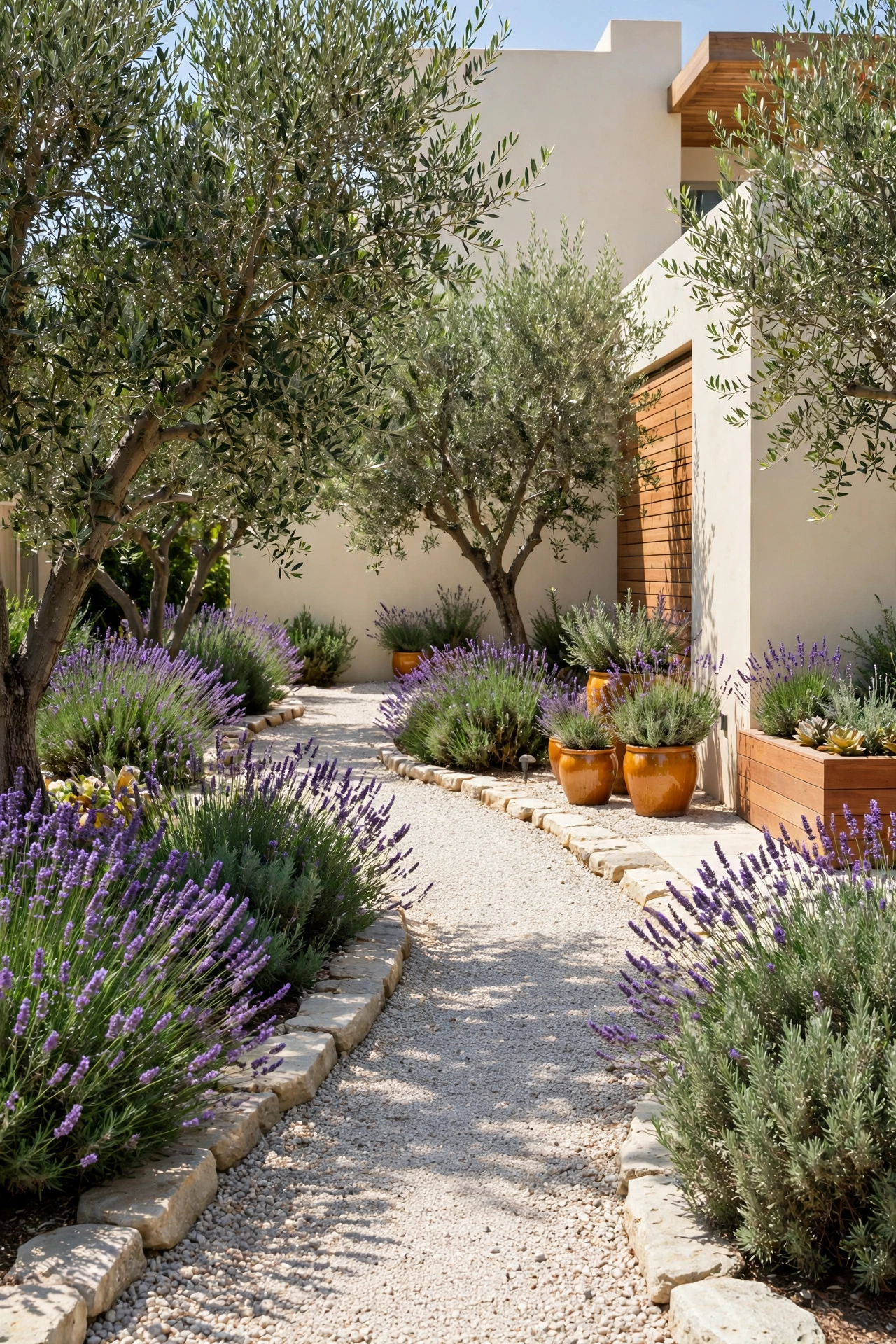
Gravel paths suit a Mediterranean garden far better than a thirsty lawn. Pale gravel reflects light, drains well after rain, and crunches pleasantly underfoot. It also needs no mowing and very little water, which makes it perfect for hot, dry summers.
Choose a warm toned gravel in cream or pale gold and lay it over landscape fabric to stop weeds. Edge the paths with stone or terracotta tiles to keep the gravel in place. A gravel garden with islands of lavender, rosemary, and olive trees looks natural and stays low maintenance.
13. Hang String Lights Under a Vine Covered Pergola
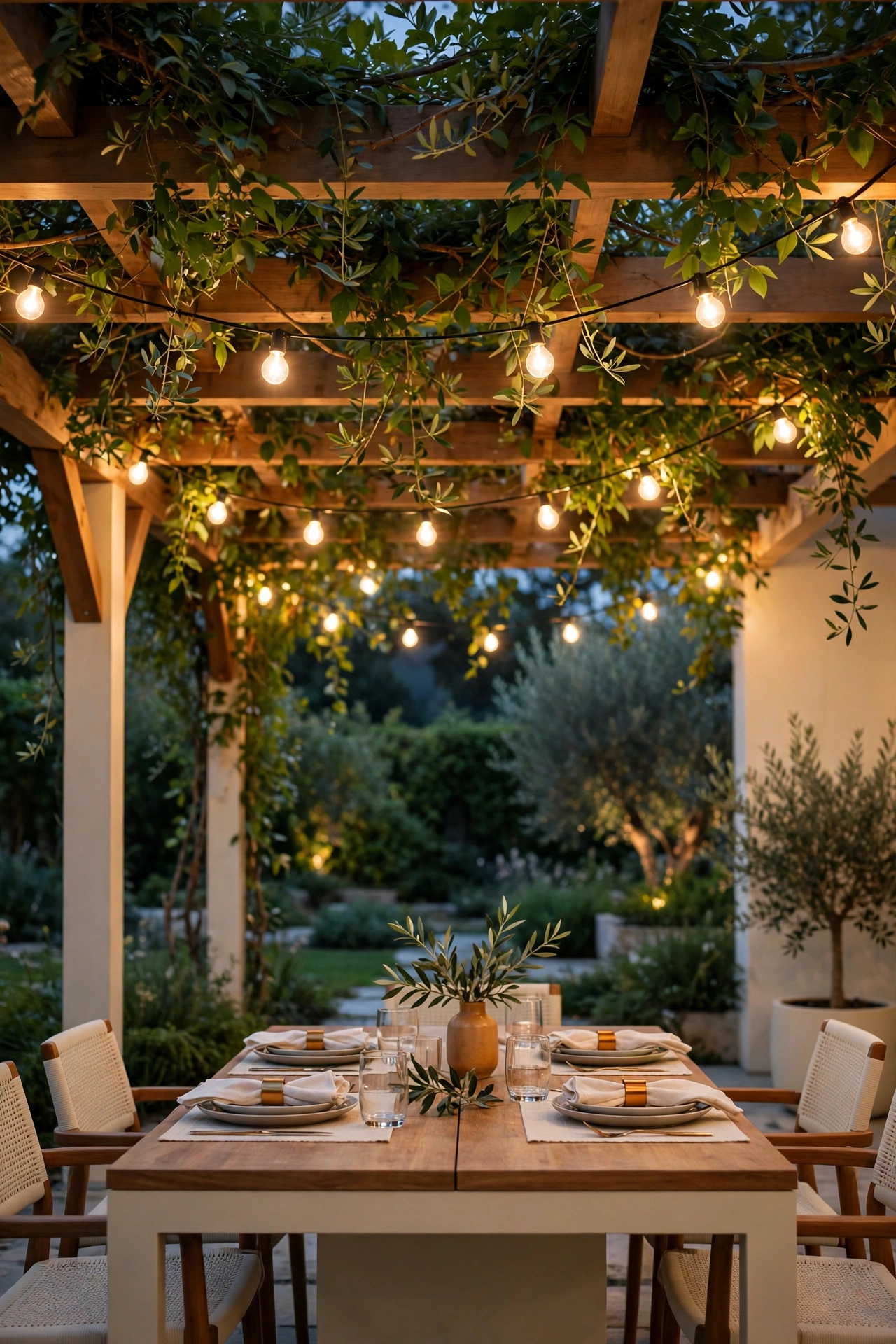
String lights under a vine covered pergola turn a garden into a magical evening space. Warm bulbs glow through the leaves as the sun sets, and the whole area feels like a courtyard cafe. It is a small addition that changes how you use the garden after dark.
Hang the lights in gentle swags from the pergola beams, keeping the wires tidy and out of reach. Choose warm white bulbs for a soft glow rather than bright white ones. A few evenings under the lights will convince you that the garden is the best room in the house.
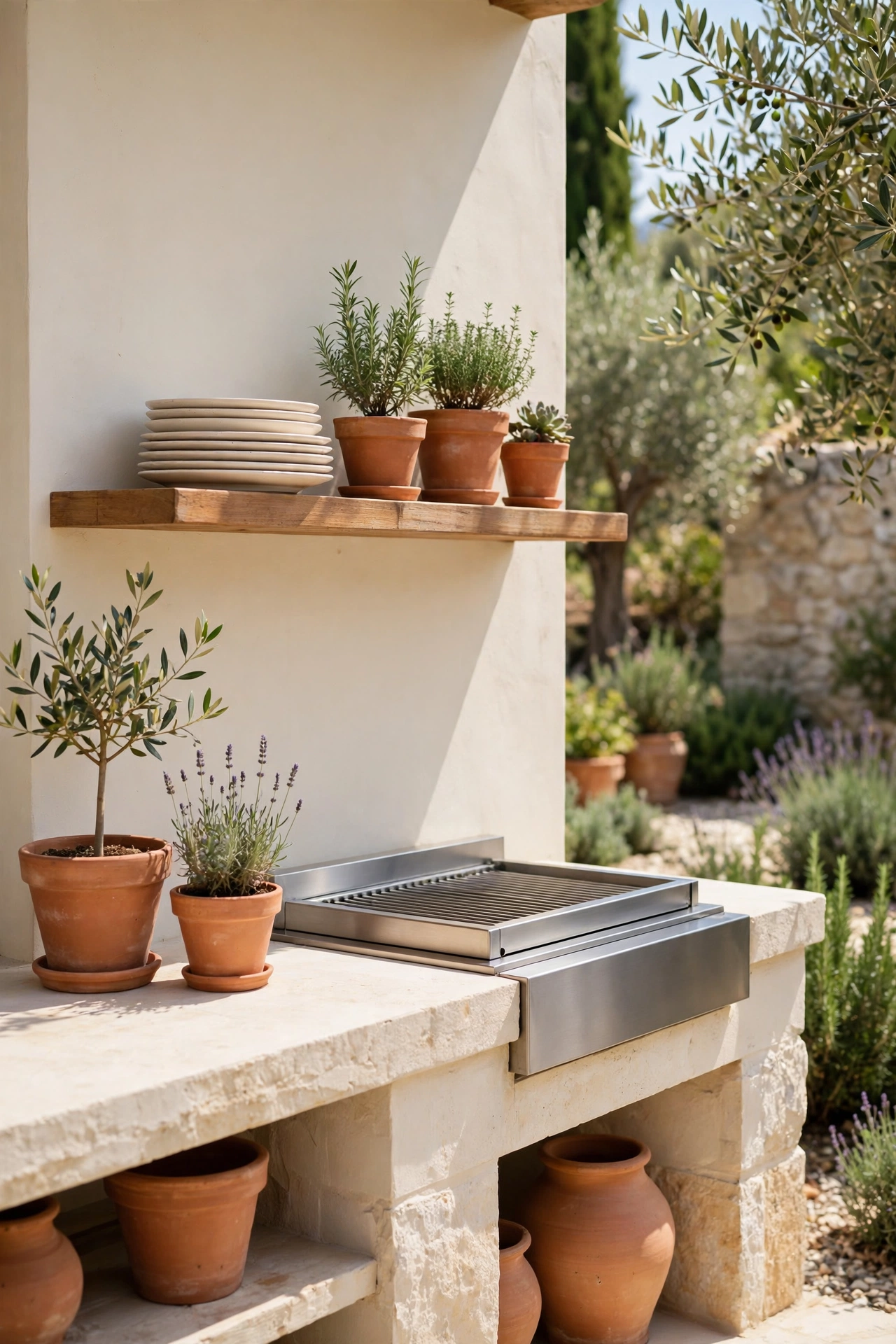
14. Build a Rustic Outdoor Kitchen Corner
An outdoor kitchen corner lets you cook and eat outside all summer long. A simple stone counter, a small grill, and a sink are all you need to start. Add a wooden shelf for plates and a few terracotta pots, and the corner feels like part of the garden.
Keep the design simple with natural stone and warm wood, and place the kitchen near the house for easy access to water and power. A small roof or a pergola overhead keeps the cooking area shaded. Outdoor cooking keeps the house cool and turns every meal into a garden party.
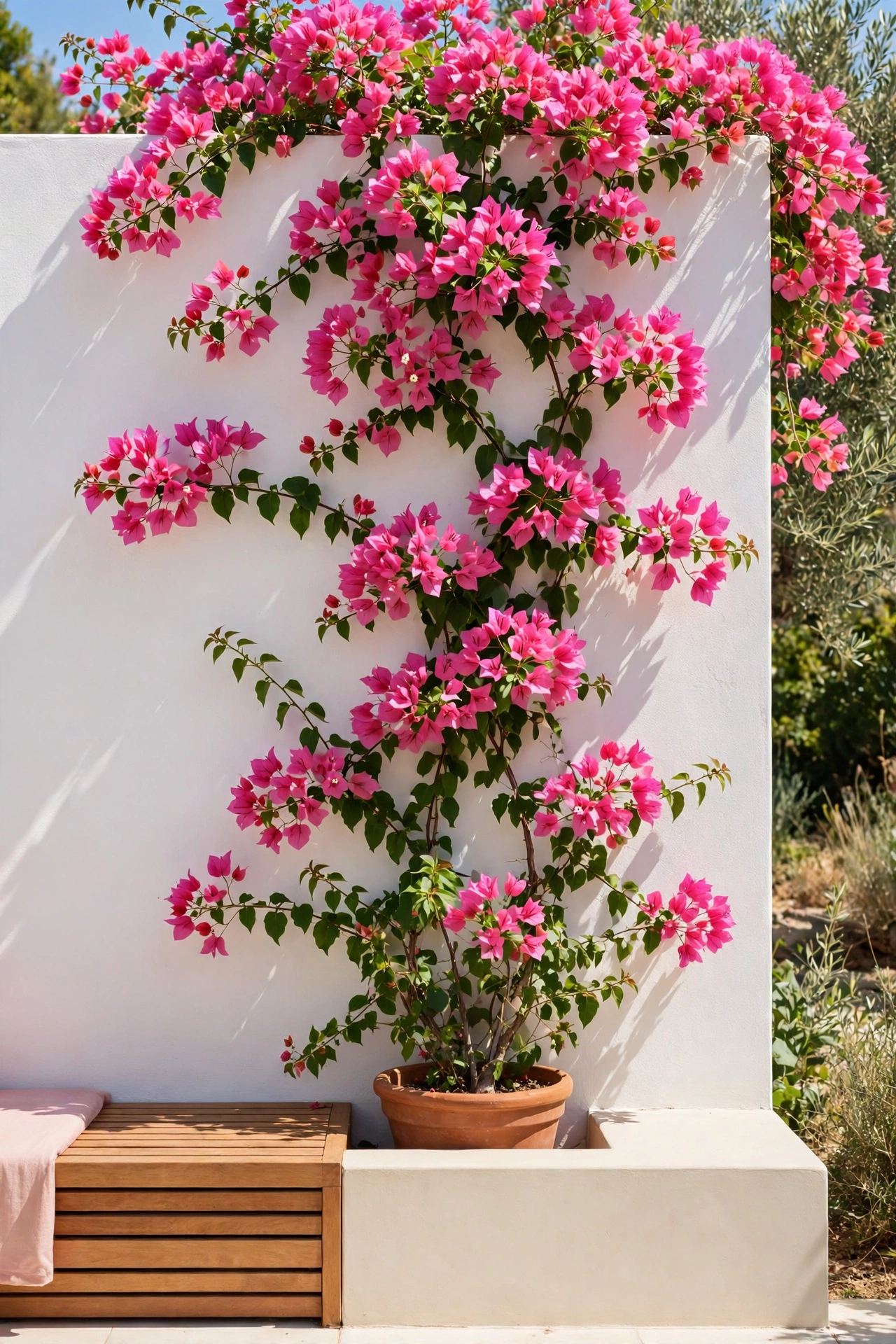
15. Add Bougainvillea to Climb the Walls
Bougainvillea is the flower that makes Mediterranean walls famous. Its bright pink, purple, or orange bracts spill over walls and pergolas in huge clouds of color all summer long. One plant can transform a plain wall into the most photographed spot in the garden.
Plant bougainvillea against a sunny, sheltered wall with well drained soil and water it sparingly once established. Prune it after flowering to keep it in shape and to encourage new blooms. In cooler climates, grow it in a large pot and move it to shelter in winter.
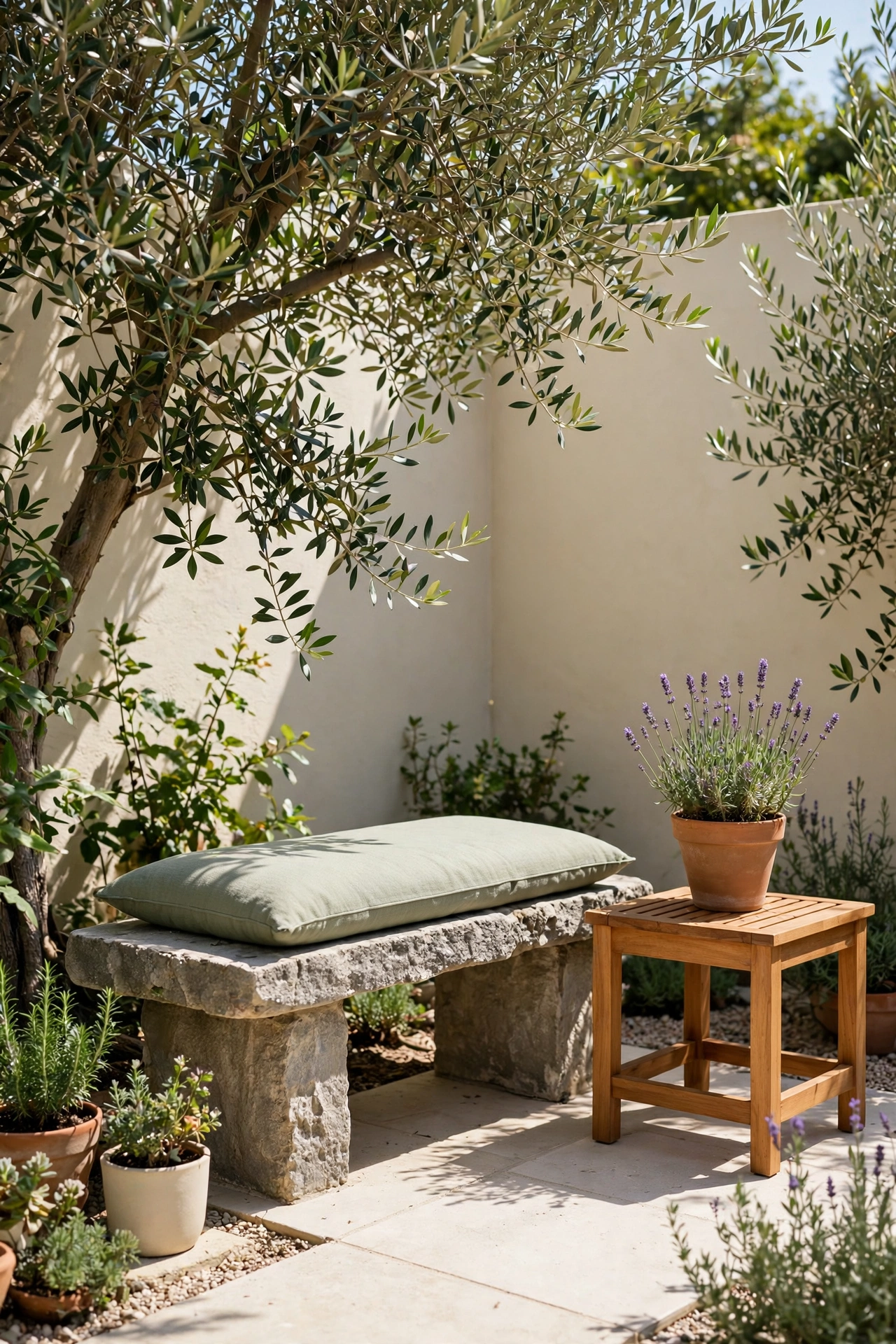
16. Create a Quiet Reading Corner with a Stone Bench
A quiet reading corner gives the garden a place for rest. A simple stone bench under an olive tree, with a cushion and a small side table, is all it takes. The corner becomes a retreat for morning coffee or an afternoon with a book.
Place the bench where it catches morning sun but stays shaded in the afternoon heat. Add a pot of lavender nearby for scent and a few stepping stones to mark the path. A reading corner needs no decoration beyond shade, scent, and a comfortable seat.
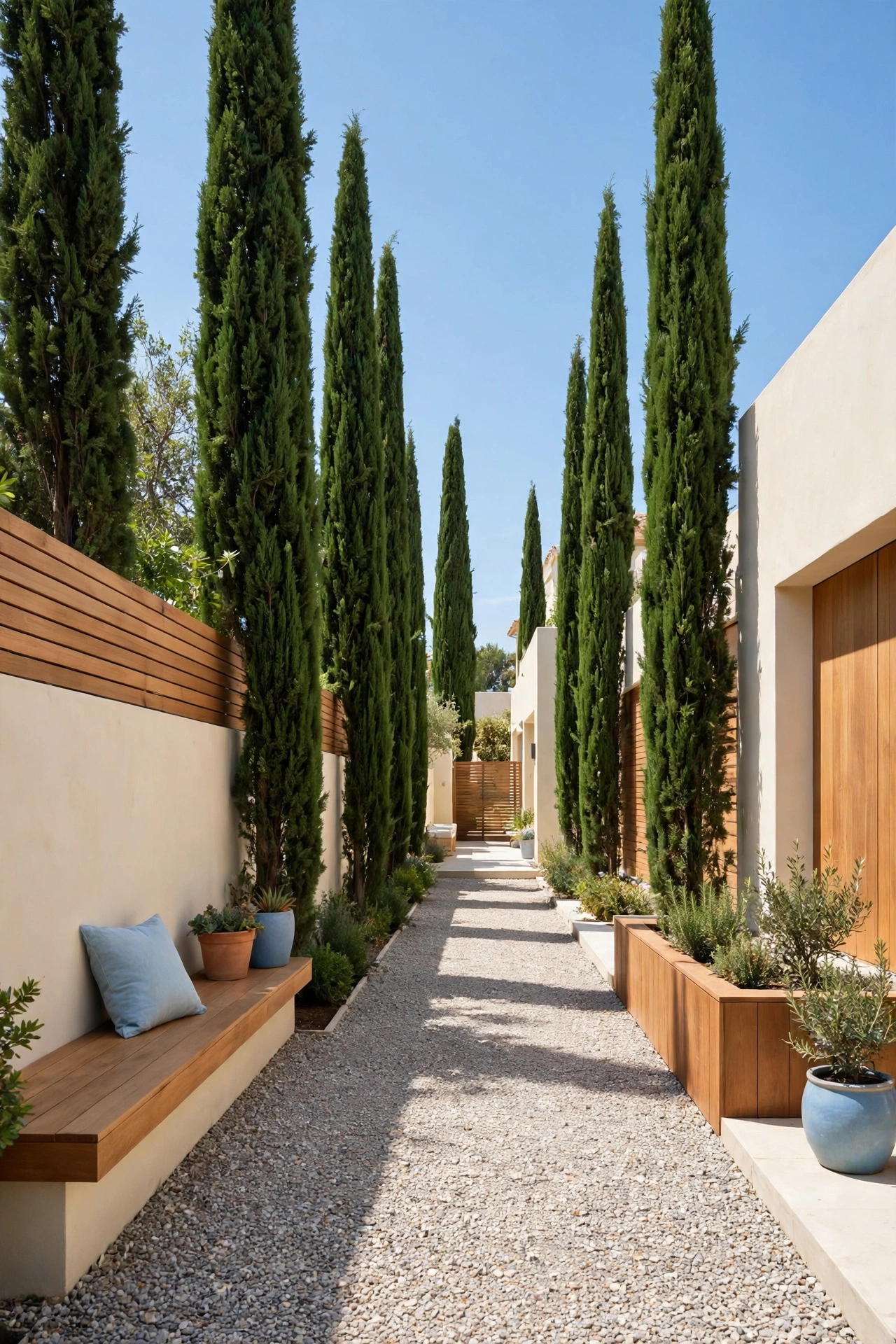
17. Plant Cypress Trees for Height and Privacy
Tall, slim cypress trees add height and drama to a Mediterranean garden. Their dark green columns frame views, mark entrances, and screen the garden from neighbors without taking up much ground space. A row of cypress trees along a boundary looks like a Tuscan landscape.
Plant cypress trees in full sun with well drained soil and give them room to grow tall. They need very little pruning and stay green all year. Two cypress trees flanking a gate or a path create a classic Mediterranean entrance that looks impressive from day one.
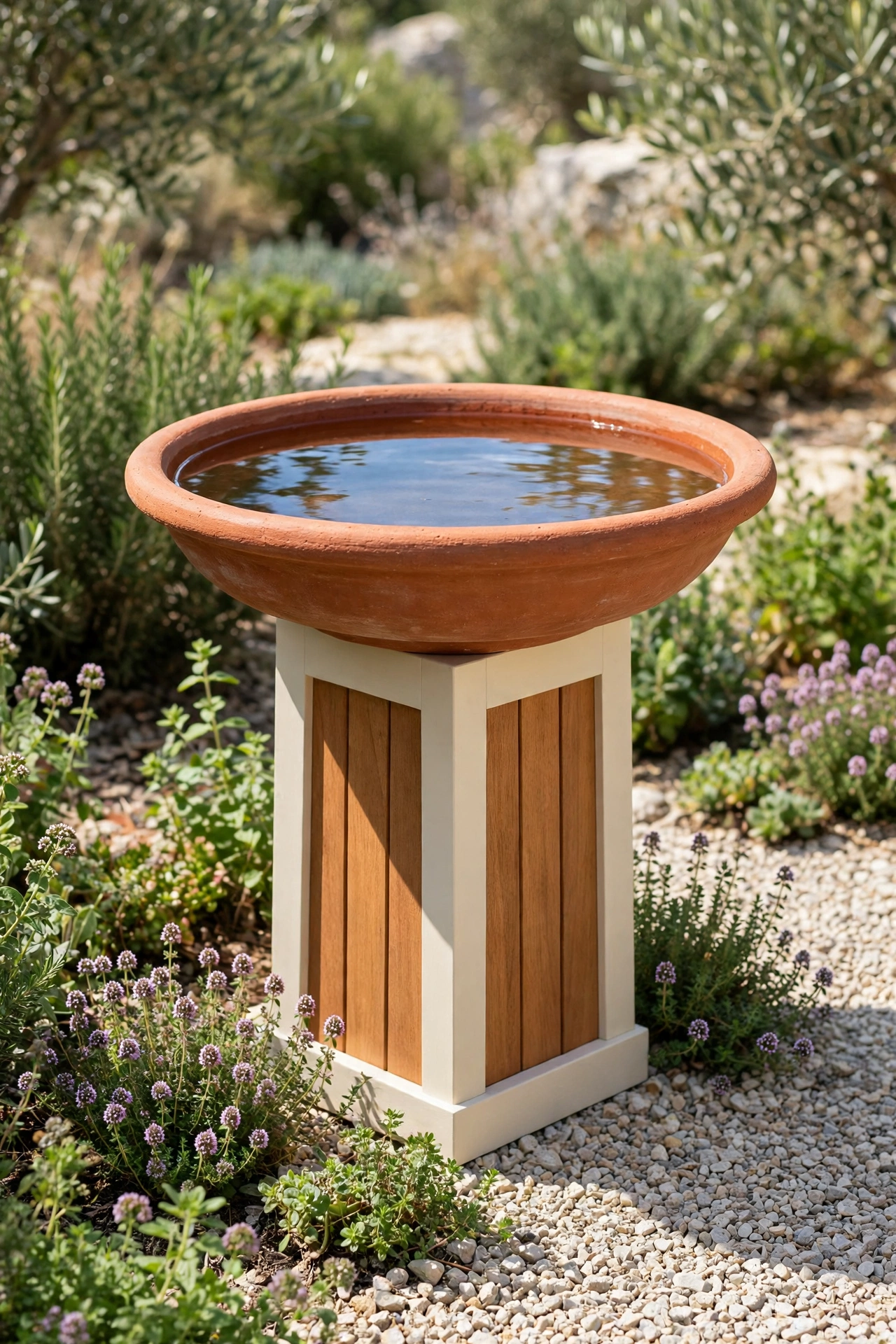
18. Add a Terracotta Birdbath as a Focal Point
A terracotta birdbath adds life and movement to a Mediterranean garden. Birds visit for a drink and a bath, and the sound of splashing water brings the garden alive. The warm clay color fits perfectly with stone walls and gravel paths.
Place the birdbath in a sunny open spot where birds feel safe, and keep the water fresh and shallow. Surround it with low plants like thyme or sedum so it sits naturally in the garden. A birdbath is a small feature that rewards you with birdsong every morning.
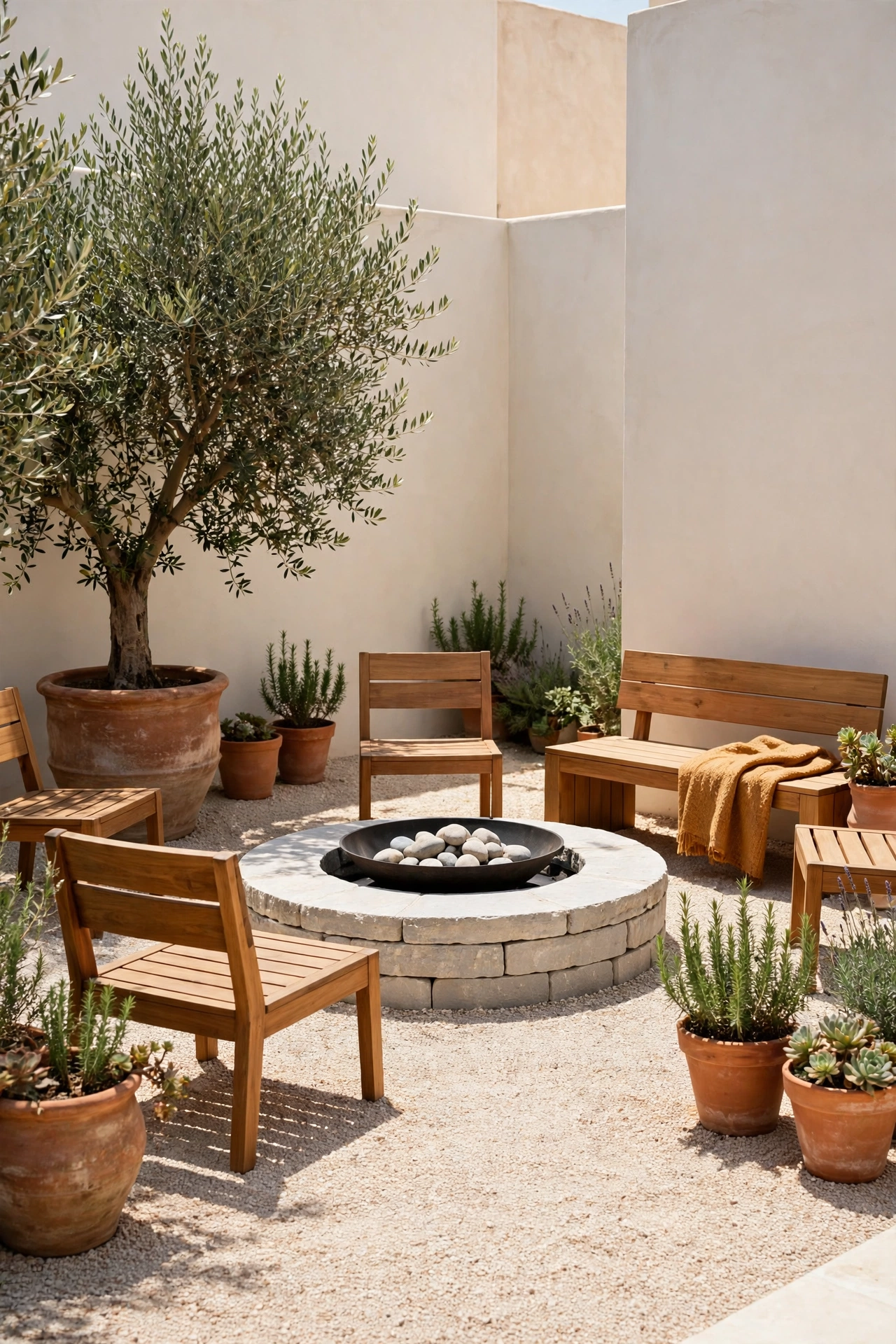
19. Design a Courtyard with a Central Fire Pit
A central fire pit turns a Mediterranean courtyard into a gathering place for cool evenings. A simple stone or metal fire bowl in the middle of a gravel circle invites everyone to sit around it and talk as the sun goes down. The firelight makes the whole garden glow.
Keep the fire pit low and simple, and surround it with stone or wooden seating that matches the garden. For more ideas on building a warm focal point outdoors, see these outdoor fireplace ideas. Always keep a bucket of water nearby and check local rules before you light the first fire.
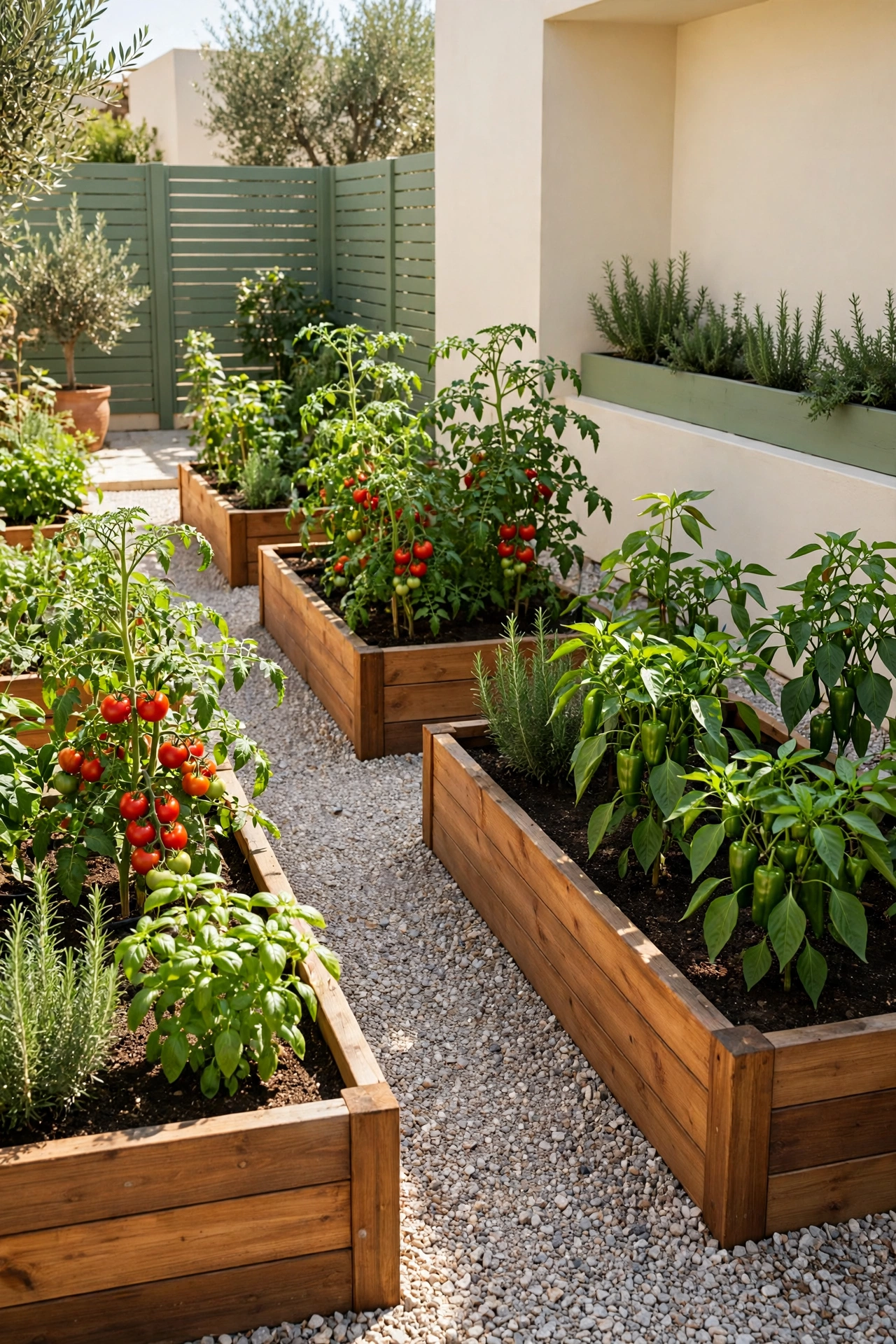
20. Grow Tomatoes and Peppers in Raised Beds
Tomatoes and peppers are the heart of Mediterranean cooking, and they grow beautifully in sunny raised beds. Warm soil, full sun, and regular watering give you sweet fruit all summer long. A raised bed also keeps the plants tidy and easy to harvest.
Build the beds from warm wood or stone and fill them with rich compost. Space the plants well apart so air flows between them, and stake the tomatoes early before they grow heavy. Fresh tomatoes from your own garden taste nothing like store bought ones, and the plants look lovely with their red and green fruit.
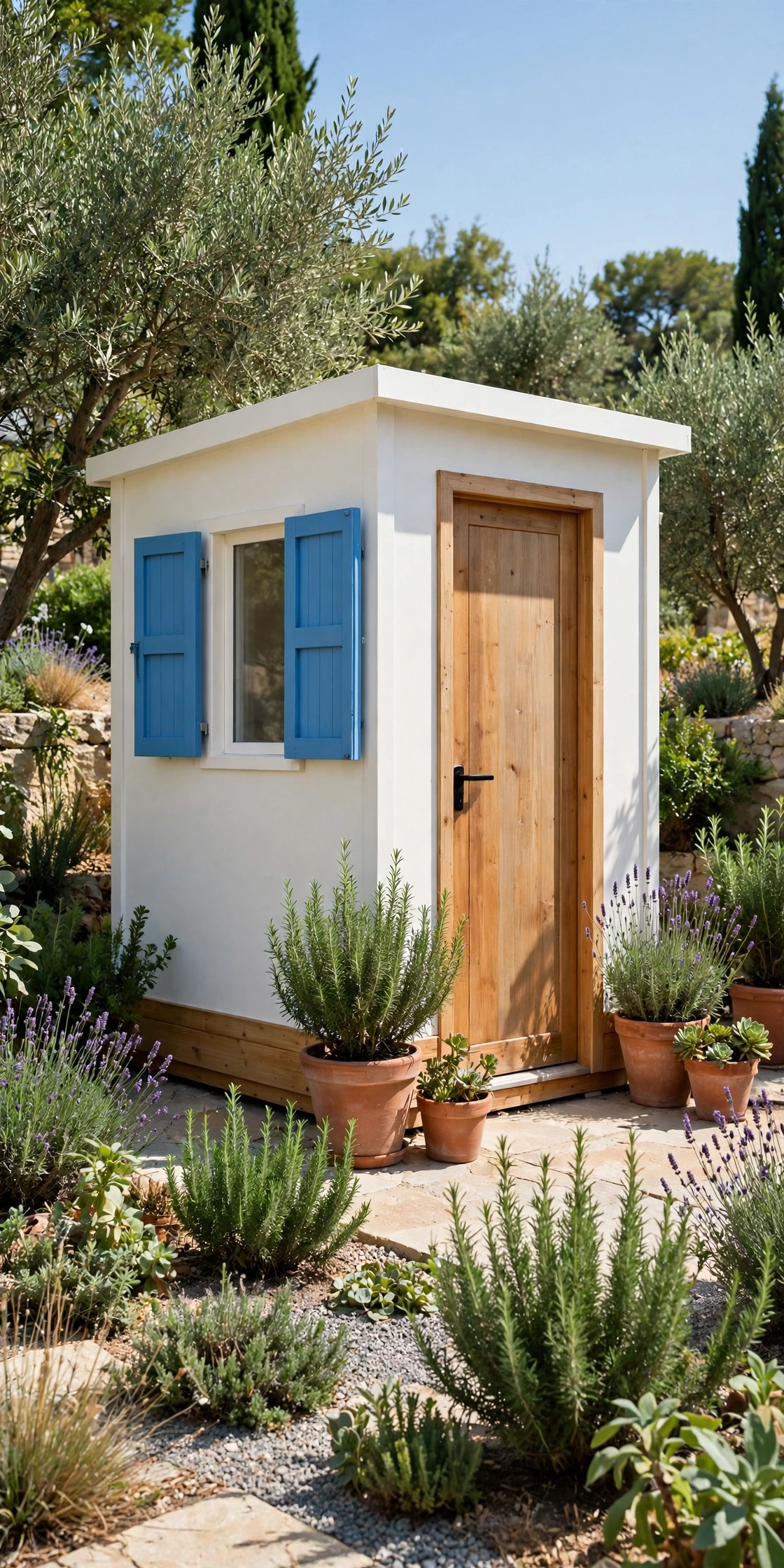
21. Add Blue Painted Shutters to a Garden Shed
Blue painted shutters on a garden shed bring a Greek island feel to the backyard. The bright blue against white walls is the classic Mediterranean color pair, and it makes even a plain shed look charming. A small detail like this changes the whole mood of the garden.
Paint the shed walls warm white and the shutters a vivid Mediterranean blue, then add a terracotta pot or two beside the door. Keep the paint fresh with a new coat each spring. This is a weekend project with a holiday feeling that lasts all year.
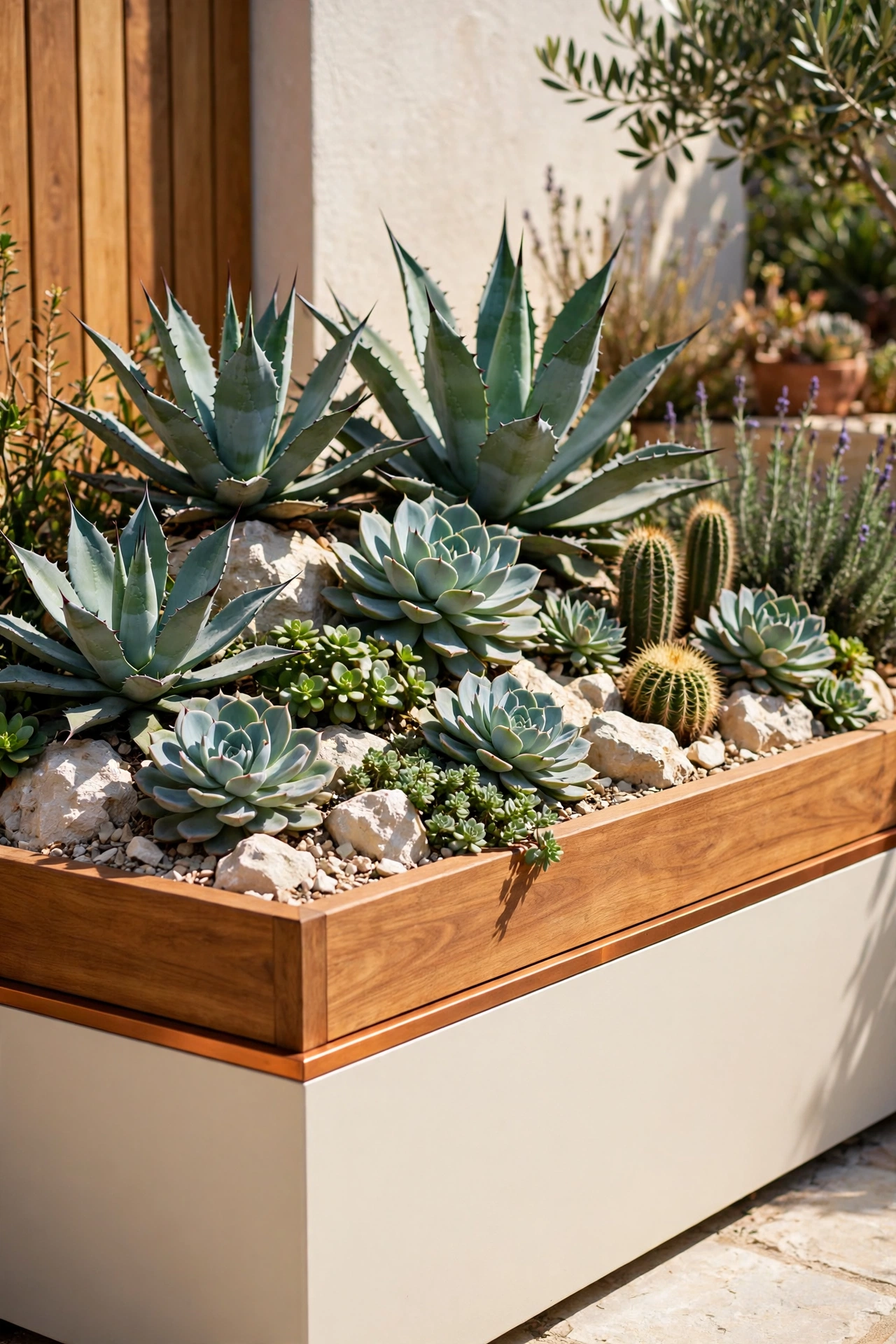
22. Create a Succulent and Cactus Rock Garden
A succulent and cactus rock garden thrives in hot sun with almost no water. Agave, aloe, and echeveria come in beautiful shapes and colors, from blue green rosettes to tall spiky leaves. Arranged among pale rocks, they look like a natural desert landscape.
Use well drained sandy soil and place the largest plants at the back of the bed. Add rocks of different sizes to hold heat and to keep the soil in place. A rock garden needs almost no care beyond removing the occasional weed, and it looks good in every season.
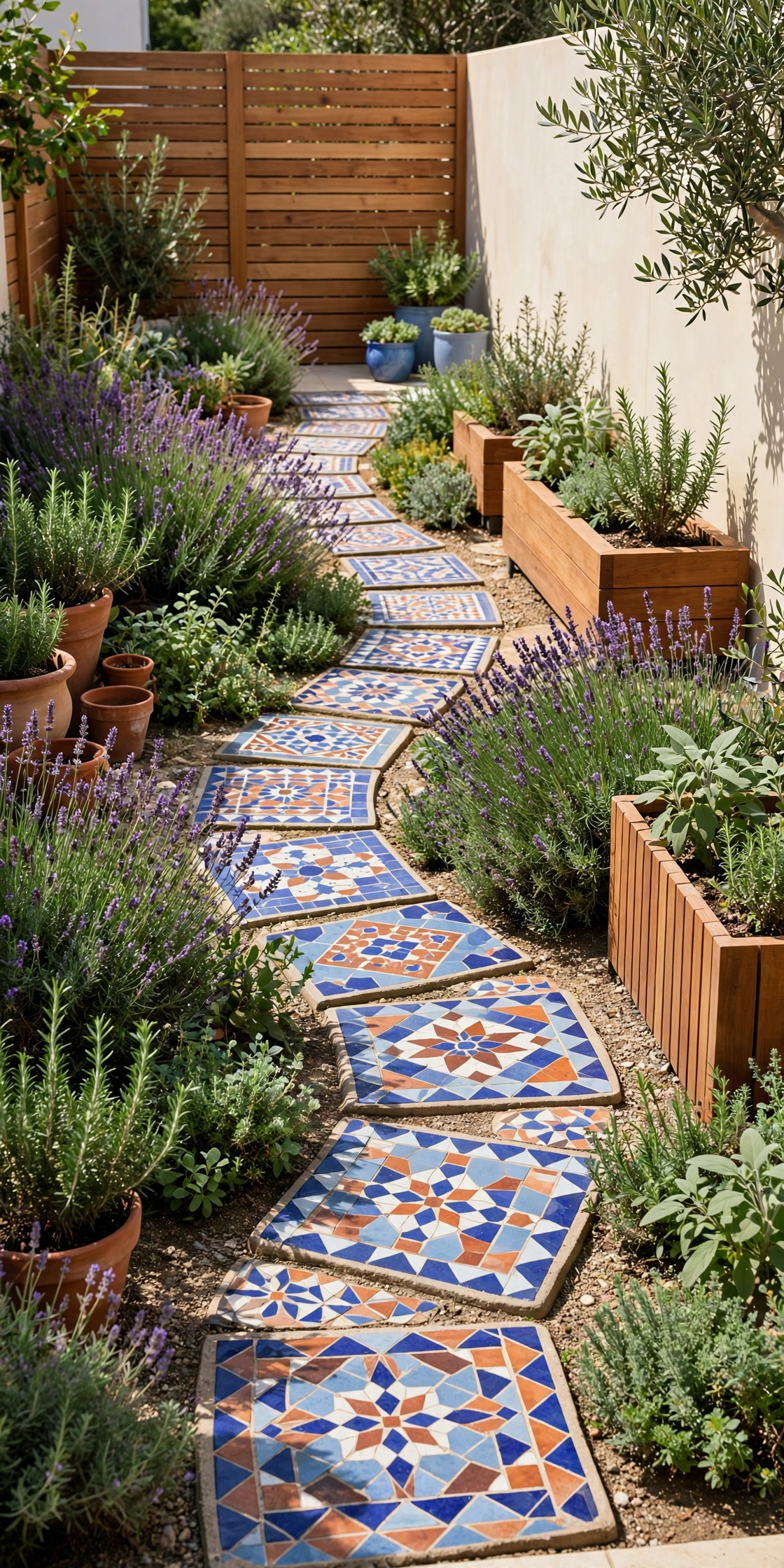
23. Lay a Mosaic Stepping Stone Path
A mosaic stepping stone path adds art to the garden under your feet. Each stone can carry a simple pattern in blue, white, and terracotta, and the path leads the eye through the garden from one area to the next. It is a practical path and a decoration at the same time.
Space the stones at a comfortable walking distance and set them level so they are safe to walk on. Fill the gaps with fine gravel or low creeping thyme. A mosaic path through lavender or herbs makes every walk through the garden feel special.
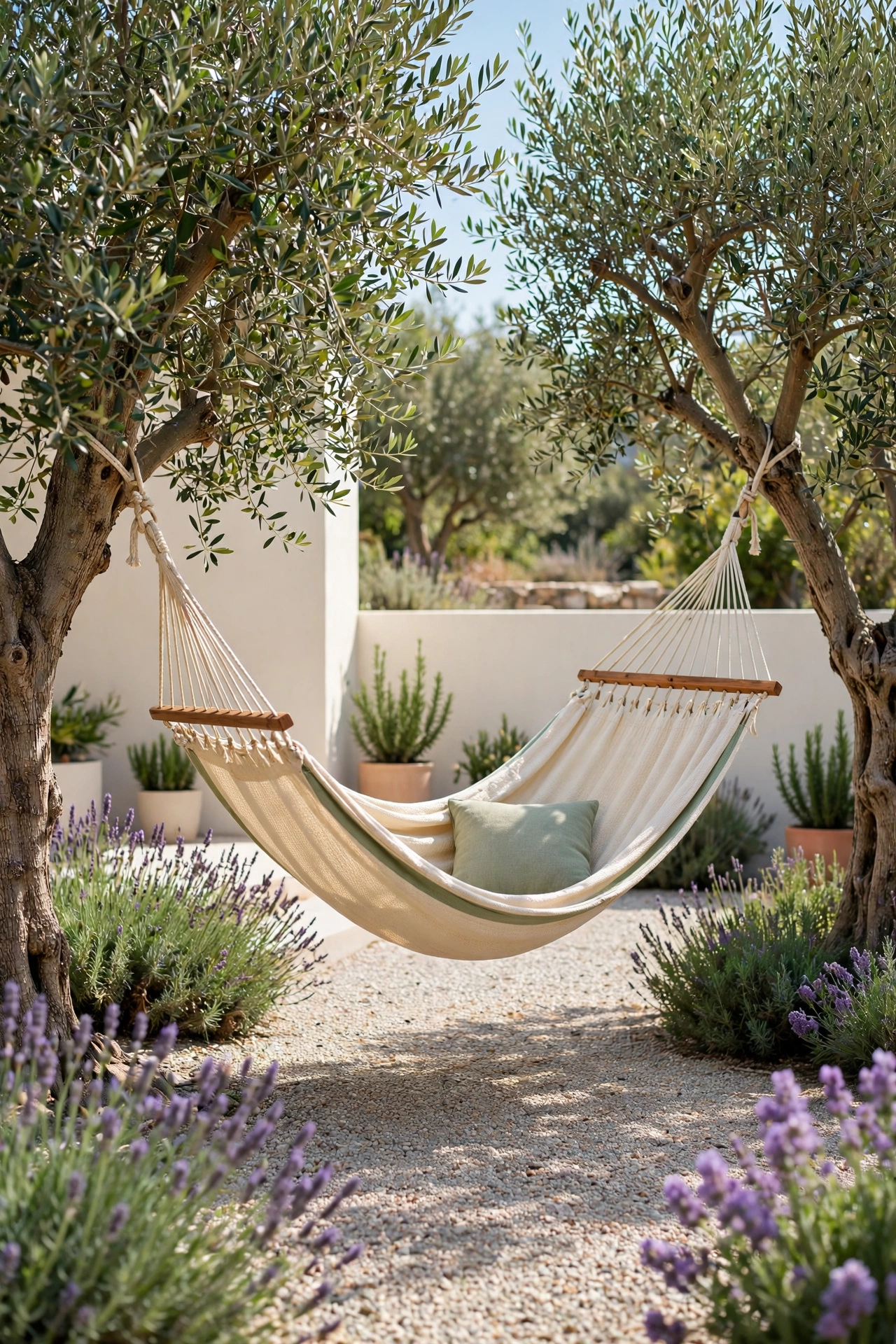
24. Add a Hammock Between Two Olive Trees
A hammock strung between two olive trees is the ultimate Mediterranean luxury. The shade of the trees, the scent of the garden, and the gentle sway make it the perfect spot for an afternoon rest. It costs little and needs no building work at all.
Choose two strong trees with trunks at least a few meters apart, and hang the hammock with wide straps that protect the bark. Add a small cushion and a light throw for comfort. A hammock in the garden will quickly become the most loved spot in the whole backyard.
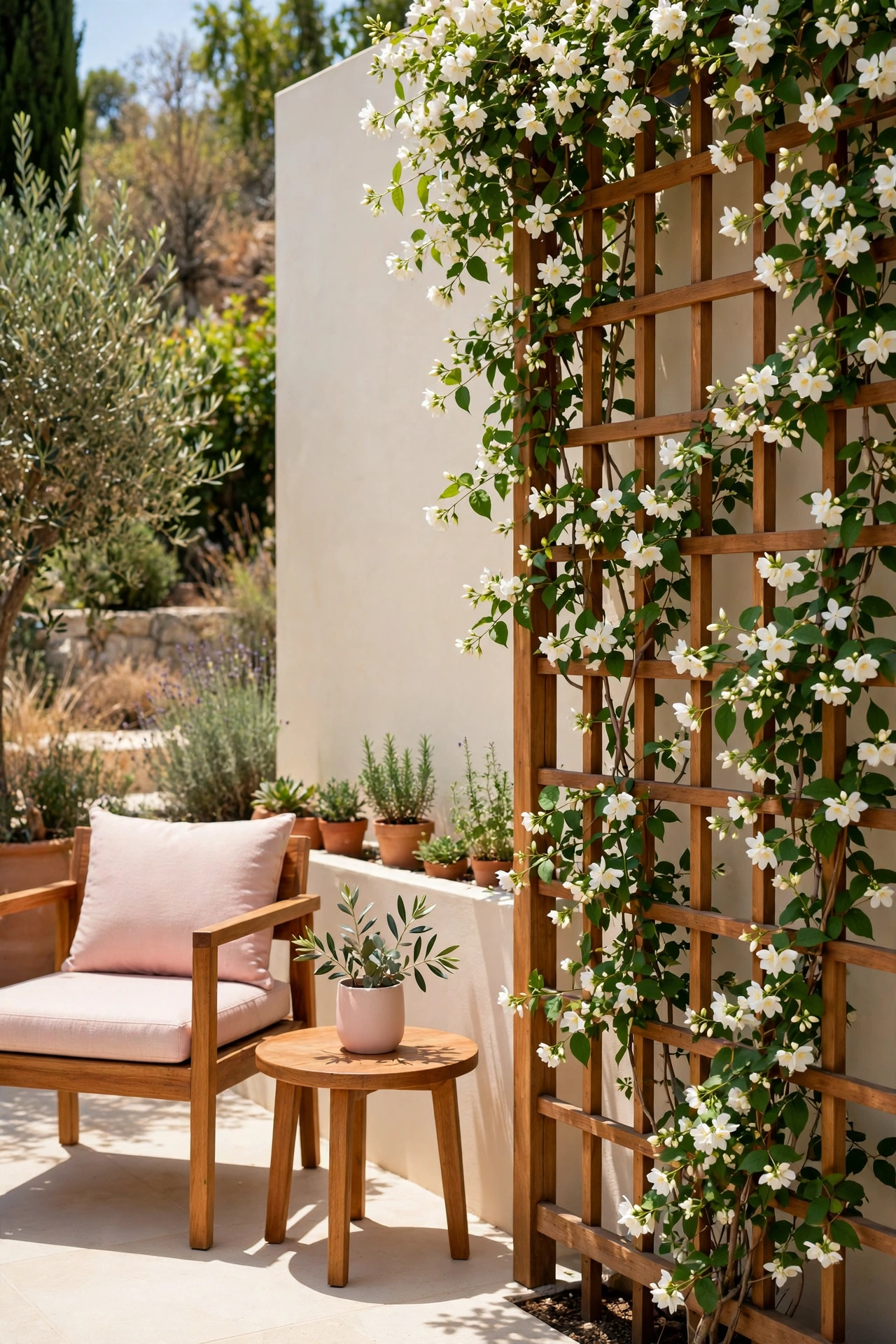
25. Plant Jasmine Near the Seating Area
Jasmine near a seating area fills summer evenings with a sweet scent that drifts across the whole garden. Its white star flowers open in the evening, just when you sit outside to relax. A jasmine vine on a trellis or a pergola post is a simple way to add fragrance.
Plant jasmine in a sunny, sheltered spot with rich, well drained soil and water it regularly in its first year. Train the stems up a trellis and prune lightly after flowering. The scent of jasmine on a warm night is one of the best parts of a Mediterranean garden.
26. Build a Shaded Daybed Nook
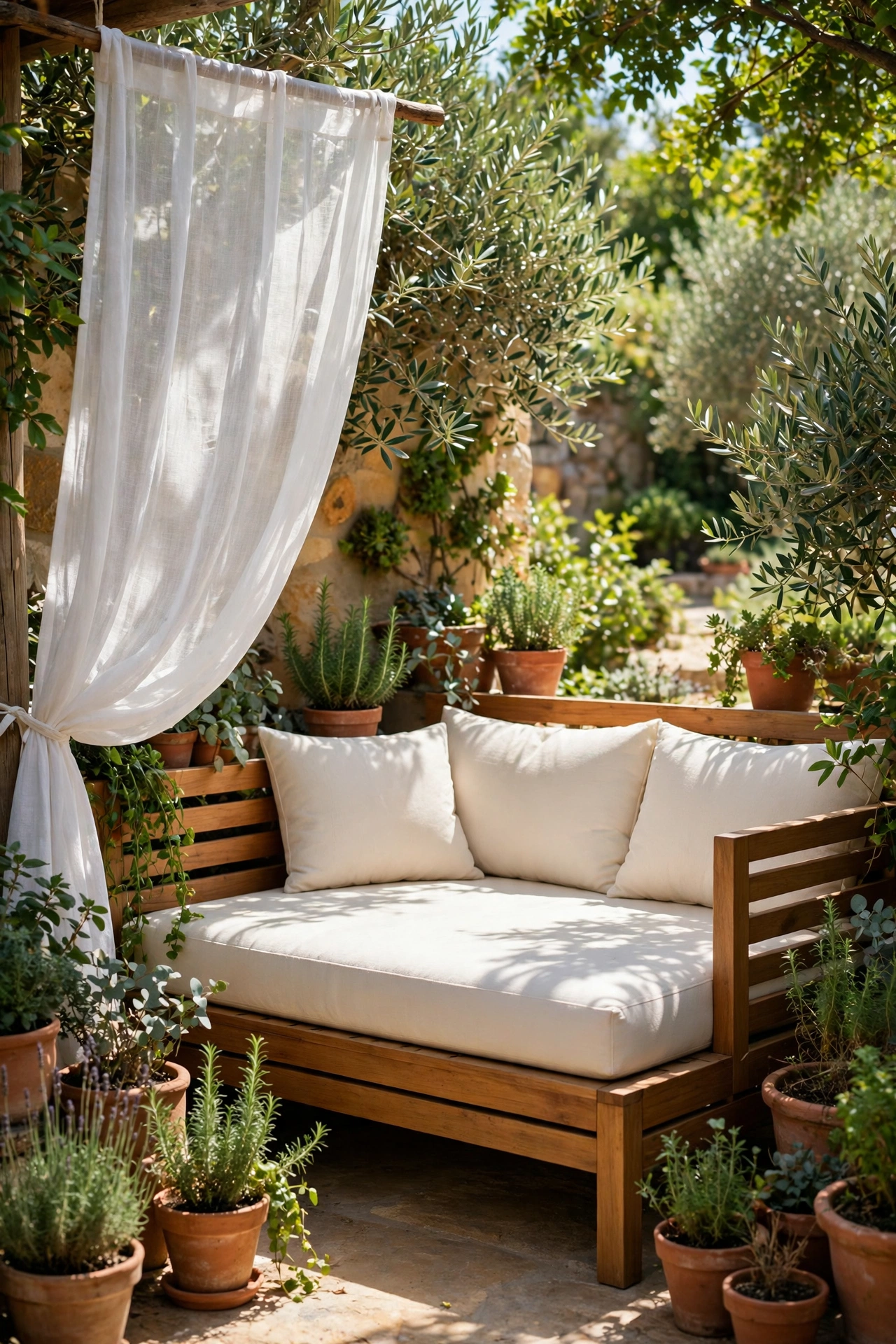
A shaded daybed nook gives the garden a place for long afternoon rests. A simple wooden daybed with cream cushions, tucked under a pergola or a large tree, feels like a private outdoor bedroom. Add a sheer curtain on one side for extra shade and privacy.
Keep the cushions in washable outdoor fabric in cream or soft sage so they stay fresh and clean. Place the daybed where it catches a breeze and a view of the garden. A daybed nook turns a sunny backyard into a resort style retreat without leaving home.
27. Use Clay Urns as Garden Sculpture
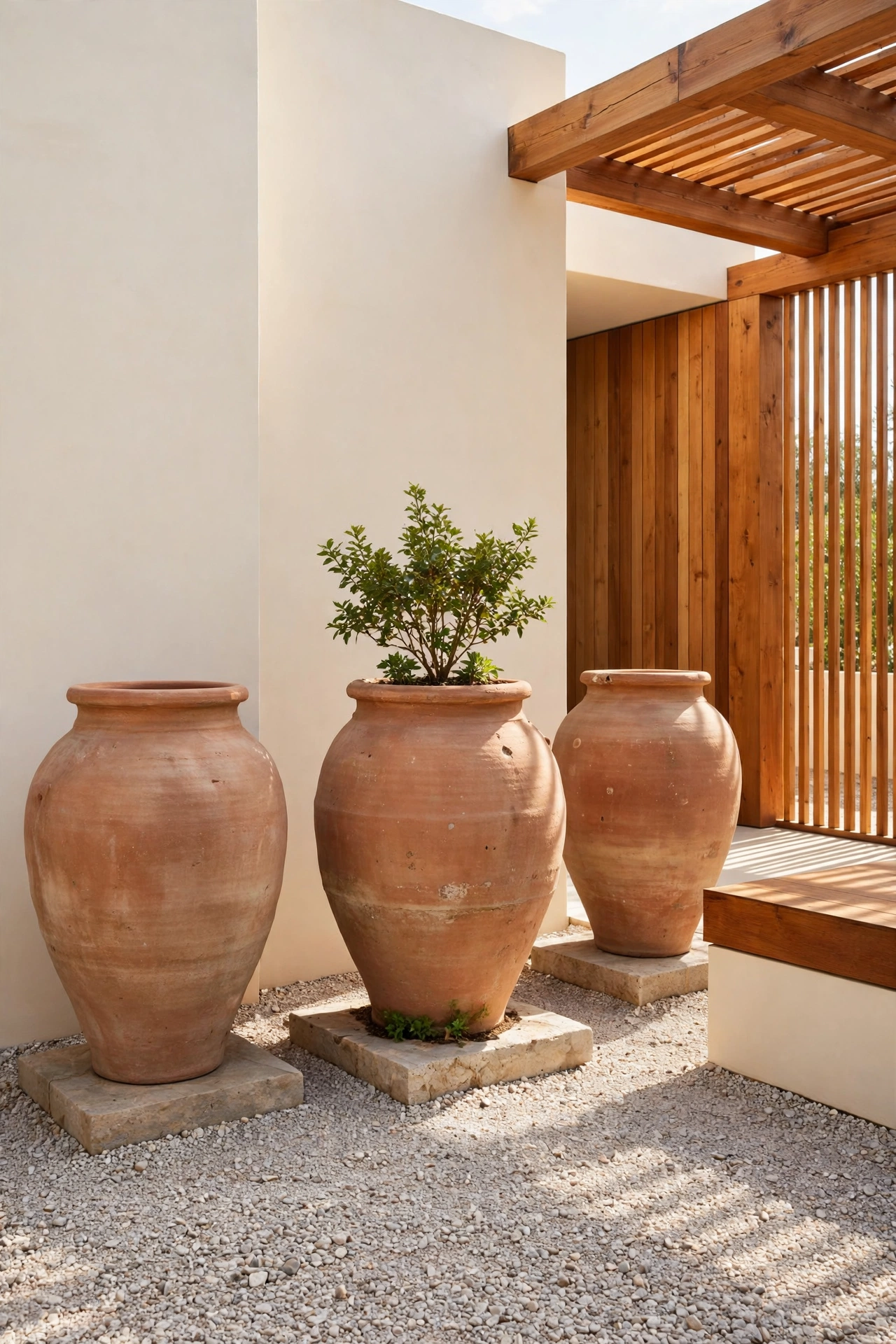
Large clay urns work as sculpture in a Mediterranean garden even when they hold no plants. Their classic shapes and warm terracotta color add height and interest to a border or a courtyard corner. A pair of urns flanking a path or a door looks formal and welcoming.
Place the urns on a stone plinth or directly on gravel, and fill them with a small olive tree, a ball of rosemary, or nothing at all. Group urns of different heights for a more natural look. Clay urns age beautifully, and their color deepens with every summer in the sun.
28. Create a Wildflower Meadow Corner
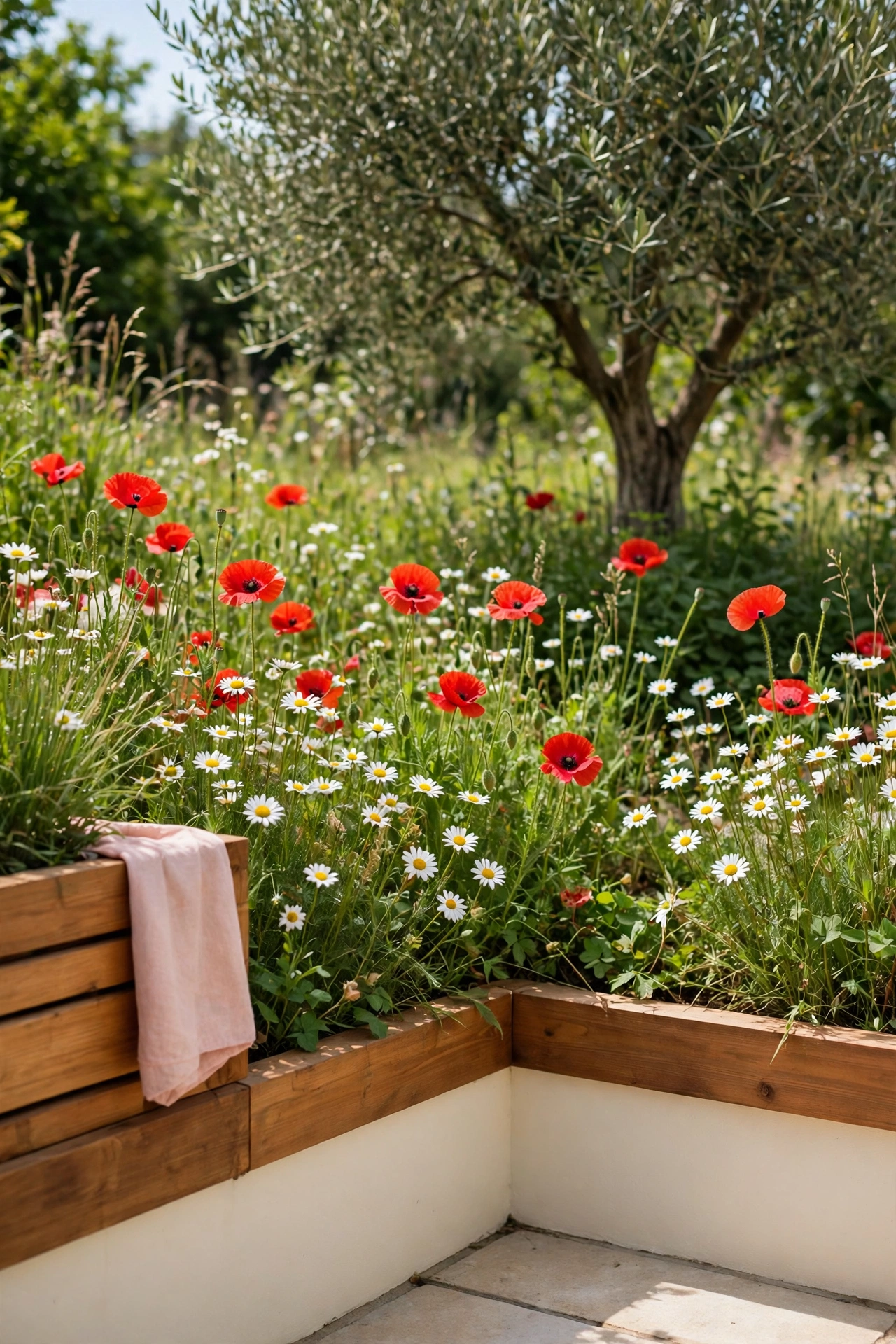
A wildflower meadow corner brings color and wildlife to a sunny Mediterranean garden. Poppies, cornflowers, and daisies bloom through summer and attract bees and butterflies all day long. The meadow needs little water and almost no care once it is established.
Sow the seeds in a sunny patch of poor soil in autumn or early spring, and mow the area just once a year after the flowers set seed. For more ideas on growing a natural flower area in your yard, see these backyard wildflower meadow ideas. A meadow corner adds a soft, natural contrast to the structured parts of the garden.
29. Add a Terracotta Style Rain Barrel
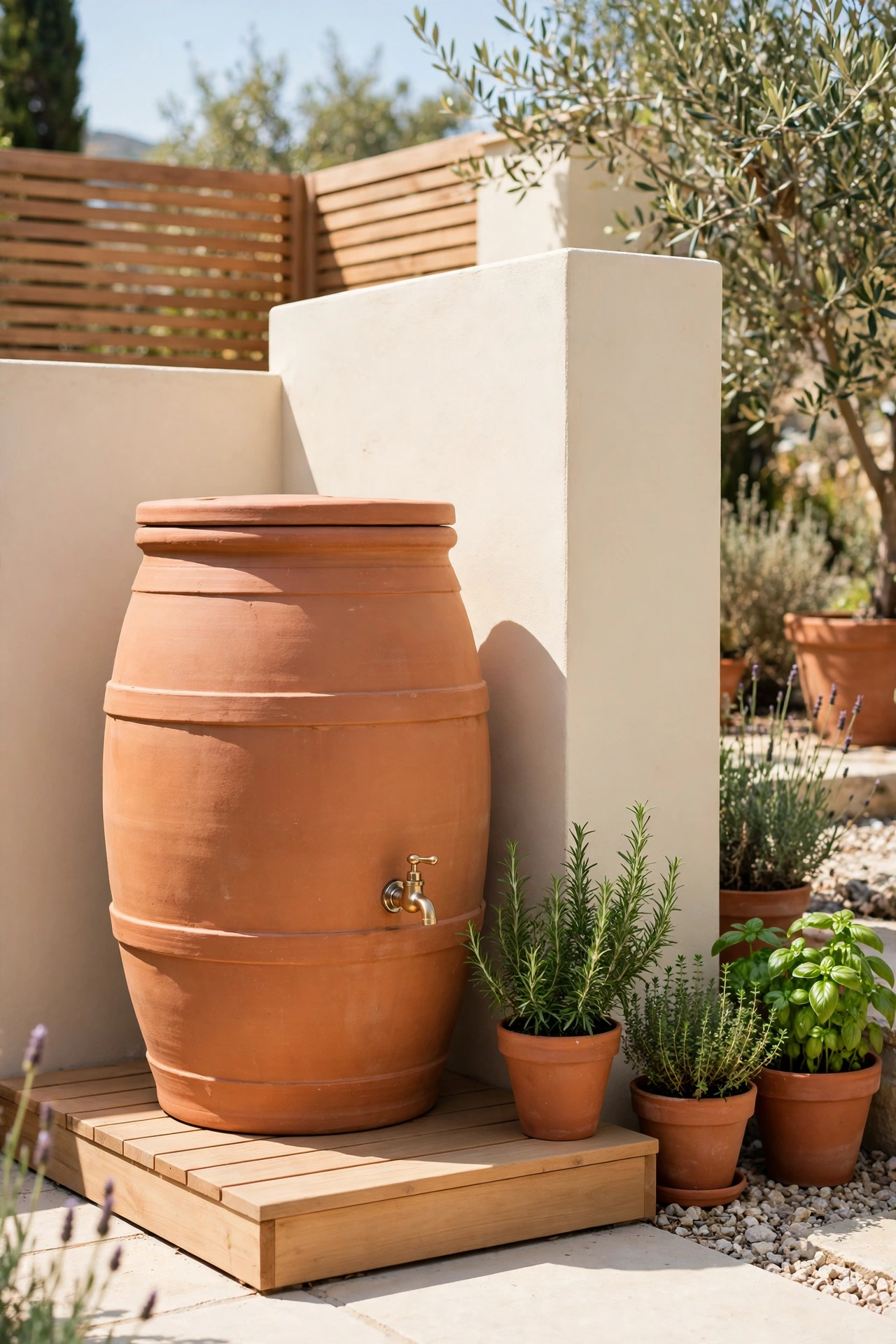
A terracotta style rain barrel collects free water for the garden and looks far better than a plain plastic tank. Painted or finished in warm clay tones, it blends with pots and walls instead of standing out. The stored rainwater is perfect for herbs and potted plants.
Place the barrel under a downspout near the garden and fit it with a tap at the base. Use the water for pots and beds, since rainwater is soft and free of chemicals. For more ways to save water in the garden, see these DIY rain barrel ideas. A rain barrel saves money and keeps the garden green through dry spells.
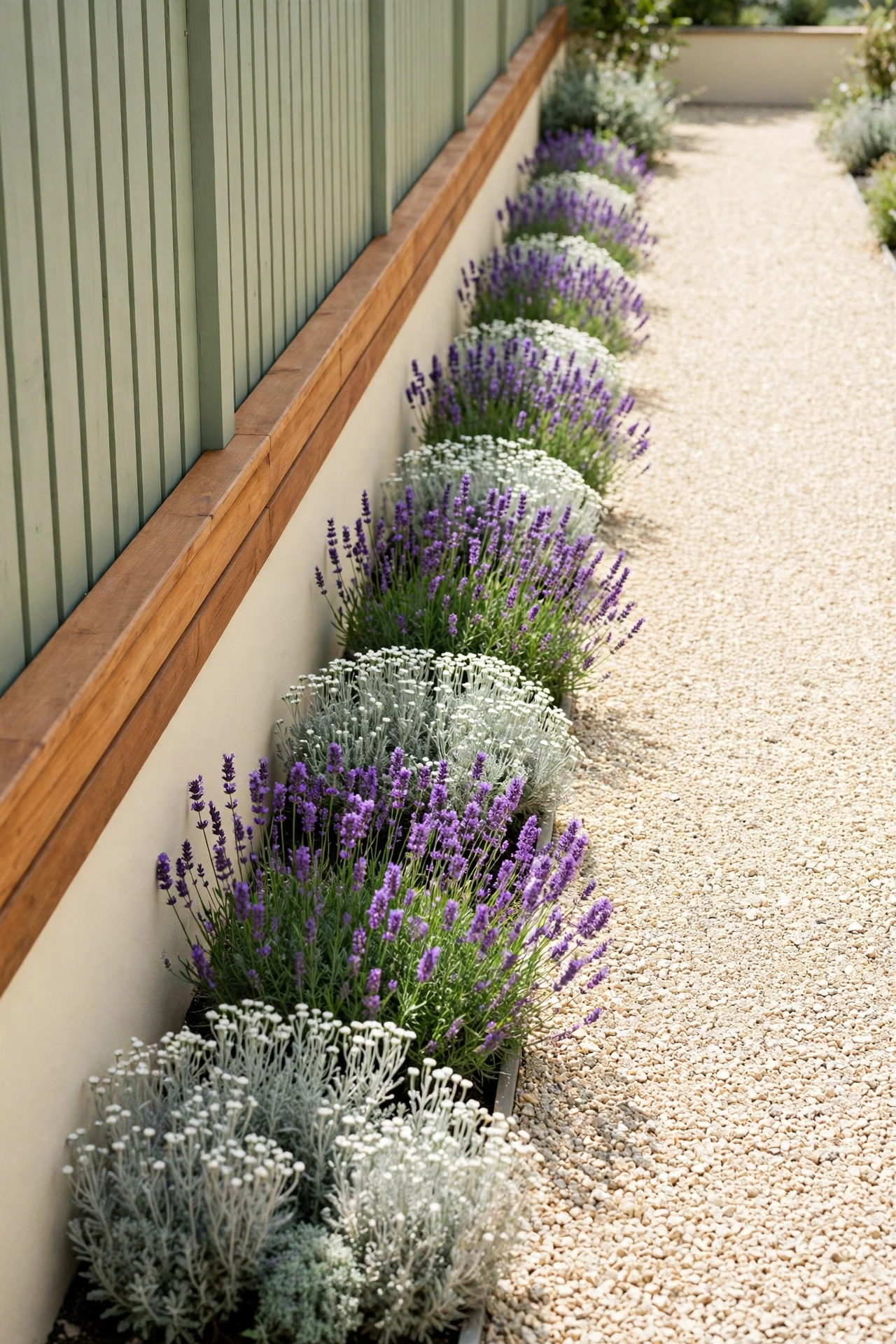
30. Design a Border with Lavender and Santolina
A border of lavender and santolina is a classic Mediterranean planting pair. The purple spikes of lavender contrast with the silver yellow buttons of santolina, and both plants love sun and poor soil. Together they form a neat, fragrant edge that looks good all year.
Plant them in alternating groups along a path or a patio edge, spacing each plant about half a meter apart. Trim both plants lightly after flowering to keep the border compact. For more border planting inspiration, see these backyard landscape border ideas. This simple border brings color, scent, and structure to any sunny garden.
31. Add a Pavilion for Shade and Gathering
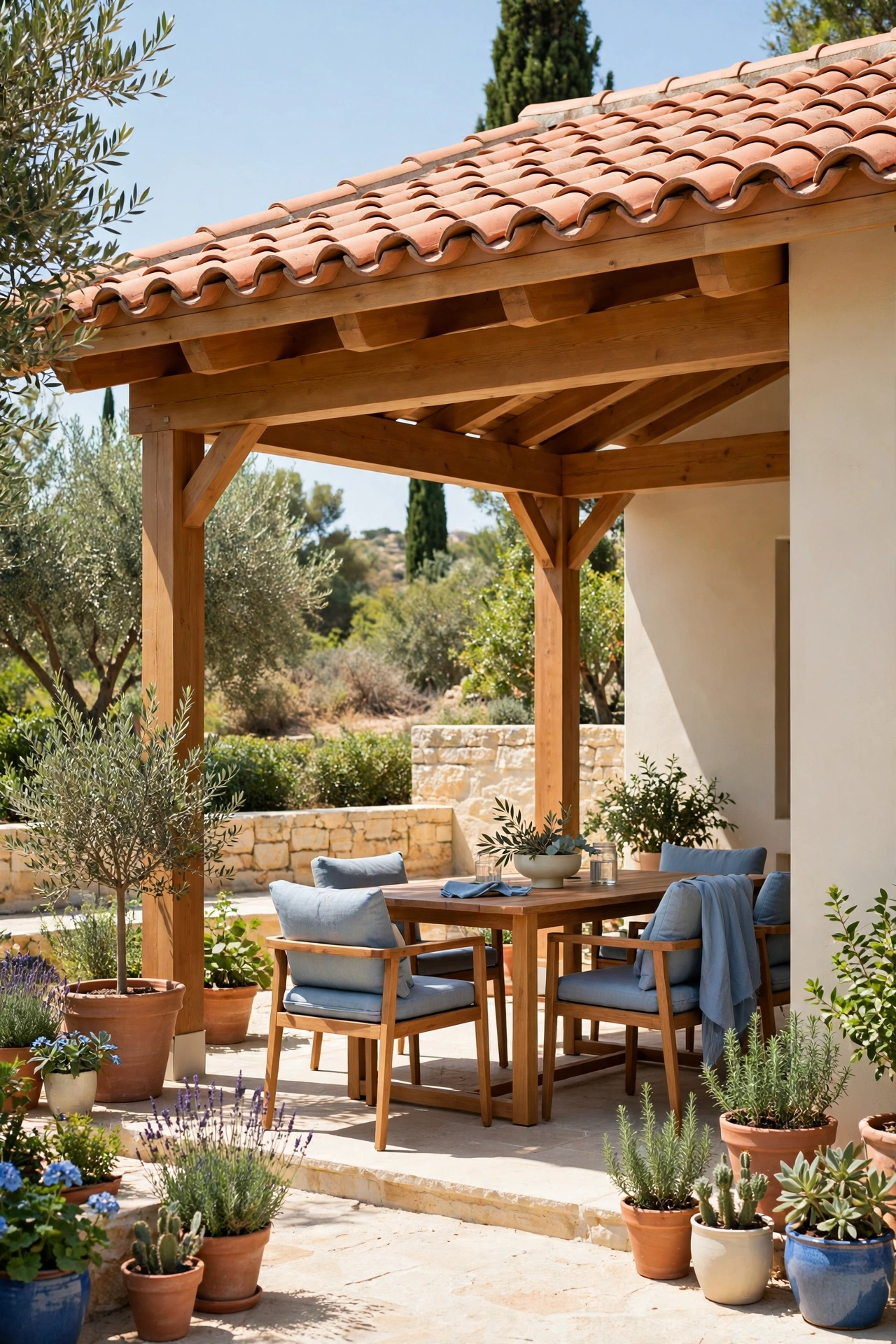
A garden pavilion gives a Mediterranean backyard a shaded room for gatherings. Open sides let the breeze through, while a solid roof keeps the sun and rain off the table below. It is the perfect spot for family meals, afternoon tea, or a quiet evening with friends.
Choose a simple wooden or stone pavilion with clean lines and a terracotta tiled roof if your budget allows. Furnish it with a wooden table, comfortable chairs, and a few potted plants. For more covered outdoor gathering ideas, see these backyard pavilion ideas. A pavilion turns a garden into a place where people want to spend the whole day.
32. Create a Sunset Viewing Terrace
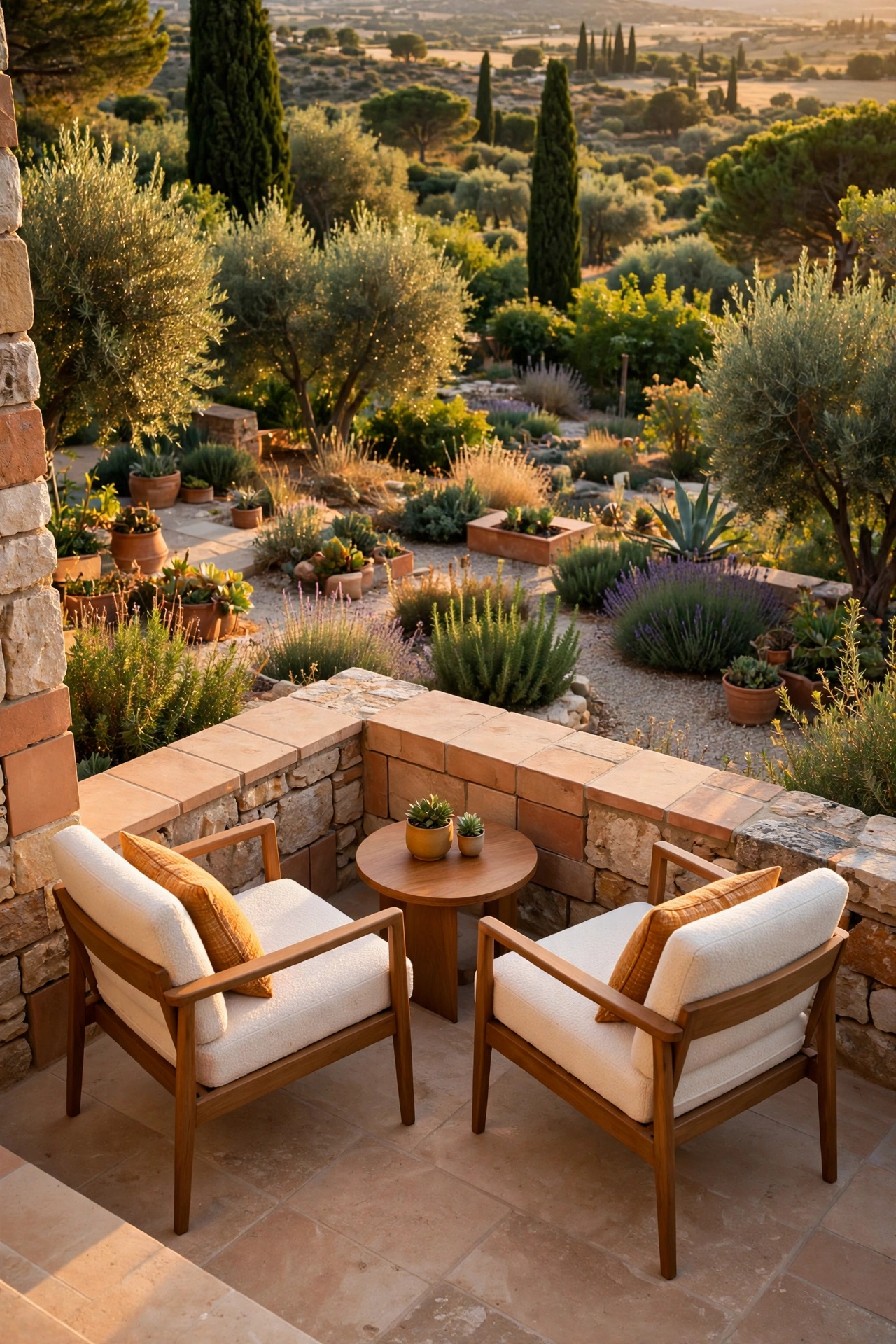
A sunset viewing terrace is a small paved area placed to catch the last light of the day. Two comfortable chairs, a small table, and a view across the garden are all it needs. As the sun sets, the terracotta, stone, and plants all glow warm gold.
Choose the highest or most open spot in the garden and pave it with warm stone or terracotta tiles. Keep the planting low around the terrace so nothing blocks the view. A sunset terrace gives you a reason to step outside every evening and watch the garden change color.
33. Finish with a Fragrant Night Garden of White Flowers
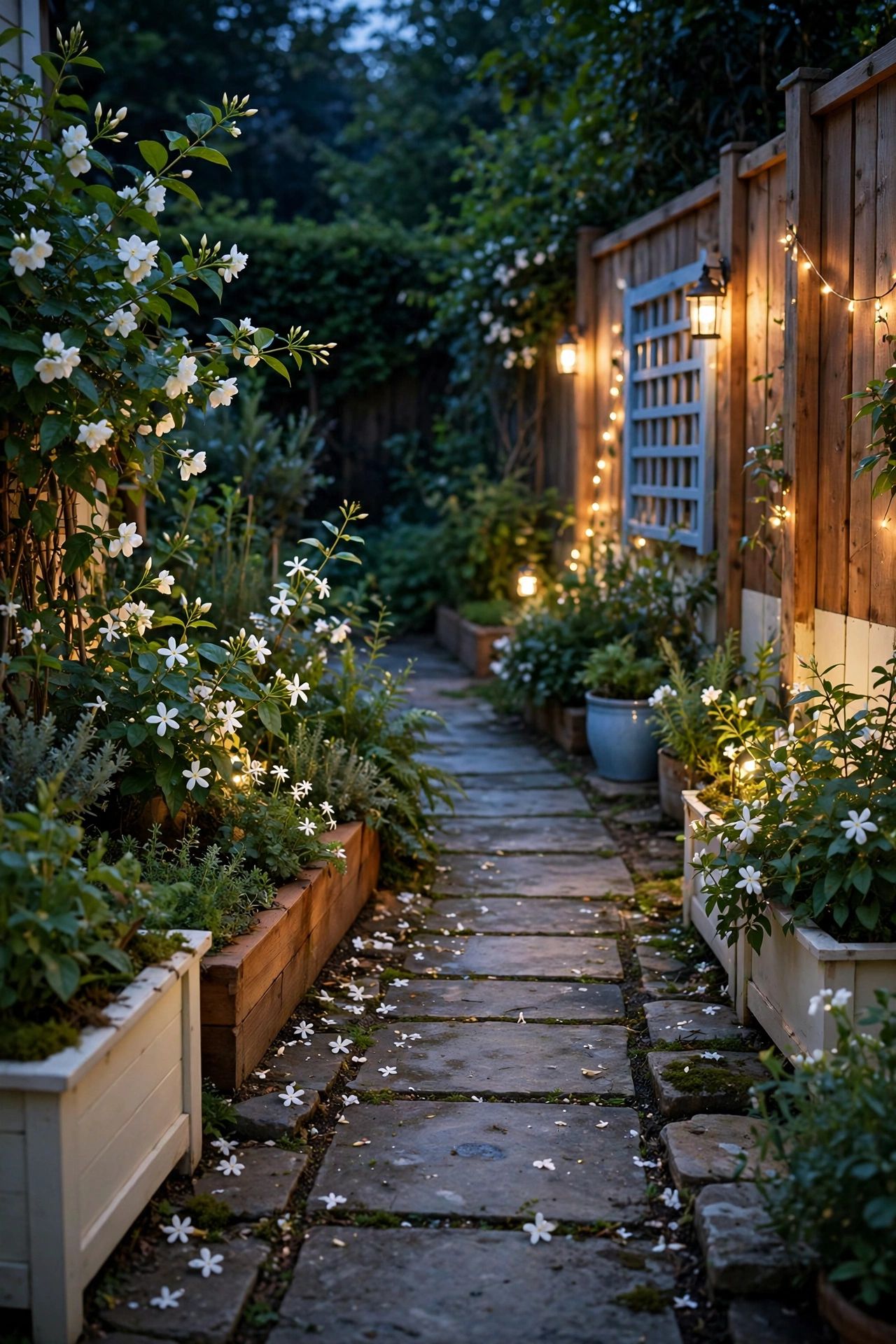
A fragrant night garden of white flowers is the perfect final touch for a Mediterranean backyard. White jasmine, moonflower, and night scented stock open in the evening and glow in the moonlight. Their scent fills the garden just as the day cools down.
Plant the white flowers near the seating area and along the paths you use at night. Add a few soft lights among the plants so the white blooms stand out after dark. A night garden extends the pleasure of the backyard long after the sun has set, and it makes every summer evening feel special.
Conclusion
A Mediterranean garden is not about expensive materials or a large space. It is about sun, scent, warm colors, and plants that love the heat. From a single olive tree to a lavender lined path and a shaded pergola, each idea here brings a piece of the coast to your own backyard.
Pick one or two ideas that fit your space and your budget, and start this week. Plant a pot of lavender, set out a terracotta urn, or hang string lights under a pergola. Your sunny backyard can feel like a Mediterranean holiday with just a few thoughtful changes, and it will only grow more beautiful with every summer that passes.
Frequently Asked Questions About Mediterranean Garden Design Ideas for Sunny Backyards
What plants grow best in a Mediterranean garden?
Olive trees, lavender, rosemary, citrus, and bougainvillea grow best in a Mediterranean garden. These plants love full sun, well drained soil, and dry summers. They need little water once established and stay beautiful through the hottest months of the year.
How do I keep a Mediterranean garden low maintenance?
Use gravel instead of lawn, choose drought tolerant plants, and mulch the beds with stone or bark. Water deeply but rarely, and prune the main plants once a year. A Mediterranean garden is designed for dry summers, so it stays tidy with very little work.
Can I create a Mediterranean garden in a small backyard?
Yes, a small backyard suits a Mediterranean garden very well. One olive tree in a pot, a row of lavender, and a few terracotta pots are enough to set the style. Small spaces also stay warmer and sunnier, which helps Mediterranean plants grow even better.
What colors work best in a Mediterranean garden?
Warm white, terracotta, soft blue, and sage green are the classic Mediterranean colors. White walls reflect the sun, terracotta adds warmth, and blue accents recall the sea. Keep the large surfaces neutral and add color through plants, pots, and tiles.
How much water does a Mediterranean garden need?
A mature Mediterranean garden needs very little water. Most of the classic plants, like olive, lavender, and rosemary, survive on rainfall alone in many climates. Water new plants regularly in their first year, then water deeply but rarely during long dry spells.

Hi, I’m Emily! I turn messy corners into cozy, organized spots. DreamNestDecor is where I share simple, practical home ideas — decor, organization, and small-space solutions that work in real life, not just in photos. Every idea here is carefully researched before it’s shared.