Picture this: you step into your front yard on a warm morning and the garden greets you with sculptural cacti, soft gravel paths, and the warm tones of natural stone. No lawn to water, no thirsty plants to struggle through the summer, just a calm desert landscape that looks beautiful in every season. That easy, sun-loving beauty is exactly what a well planned desert garden gives you.
You do not need a large budget or a team of landscapers to get there. With the right plants, the right stones, and a little planning, an arid yard can become the most striking part of your home. These 17 desert landscape design ideas for arid climates will help you build a garden that saves water, stays beautiful all year, and feels completely at home in the desert.
1. Plant a Sculptural Saguaro as a Focal Point
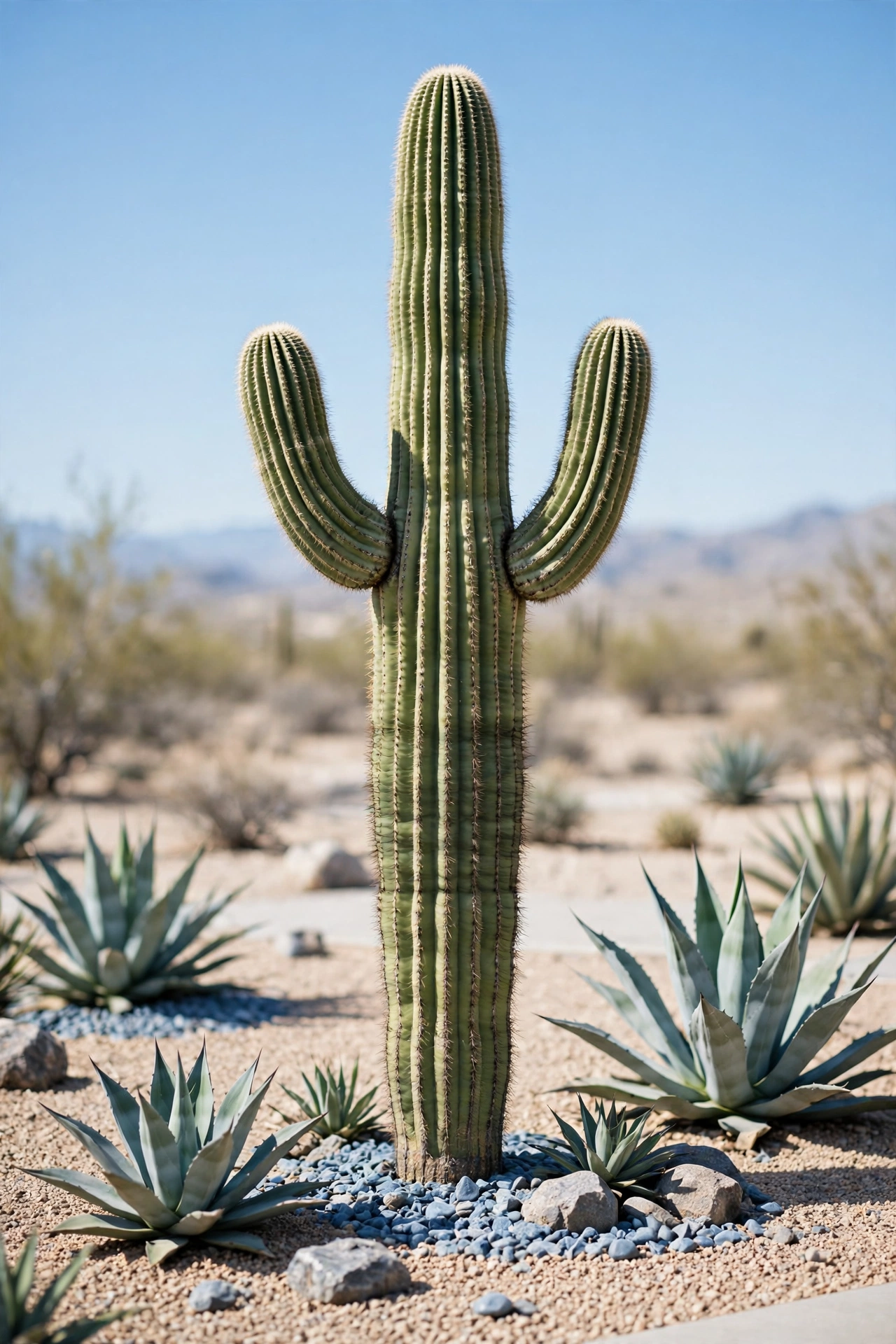
A tall saguaro cactus is the most iconic feature a desert garden can have. Its strong vertical shape draws the eye upward and gives the whole yard a clear focal point. Place one near the entry path or at the corner of the house where it can be seen from the street and from inside the home.
Saguaros grow slowly, so choose a healthy specimen from a nursery and plant it in a sunny spot with excellent drainage. Surround the base with small gravel and a few low rocks to keep the roots dry. A single saguaro can anchor a whole garden for decades.
2. Build a Dry River Bed with River Rocks
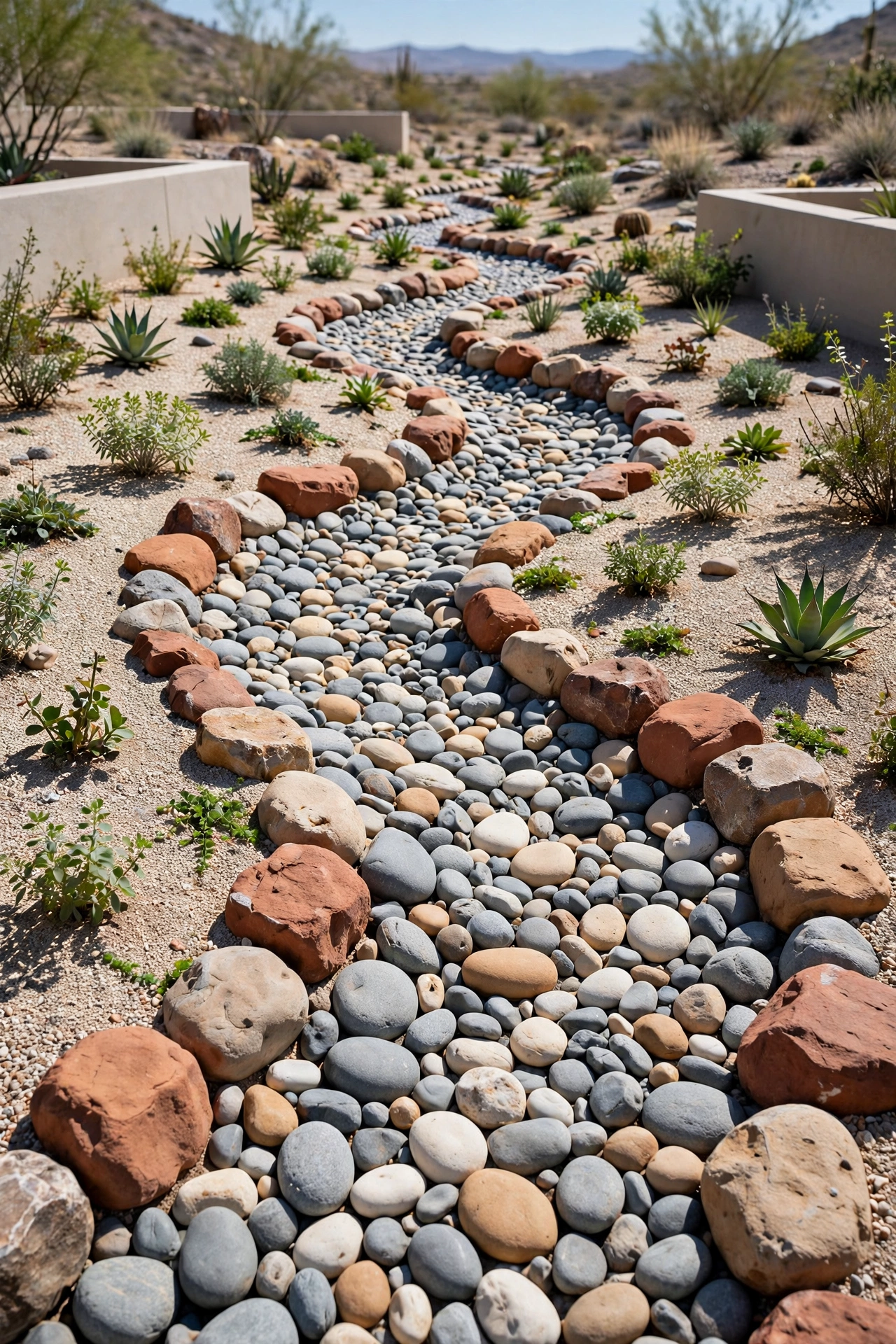
A dry river bed brings the look of flowing water into a garden that never needs a drop. Dig a shallow winding channel through the yard and line it with smooth river rocks in soft gray, cream, and warm tan tones. The curve of the channel leads the eye through the garden and makes the space feel larger.
Place larger boulders along the edges to hold the shape, and fill the center with smaller stones in a mix of sizes. A dry river bed also helps guide rainwater away from the house during rare desert storms. It is both beautiful and practical in an arid climate.
3. Create a Gravel Garden with Mixed Stone Sizes
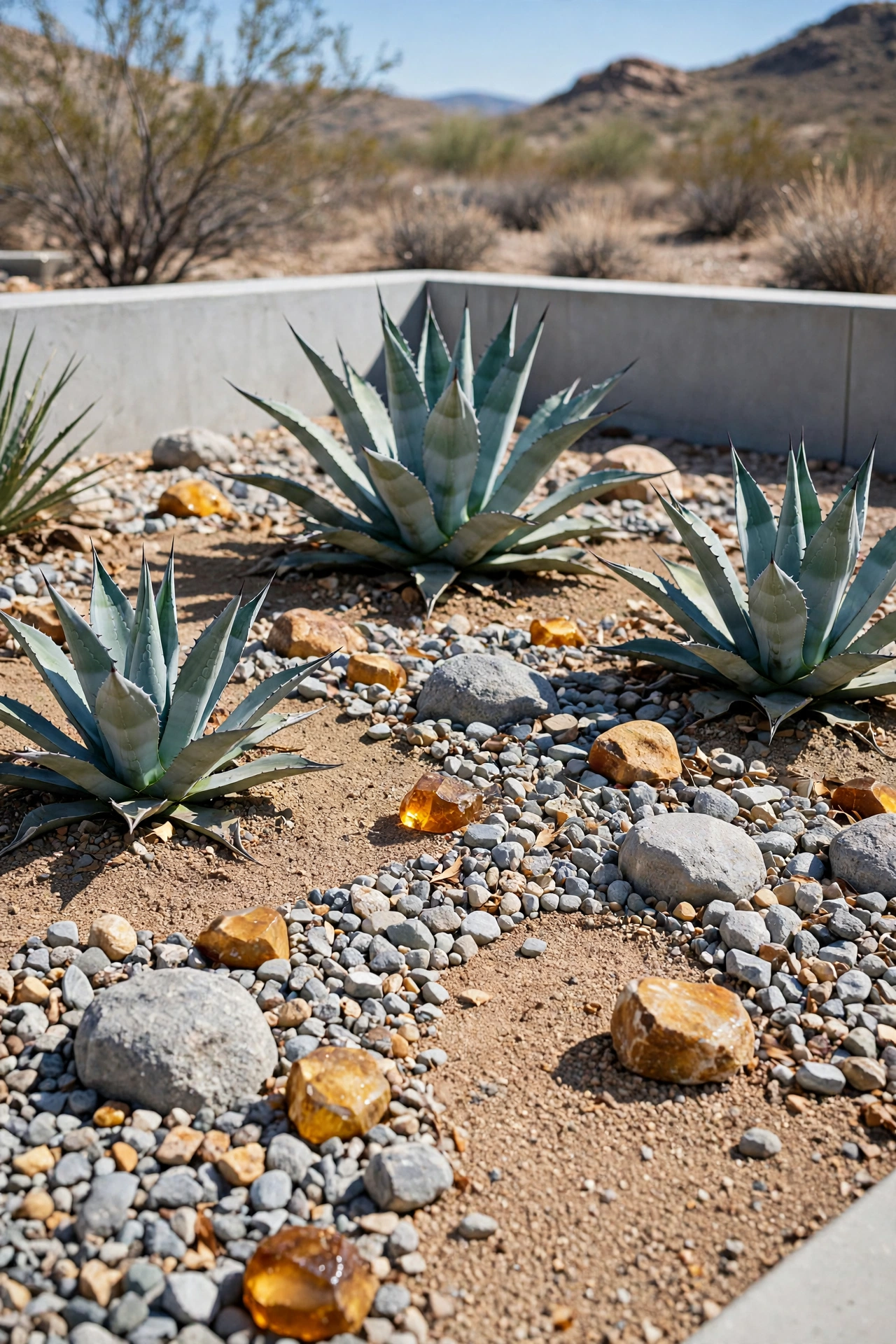
Gravel is the foundation of almost every desert landscape. A mix of stone sizes, from fine decomposed granite to chunky gravel, gives the ground texture and keeps the surface interesting. Use a warm tan or soft gray gravel as the base and add darker stones in planting beds for contrast.
Lay landscape fabric under the gravel to stop weeds and keep the stones from sinking into the soil. Rake the gravel into gentle patterns or leave it smooth for a clean modern look. For more ideas on defining garden edges with stone, see these backyard landscape border ideas. A gravel garden stays tidy with almost no upkeep.
4. Edge Garden Beds with Natural Boulders
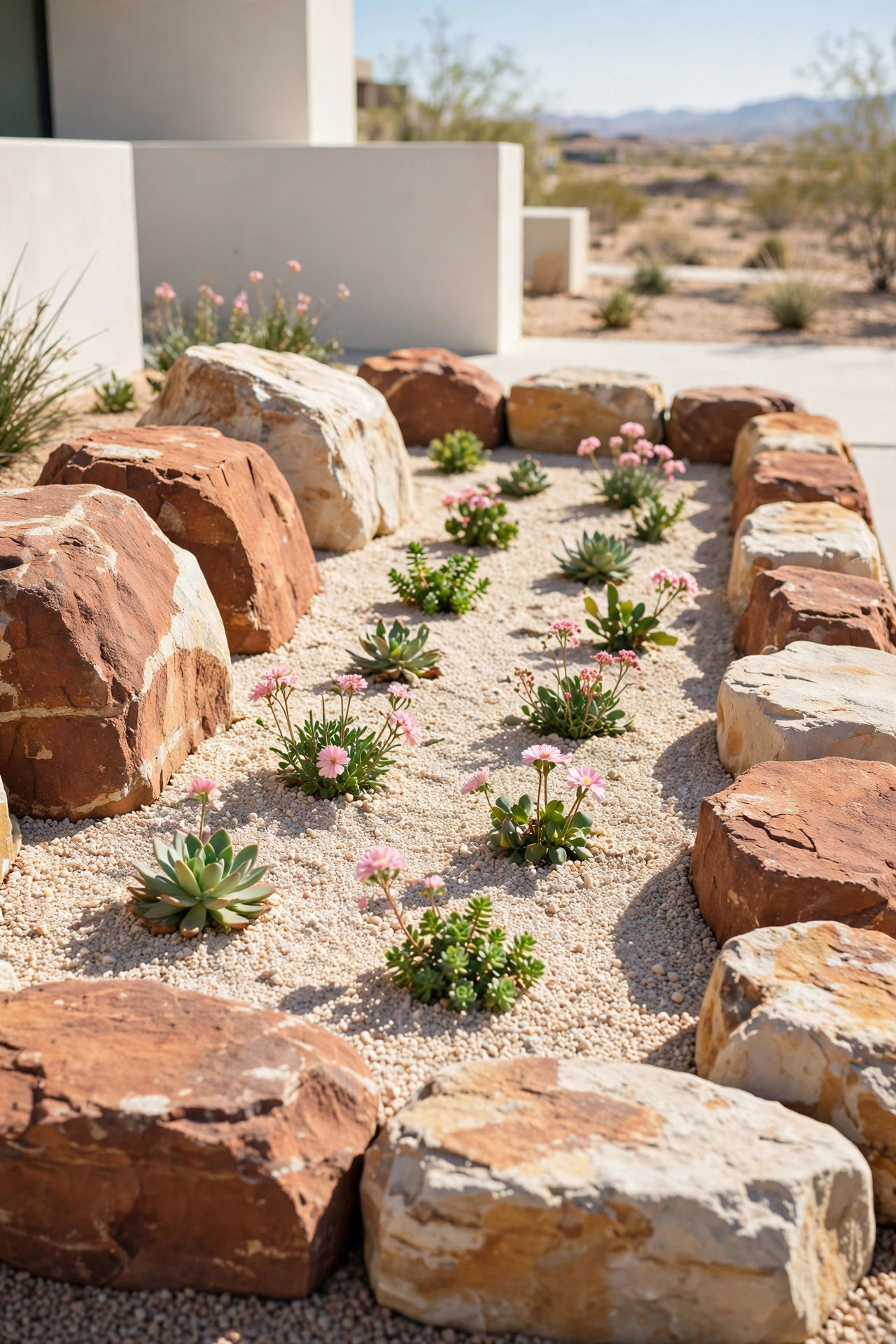
Natural boulders give desert garden beds a strong, grounded edge. Choose stones in warm sandstone, rusty red, or soft gray tones and set them half buried in the soil so they look like they grew there. Vary the sizes from large anchor stones to smaller filler rocks for a natural feel.
Place the largest boulders at the corners and the ends of each bed, then fill the gaps with medium stones. The boulders hold gravel and soil in place during heavy rain and give lizards and small birds a place to rest. A boulder edge turns a plain bed into a landscape feature.
5. Plant a Colorful Succulent Border
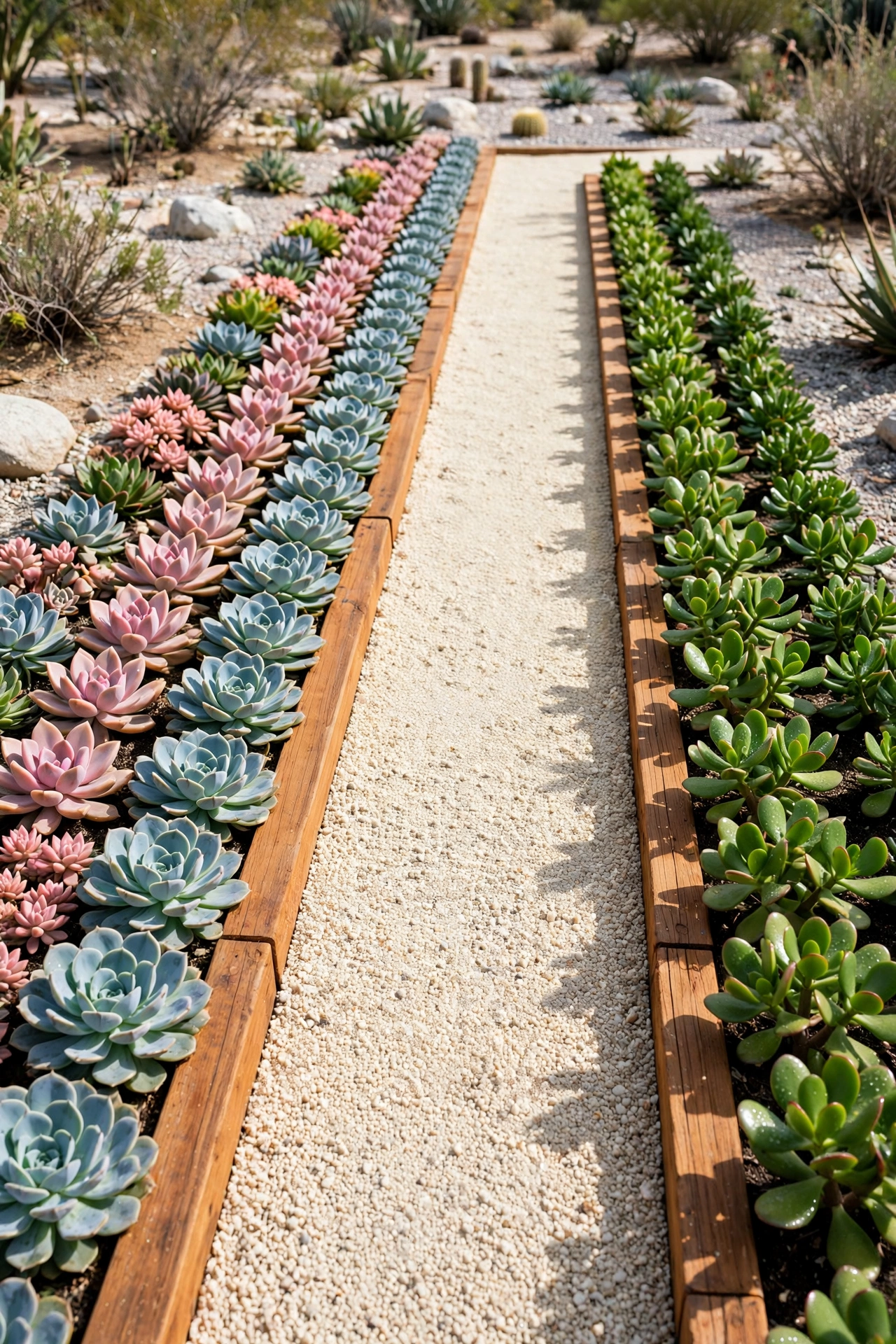
Succulents bring color to a desert garden without asking for much water. Echeveria rosettes in soft blue and blush pink, jade plants in deep green, and sedum in golden yellow can line a path or edge a patio with living color. Plant them in drifts of one type for a bold effect, or mix types for a cottage garden feel.
Succulents need fast draining soil, so mix coarse sand and small gravel into the planting bed before you set them in place. Water them deeply but rarely, and let the soil dry fully between waterings. A succulent border looks lush while using almost no water at all.
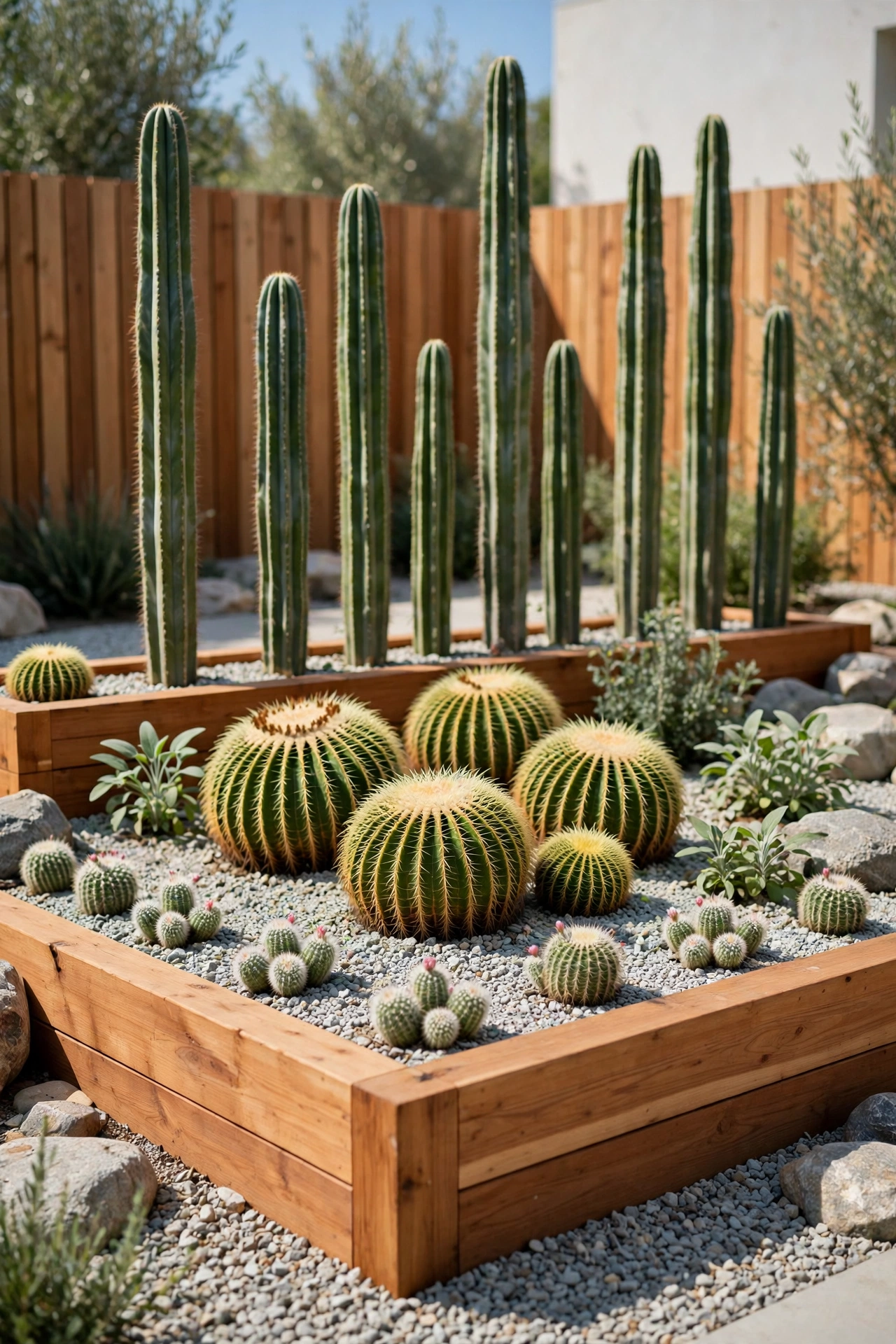
6. Design a Cactus Garden in Raised Beds
Raised beds lift a cactus collection to eye level and keep the plants in perfect drainage. Build low beds from warm wood, stone, or stucco and fill them with a gritty cactus mix. Arrange tall columnar cacti at the back, barrel cacti in the middle, and small pincushion cacti along the front edge.
Raised beds also protect cacti from standing water after rare desert rains. Add a top layer of small gravel to finish the beds and keep the soil from splashing onto the plants. A raised cactus garden becomes a living sculpture that changes slowly with the seasons.
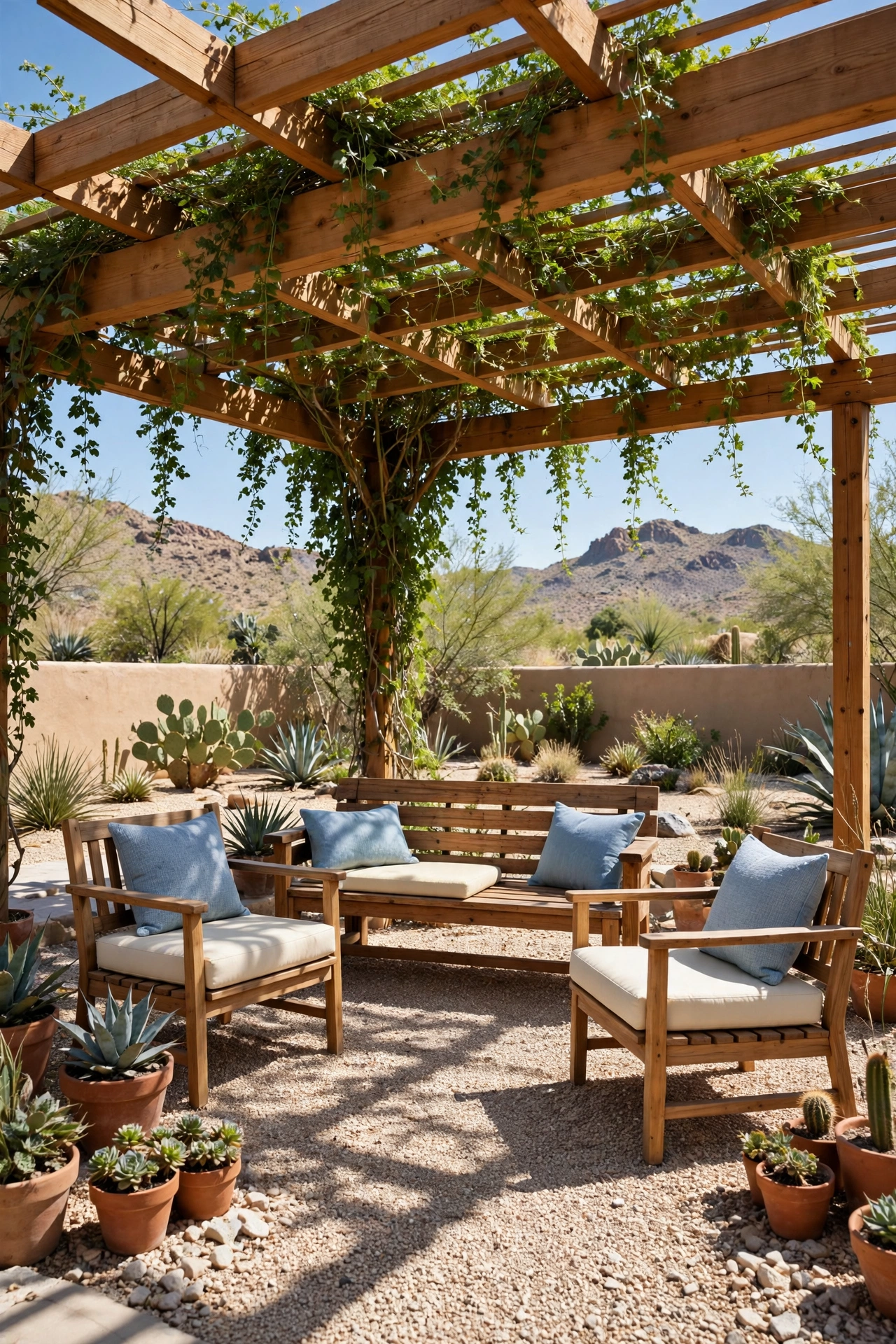
7. Add a Shaded Pergola with Desert Vines
A pergola gives a desert garden a cool shaded spot for sitting and relaxing. Build the frame from warm wood or painted metal and let a desert vine, like lady banks rose or cat claw vine, climb across the top. The vine filters the sun and drops the temperature under the pergola by several degrees.
Place a simple bench or a pair of chairs under the pergola with a small table for drinks and books. Hang a few solar lanterns from the beams for soft light in the evening. A shaded pergola turns a hot sunny yard into a place you can enjoy all afternoon.
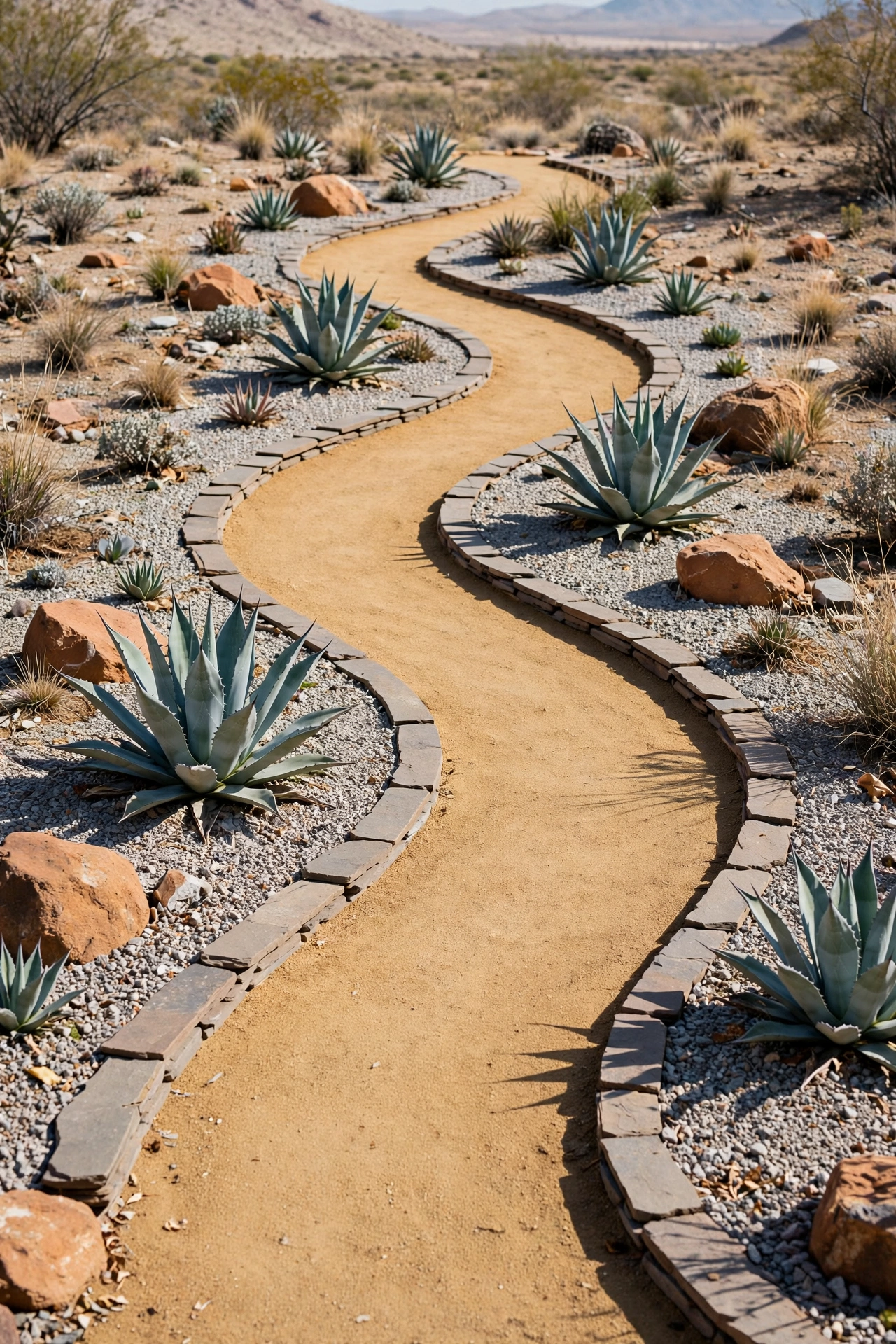
8. Use Decomposed Granite Paths
Decomposed granite makes a firm, natural looking path that suits a desert garden perfectly. The fine golden particles pack down into a smooth surface that is easy to walk on and easy to maintain. Lay the paths in gentle curves to connect the entry, the patio, and the garden beds.
Edge the paths with flat stones or low metal edging to keep the granite in place. A light spray of water after raking helps the surface set firm. Decomposed granite paths look soft and natural, and they never need mowing or watering.
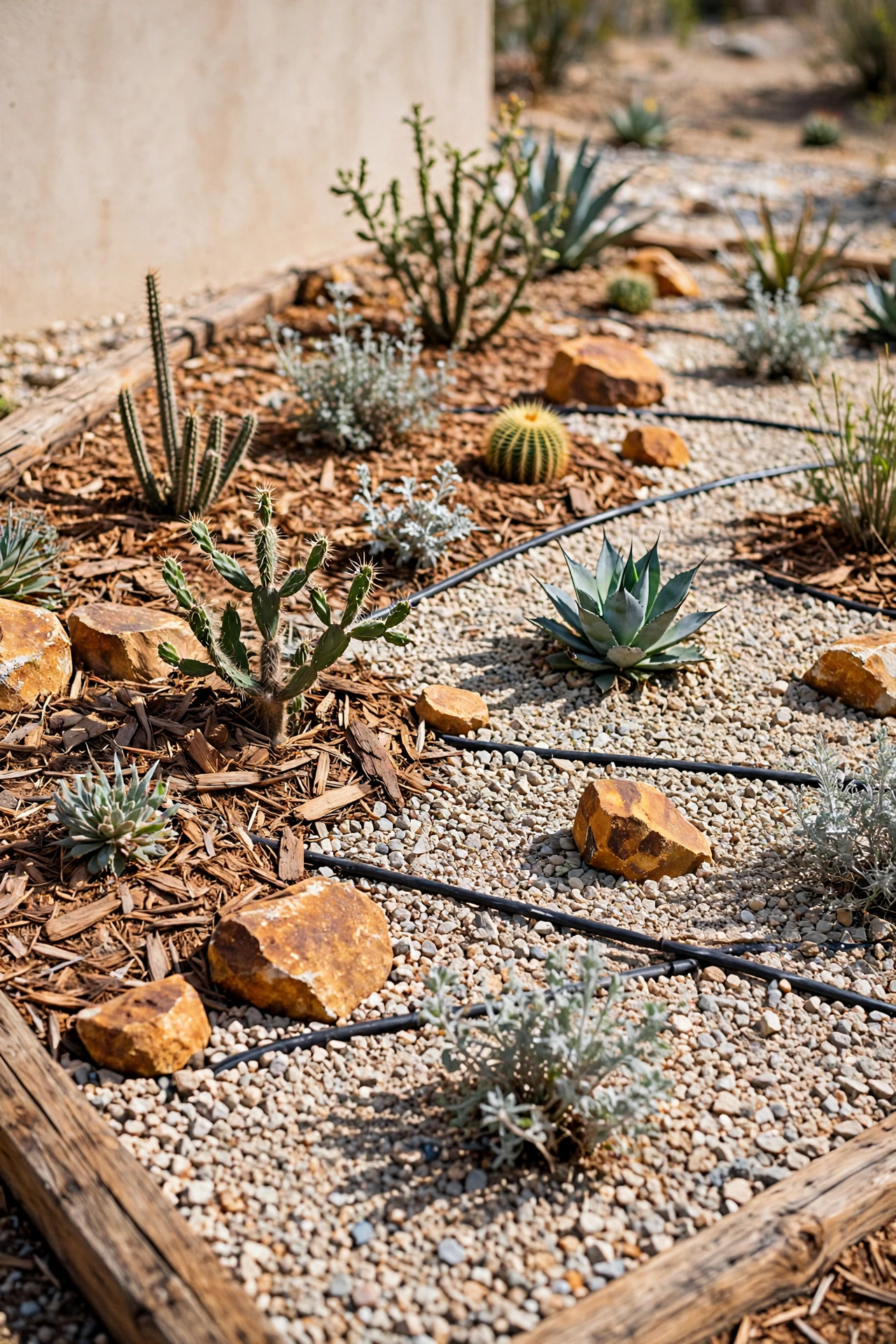
9. Install a Drip Irrigation System
Drip irrigation delivers water straight to the roots of each plant, so almost nothing is lost to evaporation. Lay thin drip lines under a layer of gravel and place an emitter at the base of every cactus, succulent, and shrub. A simple timer can run the system in the early morning when the air is cool.
Drip systems use far less water than sprinklers and keep leaves dry, which helps prevent rot in desert plants. Check the emitters once a month for clogs and adjust the timer with the seasons. For more water wise ideas for the yard, see these DIY rain barrel ideas. A drip system is the smartest upgrade a desert garden can have.
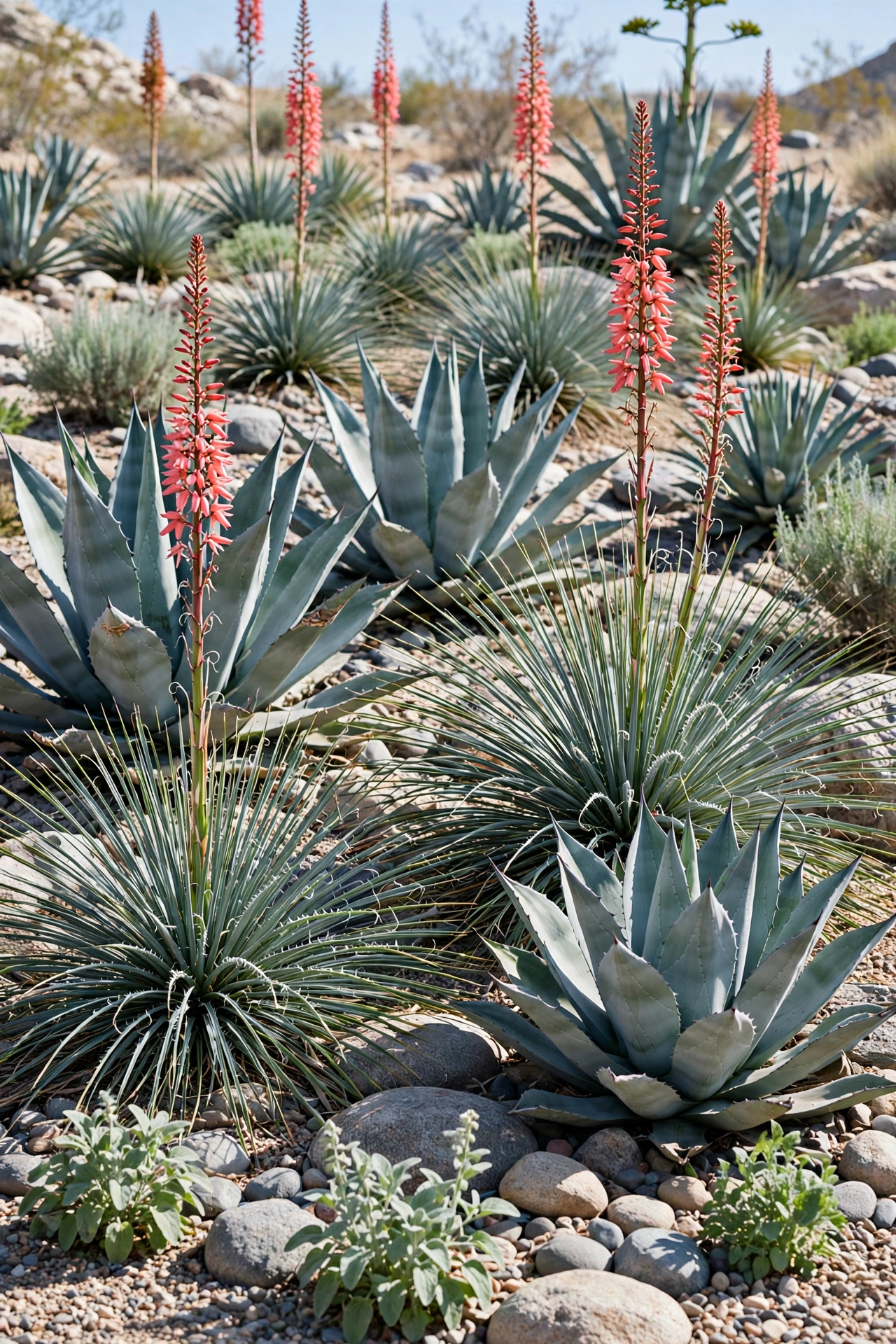
10. Create a Rock Garden with Agave and Yucca
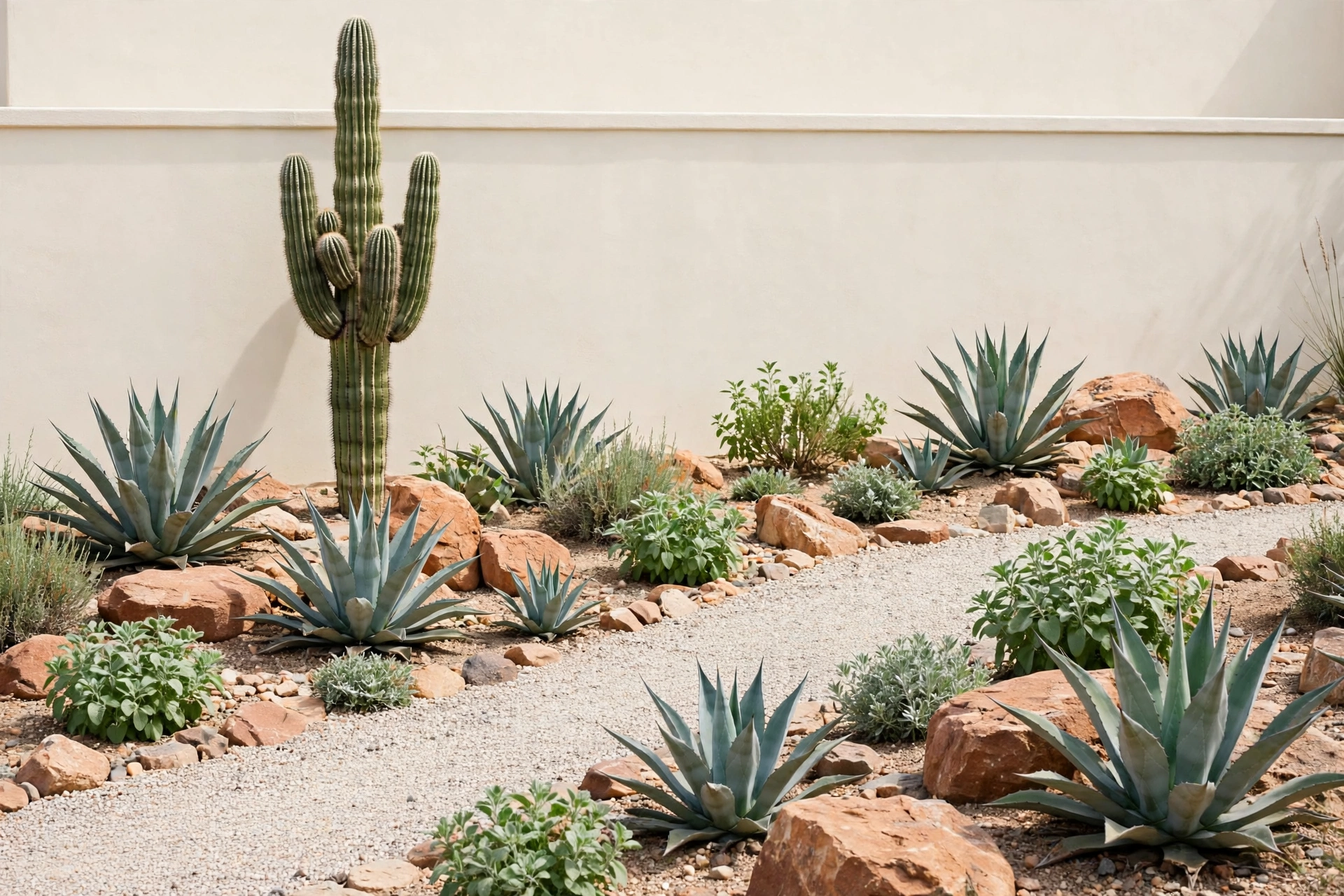
Agave and yucca are the boldest plants in a desert garden. Their strong rosettes and sword shaped leaves add drama to a bed of rocks and gravel. Plant blue agave for cool silver tones, and add red yucca for tall spikes of coral flowers in spring and summer.
Space the plants generously, since agave rosettes can grow wide over time. Surround each plant with river rocks and a few smaller succulents to fill the gaps. A rock garden with agave and yucca needs almost no care once the plants are established.
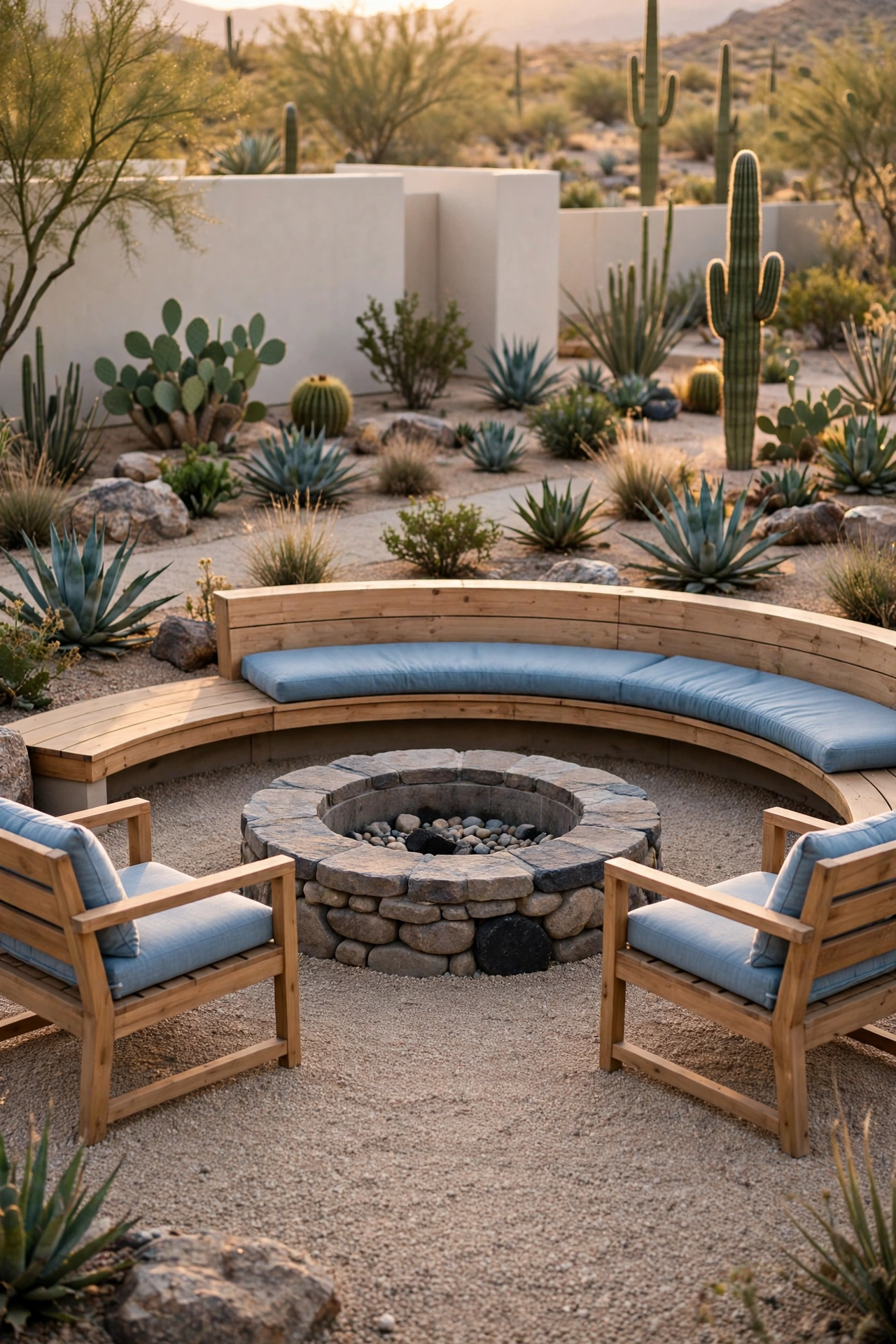
11. Add a Fire Pit with Desert Seating
A fire pit turns a desert garden into an evening gathering place. Build a low round pit from stone or metal and surround it with simple chairs or a curved bench made from warm wood. The fire pit becomes the heart of the garden once the sun goes down and the desert air turns cool.
Keep the area around the pit clear of dry plants and fill the ground with gravel for safety. Store firewood in a neat stack nearby under a simple cover. For more outdoor fire feature ideas, see these outdoor fireplace ideas. A fire pit extends the hours you can enjoy your desert garden every day.
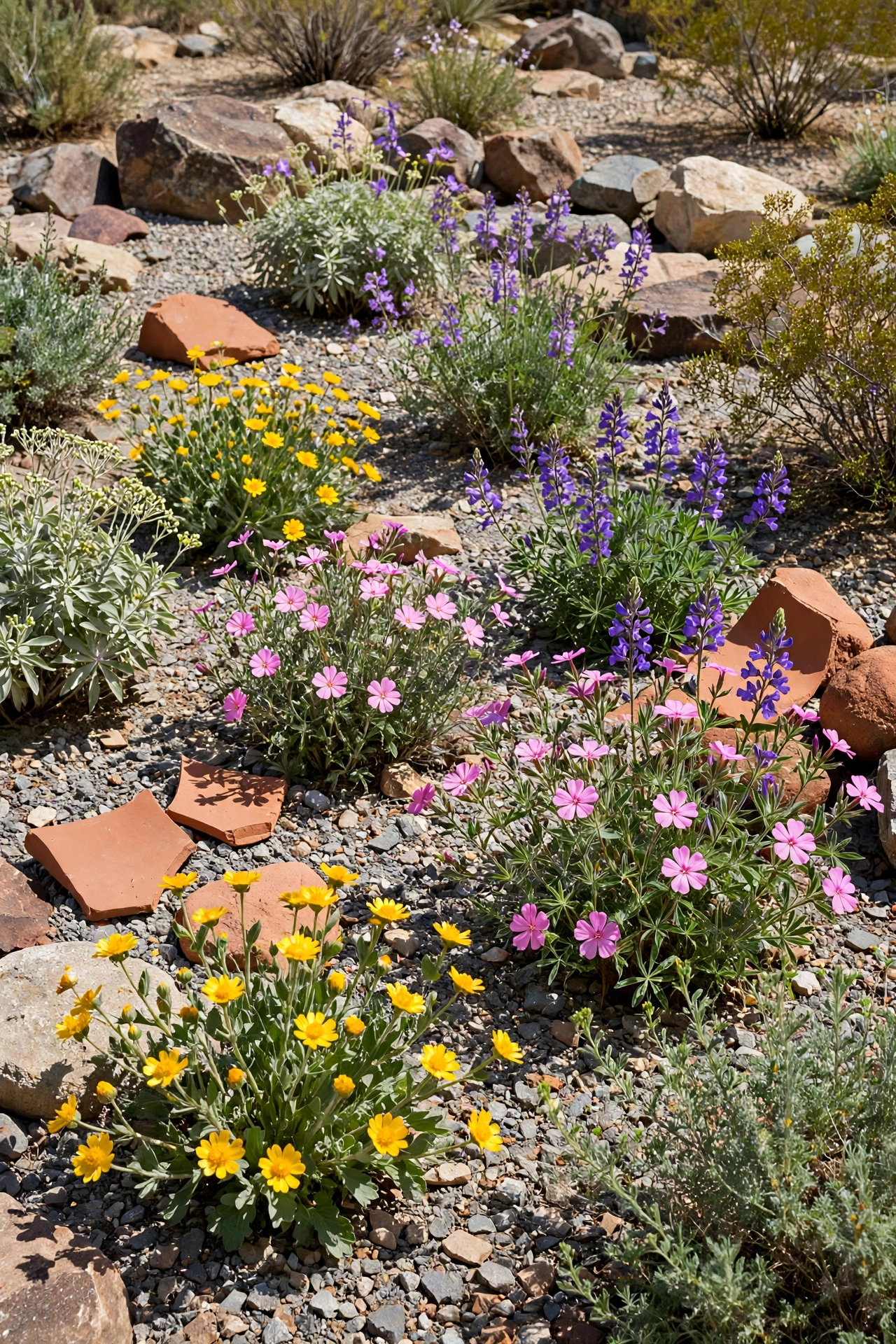
12. Plant Native Wildflowers for Seasonal Color
Native desert wildflowers bring bursts of color to the garden in spring without any extra water. Desert marigold, penstemon, and brittlebush bloom in gold, pink, and purple after the winter rains. Scatter the seeds in fall and let the winter rain do the watering.
Plant wildflowers in drifts along paths and in open gravel beds where they can reseed freely. Leave the seed heads standing after bloom so the plants return next year. Native wildflowers also attract bees and butterflies, which brings the garden to life.
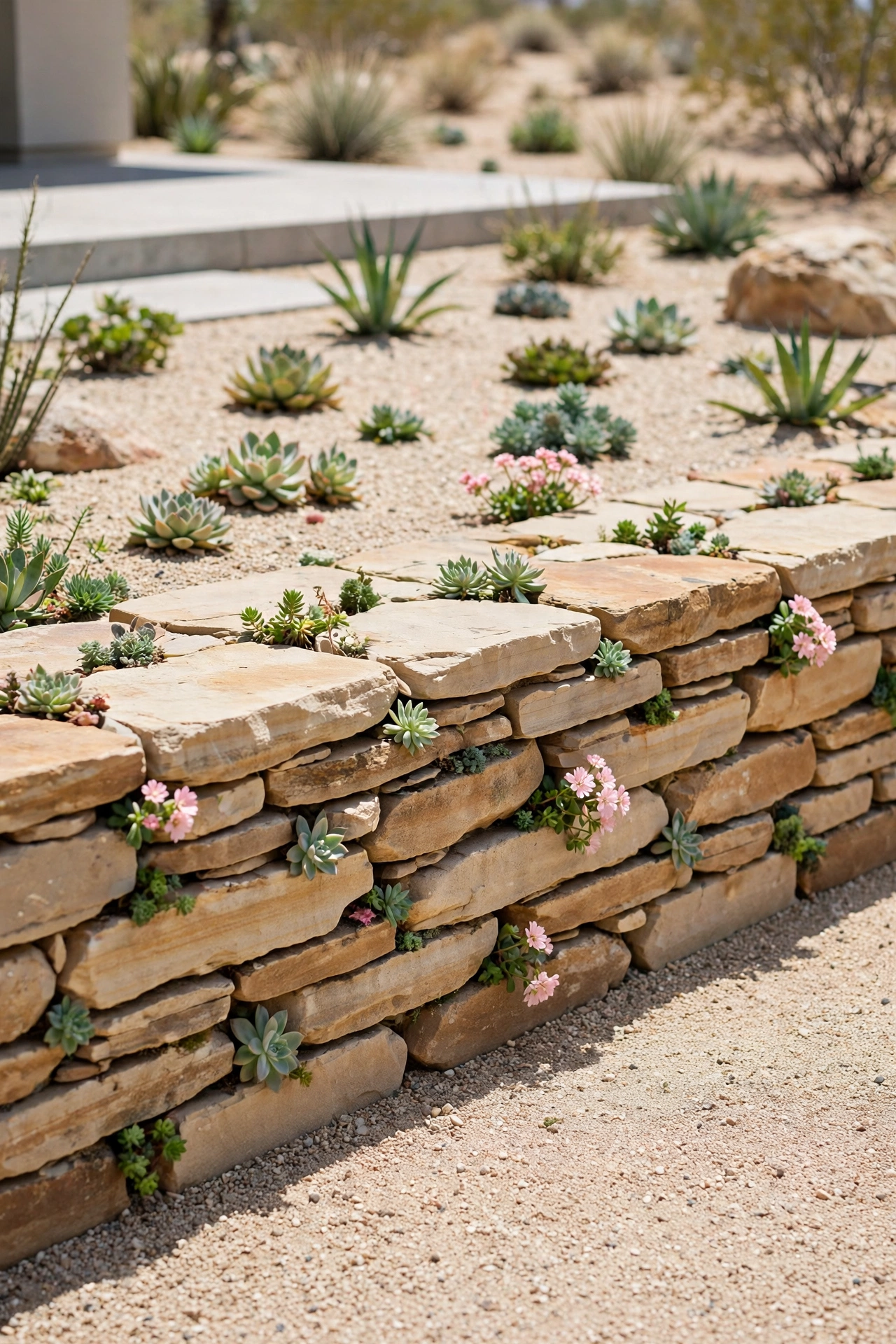
13. Build a Dry Stack Stone Wall
A dry stack stone wall adds height and structure to a flat desert yard. Stack flat sandstone or slate pieces without mortar, fitting each stone snugly against the next. A low wall can edge a patio, hold back a slope, or divide the garden into rooms.
Keep the wall under three feet high for stability and safety. Plant small succulents or trailing sedum in the gaps between stones for a soft, living finish. A dry stack wall looks like it has stood in the desert for a hundred years.
14. Add Terracotta Pots with Prickly Pear
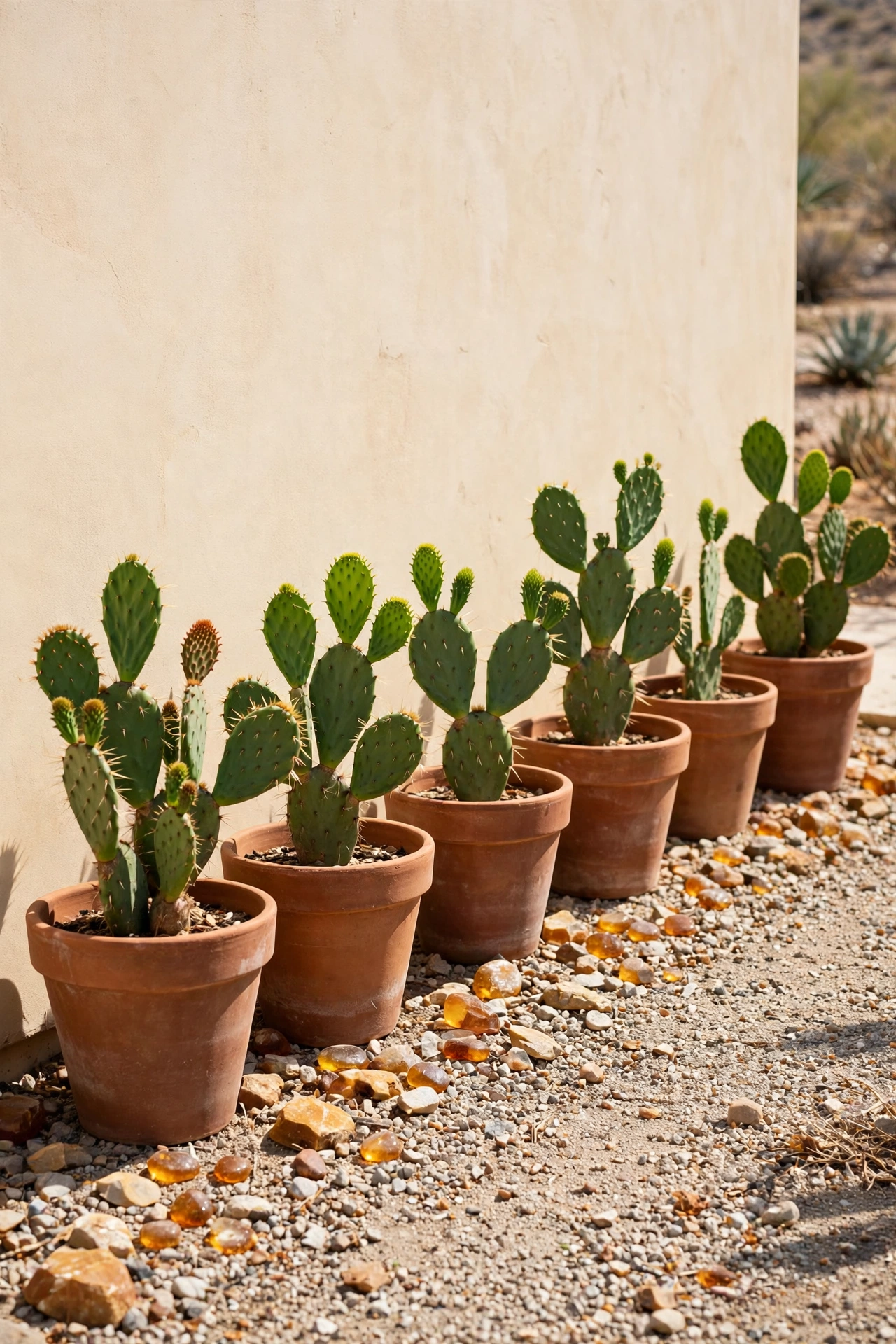
Terracotta pots are the classic container for a desert garden. Their warm orange clay suits the desert palette and keeps roots cool in the heat. Plant prickly pear pads in a row of pots along a wall or a patio edge for a bold, sculptural display.
Use a fast draining cactus mix and a pot with a drainage hole at the bottom. Group pots in threes at different heights for a styled look. Terracotta pots are easy to move, so you can rearrange the display with the seasons.
15. Create a Zen Rock Garden Corner
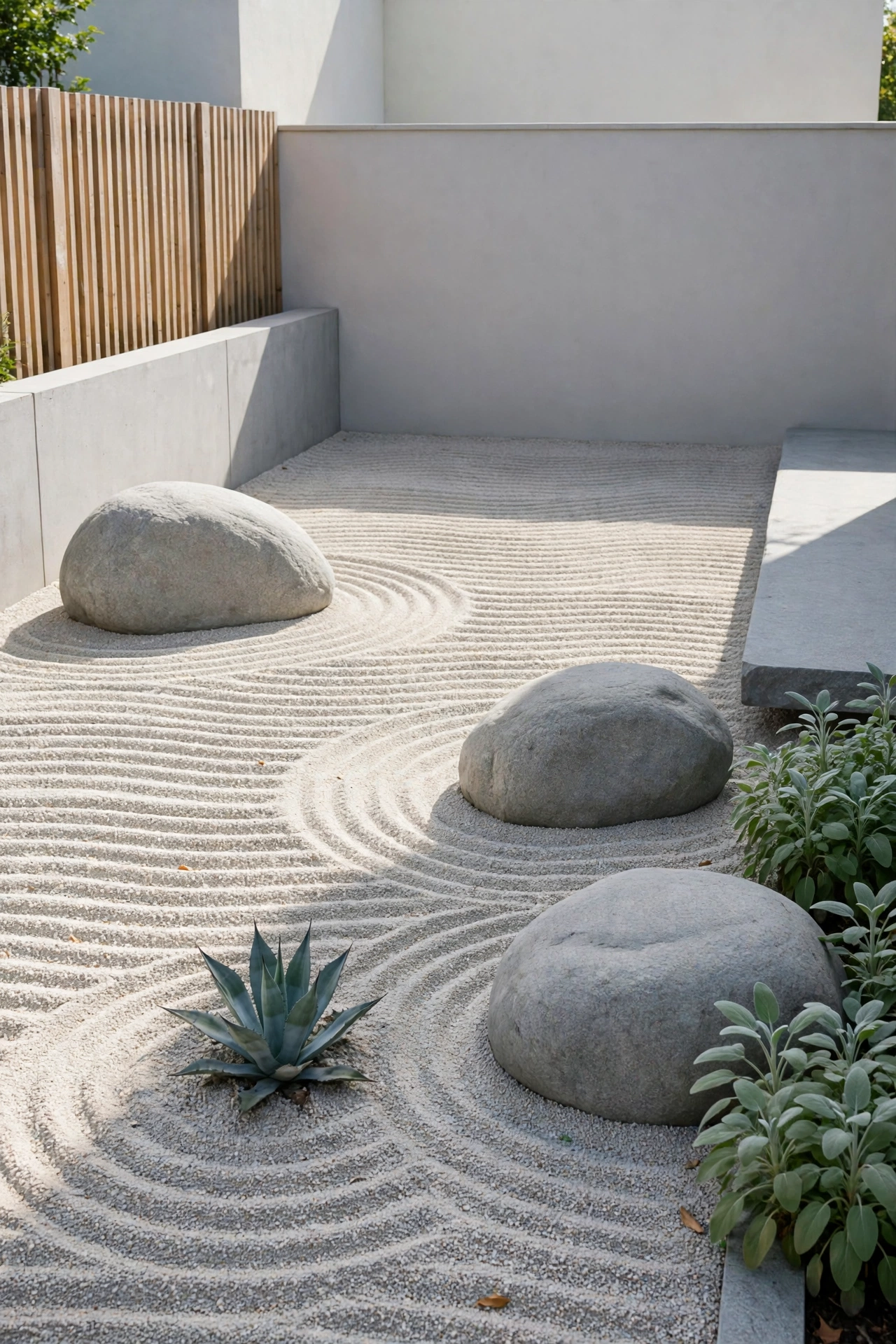
A Zen rock garden corner gives a desert yard a quiet place for calm and reflection. Rake fine pale gravel into gentle waves around three or five large boulders, and add one sculptural plant like a small pine or a single agave. The simple arrangement invites slow looking and quiet thought.
Keep the corner free of clutter and place a single stone bench or a flat sitting rock at the edge. Rake the gravel fresh once a week to keep the pattern crisp. For more calm garden corner ideas, see these Japanese garden ideas. A Zen corner is the most peaceful spot in the whole garden.
16. Use Solar Path Lights Along Walkways
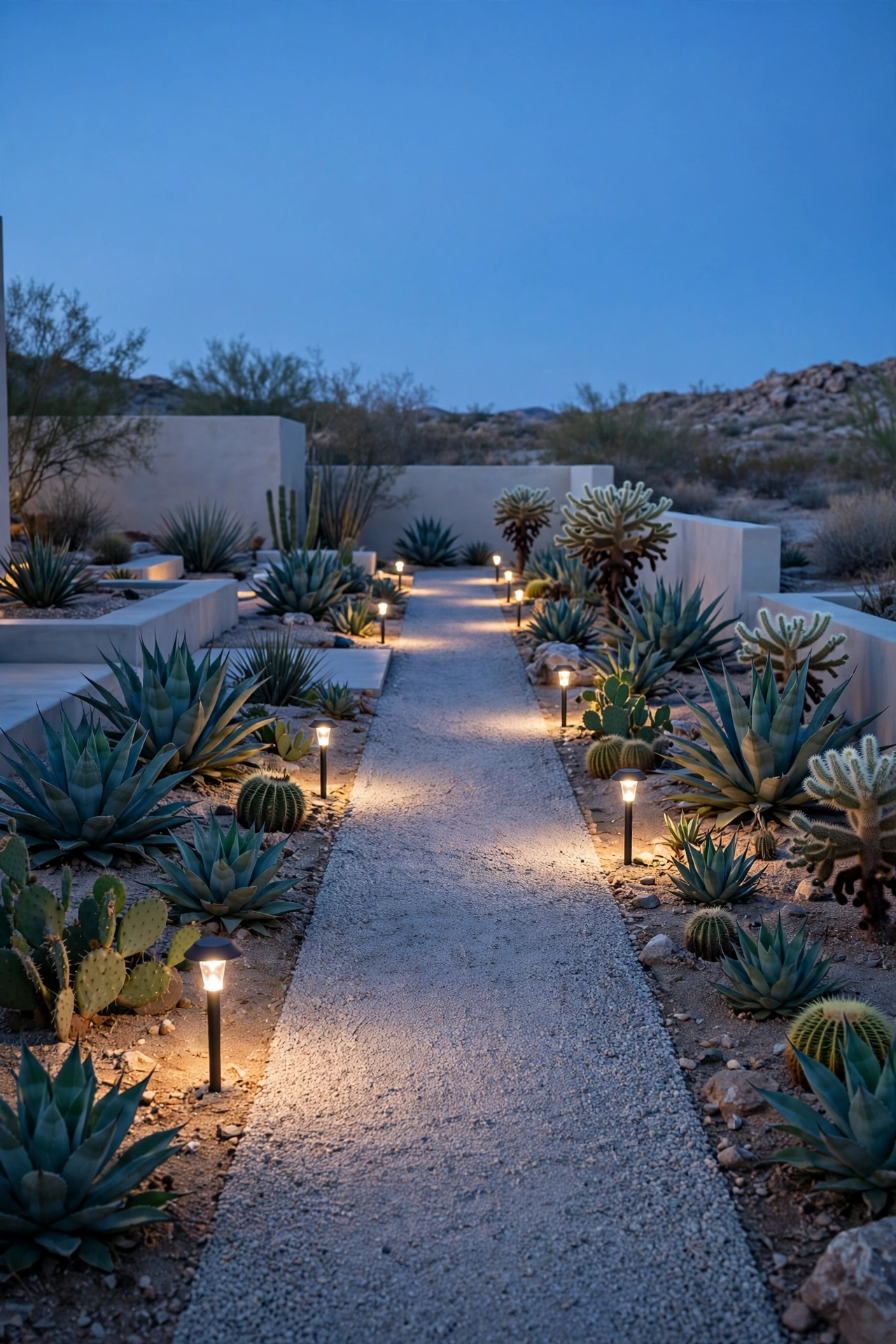
Solar path lights make a desert garden safe and beautiful after dark. Place small stake lights along the main walkways and near steps or changes in level. The warm glow guides visitors through the garden and highlights the shapes of cacti and rocks at night.
Choose lights with warm white bulbs to match the desert sunset tones. Solar lights charge during the day and switch on by themselves at dusk, so they need no wiring or upkeep. A lit path turns an evening walk through the garden into a small pleasure.
17. Plant a Privacy Hedge of Ocotillo
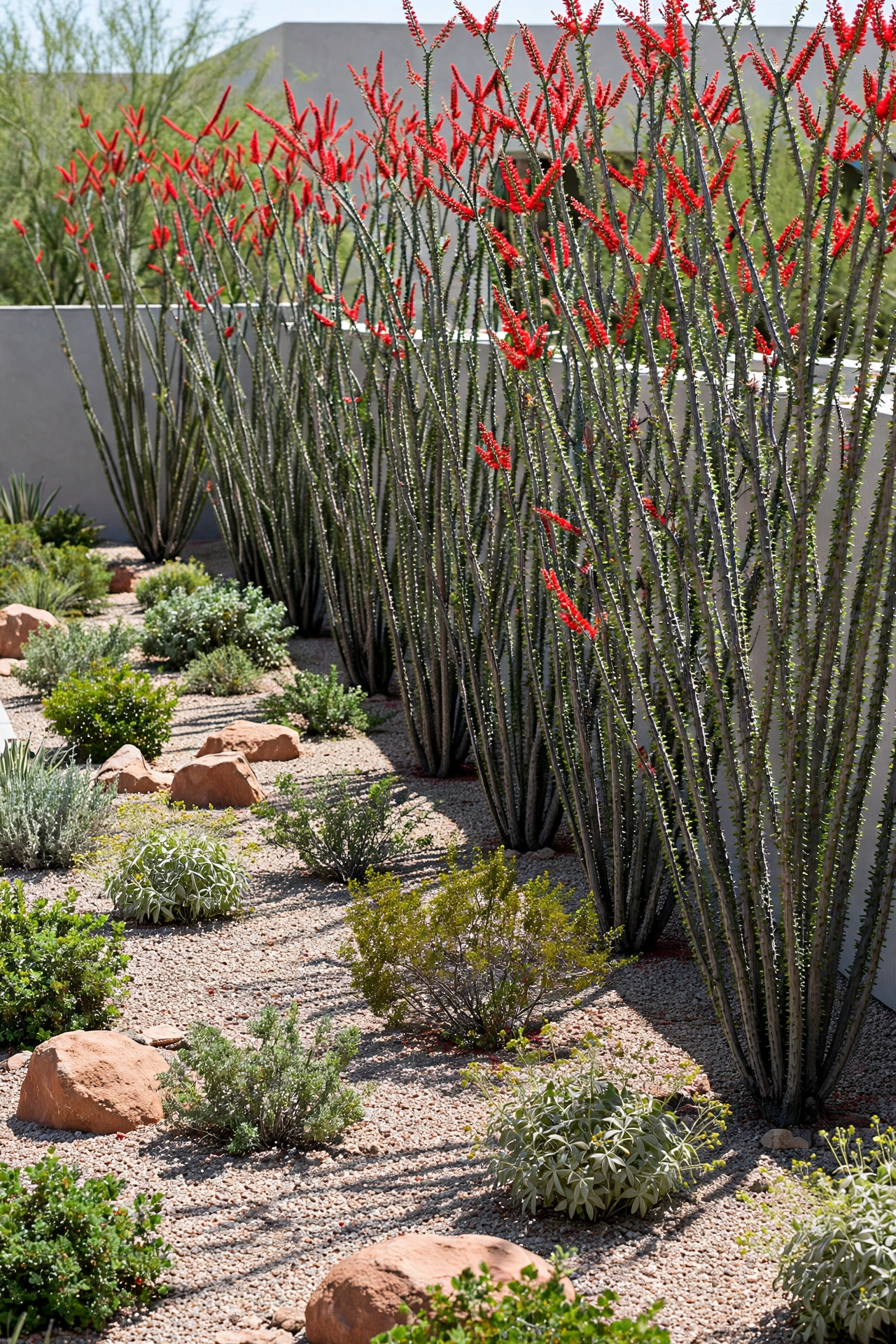
Ocotillo makes a living fence that is both beautiful and tough. Its tall thorny canes grow straight up in a loose fan, and after rain it bursts into green leaves and bright red flowers at the tips. Plant a row of ocotillo along a property line for privacy that no wooden fence can match.
Space the plants about three feet apart so the canes fill in over time. Water new ocotillo plants well for the first season, then let them live on rainfall alone. An ocotillo hedge gives privacy, color, and a true desert character to the edge of your garden.
Conclusion
A desert landscape proves that a garden can be beautiful without a lawn or a heavy water bill. From a sculptural saguaro to a quiet Zen rock corner, each idea here works with the desert climate instead of fighting it. The result is a yard that stays lovely in every season and asks for very little in return.
Pick one or two ideas that fit your space and start this weekend. Lay a gravel path, plant a few succulents, or set a boulder at the garden edge. For more ideas on shaping slopes and levels in the yard, see these garden steps for sloped backyard ideas. Your desert garden can grow into a calm, water wise haven with just a few thoughtful changes.
Frequently Asked Questions About Desert Landscape Design Ideas for Arid Climates
What plants grow best in a desert landscape?
Cacti, agave, yucca, succulents, and native desert shrubs grow best in arid climates because they store water and thrive in full sun. Choose plants native to your region for the best results, since they are already adapted to the local soil and rainfall. Avoid thirsty lawn grasses and tropical plants that need constant watering.
How much water does a desert landscape need?
A mature desert landscape needs very little water, often just a deep watering once every two to four weeks in summer and almost none in winter. New plants need more frequent watering for the first season while their roots establish. A drip irrigation system on a timer keeps watering efficient and easy to manage.
Can I have a lawn in a desert landscape?
A small patch of lawn is possible, but it will need far more water than the rest of the garden. Most desert homeowners replace lawns with gravel, decomposed granite, or ground cover succulents. If you want a soft play area, consider artificial turf or a gravel courtyard with outdoor rugs instead.
What ground cover works best for desert gardens?
Decomposed granite, pea gravel, and river rock are the best ground covers for desert gardens because they hold moisture in the soil, stop weeds, and never need mowing. Choose a warm tan or soft gray tone that matches your home. Lay landscape fabric underneath to keep weeds from growing through the stones.
How do I keep a desert garden looking tidy?
Rake gravel paths once a month, trim dead leaves from agave and yucca in spring, and pull the few weeds that appear after rain. Keep drip lines buried under gravel so they stay hidden and protected. A tidy desert garden needs only a few hours of care each month to stay beautiful all year.

Hi, I’m Emily! I turn messy corners into cozy, organized spots. DreamNestDecor is where I share simple, practical home ideas — decor, organization, and small-space solutions that work in real life, not just in photos. Every idea here is carefully researched before it’s shared.