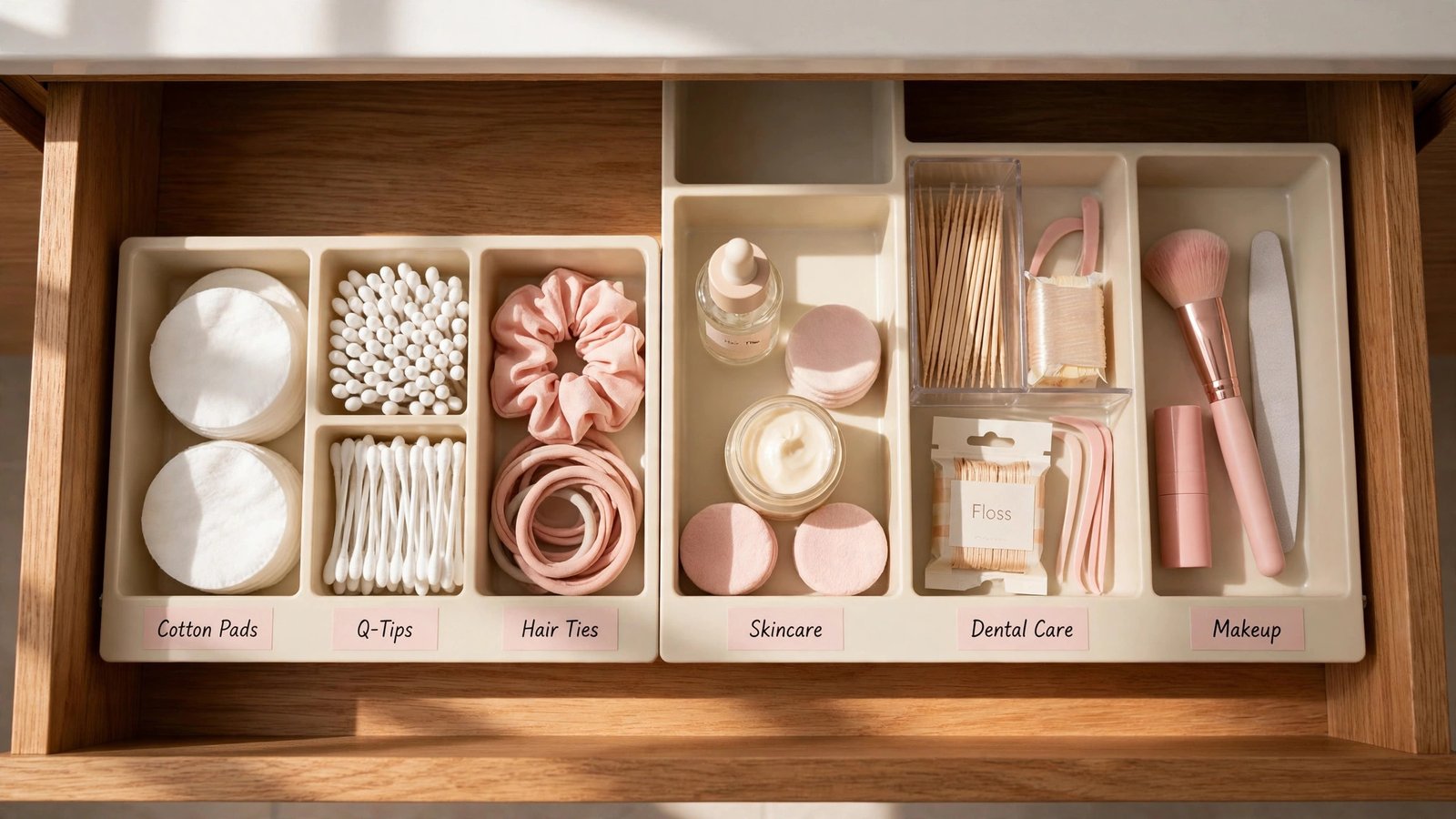
Your morning starts with a search mission. The toothpaste hides under the hair dryer, the tweezers have migrated behind the lotions, and your favorite lip balm is nowhere to be found. The drawer looks full, but nothing is where it should be.
Bathroom drawers stay tidy when every category has fixed boundaries that match your routine. These 23 ideas will help you build compartments that survive daily use, from custom dividers to simple habits that prevent slow drift.
1. Lock Categories in Place With Custom-Fit Dividers
An open drawer without dividers collapses within days. Adjustable dividers that fit snugly against the drawer walls create fixed lanes for skincare, dental care, and cosmetics. Products stop sliding sideways into each other.
Size each lane to its real contents so no lane invites random piling. Leave a little breathing room inside each section for easy grabbing. Tight compartment control is the foundation every other idea builds on.

2. Arrange Products in Front-to-Back Routine Order
Most drawers sort by category, but routines run front to back. Place what you reach for first each morning, like deodorant and toothbrush accessories, nearest the drawer edge. Later-step products live progressively deeper inside.
Walk through your actual routine once and place items in that exact order. High-frequency products stay within immediate reach while treatments wait at the back. When storage follows behavior, the drawer stops fighting you.

3. Keep Everything in One Visible Layer
Stacking feels efficient, but it buries products and breeds forgotten clutter. Commit to a single visible layer so every item can be identified at a glance. What you can see is what you will actually use.
If the drawer feels tight, remove duplicates instead of stacking higher. Shallow inserts are fine, but only when they keep items visible. Transparency prevents repeat purchases of things you already own.

4. Group Items by Height to Remove Wasted Space
Random heights create awkward gaps that invite piling. Group tall bottles together at the back, medium tubes in the middle, and flat compacts near the front. The drawer gains structure without any new containers.
Height zoning also stops tall items from toppling into neighboring lanes. When similar heights sit together, compartments fit tighter and look calmer. This simple sort removes the wasted air that makes drawers feel cramped.
5. Store Backups Apart From Daily Products
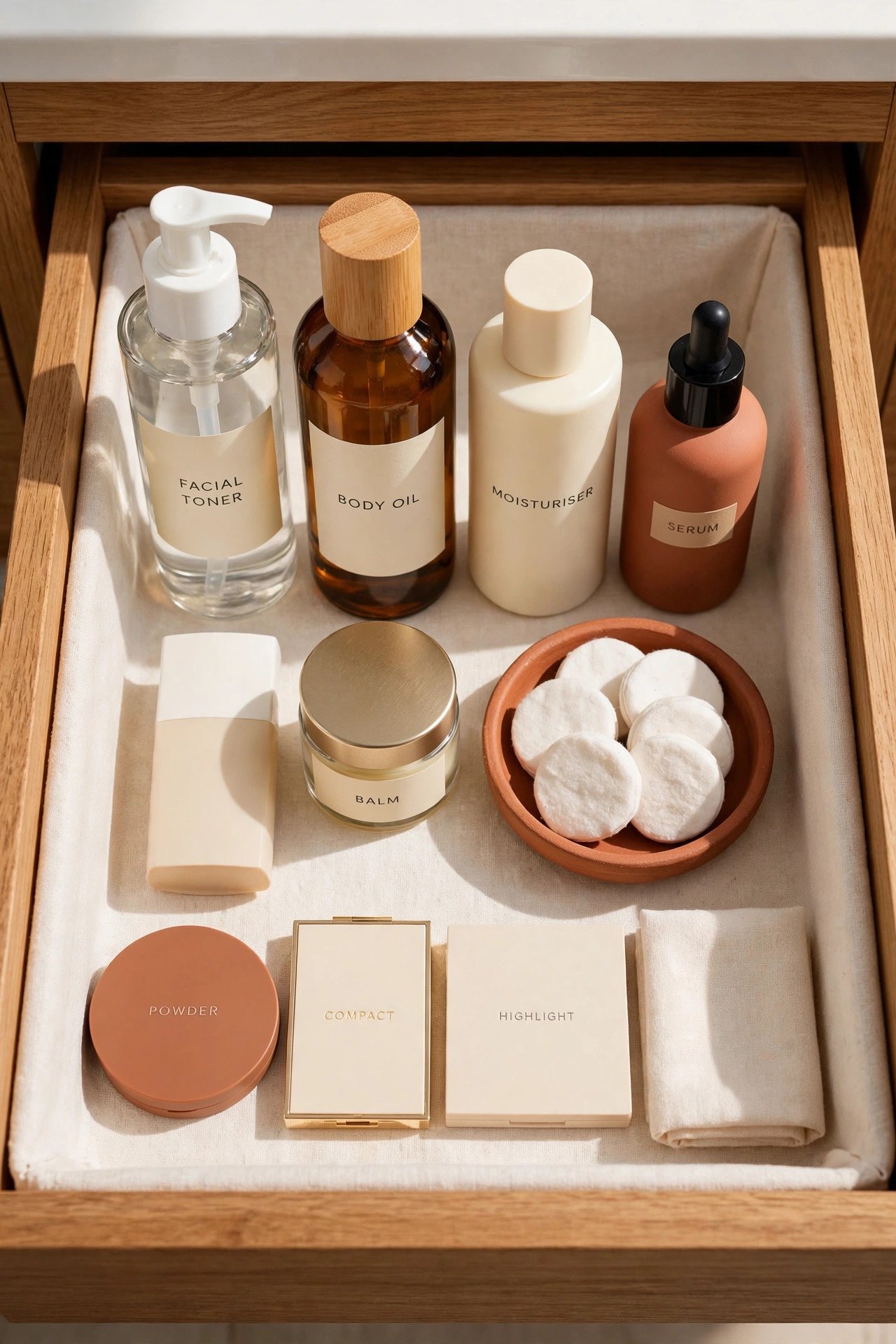
Unopened backups mixed with daily products double the clutter overnight. Give reserve stock its own rear compartment or a small labeled bin. Your daily zones stay light and easy to scan.
Rotate a backup forward only when the current product runs out. Keep no more than one backup per category in a tight drawer. Separating active stock from reserves is one of the fastest ways to calm a drawer.
6. Corral Small Essentials in Shallow Trays
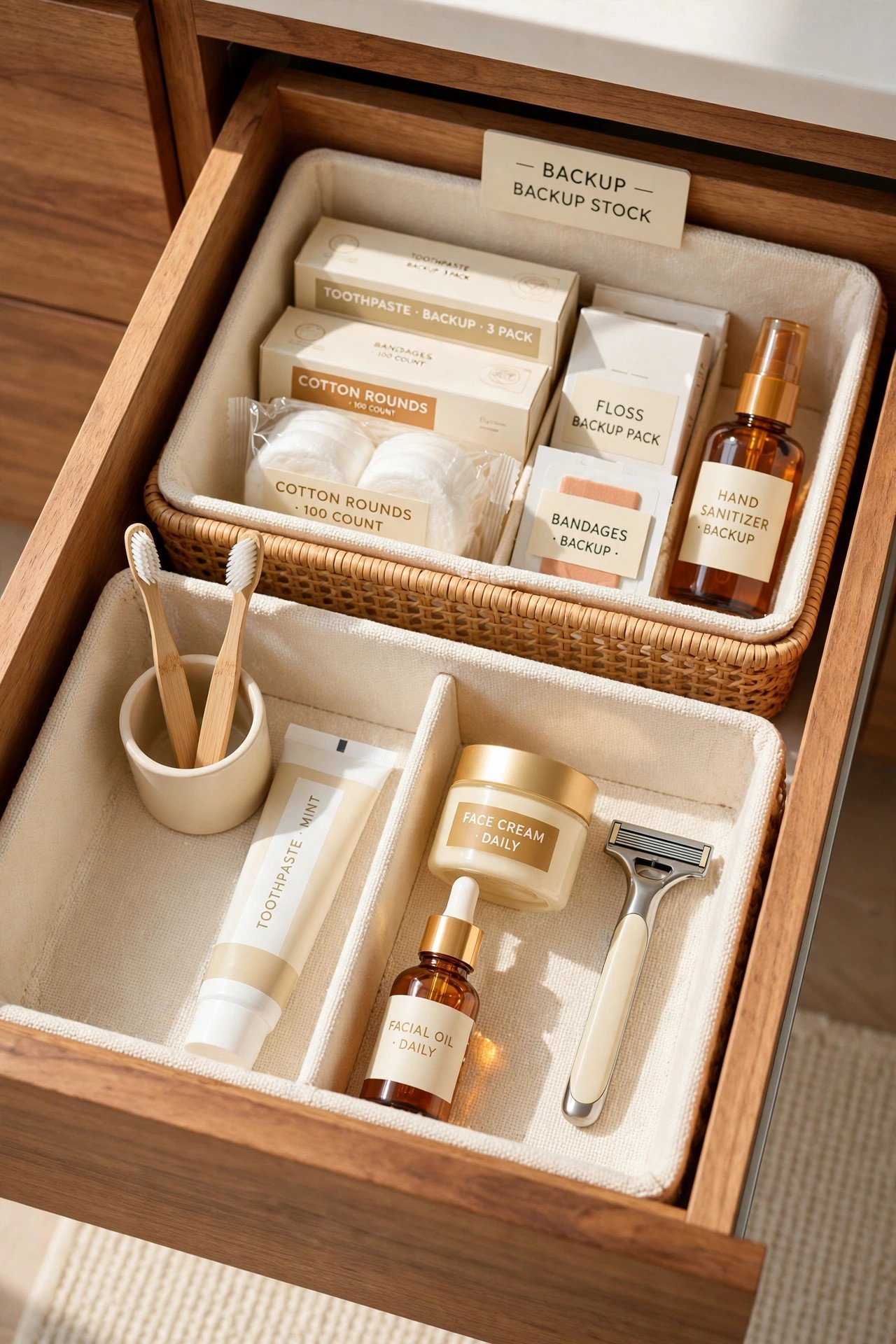
Tweezers, nail clippers, hair ties, and sample packets scatter the moment they go loose. Shallow trays create micro-compartments that keep tiny items from migrating into larger sections. Small clutter stops spreading.
Choose low-profile trays that do not eat vertical space. Group similar small items together instead of mixing unrelated pieces. Micro-containment protects the order of the entire drawer.

7. Stop Drift With Non-Slip Drawer Liners
Even perfect layouts shift a little each time the drawer opens and closes. A non-slip liner under your organizers grips everything in place and stops the slow blur of categories. Alignment lasts weeks longer.
Trim the liner to fit the drawer exactly for a clean look, and choose a neutral tone. Liners also protect the drawer base from spills and scratches, which makes them a smart rental-friendly upgrade. Stability is what makes organization durable.

8. Give Dental Care Its Own Compartment
Toothpaste, floss, and whitening strips spread everywhere without a dedicated zone. One clearly defined dental compartment keeps these daily essentials from mixing with skincare or grooming tools. Mornings get faster instantly.
Place this compartment near the front for rushed routines, and keep backup tubes elsewhere. For the cabinet below, our under-sink organization ideas extend the system. Fixed boundaries mean items return to the same spot automatically.

9. Stand Hair Tools Upright in Vertical Holders
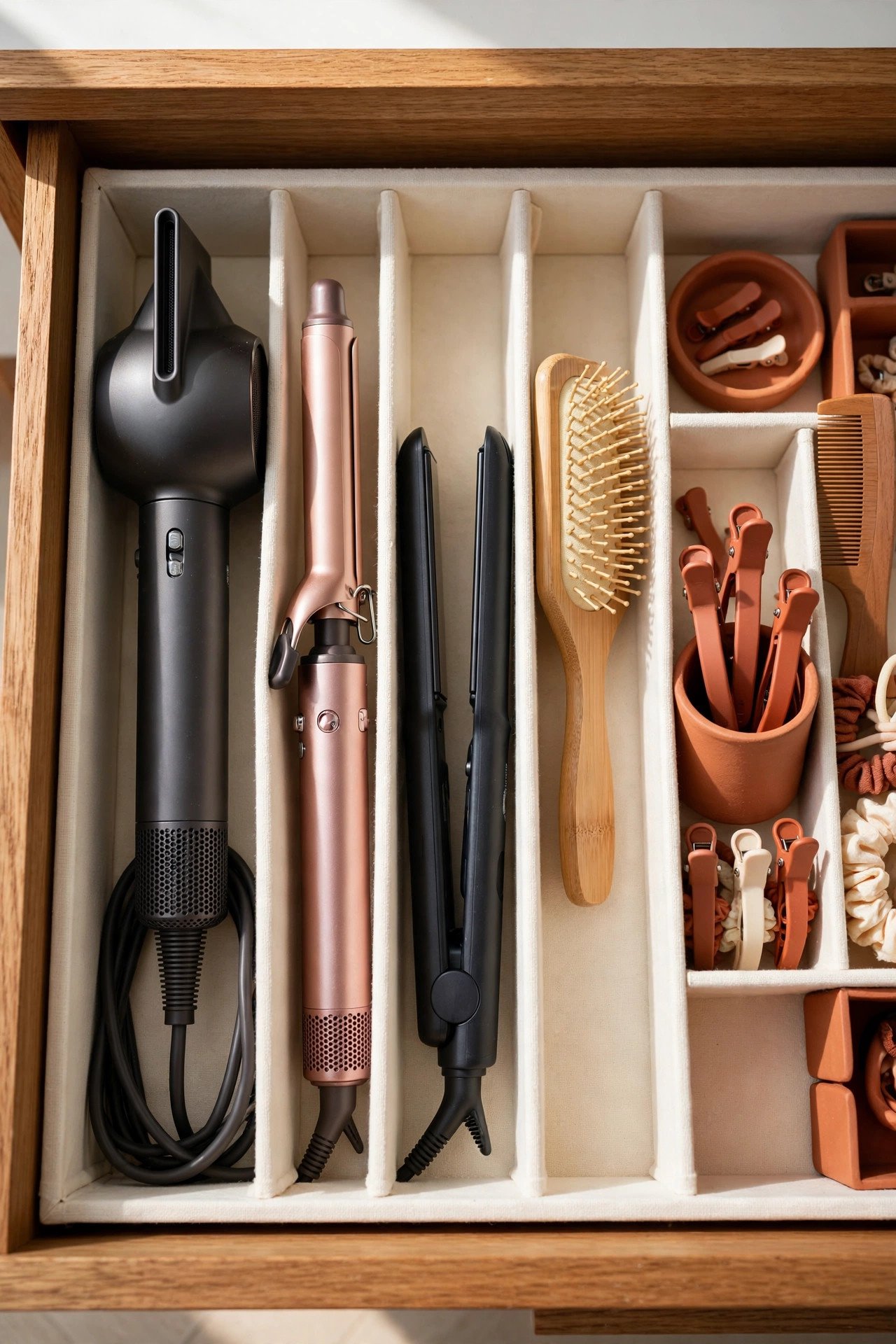
Straighteners and curling wands laid flat eat drawer width and tangle their cords. Vertical holders in a deep drawer let these bulky tools stand upright, saving surface space and ending the cord spaghetti. The drawer becomes navigable again.
Wrap cords neatly with ties before storing, and place holders toward the back. Keep smaller daily items at the front where they belong. Vertical storage is the only sane way to house heat tools in a drawer.
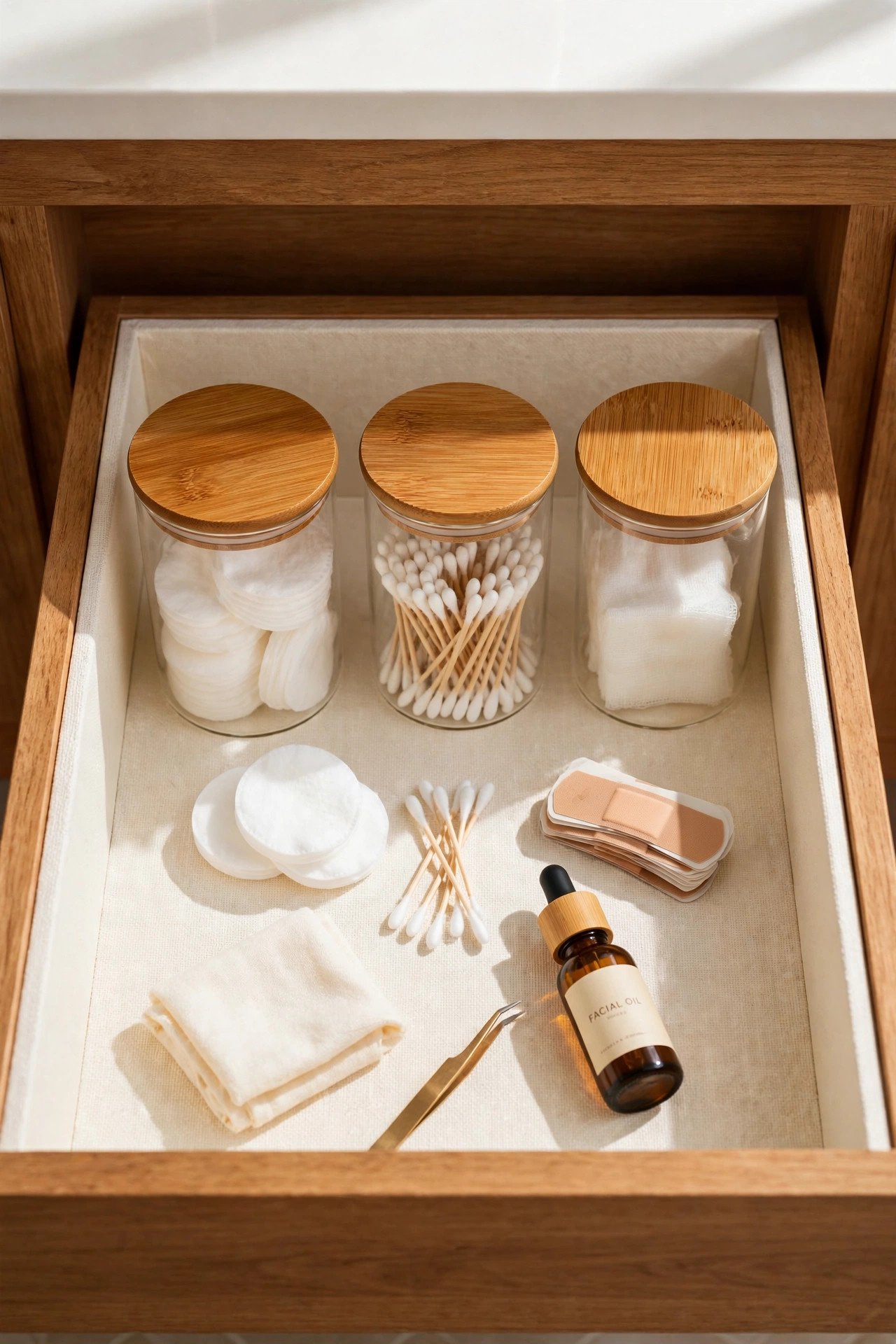
10. Decant Cotton and Hygiene Items Into Matching Containers
Cotton pads and swabs in original packaging come in awkward sizes that waste space. Transfer them into uniform low containers that fit your layout exactly. Matching shapes calm the visual noise immediately.
Use transparent lids so stock levels stay visible, and keep all hygiene tools in one zone. Uniform containers make the drawer easier to maintain because everything lines up. Consistency beats a collection of random boxes.
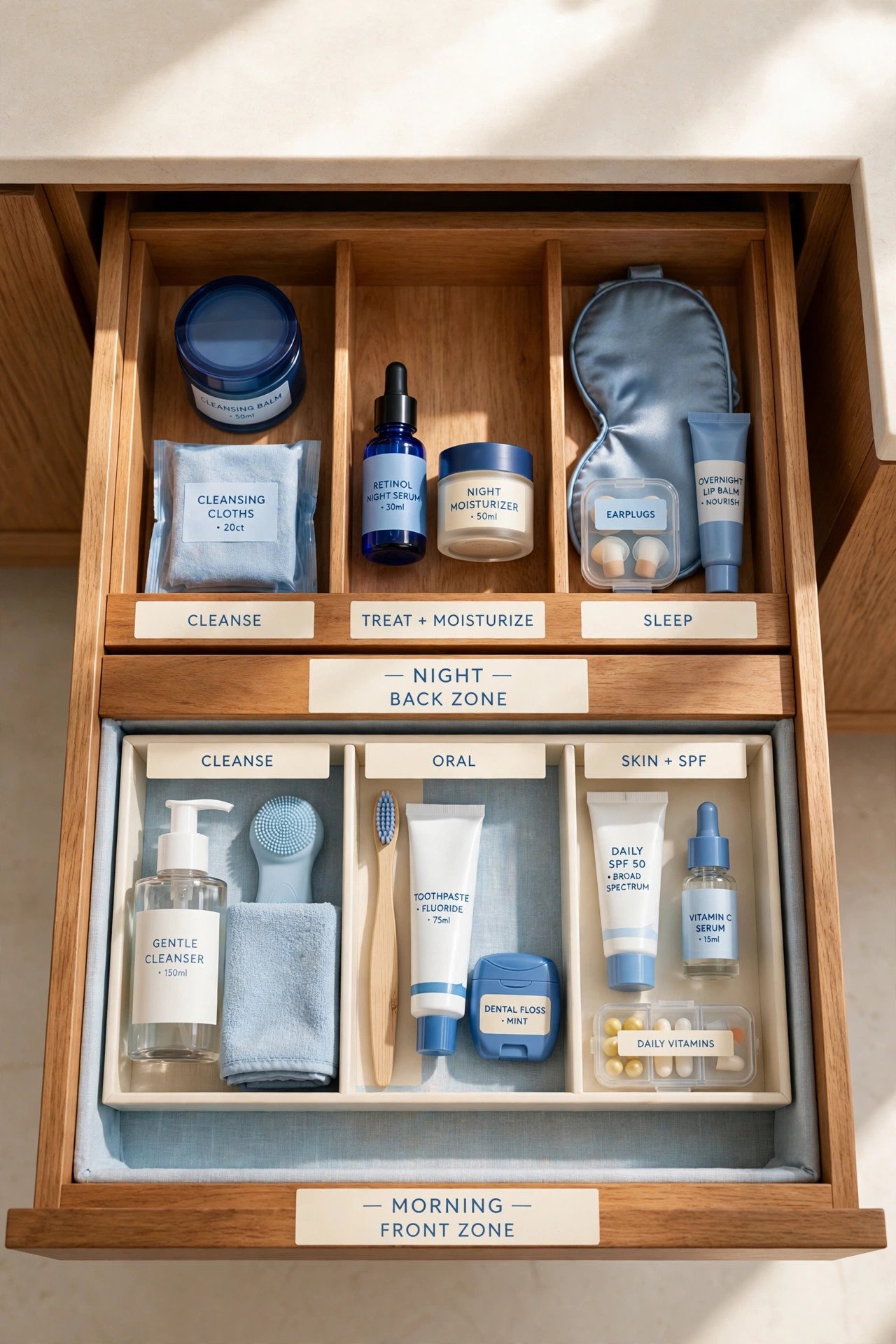
11. Split the Drawer Into Morning and Night Zones
When morning and evening products share space, they compete and blend. Create a front zone for AM essentials like deodorant and daytime moisturizer, and a deeper zone for PM treatments. Each routine gets its own territory.
This split removes the daily reshuffling that slowly breaks alignment. You follow a set path instead of reorganizing every day. Behavior-based zoning holds its structure far longer than category sorting alone.
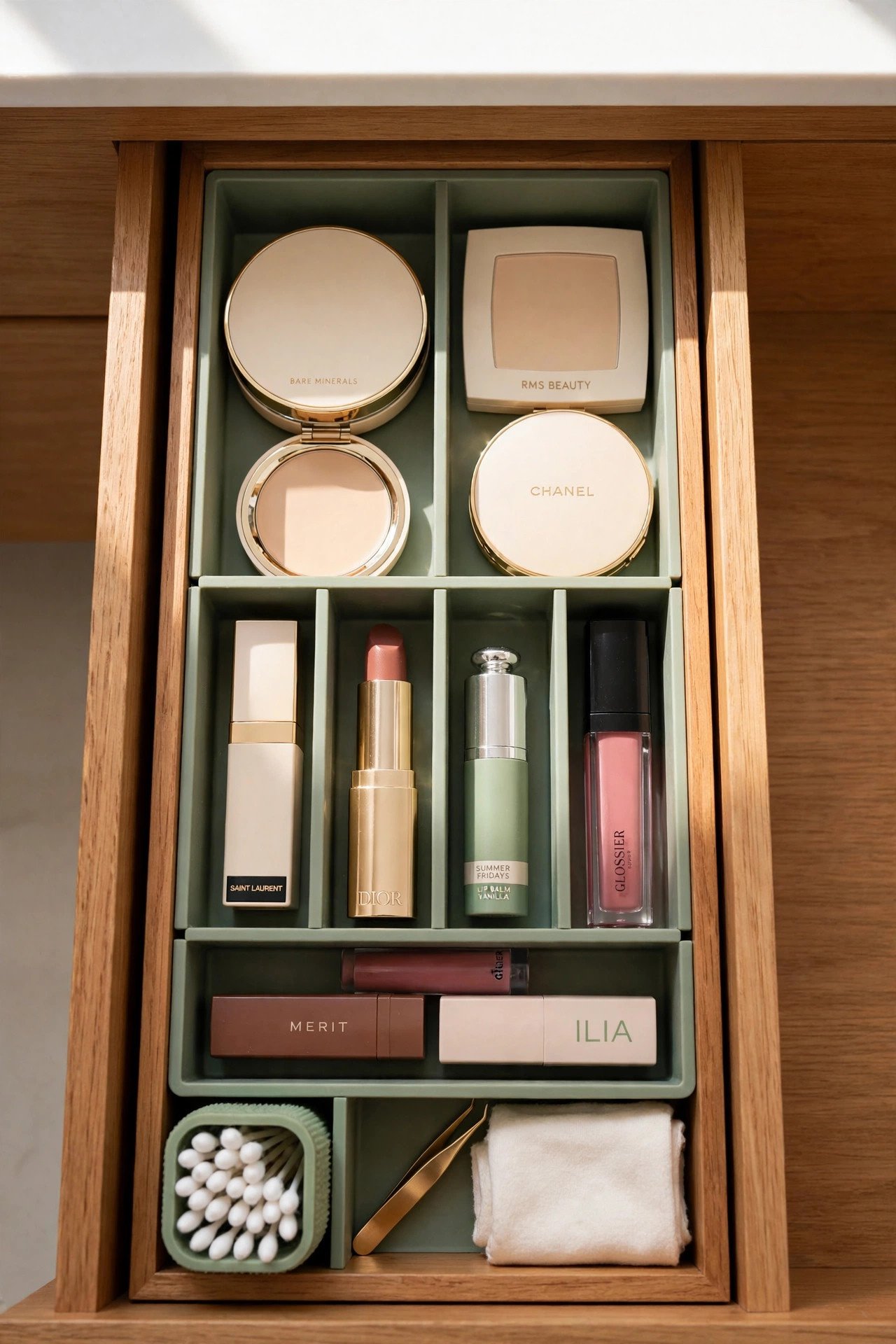
12. Build a Tight Makeup Compartment
Makeup comes in every shape, which makes it the worst drawer drifter. A tightly defined compartment with snug dividers keeps compacts, palettes, and lip products from sliding outward. Precision fit is everything here.
Stand items upright where possible and group similar formats together. For a deeper dive, our makeup drawer ideas cover full routines. Tight edges keep products exactly where you left them.
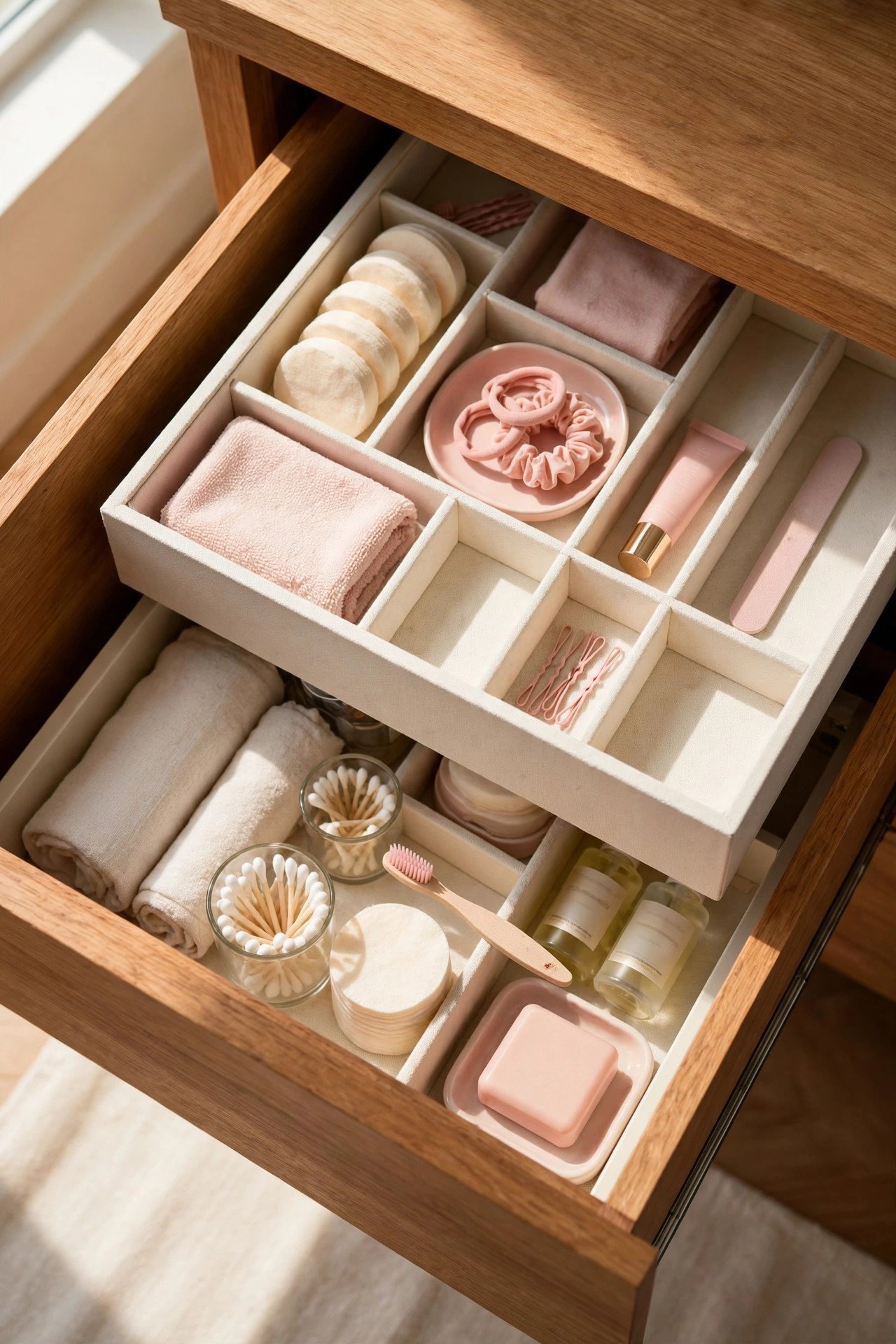
13. Add Sliding Inserts to Deep Drawers
Deep drawers look spacious but bury everything under everything else. A sliding or lift-out insert creates a controlled top layer for small daily items while larger products stay organized below. Two levels, zero chaos.
Choose inserts that glide smoothly and fit the drawer width precisely. Avoid loose stacking on the insert, since that defeats the purpose. Engineered layering beats random piling every time.
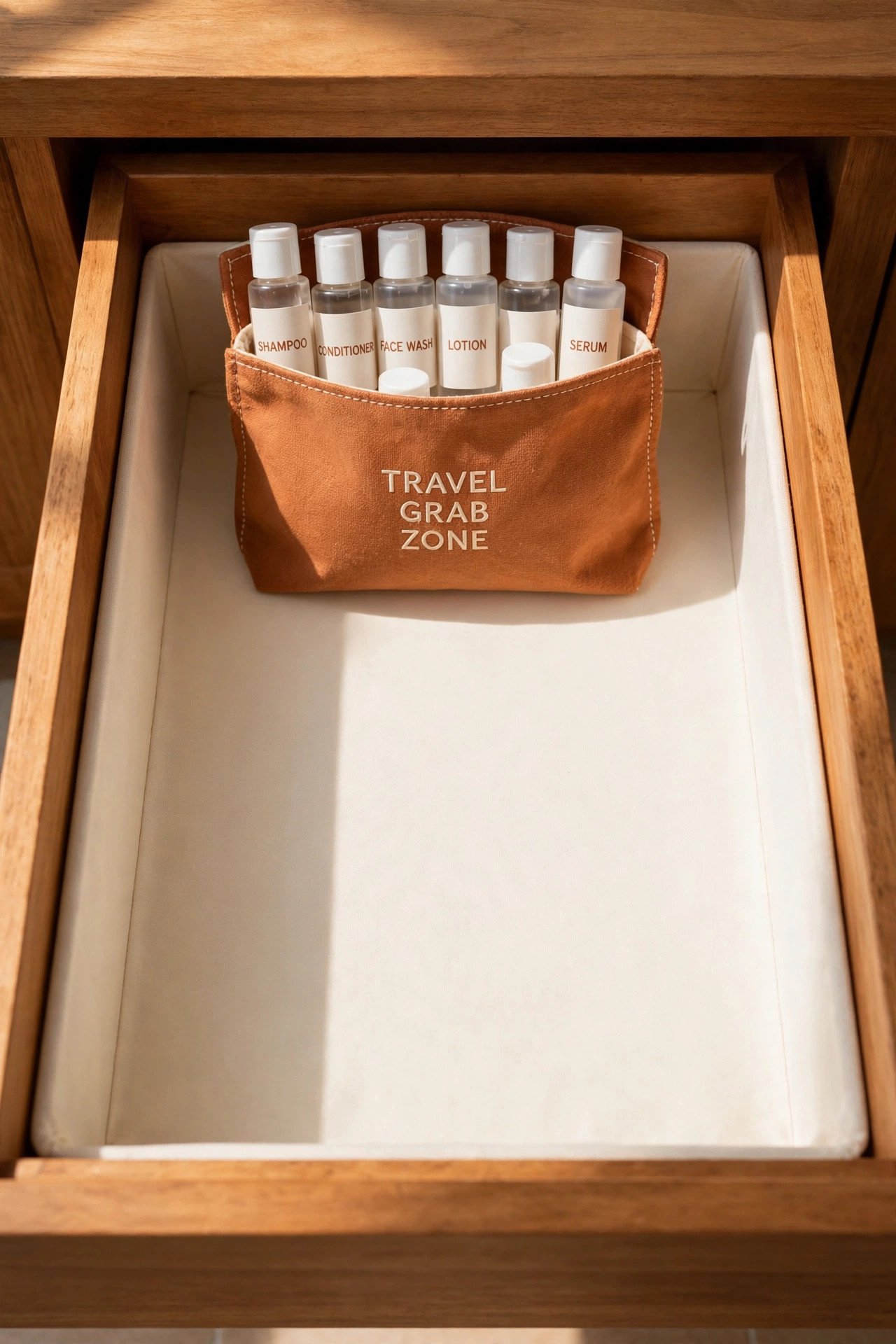
14. Create a Travel Grab Zone for Minis
Travel-size bottles and sample packets drift between compartments and multiply quietly. Give them one compact home, such as a small pouch or shallow bin at the back of the drawer. Minis stop contaminating the daily zones.
Review this zone regularly and toss what you will never use. Keeping it at the back protects your routine flow. One fixed home for temporary items preserves the structure of everything else.
15. Balance Weight to Protect Drawer Tracks
Heavy glass jars near the front strain drawer tracks and cause subtle sagging over time. Move heavier items toward the back or center so weight distributes evenly. The drawer glides smoothly for years longer.
Keep lightweight tubes and compacts at the front where you reach most often. This small adjustment prevents the gradual tilt that makes items slide. Good organization respects the hardware, not just the layout.
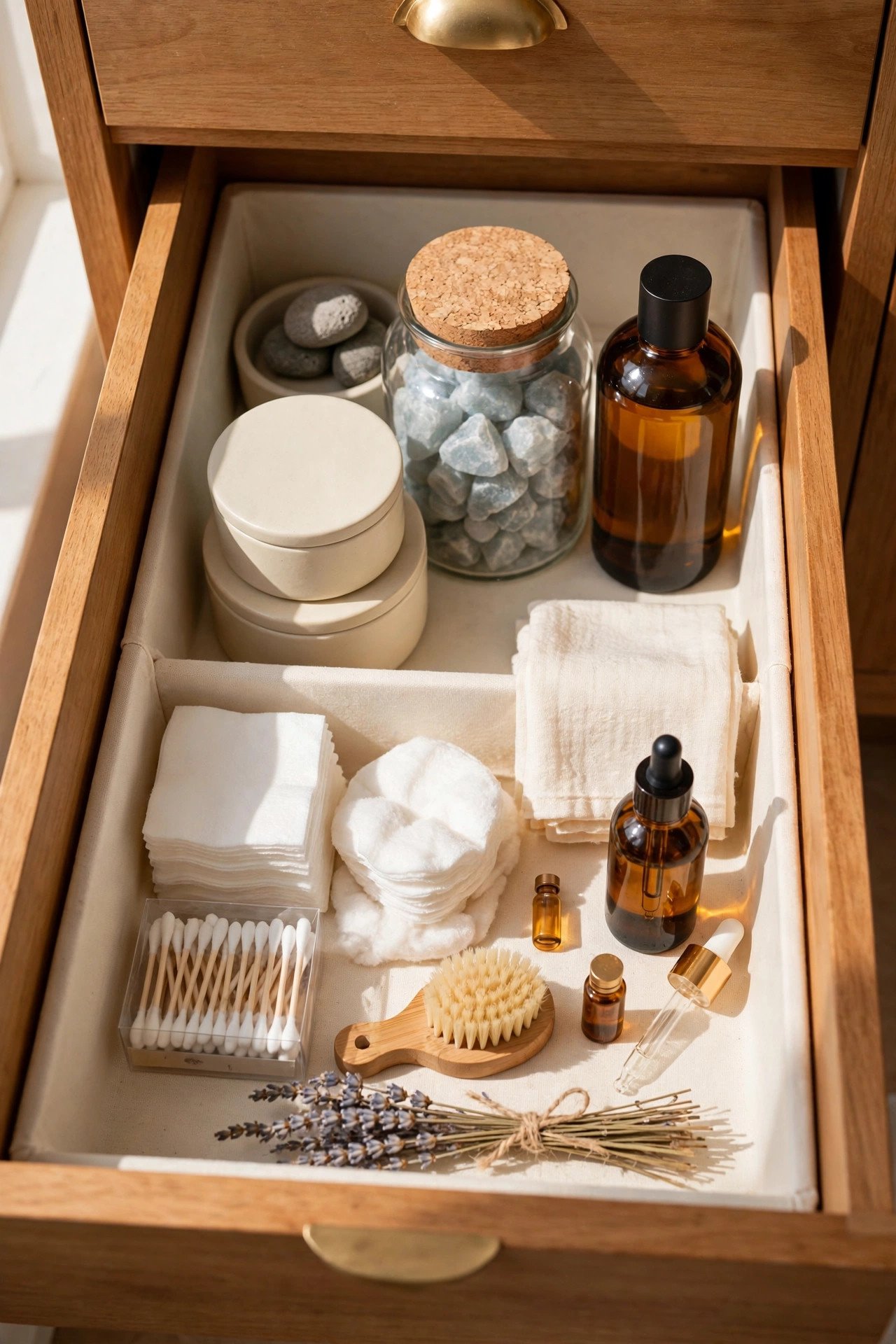
16. Tame Cords With a Slim Cord Channel
Chargers and styling tools bring cords that tangle and spill across sections. A narrow cord channel made with clips or elastic ties keeps every cable inside one controlled lane. The rest of the drawer stays calm.
Wrap cords the same way each time and give electrical accessories one defined compartment. Cord discipline is infrastructure, not decoration. When cables behave, everything around them stays accessible.

17. Leave Breathing Room by Editing Capacity
A drawer packed to the brim cannot stay organized, no matter how good the dividers are. Intentionally leave gaps between category blocks so daily movement does not collapse the system. Space is part of the design.
When a section feels tight, remove duplicates or expired products instead of squeezing harder. Restraint is what makes organization last. Controlled capacity absorbs small disruptions without unraveling.

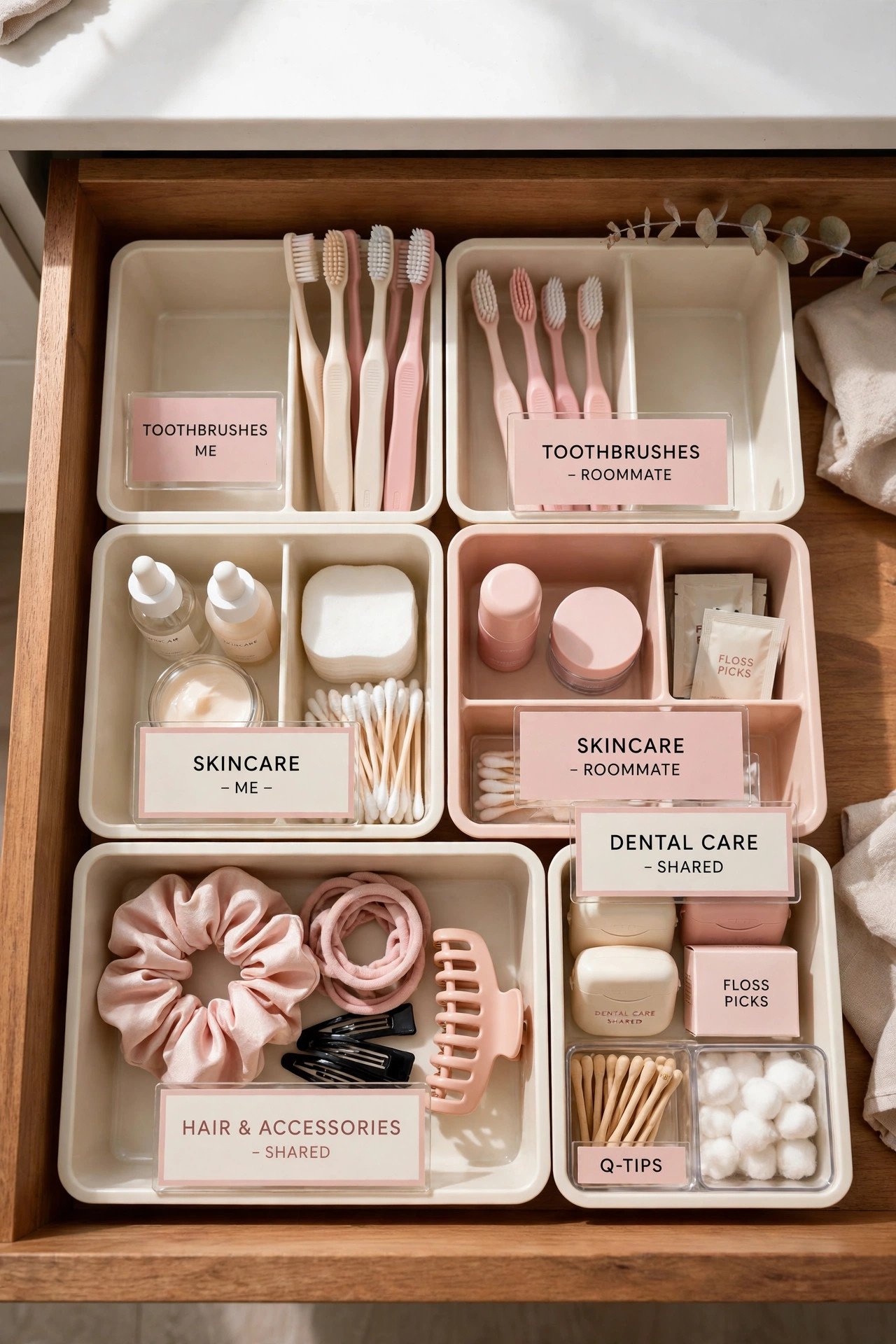
18. Add Labels to Keep Shared Drawers Clear
Shared drawers blur because two people follow two systems. Subtle labels inside each compartment reinforce the boundaries for everyone. Mixing drops when the rules are written down.
Use small, clean labels that do not shout, and agree on the zones together. Labels also help guests find things without asking. Clear reinforcement turns one person’s system into a household habit.
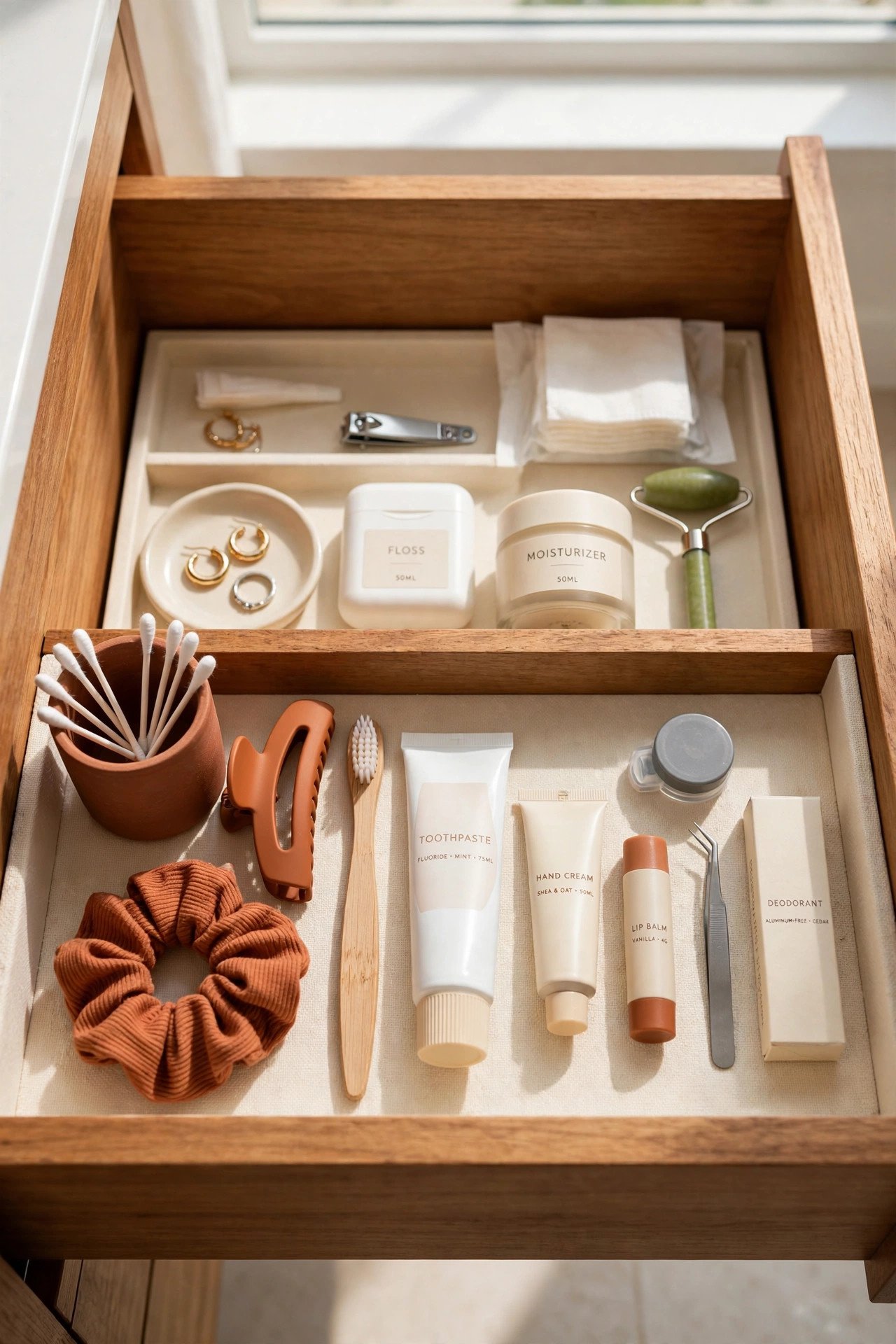
19. Build a Quick-Access Top Layer
The five items you grab every single day deserve the easiest reach. Reserve a shallow top tray or the front row for these high-frequency essentials. Your busiest products never require digging.
Audit this layer monthly, since daily needs change with seasons and routines. Keep it small on purpose, because a bloated top layer becomes just another junk zone. Speed lives in a short, honest list.
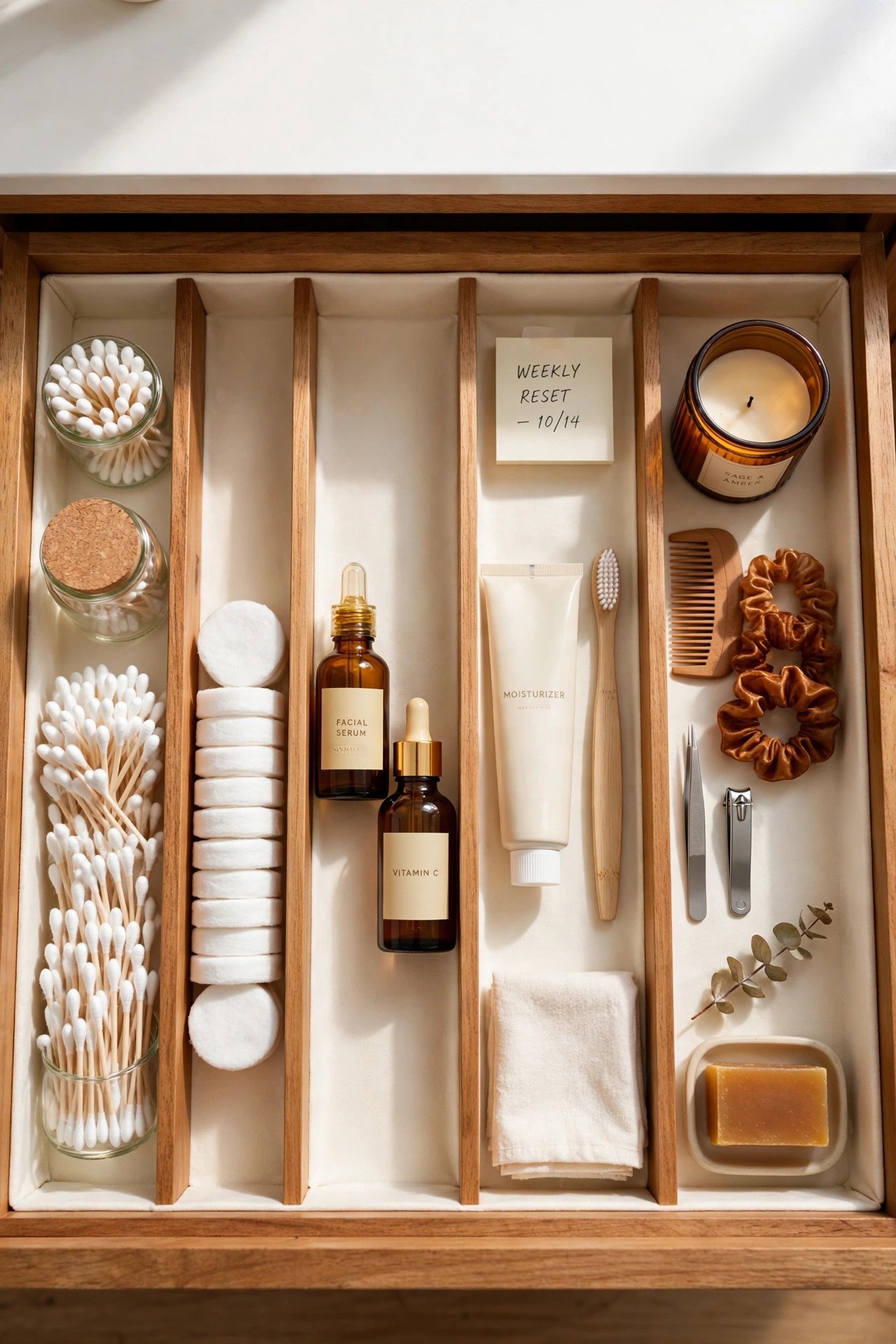
20. Do a Weekly Two-Minute Micro Reset
Organization decays slowly, and a tiny weekly reset stops the slide. Spend two minutes returning drifted items to their lanes and tossing empties. The drawer never reaches the point of needing a full overhaul.
Pair the reset with an existing habit, like Sunday night skincare, so it sticks. Small, frequent corrections beat rare, exhausting reorganizations. Two minutes a week protects all the work above.
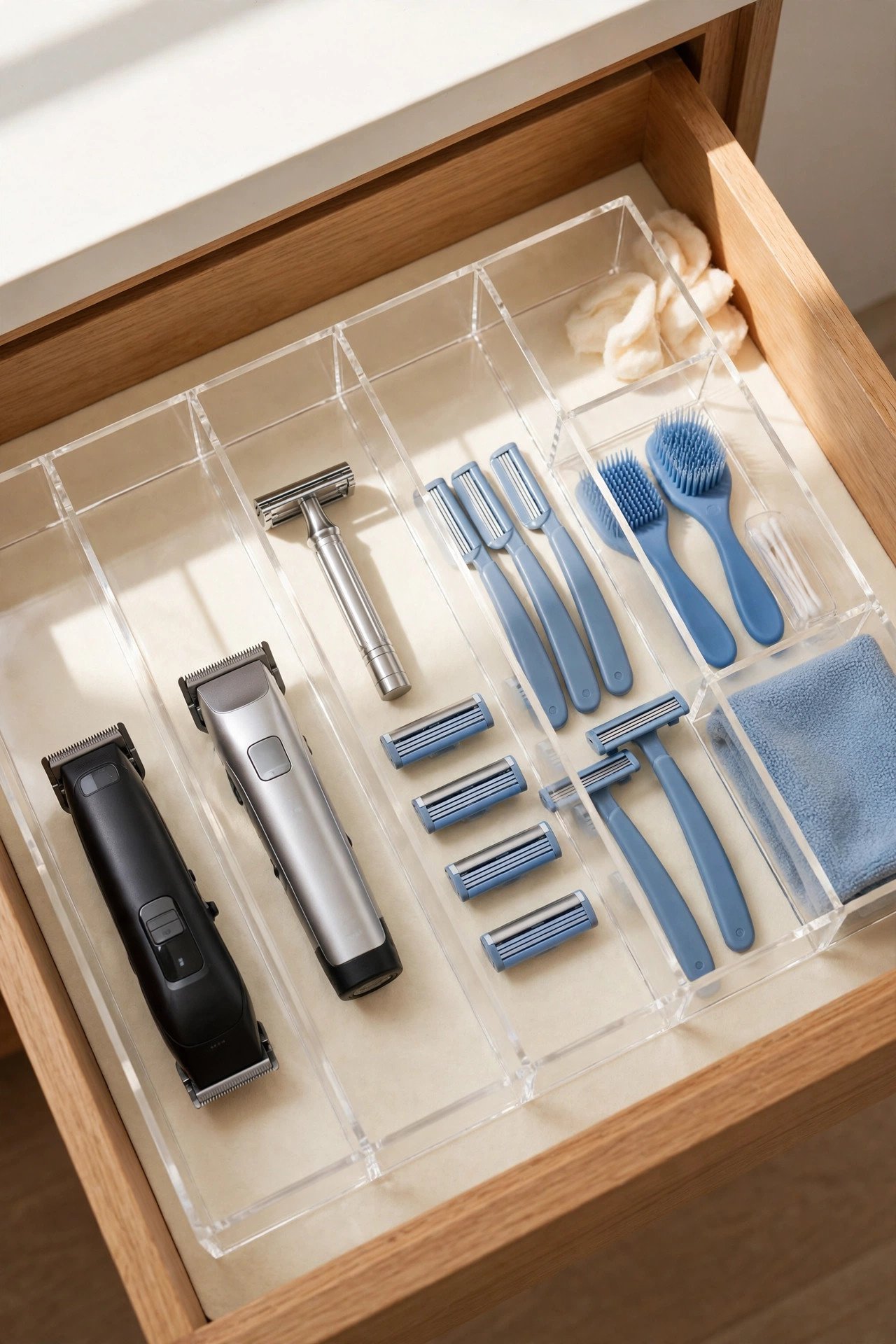
21. Give Grooming Tools Their Own Lane
Trimmers, razors, and grooming kits have awkward shapes that invade neighboring zones. One dedicated lane with clear edges contains them completely. Everything else keeps its boundaries.
Choose a lane wide enough for the bulkiest tool so nothing overflows. Store blades safely in cases within the lane. A defined grooming lane ends the slow creep into skincare territory.
22. Ditch Bulky Packaging That Breaks Alignment
Oversized boxes and blister packs waste space and ruin clean lines. Remove outer packaging and store the actual products in your organizers instead. The drawer instantly gains room and looks calmer.
Keep only the instructions you truly need, tucked flat under the tray. Recycle the rest right away so it never creeps back. Less packaging means more room for the products you actually use.

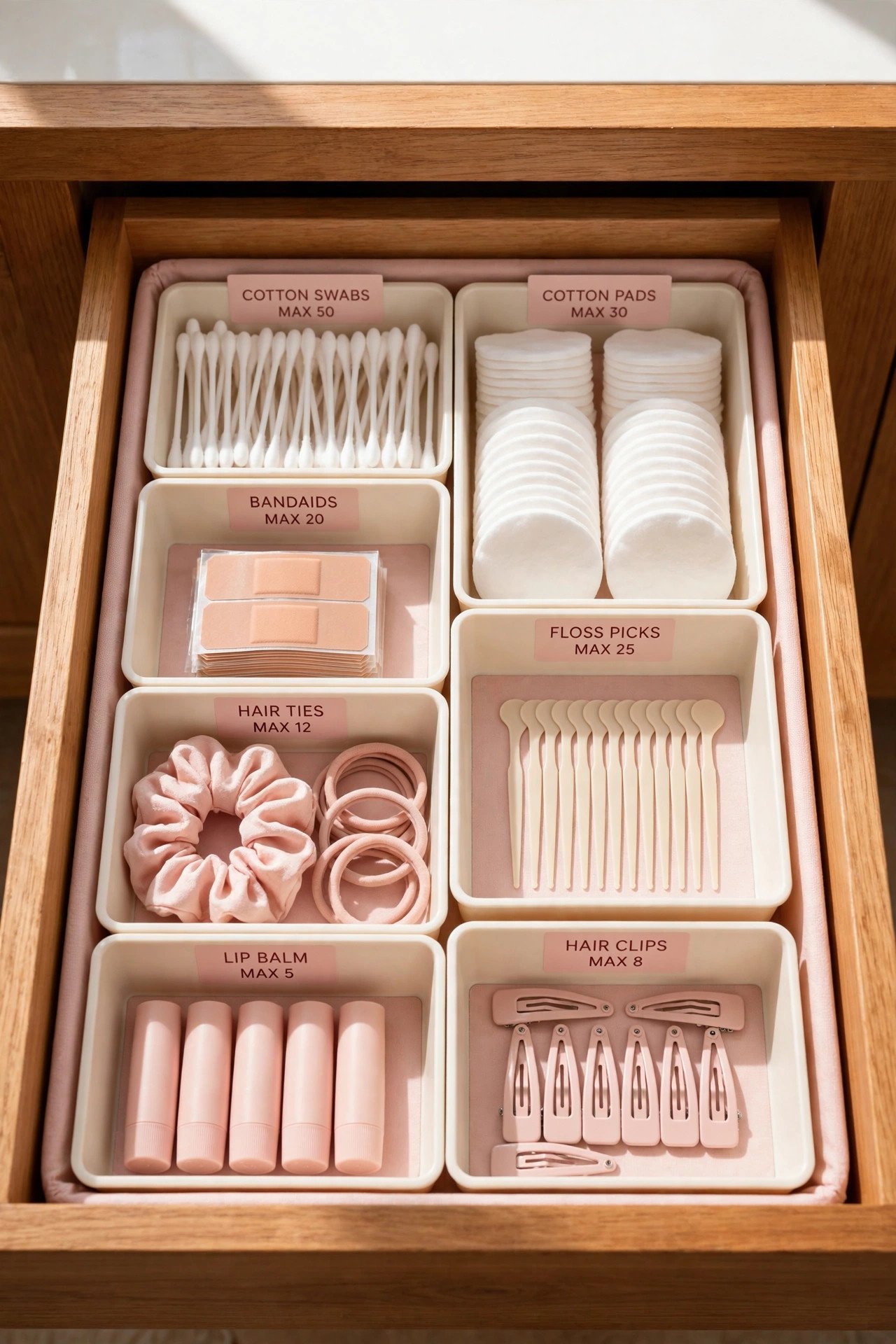
23. Set a Maximum Limit for Every Category
Every category needs a ceiling, or collections grow until the system breaks. Decide the maximum per type, such as three lip products or two backup tubes, and enforce it with a one-in-one-out rule. Limits keep drawers honest.
Write the limits on the inside of the drawer or in your phone notes. When something new arrives, something old leaves. A maximum per category is the quiet rule that makes all 22 ideas above permanent.
Conclusion
A bathroom drawer that lasts is built on boundaries, not buying. Custom dividers, routine-based zones, and small habits like the weekly reset keep every product in its lane for the long run.
Start with the dividers and the liners, then add one idea at a time. Your mornings will feel calmer the very first day everything has a fixed home.
Frequently Asked Questions
How do I keep my bathroom drawer organized long term?
Use snug dividers to lock categories in place, arrange items in routine order, and do a two-minute weekly reset. Leave breathing room between zones and separate backups from daily products. Boundaries plus small habits keep drawers tidy for months.
What is the best way to organize a deep bathroom drawer?
Add a sliding or lift-out insert to create a controlled top layer for small daily items, with larger products below. Use vertical holders for hair tools and keep weight toward the back. Layering with purpose beats random piling.
How should I organize makeup in a bathroom drawer?
Give makeup a tight compartment with snug dividers, stand items upright, and group similar formats together. Keep it separate from skincare and dental zones. Precision fit prevents compacts and palettes from drifting into other sections.
How do I stop bathroom drawer items from sliding around?
Line the drawer with a non-slip liner cut to fit, use dividers that fit snugly against the walls, and balance heavy items toward the back. Liners grip organizers in place so categories stay aligned through daily use.
How do I organize a shared bathroom drawer?
Divide the drawer into clear zones with a compartment per person plus shared zones for common items. Add subtle labels inside each section so everyone follows the same system. Agreed boundaries and labels keep shared drawers from blurring.

Hi, I’m Emily! I turn messy corners into cozy, organized spots. DreamNestDecor is where I share simple, practical home ideas — decor, organization, and small-space solutions that work in real life, not just in photos. Every idea here is carefully researched before it’s shared.