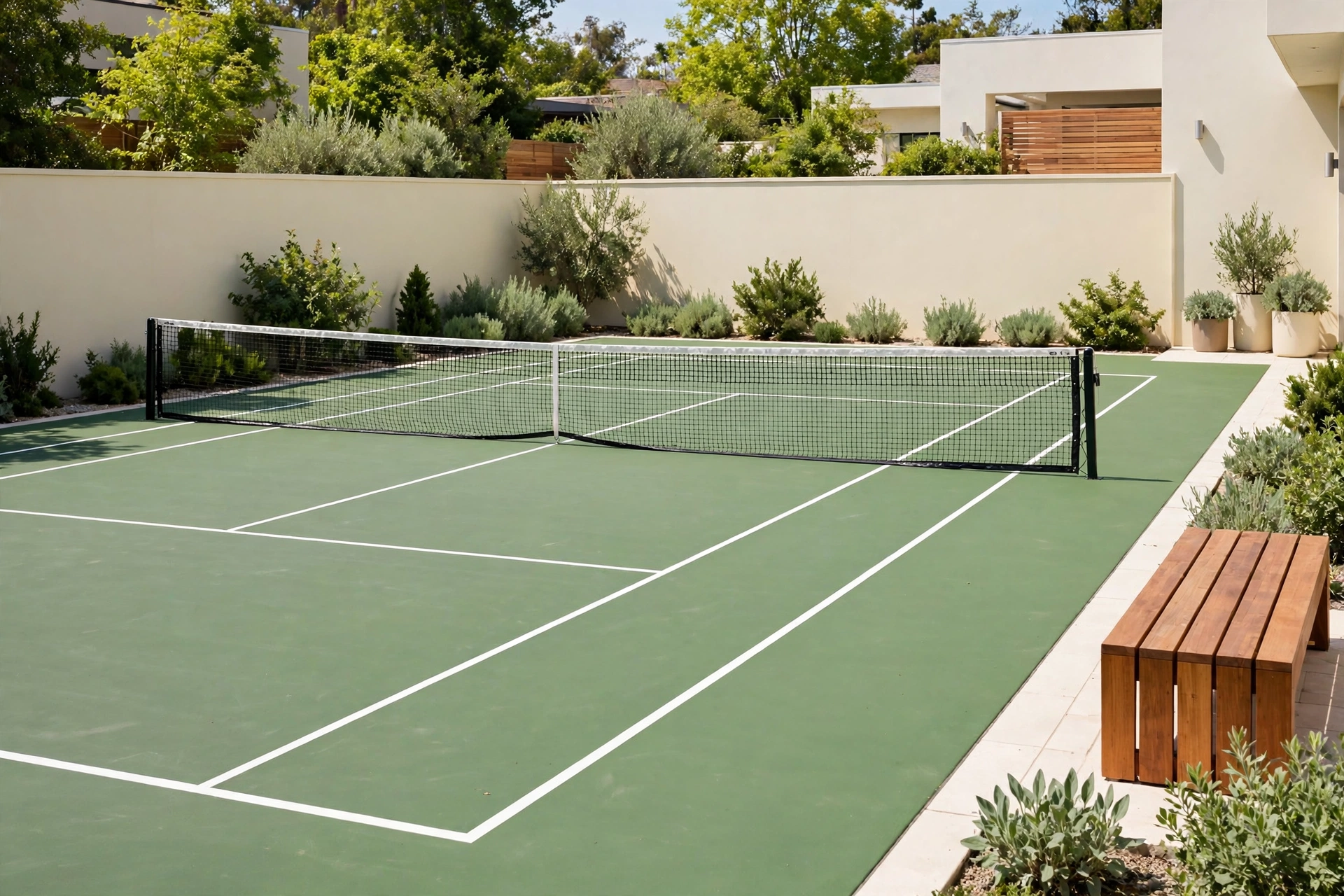
Picture this: you step out of your back door on a sunny morning, a tennis racket in one hand and a basket of fresh balls in the other, and your own court waits for you at the bottom of the garden. No booking, no driving, no waiting for a free slot. Family tennis becomes part of everyday life, as simple as a walk across the lawn.
You do not need a professional budget or a huge plot of land to make it happen. All you need is a clear plan for the surface, the net, the lighting, and the space around the court. These 17 backyard tennis court ideas for active families will help you build a court that fits your garden, your family, and your love of the game.
1. Choose a Hard Court Surface for Everyday Family Play
A hard court surface is the most practical choice for a family tennis court. Asphalt or concrete with a smooth acrylic top coat gives a true, even bounce and stands up to years of play in all weather. The surface dries fast after rain, so a morning shower never cancels the whole day of tennis.
Pick a color that suits your garden, like classic green with a darker surround or a soft blue playing area with cream lines. A hard court needs little care beyond an occasional sweep and a wash. It is the surface most families choose first, and it rarely disappoints.
2. Try a Clay Court for Softer Bounces and Classic Charm
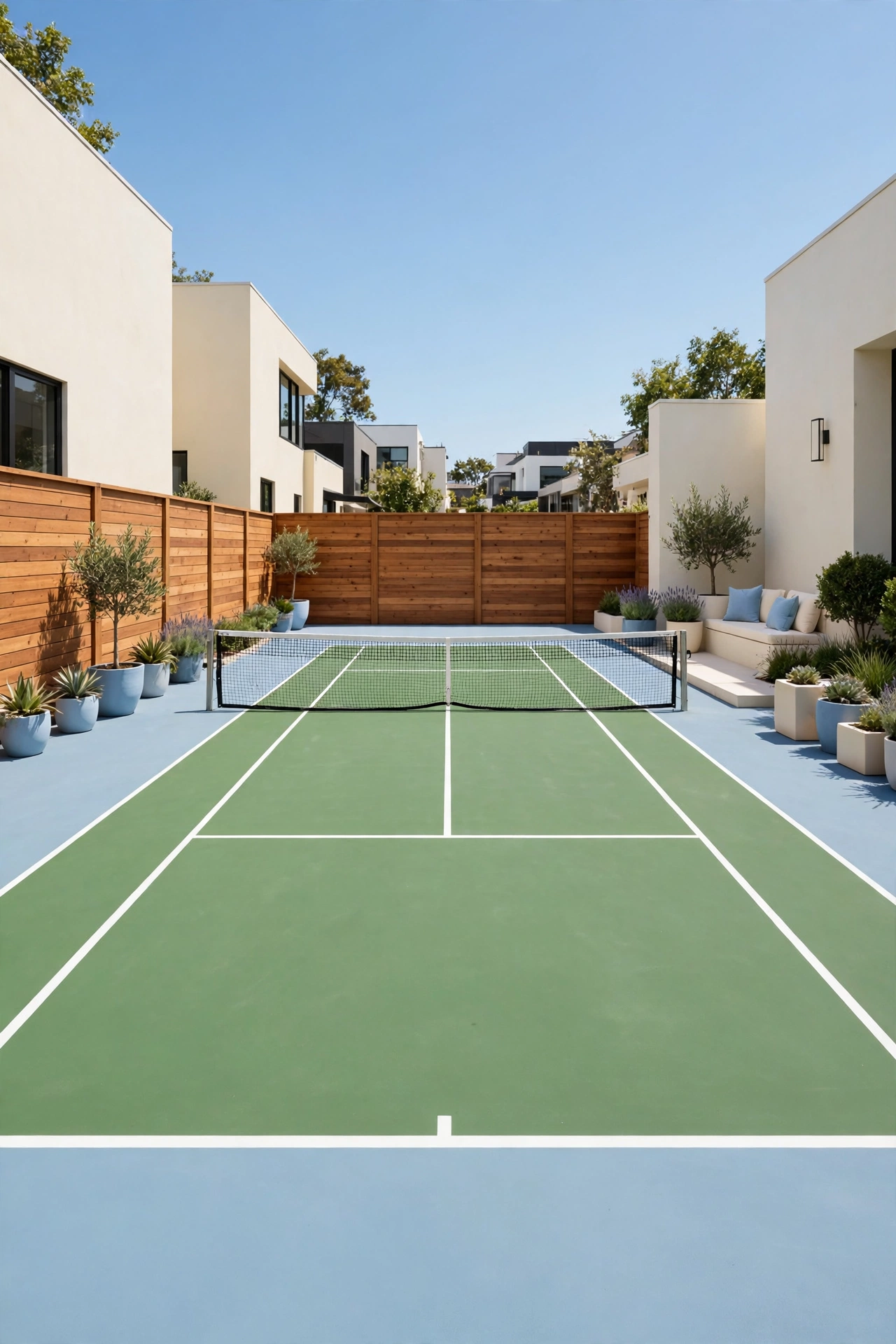
A clay court gives a softer bounce and a slower game, which suits long family rallies and younger players. The surface is kind to knees and ankles, and the warm red or terracotta color looks beautiful against a green garden. Clay also rewards good footwork, since players slide into shots instead of stopping hard.
Clay needs regular care, with brushing, watering, and rolling to keep the surface even. That care becomes a pleasant weekend ritual for the family. If you love the classic look of the game and enjoy a little garden work, a clay court is a wonderful choice.
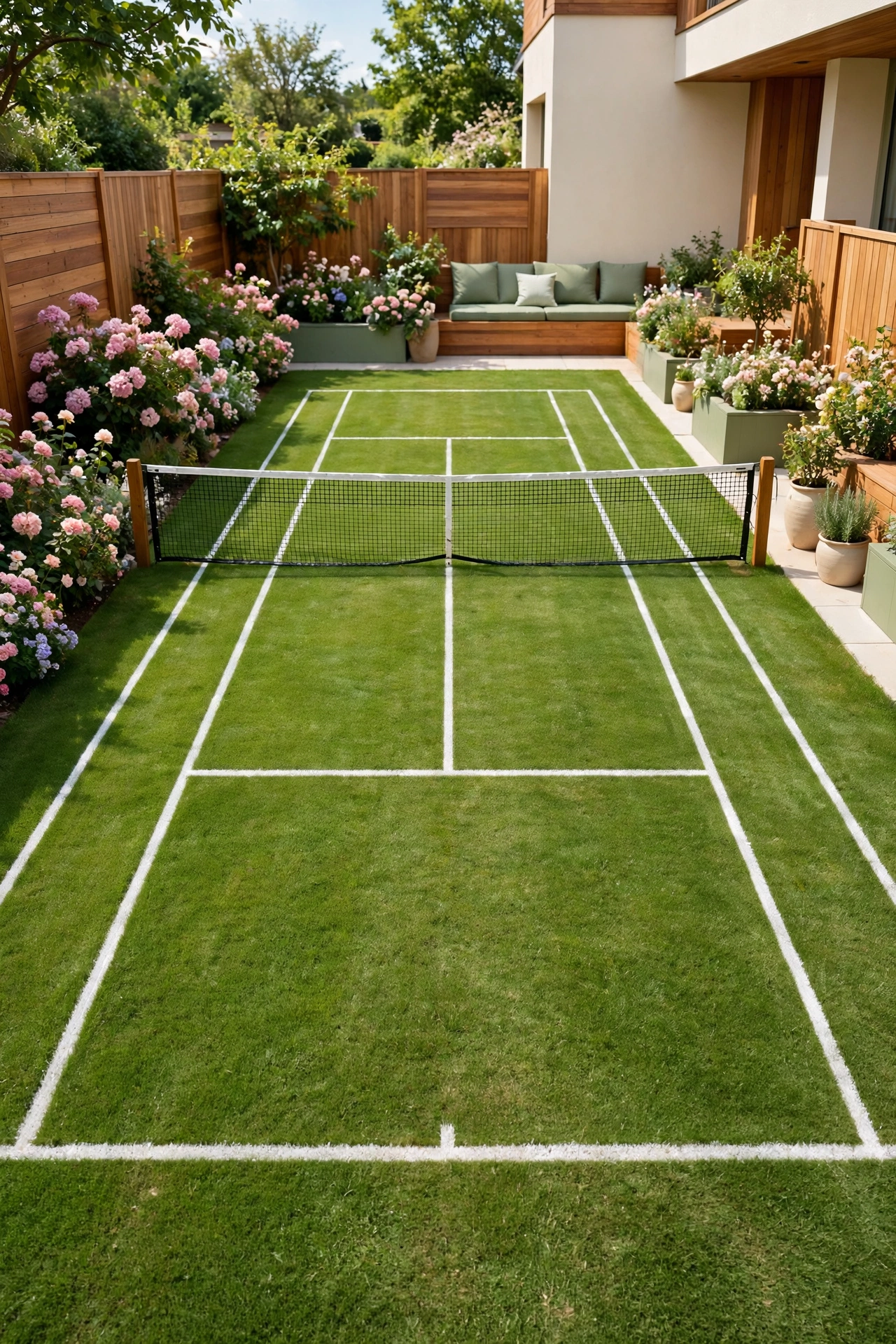
3. Lay a Grass Court for a Traditional Garden Feel
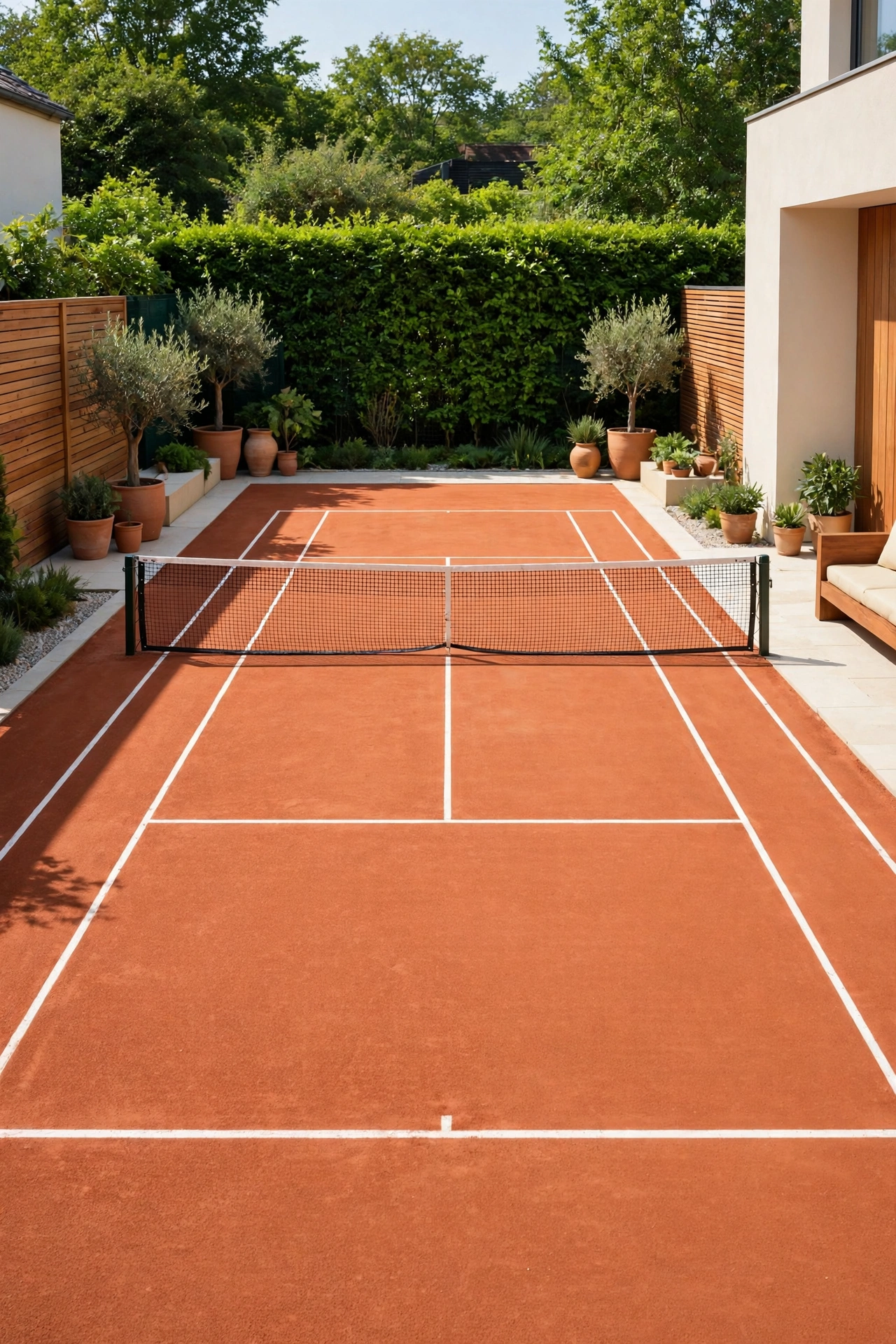
A grass court turns the tennis area into a natural part of the garden. The soft green surface looks stunning, plays fast, and feels gentle underfoot. A well kept grass court gives the whole garden a classic country club feel without any hard paving at all.
Grass needs mowing, watering, and rest between heavy sessions, so it suits families who play a few times a week rather than every day. Rotate the playing area slightly when you can, and keep a simple maintenance routine. A grass court is the most beautiful option when you have the space and the patience for it.
4. Add a Practice Wall for Solo Rallies
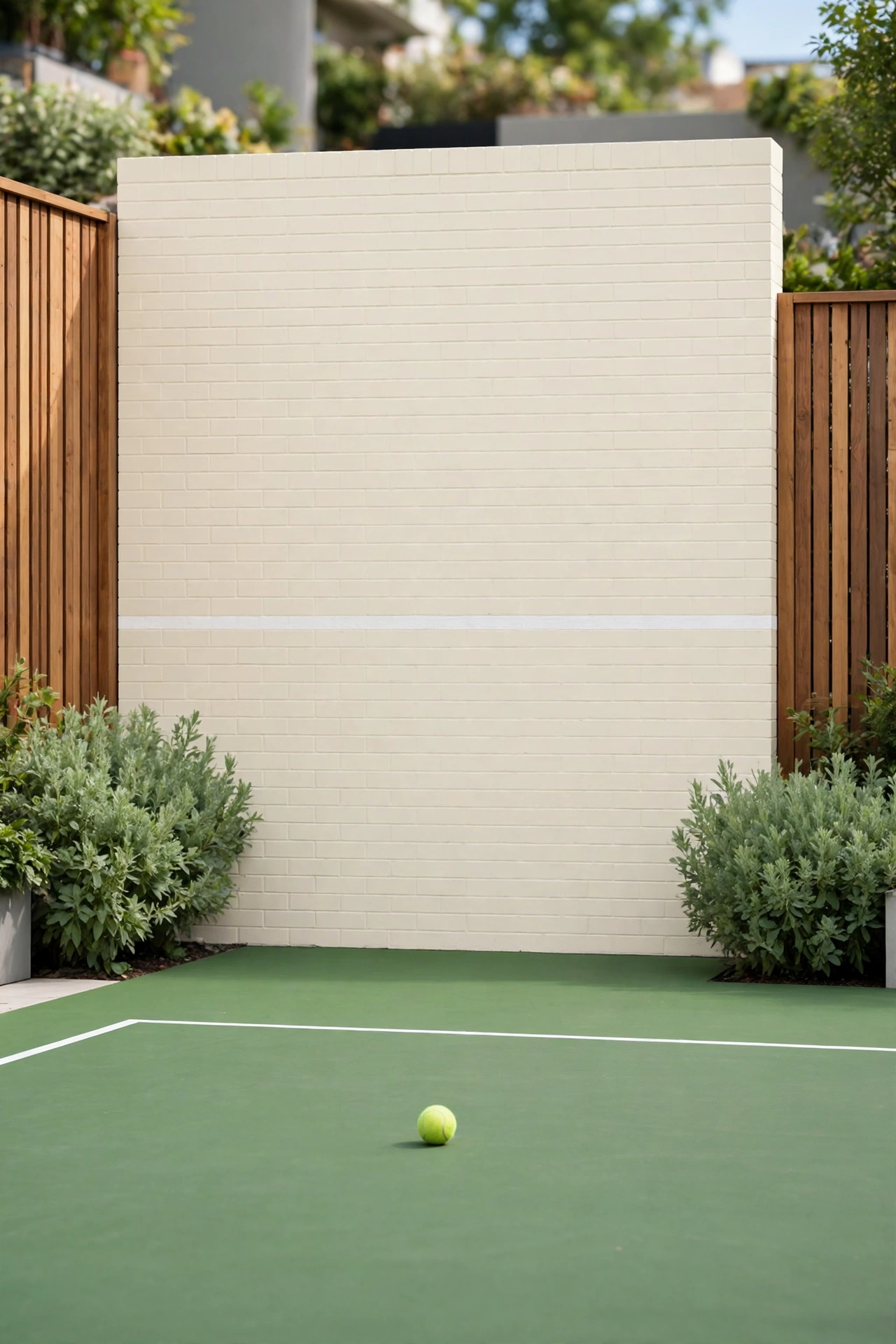
A practice wall lets any family member play tennis alone, any time of day. A solid wall with a smooth face and a marked line at net height returns every ball, so one player can practice forehands, backhands, and volleys without a partner. It is the best training tool a home court can have.
Build the wall from brick, block, or sturdy timber at one end of the court, and paint a clear line across it at net height. Add a small target square for extra challenge. For more ways to keep the whole family active outdoors, see these backyard basketball court ideas. A practice wall turns quiet afternoons into useful practice time.
5. Install a Permanent Net with a Center Strap
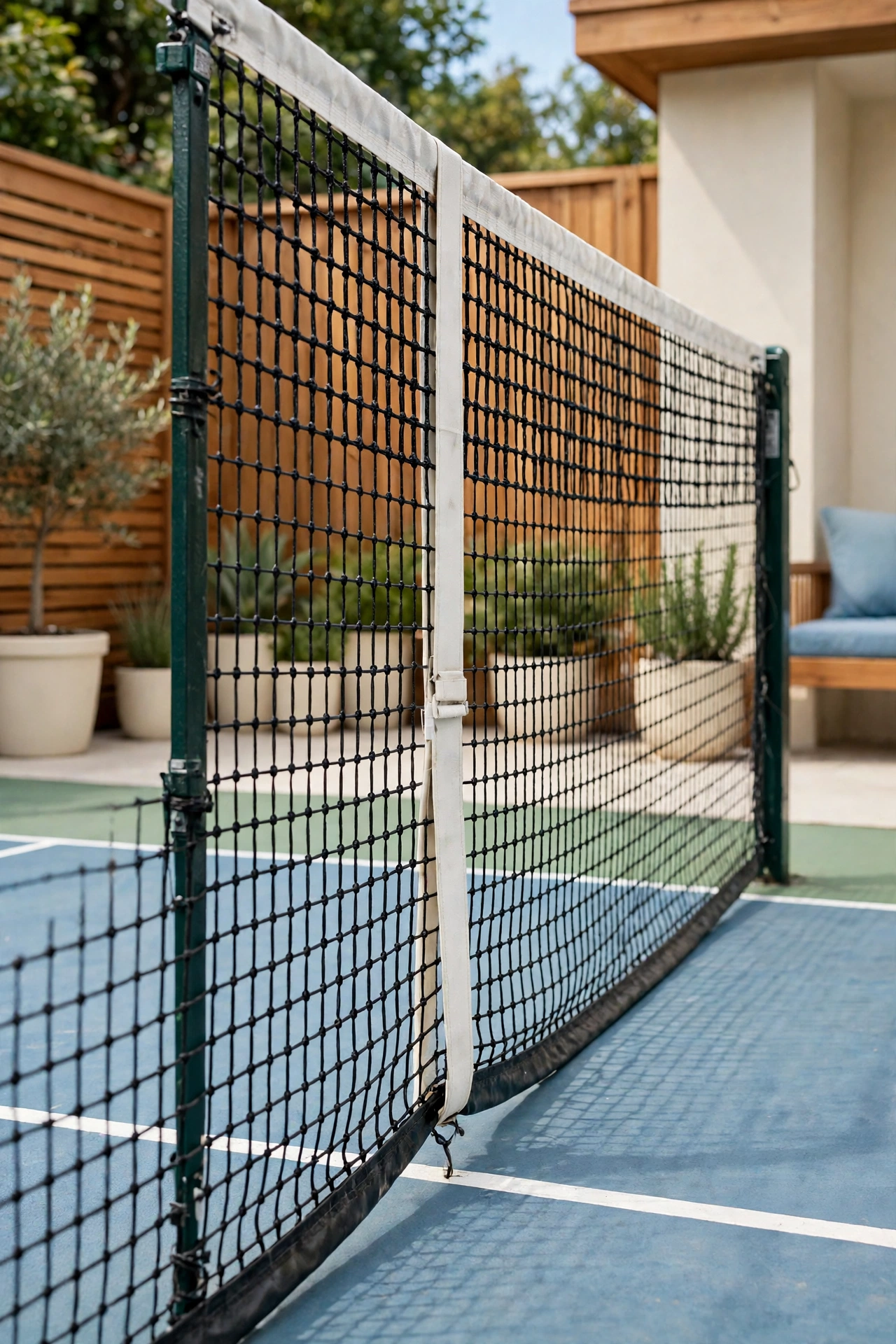
A permanent net with a center strap gives your court a professional feel and a correct net height every time. The strap holds the center of the net at the right height, while the posts keep the ends firm. You never need to measure or adjust before a match.
Choose posts in a dark green or black finish with a simple winding mechanism for tension. A good net lasts for years if you keep it clean and dry in winter. A permanent net tells every visitor that this court is ready for real play, not just a casual hit.
6. Paint Clear Court Lines in a Bright Color
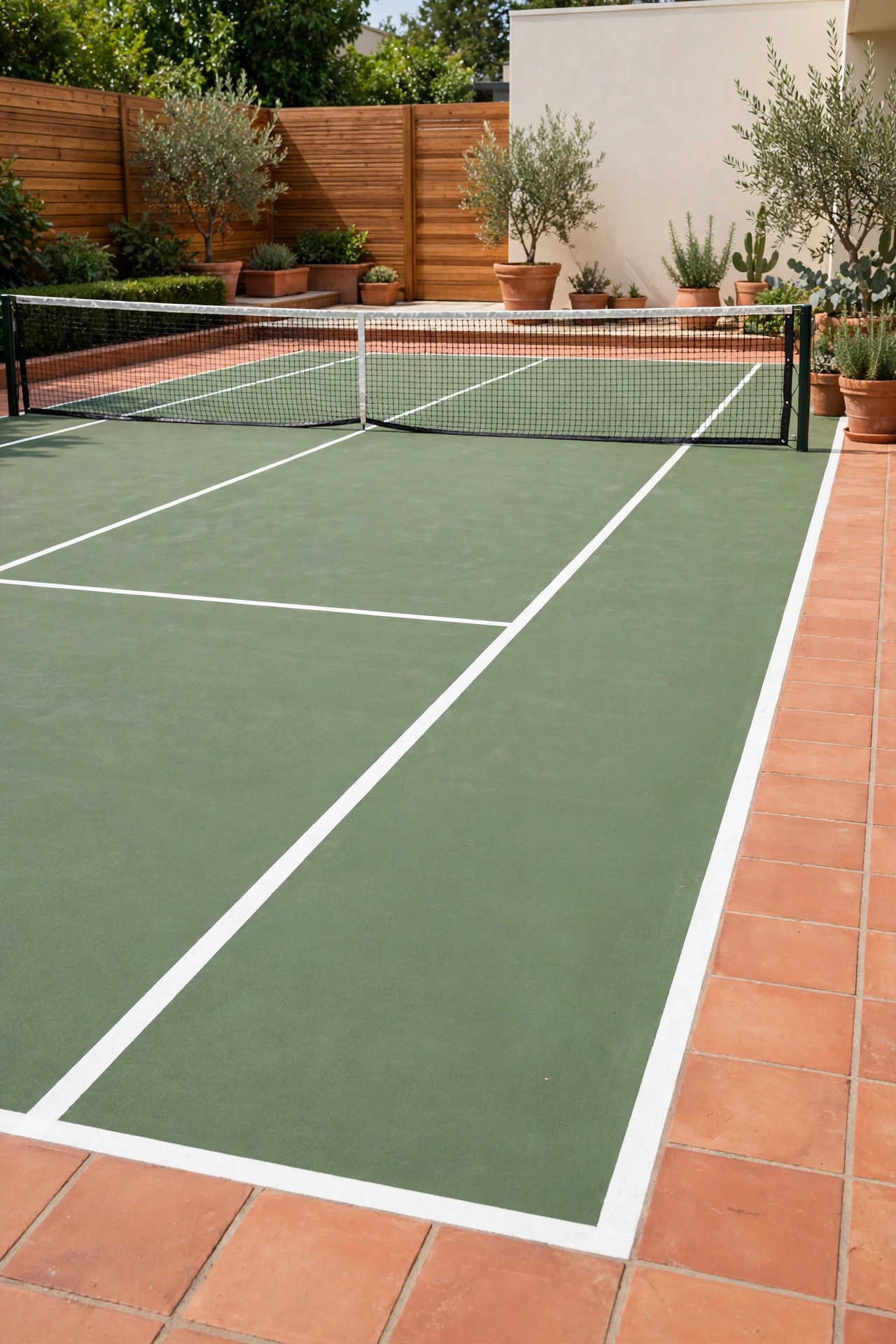
Clear court lines make every game fair and easy to follow. Paint the baselines, service lines, and sidelines in crisp white or a bright cream color that stands out against the surface. Straight lines and sharp corners also make the court look smart and well cared for.
Use paint made for court surfaces so the lines stay bright through rain and sun. Repaint once a year to keep them fresh. Clear lines help children learn the rules and help adults settle close calls without argument.
7. Build a Low Fence Around the Court
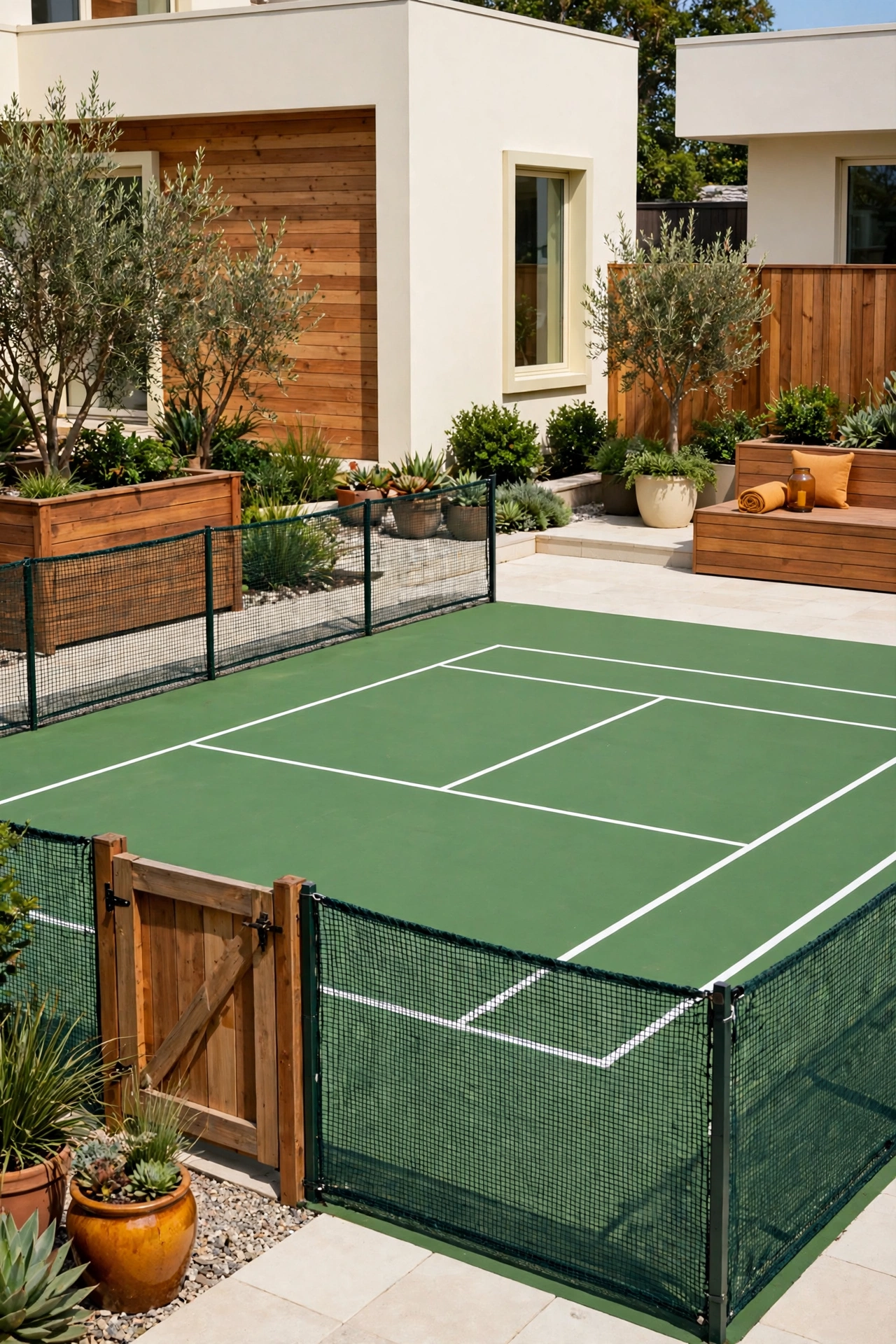
A low fence around the court keeps balls in play and stops them from rolling into flower beds and vegetable patches. A fence of about three meters at the ends and lower along the sides is enough for family games. Mesh panels let light and air through while catching stray balls.
Choose dark green mesh on slim posts so the fence blends into the garden instead of dominating it. A gate at one corner gives easy access with a racket bag in hand. A good fence means less time chasing balls and more time playing tennis.
8. Add Floodlights for Evening Matches
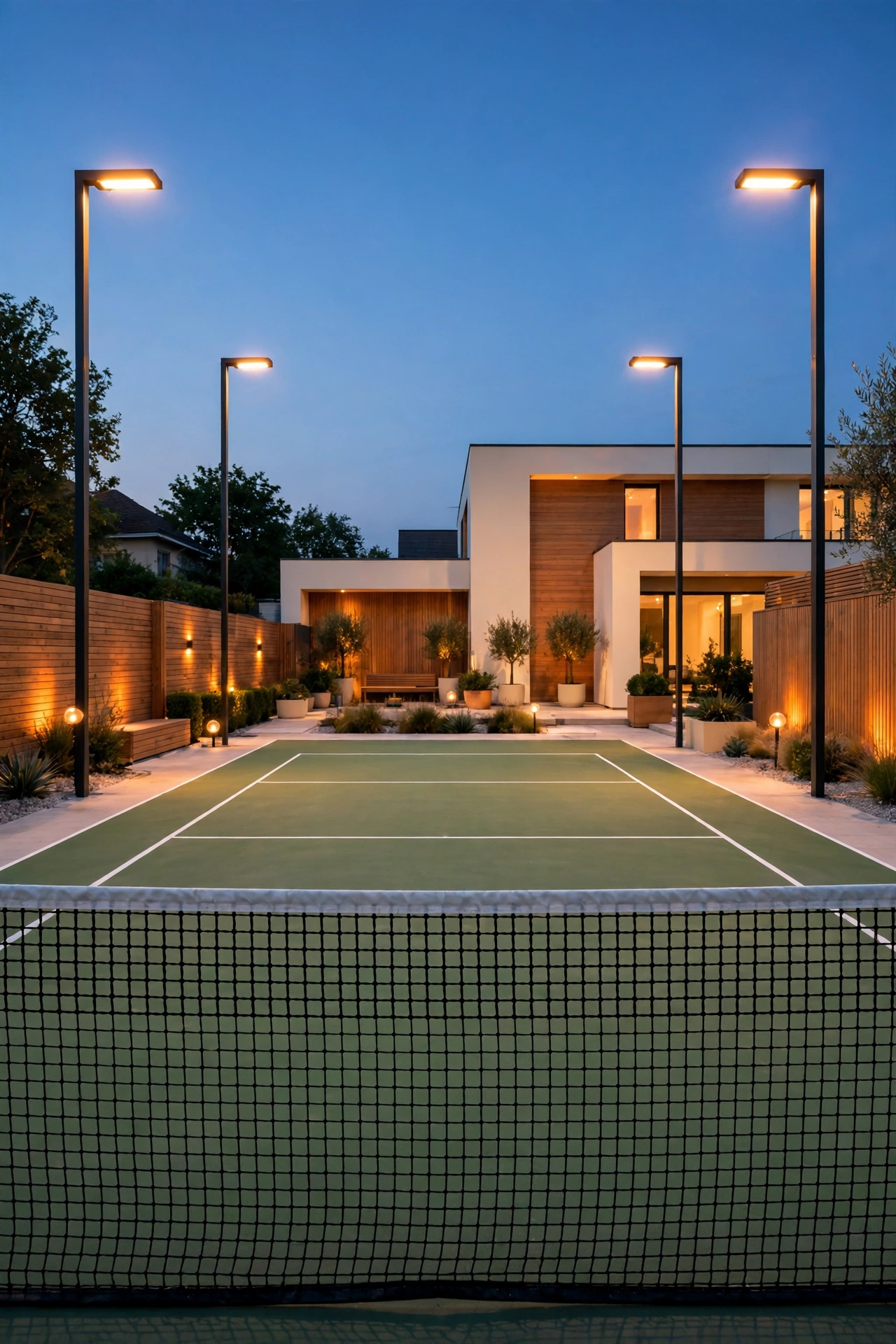
Floodlights stretch the tennis day into the evening, which matters most in summer when the family is free after dinner. Two or four tall lights on slim poles give even, shadow free light across the whole court. LED lights use little power and switch on instantly.
Mount the lights high enough to avoid glare in the eyes of players, and angle them down toward the court. A simple timer or a smart switch makes evening games easy to start. Floodlights turn the court into the favorite evening spot in the whole garden.
9. Set Up a Shaded Seating Area Beside the Court
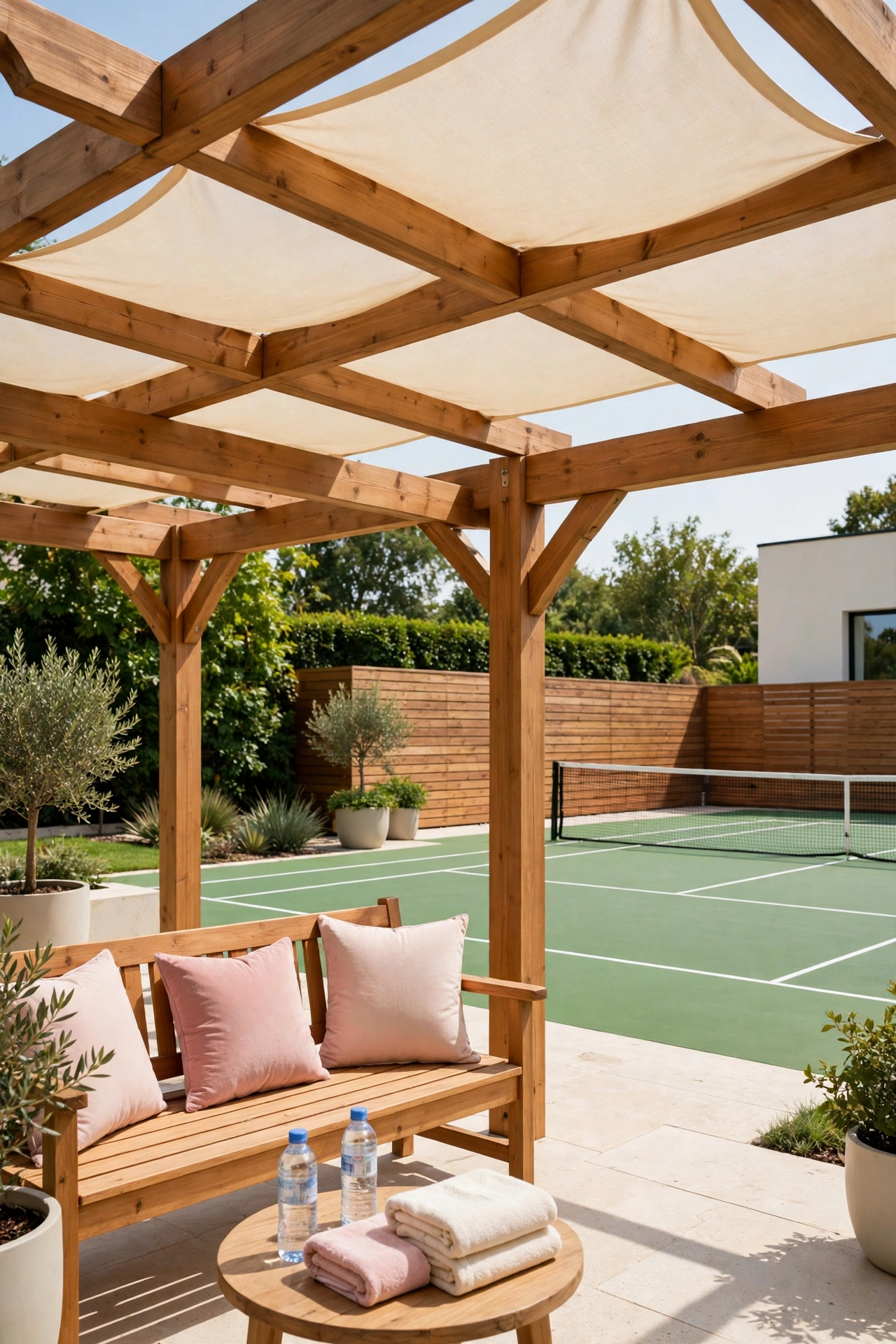
A shaded seating area beside the court gives players a cool place to rest between games and gives watchers a comfortable seat. A simple pergola with a canvas shade, a wooden bench, and a small table is all it takes. The seating area becomes the social heart of the court.
Add a few cushions in a soft blush color and a basket for towels and water bottles. A shaded seat keeps the family near the game even on hot days. For more ideas on gathering spots in the garden, see these backyard pavilion ideas. Good seating makes the court a place to spend time, not just a place to play.
10. Keep a Ball Basket and Racket Rack by the Gate
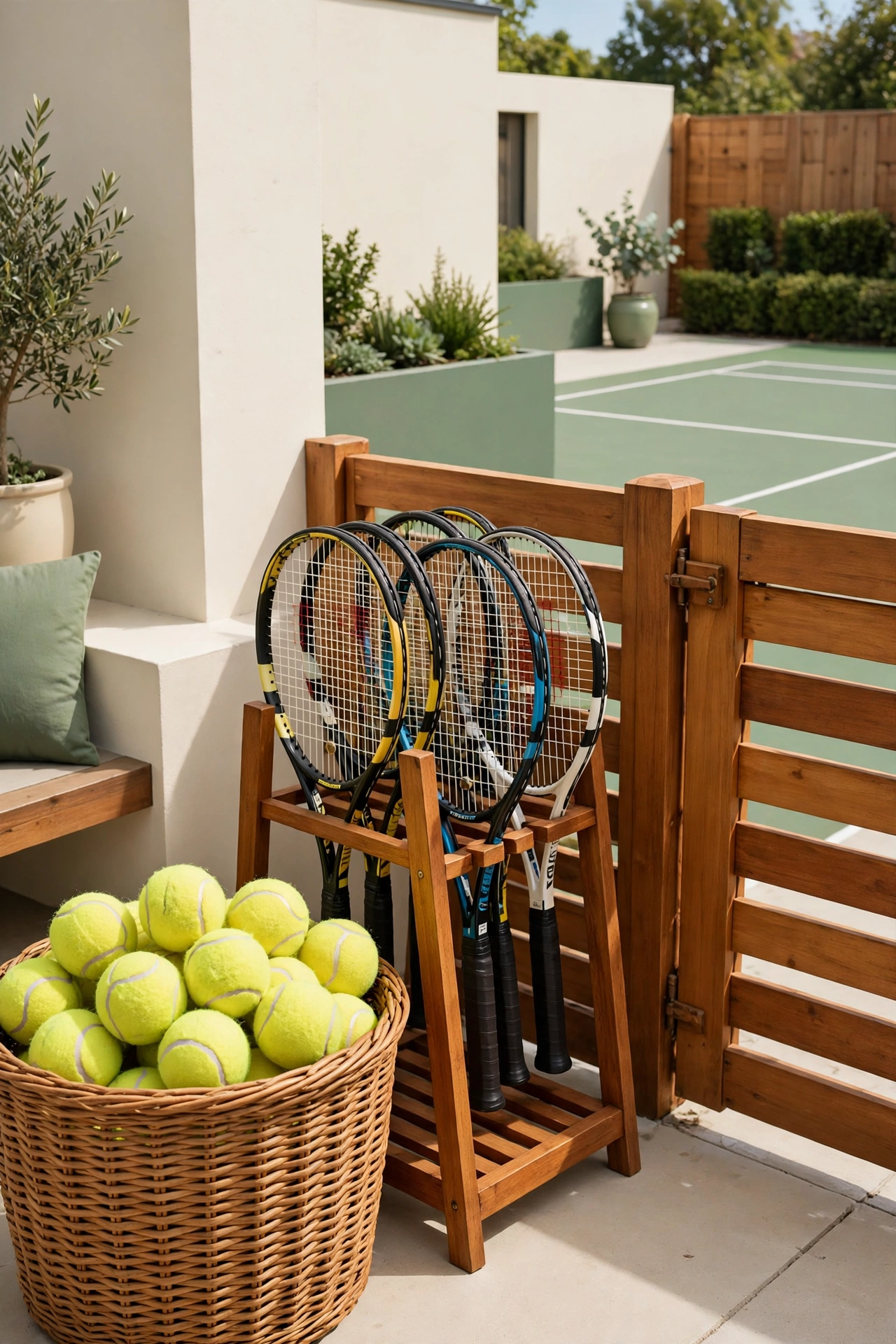
A ball basket and a racket rack by the court gate keep all the gear in one tidy spot. A woven basket holds spare balls, while a simple wooden rack with hooks holds rackets upright and off the ground. Everything is ready the moment the family walks onto the court.
Label a small shelf for each family member so rackets never get mixed up. A tidy gate area also stops gear from wandering into the house. This small setup saves time before every game and keeps the court looking organized.
11. Create a Kids Zone with a Smaller Net
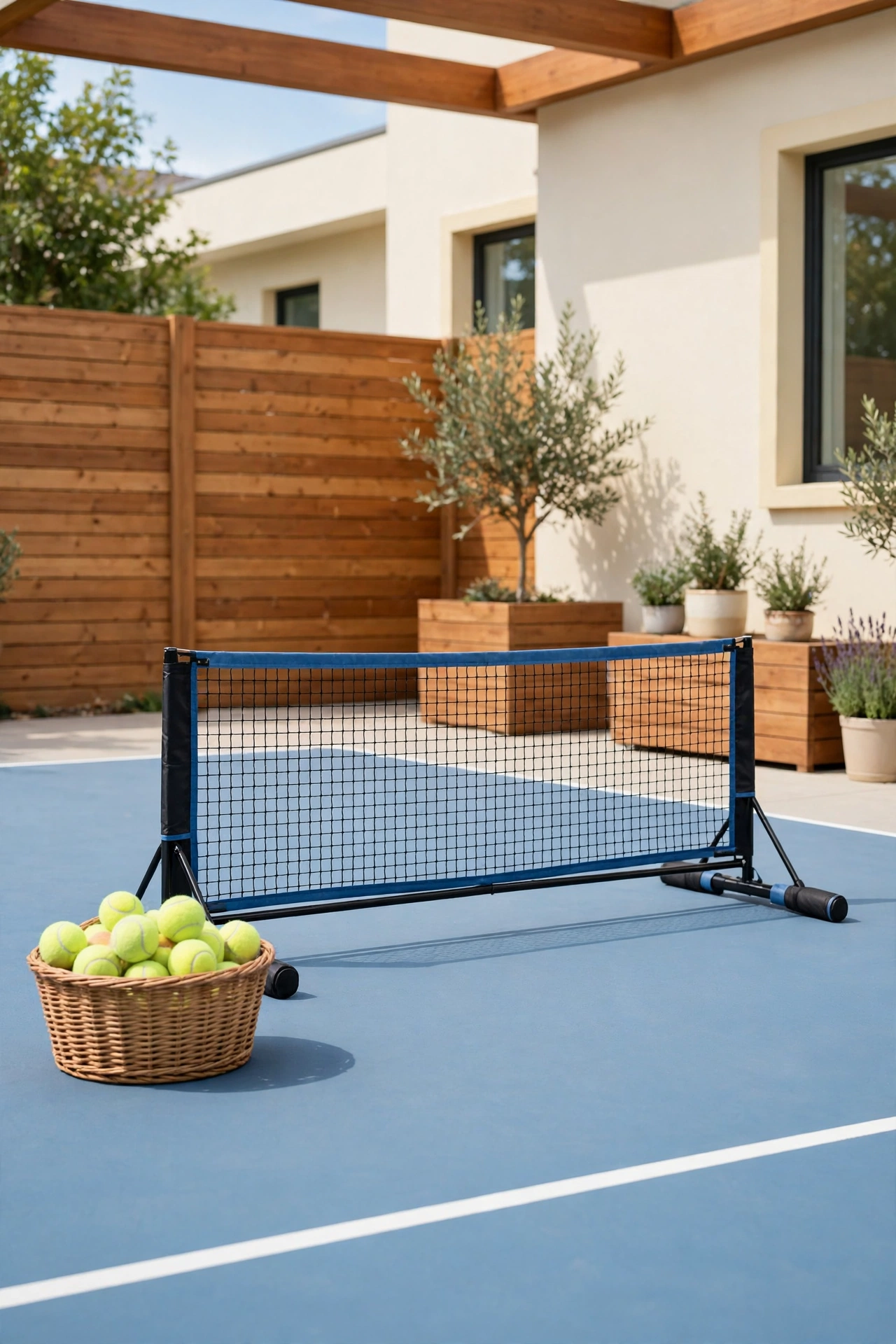
A kids zone with a smaller net and a lower bounce lets young players enjoy real tennis on the family court. Set up a portable mini net across one service box, or mark a smaller court inside the main court with temporary lines. Children learn faster when the net and the space fit their size.
Use softer low compression balls so rallies last longer and confidence grows. Keep a small basket of junior rackets near the kids zone. A court that welcomes young players becomes a family treasure for years.
12. Add a Ball Machine for Solo Practice
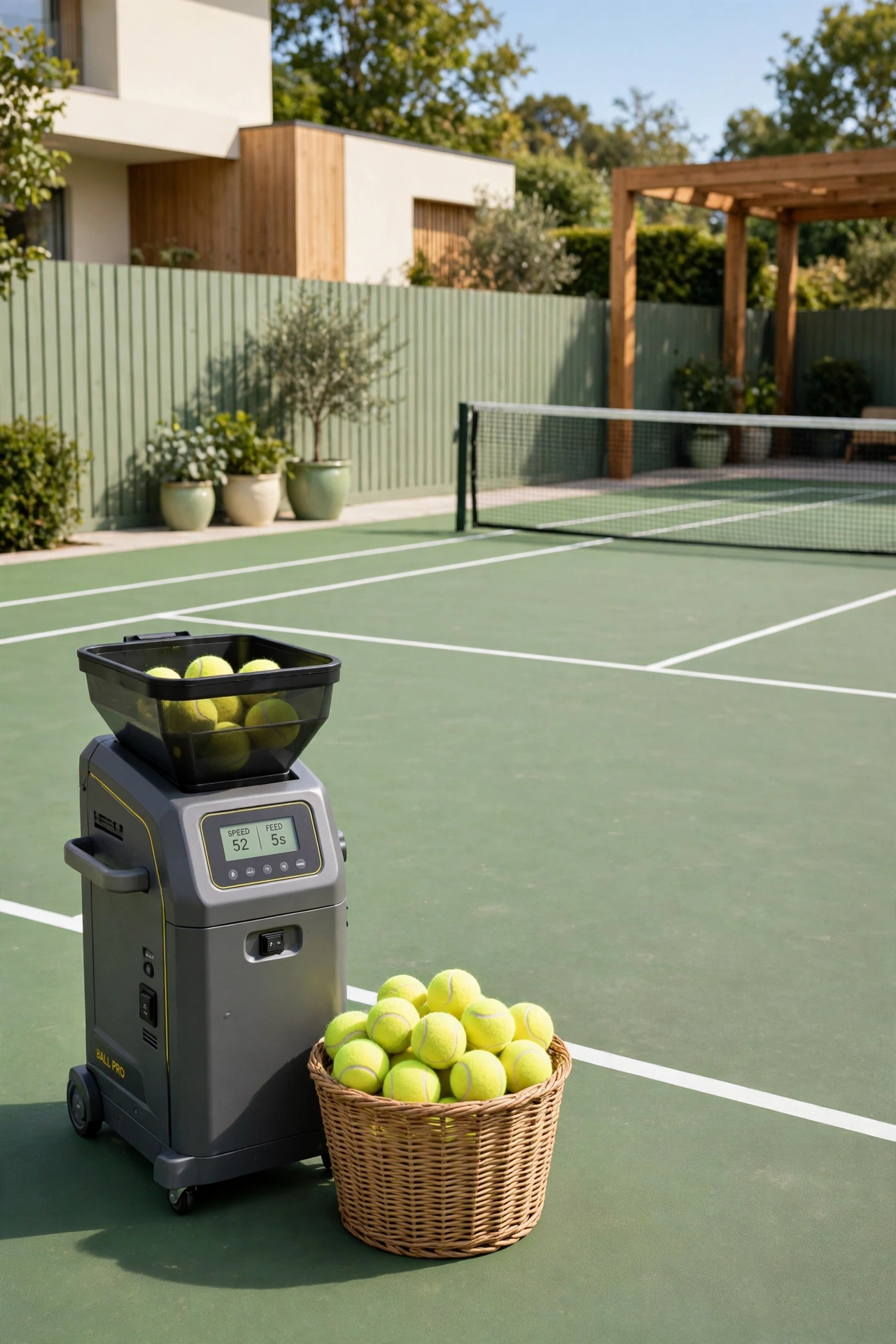
A ball machine feeds ball after ball to one player, which makes solo practice focused and fun. Modern machines let you change the speed, spin, and direction, so every session can target a different skill. The machine stands quietly at one end of the court and works tirelessly.
Store the machine in a small weatherproof box beside the court so it stays clean and ready. A ball machine suits teens who want extra practice and adults who want a real workout. It is one of the best investments for a family that takes tennis seriously.
13. Lay a Cushioned Surface for Kinder Knees
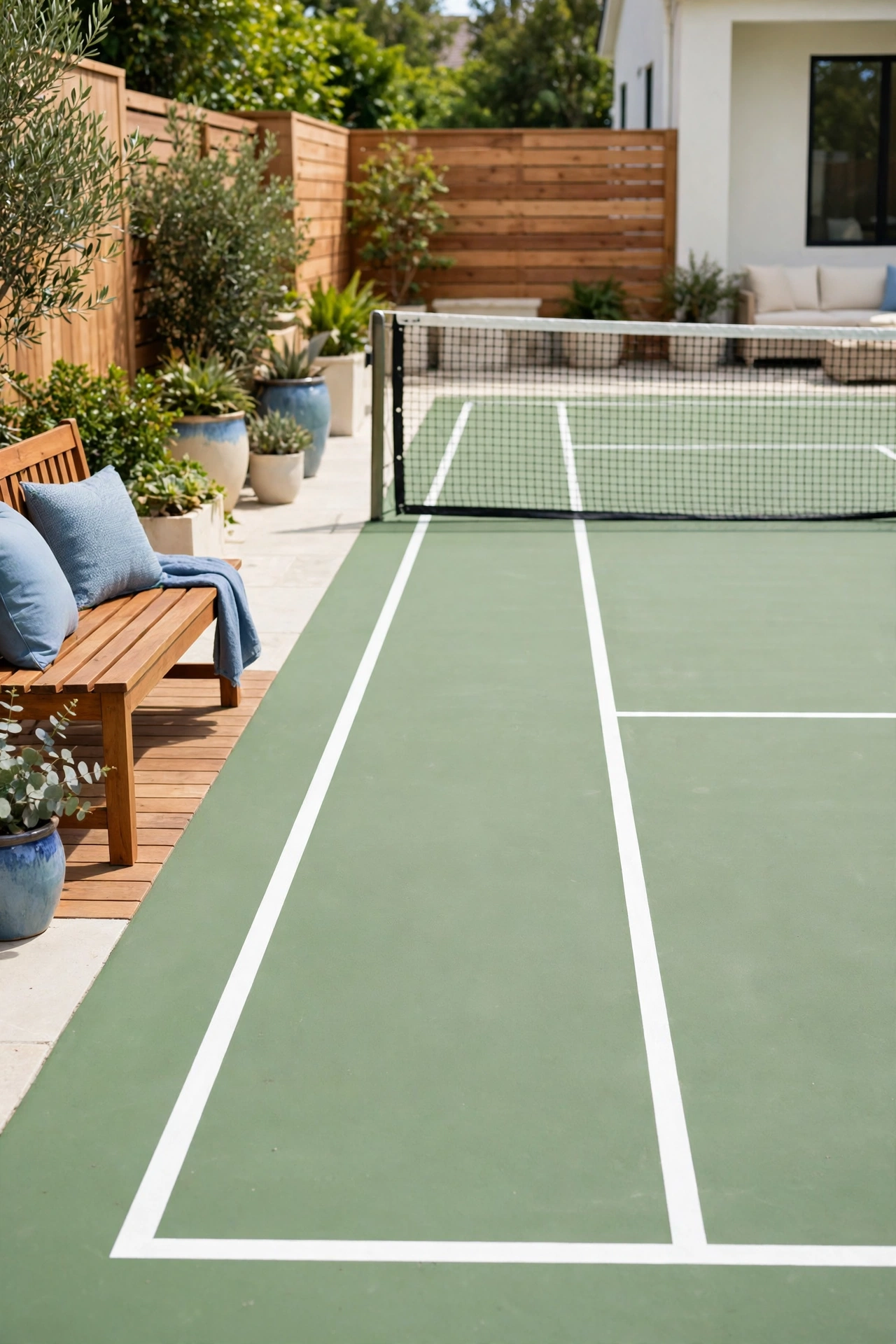
A cushioned court surface adds a soft layer under the top coat, which is kinder to knees, ankles, and backs. The surface still gives a true bounce, but each step lands softer than on plain concrete. Families with older players or young children notice the difference fast.
Cushioned surfaces come in several thicknesses, so you can choose the level of softness that suits your family. The surface also reduces noise, which neighbors appreciate. A cushioned court keeps everyone playing longer and recovering faster.
14. Plant a Hedge Windbreak Around the Court
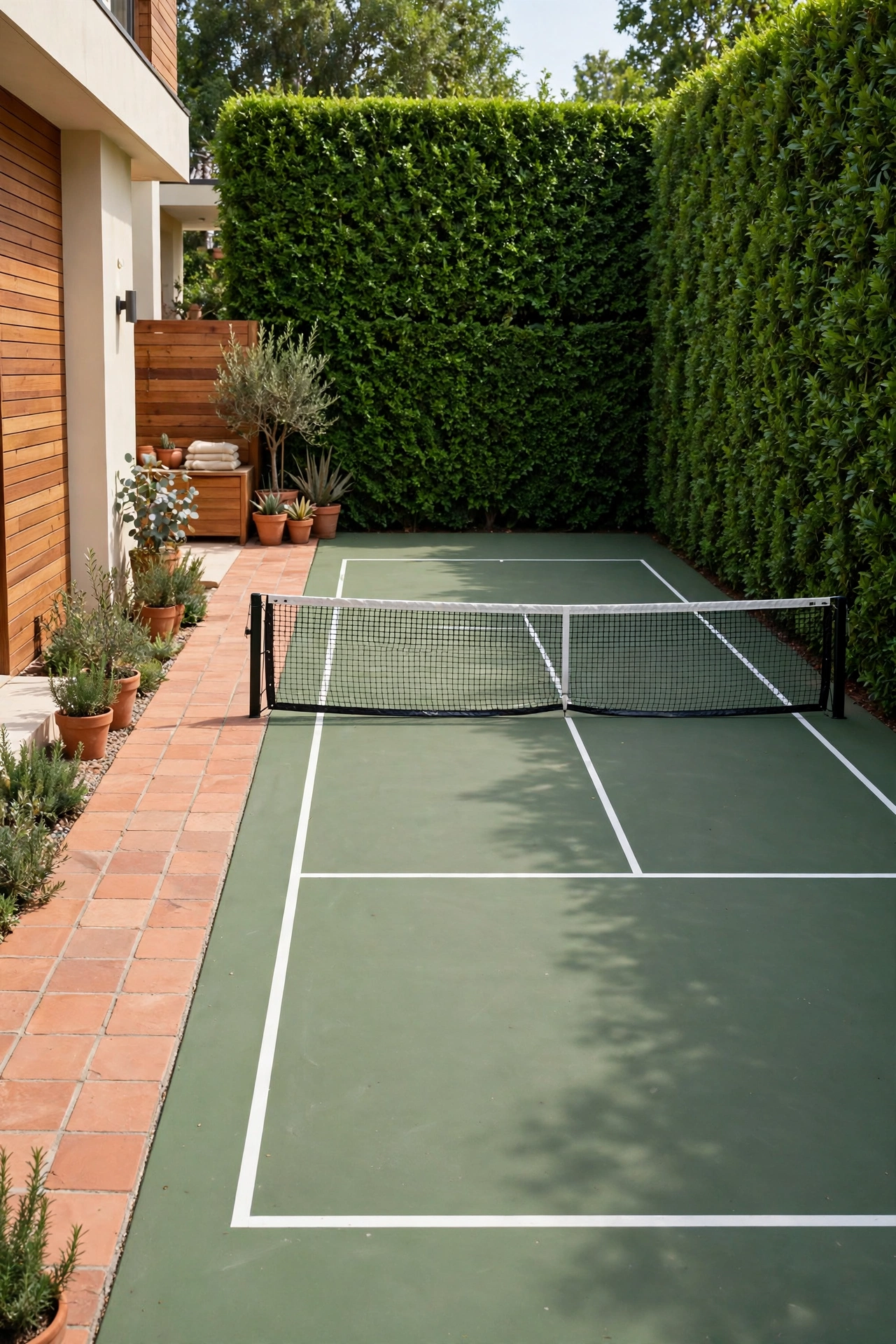
A hedge windbreak around the court cuts the wind that ruins lobs and tosses. Dense evergreen shrubs planted just outside the fence slow the wind without blocking the sun. The hedge also gives the court privacy and a beautiful green frame.
Choose a tidy hedge that stays green all year, like laurel or privet, and trim it twice a year. A living windbreak looks far better than a solid screen and helps the whole garden. For more garden features that make outdoor time better, see these outdoor fireplace ideas. A hedge windbreak makes every match calmer and more enjoyable.
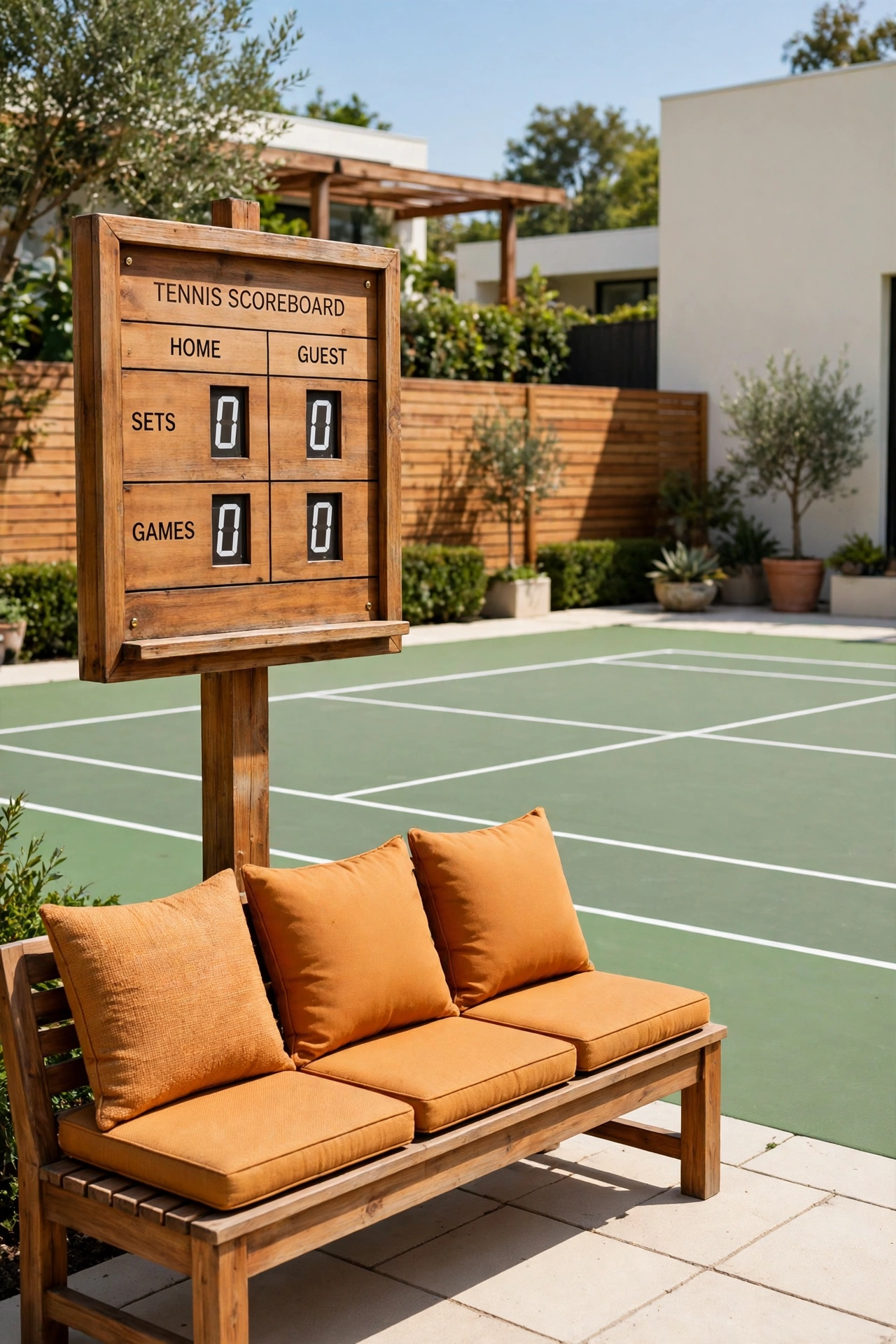
15. Add a Scoreboard for Family Tournaments
A scoreboard turns casual games into proper family tournaments. A simple chalkboard or a flip scoreboard beside the court keeps the score clear for players and watchers alike. Children love to update the score, and adults love the friendly competition.
Mount the scoreboard on a wooden post near the seating area where everyone can see it. Add a small shelf below for chalk or score cards. A scoreboard gives every match a sense of occasion and keeps family tournaments running smoothly.
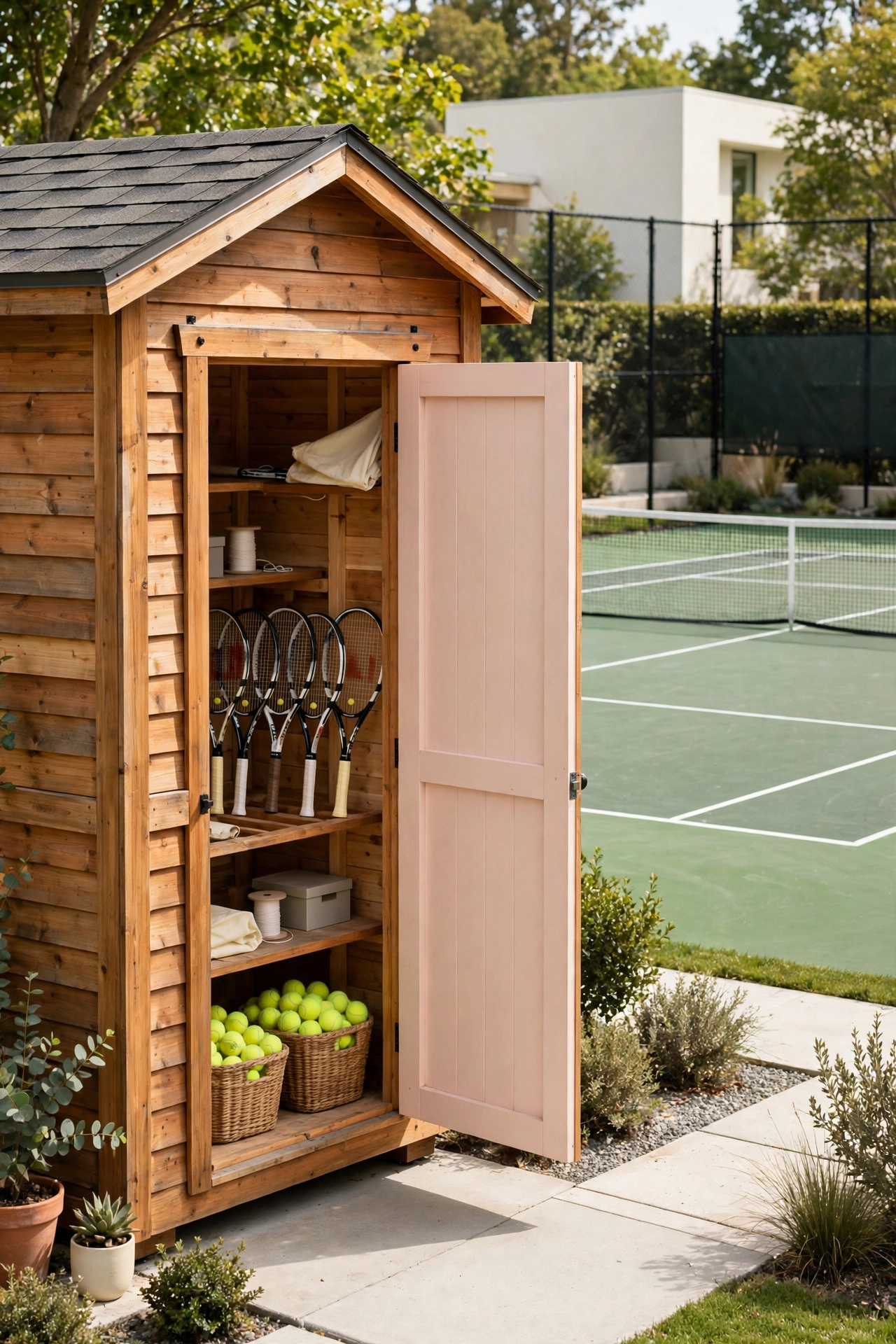
16. Build a Small Storage Shed for Court Gear
A small storage shed near the court keeps rackets, balls, nets, and maintenance tools safe and dry. A compact wooden shed with shelves and hooks holds everything the court needs in one place. Gear that lives at the court gets used far more than gear stored in the garage.
Paint the shed to match the fence or the house so it looks like part of the garden. Add a small sign with a fun name for the court. A tidy shed means the court is always ready and the house stays free of tennis gear.
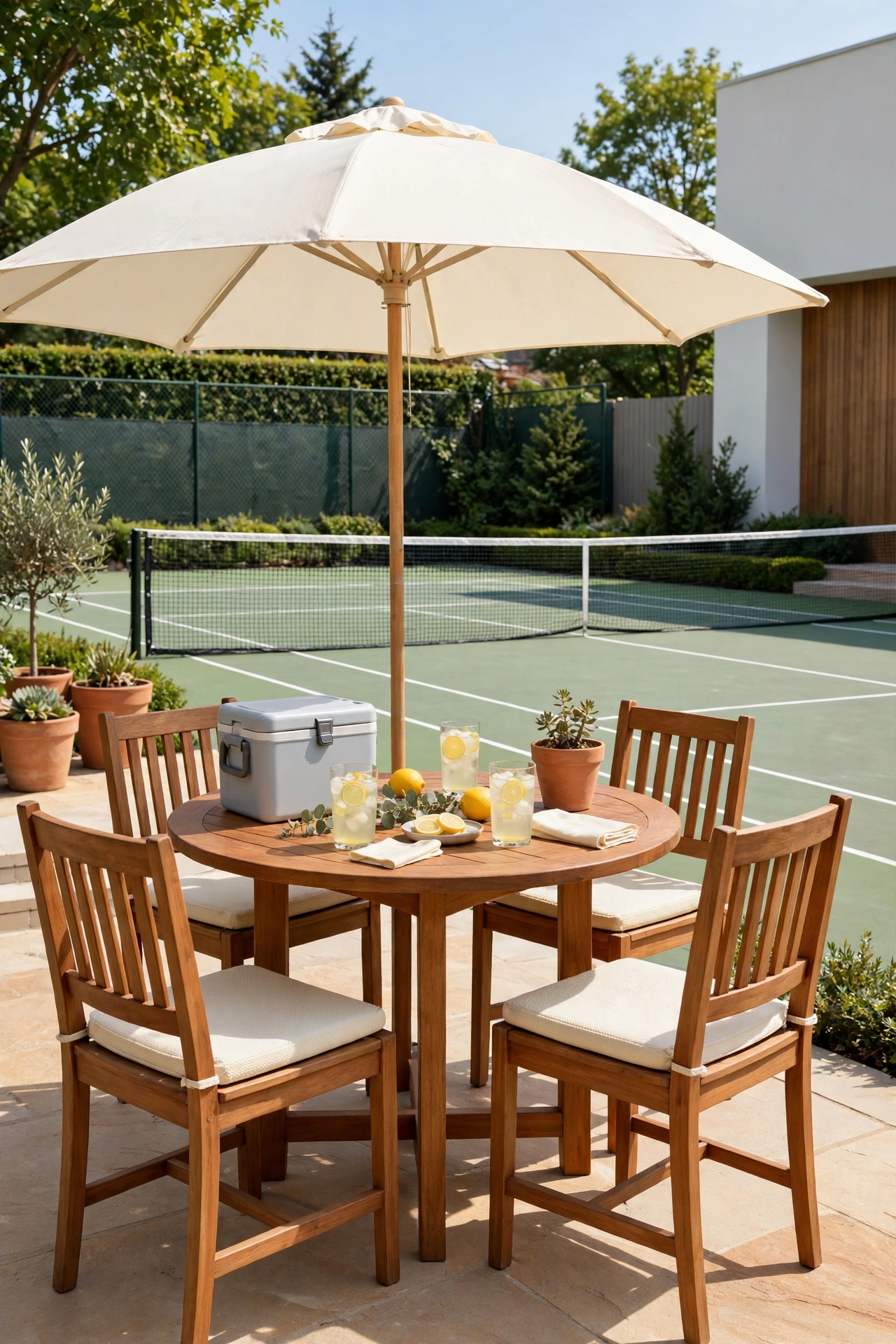
17. Finish with a Patio Corner for Post-Match Snacks
A patio corner near the court gives the family a place to relax with snacks and drinks after a match. A small table, four chairs, and a parasol create a simple outdoor cafe just steps from the net. Fresh fruit, cold water, and a shady seat complete the ritual.
Keep a small cooler under the table so drinks stay cold through long games. A patio corner turns tennis into a full family afternoon, not just a quick hit. For more ways to enjoy the garden after a game, see these outdoor pizza oven ideas. The best courts always end with good company and a cool drink.
Conclusion
A backyard tennis court does not need to be perfect to be wonderful. It needs a good surface, a true net, clear lines, and a few thoughtful touches that make the game fun for the whole family. Each idea here solves one small problem, and together they turn a patch of garden into a place of sport, laughter, and fresh air.
Pick one or two ideas that fit your garden and start today. Paint the lines, hang the net, or plant the hedge, and your family will be playing before the summer ends. For a calm home beyond the garden, these nightly reset routine ideas will help you keep every room organized with just a few minutes each evening.
Frequently Asked Questions About Backyard Tennis Court Ideas for Active Families
How much space do I need for a backyard tennis court?
A full doubles court measures about 24 meters long and 11 meters wide, plus extra run back space at each end. A singles court or a half court for family practice fits in a much smaller garden. Measure your plot first, then choose the court size that leaves room for a fence and a seating area.
What is the best surface for a family tennis court?
A hard court with an acrylic top coat is the best all round choice for most families. It gives a true bounce, dries fast after rain, and needs little care. Clay and grass suit families who love the classic game and enjoy regular garden care.
How much does a backyard tennis court cost?
A simple hard court with a net and painted lines costs far less than a full professional build. A practice wall, a fence, and lights add to the cost in stages. Start with the surface and the net, then add seating, lighting, and storage over time as the family uses the court.
Can children play safely on a backyard tennis court?
Yes, a backyard court is safe for children when the surface is even, the fence is secure, and the gear fits their size. Use a smaller net and softer balls for young players, and keep a shaded seating area with water nearby. Adult supervision is wise for younger children, as with any garden play.
How do I maintain a backyard tennis court?
Sweep the surface weekly, wash it a few times a year, and repaint the lines when they fade. Check the net tension each season and trim any hedge windbreak twice a year. A short monthly routine keeps the court safe, tidy, and ready to play.

Hi, I’m Emily! I turn messy corners into cozy, organized spots. DreamNestDecor is where I share simple, practical home ideas — decor, organization, and small-space solutions that work in real life, not just in photos. Every idea here is carefully researched before it’s shared.