Picture this: a warm afternoon, the net is up, a volleyball rests on the sand, and the whole backyard feels like a beach resort waiting for the first serve. That feeling is exactly what a home volleyball court brings to everyday life. It turns an ordinary yard into a place where friends gather, kids play, and weekends feel like a holiday.
You do not need a huge yard or a professional budget to build one. All you need is a flat spot, a good net, and a plan that fits your space. These 29 backyard volleyball court ideas for outdoor fun will help you design a court that suits your yard, your family, and your style of play.
1. Build a Classic Sand Court
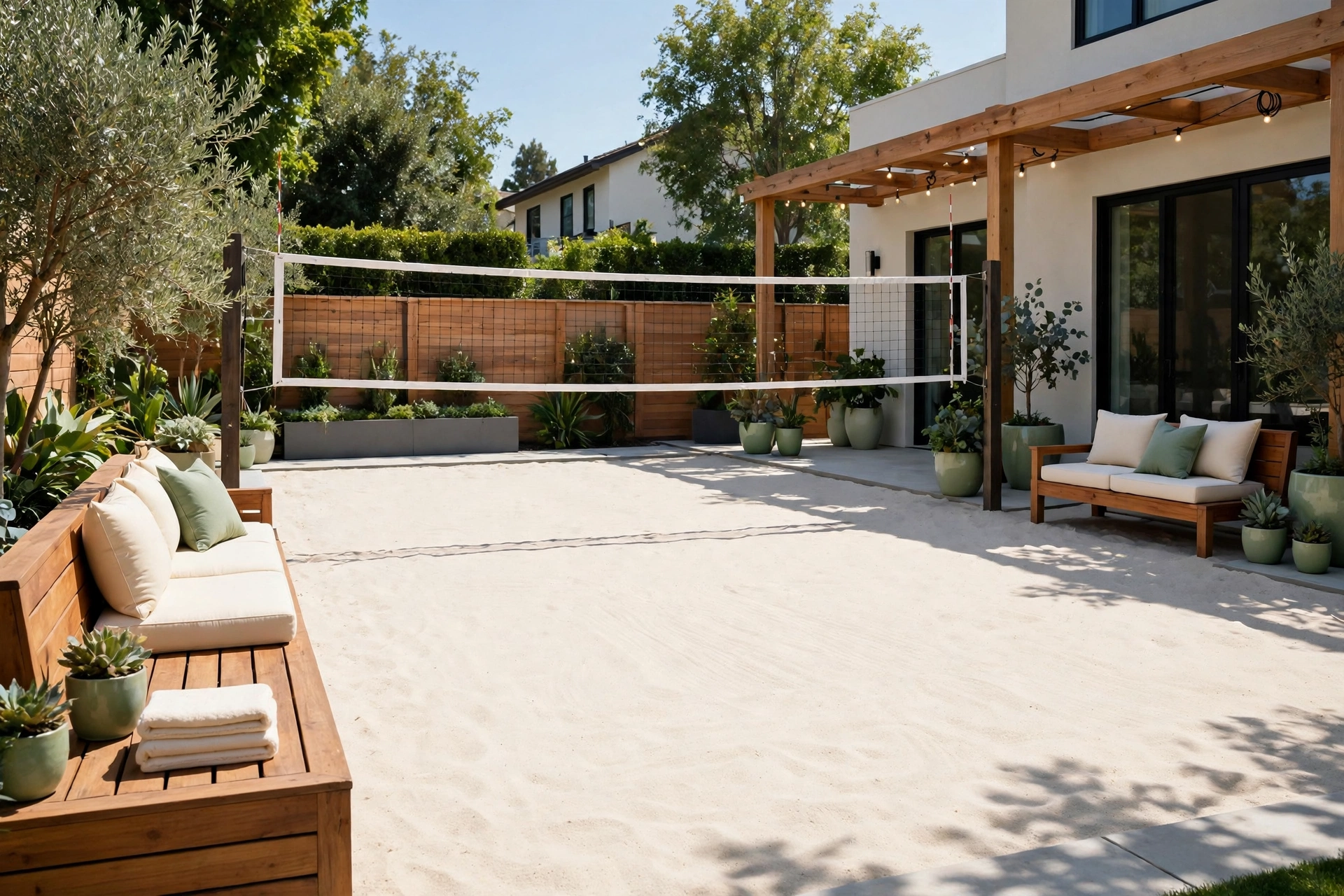
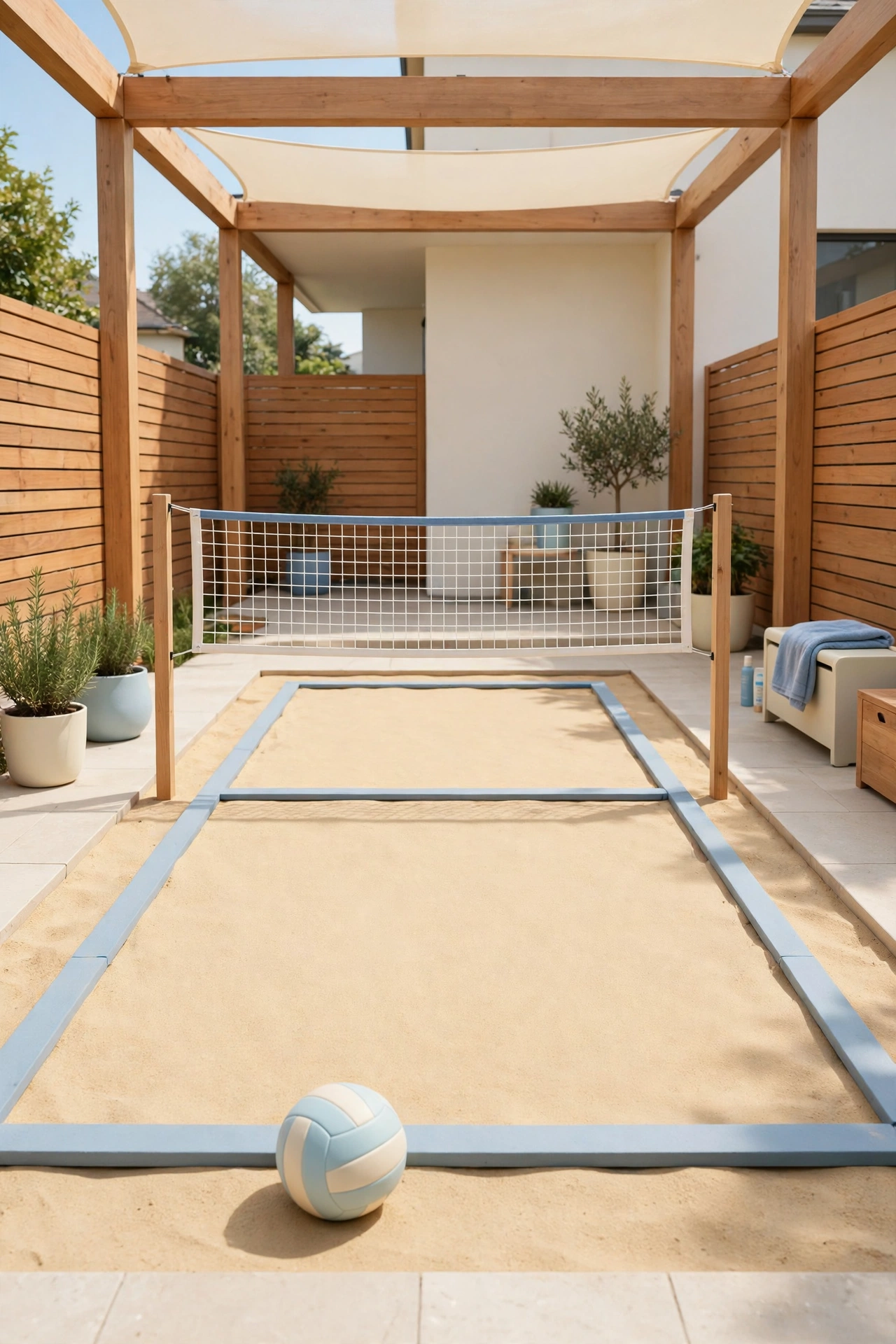
A classic sand court is the closest thing to beach volleyball you can bring home. Soft sand cushions every dive and jump, and it feels great under bare feet on a warm day. A sand court also looks beautiful, with clean pale sand set against green grass.
Start with a level area about 18 meters long and 9 meters wide, then edge it with timber boards to hold the sand in place. Spread clean washed sand about 30 centimeters deep and rake it smooth after every game. A classic sand court is the heart of backyard volleyball.
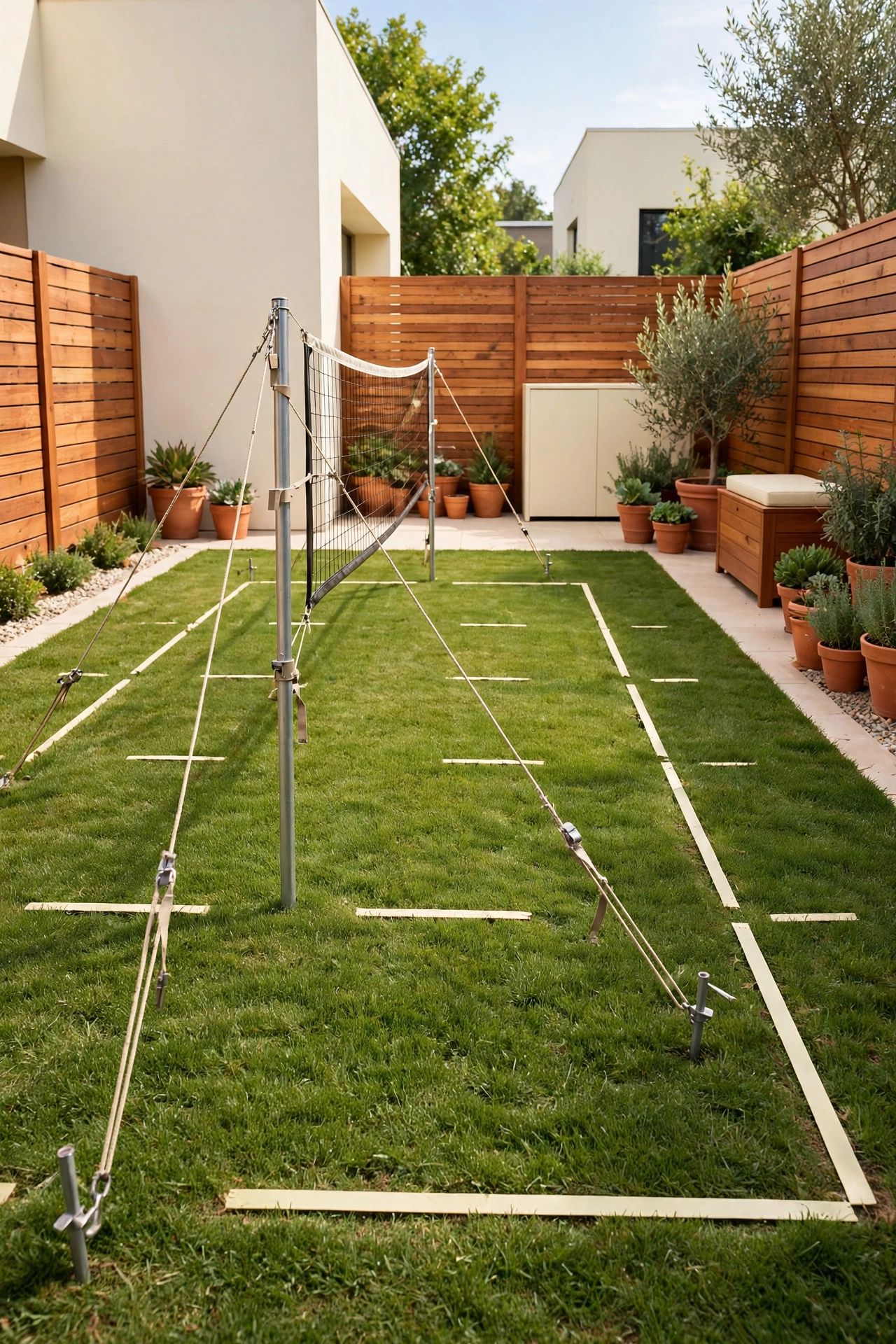
2. Lay a Grass Court with a Portable Net
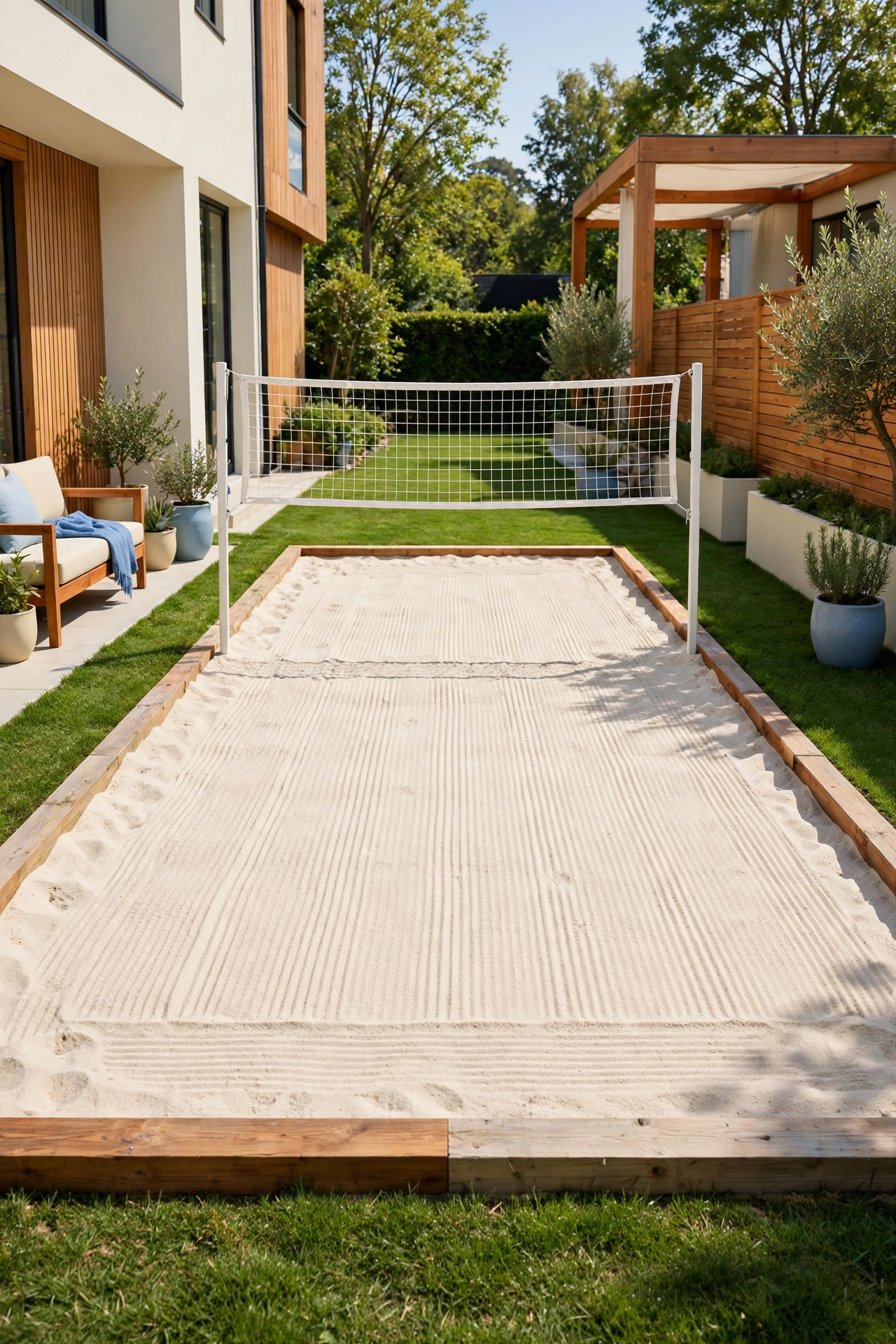
A grass court is the easiest way to start playing volleyball at home. All you need is a portable net system and a flat stretch of lawn. The grass is soft underfoot, and the whole setup can come down in minutes when the game ends.
Choose a net with sturdy poles and guy ropes that anchor into the ground with pegs. Mark the court lines with flat ground markers or a washable line paint so nobody trips over them. A grass court is perfect for casual games and family gatherings.
3. Install a Permanent In-Ground Net System
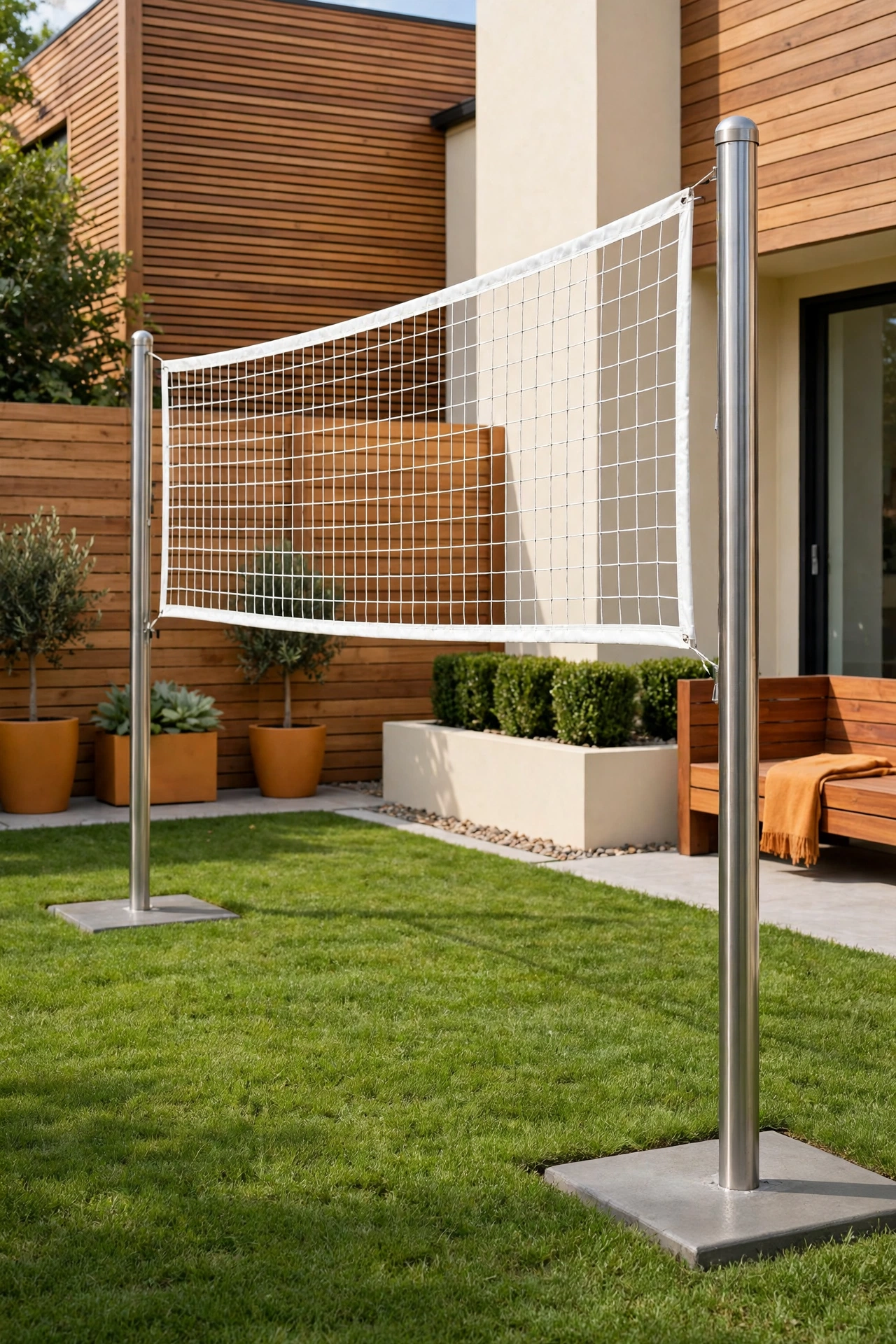
A permanent in-ground net system turns a corner of your yard into a real court that is always ready to play. Steel sleeves set into concrete hold the poles firmly, so the net stays tight and straight through every game. The court looks neat and professional all year round.
Set the sleeves about 10 meters apart and pour concrete around each one, then let it cure for a full week before you hang the net. Removable caps keep the sleeves clean when the poles are out. A permanent system is the best choice for families who play every week.
4. Paint Court Lines on a Concrete Slab
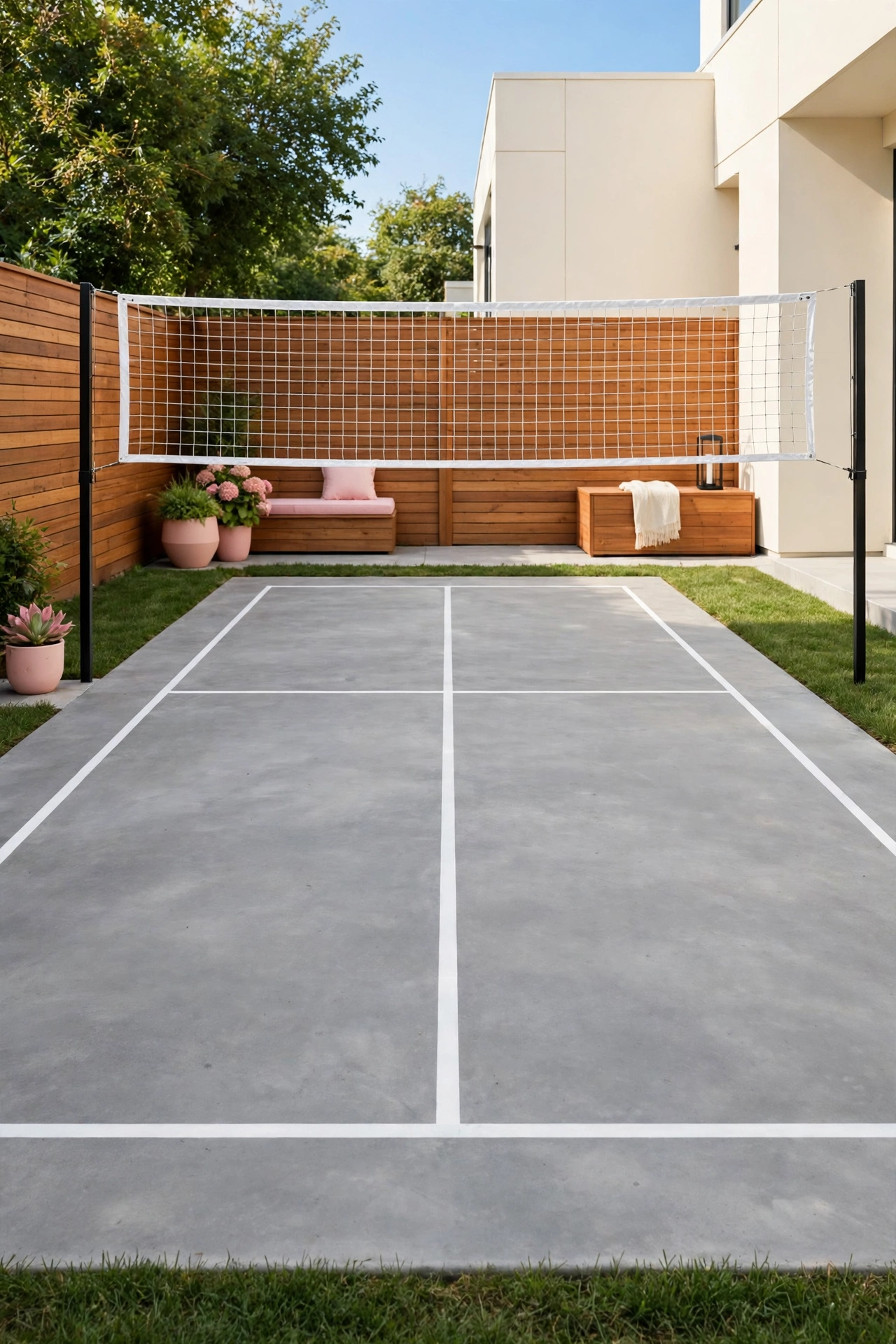
A concrete slab with painted lines gives you a fast, durable hard court for volleyball. The ball bounces true, the lines stay visible, and the surface dries quickly after rain. It is a practical choice for yards where sand would drift onto the patio.
Use a smooth broom finish on the slab so it grips shoes without scraping skin on a fall. Paint the lines in white or soft blue with outdoor court paint, and add a clear sealer over the top to protect the work. A painted concrete court is ready for play the day the paint dries.
5. Create a Beach Sand Pit with Timber Edging
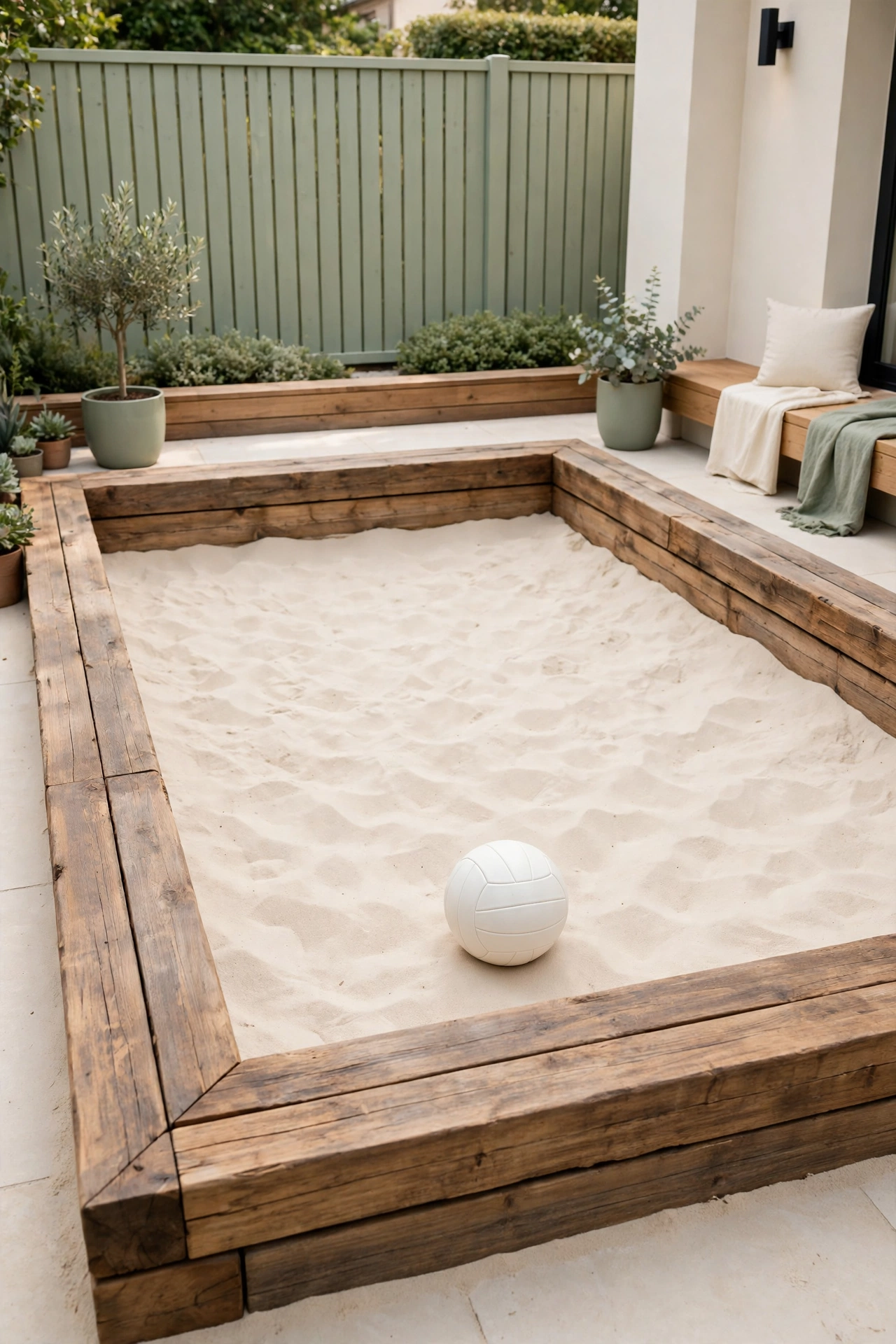
A beach sand pit court brings a holiday feeling to the backyard. Deep, soft sand makes diving safe and fun, and the pale color brightens the whole yard. Kids love it as much as adults, and it doubles as a play pit when the net comes down.
Build the pit with thick timber sleepers stacked two high around the edge, then line the base with landscape fabric to stop weeds from growing through. Fill it with fine washed sand and keep a rake nearby for smoothing. A sand pit court is pure summer joy in your own yard.
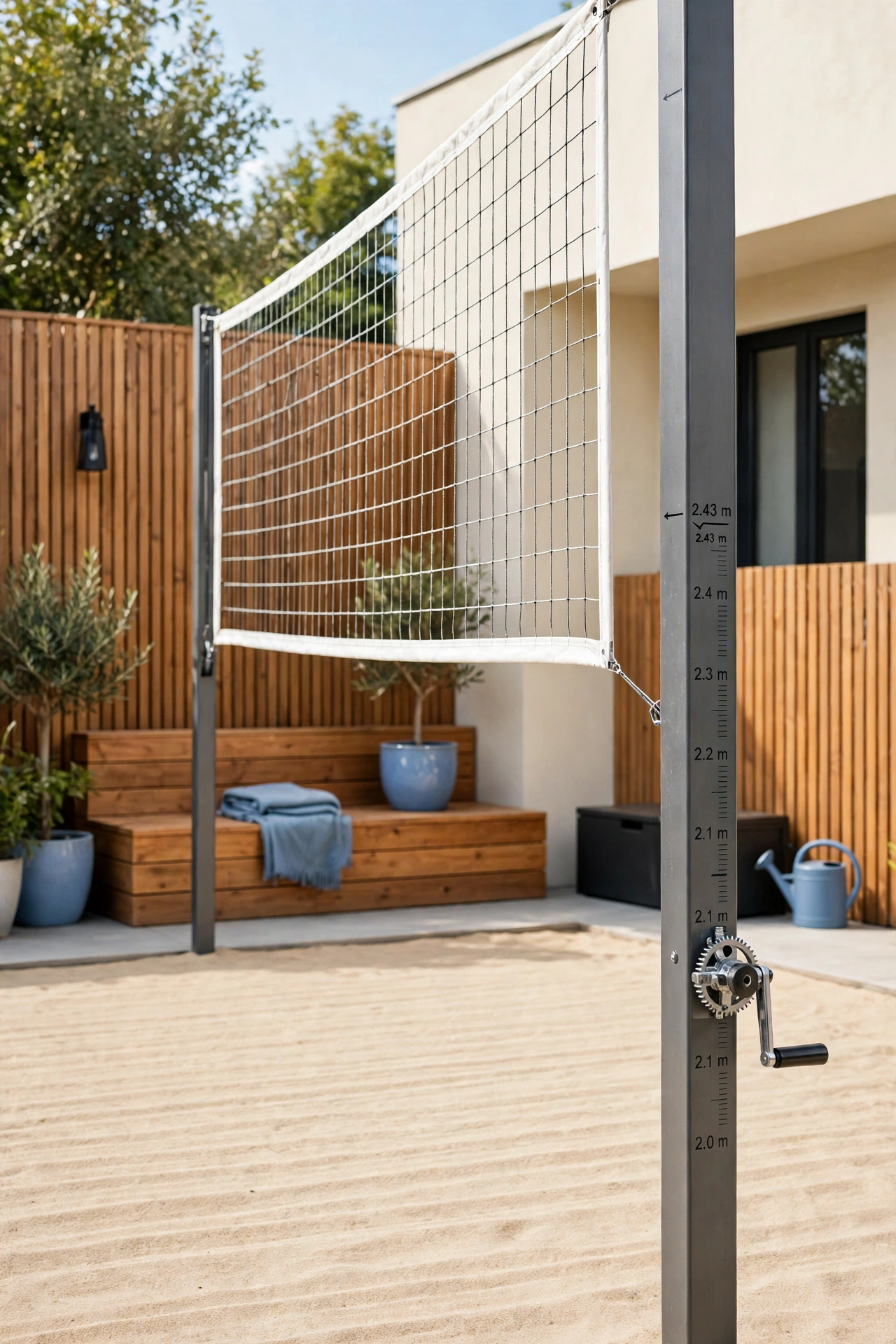
6. Set Up an Adjustable Height Net for All Ages
An adjustable height net lets kids, teens, and adults all play on the same court. Lower the net for younger players, raise it for a serious adult game, and everyone gets a fair match. One net serves the whole family for years.
Look for a net system with clear height markings on the poles and a simple crank or pin adjustment. Store the crank in a small labeled box near the court so it never goes missing. An adjustable net makes the court welcoming for every age and skill level.
7. Add Court Lighting for Night Games
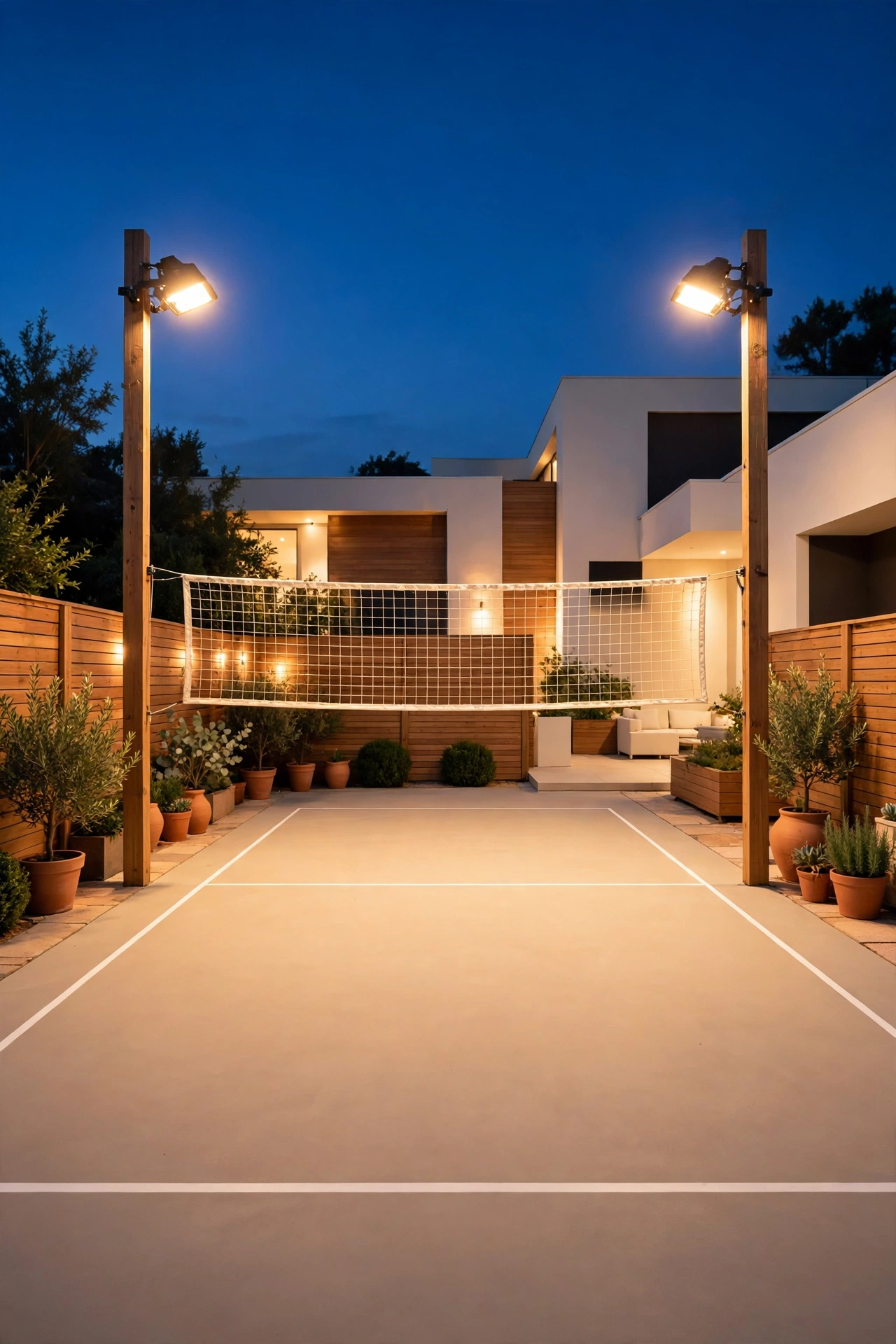
Court lighting lets the game carry on long after sunset. Two tall floodlights on wooden posts wash the court in bright, even light, and the backyard glows like a small stadium. Evening games become the best part of summer nights.
Mount the lights high enough to avoid glare in the eyes of players, and aim them down across the court rather than at the net. Solar powered lights work well if you want to skip the wiring. With good lighting, a quick game after dinner becomes a nightly habit.
8. Build a Wooden Deck Viewing Area
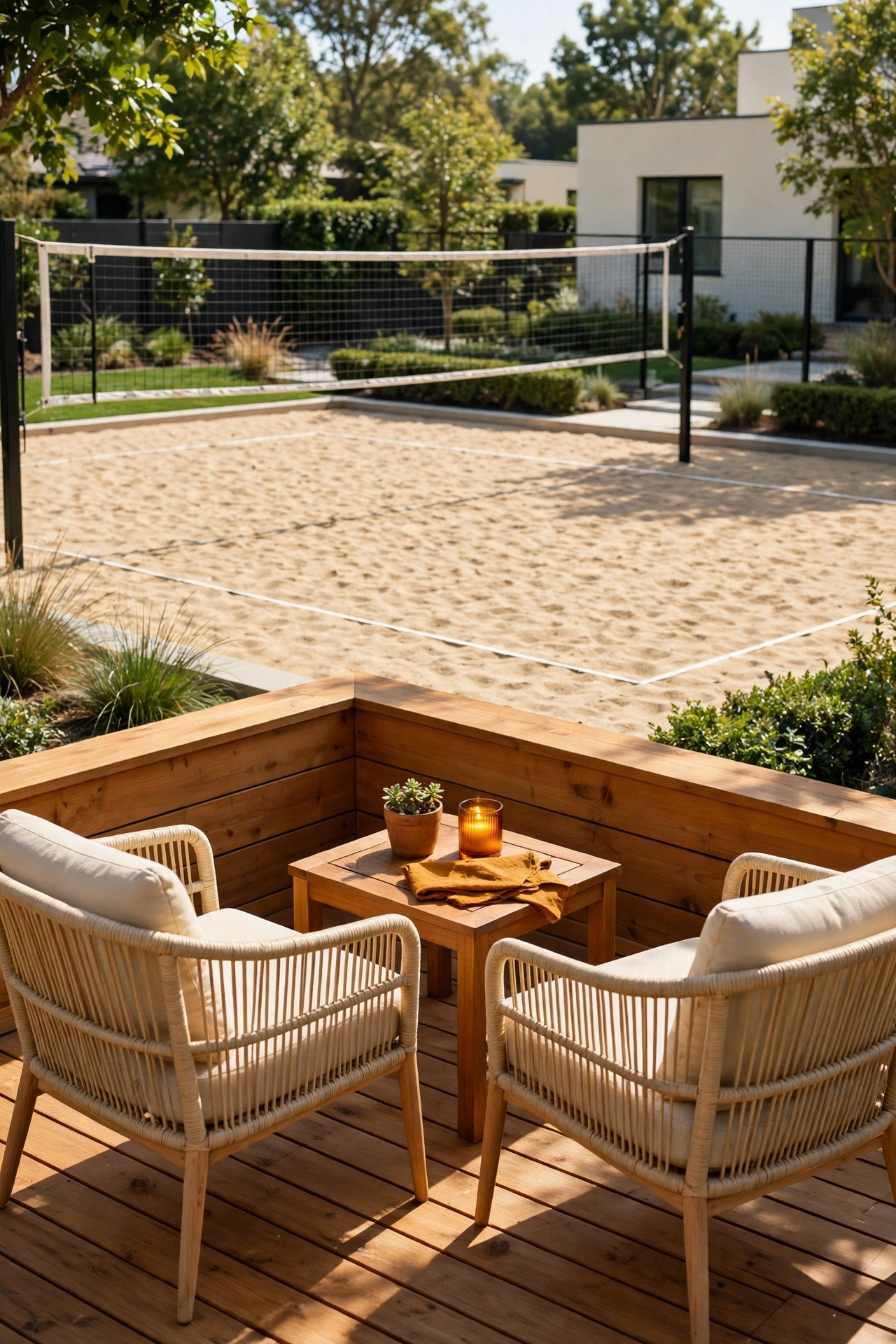
A wooden deck beside the court gives spectators a comfortable place to watch the game. A low deck with a couple of chairs and a small table turns match day into a relaxed social event. It also keeps viewers off the playing surface.
Build the deck from weather treated timber and leave a small gap between the boards for drainage. Add a railing on the far side for safety and a couple of outdoor cushions in a warm terracotta tone. A deck viewing area makes every game feel like an occasion.
9. Add Sideline Benches with Built-In Storage
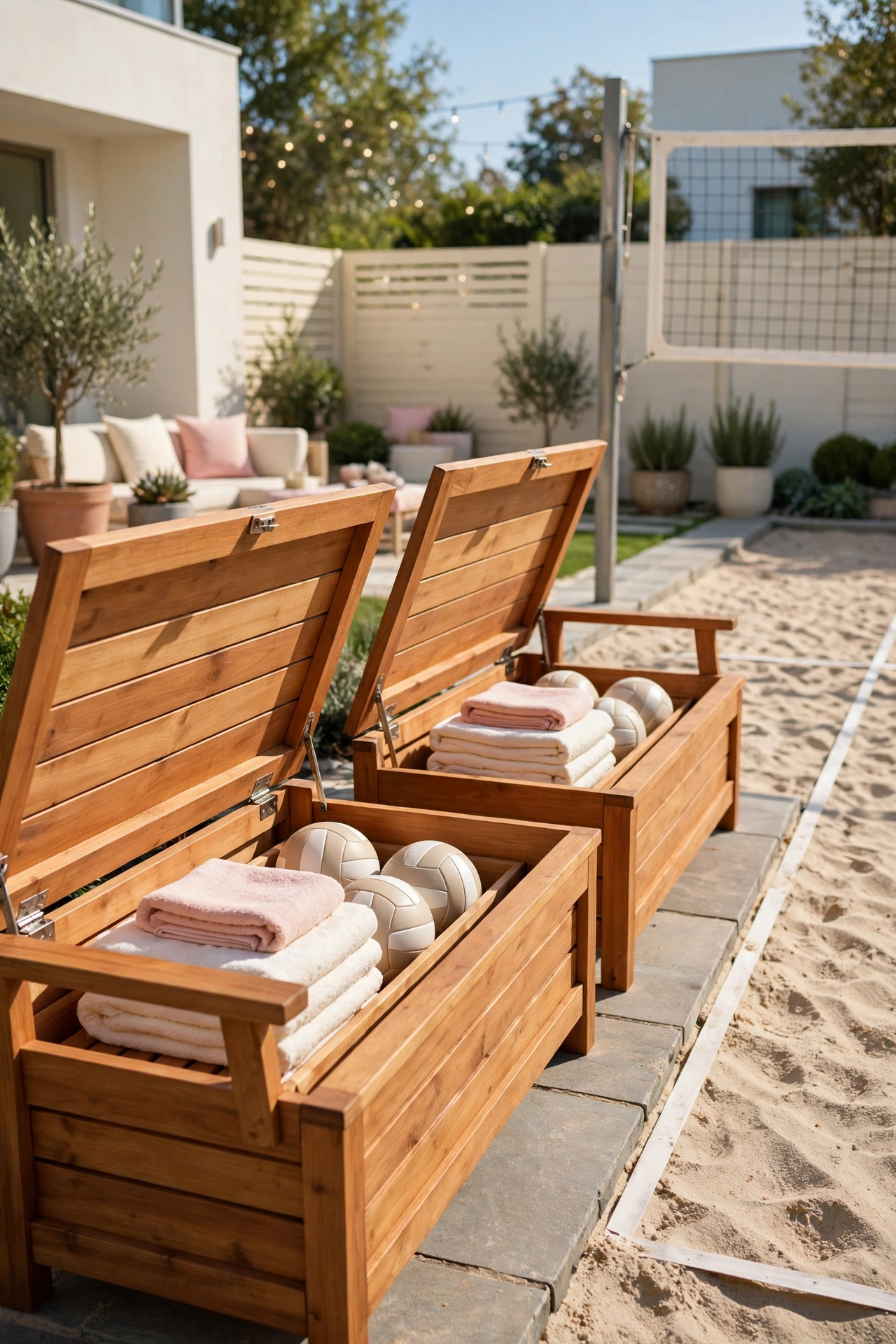
Sideline benches give players a place to rest between sets, and built-in storage underneath keeps balls, towels, and water bottles tidy. The benches sit close to the action without crowding the court. They are simple to build and easy to love.
Make each bench from warm wood with a hinged seat lid, and add a printed label on the inside of the lid so everyone knows where gear belongs. Place one bench on each side of the court for balance. Storage benches keep the court area neat and ready for the next game.
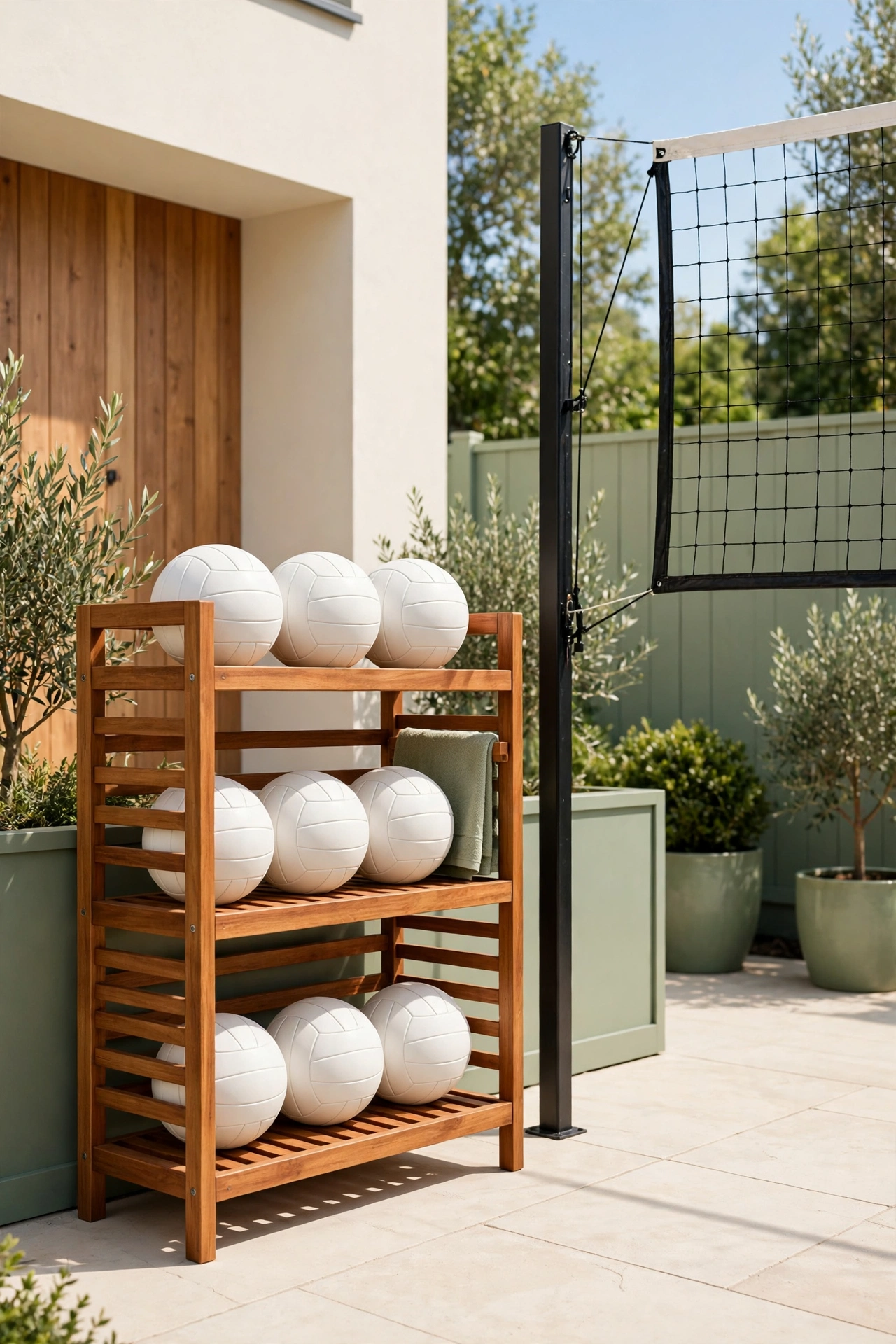
10. Install a Ball Storage Rack by the Court
A ball storage rack keeps volleyballs off the ground and easy to grab. A simple wooden frame with three shelves holds a full set of balls, and the open design lets them dry after a game in the rain. The rack looks tidy and intentional beside the court.
Build the rack from slatted wood so air moves around the balls, and place it near the net post where players naturally gather. Label the top shelf for match balls and the lower shelves for practice balls. A good rack ends the habit of balls rolling all over the yard.
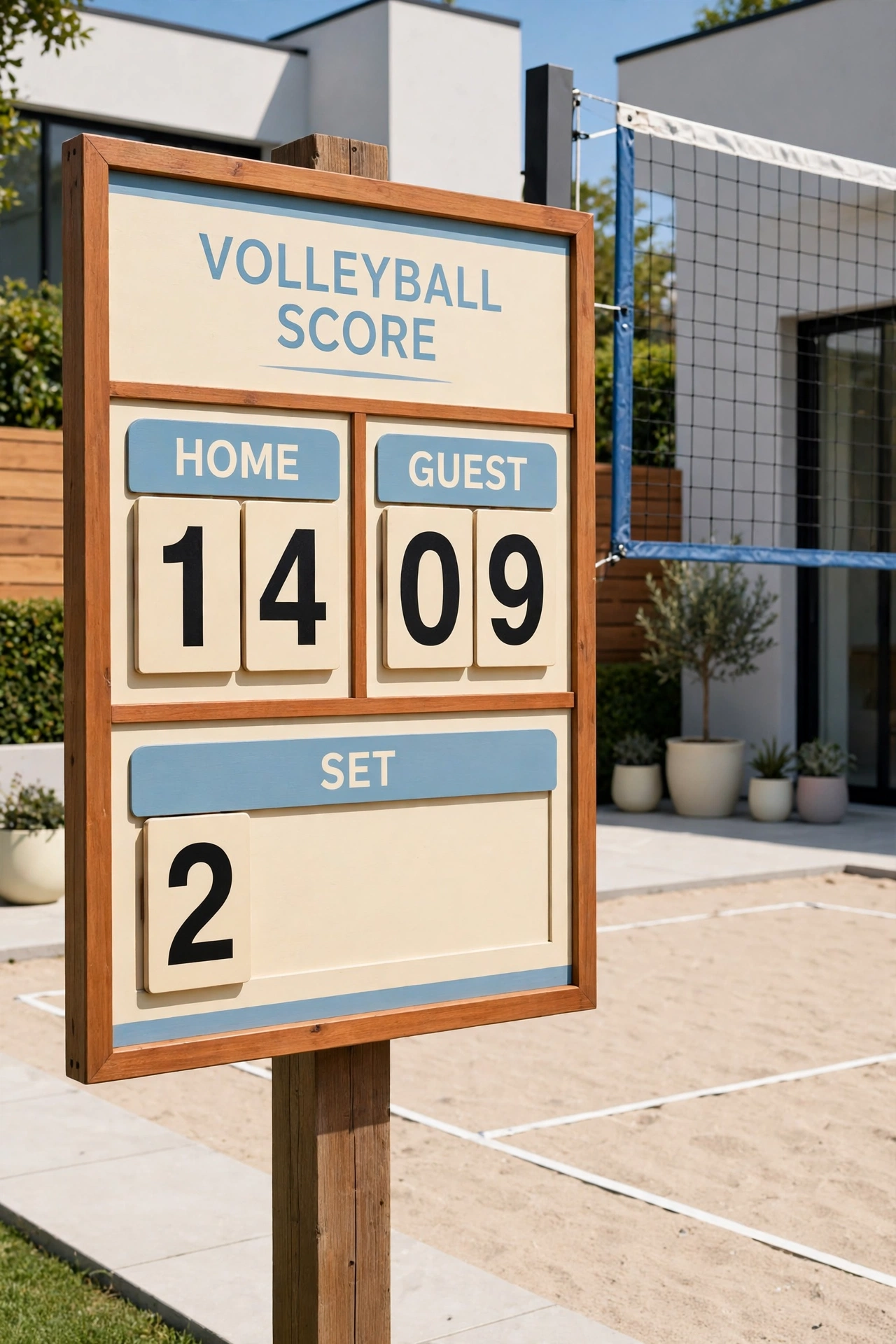
11. Mount a Wooden Scoreboard on a Post
A wooden scoreboard on a post adds a fun, old school touch to every match. Flip the number panels after each point and the whole game feels more official. Kids especially love keeping score on a real board.
Build the board from painted plywood with two rows of sliding number tiles, one for each team. Mount it on a sturdy post at the side of the court where both teams can see it clearly. A scoreboard turns a casual rally into a friendly competition.
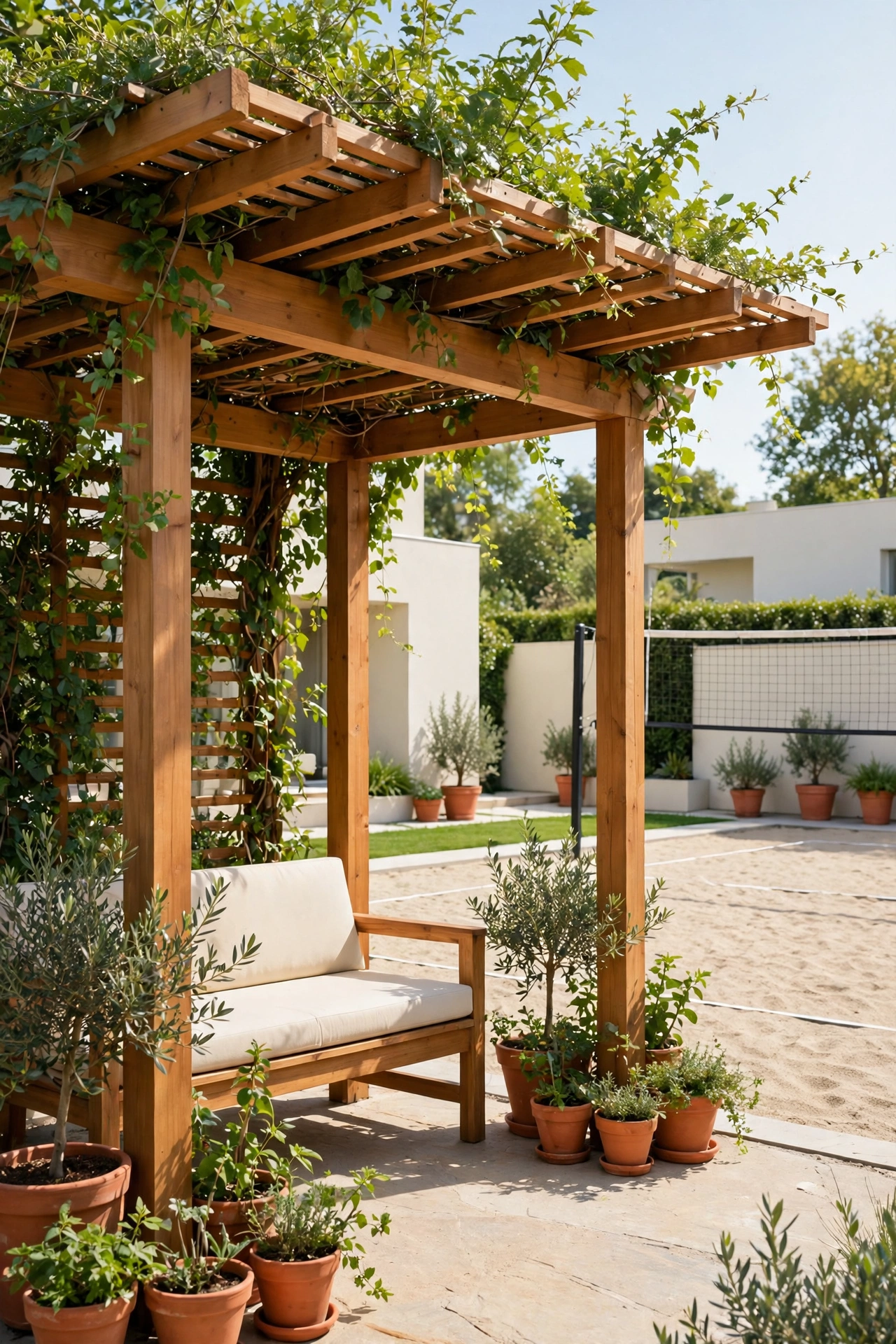
12. Add Shade with a Pergola Over the Sidelines
A pergola over the sidelines gives players and watchers a cool place to rest between games. The slatted roof filters the sun while letting the breeze through, and climbing plants can soften the timber frame over time. It makes the court area feel like a designed outdoor room.
Build the pergola from warm wood posts and beams, and place it just outside the court lines so it never blocks a serve. Add a bench underneath and a couple of potted plants at the base of each post. For more covered gathering ideas, see these backyard pavilion ideas. Shade makes long summer games comfortable for everyone.
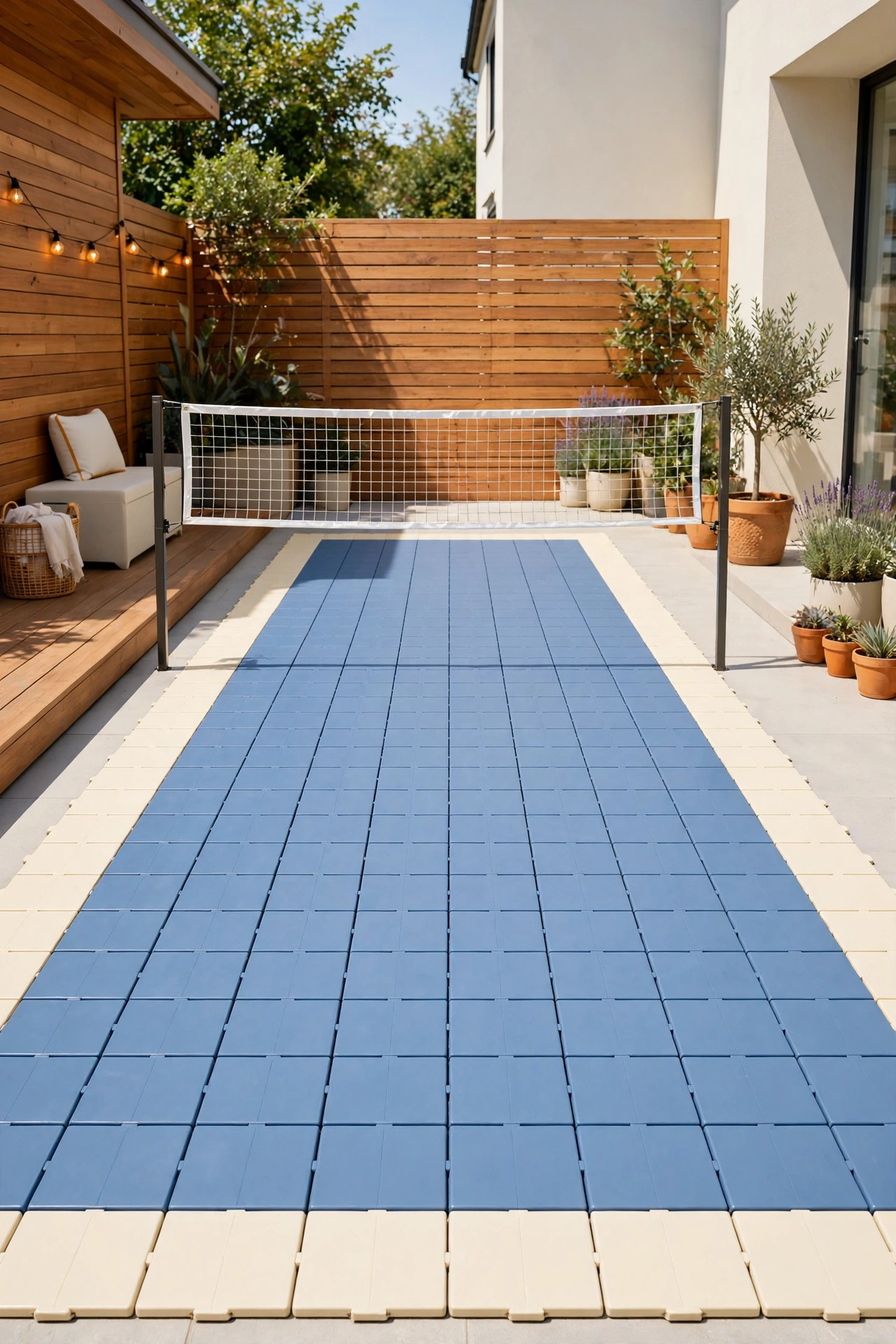
13. Lay Interlocking Court Tiles for a Hard Court
Interlocking court tiles turn a flat patch of ground into a smooth hard court in a single afternoon. The tiles snap together without glue, drain rain through their gaps, and cushion falls better than bare concrete. They come in colors that let you design your own court.
Start with a level compacted base of crushed stone, then lay the tiles from one corner outward, tapping each one into place. Choose a soft blue for the playing area and cream for the border so the lines read clearly. Tile courts are quick to build and easy to repair one tile at a time.
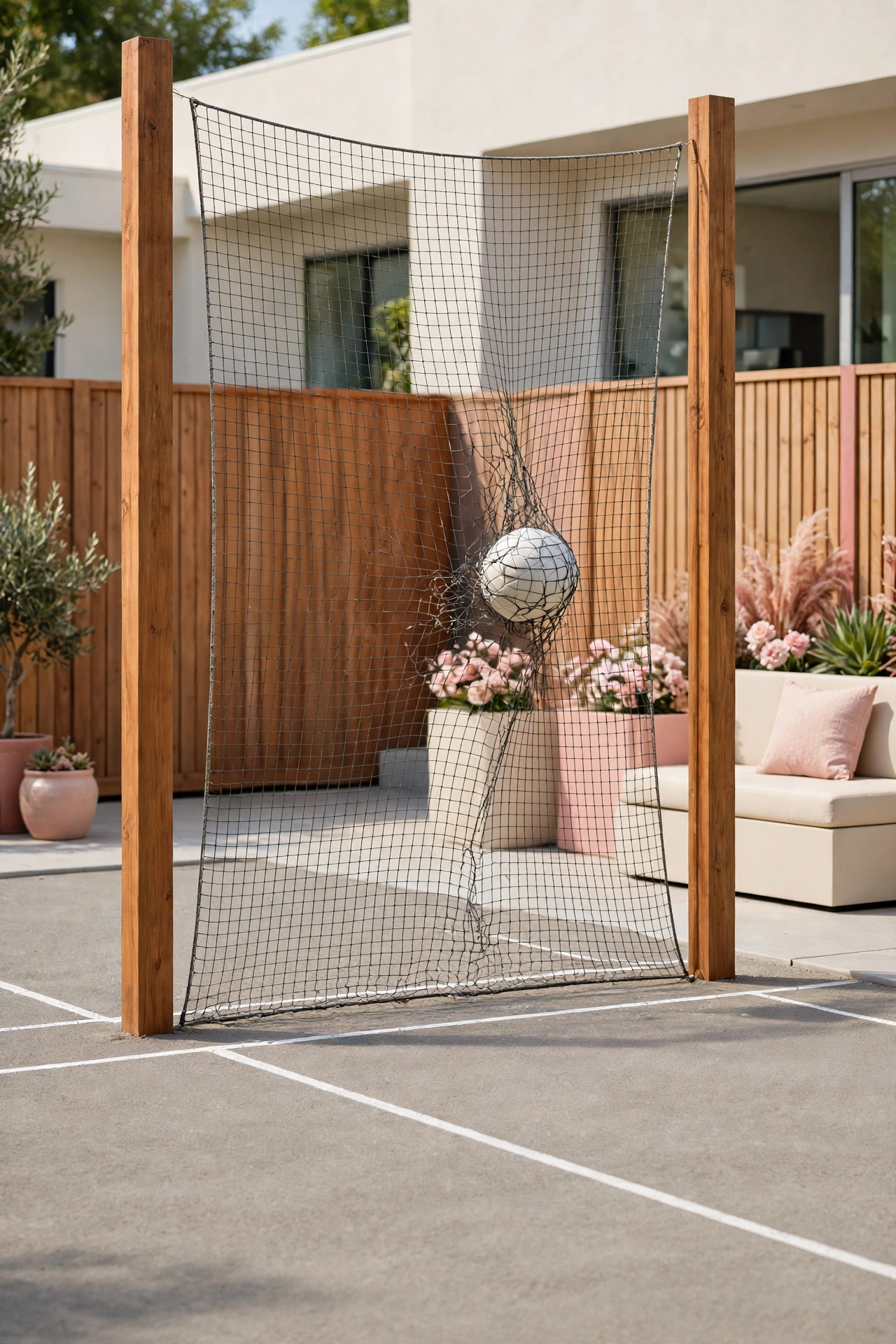
14. Add a Ball Return Net Behind the End Lines
A ball return net behind each end line saves time and keeps games flowing. Missed serves and wild hits drop into the net instead of flying into the garden beds or over the fence. Players spend more time playing and less time chasing balls.
Hang the net between two tall posts set just behind the end line, and let it sag slightly so it catches the ball softly. Use a fine mesh that stops even a fast serve. A return net is a small addition that makes a big difference to the pace of the game.
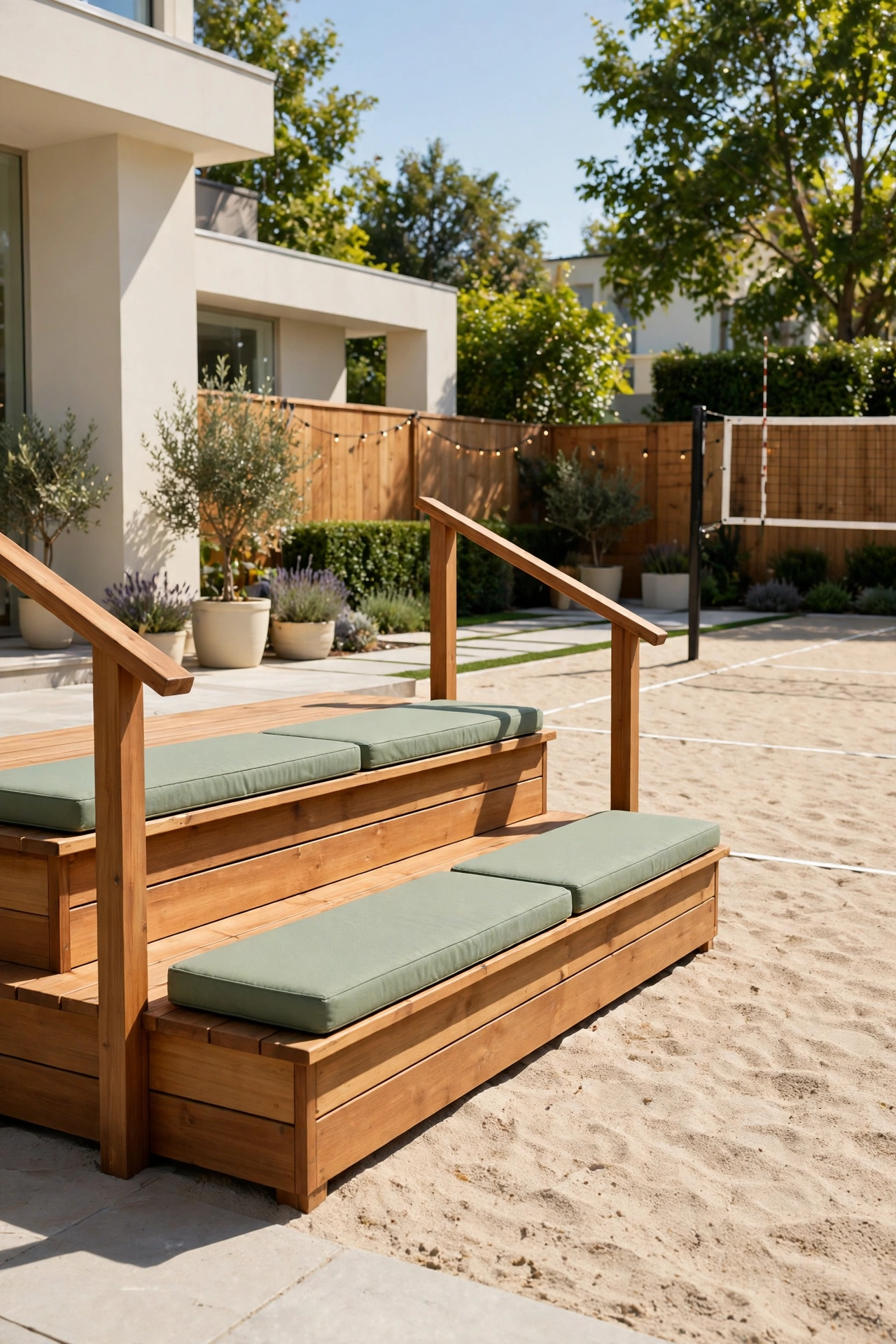
15. Build a Small Bleacher for Spectators
A small two tier bleacher gives friends and family a proper seat for match day. Three wide steps of warm wood hold a row of watchers, and the whole structure folds flat against the fence when the season ends. It brings a real sports field feeling home.
Build the bleacher from treated timber with a handrail on each end for safety, and anchor it to the ground with metal brackets so it never tips. Add seat cushions in sage green for comfort during long games. A bleacher makes every backyard match feel like a real event.
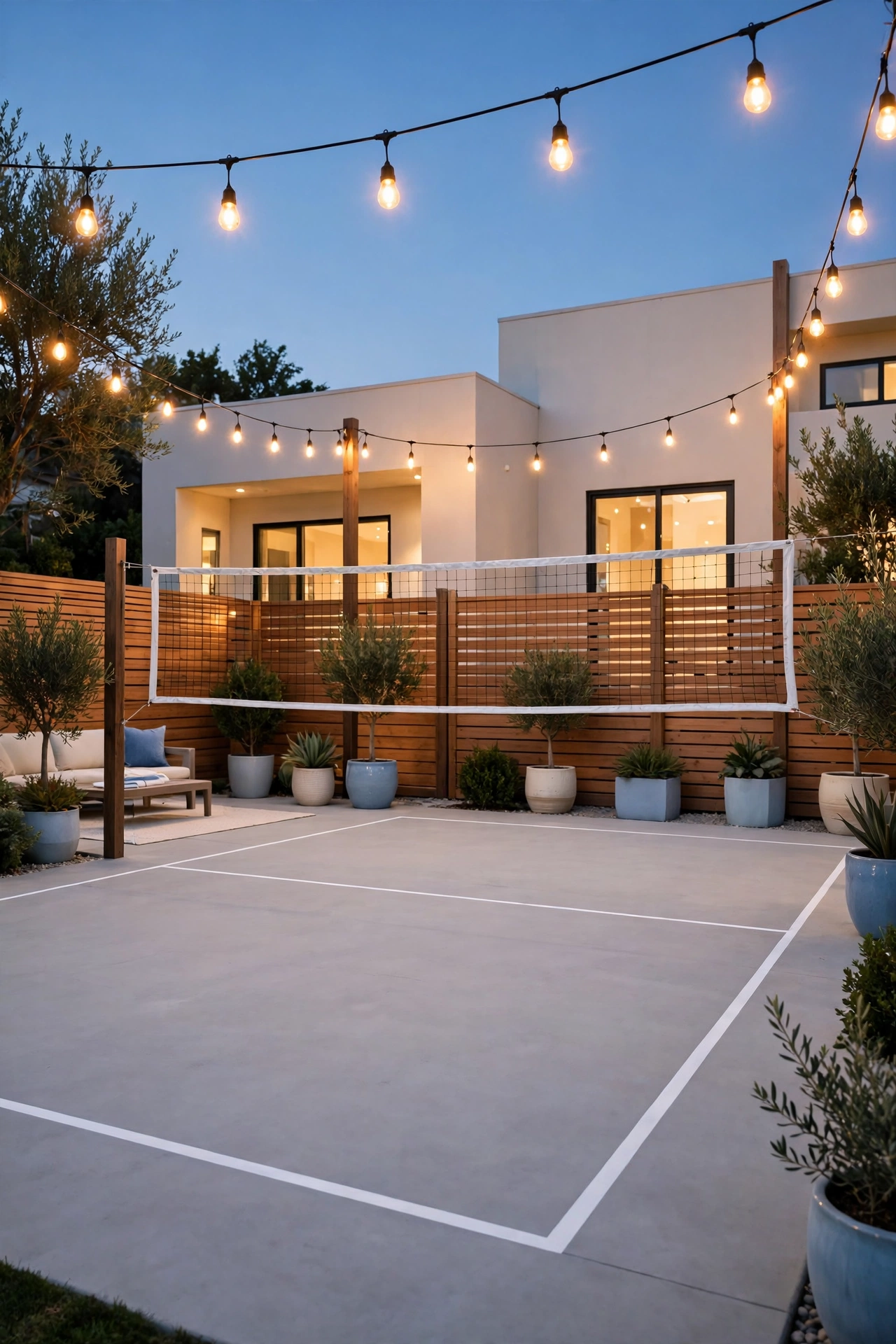
16. Hang String Lights Around the Court
String lights around the court turn an ordinary game into a summer party. Warm bulbs on a wire around the fence or between wooden posts glow softly as the sky darkens. The court looks magical, and the party can carry on after the final point.
Hang the lights high enough to stay clear of serves, and use outdoor rated bulbs that survive rain and wind. A dimmer or a timer switch makes the setup easy to manage each evening. String lights are the simplest way to make your court the favorite spot in the yard.
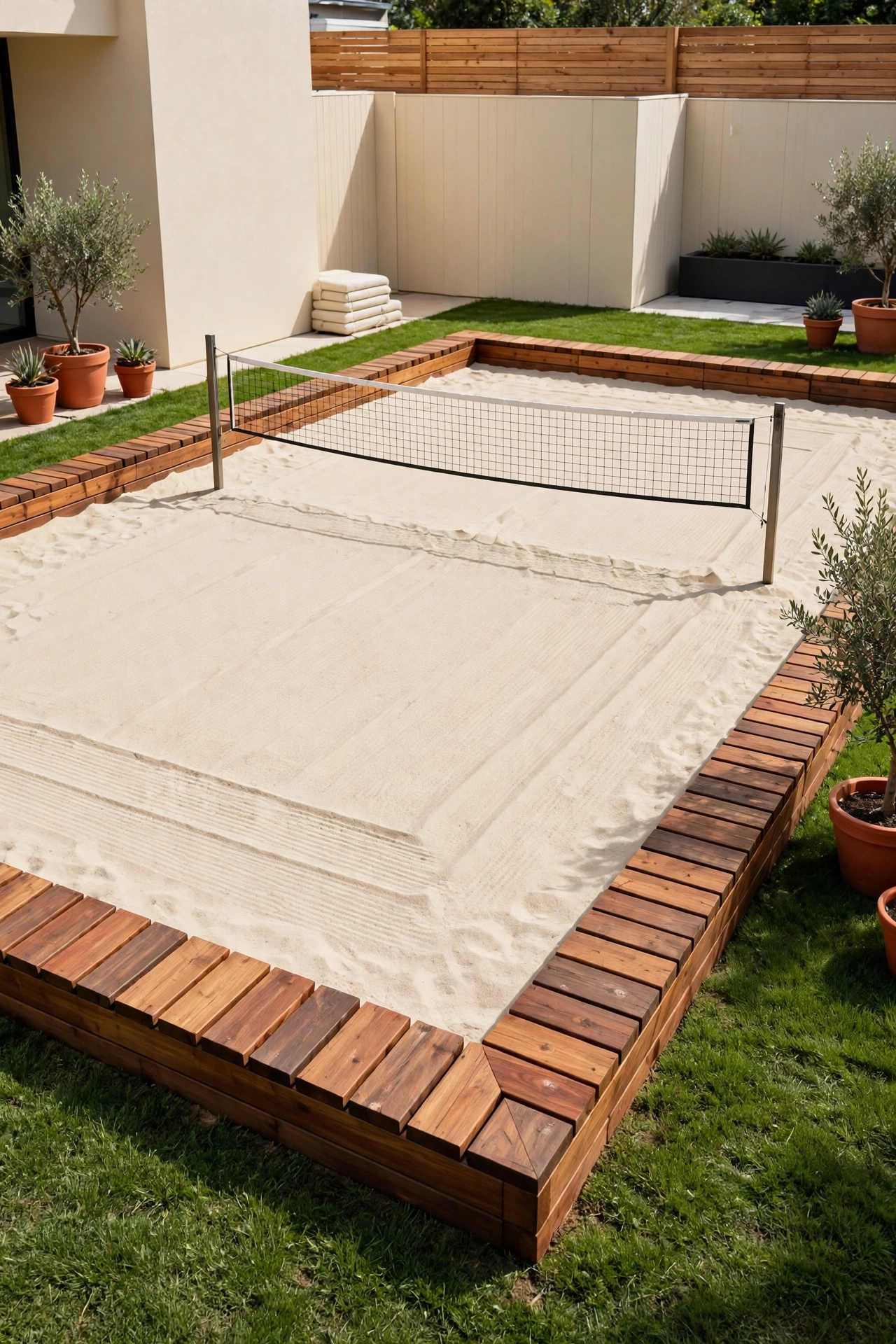
17. Edge the Court with Low Timber Sleepers
Low timber sleepers around the edge of the court give it a clean, finished border. The sleepers hold sand or tiles in place, mark the boundary clearly, and look far better than a bare edge of lawn. They turn a playing area into a designed feature.
Lay the sleepers flat in a shallow trench and pin them with metal stakes so they stay level. Treat the wood with outdoor oil each spring to keep the color rich. For more ways to define garden edges, see these backyard landscape border ideas. A timber edge is a small detail that makes the whole court look professionally built.
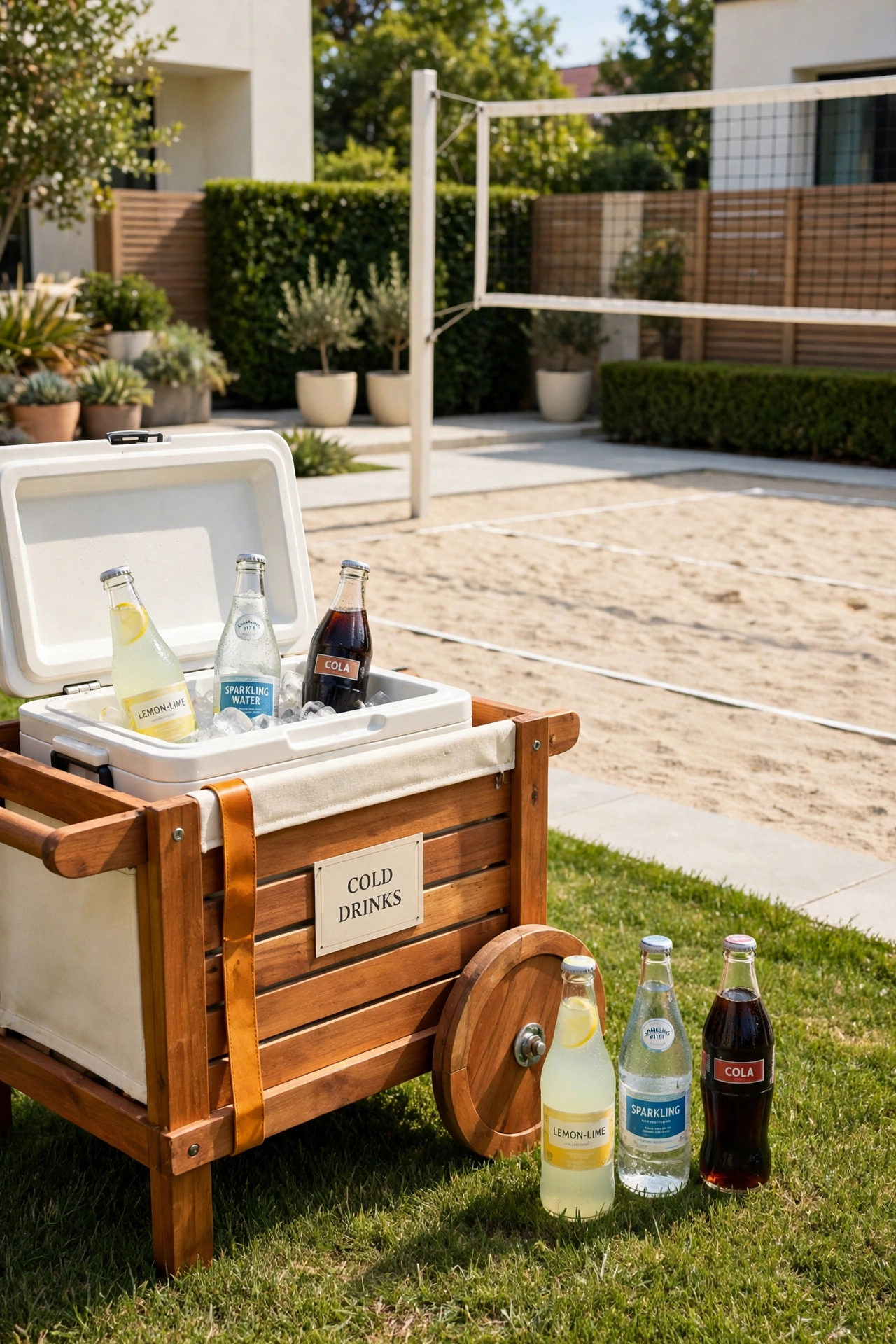
18. Add a Cooler Station on a Wooden Cart
A cooler station on a wooden cart keeps cold drinks within reach of every player. Roll the cart to the sideline before the game, load it with ice and bottles, and nobody has to run inside for a drink. It is a simple luxury that every game needs.
Build the cart from warm wood with a flat top for cups and a lower shelf for extra bottles. Add a small printed sign on the side that reads COLD DRINKS so guests find it fast. A cooler cart keeps players hydrated and the game moving.
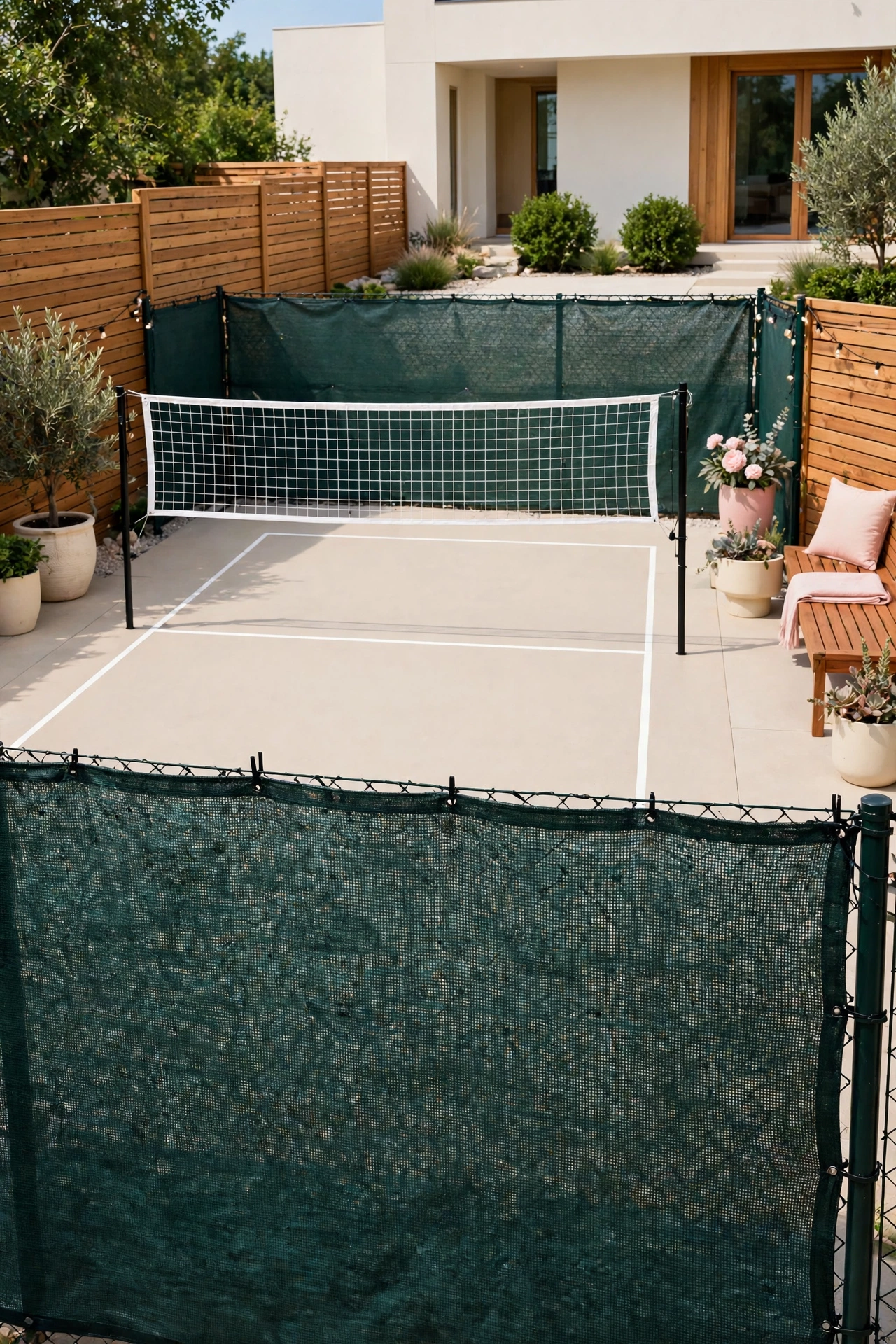
19. Install a Windscreen Around the Court
A windscreen around the court cuts the wind that can ruin a serve or a set. Mesh fabric on the fence blocks the breeze while still letting air and light through. Games stay fair, and the ball behaves the way it should.
Attach the mesh to the fence or to posts with zip ties and tension bands, and leave a gap at the bottom for drainage. Choose a deep green or charcoal color that blends with the garden. A windscreen is a quiet upgrade that serious players will notice right away.
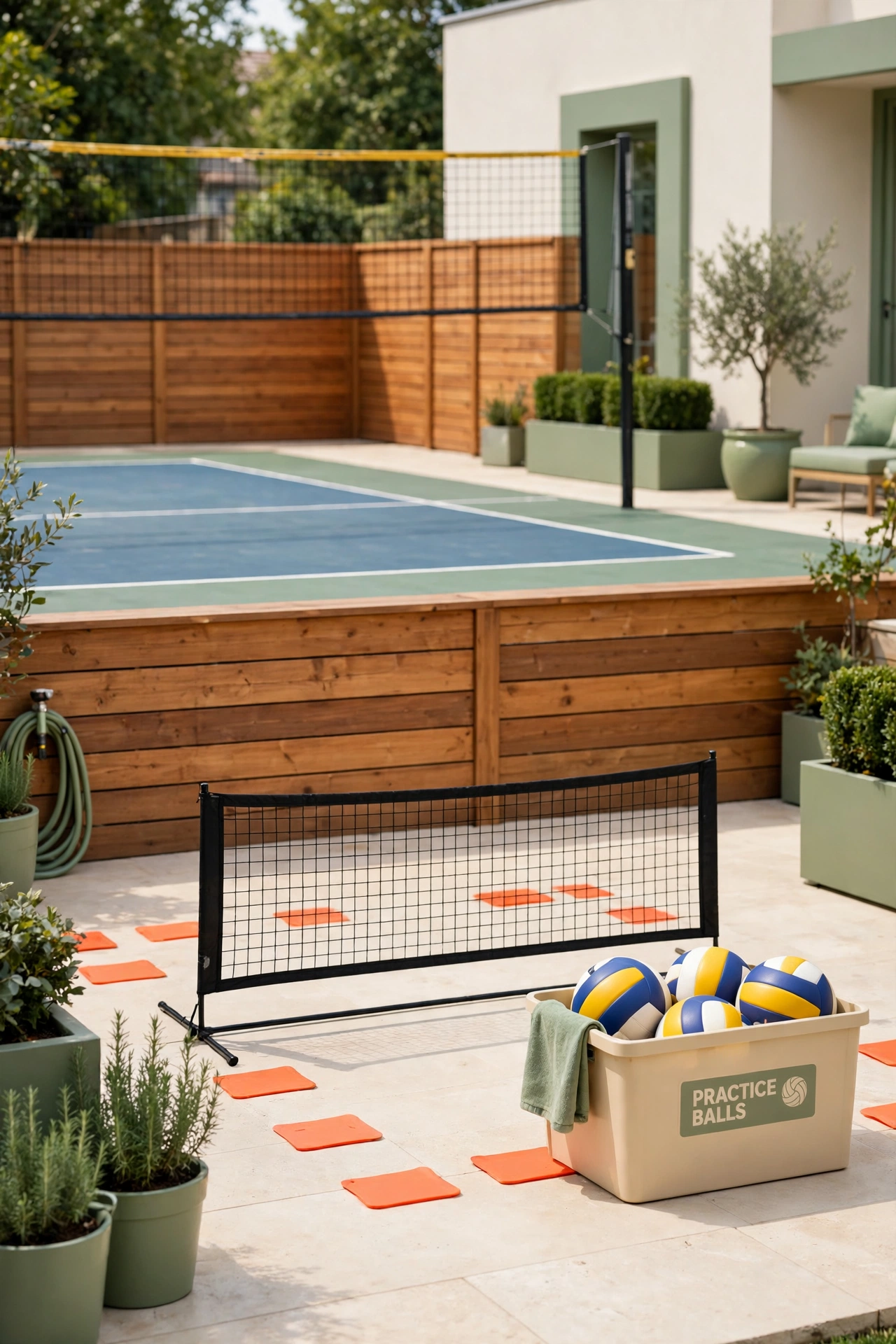
20. Create a Warm-Up Zone with a Practice Net
A warm-up zone with a small practice net lets players pepper and pass before the match starts. A short net stretched between two posts at the side of the court gives everyone a place to loosen up. The main court stays free for the real game.
Set the practice net at a lower height and mark a small area with flat cones so the warm-up never spills onto the court. Keep a couple of practice balls in a labeled bin beside it. A warm-up zone makes the court feel like a real training ground.
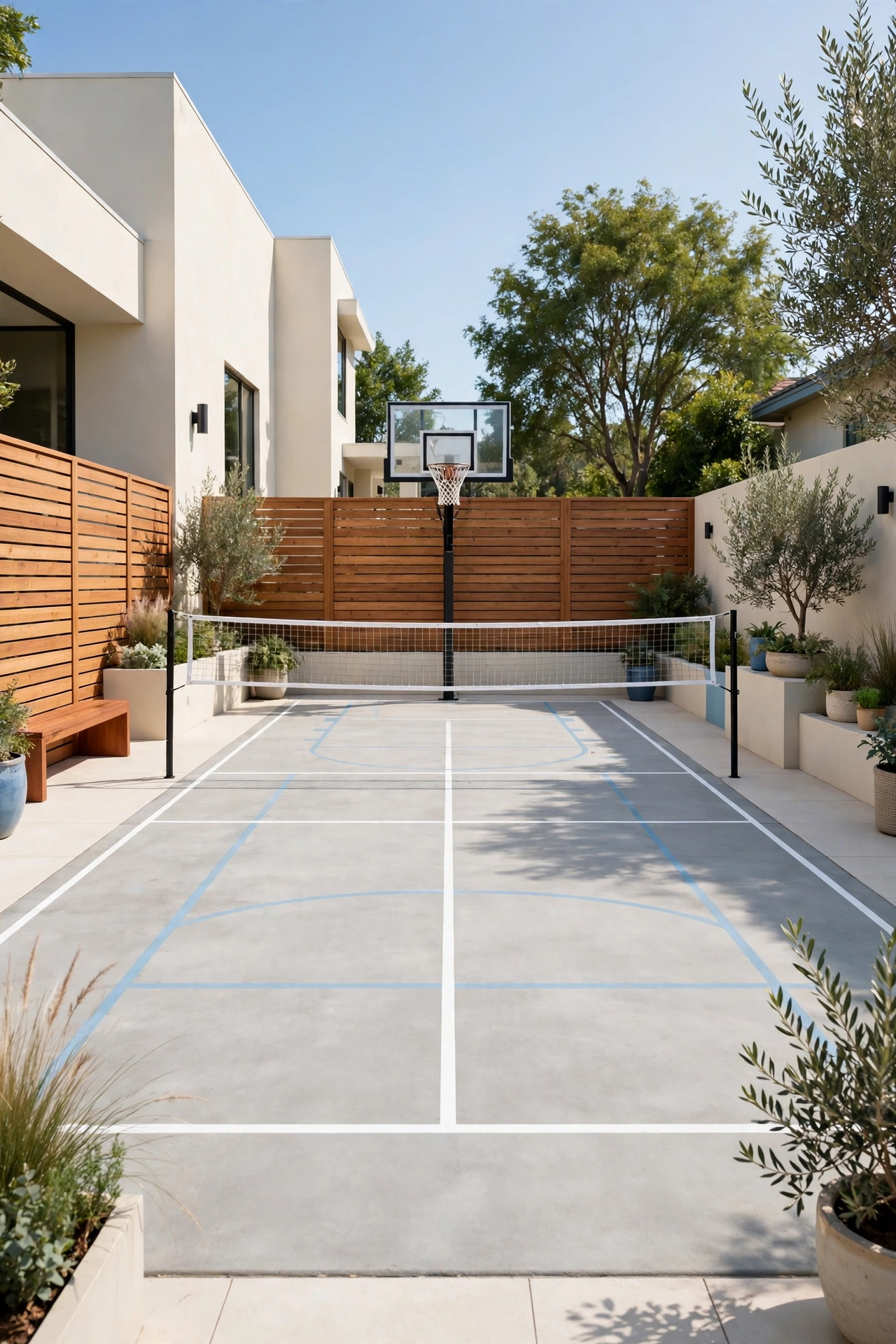
21. Paint a Multi-Sport Court for Volleyball and Basketball
A multi-sport court lets one slab serve two games. Paint volleyball lines in white and basketball lines in soft blue on the same concrete or tile surface, and the yard works twice as hard. The family can switch sports without moving a single piece of furniture.
Plan the layout on paper first so the lines never cross in a confusing way, then paint the volleyball court as the main design and fit the basketball key inside it. For more ideas on a shared outdoor game space, see these backyard basketball court ideas. One well planned court gives the whole family more ways to play.
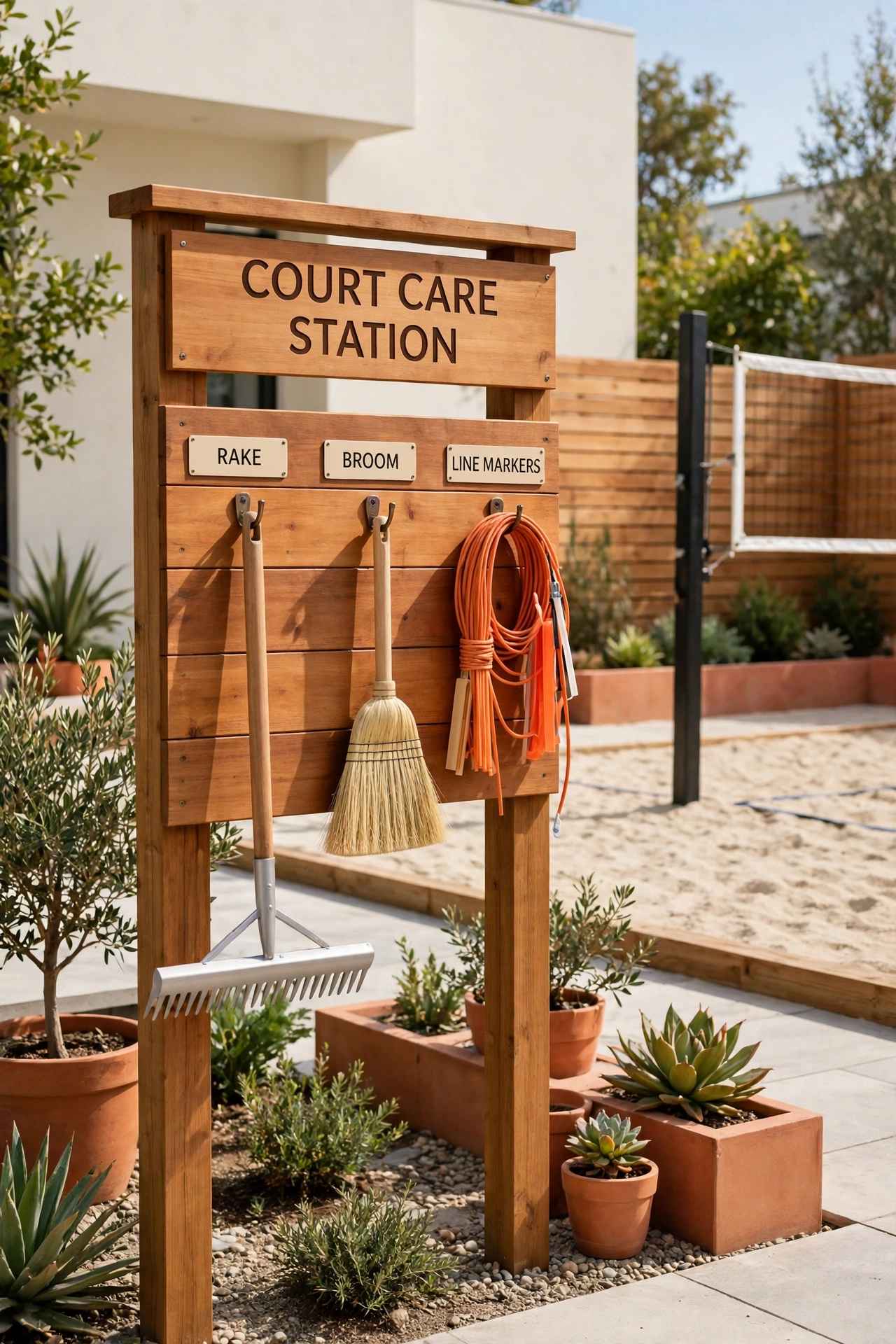
22. Add a Sand Rake and Court Care Station
A sand rake and court care station keeps a sand court smooth and safe. A wide rake, a small broom, and a bucket for line markers all hang on a wooden board near the court, so care takes two minutes after each game. A tidy court plays better and lasts longer.
Mount the board on two posts with hooks for each tool and a printed label above each hook. Add a small bin for sand that drifts out of the court so it can go back in. A care station makes court upkeep a quick habit instead of a chore.
23. Build a Small Storage Shed for Nets and Balls
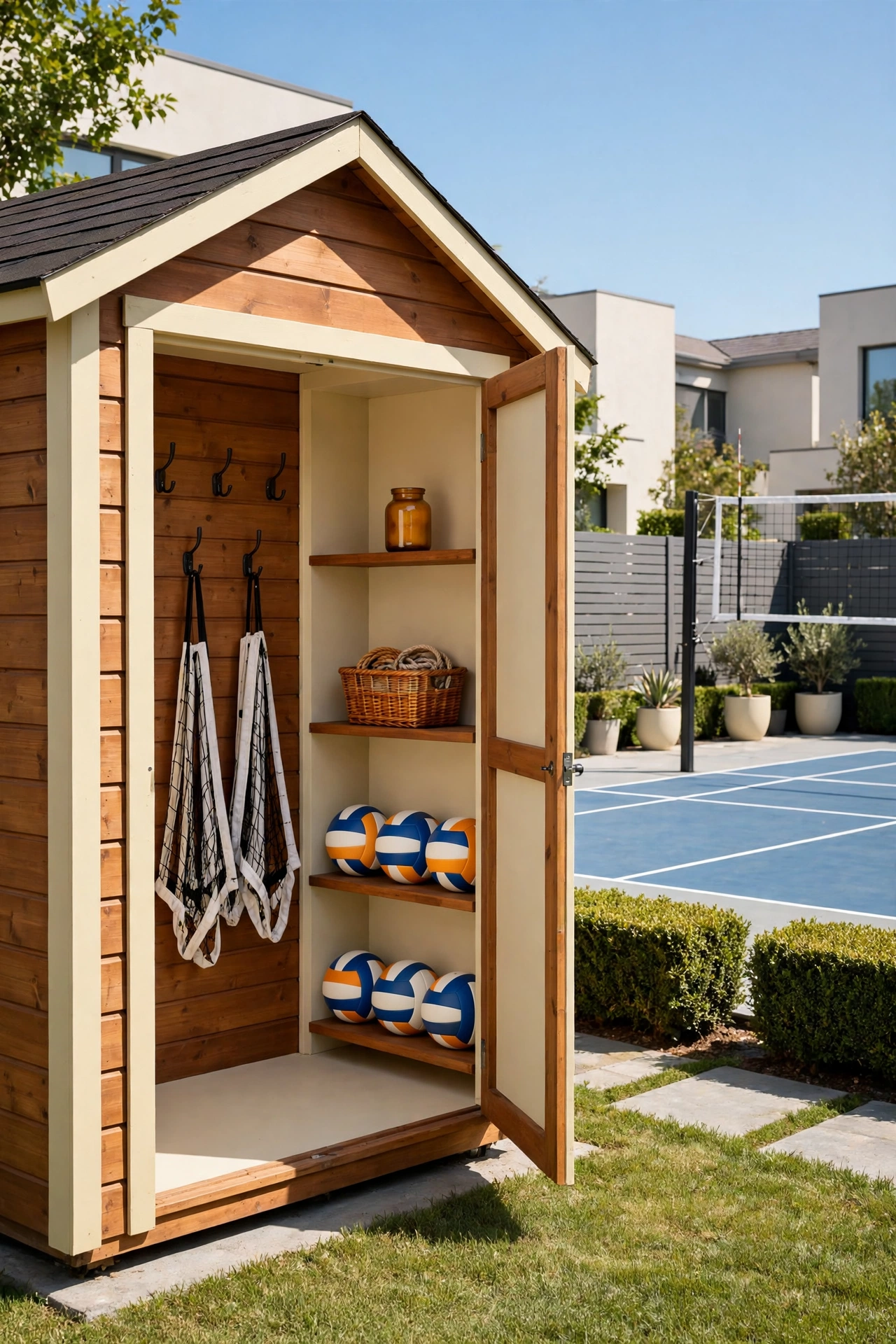
A small storage shed beside the court keeps nets, balls, pumps, and line markers dry and organized. A shed the size of a wardrobe is enough, and it saves the garage from becoming a sports store. Everything for the game lives in one place.
Build the shed from weatherproof timber with a sloped roof and a door that locks. Inside, add hooks for nets, shelves for balls, and a small basket for pumps and needles. A dedicated shed means setup takes five minutes instead of half an hour.
24. Place a Picnic Table Near the Court
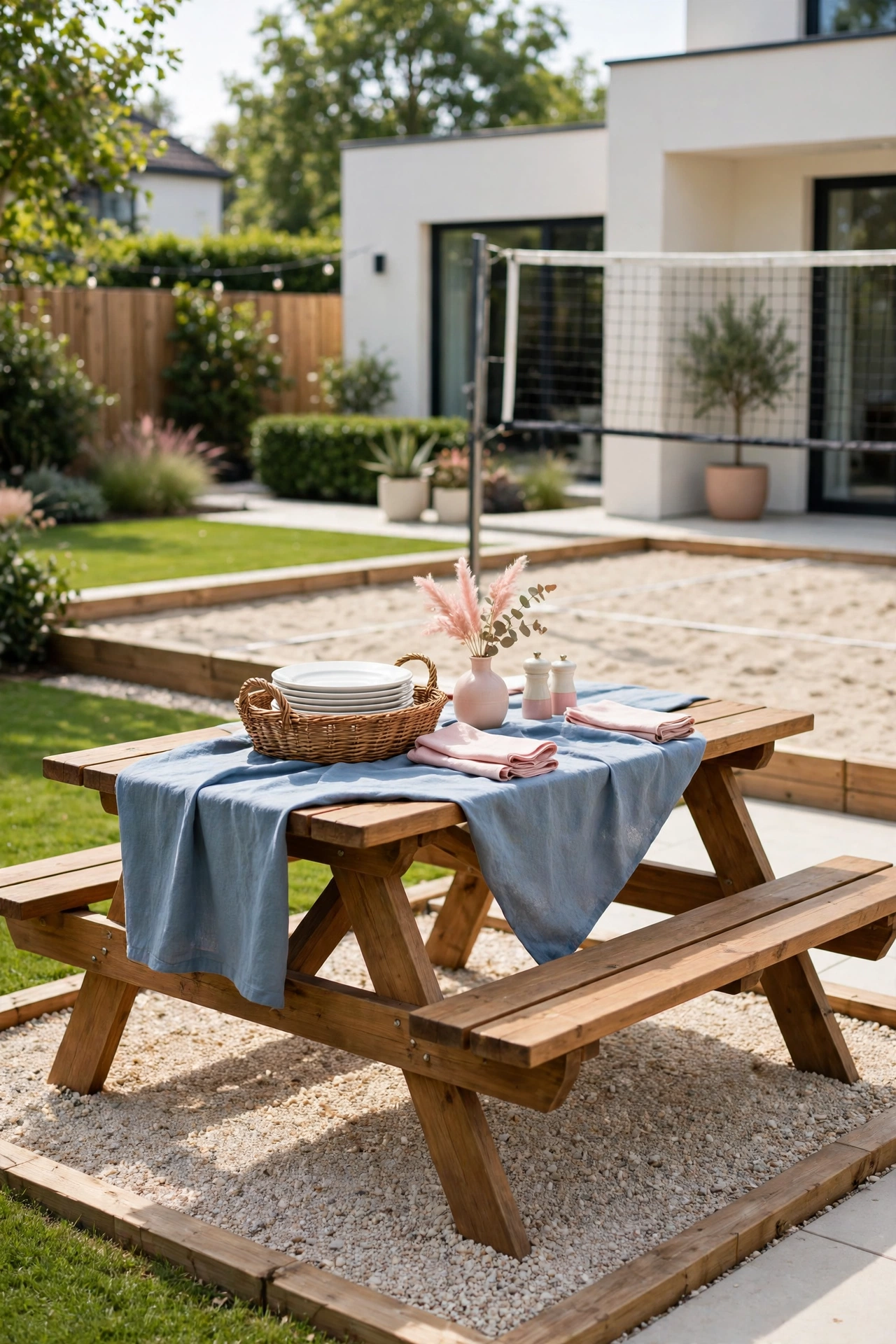
A picnic table near the court gives players a place to eat, rest, and watch between games. A sturdy wooden table with benches seats the whole team for a post-match snack. It turns the court area into a full outdoor living space.
Place the table on a flat patch of grass or a small gravel pad just outside the court lines. Add a tablecloth in a soft blue tone and a basket for plates and cups so the table is always ready. For more outdoor cooking and eating setups, see these small DIY outdoor kitchen ideas. A picnic table makes game day feel like a family outing.
25. Add a Drainage Base Under a Sand Court
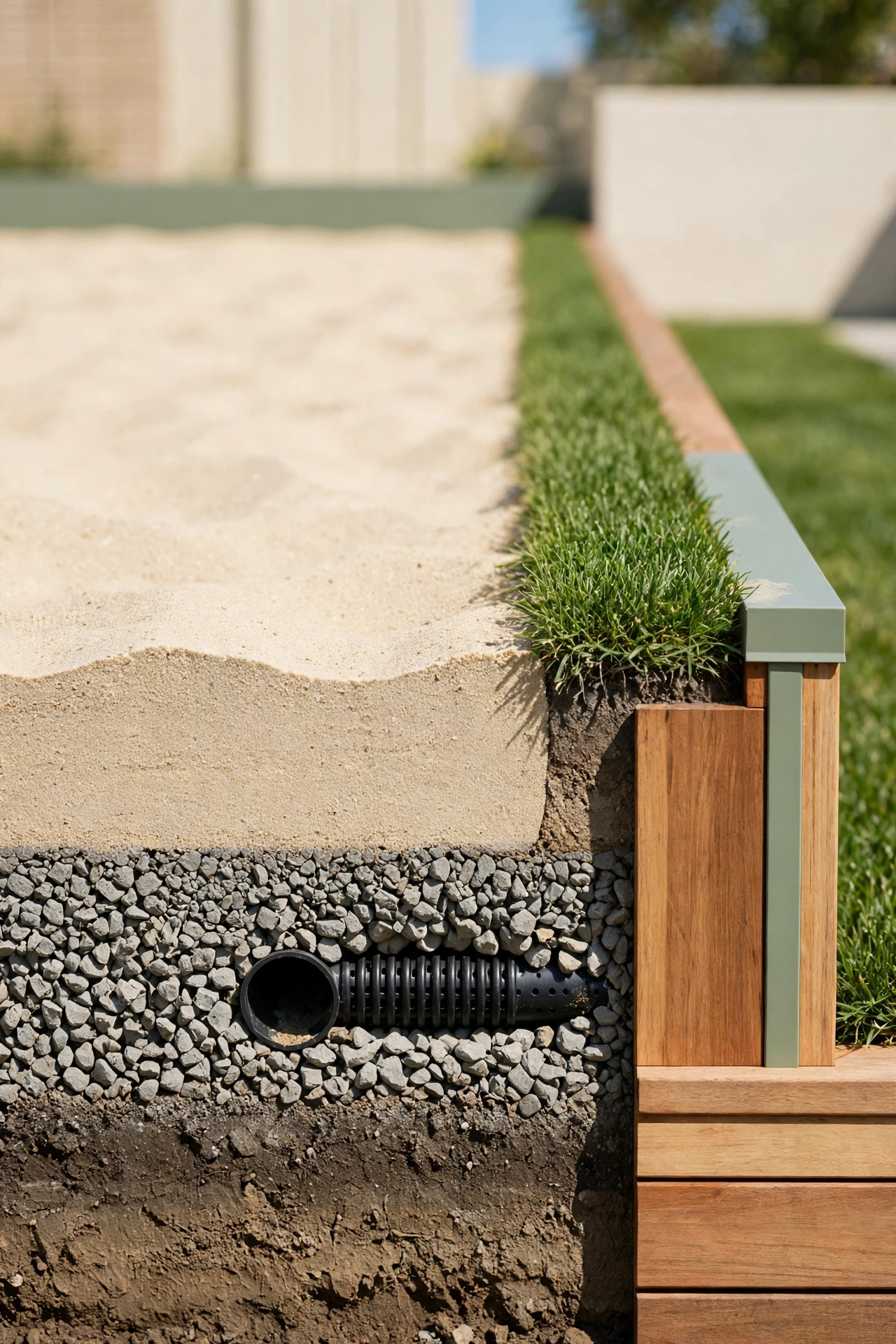
A drainage base under a sand court stops puddles from ruining the game after rain. A layer of gravel and perforated pipe under the sand carries water away, so the court dries in hours instead of days. The sand stays clean and the court stays playable.
Dig the court area about 40 centimeters deep, lay landscape fabric, then add gravel and pipe before the sand goes on top. Slope the base gently toward one corner where a small drain takes the water away. Good drainage is the hidden work that keeps a sand court great all season.
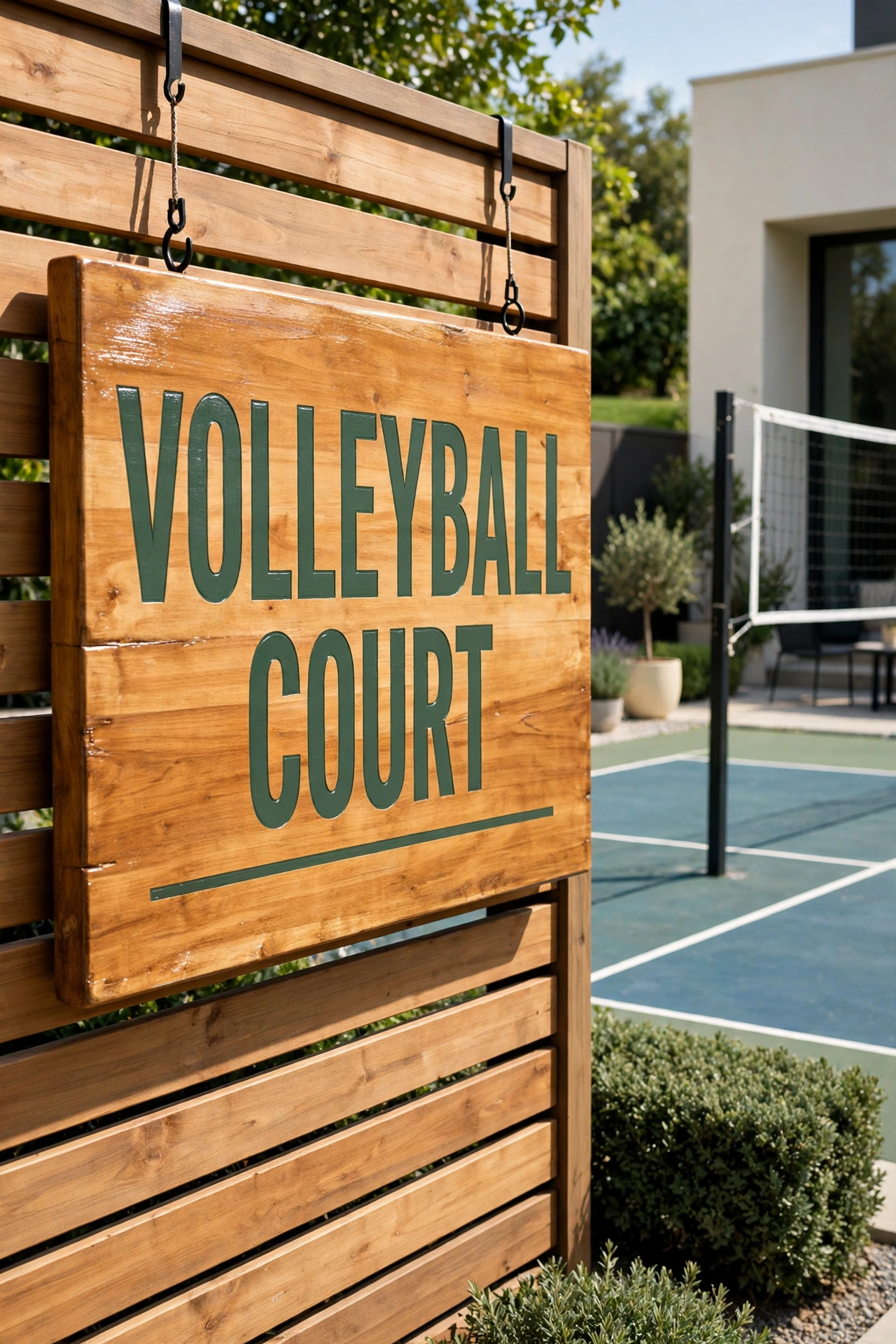
26. Paint a Wooden Court Sign with Your Family Name
A wooden court sign with your family name gives the court its own identity. Hang it on the fence or on two posts at the entrance to the playing area, and every guest knows they have arrived at your home court. It is a personal touch that costs almost nothing.
Paint the sign on a wide plank of warm wood with large readable letters in a deep sage green. Seal it with outdoor varnish so the paint survives sun and rain. A family court sign turns a backyard game area into a place with a name and a story.
27. Create a Mini Court for Kids with a Lower Net
A mini court for kids uses a lower net and a smaller ball so young players can enjoy real rallies. The court is half the size of a full court, which fits easily into a small yard. Kids learn the game properly instead of struggling with adult equipment.
Set the net at about 1.8 meters high and use a soft lightweight ball that will not sting small hands. Mark the lines with flat foam markers that are safe to step on. A mini court gives kids their own game while the adults play next door.
28. Mount Outdoor Speakers on Wooden Posts
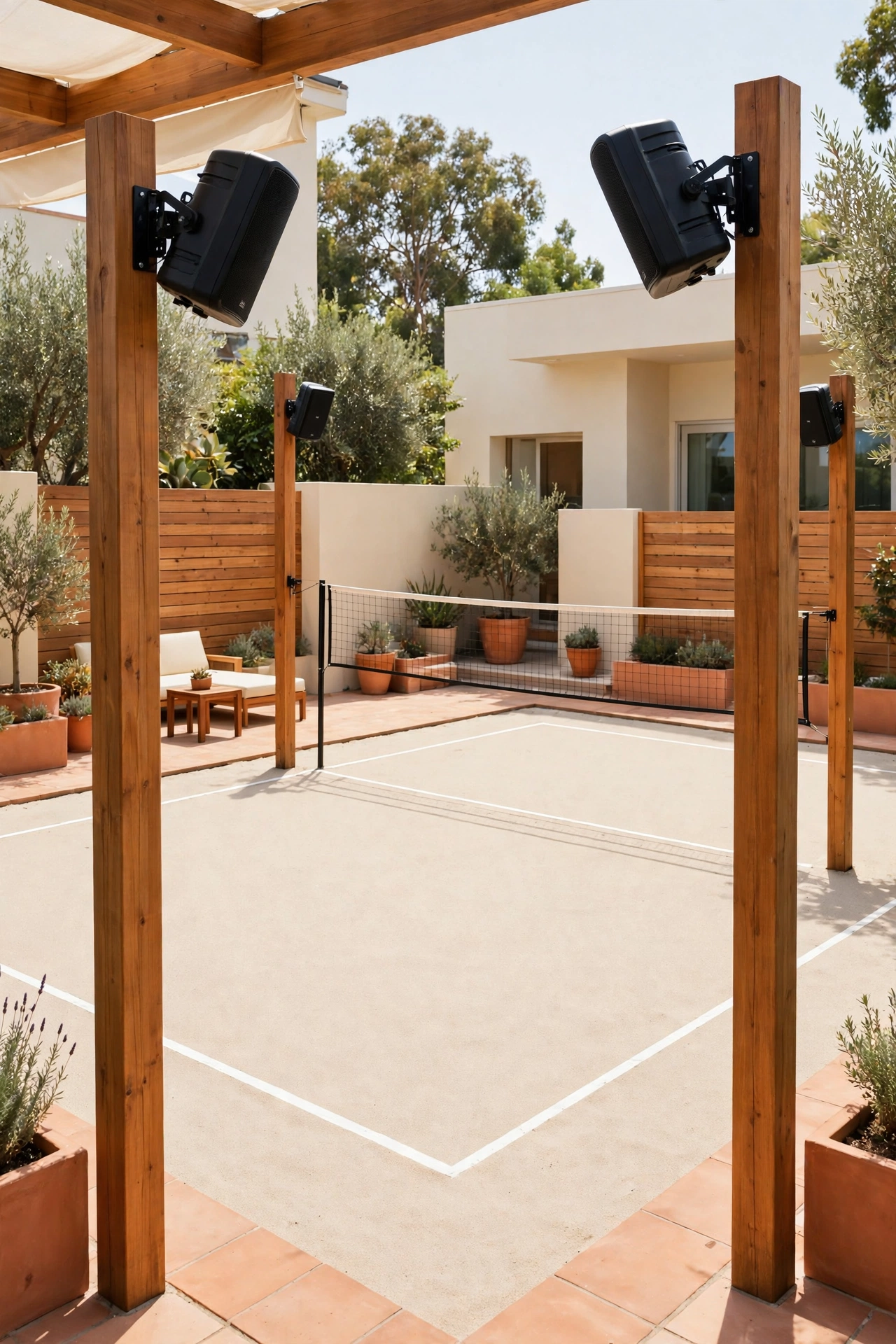
Outdoor speakers on wooden posts bring music to the court without wires across the lawn. A pair of weatherproof speakers at the corners of the court plays a warm-up playlist or a victory song after the final point. Music lifts the energy of every game.
Mount the speakers high on the posts and angle them down toward the court so the sound stays in the yard. Connect them to a small outdoor rated Bluetooth receiver hidden in a weatherproof box. With music on, even a practice rally feels like a party.
29. Set Up a Tournament Corner with Team Benches and Bunting
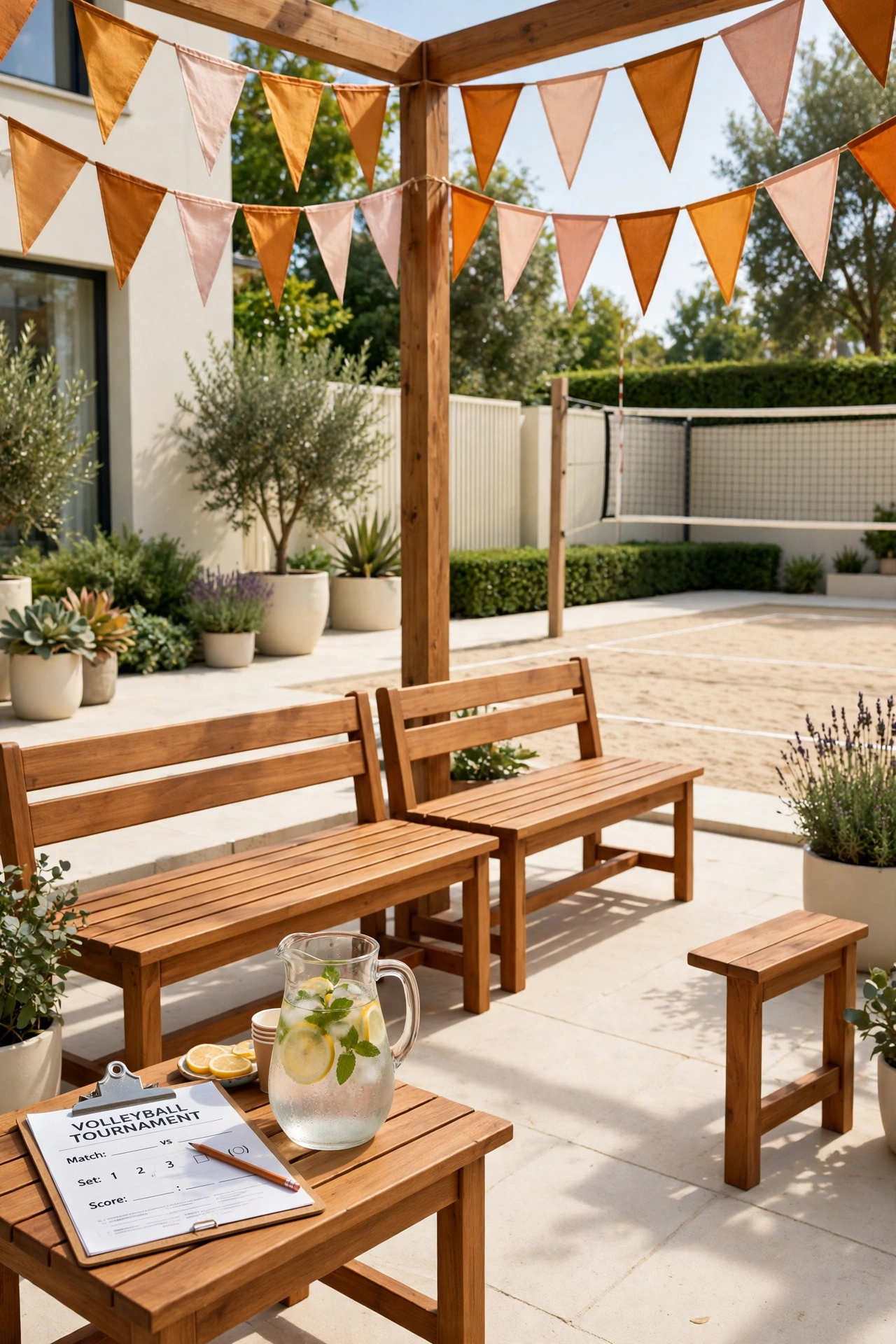
A tournament corner with team benches and bunting turns a normal weekend into a backyard championship. Two benches face the court, one for each team, and bright bunting strung between posts marks the event area. The setup takes minutes and the memories last all summer.
Place a small table between the benches for the score sheet and a jug of cold drinks. Hang bunting in the team colors or in a cheerful mix of amber and blush. A tournament corner makes every guest feel like part of something special.
Conclusion
A backyard volleyball court does not need to be large or expensive to bring real joy to your home. From a simple grass court with a portable net to a full sand court with lights, benches, and a scoreboard, there is an idea here for every yard and every budget. The best court is the one your family will actually play on every week.
Pick one or two ideas that fit your space and start today. Set up a net, mark the lines, and invite friends over for the first game. For a calm home beyond the backyard, these nightly reset routine ideas will help you keep every room organized with just a few minutes each evening.
Frequently Asked Questions About Backyard Volleyball Court Ideas for Outdoor Fun
How much space do I need for a backyard volleyball court?
A full court needs about 18 meters by 9 meters for the playing area, plus a few meters of clear space around the edges for safety. A grass court with a portable net can work in a smaller yard, and a mini court for kids fits in about half that space. Measure your yard first and choose the court size that leaves a safe border on every side.
What is the best surface for a backyard volleyball court?
Sand is the best surface for diving and jumping, since it cushions falls and feels great under bare feet. Grass is the easiest and cheapest option for casual games, while concrete or interlocking tiles suit families who want a fast, low care court. Choose the surface that matches how often you play and how much care you want to do.
How do I keep a sand volleyball court clean?
Rake the sand smooth after every game and pick out leaves and twigs while you rake. A landscape fabric base under the sand stops weeds from growing through, and a cover over the court keeps out rain and pets when the court is not in use. A quick two minute rake after each game keeps the sand fresh all season.
Can I play volleyball at night in my backyard?
Yes, two tall floodlights on wooden posts give a backyard court enough light for safe evening games. Aim the lights down across the court and keep them high enough to avoid glare. String lights add a warm glow around the edges, and solar lights work well if you want to skip the wiring.
How much does a backyard volleyball court cost?
A grass court with a portable net can cost very little, since the net and markers are the only purchases. A sand court costs more because of the timber edging, landscape fabric, and delivered sand. A hard court with tiles or concrete is the biggest investment, so start with a simple setup and add features over time as your family plays more.

Hi, I’m Emily! I turn messy corners into cozy, organized spots. DreamNestDecor is where I share simple, practical home ideas — decor, organization, and small-space solutions that work in real life, not just in photos. Every idea here is carefully researched before it’s shared.