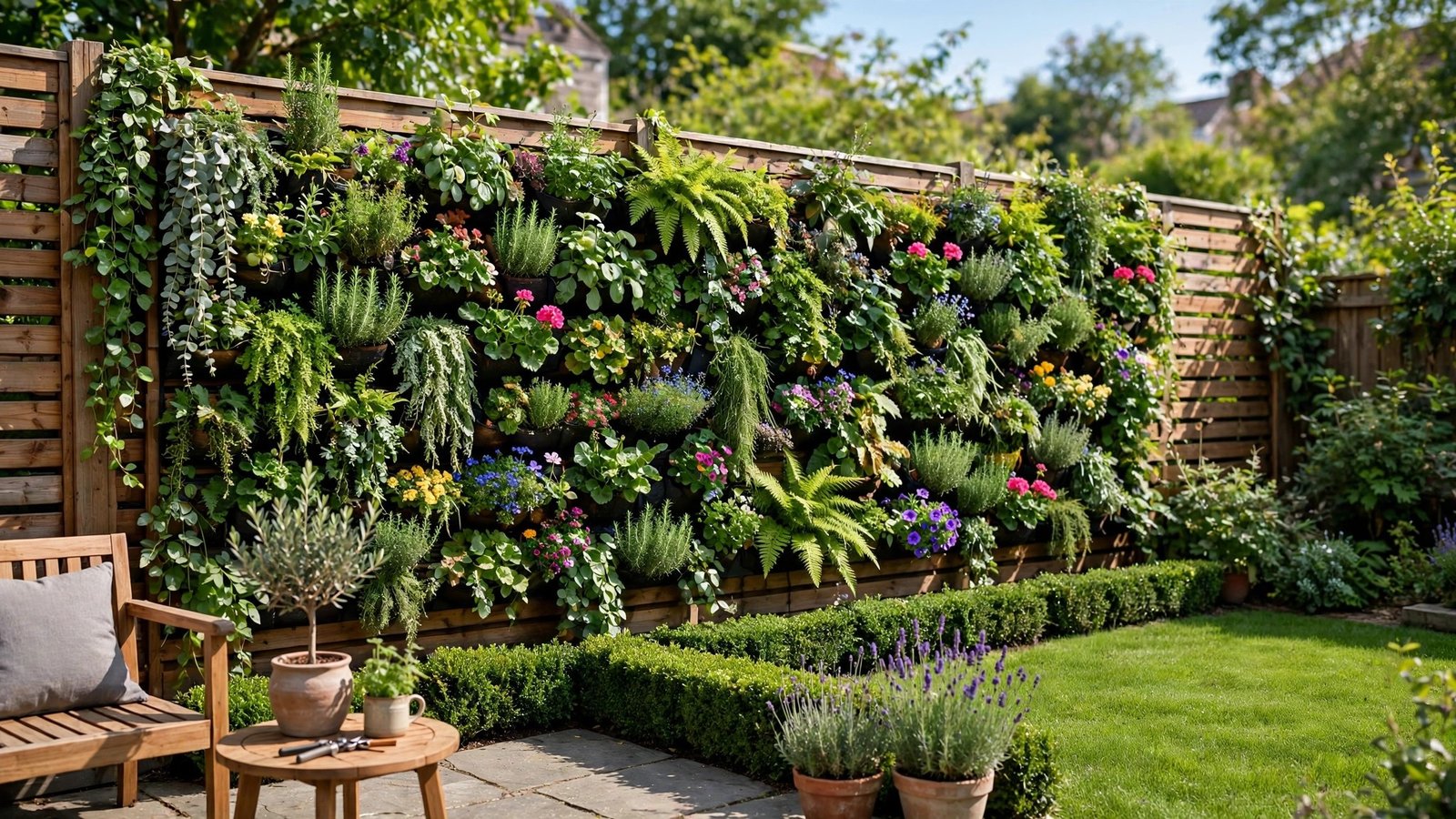
Look at your bare fence or that plain garden wall and imagine it covered in green. Herbs spill from pockets, roses climb toward the sun, and strawberries hang within easy reach. Your walls are not boundaries; they are garden space waiting to happen.
These 22 vertical garden ideas for outdoor walls and fences will help you grow up instead of out. Whether you have a tiny patio or a long fence line, you will find a vertical project that fits your space and your skill level.
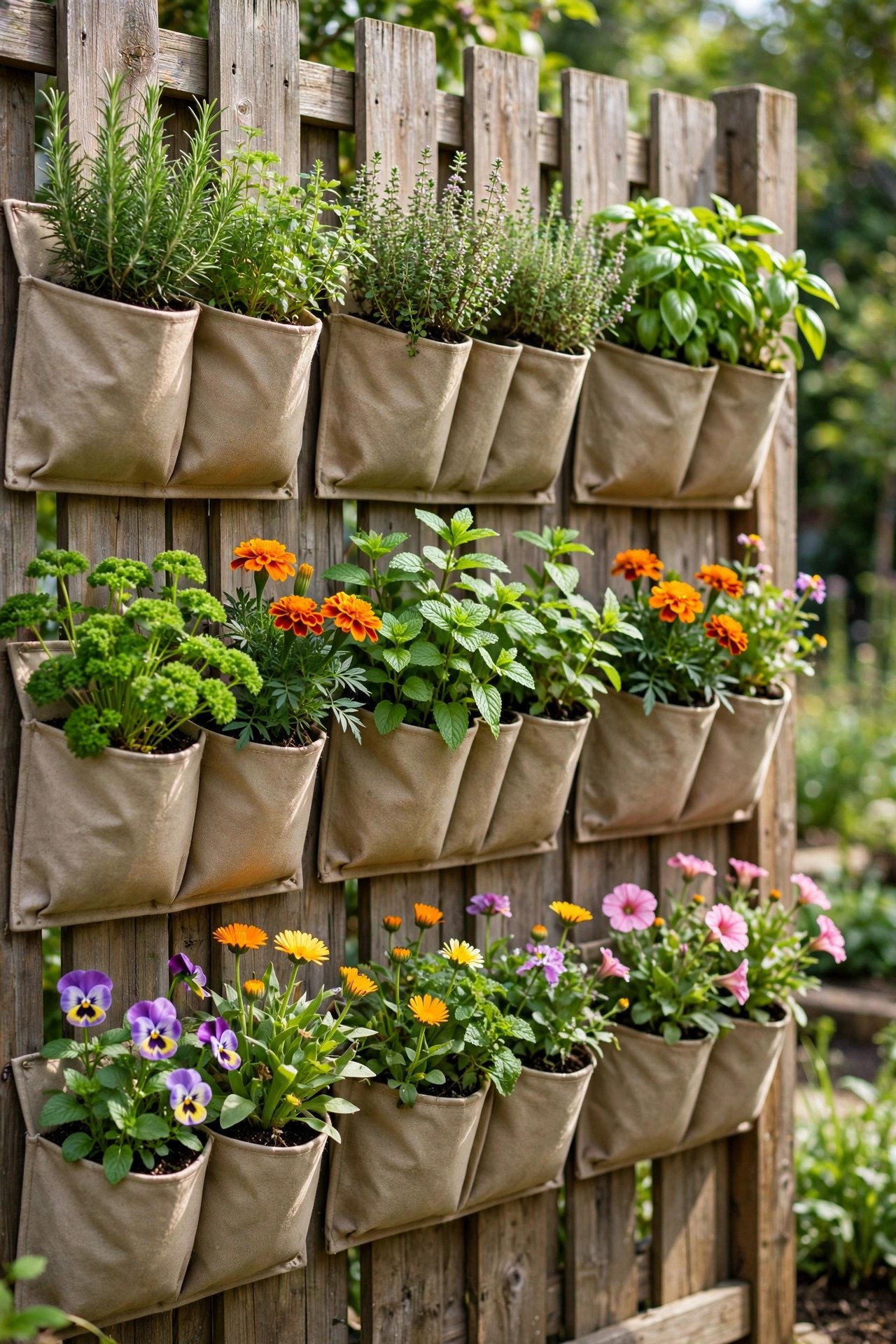
1. Hanging Pocket Planters on the Fence
Fabric pocket planters turn any fence into a living tapestry of herbs and flowers. Hang the panels securely on sturdy hooks, fill each pocket with potting mix, and plant shallow-rooted herbs like basil, mint, and strawberries. The breathable fabric keeps roots healthy by preventing waterlogging.
Water pockets more often than ground beds, since they dry out fast in sun and wind. This renter-friendly idea also shines in tiny spaces, and these small balcony urban oasis ideas show more ways to garden vertically.
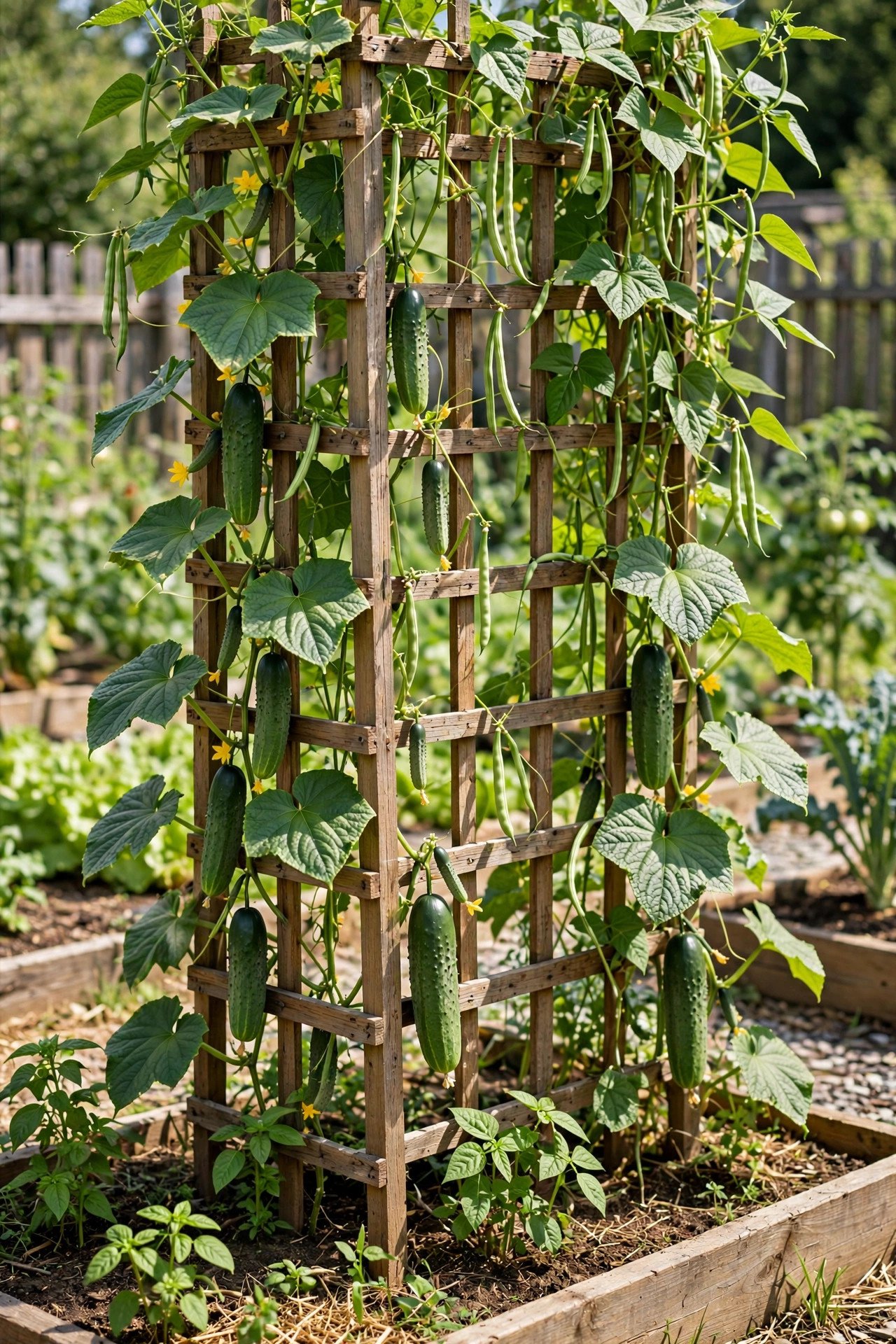
2. Trellis Panels for Climbing Vegetables
A simple trellis panel lets cucumbers, pole beans, peas, and tomatoes climb instead of sprawl. Growing up improves airflow around the plants, which means fewer diseases and easier harvesting. Secure the trellis firmly to the fence so heavy vines cannot pull it down.
Plant the climbers at the base in rich compost and guide young vines onto the support with soft ties. You will harvest more from a four-foot trellis than from a sprawling patch twice its size.
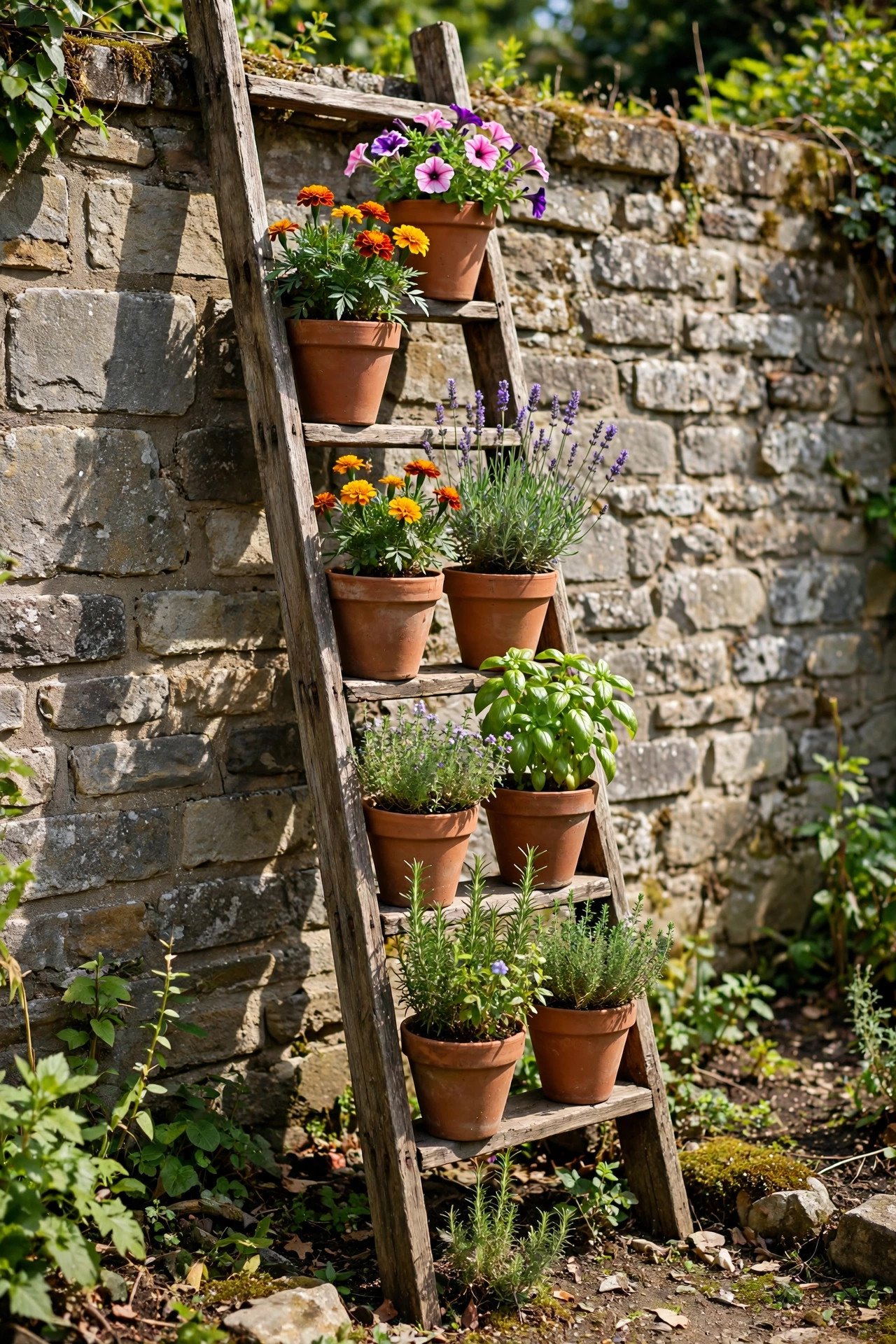
3. Repurposed Ladder Shelf Garden
An old wooden ladder becomes a charming tiered garden with almost no work. Lean it securely against a wall, set potted herbs and flowers on each rung, and you have instant vertical levels. Sand rough edges and seal the wood so it survives the weather.
Place sun-lovers on the top rungs and shade-tolerant plants below. A ladder garden adds vintage character while keeping every pot within easy reach for watering.
4. Stackable Planter Towers
Stackable planter towers grow dozens of plants in a single square foot of ground. Fill each tier with potting mix and plant herbs, lettuce, or strawberries in the pockets. Water from the top and let it trickle down through every level.
Rotate the tower a quarter turn every few days so all sides get even sun. These towers are perfect for patios where ground space is precious.
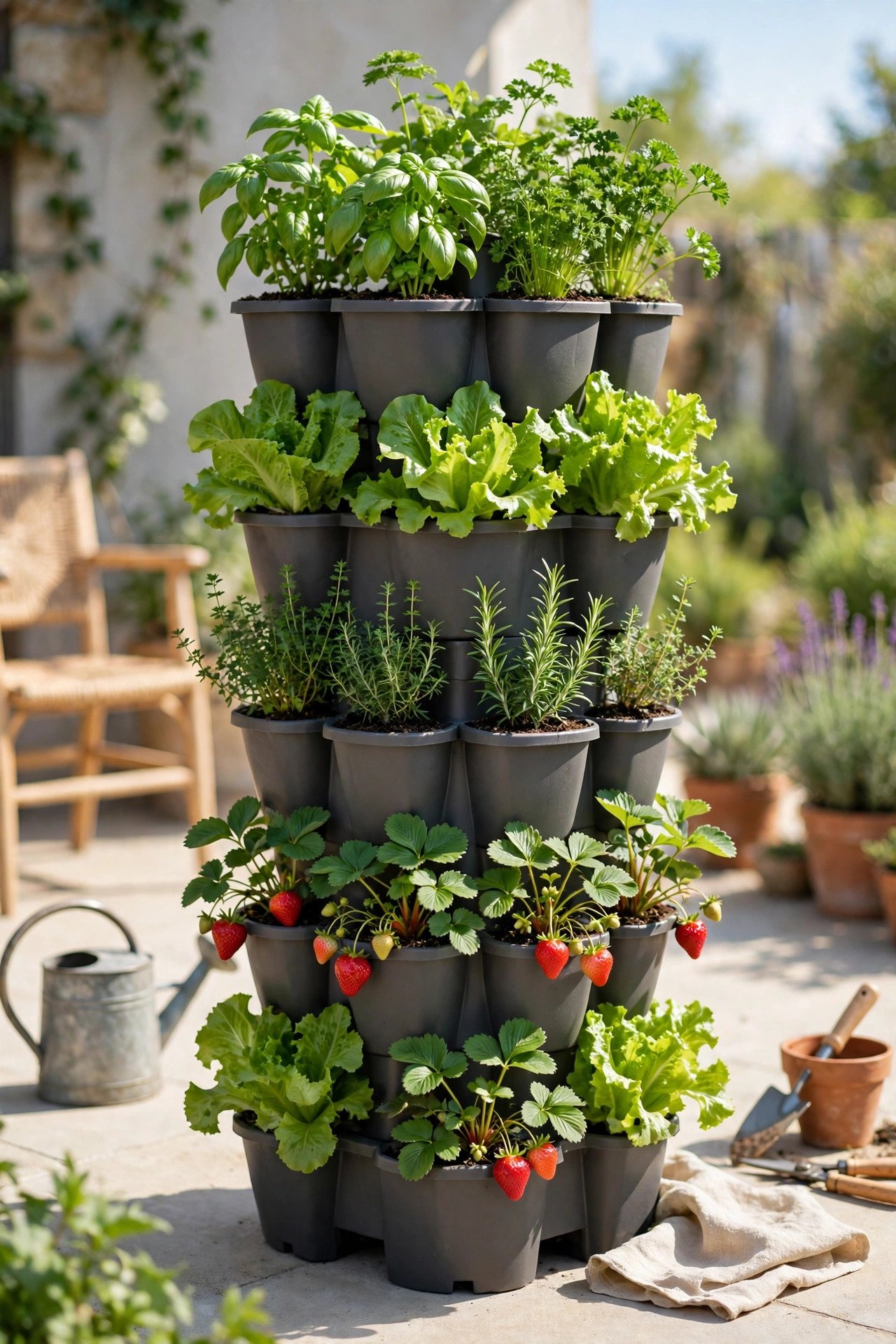
5. Modular Living Wall Panels
Modular living wall panels create a lush, modern green wall with clean lines. The panels hold soil or growing medium in a grid, and you plant ferns, trailing pothos, and colorful foliage in a planned pattern. Many systems include drip irrigation to keep every plant watered.
Arrange plants in a checkerboard or diagonal pattern for the most striking look. A living wall turns a plain fence into the most photographed spot in your garden.
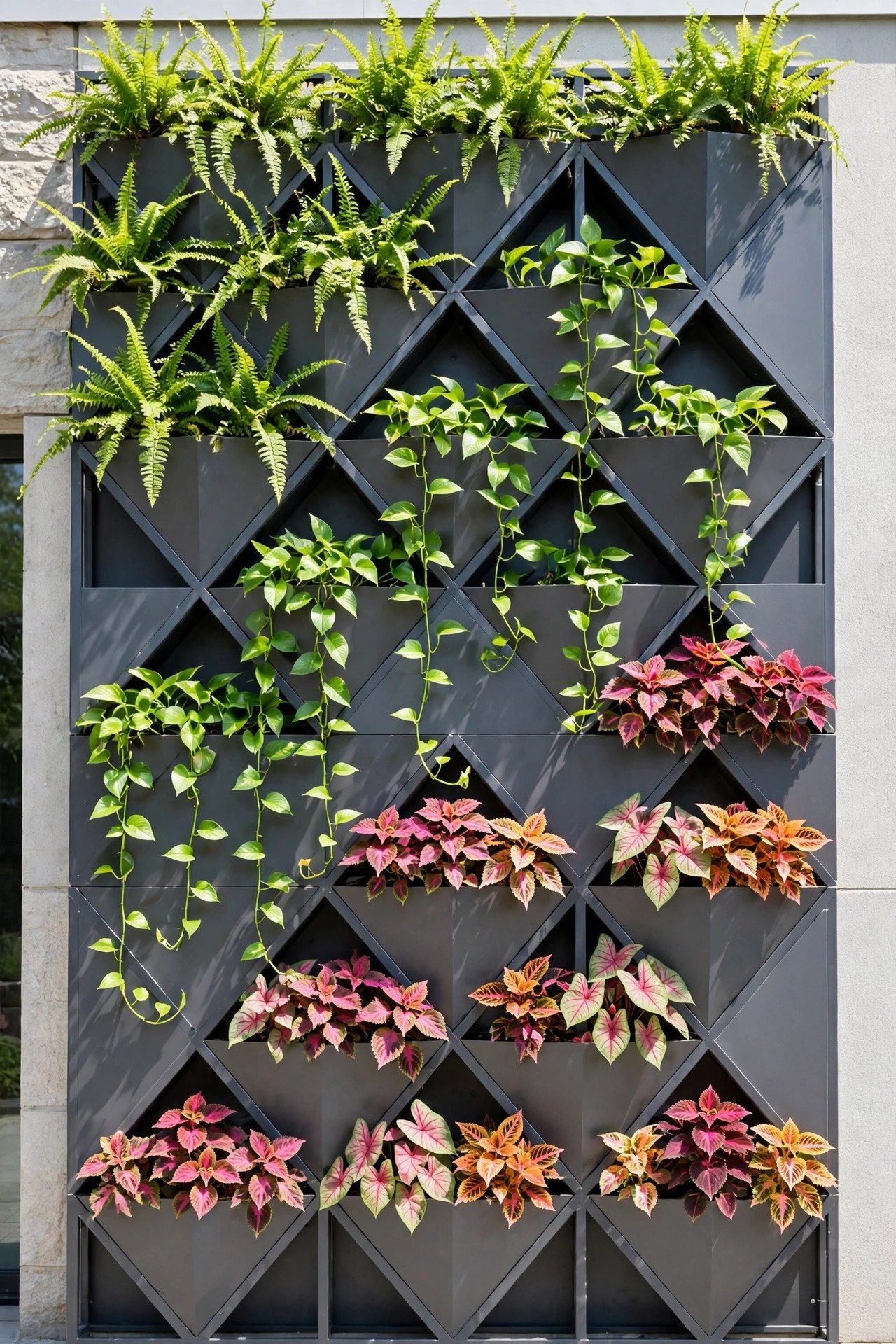
6. Climbing Roses Trained Along the Fence
Climbing roses trained along the top of a fence create a spectacular floral display every summer. Tie the main canes horizontally to encourage more flowering side shoots. Choose a repeat-blooming variety so the show lasts for months.
Prune lightly each winter and feed well in spring for the best blooms. Few vertical plantings feel as romantic as roses, and these romantic garden styling ideas will help you complete the dreamy look.
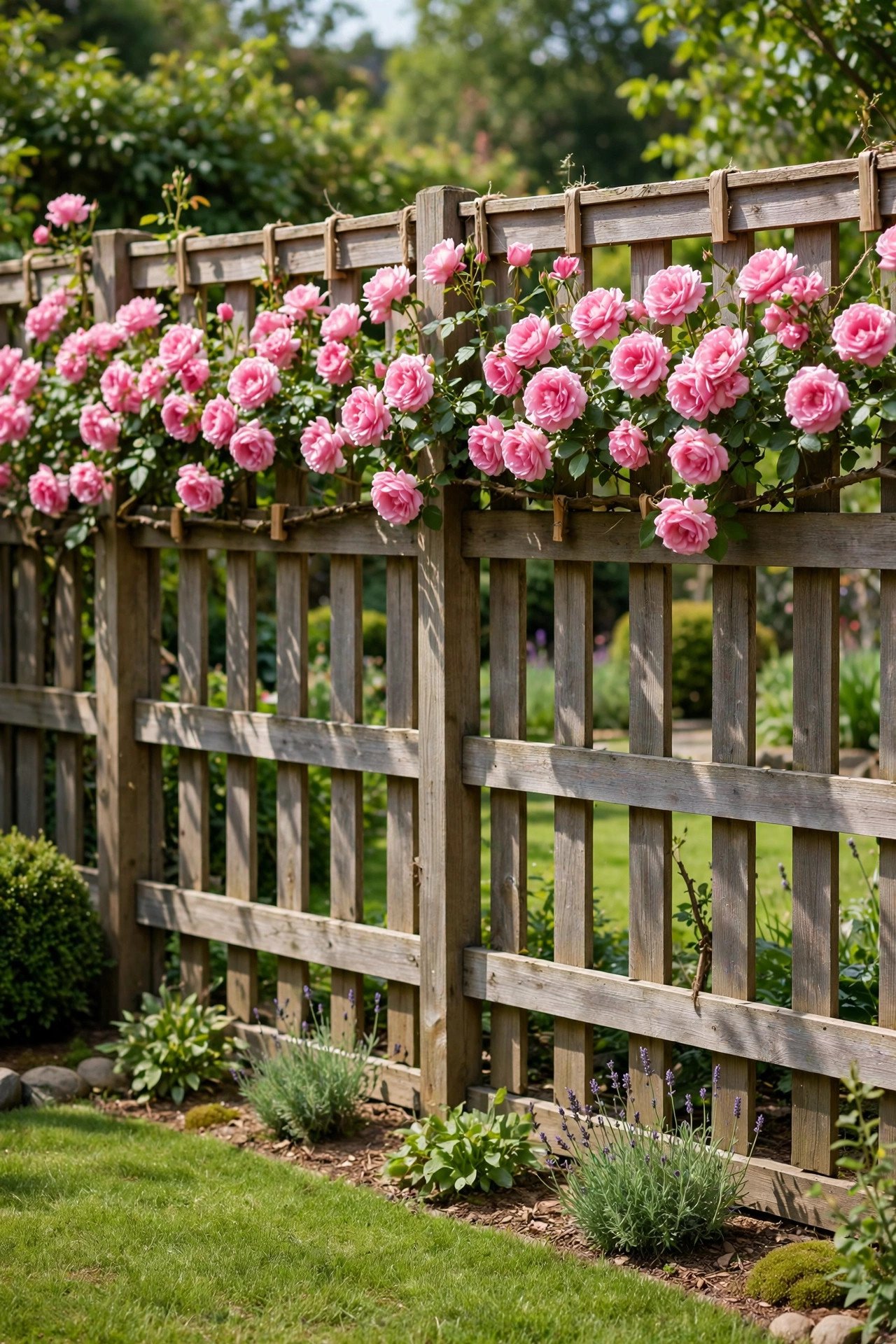
7. Espaliered Fruit Trees Against the Wall
Espalier trains fruit trees to grow flat against a wall in elegant horizontal tiers. Apples and pears take beautifully to this centuries-old technique. A south-facing wall reflects extra warmth, which helps fruit ripen.
Prune twice a year to maintain the flat shape, and be patient; a beautiful espalier takes a few seasons to develop. The result is both productive and a true work of garden art.
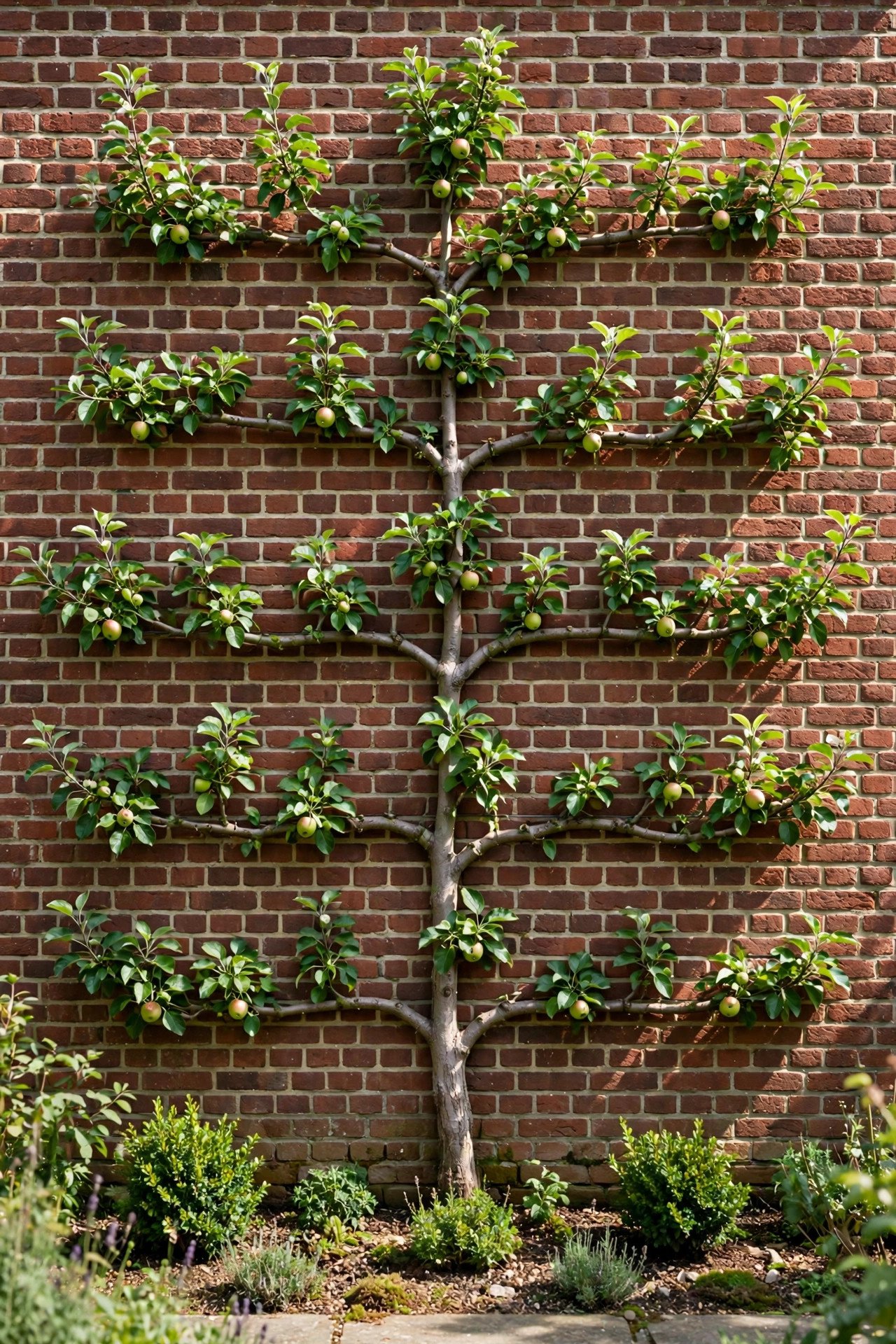
8. Rain Gutter Gardens on the Fence
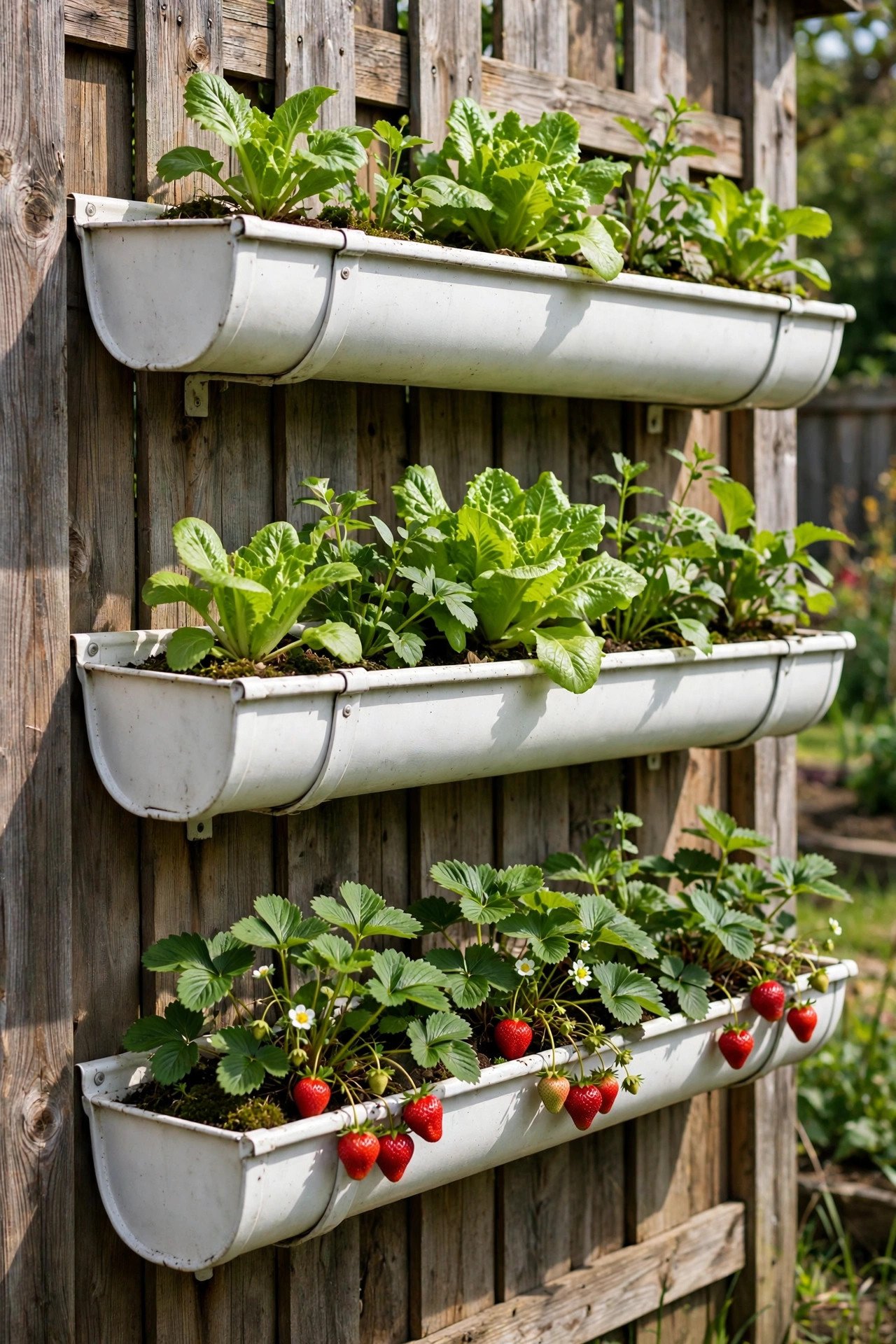
Old rain gutters mounted horizontally on a fence make perfect shallow planters for lettuce, herbs, and strawberries. Drill drainage holes along the bottom, mount the gutters on sturdy brackets, and fill with light potting mix. Several rows create a striking striped wall of green.
This is one of the cheapest vertical gardens you can build. End caps keep the soil in, and the narrow profile suits even the slimmest side yard.
9. DIY Wooden Pallet Garden
A wooden pallet stood upright becomes a vertical garden for the cost of some landscape fabric and soil. Staple the fabric across the back and bottom to form pockets, fill with potting mix, and plant herbs, lettuce, or succulents in the slats. Lean it securely against a wall so it cannot tip.
Sand the pallet well and seal it with a non-toxic preservative. Upcycling like this keeps good wood out of landfills, and these sustainable home decor ideas offer more planet-friendly projects.

10. Window Boxes With Trailing Flowers
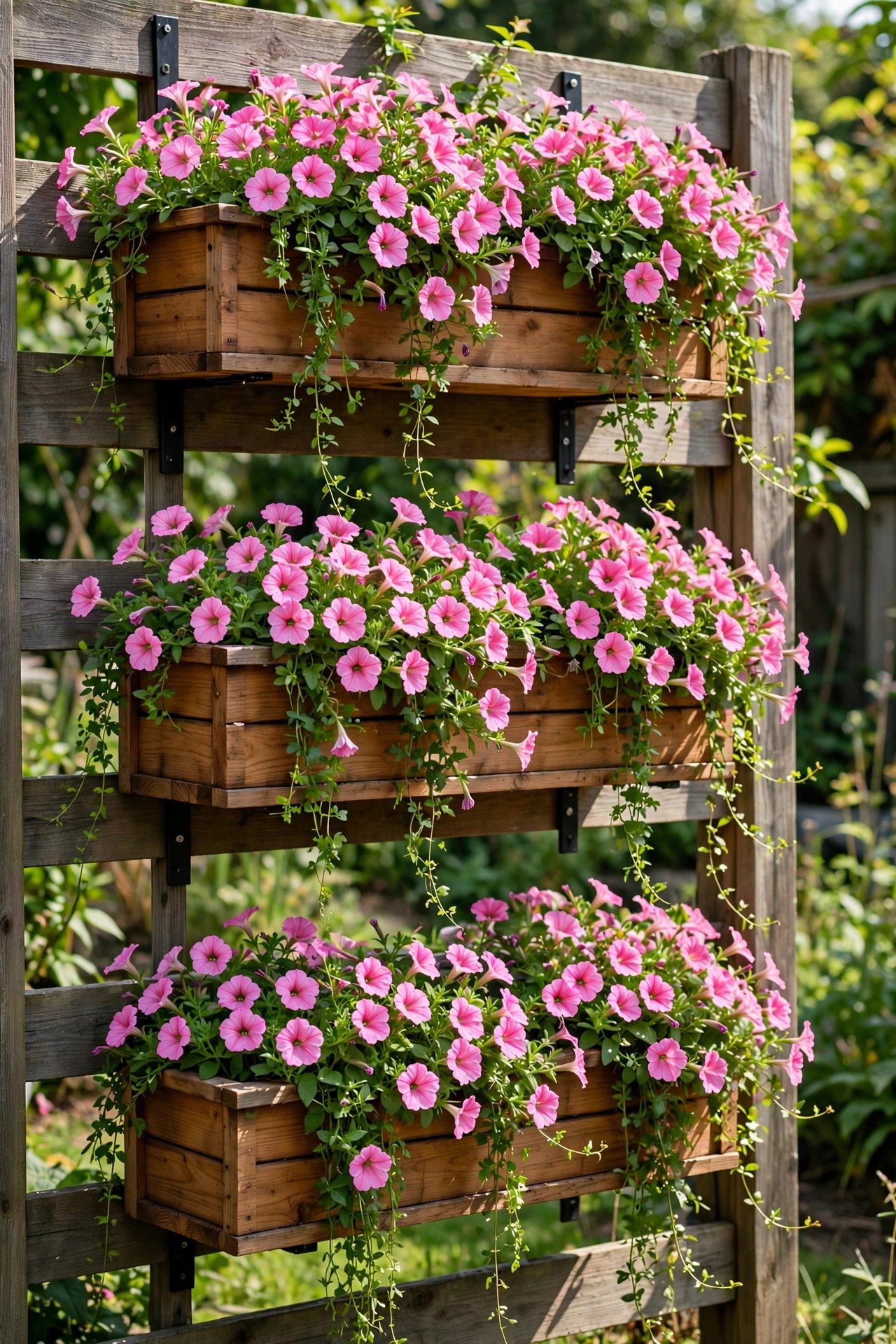
Window boxes mounted on a fence or wall add vertical color at eye level. Fill them with trailing petunias, geraniums, and sweet potato vine that spill gracefully over the edges. A fence softened with flower boxes feels welcoming instead of stark.
Choose boxes with drainage holes and water them daily in summer heat. Replant with pansies or ornamental kale for color that lasts into fall.
11. Clematis Climbing a Decorative Trellis
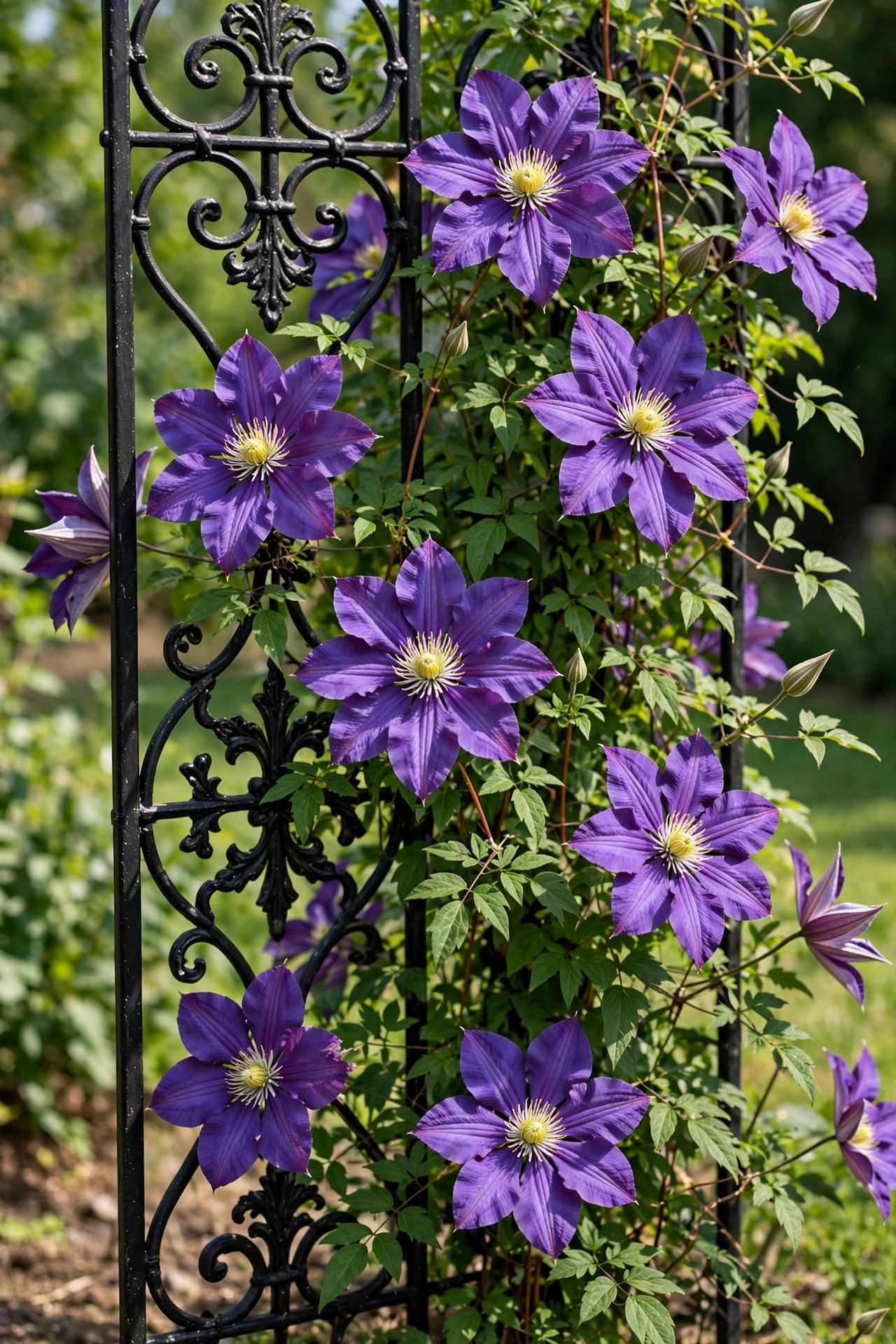
Clematis brings spectacular large blooms to a vertical trellis from late spring into fall. Plant it deeply with the crown a few inches below the soil, and shade its roots with a low stone or neighboring plant. Guide the young vines onto the trellis with soft ties.
Choose varieties from different pruning groups for blooms across the seasons. A clematis-covered trellis becomes a living piece of garden art.
12. Vertical Herb Wall by the Kitchen Door
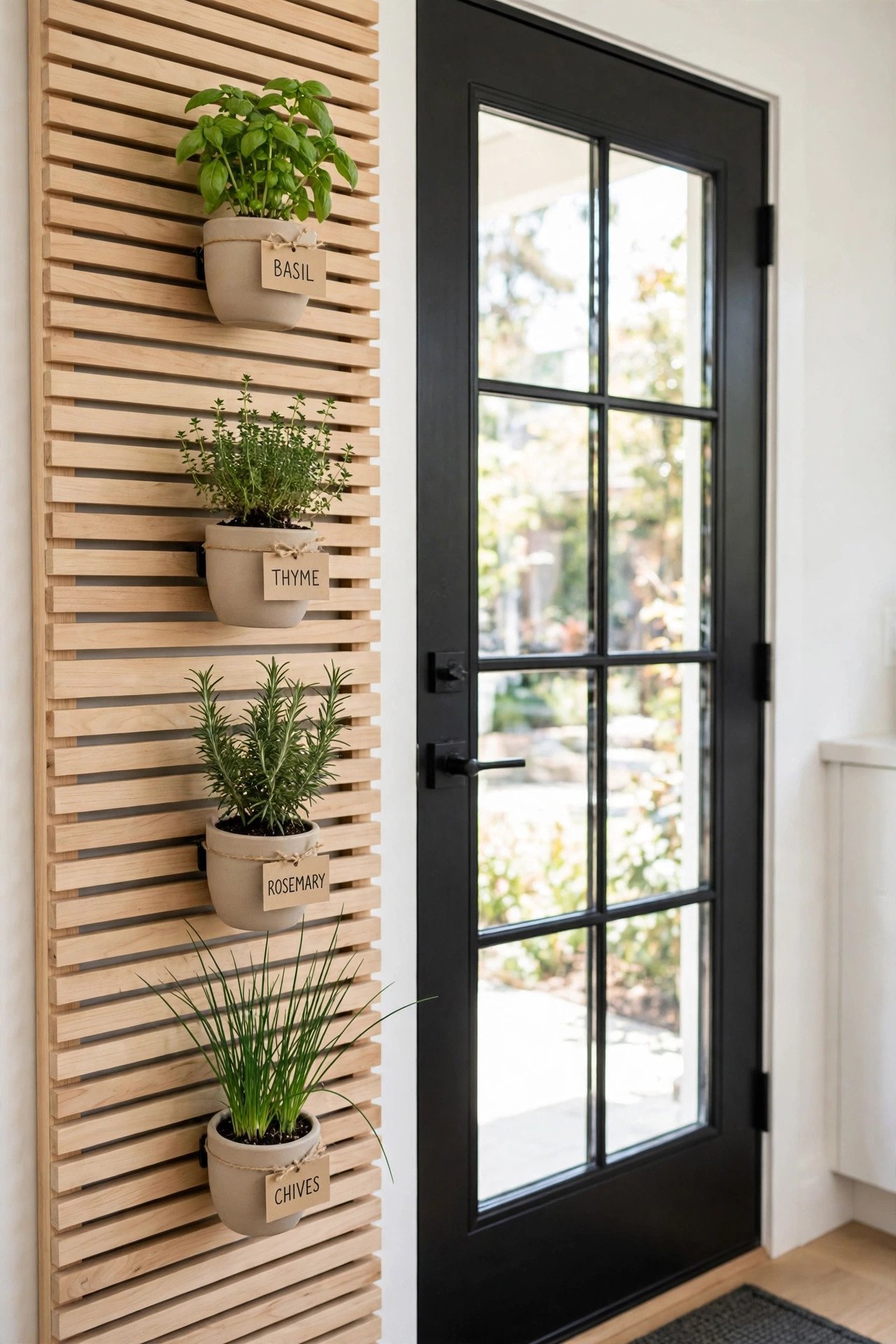
A vertical herb wall right outside the kitchen door puts fresh flavor seconds from the stove. Mount a grid of small planters or pockets and fill them with basil, thyme, rosemary, and chives. Morning sun and afternoon shade suit most culinary herbs.
Harvest often to keep the plants bushy and productive. Label each pocket so guests can snip their own garnish at dinner parties.
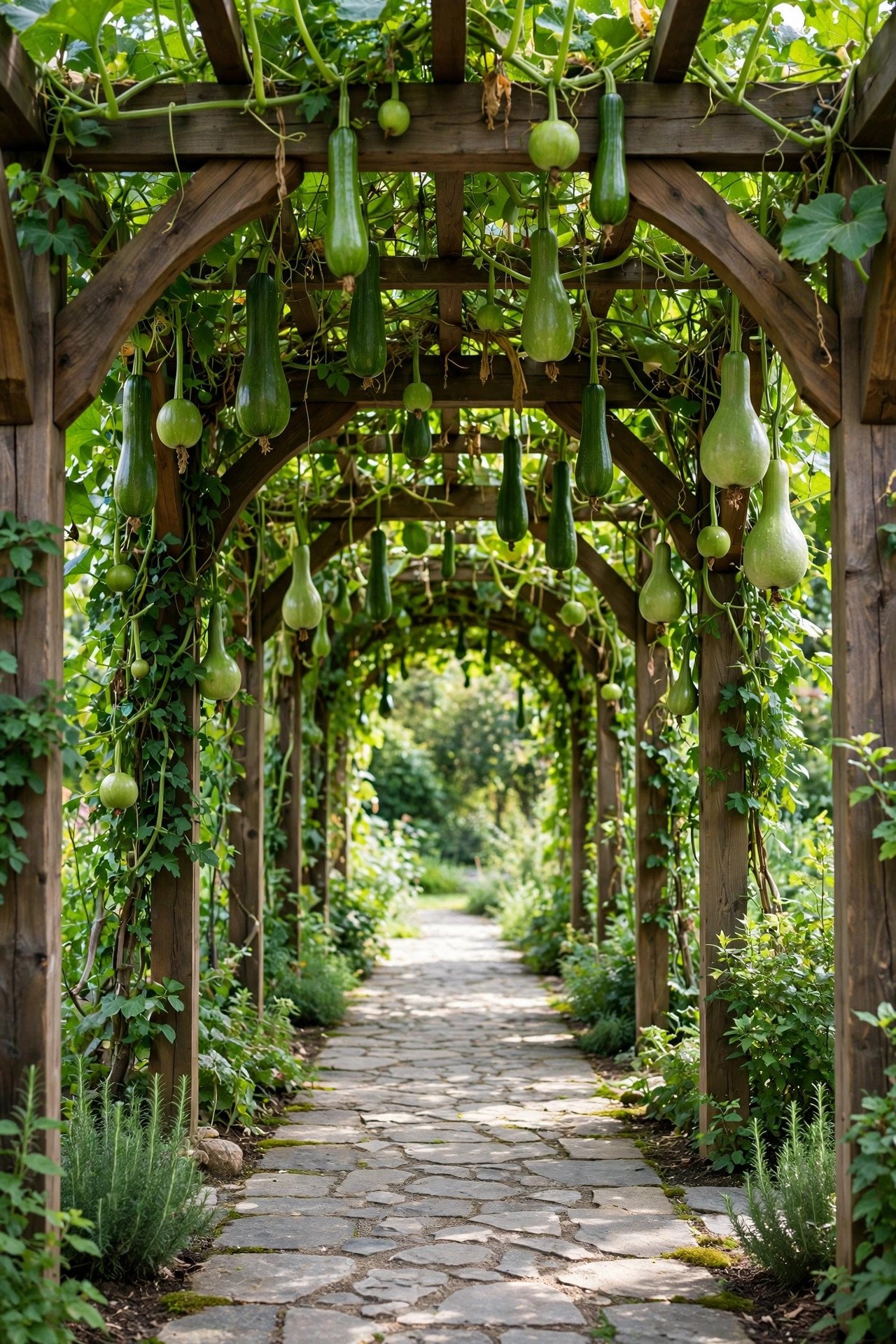
13. Squash Arch Walkway Tunnel
A sturdy arch over your garden path becomes a tunnel of hanging squash, gourds, and beans. Build the arch from metal or thick timber so it can carry heavy fruit. Walking beneath dangling vegetables delights kids and adults alike.
Plant one vigorous vine at each base and train them upward. The arch also shades the path below, creating a cool retreat on hot afternoons.
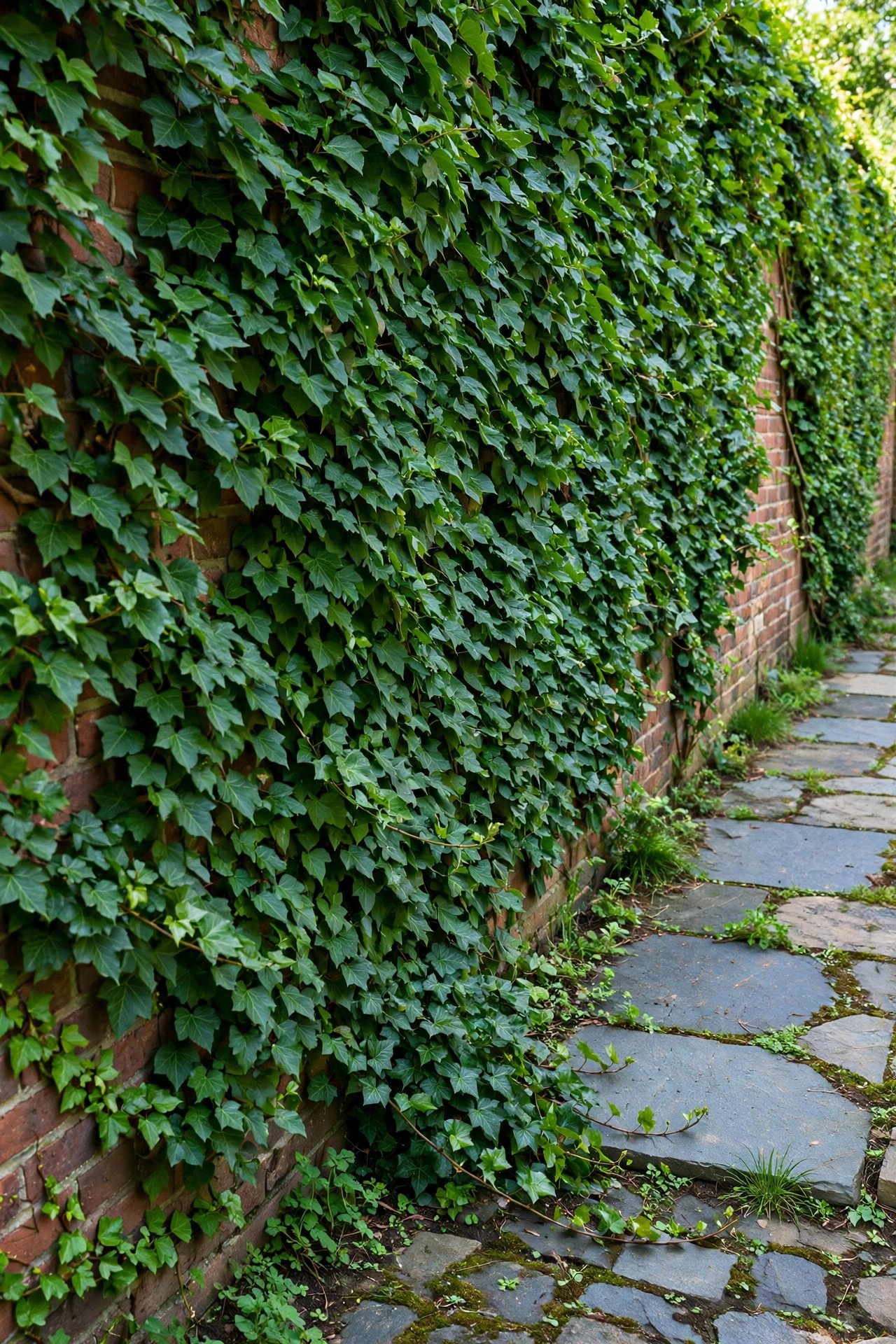
14. Evergreen Ivy Wall for Year-Round Cover
Evergreen ivy covers a wall or fence in lush green that never fades, even in winter. It attaches itself to masonry and climbs trellises on fences. Choose a non-invasive variety suited to your region and trim it twice a year to keep it tidy.
Ivy also insulates the wall behind it, keeping buildings cooler in summer. For shaded walls where little else thrives, ivy is the reliable answer.
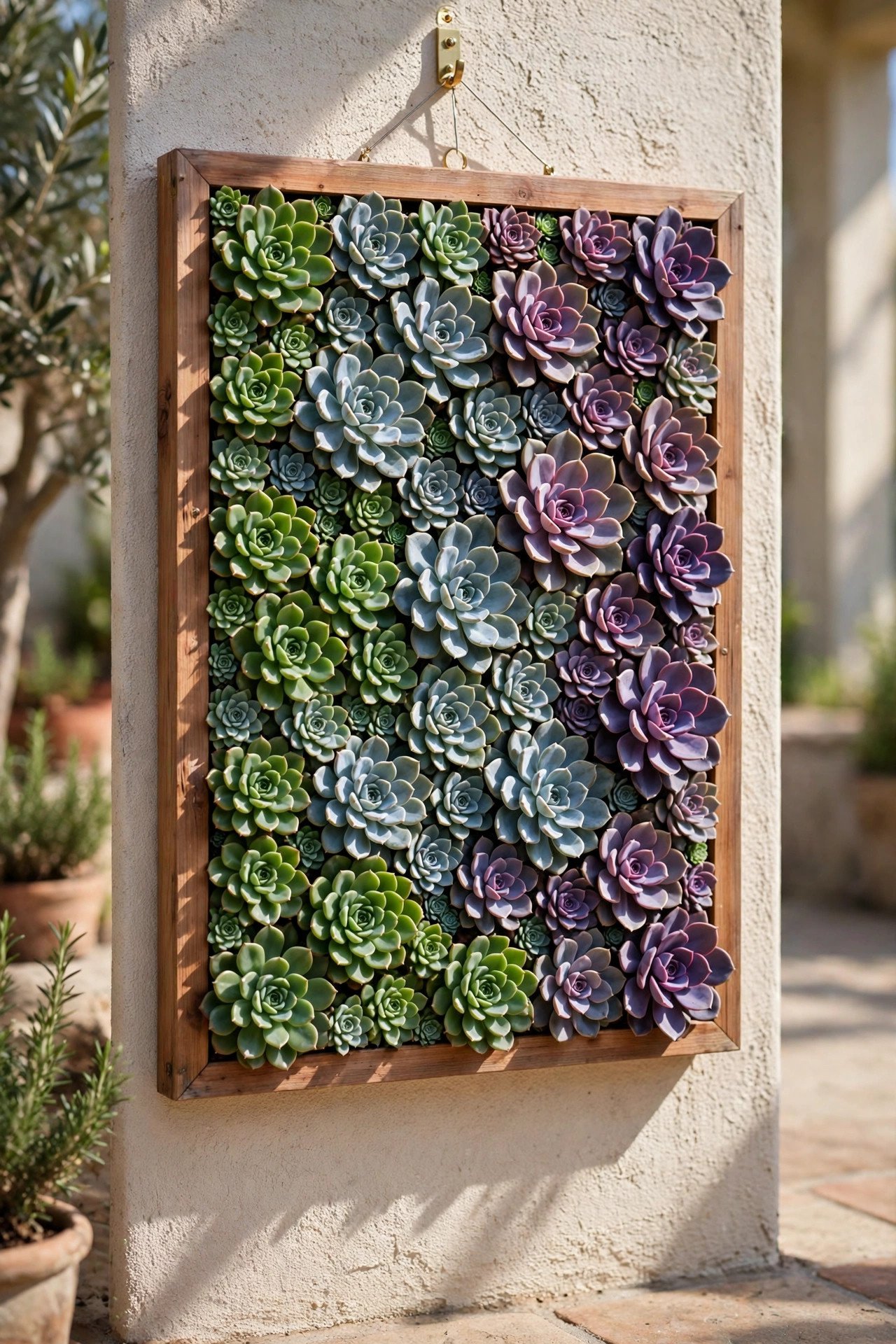
15. Succulent Mosaic Wall Panels
Succulent wall panels create living mosaics of rosettes in greens, blues, and purples. Plant echeveria, sedum, and hens-and-chicks closely in a framed panel filled with cactus mix. Hang the panel where it gets bright light but shelter from hard frost.
Water sparingly, since succulents store their own moisture. These drought-tolerant beauties suit warm climates perfectly, much like the plantings in these Mediterranean porch ideas.
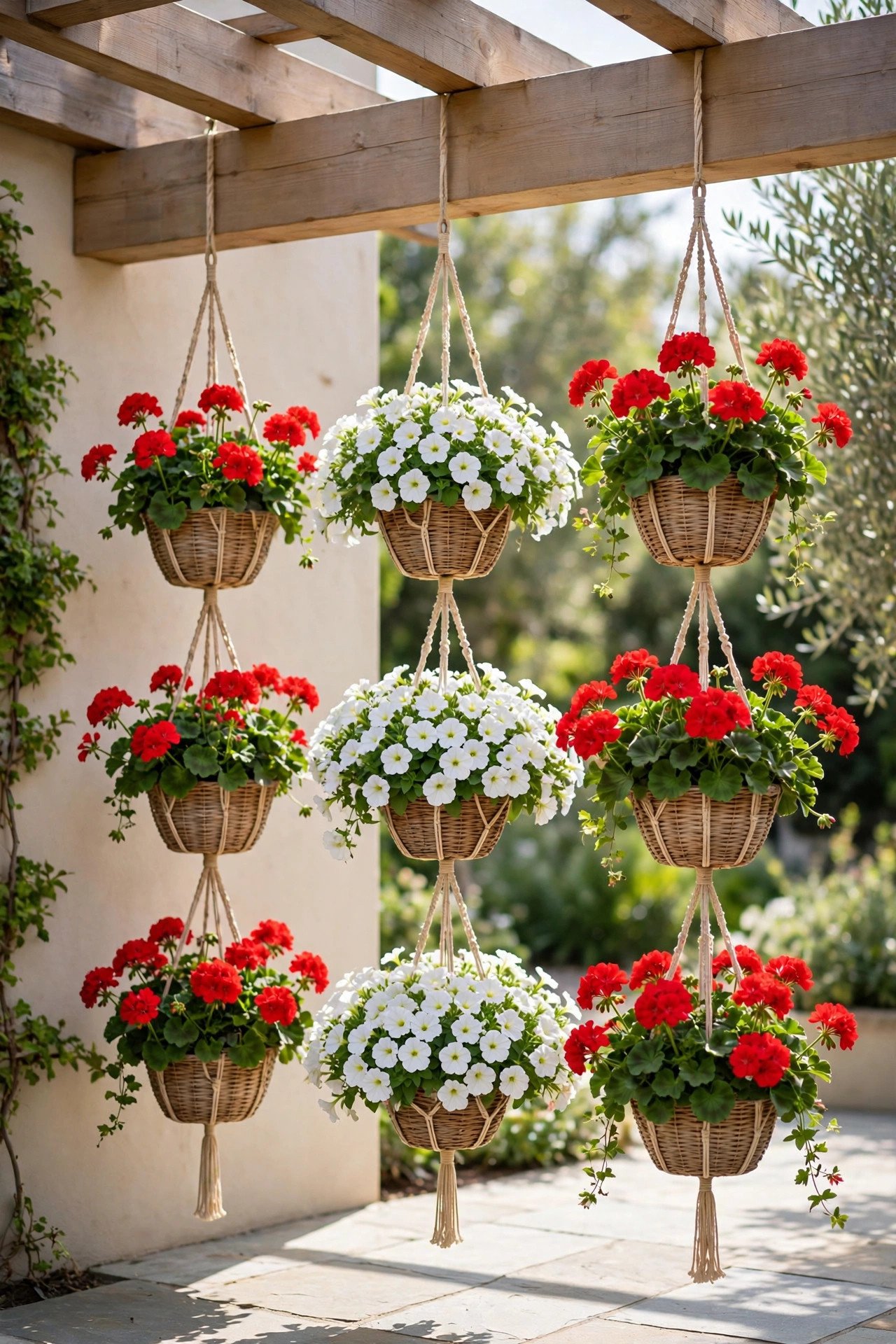
16. Tiered Hanging Basket Columns
Hang baskets in vertical columns from a sturdy bracket or pergola beam for a waterfall of flowers. Use one color family per column for a designed look, or mix brights for cottage cheer. A pulley system makes watering the top baskets easy.
Line wire baskets with coco fiber and fill with moisture-retentive potting mix. Columns of baskets frame doorways and corners beautifully.
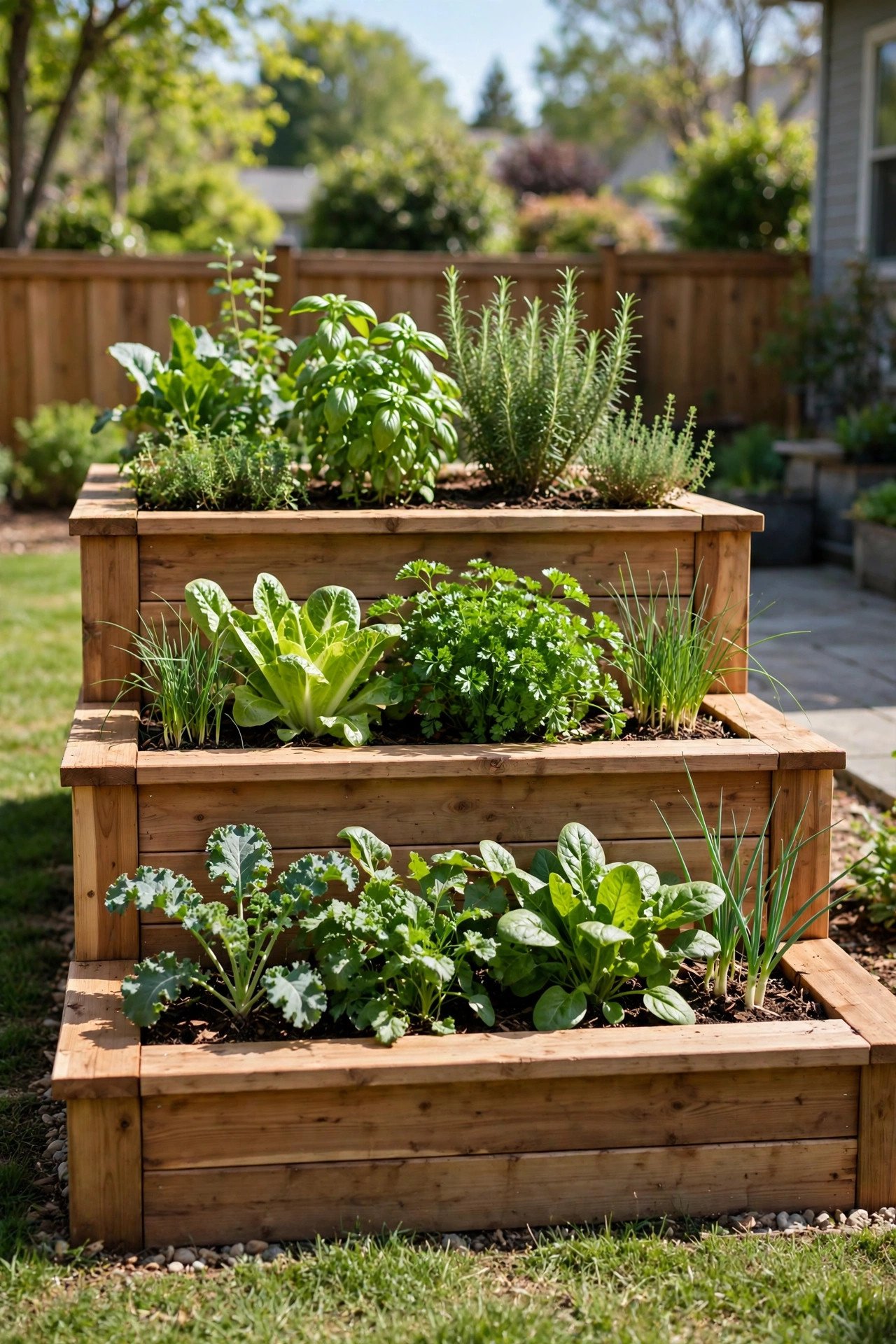
17. Three-Tier Raised Bed Tower
A three-tier raised bed stacks growing space in a stair-step shape that gives every level full sun. Plant tall crops at the back of the top tier and trailing plants at the front edges. This clever shape was born from small-space necessity.
Build it from cedar boards for natural rot resistance. The stepped design also creates natural sun and shade zones for different crops.
18. Vertical Strawberry Planters
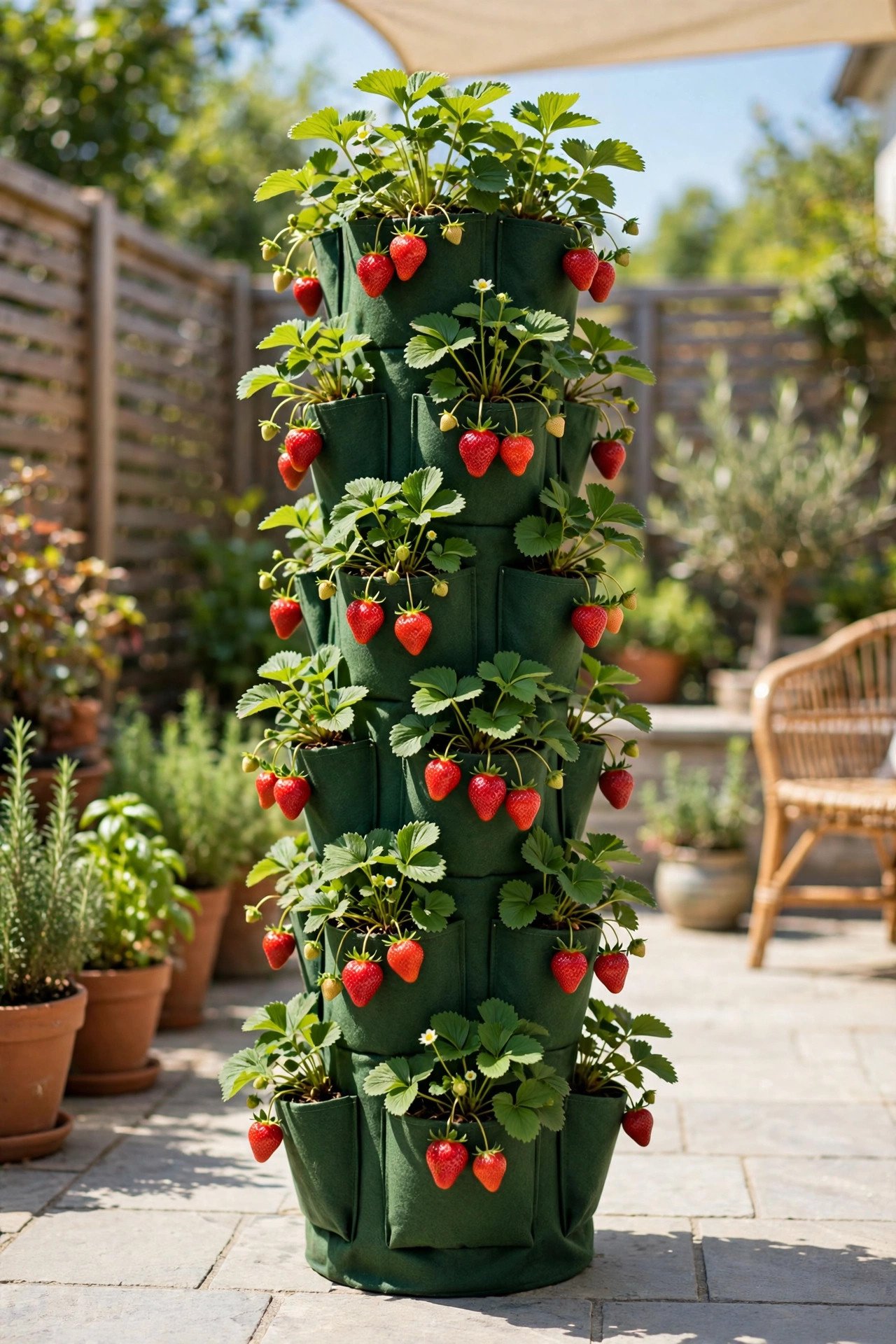
Strawberries love vertical planters, where their fruits hang clean and ripen evenly. Use stacked pots, pocket planters, or a dedicated strawberry tower with side openings. The berries stay off the soil, which means less rot and fewer pests.
Choose everbearing varieties for harvests from summer into fall. A strawberry tower near the patio invites endless sweet snacking.
19. Climbing Hydrangea on a Shaded Wall
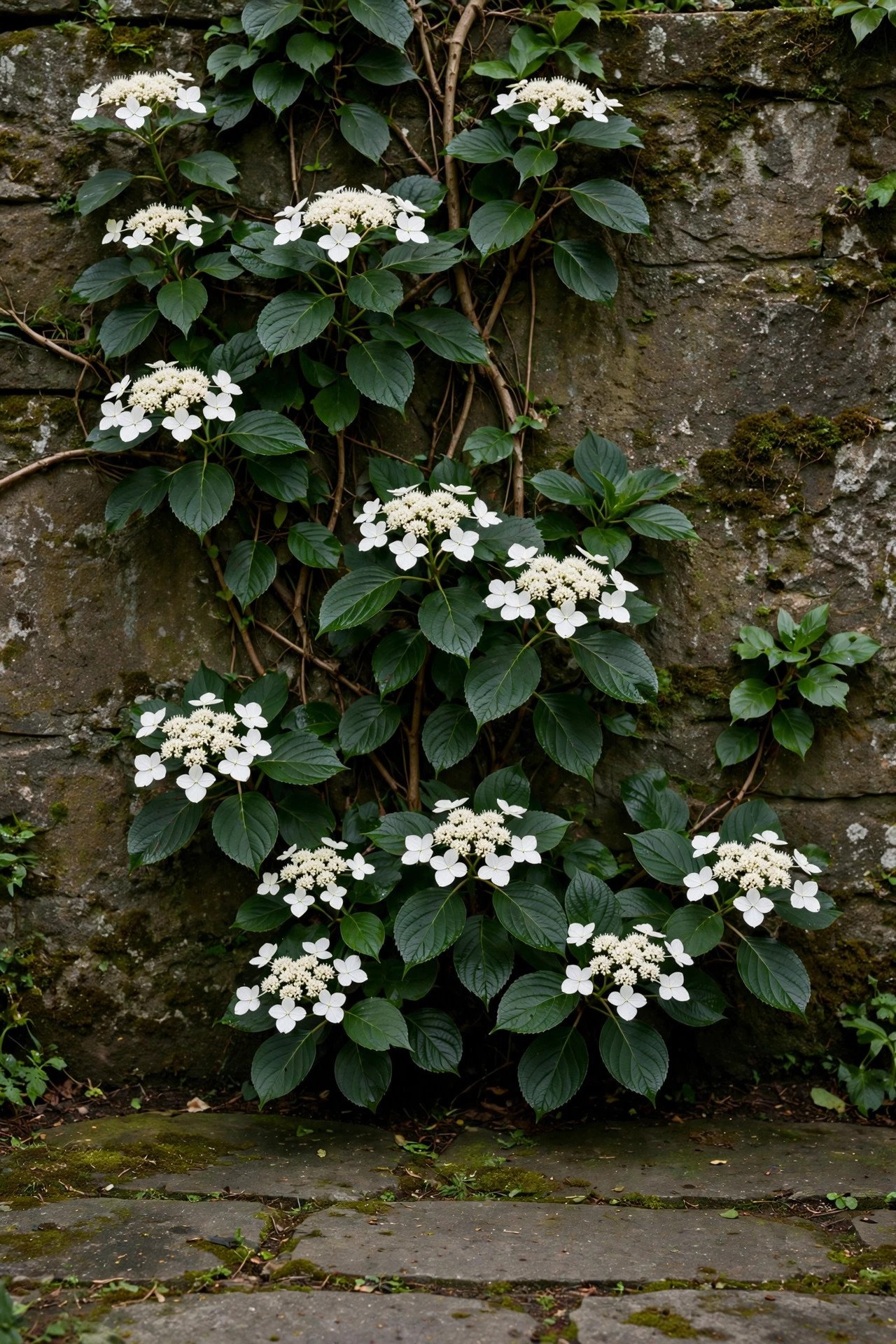
Climbing hydrangea is one of the few vines that thrives on a shaded north-facing wall. Its white lace-cap blooms light up dark corners in early summer, and the peeling bark adds winter interest. Give it a sturdy trellis or rough masonry to grip.
Be patient, since it spends its first years building roots before it climbs. Once established, it covers large walls with almost no care.
20. Grid of Wall-Mounted Planter Boxes
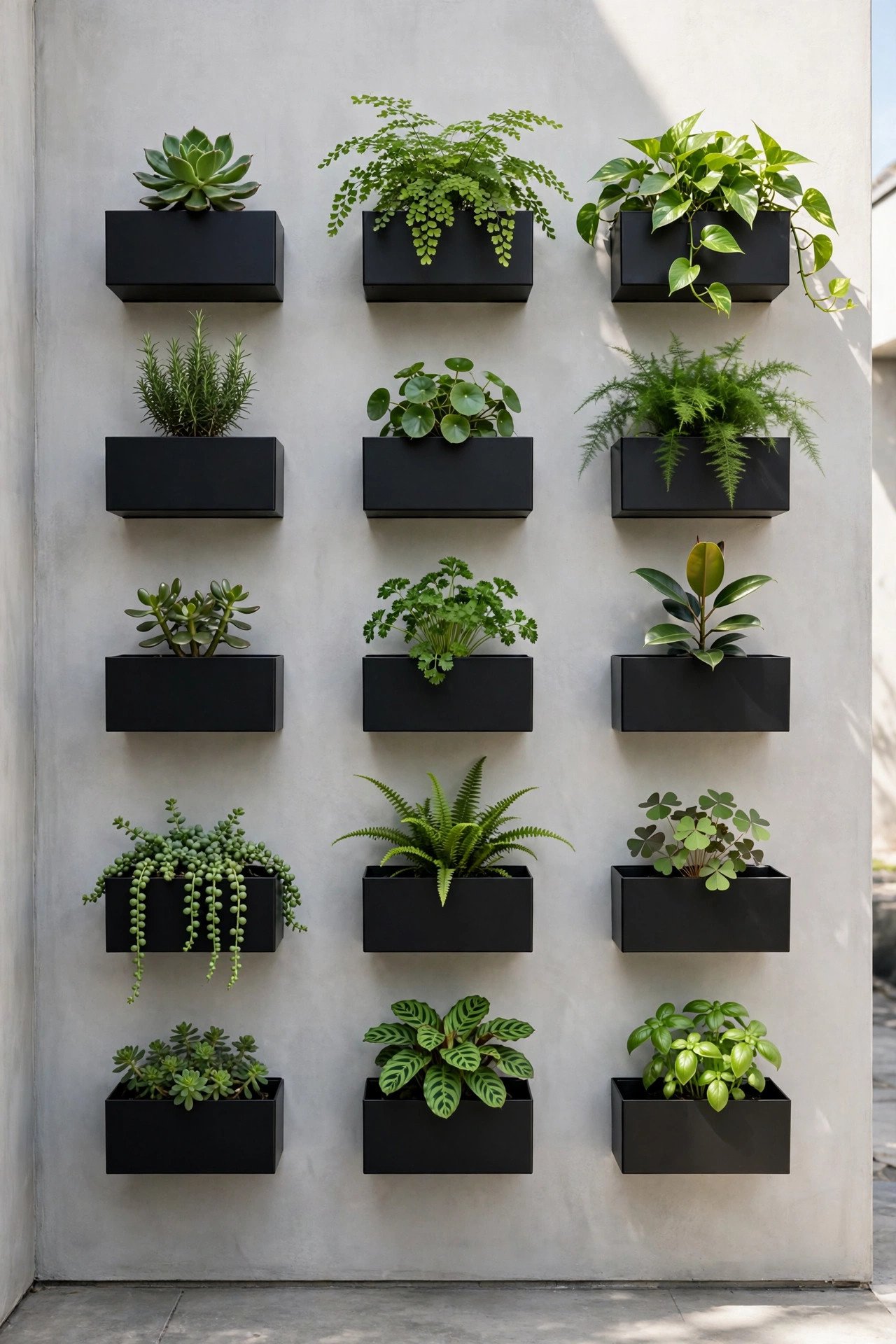
A neat grid of wall-mounted planter boxes brings order and rhythm to a plain wall. Fill each box with a single plant variety for a modern graphic effect, or mix herbs for a kitchen garden. Keep the spacing perfectly even for the cleanest look.
Use boxes with built-in water reservoirs to reduce watering chores. This structured approach suits contemporary homes and courtyards.
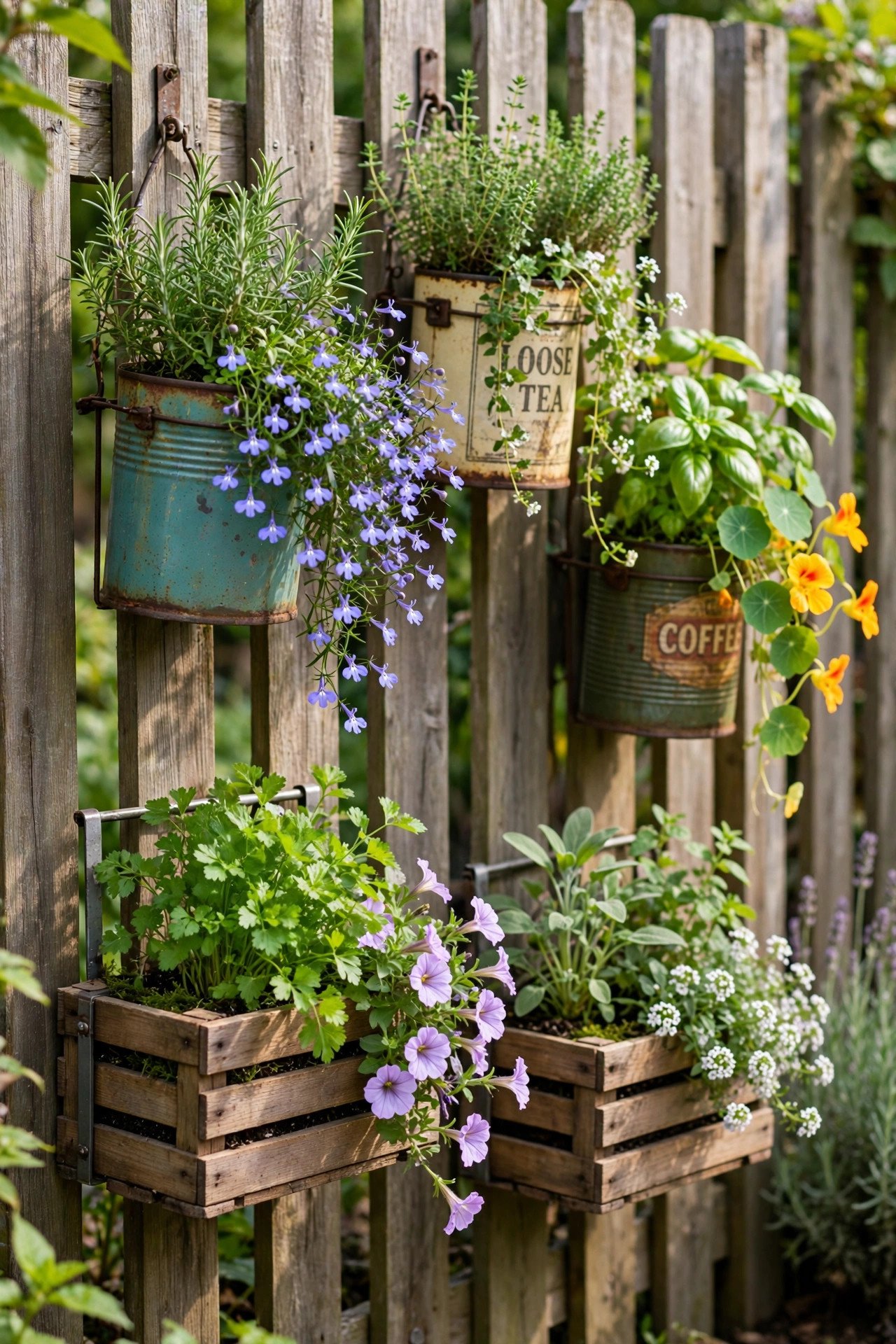
21. Upcycled Tin and Crate Planters
Old tins, wooden crates, and metal buckets become charming wall planters with a little creativity. Drill drainage holes, mount them on a fence or pallet board, and fill with herbs or trailing flowers. The mix of textures gives your vertical garden a collected, vintage personality.
Match the containers loosely by color for a curated feel. Vintage-style plantings like these pair wonderfully with aged garden decor, as these European garden antique accents show.
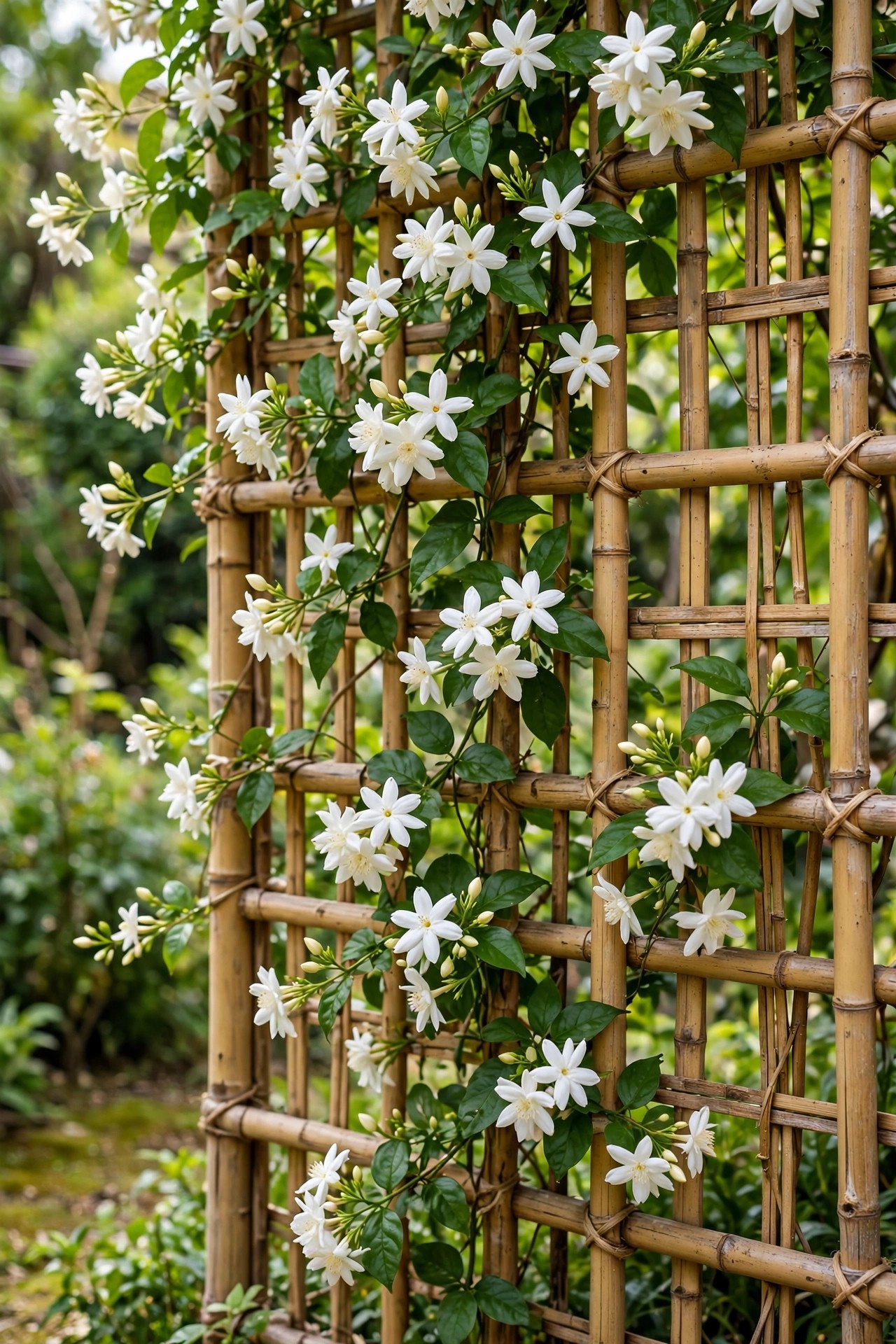
22. Jasmine Growing Over a Bamboo Screen
Fragrant jasmine climbing over a bamboo screen creates a sweet-smelling privacy wall. The delicate white flowers perfume the whole garden on summer evenings. Bamboo screening is affordable, natural-looking, and easy to attach to an existing fence.
Guide the young vines onto the screen and trim after flowering. This combination gives you privacy, scent, and beauty in one simple project.
Conclusion
Your walls and fences are some of the most underused garden space you own. Going vertical multiplies your growing area, adds privacy and beauty, and turns plain boundaries into living features you will enjoy every day.
Start with one wall and one simple system, like pocket planters or a trellis, and let your confidence grow with your plants. Before long you will be looking at every vertical surface as a new garden waiting to happen.
Frequently Asked Questions About Vertical Garden Ideas for Outdoor Walls and Fences
What plants grow best in a vertical garden?
Herbs, lettuce, strawberries, succulents, and trailing flowers like petunias thrive in vertical planters. Choose shallow-rooted plants that tolerate containers, and match them to your sun conditions.
How do I water a vertical garden?
Water from the top and let gravity help, or install a simple drip irrigation line along the top row. Vertical planters dry out faster than ground beds, so check moisture daily in hot weather.
Will a vertical garden damage my fence?
It can if planters sit directly against wood and trap moisture. Mount planters on battens that hold them slightly off the fence, and use waterproof backing to protect the wood behind them.
Can I build a vertical garden as a renter?
Yes, use freestanding or hanging systems that need no screws, like over-the-rail planters, leaning ladders, and stackable towers. Fabric pocket planters hung from removable hooks also work well.
How much sun does a vertical wall garden need?
Most edible plants need at least six hours of sun, while ferns and many ornamentals do well in shade. Observe your wall through a full day before planting so you choose plants that match the real light.

Hi, I’m Emily! I turn messy corners into cozy, organized spots. DreamNestDecor is where I share simple, practical home ideas — decor, organization, and small-space solutions that work in real life, not just in photos. Every idea here is carefully researched before it’s shared.