Shoes multiply faster than any other item in the closet. Sneakers, heels, sandals, flats, and boots all compete for the same floor space, and the result is usually a jumbled pile where pairs get separated and good shoes get scuffed. Finding the right pair becomes a daily excavation.
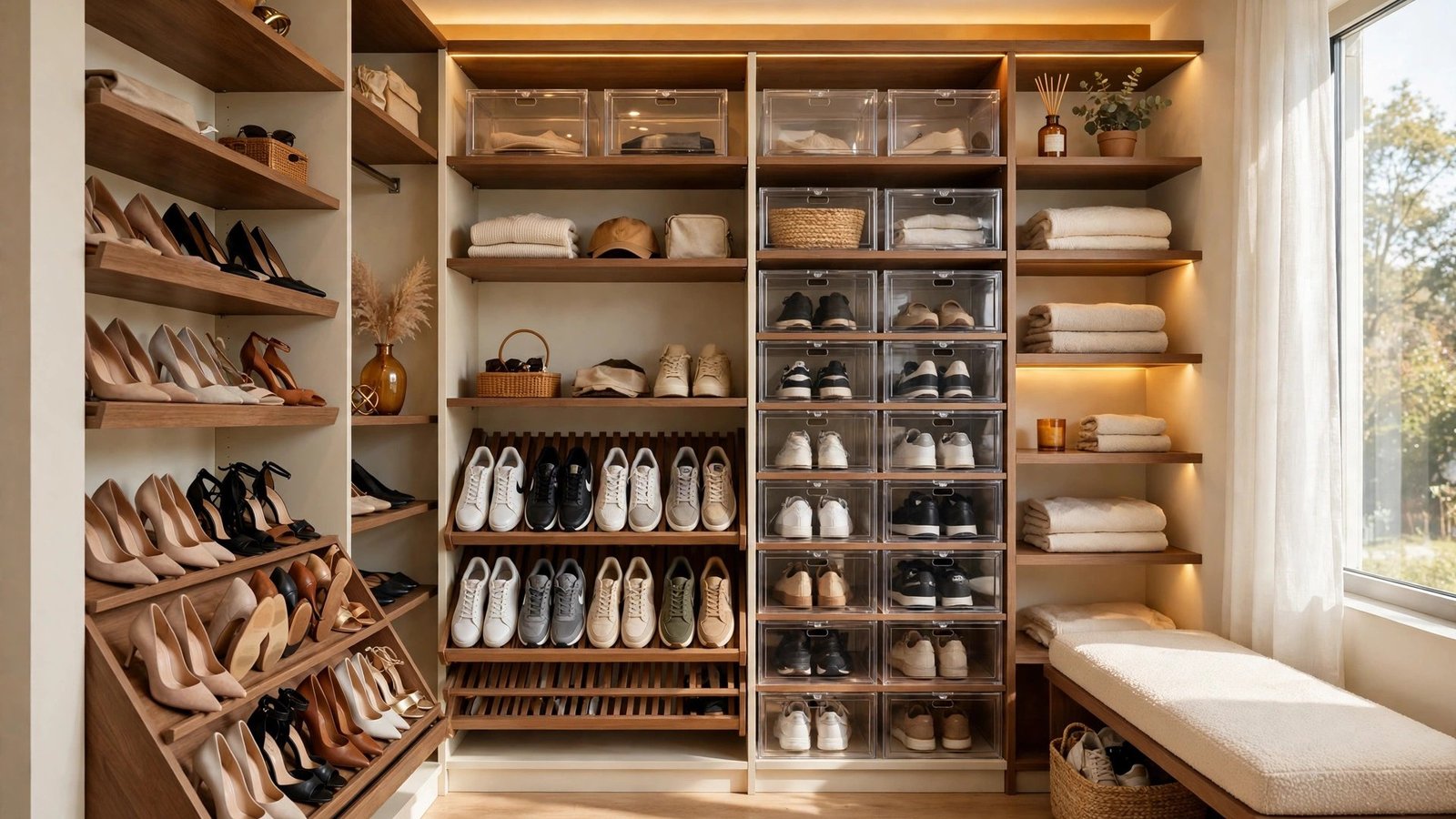
A shoe closet works best when every type of footwear has a zone designed for it. Tall shelves for heels, shallow drawers for flats, racks for sneakers — each style stored the way it likes to rest. The system does not have to be fancy to work beautifully.
These twenty-three ideas will help you organize every type of footwear, from daily sneakers to special-occasion heels. Start by pulling every pair out, then build zones that match what you actually own.
1. Map Your Closet Into Footwear Zones
Before you buy a single organizer, map the closet on paper. Sketch where daily shoes, dress shoes, sneakers, and seasonal pairs will each live. A simple plan stops you from buying storage that does not fit your real collection.
Count your pairs by type so each zone gets the right amount of space. Put the biggest zone where you reach most easily. A ten-minute sketch saves hours of rearranging later, much like planning a wardrobe reset before you start moving clothes.
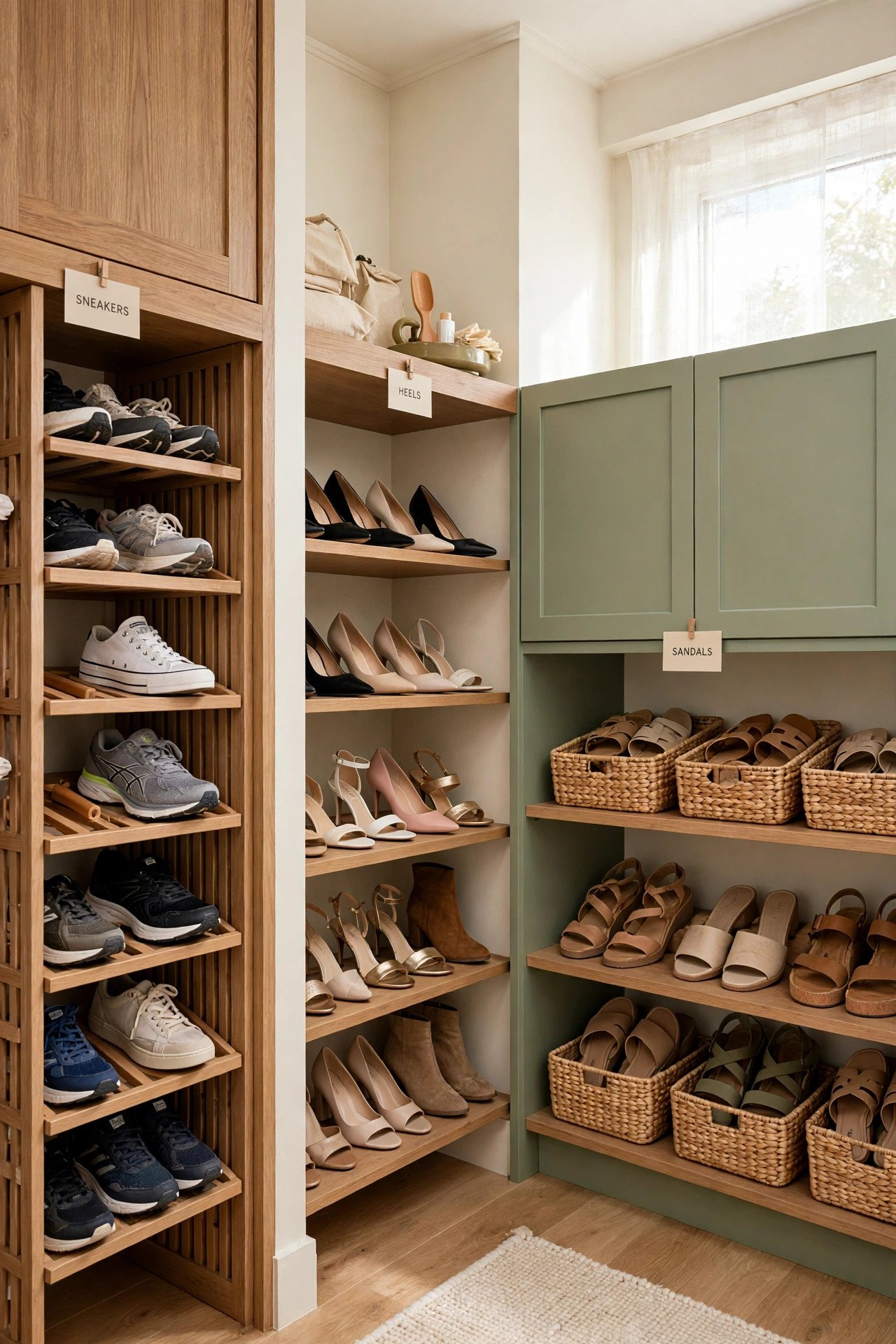
2. Install Adjustable Shelving for Every Heel Height
Heels, wedges, and boots all need different shelf heights, which is why adjustable shelving wins. Move the shelf pins to create tall slots for heeled boots and short slots for flats. Every pair stands comfortably without wasted air above it.
Measure your tallest pair before you set the spacing. Leave one adjustable shelf free so the layout can change with the seasons. Adjustable systems grow with your collection instead of fighting it.
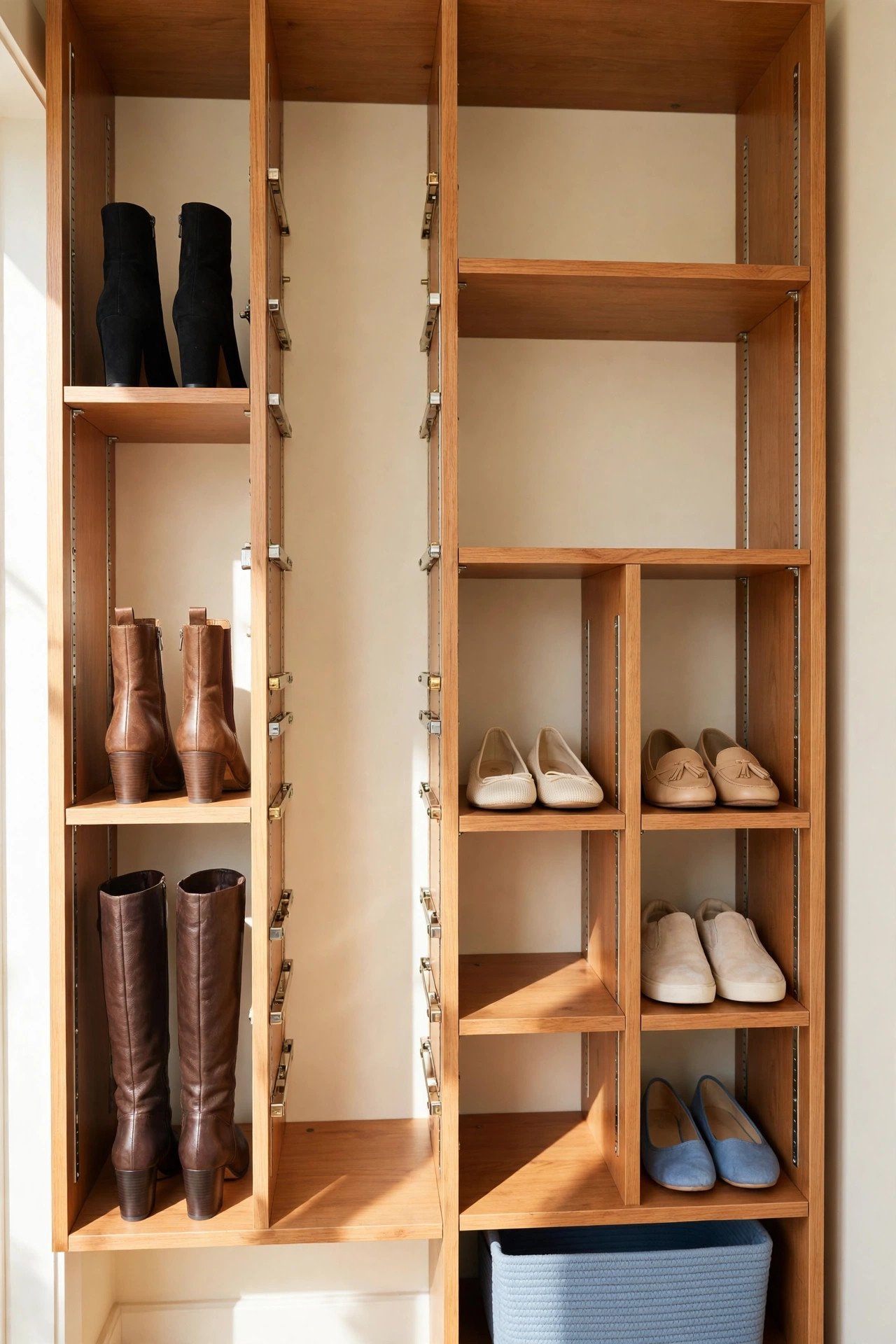
3. Angle Shoes on Slanted Shelves
Slanted shelves display shoes like a store, toe-down and fully visible. You can see every pair at a glance, which means you actually wear the shoes you own. The angle also keeps pairs neatly together.
Add a small lip at the front edge so shoes cannot slide off. Slanted shelves suit heels and dress shoes best, since their shape rests naturally on the slope. Reserve flat shelves for sneakers and boots that need a level surface.
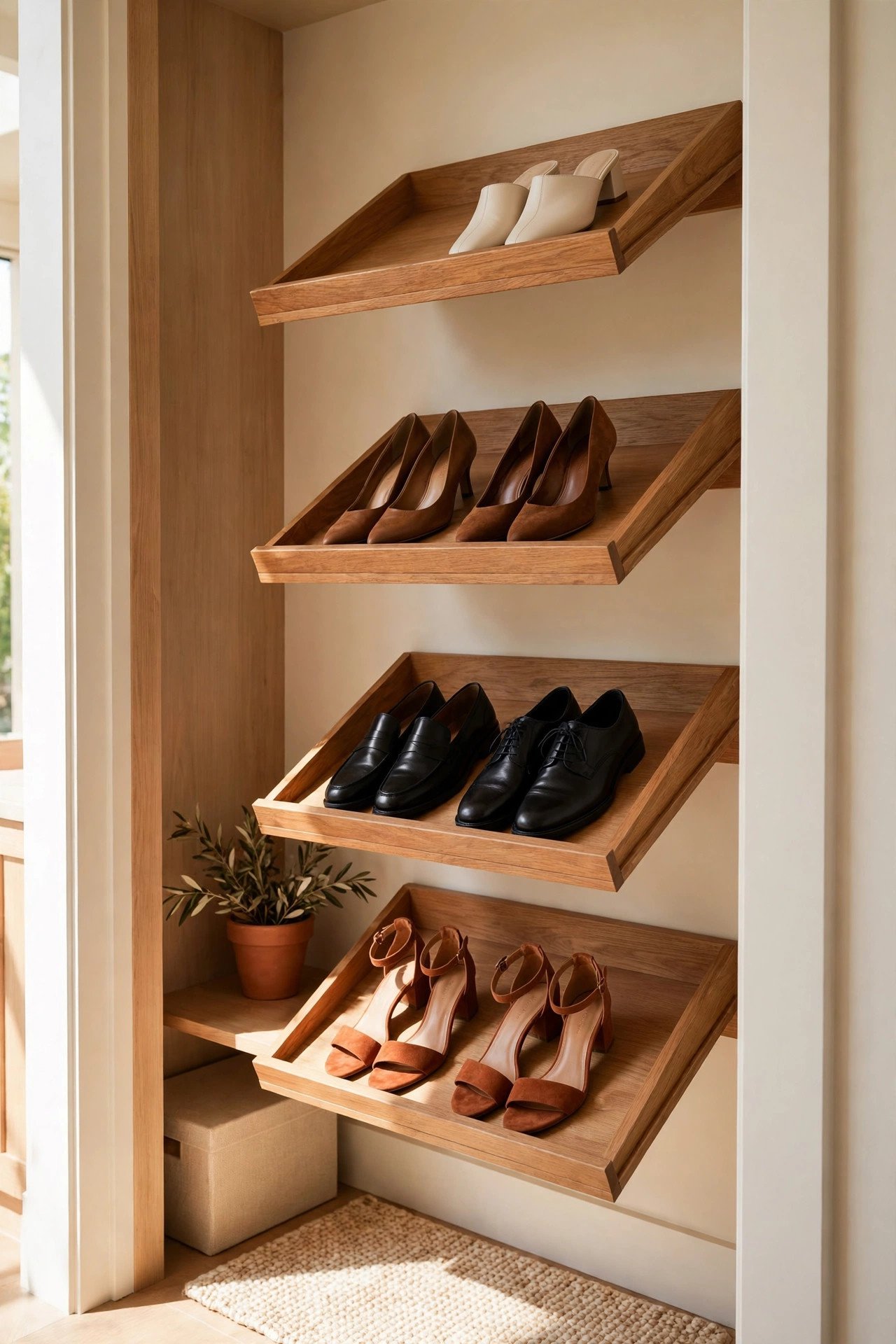
4. Store Pairs in Clear Drop-Front Boxes
Clear drop-front boxes protect shoes from dust while keeping them visible. The front panel flips down so you can grab a pair without unstacking anything. They stack neatly into towers that use the full closet height.
Choose boxes sized for your largest shoes so every pair fits comfortably. Ventilated boxes prevent odor in closed stacks. One box per pair also makes the seasonal rotation simple — just move the whole box.
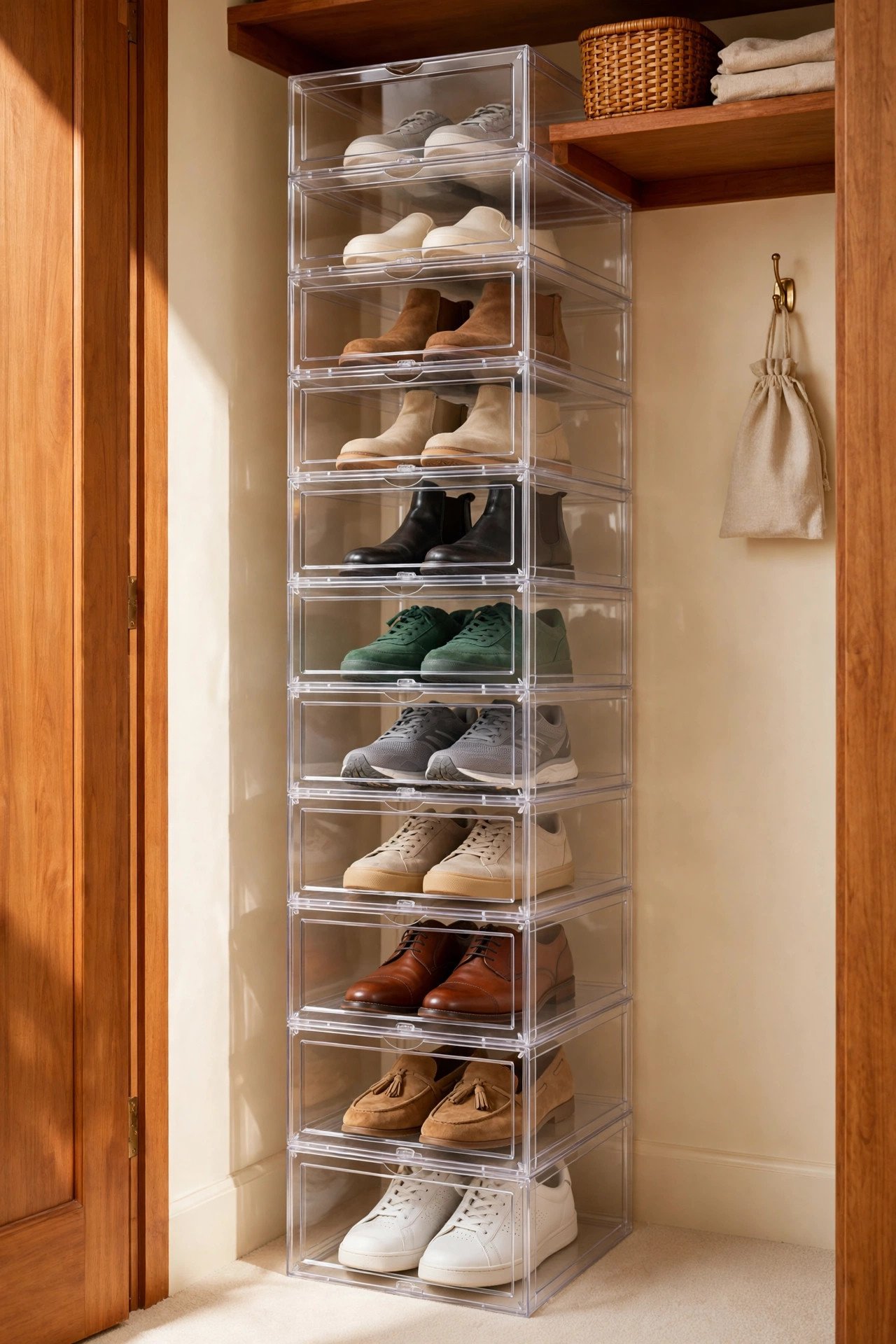
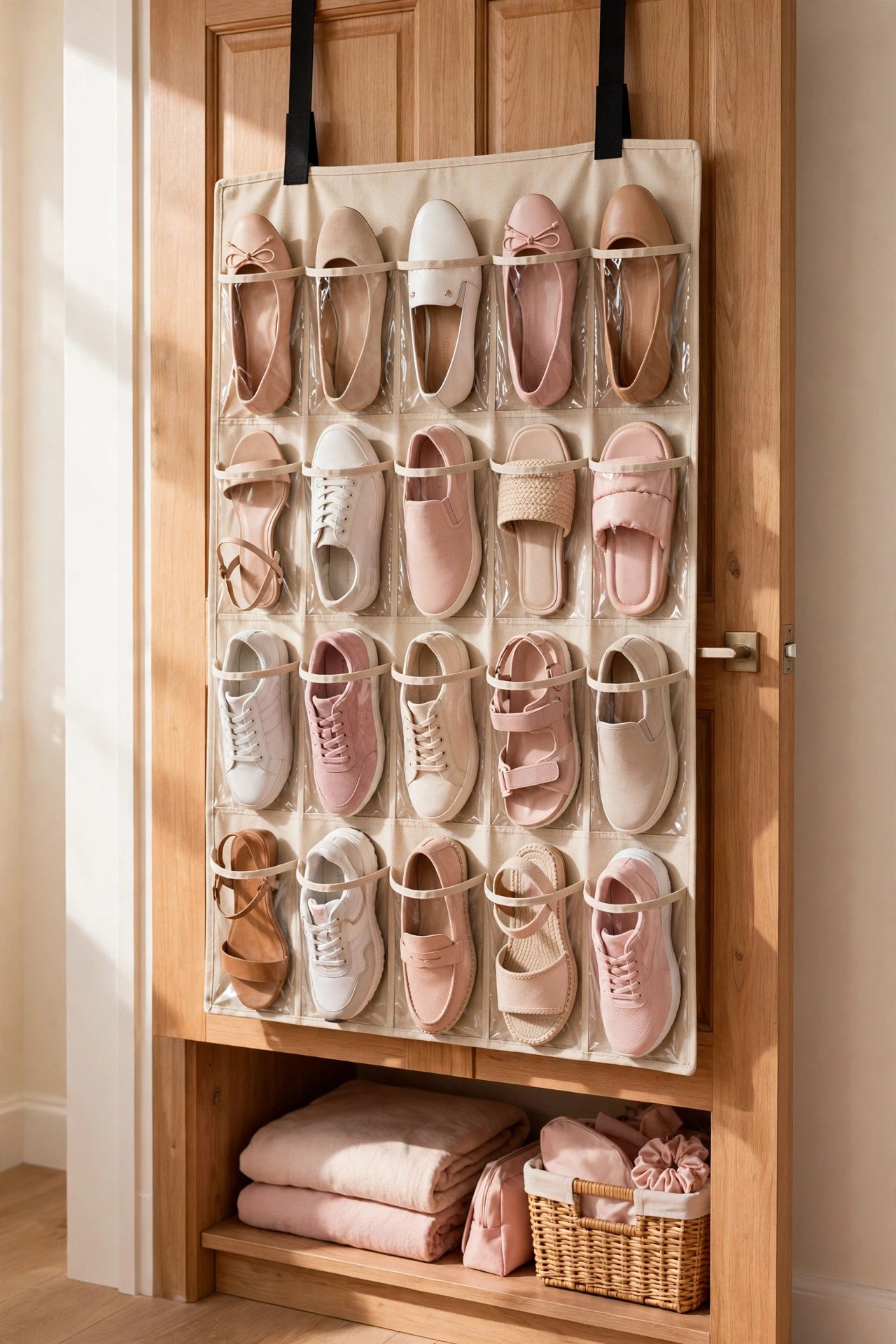
5. Add an Over-the-Door Shoe Organizer
The back of the closet door is free storage waiting to happen. An over-the-door organizer with clear pockets holds flats, sandals, and lightweight sneakers without touching a single shelf. It is perfect for small closets.
Hang it on a sturdy door so the weight does not strain the hinges. Use the top pockets for small sizes and the bottom for larger ones. This spot is ideal for the pairs you grab on busy mornings.
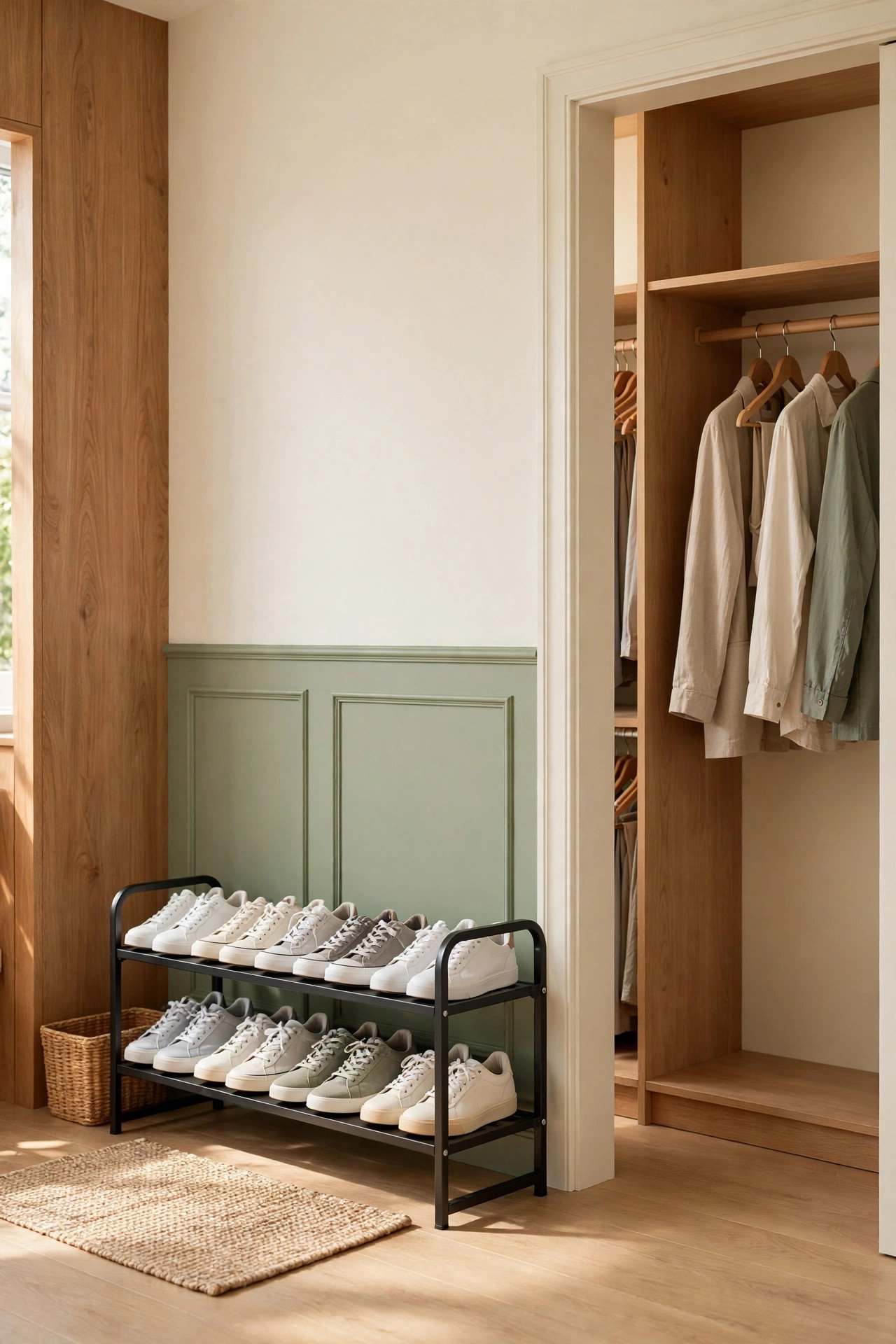
6. Stack Sneakers on a Tiered Rack
Sneakers deserve their own system because most people own several pairs. A tiered rack lines them up in visible rows, two or three levels high. You can compare styles instantly instead of digging through a pile.
Place the rack near the closet entrance since sneakers are usually daily shoes. Expandable racks grow with the collection. Keep laces tucked in so pairs look tidy and do not snag their neighbors.
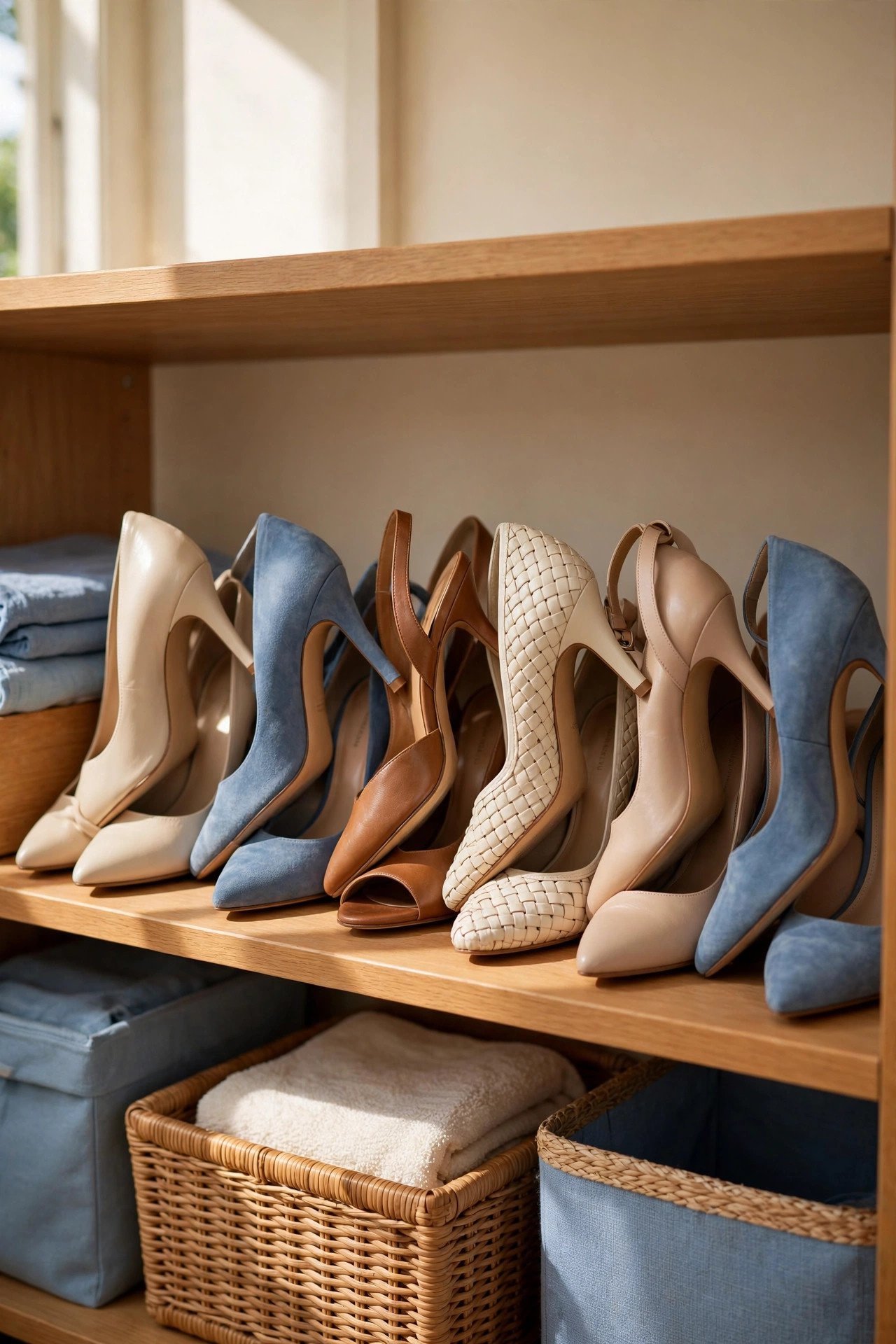
7. Nest Heels Heel-to-Toe to Double Space
Heels take up less room when you nest them heel-to-toe instead of side by side. Turn one shoe around so the pair interlocks, and two pairs fit in the space of one. It is the easiest space-saver in this whole list.
This trick works for wedges and heeled sandals too. Line the nested pairs along the shelf edge so the pretty sides face out. You will be amazed how many more pairs fit on the same shelf.
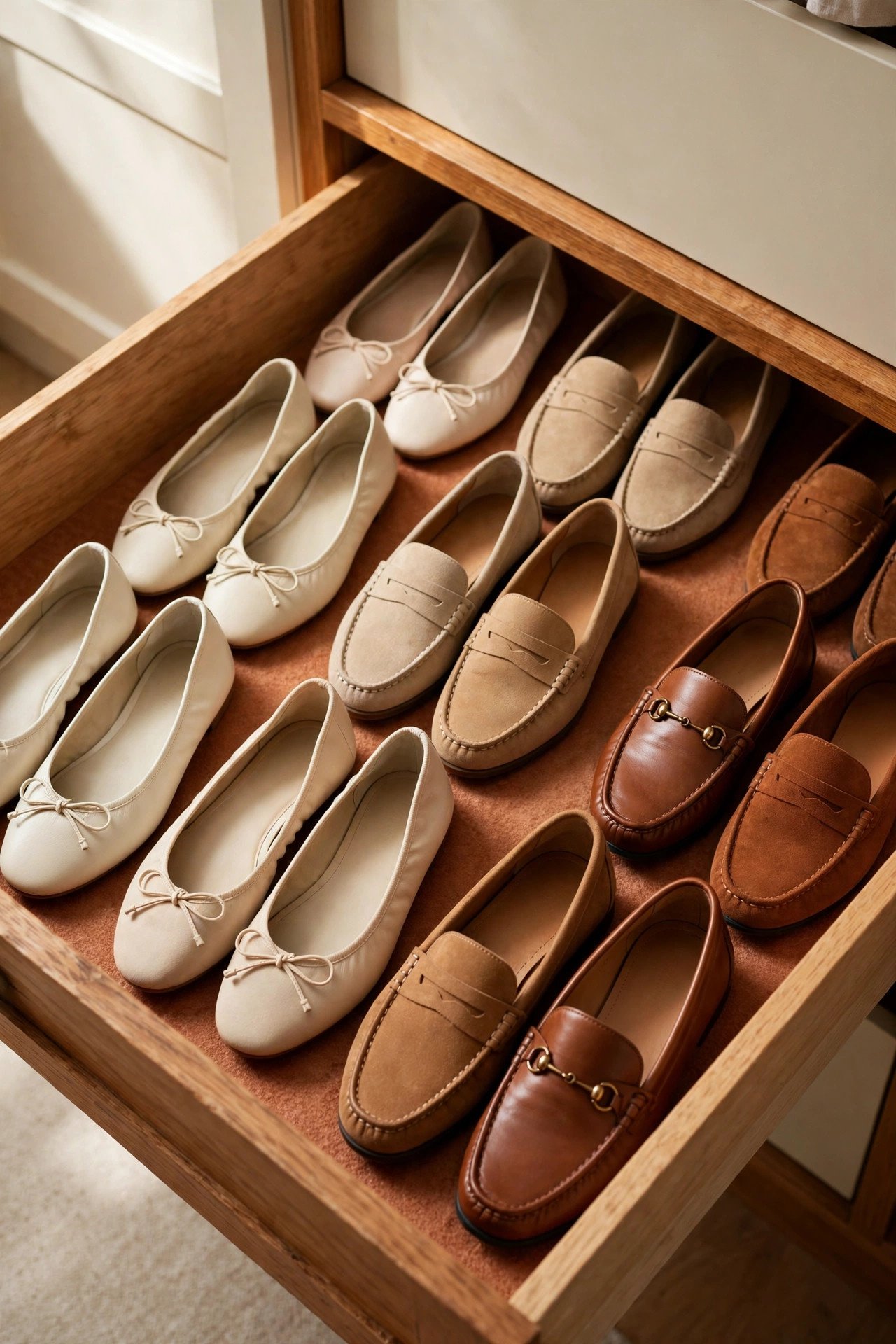
8. Keep Flats in a Shallow Pull-Out Drawer
Flats are slim, so a shallow pull-out drawer is their perfect home. Lay the pairs in neat rows and slide the drawer open to browse the whole collection. Nothing stacks, nothing hides, nothing gets crushed.
Divide the drawer into sections by color or occasion. A soft liner protects delicate finishes from scuffs. This drawer method also suits ballet flats, loafers, and other low-profile shoes.
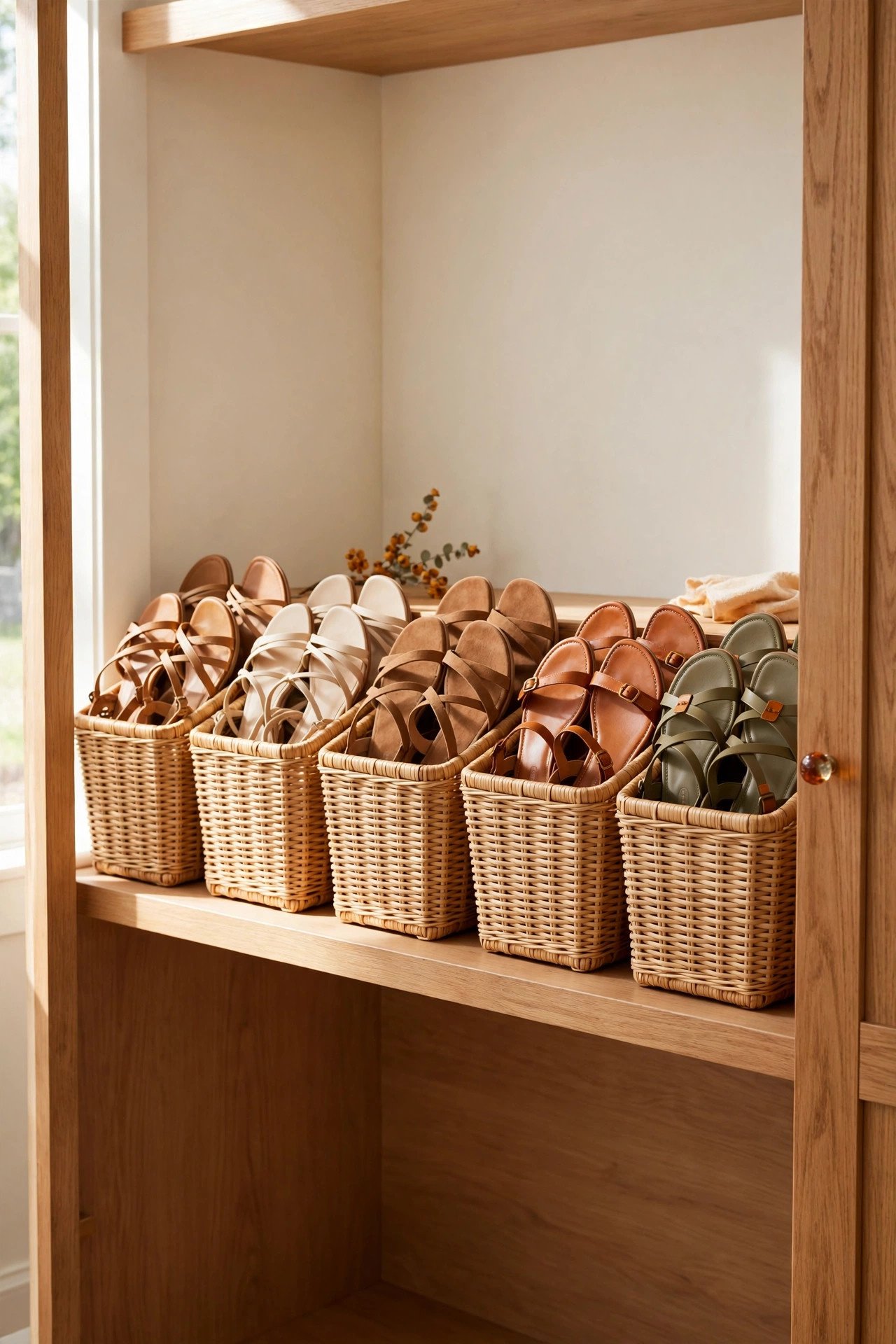
9. Corral Sandals in Slim Baskets
Sandals and strappy shoes tangle easily on open shelves. Slim baskets keep each pair contained while letting air circulate. One basket per person or per style keeps the group tidy.
Choose baskets that fit your shelf depth so they slide in cleanly. Woven baskets add texture, while wire ones show contents at a glance. Fill each basket fully so the sandals stay upright instead of flopping.
10. Shape Tall Footwear With Boot Shapers
Tall boots flop over without support, creasing the shaft permanently. Boot shapers or simple inserts hold the shafts upright so boots stand tall on the shelf. Your boots keep their shape for years.
Use cedar shapers to absorb moisture and odor at the same time. Adjustable shapers fit both slim and wide shafts. This one habit protects the most expensive shoes in many closets.

11. Hang Flip-Flops on a Tension Rod
Flip-flops and slides are flat, light, and endlessly annoying to stack. A tension rod mounted low in the closet turns them into hanging storage. Clip each pair over the rod by its strap and they line up in a tidy row.
No drilling needed, since tension rods grip the walls on their own. This trick also works for lightweight slippers. It frees a whole shelf for shoes that actually need one.

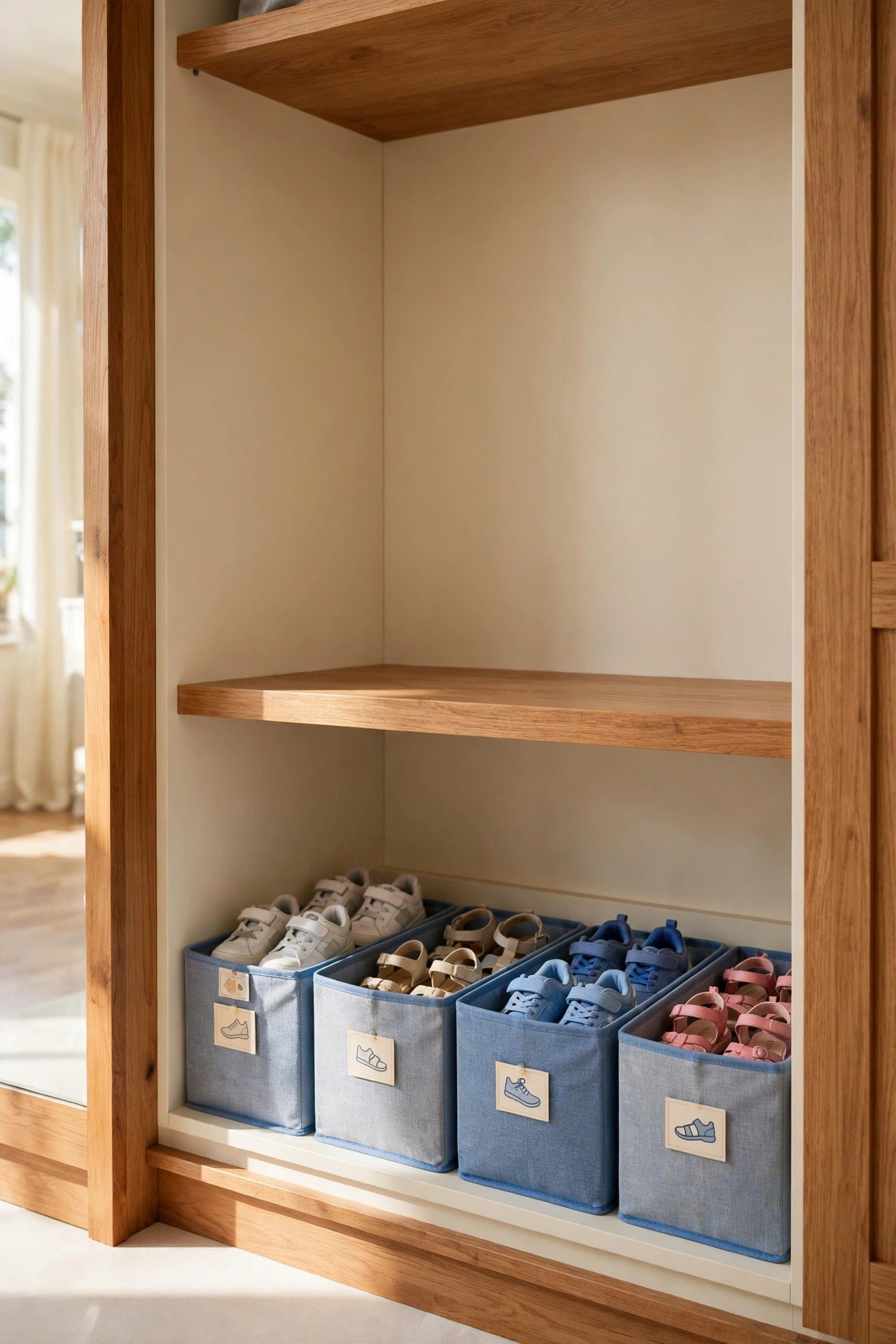
12. Create a Low Kids’ Shoe Zone
Kids cannot maintain a system they cannot reach. Give children’s shoes a low shelf or a floor-level bin they can manage on their own. A picture label helps little ones who cannot read yet.
Keep only the current season’s pairs in the kids’ zone and store the rest elsewhere. A low open bin is more realistic than fussy compartments for busy mornings. When kids can reach their shoes, they actually put them away.
13. Rotate Seasonal Footwear Out of the Closet
Winter boots do not need prime closet space in July. Pack off-season footwear into labeled bins and move them to a high shelf or another closet. The in-season collection gets breathing room.
Clean each pair before it goes into storage so it comes out ready to wear. A seasonal swap is a natural time to check for worn soles and damage. Your everyday closet stays focused on the shoes you actually need now.
14. Label Every Box and Bin
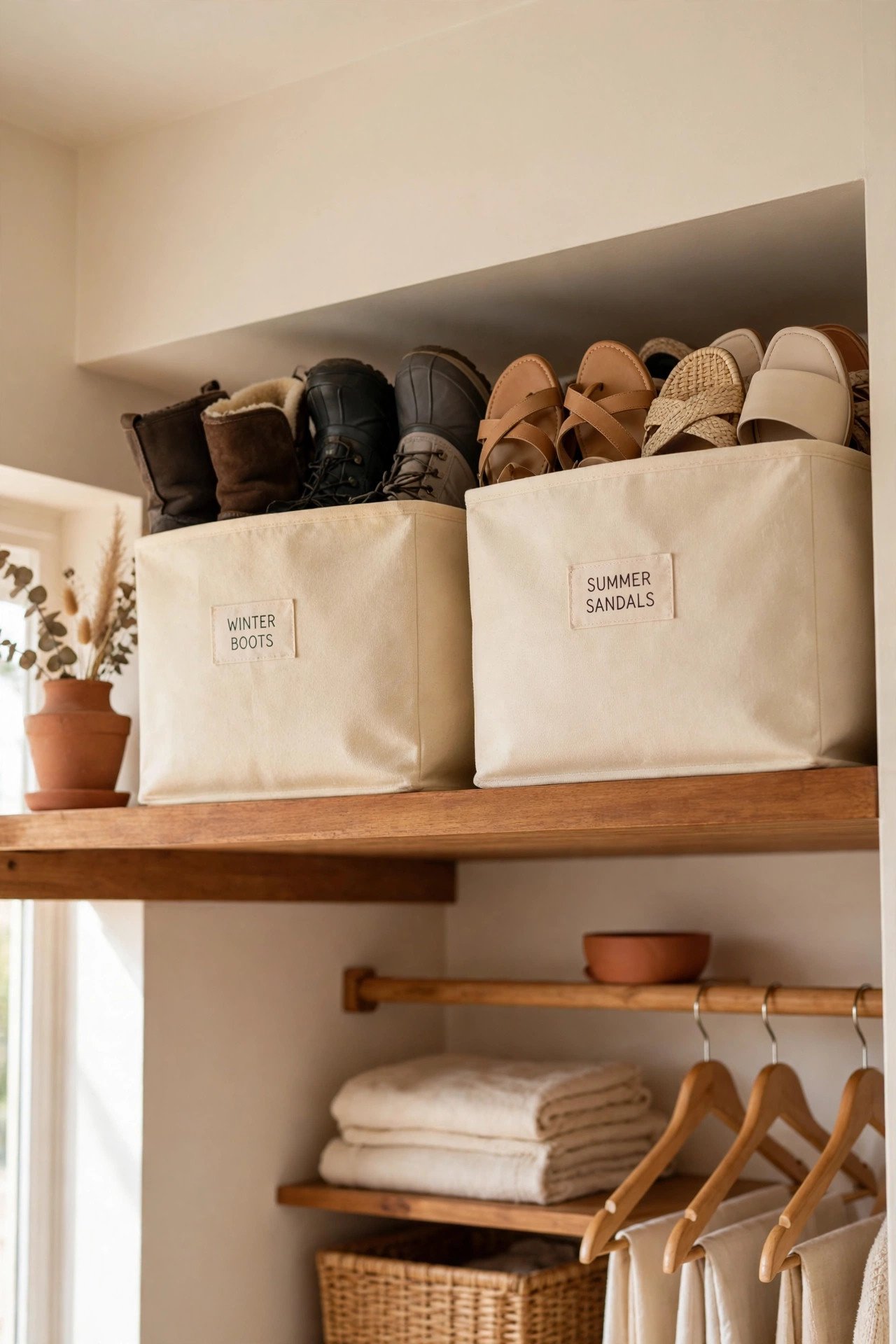
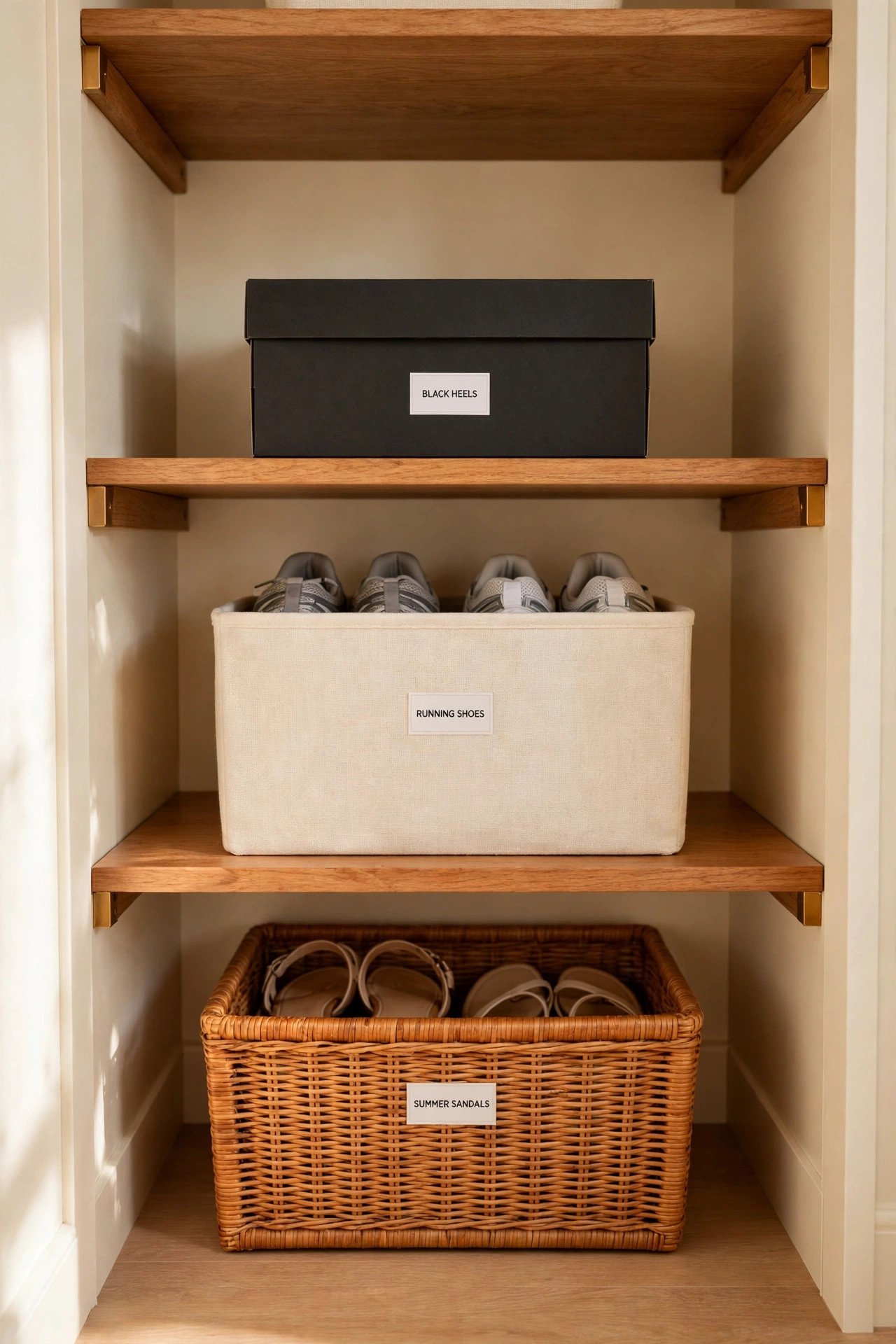
Labels turn anonymous boxes into a searchable system. A small printed label — “Black Heels,” “Running Shoes,” “Summer Sandals” — tells you exactly what is inside without opening anything. The whole family can find and return shoes correctly.
Use a label maker for a clean, uniform look across the closet. Place labels at eye level on the front of every container. When a label no longer matches its contents, it is time for a quick re-sort.
15. Add a Shoe Bench With Hidden Storage
A bench at the closet entrance gives you a seat for putting shoes on and hidden storage underneath. Lift the lid or pull the drawers to reach extra pairs. It turns dead floor space into something useful.
Choose a bench with ventilation so stored shoes stay fresh. The top surface can hold the pair you plan to wear tomorrow. This piece works especially well in walk-in closets and dressing areas.

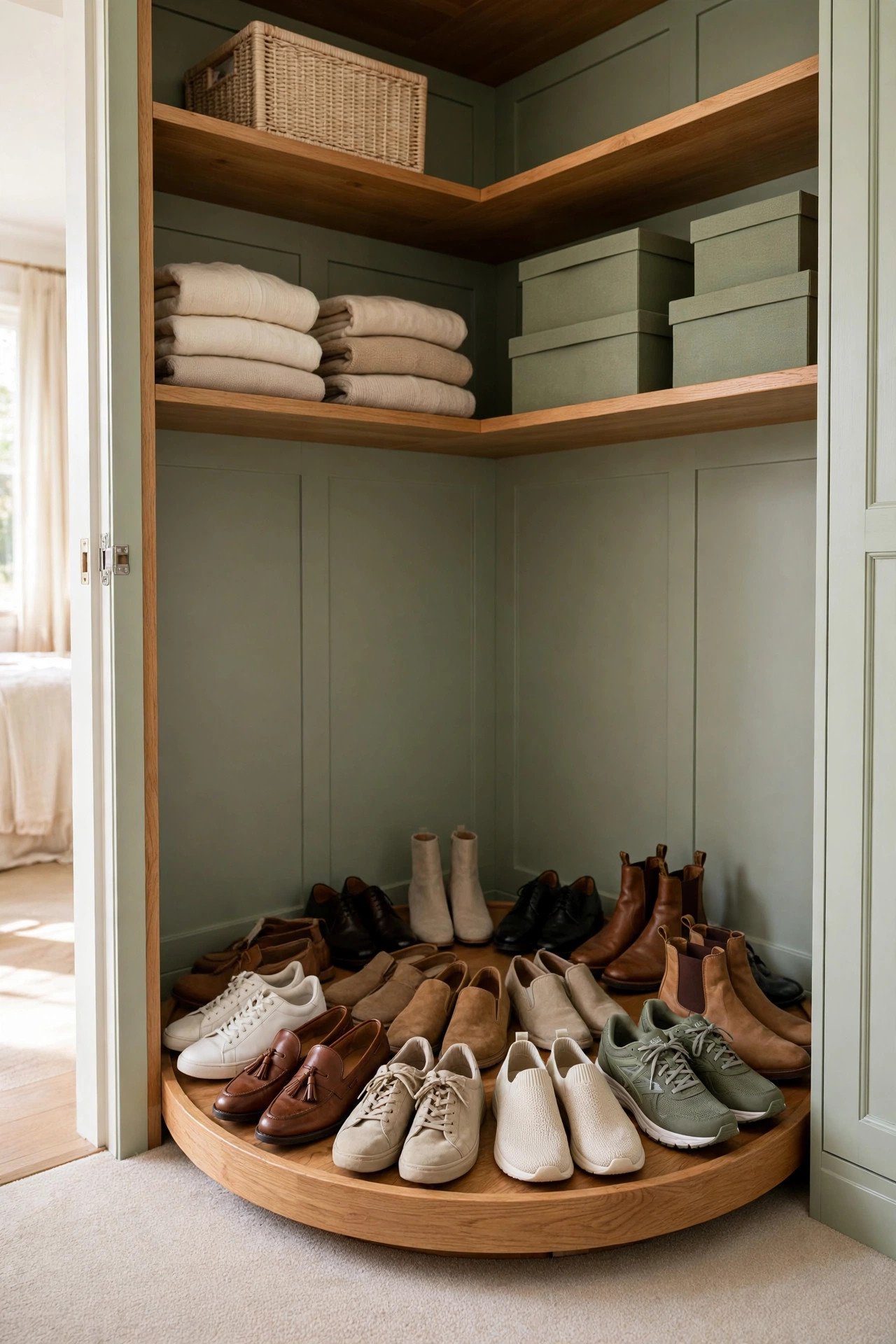
16. Spin a Lazy Susan in Corner Closets
Deep closet corners swallow shoes whole. A large lazy Susan in the corner brings every pair to you with a simple spin. No more kneeling to reach the back row.
Choose a turntable with a raised edge so shoes do not slide off while spinning. This trick rescues the most awkward spot in any closet. Group the turntable pairs by type so each spin shows a useful selection.
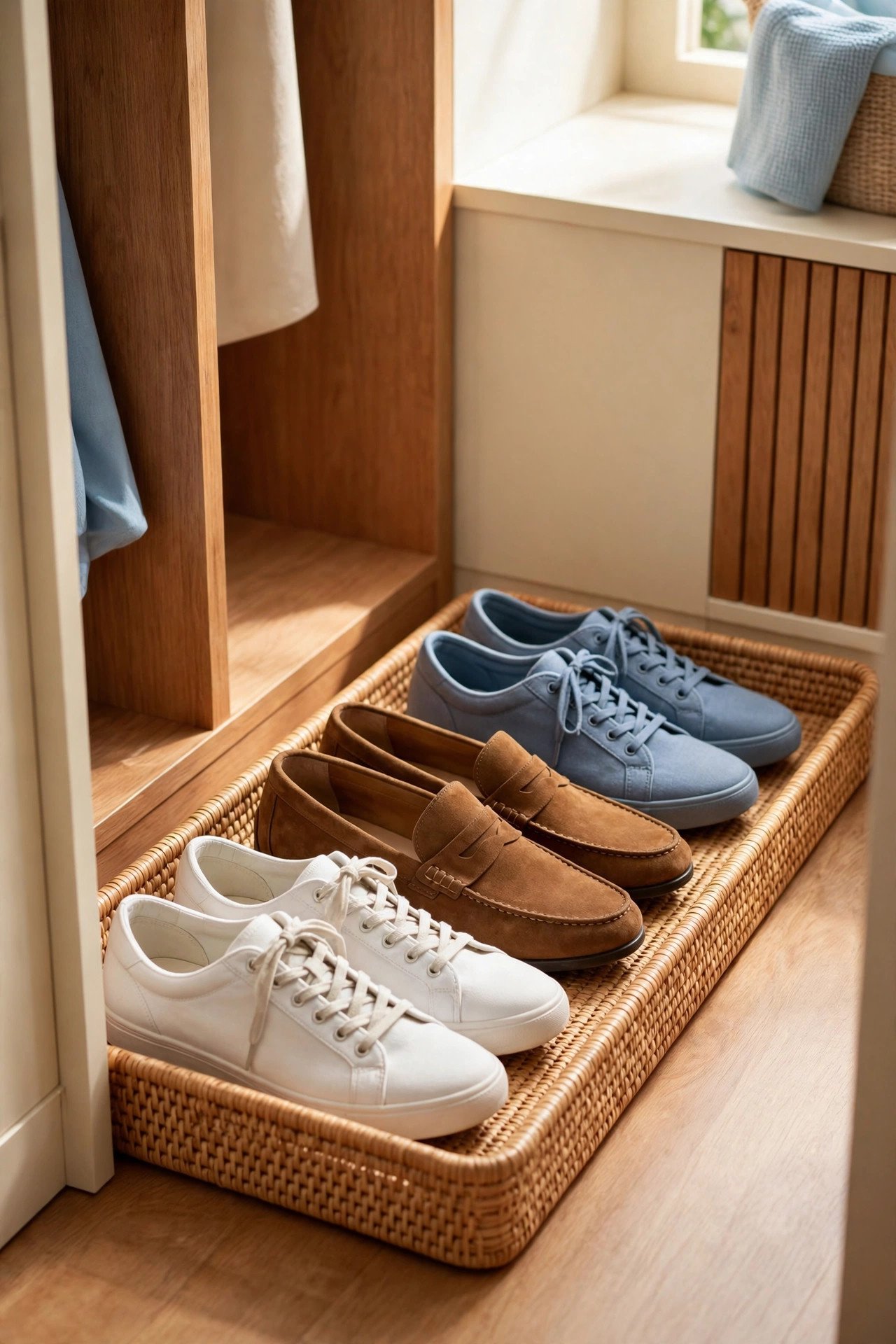
17. Line Everyday Pairs on the Closet Floor
The pairs you wear daily do not need fancy storage. A neat row on the closet floor, each pair together and facing the same way, is honest and practical. You step in, step out, and go.
Limit the floor row to three or four current pairs so it never becomes a pile. A low tray under the row protects the floor and defines the boundary. Rotate the lineup as your weekly choices change.
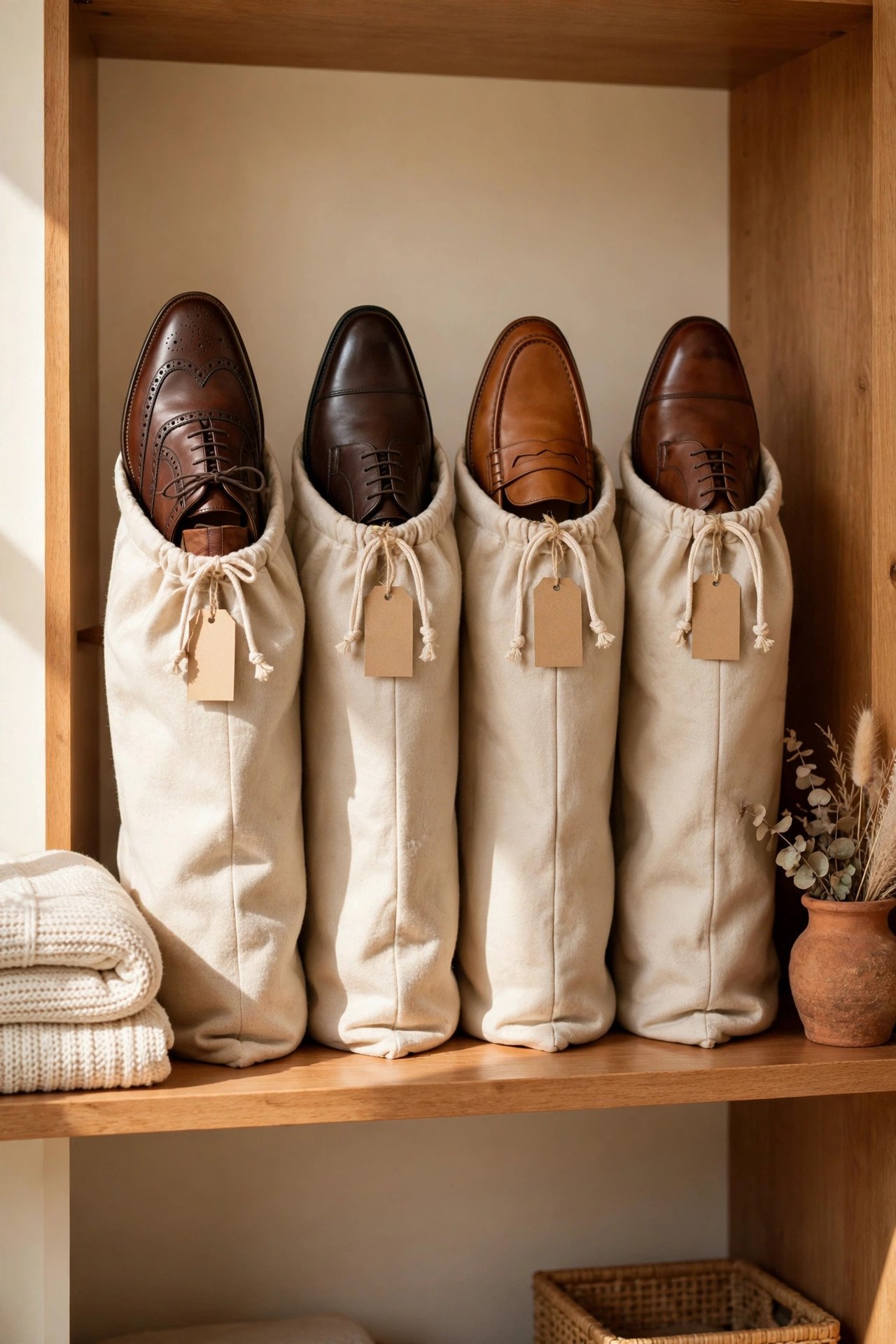
18. Protect Dress Shoes in Individual Bags
Good dress shoes deserve individual protection. Soft flannel bags keep each pair dust-free and stop buckles and heels from scratching their neighbors. The bags breathe, so leather stays healthy.
Store the bagged pairs upright on a shelf, never stacked under weight. A small tag on each bag identifies the pair inside. This care keeps expensive shoes looking new for years.
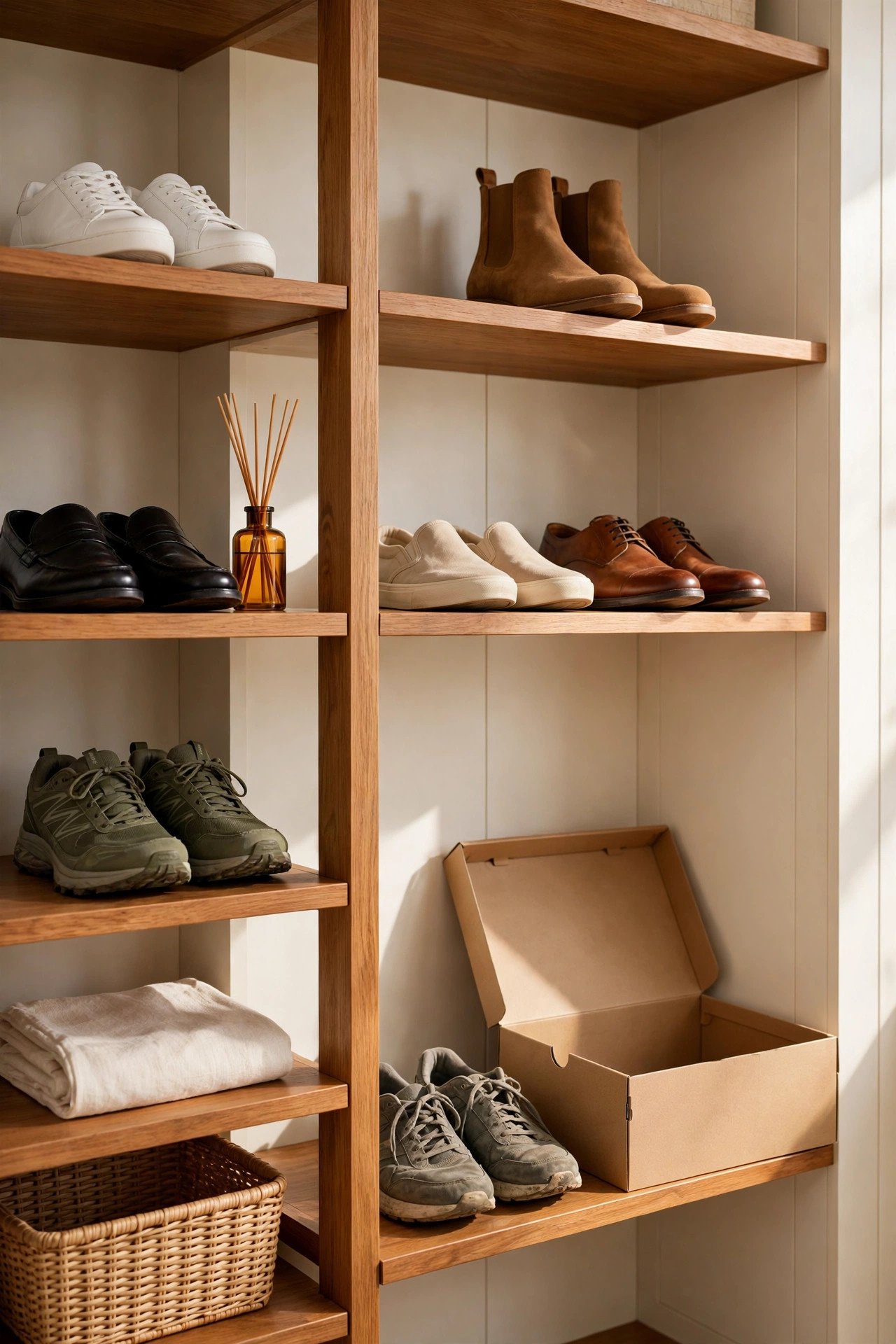
19. Follow a One-In-One-Out Rule
The simplest way to keep a shoe closet organized is to limit how many pairs it holds. When a new pair comes in, an old pair goes out — donated, recycled, or retired. The closet never outgrows its system.
Apply the rule strictly for a month and it becomes second nature. Fewer pairs mean better care for the ones you keep. Your closet stays at a size your storage can actually handle.
20. Light Dark Closets With Motion-Sensor Lights
You cannot organize what you cannot see. Battery motion-sensor lights stick under shelves and switch on when the door opens. Every pair becomes visible, even in the darkest corners.
Place one light per shelf level for even coverage. The motion sensor means you never fumble for a switch with full hands. Good lighting also makes colors accurate, so you grab the right shade of shoe.
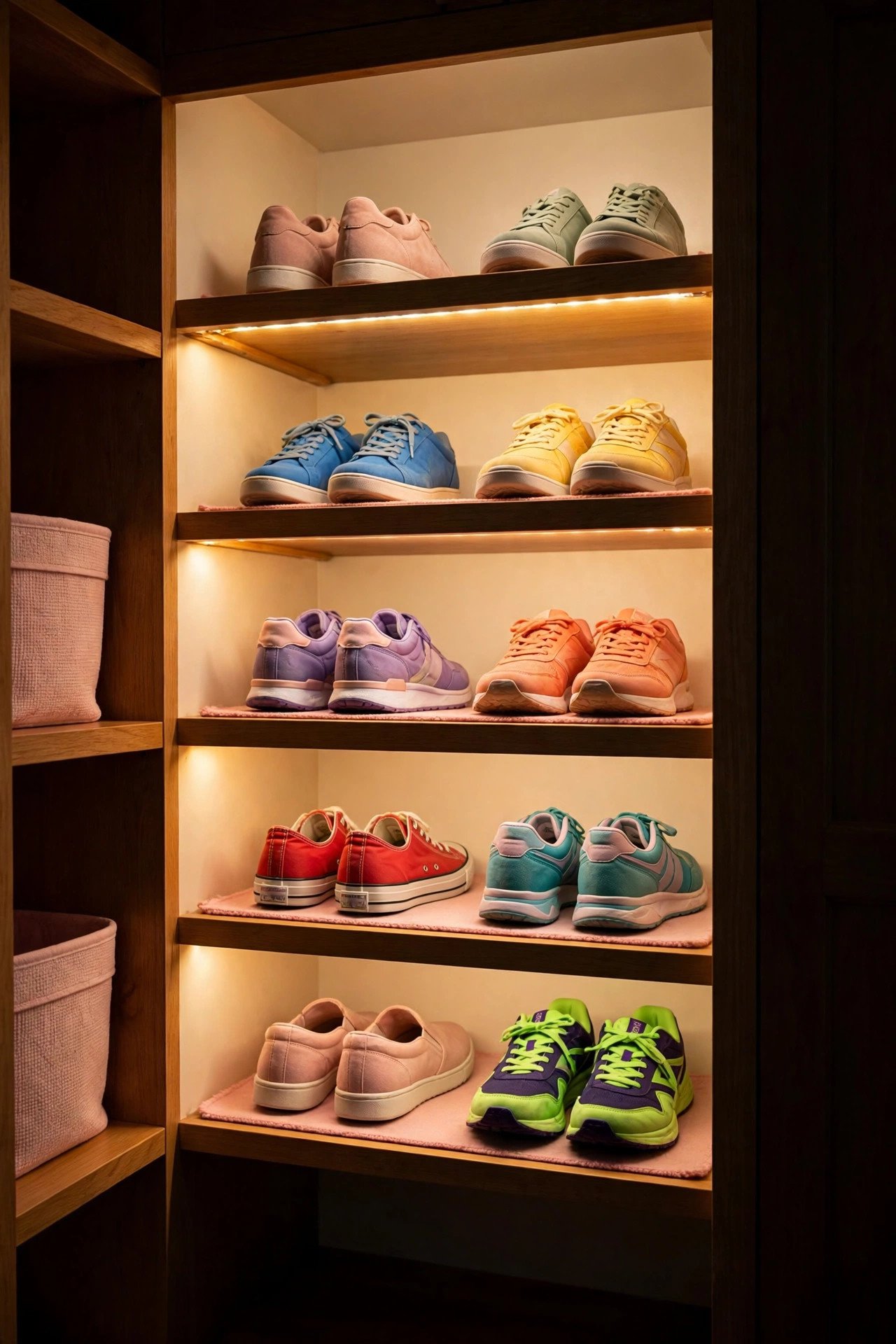
21. Build Up With a Tall Shoe Tower
When floor space runs out, build upward. A tall, narrow shoe tower fits in a closet corner and holds twenty or more pairs in a tiny footprint. Each level stays visible and reachable.
Anchor the tower to the wall so it cannot tip. Put heavy boots on the bottom levels for stability and light flats up top. A tower like this can double a small closet’s shoe capacity.
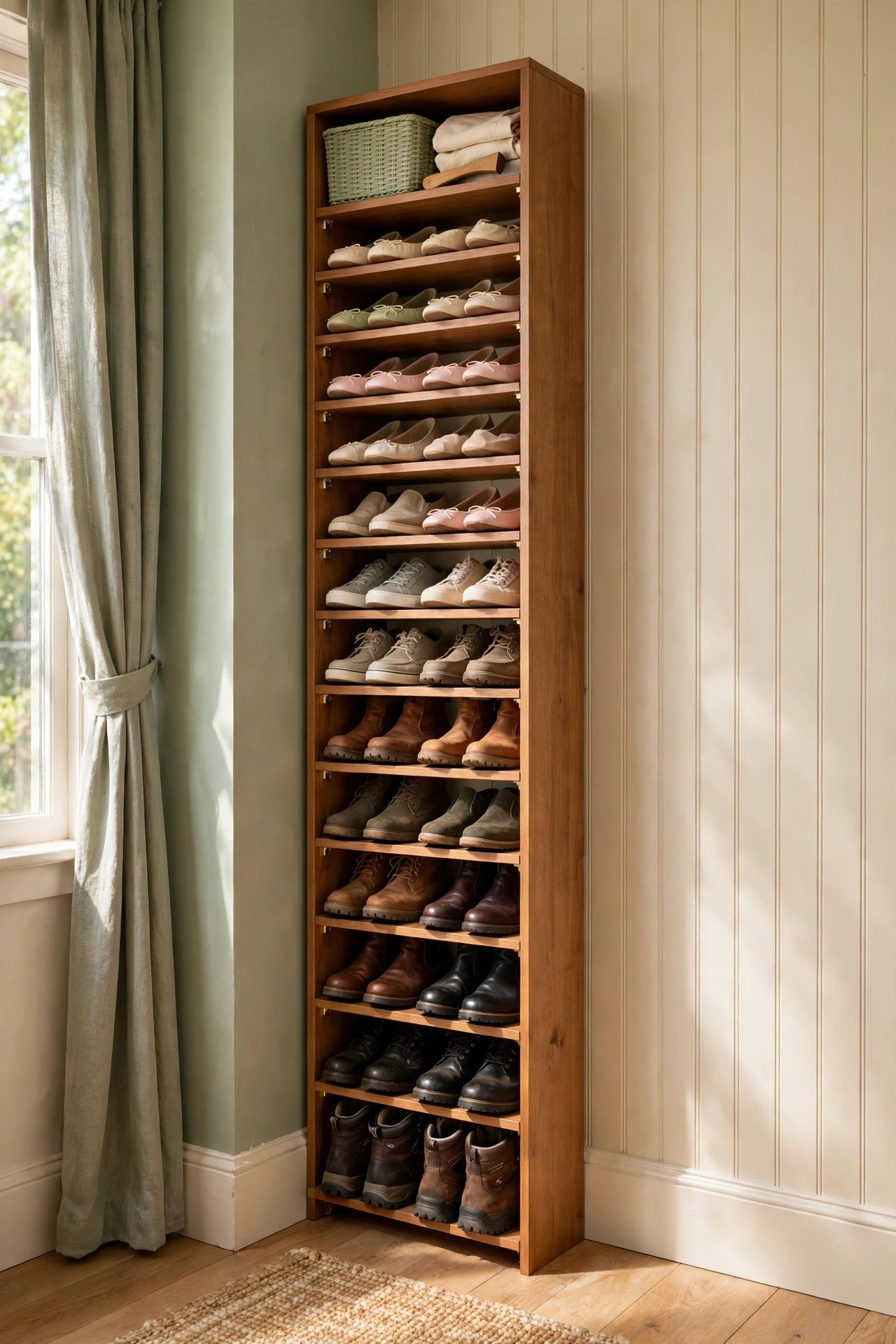
22. Park Workout Shoes Near the Door
Workout shoes live a different life from the rest of your collection. Keep them near the door — in a mudroom entryway cubby or a ventilated bin — so muddy soles never reach the bedroom closet. You grab them on the way out and drop them on the way in.
Choose a bin with airflow to keep gym shoes fresh between workouts. A small mat underneath catches dirt and sweat. Separating active shoes also keeps the main closet cleaner and calmer.
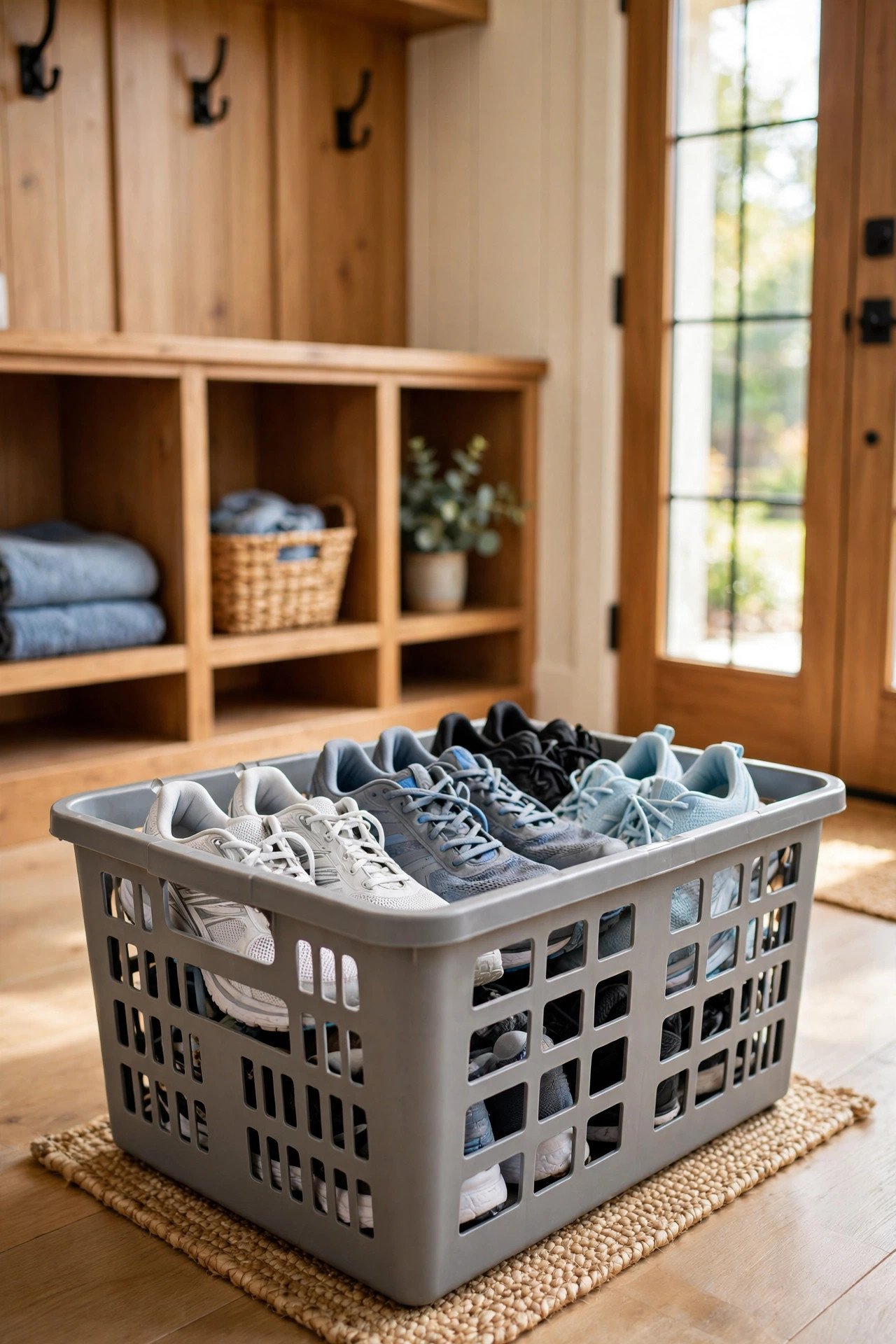
23. Clean Shoes Before They Go Back
The habit that protects every other idea on this list is simple: clean shoes before they return to the closet. A quick wipe removes the dirt that would otherwise spread to shelves and neighboring pairs. Clean shoes also last noticeably longer.
Keep a small cleaning kit — brush, cloth, and wipes — right in the closet so the habit is easy. Check soles for wear while you wipe. A closet full of clean shoes stays organized almost by itself.
Conclusion
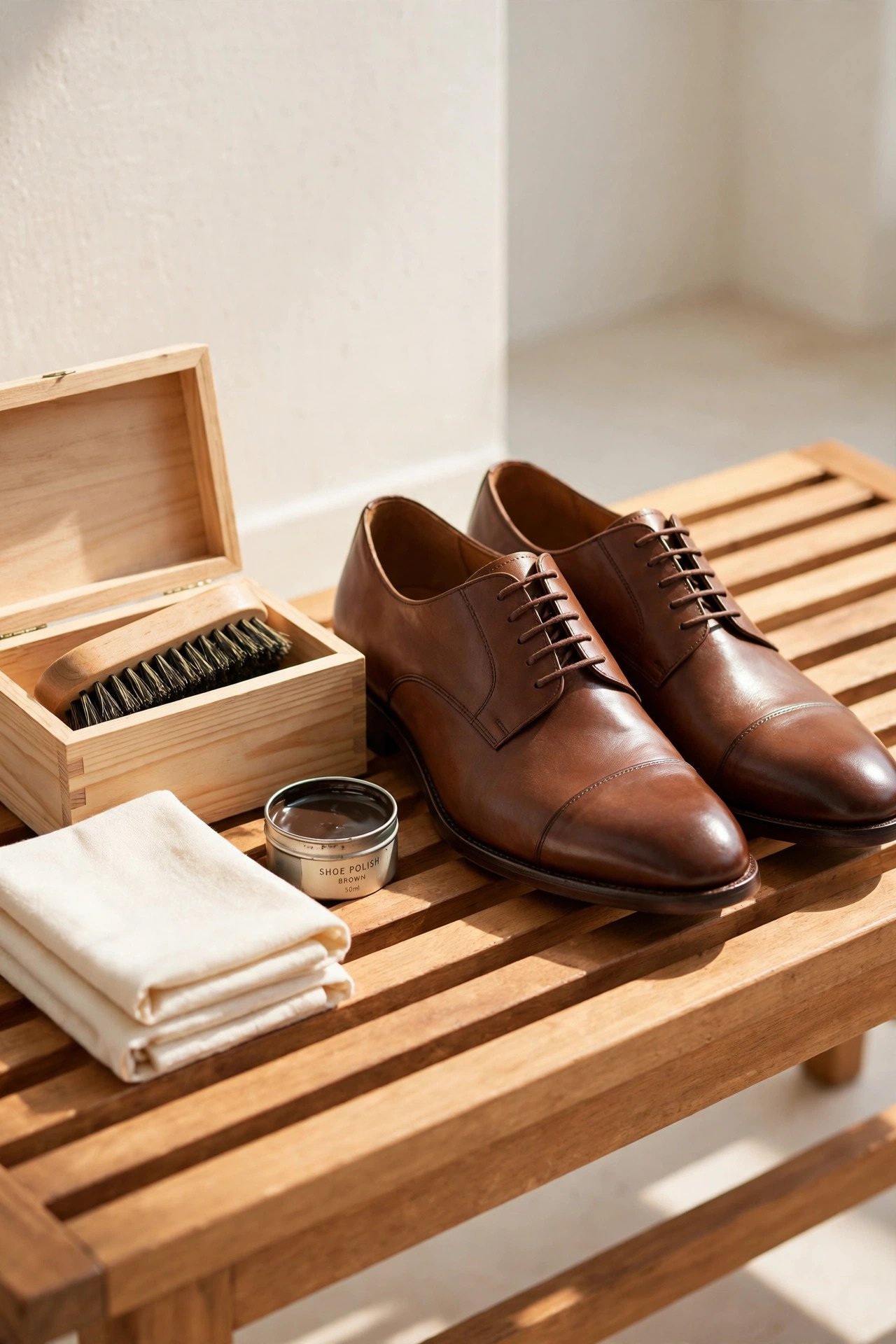
A well-organized shoe closet is not about owning fewer shoes. It is about giving every type of footwear the right kind of home — shelves at the right height, boxes that protect, and zones that match how you live. When each pair has a place, the morning scramble disappears.
Start with a full pull-out and sort, then build your zones one idea at a time. Your shoes will stay in better shape, and you will finally wear the pairs that used to hide in the pile.
Frequently Asked Questions
How do I organize a small shoe closet?
Start by mapping zones for each footwear type, then use vertical space with stackable clear boxes or a tall narrow tower. An over-the-door organizer adds storage without touching a shelf. Keep only in-season pairs in the closet and store the rest in labeled bins elsewhere.
What is the best way to store high heels in a closet?
Adjustable or slanted shelves work best for heels because you can set the height to match. Nesting pairs heel-to-toe doubles the space each shelf holds. Store special-occasion heels in individual bags so buckles and finishes stay protected.
How do I keep shoes from smelling in a closed closet?
Airflow is the key. Use ventilated boxes or open shelving rather than sealed plastic, and keep workout shoes in a separate ventilated bin near the door. Cedar inserts absorb odor naturally. Cleaning shoes before they go back also stops smells at the source.
Should I keep shoe boxes or use clear organizers?
Clear drop-front boxes are usually better because you can see every pair without opening anything. Original boxes stack well but hide contents, which leads to forgotten shoes. If you keep original boxes, add a photo label to the front of each one.
How many pairs of shoes should I keep in my closet?
Keep only what your storage can hold comfortably and what you actually wear. A one-in-one-out rule maintains that balance automatically. Most people do well with daily pairs in easy reach, dress shoes on shelves, and off-season pairs stored separately.

Hi, I’m Emily! I turn messy corners into cozy, organized spots. DreamNestDecor is where I share simple, practical home ideas — decor, organization, and small-space solutions that work in real life, not just in photos. Every idea here is carefully researched before it’s shared.