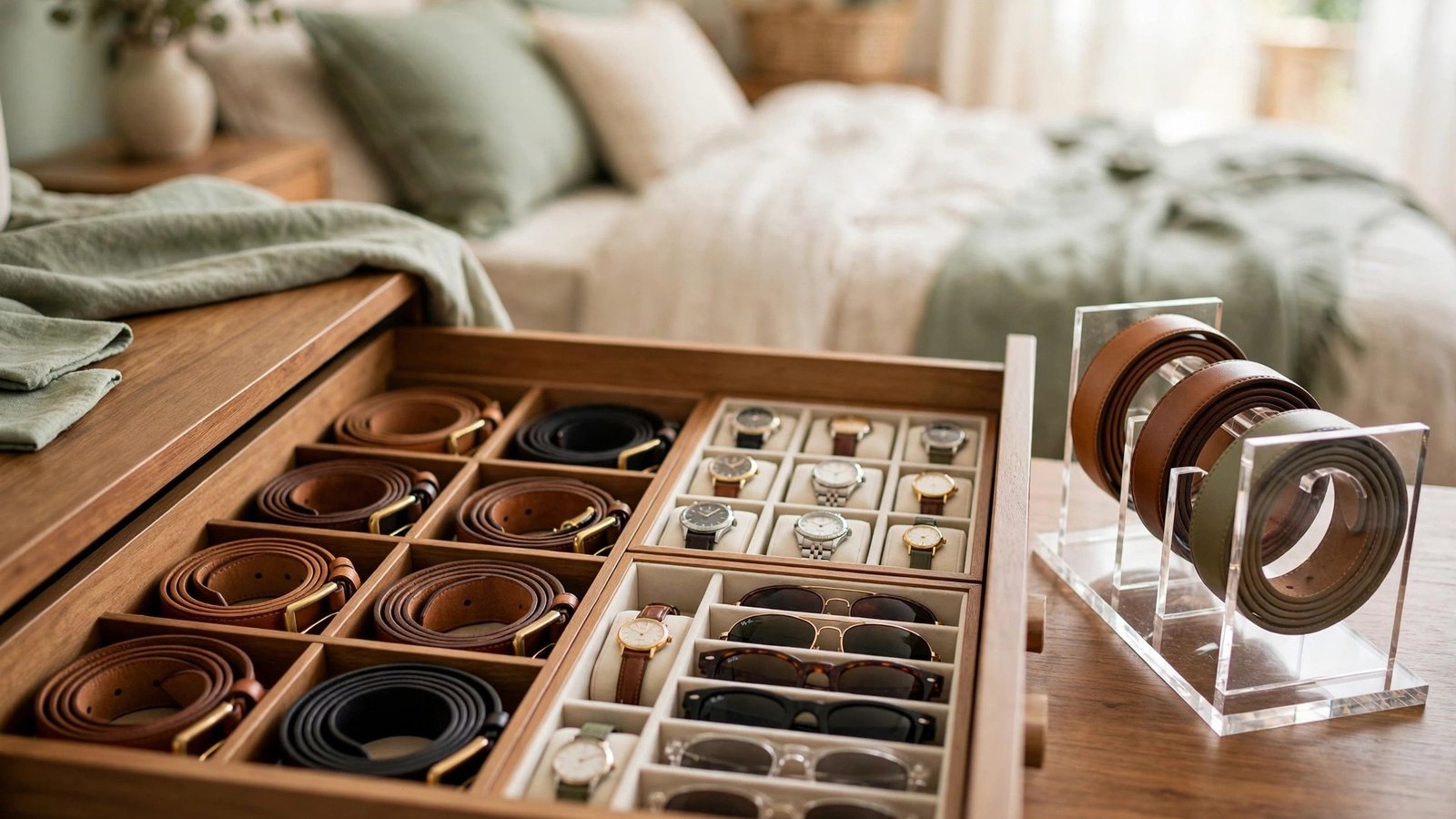
Belts have a talent for turning into a tangled mess. They coil around each other, buckles snag on everything, and the one belt you actually want is always at the bottom. Add watches, scarves, and sunglasses to the same drawer and the chaos doubles.
The good news is that belts and small accessories are some of the easiest things to organize. A few hooks, dividers, or bins give every item a visible home. You will stop untangling and start grabbing.
These fifteen ideas cover both drawer setups and smart hanging solutions. Mix and match them to fit your closet, your dresser, and the size of your collection.
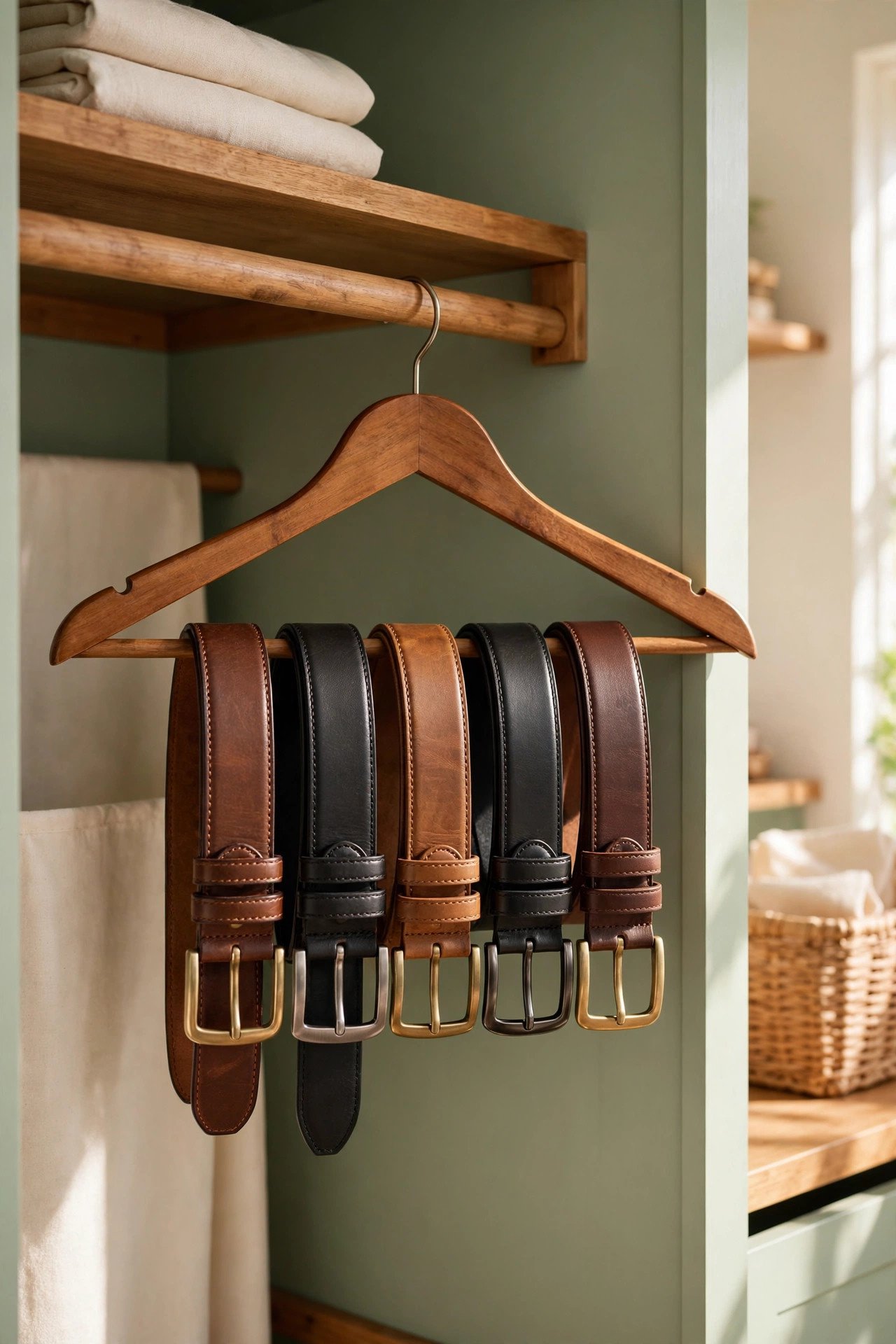
1. Hang Belts on a Dedicated Closet Hanger
Sometimes the simplest solution wins. Loop each belt over a sturdy wooden hanger and buckle it closed so it cannot slide off. All your belts hang in one visible row, and you can scan the whole collection in seconds.
Use one hanger for everyday belts and a second for dressier ones if your collection is large. Hang the hanger at eye level so buckles are easy to compare. This method costs nothing and works in even the smallest closet.
2. Divide the Drawer With Adjustable Dividers
Adjustable dividers turn a wide dresser drawer into custom slots for each belt. Coil every belt into a neat roll and give it its own compartment. Nothing tangles because nothing touches.
The same divider logic works in makeup drawer organization, and it is just as effective here. Spring-loaded dividers adjust to any drawer width without tools. Leave one wider slot for chunky statement belts that need extra room.

3. Display Belts in Acrylic Holders
A clear acrylic belt holder shows off your collection like a small boutique display. The transparent design lets you see every color and buckle style without unrolling anything. It sits neatly on a dresser top or a closet shelf.
Choose a holder with slots sized for your belts, since wide western belts need more room than slim dress belts. Wipe the acrylic with a soft cloth to keep it crystal clear. A display this tidy makes getting dressed feel a little more special.

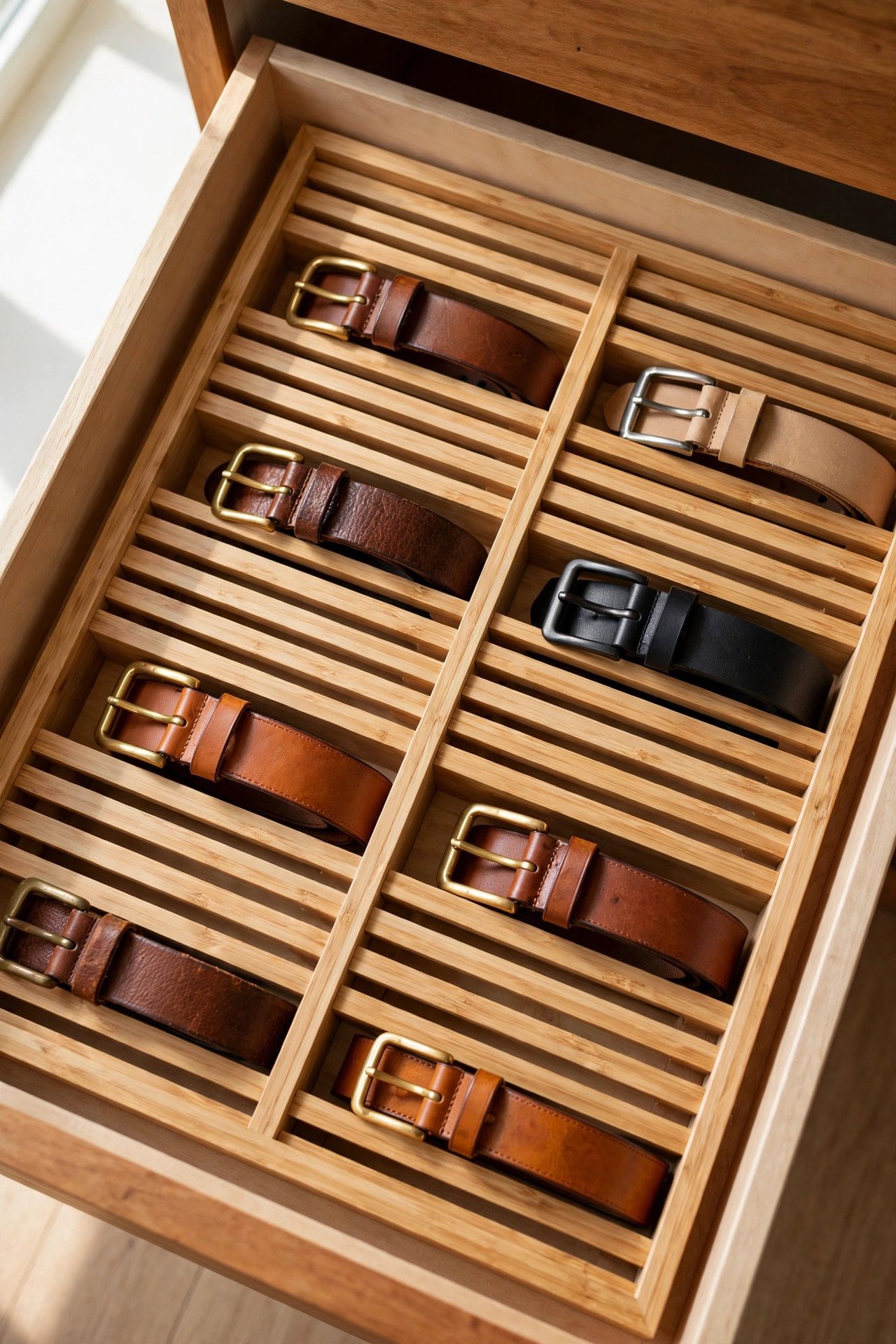
4. Give Every Belt a Drawer Insert Slot
Drawer inserts with long narrow slots are made for belt storage. Each belt lies flat in its own channel, fully visible from above. You will never unroll three belts to find the right one again.
Measure your belts before you buy, since extra-long belts need deeper drawers. Bamboo inserts look warm and natural, while plastic ones wipe clean easily. Pair the insert with a small tray for buckles and accessories to complete the drawer.
5. Sort Accessories in Plastic Storage Trays
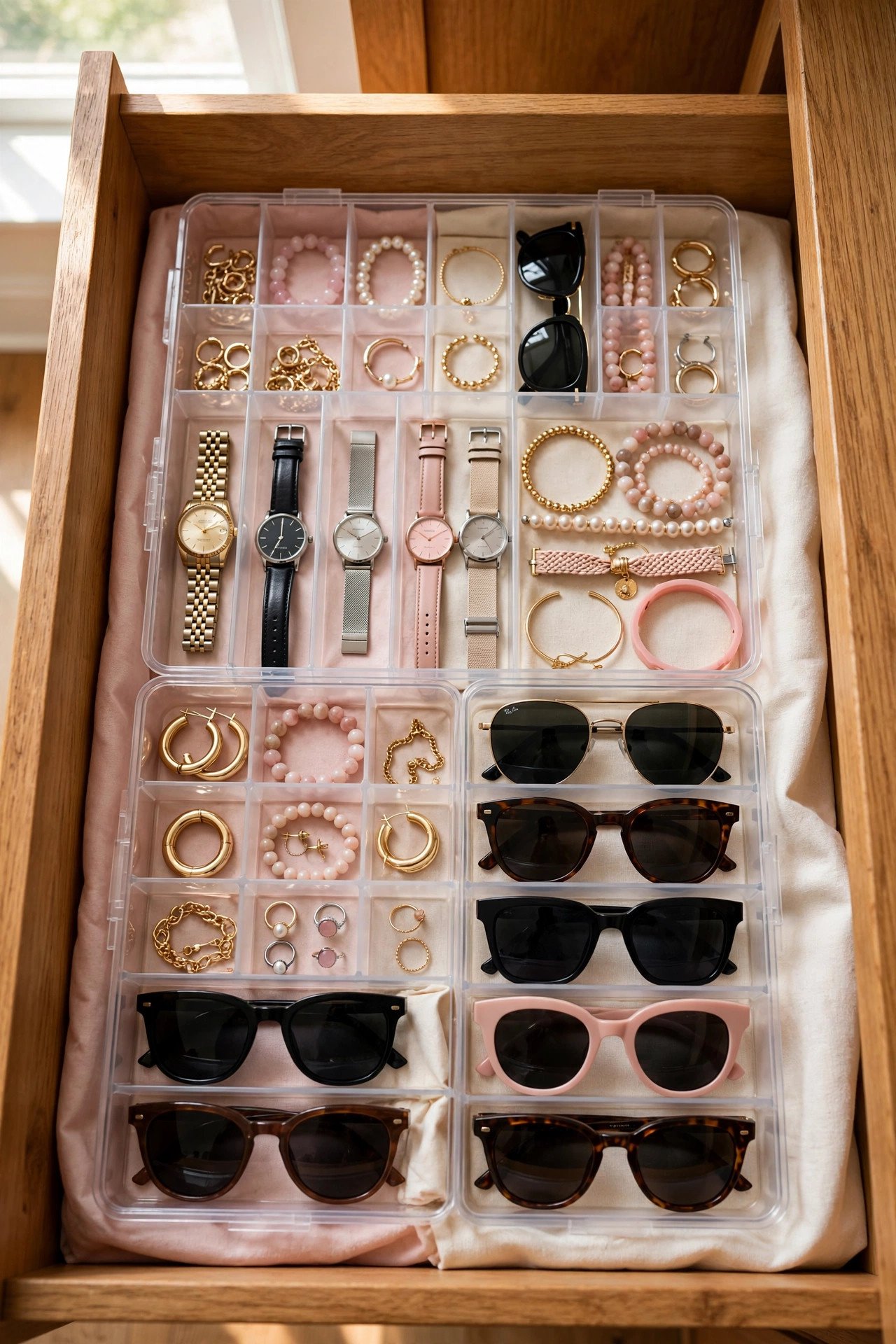
Small accessories — watches, bracelets, sunglasses, tie clips — disappear in a big drawer. Shallow plastic trays with compartments keep each type in its own lane. You can lift a tray out to browse, then set it back in seconds.
This approach mirrors the systems in jewelry organization, where small items need clear boundaries. Stack two trays in a deep drawer to double the usable space. Label the tray edges if several people share the drawer.
6. Corral Big Collections in Deep Drawer Bins
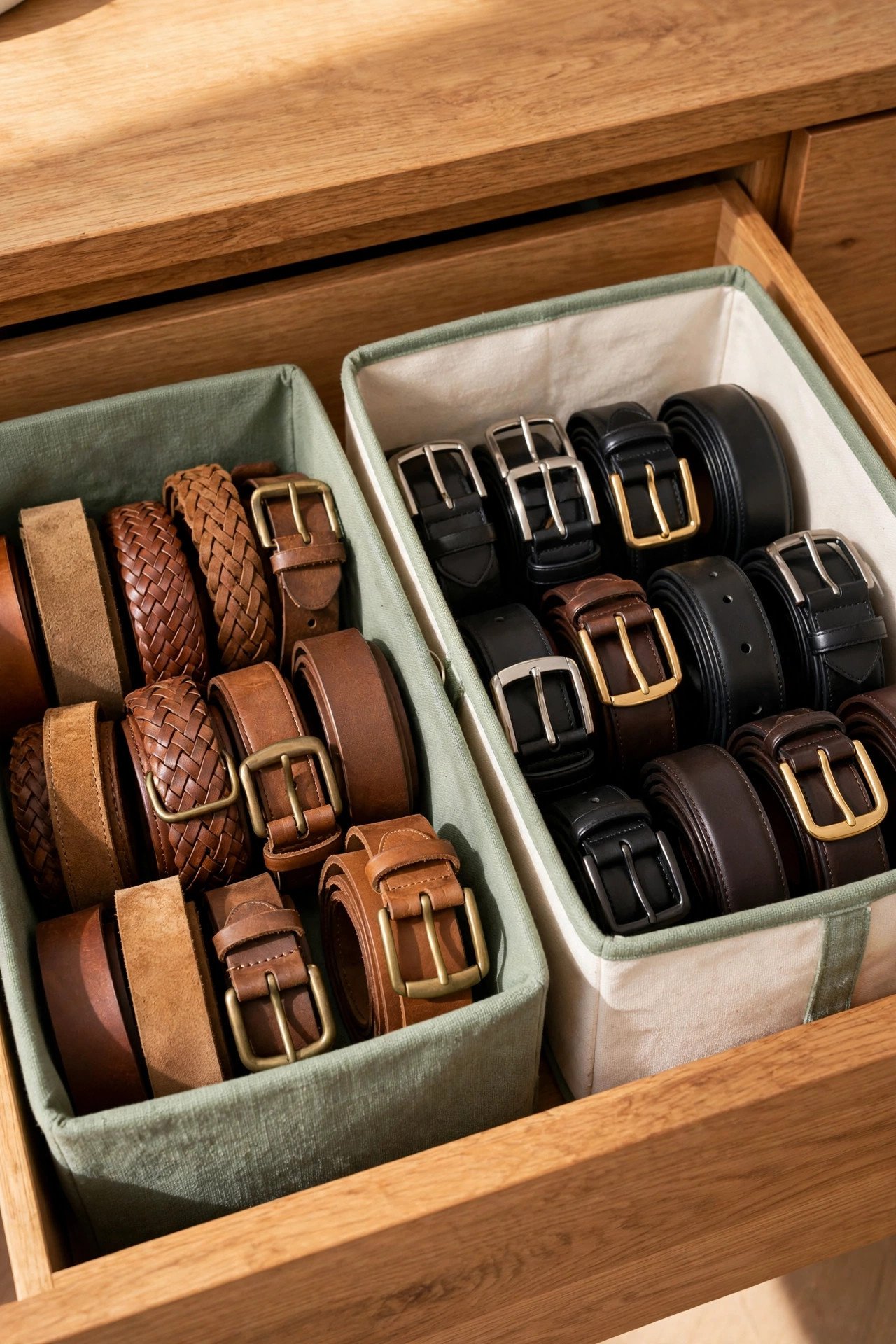
If you own more than a dozen belts, shallow trays will not cut it. Deep drawer bins hold large collections with room to spare. Stand coiled belts upright in the bins so you can see the top edge of every roll.
Use one bin for casual belts and another for formal ones to keep the groups clear. Fabric bins soften the look of an open drawer, while rigid bins stack better. Fill each bin snugly so the rolls stay upright instead of tipping.
7. Build a Custom Wall Belt Rack
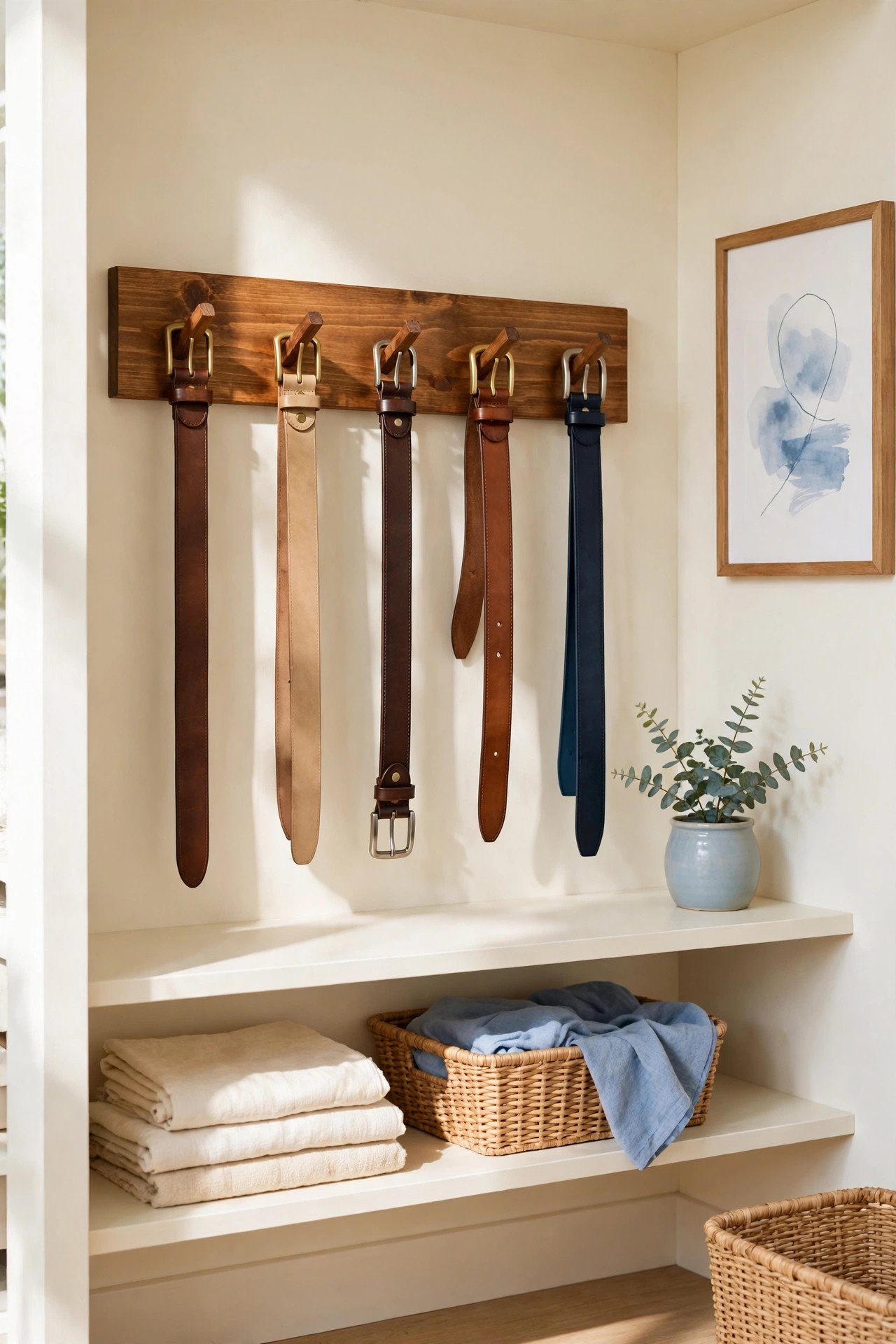
A wall-mounted belt rack turns storage into decor. Mount a row of pegs or hooks on a stained wood board and hang one belt per peg. The collection becomes a feature wall in your closet or bedroom.
Space the pegs wide enough that buckles do not clink together. You can build the rack to fit an awkward wall or a narrow closet side. Stain or paint the board to match your room, and the rack looks intentional rather than improvised.
8. Hang Belts on Sturdy Closet Hooks
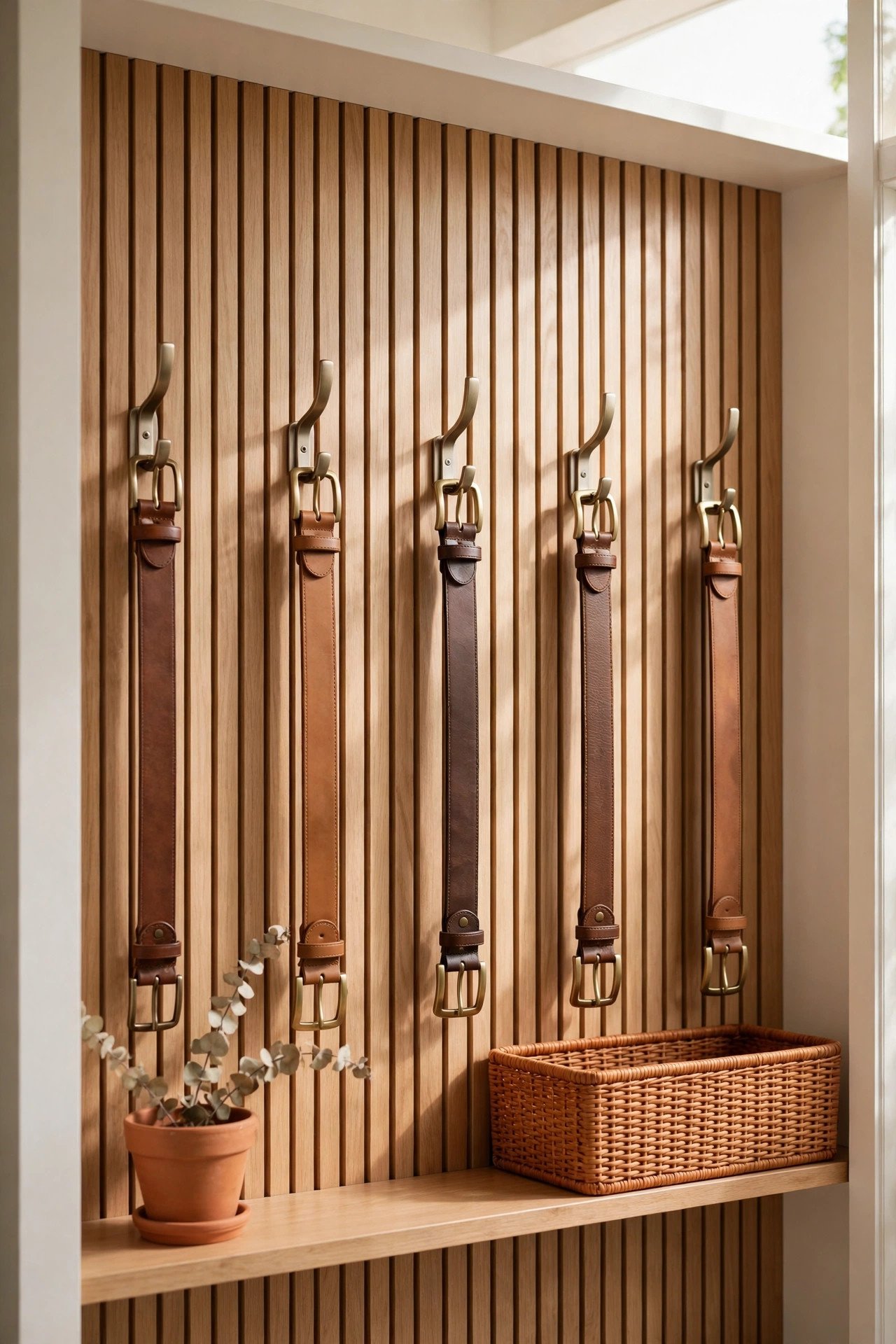
Wall space inside your closet is prime storage real estate. Screw a row of sturdy hooks into the closet wall and hang one belt per hook. Everything stays visible, reachable, and completely untangled.
This is a natural add-on during a wardrobe reset, when you are already rethinking the closet layout. Choose hooks rated for the weight of heavy leather belts. A row of matching hooks looks far tidier than a mix of random ones.
9. Use S Hooks for Instant Belt Storage
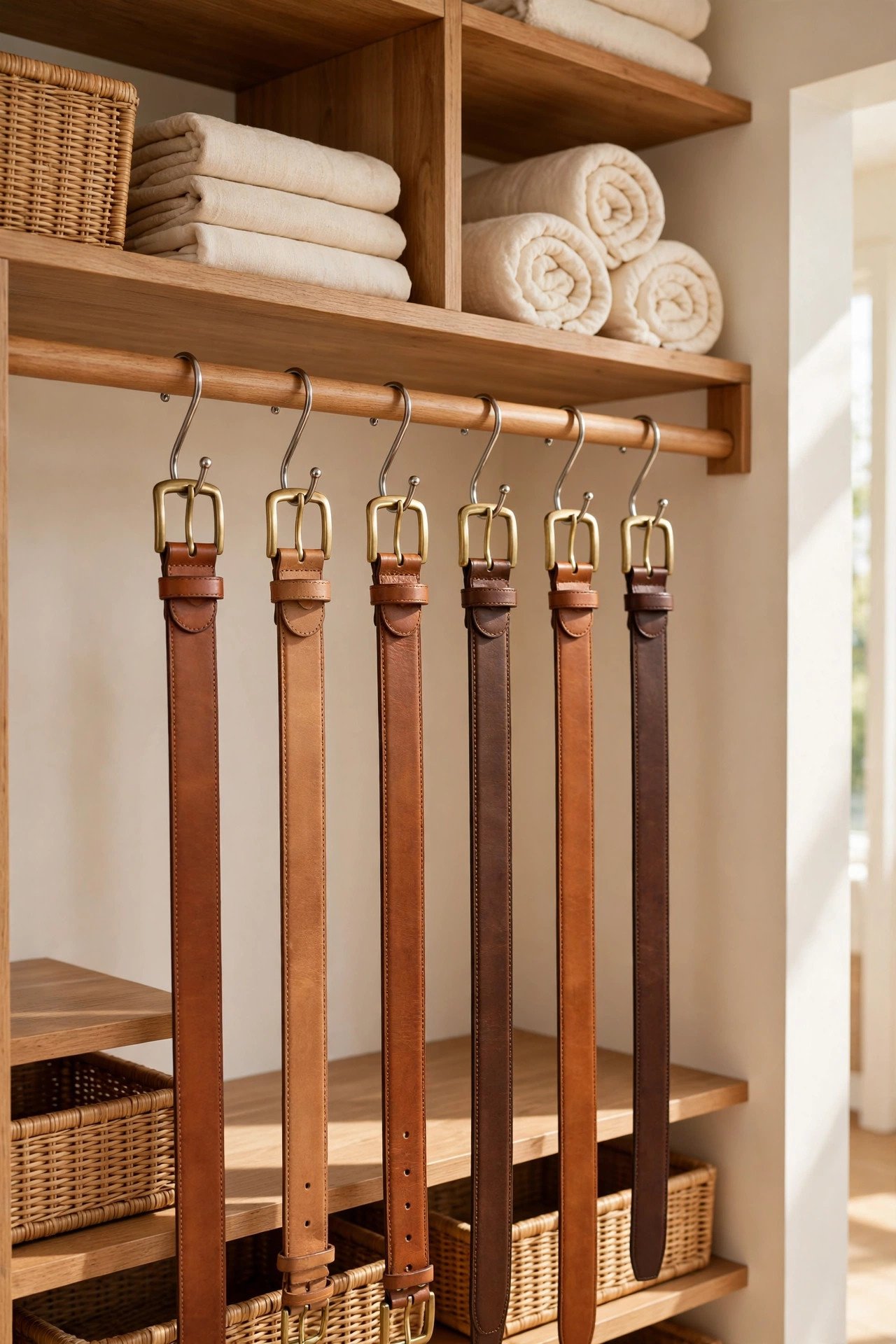
S hooks are the fastest belt storage you will ever set up. Hook one end over your closet rod and hang a belt from the other. No drilling, no measuring, no commitment.
Use large S hooks for wide belts and smaller ones for slim styles so everything hangs evenly. You can rearrange the order in seconds when your favorites change. Keep a few spare hooks on the rod for new additions to the collection.
10. Stick Up Damage-Free Command Hooks
Renters and commitment-phobes can still hang belts neatly. Adhesive hooks stick to closet walls, doors, and even the side of a dresser, then remove cleanly when you move. One belt per hook keeps the display tidy.
Clean the surface with rubbing alcohol before sticking so the bond holds strong. Give the adhesive a full day to cure before hanging heavy leather. Line the hooks in a straight row for a look that feels planned, not temporary.

11. Coil Belts Into Round Acrylic Bins
Round acrylic bins are perfect for coiled belts because the circular shape matches the coil. Drop one rolled belt per bin, or group two slim belts together. The clear walls show every color at a glance.
Stack the bins two high on a closet shelf to use vertical space. The round shape also suits rolled scarves and ties, so accessories can share the system. A small printed label on each bin keeps color families easy to find.

12. Mount Hooks on the Closet Side Panel
The side wall of a closet is easy to overlook and perfect for belts. Mount a vertical row of individual hooks down the panel, and each belt gets its own spot. The belts stay out of the way of hanging clothes.
This spot works well for the belts you reach for least, keeping daily favorites closer to the door. Use slim hooks so the panel does not feel crowded. It is a smart use of space that would otherwise sit completely empty.

13. Toss Extras Into an Eco Storage Box
Not every belt needs display treatment. Keep a lidded eco-friendly storage box for backup belts, seasonal styles, and the ones you rarely wear. The box sits on a closet shelf and keeps everything dust-free.
Choose a box made from recycled or natural materials to keep the system green. Coil the belts loosely inside so they do not crease. Review the box twice a year and donate the styles you have stopped reaching for.

14. Free Drawer Space With a Wall Hanging System
A wall hanging system moves your whole belt collection out of the drawer entirely. A mounted rail with sliding hooks or a pegboard panel holds belts, scarves, and hats in one vertical zone. The drawer below is suddenly free for other things.
Map the layout on paper before you mount anything, grouping items by how often you use them. Pegboards are wonderfully flexible because you can move the pegs as the collection changes. Keep daily pieces at eye level and occasional ones up high.

15. Roll Belts and Store Them in Boxes
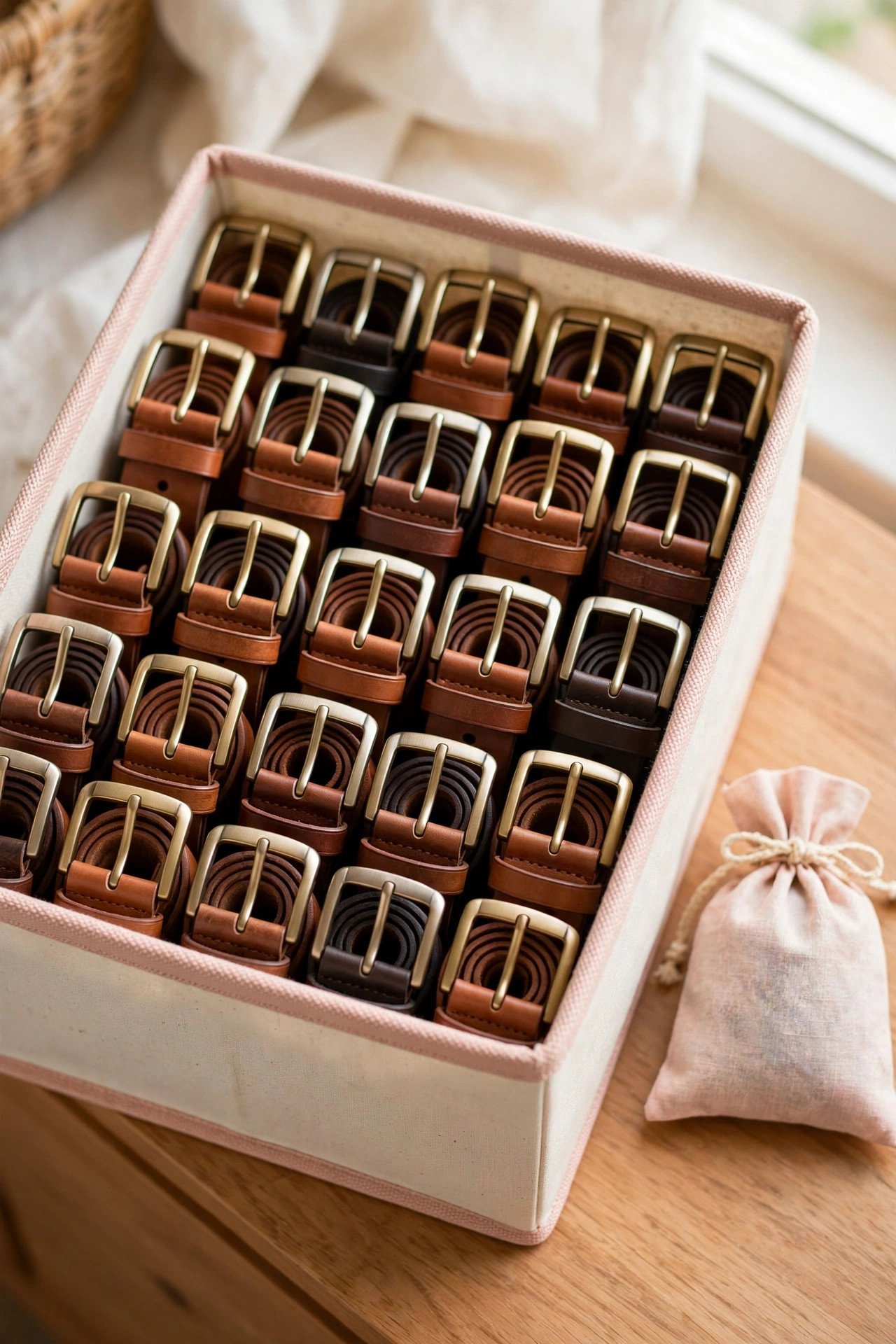
Rolling is the gentlest way to store leather belts because it avoids hard creases. Roll each belt with the buckle on the outside, then stand the rolls upright in a storage box or basket. The rolls stay neat and the leather stays happy.
Use a box with a lid if the collection lives on an open shelf, since dust settles on leather over time. Add a small sachet to absorb moisture in humid closets. Unroll and re-roll occasionally so the leather keeps its natural curve.
Conclusion
Belts and accessories are small, but the right system makes a big difference in your morning routine. Whether you hang, coil, or roll, the goal is the same: every item visible, every item reachable, nothing tangled.
Start with the method that matches your space, then refine as your collection grows. A drawer or wall that once caused frustration can become one of the tidiest spots in your closet.
Frequently Asked Questions
What is the best way to store belts so they do not tangle?
Give every belt its own spot. Hang belts on individual hooks or a dedicated hanger, or coil each one into its own drawer compartment. When belts never touch each other, they cannot tangle. Buckling belts closed before hanging also stops them from sliding off.
Should I roll or hang my belts?
Both methods work well. Hanging keeps belts fully visible and is best for daily favorites. Rolling is gentler on leather because it avoids hard creases, so it suits belts you wear less often. Whichever you choose, keep one belt per hook or per slot for a tangle-free result.
How do I organize small accessories in the same drawer as belts?
Use shallow compartment trays inside the drawer for watches, bracelets, sunglasses, and similar small items. Give belts the larger divided sections and accessories the smaller cells. Stackable trays double the usable space in a deep drawer.
Can I store belts in a drawer without dividers?
You can, but dividers make a real difference. Without them, coiled belts shift and buckles snag. Adjustable spring dividers are inexpensive, need no tools, and turn one open drawer into custom slots. Deep bins are another good option for large belt collections.
How do I store belts in a rental without drilling holes?
Adhesive hooks are the renter-friendly answer. They stick to closet walls and doors, hold leather belts securely once cured, and remove cleanly when you move. S hooks over the closet rod need no mounting at all and rearrange in seconds.

Hi, I’m Emily! I turn messy corners into cozy, organized spots. DreamNestDecor is where I share simple, practical home ideas — decor, organization, and small-space solutions that work in real life, not just in photos. Every idea here is carefully researched before it’s shared.