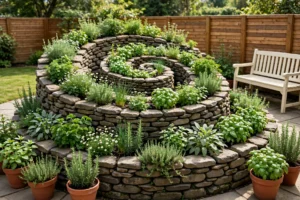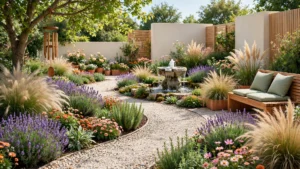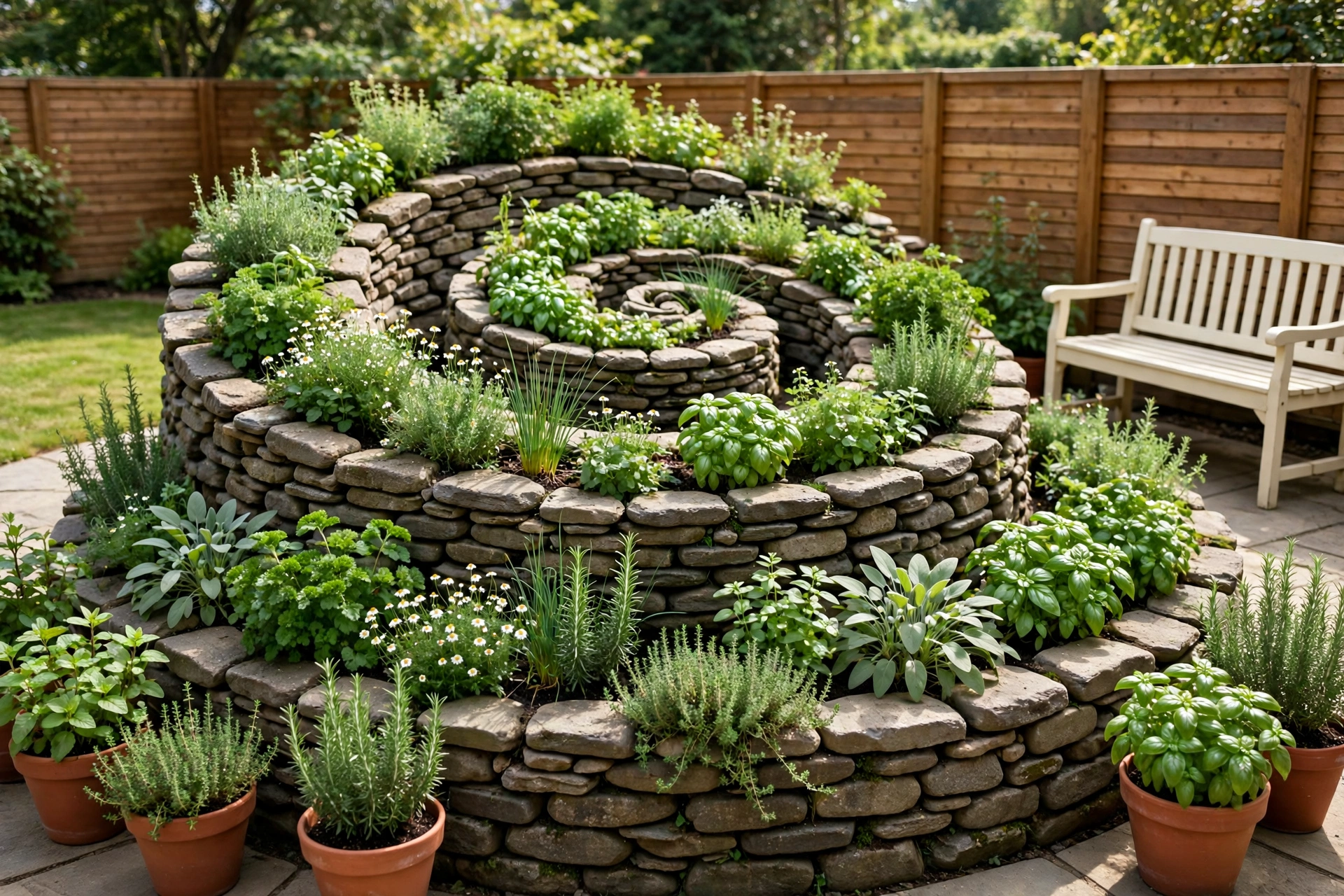
Picture this: you step out of your kitchen door with a pair of scissors, snip a handful of fresh basil for dinner, and walk back inside in less than a minute. The herbs are right there, growing in a neat spiral of stone that looks like a piece of garden art. That small daily pleasure is exactly what an herb spiral garden gives you, fresh flavor and natural beauty in one tidy structure.
An herb spiral is a raised garden bed built in a coil shape, low at the outer edge and taller in the center, so it creates sunny dry spots at the top and cool moist spots at the bottom. Every herb finds the exact microclimate it loves, and you grow a whole herb collection in a very small footprint. These 14 herb spiral garden ideas will help you plan, build, and plant a spiral that suits your yard, your cooking, and your style.
1. Build a Classic Stone Herb Spiral
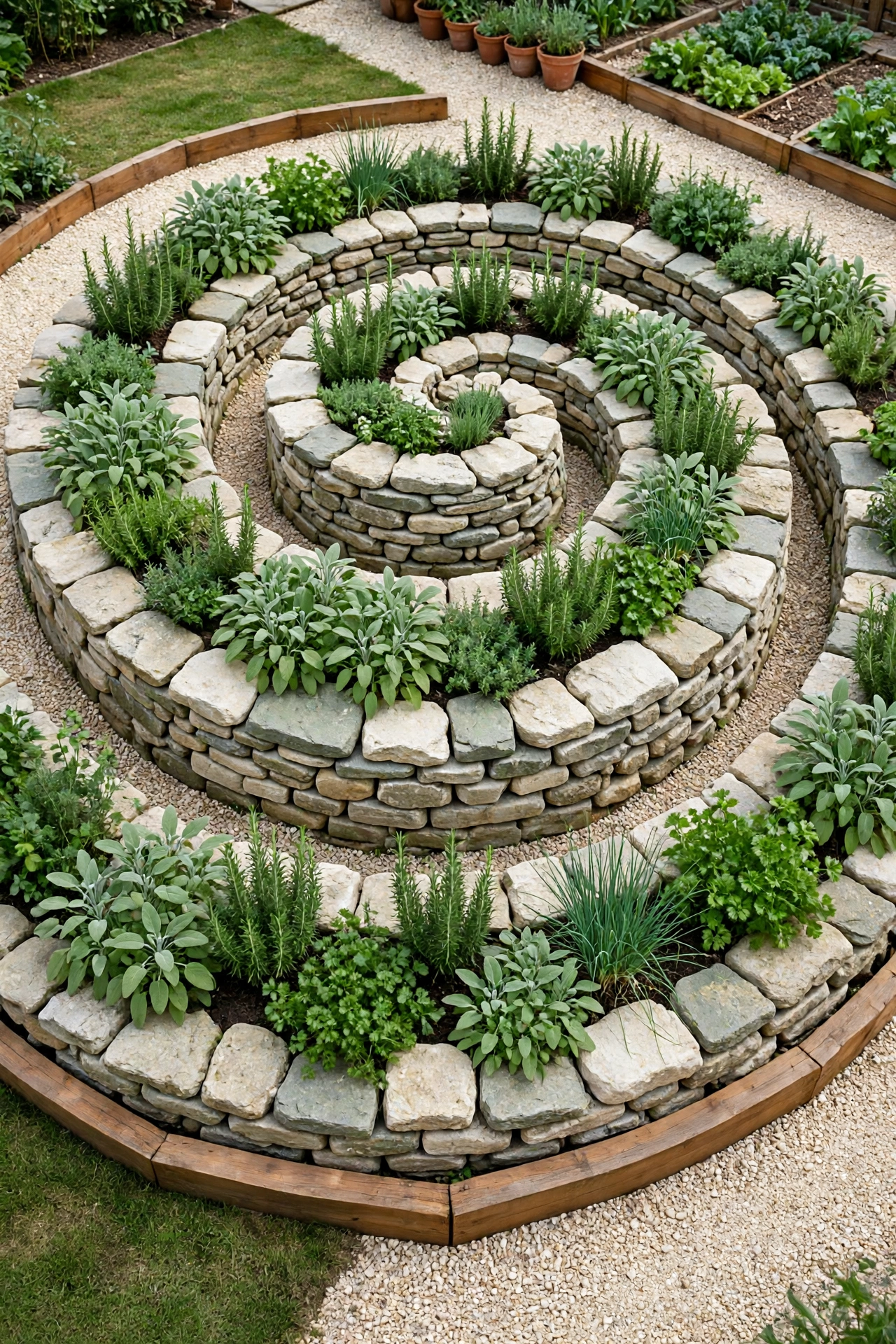
A classic stone herb spiral uses stacked natural stones to form the coil, and it is the most loved version of this garden idea for a good reason. The stones warm up in the sun, hold heat into the evening, and give the spiral a timeless look that suits almost any garden style. You start with a wide circle of stones on the ground and wind the wall inward and upward until the center stands about waist high.
Fill the spiral with good soil mixed with compost, and leave small gaps between the stones for drainage. Plant sun loving herbs like rosemary and thyme near the top where the soil stays dry, and keep moisture loving herbs like parsley and mint near the bottom. If you enjoy the natural look of stone in the garden, these rock garden ideas will give you more ways to pair stonework with planting.
2. Choose a Brick Herb Spiral for a Warm Traditional Look
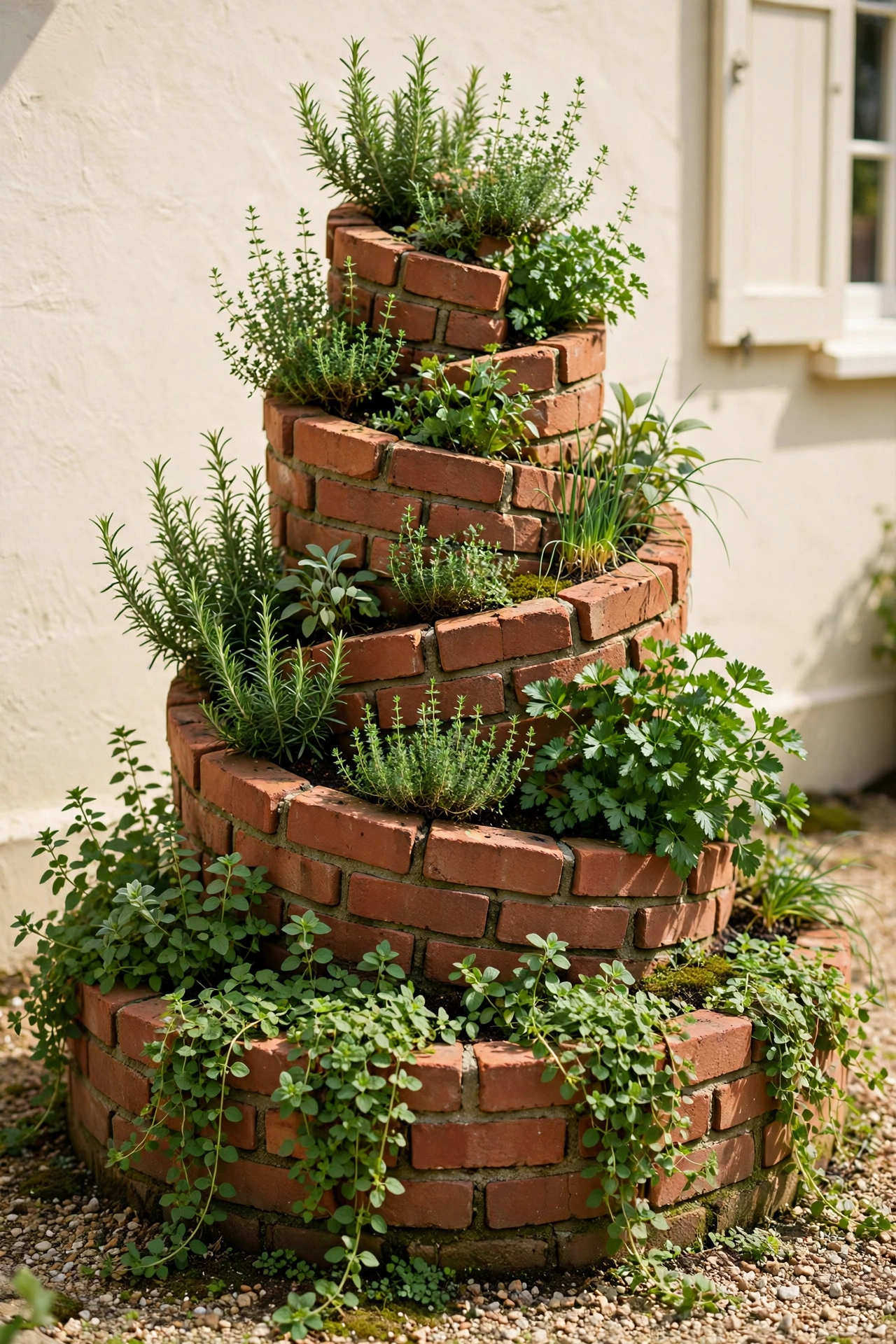
A brick herb spiral brings warm red and terracotta tones to the garden, and the neat brick courses give the structure a tidy, crafted feel. Bricks are easy to stack in a smooth curve, and you can build the spiral in a single weekend with basic tools. The warm color of the brick makes green herbs stand out beautifully against it.
Lay the bricks without mortar if you want a flexible structure you can reshape later, or use mortar for a permanent feature. Keep the top of the spiral open and sunny for Mediterranean herbs, and let trailing herbs like oregano spill over the lower brick edges. A brick spiral looks especially charming beside a cottage style home or a warm wood fence.
3. Fit a Compact Herb Spiral Into a Small Backyard
A compact herb spiral proves that you do not need a large garden to grow your own herbs. A spiral just four feet wide can hold twelve or more herb plants, because the coil shape stacks planting space upward instead of spreading it across the ground. That small footprint makes it perfect for a tiny backyard, a side yard, or a sunny patio corner.
Keep the design simple with one neat coil and a narrow path around it for easy harvesting. Choose a compact mix of everyday cooking herbs like basil, chives, parsley, and thyme so every plant earns its place. For more ways to grow upward when floor space is tight, see these vertical garden ideas that pair beautifully with a small spiral.
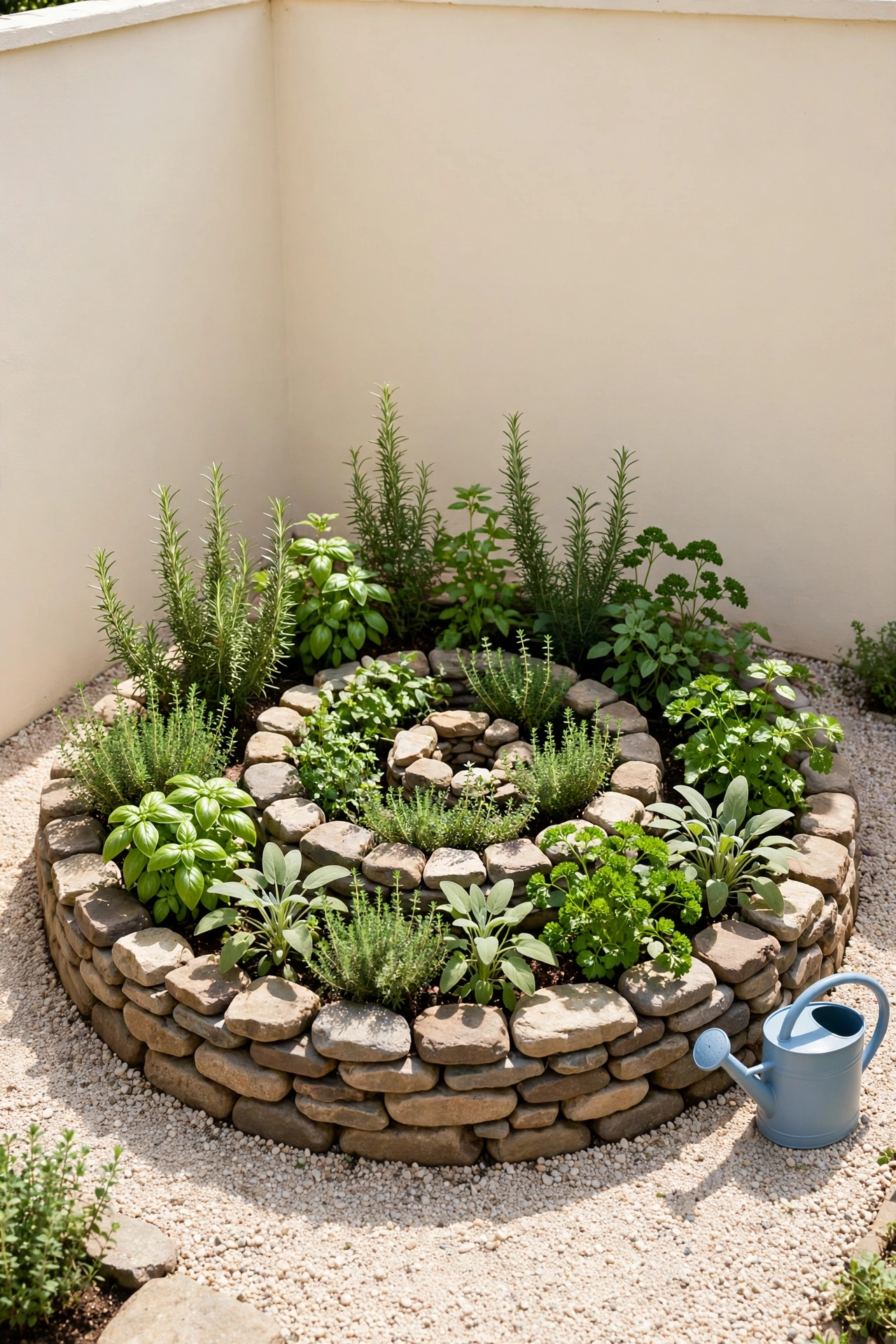
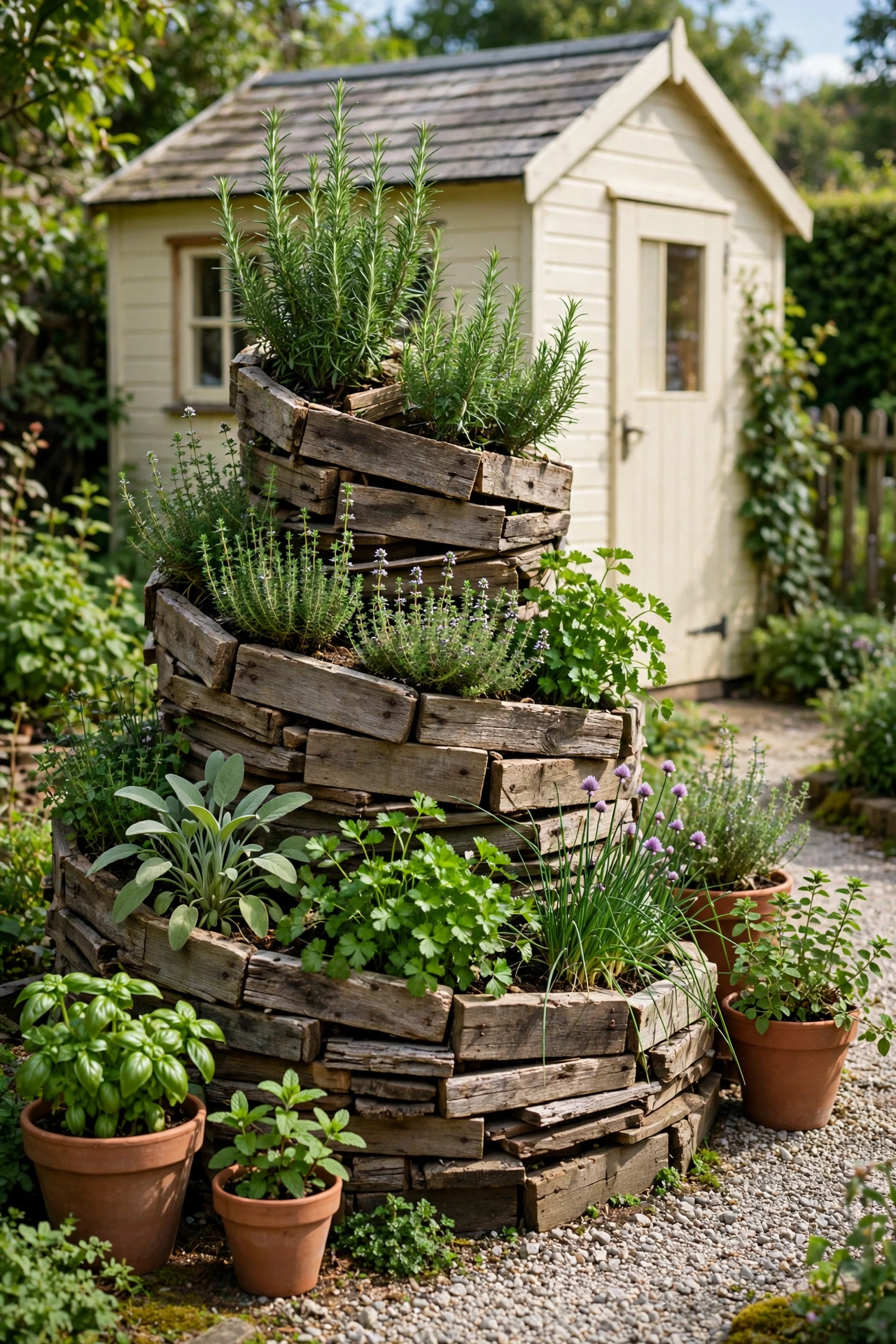
4. Use Reclaimed Wood for a Rustic Herb Spiral
A wooden herb spiral built from reclaimed timber brings a warm, rustic feel to the garden, and it is one of the easiest versions to build yourself. Short lengths of weathered wood or old fence boards stack into the coil shape, and the wood softens the look of the structure as it ages. The warm wood tones pair perfectly with cream garden furniture and terracotta pots nearby.
Line the inside of the wood wall with landscape fabric to hold the soil in place and slow down rot. Choose untreated wood if you plan to grow edible herbs, so nothing unwanted leaches into the soil. A wooden spiral looks wonderful in a cottage garden or beside a raised vegetable patch, where its natural texture blends right in.
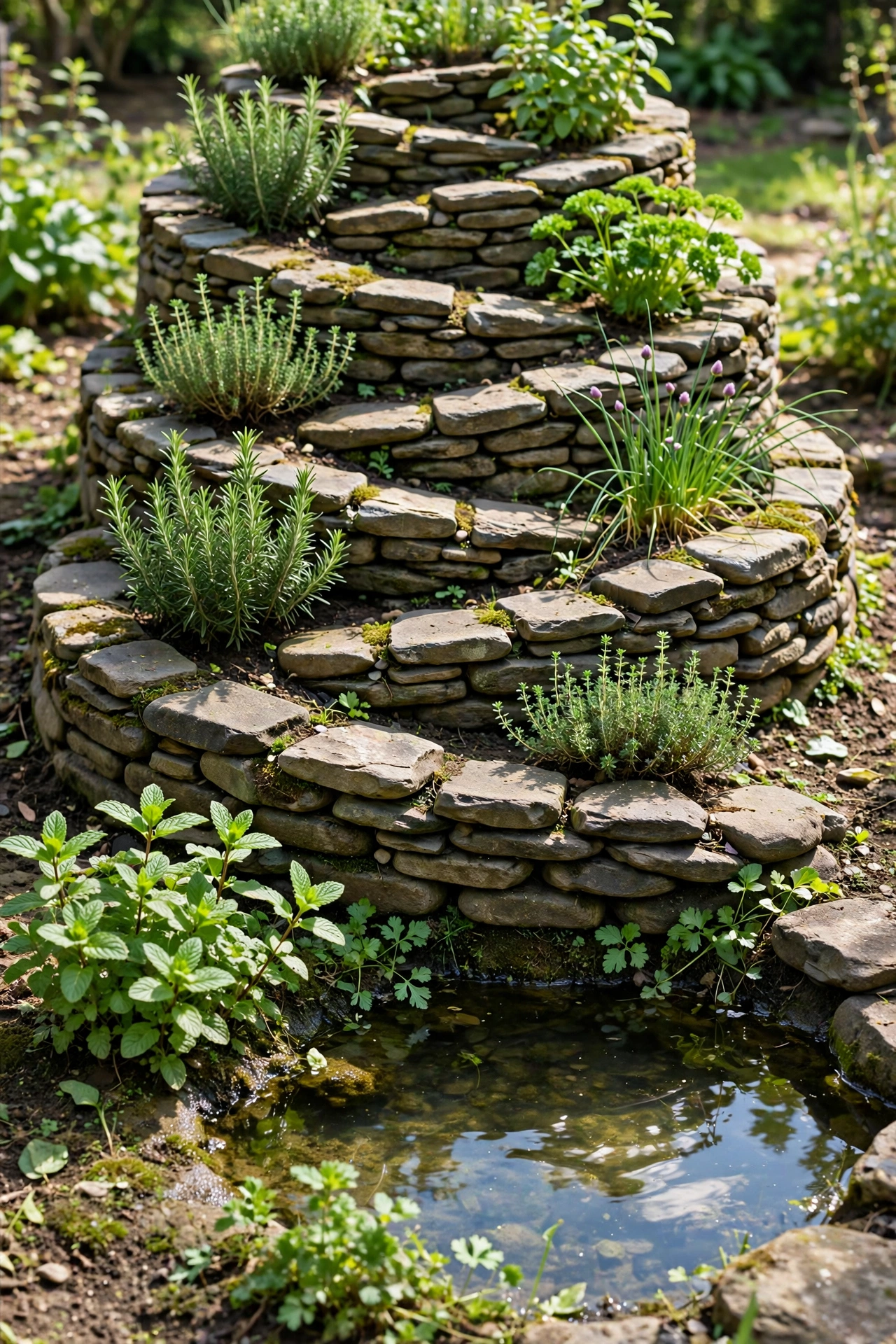
5. Add a Small Pond at the Base of the Spiral
An herb spiral with a small pond at its base is the classic permaculture design, and it works beautifully in a real home garden too. The pond sits at the lowest end of the coil, where water naturally collects, and it creates a cool, humid pocket that moisture loving herbs adore. The water also reflects light and attracts helpful insects and birds to the garden.
Keep the pond small and shallow, just a buried basin or a wide ceramic bowl set level with the soil. Plant watercress or mint in the damp soil right beside the pond, and let the spiral rise above it with drier herbs toward the top. The gentle sound and sparkle of water make the spiral a peaceful spot to visit every morning.
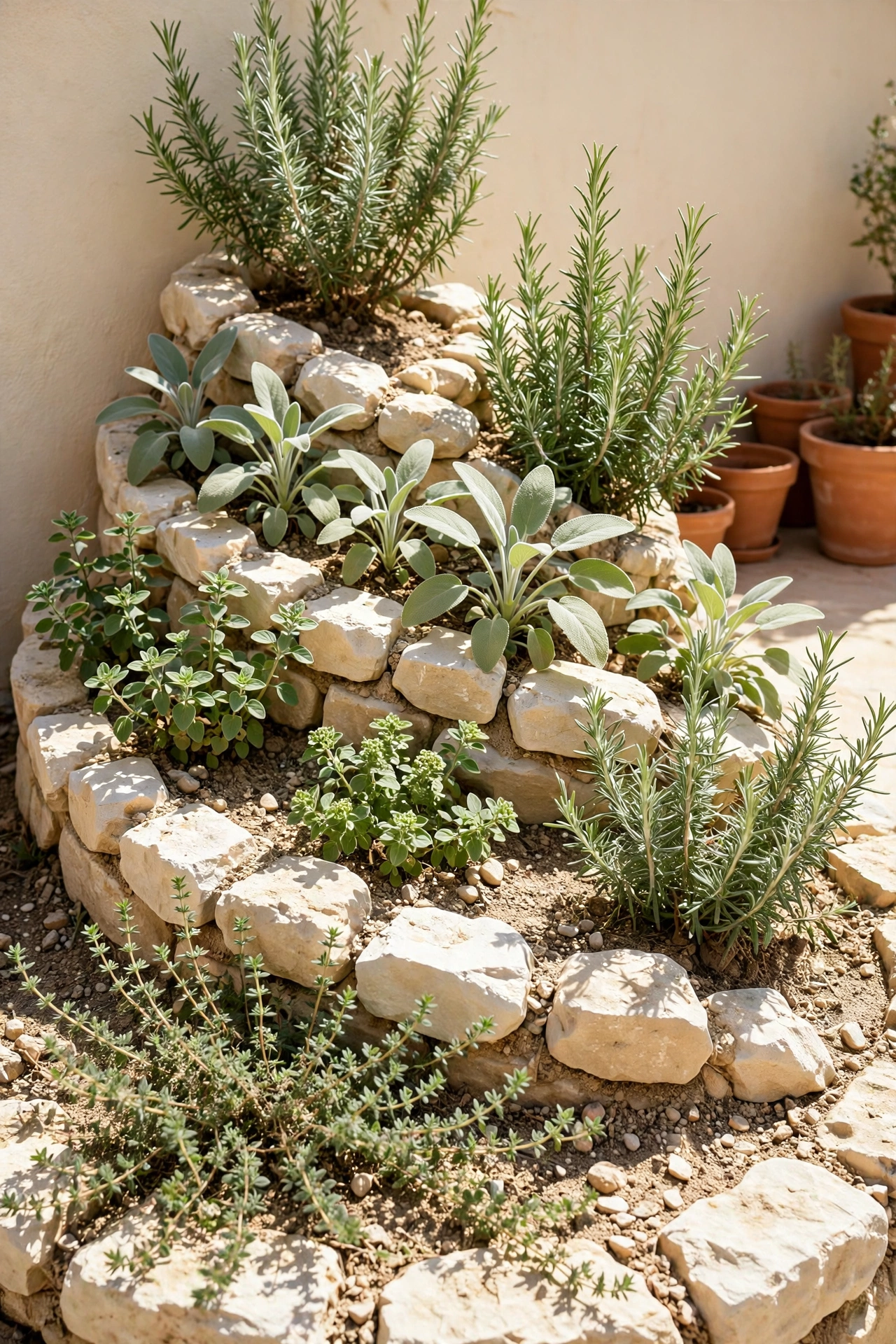
6. Plant a Sunny Mediterranean Herb Spiral
A Mediterranean herb spiral celebrates the sun loving herbs of warm, dry climates, and it is perfect for a hot, sunny corner of the yard. The top of the spiral stays dry and warm, which is exactly what rosemary, thyme, oregano, and sage need to thrive. Their silver green leaves and fragrant oils make the spiral smell wonderful on a warm afternoon.
Use gritty, free draining soil at the top of the spiral and add a few pale stones that reflect heat onto the plants. Keep watering light and let the soil dry between waterings, just as these herbs prefer in their native hillsides. Harvest often to keep the plants bushy, and enjoy the rich flavor these herbs bring to roasted vegetables, grilled meats, and fresh bread.
7. Grow Shade Loving Herbs on the Cool Side
Every herb spiral has a shady side, and smart gardeners use that cool, sheltered face for herbs that prefer gentle light. Parsley, cilantro, chives, and mint all grow happily in the softer light on the north or east side of the spiral, where the soil stays cooler and holds moisture longer. This turns a shady spot from a problem into a feature.
Plant taller herbs on the sunny face so they cast a little extra shade over the cool side without blocking all the light. Water the shaded side a bit more often, since those herbs enjoy steady moisture. If you want to fill the shady beds around your spiral with more plants that love your local climate, these native plant garden ideas are a great place to start.
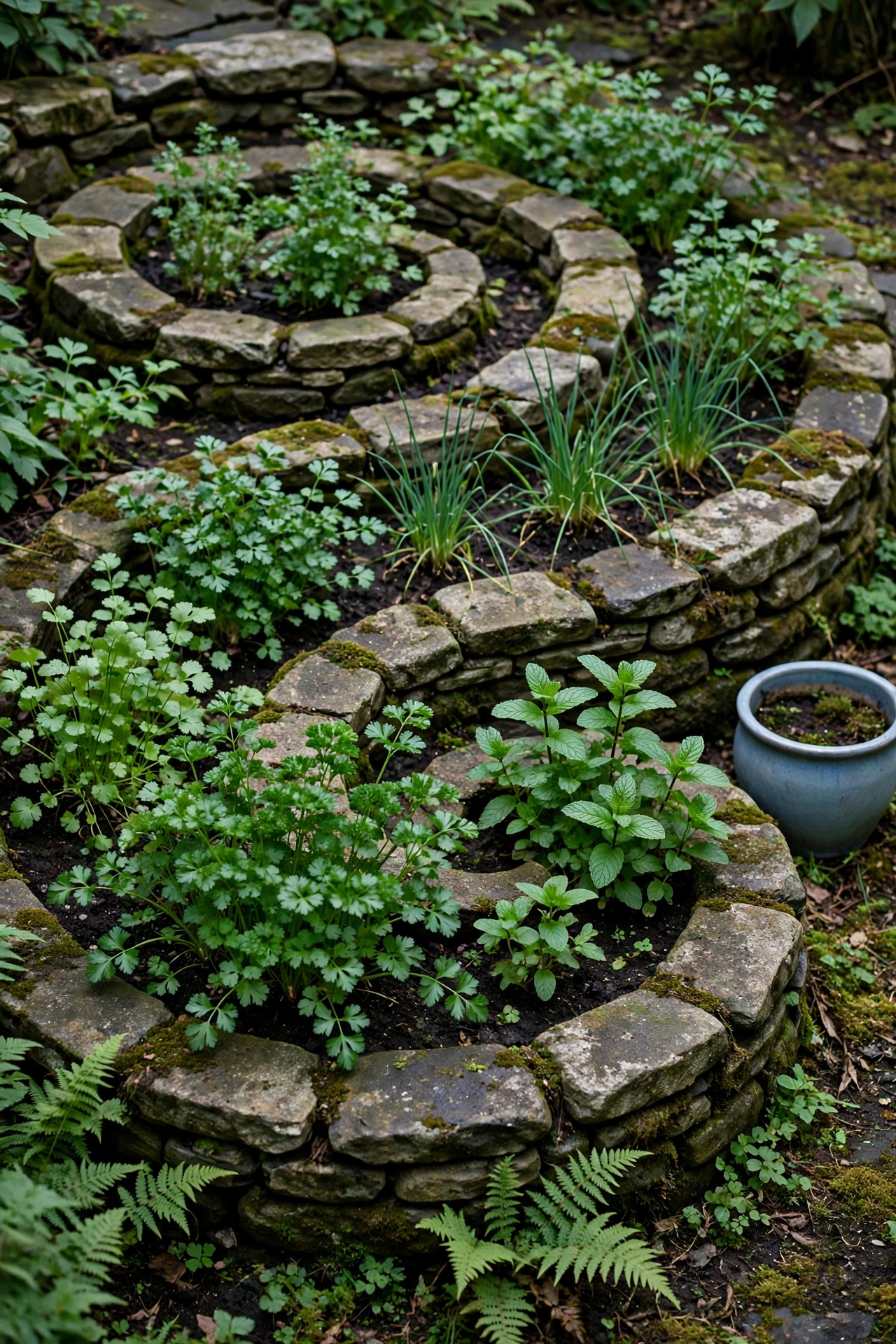
8. Build a Seating Edge Into the Spiral Wall
A seating edge turns your herb spiral into a place to sit and enjoy the garden, not just a bed to harvest from. Widen the outer wall at sitting height and cap it with flat stones or smooth wood planks, so you have a comfortable perch right beside your herbs. You can sit down to snip herbs, sip a morning coffee, or simply enjoy the fragrance on a warm evening.
Keep the seat clean and dry with a flat cap that sheds rain, and add a small cushion in a soft blue or sage tone for comfort. Place the seating edge on the sunny side of the spiral so it feels warm and inviting for most of the day. This simple addition makes the spiral the most used corner of the whole garden.
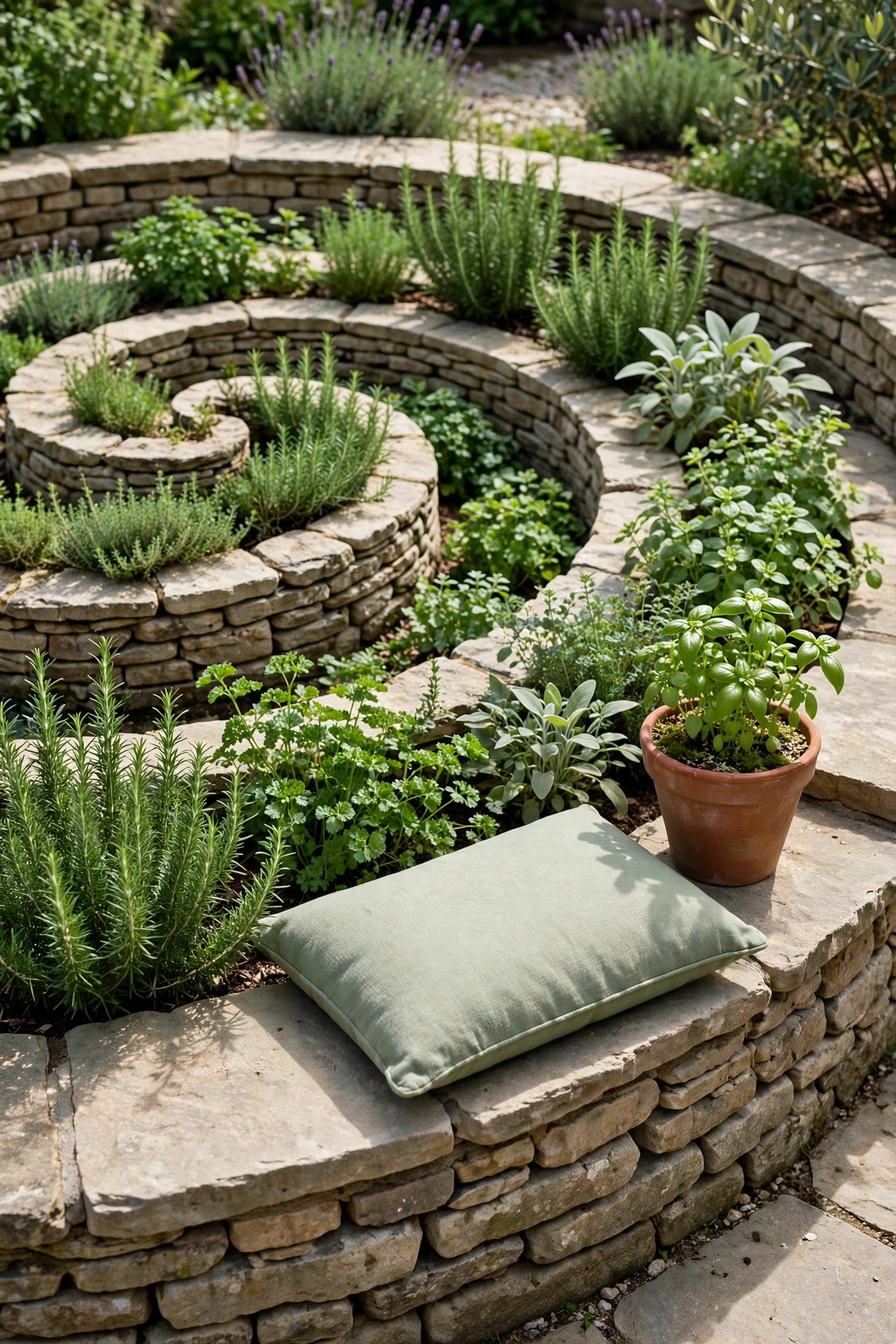
9. Raise the Spiral for Comfortable Easy Reach Gardening
A taller herb spiral brings the herbs up to a comfortable working height, which is a gift for anyone who finds bending down difficult. Build the center of the spiral up to waist height with a sturdy wall, and shape the coil so every plant sits within easy arm reach from the path. You can tend, water, and harvest without kneeling on the ground.
Use a stable base and a strong wall material like stone or brick so the taller structure stays safe and solid. Keep the top flat and wide enough for a few pots of tender herbs that you can move indoors in winter. For more raised bed layouts that make gardening easier on the body, see these raised garden bed layout ideas that work well alongside a spiral.
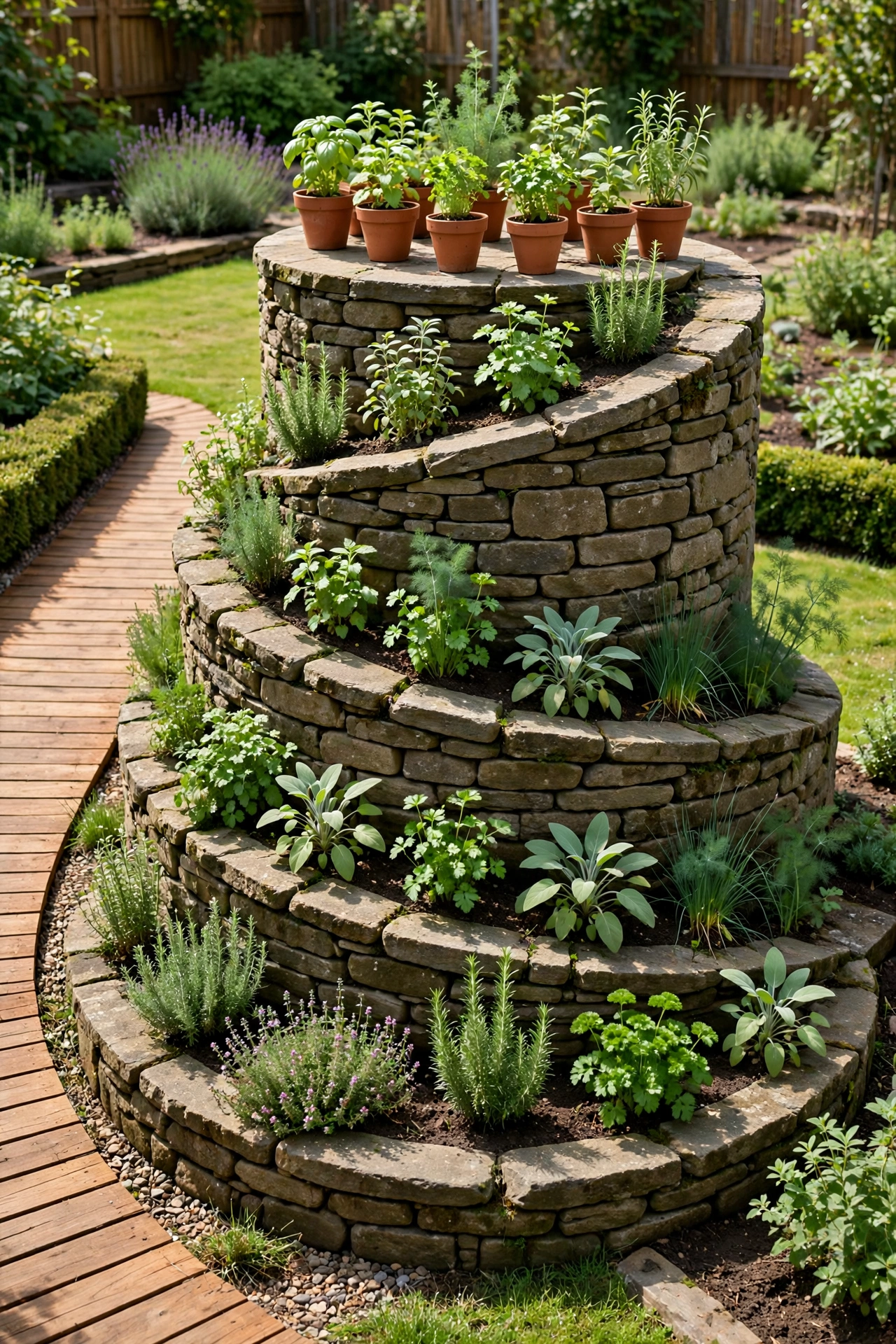
10. Label Every Herb With Charming Plant Markers
Plant markers keep an herb spiral organized and beautiful, especially when young seedlings all look alike. Small wooden stakes, painted stones, or slate tags with each herb name written clearly make harvesting easy and stop you from snipping the wrong plant. The markers also add a handcrafted detail that makes the spiral feel personal and loved.
Write the herb names in large, readable letters so you can read them at a glance from the path. Use weatherproof materials like sealed wood, ceramic, or engraved metal so the labels survive rain and sun. Matching markers in a cream and sage palette keep the spiral looking tidy, while the readable labels help guests find the mint for their tea all on their own.
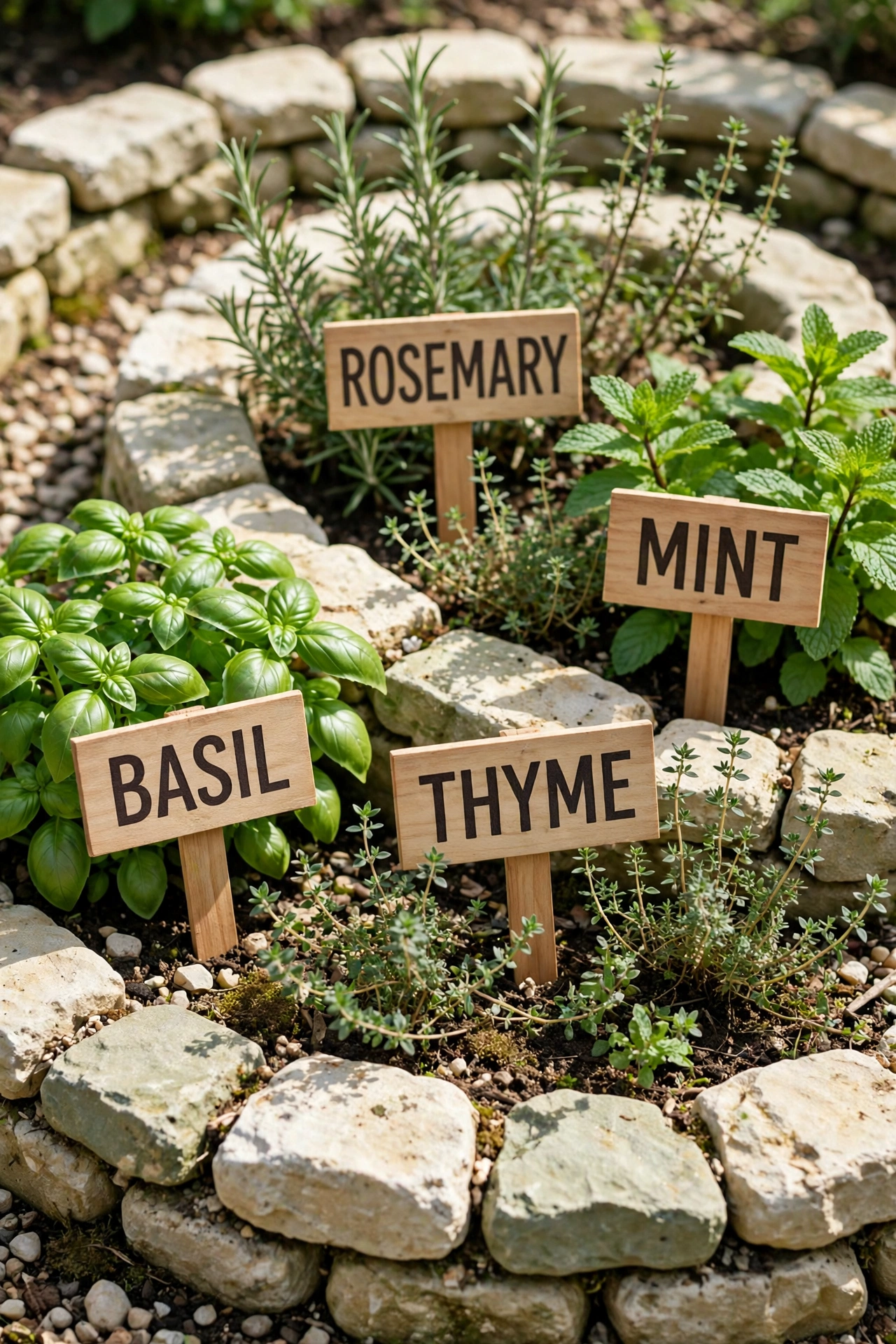
11. Mix Edible Flowers Into the Spiral
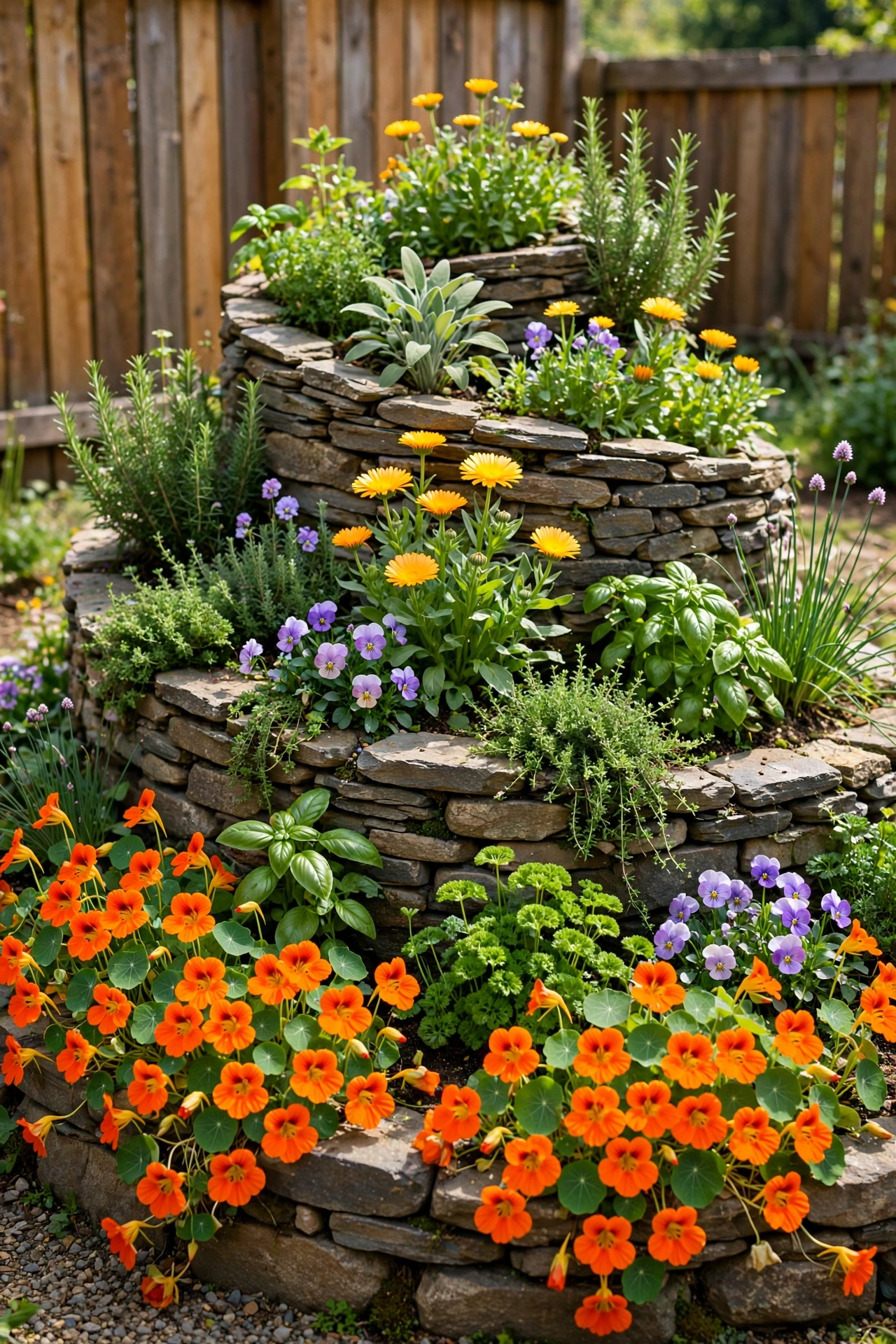
Edible flowers turn a practical herb spiral into a colorful showpiece that feeds both the eyes and the kitchen. Nasturtiums spill over the lower edges in bright orange and red, calendula adds sunny yellow blooms, and violas tuck into the cool lower coil with soft purple faces. The flowers attract bees and butterflies, which help your herbs thrive.
Plant the flowers among the herbs rather than in a separate bed, so the spiral looks full and natural all season long. Harvest the blooms in the morning when they are fresh, and use them to garnish salads, desserts, and summer drinks. A spiral mixed with flowers blurs the line between a vegetable garden and a flower garden in the best possible way.
12. Place the Spiral Right Beside the Kitchen Door
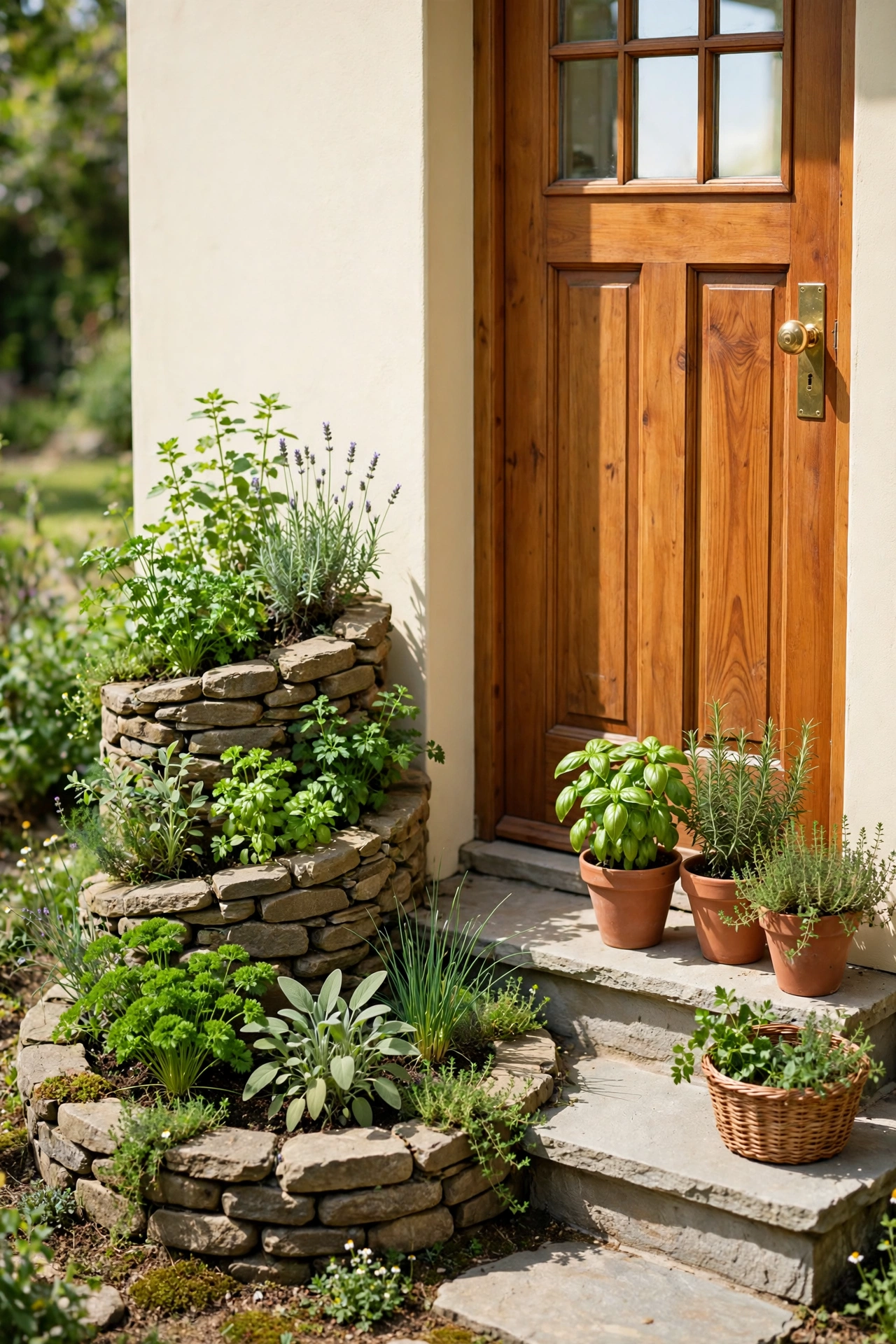
An herb spiral beside the kitchen door gets used more than any other spot in the garden, because fresh herbs are always just a few steps from the stove. You can snip parsley for a sauce or basil for a salad without putting on garden shoes or walking to the far end of the yard. That easy access means the herbs never go to waste.
Choose a sunny spot near the door with good drainage, and keep a narrow path clear between the door and the spiral for wet days. Add a small hook or shelf by the door for scissors and a harvest basket, so everything you need is in one place. The fragrance drifting through the open door on a warm day is a bonus you will enjoy all summer.
13. Surround the Spiral With a Gravel Path
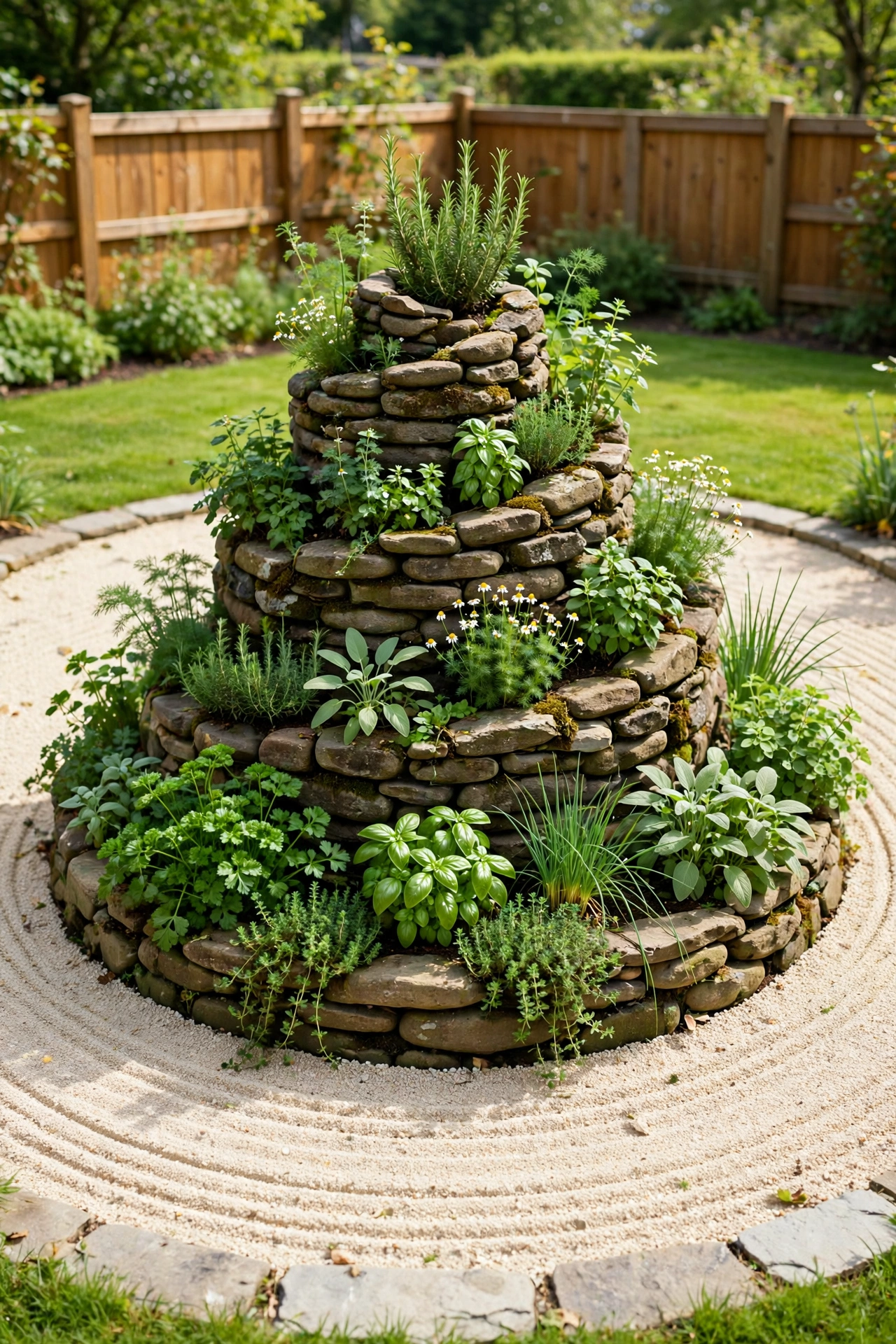
A gravel path around an herb spiral keeps your feet clean and dry while you harvest, and it gives the whole feature a finished, professional look. Pale gravel in a soft cream tone contrasts beautifully with the green herbs and the warm stone or brick of the spiral wall. The path also stops mud from splashing onto the lower leaves after rain.
Lay landscape fabric under the gravel to keep weeds down, and edge the path with flat stones or low timber to hold the gravel in place. Make the path wide enough for a wheelbarrow or a garden cart if the spiral sits in a larger garden. For more path styles that suit a cottage or modern garden, these garden pathway ideas offer plenty of inspiration.
14. Add Drip Irrigation to the Top of the Spiral
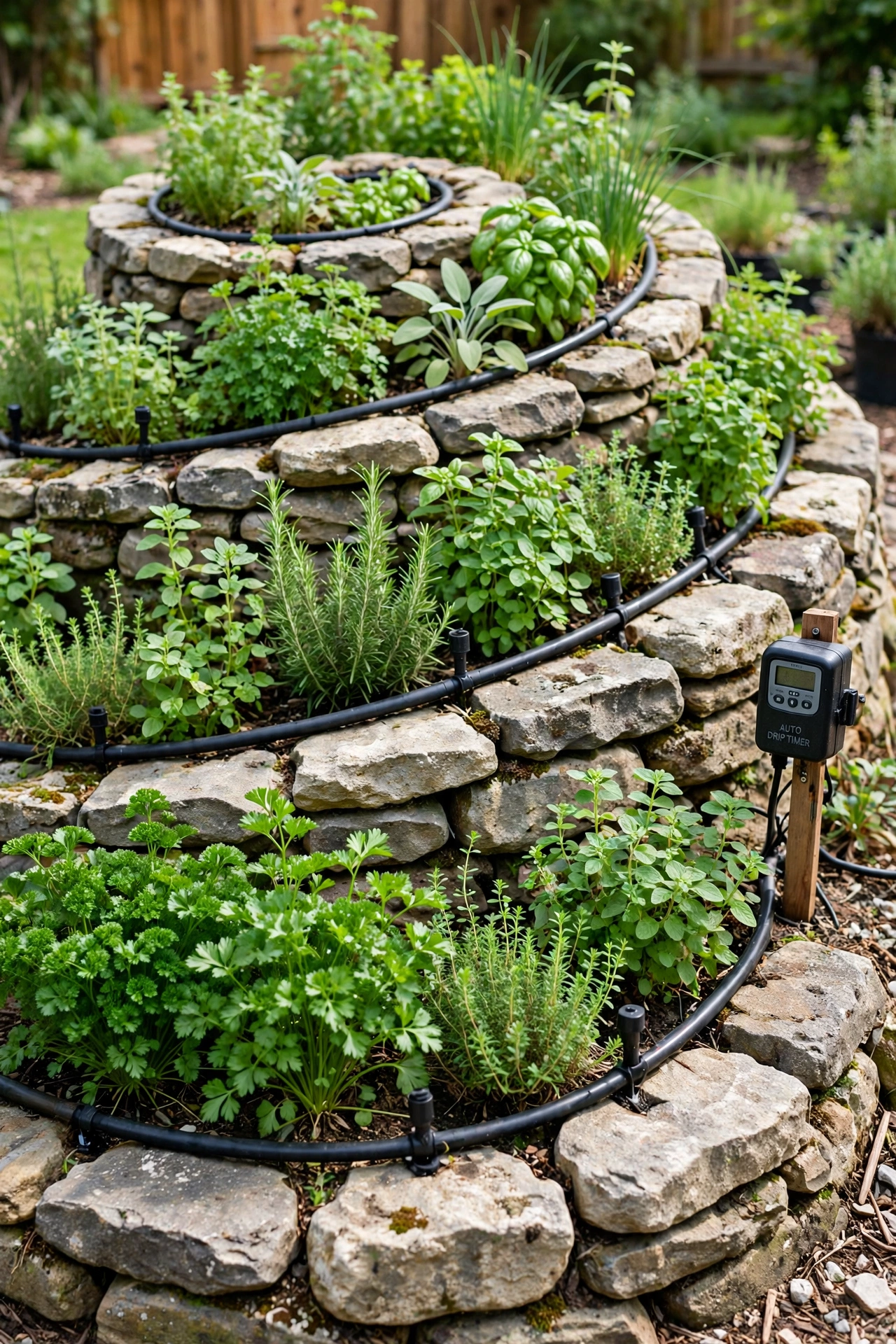
Drip irrigation at the top of an herb spiral waters every plant evenly with very little effort, because the water slowly soaks downward through the coil. A simple drip line wound along the spiral delivers water right to the roots, which keeps leaves dry and reduces waste. You save time, save water, and keep the herbs consistently healthy.
Run the main line up the back of the spiral and place emitters near each plant, with fewer emitters at the dry sunny top and more near the moist base. Connect the line to a timer so the spiral waters itself on a regular schedule, even when you are away. This quiet system is the finishing touch that turns a good herb spiral into a truly low care garden feature.
Conclusion
An herb spiral is one of the smartest small garden projects you can build, because it grows a whole herb collection in a tiny footprint while creating the perfect microclimate for every plant. From a classic stone coil to a compact patio spiral, there is a design here for every yard, every budget, and every cooking style.
Start with the version that fits your space and build it one layer at a time, then plant the herbs you cook with most often. In just a few weeks, you will step outside, snip fresh herbs for dinner, and wonder how you ever cooked without a spiral of your own.
Frequently Asked Questions About Herb Spiral Garden Ideas for Homegrown Herbs
How big should an herb spiral garden be?
A good home herb spiral is about four to six feet wide and three to four feet tall at the center. That size holds twelve to twenty herb plants and fits easily in a small backyard. A smaller spiral of three feet wide still works well for a patio or a balcony corner.
Which herbs grow best at the top of a spiral?
Sun loving Mediterranean herbs grow best at the top, where the soil is driest and warmest. Rosemary, thyme, oregano, sage, and lavender all thrive there. Save the lower, moister levels for parsley, cilantro, chives, mint, and basil.
How much sun does an herb spiral need?
Most herb spirals need at least six hours of direct sun each day, with the open side facing south or west in the northern hemisphere. A little afternoon shade is fine and even helpful for the moisture loving herbs on the lower coil. Avoid deep shade, which makes most culinary herbs grow weak and flavorless.
Can I build an herb spiral on a patio or balcony?
Yes, you can build a small herb spiral in a large container or a raised planter on a patio or balcony. Use lightweight materials like wood or a flexible metal edging, and keep the spiral compact so the weight stays safe for the surface below. Make sure the container has good drainage holes.
How do I keep an herb spiral looking tidy?
Harvest herbs often to keep plants bushy and stop them from getting woody. Trim trailing herbs back from the path, refresh the mulch each spring, and replace any tired plants at the start of the growing season. A quick tidy once a week keeps the spiral neat all summer long.

Hi, I’m Emily! I turn messy corners into cozy, organized spots. DreamNestDecor is where I share simple, practical home ideas — decor, organization, and small-space solutions that work in real life, not just in photos. Every idea here is carefully researched before it’s shared.