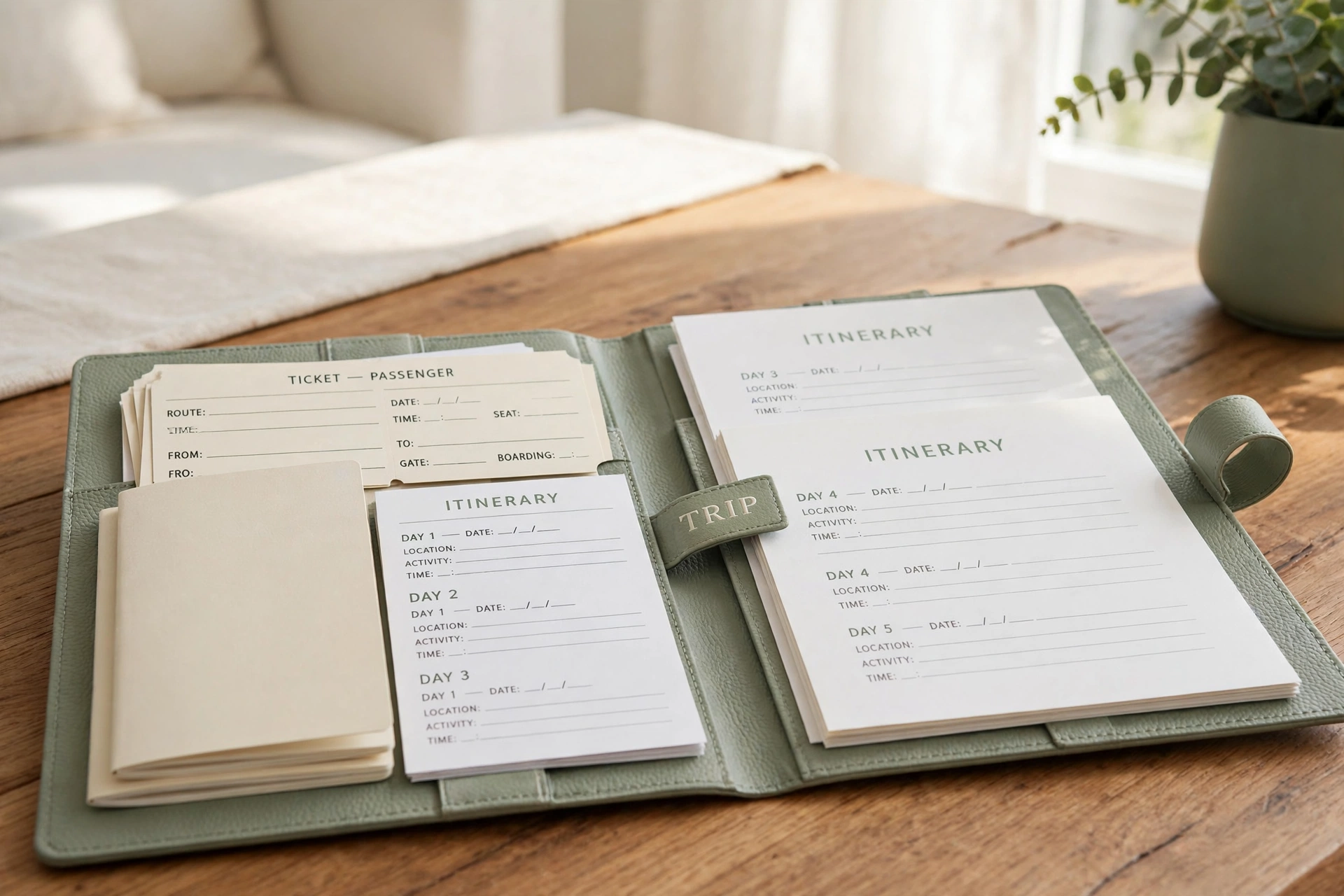
Picture the scene: your family stands in a long airport line, the departure board flashes your flight number, and you dig through a crowded bag for four passports and a printed hotel confirmation. Your hands shake a little, the line moves forward, and the papers you need sit somewhere at the very bottom. That stressful moment is one that many families know well, and it is completely avoidable.
Travel documents stay calm and easy to find when each one has a clear home before the trip even starts. These 14 travel document organization ideas will help you sort passports, tickets, confirmations, and backup copies into a simple system that works for the whole family, from packing day to the journey home.
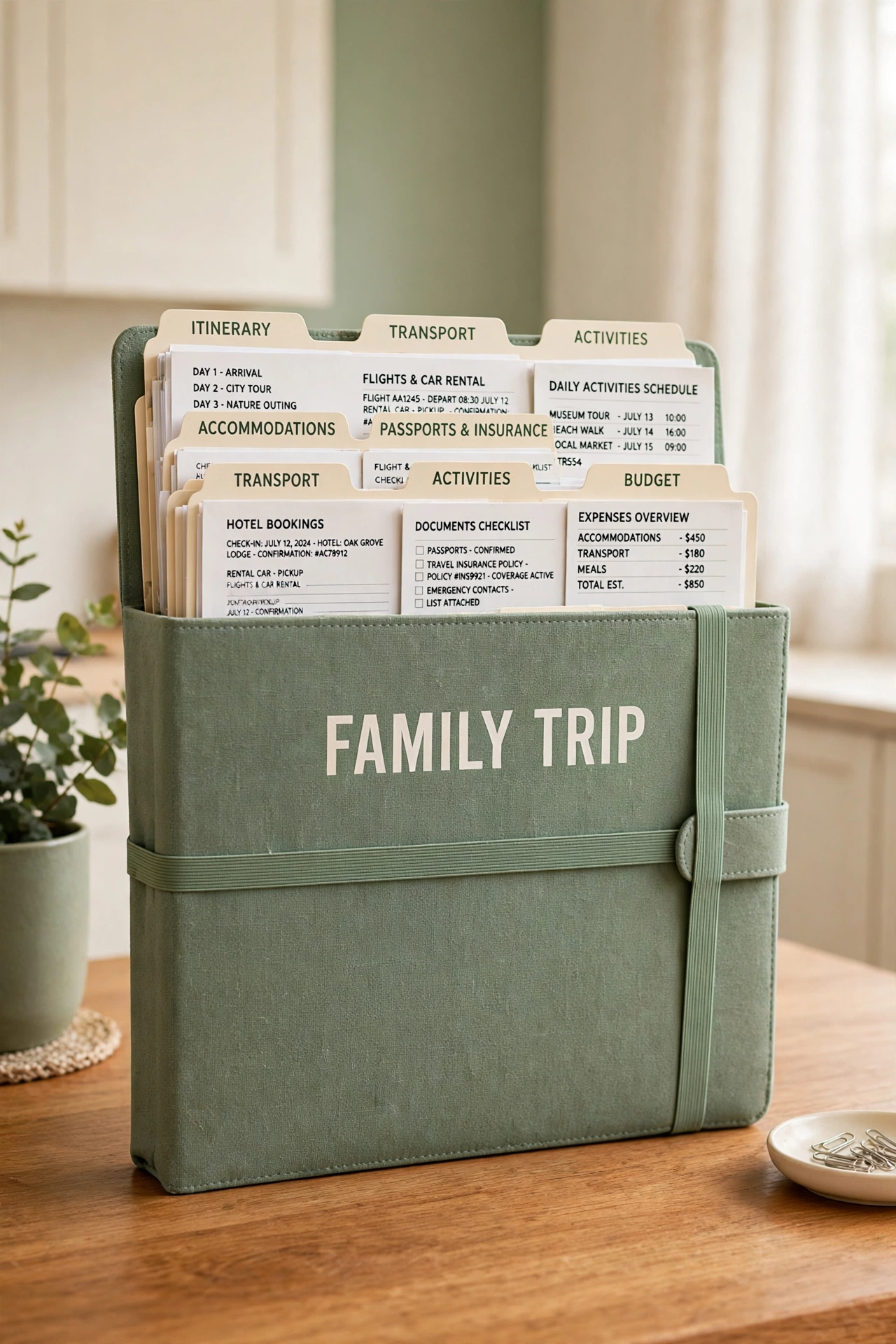
1. Start With One Family Travel Folder
One folder for the whole family keeps every travel document in a single place. Choose a sturdy folder with an elastic closure or a snap button so nothing slips out in transit. When all the papers live together, you never have to wonder which bag holds the hotel confirmation or where the car rental printout went.
Label the front of the folder with the trip name and the travel dates in large, clear letters. Keep the folder in the same spot every time you pack, such as a desk drawer or a shelf near the door. A single home base for trip papers turns frantic searching into one quick grab.
2. Give Each Family Member a Labeled Sleeve
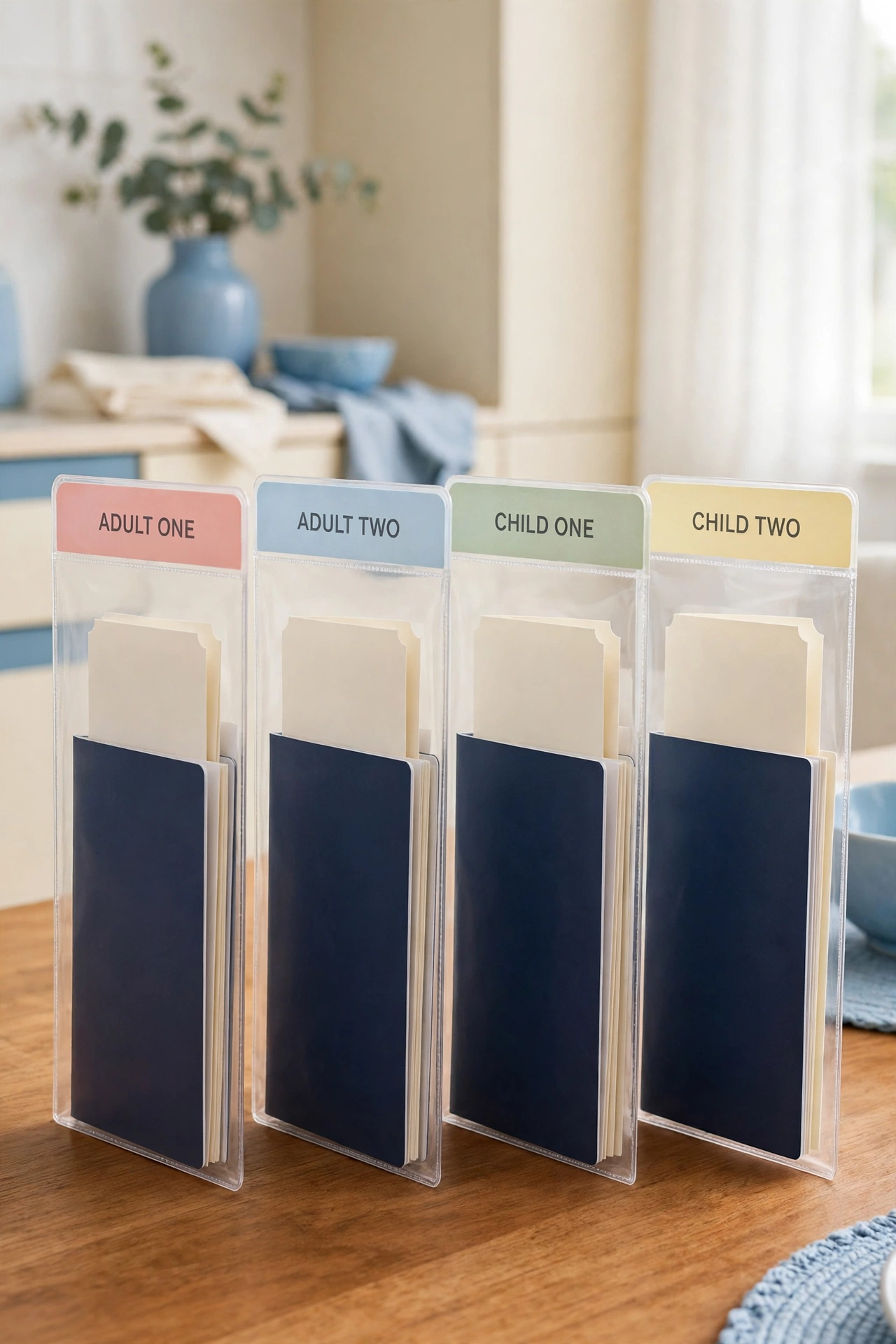
Inside the main folder, give each person a clear sleeve with a name label on the tab. Each sleeve holds the passport, ticket, and any visa or ID copy that belongs to that person. When an airline agent or a border officer asks for one document, you can pull out one sleeve instead of shuffling through a stack.
Use a different color sleeve for each family member so you can spot the right one at a glance. Kids love having a sleeve in their own color, and it teaches them to keep track of their own papers. At the end of the trip, each sleeve goes back into the folder in the same order.
3. Build a Trip Binder With Tabbed Sections
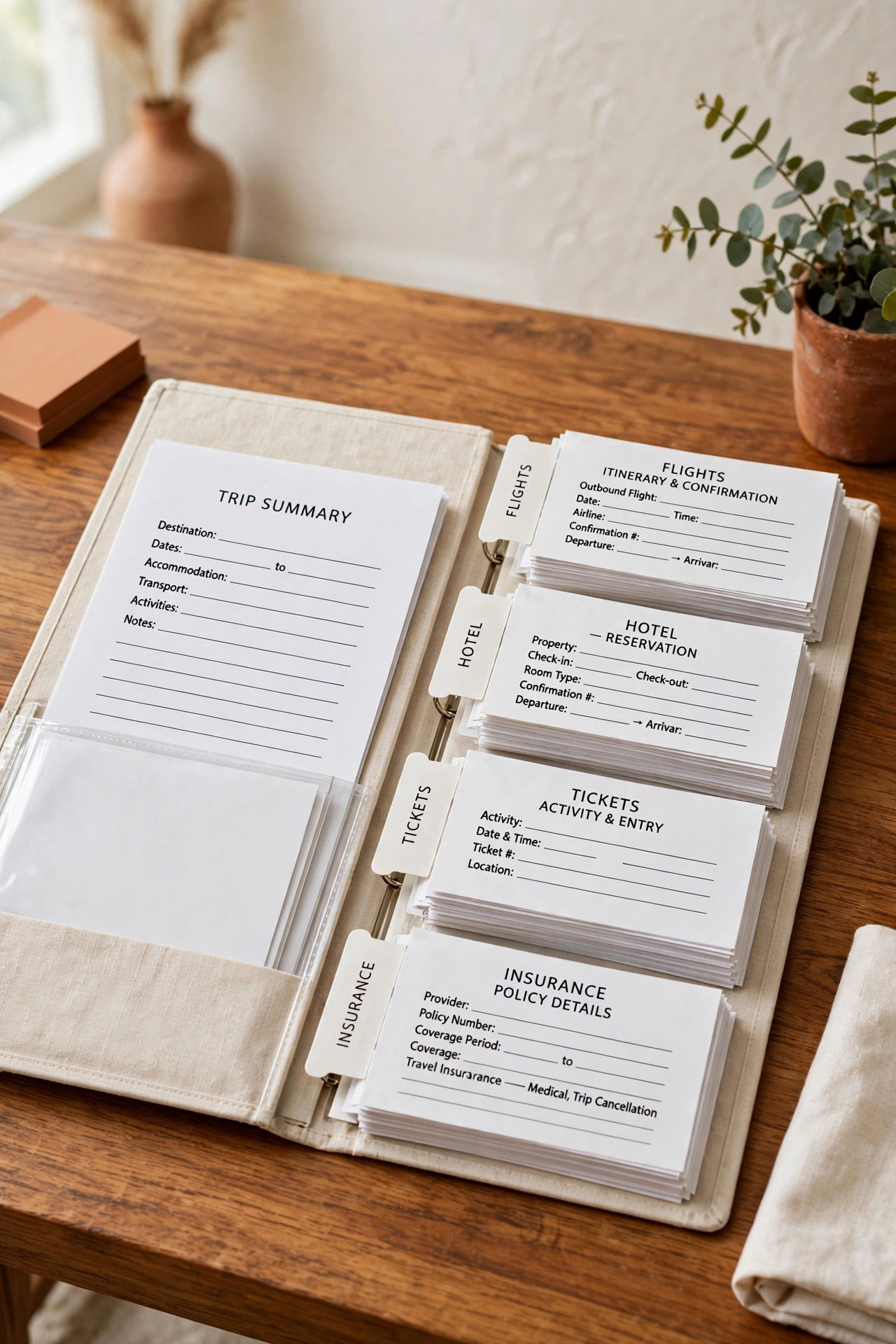
A slim binder with tabbed dividers works well for longer vacations with many bookings. Create one tab for flights, one for hotels, one for tickets and activities, and one for insurance papers. Each section holds only the papers for that part of the trip, so nothing gets mixed together.
Print a one page trip summary and slip it into the front pocket of the binder. The summary lists flight times, hotel addresses, and reservation numbers in one place. If you already keep household papers in order with these family calendar and paperwork organization ideas, a trip binder feels like a natural extension of the same habit.
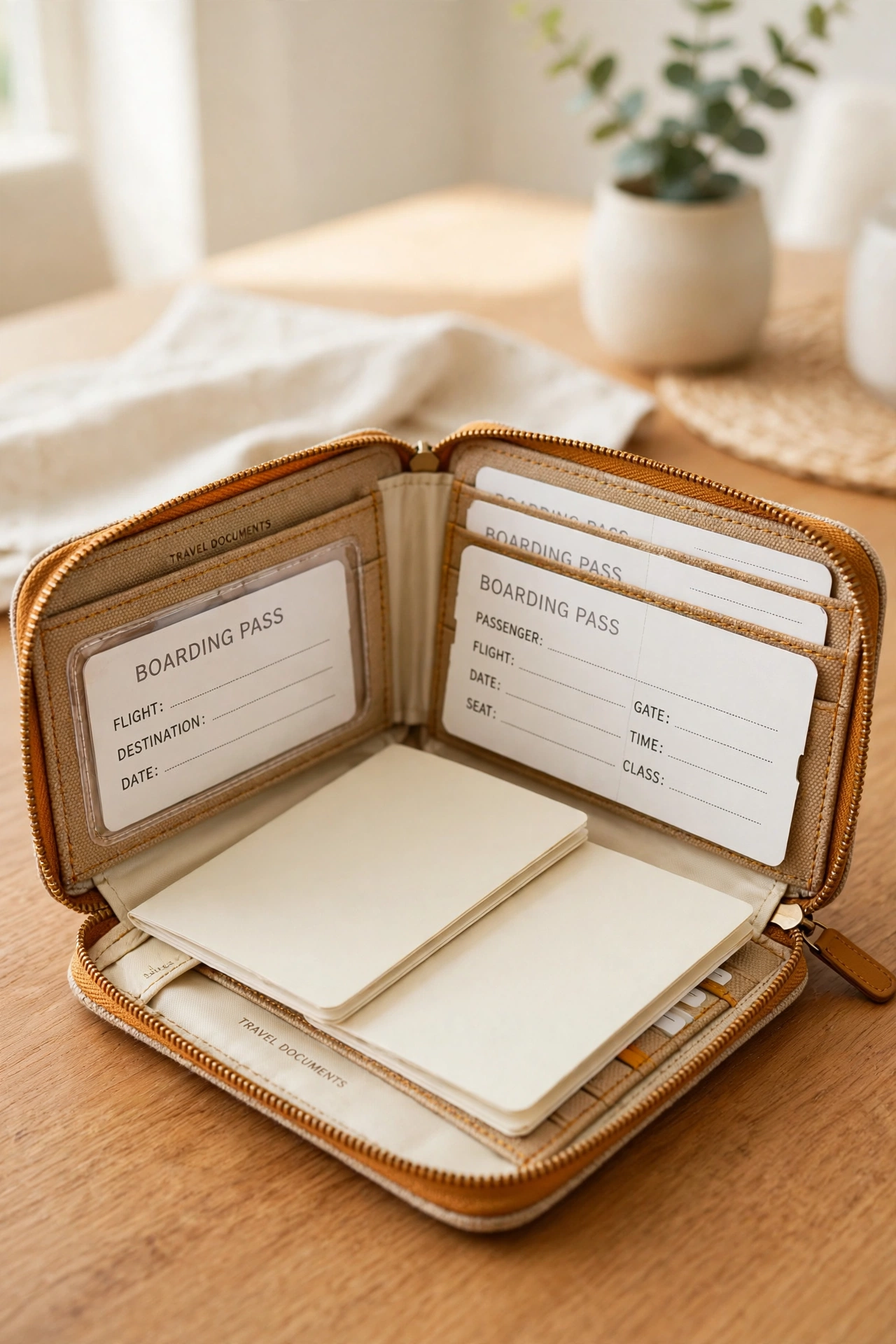
4. Use a Zippered Document Wallet for the Airport
A zippered document wallet is the safest way to carry passports and boarding passes through the airport. The zipper keeps papers secure while you move through security lines, and the wallet fits flat inside a carry on bag. Choose a wallet with card slots and a clear window for quick ID checks.
Pack the wallet last and place it in the same pocket of your bag every single time. When you reach the check in counter, you open one wallet and everything is there. After the trip, the empty wallet goes back into the family travel folder until the next vacation.
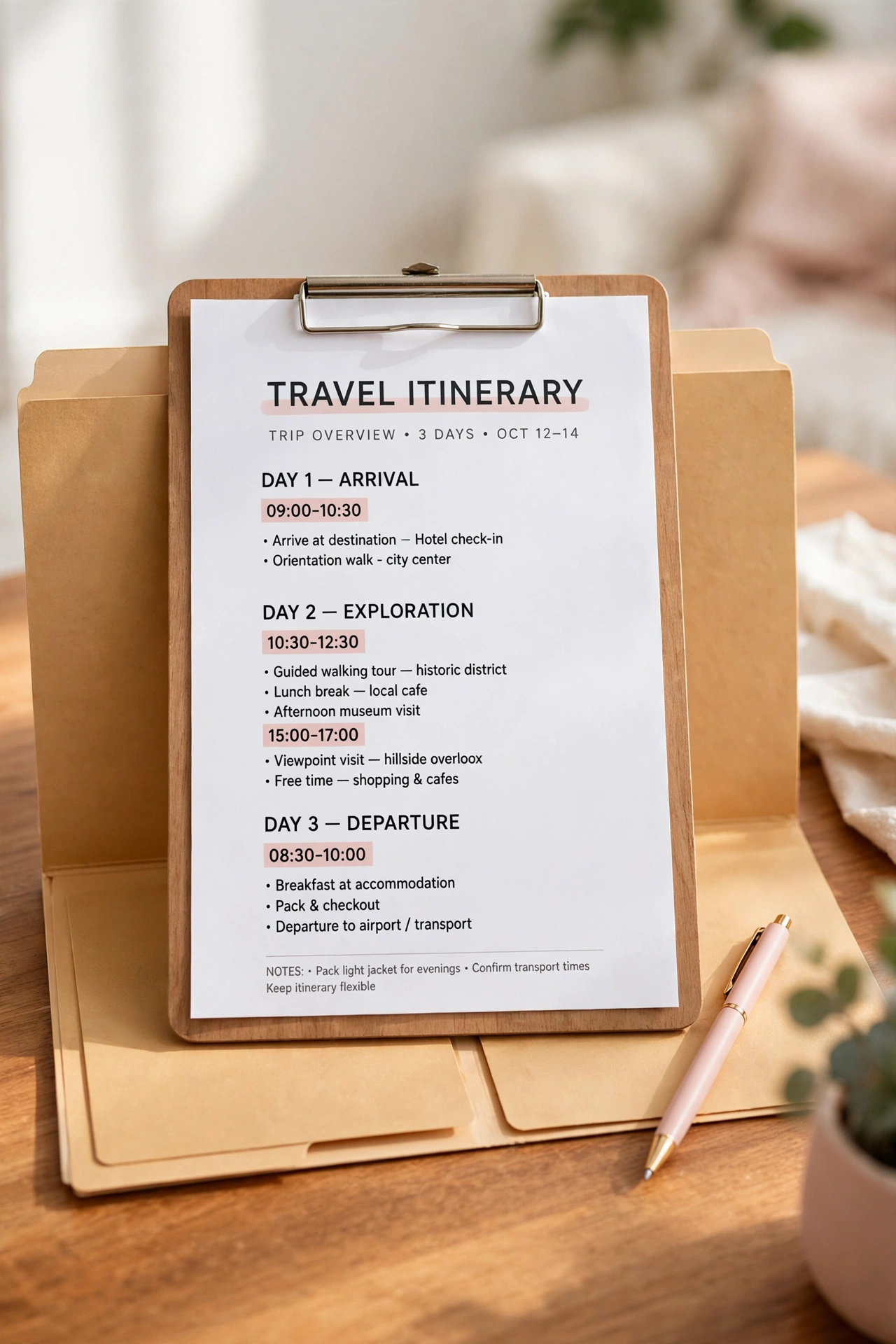
5. Keep a Printed Itinerary at the Front
Phones run out of battery and airport Wi-Fi can fail at the worst moment. A printed itinerary at the very front of your folder solves that problem. The printout lists each day plan, flight time, hotel address, and booking reference in order.
Print two copies of the itinerary and keep one in the main folder and one in a separate bag. If one bag goes missing, the second copy still holds every detail. Highlight departure times and confirmation numbers so your eyes find them fast in a busy terminal.
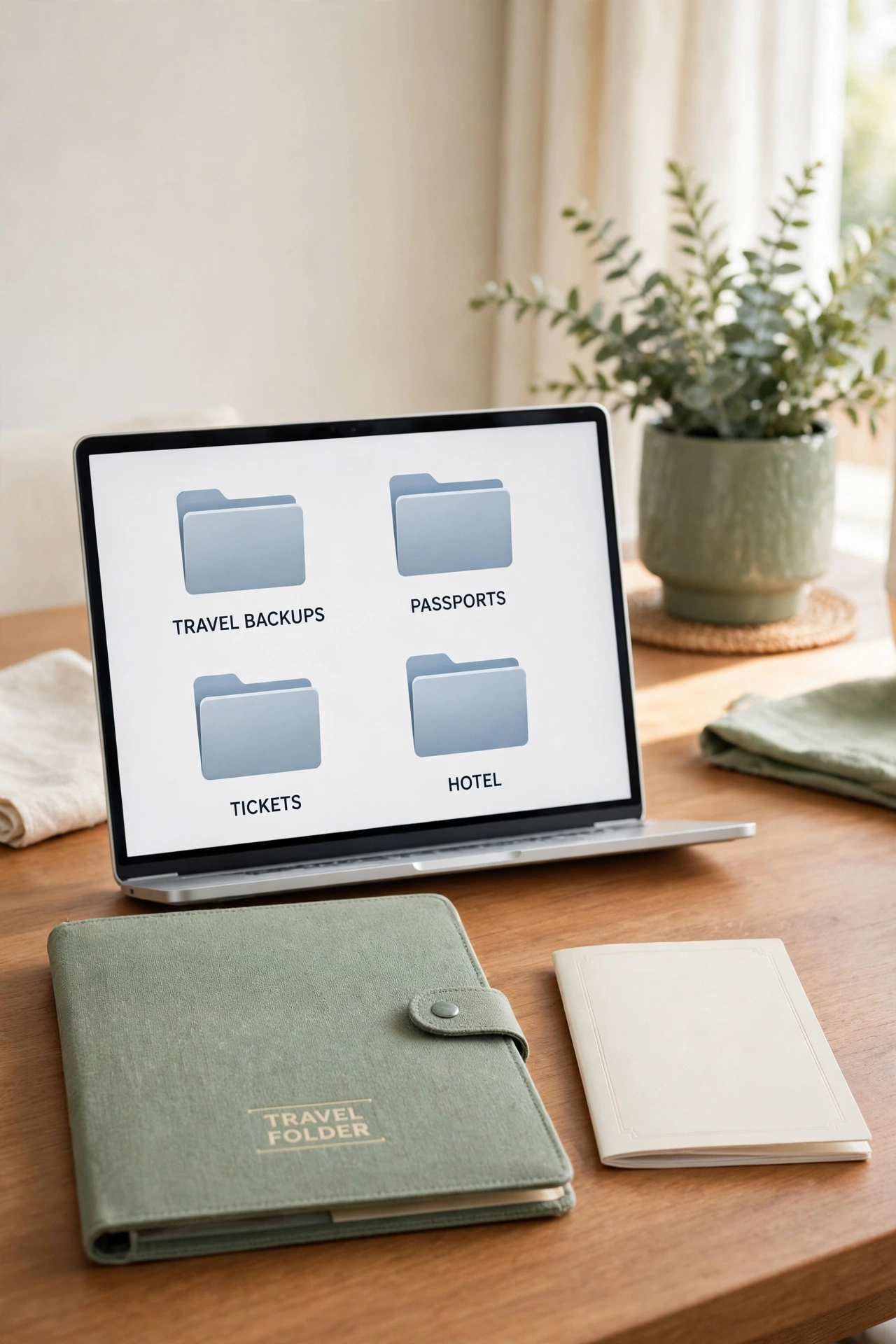
6. Make a Digital Backup Folder Before You Leave
Before you leave home, scan or photograph every important travel document and save the copies in one digital folder. Include passports, visas, tickets, hotel confirmations, insurance cards, and the itinerary. Name the folder with the trip name and dates so you can find it in seconds.
Save the folder in a cloud account that you can open from any phone or computer. Share access with one trusted adult at home as well, so a copy is always within reach. The same careful naming and sorting that works for these digital photo organization ideas keeps your travel backups just as easy to find.
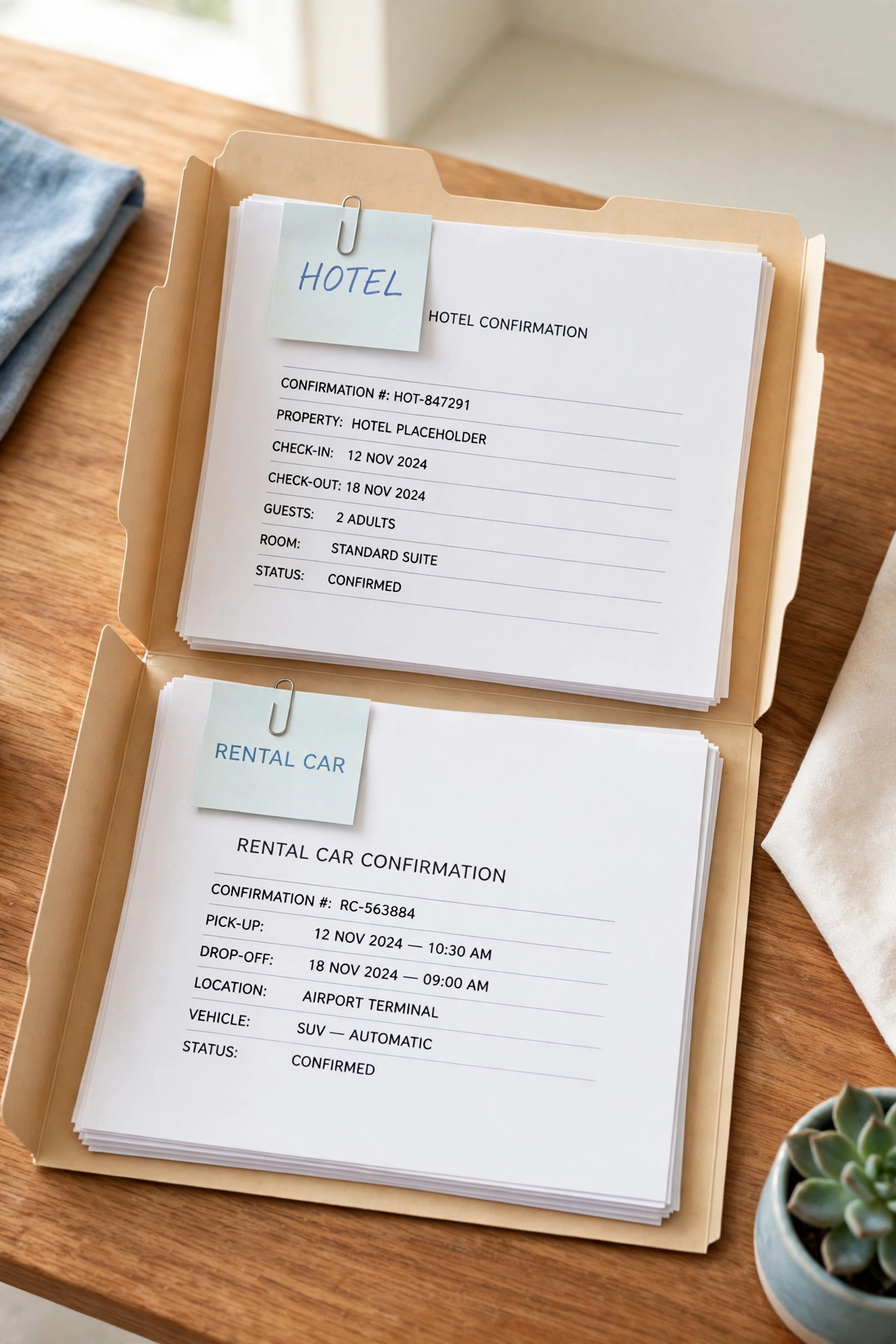
7. Store Hotel and Rental Confirmations Together
Hotel bookings, rental car papers, and vacation rental instructions belong in one section of your folder. Group them in the order you will need them, starting with the first night stay. Each confirmation sheet should show the address, check in time, and reservation number clearly.
Paperclip the confirmation for each stay to a small note card with the address and the host phone number. When you arrive tired after a long drive, you hand over one sheet instead of searching your inbox. After checkout, move the papers for that stay to the back of the section to keep the next stay on top.
8. Pack an Insurance and Medical Papers Envelope
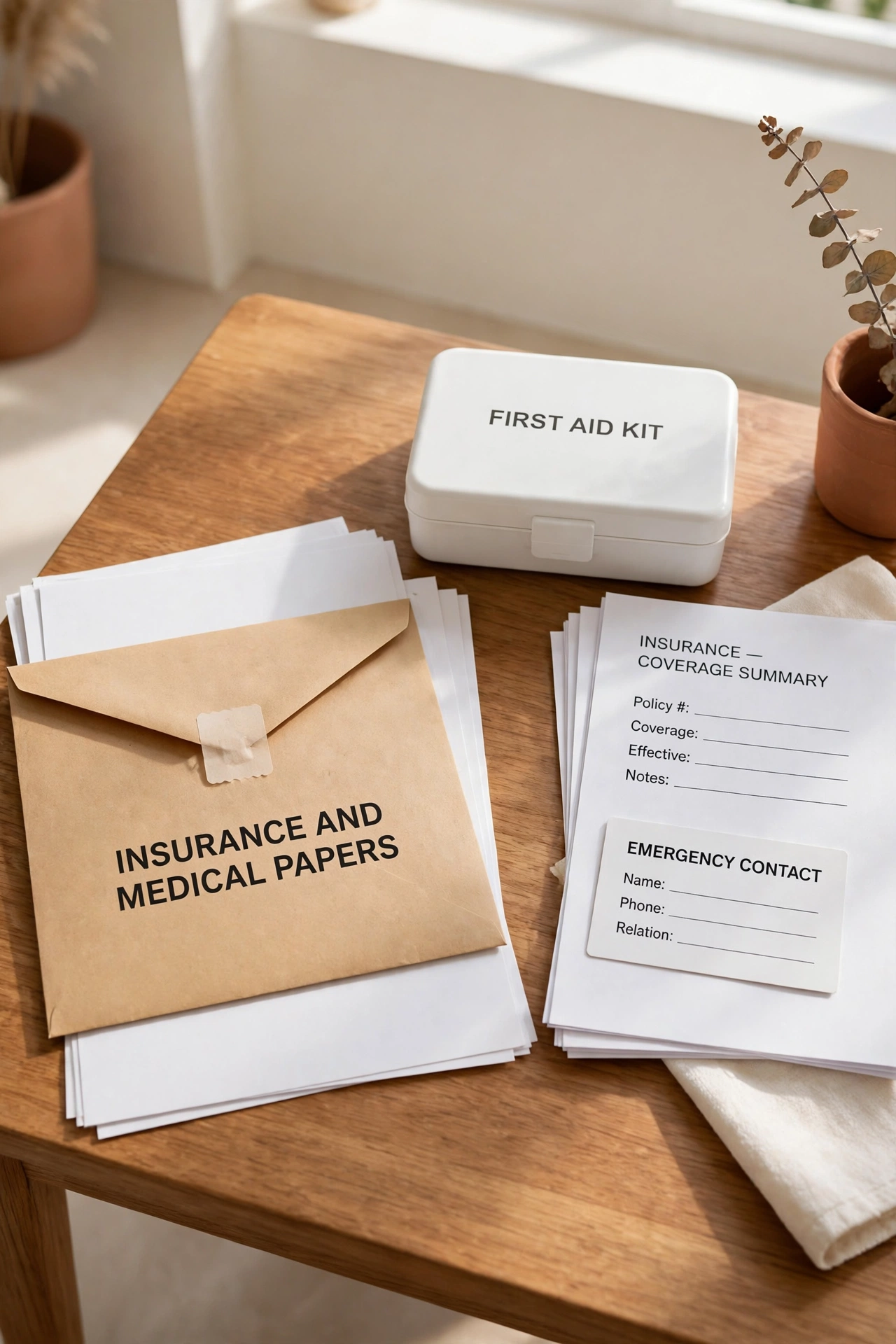
Travel insurance details, health insurance cards, and a list of family medications deserve their own envelope. Label the envelope clearly and keep it in the middle of your folder where it stays flat and protected. In an emergency, you should be able to find this envelope without thinking.
Add a small card inside with allergy notes and emergency contact numbers for each family member. Include copies of vaccination records if your destination asks for them. The envelope stays sealed and untouched on most trips, and that is exactly the point of having it ready.
9. Keep a Home Base Copy File for Emergencies
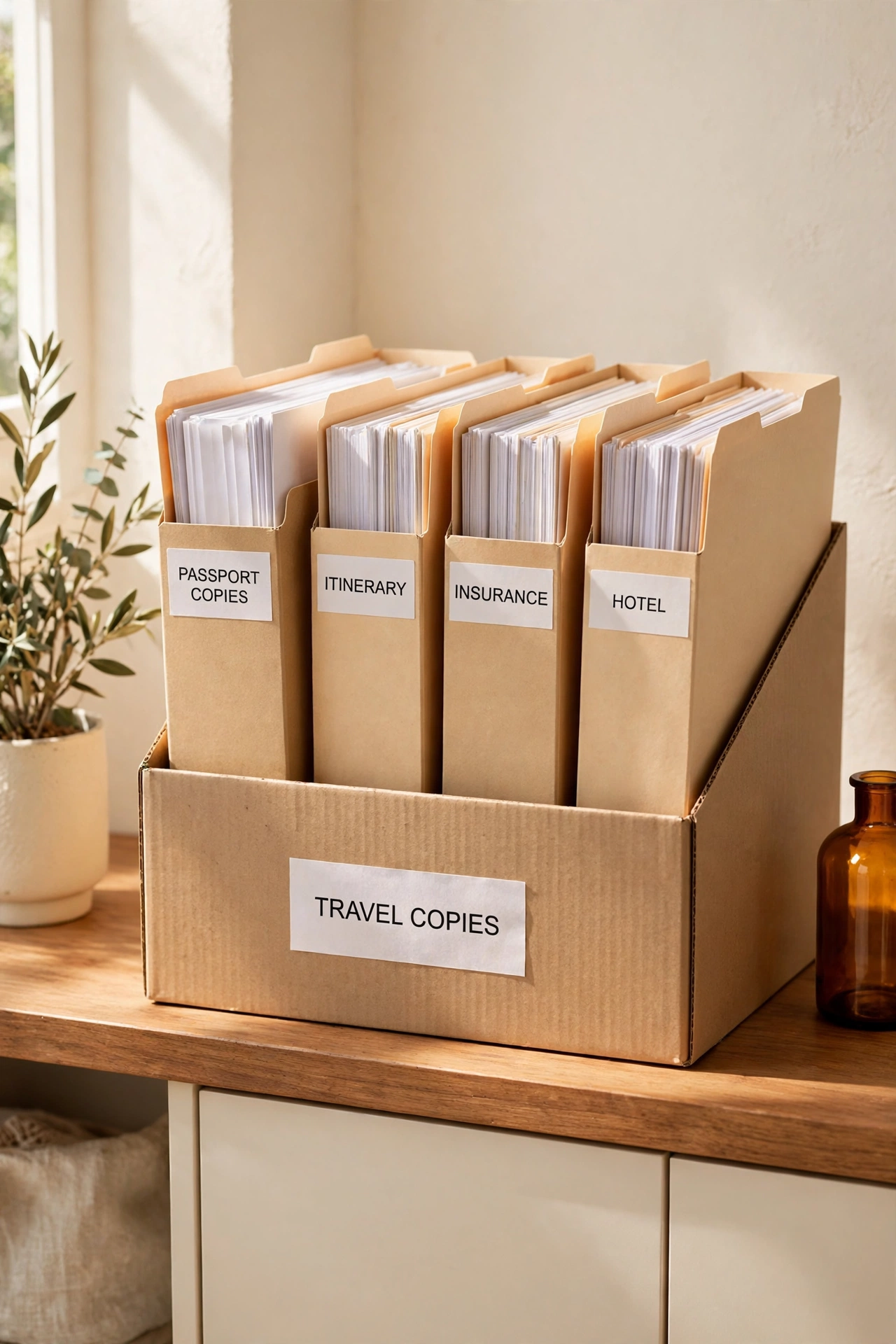
Leave a second set of copies at home in a labeled file that a trusted person can open. The file holds copies of passports, the itinerary, insurance papers, and hotel bookings. If your documents are lost or stolen abroad, one phone call home brings every detail back within reach.
Store the copy file with your other household papers so it is easy to find in a hurry. These important document storage ideas show how to keep home files safe and sorted all year. Your travel copy file simply joins that system for the length of the trip.
10. Use a Checklist Pouch for Tickets and Boarding Passes
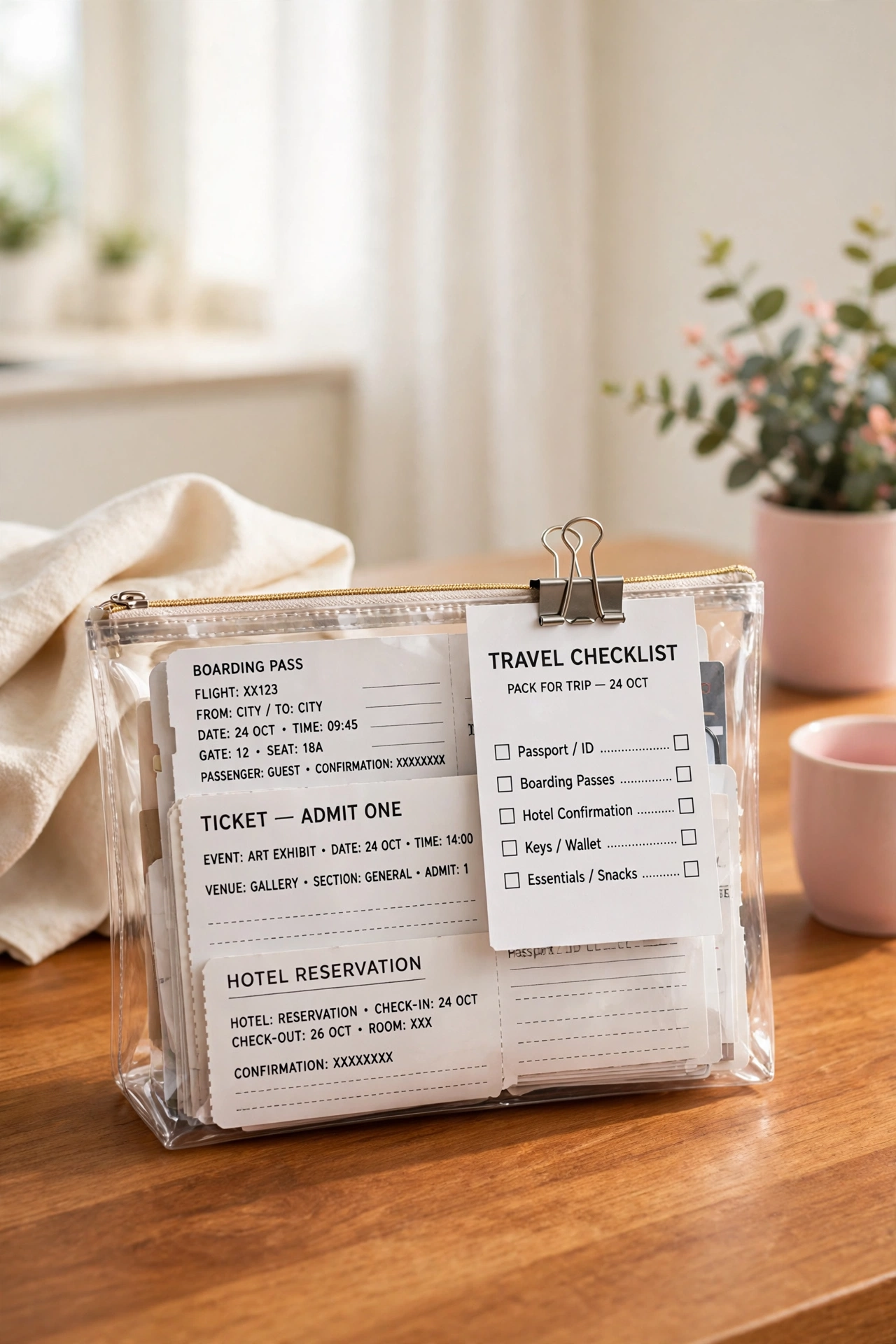
A clear zippered pouch is the perfect home for paper tickets and printed boarding passes. The clear material lets you see every ticket without opening the pouch, and the zipper keeps small slips from escaping into the bottom of a bag. Clip a paper checklist to the front of the pouch.
On the checklist, write each ticket or pass your family needs and tick it off as you collect it. Count the tickets before you leave the house and again before you leave each hotel. That quick count catches a missing ticket while there is still time to fix the problem.
11. Separate Kids Documents in a Bright Folder
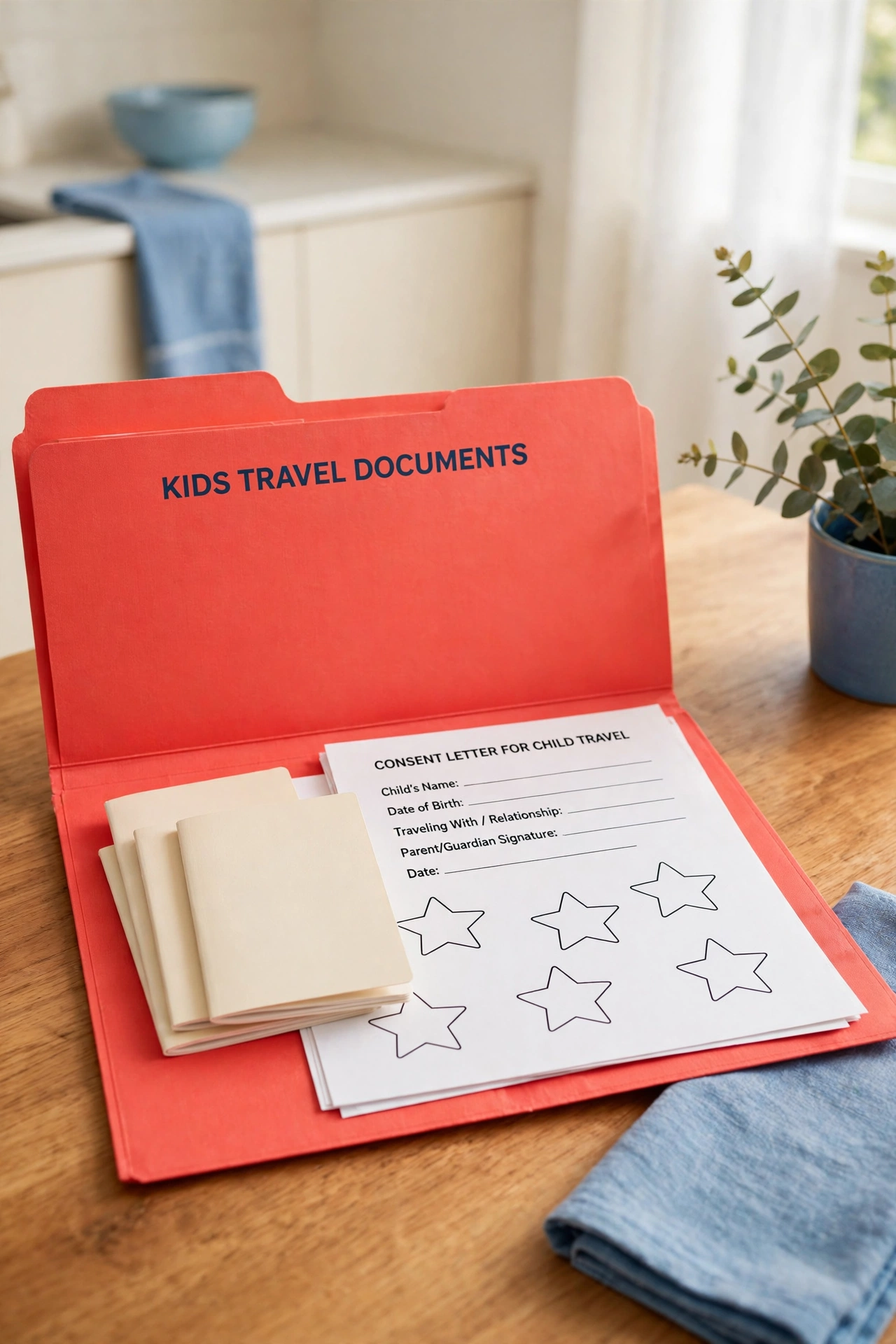
Kids travel documents are easy to lose inside a folder full of adult papers. Give the kids papers their own bright folder that stands out the moment you open the main folder. Inside, keep birth certificate copies, consent letters, and any school or camp forms for the trip.
Choose a bold color that no other folder in your system uses, so the kids folder is impossible to miss. Add a small pocket inside for stickers or a coloring sheet to keep little travelers happy during waits. When the trip ends, the bright folder goes straight back into the family folder for next time.
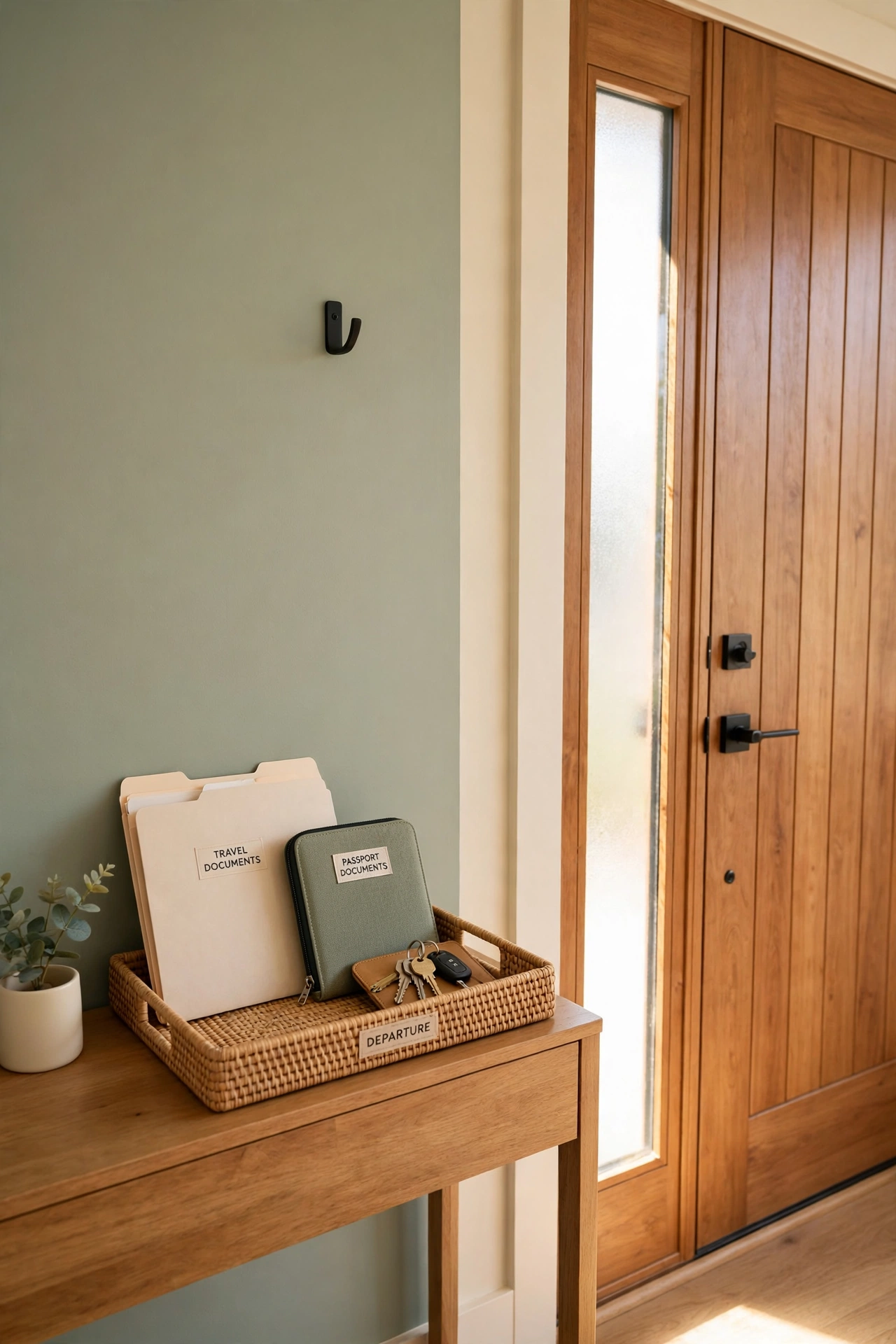
12. Set Up a Departure Day Grab Station
The night before departure, set up a small station near the door with everything that must leave the house. The travel folder, the document wallet, keys, and sunglasses all sit in one labeled tray. In the morning rush, you grab the tray contents and go, with nothing left behind on a desk.
Keep the station clear of everyday clutter so the trip items stay visible. A tray by the door works the same way as the landing zone in these entryway organization ideas, giving every item a landing spot the night before it is needed. When you return home, the tray holds the folder again until you unpack it.
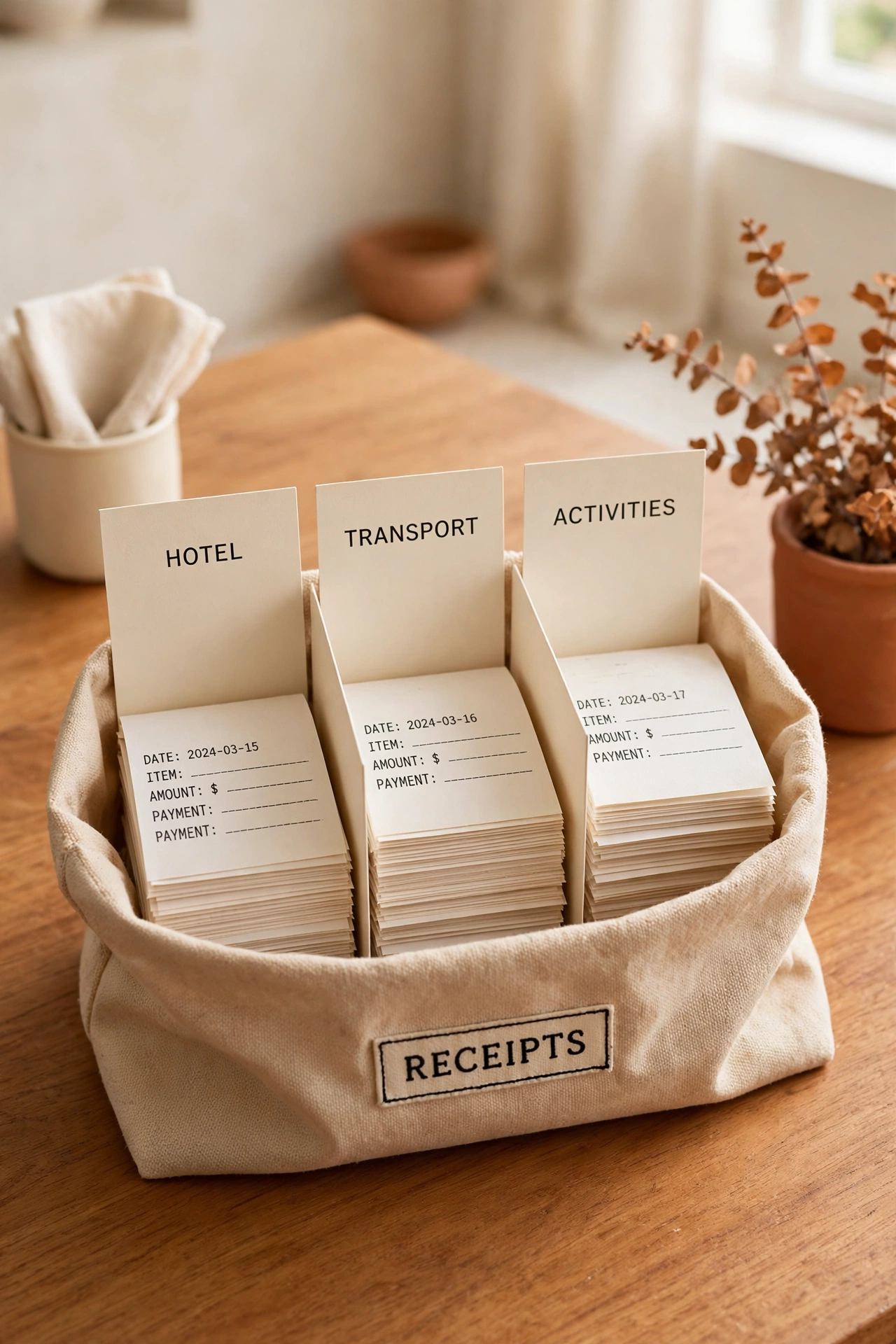
13. Carry a Small Pouch for Receipts on the Trip
Receipts pile up fast on a family vacation, from hotel bills to activity tickets and meal receipts. A small labeled pouch keeps them all in one place instead of scattered through pockets and bags. Sort the pouch once each evening and toss the slips you do not need to keep.
Use divider cards inside the pouch to separate hotel receipts, transport receipts, and activity receipts. At the end of the trip, the sorted pouch makes expense tracking simple and fast. If you ever need to dispute a charge, the receipt is already sorted and waiting.
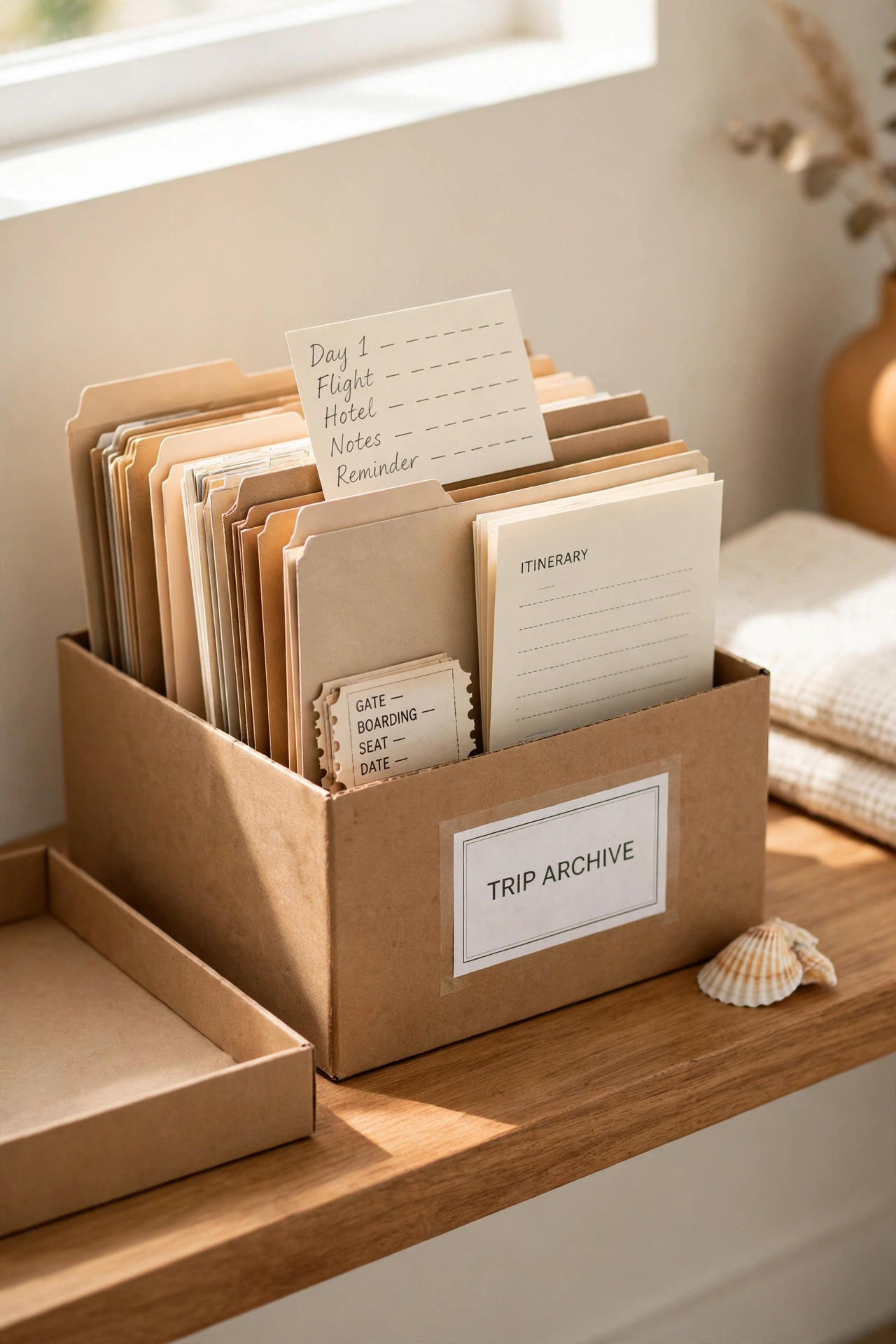
14. File Everything in a Trip Archive Box When You Return
When the vacation ends, do not toss the folder into a drawer and forget it. Move the trip papers into a labeled archive box with the trip name and year on the front. Keep boarding pass stubs, ticket stubs, and the printed itinerary as memories, and keep confirmations until any billing question is settled.
Store the archive box on a shelf with other family keepsakes, and write a short note on top with your favorite moment from the trip. Next year, when you plan a similar vacation, the old folder shows you exactly what worked. A tidy ending to one trip makes the start of the next trip much easier.
Conclusion
Travel documents do not have to cause stress at the airport or at the hotel desk. One folder, one sleeve per person, and one backup set of copies cover almost every situation a family vacation can bring. The system takes less than an hour to set up and saves you worry on every trip after that.
Start with the folder and the sleeves, then add the binder, the backup folder, and the grab station as they fit your family. Pack the folder with the same care you pack your bags, and keep your luggage just as organized with these luggage storage ideas. Your next family vacation will start calm, stay calm, and end with every paper right where it belongs.
Frequently Asked Questions About Travel Document Organization Ideas for Family Vacations
What travel documents should a family carry on vacation?
Carry passports or ID cards for every family member, plus tickets, hotel confirmations, rental car papers, travel insurance details, and a printed itinerary. Families with young kids should also carry birth certificate copies and a consent letter if only one parent travels. Keep a digital backup copy of each document in a cloud folder as well.
Should I carry original documents or copies while sightseeing?
Carry copies for daily sightseeing and leave originals locked in the hotel safe whenever the destination allows it. Keep one original ID with you for any check that asks for it, and keep the rest of the originals together in your document wallet. Always check local rules, since some places ask visitors to carry an original passport.
How do I organize travel documents for kids?
Give the documents for kids their own bright folder inside the main family folder, with one labeled sleeve per child. Include birth certificate copies, consent letters, and any forms for activities or camps. A bright folder is easy to spot in a hurry and keeps small papers from getting lost among adult documents.
What should I do if a passport is lost during a trip?
Contact your embassy or consulate right away and report the loss to local police if the embassy asks for a report. Your digital backup folder and your home base copy file give the embassy the passport number and details it needs. Travel insurance may cover replacement costs, so keep the insurance envelope close at hand.
How long should I keep travel documents after a vacation?
Keep confirmations and receipts until all bills are settled and any travel insurance claim window has closed, usually a few months. Keep ticket stubs and itineraries as long as you like in a trip archive box. Shred any paper that shows full passport numbers or payment details before you throw it away.

Hi, I’m Emily! I turn messy corners into cozy, organized spots. DreamNestDecor is where I share simple, practical home ideas — decor, organization, and small-space solutions that work in real life, not just in photos. Every idea here is carefully researched before it’s shared.