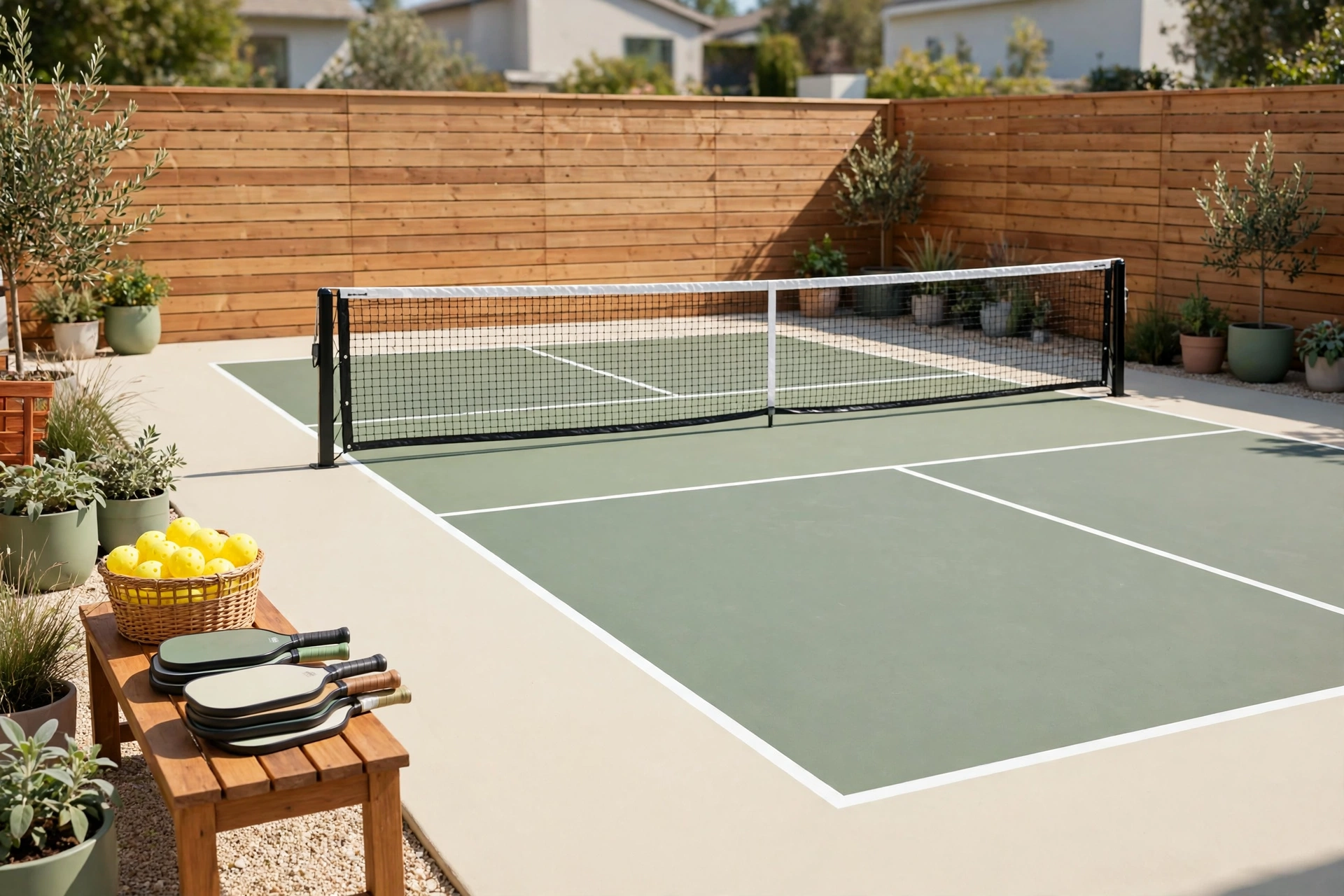
Picture this: you step into your backyard on a sunny morning, a pickleball paddle in your hand, and a clean court waiting for the first serve of the day. The net is taut, the lines are crisp, and a basket of bright balls sits ready by the fence. That easy start to a game is exactly what a well-planned home pickleball court gives you every single day.
You do not need a huge yard or a professional budget to make it happen. All you need is a flat surface, a net, and a few smart choices about layout and storage. These 23 backyard pickleball court ideas for home recreation will help you build a court that fits your yard, your budget, and the way your family loves to play.
1. Paint a Court on Your Existing Concrete Patio
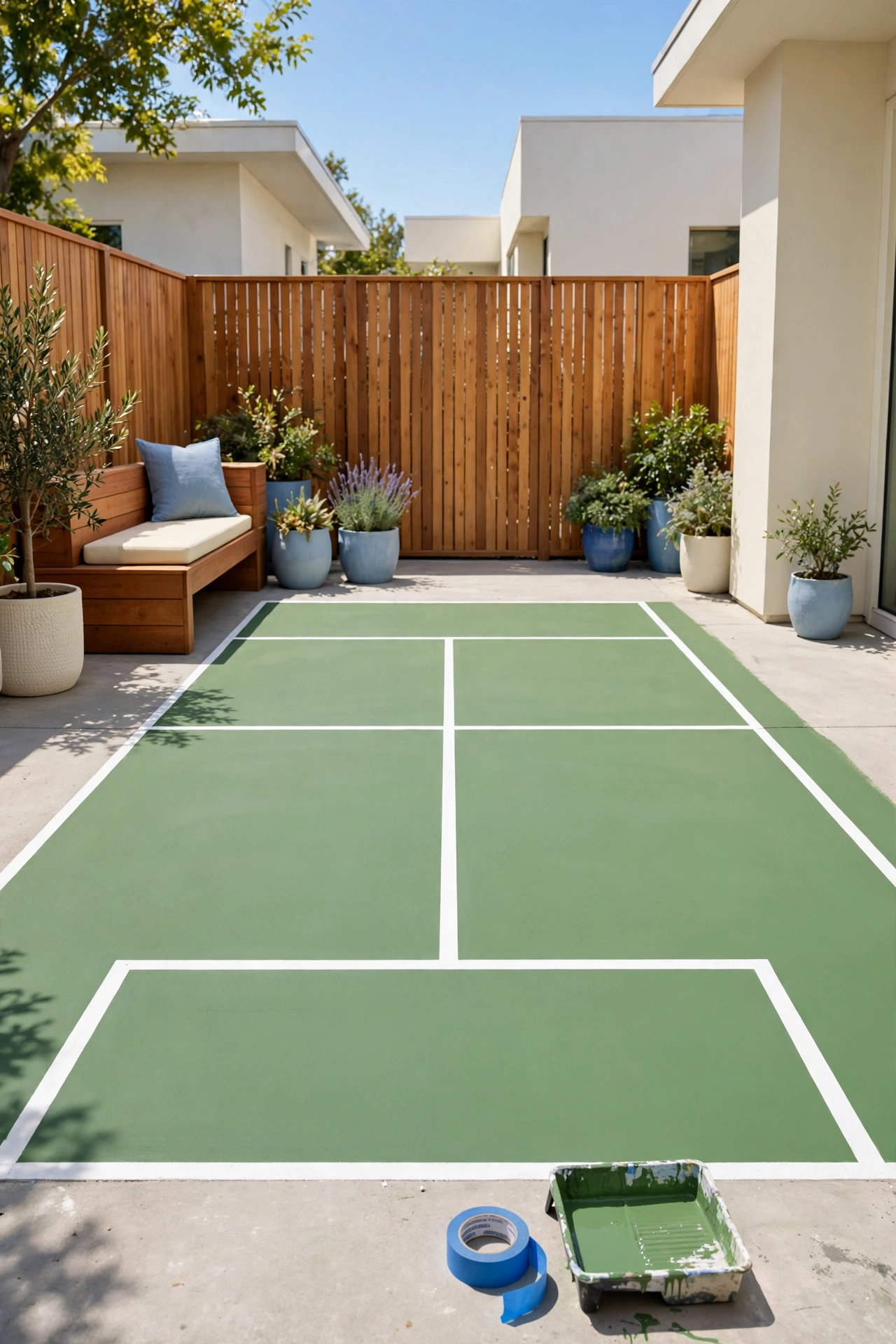
A flat concrete patio is often the fastest starting point for a home pickleball court. Measure the standard court size, mark the lines with painter tape, and paint them with outdoor court paint in a color that stands out against the concrete. You get a playable court without pouring a single new slab.
Choose paint made for outdoor sports surfaces so the lines stay bright through rain and sun. A green or blue court with white lines is easy to read during fast rallies. Clean the patio first so the paint bonds well and lasts for many seasons of play.
2. Use a Portable Net You Can Set Up in Minutes
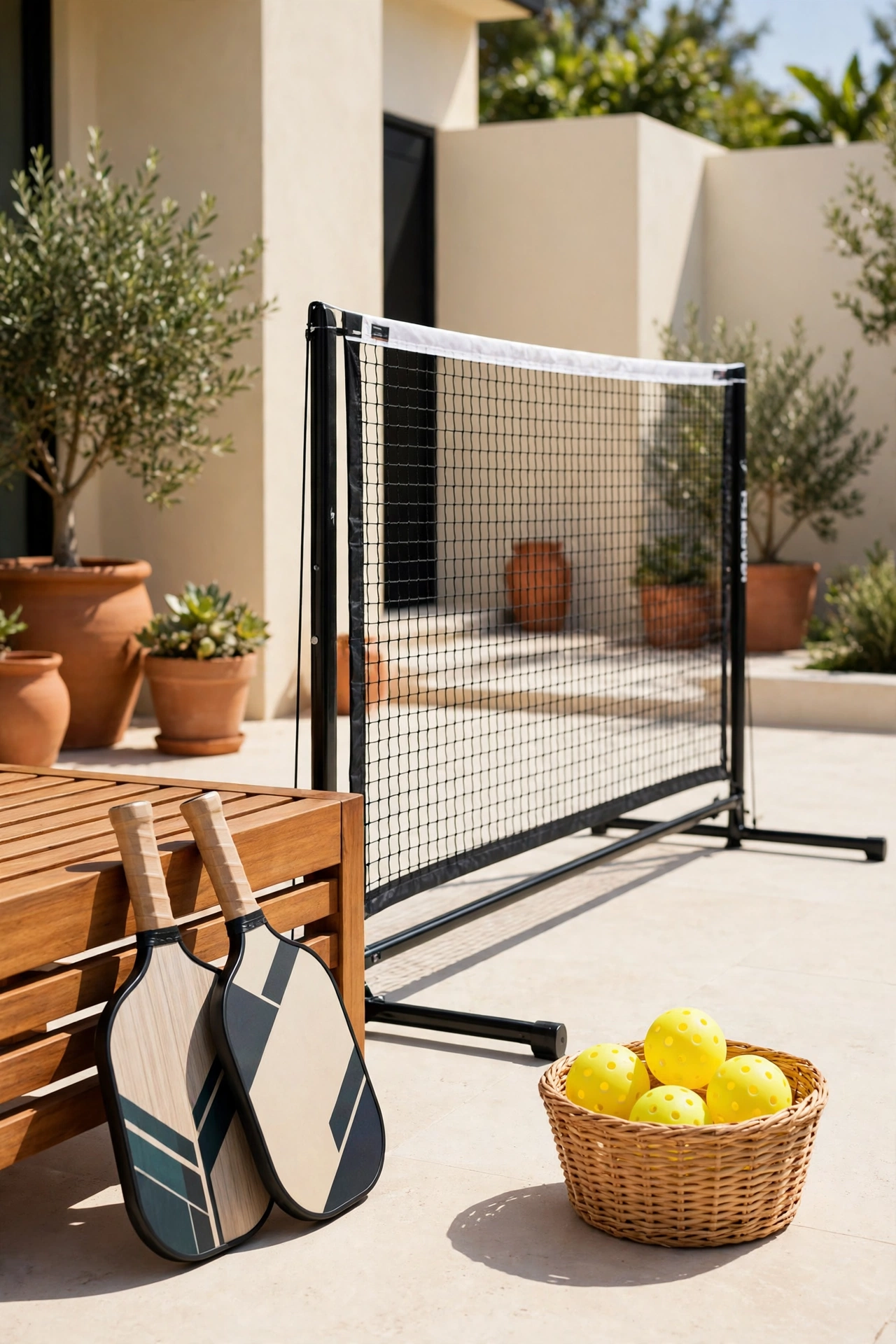
A portable pickleball net turns almost any flat driveway or patio into a court in minutes. The net folds into a carry bag, sets up without tools, and breaks down just as fast when the game ends. This is the simplest way to start playing at home.
Look for a net with a sturdy metal frame and a center strap that keeps the height correct. Store it in a dry spot near the court so setup takes almost no time at all. A portable net also lets you move the game to a park or to the yard of a friend whenever you like.
3. Choose Interlocking Court Tiles for a Quick Surface
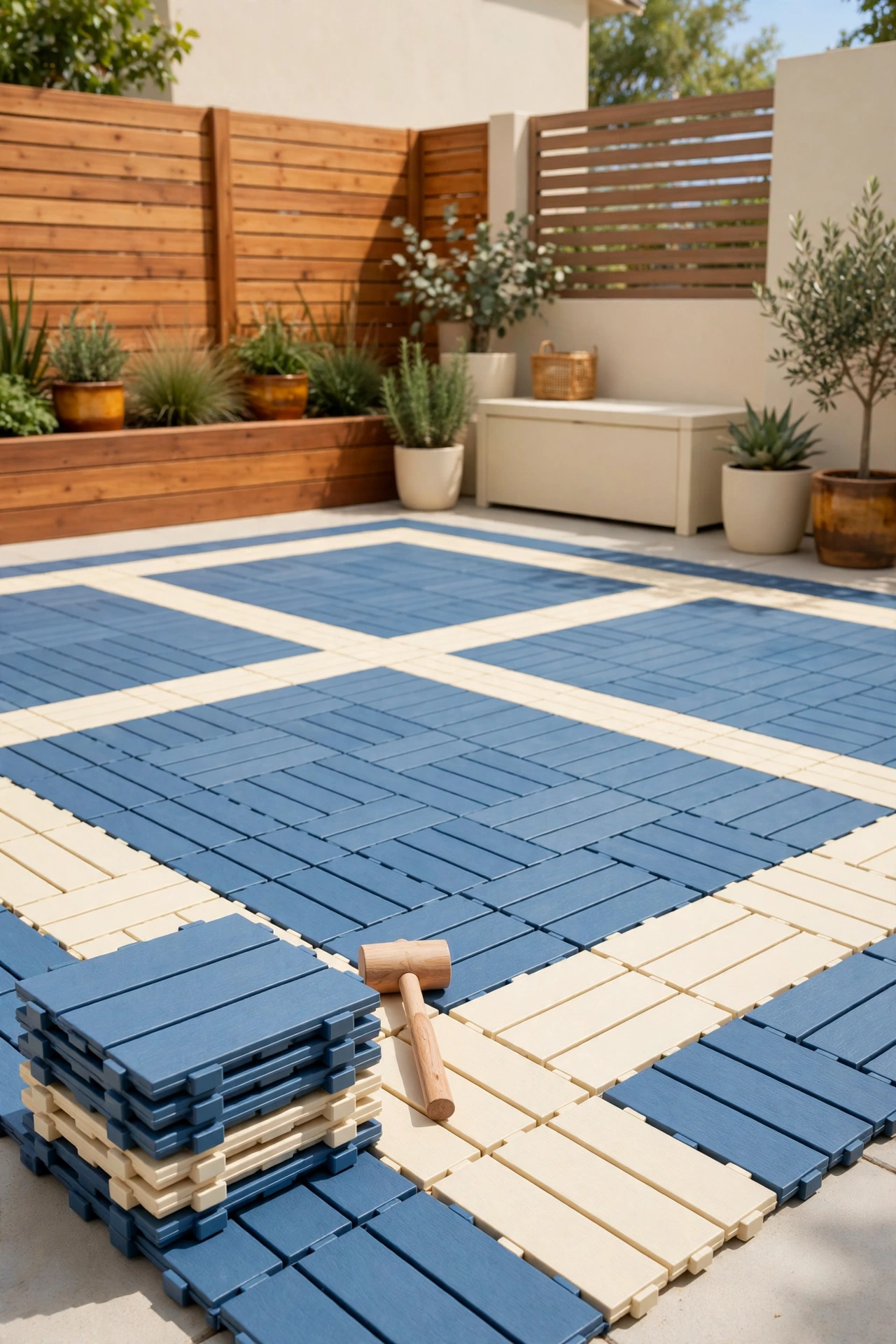
Interlocking court tiles snap together over concrete or asphalt to create a smooth, grippy playing surface. The tiles come in many colors, so you can mix a main court color with a different shade for the kitchen zone. Installation takes a single afternoon with no special tools.
Tiles also drain well after rain, which means the court dries fast and stays safe to play on. Pick tiles rated for outdoor sports so they resist sun damage and stay flat through hot summers. A tiled court looks polished and professional without the cost of a poured acrylic surface.
4. Add a Fence Around the Court to Keep Balls in Play
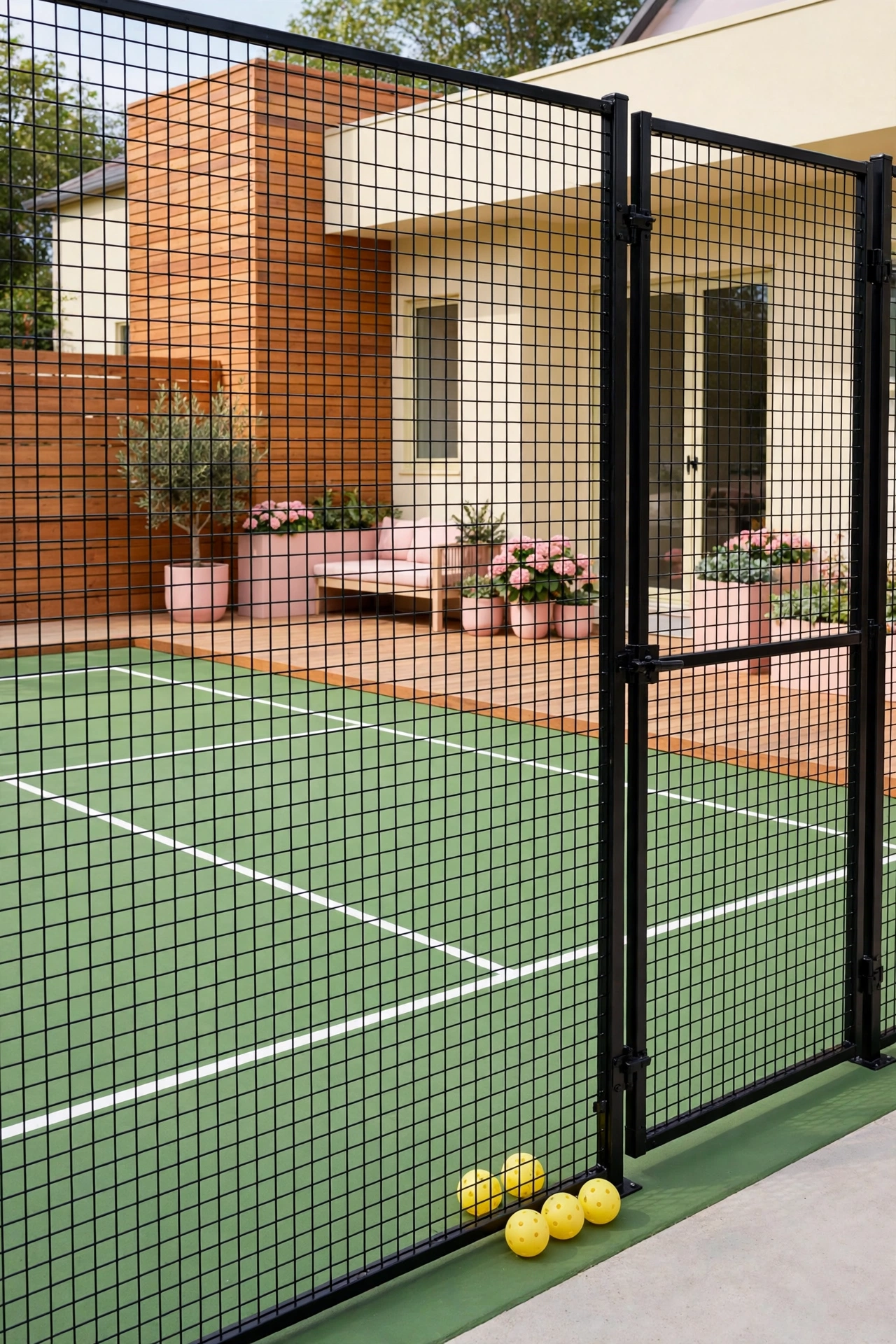
A fence around your pickleball court saves time and keeps every rally going. Balls that fly out of bounds bounce back instead of rolling into flower beds or under the deck. A simple chain link or mesh fence works well and lets light and air pass through.
Build the fence at least ten feet high on the ends behind the baselines, where most stray balls travel. A gate on one side gives easy access for players and for mowing the grass. A fenced court feels like a real sports space and keeps the game moving without constant ball chasing.
5. Install Court Lights for Evening Games
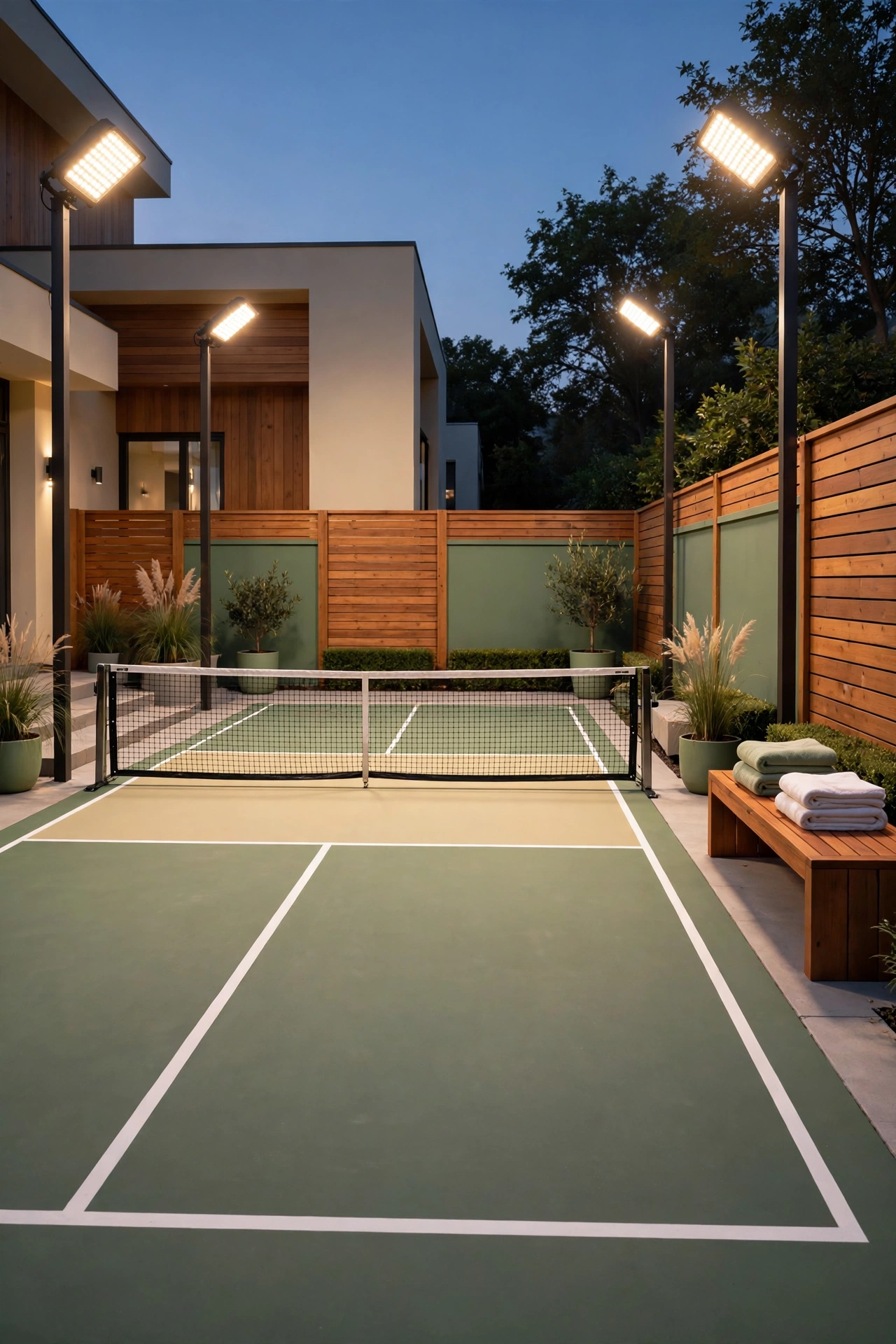
Court lights let you play pickleball long after the sun goes down. Mount two or four LED floodlights on tall poles at the corners of the court, angled down so they light the surface without blinding the players. Evening games become a regular part of summer nights.
Choose warm white LED lights with a high brightness rating so the ball stays visible during fast rallies. A timer or a smart switch lets you turn the lights off from inside the house. Good lighting also makes the court safer, since players can see the lines and the ball clearly at every hour. For more ways to enjoy the yard after dark, see these backyard fire pit ideas for a warm gathering spot beside the court.
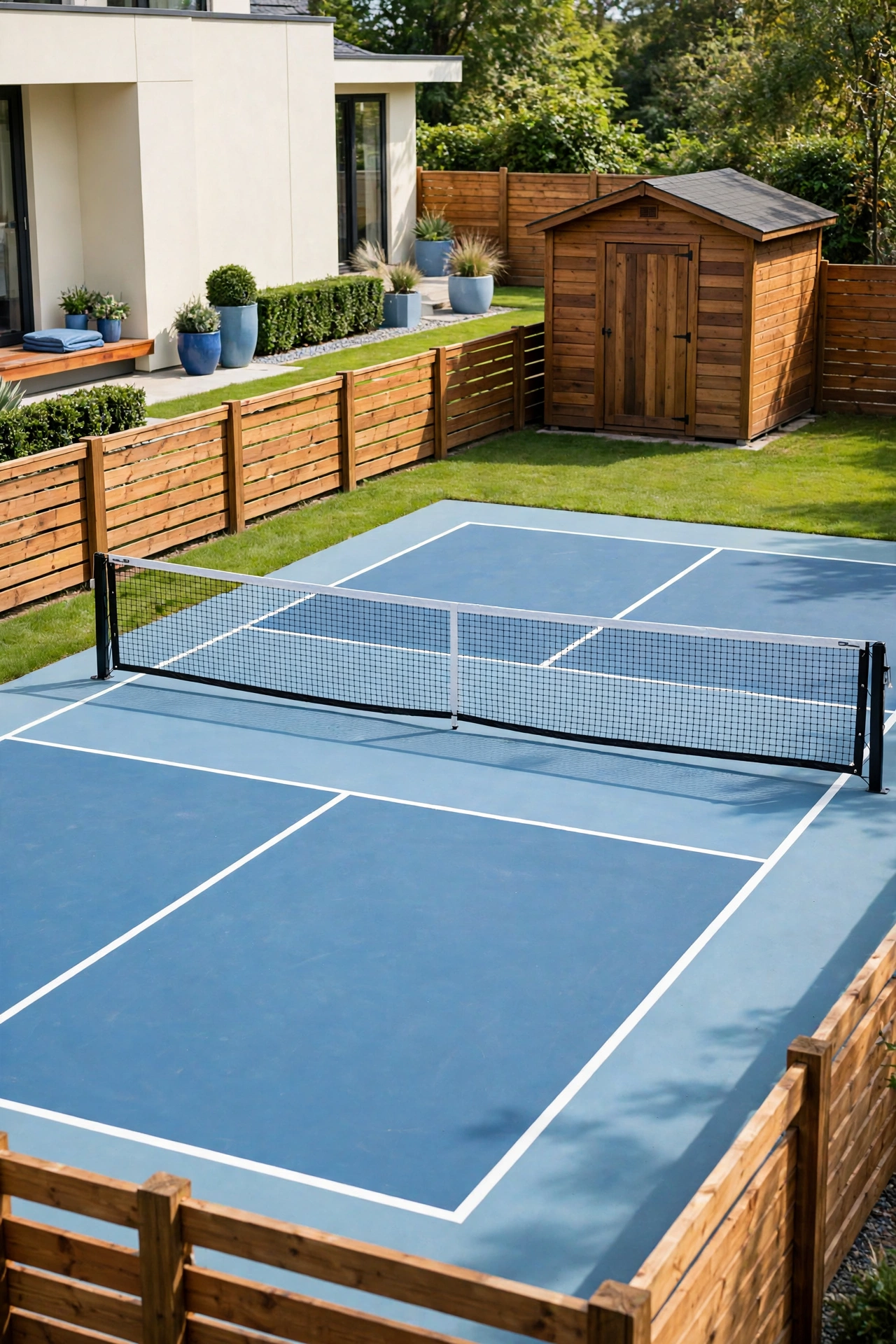
6. Build a Dedicated Court with an Acrylic Surface
A dedicated acrylic court is the closest thing to a professional playing surface you can build at home. A concrete base is coated with layers of acrylic paint mixed with fine sand, which creates a smooth, grippy texture that plays true in every weather. The court looks and feels like the ones at a club.
Plan the size carefully before you pour the base, since a full court needs about 30 by 60 feet including run-off space. Hire a local court builder if you want the surface perfectly level and the lines exact. An acrylic court is an investment, and it adds real value to a home that loves outdoor games.
7. Mark a Temporary Court with Chalk Lines
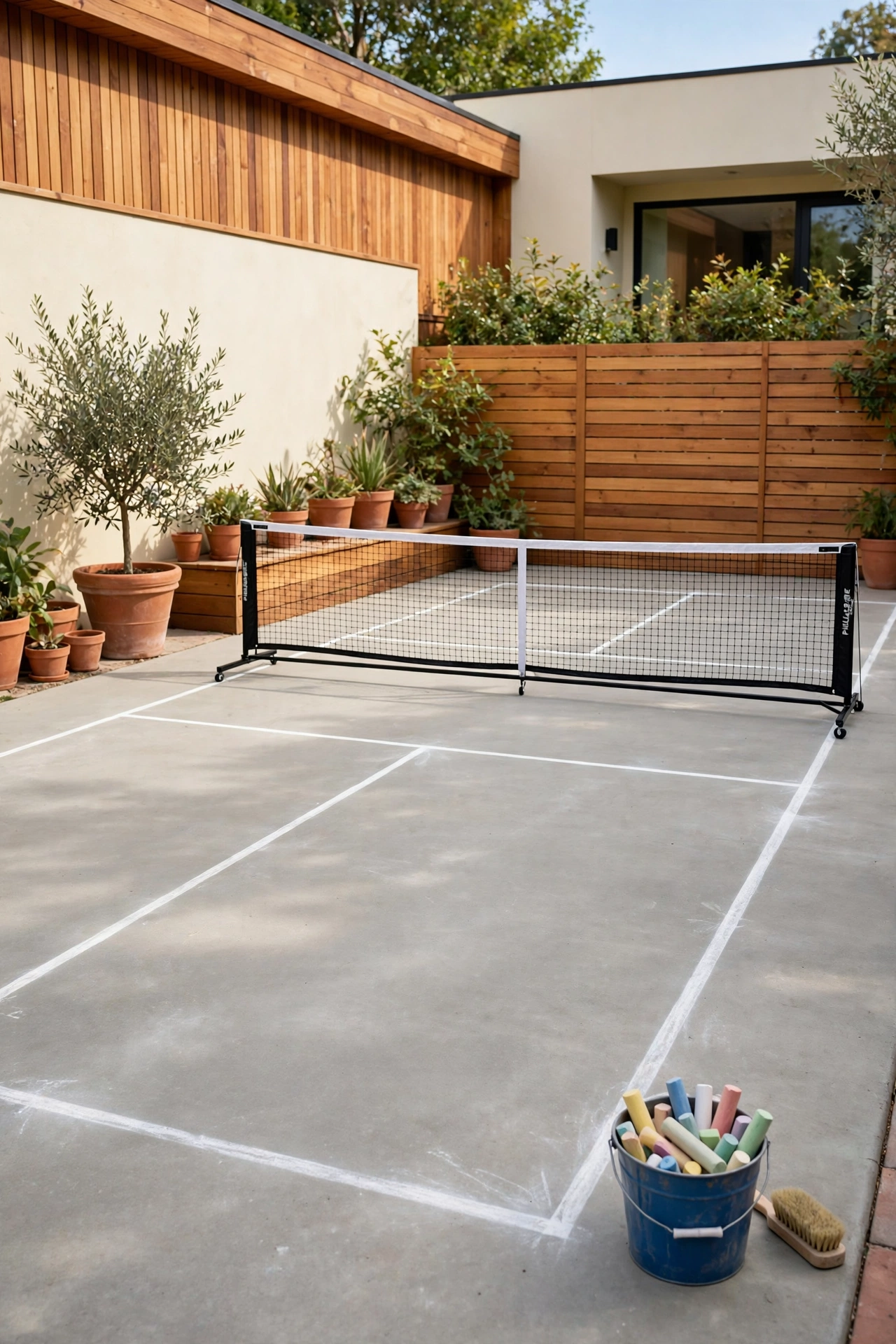
Chalk lines are the cheapest way to try pickleball at home before you commit to paint or tiles. Use a long tape measure, a chalk line reel, and sidewalk chalk to mark the court on a driveway or patio. The lines wash away with rain, so you can redraw them or change the layout anytime.
This method is perfect for a first game with friends or for teaching kids the rules. Keep a bucket of chalk and a small brush near the court so you can refresh the lines in minutes. Chalk lines cost almost nothing and let you test the court size in your yard before you build anything permanent.
8. Add a Ball Storage Bin by the Court
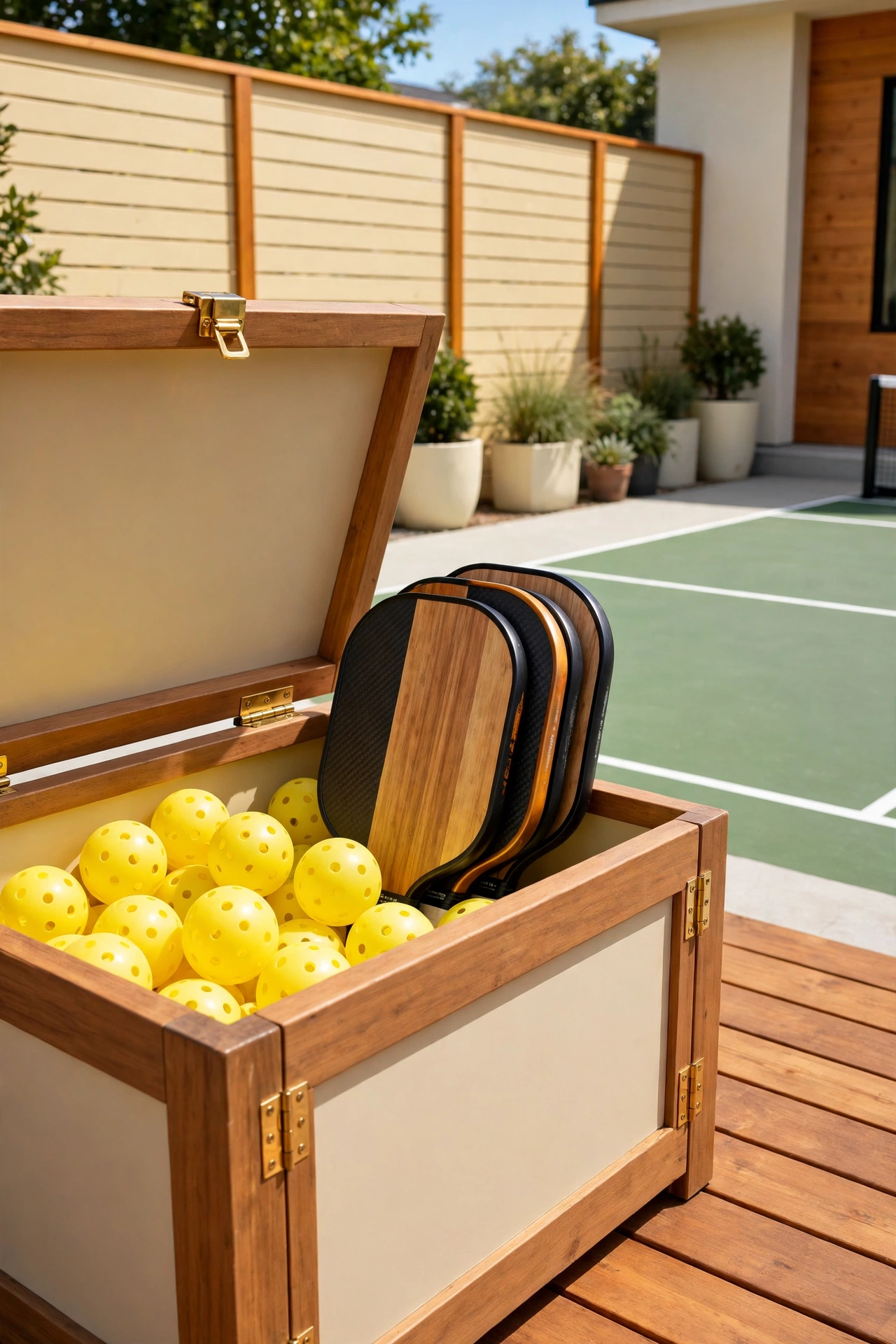
A ball storage bin beside the court keeps every pickleball in one place and off the grass. A weatherproof deck box or a large lidded basket holds dozens of balls, plus a few spare paddles and a towel. Players grab a ball and start the next rally without searching the yard.
Choose a bin with a hinged lid that opens easily with one hand. Label the bin clearly so kids know where the balls belong after the game. A tidy storage bin also protects the balls from sun and rain, which keeps them bouncing true for much longer.
9. Place a Paddle Rack Near the Net Post
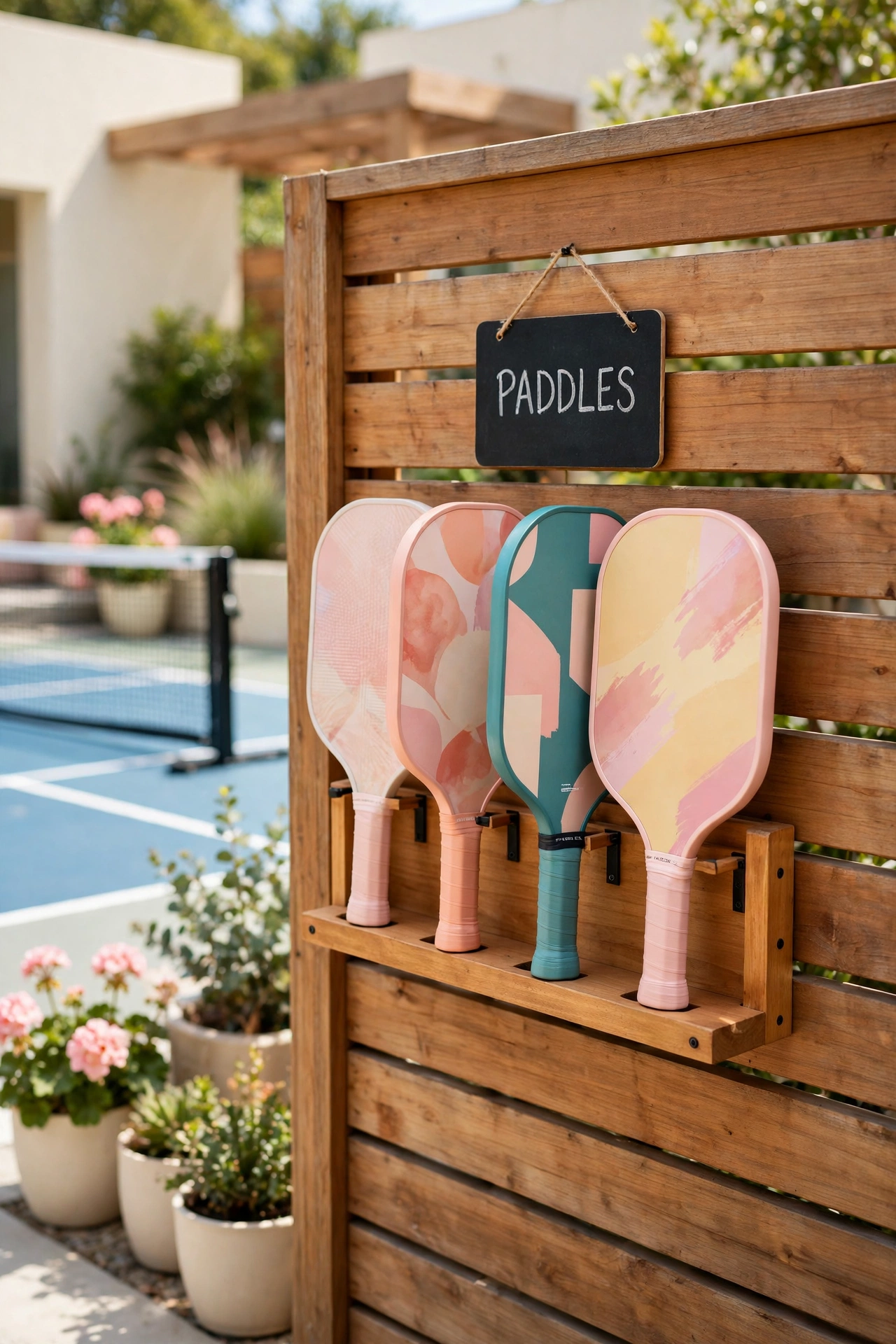
A paddle rack near the net post gives every player a clear place to store their paddle between games. A simple wooden rack with slots holds four or six paddles upright, so handles stay clean and faces stay free of scratches. The rack also shows at a glance who is waiting for the next game.
Mount the rack on the fence or on a post at the side of the court where it never blocks play. Label each slot with a name tag if several family members play regularly. A paddle rack turns a pile of gear on the ground into a neat, organized station that looks like it belongs at a club.
10. Create a Shaded Seating Area Beside the Court
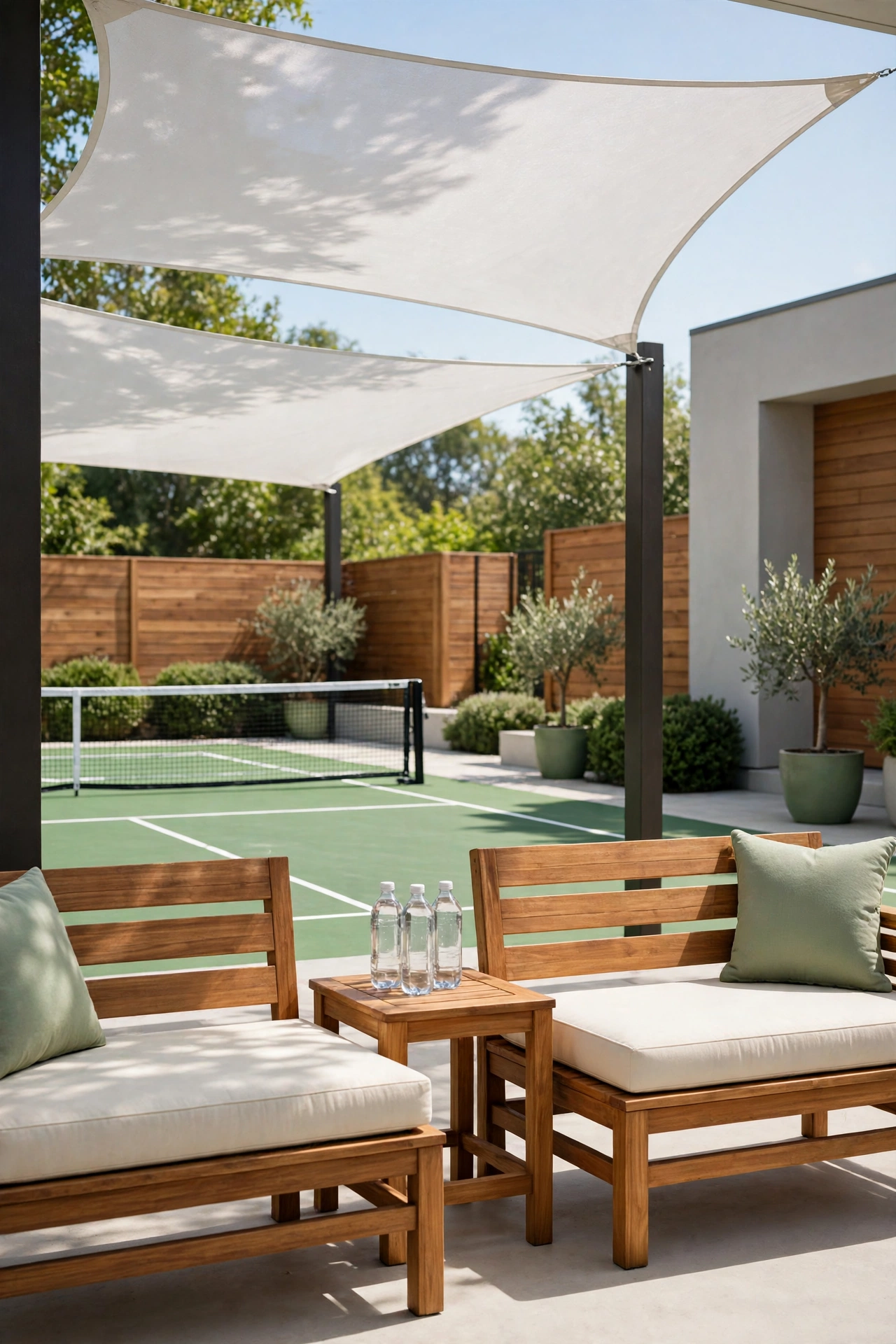
A shaded seating area beside the court gives players a cool place to rest between games. A simple bench under a shade sail or a pair of outdoor chairs beneath a small pergola is enough. Spectators also get a comfortable spot to watch the match.
Place the seating on the long side of the court, a few feet back from the fence, so it never blocks a stray ball. Add a small side table for water bottles and a few cushions in your accent color. A shaded rest spot makes the court welcoming for the whole family, even on hot summer days. If you want a larger shaded structure, these backyard pavilion ideas show how to build one that fits your yard.
11. Add a Scoreboard to Track Friendly Matches
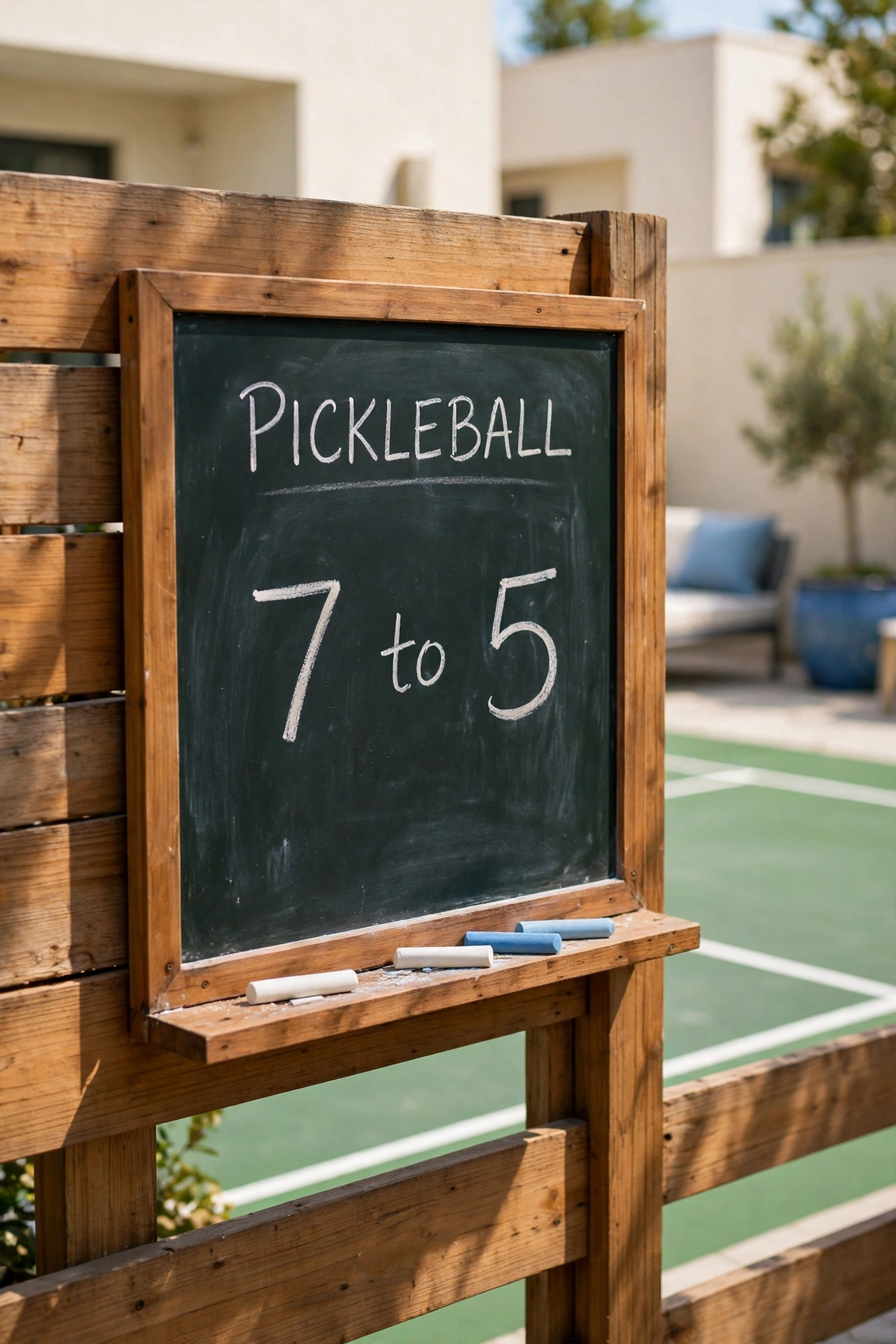
A scoreboard adds a fun competitive edge to every backyard game. A simple chalkboard or a flip-style scoreboard mounted on the fence lets players update the score after each point. Kids especially love keeping score, and it teaches them the rules of the game.
Mount the scoreboard where both teams can see it from the court without turning around. Use large numbers so the score stays readable from the far end. A scoreboard costs very little, and it turns a casual rally into a friendly match that everyone remembers.
12. Use a Windscreen on the Fence for Calmer Play
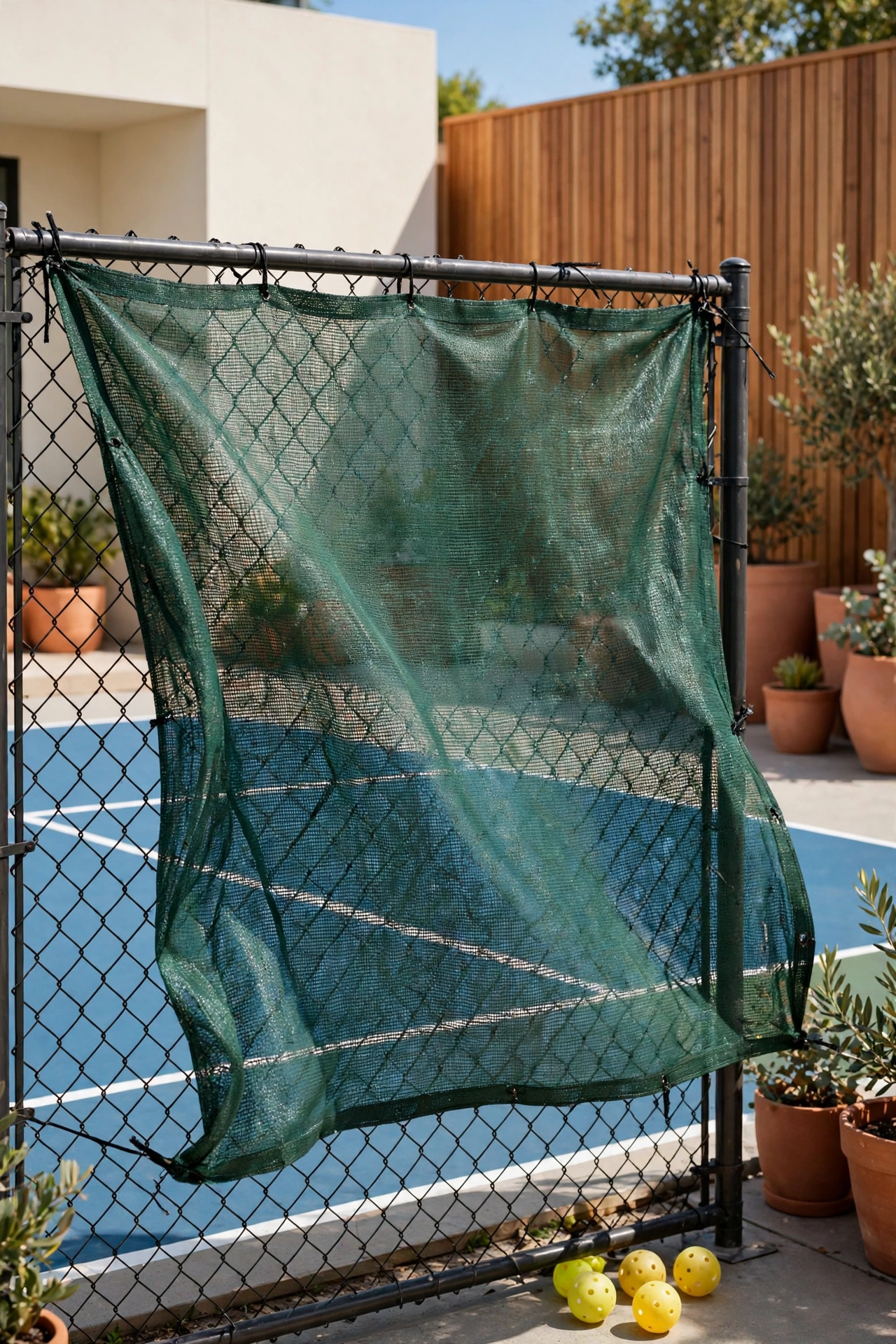
A windscreen attached to the fence cuts the wind across the court and keeps the light pickleball flying true. The mesh fabric blocks gusts without blocking light, and it also gives the court a clean, finished look. Games feel fairer when the wind stops pushing the ball around.
Choose a windscreen in a solid color that matches your court, and attach it with zip ties or grommets along the top and sides. Leave a small gap at the bottom so rain can drain away from the fence. A windscreen is one of the most useful upgrades for a backyard court in a breezy area.
13. Lay a Cushioned Surface for Kinder Knees
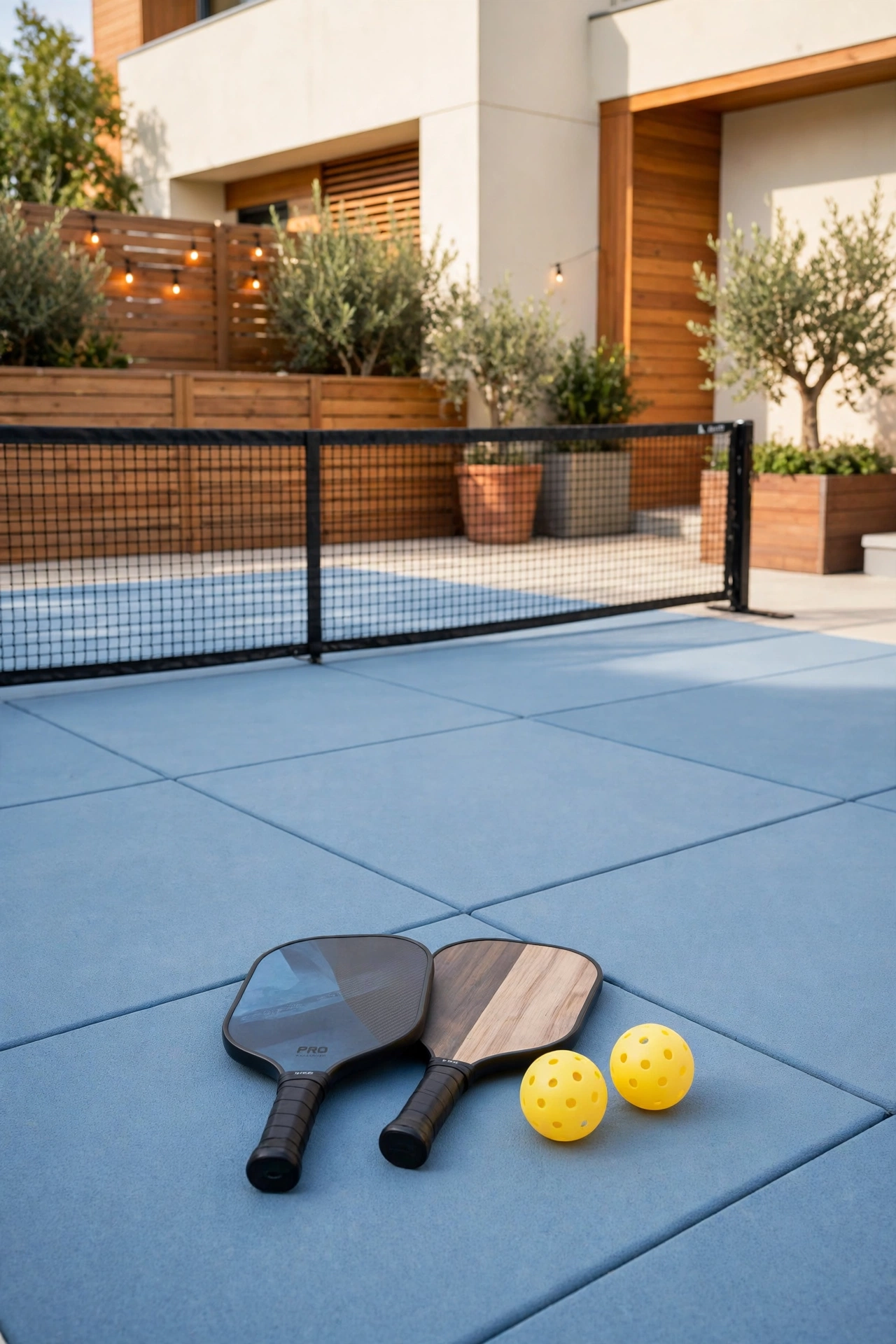
A cushioned court surface is gentler on knees, ankles, and backs than bare concrete. Foam-backed court tiles or a thick acrylic cushion coat absorbs impact with every step and jump. Older players and anyone with joint pain will notice the difference right away.
Cushioned tiles install the same way as standard tiles, so you can upgrade an existing court without starting over. The surface still grips well in every direction, which keeps play safe and fast. A softer court means longer games and fewer sore joints the next morning.
14. Add a Court-Side Water Station
A court-side water station keeps everyone hydrated without a trip back to the house. A small outdoor table with a large water jug, a stack of cups, and a few cold towels is all you need. Players refill between games and stay cool through long rallies.
Place the station in the shade near the seating area so the water stays cold. A small cooler with ice works even better on hot days. A water station is a simple touch that makes the court feel cared for and keeps every game safe and comfortable. For a bigger setup with a grill and a counter, these small DIY outdoor kitchen ideas show how to add a full refreshment corner to the yard.
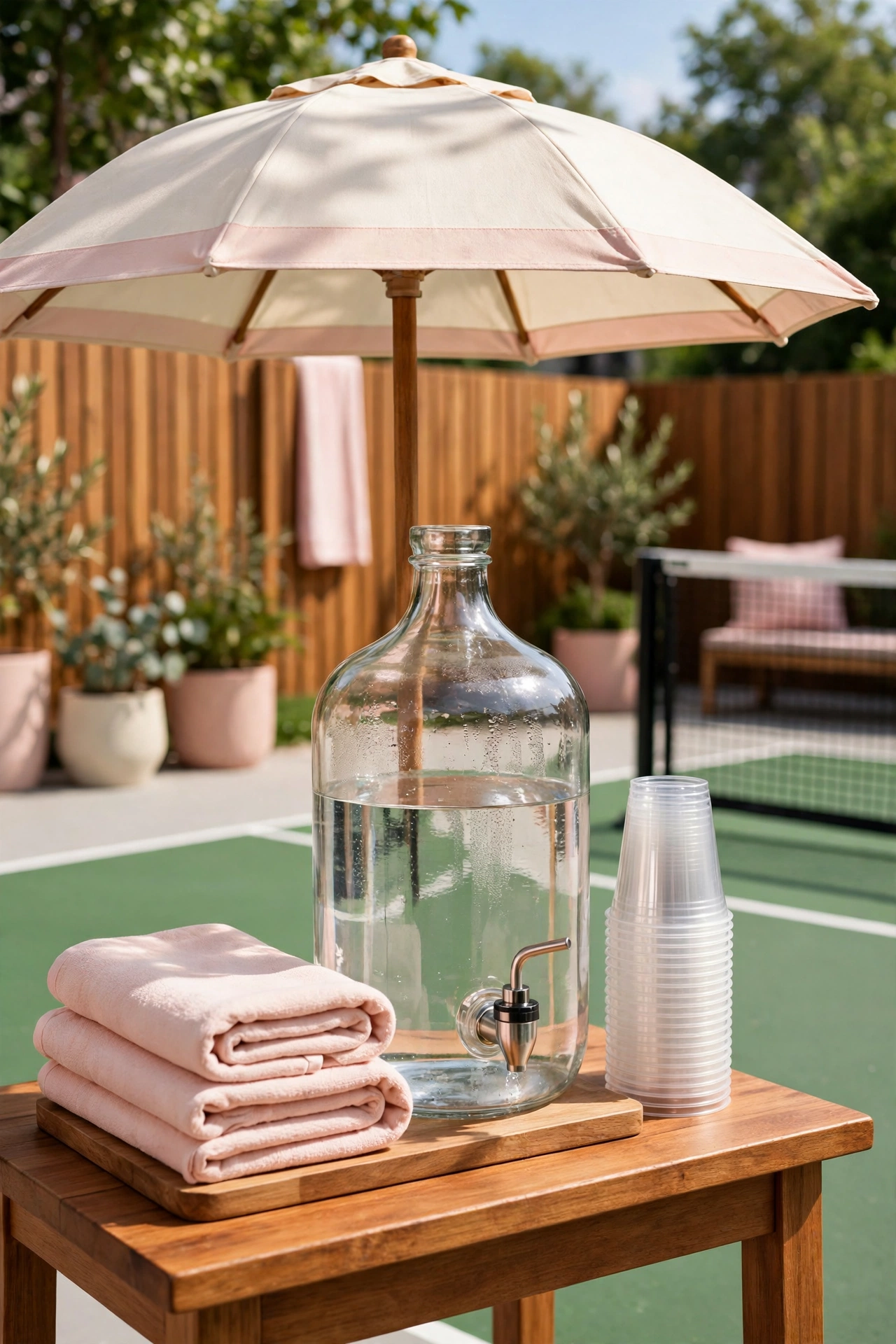
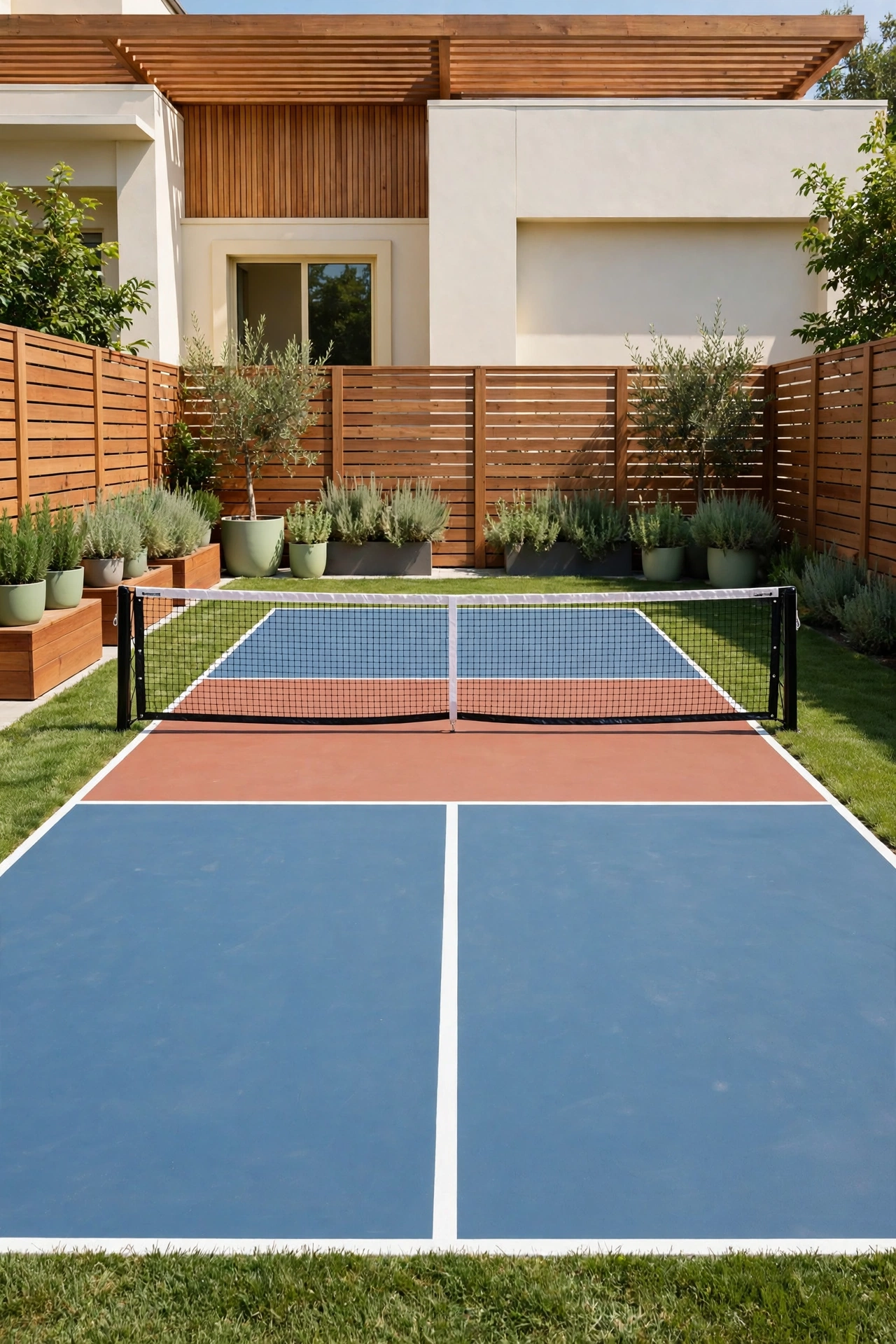
15. Paint the Court in Two Tones for Clear Boundaries
A two-tone court makes the playing zones easy to read at a glance. Paint the main court one color and the kitchen zone a different shade, with crisp white lines between them. Players see the non-volley zone clearly, which helps everyone learn the rules faster.
Pick colors with strong contrast, such as blue and green or terracotta and cream, so the zones stand out even in bright sun. Use the same two colors on the surrounding fence or seating for a coordinated look. A two-tone court looks sharp in photos and plays better because the boundaries are obvious.
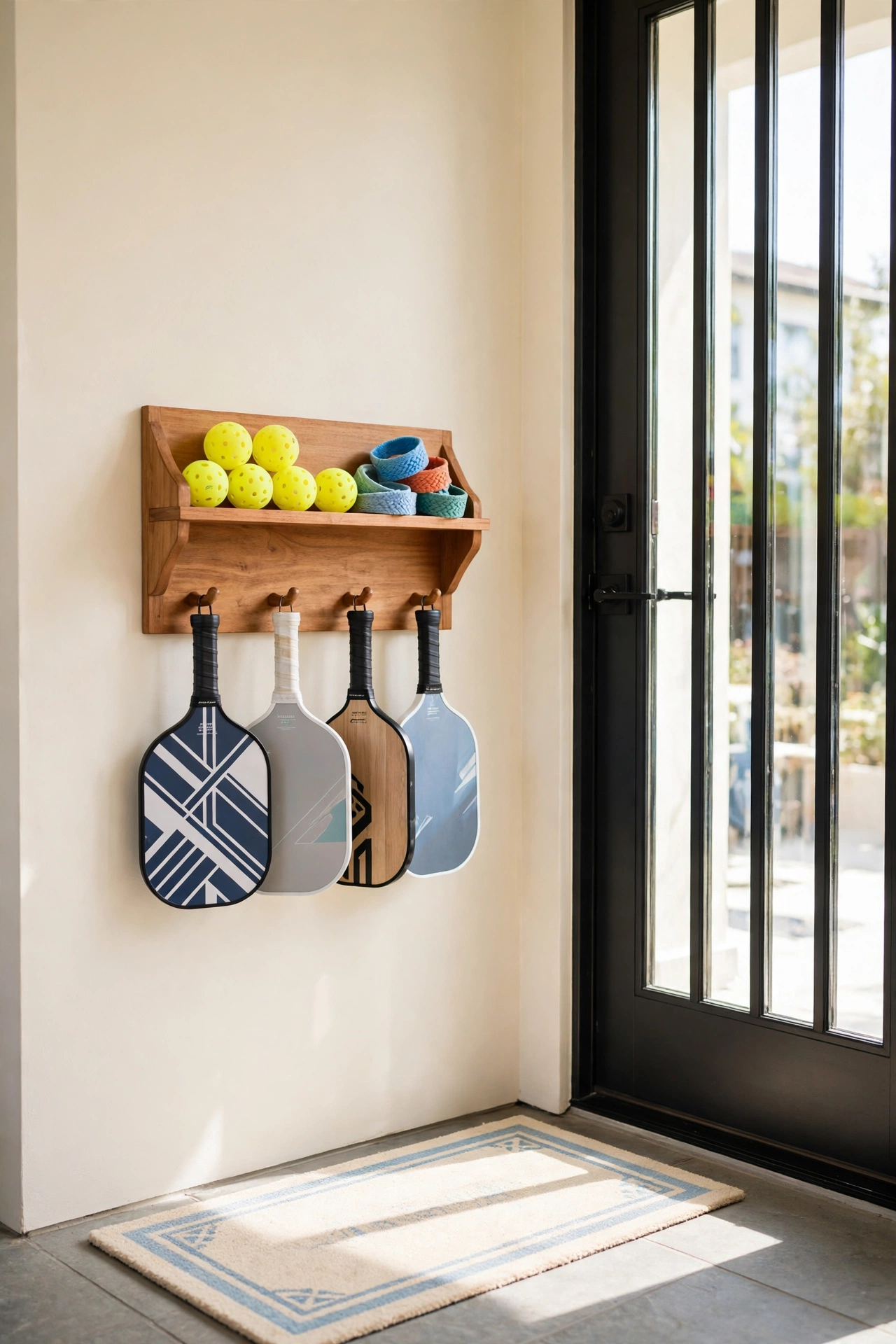
16. Store Paddles in a Wall-Mounted Rack by the Door
A wall-mounted paddle rack by the back door keeps gear organized and ready for the next game. Each paddle hangs on its own hook or slot, so nothing gets stacked or scratched in a closet. The rack also reminds the family that the court is waiting just outside.
Mount the rack at a height kids can reach so they can grab their own paddle and head out to play. Add a small shelf above it for balls and wristbands. A door-side rack turns paddle storage into a tidy entry feature instead of a pile by the shoes.
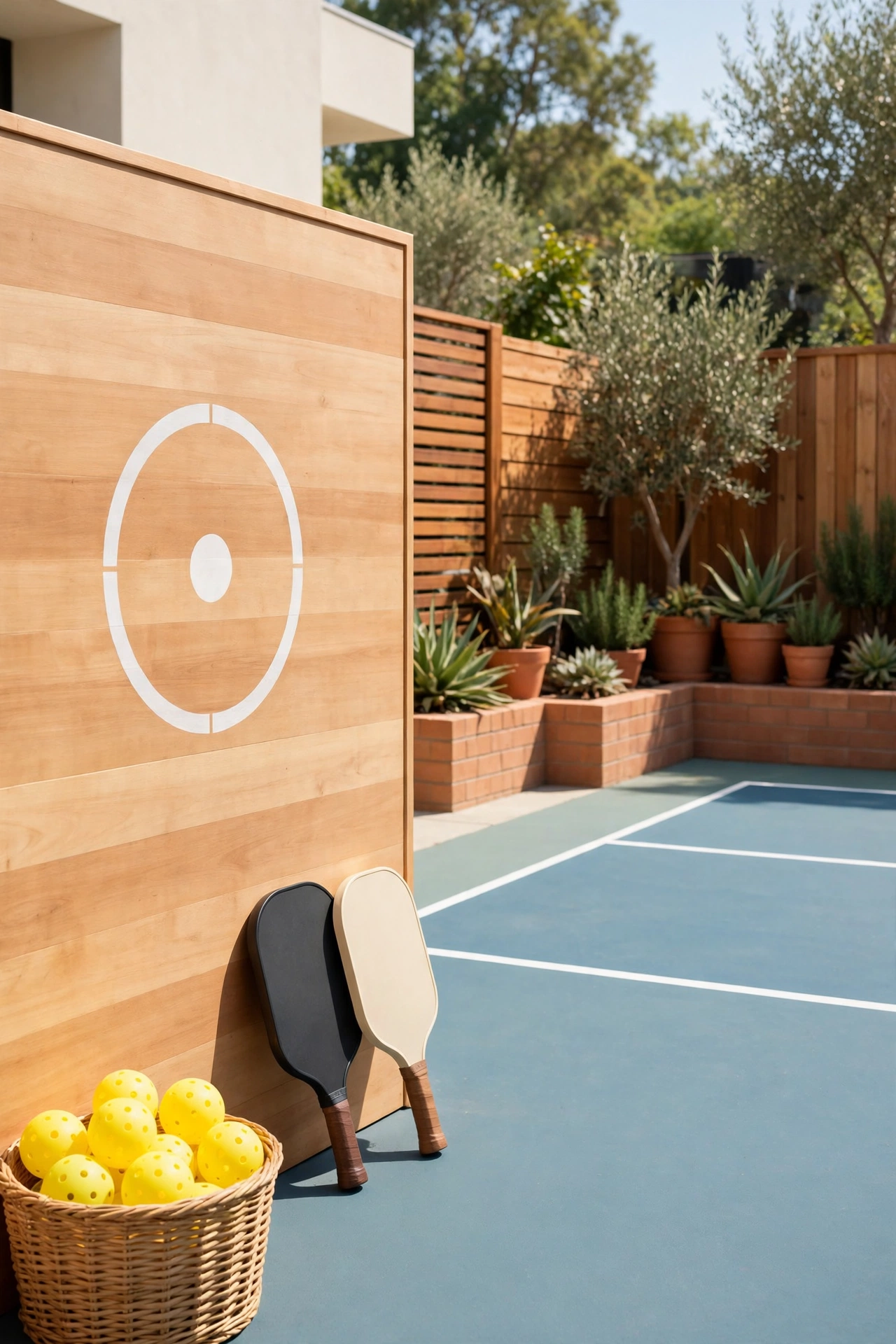
17. Add a Practice Wall for Solo Drills
A practice wall lets you play pickleball alone whenever you like. A smooth wooden or concrete wall, at least eight feet wide and six feet high, stands at one end of the court or in a quiet corner of the yard. Hit the ball against it to practice dinks, volleys, and serves.
Paint a target circle on the wall to aim at, and mark a line on the ground at net height so your drills stay realistic. A practice wall is perfect for warming up before a match or for a quick solo session after work. It turns dead time into skill building without needing a partner.
18. Use Solar Lights Along the Court Edge
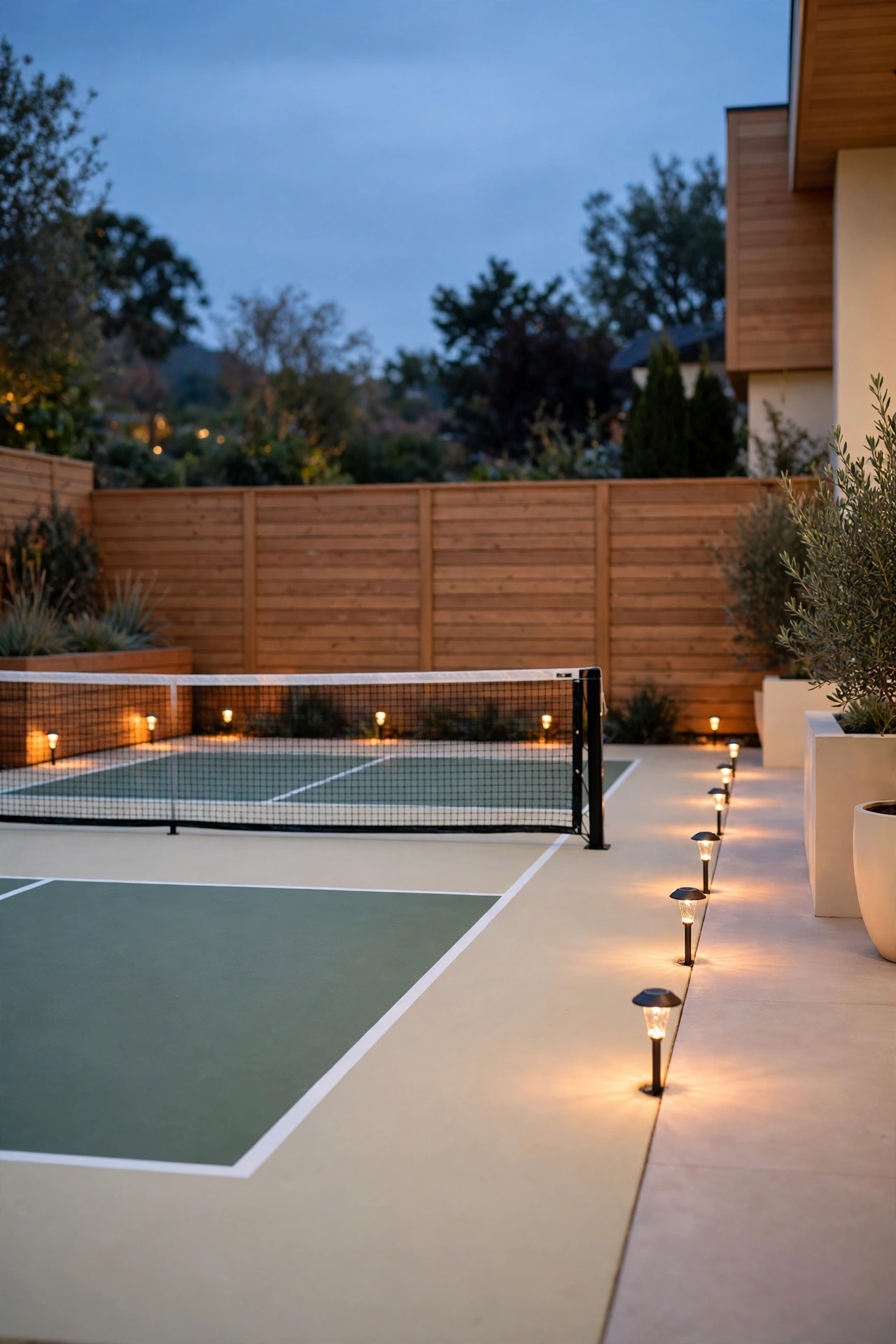
Solar lights along the court edge mark the boundary after dark and add a warm glow to evening games. Small stake lights or a low solar strip around the outside of the court charge during the day and switch on at dusk. The court looks inviting even when nobody is playing.
Place the lights just outside the playing lines so they never trip a player or block a ball. Choose lights with a soft warm tone that matches your floodlights. Solar edge lights cost almost nothing to run and make the court safe and beautiful after sunset.
19. Create a Kids Zone with a Smaller Court
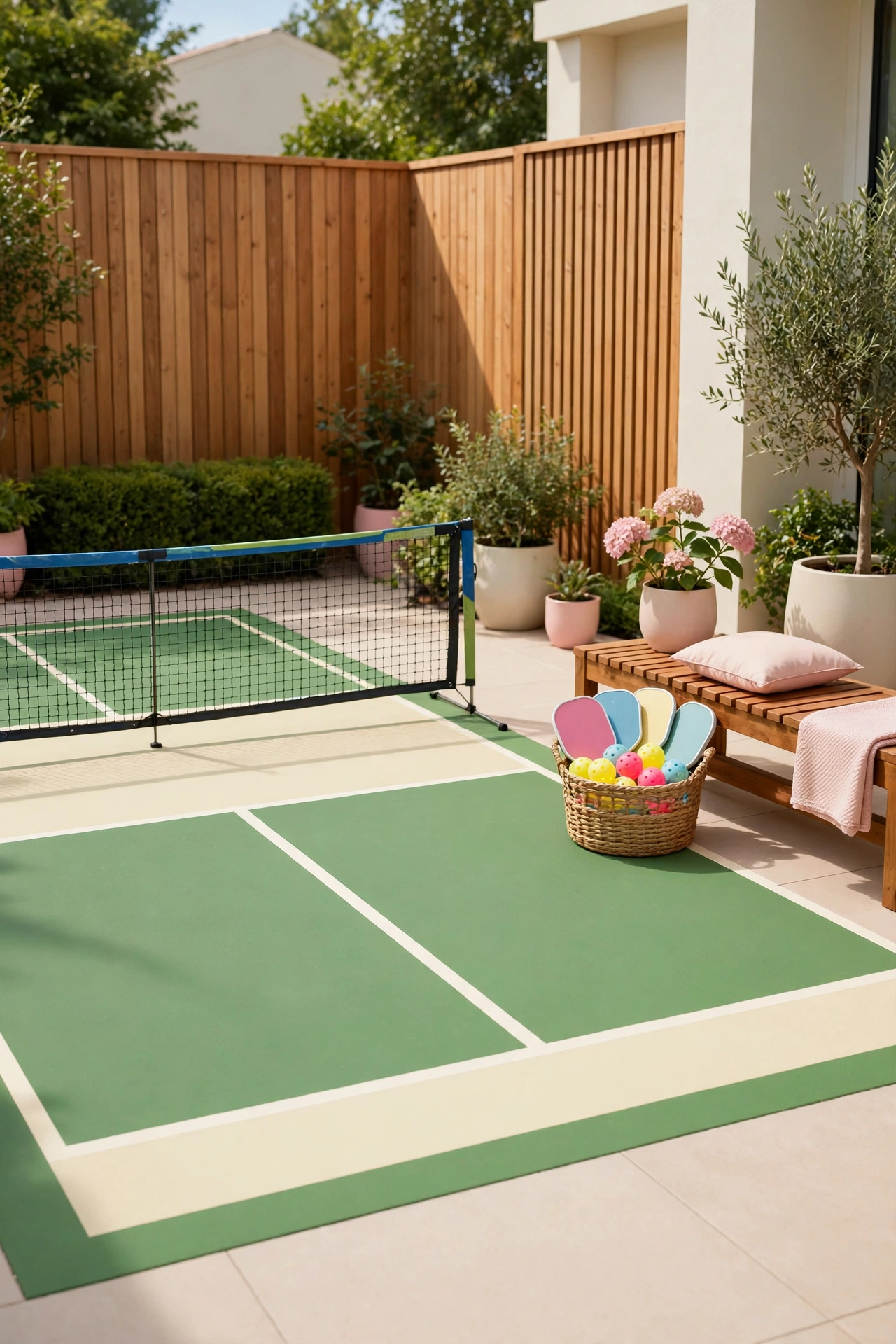
A smaller court beside the main one gives kids their own place to learn the game. Use a shorter net and a half-size court marked with chalk or paint on a patio corner. Kids play with lighter paddles and a slower ball, which helps them build confidence.
Keep the kids zone close enough that adults can watch from the main court. Add a small bench and a bin of colorful balls so the space feels like it belongs to them. A kids zone means the whole family can play at the same time without anyone waiting on the sidelines.
20. Add a Pergola Over the Seating Area
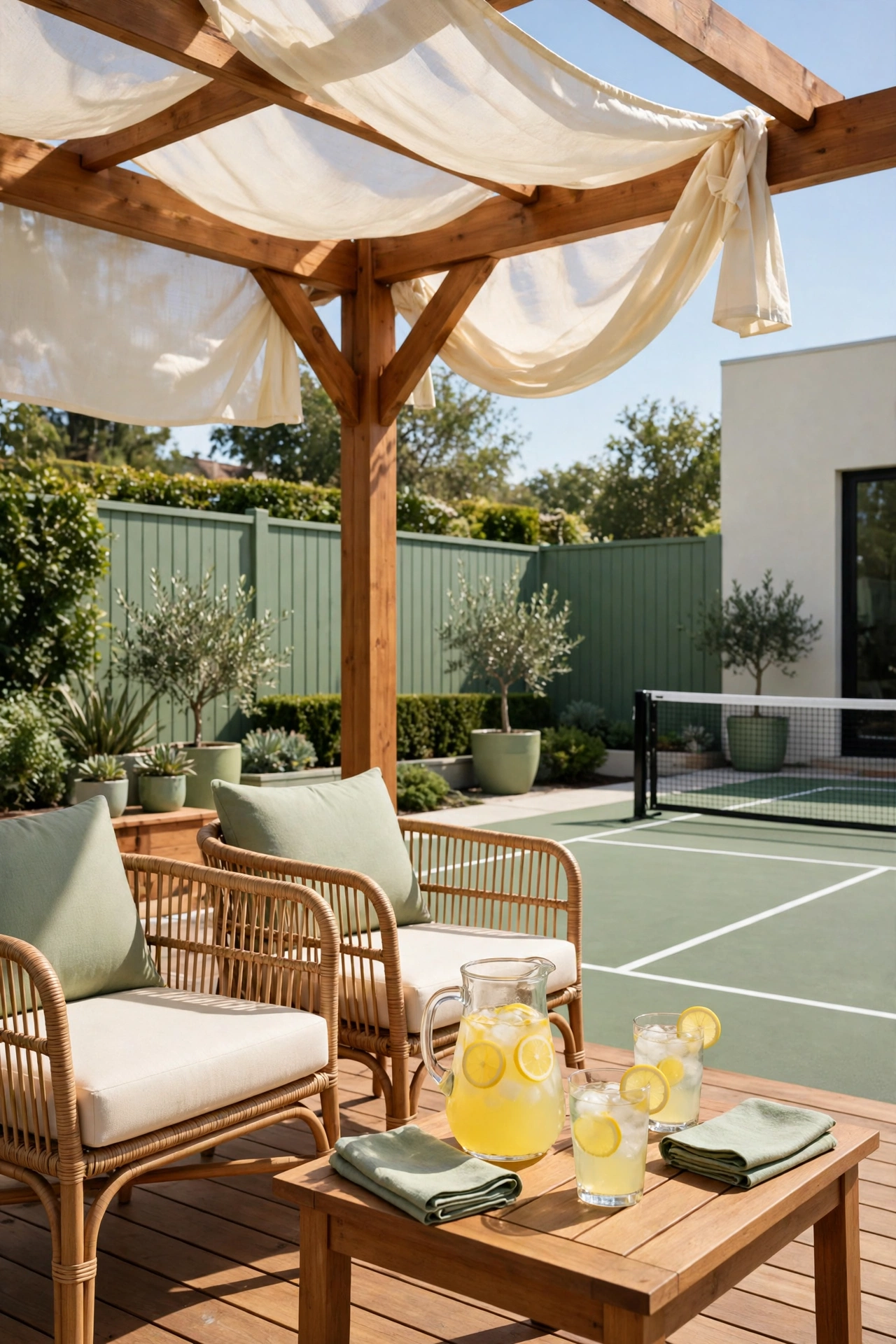
A pergola over the seating area gives the court a shaded lounge that feels like a resort. Wooden beams overhead filter the sun, and climbing plants or a fabric shade cloth add softness and color. The pergola turns the space beside the court into a place to relax all afternoon.
Build the pergola a few feet back from the fence so it never interferes with play. Add outdoor chairs, a small table, and a few cushions in your accent color. A pergola makes the court area feel complete and gives the backyard a focal point even when the game is over.
21. Keep a First Aid Kit Courtside
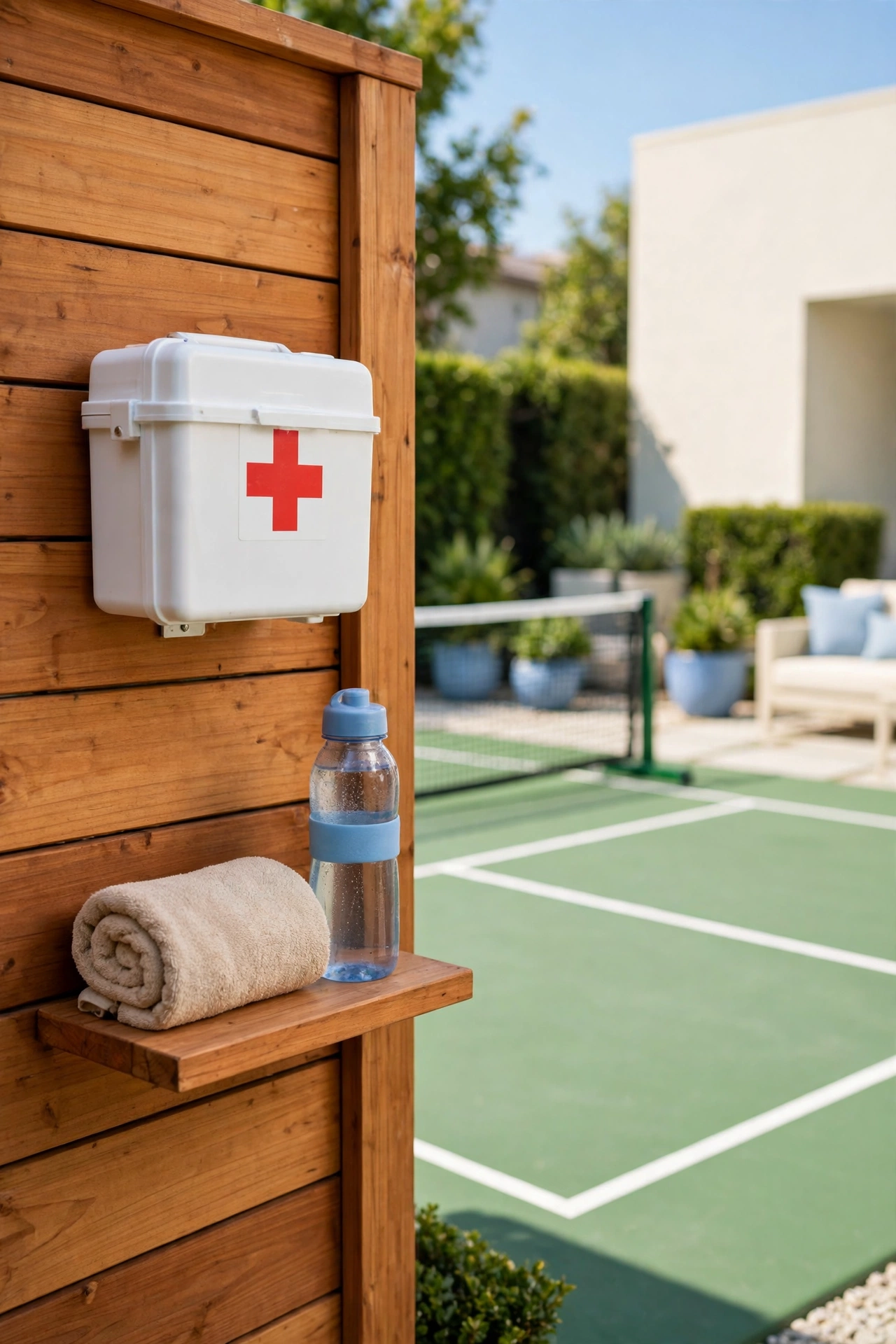
A first aid kit courtside is a smart safety habit for any home sports area. A small waterproof box with bandages, antiseptic wipes, ice packs, and a few pain relief tablets covers the most common scrapes and bumps. Mount it on the fence or keep it in the storage bin where everyone can find it.
Check the kit each month and replace anything that is used or expired. A phone number list inside the lid, with the nearest clinic and a family contact, adds extra peace of mind. A first aid kit costs very little, and it shows that your court is a safe place to play.
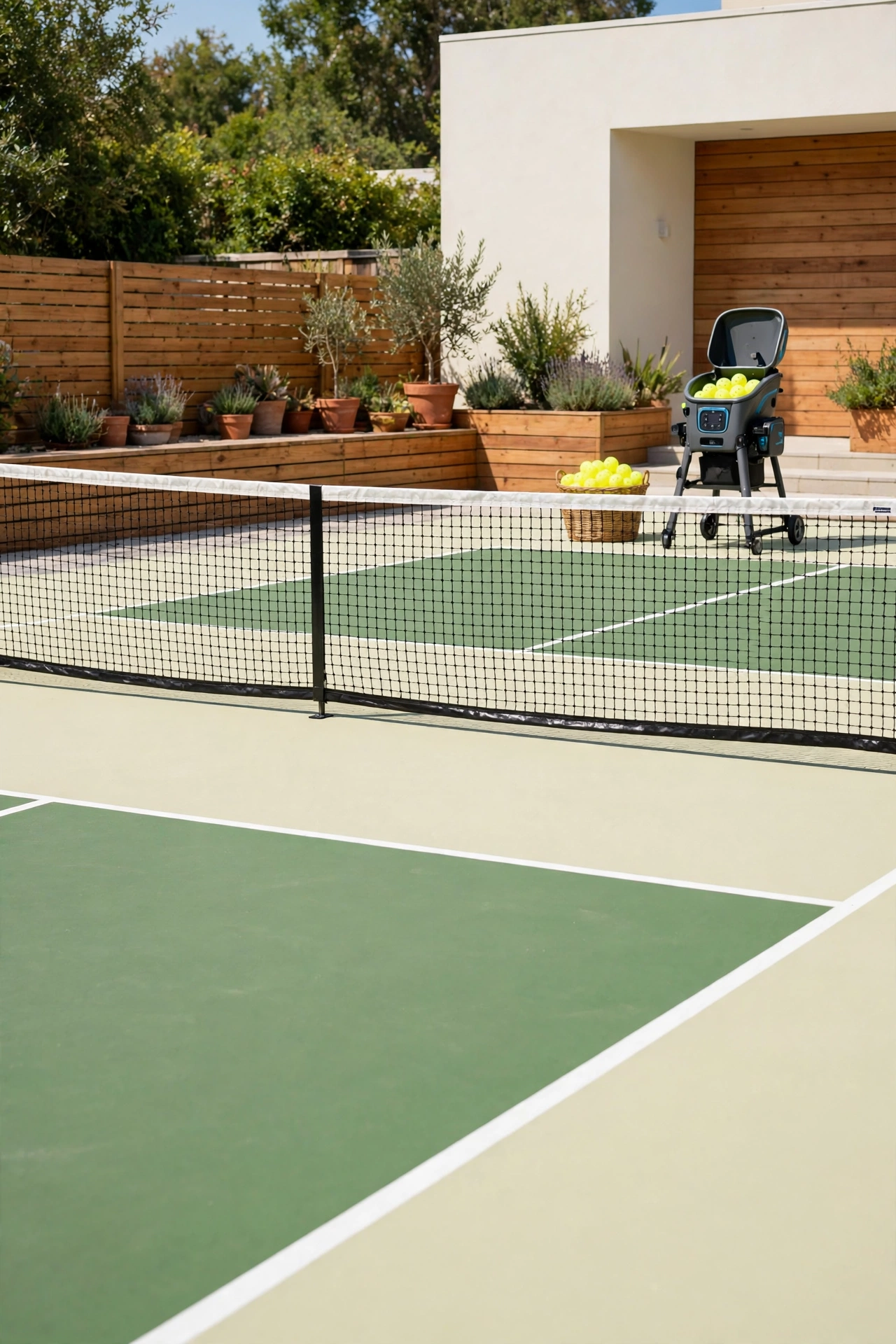
22. Add a Ball Machine for Practice Sessions
A ball machine feeds pickleball after pickleball at a steady pace, so you can practice forehands, backhands, and volleys without a partner. Place the machine on the opposite side of the net, set the speed and direction, and work through a full basket of balls. Practice becomes focused and fun.
Choose a machine with adjustable speed and spin so it grows with your skill level. Store it in a dry spot beside the court, such as a deck box or a small shed, so it stays ready for the next session. A ball machine turns solo practice into a real workout and sharpens every shot.
23. Design a Multi-Sport Court for Pickleball and Basketball
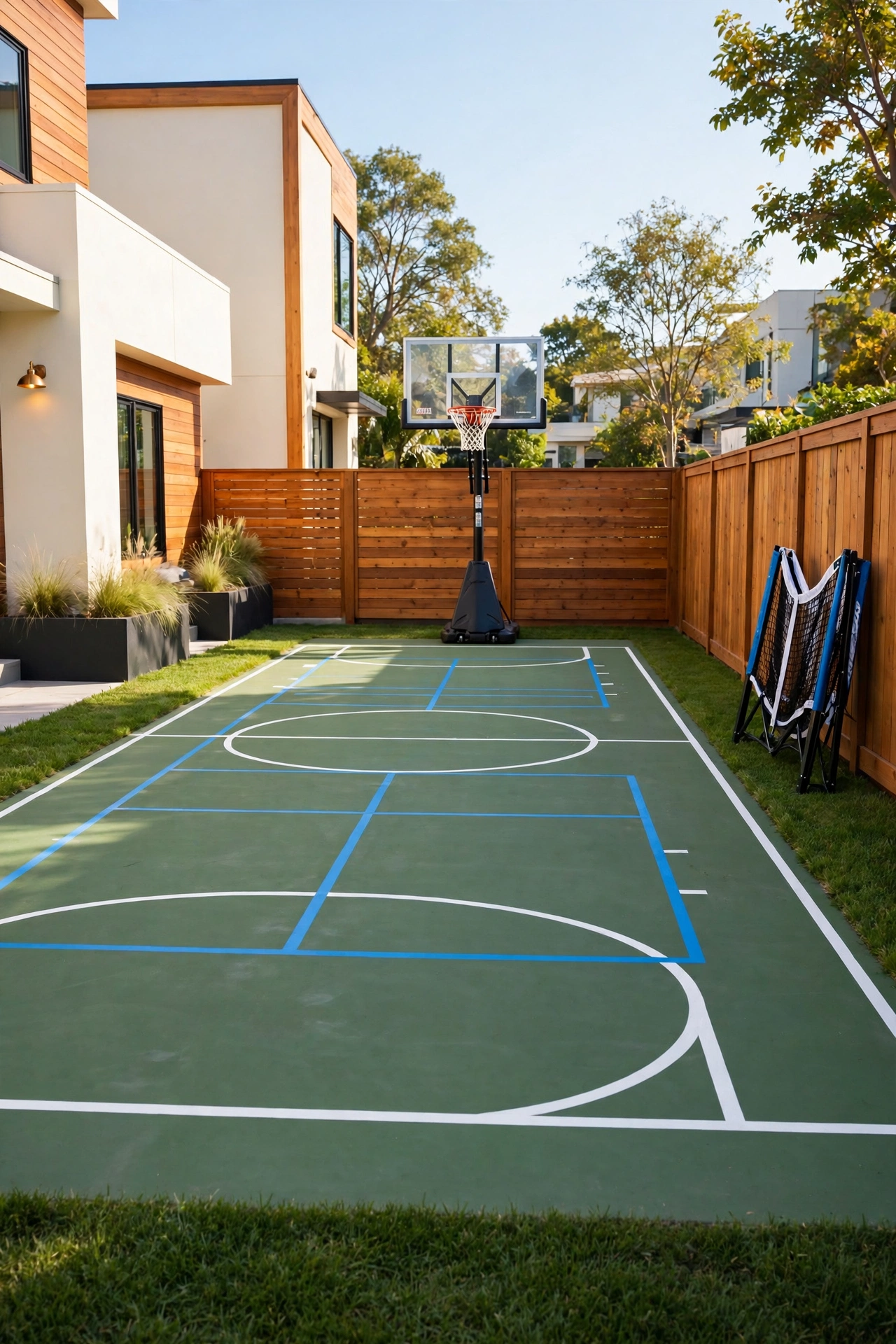
A multi-sport court lets one surface host pickleball, basketball, and more. Paint the pickleball lines in one color and the basketball lines in another, and use a portable net that folds away when the hoop is in use. One court serves the whole family, no matter which game they love.
Plan the layout so the two games never share the same lines in a confusing way. A basketball hoop on a portable base moves aside easily for pickleball games. For more ideas on building a backyard court that serves more than one sport, see these backyard basketball court ideas. A multi-sport court is the smartest use of a small backyard.
Conclusion
A backyard pickleball court does not need a professional budget or a huge yard. From a chalk-lined driveway to a dedicated acrylic court, there is an idea here for every home and every level of play. The best court is the one your family will actually use, week after week.
Pick one or two ideas that fit your yard and start today. Paint the lines, set up the net, and invite a friend over for the first game. For a calm home beyond the court, these nightly reset routine ideas will help you keep every room organized with just a few minutes each evening.
Frequently Asked Questions About Backyard Pickleball Court Ideas for Home Recreation
How much space do I need for a backyard pickleball court?
A full pickleball court measures 20 by 44 feet, plus a few extra feet on each side for safe movement. A compact home court can fit in about 30 by 60 feet including run-off space. If your yard is smaller, a half court or a practice wall still gives you plenty of room to learn the game.
What is the cheapest way to build a backyard pickleball court?
Chalk lines on a flat driveway or patio, plus a portable net, cost the least to start. A painted court on existing concrete is the next step up and lasts for years. Interlocking tiles cost more, and a dedicated acrylic court is the most expensive option.
Can I play pickleball on grass?
Grass is not ideal for pickleball because the ball bounces unevenly and the surface wears out quickly. A flat hard surface like concrete, asphalt, or court tiles gives a true bounce and a fair game. If grass is your only option, a portable court mat laid over a level lawn works for casual play.
Do I need a fence around my pickleball court?
A fence is not required, and many home courts play well without one. A fence saves time by keeping balls in play and protects nearby gardens from stray shots. If your yard is open, a simple mesh fence on the ends behind the baselines is a good place to start.
How do I maintain a backyard pickleball court?
Sweep the surface weekly to remove leaves and dirt, and wash it with a hose and mild soap once a month. Check painted lines each season and touch them up when they fade. Store nets, paddles, and balls in a dry bin so the gear stays in good shape between games.

Hi, I’m Emily! I turn messy corners into cozy, organized spots. DreamNestDecor is where I share simple, practical home ideas — decor, organization, and small-space solutions that work in real life, not just in photos. Every idea here is carefully researched before it’s shared.