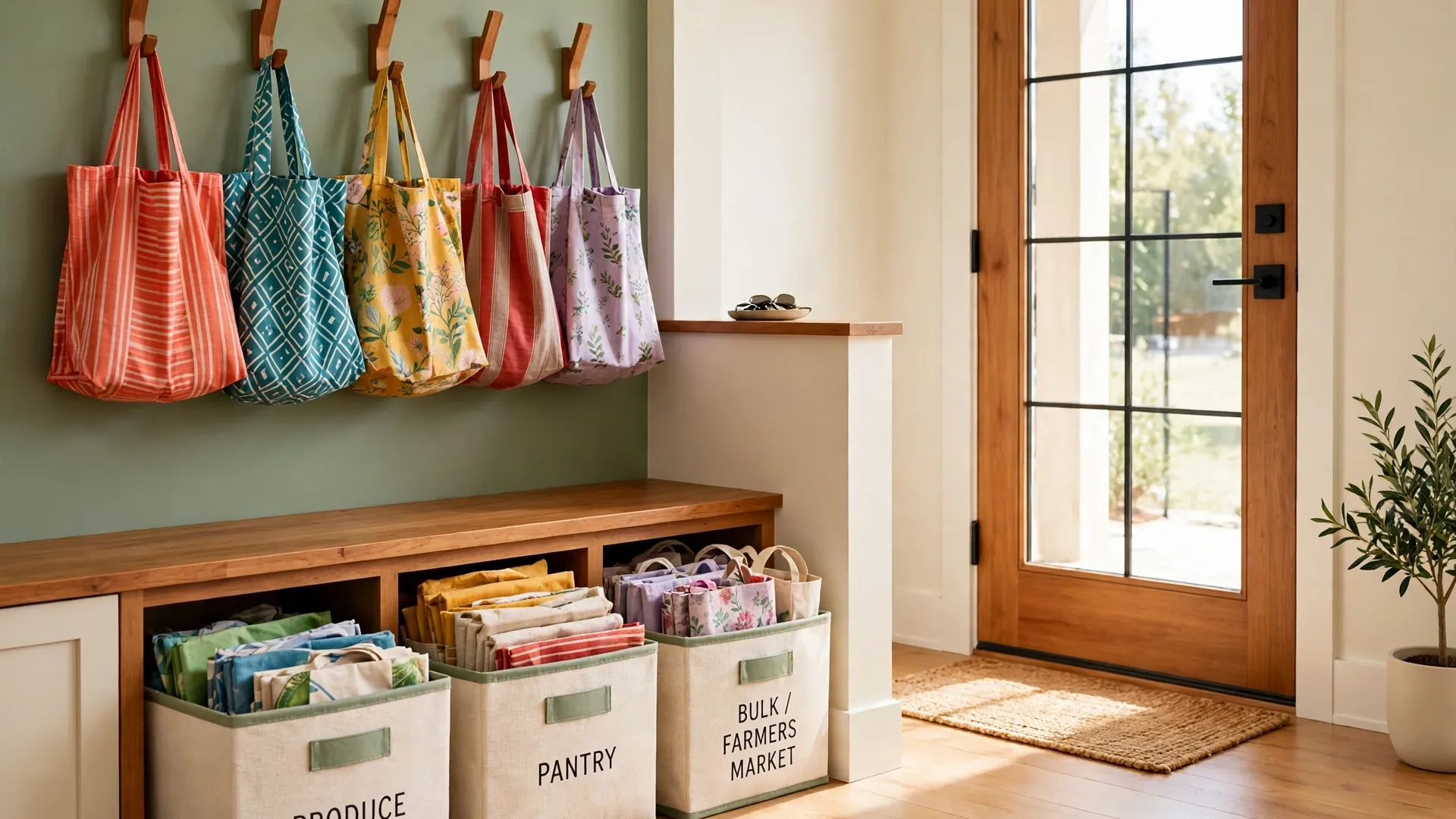
Picture this: you are heading out for groceries and every reusable bag is exactly where it should be. No more digging through a tangled drawer or grabbing three bags stuck together. That small moment of calm is exactly what smart bag storage gives you every single time you leave the house.
You do not need a bigger kitchen or expensive organizers to get there. All you need is the right spot for your bags and a simple system that fits your routine. These 25 reusable shopping bag organization ideas will help you keep every bag tidy, visible, and ready to grab on your way out the door.
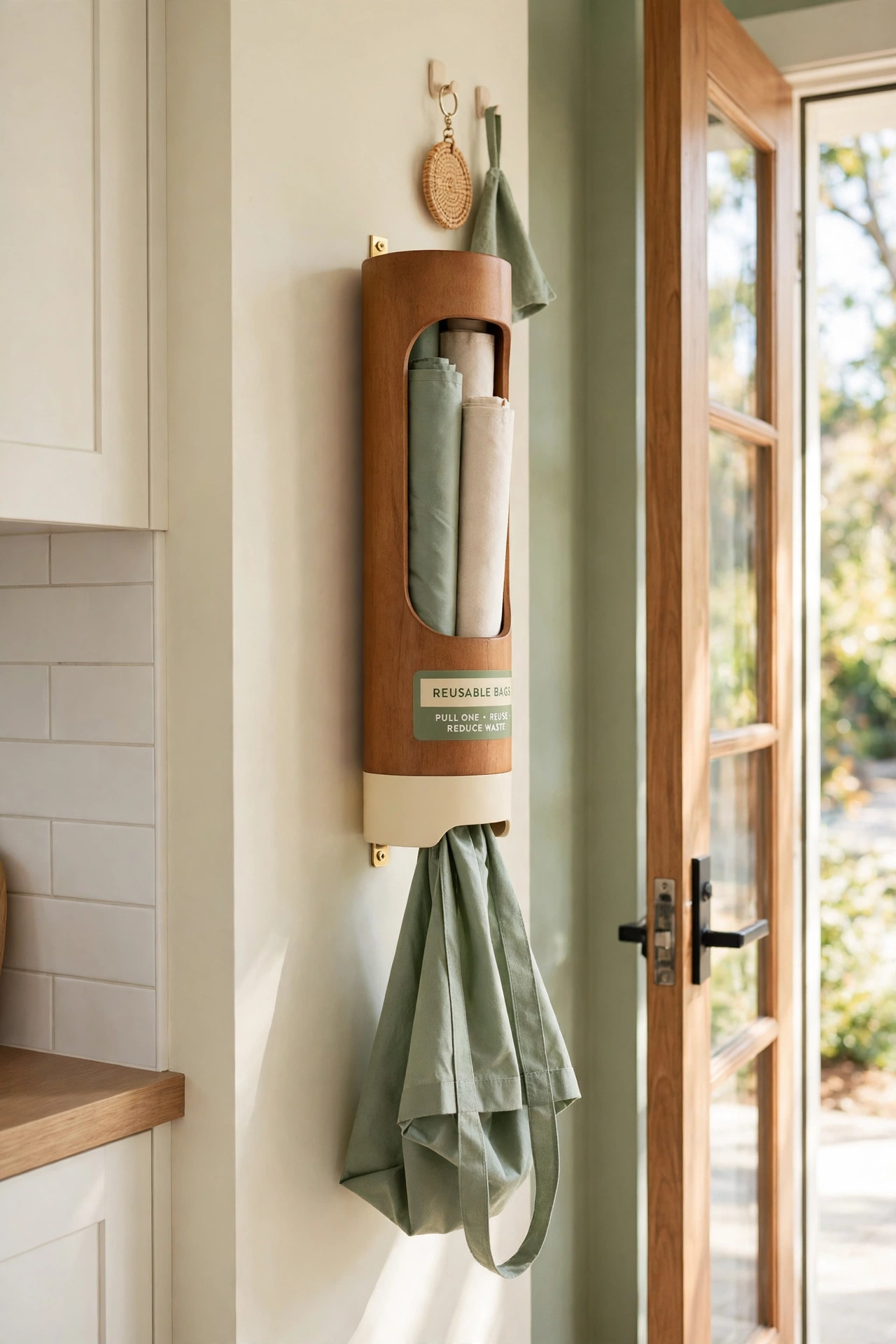
1. Wall-Mounted Bag Dispenser
A wall-mounted dispenser holds folded or rolled bags in a tube or box that you pull from the bottom one at a time. You stuff bags in the top and pull one out the bottom, just like a grocery store bag dispenser. Mount it near the door you use to leave for shopping and grabbing a bag becomes part of your routine.
This setup takes up zero counter or drawer space and keeps bags visible so you remember to take them. Choose a dispenser in a material that matches your kitchen, like warm wood for a natural look or sleek metal for a modern one. The dispenser is always on display, so it should look like a deliberate part of the room.
2. Over-the-Door Organizer
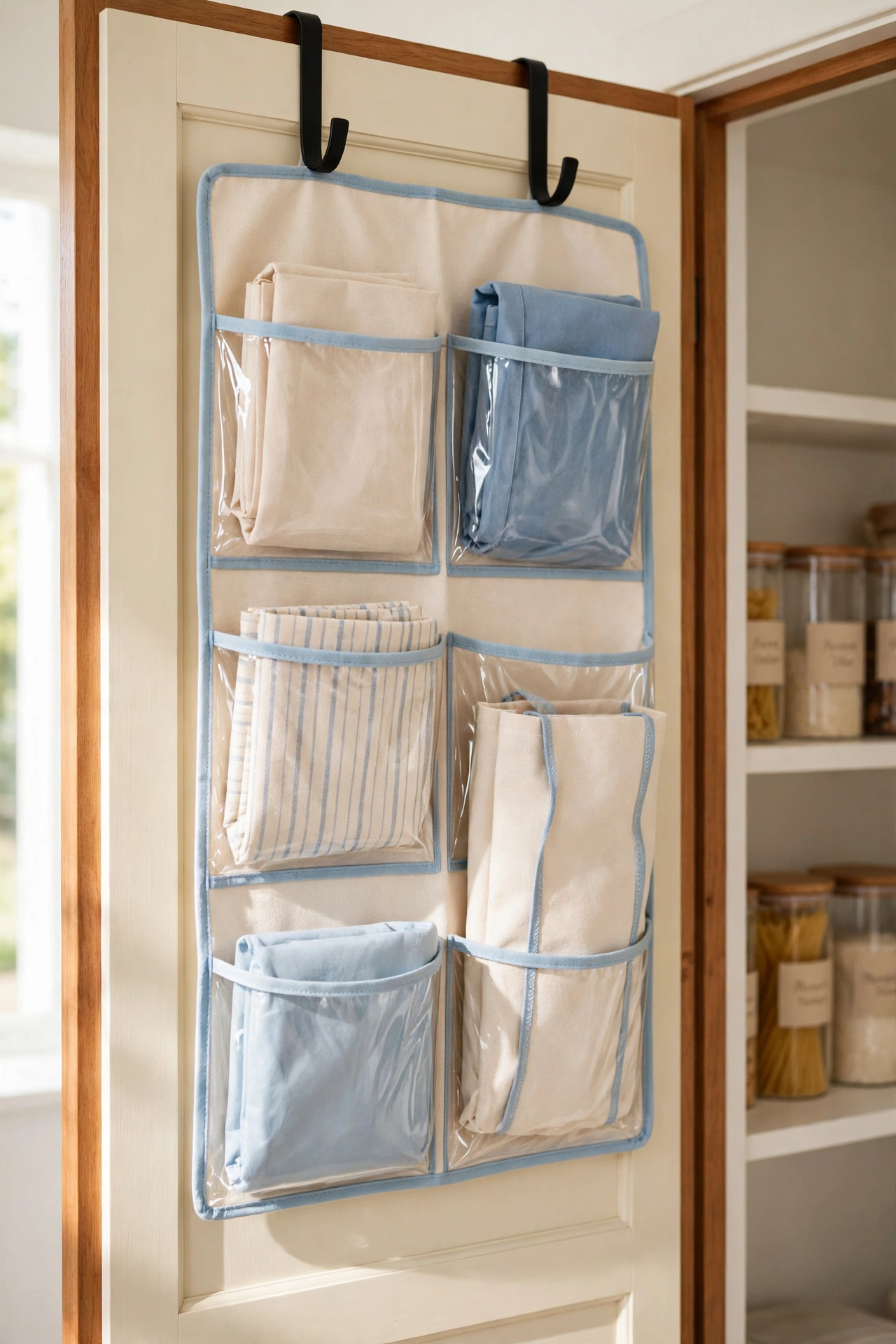
An over-the-door organizer with large pockets hung on the inside of a pantry or closet door holds bags in individual slots. Each pocket fits one or two folded bags, so you can see your entire collection and grab the right size for the trip. The organizer uses space that would otherwise go to waste and hides the bags behind a closed door.
Use the top pockets for the bags you reach for most often and the bottom pockets for specialty bags like insulated cooler bags or extra-large totes. Eye-level access for the daily bags makes the whole system faster to use. When the door is shut, nobody knows there are a dozen bags organized on the other side.
3. Shelf Dividers
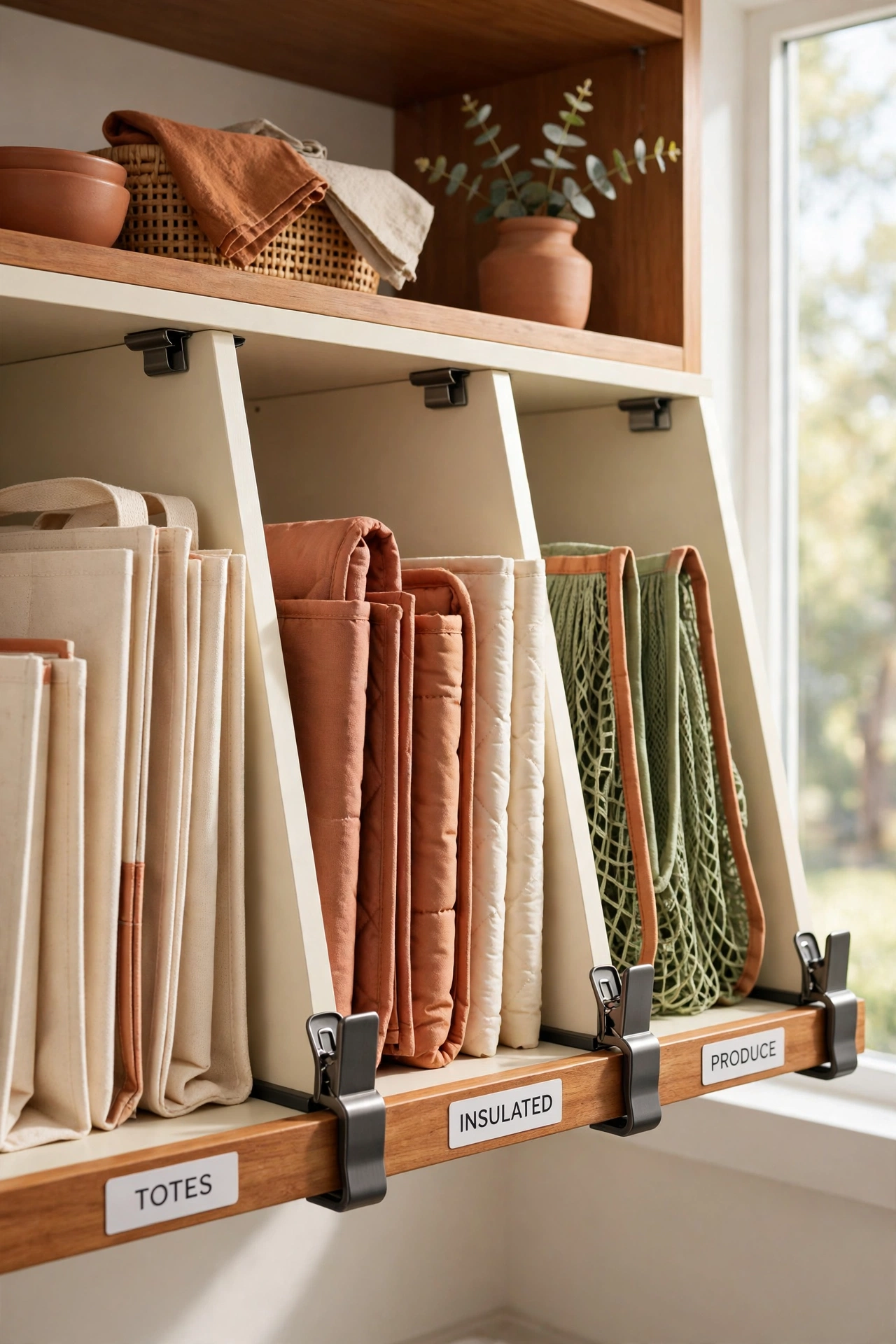
Clip-on shelf dividers create individual compartments on a pantry or closet shelf for different types of bags. One section holds standard totes, one holds insulated bags, and one holds produce bags. The dividers keep bags standing upright and separated so they do not topple into each other and become a mess.
This works well if you already have a shelf with space to spare and want to keep bags organized without buying new furniture. File the bags vertically rather than stacking them flat, so every bag is equally easy to reach. When bags are stacked, you always grab from the top and the ones on the bottom never get used.
4. Drawer Dividers
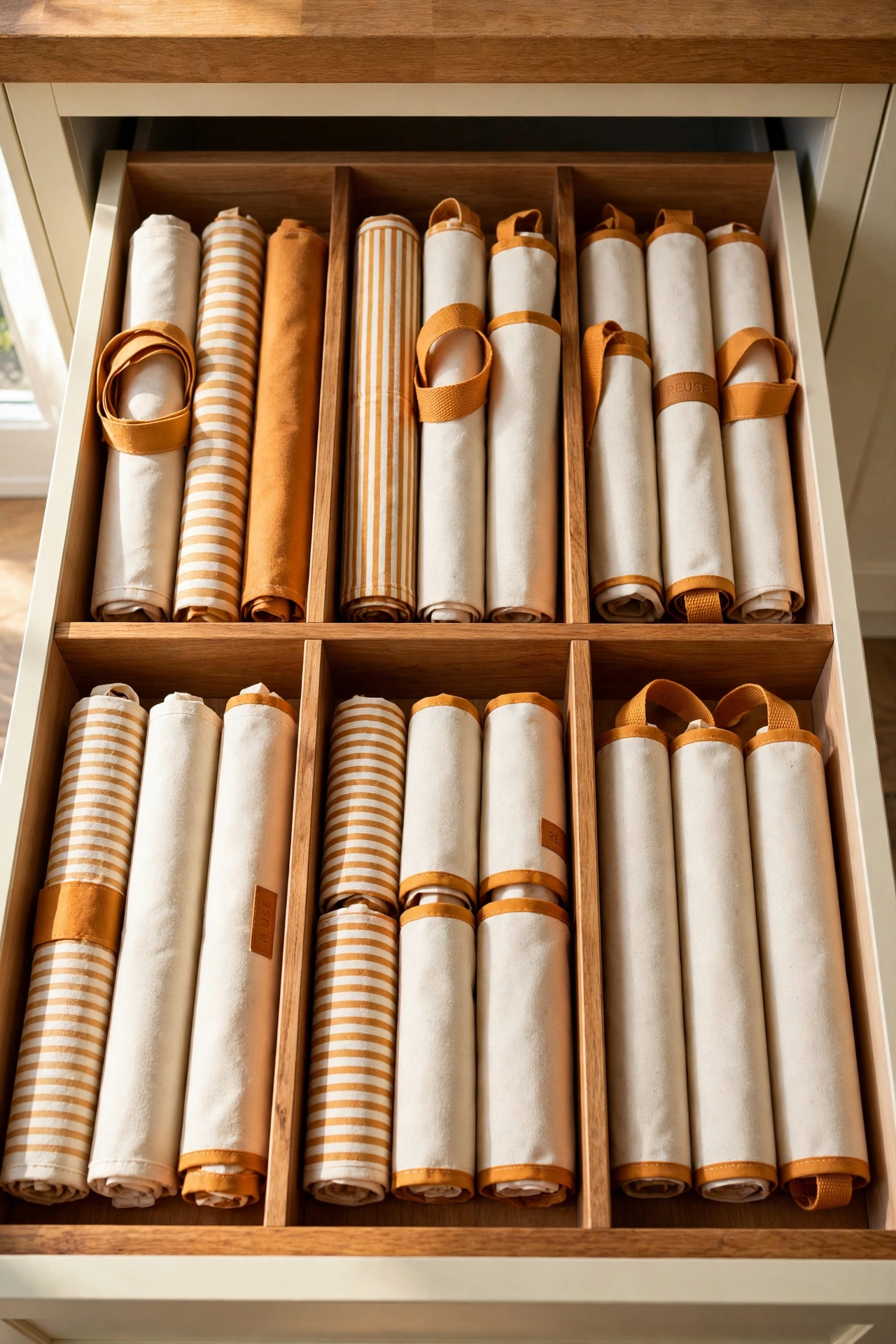
If you prefer keeping bags in a drawer, adding dividers turns the chaotic bag drawer into an organized system. Each section holds a different type of bag, folded or rolled to fit neatly. The dividers stop the pile from becoming one tangled mass that you have to fight every time you open the drawer.
Adjustable dividers work best because you can change the section widths to match the sizes of your bags and readjust as your collection changes. Roll the bags instead of folding them, since rolled bags take up less space and stand upright in their sections. A drawer full of rolled bags looks tidy and works better than a drawer full of rumpled folds.
5. Bag-in-a-Bag System
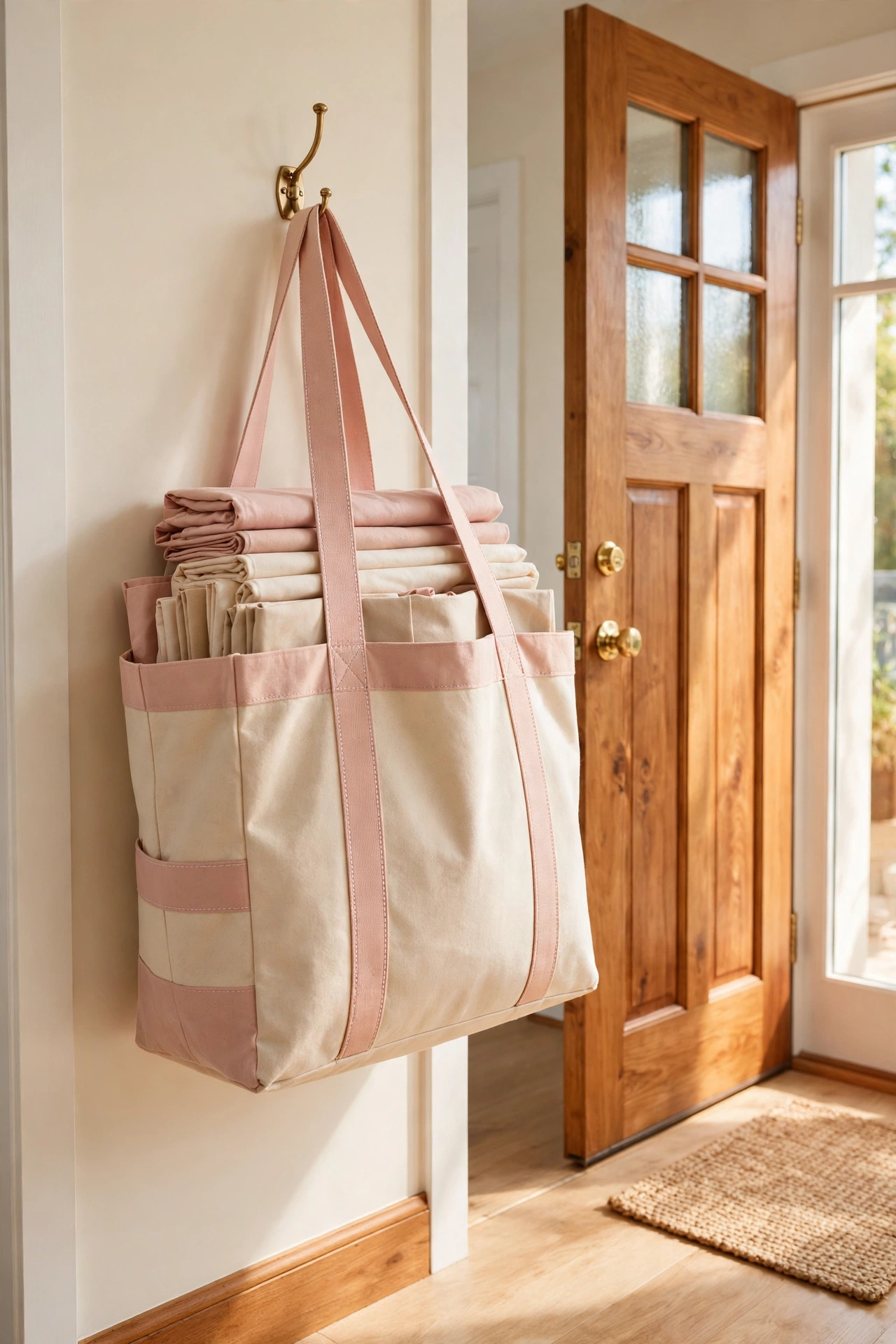
The simplest storage solution is stuffing all your reusable bags inside one large tote bag. Fold each bag flat, stack them inside the host tote, and hang the tote on a hook near the door. When you leave for shopping, grab the whole tote and all your bags are inside it and ready to go.
When you come home, fold the bags back up and stuff them in the tote again. It is not fancy, but it is effective and costs nothing. Use a sturdy canvas tote as the host bag because it holds its shape and sits flat on a hook without collapsing into a lumpy blob.
6. Magazine Rack
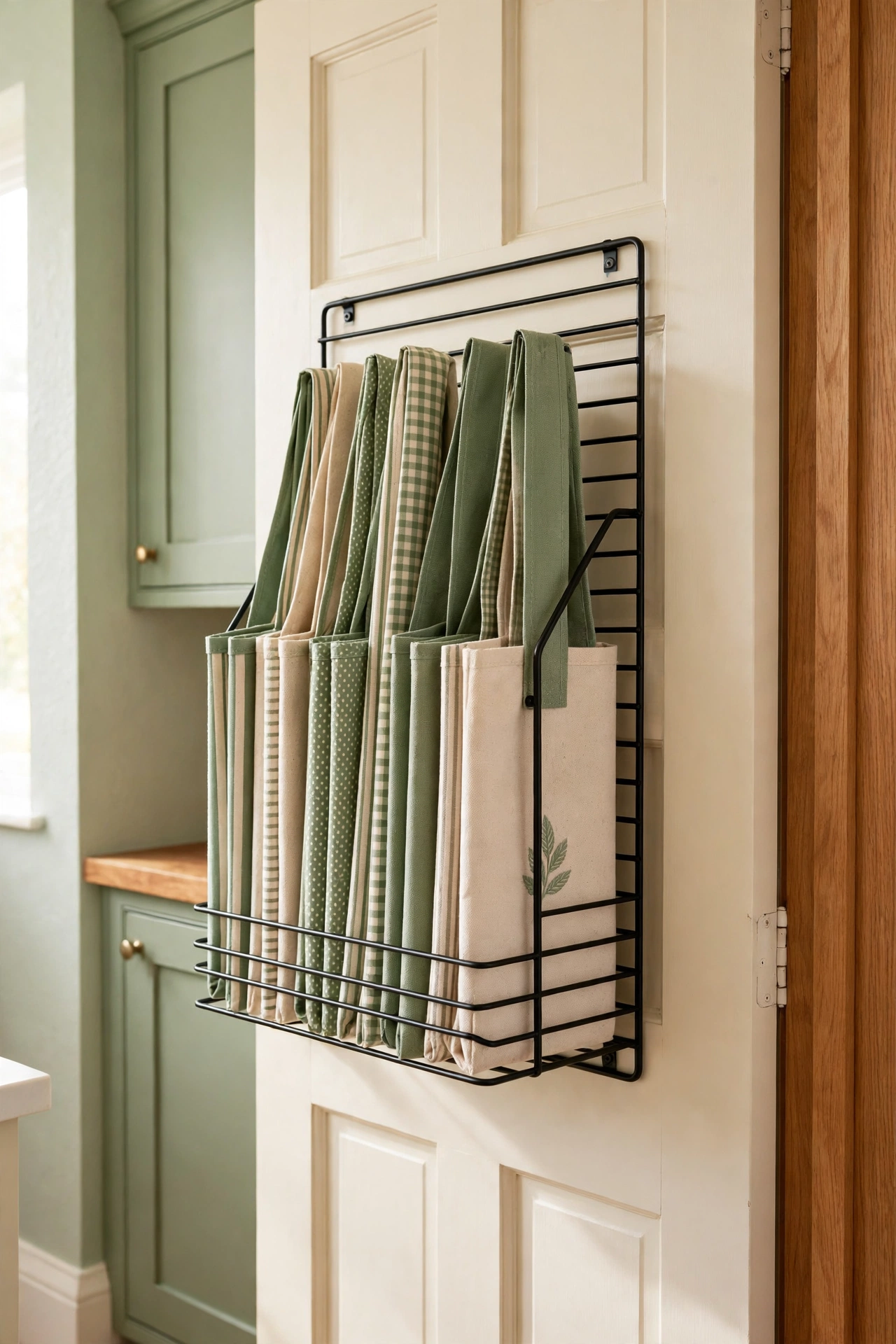
A wall-mounted or tabletop magazine rack holds folded reusable bags upright in a contained, visible display. The bags stand side by side like magazines, and you flip through them to find the one you want. A metal or wire magazine rack on the inside of a pantry door or mounted next to the garage door keeps bags organized and right where you need them.
Choose a magazine rack with a solid bottom so smaller bags do not slide through gaps. Wire racks with wide spacing between the bars let slim produce bags and mesh bags slip through and fall to the floor. A sturdy rack turns a plain wall into useful storage in minutes.
7. Fabric Storage Bins
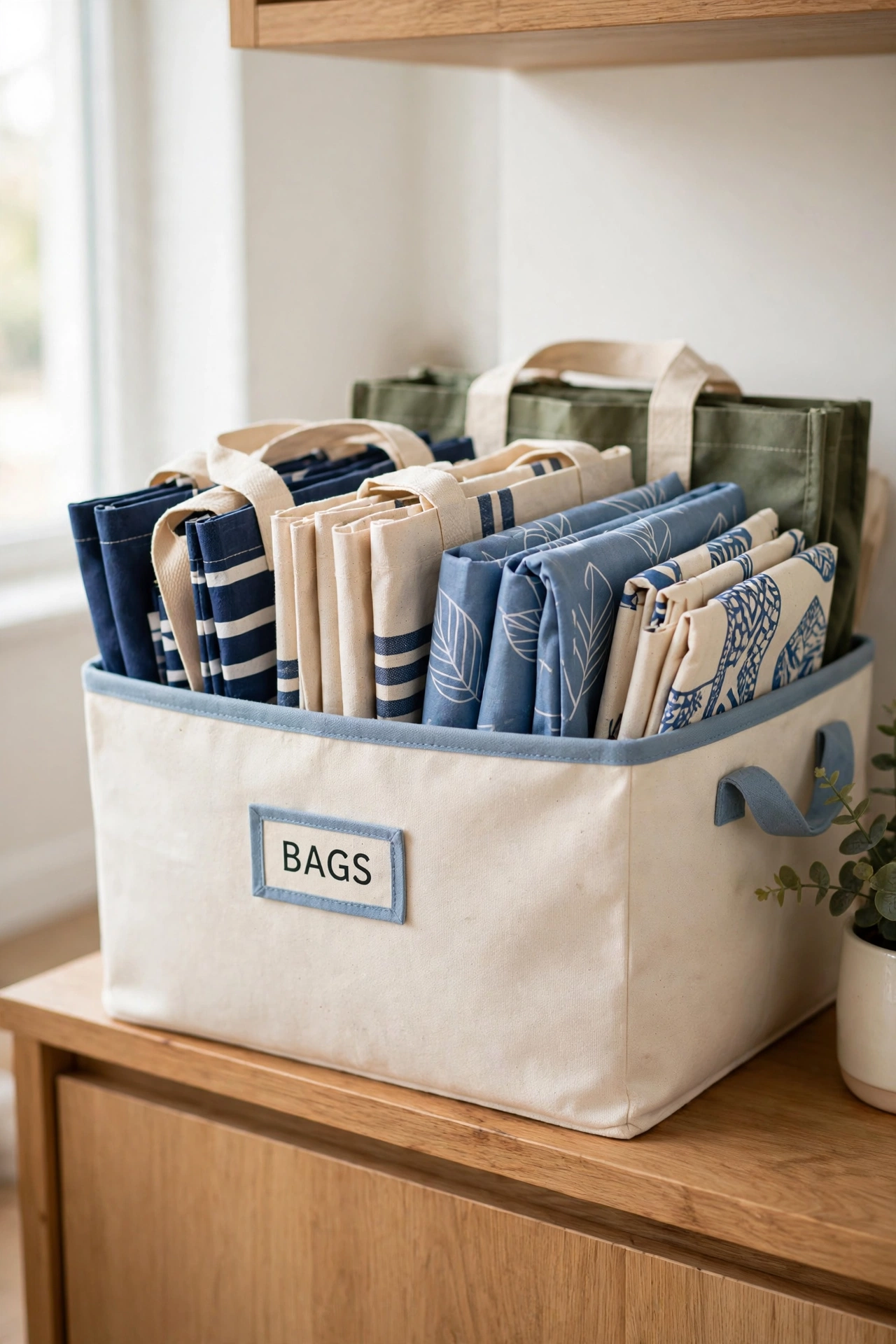
A fabric bin on a shelf or countertop is the grab-and-dump solution for people who will not fold. Toss the bags in the bin after unpacking groceries and pull one out when you need it. The bin contains the mess and gives the bags a home even when they are not neatly folded.
It is not the most organized system, but it is realistic for busy households and far better than bags scattered across three different drawers. Choose a bin that is open at the top and just the right size for your collection. A bin that is about three quarters full looks tidy and still has room for a few more bags after a big shopping trip.
8. Command Hooks
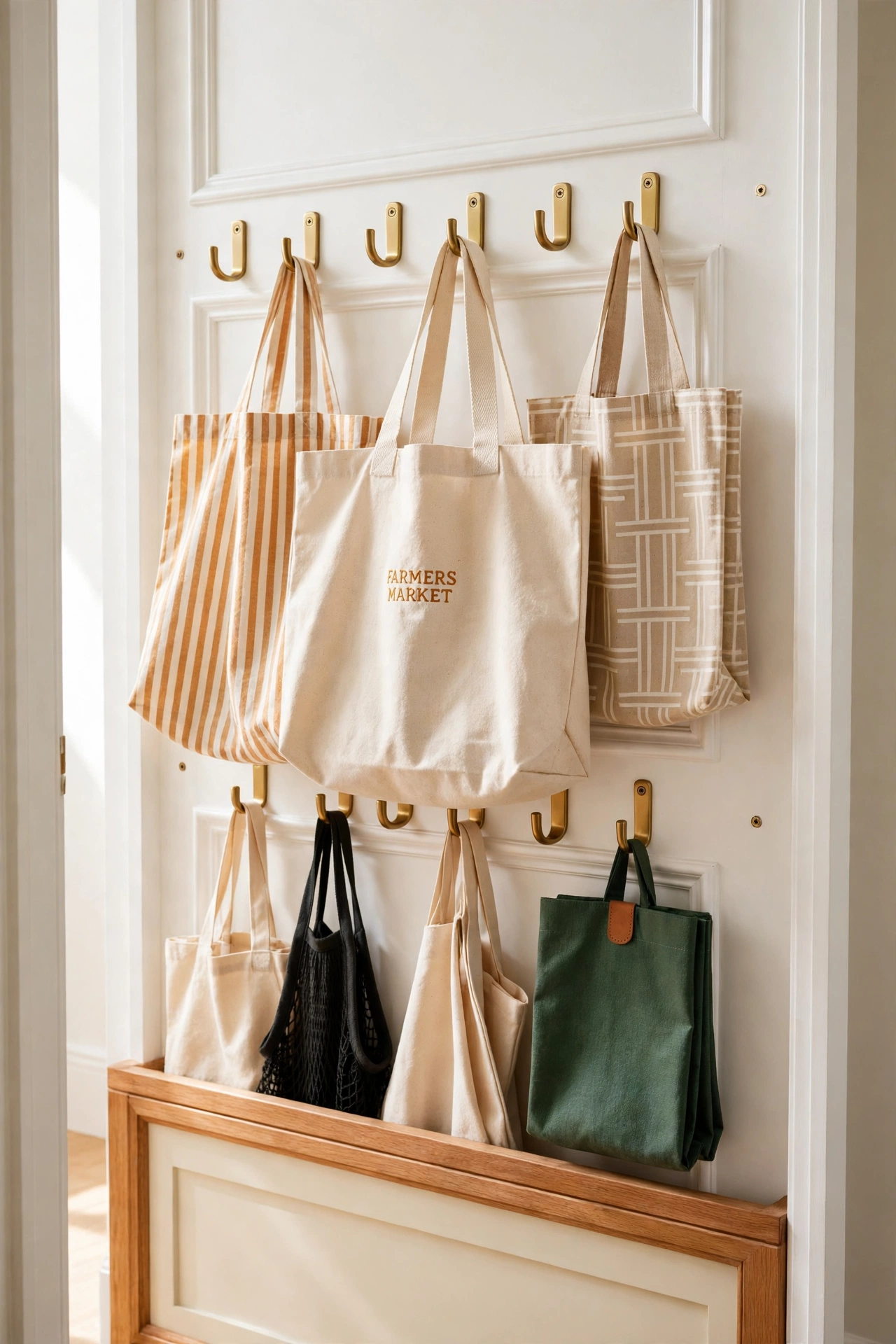
Adhesive hooks stuck on the inside of a cabinet door, on the wall near the door, or inside the pantry hold bags by their handles. Each hook holds one or two bags, keeping them separate and easy to grab. Command hooks are damage-free, renter-friendly, and cost very little each.
Line up four or five hooks and your bags hang neatly in a row where you can see them without digging through anything. Mount the hooks at the same height in a straight line for a clean look. Random hook placement at different heights looks chaotic, while a level row of hooks with evenly spaced bags looks organized and deliberate.
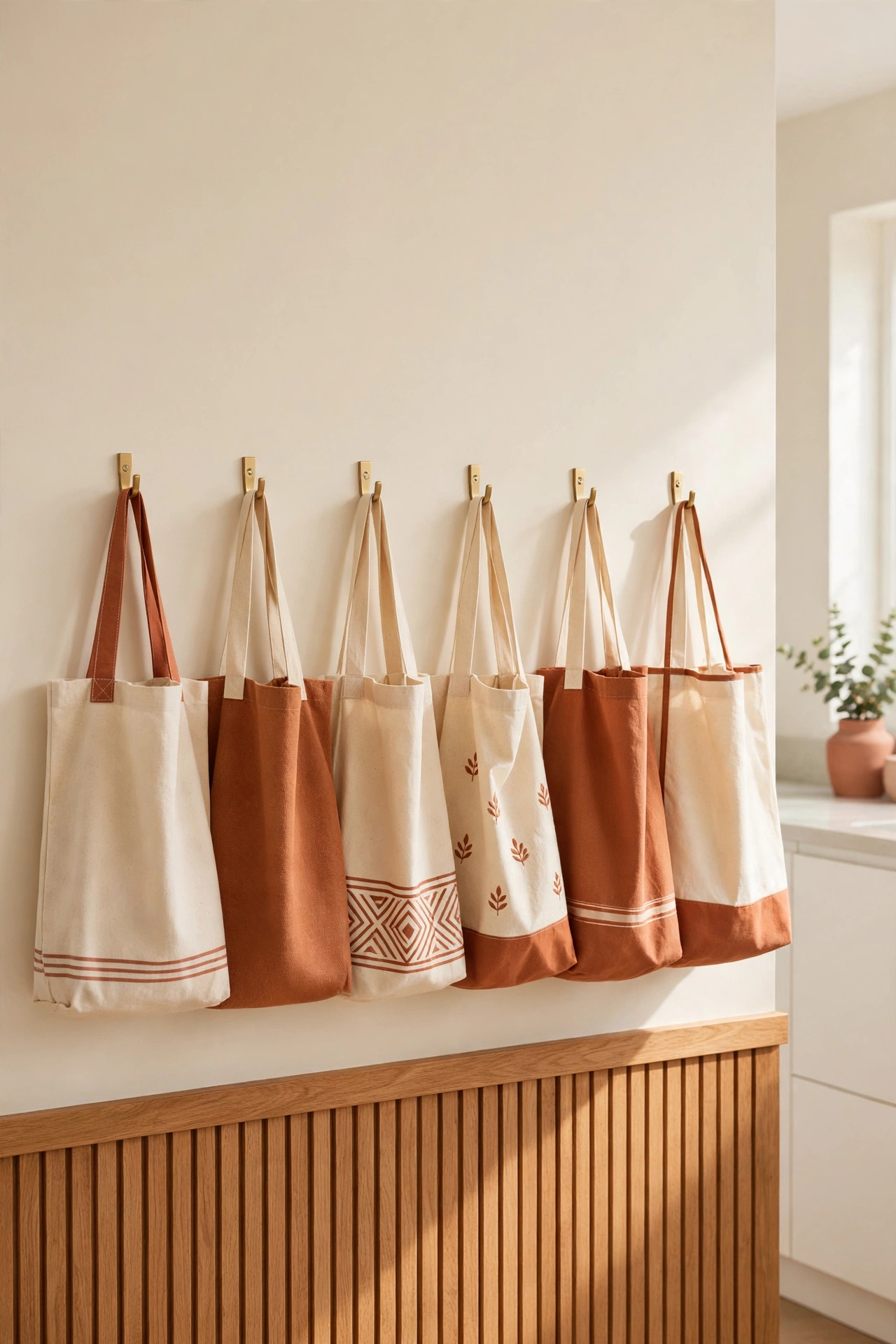
9. Carabiner Clips on a Rod
Clip carabiner hooks onto a tension rod or mounted rod inside a cabinet or closet, then clip a bag onto each carabiner. Each bag hangs individually, stays separate, and is easy to grab and re-clip. This is great for bags with handles or loops that can hook onto the carabiner.
The tension rod can go inside a cabinet, a closet, or across the inside of a pantry. Use matching carabiners in a single color for a uniform look. Mismatched carabiners in random sizes and colors look like a junk drawer hanging on a rod, while a set of identical matte black carabiners looks intentional.
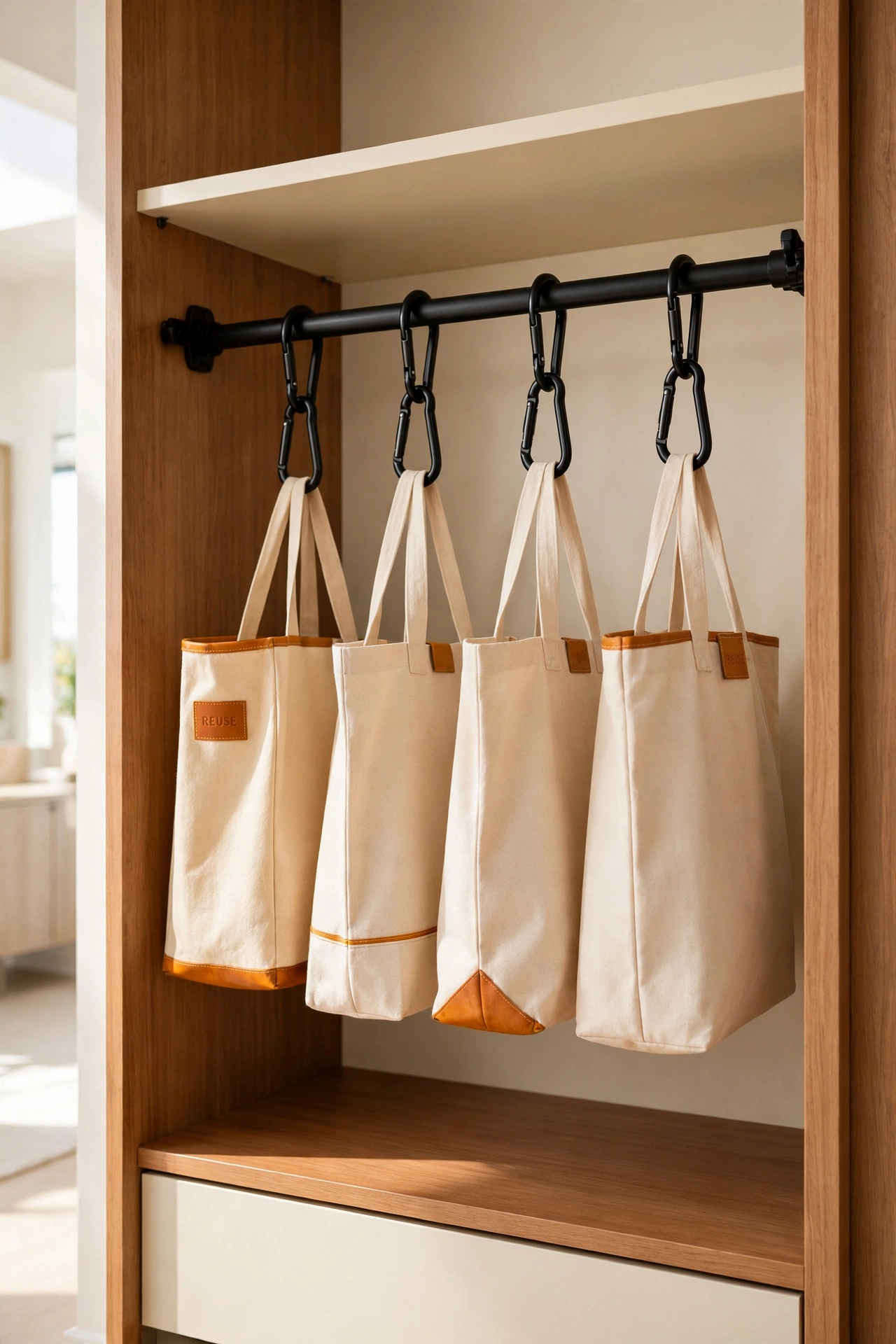
10. Basket on Top of the Fridge
The top of the fridge is dead space in most kitchens. Set a basket up there and use it as the dedicated bag spot. After unloading groceries, fold or roll bags and toss them in the basket. Before heading out, reach up and grab what you need.
This keeps bags completely out of the way and uses space that was sitting empty. The basket also hides the bags so they are not a visual distraction in the kitchen. Choose a flat, wide basket rather than a tall, narrow one, since a wide basket is easier to reach into from below and does not stick up high enough to look awkward.
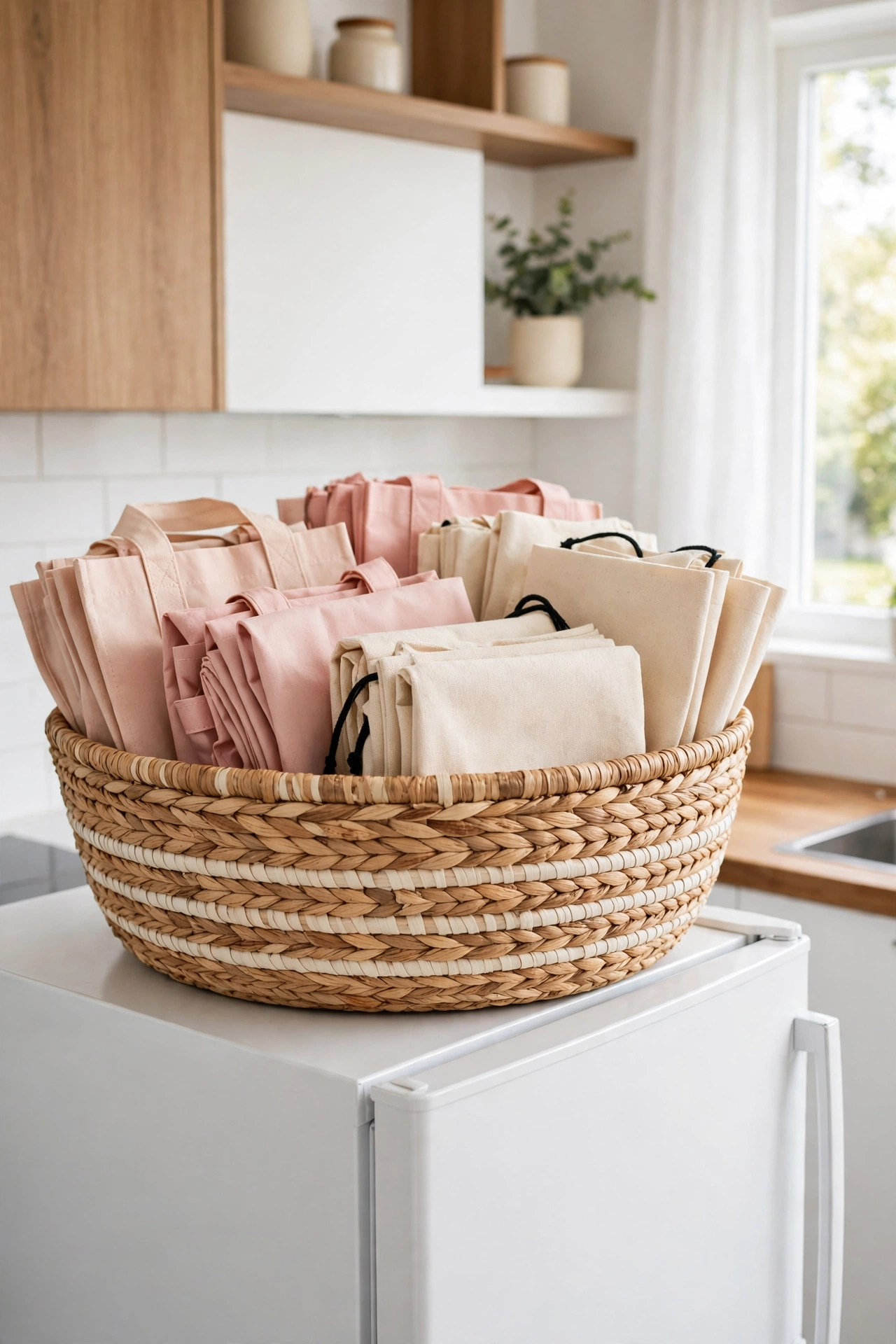
11. Hanging Shoe Organizer
A hanging shoe organizer with clear pockets is a bag storage powerhouse. Each pocket holds a folded bag, and because the pockets are transparent, you can see every bag without opening or moving anything. Hang it on the inside of a closet door, the back of the pantry door, or in the garage near the car.
With twenty or more pockets, you have room for your entire collection plus space for produce bags, insulated bags, and wine totes. Fold each bag to roughly the same size so the pockets look uniform. One neat fold per pocket creates a grid of color that actually looks good on the back of a door.
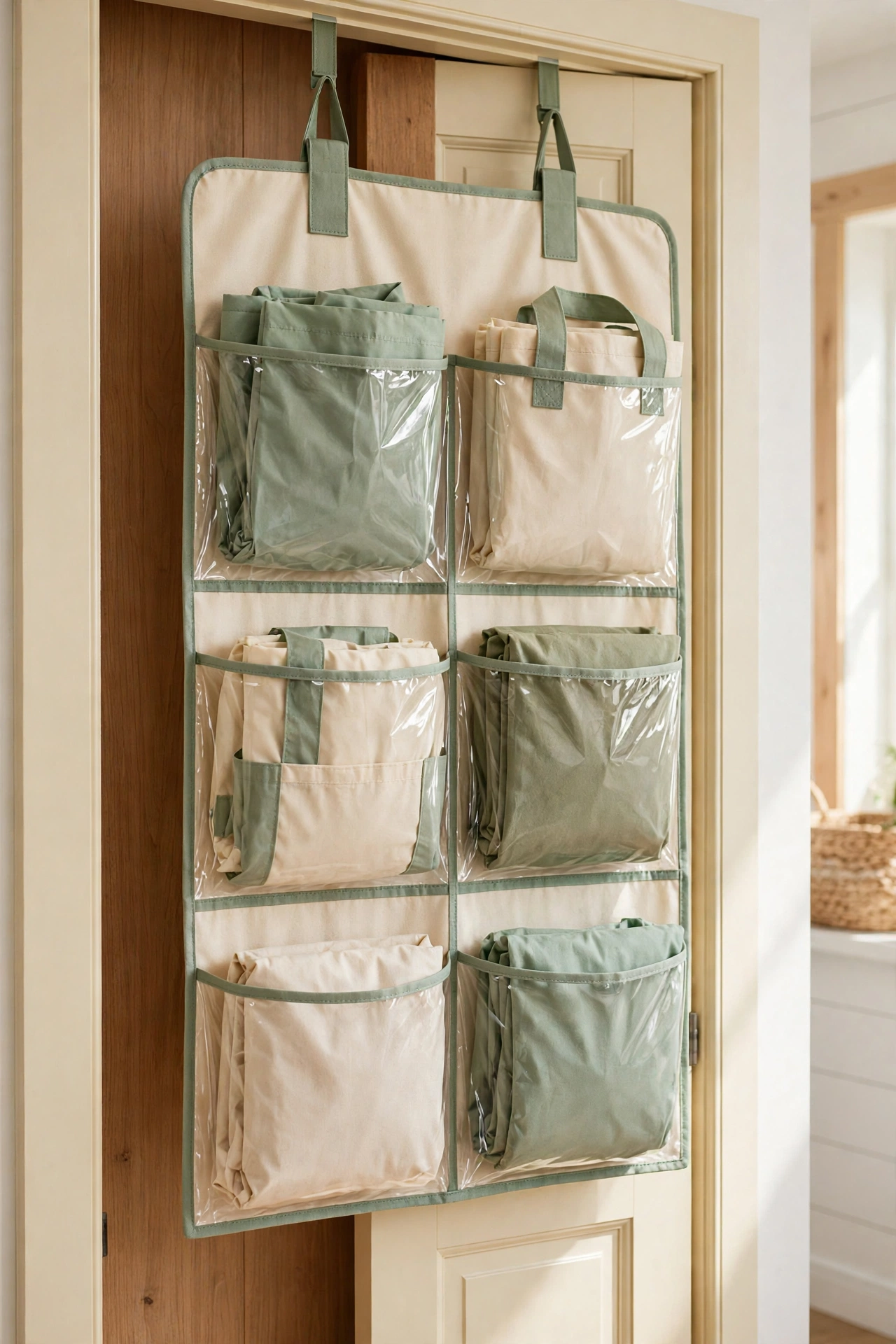
12. Under-Sink Tension Rod
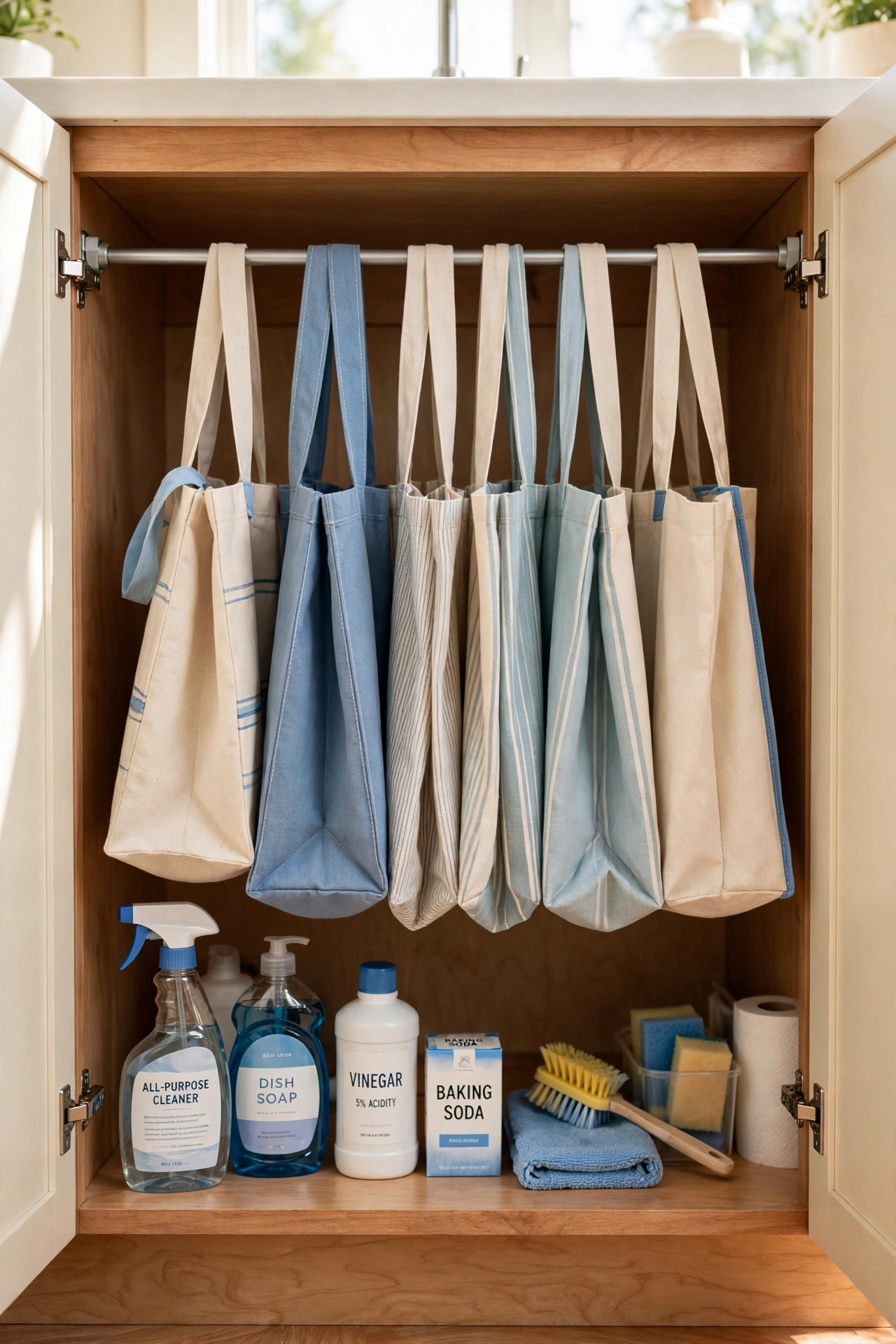
Install a tension rod across the inside of the cabinet under the kitchen sink and drape bags over it. The bags hang in a row and stay visible and accessible. This uses the upper airspace inside the cabinet that usually goes to waste because cleaning supplies sit on the floor of the cabinet.
The tension rod costs very little, requires no tools, and creates instant bag storage in a cabinet you already have. For more ideas on making the most of this hidden space, see these under bathroom sink organization ideas. Place the rod high enough that it does not interfere with items on the cabinet floor, and test the height before fully tightening it.
13. Labeled Bins by Type
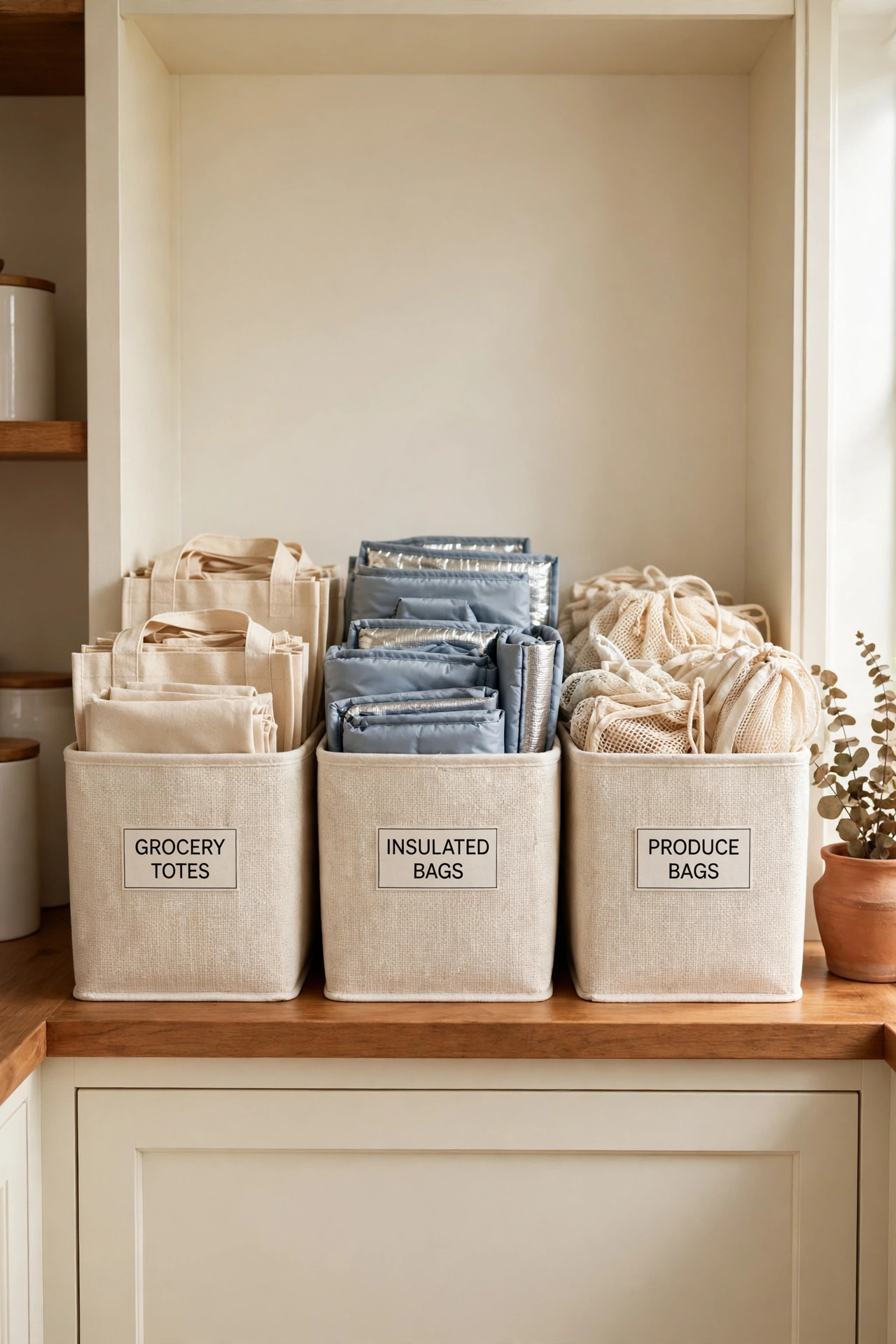
If you have different kinds of reusable bags for different purposes, sorting them into labeled bins makes the whole system faster. One bin holds standard grocery totes, one holds insulated cooler bags, and one holds produce mesh bags. Each bin gets a label so anyone in the household can find the right bag and put it back in the right spot.
This works well on a pantry shelf, a mudroom shelf, or inside a large closet. Keep the labels consistent in font and material. Matching labels on matching bins create a system that looks like a professional organizer set it up, and even handwritten labels work well when you use the same pen and the same tape for all of them.
14. Car Trunk Organizer
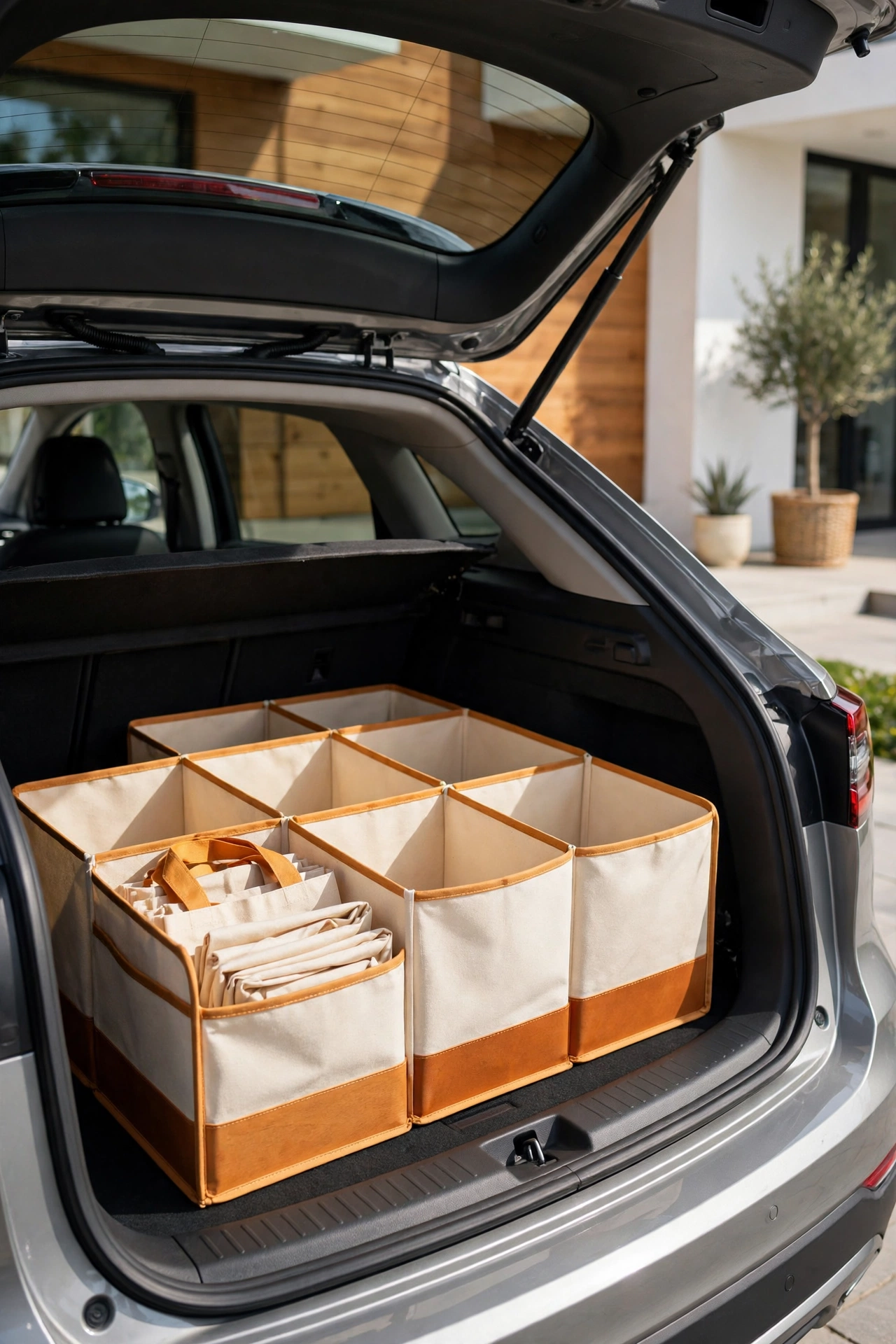
The best reusable bag storage might not be in your kitchen at all. A collapsible trunk organizer in your car keeps bags right where you need them. After unloading groceries at home, fold the bags and drop them back in the trunk organizer. Next time you drive to the store, they are already in the car.
This solves the most common problem with reusable bags, which is remembering to bring them. They never leave the car, so they are always available. For more ideas on keeping the car tidy, see these car trunk organization ideas. Get a trunk organizer with multiple compartments so bags stay separated from other trunk items like emergency kits and sports gear.
15. Pegboard Storage Wall
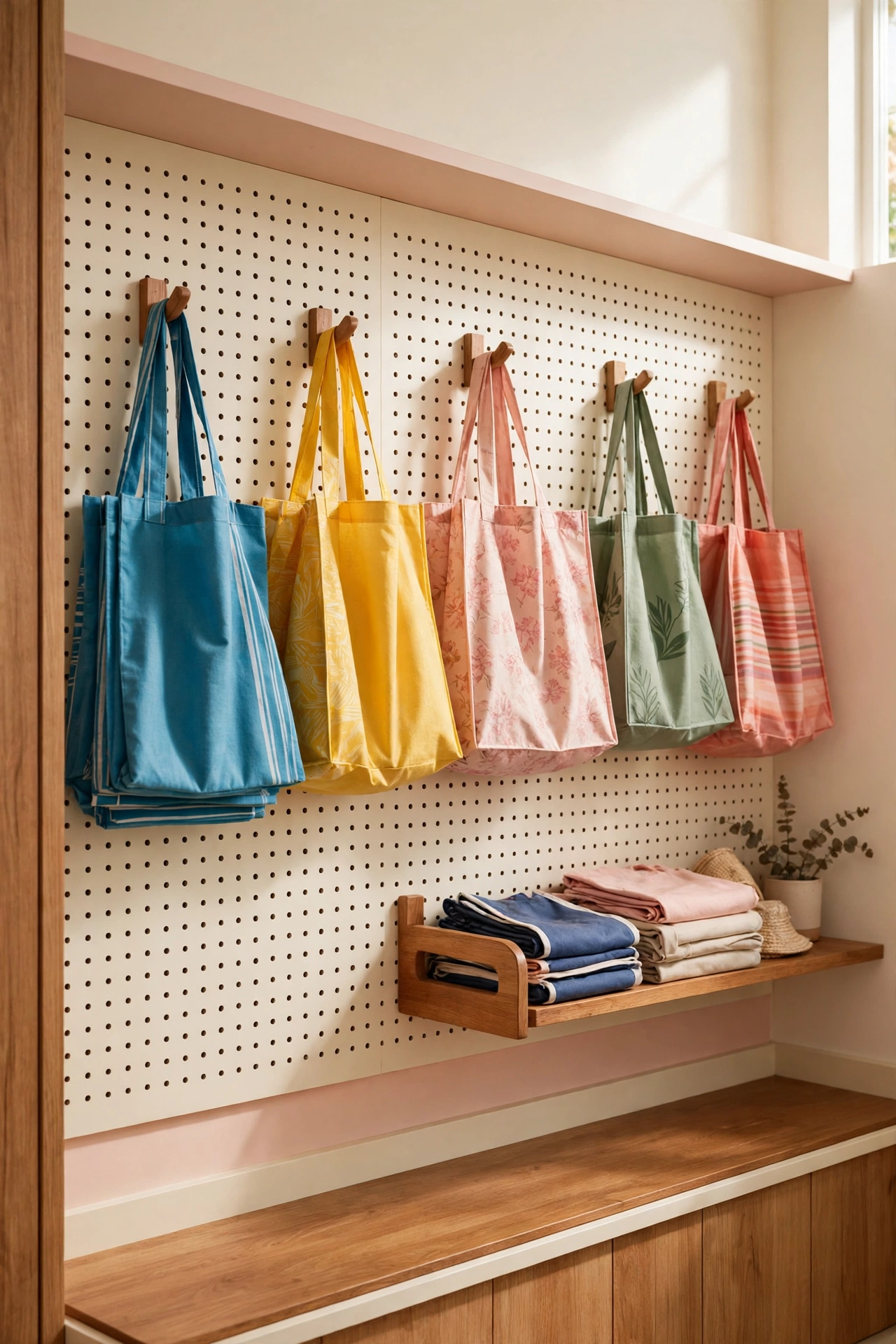
A pegboard mounted in the pantry, mudroom, or garage gives you fully customizable bag storage. Add hooks wherever you want them, hang bags by their handles, and rearrange the layout any time your collection changes. Pegboards let you see every bag at once, which means you actually use all of them instead of always grabbing the same two bags from the top of the pile.
Add a small shelf attachment to hold folded bags that do not hang well. Paint the pegboard to match the wall or use a bold accent color for a design statement. A natural plywood pegboard works for rustic spaces, while a white pegboard disappears into a white wall and lets the colorful bags become the visual feature.
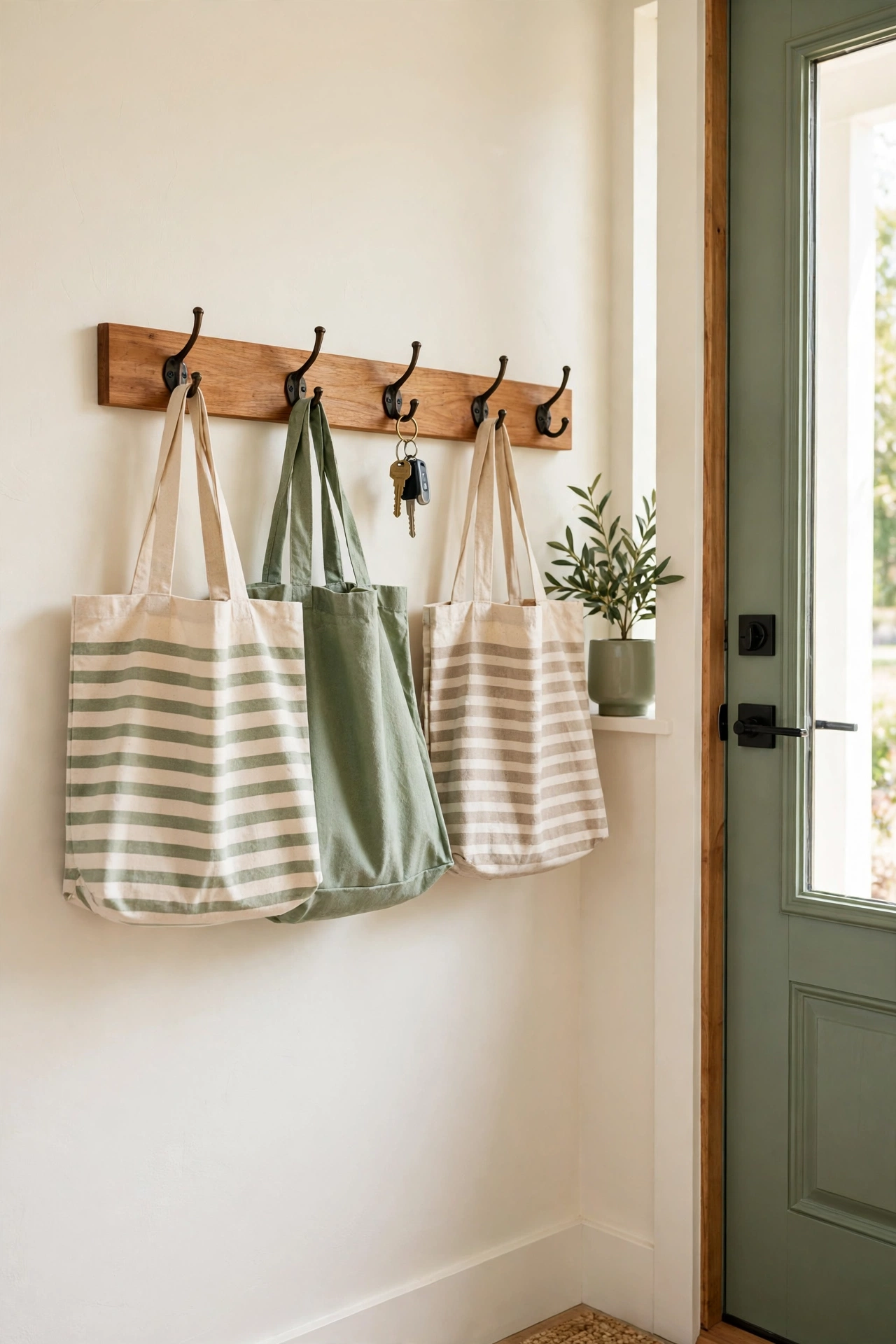
16. A Hook Rail by the Front Door
A simple hook rail mounted by the front door is one of the easiest bag storage systems you can set up. Hang each bag by its handles on its own hook, so every bag is visible the moment you step toward the door. You grab a bag on the way out without thinking about it, which is exactly how a good system should work.
Choose a rail with sturdy hooks that can hold the weight of several bags at once. For more ideas on keeping the entrance tidy, see these entryway organization ideas. A hook rail also holds keys, a leash, and a light jacket, so the whole leaving-the-house routine lives in one spot.
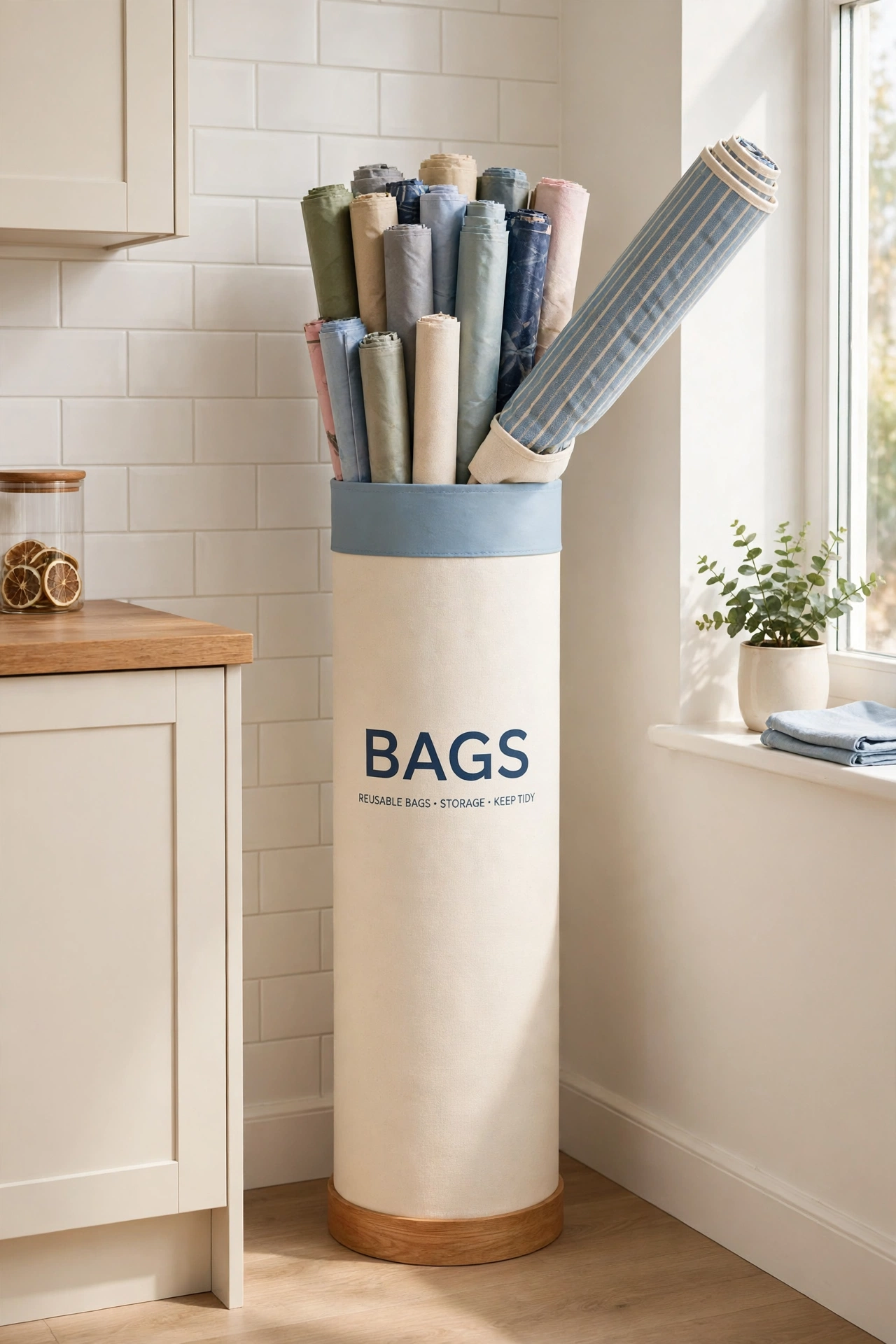
17. Roll Bags and Store Them in a Tube
Rolling bags into tight cylinders and sliding them into a tall tube keeps a large collection in a very small footprint. A mailing tube, a tall kitchen canister, or a section of wide pipe all work as a bag tube. Stand the tube upright in a corner, in a closet, or beside the door, and pull one rolled bag out whenever you need it.
This method works best for lightweight fabric bags that roll up small. Label the tube so everyone in the house knows what lives inside it. A tube full of rolled bags takes up less space than a drawer full of folded ones and keeps the bags from unrolling into a mess.
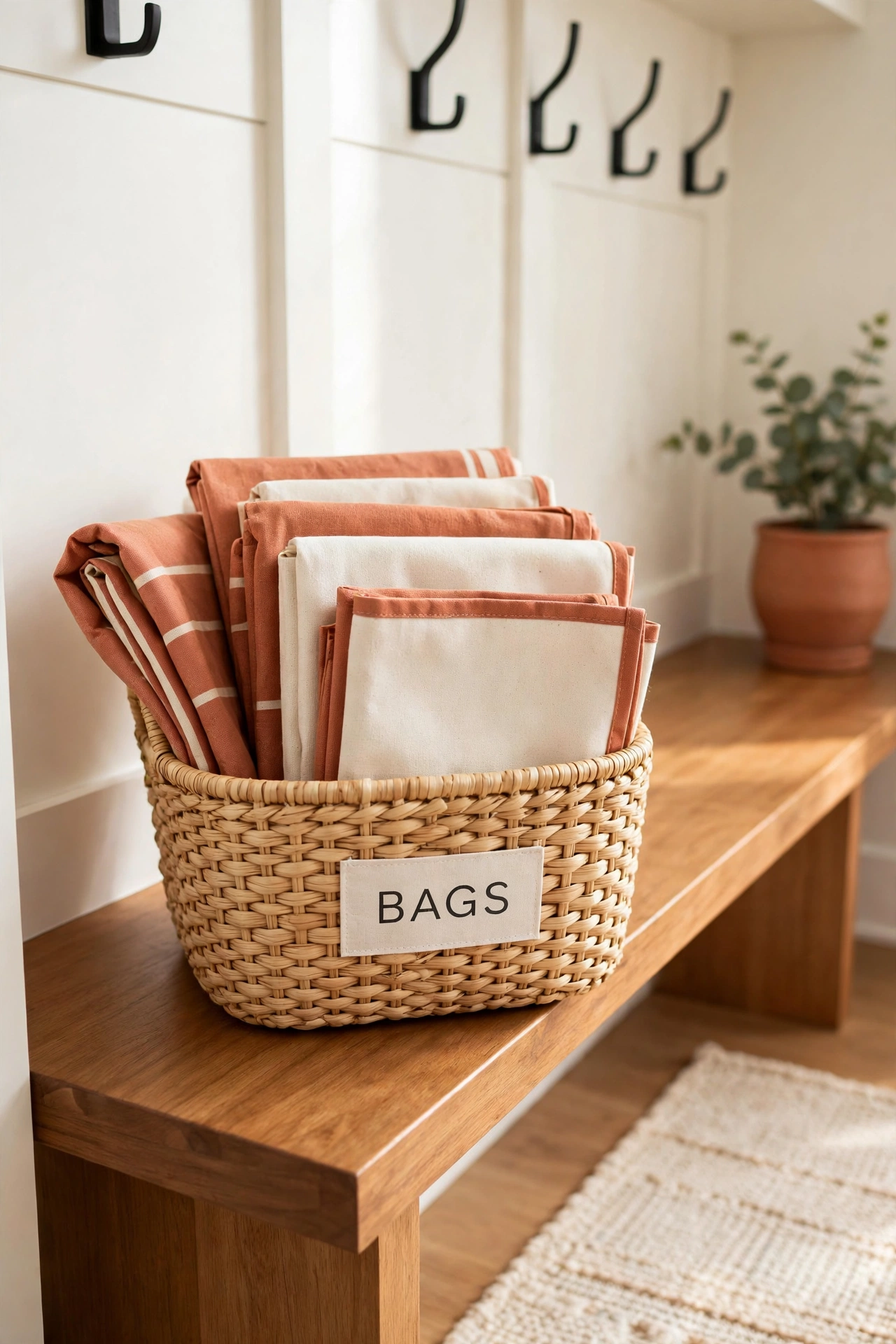
18. A Small Basket in the Mudroom
A small basket in the mudroom gives your bags a home right where outdoor gear already lives. Toss folded bags in the basket after every shopping trip and grab one on the way to the car. The mudroom is the natural halfway point between the house and the car, so bags stored there rarely get forgotten.
Pick a basket that fits your mudroom shelf or bench and label it so the whole family knows it is the bag spot. For more ideas on keeping this hardworking space tidy, see these mudroom bench organization ideas. A woven basket adds warmth to the mudroom while it keeps the bags contained and easy to reach.
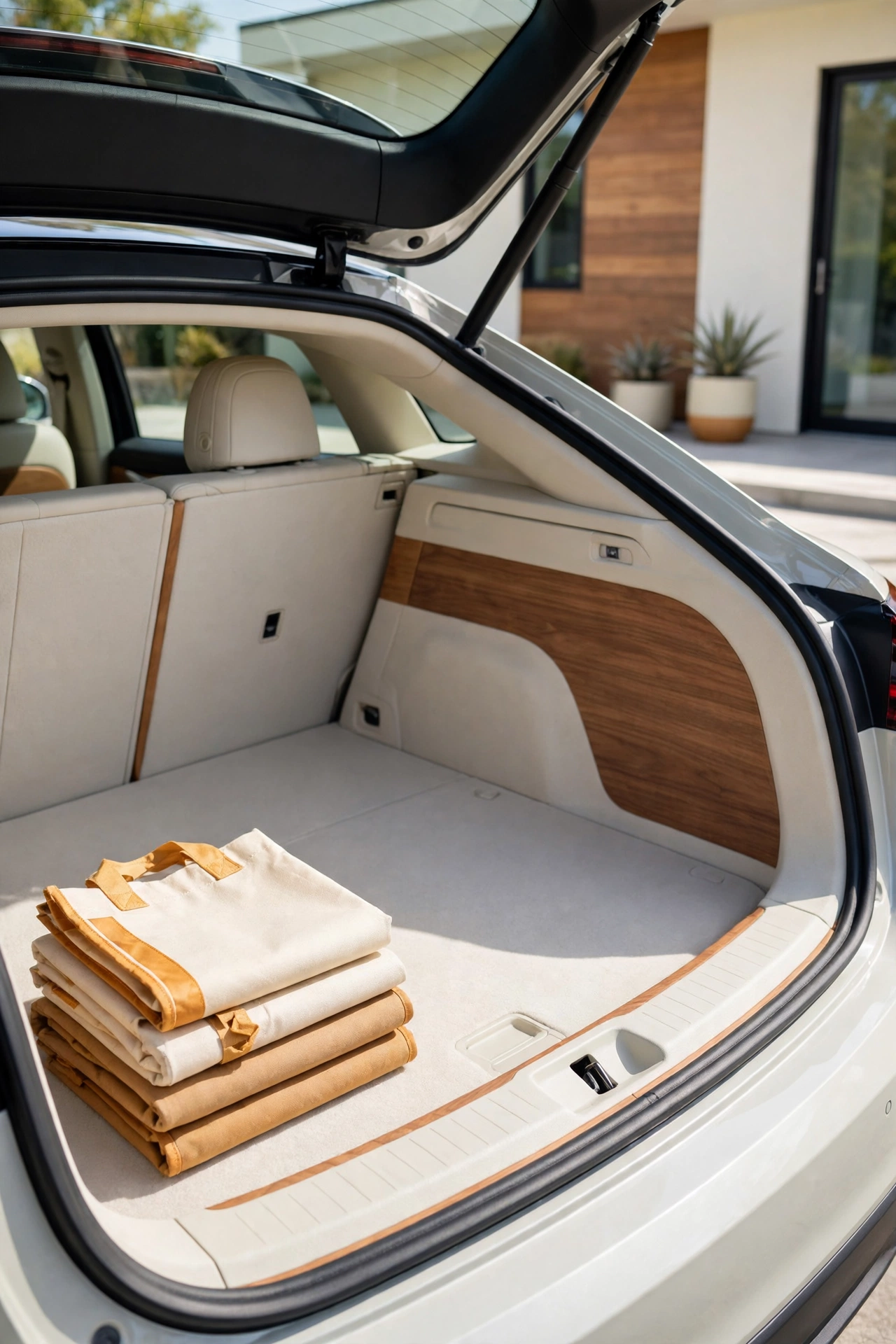
19. Keep a Bag in Every Car
If your household has more than one car, keep a small set of bags in each one. A couple of folded totes in the trunk or under a seat means you are covered no matter which car you take. This removes the need to move bags from car to car and back into the house.
Restock each car after a shopping trip by folding the bags and returning them to the same spot. A small bag of bags in the trunk stays out of the way until you need it. This habit alone can cut your forgotten-bag moments down to almost zero.
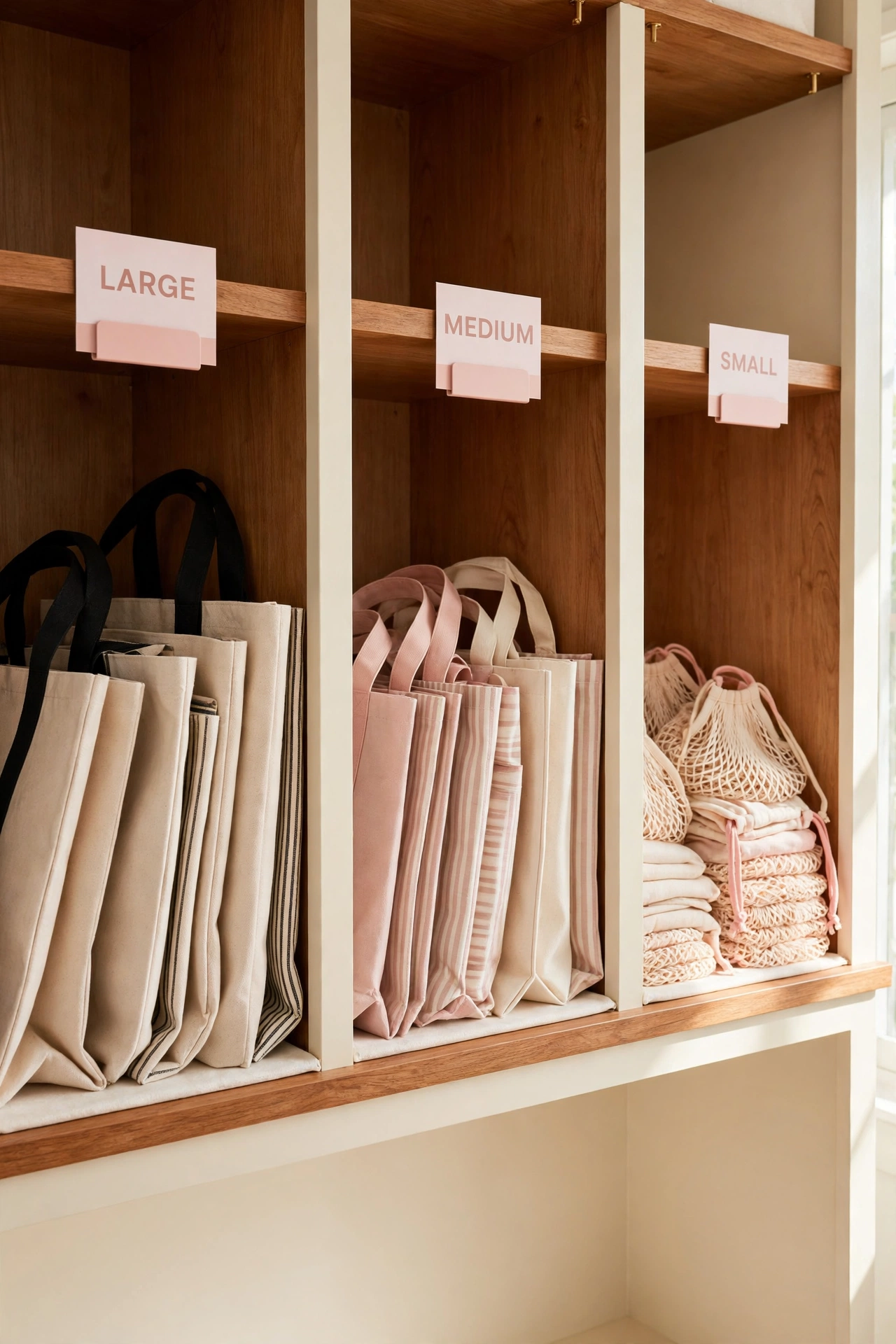
20. Sort Bags by Size and Use
Sorting bags by size and use makes every trip faster because you grab exactly the bag the job needs. Keep large totes together for big grocery runs, medium totes for quick stops, and small produce bags in their own spot. Insulated bags stay separate so you can grab one when you buy cold or frozen food.
Use dividers, bins, or simple labeled sections to keep the groups apart. When bags are sorted, you stop unfolding three wrong bags to find the right one. A sorted collection also shows you at a glance when you have too many of one size and none of another.
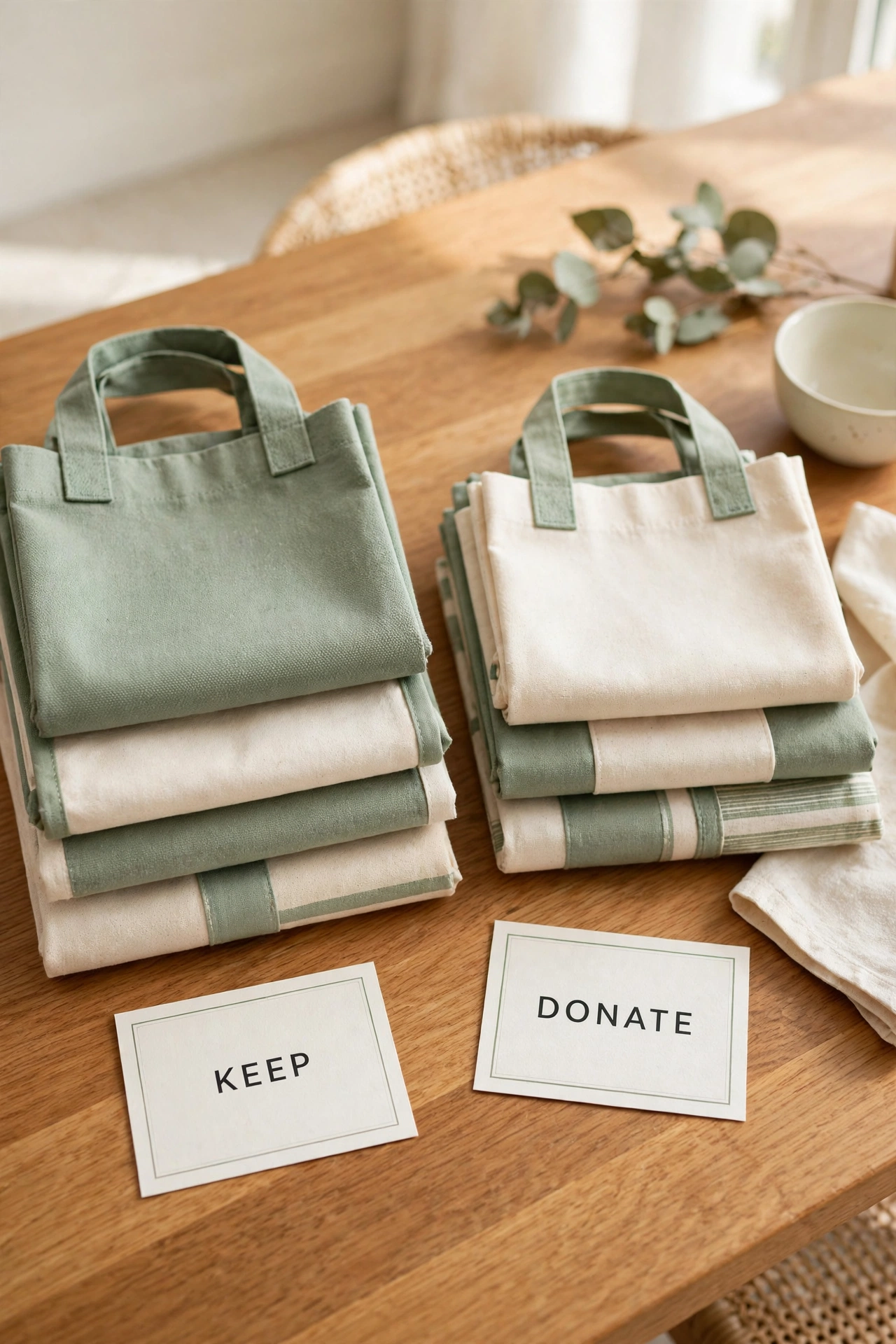
21. A Weekly Bag Declutter Routine
Bags multiply fast, so a short weekly declutter routine keeps the collection under control. Once a week, take two minutes to count your bags, pull out any that are torn or stained, and set aside the ones you never use. This tiny habit stops the pile from growing into a drawer that will not close.
Pair the routine with your regular grocery unpacking so it becomes automatic. When the count creeps above twelve standard totes, it is time to pass the extras on. A small, well-kept collection is easier to store and easier to use than a huge pile of bags you cannot find.
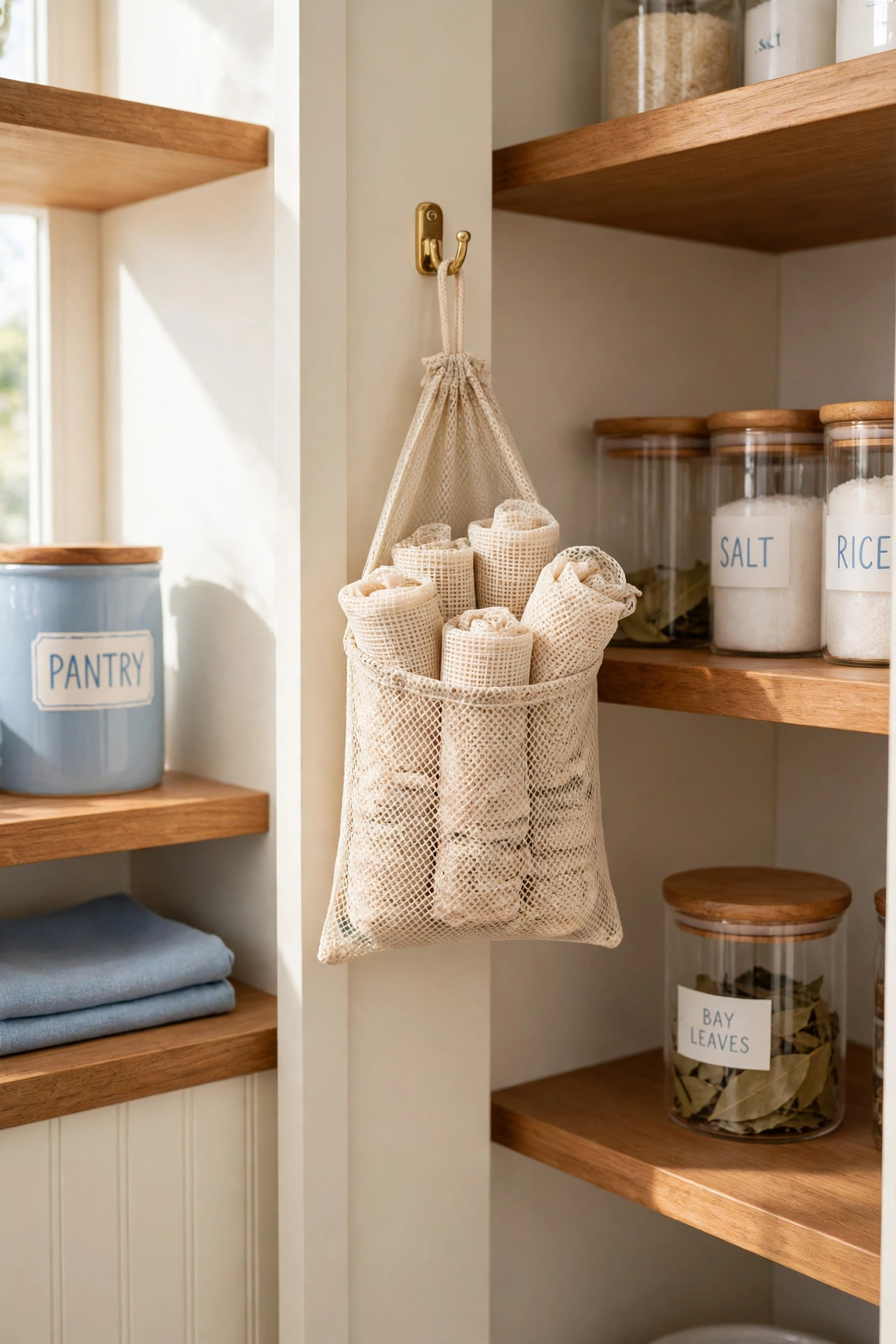
22. Store Produce Bags in a Mesh Pouch
Small mesh produce bags are the hardest bags to store because they slip, tangle, and disappear into drawers. A single mesh pouch holds the whole set in one place. Roll each produce bag, tuck it into the pouch, and hang the pouch on a hook inside the pantry or on the bag wall.
When you head to the store, grab the pouch and all your produce bags travel together. After washing, let the bags dry fully before they go back in the pouch so they stay fresh. This one small container ends the daily hunt for a produce bag at the bottom of a drawer.
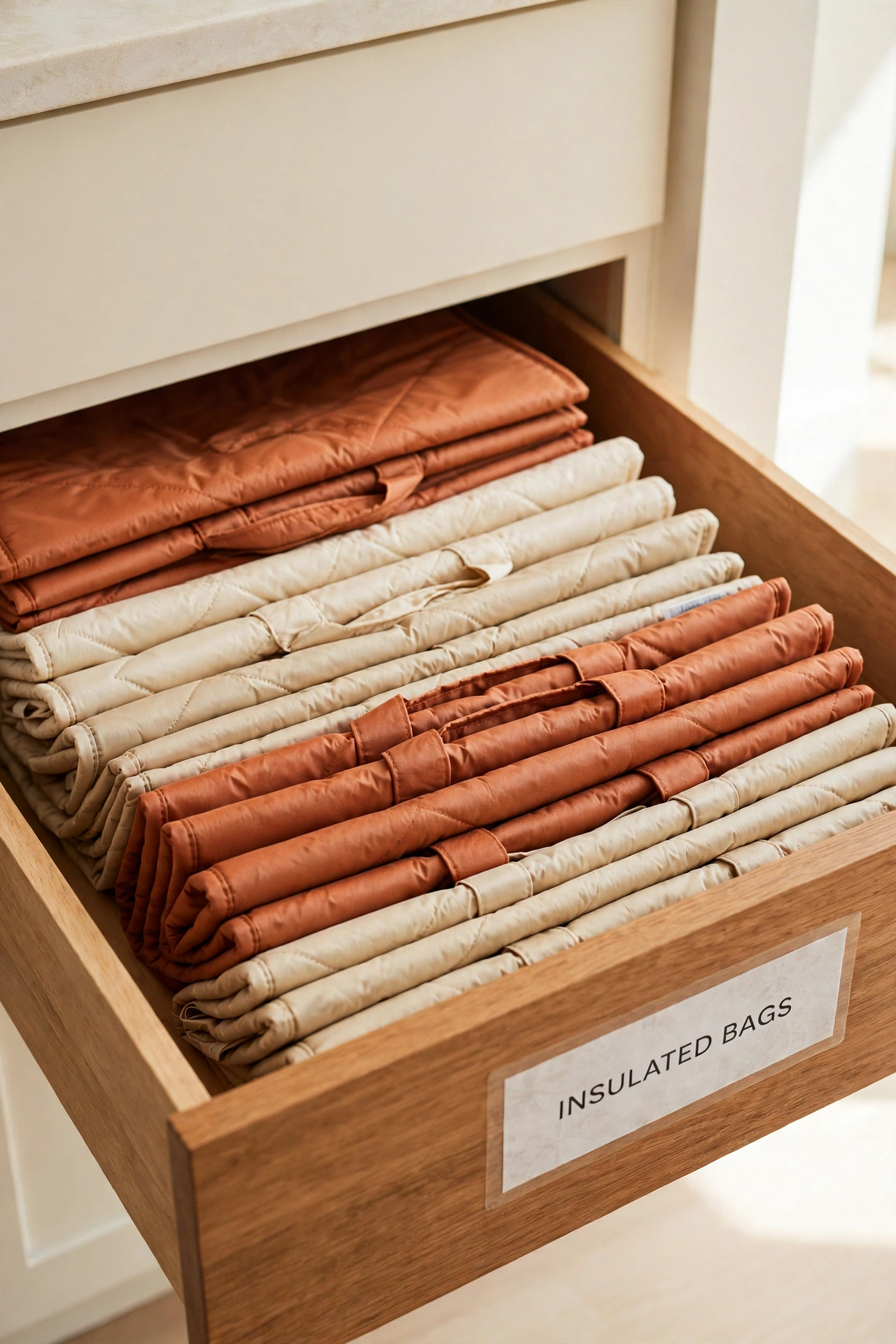
23. A Labeled Drawer for Insulated Bags
Insulated bags need their own spot because they are bulkier than fabric totes and they carry cold food. Give them one labeled drawer or one shelf section where they stack flat without crushing the insulation. A clear label on the front tells everyone in the house where the cooler bags live.
Keep the insulated bags near the door or in the car so they are ready for grocery runs. Wipe them clean after each use and let them air dry before they go back in the drawer. A dedicated spot keeps the bulky bags from taking over the space meant for everyday totes.
24. Hang Bags on the Pantry Door
The inside of the pantry door is prime storage space that most homes leave empty. Hang a few sturdy hooks or a slim rack on the inside of the door and hang bags by their handles. The bags stay hidden when the door is closed and instantly visible the moment you open it.
This works especially well in kitchens where counter and drawer space is already full. Keep the most-used bags at eye level and the specialty bags lower down. The pantry door holds a surprising number of bags without taking up a single inch of shelf space.
25. Donate the Bags You Never Use
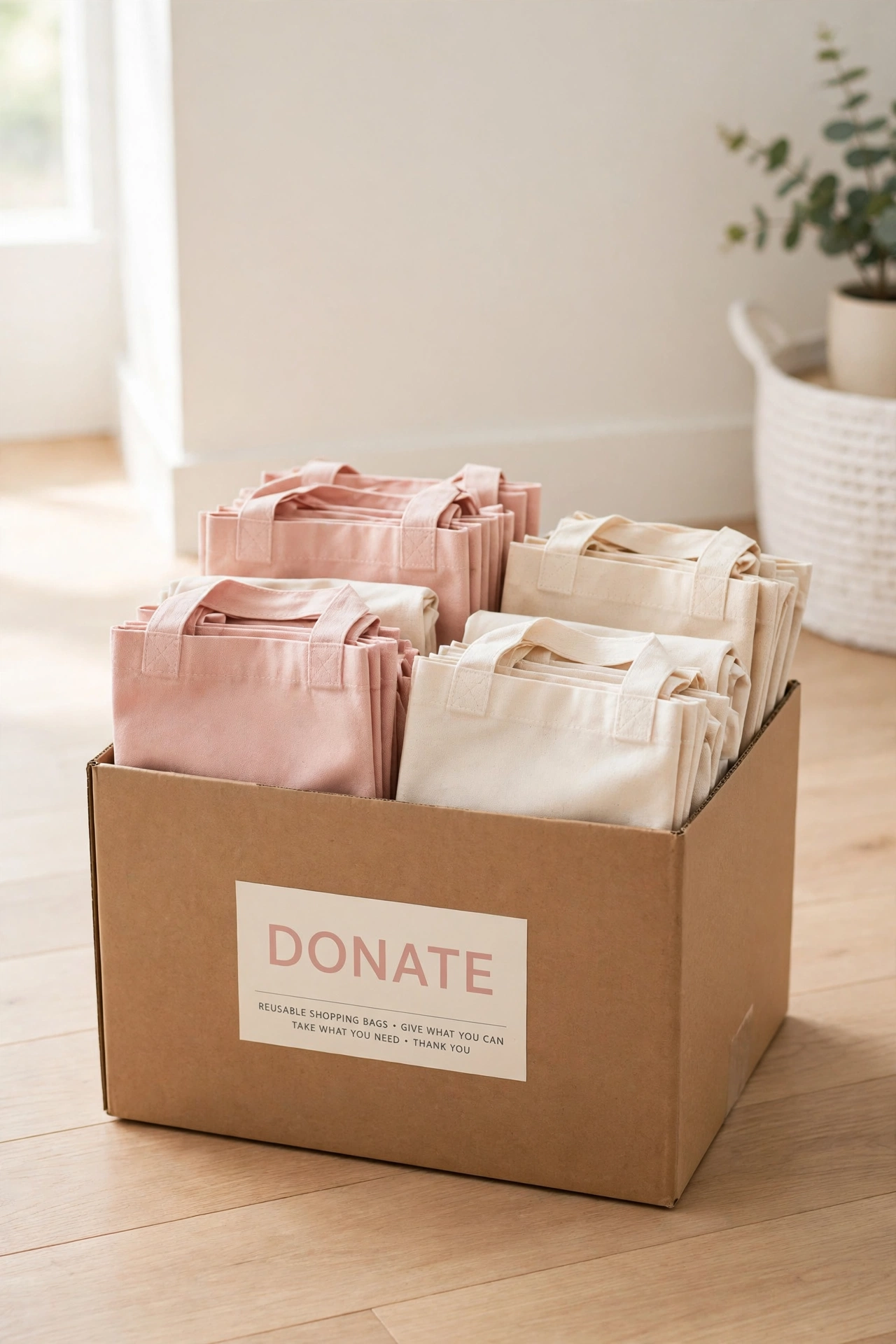
The final idea is the simplest one: let go of the bags you never reach for. If a bag has sat untouched for months, pass it on to a friend, a food bank, or a donation bin. A smaller collection is easier to store, easier to see, and easier to keep tidy.
Keep only the bags that fit your routine, like eight to twelve standard totes plus a few specialty bags. Every bag that leaves makes room for the ones you actually use. Donating the extras turns a clutter problem into a kind gesture and leaves your storage system with breathing room.
Conclusion
Reusable shopping bag organization does not have to be complicated or expensive. From a wall-mounted dispenser to a basket in the mudroom and a trunk organizer in the car, there is an idea here for every home and every habit. The best system is the one you will actually use every time you head out the door.
Pick one or two ideas that fit your space and start today. Give every bag a home, keep the collection small, and enjoy a tidier kitchen and entryway. For a calm home beyond the front door, these nightly reset routine ideas will help you keep every room organized with just a few minutes each evening.
Frequently Asked Questions About Reusable Shopping Bag Organization Ideas for Easy Access
How many reusable bags does a household need?
Most families do well with eight to twelve standard grocery totes plus a few specialty bags like insulated cooler bags and mesh produce bags. That covers a full grocery run with some extras for spontaneous shopping trips. If you find yourself with more than twenty bags, it is probably time to donate the ones you never reach for.
What is the best way to fold reusable bags for storage?
Fold the bag in half lengthwise, then fold it in half again, and roll from the bottom up. This creates a compact roll that fits in drawers, bins, or pockets. Some bags have a built-in pouch that they fold into, which is even more compact. Rolling works better than flat folding for most storage methods because rolled bags stand upright and take up less space.
How do I keep reusable bags clean?
Most fabric bags can go in the washing machine on a cold cycle and air dry. Wipe insulated bags with a damp cloth and mild soap inside and out. Aim to wash bags every two to three weeks or immediately after carrying raw meat or anything that leaked. Clean bags last longer and do not pick up that musty smell that makes people avoid using them.
Should I store bags near the door or in the kitchen?
The best location depends on your routine. If you always drive to the store, keeping bags in the car trunk makes the most sense. If you walk, storing them near the front door or in the entryway closet means you grab them on the way out. Kitchen storage works well for unloading and reloading but adds a step if you forget them on the way out the door.
How do I stop buying a new bag on every trip?
Keep your bags where you cannot miss them, like in the car trunk or on a hook by the front door. Do a quick bag check before you leave the house, the same way you check for your keys and wallet. A small, well-organized collection that lives in one visible spot makes it easy to remember the bags every single time.

Hi, I’m Emily! I turn messy corners into cozy, organized spots. DreamNestDecor is where I share simple, practical home ideas — decor, organization, and small-space solutions that work in real life, not just in photos. Every idea here is carefully researched before it’s shared.