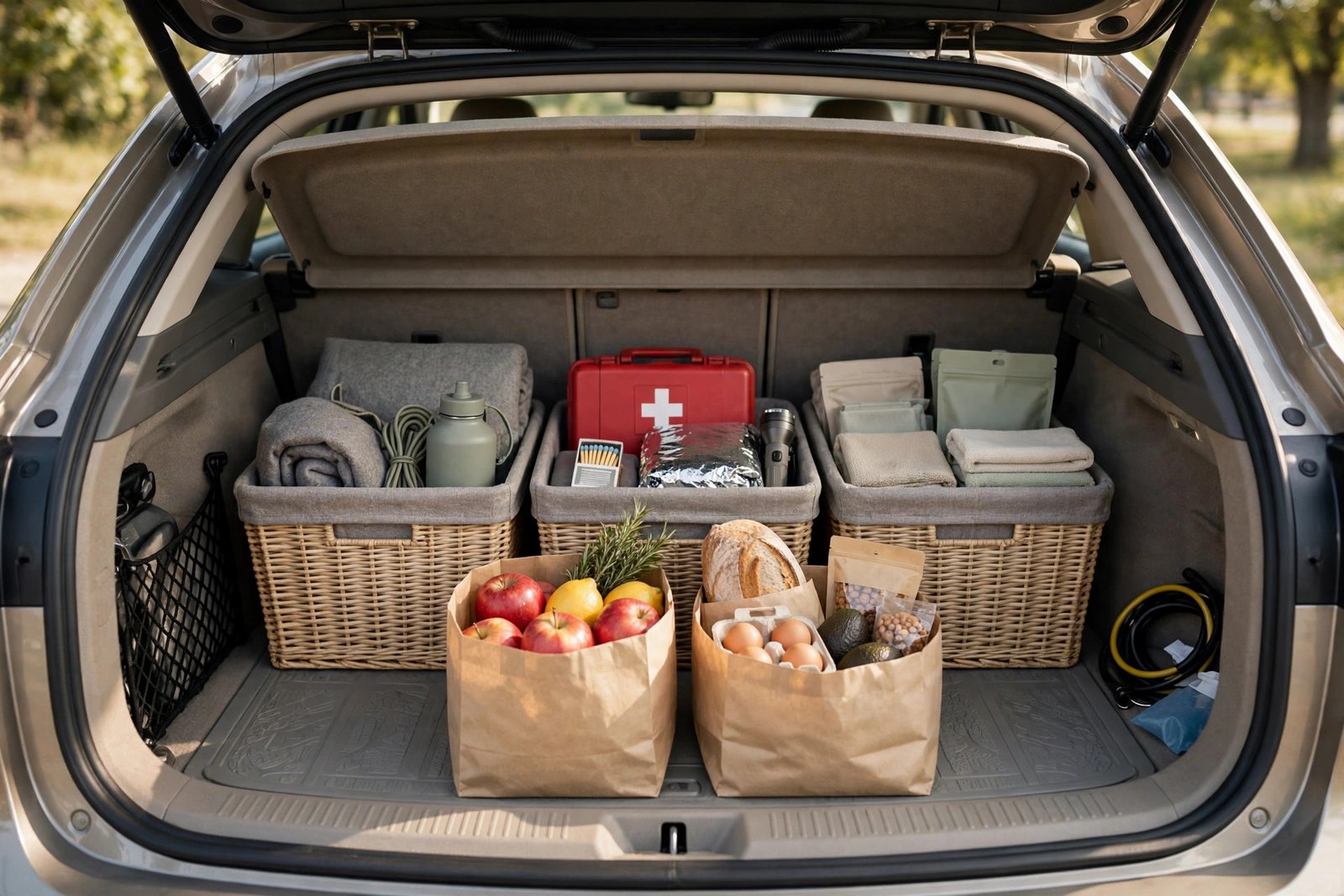
Picture this: you open your car trunk on a rainy night, and everything you need is buried under grocery bags and sports gear. The flashlight is missing, the jumper cables are tangled, and the first-aid kit has slid to the very back. You need one thing fast, but the mess slows you down.
You do not need a bigger trunk or a bigger budget to fix it. You only need a simple system that gives every item a clear home, from emergency gear to weekly groceries. These 23 ideas will help you organize your car trunk for emergencies and everyday trips, so you can find what you need in seconds.
1. Pack an Emergency Ready Bin
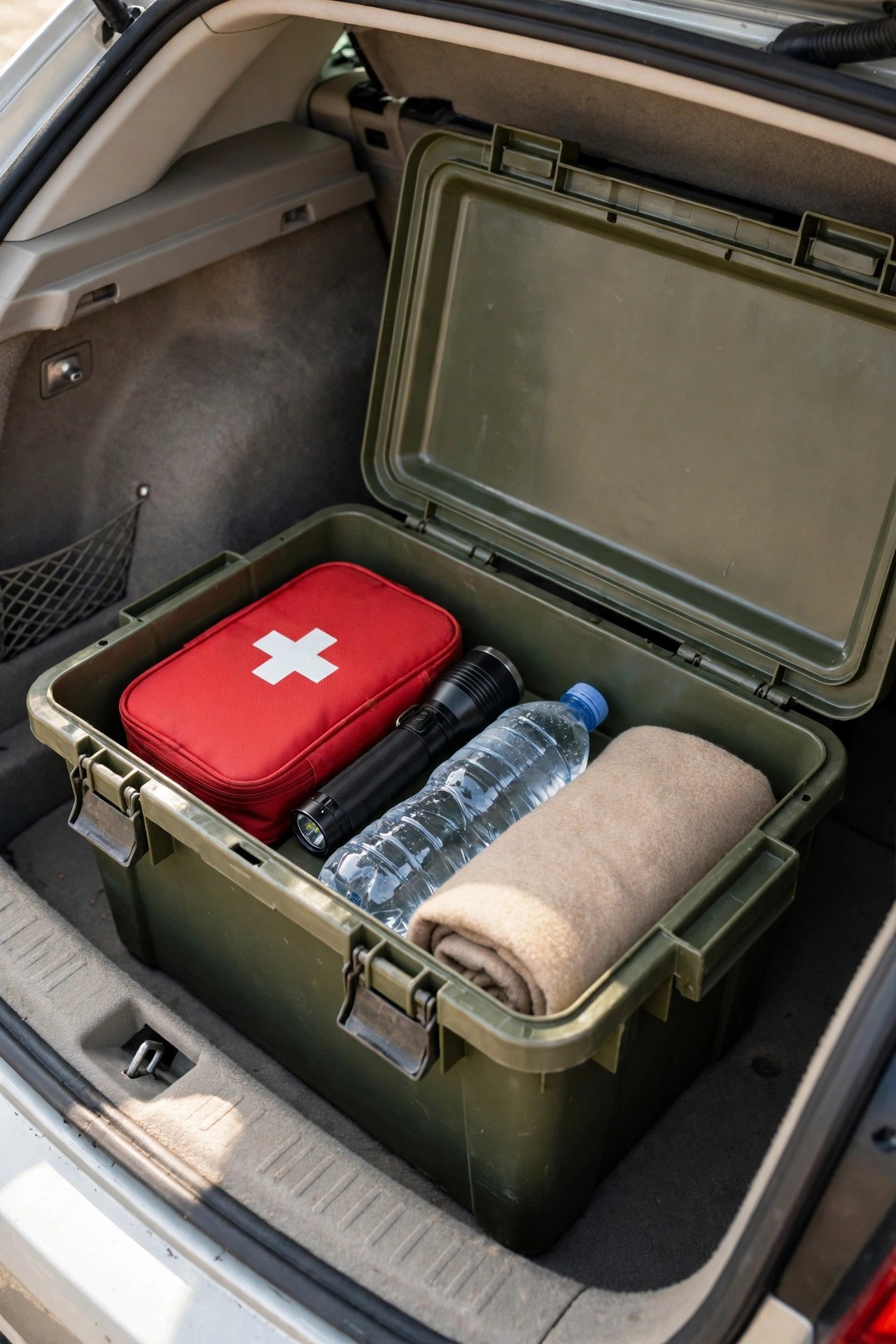
An emergency bin turns panic into a calm plan when something goes wrong on the road. Pack it with a first-aid kit, a flashlight, bottled water, and a warm blanket, then set it flat against the trunk wall. When every essential sits in one labeled bin, you never waste time digging through loose gear.
Choose a sturdy bin with a lid so supplies stay dry and dust free through every season. Label the outside clearly, and check the contents twice a year to replace anything expired or used up. A bin that stays ready means you can handle a flat tire or a sudden delay without stress.
2. Fit a Pull-Out Drawer System
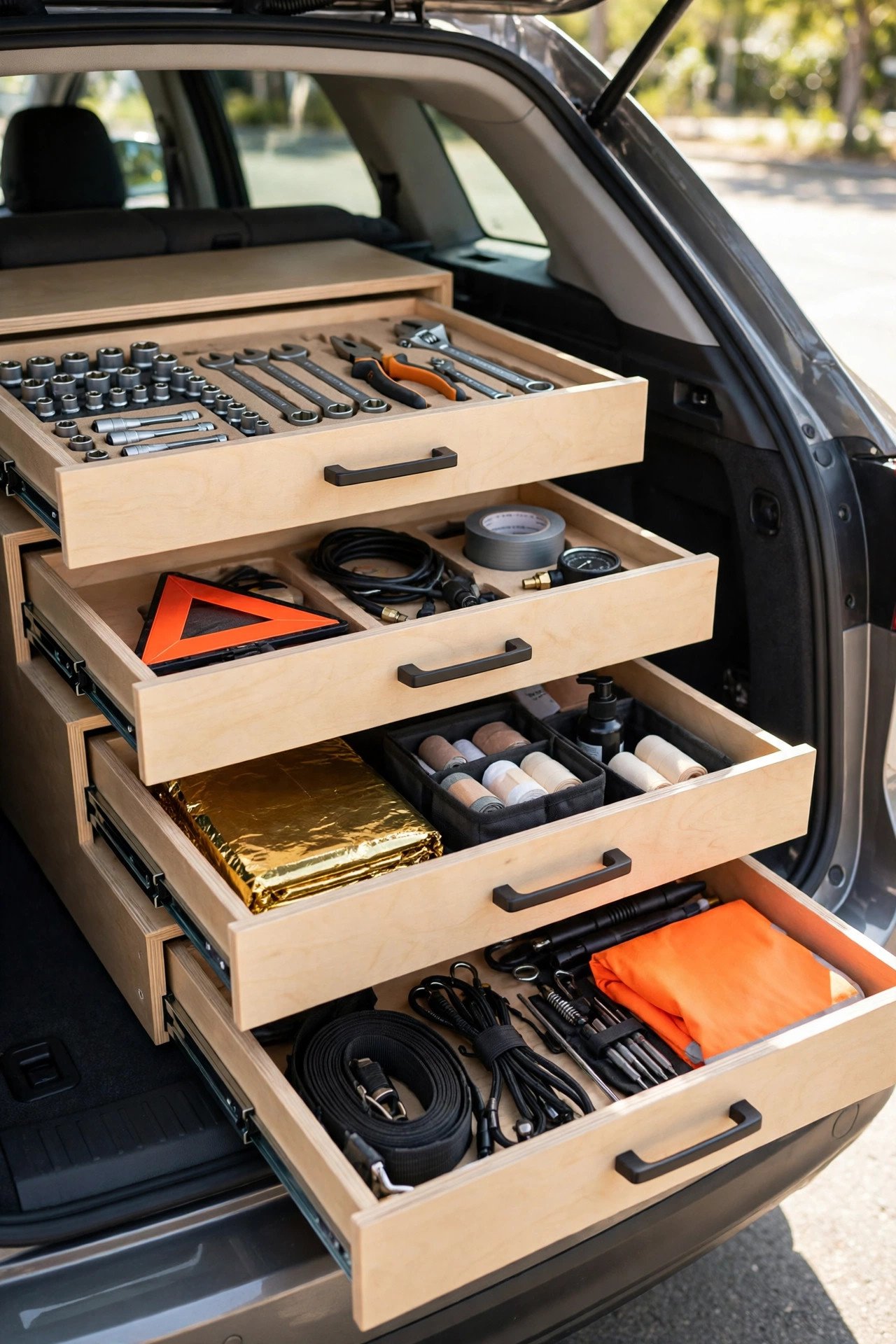
A pull-out drawer system turns a deep trunk into storage you can actually reach. Install it flat across the trunk floor, and each drawer holds its own category, such as tools, drinks, or roadside gear. You can slide out one drawer without unloading the whole trunk first.
This system suits larger cars that carry work gear, camping supplies, or sports equipment every week. Keep heavy items in the bottom drawer so the unit stays stable, and label each drawer front so family members find things fast. Sliding drawers make loading and unloading feel almost effortless.
3. Set Up Zoned Storage Sections
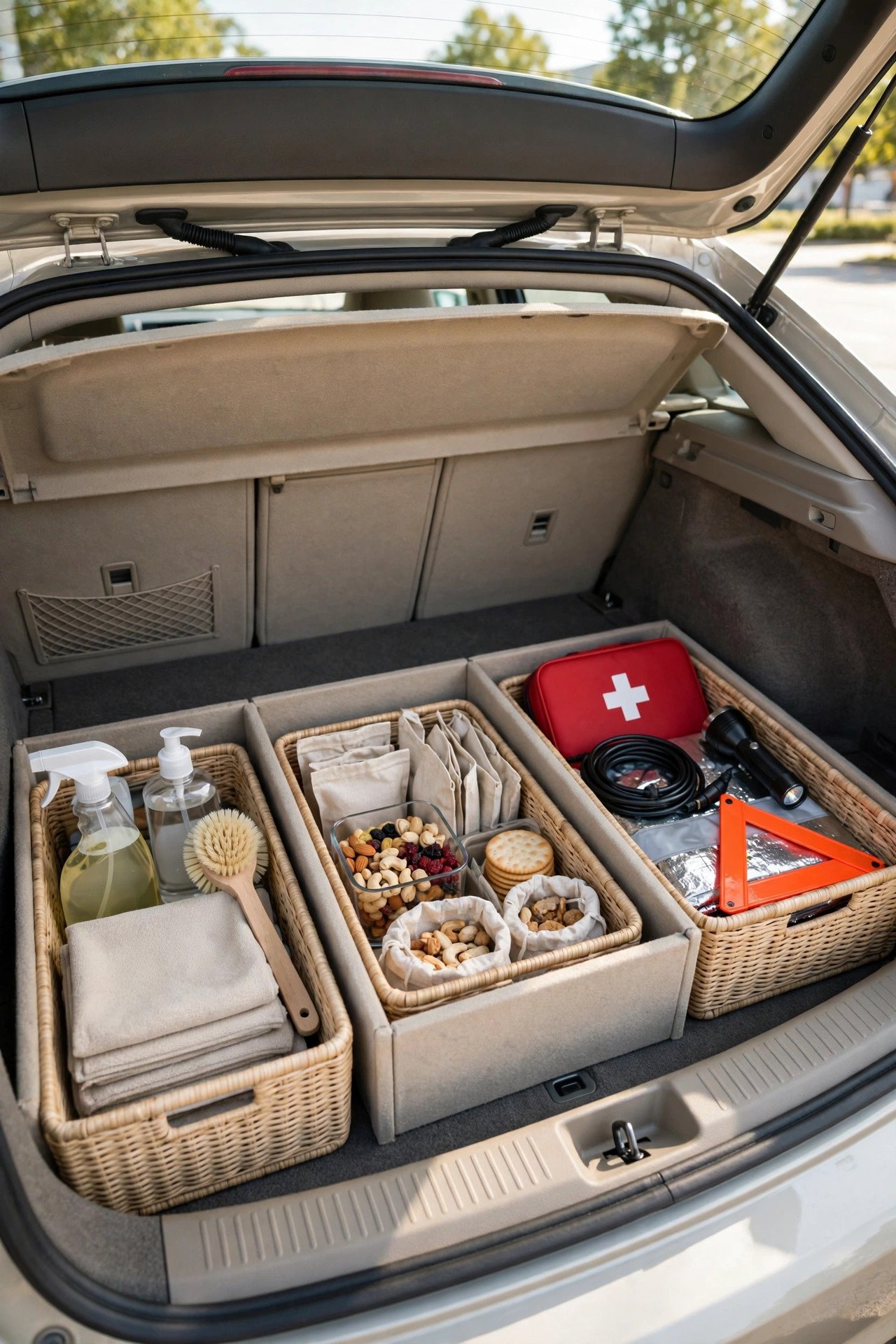
Zones turn a messy trunk into a map where every item has a job. Line the bins along the trunk wall and give each section a purpose, such as cleaning supplies, snacks, car care, or emergency gear. When zones stay fixed, restocking becomes automatic and nothing gets lost.
Start with three zones and add more only when you need them, so the system stays simple. Keep the emergency zone closest to the trunk opening, where you can reach it without moving groceries or bags. A zoned trunk works the same way a tidy drawer does, with every item in its own spot.
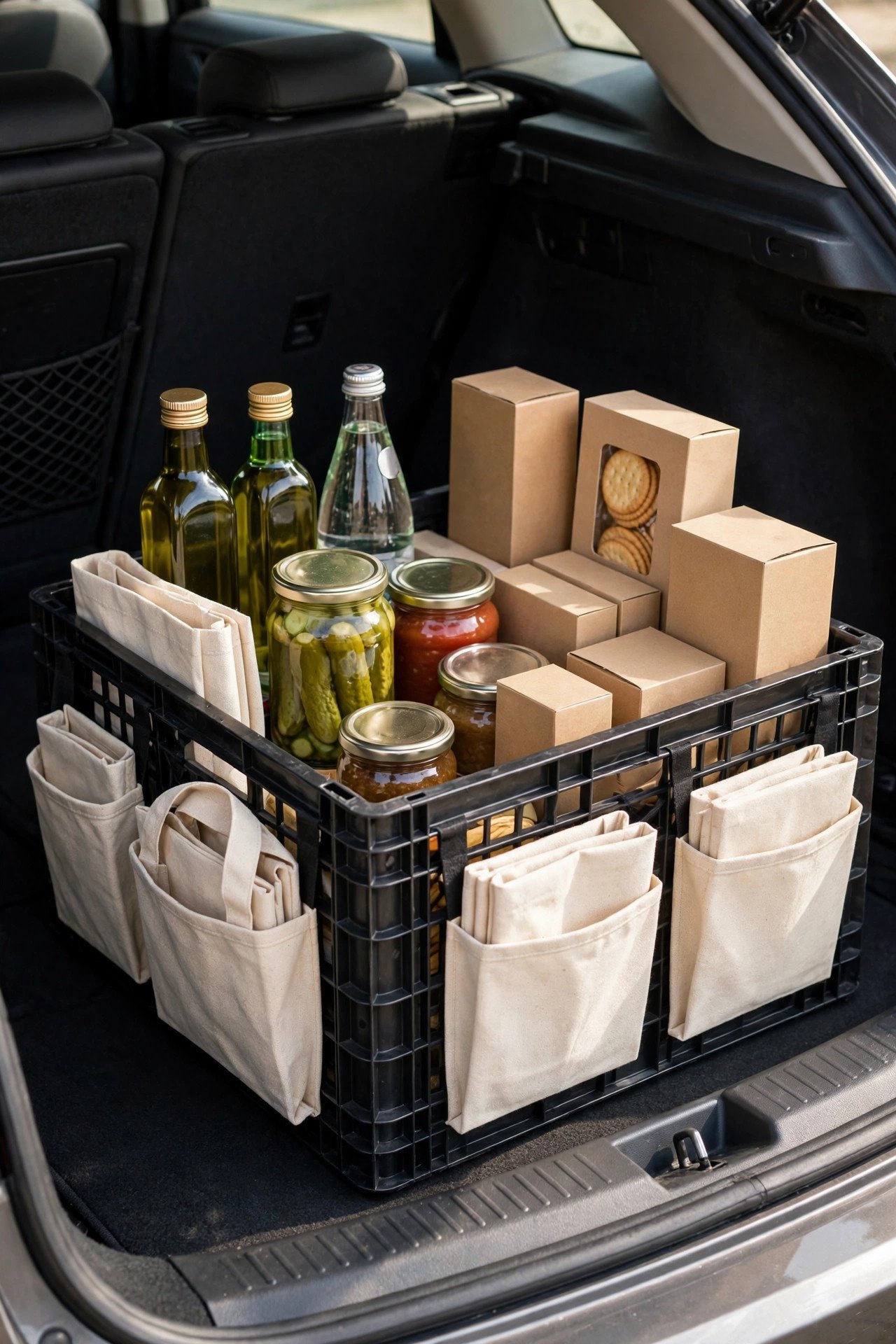
4. Contain Groceries in a Control Bin
Groceries turn into a rolling mess the moment you take a sharp turn. A deep control bin holds bottles, jars, and boxed food upright, so nothing tips over on the drive home. Keep the bin centered in the trunk to balance the weight and make unloading quick.
Choose a bin with tall sides and exterior pockets for receipts, reusable bags, or wipes, so small extras never roll away. When the bin stays in the trunk between trips, you always have grocery storage ready, and cleanup takes only a minute after you carry the bags inside.
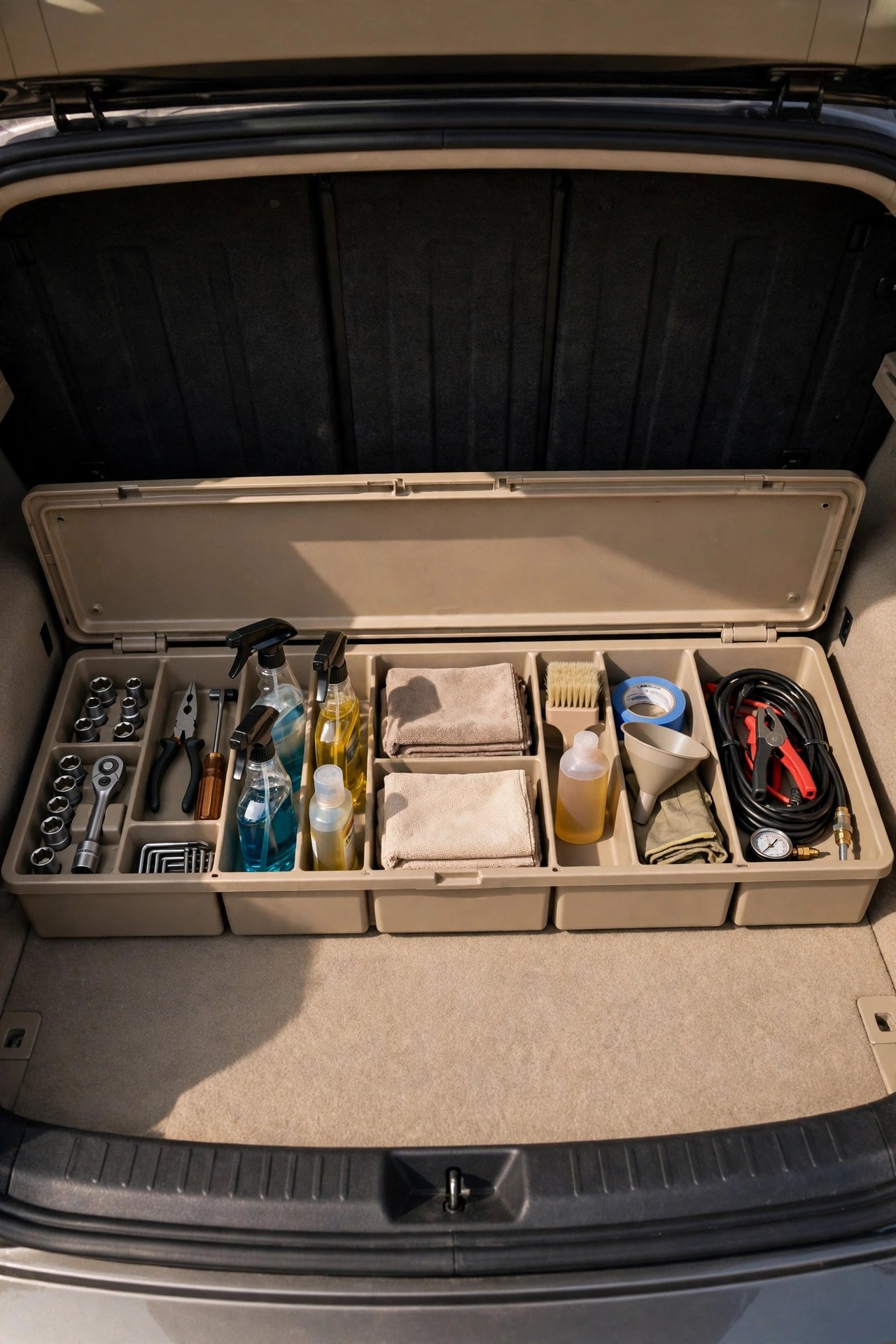
5. Line Up a Long Utility Organizer
Wide trunks waste space when small items scatter to the sides. A long, low-profile organizer fits neatly along the back seat or trunk wall, holding tools, car-care products, and roadside gear in separate compartments. The lid keeps everything hidden and the trunk looking calm and tidy.
Narrow compartments stop items from sliding when you brake or turn, which protects bottles from leaking. Keep the organizer pressed against the wall so it never shifts, and check the lid latch each season. This single piece can hold almost everything a daily driver needs.
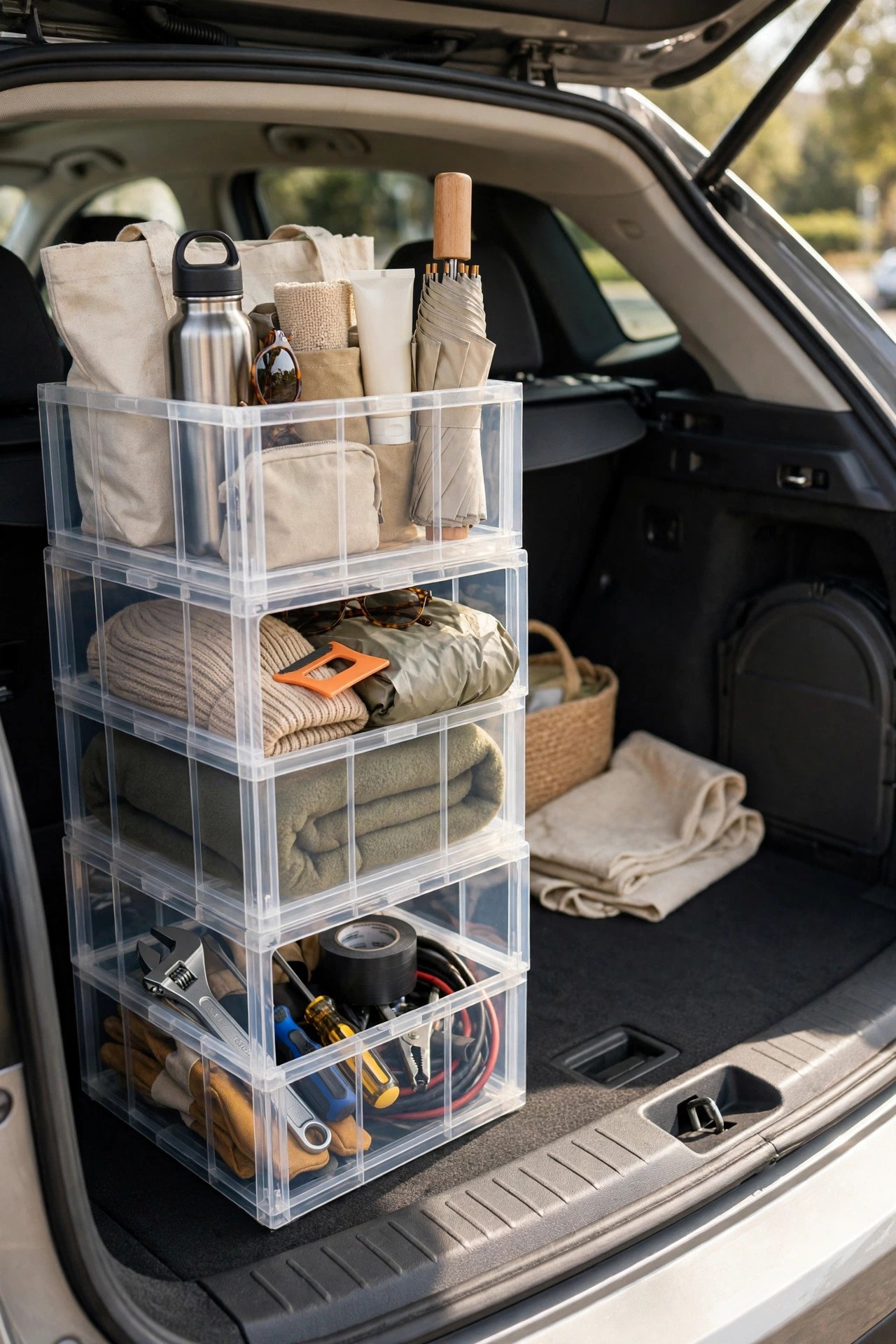
6. Stack Storage Cubes by Category
Stackable cubes use the height of your trunk instead of wasting it. Place one cube for tools, one for seasonal gear, and one for everyday accessories, then line them against one side. You can pull out a single cube without unpacking everything else in the trunk.
Label each cube by purpose so nobody has to open three boxes to find one item. Small things stay sorted the same way they do at home, and these kitchen junk drawer organization ideas show how tiny compartments keep little items from getting lost. Keep the heaviest cube at the bottom for stability.
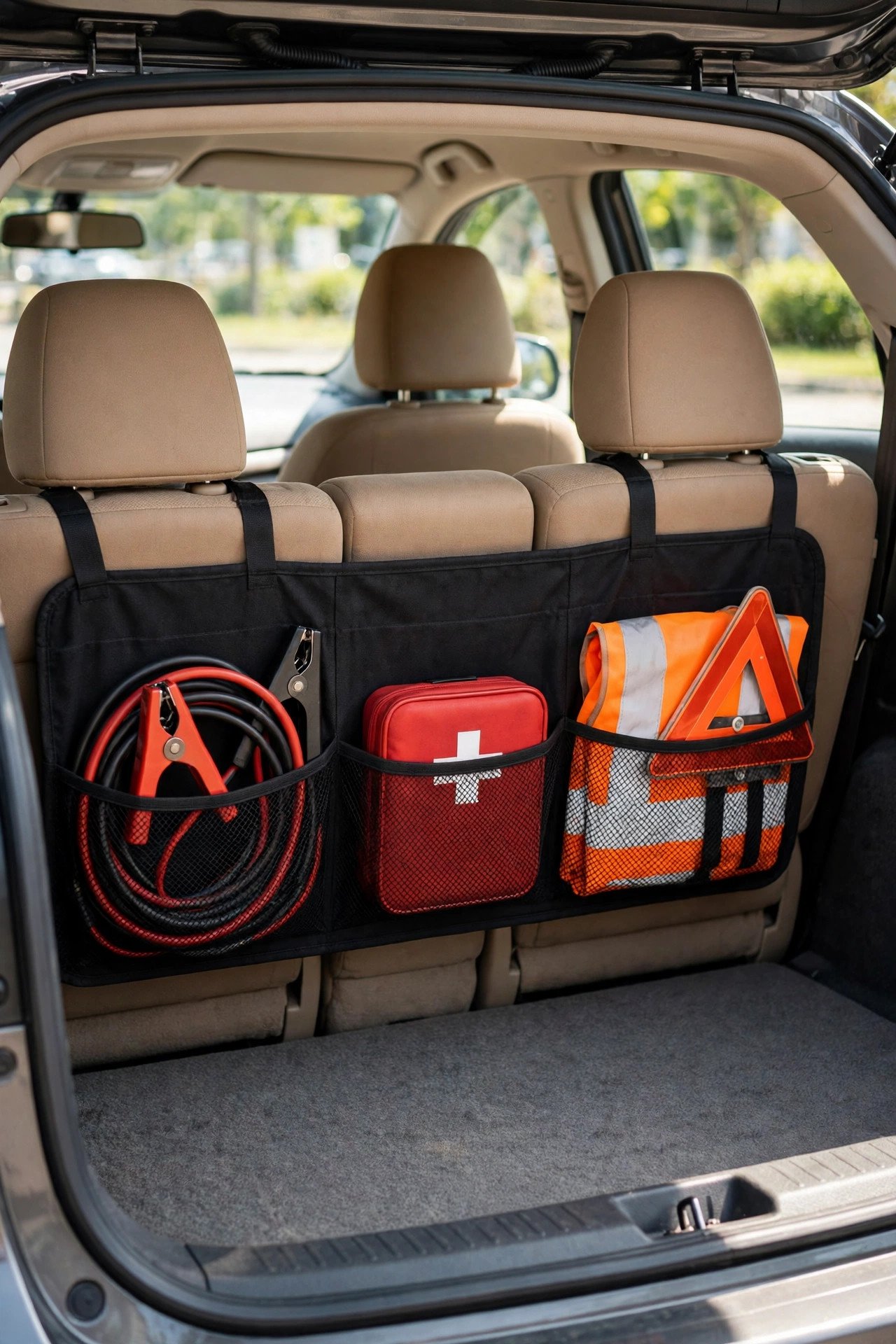
7. Hang a Seatback Gear Wall
A seatback organizer moves storage upward and keeps the trunk floor free. Attach it to the back of the rear seats, and fill the mesh pockets with jumper cables, a first-aid kit, and safety gear. Everything stays visible, so you can grab what you need in seconds.
Mesh pockets help you spot items instantly, which saves precious time during a breakdown. Keep heavy tools low in the pockets so the organizer stays balanced, and check the straps each month so nothing sags. This wall works best for gear you might need fast.
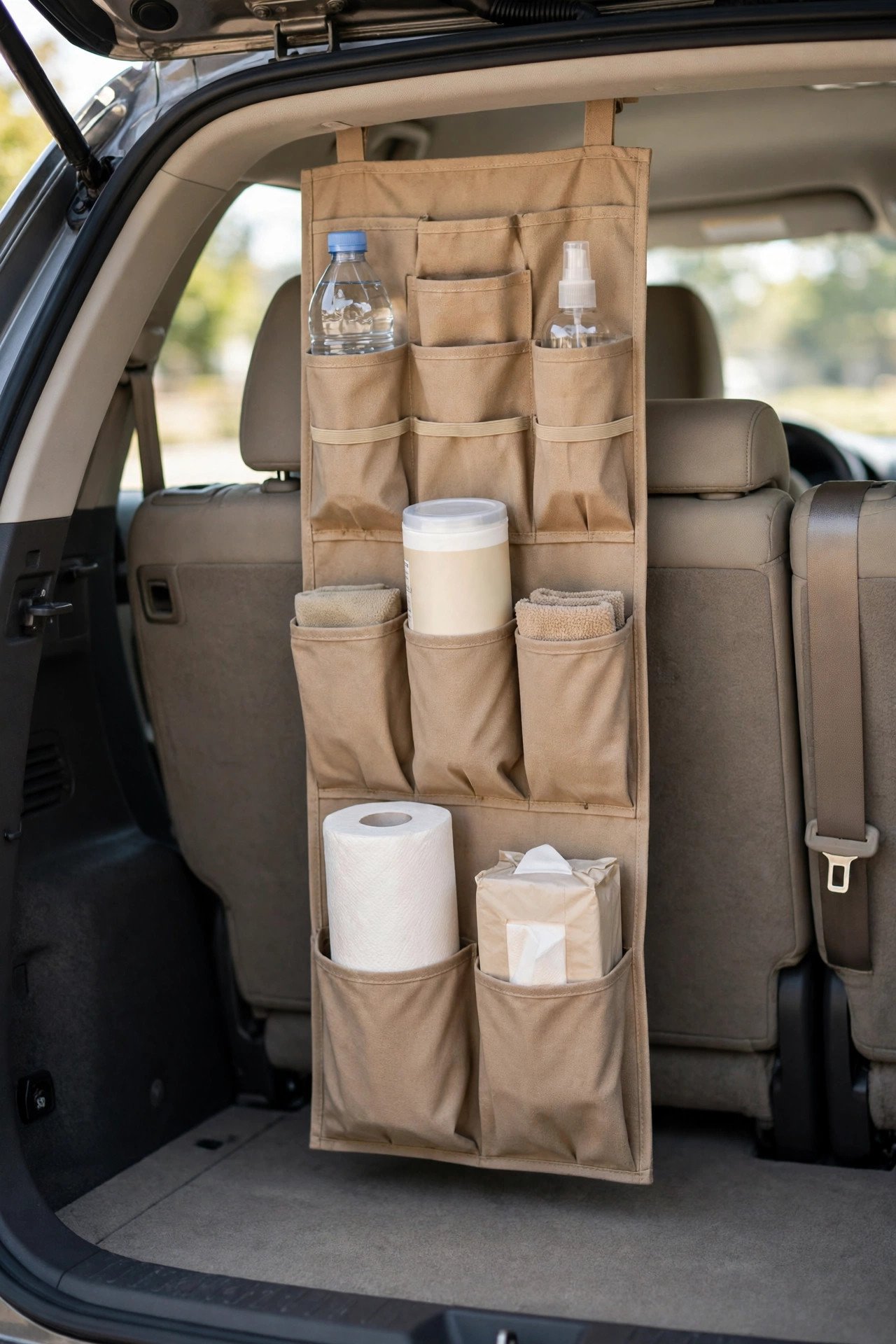
8. Add Vertical Pocket Storage
Loose supplies disappear fast when they sit flat on the trunk floor. Mount tall vertical pockets against the back seats so bottles, wipes, and paper goods stay upright and easy to see. Tall pockets free up floor space for larger cargo and travel gear on trips.
Use the pockets for lightweight items only, since heavy bottles can tip the whole panel. A pocket system near the door works the same way at home, and these entryway organization ideas show how a landing zone keeps daily essentials visible. Keep one pocket empty for items that arrive during the week.
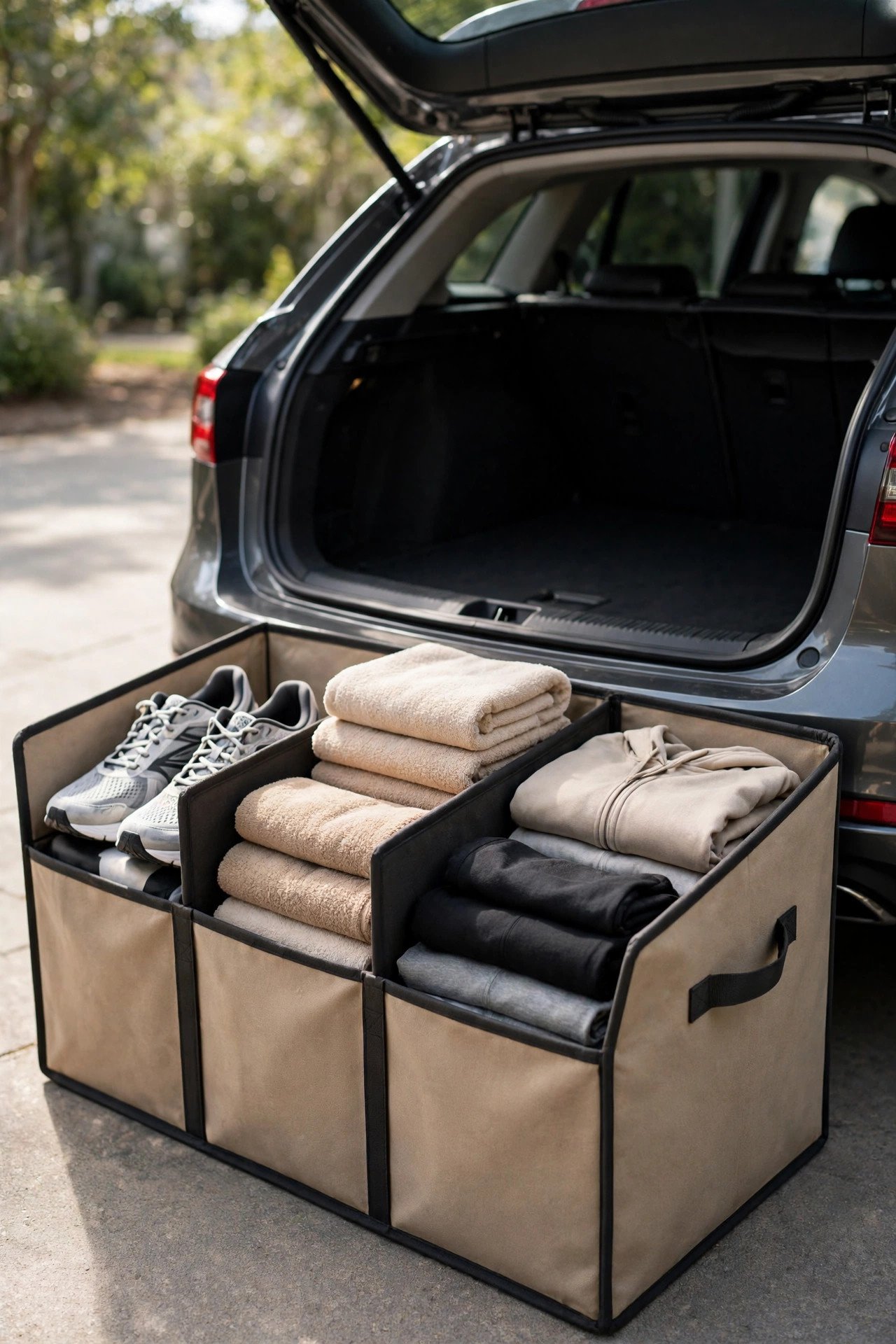
9. Build a Sports Gear Station
Sports gear spreads everywhere without a home base in the trunk. Place a structured bin near the trunk opening so loading and unloading stay quick after practice or a game. Divided sections keep clean clothes away from used gear, while zip pockets hold small items safely.
Keep shoes in a separate section so dirt never reaches clean towels or clothes. Air out the bin after every use, and wash the liner once a month to stop smells from building up. A dedicated station means the trunk never smells like a locker room again.
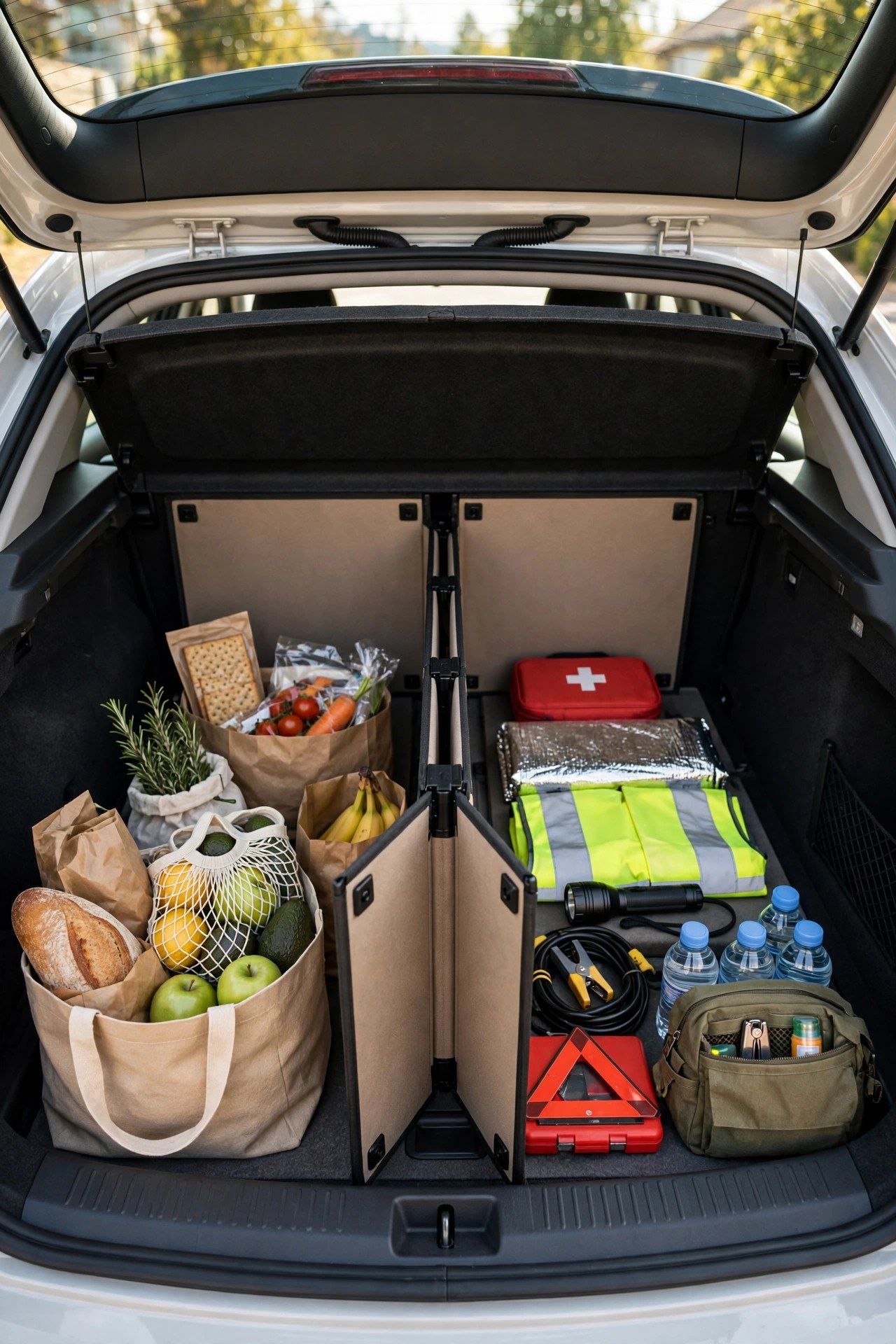
10. Use a Fold-Flat Divider
A fold-flat divider adapts to your trunk instead of forcing a fixed layout. Pop it open for groceries or supplies, then fold it flat when you need to haul large items. Adjustable sections let you resize the space based on what you carry that day.
Choose a divider with a non-slip base so it stays put during sharp turns. When the divider is folded, store it flat under a mat or against the trunk wall, out of the way. Flexibility matters most in trunks that switch between errands, trips, and heavy loads.
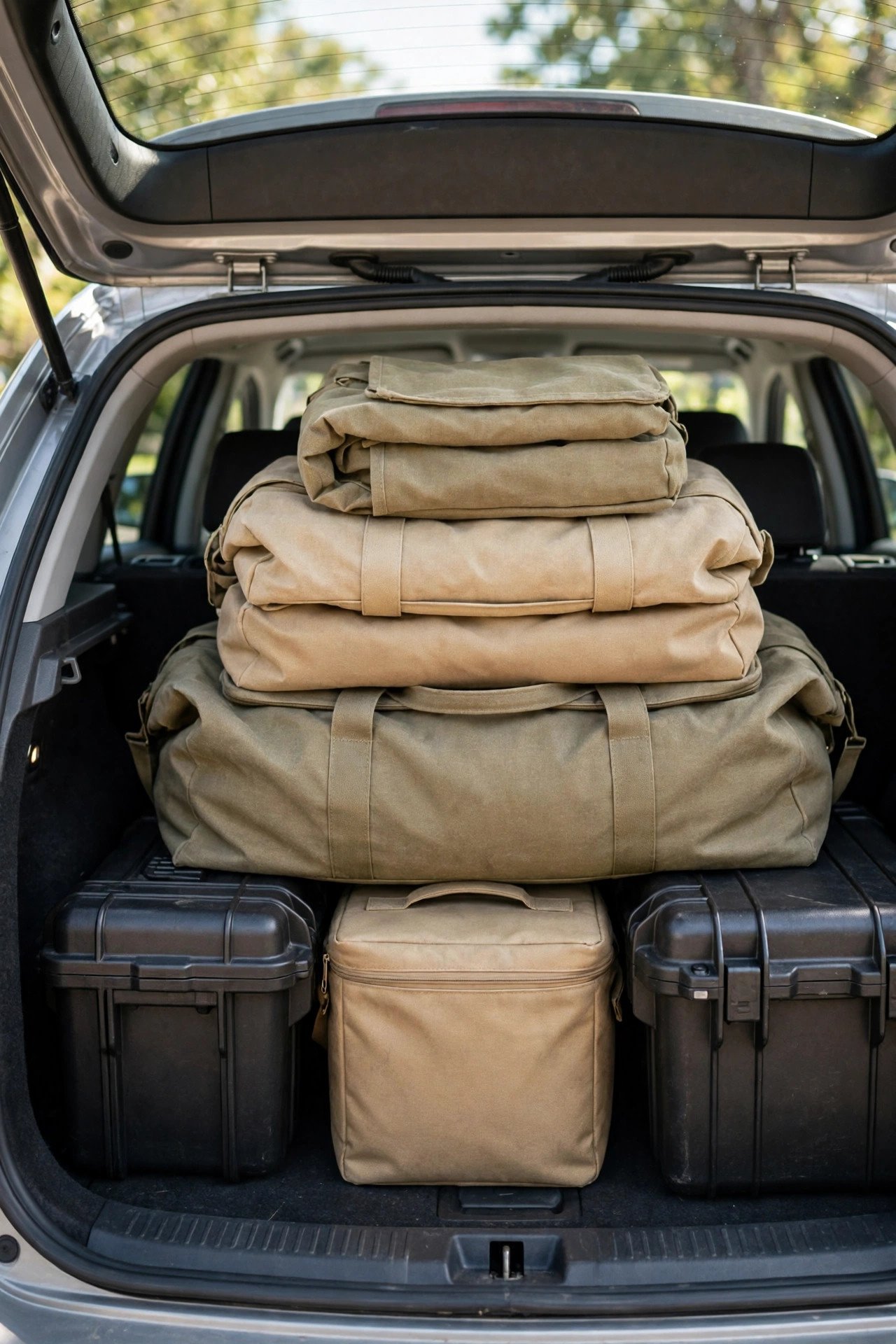
11. Load Heavy Items First in Layers
Trips run smoother when heavy and soft items stack with purpose. Place hard cases, coolers, and toolboxes on the trunk floor first, then stack bags and soft items on top. A layered load keeps the weight low and the center of gravity steady while you drive.
Group similar items together so unloading stays quick and nothing gets buried under random cargo. Keep the items you need first on top, such as snacks for kids or the emergency bin. A simple layer plan saves time at every stop along the way home.
12. Raise a Shelf Base for Two Levels
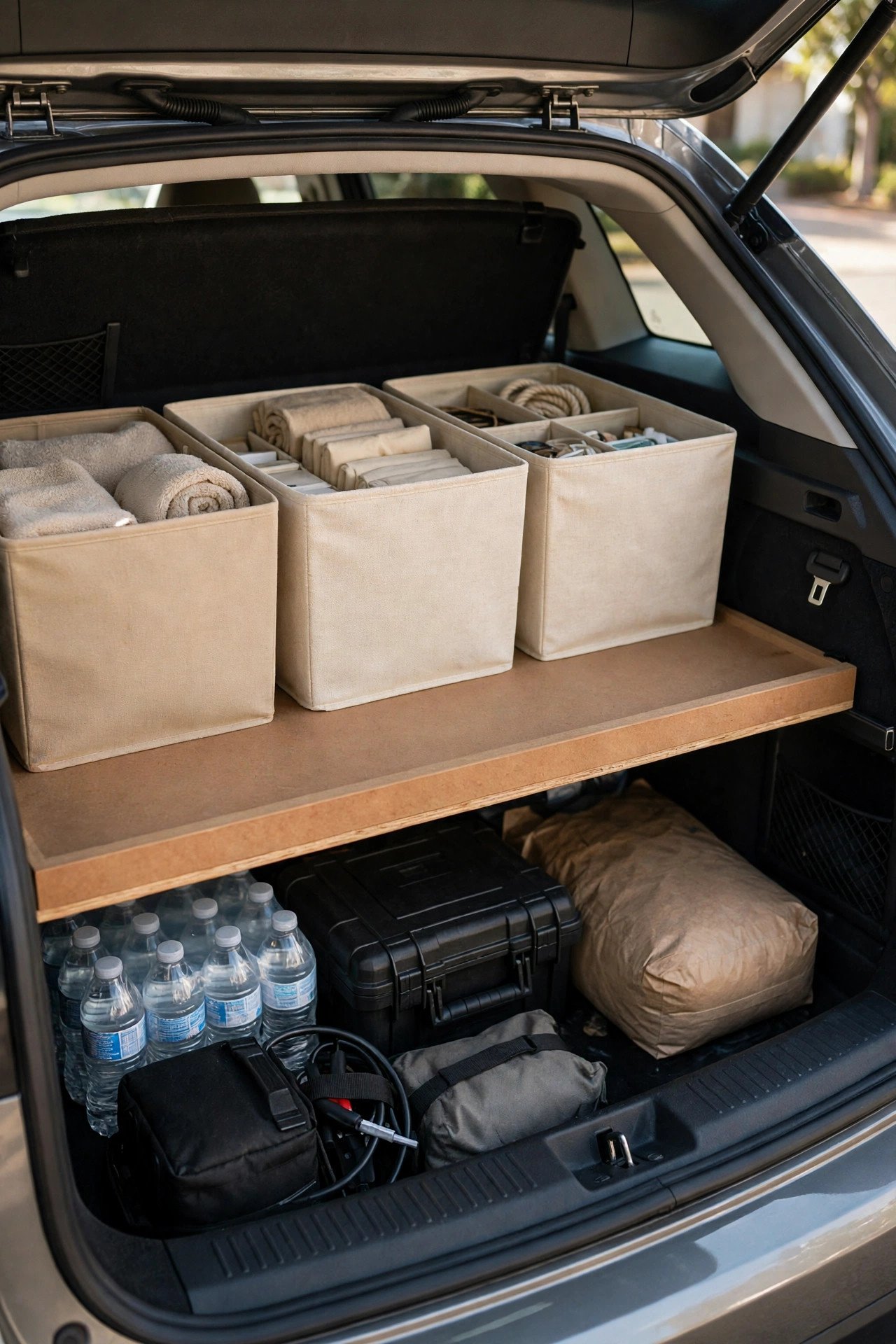
Flat trunks waste vertical space when nothing gives the load any structure. A raised shelf base creates two levels, with heavier items stored underneath and bins or totes on top. Separating upper and lower storage stops stacking chaos and keeps loading predictable every time you pack.
Build the platform from sturdy plywood or a ready-made shelf that fits your trunk floor exactly. Measure twice before you cut, and leave a small gap at the sides for straps or cables. A raised base works best in larger cars that carry daily gear plus extras.
13. Pack Grab-and-Go Totes
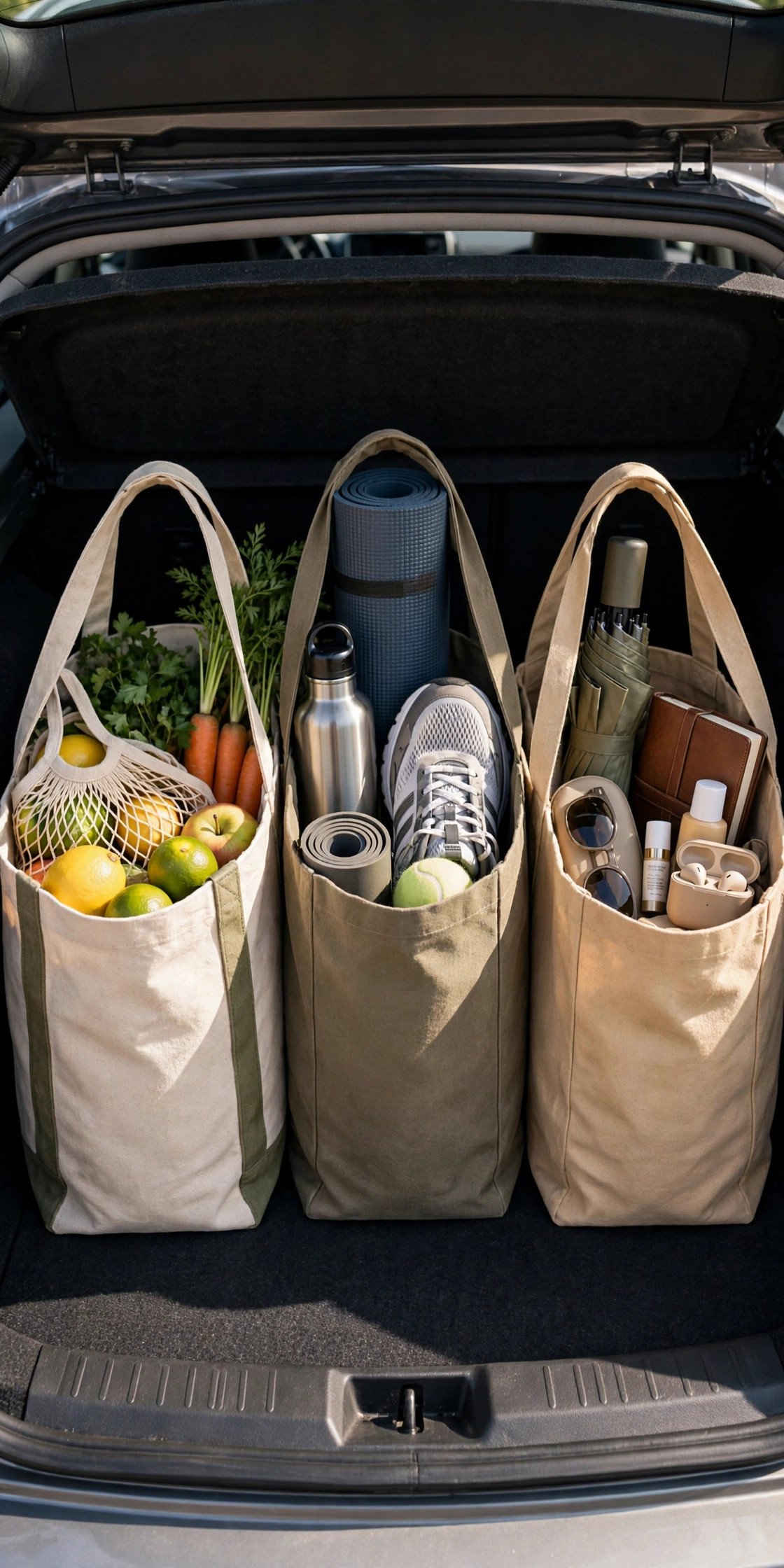
Errands get easier when everything loads in one lift. Keep separate tote bags grouped in the trunk, with one for groceries, one for sports gear, and one for daily essentials. Each tote has a clear purpose, so unpacking becomes faster with zero digging through the pile.
Choose totes with sturdy handles and a flat bottom so they stand upright in the trunk. Wash the grocery tote once a week, and keep a spare folded tote inside another for surprise stops. Grab-and-go bags turn a chaotic trunk into a ready-to-move system for you.
14. Zone Open Bags by Category
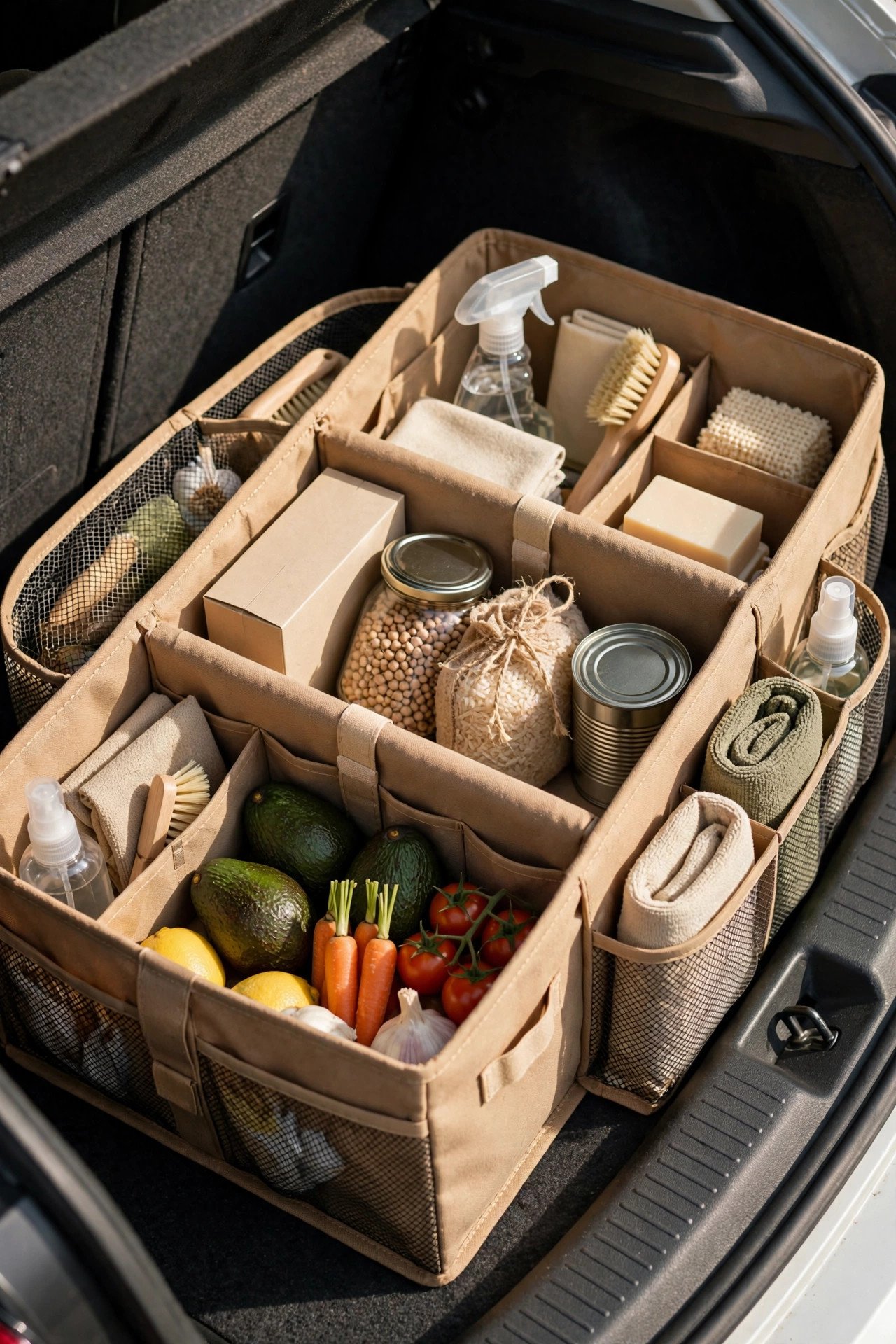
Paper bags collapse and spill the moment you turn a corner. A wide open organizer keeps grocery bags separated, with one section for produce, one for pantry items, and one for cleaning supplies. Slide it along the trunk wall so each category stays in place.
Mesh pockets on the outside store small extras like coupons, wipes, or a shopping list. Keep the heaviest bags in the middle sections so the organizer stays balanced during the drive. Open zoning works best when you shop for several categories in one trip each week.
15. Keep a Dedicated Activity Bin
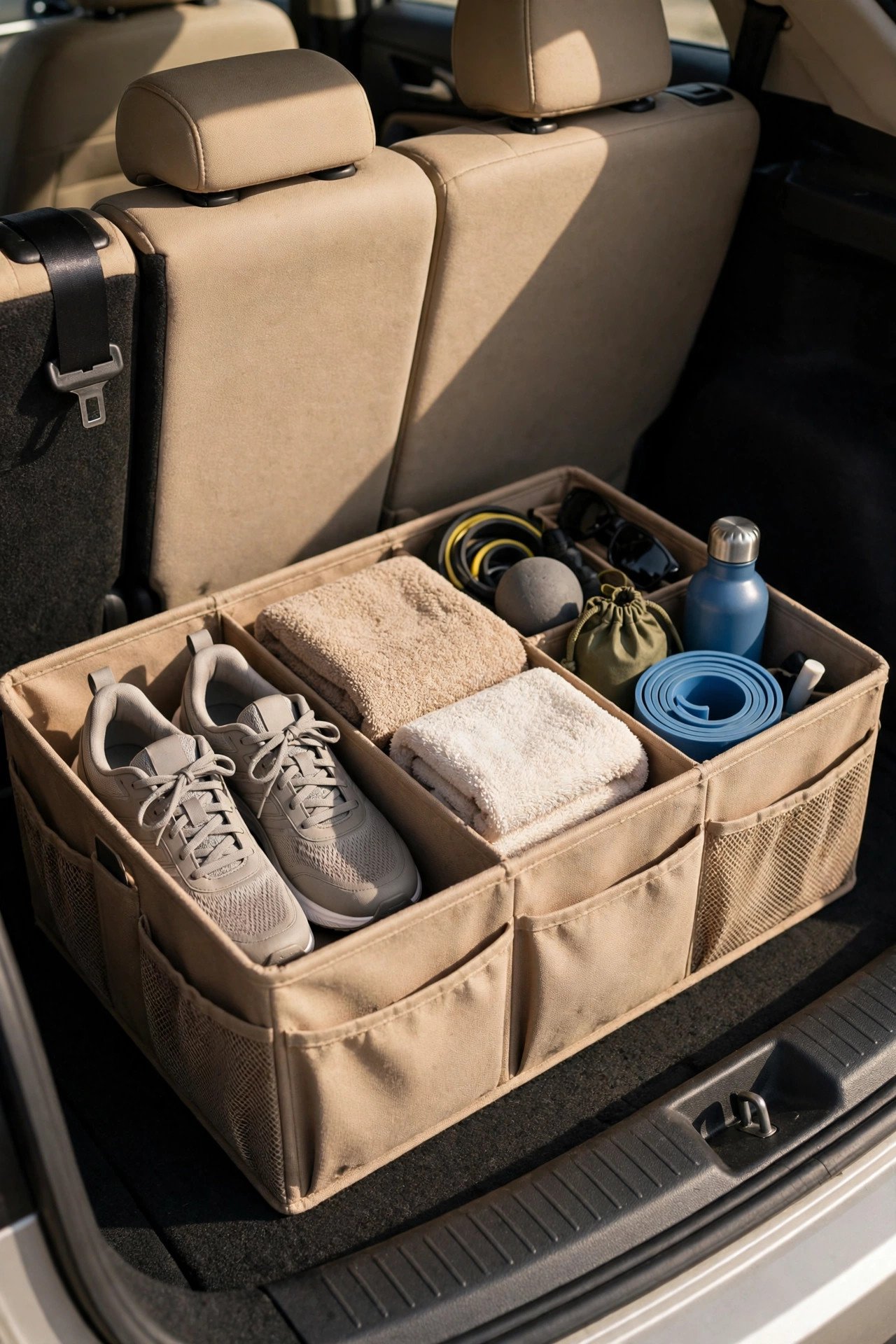
Hobby gear spreads everywhere without a home base in the trunk. A dedicated bin works best for sports equipment, gym essentials, or weekend activities you carry regularly. Keep it pushed against the back seat so it stays stable on every trip you take without sliding around.
Store shoes, accessories, and small items together so they never mix with groceries or emergency supplies. Use a bin with a lid to keep smells inside, and air it out after every activity. One activity bin keeps the whole trunk calm between weekends all year long.
16. Lock Down a Secured Cargo Grid
Rough roads and heavy loads demand extra control in the trunk. Install a fixed shelf or cargo grid to split upper and lower storage, then lock the bins in place so nothing shifts. Structured framing keeps tools and gear contained even when the terrain gets uneven.
Use straps or bungee cords to anchor each bin to the grid before you drive. Check the anchors after the first bumpy trip, and tighten anything that has loosened. A secured grid suits work trucks, adventure builds, and anyone who drives rough roads often with heavy loads.
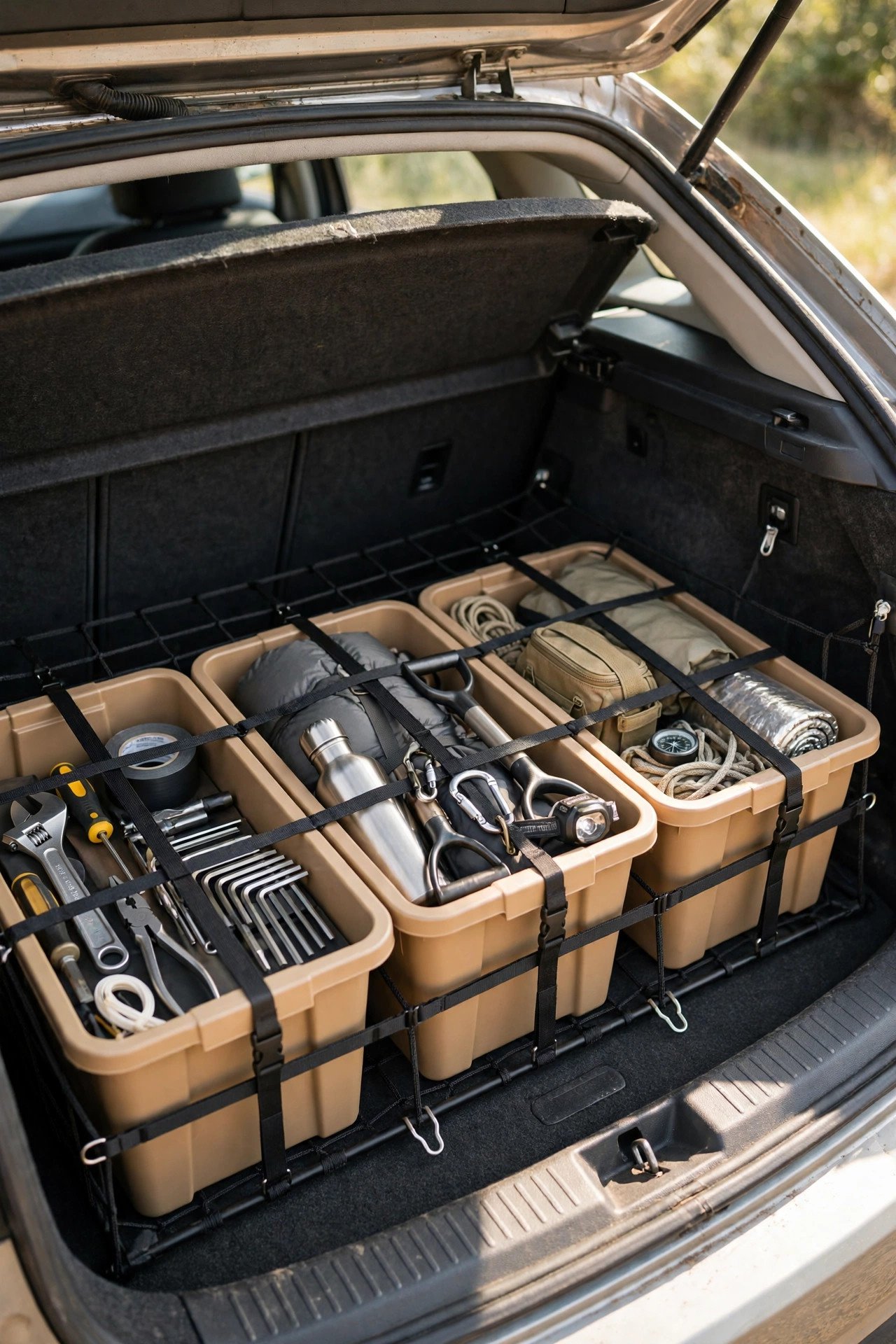
17. Stock a First-Aid Kit for the Road
A first-aid kit belongs in every trunk, not buried in a drawer at home. Pack bandages, antiseptic wipes, pain relievers, and a pair of gloves in a small clear box with a snap lid. When someone gets a cut or a headache on the road, you can help within seconds.
Keep the kit in the emergency bin or clipped to the seatback, where you can reach it without unloading the trunk. Check the expiry dates twice a year, and replace anything you used right after a trip. A small kit costs little, but it can make a stressful moment much easier.
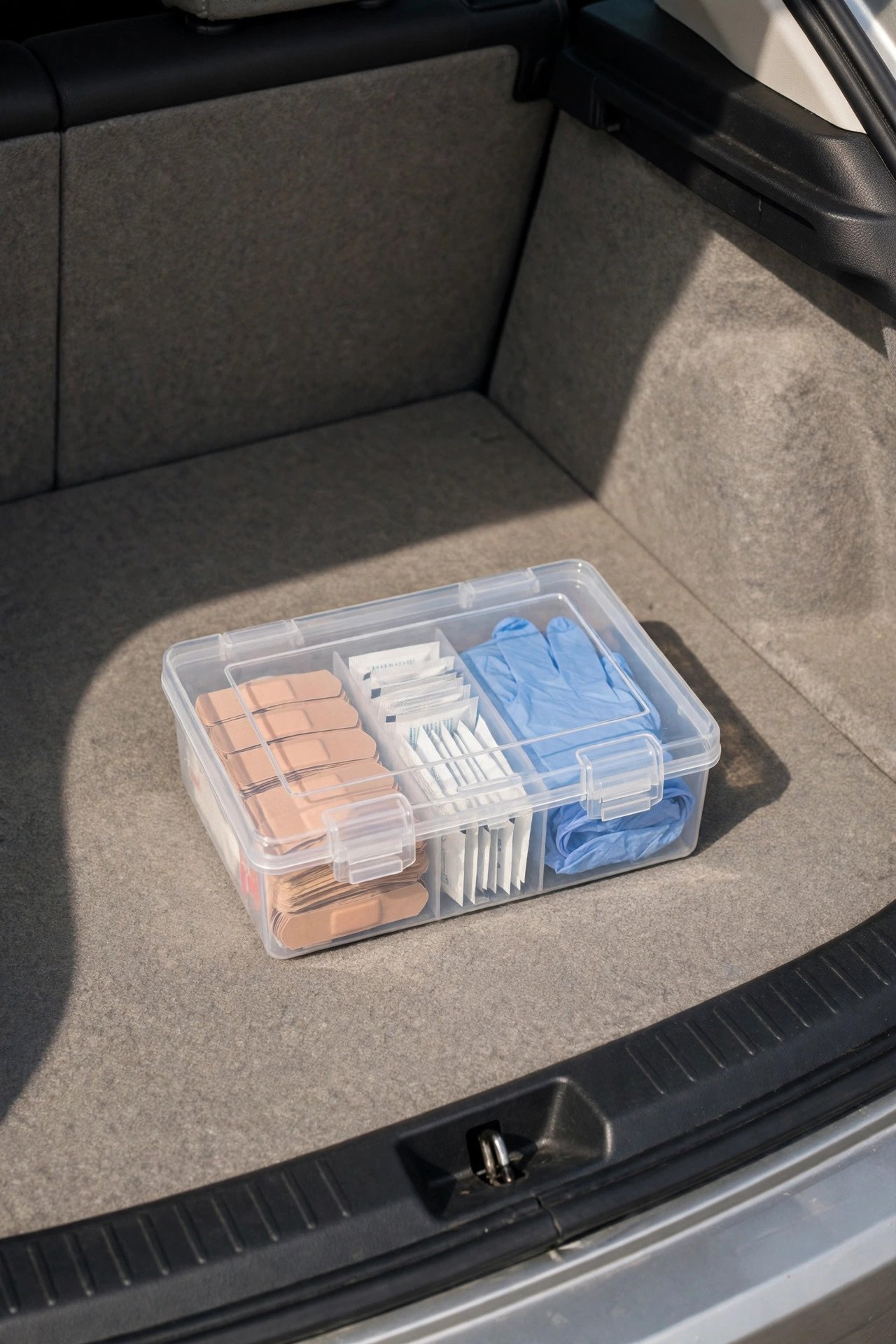
18. Stash Jumper Cables and a Flashlight
A dead battery always happens at the worst possible moment. Keep jumper cables coiled neatly in a pouch beside a bright flashlight, and store both where you can reach them without moving other gear. When help arrives, you will be ready in minutes instead of searching.
Coil the cables loosely with a reusable tie so they never tangle or kink. Cables stay neat the same way they do at home, and these cable management ideas show simple ways to coil and label every cord. Test the flashlight batteries every season so the light works when you need it.
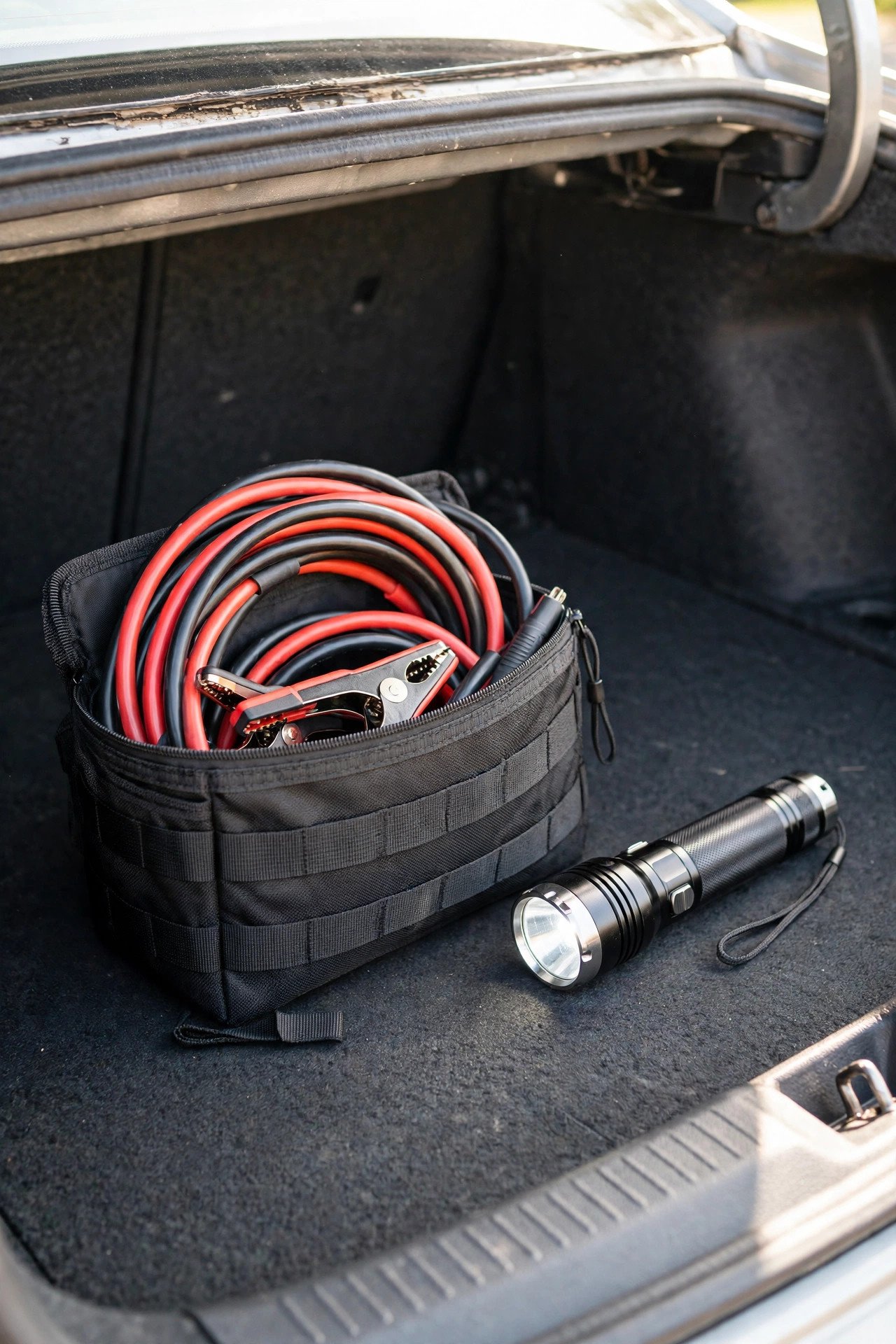
19. Keep a Roadside Safety Kit Handy
A roadside kit turns a scary breakdown into a problem you can handle. Pack a reflective vest, a warning triangle, a small fire extinguisher, and a rain poncho in one bright bag. When you pull over at night, the reflective gear keeps you visible to passing drivers.
Store the kit near the trunk opening so you never have to dig for it in the dark. Practice setting up the triangle once in daylight, so the steps feel familiar when stress is high. A ready safety kit protects you and your family on every single trip.
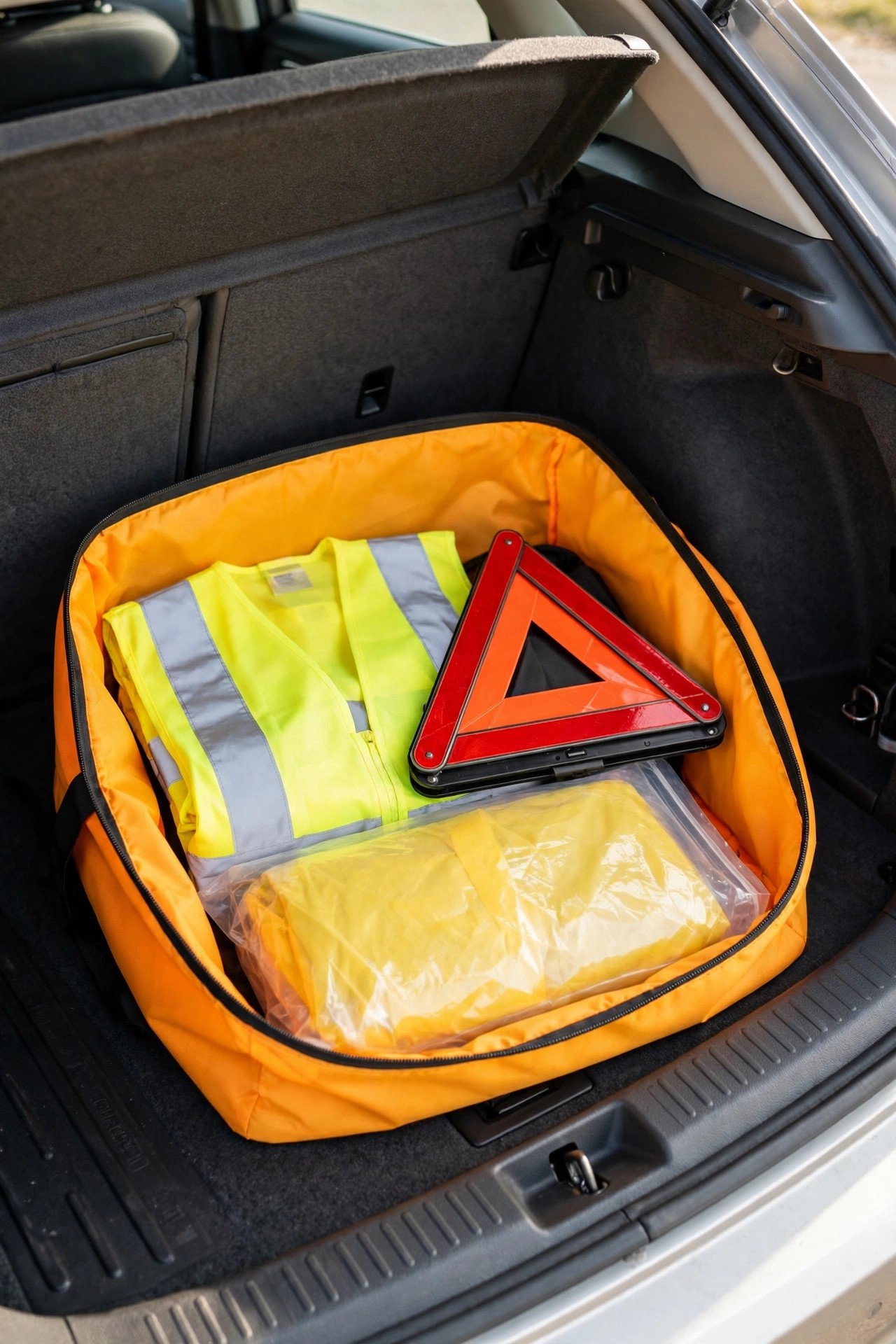
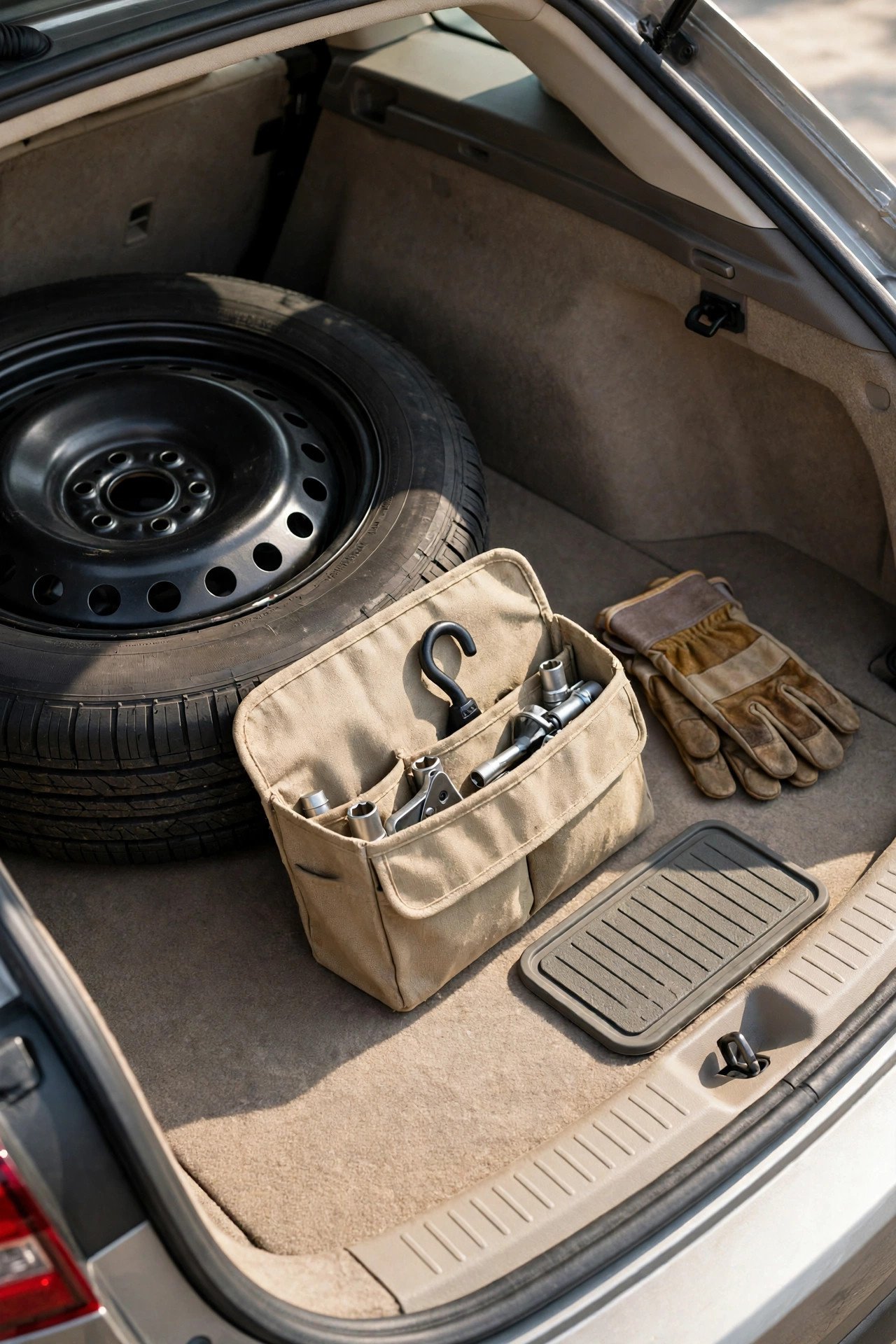
20. Store Spare Tire Tools Together
Spare tire tools scatter fast when they live loose in the trunk. Keep the jack, lug wrench, and tire gauge together in one labeled pouch or small box near the spare tire. When you get a flat, every tool you need is already in one place.
Check the spare tire pressure every few months, since a flat spare helps nobody. Add a pair of work gloves and a small mat to kneel on, so changing a tire stays clean and comfortable. A complete tire kit turns a long wait into a quick fix.
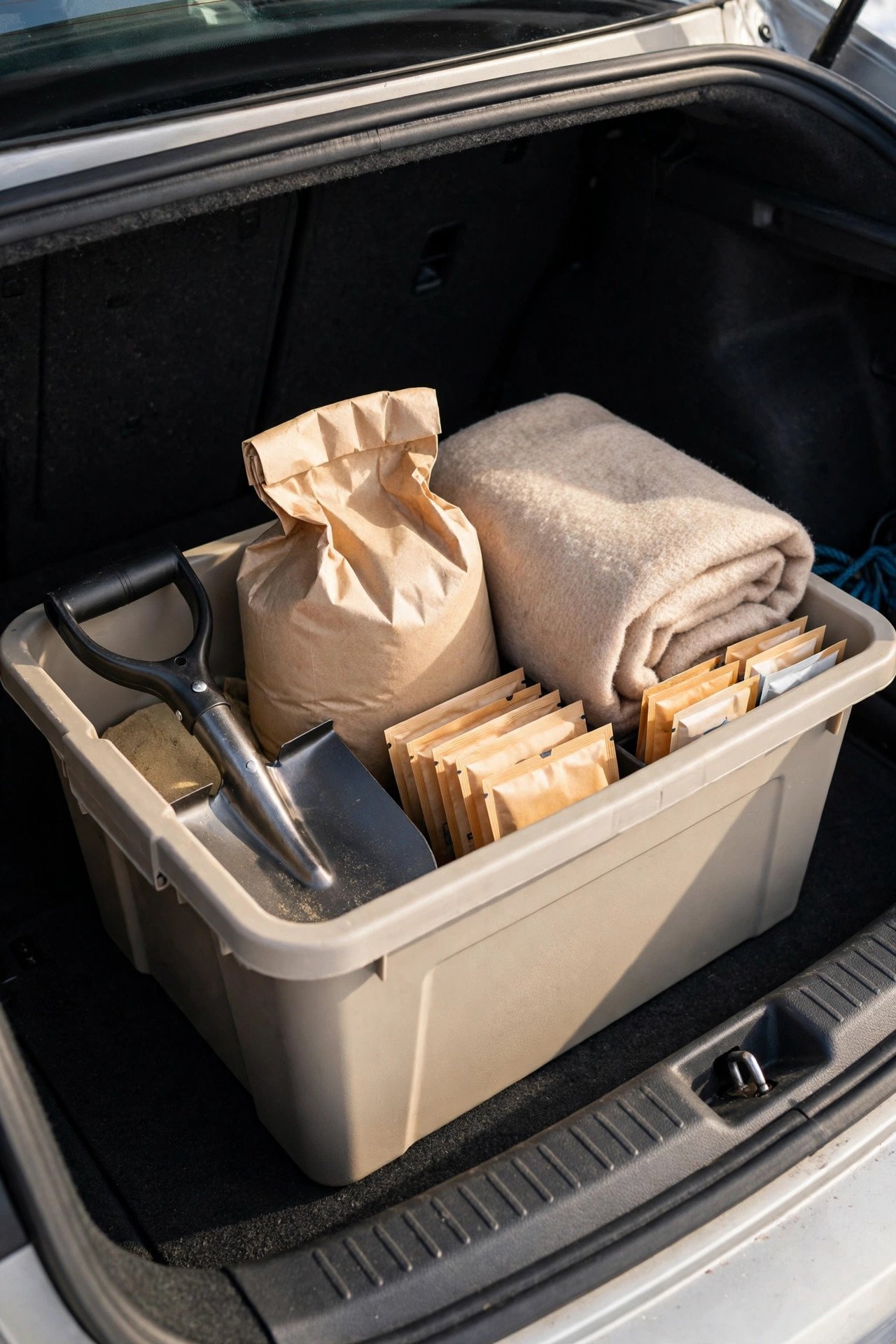
21. Pack a Winter Emergency Kit
Winter roads can strand you fast when snow or ice hits without warning. Pack a small shovel, a bag of sand or cat litter, a warm blanket, and hand warmers in one labeled bin. These simple supplies can get your car moving again after a slide or a stall.
Keep the kit in the trunk from late autumn through early spring, and refresh it each year. Sprinkle sand under the tires for grip, and wrap up in the blanket while you wait for help. A winter kit costs little, but it can keep you safe on the coldest day.
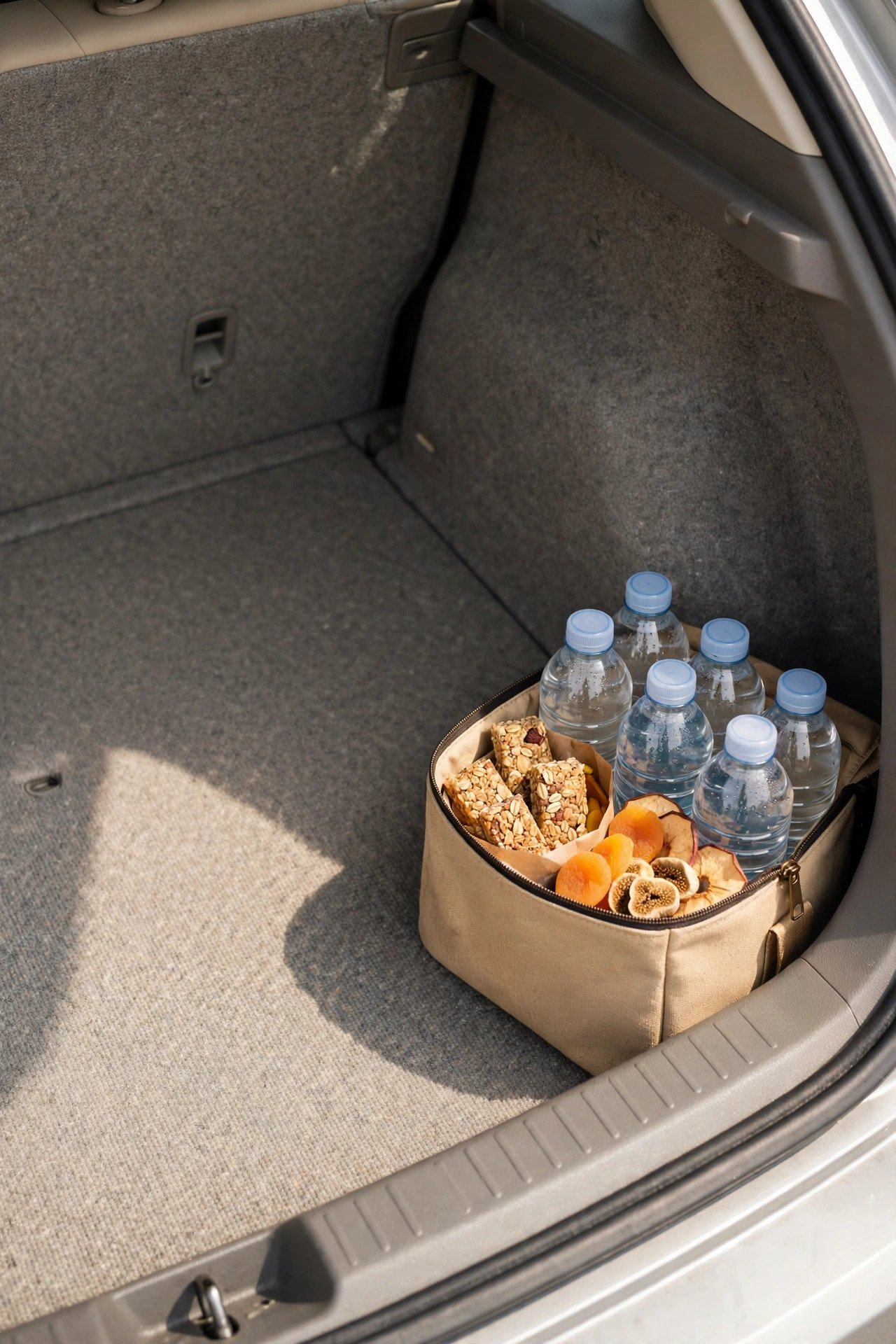
22. Carry Water and Snacks for Delays
Long delays turn a simple trip into a hungry, thirsty wait. Keep a small cooler or a sturdy bag with bottled water, granola bars, and dried fruit in one corner of the trunk. When traffic stops or help runs late, your family stays comfortable instead of stressed.
Rotate the water and snacks every month so nothing expires in the heat or the cold. Choose snacks that need no cooking and make little mess, such as crackers or nuts. A small food stash turns a two-hour delay into a calm, manageable wait for everyone.
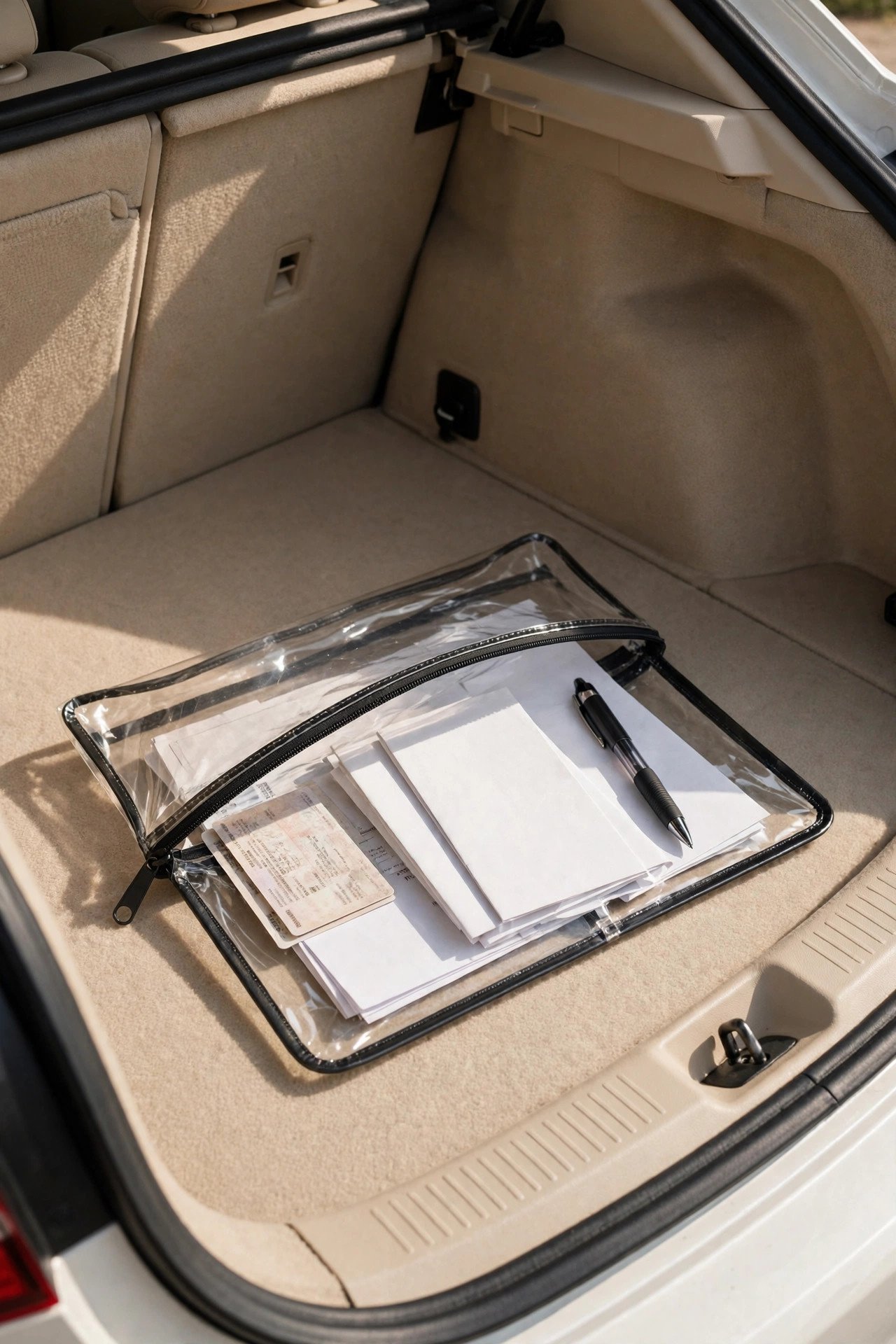
23. File Car Documents in One Pouch
Car papers hide fast when they float loose around the trunk. Keep your registration, insurance card, roadside assistance number, and a pen in one waterproof pouch. When an officer or a tow driver asks for papers, you can hand them over without a frantic search.
Store the pouch in the glove box or clipped inside the emergency bin, where it stays dry and easy to find. Check the documents once a year to make sure the insurance is current and the numbers are correct. One pouch keeps every paper safe, dry, and ready.
Conclusion
A tidy trunk is not about fancy organizers or a bigger car. It is about giving every item a home you can find in the dark, in the rain, or in a hurry. When emergency gear, groceries, and daily supplies each have a spot, the trunk stops being a junk pile.
A calm car starts with a calm trunk, and a short evening check keeps it that way. A few minutes of tidying each week works the same magic at home, and these nightly reset routines show how to build that habit. Start with one idea that fits your biggest trunk problem, such as an emergency bin.
Frequently Asked Questions About 23 Car Trunk Organization Ideas for Emergency Essentials
How do I keep my car trunk organized without buying anything?
Use boxes, bags, and bins you already own to give every item a home. Sort the trunk into three zones: emergency gear, daily essentials, and groceries. Label each container with tape and a marker, and clear the trunk once a week so the system stays honest.
What should I always keep in my car trunk for emergencies?
Keep a first-aid kit, jumper cables, a flashlight, a reflective vest, and a warning triangle in one labeled bin. Add bottled water, a blanket, and your car documents in a waterproof pouch. These basics cover most roadside problems without taking up much space.
How do I stop my trunk organizer from sliding around?
Place the organizer flat against the back seat and add a non-slip mat underneath for grip. Heavier items should always sit at the bottom, which adds weight and keeps the organizer from shifting during turns. Straps or bungee cords add extra hold on rough roads.
How often should I clean out my car trunk?
Clear the trunk once a week and do a full check at the start of every season. Toss expired snacks and old papers, check the first-aid kit dates, and test the flashlight batteries. A short weekly reset keeps the trunk tidy without ever becoming a big job.
What size trunk organizer works best?
The best size depends on how you use your trunk, not on its size. Daily drivers do better with a medium organizer that leaves room for large items. Measure the trunk floor first, and choose a modular setup if you carry different gear each week.

Hi, I’m Emily! I turn messy corners into cozy, organized spots. DreamNestDecor is where I share simple, practical home ideas — decor, organization, and small-space solutions that work in real life, not just in photos. Every idea here is carefully researched before it’s shared.