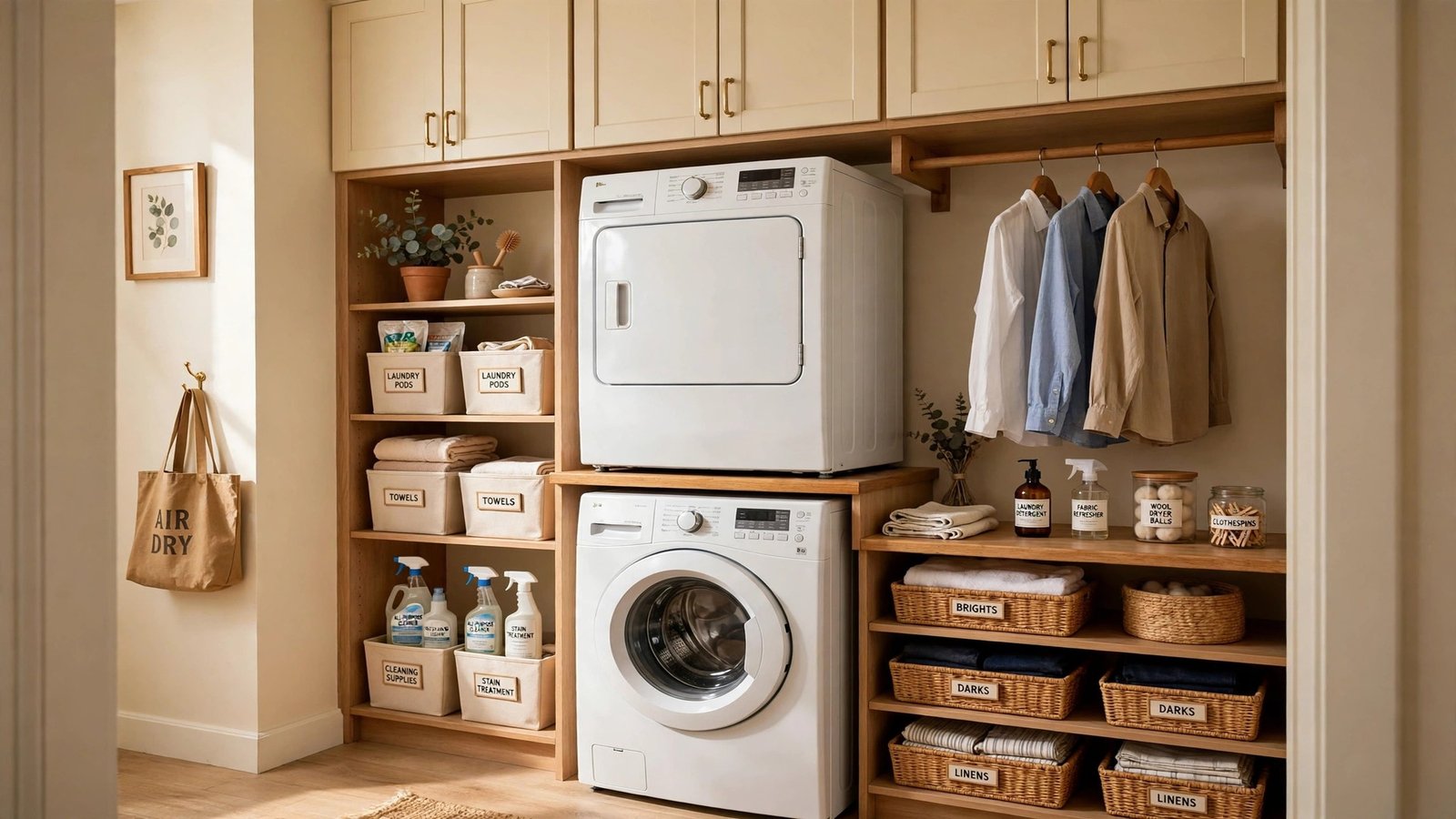
An apartment laundry closet is often the hardest-working three feet in the whole home. It holds the washer, the dryer, the detergent, the drying rack, and the ironing board, all behind one narrow door. When the layout is wrong, every load feels like a wrestling match.
The fix is not a bigger closet. It is a smarter one. Stacking the machines, adding a folding counter, and using the doors and walls for storage can turn a cramped alcove into a smooth little laundry station. Small measurements and the right hardware do all the heavy lifting.
Below you will find thirteen layout ideas built for apartment laundry closets. Each one gives you concrete steps, real measurements, and storage tricks that work in rented or owned spaces. Pick the moves that fit your machines and your door, and laundry day gets easier fast.
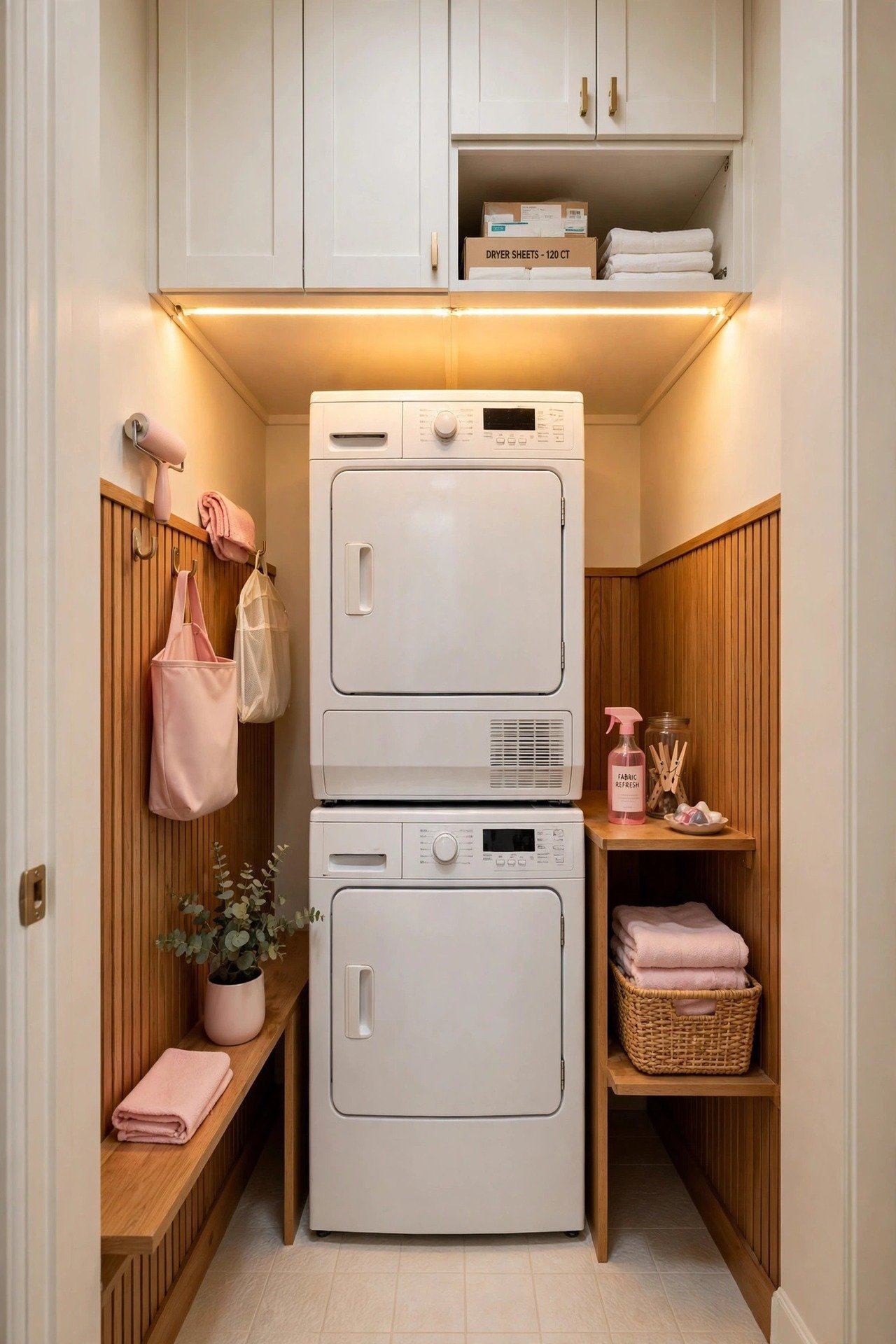
1. Stack the Washer and Dryer to Free Half the Closet
Stacking is the single biggest space win for a laundry closet. A stacked pair needs only 27 inches of width, which frees the other half of the closet for storage. Use the stacking kit made for your exact models so the dryer locks safely on top.
Leave 1 inch of air on each side and 4 to 6 inches behind the machines for hoses and vents. Set anti-vibration pads under the feet to cut shaking, which matters a lot when neighbors share your walls. The freed half of the closet can now hold a hamper, a drying rack, or narrow shelves.
2. Add a Countertop Over Front-Loading Machines
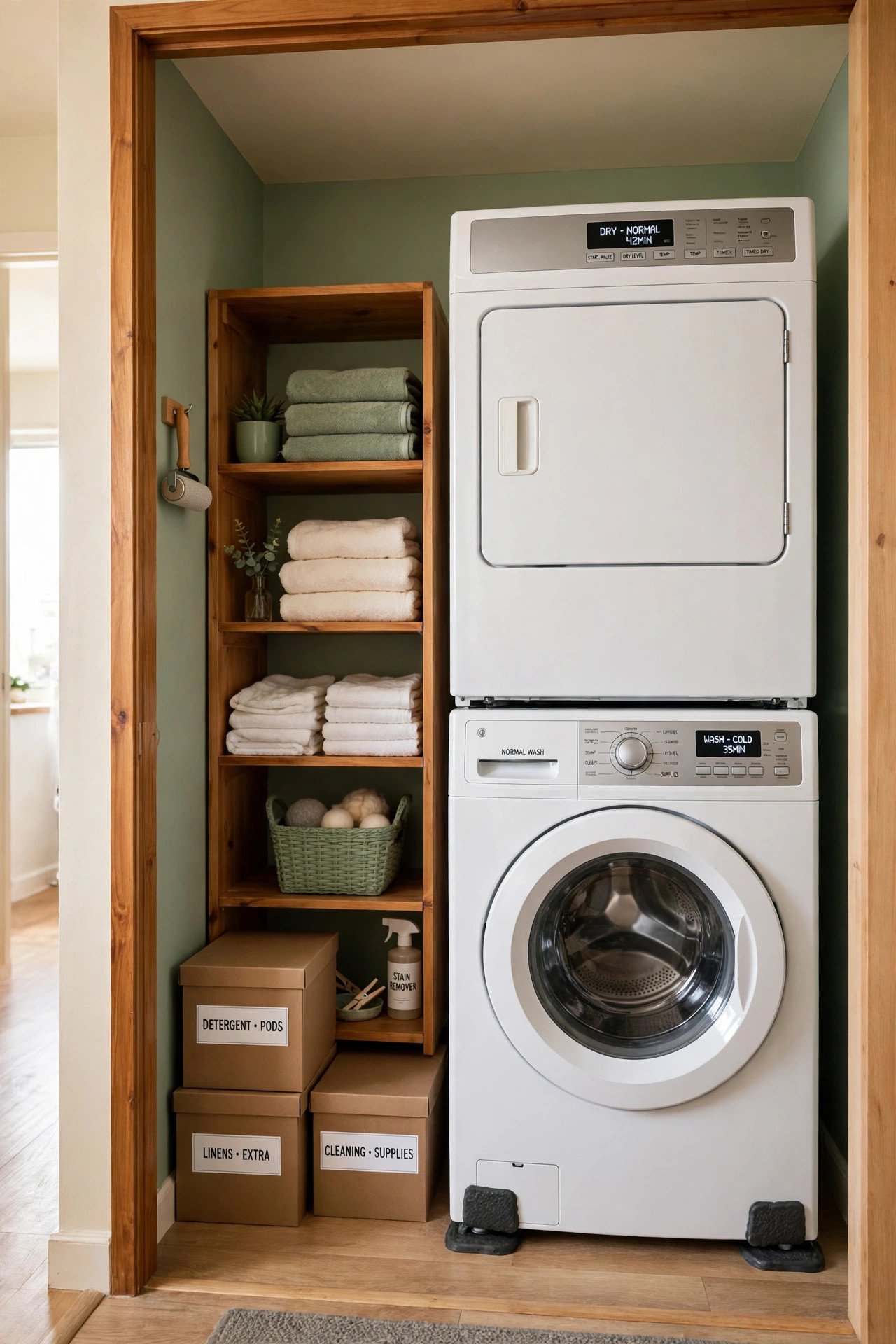
If your machines sit side by side, one countertop turns them into a folding station. A butcher block or laminate slab cut to fit spans both machines at 38 to 40 inches high, which is a comfortable folding height. The machines stay fully usable underneath.
Leave a 1-inch gap between the counter and the wall so the slab never traps moisture. Round the front corners so hips and laundry baskets pass without bruises. You gain a wide, clear surface for sorting and folding without adding a single square foot.
3. Swap Swinging Doors for Bi-Fold or Sliding Doors
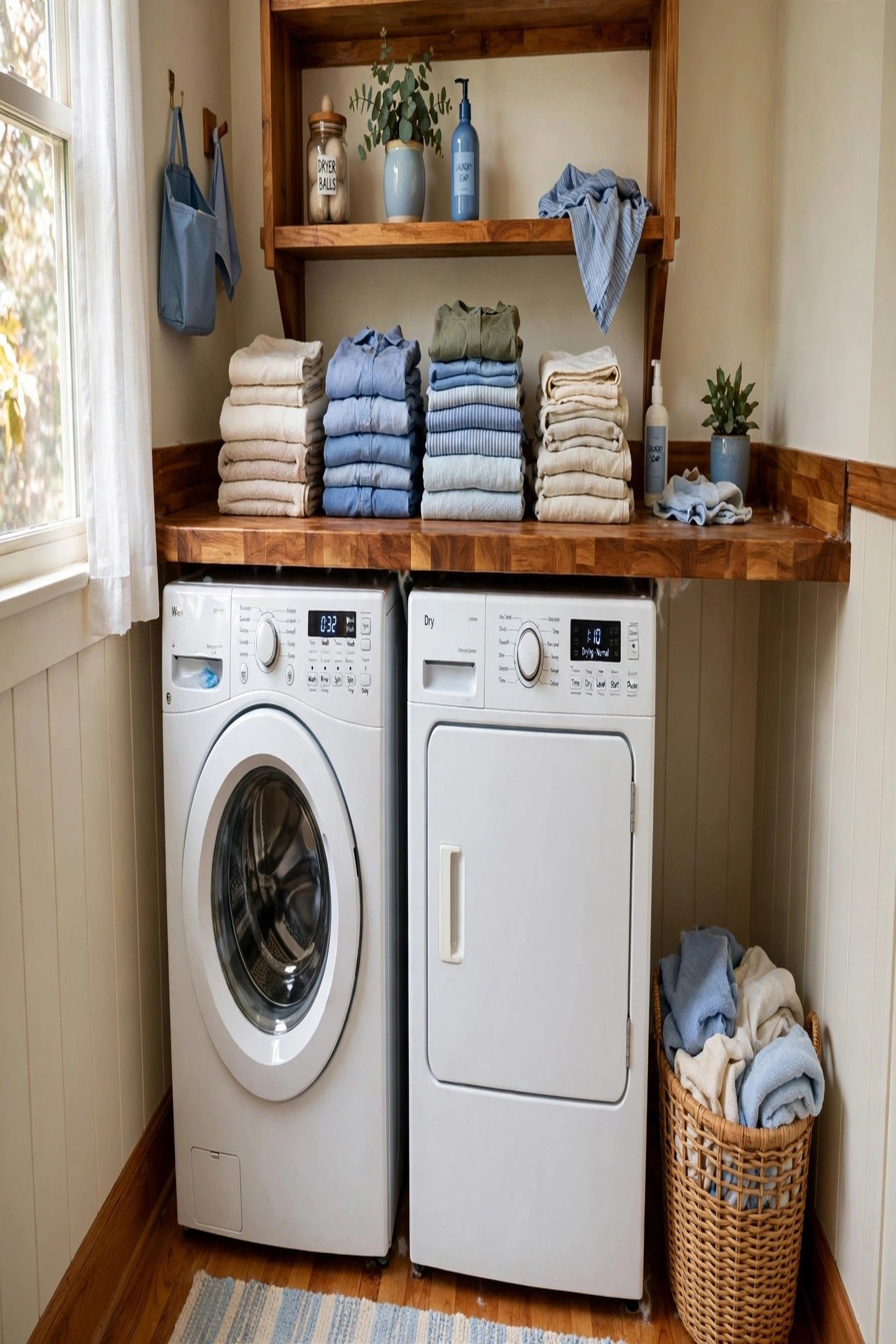
A standard swinging door needs 24 to 30 inches of clear floor to open, which is space a laundry closet cannot spare. Bi-fold doors need only half that swing, and a sliding door needs none at all. Full access to both machines makes loading and unloading far easier.
Measure the opening before you shop: most closet openings are 48 or 60 inches wide. If you keep swinging doors, rehang them to open outward into the room, never inward over the machines. Painting the doors a fresh color updates the whole hallway, and these interior door color ideas have shades that hide scuffs well.
4. Mount a Pull-Down Drying Rack Inside the Door
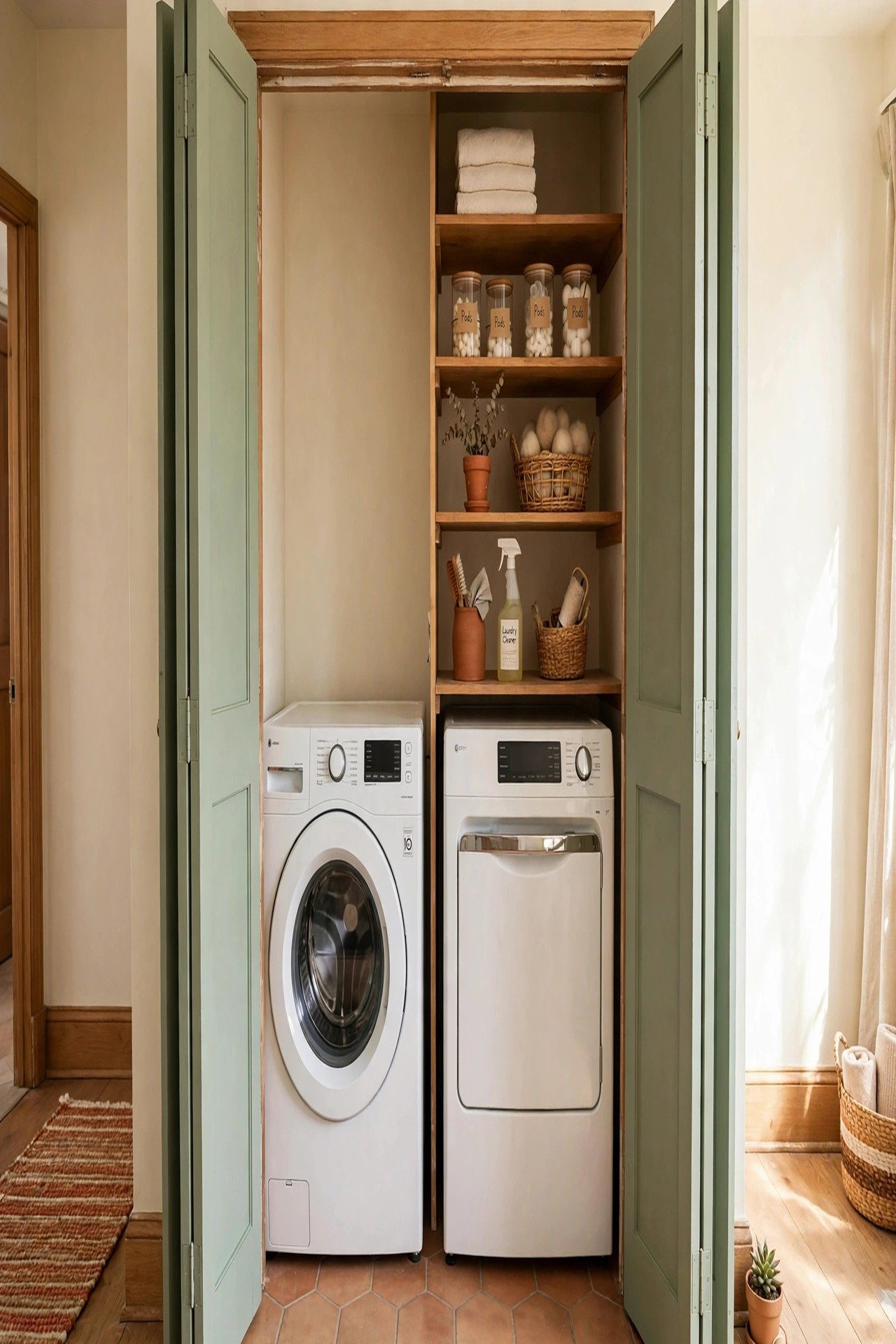
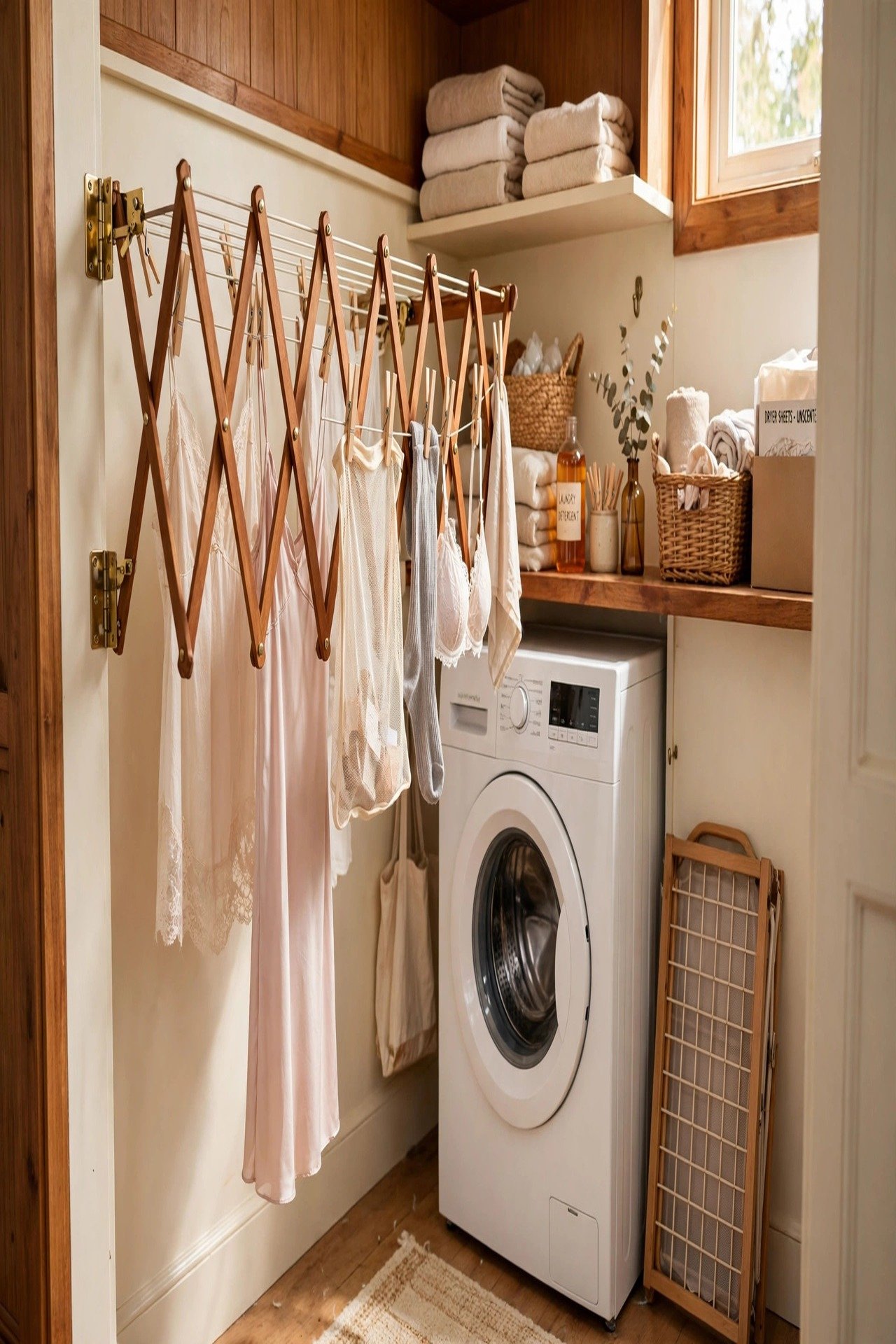
An accordion drying rack mounted inside the closet gives you 20 or more feet of drying line in 4 inches of depth. Pull it out when delicates need air, then fold it flat against the wall when the wash is done. It disappears completely.
Mount the rack on studs at 60 inches high so long shirts hang clear of the floor. Keep it on the wall opposite the machines so wet clothes never drip onto the washer top. This one piece of hardware can replace a bulky floor rack that used to eat your bedroom corner.
5. Build Cabinets Above the Machines for Detergent Storage
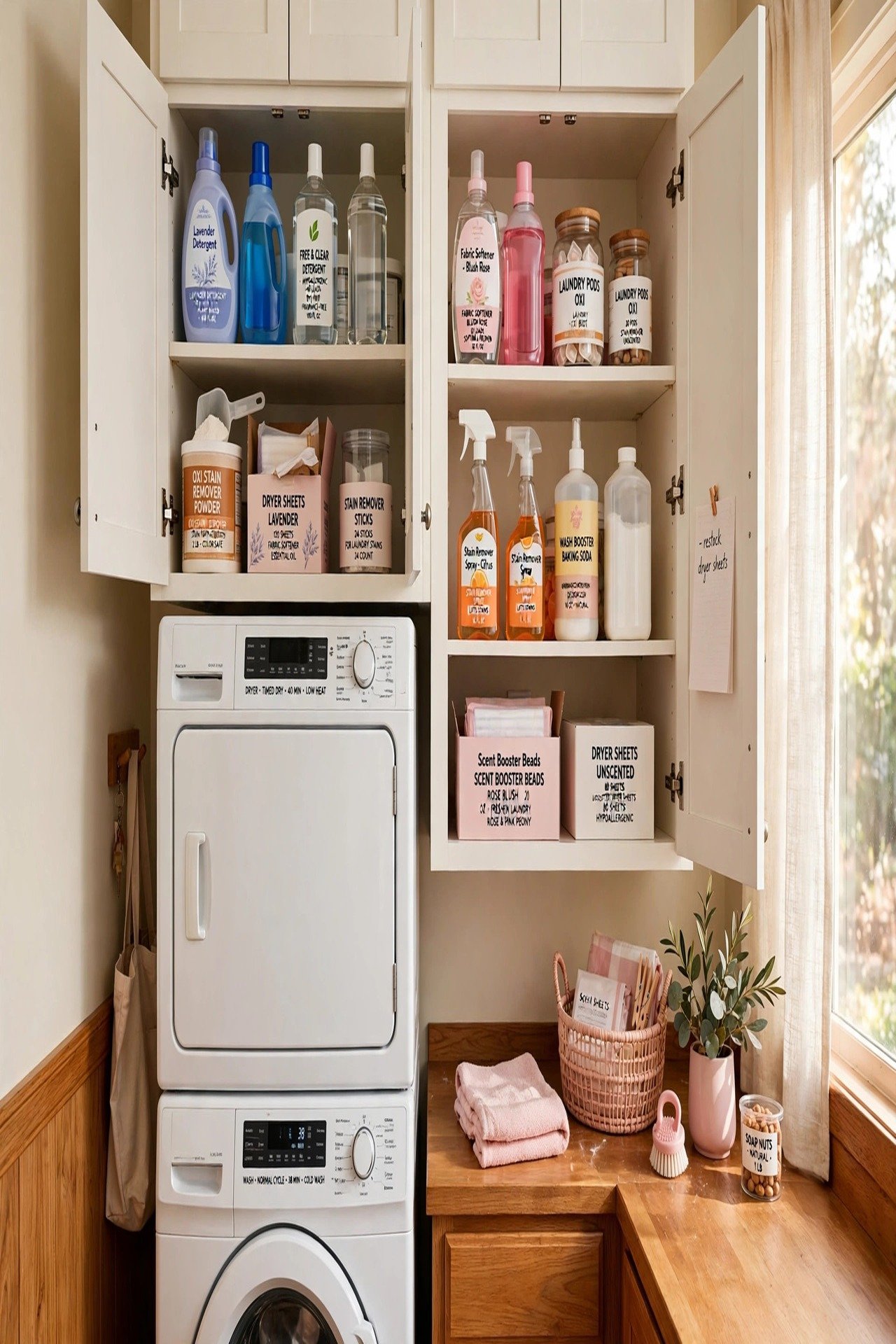
The wall above the machines is prime storage real estate. Cabinets 12 to 15 inches deep hold detergent bottles, dryer sheets, and stain removers without blocking the machine lids. Keep daily items between 48 and 60 inches high so you can reach them without a step stool.
For cabinets above a stacked dryer, add a pull-down shelf insert so the top shelf stays usable. Store heavy detergent low and light items high. Frame the cabinet fronts with slim trim for a built-in look; these decorative molding ideas show profiles that suit small closet doors.
6. Slide a Slim Rolling Cart Between the Machines
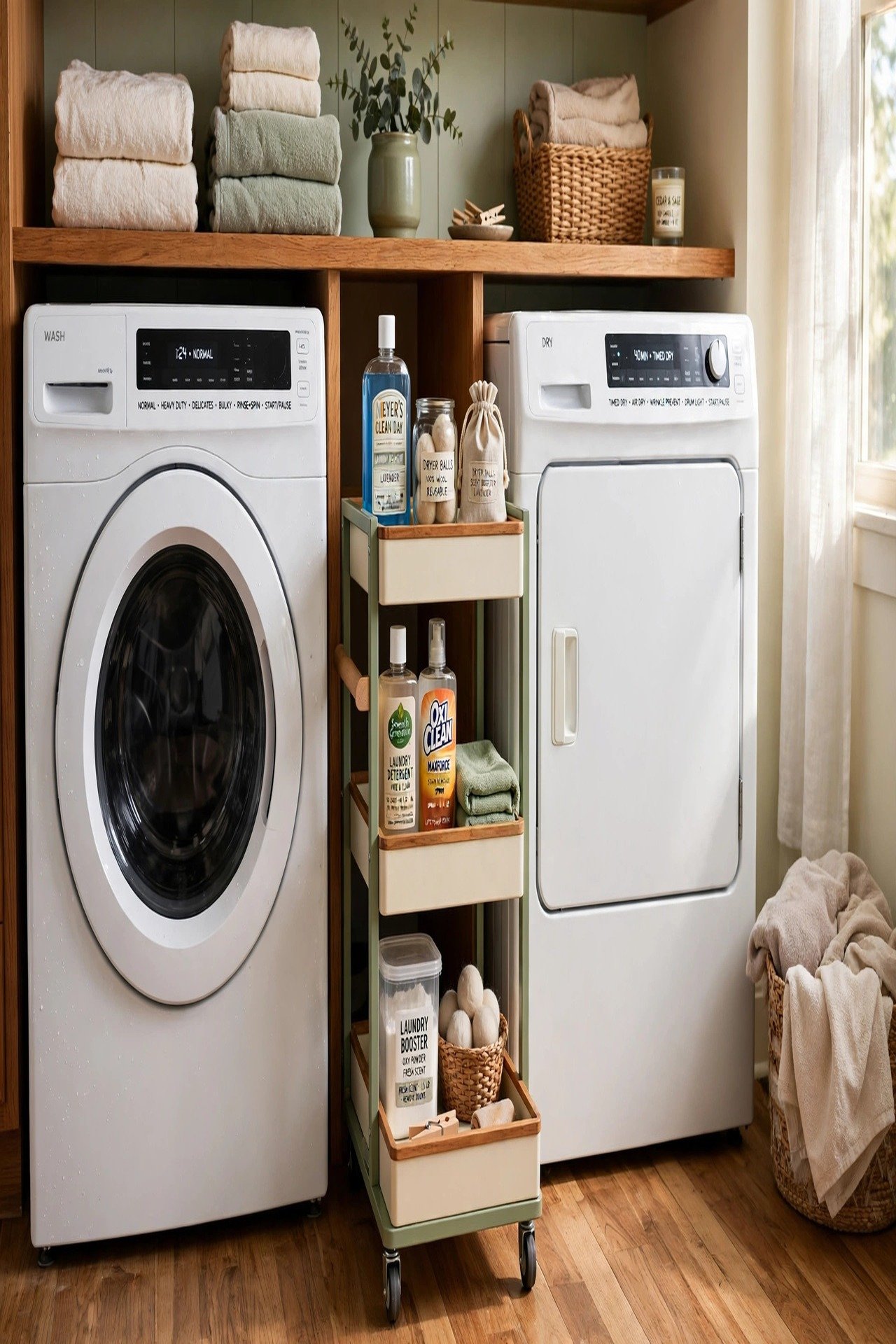
Most side-by-side setups leave a 6 to 8 inch gap between the machines. A slim rolling cart built for that gap turns dead space into a detergent station. Three or four tiers hold bottles, pods, and dryer balls within easy reach.
Choose a cart with locking wheels so it stays put during the spin cycle. Measure your exact gap before ordering, since widths vary by half inches. Pull it out to restock, push it back to hide everything. It is the easiest storage win in the whole closet.
7. Install a Wall-Mounted Fold-Down Ironing Board
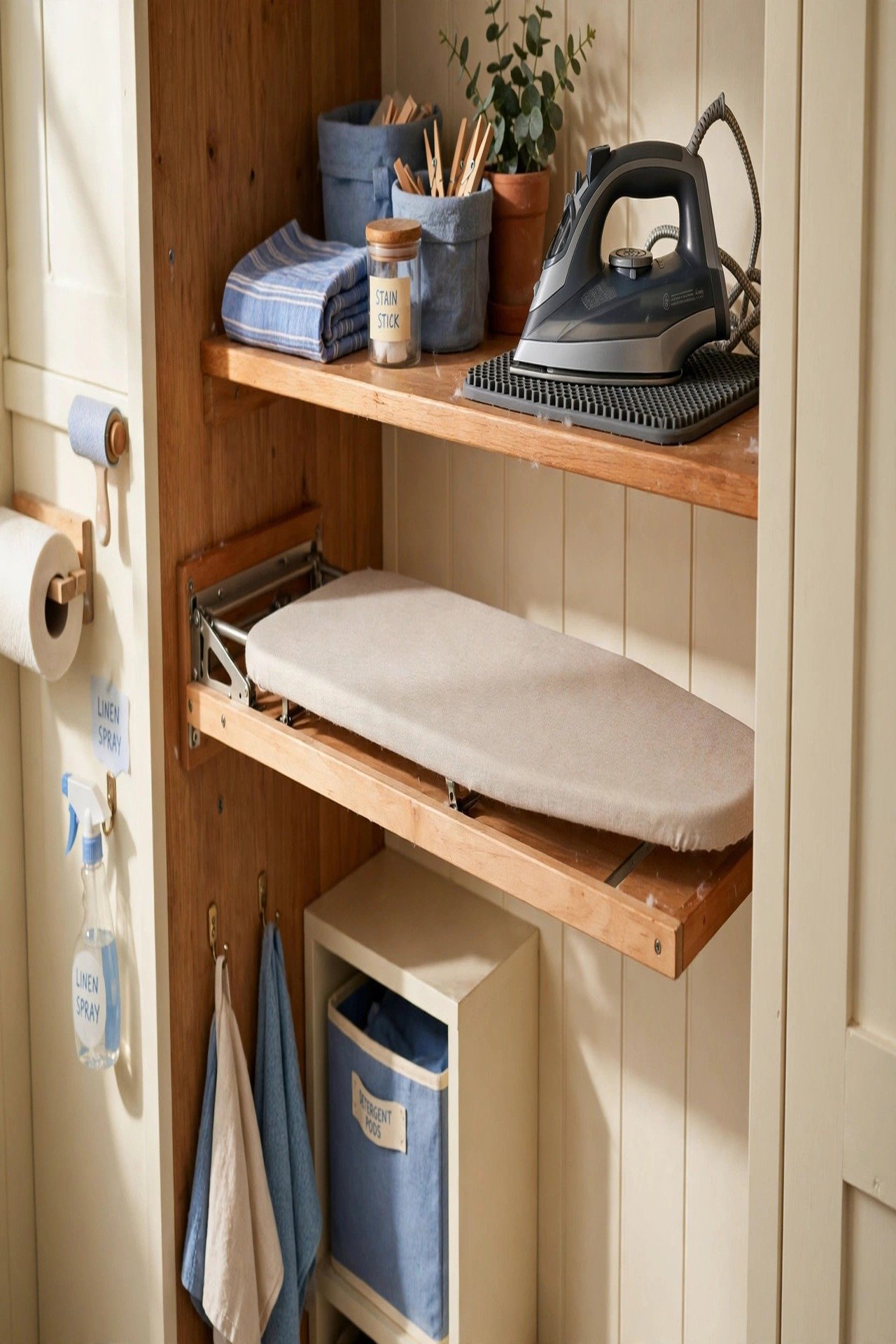
A full-size ironing board has no business living in a small apartment, but a wall-mounted fold-down board does. Folded flat it is only about 12 inches deep on the wall; opened, it gives you a full ironing surface at 36 inches high.
Mount it on the closet side wall or inside a deep door, on studs that can hold the weight. Keep the iron on a heat-resistant silicone pad on the shelf above. When guests come over, the board vanishes and the closet looks like it was always tidy.
8. Add a Hanging Rod for Air-Dry Clothes
A short hanging rod turns the closet into a drying station for shirts and delicates. A wall-mounted rod 20 to 30 inches long fits across most closet widths above the machines or on a side wall. Hang clothes on slim hangers so more pieces fit in less space.
Mount the rod at 66 inches high so shirt hems clear the machine tops. Use a rod with a 50-pound rating if you hang jeans or heavy sweaters. Pull a small fan into the doorway while clothes dry to keep air moving and cut drying time.
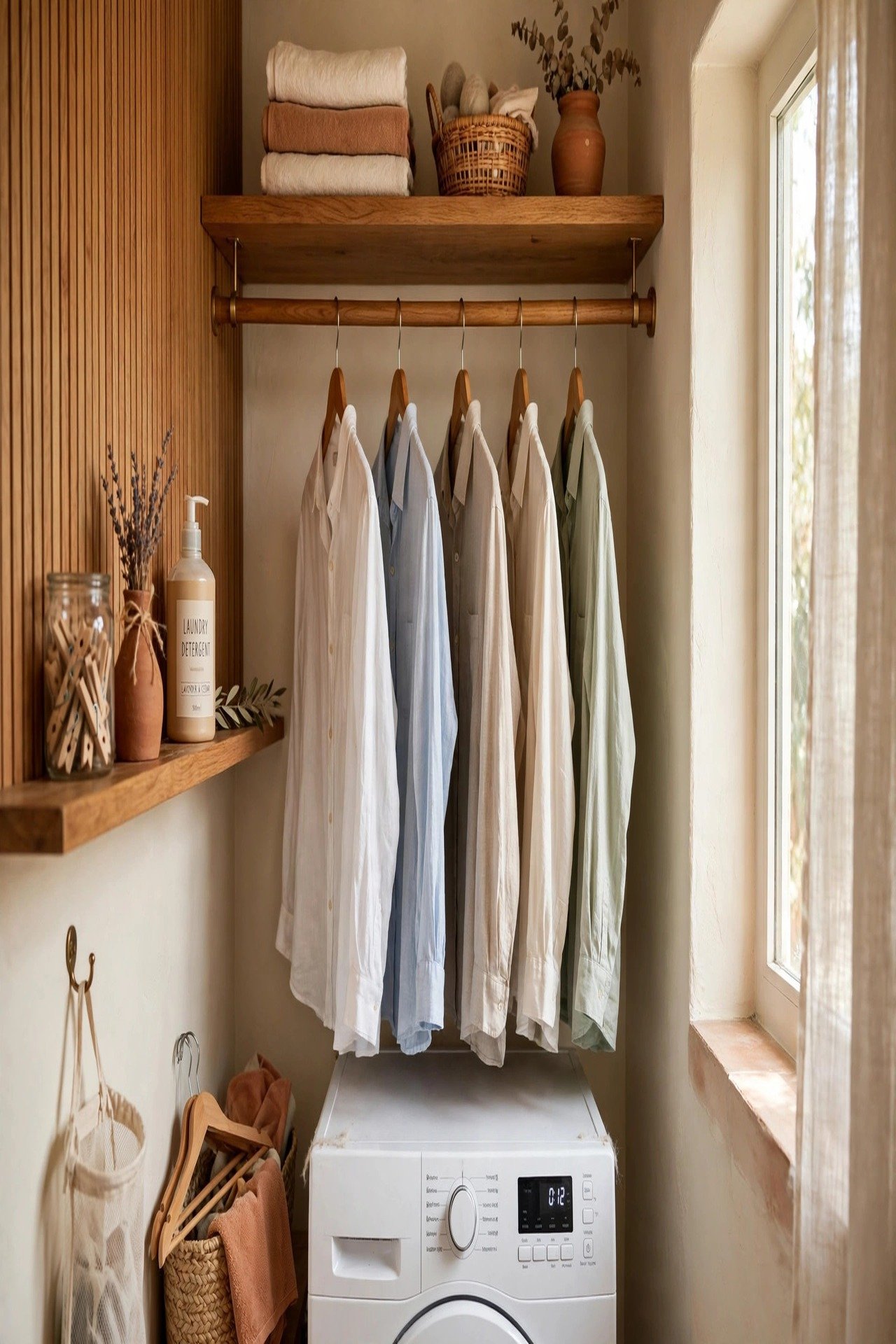
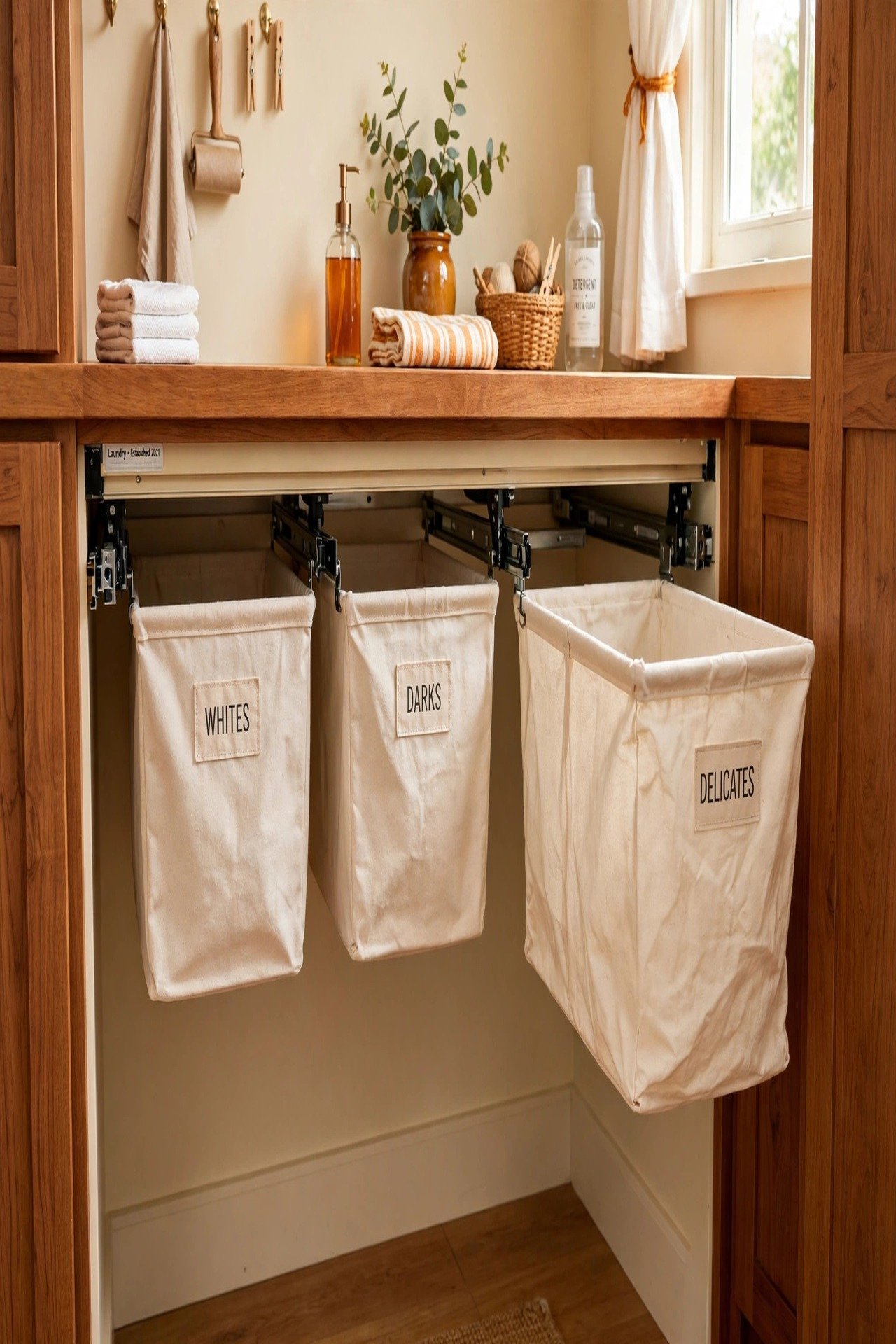
9. Sort Laundry in Pull-Out Hamper Bins
Sorting at the closet saves endless trips. A pull-out frame with two or three fabric bins lets you toss whites, darks, and delicates into separate bags right where you undress. The frame slides on a 24-inch track under a counter or beside the machines.
Label each bin with a simple tag so the whole household sorts correctly. Choose washable canvas bags with handles so a full bag lifts out and goes straight into the washer. When the bins are full, you know it is laundry day without thinking.
10. Light the Closet With a Motion-Sensor LED Strip
Most laundry closets have one dim bulb or none at all, which makes stain-checking impossible. A battery-powered motion-sensor LED strip under the cabinet or along the door frame fixes it in minutes with no wiring. The light turns on when you open the door and off when you leave.
Choose a 3000K warm white strip so colors read true; cool blue light hides stains. Run one strip across the front of the upper cabinets so it washes down over the machines. For a permanent option, a slim flush-mount fixture on the ceiling works too, and these ceiling design ideas include low-profile picks for tight spaces.
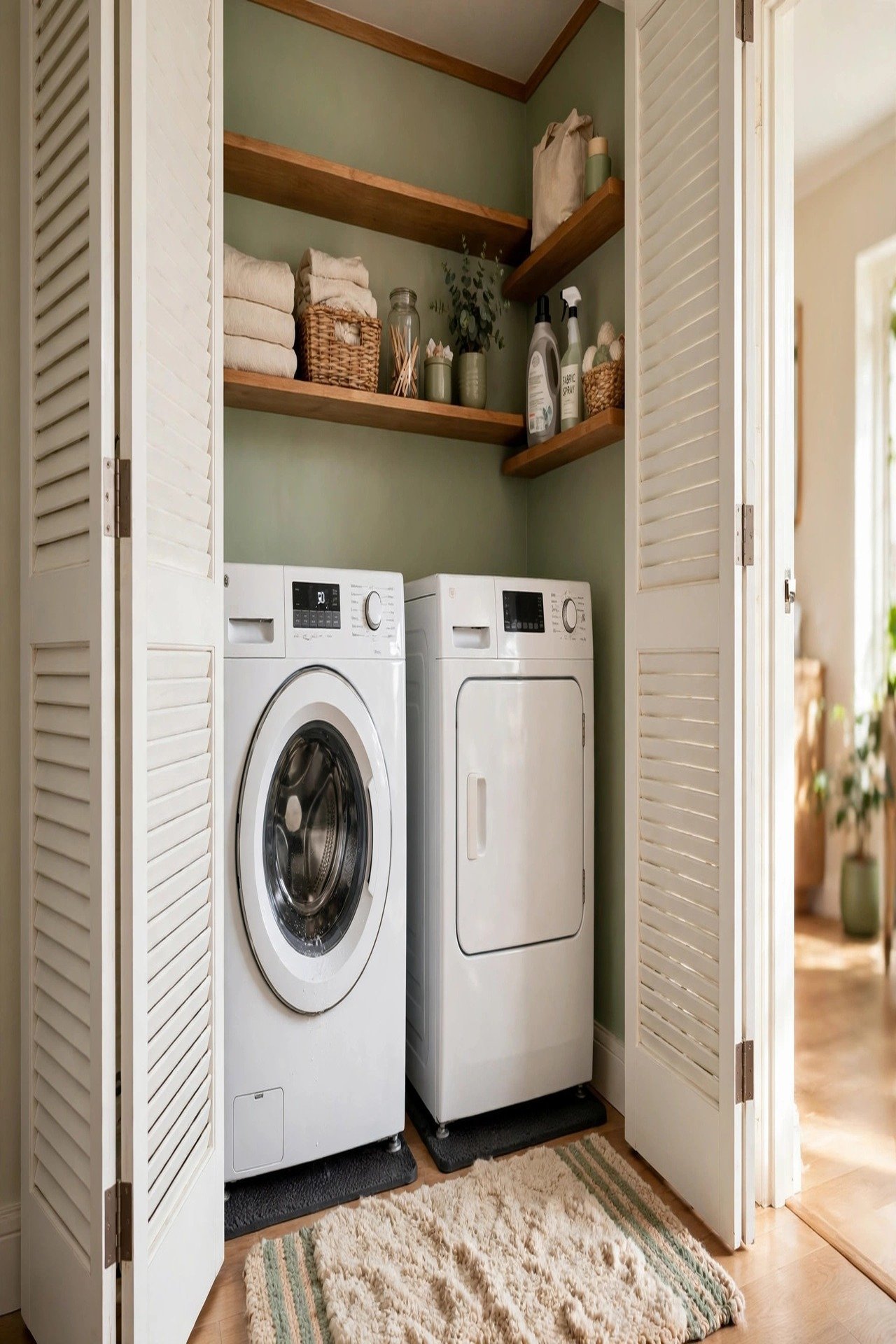
11. Ventilate the Closet and Muffle Machine Noise
Dryers need airflow and neighbors need quiet, so treat both. Louvered doors or a 1-inch gap under a solid door lets the dryer breathe and keeps heat from building up. Never block the vent hose path with storage boxes.
Cut noise with anti-vibration pads under each foot and a thick rug or foam mat in front of the machines. Run loud spin cycles during daytime hours as a courtesy in apartment buildings. If the closet shares a bedroom wall, a removable acoustic panel on that wall drops the hum noticeably.
12. Use the Back of the Doors for Storage
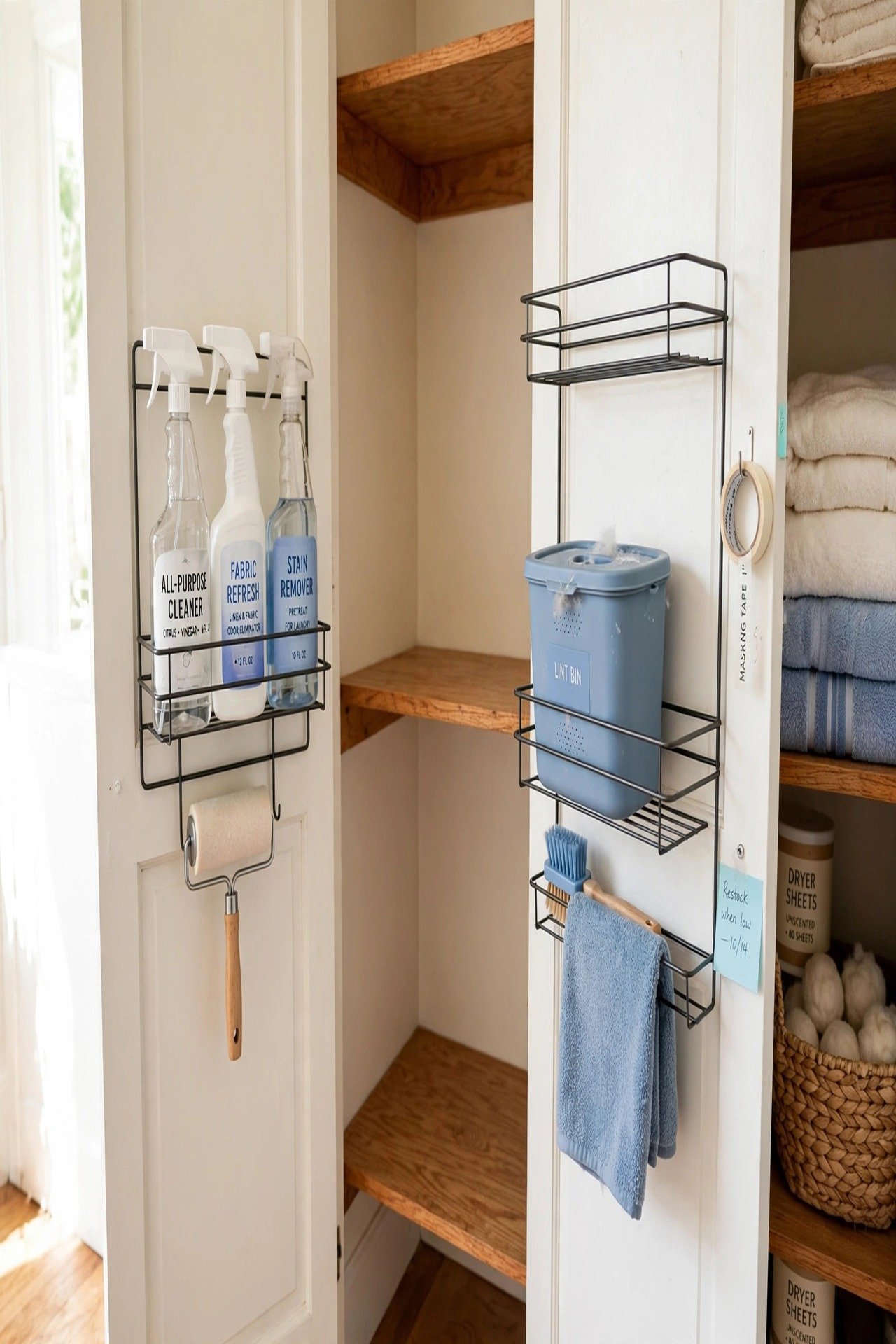
The inside of the closet doors is free storage most people ignore. Slim over-door racks hold spray bottles, lint rollers, and stain sticks in 3 inches of depth. A small lidded bin screwed to the door interior becomes a lint trash can right where you need it.
Keep door storage under 10 pounds total so hinges never sag. Use short screws that cannot poke through the door face. Every bottle that moves to the door frees a shelf for folded linens or bulk detergent.
13. Create a Drop-Leaf Folding Table on the Wall
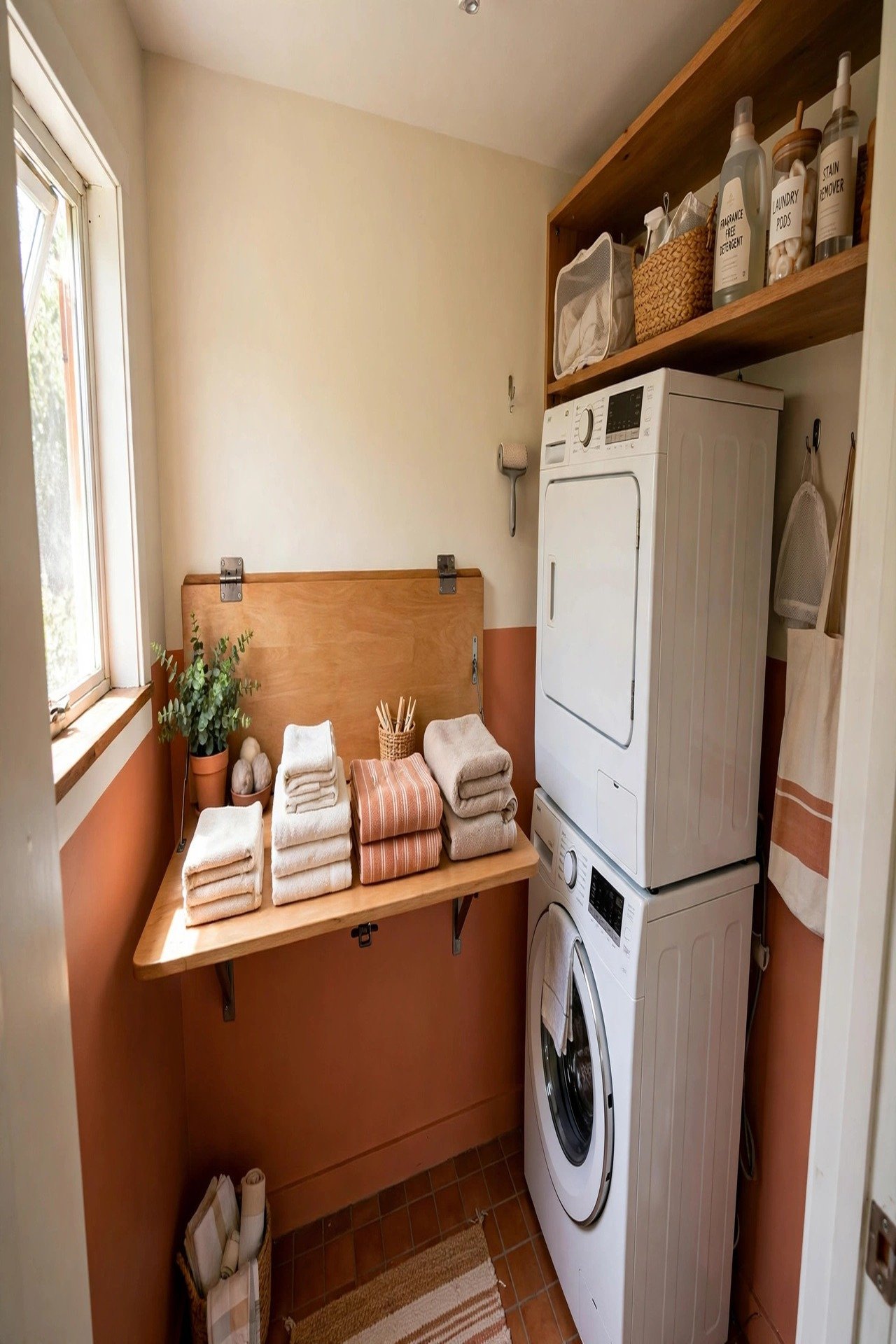
When there is no room for a full counter, a wall-mounted drop-leaf table gives you a folding surface on demand. Opened it is about 24 by 16 inches; folded flat it takes 2 inches of wall. That is a real work surface that vanishes when the machines run.
Mount the table at 36 inches high on studs, on the wall opposite the machines or beside a stacked pair. Paint the wall behind it with a washable lower half in a deeper tone; these two-tone wall paint ideas show combos that hide scuffs well. Fold it down to sort socks, fold shirts, or stack fresh towels.
Conclusion
A small laundry closet works when every inch has a job. Stack the machines, claim the walls and doors for storage, and give yourself one clear surface for folding. Measure twice, mount on studs, and keep the floor path open.
Start with the change that removes your biggest daily annoyance, whether that is no folding space, dark corners, or detergent bottles everywhere. A tiny apartment laundry closet can run like a full laundry room with the right layout moves.
Frequently Asked Questions
Should I stack my washer and dryer in a small closet?
Yes, stacking is usually the best move. A stacked pair needs only 27 inches of width and frees half the closet for storage. Use the stacking kit made for your exact models and leave 4 to 6 inches behind for hoses.
How do I add folding space to a tiny laundry closet?
Add a countertop over side-by-side machines at 38 to 40 inches high, or mount a drop-leaf table on the wall. A 24 by 16 inch drop-leaf folds flat to 2 inches when you need the space back.
What kind of doors work best on a laundry closet?
Bi-fold or sliding doors give full access without eating floor space. A swinging door needs 24 to 30 inches of clearance. If you keep swinging doors, hang them to open outward into the room.
How can I reduce washer noise in an apartment?
Set anti-vibration pads under each machine foot and keep 1 inch of air on each side. Run spin cycles during daytime hours. A thick mat in front of the machines and a panel on a shared wall cut the hum further.
Where do I store detergent in a small laundry closet?
Use wall cabinets 12 to 15 inches deep above the machines, a slim rolling cart in the gap between machines, or racks on the inside of the doors. Keep daily items between 48 and 60 inches high for easy reach.

Hi, I’m Emily! I turn messy corners into cozy, organized spots. DreamNestDecor is where I share simple, practical home ideas — decor, organization, and small-space solutions that work in real life, not just in photos. Every idea here is carefully researched before it’s shared.