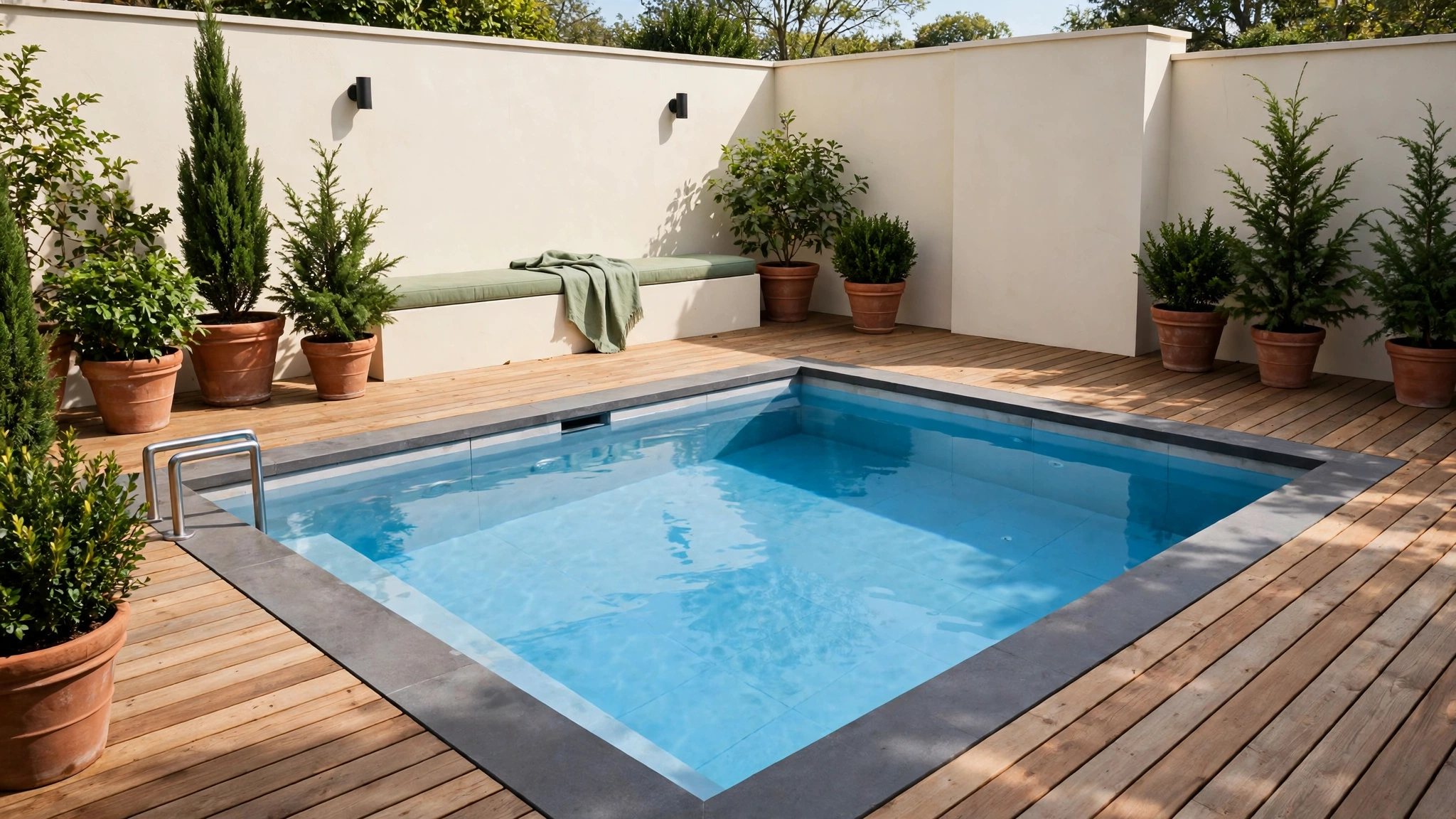
Picture this: you step outside on a quiet morning, the air is still cool, and a pool of crystal clear cold water waits for you on the deck. You take a slow breath, lower yourself in, and feel every sense wake up at once. That sharp, refreshing jolt is the heart of a backyard cold plunge ritual, and it turns an ordinary garden into a personal wellness retreat.
You do not need a spa membership or a large yard to enjoy it. A simple tub, a sturdy deck, and a little thoughtful landscaping are enough to start. These 15 backyard cold plunge pool ideas will help you design a setup that fits your space, your budget, and the way you like to recover, from simple stock tank plunges to fully chilled plunge pools with privacy screens and lounge seating.
1. Set a Cedar Soak Tub on a Wooden Deck
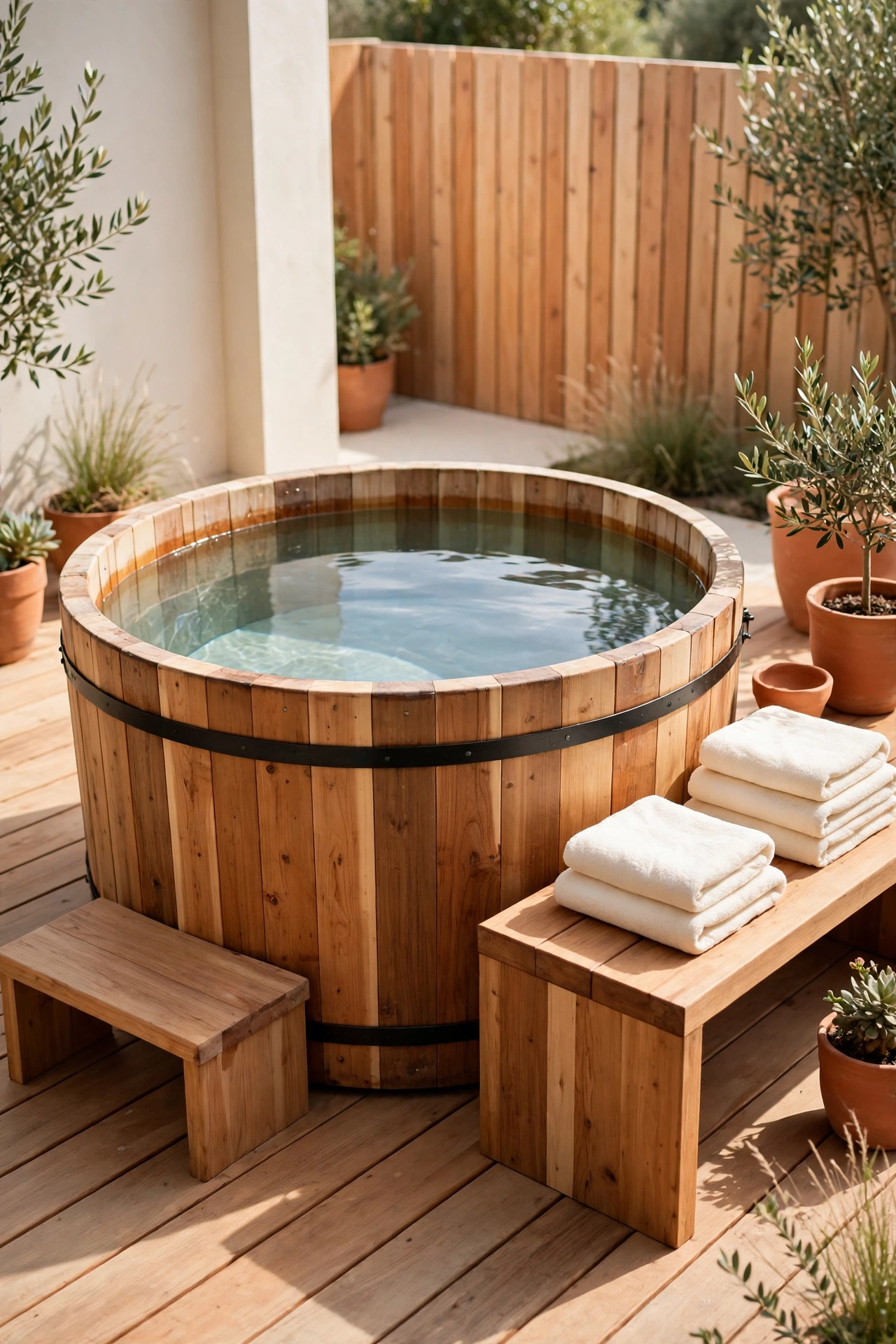
A cedar soak tub is one of the most beautiful ways to start a cold plunge routine at home. The warm reddish wood looks natural in a garden setting, and cedar handles outdoor moisture well when it is sealed and cared for properly. Place the tub on a level wooden deck so the whole setup feels like a permanent part of the backyard rather than a temporary addition.
Keep a small wooden step beside the tub so getting in and out feels safe and steady. A folded towel on a nearby bench and a simple water thermometer clipped to the rim complete the station. Cedar tubs hold their temperature well in cool weather, which makes them a lovely choice for morning plunges through spring and autumn.
2. Build a Sunken Plunge Pool Into a Stone Patio
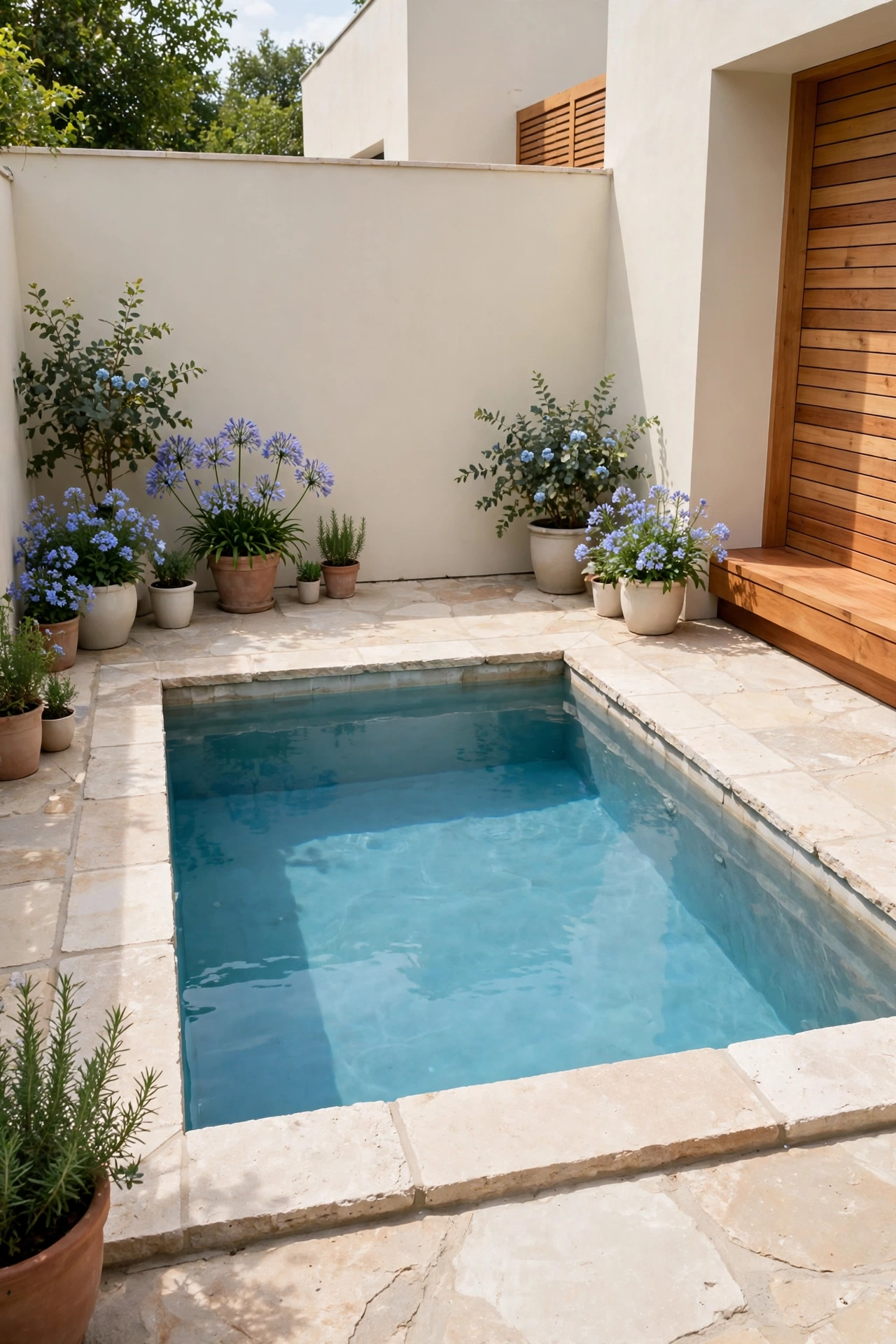
A sunken plunge pool set into a stone patio gives your backyard the feel of a high end spa. The pool sits flush with the patio surface, so the waterline becomes part of the hardscape and the whole area reads as one calm, designed space. Natural stone coping around the edge keeps the look timeless and gives you a comfortable place to sit before you slide in.
Plan the depth carefully, since a plunge pool only needs to be deep enough for you to sit with water up to your shoulders. A compact footprint of four to six feet across is plenty for one or two people. For more ways to style the area around the water, these backyard pool surround ideas show how decking, stone, and planting can frame a pool beautifully.
3. Tuck a Stock Tank Plunge Into a Garden Corner
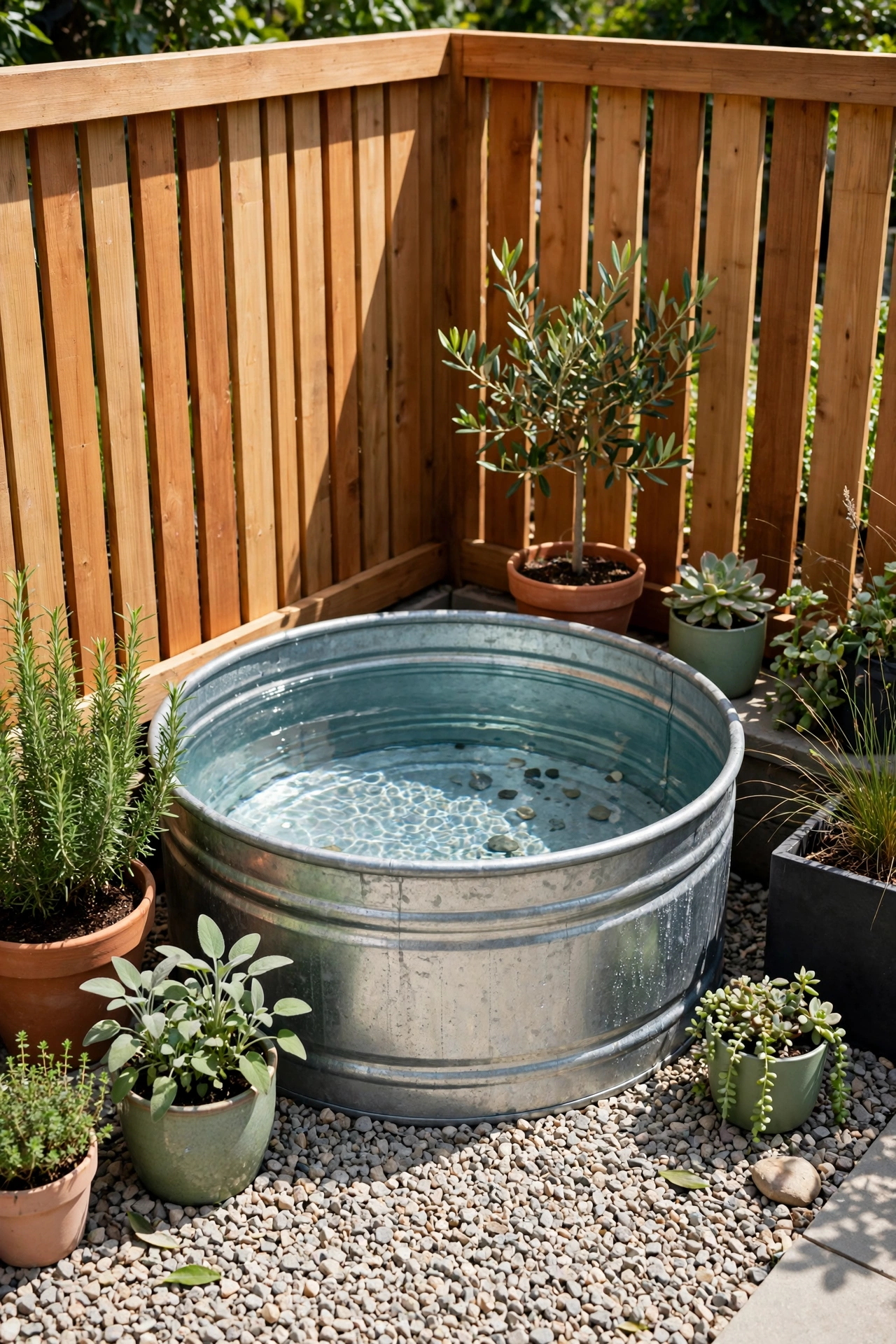
A galvanized stock tank is the simplest and most affordable way to try cold plunging at home. The round metal tank holds cold water well, costs far less than a built-in pool, and can be moved if you change your mind about the location. Tuck it into a garden corner where it is sheltered from wind and easy to reach from the back door.
Soften the industrial look of the metal with wooden cladding, potted plants, and a small gravel bed underneath for drainage. A fitted cover keeps leaves and rain out between sessions. This is a smart first plunge setup, because you can test the habit for a full season before investing in a permanent installation.
4. Add a Chiller Unit for Year-Round Cold Water
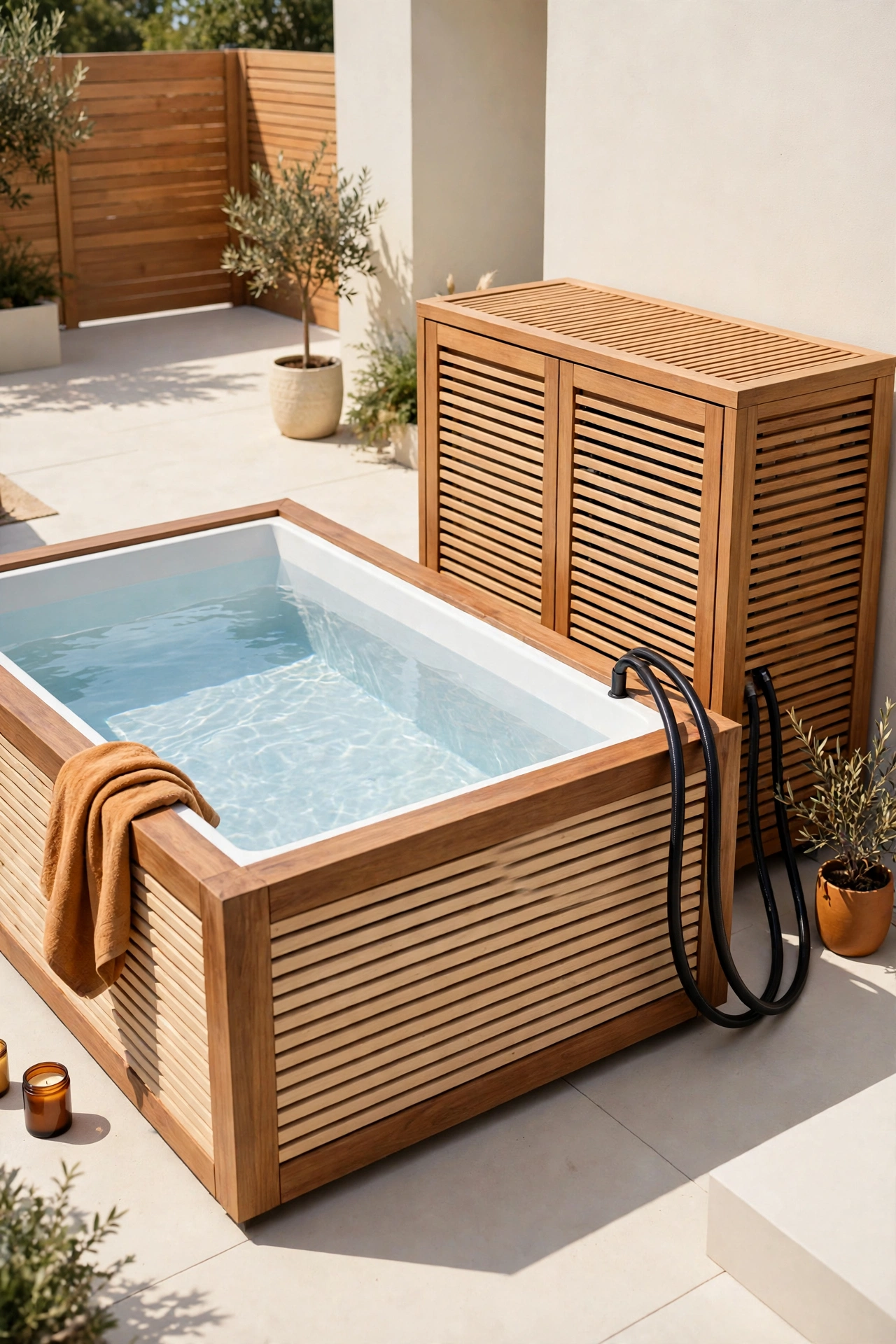
A chiller unit takes the guesswork out of cold plunging, because it holds the water at a steady cold temperature in every season. Instead of hauling bags of ice or waiting for cold nights, you set the target temperature and the unit does the rest. Most chillers connect to the tub with two simple hoses and sit discreetly beside or behind the plunge.
Hide the unit inside a ventilated wooden enclosure or behind a low screen so the equipment never spoils the view. A small filter keeps the water clear, which means fewer water changes and a cleaner plunge every time. With a chiller in place, your morning plunge stays just as cold in August as it is in January.
5. Screen the Plunge With a Slatted Wood Privacy Wall
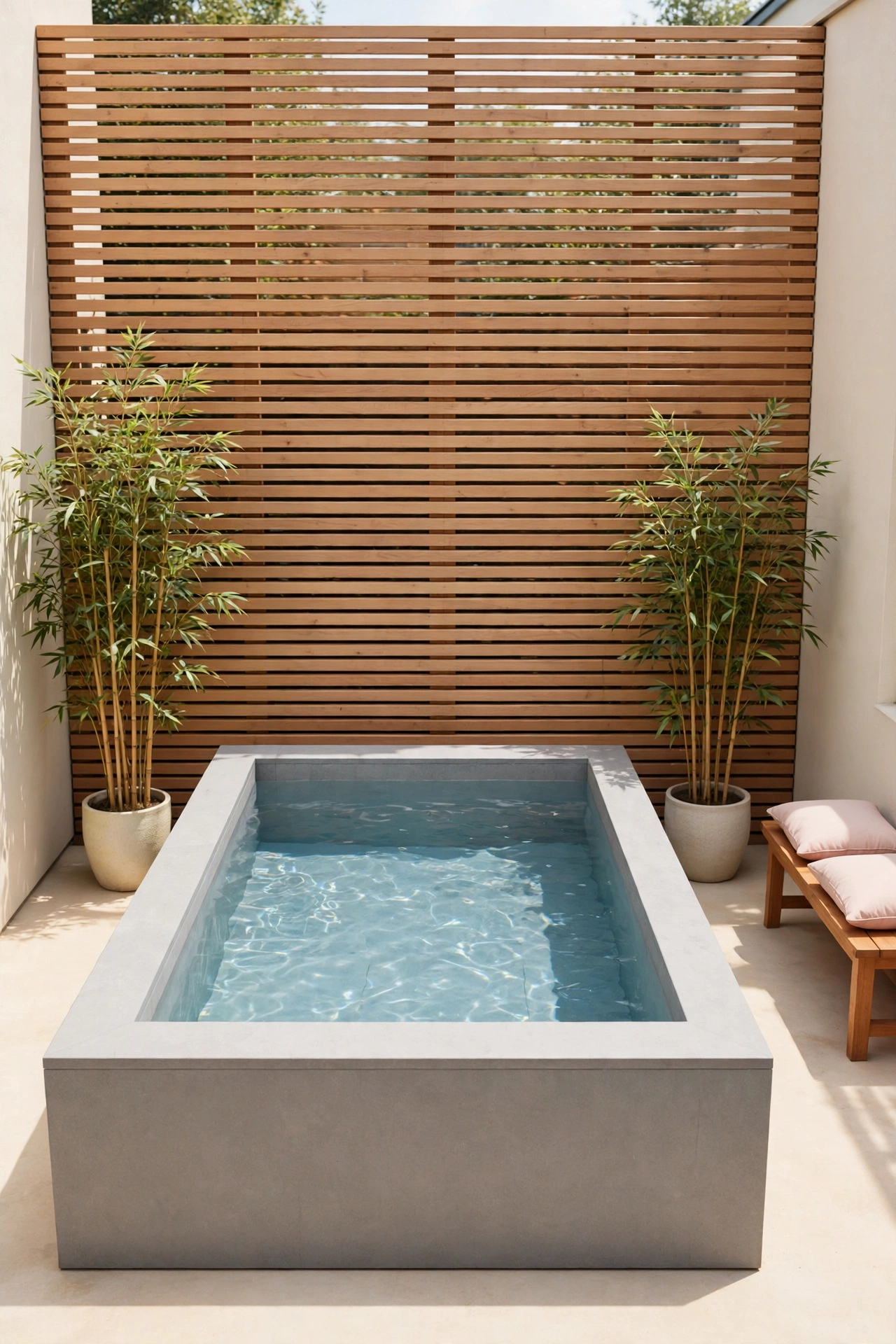
Privacy matters when you are stepping into cold water in swimwear, and a slatted wood privacy wall solves it with style. The horizontal slats block direct sightlines from neighbors while still letting light and air flow through. Warm wood slats also give the plunge area a finished, spa like backdrop that photographs beautifully.
Build the screen on the side that faces the nearest neighbor or street, and leave the other sides open so the space never feels boxed in. Climbing jasmine or potted bamboo in front of the slats softens the structure even more. If your yard needs broader screening, these backyard privacy fence ideas offer more ways to create a secluded corner.
6. Pair the Plunge With a Warm Outdoor Shower
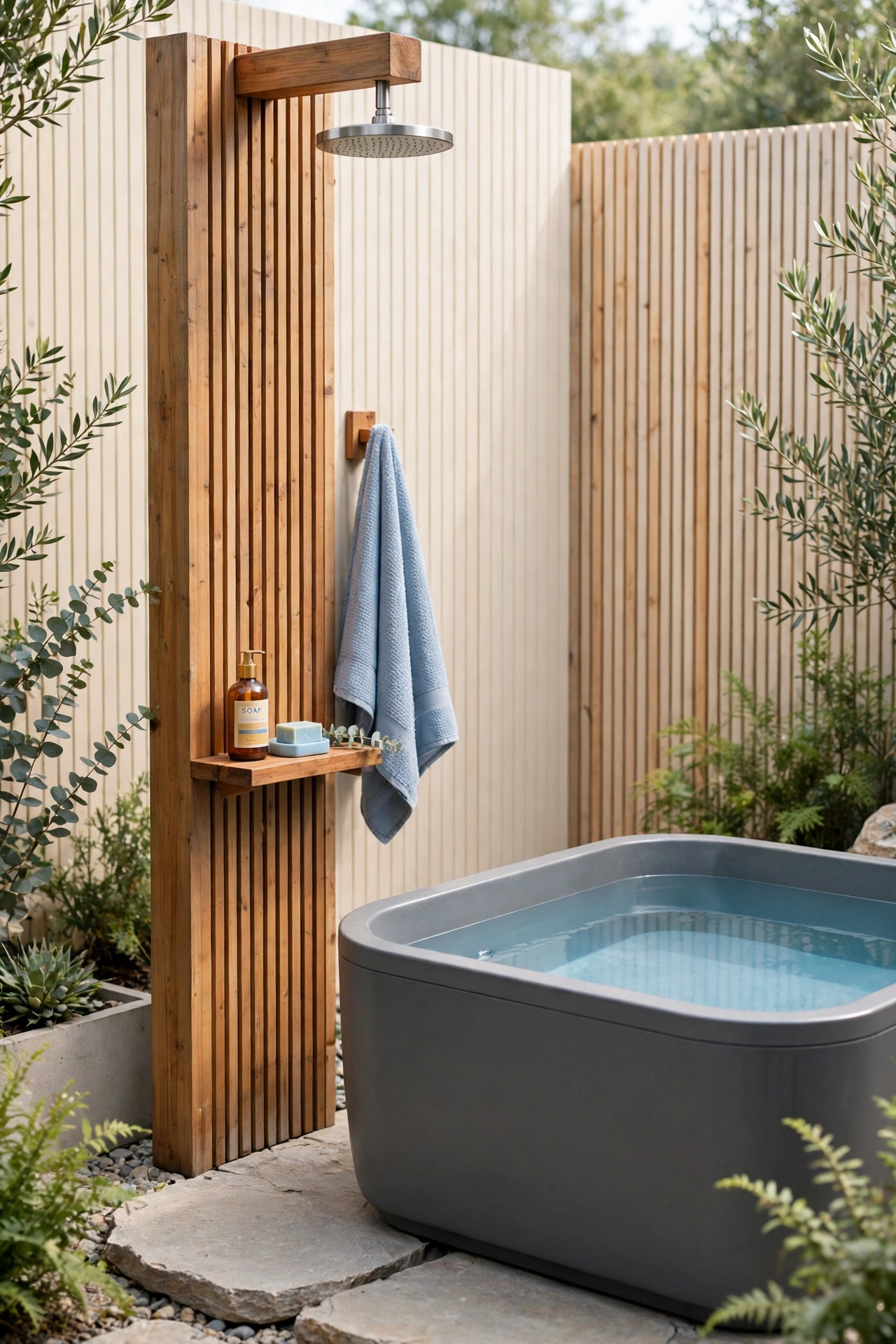
An outdoor shower beside the plunge pool turns a quick dip into a complete wellness ritual. Rinse off before you plunge to keep the water clean, then warm up under the shower after your session. A simple wall-mounted showerhead on a wooden post, fed by a garden hose or a plumbed line, is all you need to start.
Set the shower on a small deck or stone pad with good drainage, and add a hook for your towel and a small shelf for soap. The contrast between cold water and warm water is part of what makes the routine feel so refreshing. Keep the shower open to the sky so the whole experience stays connected to the outdoors.
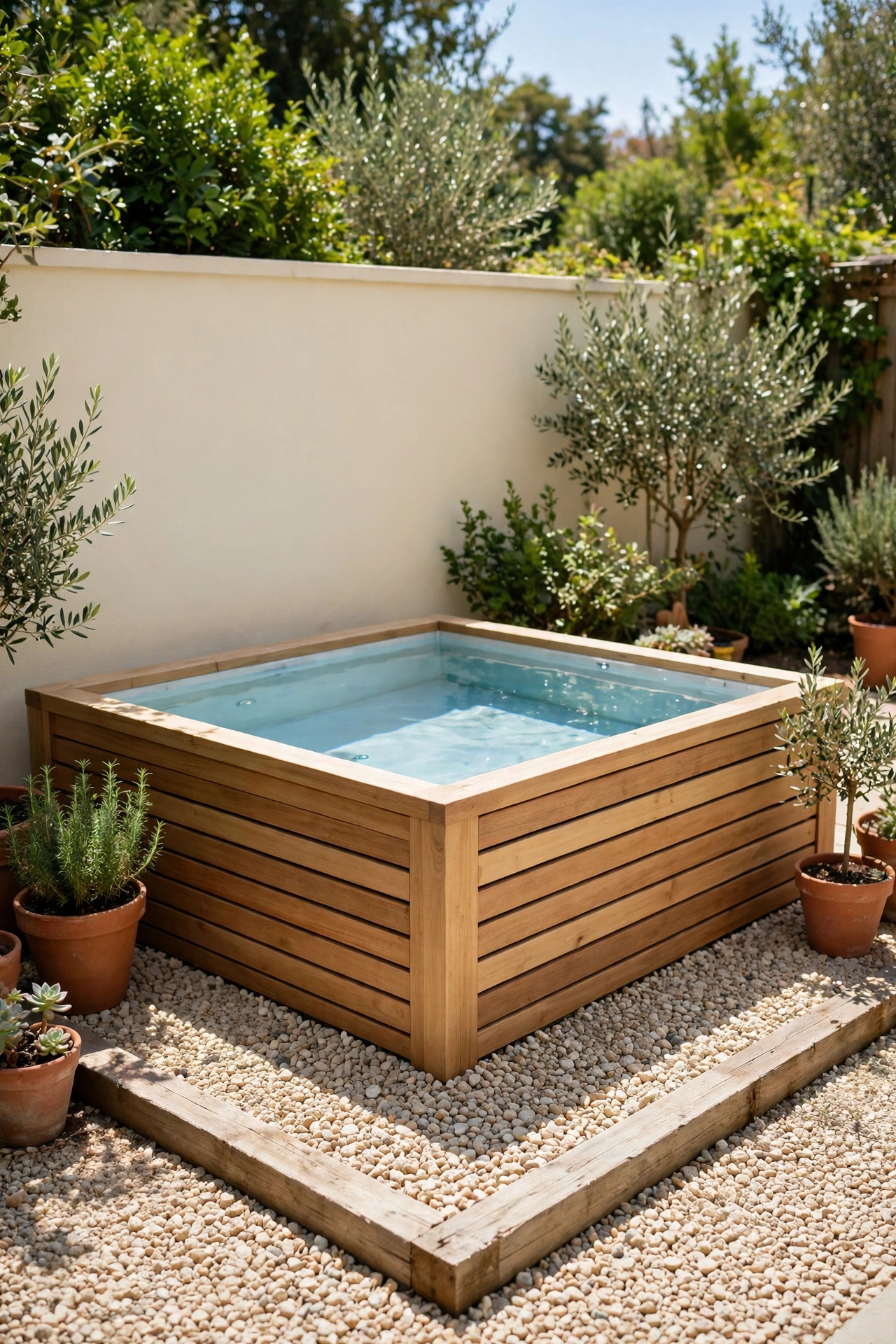
7. Create a Gravel Drainage Bed Under the Tub
Every plunge setup needs a plan for splashed and drained water, and a gravel drainage bed is the simplest answer. A shallow layer of pea gravel under and around the tub lets water drain away quickly instead of pooling on the deck or turning the lawn to mud. It also keeps the area underfoot clean and stable.
Edge the gravel bed with stone or timber so the stones stay in place, and slope the ground gently away from the house. A gravel bed pairs well with any tub style, from stock tanks to cedar soaks. For larger yards with heavier runoff, these backyard drainage landscaping ideas show how to move water safely through the whole garden.
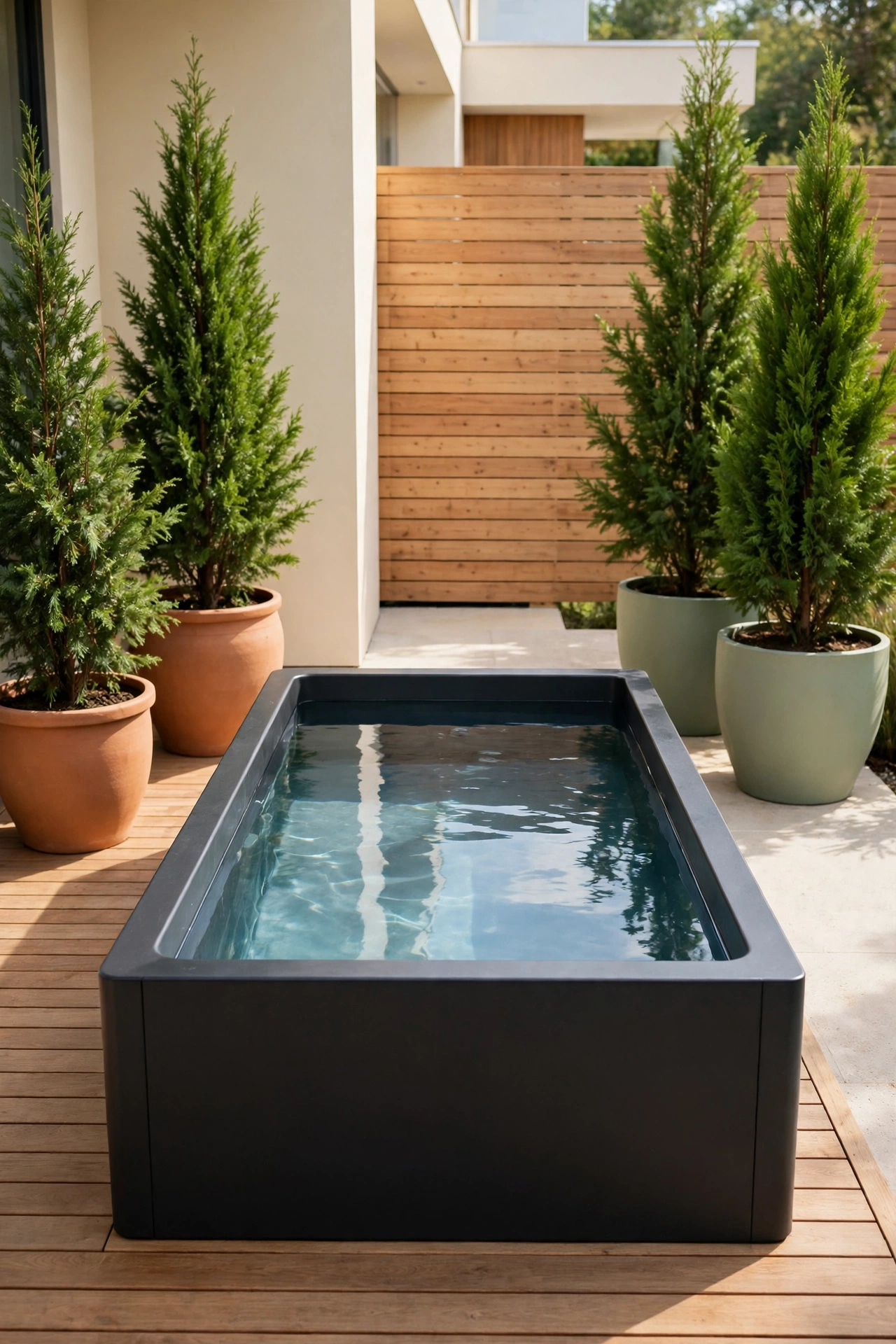
8. Surround the Plunge With Potted Evergreens
Potted evergreens turn a bare plunge corner into a green retreat that looks good in every season. Tall planters with boxwood, juniper, or dwarf conifers frame the tub and give the space a sense of enclosure without building anything permanent. The deep green foliage also contrasts beautifully with clear blue water.
Choose heavy pots that will not tip in the wind, and group them in odd numbers for a natural look. Terracotta and sage glazed pots add warm color against wood decking and cream walls. Move the pots around through the year to refresh the layout or to shield the tub from harsh afternoon sun.
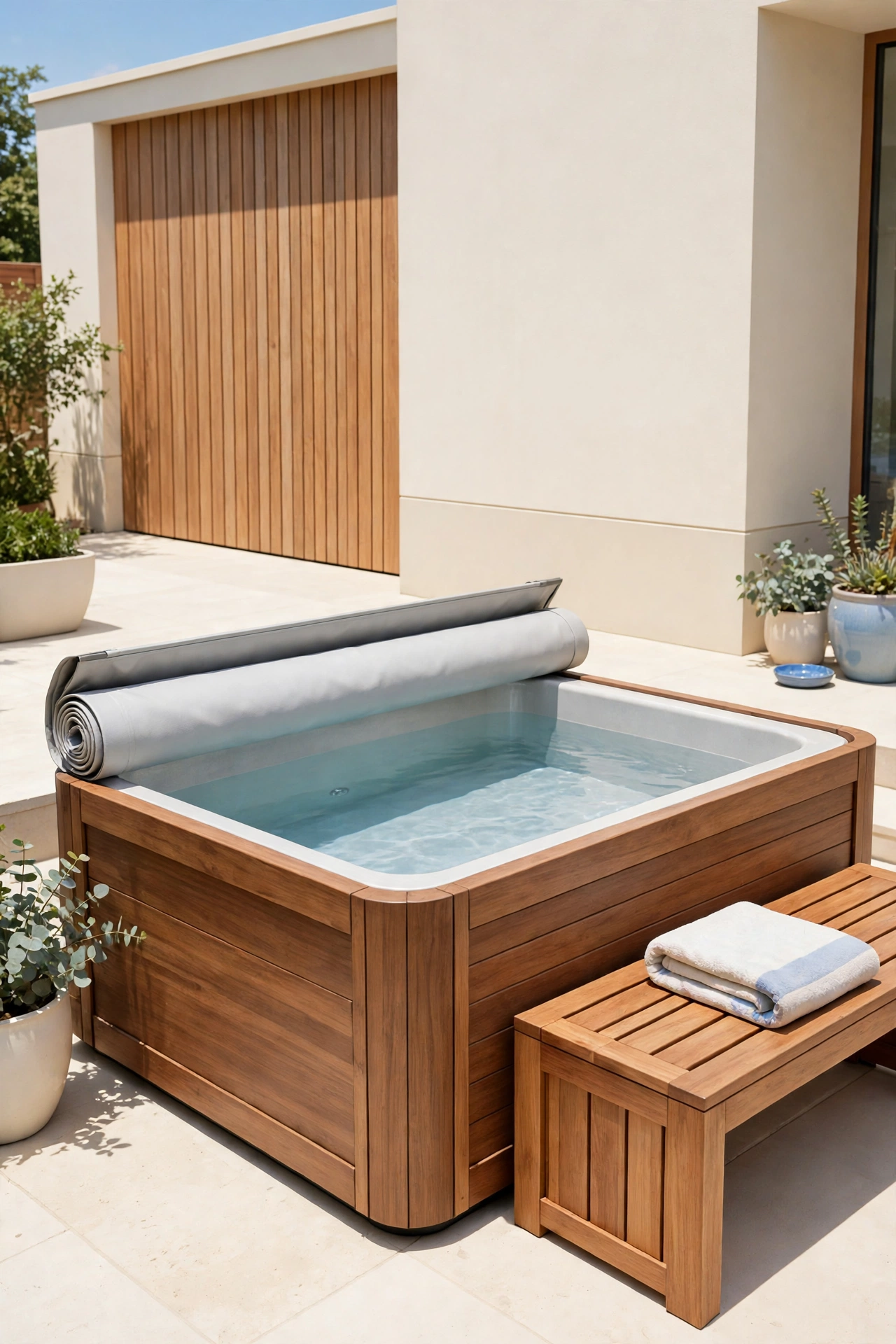
9. Install a Retractable Cover for Clean Water
A cover is the easiest way to keep plunge water clean between sessions. Leaves, dust, and insects stay out, and the water holds its cold temperature longer when it is shielded from the sun. A retractable or roll-up cover is the most convenient style, because you can open and close it in seconds with one hand.
Choose a cover that fits the tub snugly and is rated for outdoor use, with a light color that reflects heat. Some covers include a locking strap, which is a smart safety feature in homes with children or pets. A clean, covered plunge is always ready when you are, with no skimming or scrubbing before your session.
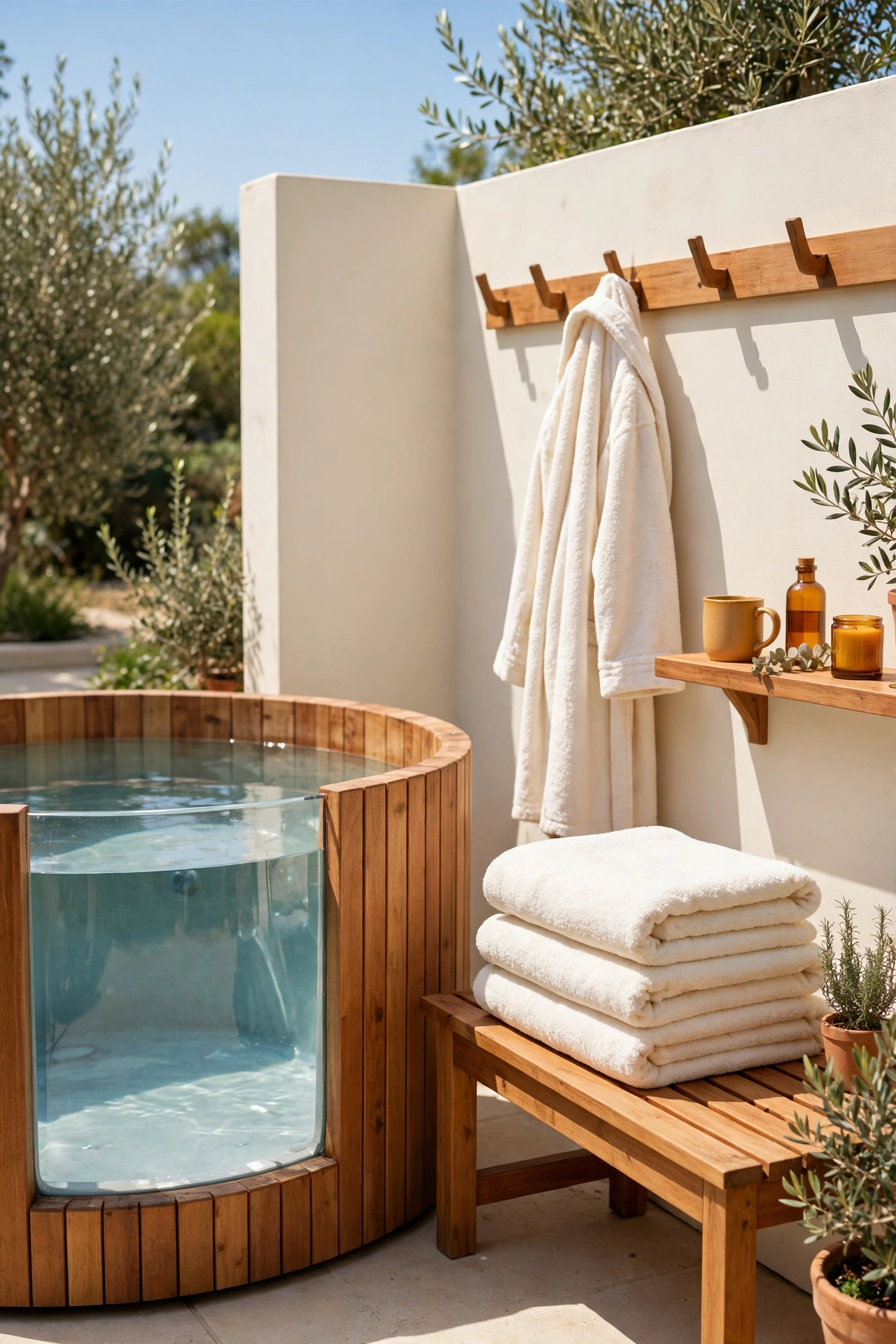
10. Add a Towel Warming Station Beside the Tub
Stepping out of cold water into a warm towel is one of the great small luxuries of a plunge routine. A towel warming station can be as simple as a weatherproof storage bench with a heated towel rail mounted on the wall above it. Keep two thick towels ready so one is always warm and dry.
Place the station within arm’s reach of the tub so you never have to walk across cold decking to dry off. A small shelf for a robe, warm socks, and a mug of tea completes the setup. This thoughtful corner is what turns a backyard tub into a retreat you will look forward to every single day.
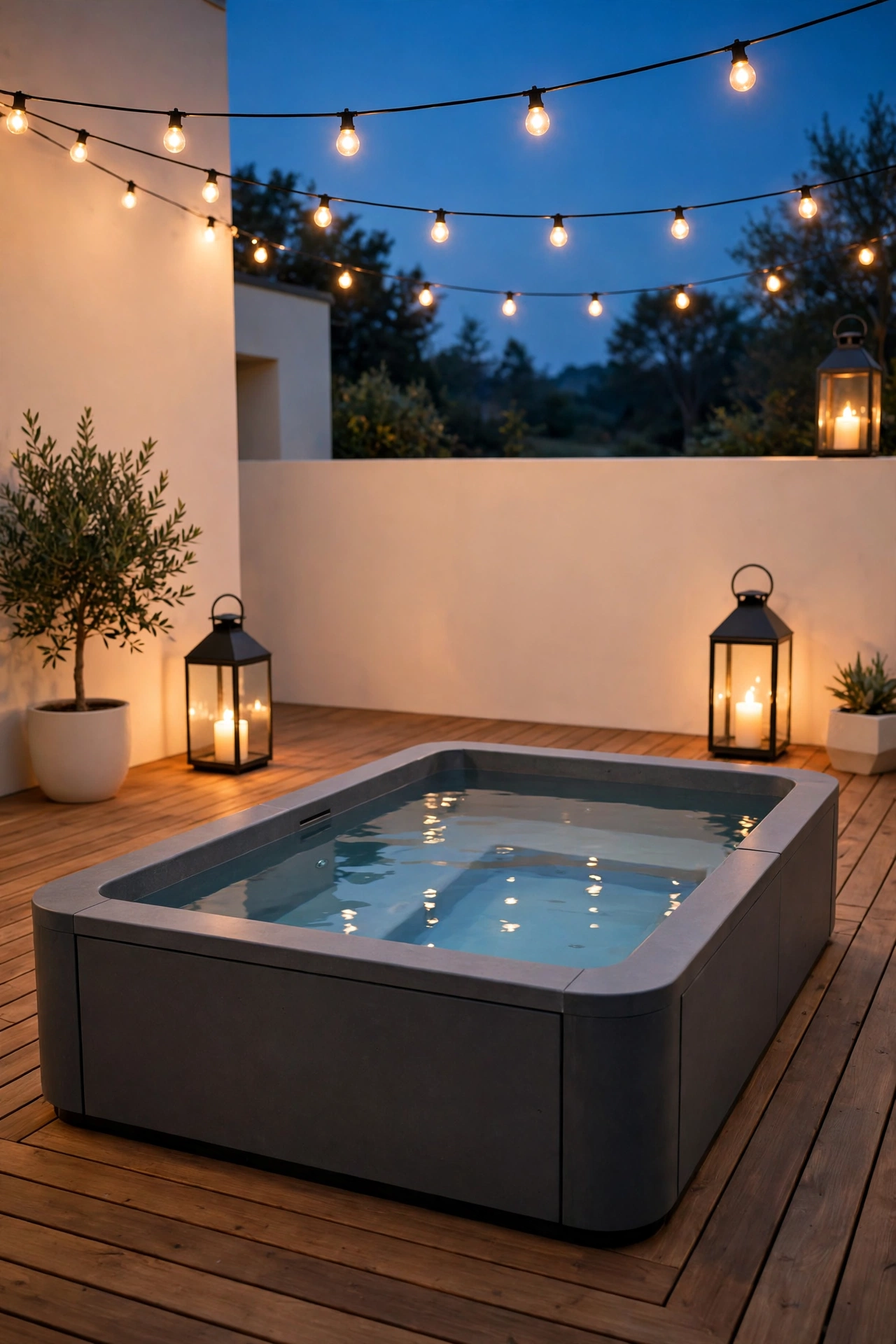
11. Light the Plunge Area With Warm Lanterns for Evening Sessions
Warm lantern light transforms a plunge pool into a magical evening retreat. Place large lanterns on the deck corners, hang string lights overhead, or set solar lanterns along the path to the tub. The soft amber glow makes evening sessions feel calm and special, and it keeps the area safe after dark.
Choose outdoor-rated lanterns with warm white bulbs, and keep all electrical items well away from splashing water. Battery or solar lanterns are the safest choice near the tub itself. An evening plunge under lantern light is a wonderful way to unwind, and the gentle routine can help you sleep better too.
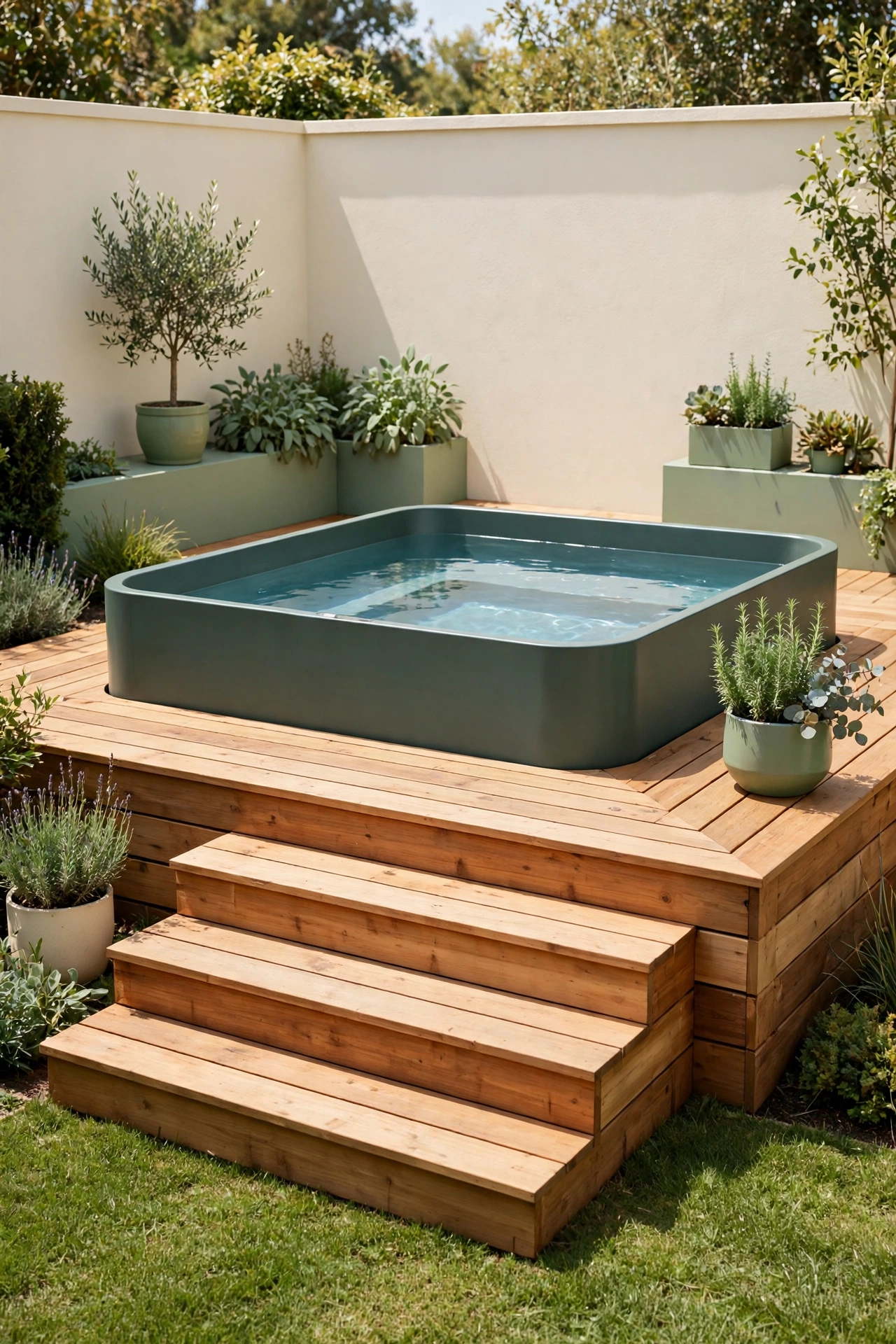
12. Build a Raised Cedar Platform With Wide Steps
A raised cedar platform lifts the plunge tub above the garden and gives the whole setup a sense of occasion. Wide, shallow steps make entry graceful and safe, especially when your feet are wet. The platform also keeps the tub level on uneven ground and creates a dry zone for towels and sandals.
Build the platform from the same warm cedar as the tub for a unified look, and add a non-slip finish to the steps. Leave a gap around the tub rim for the cover and for easy cleaning. A raised platform works beautifully on sloped yards, where it turns an awkward corner into the best seat in the garden.
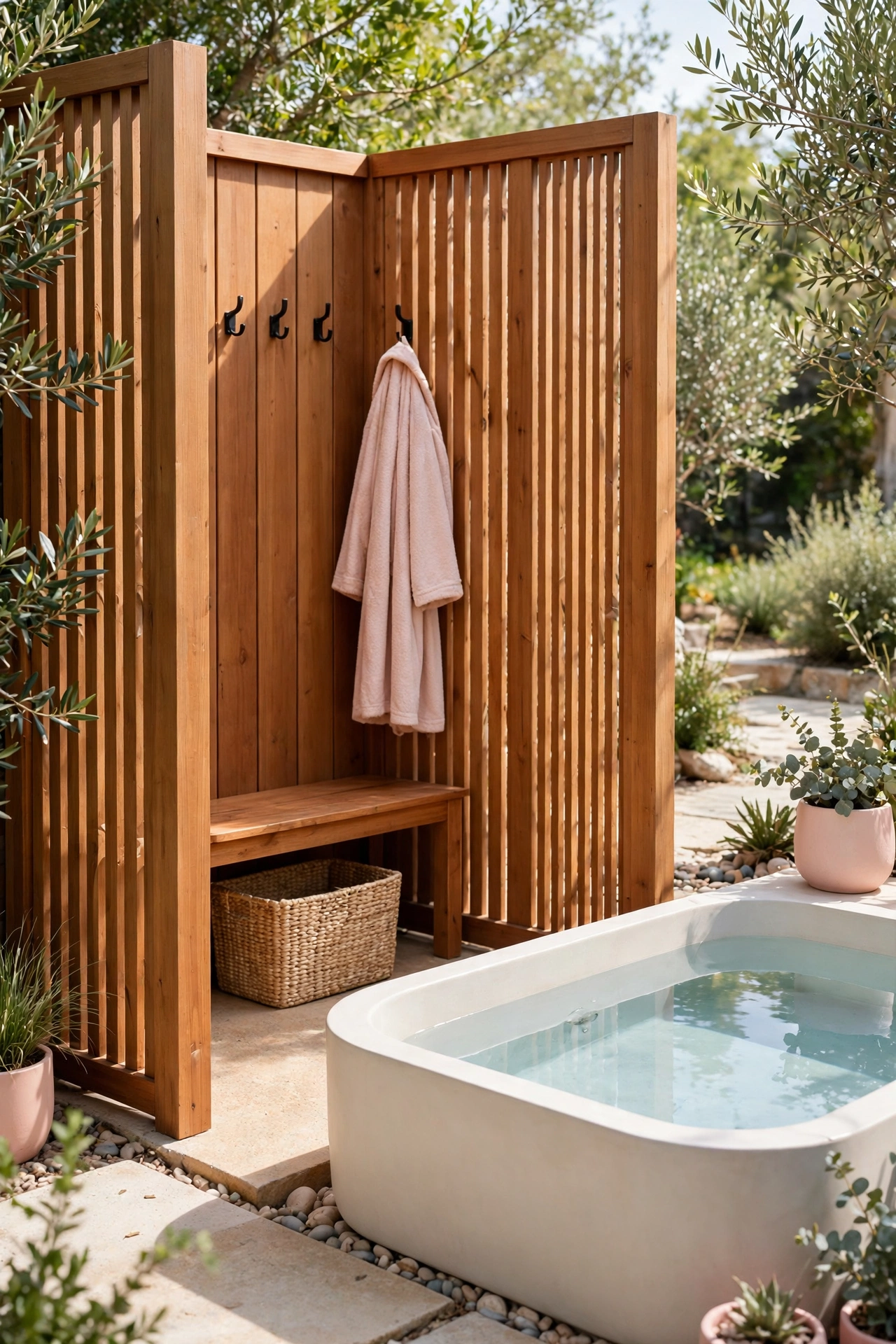
13. Add a Small Changing Nook With a Bench
A changing nook gives you a private, dry place to change into swimwear before your plunge and back into warm clothes after. A simple three-sided screen with a bench, a few hooks, and a small mat is all it takes. Position the nook a few steps from the tub so the path between them stays short and comfortable.
Use the same wood and colors as the rest of the plunge area so the nook feels like part of the design. A lidded basket under the bench holds dry clothes, and a wall hook keeps your robe off the ground. This small addition makes the whole routine feel polished and private, even in a compact yard.
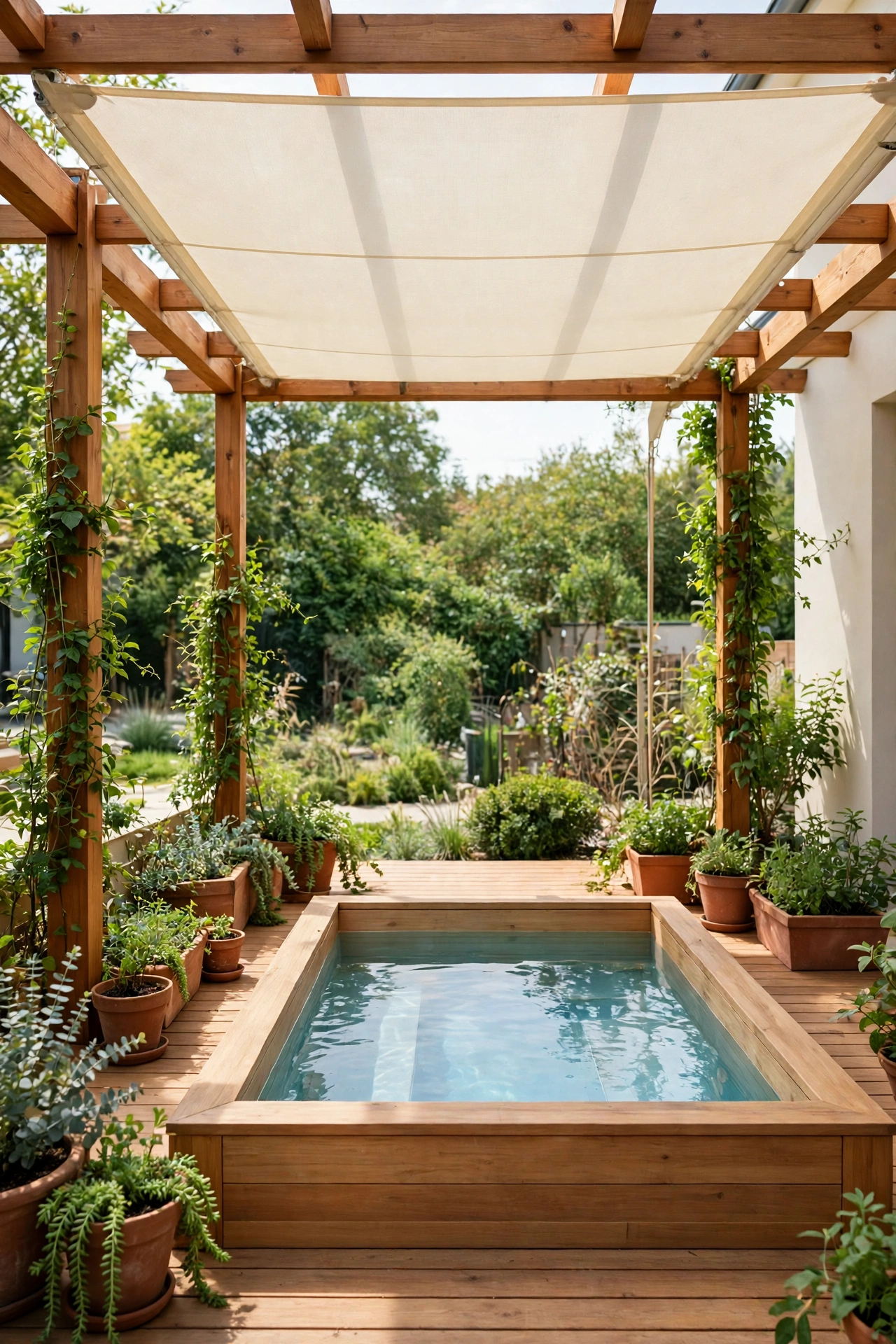
14. Zone the Plunge With a Pergola and Shade Cloth
A pergola over the plunge area provides welcome shade on hot days and defines the wellness zone within a larger yard. A simple timber frame with a retractable shade cloth gives you control over sun and rain, and climbing plants on the posts add softness as they grow. The structure also gives you somewhere to hang lanterns and a thermometer.
Keep the pergola open on at least two sides so air flows freely and the space never feels closed in. For more structure styles and shade options, these backyard pergola ideas show frames that suit yards of every size. A shaded plunge stays cooler through the day, which means less work for your chiller and colder water for your session.
15. Finish the Retreat With a Recovery Lounge Chair Setup
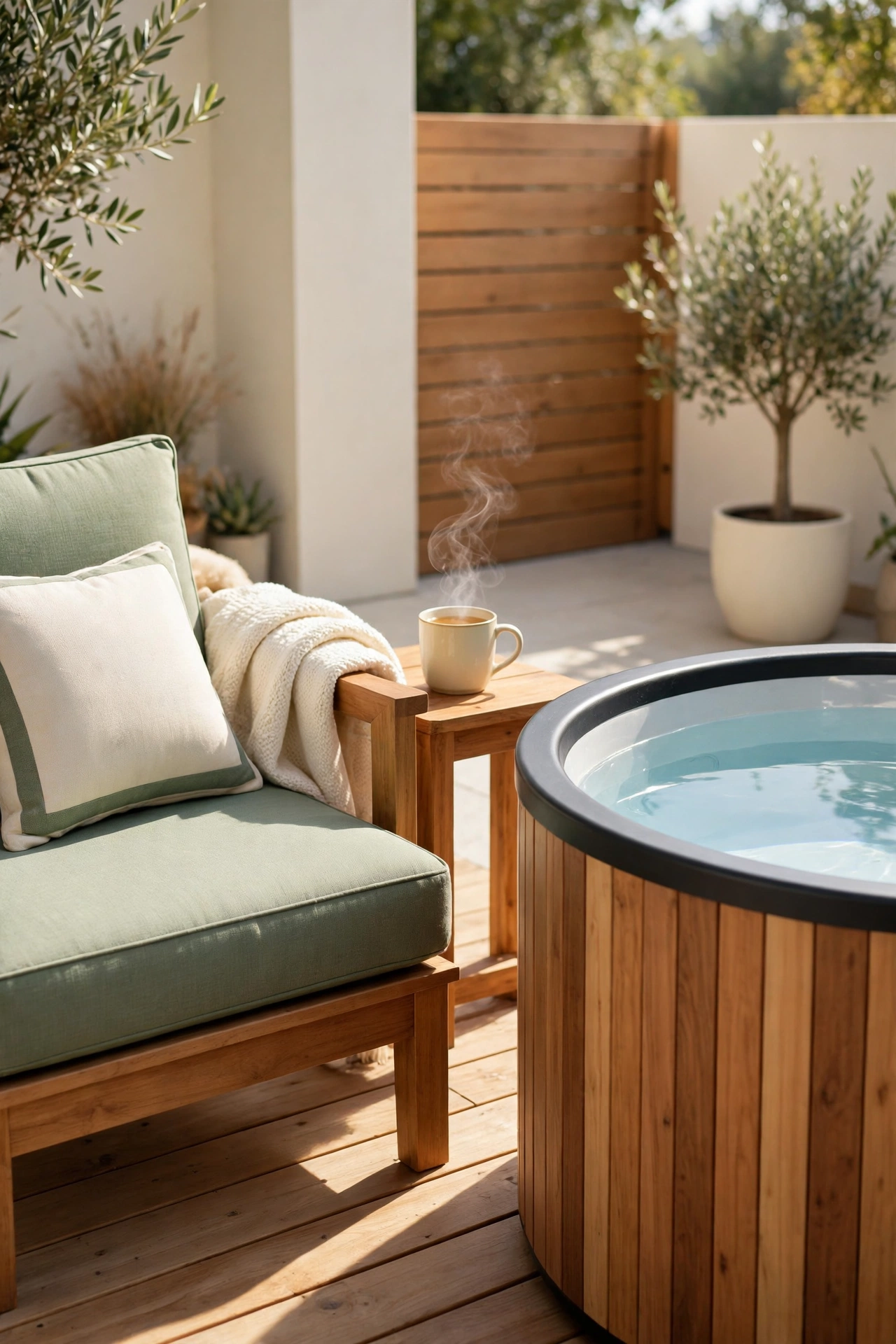
After a cold plunge, your body needs a few quiet minutes to warm up and settle. A recovery lounge setup with a comfortable chair, a soft throw, and a side table for warm tea gives you a place to do exactly that. Position the chair in a sunny spot near the tub so you can soak up warmth while your breathing returns to normal.
Choose outdoor furniture with thick, weatherproof cushions in calming colors like sage, cream, or soft blue. Some wellness routines alternate a cold plunge with a sauna session, and a lounge chair is the perfect resting spot between rounds. Keep a small timer on the side table so you can track your recovery time without checking your phone.
Conclusion
A backyard cold plunge pool does not need to be large or expensive to change the way your mornings feel. From a simple stock tank in a garden corner to a sunken pool with a chiller and a pergola, every idea here starts with the same promise: clear cold water, a quiet corner, and a few minutes that belong entirely to you.
Pick the setup that fits your yard and your budget, and start with the basics: a tub, a level surface, and a plan for drainage. Add privacy, shade, and a warm towel station as your routine grows. For a calmer garden to surround your new ritual, these backyard meditation garden ideas will help you shape a peaceful outdoor space that supports the whole wellness routine.
Frequently Asked Questions About Backyard Cold Plunge Pool Ideas for Wellness Retreats
How cold should the water be in a backyard cold plunge pool?
Most people aim for water between 50 and 59 degrees Fahrenheit, which feels very cold without being unsafe for short sessions. Beginners should start warmer, around 60 to 65 degrees, and lower the temperature gradually over several weeks. A simple floating thermometer helps you track the water temperature before every session.
How long should I stay in a cold plunge?
Start with 30 seconds to one minute and build up slowly to two or three minutes as your body adapts. Longer is not always better, and most of the benefits come from short, consistent sessions. Step out right away if you feel numbness, dizziness, or sharp discomfort, and warm up slowly afterward.
How often should I change the water in a plunge tub?
With a filter and a cover, plunge water can stay clean for two to four weeks, depending on how often you use it. Without filtration, plan to change the water every few days, or after every heavy use. Rinsing off before each session and keeping the tub covered will keep the water clear for much longer.
Can I leave a cold plunge tub outside all year?
Yes, most plunge tubs are built for outdoor use, but you need to protect them in freezing weather. A chiller with a freeze guard, a well fitted cover, and insulated plumbing all help. In very cold climates, drain the tub and store removable parts indoors during the hardest winter weeks.
Is a cold plunge safe for everyone?
Cold plunging is not suitable for everyone, especially people with heart conditions, high blood pressure, or circulation problems. Pregnant people and children should avoid cold plunges unless a doctor says otherwise. Always check with your doctor before starting a cold plunge routine, and never plunge alone if you have a health condition.

Hi, I’m Emily! I turn messy corners into cozy, organized spots. DreamNestDecor is where I share simple, practical home ideas — decor, organization, and small-space solutions that work in real life, not just in photos. Every idea here is carefully researched before it’s shared.