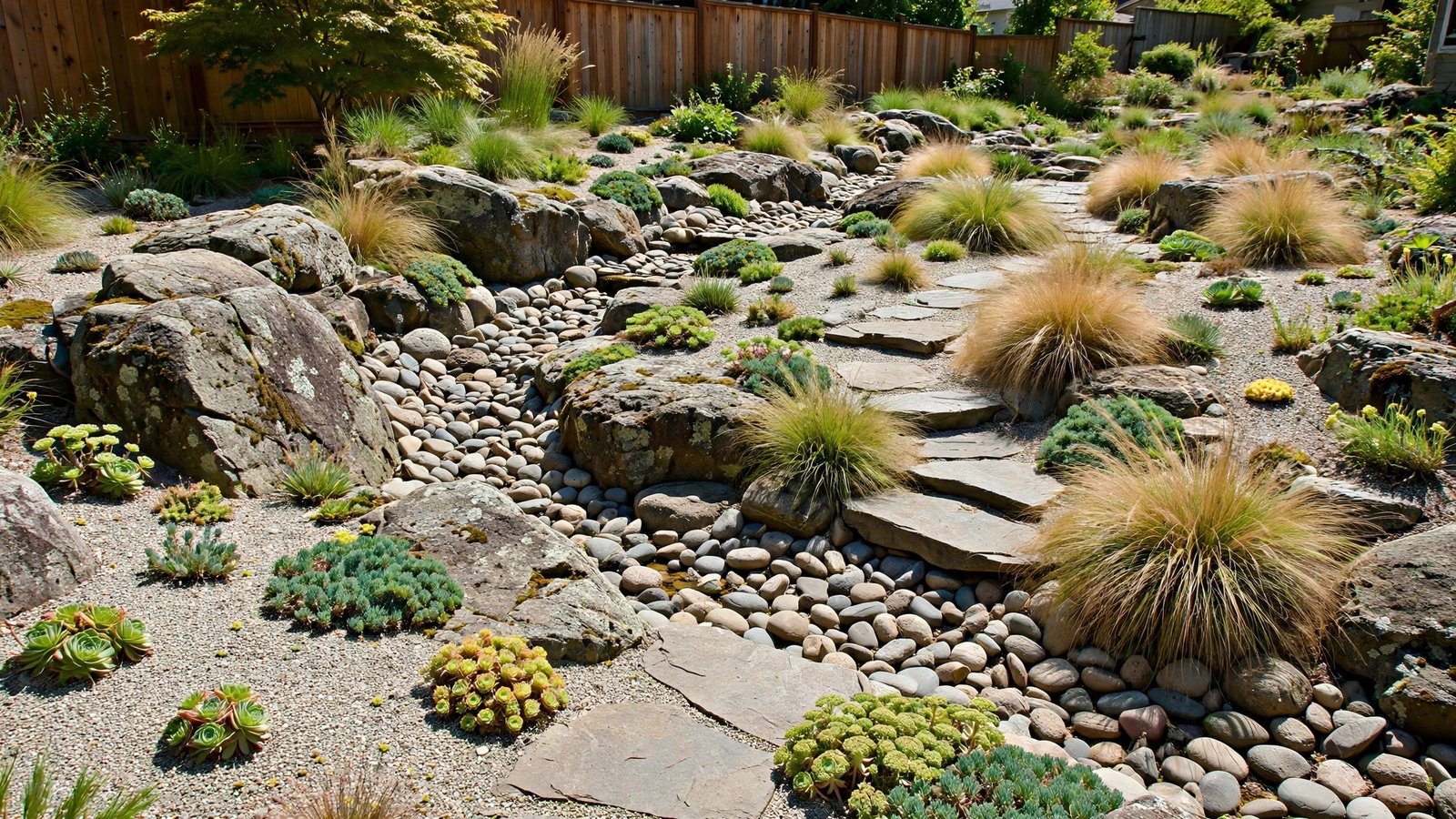
There is a special kind of beauty in a garden built from stone. Picture a quiet corner of your yard where weathered boulders rise from drifts of gravel, tiny sedums spill over rock edges, and a dry creek of river stones winds between the beds. It never wilts in a heatwave, it never needs mowing, and it looks more sculptural with every passing year.
Rock gardens are wonderfully forgiving for beginners because stone does most of the design work for you. These 14 rock garden ideas will help you add texture, shape, and lasting character to your outdoor landscape, one stone at a time.
1. Anchor the Design With a Boulder
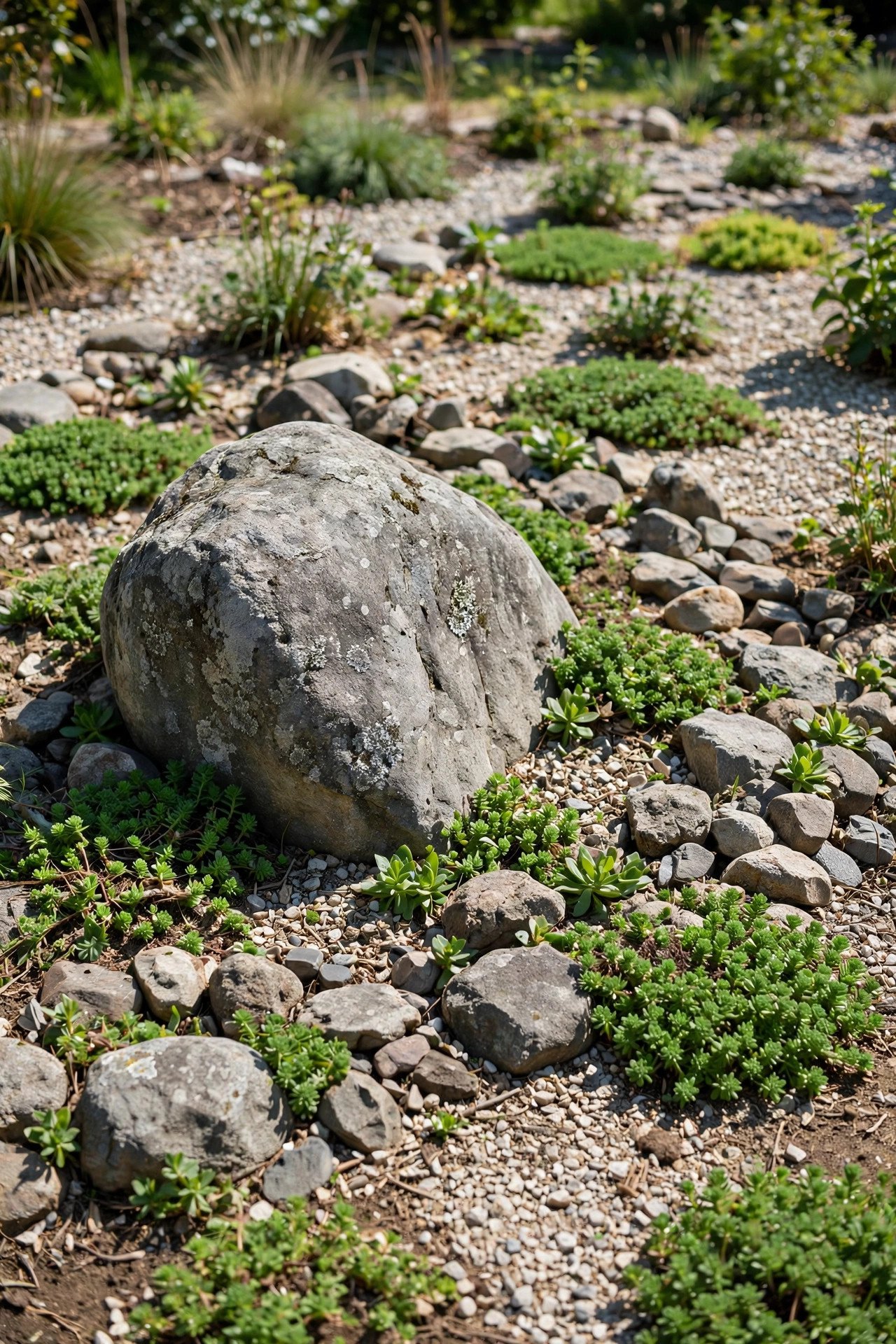
A single large boulder can carry a whole garden bed the way a sofa anchors a living room. Choose one or two substantial stones, set the largest slightly off-center, and surround the base with smaller rocks and low groundcover. The composition instantly looks deliberate and permanent.
Bury the bottom third of each boulder so it looks like it has rested there for centuries rather than arriving on a truck. Tuck drought-tough sedums and creeping thyme around the base to soften the meeting of stone and soil. One bold stone beats a dozen timid ones every time.
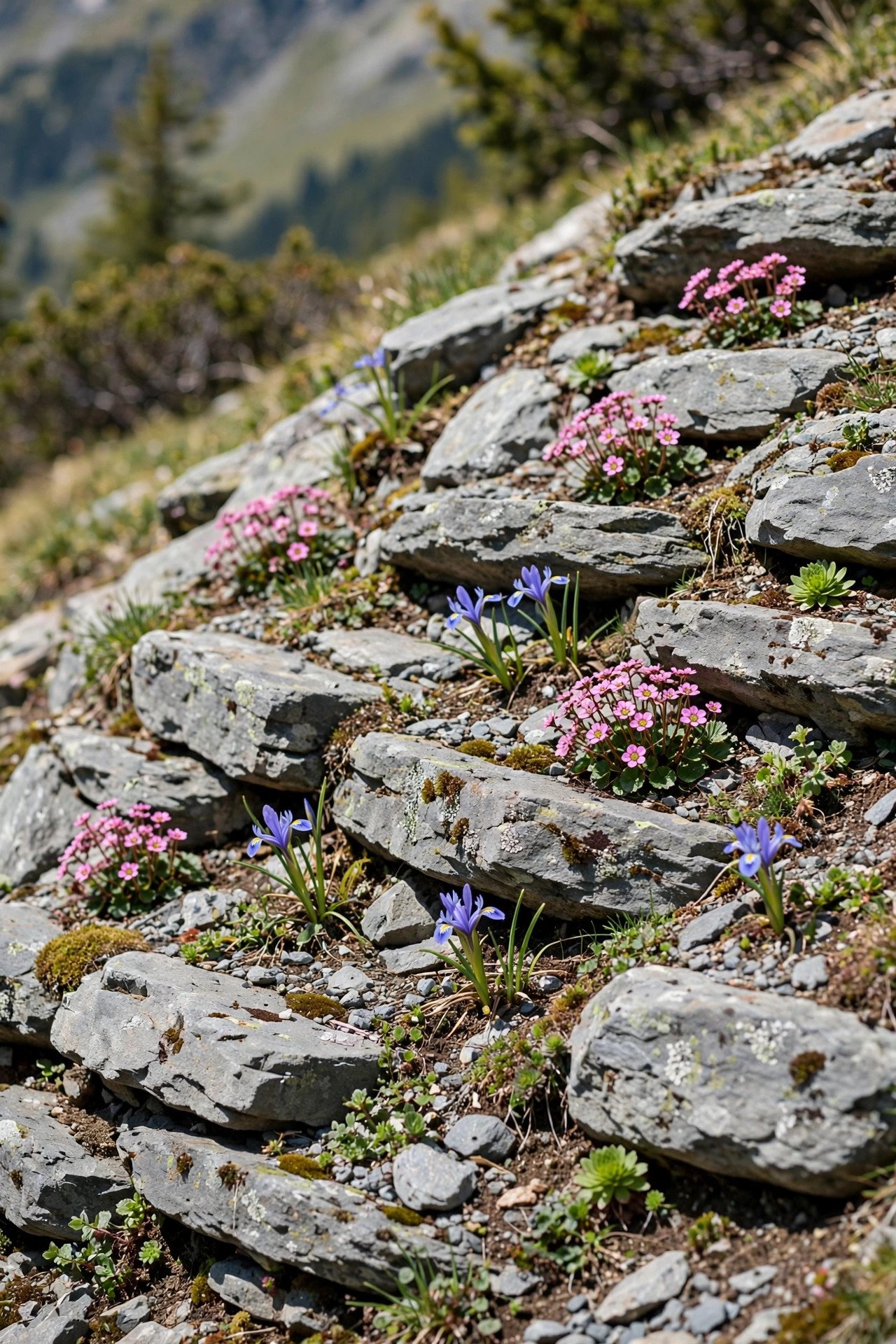
2. Build an Alpine Rock Garden
Alpine gardens borrow their look from mountain slopes, where tough little plants thrive in rocky, fast-draining soil. Layer stones of different sizes to create height, then nestle alpine beauties like saxifrage, dwarf iris, and cushion pinks into the pockets. Good drainage matters more than rich soil here.
Plant in odd-numbered groups for a natural, flowing feel, and let the plants slowly knit the stones together. In spring the whole slope erupts in jewel-toned blooms that belie how little care they need. It is a mountain meadow scaled down to your backyard.
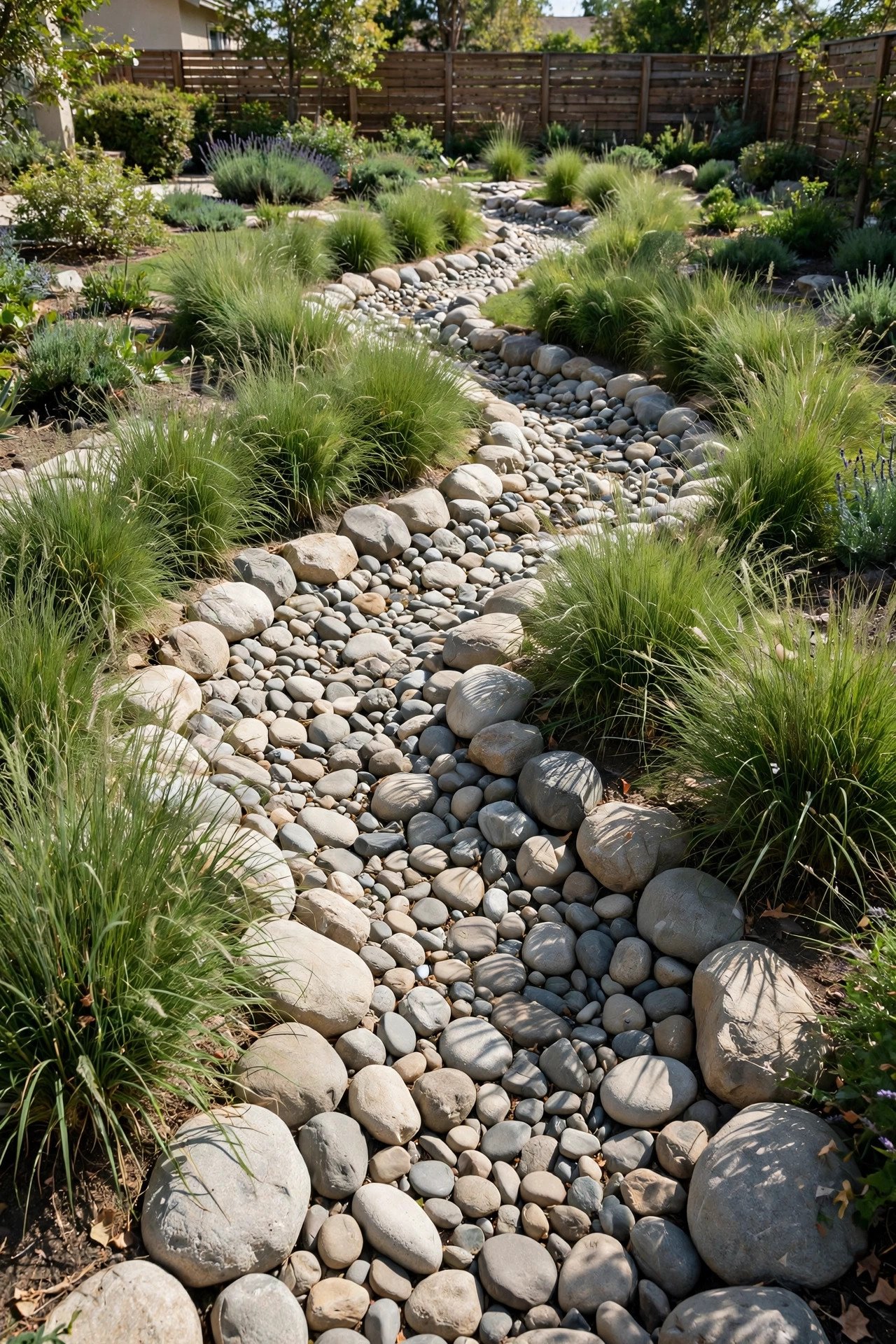
3. Carve a Dry Creek Bed
A dry creek bed is a river that only flows when it rains, and it is beautiful in both states. Dig a shallow winding trench, line it with landscape fabric, and fill it with smooth river rocks in graduating sizes. The curves guide the eye through the garden like water would.
During storms the creek does real work, channeling runoff away from paths and foundations. Edge the banks with ornamental grasses and a few feature boulders for a natural look. Even bone dry, it reads as thoughtful landscape art.
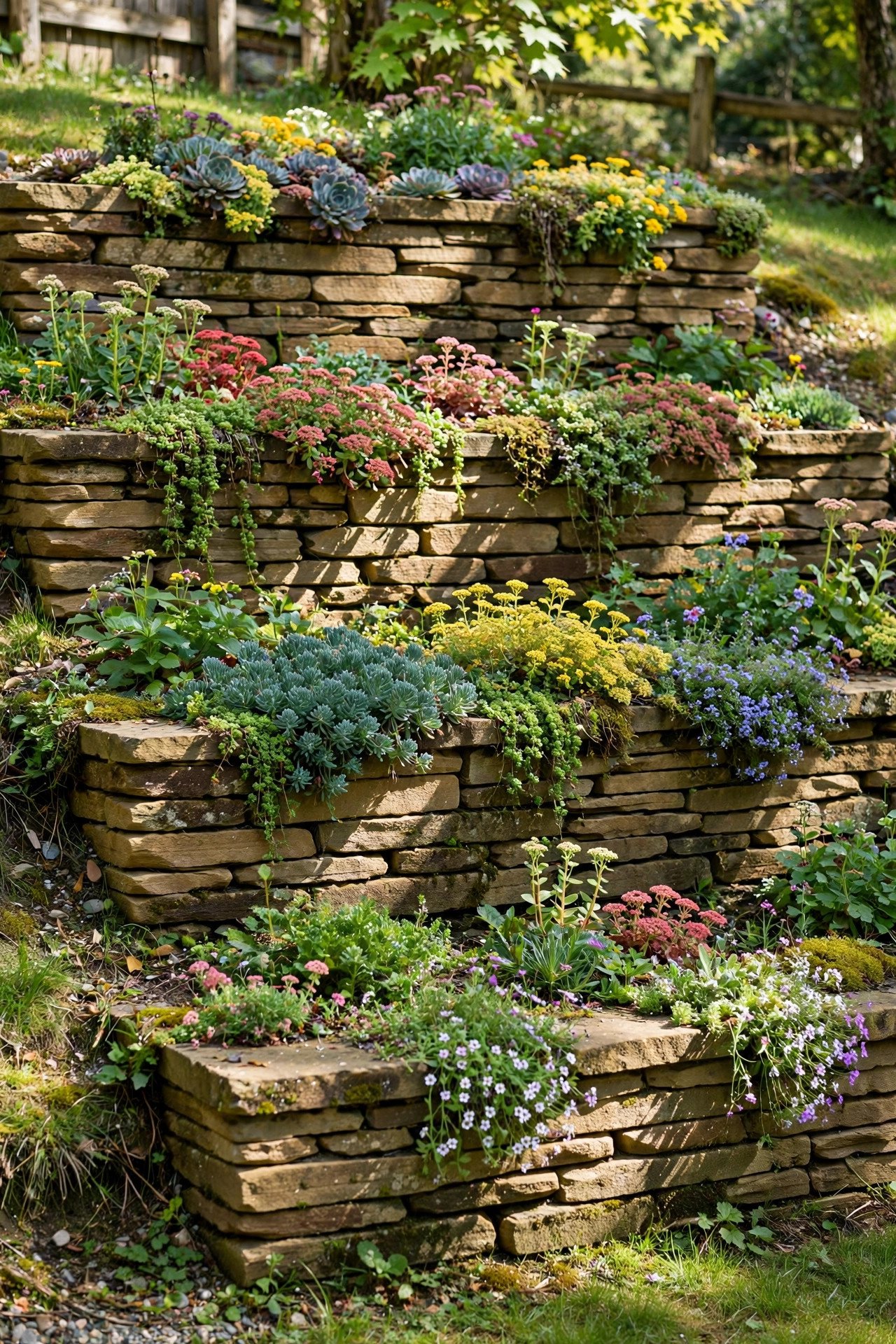
4. Stack Terraced Rock Levels
On a gentle slope, stacked stone terraces turn an awkward hill into a showcase. Use flat, stable stones to build low walls, fill behind them with gritty soil, and plant each level with something different. The steps add height, rhythm, and perfect planting pockets.
Build on a slight backward lean so each wall stays stable for years, and vary the terrace heights for a natural look. Cascading sedums spilling over the wall faces will soften the stonework beautifully. A sloped yard becomes an asset instead of a chore.
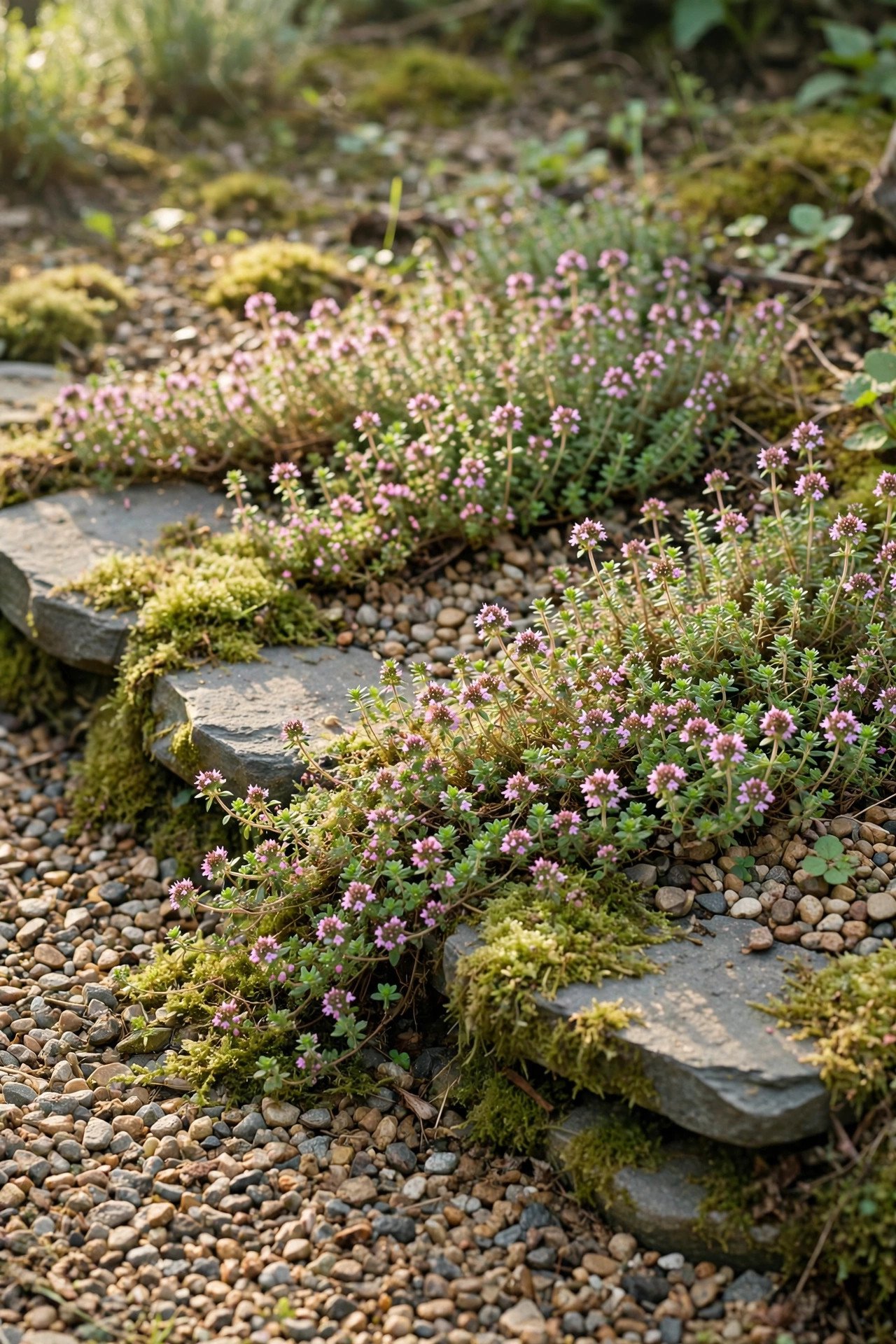
5. Pair Gravel With Creeping Groundcover
Some of the prettiest rock gardens are also the simplest: a deep layer of gravel planted with creeping thyme, moss, and low sedums. The plants spill over the stones and knit everything into a soft, textured carpet that invites bare feet in summer.
Lay a weed barrier beneath the gravel to keep maintenance near zero, then let the groundcovers do the decorating. When thyme blooms, the whole bed hums with bees. This combination suits fans of rental-friendly decor hacks because it is cheap, fast, and easy to refresh.
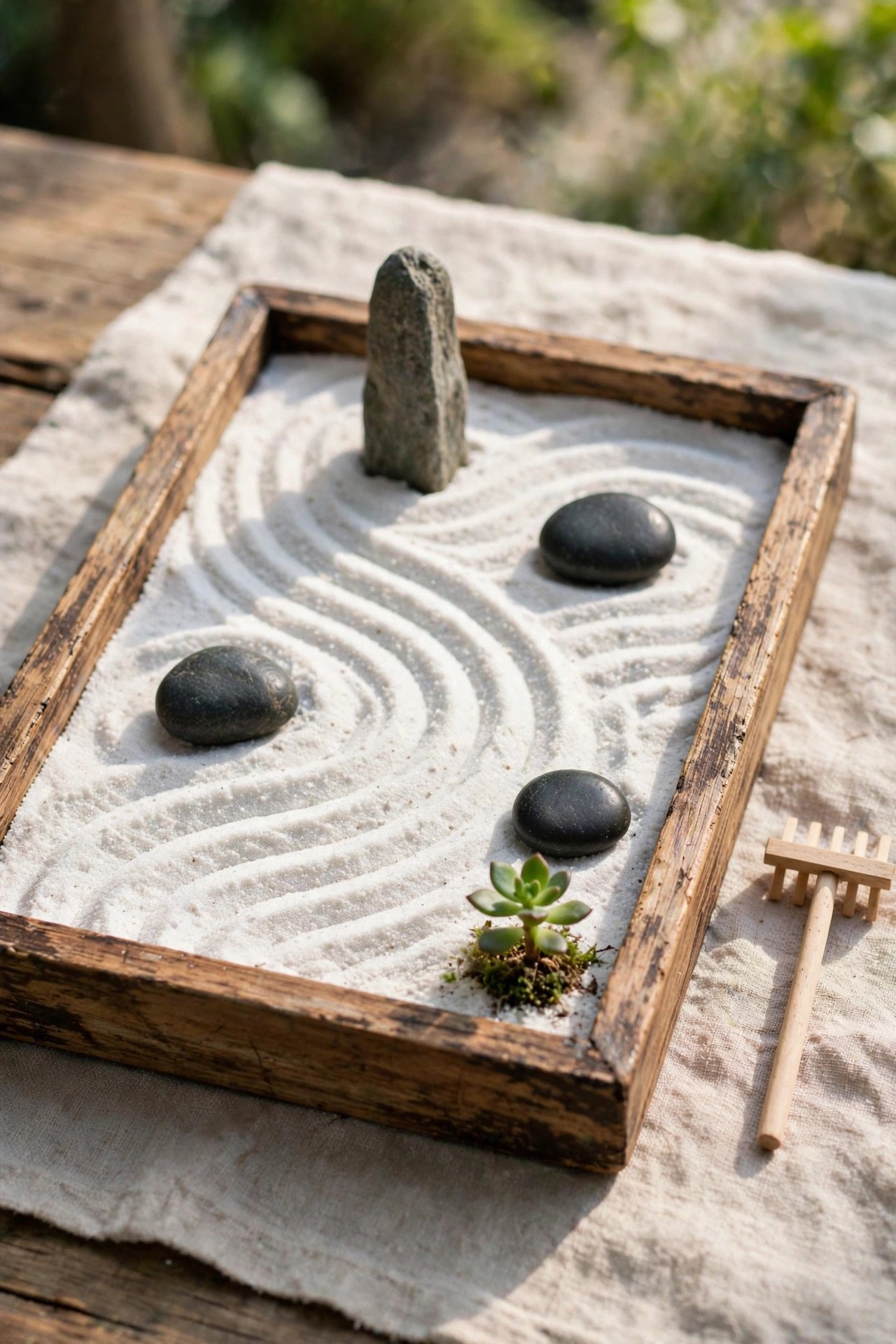
6. Make a Tiny Zen Garden
You do not need a big yard to enjoy rock gardening, because a tiny zen garden brings the same calm to a tabletop or patio corner. Fill a shallow tray with fine sand, arrange a few smooth pebbles and one upright stone, and rake gentle waves around them. The ritual of raking is wonderfully soothing.
Add a small succulent or a miniature lantern for a finishing touch, and keep the sand smooth with a tiny wooden rake. This pocket of stillness works beautifully beside a reading chair. Big calm really does come in small trays.
7. Plant a Container Rock Garden
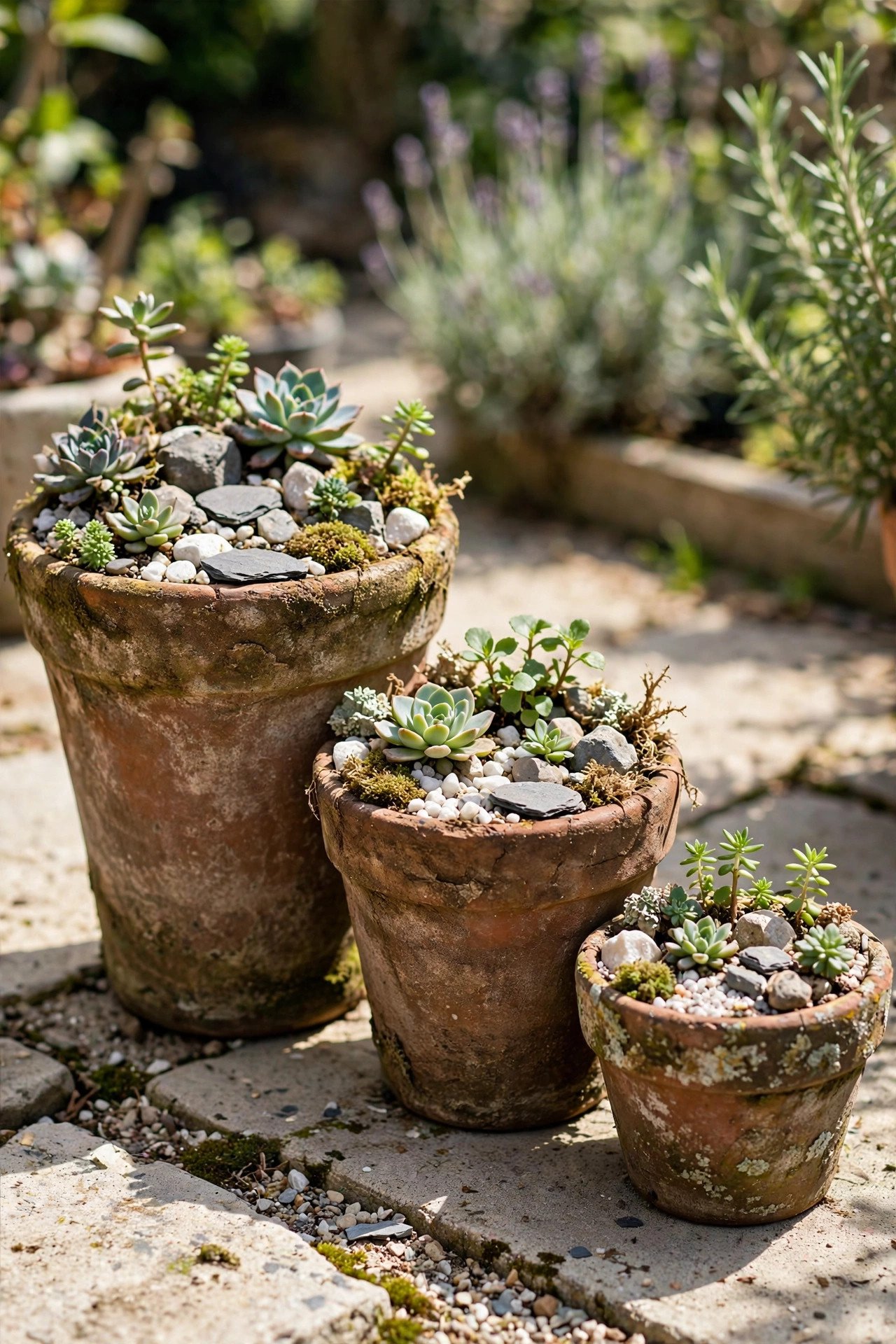
Short on ground space is no obstacle when pretty containers can host portable rock gardens. Choose pots with drainage holes, layer pebbles at the bottom, and plant a mix of succulents and small alpine plants among decorative stones. Each pot becomes a tiny landscape.
Group three containers of different heights for a collected look on patios and balconies. Mixing succulent shapes and colors keeps the display lively all year. If you love small space boho solutions, weathered clay pots and trailing sedums fit the vibe perfectly.
8. Tuck In an Alpine Succulent Patch
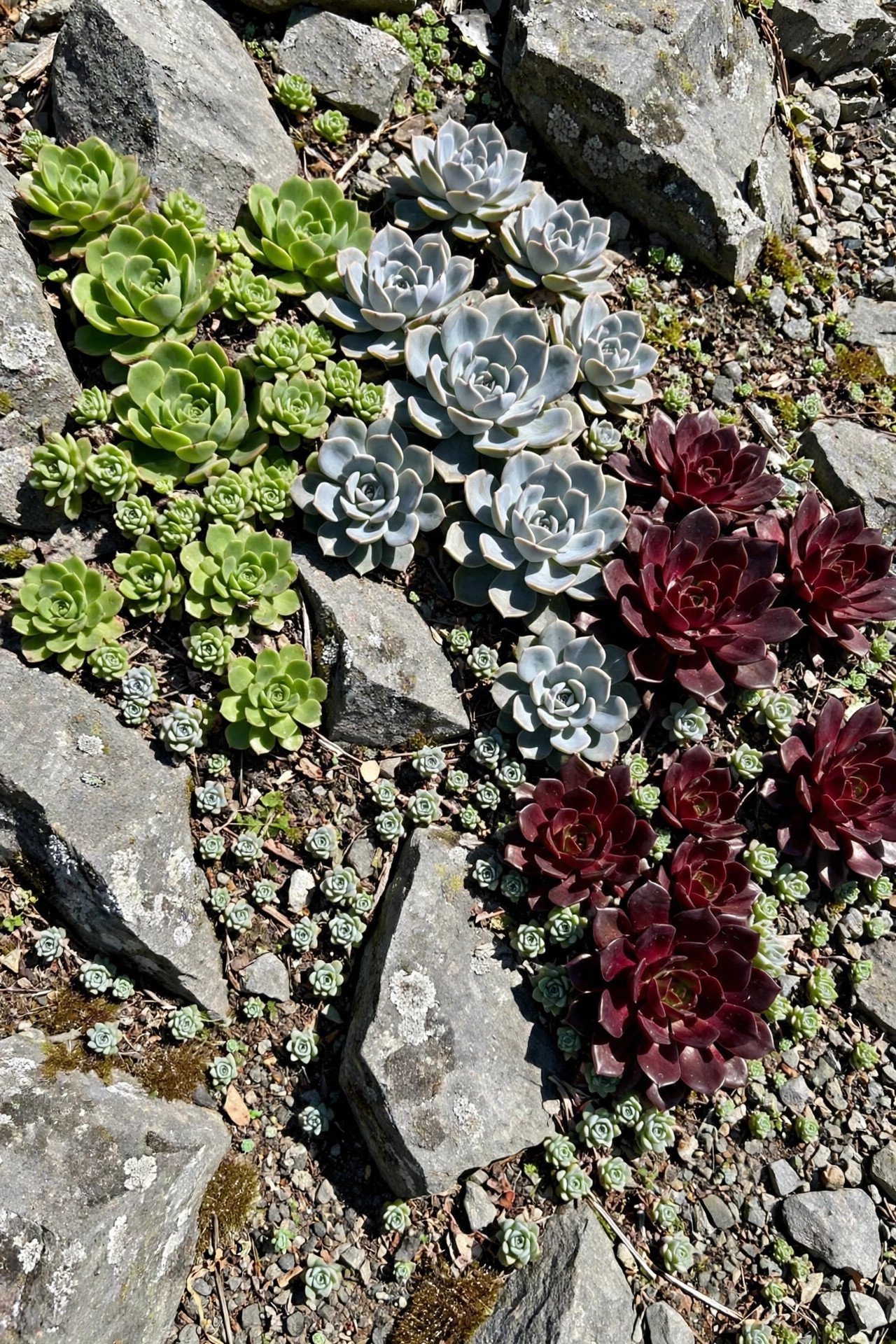
Hens-and-chicks, stonecrops, and other hardy succulents were made for life between rocks. Nestle their rosettes into crevices where the soil drains sharply, and they will reward you with sculptural forms in shades of green, blue, and burgundy. Full sun keeps their colors vivid.
These plants multiply on their own, filling gaps with baby rosettes each season. A patch like this needs water only in true drought and never needs feeding. It is the closest thing to a plant-it-and-forget-it garden bed.
9. Lay a Stepping Stone Path
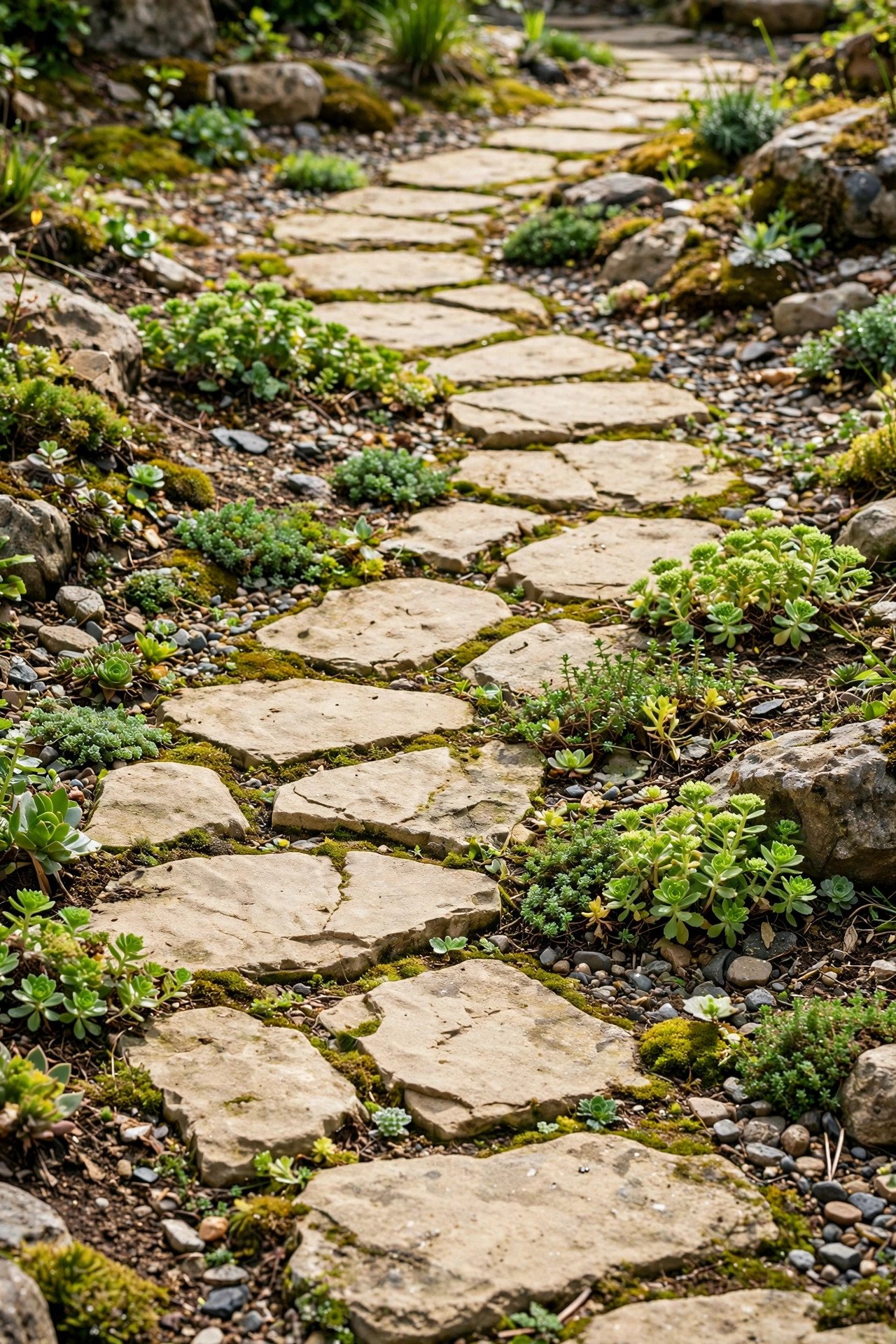
Flat stones laid as a path give your rock garden both purpose and charm. Space sturdy, level stones at a comfortable stride, then surround them with gravel or low groundcover that softens the edges. The path invites visitors to wander slowly and look closely.
Vary the size and shape of the stones for an organic feel, and let moss or thyme creep between them over time. A path like this turns a planting bed into a journey. Every garden feels bigger when you can walk through it.
10. Mix Stone Textures and Colors
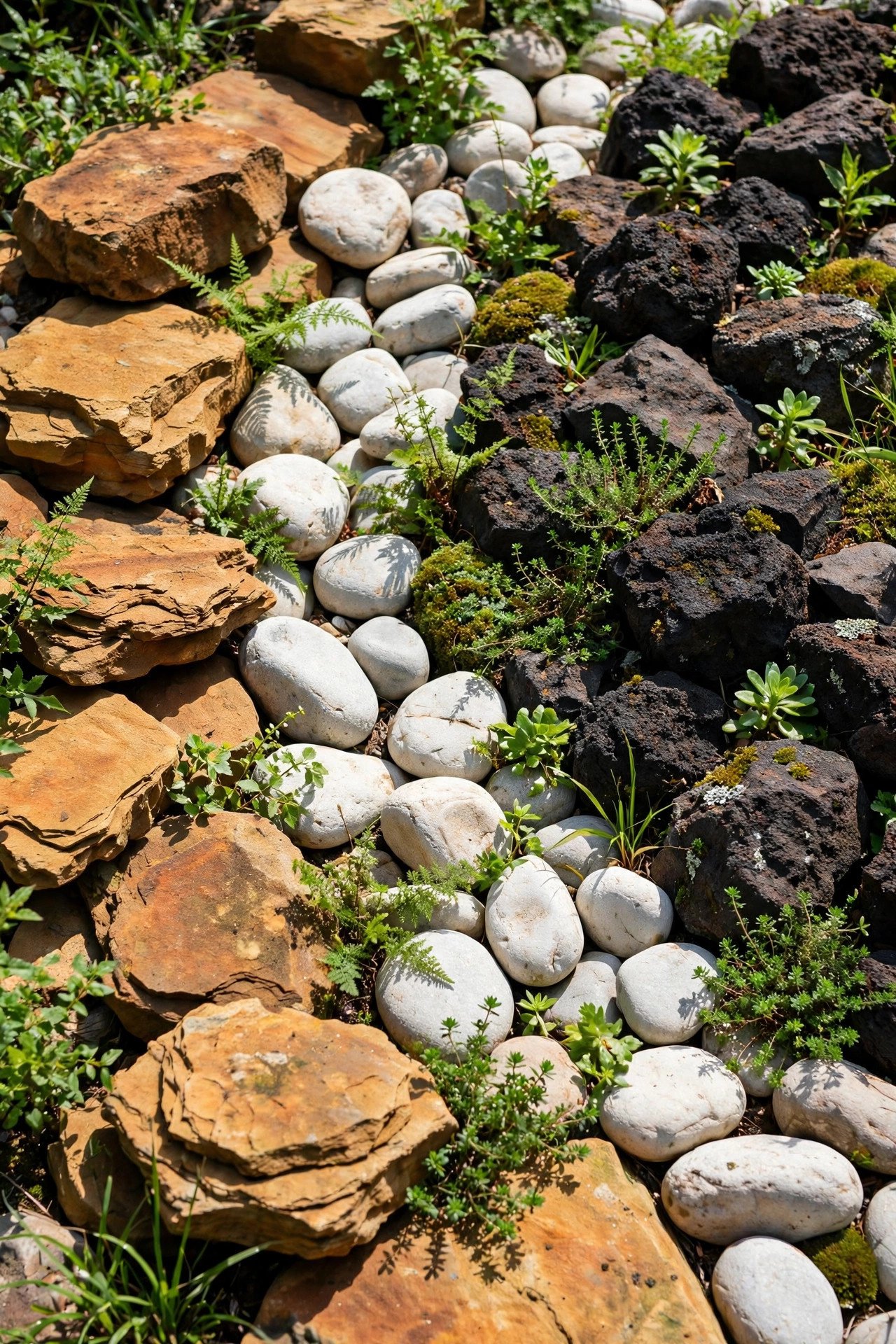
A rock garden becomes art when you play deliberately with contrast. Set smooth river rocks against rough quarried stone, and pale limestone beside dark basalt. The differences in texture and tone create depth that a single stone type never achieves.
Gather stones from local sources for authentic variety, and arrange them so the contrasts highlight each other. Plants with fine foliage look especially good against bold, chunky rock, a trick borrowed from romantic garden styling ideas where soft planting meets strong structure. Think of the stones as your permanent palette and the plants as seasonal accents.
11. Nestle a Water Feature Among Rocks
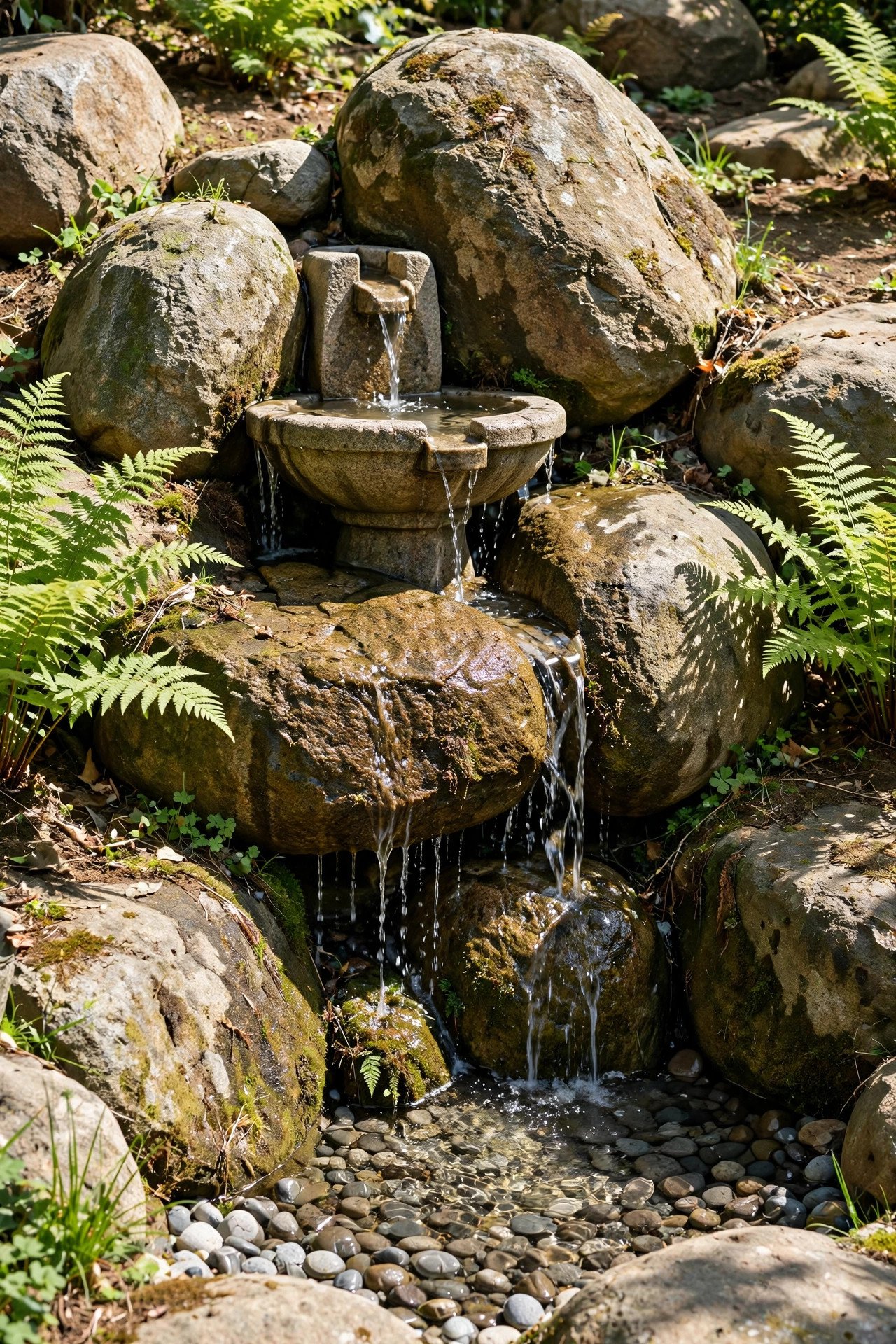
A small trickling fountain tucked between boulders adds sound and movement to the stillness of stone. Choose a self-contained unit, position it so water sheets over or around the rocks, and keep the pump accessible for easy cleaning. The gentle murmur transforms the whole corner.
A solar-powered fountain needs no wiring and runs happily in a sunny rock bed. Birds will visit to drink and bathe, adding life to the scene. Stone and water are old friends, and they always look right together.
12. Design a Desert Rock Garden
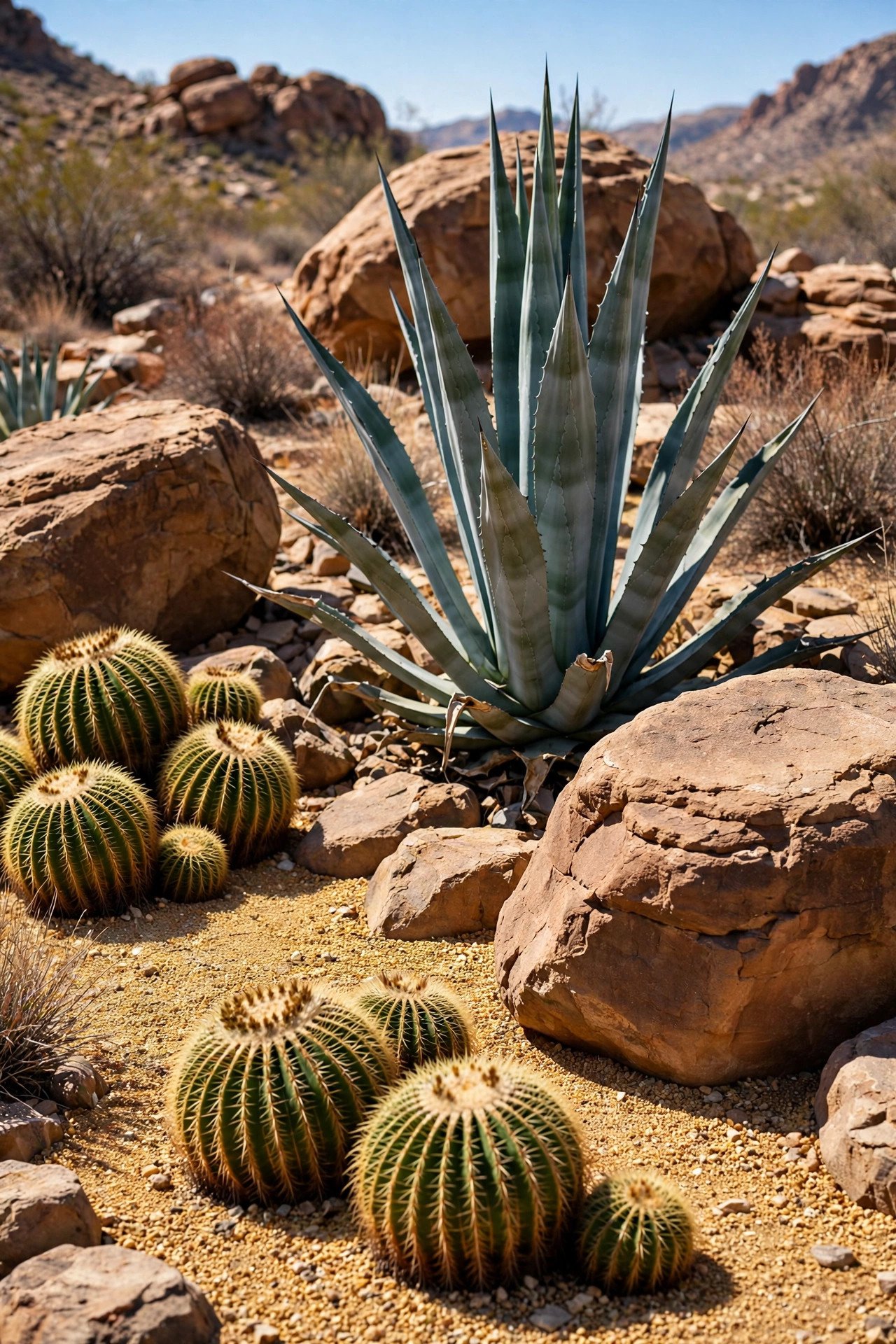
For a bold, low-water look, go full desert with coarse gravel, sculptural cacti, and sun-baked boulders. Barrel cacti, agaves, and hardy grasses arranged with confidence create a southwestern scene that thrives on neglect. Large stones anchor the composition.
This style pairs beautifully with a Mediterranean porch nearby, where terracotta and warm wood echo the desert palette. Cacti need almost no water once established, so the garden stays handsome through the driest summers.
13. Edge Beds With a Wild Rock Border
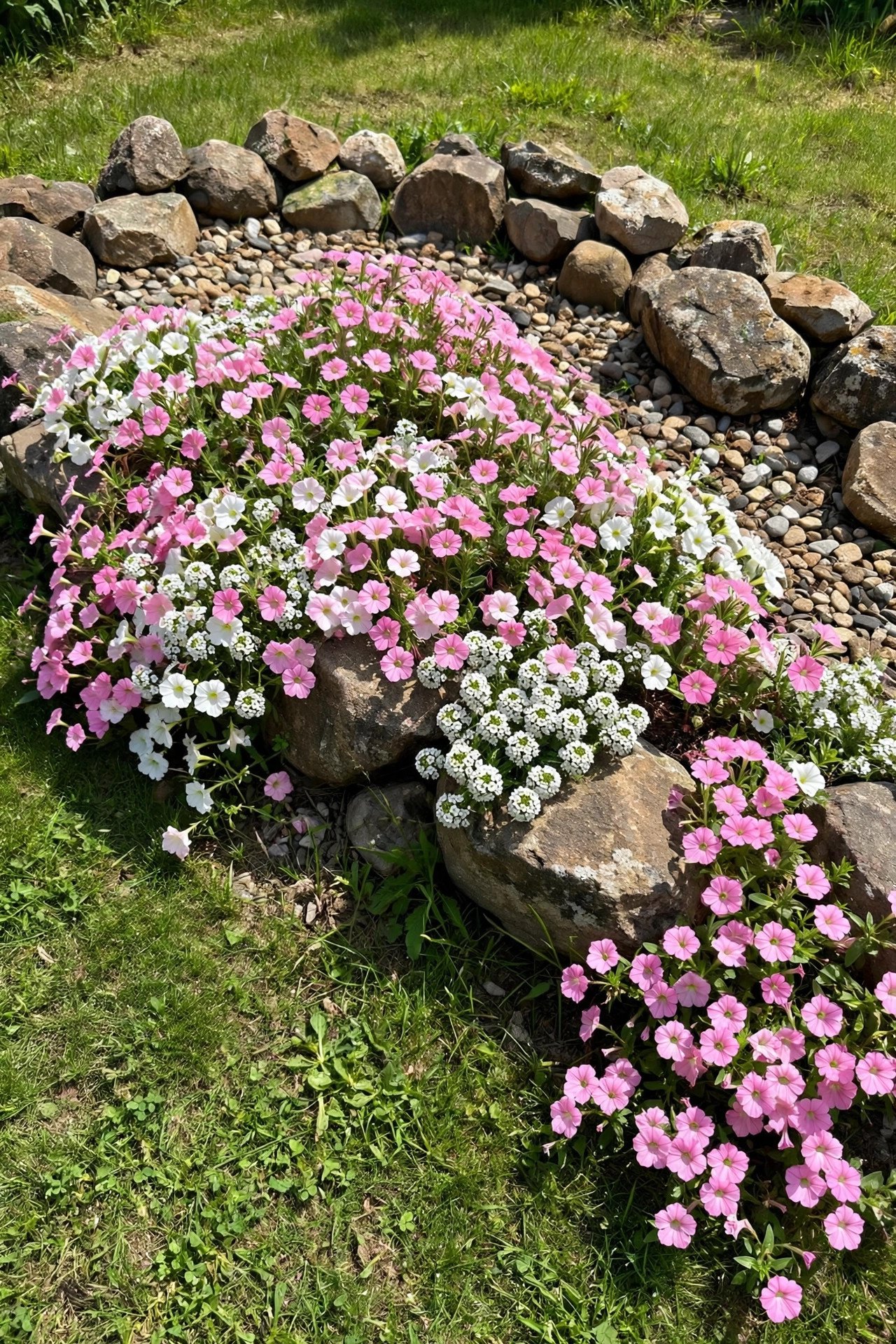
Forget rigid edging and line your beds with a loose, flowing border of natural rocks instead. Arrange stones of varying sizes in an organic curve, fill the gaps with pebbles, and let plants spill over the edge. The soft boundary melts the bed into the lawn gracefully.
This edging costs little, never rots, and looks better every year as plants weave through it. Choose rocks with character, because each one shows. A wild rock border is the easiest upgrade a flower bed can get.
14. Build a Rockery Retaining Wall
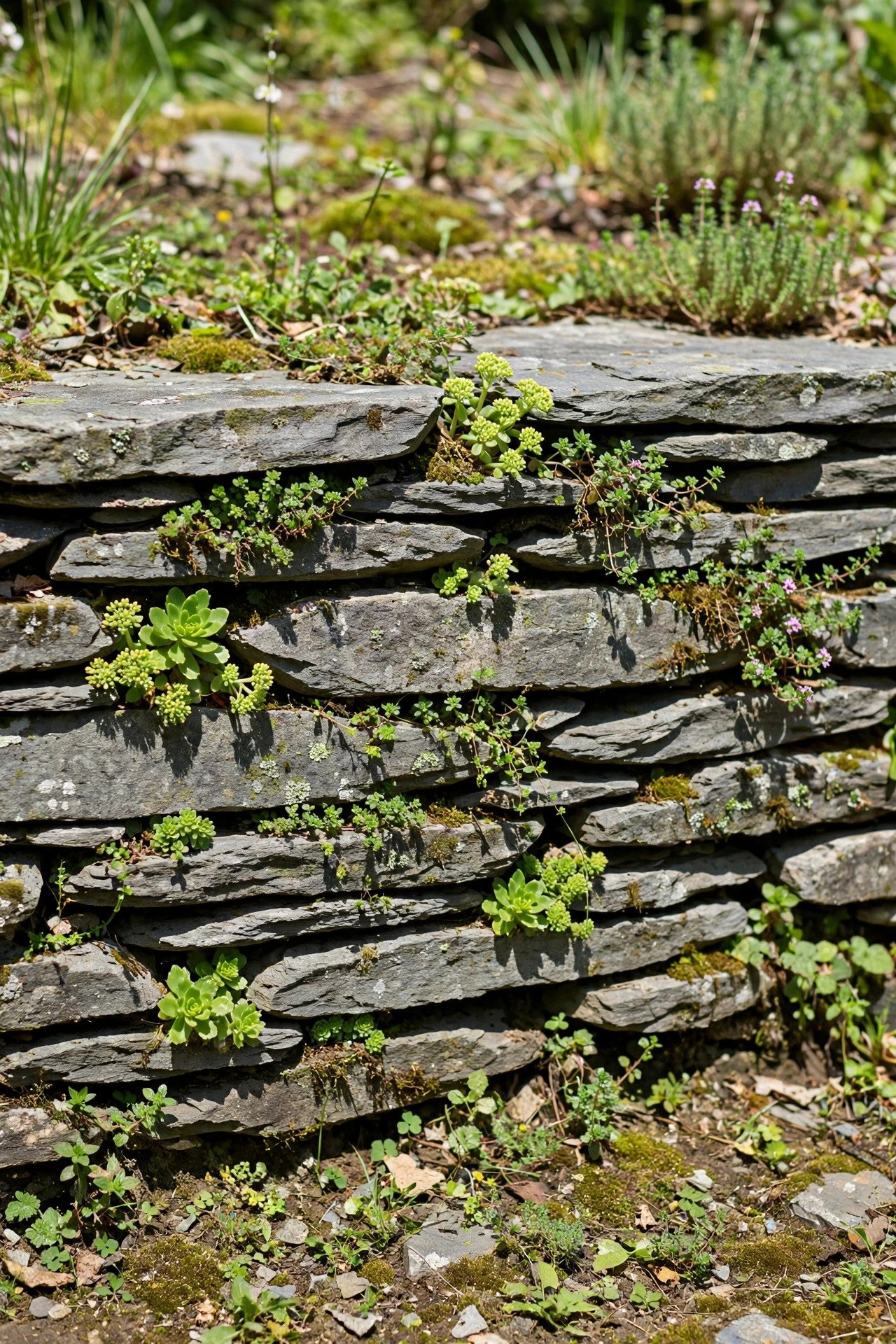
A low dry-stacked stone wall does double duty as structure and planter. Stack flat stones with small gaps, fill the pockets with gritty soil, and tuck in sedums, creeping thyme, and small herbs. The wall becomes a vertical garden that smells wonderful in summer.
Choose plants that tolerate shallow soil and sharp drainage, and the wall will practically plant itself over time. This idea borrows charm from European garden with antique accents, especially when the stonework looks aged and softened by moss. Structure has never been this pretty.
Conclusion
A rock garden proves that the toughest materials make the most graceful landscapes. Stone never wilts, never needs feeding, and grows more beautiful as plants soften its edges year after year. With the right rocks and the right tough plants, you get a garden that looks sculpted yet asks for almost nothing.
Start with one bed, one border, or even one beautiful boulder, and let the design grow from there. Before long you will have a textured outdoor landscape that holds its beauty through every season and every weather.
Frequently Asked Questions About Rock Garden Ideas for a Textured Outdoor Landscape
What is the best base for a rock garden?
A layer of gravel over landscape fabric works best for most rock gardens. It drains sharply, suppresses weeds, and gives the design a clean, finished look. Top it with decorative stones and tuck plants into pockets of gritty soil.
Which plants grow well in rock gardens?
Choose plants that love sharp drainage and full sun: sedums, hens-and-chicks, creeping thyme, saxifrage, dwarf iris, and alpine pinks. Hardy succulents and ornamental grasses also thrive. Avoid moisture-loving plants that will rot in the gritty soil.
How do I stop weeds in a rock garden?
Lay quality landscape fabric under your gravel and keep a deep enough stone layer to block light. Pull any weeds that appear while they are small, before roots establish. Dense groundcover plantings will eventually shade out most weed seeds on their own.
Can I build a rock garden on a slope?
Yes, slopes are ideal for rock gardens because drainage is naturally excellent. Use larger boulders at the base for stability and terrace the slope with stacked stones. Plant cascading groundcovers that trail down and hold the soil in place.
How much does a rock garden cost to build?
It can be very affordable if you source local stone and start small. A bagged gravel bed with a few boulders and hardy plants may cost less than a weekend of takeout. Larger boulder deliveries and stone walls raise the budget, so phase the project over seasons.

Hi, I’m Emily! I turn messy corners into cozy, organized spots. DreamNestDecor is where I share simple, practical home ideas — decor, organization, and small-space solutions that work in real life, not just in photos. Every idea here is carefully researched before it’s shared.