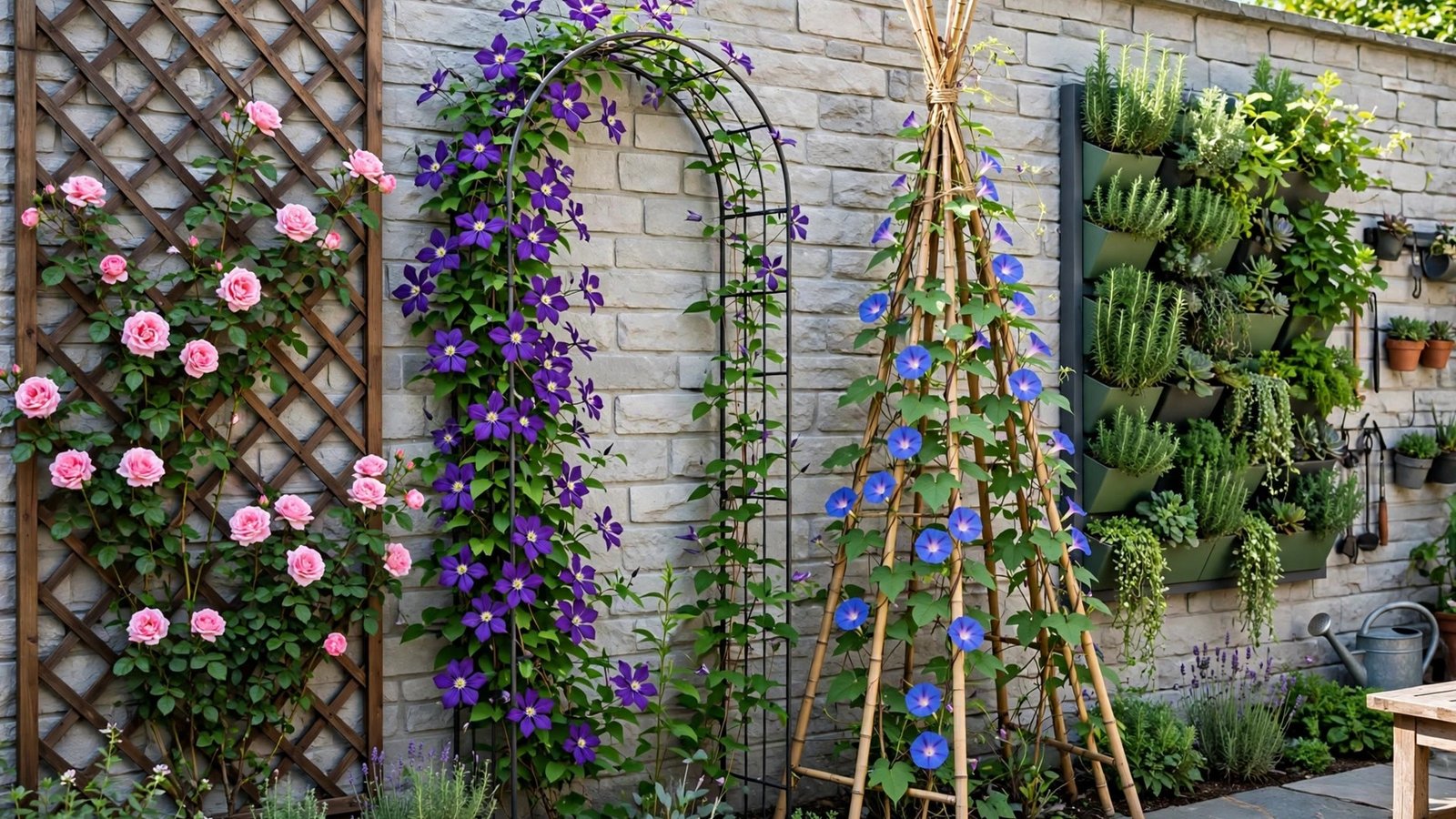
When garden space runs short, the smartest direction to grow is up. A trellis turns a plain wall, fence, or corner into a living tower of flowers, foliage, and even fresh vegetables. Climbing plants bring height, privacy, and romance to spots that flat beds never could.
From classic wooden lattice to modern wire designs, the right trellis matches your style while giving your favorite climbers the support they need. These 13 climbing plant trellis ideas will help you turn every vertical surface in your backyard garden into something beautiful.
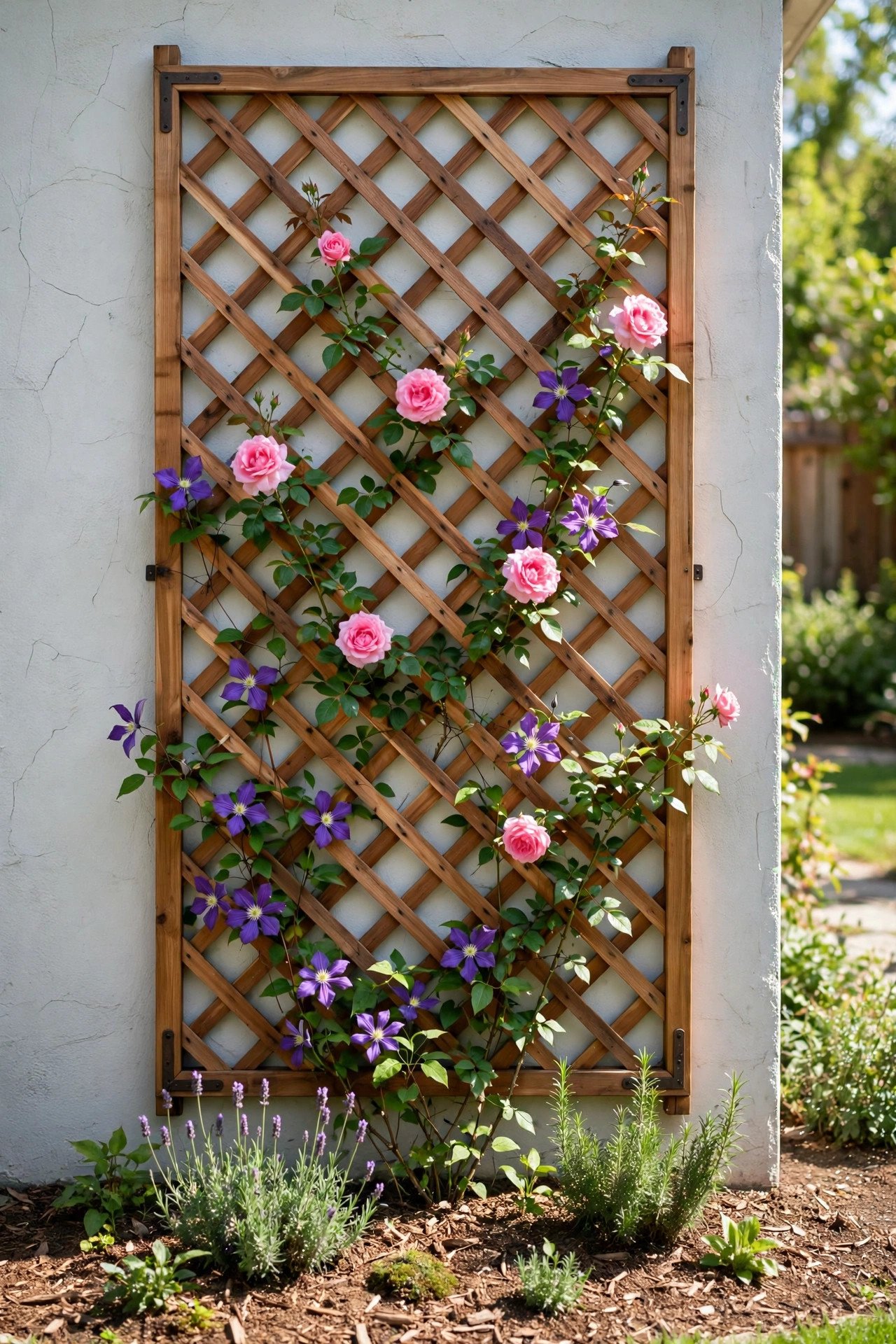
1. Timeless Wooden Lattice Trellis
A classic wooden lattice trellis never goes out of style. The crisscross design gives climbing roses, clematis, and grapevines plenty of grip while letting sunlight and air flow through freely. Choose untreated cedar or redwood for natural resistance to decay.
Mount the lattice on a wall or fence for a polished, finished look. Paint it a cheerful color for extra personality, or leave it natural for rustic charm. Regular pruning keeps the display lush without overwhelming the structure.
2. Romantic Metal Garden Arches
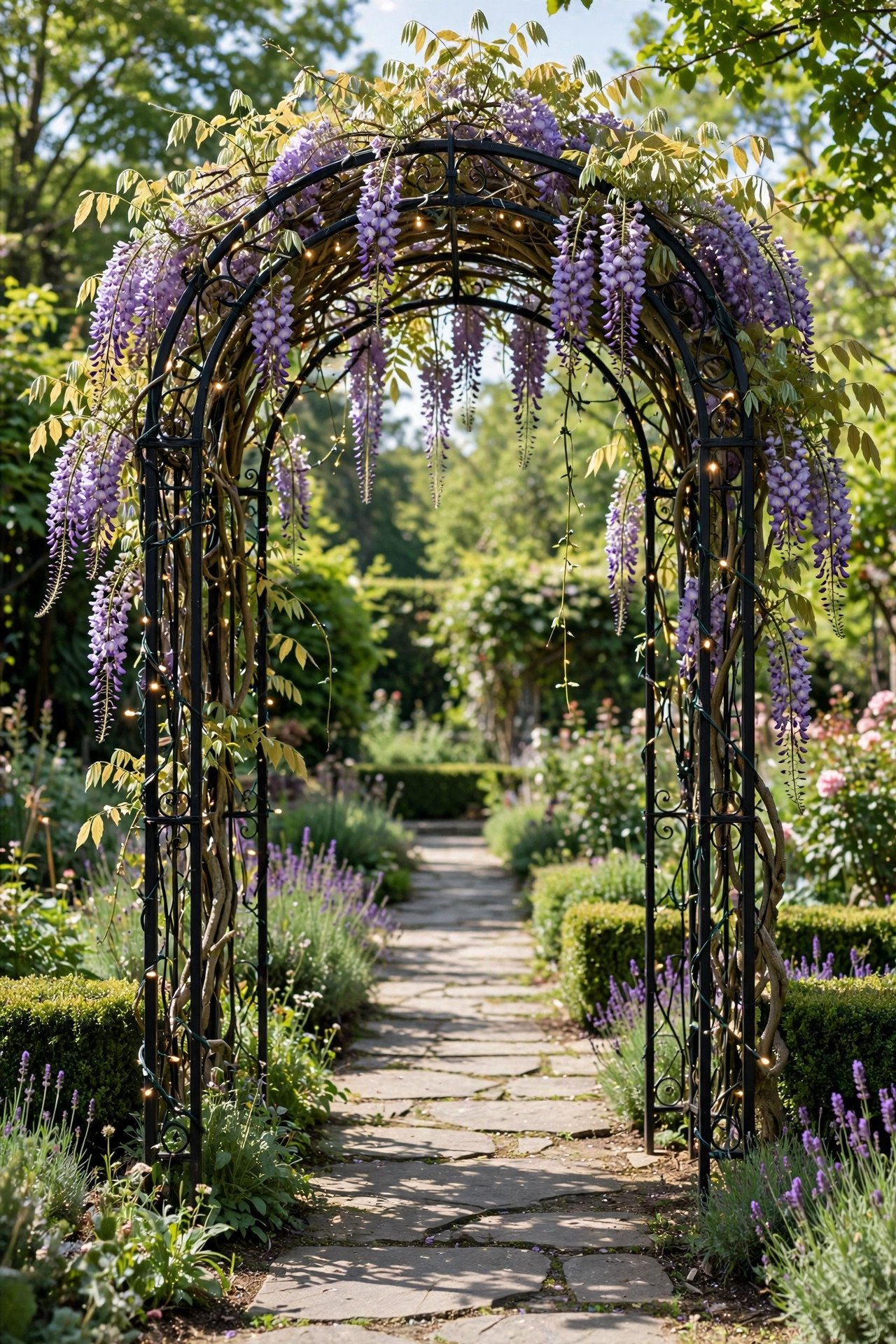
Metal arches turn a vertical garden into a romantic retreat. The elegant curves draw the eye upward and create a stunning focal point, even in the smallest garden. Wisteria, morning glories, and climbing hydrangeas twist beautifully around the frame.
Secure the base firmly so the arch stands strong through wind and storms. Add fairy lights for a magical evening glow. This structure brings the dreamy romance of classic garden styling ideas to any pathway or bed it frames.
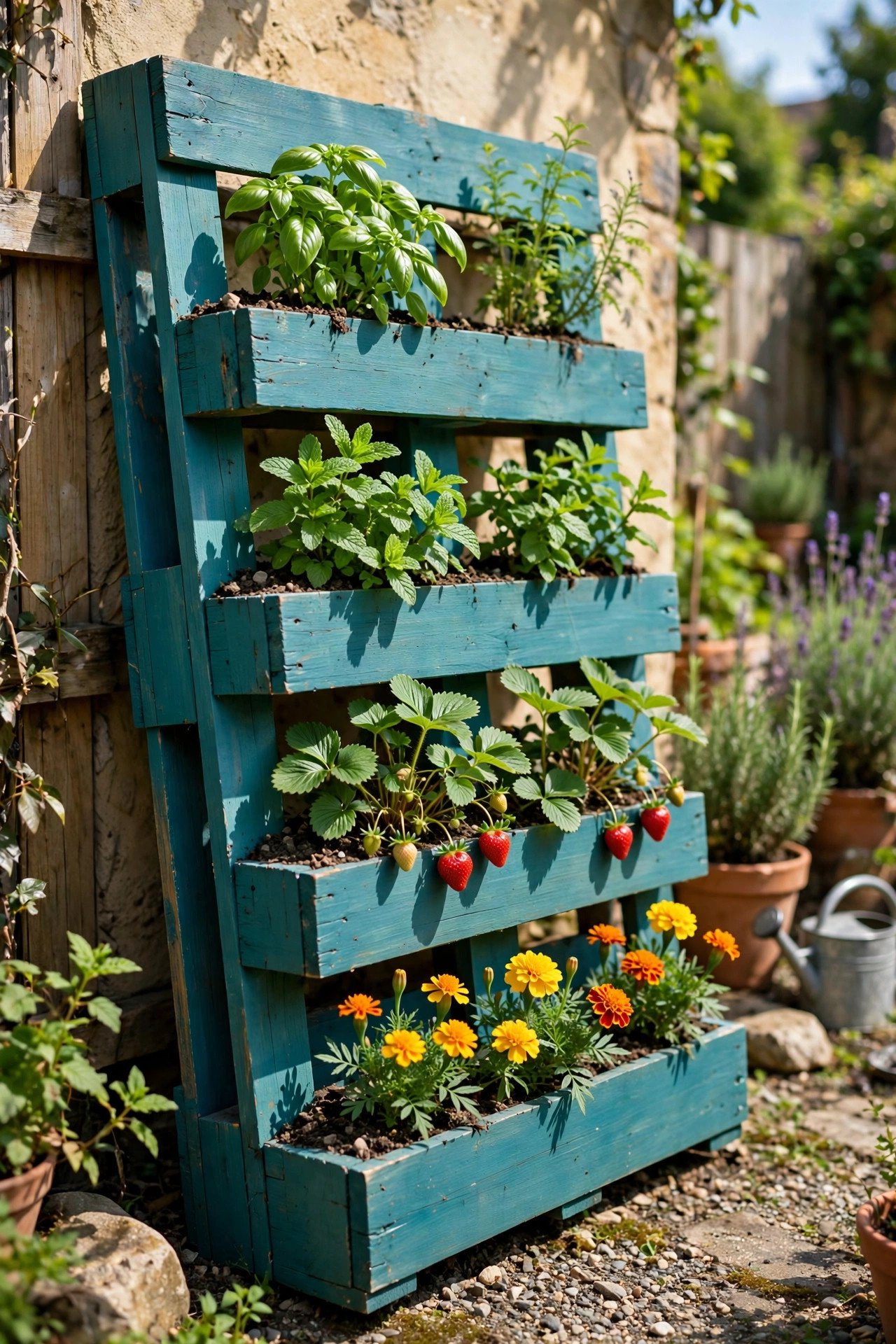
3. Upcycled Pallet Vertical Garden
A wooden pallet stood upright becomes a budget-friendly vertical garden full of character. Clean it, seal it against weather, fill the slats with soil, and tuck in herbs, strawberries, or small flowers. Lean it against a sunny wall and watch it come alive.
This project costs almost nothing and suits renters perfectly, fitting the spirit of rental-friendly decor hacks that improve a space without permanent changes. Paint the pallet a fun color for extra cheer. It is recycling at its most beautiful.
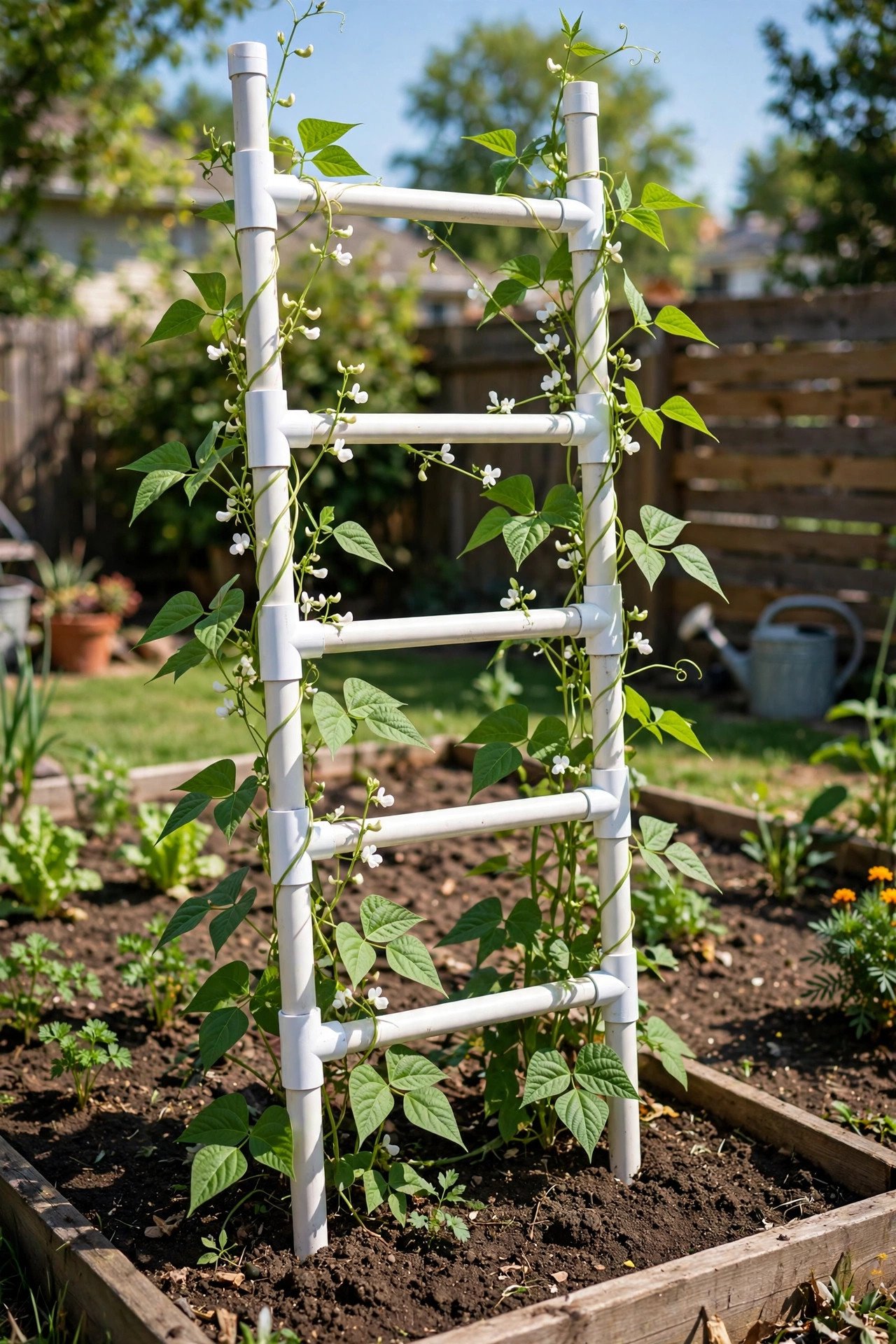
4. DIY PVC Pipe Trellis Build
PVC pipes make a lightweight, endlessly customizable trellis for creative gardeners. Cut the pipes to length, join them with simple connectors, and build ladders, grids, or arches in any size your space needs. The smooth white finish looks clean and modern.
Peas, cucumbers, and pole beans climb PVC easily with a little twine guidance. Paint the pipes to match your garden palette for a more finished look. It is a fun weekend project that costs very little and lasts for years.
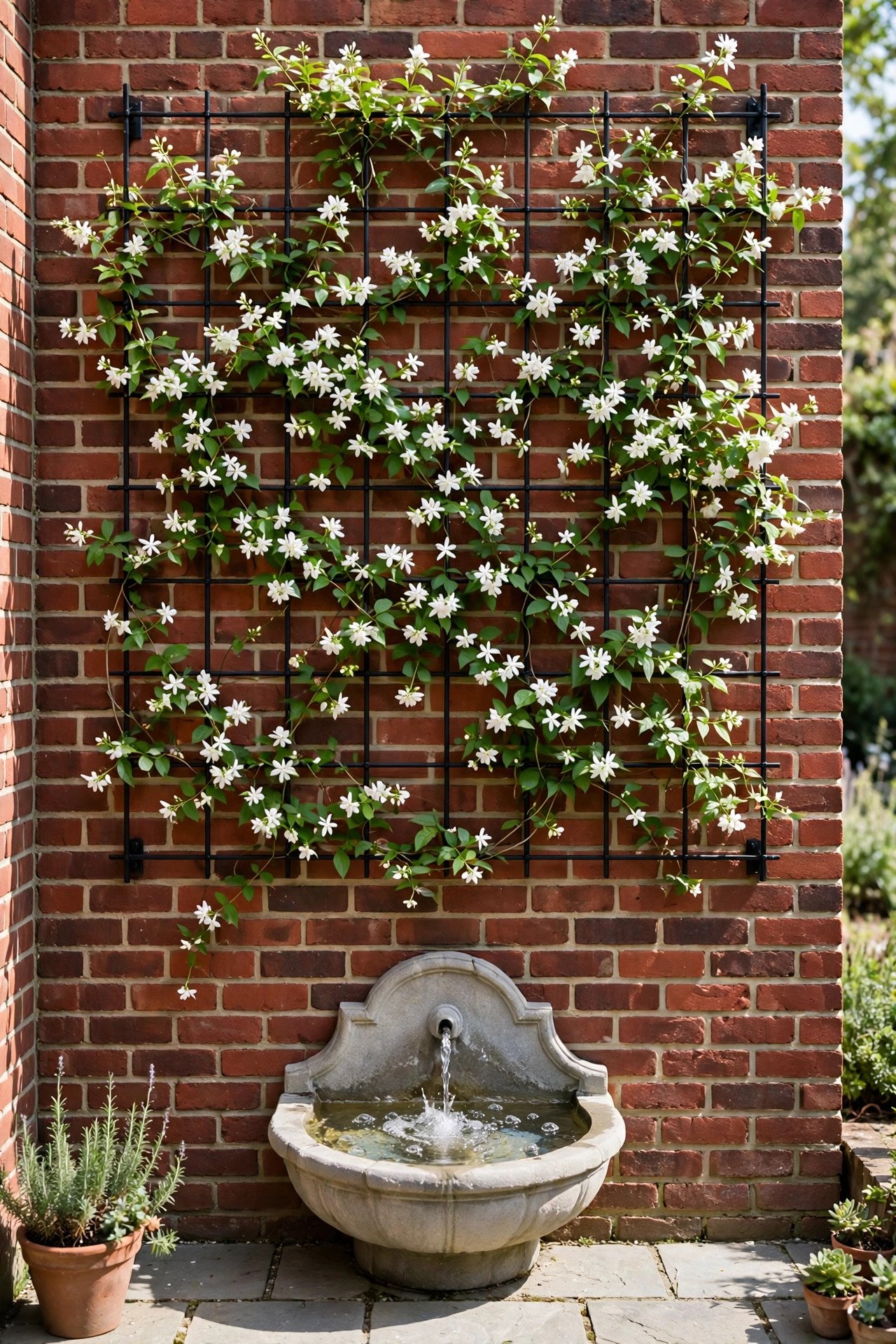
5. Brick Wall Climbing Trellis
A brick wall becomes a stunning backdrop when dressed with climbing plants. Mount wire panels or wooden lattice a few inches off the wall so air circulates behind the foliage. Ivy, jasmine, and climbing roses thrive against the warm, textured brick.
The contrast between rough brick and soft greenery creates rich visual depth. Add a drip irrigation line at the base to keep watering effortless. This pairing turns an ordinary wall into the most photographed spot in the garden.
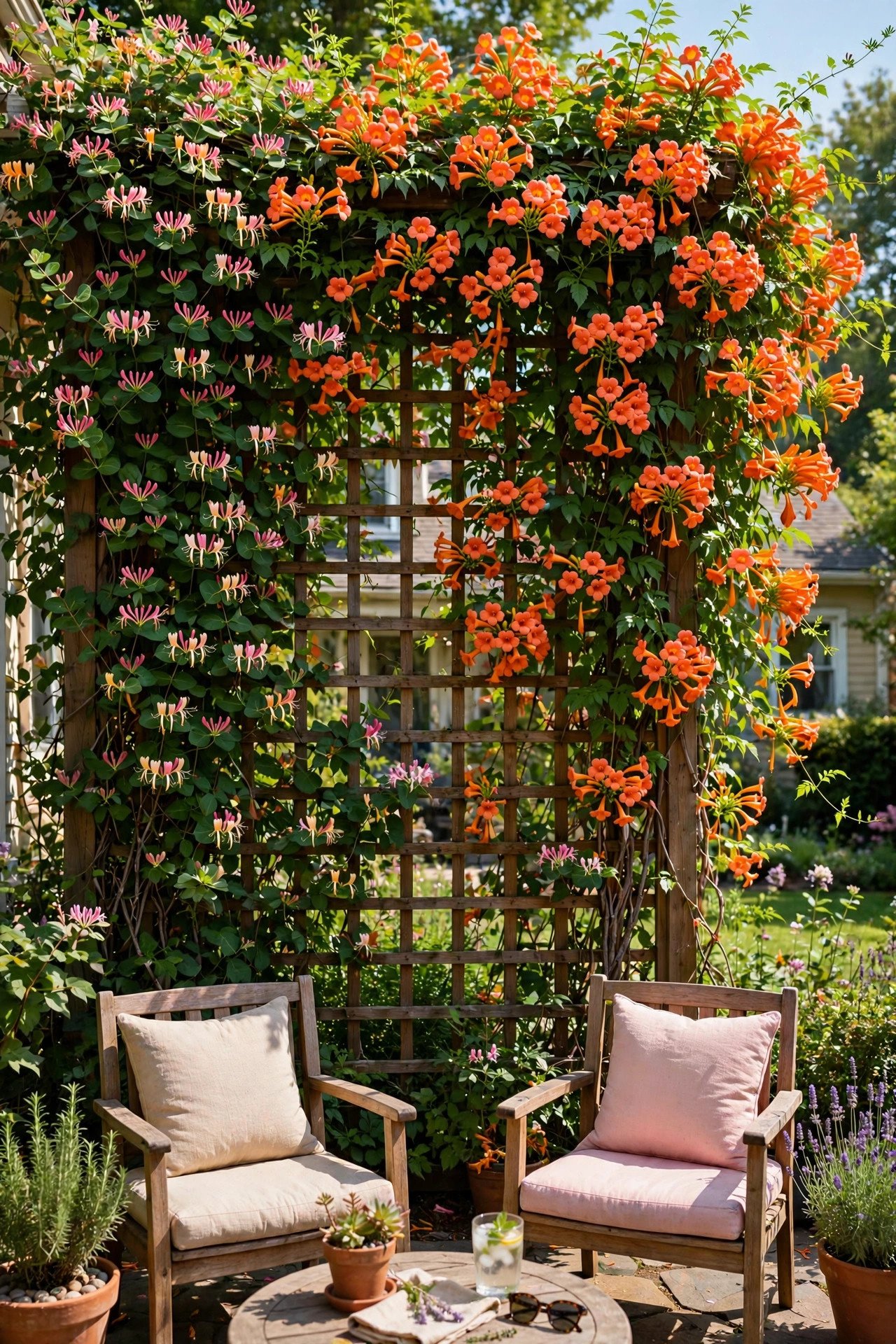
6. Trellis Privacy Screen
A trellis covered in fast-growing climbers makes a living privacy screen more beautiful than any fence. Build panels to your exact size, anchor them firmly, and plant honeysuckle or trumpet vine for quick, dense coverage. The result blocks unwanted views with flowers instead of boards.
Train young vines along the frame with soft garden twine for even coverage. In one or two seasons, you have a green wall that sways softly and smells wonderful. Privacy has never looked this pretty.
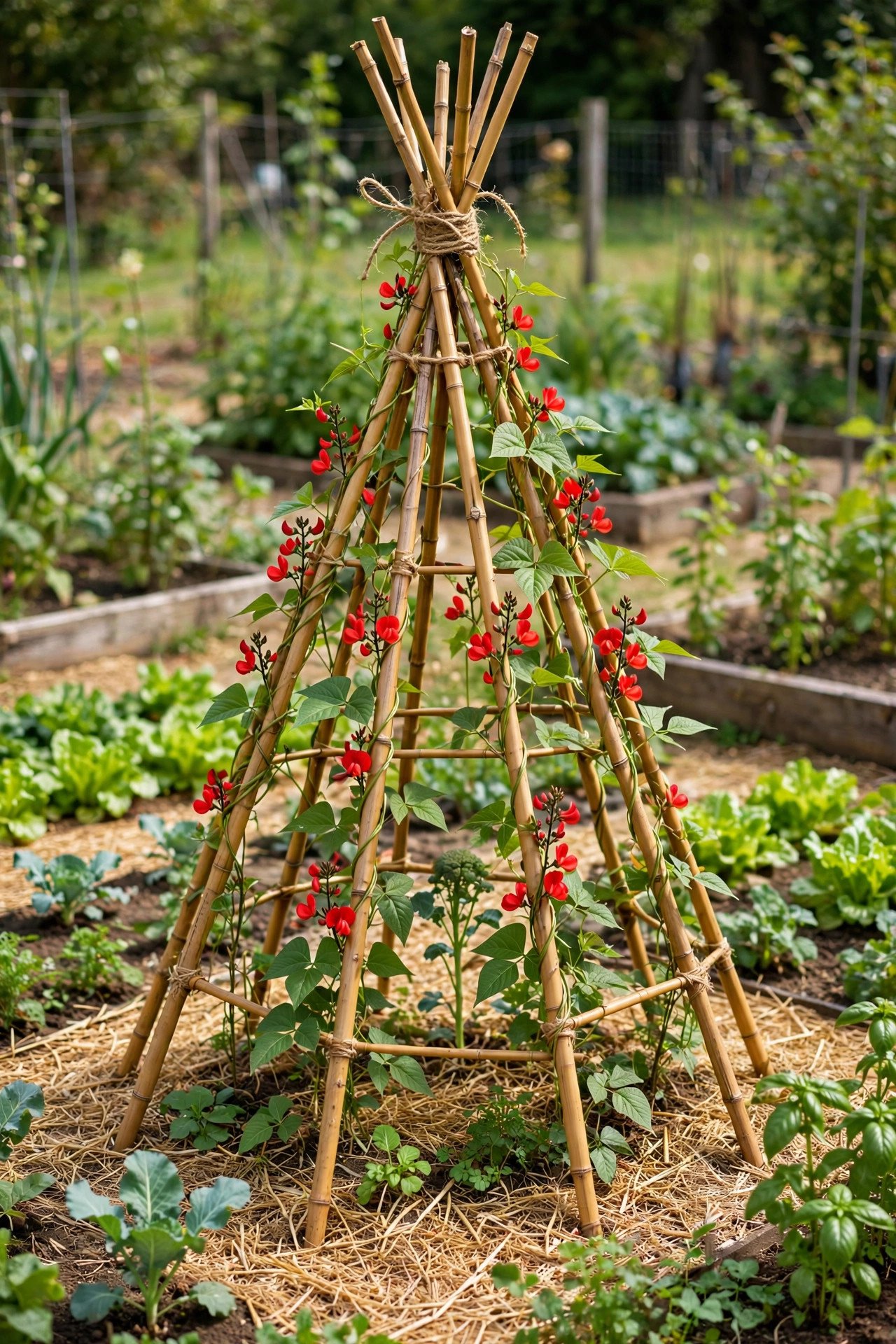
7. Natural Bamboo Trellis Frame
Bamboo poles lashed together form a trellis with wonderful natural character. The golden canes suit cottage, tropical, and Asian-inspired gardens beautifully. Bamboo is strong, renewable, and weathers gracefully outdoors.
Build teepees for beans, flat panels for cucumbers, or decorative fans for flowering vines. The simple lashing technique needs no special tools. This is gardening structure at its most organic and sustainable.
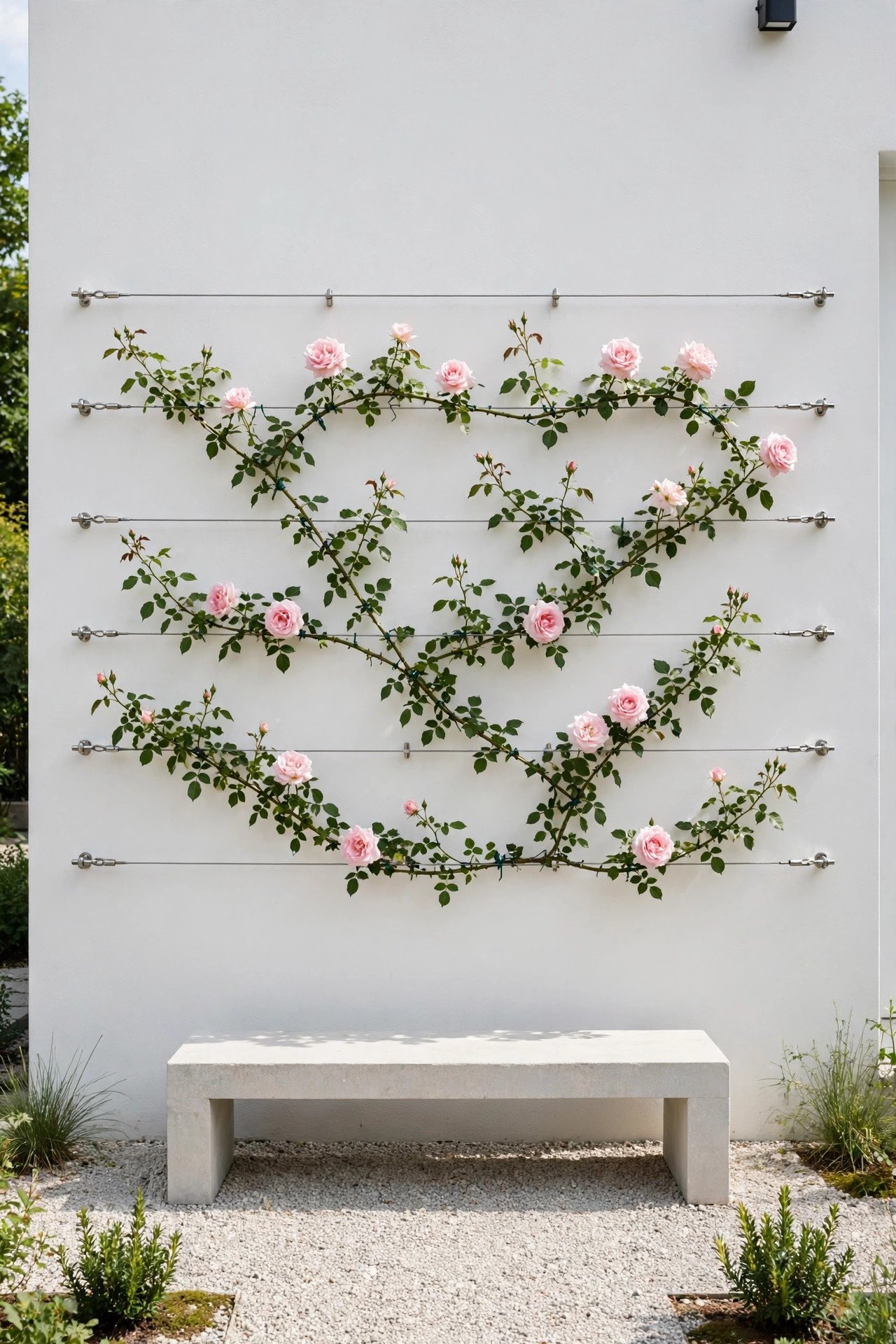
8. Modern Wire Trellis Design
Stainless steel wires strung in clean horizontal or vertical lines create a trellis with striking modern simplicity. The nearly invisible supports let climbing plants appear to float against the wall. This minimalist approach suits contemporary homes perfectly.
Use turnbuckles to keep the wires taut as plants gain weight. Espaliered fruit trees, jasmine, and climbing roses all train beautifully on wire systems. It is precision gardening with an architectural edge.
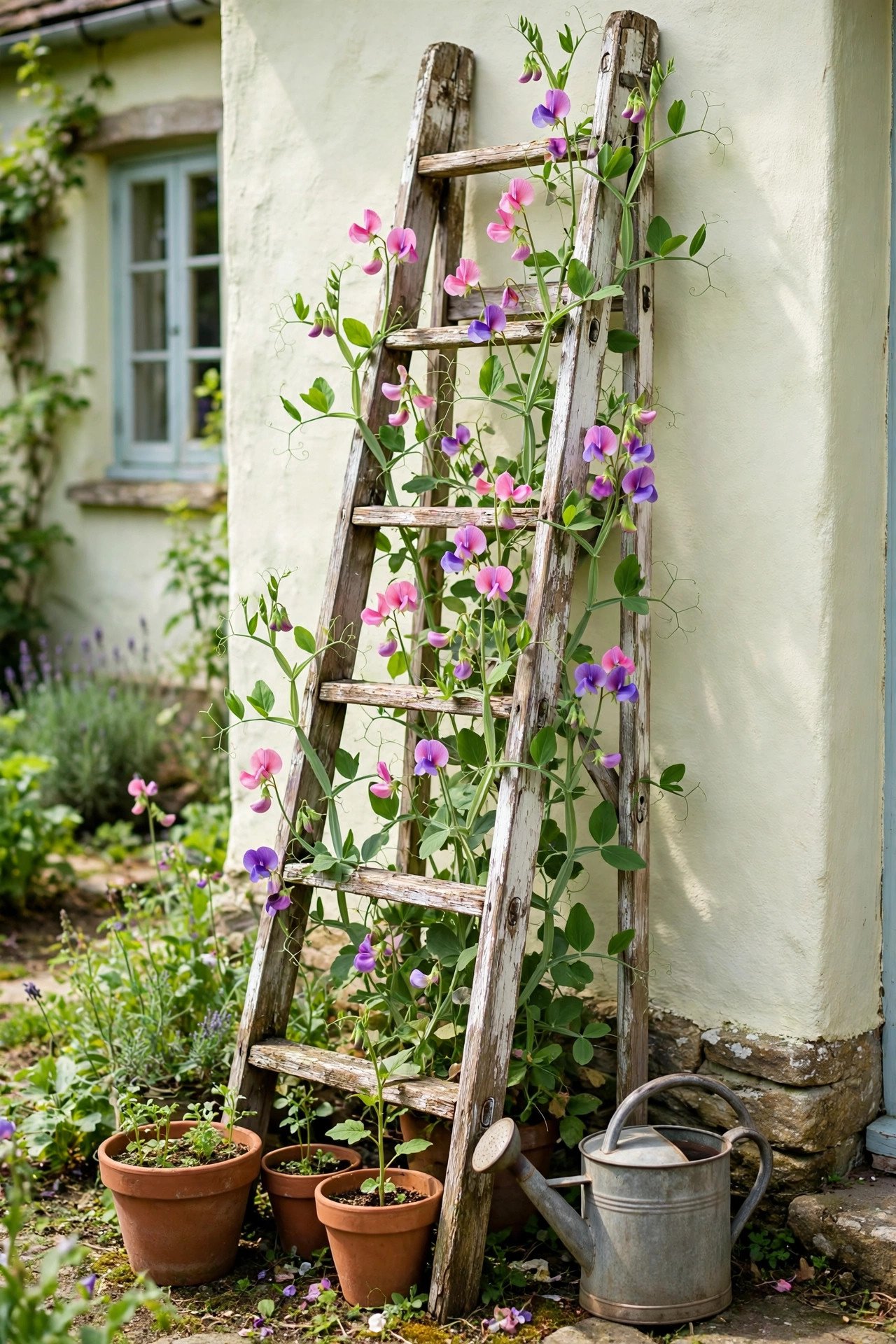
9. Repurposed Furniture Trellis
Old ladders, headboards, crib rails, and window frames make charming trellises with instant vintage character. A weathered wooden ladder leaned against a wall gives sweet peas or morning glories a perfect climbing frame. The patina tells a story no new trellis can.
This creative reuse fits beautifully with antique-inspired garden styling, where pieces with history bring the most charm. Seal old wood to extend its life outdoors. Your trellis becomes a conversation piece as well as a plant support.
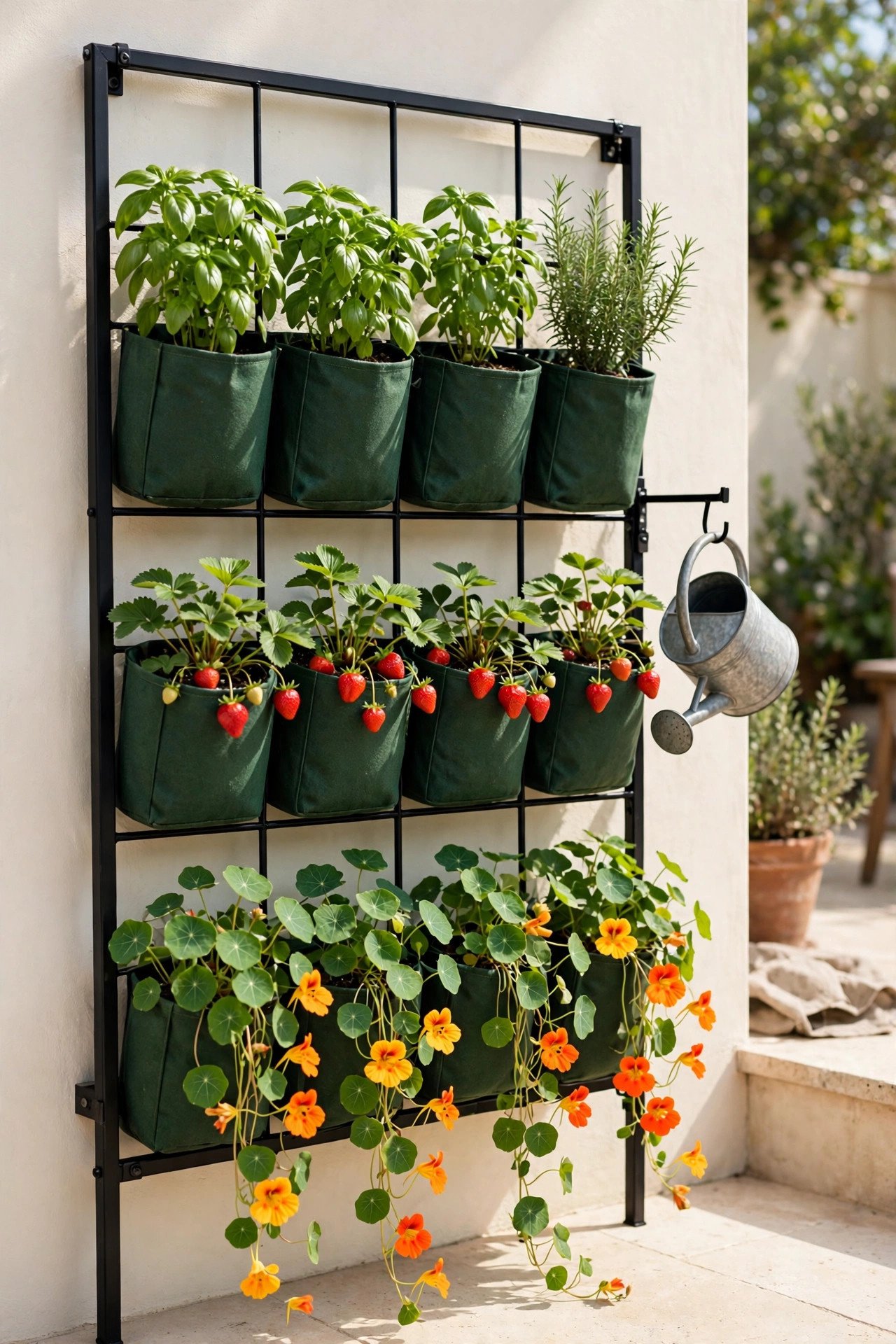
10. Hanging Garden Bag Trellis
Fabric garden bags hung on a frame create a vertical planting system with built-in trellis support. Each pocket holds soil for herbs, flowers, or strawberries while the frame gives climbers something to grip. The whole unit hangs on a wall or stands freely.
This system maximizes growing space on patios and balconies where ground is scarce. Water carefully since fabric dries faster than pots. It is vertical gardening made simple, portable, and surprisingly productive.
11. Suspended Trellis Planters
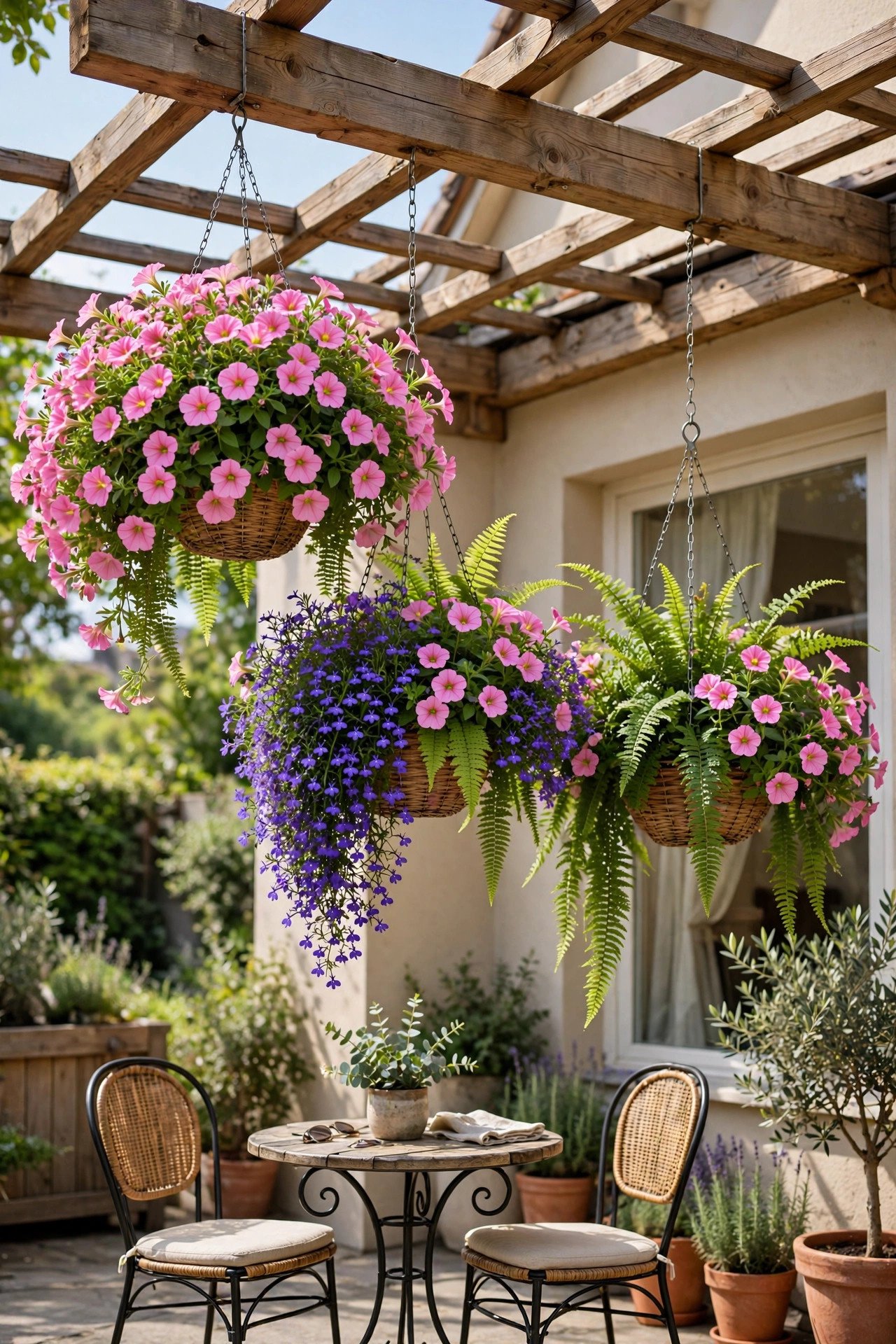
Hanging planters from an overhead trellis frame creates a floating garden at eye level. Baskets of trailing flowers, herbs, and small climbers dangle beautifully while vines climb the supports below. The layered heights look lush and abundant.
This idea shines on pergolas, porches, and balcony ceilings. It borrows the playful vertical layering loved in small space boho styling and applies it to the garden. Water hanging baskets more often, since they dry quickly in the breeze.
12. A-Frame Vegetable Trellis
An A-frame trellis gives vining vegetables the strong support they need while saving precious bed space. Cucumbers, squash, and pole beans climb both sides, leaving the shaded interior perfect for lettuce and shade-loving herbs. The structure is simple to build from lumber or bamboo.
This design doubles your growing area in the same footprint and keeps produce clean and easy to pick. Kids love harvesting from the living tunnel underneath. It is the hardest-working trellis in any edible garden.

13. Living Wall Trellis System
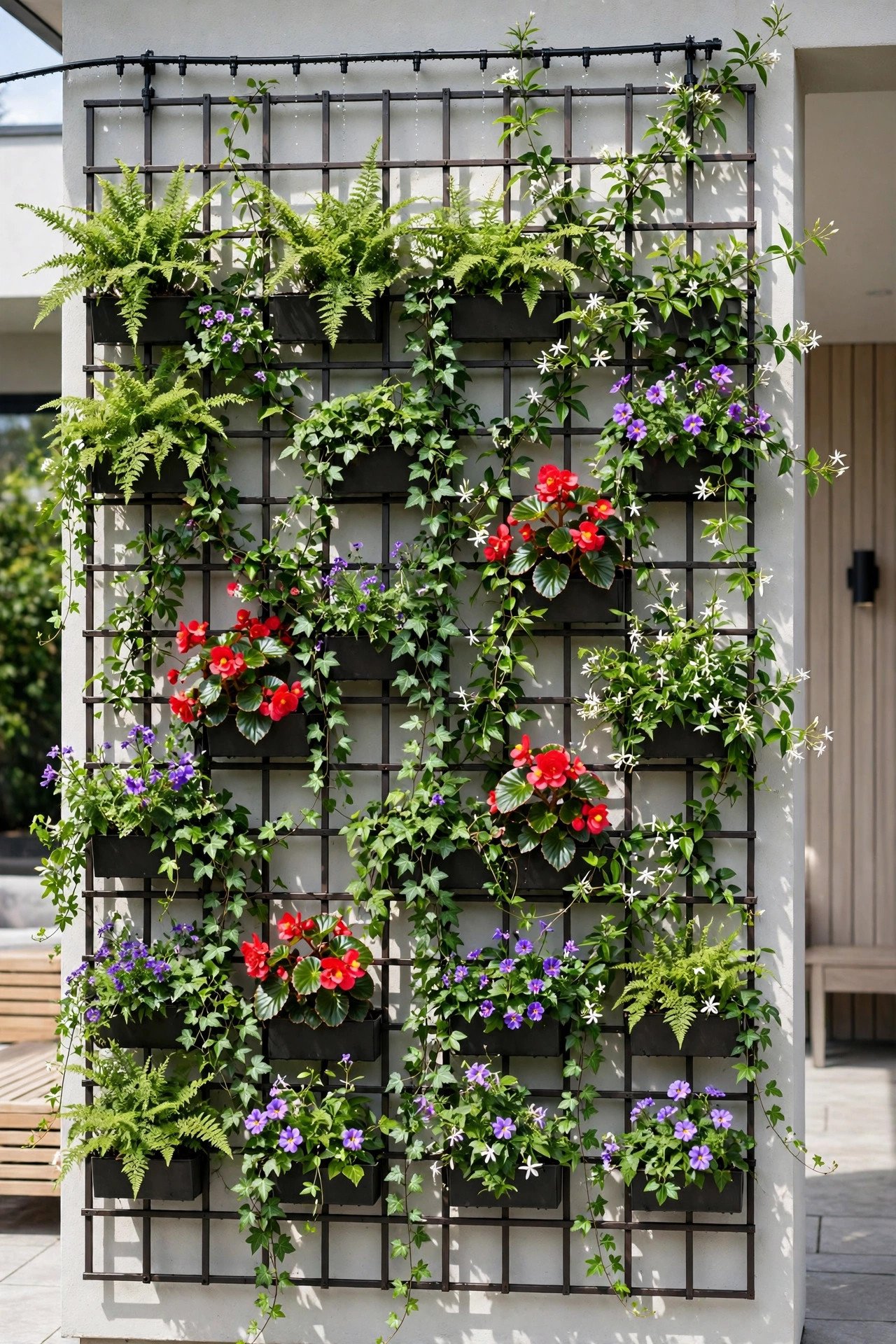
A living wall combines a sturdy trellis grid with planted pockets for a true vertical garden. The frame supports climbing plants while the pockets hold ferns, succulents, and colorful annuals. The result is a lush tapestry of green that transforms blank walls completely.
Install a simple drip irrigation line along the top to keep every pocket evenly watered. This showstopper suits patios, courtyard walls, and modern home exteriors. It is the ultimate statement in growing upward.
Conclusion
A trellis is one of the most transformative tools in the garden, turning flat, empty vertical spaces into living walls of beauty. Whether you choose classic lattice, modern wire, or a creative repurposed piece, the right support lets your climbing plants reach their full, glorious potential.
Start with the style that fits your garden and your budget, plant it with climbers you love, and watch the transformation happen. In a single season, a simple trellis can turn the plainest wall into the most admired feature of your backyard.
Frequently Asked Questions About Climbing Plant Trellis Ideas for Backyard Gardens
What is the best material for an outdoor trellis?
Cedar and redwood are the best wood choices because they naturally resist rot. Metal trellises in powder-coated steel or aluminum last for decades with no maintenance. Choose based on your style, budget, and how much upkeep you want to do.
How do I attach a trellis to a wall safely?
Mount the trellis on spacers or brackets that hold it two to four inches off the wall for air circulation. Use masonry anchors for brick or concrete and sturdy screws for wood siding. Make sure the fasteners can support the weight of mature, wet plants.
Which climbing plants grow fastest on a trellis?
Morning glories, sweet peas, scarlet runner beans, and hyacinth bean vine cover a trellis in a single season. For perennials, trumpet vine, honeysuckle, and clematis grow quickly once established. Annual vines give instant results while perennial climbers mature.
Can I use a trellis for vegetables?
Absolutely, and you should. Cucumbers, pole beans, peas, squash, and melons all thrive on trellises, which keeps fruit clean and saves space. Use a sturdy A-frame or cattle panel design that can handle the weight of a full harvest.
How do I keep a wooden trellis from rotting?
Choose naturally rot-resistant wood like cedar, and keep the base from sitting in wet soil by mounting it on metal feet or gravel. Apply exterior wood sealer every couple of years. Good air flow around the structure also helps it dry quickly after rain.

Hi, I’m Emily! I turn messy corners into cozy, organized spots. DreamNestDecor is where I share simple, practical home ideas — decor, organization, and small-space solutions that work in real life, not just in photos. Every idea here is carefully researched before it’s shared.