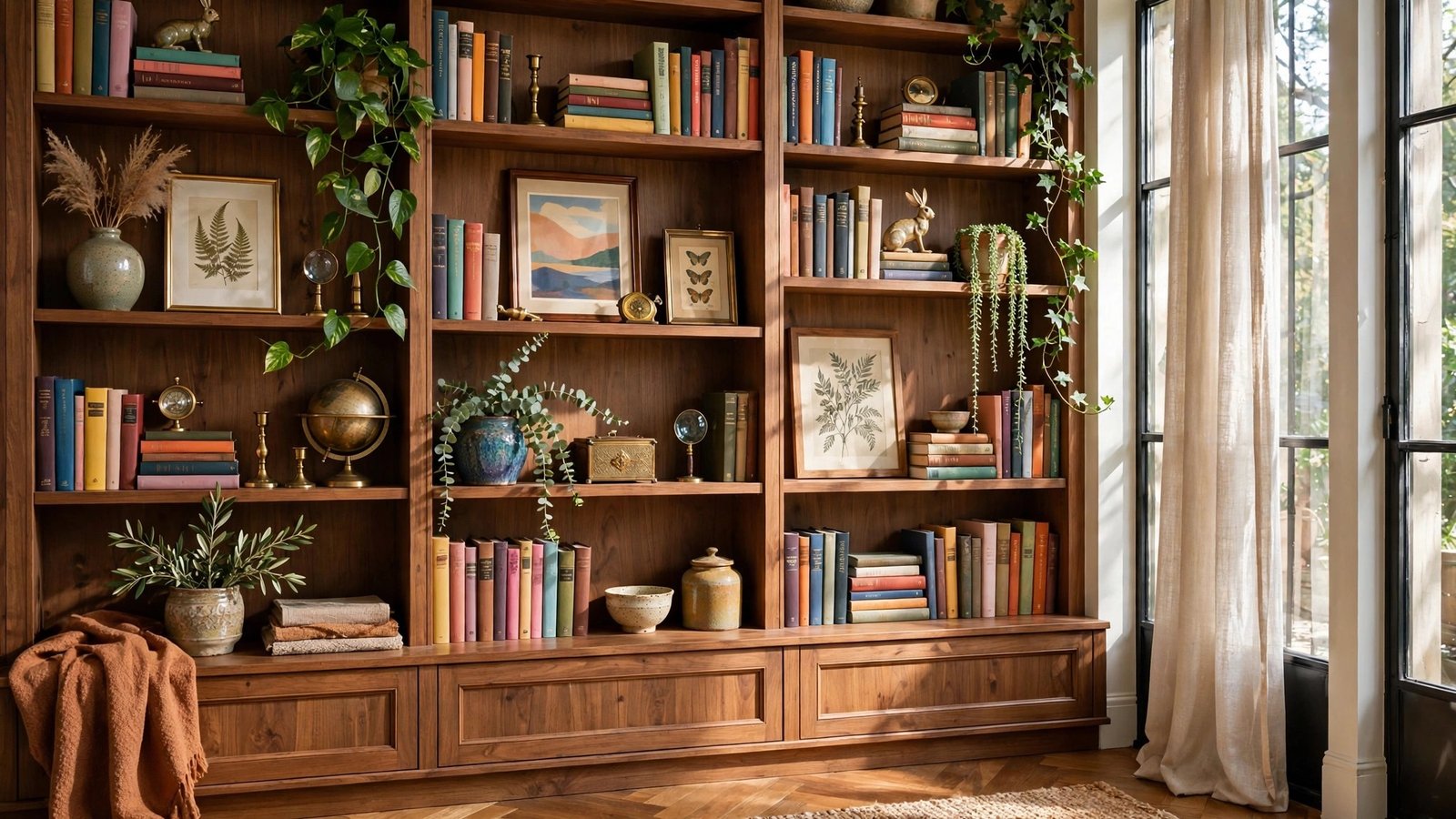
Your shelves are full of things you love, but somehow they look messy instead of magical. Books lean in tired rows, souvenirs hide behind each other, and the whole bookcase feels like storage rather than a display. You want that collected, gallery-like maximalist look, but every attempt ends in clutter.
These fourteen eclectic maximalist shelf styling ideas will teach you how to arrange abundance with intention. Maximalism is not about piling things randomly, it is about layering color, texture, and personal treasures so every shelf tells your story. Let us turn your shelves into the most interesting spot in your home.
1. Mix And Match Eras And Styles
Maximalist shelves shine when vintage finds sit happily beside modern pieces. Place a thrifted brass candlestick next to a sleek ceramic vase, or lean a contemporary art print behind an antique clock. The contrast between old and new creates the collected-over-time feeling that defines eclectic style.
Do not worry about matching periods or finishes, because variety is the whole point. What matters is that each piece means something to you. A shelf that mixes your grandmother’s teacup with a travel souvenir tells a richer story than any matching set could.
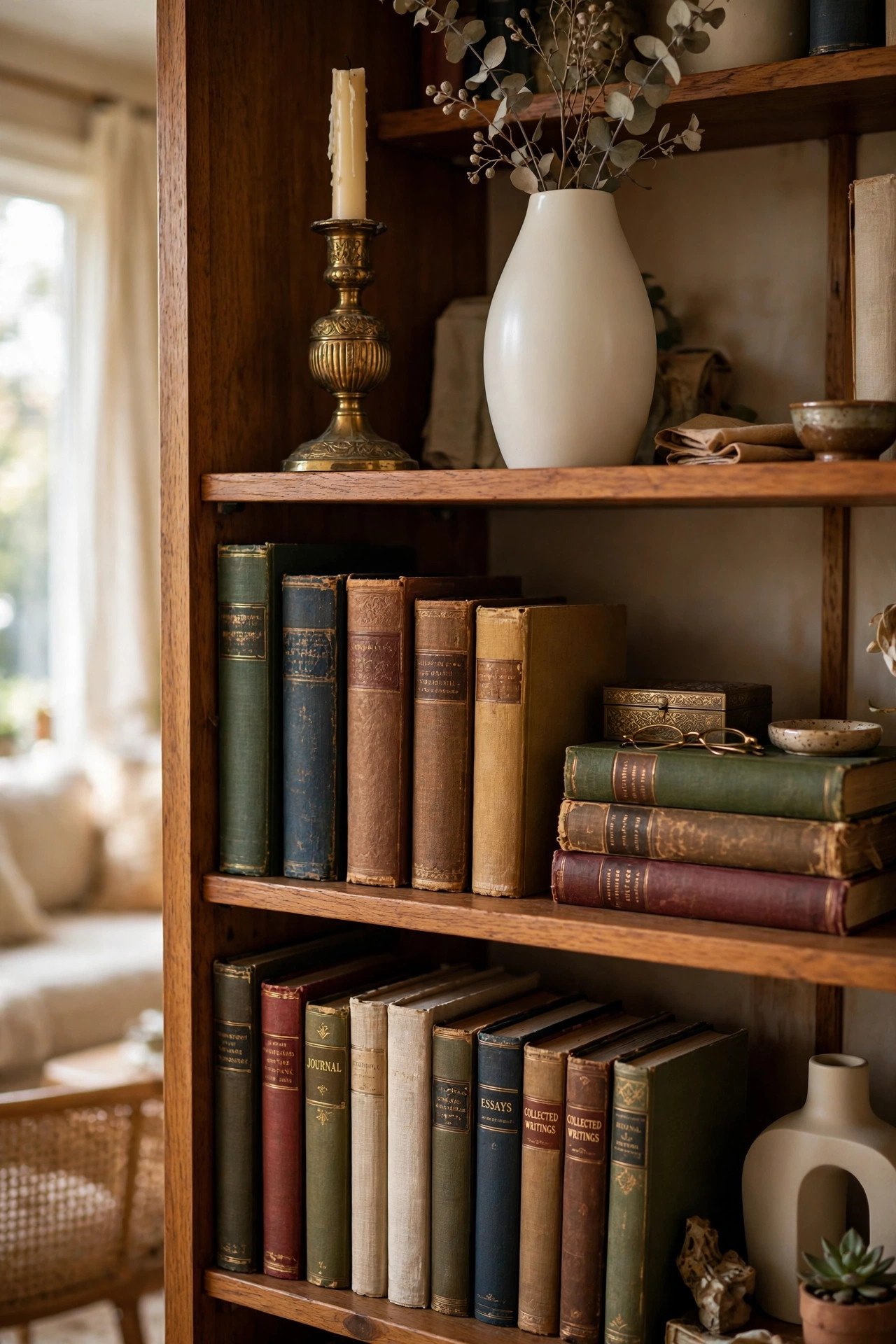
2. Layer Objects Front To Back
Flat, single-row arrangements look thin, so build depth by layering objects in front of each other. Place tall books or framed art at the back of the shelf, medium objects like vases in the middle, and small treasures right at the front edge. Each layer peeks out from behind the next, creating visual richness.
Lean a framed photo against the back panel, then set a small sculpture in front of it. This simple front-to-back layering instantly makes shelves look styled rather than stored. Leave a little space between layers so each piece stays visible.

3. Anchor With Statement Pieces
Every maximalist shelf needs one hero piece that anchors the whole arrangement. Choose something with presence, like a large sculptural vase, an oversized art print, or a quirky vintage find. Place it slightly off-center so the arrangement feels natural rather than staged.
Build smaller items around your statement piece, echoing its colors or materials. The anchor gives the eye a place to land amid the abundance. Without it, even beautiful collections can feel scattered and restless.

4. Fill Shelves Generously
Maximalism embraces the philosophy of more is more, so let your shelves overflow with books and treasures. Stack books both vertically and horizontally, filling gaps with small sculptures, framed photos, and collected curiosities. A full shelf feels rich and personal in a way that sparse styling never can.
The trick is filling with intention rather than dumping. Every item should earn its place by being beautiful or meaningful to you. When shelves brim with things you love, the result reads as abundance, not mess.
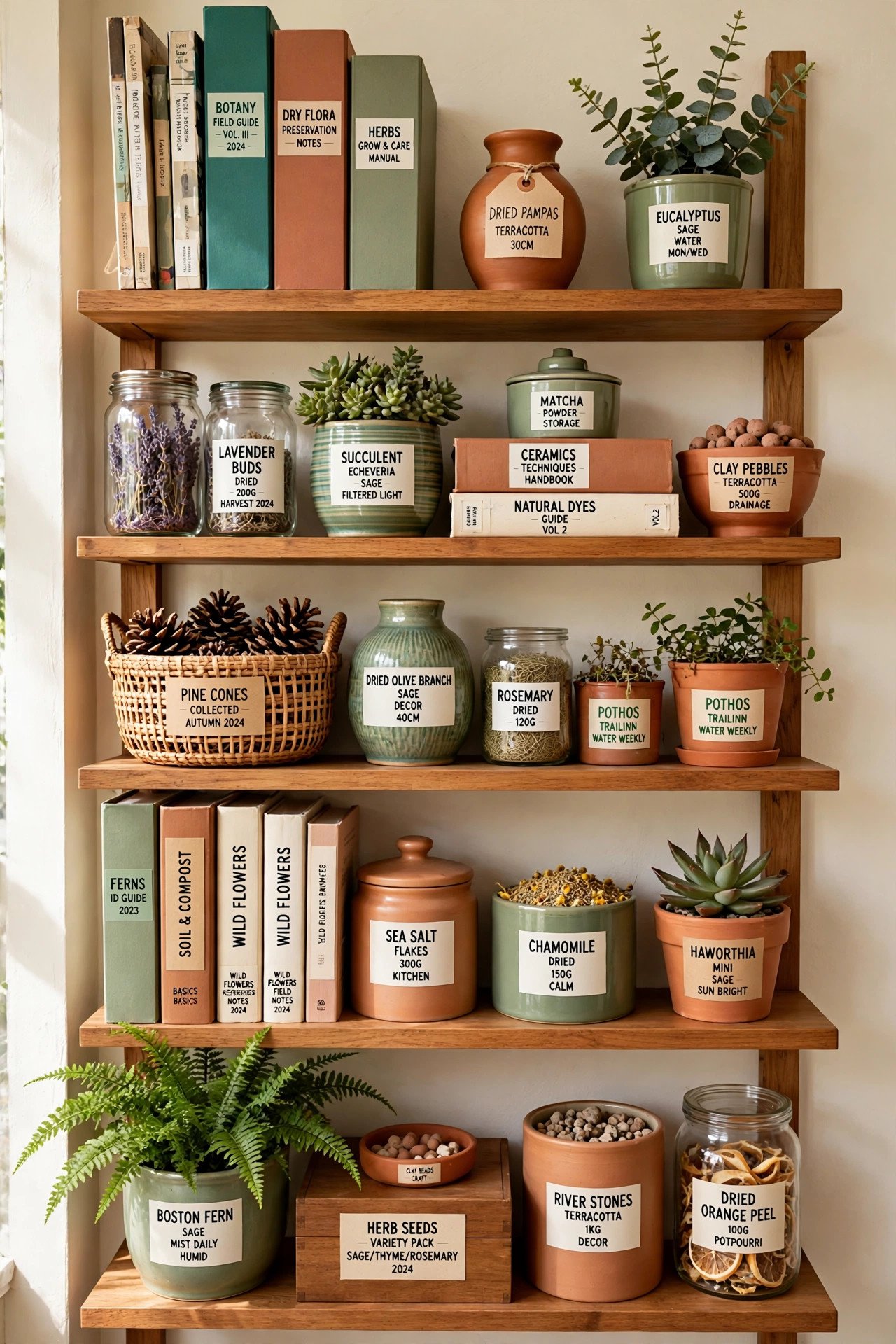
5. Create Organized Chaos Clusters
Group objects into small clusters that feel casually arranged but are actually thoughtful. Cluster three to five items of varying heights together, mixing books, a plant, and a decorative object. The slight randomness looks effortless, while the grouping keeps it cohesive.
Step back often and squint at your shelf, because the overall shapes matter more than individual pieces. If one cluster feels heavy, move a tall item to a lighter area. This push-and-pull balancing act is the heart of eclectic styling.
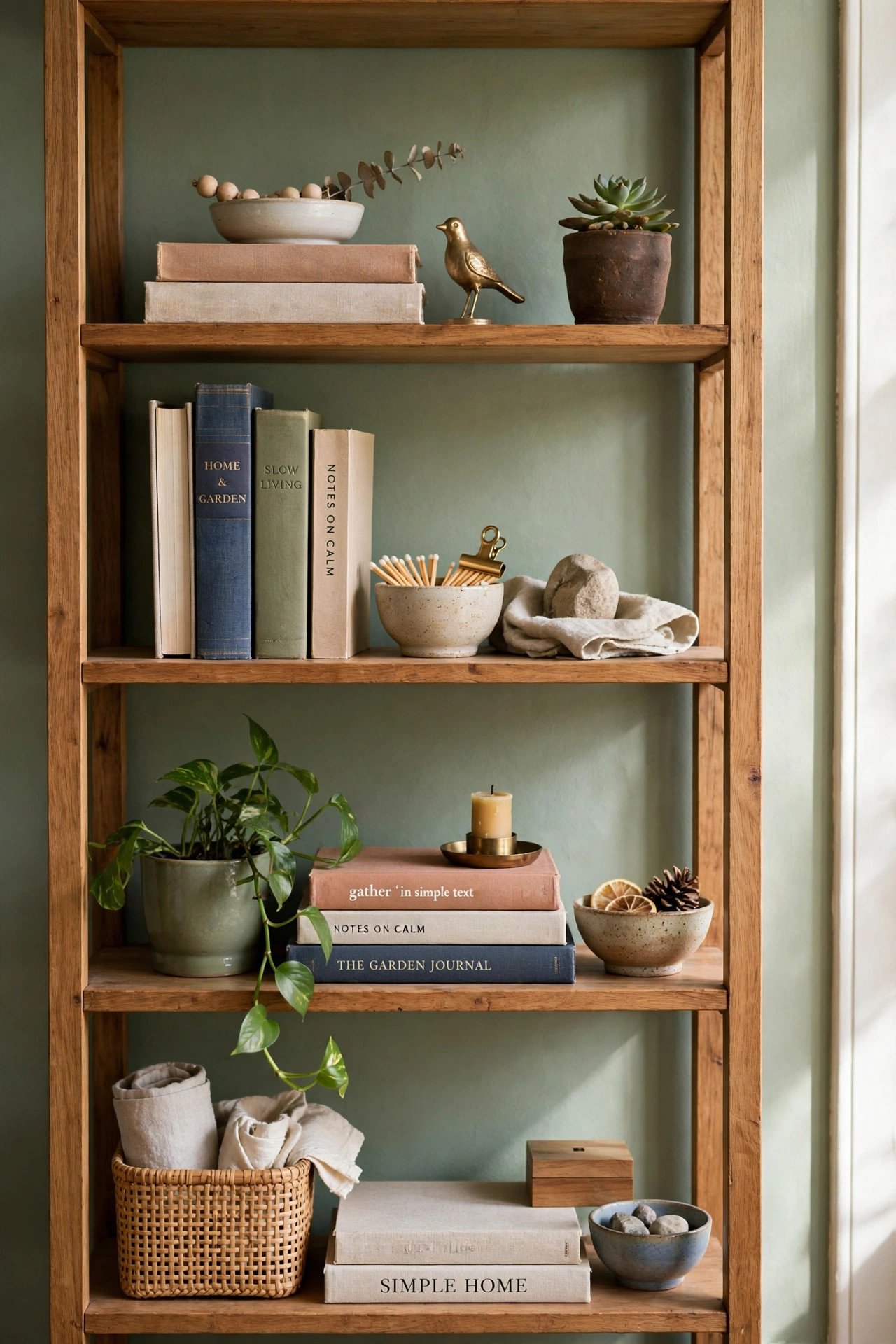
6. Zone Books By Color
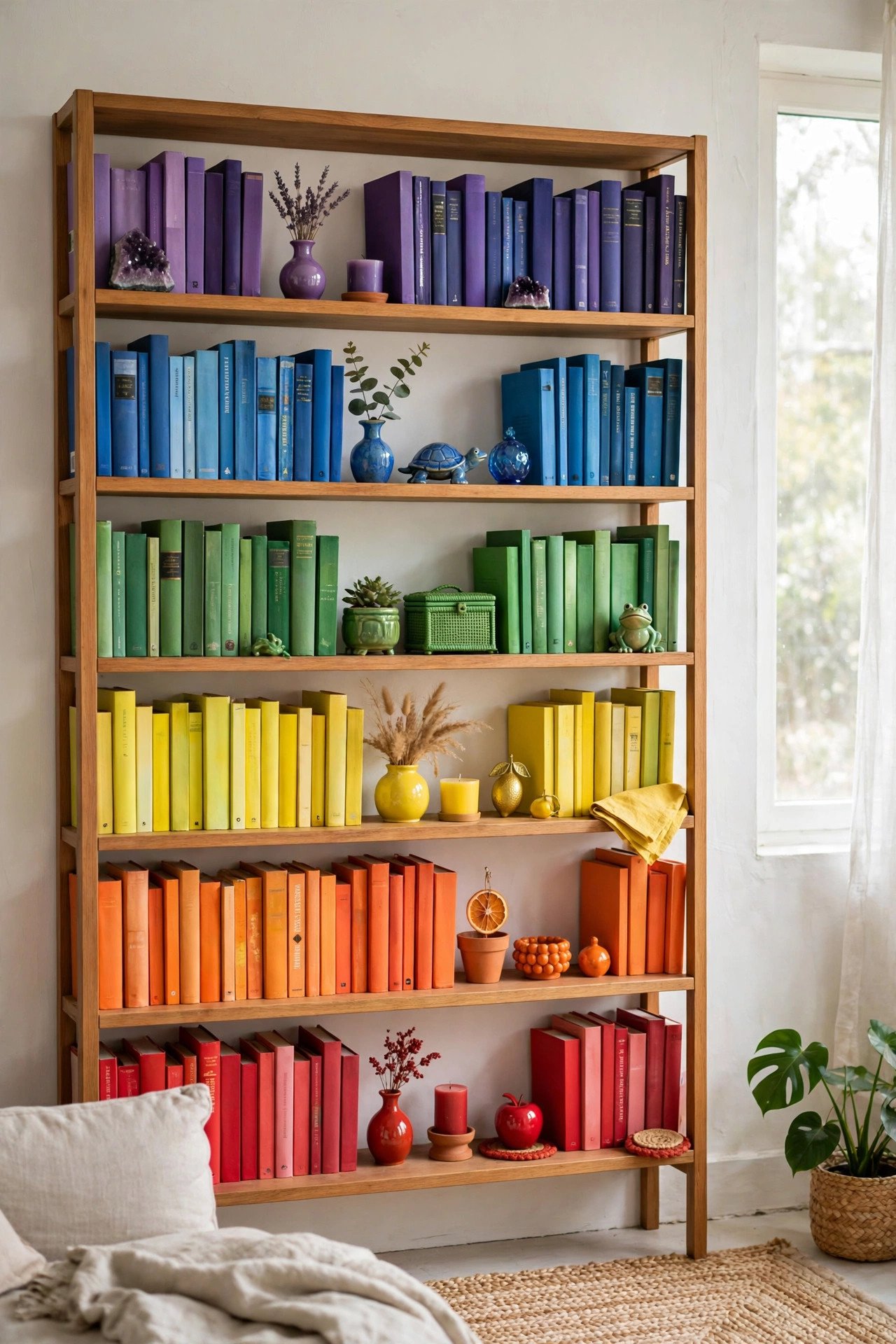
Color-zoned books bring order to maximalist abundance without dulling its energy. Group book spines by color family, creating flowing bands of red, blue, green, and neutral across your shelves. The rainbow effect turns your book collection into art.
You do not need a huge library for this to work, because even two shelves of color-grouped books make an impact. Weave small decor items in matching tones between the books to blend the zones together. This technique also appears in eclectic entryway bold patterns for the same joyful color story.
7. Hang Small Art On The Shelf Front
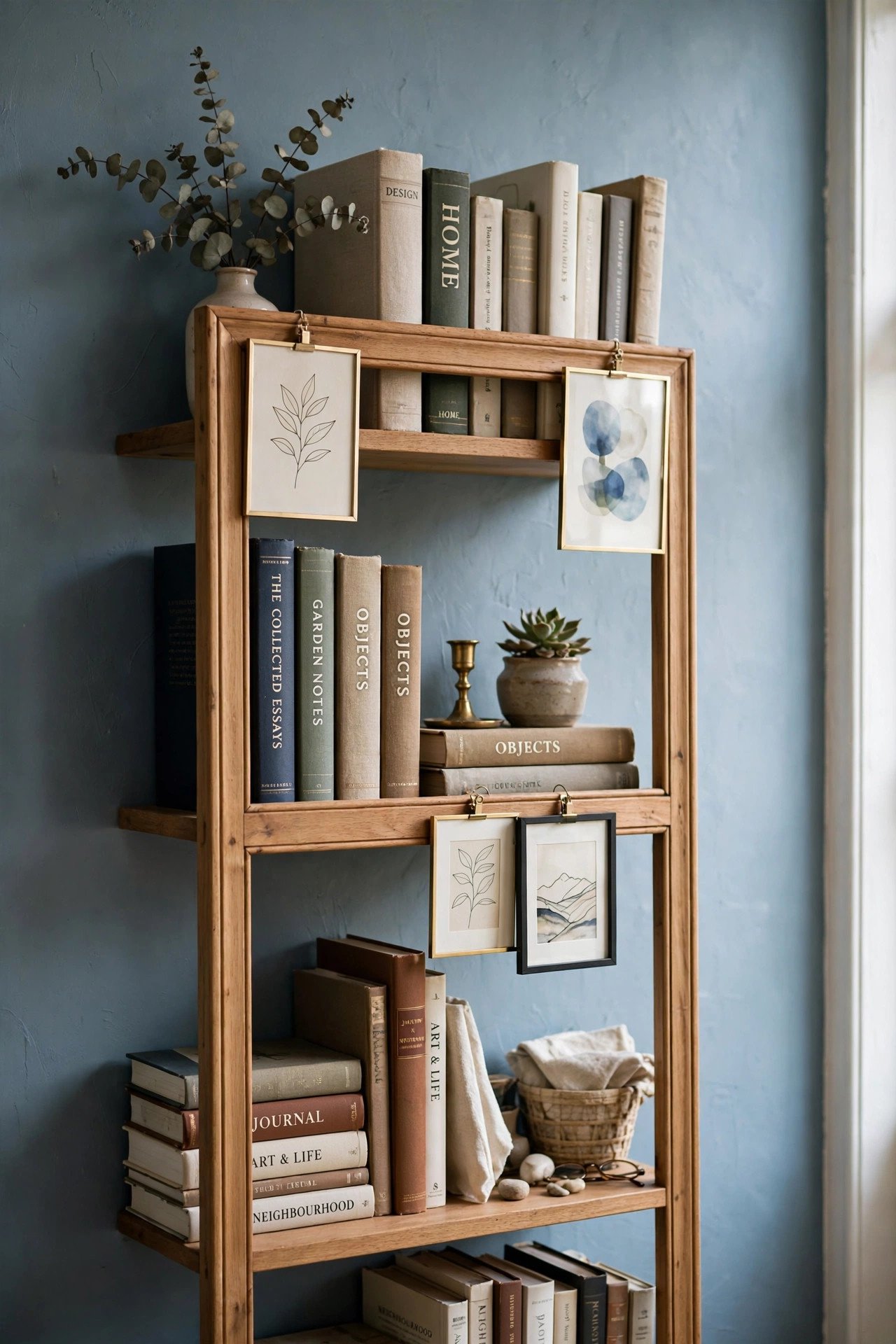
Do not limit art to walls, because hanging small pieces on the front of your bookshelf adds a gallery layer. Use removable strips or tiny nails to mount mini prints and photos directly onto the shelf frame. The art overlaps the books behind it, creating wonderful depth.
Choose pieces that echo colors already on your shelves so they feel integrated, borrowing the layered look of antique gallery wall ideas in miniature. This trick works especially well on tall bookcases, where the front becomes a canvas. It is an easy change that makes old shelves feel brand new.
8. Display Travel Souvenirs Like A Museum
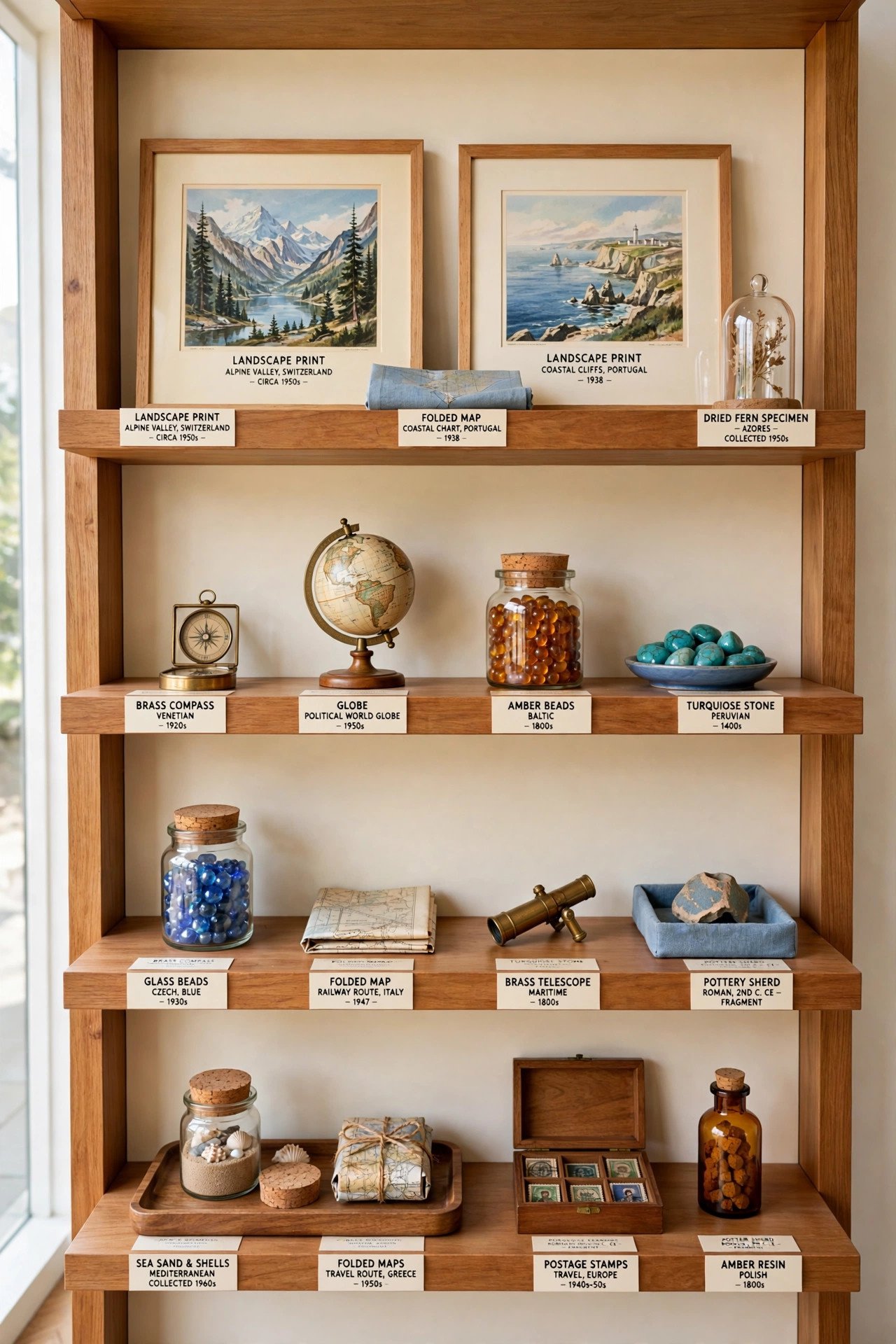
Your travel souvenirs deserve better than a dusty pile, so curate them like museum pieces. Give each special object breathing room on a small stack of books, which acts as a pedestal. A Moroccan vase, a carved wooden box, and a stone from a favorite beach become a personal exhibition.
Add tiny handwritten labels if you love the museum feel, noting where each piece came from. These personal artifacts are what make maximalist shelves impossible to copy, because no one else has your memories. Let them take center stage proudly.
9. Style In Odd Numbers
Designers swear by odd-number groupings, and your shelves are the perfect place to use the rule. Arrange decorative objects in threes or fives rather than pairs, because odd groups feel dynamic while even groups can look stiff. Three candlesticks of different heights beat two matching ones every time.
This rule applies to stacks too, so try three horizontal books topped with one small object. The asymmetry keeps the eye moving across your shelves. Once you start seeing in odd numbers, styling becomes almost automatic.
10. Repeat Materials For Cohesion
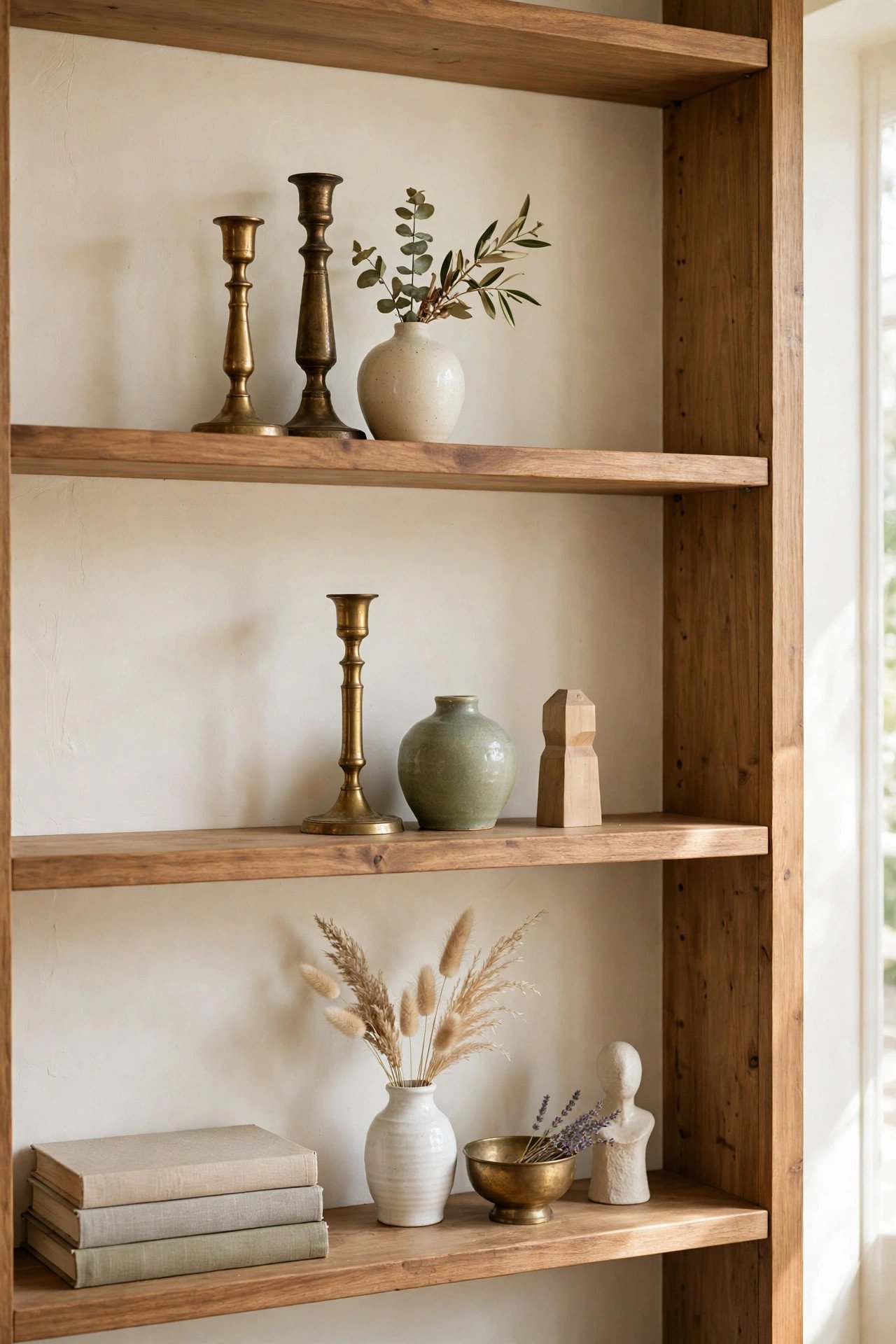
With so much variety on display, repeated materials quietly hold everything together. If you love brass, scatter brass objects across several shelves rather than bunching them in one spot. Repeat ceramic, wood, or glass the same way to create rhythm.
This repetition is the invisible thread that makes eclectic shelves feel curated instead of chaotic. Pick two or three materials you love and echo them throughout. The technique works just as well in mid-century modern bold color twist rooms that mix eras freely.

11. Go Heavier At The Bottom
Visual weight belongs low, so place your largest and darkest pieces on the bottom shelves. Big baskets, heavy art books, and substantial sculptures ground the bookcase and keep it from feeling top-heavy. Lighter objects and delicate items shine on the upper shelves.
This bottom-heavy balance also makes practical sense, since you reach lower shelves most often. Reserve the top shelf for tall vases or trailing plants that draw the eye upward. A well-weighted bookcase feels stable and satisfying to look at.

12. Hide Clutter In Woven Baskets
Not everything deserves display, so tuck the less pretty necessities into beautiful woven baskets. Remote controls, chargers, and paperbacks you want to keep but not show all disappear inside textured baskets. The natural weave adds warmth while hiding the mess.
Place baskets on the bottom shelf where their visual weight belongs. Choose baskets in different shapes but similar tones for an eclectic yet unified look. This is storage disguised as decor, and every maximalist needs it.

13. Add Trailing Plants For Softness
All those straight lines and hard objects need softening, and trailing plants do it perfectly. Let pothos or philodendron vines spill over shelf edges, breaking up the geometry with organic curves. The green also adds a living color that complements every palette.
Place plants at different heights so the greenery weaves through the whole bookcase. If natural light is limited, high-quality faux trailing plants give the same softening effect. Either way, your shelves will feel alive and welcoming.

14. Light Shelves With LED Strips
Hidden LED strip lights turn your shelves into a glowing display after dark. Stick slim battery or plug-in strips under each shelf, toward the front edge, so light washes down over your objects. The warm glow adds drama and makes colors look richer.
Lighting also solves the problem of dark bookcase corners where pretty objects disappear into shadow. Choose warm white rather than cool white for a cozy feel. This finishing touch makes your shelves look professionally styled, similar to the layered lighting in mix bold patterns bedroom designs.

Conclusion
Eclectic maximalist shelves are really just your personality made visible, arranged with a few smart techniques. Layer front to back, group in odd numbers, repeat your favorite materials, and let your treasures fill the space generously. These simple rules turn clutter into curation.
Start with one shelf this weekend and experiment freely, because nothing here is permanent. Move things around until the arrangement makes you smile. Your shelves should tell your story, and nobody can style your story better than you.
Frequently Asked Questions About Eclectic Maximalist Shelf Styling
What is the difference between maximalist and cluttered shelves?
Maximalist shelves follow styling principles like layering, odd-number groupings, and repeated materials, while clutter is random accumulation. Every item on a maximalist shelf is chosen and placed with intention. If each piece is beautiful or meaningful and the arrangement has balance, it reads as curated abundance.
How do I start styling maximalist shelves on a budget?
Start with what you own by shopping your home for books, souvenirs, and decorative objects. Thrift stores offer cheap vases, frames, and baskets to fill gaps. Rearranging costs nothing, so experiment with layering and groupings before you buy anything new.
Should books be organized by color or by author?
For maximalist display shelves, organizing by color creates a stronger visual impact and turns books into decor. Keep a separate practical library elsewhere if you need to find titles quickly. Color zoning works best on shelves meant to be seen and admired.
How much empty space should maximalist shelves have?
Even maximalist shelves need some breathing room so the eye can rest. Leave small gaps between clusters rather than packing every inch. Negative space highlights the objects you display and keeps the arrangement from feeling overwhelming.
Can maximalist shelf styling work in a small room?
Yes, a single well-styled bookcase can be the star of a small room. Keep the color palette somewhat controlled so the abundance feels intentional. Use the bottom-heavy rule and good lighting to keep the display balanced in a compact space.

Hi, I’m Emily! I turn messy corners into cozy, organized spots. DreamNestDecor is where I share simple, practical home ideas — decor, organization, and small-space solutions that work in real life, not just in photos. Every idea here is carefully researched before it’s shared.