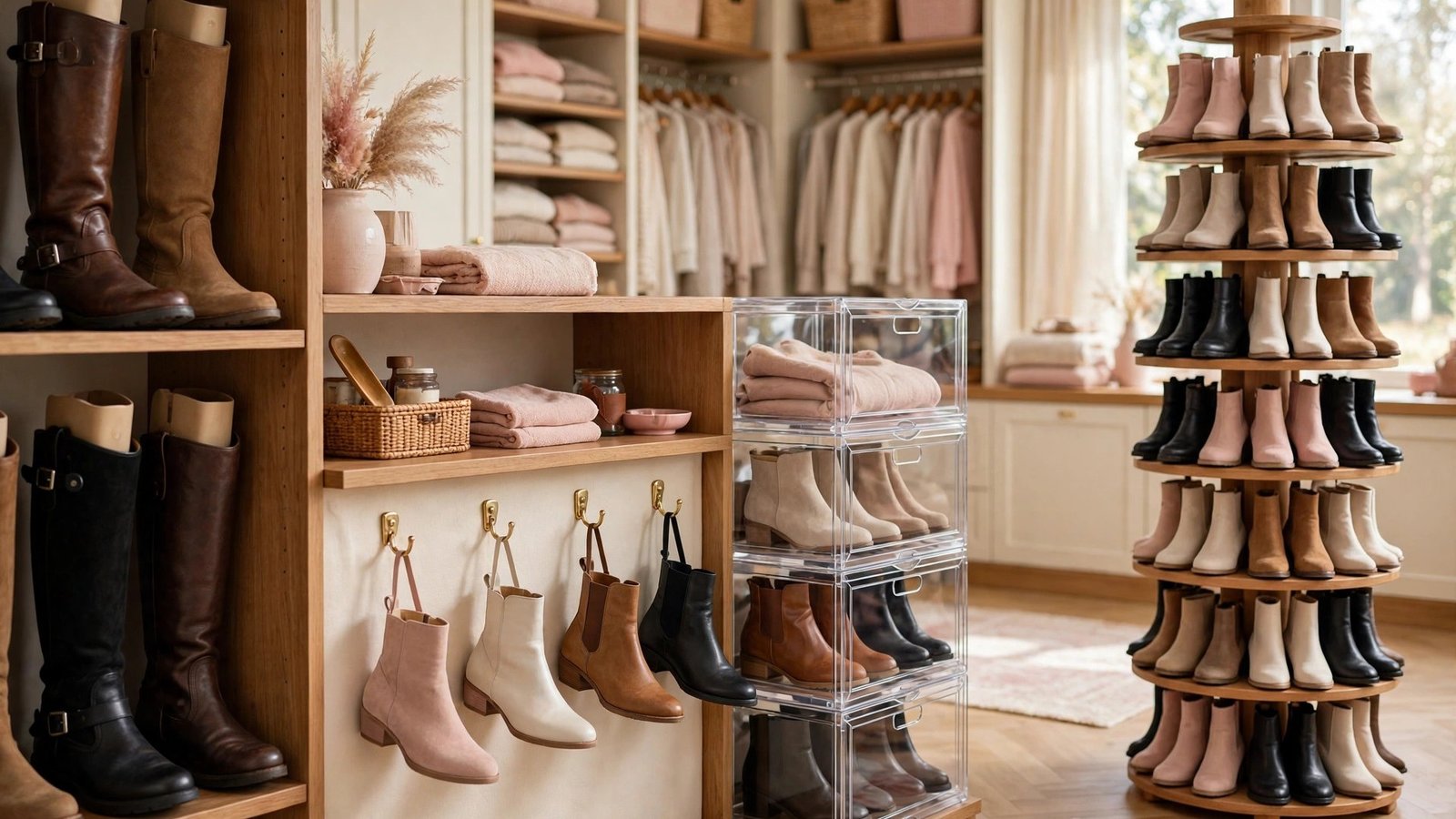
Boots are the hardest shoes to store well. Tall shafts flop over and crease, heavy pairs eat shelf space, and short booties vanish into dark closet corners. Come fall, you need every pair ready — not a rescue mission.
Good boot storage is about keeping shafts upright, soles protected, and pairs visible. Tall boots and short boots need slightly different treatment, but one organized system can handle both. Your boots will last longer and look better with just a little structure.
These twenty-four ideas cover tall boots, short boots, and everything in between. Pick the methods that match your collection, and give your boots the home they deserve.
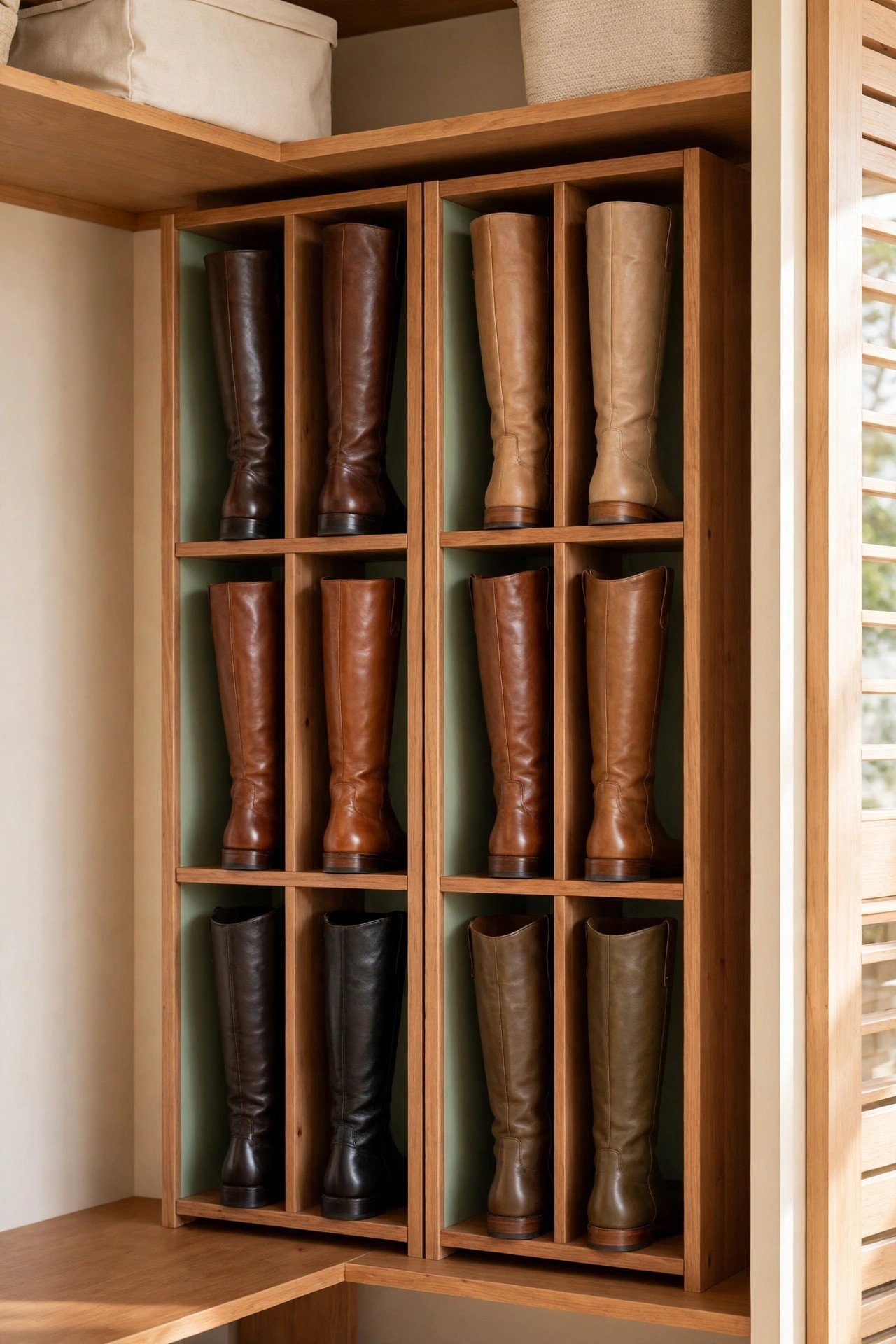
1. Keep Tall Boots Upright on a Shelf Organizer
Tall boots flop over in a heap without support, and the crease across the ankle never really comes out. A dedicated shelf organizer holds each pair upright with space between them. Your boots stay tall, smooth, and ready to wear.
Place the organizer on a sturdy closet shelf where boots will not get knocked over. Leave enough clearance above for the tallest shaft in your collection. Upright storage is the single best thing you can do for boots you love.
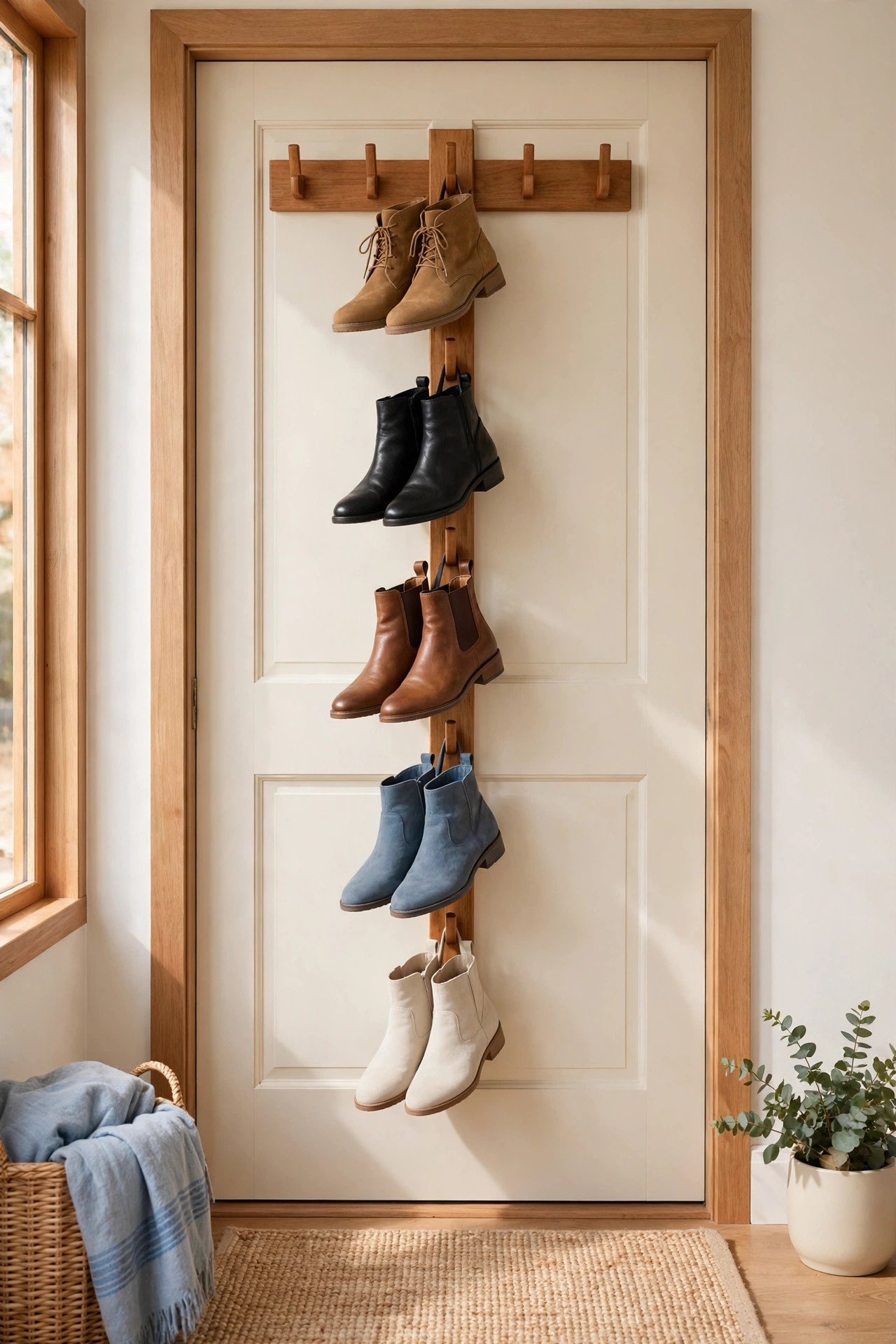
2. Hang Short Boots on an Over-the-Door Rack
Short boots and ankle booties are light enough to hang, which frees your shelves for taller pairs. An over-the-door rack with hooks holds each pair off the ground and fully visible. It is a brilliant fix when floor space is gone.
Check that the door still closes flush after you hang the rack, since thick doors vary. Hang the pairs you reach for most at a comfortable height. This trick works beautifully in small bedrooms and dorm closets.
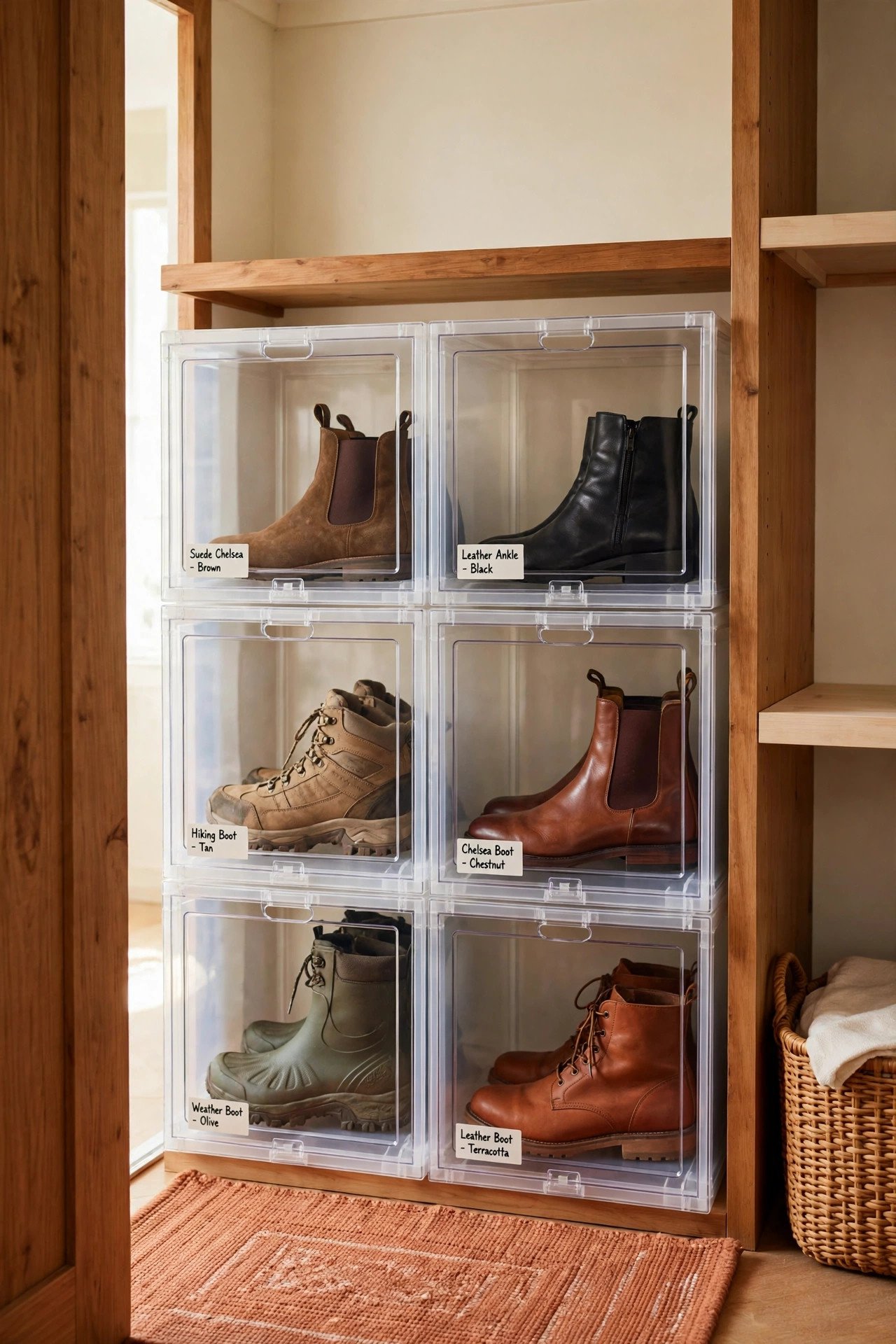
3. Store Pairs in Clear Drop-Front Boxes
Clear drop-front boxes protect boots from dust while showing exactly which pair is inside. The front panel flips down for easy grabbing, so you never unstack a tower to reach the bottom pair. They are made for exactly this job.
Choose tall boxes for knee-high boots and standard ones for ankle styles. Even though the boxes are clear, add a small label — a row of black booties looks identical from across the room. Stackable boxes use the full closet height.
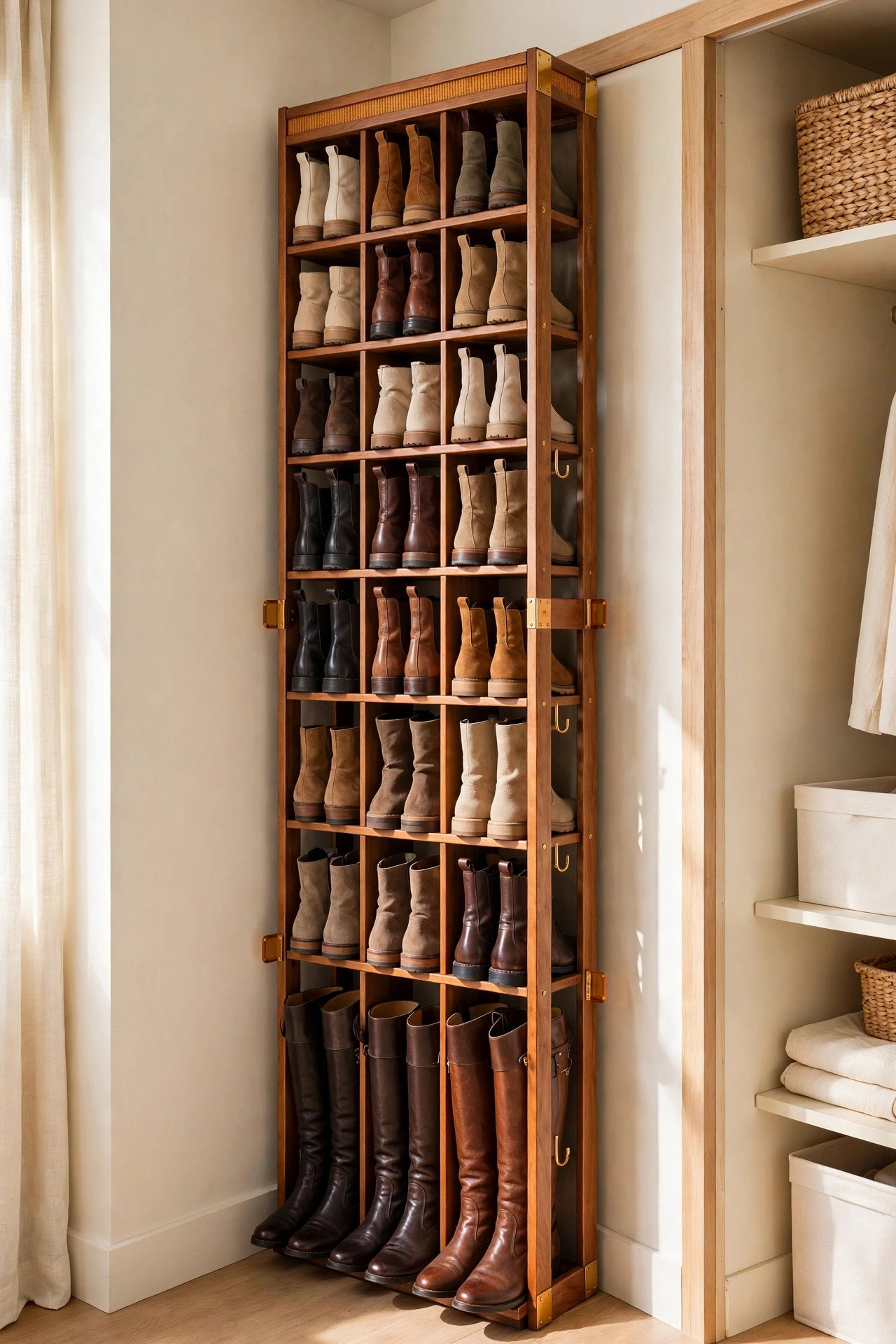
4. Stack Pairs in a Vertical Boot Tower
A vertical boot tower holds many pairs upright in one small footprint. It is a standing rack designed for boots, with slots or shelves that keep each pair separated and visible. Small closets gain serious capacity.
Place the tower in a corner where it will not block hanging clothes. Put the tallest boots on the bottom for stability. If you own more than three pairs of tall boots, this piece earns its keep fast.
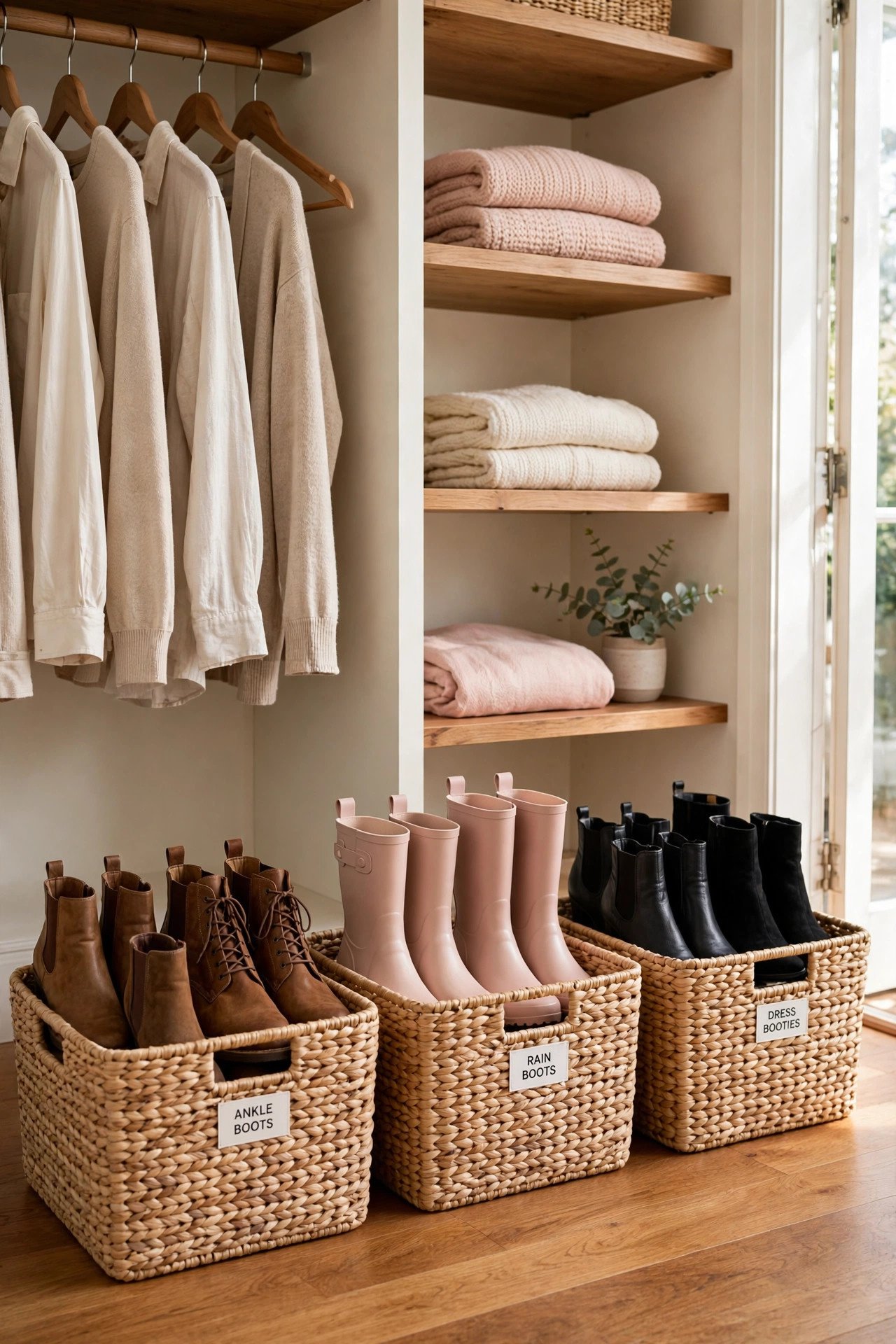
5. Sort Styles in Labeled Storage Baskets
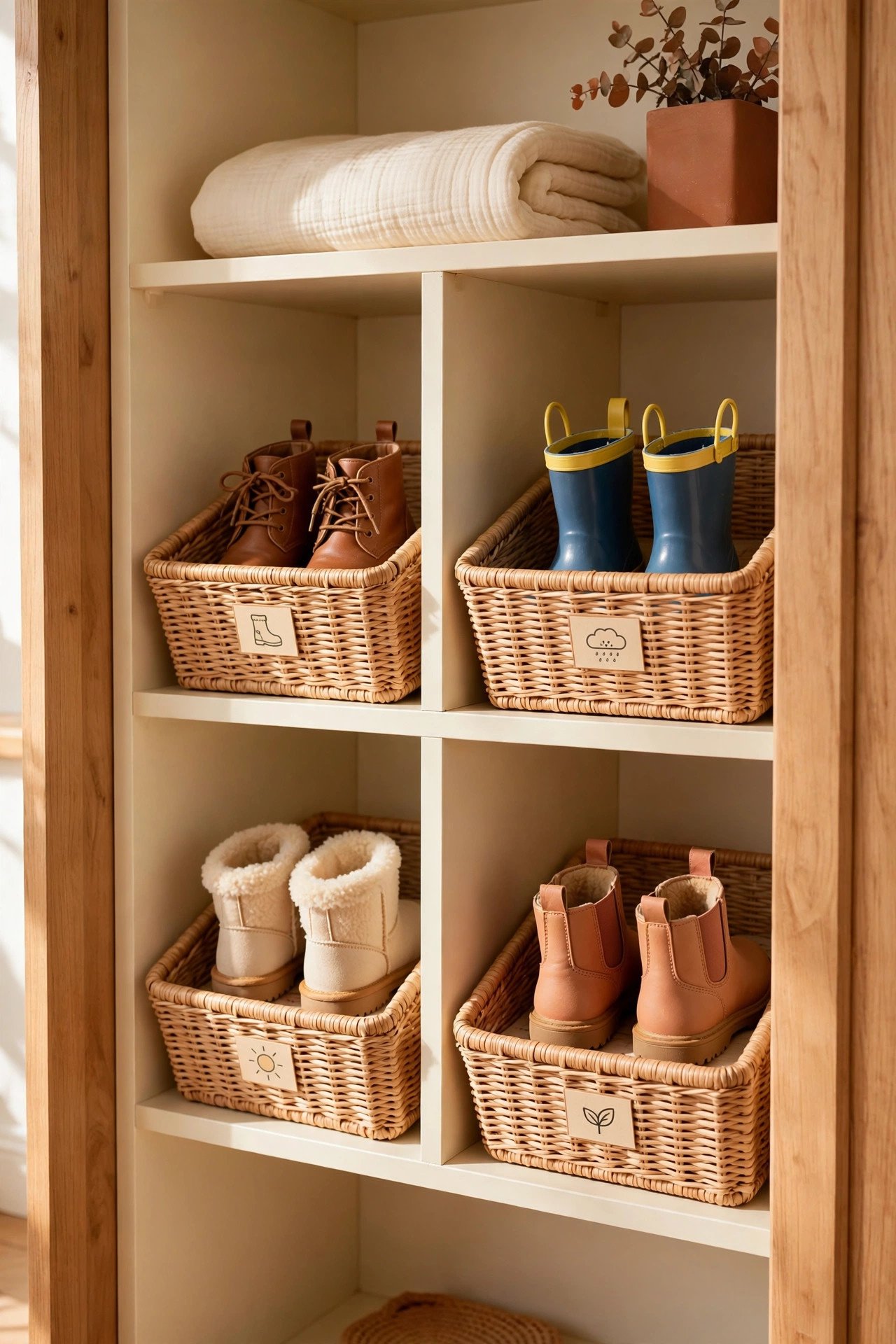
Baskets hide the visual clutter while keeping boots sorted by style. One basket for ankle boots, one for rain boots, one for dress booties — each with a clear label on the front. Whatever is happening inside stays hidden from the room.
Choose sturdy woven or fabric baskets that hold their shape under weight. Keep the baskets on a low shelf or the closet floor for easy lifting. A label on each basket means the system works for the whole household.
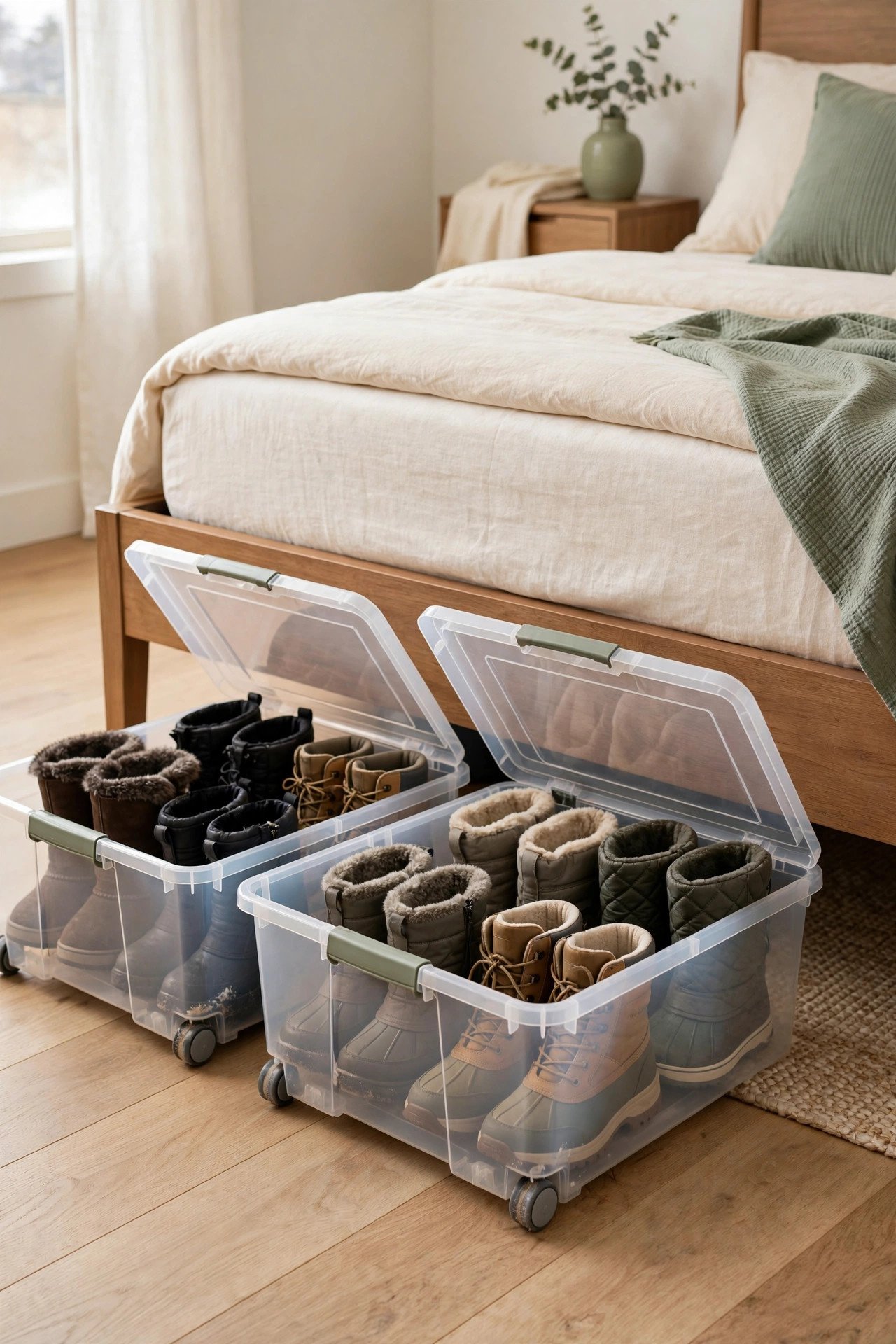
6. Slide Off-Season Boots Into Rolling Under-Bed Bins
Heavy winter boots do not need closet space all summer. Rolling bins slide under the bed and swallow off-season pairs whole. The wheels matter more than you expect — dragging a packed bin across carpet is a workout.
Clean and dry every pair before it goes into the bin. Choose bins with lids to keep dust out during the long wait. When fall arrives, rolling the bin out feels like unwrapping a gift from your past self.
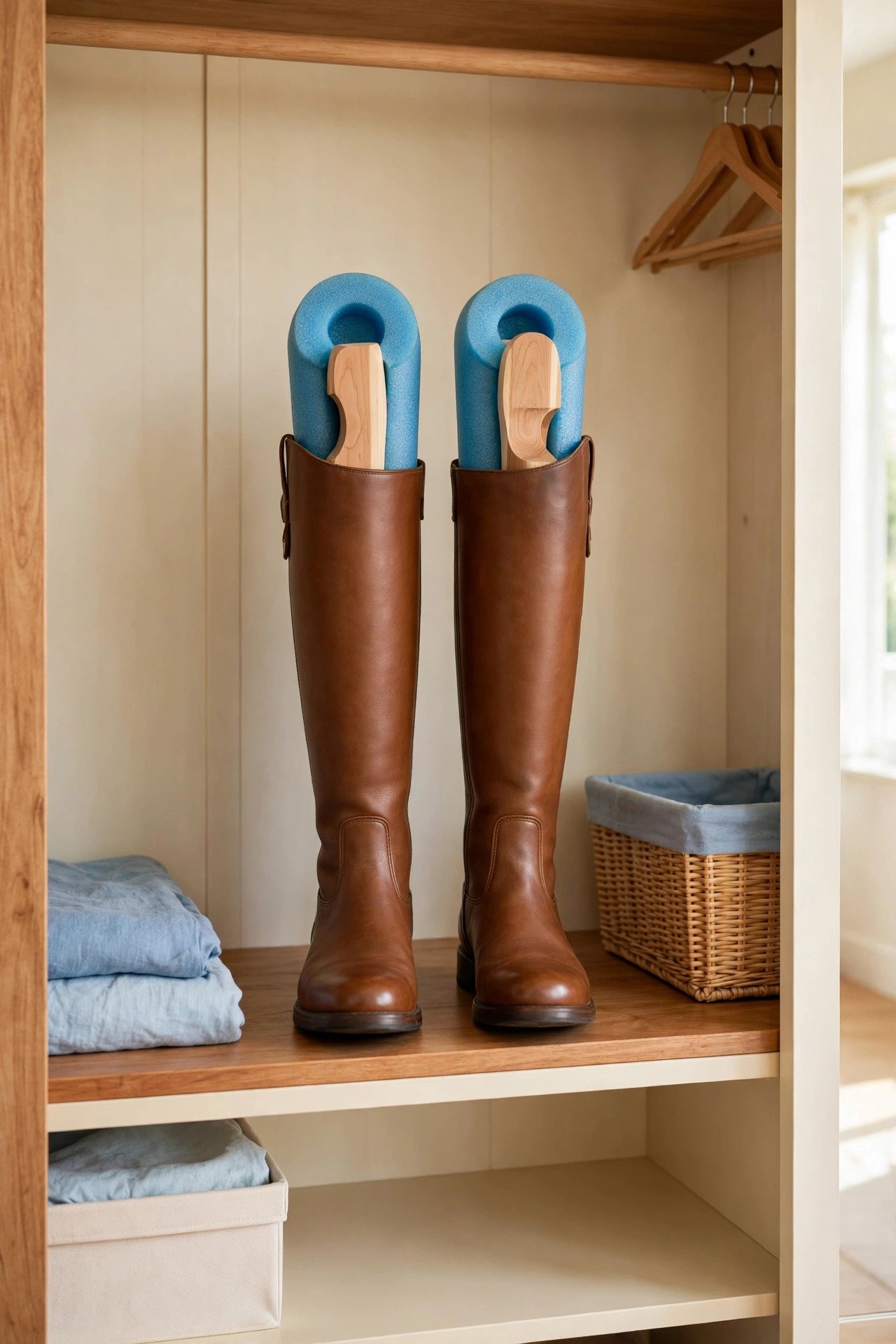
7. Shape Shafts With Pool Noodles or Boot Shapers
Floppy shafts are the enemy of good-looking boots. Slide a cut pool noodle or a proper boot shaper into each shaft to hold it tall and straight. It is the cheapest insurance against permanent creases.
Cut pool noodles to match your shaft height so they do not peek out the top. Purpose-made shapers often include hanging hooks for extra versatility. Either option keeps the leather smooth between wears.
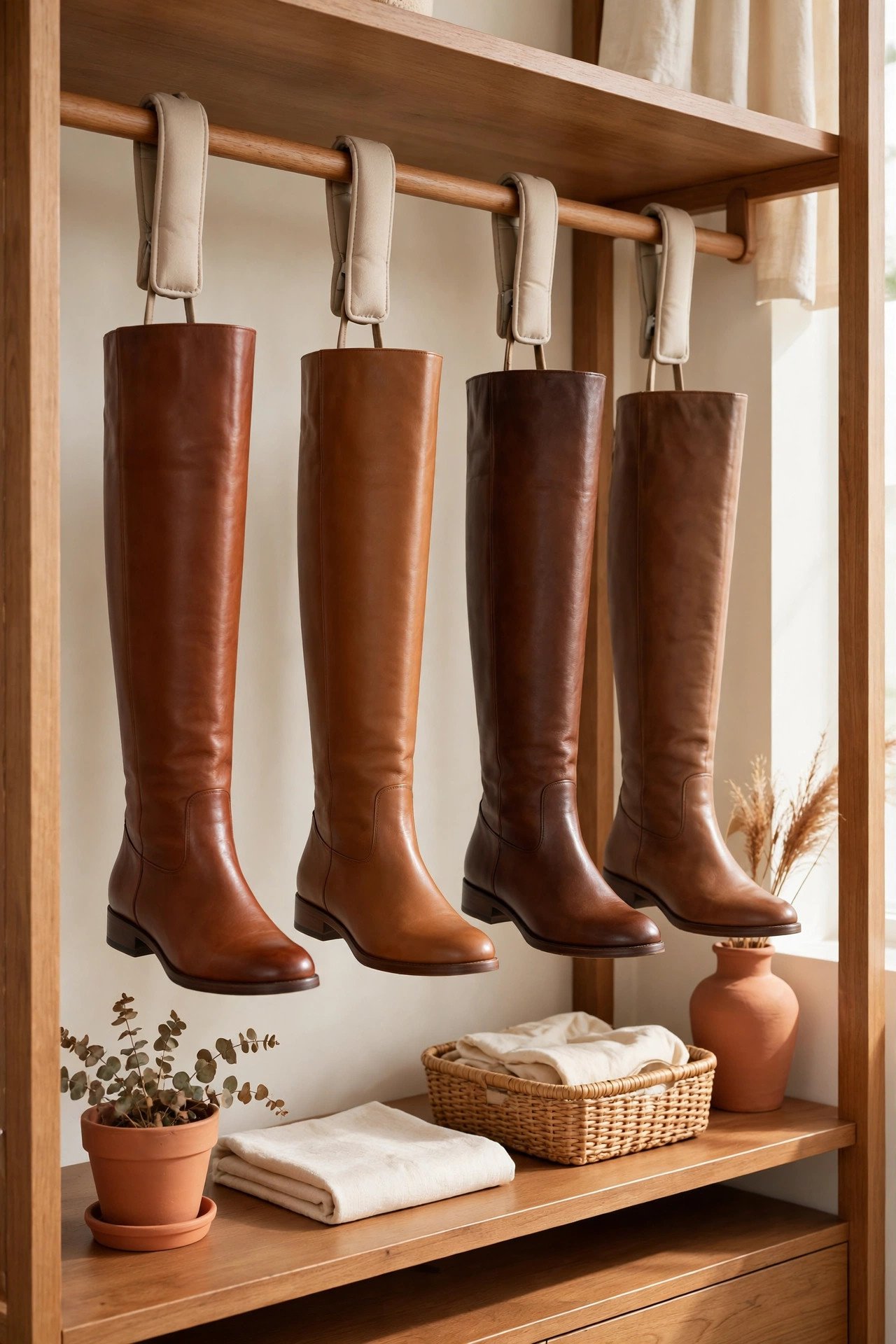
8. Hang Knee-Highs From a Closet Rod With Clamp Hangers
Clamp hangers grip boot shafts gently and let knee-highs hang at full length. Hanging prevents every crease and keeps the boots visible along the rod. It is an elegant solution for a closet with spare rod space.
Use padded clamps so the grip does not mark the leather. Hang the heaviest pairs near the rod supports to avoid sagging. This method shows off a boot collection beautifully.
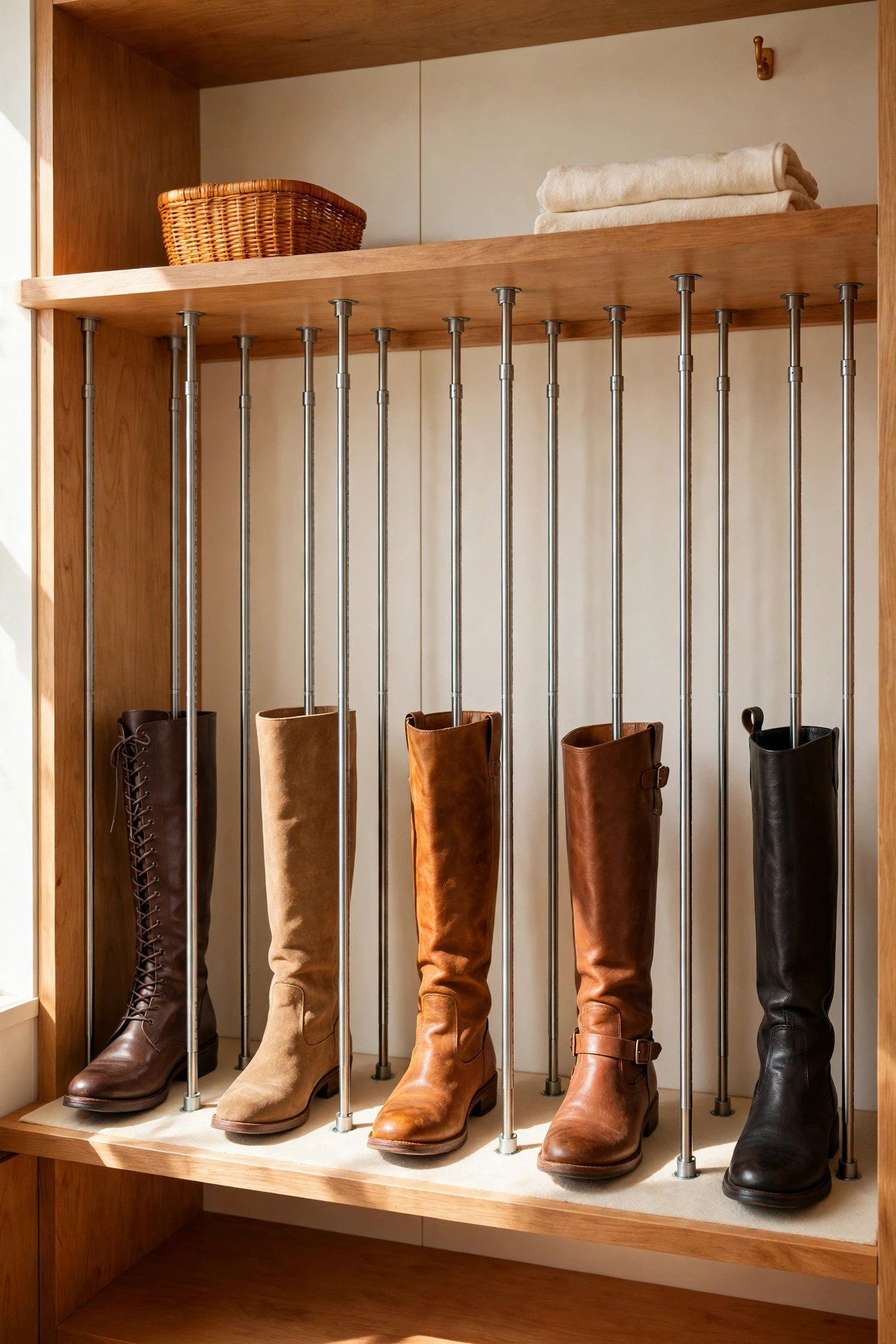
9. Divide Shelves With Tension Rods
Tension rods make instant dividers on wide boot shelves. Mount a rod vertically between shelves to create snug slots that stop boots from toppling sideways. No drilling, no damage, no fuss.
Space the rods to match your boot widths, giving wide shafts more room. The rods also work horizontally as a front guard on deep shelves. It is a five-minute upgrade with a big payoff.
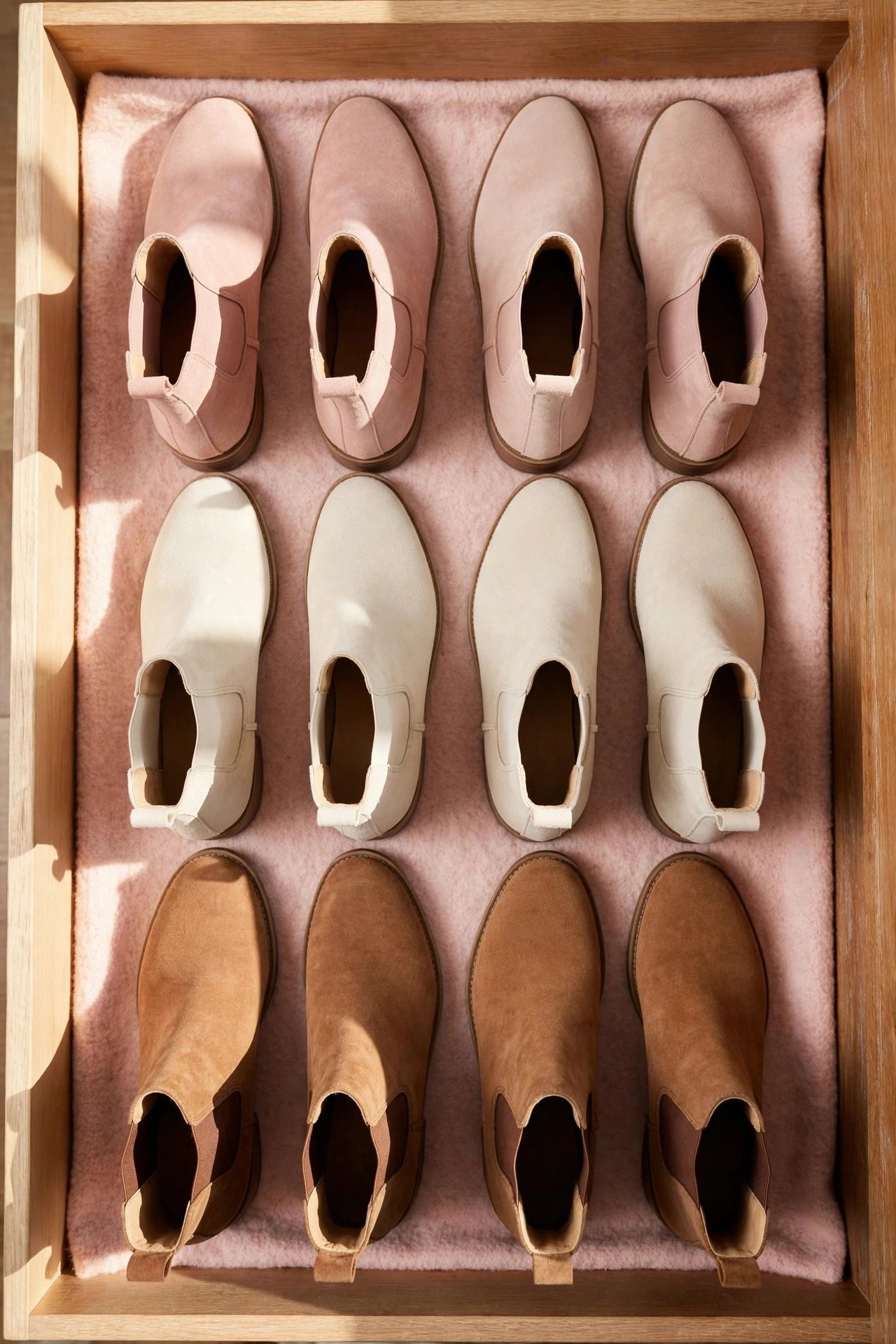
10. Lay Chelsea Boots Flat in a Shallow Drawer
Chelsea boots and other short pull-on styles rest happily in a shallow drawer. Lay each pair side by side with the elastic gussets facing up so they do not stretch. The drawer keeps them dust-free and out of sight.
Line the drawer with a soft mat to protect soles and finishes. Sort by color so the right pair is easy to spot. This method suits anyone who prefers hidden storage over open display.
11. Protect Suede in Breathable Dust Bags
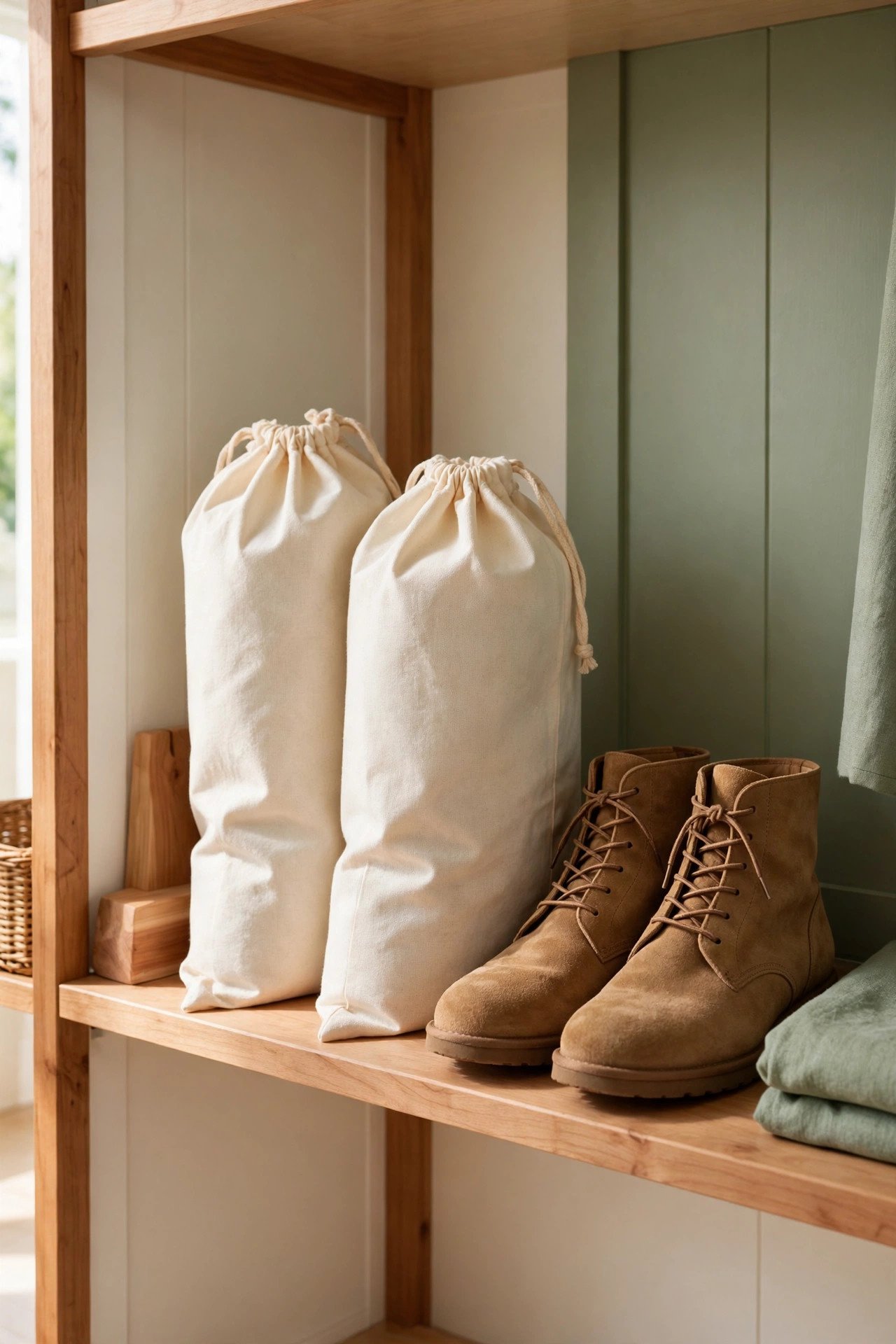
Suede boots pick up dust and scuffs faster than any other material. Store each pair in a breathable cotton dust bag, which shields the nap while letting air circulate. Never use plastic, since trapped moisture ruins suede.
Brush the suede with a soft brush before bagging to lift the nap. Keep the bagged pairs upright on a shelf, never crushed under other shoes. This care keeps suede looking velvety season after season.
12. Park Rain Boots by the Door on a Drip Tray
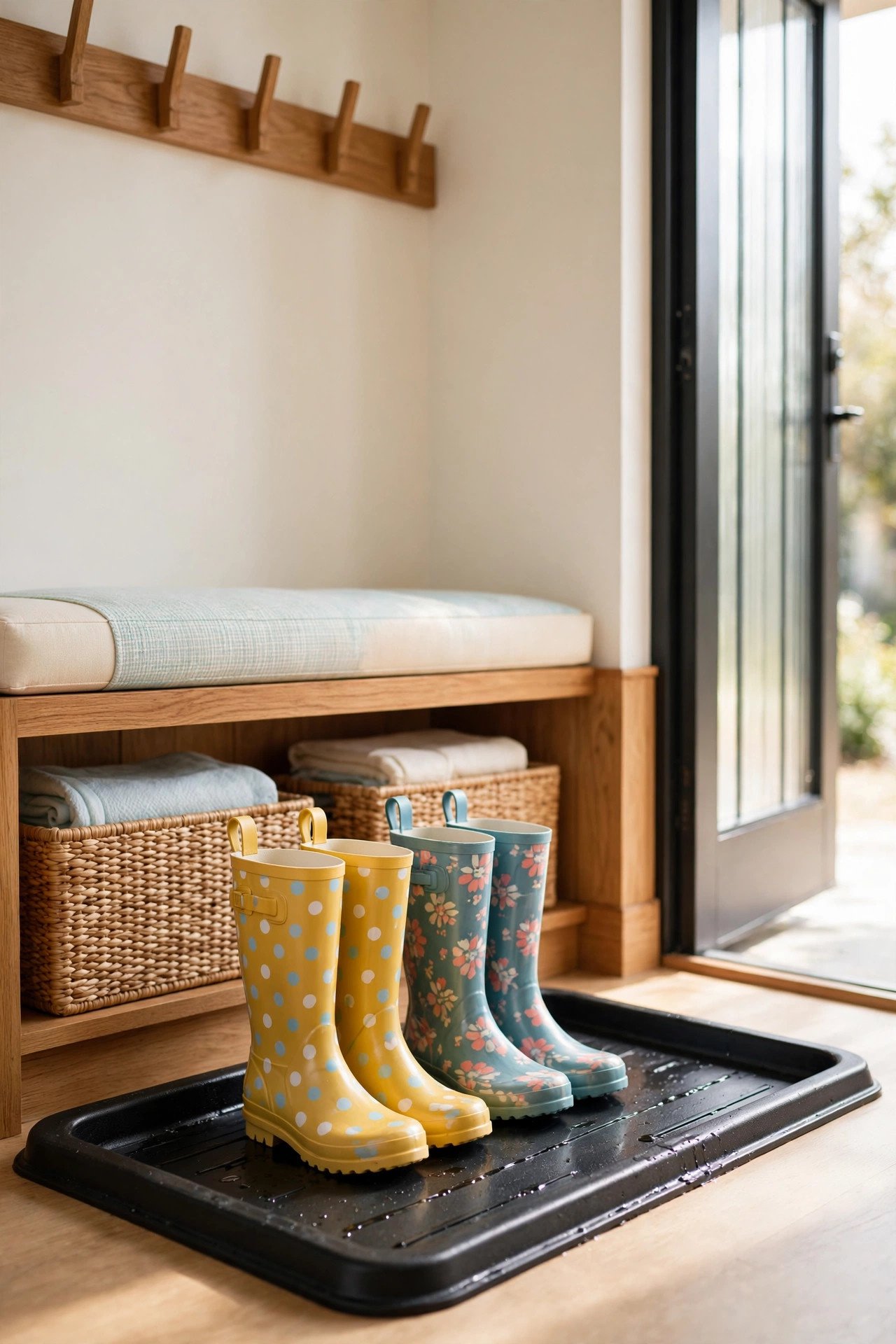
Rain boots live a muddy life and should never reach the bedroom closet. A drip tray by the door catches water and dirt while the boots air out. The tray defines their spot so they stop migrating around the entryway.
This setup pairs perfectly with a mudroom entryway station for the whole family’s outdoor gear. Choose a tray with raised edges to contain real puddles. Empty and wipe the tray weekly to stop odor.
13. Stuff Shafts With Acid-Free Tissue
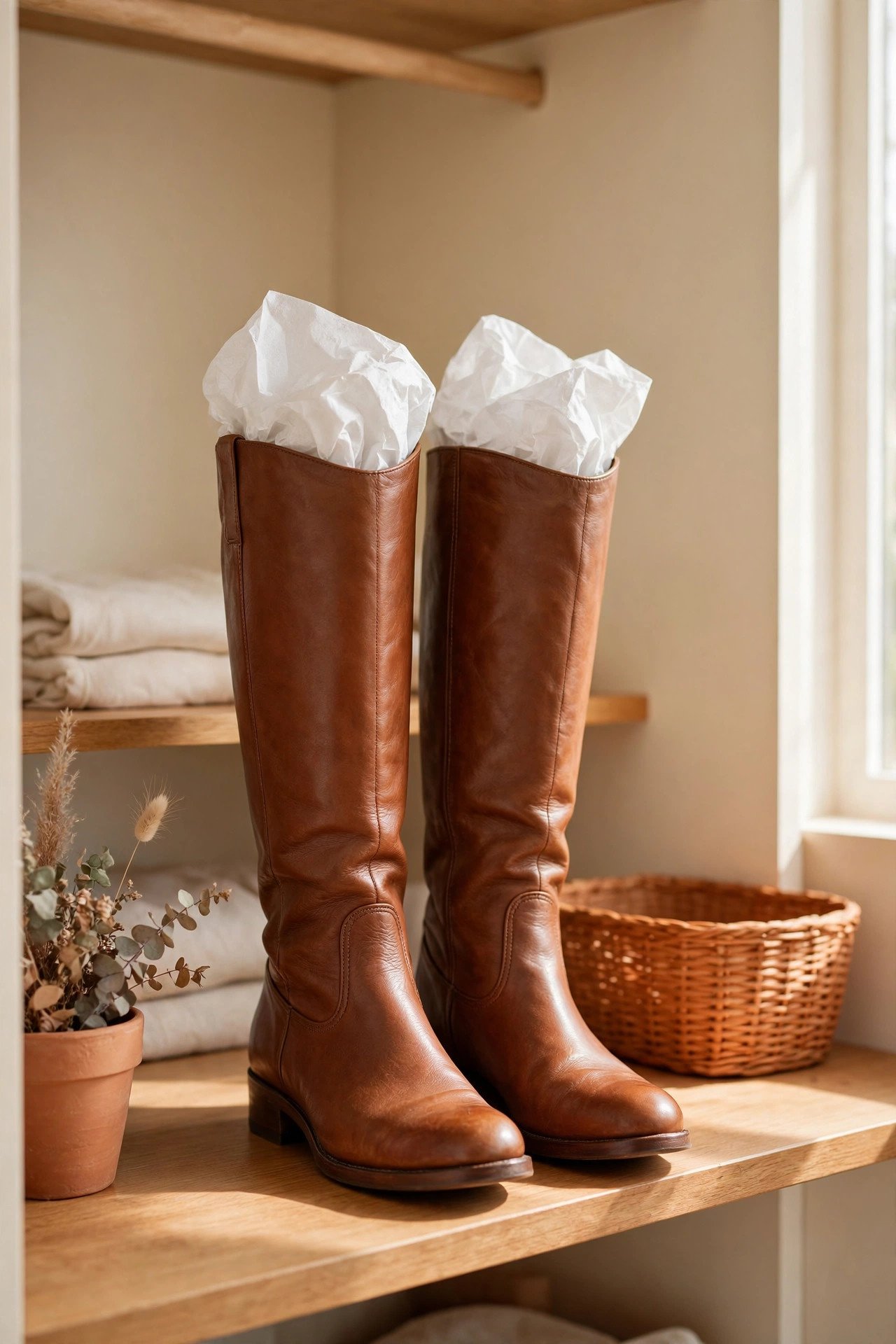
For boots going into longer storage, acid-free tissue is the gentlest support. Crumple it loosely into each shaft to hold the shape without stretching the leather. The acid-free part matters — regular paper can discolor linings.
Replace the tissue each season so it stays fresh and supportive. Combine stuffing with a dust bag for full protection. This old-school method still beats most gadgets for simple shape-keeping.
14. Hang Ankle Boots on Sturdy S Hooks
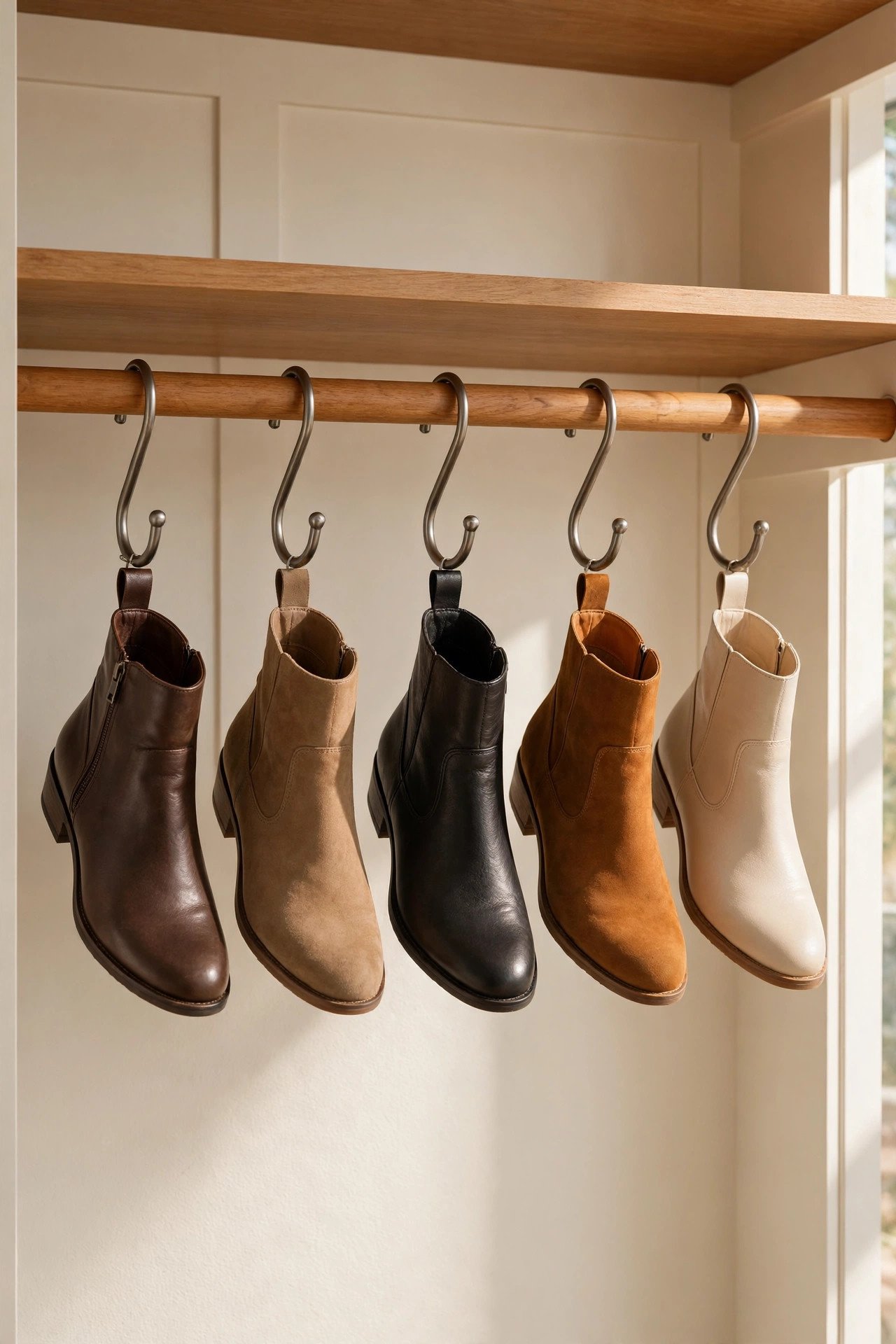
Ankle boots hang beautifully from large S hooks looped over the closet rod. Hook each pair by its pull tab or heel loop, and the boots dangle at eye level, easy to browse. Setup takes seconds.
Use heavy-duty hooks that will not straighten under the weight of leather boots. Space the hooks so pairs do not knock together. It is one of the simplest boot storage ideas that actually works.
15. Build a Boot Wall With Mounted Shelves
Turn an empty wall into a boot display with a few mounted shelves. Line the boots up like a boutique, tallest in back or grouped by color. The collection becomes decor instead of clutter.
Mount the shelves into studs so they hold the weight safely. Space the shelves to fit your tallest boots with room to spare. A boot wall works wonderfully in dressing rooms and large walk-in closets.
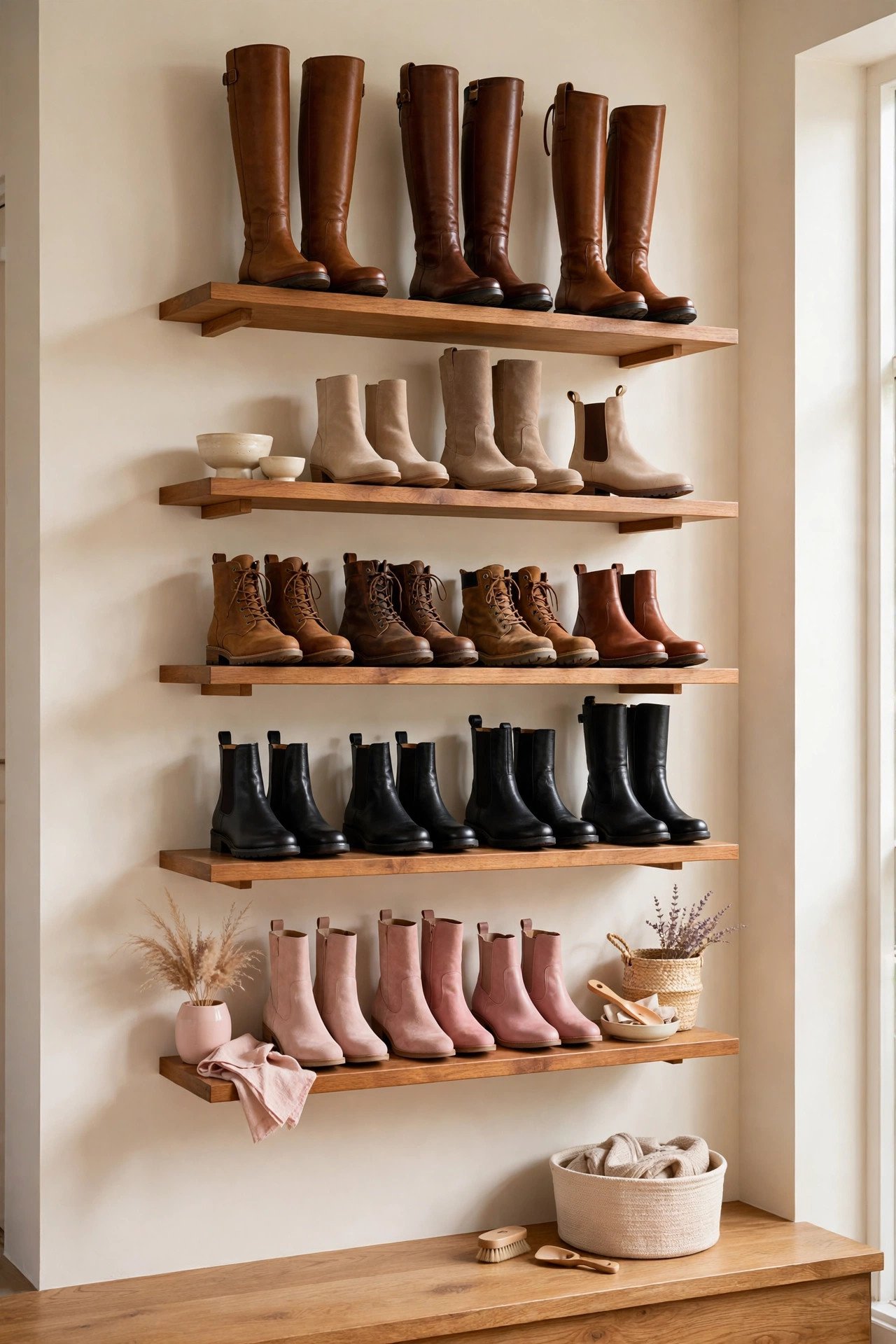
16. Adjust Shelving for Mixed Boot Heights
A boot collection mixes knee-highs, ankle boots, and everything between. Adjustable shelving lets you set each level to the boots it holds — tall slots for knee-highs, short slots for booties. No space goes to waste.
This flexible approach is a staple of good wardrobe storage design. Measure your tallest pair before locking in the layout. Re-adjust each fall when the collection changes.
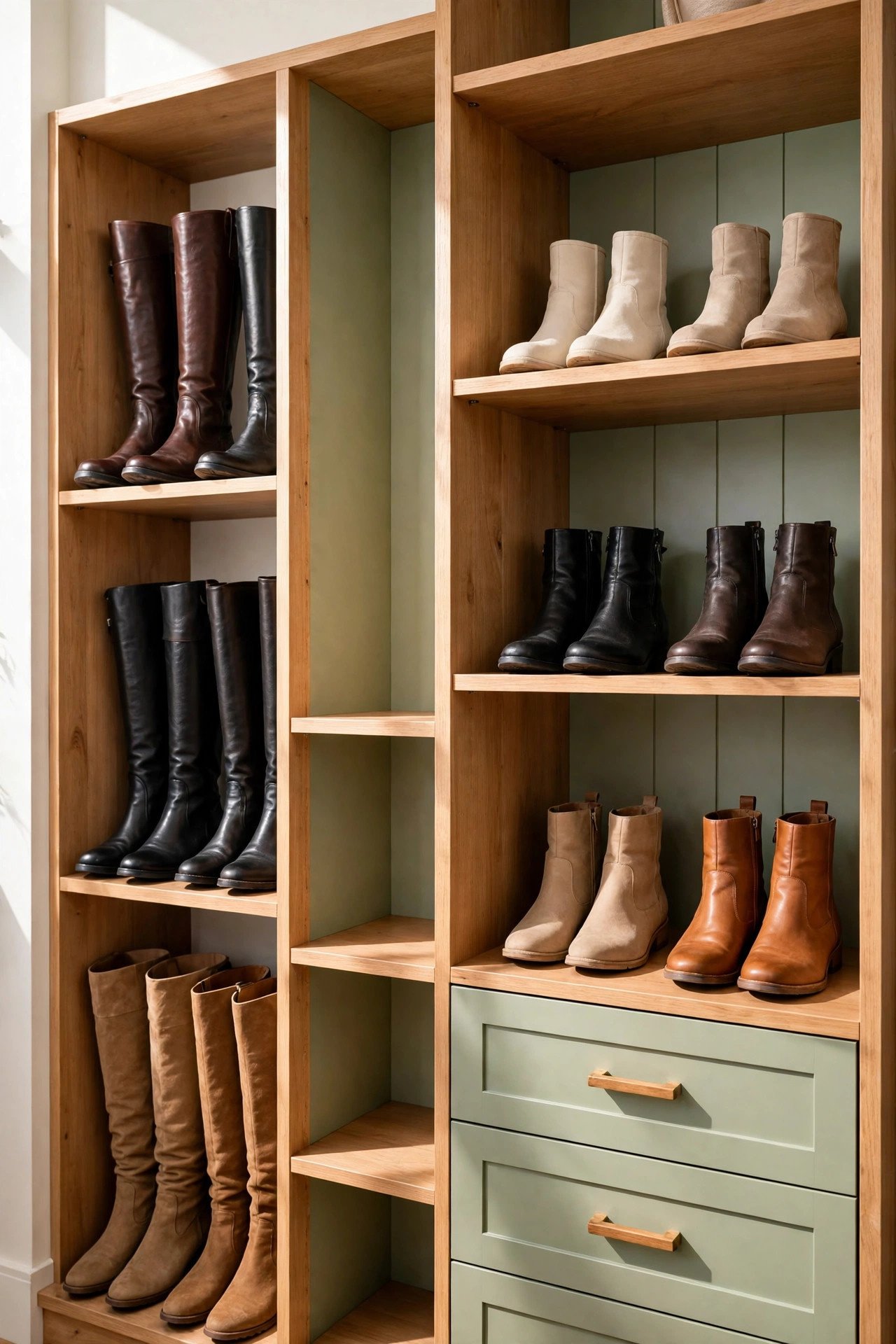
17. Store Heeled Booties Toe-to-Heel
Heeled booties nest neatly when you turn one shoe toe-to-heel against its mate. The pair interlocks and takes up barely more room than a single shoe. Two pairs fit where one used to sit.
Line the nested pairs along the shelf front so the stylish sides face outward. This trick suits stilettos, block heels, and heeled ankle boots alike. Small change, big space savings.
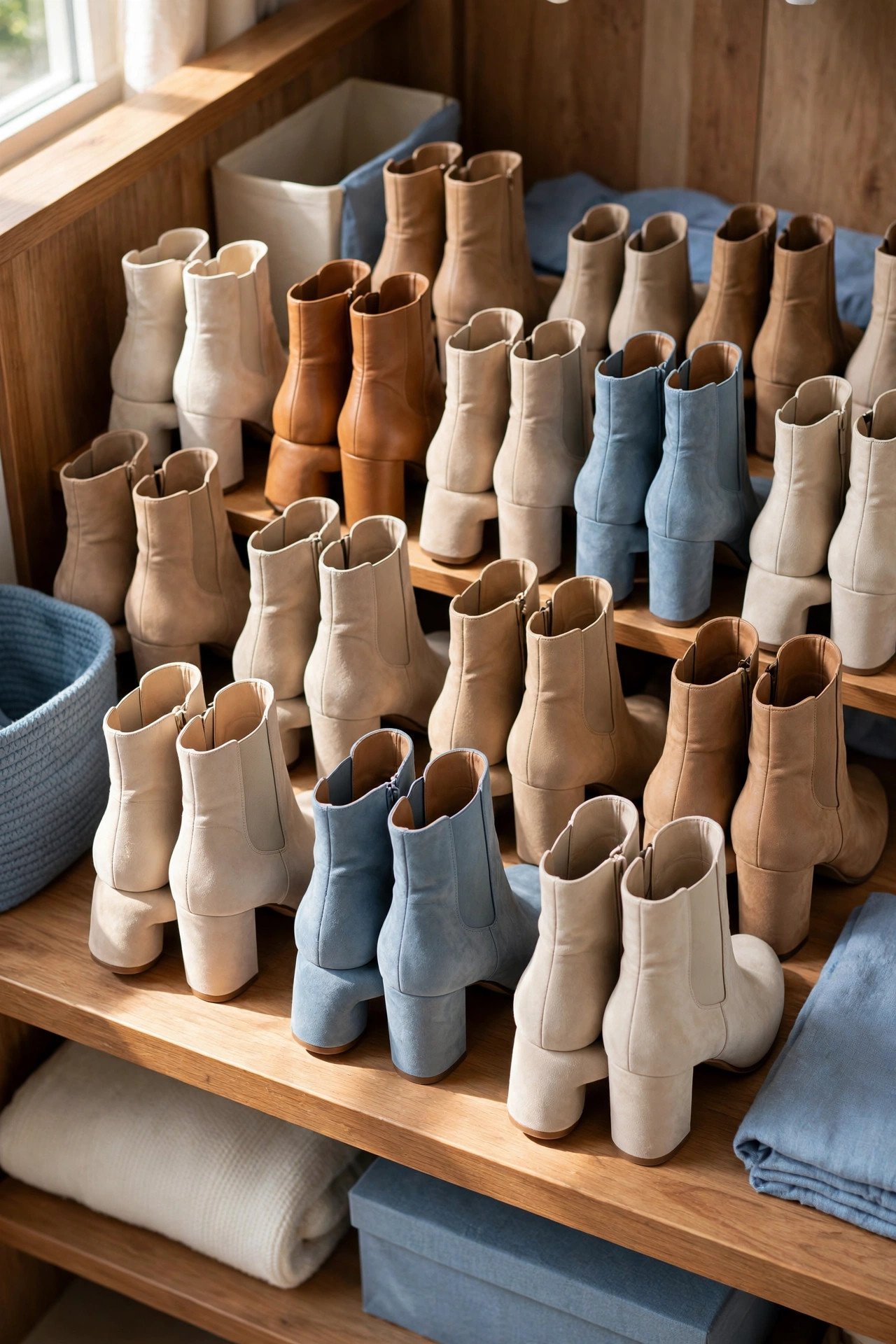
18. Fight Odor With Cedar Inserts
Boots trap moisture, and moisture breeds odor. Cedar shoe inserts absorb dampness and leave a fresh, woody scent behind. Drop a pair into every boot you store, especially in closed boxes.
Replace or sand the cedar inserts yearly to refresh their power. They also help hold the toe shape in soft boots. For very damp boots, let them air out fully before inserting the cedar.
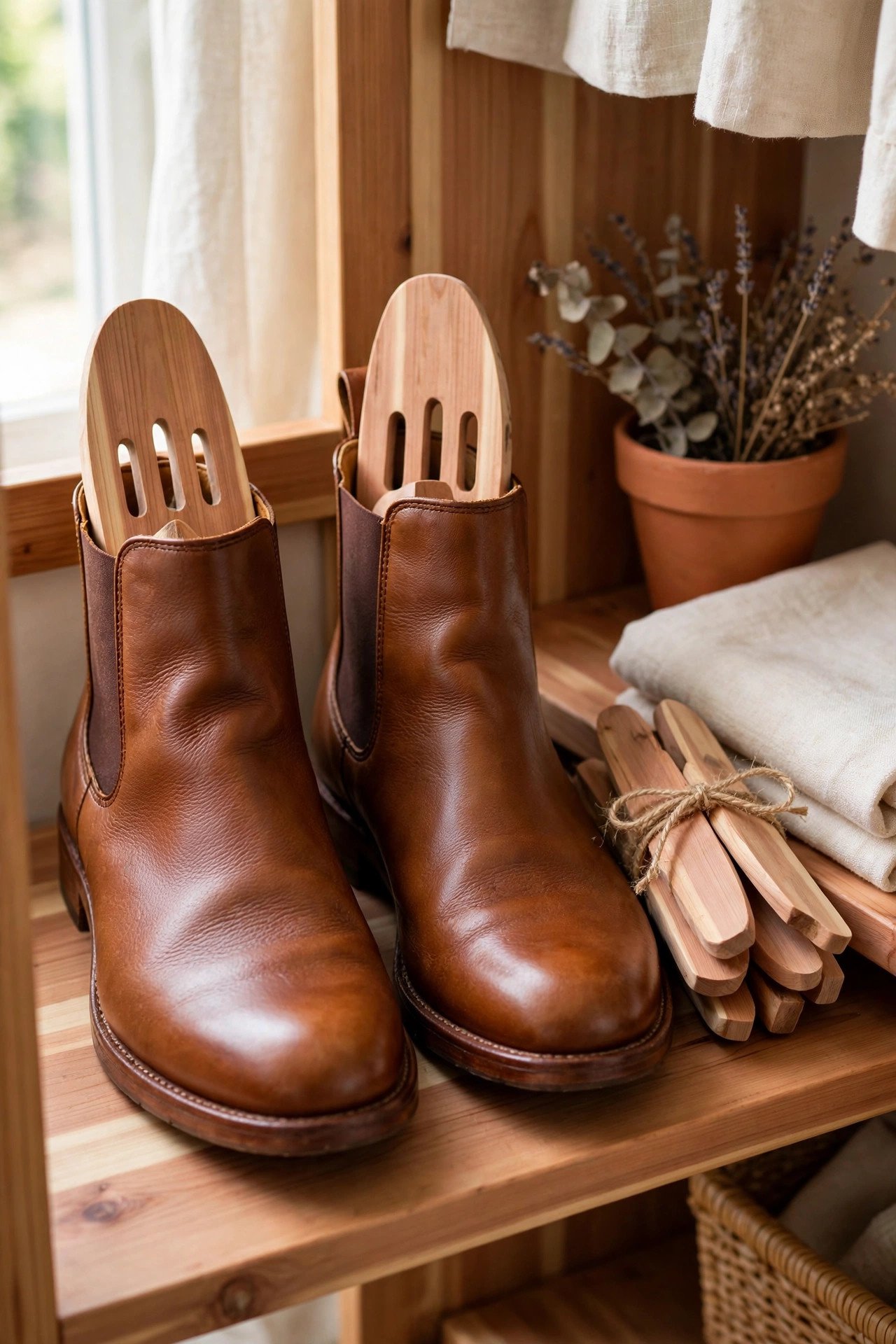
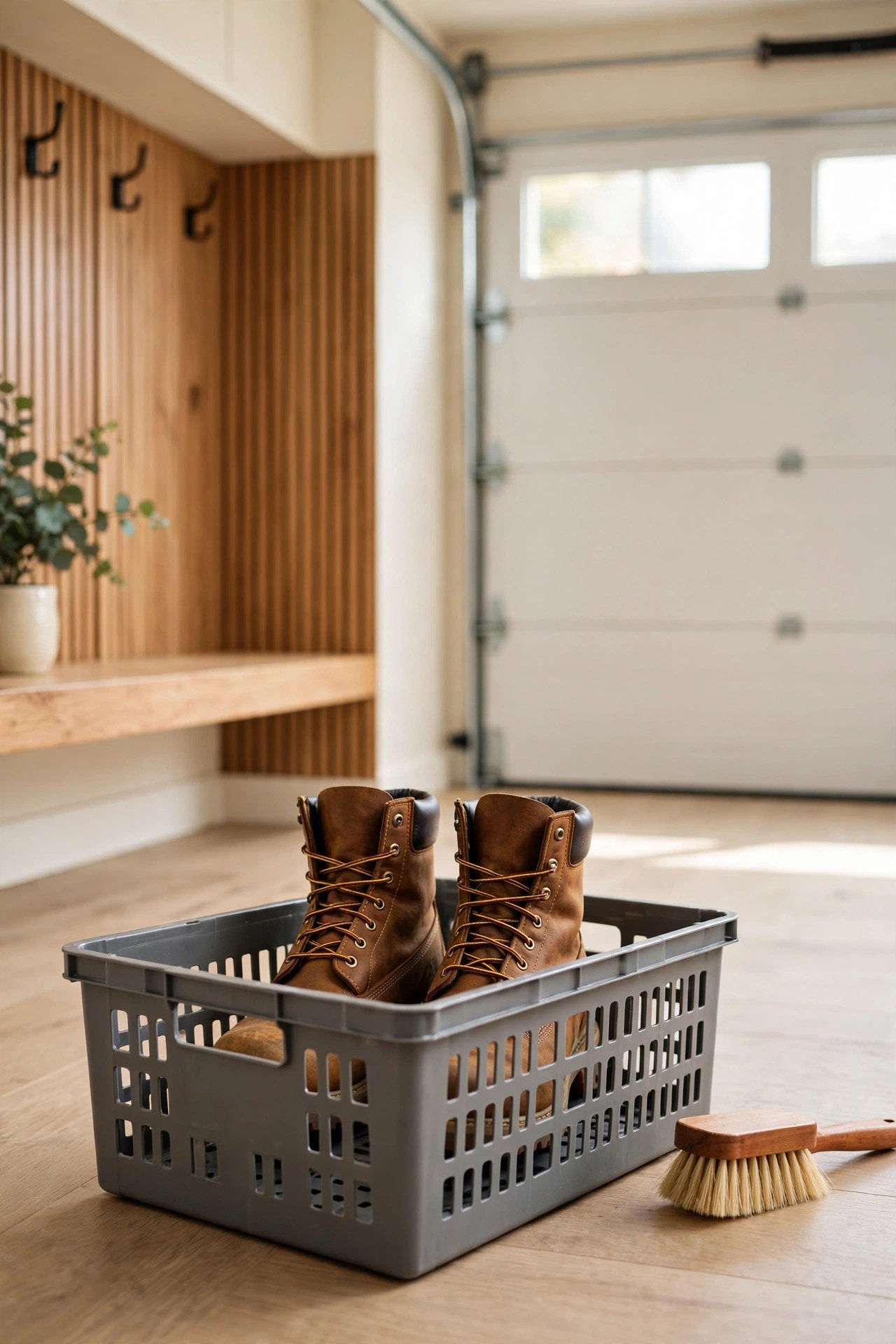
19. Keep Work Boots in a Ventilated Mudroom Bin
Work boots are heavy, dirty, and deserve their own zone far from good shoes. A ventilated bin in the mudroom or garage keeps them contained while air circulates. Mud stays out of the house entirely.
Choose a bin with drainage or a removable tray for the worst days. Brush the boots off before they go in to keep the bin cleaner. Separating work boots protects both your floors and your nicer pairs.
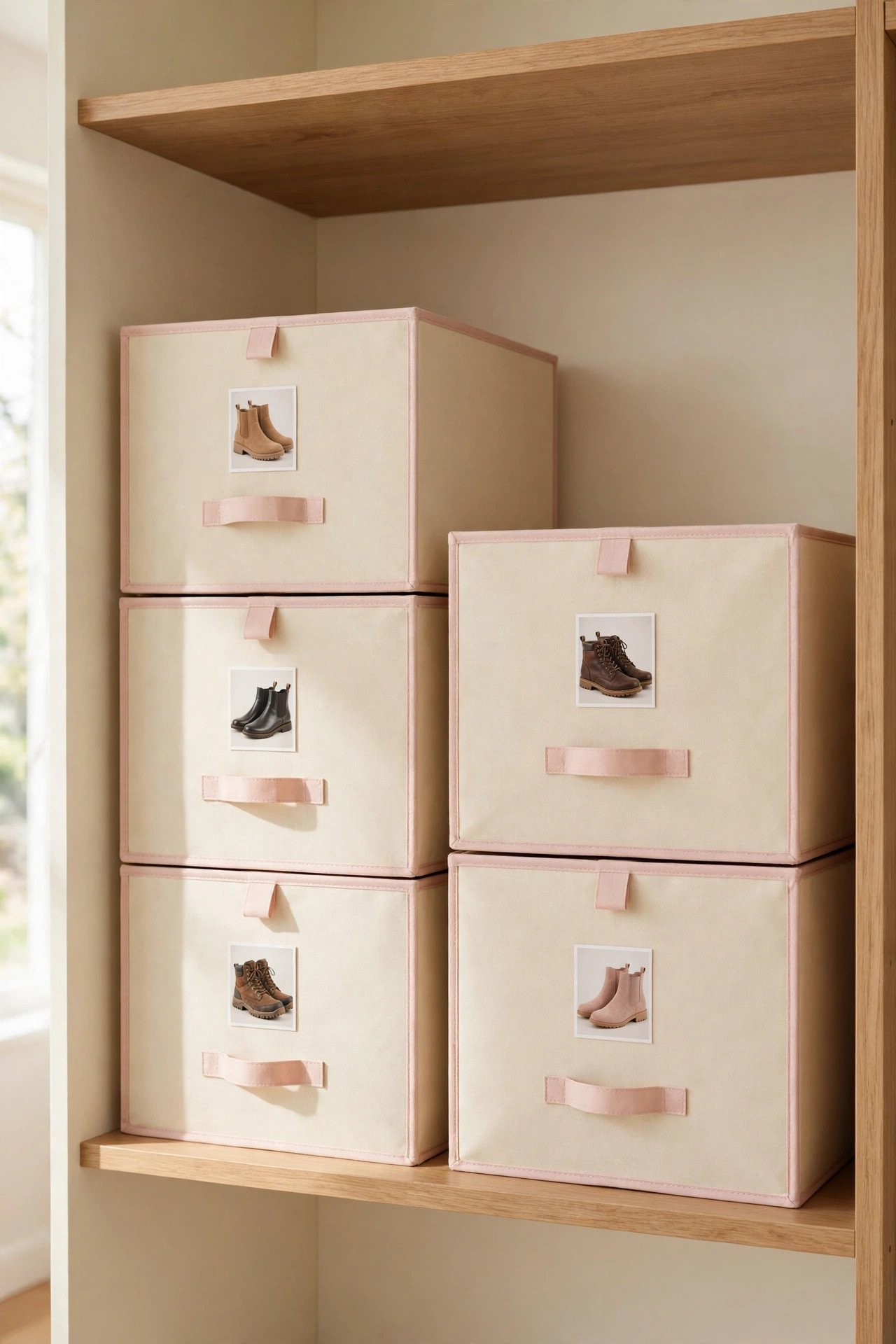
20. Photograph and Label Opaque Boxes
Opaque boxes protect boots from light, but they hide what is inside. Snap a photo of each pair and stick it on the box front, or write a clear label. You get light protection without the guessing game.
Keep the photo current — update it when a pair leaves the collection. A consistent labeling style across all boxes looks tidy on the shelf. This trick ends the era of opening five boxes to find one pair.
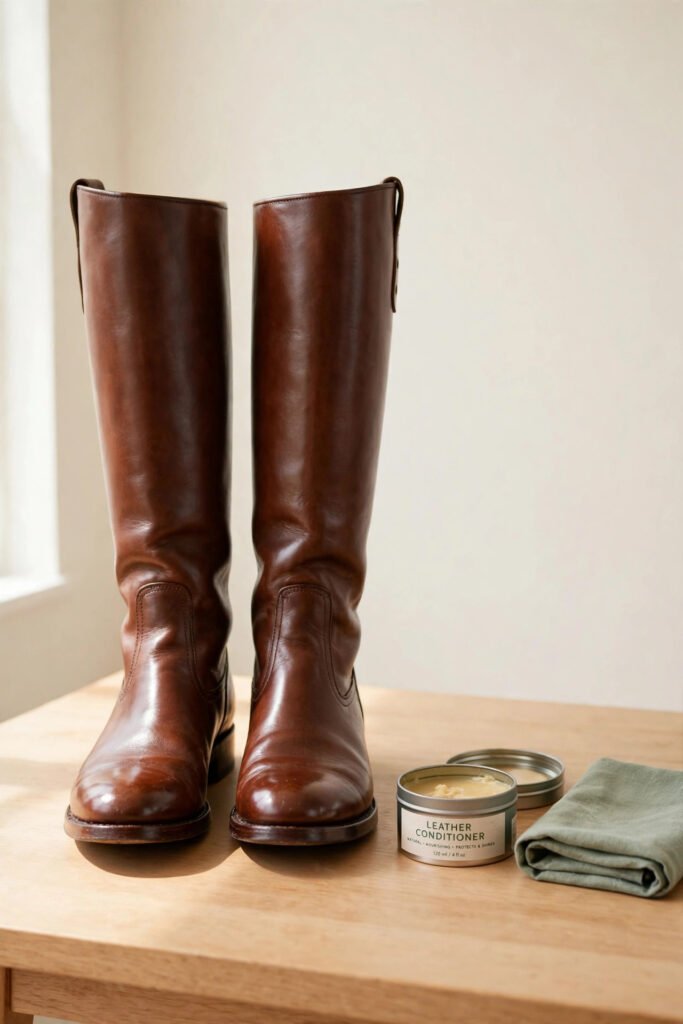
21. Condition Leather Before Long-Term Storage
Leather dries and cracks in storage without a little care. Before boots go away for the season, clean them and apply leather conditioner. The leather stays supple through months of waiting.
Test the conditioner on a hidden spot first to confirm the color stays true. Let the boots air dry fully before boxing them. Ten minutes of care now saves an expensive pair later.
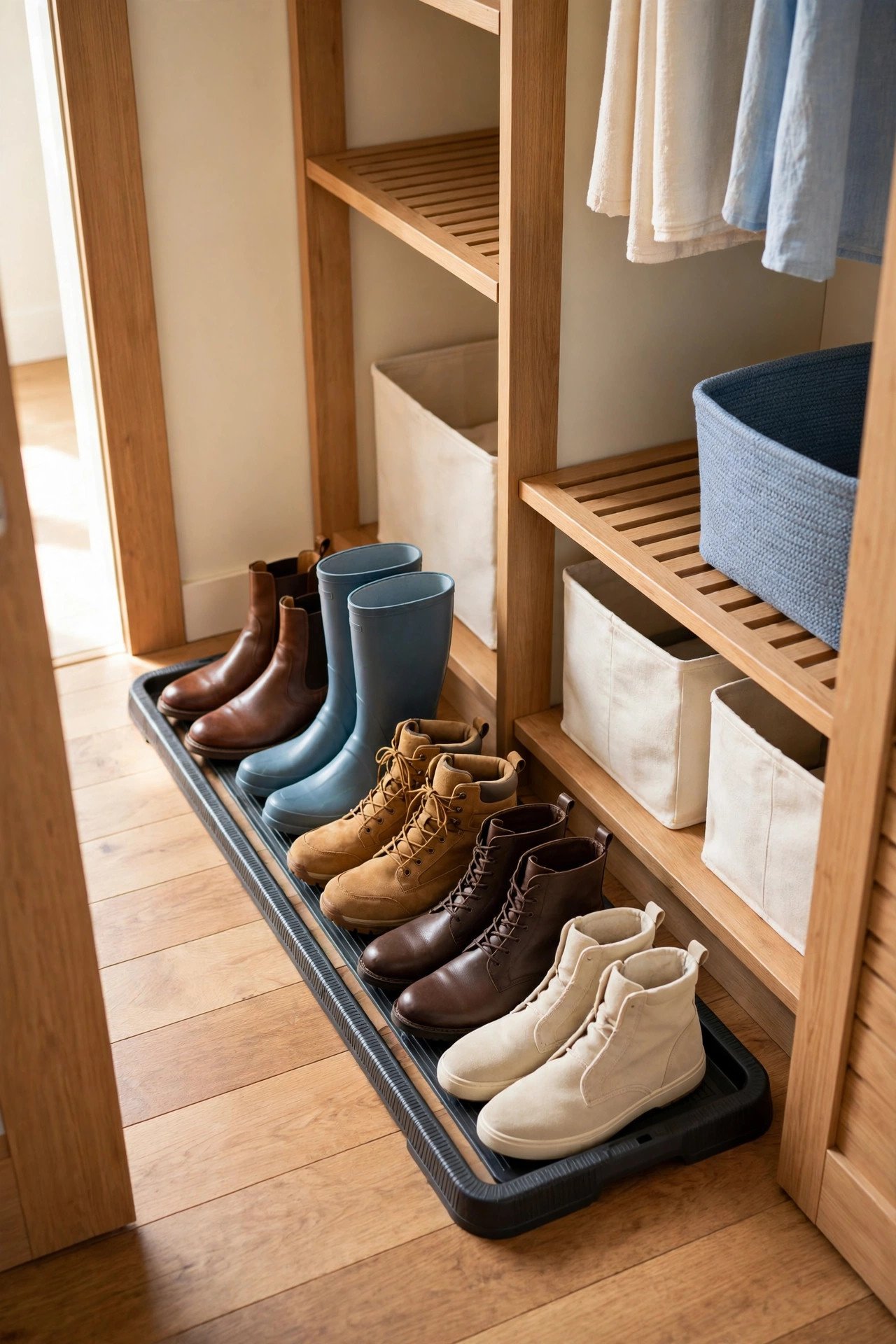
22. Protect Floors With a Boot Tray
Boots stored on closet floors can scuff wood and stain carpet. A low boot tray under each row catches dirt and defines the storage zone. The tray wipes clean in seconds.
Choose a tray long enough for your widest row of boots. Raised edges keep meltwater and mud contained in winter. It is a small addition that saves your flooring.
23. Store Kids’ Boots Upright in Small Bins
Little boots need a system little hands can manage. Small open bins at child height hold each pair upright and visible. Kids can grab their boots and — just as important — put them back.
Use one bin per child or per boot type, with a picture label for young readers. Keep only the current season in the bins. An easy system is the only one kids will actually use.
24. Run a Seasonal Boot Audit Before Fall
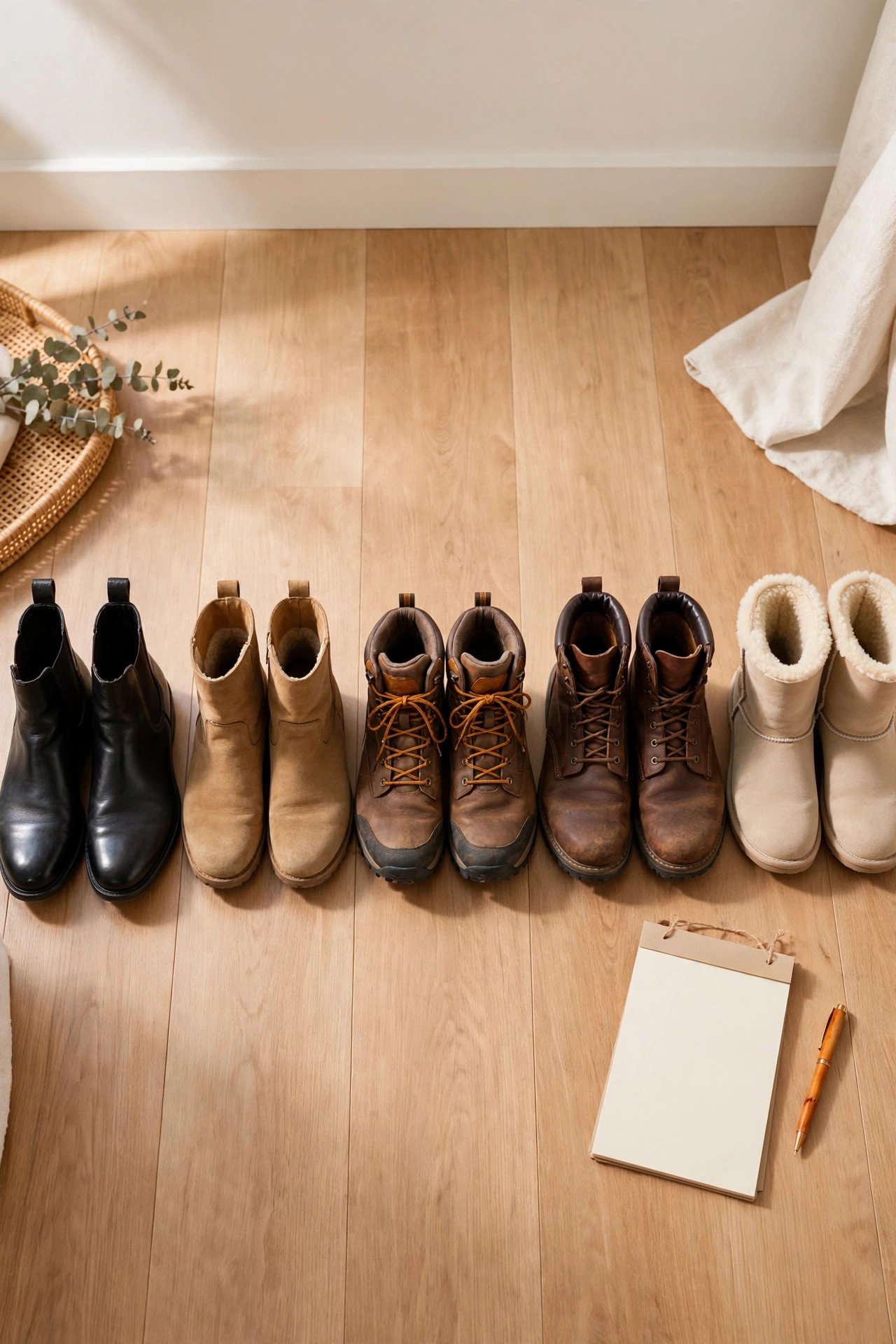
Before boot season starts, pull every pair out for an honest review. Check soles, zippers, and waterproofing, and retire the pairs that are past saving. A smaller, healthier collection is easier to store and more fun to wear.
This audit fits naturally into a fall wardrobe reset, when you are already swapping seasons. Repair what is worth fixing and donate the rest. Your boot storage will thank you all winter.
Conclusion
Boots ask for a little more care than other shoes, but they repay it with years of good looks. Keep shafts upright, protect the materials, and give tall and short styles the zones they need. A boot collection with a real system is a joy to open the closet to.
Start with the pairs you wear most and build outward from there. By the time the cold weather arrives, every boot will have a home — and you will know exactly where each one lives.
Frequently Asked Questions
How do I store tall boots so they do not flop over?
Keep tall boots upright with support inside the shaft. Boot shapers, cut pool noodles, or loosely crumpled acid-free tissue all hold the shaft tall and prevent permanent creases. A dedicated shelf organizer or vertical boot tower keeps the supported pairs standing neatly.
What is the best way to store boots in a small closet?
Use vertical space first. An over-the-door rack holds short boots, S hooks on the closet rod hang ankle boots, and stackable clear boxes use the full shelf height. Move off-season pairs into rolling under-bed bins to free the closet for the boots you wear now.
Should I store boots in boxes or leave them out?
Both work if you do it right. Boxes protect boots from dust and light, especially with photo labels so you can find pairs fast. Open shelving keeps daily boots visible and easy to grab. Use boxes for off-season and special pairs, and open storage for the boots you wear weekly.
How do I store suede boots safely?
Brush suede boots with a soft brush to lift the nap, then store each pair in a breathable cotton dust bag. Never use plastic, since trapped moisture damages suede. Keep the bagged boots upright on a shelf where nothing crushes them.
How do I keep stored boots from smelling?
Dry boots fully before storing them, since trapped moisture causes most odor. Cedar inserts absorb dampness and keep boots fresh inside closed boxes. Ventilated bins help for work and rain boots. Cleaning boots before storage also stops smells at the source.

Hi, I’m Emily! I turn messy corners into cozy, organized spots. DreamNestDecor is where I share simple, practical home ideas — decor, organization, and small-space solutions that work in real life, not just in photos. Every idea here is carefully researched before it’s shared.