Walk into most play areas and you will see the same scene. Every toy is out, nothing is being played with, and your child says there is nothing to do. The problem is rarely too few toys. It is too many choices at once.
Toy rotation fixes this with a simple idea. You keep a small set of toys out and store the rest. Every week or two, you swap some toys in and some toys out. Old toys feel brand new again, and cleanup takes minutes instead of an hour.
These 29 toy rotation ideas give you bins, zones, labels, and routines that keep kids’ play areas organized without constant nagging.
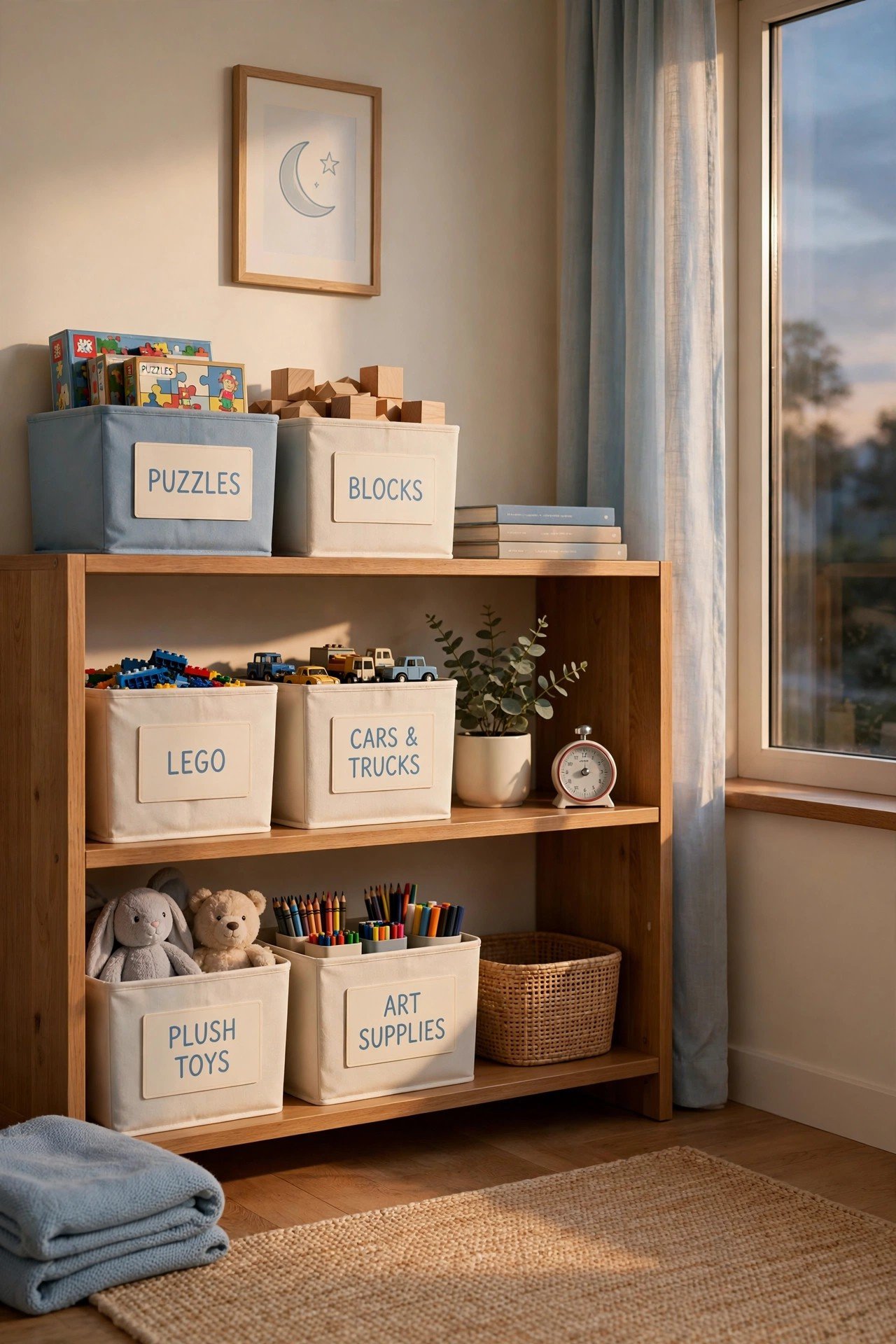
1. Start With a Five-Bin Starter Rotation
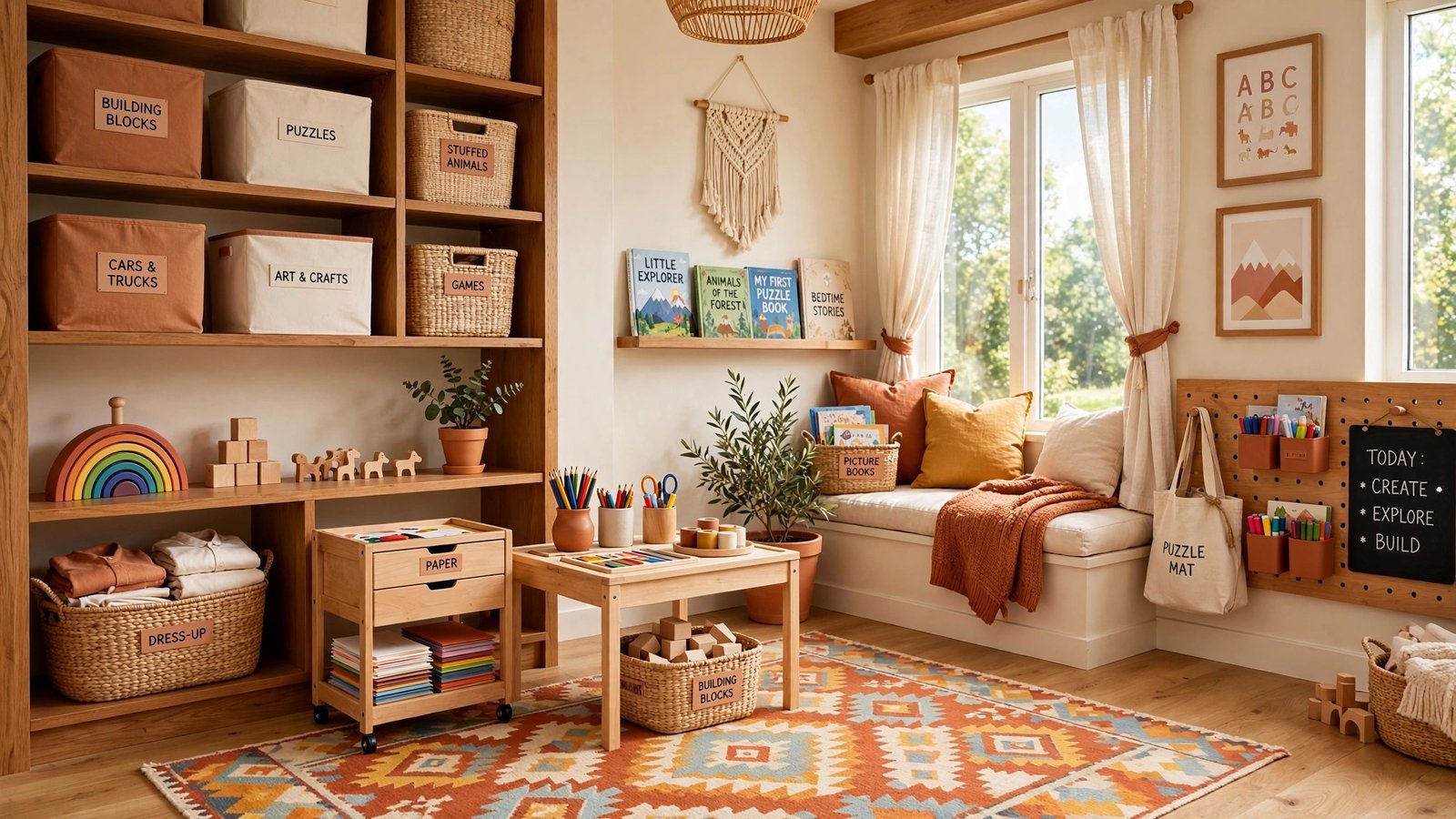
Do not try to rotate everything on day one. Grab five bins or boxes and sort the toys into five rough groups. Put one bin out and store the other four in a closet or on a high shelf.
Swap one bin each week, and your child gets a fresh set of toys with almost no effort from you. Five bins is enough to feel new and small enough to manage. You can grow the system later once the habit sticks.
2. Sort Every Toy by Type First
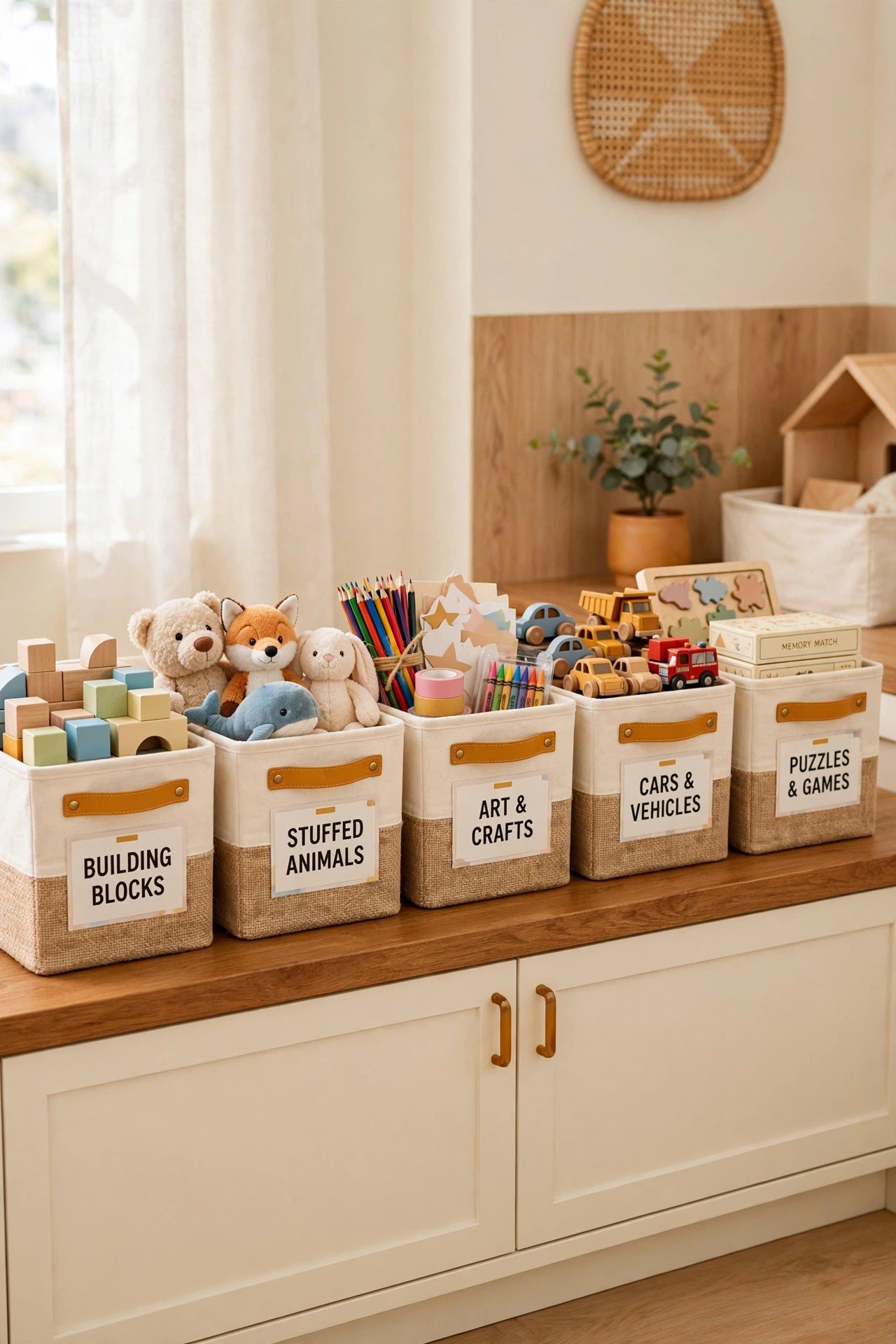
Before you build any system, dump the toys out and sort them by type. Blocks with blocks, dolls with dolls, cars with cars, art supplies together. Sorting shows you what you own and what is broken or missing pieces.
Toss broken toys and set stained or outgrown ones aside for donation. What is left is your true collection, and it is often smaller than you feared. Clean categories make every later step of rotation easy.
3. Use Clear Labeled Bins for Each Category
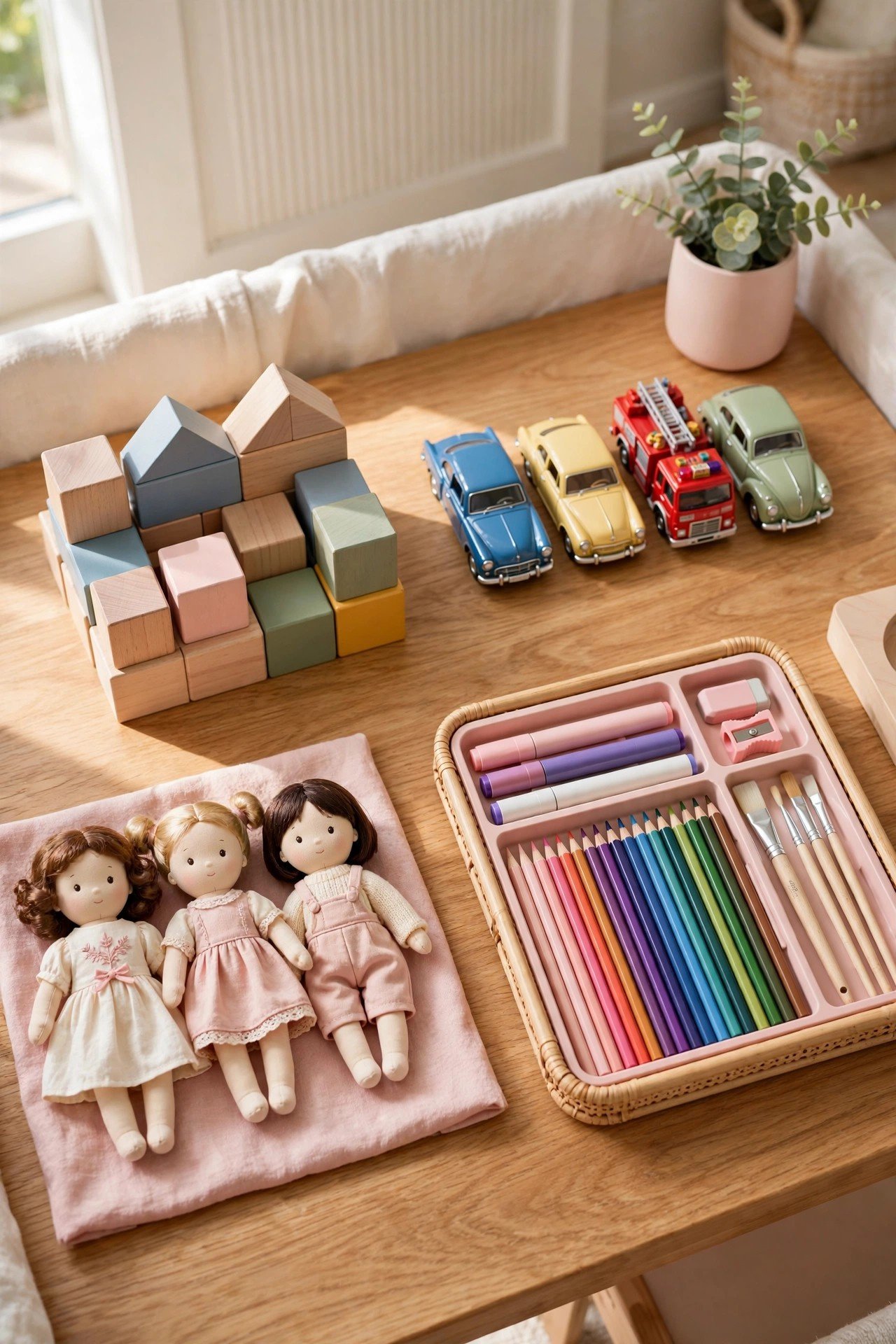
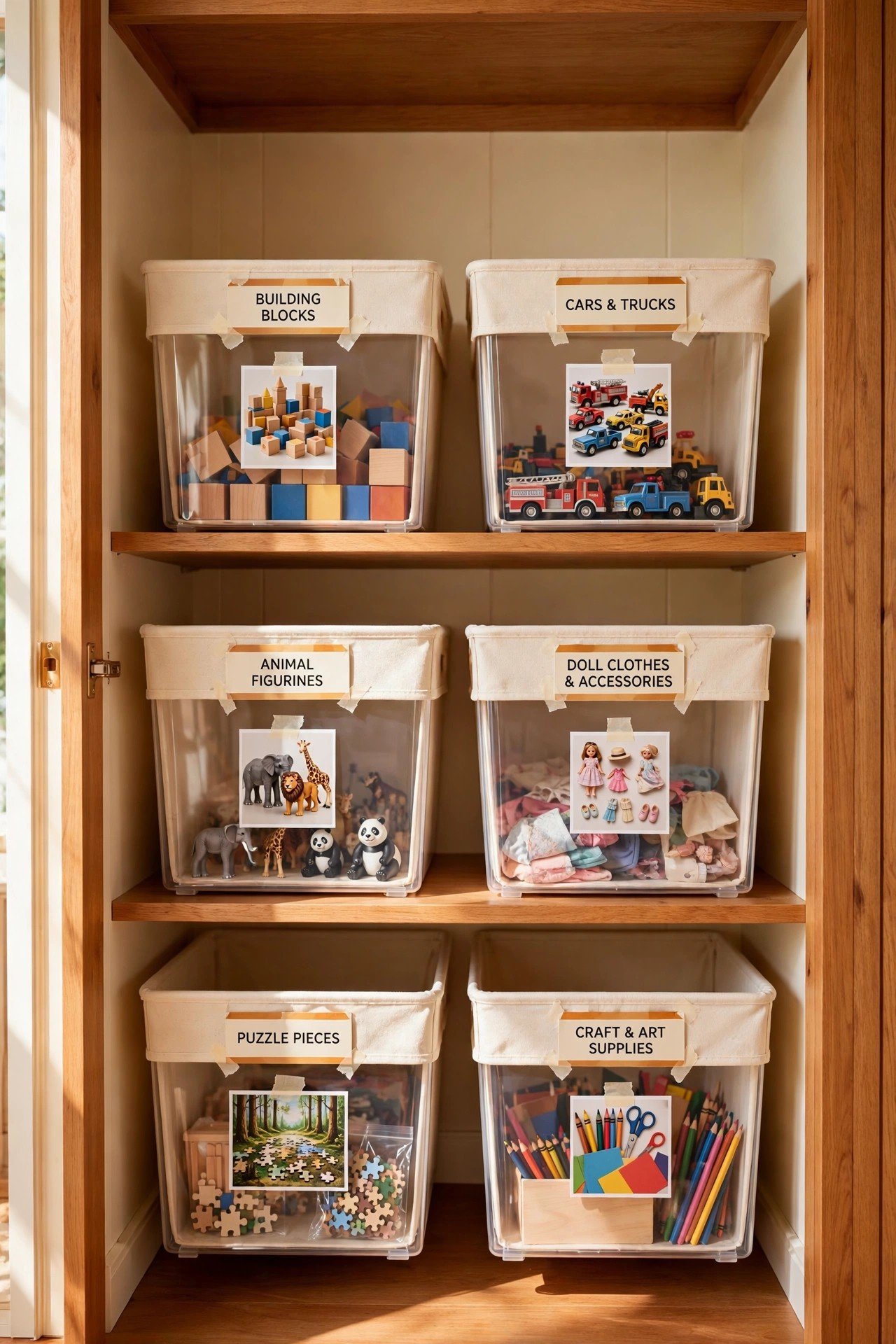
Give every toy category its own clear bin with a printed label. Clear sides let you see what is inside without opening ten lids. Labels with both words and pictures help pre-readers find toys on their own.
Keep the bins the same size so they stack neatly on shelves. One category per bin stops the mixed-up jumble that makes cleanup painful. When a bin is full, something old must leave before something new comes in.
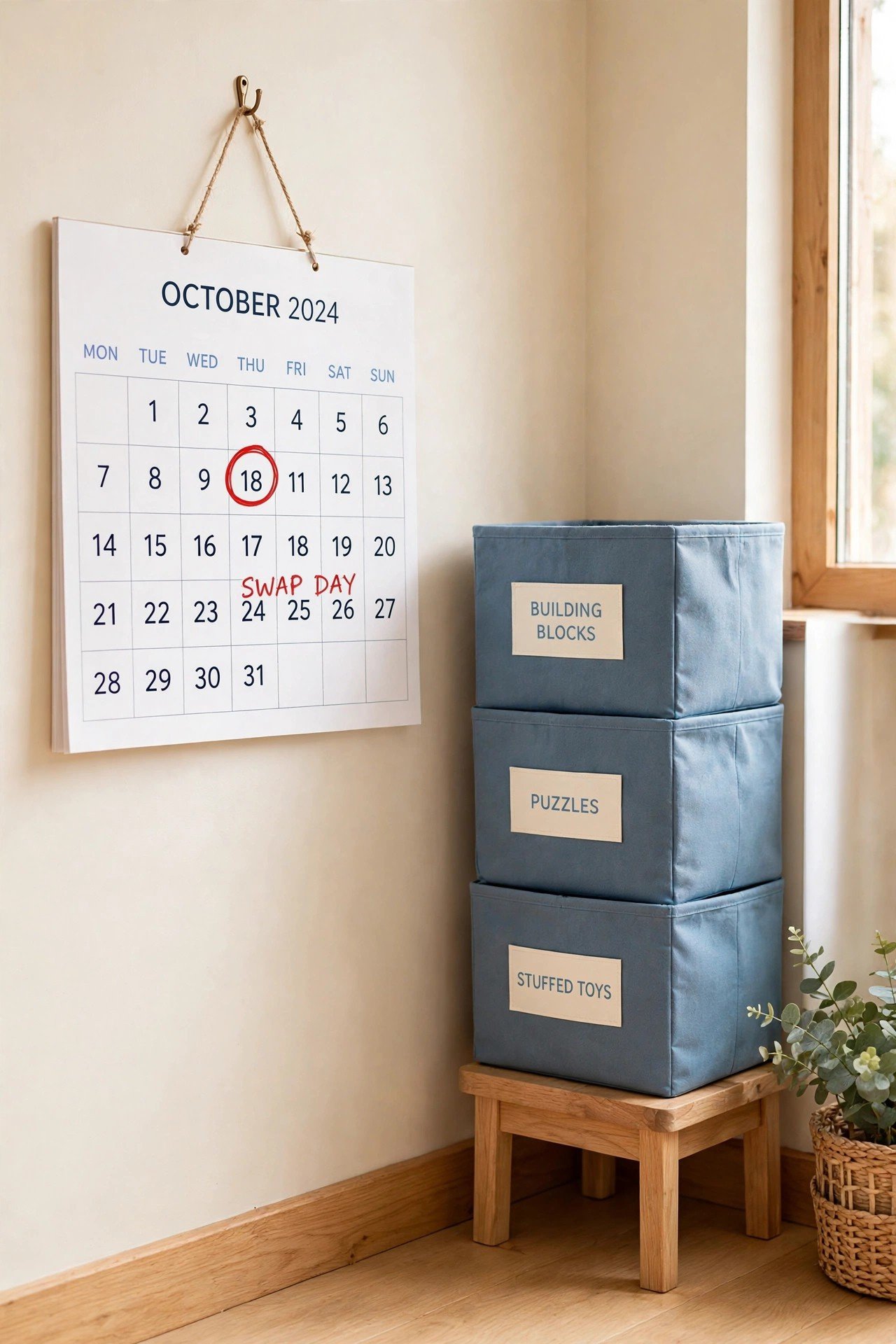
4. Build a Monthly Swap Calendar
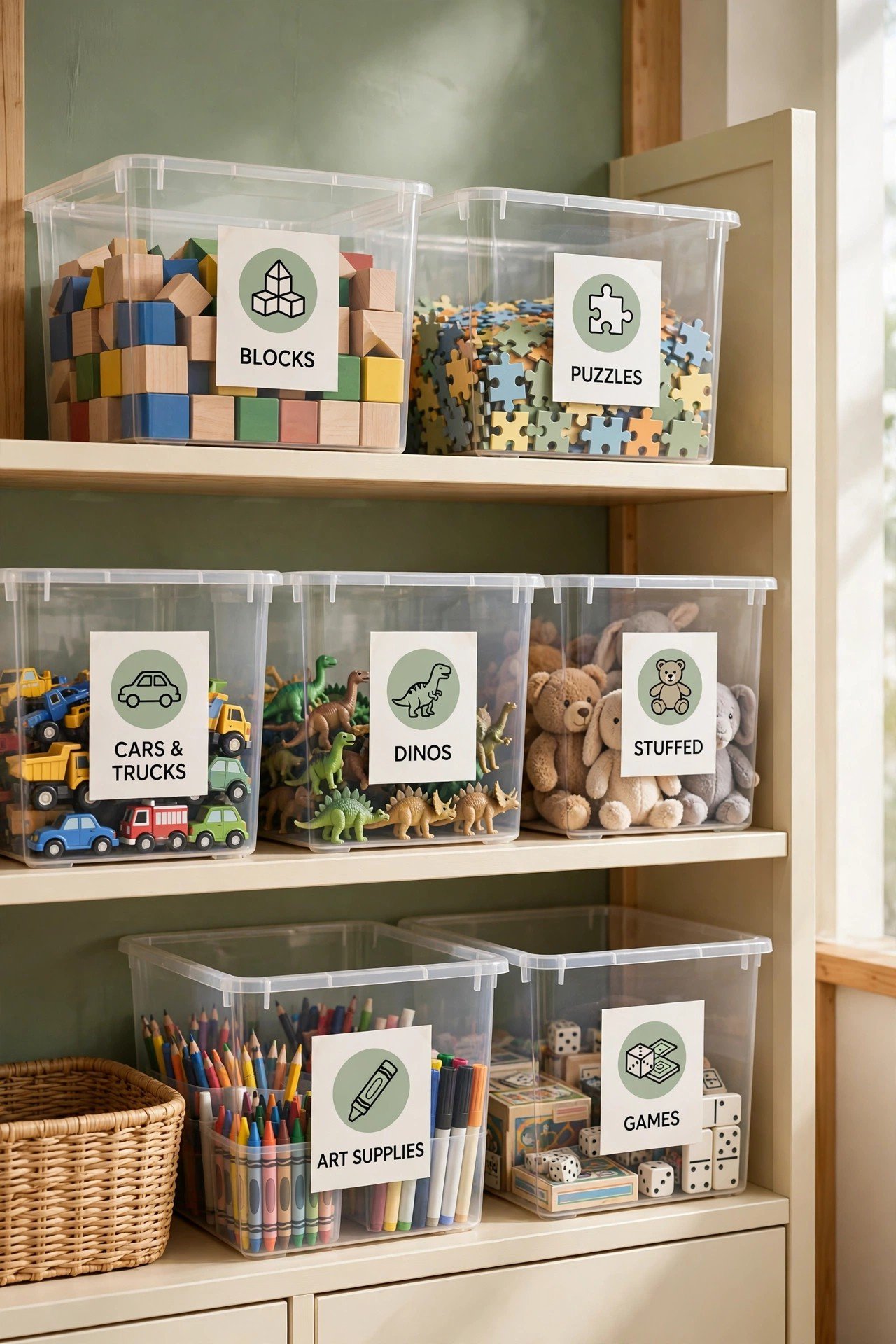
Rotation fails when you forget to rotate. Mark swap day on the calendar, like the first Sunday of each month. A fixed date turns rotation into a routine instead of a someday project.
Write which bins swap on a small card taped inside the closet door. The whole job takes fifteen minutes when the plan is already made. Kids start to look forward to swap day like a mini holiday.
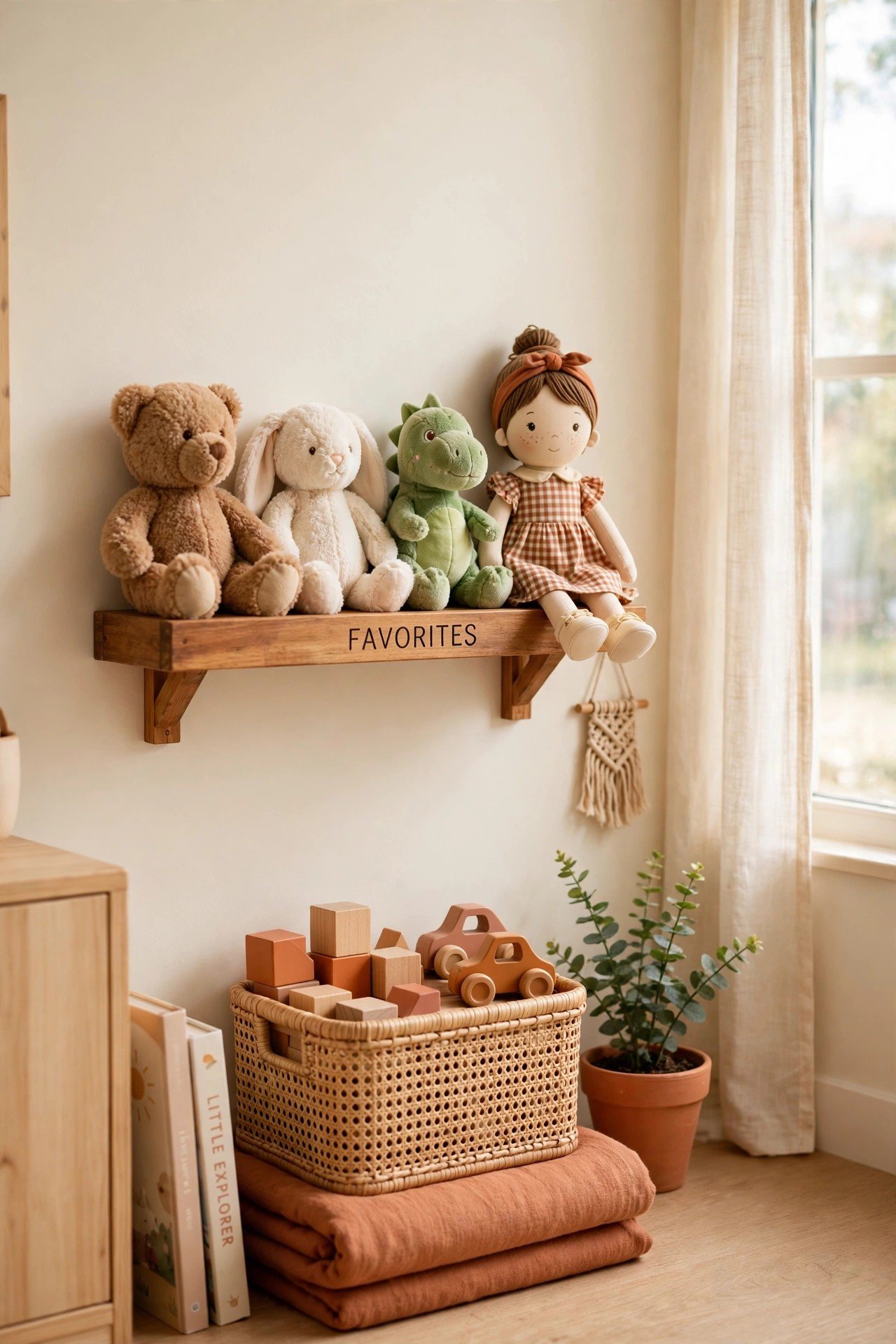
5. Keep One Favorites Shelf Always Open
Every child has two or three toys they cannot sleep without. Keep those favorites on a small shelf that never rotates. This safety net makes the rest of the system easy for kids to accept.
Let your child choose which toys earn the favorites shelf. Revisit the picks every few months as interests change. When the must-have toys stay put, swap day feels exciting instead of scary.
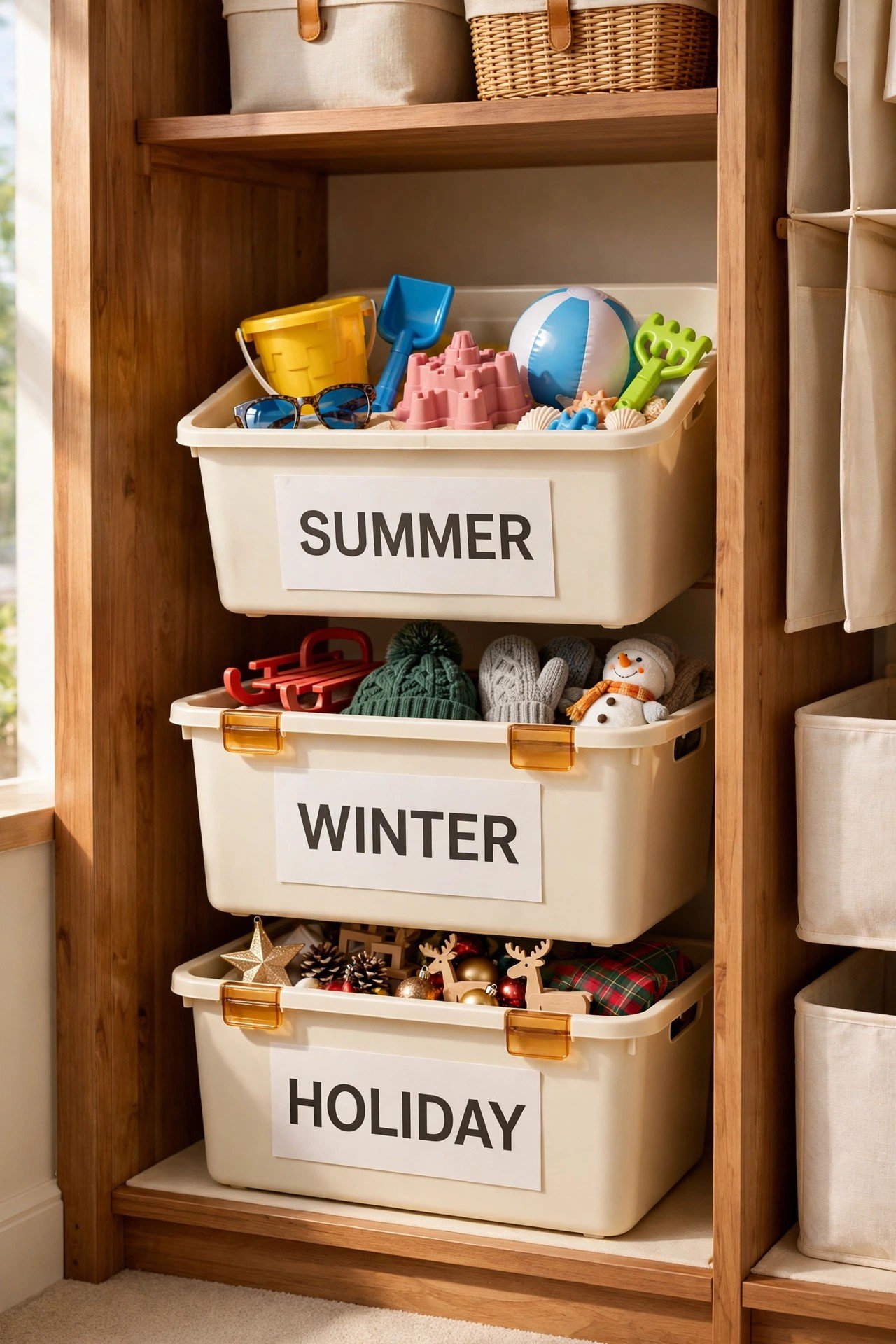
6. Rotate Seasonal and Holiday Toys
Beach toys in winter and dress-up capes in summer just create clutter. Pack seasonal toys into labeled bins and bring them out when the season turns. The return feels like opening presents.
Store holiday toys right after the holiday ends, while the memory is fresh. Write the season on the bin in big letters so you find it fast next year. Seasonal rotation keeps the play area matched to real life.
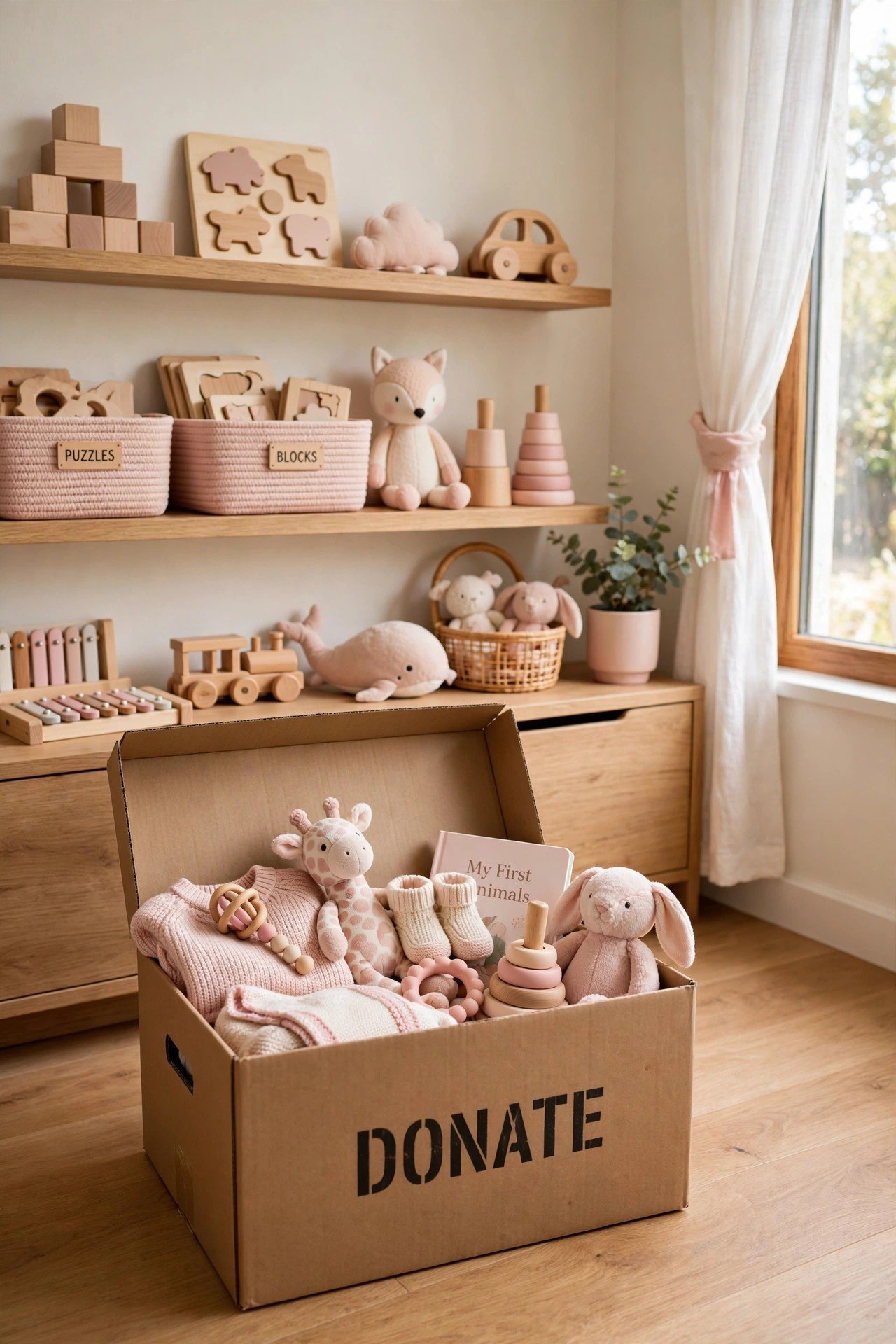
7. Box Up Outgrown Toys Right Away
Outgrown toys mixed with current toys double your clutter. The moment you notice a toy is too babyish, box it up for donation or storage. Do not let it drift back onto the shelf.
Keep one donation box in the closet and add to it all month. When it is full, drop it off the same week. Fast exits keep the rotation pool fresh and age-appropriate.
8. Set Up Activity Zones in the Play Area
One big toy pile invites one big mess. Divide the play area into small zones: a building corner, a reading nook, an art table, and a pretend-play spot. Each zone holds only the toys for that activity.
Use rugs or low shelves as natural dividers between zones. Kids play longer when each zone feels like its own little world. Cleanup is faster too, because every toy has a zone to return to.
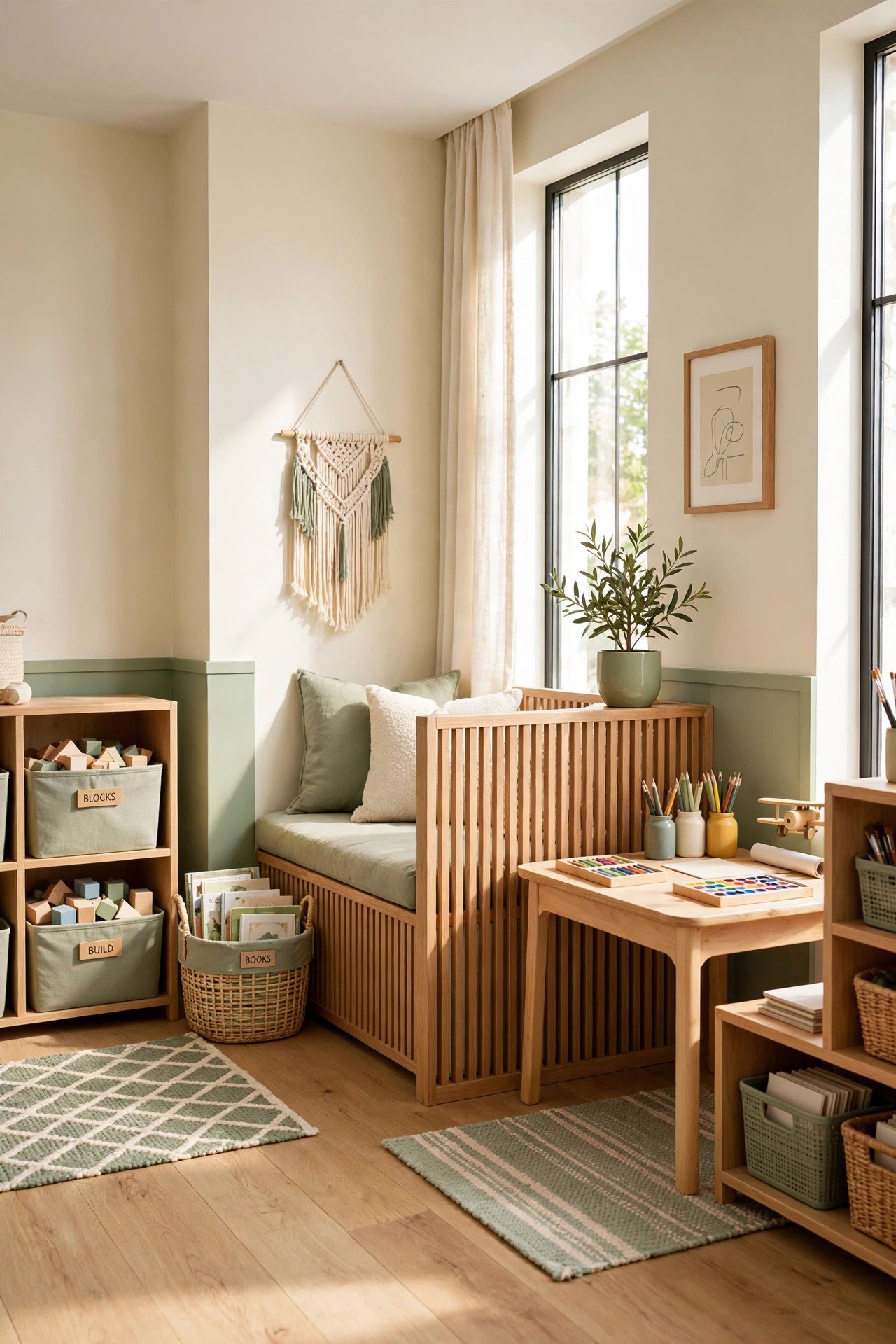
9. Use Open-Front Bins for Little Hands
Lids are the enemy of independent play. Open-front bins let toddlers see the toys, grab what they want, and drop things back in. No lids to lose and no stacking puzzles for small hands.
Line the bins along a low shelf at child height. Keep the heaviest bins on the bottom so nothing tips. Open bins make cleanup a game even a two-year-old can win.
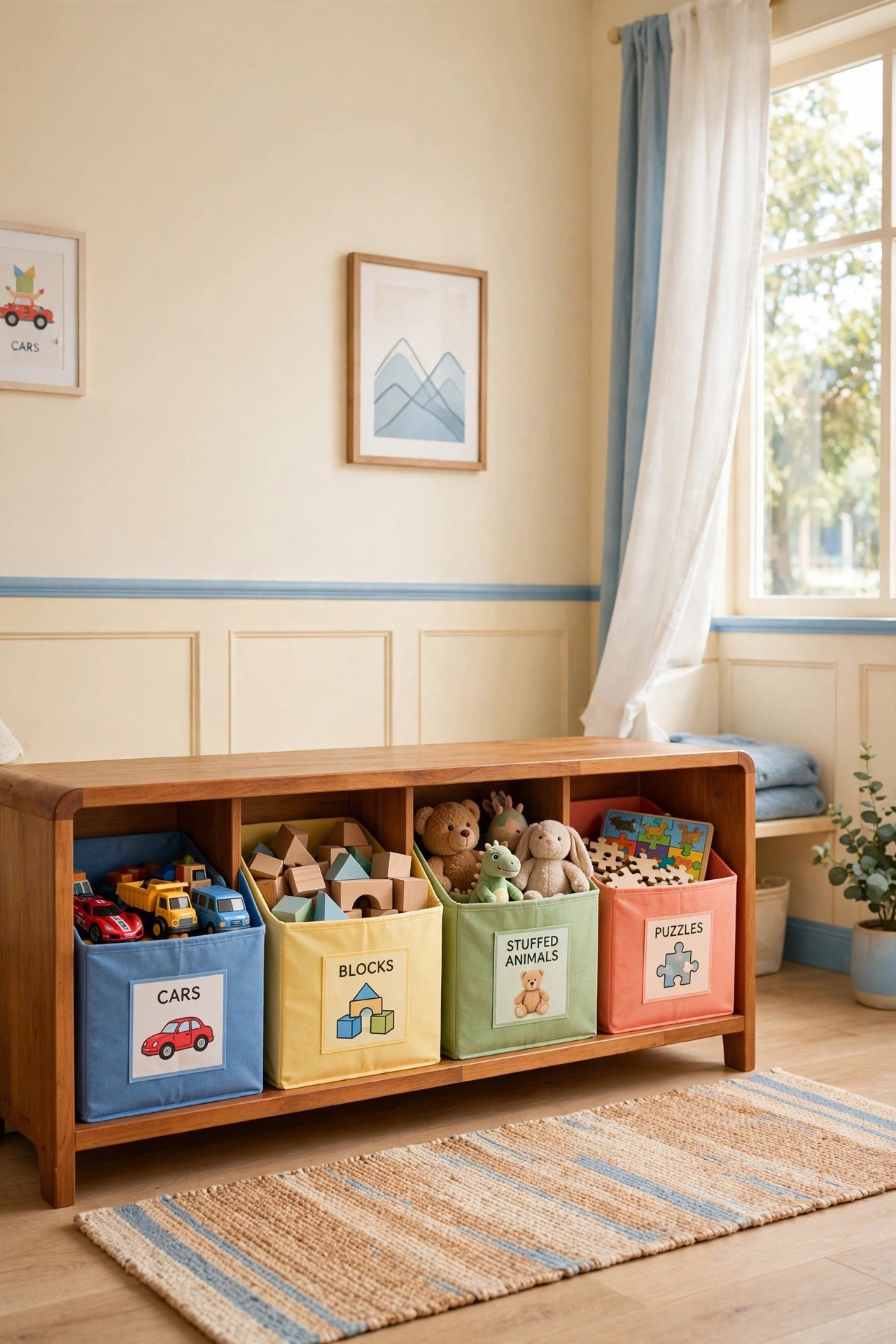
10. Limit Floor Toys to One Basket at a Time
Floor space disappears when ten toy sets spread at once. Keep one basket of active floor toys out, like a train set or a dollhouse. When your child wants a new set, the old one goes back in its bin first.
This one-in, one-out rule teaches natural limits without lectures. The play area stays walkable, and each toy set gets real attention. Rotate which basket is out on swap day.
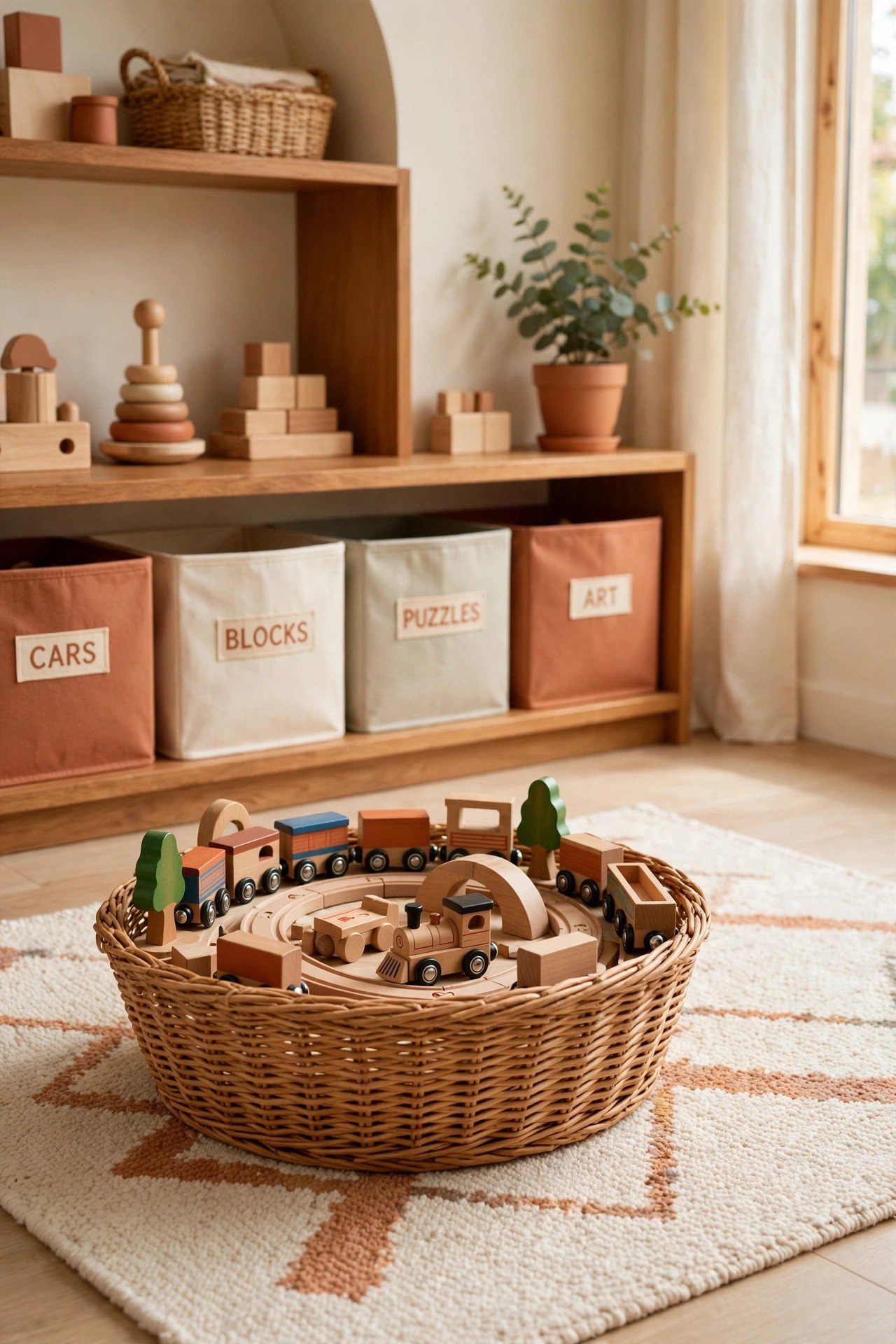
11. Create a Puzzle and Game Shelf
Puzzles and board games get destroyed when they live in a toy box. Give them their own shelf, stored upright like books. Each box stays closed, complete, and ready to play.
Check for missing pieces before a game goes back on the shelf. Keep a small tray nearby for pieces during play so nothing rolls away. Rotate two or three games at a time to keep game night fresh.
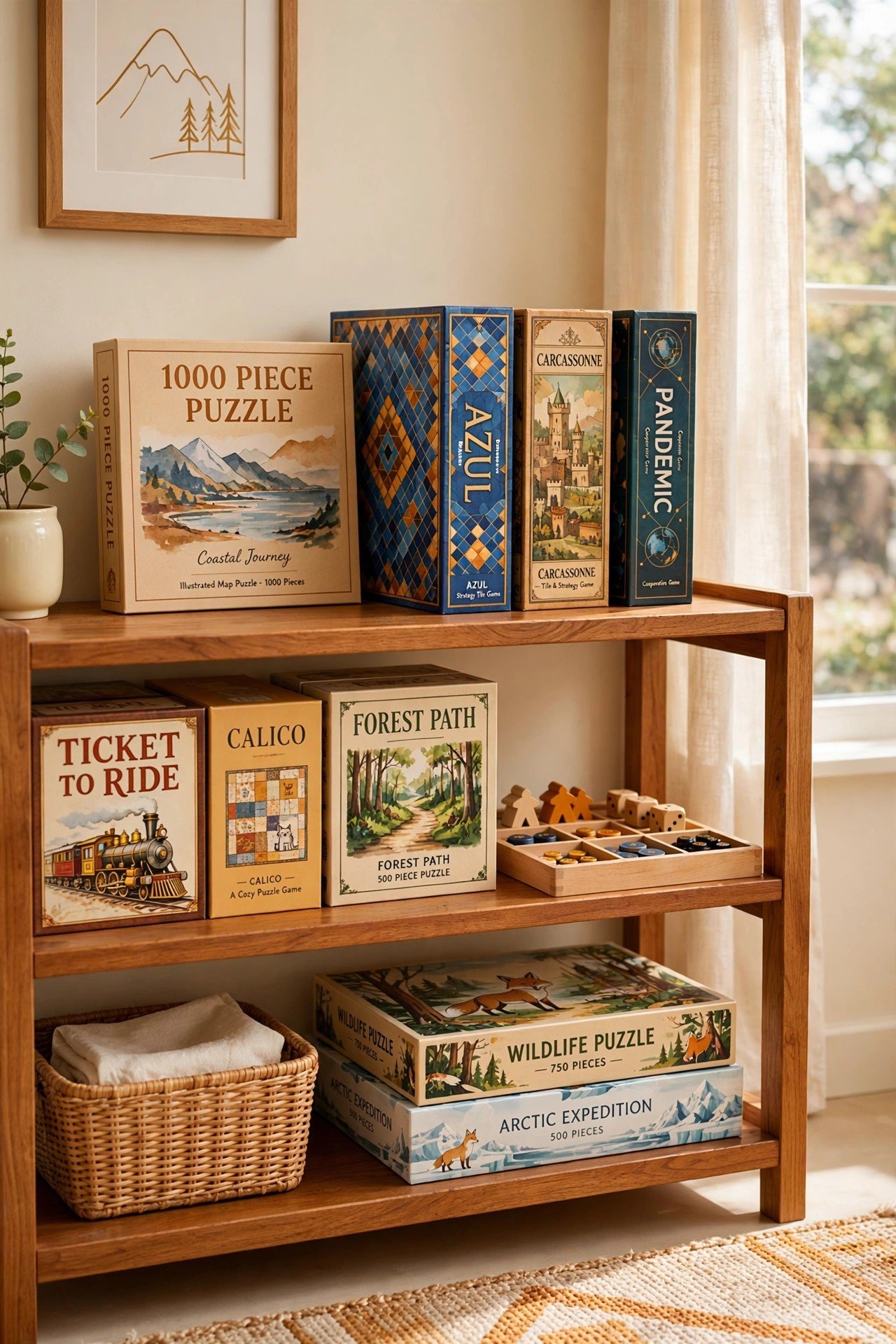
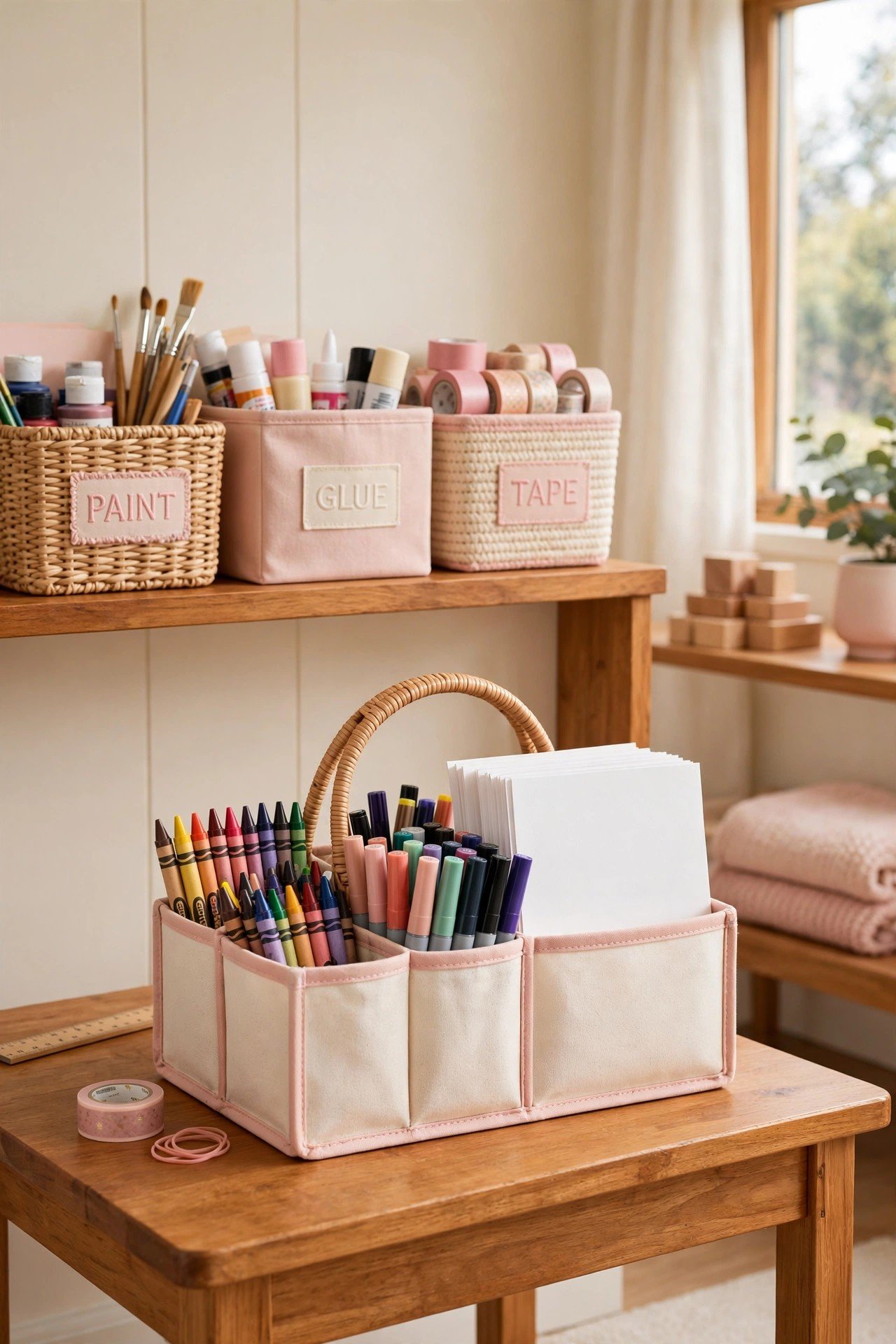
12. Rotate Art Supplies in a Caddy
Art supplies explode across tables when every crayon and marker is always out. Load a portable caddy with the current rotation: crayons one month, watercolors the next. The caddy goes away when art time ends.
Refill the caddy on swap day with fresh paper and new-to-them supplies. A limited set sparks more creativity than a mountain of dried-out markers. Store backup supplies in a labeled closet bin.
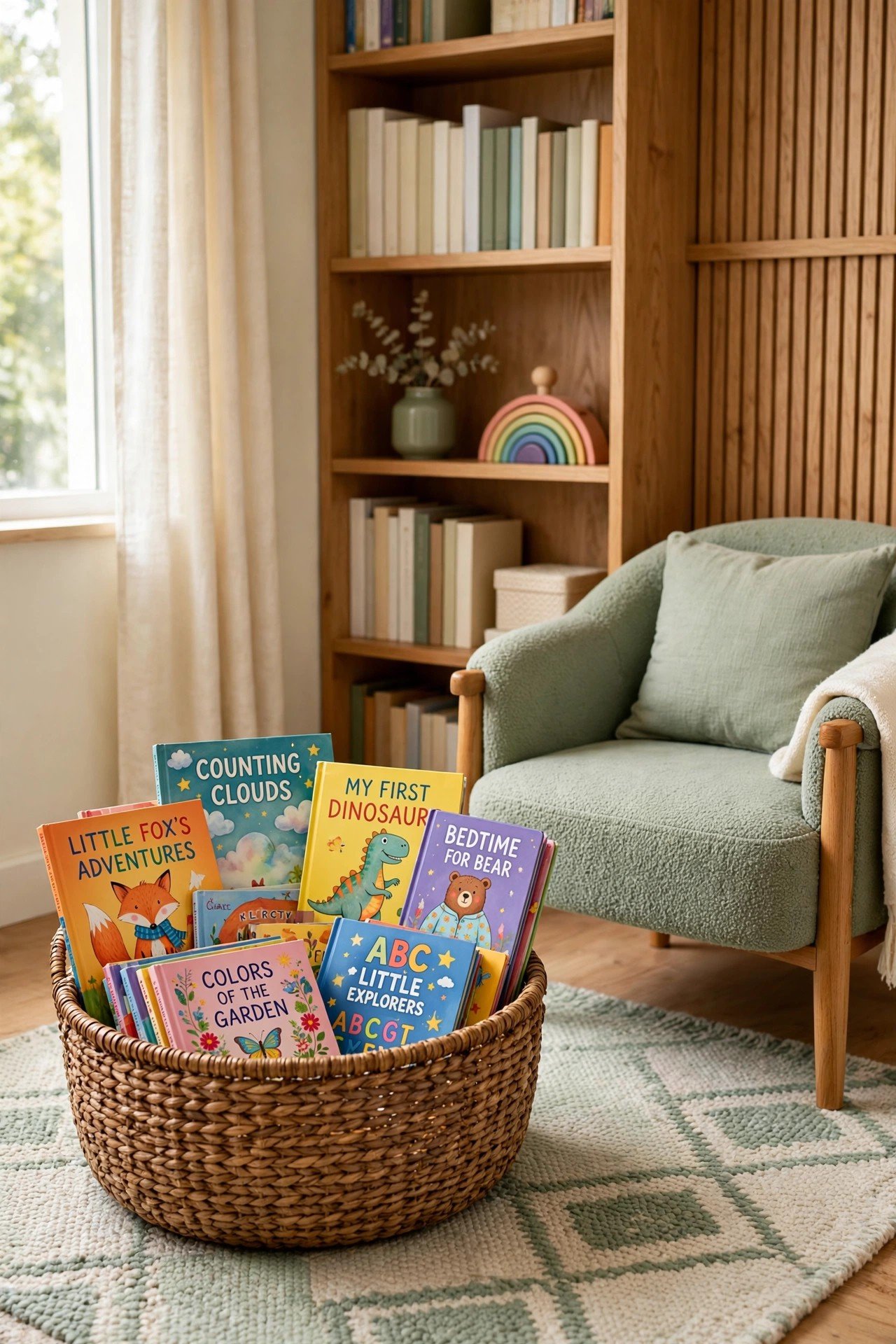
13. Build a Book Rotation Basket
Books work just like toys in a rotation system. Keep eight to ten books in a basket by the reading nook and store the rest. Swap the basket every two weeks, and old favorites feel exciting again.
Mix familiar favorites with two or three new library books each rotation. A small basket keeps the reading corner tidy and inviting. Kids reread more when the choice is small and fresh.
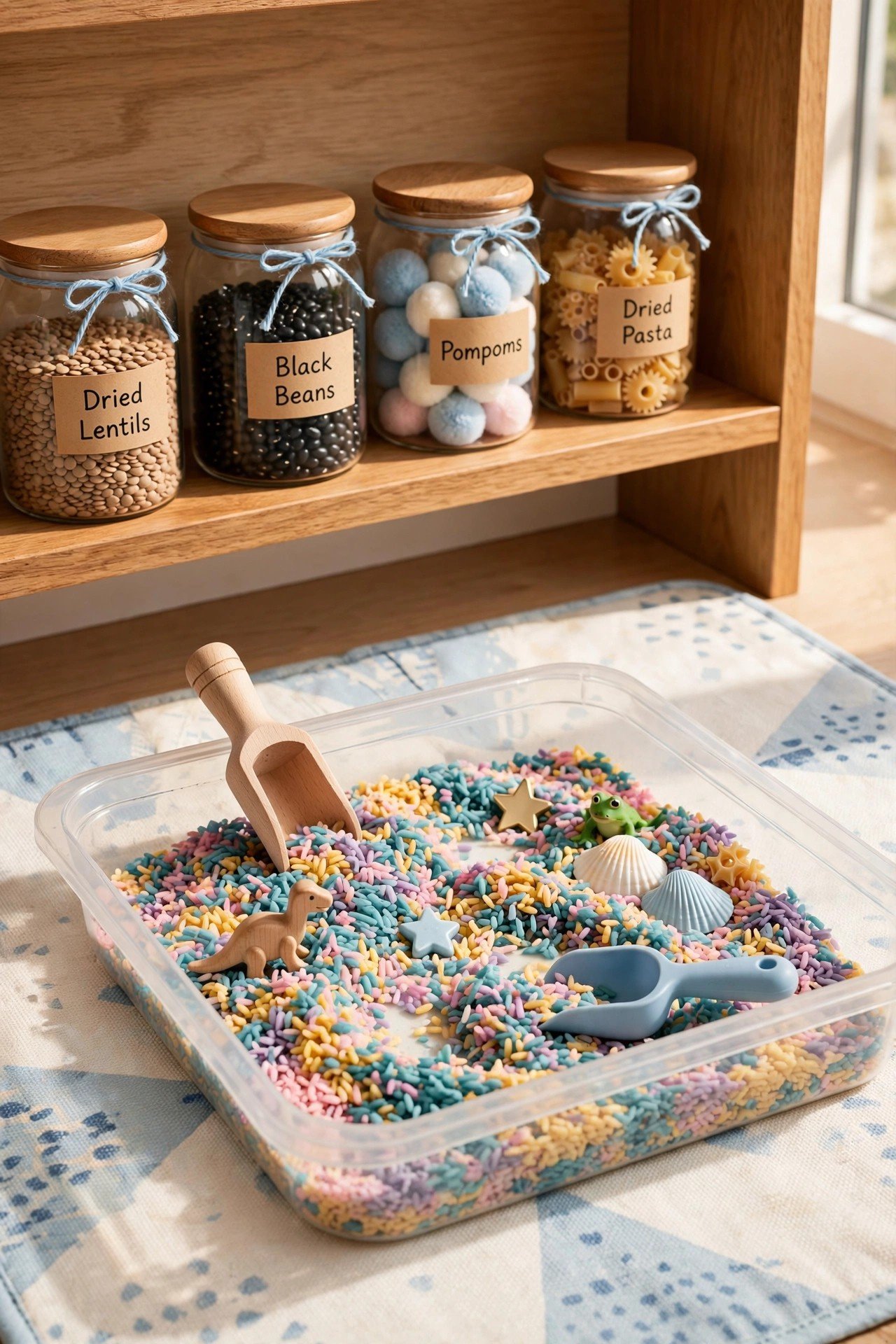
14. Set Up a Sensory Bin Station
A sensory bin is a shallow tub filled with rice, beans, or kinetic sand plus scoops and small toys. It keeps busy hands engaged for long stretches. Rotate the filler and the hidden treasures every two weeks.
Keep the bin on a washable mat with a small dustpan nearby for spills. Store two or three filler bags in labeled jars so swaps take five minutes. One well-planned bin beats a shelf of ignored toys.
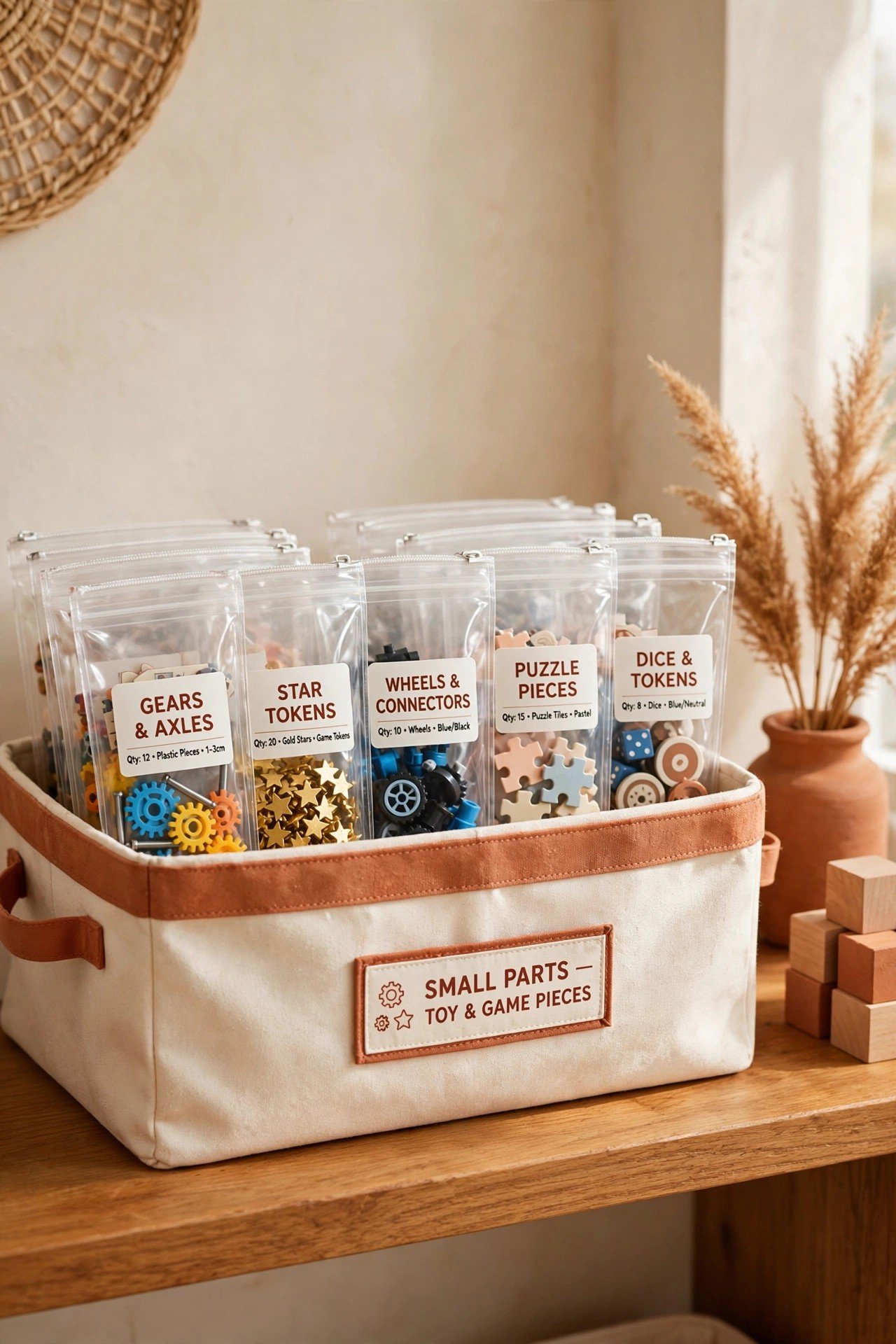
15. Store Small Pieces in Zipper Pouches
Tiny pieces vanish first and ruin whole toy sets. Store game tokens, doll accessories, and building set extras in labeled zipper pouches. Each pouch lives inside its toy’s bin, so the set stays complete.
Use clear pouches so kids can see what is inside. Write the toy name on the pouch with a permanent marker. Complete sets survive rotation, and nothing precious gets vacuumed up.
16. Label Shelves With Picture Labels
Words alone do not help kids who cannot read yet. Add picture labels to every shelf and bin: a photo of blocks on the block bin, cars on the car bin. Kids match the picture and put toys back on their own.
Print the photos at home and slip them into adhesive label pockets. Update the pictures when you rotate categories. Picture labels turn cleanup into a matching game instead of a chore.
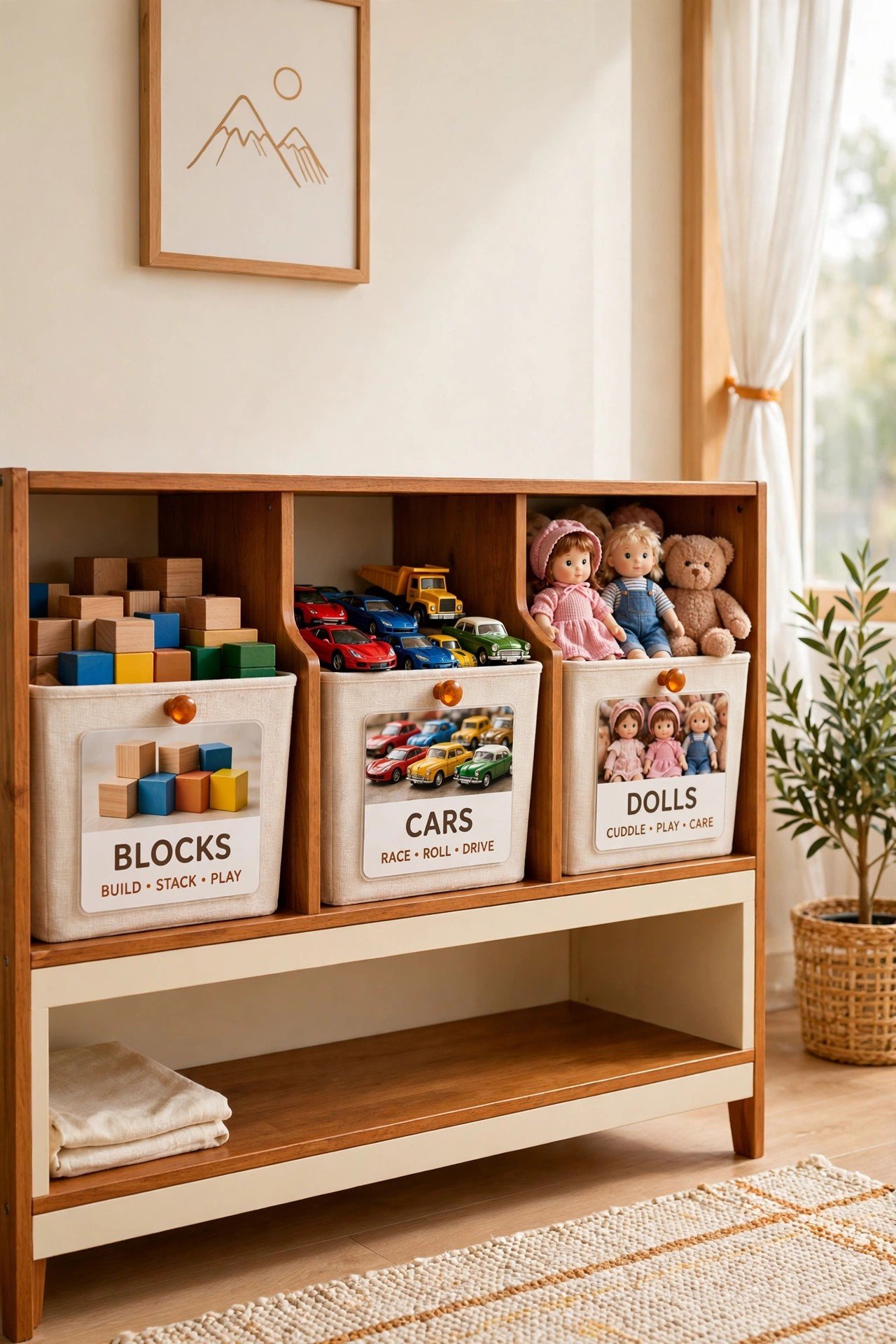
17. Create a Dress-Up Corner That Rotates
Dress-up clothes take over rooms when the whole costume box is always out. Hang four or five costumes on low hooks and store the rest. Swap the costumes monthly to match seasons and new interests.
Add a small mirror and a basket for hats and wands to complete the corner. Rotated costumes get worn daily instead of buried. Store off-season outfits in a labeled bin on a high shelf.
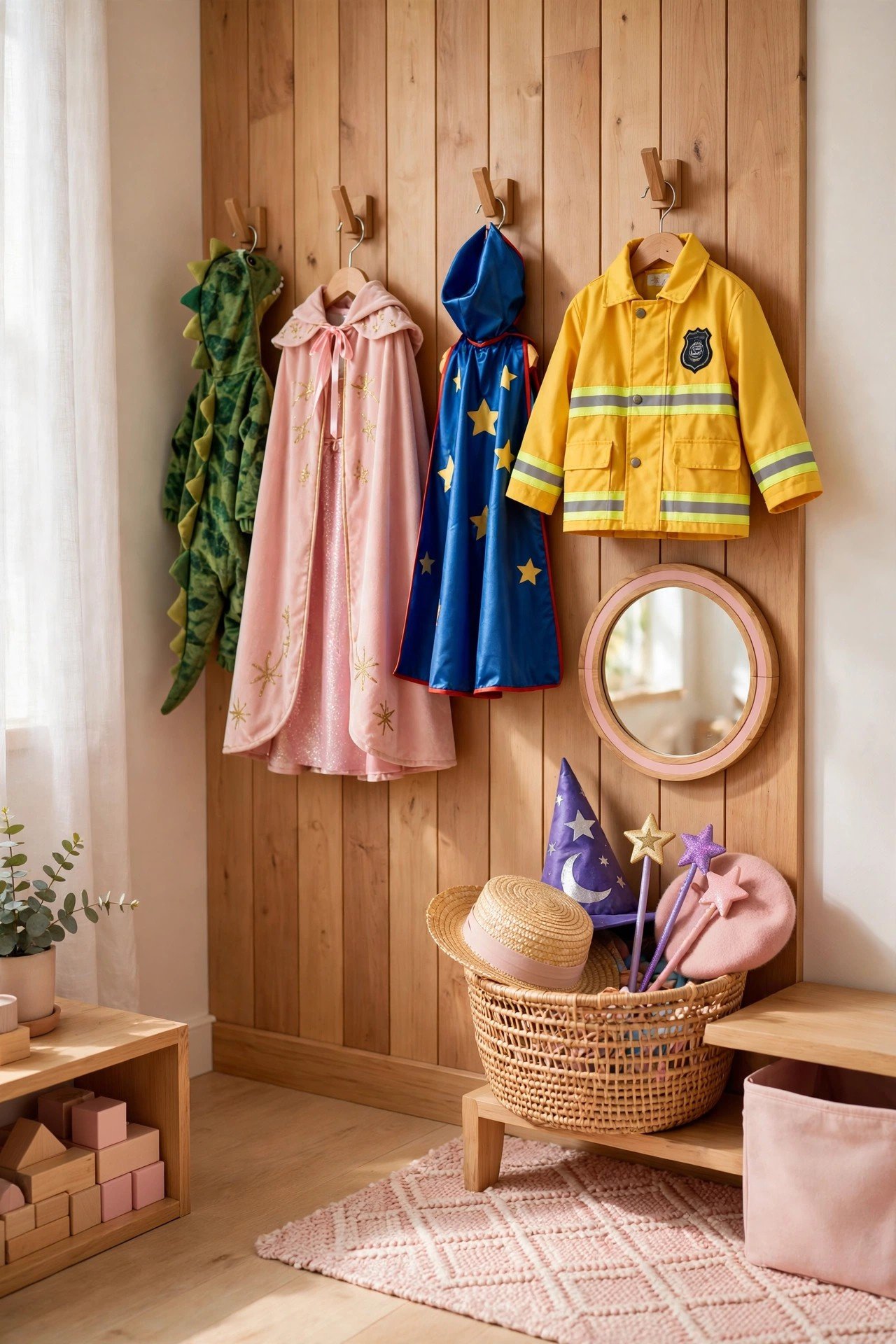
18. Keep Building Toys in One Deep Bin
Building blocks spread to every corner of the house when they have no home base. Keep all blocks in one deep bin with a lid, parked in the building zone. Builds happen at the bin, and pieces return to the bin.
Sort specialty pieces into a small tray inside the bin so they are easy to find. Rotate themed sets, like a castle set or a vehicle set, in and out monthly. One home base keeps block chaos contained.
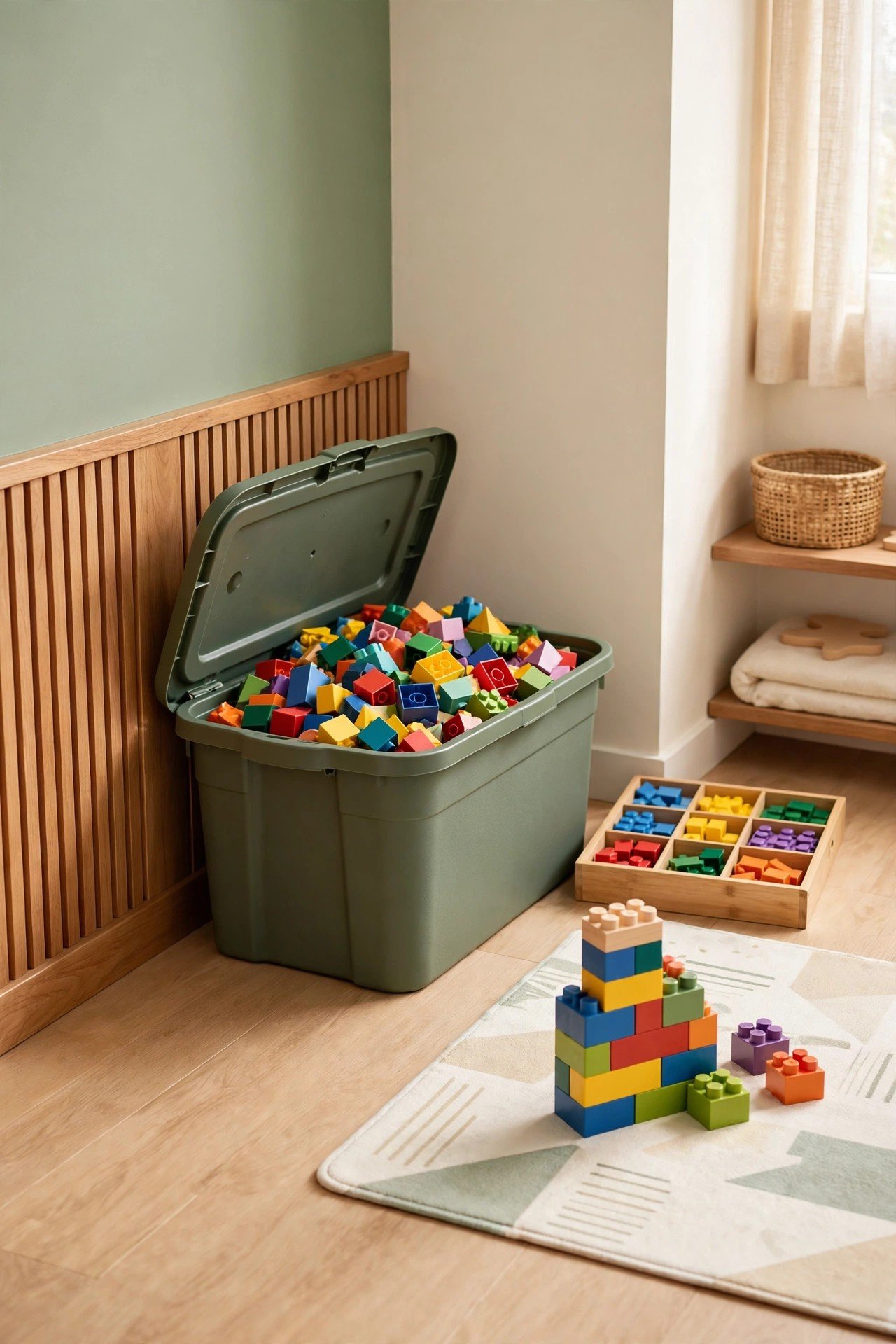
19. Rotate Outdoor Toys by Season
Outdoor toys deserve rotation too. Store the sandbox tools in winter and the sleds in summer. A small outdoor bin by the back door holds only the current season’s gear.
Rinse outdoor toys before they go into storage so they come back clean. Label the bins by season in big letters. Seasonal swaps keep the yard tidy and make each season feel like a fresh start.
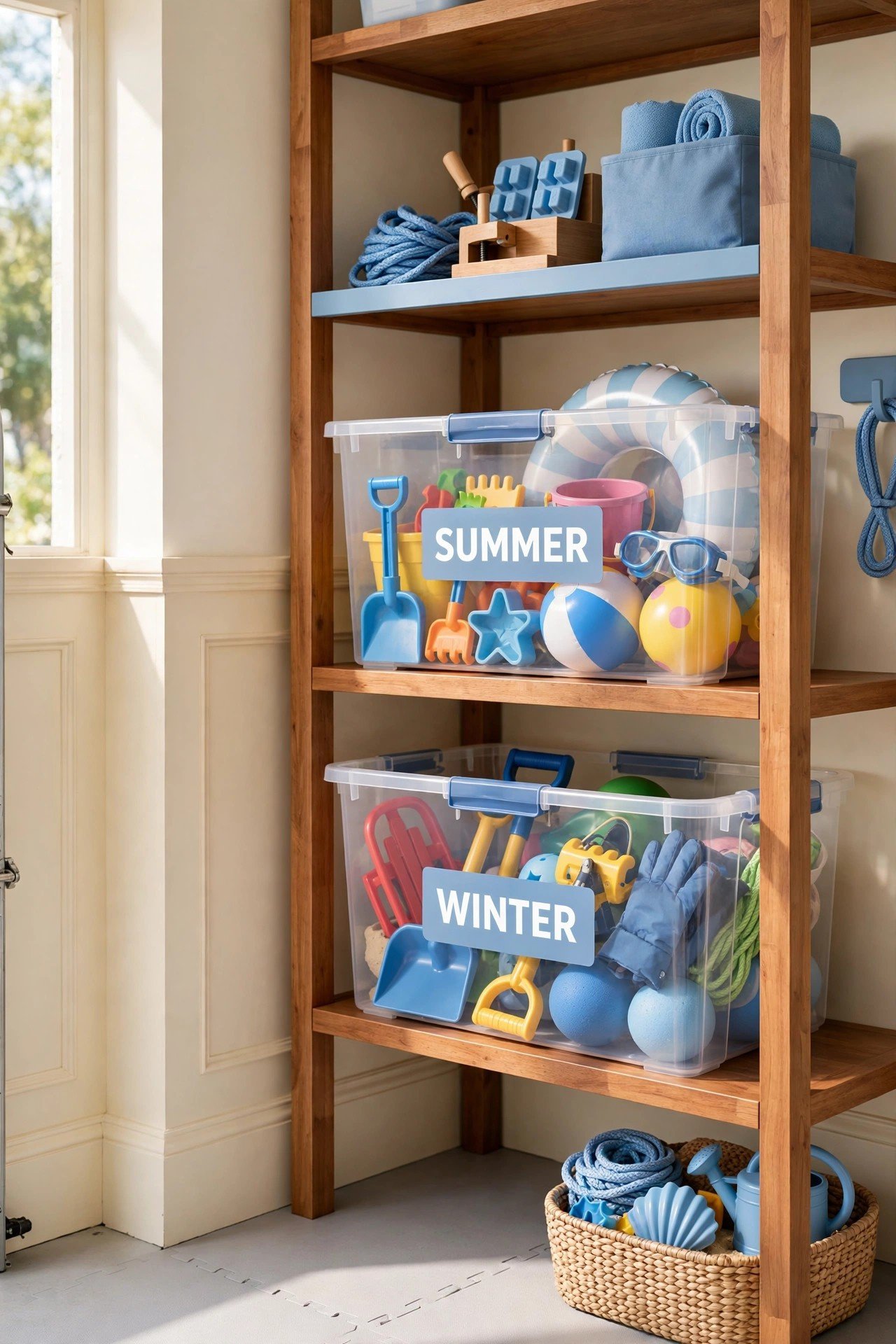
20. Keep a Donation Box Nearby
Kids outgrow toys constantly, and the extras clog the rotation. Keep a donation box in the play area closet all year. When a toy stops getting played with, it goes straight into the box.
Let kids help choose donations so they learn generous habits early. Drop the full box off monthly before you can second-guess. A steady outflow keeps the toy collection at a healthy size.
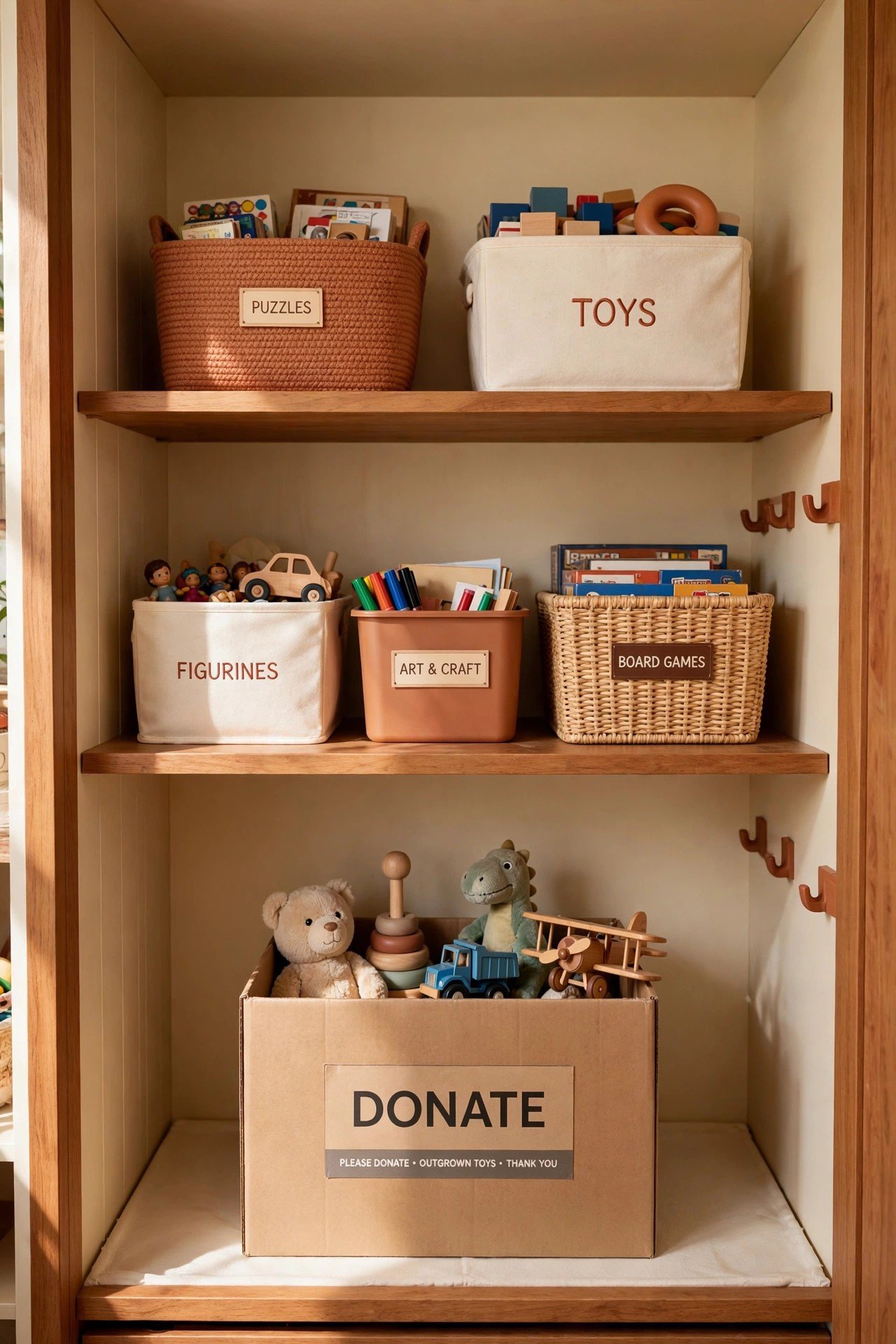
21. Involve Kids in Swap Day
Rotation works better when kids have a say. Let them pick which bin comes out next from two or three options. They feel ownership over the system instead of feeling controlled by it.
Ask them which toys are ready for a rest before you pack anything away. Most kids happily retire toys they have ignored for weeks. Shared decisions mean fewer protests on swap day.
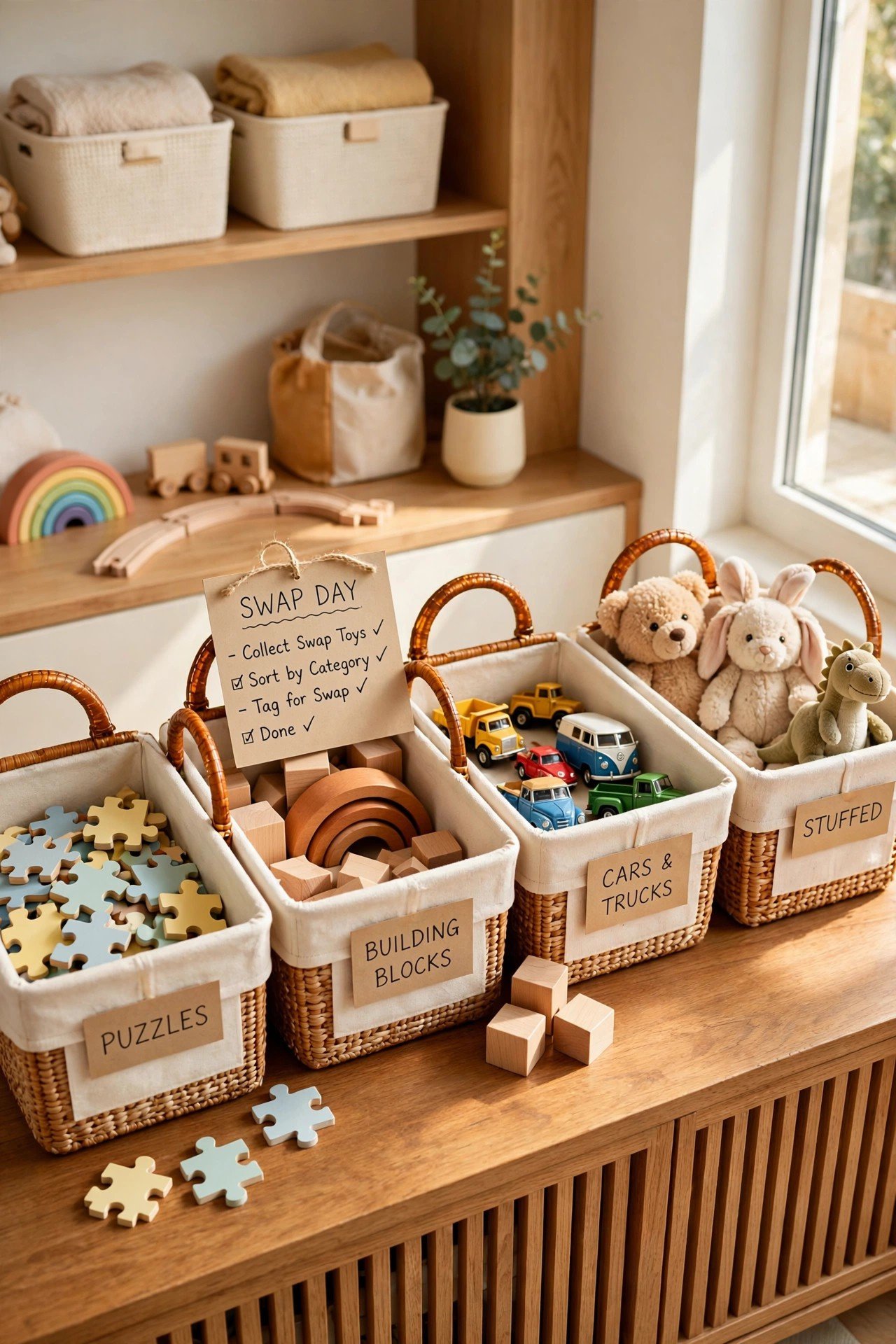
22. Keep a Quiet Toy Basket for Evenings
Loud electronic toys and quiet evenings do not mix. Keep a small basket of calm toys for the wind-down hours: soft dolls, coloring pages, and quiet puzzles. The noisy toys rest in their bins until morning.
Store the evening basket on a living room shelf so it is always within reach. Rotate its contents weekly so bedtime stays interesting. Calm evenings start with calm toy choices.
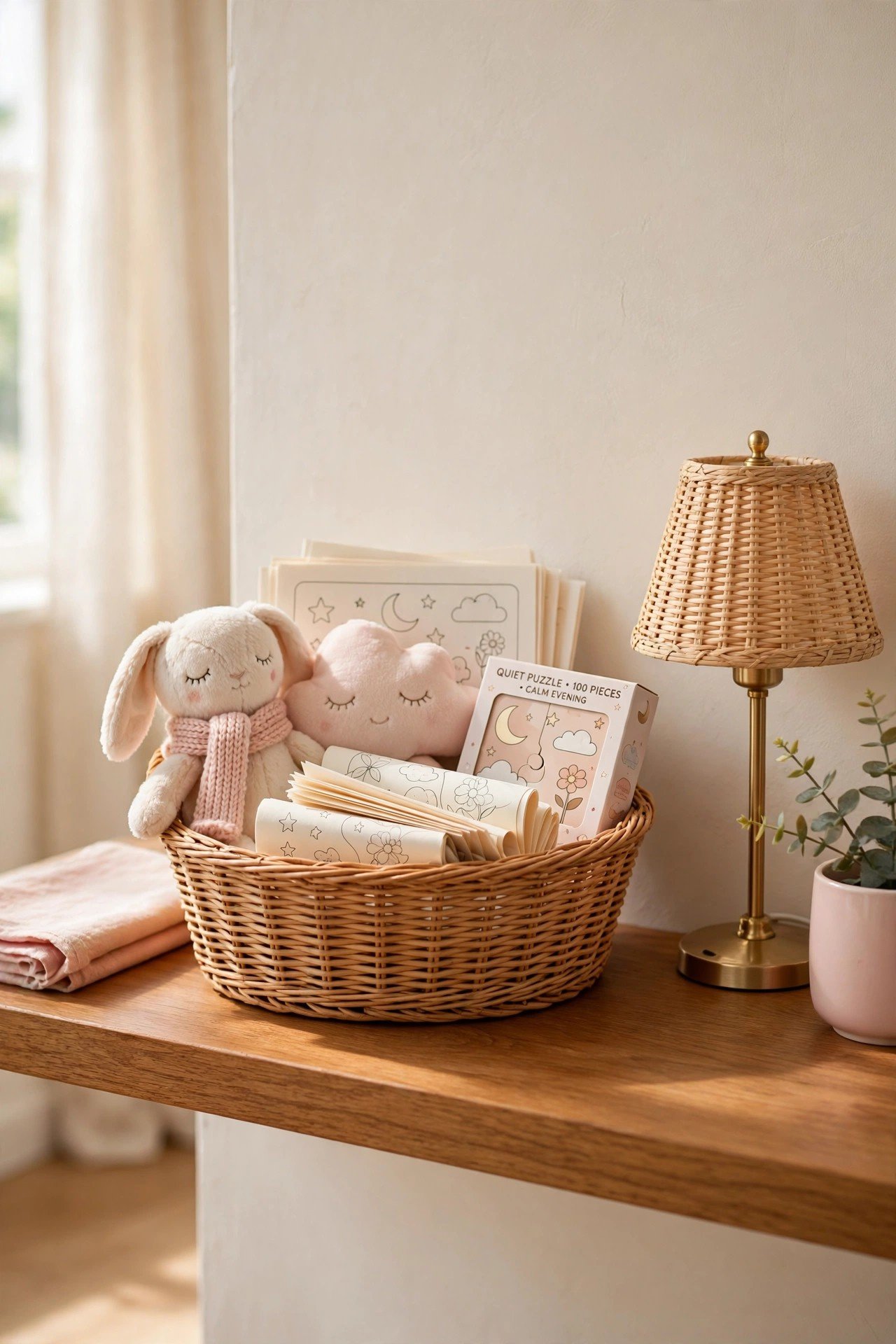
23. Rotate Toys Between Siblings’ Rooms
Siblings fight over the same toys even when duplicates exist. Try swapping toy sets between their rooms each month. The “new” room toys feel exciting, and sharing battles drop fast.
Keep each child’s true favorites untouched during the swap. Label shared bins so both kids know the rules. Room swaps double the novelty without buying a single new toy.
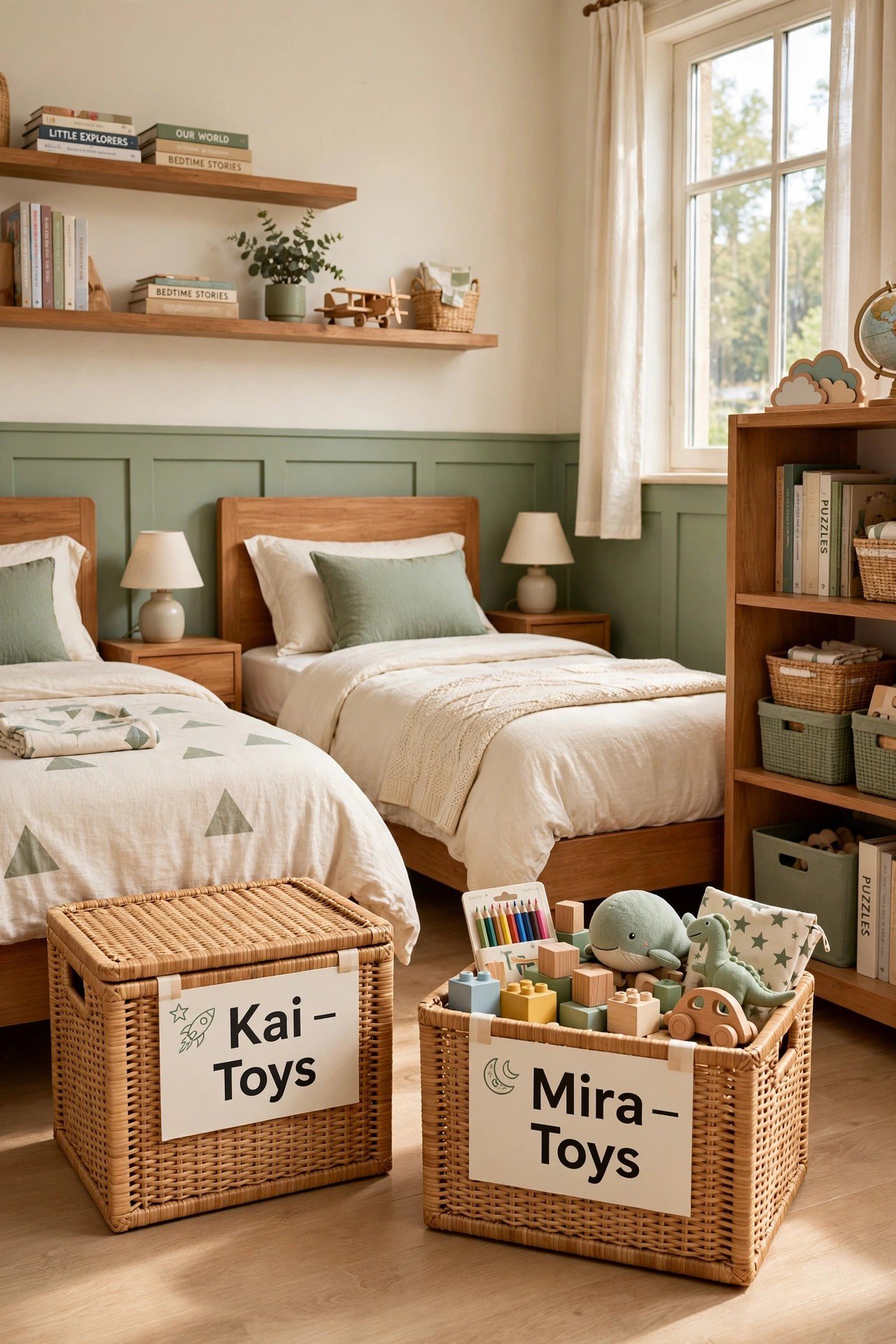
24. Use a Rolling Cart for Craft Rotation
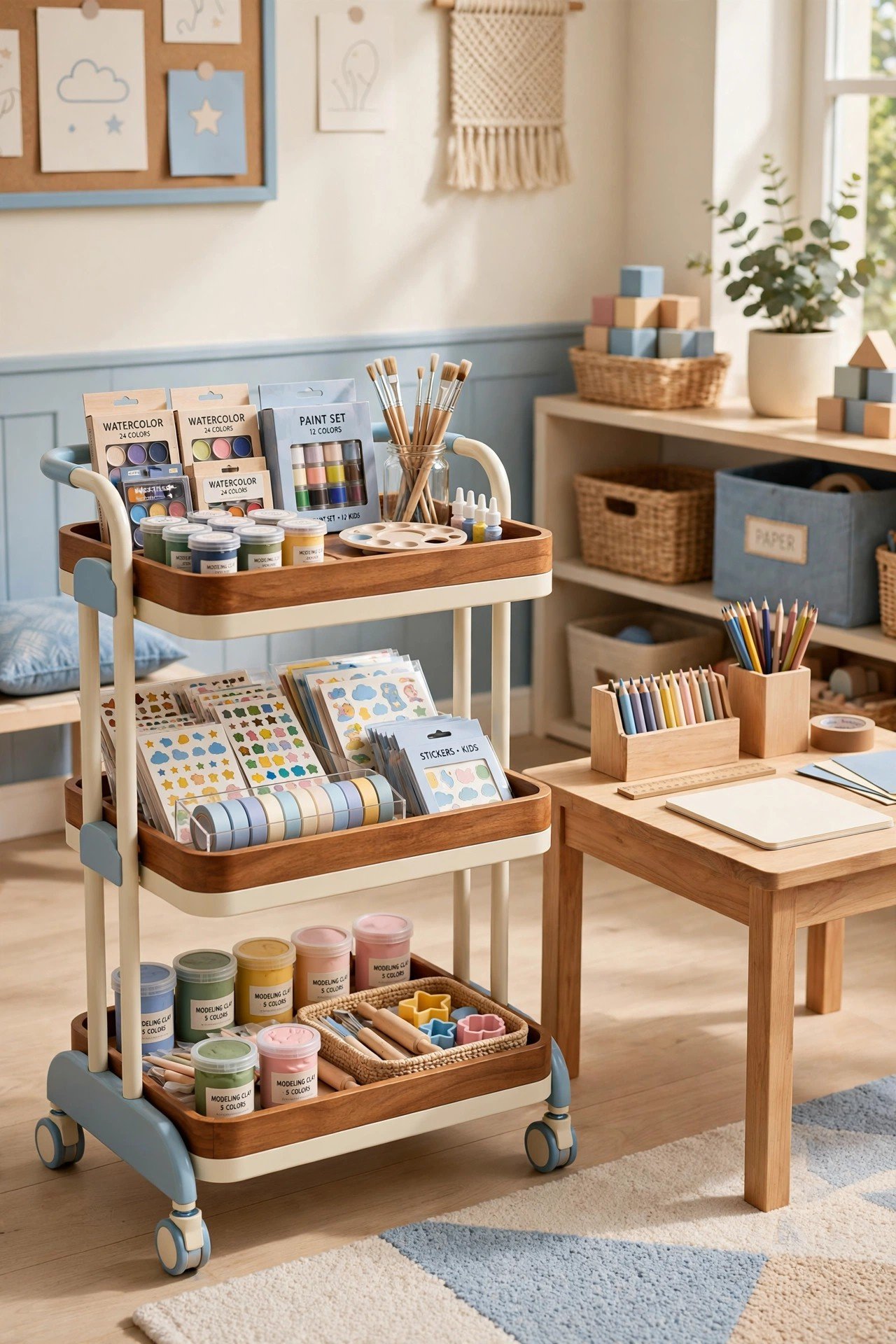
A three-tier rolling cart is perfect for rotating craft supplies. Load the current month’s supplies on the tiers and roll it to the table for craft time. When you finish, roll it back into the closet.
Swap the cart’s contents monthly: painting supplies, then stickers, then clay. Everything for one craft lives together, so setup takes one minute. The cart keeps craft clutter off every surface.
25. Display a Few Special Toys on a Shelf
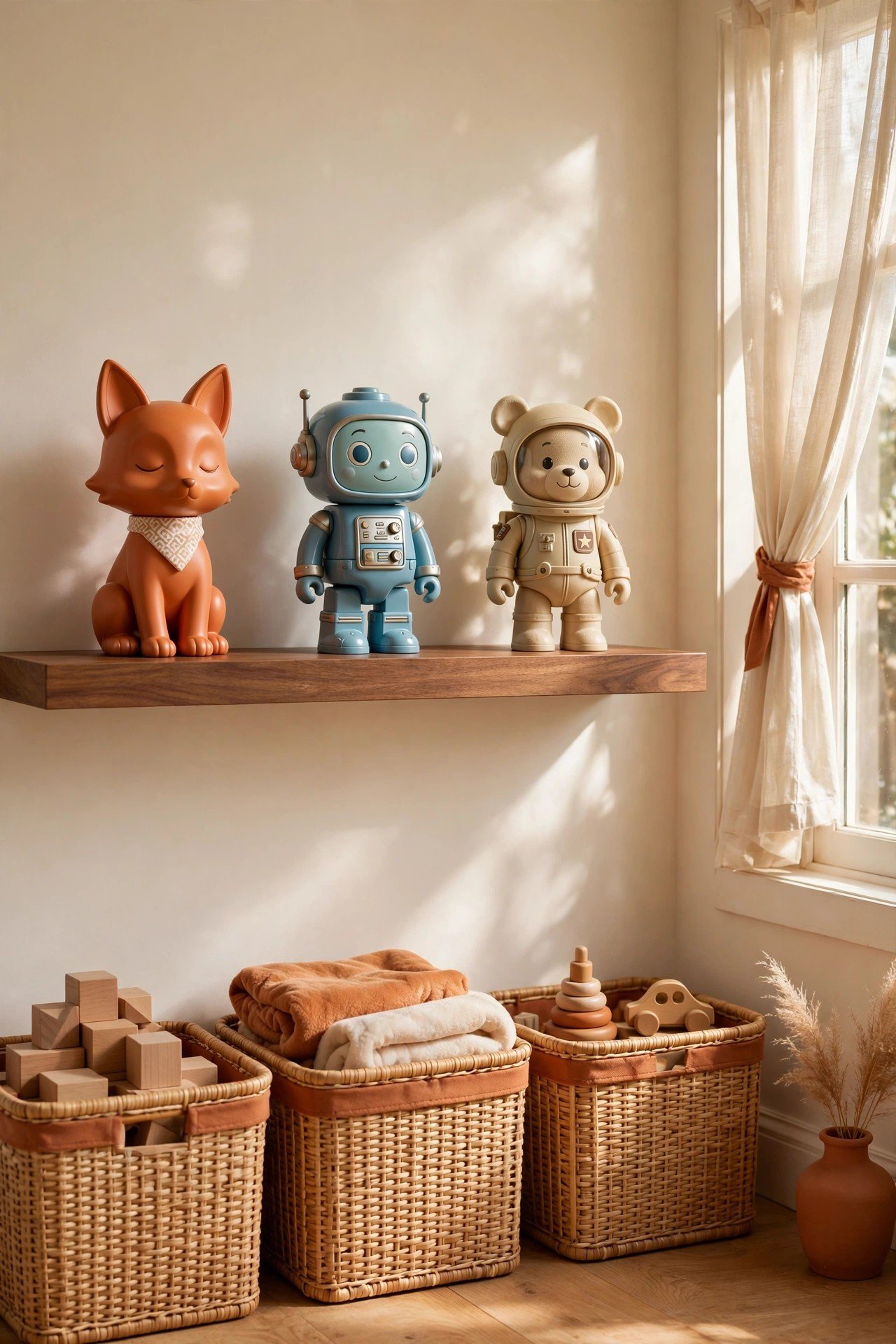
Not every toy needs to be touched daily. Display three or four beautiful toys on a high shelf like a mini gallery. Kids admire them, and the shelf teaches care for special things.
Rotate the display monthly with toys from storage. A displayed toy often becomes the most-wanted one when its turn comes down. This trick works especially well for collectibles and gifted toys.
26. Photograph Toy Sets Before Packing Them
Complex sets are hard to rebuild if you forget what they looked like. Snap a quick photo of each set before it goes into storage. Tape a small print of the photo to the bin.
The photo helps you remember which pieces belong together on swap day. Kids love seeing the picture and rebuilding the set from memory. Five seconds of photos saves thirty minutes of sorting.
27. Store Board Games Vertically Like Books
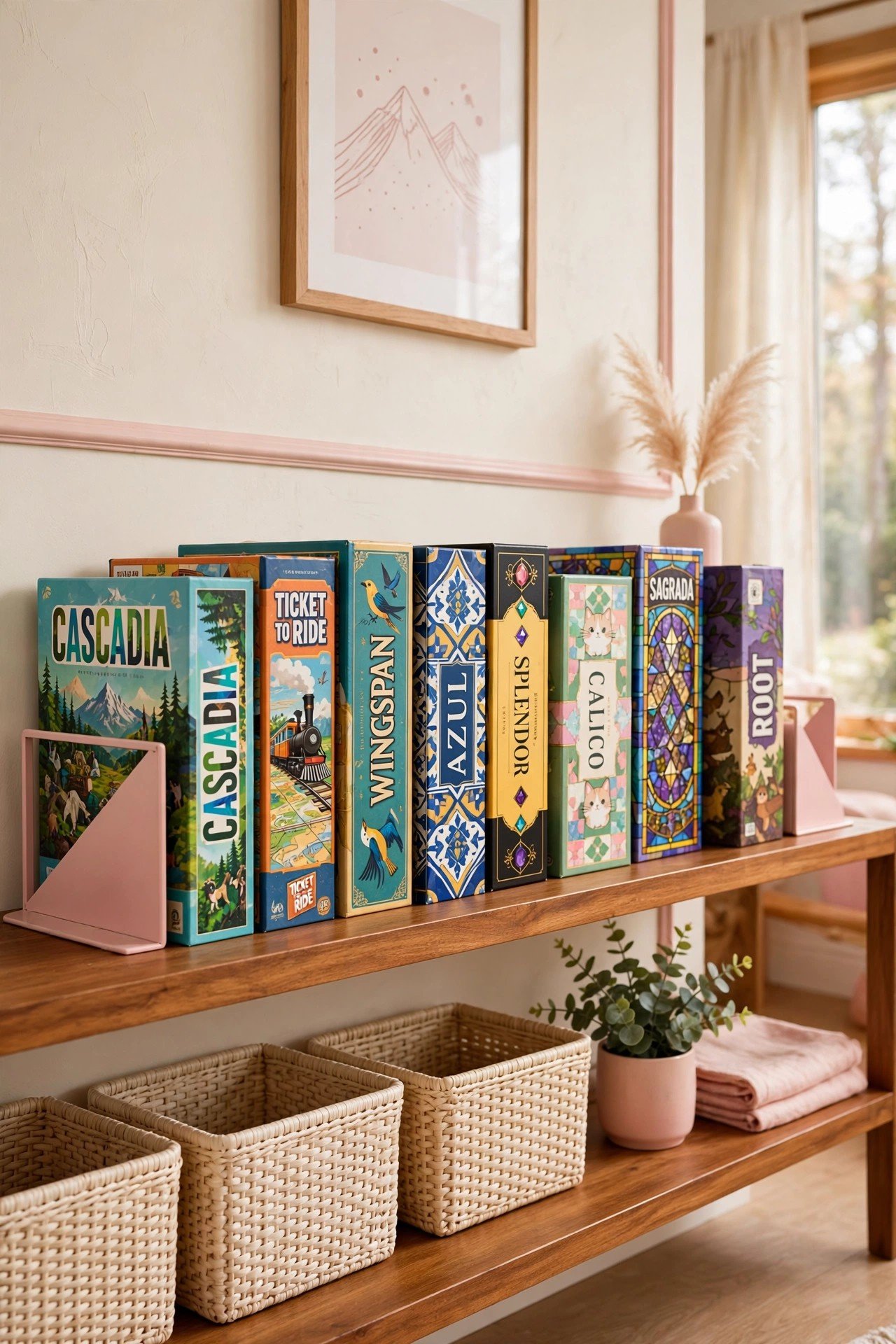
Stacked board games slide, crush, and lose pieces. Store game boxes upright on a shelf like books on a bookcase. Each box stays closed and complete, and kids can pull one out without toppling a tower.
Use bookends or a small crate to keep the row from tipping. Rotate two or three games into the play area each month. Vertical storage turns a messy pile into a tidy game library.
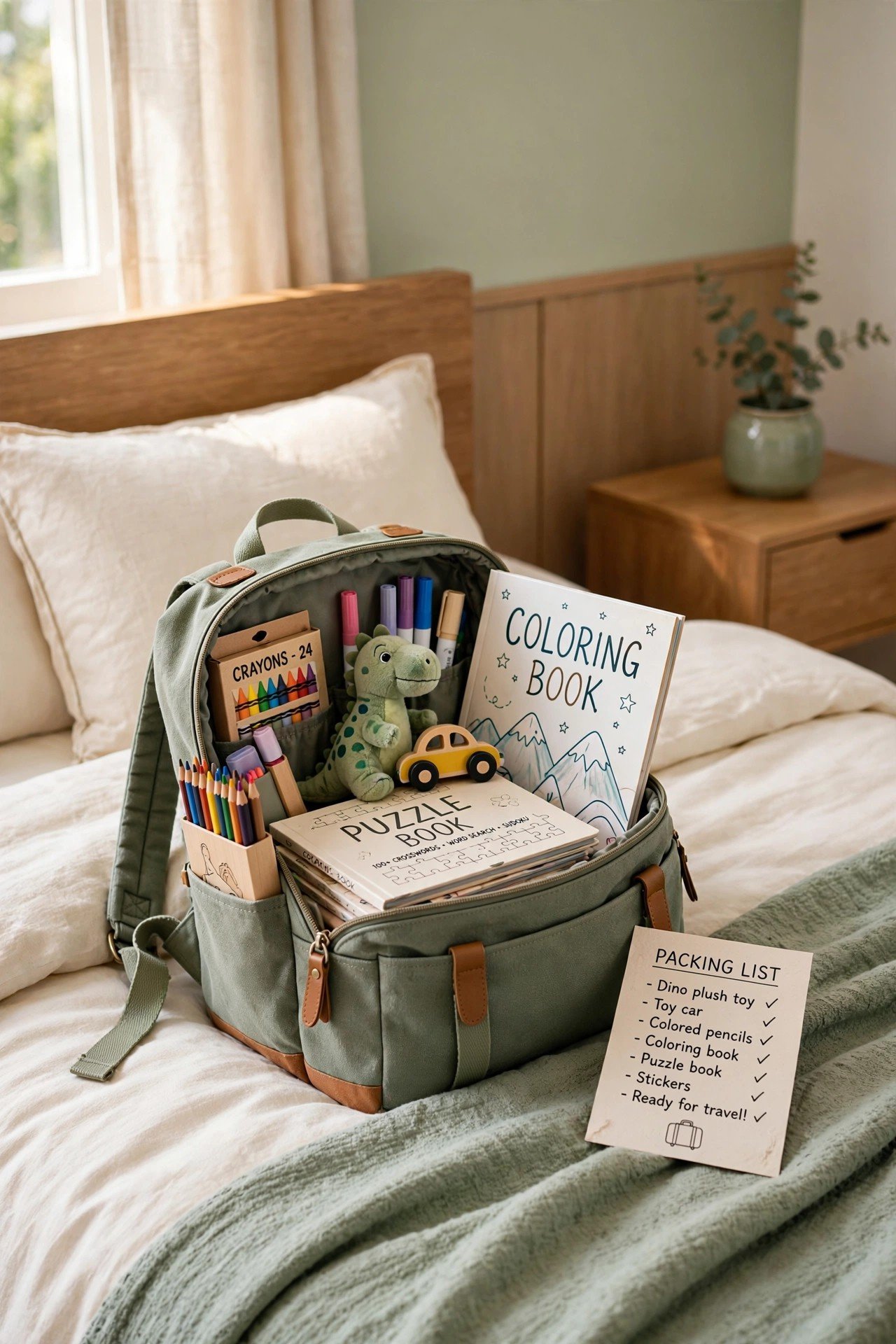
28. Pack a Travel Toy Bag for Trips
Car rides and waiting rooms go smoother with a dedicated travel toy bag. Pack it from the stored bins, not from the active play area. Small figures, coloring supplies, and one puzzle are perfect.
Refresh the bag before each trip with different toys from storage. Kids treat the travel bag like a surprise gift every time. When you return, the toys go back into the rotation bins.
29. Do a Ten-Minute Reset Every Night
Even the best system needs a daily reset. Set a timer for ten minutes before bed and tidy the play area together. Every toy returns to its bin, zone, or shelf, and the room starts fresh each morning.
Play cleanup music to make the ten minutes fun. Kids who reset nightly learn where everything lives, which makes swap day effortless. A tidy room in the morning changes the whole mood of the day.
Conclusion
Toy rotation is not about having fewer toys. It is about giving the toys you own the attention they deserve. Start with five bins, pick a swap day, and let the system grow with your family.
Your play area will stay calmer, cleanup will take minutes, and your kids will rediscover old favorites again and again. Pick one idea from this list today and try it this week. Small steps build the tidiest playrooms.
Toy Rotation FAQs
How often should I rotate toys?
Every one to two weeks works for toddlers, and once a month suits older kids. Watch your child for the real signal: when toys sit untouched for days, it is time to swap. A fixed swap day on the calendar keeps you consistent.
How many toys should be out at one time?
Keep eight to twelve toys out for toddlers and a few more for older kids. Fewer choices mean longer, deeper play and much faster cleanup. If the play area still looks chaotic, you have too many out.
What age is best to start toy rotation?
You can start as early as six months with a simple two-bin swap. Toddlers from one to three benefit the most, since small choices match their attention span. The system grows with your child all the way through elementary school.
Where do I store the toys that are not in rotation?
Use labeled bins in a closet, on a high shelf, or under a bed. Clear bins help you find sets fast on swap day. Keep the storage spot consistent so the swap takes fifteen minutes, not an hour.
What if my child only wants the old toys back?
That is normal and actually a good sign the system is working. Keep two or three true favorites on a shelf that never rotates. Give new rotations a full week before you judge, since kids often warm up slowly.

Hi, I’m Emily! I turn messy corners into cozy, organized spots. DreamNestDecor is where I share simple, practical home ideas — decor, organization, and small-space solutions that work in real life, not just in photos. Every idea here is carefully researched before it’s shared.