Picture this: you buy a rolling cart with high hopes, load it up in one excited afternoon, and for a day or two everything looks perfect. Then the top tray starts collecting random items, the bottom tier turns into a dark pit of forgotten supplies, and pushing the cart across the room feels like a gamble. The cart did not fail you. The setup did.
A rolling cart works best when every tier has a job and every item has a fixed home. When the cart follows a simple logic, it stays useful for months instead of days. These 25 rolling cart organization ideas will help you turn any cart into a tidy mobile station for the kitchen, the craft room, the bathroom, the office, and every room in between.
1. Give Every Tier a Single Clear Purpose
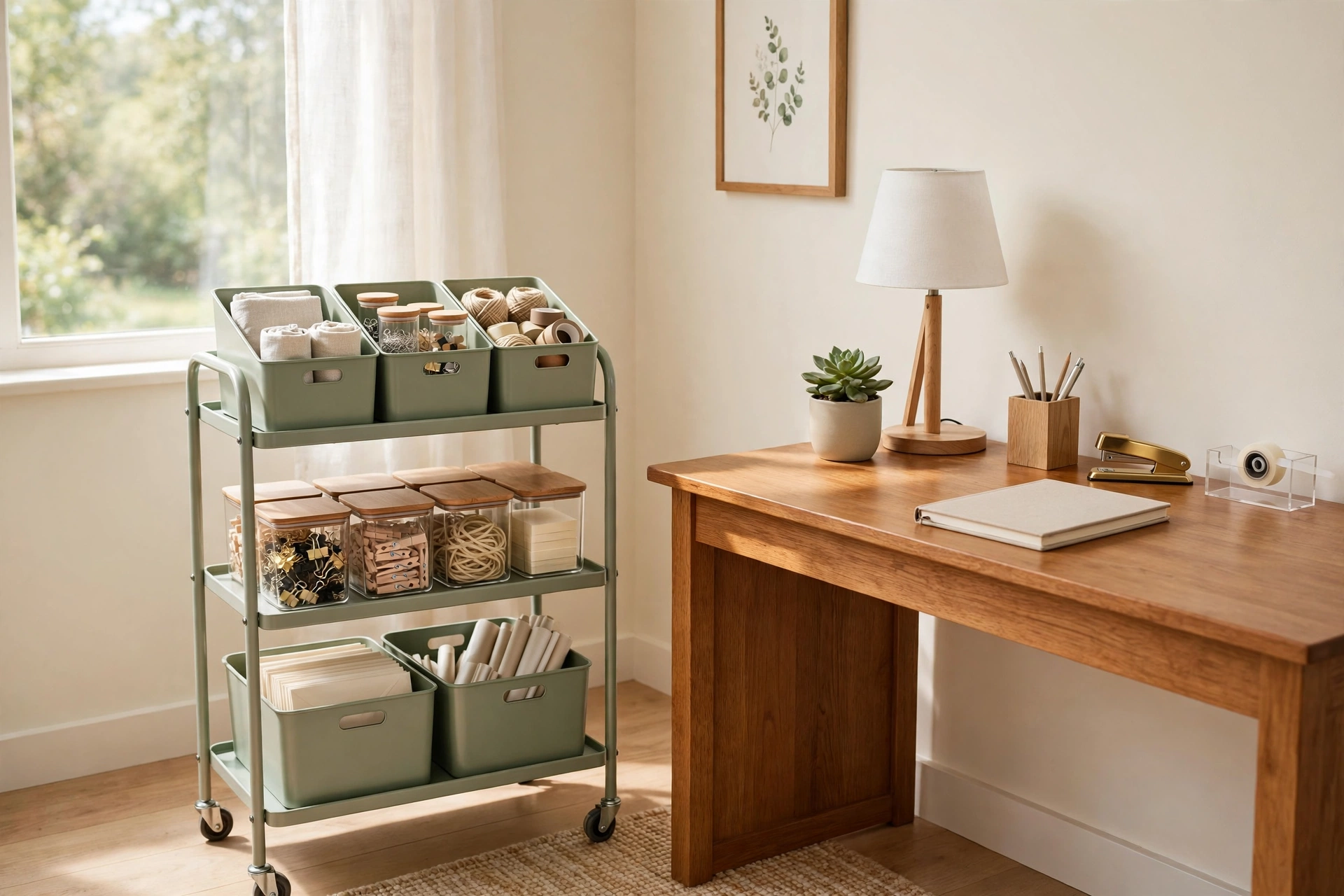
The simplest way to keep a rolling cart organized is to assign one clear role to each tier and refuse to mix categories. Writing tools live together on one level, creative supplies get their own level, and heavy books sit low where their weight keeps the cart steady. When each tier has a purpose, putting things away takes seconds because every item has exactly one correct home.
Labels make the system stick, especially in a shared home or a classroom. A small printed label on each tier tells everyone where things belong without a single reminder. Use simple containers that keep items visible, and choose calm colors so the cart feels orderly even when it is fully loaded.
2. Sort Supplies Upright for Quick Grabbing
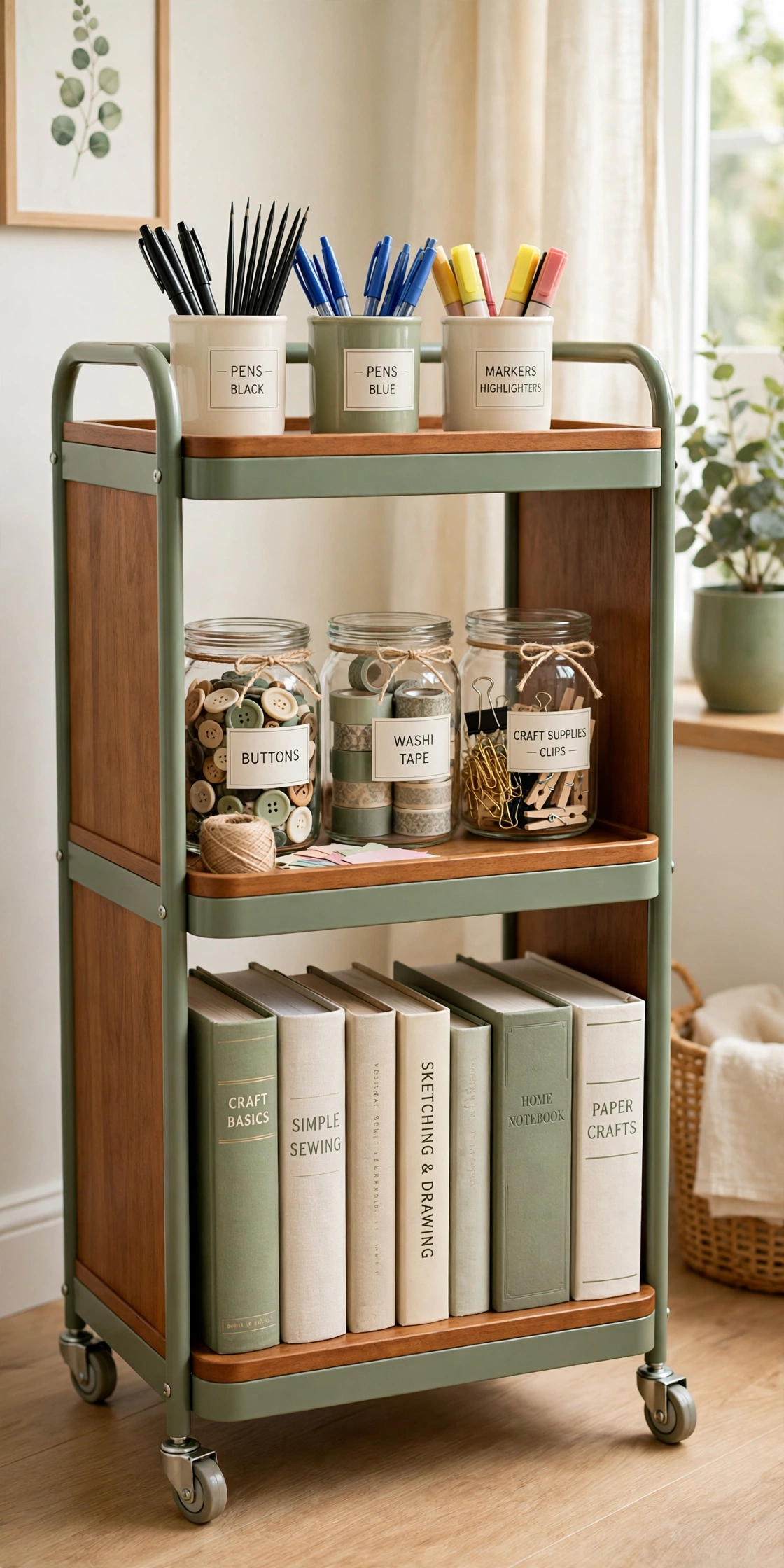
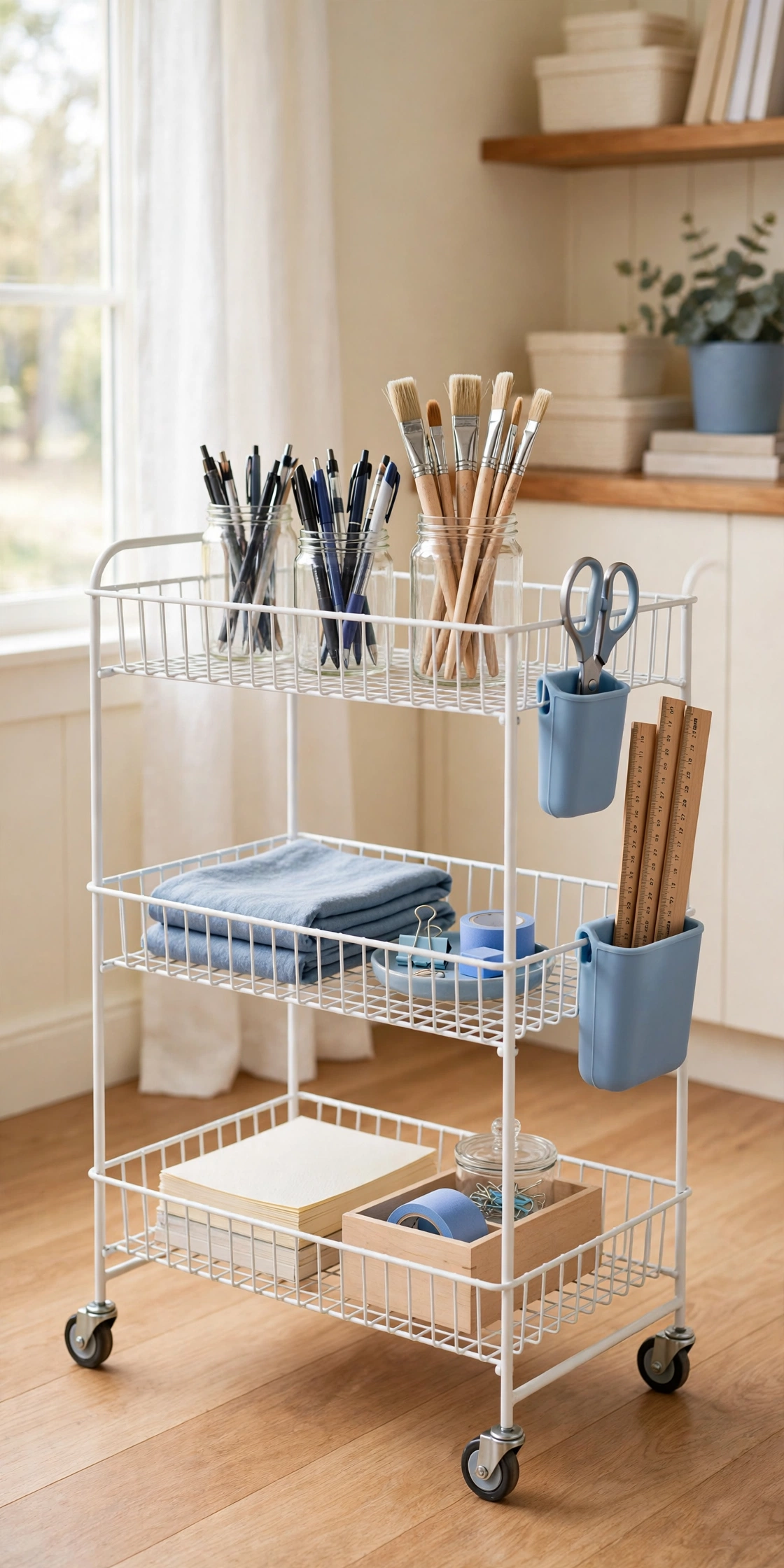
Standing tools upright is one of the fastest ways to make a cart easier to use. Pens, brushes, and scissors grouped upright in cups and jars can be grabbed in one motion, with no digging through a flat pile. Clip-on side containers catch the overflow, so items like extra scissors and rulers stay within reach without crowding the trays.
Open wire shelves help here because they keep everything visible and let air flow around the supplies. A light neutral frame keeps the cart from looking heavy, which matters in a small room where the cart is always in view. Group similar tools together and the cart starts to work like a tidy little workstation on wheels.
3. Keep Yarn Visible and Tangle-Free
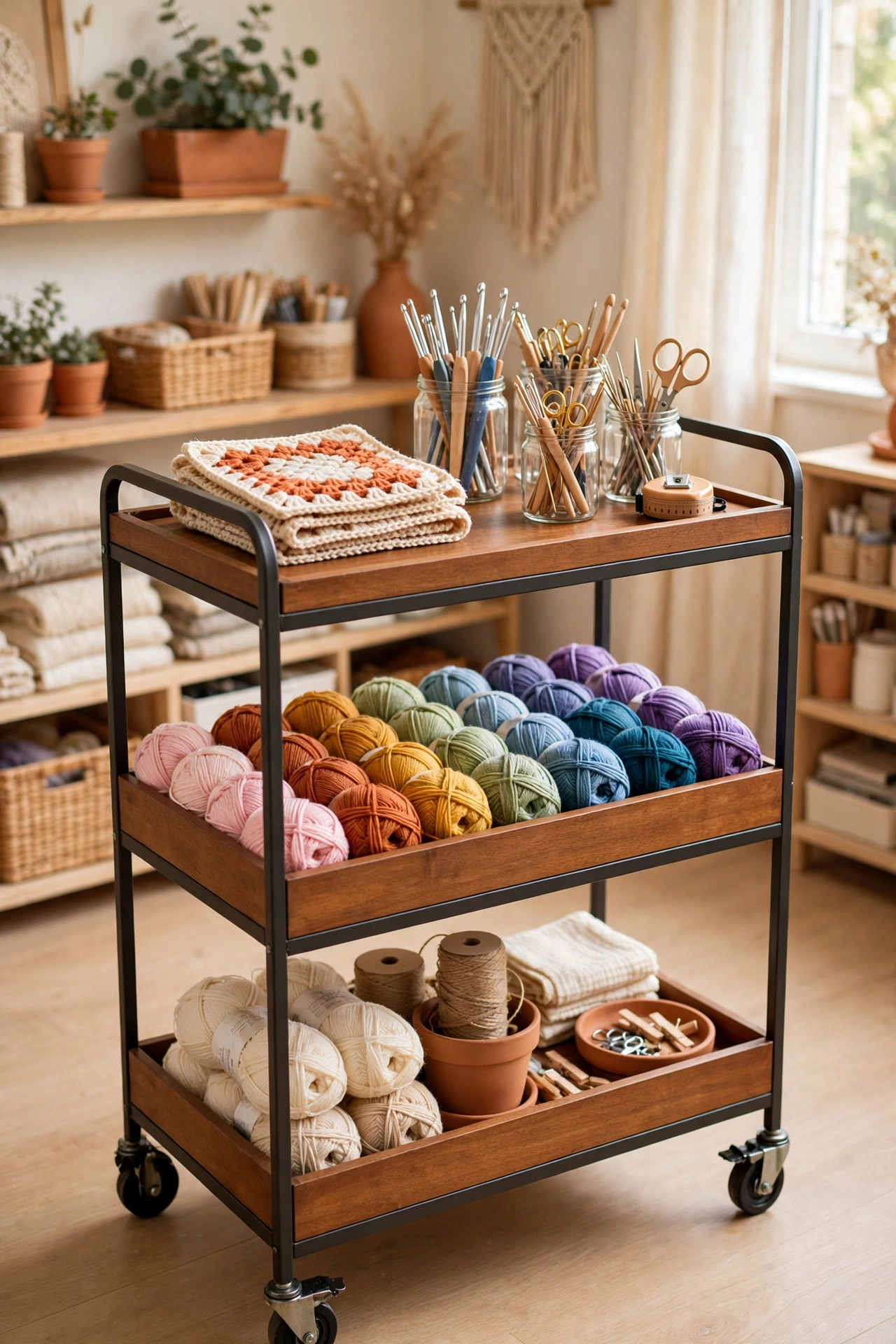
Yarn belongs where it stays visible and easy to pull, not buried at the bottom of a box. A rolling cart gives every skein a home: finished squares rest on the top tier for quick access, tools stay grouped in jars, and yarn fills the middle tier sorted by color. Open trays stop the skeins from tangling into one giant knot.
Warm tones and soft textures make a yarn cart feel cozy rather than cluttered. Sort the yarn by color family so you can spot the shade you need at a glance, and keep hooks, needles, and stitch markers in a single jar so small tools never vanish. The cart can roll to your favorite chair and back to its corner when the project is done.
4. Build a Clear Kitchen Cart Station
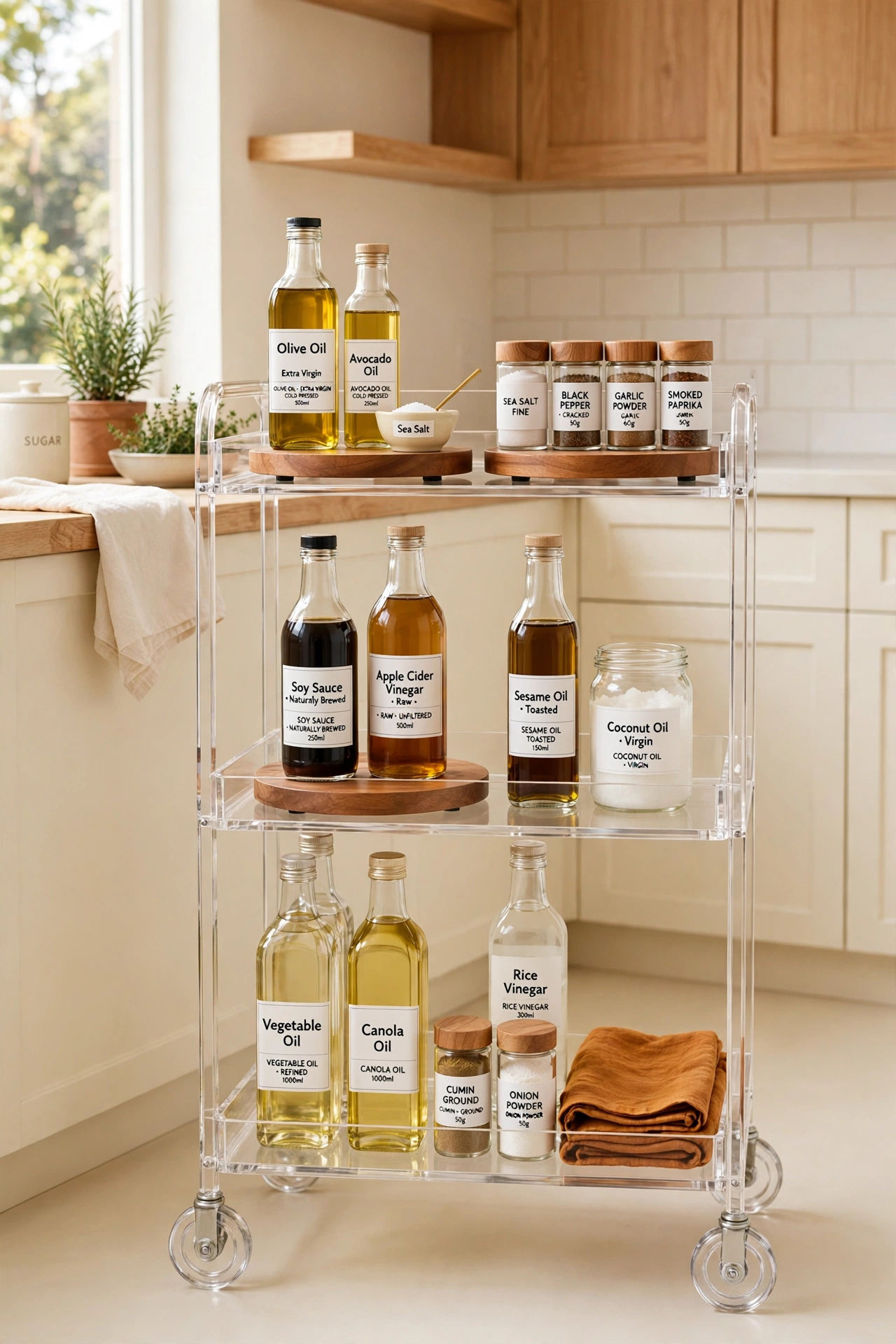
Clear carts shine in kitchens, where clutter builds fast and spills happen often. Oils and spices stay grouped on small turntables, so nothing gets lost at the back of the tray. Bottles used every day sit within arm’s reach on the top tier, while extras and backups stay below to keep the kitchen counters clear.
Smooth acrylic keeps the look light and wipes clean in seconds, and simple wooden accents warm it up without making the cart feel busy. For more ways to keep cooking supplies in order, these kitchen spice organization ideas pair well with a mobile cart station. Roll the cart to the stove while you cook, then tuck it back beside the counter when dinner is done.
5. Sort Craft Supplies by Color
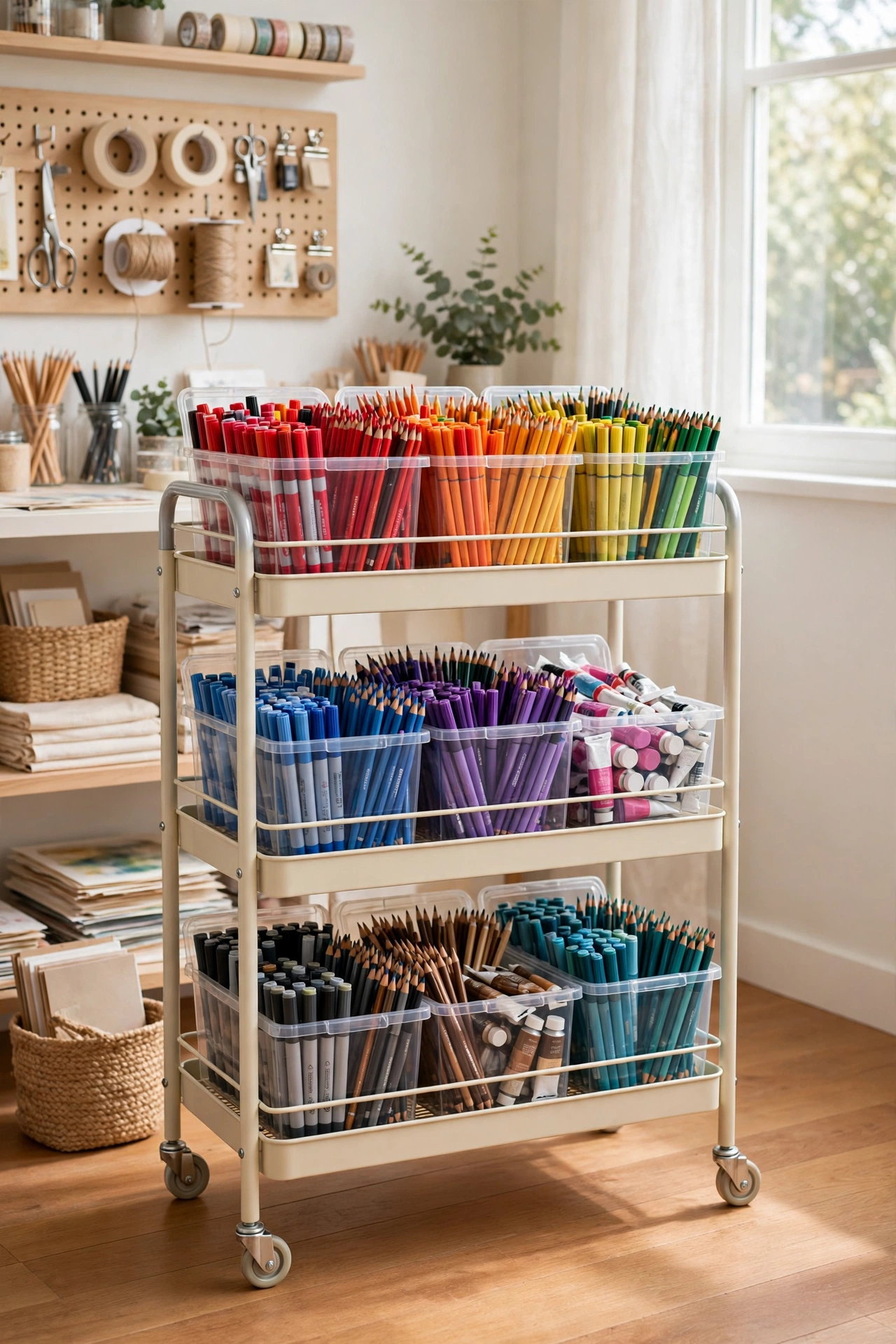
When craft supplies multiply fast, color is the fastest sorting system of all. Markers, paints, and pencils stay sorted by type and shade in clear bins, so the exact color you need is visible before you even open a lid. Daily tools sit at mid-level for easy reach, while backup stock rests on the bottom tier.
This layout fits classrooms, playrooms, and shared craft zones equally well. Neutral cart tones calm the setup, while the bright supplies become the visual focus instead of clutter. Clear bins matter here: when you can see every color at a glance, you stop buying duplicates of shades you already own.
6. Park a Cart Beside Your Desk
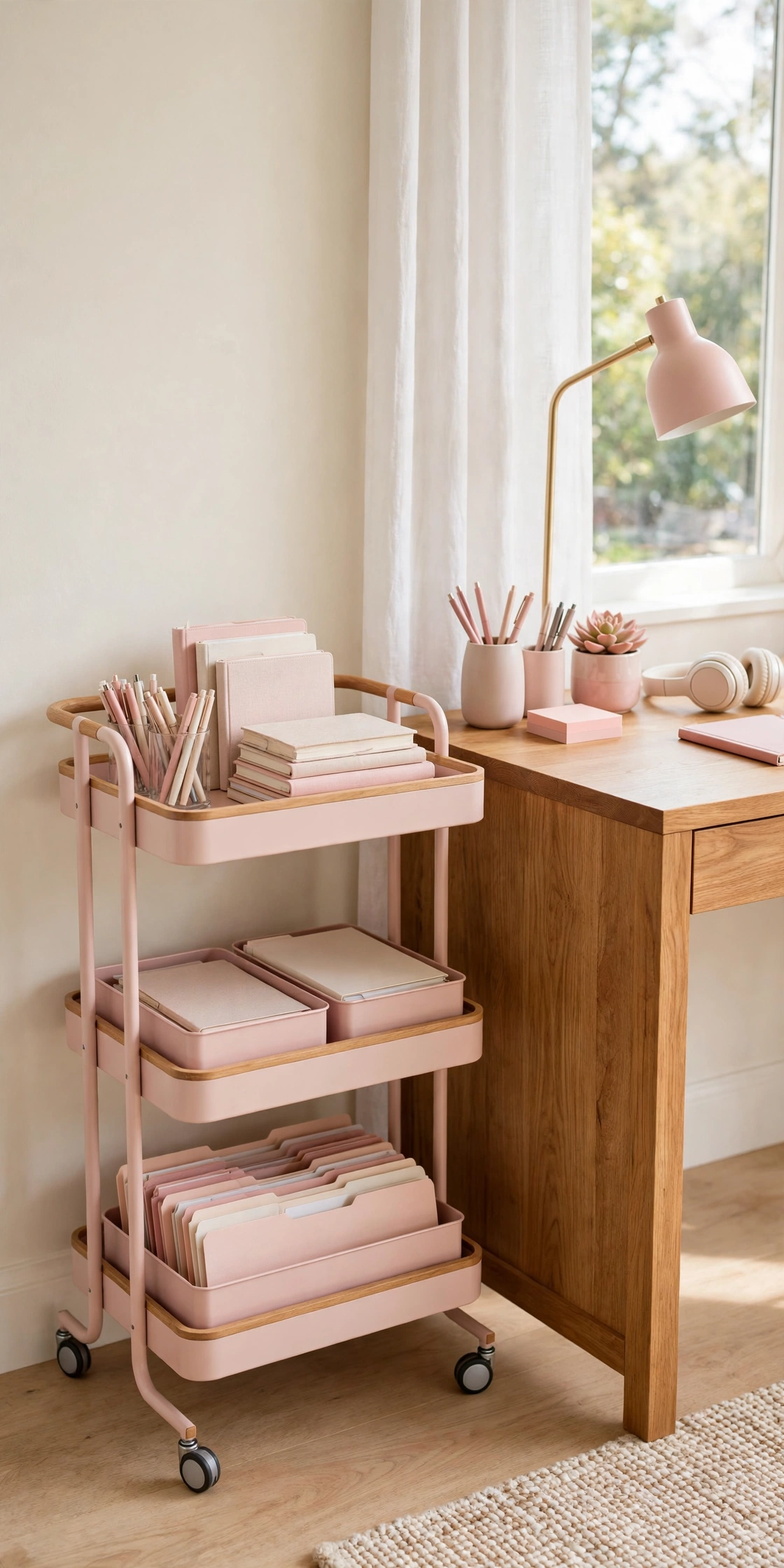
A rolling cart works best when it acts like an extension of your workspace. Pens and planners stay at eye level on the top tier, while project materials and reference folders sit lower so they never crowd the desk surface. The cart holds everything the desk cannot, and it rolls out of the way when you need floor space.
Slim trays keep papers and small items contained, and soft daylight with muted colors keeps the whole corner feeling open rather than busy. This setup fits home offices, study desks, and creative corners. For the drawers that hold the rest of your desk supplies, these desk drawer organization ideas will help you finish the system. Keep only active projects on the cart so it never turns into a second junk pile.
7. Stock a Nursery Essentials Cart
Late-night changes get easier when everything stays in one place. Diapers and wipes stay front and center on the top tier, backup clothes sit folded below, and small bins separate daily care items like lotion, cotton pads, and nail clippers. Soft baskets keep the whole setup quiet and gentle, which matters at two in the morning.
A clean white cart blends into the nursery without adding visual noise, and it rolls easily between the crib and the changing table. Restock the cart once a week so it never runs empty mid-change. When the baby outgrows the cart, the same tiers can hold books, toys, and art supplies for the next stage.
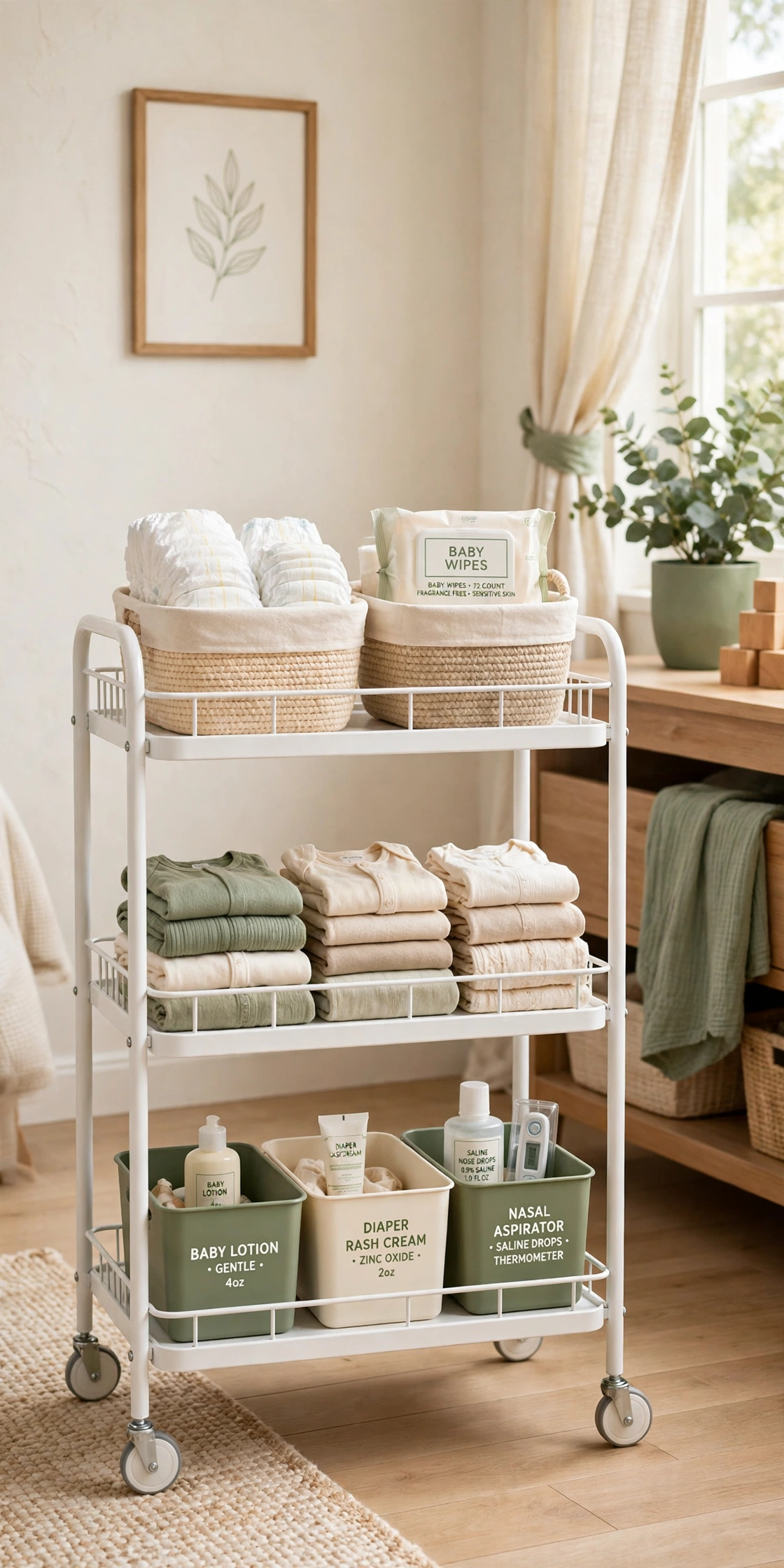
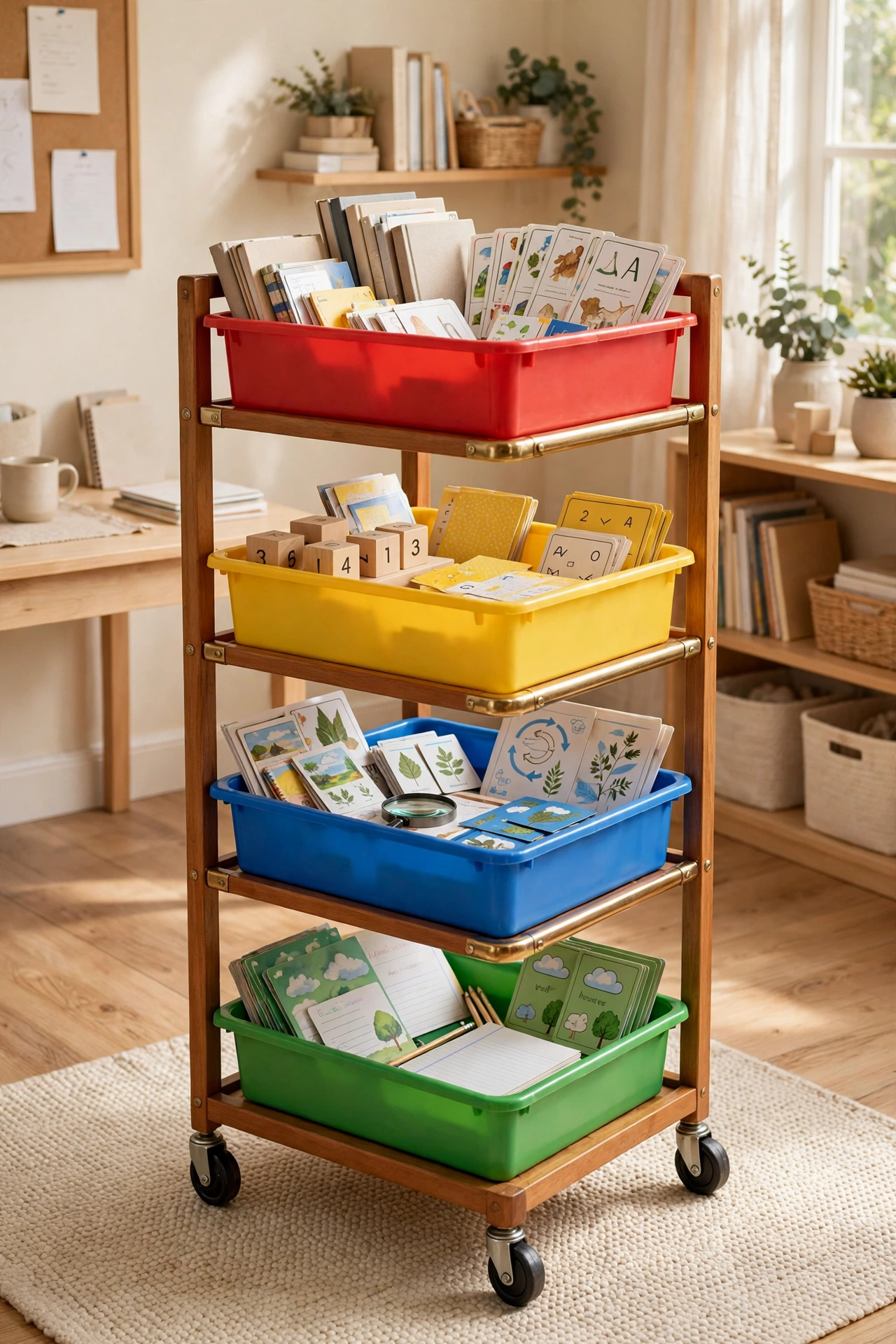
8. Set Up a Rotation Cart for Learning Centers
Learning centers stay organized when materials move instead of students. Each bin on the cart holds one focused task, so nothing mixes and nothing goes missing between rotations. Rolling the cart out keeps transitions smooth and cuts setup time to almost nothing.
Bright containers signal variety, while clear labels help students know exactly where items belong without having to ask. At home, the same idea works for homework stations and after-school activity bins. One cart per subject or per child keeps the system simple enough for kids to run themselves.
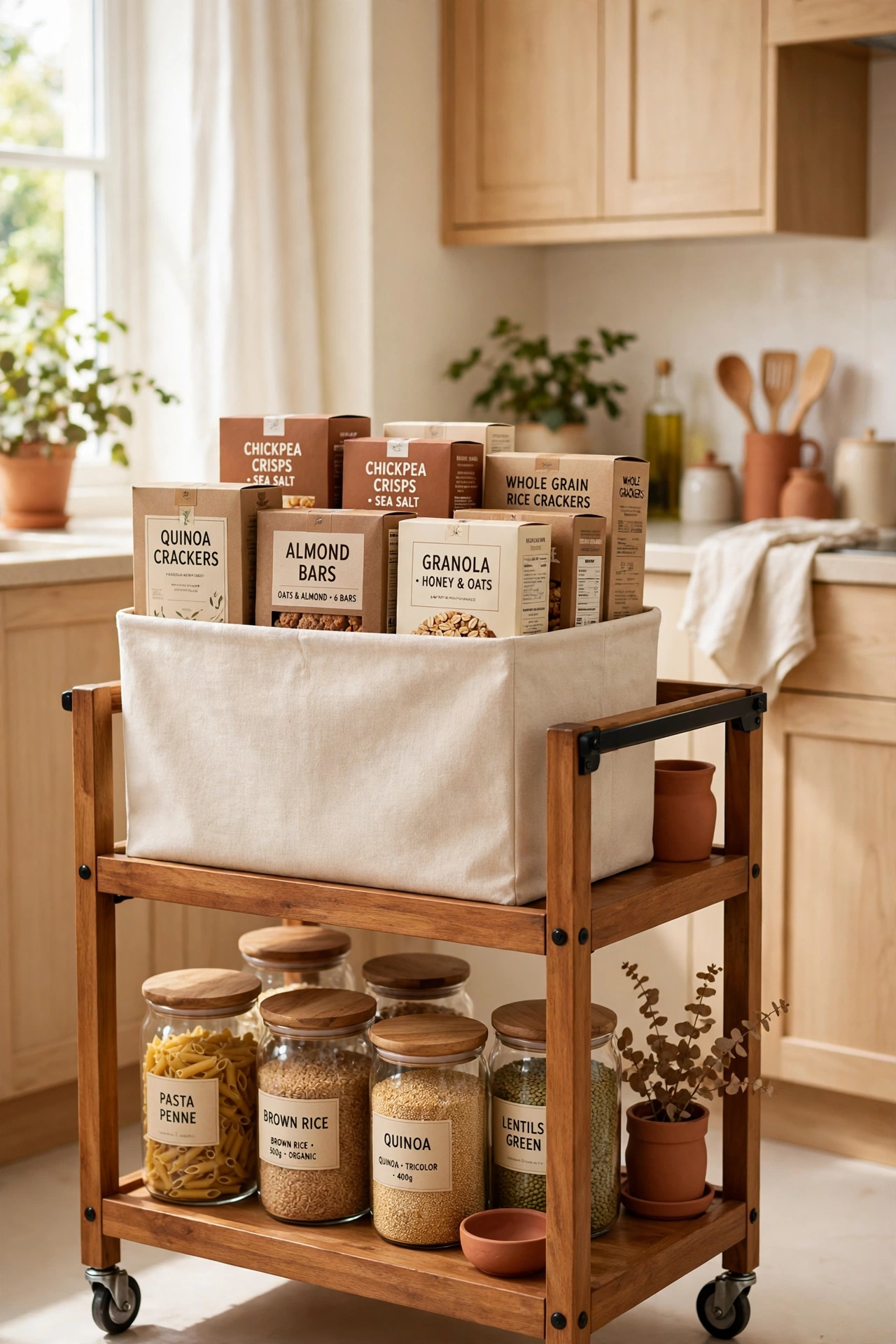
9. Roll Out a Pantry Refill Cart
Bulk groceries get easier to manage when refills stay mobile. A tall fabric bin on the cart holds boxed foods, snacks, and extras that do not fit on the pantry shelves, and rolling it out during cooking saves trip after trip back and forth. The soft-sided container keeps heavier items contained without scratching floors or cabinets.
This setup works especially well in kitchens with limited pantry space. Restock the cart right after grocery runs so it is always ready, and keep a small label on the bin so everyone knows it holds overflow, not daily staples. For a full pantry system to pair with the cart, these pantry organization ideas will help you decide what stays on shelves and what rides on the cart.
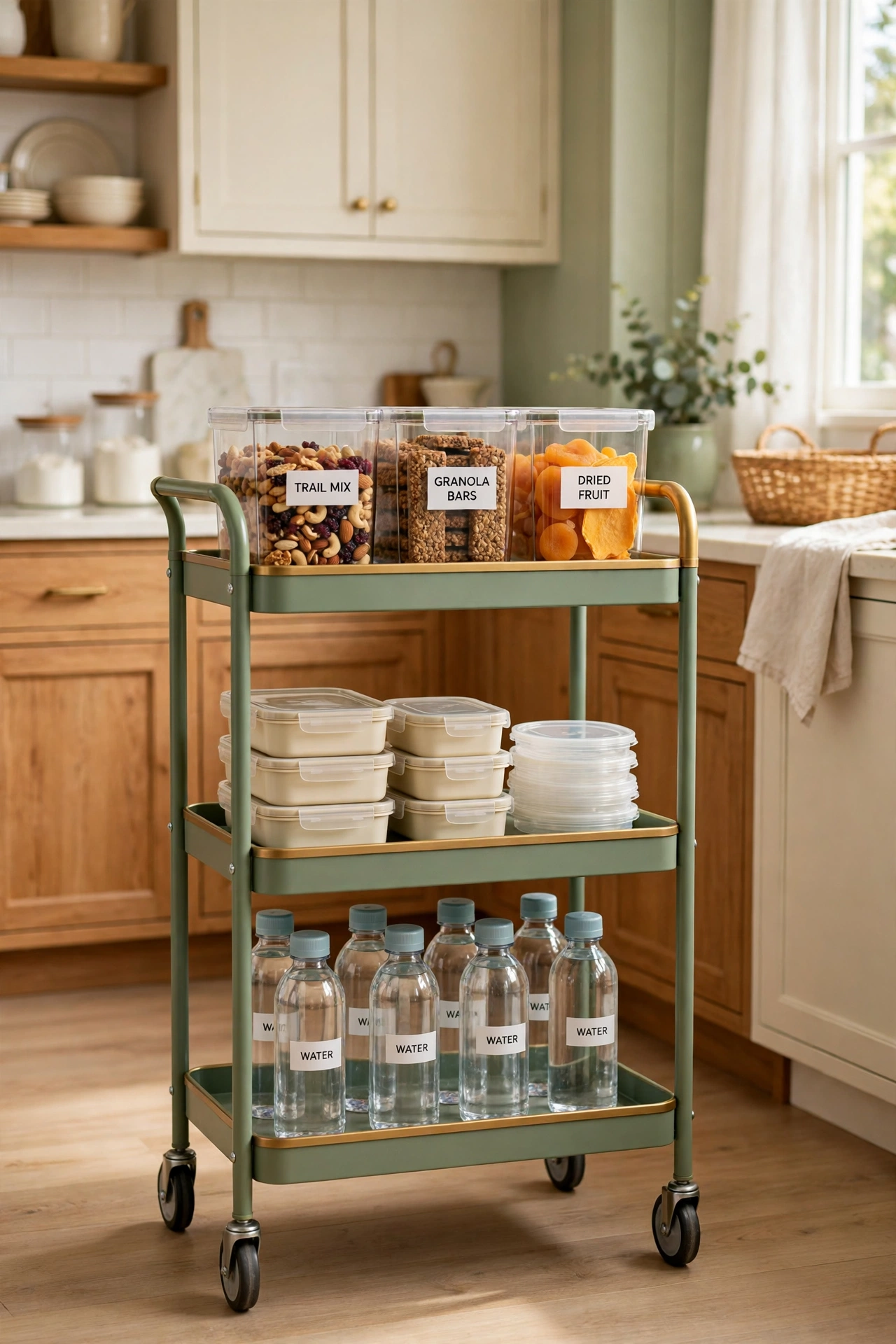
10. Create a Lunch Prep Station on Wheels
Mornings move faster when lunch items live in one spot. The top tier holds grab-and-go snacks, the middle tier holds containers, lids, and sandwich supplies, and the bottom tier holds backup snacks and water bottles. Handwritten labels set clear boundaries, so kids can pack their own lunches without asking where things go.
Rolling the cart out during prep keeps the counters clear, and rolling it back after grocery runs makes restocking simple. This setup fits family kitchens best, where several lunches get packed on busy weekday mornings. Keep a small bin for notes and napkins so nothing gets forgotten in the rush.
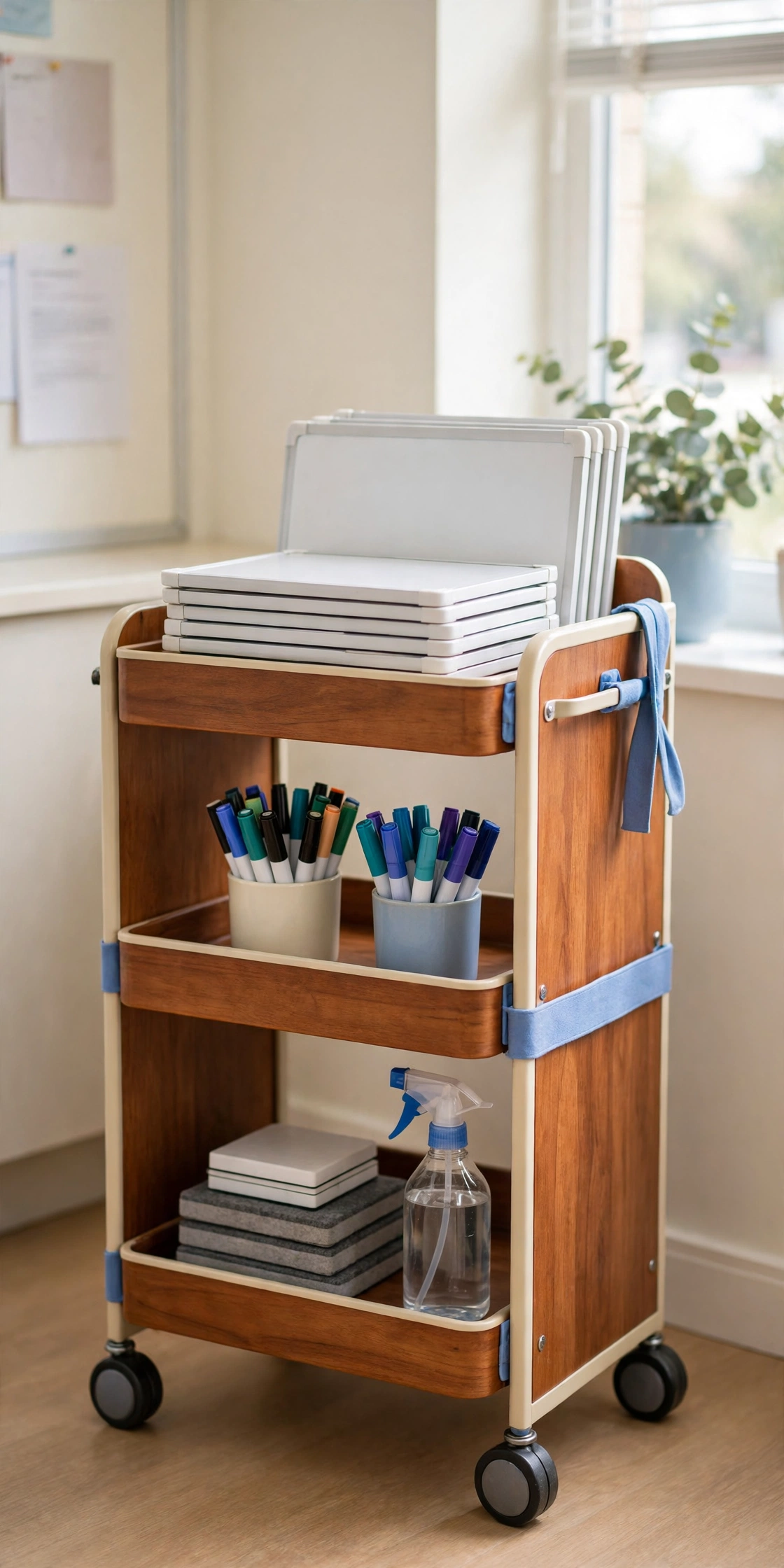
11. Make a Marker Reset Zone
Whiteboard tools get messy fast without a reset system. Clean boards stack on the top tier, used markers drop into the middle tier, and erasers and cleaning spray stay contained below. Sorting by condition instead of color keeps supplies usable longer, because dried-out markers get spotted and tossed during the reset instead of mixed back in with the good ones.
Open trays speed up cleanup and make the routine predictable: after every session, everything returns to its tier. This setup suits classrooms and training rooms, but it works just as well for a home whiteboard used for schedules and family planning. A quick end-of-day reset keeps the zone ready for tomorrow.
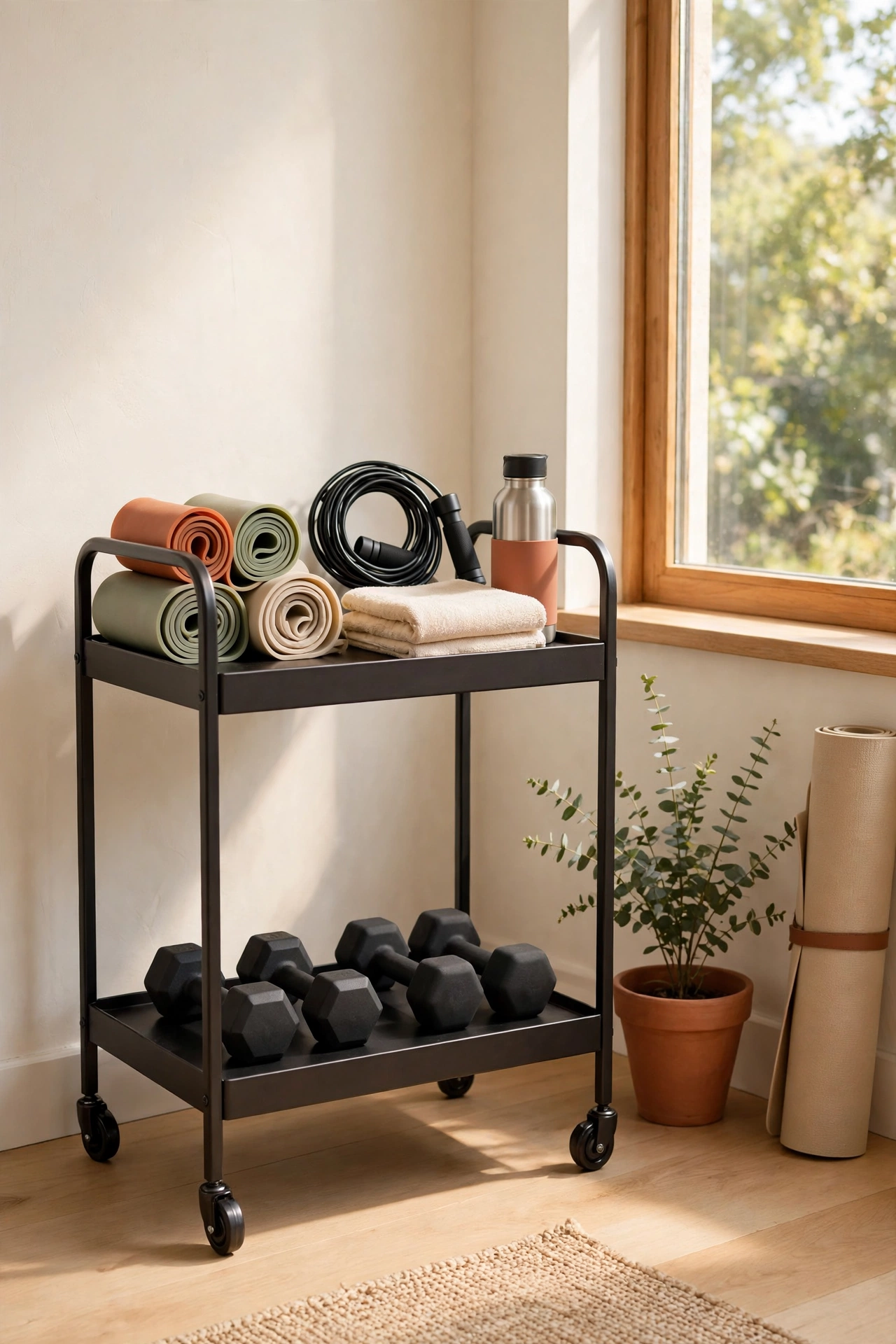
12. Gather Home Gym Gear on One Cart
Workout gear stays consistent when it lives in one mobile spot. Resistance bands, jump ropes, and small hand weights stay grouped by type, while heavier items sit low for stability so the cart never tips. A water bottle and a folded towel ride on the top tier, ready for every session.
Open shelving keeps everything visible, and a dark frame grounds the setup, making it feel structured rather than scattered. This works well in small home gyms where gear would otherwise sprawl across the floor. Roll the cart to your workout spot, and roll it back to its corner when the session ends.
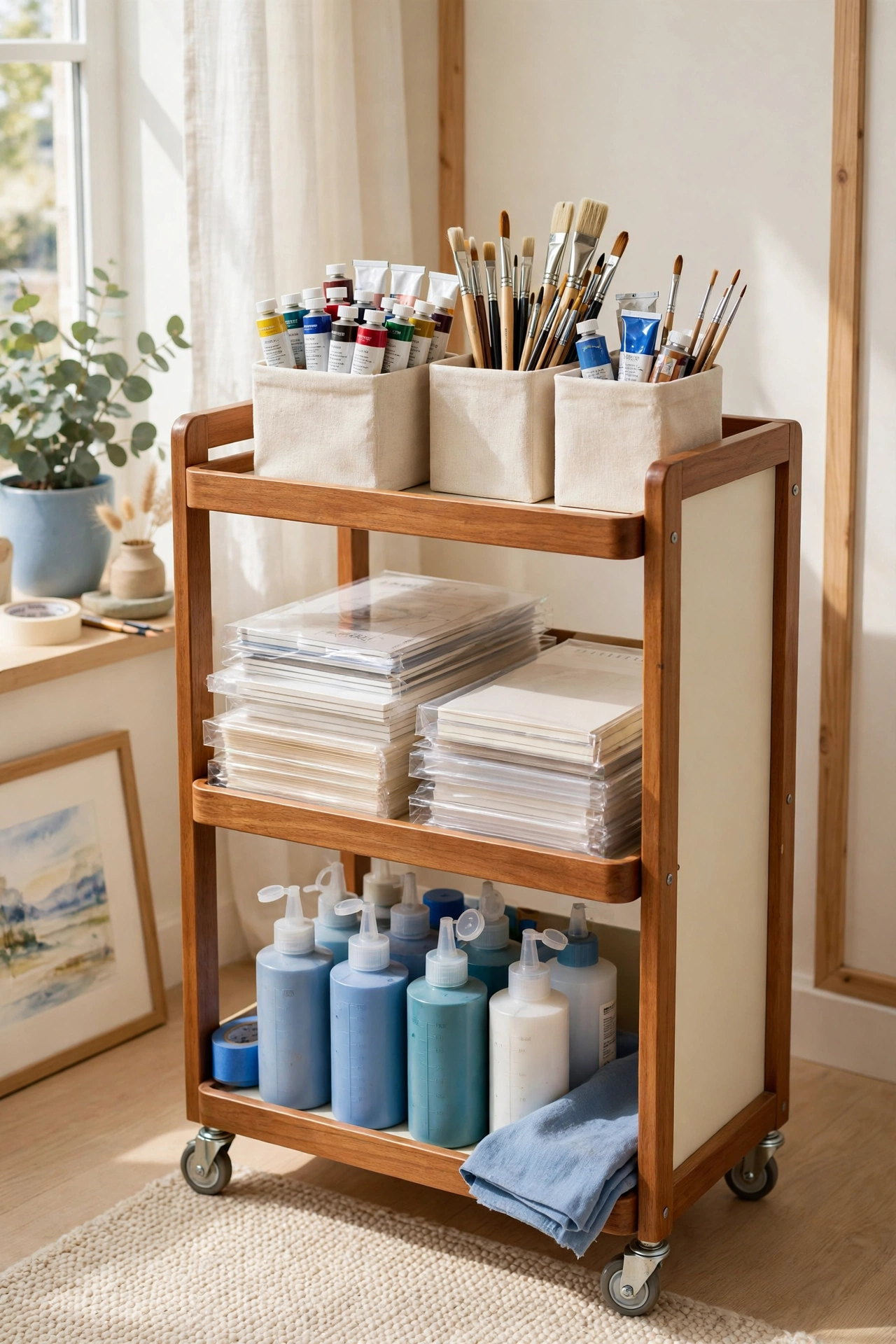
13. Arrange Paint Supplies in Work Order
Painting stays enjoyable when supplies follow a clear order. Wet paints and brushes live up top for quick access, paper and guides stay protected in the middle tier, and refill bottles rest below. The cart follows the flow of the work itself: grab, paint, refill, repeat.
Square containers prevent tipping, which matters when paint is involved, while a light palette keeps the cart feeling clean even when a project gets messy. This setup suits hobby artists and kids’ art corners alike. Keep a small jar of clean water and a rag on the top tier so brushes get rinsed before paint dries on them.
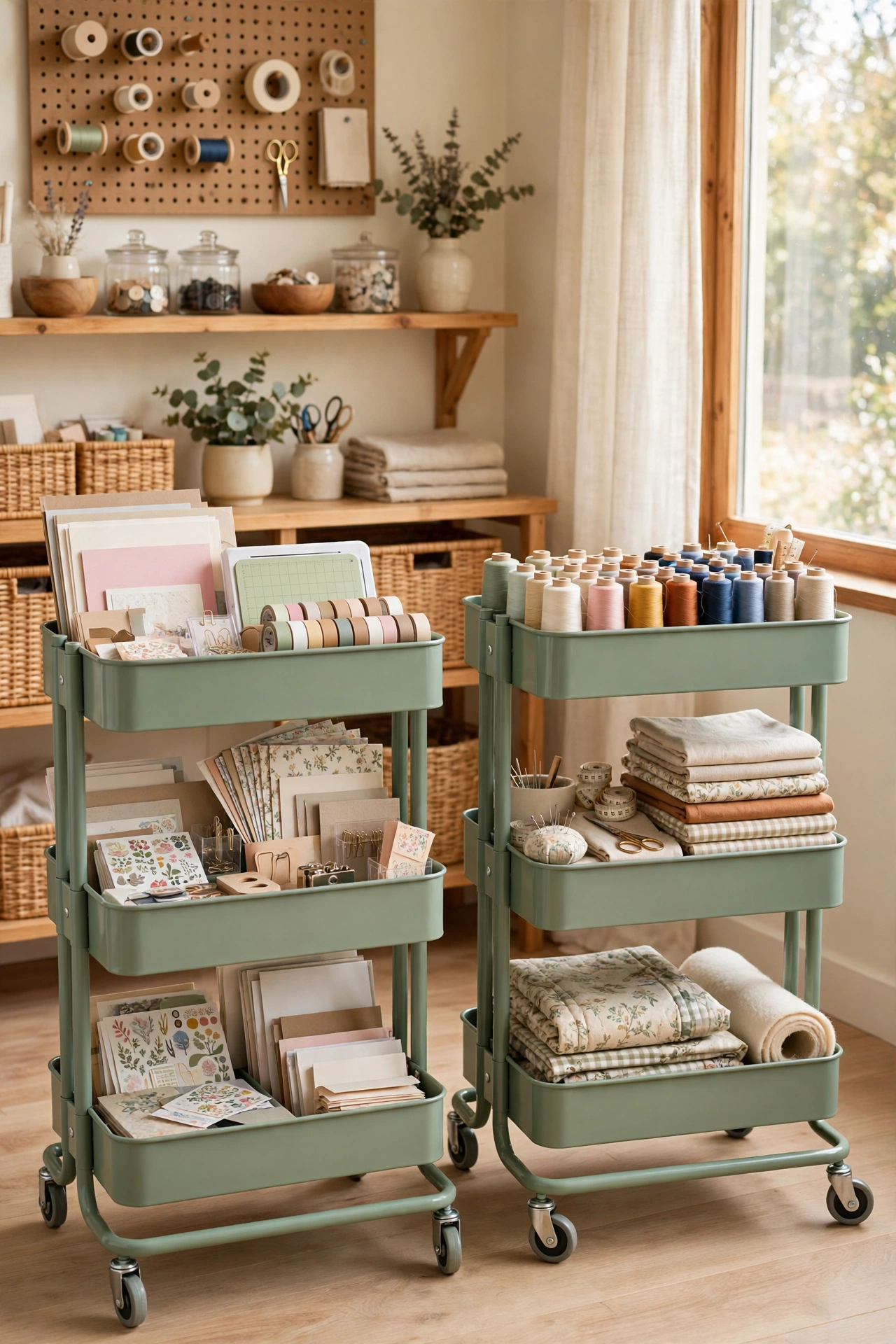
14. Split Categories Across Two Carts
Overflow stops being stressful once supplies get divided by purpose. Instead of cramming everything onto one overcrowded cart, give each cart a single category: one for paper crafts, one for sewing, or one for painting and one for drawing. Nothing competes for space, and rolling the carts apart creates instant work zones.
Coordinated colors help the carts feel connected without forcing everything into a single unit, and keeping everything visible speeds up every project. This approach works best in a dedicated craft room where two carts can park side by side. When only one project is active, the other cart stays tucked away and out of the way.
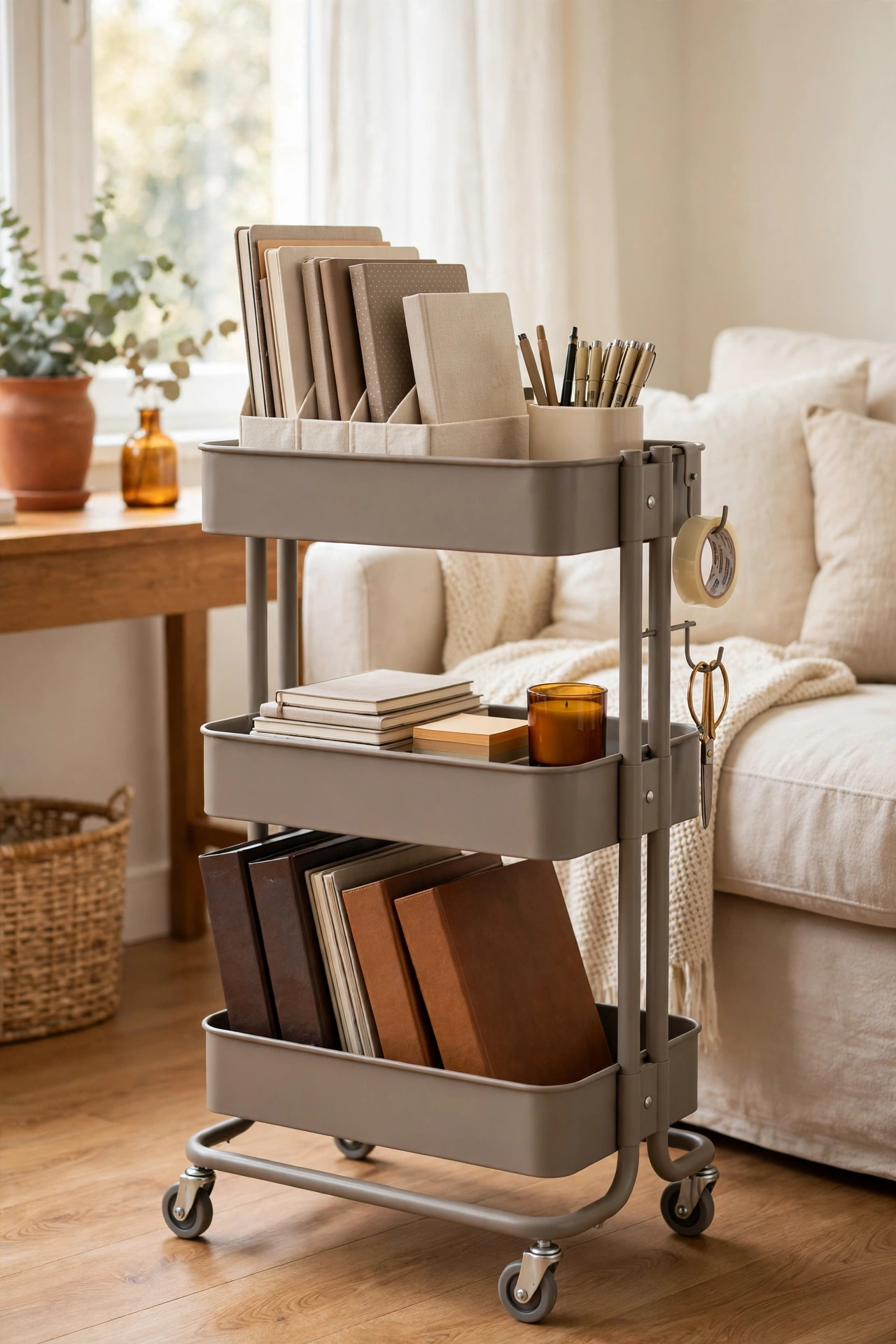
15. Keep Planners Mobile in the Living Room
Paper clutter feels lighter when it stays mobile. Notebooks and planners stand upright on the cart for quick flipping, pens stay corralled in slim holders, and tools like tape and scissors hang off the side for easy grabs. Heavier cutters and binders sit low for balance.
Muted tones help the cart blend into the living room, making it feel intentional rather than office-like. The cart can roll to the sofa for planning sessions and back to its corner when guests arrive. Keep a single inbox tray on top for papers waiting to be filed, and empty it once a week so it never overflows.
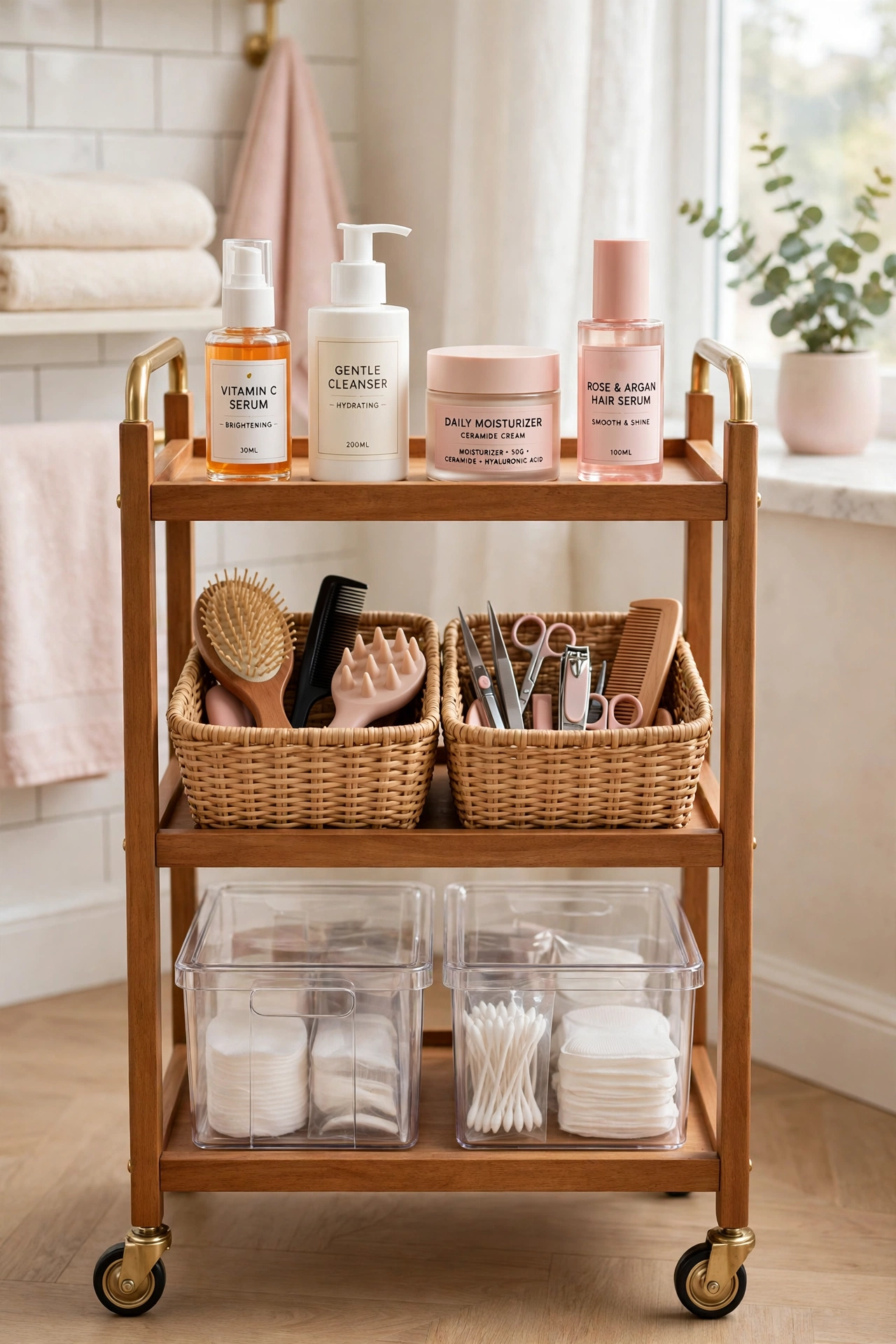
16. Organize a Bathroom Care Cart by Routine
Daily routines feel smoother when bathroom items stay sorted by use. Skincare and hair products sit up top for easy reach, grooming tools stay separated in baskets on the middle tier, and backups like extra cotton pads and refills live on the bottom tier. Each tier matches one step of the routine.
Clear bins handle moisture better than fabric, while light tones and open spacing keep the cart feeling fresh instead of crowded. This setup works well in a shared bathroom, where each person can claim a basket or a tier. Roll the cart to the sink in the morning and back to its corner when the routine is done.
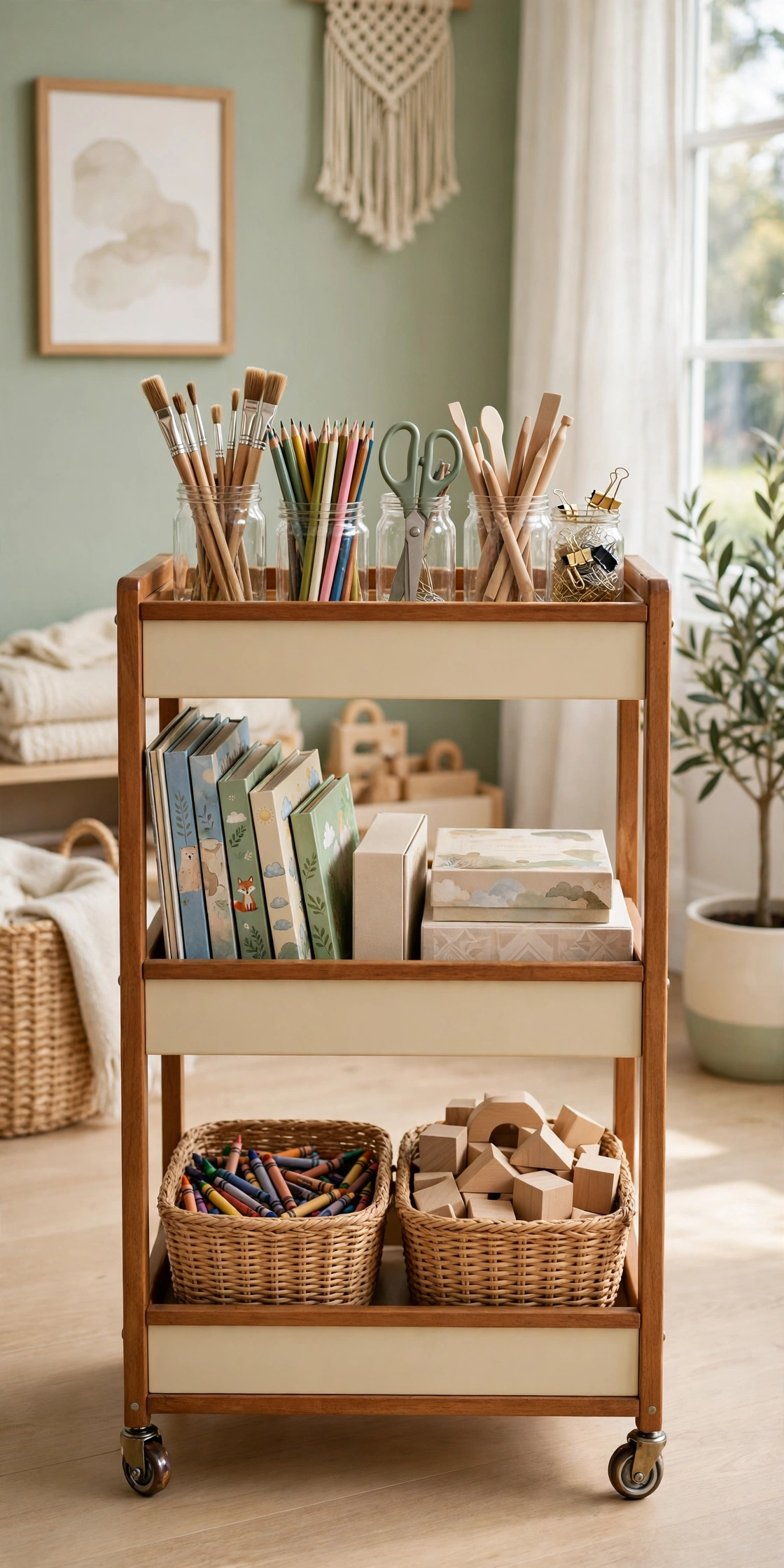
17. Load a Kids Activity Cart for Free Play
Free play stays manageable when supplies are within reach of kids. Art tools stay visible in jars on the top tier, books and games fill the middle for easy choosing, and bulk crayons and building blocks sit low for weight balance. Kids can see everything, so they choose faster and clean up easier.
Natural baskets soften the look, while open trays help kids put things back where they belong. This setup works best in playrooms and daily learning corners. Keep the cart stocked with a small rotation of activities and swap items weekly so play stays fresh without buying anything new.
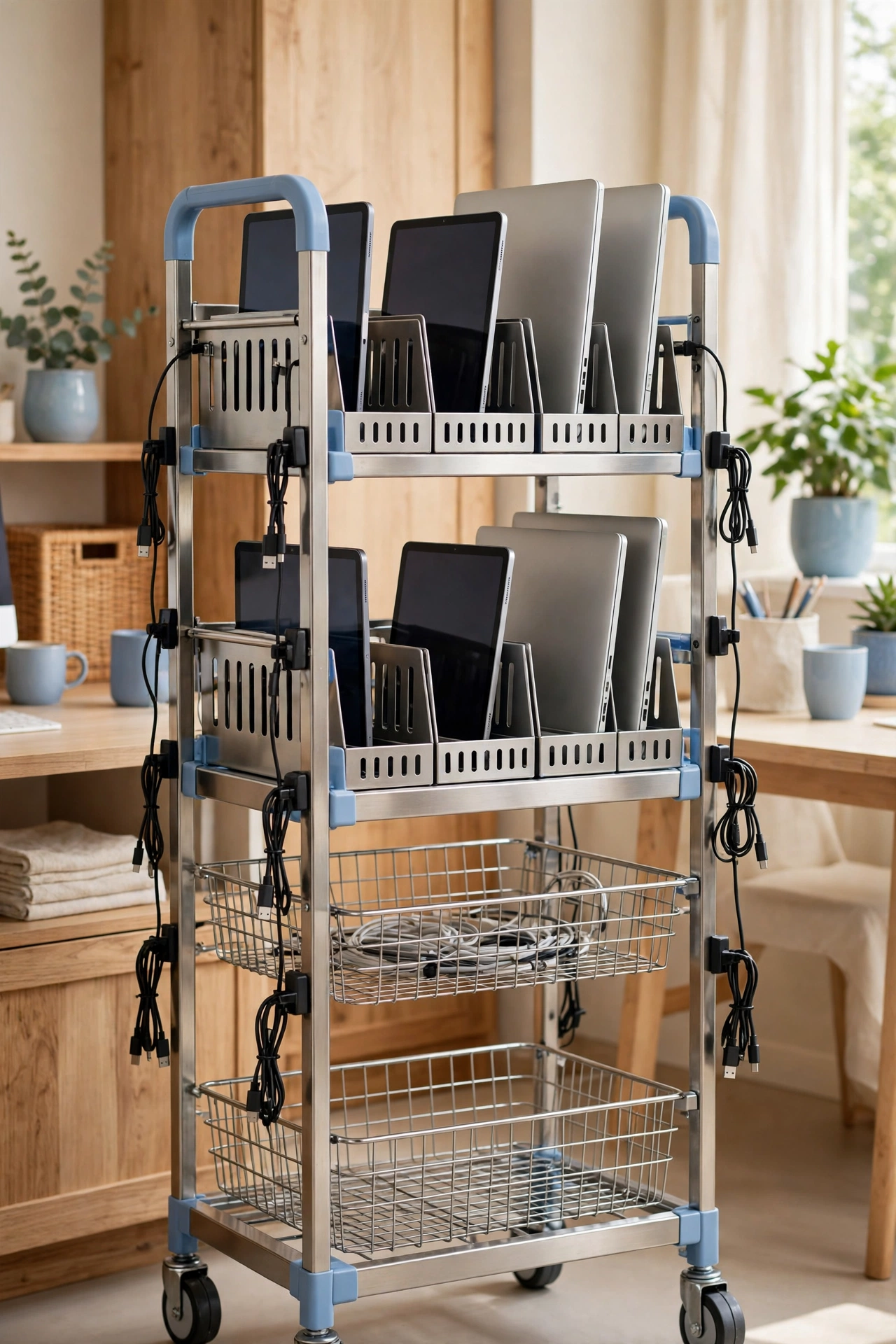
18. Run a Device Charging Cart
Tech stays under control when devices follow a simple return system. Numbered tiers assign ownership, so each tablet or laptop has a labeled slot it returns to after use. The bottom tray catches low-battery devices that need charging next, so nothing dies mid-lesson or mid-meeting.
Open metal baskets allow airflow around charging devices, and bold labels eliminate guesswork so devices always return to the right place. This setup fits classrooms and shared workspaces best. Keep cables short and clipped to the cart frame so they never tangle into a nest behind the trays.
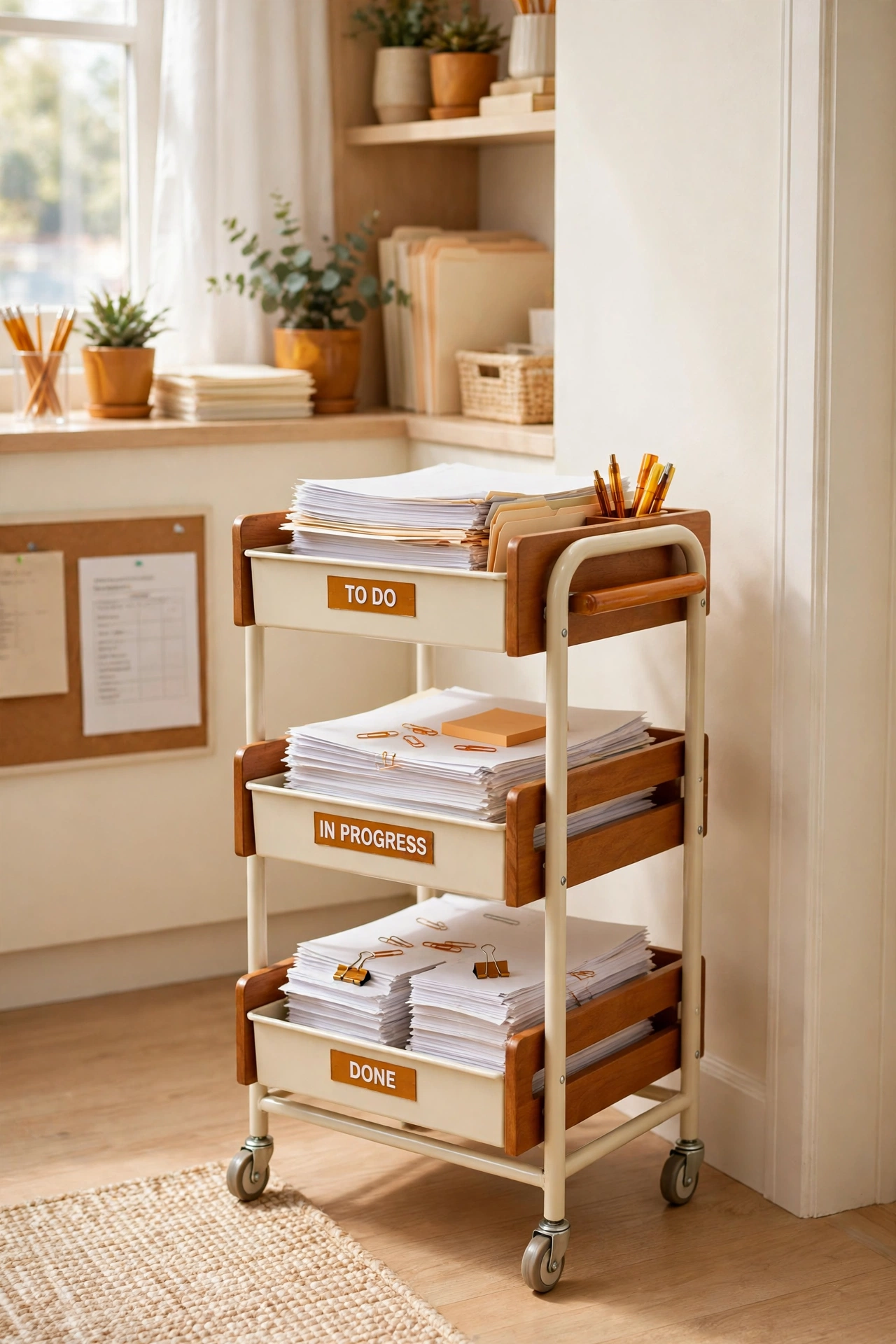
19. Organize Paperwork With a Workflow Cart
Paper chaos disappears when tasks follow a clear order. Each drawer or tier on the cart handles one step, so handouts move from “to do” to “in progress” to “done” without getting lost. Everyone knows where papers go next without having to ask.
Bright labels add structure, while the slim frame keeps the cart useful without taking up much floor space. This setup works best in busy classrooms where handouts move daily, but the same flow tames household paperwork too: bills, school forms, and permission slips each get a step. Move papers forward at the end of every day so the cart never stalls.
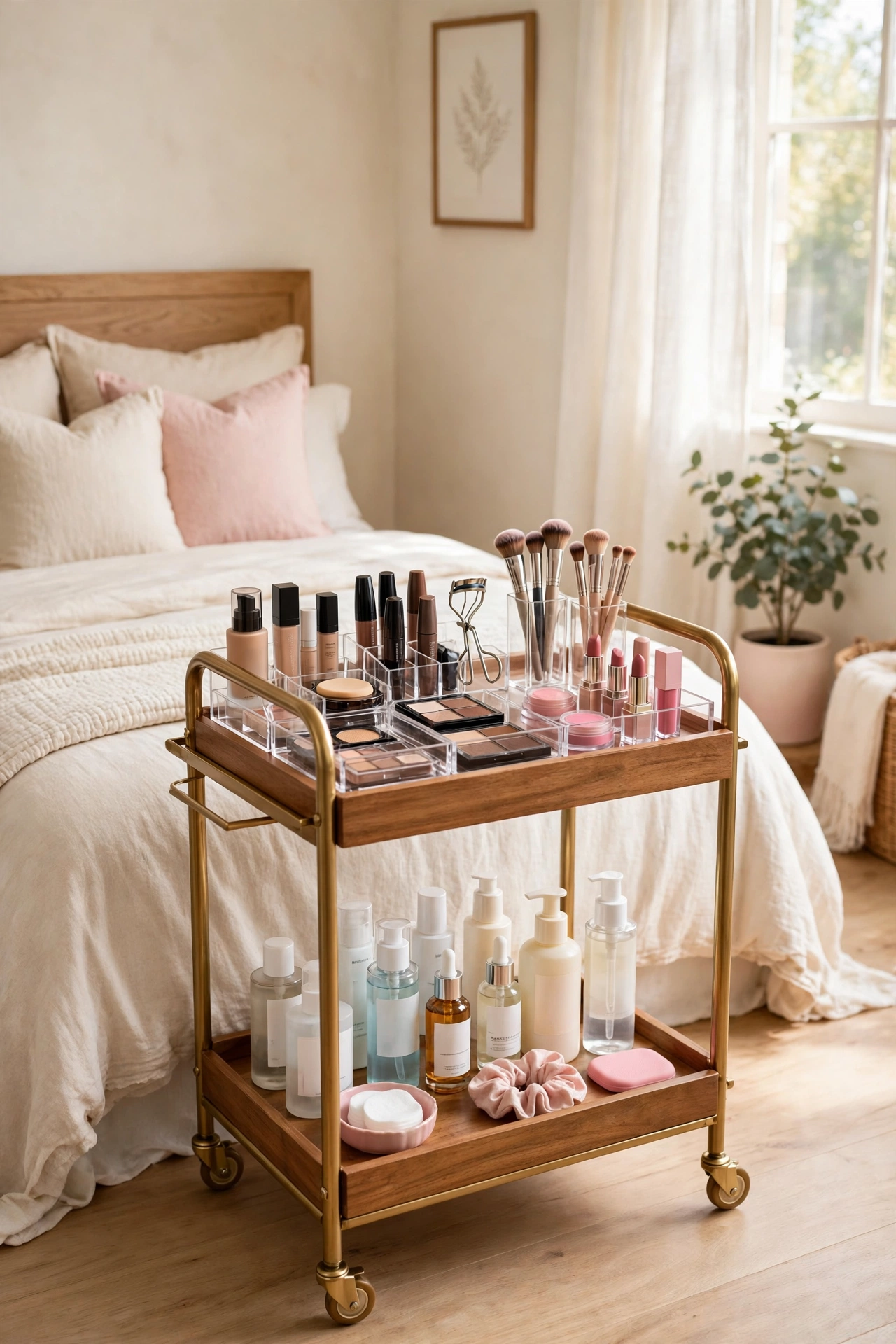
20. Group Makeup by Routine Step
Morning routines run smoother when products stay grouped by step. Daily makeup sits up top in the order it gets used, skincare follows below, and brushes and tools stay upright in slim cups. The cart mirrors the routine, so getting ready feels like moving down a checklist instead of hunting through a bag.
Clear organizers prevent overbuying, because you can see exactly what you already own before shopping. Soft lighting and neutral trays keep everything calm instead of chaotic. Keep the top tier for daily products only, and move occasional items to the bottom tier so the cart never overflows.
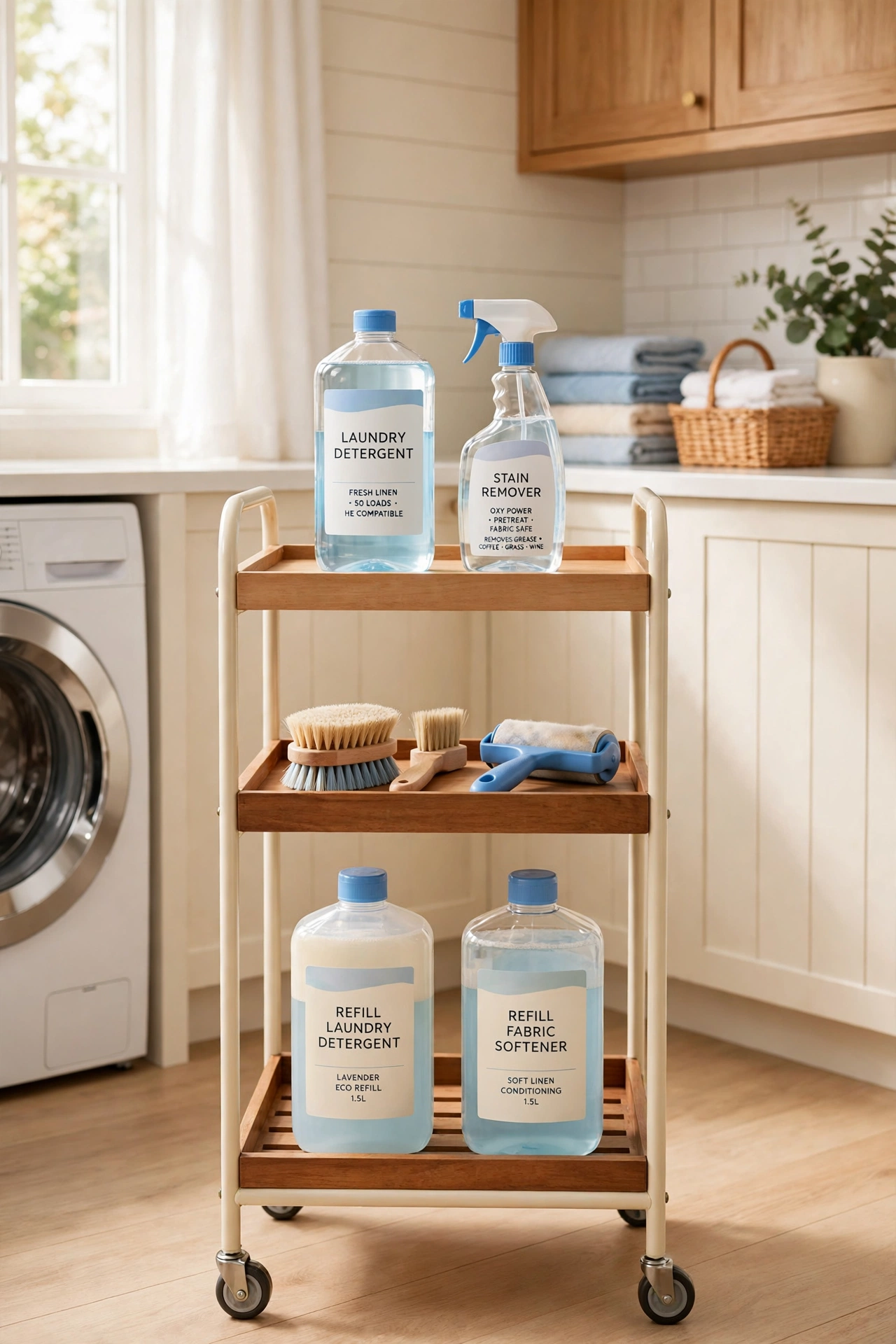
21. Keep Laundry Supplies Rolling With You
Laundry stops feeling scattered once supplies move with you. Detergents and stain removers stay on the top tier, tools like brushes and lint rollers sit at mid-level, and refills live at the bottom. The cart rolls from the laundry room to the closet and back, carrying everything the job needs.
Using a slim cart keeps everything reachable without blocking walkways, which matters in narrow laundry rooms. Decant detergent into a labeled pump bottle so measuring is quick and spills stay off the tray. Restock the bottom tier after every shopping trip so the cart is always ready for laundry day.
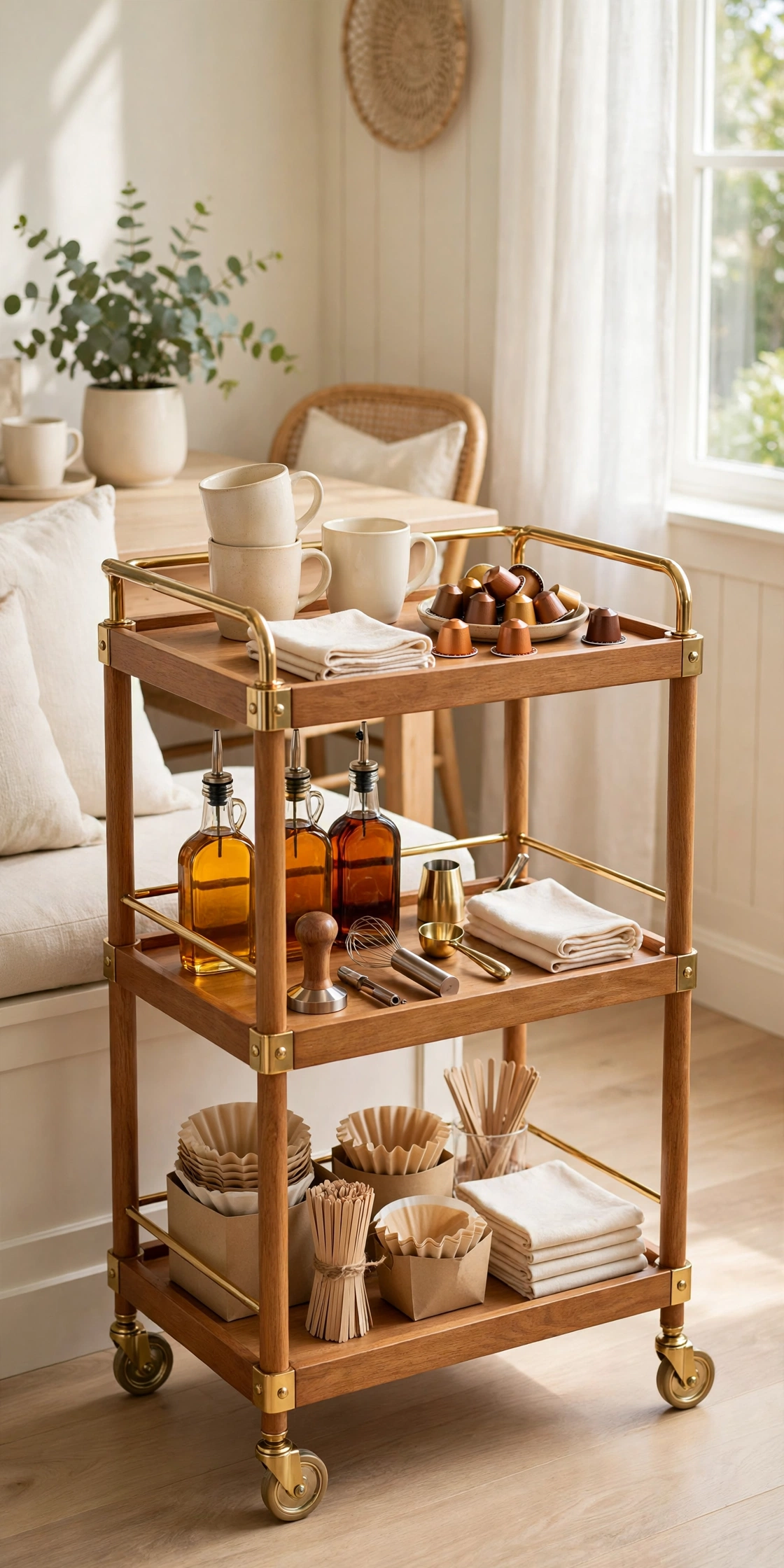
22. Set Up a Coffee Bar Cart
Mornings feel faster when coffee has a home. Mugs and coffee pods stay up top, syrups and tools sit in the middle tier, and extra filters and backup supplies rest below. Keeping everything vertical frees counter space and makes cleanup easier, because the whole station rolls to the sink for a wipe-down.
This setup works best in kitchens and dining corners away from the main counter. A small tray on the top tier catches drips and holds spoons, and a folded cloth napkin stack adds a finished touch. Restock pods and beans weekly so the morning routine never stalls on an empty tier.
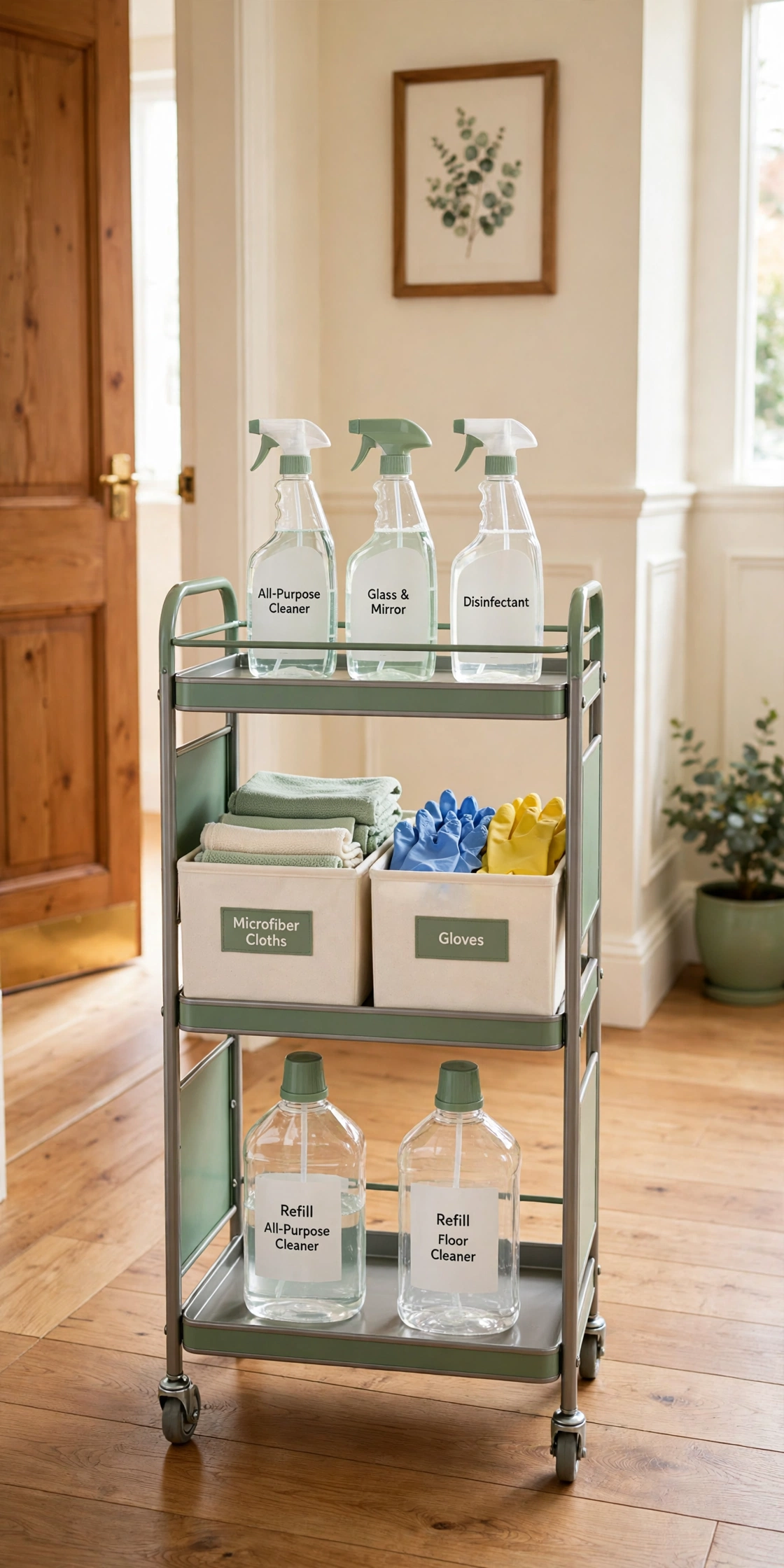
23. Build a Cleaning Caddy Cart
Household cleaning gets simpler when supplies travel together. Daily sprays stay within reach on the top tier, cloths and gloves get separated into their own bins, and refills sit low for balance. Rolling the cart from room to room saves time and prevents half-finished jobs, because everything needed is already on board.
This setup fits apartments and multi-level homes, where carrying a caddy up and down stairs gets old fast. Keep a small trash bag roll clipped to the side so wrappers and used wipes have a home mid-clean. Restock the cart after every cleaning session so it is ready to roll next time.
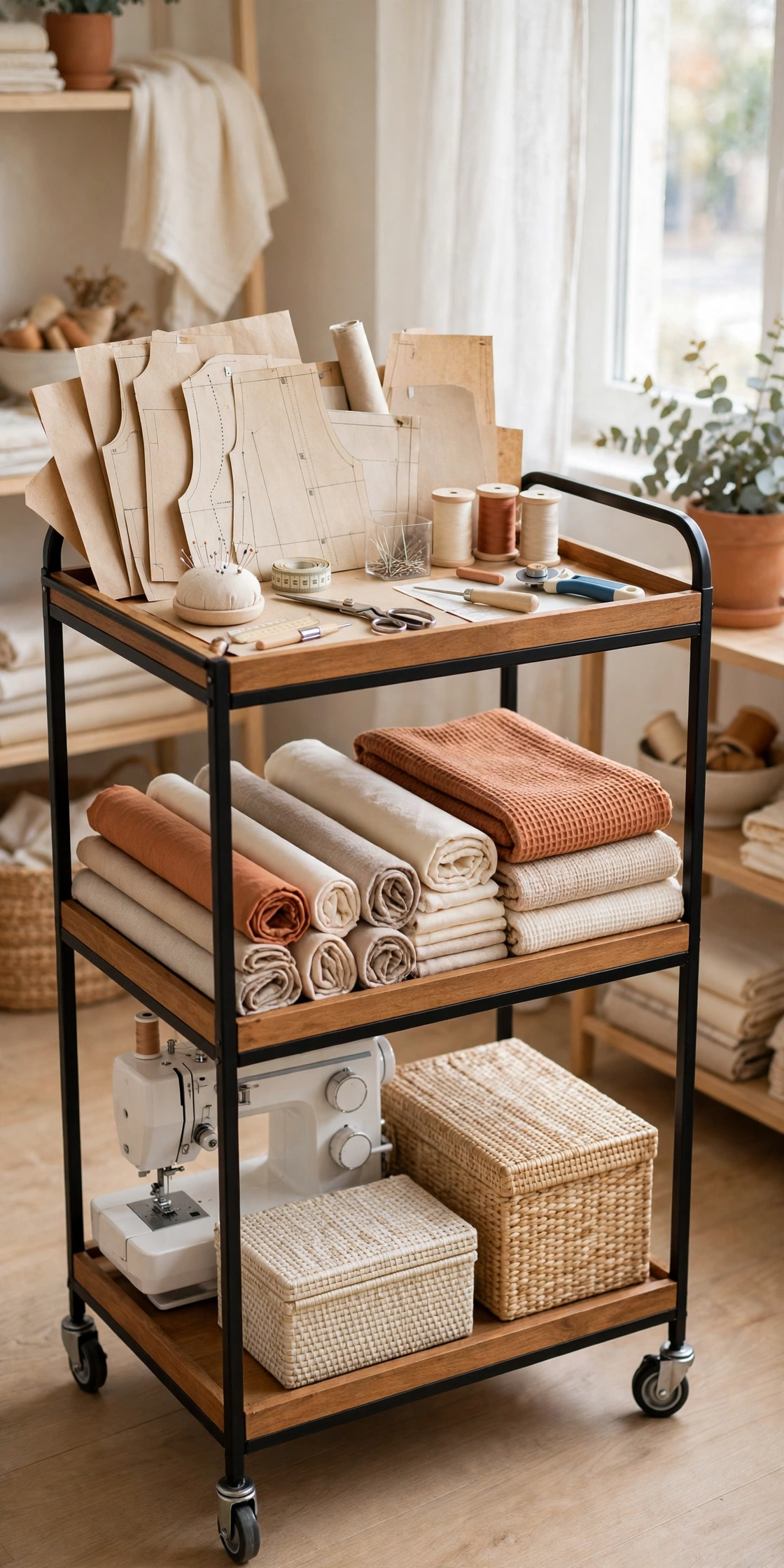
24. Organize Sewing Projects on a Cart
Fabric projects stay organized when active materials stay visible. Current tools and patterns live on the top tier, fabrics sit rolled or folded at mid-level, and the sewing machine or storage boxes stay low. Open storage helps track progress without digging through drawers, so you can see exactly where a project stands.
This setup works well for sewing rooms and craft corners alike. Keep thread spools sorted by color in a small tray so the right shade is always visible, and store pins and scissors in a lidded tin for safety. For the small notions that fill the top tier, these sewing notions organization ideas will help you sort buttons, bobbins, and needles. Roll the cart to your machine when you sew, and park it when the project pauses.
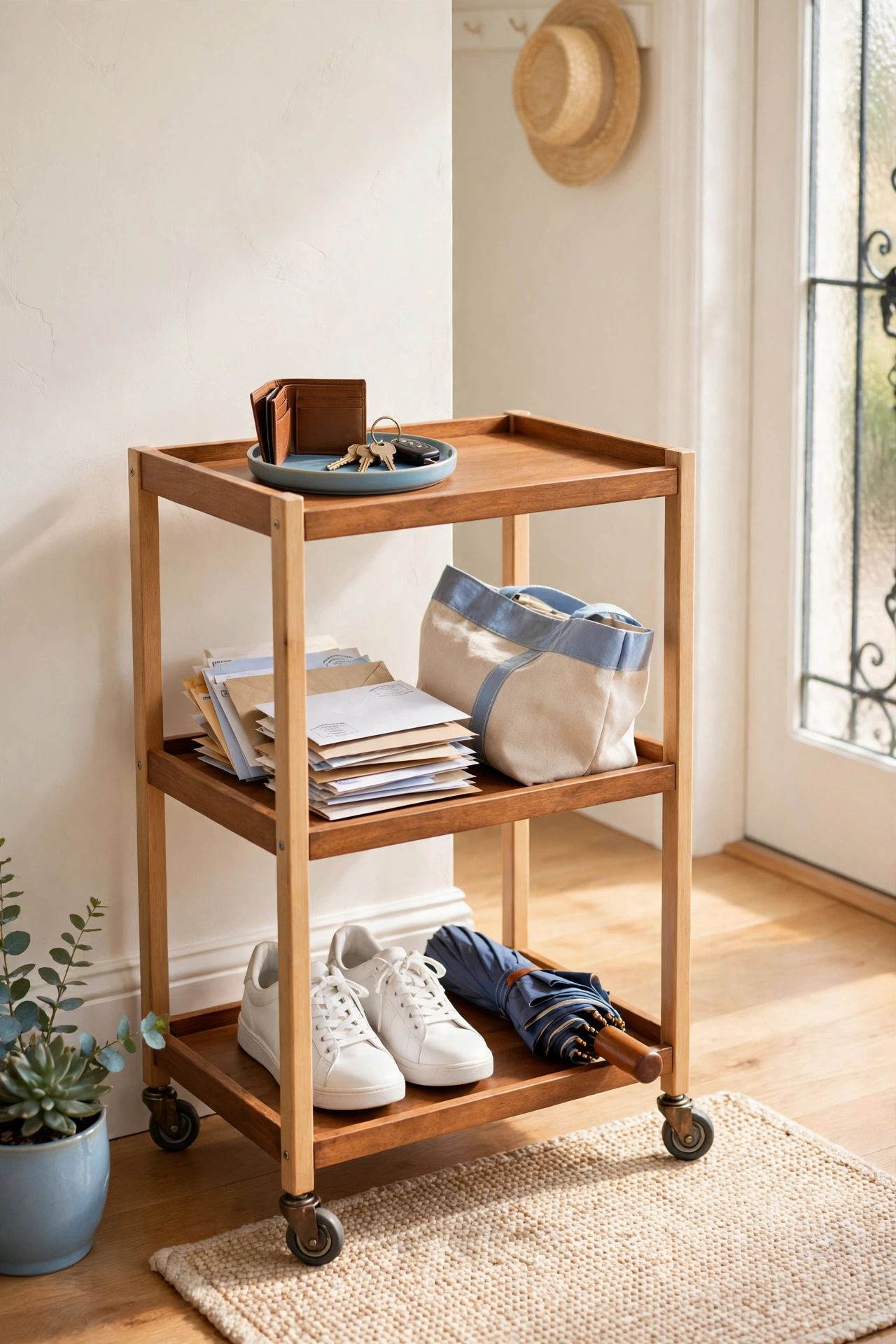
25. Create an Entryway Drop Cart
Daily clutter needs a landing zone, not a pile. Keys and wallets stay up top in a small dish, mail and bags sit in the middle tier, and shoes or extras live below. The cart catches everything the moment you walk in, so the entryway stays clear and the front door never gets blocked.
This setup works best in entryways and mudrooms where items get dropped quickly. Rolling the cart aside keeps pathways clear when guests arrive, and a quick nightly reset returns every item to its real home. A small label on each tier reminds the whole family where things belong.
Conclusion
A rolling cart is only as good as the system behind it. Give each tier a purpose, keep daily items within reach, and let backups ride low, and the cart will stay useful long after the excitement of a new purchase fades. The best cart is not the biggest or the prettiest one. It is the one with a clear job and a fixed home for every item.
Pick one cart and one purpose to start, and build the system around how you actually live. A single evening of sorting can turn a cluttered cart into the hardest-working piece of furniture in the house. For a calm home beyond the cart, these nightly reset routines will help you keep every room organized with just a few minutes each evening.
Frequently Asked Questions About 25 Rolling Cart Organization Ideas
What should go on each tier of a rolling cart?
Give each tier one clear role. Daily-use items belong on the top tier where they are easiest to reach, supporting items go in the middle, and heavy items and backups sit low for stability. When every tier has a purpose, putting things away becomes automatic.
How do I stop a rolling cart from getting messy again?
Mess builds up when items have no fixed spot. Decide what belongs on each tier, use small bins to contain loose items, and avoid overfilling trays just because space is available. A quick reset at the end of the day keeps the cart organized without extra effort.
What size rolling cart works best for small rooms?
A slim three-tier cart about twelve inches wide fits most small rooms and slides between furniture easily. Choose a cart with locking wheels so it stays put during use. Measure the parking spot before buying so the cart has a real home when it is not rolling.
Can one rolling cart serve more than one purpose?
One cart can serve one purpose well, but mixing purposes is what causes clutter. If two jobs need a cart, use two carts or swap the contents seasonally. A cart with a single clear job stays organized far longer than a cart doing three jobs at once.
How do I keep heavy items safe on a rolling cart?
Place heavy items on the bottom tier so the center of gravity stays low, and lock the wheels whenever the cart is parked. Avoid stacking tall items on the top tier, since they can tip when the cart moves. Check the weight limit for your cart before loading it with books or tools.

Hi, I’m Emily! I turn messy corners into cozy, organized spots. DreamNestDecor is where I share simple, practical home ideas — decor, organization, and small-space solutions that work in real life, not just in photos. Every idea here is carefully researched before it’s shared.