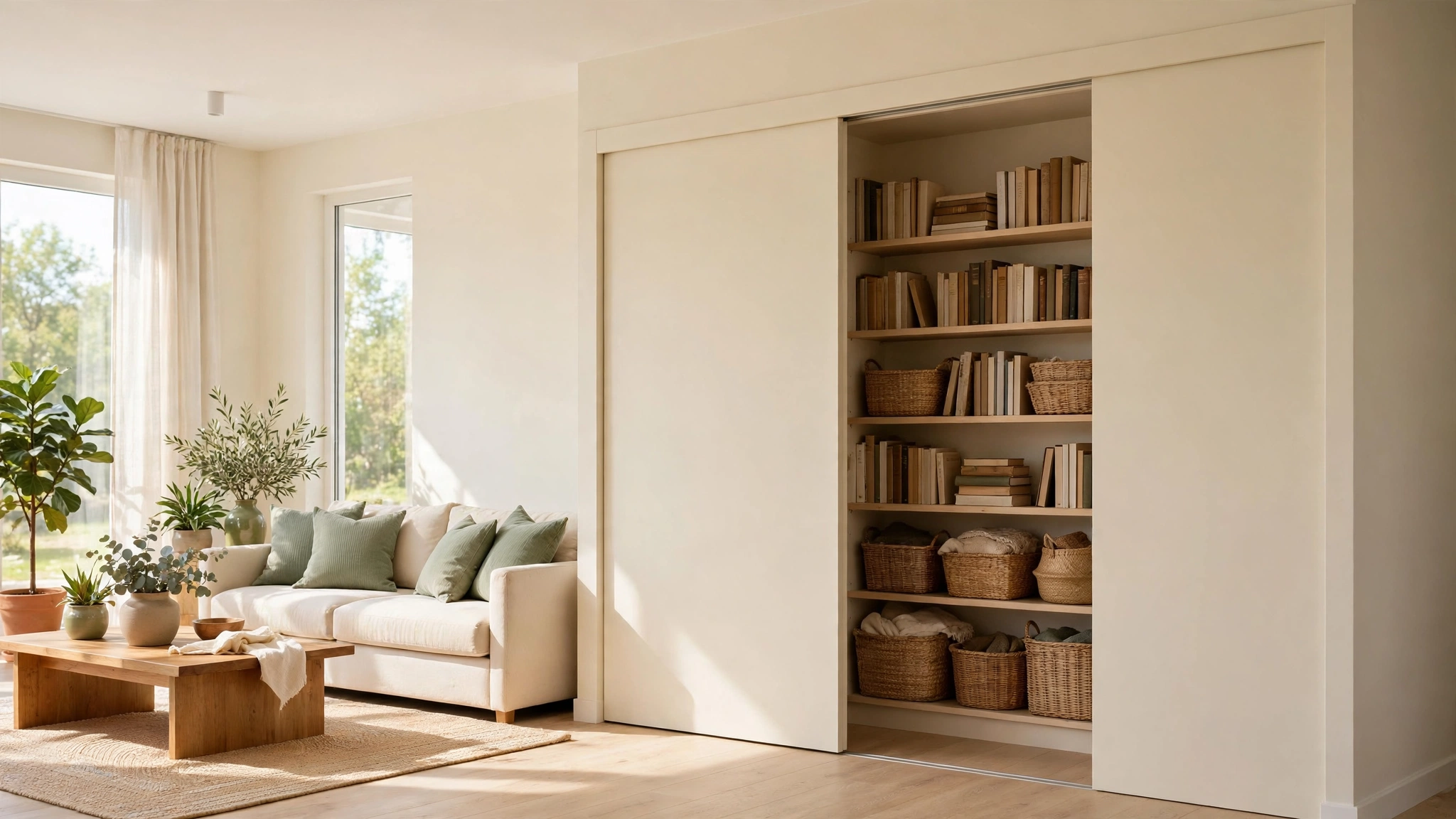
Picture this: you walk into your living room at the end of a long day, and every surface is clear. There are no shoes by the door, no blankets draped over the sofa, and no bottles crowded on the kitchen counter. Everything has a place, and every place is hidden behind a panel, a door, or a clever piece of furniture. That calm, uncluttered feeling is what hidden storage gives you every single day.
You do not need a renovation or a big budget to get there. The space you need is probably already in your home, tucked under the stairs, behind a blank wall, or inside furniture you already own. These 25 hidden storage ideas will help you find that space and use it well, so your home looks tidy and stays easy to live in.
1. Conceal a Full-Height Pantry Behind Flat Panels
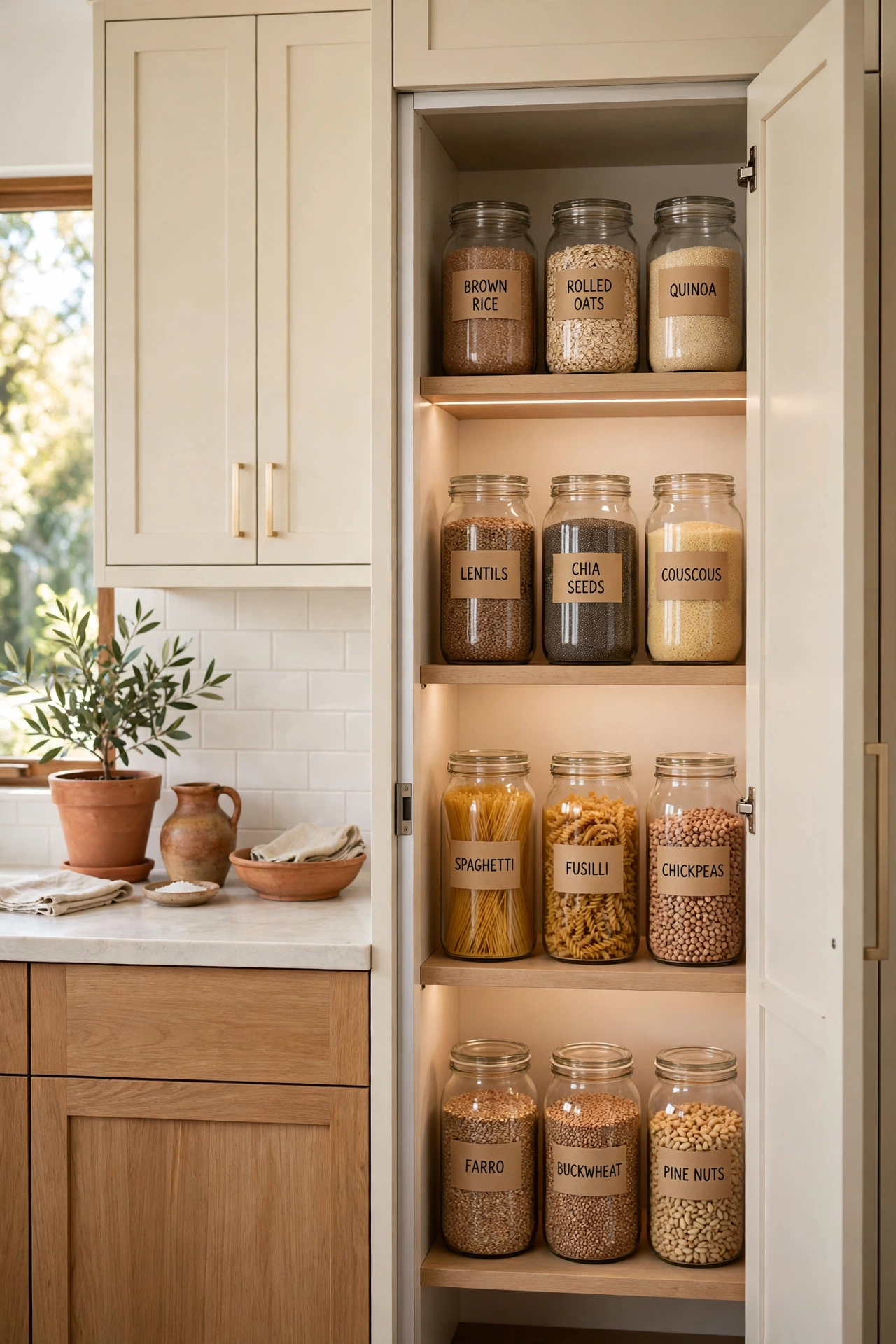
A plain wall in the kitchen can hide a full-height pantry that holds an impressive amount of food and supplies. Push-to-open panels with no handles sit flush with the surrounding cabinets, so the pantry door disappears into the wall of flat fronts. When the panels are closed, nobody can tell where the pantry begins or ends.
Inside, open shelves with soft lighting make it easy to see jars, grains, and dry goods at a glance. Match the door finish exactly to the cabinets around it and keep the lines smooth, so the whole wall reads as one clean surface. This idea works best in modern kitchens where flat cabinet fronts are already part of the design.
2. Turn the Space Under the Stairs Into Built-In Storage
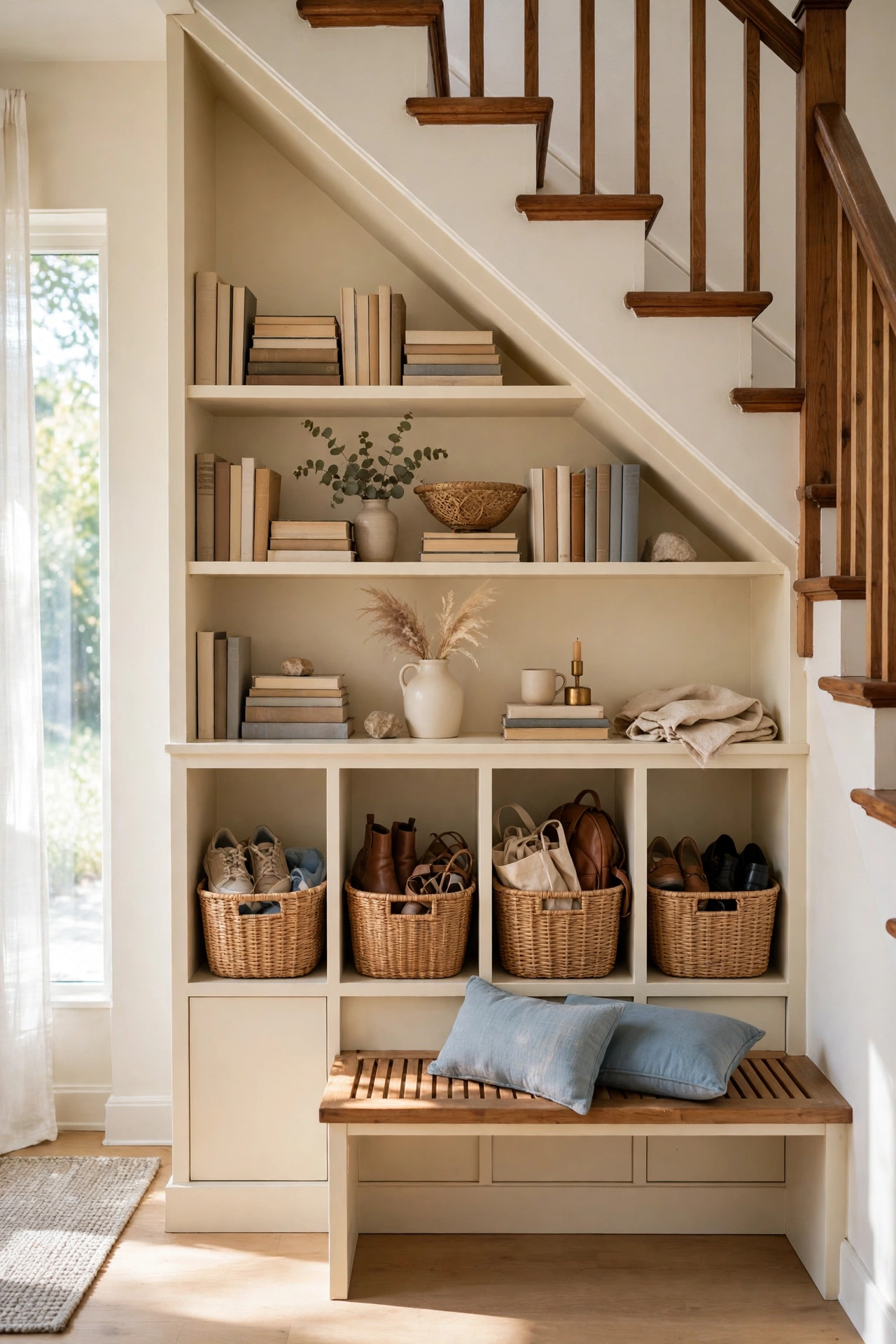
The space under the stairs often becomes a dumping ground for shoes, bags, and random clutter. Built-in shelves and cubbies shaped to the slope of the stairs turn that wasted area into useful storage without adding a single piece of furniture. Open shelves hold books and decor, while lower cubbies with baskets hide the everyday items that pile up near the door.
A mix of open and hidden storage works best here. Put things you enjoy looking at on the exposed shelves and tuck the rest into baskets that slide neatly into the cubbies. Measure the slope carefully before you build, so every shelf and compartment follows the contour of the stairs.
3. Convert a Kitchen Cabinet Into a Dedicated Pantry
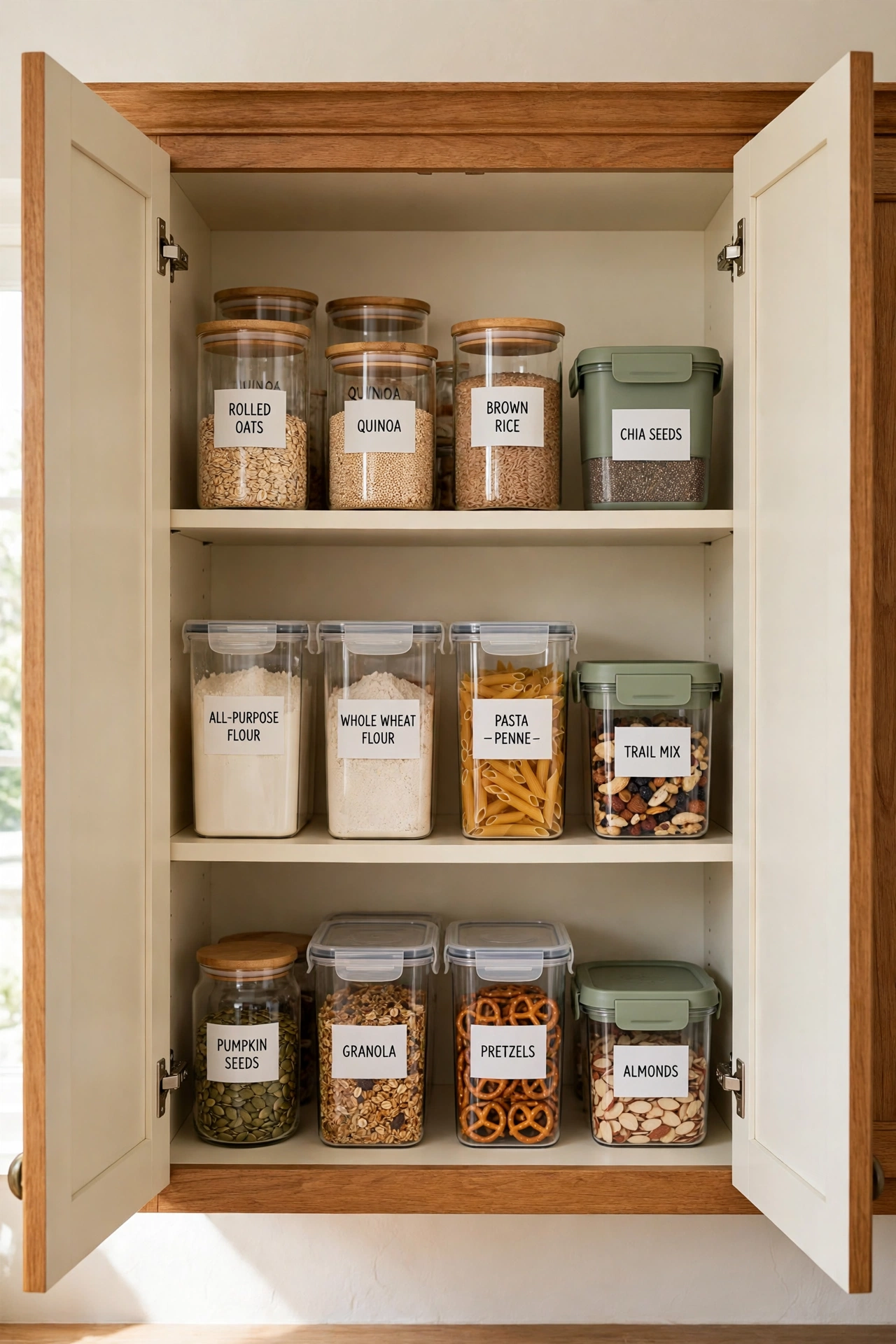
When every jar and box stays out on the counter, the kitchen looks messy no matter how clean it is. Turning one regular cabinet into a dedicated pantry keeps everything neat and out of sight the moment the doors close. Deep shelves hold jars, grains, and daily essentials without the need to stack things on top of each other.
Group related items together so you can find what you need without digging. Adjust the shelf heights to fit tall jars and wide containers, and use clear storage so you can see everything at once. For more ways to keep food storage tidy, these pantry organization ideas will help you build a system that stays organized week after week.
4. Tuck the Washer and Dryer Inside a Laundry Closet
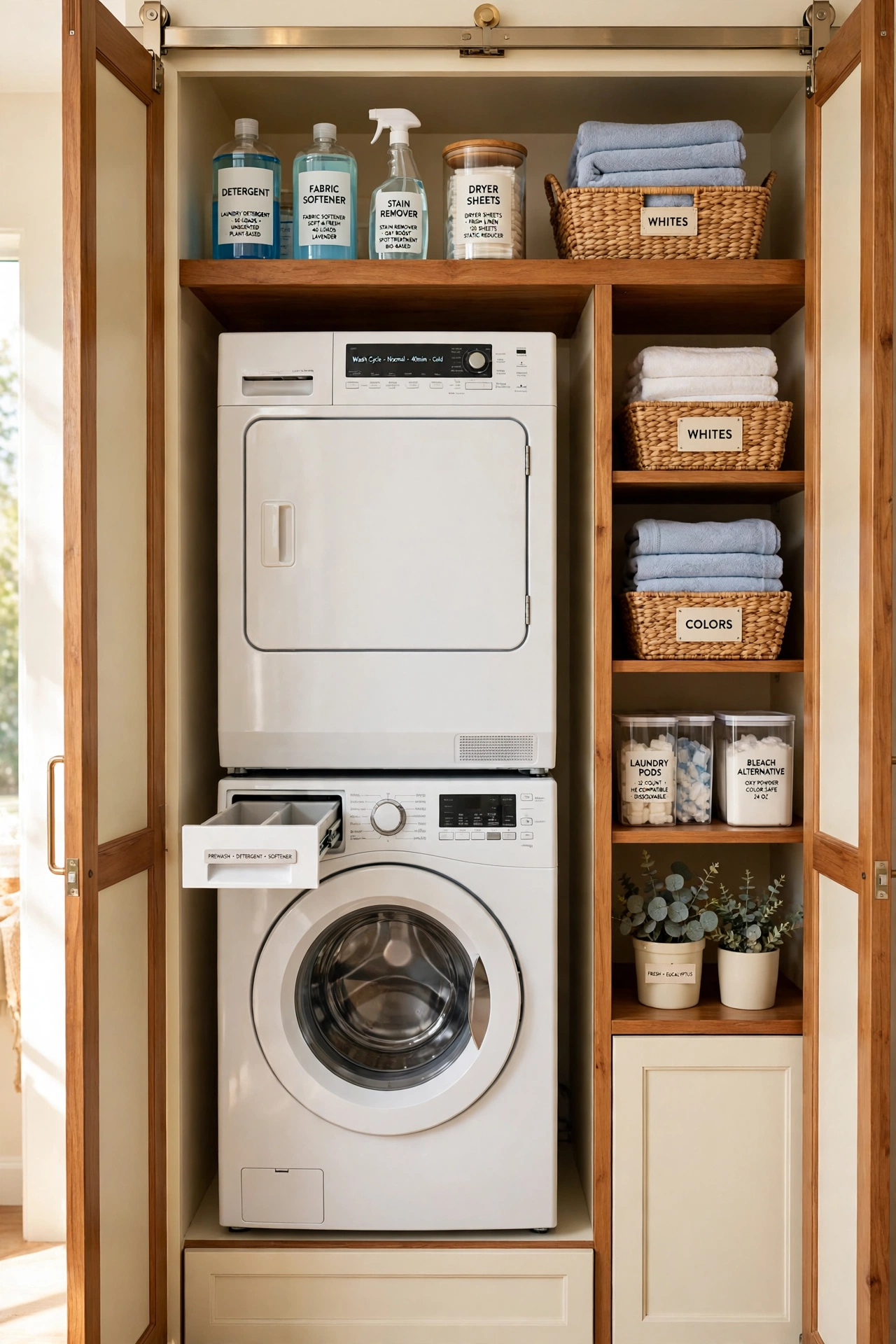
A washer and dryer sitting in the open can dominate a small kitchen, hallway, or utility room. Tucking the machines inside a closet with shelves above and beside them keeps the whole laundry setup contained and out of sight. Detergent, baskets, and cleaning supplies stay organized on the shelves instead of spilling across the floor.
Sliding or pocket doors work best here because they do not swing into the room when open. Stack the machines to save floor space, and keep everything for laundry day in one contained spot. The result is a laundry area that disappears behind closed doors when the work is done.
5. Hide a Cabinet Behind a Framed Piece of Art
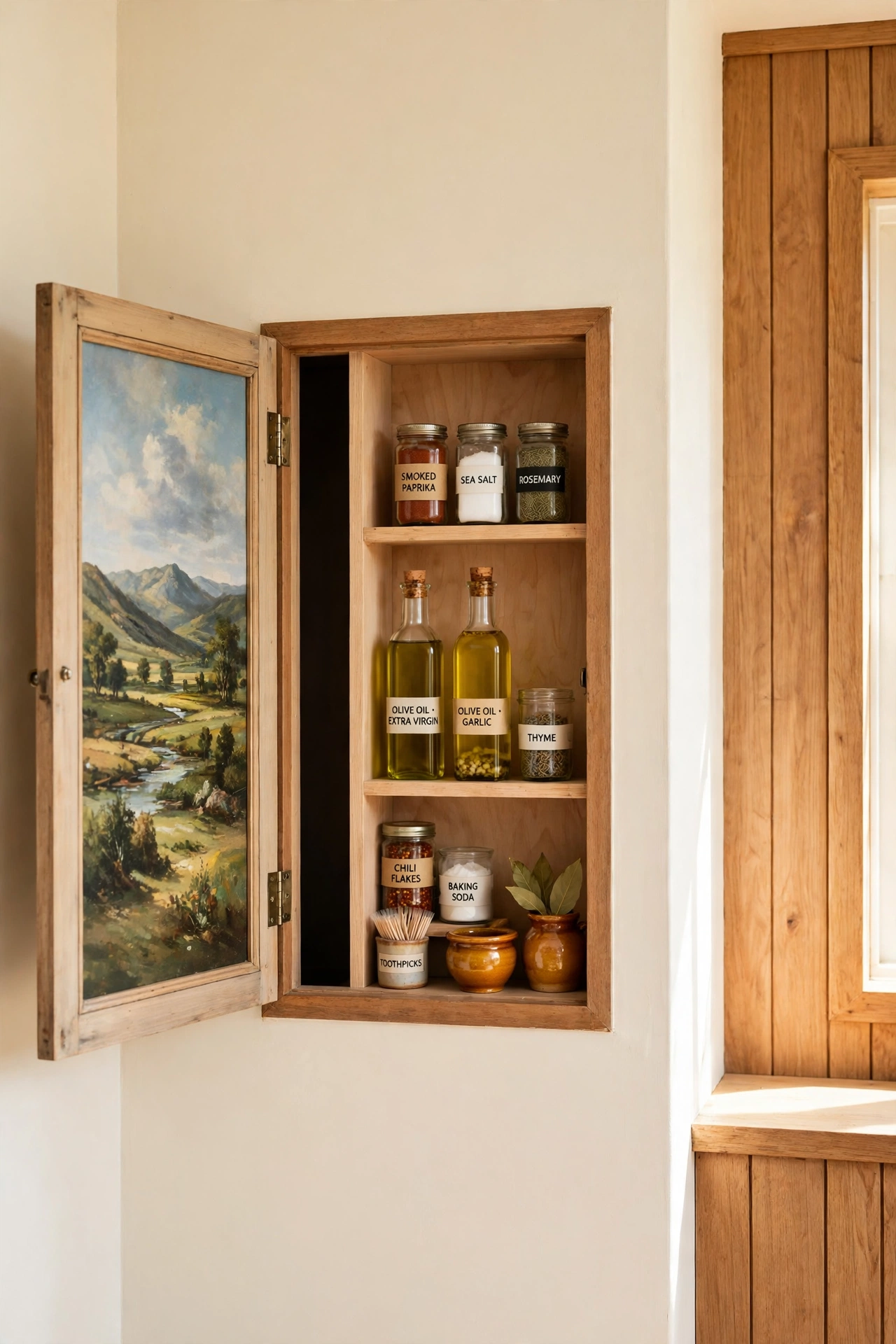
Wall decor can do more than look beautiful. A framed piece of art hinged like a door can hide a shallow cabinet with shelves for small items that usually crowd the counter. Spices, oils, and small kitchen essentials fit neatly behind the frame, and the wall looks like it holds nothing but art.
When the frame is closed, it lines up flush with the wall and blends in completely. This idea works in kitchens, dining rooms, and hallways anywhere there is empty wall space. Install a recessed cabinet between the studs and attach the hinged frame to the front so the secret storage disappears into the room.
6. Slide Out a Folding Board Hidden in Cabinetry
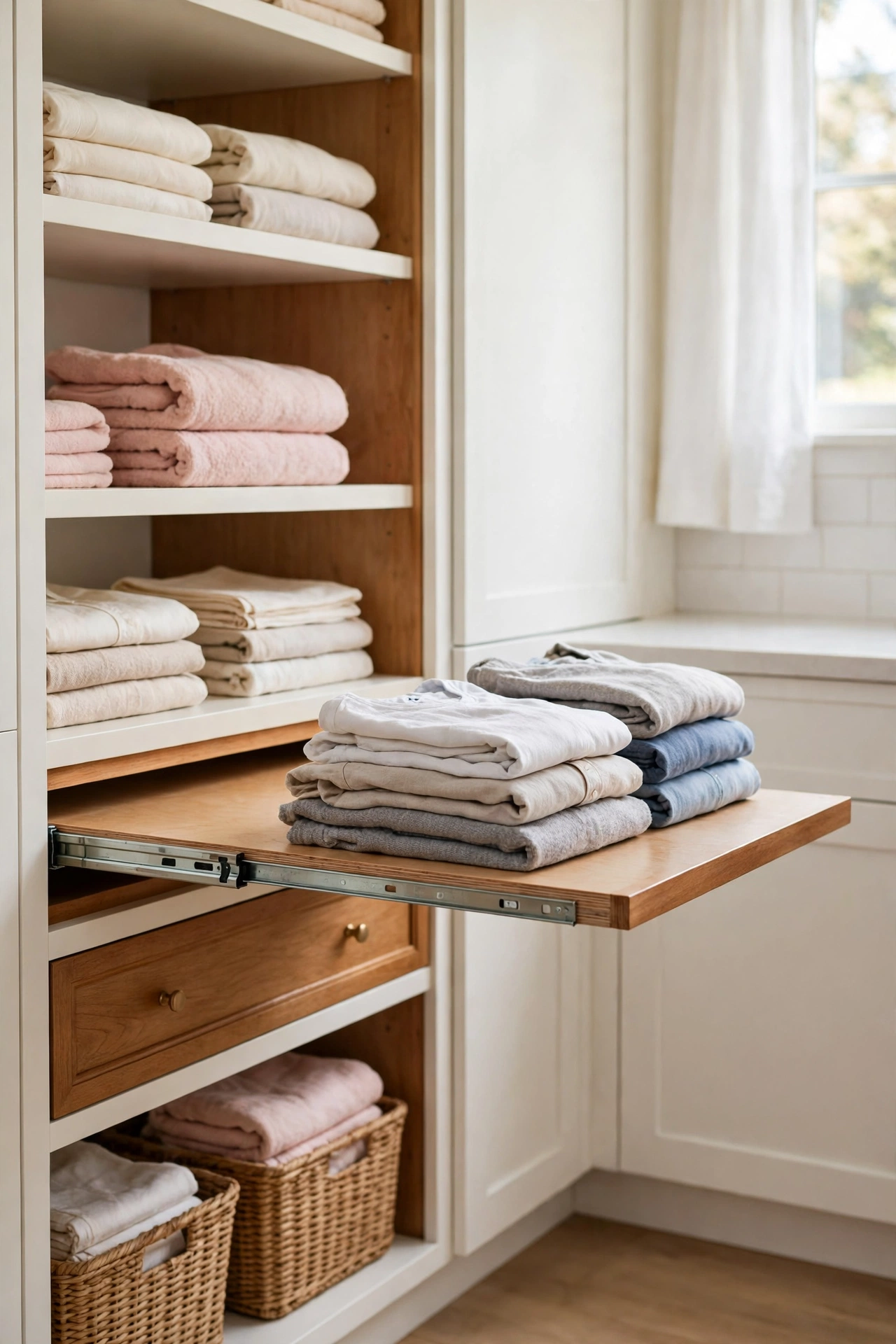
Laundry day runs more smoothly when folding has a dedicated spot. A pull-out folding board built into cabinetry slides out when you need it and tucks away when you do not. You get a full work surface without giving up floor space to a permanent table.
Place the board next to shelves or drawers so folded clothes can go straight into storage without extra trips across the room. Heavy-duty sliding brackets and a sturdy board with a soft top make the surface comfortable to use. This hidden feature fits laundry rooms, closets, and even hallway cupboards.
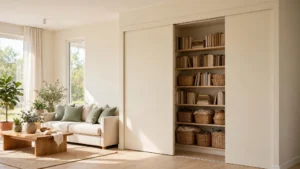
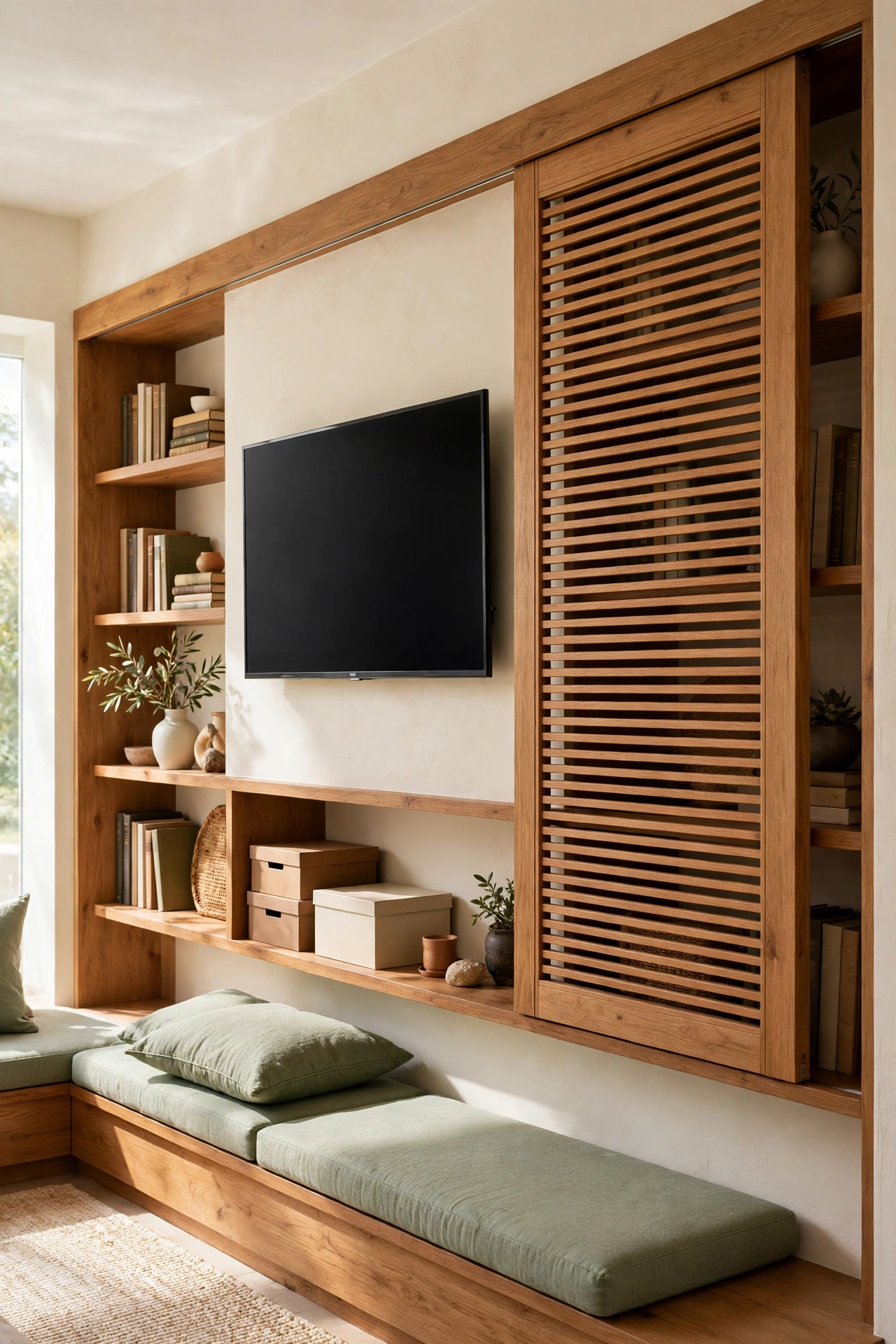
7. Conceal TV Wall Storage Behind Sliding Panels
The wall around the television often collects gadgets, books, and clutter that make the living room feel messy. Sliding panels solve the problem without removing a single shelf. Bookcases and media gear sit behind the panels, and you slide them open only when you need something.
Leave a few shelves open for decoration so the wall keeps a balanced look. When guests arrive, slide the panels closed and the mess vanishes in seconds. A sliding track system mounted over built-in shelves lets the panels glide smoothly and stay aligned with the wall.
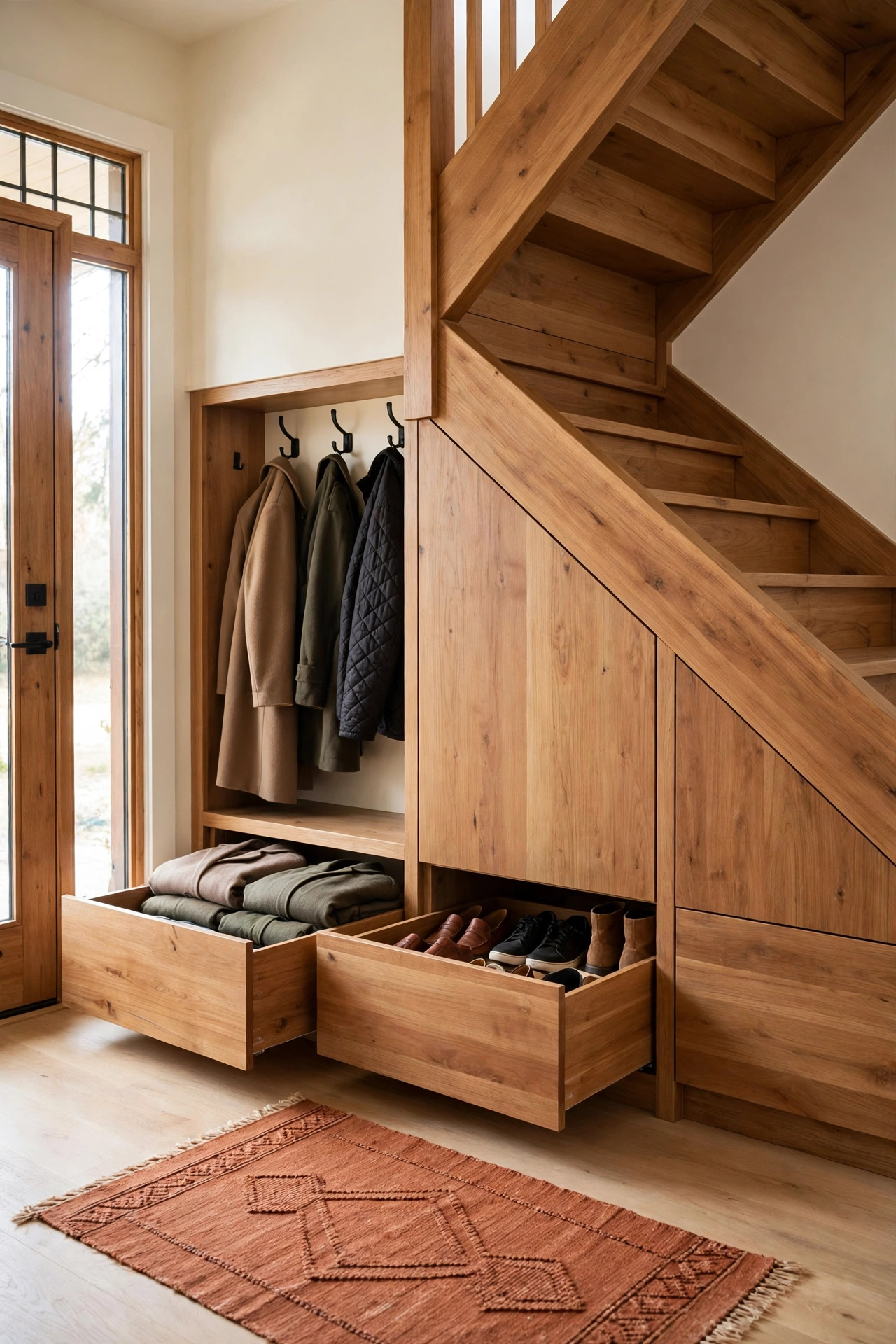
8. Add Pull-Out Drawers Beneath the Stairs
Shoes and jackets near the entrance scatter across the floor when there is no proper place for them. Built-in drawers beneath the stairs turn that awkward spot into a secret drop zone for everyday items. Pull-out compartments hold shoes, while a small hanging section keeps coats off chairs and railings.
Putting things away the moment you walk in keeps the entryway clean without adding extra furniture. This idea suits homes where the stairs sit close to the front door. Install sliding drawers in the stair base and leave a small open section for hanging coats and bags.
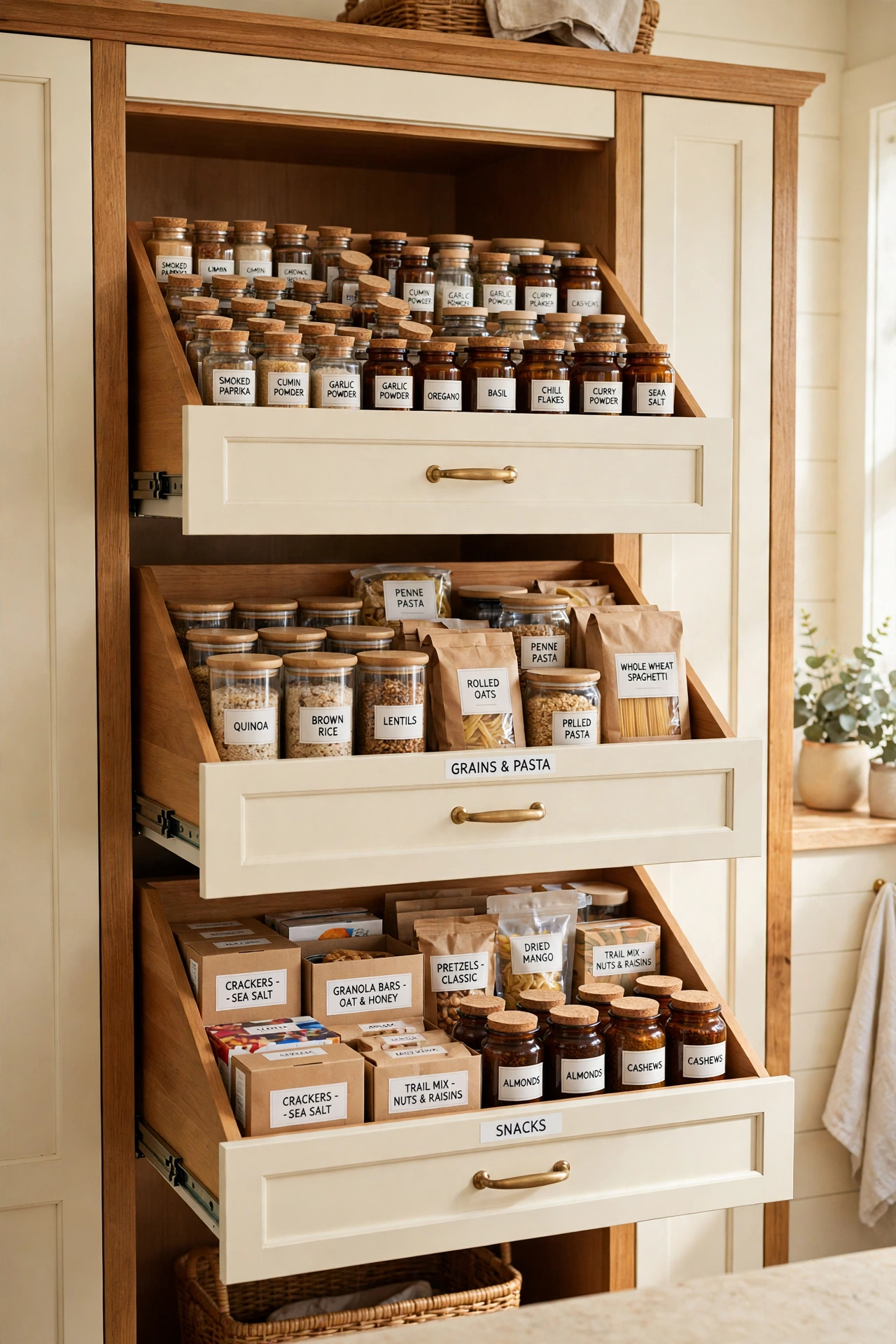
9. Install Pull-Out Drawers in a Tall Pantry Cabinet
Deep cabinets turn into black holes where food gets stacked, forgotten, and wasted at the back. Pull-out drawers fix the problem by bringing everything forward in one smooth motion. Every level is visible at a glance, so nothing goes missing or expires unnoticed.
Organize by category to make the system even easier to use, with snacks in one drawer, spices in another, and larger items at the bottom. Strong hardwood boxes or trays on sliding hardware stay steady through daily use. This upgrade works especially well in small kitchens where regular shelves feel too shallow.
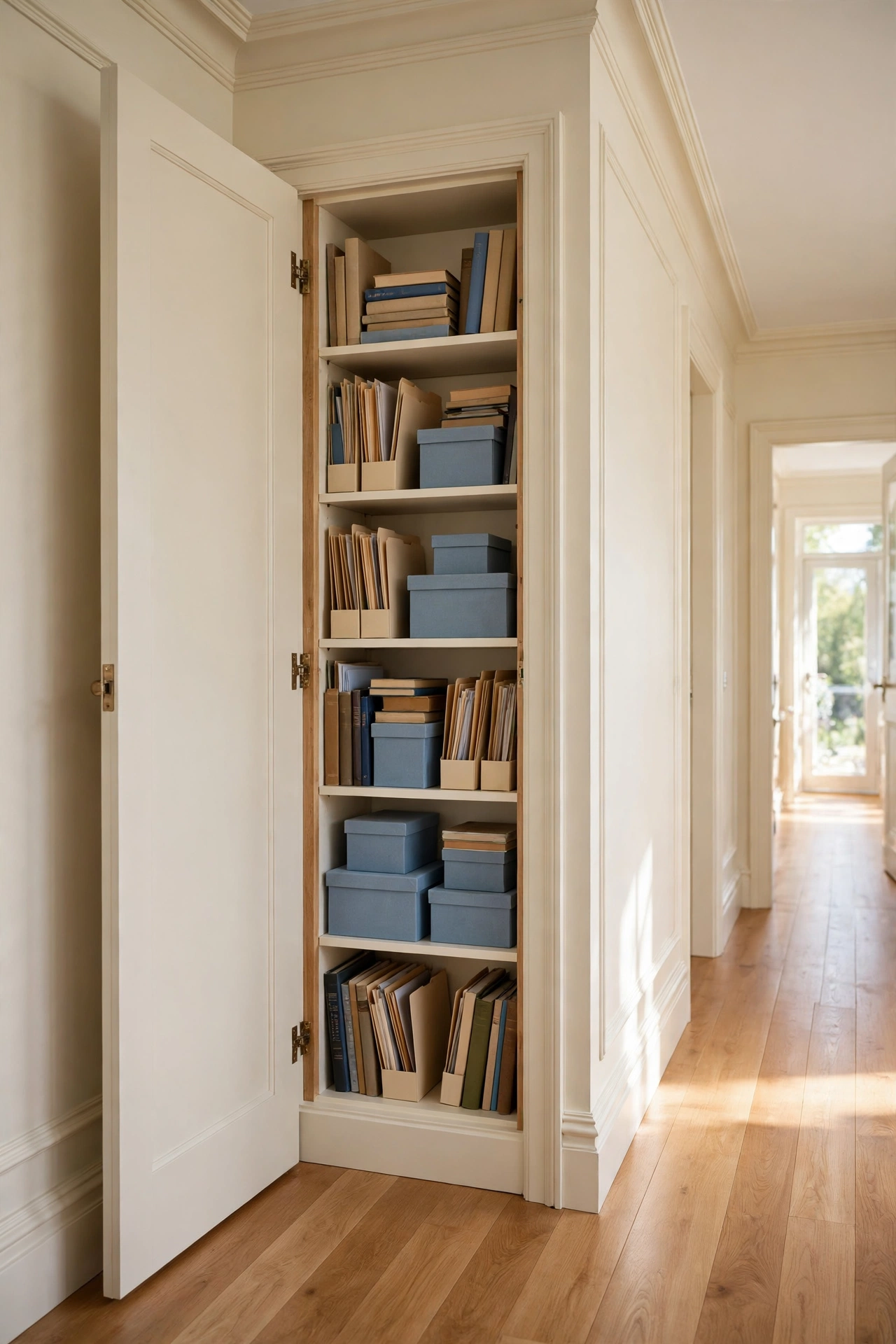
10. Hide Slim Shelves Behind a Flush Wall Panel
A blank wall can hold far more than a coat of paint. Turning a wall panel into a hidden shelving unit adds vertical storage without adding visible furniture to the room. When the panel is closed, it looks like part of the wall design. When it opens, slim shelves reveal space for books, files, and small items that usually clutter surfaces.
These recessed shelves suit hallways, living rooms, and home offices where floor space is tight. Build the shelf between the wall studs and add a hinged panel or flush door that matches the wall molding. When the outside matches the wall, the storage disappears completely.
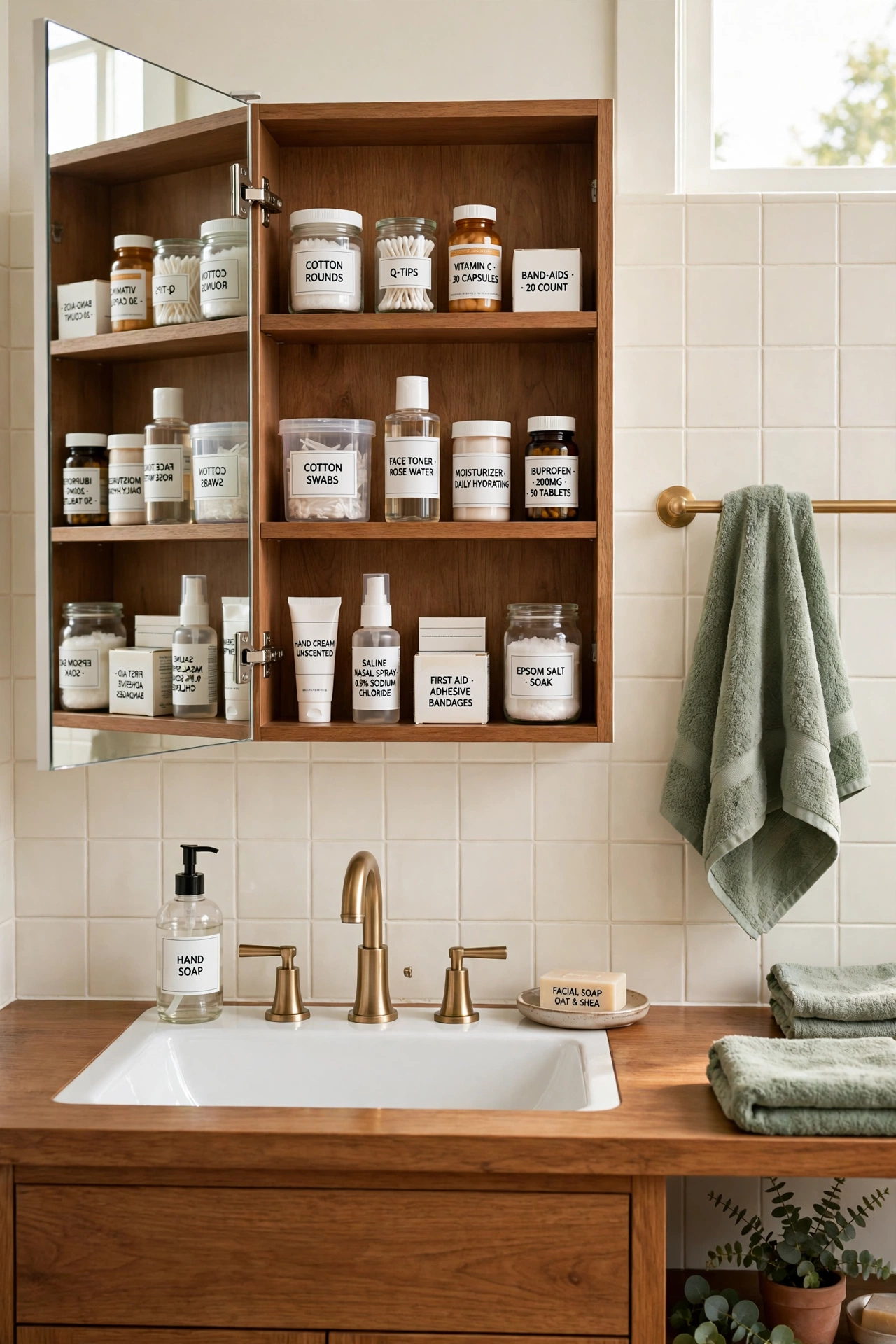
11. Store Bathroom Essentials Behind a Mirror Cabinet
Bathroom counters fill up fast with daily products, and the room looks cluttered even when it is clean. A mirror that opens into a cabinet hides everything behind it and solves the problem at once. Shelves inside hold skin care products, medicines, and daily essentials without taking up space around the sink.
This vertical storage is a lifesaver in small bathrooms where every inch counts. Keep the items you reach for most often at eye level so your daily routine stays fast and easy. A recessed cabinet in the wall with a hinged mirror door fits the room so well that guests may never notice it is there.
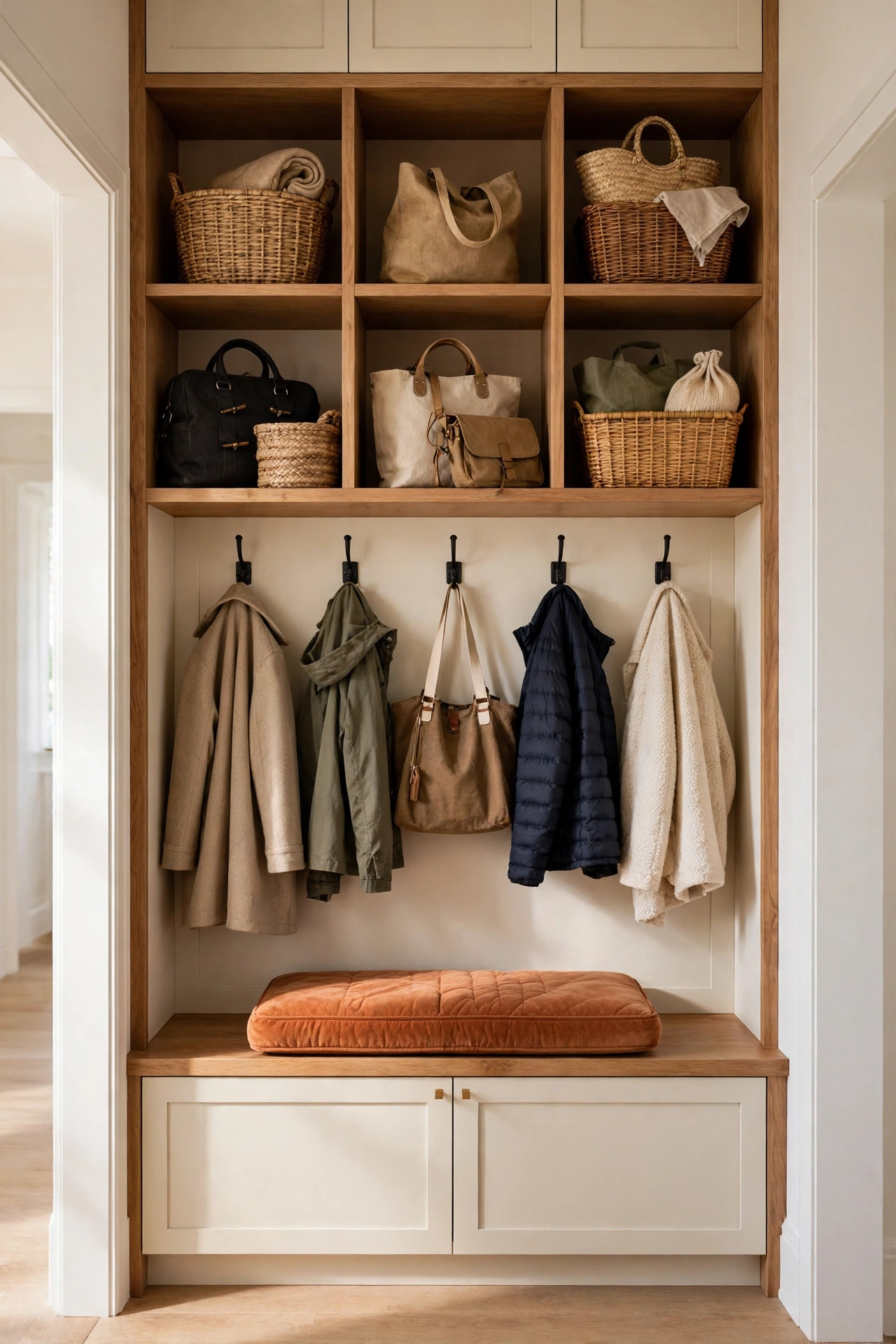
12. Build a Concealed Storage Wall at the Entry
Daily items scatter near the door when there is no proper drop zone. Turning one wall into a built-in storage corner keeps coats, shoes, and bags together without making the entry feel crowded. Hooks hold jackets, a covered cabinet hides the shoes that usually end up on the floor, and open cubbies above hold bags and seasonal items.
Keep the design slim so the hallway stays easy to walk through. A low seat gives you a place to pause while putting on shoes, while the closed cabinet keeps the mess out of sight. For more ways to organize the space by the front door, these entryway organization ideas will help you give every item a home the moment you walk in.
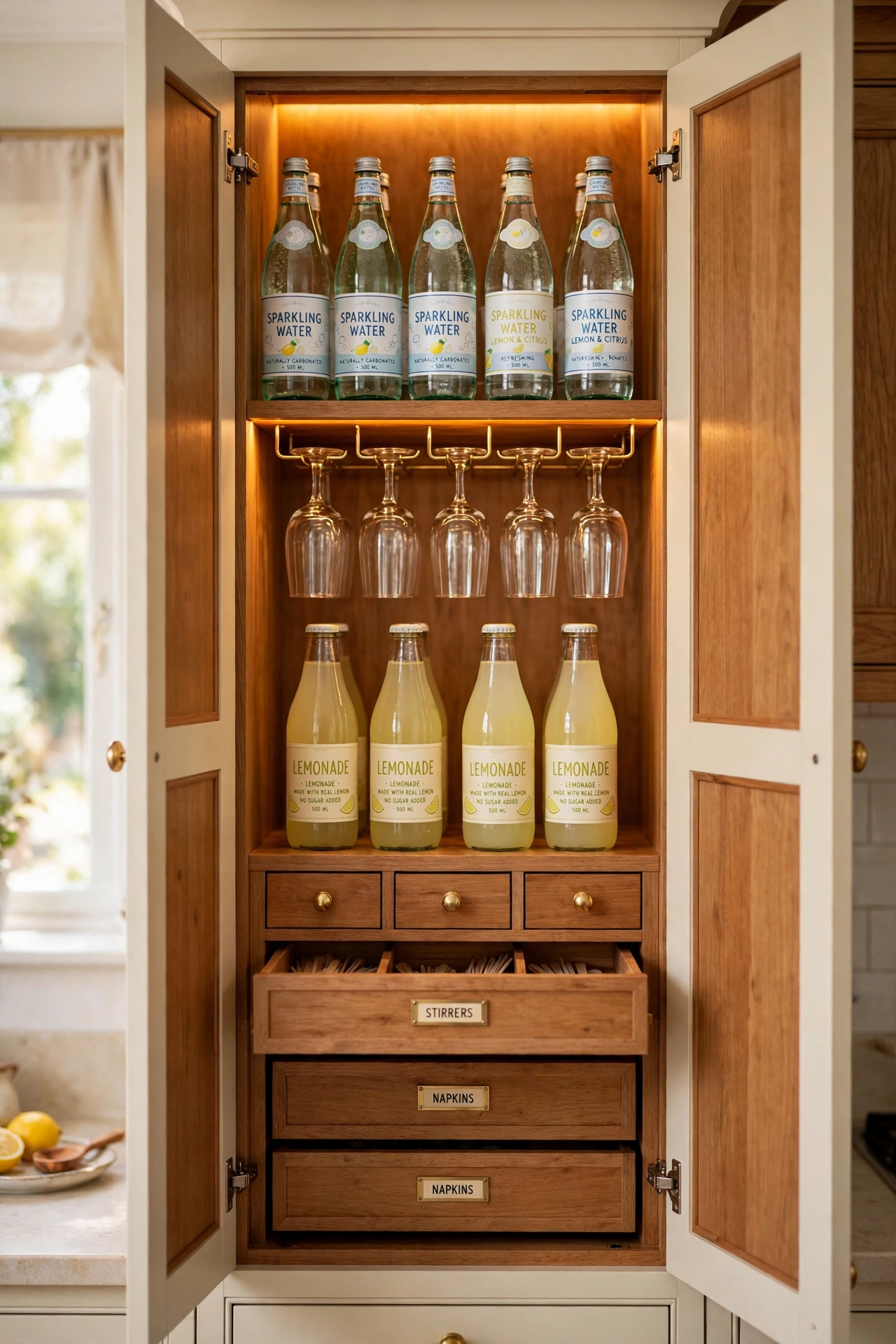
13. Hide a Beverage Station Inside a Full-Height Cabinet
Entertaining at home gets messy when glasses, bottles, and tools spread across the counters. A full-height cabinet with everything inside keeps the whole beverage station in one place and out of sight. Separate zones hold bottles of sparkling water and lemonade, hanging glasses, and drawers for small tools.
Open the doors and the station is ready to use. Close them and the cabinet looks like ordinary kitchen cabinetry. Split the inside into sections with shelves for bottles, racks for glasses, and drawers for stirrers and napkins, so everything stays neat and easy to reach.
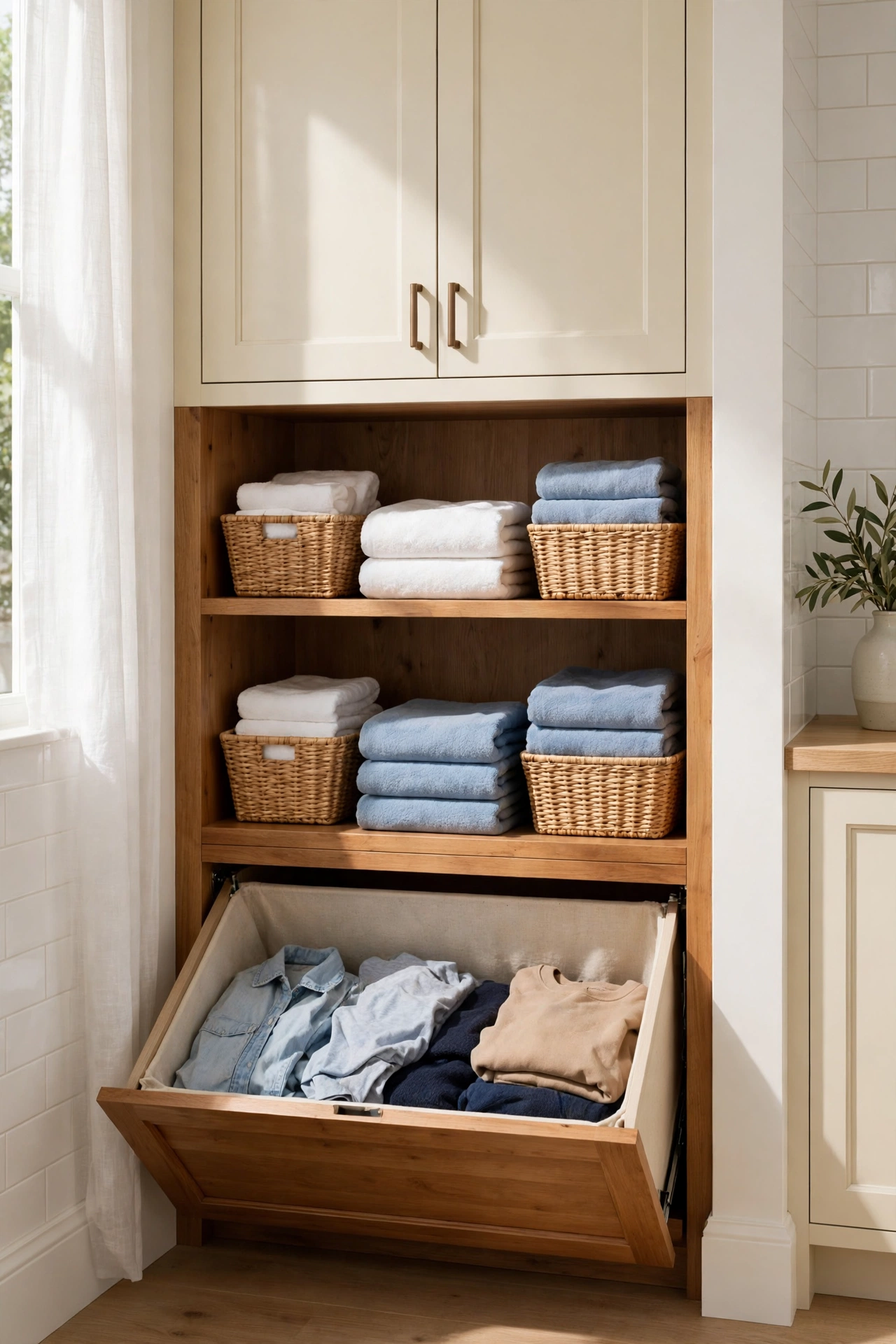
14. Hide the Laundry Hamper Inside a Tilt-Out Cabinet
A laundry basket sitting in the open can make even a clean bathroom feel messy. Hiding the hamper inside a tall cabinet keeps everything contained while staying easy to reach. A tilt-out section at the bottom lets you drop clothes in without opening the doors all the way or showing the mess.
Shelves above the hamper hold towels and daily essentials, so everything for laundry day lives in one spot. This design suits small bathrooms and laundry rooms where space is tight. If your hamper habits need a full system, these laundry hamper organization ideas will help you sort clothes without cluttering the room.
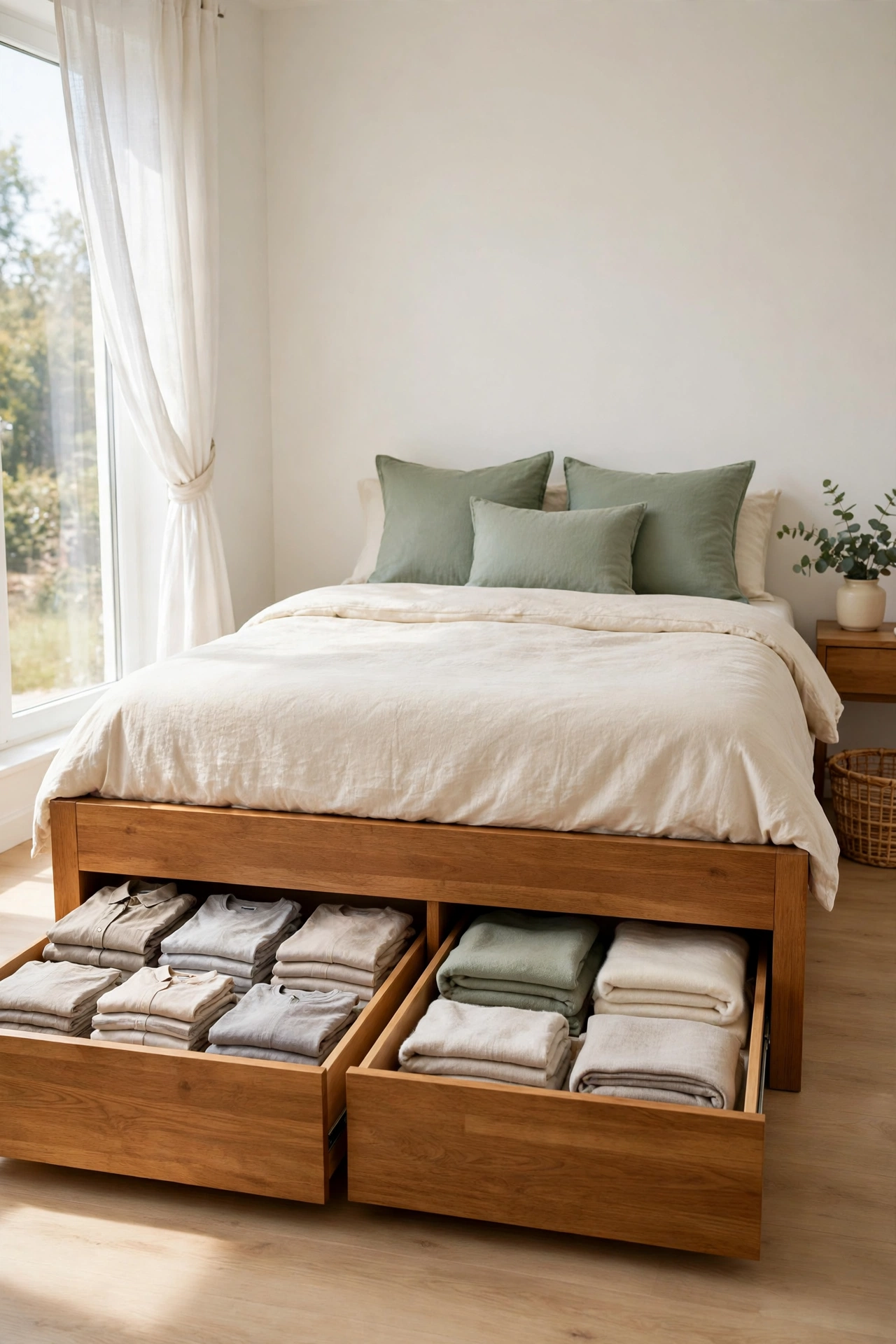
15. Store Clothes in Drawers Under a Raised Bed
Floor space runs out fast in a small bedroom, especially once storage furniture starts piling up. Drawers under a raised bed turn empty space into secret storage without making the room feel crowded. Clothes, blankets, and seasonal items stay out of sight but easy to reach.
Raise the bed platform slightly and fit drawers that slide smoothly, so you never have to lift the mattress to reach your things. Pair the drawers with wall cabinets and a small desk to keep the whole room working hard. For more ways to use this overlooked space, these under bed storage organization ideas will help you make every inch count.
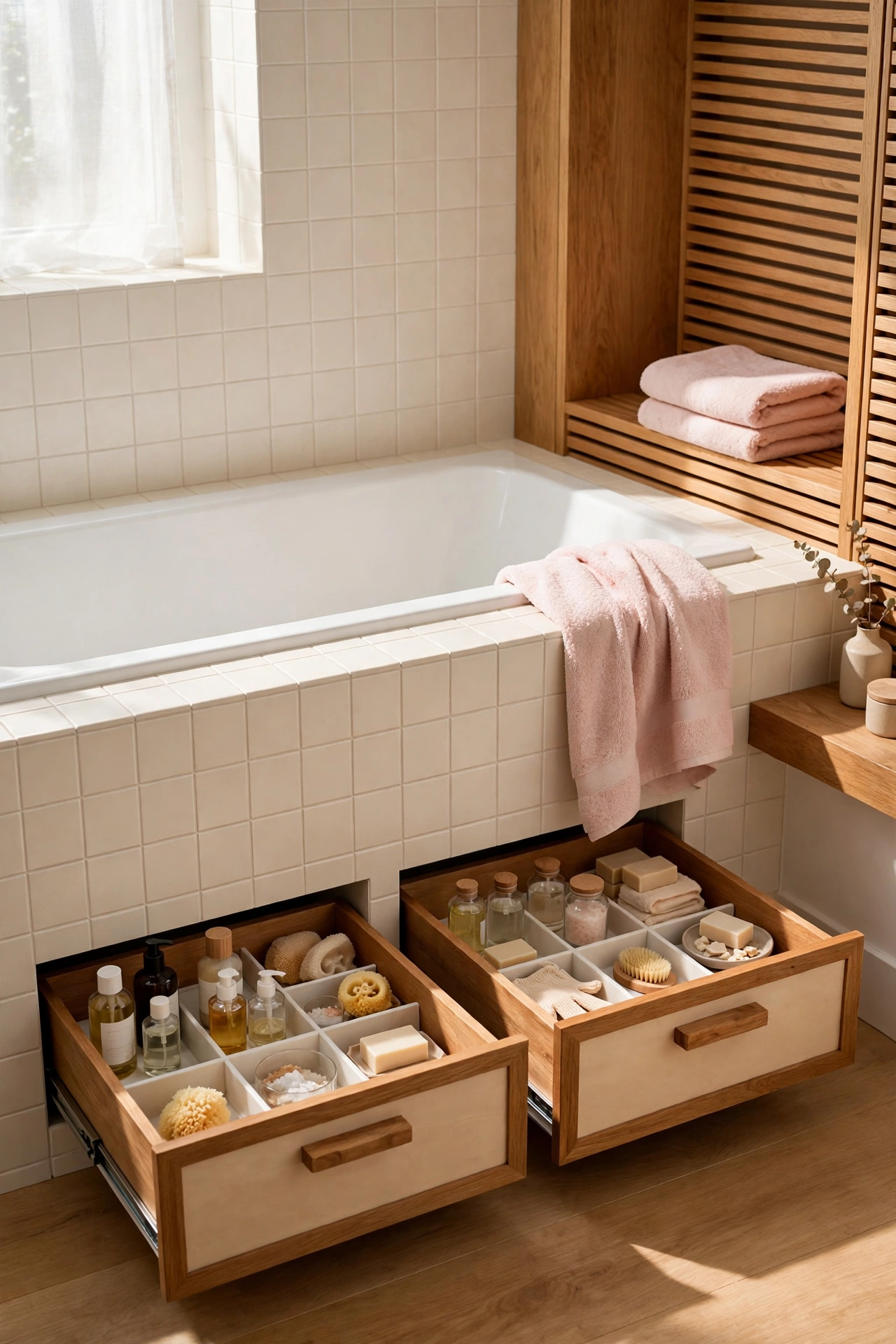
16. Use the Space Under the Bathtub for Pull-Out Drawers
Bottles and soaps crowded around the edge of the tub make the bathroom feel messy even after cleaning. The empty space under the bathtub can hold pull-out drawers that stay hidden but easy to reach. Divided drawers keep bottles, soaps, and bath essentials organized without awkward stacking.
Build a frame around the tub and add sliding drawers or tilt-out panels so the storage stays useful and out of sight. This idea shines in bathrooms with little room for extra cabinets. When every bottle has its own spot, you can find what you need without searching through a pile.
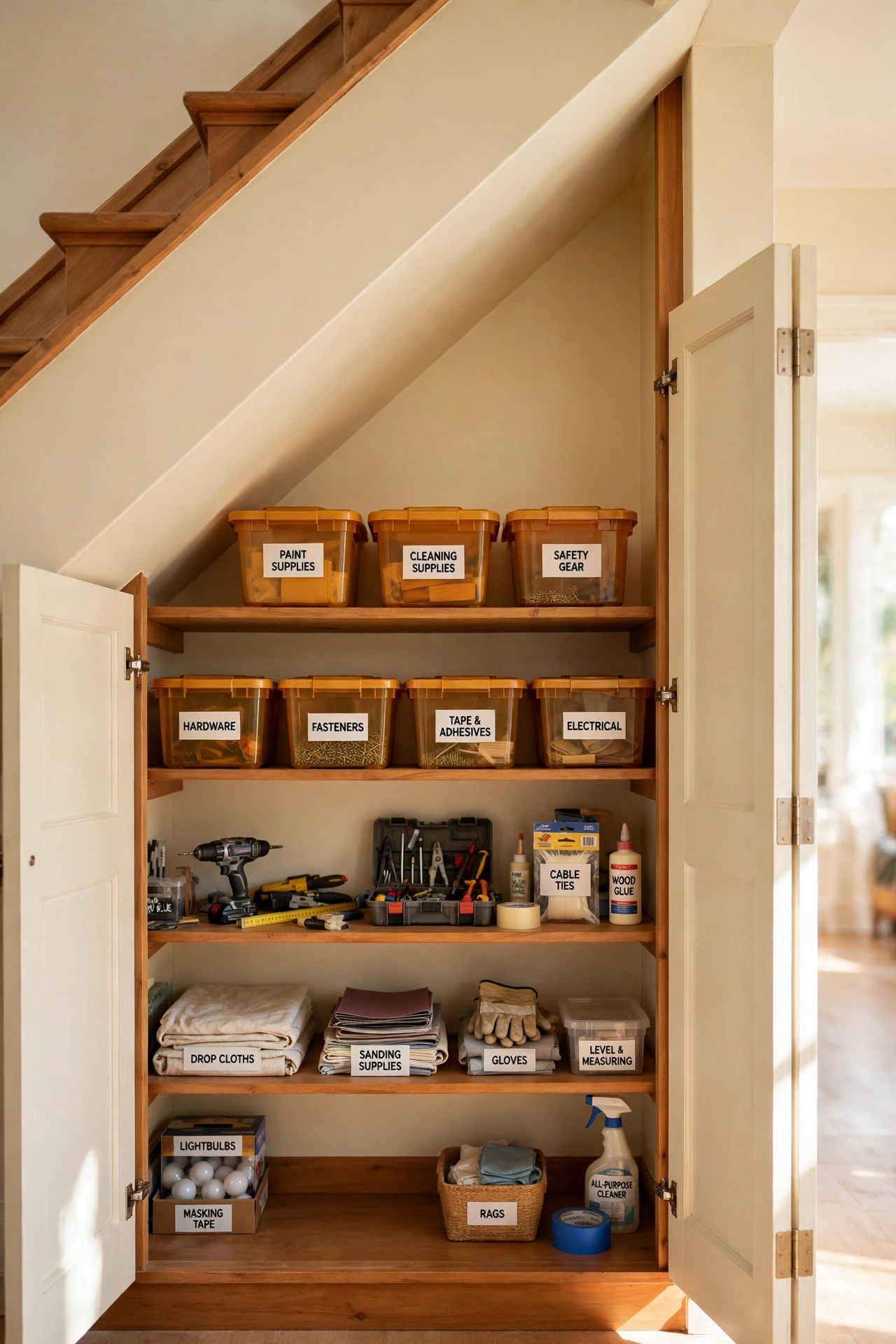
17. Turn the Under-Stair Nook Into a Hidden Closet
Unused space under the stairs can become a hidden storage room instead of a clutter zone. Adding doors keeps everything out of sight while keeping it easy to reach whenever you need it. Shelves and labeled bins inside hold tools, household items, and things you do not use every day.
Movable shelves let you change the layout as your storage needs change. Frame the space beneath the stairs, add simple doors, and fit bins that make it easy to find things without creating a mess again. This closet works best in homes short on storage but blessed with a staircase.
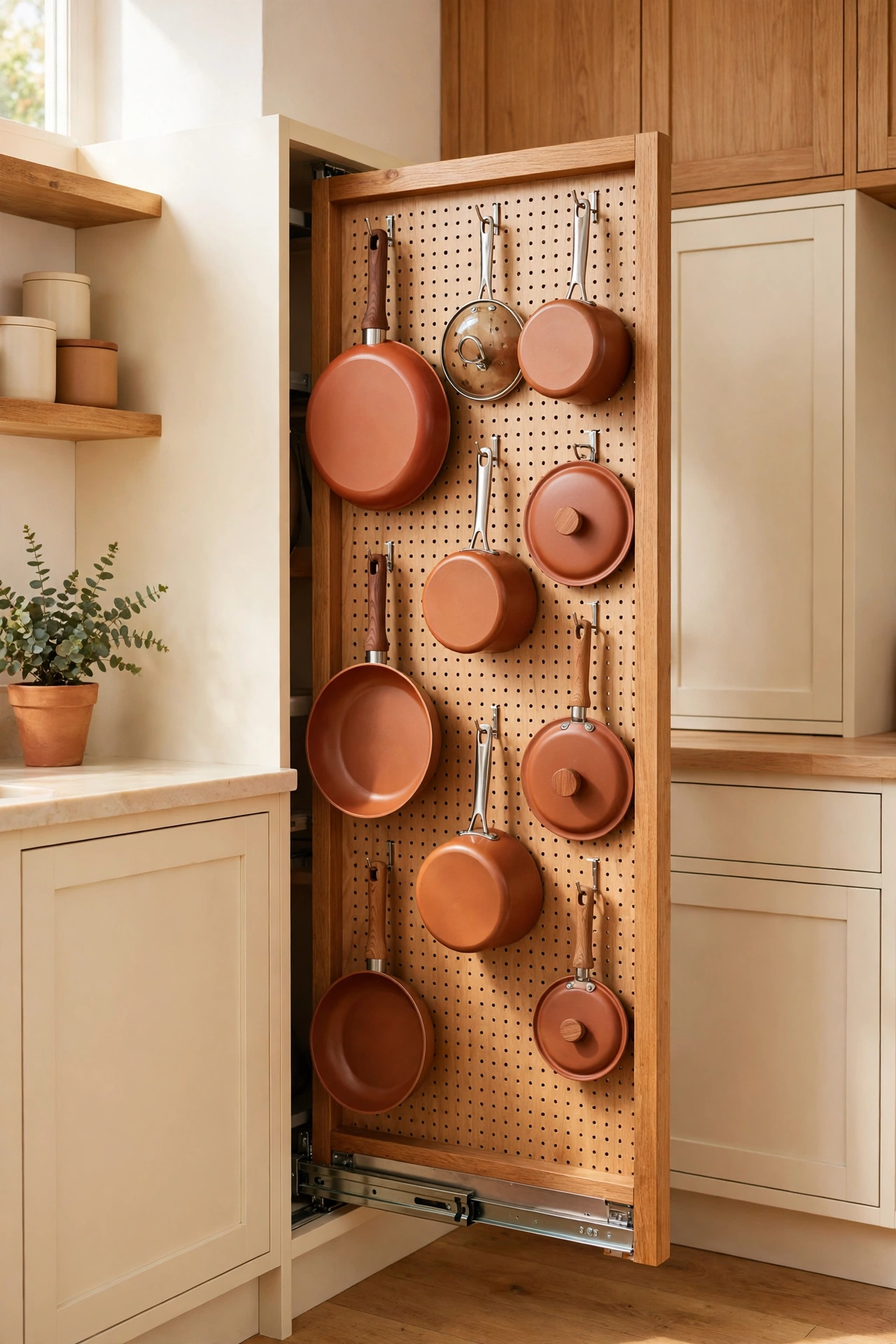
18. Store Pans in a Vertical Pull-Out Unit
Pots and lids take over cabinets because they never stack neatly. A vertical pull-out unit gives each piece its own spot, so nothing gets scratched or lost at the back. Slide the unit out, grab the pan you need, and slide it back without moving anything else.
Hooks or pegs inside keep pots and pans visible and easy to reach. The tall, slim frame fits neatly into the narrow gaps between cabinets that usually sit empty. Install a sliding frame with a pegboard or hanging system inside to keep every pan separate and in order.
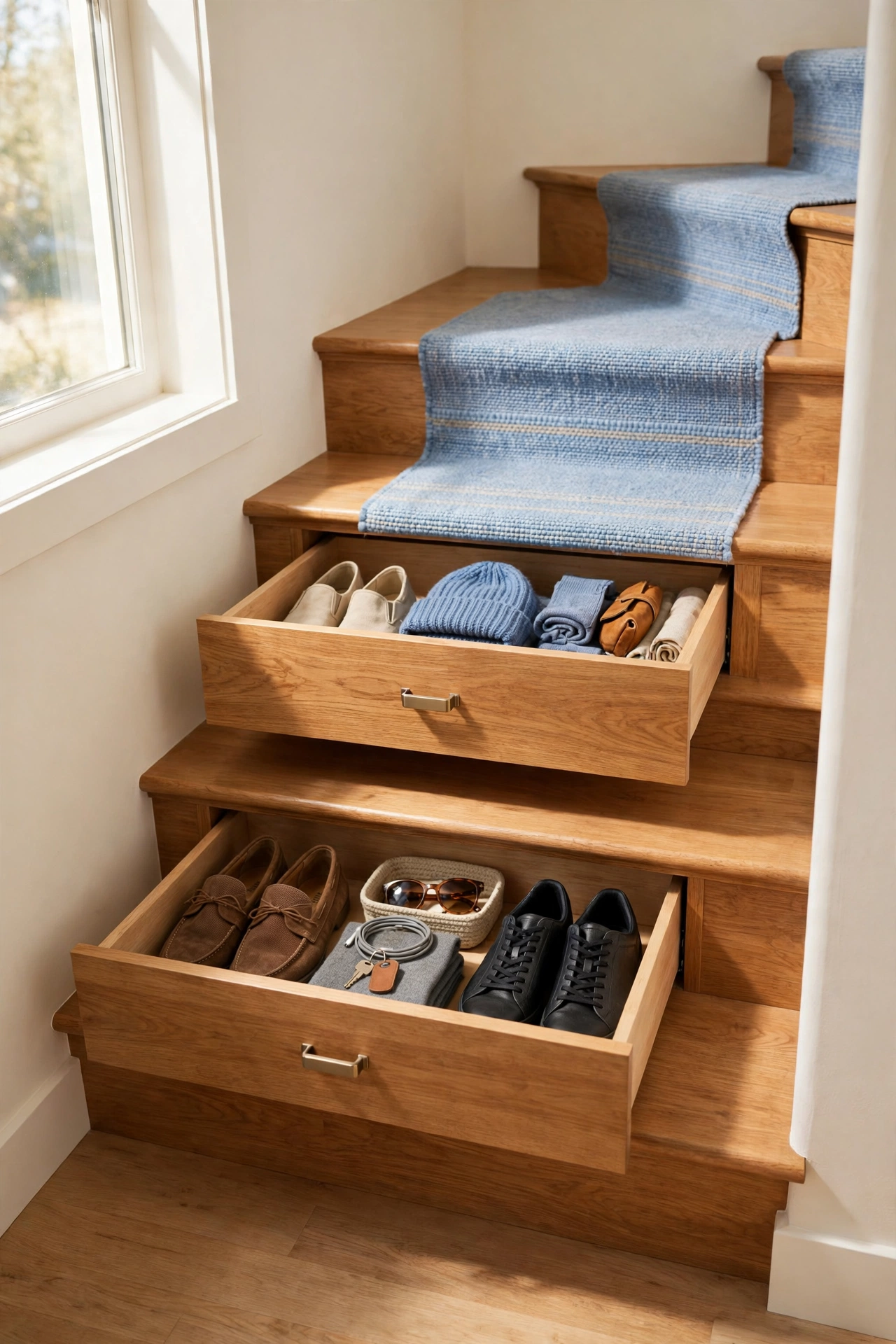
19. Turn Stair Treads Into Pull-Out Drawers
Every step you walk on can hold something if you use it well. Turning stair treads into pull-out drawers adds storage without taking up any extra space in your home. Shoes, small items, and seasonal goods stay inside the steps instead of piling up in closets.
Keep the handles small and flush so they blend into the staircase and nobody notices the secret. Each drawer works like its own compartment, so you can organize by category. This design suits narrow stairs where there is no room for extra furniture.
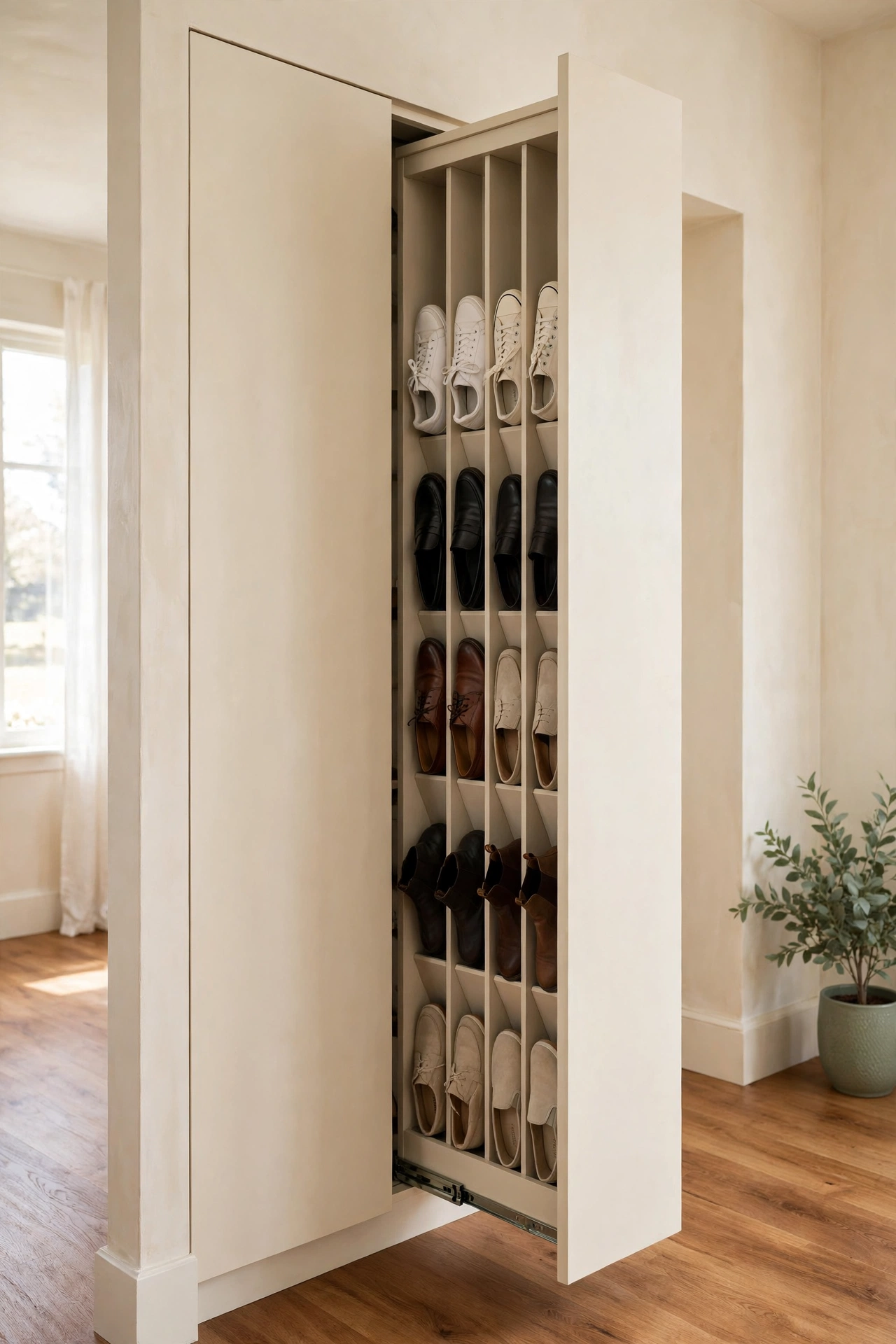
20. Slide Shoes Into a Slim Pull-Out Column
Narrow gaps near walls and doorways often go ignored, but they are perfect for vertical storage. A thin pull-out cabinet turns that empty strip into a hidden shoe organizer without using any more floor space. When the cabinet is closed, it looks like part of the wall. Inside, different levels hold pairs neatly and upright.
Stacking shoes upright lets you see every pair at a glance instead of digging through a pile at the bottom of a closet. This slim column works in entryways, corridors, and beside kitchen cabinets where small gaps already exist.
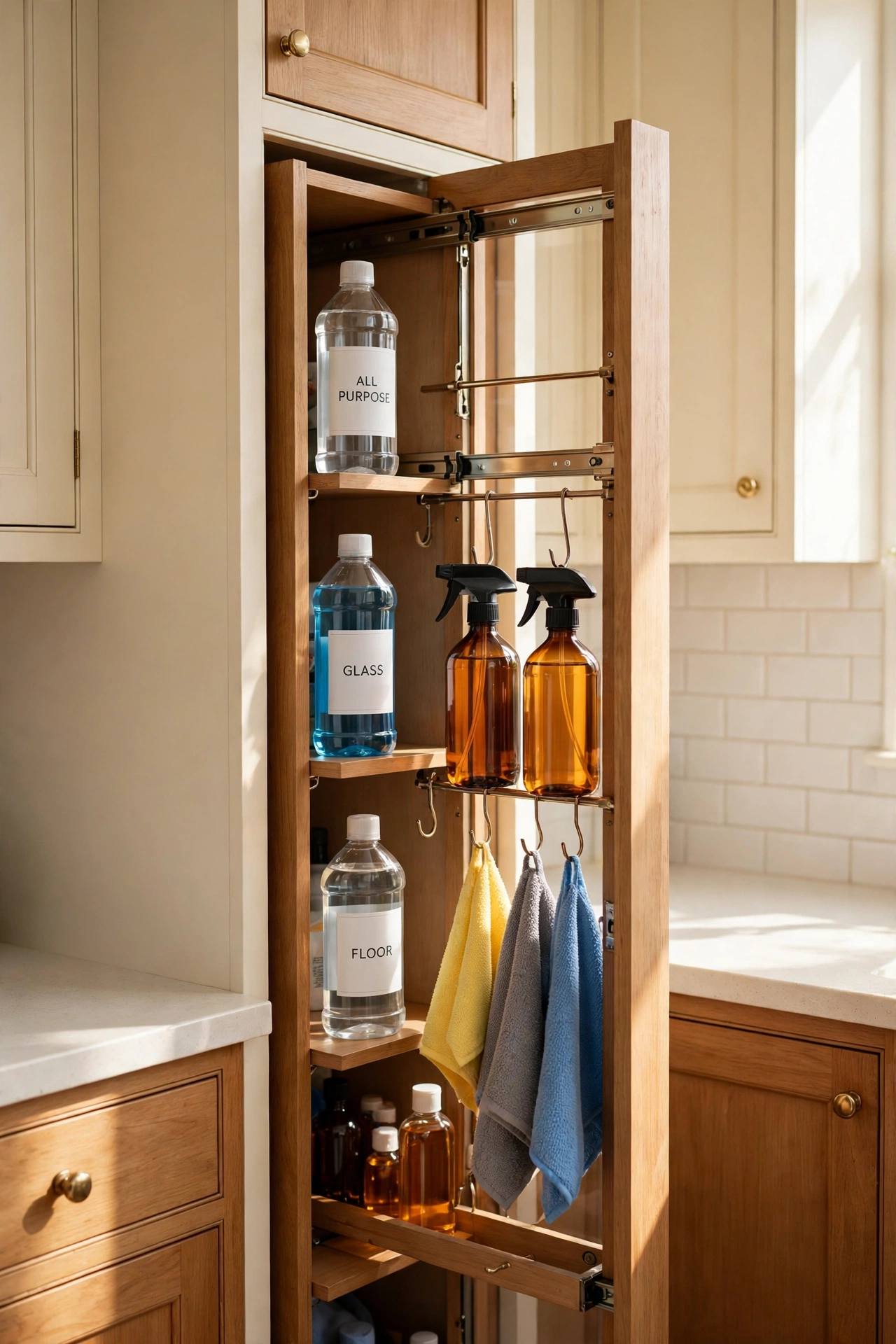
21. Keep Cleaning Supplies in a Tall Pull-Out Cabinet
Cleaning supplies scattered under sinks and in random corners are hard to find when you actually need them. A sleek pull-out cabinet keeps everything in one vertical spot without taking over the kitchen. Tools hang neatly, bottles stay upright, and nothing gets pushed to the back.
When similar items stay together, cleaning goes faster because everything is within reach. The tall, slim cabinet fits into the small gaps between cabinets that usually sit empty. Fit a pull-out frame with shelves and hooks inside to store tools and bottles side by side.
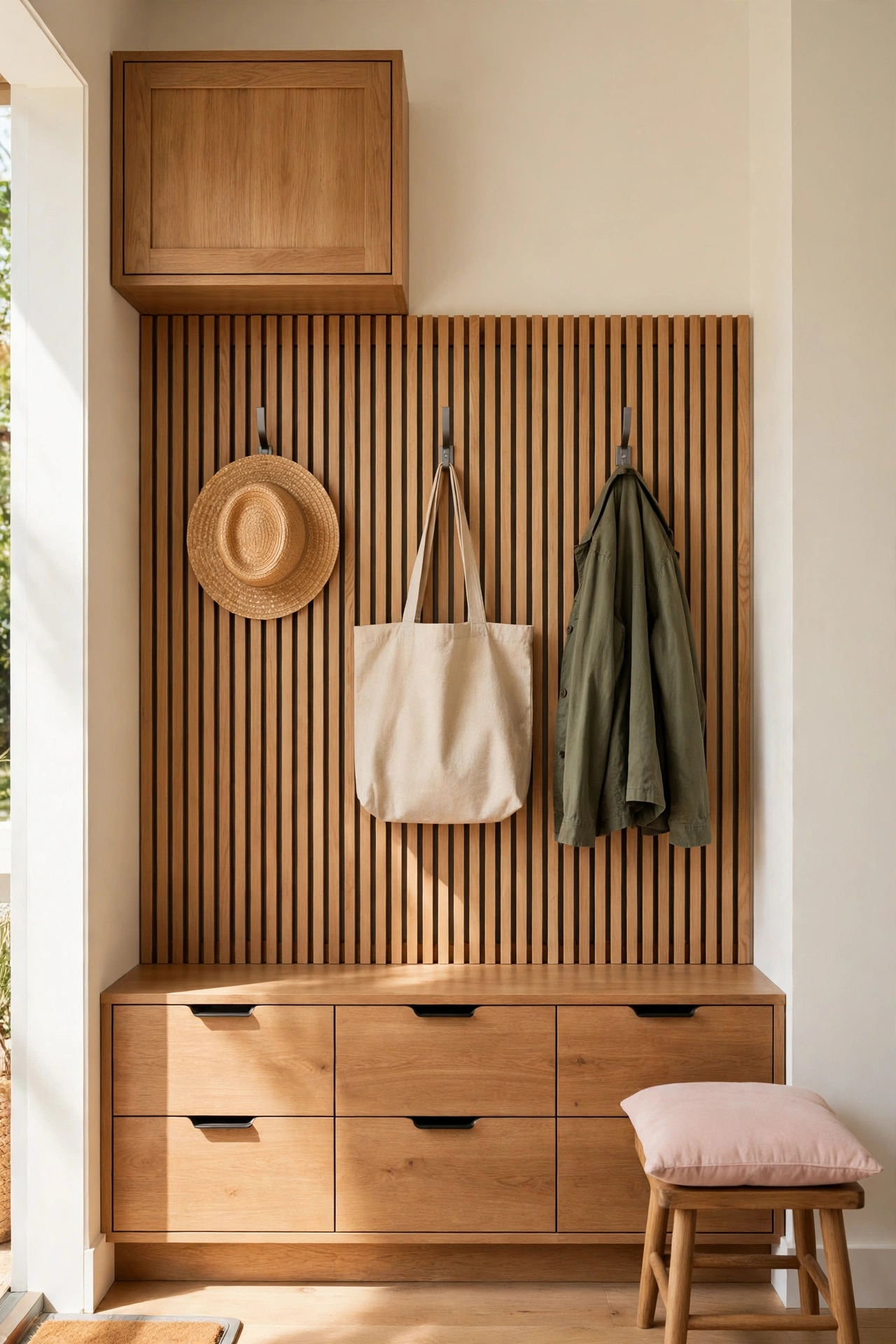
22. Hang Coats on a Slatted Wall Panel With Hidden Drawers
Entryway clutter builds up fast when there is no simple place to hang things. A slatted wall panel with strong hooks keeps bags, hats, and jackets off the floor while looking neat and tidy. The vertical design uses wall space instead of floor space, so even a small entry stays open.
Lower drawers hide shoes and accessories you do not want on display, while upper cabinets store seasonal items out of sight. Mount the slatted panel securely, add sturdy hooks, and fit drawers below so the rest of the mess stays covered. The result is a drop zone that looks calm from the moment you walk in.
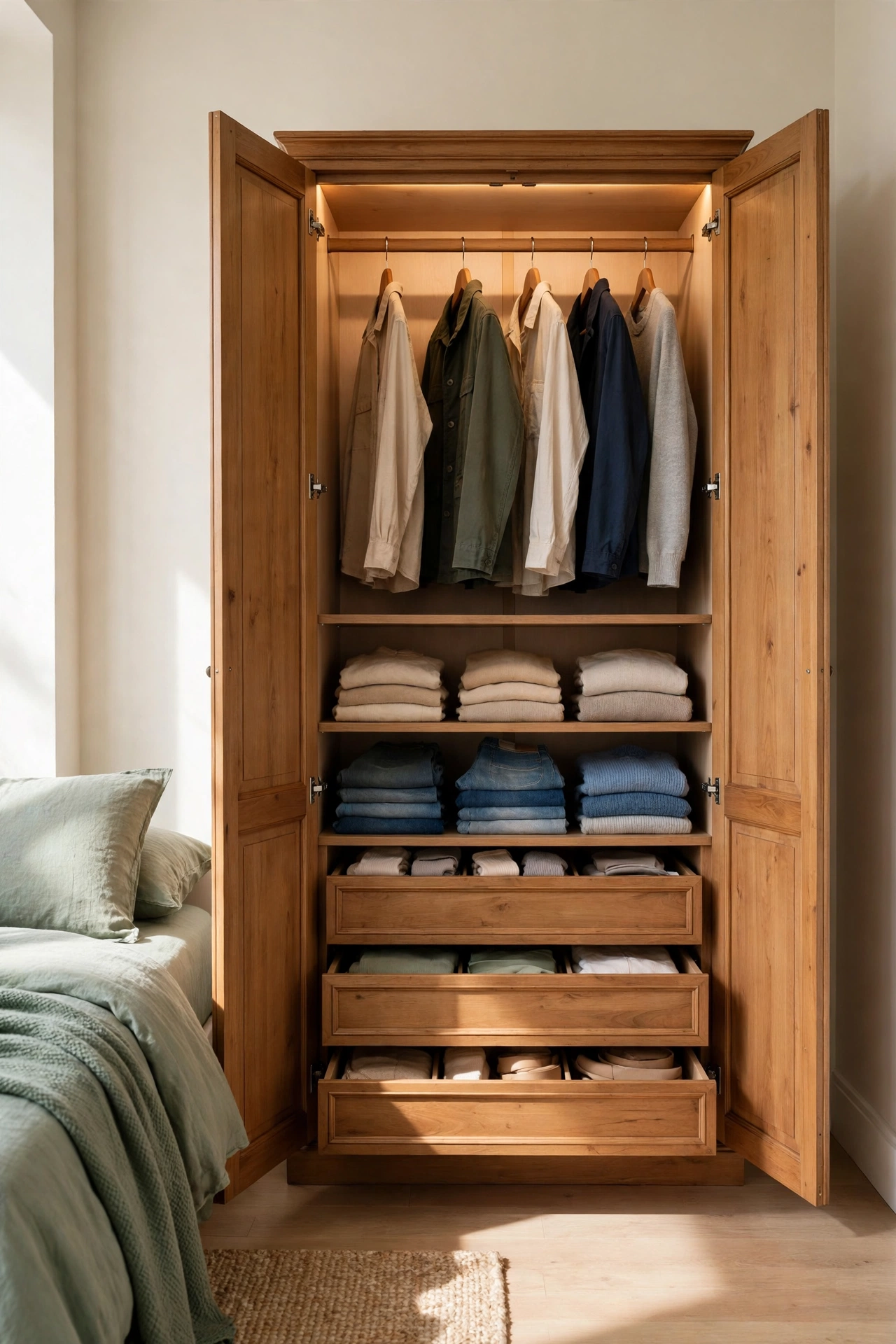
23. Hide Everything Behind a Full-Height Wardrobe
Clothes pile up fast when there is no clear system to store them. A full-height wardrobe keeps everything hidden behind clean doors while offering separate zones for hanging, folding, and drawers. Opening the doors reveals a well-organized interior instead of a messy pile.
Built-in lights make it easy to see everything without searching, especially in deeper wardrobes. Keep the clothes you wear most often at eye level to save time when you get ready each day. Split the inside into three parts: hanging space at the top, easy-access shelves in the middle, and drawers below for smaller items.
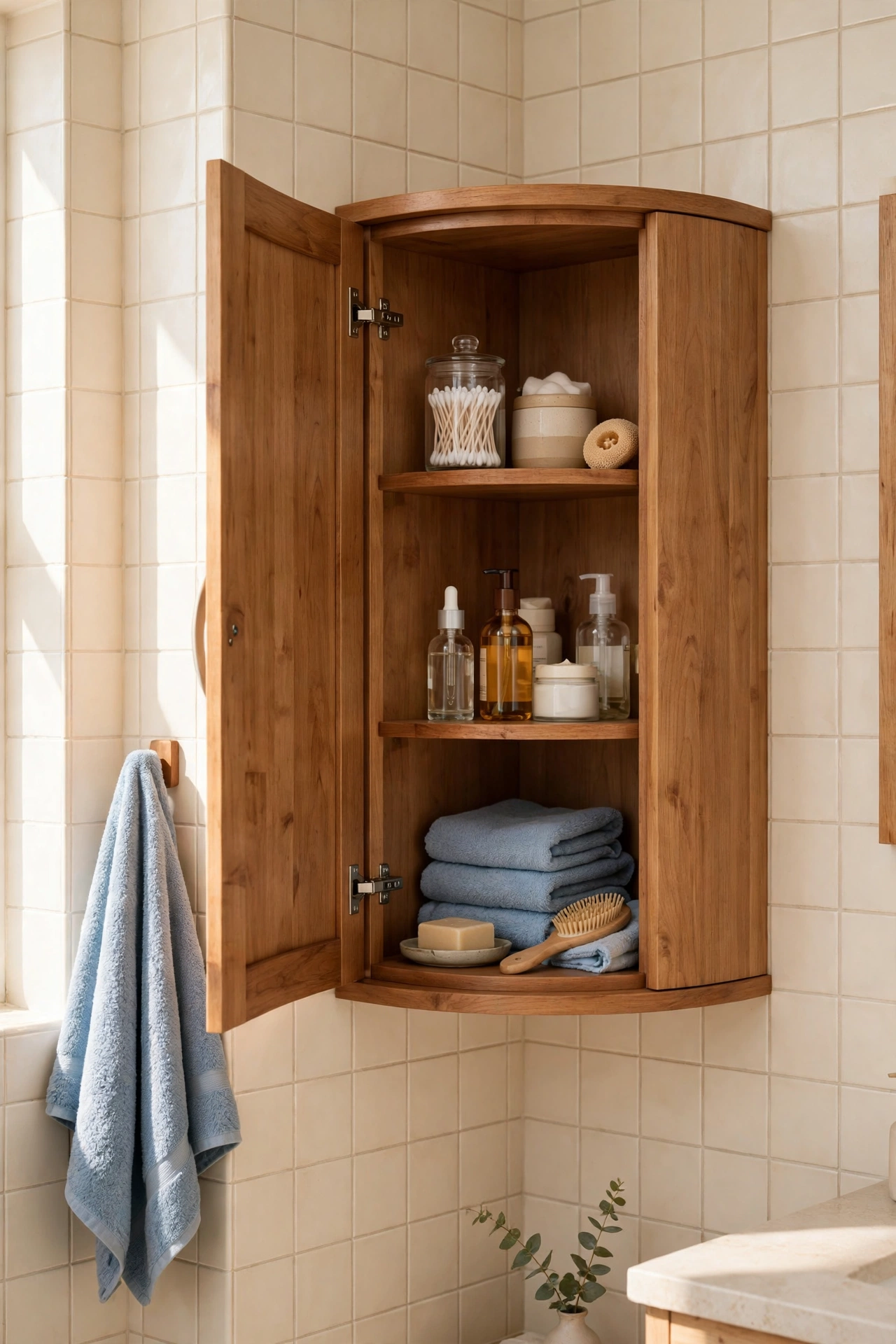
24. Fit a Curved Cabinet Into an Unused Corner
Awkward corners usually go unused or become dead space that collects dust. Turning a corner into a curved cabinet adds storage without taking up usable floor space. The rounded shape makes it easy to reach items without stretching into a tight spot.
Small items like toiletries, bottles, and everyday essentials fit inside without overwhelming the main drawers. Keep the things you use most often near the front to save time on busy mornings. A curved or angled cabinet built to fit the corner turns forgotten space into a useful part of the room.
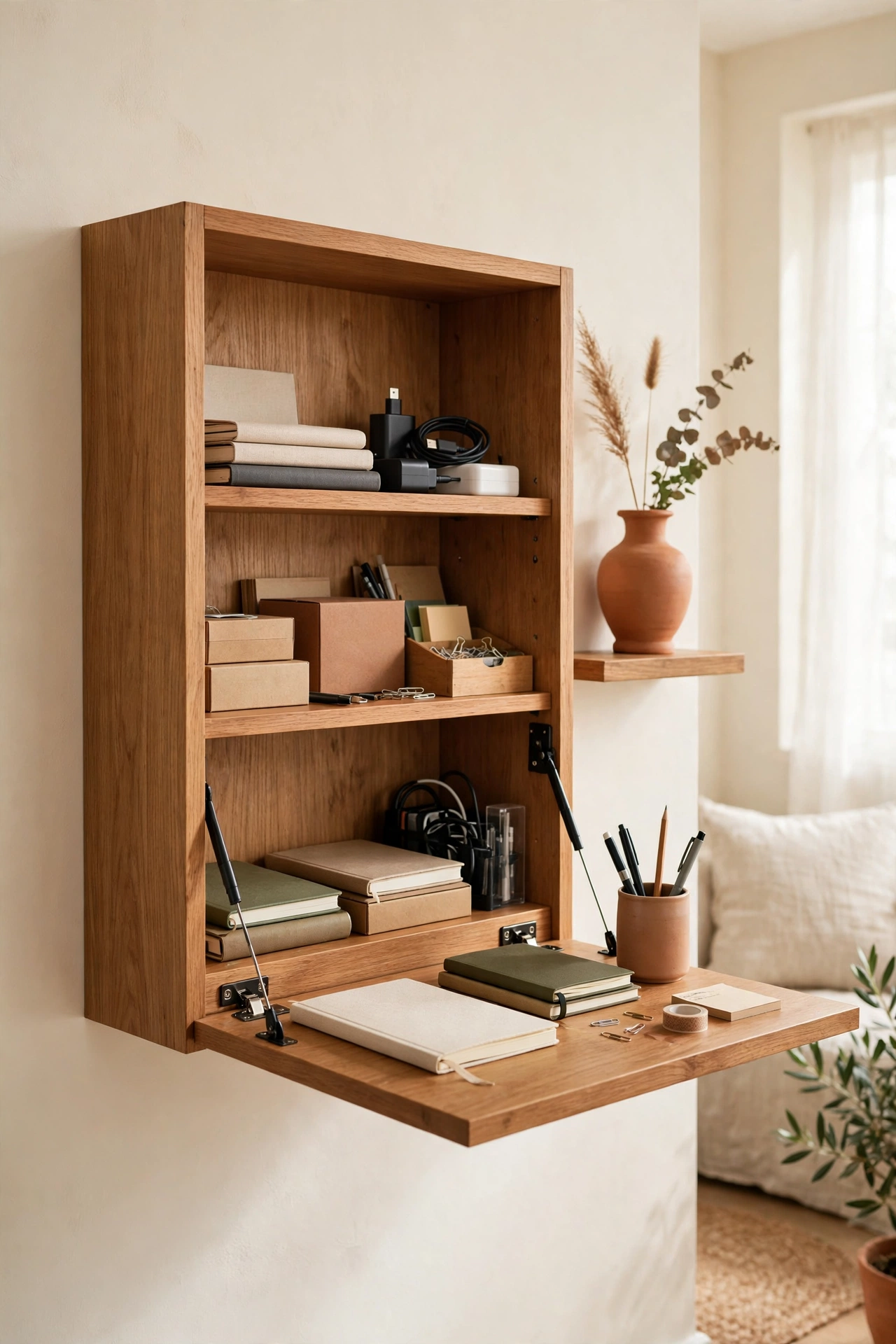
25. Fold Down a Desk From a Hidden Wall Cabinet
A home office does not need a whole room. A wall cabinet with a fold-down front opens into a compact desk with shelves and small compartments behind it. When work is done, fold the desk up, close the cabinet, and the office disappears back into the wall.
Inside the cabinet, shallow shelves hold notebooks, chargers, and stationery, while the folded-down panel gives you a sturdy work surface. This idea suits bedrooms, living rooms, and hallways where a permanent desk would crowd the space. Choose a cabinet depth that matches the wall so the closed unit looks like a simple panel.
Conclusion
Hidden storage is not about owning less. It is about giving everything a place that stays out of sight until you need it. From a pantry behind flat panels to drawers inside your stairs, the ideas here prove that your home already holds more storage than you think.
Start with one idea that solves your biggest clutter problem, then add another when you are ready. Small hidden upgrades add up to a calmer home faster than you expect. For a daily habit that keeps every room tidy, these nightly reset routines will help you put the whole house back in order in just a few minutes each evening.
Frequently Asked Questions About Hidden Storage Ideas
What is the easiest way to add hidden storage in a small home?
Start with furniture you already use every day. Beds, benches, coffee tables, and cabinets can all hide storage without changing how a room looks. Drawers under the bed, a storage ottoman, and pull-out shelves inside existing cabinets add concealed space quickly and cheaply.
How do I hide clutter without making storage hard to reach?
Choose storage you can open and see into with one motion. Pull-out drawers, sliding panels, and shelves behind doors beat deep, hard-to-reach spaces every time. When you can grab what you need in one step, you will actually use the storage instead of letting clutter build up again.
Can I add hidden storage without renovating?
Yes, most of these ideas need no structural work at all. Furniture with built-in compartments, over-door organizers, and freestanding cabinets add hidden storage with simple installation. Recessed wall cabinets and under-stair drawers need more work, but even those are small projects compared to a full renovation.
What rooms benefit most from hidden storage?
Kitchens, bathrooms, and entryways benefit the most because they collect the most daily clutter. Bedrooms gain from under-bed drawers and full-height wardrobes, while living rooms stay calm with sliding panels and hidden media storage. Every room in the home has at least one hidden spot waiting to be used.
How do I keep hidden storage organized over time?
Give every compartment a single job and label bins and shelves so the system is easy to follow. Check each hidden spot once a month and remove anything that no longer belongs there. Hidden storage only stays helpful when you can find things fast, so keep the system simple enough to maintain.

Hi, I’m Emily! I turn messy corners into cozy, organized spots. DreamNestDecor is where I share simple, practical home ideas — decor, organization, and small-space solutions that work in real life, not just in photos. Every idea here is carefully researched before it’s shared.