Picture this: it is a warm Saturday afternoon, friends and family gather at the edge of a smooth court in your backyard, and someone rolls the small white pallino down the lane to start the game. Laughter follows every toss, the bocce balls click softly against each other, and nobody is in a hurry to go back inside. A backyard bocce court turns an ordinary stretch of lawn into the place everyone wants to be.
You do not need a huge yard or a professional builder to create that kind of gathering spot. A bocce court is one of the simplest backyard projects you can take on, and it suits yards of almost every size and shape. These 15 backyard bocce court ideas will help you choose the right surface, edging, shade, and seating, so your court looks beautiful and plays well for years.
1. Build a Classic Court With Crushed Stone and Timber Edging
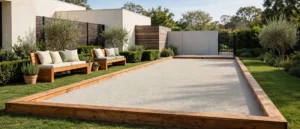
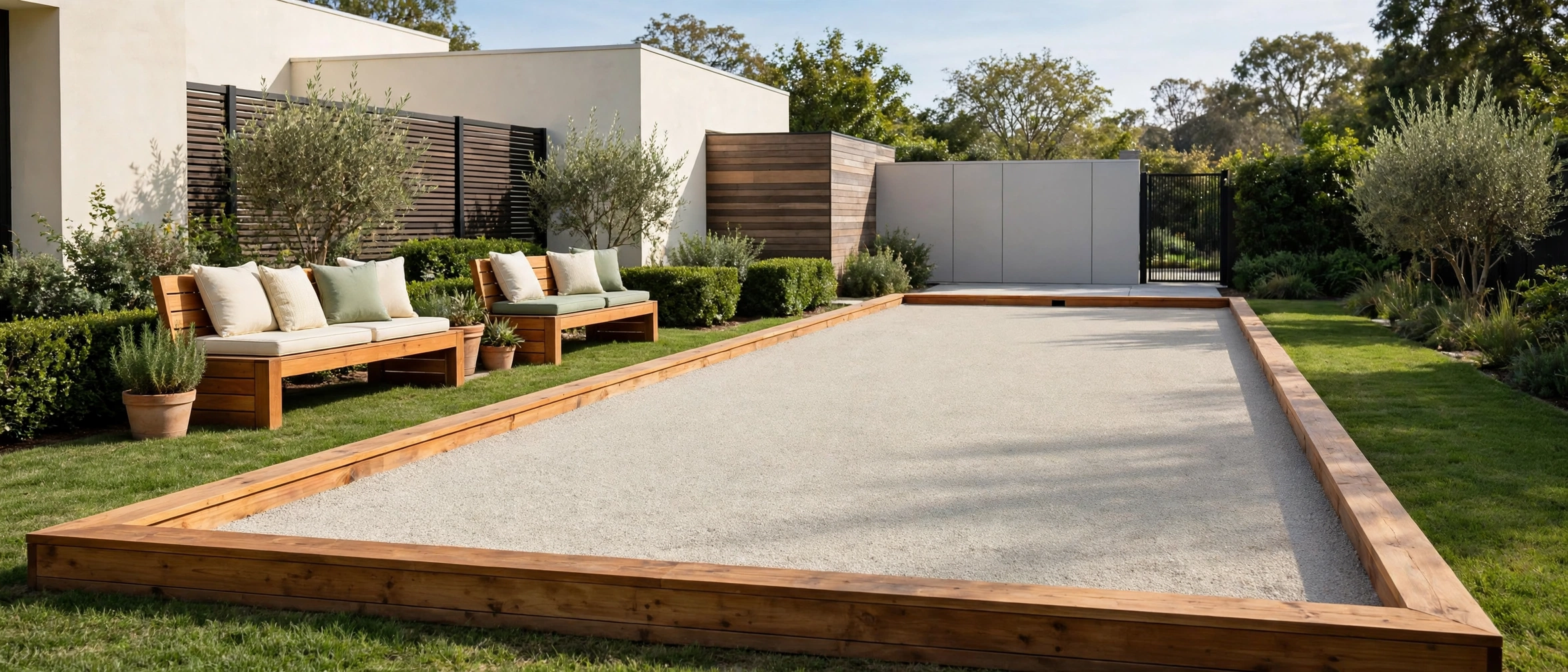
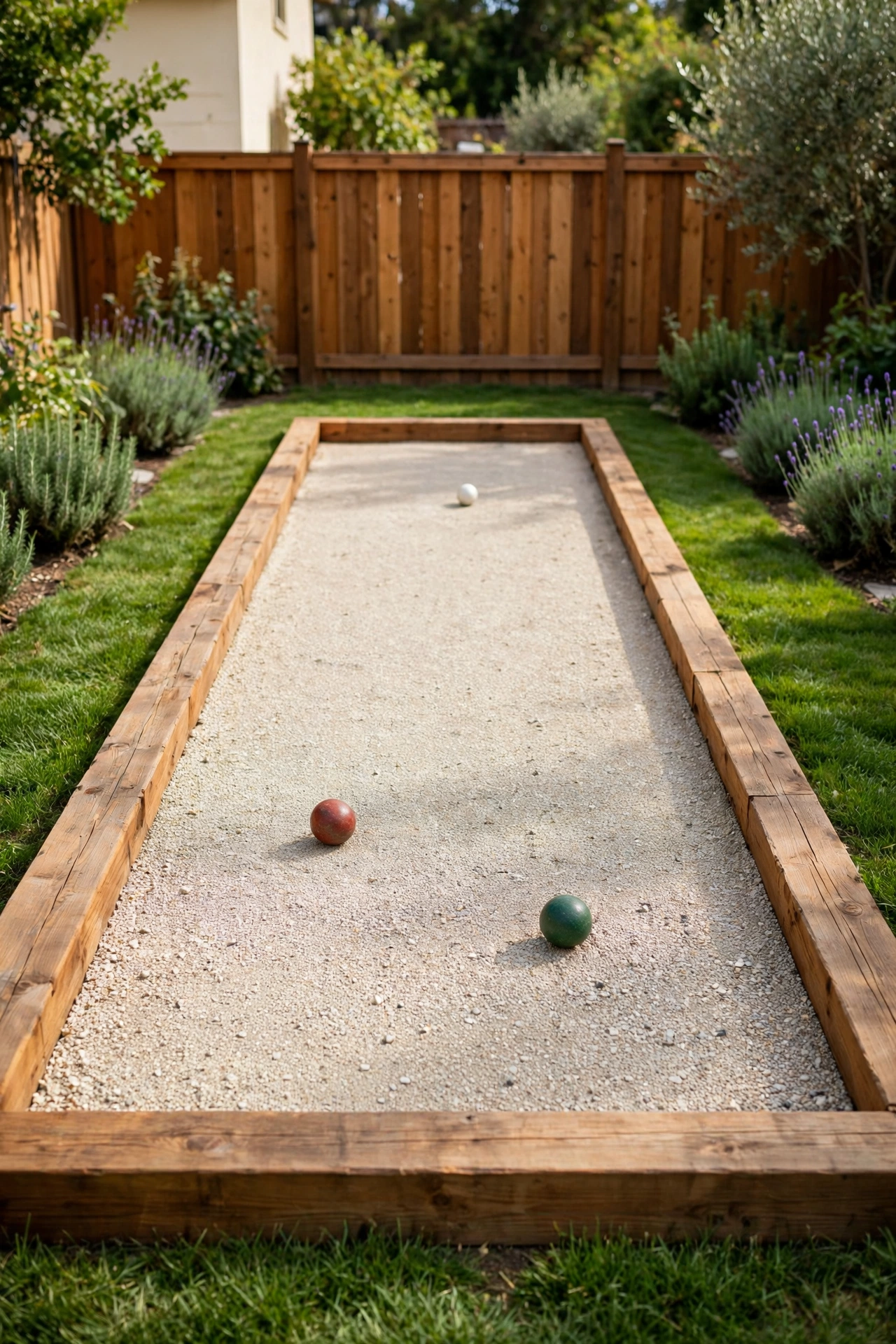
A crushed stone court with timber edging is the classic backyard bocce setup, and it has stayed popular because it works so well. The crushed stone packs down into a firm, level playing surface that lets the balls roll true, while thick timber beams along each side keep the stone in place and give players a clear boundary. The warm wood tone of the beams looks natural against grass and garden beds.
Start by leveling the ground and laying a weed barrier, then add the stone in thin layers, wetting and tamping each layer until the surface feels solid underfoot. Choose landscape timbers rated for ground contact so the edging lasts through wet seasons. A court built this way needs only an occasional raking and topping up to stay in great shape.
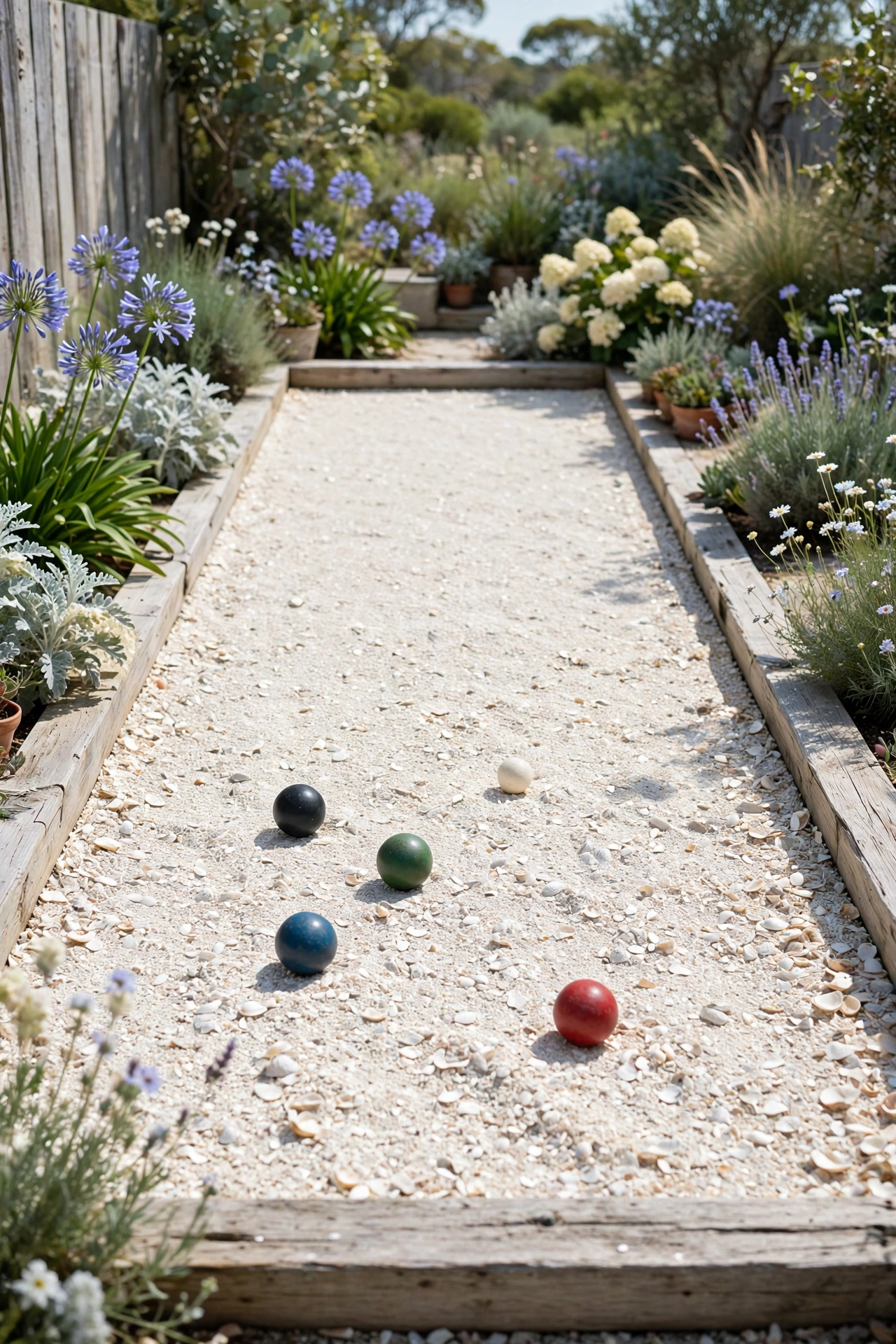
2. Lay an Oyster Shell Surface for a Coastal Feel
Crushed oyster shell is the traditional surface for bocce courts in many coastal towns, and it brings a soft, pale beauty that no other material matches. The shells crush down into a smooth, light colored surface that stays cool under the sun and drains well after rain. The gentle crunch underfoot and the bright, beachy look make the court feel like a seaside escape.
Oyster shell courts need a solid base layer of gravel underneath so the shell does not sink into soft soil over time. Top up the shell once or twice a year to keep the surface even, and rake it lightly before each game to smooth out footprints. Pair the pale surface with weathered wood edging and coastal plants for a relaxed, breezy finish.
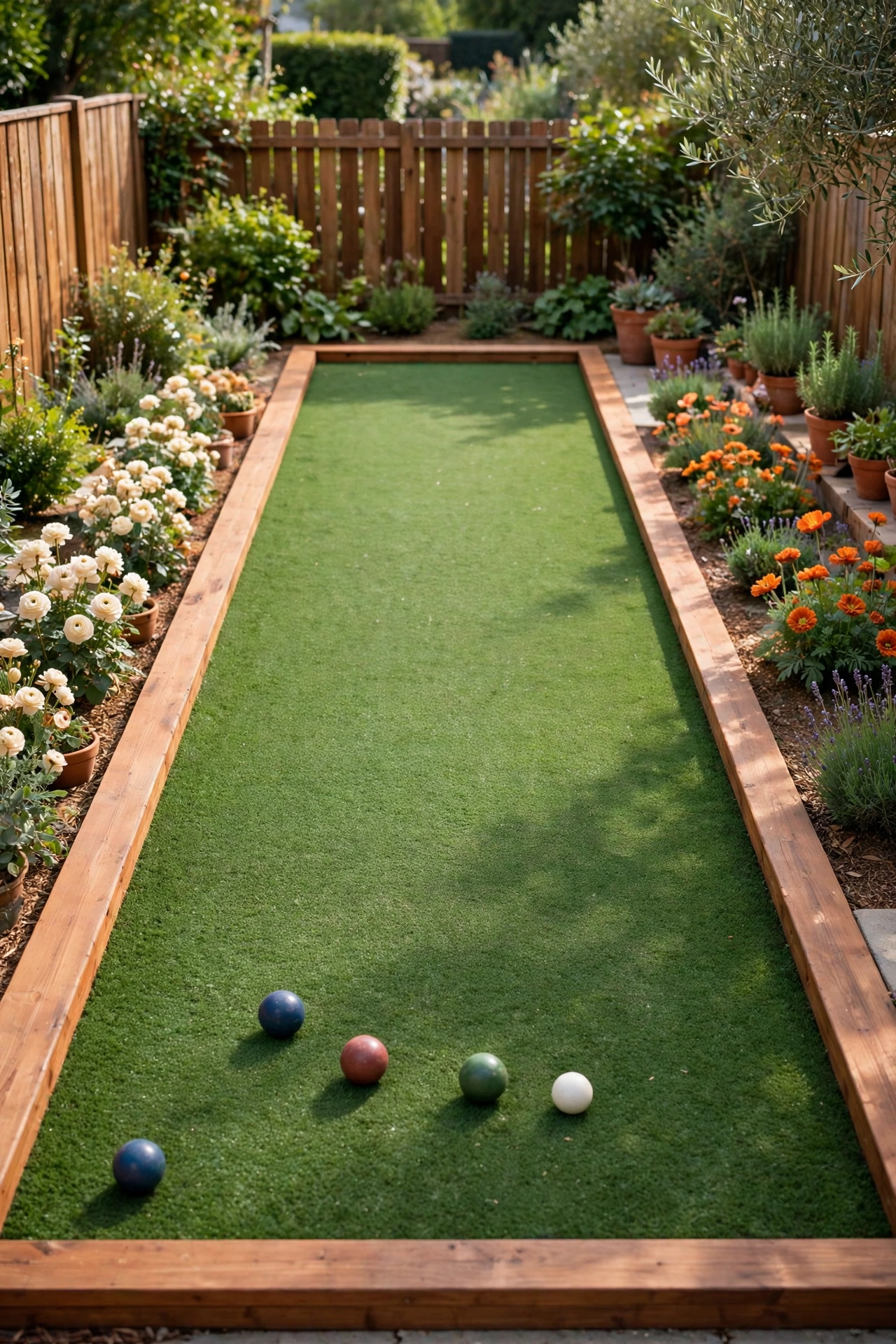
3. Choose Artificial Turf for a Low Maintenance Court
An artificial turf bocce court is the right choice when you want to play without raking, topping up, or weeding ever again. The short, dense turf gives the balls a consistent roll in every season, and it stays green and tidy through drought and heavy use. A turf court also works well in yards where loose stone would scatter onto patios or into the house.
Install the turf over a compacted base of crushed rock so the surface stays firm and level, and choose a short pile height made for putting greens or bocce play. Brush the turf now and then to lift the fibers and clear away leaves. The result is a court that looks freshly groomed all year with almost no upkeep.
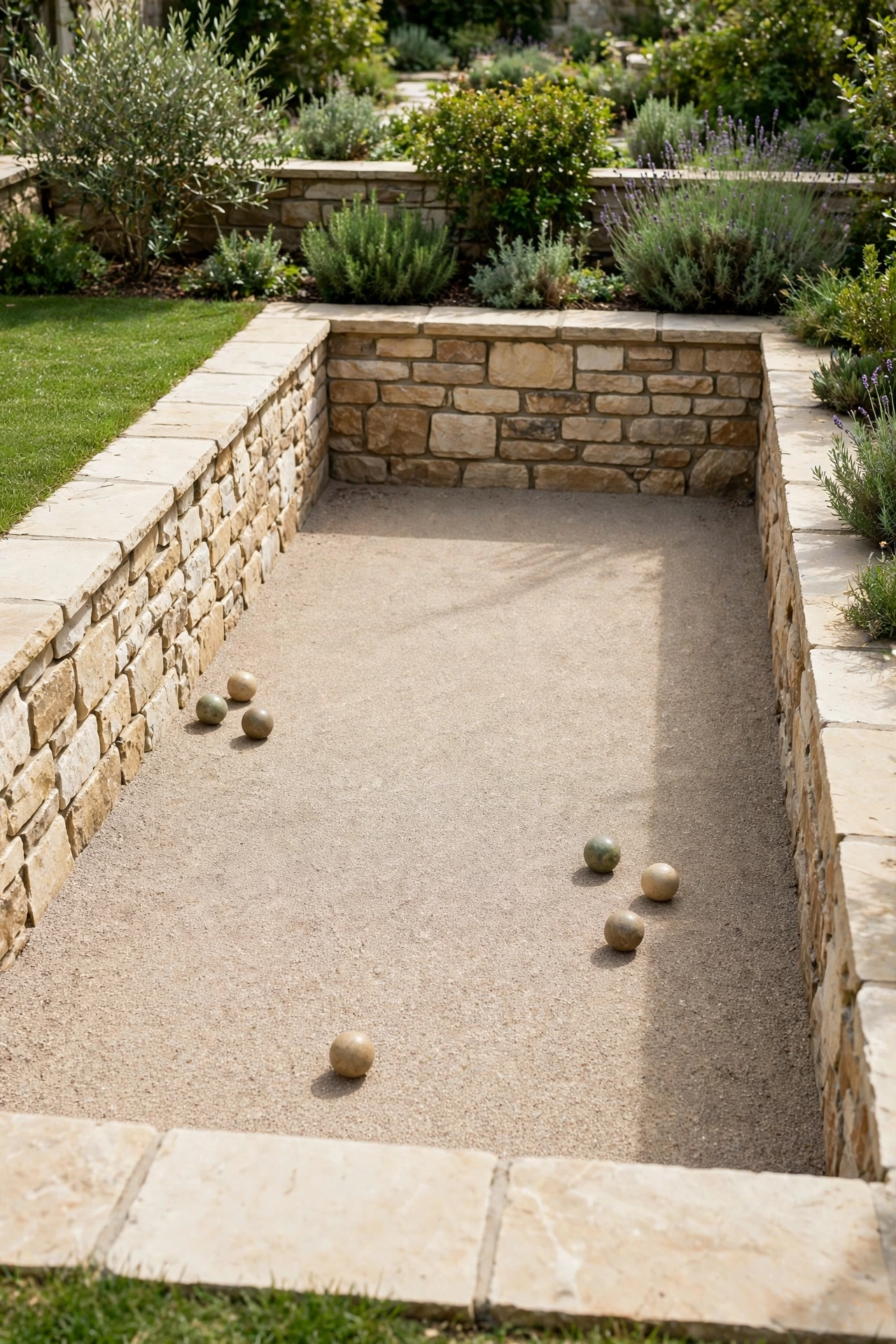
4. Sink the Court Between Low Stone Retaining Walls
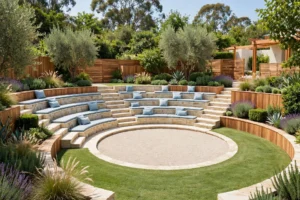
A sunken bocce court set between low stone retaining walls feels like a destination rather than just a patch of yard. The walls hold back the surrounding soil on a sloped lot and create a sheltered playing area that blocks wind and keeps balls from rolling away. Natural stone walls also add texture and character that make the whole backyard feel more finished.
This design works best on a gentle slope where you can cut into the hillside and use the excavated soil elsewhere in the garden. Cap the walls with flat stones wide enough to sit on, so spectators have a natural perch during games. Good drainage behind the walls is essential, so include a gravel backfill and a drain pipe when you build.
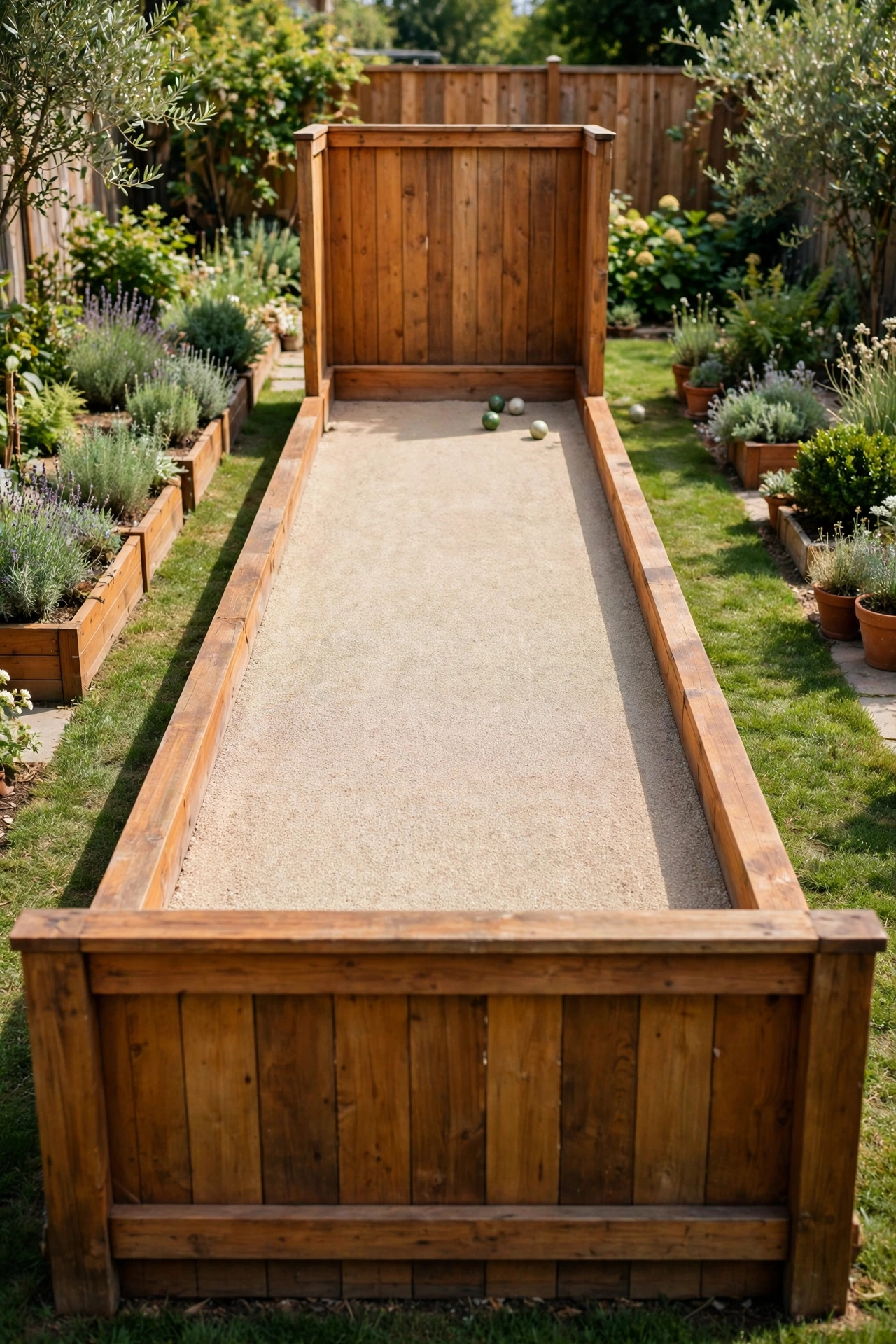
5. Raise the Court With Sturdy Wooden Backboards
Wooden backboards at each end of the court are a signature bocce feature, and they make the game more fun because balls can rebound off the boards and stay in play. A raised court framed with tall timber boards gives the playing area a defined, finished look and stops balls from rolling off into flower beds. The boards also give players a clear target line at each end.
Build the backboards from thick, rot resistant lumber and brace them firmly so they do not shift when balls strike them. A height of about one foot above the playing surface is typical, and the boards should sit flush with the court edging. Paint or stain the wood to match fences and decking nearby for a pulled together look.
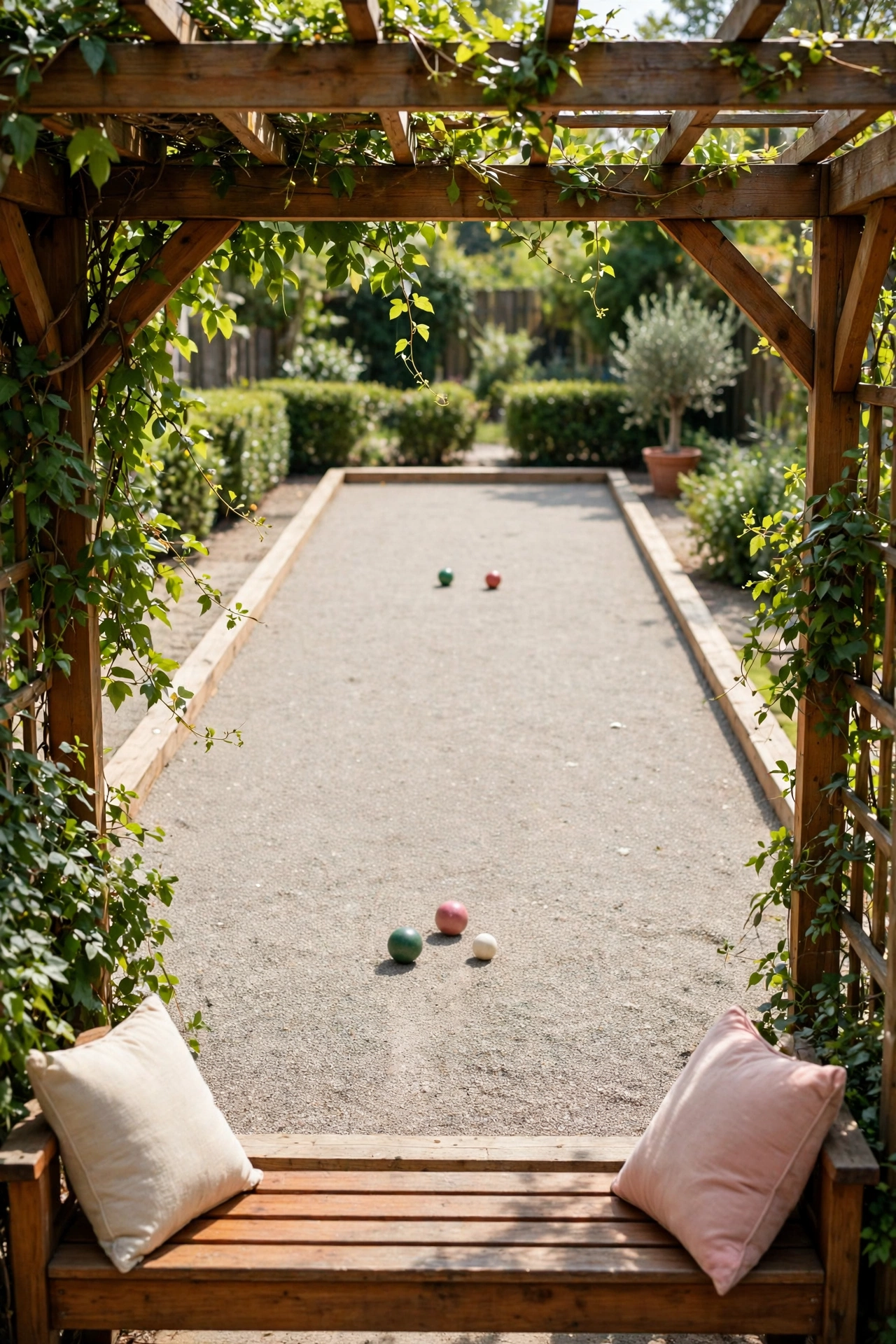
6. Shade the Seating End With a Wooden Pergola
A wooden pergola over the seating end of the court gives players and watchers a cool place to rest between turns. The open beams filter the harsh midday sun while still letting light through, and climbing plants or a shade cloth can add more cover as the season warms up. A pergola also frames the court beautifully and makes the whole setup feel like a designed outdoor room.
Place the pergola at one end of the court rather than over the playing surface, so falling leaves and shade patterns do not interfere with the game. Add a bench and a small side table underneath for drinks and scorecards. If you want more shade ideas for the area around your court, these backyard pergola ideas will help you choose a style that fits your yard.
7. Light the Court for Evening Games
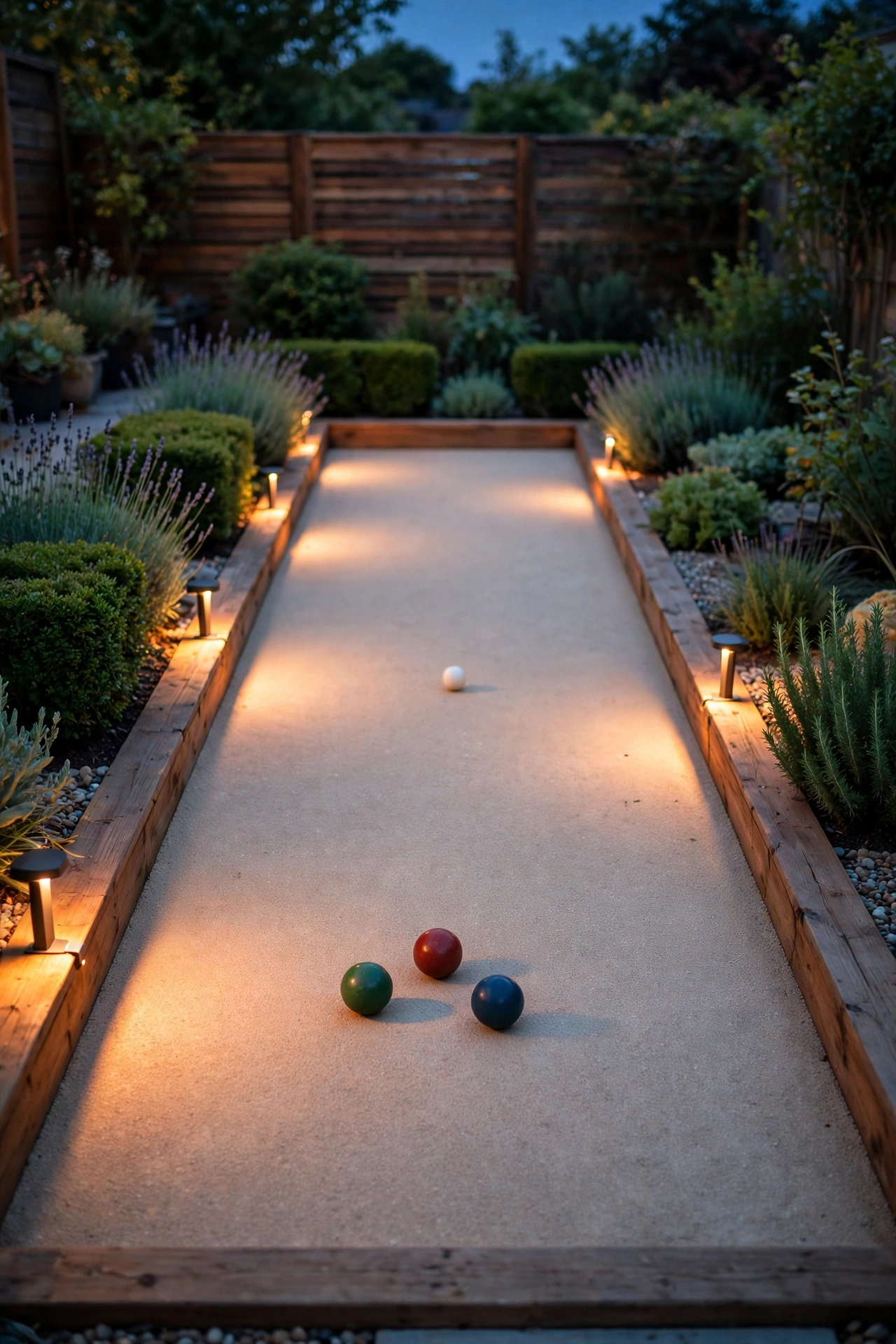
Landscape lighting turns a bocce court into an evening gathering spot and extends play long after sunset. Low path lights along the edging outline the court clearly, while a pair of warm floodlights mounted on posts or a nearby fence washes the playing surface in even light. The glow also makes the backyard feel welcoming from inside the house on summer nights.
Choose warm white lights rather than harsh daylight bulbs so the court feels cozy instead of clinical. Solar path lights work well for the borders, but wired lights give a steadier glow for the playing surface itself. Keep fixtures low and aimed downward so players are not blinded when they bend to roll.
8. Frame the Court With a Low Garden Border
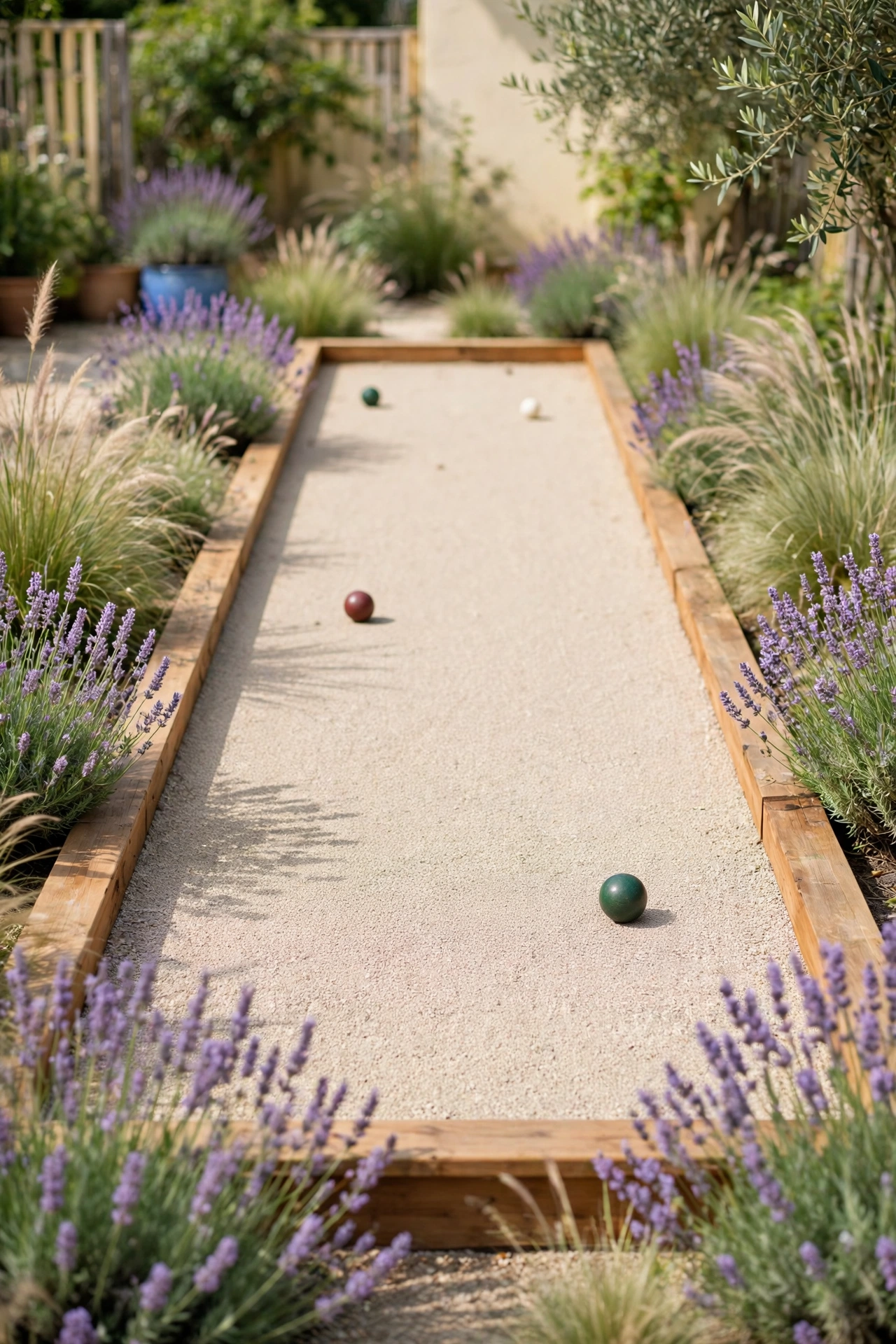
A low garden border of flowers, herbs, or ornamental grasses softens the hard lines of a bocce court and ties it into the rest of the landscape. Low plants along the edging add color through the seasons without dropping heavy debris onto the playing surface. Lavender, catmint, and low ornamental grasses are good choices because they stay compact and need little care.
Keep the border narrow and the plants trimmed back from the court edge so stray branches never block a rolling ball. A strip of mulch or gravel between the plants and the court edging makes mowing and trimming easier. For more ways to edge garden features cleanly, these backyard landscape border ideas will help you pick a border style that suits the court.
9. Fit a Slim Court Along a Side Yard
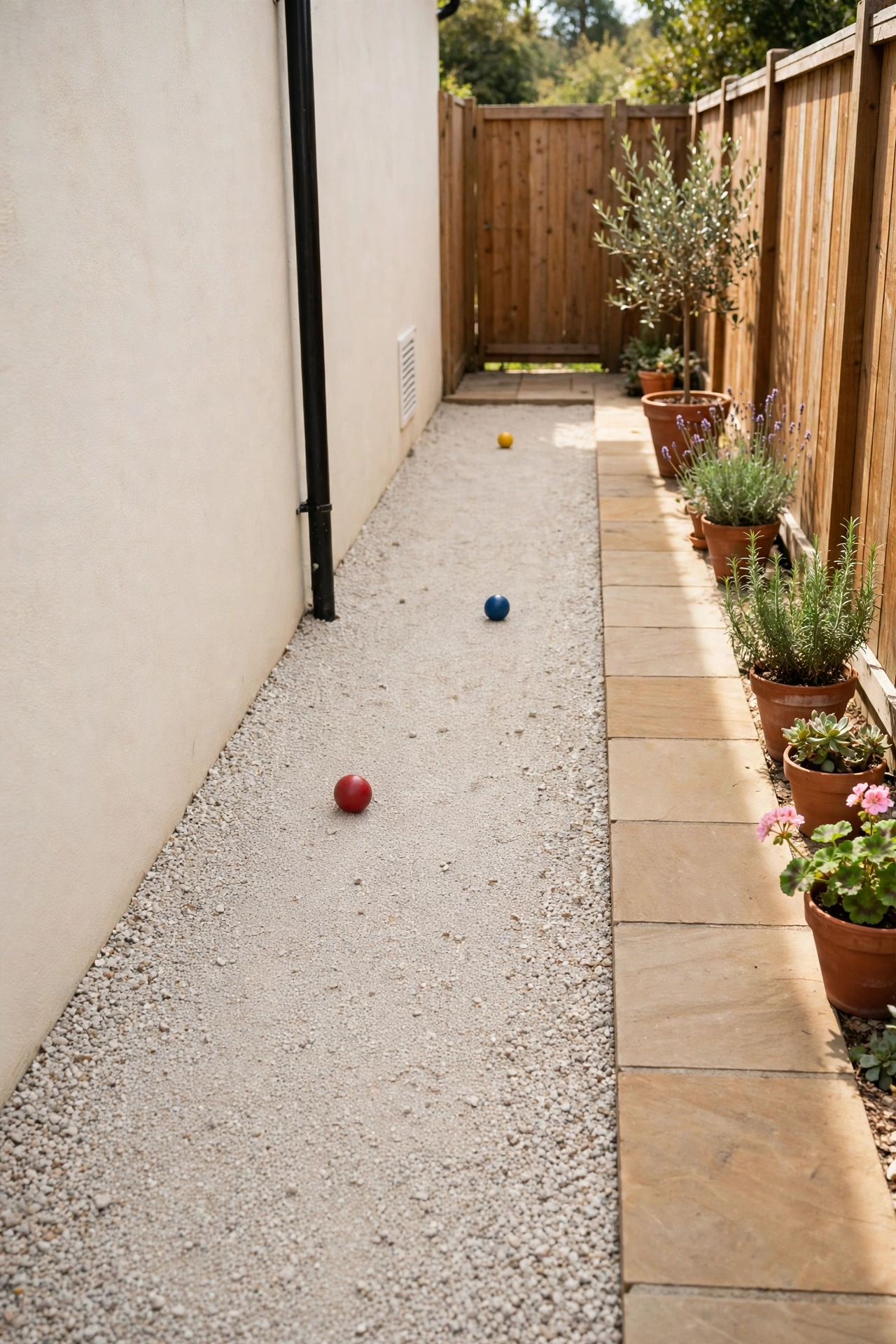
A narrow side yard is often the most underused space in a backyard, and it happens to be the perfect shape for a bocce court. A slim court of about eight to ten feet wide fits neatly between a house wall and a fence, turning a forgotten strip of grass into a lively game lane. The long, straight layout of a side yard matches the proportions of a bocce court almost exactly.
Measure carefully before you build, and leave a walking lane of at least two feet on one side so players can move along the court without stepping on the playing surface. Use light colored surfacing and a pale fence paint to keep the narrow space feeling open. A slim court proves that you do not need a wide open lawn to enjoy bocce at home.
10. Add Built-In Bench Seating Along the Court
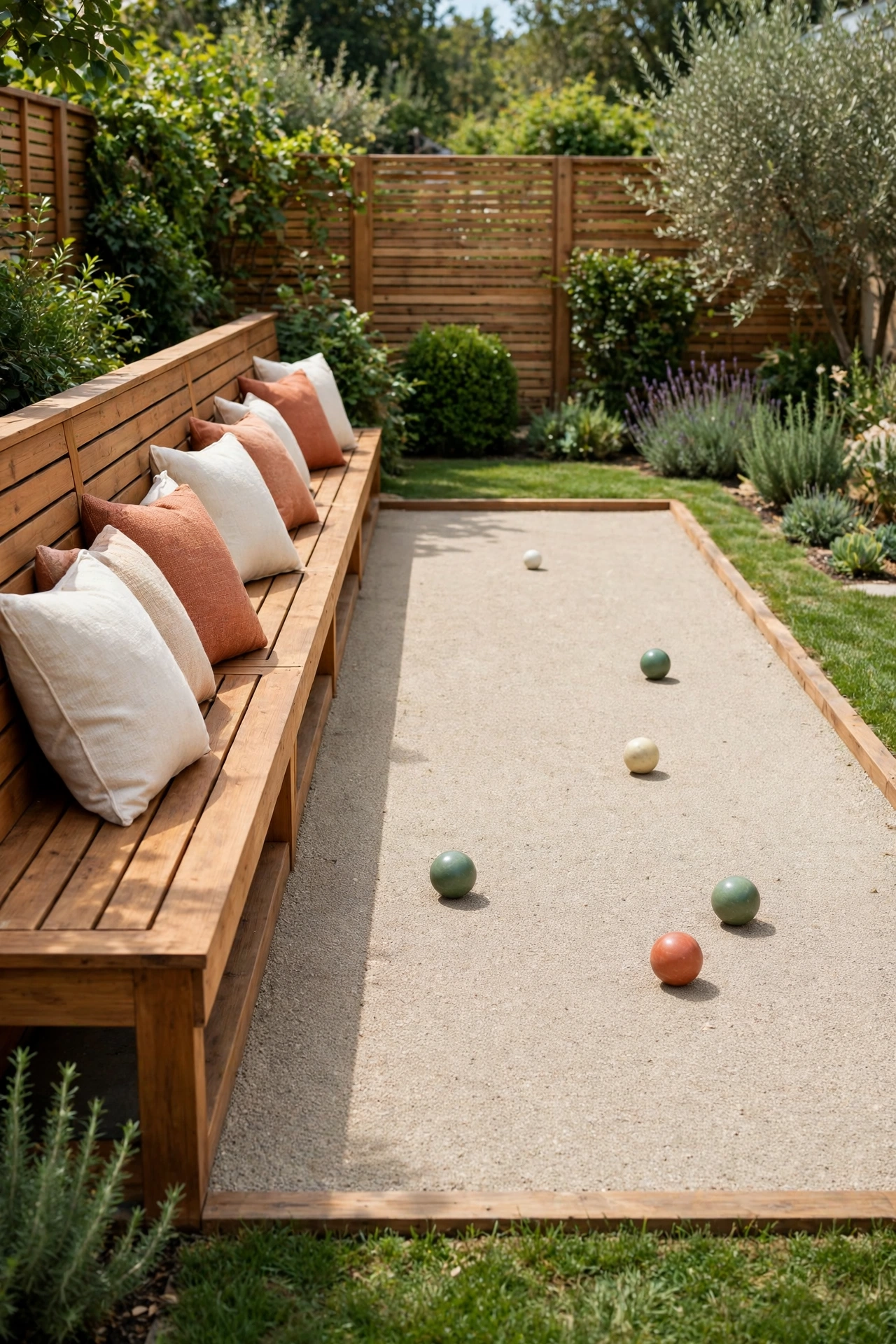
Built-in benches along one side of the court give players a comfortable place to sit while they wait for their turn, and they keep the seating from drifting onto the playing surface. Low wooden benches set just behind the edging hold scorecards, drinks, and spare balls within easy reach. Cushions in outdoor fabric add comfort and a splash of color that you can change with the seasons.
Build the benches from the same timber as the court edging so the whole setup reads as one piece. A bench height of about eighteen inches works well for most adults, and a depth of about sixteen inches gives enough room to sit comfortably. Leave a clear gap between the bench and the court edge so players can walk the full length of the lane.
11. Set Up a Scoreboard and Ball Storage Station
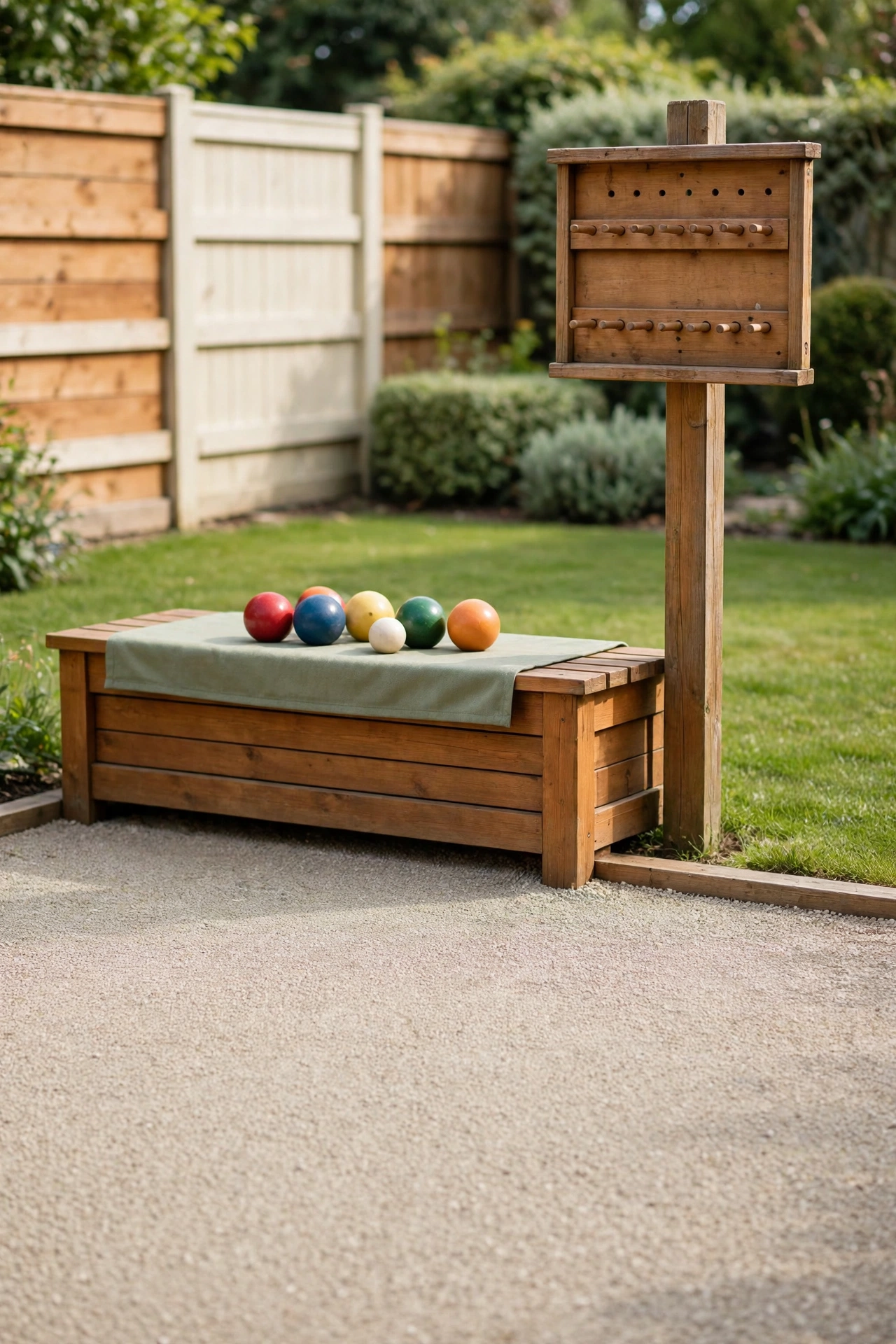
A scoreboard and ball storage station at the end of the court keeps every game organized and adds a charming, clubhouse feel to the setup. A chalkboard or a wooden scoreboard with sliding markers lets players track points at a glance, while a small storage bench or a wall mounted rack holds the bocce set, the pallino, and a measuring tape between games.
Mount the scoreboard on a post or a fence where everyone can read it from the playing area, and keep chalk or markers in a small weatherproof box nearby. A storage bench with a hinged lid protects the balls from rain and sun, and it doubles as extra seating. Label the storage clearly so the whole set always goes back to the same home.
12. Edge a Gravel Court With Brick Pavers
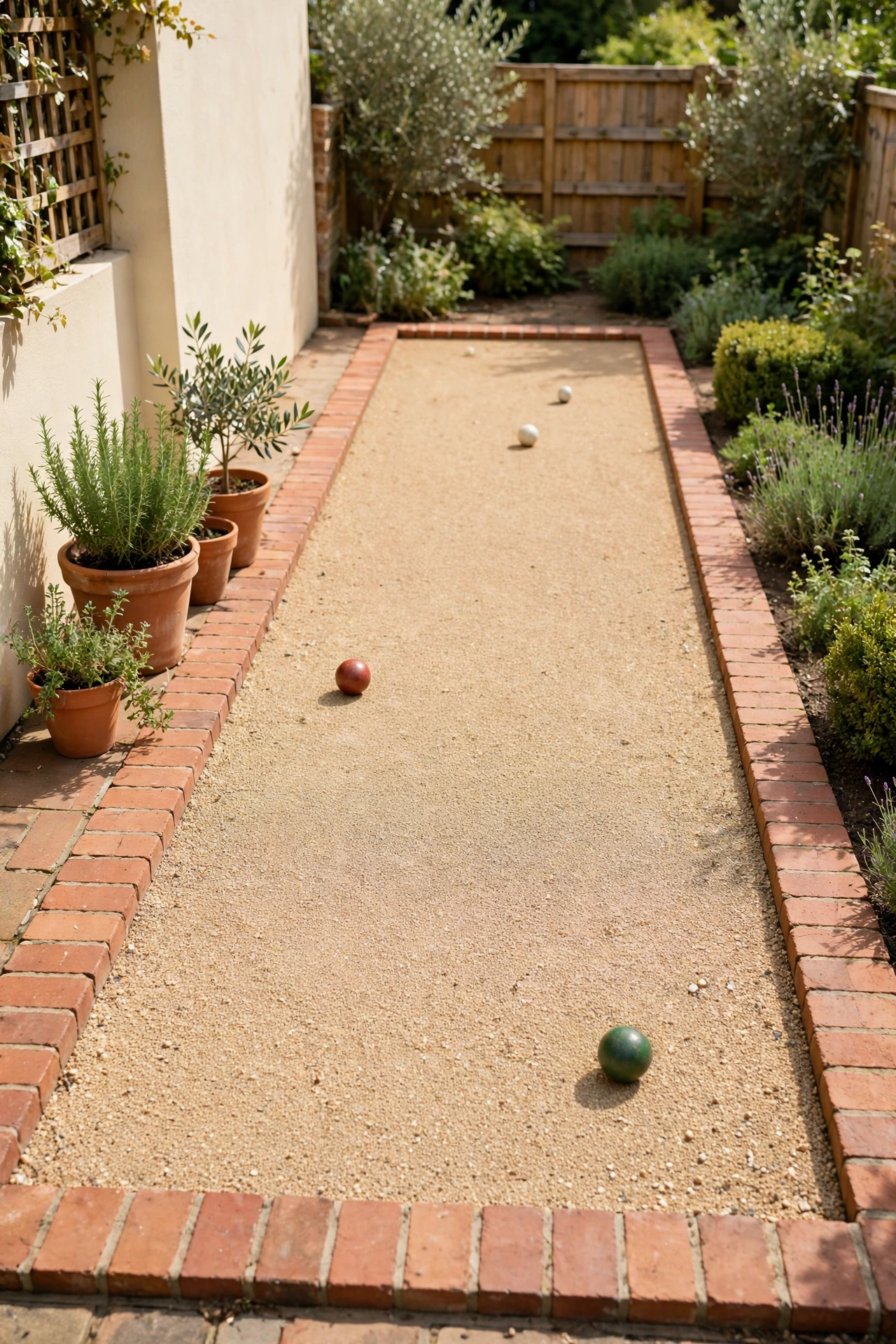
Brick pavers make a handsome, durable edge for a gravel bocce court, and their warm red and terracotta tones add character that plain timber cannot match. The pavers sit flush with the ground in a single or double row, holding the gravel in place while giving the court a crisp, finished outline. A brick edge also handles mower wheels and foot traffic without shifting.
Set the pavers on a bed of sand over compacted gravel, and tap each one level as you go so the edge stays even along the full length of the court. A soldier course of pavers standing on end gives a taller edge that contains the gravel even better. The brick border pairs beautifully with clay pots and terracotta garden accents nearby.
13. Pair the Court With a Fire Pit Gathering Area
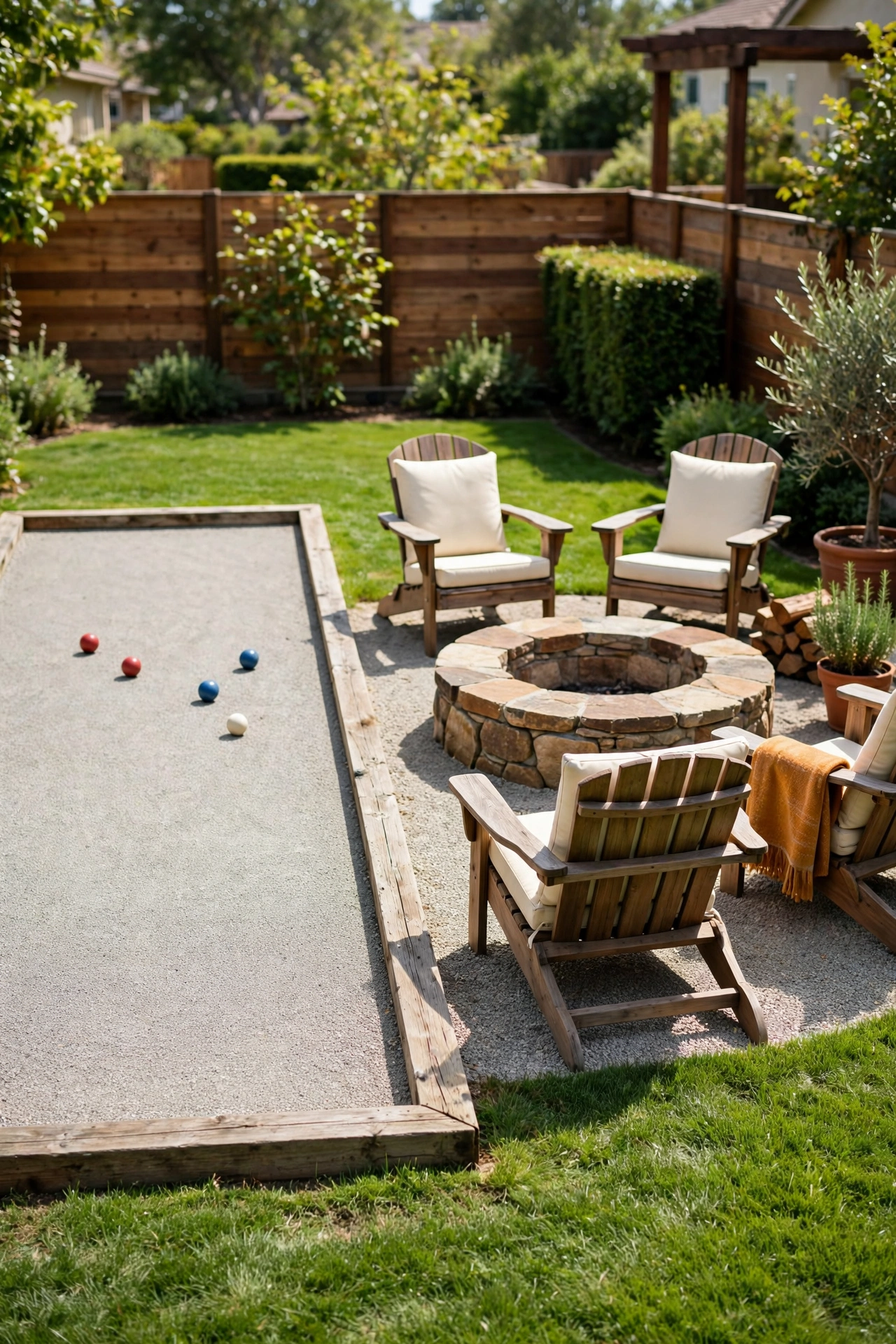
A fire pit gathering area beside the bocce court extends the fun well beyond the last game of the evening. Players can finish a match, then move a few steps to chairs around the fire for conversation and snacks while the court waits for the next round. The combination turns one corner of the yard into a complete evening destination.
Place the fire pit at least fifteen feet from the court edge so sparks and smoke stay clear of players, and use the same stone or brick for the fire pit surround as for the court edging to tie the two areas together. A low seating wall around the fire pit gives everyone a place to sit without dragging chairs across the lawn. These backyard fire pit ideas will help you design a gathering area that matches your court.
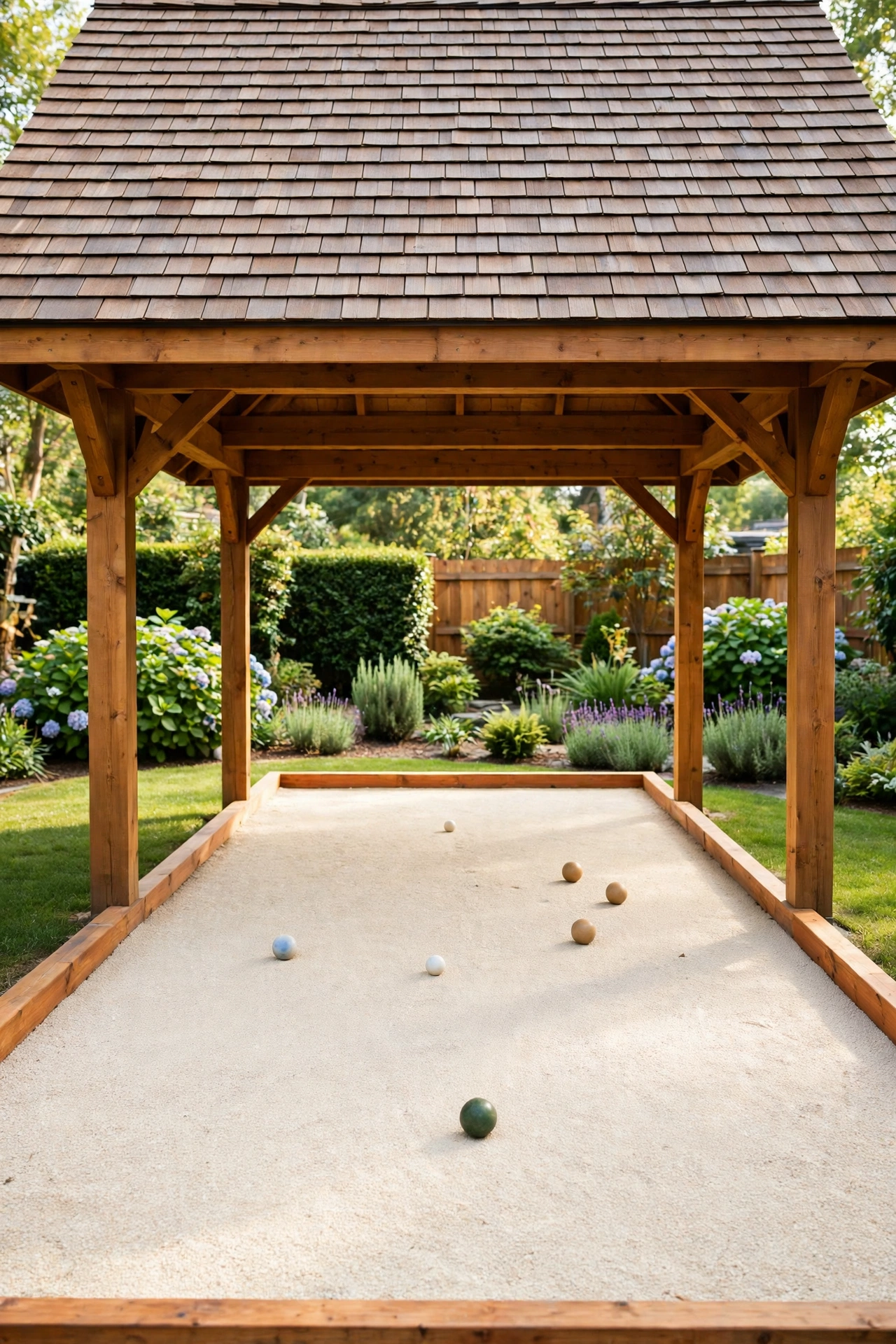
14. Cover the Court With a Pavilion Roof
A pavilion roof over the bocce court lets you play through light rain and harsh sun, and it turns the court into a true all weather feature. A solid roof on sturdy posts keeps the playing surface dry and shaded, while the open sides preserve airflow and the outdoor feel. The roof also protects the surface from leaves and debris, which means less raking before every game.
Size the roof to cover the full court plus a margin of a few feet on each side so windblown rain stays off the playing surface. Use roofing materials that match the house, such as shingles or standing seam metal, so the pavilion looks like a permanent part of the property. Gutters on the roof direct rainwater away from the court and into garden beds.
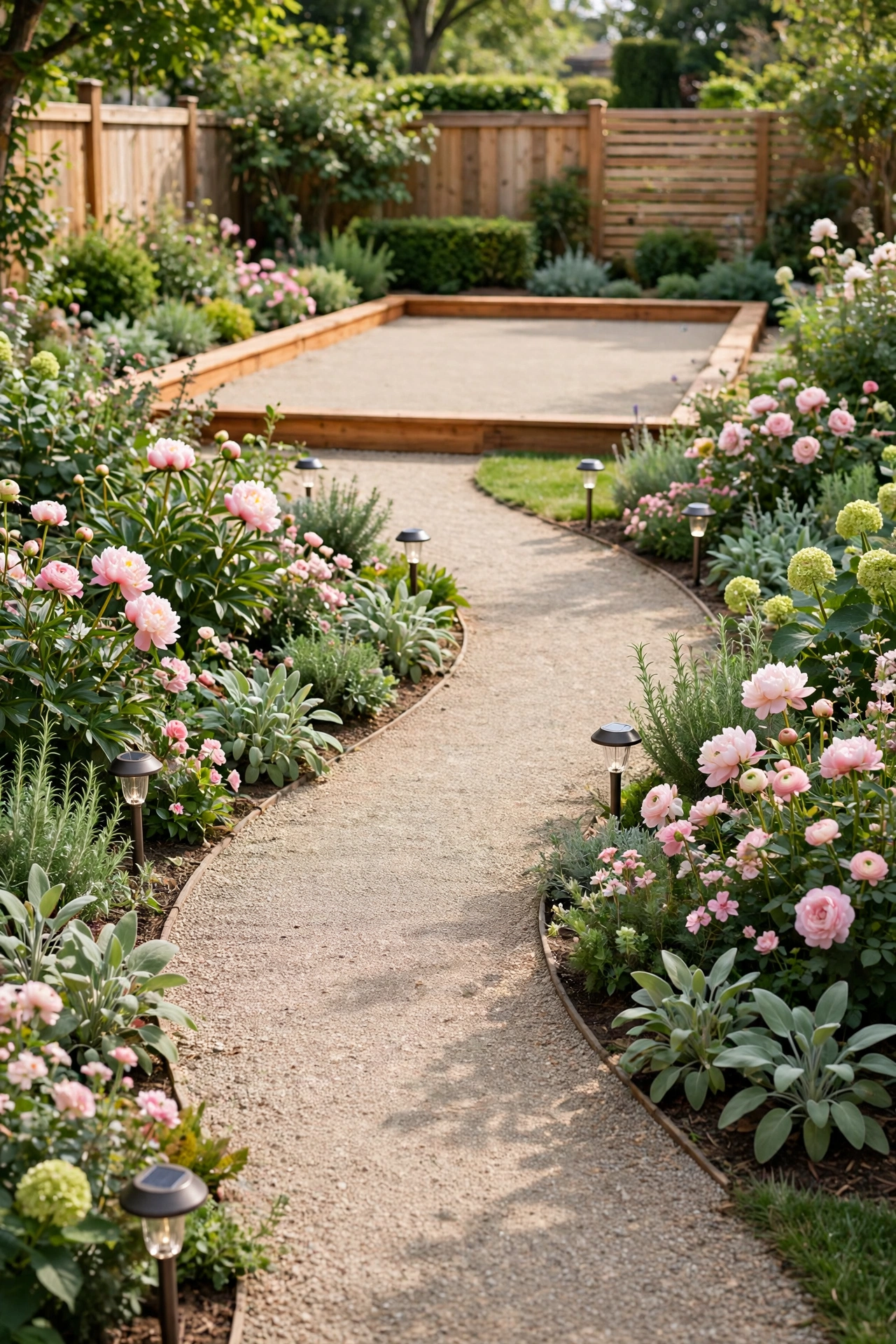
15. Lead to the Court With a Winding Garden Path
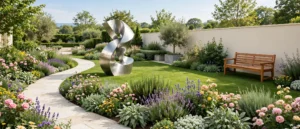
A winding garden path leading to the bocce court builds a sense of arrival and connects the court to the rest of the yard. Stepping stones or a gravel path that curves past flower beds and shrubs makes the walk to the game part of the experience, and it keeps feet clean on the way to the court. The path also guides guests who are visiting the backyard for the first time.
Use the same stone or gravel for the path as for the court surface so the two areas feel connected. Line the path with low solar lights so evening guests can find their way safely. If you need inspiration for the walkway itself, these garden pathway ideas will help you shape a path that suits your garden.
Conclusion
A backyard bocce court is more than a game lane. It is a gathering place that brings family and friends outside, slows down the evening, and gives your yard a purpose in every season. From a simple crushed stone court to a covered pavilion setup, there is a design here for every yard size and every budget.
Start with the surface and edging that fit your space, then add shade, seating, and lighting one piece at a time. Before long, your court will be the spot everyone asks about. For a covered gathering area near the court, these backyard pavilion ideas will help you plan a sheltered spot where players can relax between games.
Frequently Asked Questions About Backyard Bocce Court Ideas for Outdoor Fun
How big should a backyard bocce court be?
A regulation bocce court measures about 90 feet long and 13 feet wide, but most backyard courts are smaller. A court of 40 to 60 feet long and 10 to 12 feet wide plays very well for casual games. Even a slim court of 30 feet long can be great fun when space is tight.
What is the best surface for a bocce court?
Crushed stone, decomposed granite, and crushed oyster shell are the most popular surfaces because they pack firm and let balls roll smoothly. Artificial turf is the best low maintenance option. Avoid loose pea gravel, since the balls sink into it and roll unevenly.
How do I keep a bocce court level?
Start with a compacted gravel base, then add the playing surface in thin layers, wetting and tamping each layer until it feels firm. Rake the court lightly before games and top up low spots once or twice a year. Solid edging on all sides stops the surface from spreading outward.
Can I build a bocce court on a slope?
Yes, you can cut into the slope and build a low retaining wall on the uphill side to create a level court. A sunken court between retaining walls also blocks wind and looks beautiful. Make sure drainage is planned well so water does not pool on the playing surface.
How do I maintain a backyard bocce court?
Rake the surface smooth before each game, pull any weeds that appear along the edges, and top up the surface material once or twice a year. Check timber edging and backboards for rot or loose fasteners each spring. A court cover or a pavilion roof reduces leaf litter and keeps maintenance light.

Hi, I’m Emily! I turn messy corners into cozy, organized spots. DreamNestDecor is where I share simple, practical home ideas — decor, organization, and small-space solutions that work in real life, not just in photos. Every idea here is carefully researched before it’s shared.