Picture this: you walk into a room painted a soft sage green and the whole space seems to exhale. The color is calm without being cold, fresh without being loud, and it makes every other color in the room look more thoughtful. Sage green has quietly become one of the most loved colors in home decor, and the secret to using it well is choosing the right partner colors.
Sage green is generous. It pairs beautifully with warm creams, soft blush pinks, deep navy blues, earthy terracotta, and rich wood tones, and each pairing creates a completely different mood. These 14 sage green interior color combinations will show you how to pair this gentle green with other colors across living rooms, bedrooms, bathrooms, kitchens, and more, so every room in your home feels elegant and intentional.
1. Sage Green and Cream in a Living Room
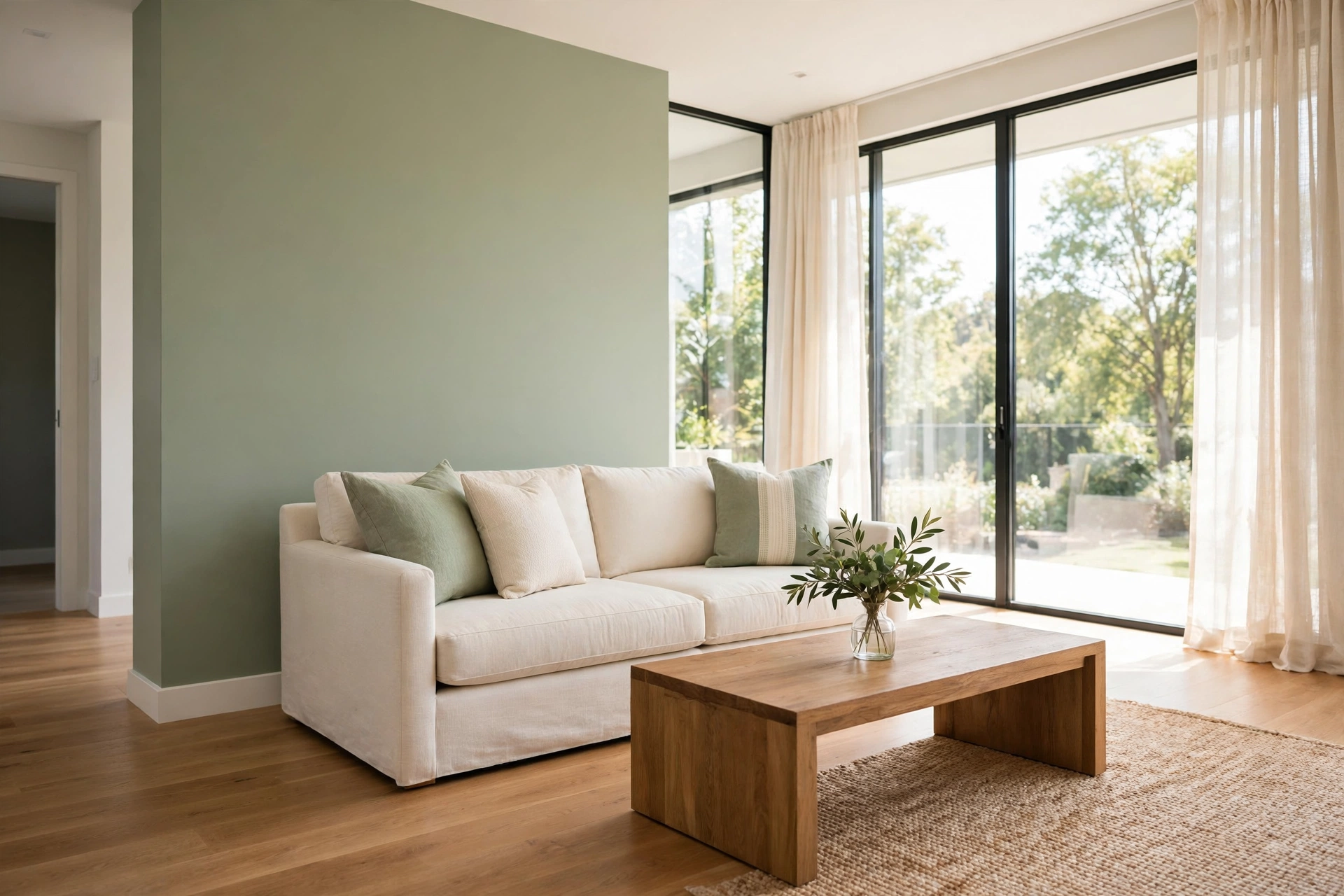
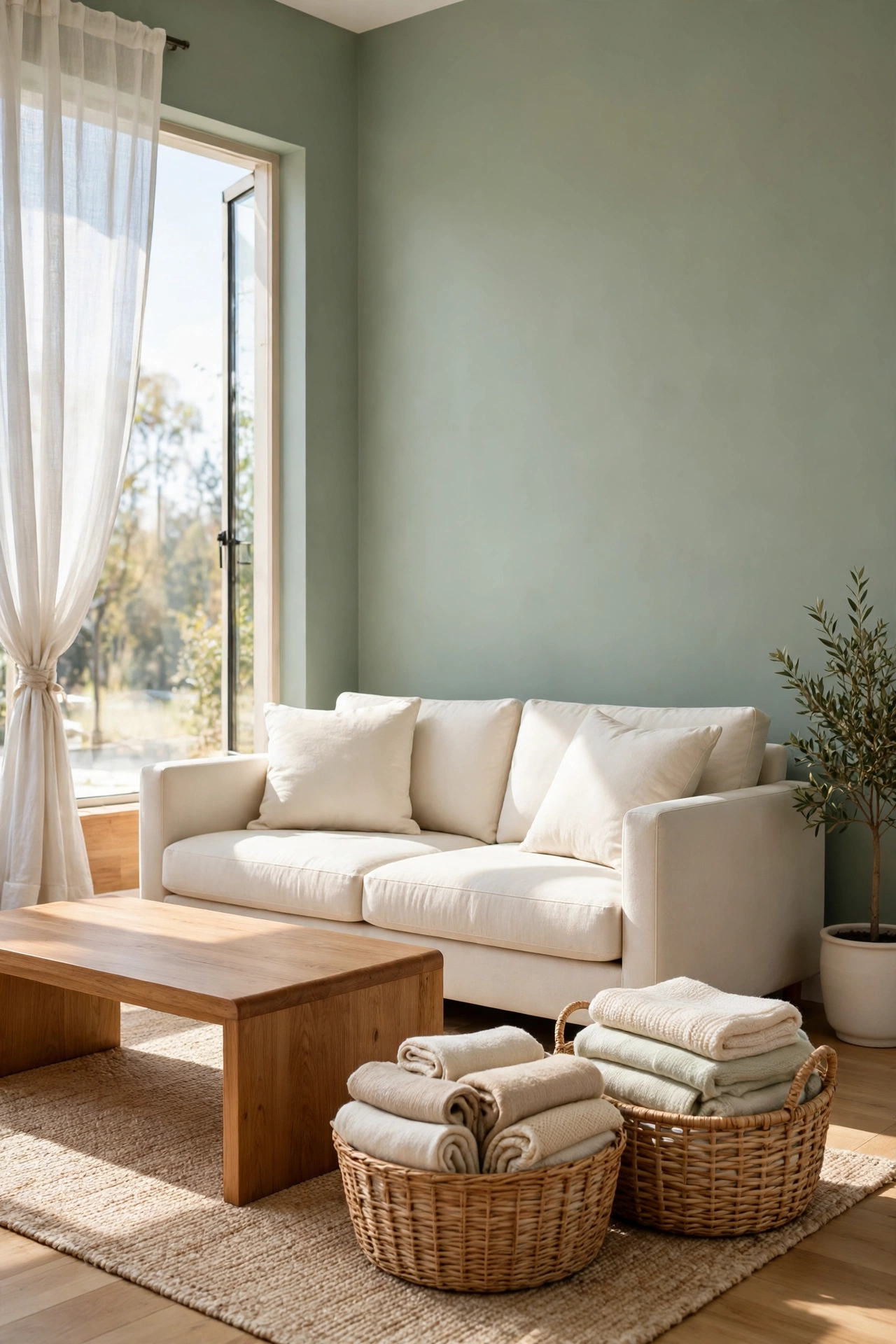
Sage green walls with cream furniture is the classic pairing that never feels dated. The cream softens the green and keeps the room feeling bright, while the sage gives the cream something to stand against. Together they create a living room that feels calm, clean, and welcoming at any time of day.
Paint the walls sage and keep the largest pieces, like the sofa and the rug, in warm cream tones. Add wood side tables and a few woven baskets to keep the palette grounded. If you want more depth, try two-tone wall paint ideas with sage on the lower half and cream above, which gives the room structure without adding a third color.
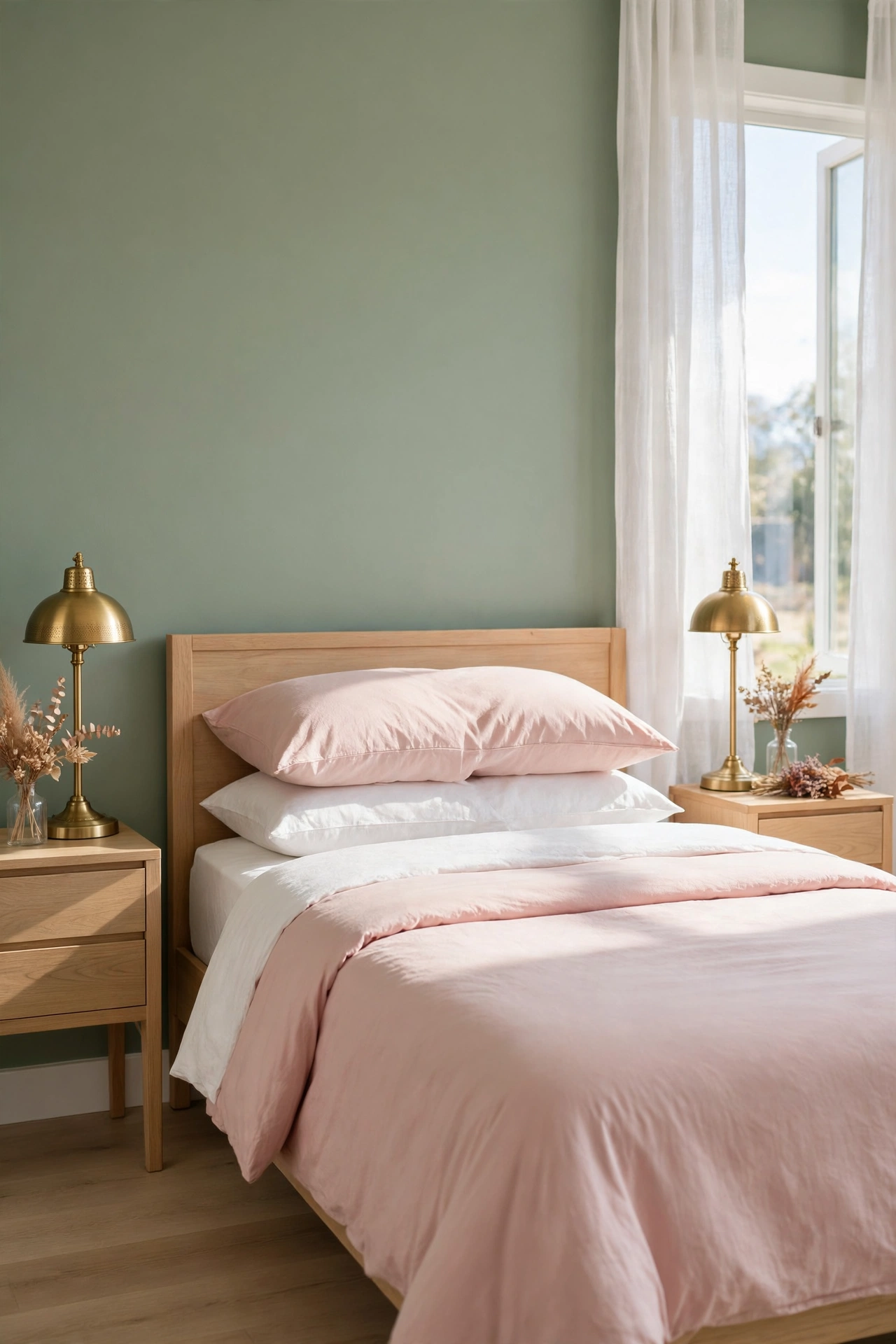
2. Sage Green and Blush Pink in a Bedroom
Blush pink brings a soft warmth to sage green that feels romantic without being overly sweet. In a bedroom, sage walls with blush bedding create a restful retreat that still has personality. The pink warms the cool side of the green, and the green keeps the pink from feeling too sugary.
Keep the sage on the walls or on a single upholstered headboard, and layer blush through pillows, a throw, and a small vase of dried flowers. White bedding between the two colors gives the eye a resting place. This pairing works beautifully with brass lamps and light wood nightstands for a gentle, elegant finish.
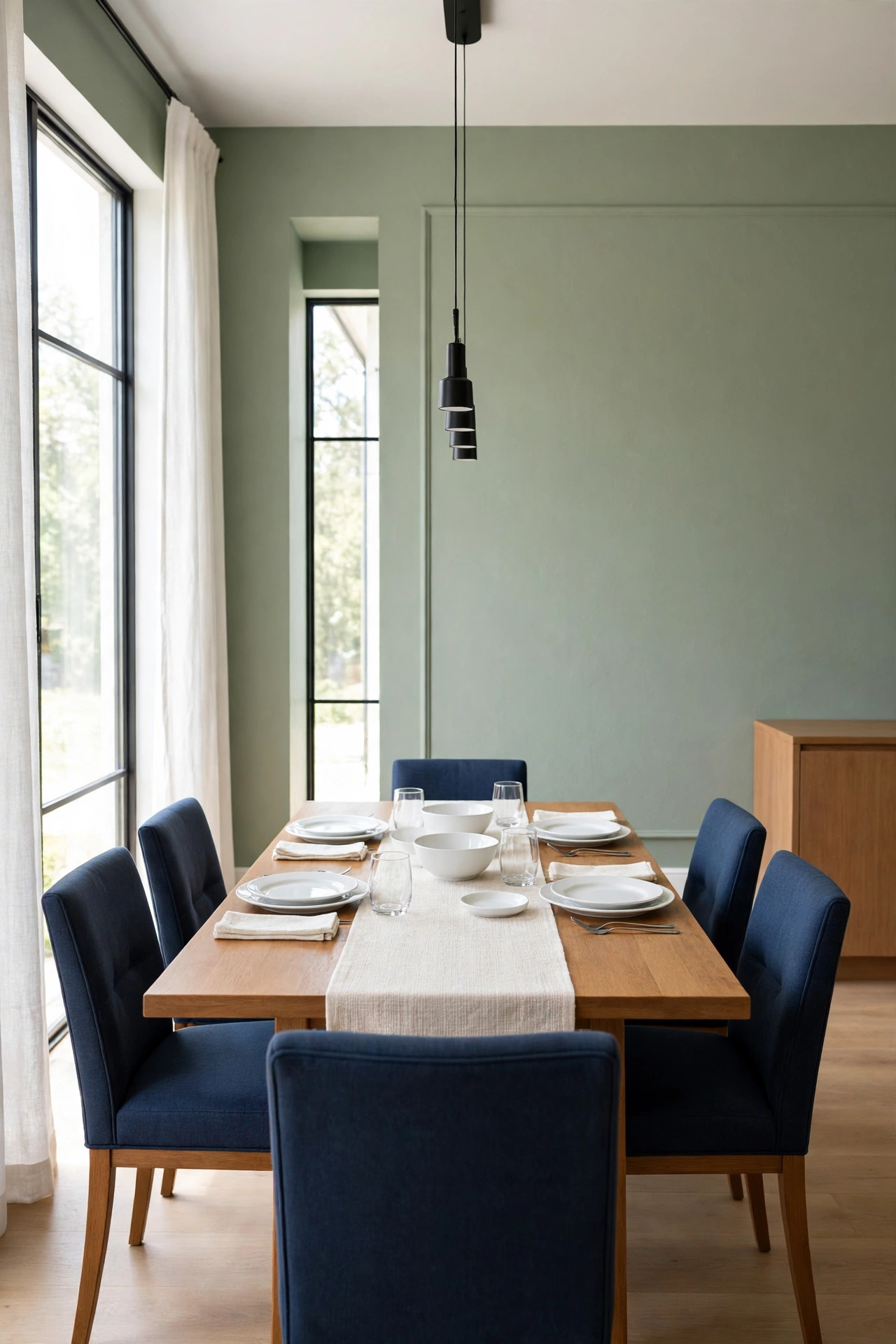
3. Sage Green and Navy Blue in a Dining Room
Navy blue gives sage green a bold, confident partner that suits a dining room perfectly. The deep blue adds drama and depth, while the sage keeps the room from feeling heavy or dark. The result is a dining space that feels special enough for dinner parties and comfortable enough for everyday meals.
Try sage green on the walls with navy upholstered dining chairs around a warm wood table. A cream table runner and simple white dishes keep the table feeling light. If a full navy wall feels too strong, use navy only in the chairs and a piece of art, and let the sage carry the walls.
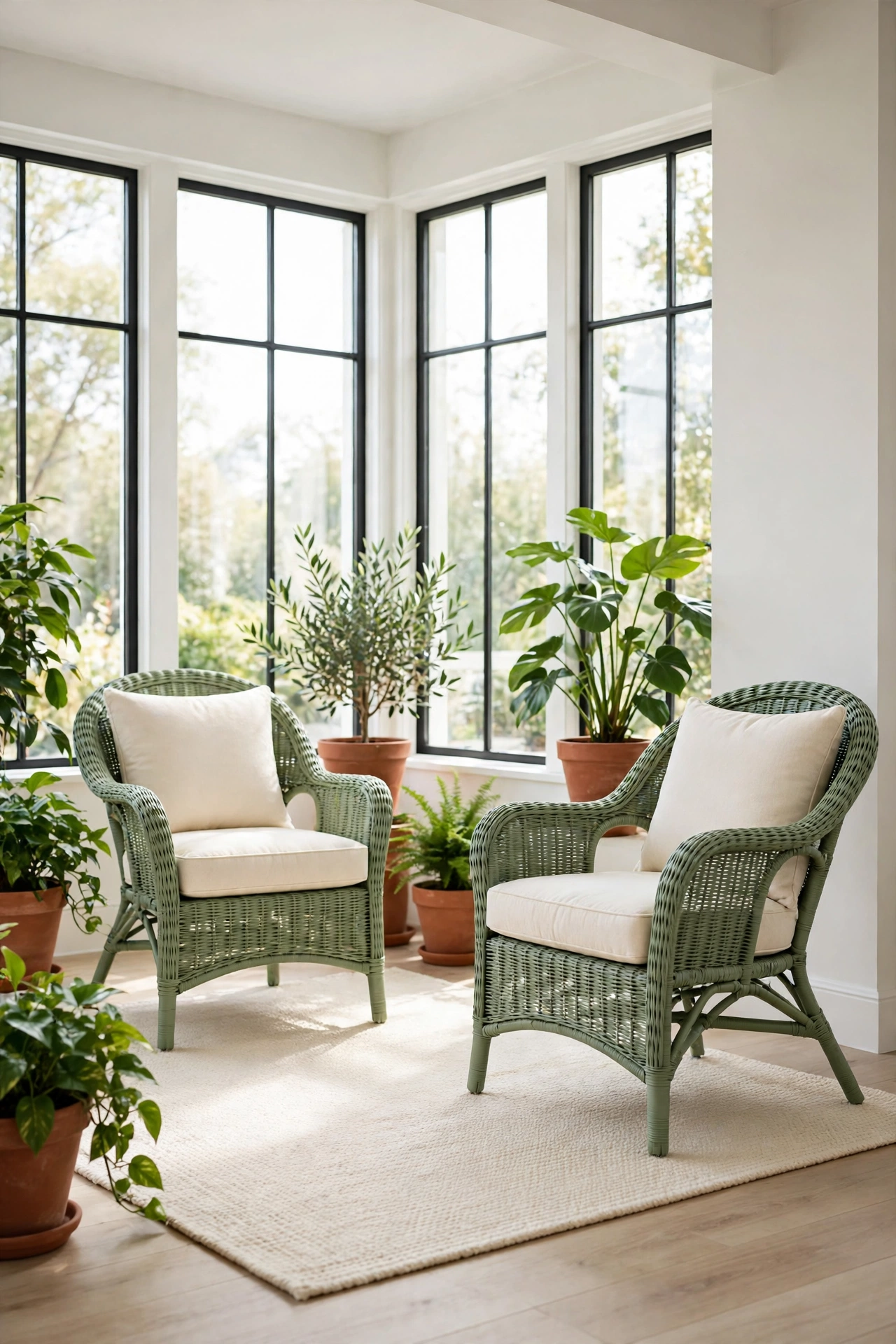
4. Sage Green and Terracotta in a Sunroom
Terracotta and sage green feel like they were made for each other, because both colors come straight from nature. The warm, earthy orange of terracotta wakes up the cool green, and the green cools down the warmth of the clay. In a sunroom filled with daylight, the pairing feels fresh, grounded, and full of life.
Use sage on the walls or on painted wicker chairs, and bring in terracotta through plant pots, floor tiles, and a few cushions. Potted plants bridge the two colors naturally, since their leaves echo the sage and their pots carry the terracotta. A cream rug underfoot keeps the floor feeling light and clean.
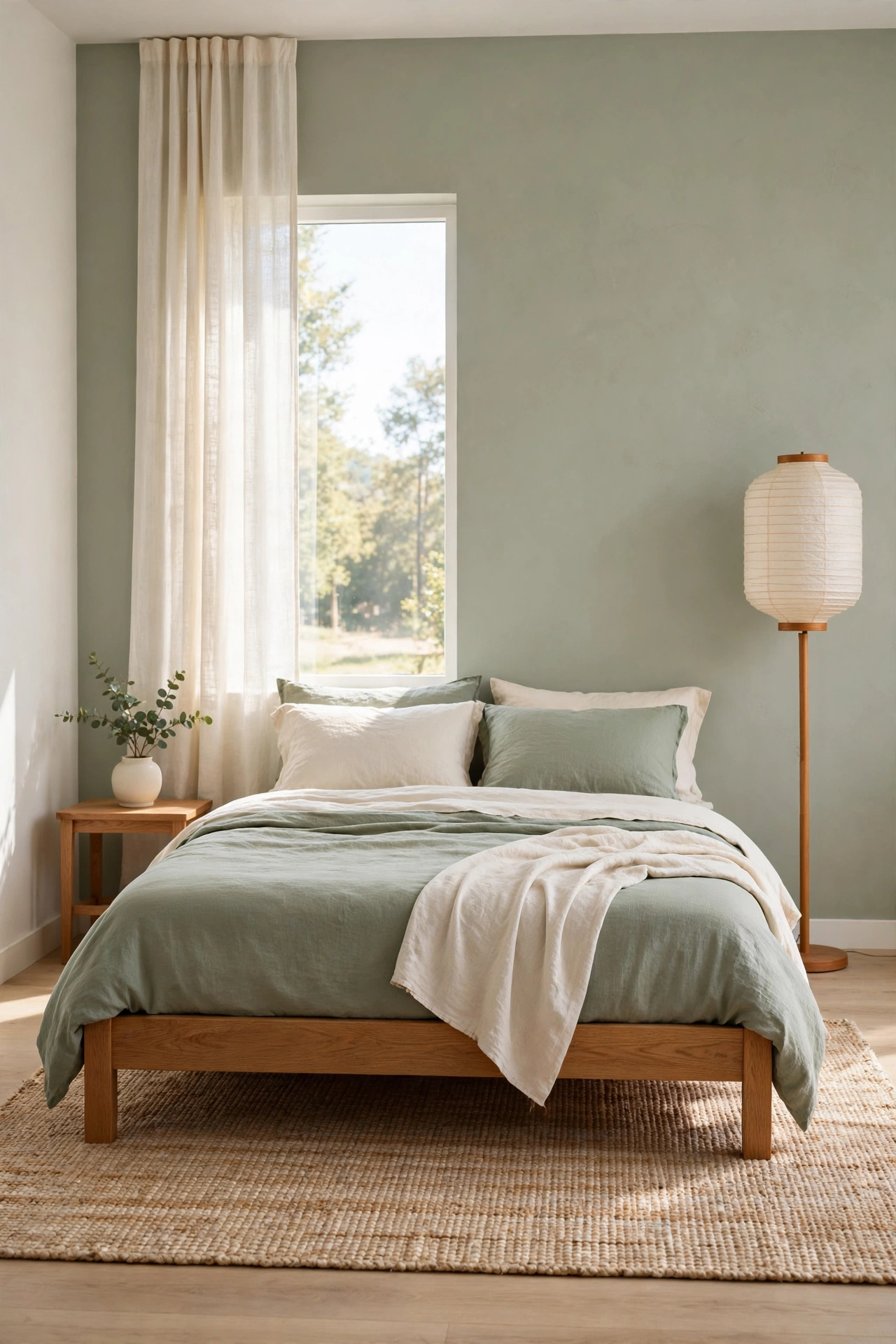
5. Sage Green and Warm Wood in a Japandi Bedroom
Warm wood is the quiet partner that lets sage green shine in a calm, Japandi-style bedroom. The natural grain of oak or walnut adds warmth and texture without competing for attention, and the sage walls give the wood a soft backdrop that feels serene. This is the pairing to choose when you want a bedroom that feels like a retreat.
Keep the furniture low and simple, with clean lines and visible wood grain on the bed frame, nightstands, and a small bench. Sage bedding or sage walls, but not both at full strength, keep the room balanced. For the full philosophy behind this calm style, these Japandi interior design ideas show how natural materials and muted colors work together. A single paper lamp and a woven rug complete the look without clutter.
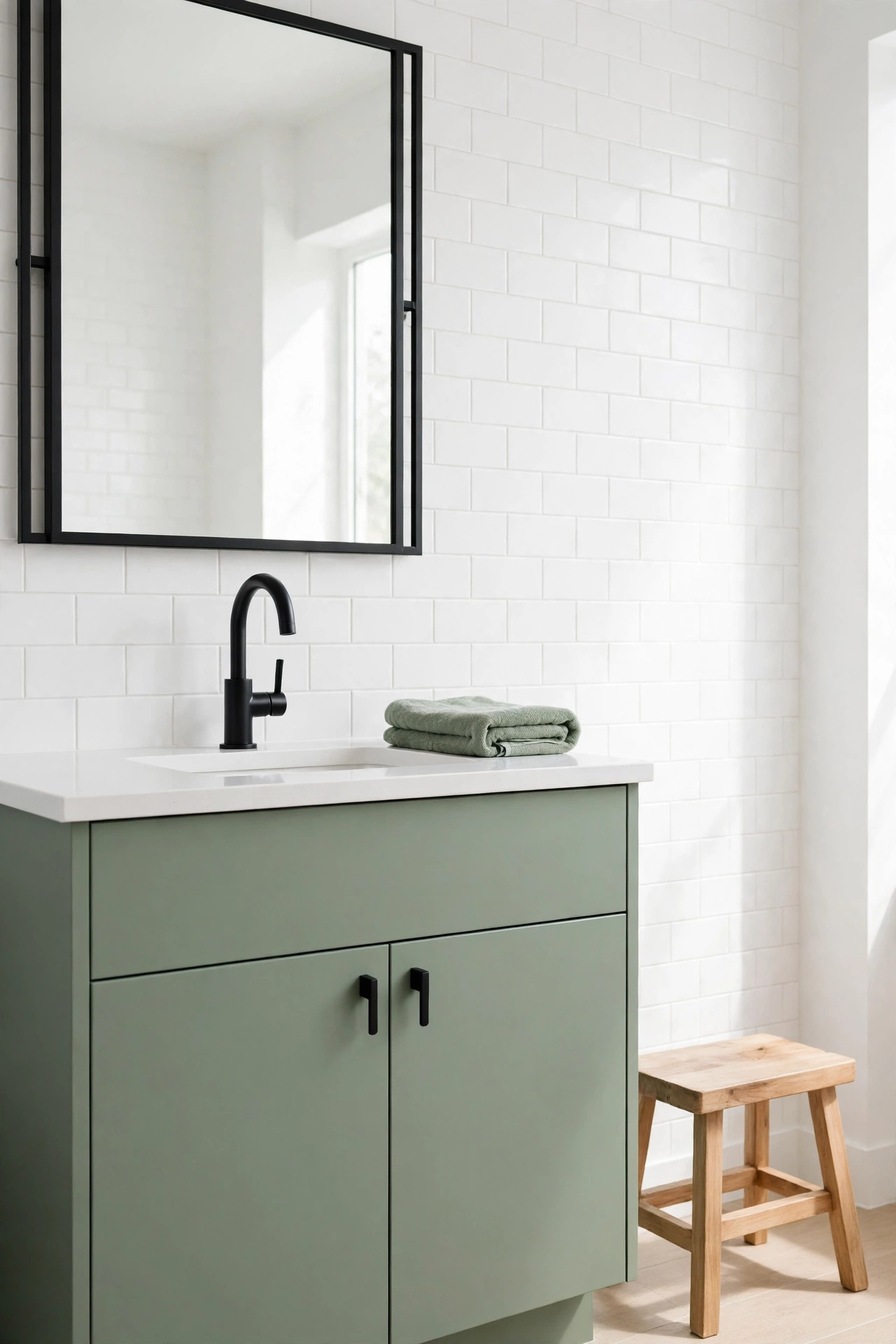
6. Sage Green and Matte Black in a Bathroom
Matte black fixtures give a sage green bathroom a modern edge that feels crisp and intentional. The black outlines the soft green the way a frame outlines a picture, and the contrast makes both colors look richer. This pairing turns an ordinary bathroom into a space that feels designed rather than decorated by accident.
Paint the walls or the vanity sage green, and choose matte black for the faucet, mirror frame, towel bar, and cabinet handles. White tile and a white countertop keep the room bright and give the darker accents room to breathe. A small wooden stool and a folded sage towel soften the contrast just enough.
7. Sage Green and Mustard Yellow in a Home Office
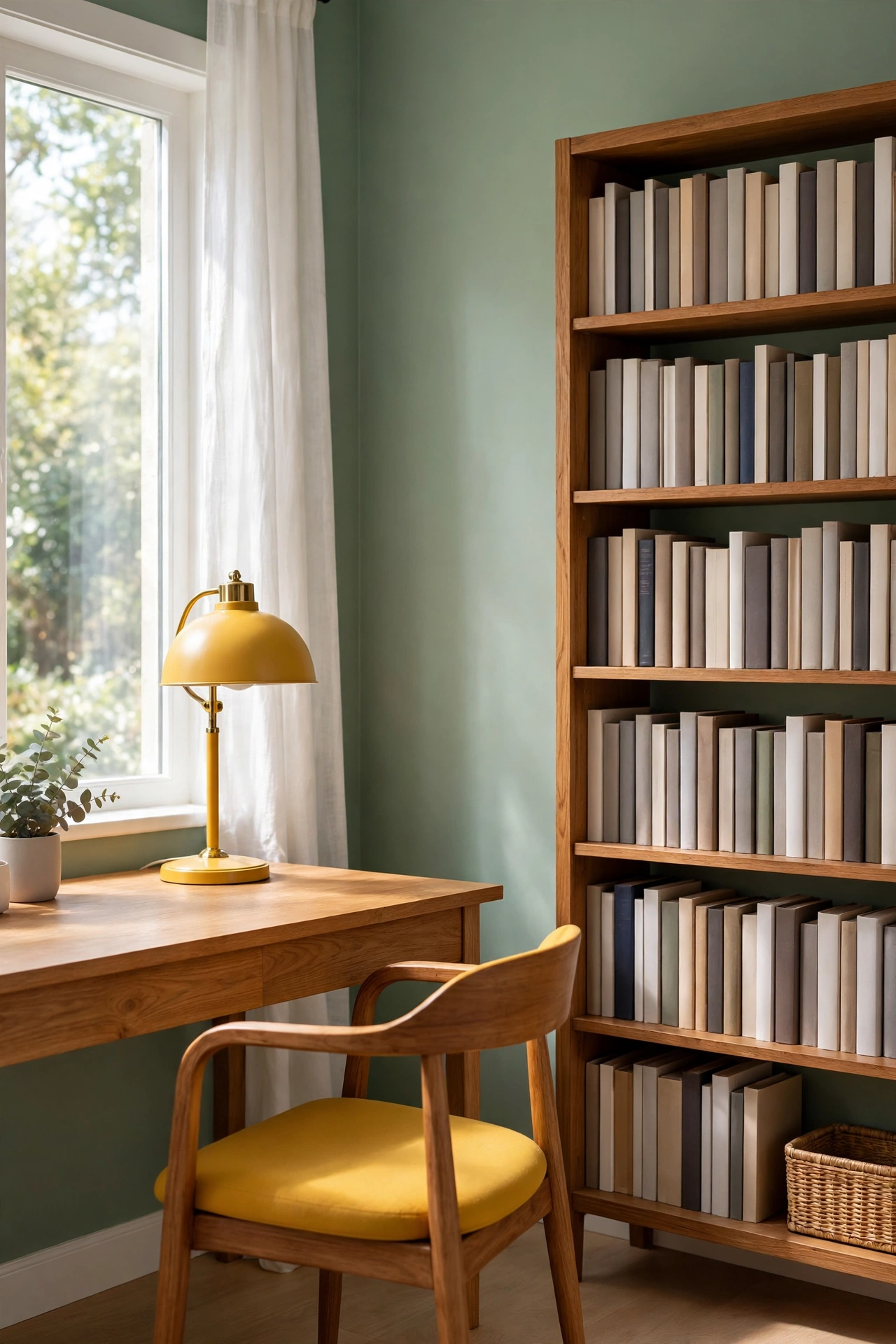
Mustard yellow adds energy and optimism to a sage green home office without overwhelming it. The golden tone wakes up the muted green and makes the room feel creative and alert, which is exactly what a workspace needs. Used in small doses, mustard becomes the accent that makes the whole room feel intentional.
Paint the walls sage and add mustard through a desk chair cushion, a table lamp, a pinboard, and a few books on the shelf. Keep the desk in warm wood and the storage in cream so the two strong colors have a calm base. This pairing works especially well in a room with good daylight, where the mustard glows warmly against the green.
8. Sage Green and Brass in a Kitchen
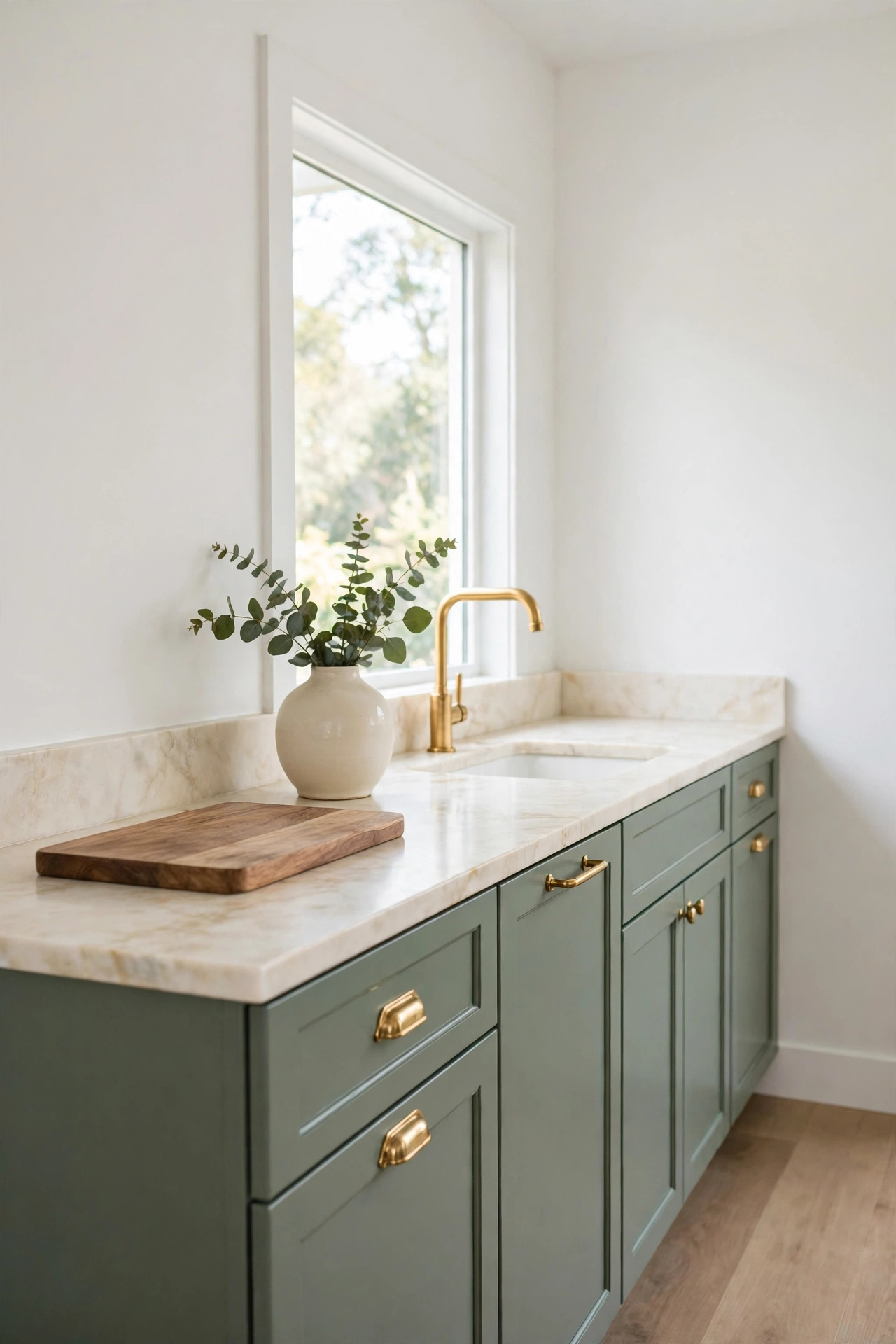
Brass hardware and fixtures bring a warm glow to sage green kitchen cabinets that feels both classic and current. The golden metal catches the light and gives the muted green a touch of elegance, like jewelry on a simple outfit. This pairing suits kitchens that aim for a timeless, collected look rather than a stark modern one.
Choose sage green for the lower cabinets and keep the upper cabinets or the walls in soft white so the room stays bright. Brass cabinet pulls, a brass faucet, and a brass pendant light tie the palette together. Marble or cream countertops and a wood cutting board on display keep the surfaces feeling warm and lived in.
9. Sage Green and Soft White in a Guest Bedroom
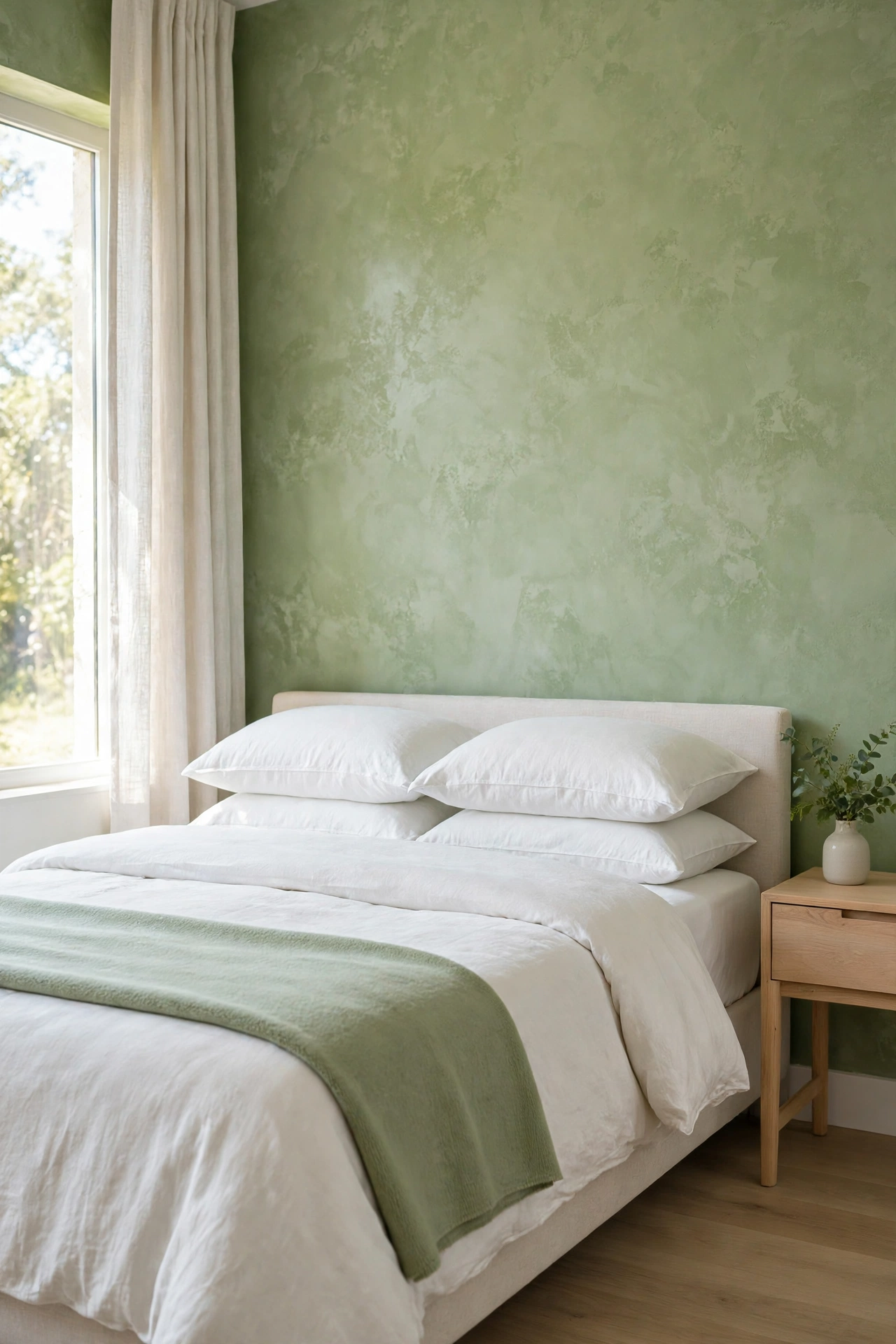
Soft white is the gentlest partner for sage green, and in a guest bedroom it creates a space that feels like a fresh start. The white bedding and curtains brighten the room, while the sage walls add just enough color to make the space feel considered. Guests will feel welcomed and rested in a room that looks clean without feeling sterile.
Try a soft limewash finish on the walls for a subtle texture that catches the light differently through the day. These limewash wall paint ideas show how a chalky, matte finish adds depth to a single color. Layer white bedding with a sage throw at the foot of the bed, and add a small vase of fresh greenery on the nightstand for a natural finishing touch.
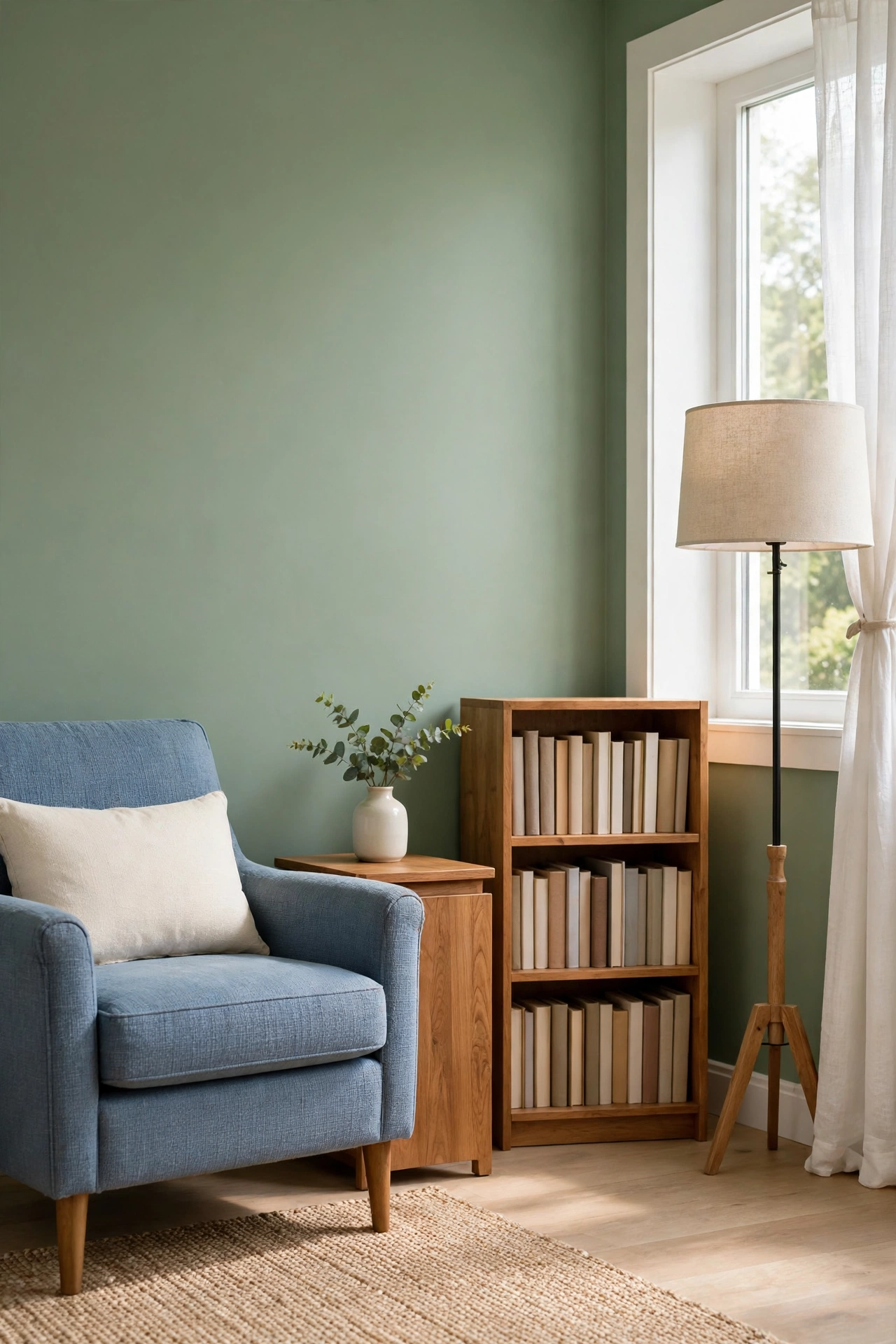
10. Sage Green and Dusty Blue in a Reading Nook
Dusty blue and sage green sit side by side in nature, in the sky above a field, and they sit just as comfortably together in a reading nook. Both colors are muted, so the pairing feels harmonious and calm, perfect for a corner meant for quiet hours with a book. The blue cools the green slightly, and the green warms the blue in return.
Paint the nook sage and add a dusty blue armchair with a cream cushion and a warm wood side table. A small bookshelf in the same wood tone holds the books, and a floor lamp with a linen shade gives soft light for reading. Keep the floor clear and the cushions few, so the nook feels like a peaceful pause in the day.
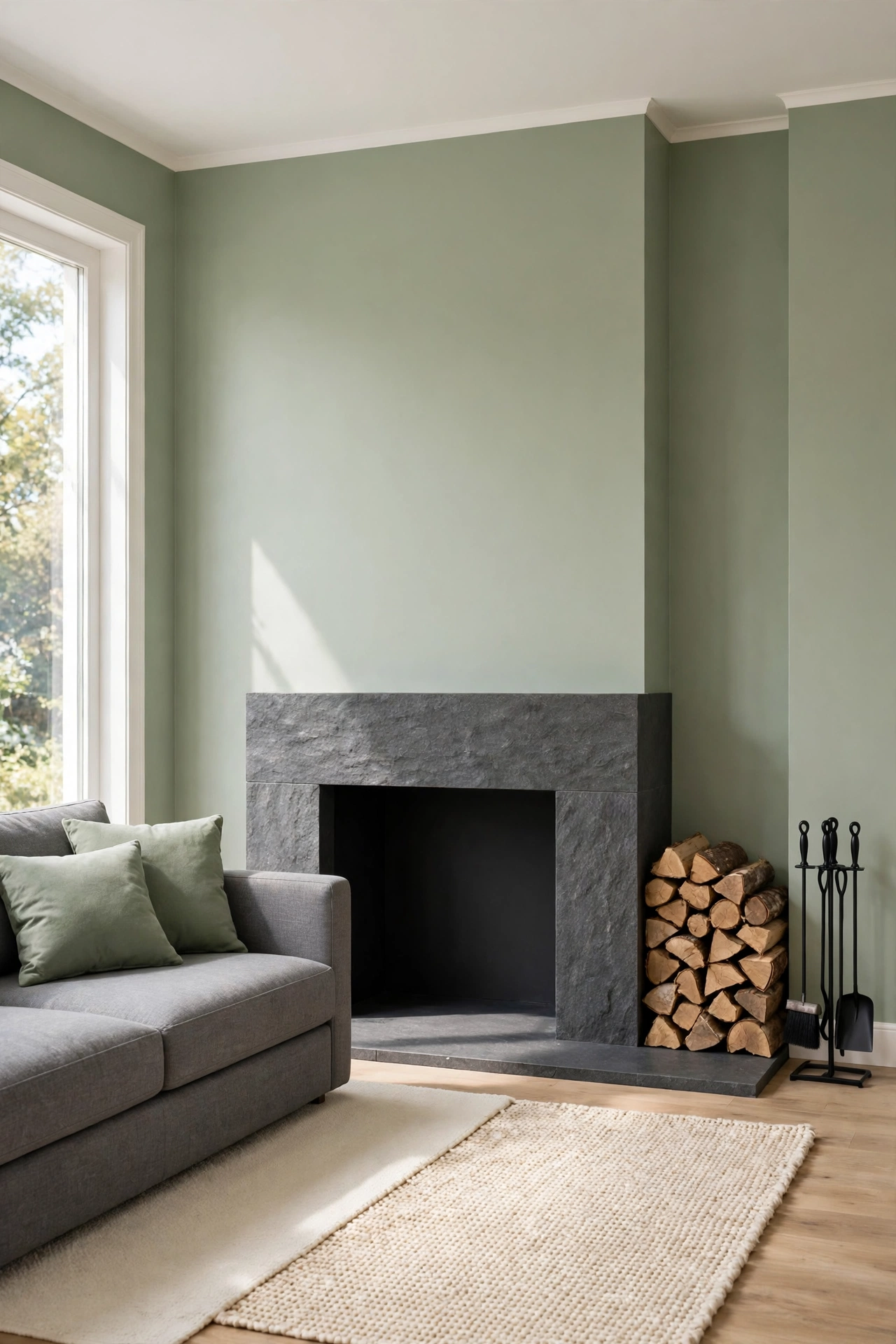
11. Sage Green and Charcoal Gray in a Living Room With a Fireplace
Charcoal gray gives sage green a sophisticated, grounded partner that works beautifully around a fireplace. The dark gray anchors the room and makes the sage look fresher by contrast, while the sage softens the gray so the room never feels cold or industrial. This is a pairing for living rooms that want to feel elegant and grown up.
Use charcoal on the fireplace surround or on a single accent wall, and sage on the remaining walls. A gray sofa with sage cushions ties the two colors together, and a cream rug lightens the floor. Black metal fire tools and a stack of neatly arranged firewood add texture without introducing a new color.
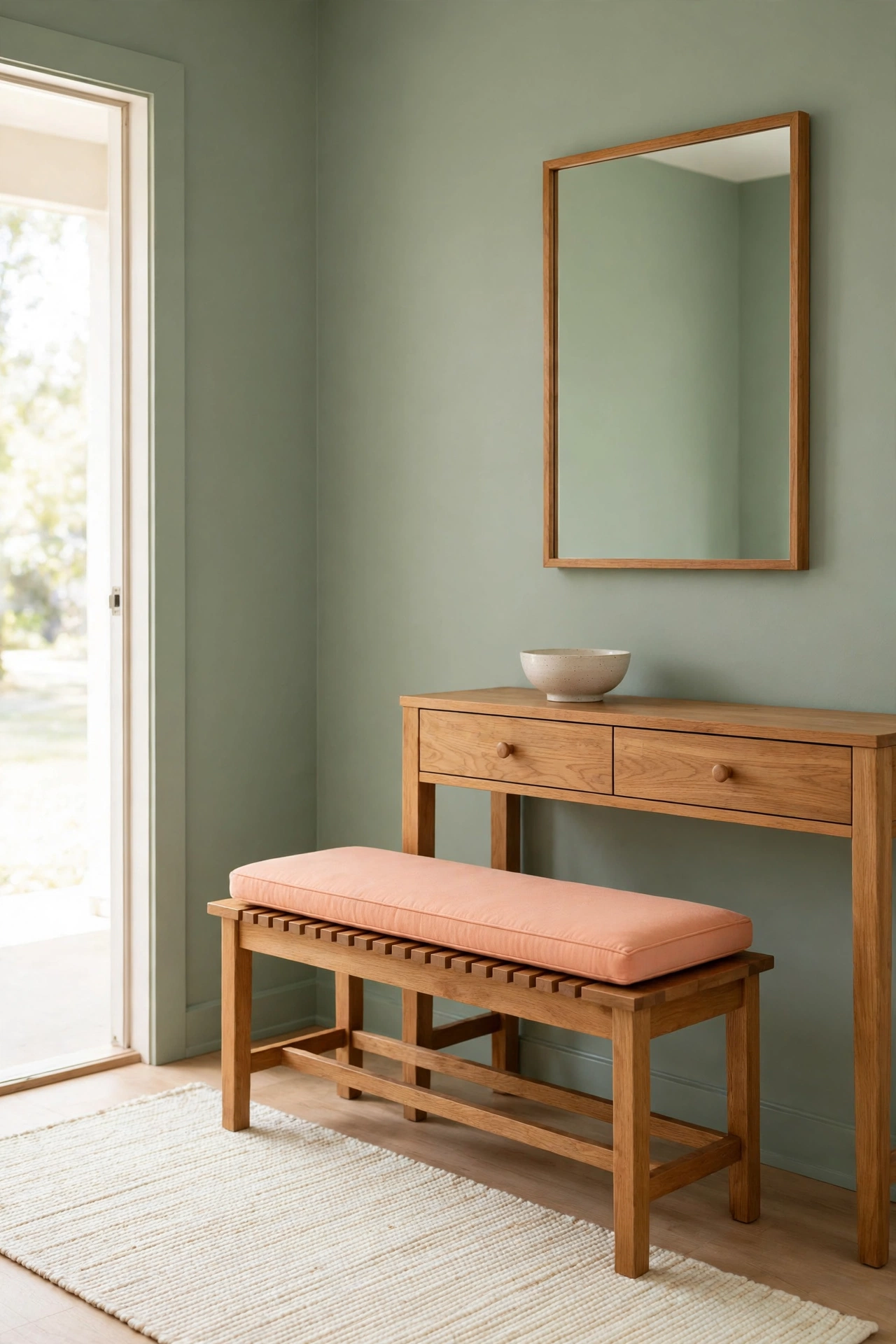
12. Sage Green and Peach in an Entryway
Peach brings a gentle warmth to an entryway that makes every arrival feel welcoming. Paired with sage green, the soft coral tone feels fresh and cheerful without being loud, like a friendly greeting at the front door. This combination works especially well in entryways that get good natural light from a door window or sidelights.
Paint the entryway walls sage and add peach through a bench cushion, a piece of art, and a small ceramic bowl on the console table. A cream runner rug and a wood bench keep the floor practical and the palette grounded. Add a mirror with a thin wood frame to bounce light around and make the small space feel larger.
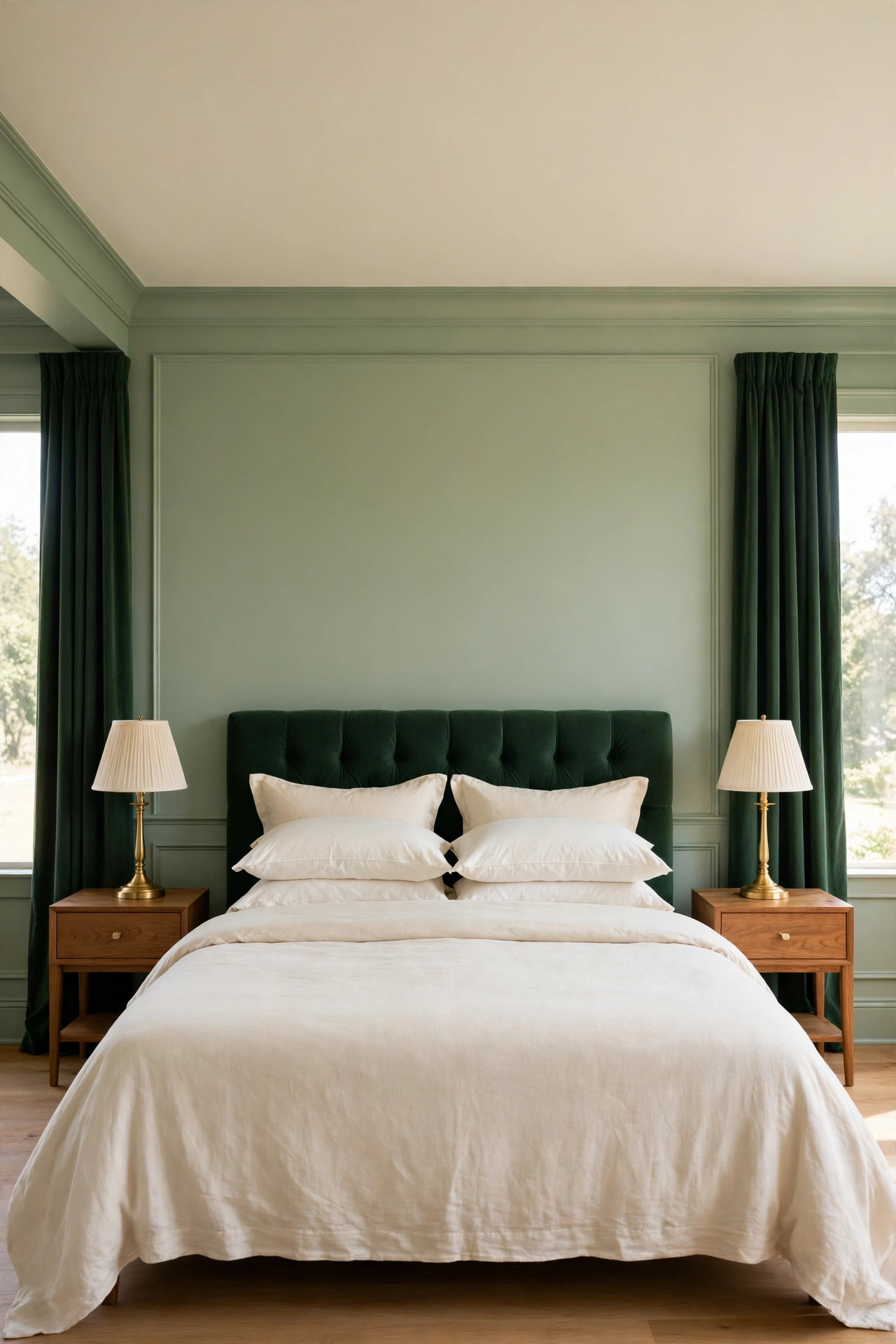
13. Sage Green and Deep Forest Green in a Color-Drenched Bedroom
Layering sage green with deep forest green creates a rich, tonal bedroom that feels cocooning and luxurious. The two greens belong to the same family, so the room feels harmonious, while the contrast between the pale sage and the deep forest shade gives the space depth and drama. This is color drenching at its most elegant.
Paint the walls and trim in sage, then add forest green through the headboard, heavy curtains, and bedding. Keep the wood tones warm and the metals soft brass so the greens stay the stars of the room. For more ways to commit to a single color family, these color drenching ideas show how wrapping a room in one color creates a bold, cohesive look. A cream ceiling keeps the room from feeling too dark overhead.
14. Sage Green and Botanical Prints in a Powder Room
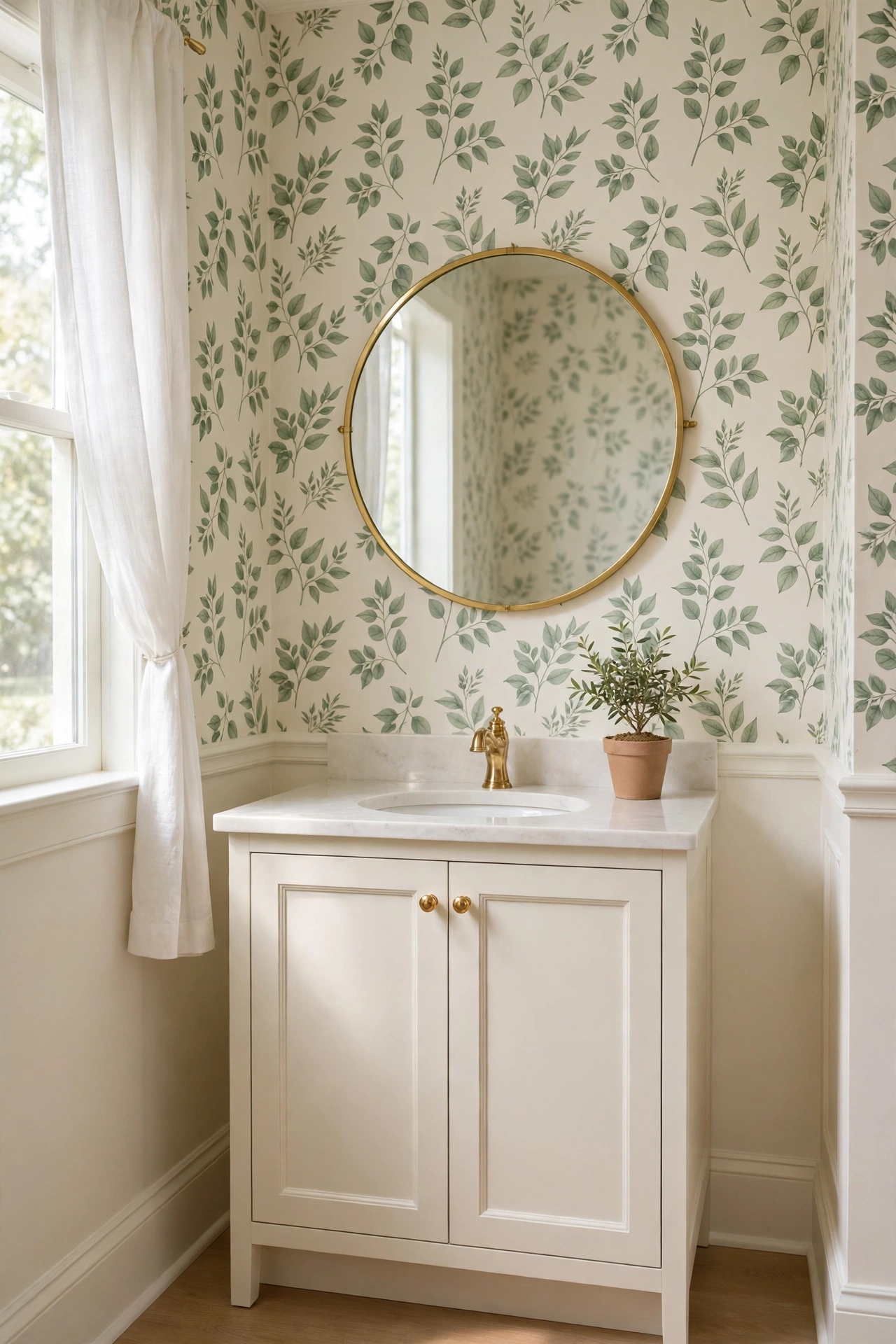
Botanical prints are the natural partner for sage green in a small powder room, where a little pattern goes a long way. Leafy wallpaper in sage and cream turns the smallest room in the house into a jewel box, and the green tones in the print make the sage fixtures and towels feel perfectly matched. Pattern and color work together here instead of competing.
Choose a botanical wallpaper with sage leaves on a cream background for the walls, and keep the vanity and fixtures simple so the pattern stays the focus. A round mirror with a thin brass frame and a small potted plant on the counter echo the nature theme. These wallpaper accent wall ideas offer more ways to use a bold print in a small space without overwhelming it.
Conclusion
Sage green earns its place as a favorite because it plays well with almost every color, from soft creams and blush pinks to bold navy and dramatic charcoal. The pairings in this list show that one gentle green can create fourteen completely different moods, depending on the partner color and the room you put it in.
Start with the pairing that matches the feeling you want most, whether that is calm, drama, warmth, or freshness. Test the colors together in daylight before you commit, keep the supporting tones simple, and let sage green do the quiet work of making your home feel elegant and put together.
Frequently Asked Questions About Sage Green Interior Color Combinations for Elegant Rooms
What colors go best with sage green walls?
Cream, soft white, blush pink, navy blue, terracotta, mustard yellow, charcoal gray, and warm wood tones all pair beautifully with sage green walls. Warm colors like terracotta and mustard add energy, while cool colors like navy and dusty blue add depth. The best choice depends on the mood you want the room to have.
Does sage green work in small rooms?
Yes, sage green works well in small rooms because it is a muted mid-tone that adds color without closing the space in. Pair it with soft white trim, a light rug, and a mirror to keep the room feeling open. In very small rooms, use sage on one wall and keep the rest white for balance.
Is sage green a warm or cool color?
Sage green sits in the middle, with both warm gray undertones and cool green notes. That balance is why it pairs with so many colors. In north-facing rooms it can read cooler, so warm partners like cream, terracotta, and brass help balance it. In sunny rooms it reads warmer and pairs well with navy and charcoal.
What wood tones look good with sage green?
Warm oak, walnut, and pine all look beautiful with sage green because their golden undertones warm up the cool side of the green. Light oak suits calm, Scandinavian styles, while darker walnut suits richer, more traditional rooms. Avoid very red wood tones, which can clash with the gray undertones in sage.
Can I use sage green in every room of my home?
Yes, sage green can flow through a whole home if you vary the partner colors and the strength of the green in each room. Use it on walls in one room, on cabinets in another, and in textiles in a third, so the color connects the rooms without repeating the same look. Keep the trim and ceiling colors consistent to tie everything together.

Hi, I’m Emily! I turn messy corners into cozy, organized spots. DreamNestDecor is where I share simple, practical home ideas — decor, organization, and small-space solutions that work in real life, not just in photos. Every idea here is carefully researched before it’s shared.