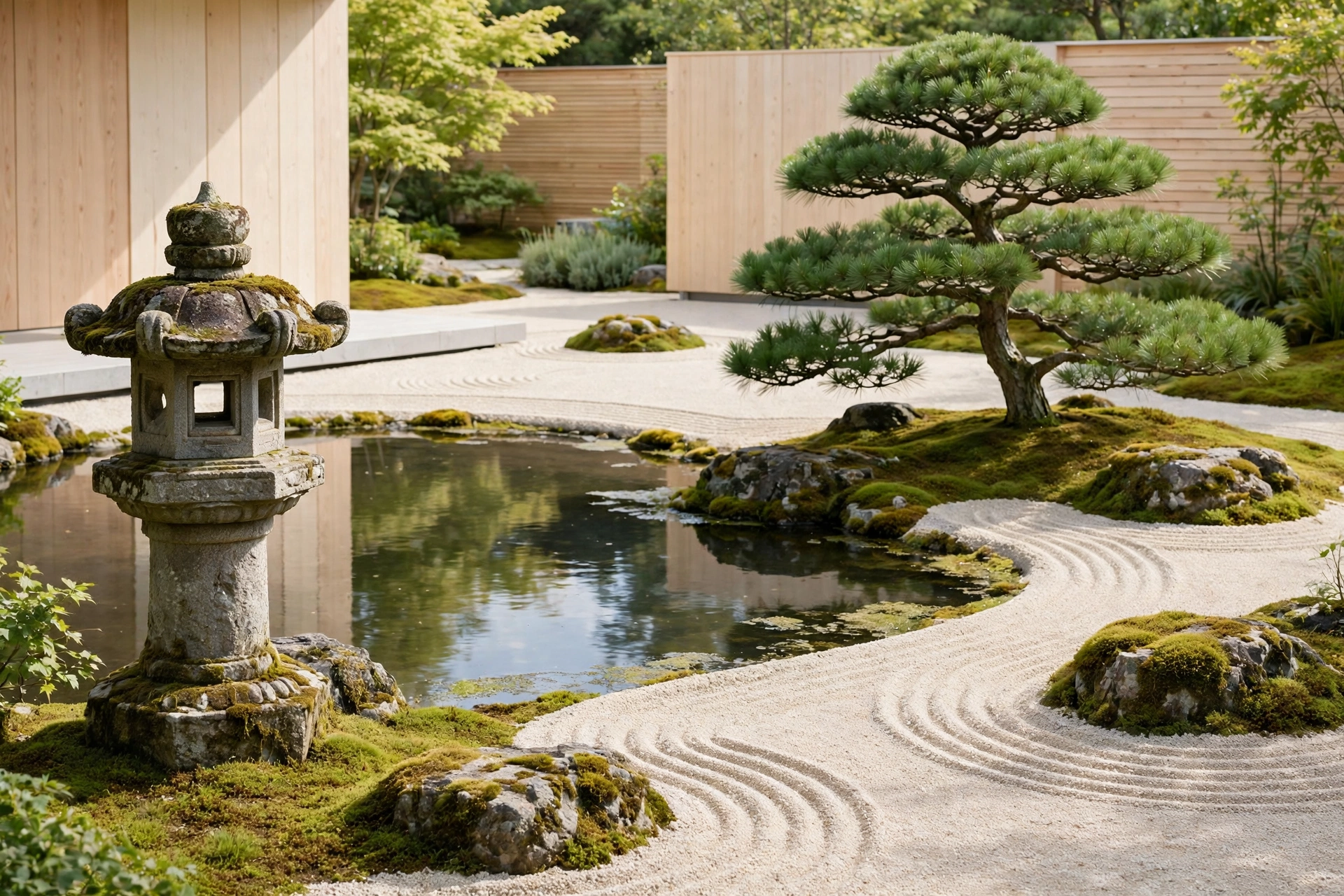
Picture this: you step through a simple wooden gate and the noise of the street falls away behind you. A stone lantern stands beside a still pond, raked gravel flows around weathered rocks like calm water, and a single pine tree rises above soft green moss. Every element sits exactly where it belongs, and the whole garden feels quiet, balanced, and deeply restful. That sense of peace is the heart of Japanese garden design.
You do not need a large yard or a professional designer to create it. With the right stones, a clear focal point, and a few time tested principles, any garden can carry the calm spirit of Japan. These 24 Japanese garden design ideas for peaceful landscapes will guide you through layout, stones, water, lanterns, bridges, and planting, so you can shape a garden that feels like a quiet retreat every single day.
1. Start with a Single Focal Stone
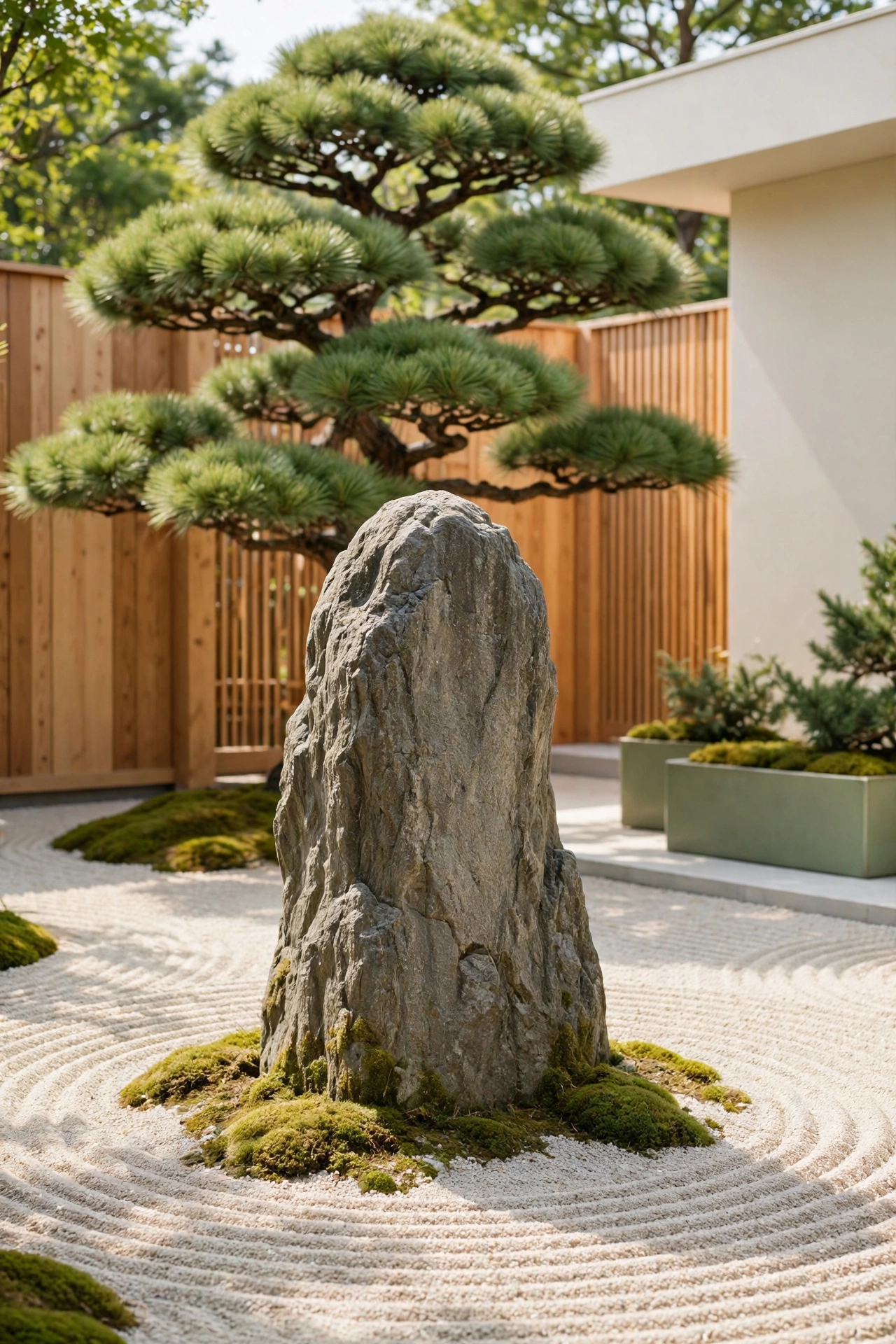
Every great Japanese garden begins with one strong stone that anchors the whole design. Choose a tall, weathered rock with an interesting shape and place it where the eye lands first when you enter the garden. This focal stone sets the scale for everything else, from the gravel around it to the plants that frame it.
Bury the bottom third of the stone in the soil so it looks like it has stood there for centuries, not like it was dropped on the lawn yesterday. Tilt it slightly toward the main viewing point and leave open space around it so the stone can breathe. One bold stone, placed with care, gives the garden instant presence and calm authority.
2. Arrange Stones in Odd Groups
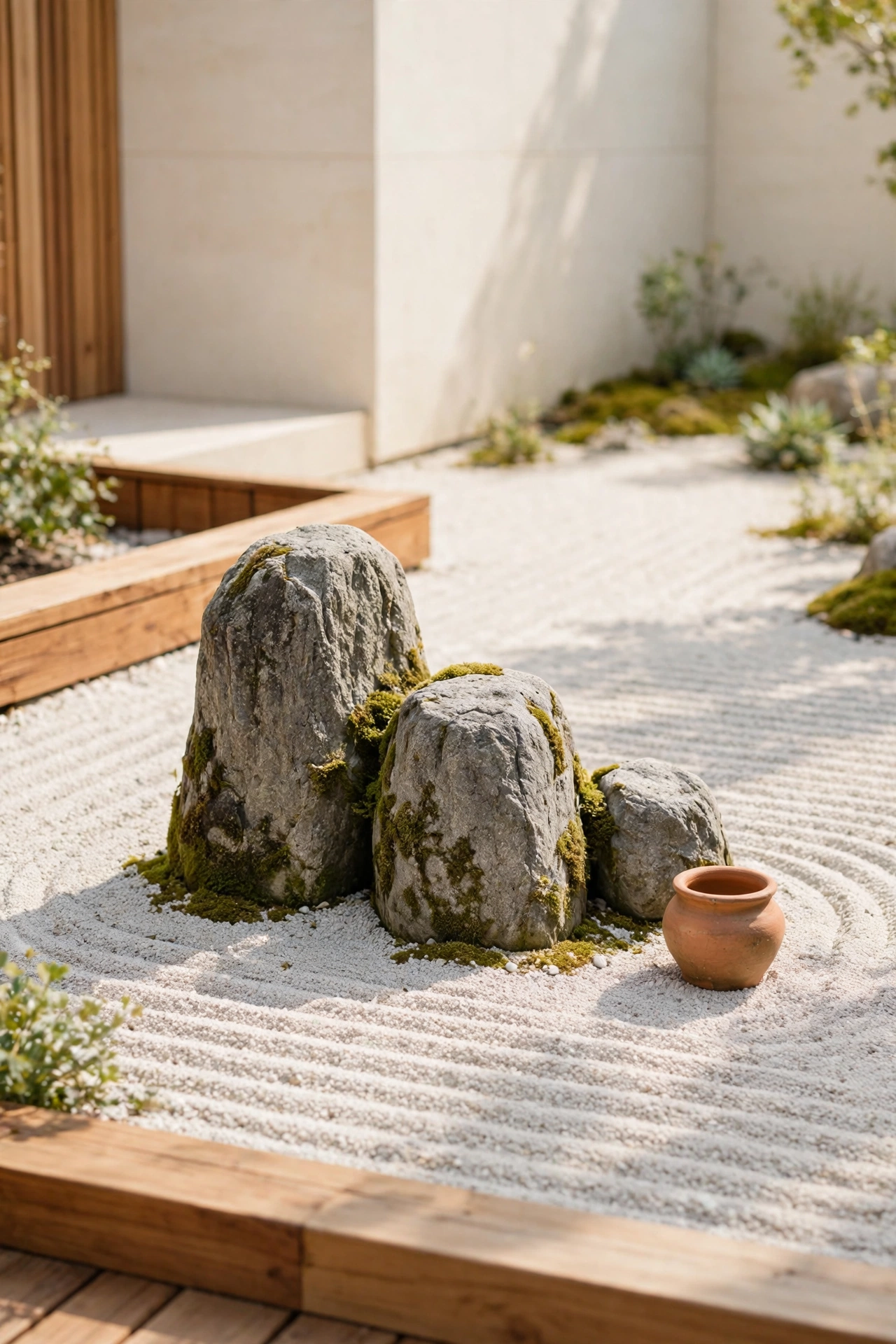
Japanese designers group stones in threes, fives, and sevens because odd numbers feel natural and alive to the eye. A group of three stones works like a small family: one tall stone leads, a medium stone supports it, and a low stone completes the scene. Together they suggest mountains, islands, or a boat on still water
Place each group so the stones lean toward each other slightly, with different heights and different faces showing. Leave generous gaps of gravel or moss between groups so each cluster reads as its own small landscape. Odd groupings keep the garden from feeling rigid or symmetrical, and they invite the eye to wander slowly from one scene to the next.
3. Rake Gravel into Flowing Water Patterns
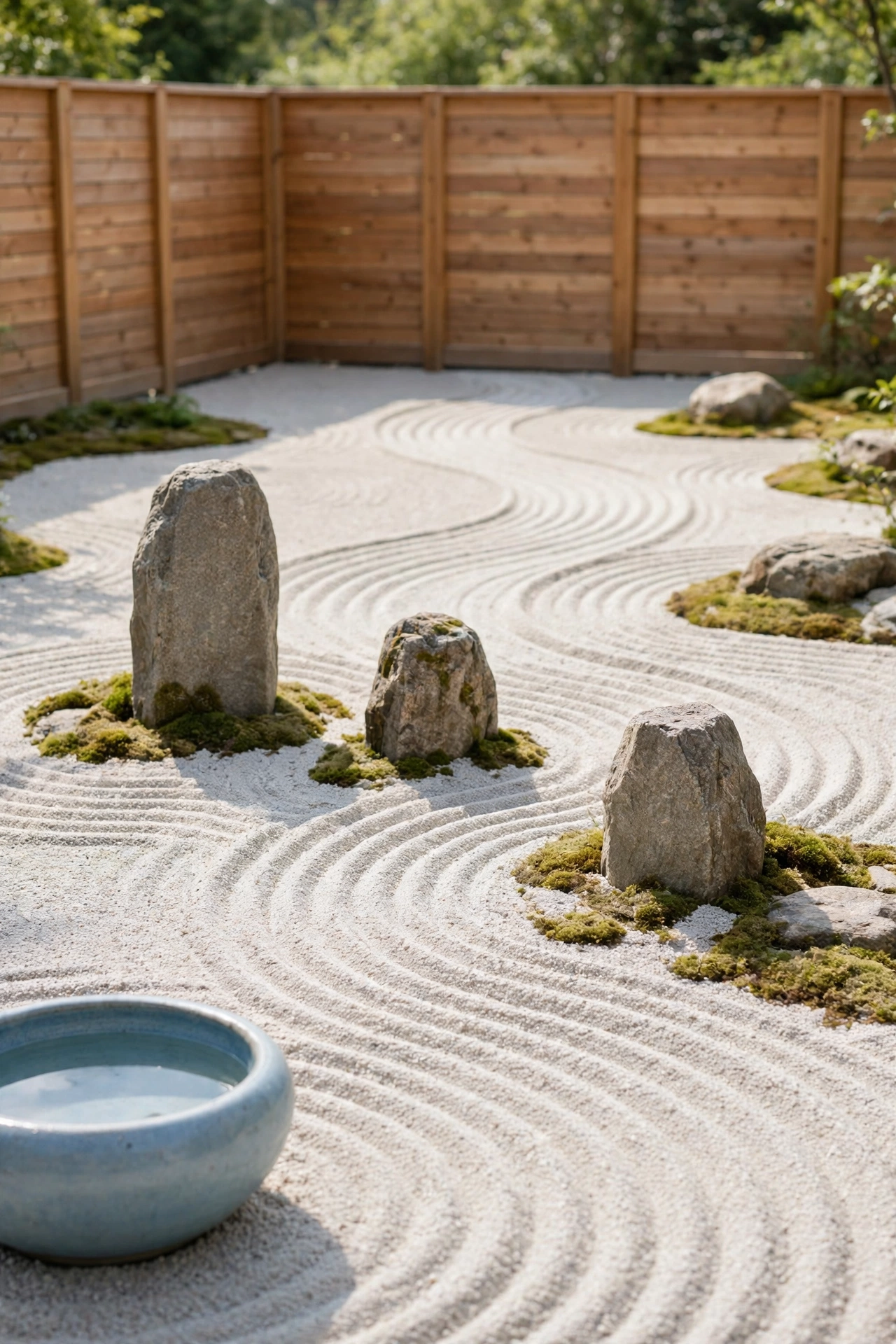
Raked gravel, called shirakawa-suna in Japan, represents water in a dry landscape garden. Use a wooden rake to draw long, gentle curves around stones and islands, and straight lines where the water would flow calmly. The patterns turn a simple gravel bed into a quiet river that never moves and never makes a sound.
Choose pale gray or warm white gravel in a fine, even size so the rake lines stay crisp for days. Rake the patterns after rain or whenever the garden needs a fresh start, and let the act of raking become part of the garden ritual itself. If your space is small, these Japanese garden ideas for small backyards show how the same raked patterns scale down beautifully to a compact plot.
4. Place a Stone Lantern as a Light Anchor
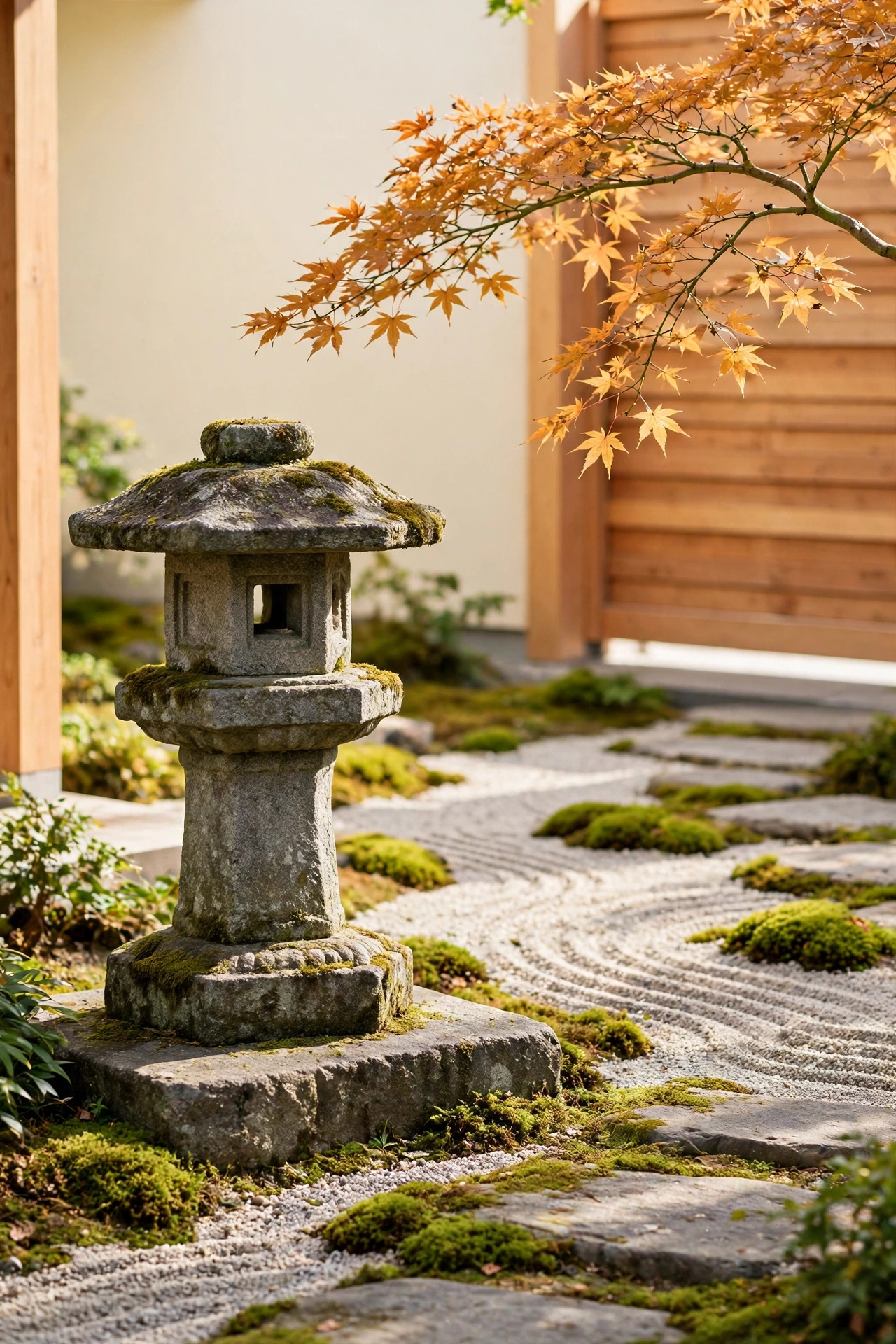
A stone lantern, or toro, is the classic light of the Japanese garden, and it works just as well as a sculptural anchor by day as it does as a soft light at night. Place one lantern beside a path, near the pond edge, or at the foot of a focal stone, where it marks a turning point in the garden. Its quiet, solid shape gives the eye a place torest.
Choose a lantern in weathered gray granite and set it on a flat stone base so it stands level and stable. Let moss grow lightly on its roof over time, because a little age makes a lantern look like it has always belonged there. One lantern is usually enough for a small garden, while a large garden can hold two or three, spaced far apart so each one keeps its own presence.
5. Build a Small Pond with a Natural Edge
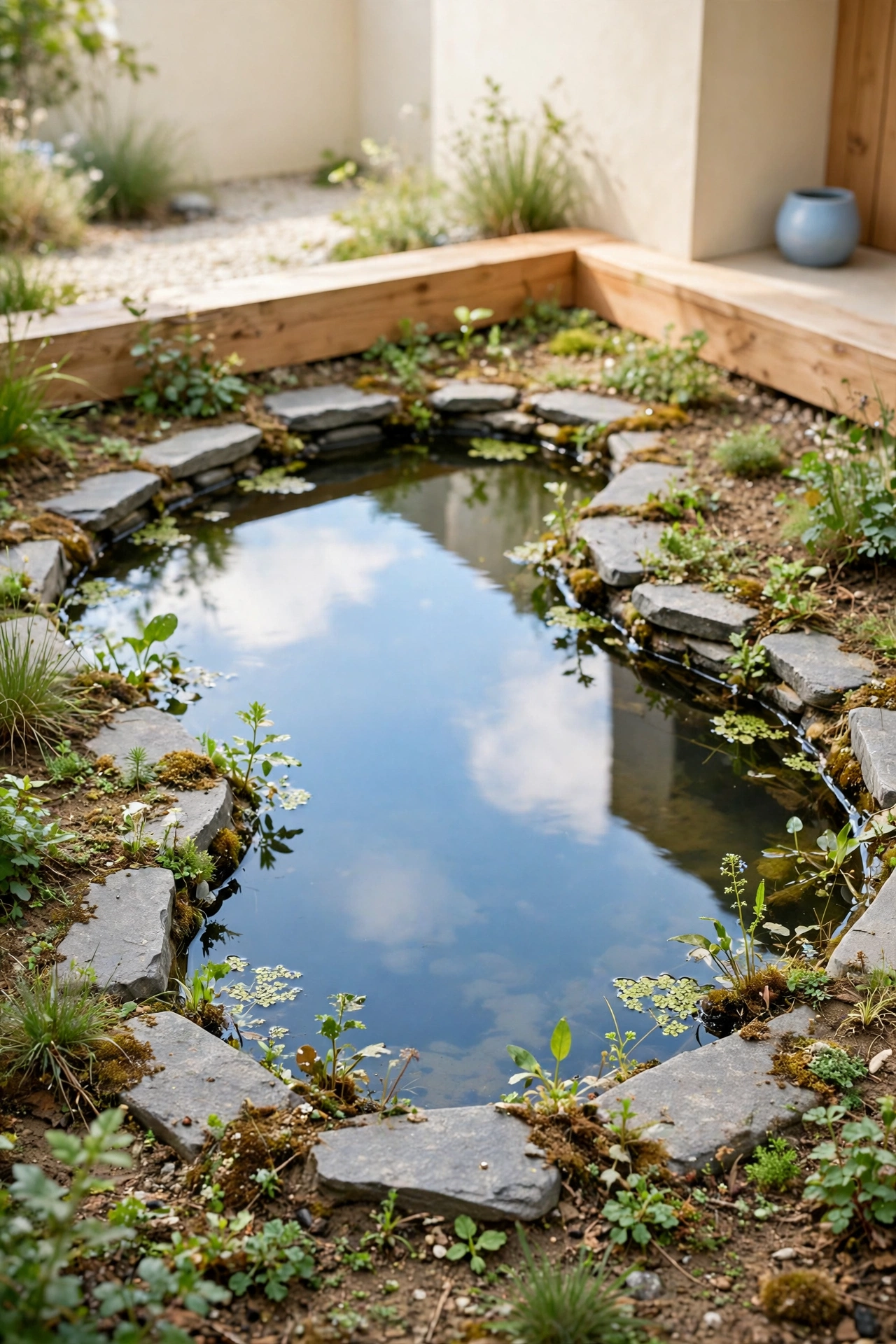
A pond brings life and sound to a Japanese garden, and its edge should look as natural as a forest pool. Shape the pond in a soft, irregular curve instead of a perfect circle, and line the rim with flat stones of different sizes, half buried in the soil. A few water plants and a single koi fish complete the scene without any clutter.
Keep the water shallow near the edge so the stones reflect in the surface, and add a small pump hidden behind rocks to keep the water moving gently. A pond needs a reliable water source, and a simple rain collection setup keeps it topped up through dry weeks. For a clean way to harvest rainwater for the pond, see these DIY rain barrel ideas that suit a garden of any size.
6. Add a Wooden Arched Bridge
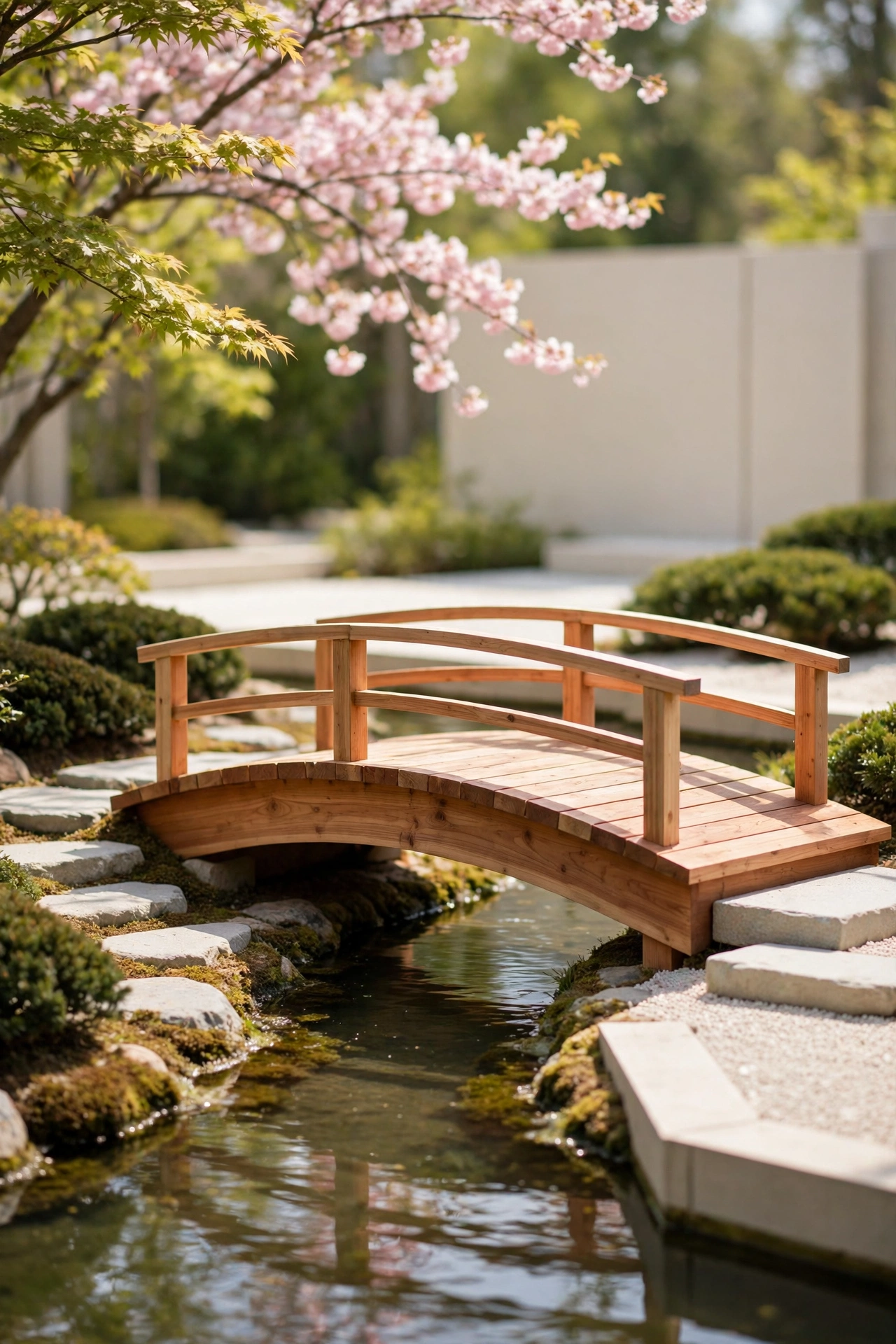
An arched wooden bridge, or taiko-bashi, turns a simple crossing into the most loved feature of a Japanese garden. Its gentle curve rises over the pond and gives you a new view of the water and the stones from above. The bridge becomes a destination in itself, not just a way to reach the other side.
Build the bridge from warm cedar or cypress wood and seal it well against rain, with simple railings low enough to keep the view open. Place it where the pond narrows so the span feels natural, and let stepping stones lead to each end. Even a small bridge, just wide enough for one person, adds grace and ceremony to the garden walk.
7. Lay a Stepping Stone Path
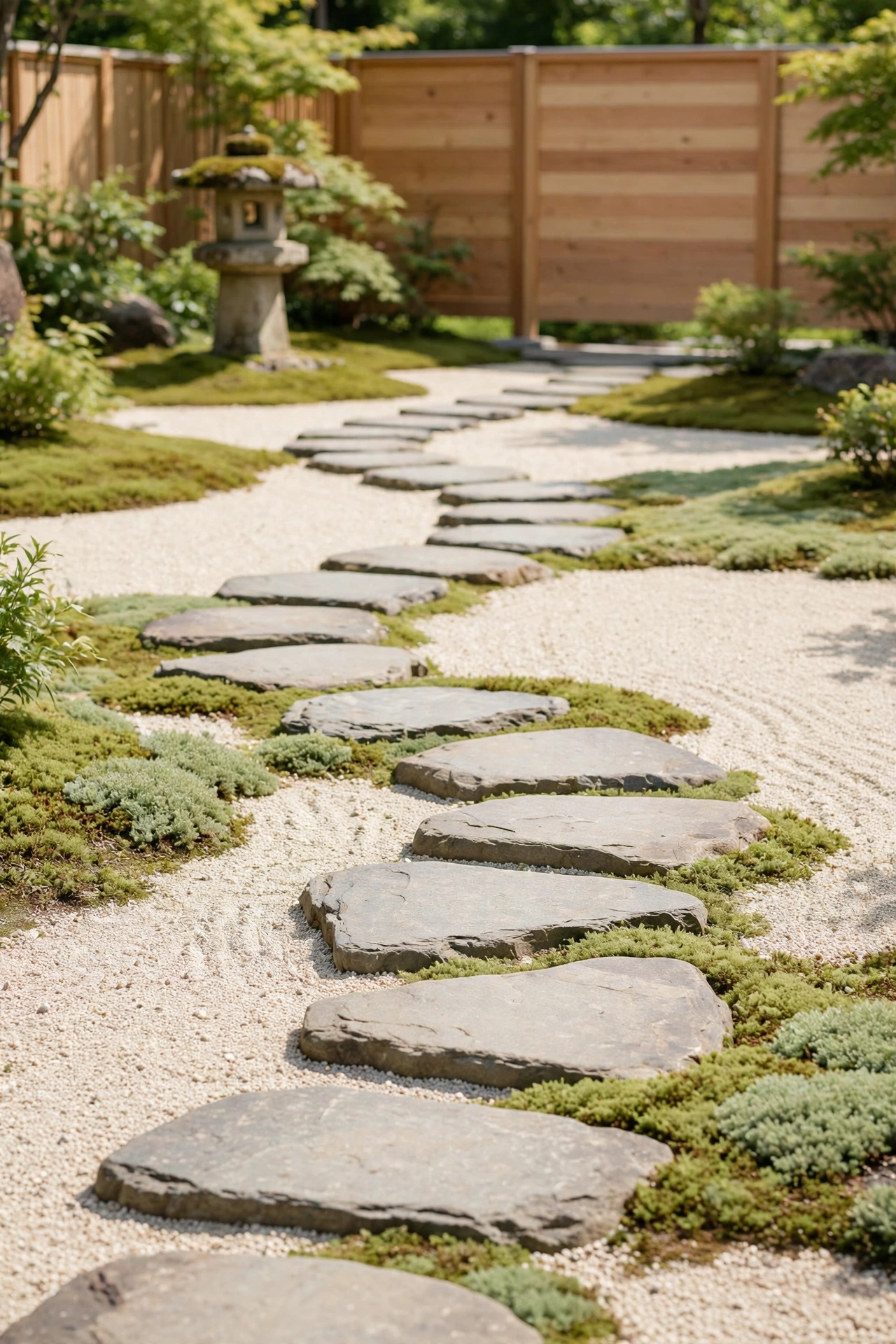
A stepping stone path, called tobi-ishi, slows the walk and makes every step deliberate. Choose flat topped stones in irregular shapes and set them at a comfortable walking distance, with moss or fine gravel filling the gaps. The path should wander gently, never run in a straight line, so the garden reveals itself one view at a time.
Set each stone firmly into the soil with its top level with the ground, so it feels safe underfoot in wet weather. Vary the sizes so the walk has a natural rhythm, with larger stones where you pause to look at a lantern or a pond. For more ways to shape stone steps and paths on uneven ground, see these garden steps for sloped backyards that work beautifully alongside a stepping stone walk.
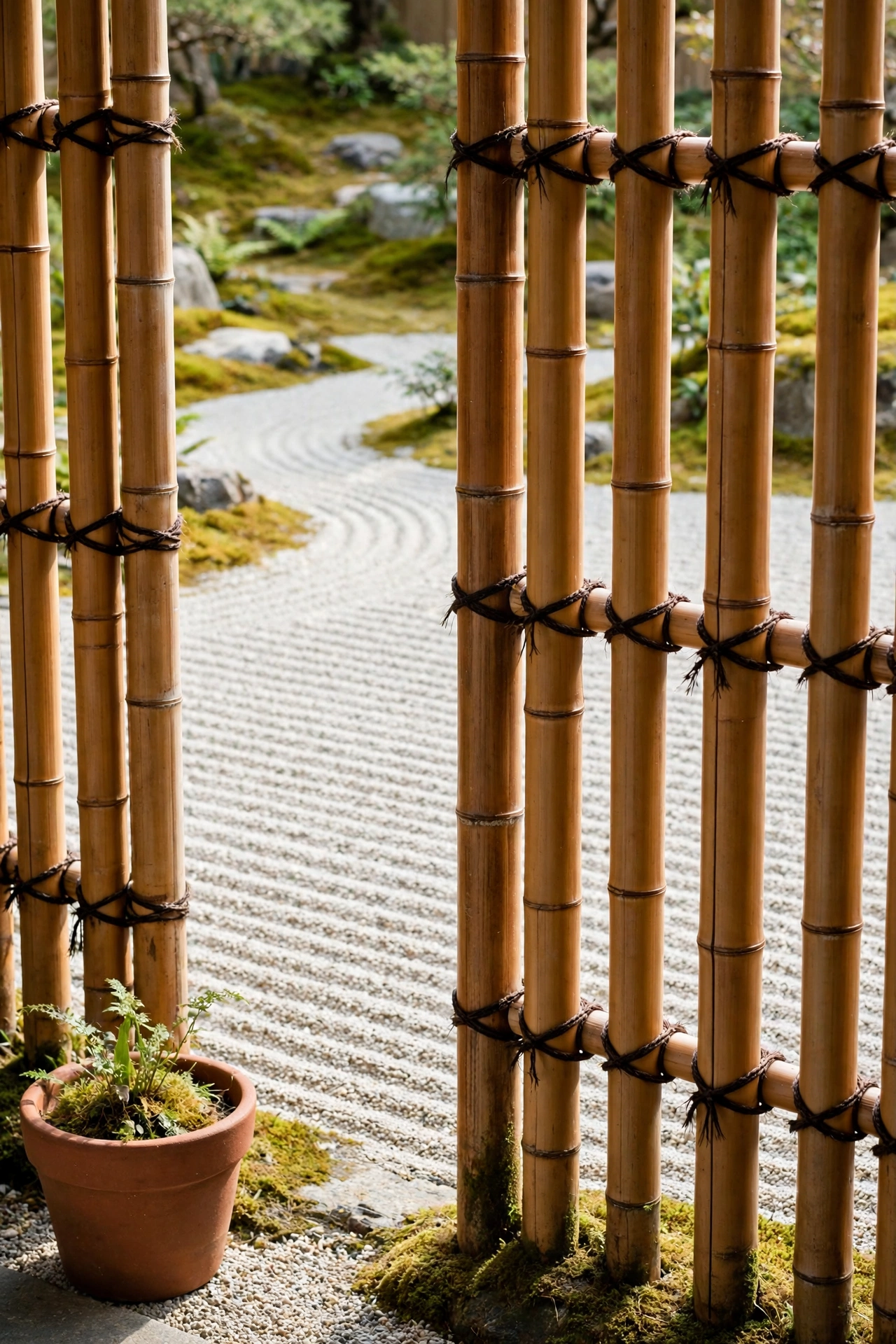
8. Frame Views with a Bamboo Fence
A bamboo fence does more than mark a boundary, because it frames the garden like a picture and hides the world beyond. Traditional styles like the vertical slat fence or the woven bamboo panel let light through in soft stripes while giving the garden a clear, calm edge. The fence becomes part of the design, not just a barrier.
Use natural bamboo poles in warm honey tones and tie the joints with dark cord for the classic look. Keep the fence low enough to let tall pines show above it, around five to six feet, so the garden feels sheltered but never closed in. A bamboo fence ages gracefully to a soft silver gray, which suits the quiet mood of the garden even more.
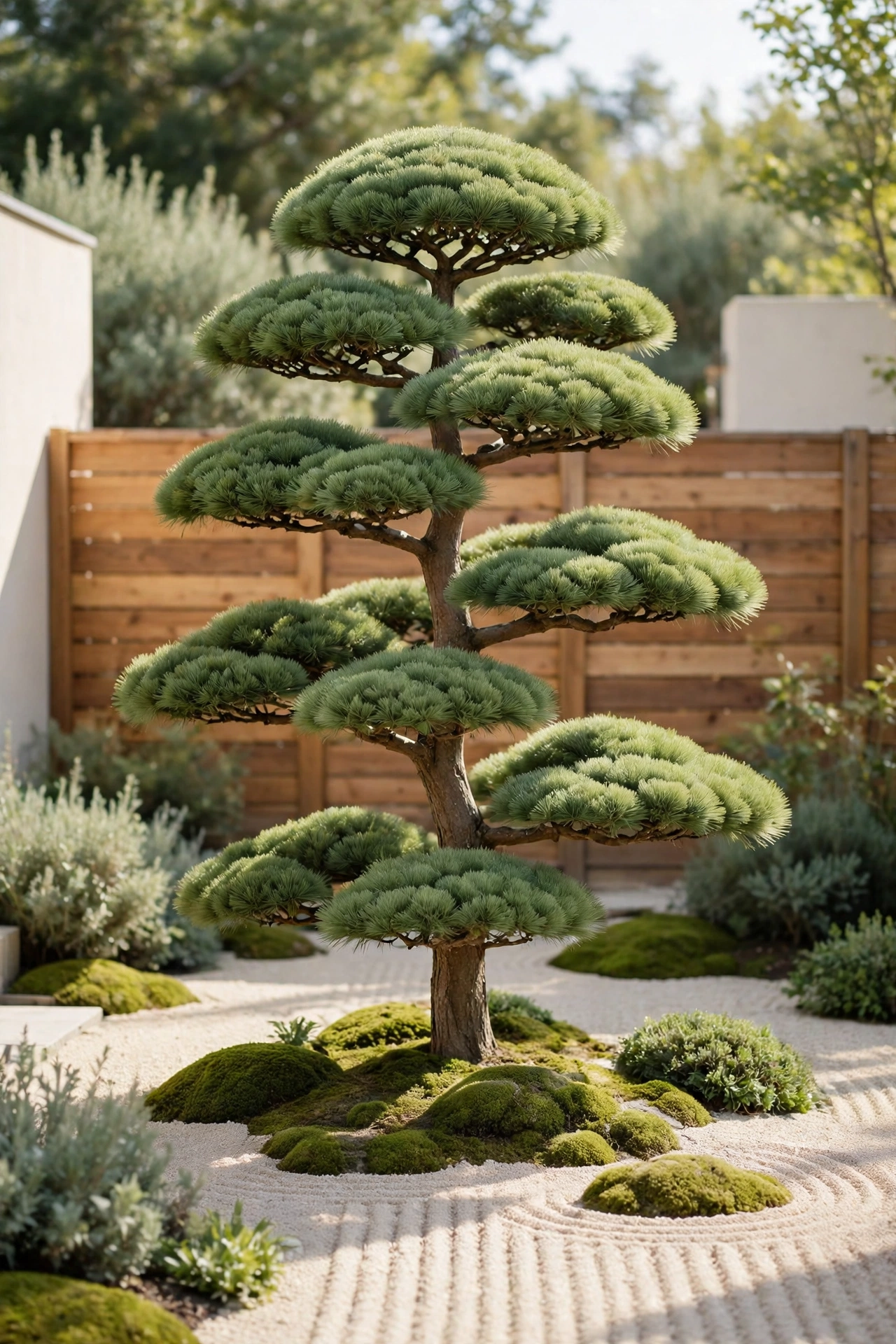
9. Prune Pines into Cloud Shapes
Cloud pruning, or niwaki, shapes pine trees into soft, layered clouds that look like green hills floating above the garden. Start with a young pine and prune each branch into a flat pad, removing the small shoots underneath so the shape stays open and airy. Over years, the pads grow dense and the tree becomes a living sculpture.
Prune in late winter or early spring, and work slowly, because niwaki rewards patience more than speed. Keep the trunk visible between the pads so the tree shows its structure, and let one main cloud crown the top. A single cloud pruned pine can anchor a whole garden corner, and two or three of different heights create a quiet forest in miniature.
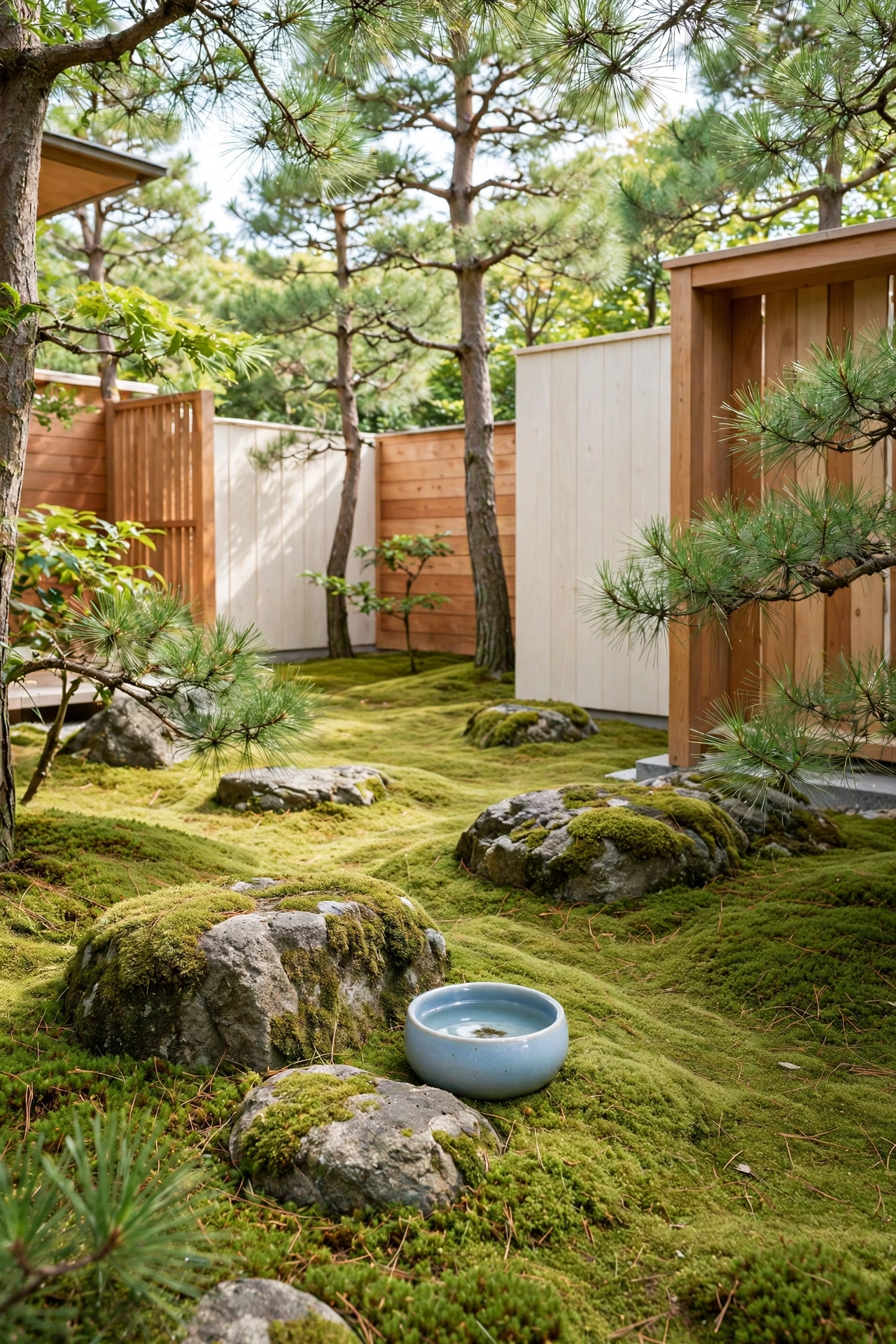
10. Plant a Moss Carpet for Soft Ground Cover
Moss is the soft green carpet of the Japanese garden, and it turns bare soil into a velvet floor that glows after rain. Moss loves shade, moisture, and acidic soil, so it thrives beneath pines and maples where grass would struggle. Its low, even texture makes stones and lanterns stand out in sharp relief.
Start moss in small patches pressed into damp soil, and keep the area moist for the first few weeks while it takes hold. Once established, moss needs almost no care beyond a light raking to remove fallen leaves. A moss carpet invites bare feet in summer and turns the whole garden into a calm green room that feels cool even on a warm day.
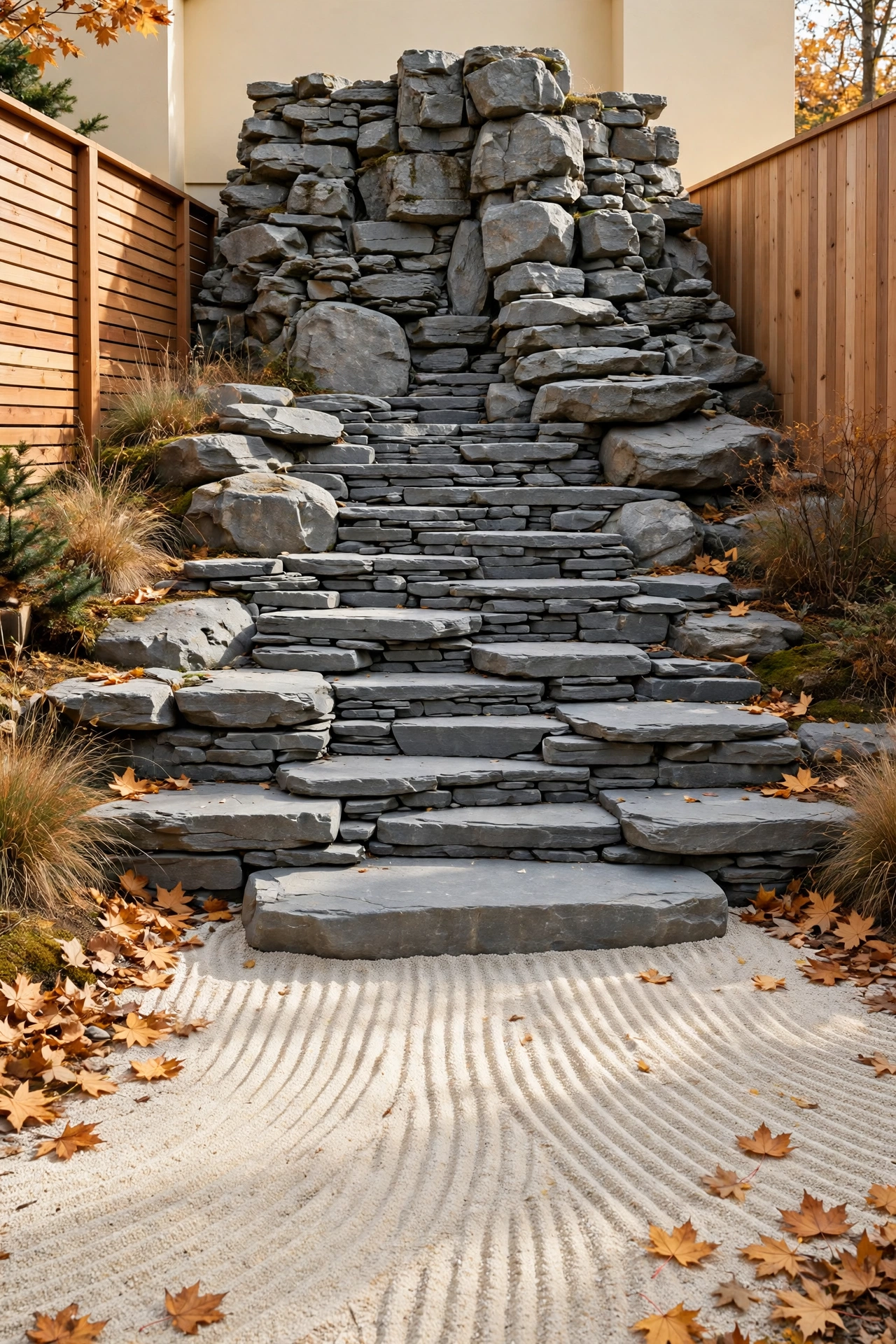
11. Create a Dry Waterfall with Layered Stones
A dry waterfall, or kare-taki, suggests falling water using only stone and gravel, with no water at all. Stack flat stones in a stepped cascade down a small slope, with taller rocks at the top like a cliff face and a wide flat stone at the base like a still pool. Raked gravel flowing out from the base completes the illusion of water.
Choose stones in similar gray tones so the cascade reads as one rock face, and tilt each layer slightly forward so the eye follows the fall downward. A dry waterfall suits gardens where a real pond is not practical, and it stays beautiful in every season, even in deep winter when a real waterfall would freeze. Place it where you can see it from the main sitting spot, so the falling stone draws the eye again and again.
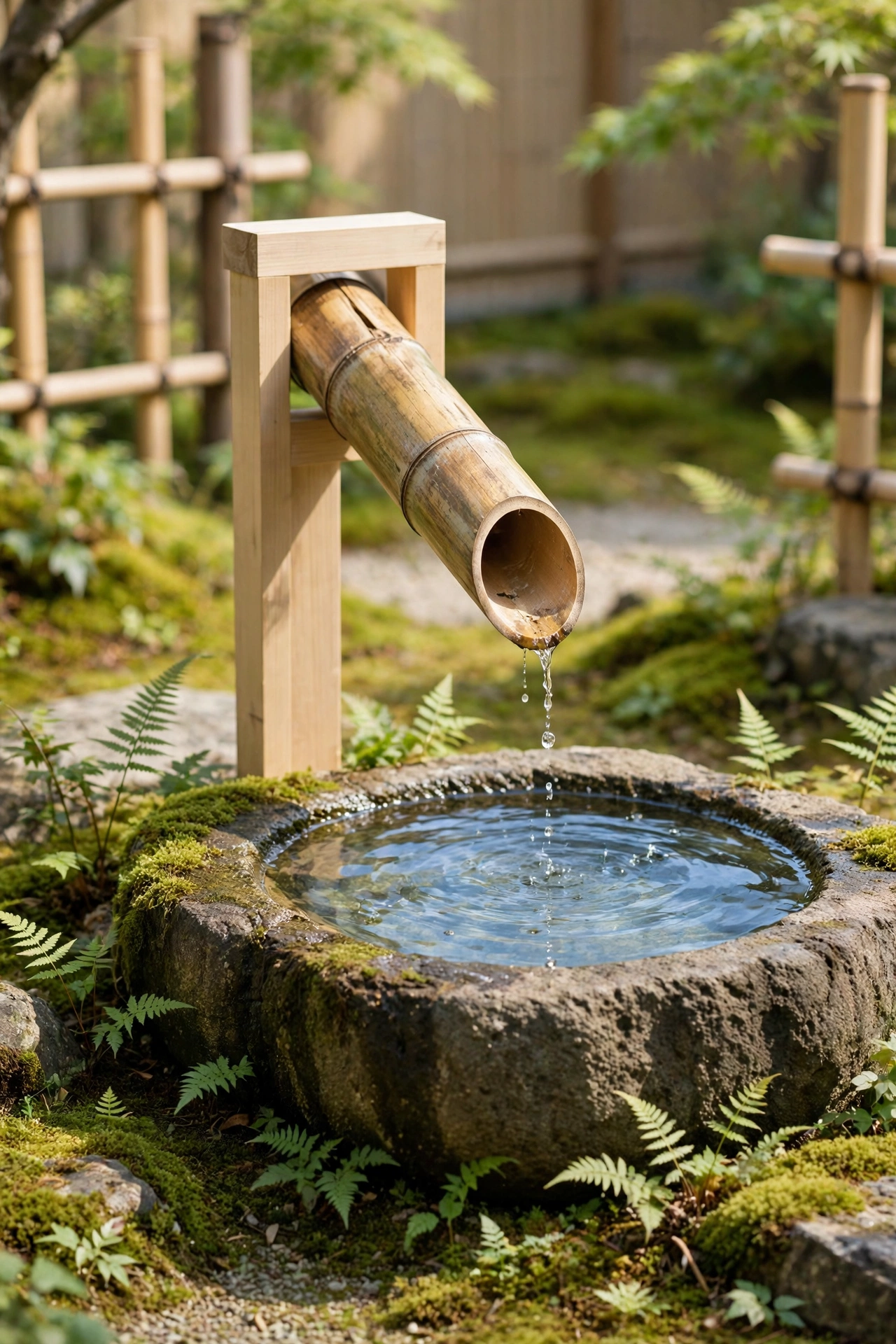
12. Add a Bamboo Water Fountain
A bamboo water fountain, called shishi-odoshi, is a moving sculpture that fills the garden with a gentle knocking sound. Water drips slowly into a bamboo tube, and when the tube fills, it tips forward, empties with a soft knock against a stone, and swings back to fill again. The rhythm is slow, quiet, and deeply calming.
Place the fountain near a sitting area or a tea house, where the sound can be heard without effort, and hide the small pump behind rocks or plants. Keep the water flow slow so the knock comes every minute or so, not every few seconds, because the pause between sounds is what makes it peaceful. A shishi-odoshi adds the one thing a silent garden needs, which is the sound of water moving through time.
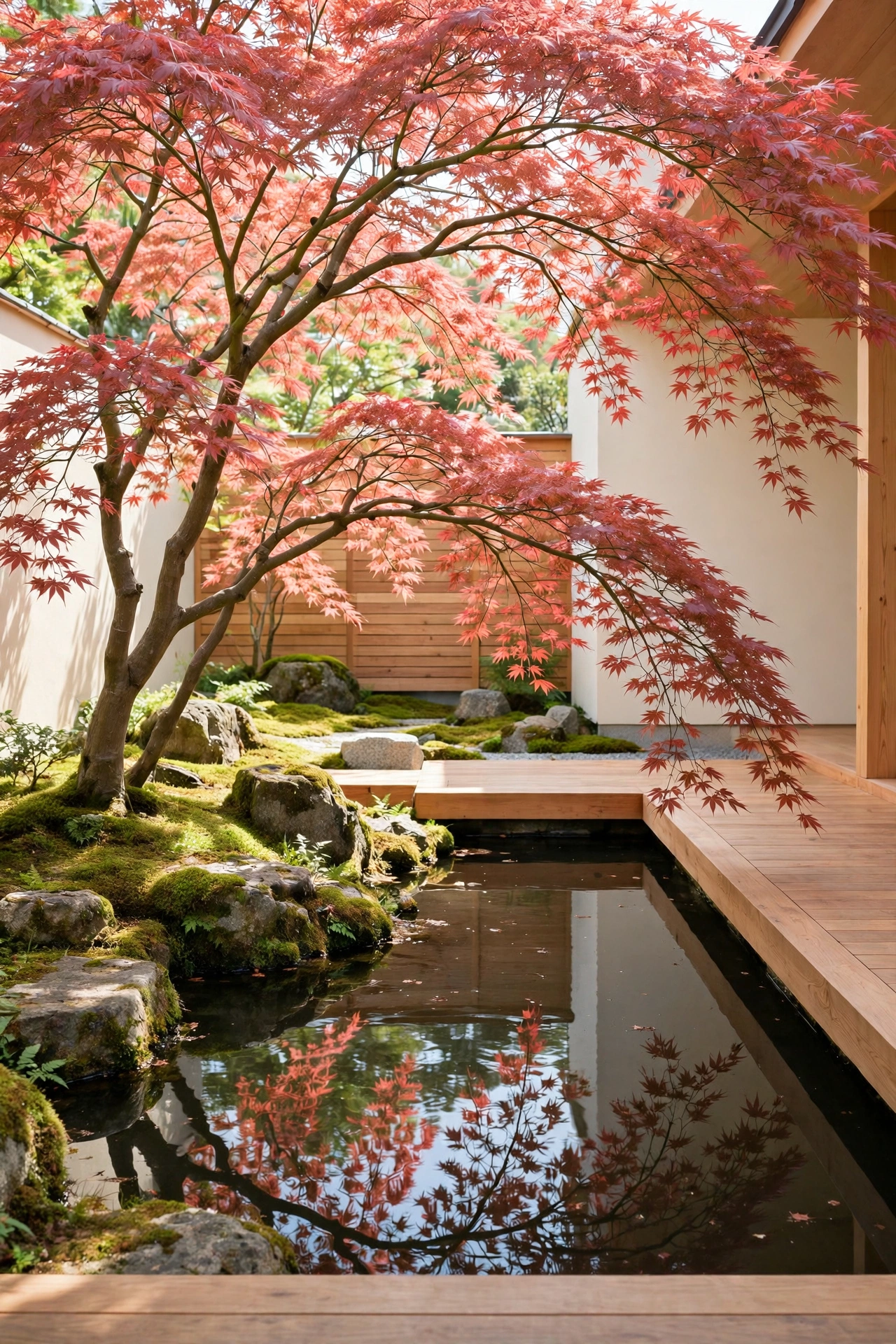
13. Choose a Japanese Maple as the Star Tree
A Japanese maple is the star tree of the garden, with delicate leaves that turn from soft green in spring to brilliant red and gold in autumn. Plant it where its branches can spread freely, near a pond or beside a stone lantern, so its reflection doubles its beauty in still water. The maple gives the garden a seasonal heartbeat that changes with every month.
Choose a variety that suits your space, such as a tall upright maple for a large garden or a weeping maple for a small corner. Protect young maples from harsh afternoon sun and strong wind, and mulch the roots with fallen leaves to keep the soil cool and moist. One well placed maple can carry the whole garden through the year, from the first green buds of spring to the last red leaf of autumn.
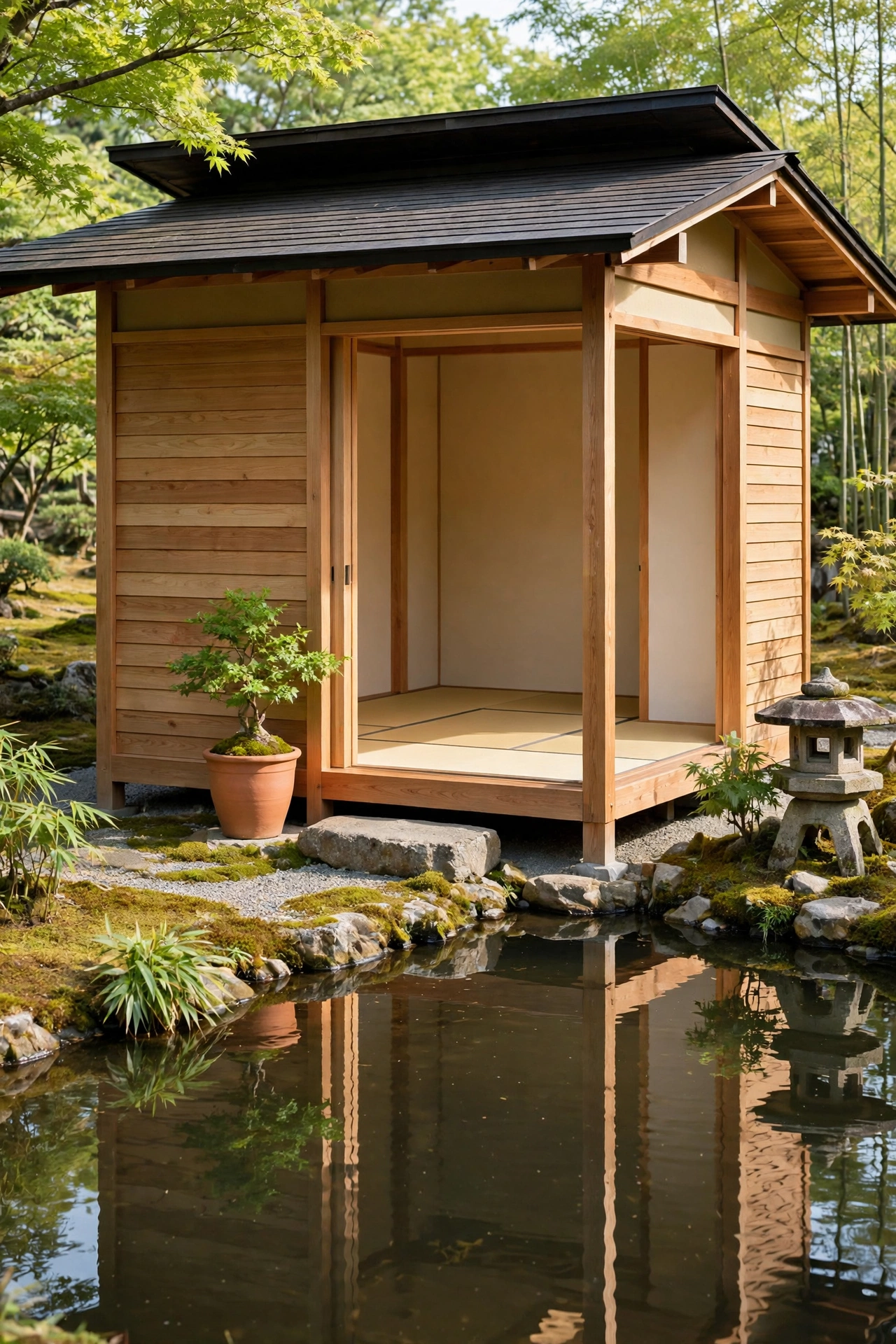
14. Design a Tea House Corner for Quiet Sitting
A tea house corner gives the garden a place to sit, pause, and simply look. A small wooden shelter with a low roof, a tatami mat floor, and open sides frames the garden like a living painting. The tea house does not need to be large, because a space just big enough for two people feels more intimate and calm than a grand pavilion.
Place the tea house at the far end of the garden, facing back toward the pond and the focal stone, so the best view unfolds from the seat. Keep the structure simple, with natural wood, paper screens, and a stone step at the entrance. If you are planning a small garden shelter and want to get the placement right, these gazebo placement ideas for functional backyard layouts offer useful guidance on siting a structure for the best view and the most privacy.
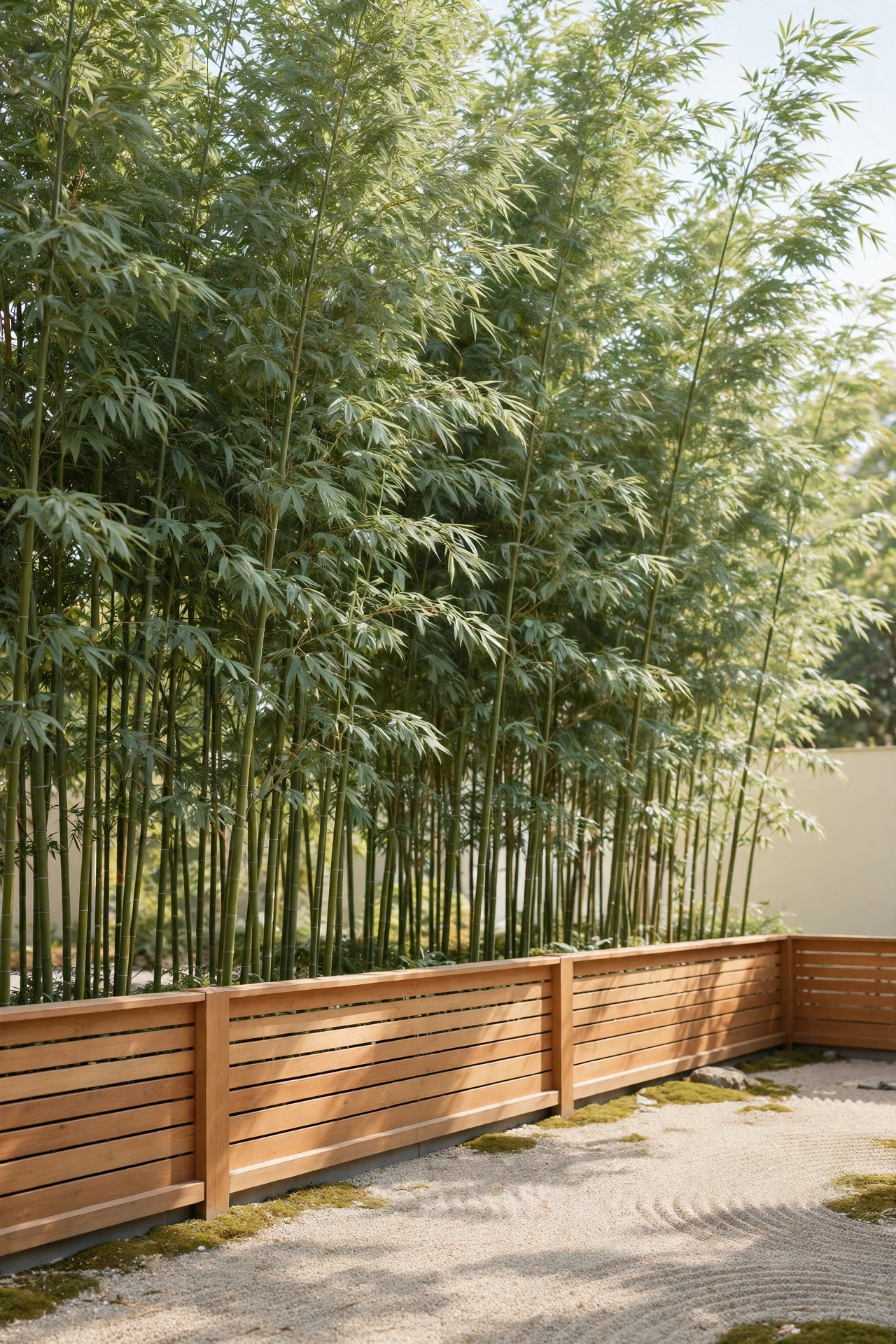
15. Use Bamboo Screening for Privacy
Bamboo screening turns an open boundary into a soft green wall that sways gently in the breeze. Plant clumping bamboo, which stays where you put it, in a narrow bed along the fence line, and let the tall canes rise above the fence to hide rooftops and neighboring walls. The rustling leaves add a soft sound that suits the garden mood perfectly.
Choose a clumping variety rather than a running type, because running bamboo spreads fast and can take over the whole garden. Feed the bamboo well in spring and water it deeply in dry weeks so the canes stay tall and green. A bamboo screen gives the garden privacy without a hard wall, and the moving green keeps the space feeling alive all year.
16. Layer Evergreens for Year-Round Structure
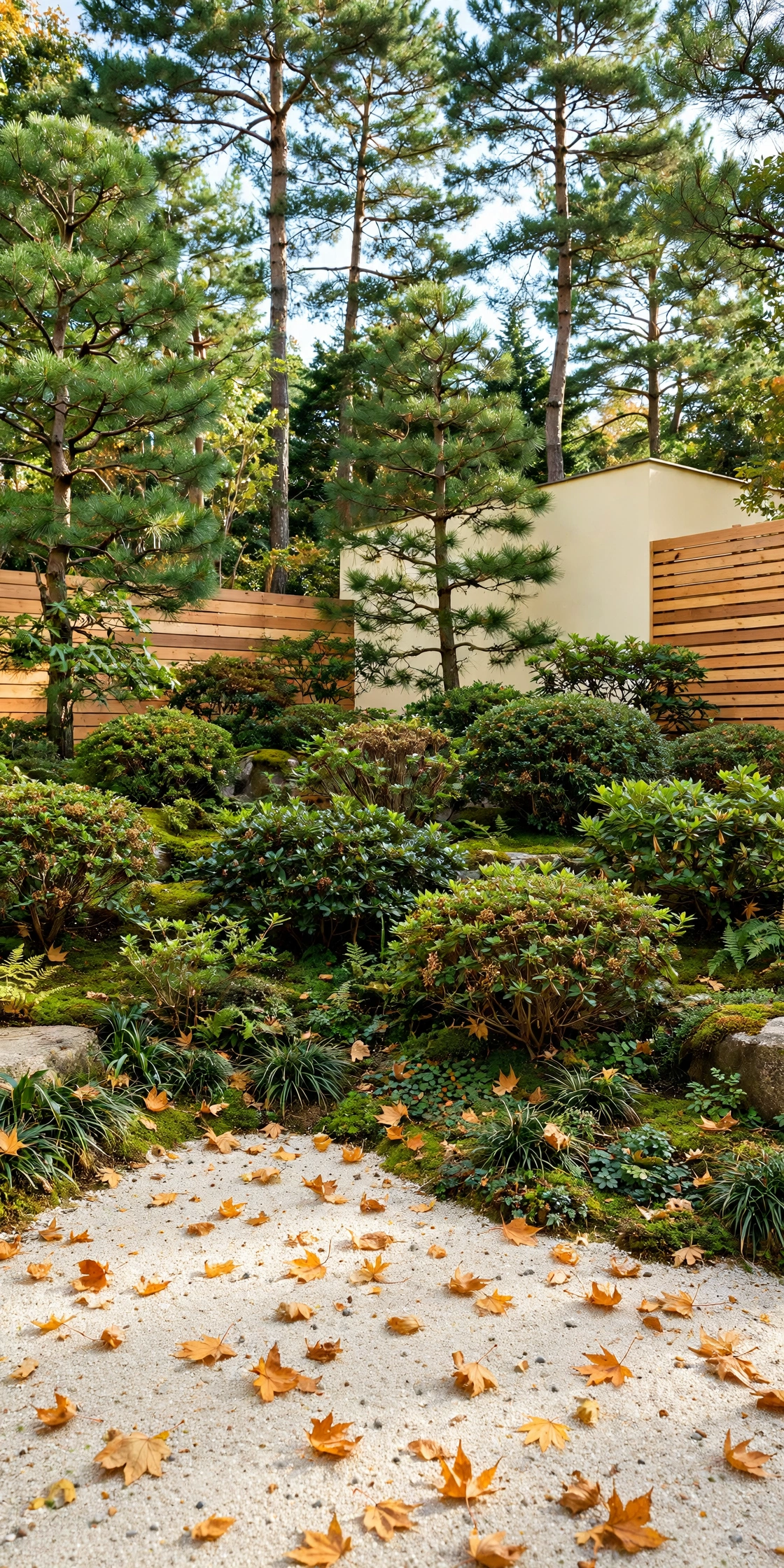
Evergreens give the Japanese garden its bones, holding the design together through winter when maples lose their leaves and flowers fade. Layer them by height: tall pines at the back, medium shrubs like azaleas and boxwood in the middle, and low ground cover plants at the front. The layers create depth and make even a small garden feel like a landscape.
Choose evergreens in different shades of green, from deep pine green to soft blue green, so the layers read clearly against each other. Prune lightly each year to keep the shapes distinct, and let a little space show between the layers so the garden breathes. With strong evergreen structure, the garden stays beautiful on a gray winter morning, long after the last autumn leaf has fallen.
17. Add a Stone Basin for Ritual Washing
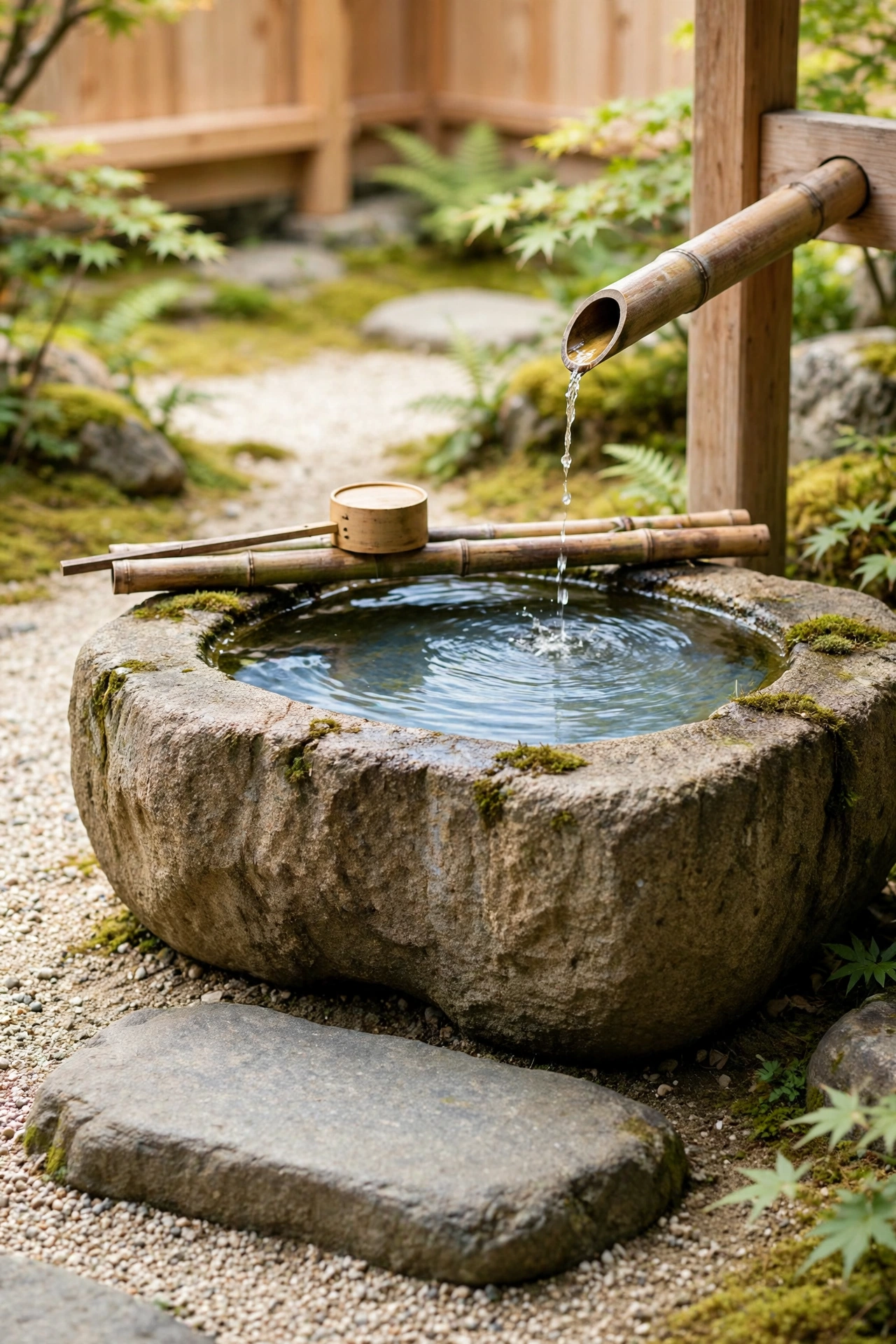
A stone basin, or tsukubai, is a low carved stone bowl filled with fresh water, placed near the garden entrance or the tea house. Visitors pause to rinse their hands and mouth before entering the garden, which turns a simple wash into a small ritual of arrival. The basin marks the boundary between the outside world and the quiet garden within.
Set the basin low to the ground, on a flat stone, with a bamboo ladle resting across the top and a small stepping stone in front. Keep the water fresh with a slow drip from a bamboo spout, and let a little moss grow on the rim for age and character. A stone basin adds meaning to the garden, because it reminds every visitor to slow down and enter with a clear mind.
18. Shape a Small Hill for Depth
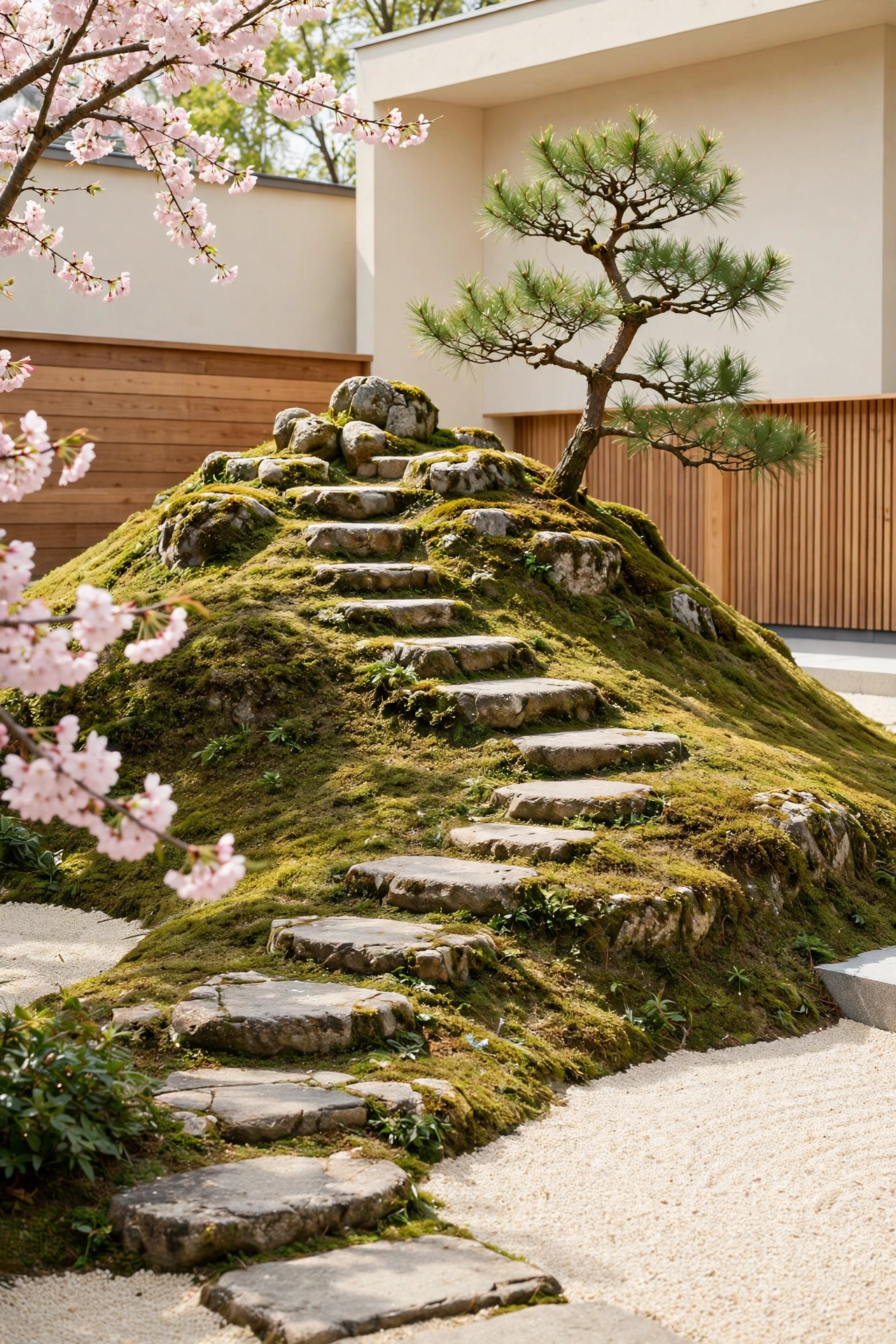
A small hill, or tsukiyama, gives a flat garden the depth of a real landscape in just a few feet of height. Build the hill from soil and rubble, then cover it with moss, low shrubs, and a few stones, so it looks like a natural rise in the land. A pine or a maple planted on the crest turns the hill into a small mountain.
Shape the hill with gentle, uneven slopes rather than a perfect cone, and let a stepping stone path climb over it so the walk gains a little rise and fall. The hill hides part of the garden behind it, which makes the space feel larger because the eye cannot take it all in at once. Even a hill only two feet high changes the whole feeling of a flat garden, giving it the quiet drama of a landscape in miniature.
19. Plant Flowering Cherries for Spring Color
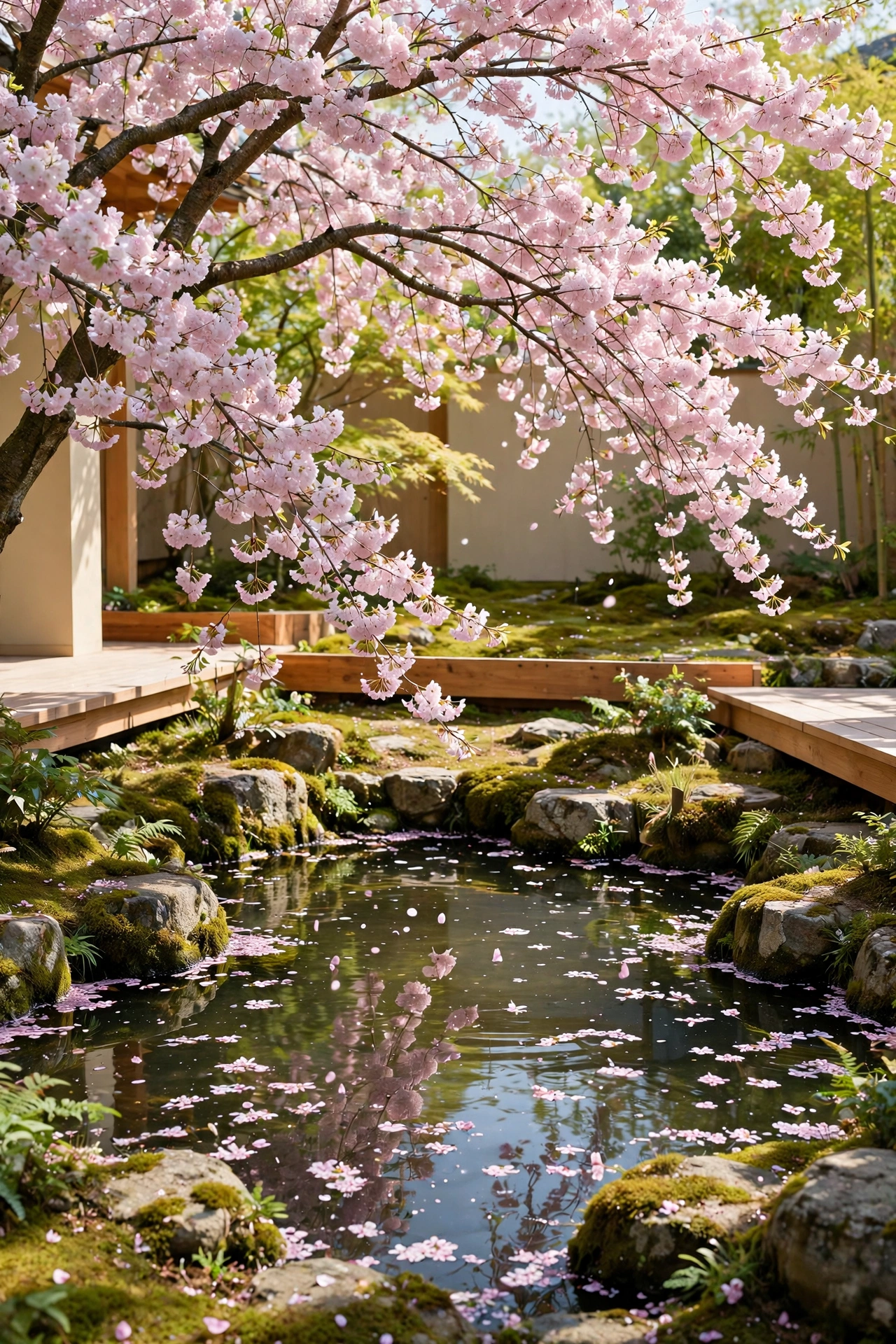
A flowering cherry tree brings one glorious week of pink blossom to the garden each spring, and that brief beauty is the whole point. Plant a cherry where its branches can arch over a path or a pond, so the petals fall like soft snow on the water and the stones below. The blossom season turns an ordinary garden visit into a small celebration.
Choose a variety suited to your climate and give the tree full sun and well drained soil so it blooms generously year after year. Underplant the cherry with moss or low ground cover, never with busy flower beds, so the blossom stays the star of the season. When the petals fall, let them rest on the gravel for a day or two, because a drift of pink petals on pale stone is one of the most beautiful sights a Japanese garden can offer.
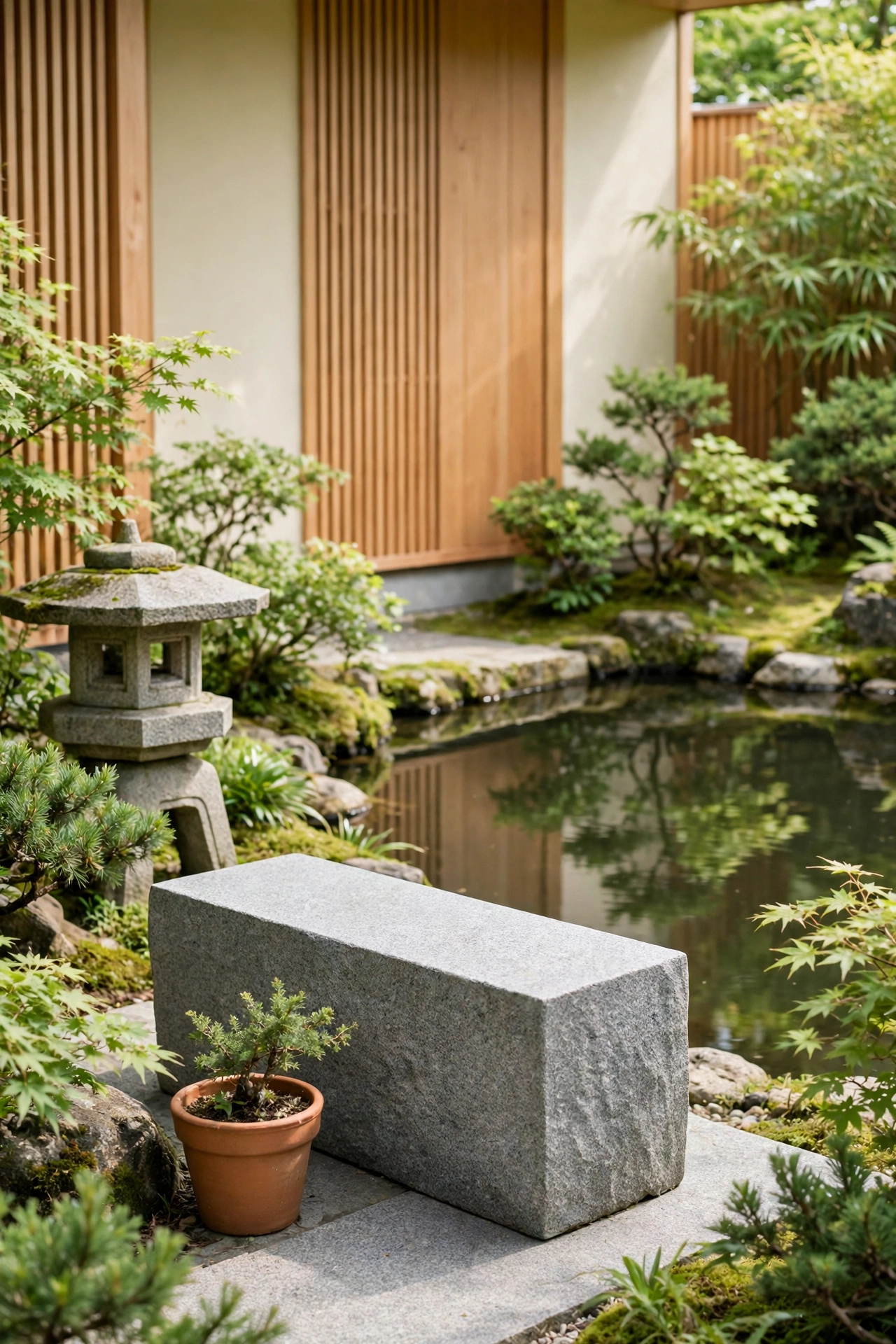
20. Create a Seating Nook with a Stone Bench
A stone bench placed at the end of a path gives the garden a destination and a place to sit in silence. Choose a simple bench carved from a single block of granite, with a flat top and solid legs, and set it facing the pond or the focal stone. The bench should look like it grew from the ground, not like furniture placed in a garden.
Keep the seating area small, with just the bench, a stepping stone in front, and perhaps a lantern nearby for evening light. The nook works best in a quiet corner, half hidden by shrubs, so sitting there feels private and sheltered. A stone bench invites long, unhurried sitting, which is the real purpose of a Japanese garden, because the garden is meant to be enjoyed slowly, one quiet moment at a time.
21. Use Contrasting Textures in Planting
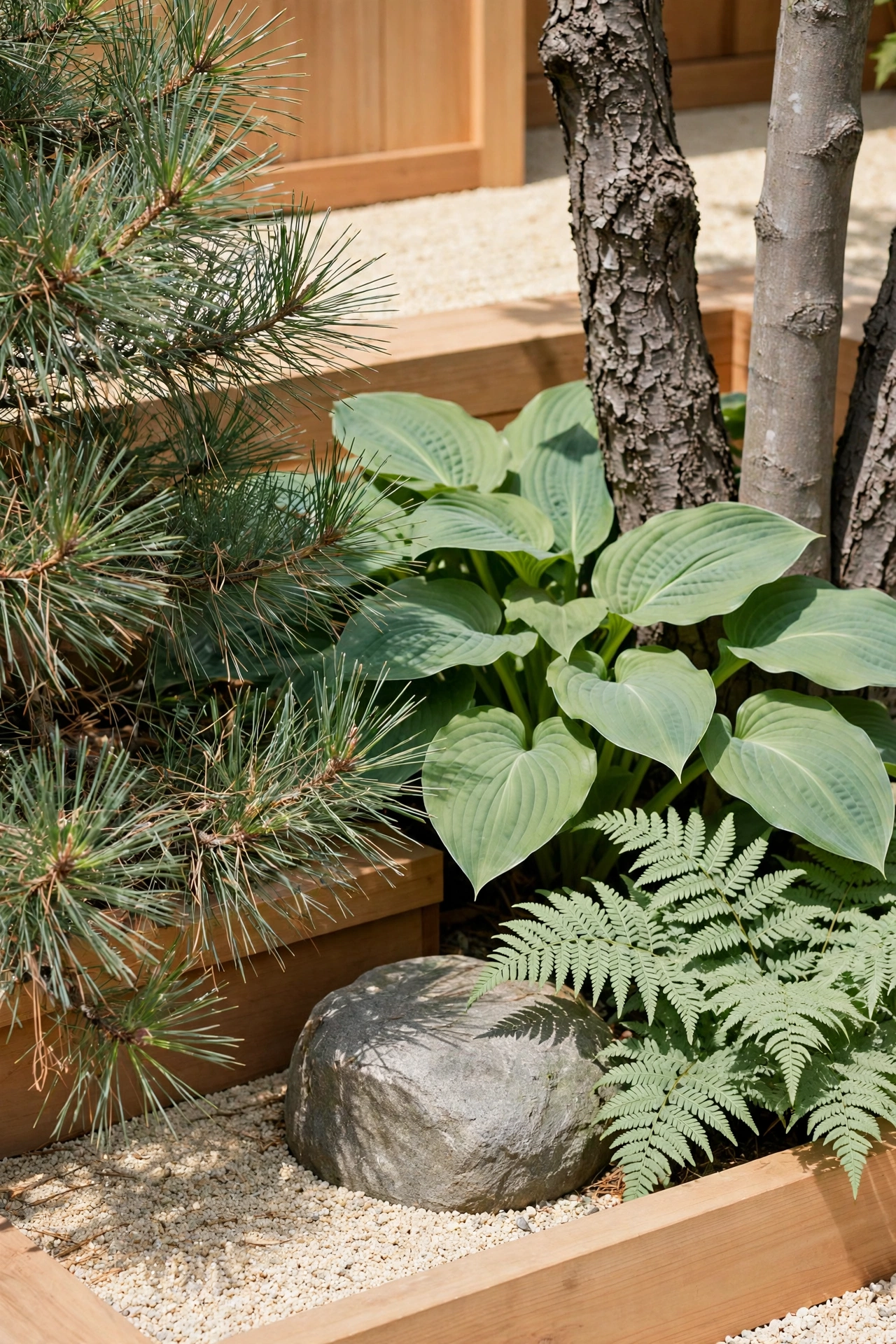
Texture is the quiet language of Japanese planting design, and it works even when the garden has almost no flowers. Pair the fine needles of a pine with the broad leaves of a hosta, the smooth bark of a maple with the rough bark of an old plum tree, and the soft fronds of a fern with the hard edge of a stone. The contrasts make each plant stand out more clearly than it would on its own.
Group plants by texture in small drifts rather than scattering them one by one, so each texture reads as a clear patch of color and form. Keep the palette calm, with greens and soft grays doing most of the work, and let one bold texture, like a large leaf hosta, act as an accent. When texture leads the planting, the garden stays interesting through every season, even in the depths of winter when flowers are gone.
22. Design a Winding Path That Hides the End
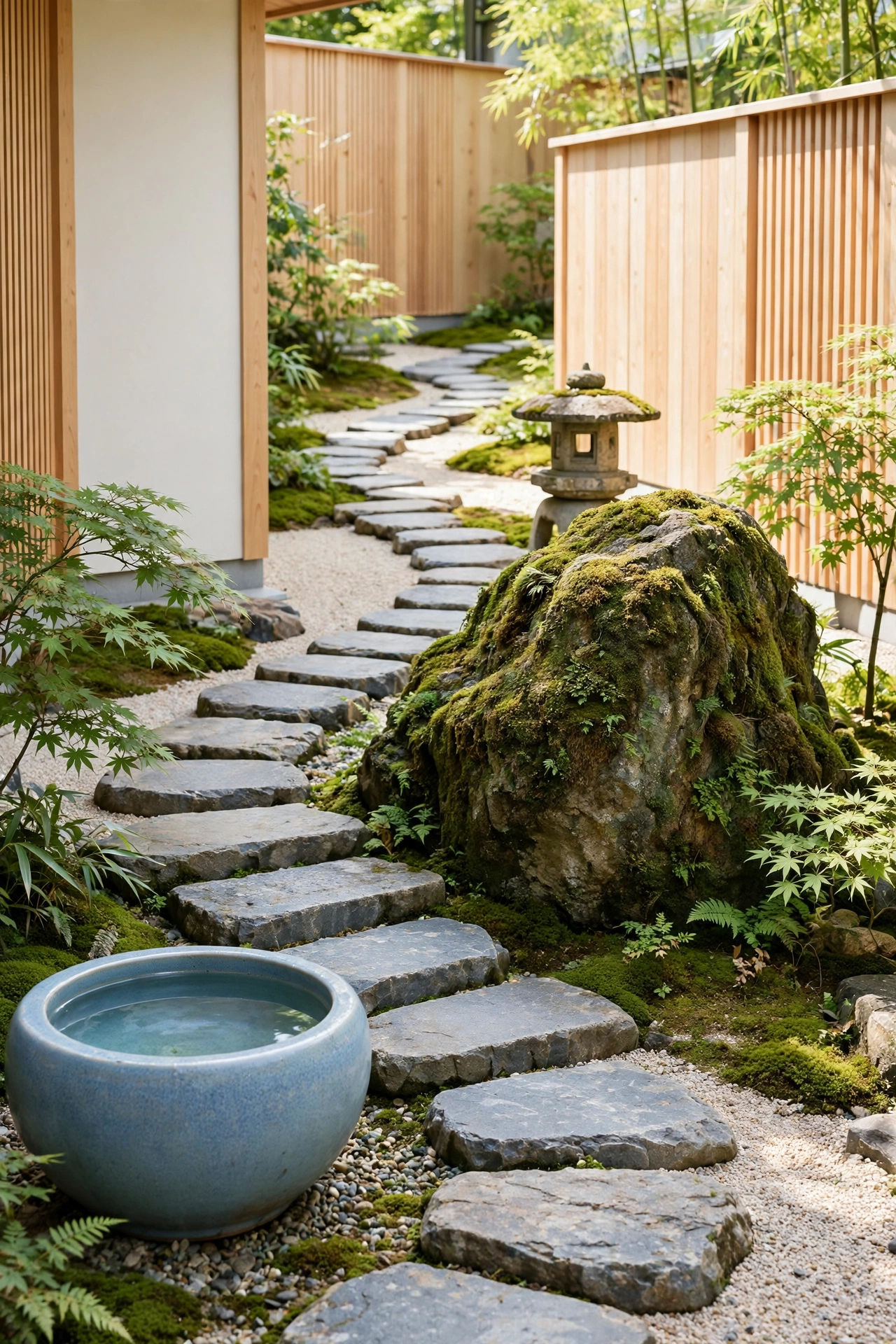
A path that hides its own end makes a small garden feel twice as large, because the eye cannot measure the whole space at a glance. Curve the path behind a hill, around a large stone, or past a bamboo screen, so each turn reveals a new view and the destination stays a mystery until the last step. The garden becomes a journey instead of a picture.
Use stepping stones, gravel, and moss in turns along the path, and place a lantern or a special stone at each bend to reward the walker. Keep the curves gentle and natural, never sharp or forced, so the walk feels like a stroll through a forest rather than a maze. A winding path teaches the most important lesson of Japanese design, which is that the journey matters more than the destination.
23. Add a Torii Gate as a Garden Entry
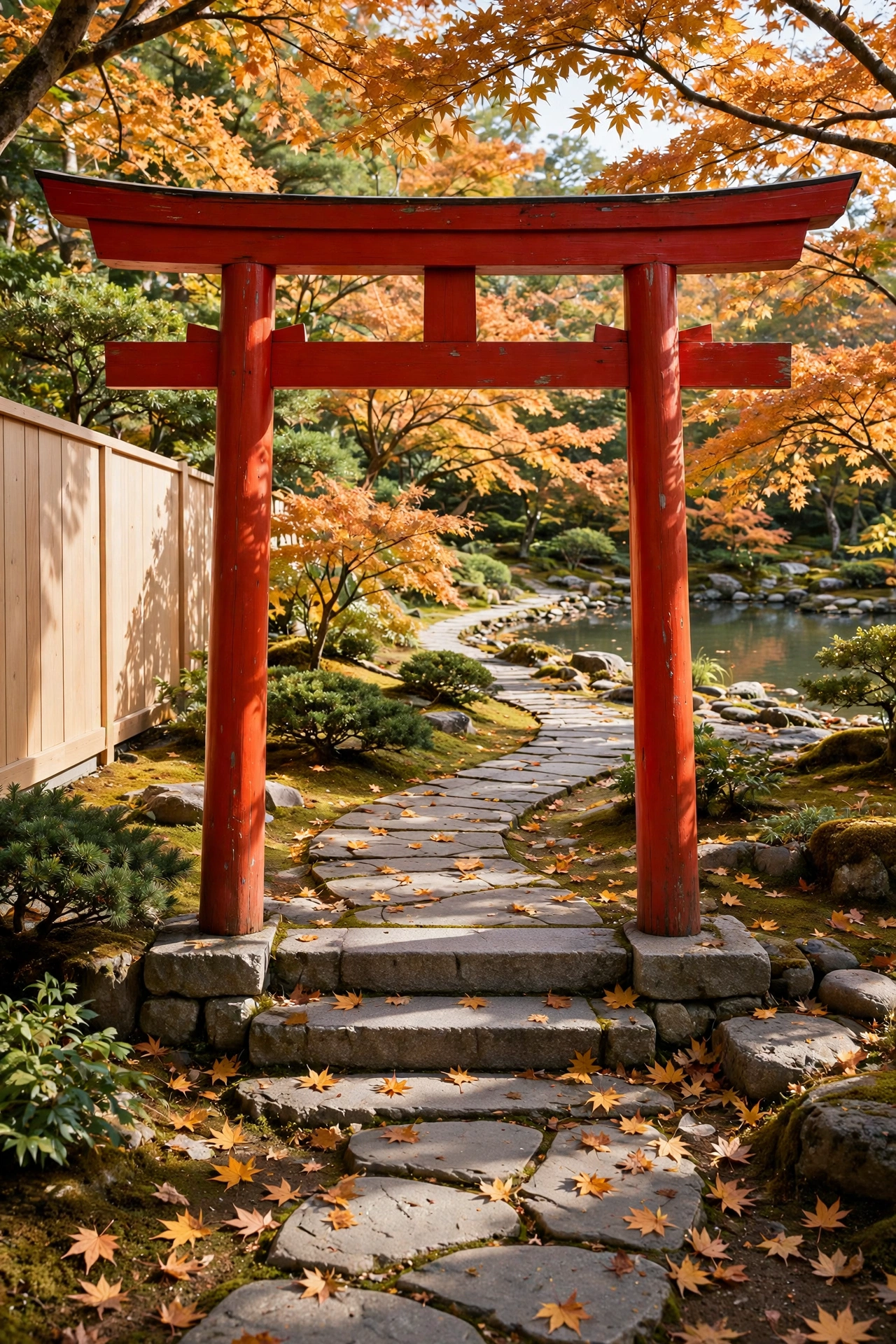
A torii gate marks the threshold where the ordinary world ends and the garden begins. Two upright posts and two crossbeams, painted in warm vermilion red or left in natural wood, frame the entrance and tell every visitor that something special lies ahead. The gate is a simple structure, but it changes the feeling of the whole garden.
Place the torii at the garden entrance, on a stone step, with a stepping stone path leading through it toward the pond. Keep the gate in scale with the garden, because a gate too large overwhelms a small space and a gate too small looks lost. A torii gate works best when the path beyond it curves out of sight, so the garden keeps its secrets until you walk through the gate and discover them yourself.
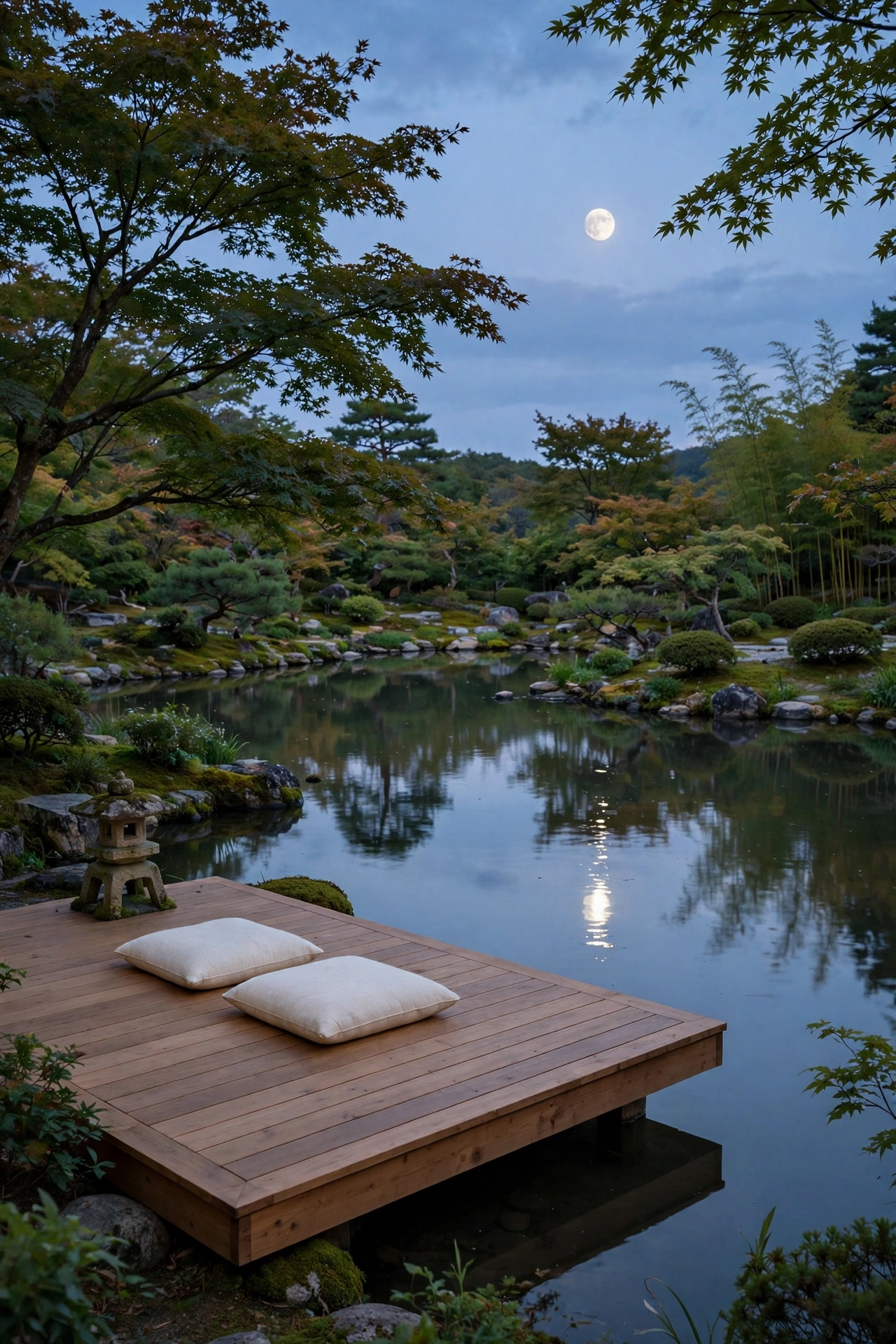
24. Finish with a Moon Viewing Platform
A moon viewing platform, or tsukimi-dai, is a simple raised wooden deck placed where the moon rises over the garden, and it is the perfect final touch. The platform needs no roof and no walls, just a clean deck, a low railing, and a clear view of the sky above the pond. On a full moon night, the moon reflects in the water and the whole garden glows silver.
Build the platform from warm wood and keep it low, just a foot or two above the ground, so it feels like part of the garden rather than a separate structure. Add two floor cushions and a small lantern, and the platform becomes a place for quiet evening sitting with family or friends. A moon viewing platform completes the garden design, because it gives the garden a purpose after dark, when the stones, the water, and the moonlight do their quiet work together.
Conclusion
A Japanese garden is not a collection of decorations, because it is a way of seeing the world in miniature. From a single focal stone to a moon viewing platform, every element in this guide works together to create a landscape that feels calm, balanced, and alive. The stones suggest mountains, the gravel suggests water, and the trees suggest forests, all within a space you can walk across in a minute.
Start with one idea that fits your garden and your budget, then add the next when the time feels right. A Japanese garden grows slowly, and that slow growth is part of its beauty. For a tidy edge that frames the whole design, see these backyard landscape border ideas for defined garden beds, and let your garden become the quiet place you return to at the end of every day.
Frequently Asked Questions About Japanese Garden Design Ideas for Peaceful Landscapes
What are the main principles of Japanese garden design?
The main principles are simplicity, asymmetry, and the use of natural materials. A Japanese garden uses stones, water, and plants to suggest a larger landscape in miniature, with odd numbered groupings, curved paths, and one clear focal point. Every element has a purpose, and empty space is just as important as the objects within it.
How much space do I need for a Japanese garden?
A Japanese garden can fit in a space as small as a few square meters, because the design scales down well. A corner with raked gravel, three stones, and a small lantern already carries the spirit of the style. Larger gardens simply allow more features, like a pond, a bridge, and a tea house, but the calm feeling comes from the design, not the size.
What stones should I use in a Japanese garden?
Use natural, weathered stones in gray, brown, or warm beige tones, with interesting shapes and varied sizes. Granite, basalt, and river rock all work well, and a mix of tall standing stones with low flat stones creates the best balance. Avoid bright or polished stones, because the garden should look like it has grown naturally over many years.
How do I maintain a Japanese garden?
Maintenance is gentle and regular: rake the gravel every week or two, prune pines and shrubs once or twice a year, clear fallen leaves from moss and water, and top up the pond as needed. Most Japanese gardens need far less work than a flower garden, because the design relies on stones and evergreens that change slowly and gracefully with the seasons.
Can I build a Japanese garden in a dry climate?
Yes, a dry garden, or karesansui, is one of the oldest Japanese styles and it uses no water at all. Raked gravel stands in for rivers and ponds, stones suggest mountains and islands, and drought tolerant plants like pines and grasses provide the green. A dry Japanese garden stays beautiful through hot summers and needs very little water to look its best.

Hi, I’m Emily! I turn messy corners into cozy, organized spots. DreamNestDecor is where I share simple, practical home ideas — decor, organization, and small-space solutions that work in real life, not just in photos. Every idea here is carefully researched before it’s shared.