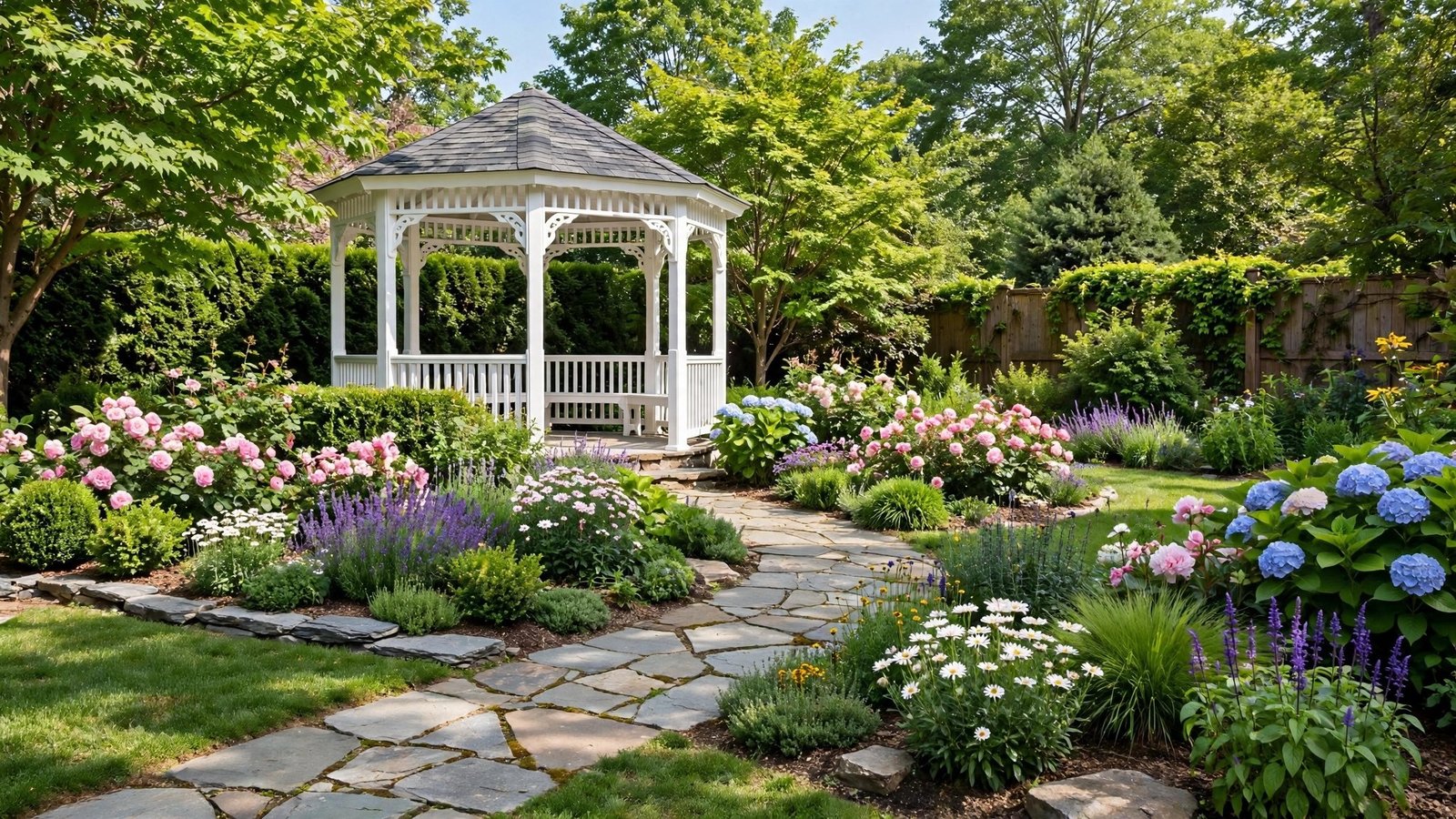
A gazebo can be the most beautiful structure in your yard, but only if you put it in the right spot. Placement decides how much you will use it, how comfortable it feels, and how well it fits your landscape. A little planning now saves you from regrets later.
These 13 gazebo placement ideas will help you think through sun, wind, views, and access before you commit to a location. Whether your yard is large or small, there is a smart spot waiting for your gazebo. Walk your yard with these tips in mind and the perfect place will become clear.
1. Make It the Centerpiece of Your Backyard
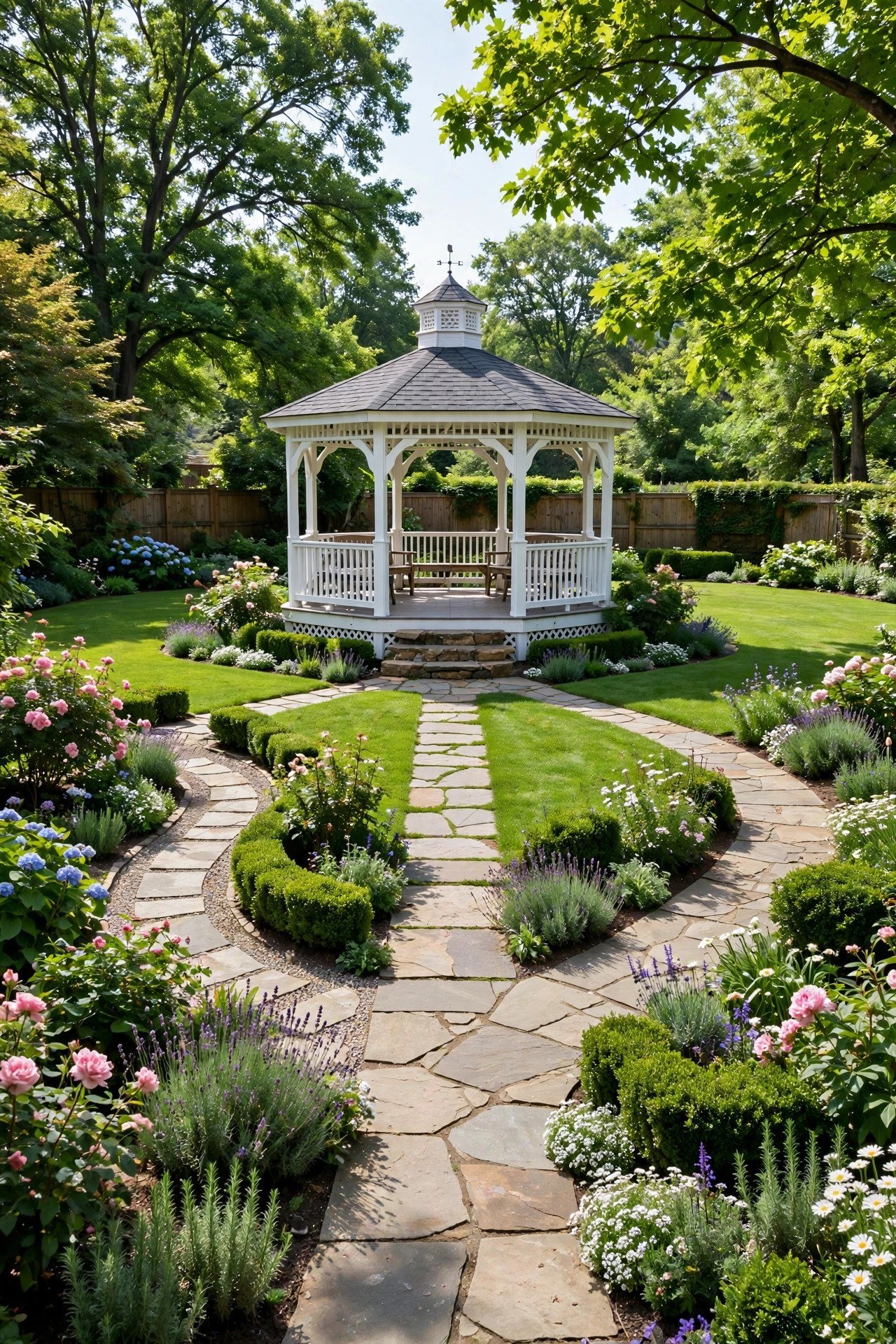
Placing your gazebo in the center of a large yard turns it into a stunning focal point. Every path and sightline can lead toward it, which gives your landscape a clear sense of purpose. This placement works best when you have plenty of open space around the structure.
Leave generous room on all sides for seating, plantings, and easy movement. A central gazebo becomes the natural hub for parties and family time. It tells visitors that your backyard was designed with care. For styling inspiration around a focal structure, see our romantic garden styling ideas.
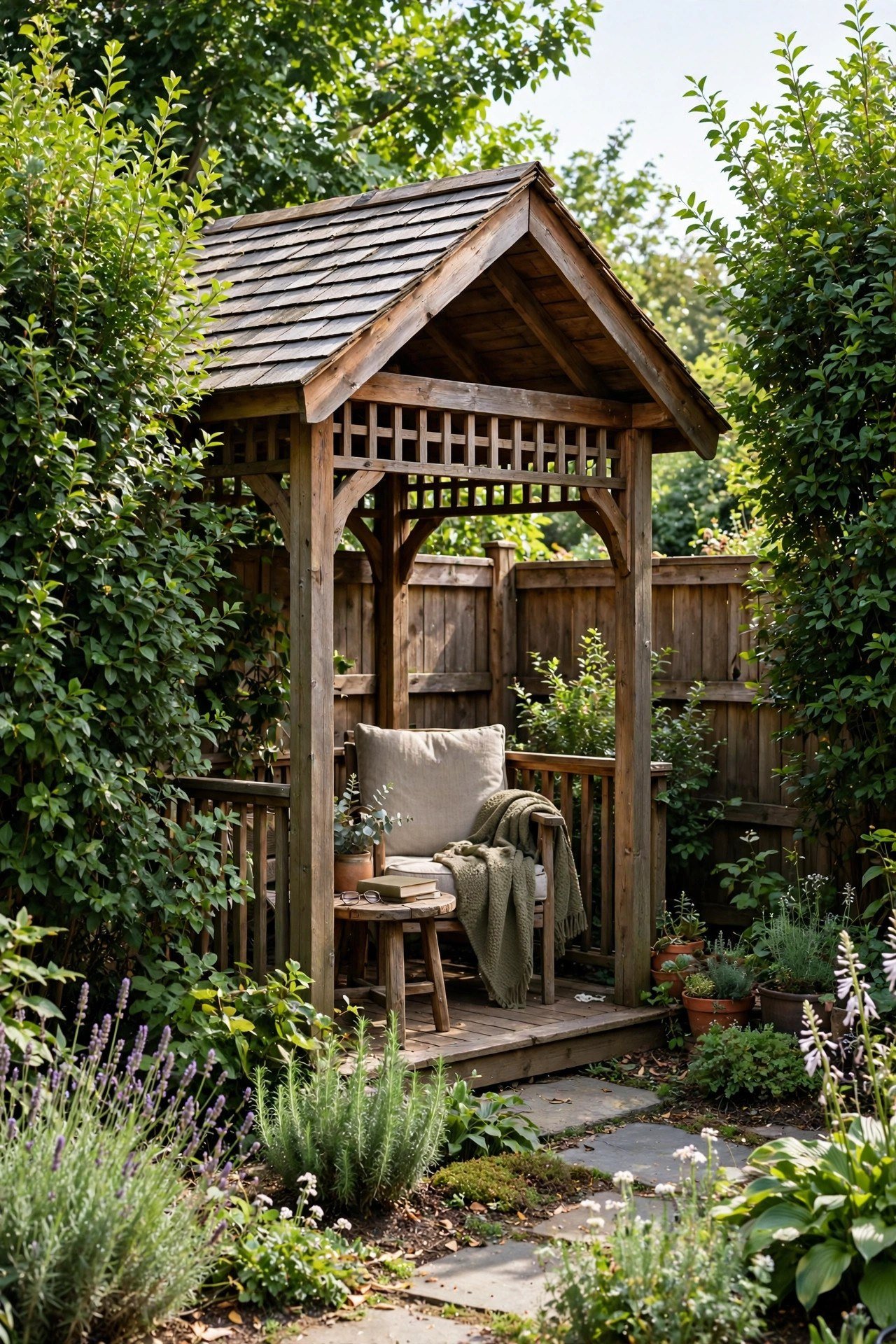
2. Tuck It Into a Quiet Corner
A corner placement gives your gazebo a cozy, private feeling with minimal effort. Two sides are naturally sheltered by fences or hedges, which creates instant intimacy. This is ideal for reading nooks, morning coffee, or quiet conversation.
Corner spots also keep the main lawn open for play and activities. Add tall plants or lattice panels on the open sides for extra seclusion. You will be surprised how peaceful a simple corner can feel.
3. Keep It Close to the House
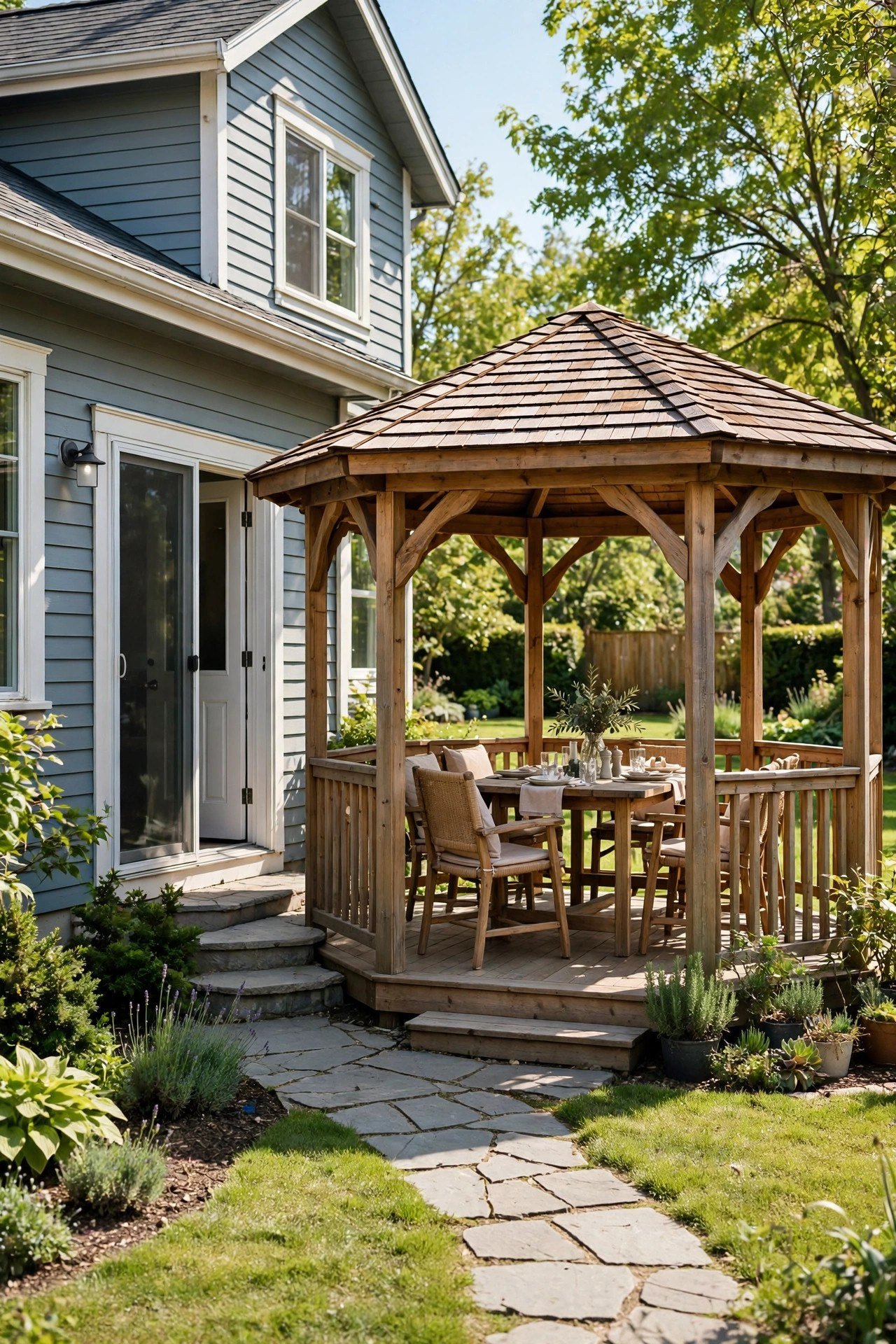
Placing your gazebo near the back door makes it easy to use every day. Carrying food, drinks, and cushions takes seconds instead of minutes. The space feels like a true extension of your home rather than a distant destination.
This placement is perfect for dining areas and main entertaining spaces. Guests flow naturally between the kitchen and the gazebo. You will use it far more often when it is just a few steps away.
4. Set It at the End of a Garden Path
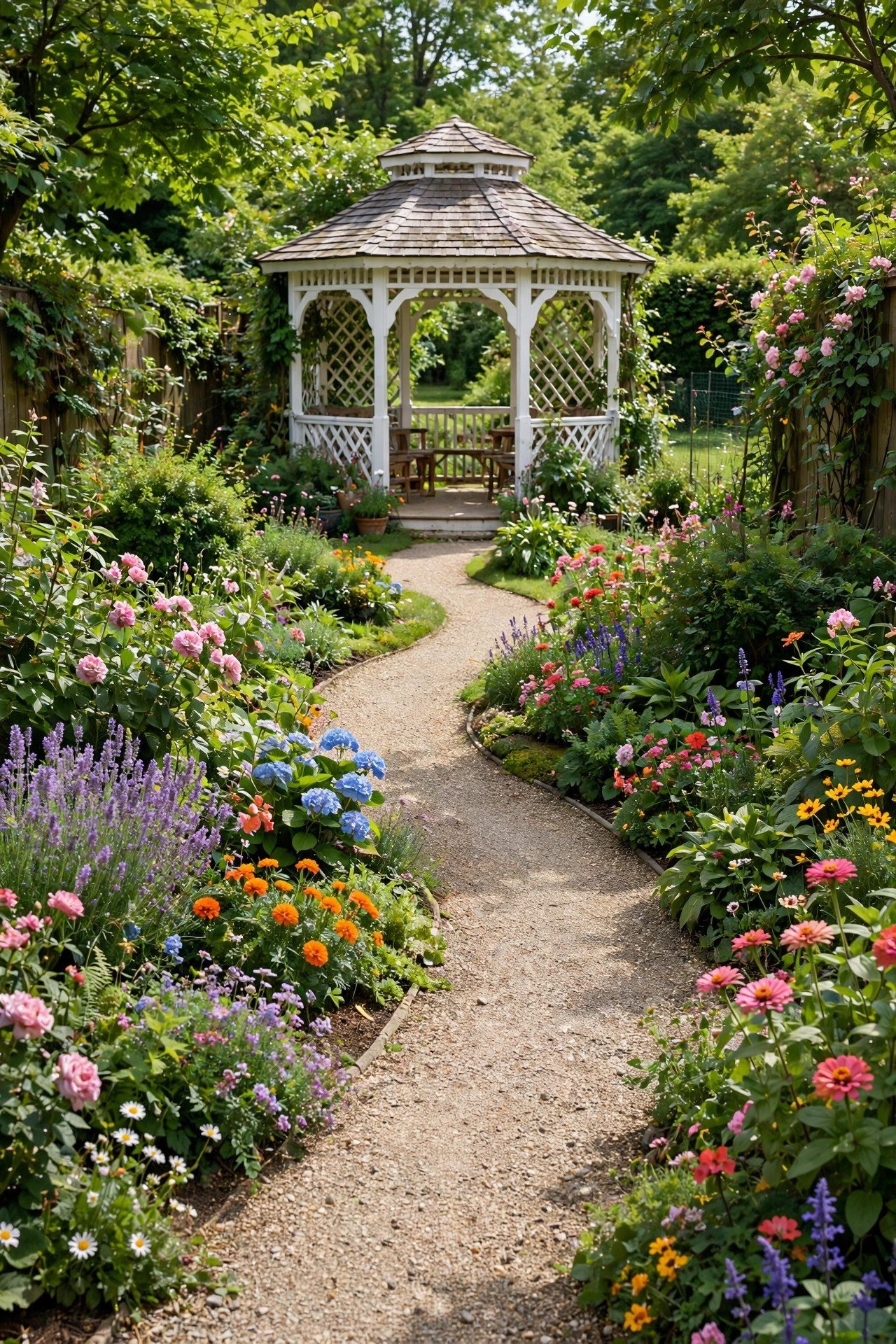
Positioning your gazebo at the end of a winding path creates a sense of discovery. Guests follow the path and are rewarded with a beautiful destination. This placement adds magic and movement to your landscape design.
Use stepping stones, gravel, or brick to build an inviting walkway. Plant flowers along the edges to make the journey pretty. The gazebo becomes a special retreat that feels delightfully hidden.
5. Place It to Capture the Best View
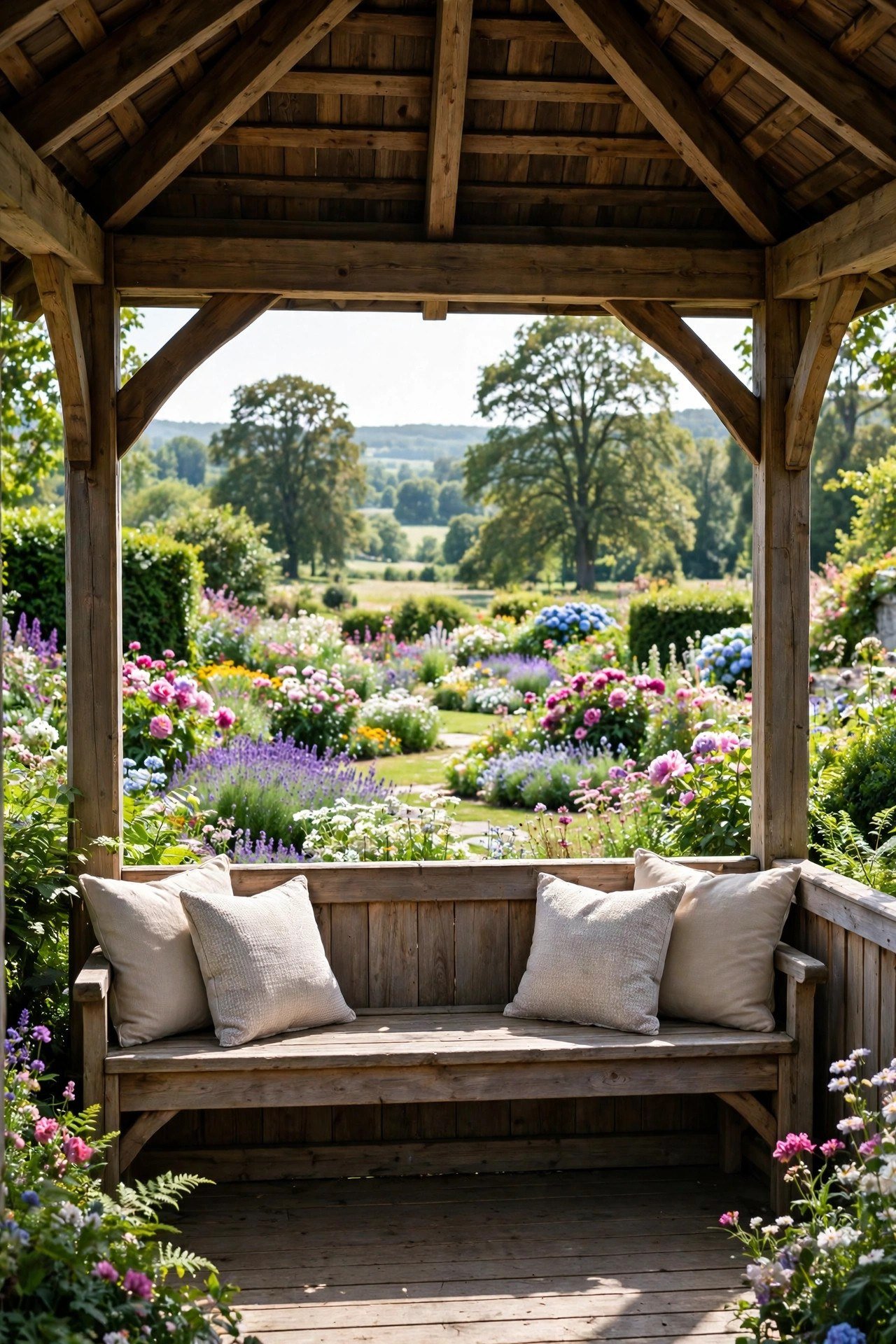
Walk your yard at different times of day and notice where the views are loveliest. Place your gazebo where you can enjoy the garden, a pond, or a distant landscape. A great view turns simple sitting time into something special.
Avoid spots blocked by fences, sheds, or neighboring houses. Face the open side of the gazebo toward the scenery you love most. You will thank yourself every time you sit down with a drink.
6. Position It for Afternoon Shade
Think about where the sun falls during the hottest part of the day. Placing your gazebo in natural afternoon shade keeps it cool and comfortable. A spot near mature trees or on the west side of the house works well.
If you love morning light instead, face the opening east to catch the sunrise. Watching the sun’s path for a few days helps you decide. Smart sun planning means you will enjoy the gazebo at your favorite hours. For more shade-friendly patio ideas, browse our Mediterranean porch ideas.
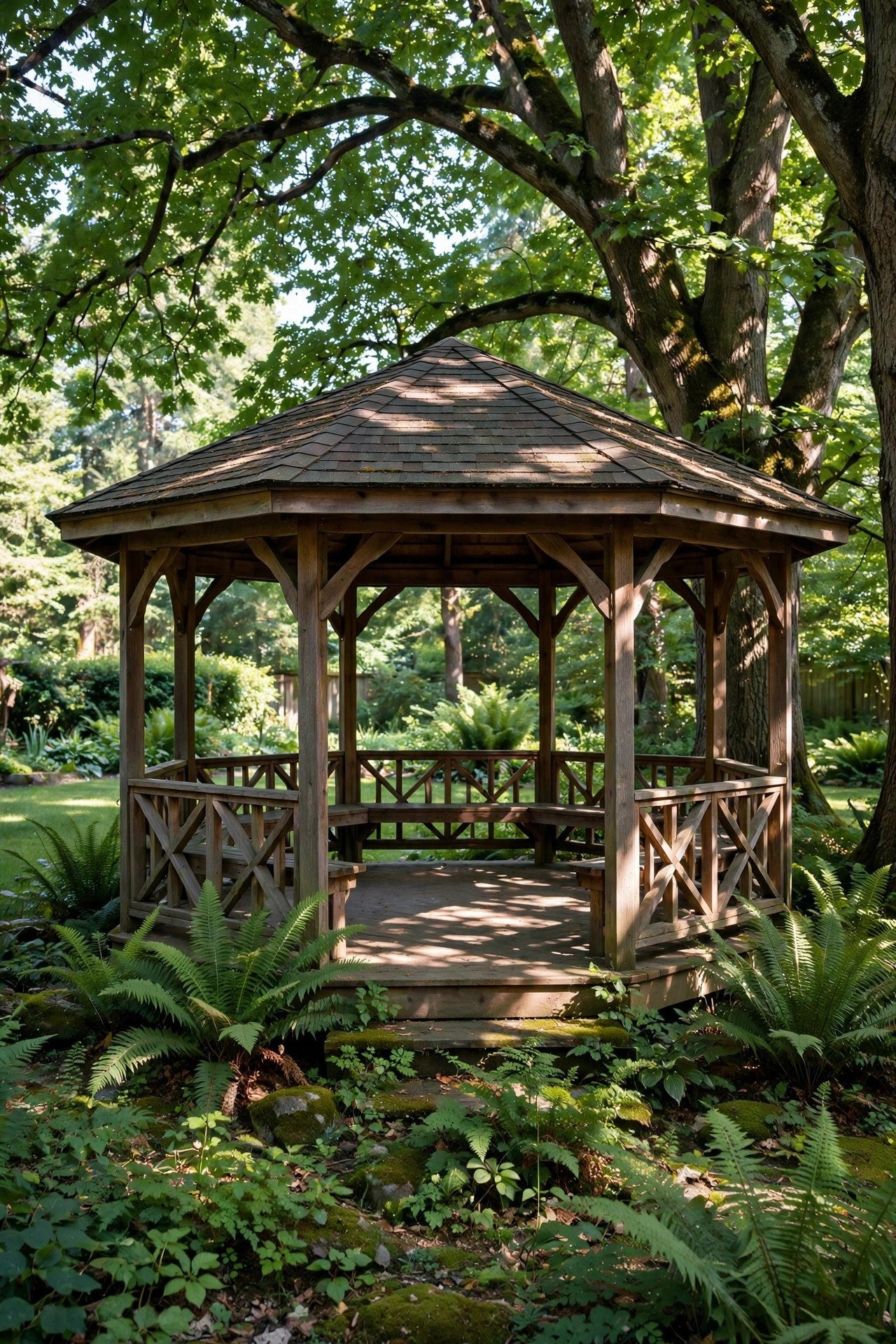
7. Place It Near Water
A gazebo beside a pond, pool, or fountain feels instantly relaxing. The sound and sight of water add calm to the whole space. This pairing creates a resort-like atmosphere in your own yard.
Keep a safe distance from pool splash zones and choose water-resistant furniture. Near a pond, the reflections double the beauty. Water and shelter together make an unbeatable combination.
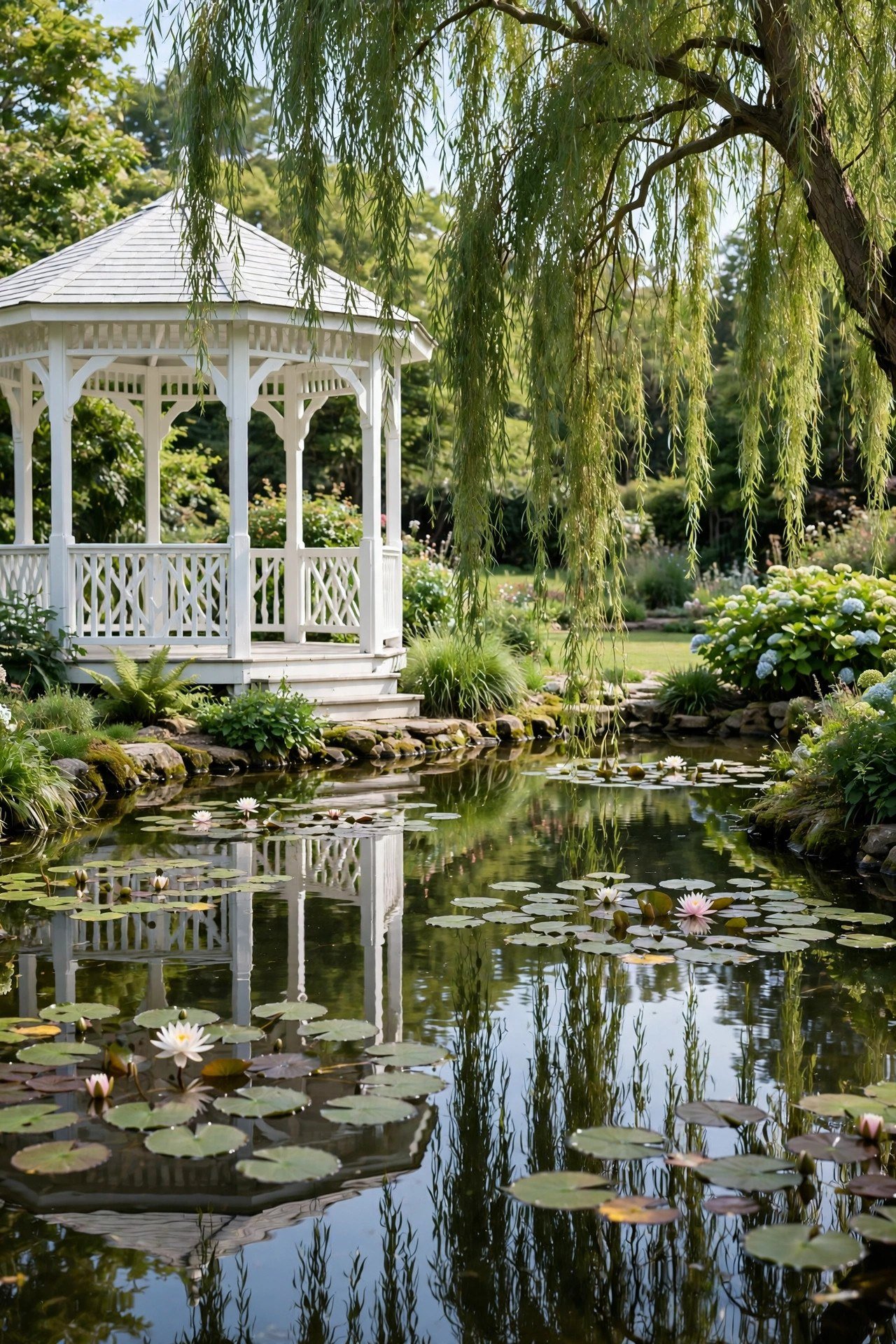
8. Shelter It From Strong Winds
Wind can make a gazebo unpleasant and even unsafe, so choose a sheltered spot. Natural windbreaks like fences, hedges, trees, or your house wall all help. Avoid fully open areas where gusts hit hardest.
If your only option is a breezy spot, anchor the gazebo securely with weights or ground stakes. Add side curtains that you can close on windy days. A calm, protected gazebo gets used far more often.
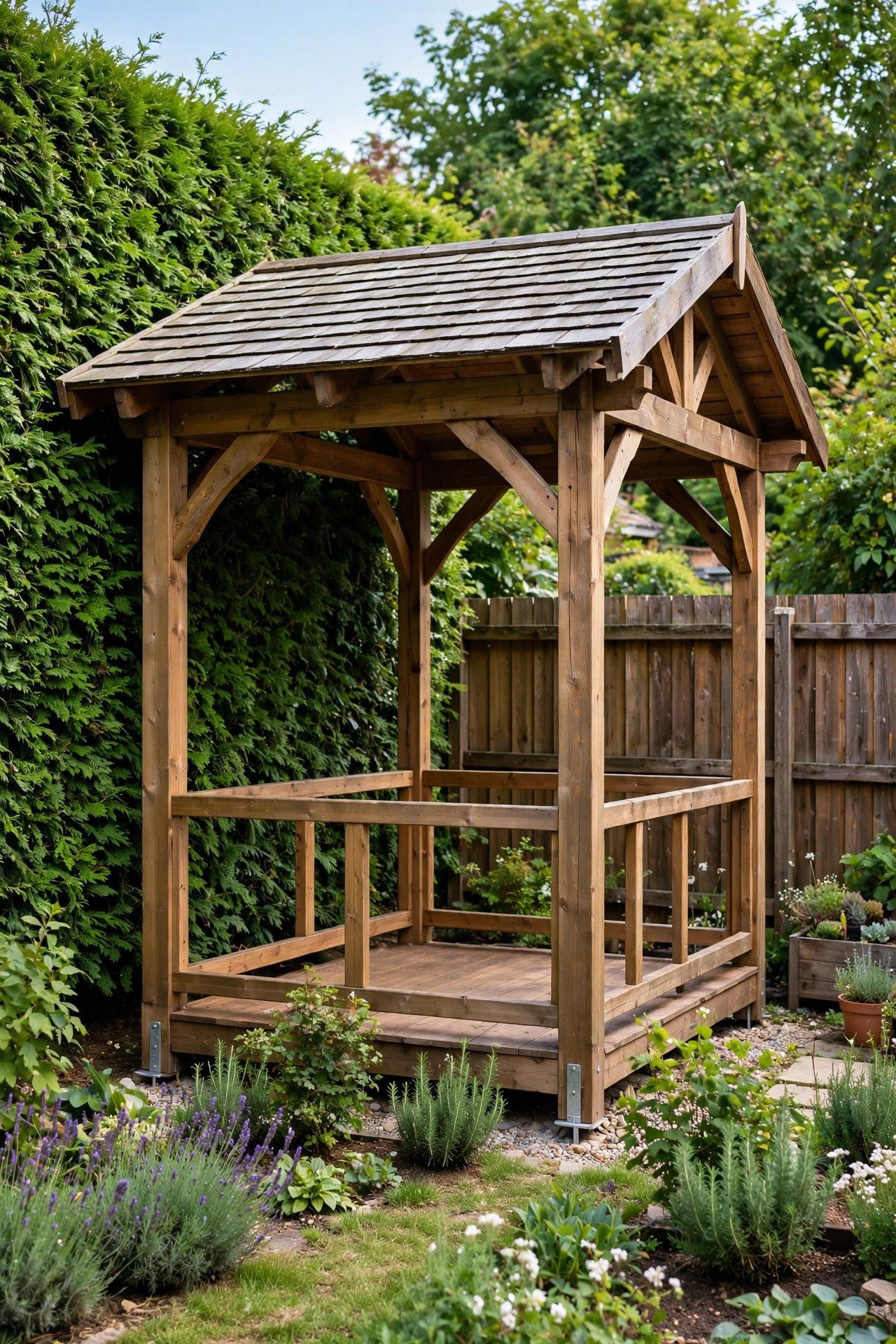
9. Choose Level, Well-Drained Ground
Your gazebo needs a stable, level foundation to stand safely for years. A slightly elevated spot helps rainwater drain away instead of pooling underneath. Avoid low areas where water collects after storms.
You may need to level the ground or add a gravel or paver base. Good drainage protects the wood and keeps the floor dry. A little ground prep now prevents big problems later.
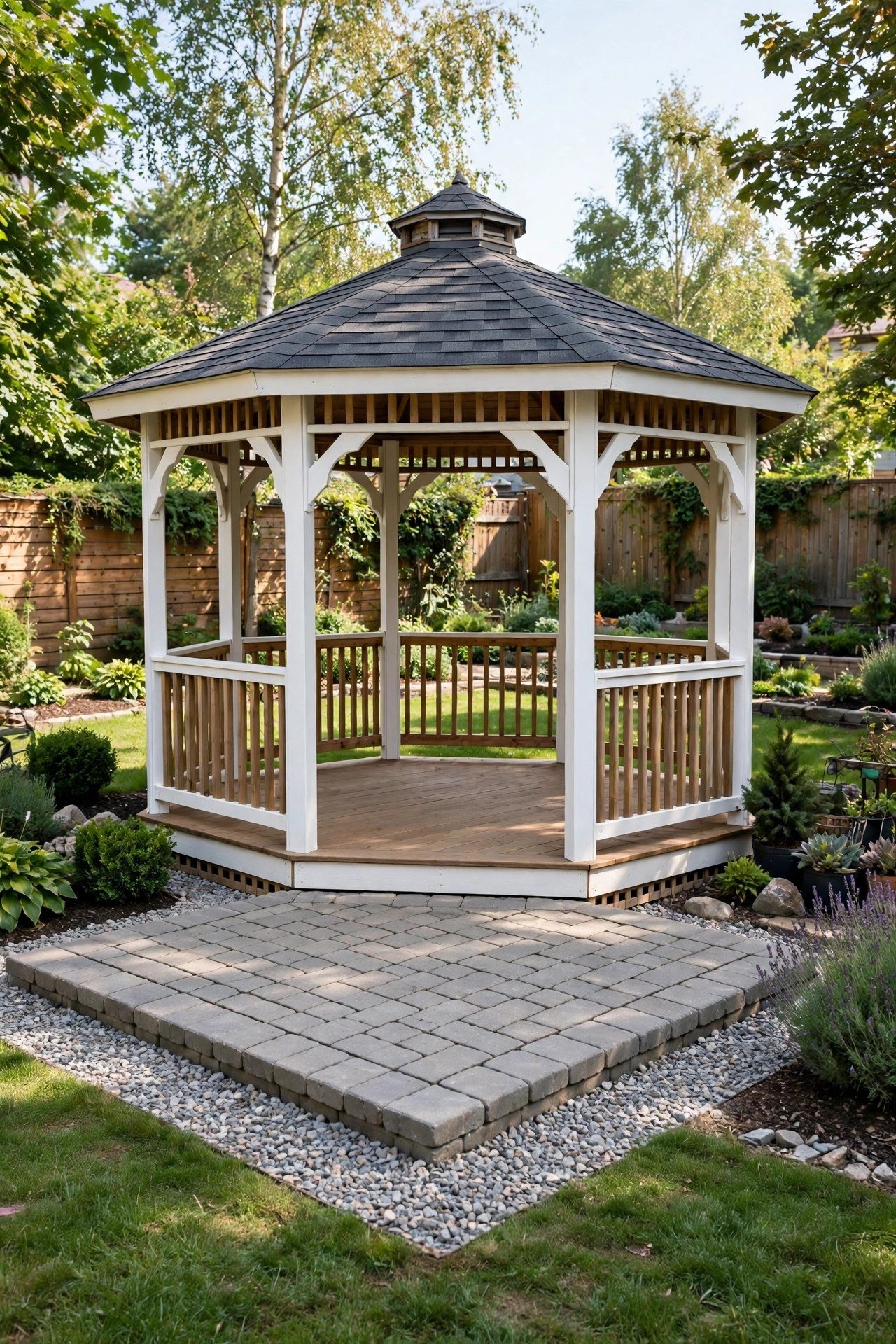
10. Keep It Near Power and Water
If you want lights, a fan, or a small outdoor kitchen in your gazebo, plan for utilities. Running electrical lines to a far corner of the yard can be expensive. A spot near existing outlets saves money and hassle.
Think about what features you might add in the future, even if you skip them now. Conduit laid during installation is much cheaper than trenching later. Smart placement today keeps your options open tomorrow.
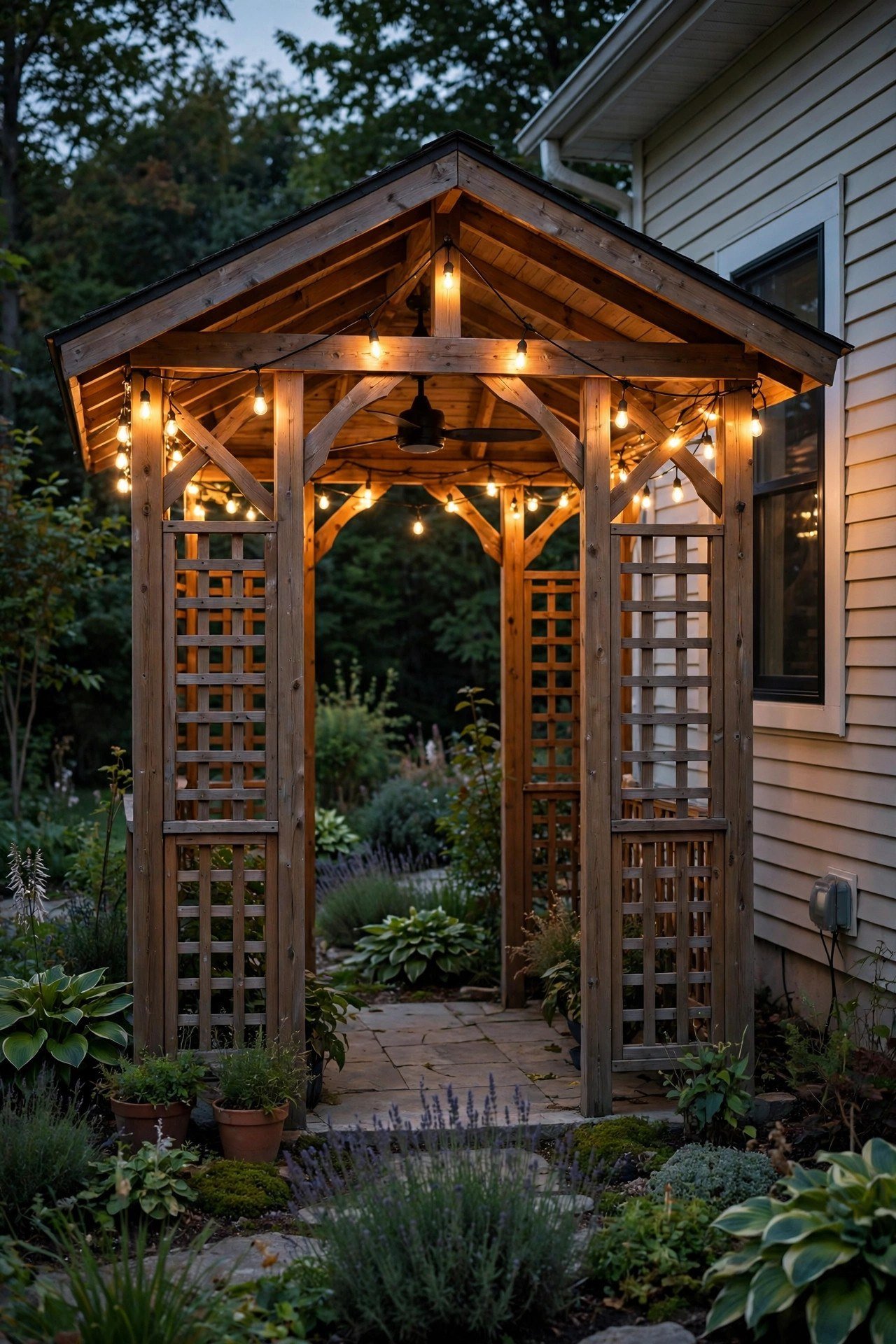
11. Face the Opening Toward a Welcoming View
The direction your gazebo faces shapes the whole experience inside. Aim the open side toward your prettiest view, whether that is a flower garden or an open lawn. Avoid facing busy streets or blank walls.
Consider privacy too, and angle the opening away from neighboring windows. A well-aimed gazebo frames nature like a picture. Every seat inside becomes the best seat.
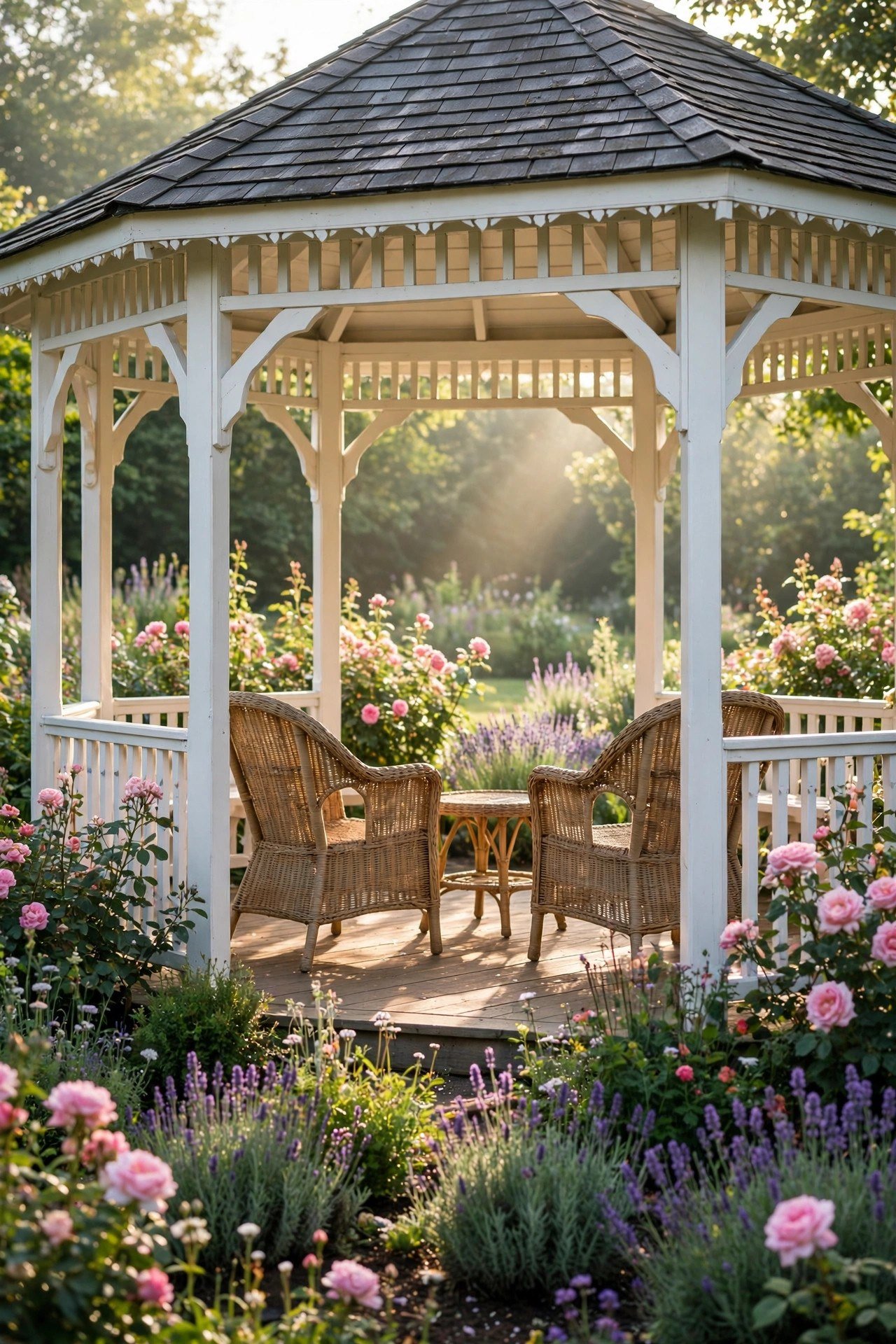
12. Surround It With Thoughtful Landscaping
Planting around your gazebo helps it blend into the landscape. Flower beds, climbing vines, and potted plants soften the structure’s edges. The gazebo starts to feel like it grew there naturally.
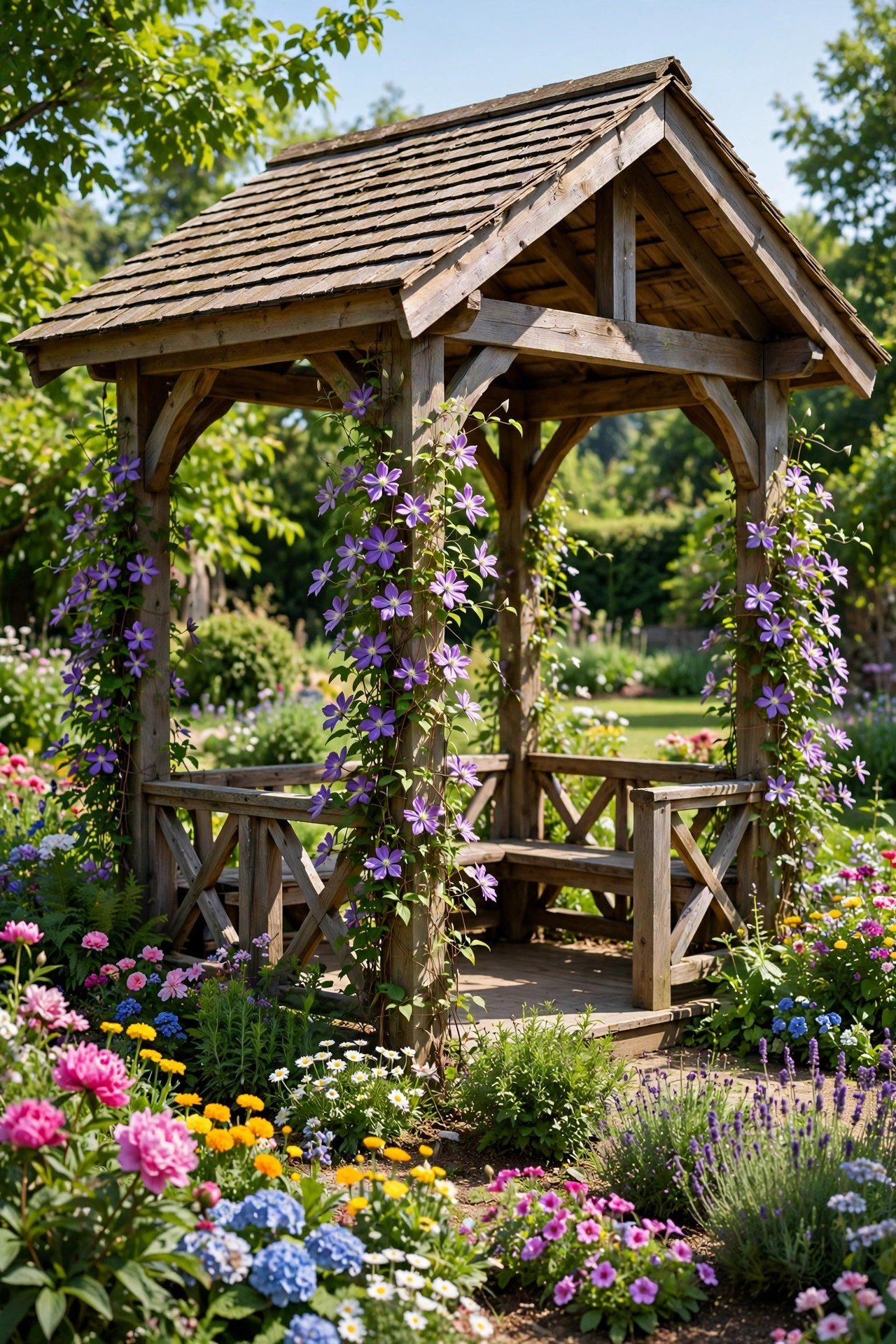
Choose plants that suit your sun and soil conditions so they thrive with little fuss. Climbing roses or clematis on the posts add romance and fragrance. Good landscaping turns a simple structure into a garden feature. Our European garden antique accents offer lovely planting companions.
13. Respect Setbacks and Local Rules
Before you finalize the spot, check your local zoning rules and HOA guidelines. Many areas require structures to sit a certain distance from property lines. Permits may also limit the size or height you can build.
A quick call to your local building department can save you from costly moves later. Knowing the rules lets you place your gazebo with confidence. Once the paperwork is clear, you can build and relax.
Conclusion
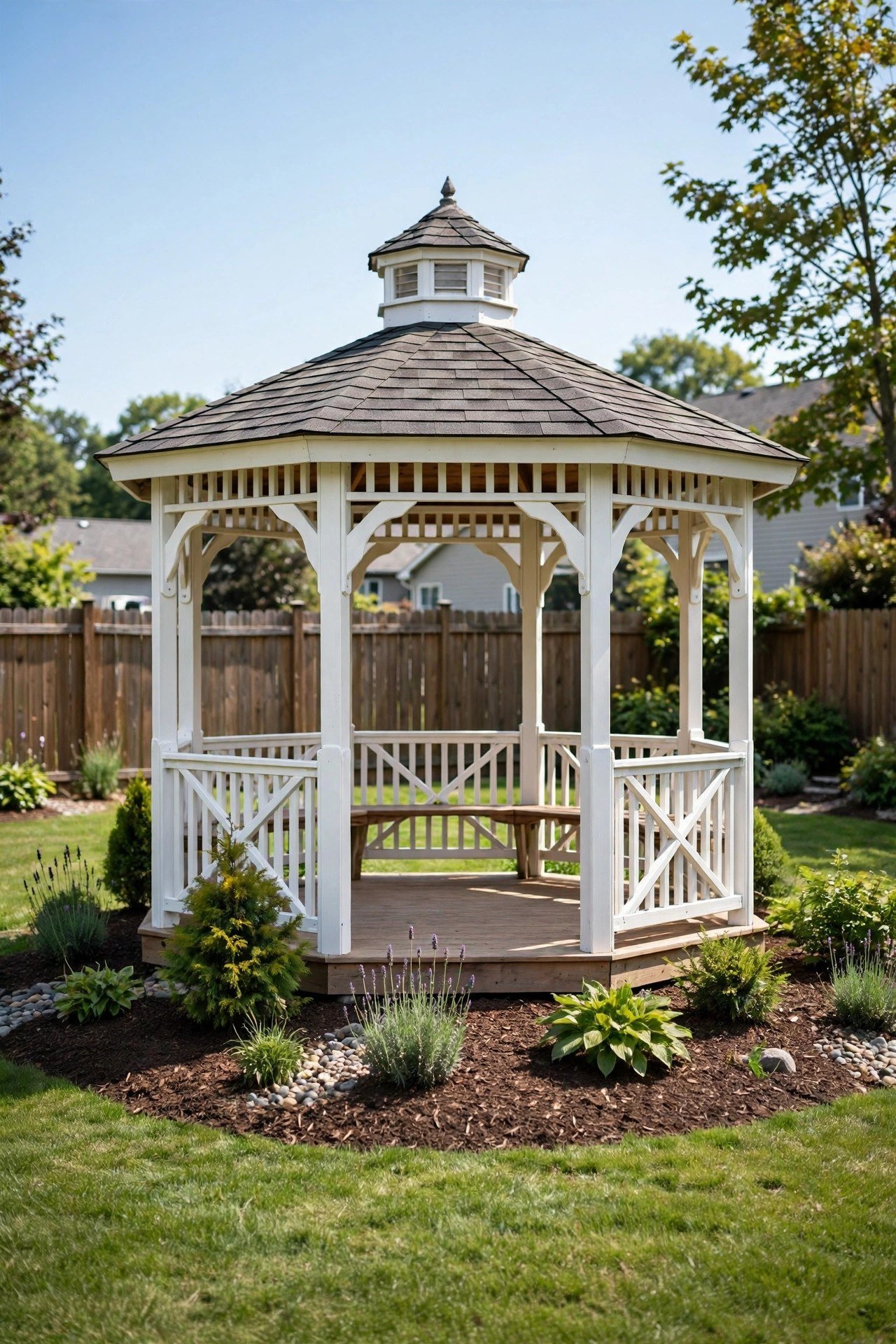
Where you place your gazebo matters just as much as which gazebo you choose. The right spot gives you comfort, beauty, and years of happy use. Take time to study your sun, wind, views, and access before you decide.
Walk your yard, imagine yourself sitting in each possible location, and trust your instincts. When the placement feels right, everything else falls into place. Enjoy creating your perfect backyard retreat.
Frequently Asked Questions About Gazebo Placement Ideas
How far should a gazebo be from the house?
It depends on how you plan to use it. For dining and entertaining, place it close to the house for easy access. For a quiet retreat, 20 to 30 feet away gives privacy without feeling isolated. Always follow local setback rules.
Can you put a gazebo on grass?
You can, but a proper foundation is better. Grass shifts and holds moisture, which can damage the structure over time. A gravel pad, pavers, or concrete footings give you a stable, level, well-drained base.
Should a gazebo face a certain direction?
Face the open side toward your best view and away from harsh afternoon sun if you want shade. An east-facing opening catches gentle morning light. Consider privacy from neighbors when choosing the direction.
How much space do you need around a gazebo?
Leave at least 3 to 4 feet of clear space on all sides for maintenance and airflow. If you want seating or plantings around it, allow even more room. Check that the roof overhang does not hit fences or trees.
Do I need a permit to place a gazebo in my backyard?
Many areas require a permit for gazebos, especially larger or permanent ones. Rules vary by location and may cover setbacks, size, and height. Contact your local building department or HOA before you buy or build.

Hi, I’m Emily! I turn messy corners into cozy, organized spots. DreamNestDecor is where I share simple, practical home ideas — decor, organization, and small-space solutions that work in real life, not just in photos. Every idea here is carefully researched before it’s shared.